EP3484446B1 - Antibody compositions - Google Patents
Antibody compositions Download PDFInfo
- Publication number
- EP3484446B1 EP3484446B1 EP17745672.0A EP17745672A EP3484446B1 EP 3484446 B1 EP3484446 B1 EP 3484446B1 EP 17745672 A EP17745672 A EP 17745672A EP 3484446 B1 EP3484446 B1 EP 3484446B1
- Authority
- EP
- European Patent Office
- Prior art keywords
- concentration
- tnfα
- composition
- glycerol
- mannitol
- Prior art date
- Legal status (The legal status is an assumption and is not a legal conclusion. Google has not performed a legal analysis and makes no representation as to the accuracy of the status listed.)
- Active
Links
Images

Classifications
-
- A—HUMAN NECESSITIES
- A61—MEDICAL OR VETERINARY SCIENCE; HYGIENE
- A61K—PREPARATIONS FOR MEDICAL, DENTAL OR TOILETRY PURPOSES
- A61K39/00—Medicinal preparations containing antigens or antibodies
- A61K39/395—Antibodies; Immunoglobulins; Immune serum, e.g. antilymphocytic serum
- A61K39/39591—Stabilisation, fragmentation
-
- A—HUMAN NECESSITIES
- A61—MEDICAL OR VETERINARY SCIENCE; HYGIENE
- A61K—PREPARATIONS FOR MEDICAL, DENTAL OR TOILETRY PURPOSES
- A61K31/00—Medicinal preparations containing organic active ingredients
- A61K31/70—Carbohydrates; Sugars; Derivatives thereof
- A61K31/7028—Compounds having saccharide radicals attached to non-saccharide compounds by glycosidic linkages
- A61K31/7034—Compounds having saccharide radicals attached to non-saccharide compounds by glycosidic linkages attached to a carbocyclic compound, e.g. phloridzin
- A61K31/704—Compounds having saccharide radicals attached to non-saccharide compounds by glycosidic linkages attached to a carbocyclic compound, e.g. phloridzin attached to a condensed carbocyclic ring system, e.g. sennosides, thiocolchicosides, escin, daunorubicin
-
- A—HUMAN NECESSITIES
- A61—MEDICAL OR VETERINARY SCIENCE; HYGIENE
- A61K—PREPARATIONS FOR MEDICAL, DENTAL OR TOILETRY PURPOSES
- A61K38/00—Medicinal preparations containing peptides
- A61K38/16—Peptides having more than 20 amino acids; Gastrins; Somatostatins; Melanotropins; Derivatives thereof
- A61K38/17—Peptides having more than 20 amino acids; Gastrins; Somatostatins; Melanotropins; Derivatives thereof from animals; from humans
- A61K38/19—Cytokines; Lymphokines; Interferons
- A61K38/191—Tumor necrosis factors [TNF], e.g. lymphotoxin [LT], i.e. TNF-beta
-
- A—HUMAN NECESSITIES
- A61—MEDICAL OR VETERINARY SCIENCE; HYGIENE
- A61K—PREPARATIONS FOR MEDICAL, DENTAL OR TOILETRY PURPOSES
- A61K38/00—Medicinal preparations containing peptides
- A61K38/16—Peptides having more than 20 amino acids; Gastrins; Somatostatins; Melanotropins; Derivatives thereof
- A61K38/17—Peptides having more than 20 amino acids; Gastrins; Somatostatins; Melanotropins; Derivatives thereof from animals; from humans
- A61K38/19—Cytokines; Lymphokines; Interferons
- A61K38/20—Interleukins [IL]
- A61K38/2013—IL-2
-
- A—HUMAN NECESSITIES
- A61—MEDICAL OR VETERINARY SCIENCE; HYGIENE
- A61K—PREPARATIONS FOR MEDICAL, DENTAL OR TOILETRY PURPOSES
- A61K39/00—Medicinal preparations containing antigens or antibodies
- A61K39/395—Antibodies; Immunoglobulins; Immune serum, e.g. antilymphocytic serum
- A61K39/39533—Antibodies; Immunoglobulins; Immune serum, e.g. antilymphocytic serum against materials from animals
- A61K39/3955—Antibodies; Immunoglobulins; Immune serum, e.g. antilymphocytic serum against materials from animals against proteinaceous materials, e.g. enzymes, hormones, lymphokines
-
- A—HUMAN NECESSITIES
- A61—MEDICAL OR VETERINARY SCIENCE; HYGIENE
- A61K—PREPARATIONS FOR MEDICAL, DENTAL OR TOILETRY PURPOSES
- A61K47/00—Medicinal preparations characterised by the non-active ingredients used, e.g. carriers or inert additives; Targeting or modifying agents chemically bound to the active ingredient
- A61K47/02—Inorganic compounds
-
- A—HUMAN NECESSITIES
- A61—MEDICAL OR VETERINARY SCIENCE; HYGIENE
- A61K—PREPARATIONS FOR MEDICAL, DENTAL OR TOILETRY PURPOSES
- A61K47/00—Medicinal preparations characterised by the non-active ingredients used, e.g. carriers or inert additives; Targeting or modifying agents chemically bound to the active ingredient
- A61K47/06—Organic compounds, e.g. natural or synthetic hydrocarbons, polyolefins, mineral oil, petrolatum or ozokerite
- A61K47/08—Organic compounds, e.g. natural or synthetic hydrocarbons, polyolefins, mineral oil, petrolatum or ozokerite containing oxygen, e.g. ethers, acetals, ketones, quinones, aldehydes, peroxides
- A61K47/10—Alcohols; Phenols; Salts thereof, e.g. glycerol; Polyethylene glycols [PEG]; Poloxamers; PEG/POE alkyl ethers
-
- A—HUMAN NECESSITIES
- A61—MEDICAL OR VETERINARY SCIENCE; HYGIENE
- A61K—PREPARATIONS FOR MEDICAL, DENTAL OR TOILETRY PURPOSES
- A61K47/00—Medicinal preparations characterised by the non-active ingredients used, e.g. carriers or inert additives; Targeting or modifying agents chemically bound to the active ingredient
- A61K47/06—Organic compounds, e.g. natural or synthetic hydrocarbons, polyolefins, mineral oil, petrolatum or ozokerite
- A61K47/16—Organic compounds, e.g. natural or synthetic hydrocarbons, polyolefins, mineral oil, petrolatum or ozokerite containing nitrogen, e.g. nitro-, nitroso-, azo-compounds, nitriles, cyanates
- A61K47/18—Amines; Amides; Ureas; Quaternary ammonium compounds; Amino acids; Oligopeptides having up to five amino acids
- A61K47/183—Amino acids, e.g. glycine, EDTA or aspartame
-
- A—HUMAN NECESSITIES
- A61—MEDICAL OR VETERINARY SCIENCE; HYGIENE
- A61K—PREPARATIONS FOR MEDICAL, DENTAL OR TOILETRY PURPOSES
- A61K47/00—Medicinal preparations characterised by the non-active ingredients used, e.g. carriers or inert additives; Targeting or modifying agents chemically bound to the active ingredient
- A61K47/06—Organic compounds, e.g. natural or synthetic hydrocarbons, polyolefins, mineral oil, petrolatum or ozokerite
- A61K47/26—Carbohydrates, e.g. sugar alcohols, amino sugars, nucleic acids, mono-, di- or oligo-saccharides; Derivatives thereof, e.g. polysorbates, sorbitan fatty acid esters or glycyrrhizin
-
- A—HUMAN NECESSITIES
- A61—MEDICAL OR VETERINARY SCIENCE; HYGIENE
- A61K—PREPARATIONS FOR MEDICAL, DENTAL OR TOILETRY PURPOSES
- A61K9/00—Medicinal preparations characterised by special physical form
- A61K9/0012—Galenical forms characterised by the site of application
- A61K9/0019—Injectable compositions; Intramuscular, intravenous, arterial, subcutaneous administration; Compositions to be administered through the skin in an invasive manner
-
- A—HUMAN NECESSITIES
- A61—MEDICAL OR VETERINARY SCIENCE; HYGIENE
- A61K—PREPARATIONS FOR MEDICAL, DENTAL OR TOILETRY PURPOSES
- A61K9/00—Medicinal preparations characterised by special physical form
- A61K9/08—Solutions
-
- A—HUMAN NECESSITIES
- A61—MEDICAL OR VETERINARY SCIENCE; HYGIENE
- A61P—SPECIFIC THERAPEUTIC ACTIVITY OF CHEMICAL COMPOUNDS OR MEDICINAL PREPARATIONS
- A61P35/00—Antineoplastic agents
-
- C—CHEMISTRY; METALLURGY
- C07—ORGANIC CHEMISTRY
- C07K—PEPTIDES
- C07K16/00—Immunoglobulins [IGs], e.g. monoclonal or polyclonal antibodies
- C07K16/18—Immunoglobulins [IGs], e.g. monoclonal or polyclonal antibodies against material from animals or humans
-
- C—CHEMISTRY; METALLURGY
- C07—ORGANIC CHEMISTRY
- C07K—PEPTIDES
- C07K2317/00—Immunoglobulins specific features
- C07K2317/60—Immunoglobulins specific features characterized by non-natural combinations of immunoglobulin fragments
- C07K2317/62—Immunoglobulins specific features characterized by non-natural combinations of immunoglobulin fragments comprising only variable region components
- C07K2317/622—Single chain antibody (scFv)
-
- C—CHEMISTRY; METALLURGY
- C07—ORGANIC CHEMISTRY
- C07K—PEPTIDES
- C07K2319/00—Fusion polypeptide
Definitions
- This invention relates to stable formulations that can be prepared to high concentration of active agent using low amounts of detergents and to methods for producing such formulations.
- this invention relates to formulations containing the L19-TNF ⁇ immunocytokine.
- protein concentration at which aggregation and precipitation occurs varies from protein to protein. While protein aggregation and/or precipitation substantially reduces the efficacy of therapeutic proteins, many protein-based therapies require high-concentration protein formulations for delivery to the patient. Thus, for some protein therapies, therapeutic efficacy is limited because high-concentration formulations cannot be produced or cannot be stored for a useful length of time due to protein aggregation and/or precipitation. This can be a problem with protein formulations for local administration because often only small volumes can be delivered. Furthermore, a formulation enabling a higher concentration of protein means that less vials are needed per each cycle of treatment. A smaller number of vials facilitates the management of the lots produced, including easier shipment and storage conditions. This is a particularly valuable feature, when the vials must be stored at -80° as in the case of L19-TNF ⁇ .
- Polysorbates are surfactants that are produced by reacting the polyol, sorbitol, with ethylene oxide.
- the number in the name of the Polysorbate indicates the average number of moles of ethylene oxide that has been reacted per mole of sorbitol.
- the polyoxyethylenated sorbitan is then reacted with fatty acids obtained from vegetable fats and oils such as lauric acid, palmitic acid, stearic acid and oleic acid.
- Polysorbates such as polysorbate20 and polysorbate80 are commercially available.
- Polysorbates help other ingredients to dissolve in a solvent in which they would not normally dissolve. They also help to form emulsions by reducing the surface tension of the substances to be emulsified.
- polysorbate e.g. that sold under the registered trade mark "Tween”
- Tween can be used to stabilize therapeutic proteins for injection because it is non-pyrogenic, non-hemolytic and only slightly irritant. It can increase solubilization by preventing the nonspecific binding that leads to aggregation and/or precipitation. Higher concentrations of polysorbate generally result in greater stability of the protein solution. Polysorbates may however be toxic. On repeated intravenous administration, effects on the liver, spleen and kidneys were seen in baby animals exposed to polysorbate80:polysorbate20 mixture, some fatalities occurred. In rats and hamsters, repeated oral exposure to polysorbate20 produced damage at a range of sites including the gastro-intestinal tract, liver and kidneys. Pharmaceutical formulations should therefore limit, as far as possible, the use of polysorbates for parenteral administration.
- Agents which have been investigated for the intralesional treatment of melanoma, include bacille Calmette-Guerin (BCG) and cytokines like granulocyte-macrophage colony stimulating factor (GM-CSF) ( 2 ), interferon (INF)- ⁇ ( 3 ) and - ⁇ ( 4 ) and interleukin 2 (IL2) ( 5-9 ).
- BCG Bacille Calmette-Guerin
- GM-CSF granulocyte-macrophage colony stimulating factor
- IFN interferon
- 3 interferon
- IL2 interleukin 2
- Tumor Necrosis Factor ⁇ is a cytokine produced by many cell types, mainly activated monocytes and macrophages. It is expressed as a 26 kDa integral transmembrane precursor protein from which a mature protein of approximately 17 kDa is released by proteolytic cleavage.
- the soluble bioactive TNF ⁇ is a homotrimer that interacts with two different cell surface receptors (10) p55TNFR (50-60 kDa) and p75TNFR (75-80 kDa).
- TNF ⁇ can induce hemorrhagic necrosis of transplanted solid tumors, in vivo (11), and can exert cytotoxic activity in vitro against some tumor cell lines (12).
- TNF ⁇ has a very rapid clearance from the bloodstream (plasma half-life generally less than 30 minutes) (13), which decreases the hematic concentration under therapeutic levels, very rapidly.
- Good clinical results have been achieved in humans only in loco-regional treatments of non-disseminated tumors (e.g., isolated-limb-perfusion for sarcoma and melanoma) (14).
- TNF ⁇ The anti-tumour activity of TNF ⁇ in many animal models seems to be due to a combination of a direct toxic effect (in a combination with tumor-derived factors that synergise with TNF ⁇ ) on endothelial cells of the growing tumor vasculature (15), as well as to alterations of the hemostatic properties of proliferating endothelial cells in tumor angiogenesis (16). There is also evidence of a direct cytotoxic effect on tumor cells. Indirect (host-mediated) effects of TNF ⁇ , such as the induction of T cell-dependent immunity, can contribute to tumor regression on animal models (17).
- Immunocytokines are recombinant fusion proteins in which cytokines of interest are fused C- or N-terminally to antibody fragments, which act as delivery/targeting vehicles.
- the antibody moiety favours preferential accumulation and prolonged residence in regions in which the antibody's cognate antigen is at high concentration.
- the antibody domain is therefore selected to bind antigens that are prevalent at the site of disease, thus leading to an improved therapeutic activity while sparing normal organs (18).
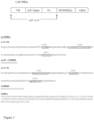
- L19-TNF ⁇ also known as "FIBROMUN" is an immunocytokine, consisting of three polypeptides each of which is composed of human TNF ⁇ (hTNF ⁇ ) fused at its N-terminus, via a linker, to the C-terminus of recombinant monoclonal antibody L19 ( Figure 1 ).
- L19 is an antibody molecule in the scFV format, which recognizes the alternatively spliced extra-domain B (EDB) of fibronectin (FN), a marker of tumor angiogenesis (19).
- EDB extra-domain B
- FN fibronectin
- the amino acid sequence of each L19-TNF ⁇ polypeptide is set out in SEQ ID NO: 1.
- EDB-containing FN is present in the newly formed vasculature of most solid tumors and hematological malignancies (20) but absent from almost all healthy adult tissues (with the exception of tissues of the female reproductive cycle).
- the construction of L19-TNF ⁇ is disclosed in WO01/062298 (21 ).
- the L19-TNF ⁇ fusion protein was shown to strongly stain blood vessels of glioblastoma tumor. Substantial quantities of L19-TNF ⁇ remain in the tumour hours and even days after intratumoural administration.
- the localisation of L19-TNF ⁇ fusion protein in the tumoral neovasculature was confirmed by microradiographic analysis. Accumulation of the radiolabeled fusion protein was shown in the blood vessels of the F9 mouse tumor. No accumulation of radiolabeled fusion protein was detected in the vessels of the other organs of tumor bearing mice.
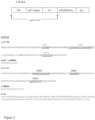
- L19-IL2 also known as "DARLEUKIN” is an immunocytokine, consisting of human IL2 fused at its N-terminus, via a linker, to the C-terminus of recombinant monoclonal antibody L19 ( Figure 2 and (21)).
- L19 is an antibody in the scFV format, which recognizes EDB, as discussed above. Dimerisation via the IL2 domain results in the formation of L19-IL2 homodimers.
- the amino acid sequence of each L19-IL2 polypeptide is set out in SEQ ID NO: 2.
- Targeted forms of IL2 injected intralesionally into melanoma metastases exhibits a prolonged residence time in the lesions, as compared to the untargeted form, therefore allowing an extended immunological action, reduction in the frequency of administrations and a shorter duration of the treatment (22).
- Preliminary clinical data showed that this approach is efficient in regional control of disease progression, increased time to distant metastasis and evidence of effect on circulating immune cell populations (23).
- preclinical data (24) have shown that a combination of L19-IL2 with L19-TNF ⁇ in a syngeneic immunocompetent mouse model of cancer induced complete remissions when administered as a single intratumoral injection, whereas the two components did not lead to curative remission when administered separately (25).
- WO2007/149334 relates to VEGF antagonist formulations suitable for intravitreal administration.
- Kathrin Schwager et al. (2013) describes the eradication of cancer when the immunocytokine L19-IL2 is used in combination with CTLA-4 blockade or L19-TNF.
- buffer compositions which enable L19-TNF ⁇ to be formulated at concentrations of 0.2 mg/mL or more.
- the stability of L19-TNF ⁇ formulations at these concentrations was found to be possible only using phosphate buffer or hepes buffer but not in other types of buffer.
- the stability of L19-TNF ⁇ formulations was found to be unexpectedly sensitive to the amount of detergent, specifically polysorbate. Only in the phosphate buffer compositions of the invention could L19-TNF ⁇ be formulated with low amount of polysorbate (but not in Hepes buffers).
- a concentration of about 0.01-0.03% (v/v) polysorbate is particularly good, and remarkably low considering the 0.1%-0.2% found to be optimal for solution stability in hepes buffer formulations such as Hepes-7, Hepes-8 and Hepes-9, discussed below.
- a polysorbate20 concentration as low as 0.01% (v/v) was able to maintain soluble L19-TNF ⁇ in phosphate buffers.
- Tween/polysorbate The maximum concentration of Tween/polysorbate recommended for human use is 0.1%.
- Tween/polysorbate-20 Tween/polysorbate40, Tween/polysorbate-60 and Tween/polysorbate-80.
- the invention provides buffers which are suitable for injection into a subject, and suitable for dissolving the L19-TNF ⁇ immunocytokine at a concentration of at least 0.2 mg/mL.
- a composition comprising L19-TNF ⁇ as set forth in SEQ ID NO: 1, dissolved in a sodium phosphate buffer which comprises a salt at a concentration of at least about 1.5 mM, polysorbate at a concentration of about 0.005% to about 0.1% (v/v), and a stabilizer, wherein the pH of the sodium phosphate buffer is higher than 7.5 and lower than 9; wherein the salt is NaCl; the sodium phosphate buffer comprises glycerol at about 0.5 to about 1.5% w/v; and the stabilizer concentration is about 65 to about 185 mM.
- this buffer composition enables the L19-TNF ⁇ immunocytokine to be dissolved at a concentration of over 0.2 mg/mL.
- the concentration of the L19-TNF ⁇ immunocytokine is at least about 0.2 mg/mL.
- the pH of the composition may be within a range as set out here, or about such a range: 7.6-8.9 or 7.7-8.8, more preferably 7.8-8.8, or 8.5 or about 8.5. Most preferably, the pH of the composition is 8, or about 8.
- composition comprising the L19-TNF ⁇ immunocytokine as set forth in SEQ ID NO:1, dissolved in a sodium phosphate buffer which comprises NaCl at a concentration of 5-50 mM, polysorbate at a concentration of 0.005-0.03% (v/v), and a stabilizer, wherein the pH of the sodium phosphate buffer is 7.5-8.5, wherein the sodium phosphate buffer comprises glycerol at about 0.5 to about 1.5% w/v; wherein the stabilizer concentration is about 65 mM to about 185 mM; and wherein the concentration of the L19-TNF ⁇ immunocytokine is at least 0.2 mg/mL.
- composition comprising the L19-TNF ⁇ immunocytokine as set forth in SEQ ID NO:1, dissolved in a sodium phosphate buffer which comprises NaCl at a concentration of about 5-50 mM, polysorbate at a concentration of about 0.005-0.03% (v/v), and a stabilizer, wherein the pH of the sodium phosphate buffer is about 7.5-8.5, wherein the sodium phosphate buffer comprises glycerol at about 0.5 to about 1.5% w/v; wherein the stabilizer concentration is about 65 mM to about 185 mM; and wherein the concentration of the L19-TNF ⁇ immunocytokine is at least about 0.2 mg/mL.
- polysorbate may be present at a concentration within a range as set out here (presented as v/v), or about such a range: 0.005-0.03%, 0.008-0.03% or 0.01-0.03%, or 0.005-0.1% or more preferably 0.01-0.02%. Most preferably, polysorbate is present at 0.01%, or about 0.01%, (v/v). In some embodiments, the polysorbate concentration may be slightly higher, e.g.
- the polysorbate may be polysorbate20 or polysorbate 80.
- the polysorbate is polysorbate20.
- a salt is used to maintain the isotonicity.
- the salt should be a pharmaceutically acceptable salt.
- the salt is preferably sodium chloride, although other salts such as potassium chloride, magnesium sulphate, magnesium chloride, calcium chloride, or calcium phosphate can also be used.
- the salt may be present at a concentration within a range as set out here, or about such a range: 1.5-90 mM, 2-80 mM, 5-75 mM, 10-50 mM, preferably 10-40 mM, more preferably 20-30 mM. In some embodiments, the salt is present at 30 mM or at about 30 mM. In preferred embodiments, the salt is NaCl.
- the salt is NaCl.
- NaCl may be present at a concentration within a range as set out here, or about such a range: 10-50 mM, preferably 10-40 mM, more preferably 20-30 mM. Most preferably, NaCl is present at 30 mM or at about 30 mM.
- a stabilizer is used to stabilize the protein in its native conformation.
- Suitable stabilizers for protein solutions are well known in the art.
- the stabilizer may be a sugar.
- the stabilizer can be selected from the group consisting of mannitol, trehalose, sucrose, sorbitol, maltose and xylitol. The results provided herein show that different types of stabilizer are effective.
- the stabilizer e.g. a sugar
- the stabilizer is present at a concentration of about 65 mM to about 185 mM, or preferably within or about a range of 65-85 mM.
- the stabilizer is mannitol.
- Mannitol may be present at a concentration of about 65 mM to about 185 mM, or preferably within or about a range of 65-85 mM. Most preferably, mannitol is present at 75 mM or at about 75 mM.
- the L19-TNF ⁇ immunocytokine may be present at a concentration as set out here, or about such a concentration: at least 0.3 mg/mL, at least 0.4 mg/mL, at least 0.5 mg/mL, at least 0.6 mg/mL or at least 0.8 mg/mL.
- the L19-TNF ⁇ immunocytokine is present at 0.45 mg/mL or about 0.45 mg/mL, although higher concentrations also may be preferred in some embodiments.
- the L19-TNF ⁇ immunocytokine may be present at a concentration within a range as set out here, or about such a range: 0.1-2.0 mg/mL, 0.2-1.5 mg/mL, 0.3-1.0 mg/mL, 0.4-0.8 mg/mL or 0.4-0.6 mg/mL.
- the polysorbate may be polysorbate20.
- the pH of the composition may be within a range as set out here, or about such a range: 7.6-8.4 or 7.7-8.3, more preferably 7.8-8.8, 7.8-8.2 or 7.9-8.1. Most preferably, the pH of the composition is 8, or about 8.
- the sodium phosphate buffer may comprise glycerol.
- Glycerol may be present at a concentration within a range as set out here (presented as w/v), or about such a range: 0.5-1.5%, 1-1.5%, 1-1.2%.
- the sodium phosphate buffer comprises glycerol at a concentration of 1% w/v or about 1% w/v.
- the sodium phosphate may comprise EDTA.
- EDTA may be present at a concentration within a range set out here, or about such range: 1-20 mM, preferably 2-15 mM, or more preferably 3-10 mM or 6-9 mM. Most preferably the sodium phosphate buffer comprises EDTA is present at 5 mM or at about 5 mM. However, EDTA is not needed for the stability of the formulation itself, but is useful as a preservative.
- the sodium phosphate buffer may comprise NaH 2 PO 4 .
- NaH 2 PO 4 may be present at a concentration within a range as set out here, or about such a range: 1-100 mM, preferably 2-50 mM, 3-30 mM, 5-25 mM, 8-23 mM, 10-20 mM, or more preferably 12-18 mM. Most preferably, NaH 2 PO 4 is present at a concentration of 15 mM or about 15 mM.
- the sodium phosphate buffer may comprise Na 2 HPO 4 .
- Na 2 HPO 4 may be present in a concentration within a range as set out here, or about such a range: 1-100 mM, preferably 2-50 mM, 3-30 mM, 4-25 mM, 5-20 mM, 6-18 mM, or more preferably 7-15 mM. Most preferably Na 2 HPO 4 is present at a concentration of 10 mM or 10 mM.
- the sodium phosphate buffer may comprise KCl.
- KCl may be present in a concentration within a range as set out here, or about such a range: 0.1-10 mM, 0.2-5 mM, 0.5-3 mM, preferably 1-2 mM, more preferably 1.1-1.9, 1.2-1.9, 1.3-1.8, 1.4-1.7 mM or 1.4-1.6.
- KCl is absent.
- KCl can be present at a much higher concentration, for instance up to 5 mM or about 5 mM, 10 mM or about 10 mM, 20 mM or about 20 mM, 30 mM or about 30 mM, 40 mM or about 40 mM, 50 mM or about 50 mM, 100 mM or about 100 mM.
- the sodium phosphate buffer comprises KCl at a concentration of 1.5 mM or about 1.5 mM.
- the sodium phosphate buffer comprises 15 mM NaH 2 PO 4 and 10 mM Na 2 HPO 4 at pH 8.0, 75 mM mannitol, 1% glycerol (w/v), 1.5 mM KCl, 30 mM NaCl and 0.01% polysorbate20.
- the L19-TNF ⁇ immunocytokine concentration is at least 0.4 mg/mL.
- sodium phosphate buffers comprising about 15 mM NaH 2 PO 4 and about 10 mM Na 2 HPO 4 at pH 8.0, about 75 mM mannitol, about 1% glycerol (w/v), about 1.5 mM KCl, about 30 mM NaCl and about 0.01% polysorbate20.
- the L19-TNF ⁇ immunocytokine concentration is at least about 0.4 mg/mL.
- the sodium phosphate buffer comprises 15 mM NaH 2 PO 4 and 10 mM Na 2 HPO 4 at pH 8.0, 75 mM mannitol, 1% glycerol (w/v), 1.5 mM KCl, 30 mM NaCl, 0.01% polysorbate20 and 5 mM EDTA.
- the L19-TNF ⁇ immunocytokine concentration is at least 0.4 mg/mL.
- sodium phosphate buffers comprising about 15 mM NaH 2 PO 4 and about 10 mM Na 2 HPO 4 at pH 8.0, about 75 mM mannitol, about 1% glycerol (w/v), about 1.5 mM KCl, about 30 mM NaCl, about 0.01% polysorbate20 and about 5 mM EDTA.
- the L19-TNF ⁇ immunocytokine concentration is at least about 0.4 mg/mL.
- compositions disclosed herein are provided for use in a method of treating cancer in the human or animal body by therapy.
- Such treatment involves administration of the composition to a human or animal, preferably a human, wherein the administration comprises injecting the composition into a tumour or lesion or administrating the composition by infusion.
- Compositions of the invention are particularly suited to use in treatment of sarcomas.
- Types of sarcoma can include angiosarcoma, chondrosarcoma, Ewing's sarcoma, fibroblastic sarcoma, Kaposi's sarcoma, leiomyosarcoma, liposarcoma, osteosarcoma, rhabdomyosarcoma and soft tissue sarcoma.
- the composition further comprises the L19-IL2 immunocytokine.
- the treated cancer may be a primary tumour.
- the treated cancer may be metastatic a tumour.
- compositions of the invention are particularly suited to use in treatment of skin cancers, e.g. malignant skin tumour, melanoma or carcinoma, since their location is amenable to direct local injection.
- Other tumours within the body may also be treated, and injections may be guided to tumours within soft tissue or internal organs, e.g. by sonography (26).
- Treatment in accordance with the invention may be used in a surgical context, where injection is performed before, during or after tumour surgery.
- the L19-IL2 immunocytokine as set forth in SEQ ID NO:2 is also administered to the patient who is treated with the L19-TNF ⁇ immunocytokine.
- the method may also comprise mixing a composition of the first aspect with an L19-IL2 immunocytokine formulation, prior to administration.
- the L19-TNF ⁇ and L19-IL2 compositions are administered separately.
- the L19-TNF ⁇ immunocytokine and the L19-IL2 immunocytokines may be provided as separate formulations to permit either sequential administration (in either order), which includes essentially-simultaneous administration in which the L19-TNF ⁇ and L19-IL2 immunocytokines are administered at essentially the same time.
- the method of treatment may comprise injecting the L19-TNF ⁇ formulation and then immediately injecting the L19-IL2 formulation (or vice-versa).
- Sequential administration can also be used to administer the second immunocytokine after a period of time following administration of the first immunocytokine.
- the immunocytokines can be injected within 24 hours, 12 hours, 1 hour, or preferably within 30 minutes of each other.
- the immunocytokines are administered within a few minutes of each other.
- the two immunocytokines may be injected at the same point in the tumour site, or at different points.
- a combined injection of both immunocytokines may be administered. It may be preferable to administer a dose in multiple injections, for example to inject multiple locations across the tumour or around the tumour site, or to facilitate administration of a larger total volume of immunocytokine.
- the L19-TNF ⁇ immunocytokine and the L19-IL2 immunocytokines may be provided as a combined preparation.
- the L19-TNF ⁇ formulation and the L19-IL2 formulation may be provided as separate formulations but administered simultaneously by a clinician.
- An L19-TNF ⁇ formulation according to the invention may be mixed with an L19-IL2 formulation prior to administration to the patient.
- the L19-TNF ⁇ and L19-IL2 formulations may be mixed less than 1 hour before administration, less than 30 minutes before administration, less than 15 minutes before administration, less than 5 minutes before administration, less than 2 minutes before administration, or less than 1 minute before administration.
- the clinician administers the L19-TNF ⁇ formulation and the L19-IL2 formulation at essentially the same time, without prior mixing.
- the invention also provides a method of preparing a formulation suitable for use as an injectable anticancer medicine, the method comprising providing a composition according to the invention, and mixing said composition with an L19-IL2 immunocytokine formulation. This method may be performed immediately before the mixture is administered to a patient.
- the L19-IL2 immunocytokine is formulated in a phosphate buffer comprising NaH 2 PO 4 at a concentration of 1-50 mM, NaCl at a concentration of 1-50 mM, KCl at a concentration of 1-2 mM, mannitol at a concentration of 50-200 mM, polysorbate80 at a concentration of 0.05-0.2% (v/v), Glycerol at a concentration of 0.5-2% and EDTA at a concentration of 1-20 mM and pH from 5.5-7.0.
- a phosphate buffer comprising NaH 2 PO 4 at a concentration of 1-50 mM, NaCl at a concentration of 1-50 mM, KCl at a concentration of 1-2 mM, mannitol at a concentration of 50-200 mM, polysorbate80 at a concentration of 0.05-0.2% (v/v), Glycerol at a concentration of 0.5-2% and EDTA at a concentration of 1-20 mM
- the L19-IL2 immunocytokine is also formulated in a phosphate buffer comprising NaH 2 PO 4 at a concentration of 1-50 mM, NaCl at a concentration of 1-50 mM, KCl at a concentration of 1-2 mM, mannitol at a concentration of 50-200 mM, polysorbate80 at a concentration of 0.05-0.3% (v/v), and Glycerol at a concentration of 0.5-2% and pH from 5.5-7.0.
- a polysorbate80 concentration (v/v) of 0.28%, or about 0.28%, is used.
- the L19-IL2 immunocytokine may also be formulated in a phosphate buffer comprising NaH 2 PO 4 at a concentration of about 1-50 mM, NaCl at a concentration of about 1-50 mM, KCl at a concentration of about 1-2 mM, mannitol at a concentration of about 50-200 mM, polysorbate80 at a concentration of about 0.05-0.3% (v/v), and Glycerol at a concentration of about 0.5-2% and pH from about 5.5-7.0.
- a phosphate buffer comprising NaH 2 PO 4 at a concentration of about 1-50 mM, NaCl at a concentration of about 1-50 mM, KCl at a concentration of about 1-2 mM, mannitol at a concentration of about 50-200 mM, polysorbate80 at a concentration of about 0.05-0.3% (v/v), and Glycerol at a concentration of about 0.5-2% and pH from about 5.5-7.0.
- the NaH 2 PO 4 may be present at a concentration within a range as set out here, or about such a range: 2-25 mM, 3-20 mM, more preferably 5-15 mM. Most preferably the NaH 2 PO 4 is present at 6.7 mM or about 6.7 mM.
- the NaCl may be present at a concentration within a range as set out here, or about such a range: 5-40 mM or 10-30 mM or more preferably 15-25 mM. Most preferably NaCl is present at 20 mM or about 20 mM.
- the KCl may be present at a concentration within a range as set out here, or about such a range: 1.2-2.0 mM, more preferably 1.5-1.8 mM. Most preferably, KCl is present at 1.8 mM or about 1.8 mM.
- Mannitol may be present at a concentration within a range as set out here, or about such a range: 80-180 mM, or more preferably 100-150 mM. Most preferably, mannitol is present at 133 mM or at about 133 mM.
- Polysorbate80 may be present at a concentration within a range as set out here (presented as v/v), or about such a range: 0.1-0.3%, 0.07-0.18%, or more preferably 0.08-0.15%. Most preferably, polysorbate80 is present at 0.1% (v/v) or at about 0.1% (v/v).
- Glycerol may be present at a concentration within a range as set out here (presented as w/v), or about such a range: 0.7-1.8%, or more preferably 0.8-1.5%. Most preferably, glycerol is present at 1% (w/v) or about 1% (w/v).
- EDTA may be present at a concentration within a range as set out here, or about such a range: 2-15 mM, or more preferably 3-10 mM or 6-9 mM. Most preferably EDTA is present at 5 mM or at about 5 mM.
- the pH is preferably 6.0-6.8, more preferably 6.1-6.5 mM or 6.2-6.4. Most preferably, the pH is 6.3 or about 6.3. In a preferred embodiment, EDTA is absent.
- the L19-IL2 formulation comprises 6.7 mM NaH 2 PO 4 , 20 mM NaCl, 1.8 mM KCl, 133 mM mannitol, 0.1% polysorbate80 (v/v), 1% glycerol (w/v) and 5 mM EDTA and has pH 6.3.
- the L19-IL2 formulation comprises 6.7 mM NaH 2 PO 4 , 20 mM NaCl, 1.8 mM KCl, 133 mM mannitol, 0.1-0.3% polysorbate80 (v/v), and 1% glycerol (w/v) and has pH 6.3.
- the L19-IL2 formulation comprises about 6.7 mM NaH 2 PO 4 , about 20 mM NaCl, about 1.8 mM KCl, about 133 mM mannitol, about 0.1% polysorbate80 (v/v), about 1% glycerol (w/v) and about 5 mM EDTA and it has pH of about 6.3.
- the L19-IL2 formulation comprises about 6.7 mM NaH 2 PO 4 , about 20 mM NaCl, about 1.8 mM KCl, about 133 mM mannitol, about 0.1-0.3% polysorbate80 (v/v),and about 1% glycerol (w/v) and it has pH of about 6.3.
- kits may comprise a dry (e.g. lyophilised) preparation of L19-TNF ⁇ immunocytokine in a first container, and a buffer solution of the invention as disclosed herein.
- a kit may further comprise a lyophilised preparation of L19-IL2 immunocytokine in a second container and a second buffer solution as disclosed herein.
- the kit may comprise a preparation of the L19-TNF ⁇ and/or L19-IL2 immunocytokines in the form of a sterile liquid solution, wherein the immunocytokine is dissolved in a solvent or in an appropriate buffer as described herein.
- the immunocytokine solutions of the invention are preferably apyrogenic. The skilled person will understand that, when provided separately from a dry or liquid immunoconjugate composition, the buffer will be provided in a separate container.
- kits may include instructions for dissolving the immunocytokines, and/or mixing the immunocytokines, and/or administering the immunocytokines to a cancer patient.
- kits comprising a first container comprising a composition according to the invention.
- the kit may contain a second container comprising a preparation of L19-IL2 immunocytokine as discussed.
- the kits may also include items to aid administration of the immunocytokines to the patient, e.g. syringes and the like.
- composition of the invention may be administered alone or in combination with other treatments, either simultaneously or sequentially dependent upon the condition to be treated.
- Treatments involving the compositions of the invention may include the administration of suitable doses of an anticancer compound.
- Anti-cancer compounds are cytotoxic compounds which inhibit the growth, division and/or proliferation of cancer cells. Anti-cancer compounds may, in some circumstances, have an effect on normal non-cancer cells in a patient.
- An anti-cancer compound may, for example, inhibit the cell-cycle or activate apoptosis.
- Suitable anti-cancer compounds which inhibit the cell cycle include DNA damaging agents and anti-mitotic agents, including inhibitors of mitotic spindle assembly.
- a DNA damaging agent is a chemotherapeutic compound which induces DNA DSBs in cellular DNA, thereby inhibiting or abolishing DNA replication.
- DNA damaging agents may be used as described herein in any convenient form or formulation.
- any suitable isomer, salt, solvate, chemically protected form, or prodrug of a particular DNA damaging agent may be employed.
- the DNA damaging agent may be doxorubicin ((8S, 10S)-10-(4-amino-5-hydroxy-6-methyl-tetrahydro-2H-pyran-2-yloxy)-6,8,ll-trihydroxy-8-(2-hydroxyacetyl)-l-methoxy-7 , 8, 9, 10-tetrahydrotetracene-5,12-dione) such as morpholino-doxorubicin, cyanomorpholino-doxorubicin, 2-pyrrolino-doxorubicin and/or deoxydoxorubicin.
- Doxorubicin is an anthracycline intercalating agent which is widely used in cancer treatment under trade names such as Adriamycin TM , and Rubex TM .
- composition of the invention may be administered in combination with doxorubicin.
- composition of the invention and the doxorubicin are generally convenient to provide as separate molecules. They may be provided as a combined preparation, or as separate formulations to permit either simultaneous or sequential administration. The clinician can determine the most suitable manner of administering the single dose of each L19-TNF ⁇ and doxorubicin to the patient.
- the method of treatment may comprise administering the composition of the invention and the doxorubicin in separate injections, simultaneously or sequentially.
- the immunocytokines are preferably administered within 24 hours, 12 hours, 1 hour or more preferably within 30 minutes of each other.
- L19-TNF ⁇ administered will depend on the size and nature of the tumour, among other factors.
- the dose of L19-TNF ⁇ may be in the range of 10 - 17 ⁇ g/kg and the dose of doxorubicin 60 mg/m 2 .
- the clinician will determine a therapeutically effective amount for administration.
- kits for treating disorders include the administration of suitable doses of pain relief drugs such as non-steroidal anti-inflammatory drugs (e.g. aspirin, paracetamol, ibuprofen or ketoprofen) or opiates such as morphine, or antiemetics.
- the immunocytokines are administered for cancer treatment, they are injected parenterally.
- the immunocytokines are injected at the site of the tumour, preferably by intratumoural injection.
- Peritumoural injection e.g. local intradermal injection, is another suitable method for administering the immunocytokine locally to a tumour site.
- the L19-TNF ⁇ immunoconjugate may be administered by infusion, e.g. intravenous / systemic infusion.
- Embodiments of the invention in which the L19-TNF ⁇ immunoconjugate is present at low concentration are particularly suited to administration by infusion.
- Treatment of a tumour according to the present invention may include complete eradication of the tumour.
- the disappearance of any evidence of vital tumour after stopping injections represents complete treatment of the tumour.
- Disappearance of the tumour may be determined when the tumour has no discernible volume or is no longer visible.
- Treatment may comprise treatment to eradicate the tumour and prevent tumour regrowth.
- Patients are preferably monitored during a follow-up period of at least one month, preferably at least six months or at least a year, after administration of the immunocytokine combination therapy. Disappearance of the tumour, and lack of tumour regrowth, may be observed in the follow-up period. Absence of tumour regrowth may be observed.
- the quantity of L19-TNF ⁇ and the quantity of L19-IL2 administered will depend on the size and nature of the tumour, among other factors.
- the dose of L19-TNF ⁇ may be in the range of 20 ⁇ g - 2 mg e.g. 100-1,000 ⁇ g, 200-600 ⁇ g, or between 300-400 ⁇ g.
- the dose may be 50-500 ⁇ g (e.g 100-400 ⁇ g) per treatment.
- the dose of L19-IL2 may be in the range of 1-15 Mio IU (e.g. 10-13 Mio IU) per treatment.
- the treatment may consist of 13 Mio IU of L19-IL2 and 400 ⁇ g of L19-TNF in an approximative volume of 2.0 ml as intratumoral injection.
- the dose of L19-IL2 may be in the range of 20 ⁇ g - 3 mg e.g. 100-2,500 ⁇ g, 300-2,000 ⁇ g or between 500-1,800 ⁇ g. These are examples only and, of course, different doses may be used.
- the formulations of this invention enable larger doses to be administered without a large volume being needed. The clinician will determine a therapeutically effective amount for administration.
- the methods may comprise treating a tumour in a patient by injecting L19-TNF ⁇ formulation, optionally with the L19-IL2 formulation at the tumour site, wherein the tumour disappears in the absence of further doses of the immunocytokine(s).
- further doses may be administered.
- patients may receive a further treatment with immunocytokine therapy according to the invention, to remove the further tumour.
- Nucleic acid molecules encoding the immunocytokines, and parts thereof, can be used in connection with the compositions and methods of the invention defined in the claims.
- the nucleic acid molecule may be a vector, e.g. a plasmid suitable for expression of the nucleotide sequence. Normally the nucleotide sequence is operably linked to a regulatory element such as a promoter for transcription.
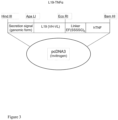
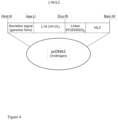
- Exemplary vectors for the expression of L19-TNF ⁇ and L19-IL2 are disclosed in Figure 3 and Figure 4 , respectively.
- the skilled person will appreciate that further DNA vectors capable for expressing the L19-TNF ⁇ and L19-IL2 immunocytokines of Figure 1 and Figure 2 can be readily constructed. Use of such DNA vectors are also within the scope of this invention when they are used in connection with the compositions and methods defined in the claims.
- the nucleic acid molecules may be contained in a host cell, which may be a cell transfected with the nucleic acid molecules, or a daughter of such a cell.
- a host cell which may be a cell transfected with the nucleic acid molecules, or a daughter of such a cell.
- Cells especially eukaryotic cells e.g. HEK and CHO cells, or bacterial cells e.g. Escherichia coli, containing the nucleic acid molecules can be used.
- Immunocytokines of the invention may be produced using recombinant techniques, for example by expressing recombinant DNA encoding the immunocytokine in a cell. Normally the expression is performed in a eukaryotic host cell containing nucleic acid, as described above. Expression may therefore comprise culturing such a host cell. For L19-TNF ⁇ , trimerisation of the subunits may occur in the cell or during purification of the fusion proteins from the cell (21), (24).
- the primary buffer component was Hepes, and the buffer pH, salt and polysorbate concentrations were varied.
- Hepes buffers were prepared at pH 7.5 and 8.0:
- Hepes-based formulations showed particles in suspension, which could only be dissolved in some cases by using 0.1% or 0.2% polysorbate20.
- the most preferred hepes-based buffer for L19-TNF ⁇ was 15 mM Hepes, 75mM Mannitol, 0.2% polysorbate20 (v/v), 1.8% Glycerol (w/v), 5mM EDTA, pH 8.0 - this buffer meets all three acceptance criteria and is denoted Hepes-9.
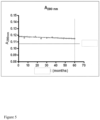
- L19-TNF ⁇ was formulated in the Hepes-9 buffer at a final concentration of 0.092 mg/mL and was tested for stability. This L19-TNF ⁇ immunocytokine formulation was stored at -80° for up to 60 months during which time the protein concentration was monitored by measuring the 280 nm absorbance.
- Figure 5 shows that the 280 nm absorbance does not decrease substantially over the 60 month period, indicating that the initial Hepes-9 buffer is suitable for long-term storage.
- the horizontal line shows the lower detection limit.
- the Hepes-9 buffer described in Example 1 was not suitable for higher concentrations of L19-TNF ⁇ when starting from lower concentrations. For example, when the concentration was increased from 0.092 mg/mL up to 0.4 - 0.45 mg /mL, small particles appeared in the suspension and a visible pellet was recovered after centrifugation.
- the product After concentrating the L19-TNF ⁇ immunocytokine solution in the Hepes-9 buffer, the product was stored at 2-8°C and at -80°C for 24 hours. In both cases small white particles were still visible in suspension. The 280 nm absorbance (A 280nm ) of the solution was read after centrifugation and a 6%-8% of OD loss was recorded. Furthermore, when the product was filtered after storage at 2-8°C, a 16% of loss the A 280nm reading was recorded, as shown in Table 1.
- Figure 6 shows bands at the molecular weight of L19-TNF ⁇ both in the standard solution and in the pellet in both reducing and non-reducing conditions. This indicates that when the concentration of L19-TNF ⁇ in the Hepes-9 buffer is increased, the protein precipitates.
- Lane 1 L19-TNF ⁇ standard (reducing);
- lane 2 L19-TNF ⁇ standard (non-reducing);
- lane 3 L19-TNF ⁇ pellet (reducing);
- Lane 4 L19-TNF ⁇ pellet (non-reducing).
- the primary buffer component was varied.
- Tris-based buffers were prepared at pH 8.0 and 8.5:
- Acetate buffers were prepared at pH 5:
- Histidine buffers were prepared at pH 6, 8 and 9:
- Citrate buffer was prepared at pH 6.6
- Citrate-1 comprises 5.6 g/L sodium Citrate, 0.21 g/L citric acid, 70 g/L trehalose dihydrate, 0.2 g/L polysorbate80, 1%(w/v) glycerol, 5mM EDTA, pH 6.6. Both the visual clarity and A280 stability criteria were met but the trimer purity criteria was not met indicating particles in suspension or aggregation of the trimer.
- Borate buffer was prepared at pH 7.4 Borate-1 comprises 1.1g/L sodium borate, 3.5g/L boric acid, 55 mM mannitol, 1% (w/v) glycerol, 5mM EDTA, pH 7.4. None of the acceptance criteria were met.
- Carbonate buffer was prepared at pH 7.0 and pH 8.0
- Phosphate buffers were prepared at pH 6.3, 6.5, 7.0 and 8.0 using monobasic sodium phosphate, with and without dibasic sodium phosphate:
- the most preferred buffers selected for ongoing clinical tests were Phos-19 and Phos-21. The difference between these buffers is the presence of EDTA in Phos-21 and the absence of EDTA in Phos-19. While the presence or absence of EDTA is not observed to impact the solubility of L19-TNF ⁇ , nor the stability of the L19-TNF ⁇ solution, EDTA may be helpful as a preservative.
- Phos-19 Phosphate buffer was prepared without KCl as follows.
- Phos-28 comprises 15 mM NaH 2 PO 4 and 10 mM Na 2 HPO 4 at pH 8.0, 75 mM mannitol, 1% glycerol (w/v), 30 mM NaCl and 0.01% polysorbate20. All of the acceptance criteria were met.
- KCl was not essential in the formulation.
- a KCl concentration in the range about 1.5-1.8 mM helped to maintainthe isotonicity of the solution by preventing a sudden pH shift during freezing of the formulation.
- Phosphate buffer Phos-19 was further investigated regarding the pH.
- Phosphate buffer Phos-19 was prepared at pH 6.5, 7.0, 7.5, 7.8, 8.5, 8.8 and 9.0.
- Phos-29 comprises 15 mM NaH 2 PO 4 and 10 mM Na 2 HPO 4 at pH 6.5, 75 mM mannitol, 1% glycerol (w/v), 1.5 mM KCl, 30 mM NaCl and 0.01% polysorbate20. None of the acceptance criteria were met.
- Phos-30 comprises 15 mM NaH 2 PO 4 and 10 mM Na 2 HPO 4 at pH 7.0, 75 mM mannitol, 1% glycerol (w/v), 1.5 mM KCl, 30 mM NaCl and 0.01% polysorbate20. None of the acceptance criteria were met.
- Phos-31 comprises 15 mM NaH 2 PO 4 and 10 mM Na 2 HPO 4 at pH 7.5, 75 mM mannitol, 1% glycerol (w/v), 1.5 mM KCl, 30 mM NaCl and 0.01% polysorbate20. None of the acceptance criteria were met.
- Phos-32 comprises 15 mM NaH 2 PO 4 and 10 mM Na 2 HPO 4 at pH 7.8, 75 mM mannitol, 1% glycerol (w/v), 1.5 mM KCl, 30 mM NaCl and 0.01% polysorbate20. All of the acceptance criteria were met.
- Phos-33 comprises 15 mM NaH 2 PO 4 and 10 mM Na 2 HPO 4 at pH 8.5, 75 mM mannitol, 1% glycerol (w/v), 1.5 mM KCl, 30 mM NaCl and 0.01% polysorbate20. All of the acceptance criteria were met.
- Phos-34 comprises 15 mM NaH 2 PO 4 and 10 mM Na 2 HPO 4 at pH 8.8, 75 mM mannitol, 1% glycerol (w/v), 1.5 mM KCl, 30 mM NaCl and 0.01% polysorbate20. All of the acceptance criteria were met
- Phos-35 comprises 15 mM NaH 2 PO 4 and 10 mM Na 2 HPO 4 at pH 9.0, 75 mM mannitol, 1% glycerol (w/v), 1.5 mM KCl, 30 mM NaCl and 0.01% polysorbate20. None of the acceptance criteria were met.
- Example 7 studies on the salt and the phosphate concentration in the Phos-19 Phosphate buffer
- the salt NaCl was substituted by another salt (e.g. KCl). Nacl was removed from Phos-19 and substituted by KCl at a concentration of 1.5 mM or 30 mM.
- KCl another salt
- Phos-36 comprises 15 mM NaH 2 PO 4 and 10 mM Na 2 HPO 4 at pH 8.0, 75 mM mannitol, 1% glycerol (w/v), 1.5 mM KCl and 0.01% polysorbate20. All of the acceptance criteria were met.
- Phos-37 comprises 15 mM NaH 2 PO 4 and 10 mM Na 2 HPO 4 at pH 8.0, 75 mM mannitol, 1% glycerol (w/v), 30 mM KCl and 0.01% polysorbate20. All of the acceptance criteria were met.
- Phosphate buffer (Phos-19 variants) comprising various concentrations of NaH 2 PO 4 and Na 2 HPO 4 were tested.
- Phos-38 comprises 10 mM NaH2PO4 and 10 mM Na2HPO4 at pH 8.0, 75 mM mannitol, 1% glycerol (w/v), 1.5 mM KCl, 30 mM NaCl and 0.01% polysorbate20. All of the acceptance criteria were met.
- Phos-39 comprises 20 mM NaH2PO4 and 10 mM Na2HPO4 at pH 8.0, 75 mM mannitol, 1% glycerol (w/v), 1.5 mM KCl, 30 mM NaCl and 0.01% polysorbate20. All of the acceptance criteria were met.
- Phos-40 comprises 15 mM NaH2PO4 and 15 mM Na2HPO4 at pH 8.0, 75 mM mannitol, 1% glycerol (w/v), 1.5 mM KCl, 30 mM NaCl and 0.01% polysorbate20. All of the acceptance criteria were met.
- Phos-28 corresponds to Phos-19 without KCl.
- Phos-42 comprises 15 mM NaH 2 PO 4 and 10 mM Na 2 HPO 4 at pH 8.0, 75 mM mannitol, 1.5% glycerol (w/v), 30 mM NaCl and 0.01% polysorbate20. All of the acceptance criteria were met.
- Tween80 Phosphate buffer (Phos-28) comprising various concentrations of Tween80 instead of Tween20 were tested.
- Phos-43 comprises 15 mM NaH 2 PO 4 and 10 mM Na 2 HPO 4 at pH 8.0, 75 mM mannitol, 1% glycerol (w/v), 30 mM NaCl and 0.005% polysorbate80. All of the acceptance criteria were met.
- Phos-44 comprises 15 mM NaH 2 PO 4 and 10 mM Na 2 HPO 4 at pH 8.0, 75 mM mannitol, 1% glycerol (w/v), 30 mM NaCl and 0.03% polysorbate80. All of the acceptance criteria were met.
- Phos-45 comprises 15 mM NaH 2 PO 4 and 10 mM Na 2 HPO 4 at pH 8.0, 75 mM mannitol, 1% glycerol (w/v), 30 mM NaCl and 0.1% polysorbate80. All of the acceptance criteria were met.
- Example 10 Treatment of a patient with L19-TNF ⁇ in phosphate buffer in combination with L19-IL2
- a 59 year old patient was diagnosed with Stage IIIB melanoma and presented an injectable retroauricolar metastasis.
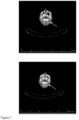
- the CT scan at Day 0 shows the presence of the melanoma lesion ( Figure 5 , top panel).
- Example 11 Treatment of a patient having a sarcoma with L19-TNF ⁇ in phosphate buffer in combination with Doxorubicin
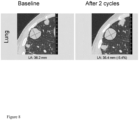
- a patient with chondrosarcoma was treated with 2 cycles of L19-TNF ⁇ (17 ug/kg - 3 weekly injections per cycle) and doxorubicin (60 mg/m 2 1 weekly injection per cycle), administered by infusion.
- the target lesion in lung showed growth stabilization at CT after 2 cycles of treatment ( Figure 8 ).
Landscapes
- Health & Medical Sciences (AREA)
- Life Sciences & Earth Sciences (AREA)
- Chemical & Material Sciences (AREA)
- Medicinal Chemistry (AREA)
- General Health & Medical Sciences (AREA)
- Animal Behavior & Ethology (AREA)
- Pharmacology & Pharmacy (AREA)
- Public Health (AREA)
- Veterinary Medicine (AREA)
- Epidemiology (AREA)
- Engineering & Computer Science (AREA)
- Immunology (AREA)
- Chemical Kinetics & Catalysis (AREA)
- General Chemical & Material Sciences (AREA)
- Molecular Biology (AREA)
- Bioinformatics & Cheminformatics (AREA)
- Proteomics, Peptides & Aminoacids (AREA)
- Oil, Petroleum & Natural Gas (AREA)
- Biochemistry (AREA)
- Organic Chemistry (AREA)
- Microbiology (AREA)
- Mycology (AREA)
- Zoology (AREA)
- Gastroenterology & Hepatology (AREA)
- Dermatology (AREA)
- Inorganic Chemistry (AREA)
- Endocrinology (AREA)
- Nuclear Medicine, Radiotherapy & Molecular Imaging (AREA)
- Biophysics (AREA)
- Genetics & Genomics (AREA)
- Medicinal Preparation (AREA)
- Medicines That Contain Protein Lipid Enzymes And Other Medicines (AREA)
- Medicines Containing Antibodies Or Antigens For Use As Internal Diagnostic Agents (AREA)
- Peptides Or Proteins (AREA)
- Preparation Of Compounds By Using Micro-Organisms (AREA)
Priority Applications (5)
| Application Number | Priority Date | Filing Date | Title |
|---|---|---|---|
| SI201731562T SI3484446T1 (sl) | 2016-07-15 | 2017-07-14 | Protitelesni sestavki |
| EP23169312.8A EP4233843A3 (en) | 2016-07-15 | 2017-07-14 | Antibody compositions |
| SM20250088T SMT202500088T1 (it) | 2016-07-15 | 2017-07-14 | Composizioni di anticorpi |
| HRP20241637TT HRP20241637T1 (hr) | 2016-07-15 | 2017-07-14 | Pripravci protutijela |
| RS20241219A RS66141B1 (sr) | 2016-07-15 | 2017-07-14 | Sastavi antitela |
Applications Claiming Priority (2)
| Application Number | Priority Date | Filing Date | Title |
|---|---|---|---|
| GBGB1612317.6A GB201612317D0 (en) | 2016-07-15 | 2016-07-15 | Antibody compositions |
| PCT/EP2017/067870 WO2018011404A1 (en) | 2016-07-15 | 2017-07-14 | Antibody compositions |
Related Child Applications (2)
| Application Number | Title | Priority Date | Filing Date |
|---|---|---|---|
| EP23169312.8A Division EP4233843A3 (en) | 2016-07-15 | 2017-07-14 | Antibody compositions |
| EP23169312.8A Division-Into EP4233843A3 (en) | 2016-07-15 | 2017-07-14 | Antibody compositions |
Publications (2)
| Publication Number | Publication Date |
|---|---|
| EP3484446A1 EP3484446A1 (en) | 2019-05-22 |
| EP3484446B1 true EP3484446B1 (en) | 2024-09-25 |
Family
ID=56890667
Family Applications (2)
| Application Number | Title | Priority Date | Filing Date |
|---|---|---|---|
| EP23169312.8A Pending EP4233843A3 (en) | 2016-07-15 | 2017-07-14 | Antibody compositions |
| EP17745672.0A Active EP3484446B1 (en) | 2016-07-15 | 2017-07-14 | Antibody compositions |
Family Applications Before (1)
| Application Number | Title | Priority Date | Filing Date |
|---|---|---|---|
| EP23169312.8A Pending EP4233843A3 (en) | 2016-07-15 | 2017-07-14 | Antibody compositions |
Country Status (15)
| Country | Link |
|---|---|
| US (2) | US11351257B2 (pl) |
| EP (2) | EP4233843A3 (pl) |
| DK (1) | DK3484446T3 (pl) |
| ES (1) | ES2993464T3 (pl) |
| FI (1) | FI3484446T3 (pl) |
| GB (1) | GB201612317D0 (pl) |
| HR (1) | HRP20241637T1 (pl) |
| HU (1) | HUE069391T2 (pl) |
| LT (1) | LT3484446T (pl) |
| PL (1) | PL3484446T3 (pl) |
| PT (1) | PT3484446T (pl) |
| RS (1) | RS66141B1 (pl) |
| SI (1) | SI3484446T1 (pl) |
| SM (1) | SMT202500088T1 (pl) |
| WO (1) | WO2018011404A1 (pl) |
Families Citing this family (15)
| Publication number | Priority date | Publication date | Assignee | Title |
|---|---|---|---|---|
| IL307578A (en) | 2015-02-04 | 2023-12-01 | Boehringer Ingelheim Int | Methods of treating inflammatory diseases |
| GB201612317D0 (en) | 2016-07-15 | 2016-08-31 | Philogen Spa | Antibody compositions |
| GB201703062D0 (en) * | 2017-02-24 | 2017-04-12 | Arecor Ltd | Stabilized antibody protein solutions |
| US11608357B2 (en) | 2018-08-28 | 2023-03-21 | Arecor Limited | Stabilized antibody protein solutions |
| EP3372241A1 (en) | 2017-03-06 | 2018-09-12 | Ares Trading S.A. | Liquid pharmaceutical composition |
| EP3372242A1 (en) | 2017-03-06 | 2018-09-12 | Ares Trading S.A. | Liquid pharmaceutical composition |
| WO2019185792A1 (en) | 2018-03-29 | 2019-10-03 | Philogen S.P.A | Cancer treatment using immunoconjugates and immune check-point inhibitors |
| WO2020249757A1 (en) | 2019-06-14 | 2020-12-17 | Philogen S.P.A | Immunoconjugates comprising a single chain diabody and interleukin-15 or interleukin-15 and a sushi domain of interleukin-15 receptor alpha |
| TW202123965A (zh) * | 2019-09-09 | 2021-07-01 | 德商百靈佳殷格翰國際股份有限公司 | 抗-il-23p19抗體調配物 |
| WO2021209452A1 (en) | 2020-04-14 | 2021-10-21 | Philogen S.P.A. | Dosage units and regimen, uses, methods or formulations of compositions comprising a recombinant protein comprising interleukin-12 and an antibody binding the extra-domain b of fibronectin |
| HRP20241274T1 (hr) * | 2020-05-22 | 2024-12-06 | Philogen S.P.A. | Terapija na bazi tnf-a imunokonjugata za liječenje tumora mozga |
| MX2024011427A (es) | 2022-03-21 | 2024-09-24 | Philogen Spa | Preparación de un inmunoconjugado de tnfa. |
| EP4496582A1 (en) | 2022-03-23 | 2025-01-29 | Philogen S.p.A. | Il2 immunoconjuqate preparation |
| AU2023332212A1 (en) * | 2022-09-01 | 2025-04-10 | Philogen S.P.A. | Tnf alpha and interleukin-2 combination therapy for non-melanoma skin cancer |
| WO2025172582A1 (en) * | 2024-02-15 | 2025-08-21 | Philogen S.P.A | Methods for treating melanoma |
Family Cites Families (13)
| Publication number | Priority date | Publication date | Assignee | Title |
|---|---|---|---|---|
| US4457916A (en) | 1982-08-31 | 1984-07-03 | Asahi Kasei Kogyo Kabushiki Kaisha | Method for stabilizing Tumor Necrosis Factor and a stable aqueous solution or powder containing the same |
| TWI259837B (en) | 1998-05-11 | 2006-08-11 | Eidgenossische Tech Hochscule | Specific binding molecules for scintigraphy, conjugates containing them and therapeutic method for treatment of angiogenesis |
| WO2001062298A2 (en) * | 2000-02-24 | 2001-08-30 | Philogen S.R.L. | Compositions and methods for treatment of angiogenesis in pathological lesions |
| EA200802289A1 (ru) | 2006-05-08 | 2009-04-28 | Филоджен Спа | Направляемые к мишени антителами цитокины для терапии |
| RU2432155C3 (ru) * | 2006-06-16 | 2017-11-17 | Ридженерон Фармасьютикалз, Инк. | Составы антагониста vegf, подходящие для интравитреального введения |
| WO2008121615A2 (en) * | 2007-03-30 | 2008-10-09 | Medimmune, Inc. | Antibody formulation |
| BRPI0814252B8 (pt) | 2007-06-14 | 2021-05-25 | Biogen Idec Inc | composição farmacêutica aquosa estável compreendendo natalizumabe, dose unitária, e seringa pré-cheia |
| RU2628089C2 (ru) | 2011-09-26 | 2017-08-14 | Филоген С.П.А. | Комбинированная терапия иммуноцитокинами |
| HK1221163A1 (zh) * | 2013-05-02 | 2017-05-26 | Mabxience, S.A. | Tnfr:fc融合多肽的替代配方 |
| CA2942150A1 (en) | 2014-04-07 | 2015-10-15 | Seattle Genetics, Inc. | Stable formulations for anti-cd19 antibodies and antibody-drug conjugates |
| ES2772817T3 (es) * | 2014-04-10 | 2020-07-08 | Obi Pharma Inc | Anticuerpos de unión a antígenos de carbohidrato asociados a tumor, composiciones farmacéuticas y sus usos |
| GB201507908D0 (en) | 2015-05-08 | 2015-06-24 | Philogen Spa | IL2 and TNF immunoconjugates |
| GB201612317D0 (en) | 2016-07-15 | 2016-08-31 | Philogen Spa | Antibody compositions |
-
2016
- 2016-07-15 GB GBGB1612317.6A patent/GB201612317D0/en not_active Ceased
-
2017
- 2017-07-14 PL PL17745672.0T patent/PL3484446T3/pl unknown
- 2017-07-14 US US16/317,902 patent/US11351257B2/en active Active
- 2017-07-14 SM SM20250088T patent/SMT202500088T1/it unknown
- 2017-07-14 HU HUE17745672A patent/HUE069391T2/hu unknown
- 2017-07-14 FI FIEP17745672.0T patent/FI3484446T3/fi active
- 2017-07-14 ES ES17745672T patent/ES2993464T3/es active Active
- 2017-07-14 EP EP23169312.8A patent/EP4233843A3/en active Pending
- 2017-07-14 PT PT177456720T patent/PT3484446T/pt unknown
- 2017-07-14 LT LTEPPCT/EP2017/067870T patent/LT3484446T/lt unknown
- 2017-07-14 SI SI201731562T patent/SI3484446T1/sl unknown
- 2017-07-14 WO PCT/EP2017/067870 patent/WO2018011404A1/en not_active Ceased
- 2017-07-14 HR HRP20241637TT patent/HRP20241637T1/hr unknown
- 2017-07-14 RS RS20241219A patent/RS66141B1/sr unknown
- 2017-07-14 EP EP17745672.0A patent/EP3484446B1/en active Active
- 2017-07-14 DK DK17745672.0T patent/DK3484446T3/da active
-
2022
- 2022-05-25 US US17/824,482 patent/US12023381B2/en active Active
Also Published As
| Publication number | Publication date |
|---|---|
| US20210093720A1 (en) | 2021-04-01 |
| PT3484446T (pt) | 2024-11-21 |
| LT3484446T (lt) | 2024-11-25 |
| PL3484446T3 (pl) | 2025-02-24 |
| RS66141B1 (sr) | 2024-12-31 |
| US11351257B2 (en) | 2022-06-07 |
| HUE069391T2 (hu) | 2025-03-28 |
| WO2018011404A1 (en) | 2018-01-18 |
| EP4233843A2 (en) | 2023-08-30 |
| EP4233843A3 (en) | 2023-09-27 |
| FI3484446T3 (fi) | 2024-11-21 |
| ES2993464T3 (en) | 2024-12-30 |
| DK3484446T3 (da) | 2024-11-04 |
| US20230165960A1 (en) | 2023-06-01 |
| GB201612317D0 (en) | 2016-08-31 |
| SI3484446T1 (sl) | 2025-01-31 |
| EP3484446A1 (en) | 2019-05-22 |
| HRP20241637T1 (hr) | 2025-02-14 |
| SMT202500088T1 (it) | 2025-03-12 |
| US12023381B2 (en) | 2024-07-02 |
Similar Documents
| Publication | Publication Date | Title |
|---|---|---|
| US12023381B2 (en) | Antibody compositions | |
| JP6542433B2 (ja) | 単独でのまたは化学療法と組み合わされた変異アクチビン受容体ポリペプチド、およびその使用 | |
| ES2373966T3 (es) | Composiciones y procedimientos para el tratamiento de la angiogénesis en lesiones patológicas. | |
| US10195253B2 (en) | Immunocytokine combination therapy | |
| JP6759188B2 (ja) | 生物活性カーゴの経口送達のためのコリックス毒素由来融合分子 | |
| JP6825181B2 (ja) | 膵炎を治療するための薬剤の製造におけるil−22二量体の使用 | |
| BR112013013548B1 (pt) | Proteína de fusão anticancerígena | |
| BRPI0808943A2 (pt) | Método de tratamento do câncer por administração de combinações de il-18 humano | |
| SK137895A3 (en) | Stable liquid compositions of gamma interferon | |
| JP7221545B2 (ja) | ホスファチジルセリン標的化融合分子およびそれらの使用方法 | |
| US20210330747A1 (en) | Pharmaceutical Compositions and Pharmaceutical Products of Heterodimeric Human Interleukin-15 (hetIL-15) | |
| AU2020311050B2 (en) | Stable formulations of recombinant proteins | |
| US20050063948A1 (en) | Methods for targeting interleukin-12 to malignant endothelium | |
| KR20230106663A (ko) | 정의된 크기의 나노입자 복합체 | |
| TW524693B (en) | Cancer cell nuclease activator | |
| KR20150092109A (ko) | 주사용 암 조성물 | |
| TW200538466A (en) | Methods for controlling angiogenesis and cell proliferation | |
| JP2023512337A (ja) | インターロイキン-12とフィブロネクチンのエクストラドメインbに結合する抗体とを含む組換えタンパク質を含む組成物の投与単位およびレジメン、使用、方法または製剤 | |
| US20050233961A1 (en) | Methods for treating cancer using vascular endothelial cell growth inhibitor VEGI-192A | |
| JP4748639B2 (ja) | 肝臓疾患治療剤 | |
| US20250319154A1 (en) | Compositions and methods for treating cancer | |
| BR112013005697B1 (pt) | Formulação aquosa estável | |
| AU2023356118A1 (en) | Use of c/ebp-beta antagonist and immunomodulator | |
| CN1997277A (zh) | 利用血管内皮细胞生长抑制剂vegi-192a治疗癌症的方法 | |
| JPH01193231A (ja) | 抗腫瘍剤 |
Legal Events
| Date | Code | Title | Description |
|---|---|---|---|
| REG | Reference to a national code |
Ref country code: HR Ref legal event code: TUEP Ref document number: P20241637T Country of ref document: HR |
|
| STAA | Information on the status of an ep patent application or granted ep patent |
Free format text: STATUS: UNKNOWN |
|
| STAA | Information on the status of an ep patent application or granted ep patent |
Free format text: STATUS: THE INTERNATIONAL PUBLICATION HAS BEEN MADE |
|
| PUAI | Public reference made under article 153(3) epc to a published international application that has entered the european phase |
Free format text: ORIGINAL CODE: 0009012 |
|
| STAA | Information on the status of an ep patent application or granted ep patent |
Free format text: STATUS: REQUEST FOR EXAMINATION WAS MADE |
|
| 17P | Request for examination filed |
Effective date: 20190205 |
|
| AK | Designated contracting states |
Kind code of ref document: A1 Designated state(s): AL AT BE BG CH CY CZ DE DK EE ES FI FR GB GR HR HU IE IS IT LI LT LU LV MC MK MT NL NO PL PT RO RS SE SI SK SM TR |
|
| AX | Request for extension of the european patent |
Extension state: BA ME |
|
| DAV | Request for validation of the european patent (deleted) | ||
| DAX | Request for extension of the european patent (deleted) | ||
| STAA | Information on the status of an ep patent application or granted ep patent |
Free format text: STATUS: EXAMINATION IS IN PROGRESS |
|
| 17Q | First examination report despatched |
Effective date: 20210127 |
|
| RIC1 | Information provided on ipc code assigned before grant |
Ipc: A61P 35/00 20060101ALI20240605BHEP Ipc: A61K 47/26 20060101ALI20240605BHEP Ipc: A61K 47/10 20170101ALI20240605BHEP Ipc: C07K 16/18 20060101ALI20240605BHEP Ipc: A61K 9/08 20060101ALI20240605BHEP Ipc: A61K 9/00 20060101AFI20240605BHEP |
|
| RIC1 | Information provided on ipc code assigned before grant |
Ipc: A61K 31/704 20060101ALI20240618BHEP Ipc: A61P 35/00 20060101ALI20240618BHEP Ipc: A61K 47/26 20060101ALI20240618BHEP Ipc: A61K 47/10 20170101ALI20240618BHEP Ipc: C07K 16/18 20060101ALI20240618BHEP Ipc: A61K 9/08 20060101ALI20240618BHEP Ipc: A61K 9/00 20060101AFI20240618BHEP |
|
| GRAP | Despatch of communication of intention to grant a patent |
Free format text: ORIGINAL CODE: EPIDOSNIGR1 |
|
| STAA | Information on the status of an ep patent application or granted ep patent |
Free format text: STATUS: GRANT OF PATENT IS INTENDED |
|
| GRAS | Grant fee paid |
Free format text: ORIGINAL CODE: EPIDOSNIGR3 |
|
| GRAA | (expected) grant |
Free format text: ORIGINAL CODE: 0009210 |
|
| STAA | Information on the status of an ep patent application or granted ep patent |
Free format text: STATUS: THE PATENT HAS BEEN GRANTED |
|
| INTG | Intention to grant announced |
Effective date: 20240808 |
|
| AK | Designated contracting states |
Kind code of ref document: B1 Designated state(s): AL AT BE BG CH CY CZ DE DK EE ES FI FR GB GR HR HU IE IS IT LI LT LU LV MC MK MT NL NO PL PT RO RS SE SI SK SM TR |
|
| REG | Reference to a national code |
Ref country code: GB Ref legal event code: FG4D |
|
| REG | Reference to a national code |
Ref country code: CH Ref legal event code: EP |
|
| REG | Reference to a national code |
Ref country code: DE Ref legal event code: R096 Ref document number: 602017085058 Country of ref document: DE |
|
| REG | Reference to a national code |
Ref country code: IE Ref legal event code: FG4D |
|
| REG | Reference to a national code |
Ref country code: DK Ref legal event code: T3 Effective date: 20241028 |
|
| REG | Reference to a national code |
Ref country code: NL Ref legal event code: FP |
|
| P01 | Opt-out of the competence of the unified patent court (upc) registered |
Free format text: CASE NUMBER: APP_55775/2024 Effective date: 20241011 |
|
| REG | Reference to a national code |
Ref country code: FI Ref legal event code: FGE Ref country code: PT Ref legal event code: SC4A Ref document number: 3484446 Country of ref document: PT Date of ref document: 20241121 Kind code of ref document: T Free format text: AVAILABILITY OF NATIONAL TRANSLATION Effective date: 20241115 |
|
| REG | Reference to a national code |
Ref country code: SE Ref legal event code: TRGR |
|
| REG | Reference to a national code |
Ref country code: ES Ref legal event code: FG2A Ref document number: 2993464 Country of ref document: ES Kind code of ref document: T3 Effective date: 20241230 |
|
| REG | Reference to a national code |
Ref country code: EE Ref legal event code: FG4A Ref document number: E024741 Country of ref document: EE Effective date: 20241119 |
|
| REG | Reference to a national code |
Ref country code: SK Ref legal event code: T3 Ref document number: E 45474 Country of ref document: SK Ref country code: GR Ref legal event code: EP Ref document number: 20240402876 Country of ref document: GR Effective date: 20250120 |
|
| REG | Reference to a national code |
Ref country code: HR Ref legal event code: T1PR Ref document number: P20241637 Country of ref document: HR |
|
| REG | Reference to a national code |
Ref country code: HU Ref legal event code: AG4A Ref document number: E069391 Country of ref document: HU |
|
| REG | Reference to a national code |
Ref country code: DE Ref legal event code: R097 Ref document number: 602017085058 Country of ref document: DE |
|
| PGFP | Annual fee paid to national office [announced via postgrant information from national office to epo] |
Ref country code: SM Payment date: 20250627 Year of fee payment: 9 |
|
| PGFP | Annual fee paid to national office [announced via postgrant information from national office to epo] |
Ref country code: MC Payment date: 20250624 Year of fee payment: 9 |
|
| PGFP | Annual fee paid to national office [announced via postgrant information from national office to epo] |
Ref country code: FI Payment date: 20250627 Year of fee payment: 9 |
|
| PGFP | Annual fee paid to national office [announced via postgrant information from national office to epo] |
Ref country code: PL Payment date: 20250605 Year of fee payment: 9 |
|
| PGFP | Annual fee paid to national office [announced via postgrant information from national office to epo] |
Ref country code: GB Payment date: 20250620 Year of fee payment: 9 Ref country code: DK Payment date: 20250620 Year of fee payment: 9 |
|
| PGFP | Annual fee paid to national office [announced via postgrant information from national office to epo] |
Ref country code: LT Payment date: 20250618 Year of fee payment: 9 |
|
| PGFP | Annual fee paid to national office [announced via postgrant information from national office to epo] |
Ref country code: RS Payment date: 20250619 Year of fee payment: 9 Ref country code: NO Payment date: 20250623 Year of fee payment: 9 |
|
| PGFP | Annual fee paid to national office [announced via postgrant information from national office to epo] |
Ref country code: NL Payment date: 20250620 Year of fee payment: 9 Ref country code: BE Payment date: 20250627 Year of fee payment: 9 |
|
| PGFP | Annual fee paid to national office [announced via postgrant information from national office to epo] |
Ref country code: HR Payment date: 20250604 Year of fee payment: 9 |
|
| PGFP | Annual fee paid to national office [announced via postgrant information from national office to epo] |
Ref country code: PT Payment date: 20250604 Year of fee payment: 9 Ref country code: LV Payment date: 20250604 Year of fee payment: 9 |
|
| PGFP | Annual fee paid to national office [announced via postgrant information from national office to epo] |
Ref country code: FR Payment date: 20250620 Year of fee payment: 9 Ref country code: EE Payment date: 20250612 Year of fee payment: 9 |
|
| REG | Reference to a national code |
Ref country code: HR Ref legal event code: ODRP Ref document number: P20241637 Country of ref document: HR Payment date: 20250604 Year of fee payment: 9 |
|
| PGFP | Annual fee paid to national office [announced via postgrant information from national office to epo] |
Ref country code: MT Payment date: 20250618 Year of fee payment: 9 Ref country code: GR Payment date: 20250604 Year of fee payment: 9 Ref country code: BG Payment date: 20250604 Year of fee payment: 9 |
|
| PGFP | Annual fee paid to national office [announced via postgrant information from national office to epo] |
Ref country code: RO Payment date: 20250618 Year of fee payment: 9 |
|
| PGFP | Annual fee paid to national office [announced via postgrant information from national office to epo] |
Ref country code: SK Payment date: 20250618 Year of fee payment: 9 |
|
| PGFP | Annual fee paid to national office [announced via postgrant information from national office to epo] |
Ref country code: CZ Payment date: 20250604 Year of fee payment: 9 |
|
| PGFP | Annual fee paid to national office [announced via postgrant information from national office to epo] |
Ref country code: IE Payment date: 20250620 Year of fee payment: 9 |
|
| PGFP | Annual fee paid to national office [announced via postgrant information from national office to epo] |
Ref country code: SE Payment date: 20250620 Year of fee payment: 9 |
|
| PLBE | No opposition filed within time limit |
Free format text: ORIGINAL CODE: 0009261 |
|
| STAA | Information on the status of an ep patent application or granted ep patent |
Free format text: STATUS: NO OPPOSITION FILED WITHIN TIME LIMIT |
|
| PGFP | Annual fee paid to national office [announced via postgrant information from national office to epo] |
Ref country code: LU Payment date: 20250728 Year of fee payment: 9 |
|
| 26N | No opposition filed |
Effective date: 20250626 |
|
| PGFP | Annual fee paid to national office [announced via postgrant information from national office to epo] |
Ref country code: HU Payment date: 20250828 Year of fee payment: 9 |
|
| PGFP | Annual fee paid to national office [announced via postgrant information from national office to epo] |
Ref country code: ES Payment date: 20250801 Year of fee payment: 9 |
|
| PGFP | Annual fee paid to national office [announced via postgrant information from national office to epo] |
Ref country code: DE Payment date: 20250623 Year of fee payment: 9 |
|
| PGFP | Annual fee paid to national office [announced via postgrant information from national office to epo] |
Ref country code: TR Payment date: 20250709 Year of fee payment: 9 Ref country code: IT Payment date: 20250724 Year of fee payment: 9 |
|
| PGFP | Annual fee paid to national office [announced via postgrant information from national office to epo] |
Ref country code: AL Payment date: 20250706 Year of fee payment: 9 Ref country code: AT Payment date: 20250627 Year of fee payment: 9 |
|
| PGFP | Annual fee paid to national office [announced via postgrant information from national office to epo] |
Ref country code: CH Payment date: 20250801 Year of fee payment: 9 |
|
| PGFP | Annual fee paid to national office [announced via postgrant information from national office to epo] |
Ref country code: IS Payment date: 20250704 Year of fee payment: 9 |
|
| PGFP | Annual fee paid to national office [announced via postgrant information from national office to epo] |
Ref country code: MK Payment date: 20250619 Year of fee payment: 9 |