EP3468853B1 - Proaktive steuerung eines assistenzsystems eines kraftfahrzeugs - Google Patents
Proaktive steuerung eines assistenzsystems eines kraftfahrzeugs Download PDFInfo
- Publication number
- EP3468853B1 EP3468853B1 EP17734714.3A EP17734714A EP3468853B1 EP 3468853 B1 EP3468853 B1 EP 3468853B1 EP 17734714 A EP17734714 A EP 17734714A EP 3468853 B1 EP3468853 B1 EP 3468853B1
- Authority
- EP
- European Patent Office
- Prior art keywords
- assistance system
- driver
- function
- control device
- motor vehicle
- Prior art date
- Legal status (The legal status is an assumption and is not a legal conclusion. Google has not performed a legal analysis and makes no representation as to the accuracy of the status listed.)
- Active
Links
Images
Classifications
-
- B—PERFORMING OPERATIONS; TRANSPORTING
- B60—VEHICLES IN GENERAL
- B60W—CONJOINT CONTROL OF VEHICLE SUB-UNITS OF DIFFERENT TYPE OR DIFFERENT FUNCTION; CONTROL SYSTEMS SPECIALLY ADAPTED FOR HYBRID VEHICLES; ROAD VEHICLE DRIVE CONTROL SYSTEMS FOR PURPOSES NOT RELATED TO THE CONTROL OF A PARTICULAR SUB-UNIT
- B60W50/00—Details of control systems for road vehicle drive control not related to the control of a particular sub-unit, e.g. process diagnostic or vehicle driver interfaces
- B60W50/08—Interaction between the driver and the control system
- B60W50/14—Means for informing the driver, warning the driver or prompting a driver intervention
-
- B—PERFORMING OPERATIONS; TRANSPORTING
- B60—VEHICLES IN GENERAL
- B60W—CONJOINT CONTROL OF VEHICLE SUB-UNITS OF DIFFERENT TYPE OR DIFFERENT FUNCTION; CONTROL SYSTEMS SPECIALLY ADAPTED FOR HYBRID VEHICLES; ROAD VEHICLE DRIVE CONTROL SYSTEMS FOR PURPOSES NOT RELATED TO THE CONTROL OF A PARTICULAR SUB-UNIT
- B60W30/00—Purposes of road vehicle drive control systems not related to the control of a particular sub-unit, e.g. of systems using conjoint control of vehicle sub-units
- B60W30/02—Control of vehicle driving stability
-
- B—PERFORMING OPERATIONS; TRANSPORTING
- B60—VEHICLES IN GENERAL
- B60W—CONJOINT CONTROL OF VEHICLE SUB-UNITS OF DIFFERENT TYPE OR DIFFERENT FUNCTION; CONTROL SYSTEMS SPECIALLY ADAPTED FOR HYBRID VEHICLES; ROAD VEHICLE DRIVE CONTROL SYSTEMS FOR PURPOSES NOT RELATED TO THE CONTROL OF A PARTICULAR SUB-UNIT
- B60W30/00—Purposes of road vehicle drive control systems not related to the control of a particular sub-unit, e.g. of systems using conjoint control of vehicle sub-units
- B60W30/18—Propelling the vehicle
- B60W30/18009—Propelling the vehicle related to particular drive situations
- B60W30/18163—Lane change; Overtaking manoeuvres
-
- B—PERFORMING OPERATIONS; TRANSPORTING
- B60—VEHICLES IN GENERAL
- B60W—CONJOINT CONTROL OF VEHICLE SUB-UNITS OF DIFFERENT TYPE OR DIFFERENT FUNCTION; CONTROL SYSTEMS SPECIALLY ADAPTED FOR HYBRID VEHICLES; ROAD VEHICLE DRIVE CONTROL SYSTEMS FOR PURPOSES NOT RELATED TO THE CONTROL OF A PARTICULAR SUB-UNIT
- B60W50/00—Details of control systems for road vehicle drive control not related to the control of a particular sub-unit, e.g. process diagnostic or vehicle driver interfaces
- B60W50/08—Interaction between the driver and the control system
-
- G—PHYSICS
- G01—MEASURING; TESTING
- G01C—MEASURING DISTANCES, LEVELS OR BEARINGS; SURVEYING; NAVIGATION; GYROSCOPIC INSTRUMENTS; PHOTOGRAMMETRY OR VIDEOGRAMMETRY
- G01C21/00—Navigation; Navigational instruments not provided for in groups G01C1/00 - G01C19/00
- G01C21/26—Navigation; Navigational instruments not provided for in groups G01C1/00 - G01C19/00 specially adapted for navigation in a road network
- G01C21/34—Route searching; Route guidance
- G01C21/36—Input/output arrangements for on-board computers
-
- G—PHYSICS
- G01—MEASURING; TESTING
- G01C—MEASURING DISTANCES, LEVELS OR BEARINGS; SURVEYING; NAVIGATION; GYROSCOPIC INSTRUMENTS; PHOTOGRAMMETRY OR VIDEOGRAMMETRY
- G01C21/00—Navigation; Navigational instruments not provided for in groups G01C1/00 - G01C19/00
- G01C21/26—Navigation; Navigational instruments not provided for in groups G01C1/00 - G01C19/00 specially adapted for navigation in a road network
- G01C21/34—Route searching; Route guidance
- G01C21/36—Input/output arrangements for on-board computers
- G01C21/3664—Details of the user input interface, e.g. buttons, knobs or sliders, including those provided on a touch screen; remote controllers; input using gestures
-
- G—PHYSICS
- G01—MEASURING; TESTING
- G01C—MEASURING DISTANCES, LEVELS OR BEARINGS; SURVEYING; NAVIGATION; GYROSCOPIC INSTRUMENTS; PHOTOGRAMMETRY OR VIDEOGRAMMETRY
- G01C21/00—Navigation; Navigational instruments not provided for in groups G01C1/00 - G01C19/00
- G01C21/26—Navigation; Navigational instruments not provided for in groups G01C1/00 - G01C19/00 specially adapted for navigation in a road network
- G01C21/34—Route searching; Route guidance
- G01C21/36—Input/output arrangements for on-board computers
- G01C21/3697—Output of additional, non-guidance related information, e.g. low fuel level
-
- G—PHYSICS
- G10—MUSICAL INSTRUMENTS; ACOUSTICS
- G10L—SPEECH ANALYSIS TECHNIQUES OR SPEECH SYNTHESIS; SPEECH RECOGNITION; SPEECH OR VOICE PROCESSING TECHNIQUES; SPEECH OR AUDIO CODING OR DECODING
- G10L15/00—Speech recognition
- G10L15/22—Procedures used during a speech recognition process, e.g. man-machine dialogue
-
- B—PERFORMING OPERATIONS; TRANSPORTING
- B60—VEHICLES IN GENERAL
- B60W—CONJOINT CONTROL OF VEHICLE SUB-UNITS OF DIFFERENT TYPE OR DIFFERENT FUNCTION; CONTROL SYSTEMS SPECIALLY ADAPTED FOR HYBRID VEHICLES; ROAD VEHICLE DRIVE CONTROL SYSTEMS FOR PURPOSES NOT RELATED TO THE CONTROL OF A PARTICULAR SUB-UNIT
- B60W2540/00—Input parameters relating to occupants
- B60W2540/21—Voice
-
- B—PERFORMING OPERATIONS; TRANSPORTING
- B60—VEHICLES IN GENERAL
- B60W—CONJOINT CONTROL OF VEHICLE SUB-UNITS OF DIFFERENT TYPE OR DIFFERENT FUNCTION; CONTROL SYSTEMS SPECIALLY ADAPTED FOR HYBRID VEHICLES; ROAD VEHICLE DRIVE CONTROL SYSTEMS FOR PURPOSES NOT RELATED TO THE CONTROL OF A PARTICULAR SUB-UNIT
- B60W2556/00—Input parameters relating to data
- B60W2556/10—Historical data
Definitions
- the invention relates to a method for controlling an assistance system of a motor vehicle, the assistance system comprising a driver assistance system.
- the invention also relates to an assistance system for a motor vehicle with a driver assistance system which is designed to monitor a driving situation of the motor vehicle.
- the DE 10 2011 121 110 A1 a method for operating a voice dialog system in a vehicle, in which a system status of the voice dialog system belonging to a voice dialog is determined and displayed in color. A voice input is also recorded and compared with stored voice commands.
- the DE 10 2012 022 630 A1 discloses a method for communicating a driver with a driver assistance system.
- a voice input is recorded, which is entered by a data processing unit is analyzed syntactically and semantically. In doing so, keywords are recognized, which are stored and processed in a database, in order to then assign one or more operating parameters to the keywords.
- Output information is then created from the operating parameters, which is used via voice output to transmit information to the driver.
- a driving speed can be set in autonomous driving operations of a motor vehicle.
- the system can issue a query to the driver here if an entry was too imprecise.
- the DE 10 2014 203138 A1 discloses assistance to a driver in poor visibility.
- the task therefore is to reduce the driver's cognitive load by means of an assistance system and thus in particular to increase road safety and comfort.
- the invention relates to a method for controlling an assistance system of a motor vehicle, the assistance system comprising or being a driver assistance system.
- a first step is to monitor a driving situation of the motor vehicle (in which the motor vehicle is located), which can in particular include a driving state of the motor vehicle, by the driver assistance system of the motor vehicle.
- the monitored driving situation can also include a future driving situation of the motor vehicle resulting from the current driving situation with a predetermined probability.
- the monitoring can in particular also be repeated or continuous monitoring.
- a next step here is to ascertain at least one of the options for the driver resulting from the monitored driving situation by a control device of the assistance system.
- the motor vehicle is on a freeway when an activation of a partially automatic or fully automatic driving function of the driver assistance system is determined as the resulting action option for the driver. It can also be determined, for example, from route information from a navigation system of the motor vehicle, which is part of the driver assistance system, as the resulting action option that a partially automatic or fully automatic driving function of the driver assistance system is deactivated at a future point in time or at a position to be reached by the vehicle in the future according to the route information becomes.
- this can be the case if, on a section of the route behind the position to be reached, which is reached by the motor vehicle at the future point in time, for example in a period of a few minutes, there is an occasion to deactivate the partially or fully automatic driving function, as can be the case, for example, through a construction site or when leaving the motorway.
- the resulting action option can thus include both adapting at least one function of the assistance system that has already been provided or activated by the assistance system, and also providing at least one function of the assistance system that has not yet been activated.
- This respective function is referred to below as the function of the assistance system that corresponds to the option of action.
- the corresponding function or the corresponding functions can include driving functions of the driver assistance system as well as information and / or comfort functions of the assistance system.
- the function includes an overtaking process, in particular initiating an overtaking process, and / or selecting a lane selection and / or changing lanes.
- the determination is carried out taking into account, in particular exclusively taking into account, data that can be called up by the control device independently of a user input to the assistance system.
- a further step is to issue a request to provide a function of the Assistance system to the driver through an output device of the assistance system.
- the provision here includes, analogous to the above statements, in particular also providing an adapted, already activated function of the assistance system, that is to say adapting an already provided and / or activated function of the assistance system.
- a further step is then to record a response reaction of the driver by a detection device of the assistance system and to provide the function of the assistance system as a function of the detected response by the control device.
- the provision as a function of the recorded response can in particular also include controlling and / or adapting the function of the assistance system.
- the assistance system or system can provide the driver with hints and information or proactively ask him about a necessary decision. If the assistance system is unsafe in a semi-autonomous or autonomous driving mode, so-called piloted driving, in a driving situation and therefore does not achieve a clear result, the assistance system offers the driver one or more options and controls the assistance system accordingly Response reaction or instructions from the driver. Since the driver is no longer actively involved in driving a piloted drive, he is relieved of cognitive stress to a large extent until the piloted drive ends and the driver has to take active control again.
- the driver can nevertheless be informed by the assistance system and / or be asked for a decision if, for example, there is a change in a driving situation or another need for this, in particular if there is a new or changed action option for the driver.
- the one or more action options can form a subset of all possible action options for the driver and can be, for example, only two or three action options. This significantly increases comfort, especially in piloted driving, and also increases safety in the event of problem situations. Because the system acts proactively the driver does not have all sorts of options in every driving situation Action options, which also affect the different functions of modern assistance or driver assistance systems, present, but the system relieves the driver and only offers him sensible functions that correspond to the action options resulting or derived from the monitored driving situation.
- the vehicle-side initiative without a previous command that activates the assistance system or a corresponding request that activates the assistance system or a function of the assistance system thus allows the driver to focus his attention entirely on what is going on or on other activities that are important to him so to a cognitive relief, which increases security and comfort.
- the operating concept thus reflects the fundamental paradigm shift in the driver's environment, which goes hand in hand with the change from manually controlled driving to partially or fully autonomous or piloted driving with changed driver requirements and driver demands.
- the control device ascertaining the options for action which in particular can include adapting an already provided or activated function, delivers at least two different results, which the control device classifies as equivalent, and the request to provide the function relates to a selection among the functions, which are assigned to the options for action, especially under the different adapted functions which correspond to the different results.
- the request to provide the function relates to a selection from the functions that differ from the two Match results.
- the control device can in particular decide on the basis of a predetermined and / or predeterminable criterion when the results are classified as equivalent.
- the results do not have to be equivalent in the sense of having the same effect, but can, for example, only have a great similarity in terms of the criterion, so that the criterion for the results differs by less than a predetermined amount Criterion, a query and / or confirmation are considered useful and carried out in succession.
- the criterion can also take into account a context of the current driving situation and / or a history stored in the control device and / or a driver profile. In addition to the (driving) situations in which the driver assistance system decides autonomously, this can Driver assistance system can thus be designed not to make decisions in predetermined driving situations, but to ask the driver on his own initiative.
- the assistance system not only provides the driver with cognitive relief in driving situations that are clear to the assistance system, but also in ambivalent situations in which the control device or the assistance system itself cannot find a clear solution.
- cognitive relief for the driver is achieved in these situations as well, and safety and comfort are increased. For example, the driver can react faster in an ambivalent driving situation.
- the driver assistance system can be designed to make autonomous decisions in predetermined driving situations, but to inform the driver about the decision and in particular also about a decision reason. This has the advantage that the driver's confidence in the driver assistance system is strengthened since the driver receives additional information about the behavior of the motor vehicle. Cognitive relief is also achieved with this.
- the query is output by a voice output device of the assistance system.
- the request can thus include a voice signal.
- This has the advantage that the request reaches the driver regardless of posture, which is particularly advantageous in piloted driving. There, the steering wheel is no longer touched in many situations, and sitting in a relaxed position may also mean that other controls are sometimes no longer within easy reach.
- the fact that a voice output can also take place in a direction-unspecific manner means that the driver is not optically distracted from the traffic situation or does not have to focus his attention on spatial areas which do not relate to the traffic situation.
- the assistance system comprises an information entertainment system or infotainment system
- the function of the assistance system comprises or is a function of the information entertainment system.
- the function provides information and / or entertainment content.
- the information and / or entertainment content is in particular related to a driver's habit stored in the assistance system or driver assistance system and / or to a destination stored in the driver assistance system and / or to a route stored in the driver assistance system and / or to a journey duration stored in the driver assistance system and / or adapted to a diary stored in the assistance system.
- the term deposited here is to be understood as meaning stored and / or retrievable.
- an appointment calendar stored remotely on a cloud can be transferred to the assistance system and is therefore stored in it and is available for use.
- the method can relate here to a driving situation in an at least partially autonomous, in particular partially autonomous or autonomous, driving mode, that is to say piloted driving. It is precisely there that the driver can benefit from the travel time released by the piloted or (partially) autonomous driving, which is maximized by the embodiments mentioned.
- longer trips or multi-part functions or services of the assistance system for example playing a film or an audio book
- shorter trips or functions for example a music service
- podcasts in particular multi-part podcasts on more demanding topics, and / or further training offers such as interactive language courses and their preparation and playback are available during piloted car journeys lasting several hours.
- a personal, intelligent assistance function can be implemented, which supports and maintains the driver, especially during longer journeys, and takes the annoying and cognitively demanding preselection away from the driver, taking into account the aforementioned aspects such as the stored habits or stored destinations, and so tailor-made functions can provide.
- the response is a voice response and the response is detected by a language detection device of the assistance system.
- a response reaction is not recorded, in particular if a clear response reaction is not recorded, a current status can be maintained or, in the case of piloted driving, control of driving can be returned to the driver, ie the at least partially autonomous driving mode is ended.
- the motor vehicle is in the monitored driving situation in an at least partially autonomous, that is to say in particular partially autonomous or highly autonomous or fully autonomous, driving operation.
- an at least partially autonomous that is to say in particular partially autonomous or highly autonomous or fully autonomous, driving operation.
- the assistance system can give the driver an initiative, that is, a proactive query or feedback.
- Proactive output of the request to provide a function of the assistance system is particularly advantageous in ambivalent driving situations. Issuing the request can also include issuing a proactive warning or notice.
- Warnings or notices are proactive if they relate to a future driving situation relate, which follow or result from a current driving situation with a given minimum probability.
- the function of the assistance system comprises or is a function of the driver assistance system.
- the function can in particular support the driver while driving and / or relieve him of the driving.
- the function of the driver preferably supports in a current driving situation.
- the function comprises a function which relates to or comprises route guidance by the driver assistance system.
- the assistance system can automatically suggest an alternative route to avoid an obstacle, such as a traffic jam and / or an accident.
- the alternative route is in particular also suggested on its own if the obstacle to starting the journey, ie when the route guidance was initially created, was not yet present.
- the function can be or comprise an at least partially autonomous function. This has the advantage that the driver is relieved particularly effectively, since the functions of the driver assistance system can relieve the driver of a particularly large number of resource-binding tasks. This is particularly pronounced for functions which relate to route guidance or a current driving situation such as an overtaking process and / or a lane selection or a lane change.
- the function of the driver assistance system includes a driving stabilizing function, for example a traction control.
- the output can include a warning message to the driver. This has the advantage that security is increased to a particularly large extent.
- the control device evaluates user-related data and / or vehicle-related data and / or world-related data to determine the options for action.
- the user-related data can in particular be an electronic calendar and / or electronic messages and / or a usage history of the assistance system.
- the vehicle-related data can in particular comprise a vehicle condition and / or a road condition and / or a driving condition and / or traffic data.
- the world-related data can in particular include news and / or weather data.
- the data can in particular be called up by the control device from a remote computing device, for example a so-called cloud. This has the advantage that the at least one action option of the driver can be predicted or ascertained particularly precisely and thus the corresponding function which is associated with the respective action option can be offered particularly accurately and for the driver.
- the invention also relates to an assistance system for a motor vehicle, with a driver assistance system which is designed to monitor a driving situation of the motor vehicle.
- the driver assistance system can also be designed to at least partially automate a driving function, that is to say partially, highly or fully automatically, for example in the context of the so-called piloted driving.
- What is essential here is a control device of the assistance system, which is designed to determine at least one action option for the driver resulting from the monitored driving situation, taking into account data that can be called up by the control device independently of a user input to the assistance system.
- the assistance system also includes an output device, which is designed to issue a request to the driver to provide a function of the assistance system that corresponds to the option of action.
- a detection device which is designed to detect a response from the driver, is also part of the assistance system.
- the control device is also designed to provide the function of the assistance system as a function of the detected response.
- the invention also relates to a motor vehicle with such an assistance system.
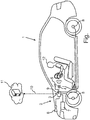
- the single figure shows an exemplary embodiment of an assistance system in a motor vehicle.
- the motor vehicle 1 has an assistance system 2, which in addition to a control device 3 also comprises an output device 4, which is embodied here as a voice output device, and a detection device 5, which is embodied here as a microphone. Furthermore, the assistance system 2 comprises a monitoring unit 6, which is designed here as a camera. In the present case, the control device 3 is also coupled to a motor 7 and wheel systems 8.
- the assistance system 2 thus also includes a driver assistance system, by means of which a driving situation of the motor vehicle is monitored in the present case and piloted driving, that is to say partially autonomous or highly autonomous or fully autonomous driving, can also be implemented in the example shown.
- control device 5 also includes a position detection module 9, by means of which a position of the motor vehicle 1 can be determined.
- a navigation system is also part of the assistance system 2.
- control device 3 is also coupled via a wireless connection 10 to a computing device 11 external to the vehicle, in the present case a so-called cloud, and can use this to call up data, for example traffic and / or weather data.
- this data can be taken into account as a function of the position of the motor vehicle 1 detected by the position detection module 9.
- a driving situation of the motor vehicle 1 can now be monitored using data from the monitoring device 6 and information retrieved from the remote computing device 11, for example about a traffic situation or a traffic jam.
- a route guidance stored in the driver assistance system is also taken into account.
- the control device 3 From the monitored driving situation, which can also include a future driving situation of the motor vehicle 1 resulting from the monitored driving situation with a predefined minimum probability, the control device 3 now determines a resulting action option for a driver 12 of the motor vehicle 1. This takes into account the control device 5 data that can be called up to the assistance system 2 independently of a user input by the driver 12. For example, this can be sensor data of the motor vehicle 1 and / or data of an automatic route guidance of a navigation system and / or data from the remote computing device 11.
- the assistance system 2 can take the initiative on the vehicle side, it can, for example, after receiving one Request information about a traffic jam on the route lying in front of the motor vehicle 1 according to an automatic route guidance, whether it should change the planned route.
- the driver 12 can first be given the information that there is a traffic jam as a voice signal, followed by the question of whether a route guidance should be updated in order to avoid the traffic jam.
- the assistance system 2 can thus offer the driver 12 to avoid the traffic jam independently.
- the assistance system 2 can inform the driver about this and ask whether, for example, he should stop for fuel early.
- the assistance system 2 can also ask whether it should drive to a petrol station if the vehicle 1 falls below a defined or predetermined remaining range. For example, with a remaining range of 50 kilometers or less, a corresponding request for adapting route guidance or adapting piloted driving can be issued to the driver.
- the assistance system 2 can also issue an inquiry relating to a selection from various functions of the assistance system 2. For example, the driver 12 can be asked whether the motor vehicle 1 should overtake a vehicle driving ahead in a piloted driving mode if the computing device 5 itself does not provide a clear decision or a clear priority.
- piloted driving taking into account a future driving situation, for example a location to be reached in the future according to the route guidance, it can also be announced that the driver should deactivate piloted driving and take control himself. For example, this can be requested if there is a construction site on the route in front of motor vehicle 1.
- the request could ask the driver to take over the steering wheel for this situation, for example in three minutes and / or 5 kilometers, and to deactivate piloted driving.
- the function of the assistance system corresponding to this option of action that is to say taking over the control, would then be an adaptation in the form of switching off an activated or already provided function of the assistance system 2, namely the automatic driving function of the assistance system 2.
- the corresponding request can also include a warning message. For example, if the assistance system 2 cannot clearly identify a road marking, for example in the area of the construction site, it can output as an inquiry that the driver should take over the steering.
- the system can, for example, issue a request as to whether the assistance system 2 is to take over the control, that is to say, for example, if the motor vehicle 1 is on a motorway or is approaching one, whether piloted driving is activated shall be.
- the vehicle can indicate that, for example, a curve in front of the motor vehicle 1 is narrow or that the road surface on a section of the road in front of the motor vehicle 1 is worn, so that it should better reduce its speed and offer it accordingly, for him to take over.
- an indication of a maximum permitted speed or that the driver 12 is traveling in the wrong direction, for example in the form of an instruction a blocked passage is conceivable here.
- the driver's option of action relates to reducing the vehicle speed or changing the direction of travel and the corresponding function of the assistance system to change the warning or offer to change the speed and / or direction of travel.
- the assistance system 2 can inquire whether the driver 12 would like to continue a language course, for example, at a previously reached point. Offers relating to other maintenance options defined in terms of their time, for example films, can also be offered depending on the expected duration of the piloted driving.
- the control device 3 can also access a calendar of the driver 12 and give it information about corresponding entries.
- the assistance system 2 can inform the driver whether an appointment stored in the calendar can still be reached in good time in the current traffic situation, and corresponding options for action or functions of the assistance system 2 such as a route change or a call to other people involved in the non-stable appointment to offer.
Landscapes
- Engineering & Computer Science (AREA)
- Automation & Control Theory (AREA)
- Remote Sensing (AREA)
- Radar, Positioning & Navigation (AREA)
- Mechanical Engineering (AREA)
- Transportation (AREA)
- Human Computer Interaction (AREA)
- Physics & Mathematics (AREA)
- General Physics & Mathematics (AREA)
- Computational Linguistics (AREA)
- Health & Medical Sciences (AREA)
- Audiology, Speech & Language Pathology (AREA)
- Acoustics & Sound (AREA)
- Multimedia (AREA)
- Control Of Driving Devices And Active Controlling Of Vehicle (AREA)
- Traffic Control Systems (AREA)
- Navigation (AREA)
Description
- Die Erfindung betrifft ein Verfahren zum Steuern eines Assistenzsystems eines Kraftfahrzeugs, wobei das Assistenzsystem ein Fahrerassistenzsystem umfasst. Die Erfindung betrifft auch ein Assistenzsystem für ein Kraftfahrzeug mit einem Fahrerassistenzsystem, welches ausgelegt ist, eine Fahrsituation des Kraftfahrzeugs zu überwachen.
- Traditionellerweise ist es stets der Fahrer eines Kraftfahrzeugs, welcher das Kraftfahrzeug aktiv lenkt und entsprechend den Verkehr beobachten muss. Daher bestehen hohe Ansprüche an die Minimierung der Fahrerablenkung durch zusätzliche Vorrichtungen und Systeme im Kraftfahrzeug wie beispielsweise Fahrerassistenzsysteme. In diesem Zusammenhang hat sich gezeigt, dass eine Sprachbedienung gegenüber einer manuellen Bedienung von Fahrzeugfunktionen bezüglich einer minimierten Fahrerablenkung vorteilhaft ist. Dabei konzentriert sich die Sprachbedienung heute oft auf Unterhaltungs- und/oder Komfortfunktionen eines Assistenzsystems.
- So offenbart beispielsweise die
DE 10 2011 121 110 A1 ein Verfahren zum Betreiben eines Sprachdialogsystems in einem Fahrzeug, bei dem ein zu einem Sprachdialog gehöriger Systemzustand des Sprachdialogsystems ermittelt und farblich dargestellt wird. Dabei wird auch eine Spracheingabe erfasst und mit gespeicherten Sprachbefehlen verglichen. - Die
DE 10 2012 022 630 A1 offenbart ein Verfahren zur Kommunikation eines Fahrers mit einem Fahrerassistenzsystem. Dabei erfolgt ein Erfassen einer Spracheingabe, welche durch eine Datenverarbeitungseinheit syntaktisch und semantisch analysiert wird. Dabei werden Schlagworte erkannt, welche in einer Datenbank gespeichert und aufbereitet vorliegen, um sodann den Schlagworten einen oder mehrere Betriebsparameter zuzuordnen. Aus den Betriebsparametern erfolgt dann ein Erstellen einer Ausgabeinformation, welche über eine Sprachausgabe zur Informationsübermittlung an den Fahrer genutzt wird. Somit kann beispielsweise eine Fahrgeschwindigkeit in autonomen Fahrbetrieben eines Kraftfahrzeugs eingestellt werden. Das System kann hier eine Rückfrage an den Fahrer ausgeben, falls eine Eingabe zu ungenau war. - Die
DE 10 2014 203138 A1 offenbart die Unterstützung eines Fahrers bei schlechter Sicht. - Es stellt sich somit die Aufgabe, die kognitive Belastung eines Fahrers durch ein Assistenzsystem zu reduzieren und so insbesondere die Sicherheit im Straßenverkehr und den Komfort zu erhöhen.
- Diese Aufgabe wird durch die Gegenstände der unabhängigen Patentansprüche gelöst. Vorteilhafte Ausführungsformen ergeben sich aus den abhängigen Patentansprüchen, der Beschreibung und den Figuren.
- Die Erfindung betrifft ein Verfahren zum Steuern eines Assistenzsystems eines Kraftfahrzeugs, wobei das Assistenzsystem ein Fahrerassistenzsystem umfasst oder ist. Ein erster Schritt ist dabei ein Überwachen einer Fahrsituation des Kraftfahrzeugs (in welcher sich das Kraftfahrzeug befindet), die insbesondere einen Fahrzustand des Kraftfahrzeugs umfassen kann, durch das Fahrerassistenzsystem des Kraftfahrzeugs. Die überwachte Fahrsituation kann auch eine aus der aktuellen Fahrsituation mit einer vorgegebenen Wahrscheinlichkeit resultierende zukünftige Fahrsituation des Kraftfahrzeugs umfassen. Bei dem Überwachen kann es sich insbesondere auch um ein wiederholtes oder fortlaufendes Überwachen handeln. Ein nächster Schritt ist hier ein Ermitteln zumindest einer für den Fahrer aus der überwachten Fahrsituation resultierenden Handlungsoptionen durch eine Steuereinrichtung des Assistenzsystems. So kann beispielsweise daraus, dass das Kraftfahrzeug sich auf einer Autobahn befindet, als für den Fahrer daraus resultierende Handlungsoption ein Aktivieren einer teilautomatischen oder vollautomatischen Fahrfunktion des Fahrerassistenzsystems ermittelt werden. Es kann auch beispielsweise aus einer Routeninformation eines Navigationssystems des Kraftfahrzeugs, welches Teil des Fahrerassistenzsystems ist, als resultierende Handlungsoption ermittelt werden, dass eine teilautomatische oder vollautomatische Fahrfunktion des Fahrerassistenzsystems zu einem künftigen Zeitpunkt oder an einer künftig gemäß der Routeninformation von dem Fahrzeug zu erreichenden Position deaktiviert wird. Beispielsweise kann dies der Fall sein, wenn auf einem sich auf der Route befindlichen Abschnitt hinter der zu erreichenden Position, welcher an dem künftigen Zeitpunkt, also beispielsweise in einem Zeitraum von wenigen Minuten, durch das Kraftfahrzeug erreicht wird, ein Anlass zum Deaktivieren der teil- oder vollautomatischen Fahrfunktion vorliegt, wie dies zum Beispiel durch eine Baustelle oder auch durch ein Verlassen der Autobahn gegeben sein kann.
- Die resultierende Handlungsoption kann also sowohl ein Anpassen zumindest einer von dem Assistenzsystem bereits bereitgestellten oder aktivierten Funktion des Assistenzsystems umfassen, als auch ein Bereitstellen zumindest einer noch nicht aktivierten Funktion des Assistenzsystems. Diese jeweilige Funktion wird im Folgenden als die der Handlungsoption entsprechende Funktion des Assistenzsystems bezeichnet. Die entsprechende Funktion oder die entsprechenden Funktionen können dabei sowohl Fahrfunktionen des Fahrerassistenzsystems umfassen als auch Informations- und/oder Komfortfunktionen des Assistenzsystems. Die Funktion umfasst einen Überholvorgang, insbesondere ein Einleiten eines Überholvorgangs, und/oder eine Wahl einer Fahrspurwahl und/oder einen Fahrspurwechsel. Das Ermitteln erfolgt dabei unter Berücksichtigung, insbesondere ausschließlich unter Berücksichtigung, von mittels der Steuereinrichtung unabhängig von einer Nutzereingabe an das Assistenzsystem abrufbaren Daten. Die Daten können somit insbesondere in dem Assistenzsystem, dem Fahrzeug oder einer fahrzeugexternen Recheneinrichtung wie einer Cloud gespeichert sein. Ein weiterer Schritt ist das Ausgeben einer Anfrage zum Bereitstellen einer der ermittelten Handlungsoption entsprechenden Funktion des Assistenzsystems an den Fahrer durch eine Ausgabeeinrichtung des Assistenzsystems. Das Bereitstellen umfasst hier analog zu obigen Ausführungen insbesondere auch ein Bereitstellen einer angepassten bereits aktivierten Funktion des Assistenzsystems, also ein Anpassen einer bereits bereitgestellten und/oder aktivierten Funktion des Assistenzsystems. Ein weiterer Schritt ist sodann ein Erfassen einer Antwortreaktion des Fahrers durch eine Erfassungseinrichtung des Assistenzsystems und ein Bereitstellen der Funktion des Assistenzsystems in Abhängigkeit der erfassten Antwort durch die Steuereinrichtung. Das Bereitstellen in Abhängigkeit der erfassten Antwort kann insbesondere auch ein Steuern und/oder ein Anpassen der Funktion des Assistenzsystems umfassen.
- Das hat den Vorteil, dass das Assistenzsystem oder System dem Fahrer von sich aus Hinweise und Informationen bieten oder ihn proaktiv nach einer notwendigen Entscheidung fragen kann. Falls das Assistenzsystem sich in einem teilautonomen oder autonomen Fahrmodus, bei einem sogenannten pilotierten Fahren, in einer Fahrsituation unsicher ist, also zu keinem eindeutigen Ergebnis gelangt, bietet das Assistenzsystem so von sich aus dem Fahrer eine oder mehrere Handlungsoptionen an und steuert das Assistenzsystem entsprechend der Antwortreaktion oder Weisung des Fahrers. Da der Fahrer bei einem pilotierten Fahren gar nicht mehr aktiv ins Fahrgeschehen eingebunden ist, ist er in einem großen Maß kognitiv entlastet, bis das pilotierte Fahren endet und der Fahrer wieder aktiv die Kontrolle übernehmen muss. Durch das Assistenzsystem kann der Fahrer dennoch informiert und/oder zu einer Entscheidung angefragt werden, falls sich beispielsweise eine Änderung einer Fahrsituation oder eine sonstige Notwendigkeit hierzu ergibt, insbesondere also falls sich eine neue oder veränderte Handlungsoption für den Fahrer ergibt. Die eine oder mehrere Handlungsoptionen können dabei eine Untermenge aller möglichen Handlungsoptionen für den Fahrer bilden und beispielsweise nur zwei oder drei Handlungsoptionen sein. Dies steigert den Komfort gerade bei pilotiertem Fahren erheblich und bildet im Falle von Problemsituationen auch einen Sicherheitsgewinn. Dadurch, dass das System proaktiv agiert, muss der Fahrer sich auch nicht in jeder Fahrsituation sämtliche möglichen Handlungsoptionen, welche auch die unterschiedlichen Funktionen moderner Assistenz- oder Fahrerassistenzsysteme betreffen, vergegenwärtigen, sondern das System entlastet den Fahrer und bietet ihm nur sinnvolle Funktionen an, welche den aus der überwachten Fahrsituation resultierenden oder abgeleiteten Handlungsoptionen entsprechen. Die fahrzeugseitige Initiative ohne einen vorhergehenden, das Assistenzsystem aktivierenden Befehl oder eine entsprechende, das Assistenzsystem oder eine Funktion des Assistenzsystems aktivierende Anfrage erlaubt es so dem Fahrer, seine Aufmerksamkeit ganz auf das Fahrgeschehen oder auf sonstige Tätigkeiten, welche ihm wichtig sind, zu lenken und führt so zu einer kognitiven Entlastung, welche Sicherheit und Komfort steigert. Im Bedienkonzept spiegelt sich damit der grundlegende Paradigmenwechsel im Fahrerumfeld, welcher mit dem Wechsel von dem manuell gesteuerten Fahren zu dem teil- oder vollautonomen beziehungsweise pilotierten Fahren mit geänderten Fahreranforderungen und Fahreransprüchen einhergeht.
- Das Ermitteln der Handlungsoptionen, welche insbesondere ein Anpassen einer bereits bereitgestellten oder aktivierten Funktion umfassen können, durch die Steuereinrichtung liefert zumindest zwei unterschiedliche Ergebnisse, welche von der Steuereinrichtung als gleichwertig eingestuft werden, und die Anfrage zum Bereitstellen der Funktion betrifft ein Auswählen unter den Funktionen, welche den Handlungsoptionen zugeordnet sind, insbesondere unter den unterschiedlichen angepassten Funktionen, welche den unterschiedlichen Ergebnissen entsprechen. Es kann hier insbesondere auch vorgesehen sein, dass, falls das Ermitteln der Handlungsoptionen durch die Steuereinrichtung zumindest zwei unterschiedliche Ergebnisse liefert, welche von der Steuereinrichtung als gleichwertig eingestuft werden, die Anfrage zum Bereitstellen der Funktion ein Auswählen unter den Funktionen betrifft, welche den beiden unterschiedlichen Ergebnissen entsprechen. Die Steuereinrichtung kann dabei insbesondere anhand eines vorgegebenen und/ oder vorgebbaren Kriteriums entscheiden, wann die Ergebnisse als gleichwertig eingestuft werden. Die Ergebnisse müssen also zum Beispiel nicht gleichwertig im Sinne von gleichwirkend sein, sondern können beispielsweise auch nur eine große Ähnlichkeit hinsichtlich des Kriteriums aufweisen, sodass das Kriterium sich für die Ergebnisse um weniger als einen vorgegebenen Betrag unterscheidet.Für die Ergebnisse kann also allgemein gemäß dem Kriterium eine Rückfrage und/oder Bestätigung als sinnvoll erachtet und in Folge durchgeführt werden. Durch das Kriterium kann auch ein Kontext der aktuellen Fahrsituation und/oder eine in der Steuereinrichtung hinterlegte Historie und/ oder ein Fahrerprofil berücksichtigt werden. Neben den (Fahr-)Situationen, in welchen das Fahrerassistenzsystem autonom entscheidet, kann das Fahrerassistenzsystem somit ausgelegt sein, in vorbestimmten Fahrsituationen nicht selber zu entscheiden, sondern den Fahrer von sich aus zu fragen.
- Das hat den Vorteil, dass durch das Assistenzsystem dem Fahrer so nicht nur in für das Assistenzsystem eindeutigen Fahrsituationen eine kognitive Entlastung verschafft wird, sondern auch in ambivalenten Situationen, in denen die Steuereinrichtung oder das Assistenzsystem selber keine eindeutige Lösung findet. Durch die Vorauswahl der Steuereinrichtung wird jedoch auch in diesen Situationen eine kognitive Entlastung des Fahrers erreicht und Sicherheit und Komfort erhöht. So kann der Fahrer in einer ambivalenten Fahrsituation beispielsweise schneller reagieren.
- Alternativ oder ergänzend kann das Fahrerassistenzsystem ausgelegt sein, in vorbestimmten Fahrsituationen autonom zu entscheiden, dabei aber den Fahrer über die Entscheidung und insbesondere auch einen Entscheidungsgrund zu informieren. Das hat den Vorteil, dass das Vertrauen des Fahrers in das Fahrerassistenzsystem gestärkt wird, da der Fahrer eine zusätzliche Information über das Verhalten des Kraftfahrzeugs erhält. Auch damit wird eine kognitive Entlastung erreicht.
- In einer vorteilhaften Ausführungsform ist hier vorgesehen, dass das Ausgeben der Anfrage durch eine Sprachausgabeeinrichtung des Assistenzsystems erfolgt. Die Anfrage kann somit ein Sprachsignal umfassen. Das hat den Vorteil, dass die Anfrage den Fahrer unabhängig von einer Körperhaltung erreicht, was gerade bei einem pilotierten Fahren vorteilhaft ist. Dort wird in vielen Situationen das Lenkrad nicht mehr angefasst und durch ein Sitzen in entspannter Haltung sind möglicherweise auch weitere Bedienelemente teilweise nicht mehr in einer bequemen Griffweite. Dadurch, dass eine Sprachausgabe auch richtungsunspezifisch erfolgen kann, wird der Fahrer auch nicht von dem Verkehrsgeschehen optisch abgelenkt beziehungsweise muss seine Aufmerksamkeit nicht auf Raumbereiche, welche nicht das Verkehrsgeschehen betreffen, richten.
- In einer weiteren vorteilhaften Ausführungsform ist vorgesehen, dass das Assistenzsystem ein Informationsunterhaltungssystem oder Infotainment-System umfasst, und die Funktion des Assistenzsystems eine Funktion des Informationsunterhaltungssystems umfasst oder ist. Dabei erfolgt durch die Funktion eine Bereitstellung eines Informations- und/oder Unterhaltungsinhalts. Der Informations- und/oder Unterhaltungsinhalt ist dabei insbesondere an eine im Assistenzsystem oder im Fahrerassistenzsystem hinterlegte Gewohnheit des Fahrers und/oder an einen im Fahrerassistenzsystem hinterlegten Zielort und/oder an eine in dem Fahrerassistenzsystem hinterlegte Route und/oder an eine im Fahrerassistenzsystem hinterlegte Fahrtdauer und/oder an einen im Assistenzsystem hinterlegten Terminkalender angepasst. Unter hinterlegt ist hier abgespeichert und/oder abrufbar zu verstehen. Beispielsweise kann ein entfernt auf einer Cloud hinterlegter Terminkalender an das Assistenzsystem übertragen werden und ist damit in diesem hinterlegt und steht zur Verwendung zur Verfügung. Insbesondere kann das Verfahren sich hier auf eine Fahrsituation in einem zumindest teilautonomen, insbesondere teilautonomen oder autonomen, Fahrmodus, also auf ein pilotiertes Fahren beziehen. Gerade dort kann somit dem Fahrer die durch das pilotierte oder (teil-)autonome Fahren freigewordene Fahrzeit zusätzlichen Nutzen bringen, welcher durch die genannten Ausführungsformen maximiert wird.
- Zum Beispiel können so bei längeren Fahrten vorausgewählt länger dauernde oder mehrteilige Funktionen beziehungsweise Dienste des Assistenzsystems, beispielsweise ein Abspielen von einem Film oder einem Hörbuch, angeboten werden bei kürzeren Fahrten stattdessen kürzer dauernde Funktionen oder Dienste, beispielsweise ein Musikdienst. Es bieten sich während mehrstündiger, pilotierter Autofahrten zum Beispiel Podcasts, insbesondere mehrteilige Podcasts zu anspruchsvolleren Themen, und/oder Weiterbildungsangebote an wie zum Beispiel interaktive Sprachkurse und deren Aufbereitung und Abspielen. Allgemein kann somit eine persönliche intelligente Assistenzfunktion realisiert werden, welche den Fahrer insbesondere während längerer Fahrten unterstützt und unterhält, und dabei über Berücksichtigung der genannten Aspekte wie der hinterlegten Gewohnheiten oder hinterlegten Zielorte und dergleichen dem Fahrer eine lästige und kognitiv belastende Vorauswahl abnimmt und so maßgeschneiderte Funktionen zur Verfügung stellen kann.
- In einer weiteren Ausführungsform ist vorgesehen, dass die Antwortreaktion eine Sprachantwort ist und das Erfassen der Antwortreaktion durch eine Spracherfassungseinrichtung des Assistenzsystems erfolgt. Insbesondere kann hier bei Nichterfassen einer Antwortreaktion, insbesondere bei Nichterfassen einer eindeutigen Antwortreaktion, ein aktueller Status beibehalten werden oder bei einem pilotierten Fahren die Kontrolle über das Fahren an den Fahrer zurückgegeben werden, der zumindest teilautonome Fahrmodus also beendet werden. Das hat den Vorteil, dass das System besonders komfortabel bedient werden kann und unabhängig von einer körperlichen Haltung des Fahrers ist. Somit kann auch bei einem pilotierten Fahren, bei welchem beispielsweise das Lenkrad nicht angefasst wird oder auch weitere Bedienelemente nicht in bequemer Griffweite sind, das Assistenzsystem sicher und komfortabel gesteuert werden, ohne dass beispielsweise ein Suchen von Bedienelementen durch den Fahrer erforderlich wäre.
- In einer weiteren besonders vorteilhaften Ausführungsform ist vorgesehen, dass das Kraftfahrzeug sich in der überwachten Fahrsituation in einem zumindest teilautonomen, also insbesondere teilautonomen oder hochautonomen oder vollautonomen, Fahrbetrieb befindet. Das hat den Vorteil, dass die besonders große Vielfalt an Handlungsoptionen, die sich dem Fahrer durch die freigewordene Fahrzeit beziehungsweise durch die weniger große Bindung kognitiver Kapazitäten des Fahrers an das Fahrgeschehen bietet, dank des Assistenzsystems besonders gezielt eingegrenzt wird, sodass sich besonders große Vorteile ergeben. Bei einem Wechsel der Verkehrssituation oder des Fahrzustandes, welcher möglicherweise dem Fahrer entgangen ist, kann das Assistenzsystem dem Fahrer eine initiative, das heißt proaktive Rückfrage oder Rückmeldung geben. Gerade in ambivalenten Fahrsituationen ist das proaktive Ausgeben der Anfrage zum Bereitstellen einer Funktion des Assistenzsystems vorteilhaft. Das Ausgeben der Anfrage kann hier auch das Ausgeben einer proaktiven Warnung oder eines proaktiven Hinweises umfassen. Proaktiv sind Warnungen oder Hinweise dann, wenn sie sich auf eine künftige Fahrsituation beziehen, welche mit einer vorgegebenen Mindestwahrscheinlichkeit auf eine aktuelle Fahrsituation folgen oder sich aus dieser ergeben. In einer anderen vorteilhaften Ausführungsform ist vorgesehen, dass die Funktion des Assistenzsystems eine Funktion des Fahrerassistenzsystems umfasst oder ist. Die Funktion kann insbesondere den Fahrer beim Fahren unterstützen und/oder ihm das Fahren abnehmen. Bevorzugt unterstützt die Funktion des Fahrer in einer aktuellen Fahrsituation. Insbesondere umfasst die Funktion eine Funktion, welche eine Routenführung durch das Fahrerassistenzsystem betrifft oder umfasst. So kann das Assistenzsystem beispielsweise von sich aus eine Alternativroute zum Umfahren eines Hindernisses wie zum Beispiel eines Staus und/oder eines Unfalls vorschlagen. Dabei wird die Alternativroute insbesondere auch von sich aus vorgeschlagen, wenn das Hindernis Fahrtantritt, also bei der initialen Erstellung der Routenführung, noch nicht vorhanden war. Die Funktion kann dabei eine zumindest teilautonome Funktion sein oder umfassen. Das hat den Vorteil, dass der Fahrer besonders effektiv entlastet wird, da die Funktionen des Fahrerassistenzsystems dem Fahrer besonders viele Ressourcen bindende Aufgaben abnehmen können. Dies ist gerade für Funktionen, welche eine Routenführung oder eine aktuelle Fahrsituation wie einen Überholvorgang und/oder eine Fahrspurwahl bzw. einen Fahrspurwechsel betreffen oder umfassen, ausgeprägt.
- Dabei kann vorgesehen sein, dass die Funktion des Fahrerassistenzsystems eine fahrstabilisierende Funktion, beispielsweise eine Traktionskontrolle, umfasst. Insbesondere kann hier das Ausgeben eine Warnmeldung an den Fahrer umfassen. Das hat den Vorteil, dass die Sicherheit in besonders großem Maße erhöht wird.
- In einer weiteren besonders vorteilhaften Ausführungsform ist vorgesehen, dass die Steuereinrichtung zum Ermitteln der Handlungsoptionen nutzerbezogene Daten und/oder fahrzeugbezogene Daten und/oder weltbezogene Daten auswertet. Bei den nutzerbezogenen Daten kann es sich insbesondere um einen elektronischen Kalender und/oder elektronische Mitteilungen und/oder eine Nutzungshistorie des Assistenzsystems handeln. Die fahrzeugbezogenen Daten können insbesondere einen Fahrzeugzustand und/oder einen Straßenzustand und/oder einen Fahrzustand und/oder Verkehrsdaten umfassen. Die weltbezogenen Daten können insbesondere Nachrichten und/oder Wetterdaten umfassen. Die Daten können dabei insbesondere durch die Steuereinrichtung von einer entfernten Recheneinrichtung, beispielsweise einer sogenannten Cloud, abgerufen werden. Das hat den Vorteil, dass die zumindest eine Handlungsoption des Fahrers besonders genau vorhergesagt beziehungsweise ermittelt werden kann und somit auch die entsprechende Funktion, welche der jeweiligen Handlungsoption zugeordnet ist, besonders genau und für den Fahrer passend angeboten werden können.
- Die Erfindung betrifft auch ein Assistenzsystem für ein Kraftfahrzeug, mit einem Fahrerassistenzsystem, welches ausgelegt ist, eine Fahrsituation des Kraftfahrzeugs zu überwachen. Das Fahrerassistenzsystem kann überdies ausgelegt sein, eine Fahrfunktion zumindest teilautomatisiert, also teil- , hoch- oder vollautomatisiert, beispielsweise im Rahmen des sogenannten pilotierten Fahrens, bereitzustellen. Wesentlich ist hier eine Steuereinrichtung des Assistenzsystems, welche ausgelegt ist, zumindest eine für den Fahrer aus der überwachten Fahrsituation resultierenden Handlungsoptionen zu ermitteln, und zwar unter Berücksichtigung von mittels der Steuereinrichtung unabhängig von einer Nutzereingabe an das Assistenzsystem abrufbaren Daten. Das Assistenzsystem umfasst auch eine Ausgabeeinrichtung, welche ausgelegt ist, eine Anfrage zum Bereitstellen einer der Handlungsoption entsprechenden Funktion des Assistenzsystems an den Fahrer auszugeben. Auch eine Erfassungseinrichtung, welche ausgelegt ist, eine Antwortreaktion des Fahrers zu erfassen, ist Teil des Assistenzsystems. Dabei ist die Steuereinrichtung weiterhin ausgelegt, die Funktion des Assistenzsystems in Abhängigkeit von der erfassten Antwort bereitzustellen.
- Vorteile und vorteilhafte Ausführungsformen des Assistenzsystems entsprechen hier Vorteilen und vorteilhaften Ausführungsformen des beschriebenen Verfahrens.
- Die Erfindung betrifft auch ein Kraftfahrzeug mit einem solchen Assistenzsystem.
- Die vorstehend in der Beschreibung genannten Merkmale und Merkmalskombinationen, sowie die nachfolgend in der Figurenbeschreibung genannten und/oder in der Figur alleine gezeigten Merkmale und Merkmalskombinationen sind nicht nur in der jeweils angegebenen Kombination, sondern auch in anderen Kombinationen verwendbar, ohne den Rahmen der Erfindung zu verlassen. Es sind somit auch Ausführungen von der Erfindung als umfasst und offenbart anzusehen, die in der Figur nicht explizit gezeigt und erläutert sind, jedoch durch separierte Merkmalskombinationen aus den erläuterten Ausführungen hervorgehen und erzeugbar sind. Es sind auch Ausführungen und Merkmalskombinationen als offenbart anzusehen, die somit nicht alle Merkmale eines ursprünglich formulierten unabhängigen Anspruchs aufweisen. Es sind darüber hinaus Ausführungen und Merkmalskombinationen, insbesondere durch die oben dargelegten Ausführungen, als offenbart anzusehen, die über die in den Rückbezügen der Ansprüche dargelegten Merkmalskombinationen hinausgehen oder von diesen abweichen.
- Ausführungsbeispiele der Erfindung werden nachfolgend anhand einer schematischen Zeichnung näher erläutert.
- Dabei zeigt die einzige Figur eine beispielhaft Ausführungsform eines Assistenzsystems in einem Kraftfahrzeug.
- In der einzigen Figur weist das Kraftfahrzeug 1 ein Assistenzsystem 2 auf, welches hier neben einer Steuereinrichtung 3 auch eine vorliegend als Sprachausgabeeinrichtung ausgeführte Ausgabeeinrichtung 4 sowie eine hier als Mikrofon ausgeführte Erfassungseinrichtung 5 umfasst. Des Weiteren umfasst das Assistenzsystem 2 eine hier als Kamera ausgeführte Überwachungseinheit 6. Vorliegend ist die Steuereinrichtung 3 auch mit einem Motor 7 und Radsystemen 8 gekoppelt. Das Assistenzsystem 2 umfasst damit hier auch ein Fahrerassistenzsystem, mittels welchem vorliegend eine Fahrsituation des Kraftfahrzeugs überwacht und im gezeigten Beispiel auch ein pilotiertes Fahren, also beispielsweise ein teilautonomes oder hochautonomes beziehungsweise vollautonomes Fahren realisiert werden kann.
- Im gezeigten Beispiel umfasst die Steuereinrichtung 5 auch ein Positionserfassungsmodul 9, mittels welchem eine Position des Kraftfahrzeugs 1 ermittelt werden kann. Somit ist in der dargestellten Ausführungsform auch ein Navigationssystem Teil des Assistenzsystems 2.
- Im gezeigten Beispiel ist die Steuereinrichtung 3 auch über eine Drahtlosverbindung 10 mit einer fahrzeugexternen Recheneinrichtung 11, vorliegend einer sogenannten Cloud, gekoppelt und kann aus dieser Daten, beispielsweise Verkehrs- und/oder Wetterdaten, abrufen. Diese Daten können dabei im gezeigten Beispiel in Abhängigkeit der von dem Positionserfassungsmodul 9 erfassten Position des Kraftfahrzeugs 1 berücksichtigt werden.
- So kann nun beispielsweise anhand Daten der Überwachungseinrichtung 6, sowie einer aus der entfernten Recheneinrichtung 11 abgerufenen Information, beispielsweise über einen Verkehrsstand oder einen Stau, eine Fahrsituation des Kraftfahrzeugs 1 überwacht werden. Dabei kann beispielsweise auch eine in dem Fahrerassistenzsystem hinterlegte Routenführung berücksichtigt werden.
- Aus der überwachten Fahrsituation, welche auch eine aus der überwachten Fahrsituation mit einer vorgegebenen Mindestwahrscheinlichkeit resultierende zukünftige Fahrsituation des Kraftfahrzeugs 1 umfassen kann, ermittelt nun die Steuereinrichtung 3 eine resultierende Handlungsoption für einen Fahrer 12 des Kraftfahrzeugs 1. Dies erfolgt unter Berücksichtigung von mittels der Steuereinrichtung 5 unabhängig von einer Nutzereingabe des Fahrers 12 an das Assistenzsystem 2 abrufbaren Daten. Beispielsweise können dies Sensordaten des Kraftfahrzeugs 1 und/oder Daten einer automatischen Routenführung eines Navigationssystems und/oder Daten aus der entfernten Recheneinrichtung 11 sein.
- Es folgt sodann ein Ausgeben einer Anfrage zum Bereitstellen einer der Handlungsoption des Fahrers 12 entsprechenden Funktion des Assistenzsystems 2 an den Fahrer 12 durch die Ausgabeeinrichtung 4. Da das Assistenzsystem 2 fahrzeugseitig die Initiative ergreifen kann, kann es so von sich aus beispielsweise nach einem Erhalten einer Information über einen Stau auf der gemäß einer automatischen Routenführung in der vor dem Kraftfahrzeug 1 liegenden Strecke anfragen, ob es die geplante Route ändern soll. So kann beispielsweise als Sprachsignal dem Fahrer 12 zunächst die Information gegeben werden, dass auf der Strecke ein Stau vorliegt, gefolgt von der Frage, ob eine Routenführung aktualisiert werden soll, um den Stau zu umfahren. Im Falle eines teilautonomen oder vollautonomen Fahrens kann das Assistenzsystem 2 dem Fahrer 12 somit anbieten, den Stau selbständig zu umfahren.
- Auch wenn beispielsweise der Tankinhalt nicht bis zu einem Ziel einer in dem Assistenzsystem hinterlegten Route reicht, kann das Assistenzsystem 2 den Fahrer darüber informieren und fragen, ob es beispielsweise frühzeitig einen Tankstopp einlegen soll. Alternativ oder ergänzend kann das Assistenzsystem 2 auch fragen, ob es eine Tankstelle anfahren soll, wenn eine definierte oder vorgegebene Restreichweite für das Kraftfahrzeug 1 unterschritten wird. Beispielsweise können bei einer verbleibenden Restreichweite von 50 Kilometern oder weniger eine entsprechende Anfrage zum Anpassen einer Routenführung oder zum Anpassen eines pilotierten Fahrens an den Fahrer ausgegeben werden.
- Gerade bei einem pilotierten, also teilautonomen oder hochautonomen oder vollautonomen Fahren kann das Assistenzsystem 2 auch eine Anfrage ausgeben, welche ein Auswählen unter verschiedenen Funktionen des Assistenzsystems 2 betrifft. So kann beispielsweise der Fahrer 12 gefragt werden, ob das Kraftfahrzeug 1 in einem pilotierten Fahrmodus ein vorausfahrendes Fahrzeug überholen soll, falls die Recheneinrichtung 5 selber keine klare Entscheidung oder keine klare Priorität liefert.
- Überdies kann bei einem pilotierten Fahren unter Berücksichtigung einer zukünftigen Fahrsituation, also beispielsweise eines gemäß der Routenführung künftig zu erreichenden Ortes, auch angekündigt werden, dass der Fahrer das pilotierte Fahren deaktivieren und selber das Steuer übernehmen soll. Beispielsweise kann dies angefragt werden, falls auf der Strecke vor dem Kraftfahrzeug 1 eine Baustelle liegt. In diesem Fall könnte beispielsweise die Anfrage den Fahrer auffordern, für diese Situation, zum Beispiel in drei Minuten und/oder 5 Kilometern, das Steuer zu übernehmen und das pilotierte Fahren zu deaktivieren. Die dieser Handlungsoption, also dem Übernehmen des Steuers, entsprechende Funktion des Assistenzsystems wäre dann vorliegend ein Anpassen in Form eines Abschaltens einer aktivierten oder bereits bereitgestellten Funktion des Assistenzsystems 2, nämlich der automatischen Fahrfunktion des Assistenzsystems 2. Die entsprechende Anfrage kann auch eine Warnmeldung umfassen. Beispielsweise kann das Assistenzsystem 2, falls es eine Straßenmarkierung, zum Beispiel im Bereich der Baustelle, nicht eindeutig erkennen kann, als Anfrage ausgeben, dass der Fahrer das Steuer übernehmen soll.
- Steuert der Fahrer 12 das Kraftfahrzeug 1 manuell, kann das System beispielsweise eine Anfrage ausgeben, ob das Assistenzsystem 2 das Steuer übernehmen soll, also beispielsweise falls das Kraftfahrzeug 1 sich auf einer Autobahn befindet oder auf eine solche einfährt, anfragen, ob das pilotierte Fahren aktiviert werden soll.
- In ähnlicher Weise kann das Fahrzeug darauf hinweisen, dass beispielsweise eine sich vor dem Kraftfahrzeug 1 befindliche Kurve eng ist oder der Straßenbelag auf einem sich vor dem Kraftfahrzeug 1 befindlichen Straßenabschnitt abgenutzt ist, sodass er seine Geschwindigkeit besser reduzieren sollte und entsprechend anbieten, dies für ihn zu übernehmen. Auch Hinweis auf eine maximal erlaubte Geschwindigkeit oder darauf, dass der Fahrer 12 in eine falsche Richtung fährt, beispielsweise in Form eines Hinweises auf eine gesperrte Durchfahrt, ist hier denkbar. In diesem Fall betrifft die Handlungsoption des Fahrers ein Reduzieren der Fahrzeuggeschwindigkeit beziehungsweise ein Ändern der Fahrtrichtung und die entsprechende Funktion des Assistenzsystems die Warnung beziehungsweise ein Angebot Tempo und/oder Fahrtrichtung zu ändern.
- Alternativ oder ergänzend bietet sich gerade in Fällen des pilotierten Fahrens an, dass dem Fahrer 12 - beispielsweise unter Berücksichtigung einer voraussichtlichen Fahrtdauer des pilotierten Fahrens - ein oder mehrere verschiedene Unterhaltungsangebote gemacht werden. So kann beispielsweise durch das Assistenzsystem 2 angefragt werden, ob der Fahrer 12 einen Sprachkurs beispielsweise an einem zuvor erreichten Punkt fortsetzen möchte. Auch Angebote bezügliche weiterer in ihrem zeitlichen Umfang definierten Unterhaltsmöglichkeiten, beispielsweise Filme, können in Abhängigkeit einer zu erwartenden Fahrtdauer des pilotierten Fahrens angeboten werden. Schließlich kann die Steuereinrichtung 3 auch auf einen Kalender des Fahrers 12 zugreifen und diesem Hinweise auf entsprechende Einträge geben. So kann das Assistenzsystem 2 den Fahrer beispielsweise darüber informieren, ob ein im Kalender hinterlegter Termin in der aktuellen Verkehrslage noch rechtzeitig erreicht werden kann und entsprechend Handlungsoptionen beziehungsweise Funktionen des Assistenzsystems 2 wie eine Routenänderung oder einen Anruf zu anderen, an dem nicht haltbaren Termin beteiligten Personen anbieten.
Claims (9)
- Verfahren zum Steuern eines Assistenzsystems (2) eines Kraftfahrzeugs (1), wobei das Assistenzsystem (2) ein Fahrerassistenzsystem umfasst, mit den Schritten:- Überwachen einer Fahrsituation des Kraftfahrzeugs (1) durch das Fahrerassistenzsystem des Kraftfahrzeugs (1);- Ermitteln zumindest einer für den Fahrer (12) aus der überwachten Fahrsituation resultierenden Handlungsoption durch eine Steuereinrichtung (3) des Assistenzsystems (2) und zwar unter Berücksichtigung von mittels der Steuereinrichtung (3) unabhängig von einer Nutzereingabe an das Assistenzsystem (2) abrufbaren Daten;- Ausgeben einer Anfrage zum Bereitstellen einer der Handlungsoption entsprechenden Funktion des Assistenzsystems (2) an den Fahrer (12) durch eine Ausgabeeinrichtung (4) des Assistenzsystems (2);- Erfassen einer Antwortreaktion des Fahrers durch eine Erfassungseinrichtung (5) des Assistenzsystems (2); und- Bereitstellen der Funktion des Assistenzsystems (2) in Abhängigkeit der erfassten Antwortreaktion durch die Steuereinrichtung (3)dadurch gekennzeichnet, dass
die Funktion des Assistenzsystems (2) eine Funktion des Fahrerassistenzsystems umfasst, die einen Überholvorgang und/oder eine Fahrspurwahl und/oder einen Fahrspurwechsel betrifft, und
falls das Assistenzsystem (2) in einem teilautonomen oder autonomen Fahrmodus in einer Fahrsituation zu keinem eindeutigen Ergebnis gelangt, das Assistenzsystem (2) von sich aus dem Fahrer (12) mehrere Handlungsoptionen anbietet und das Assistenzsystem (2) entsprechend der Antwortreaktion steuert, sodass
das Ermitteln der Handlungsoption durch die Steuereinrichtung (3) zumindest zwei unterschiedliche Ergebnisse liefert, welche von der Steuereinrichtung (3) als gleichwertig eingestuft werden, und die Anfrage zum Bereitstellen der Funktion ein Auswählen unter den Funktionen betrifft, welche den unterschiedlichen Ergebnissen entsprechen. - Verfahren nach Anspruch 1,
dadurch gekennzeichnet, dass
das Ausgeben der Anfrage durch eine Sprachausgabeeinrichtung des Assistenzsystems (2) erfolgt. - Verfahren nach einem der vorhergehenden Ansprüche,
dadurch gekennzeichnet, dass
das Assistenzsystem (2) ein Informations-Unterhaltungs-System umfasst, und die Funktion des Assistenzsystems (2) eine Funktion des Informations-Unterhaltungs-Systems umfasst, wobei durch die Funktion eine Bereitstellung eines Informations- und/oder Unterhaltungs-Inhaltes erfolgt, welcher insbesondere an eine im Assistenzsystem (2) hinterlegte Gewohnheit des Fahrers (12) und/oder an einen im Fahrerassistenzsystem hinterlegten Zielort und/oder an eine im Fahrerassistenzsystem hinterlegte Route und/oder an eine im Fahrerassistenzsystem hinterlegte Fahrtdauer und/oder an einen im Assistenzsystem (2) hinterlegten Terminkalender angepasst ist. - Verfahren nach einem der vorhergehenden Ansprüche,
dadurch gekennzeichnet, dass
die Antwortreaktion eine Sprachantwort ist und das Erfassen der Antwortreaktion durch eine Spracherfassungseinrichtung des Assistenzsystems (2) erfolgt. - Verfahren nach einem der vorhergehenden Ansprüche,
dadurch gekennzeichnet, dass
das Kraftfahrzeug (1) sich in der überwachten Fahrsituation in einem zumindest teilautonomen Fahrbetrieb befindet. - Verfahren nach einem der vorhergehenden Ansprüche,
dadurch gekennzeichnet, dass
die Funktion des Assistenzsystems (2) eine Funktion des Fahrerassistenzsystems umfasst, welche eine Routenführung durch das Fahrerassistenzsystem betrifft. - Verfahren nach Anspruch 6,
dadurch gekennzeichnet, dass
die Funktion des Fahrerassistenzsystems eine fahrstabilisierende Funktion umfasst und insbesondere das Ausgeben eine Warnmeldung an den Fahrer (12). - Verfahren nach einem der vorhergehenden Ansprüche,
dadurch gekennzeichnet, dass
die Steuereinrichtung (3) zum Ermitteln der Handlungsoption nutzerbezogene Daten, insbesondere einen elektronischen Kalender und/oder elektronische Mitteilungen und/oder eine Nutzungshistorie des Assistenzsystems (2), und/oder fahrzeugbezogene Daten, insbesondere einen Fahrzeugzustand und/oder einen Straßenzustand und/oder einen Fahrzustand und/oder Verkehrsdaten, und/oder weltbezogene Daten, insbesondere Nachrichten und/oder Wetterdaten, auswertet, welche insbesondere durch die Steuereinrichtung (3) von einer entfernten Recheneinrichtung (11) abgerufen werden. - Assistenzsystem (2) für ein Kraftfahrzeug (1), aufweisend- ein Fahrerassistenzsystem, welches ausgelegt ist, eine Fahrsituation des Kraftfahrzeugs (1) zu überwachen;- eine Steuereinrichtung (3), welche ausgelegt ist, zumindest eine für den Fahrer (12) aus der überwachten Fahrsituation resultierende Handlungsoption zu ermitteln, und zwar unter Berücksichtigung von mittels der Steuereinrichtung (3) unabhängig von einer Nutzereingabe an das Assistenzsystem (2) abrufbaren Daten;- eine Ausgabeeinrichtung (4) des Assistenzsystems (2), welche ausgelegt ist, eine Anfrage zum Bereitstellen einer der Handlungsoption entsprechenden Funktion des Assistenzsystems (2) an den Fahrer (12) auszugeben;- eine Erfassungseinrichtung (5), welche ausgelegt ist, eine Antwortreaktion des Fahrers (12) zu erfassen; wobei- die Steuereinrichtung (3) ausgelegt ist, die Funktion des Assistenzsystems (2) in Abhängigkeit der erfassten Antwortreaktion bereitzustellen;dadurch gekennzeichnet, dass
die Funktion des Assistenzsystems (2) eine Funktion des Fahrerassistenzsystems umfasst, die einen Überholvorgang und/oder eine Fahrspurwahl und/oder einen Fahrspurwechsel betrifft, und
das Assistenzsystem (2) dazu eingerichtet ist, dass, falls das Assistenzsystem in einem teilautonomen oder autonomen Fahrmodus in einer Fahrsituation zu keinem eindeutigen Ergebnis gelangt, das Assistenzsystem (2) von sich aus dem Fahrer (12) mehrere Handlungsoptionen anbietet und das Assistenzsystem (2) entsprechend der Antwortreaktion steuert, sodass
das Ermitteln der Handlungsoption durch die Steuereinrichtung (3) zumindest zwei unterschiedliche Ergebnisse liefert, welche von der Steuereinrichtung (3) als gleichwertig eingestuft werden, und die Anfrage zum Bereitstellen der Funktion ein Auswählen unter den Funktionen betrifft, welche den unterschiedlichen Ergebnissen entsprechen.
Applications Claiming Priority (2)
| Application Number | Priority Date | Filing Date | Title |
|---|---|---|---|
| DE102016008365.4A DE102016008365A1 (de) | 2016-07-08 | 2016-07-08 | Proaktive Steuerung eines Assistenzsystems eines Kraftfahrzeugs |
| PCT/EP2017/066066 WO2018007229A1 (de) | 2016-07-08 | 2017-06-28 | Proaktive steuerung eines assistenzsystems eines kraftfahrzeugs |
Publications (2)
| Publication Number | Publication Date |
|---|---|
| EP3468853A1 EP3468853A1 (de) | 2019-04-17 |
| EP3468853B1 true EP3468853B1 (de) | 2019-12-18 |
Family
ID=59270021
Family Applications (1)
| Application Number | Title | Priority Date | Filing Date |
|---|---|---|---|
| EP17734714.3A Active EP3468853B1 (de) | 2016-07-08 | 2017-06-28 | Proaktive steuerung eines assistenzsystems eines kraftfahrzeugs |
Country Status (5)
| Country | Link |
|---|---|
| US (1) | US10843707B2 (de) |
| EP (1) | EP3468853B1 (de) |
| CN (1) | CN109476321B (de) |
| DE (1) | DE102016008365A1 (de) |
| WO (1) | WO2018007229A1 (de) |
Families Citing this family (14)
| Publication number | Priority date | Publication date | Assignee | Title |
|---|---|---|---|---|
| JP6686869B2 (ja) * | 2016-12-22 | 2020-04-22 | 株式会社デンソー | 運転交代制御装置、及び運転交代制御方法 |
| DE102017217603B3 (de) * | 2017-10-04 | 2019-03-21 | Volkswagen Aktiengesellschaft | Verfahren zum Betreiben eines Assistenzsystems für ein Kraftfahrzeug und Kraftfahrzeug |
| US10720156B2 (en) * | 2018-02-21 | 2020-07-21 | Toyota Motor Engineering & Manufacturing North America, Inc. | Co-pilot and conversational companion |
| KR20210113224A (ko) * | 2019-01-04 | 2021-09-15 | 세렌스 오퍼레이팅 컴퍼니 | 음성 상호작용을 사용하여 자율 주행 차량의 안전성과 유연성을 향상시키기 위한 방법 및 시스템 |
| CN110329270B (zh) * | 2019-06-28 | 2021-06-22 | 浙江吉利控股集团有限公司 | 一种用于智能驾驶的交互方法及系统 |
| CN110745143B (zh) * | 2019-10-29 | 2021-08-24 | 广州文远知行科技有限公司 | 一种车辆的控制方法、装置、设备和存储介质 |
| DE102020109666A1 (de) | 2020-04-07 | 2021-10-07 | Bayerische Motoren Werke Aktiengesellschaft | Verfahren zum Betreiben eines Fahrerassistenzsystems eines Fahrzeugs mit Fahrermoderation bei teilautomatisierten Funktionen, Fahrerassistenzsystem sowie Fahrzeug |
| DE102021113988B9 (de) | 2021-05-31 | 2023-08-17 | Bayerische Motoren Werke Aktiengesellschaft | Fahrassistenzsystem und Fahrassistenzverfahren für ein Fahrzeug |
| DE102021132143A1 (de) | 2021-12-07 | 2023-06-07 | Audi Aktiengesellschaft | Verfahren zum Betrieb eines Kraftfahrzeugs und Kraftfahrzeug |
| DE102022201288A1 (de) | 2022-02-08 | 2023-08-10 | Volkswagen Aktiengesellschaft | Fahrerassistenzsystem, Fortbewegungsmittel und Verfahren zum Betrieb eines Fahrerassistenzsystems |
| US20240230344A1 (en) * | 2023-01-06 | 2024-07-11 | Tusimple, Inc. | Leveraging external data streams to optimize autonomous vehicle fleet operations |
| US20250200968A1 (en) * | 2023-12-15 | 2025-06-19 | T-Mobile Usa, Inc. | System capable of dynamically generating and executing workflow commands over 5g network |
| DE102024209166A1 (de) * | 2024-09-24 | 2026-03-26 | Volkswagen Aktiengesellschaft | Verfahren zur automatischen Auswahl und Koordination von Fahrzeugfunktionen sowie Funktionskoordinator |
| DE102025113287A1 (de) * | 2025-04-04 | 2025-12-11 | Bayerische Motoren Werke Aktiengesellschaft | Verfahren für ein Kraftfahrzeug zum Darstellen der Verfügbarkeit von Funktionen des Kraftfahrzeugs zum automatisierten und/oder autonomen Fahren |
Family Cites Families (47)
| Publication number | Priority date | Publication date | Assignee | Title |
|---|---|---|---|---|
| JP3977701B2 (ja) * | 2002-07-17 | 2007-09-19 | 日野自動車株式会社 | アクセル制御装置 |
| US7343232B2 (en) * | 2003-06-20 | 2008-03-11 | Geneva Aerospace | Vehicle control system including related methods and components |
| EP1967931A3 (de) * | 2007-03-06 | 2013-10-30 | Yamaha Hatsudoki Kabushiki Kaisha | Fahrzeug |
| US8290513B2 (en) * | 2007-06-28 | 2012-10-16 | Apple Inc. | Location-based services |
| US8285545B2 (en) * | 2008-10-03 | 2012-10-09 | Volkswagen Ag | Voice command acquisition system and method |
| DE102009045760A1 (de) * | 2008-10-21 | 2010-04-29 | Continental Teves Ag & Co. Ohg | Verfahren zur Steuerung eines Kraftfahrzeugs und Vorrichtung hierfür |
| US9108513B2 (en) * | 2008-11-10 | 2015-08-18 | Volkswagen Ag | Viewing direction and acoustic command based operating device for a motor vehicle |
| DE102009008142A1 (de) * | 2009-02-09 | 2010-08-19 | Technische Universität Darmstadt | Verfahren zur Steuerung eines Fahrerassistenzsystems und Fahrerassistenzsystem |
| DE102009048954A1 (de) | 2009-10-10 | 2011-04-14 | Daimler Ag | Verfahren und Vorrichtung zum automatischen Betreiben eines Fahrzeugs in einem keine Nutzeraktion erfordernden autonomen Fahrbetrieb |
| FR2953054B1 (fr) * | 2009-11-25 | 2012-01-06 | Coyote Sys | Systeme d'aide personnalisee a la conduite d'un vehicule |
| US8430192B2 (en) * | 2010-01-04 | 2013-04-30 | Carla R. Gillett | Robotic omniwheel vehicle |
| DE102011016080A1 (de) * | 2011-04-05 | 2011-11-10 | Daimler Ag | Verfahren zum fahrerspezifischen Konfigurieren einer Mansch-Maschine-Schnittstelle in einem Kraftfahrzeug sowie Fahrerassistenzsystem |
| US20130030811A1 (en) * | 2011-07-29 | 2013-01-31 | Panasonic Corporation | Natural query interface for connected car |
| DE102011121110B4 (de) | 2011-12-14 | 2025-11-20 | Volkswagen Aktiengesellschaft | Verfahren zum Betreiben eines Sprachdialogsystems in einem Fahrzeug und dazugehöriges Sprachdialogsystem |
| DE102012004601A1 (de) | 2012-03-07 | 2012-10-11 | Daimler Ag | Fahrerassistenzsystem und Verfahren zum Anbieten und/oder Signalisieren von Informationen an einen Insassen eines Kraftfahrzeugs, sowie Kraftfahrzeug mit dem Fahrerassistenzsystem |
| DE102013209780B4 (de) | 2012-05-29 | 2022-03-31 | GM Global Technology Operations, LLC (n.d. Ges. d. Staates Delaware) | Verfahren und Dialogsystem zum Verbessern der Fahrzeugsicherheit mittels Abschätzen einer kognitiven Belastung von auf das Fahren bezogenen Aktivitäten durch eine Mensch-Maschine-Schnittstelle |
| DE102012013503B4 (de) * | 2012-07-06 | 2014-10-09 | Audi Ag | Verfahren und Steuerungssystem zum Betreiben eines Kraftwagens |
| US9702715B2 (en) * | 2012-10-17 | 2017-07-11 | General Electric Company | Distributed energy management system and method for a vehicle system |
| DE102012022630A1 (de) | 2012-11-20 | 2013-06-06 | Daimler Ag | Fahrerassistenzsystem und Verfahren zur Kommunikation eines Fahrers mit einem Fahrerassistenzsystem |
| US8825258B2 (en) * | 2012-11-30 | 2014-09-02 | Google Inc. | Engaging and disengaging for autonomous driving |
| DE102013102087A1 (de) * | 2013-03-04 | 2014-09-04 | Conti Temic Microelectronic Gmbh | Verfahren zum Betrieb eines Fahrerassistenzsystems eines Fahrzeugs |
| US9223837B2 (en) * | 2013-03-14 | 2015-12-29 | Toyota Motor Engineering & Manufacturing North America, Inc. | Computer-based method and system for providing active and automatic personal assistance using an automobile or a portable electronic device |
| US9747898B2 (en) * | 2013-03-15 | 2017-08-29 | Honda Motor Co., Ltd. | Interpretation of ambiguous vehicle instructions |
| US9211891B2 (en) * | 2013-08-02 | 2015-12-15 | Inrix Inc. | Personalized vehicle driving suggestions |
| US10692149B1 (en) * | 2013-12-06 | 2020-06-23 | Allstate Insurance Company | Event based insurance model |
| DE102014203138A1 (de) * | 2014-02-21 | 2015-10-29 | Bayerische Motoren Werke Aktiengesellschaft | Fahrerassistenzsystem für ein Kraftfahrzeug und Verfahren zur Assistenz eines Kraftfahrzeug-Fahrers |
| US10146221B2 (en) * | 2014-03-26 | 2018-12-04 | Nissan Motor Co., Ltd. | Information presenting apparatus and information presenting method |
| JP6201927B2 (ja) * | 2014-08-01 | 2017-09-27 | トヨタ自動車株式会社 | 車両制御装置 |
| US20160180712A1 (en) * | 2015-08-27 | 2016-06-23 | Sparkcity.Com Ltd. | Citywide parking reservation system and method |
| US9551588B2 (en) * | 2014-08-29 | 2017-01-24 | The Nielsen Company, LLC | Methods and systems to determine consumer locations based on navigational voice cues |
| JP6287728B2 (ja) * | 2014-09-25 | 2018-03-07 | 株式会社デンソー | 車載システム、車両制御装置、および車両制御装置用のプログラム |
| EP3015313B1 (de) * | 2014-11-03 | 2017-04-26 | Volvo Car Corporation | Anzeigeanordnung für eine Innenraumtafel in einem Fahrzeug |
| DE102014224120B4 (de) * | 2014-11-26 | 2022-01-05 | Volkswagen Aktiengesellschaft | Verfahren und Vorrichtung zum Ausgeben von Audiobeiträgen für ein Fahrzeug |
| US10024684B2 (en) * | 2014-12-02 | 2018-07-17 | Operr Technologies, Inc. | Method and system for avoidance of accidents |
| JP6260544B2 (ja) * | 2015-01-19 | 2018-01-17 | トヨタ自動車株式会社 | 自動運転装置 |
| JP6447481B2 (ja) * | 2015-04-03 | 2019-01-09 | 株式会社デンソー | 起動提案装置及び起動提案方法 |
| US9499202B2 (en) * | 2015-04-15 | 2016-11-22 | Delphi Technologies, Inc. | Steering system and method for autonomous vehicles |
| JP2016203718A (ja) * | 2015-04-17 | 2016-12-08 | トヨタ自動車株式会社 | 車両の制御装置 |
| DE102015106401A1 (de) * | 2015-04-27 | 2016-10-27 | Valeo Schalter Und Sensoren Gmbh | Sensoranordnung zum Erkennen eines Zustands einer Fahrbahn mit zumindest zwei beabstandeten Ultraschallsensoren, Fahrerassistenzsystem, Kraftfahrzeug sowie dazuhöriges Verfahren |
| JP6474307B2 (ja) * | 2015-04-27 | 2019-02-27 | アイシン・エィ・ダブリュ株式会社 | 自動運転支援システム、自動運転支援方法及びコンピュータプログラム |
| JP6330731B2 (ja) * | 2015-06-01 | 2018-05-30 | トヨタ自動車株式会社 | 車両の制御装置 |
| JP6237725B2 (ja) * | 2015-07-27 | 2017-11-29 | トヨタ自動車株式会社 | 乗員情報取得装置及び車両制御システム |
| JP6304162B2 (ja) * | 2015-07-27 | 2018-04-04 | トヨタ自動車株式会社 | 車両用シート制御装置 |
| KR20170016177A (ko) * | 2015-08-03 | 2017-02-13 | 엘지전자 주식회사 | 차량 및 그 제어방법 |
| KR101792994B1 (ko) * | 2015-08-28 | 2017-11-02 | 엘지전자 주식회사 | 자율 주행 차량 |
| US10801852B2 (en) * | 2016-01-29 | 2020-10-13 | Komatsu Ltd. | Work machine management system and work machine |
| JP6630977B2 (ja) * | 2016-02-19 | 2020-01-15 | 本田技研工業株式会社 | 車両制御装置 |
-
2016
- 2016-07-08 DE DE102016008365.4A patent/DE102016008365A1/de not_active Withdrawn
-
2017
- 2017-06-28 WO PCT/EP2017/066066 patent/WO2018007229A1/de not_active Ceased
- 2017-06-28 CN CN201780042147.9A patent/CN109476321B/zh active Active
- 2017-06-28 EP EP17734714.3A patent/EP3468853B1/de active Active
- 2017-06-28 US US16/314,981 patent/US10843707B2/en active Active
Non-Patent Citations (1)
| Title |
|---|
| None * |
Also Published As
| Publication number | Publication date |
|---|---|
| EP3468853A1 (de) | 2019-04-17 |
| WO2018007229A1 (de) | 2018-01-11 |
| US10843707B2 (en) | 2020-11-24 |
| CN109476321A (zh) | 2019-03-15 |
| US20190202478A1 (en) | 2019-07-04 |
| CN109476321B (zh) | 2020-03-27 |
| DE102016008365A1 (de) | 2018-01-11 |
Similar Documents
| Publication | Publication Date | Title |
|---|---|---|
| WO2018007229A1 (de) | Proaktive steuerung eines assistenzsystems eines kraftfahrzeugs | |
| EP3752401B1 (de) | Verfahren zum auswählen eines fahrprofils eines kraftwagens, fahrassistenzsystem und kraftwagen | |
| EP2944532B1 (de) | Ampelassistenzsystem für ein fahrzeug mit einer anzeigeeinrichtung | |
| EP2997332B1 (de) | Navigationshilfe für ein kraftfahrzeug mit autopiloten | |
| EP3180221B1 (de) | Fahrerassistenzsystem | |
| EP3052354B1 (de) | Verfahren für ein fahrerassistenzsystem eines fahrzeugs | |
| EP1772339B1 (de) | Verfahren zur Entlastung des Fahrers eines Kraftfahrzeugs | |
| EP3625097B1 (de) | Fahrsystem mit verschiedenen fahrfunktionen zum automatisierten fahren und einer gemeinsamen eingabekomponente sowie verfahren zum aktivieren einer fahrfunktion über die gemeinsame eingabekomponente | |
| EP3625788A1 (de) | Verfahren zum betreiben einer fahrerassistenzvorrichtung eines kraftfahrzeugs, fahrerassistenzvorrichtung und kraftfahrzeug | |
| DE102009008142A1 (de) | Verfahren zur Steuerung eines Fahrerassistenzsystems und Fahrerassistenzsystem | |
| WO2018073217A1 (de) | Verfahren zum betrieb eines kraftfahrzeugs mit mehreren fahrerassistenzsystemen | |
| DE102016211646A1 (de) | System zur automatisierten Fahrzeugführung mit fahrerseitiger Fahrmanöverauswahl in einer Sonder-Fahrsituation | |
| WO2019025400A1 (de) | Vorrichtung zum verändern einer querführung eines fahrzeugs | |
| EP3036144A1 (de) | Verfahren zum betrieb eines kraftfahrzeugs mit einem sicherheitssystem und einem vollautomatischen fahrerassistenzsystem und kraftfahrzeug | |
| EP4366998B1 (de) | Verfahren zum bestimmen einer hands-off-zeit für ein automatisiertes kraftfahrzeug | |
| WO2023202871A1 (de) | Fahrzeug und verfahren zur ausgabe von empfehlungen an eine fahrzeugführende person zur übernahme einer fahrzeugsteuerung | |
| WO2023104466A1 (de) | Verfahren zum betrieb eines kraftfahrzeugs und kraftfahrzeug | |
| WO2022079166A1 (de) | Verfahren, computerprogramm und vorrichtung zum anpassen einer route | |
| DE102017200436B4 (de) | Verfahren zum Betrieb eines Fahrerassistenzsystems eines Kraftfahrzeugs | |
| EP3205982B1 (de) | Verfahren und navigationssystem zum bereitstellen einer prädikativen navigationsfunktion für ein fahrzeug | |
| DE102017213205A1 (de) | Pedalsystem mit zumindest einer veränderbaren Bedeutung der Betätigung zumindest eines Pedals | |
| DE102017205893A1 (de) | Verfahren und Vorrichtung zur Regelung der Geschwindigkeit eines Kraftfahrzeugs | |
| EP3747720B1 (de) | Verfahren zum betreiben eines fahrzeugs mit mehreren, vorgegebenen lenk-semiautonommodi und nicht-lenk-semiautonommodi, sowie fahrzeugführungssystem | |
| DE102010043722A1 (de) | Verfahren zur Steuerung einer Informationsausgabe | |
| EP1650079B1 (de) | Verfahren zur Unterstützung eines Einparkvorgangs eines Fahrzeugs |
Legal Events
| Date | Code | Title | Description |
|---|---|---|---|
| STAA | Information on the status of an ep patent application or granted ep patent |
Free format text: STATUS: UNKNOWN |
|
| STAA | Information on the status of an ep patent application or granted ep patent |
Free format text: STATUS: THE INTERNATIONAL PUBLICATION HAS BEEN MADE |
|
| PUAI | Public reference made under article 153(3) epc to a published international application that has entered the european phase |
Free format text: ORIGINAL CODE: 0009012 |
|
| STAA | Information on the status of an ep patent application or granted ep patent |
Free format text: STATUS: REQUEST FOR EXAMINATION WAS MADE |
|
| REG | Reference to a national code |
Ref country code: DE Ref legal event code: R079 Ref document number: 502017003213 Country of ref document: DE Free format text: PREVIOUS MAIN CLASS: B60W0050080000 Ipc: G01C0021360000 |
|
| 17P | Request for examination filed |
Effective date: 20181211 |
|
| AK | Designated contracting states |
Kind code of ref document: A1 Designated state(s): AL AT BE BG CH CY CZ DE DK EE ES FI FR GB GR HR HU IE IS IT LI LT LU LV MC MK MT NL NO PL PT RO RS SE SI SK SM TR |
|
| AX | Request for extension of the european patent |
Extension state: BA ME |
|
| RIC1 | Information provided on ipc code assigned before grant |
Ipc: G10L 15/22 20060101ALI20190328BHEP Ipc: G01C 21/36 20060101AFI20190328BHEP Ipc: B60W 50/14 20120101ALI20190328BHEP Ipc: B60W 30/02 20120101ALI20190328BHEP Ipc: B60W 30/18 20120101ALI20190328BHEP Ipc: B60W 50/08 20120101ALI20190328BHEP |
|
| GRAP | Despatch of communication of intention to grant a patent |
Free format text: ORIGINAL CODE: EPIDOSNIGR1 |
|
| STAA | Information on the status of an ep patent application or granted ep patent |
Free format text: STATUS: GRANT OF PATENT IS INTENDED |
|
| INTG | Intention to grant announced |
Effective date: 20190513 |
|
| GRAJ | Information related to disapproval of communication of intention to grant by the applicant or resumption of examination proceedings by the epo deleted |
Free format text: ORIGINAL CODE: EPIDOSDIGR1 |
|
| STAA | Information on the status of an ep patent application or granted ep patent |
Free format text: STATUS: REQUEST FOR EXAMINATION WAS MADE |
|
| INTC | Intention to grant announced (deleted) | ||
| GRAP | Despatch of communication of intention to grant a patent |
Free format text: ORIGINAL CODE: EPIDOSNIGR1 |
|
| STAA | Information on the status of an ep patent application or granted ep patent |
Free format text: STATUS: GRANT OF PATENT IS INTENDED |
|
| INTG | Intention to grant announced |
Effective date: 20190827 |
|
| DAV | Request for validation of the european patent (deleted) | ||
| DAX | Request for extension of the european patent (deleted) | ||
| GRAS | Grant fee paid |
Free format text: ORIGINAL CODE: EPIDOSNIGR3 |
|
| GRAA | (expected) grant |
Free format text: ORIGINAL CODE: 0009210 |
|
| STAA | Information on the status of an ep patent application or granted ep patent |
Free format text: STATUS: THE PATENT HAS BEEN GRANTED |
|
| AK | Designated contracting states |
Kind code of ref document: B1 Designated state(s): AL AT BE BG CH CY CZ DE DK EE ES FI FR GB GR HR HU IE IS IT LI LT LU LV MC MK MT NL NO PL PT RO RS SE SI SK SM TR |
|
| REG | Reference to a national code |
Ref country code: CH Ref legal event code: EP |
|
| REG | Reference to a national code |
Ref country code: IE Ref legal event code: FG4D Free format text: LANGUAGE OF EP DOCUMENT: GERMAN |
|
| REG | Reference to a national code |
Ref country code: DE Ref legal event code: R096 Ref document number: 502017003213 Country of ref document: DE |
|
| REG | Reference to a national code |
Ref country code: AT Ref legal event code: REF Ref document number: 1215102 Country of ref document: AT Kind code of ref document: T Effective date: 20200115 |
|
| REG | Reference to a national code |
Ref country code: NL Ref legal event code: MP Effective date: 20191218 |
|
| PG25 | Lapsed in a contracting state [announced via postgrant information from national office to epo] |
Ref country code: SE Free format text: LAPSE BECAUSE OF FAILURE TO SUBMIT A TRANSLATION OF THE DESCRIPTION OR TO PAY THE FEE WITHIN THE PRESCRIBED TIME-LIMIT Effective date: 20191218 Ref country code: LT Free format text: LAPSE BECAUSE OF FAILURE TO SUBMIT A TRANSLATION OF THE DESCRIPTION OR TO PAY THE FEE WITHIN THE PRESCRIBED TIME-LIMIT Effective date: 20191218 Ref country code: FI Free format text: LAPSE BECAUSE OF FAILURE TO SUBMIT A TRANSLATION OF THE DESCRIPTION OR TO PAY THE FEE WITHIN THE PRESCRIBED TIME-LIMIT Effective date: 20191218 Ref country code: BG Free format text: LAPSE BECAUSE OF FAILURE TO SUBMIT A TRANSLATION OF THE DESCRIPTION OR TO PAY THE FEE WITHIN THE PRESCRIBED TIME-LIMIT Effective date: 20200318 Ref country code: LV Free format text: LAPSE BECAUSE OF FAILURE TO SUBMIT A TRANSLATION OF THE DESCRIPTION OR TO PAY THE FEE WITHIN THE PRESCRIBED TIME-LIMIT Effective date: 20191218 Ref country code: GR Free format text: LAPSE BECAUSE OF FAILURE TO SUBMIT A TRANSLATION OF THE DESCRIPTION OR TO PAY THE FEE WITHIN THE PRESCRIBED TIME-LIMIT Effective date: 20200319 Ref country code: NO Free format text: LAPSE BECAUSE OF FAILURE TO SUBMIT A TRANSLATION OF THE DESCRIPTION OR TO PAY THE FEE WITHIN THE PRESCRIBED TIME-LIMIT Effective date: 20200318 |
|
| REG | Reference to a national code |
Ref country code: LT Ref legal event code: MG4D |
|
| PG25 | Lapsed in a contracting state [announced via postgrant information from national office to epo] |
Ref country code: HR Free format text: LAPSE BECAUSE OF FAILURE TO SUBMIT A TRANSLATION OF THE DESCRIPTION OR TO PAY THE FEE WITHIN THE PRESCRIBED TIME-LIMIT Effective date: 20191218 Ref country code: RS Free format text: LAPSE BECAUSE OF FAILURE TO SUBMIT A TRANSLATION OF THE DESCRIPTION OR TO PAY THE FEE WITHIN THE PRESCRIBED TIME-LIMIT Effective date: 20191218 |
|
| PG25 | Lapsed in a contracting state [announced via postgrant information from national office to epo] |
Ref country code: AL Free format text: LAPSE BECAUSE OF FAILURE TO SUBMIT A TRANSLATION OF THE DESCRIPTION OR TO PAY THE FEE WITHIN THE PRESCRIBED TIME-LIMIT Effective date: 20191218 |
|
| PG25 | Lapsed in a contracting state [announced via postgrant information from national office to epo] |
Ref country code: PT Free format text: LAPSE BECAUSE OF FAILURE TO SUBMIT A TRANSLATION OF THE DESCRIPTION OR TO PAY THE FEE WITHIN THE PRESCRIBED TIME-LIMIT Effective date: 20200513 Ref country code: CZ Free format text: LAPSE BECAUSE OF FAILURE TO SUBMIT A TRANSLATION OF THE DESCRIPTION OR TO PAY THE FEE WITHIN THE PRESCRIBED TIME-LIMIT Effective date: 20191218 Ref country code: RO Free format text: LAPSE BECAUSE OF FAILURE TO SUBMIT A TRANSLATION OF THE DESCRIPTION OR TO PAY THE FEE WITHIN THE PRESCRIBED TIME-LIMIT Effective date: 20191218 Ref country code: EE Free format text: LAPSE BECAUSE OF FAILURE TO SUBMIT A TRANSLATION OF THE DESCRIPTION OR TO PAY THE FEE WITHIN THE PRESCRIBED TIME-LIMIT Effective date: 20191218 Ref country code: NL Free format text: LAPSE BECAUSE OF FAILURE TO SUBMIT A TRANSLATION OF THE DESCRIPTION OR TO PAY THE FEE WITHIN THE PRESCRIBED TIME-LIMIT Effective date: 20191218 |
|
| PG25 | Lapsed in a contracting state [announced via postgrant information from national office to epo] |
Ref country code: SK Free format text: LAPSE BECAUSE OF FAILURE TO SUBMIT A TRANSLATION OF THE DESCRIPTION OR TO PAY THE FEE WITHIN THE PRESCRIBED TIME-LIMIT Effective date: 20191218 Ref country code: SM Free format text: LAPSE BECAUSE OF FAILURE TO SUBMIT A TRANSLATION OF THE DESCRIPTION OR TO PAY THE FEE WITHIN THE PRESCRIBED TIME-LIMIT Effective date: 20191218 Ref country code: IS Free format text: LAPSE BECAUSE OF FAILURE TO SUBMIT A TRANSLATION OF THE DESCRIPTION OR TO PAY THE FEE WITHIN THE PRESCRIBED TIME-LIMIT Effective date: 20200418 |
|
| REG | Reference to a national code |
Ref country code: DE Ref legal event code: R097 Ref document number: 502017003213 Country of ref document: DE |
|
| PLBE | No opposition filed within time limit |
Free format text: ORIGINAL CODE: 0009261 |
|
| STAA | Information on the status of an ep patent application or granted ep patent |
Free format text: STATUS: NO OPPOSITION FILED WITHIN TIME LIMIT |
|
| PG25 | Lapsed in a contracting state [announced via postgrant information from national office to epo] |
Ref country code: DK Free format text: LAPSE BECAUSE OF FAILURE TO SUBMIT A TRANSLATION OF THE DESCRIPTION OR TO PAY THE FEE WITHIN THE PRESCRIBED TIME-LIMIT Effective date: 20191218 Ref country code: ES Free format text: LAPSE BECAUSE OF FAILURE TO SUBMIT A TRANSLATION OF THE DESCRIPTION OR TO PAY THE FEE WITHIN THE PRESCRIBED TIME-LIMIT Effective date: 20191218 |
|
| 26N | No opposition filed |
Effective date: 20200921 |
|
| PG25 | Lapsed in a contracting state [announced via postgrant information from national office to epo] |
Ref country code: IT Free format text: LAPSE BECAUSE OF FAILURE TO SUBMIT A TRANSLATION OF THE DESCRIPTION OR TO PAY THE FEE WITHIN THE PRESCRIBED TIME-LIMIT Effective date: 20191218 Ref country code: MC Free format text: LAPSE BECAUSE OF FAILURE TO SUBMIT A TRANSLATION OF THE DESCRIPTION OR TO PAY THE FEE WITHIN THE PRESCRIBED TIME-LIMIT Effective date: 20191218 |
|
| REG | Reference to a national code |
Ref country code: CH Ref legal event code: PL |
|
| PG25 | Lapsed in a contracting state [announced via postgrant information from national office to epo] |
Ref country code: PL Free format text: LAPSE BECAUSE OF FAILURE TO SUBMIT A TRANSLATION OF THE DESCRIPTION OR TO PAY THE FEE WITHIN THE PRESCRIBED TIME-LIMIT Effective date: 20191218 Ref country code: SI Free format text: LAPSE BECAUSE OF FAILURE TO SUBMIT A TRANSLATION OF THE DESCRIPTION OR TO PAY THE FEE WITHIN THE PRESCRIBED TIME-LIMIT Effective date: 20191218 |
|
| PG25 | Lapsed in a contracting state [announced via postgrant information from national office to epo] |
Ref country code: LU Free format text: LAPSE BECAUSE OF NON-PAYMENT OF DUE FEES Effective date: 20200628 |
|
| REG | Reference to a national code |
Ref country code: BE Ref legal event code: MM Effective date: 20200630 |
|
| PG25 | Lapsed in a contracting state [announced via postgrant information from national office to epo] |
Ref country code: IE Free format text: LAPSE BECAUSE OF NON-PAYMENT OF DUE FEES Effective date: 20200628 Ref country code: CH Free format text: LAPSE BECAUSE OF NON-PAYMENT OF DUE FEES Effective date: 20200630 Ref country code: LI Free format text: LAPSE BECAUSE OF NON-PAYMENT OF DUE FEES Effective date: 20200630 |
|
| PG25 | Lapsed in a contracting state [announced via postgrant information from national office to epo] |
Ref country code: BE Free format text: LAPSE BECAUSE OF NON-PAYMENT OF DUE FEES Effective date: 20200630 |
|
| PG25 | Lapsed in a contracting state [announced via postgrant information from national office to epo] |
Ref country code: TR Free format text: LAPSE BECAUSE OF FAILURE TO SUBMIT A TRANSLATION OF THE DESCRIPTION OR TO PAY THE FEE WITHIN THE PRESCRIBED TIME-LIMIT Effective date: 20191218 Ref country code: MT Free format text: LAPSE BECAUSE OF FAILURE TO SUBMIT A TRANSLATION OF THE DESCRIPTION OR TO PAY THE FEE WITHIN THE PRESCRIBED TIME-LIMIT Effective date: 20191218 Ref country code: CY Free format text: LAPSE BECAUSE OF FAILURE TO SUBMIT A TRANSLATION OF THE DESCRIPTION OR TO PAY THE FEE WITHIN THE PRESCRIBED TIME-LIMIT Effective date: 20191218 |
|
| PG25 | Lapsed in a contracting state [announced via postgrant information from national office to epo] |
Ref country code: MK Free format text: LAPSE BECAUSE OF FAILURE TO SUBMIT A TRANSLATION OF THE DESCRIPTION OR TO PAY THE FEE WITHIN THE PRESCRIBED TIME-LIMIT Effective date: 20191218 |
|
| P01 | Opt-out of the competence of the unified patent court (upc) registered |
Effective date: 20230530 |
|
| REG | Reference to a national code |
Ref country code: AT Ref legal event code: MM01 Ref document number: 1215102 Country of ref document: AT Kind code of ref document: T Effective date: 20220628 |
|
| PG25 | Lapsed in a contracting state [announced via postgrant information from national office to epo] |
Ref country code: AT Free format text: LAPSE BECAUSE OF NON-PAYMENT OF DUE FEES Effective date: 20220628 |
|
| PGFP | Annual fee paid to national office [announced via postgrant information from national office to epo] |
Ref country code: DE Payment date: 20250630 Year of fee payment: 9 |
|
| PGFP | Annual fee paid to national office [announced via postgrant information from national office to epo] |
Ref country code: GB Payment date: 20250621 Year of fee payment: 9 |
|
| PGFP | Annual fee paid to national office [announced via postgrant information from national office to epo] |
Ref country code: FR Payment date: 20250617 Year of fee payment: 9 |