EP3468424B1 - Solution-spun polyamide nanofiber nonwovens - Google Patents
Solution-spun polyamide nanofiber nonwovens Download PDFInfo
- Publication number
- EP3468424B1 EP3468424B1 EP17810819.7A EP17810819A EP3468424B1 EP 3468424 B1 EP3468424 B1 EP 3468424B1 EP 17810819 A EP17810819 A EP 17810819A EP 3468424 B1 EP3468424 B1 EP 3468424B1
- Authority
- EP
- European Patent Office
- Prior art keywords
- nonwoven product
- polyamide
- nanofiber nonwoven
- nanofiber
- solution
- Prior art date
- Legal status (The legal status is an assumption and is not a legal conclusion. Google has not performed a legal analysis and makes no representation as to the accuracy of the status listed.)
- Active
Links
Images







Classifications
-
- D—TEXTILES; PAPER
- D04—BRAIDING; LACE-MAKING; KNITTING; TRIMMINGS; NON-WOVEN FABRICS
- D04H—MAKING TEXTILE FABRICS, e.g. FROM FIBRES OR FILAMENTARY MATERIAL; FABRICS MADE BY SUCH PROCESSES OR APPARATUS, e.g. FELTS, NON-WOVEN FABRICS; COTTON-WOOL; WADDING ; NON-WOVEN FABRICS FROM STAPLE FIBRES, FILAMENTS OR YARNS, BONDED WITH AT LEAST ONE WEB-LIKE MATERIAL DURING THEIR CONSOLIDATION
- D04H3/00—Non-woven fabrics formed wholly or mainly of yarns or like filamentary material of substantial length
- D04H3/08—Non-woven fabrics formed wholly or mainly of yarns or like filamentary material of substantial length characterised by the method of strengthening or consolidating
- D04H3/16—Non-woven fabrics formed wholly or mainly of yarns or like filamentary material of substantial length characterised by the method of strengthening or consolidating with bonds between thermoplastic filaments produced in association with filament formation, e.g. immediately following extrusion
-
- B—PERFORMING OPERATIONS; TRANSPORTING
- B01—PHYSICAL OR CHEMICAL PROCESSES OR APPARATUS IN GENERAL
- B01D—SEPARATION
- B01D39/00—Filtering material for liquid or gaseous fluids
- B01D39/14—Other self-supporting filtering material ; Other filtering material
- B01D39/16—Other self-supporting filtering material ; Other filtering material of organic material, e.g. synthetic fibres
- B01D39/1607—Other self-supporting filtering material ; Other filtering material of organic material, e.g. synthetic fibres the material being fibrous
- B01D39/1623—Other self-supporting filtering material ; Other filtering material of organic material, e.g. synthetic fibres the material being fibrous of synthetic origin
-
- B—PERFORMING OPERATIONS; TRANSPORTING
- B01—PHYSICAL OR CHEMICAL PROCESSES OR APPARATUS IN GENERAL
- B01D—SEPARATION
- B01D46/00—Filters or filtering processes specially modified for separating dispersed particles from gases or vapours
- B01D46/54—Particle separators, e.g. dust precipitators, using ultra-fine filter sheets or diaphragms
- B01D46/546—Particle separators, e.g. dust precipitators, using ultra-fine filter sheets or diaphragms using nano- or microfibres
-
- D—TEXTILES; PAPER
- D04—BRAIDING; LACE-MAKING; KNITTING; TRIMMINGS; NON-WOVEN FABRICS
- D04H—MAKING TEXTILE FABRICS, e.g. FROM FIBRES OR FILAMENTARY MATERIAL; FABRICS MADE BY SUCH PROCESSES OR APPARATUS, e.g. FELTS, NON-WOVEN FABRICS; COTTON-WOOL; WADDING ; NON-WOVEN FABRICS FROM STAPLE FIBRES, FILAMENTS OR YARNS, BONDED WITH AT LEAST ONE WEB-LIKE MATERIAL DURING THEIR CONSOLIDATION
- D04H1/00—Non-woven fabrics formed wholly or mainly of staple fibres or like relatively short fibres
- D04H1/40—Non-woven fabrics formed wholly or mainly of staple fibres or like relatively short fibres from fleeces or layers composed of fibres without existing or potential cohesive properties
- D04H1/42—Non-woven fabrics formed wholly or mainly of staple fibres or like relatively short fibres from fleeces or layers composed of fibres without existing or potential cohesive properties characterised by the use of certain kinds of fibres insofar as this use has no preponderant influence on the consolidation of the fleece
- D04H1/4326—Condensation or reaction polymers
- D04H1/4334—Polyamides
-
- D—TEXTILES; PAPER
- D04—BRAIDING; LACE-MAKING; KNITTING; TRIMMINGS; NON-WOVEN FABRICS
- D04H—MAKING TEXTILE FABRICS, e.g. FROM FIBRES OR FILAMENTARY MATERIAL; FABRICS MADE BY SUCH PROCESSES OR APPARATUS, e.g. FELTS, NON-WOVEN FABRICS; COTTON-WOOL; WADDING ; NON-WOVEN FABRICS FROM STAPLE FIBRES, FILAMENTS OR YARNS, BONDED WITH AT LEAST ONE WEB-LIKE MATERIAL DURING THEIR CONSOLIDATION
- D04H1/00—Non-woven fabrics formed wholly or mainly of staple fibres or like relatively short fibres
- D04H1/40—Non-woven fabrics formed wholly or mainly of staple fibres or like relatively short fibres from fleeces or layers composed of fibres without existing or potential cohesive properties
- D04H1/54—Non-woven fabrics formed wholly or mainly of staple fibres or like relatively short fibres from fleeces or layers composed of fibres without existing or potential cohesive properties by welding together the fibres, e.g. by partially melting or dissolving
- D04H1/56—Non-woven fabrics formed wholly or mainly of staple fibres or like relatively short fibres from fleeces or layers composed of fibres without existing or potential cohesive properties by welding together the fibres, e.g. by partially melting or dissolving in association with fibre formation, e.g. immediately following extrusion of staple fibres
-
- D—TEXTILES; PAPER
- D04—BRAIDING; LACE-MAKING; KNITTING; TRIMMINGS; NON-WOVEN FABRICS
- D04H—MAKING TEXTILE FABRICS, e.g. FROM FIBRES OR FILAMENTARY MATERIAL; FABRICS MADE BY SUCH PROCESSES OR APPARATUS, e.g. FELTS, NON-WOVEN FABRICS; COTTON-WOOL; WADDING ; NON-WOVEN FABRICS FROM STAPLE FIBRES, FILAMENTS OR YARNS, BONDED WITH AT LEAST ONE WEB-LIKE MATERIAL DURING THEIR CONSOLIDATION
- D04H1/00—Non-woven fabrics formed wholly or mainly of staple fibres or like relatively short fibres
- D04H1/70—Non-woven fabrics formed wholly or mainly of staple fibres or like relatively short fibres characterised by the method of forming fleeces or layers, e.g. reorientation of fibres
- D04H1/72—Non-woven fabrics formed wholly or mainly of staple fibres or like relatively short fibres characterised by the method of forming fleeces or layers, e.g. reorientation of fibres the fibres being randomly arranged
- D04H1/732—Non-woven fabrics formed wholly or mainly of staple fibres or like relatively short fibres characterised by the method of forming fleeces or layers, e.g. reorientation of fibres the fibres being randomly arranged by fluid current, e.g. air-lay
-
- D—TEXTILES; PAPER
- D04—BRAIDING; LACE-MAKING; KNITTING; TRIMMINGS; NON-WOVEN FABRICS
- D04H—MAKING TEXTILE FABRICS, e.g. FROM FIBRES OR FILAMENTARY MATERIAL; FABRICS MADE BY SUCH PROCESSES OR APPARATUS, e.g. FELTS, NON-WOVEN FABRICS; COTTON-WOOL; WADDING ; NON-WOVEN FABRICS FROM STAPLE FIBRES, FILAMENTS OR YARNS, BONDED WITH AT LEAST ONE WEB-LIKE MATERIAL DURING THEIR CONSOLIDATION
- D04H3/00—Non-woven fabrics formed wholly or mainly of yarns or like filamentary material of substantial length
- D04H3/005—Synthetic yarns or filaments
- D04H3/009—Condensation or reaction polymers
-
- D—TEXTILES; PAPER
- D04—BRAIDING; LACE-MAKING; KNITTING; TRIMMINGS; NON-WOVEN FABRICS
- D04H—MAKING TEXTILE FABRICS, e.g. FROM FIBRES OR FILAMENTARY MATERIAL; FABRICS MADE BY SUCH PROCESSES OR APPARATUS, e.g. FELTS, NON-WOVEN FABRICS; COTTON-WOOL; WADDING ; NON-WOVEN FABRICS FROM STAPLE FIBRES, FILAMENTS OR YARNS, BONDED WITH AT LEAST ONE WEB-LIKE MATERIAL DURING THEIR CONSOLIDATION
- D04H3/00—Non-woven fabrics formed wholly or mainly of yarns or like filamentary material of substantial length
- D04H3/02—Non-woven fabrics formed wholly or mainly of yarns or like filamentary material of substantial length characterised by the method of forming fleeces or layers, e.g. reorientation of yarns or filaments
- D04H3/03—Non-woven fabrics formed wholly or mainly of yarns or like filamentary material of substantial length characterised by the method of forming fleeces or layers, e.g. reorientation of yarns or filaments at random
-
- D—TEXTILES; PAPER
- D06—TREATMENT OF TEXTILES OR THE LIKE; LAUNDERING; FLEXIBLE MATERIALS NOT OTHERWISE PROVIDED FOR
- D06M—TREATMENT, NOT PROVIDED FOR ELSEWHERE IN CLASS D06, OF FIBRES, THREADS, YARNS, FABRICS, FEATHERS OR FIBROUS GOODS MADE FROM SUCH MATERIALS
- D06M11/00—Treating fibres, threads, yarns, fabrics or fibrous goods made from such materials, with inorganic substances or complexes thereof; Such treatment combined with mechanical treatment, e.g. mercerising
-
- B—PERFORMING OPERATIONS; TRANSPORTING
- B01—PHYSICAL OR CHEMICAL PROCESSES OR APPARATUS IN GENERAL
- B01D—SEPARATION
- B01D2239/00—Aspects relating to filtering material for liquid or gaseous fluids
- B01D2239/02—Types of fibres, filaments or particles, self-supporting or supported materials
- B01D2239/0208—Single-component fibres
-
- B—PERFORMING OPERATIONS; TRANSPORTING
- B01—PHYSICAL OR CHEMICAL PROCESSES OR APPARATUS IN GENERAL
- B01D—SEPARATION
- B01D2239/00—Aspects relating to filtering material for liquid or gaseous fluids
- B01D2239/06—Filter cloth, e.g. knitted, woven non-woven; self-supported material
- B01D2239/0604—Arrangement of the fibres in the filtering material
- B01D2239/0618—Non-woven
-
- B—PERFORMING OPERATIONS; TRANSPORTING
- B01—PHYSICAL OR CHEMICAL PROCESSES OR APPARATUS IN GENERAL
- B01D—SEPARATION
- B01D2239/00—Aspects relating to filtering material for liquid or gaseous fluids
- B01D2239/10—Filtering material manufacturing
-
- B—PERFORMING OPERATIONS; TRANSPORTING
- B01—PHYSICAL OR CHEMICAL PROCESSES OR APPARATUS IN GENERAL
- B01D—SEPARATION
- B01D2239/00—Aspects relating to filtering material for liquid or gaseous fluids
- B01D2239/12—Special parameters characterising the filtering material
- B01D2239/1233—Fibre diameter
-
- B—PERFORMING OPERATIONS; TRANSPORTING
- B01—PHYSICAL OR CHEMICAL PROCESSES OR APPARATUS IN GENERAL
- B01D—SEPARATION
- B01D2239/00—Aspects relating to filtering material for liquid or gaseous fluids
- B01D2239/12—Special parameters characterising the filtering material
- B01D2239/1258—Permeability
-
- D—TEXTILES; PAPER
- D10—INDEXING SCHEME ASSOCIATED WITH SUBLASSES OF SECTION D, RELATING TO TEXTILES
- D10B—INDEXING SCHEME ASSOCIATED WITH SUBLASSES OF SECTION D, RELATING TO TEXTILES
- D10B2501/00—Wearing apparel
-
- D—TEXTILES; PAPER
- D10—INDEXING SCHEME ASSOCIATED WITH SUBLASSES OF SECTION D, RELATING TO TEXTILES
- D10B—INDEXING SCHEME ASSOCIATED WITH SUBLASSES OF SECTION D, RELATING TO TEXTILES
- D10B2505/00—Industrial
- D10B2505/04—Filters
Definitions
- the present invention relates to polyamide nanofiber nonwovens useful for air filtration, breathable fabrics for apparel and packaging, as well as other applications.
- Polymer membranes including nanofiber and microfiber nonwovens are known in the art and are used for a variety of purposes, including in connection with filtration media and apparel.
- Known techniques for forming finely porous polymer structures include xerogel and aerogel membrane formation, electrospinning, melt-blowing, as well as centrifugal-spinning with a rotating spinneret and two-phase polymer extrusion through a thin channel using a propellant gas.
- United States Patent Application Publication No. US 2014/0097558 A1, of Lustenberger entitled “Nanofiber Filtering Material for Disposable/Reusable Respirators” relates generally to methods of manufacture of a filtration media, such as a personal protection equipment mask or respirator, which incorporates an electrospinning process to form nanofibers onto a convex mold, which may, for example, be in the shape of a human face. See, also, United States Patent Application Publication No. US 2015/0145175 A1 , of Lustenberger, also entitled “Nanofiber Filtering Material for Disposable/Reusable Respirators”.
- WO 2014/074818 A2 discloses nanofibrous meshes and xerogels used for selectively filtering target compounds or elements from a liquid. Also described are methods for forming nanofibrous meshes and xerogels, methods for treating a liquid using nanofibrous meshes and xerogels, and methods for analyzing a target compound or element using nanofibrous meshes and xerogels.
- WO 2015/003170 A2 of The North Face Apparel Corp., relates to nonwoven textiles consisting of webs of superfine fibers, i.e., fibers with diameters in nanoscale or micronscale ranges, for use in articles that have, for example a predetermined degree of waterproofness with breathability, or windproofness with breathability.
- WO 2015/153477 A1 also of North Face Apparel Corp., relates to a fiber construct suitable for use as a fill material for insulation or padding, comprising: a primary fiber structure comprising a predetermined length of fiber; a secondary fiber structure, the secondary fiber structure comprising a plurality of relatively short loops spaced along a length of the primary fiber.
- a primary fiber structure comprising a predetermined length of fiber
- a secondary fiber structure comprising a plurality of relatively short loops spaced along a length of the primary fiber.
- the techniques enumerated for forming the fiber structures include electrospinning, melt-blowing, melt-spinning and centrifugal-spinning. See page 18, lines 8-12. The products are reported to mimic goose-down, with fill power in the range of 550 to 900; page 40, lines 9-13.
- US 7008465 of Donaldson Company Inc. relates to cleanable high efficiency filter media structure and applications for use.
- a filter structure and system having a nanofiber layer comprising a polymeric material having a basis weight of about 3 ⁇ 10 -7 to 6 ⁇ 10 -5 gm/cm 2 .
- WO 2008/036332 A2 discloses improved nanowebs. These are manufactured by an electroblowing process.
- US 2009/026137 A1 discloses liquid filtration media wherein the liquid filter has a composite medium that has a nanoweb adjacent to and optionally bonded to a microporous membrane.
- the nanowebs are formed by an electroblowing process.
- nanofiber nonwoven product as claimed in claim 1 and a method of making a nanofiber nonwoven product as claimed in claim 12.
- the method includes: providing a spinnable polyamide polymer composition comprising a solution of a polyamide in a suitable solvent, wherein the polyamide has a Relative Viscosity of from 30-300; centrifugally solution-spinning at a spinneret rotational speed of at least 5000 rpm the polyamide polymer composition into a plurality of nanofibers having an average fiber diameter of less than 1000 nanometers; forming the nanofibers into a nonwoven product which thereby has an average nanofiber diameter of less than 1000 nanometers, and the nonwoven product as a basis weight greater than 1 gm/m 2 .
- the nonwoven product is solution-spun from a centrifugal spinning process using a rotating spinneret.
- Suitable solvents include formic acid, sulfuric acid, trifluoroacetic acid, hexafluoroisopropanol (HFIP) and phenols including m-cresol.
- Particularly preferred polyamides include:
- N means Nylon.
- the "N” is interchangeably used with or without the numbering.
- Another preferred embodiment includes High Temperature Nylons as well as blends, derivatives or copolymers containing them.
- another preferred embodiment includes long chain aliphatic polyamides made with long chain diacids, as well as blends, derivatives, or copolymers containing them.
- Preferred ranges for Relative Viscosities for the polyamide include: 35-300, 40-255, 35-100, 35-55, and 40-52.5.
- Basis weights include greater than 1 gm/m 2 .
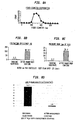
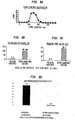
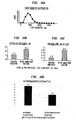
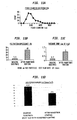
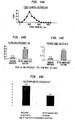
- Figures 1A, 1B , 2A, 2B show nanofiber nonwovens of the invention.
- Figure 1A shows the nanofiber nonwoven of Examples 3 and 4 at low magnification
- Figure 1B shows the same product at higher magnification.
- the product of Figures 1A, 1B were made with a nylon polyamide having a Relative Viscosity of 51 and has an average nanofiber diameter of 288 nanometers.
- Figures 2A and 2B are similar photomicrographs of the products of Examples 1 and 2 made with material having a Relative Viscosity of 42 and has an average fiber diameter of 302 nanometers.
- the products exhibit surprising filtration efficiency. Despite the relatively dense macrostructure, the Air Permeability Values of the products are especially surprising in that the products remain permeable to air.
- the products of the invention are thus uniquely suited for application in filtration, apparel and packaging, as hereinafter described in more detail where these properties play an important role.
- GSM refers to basis weight in grams per square meter
- RV refers to Relative Viscosity and so forth.
- ppm parts per million
- nanofiber nonwoven product refers to a web of a multitude of essentially randomly oriented fibers where no overall repeating structure can be discerned by the naked eye in the arrangement of fibers.
- the fibers can be bonded to each other, or can be unbounded and entangled to impart strength and integrity to the web.
- the fibers can be staple fibers or continuous fibers, and can comprise a single material or a multitude of materials, either as a combination of different fibers or as a combination of similar fibers each comprising of different materials.
- the nanofiber nonwoven product is constructed predominantly of nanofibers.
- nanofiber refers to fibers having a number average diameter less than 1000 nm.
- diameter refers to the greatest cross-sectional dimension.
- Basis Weight may be determined by ASTM D-3776 and reported in g/m 2 .
- compositions or articles consist essentially of the recited or listed components when the composition or article includes 90% or more by weight of the recited or listed components. That is, the terminology excludes more than 10% unrecited components.
- test methods for determining average fiber diameters, and, filtration efficiency are as indicated in Hassan et al., J Membrane Sci., 427, 336-344, 2013 , unless otherwise specified.
- Air permeability is measured using an Air Permeability Tester, available from Precision Instrument Company, Hagerstown, MD. Air permeability is defined as the flow rate of air at 23 ⁇ 1°C through a sheet of material under a specified pressure head. It is usually expressed as cubic feet per minute (0.028 m 3 /min) per square foot (0.093 m 2 ) at 0.50 in. (12.7 mm) water pressure, in cm 3 per second per square cm or in units of elapsed time for a given volume per unit area of sheet. The instrument referred to above is capable of measuring permeability from 0 to approximately 5000 cubic feet per minute (0 to 141.7 m 3 /min) per square foot (0.093 m 2 ) of test area.
- Air Permeability values normalized to 5 GSM basis weight. This is done by measuring Air Permeability Value and basis weight of a sample (@ 0.5" (1.27 cm) H 2 O typically), then multiplying the actual Air Permeability Value by the ratio of actual basis weight in GSM to 5. For example, if a sample of 15 GSM basis weight has a Value of 3.05 m 3 /min*m 2 ) (10 CFM/ft 2 ), its Normalized 5 GSM Air Permeability Value is 9.15 m 3 /min*m 2 ) (30 CFM/ft 2 ).
- polyamide composition and like terminology refers to compositions containing polyamides including copolymers, polymer blends, alloys and derivatives.
- a suitable alloy may include for example, 20% Nylon 6, 60% Nylon 6,6 and 20% by weight of a polyester.
- preferred solvents include a solvent selected from: formic acid, sulfuric acid, trifluoroacetic acid, hexafluoroisopropanol (HFIP) and phenols including m-cresol.
- polyamides are products that contain recurring amide groups as integral parts of the main polymer chains.
- Linear polyamides are of particular interest and may be formed from condensation of bifunctional monomers as is well known in the art.
- Polyamides are frequently referred to as nylons. Although they generally are considered as condensation polymers, polyamides also are formed by addition polymerization. This method of preparation is especially important for some polymers in which the monomers are cyclic lactams (i.e. Nylon 6).
- Particular polymers and copolymers and their preparation are seen in the following patents: United States Patent No. 4,760,129 , entitled “Process for Preparing Highly Viscous Polyhexamethyleneadipamide", to Haering et al.; United States Patent No.
- a class of polyamides particularly preferred for some applications includes High Temperature Nylons (HTN's) as are described in Glasscock et al., High Performance Polyamides Fulfill Demanding Requirements for Automotive Thermal Management Components, (Dupont), http://www2.dupont.com/Automotive/en_US/assets/downloads/knowledge%20c enter/HTN-whitepaper-R8.pdf available online June 10. 2016 .
- HTN High Temperature Nylons
- Such polymers typically include one or more of the structures seen In the following and shown as representative:
- Relative viscosity (RV) of polyamides refers to the ratio of solution or solvent viscosities measured in a capillary viscometer at 25°C. (ASTM D 789).
- the solvent is formic acid containing 10% by weight water and 90% by weight formic acid.
- the solution is 8.4% by weight polymer dissolved in the solvent.
- t 3 is the efflux time of the S-3 calibration oil used in the determination of the absolute viscosity of the formic acid as required in ASTM D789.
- Centrifugal-spinning refers to a process for making polymer fibers by spinning through a rotating spinneret as is noted in WO 2015/153477 (North Face Apparel Corp). Centrifugal-spinning is the method of making the inventive nanofiber nonwovens of the invention.
- a centrifugal-spinning system typically includes a spinneret that is coupled to a source of fluid or flowable material that is formable into a fiber.
- the source of material may be from a supply source, such as a reservoir or hopper for continuously feeding the spinneret.
- the spinneret could itself include a reservoir or hopper of material that is rotated with the spinneret if so desired.
- the flowable material is a solution of material.
- the spinneret is mechanically coupled to a motor that rotates the spinneret in a circular motion. The rotation during which material is ejected is at least 5,000 RPM when making nanofibers.
- a selected material for example, a polymer solution
- a selected material is ejected as a stream of material from one or more outlet ports on the spinneret into the surrounding atmosphere.
- the outward radial centrifugal force stretches the polymer stream as it is projected away from the outlet port, and the stream travels in a curled trajectory due to rotation-dependent inertia. Stretching of the extruded polymer stream is believed to be important in reducing stream diameter over the distance from the nozzle to a collector as well as providing tortuosity to the products.
- the ejected material is solidifies into a superfine fiber by the time it reaches a collector.
- the collecting surface could be static or movable, for example, the fiber may be directed onto a continuous belt if so desired.
- a top driven fiber producing system is particularly useful for depositing fibers onto a substrate.
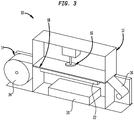
- a configuration for depositing fibers onto a substrate is shown in Figure 3 .
- Substrate deposition system 10 includes a deposition system 12 and a substrate transfer system 14 .
- Deposition system 12 includes a fiber producing system 16 .
- the deposition system produces and directs fibers produced by a fiber producing device toward a substrate 18 disposed below the fiber producing device during use.
- Substrate transfer system moves a continuous sheet of substrate material through the deposition system.
- Deposition system 12 includes a top mounted fiber producing device including a rotating spinneret indicated at 16 . During use, fibers produced by fiber producing device 16 are deposited onto substrate 18 .
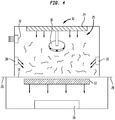
- the fiber deposition system may include one or more of: a vacuum system 20 , an electrostatic plate 22 , and a gas flow system 24 .
- a vacuum system produces a region of reduced pressure under substrate 18 such that fibers produced by fiber producing device 16 are drawn toward the substrate due to the reduced pressure.
- one or more fans may be positioned under the substrate to create an air flow through the substrate.
- Gas flow system 24 produces a gas flow 25 that directs fibers formed by the fiber producing device toward the substrate.
- the gas flow system may be a pressurized air source or one or more fans that produce a flow of air (or other gas).
- Deposition system 12 includes substrate inlet 26 and substrate outlet 28 .
- Electrostatic plate 22 is also positioned below substrate 18 .
- the electrostatic plate is a plate capable of being charged to a predetermined polarity.
- fibers produced by the fiber producing device have a net charge.
- the net charge of the fibers may be positive or negative, depending on the type of material used.
- an electrostatic plate may be disposed below substrate 18 and be charged to an opposite polarity as the produced fibers. In this manner, the fibers are attracted to the electrostatic plate due to the electrostatic attraction between the opposite charges.
- the fibers become embedded in the substrate as the fibers move toward the electrostatic plate.
- a pressurized gas producing and distribution system may be used to control the flow of fibers toward a substrate disposed below the fiber producing device.
- fibers produced by the fiber producing device are dispersed within the deposition system. Since the fibers are composed primarily of microfibers and/or nanofibers, the fibers tend to disperse within the deposition system.
- the use of a pressurized gas producing and distribution system may help guide the fibers toward the substrate.
- the pressurized gas producing and distribution system includes downward gas flow device 24 and a lateral gas flow device 30. Downward gas flow device 24 is positioned above or even with the fiber producing device to facilitate even fiber movement toward the substrate.
- One or more lateral gas flow devices 30 are oriented perpendicular to or below the fiber producing device.
- lateral gas flow devices 30 have an outlet width equal to the substrate width to facilitate even fiber deposition onto substrate.
- the angle of the outlet of one or more lateral gas flow devices 30 may be varied to allow better control of the fiber deposition onto the substrate.
- Each lateral gas flow devices 30 may be independently operated.
- fiber producing device 16 may produce various gasses due to evaporation of solvents (during solution spinning) and material gasification (during melt spinning). Such gasses, if accumulated in the deposition system may begin to effect the quality of the fiber produced.
- the deposition system includes an outlet fan 32 to remove gasses produced during fiber production from the deposition system.
- Substrate transfer system 14 is capable of moving a continuous sheet of substrate material through the deposition system.
- Substrate transfer system 14 may include a substrate reel 34 and a take up reel system 36 .
- a roll of substrate material is placed on substrate reel 34 and threaded through deposition system 12 to the substrate take up reel system 36 .
- substrate take up reel system 36 rotates, pulling substrate through deposition system at a predetermined rate. In this manner, a continuous roll of a substrate material may be pulled through the fiber deposition system and the basis weight of a nanofiber nonwoven deposited on the substrate controlled by controlling the speed of the collecting substrate.
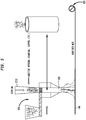
- a 2-phase spinning process (not invention) is shown in Figure 5 .
- Figure 5 illustrates schematically operation of a system for spinning a nanofiber nonwoven including a polymer feed assembly 110, an air feed 120 , a spinning cylinder 130 , a collector belt 140 and a take up reel 150 .
- polymer melt or solution is fed to spinning cylinder 130 where it flows through a thin channel in the cylinder with high pressure air, shearing the polymer into nanofibers. Details are provided in the aforementioned United States Patent No. 8,668,854 .
- the throughput rate and basis weight is controlled by the speed of the belt.
- functional additives such as charcoals, copper or the like can be added with the air feed, if so desired.
- particulate material may be added with a separate inlet as is seen in United States Patent No. 8,808,594 to Marshall et al. , entitled "Coform Fibrous Materials and Method for Making Same".
- Polyamide resins of the present invention have an RV of from 30-300 with preferred ranges disclosed above.
- Basis weight is greater than 1 gm/m 2 .
- the finished nonwovens were disposed on a 0.051 kg/m 2 (1.5 ounce per square yard (OSY)) nonwoven polypropylene substrate and analyzed for: basis weight (ASTM D-3776); average fiber diameter by SEM; filtration efficiency and pressure drop using a TSI-8130 and a polyalphaolefin nanoparticle composition @ 300 nm and a test flow rate of 32 l/min; and Air Permeability at 0.5" (1.27 cm) H 2 O pressure drop. These latter tests were also performed on the polypropylene substrate. Results are discussed further in the following Examples.
- polymer solutions of 24 wt % of Nylon 6,6 in formic acid were centrifugally-spun into nanofiber nonwovens using a spinneret rotational speed of 7500 rpm, a feed rate of 12 ml/min and a head of 6.5 cm.
- the nonwovens were characterized for average fiber diameter, basis weight, air permeability, filtration efficiency, and pressure drop in accordance with the Hassan et al. article noted above, J Membrane Sci., 427, 336-344, 2013 .
- a TSI filter tester was used with a standard 3.5 micron particle size.
- Table 1 Polyamide Nanofiber Nonwoven Product Properties Resin RV Fiber diameter, nm Example Basis weight, GSM Air permeability, m 3 /(min*m 2 ) (CFM/ft 2 ) Filtration efficiency, % Pressure drop, mm H2O 42 302 1 6.12 2.97 (9.73) 99.833 18.2 2 7.32 2.29 (7.52) 99.968 21.1 51 288 3 5.82 2.65 (8.71) 99.957 20.1 4 7.68 1.89 (6.21) 99.996 28.5
- the nanofiber nonwovens of the invention had a remarkable filtration efficiency, more than 99.95% which is surprising, especially in view of the relatively open structure seen in Figures 1 and 2 .
- the very fine, relatively uniform morphology of the products provides a tortuous barrier on a nanoscale that resists penetration and provides permeation barrier even at relatively high void volume in the nonwoven.
- Table 1A Normalized 5 GSM Air Permeability Values Example m 3 /(min*m 2 ) (CFM/ft 2 ) 1 3.63 (11.9) 2 3.36 (11.0) 3 3.08 (10.1) 4 2.90 (9.5)
- the two different grades of Nylon 6,6 used in Examples 1-4 were centrifugally-spun from a polymer melt into microfiber nonwovens using a spinneret rotational speed of 4,000 rpm.
- the microfiber nonwovens were characterized for average fiber diameter, basis weight, air filtration efficiency and pressure drop.
- Table 2 Polyamide Microfiber Nonwoven Product Properties Resin RV Examples Fiber diameter, micron Basis weight, GSM Filtration efficiency, % Pressure drop, mm H2O Air permeability, m 3 /(min*m 2 ) (CFM/ft 2 ) 51 A 2.24 17.56 12.3 0.8 41.6 (136.4) B 2.67 13.6 40 47.5 (156) 42 C 2.76 17.38 9.3 0.8 52.6 (172.6) D 2.95 24.53 40.5 1.2 36.0 (118.1) E 2.98 38.21 38.7 1.1 38.7 (127) F 4.4 41 42.3 1.3 34.9 (114.5) G 2.08 24.5 38.2 1.1 39.0 (127.8)
- microfiber nonwoven produced had filtration efficiencies, permeability, and pressure drops vastly inferior to the nanofiber nonwovens of the invention, despite having significantly higher basis weights.
- the Normalized 5 GSM Air Permeability Values for Examples A-G are listed in Table 2B.
- Table 2B Normalized 5 GSM Air Permeability Values Example Normalized 5 GSM Air Permeability Value m 3 /(min*m 2 ) (CFM/ft 2 ) A 146 (479) B 129 (424) C 183 (599) D 177 (579) E 296 (970) F 286 (939) G 191 (626)
- Table 3 Polyamide Microfiber Nonwoven Product Properties Resin Fiber diameter, Example Basis weight, Air permeability, m 3 /(min*m 2 ) Filtration efficiency, Pressure drop mm concentration in formic acid RV nm GSM (CFM/ft2) % H2O wt % 51 257 H 4.60 2.07 (6.78) 99.951 24.7 22 40.5 233 I 4.86 1.90 (6.22) 99.988 31.3 22 255 253 J 3.49 2.17 (7.1) 99.833 24.0 12 It can be appreciated from Table 3 that, even with higher polymer relative viscosity, fibers and nonwovens with similar properties can be made.
- inventive nanofiber nonwovens are useful in a variety of applications due to their high temperature resistance, barrier and permeability properties, processability and surprising filtration efficiencies.
- the products may be used in multilayer structures including laminates in many cases.
- the products are used in air filtration in the following sectors: transportation; industrial; commercial and residential.
- the products are likewise suitable for barrier applications in breathable fabrics, surgical nonwovens, baby care, adult care, apparel, construction and acoustics.
- the compositions are useful for sound dampening in automotive, electronic and aircraft applications which may require composites of different fiber sizes for best performance.
- the products are used in connection with beverages, food packaging, transportation, chemical processing and medical applications such as wound dressings or medical implants.
- the unique characteristics of the nonwovens of the invention provide functionality and benefits not seen in conventional products, for example, the nonwovens of the invention can be used as packaging for smoked meats.
- the filtration efficiency filters out unwanted particles and keeps carcinogens away from the meat during the smoking process to provide a healthier consumable end-product.
Landscapes
- Engineering & Computer Science (AREA)
- Textile Engineering (AREA)
- Chemical & Material Sciences (AREA)
- Chemical Kinetics & Catalysis (AREA)
- Nanotechnology (AREA)
- Nonwoven Fabrics (AREA)
- Spinning Methods And Devices For Manufacturing Artificial Fibers (AREA)
- Artificial Filaments (AREA)
Applications Claiming Priority (3)
| Application Number | Priority Date | Filing Date | Title |
|---|---|---|---|
| US201662348524P | 2016-06-10 | 2016-06-10 | |
| US201662348462P | 2016-06-10 | 2016-06-10 | |
| PCT/US2017/036062 WO2017214085A1 (en) | 2016-06-10 | 2017-06-06 | Solution-spun polyamide nanofiber nonwovens |
Publications (3)
| Publication Number | Publication Date |
|---|---|
| EP3468424A1 EP3468424A1 (en) | 2019-04-17 |
| EP3468424A4 EP3468424A4 (en) | 2020-02-12 |
| EP3468424B1 true EP3468424B1 (en) | 2021-09-29 |
Family
ID=60578959
Family Applications (1)
| Application Number | Title | Priority Date | Filing Date |
|---|---|---|---|
| EP17810819.7A Active EP3468424B1 (en) | 2016-06-10 | 2017-06-06 | Solution-spun polyamide nanofiber nonwovens |
Country Status (8)
| Country | Link |
|---|---|
| US (1) | US20190194847A1 (enExample) |
| EP (1) | EP3468424B1 (enExample) |
| JP (1) | JP7039492B2 (enExample) |
| KR (1) | KR102299766B1 (enExample) |
| CN (1) | CN109561771B (enExample) |
| CA (1) | CA3026497C (enExample) |
| TW (1) | TWI772306B (enExample) |
| WO (1) | WO2017214085A1 (enExample) |
Families Citing this family (11)
| Publication number | Priority date | Publication date | Assignee | Title |
|---|---|---|---|---|
| CA3066087C (en) * | 2017-06-08 | 2023-04-04 | Ascend Performance Materials Operations Llc | Polyamide nanofiber nonwovens |
| US11376534B2 (en) | 2017-06-08 | 2022-07-05 | Ascend Performance Materials Operations Llc | Polyamide nanofiber nonwovens for filters |
| JP7395512B2 (ja) * | 2018-06-08 | 2023-12-11 | アセンド・パフォーマンス・マテリアルズ・オペレーションズ・リミテッド・ライアビリティ・カンパニー | 調節可能なナノファイバー不織布製品 |
| TWI729633B (zh) | 2018-12-18 | 2021-06-01 | 美商阿散德性能材料營運公司 | 具有鋅含量的抗微生物非織造聚醯胺 |
| TWI758722B (zh) * | 2019-05-01 | 2022-03-21 | 美商阿散德性能材料營運公司 | 包含聚醯胺奈米纖維層的過濾器介質 |
| US20200345183A1 (en) * | 2019-05-01 | 2020-11-05 | Robert Scott Boyd | Cover for an eating utensil |
| EP4028256A1 (en) * | 2019-09-13 | 2022-07-20 | The North Face Apparel Corp. | Composite materials with membrane |
| EP4077777A1 (en) | 2019-12-18 | 2022-10-26 | Ascend Performance Materials Operations LLC | Processes for producing fiber and fabrics with zinc content |
| CN113117434B (zh) * | 2019-12-30 | 2022-11-22 | 西安工程大学 | 柔性网状脉结构陶瓷纳米纤维超高温过滤膜的制备方法 |
| CN111298520A (zh) * | 2020-02-24 | 2020-06-19 | 深圳维度新材料有限公司 | 复合材料层的制备方法、复合材料层及口罩 |
| MX2023005110A (es) | 2020-10-30 | 2023-08-04 | Ascend Performance Mat Operations Llc | Materiales no tejidos de poliamida en compuestos multicapa para absorción de sonido. |
Family Cites Families (20)
| Publication number | Priority date | Publication date | Assignee | Title |
|---|---|---|---|---|
| JPH0673654A (ja) * | 1992-08-27 | 1994-03-15 | Unitika Ltd | ポリアミド系極細繊維不織布及びその製造方法 |
| US5558826A (en) * | 1995-02-07 | 1996-09-24 | E. I. Du Pont De Nemours And Company | High speed process for making fully-oriented nylon yarns |
| KR100549140B1 (ko) * | 2002-03-26 | 2006-02-03 | 이 아이 듀폰 디 네모아 앤드 캄파니 | 일렉트로-브로운 방사법에 의한 초극세 나노섬유 웹제조방법 |
| US20080070463A1 (en) * | 2006-09-20 | 2008-03-20 | Pankaj Arora | Nanowebs |
| US20080104738A1 (en) * | 2006-11-03 | 2008-05-08 | Conley Jill A | Liquid water resistant and water vapor permeable garments |
| US7993523B2 (en) * | 2007-03-06 | 2011-08-09 | E. I. Du Pont De Nemours And Company | Liquid filtration media |
| JP2008274512A (ja) * | 2007-04-03 | 2008-11-13 | Nisshinbo Ind Inc | 抗菌性ナノファイバー |
| EP2160484A2 (en) * | 2007-06-22 | 2010-03-10 | Innovative Surface Technologies, Inc. | Nanofibers containing latent reactive groups |
| EP2207440B1 (en) * | 2007-11-13 | 2011-09-14 | E. I. du Pont de Nemours and Company | Breathable garment having a fluid drainage layer |
| US9834865B2 (en) * | 2007-12-17 | 2017-12-05 | E I Du Pont De Nemours And Company | Centrifugal solution spun nanofiber process |
| CN102245819B (zh) * | 2008-10-10 | 2014-12-31 | 英威达技术有限公司 | 适合用于抗磨、高强度尼龙混纺纱和织物的尼龙短纤维 |
| US8470236B2 (en) * | 2008-11-25 | 2013-06-25 | E I Du Pont De Nemours And Company | Process of making a non-woven web |
| JP2010236138A (ja) * | 2009-03-31 | 2010-10-21 | Toray Ind Inc | 防水透湿繊維積層体 |
| US20110252970A1 (en) * | 2009-11-19 | 2011-10-20 | E. I. Du Pont De Nemours And Company | Filtration Media for High Humidity Environments |
| JP2012167416A (ja) * | 2011-01-28 | 2012-09-06 | Toray Ind Inc | ポリアミド繊維の製造方法 |
| EP3168019A1 (en) * | 2013-07-05 | 2017-05-17 | The North Face Apparel Corp. | Forcespinning of fibers and filaments |
| WO2015053444A1 (ko) * | 2013-10-07 | 2015-04-16 | (주)에프티이앤이 | 기재 사이에 나노섬유를 포함하는 필터 및 이의 제조방법 |
| US10683605B2 (en) * | 2013-11-14 | 2020-06-16 | Invista North America S.A.R.L. | Soil repellant fiber and methods of making the same |
| CN106604773A (zh) * | 2014-07-07 | 2017-04-26 | 纳幕尔杜邦公司 | 包含在纳米纤维片材上的浇铸薄膜的复合过滤膜 |
| CN105597428B (zh) * | 2016-02-23 | 2017-11-07 | 绿纳科技有限责任公司 | 一种用于去除污水中Cr(VI)的纳米纤维过滤材料的制备方法 |
-
2017
- 2017-06-06 CA CA3026497A patent/CA3026497C/en active Active
- 2017-06-06 WO PCT/US2017/036062 patent/WO2017214085A1/en not_active Ceased
- 2017-06-06 US US16/308,251 patent/US20190194847A1/en not_active Abandoned
- 2017-06-06 JP JP2018564364A patent/JP7039492B2/ja active Active
- 2017-06-06 EP EP17810819.7A patent/EP3468424B1/en active Active
- 2017-06-06 CN CN201780048033.5A patent/CN109561771B/zh active Active
- 2017-06-06 TW TW106118684A patent/TWI772306B/zh active
- 2017-06-06 KR KR1020197000767A patent/KR102299766B1/ko active Active
Also Published As
| Publication number | Publication date |
|---|---|
| CN109561771A (zh) | 2019-04-02 |
| JP2019518148A (ja) | 2019-06-27 |
| TWI772306B (zh) | 2022-08-01 |
| EP3468424A4 (en) | 2020-02-12 |
| TW201819703A (zh) | 2018-06-01 |
| WO2017214085A1 (en) | 2017-12-14 |
| KR102299766B1 (ko) | 2021-09-07 |
| KR20190016100A (ko) | 2019-02-15 |
| US20190194847A1 (en) | 2019-06-27 |
| JP7039492B2 (ja) | 2022-03-22 |
| CN109561771B (zh) | 2021-01-08 |
| CA3026497C (en) | 2023-09-19 |
| EP3468424A1 (en) | 2019-04-17 |
| CA3026497A1 (en) | 2017-12-14 |
Similar Documents
| Publication | Publication Date | Title |
|---|---|---|
| CA3026497C (en) | Solution-spun polyamide nanofiber nonwovens | |
| US11376534B2 (en) | Polyamide nanofiber nonwovens for filters | |
| CN107208336B (zh) | 用于呼吸装置和面罩的熔纺过滤介质 | |
| US11578438B2 (en) | Polyamide nanofiber nonwovens for acoustic applications | |
| CA2748248C (en) | Filter materials and filter cartridges | |
| EP3060326B1 (en) | Electret nanofibrous web as air filtration media | |
| TWI758722B (zh) | 包含聚醯胺奈米纖維層的過濾器介質 | |
| JP2025143315A (ja) | 混合直径細繊維を含む濾材層 | |
| CN106604773A (zh) | 包含在纳米纤维片材上的浇铸薄膜的复合过滤膜 | |
| JP4069057B2 (ja) | 高性能エアフィルタ | |
| HK40005712A (en) | Solution-spun polyamide nanofiber nonwovens | |
| HK40005712B (en) | Solution-spun polyamide nanofiber nonwovens | |
| Buivydienė | Formation of fibrous materials for air filtration applications via melt electrospinning |
Legal Events
| Date | Code | Title | Description |
|---|---|---|---|
| STAA | Information on the status of an ep patent application or granted ep patent |
Free format text: STATUS: THE INTERNATIONAL PUBLICATION HAS BEEN MADE |
|
| PUAI | Public reference made under article 153(3) epc to a published international application that has entered the european phase |
Free format text: ORIGINAL CODE: 0009012 |
|
| STAA | Information on the status of an ep patent application or granted ep patent |
Free format text: STATUS: REQUEST FOR EXAMINATION WAS MADE |
|
| 17P | Request for examination filed |
Effective date: 20190110 |
|
| AK | Designated contracting states |
Kind code of ref document: A1 Designated state(s): AL AT BE BG CH CY CZ DE DK EE ES FI FR GB GR HR HU IE IS IT LI LT LU LV MC MK MT NL NO PL PT RO RS SE SI SK SM TR |
|
| AX | Request for extension of the european patent |
Extension state: BA ME |
|
| RIN1 | Information on inventor provided before grant (corrected) |
Inventor name: OSBORN, SCOTT E. Inventor name: SCHOOTS, HARRIE P. Inventor name: YUNG, WAI-SHING Inventor name: TRASK, CRAIG A. |
|
| RIN1 | Information on inventor provided before grant (corrected) |
Inventor name: SCHOOTS, HARRIE P. Inventor name: YUNG, WAI-SHING Inventor name: OSBORN, SCOTT E. Inventor name: TRASK, CRAIG A. |
|
| DAV | Request for validation of the european patent (deleted) | ||
| DAX | Request for extension of the european patent (deleted) | ||
| REG | Reference to a national code |
Ref country code: DE Ref legal event code: R079 Ref document number: 602017046866 Country of ref document: DE Free format text: PREVIOUS MAIN CLASS: A47G0027020000 Ipc: D04H0001433400 |
|
| RIC1 | Information provided on ipc code assigned before grant |
Ipc: D04H 3/16 20060101ALI20191220BHEP Ipc: D04H 1/56 20060101ALI20191220BHEP Ipc: D04H 3/009 20120101ALI20191220BHEP Ipc: D04H 1/4334 20120101AFI20191220BHEP |
|
| A4 | Supplementary search report drawn up and despatched |
Effective date: 20200114 |
|
| STAA | Information on the status of an ep patent application or granted ep patent |
Free format text: STATUS: EXAMINATION IS IN PROGRESS |
|
| 17Q | First examination report despatched |
Effective date: 20200713 |
|
| GRAP | Despatch of communication of intention to grant a patent |
Free format text: ORIGINAL CODE: EPIDOSNIGR1 |
|
| STAA | Information on the status of an ep patent application or granted ep patent |
Free format text: STATUS: GRANT OF PATENT IS INTENDED |
|
| GRAS | Grant fee paid |
Free format text: ORIGINAL CODE: EPIDOSNIGR3 |
|
| INTG | Intention to grant announced |
Effective date: 20210723 |
|
| GRAA | (expected) grant |
Free format text: ORIGINAL CODE: 0009210 |
|
| STAA | Information on the status of an ep patent application or granted ep patent |
Free format text: STATUS: THE PATENT HAS BEEN GRANTED |
|
| AK | Designated contracting states |
Kind code of ref document: B1 Designated state(s): AL AT BE BG CH CY CZ DE DK EE ES FI FR GB GR HR HU IE IS IT LI LT LU LV MC MK MT NL NO PL PT RO RS SE SI SK SM TR |
|
| REG | Reference to a national code |
Ref country code: GB Ref legal event code: FG4D |
|
| REG | Reference to a national code |
Ref country code: DE Ref legal event code: R096 Ref document number: 602017046866 Country of ref document: DE |
|
| REG | Reference to a national code |
Ref country code: CH Ref legal event code: EP Ref country code: AT Ref legal event code: REF Ref document number: 1434271 Country of ref document: AT Kind code of ref document: T Effective date: 20211015 |
|
| REG | Reference to a national code |
Ref country code: SE Ref legal event code: TRGR |
|
| REG | Reference to a national code |
Ref country code: IE Ref legal event code: FG4D |
|
| REG | Reference to a national code |
Ref country code: FI Ref legal event code: FGE |
|
| REG | Reference to a national code |
Ref country code: LT Ref legal event code: MG9D |
|
| PG25 | Lapsed in a contracting state [announced via postgrant information from national office to epo] |
Ref country code: NO Free format text: LAPSE BECAUSE OF FAILURE TO SUBMIT A TRANSLATION OF THE DESCRIPTION OR TO PAY THE FEE WITHIN THE PRESCRIBED TIME-LIMIT Effective date: 20211229 Ref country code: BG Free format text: LAPSE BECAUSE OF FAILURE TO SUBMIT A TRANSLATION OF THE DESCRIPTION OR TO PAY THE FEE WITHIN THE PRESCRIBED TIME-LIMIT Effective date: 20211229 Ref country code: LT Free format text: LAPSE BECAUSE OF FAILURE TO SUBMIT A TRANSLATION OF THE DESCRIPTION OR TO PAY THE FEE WITHIN THE PRESCRIBED TIME-LIMIT Effective date: 20210929 Ref country code: RS Free format text: LAPSE BECAUSE OF FAILURE TO SUBMIT A TRANSLATION OF THE DESCRIPTION OR TO PAY THE FEE WITHIN THE PRESCRIBED TIME-LIMIT Effective date: 20210929 Ref country code: HR Free format text: LAPSE BECAUSE OF FAILURE TO SUBMIT A TRANSLATION OF THE DESCRIPTION OR TO PAY THE FEE WITHIN THE PRESCRIBED TIME-LIMIT Effective date: 20210929 |
|
| REG | Reference to a national code |
Ref country code: NL Ref legal event code: MP Effective date: 20210929 |
|
| REG | Reference to a national code |
Ref country code: AT Ref legal event code: MK05 Ref document number: 1434271 Country of ref document: AT Kind code of ref document: T Effective date: 20210929 |
|
| PG25 | Lapsed in a contracting state [announced via postgrant information from national office to epo] |
Ref country code: LV Free format text: LAPSE BECAUSE OF FAILURE TO SUBMIT A TRANSLATION OF THE DESCRIPTION OR TO PAY THE FEE WITHIN THE PRESCRIBED TIME-LIMIT Effective date: 20210929 Ref country code: GR Free format text: LAPSE BECAUSE OF FAILURE TO SUBMIT A TRANSLATION OF THE DESCRIPTION OR TO PAY THE FEE WITHIN THE PRESCRIBED TIME-LIMIT Effective date: 20211230 |
|
| PG25 | Lapsed in a contracting state [announced via postgrant information from national office to epo] |
Ref country code: AT Free format text: LAPSE BECAUSE OF FAILURE TO SUBMIT A TRANSLATION OF THE DESCRIPTION OR TO PAY THE FEE WITHIN THE PRESCRIBED TIME-LIMIT Effective date: 20210929 |
|
| PG25 | Lapsed in a contracting state [announced via postgrant information from national office to epo] |
Ref country code: IS Free format text: LAPSE BECAUSE OF FAILURE TO SUBMIT A TRANSLATION OF THE DESCRIPTION OR TO PAY THE FEE WITHIN THE PRESCRIBED TIME-LIMIT Effective date: 20220129 Ref country code: SK Free format text: LAPSE BECAUSE OF FAILURE TO SUBMIT A TRANSLATION OF THE DESCRIPTION OR TO PAY THE FEE WITHIN THE PRESCRIBED TIME-LIMIT Effective date: 20210929 Ref country code: RO Free format text: LAPSE BECAUSE OF FAILURE TO SUBMIT A TRANSLATION OF THE DESCRIPTION OR TO PAY THE FEE WITHIN THE PRESCRIBED TIME-LIMIT Effective date: 20210929 Ref country code: PT Free format text: LAPSE BECAUSE OF FAILURE TO SUBMIT A TRANSLATION OF THE DESCRIPTION OR TO PAY THE FEE WITHIN THE PRESCRIBED TIME-LIMIT Effective date: 20220131 Ref country code: PL Free format text: LAPSE BECAUSE OF FAILURE TO SUBMIT A TRANSLATION OF THE DESCRIPTION OR TO PAY THE FEE WITHIN THE PRESCRIBED TIME-LIMIT Effective date: 20210929 Ref country code: NL Free format text: LAPSE BECAUSE OF FAILURE TO SUBMIT A TRANSLATION OF THE DESCRIPTION OR TO PAY THE FEE WITHIN THE PRESCRIBED TIME-LIMIT Effective date: 20210929 Ref country code: ES Free format text: LAPSE BECAUSE OF FAILURE TO SUBMIT A TRANSLATION OF THE DESCRIPTION OR TO PAY THE FEE WITHIN THE PRESCRIBED TIME-LIMIT Effective date: 20210929 Ref country code: EE Free format text: LAPSE BECAUSE OF FAILURE TO SUBMIT A TRANSLATION OF THE DESCRIPTION OR TO PAY THE FEE WITHIN THE PRESCRIBED TIME-LIMIT Effective date: 20210929 Ref country code: CZ Free format text: LAPSE BECAUSE OF FAILURE TO SUBMIT A TRANSLATION OF THE DESCRIPTION OR TO PAY THE FEE WITHIN THE PRESCRIBED TIME-LIMIT Effective date: 20210929 Ref country code: AL Free format text: LAPSE BECAUSE OF FAILURE TO SUBMIT A TRANSLATION OF THE DESCRIPTION OR TO PAY THE FEE WITHIN THE PRESCRIBED TIME-LIMIT Effective date: 20210929 |
|
| REG | Reference to a national code |
Ref country code: DE Ref legal event code: R097 Ref document number: 602017046866 Country of ref document: DE |
|
| PG25 | Lapsed in a contracting state [announced via postgrant information from national office to epo] |
Ref country code: DK Free format text: LAPSE BECAUSE OF FAILURE TO SUBMIT A TRANSLATION OF THE DESCRIPTION OR TO PAY THE FEE WITHIN THE PRESCRIBED TIME-LIMIT Effective date: 20210929 |
|
| PLBE | No opposition filed within time limit |
Free format text: ORIGINAL CODE: 0009261 |
|
| STAA | Information on the status of an ep patent application or granted ep patent |
Free format text: STATUS: NO OPPOSITION FILED WITHIN TIME LIMIT |
|
| 26N | No opposition filed |
Effective date: 20220630 |
|
| PG25 | Lapsed in a contracting state [announced via postgrant information from national office to epo] |
Ref country code: SI Free format text: LAPSE BECAUSE OF FAILURE TO SUBMIT A TRANSLATION OF THE DESCRIPTION OR TO PAY THE FEE WITHIN THE PRESCRIBED TIME-LIMIT Effective date: 20210929 |
|
| PG25 | Lapsed in a contracting state [announced via postgrant information from national office to epo] |
Ref country code: MC Free format text: LAPSE BECAUSE OF FAILURE TO SUBMIT A TRANSLATION OF THE DESCRIPTION OR TO PAY THE FEE WITHIN THE PRESCRIBED TIME-LIMIT Effective date: 20210929 |
|
| REG | Reference to a national code |
Ref country code: CH Ref legal event code: PL |
|
| REG | Reference to a national code |
Ref country code: BE Ref legal event code: MM Effective date: 20220630 |
|
| GBPC | Gb: european patent ceased through non-payment of renewal fee |
Effective date: 20220606 |
|
| PG25 | Lapsed in a contracting state [announced via postgrant information from national office to epo] |
Ref country code: LU Free format text: LAPSE BECAUSE OF NON-PAYMENT OF DUE FEES Effective date: 20220606 Ref country code: LI Free format text: LAPSE BECAUSE OF NON-PAYMENT OF DUE FEES Effective date: 20220630 Ref country code: IE Free format text: LAPSE BECAUSE OF NON-PAYMENT OF DUE FEES Effective date: 20220606 Ref country code: CH Free format text: LAPSE BECAUSE OF NON-PAYMENT OF DUE FEES Effective date: 20220630 |
|
| PG25 | Lapsed in a contracting state [announced via postgrant information from national office to epo] |
Ref country code: GB Free format text: LAPSE BECAUSE OF NON-PAYMENT OF DUE FEES Effective date: 20220606 Ref country code: BE Free format text: LAPSE BECAUSE OF NON-PAYMENT OF DUE FEES Effective date: 20220630 |
|
| PG25 | Lapsed in a contracting state [announced via postgrant information from national office to epo] |
Ref country code: HU Free format text: LAPSE BECAUSE OF FAILURE TO SUBMIT A TRANSLATION OF THE DESCRIPTION OR TO PAY THE FEE WITHIN THE PRESCRIBED TIME-LIMIT; INVALID AB INITIO Effective date: 20170606 |
|
| PG25 | Lapsed in a contracting state [announced via postgrant information from national office to epo] |
Ref country code: SM Free format text: LAPSE BECAUSE OF FAILURE TO SUBMIT A TRANSLATION OF THE DESCRIPTION OR TO PAY THE FEE WITHIN THE PRESCRIBED TIME-LIMIT Effective date: 20210929 Ref country code: MK Free format text: LAPSE BECAUSE OF FAILURE TO SUBMIT A TRANSLATION OF THE DESCRIPTION OR TO PAY THE FEE WITHIN THE PRESCRIBED TIME-LIMIT Effective date: 20210929 Ref country code: CY Free format text: LAPSE BECAUSE OF FAILURE TO SUBMIT A TRANSLATION OF THE DESCRIPTION OR TO PAY THE FEE WITHIN THE PRESCRIBED TIME-LIMIT Effective date: 20210929 |
|
| PG25 | Lapsed in a contracting state [announced via postgrant information from national office to epo] |
Ref country code: MT Free format text: LAPSE BECAUSE OF FAILURE TO SUBMIT A TRANSLATION OF THE DESCRIPTION OR TO PAY THE FEE WITHIN THE PRESCRIBED TIME-LIMIT Effective date: 20210929 |
|
| PGFP | Annual fee paid to national office [announced via postgrant information from national office to epo] |
Ref country code: SE Payment date: 20250627 Year of fee payment: 9 |
|
| PG25 | Lapsed in a contracting state [announced via postgrant information from national office to epo] |
Ref country code: TR Free format text: LAPSE BECAUSE OF FAILURE TO SUBMIT A TRANSLATION OF THE DESCRIPTION OR TO PAY THE FEE WITHIN THE PRESCRIBED TIME-LIMIT Effective date: 20210929 |
|
| PGFP | Annual fee paid to national office [announced via postgrant information from national office to epo] |
Ref country code: IT Payment date: 20260622 Year of fee payment: 10 |
|
| PGFP | Annual fee paid to national office [announced via postgrant information from national office to epo] |
Ref country code: DE Payment date: 20260629 Year of fee payment: 10 |
|
| PGFP | Annual fee paid to national office [announced via postgrant information from national office to epo] |
Ref country code: FI Payment date: 20260625 Year of fee payment: 10 |
|
| PGFP | Annual fee paid to national office [announced via postgrant information from national office to epo] |
Ref country code: FR Payment date: 20260625 Year of fee payment: 10 |