EP3468064B1 - Verfahren und vorrichtung für den entwurf einer strahltrainingsfolge - Google Patents
Verfahren und vorrichtung für den entwurf einer strahltrainingsfolge Download PDFInfo
- Publication number
- EP3468064B1 EP3468064B1 EP17818901.5A EP17818901A EP3468064B1 EP 3468064 B1 EP3468064 B1 EP 3468064B1 EP 17818901 A EP17818901 A EP 17818901A EP 3468064 B1 EP3468064 B1 EP 3468064B1
- Authority
- EP
- European Patent Office
- Prior art keywords
- sequences
- length
- beam training
- golay
- pairs
- Prior art date
- Legal status (The legal status is an assumption and is not a legal conclusion. Google has not performed a legal analysis and makes no representation as to the accuracy of the status listed.)
- Active
Links
Images


Classifications
-
- H—ELECTRICITY
- H04—ELECTRIC COMMUNICATION TECHNIQUE
- H04L—TRANSMISSION OF DIGITAL INFORMATION, e.g. TELEGRAPHIC COMMUNICATION
- H04L25/00—Baseband systems
- H04L25/02—Details ; arrangements for supplying electrical power along data transmission lines
- H04L25/0202—Channel estimation
- H04L25/024—Channel estimation channel estimation algorithms
-
- H—ELECTRICITY
- H04—ELECTRIC COMMUNICATION TECHNIQUE
- H04J—MULTIPLEX COMMUNICATION
- H04J13/00—Code division multiplex systems
- H04J13/0007—Code type
- H04J13/0011—Complementary
- H04J13/0014—Golay
-
- H—ELECTRICITY
- H04—ELECTRIC COMMUNICATION TECHNIQUE
- H04B—TRANSMISSION
- H04B7/00—Radio transmission systems, i.e. using radiation field
- H04B7/02—Diversity systems; Multi-antenna system, i.e. transmission or reception using multiple antennas
- H04B7/04—Diversity systems; Multi-antenna system, i.e. transmission or reception using multiple antennas using two or more spaced independent antennas
- H04B7/06—Diversity systems; Multi-antenna system, i.e. transmission or reception using multiple antennas using two or more spaced independent antennas at the transmitting station
- H04B7/0613—Diversity systems; Multi-antenna system, i.e. transmission or reception using multiple antennas using two or more spaced independent antennas at the transmitting station using simultaneous transmission
- H04B7/0615—Diversity systems; Multi-antenna system, i.e. transmission or reception using multiple antennas using two or more spaced independent antennas at the transmitting station using simultaneous transmission of weighted versions of same signal
- H04B7/0617—Diversity systems; Multi-antenna system, i.e. transmission or reception using multiple antennas using two or more spaced independent antennas at the transmitting station using simultaneous transmission of weighted versions of same signal for beam forming
-
- H—ELECTRICITY
- H04—ELECTRIC COMMUNICATION TECHNIQUE
- H04B—TRANSMISSION
- H04B7/00—Radio transmission systems, i.e. using radiation field
- H04B7/02—Diversity systems; Multi-antenna system, i.e. transmission or reception using multiple antennas
- H04B7/04—Diversity systems; Multi-antenna system, i.e. transmission or reception using multiple antennas using two or more spaced independent antennas
- H04B7/06—Diversity systems; Multi-antenna system, i.e. transmission or reception using multiple antennas using two or more spaced independent antennas at the transmitting station
- H04B7/0613—Diversity systems; Multi-antenna system, i.e. transmission or reception using multiple antennas using two or more spaced independent antennas at the transmitting station using simultaneous transmission
- H04B7/0615—Diversity systems; Multi-antenna system, i.e. transmission or reception using multiple antennas using two or more spaced independent antennas at the transmitting station using simultaneous transmission of weighted versions of same signal
- H04B7/0619—Diversity systems; Multi-antenna system, i.e. transmission or reception using multiple antennas using two or more spaced independent antennas at the transmitting station using simultaneous transmission of weighted versions of same signal using feedback from receiving side
- H04B7/0621—Feedback content
- H04B7/0634—Antenna weights or vector/matrix coefficients
-
- H—ELECTRICITY
- H04—ELECTRIC COMMUNICATION TECHNIQUE
- H04B—TRANSMISSION
- H04B7/00—Radio transmission systems, i.e. using radiation field
- H04B7/02—Diversity systems; Multi-antenna system, i.e. transmission or reception using multiple antennas
- H04B7/04—Diversity systems; Multi-antenna system, i.e. transmission or reception using multiple antennas using two or more spaced independent antennas
- H04B7/08—Diversity systems; Multi-antenna system, i.e. transmission or reception using multiple antennas using two or more spaced independent antennas at the receiving station
- H04B7/0837—Diversity systems; Multi-antenna system, i.e. transmission or reception using multiple antennas using two or more spaced independent antennas at the receiving station using pre-detection combining
- H04B7/0842—Weighted combining
- H04B7/0848—Joint weighting
- H04B7/0851—Joint weighting using training sequences or error signal
-
- H—ELECTRICITY
- H04—ELECTRIC COMMUNICATION TECHNIQUE
- H04L—TRANSMISSION OF DIGITAL INFORMATION, e.g. TELEGRAPHIC COMMUNICATION
- H04L25/00—Baseband systems
- H04L25/02—Details ; arrangements for supplying electrical power along data transmission lines
- H04L25/0202—Channel estimation
- H04L25/0204—Channel estimation of multiple channels
-
- H—ELECTRICITY
- H04—ELECTRIC COMMUNICATION TECHNIQUE
- H04L—TRANSMISSION OF DIGITAL INFORMATION, e.g. TELEGRAPHIC COMMUNICATION
- H04L5/00—Arrangements affording multiple use of the transmission path
- H04L5/003—Arrangements for allocating sub-channels of the transmission path
- H04L5/0048—Allocation of pilot signals, i.e. of signals known to the receiver
-
- H—ELECTRICITY
- H04—ELECTRIC COMMUNICATION TECHNIQUE
- H04L—TRANSMISSION OF DIGITAL INFORMATION, e.g. TELEGRAPHIC COMMUNICATION
- H04L25/00—Baseband systems
- H04L25/02—Details ; arrangements for supplying electrical power along data transmission lines
- H04L25/0202—Channel estimation
Definitions
- the present invention relates to the communications field, and specifically, to a beam training sequence design method and apparatus.
- one or more antennas are configured between a transmit end and a receive end.
- a beam training sequence is sent between the transmit end and the receive end for channel estimation on a communication channel between the transmit end and the receive end. Then communication performance of the communication channel is determined by using a result of the channel estimation.
- different beam training sequences are required to perform beamforming training in different communication channel scenarios (for example, different scenarios that are corresponding to different maximum delay spread of communication channels, different channel bonding quantities, and different quantities of antennas).
- an existing beam training sequence design method is applicable to very limited communication channel scenarios, and cannot satisfy various different communication channel training requirements in communications systems. As a result, the current beam training sequence design method has a limitation.
- Document EP 2 680 471 A1 provides for the construction and use of a set of Zero-Correlation-Zone (ZCZ) Concatenated Complementary Pair (CCP) sequences with zero-correlation-zone range greater than one or with zero-correlation-zone range equal to one and the sequence set size greater than two.
- Complementary pair sequences A and B are selected and, for each member of the set of ZCZ CCP sequences, sign sequences pA and pB are combined with the complementary pair sequences to form a member ZCZ CCP sequence of the set.
- a ZCZ CCP sequence modified by propagation over a communication channel may be identified by cross-correlation with ZCZ CCP sequences of the set.
- a set of sign sequences may be constructed by recursive expansion from an initial set or found by a computer search. The sequences may be used in a transceiver of a portable electronic device or other communication device.
- Document US 2010/0080266 A1 refers to a wireless communication system wherein communication devices exchange information utilizing data units that conform to a first format, wherein the first format includes a short training field (STF) spread with a first spread code and a first cover code, a method is for generating a physical layer (PHY) data unit that conforms to a second format, wherein the PHY data unit is for transmitting PHY information.
- a first portion of the PHY data unit is generated to indicate the PHY data unit conforms to the second format, wherein the first portion of the PHY data unit includes an STF spread with at least one of a second spread code different than the first spread code or a second cover code different than the first cover code.
- a second portion of the PHY data unit is generated according to the second format, wherein the second portion of the PHY data unit includes PHY information elements not specified by the first format.
- a method for beamforming training at a service and control point may comprise: transmitting training sequences to multiple user stations by using switched transmit antenna weight vectors; determining optimum transmit antenna weight vectors of the service and control point based on channel information that is fed back from each user station of the multiple user stations and related to channel condition of own link and cross links of the each user station.
- Embodiments of the present invention provide a beam training sequence design method and apparatus, so that a beam training sequence can be applied to various communication channels configured in different scenarios.
- an embodiment of the present invention provides a beam training sequence design method according to claim 1.
- an embodiment of the present invention provides a beam training sequence design apparatus, including modules configured to perform the method in the first aspect.
- an embodiment of the present invention further provides a beam training sequence design apparatus.
- the apparatus includes a memory, a processor, and N T transmit antennas.
- the memory is configured to store a program instruction
- the processor is configured to support the beam training sequence design apparatus in performing corresponding functions in the beam training sequence design method provided in the first aspect.
- the present invention provides a computer storage medium, configured to store a computer software instruction used by an apparatus provided in the third aspect.
- the computer storage medium includes a program designed to perform the foregoing aspects.
- the transmit end generates the N T beam training sequences; then the transmit end sends the N T beam training sequences to the receive end by using the N T transmit antennas at the transmit end; and after the receive end receives the N T beam training sequences, each antenna at the receive end performs channel estimation based on the N T beam training sequences, to obtain N T ⁇ 1 link channel gains.
- Each beam training sequence includes the cyclic prefix and the Golay sequence with a length of 2 ⁇ N ⁇ L.
- the N T Golay sequences are orthogonal to each other.
- N T is the quantity of antennas at the transmit end.
- L is the signal length corresponding to the maximum delay T m of the channel.
- N T is a positive integer.
- N is a positive integer.
- L is a positive integer. Therefore, a beam training sequence can be no longer restricted by a quantity of antennas, a delay spread value of a channel, and a scenario such as multi-channel bonding provided that the beam training sequence satisfies the foregoing conditions, so that the beam training sequence is applicable to different channel scenario configurations.
- Embodiments of the present invention provide a beam training sequence design method and apparatus, so that a beam training sequence can be applied to various communication channels configured in different scenarios.
- the terms “first”, “second”, “third”, and so on are intended to distinguish between different objects but do not indicate a particular order.
- the term “including” or any variant thereof is intended to cover a non-exclusive inclusion.
- a process, a method, a system, a product, or a device that includes a series of steps or units is not limited to the listed steps or units, but optionally further includes an unlisted step or unit, or optionally further includes another inherent step or unit of the process, the method, the product, or the device.
- An embodiment of the present invention provides a beam training sequence design method, including:
- the transmit end generates the beam training sequences related to the quantity of antennas, the maximum delay of the channel, and a channel bonding quantity, so that the beam training sequence design method in this embodiment of the present invention is no longer restricted by a quantity of antennas, a delay spread value of a channel, and a scenario such as multi-channel bonding, and the beam training sequence is applicable to different channel scenario configurations.
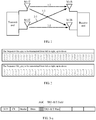
- FIG. 1 is a schematic diagram of an application scenario of a sequence-based channel estimation method according to the present invention.
- This embodiment of the present invention is applicable to channel estimation under a MIMO multi-channel condition, and also applicable to channel estimation under a single-channel condition.
- a MIMO system shown in FIG. 1 includes a transmit end and a receive end.
- the transmit end and the receive end each include two antennas.
- the transmit end includes a transmit antenna M-1T and a transmit antenna M-2T
- the receive end includes a receive antenna M-1R and a receive antenna M-2R.
- a target signal obtained after a signal sent by a transmit antenna is transmitted through a channel may be received by all the receive antennas.
- the M-1T sends a source signal
- a target signal obtained after the source signal is transmitted through the 1-1 channel may be received by the M-1R
- a target signal obtained after the source signal is transmitted through the 1-2 channel may be received by the M-2R.
- FIG. 2 is a schematic diagram of a pair of Golay complementary sequences according to an embodiment of the present invention.
- FIG. 3-a is a schematic structural diagram of a BRP frame of a beam training sequence according to an embodiment of the present invention.
- FIG. 3-b is a schematic diagram of a beam training sequence T/R structure according to an embodiment of the present invention.
- the beam training sequence (T/R sequence) provided in this embodiment of the present invention is designed based on a beam refinement protocol (beam refinement protocol, BRP for short) frame structure used in the IEEE 802.11ad standard.
- a beam training TRN field in the BRP frame structure includes N (N ⁇ 17) TRN-Units, and each TRN-Unit is divided into two parts: CE and T/R.
- CE includes eight Golay complementary sequences with a length of 128 (Ga128 and Gb128), and cyclic prefixes and cyclic suffixes that are placed ahead of and after the Golay complementary sequences respectively, and can satisfy a multi-path channel estimation requirement in a 72 ns delay spread range.
- the T/R field includes four Golay complementary sequences with a length of 128 (Ga128 and Gb128), and cyclic prefixes placed ahead of the Golay complementary sequences, so that channel measurement may be roughly performed by using a time-domain measurement method, and accurate channel estimation may be performed in frequency domain.
- the beam training sequence can satisfy only a delay of 72 ns, and is only specific to a single-input single-output (Single Input Single Output, SISO for short) channel scenario, and no corresponding design is provided for a larger delay and a multiple-input multiple-output (Multiple Input Multiple Output, MIMO for short) channel scenario.
- This embodiment of the present invention is further designed based on the T/R sequence structure, shown in FIG. 3-b , provided by the IEEE 802.11ad standard.
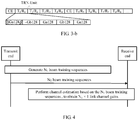
- FIG. 4 is a schematic flowchart of a first embodiment of a beam training sequence design method according to an embodiment of the present invention. As shown in FIG. 4 , the method includes the following steps.
- a transmit end generates N T beam training sequences.
- each transmit end has N T transmit antennas, and each antenna sends one beam training sequence.
- the antenna when sending the beam training sequence, the antenna sends a BRP frame that includes the beam training sequence and that is based on a BRP frame structure shown in FIG. 3-a .
- each beam training sequence includes a cyclic prefix and a Golay sequence with a length of 2 ⁇ N ⁇ L.
- the N T Golay sequences are orthogonal to each other.
- N T is a quantity of antennas at the transmit end.
- L is a signal length corresponding to a maximum delay T m of a channel.
- N T is a positive integer.
- N is a positive integer.
- L is a positive integer.
- a length of the cyclic prefix is L.
- the cyclic prefix is a Golay sequence.
- a quantity of beam training sequences is the quantity N T of antennas, and a length of the beam training sequence is the signal length corresponding to the maximum delay T m of the channel, the beam training sequence is related to a channel bonding quantity, and the beam training sequence can satisfy requirements for various quantities of antennas and different maximum delays of channels.
- the maximum delay T m of the to-be-estimated channel may be greater than or equal to 72 nanoseconds (ns), or certainly may be less than 72 ns. This is not limited herein.
- the transmit end sends the N T beam training sequences to a receive end by using N T transmit antennas at the transmit end, where each transmit antenna sends one corresponding beam training sequence.
- the receive end receives the N T channel estimation training sequence packets sent by the transmit end.
- each receive antenna receives the N T channel estimation training sequence packets, where N R is a positive integer greater than or equal to 1.
- Each receive antenna at the receive end performs channel estimation based on the N T channel estimation training sequence packets, to obtain N T ⁇ 1 link channel gains.
- each receive antenna at the receive end after receiving the N T channel estimation training sequence packets, each receive antenna at the receive end performs correlation operations by using N T correlators corresponding to the N T channel estimation training sequences, to obtain the N T ⁇ 1 link channel gains, namely, a channel estimation result.
- a complete channel estimation result of the N R receive antennas is an N R ⁇ N T channel estimation result.
- the transmit end generates the N T beam training sequences; then the transmit end sends the N T beam training sequences to the receive end by using the N T transmit antennas at the transmit end; and after the receive end receives the N T beam training sequences, each antenna at the receive end performs channel estimation based on the N T beam training sequences, to obtain the N T ⁇ 1 link channel gains.
- Each beam training sequence includes the cyclic prefix and the Golay sequence with a length of 2 ⁇ N ⁇ L.
- the N T Golay sequences are orthogonal to each other.
- N T is the quantity of antennas at the transmit end.
- L is the signal length corresponding to the maximum delay T m of the channel.
- N T is a positive integer.
- N is a positive integer.
- L is a positive integer. Therefore, a beam training sequence can be no longer restricted by a quantity of antennas, a delay spread value of a channel, and a scenario such as multi-channel bonding provided that the beam training sequence satisfies the foregoing conditions, so that the beam training sequence is applicable to different channel scenario configurations.
- the signal length L corresponding to the maximum delay T m of the channel may be understood as a length of a signal that can be transmitted based on a symbol rate of the channel under the maximum delay T m .
- a Golay sequence with a signal length related to a maximum delay of a channel is designed and used as a beam training sequence of the channel, so that the beam training sequence is applicable to different maximum delays of channels.
- channel configurations of the channel that may be applied to the designed Golay complementary sequences include any one of the following channel configurations:
- the channel bonding (Channel Bonding, CB for short) quantity is a quantity of channels bonded between the transmit end and the receive end.
- the beam training sequence can satisfy different channel delays, quantities of antennas, and channel bonding quantities, so that a communications configuration can satisfy any one of the foregoing scenarios.
- FIG. 5 is a schematic flowchart of a second embodiment of a beam training sequence design method according to an embodiment of the present invention.
- the method shown in FIG. 5 for content that is the same as or similar to content in the method shown in FIG. 4 , refer to detailed descriptions in FIG. 4 . Details are not described herein again.
- the method includes the following steps.
- a transmit end generates M pairs of Golay complementary sequences with a length of L in a preset Golay complementary sequence generation manner.
- the M pairs of Golay complementary sequences with a length of L are defined in a finite Z H field. Each pair of the M pairs of Golay complementary sequences with a length of L includes two Golay complementary sequences with a length of L. L is a signal length corresponding to a maximum delay T m of a channel. Both M and L are positive integers.
- a value is a positive integer ranging from 1 to M
- m log 2 ⁇ R s T m ⁇
- ⁇ is a value obtained after ⁇ 1, ⁇ , m ⁇ is mapped in a preset mapping manner
- c k is any value defined in the Z H field.
- a pair of Golay complementary sequences may be obtained by using the foregoing formulas:
- the Golay complementary sequences may be generated in another manner.
- the transmit end obtains N T orthogonal Golay sequences with a length of 2 ⁇ N ⁇ L based on the M pairs of Golay complementary sequences with a length of L.
- N T is a quantity of antennas at the transmit end. N T is a positive integer greater than 0. N is a positive integer greater than 0. A value of M is greater than or equal to a value of N T .
- the transmit end adds a cyclic prefix with a length of L ahead of each of the N T orthogonal Golay complementary sequences with a length of 2 ⁇ N ⁇ L, to obtain beam training sequences applied to a channel having N T antennas.
- the cyclic prefix may be a Golay sequence.
- the obtaining N T orthogonal Golay sequences with a length of 2 ⁇ N ⁇ L based on the M pairs of Golay complementary sequences with a length of L includes:
- each Golay complementary sequence with a length of L for N times in a first preset manner means adding a positive sign or a negative sign ahead of each Golay sequence with a length of L when repeatedly placing each Golay complementary sequence with a length of L, to finally obtain the N T orthogonal Golay complementary sequences with a length of 2 ⁇ N ⁇ L.
- Adding a negative sign ahead of a Golay sequence means negation of each symbol in the Golay sequence.
- Adding a positive sign ahead of a Golay sequence means keeping each symbol in the Golay sequence unchanged.
- the first preset manner of placing repeatedly and alternately the Golay complementary sequence is not unique, provided that the finally obtained N T Golay sequences with a length of 2 ⁇ N ⁇ L are orthogonal to each other.
- a value of the quantity N of times of the repeated and alternate placing is 2.
- a symbol rate of the channel is 1.76 Gbps (in this case, there is no channel aggregation, to be specific, channel bonding CB quantity is 1), and a quantity of MIMO antennas is 2, first, any two pairs of Golay complementary sequences G a1 128/G b1 128 and G a2 128/G b2 128 are obtained from the M pairs of Golay complementary sequences generated in step S201, and the two pairs of Golay complementary sequences are repeatedly and alternately placed twice separately, to obtain two sequences [-G b1 128, G a1 128, G b1 128, G a1 128] and [-G b2 128, G a2 128, G b2 128, G a2 128]; or may be repeatedly and alternately placed twice in another manner, to obtain [-G b1 128, -G a1 128, G b1 128, -G a
- the Golay complementary sequences may be repeatedly and alternately placed in a specific manner to obtain the N T orthogonal Golay sequences with a length of 2 ⁇ N ⁇ L, and then the cyclic prefix with a length of L is added ahead of each Golay sequence to obtain the beam training sequences for beam training on the channel having N T antennas, so that the beam training sequences can be no longer restricted by a quantity of antennas, a delay spread value of a channel, and a scenario such as multi-channel bonding, and is applicable to different channel scenario configurations.
- the obtaining N T orthogonal Golay sequences with a length of 2 ⁇ N ⁇ L based on the M pairs of Golay complementary sequences with a length of L includes:
- a value of N is 2, so that the preset orthogonal matrix is a 4-order orthogonal matrix.
- the placing repeatedly and alternately each pair of the ⁇ N T /2 N ⁇ pairs of Golay complementary sequences with a length of L for N times in a second preset manner may be: placing repeatedly and alternately each pair of Golay complementary sequences with a length of L among the Golay complementary sequences in any manner, to obtain ⁇ N T /2 N ⁇ Golay sequences with a length of 2 ⁇ N ⁇ L.
- the ⁇ N T /2 N ⁇ Golay sequences with a length of 2 ⁇ N ⁇ L that are obtained after the placing in the second preset manner are not necessarily orthogonal to each other.
- the preset orthogonal matrix is the 4-order orthogonal matrix. Therefore, ⁇ N T /4 ⁇ Golay sequences with a length of 2 ⁇ N ⁇ L are multiplied by the 4-order orthogonal matrix to obtain ⁇ N T /4 ⁇ ⁇ 4 orthogonal Golay sequences with a length of 2 ⁇ N ⁇ L, and then N T Golay sequences are selected from the ⁇ N T /4 ⁇ ⁇ 4 orthogonal Golay sequences with a length of 2 ⁇ N ⁇ L to obtain N T orthogonal Golay sequences with a length of 2 ⁇ N ⁇ L.
- a symbol rate of the channel is 3.52 Gbps (in this case, a channel bonding CB quantity is 2)
- a quantity of MIMO antennas is 8
- any two pairs of Golay complementary sequences G a1 256/G b1 256 and G a2 256/G b2 256 are obtained from the M pairs of Golay complementary sequences generated in step S301, and the two pairs of Golay complementary sequences are repeatedly and alternately placed twice, to obtain sequences [-G b1 256, G a1 256, G b1 256, G a1 256] and [-G b2 256, G a2 256, G b2 256, G a2 256].
- the N T orthogonal Golay complementary sequences with a length of 2 ⁇ N ⁇ L may be obtained through multiplication by the orthogonal matrix, where L is the signal length corresponding to the maximum delay T m of the channel; and the cyclic prefix with a length of L is added ahead of each Golay sequence to obtain the beam training sequences for beam training on the channel having N T antennas, so that the beam training sequence can be no longer restricted by a quantity of antennas, a delay spread value of a channel, and a scenario such as multi-channel bonding, and is applicable to different channel scenario configurations.
- the beam training sequences related to the quantity of antennas, the maximum delay of the channel, and the channel bonding quantity are generated. Therefore, a beam training sequence can be no longer restricted by a quantity of antennas, a delay spread value of a channel, and a scenario such as multi-channel bonding provided that the beam training sequence satisfies the foregoing conditions, so that the beam training sequence is applicable to different channel scenario configurations.
- FIG. 6-a is a schematic flowchart of a third embodiment of a beam training sequence design method according to an embodiment of the present invention.
- the method shown in FIG. 6-a for content that is the same as or similar to content in the method shown in FIG. 4 or FIG. 5 , refer to detailed descriptions in FIG. 4 or FIG. 5 . Details are not described herein again.
- the method includes the following steps.
- the M pairs of Golay complementary sequences with a length of L are defined in a finite Z H field. Each pair of the M pairs of Golay complementary sequences with a length of L includes two Golay complementary sequences with a length of L. L is a signal length corresponding to a maximum delay T m of a channel. Both M and L are positive integers greater than 0.
- N T is a quantity of antennas at a transmit end.
- N T is a positive integer greater than 0.
- N is a positive integer greater than 0.
- a value of M is greater than or equal to a value of N T .
- the following describes examples of the beam training sequence generation method in different channel scenarios.
- the maximum delay T m of the to-be-estimated channel is 72 ns
- a quantity N T of MIMO antennas is 2.
- FIG. 6-b is a first schematic diagram of a beam training sequence according to a third embodiment of the present invention.
- FIG. 6-b is a first schematic diagram of a beam training sequence according to an embodiment of the present invention.
- the maximum delay T m of the to-be-estimated channel is 72 ns
- a quantity N T of MIMO antennas is 8.
- the eight pairs of Golay complementary sequences are repeatedly and alternately placed twice separately, and the cyclic prefix with a length of L is added, to construct a beam training sequence E-T/R.
- the beam training sequence E-T/R may be generated based on FIG. 6-b .
- the one pair of Golay complementary sequences is repeatedly and alternately placed twice separately, and the cyclic prefix with a length of L is added, to construct a beam training sequence E-T/R.
- the beam training sequence E-T/R may be generated based on FIG. 6-b .
- the maximum delay T m of the to-be-estimated channel is 72 ns
- a quantity N T of MIMO antennas is 2.
- two pairs of Golay complementary sequences G a1 256/G b1 256 and G a2 256/G b2 256 may be generated.
- the two pairs of Golay complementary sequences are repeatedly and alternately placed twice separately, and the cyclic prefix with a length of L is added, to construct a beam training sequence E-T/R.
- the beam training sequence E-T/R may be generated based on FIG. 6-b .
- the maximum delay T m of the to-be-estimated channel is 72 ns
- a quantity N T of MIMO antennas is 4.
- Golay complementary sequences G a1 256/G b1 256, G a2 256/G b2 256, G a3 256/G b3 256, and G a4 256/G b4 256 may be generated.
- the two pairs of Golay complementary sequences are repeatedly and alternately placed twice separately, and the cyclic prefix with a length of L is added, to construct a beam training sequence E-T/R.
- the beam training sequence E-T/R may be generated based on FIG. 6-b .
- eight pairs of Golay complementary sequences G a1 256/G b1 256, G a2 256/G b2 256, G a3 256/G b3 256, G a4 256/G b4 256, G a5 256/G b5 256, G a6 256/G b6 256, G a7 256/G b7 256, and G a8 256/G b8 256 may be generated.
- the two pairs of Golay complementary sequences are repeatedly and alternately placed twice separately, and the cyclic prefix with a length of L is added, to construct a beam training sequence E-T/R.
- the beam training sequence E-T/R may be generated based on FIG. 6-b .
- the maximum delay T m of the to-be-estimated channel is 72 ns
- a quantity N T of SISO antennas is 1.
- the one pair of Golay complementary sequences is repeatedly and alternately placed twice separately, and the cyclic prefix with a length of L is added, to construct a beam training sequence E-T/R.
- the beam training sequence E-T/R may be generated based on FIG. 6-b .
- the maximum delay T m of the to-be-estimated channel is 72 ns
- a quantity N T of MIMO antennas is 2.
- two pairs of Golay complementary sequences G a1 512/G b1 512 and G a2 512/G b2 512 are generated.
- the two pairs of Golay complementary sequences are repeatedly and alternately placed twice separately, and the cyclic prefix with a length of L is added, to construct a beam training sequence E-T/R.
- the beam training sequence E-T/R may be generated based on FIG. 6-b .
- the maximum delay T m of the to-be-estimated channel is 72 ns
- a quantity N T of MIMO antennas is 4.
- Golay complementary sequences G a1 512/G b1 512, G a2 512/G b2 512, G a3 512/G b3 512, and G a4 512/G b4 512 are generated.
- the two pairs of Golay complementary sequences are repeatedly and alternately placed twice separately, and the cyclic prefix with a length of L is added, to construct a beam training sequence E-T/R.
- the beam training sequence E-T/R may be generated based on FIG. 6-b .
- the maximum delay T m of the to-be-estimated channel is 72 ns
- a quantity N T of MIMO antennas is 8.
- eight pairs of Golay complementary sequences G a1 512/G b1 512, G a2 512/G b2 512, G a3 512/G b3 512, G a4 512/G b4 512, G a5 512/G b5 512, G a6 512/G b6 512, G a7 512/G b7 512, and G a8 512/G b8 512 are generated.
- the eight pairs of Golay complementary sequences are repeatedly and alternately placed twice separately, and the cyclic prefix with a length of L is added, to construct a beam training sequence E-T/R.
- the beam training sequence E-T/R may be generated based on FIG. 6-b .
- the one pair of Golay complementary sequences is repeatedly and alternately placed twice separately, and the cyclic prefix with a length of L is added, to construct a beam training sequence E-T/R.
- the beam training sequence E-T/R may be generated based on FIG. 6-b .
- the maximum delay T m of the to-be-estimated channel is 300 ns
- a quantity N T of MIMO antennas is 2.
- two pairs of Golay complementary sequences G a1 512/G b1 512 and G a2 512/G b2 512 are generated.
- the two pairs of Golay complementary sequences are repeatedly and alternately placed twice separately, and the cyclic prefix with a length of L is added, to construct a beam training sequence E-T/R.
- the beam training sequence E-T/R may be generated based on FIG. 6-b .
- the maximum delay T m of the to-be-estimated channel is 300 ns
- a quantity N T of MIMO antennas is 4.
- Golay complementary sequences G a1 512/G b1 512, G a2 512/G b2 512, G a3 512/G b3 512, and G a4 512/G b4 512 are generated.
- the beam training sequence E-T/R may be generated based on FIG. 6-b .
- the maximum delay T m of the to-be-estimated channel is 300 ns
- a quantity N T of MIMO antennas is 8.
- eight pairs of Golay complementary sequences G a1 512/G b1 512, G a2 512/G b2 512, G a3 512/G b3 512, G a4 512/G b4 512, G a5 512/G b5 512, G a6 512/G b6 512, G a7 512/G b7 512, and G a8 512/G b8 512 are generated.
- the eight pairs of Golay complementary sequences are repeatedly and alternately placed twice separately, and the cyclic prefix with a length of L is added, to construct a beam training sequence E-T/R.
- the beam training sequence E-T/R may be generated based on FIG. 6-b .
- the maximum delay T m of the to-be-estimated channel is 300 ns
- a quantity N T of SISO antennas is 1.
- the one pair of Golay complementary sequences is repeatedly and alternately placed twice separately, and the cyclic prefix with a length of L is added, to construct a beam training sequence E-T/R.
- the beam training sequence E-T/R may be generated based on FIG. 6-b .
- the maximum delay T m of the to-be-estimated channel is 300 ns
- a quantity N T of MIMO antennas is 2.
- the two pairs of Golay complementary sequences are repeatedly and alternately placed twice separately, and the cyclic prefix with a length of L is added, to construct a beam training sequence E-T/R.
- the beam training sequence E-T/R may be generated based on FIG. 6-b .
- the maximum delay T m of the to-be-estimated channel is 300 ns
- a quantity N T of MIMO antennas is 4.
- the beam training sequence E-T/R may be generated based on FIG. 6-b .
- the maximum delay T m of the to-be-estimated channel is 300 ns
- a quantity N T of MIMO antennas is 8.
- eight pairs of Golay complementary sequences G a1 1024/G b1 1024, G a2 1024/G b2 1024, G a3 1024/G b3 1024, G a4 1024/G b4 1024, G a5 1024/G b5 1024, G a6 1024/G b6 1024, G a7 1024/G b7 1024, and G a8 1024/G b8 1024 are generated.
- the eight pairs of Golay complementary sequences are repeatedly and alternately placed twice separately, and the cyclic prefix with a length of L is added, to construct a beam training sequence E-T/R.
- the beam training sequence E-T/R may be generated based on FIG. 6-b .
- the maximum delay T m of the to-be-estimated channel is 300 ns
- a quantity N T of SISO antennas is 1.
- the one pair of Golay complementary sequences is repeatedly and alternately placed twice separately, and the cyclic prefix with a length of L is added, to construct a beam training sequence E-T/R.
- the beam training sequence E-T/R may be generated based on FIG. 6-b .
- the maximum delay T m of the to-be-estimated channel is 300 ns
- a quantity N T of MIMO antennas is 2.
- the two pairs of Golay complementary sequences are repeatedly and alternately placed twice separately, and the cyclic prefix with a length of L is added, to construct a beam training sequence E-T/R.
- the beam training sequence E-T/R may be generated based on FIG. 6-b .
- the maximum delay T m of the to-be-estimated channel is 300 ns
- a quantity N T of MIMO antennas is 4.
- the beam training sequence E-T/R may be generated based on FIG. 6-b .
- the maximum delay T m of the to-be-estimated channel is 300 ns
- a quantity N T of MIMO antennas is 8.
- eight pairs of Golay complementary sequences G a1 2048/G b1 2048, G a2 2048/G b2 2048, G a3 2048/G b3 2048, G a4 2048/G b4 2048, G a5 2048/G b5 2048, G a6 2048/G b6 2048, G a7 2048/G b7 2048, and G a8 2048/G b8 2048 are generated.
- the eight pairs of Golay complementary sequences are repeatedly and alternately placed twice separately, and the cyclic prefix with a length of L is added, to construct a beam training sequence E-T/R.
- the beam training sequence E-T/R may be generated based on FIG. 6-b .
- the Golay complementary sequences may be repeatedly and alternately placed in a specific manner to obtain the N T orthogonal Golay sequences with a length of 2 ⁇ N ⁇ L, and then the cyclic prefix with a length of L is added ahead of each Golay sequence to obtain the beam training sequences for beam training on the channel having N T antennas, so that the beam training sequences can be no longer restricted by a quantity of antennas, a delay spread value of a channel, and a scenario such as multi-channel bonding, and is applicable to different channel scenario configurations.
- FIG. 7-a is a schematic flowchart of a fourth embodiment of a beam training sequence design method according to an embodiment of the present invention.
- the method shown in FIG. 7-a for content that is the same as or similar to content in the method shown in FIG. 4 , FIG. 5 , or FIG. 6-a , refer to detailed descriptions in FIG. 4 , FIG. 5 , or FIG. 6-a . Details are not described herein again.
- the method includes the following steps.
- the M pairs of Golay complementary sequences with a length of L are defined in a finite Z H field. Each pair of the M pairs of Golay complementary sequences with a length of L includes two Golay complementary sequences with a length of L. L is a signal length corresponding to a maximum delay T m of a channel. Both M and L are positive integers greater than 0.
- N T is a quantity of antennas at a transmit end.
- N T is a positive integer greater than 0.
- N is a positive integer greater than 0.
- a value of M is greater than or equal to a value of N T .
- a value of N is 2, so that the preset orthogonal matrix is a 4-order orthogonal matrix.
- the maximum delay T m of the to-be-estimated channel is 72 ns
- a quantity N T of MIMO antennas is 2.
- FIG. 7-c is a third schematic diagram of a beam training sequence according to an embodiment of the present invention.
- FIG. 7-d is a fourth schematic diagram of a beam training sequence according to an embodiment of the present invention.
- the maximum delay T m of the to-be-estimated channel is 72 ns
- a quantity N T of MIMO antennas is 8.
- FIG. 7-e is a fifth schematic diagram of a beam training sequence according to an embodiment of the present invention.
- FIG. 7-b is a second schematic diagram of a beam training sequence according to an embodiment of the present invention.
- the maximum delay T m of the to-be-estimated channel is 72 ns
- a quantity N T of MIMO antennas is 2.
- any two sequences are selected from the orthogonal sequences, and the cyclic prefix with a length of L is added, to construct a beam training sequence E-T/R.
- the beam training sequence E-T/R may be generated based on FIG. 7-c .
- the maximum delay T m of the to-be-estimated channel is 72 ns
- a quantity N T of MIMO antennas is 4.
- the beam training sequence E-T/R may be generated based on FIG. 7-d .
- two pairs of Golay complementary sequences G a1 256/G b1 256 and G a2 256/G b2 256 may be generated.
- Eight sequences are selected from the orthogonal sequences, and the cyclic prefix with a length of L is added, to construct a beam training sequence E-T/R.
- the beam training sequence E-T/R may be generated based on FIG. 7-e .
- the maximum delay T m of the to-be-estimated channel is 72 ns
- a quantity N T of SISO antennas is 1.
- any one sequence is selected from the orthogonal sequences, and the cyclic prefix with a length of L is added, to construct a beam training sequence E-T/R.
- the beam training sequence E-T/R may be generated based on FIG. 7-b .
- the maximum delay T m of the to-be-estimated channel is 72 ns
- a quantity N T of MIMO antennas is 2.
- any two sequences are selected from the orthogonal sequences, and the cyclic prefix with a length of L is added, to construct a beam training sequence E-T/R.
- the beam training sequence E-T/R may be generated based on FIG. 7-c .
- the maximum delay T m of the to-be-estimated channel is 72 ns
- a quantity N T of MIMO antennas is 4.
- any four sequences are selected from the orthogonal sequences, and the cyclic prefix with a length of L is added, to construct a beam training sequence E-T/R.
- the beam training sequence E-T/R may be generated based on FIG. 7-d .
- the maximum delay T m of the to-be-estimated channel is 72 ns
- a quantity N T of MIMO antennas is 8.
- two pairs of Golay complementary sequences G a1 512/G b1 512 and G a2 512/G b2 512 are generated.
- the beam training sequence E-T/R may be generated based on FIG. 7-e .
- any one sequence is selected from the orthogonal sequences, and the cyclic prefix with a length of L is added, to construct a beam training sequence E-T/R.
- the beam training sequence E-T/R may be generated based on FIG. 7-b .
- the maximum delay T m of the to-be-estimated channel is 300 ns
- a quantity N T of MIMO antennas is 2.
- any two sequences are selected from the orthogonal sequences, and the cyclic prefix with a length of L is added, to construct a beam training sequence E-T/R.
- the beam training sequence E-T/R may be generated based on FIG. 7-c .
- the maximum delay T m of the to-be-estimated channel is 300 ns
- a quantity N T of MIMO antennas is 4.
- the beam training sequence E-T/R may be generated based on FIG. 7-d .
- the maximum delay T m of the to-be-estimated channel is 300 ns
- a quantity N T of MIMO antennas is 8.
- two pairs of Golay complementary sequences G a1 512/G b1 512 and G a2 512/G b2 512 are generated.
- the beam training sequence E-T/R may be generated based on FIG. 7-e .
- the maximum delay T m of the to-be-estimated channel is 300 ns
- a quantity N T of SISO antennas is 1.
- any one sequence is selected from the orthogonal sequences, and the cyclic prefix with a length of L is added, to construct a beam training sequence E-T/R.
- the beam training sequence E-T/R may be generated based on FIG. 7-b .
- the maximum delay T m of the to-be-estimated channel is 300 ns
- a quantity N T of MIMO antennas is 2.
- any two sequences are selected from the orthogonal sequences, and the cyclic prefix with a length of L is added, to construct a beam training sequence E-T/R.
- the beam training sequence E-T/R may be generated based on FIG. 7-c .
- the maximum delay T m of the to-be-estimated channel is 300 ns
- a quantity N T of MIMO antennas is 4.
- the beam training sequence E-T/R may be generated based on FIG. 7-d .
- the maximum delay T m of the to-be-estimated channel is 300 ns
- a quantity N T of MIMO antennas is 8.
- the beam training sequence E-T/R may be generated based on FIG. 7-e .
- the maximum delay T m of the to-be-estimated channel is 300 ns
- a quantity N T of SISO antennas is 1.
- any one sequence is selected from the orthogonal sequences, and the cyclic prefix with a length of L is added, to construct a beam training sequence E-T/R.
- the beam training sequence E-T/R may be generated based on FIG. 7-b .
- the maximum delay T m of the to-be-estimated channel is 300 ns
- a quantity N T of MIMO antennas is 2.
- any one sequence is selected from the orthogonal sequences, and the cyclic prefix with a length of L is added, to construct a beam training sequence E-T/R.
- the beam training sequence E-T/R may be generated based on FIG. 7-c .
- the maximum delay T m of the to-be-estimated channel is 300 ns
- a quantity N T of MIMO antennas is 4.
- the beam training sequence E-T/R may be generated based on FIG. 7-d .
- the maximum delay T m of the to-be-estimated channel is 300 ns
- a quantity N T of MIMO antennas is 8.
- the beam training sequence E-T/R may be generated based on FIG. 7-e .
- the N T orthogonal Golay complementary sequences with a length of 2 ⁇ N ⁇ L may be obtained through multiplication by the orthogonal matrix, where L is the signal length corresponding to the maximum delay T m of the channel; and the cyclic prefix with a length of L is added ahead of each Golay sequence to obtain the beam training sequences for beam training on the channel having N T antennas, so that the beam training sequence can be no longer restricted by a quantity of antennas, a delay spread value of a channel, and a scenario such as multi-channel bonding, and is applicable to different channel scenario configurations.
- FIG. 8 is a schematic structural diagram of a first embodiment of a beam training sequence design apparatus according to an embodiment of the present invention.
- the apparatus may be integrated in the foregoing transmit-end device.
- the apparatus may include a generation module 801 and a sending module 802.
- the sending module 802 may send a signal by using N T transmit antennas of the apparatus. Details are as follows.
- the generation module 801 is configured to generate N T beam training sequences, where each beam training sequence includes a cyclic prefix and a Golay sequence with a length of 2 ⁇ N ⁇ L, the N T Golay sequences are orthogonal to each other, N T is a quantity of antennas at a transmit end, L is a signal length corresponding to a maximum delay T m of a channel, N T is a positive integer, N is a positive integer, L is a positive integer, and a length of the cyclic prefix is L; and the sending module 802 is configured to send the N T beam training sequences to a receive end by using the N T transmit antennas at the transmit end, where each transmit antenna sends one corresponding beam training sequence.
- the generation module 801 is specifically configured to:
- the generation module 801 is specifically configured to:
- the generation module 801 is specifically configured to:
- channel configurations of the channel include any one of the following channel configurations:
- the cyclic prefix is a Golay sequence.
- the generation module 801 generates the N T beam training sequences; then the sending module 802 sends the N T beam training sequences to the receive end by using the N T transmit antennas at the transmit end; and after the receive end receives the N T beam training sequences, each antenna at the receive end performs channel estimation based on the N T beam training sequences, to obtain N T ⁇ 1 link channel gains.
- Each beam training sequence includes the cyclic prefix and the Golay sequence with a length of 2 ⁇ N ⁇ L.
- the N T Golay sequences are orthogonal to each other.
- N T is the quantity of antennas at the transmit end.
- L is the signal length corresponding to the maximum delay T m of the channel.
- N T is a positive integer.
- N is a positive integer.
- L is a positive integer. Therefore, a beam training sequence can be no longer restricted by a quantity of antennas, a delay spread value of a channel, and a scenario such as multi-channel bonding provided that the beam training sequence satisfies the foregoing conditions, so that the beam training sequence is applicable to different channel scenario configurations.
- the apparatus is configured to perform the foregoing method embodiments.
- An implementation principle of the apparatus is similar to that of the method embodiments. Details are not described herein again.
- FIG. 9 is a schematic structural diagram of a second embodiment of a beam training sequence design apparatus according to an embodiment of the present invention.
- the apparatus may be integrated in the foregoing transmit-end device.
- the apparatus may include: a memory 901, a processor 902, and N T transmit antennas 903 (a transmit antenna block in FIG. 9 represents the N T transmit antennas).
- the memory 901, the processor 902, and the N T transmit antennas 903 may be coupled together by using a bus 904, but this is not construed as a limitation.
- the bus 904 may further include a power supply bus, a control bus, a status signal bus, and the like, which are collectively referred to as the bus in this embodiment.
- the memory 901 is configured to store a program instruction.
- the processor 902 is configured to invoke the program instruction stored in the memory 901 to perform the following method:
- the processor 902 is specifically configured to:
- processor 902 is specifically configured to:
- processor 902 is specifically configured to:
- channel configurations of the channel include any one of the following channel configurations:
- the cyclic prefix is a Golay sequence.
- the beam training sequence design apparatus 900 generates the N T beam training sequences, and then sends the N T beam training sequences to the receive end by using the N T transmit antennas at the transmit end; and after the receive end receives the N T beam training sequences, each antenna at the receive end performs channel estimation based on the N T beam training sequences, to obtain N T ⁇ 1 link channel gains.
- Each beam training sequence includes the cyclic prefix and the Golay sequence with a length of 2 ⁇ N ⁇ L.
- the N T Golay sequences are orthogonal to each other.
- N T is the quantity of antennas at the transmit end.
- L is the signal length corresponding to the maximum delay T m of the channel.
- N T is a positive integer.
- N is a positive integer.
- L is a positive integer. Therefore, a beam training sequence can be no longer restricted by a quantity of antennas, a delay spread value of a channel, and a scenario such as multi-channel bonding provided that the beam training sequence satisfies the foregoing conditions, so that the beam training sequence is applicable to different channel scenario configurations.
- the apparatus is configured to perform the foregoing method embodiments.
- An implementation principle of the apparatus is similar to that of the method embodiments. Details are not described herein again.
- An embodiment of the present invention further provides a computer storage medium.
- the computer storage medium may store a program. When the program is executed, some or all of the steps of any beam training sequence design method described in the foregoing method embodiments are performed.
- the disclosed apparatus may be implemented in other manners.
- the described apparatus embodiment is merely an example.
- the unit division is merely logical function division and may be other division in actual implementation.
- a plurality of units or components may be combined or integrated into another system, or some features may be ignored or not be performed.
- the shown or discussed mutual couplings or direct couplings or communication connections may be implemented through some interfaces.
- the indirect couplings or communication connections between the apparatuses or units may be implemented in electrical or other forms.
- the units described as separate parts may or may not be physically separated, and parts shown as units may or may not be physical units, may be located in one location, or may be distributed on a plurality of network units. Some or all of the units may be selected depending on actual requirements to achieve the objectives of the solutions of the embodiments.
- function units in the embodiments of the present invention may be integrated into one processing unit, or each of the units may exist alone physically, or two or more units may be integrated into one unit.
- the integrated unit may be implemented in a form of hardware, or may be implemented in a form of a software function unit.
- the integrated unit When the integrated unit is implemented in the form of a software function unit and sold or used as an independent product, the integrated unit may be stored in a computer-readable storage medium.
- the computer software product is stored in a storage medium and includes several instructions for instructing a computer device (which may be a personal computer, a server, a network device, or the like) to perform all or some of the steps of the methods described in the embodiments of the present invention.
- the storage medium includes any medium that can store program code, such as a USB flash drive, a read-only memory (ROM, Read-Only Memory), a random access memory (RAM, Random Access Memory), a removable hard disk, a magnetic disk, or an optical disc.
Landscapes
- Engineering & Computer Science (AREA)
- Signal Processing (AREA)
- Computer Networks & Wireless Communication (AREA)
- Power Engineering (AREA)
- Physics & Mathematics (AREA)
- Mathematical Physics (AREA)
- Radio Transmission System (AREA)
- Mobile Radio Communication Systems (AREA)
Claims (9)
- Entwurfsverfahren für Strahltrainingssequenzen, wobei das Verfahren Folgendes umfasst:Erzeugen, durch ein Übertragungsende, von NT Strahltrainingssequenzen, wobei jede Strahltrainingssequenz ein zyklisches Präfix und eine Golay-Sequenz mit einer Länge 2 × N × L umfasst, wobei die NT Golay-Sequenzen orthogonal zueinander sind, NT eine Menge von Antennen (M-1T, M-2T) an dem Übertragungsende ist, NT eine positive ganze Zahl über eins ist, N eine positive ganze Zahl ist, L eine positive ganze Zahl ist und L eine Länge des zyklischen Präfixes ist; undSenden, durch das Übertragungsende, der NT Strahltrainingssequenzen an ein Empfangsende durch Verwenden der NT Übertragungsantennen (M-1T, M-2T) an dem Übertragungsende, wobei jede Übertragungsantenne (M-1T, M-2T) eine entsprechende Strahltrainingssequenz sendet,wobei das Erzeugen, durch das Übertragungsende, der NT Strahltrainingssequenzen Folgendes umfasst:Erzeugen, durch das Übertragungsende, von M Paaren von Golay-Komplementärsequenzen mit der Länge L in einer voreingestellten Weise zur Erzeugung der Golay-Komplementärsequenzen, wobei jedes Paar der M Paare der Golay-Komplementärsequenzen mit der Länge L zwei Golay-Komplementärsequenzen mit der Länge L umfasst und M eine positive ganze Zahl ist;Erhalten, durch das Übertragungsende, der NT orthogonalen Golay-Sequenzen mit der Länge 2 × N × L basierend auf den M Paaren der Golay-Komplementärsequenzen mit der Länge L, wobei ein Wert M wenigstens ein Wert NT ist; undHinzufügen, durch das Übertragungsende, des zyklischen Präfixes mit der Länge L vor jeder der NT orthogonalen Golay-Sequenzen mit der Länge 2 × N × L, um die Strahltrainingssequenzen zu erhalten, die auf dem Kanal, der die NT Antennen (M-1T, M-2T) aufweist, angewendet werden,wobei das Erhalten, durch das Übertragungsende, der NT orthogonalen Golay-Sequenzen mit der Länge 2 × N × L basierend auf den M Paaren der Golay-Komplementärsequenzen mit der Länge L Folgendes umfasst:Erhalten, durch das Übertragungsende, von ┌NT /2N┐ Paaren der Golay-Komplementärsequenzen mit der Länge L aus den M Paaren der Golay-Komplementärsequenzen mit der Länge L; undwiederholtes und abwechselndes Platzieren, durch das Übertragungsende, jedes Paares der ┌NT /2N┐ Paare der Golay-Komplementärsequenzen mit der Länge L N-mal in einer zweiten voreingestellten Weise und Multiplizieren von Sequenzen, die nach dem wiederholten und abwechselnden Platzieren durch eine voreingestellte orthogonale Matrix erhalten werden, um die NT orthogonalen Golay-Sequenzen mit der Länge 2 × N × L zu erhalten, wobei die voreingestellte orthogonale Matrix eine orthogonale Matrix der Ordnung 2N ist und ein Wert N 2 ist, so dass die voreingestellte orthogonale Matrix eine orthogonale Matrix der Ordnung 4 ist.
- Entwurfsverfahren für Strahltrainingssequenzen, wobei das Verfahren Folgendes umfasst:Empfangen, durch das Empfangsende, der NT Strahltrainingssequenzen, wobei jede Strahltrainingssequenz ein zyklisches Präfix und eine Golay-Sequenz mit einer Länge 2 × N × L umfasst, wobei die NT Golay-Sequenzen orthogonal zueinander sind, NT eine Menge der Antennen (M-1T, M-2T) an einem Übertragungsende ist, NT eine positive ganze Zahl über eins ist, N eine positive ganze Zahl ist, L eine positive ganze Zahl ist und L eine Länge des zyklischen Präfixes ist; undDurchführen, durch das Empfangsende, einer Kanalschätzung basierend auf den NT Strahltrainingssequenzen, um NT Verbindungskanalverstärkungen zu erhalten,wobei die NT Strahltrainingssequenzen an dem Übertragungsende erzeugt werden und das Erzeugen Folgendes umfasst:Erzeugen, durch das Übertragungsende, der M Paare der Golay-Komplementärsequenzen mit der Länge L in einer voreingestellten Weise zur Erzeugung der Golay-Komplementärsequenzen, wobei jedes Paar der M Paare der Golay-Komplementärsequenzen mit der Länge L zwei Golay-Komplementärsequenzen mit der Länge L umfasst und M eine positive ganze Zahl ist;Erhalten, durch das Übertragungsende, der NT orthogonalen Golay-Sequenzen mit der Länge 2 × N × L basierend auf den M Paaren der Golay-Komplementärsequenzen mit der Länge L, wobei ein Wert M wenigstens ein Wert NT ist; undHinzufügen, durch das Übertragungsende, des zyklischen Präfixes mit der Länge L vor jeder der NT orthogonalen Golay-Sequenzen mit der Länge 2 × N × L, um die Strahltrainingssequenzen zu erhalten, die auf dem Kanal, der die NT Antennen (M-1T, M-2T) aufweist, angewendet werden,wobei das Erhalten, durch das Übertragungsende, der NT orthogonalen Golay-Sequenzen mit der Länge 2 × N × L basierend auf den M Paaren der Golay-Komplementärsequenzen mit der Länge L Folgendes umfasst:Erhalten, durch das Übertragungsende, der ┌NT /2N┐ Paare der Golay-Komplementärsequenzen mit der Länge L aus den M Paaren der Golay-Komplementärsequenzen mit der Länge L; undwiederholtes und abwechselndes Platzieren, durch das Übertragungsende, jedes Paares der ┌NT /2N┐ Paare der Golay-Komplementärsequenzen mit der Länge L N-mal in einer zweiten voreingestellten Weise und Multiplizieren der Sequenzen, die nach dem wiederholten und abwechselnden Platzieren durch eine voreingestellte orthogonale Matrix erhalten werden, um die NT orthogonalen Golay-Sequenzen mit der Länge 2 × N × L zu erhalten, wobei die voreingestellte orthogonale Matrix eine orthogonale Matrix der Ordnung 2N ist und ein Wert N 2 ist, so dass die voreingestellte orthogonale Matrix eine orthogonale Matrix der Ordnung 4 ist.
- Verfahren nach Anspruch 1 oder 2, wobei die NT Strahltrainingssequenzen das folgende Sequenzpaar umfassen:Ga2128, wobei das Ga2128 = [1 -1 -1 1 -1 1 -1 1 -1 -1 -1 -1 1 1 -1 -1 1 -1 -1 1 1 -1 1 -1 -1 -1 -1 -1 -1 -1 1 1 -1 1 1 -1 1 -1 1 -1 1 1 1 1 -1 -1 1 1 1 -1 -1 1 1 -1 1 -1 -1 -1 -1 -1 -1 -1 1 1 1 -1 -1 1 -1 1 -1 1 -1 -1 -1 -1 1 1 -1 -1 1 -1 -1 1 1 -1 1 -1 -1 -1 -1 -1 -1 -1 11 1 - 1 -1 1 -1 1 -1 1 -1 -1 -1 -1 11 -1 -1 -1 1 1 -1 -1 1 -1 1 1 1 1 1 1 1 -1 -1], undGb2128, wobei das Gb2128 = [-1 1 1 -1 1 -1 1 -1 1 1 1 1 -1 -1 1 1 -1 1 1 -1 -1 1 -1 1 1 1 1 1 1 1 -1 -1 1 -1 -1 1 -1 1 -1 1 -1 -1 -1 -1 1 1 -1 -1 -1 1 1 -1 -1 1 -1 1 1 1 1 1 1 1 -1 -1 1 -1 -1 1 -1 1 -1 1 -1 -1 -1 -1 1 1 -1 -1 1 -1 -1 1 1 -11 -1 -1 -1 -1 -1 -1 -1 1 1 1 -1 -1 1 -1 1 -1 1 -1 -1 -1 -1 1 1 -1 -1 -1 1 1 -1 -1 1 -1 1 1 1 1 1 1 1 -1 -1].
- Verfahren nach Anspruch 1 oder 2, wobei NT =2, wobei die Strahltrainingssequenzen Folgendes umfassen:
[Ga2128, -Gb2128, Ga2128, Gb2128, Ga2128] und [Ga1128, -Gb1128, Ga1128, Gb1128, Ga1128], wobei Ga1128, Gb1128 beziehungsweise Ga2128, Gb2128 Sequenzpaare der Länge L=128 sind. - Verfahren nach Anspruch 1 oder 2, wobei die Signallänge L entsprechend der maximalen Verzögerung Tm des Kanals wie folgt ist:

- Verfahren nach einem der Ansprüche 1 bis 5, wobei das zyklische Präfix eine Golay-Sequenz ist.
- Entwurfsvorrichtung für Strahltrainingssequenzen, die Mittel umfasst, die angepasst sind, um das Verfahren nach einem der Ansprüche 1 bis 6 durchzuführen.
- Programm, das Anweisungen umfasst, um die Vorrichtung nach Anspruch 7 zu veranlassen, ein Verfahren nach einem der Ansprüche 1 bis 6 auszuführen.
- Computerlesbares Aufzeichnungsmedium, auf dem ein Programm nach Anspruch 8 aufgezeichnet ist.
Priority Applications (2)
| Application Number | Priority Date | Filing Date | Title |
|---|---|---|---|
| EP21210824.5A EP4050817A1 (de) | 2016-06-30 | 2017-04-13 | Verfahren und gerät für den entwurf einer strahltrainingsfolge |
| EP20209687.1A EP3840247B1 (de) | 2016-06-30 | 2017-04-13 | Verfahren und gerät für den entwurf einer strahltrainingsfolge |
Applications Claiming Priority (2)
| Application Number | Priority Date | Filing Date | Title |
|---|---|---|---|
| CN201610512537.5A CN107566022B (zh) | 2016-06-30 | 2016-06-30 | 一种波束训练序列设计方法及装置 |
| PCT/CN2017/080419 WO2018000904A1 (zh) | 2016-06-30 | 2017-04-13 | 一种波束训练序列设计方法及装置 |
Related Child Applications (3)
| Application Number | Title | Priority Date | Filing Date |
|---|---|---|---|
| EP21210824.5A Division EP4050817A1 (de) | 2016-06-30 | 2017-04-13 | Verfahren und gerät für den entwurf einer strahltrainingsfolge |
| EP20209687.1A Division-Into EP3840247B1 (de) | 2016-06-30 | 2017-04-13 | Verfahren und gerät für den entwurf einer strahltrainingsfolge |
| EP20209687.1A Division EP3840247B1 (de) | 2016-06-30 | 2017-04-13 | Verfahren und gerät für den entwurf einer strahltrainingsfolge |
Publications (3)
| Publication Number | Publication Date |
|---|---|
| EP3468064A1 EP3468064A1 (de) | 2019-04-10 |
| EP3468064A4 EP3468064A4 (de) | 2019-05-08 |
| EP3468064B1 true EP3468064B1 (de) | 2020-12-30 |
Family
ID=60786495
Family Applications (3)
| Application Number | Title | Priority Date | Filing Date |
|---|---|---|---|
| EP17818901.5A Active EP3468064B1 (de) | 2016-06-30 | 2017-04-13 | Verfahren und vorrichtung für den entwurf einer strahltrainingsfolge |
| EP20209687.1A Active EP3840247B1 (de) | 2016-06-30 | 2017-04-13 | Verfahren und gerät für den entwurf einer strahltrainingsfolge |
| EP21210824.5A Pending EP4050817A1 (de) | 2016-06-30 | 2017-04-13 | Verfahren und gerät für den entwurf einer strahltrainingsfolge |
Family Applications After (2)
| Application Number | Title | Priority Date | Filing Date |
|---|---|---|---|
| EP20209687.1A Active EP3840247B1 (de) | 2016-06-30 | 2017-04-13 | Verfahren und gerät für den entwurf einer strahltrainingsfolge |
| EP21210824.5A Pending EP4050817A1 (de) | 2016-06-30 | 2017-04-13 | Verfahren und gerät für den entwurf einer strahltrainingsfolge |
Country Status (6)
| Country | Link |
|---|---|
| US (3) | US10498420B2 (de) |
| EP (3) | EP3468064B1 (de) |
| JP (1) | JP6918843B2 (de) |
| KR (1) | KR102290604B1 (de) |
| CN (2) | CN107566022B (de) |
| WO (1) | WO2018000904A1 (de) |
Families Citing this family (3)
| Publication number | Priority date | Publication date | Assignee | Title |
|---|---|---|---|---|
| CN107566022B (zh) * | 2016-06-30 | 2020-10-23 | 华为技术有限公司 | 一种波束训练序列设计方法及装置 |
| CN111865517B (zh) | 2019-04-25 | 2022-06-14 | 华为技术有限公司 | 发送参考信号的方法和装置 |
| CN117254892A (zh) * | 2022-06-10 | 2023-12-19 | 华为技术有限公司 | 信息交互方法及相关装置 |
Family Cites Families (63)
| Publication number | Priority date | Publication date | Assignee | Title |
|---|---|---|---|---|
| KR100918764B1 (ko) * | 2003-07-15 | 2009-09-24 | 삼성전자주식회사 | 다수개의 송신 안테나들을 사용하는 직교 주파수 분할 다중 통신시스템에서 프리앰블 시퀀스 송수신 장치 및 방법 |
| US7929563B2 (en) * | 2005-01-20 | 2011-04-19 | New Jersey Institute Of Technology | System and/or method for channel estimation in communication systems |
| US8418040B2 (en) * | 2005-11-16 | 2013-04-09 | Qualcomm Incorporated | Method and apparatus for single carrier and OFDM sub-block transmission |
| PT1980030E (pt) * | 2006-01-18 | 2010-12-02 | Huawei Tech Co Ltd | Método para uma melhor sincronização e transmissão de informações num sistema de comunicação |
| US8234552B2 (en) * | 2007-11-06 | 2012-07-31 | Qualcomm Incorporated | Method and apparatus for preamble creation and communication in a wireless communication network |
| US8265177B2 (en) * | 2006-12-04 | 2012-09-11 | Samsung Electronics Co., Ltd. | System and method for wireless communication of uncompressed high definition video data using beambook-constructed beamforming signals |
| US8472497B2 (en) * | 2007-10-10 | 2013-06-25 | Qualcomm Incorporated | Millimeter wave beaconing with directional antennas |
| CN101447962B (zh) * | 2007-11-27 | 2011-06-08 | 华为技术有限公司 | 同步信息的发送与接收方法及装置、同步系统 |
| US8503928B2 (en) | 2008-06-18 | 2013-08-06 | Mediatek Inc. | Method and system for beamforming training and communications apparatuses utilizing the same |
| CN101355543A (zh) * | 2008-07-22 | 2009-01-28 | 山东大学 | 基于正交训练序列的mimo-scfde系统信道估计方法 |
| CN104104462B (zh) * | 2008-09-29 | 2017-09-22 | 马维尔国际贸易有限公司 | 物理层数据单元格式 |
| US20100118802A1 (en) * | 2008-11-12 | 2010-05-13 | Qualcomm Incorporated | Method and apparatus for directional association in a wireless communications system |
| US8804790B2 (en) * | 2009-04-26 | 2014-08-12 | Adeptence, Llc | Spread spectrum encoding and decoding |
| WO2010124448A1 (en) * | 2009-04-27 | 2010-11-04 | Huawei Technologies Co., Ltd. | Positioning reference signals |
| US8761230B2 (en) * | 2009-06-08 | 2014-06-24 | Adeptence, Llc | Method and apparatus for continuous phase modulation preamble encoding and decoding |
| US8369451B2 (en) * | 2009-06-09 | 2013-02-05 | Adeptence, Llc | Method and apparatus for constant envelope modulation |
| US8891592B1 (en) * | 2009-10-16 | 2014-11-18 | Marvell International Ltd. | Control physical layer (PHY) data unit |
| US8767640B2 (en) * | 2009-11-09 | 2014-07-01 | Adeptence, Llc | Method and apparatus for directional centralized contention based period in a wireless communication system |
| EP3557783A1 (de) * | 2009-12-10 | 2019-10-23 | LG Electronics Inc. | Verfahren und vorrichtung zur übertragung eines trainingssignals in einem wlan-system |
| US20120057575A1 (en) * | 2010-03-16 | 2012-03-08 | Qualcomm Incorporated | Method and apparatus for simultaneous beam training |
| CN102468879B (zh) * | 2010-10-29 | 2015-08-05 | 日电(中国)有限公司 | 用于无线通信系统的波束形成训练方法、设备和系统 |
| US9674317B2 (en) * | 2011-02-10 | 2017-06-06 | Marvell World Trade Ltd. | Multi-clock PHY preamble design and detection |
| GB2491835A (en) * | 2011-06-13 | 2012-12-19 | Neul Ltd | Communication using time frames of at least one second duration |
| BR112014003843A2 (pt) * | 2011-08-19 | 2017-03-14 | Intel Corp | dispositivo, sistema e processo de processamento de sinais de comunicação sem fio de portadora única |
| CN102511134B (zh) * | 2011-11-08 | 2014-06-11 | 华为技术有限公司 | 一种光纤识别方法、光线路终端以及识别系统 |
| CN102769509B (zh) * | 2012-06-07 | 2015-10-21 | 华为技术有限公司 | 一种物理层信号的发送方法、装置及系统 |
| US8724724B2 (en) * | 2012-06-29 | 2014-05-13 | Blackberry Limited | Zero correlation zone sequences for communication system |
| US8837644B2 (en) * | 2012-06-29 | 2014-09-16 | Blackberry Limited | Method and apparatus of cross-correlation with application to channel estimation and detection |
| CN102891708A (zh) * | 2012-09-17 | 2013-01-23 | 华为技术有限公司 | 收发通道响应的校正方法、装置、系统及bbu |
| US20170212210A1 (en) * | 2014-07-17 | 2017-07-27 | Origin Wireless, Inc. | Wireless positioning systems |
| US20140314137A1 (en) * | 2013-04-22 | 2014-10-23 | Ismail Lakkis | Method and Apparatus for a Single-Carrier Wireless Communication System |
| US9973362B2 (en) * | 2014-03-07 | 2018-05-15 | Huawei Technologies Co., Ltd. | Common broadcast channel low PAPR signaling in massive MIMO systems |
| WO2015149301A1 (zh) * | 2014-04-02 | 2015-10-08 | 华为技术有限公司 | 传输信号的方法和装置 |
| US9386126B2 (en) * | 2014-05-02 | 2016-07-05 | Huawei Technologies Co., Ltd. | System and method for hierarchical compression |
| US9680547B2 (en) * | 2014-05-15 | 2017-06-13 | Mediatek Inc. | Methods for efficient beam training and network control device utilizing the same |
| US9923665B2 (en) * | 2014-06-06 | 2018-03-20 | Huawei Technologies Co., Ltd. | System and method for forward error correction |
| WO2015198140A1 (en) * | 2014-06-27 | 2015-12-30 | Techflux, Ltd. | Detecting format of data |
| WO2016000108A1 (zh) * | 2014-06-30 | 2016-01-07 | 华为技术有限公司 | 训练序列生成装置、设备及方法 |
| WO2016027728A1 (ja) * | 2014-08-20 | 2016-02-25 | ソニー株式会社 | 受信装置、フレーム同期方法、送信装置、送信方法、およびプログラム |
| KR102046389B1 (ko) * | 2015-02-12 | 2019-11-19 | 후아웨이 테크놀러지 컴퍼니 리미티드 | Stf를 이용하여 wlan 패킷들을 자동 검출하기 위한 시스템 및 방법 |
| US10211893B2 (en) * | 2015-04-17 | 2019-02-19 | Qualcomm Incorporated | Efficient channel estimation using Golay sequences |
| CN107431670B (zh) * | 2015-04-28 | 2020-04-28 | 华为技术有限公司 | 信道估计方法、装置和系统 |
| US9960877B2 (en) * | 2015-04-30 | 2018-05-01 | Inten IP Corporation | Apparatus, system and method of beamforming |
| US10230433B2 (en) * | 2015-07-27 | 2019-03-12 | Qualcomm Incorporated | Techniques for improving coverage of communication devices |
| US9942060B2 (en) * | 2015-08-01 | 2018-04-10 | Intel IP Corporation | Techniques for performing multiple-input and multiple-output training using a beam refinement packet |
| CN107925645B (zh) * | 2015-09-10 | 2020-12-22 | 索尼半导体解决方案公司 | 发送设备、发送方法、接收设备、接收方法和存储介质 |
| WO2017044420A1 (en) * | 2015-09-10 | 2017-03-16 | Interdigital Patent Holdings, Inc. | Methods, apparatus and systems for channel estimation and simultaneous beamforming training for multi-input multi-output (mimo) communications |
| KR102365601B1 (ko) * | 2015-10-21 | 2022-02-21 | 삼성전자주식회사 | 무선통신 시스템에서 채널 추정을 위한 방법 및 장치 |
| US10972324B2 (en) * | 2016-01-28 | 2021-04-06 | Qualcomm Incorporated | Dual receiver for millimeter wave communications |
| US10333669B2 (en) * | 2016-03-02 | 2019-06-25 | Qualcomm Incorporated | Apparatus and method for transmitting single channel, bonded channel, and MIMO OFDM frames with fields to facilitate AGC, timing, and channel estimation |
| CN108781206B (zh) * | 2016-03-31 | 2020-09-11 | 华为技术有限公司 | 用于正交信号调制的方法和装置 |
| US10505765B2 (en) * | 2016-04-28 | 2019-12-10 | Intel IP Corporation | Channel estimation fields for wireless networks |
| US10075224B2 (en) * | 2016-05-04 | 2018-09-11 | Intel IP Corporation | Golay sequences for wireless networks |
| CN109076361B (zh) * | 2016-05-06 | 2020-11-27 | 华为技术有限公司 | 优化波束的方法和通信设备 |
| CN107566022B (zh) * | 2016-06-30 | 2020-10-23 | 华为技术有限公司 | 一种波束训练序列设计方法及装置 |
| US10256952B2 (en) * | 2016-07-14 | 2019-04-09 | Intel Corporation | Apparatus, system, and method of communicating a transmission according to a symbol block structure and guard interval (GI) scheme |
| US10027442B2 (en) * | 2016-07-20 | 2018-07-17 | Intel IP Corporation | Apparatus, system and method of communicating a single carrier (SC) space time block code (STBC) transmission |
| WO2018034701A1 (en) * | 2016-08-18 | 2018-02-22 | Intel Corporation | Apparatus, system and method of communicating a channel estimation field with golay sequences |
| US10461983B2 (en) * | 2016-08-25 | 2019-10-29 | Intel Corporation | Guard intervals for wireless networks |
| WO2018082071A1 (zh) * | 2016-11-04 | 2018-05-11 | 华为技术有限公司 | 一种参考信号配置方法、训练字段配置方法及装置 |
| WO2019006597A1 (en) * | 2017-07-03 | 2019-01-10 | Huawei Technologies Co., Ltd. | METHODS AND APPARATUS FOR OPTIMIZED QUADRATURE AMPLITUDE MODULATION FOR PHASE NOISE |
| US10298335B1 (en) * | 2017-10-31 | 2019-05-21 | Huawei Technologies Co., Ltd. | Co-channel interference reduction in mmWave networks |
| US11290957B2 (en) * | 2017-11-17 | 2022-03-29 | Samsung Electronics Co., Ltd. | Sequence design of wake-up signals and resynchronization sequence |
-
2016
- 2016-06-30 CN CN201610512537.5A patent/CN107566022B/zh active Active
- 2016-06-30 CN CN202010975928.7A patent/CN112511206B/zh active Active
-
2017
- 2017-04-13 JP JP2018567693A patent/JP6918843B2/ja active Active
- 2017-04-13 WO PCT/CN2017/080419 patent/WO2018000904A1/zh not_active Ceased
- 2017-04-13 EP EP17818901.5A patent/EP3468064B1/de active Active
- 2017-04-13 KR KR1020197001761A patent/KR102290604B1/ko active Active
- 2017-04-13 EP EP20209687.1A patent/EP3840247B1/de active Active
- 2017-04-13 EP EP21210824.5A patent/EP4050817A1/de active Pending
-
2018
- 2018-12-27 US US16/234,185 patent/US10498420B2/en active Active
-
2019
- 2019-10-31 US US16/670,519 patent/US10879981B2/en active Active
-
2020
- 2020-06-30 US US16/916,808 patent/US10951288B2/en active Active
Non-Patent Citations (1)
| Title |
|---|
| None * |
Also Published As
| Publication number | Publication date |
|---|---|
| CN112511206B (zh) | 2022-07-12 |
| EP3840247B1 (de) | 2022-01-26 |
| US20200067582A1 (en) | 2020-02-27 |
| KR102290604B1 (ko) | 2021-08-17 |
| US20200328790A1 (en) | 2020-10-15 |
| EP3468064A4 (de) | 2019-05-08 |
| JP6918843B2 (ja) | 2021-08-11 |
| JP2019525543A (ja) | 2019-09-05 |
| CN107566022B (zh) | 2020-10-23 |
| EP4050817A1 (de) | 2022-08-31 |
| US10498420B2 (en) | 2019-12-03 |
| EP3840247A1 (de) | 2021-06-23 |
| CN112511206A (zh) | 2021-03-16 |
| EP3468064A1 (de) | 2019-04-10 |
| WO2018000904A1 (zh) | 2018-01-04 |
| KR20190020093A (ko) | 2019-02-27 |
| US10879981B2 (en) | 2020-12-29 |
| US10951288B2 (en) | 2021-03-16 |
| CN107566022A (zh) | 2018-01-09 |
| US20190132036A1 (en) | 2019-05-02 |
Similar Documents
| Publication | Publication Date | Title |
|---|---|---|
| JP2017522772A (ja) | チャネル状態情報csi報告方法及び装置、ならびに基地局アンテナ | |
| US10547360B2 (en) | MIMO communication method, and base station apparatus and terminal | |
| US10951288B2 (en) | Beam training sequence design method and apparatus | |
| US9264113B2 (en) | Frame synchronization method and apparatus of wireless system, and wireless system | |
| EP2790338A1 (de) | Drahtlose vorrichtung und trainingsignalübertragungsverfahren | |
| JPWO2013039248A1 (ja) | 無線通信方法及び基地局装置 | |
| RU2589299C2 (ru) | Способ передачи информации о канале, терминал, базовая станция и усовершенствованная система долгосрочной эволюции | |
| CN107733485A (zh) | 信道状态信息的反馈方法及装置 | |
| US20240275654A1 (en) | Parameter configuration and parameter receiving methods and apparatus, and storage medium | |
| CN117478182A (zh) | 信道状态信息的上报方法及通信装置 | |
| JP2018524851A (ja) | アンテナアレイ間のチャネルに関する情報をフィードバックする方法及び装置 | |
| CN106685623A (zh) | 一种时延补偿方法、用户设备及基站 | |
| US8861634B2 (en) | Transmission device, receiving device, information transmission method, information receiving method in wireless communication system, and recording medium | |
| CN101547032B (zh) | 时分双工模式下进行mu-mimo的方法和装置 | |
| CN107347041B (zh) | 基于序列的信道估计方法及装置 | |
| KR101219308B1 (ko) | 재킷 행렬을 이용하여 신호를 처리하는 송신기 및 이에 적용되는 송신방법 | |
| CN107438036A (zh) | 同步和信道估计的方法及装置 | |
| CN102237910B (zh) | 数据发送模式的确定方法和装置 | |
| CN107113256A (zh) | 一种信道估计方法、装置及系统 |
Legal Events
| Date | Code | Title | Description |
|---|---|---|---|
| STAA | Information on the status of an ep patent application or granted ep patent |
Free format text: STATUS: THE INTERNATIONAL PUBLICATION HAS BEEN MADE |
|
| PUAI | Public reference made under article 153(3) epc to a published international application that has entered the european phase |
Free format text: ORIGINAL CODE: 0009012 |
|
| STAA | Information on the status of an ep patent application or granted ep patent |
Free format text: STATUS: REQUEST FOR EXAMINATION WAS MADE |
|
| 17P | Request for examination filed |
Effective date: 20190103 |
|
| AK | Designated contracting states |
Kind code of ref document: A1 Designated state(s): AL AT BE BG CH CY CZ DE DK EE ES FI FR GB GR HR HU IE IS IT LI LT LU LV MC MK MT NL NO PL PT RO RS SE SI SK SM TR |
|
| AX | Request for extension of the european patent |
Extension state: BA ME |
|
| A4 | Supplementary search report drawn up and despatched |
Effective date: 20190405 |
|
| RIC1 | Information provided on ipc code assigned before grant |
Ipc: H04J 13/00 20110101ALI20190401BHEP Ipc: H04B 7/06 20060101AFI20190401BHEP Ipc: H04L 25/02 20060101ALN20190401BHEP Ipc: H04L 5/00 20060101ALI20190401BHEP |
|
| DAV | Request for validation of the european patent (deleted) | ||
| DAX | Request for extension of the european patent (deleted) | ||
| STAA | Information on the status of an ep patent application or granted ep patent |
Free format text: STATUS: EXAMINATION IS IN PROGRESS |
|
| 17Q | First examination report despatched |
Effective date: 20200102 |
|
| RIC1 | Information provided on ipc code assigned before grant |
Ipc: H04J 13/00 20110101ALI20200630BHEP Ipc: H04B 7/06 20060101AFI20200630BHEP Ipc: H04L 25/02 20060101ALN20200630BHEP Ipc: H04L 5/00 20060101ALI20200630BHEP |
|
| GRAP | Despatch of communication of intention to grant a patent |
Free format text: ORIGINAL CODE: EPIDOSNIGR1 |
|
| STAA | Information on the status of an ep patent application or granted ep patent |
Free format text: STATUS: GRANT OF PATENT IS INTENDED |
|
| RIC1 | Information provided on ipc code assigned before grant |
Ipc: H04B 7/06 20060101AFI20200722BHEP Ipc: H04L 5/00 20060101ALI20200722BHEP Ipc: H04J 13/00 20110101ALI20200722BHEP Ipc: H04L 25/02 20060101ALN20200722BHEP |
|
| INTG | Intention to grant announced |
Effective date: 20200826 |
|
| RIC1 | Information provided on ipc code assigned before grant |
Ipc: H04J 13/00 20110101ALI20200814BHEP Ipc: H04L 5/00 20060101ALI20200814BHEP Ipc: H04B 7/06 20060101AFI20200814BHEP Ipc: H04L 25/02 20060101ALN20200814BHEP |
|
| GRAS | Grant fee paid |
Free format text: ORIGINAL CODE: EPIDOSNIGR3 |
|
| GRAA | (expected) grant |
Free format text: ORIGINAL CODE: 0009210 |
|
| STAA | Information on the status of an ep patent application or granted ep patent |
Free format text: STATUS: THE PATENT HAS BEEN GRANTED |
|
| AK | Designated contracting states |
Kind code of ref document: B1 Designated state(s): AL AT BE BG CH CY CZ DE DK EE ES FI FR GB GR HR HU IE IS IT LI LT LU LV MC MK MT NL NO PL PT RO RS SE SI SK SM TR |
|
| REG | Reference to a national code |
Ref country code: GB Ref legal event code: FG4D |
|
| REG | Reference to a national code |
Ref country code: AT Ref legal event code: REF Ref document number: 1350967 Country of ref document: AT Kind code of ref document: T Effective date: 20210115 |
|
| REG | Reference to a national code |
Ref country code: DE Ref legal event code: R096 Ref document number: 602017030660 Country of ref document: DE |
|
| REG | Reference to a national code |
Ref country code: IE Ref legal event code: FG4D |
|
| PG25 | Lapsed in a contracting state [announced via postgrant information from national office to epo] |
Ref country code: GR Free format text: LAPSE BECAUSE OF FAILURE TO SUBMIT A TRANSLATION OF THE DESCRIPTION OR TO PAY THE FEE WITHIN THE PRESCRIBED TIME-LIMIT Effective date: 20210331 Ref country code: NO Free format text: LAPSE BECAUSE OF FAILURE TO SUBMIT A TRANSLATION OF THE DESCRIPTION OR TO PAY THE FEE WITHIN THE PRESCRIBED TIME-LIMIT Effective date: 20210330 Ref country code: FI Free format text: LAPSE BECAUSE OF FAILURE TO SUBMIT A TRANSLATION OF THE DESCRIPTION OR TO PAY THE FEE WITHIN THE PRESCRIBED TIME-LIMIT Effective date: 20201230 Ref country code: RS Free format text: LAPSE BECAUSE OF FAILURE TO SUBMIT A TRANSLATION OF THE DESCRIPTION OR TO PAY THE FEE WITHIN THE PRESCRIBED TIME-LIMIT Effective date: 20201230 |
|
| REG | Reference to a national code |
Ref country code: AT Ref legal event code: MK05 Ref document number: 1350967 Country of ref document: AT Kind code of ref document: T Effective date: 20201230 |
|
| PG25 | Lapsed in a contracting state [announced via postgrant information from national office to epo] |
Ref country code: BG Free format text: LAPSE BECAUSE OF FAILURE TO SUBMIT A TRANSLATION OF THE DESCRIPTION OR TO PAY THE FEE WITHIN THE PRESCRIBED TIME-LIMIT Effective date: 20210330 Ref country code: SE Free format text: LAPSE BECAUSE OF FAILURE TO SUBMIT A TRANSLATION OF THE DESCRIPTION OR TO PAY THE FEE WITHIN THE PRESCRIBED TIME-LIMIT Effective date: 20201230 Ref country code: LV Free format text: LAPSE BECAUSE OF FAILURE TO SUBMIT A TRANSLATION OF THE DESCRIPTION OR TO PAY THE FEE WITHIN THE PRESCRIBED TIME-LIMIT Effective date: 20201230 |
|
| REG | Reference to a national code |
Ref country code: NL Ref legal event code: MP Effective date: 20201230 |
|
| PG25 | Lapsed in a contracting state [announced via postgrant information from national office to epo] |
Ref country code: HR Free format text: LAPSE BECAUSE OF FAILURE TO SUBMIT A TRANSLATION OF THE DESCRIPTION OR TO PAY THE FEE WITHIN THE PRESCRIBED TIME-LIMIT Effective date: 20201230 |
|
| REG | Reference to a national code |
Ref country code: LT Ref legal event code: MG9D |
|
| PG25 | Lapsed in a contracting state [announced via postgrant information from national office to epo] |
Ref country code: LT Free format text: LAPSE BECAUSE OF FAILURE TO SUBMIT A TRANSLATION OF THE DESCRIPTION OR TO PAY THE FEE WITHIN THE PRESCRIBED TIME-LIMIT Effective date: 20201230 Ref country code: EE Free format text: LAPSE BECAUSE OF FAILURE TO SUBMIT A TRANSLATION OF THE DESCRIPTION OR TO PAY THE FEE WITHIN THE PRESCRIBED TIME-LIMIT Effective date: 20201230 Ref country code: CZ Free format text: LAPSE BECAUSE OF FAILURE TO SUBMIT A TRANSLATION OF THE DESCRIPTION OR TO PAY THE FEE WITHIN THE PRESCRIBED TIME-LIMIT Effective date: 20201230 Ref country code: RO Free format text: LAPSE BECAUSE OF FAILURE TO SUBMIT A TRANSLATION OF THE DESCRIPTION OR TO PAY THE FEE WITHIN THE PRESCRIBED TIME-LIMIT Effective date: 20201230 Ref country code: PT Free format text: LAPSE BECAUSE OF FAILURE TO SUBMIT A TRANSLATION OF THE DESCRIPTION OR TO PAY THE FEE WITHIN THE PRESCRIBED TIME-LIMIT Effective date: 20210430 Ref country code: SK Free format text: LAPSE BECAUSE OF FAILURE TO SUBMIT A TRANSLATION OF THE DESCRIPTION OR TO PAY THE FEE WITHIN THE PRESCRIBED TIME-LIMIT Effective date: 20201230 |
|
| PG25 | Lapsed in a contracting state [announced via postgrant information from national office to epo] |
Ref country code: PL Free format text: LAPSE BECAUSE OF FAILURE TO SUBMIT A TRANSLATION OF THE DESCRIPTION OR TO PAY THE FEE WITHIN THE PRESCRIBED TIME-LIMIT Effective date: 20201230 Ref country code: AT Free format text: LAPSE BECAUSE OF FAILURE TO SUBMIT A TRANSLATION OF THE DESCRIPTION OR TO PAY THE FEE WITHIN THE PRESCRIBED TIME-LIMIT Effective date: 20201230 |
|
| PG25 | Lapsed in a contracting state [announced via postgrant information from national office to epo] |
Ref country code: IS Free format text: LAPSE BECAUSE OF FAILURE TO SUBMIT A TRANSLATION OF THE DESCRIPTION OR TO PAY THE FEE WITHIN THE PRESCRIBED TIME-LIMIT Effective date: 20210430 |
|
| REG | Reference to a national code |
Ref country code: DE Ref legal event code: R097 Ref document number: 602017030660 Country of ref document: DE |
|
| PG25 | Lapsed in a contracting state [announced via postgrant information from national office to epo] |
Ref country code: AL Free format text: LAPSE BECAUSE OF FAILURE TO SUBMIT A TRANSLATION OF THE DESCRIPTION OR TO PAY THE FEE WITHIN THE PRESCRIBED TIME-LIMIT Effective date: 20201230 Ref country code: IT Free format text: LAPSE BECAUSE OF FAILURE TO SUBMIT A TRANSLATION OF THE DESCRIPTION OR TO PAY THE FEE WITHIN THE PRESCRIBED TIME-LIMIT Effective date: 20201230 |
|
| PLBE | No opposition filed within time limit |
Free format text: ORIGINAL CODE: 0009261 |
|
| STAA | Information on the status of an ep patent application or granted ep patent |
Free format text: STATUS: NO OPPOSITION FILED WITHIN TIME LIMIT |
|
| PG25 | Lapsed in a contracting state [announced via postgrant information from national office to epo] |
Ref country code: DK Free format text: LAPSE BECAUSE OF FAILURE TO SUBMIT A TRANSLATION OF THE DESCRIPTION OR TO PAY THE FEE WITHIN THE PRESCRIBED TIME-LIMIT Effective date: 20201230 Ref country code: MC Free format text: LAPSE BECAUSE OF FAILURE TO SUBMIT A TRANSLATION OF THE DESCRIPTION OR TO PAY THE FEE WITHIN THE PRESCRIBED TIME-LIMIT Effective date: 20201230 |
|
| 26N | No opposition filed |
Effective date: 20211001 |
|
| GBPC | Gb: european patent ceased through non-payment of renewal fee |
Effective date: 20210413 |
|
| PG25 | Lapsed in a contracting state [announced via postgrant information from national office to epo] |
Ref country code: LU Free format text: LAPSE BECAUSE OF NON-PAYMENT OF DUE FEES Effective date: 20210413 |
|
| REG | Reference to a national code |
Ref country code: BE Ref legal event code: MM Effective date: 20210430 |
|
| PG25 | Lapsed in a contracting state [announced via postgrant information from national office to epo] |
Ref country code: GB Free format text: LAPSE BECAUSE OF NON-PAYMENT OF DUE FEES Effective date: 20210413 Ref country code: FR Free format text: LAPSE BECAUSE OF NON-PAYMENT OF DUE FEES Effective date: 20210430 Ref country code: ES Free format text: LAPSE BECAUSE OF FAILURE TO SUBMIT A TRANSLATION OF THE DESCRIPTION OR TO PAY THE FEE WITHIN THE PRESCRIBED TIME-LIMIT Effective date: 20201230 Ref country code: CH Free format text: LAPSE BECAUSE OF NON-PAYMENT OF DUE FEES Effective date: 20210430 Ref country code: LI Free format text: LAPSE BECAUSE OF NON-PAYMENT OF DUE FEES Effective date: 20210430 |
|
| PG25 | Lapsed in a contracting state [announced via postgrant information from national office to epo] |
Ref country code: SI Free format text: LAPSE BECAUSE OF FAILURE TO SUBMIT A TRANSLATION OF THE DESCRIPTION OR TO PAY THE FEE WITHIN THE PRESCRIBED TIME-LIMIT Effective date: 20201230 |
|
| PG25 | Lapsed in a contracting state [announced via postgrant information from national office to epo] |
Ref country code: IE Free format text: LAPSE BECAUSE OF NON-PAYMENT OF DUE FEES Effective date: 20210413 |
|
| PG25 | Lapsed in a contracting state [announced via postgrant information from national office to epo] |
Ref country code: IS Free format text: LAPSE BECAUSE OF FAILURE TO SUBMIT A TRANSLATION OF THE DESCRIPTION OR TO PAY THE FEE WITHIN THE PRESCRIBED TIME-LIMIT Effective date: 20210430 |
|
| PG25 | Lapsed in a contracting state [announced via postgrant information from national office to epo] |
Ref country code: BE Free format text: LAPSE BECAUSE OF NON-PAYMENT OF DUE FEES Effective date: 20210430 |
|
| P01 | Opt-out of the competence of the unified patent court (upc) registered |
Effective date: 20230524 |
|
| PG25 | Lapsed in a contracting state [announced via postgrant information from national office to epo] |
Ref country code: NL Free format text: LAPSE BECAUSE OF NON-PAYMENT OF DUE FEES Effective date: 20201230 Ref country code: CY Free format text: LAPSE BECAUSE OF FAILURE TO SUBMIT A TRANSLATION OF THE DESCRIPTION OR TO PAY THE FEE WITHIN THE PRESCRIBED TIME-LIMIT Effective date: 20201230 |
|
| PG25 | Lapsed in a contracting state [announced via postgrant information from national office to epo] |
Ref country code: SM Free format text: LAPSE BECAUSE OF FAILURE TO SUBMIT A TRANSLATION OF THE DESCRIPTION OR TO PAY THE FEE WITHIN THE PRESCRIBED TIME-LIMIT Effective date: 20201230 Ref country code: HU Free format text: LAPSE BECAUSE OF FAILURE TO SUBMIT A TRANSLATION OF THE DESCRIPTION OR TO PAY THE FEE WITHIN THE PRESCRIBED TIME-LIMIT; INVALID AB INITIO Effective date: 20170413 |
|
| PG25 | Lapsed in a contracting state [announced via postgrant information from national office to epo] |
Ref country code: MK Free format text: LAPSE BECAUSE OF FAILURE TO SUBMIT A TRANSLATION OF THE DESCRIPTION OR TO PAY THE FEE WITHIN THE PRESCRIBED TIME-LIMIT Effective date: 20201230 |
|
| PG25 | Lapsed in a contracting state [announced via postgrant information from national office to epo] |
Ref country code: MT Free format text: LAPSE BECAUSE OF FAILURE TO SUBMIT A TRANSLATION OF THE DESCRIPTION OR TO PAY THE FEE WITHIN THE PRESCRIBED TIME-LIMIT Effective date: 20201230 |
|
| PGFP | Annual fee paid to national office [announced via postgrant information from national office to epo] |
Ref country code: DE Payment date: 20250305 Year of fee payment: 9 |
|
| PG25 | Lapsed in a contracting state [announced via postgrant information from national office to epo] |
Ref country code: TR Free format text: LAPSE BECAUSE OF FAILURE TO SUBMIT A TRANSLATION OF THE DESCRIPTION OR TO PAY THE FEE WITHIN THE PRESCRIBED TIME-LIMIT Effective date: 20201230 |