EP3468038B1 - Quantenzufallspulsgenerator und verfahren zu dessen herstellellung - Google Patents
Quantenzufallspulsgenerator und verfahren zu dessen herstellellung Download PDFInfo
- Publication number
- EP3468038B1 EP3468038B1 EP17806872.2A EP17806872A EP3468038B1 EP 3468038 B1 EP3468038 B1 EP 3468038B1 EP 17806872 A EP17806872 A EP 17806872A EP 3468038 B1 EP3468038 B1 EP 3468038B1
- Authority
- EP
- European Patent Office
- Prior art keywords
- photodiode
- radioactive isotope
- emission unit
- random pulse
- pulse generator
- Prior art date
- Legal status (The legal status is an assumption and is not a legal conclusion. Google has not performed a legal analysis and makes no representation as to the accuracy of the status listed.)
- Active
Links
Images

Classifications
-
- G—PHYSICS
- G06—COMPUTING OR CALCULATING; COUNTING
- G06F—ELECTRIC DIGITAL DATA PROCESSING
- G06F7/00—Methods or arrangements for processing data by operating upon the order or content of the data handled
- G06F7/58—Random or pseudo-random number generators
-
- H—ELECTRICITY
- H03—ELECTRONIC CIRCUITRY
- H03K—PULSE TECHNIQUE
- H03K3/00—Circuits for generating electric pulses; Monostable, bistable or multistable circuits
- H03K3/84—Generating pulses having a predetermined statistical distribution of a parameter, e.g. random pulse generators
-
- H—ELECTRICITY
- H04—ELECTRIC COMMUNICATION TECHNIQUE
- H04L—TRANSMISSION OF DIGITAL INFORMATION, e.g. TELEGRAPHIC COMMUNICATION
- H04L9/00—Cryptographic mechanisms or cryptographic arrangements for secret or secure communications; Network security protocols
- H04L9/06—Cryptographic mechanisms or cryptographic arrangements for secret or secure communications; Network security protocols the encryption apparatus using shift registers or memories for block-wise or stream coding, e.g. DES systems or RC4; Hash functions; Pseudorandom sequence generators
-
- H—ELECTRICITY
- H04—ELECTRIC COMMUNICATION TECHNIQUE
- H04L—TRANSMISSION OF DIGITAL INFORMATION, e.g. TELEGRAPHIC COMMUNICATION
- H04L9/00—Cryptographic mechanisms or cryptographic arrangements for secret or secure communications; Network security protocols
- H04L9/06—Cryptographic mechanisms or cryptographic arrangements for secret or secure communications; Network security protocols the encryption apparatus using shift registers or memories for block-wise or stream coding, e.g. DES systems or RC4; Hash functions; Pseudorandom sequence generators
- H04L9/065—Encryption by serially and continuously modifying data stream elements, e.g. stream cipher systems, RC4, SEAL or A5/3
- H04L9/0656—Pseudorandom key sequence combined element-for-element with data sequence, e.g. one-time-pad [OTP] or Vernam's cipher
- H04L9/0662—Pseudorandom key sequence combined element-for-element with data sequence, e.g. one-time-pad [OTP] or Vernam's cipher with particular pseudorandom sequence generator
-
- H—ELECTRICITY
- H10—SEMICONDUCTOR DEVICES; ELECTRIC SOLID-STATE DEVICES NOT OTHERWISE PROVIDED FOR
- H10F—INORGANIC SEMICONDUCTOR DEVICES SENSITIVE TO INFRARED RADIATION, LIGHT, ELECTROMAGNETIC RADIATION OF SHORTER WAVELENGTH OR CORPUSCULAR RADIATION
- H10F30/00—Individual radiation-sensitive semiconductor devices in which radiation controls the flow of current through the devices, e.g. photodetectors
Definitions
- the present invention relates to a quantum random pulse generator and, more particularly, to a quantum random pulse generator for a device which generates a natural random number using a phenomenon in which a radioactive isotope naturally collapses or uses a random pulse as a trigger signal or an interrupt signal.
- the Internet of Things that is, a system in which things in life are connected over wired and wireless networks and information is exchanged, is generalized.
- the IoT is a thing space connection network over which intelligent relations, such as sensing, networking and information processing, are cooperatively formed without the explicit intervention of the human being with respect to three distributed environmental elements, such as the human being, things and services.
- IoT As the IoT is generalized, a security threat also increases. For IoT security, security not having disconnection for the entire section from an IoT device to a system is required. In particular, the IoT is exposed to a greater security threat because devices having various functions and protocols have to communicate with each other and thus an open type standard technology needs to be used.
- a software-based random number generation technology has a problem in that a random number generation pattern can be checked using an advanced hacking technology in addition to lots of resources.
- EP 1 094 603 A1 discloses a random pulse generator, a random number generator and a probability random event generator, wherein the random pulse generator comprises a photodiode detection unit having a photodiode, a radioactive isotope emission unit being adapted for emitting, e.g., alpha particles which come into contact with the photodiode, and a plate disposed at one side of the radioactive isotope emission unit.
- An object of the present invention is to provide a quantum random pulse generator for producing a small natural random number generator having enhanced security using a phenomenon in which a radioactive isotope naturally collapses.
- a quantum random pulse generator comprises:
- the alpha particles discharged by the emission unit come into contact with the photodiode to generate a random pulse.
- a further aspect of the invention is set out in independent claim 10.
- security between devices can be enhanced by generating a natural random number using a phenomenon in which a radioactive isotope naturally collapses or applying a random signal to a desired device.
- the natural random number generator using the quantum random pulse generator provides an encryption key used in an encryption module and an authentication number. Accordingly, security and authentication can be enhanced and convenience can be improved because disadvantages of a pseudo random number are overcome.
- the security and lightweightness of an IoT device can be improved because the size of the quantum random pulse generator can be implemented in a smaller and thinner thin film form.
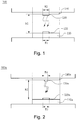
- FIG. 1 is a diagram for illustrating a quantum random pulse generator not covered by the invention.
- the quantum random pulse generator 100 includes a photodiode detection unit 110, a photodiode 120, a radioactive isotope emission unit 130 and a plate 140.
- the photodiode 120 may be disposed at the central part of the photodiode detection unit 110 on a top surface of the photodiode detection unit 110.
- the photodiode detection unit 110 may be formed on a substrate.
- the type of substrate is not specially limited and may be a silicon, zinc oxide or nitride semiconductor substrate, for example.
- the photodiode 120 may collide against alpha particles emitted by the radioactive isotope emission unit 130.
- the photodiode detection unit 110 may detect an event from the photodiode 120 and generate a random pulse. The random pulse may generate in accordance with the emission time of the alpha particles.
- the radioactive isotope emission unit 130 may emit the alpha particles discharged when an atomic nucleus naturally collapses.
- the alpha particles may be Am 241 that naturally collapses, but is not limited thereto.
- the alpha particles may be at least one of Pb 210 isotope that is a uranium emission, Cm 244 and Po 210 .
- the radioactive isotope emission unit 130 may be disposed to face the photodiode 120 at a specific interval.
- the horizontal width W1 of the photodiode 120 and the horizontal width W2 of the radioactive isotope emission unit 130 may be the same, but is not limited thereto.
- the horizontal width W1 of the photodiode 120 may be 0.1 mm or more and 1.0 mm or less, and the horizontal width W2 of the radioactive isotope emission unit 130 may be 0.1 mm or more and 1.0 mm or less.
- the plate 140 may be disposed on a top surface of the radioactive isotope emission unit 130 to support the radioactive isotope emission unit 130.
- An interval h1 between the photodiode detection unit 110 and the plate 140 may be 0.1 mm or more and 0.5 mm or less, but is not limited thereto.
- the quantum random pulse generator 100 can be implemented in a smaller and thinner thin film form compared to a conventional quantum random pulse generator, thereby being capable of improving the security and lightweightness of an IoT device.
- FIG. 2 is a diagram for illustrating another quantum random pulse generator not covered by the invention.
- the quantum random pulse generator 100a includes a photodiode detection unit 110a, a photodiode 120a, a radioactive isotope output unit 130a and a plate 140a.
- the photodiode 120a may be disposed on a top surface of the photodiode detection unit 110a.
- the photodiode detection unit 110a may support the photodiode 120a.
- the photodiode detection unit 110a may be formed on a substrate.
- the type of substrate is not specially limited and may be a silicon, zinc oxide or nitride semiconductor substrate, for example.
- the photodiode 120a may collide against alpha particles emitted by the radioactive isotope emission unit 130a.
- the photodiode detection unit 110a may detect an event from the photodiode 120a and generate a random pulse. The random pulse may be generated in accordance with the emission time of the alpha particles.
- the radioactive isotope emission unit 130a may emit the alpha particles discharged when an atomic nucleus naturally collapses.
- the alpha particles may be Am 241 that naturally collapses, but is not limited thereto.
- the alpha particles may be at least one of Pb 210 isotope that is a uranium emission, Cm 244 and Po 210 .
- the radioactive isotope emission unit 130a may be disposed to face the photodiode 120a at a specific interval.
- the horizontal width W4 of the radioactive isotope emission unit 130a may be smaller than the horizontal width W3 of the photodiode 120a.
- the horizontal width W1 of the photodiode 120a may be 0.1 mm or more and 1.0 mm or less, and the horizontal width W2 of the radioactive isotope emission unit 130a may be more than 0.05 mm and less than 0.1 mm.
- An interval h2 between the photodiode detection unit 110a and the plate 140a may be 0.1 mm or more and 0.5 mm or less, but is not limited thereto.
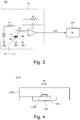
- FIG. 3 is a circuit diagram showing the random number generation apparatus not covered by the invention.
- the random. number generation apparatus 300 includes the quantum random pulse generator 100 and a CPU 200.
- the quantum random pulse generator 100 includes the photodiode PD which receives alpha particles from the radioactive isotope emission unit 130, resistors R1 and R2, capacitors C1 and C2 and an amplifier.
- the quantum random pulse generator 100 may send a generated random pulse to the CPU 200.
- FIG. 4 is a diagram for illustrating a quantum random pulse generator according to an embodiment of the present invention.
- the quantum random pulse generator 100b includes a photodiode detection unit 110b, a photodiode 120b, a radioactive isotope emission unit 130b of a form including a liquefied radioactive isotope, and a plate 140b.
- the photodiode detection unit 110b has the photodiode 120b disposed on its top and may support the photodiode 120b.
- the photodiode detection unit 110b may be formed on a substrate.
- the type of substrate is not specially limited and may be a silicon, zinc oxide or nitride semiconductor substrate, for example.
- the photodiode 120b may be disposed to directly come into contact with the radioactive isotope emission unit 130b.
- the photodiode 120b may come into contact with alpha particles emitted by the radioactive isotope emission unit 130b.
- the photodiode detection unit 110b may detect an event from the photodiode 120b and generate a random pulse.
- the random pulse may be generated in accordance with the emission time of the alpha particles.
- the radioactive isotope emission unit 130b may emit the alpha particles discharged when an atomic nucleus naturally collapses.
- the radioactive isotope emission unit 130b may be a liquefied form.
- the alpha particles may be Am 241 that naturally collapses, but is not limited thereto.
- the alpha particles may be at least one of Pb 210 isotope that is a uranium emission, Cm 244 and Po 210 .
- the radioactive isotope emission unit 130b may be disposed on the photodiode 120b.
- the horizontal width W5 of the photodiode 120b and the radioactive isotope emission unit 130b may be the same, but is not limited thereto.
- the horizontal width W5 of the photodiode 120b and the radioactive isotope emission unit 130b may be 0.1 mm or more and 1.0 mm or less.
- the plate 140b may be disposed to surround the photodiode 120b and the radioactive isotope emission unit 130b. That is, the plate 140b is disposed on the substrate, the photodiode detection unit 110b, the photodiode 120b and the radioactive isotope emission unit 130b to seal the radioactive isotope emission unit 130b. Accordingly, radiation leaks to the outside of a chip can be prevented.
- FIG. 5 is a diagram for illustrating a method for fabricating the quantum random pulse generator according to an embodiment of the present invention.
- the photodiode detection unit 110b is disposed within the substrate, and the plate 140b is disposed on the substrate and the photodiode detection unit 110b. After the central part of the plate 140b experiences an etch process, the photodiode 120b is disposed at the central part of the photodiode detection unit 110b on top thereof. Thereafter, the radioactive isotope emission unit 130b including a liquefied radioactive isotope is disposed on the photodiode 120b. In this case, the radioactive isotope emission unit 130b is a liquefied form, and alpha particles may be Am 241 that naturally collapses, but is not limited thereto.
- the plate 140b is deposited to cover the radioactive isotope emission unit 130b including a liquefied radioactive isotope. That is, the plate 140b is disposed on the substrate, the photodiode detection unit 110b, the photodiode 120b and the radioactive isotope emission unit 130b to seal the radioactive isotope emission unit 130b. Accordingly, radiation leaks to the outside of a chip can be prevented.
Landscapes
- Engineering & Computer Science (AREA)
- Physics & Mathematics (AREA)
- Theoretical Computer Science (AREA)
- General Physics & Mathematics (AREA)
- Mathematical Optimization (AREA)
- Pure & Applied Mathematics (AREA)
- Mathematical Analysis (AREA)
- General Engineering & Computer Science (AREA)
- Computational Mathematics (AREA)
- Computer Security & Cryptography (AREA)
- Computer Networks & Wireless Communication (AREA)
- Signal Processing (AREA)
- Photometry And Measurement Of Optical Pulse Characteristics (AREA)
- Optical Communication System (AREA)
- Light Receiving Elements (AREA)
- Nuclear Medicine (AREA)
- Measurement Of Radiation (AREA)
Claims (11)
- Quanten-Zufallspulsgenerator (100b), umfassend:- ein Substrat;- eine Photodioden-Detektionseinheit (110b), welche über dem Substrat angeordnet ist und eine Photodiode (120b) aufweist, welche in einem Zentrum der Photodioden-Detektionseinheit (110b) an einer Oberseite angeordnet ist;- eine über der Photodiode (120b) angeordnete Emissionseinheit (130b) eines radioaktiven Isotops; und- eine Platte (140b), welche derart über dem Substrat, der Photodioden-Detektionseinheit (110b), der Photodiode (120b) und der Emissionseinheit (130b) des radioaktiven Isotops angeordnet ist, um das Substrat, die Photodioden-Detektionseinheit (110b), die Photodiode (120b) und die Emissionseinheit (130b) des radioaktiven Isotops abzudecken und die Emissionseinheit (130b) des radioaktiven Isotops abzudichten,dadurch gekennzeichnet, dass die Emissionseinheit (130b) des radioaktiven Isotops in verflüssigter Form vorliegt.
- Quanten-Zufallspulsgenerator nach Anspruch 1, wobei die Photodiode (120b) derart angeordnet ist, um mit der Emissionseinheit (130b) des radioaktiven Isotops direkt in Kontakt zu gelangen.
- Quanten-Zufallspulsgenerator nach Anspruch 1 oder 2, wobei die Photodiode (120b) mit von der Emissionseinheit (130b) des radioaktiven Isotops emittierten Alphateilchen in Kontakt gelangt, und wobei die Photodioden-Detektionseinheit (110b) ein Ereignis von der Photodiode (120b) detektiert und einen Zufallspuls erzeugt.
- Quanten-Zufallspulsgenerator nach Anspruch 3, wobei der Zufallspuls entsprechend der Emissionszeit der Alphateilchen erzeugt wird.
- Quanten-Zufallspulsgenerator nach Anspruch 3 oder 4, wobei die Emissionseinheit (130b) des radioaktiven Isotops die Alphateilchen emittiert, welche freigesetzt werden, wenn ein Atomkern auf natürliche Weise zerfällt.
- Quanten-Zufallspulsgenerator nach wenigstens einem der Ansprüche 1 bis 5, wobei eine horizontale Breite (W5) der Photodiode (120b) und der Emissionseinheit (130b) des radioaktiven Isotops identisch ist.
- Quanten-Zufallspulsgenerator nach Anspruch 6, wobei die horizontale Breite (W5) der Photodiode (120b) und der Emissionseinheit (130b) des radioaktiven Isotops zwischen 0,1 mm und 1,0 mm beträgt.
- Quanten-Zufallspulsgenerator nach wenigstens einem der Ansprüche 1 bis 7, wobei die Platte (140b) derart angeordnet ist, um die Photodiode (120b) und die Emissionseinheit (130b) des radioaktiven Isotops zu umgeben, sodass die Platte (140b) auf dem Substrat, der Photodioden-Detektionseinheit (110b), der Photodiode (120b) und der Emissionseinheit (130b) des radioaktiven Isotops angeordnet ist, um die Emissionseinheit (130b) des radioaktiven Isotops abzudichten.
- Quanten-Zufallspulsgenerator nach wenigstens einem der Ansprüche 1 bis 8, wobei die Emissionseinheit (130b) des radioaktiven Isotops das radioaktive Isotop Am241 enthält.
- Verfahren zur Herstellung eines Quanten-Zufallspulsgenerators (100b) nach wenigstens einem der Ansprüche 1 bis 9, wobei- die Photodioden-Detektionseinheit (110b) in dem Substrat angeordnet wird und die Platte (140b) auf dem Substrat und der Photodioden-Detektionseinheit (110b) angeordnet wird;- die Photodiode (120b) im zentralen Bereich der Photodioden-Detektionseinheit (110b) auf deren Oberseite angeordnet wird, nachdem der zentrale Bereich der Platte (140b) einen Ätzvorgang erfahren hat;- die Emissionseinheit (130b) des radioaktiven Isotops, welche ein verflüssigtes radioaktives Isotop enthält, anschließend auf der Photodiode (120b) angeordnet wird, wobei die Emissionseinheit (130b) des radioaktiven Isotops in verflüssigter Form vorliegt; und- die Platte (140b), nachdem die Emissionseinheit (130b) des radioaktiven Isotops angeordnet worden ist, derart aufgebracht wird, um die Emissionseinheit (130b) des radioaktiven Isotops einschließlich des verflüssigten radioaktiven Isotops abzudecken, so dass die Platte (140b) auf dem Substrat, der Photodioden-Detektionseinheit (110b), der Photodiode (120b) und der Emissionseinheit (130b) des radioaktiven Isotops angeordnet ist, um die Emissionseinheit (130b) des radioaktiven Isotops abzudichten.
- Verfahren nach Anspruch 10, wobei die Emissionseinheit (130b) des radioaktiven Isotops das radioaktive Isotop Am241 enthält.
Priority Applications (1)
| Application Number | Priority Date | Filing Date | Title |
|---|---|---|---|
| EP21159484.1A EP3863177A1 (de) | 2016-05-31 | 2017-03-13 | Quantenzufallspulsgenerator |
Applications Claiming Priority (2)
| Application Number | Priority Date | Filing Date | Title |
|---|---|---|---|
| KR1020160067599A KR101699810B1 (ko) | 2016-05-31 | 2016-05-31 | 양자 랜덤펄스 생성기 |
| PCT/KR2017/002654 WO2017209379A1 (ko) | 2016-05-31 | 2017-03-13 | 양자 랜덤펄스 생성기 |
Related Child Applications (2)
| Application Number | Title | Priority Date | Filing Date |
|---|---|---|---|
| EP21159484.1A Division EP3863177A1 (de) | 2016-05-31 | 2017-03-13 | Quantenzufallspulsgenerator |
| EP21159484.1A Division-Into EP3863177A1 (de) | 2016-05-31 | 2017-03-13 | Quantenzufallspulsgenerator |
Publications (3)
| Publication Number | Publication Date |
|---|---|
| EP3468038A1 EP3468038A1 (de) | 2019-04-10 |
| EP3468038A4 EP3468038A4 (de) | 2020-01-01 |
| EP3468038B1 true EP3468038B1 (de) | 2021-12-01 |
Family
ID=57992930
Family Applications (2)
| Application Number | Title | Priority Date | Filing Date |
|---|---|---|---|
| EP21159484.1A Withdrawn EP3863177A1 (de) | 2016-05-31 | 2017-03-13 | Quantenzufallspulsgenerator |
| EP17806872.2A Active EP3468038B1 (de) | 2016-05-31 | 2017-03-13 | Quantenzufallspulsgenerator und verfahren zu dessen herstellellung |
Family Applications Before (1)
| Application Number | Title | Priority Date | Filing Date |
|---|---|---|---|
| EP21159484.1A Withdrawn EP3863177A1 (de) | 2016-05-31 | 2017-03-13 | Quantenzufallspulsgenerator |
Country Status (4)
| Country | Link |
|---|---|
| EP (2) | EP3863177A1 (de) |
| KR (1) | KR101699810B1 (de) |
| CN (1) | CN109478885A (de) |
| WO (1) | WO2017209379A1 (de) |
Families Citing this family (10)
| Publication number | Priority date | Publication date | Assignee | Title |
|---|---|---|---|---|
| KR101918973B1 (ko) | 2017-03-28 | 2018-11-15 | 채령 | 양자보안 단말기 |
| KR101918974B1 (ko) | 2017-03-28 | 2018-11-15 | 채령 | 클라우드 양자보안 인증방법 |
| KR101918976B1 (ko) | 2017-03-28 | 2019-02-08 | 채령 | 클라우드 보안 시스템 |
| KR101918972B1 (ko) | 2017-03-28 | 2018-11-15 | 채령 | 양자난수와 의사난수를 결합한 보안 인증 cctv 영상방범 시스템 |
| KR101891033B1 (ko) * | 2017-04-26 | 2018-08-22 | 이승철 | 양자 보안인증 시스템 |
| KR101958757B1 (ko) * | 2017-06-13 | 2019-03-18 | 주식회사 이와이엘 | 방사성 동위원소의 알파입자를 이용한 랜덤 펄스 발생 장치의 양자 난수 생성 방법 |
| KR101936235B1 (ko) * | 2017-07-24 | 2019-04-10 | 이현규 | 퀀텀 보안인증 홈단말기 |
| KR102013148B1 (ko) * | 2017-12-18 | 2019-08-22 | 채령 | 양자난수와 의사난수를 결합한 보안 인증 cctv 영상방범 시스템 |
| KR102093317B1 (ko) * | 2018-08-13 | 2020-03-25 | 주식회사 이와이엘 | 무기섬광체를 이용한 난수생성방법 및 난수생성장치 |
| KR102855240B1 (ko) * | 2023-03-14 | 2025-09-05 | 아이씨티케이 주식회사 | 난수 생성 장치 |
Family Cites Families (9)
| Publication number | Priority date | Publication date | Assignee | Title |
|---|---|---|---|---|
| JPS59114918A (ja) * | 1982-12-20 | 1984-07-03 | Mitsubishi Electric Corp | ダイオ−ド素子 |
| JPH0950369A (ja) * | 1995-08-10 | 1997-02-18 | Junichi Yamauchi | 放射性物質を利用した乱数発生方法とその装置 |
| JPH11161473A (ja) * | 1997-11-25 | 1999-06-18 | Norihei Tsuyusaki | 乱数発生装置と確率発生装置 |
| JPH11184676A (ja) * | 1997-12-18 | 1999-07-09 | Norihei Tsuyusaki | 自然乱数生成カード |
| JP2001117758A (ja) * | 1999-10-20 | 2001-04-27 | Iwaki Electronics Corp | 乱数発生装置および確率発生装置ならびにそれらの製造方法 |
| JP2001117756A (ja) * | 1999-10-20 | 2001-04-27 | Iwaki Electronics Corp | ランダムパルス発生器ならびにそれを利用した乱数発生装置および確率発生装置 |
| KR101244853B1 (ko) | 2012-12-13 | 2013-03-18 | 정진원 | 난수발생에 의한 사용자 통합 인증방법 |
| JP6169888B2 (ja) * | 2013-05-10 | 2017-07-26 | セイコー・イージーアンドジー株式会社 | 放射能測定装置 |
| KR101523760B1 (ko) | 2013-07-22 | 2015-05-28 | 주식회사 이와이엘 | 난수발생에 의한 이모빌라이져 장치 및 그 인증방법 |
-
2016
- 2016-05-31 KR KR1020160067599A patent/KR101699810B1/ko active Active
-
2017
- 2017-03-13 EP EP21159484.1A patent/EP3863177A1/de not_active Withdrawn
- 2017-03-13 CN CN201780044083.6A patent/CN109478885A/zh not_active Withdrawn
- 2017-03-13 WO PCT/KR2017/002654 patent/WO2017209379A1/ko not_active Ceased
- 2017-03-13 EP EP17806872.2A patent/EP3468038B1/de active Active
Also Published As
| Publication number | Publication date |
|---|---|
| EP3468038A1 (de) | 2019-04-10 |
| EP3863177A1 (de) | 2021-08-11 |
| WO2017209379A1 (ko) | 2017-12-07 |
| EP3468038A4 (de) | 2020-01-01 |
| CN109478885A (zh) | 2019-03-15 |
| KR101699810B1 (ko) | 2017-01-26 |
Similar Documents
| Publication | Publication Date | Title |
|---|---|---|
| EP3468038B1 (de) | Quantenzufallspulsgenerator und verfahren zu dessen herstellellung | |
| Wang et al. | Security issues and challenges for cyber physical system | |
| CN101617319B (zh) | 具有背面破坏防护的半导体装置 | |
| CN106067460B (zh) | 包括受保护的后表面的电子芯片 | |
| US20170187721A1 (en) | Secure communications using spad tof systems | |
| Aziz et al. | A lightweight and compromise‐resilient authentication scheme for IoTs | |
| US11289443B2 (en) | Microspring structure for hardware trusted platform module | |
| KR20170072274A (ko) | 산업 제어 시스템을 위한 탬퍼 방지 모듈 | |
| US10361847B2 (en) | Quantum random pulse generator | |
| US10673832B2 (en) | Predefined access policy implementation based on auxiliary information embedded in one-time authentication passcodes | |
| US10091204B1 (en) | Controlling user access to protected resource based on outcome of one-time passcode authentication token and predefined access policy | |
| US8938805B1 (en) | Detection of tampering with software installed on a processing device | |
| US12143479B2 (en) | Ultra high entropy material-based non-reversible spectral signature generation via quantum dots | |
| US12223293B2 (en) | Random number generation method and random number generator using inorganic scintillator | |
| KR20190016800A (ko) | 물리적 복제방지 장치 및 이를 이용한 난수 생성 방법 | |
| US10133555B2 (en) | Method of operating random pulse generator apparatus using radioisotope | |
| Devarakonda et al. | Critical issues in the invasion of the Internet of Things (IoT): Security, privacy, and other vulnerabilities | |
| KR20250083527A (ko) | 의사 난수 생성기 활용 및 수직 엔트로피 소스를 이용한 양자 난수 생성기 | |
| US6603510B1 (en) | Formation of protective coatings for color filters | |
| Alhusayni et al. | A Multi-Stage Secure IoT Authentication Protocol. | |
| TW202522209A (zh) | 積體式量子隨機數發生器 | |
| KR102090365B1 (ko) | 반도체 칩 정품 인증용 고유값 설정 방법, 반도체 칩 정품 인증용 고유값을 포함하는 데이터베이스, 및 이를 포함하는 인증서버 | |
| KR102159188B1 (ko) | 무아레 기반 융합 보안 토큰을 이용한 cctv 통제 보안 시스템 | |
| Brooks et al. | Cyber‐Assurance Through Embedded Security for the Internet of Things | |
| Kim et al. | A Study on the Development Method for Trust-Based Activation in Internet of Things |
Legal Events
| Date | Code | Title | Description |
|---|---|---|---|
| STAA | Information on the status of an ep patent application or granted ep patent |
Free format text: STATUS: THE INTERNATIONAL PUBLICATION HAS BEEN MADE |
|
| PUAI | Public reference made under article 153(3) epc to a published international application that has entered the european phase |
Free format text: ORIGINAL CODE: 0009012 |
|
| STAA | Information on the status of an ep patent application or granted ep patent |
Free format text: STATUS: REQUEST FOR EXAMINATION WAS MADE |
|
| 17P | Request for examination filed |
Effective date: 20181220 |
|
| AK | Designated contracting states |
Kind code of ref document: A1 Designated state(s): AL AT BE BG CH CY CZ DE DK EE ES FI FR GB GR HR HU IE IS IT LI LT LU LV MC MK MT NL NO PL PT RO RS SE SI SK SM TR |
|
| AX | Request for extension of the european patent |
Extension state: BA ME |
|
| DAV | Request for validation of the european patent (deleted) | ||
| DAX | Request for extension of the european patent (deleted) | ||
| A4 | Supplementary search report drawn up and despatched |
Effective date: 20191204 |
|
| RIC1 | Information provided on ipc code assigned before grant |
Ipc: H03K 3/84 20060101AFI20191128BHEP Ipc: G06F 7/58 20060101ALN20191128BHEP |
|
| GRAP | Despatch of communication of intention to grant a patent |
Free format text: ORIGINAL CODE: EPIDOSNIGR1 |
|
| STAA | Information on the status of an ep patent application or granted ep patent |
Free format text: STATUS: GRANT OF PATENT IS INTENDED |
|
| RIC1 | Information provided on ipc code assigned before grant |
Ipc: G06F 7/58 20060101ALN20210318BHEP Ipc: H03K 3/84 20060101AFI20210318BHEP |
|
| INTG | Intention to grant announced |
Effective date: 20210413 |
|
| RIC1 | Information provided on ipc code assigned before grant |
Ipc: G06F 7/58 20060101ALN20210330BHEP Ipc: H03K 3/84 20060101AFI20210330BHEP |
|
| GRAS | Grant fee paid |
Free format text: ORIGINAL CODE: EPIDOSNIGR3 |
|
| GRAJ | Information related to disapproval of communication of intention to grant by the applicant or resumption of examination proceedings by the epo deleted |
Free format text: ORIGINAL CODE: EPIDOSDIGR1 |
|
| GRAL | Information related to payment of fee for publishing/printing deleted |
Free format text: ORIGINAL CODE: EPIDOSDIGR3 |
|
| STAA | Information on the status of an ep patent application or granted ep patent |
Free format text: STATUS: REQUEST FOR EXAMINATION WAS MADE |
|
| INTC | Intention to grant announced (deleted) | ||
| RIC1 | Information provided on ipc code assigned before grant |
Ipc: G06F 7/58 20060101ALN20210827BHEP Ipc: H03K 3/84 20060101AFI20210827BHEP |
|
| GRAP | Despatch of communication of intention to grant a patent |
Free format text: ORIGINAL CODE: EPIDOSNIGR1 |
|
| STAA | Information on the status of an ep patent application or granted ep patent |
Free format text: STATUS: GRANT OF PATENT IS INTENDED |
|
| GRAA | (expected) grant |
Free format text: ORIGINAL CODE: 0009210 |
|
| STAA | Information on the status of an ep patent application or granted ep patent |
Free format text: STATUS: THE PATENT HAS BEEN GRANTED |
|
| INTG | Intention to grant announced |
Effective date: 20211018 |
|
| AK | Designated contracting states |
Kind code of ref document: B1 Designated state(s): AL AT BE BG CH CY CZ DE DK EE ES FI FR GB GR HR HU IE IS IT LI LT LU LV MC MK MT NL NO PL PT RO RS SE SI SK SM TR |
|
| RAP3 | Party data changed (applicant data changed or rights of an application transferred) |
Owner name: EYL INC. |
|
| REG | Reference to a national code |
Ref country code: GB Ref legal event code: FG4D |
|
| REG | Reference to a national code |
Ref country code: AT Ref legal event code: REF Ref document number: 1452748 Country of ref document: AT Kind code of ref document: T Effective date: 20211215 Ref country code: CH Ref legal event code: EP |
|
| REG | Reference to a national code |
Ref country code: IE Ref legal event code: FG4D |
|
| REG | Reference to a national code |
Ref country code: DE Ref legal event code: R096 Ref document number: 602017050321 Country of ref document: DE |
|
| REG | Reference to a national code |
Ref country code: LT Ref legal event code: MG9D |
|
| REG | Reference to a national code |
Ref country code: NL Ref legal event code: MP Effective date: 20211201 |
|
| REG | Reference to a national code |
Ref country code: AT Ref legal event code: MK05 Ref document number: 1452748 Country of ref document: AT Kind code of ref document: T Effective date: 20211201 |
|
| PG25 | Lapsed in a contracting state [announced via postgrant information from national office to epo] |
Ref country code: RS Free format text: LAPSE BECAUSE OF FAILURE TO SUBMIT A TRANSLATION OF THE DESCRIPTION OR TO PAY THE FEE WITHIN THE PRESCRIBED TIME-LIMIT Effective date: 20211201 Ref country code: LT Free format text: LAPSE BECAUSE OF FAILURE TO SUBMIT A TRANSLATION OF THE DESCRIPTION OR TO PAY THE FEE WITHIN THE PRESCRIBED TIME-LIMIT Effective date: 20211201 Ref country code: FI Free format text: LAPSE BECAUSE OF FAILURE TO SUBMIT A TRANSLATION OF THE DESCRIPTION OR TO PAY THE FEE WITHIN THE PRESCRIBED TIME-LIMIT Effective date: 20211201 Ref country code: BG Free format text: LAPSE BECAUSE OF FAILURE TO SUBMIT A TRANSLATION OF THE DESCRIPTION OR TO PAY THE FEE WITHIN THE PRESCRIBED TIME-LIMIT Effective date: 20220301 Ref country code: AT Free format text: LAPSE BECAUSE OF FAILURE TO SUBMIT A TRANSLATION OF THE DESCRIPTION OR TO PAY THE FEE WITHIN THE PRESCRIBED TIME-LIMIT Effective date: 20211201 |
|
| PG25 | Lapsed in a contracting state [announced via postgrant information from national office to epo] |
Ref country code: SE Free format text: LAPSE BECAUSE OF FAILURE TO SUBMIT A TRANSLATION OF THE DESCRIPTION OR TO PAY THE FEE WITHIN THE PRESCRIBED TIME-LIMIT Effective date: 20211201 Ref country code: PL Free format text: LAPSE BECAUSE OF FAILURE TO SUBMIT A TRANSLATION OF THE DESCRIPTION OR TO PAY THE FEE WITHIN THE PRESCRIBED TIME-LIMIT Effective date: 20211201 Ref country code: NO Free format text: LAPSE BECAUSE OF FAILURE TO SUBMIT A TRANSLATION OF THE DESCRIPTION OR TO PAY THE FEE WITHIN THE PRESCRIBED TIME-LIMIT Effective date: 20220301 Ref country code: LV Free format text: LAPSE BECAUSE OF FAILURE TO SUBMIT A TRANSLATION OF THE DESCRIPTION OR TO PAY THE FEE WITHIN THE PRESCRIBED TIME-LIMIT Effective date: 20211201 Ref country code: HR Free format text: LAPSE BECAUSE OF FAILURE TO SUBMIT A TRANSLATION OF THE DESCRIPTION OR TO PAY THE FEE WITHIN THE PRESCRIBED TIME-LIMIT Effective date: 20211201 Ref country code: GR Free format text: LAPSE BECAUSE OF FAILURE TO SUBMIT A TRANSLATION OF THE DESCRIPTION OR TO PAY THE FEE WITHIN THE PRESCRIBED TIME-LIMIT Effective date: 20220302 Ref country code: ES Free format text: LAPSE BECAUSE OF FAILURE TO SUBMIT A TRANSLATION OF THE DESCRIPTION OR TO PAY THE FEE WITHIN THE PRESCRIBED TIME-LIMIT Effective date: 20211201 |
|
| PG25 | Lapsed in a contracting state [announced via postgrant information from national office to epo] |
Ref country code: NL Free format text: LAPSE BECAUSE OF FAILURE TO SUBMIT A TRANSLATION OF THE DESCRIPTION OR TO PAY THE FEE WITHIN THE PRESCRIBED TIME-LIMIT Effective date: 20211201 |
|
| PG25 | Lapsed in a contracting state [announced via postgrant information from national office to epo] |
Ref country code: SM Free format text: LAPSE BECAUSE OF FAILURE TO SUBMIT A TRANSLATION OF THE DESCRIPTION OR TO PAY THE FEE WITHIN THE PRESCRIBED TIME-LIMIT Effective date: 20211201 Ref country code: SK Free format text: LAPSE BECAUSE OF FAILURE TO SUBMIT A TRANSLATION OF THE DESCRIPTION OR TO PAY THE FEE WITHIN THE PRESCRIBED TIME-LIMIT Effective date: 20211201 Ref country code: RO Free format text: LAPSE BECAUSE OF FAILURE TO SUBMIT A TRANSLATION OF THE DESCRIPTION OR TO PAY THE FEE WITHIN THE PRESCRIBED TIME-LIMIT Effective date: 20211201 Ref country code: PT Free format text: LAPSE BECAUSE OF FAILURE TO SUBMIT A TRANSLATION OF THE DESCRIPTION OR TO PAY THE FEE WITHIN THE PRESCRIBED TIME-LIMIT Effective date: 20220401 Ref country code: EE Free format text: LAPSE BECAUSE OF FAILURE TO SUBMIT A TRANSLATION OF THE DESCRIPTION OR TO PAY THE FEE WITHIN THE PRESCRIBED TIME-LIMIT Effective date: 20211201 Ref country code: CZ Free format text: LAPSE BECAUSE OF FAILURE TO SUBMIT A TRANSLATION OF THE DESCRIPTION OR TO PAY THE FEE WITHIN THE PRESCRIBED TIME-LIMIT Effective date: 20211201 |
|
| REG | Reference to a national code |
Ref country code: DE Ref legal event code: R097 Ref document number: 602017050321 Country of ref document: DE |
|
| PG25 | Lapsed in a contracting state [announced via postgrant information from national office to epo] |
Ref country code: IS Free format text: LAPSE BECAUSE OF FAILURE TO SUBMIT A TRANSLATION OF THE DESCRIPTION OR TO PAY THE FEE WITHIN THE PRESCRIBED TIME-LIMIT Effective date: 20220401 |
|
| PLBE | No opposition filed within time limit |
Free format text: ORIGINAL CODE: 0009261 |
|
| STAA | Information on the status of an ep patent application or granted ep patent |
Free format text: STATUS: NO OPPOSITION FILED WITHIN TIME LIMIT |
|
| PG25 | Lapsed in a contracting state [announced via postgrant information from national office to epo] |
Ref country code: MC Free format text: LAPSE BECAUSE OF FAILURE TO SUBMIT A TRANSLATION OF THE DESCRIPTION OR TO PAY THE FEE WITHIN THE PRESCRIBED TIME-LIMIT Effective date: 20211201 Ref country code: DK Free format text: LAPSE BECAUSE OF FAILURE TO SUBMIT A TRANSLATION OF THE DESCRIPTION OR TO PAY THE FEE WITHIN THE PRESCRIBED TIME-LIMIT Effective date: 20211201 Ref country code: AL Free format text: LAPSE BECAUSE OF FAILURE TO SUBMIT A TRANSLATION OF THE DESCRIPTION OR TO PAY THE FEE WITHIN THE PRESCRIBED TIME-LIMIT Effective date: 20211201 |
|
| REG | Reference to a national code |
Ref country code: CH Ref legal event code: PL |
|
| 26N | No opposition filed |
Effective date: 20220902 |
|
| PG25 | Lapsed in a contracting state [announced via postgrant information from national office to epo] |
Ref country code: SI Free format text: LAPSE BECAUSE OF FAILURE TO SUBMIT A TRANSLATION OF THE DESCRIPTION OR TO PAY THE FEE WITHIN THE PRESCRIBED TIME-LIMIT Effective date: 20211201 |
|
| REG | Reference to a national code |
Ref country code: BE Ref legal event code: MM Effective date: 20220331 |
|
| PG25 | Lapsed in a contracting state [announced via postgrant information from national office to epo] |
Ref country code: LU Free format text: LAPSE BECAUSE OF NON-PAYMENT OF DUE FEES Effective date: 20220313 Ref country code: LI Free format text: LAPSE BECAUSE OF NON-PAYMENT OF DUE FEES Effective date: 20220331 Ref country code: IE Free format text: LAPSE BECAUSE OF NON-PAYMENT OF DUE FEES Effective date: 20220313 Ref country code: CH Free format text: LAPSE BECAUSE OF NON-PAYMENT OF DUE FEES Effective date: 20220331 |
|
| PG25 | Lapsed in a contracting state [announced via postgrant information from national office to epo] |
Ref country code: BE Free format text: LAPSE BECAUSE OF NON-PAYMENT OF DUE FEES Effective date: 20220331 |
|
| PG25 | Lapsed in a contracting state [announced via postgrant information from national office to epo] |
Ref country code: IT Free format text: LAPSE BECAUSE OF FAILURE TO SUBMIT A TRANSLATION OF THE DESCRIPTION OR TO PAY THE FEE WITHIN THE PRESCRIBED TIME-LIMIT Effective date: 20211201 |
|
| PG25 | Lapsed in a contracting state [announced via postgrant information from national office to epo] |
Ref country code: HU Free format text: LAPSE BECAUSE OF FAILURE TO SUBMIT A TRANSLATION OF THE DESCRIPTION OR TO PAY THE FEE WITHIN THE PRESCRIBED TIME-LIMIT; INVALID AB INITIO Effective date: 20170313 |
|
| PG25 | Lapsed in a contracting state [announced via postgrant information from national office to epo] |
Ref country code: MK Free format text: LAPSE BECAUSE OF FAILURE TO SUBMIT A TRANSLATION OF THE DESCRIPTION OR TO PAY THE FEE WITHIN THE PRESCRIBED TIME-LIMIT Effective date: 20211201 Ref country code: CY Free format text: LAPSE BECAUSE OF FAILURE TO SUBMIT A TRANSLATION OF THE DESCRIPTION OR TO PAY THE FEE WITHIN THE PRESCRIBED TIME-LIMIT Effective date: 20211201 |
|
| PG25 | Lapsed in a contracting state [announced via postgrant information from national office to epo] |
Ref country code: MT Free format text: LAPSE BECAUSE OF FAILURE TO SUBMIT A TRANSLATION OF THE DESCRIPTION OR TO PAY THE FEE WITHIN THE PRESCRIBED TIME-LIMIT Effective date: 20211201 |
|
| PG25 | Lapsed in a contracting state [announced via postgrant information from national office to epo] |
Ref country code: TR Free format text: LAPSE BECAUSE OF FAILURE TO SUBMIT A TRANSLATION OF THE DESCRIPTION OR TO PAY THE FEE WITHIN THE PRESCRIBED TIME-LIMIT Effective date: 20211201 |
|
| PGFP | Annual fee paid to national office [announced via postgrant information from national office to epo] |
Ref country code: GB Payment date: 20260324 Year of fee payment: 10 |
|
| PGFP | Annual fee paid to national office [announced via postgrant information from national office to epo] |
Ref country code: DE Payment date: 20260311 Year of fee payment: 10 |
|
| PGFP | Annual fee paid to national office [announced via postgrant information from national office to epo] |
Ref country code: FR Payment date: 20260323 Year of fee payment: 10 |