EP3455376B1 - Verfahren zur herstellung einer vielzahl an dna-sonden und verfahren zur analyse von genomischer dna unter verwendung der dna-sonden - Google Patents
Verfahren zur herstellung einer vielzahl an dna-sonden und verfahren zur analyse von genomischer dna unter verwendung der dna-sonden Download PDFInfo
- Publication number
- EP3455376B1 EP3455376B1 EP17737065.7A EP17737065A EP3455376B1 EP 3455376 B1 EP3455376 B1 EP 3455376B1 EP 17737065 A EP17737065 A EP 17737065A EP 3455376 B1 EP3455376 B1 EP 3455376B1
- Authority
- EP
- European Patent Office
- Prior art keywords
- dna
- amplified
- bases
- concentration
- random primers
- Prior art date
- Legal status (The legal status is an assumption and is not a legal conclusion. Google has not performed a legal analysis and makes no representation as to the accuracy of the status listed.)
- Active
Links
Images







































Classifications
-
- C—CHEMISTRY; METALLURGY
- C12—BIOCHEMISTRY; BEER; SPIRITS; WINE; VINEGAR; MICROBIOLOGY; ENZYMOLOGY; MUTATION OR GENETIC ENGINEERING
- C12N—MICROORGANISMS OR ENZYMES; COMPOSITIONS THEREOF; PROPAGATING, PRESERVING, OR MAINTAINING MICROORGANISMS; MUTATION OR GENETIC ENGINEERING; CULTURE MEDIA
- C12N15/00—Mutation or genetic engineering; DNA or RNA concerning genetic engineering, vectors, e.g. plasmids, or their isolation, preparation or purification; Use of hosts therefor
- C12N15/09—Recombinant DNA-technology
- C12N15/10—Processes for the isolation, preparation or purification of DNA or RNA
- C12N15/1034—Isolating an individual clone by screening libraries
- C12N15/1093—General methods of preparing gene libraries, not provided for in other subgroups
-
- C—CHEMISTRY; METALLURGY
- C12—BIOCHEMISTRY; BEER; SPIRITS; WINE; VINEGAR; MICROBIOLOGY; ENZYMOLOGY; MUTATION OR GENETIC ENGINEERING
- C12Q—MEASURING OR TESTING PROCESSES INVOLVING ENZYMES, NUCLEIC ACIDS OR MICROORGANISMS; COMPOSITIONS OR TEST PAPERS THEREFOR; PROCESSES OF PREPARING SUCH COMPOSITIONS; CONDITION-RESPONSIVE CONTROL IN MICROBIOLOGICAL OR ENZYMOLOGICAL PROCESSES
- C12Q1/00—Measuring or testing processes involving enzymes, nucleic acids or microorganisms; Compositions therefor; Processes of preparing such compositions
- C12Q1/68—Measuring or testing processes involving enzymes, nucleic acids or microorganisms; Compositions therefor; Processes of preparing such compositions involving nucleic acids
- C12Q1/6811—Selection methods for production or design of target specific oligonucleotides or binding molecules
-
- C—CHEMISTRY; METALLURGY
- C12—BIOCHEMISTRY; BEER; SPIRITS; WINE; VINEGAR; MICROBIOLOGY; ENZYMOLOGY; MUTATION OR GENETIC ENGINEERING
- C12Q—MEASURING OR TESTING PROCESSES INVOLVING ENZYMES, NUCLEIC ACIDS OR MICROORGANISMS; COMPOSITIONS OR TEST PAPERS THEREFOR; PROCESSES OF PREPARING SUCH COMPOSITIONS; CONDITION-RESPONSIVE CONTROL IN MICROBIOLOGICAL OR ENZYMOLOGICAL PROCESSES
- C12Q1/00—Measuring or testing processes involving enzymes, nucleic acids or microorganisms; Compositions therefor; Processes of preparing such compositions
- C12Q1/68—Measuring or testing processes involving enzymes, nucleic acids or microorganisms; Compositions therefor; Processes of preparing such compositions involving nucleic acids
- C12Q1/6844—Nucleic acid amplification reactions
-
- C—CHEMISTRY; METALLURGY
- C12—BIOCHEMISTRY; BEER; SPIRITS; WINE; VINEGAR; MICROBIOLOGY; ENZYMOLOGY; MUTATION OR GENETIC ENGINEERING
- C12Q—MEASURING OR TESTING PROCESSES INVOLVING ENZYMES, NUCLEIC ACIDS OR MICROORGANISMS; COMPOSITIONS OR TEST PAPERS THEREFOR; PROCESSES OF PREPARING SUCH COMPOSITIONS; CONDITION-RESPONSIVE CONTROL IN MICROBIOLOGICAL OR ENZYMOLOGICAL PROCESSES
- C12Q1/00—Measuring or testing processes involving enzymes, nucleic acids or microorganisms; Compositions therefor; Processes of preparing such compositions
- C12Q1/68—Measuring or testing processes involving enzymes, nucleic acids or microorganisms; Compositions therefor; Processes of preparing such compositions involving nucleic acids
- C12Q1/6876—Nucleic acid products used in the analysis of nucleic acids, e.g. primers or probes
-
- C—CHEMISTRY; METALLURGY
- C12—BIOCHEMISTRY; BEER; SPIRITS; WINE; VINEGAR; MICROBIOLOGY; ENZYMOLOGY; MUTATION OR GENETIC ENGINEERING
- C12Q—MEASURING OR TESTING PROCESSES INVOLVING ENZYMES, NUCLEIC ACIDS OR MICROORGANISMS; COMPOSITIONS OR TEST PAPERS THEREFOR; PROCESSES OF PREPARING SUCH COMPOSITIONS; CONDITION-RESPONSIVE CONTROL IN MICROBIOLOGICAL OR ENZYMOLOGICAL PROCESSES
- C12Q2525/00—Reactions involving modified oligonucleotides, nucleic acids, or nucleotides
- C12Q2525/10—Modifications characterised by
- C12Q2525/179—Modifications characterised by incorporating arbitrary or random nucleotide sequences
-
- C—CHEMISTRY; METALLURGY
- C12—BIOCHEMISTRY; BEER; SPIRITS; WINE; VINEGAR; MICROBIOLOGY; ENZYMOLOGY; MUTATION OR GENETIC ENGINEERING
- C12Q—MEASURING OR TESTING PROCESSES INVOLVING ENZYMES, NUCLEIC ACIDS OR MICROORGANISMS; COMPOSITIONS OR TEST PAPERS THEREFOR; PROCESSES OF PREPARING SUCH COMPOSITIONS; CONDITION-RESPONSIVE CONTROL IN MICROBIOLOGICAL OR ENZYMOLOGICAL PROCESSES
- C12Q2525/00—Reactions involving modified oligonucleotides, nucleic acids, or nucleotides
- C12Q2525/10—Modifications characterised by
- C12Q2525/204—Modifications characterised by specific length of the oligonucleotides
-
- C—CHEMISTRY; METALLURGY
- C12—BIOCHEMISTRY; BEER; SPIRITS; WINE; VINEGAR; MICROBIOLOGY; ENZYMOLOGY; MUTATION OR GENETIC ENGINEERING
- C12Q—MEASURING OR TESTING PROCESSES INVOLVING ENZYMES, NUCLEIC ACIDS OR MICROORGANISMS; COMPOSITIONS OR TEST PAPERS THEREFOR; PROCESSES OF PREPARING SUCH COMPOSITIONS; CONDITION-RESPONSIVE CONTROL IN MICROBIOLOGICAL OR ENZYMOLOGICAL PROCESSES
- C12Q2527/00—Reactions demanding special reaction conditions
- C12Q2527/143—Concentration of primer or probe
-
- C—CHEMISTRY; METALLURGY
- C12—BIOCHEMISTRY; BEER; SPIRITS; WINE; VINEGAR; MICROBIOLOGY; ENZYMOLOGY; MUTATION OR GENETIC ENGINEERING
- C12Q—MEASURING OR TESTING PROCESSES INVOLVING ENZYMES, NUCLEIC ACIDS OR MICROORGANISMS; COMPOSITIONS OR TEST PAPERS THEREFOR; PROCESSES OF PREPARING SUCH COMPOSITIONS; CONDITION-RESPONSIVE CONTROL IN MICROBIOLOGICAL OR ENZYMOLOGICAL PROCESSES
- C12Q2600/00—Oligonucleotides characterized by their use
- C12Q2600/158—Expression markers
Definitions
- the present invention relates to a method for producing a DNA library that can be used for analyzing a DNA marker or other purposes and a method for gene analysis using such DNA library.
- genomic analysis is performed to conduct comprehensive analysis of genetic information contained in the genome, such as nucleotide sequence information.
- an analysis aimed at determination of the nucleotide sequence for whole genome is disadvantageous in terms of the number of processes and the cost.
- genomic analysis based on nucleotide sequence analysis has limitations because of genome complexity.
- Patent Literature 1 discloses an amplified fragment length polymorphism (AFLP) marker technique wherein a sample-specific marker is incorporated into a restriction-enzyme-treated fragment that had been ligated to an adaptor and only a part of the sequence of the restriction-enzyme-treated fragment is to be determined.
- AFLP amplified fragment length polymorphism
- the complexity of genomic DNA is reduced by treating genomic DNA with a restriction enzyme, the nucleotide sequence of a target part of the restriction-enzyme-treated fragment is determined, and the target restriction-enzyme-treated fragment is thus determined sufficiently.
- the technique disclosed in Patent Literature 1 requires processes such as treatment of genomic DNA with a restriction enzyme and ligation reaction with the use of an adaptor. Thus, it is difficult to achieve a cost reduction.
- Patent Literature 2 discloses as follows. That is, a DNA marker for identification that is highly correlated with the results of taste evaluation was found from among DNA bands obtained by amplifying DNAs extracted from a rice sample via PCR in the presence of adequate primers by the so-called RAPD (randomly amplified polymorphic DNA) technique.
- the method disclosed in Patent Literature 2 involves the use of a plurality of sequence-tagged sites (STSs, which are primers) identified by particular sequences. According to the method disclosed in Patent Literature 2, a DNA marker for identification amplified with the use of an STSprimer is detected via electrophoresis.
- the RAPD technique disclosed in Patent Literature 2 yields significantly poor reproducibility of PCR amplification, and, accordingly, such technique cannot be generally adopted as a DNA marker technique.
- Patent Literature 3 discloses a method for producing a genomic library wherein PCR is carried out with the use of a single type of primer designed on the basis of a sequence that appears relatively frequently in the target genome, the entire genomic region is substantially uniformly amplified, and a genomic library can be thus produced. While Patent Literature 3 describes that a genomic library can be produced by conducting PCR with the use of a random primer containing a random sequence, it does not describe any actual procedures or results of experimentation. Accordingly, the method described in Patent Literature 3 is deduced to require nucleotide sequence information of the genome so as to identify the genome appearing frequency, which would increase the number of procedures and the cost. According to the method described in Patent Literature 3, in addition, the entire genome is to be amplified, and complexity of genomic DNA cannot be reduced, disadvantageously.
- Patent Literature 4 discloses a high-throughput technique associated with markers that involves reduction in genome complexity by restriction enzyme treatment in combination with an array technique.
- genomic DNA is digested with restriction enzymes, an adaptor is ligated to the resulting genomic DNA fragment, a DNA fragment is amplified with the use of a primer hybridizing to the adaptor, and a DNA probe used for detection of such DNA fragment is then designed on the basis of the nucleotide sequence of the amplified DNA fragment.
- Non-Patent Literature 1 discloses the development of high-density linkage map containing several thousands of DNA markers for sugarcane and wheat by making use of the technique disclosed in Patent Literature 4.
- Non-Patent Literature 2 discloses the development of a high-density linkage map containing several thousands of DNA markers for buck wheat by making use of the technique disclosed in Patent Literature 4.
- Patent Literature 5 discloses a method involving the use of a random primer as a sample to be reacted with an array on which a probe is immobilized.
- Patent Literatures does not discloses a method in which a random primers is used to obtain an amplified fragment and the resulting amplified fragment is used to construct a DNA library.
- Patent Literature 6 describes the producing of organism-specific probe sequences by amplifying genomic DNA with a primer sequence comprising repetitive nucleic acid units.
- Patent Literature 7 describes a method for designing probe sequences by restriction enzyme digesting genomic DNA.
- Patent Literature 8 describes a method for preparing a library of genomic sequences
- a technique for genome information analysis such as genetic linkage analysis conducted with the use of a DNA marker, is desired to produce a DNA library in a more convenient and highly reproducible manner.
- such technique is desired to produce a DNA probe capable of detecting a DNA fragment contained in a DNA library with high accuracy.
- a wide variety of techniques for producing a DNA library and a DNA probe are known. To date, however, there have been no techniques known to be sufficient in terms of convenience and/or reproducibility. Under the above circumstances, it is an object of the present invention to provide a method for producing a DNA probe that is applicable to a DNA library produced by a method with more convenience and higher reproducibility, and it is another object to provide a method for analyzing genomic DNA with the use of such DNA probe.
- a nucleotide sequence of a DNA probe is designed based on the nucleotide sequence of DNA fragments produced by the method of nucleic acid amplification using a random primer at a high concentration. According to the method of nucleic acid amplification using a random primer at a high concentration, DNA fragments can be amplified with excellent reproducibility. According to the present invention, therefore, a DNA probe applicable to a DNA fragment that can be obtained while achieving excellent reproducibility can be produced in a simple manner.
- a DNA probe applicable to a DNA fragment can be produced while achieving excellent reproducibility, and the resulting DNA probe can be used for genetic analysis, such as genetic linkage analysis, involving the use of a DNA fragment of interest as a DNA marker.
- the method for analyzing genomic DNA with the use of DNA probes according to the present invention involves the use of a DNA probe applicable to a DNA fragment produced in a simple manner with excellent reproducibility. Accordingly, genomic DNA can be analyzed in a cost-effective manner with high accuracy.
- a nucleic acid amplification reaction is carried out in a reaction solution, which is prepared to contain a primer having an arbitrary nucleotide sequence (hereafter, referred to as a "random primer")at a high concentration, and a nucleotide sequence of a DNA probe used for detecting an amplified nucleic acid fragment (i.e., a DNA fragment) is designed based on the nucleotide sequence of such DNA fragment.
- a DNA fragment of interest can be amplified with excellent reproducibility.
- the obtained DNA fragment is referred to as a "DNA library.”
- a reaction solution contains a random primer at a high concentration, such concentration is higher than the concentration of a primer used in a general nucleic acid amplification reaction.
- a random primer is used at a higher concentration than a primer used in a general nucleic acid amplification reaction.
- genomic DNA prepared from a target organism for which a DNA library is to be produced can be used.
- a target organism species is not particularly limited, and a target organism species can be, for example, an animal including a human, a plant, a microorganism, or a virus. That is, a DNA library can be produced from any organism species.
- the concentration of a random primer may be prescribed as described above.
- a nucleic acid fragment (or nucleic acid fragments) can be amplified with high reproducibility.
- the term "reproducibility” used herein refers to an extent of concordance among nucleic acid fragments amplified by a plurality of nucleic acid amplification reactions carried out with the use of the same template and the same random primer. That is, the term “high reproducibility (or the expression “reproducibility is high”)” refers to a high extent of concordance among nucleic acid fragments amplified by a plurality of nucleic acid amplification reactions carried out with the use of the same template and the same random primer.
- the extent of reproducibility can be evaluated by, for example, conducting a plurality of nucleic acid amplification reactions with the use of the same template and the same random primer, calculating the Spearman's rank correlation coefficient for the data of the nucleotide sequences of the resulting amplified fragments, and evaluating the extent of reproducibility on the basis of such coefficient.
- the Spearman's rank correlation coefficient is generally represented by the symbol ⁇ (rho). When ⁇ (rho) is greater than 0.9, for example, the reproducibility of the amplification reaction of interest can be evaluated to be sufficient.
- a sequence constituting a random primer that can be used for producing a DNA library is not particularly limited.
- a random primer comprising nucleotides having 9 to 30 bases can be used.
- a random primer may be composed of any nucleotide sequence comprising 9 to 30 bases, a nucleotide type (i.e., a sequence type) is not particularly limited, and a random primer may be composed of 1 or more types of nucleotide sequences, preferably 1 to 10,000 types of nucleotide sequences, more preferably 1 to 1,000 types of nucleotide sequences, further preferably 1 to 100 types of nucleotide sequences, and most preferably 1 to 96 types of nucleotide sequences.
- nucleotides or a group of nucleotides
- an amplified nucleic acid fragment can be obtained with higher reproducibility.
- a random primer comprises a plurality of nucleotide sequences, it is not necessary that all nucleotide sequences comprise the same number of bases (9 to 30 nucleotides).
- a random primer may comprise a plurality of nucleotide sequences composed of a different number of bases.
- a nucleotide sequence constituting a random primer is preferably designed to have a G-C content of 5% to 95%, more preferably 10% to 90%, further preferably 15% to 80%, and most preferably 20% to 70%.
- G-C content is the percentage of guanine and cytosine contained in the whole nucleotide chain.
- a nucleotide sequence used as a random primer is preferably designed to comprise continuous bases accounting for 80% or less, more preferably 70% or less, further preferably 60% or less, and most preferably 50% or less of the full-length sequence.
- the number of continuous bases in a nucleotide sequence used as a random primer is preferably 8 or less, more preferably 7 or less, further preferably 6 or less, and most preferably 5 or less.
- a nucleotide sequence used as a random primer be designed to not comprise a complementary region of 6 or more, more preferably 5 or more, and further preferably 4 or more bases in a molecule.
- double strand formation occurring in a molecule can be prevented, and amplified nucleic acid fragments can be obtained with higher reproducibility.
- a plurality of nucleotide sequences be designed to not comprise complementary regions of 6 or more, more preferably 5 or more, and further preferably 4 or more bases among a plurality of types of nucleotide sequences.
- double strand formation occurring between nucleotide sequences can be prevented, and amplified nucleic acid fragments can be obtained with higher reproducibility.
- nucleotide sequences are designed as random primers, in addition, it is preferable that such sequences be designed to not comprise complementary regions of 6 or more, more preferably 5 or more, and further preferably 5 or more bases at the 3' terminus.
- double strand formation occurring between nucleotide sequences can be prevented, and amplified nucleic acid fragments can be obtained with higher reproducibility.
- complementary regions and “complementary sequences” refer to, for example, regions and sequences exhibiting 80% to 100% identity to each other (e.g., regions and sequences each comprising 5 bases in which 4 or 5 bases are complementary to each other) or regions and sequences exhibiting 90% to 100% identity to each other (e.g., regions and sequences each comprising 5 bases in which 5 bases are complementary to each other).
- a nucleotide sequence used as a random primer is preferably designed to have a Tm value suitable for thermal cycling conditions (in particular, an annealing temperature) of a nucleic acid amplification reaction.
- a Tm value can be calculated by a conventional method, such as the nearest neighbor base pair approach, the Wallace method, and the GC% method, although a method of calculation is not particularly limited thereto.
- a nucleotide sequence used as a random primer is preferably designed to have a Tm value of 10 to 85 degrees C, more preferably 12 to 75 degrees C, further preferably 14 to 70 degrees C, and most preferably 16 to 65 degrees C.
- amplified nucleic acid fragments can be obtained with higher reproducibility under given thermal cycling conditions (in particular, at a given annealing temperature) of the nucleic acid amplification reaction.
- a variation for Tm among a plurality of nucleotide sequences is preferably 50 degrees C or less, more preferably 45 degrees C or less, further preferably 40 degrees C or less, and most preferably 35 degrees C or less.
- DNA fragments are obtained via the nucleic acid amplification reaction carried out with the use of random primers and genomic DNA as a template described above.
- concentration of random primes in a reaction solution is prescribed higher than the concentration of primers in a conventional nucleic acid amplification reaction.
- DNA fragments can be obtained with the use of genomic DNA as a template while achieving high reproducibility.
- Such many DNA fragments can be used for a DNA library that can be used for genotyping and other purposes.
- a nucleic acid amplification reaction is aimed at synthesis of amplified fragments in a reaction solution containing genomic DNA as a template, the random primers, DNA polymerase, deoxynucleoside triphosphates as a substrate (i.e., dNTP, which is a mixture of dATP, dCTP, dTTP, and dGTP), and a buffer under the given thermal cycling conditions.
- dNTP deoxynucleoside triphosphates
- a substrate i.e., dNTP, which is a mixture of dATP, dCTP, dTTP, and dGTP
- dNTP deoxynucleoside triphosphates
- a buffer contains MgCl 2 .
- the reaction solution of the composition described above further contains MgCl 2 .
- the concentration of random primers be adequately determined in accordance with the base lengths of the random primers.
- the number of bases constituting the random primers may be the average of such plurality of nucleotide sequences (the average may be a simple average or the weight average taking the amount of nucleotides into account).
- a nucleic acid amplification reaction is carried out with the use of a random primer comprising 9 to 30 bases at a concentration of 4 to 200 microM, and preferably at 4 to 100 microM.
- a random primer comprising 9 to 30 bases at a concentration of 4 to 200 microM, and preferably at 4 to 100 microM.
- a random primer comprises 9 to 10 bases, more specifically, the concentration of such random primer is 40 to 60 microM.
- a random primer comprises 10 to 14 bases, it is that the concentration of such random primer satisfy the conditions defined by an in equation: y >3E + 08x -6.974 and be 100 microM or less, provided that the base length of the random primer is represented by "y” and the concentration of the random primer is represented by "x.”
- the concentration of such random primer is 4 to 100 microM.
- a random primer comprises 18 to 28 bases, it is that the concentration of such random primer be 4 microM or more and satisfy the conditions defined by an in equation: y ⁇ 8E + 08x -5.533 .
- a random primer comprises 28 to 29 bases
- the concentration of such random primer is 6 to 10 microM.
- the amount of genomic DNA serving as a template in a nucleic acid amplification reaction is not particularly limited, it is preferably 0.1 to 1000 ng, more preferably 1 to 500 ng, further preferably 5 to 200 ng, and most preferably 10 to 100 ng, when the amount of the reaction solution is 50 microliters.
- the amount of genomic DNA as a template within such range, many amplified fragments can be obtained without inhibiting the amplification reaction from a random primer, while achieving high reproducibility.
- Genomic DNA can be prepared in accordance with a conventional technique without particular limitation. With the use of a commercialized kit, also, genomic DNA can be easily prepared from a target organism species. Genomic DNA extracted from an organism in accordance with a conventional technique or with the use of a commercialized kit may be used without further processing, genomic DNA extracted from an organism and then purified may be used, or genomic DNA subjected to restriction enzyme treatment or ultrasonic treatment may be used.
- DNA polymerase used in a nucleic acid amplification reaction is not particularly limited, and an enzyme having DNA polymerase activity under thermal cycling conditions for a nucleic acid amplification reaction can be used. Specifically, heat-stable DNA polymerase used for a general nucleic acid amplification reaction can be used. Examples of DNA polymerases include thermophilic bacteria-derived DNA polymerase, such as Taq DNA polymerase, and hyperthermophilic archaea-derived DNA polymerase, such as KOD DNA polymerase and Pfu DNA polymerase. In a nucleic acid amplification reaction, it is particularly preferable that Pfu DNA polymerase be used as DNA polymerase in combination with the random primer described above. With the use of such DNA polymerase, many amplified fragments can be obtained with more certainty while achieving high reproducibility.
- the concentration of deoxynucleoside triphosphate as a substrate is not particularly limited, and it can be 5 microM to 0.6 mM, preferably 10 microM to 0.4 mM, and more preferably 20 microM to 0.2 mM.
- a buffer used in a nucleic acid amplification reaction is not particularly limited.
- a solution comprising MgCl 2 as described above, Tris-HCl (pH 8.3), and KCl can be used.
- the concentration of Mg 2+ is not particularly limited. For example, it can be 0.1 to 4.0 mM, preferably 0.2 to 3.0 mM, more preferably 0.3 to 2.0 mM, and further preferably 0.5 to 1.5 mM. By designating the concentration of Mg 2+ in the reaction solution within such range, many amplified fragments can be obtained while achieving high reproducibility.
- Thermal cycling conditions of a nucleic acid amplification reaction are not particularly limited, and a common thermal cycle can be adopted.
- a specific example of a thermal cycle comprises a first step of thermal denaturation in which genomic DNA as a template is dissociated into single strands, a cycle comprising thermal denaturation, annealing, and extension repeated a plurality of times (e.g., 20 to 40 times), a step of extension for a given period of time according to need, and the final step of storage.
- Thermal denaturation can be performed at, for example, 93 to 99 degrees C, preferably 95 to 98 degrees C, and more preferably 97 to 98 degrees C.
- Annealing can be performed at, for example, 30 to 70 degrees C, preferably 35 to 68 degrees C, and more preferably 37 to 65 degrees C, although it varies depending on a Tm value of the random primer.
- Extension can be performed at, for example, 70 to 76 degrees C, preferably 71 to 75 degrees C, and more preferably 72 to 74 degrees C.
- Storage can be performed at, for example, 4 degrees C.
- the first step of thermal denaturation can be performed within the temperature range described above for a period of, for example, 5 seconds to 10 minutes, preferably 10 seconds to 5 minutes, and more preferably 30 seconds to 2 minutes.
- thermal denaturation can be carried out within the temperature range described above for a period of, for example, 2 seconds to 5 minutes, preferably 5 seconds to 2 minutes, and more preferably 10 seconds to 1 minute.
- annealing can be carried out within the temperature range described above for a period of, for example, 1 second to 3 minutes, preferably 3 seconds to 2 minutes, and more preferably 5 seconds to 1 minute.
- extension can be carried out within the temperature range described above for a period of, for example, 1 second to 3 minutes, preferably 3 seconds to 2 minutes, and more preferably 5 seconds to 1 minute.
- amplified fragments may be obtained by a nucleic acid amplification reaction that employs a hot start method.
- the hot start method is intended to prevent mis-priming or non-specific amplification caused by primer-dimer formation prior the cycle comprising "thermal denaturation, annealing, and extension.”
- the hot start method involves the use of an enzyme in which DNA polymerase activity has been suppressed by binding an anti-DNA polymerase antibody thereto or chemical modification thereof. Thus, DNA polymerase activity can be suppressed and a non-specific reaction prior to the thermal cycle can be prevented.
- a temperature is set high in the first thermal cycle, DNA polymerase activity is thus recovered, and the subsequent nucleic acid amplification reaction is then allowed to proceed.
- many amplified fragments can be obtained with the use of genomic DNA as a template and a random primer by conducting a nucleic acid amplification reaction with the use of a random primer comprising 9 to 30 bases and prescribing the concentration thereof to 4 to 200 microM in a reaction solution.
- a nucleic acid amplification reaction can be performed with very high reproducibility.
- the nucleic acid amplification reaction specifically, many amplified fragments can be obtained while achieving very high reproducibility. Accordingly, such many amplified fragments can be used for a DNA library in genetic analysis targeting genomic DNA.
- a nucleic acid amplification reaction with the use of the random primer comprising 9 to 30 bases and prescribing the concentration thereof in a reaction solution to 4 to 200 microM, in particular, many amplified fragments comprising about 100 to 500 bases can be obtained with the use of genomic DNA as a template.
- Such many amplified fragments comprising about 100 to 500 bases are suitable for mass analysis of nucleotide sequences with the use of, for example, a next-generation sequencer, and highly accurate sequence information can thus be obtained.
- a DNA library including DNA fragments comprising about 100 to 500 bases, can be produced.
- the entire genomic DNA can be uniformly amplified.
- amplified DNA fragments are not obtained from a particular region of genomic DNA by the nucleic acid amplification reaction with the use of such random primer, but amplified fragments are obtained from the entire genome.
- a DNA library can be produced uniformly across the entire genome.
- DNA probe refers to a DNA fragment that has a nucleotide sequence complementary to the target DNA fragment and is able to hybridize to such DNA fragment.
- a DNA probe that is applicable to a so-called oligonucleotide microarray is particularly preferable.
- An oligonucleotide microarray is a microarray in which oligonucleotides comprising nucleotide sequences of interest are synthesized on a support and the synthesized oligonucleotides are used as DNA probes.
- the synthesized oligonucleotides serving as DNA probes comprise, for example, 20 to 100 bases, preferably 30 to 90 bases, and more preferably 50 to 60 bases.
- the DNA probes designed in accordance with the present invention may be applied to a microarray comprising the synthesized oligonucleotides with the base length described above immobilized on a support, as with the case of the so-called Stanford-type microarray.
- the DNA probes designed in accordance with the present invention can be applied to any microarrays according to conventional techniques.
- the DNA probes designed in accordance with the present invention can be applied to a microarray comprising a flat substrate, such as a glass or silicone substrate, as a support and a bead array comprising a microbead support.
- a nucleotide sequence of a DNA probe is designed to detect a DNA fragment (a DNA library) on the basis of the nucleotide sequence of the DNA fragment. Specifically, the nucleotide sequence of the DNA fragment (the DNA library) produced in the manner described above is first determined, and a nucleotide sequence of a DNA probe is designed based on the determined nucleotide sequence.
- a method for determining a nucleotide sequence of a DNA fragment is not particularly limited. For example, a DNA sequencer in accordance with the Sanger method or a next-generation sequencer can be used.
- next-generation sequencer is not particularly limited, such sequencer is also referred to as a second-generation sequencer, and such sequencer is an apparatus for nucleotide sequencing that is capable of simultaneous determination of nucleotide sequences of several tens of millions of DNA fragments.
- a sequencing principle of the next-generation sequencer is not particularly limited. For example, sequencing can be carried out in accordance with the method in which target DNA is amplified on flow cells and sequencing is carried out while conducting synthesis with the use of bridge PCR method and sequencing-by-synthesis method, or in accordance with emulsion PCR method and the method of Pyrosequencing in which sequencing is carried out by assaying the amount of pyrophosphoric acids released at the time of and DNA synthesis. More specific examples of next-generation sequencers include MiniSeq, MiSeq, NextSeq, HiSeq, and HiSeq X Series (Illumina) and Roche 454 GS FLX sequencers (Roche).
- a DNA probe is designed to comprise, a nucleotide sequence complementary to the nucleotide sequence of the DNA fragment (the DNA library) described above. More specifically, a region or a plurality of regions of the base lengths shorter than those of the DNA fragment (the DNA library) and covering at least a part of the DNA fragment (the DNA library) is/are identified, and the identified one or more regions are designed as probes for detecting the DNA fragment (the DNA library).
- a region may be designed for a particular DNA fragment, and two or more regions may be designed for another DNA fragment. Specifically, a different number of regions; that is, DNA probes, may be designed for each DNA fragment.
- parts of such plurality of DNA probes may overlap with each other, or such plurality of DNA probes may be designed with intervals comprising several bases.
- the number of bases constituting a DNA probe to be designed in the manner described above is not particularly limited.
- Such DNA probe can comprise 20 to 100 bases, preferably 30 to 90 bases, more preferably 40 to 80 bases, and most preferably 50 to 60 bases.
- a plurality of regions be designed, in such a manner that the entire region of a genomic DNA fragment, the nucleotide sequence of which had been determined, would be covered with a plurality of regions.
- a plurality of probes can react with a genomic DNA fragment obtained from genomic DNA derived from a particular organism species via restriction enzyme treatment, and such genomic DNA fragment can be detected with the use of such plurality of probes.
- a Tm value of a DNA probe is not particularly limited, and it can be 60 to 95 degrees C, preferably 70 to 90 degrees C, more preferably 75 to 85 degrees C, and most preferably 78 to 82degrees C.
- DNA fragments are obtained from a plurality of different genomic DNAs, and nucleotide sequences of these DNA fragments with different origins can be determined independently from each other. By comparing the determined nucleotide sequences, regions having different nucleotide sequences among the genomic DNAs can be identified. According to the method for producing a DNA probe of the present invention, DNA probes can be designed to comprise regions having different nucleotide sequences among the genomic DNAs thus identified.
- a DNA probe may be designed to comprise a region of a particular genomic DNA that is different from another genomic DNA, and another DNA probe may be designed to comprise a region of the other genomic DNA that is different from the aforementioned particular genomic DNA.
- the nucleotide sequence of the DNA fragment amplified from genomic DNA with the use of a random primer may be compared with a known nucleotide sequence, and a DNA probe may be designed to comprise a region different from such known nucleotide sequence.
- a known nucleotide sequence can be obtained from a variety of conventional databases. While any databases can be used without particular limitation, the DDBJ database provided by the DNA Data Bank of Japan, the EMBL database provided by the European Bioinformatics Institute, the Genbank database provided by the National Center for Biotechnology Information, the KEGG database provided by the Kyoto Encyclopedia of Genes and Genomes, or a combined database comprising such various databases can be adequately used.
- the apparatus for DNA analysis (not covered by the present claims) comprises the DNA probes designed in the manner described above immobilized on a support.
- An apparatus for DNA analysis comprising DNA probes immobilized on a support is occasionally referred to as a "DNA microarray.”
- the apparatus for DNA analysis (not covered by the present claims) is not limited to a so-called DNA chip comprising DNA probes immobilized on a support (i.e., a DNA microarray in a narrow sense), and apparatuses composed to be capable of utilization of DNA probes designed in the manner described above on a support are not covered by the present claims.
- a DNA microarray comprising DNA probes designed in the manner described above can be produced in accordance with a conventional technique.
- a DNA microarray can be produced by, for example, synthesizing an oligonucleotide comprising a nucleotide sequence of the DNA probe designed in the manner described above on a support based on such nucleotide sequence.
- a method for oligonucleotide synthesis is not particularly limited, and any conventional technique can be employed.
- oligonucleotide synthesis can be performed on a support by photolithography in combination with chemical synthesis via light application.
- an oligonucleotide comprising a linker molecule having a high affinity with a support surface added to its terminus may be separately synthesized on the basis of the nucleotide sequence of the DNA probe designed in the manner described above, and the resulting oligonucleotide may then be immobilized on a support surface at a particular position.
- a DNA microarray can also be produced by spotting the DNA probe designed in the manner described above on a support with the use of a pin-type arrayer or a nozzle-type arrayer.
- the DNA microarray thus produced (i.e., the apparatus for DNA analysis) comprises a DNA probe comprising a nucleotide sequence complementary to a DNA fragment amplified from genomic DNA derived from a particular type of organism with the use of a random primer at a high concentration.
- the DNA microarray thus produced is intended to detect a DNA fragment amplified from genomic DNA with the use of a random primer at a high concentration with the use of a DNA probe.
- a DNA microarray may be any of a microarray using a flat substrate made of glass or silicone as a support, a bead array comprising a microbead support, and a three-dimensional microarray comprising a probe immobilized on an inner wall of a hollow fiber.
- DNA probe With the use of the DNA probe produced in the manner described above, analysis of genomic DNA, such as genotyping, can be performed.
- the DNA probe described above is equivalent to the DNA library produced with the use of a random primer at a high concentration.
- Such DNA library has very high reproducibility, the size of which is suitable for a next-generation sequencer, and it is uniform across the entire genome. Accordingly, the DNA library can be used as a DNA marker (it is also referred to as a genetic marker or a gene marker).
- the term "DNA marker" refers to a region in the genome serving as a marker associated with genetic traits.
- a DNA marker can be used for, for example, breeding comprising a step of selection with the use of genotype identification, linkage maps, gene mapping, or a marker, back crossing using a marker, quantitative trait locus mapping, bulked segregant analysis, variety identification, or discontinuous imbalance mapping.
- a DNA marker can be detected with the use of the DNA probe produced in the manner described above, and breeding comprising a step of selection with the use of genotype identification, linkage maps, gene mapping, and a marker, back crossing with the use of a marker, quantitative trait locus mapping, bulked segregant analysis, variety identification, or discontinuous imbalance mapping can be carried out.
- an example of a method for genomic DNA analysis involving the use of the DNA probe comprises bringing the DNA probe produced in the manner described above into contact with a DNA fragment derived from genomic DNA of the target of analysis.
- DNA fragment may be prepared with the use of the random primer that was used for producing the DNA library.
- a pair of primers that specifically amplify the DNA marker of interest may be designed on the basis of the nucleotide sequence of interest, and a DNA fragment may be prepared via a nucleic acid amplification reaction with the use of the pair of designed primers.
- hybridization occurring between the DNA probe and the DNA fragment is detected in accordance with a conventional technique.
- a label is added to the amplified DNA fragment, and hybridization of interest can be thus detected on the basis of the label.
- Any conventional substance may be used as a label.
- labels that can be used include a fluorescent molecule, a pigment molecule, and a radioactive molecule.
- a labeled nucleotide may be used in the step of DNA fragment amplification.
- a DNA microarray comprising a DNA probe
- a labeled DNA fragment is brought into contact with the DNA microarray under given conditions, and a DNA probe immobilized on the DNA microarray is allowed to hybridize to a labeled genomic DNA fragment.
- a probe hybridizes to a part of the DNA fragment, and it is preferable that hybridization be carried out under highly stringent conditions, so that hybridization does not occur in the presence of mismatch of a base, but it occurs only when the bases completely match. Under such highly stringent conditions, a slight change in single nucleotide polymorphism can be detected.
- the stringency conditions can be adjusted in terms of reaction temperatures and salt concentrations. At a higher temperature, specifically, higher stringency conditions can be achieved. At a lower salt concentration, higher stringency conditions can be achieved. When a probe comprising 50 to 75 bases is used, for example, higher stringency conditions can be achieved by conducting hybridization at 40 to 44 degrees C with 0.21 SDS and 6 ⁇ SSC.
- Hybridization occurring between a DNA probe and a labeled DNA fragment can be detected based on a label. After the hybridization reaction between the labeled DNA fragment and the DNA probe, specifically, an unreacted DNA fragment or the like is washed, and a label of the DNA fragment that had specifically hybridized to the DNA probe is then observed.
- a label is a fluorescent substance, for example, the fluorescent wavelength is detected.
- the pigment wavelength is detected. More specifically, an apparatus used for general DNA microarray analysis, such as a fluorescence detector or image analyzer, can be used.
- DNA fragments amplified using genomic DNA as a template and a random primer at a high concentration can be detected with the use of such DNA probe.
- a DNA probe comprising regions that are different among a plurality of different genomic DNAs the genomic DNA as the target of analysis can be analyzed in accordance with the DNA probe to which a DNA fragment derived from the genomic DNA as the target of analysis had hybridized.
- a DNA probe reacting with a DNA marker comprising differences in nucleotide sequences among genomic DNAs of relative species may be used, so that the species of the genomic DNA as the target of analysis can be identified.
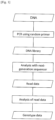
- a DNA library was prepared via PCR using genomic DNAs extracted from various types of organism species as templates and various sets of random primers in accordance with the flow chart shown in Fig. 1 .
- sequence analysis was performed with the use of a so-called next-generation sequencer, and the genotype was analyzed based on the read data.
- genomic DNAs were extracted from the sugarcane varieties NiF8 and Ni9, 22 hybrid progeny lines thereof, and the rice variety Nipponbare using the DNeasy Plant Mini kit (QIAGEN), and the extracted genomic DNAs were purified.
- the purified genomic DNAs were used as NiF8-derived genomic DNA, Ni9-derived genomic DNA, 22 hybrid sugarcane progeny-derived genomic DNAs, and Nipponbare-derived genomic DNA, respectively.
- human genomic DNA was purchased from TakaraBio and used as human-derived genomic DNA.
- GC content was set between 20% and 70%, and the number of continuous bases was adjusted to 5 or fewer.
- Sequence length was set at 16 levels (i.e., 8, 9, 10, 11, 12, 14, 16, 18, 20, 22, 24, 26, 28, 29, 30, and 35).
- 96 types of nucleotide sequences were designed, and 96 sets of random primers were prepared.
- Concerning 10-base primers 6 sets of random primers each comprising 96 types of random primers were designed (these 6 sets are referred to as 10-base primer A to 10-base primer F, respectively). In this example, specifically, 21 different sets of random primers were prepared.
- Tables 1 to 21 show nucleotide sequences of random primers contained in such 21 different sets of random primers.
- Table 1-1 Table 1 List of random primers (10-base primers A) No Primer sequence SEQ ID NO: 1 AGACGTCGTT 1 2 GAGGCGATAT 2 3 GTGCGAACGT 3 4 TTATACTGCC 4 5 CAAGTTCGCA 5 6 ACAAGGTAGT 6 7 ACACAGCGAC 7 8 TTACCGATGT 8 9 CACAGAGTCG 9 10 TTCAGCGCGT 10 11 AGGACCGTGA 11 12 GTCTGTTCGC 12 13 ACCTGTCCAC 13 14 CCGCAATGAC 14 15 CTGCCGATCA 15 16 TACACGGAGC 16 17 CCGCATTCAT 17 18 GACTCTAGAC 18 19 GGAGAACTTA 19 20 TCCGGTATGC 20 21 GGTCAGGAGT 21 22 ACATTGGCAG 22 23 CGTAGACTGC 23 24 AGACTGTACT 24 25 TAGACGCAGT 25 26 CCGATAATCT 26 27 GAGAGCTAGT 27 28 GTACC
- DNA libraries To the genomic DNA described in 2. above (15 ng, NiF8-derived genomic DNA), random primers (final concentration: 0.6 microM; 10-base primer A), a 0.2mM dNTP mixture, 1.0 mM MgCl 2 , and 1.25 units of DNA polymerase (PrimeSTAR, TAKARA) were added, and a reaction solution was prepared while adjusting the final reaction level to 50 microliters. PCR was carried out under thermal cycling conditions comprising 98 degrees C for 2 minutes and 30 cycles of 98 degrees C for 10 seconds, 50 degrees C for 15 seconds, and 72 degrees C for 20 seconds, followed by storage at 4 degrees C. In this example, numerous nucleic acid fragments obtained via PCR using random primers, including the standard PCR described above, are referred to as DNA libraries.
- the DNA library obtained in 3.1.2 above was purified with the use of the MinElute PCR Purification Kit (QIAGEN) and subjected to electrophoresis with the use of the Agilent 2100 bioanalyzer (Agilent Technologies) to obtain a fluorescence unit (FU).
- QIAGEN MinElute PCR Purification Kit
- Agilent 2100 bioanalyzer Agilent Technologies
- PCR was carried out under thermal cycling conditions comprising 98 degrees C for 2 minutes and 30 cycles of 98 degrees C for 10 seconds, 50 degrees C for 15 seconds, and 72 degrees C for 20 seconds, followed by storage at 4 degrees C.
- MgCl 2 concentrations which are 2 times (2.0 mM), 3 times (3.0 mM), and 4 times (4.0 mM) greater than a common level, respectively, were examined.
- the DNA library obtained in this experiment was subjected to purification and electrophoresis in the same manner as in 3.1.3.
- PCR was carried out under thermal cycling conditions comprising 98 degrees C for 2 minutes and 30 cycles of 98 degrees C for 10 seconds, 50 degrees C for 15 seconds, and 72 degrees C for 20 seconds, followed by storage at 4 degrees C.
- the random primers comprising 8 bases (Table 7), 9 bases (Table 8), 11 bases (Table 9), 12 bases (Table 10), 14 bases (Table 11), 16 bases (Table 12), 18 bases (Table 13), and 20 bases (Table 14) were examined.
- the DNA library obtained in this experiment was subjected to purification and electrophoresis in the same manner as in 3.1.3.
- PCR was carried out under thermal cycling conditions comprising 98 degrees C for 2 minutes and 30 cycles of 98 degrees C for 10 seconds, 50 degrees C for 15 seconds, and 72 degrees C for 20 seconds, followed by storage at 4 degrees C.
- Random primer sequence information was deleted from the read data obtained in 3.2.3, and the read patterns were identified. The number of reads was counted for each read pattern, the number of reads of the repeated analyses, and the reproducibility was evaluated using the correlational coefficient.
- a random primer final concentration: 60 microM, (10-base primer A), a 0.2 mM dNTP mixture, 1.0 mM MgCl 2 , and 1.25 units of DNA polymerase (PrimeSTAR, TAKARA) were added, and a reaction solution was prepared while adjusting the final reaction level to 50 microliters.
- PCR was carried out under thermal cycling conditions comprising 98 degrees C for 2 minutes and 30 cycles of 98 degrees C for 10 seconds, 50 degrees C for 15 seconds, and 72 degrees C for 20 seconds, followed by storage at 4 degrees C.
- the DNA library obtained in this experiment was subjected to purification and electrophoresis in the same manner as in 3.1.3.
- the read patterns obtained in 3.3.2 were mapped to the genomic information of Nipponbare (NC_008394 to NC_008405) using bowde2, and the genomic positions of the read patterns were identified.
- Random primer sequence information was deleted from the read data obtained in 3.4.2, and the read patterns were identified. The number of reads was counted for each read pattern.
- Primers were designed for a total of 6 markers (i.e., 3 NiF8 markers and 3 Ni9 markers) among the markers identified in 3.4.4 based on the marker sequence information obtained via paired-end sequencing (Table 22).
- Table 22 Marker sequence information and PCR marker primer information Genotype Marker name Marker sequence 1* Marker sequence 2* Primer 1 Primer 2 NiF8 type N80521152 N80997192 N80533142 Ni9 type N91552391 N91653962 N91124801 * Marker sequence information by paired-end sequencing
- TaKaRa Multiplex PCR Assay Kit Ver.2 (TAKARA) and the genomic DNA described in 2. above (15 ng, NiF8-derived genomic DNA, Ni9-derived genomic DNA, or hybrid progeny-derived genomic DNA) as a template, 1.25 microliters of Multiplex PCR enzyme mix, 12.5 microliters of 2x Multiplex PCR buffer, and the 0.4 microM primer designed in 3.5.1 were added, and a reaction solution was prepared while adjusting the final reaction level to 25 microliters.
- PCR was carried out under thermal cycling conditions comprising 94 degrees C for 1 minute, 30 cycles of 94 degrees C for 30 seconds, 60 degrees C for 30 seconds, and 72 degrees C for 30 seconds, and retention at 72 degrees C for 10 minutes, followed by storage at 4 degrees C.
- the amplified DNA fragment was subjected to electrophoresis with the use of TapeStation (Agilent Technologies).
- the genotype of the marker was identified on the basis of the presence or absence of a band, and the results were compared with the number of reads of the marker.
- PCR was carried out under thermal cycling conditions comprising 98 degrees C for 2 minutes and 30 cycles of 98 degrees C for 10 seconds, 37 degrees C for 15 seconds, and 72 degrees C for 20 seconds, followed by storage at 4 degrees C.
- PCR was carried out under thermal cycling conditions comprising 98 degrees C for 2 minutes and 30 cycles of 98 degrees C for 10 seconds, 50 degrees C for 15 seconds, and 72 degrees C for 20 seconds, followed by storage at 4 degrees C.
- the DNA library obtained in this experiment was subjected to purification and electrophoresis in the same manner as in 3.1.3.
- PCR was carried out under thermal cycling conditions comprising 98 degrees C for 2 minutes and 30 cycles of 98 degrees C for 10 seconds, 37 degrees C for 15 seconds, and 72 degrees C for 20 seconds, followed by storage at 4 degrees C.
- PCR was carried out under thermal cycling conditions comprising 98 degrees C for 2 minutes and 30 cycles of 98 degrees C for 10 seconds, 50 degrees C for 15 seconds, and 72 degrees C for 20 seconds, followed by storage at 4 degrees C.
- the DNA library obtained in this experiment was subjected to purification and electrophoresis in the same manner as in 3.1.3. Also, the reproducibility of the repeated data was evaluated on the basis of the Spearman's rank correlation (rho > 0.9).
- PCR was carried out under thermal cycling conditions comprising 98 degrees C for 2 minutes and 30 cycles of 98 degrees C for 10 seconds, 50 degrees C for 15 seconds, and 72 degrees C for 20 seconds, followed by storage at 4 degrees C.
- the DNA library obtained in this experiment was subjected to purification and electrophoresis in the same manner as in 3.1.3. Also, the reproducibility of the repeated data was evaluated on the basis of the Spearman's rank correlation (rho > 0.9).
- a set of primers selected from the 5 sets of random primers shown in Tables 2 to 6 was added to the final concentration of 60 microM therein, a 0.2 mM dNTP mixture, 1.0 mM MgCl 2 , and 1.25 units of DNA polymerase (PrimeSTAR, TAKARA) were added thereto, and a reaction solution was prepared while adjusting the final reaction level to 50 microliters.
- PCR was carried out under thermal cycling conditions comprising 98 degrees C for 2 minutes and 30 cycles of 98 degrees C for 10 seconds, 50 degrees C for 15 seconds, and 72 degrees C for 20 seconds, followed by storage at 4 degrees C.
- the DNA library obtained in this experiment was subjected to purification and electrophoresis in the same manner as in 3.1.3. Also, the reproducibility of the repeated data was evaluated on the basis of the Spearman's rank correlation (rho > 0.9).
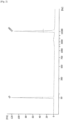
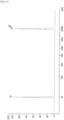
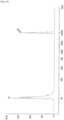
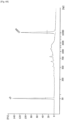
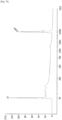
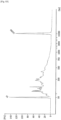
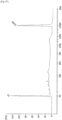
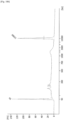
- the amplified DNA library size was as large as 2 kbp or more, but amplification of the DNA library of a target size (i.e., 100-bp to 500-bp) was not observed ( Fig. 2 ).
- a DNA library of 100 bp to 500 bp could not be obtained because it was highly unlikely that a random primer would function as a primer in a region of 500 bp or smaller.
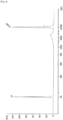
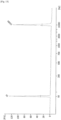
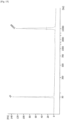
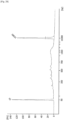
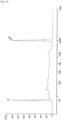
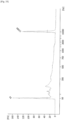
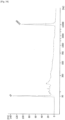
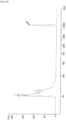
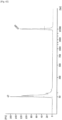
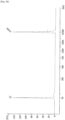
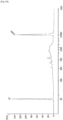
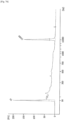
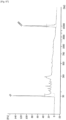
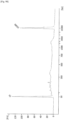
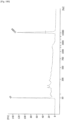
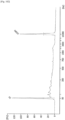
- Fig. 3 shows the results of the experiment described in 3.1.4 attained at an annealing temperature of 45 degrees C
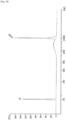
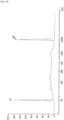
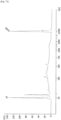
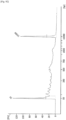
- Fig. 4 shows the results attained at an annealing temperature of 40 degrees C
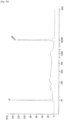
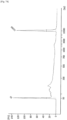
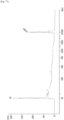
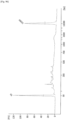
- Fig. 5 shows the results attained at an annealing temperature of 37 degrees C.
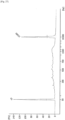
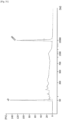
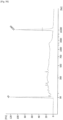
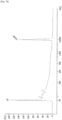
- Fig. 6 shows the results of the experiment described in 3.1.5 attained when the enzyme amount is increased by 2 times
- Fig. 7 shows the results attained when the enzyme amount is increased by 10 times the original amount.
- Fig. 8 shows the results of the experiment described in 3.1.6 attained when the MgCl 2 concentration is increased by 2 times a common amount
- Fig. 9 shows the results attained when the MgCl 2 concentration is increased by 3 times
- Fig. 10 shows the results attained when the MgCl 2 concentration is increased by 4 times.
- Figs. 11 to 18 show the results of the experiment described in 3.1.7 attained at the random primer lengths of 8 bases, 9 bases, 11 bases, 12 bases, 14 bases, 16 bases, 18 bases, and 20 bases, respectively. Regardless of the length of a random primer, as shown in Figs. 11 to 18 , no significant change was observed in comparison with the results shown in Fig. 2 (a random primer comprising 10 bases).
- the random primer concentration is excessively higher than 500 microliter, amplification of a DNA fragment of a desired size cannot be observed.
- the random primer concentration should fall within an optimal range, which is higher than the concentration employed in a general PCR procedure and equivalent to or lower than a given level.
- a DNA library was prepared with the use of genomic DNA extracted from the rice variety Nipponbare, the genomic information of which has been disclosed, as a template, and random primers and subjected to electrophoresis, and the results are shown in Figs. 49 and 50 .
- the rho value was found to be as high as 0.979.
- Fig. 51 shows the results of analysis of the read data with the use of MiSeq.
- the correlational coefficient "r" was found to be as high as 0.992.
- the obtained read pattern was mapped to the genomic information of Nipponbare.
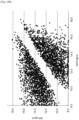
- DNA fragments were found to be evenly amplified throughout the genome at intervals of 6.2 kbp ( Fig. 52 ).
- Fig. 53 a result of comparison of the sequence and genome information of random primers, 3.6 mismatches were found on average, and one or more mismatches were observed in 99.0% of primer pairs ( Fig. 53 ).
- the results demonstrate that a DNA library involving the use of random primers is produced with satisfactory reproducibility via non-specific amplification evenly throughout the genome.
- DNA libraries of the sugarcane varieties NiF8 and Ni9 and 22 hybrid progeny lines were produced with the use of random primers, the resulting DNA libraries were analyzed with the next-generation sequencer (HiSeq), the polymorphisms of the parent varieties were detected, and the genotypes of the hybrid progenies were identified on the basis of the read data. Table 24 shows the results.
- Table 24 Number of sugarcane NiF8 and Ni0 markers and accuracy for genotype identification Number of markers F1_01 F1_02 Total Consistency Reproducibility Consistency Reproducibility Consistency Reproducibility Consistency Reproducibility NiF8 type 8,683 8,680 99.97% 8, 682 99.99% 17,362 99.98% Ni9 type 11,655 11,650 99.96% 11,651 99.97% 23,301 99.96% Total 20,338 20,330 99.96% 20,333 99.98% 40,663 99.97%
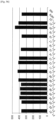
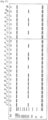
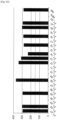
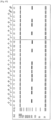
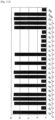
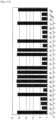
- Figs. 54 and 55 show the number of reads and the electrophoretic pattern of the NiF8 marker N80521152, respectively.
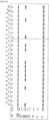
- Figs. 56 and 57 show the number of reads and the electrophoretic pattern of the NiF8 marker N80997192, respectively.
- Figs. 58 and 59 show the number of reads and the electrophoretic pattern of the NiF8 marker N80533142, respectively.
- Figs. 60 and 61 show the number of reads and the electrophoretic pattern of the Ni9 marker N91552391, respectively.
- Figs. 62 and 63 show the number of reads and the electrophoretic pattern of the Ni9 marker N91653962, respectively.
- Figs. 64 and 65 show the number of reads and the electrophoretic pattern of the Ni9 marker N91124801, respectively.
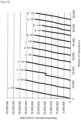
- the correlation between the length and the concentration of random primers is found to be preferably within a range surrounded by a frame as shown in Fig. 82 .
- the random primer concentration is preferably 40 to 60 microM when the random primers comprise 9 to 10 bases. It is preferable that a random primer concentration satisfy the condition represented by an inequation: y > 3E + 08x -6.974 , provided that the base length of the random primer is represented by y and the random primer concentration is represented by x, and 100 microM or lower, when the random primer comprises 10 to 14 bases.
- the random primer concentration is preferably 4 to 100 mM when the random primer comprises 14 to 18 bases.
- the random primer concentration is preferably 4 microM or higher, and it satisfies the condition represented by an inequation: y ⁇ 8E +08x -5.533 .
- the random primer concentration is preferably 4 to 10 microM.
- the inequations y > 3E + 08x -6.974 and y ⁇ 8E +08x -5.533 are determined on the basis of the Microsoft Excel power approximation.
- the number of bases and the concentration of random primers may be prescribed within given ranges, so that a DNA library with a molecular size suitable for analysis with a next-generation sequencer can be produced with satisfactory reproducibility, and such DNA library can be suitable for marker analysis with the use of a next-generation sequencer.
- a DNA library was produced with the use of human-derived genomic DNA and random primers at a final concentration of 60 microM (10-base primer A), and the results are shown in Figs. 105 and 106 .
- Fig. 105 shows the results of the first repeated experiment
- Fig. 106 shows the results of the second repeated experiment.
- Figs. 105 and 106 it was found that low-molecular-weight DNA fragments could be amplified while achieving very high reproducibility even if human-derived genomic DNA was used.
- Example 2 a DNA probe was designed in accordance with the step schematically shown in Fig. 107 , and a DNA microarray comprising the designed DNA probe was produced. In this example, whether or not a DNA marker could be detected with the use of such DNA microarray was examined.
- a DNA library was produced in the same manner as described in 3.2.1 of Example 1, except that the random primers comprising 10 bases shown in Table 1 and 30 ng of genomic DNAs of the sugarcane varieties NiF8 and Ni9 were used.
- a sequence library was produced in the same manner as described in 3.2.2 of Example 1 and the sequence library was subjected to MiSeq analysis in the same manner as described in 3.2.3.
- 306,176 types of DNA probes comprising 50 to 60 bases were designed on the basis of the sequence information of the DNA libraries of NiF8 and Ni9 obtained as a result of MiSeq analysis, so as to adjust a TM at around 80 degrees C.
- the sequences of the designed DNA probes were compared with the sequence information of NiF8 and Ni9, and 9,587 types of probes peculiar to NiF8, which are not found in the Ni9 DNA library, and 9,422 types of probes peculiar to Ni9, which are not found in the NiF8 DNA library, were selected.
- production of G3 CGH 8 ⁇ 60K Microarrays was consigned to Agilent Technologies, Inc.
- DNA libraries produced from NiF8, Ni9, and 22 hybrid progeny lines were subjected to detection.
- DNA libraries of NiF8, Ni9, and 22 hybrid progeny lines were produced in the same manner as described in 3.2.1 of Example 1. Two DNA libraries were produced for Ni9 and for 2 hybrid progeny lines (i.e., Fl_01 and Fl_02), so as to obtain the repeated data.
- the DNA libraries were fluorescently labeled with the use of Cy3-Random Nonamers of the NimbleGen One-Color DNA Labeling Kit in accordance with the NimbleGen Arrays User's Guide.
- hybridization was carried out in accordance with the array-comparative genomic hybridization (array-CGH) method using the Agilent in-situ oligo-DNA microarray kit. Subsequently, signals on the DNA microarrays when a relevant DNA library was used were detected with the use of the SureScan scanner.
- array-CGH array-comparative genomic hybridization
- DNA fragments corresponding to such DNA probes can be used as NiF8 markers and Ni9 markers.
- genotype data were obtained on the basis of signals obtained from DNA probes corresponding to the NiF8 markers and the Ni9 markers, genotype data obtained through repeated measurements of two hybrid progeny lines (Fl_01 and Fl_02) were compared, and the accuracy for genotype identification was evaluated on the basis of the data reproducibility.
- genotype data were obtained with the use of PCR markers in order to compare such data with the results of the DNA microarray experiment described above.
- the primers described in 3.5 of Example 1 (Table 22) were used for the 3 NiF8 markers and the 3 Ni9 markers described in 3.5 of Example 1 (i.e., a total of 6 markers).
- PCR and electrophoresis were performed in the manner as described in 3.5.2 of Example 1, and the results were compared with the signals obtained from the DNA microarray.
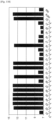
- Fig. 110 shows the results of measurement of signal levels obtained from the DNA probes corresponding to the marker (N80521152)
- Fig. 111 shows the results of measurement of signal levels obtained from the DNA probes reacting with the marker (N80997192)
- Fig. 112 shows the results of measurement of signal levels obtained from the DNA probes reacting with the marker (N80533142)
- Fig. 110 shows the results of measurement of signal levels obtained from the DNA probes corresponding to the marker (N80521152)
- Fig. 111 shows the results of measurement of signal levels obtained from the DNA probes reacting with the marker (N80997192)
- Fig. 112 shows the results of measurement of signal levels obtained from the DNA probes reacting with the marker (N80533142)
- Fig. 110 shows the results of measurement of signal levels obtained from the DNA probes corresponding to the marker (N80521152)
- Fig. 111 shows the results of measurement of signal levels obtained from the DNA probes reacting with the marker (N809971
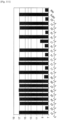
- Fig. 113 shows the results of measurement of signal levels obtained from the DNA probes reacting with the marker (N91552391)
- Fig. 114 shows the results of measurement of signal levels obtained from the DNA probes reacting with the marker (N91653962)
- Fig. 115 shows the results of measurement of signal levels obtained from the DNA probes reacting with the marker (N91124801).
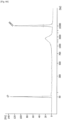
- Fig. 55 shows the electrophoretic pattern for the marker (N80521152)
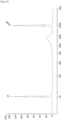
- Fig. 57 shows the electrophoretic pattern for the marker (N80997192)
- Fig. 59 shows the electrophoretic pattern for the marker (N80533142)
- Fig. 61 shows the electrophoretic pattern for the marker (N91552391)
- Fig. 55 shows the electrophoretic pattern for the marker (N80521152)
- Fig. 57 shows the electrophoretic pattern for the marker (N80997192)
- Fig. 59 shows the electrophoretic pattern for the marker (N80533142)
- Fig. 65 shows the electrophoretic pattern for the marker (N91124801).
Landscapes
- Chemical & Material Sciences (AREA)
- Life Sciences & Earth Sciences (AREA)
- Organic Chemistry (AREA)
- Health & Medical Sciences (AREA)
- Engineering & Computer Science (AREA)
- Wood Science & Technology (AREA)
- Genetics & Genomics (AREA)
- Zoology (AREA)
- Proteomics, Peptides & Aminoacids (AREA)
- Bioinformatics & Cheminformatics (AREA)
- Biotechnology (AREA)
- General Engineering & Computer Science (AREA)
- Microbiology (AREA)
- Molecular Biology (AREA)
- Physics & Mathematics (AREA)
- General Health & Medical Sciences (AREA)
- Biophysics (AREA)
- Biochemistry (AREA)
- Analytical Chemistry (AREA)
- Immunology (AREA)
- Biomedical Technology (AREA)
- Plant Pathology (AREA)
- Crystallography & Structural Chemistry (AREA)
- Bioinformatics & Computational Biology (AREA)
- Chemical Kinetics & Catalysis (AREA)
- Measuring Or Testing Involving Enzymes Or Micro-Organisms (AREA)
- Apparatus Associated With Microorganisms And Enzymes (AREA)
Claims (6)
- Verfahren zur Herstellung einer Vielzahl von DNA-Sonden, umfassend die Schritte:Durchführen einer Nukleinsäureamplifikationsreaktion in einer Reaktionslösung, die genomische DNA und Zufallsprimer mit 9-30 Basen enthält, unter Verwendung von genomischer DNA als Matrize, um DNA-Fragmente zu erhalten, wobei, wenn die Zufallsprimer 9 bis 10 Basen umfassen, die Konzentration der Zufallsprimer 40 bis 60 mikroM beträgt; wenn die Zufallsprimer 10 bis 14 Basen umfassen, die Konzentration der Zufallsprimer die Bedingungen erfüllt, die durch eine Ungleichung: y > 3E + 08x-6,974 definiert sind und 100 mikroM oder weniger beträgt, vorausgesetzt, dass die Basenlängen der Zufallsprimer durch "y" dargestellt sind und die Konzentration der Zufallsprimer durch "x" dargestellt ist; wenn die Zufallsprimer 14 bis 18 Basen umfassen, die Konzentration der Zufallsprimer 4 bis 100 mikroM beträgt; wenn die Zufallsprimer 18 bis 28 Basen umfassen, die Konzentration solcher Zufallsprimer 4 mikroM oder mehr beträgt und die Bedingungen erfüllt, die durch eine Ungleichung: y < 8E + 08x-5,553 definiert sind; wenn die Zufallsprimer 28 bis 29 Basen umfassen, die Konzentration der Zufallsprimer 6 bis 10 mikroM beträgt; wenn die Zufallsprimer 30 Basen umfassen, die Konzentration der Zufallsprimer 6 mikroM beträgt;Bestimmen der Nukleotidsequenzen der erhaltenen DNA-Fragmente; undEntwerfen einer Vielzahl von DNA-Sonden, die zum Nachweis von DNA-Fragmenten verwendet werden, die in dem obigen Schritt erhalten wurden, auf der Basis der Nukleotidsequenzen der DNA-Fragmente durch Identifizieren einer Region oder einer Vielzahl von Regionen der Basenlängen, die kürzer als diejenigen der DNA-Fragmente sind und mindestens einen Teil der DNA-Fragmente abdecken, wobei die DNA-Sonden Nukleotidsequenzen umfassen, die zu der einen oder den mehreren identifizierten Regionen komplementär sind.
- Verfahren zur Herstellung einer Vielzahl von DNA-Sonden nach Anspruch 1, wobei DNA-Fragmente aus einer Vielzahl von verschiedenen genomischen DNAs unter Verwendung der Zufallsprimer erhalten werden und auf der Basis der Nukleotidsequenz der DNA-Fragmente die DNA-Sonden, die Regionen enthalten, die zwischen den genomischen DNAs verschieden sind, entworfen werden.
- Verfahren zur Herstellung einer Vielzahl von DNA-Sonden nach Anspruch 1, wobei die DNA-Fragmente 100 bis 500 Nukleotide enthalten.
- Verfahren zur Analyse von genomischer DNA, umfassend die Schritte: Inkontaktbringen der DNA-Sonden, die durch das Verfahren zur Herstellung einer Vielzahl von DNA-Sonden nach einem der Ansprüche 1 bis 3 hergestellt wurden, mit DNA-Fragmenten, die von genomischer DNA stammen, die einer Analyse unterzogen wird; und Erfassen einer Hybridisierung, die zwischen der Vielzahl von DNA-Sonden und den DNA-Fragmenten erfolgt.
- Verfahren zur Analyse von genomischer DNA nach Anspruch 4, das ferner vor dem ersten Schritt von Anspruch 4 einen Schritt des Durchführens einer Nukleinsäureamplifikationsreaktion unter Verwendung der genomischen DNA, die einer Analyse unterzogen wird, und der Zufallsprimer, um die DNA-Fragmente zu erhalten, umfasst.
- Verfahren zur Analyse von genomischer DNA nach Anspruch 4, wobei die DNA-Fragmente, die von genomischer DNA stammen, DNA-Marker sind und das Vorhandensein oder Nichtvorhandensein der DNA-Marker unter Verwendung der Vielzahl von DNA-Sonden erfasst wird.
Applications Claiming Priority (2)
| Application Number | Priority Date | Filing Date | Title |
|---|---|---|---|
| JP2016129080A JP6515884B2 (ja) | 2016-06-29 | 2016-06-29 | Dnaプローブの作製方法及びdnaプローブを用いたゲノムdna解析方法 |
| PCT/JP2017/023343 WO2018003727A1 (en) | 2016-06-29 | 2017-06-26 | Method for producing dna probe and method for analyzing genomic dna using the dna probe |
Publications (2)
| Publication Number | Publication Date |
|---|---|
| EP3455376A1 EP3455376A1 (de) | 2019-03-20 |
| EP3455376B1 true EP3455376B1 (de) | 2024-07-31 |
Family
ID=59297328
Family Applications (1)
| Application Number | Title | Priority Date | Filing Date |
|---|---|---|---|
| EP17737065.7A Active EP3455376B1 (de) | 2016-06-29 | 2017-06-26 | Verfahren zur herstellung einer vielzahl an dna-sonden und verfahren zur analyse von genomischer dna unter verwendung der dna-sonden |
Country Status (12)
| Country | Link |
|---|---|
| US (1) | US20200216879A1 (de) |
| EP (1) | EP3455376B1 (de) |
| JP (1) | JP6515884B2 (de) |
| KR (1) | KR102201671B1 (de) |
| CN (1) | CN109415759B (de) |
| AU (1) | AU2017289768B2 (de) |
| CA (1) | CA3029402C (de) |
| IL (1) | IL263867A (de) |
| MX (1) | MX2018015075A (de) |
| PH (1) | PH12018502679B1 (de) |
| SG (1) | SG11201811551YA (de) |
| WO (1) | WO2018003727A1 (de) |
Families Citing this family (1)
| Publication number | Priority date | Publication date | Assignee | Title |
|---|---|---|---|---|
| JP7047373B2 (ja) | 2017-12-25 | 2022-04-05 | トヨタ自動車株式会社 | 次世代シーケンサー用プライマー並びにその製造方法、次世代シーケンサー用プライマーを用いたdnaライブラリー並びにその製造方法、及びdnaライブラリーを用いたゲノムdna解析方法 |
Family Cites Families (9)
| Publication number | Priority date | Publication date | Assignee | Title |
|---|---|---|---|---|
| WO1992007095A1 (en) * | 1990-10-15 | 1992-04-30 | Stratagene | Arbitrarily primed polymerase chain reaction method for fingerprinting genomes |
| JP4255630B2 (ja) | 2001-09-10 | 2009-04-15 | 独立行政法人農業・食品産業技術総合研究機構 | 米のdna食味判定技術及び籾/玄米半粒による良食味米選抜方法 |
| EP1636337A4 (de) * | 2003-06-20 | 2007-07-04 | Illumina Inc | Verfahren und zusammensetzungen zur ganzgenomischen amplifikation und genotypisierung |
| US20040259100A1 (en) | 2003-06-20 | 2004-12-23 | Illumina, Inc. | Methods and compositions for whole genome amplification and genotyping |
| JP3972106B2 (ja) * | 2004-03-03 | 2007-09-05 | 大学共同利用機関法人情報・システム研究機構 | ゲノムライブラリー作製方法、および同方法により作製されたゲノムライブラリー |
| US20090253581A1 (en) | 2006-04-04 | 2009-10-08 | Keygene N.V. | High Throughput Detection of Molecular Markers Based on AFLP and High Throughput Sequencing |
| DE102007010311A1 (de) * | 2007-02-23 | 2008-08-28 | Thines, Marco, Dr. | Organismusspezifisches hybridisierbares Nucleinsäuremolekül |
| JP5799484B2 (ja) * | 2009-12-14 | 2015-10-28 | トヨタ自動車株式会社 | Dnaマイクロアレイにおけるプローブ設計方法、当該方法により設計されたプローブを有するdnaマイクロアレイ |
| WO2012097053A1 (en) * | 2011-01-11 | 2012-07-19 | Via Genomes, Inc. | Methods, systems, databases, kits and arrays for screening for and predicting the risk of and identifying the presence of tumors and cancers |
-
2016
- 2016-06-29 JP JP2016129080A patent/JP6515884B2/ja active Active
-
2017
- 2017-06-26 AU AU2017289768A patent/AU2017289768B2/en not_active Ceased
- 2017-06-26 PH PH1/2018/502679A patent/PH12018502679B1/en unknown
- 2017-06-26 MX MX2018015075A patent/MX2018015075A/es unknown
- 2017-06-26 KR KR1020187037622A patent/KR102201671B1/ko active Active
- 2017-06-26 CA CA3029402A patent/CA3029402C/en active Active
- 2017-06-26 WO PCT/JP2017/023343 patent/WO2018003727A1/en not_active Ceased
- 2017-06-26 US US16/314,274 patent/US20200216879A1/en active Pending
- 2017-06-26 CN CN201780040483.XA patent/CN109415759B/zh active Active
- 2017-06-26 SG SG11201811551YA patent/SG11201811551YA/en unknown
- 2017-06-26 EP EP17737065.7A patent/EP3455376B1/de active Active
-
2018
- 2018-12-20 IL IL263867A patent/IL263867A/en unknown
Also Published As
| Publication number | Publication date |
|---|---|
| CA3029402A1 (en) | 2018-01-04 |
| AU2017289768A1 (en) | 2019-01-03 |
| US20200216879A1 (en) | 2020-07-09 |
| CN109415759A (zh) | 2019-03-01 |
| EP3455376A1 (de) | 2019-03-20 |
| BR112018077495A2 (pt) | 2019-09-03 |
| JP6515884B2 (ja) | 2019-05-22 |
| WO2018003727A1 (en) | 2018-01-04 |
| CA3029402C (en) | 2022-06-21 |
| PH12018502679A1 (en) | 2019-11-04 |
| MX2018015075A (es) | 2019-05-09 |
| JP2018000057A (ja) | 2018-01-11 |
| AU2017289768B2 (en) | 2021-06-10 |
| KR20190013915A (ko) | 2019-02-11 |
| IL263867A (en) | 2019-01-31 |
| SG11201811551YA (en) | 2019-01-30 |
| PH12018502679B1 (en) | 2024-05-17 |
| CN109415759B (zh) | 2022-06-14 |
| KR102201671B1 (ko) | 2021-01-12 |
Similar Documents
| Publication | Publication Date | Title |
|---|---|---|
| US9758814B2 (en) | Assays for single molecule detection and use thereof | |
| EP3480319A1 (de) | Verfahren zur herstellung einer dna-bibliothek und verfahren zur analyse von genomischer dna unter verwendung der dna-bibliothek | |
| US10870879B2 (en) | Method for the preparation of bar-coded primer sets | |
| EP2514820B1 (de) | Verfahren zur konstruktion einer sonde in einem dna-mikroarray sowie mit der dadurch konstruierten sonde ausgerüstetes dna-mikroarray | |
| JP7528911B2 (ja) | Dnaライブラリーの作製方法及びdnaライブラリーを用いたゲノムdna解析方法 | |
| KR102237248B1 (ko) | 소나무 개체식별 및 집단의 유전 분석용 snp 마커 세트 및 이의 용도 | |
| JP5319148B2 (ja) | 標的核酸中の変異の検出方法及びアレイ | |
| EP3625371B1 (de) | Satz von zufallsprimern und verfahren zur herstellung einer dna-bibliothek damit | |
| CA3029402C (en) | Method for producing dna probe and method for analyzing genomic dna using the dna probe | |
| CN104152568B (zh) | 高通量str序列核心重复数检测方法 | |
| Devesa-Peiró et al. | Molecular biology approaches utilized in preimplantation genetics: real-time PCR, microarrays, next-generation sequencing, karyomapping, and others | |
| Deharvengt et al. | Molecular assessment of human diseases in the clinical laboratory | |
| US20100285970A1 (en) | Methods of sequencing nucleic acids | |
| Gallardo et al. | Application to Assisted Reproductive of Whole-Genome Treatment Technologies | |
| HK40071484A (en) | Assays for single molecule detection and use thereof | |
| NZ749198B2 (en) | Method for producing dna library and method for analyzing genomic dna using the dna library | |
| BR112018077495B1 (pt) | Método para produzir uma pluralidade de sondas de dna e método para analisar dna genômico usando as ditas sondas de dna | |
| NZ749239A (en) | Method for producing dna probe and method for analyzing genomic dna using the dna probe | |
| Gallardo et al. | Application of Whole-Genome Technologies to Assisted Reproductive Treatment | |
| HK1222449B (en) | Assays for single molecule detection and use thereof |
Legal Events
| Date | Code | Title | Description |
|---|---|---|---|
| STAA | Information on the status of an ep patent application or granted ep patent |
Free format text: STATUS: UNKNOWN |
|
| STAA | Information on the status of an ep patent application or granted ep patent |
Free format text: STATUS: THE INTERNATIONAL PUBLICATION HAS BEEN MADE |
|
| PUAI | Public reference made under article 153(3) epc to a published international application that has entered the european phase |
Free format text: ORIGINAL CODE: 0009012 |
|
| STAA | Information on the status of an ep patent application or granted ep patent |
Free format text: STATUS: REQUEST FOR EXAMINATION WAS MADE |
|
| 17P | Request for examination filed |
Effective date: 20181214 |
|
| AK | Designated contracting states |
Kind code of ref document: A1 Designated state(s): AL AT BE BG CH CY CZ DE DK EE ES FI FR GB GR HR HU IE IS IT LI LT LU LV MC MK MT NL NO PL PT RO RS SE SI SK SM TR |
|
| AX | Request for extension of the european patent |
Extension state: BA ME |
|
| DAV | Request for validation of the european patent (deleted) | ||
| DAX | Request for extension of the european patent (deleted) | ||
| STAA | Information on the status of an ep patent application or granted ep patent |
Free format text: STATUS: EXAMINATION IS IN PROGRESS |
|
| 17Q | First examination report despatched |
Effective date: 20200113 |
|
| GRAP | Despatch of communication of intention to grant a patent |
Free format text: ORIGINAL CODE: EPIDOSNIGR1 |
|
| STAA | Information on the status of an ep patent application or granted ep patent |
Free format text: STATUS: GRANT OF PATENT IS INTENDED |
|
| INTG | Intention to grant announced |
Effective date: 20240220 |
|
| GRAS | Grant fee paid |
Free format text: ORIGINAL CODE: EPIDOSNIGR3 |
|
| GRAA | (expected) grant |
Free format text: ORIGINAL CODE: 0009210 |
|
| STAA | Information on the status of an ep patent application or granted ep patent |
Free format text: STATUS: THE PATENT HAS BEEN GRANTED |
|
| AK | Designated contracting states |
Kind code of ref document: B1 Designated state(s): AL AT BE BG CH CY CZ DE DK EE ES FI FR GB GR HR HU IE IS IT LI LT LU LV MC MK MT NL NO PL PT RO RS SE SI SK SM TR |
|
| REG | Reference to a national code |
Ref country code: CH Ref legal event code: EP Ref country code: GB Ref legal event code: FG4D |
|
| REG | Reference to a national code |
Ref country code: DE Ref legal event code: R096 Ref document number: 602017083688 Country of ref document: DE |
|
| REG | Reference to a national code |
Ref country code: IE Ref legal event code: FG4D |
|
| REG | Reference to a national code |
Ref country code: LT Ref legal event code: MG9D |
|
| P01 | Opt-out of the competence of the unified patent court (upc) registered |
Free format text: CASE NUMBER: APP_57206/2024 Effective date: 20241019 |
|
| REG | Reference to a national code |
Ref country code: NL Ref legal event code: MP Effective date: 20240731 |
|
| PG25 | Lapsed in a contracting state [announced via postgrant information from national office to epo] |
Ref country code: PT Free format text: LAPSE BECAUSE OF FAILURE TO SUBMIT A TRANSLATION OF THE DESCRIPTION OR TO PAY THE FEE WITHIN THE PRESCRIBED TIME-LIMIT Effective date: 20241202 |
|
| REG | Reference to a national code |
Ref country code: AT Ref legal event code: MK05 Ref document number: 1708503 Country of ref document: AT Kind code of ref document: T Effective date: 20240731 |
|
| PG25 | Lapsed in a contracting state [announced via postgrant information from national office to epo] |
Ref country code: PT Free format text: LAPSE BECAUSE OF FAILURE TO SUBMIT A TRANSLATION OF THE DESCRIPTION OR TO PAY THE FEE WITHIN THE PRESCRIBED TIME-LIMIT Effective date: 20241202 |
|
| REG | Reference to a national code |
Ref country code: DE Ref legal event code: R084 Ref document number: 602017083688 Country of ref document: DE |
|
| PG25 | Lapsed in a contracting state [announced via postgrant information from national office to epo] |
Ref country code: NO Free format text: LAPSE BECAUSE OF FAILURE TO SUBMIT A TRANSLATION OF THE DESCRIPTION OR TO PAY THE FEE WITHIN THE PRESCRIBED TIME-LIMIT Effective date: 20241031 |
|
| PG25 | Lapsed in a contracting state [announced via postgrant information from national office to epo] |
Ref country code: PL Free format text: LAPSE BECAUSE OF FAILURE TO SUBMIT A TRANSLATION OF THE DESCRIPTION OR TO PAY THE FEE WITHIN THE PRESCRIBED TIME-LIMIT Effective date: 20240731 Ref country code: NL Free format text: LAPSE BECAUSE OF FAILURE TO SUBMIT A TRANSLATION OF THE DESCRIPTION OR TO PAY THE FEE WITHIN THE PRESCRIBED TIME-LIMIT Effective date: 20240731 Ref country code: FI Free format text: LAPSE BECAUSE OF FAILURE TO SUBMIT A TRANSLATION OF THE DESCRIPTION OR TO PAY THE FEE WITHIN THE PRESCRIBED TIME-LIMIT Effective date: 20240731 Ref country code: GR Free format text: LAPSE BECAUSE OF FAILURE TO SUBMIT A TRANSLATION OF THE DESCRIPTION OR TO PAY THE FEE WITHIN THE PRESCRIBED TIME-LIMIT Effective date: 20241101 |
|
| PG25 | Lapsed in a contracting state [announced via postgrant information from national office to epo] |
Ref country code: BG Free format text: LAPSE BECAUSE OF FAILURE TO SUBMIT A TRANSLATION OF THE DESCRIPTION OR TO PAY THE FEE WITHIN THE PRESCRIBED TIME-LIMIT Effective date: 20240731 |
|
| PG25 | Lapsed in a contracting state [announced via postgrant information from national office to epo] |
Ref country code: LV Free format text: LAPSE BECAUSE OF FAILURE TO SUBMIT A TRANSLATION OF THE DESCRIPTION OR TO PAY THE FEE WITHIN THE PRESCRIBED TIME-LIMIT Effective date: 20240731 |
|
| PG25 | Lapsed in a contracting state [announced via postgrant information from national office to epo] |
Ref country code: IS Free format text: LAPSE BECAUSE OF FAILURE TO SUBMIT A TRANSLATION OF THE DESCRIPTION OR TO PAY THE FEE WITHIN THE PRESCRIBED TIME-LIMIT Effective date: 20241130 Ref country code: AT Free format text: LAPSE BECAUSE OF FAILURE TO SUBMIT A TRANSLATION OF THE DESCRIPTION OR TO PAY THE FEE WITHIN THE PRESCRIBED TIME-LIMIT Effective date: 20240731 |
|
| PG25 | Lapsed in a contracting state [announced via postgrant information from national office to epo] |
Ref country code: HR Free format text: LAPSE BECAUSE OF FAILURE TO SUBMIT A TRANSLATION OF THE DESCRIPTION OR TO PAY THE FEE WITHIN THE PRESCRIBED TIME-LIMIT Effective date: 20240731 |
|
| PG25 | Lapsed in a contracting state [announced via postgrant information from national office to epo] |
Ref country code: ES Free format text: LAPSE BECAUSE OF FAILURE TO SUBMIT A TRANSLATION OF THE DESCRIPTION OR TO PAY THE FEE WITHIN THE PRESCRIBED TIME-LIMIT Effective date: 20240731 Ref country code: RS Free format text: LAPSE BECAUSE OF FAILURE TO SUBMIT A TRANSLATION OF THE DESCRIPTION OR TO PAY THE FEE WITHIN THE PRESCRIBED TIME-LIMIT Effective date: 20241031 |
|
| PG25 | Lapsed in a contracting state [announced via postgrant information from national office to epo] |
Ref country code: RS Free format text: LAPSE BECAUSE OF FAILURE TO SUBMIT A TRANSLATION OF THE DESCRIPTION OR TO PAY THE FEE WITHIN THE PRESCRIBED TIME-LIMIT Effective date: 20241031 Ref country code: PL Free format text: LAPSE BECAUSE OF FAILURE TO SUBMIT A TRANSLATION OF THE DESCRIPTION OR TO PAY THE FEE WITHIN THE PRESCRIBED TIME-LIMIT Effective date: 20240731 Ref country code: NO Free format text: LAPSE BECAUSE OF FAILURE TO SUBMIT A TRANSLATION OF THE DESCRIPTION OR TO PAY THE FEE WITHIN THE PRESCRIBED TIME-LIMIT Effective date: 20241031 Ref country code: NL Free format text: LAPSE BECAUSE OF FAILURE TO SUBMIT A TRANSLATION OF THE DESCRIPTION OR TO PAY THE FEE WITHIN THE PRESCRIBED TIME-LIMIT Effective date: 20240731 Ref country code: LV Free format text: LAPSE BECAUSE OF FAILURE TO SUBMIT A TRANSLATION OF THE DESCRIPTION OR TO PAY THE FEE WITHIN THE PRESCRIBED TIME-LIMIT Effective date: 20240731 Ref country code: IS Free format text: LAPSE BECAUSE OF FAILURE TO SUBMIT A TRANSLATION OF THE DESCRIPTION OR TO PAY THE FEE WITHIN THE PRESCRIBED TIME-LIMIT Effective date: 20241130 Ref country code: HR Free format text: LAPSE BECAUSE OF FAILURE TO SUBMIT A TRANSLATION OF THE DESCRIPTION OR TO PAY THE FEE WITHIN THE PRESCRIBED TIME-LIMIT Effective date: 20240731 Ref country code: GR Free format text: LAPSE BECAUSE OF FAILURE TO SUBMIT A TRANSLATION OF THE DESCRIPTION OR TO PAY THE FEE WITHIN THE PRESCRIBED TIME-LIMIT Effective date: 20241101 Ref country code: FI Free format text: LAPSE BECAUSE OF FAILURE TO SUBMIT A TRANSLATION OF THE DESCRIPTION OR TO PAY THE FEE WITHIN THE PRESCRIBED TIME-LIMIT Effective date: 20240731 Ref country code: ES Free format text: LAPSE BECAUSE OF FAILURE TO SUBMIT A TRANSLATION OF THE DESCRIPTION OR TO PAY THE FEE WITHIN THE PRESCRIBED TIME-LIMIT Effective date: 20240731 Ref country code: BG Free format text: LAPSE BECAUSE OF FAILURE TO SUBMIT A TRANSLATION OF THE DESCRIPTION OR TO PAY THE FEE WITHIN THE PRESCRIBED TIME-LIMIT Effective date: 20240731 Ref country code: AT Free format text: LAPSE BECAUSE OF FAILURE TO SUBMIT A TRANSLATION OF THE DESCRIPTION OR TO PAY THE FEE WITHIN THE PRESCRIBED TIME-LIMIT Effective date: 20240731 |
|
| PG25 | Lapsed in a contracting state [announced via postgrant information from national office to epo] |
Ref country code: SM Free format text: LAPSE BECAUSE OF FAILURE TO SUBMIT A TRANSLATION OF THE DESCRIPTION OR TO PAY THE FEE WITHIN THE PRESCRIBED TIME-LIMIT Effective date: 20240731 Ref country code: DK Free format text: LAPSE BECAUSE OF FAILURE TO SUBMIT A TRANSLATION OF THE DESCRIPTION OR TO PAY THE FEE WITHIN THE PRESCRIBED TIME-LIMIT Effective date: 20240731 Ref country code: RO Free format text: LAPSE BECAUSE OF FAILURE TO SUBMIT A TRANSLATION OF THE DESCRIPTION OR TO PAY THE FEE WITHIN THE PRESCRIBED TIME-LIMIT Effective date: 20240731 |
|
| REG | Reference to a national code |
Ref country code: GB Ref legal event code: 746 Effective date: 20250402 |
|
| PG25 | Lapsed in a contracting state [announced via postgrant information from national office to epo] |
Ref country code: EE Free format text: LAPSE BECAUSE OF FAILURE TO SUBMIT A TRANSLATION OF THE DESCRIPTION OR TO PAY THE FEE WITHIN THE PRESCRIBED TIME-LIMIT Effective date: 20240731 |
|
| PG25 | Lapsed in a contracting state [announced via postgrant information from national office to epo] |
Ref country code: CZ Free format text: LAPSE BECAUSE OF FAILURE TO SUBMIT A TRANSLATION OF THE DESCRIPTION OR TO PAY THE FEE WITHIN THE PRESCRIBED TIME-LIMIT Effective date: 20240731 |
|
| PG25 | Lapsed in a contracting state [announced via postgrant information from national office to epo] |
Ref country code: SK Free format text: LAPSE BECAUSE OF FAILURE TO SUBMIT A TRANSLATION OF THE DESCRIPTION OR TO PAY THE FEE WITHIN THE PRESCRIBED TIME-LIMIT Effective date: 20240731 Ref country code: IT Free format text: LAPSE BECAUSE OF FAILURE TO SUBMIT A TRANSLATION OF THE DESCRIPTION OR TO PAY THE FEE WITHIN THE PRESCRIBED TIME-LIMIT Effective date: 20240731 |
|
| REG | Reference to a national code |
Ref country code: DE Ref legal event code: R097 Ref document number: 602017083688 Country of ref document: DE |
|
| PLBE | No opposition filed within time limit |
Free format text: ORIGINAL CODE: 0009261 |
|
| STAA | Information on the status of an ep patent application or granted ep patent |
Free format text: STATUS: NO OPPOSITION FILED WITHIN TIME LIMIT |
|
| 26N | No opposition filed |
Effective date: 20250501 |
|
| PGFP | Annual fee paid to national office [announced via postgrant information from national office to epo] |
Ref country code: DE Payment date: 20250402 Year of fee payment: 9 |
|
| PGFP | Annual fee paid to national office [announced via postgrant information from national office to epo] |
Ref country code: GB Payment date: 20250401 Year of fee payment: 9 |
|
| PGFP | Annual fee paid to national office [announced via postgrant information from national office to epo] |
Ref country code: FR Payment date: 20250508 Year of fee payment: 9 |
|
| PG25 | Lapsed in a contracting state [announced via postgrant information from national office to epo] |
Ref country code: SE Free format text: LAPSE BECAUSE OF FAILURE TO SUBMIT A TRANSLATION OF THE DESCRIPTION OR TO PAY THE FEE WITHIN THE PRESCRIBED TIME-LIMIT Effective date: 20240731 |
|
| REG | Reference to a national code |
Ref country code: CH Ref legal event code: H13 Free format text: ST27 STATUS EVENT CODE: U-0-0-H10-H13 (AS PROVIDED BY THE NATIONAL OFFICE) Effective date: 20260127 |
|
| PG25 | Lapsed in a contracting state [announced via postgrant information from national office to epo] |
Ref country code: MC Free format text: LAPSE BECAUSE OF FAILURE TO SUBMIT A TRANSLATION OF THE DESCRIPTION OR TO PAY THE FEE WITHIN THE PRESCRIBED TIME-LIMIT Effective date: 20240731 |
|
| PG25 | Lapsed in a contracting state [announced via postgrant information from national office to epo] |
Ref country code: LU Free format text: LAPSE BECAUSE OF NON-PAYMENT OF DUE FEES Effective date: 20250626 |
|
| REG | Reference to a national code |
Ref country code: BE Ref legal event code: MM Effective date: 20250630 |
|
| PG25 | Lapsed in a contracting state [announced via postgrant information from national office to epo] |
Ref country code: IE Free format text: LAPSE BECAUSE OF NON-PAYMENT OF DUE FEES Effective date: 20250626 |
|
| PG25 | Lapsed in a contracting state [announced via postgrant information from national office to epo] |
Ref country code: BE Free format text: LAPSE BECAUSE OF NON-PAYMENT OF DUE FEES Effective date: 20250630 |
|
| PG25 | Lapsed in a contracting state [announced via postgrant information from national office to epo] |
Ref country code: CH Free format text: LAPSE BECAUSE OF NON-PAYMENT OF DUE FEES Effective date: 20250630 |