EP3452096B1 - Bicyclic peptide-toxin conjugates specific for mt1-mmp - Google Patents
Bicyclic peptide-toxin conjugates specific for mt1-mmp Download PDFInfo
- Publication number
- EP3452096B1 EP3452096B1 EP17723745.0A EP17723745A EP3452096B1 EP 3452096 B1 EP3452096 B1 EP 3452096B1 EP 17723745 A EP17723745 A EP 17723745A EP 3452096 B1 EP3452096 B1 EP 3452096B1
- Authority
- EP
- European Patent Office
- Prior art keywords
- peptide
- disclosure
- amino acid
- formula
- bt17bdc
- Prior art date
- Legal status (The legal status is an assumption and is not a legal conclusion. Google has not performed a legal analysis and makes no representation as to the accuracy of the status listed.)
- Active
Links
Images

Classifications
-
- A—HUMAN NECESSITIES
- A61—MEDICAL OR VETERINARY SCIENCE; HYGIENE
- A61K—PREPARATIONS FOR MEDICAL, DENTAL OR TOILETRY PURPOSES
- A61K47/00—Medicinal preparations characterised by the non-active ingredients used, e.g. carriers or inert additives; Targeting or modifying agents chemically bound to the active ingredient
- A61K47/50—Medicinal preparations characterised by the non-active ingredients used, e.g. carriers or inert additives; Targeting or modifying agents chemically bound to the active ingredient the non-active ingredient being chemically bound to the active ingredient, e.g. polymer-drug conjugates
- A61K47/51—Medicinal preparations characterised by the non-active ingredients used, e.g. carriers or inert additives; Targeting or modifying agents chemically bound to the active ingredient the non-active ingredient being chemically bound to the active ingredient, e.g. polymer-drug conjugates the non-active ingredient being a modifying agent
- A61K47/62—Medicinal preparations characterised by the non-active ingredients used, e.g. carriers or inert additives; Targeting or modifying agents chemically bound to the active ingredient the non-active ingredient being chemically bound to the active ingredient, e.g. polymer-drug conjugates the non-active ingredient being a modifying agent the modifying agent being a protein, peptide or polyamino acid
- A61K47/64—Drug-peptide, drug-protein or drug-polyamino acid conjugates, i.e. the modifying agent being a peptide, protein or polyamino acid which is covalently bonded or complexed to a therapeutically active agent
- A61K47/6415—Toxins or lectins, e.g. clostridial toxins or Pseudomonas exotoxins
-
- A—HUMAN NECESSITIES
- A61—MEDICAL OR VETERINARY SCIENCE; HYGIENE
- A61K—PREPARATIONS FOR MEDICAL, DENTAL OR TOILETRY PURPOSES
- A61K31/00—Medicinal preparations containing organic active ingredients
- A61K31/33—Heterocyclic compounds
- A61K31/395—Heterocyclic compounds having nitrogen as a ring hetero atom, e.g. guanethidine or rifamycins
- A61K31/535—Heterocyclic compounds having nitrogen as a ring hetero atom, e.g. guanethidine or rifamycins having six-membered rings with at least one nitrogen and one oxygen as the ring hetero atoms, e.g. 1,2-oxazines
- A61K31/5365—Heterocyclic compounds having nitrogen as a ring hetero atom, e.g. guanethidine or rifamycins having six-membered rings with at least one nitrogen and one oxygen as the ring hetero atoms, e.g. 1,2-oxazines ortho- or peri-condensed with heterocyclic ring systems
-
- A—HUMAN NECESSITIES
- A61—MEDICAL OR VETERINARY SCIENCE; HYGIENE
- A61K—PREPARATIONS FOR MEDICAL, DENTAL OR TOILETRY PURPOSES
- A61K47/00—Medicinal preparations characterised by the non-active ingredients used, e.g. carriers or inert additives; Targeting or modifying agents chemically bound to the active ingredient
- A61K47/50—Medicinal preparations characterised by the non-active ingredients used, e.g. carriers or inert additives; Targeting or modifying agents chemically bound to the active ingredient the non-active ingredient being chemically bound to the active ingredient, e.g. polymer-drug conjugates
- A61K47/51—Medicinal preparations characterised by the non-active ingredients used, e.g. carriers or inert additives; Targeting or modifying agents chemically bound to the active ingredient the non-active ingredient being chemically bound to the active ingredient, e.g. polymer-drug conjugates the non-active ingredient being a modifying agent
- A61K47/62—Medicinal preparations characterised by the non-active ingredients used, e.g. carriers or inert additives; Targeting or modifying agents chemically bound to the active ingredient the non-active ingredient being chemically bound to the active ingredient, e.g. polymer-drug conjugates the non-active ingredient being a modifying agent the modifying agent being a protein, peptide or polyamino acid
- A61K47/64—Drug-peptide, drug-protein or drug-polyamino acid conjugates, i.e. the modifying agent being a peptide, protein or polyamino acid which is covalently bonded or complexed to a therapeutically active agent
-
- A—HUMAN NECESSITIES
- A61—MEDICAL OR VETERINARY SCIENCE; HYGIENE
- A61P—SPECIFIC THERAPEUTIC ACTIVITY OF CHEMICAL COMPOUNDS OR MEDICINAL PREPARATIONS
- A61P35/00—Antineoplastic agents
-
- C—CHEMISTRY; METALLURGY
- C07—ORGANIC CHEMISTRY
- C07D—HETEROCYCLIC COMPOUNDS
- C07D265/00—Heterocyclic compounds containing six-membered rings having one nitrogen atom and one oxygen atom as the only ring hetero atoms
- C07D265/04—1,3-Oxazines; Hydrogenated 1,3-oxazines
-
- C—CHEMISTRY; METALLURGY
- C07—ORGANIC CHEMISTRY
- C07D—HETEROCYCLIC COMPOUNDS
- C07D265/00—Heterocyclic compounds containing six-membered rings having one nitrogen atom and one oxygen atom as the only ring hetero atoms
- C07D265/04—1,3-Oxazines; Hydrogenated 1,3-oxazines
- C07D265/12—1,3-Oxazines; Hydrogenated 1,3-oxazines condensed with carbocyclic rings or ring systems
-
- C—CHEMISTRY; METALLURGY
- C07—ORGANIC CHEMISTRY
- C07K—PEPTIDES
- C07K14/00—Peptides having more than 20 amino acids; Gastrins; Somatostatins; Melanotropins; Derivatives thereof
-
- C—CHEMISTRY; METALLURGY
- C07—ORGANIC CHEMISTRY
- C07K—PEPTIDES
- C07K7/00—Peptides having 5 to 20 amino acids in a fully defined sequence; Derivatives thereof
- C07K7/04—Linear peptides containing only normal peptide links
- C07K7/08—Linear peptides containing only normal peptide links having 12 to 20 amino acids
Definitions
- the present invention relates to drug conjugates comprising bicyclic peptides specific for MT1-MMP conjugated to one or more effector and/or functional groups which have utility in targeted cancer therapy.
- Cyclic peptides are able to bind with high affinity and target specificity to protein targets and hence are an attractive molecule class for the development of therapeutics.
- several cyclic peptides are already successfully used in the clinic, as for example the antibacterial peptide vancomycin, the immunosuppressant drug cyclosporine or the anti-cancer drug octreotide ( Driggers et al. (2008), Nat Rev Drug Discov 7 (7), 608-24 ).
- Good binding properties result from a relatively large interaction surface formed between the peptide and the target as well as the reduced conformational flexibility of the cyclic structures.
- macrocycles bind to surfaces of several hundred square angstrom, as for example the cyclic peptide CXCR4 antagonist CVX15 (400 ⁇ 2 ; Wu et al. (2007), Science 330, 1066-71 ), a cyclic peptide with the Arg-Gly-Asp motif binding to integrin ⁇ Vb3 (355 ⁇ 2 ) ( Xiong et al. (2002), Science 296 (5565), 151-5 ) or the cyclic peptide inhibitor upain-1 binding to urokinase-type plasminogen activator (603 ⁇ 2 ; Zhao et al. (2007), J Struct Biol 160 (1), 1-10 ).
- CVX15 400 ⁇ 2 ; Wu et al. (2007), Science 330, 1066-71
- a cyclic peptide with the Arg-Gly-Asp motif binding to integrin ⁇ Vb3 355 ⁇ 2
- peptide macrocycles are less flexible than linear peptides, leading to a smaller loss of entropy upon binding to targets and resulting in a higher binding affinity.
- the reduced flexibility also leads to locking target-specific conformations, increasing binding specificity compared to linear peptides.
- MMP-8 matrix metalloproteinase 8
- Phage display-based combinatorial approaches have been developed to generate and screen large libraries of bicyclic peptides to targets of interest ( Heinis et al. (2009), Nat Chem Biol 5 (7), 502-7 and WO2009/098450 ). Briefly, combinatorial libraries of linear peptides containing three cysteine residues and two regions of six random amino acids (Cys-(Xaa) 6 -Cys-(Xaa) 6 -Cys) were displayed on phage and cyclised by covalently linking the cysteine side chains to a small molecule (tris-(bromomethyl)benzene).
- a drug conjugate selected from BT17BDC-27: or BT17BDC-28: wherein Bicycle 17-69-07-N268 represents -AC i (D-Ala)NE(1Nal)(D-Ala)C ii EDFYD(tBuGly)C iii -CONH 2 and Bicycle 17-69-07-N241 represents -(bAla)-Sar10-AC i (D-Ala)NE(1Nal)(D-Ala)C ii EDFYD(tBuGly)C iii -CONH 2 , both of which are cyclised on C i , C ii , and C iii with 1,3,5-tris(bromomethyl)benzene) (TBMB) yielding a tri-substituted 1,3,5-trismethylbenzene structure.
- Bicycle 17-69-07-N268 represents -AC i (D-Ala)NE(1
- a pharmaceutical composition comprising a drug conjugate as defined herein in combination with one or more pharmaceutically acceptable excipients.
- a drug conjugate as defined herein for use in preventing, suppressing or treating cancer, in particular solid tumours such as non-small cell lung carcinomas.
- Bicycle represents a peptide ligand specific for MT1-MMP comprising a polypeptide comprising at least three cysteine residues, separated by at least two loop sequences, and a molecular scaffold which forms covalent bonds with the cysteine residues of the polypeptide such that at least two polypeptide loops are formed on the molecular scaffold, wherein the peptide ligand comprises an amino acid sequence of formula (II): -C i -X 1 -U/O 2 -X 3 -X 4 -G 5 -C ii -E 6 -D 7 -F 8 -Y 9 -X 10 -X 11 -C iii - (SEQ ID NO: 1) (II) or a pharmaceutically acceptable salt thereof; wherein:
- the cytotoxic agent is selected from: alkylating agents such as cisplatin and carboplatin, as well as oxaliplatin, mechlorethamine, cyclophosphamide, chlorambucil, ifosfamide; Anti-metabolites including purine analogs azathioprine and mercaptopurine or pyrimidine analogs; plant alkaloids and terpenoids including vinca alkaloids such as Vincristine, Vinblastine, Vinorelbine and Vindesine; Podophyllotoxin and its derivatives etoposide and teniposide; Taxanes, including paclitaxel, originally known as Taxol; topoisomerase inhibitors including camptothecins: irinotecan and topotecan, and type II inhibitors including amsacrine, etoposide, etoposide phosphate, and teniposide.
- Further agents can include antitumour antibiotics which include
- the cytotoxic agent is selected from maytansinoids (such as DM1) or monomethyl auristatins (such as MMAE).
- DM1 is a cytotoxic agent which is a thiol-containing derivative of maytansine and has the following structure:
- MMAE Monomethyl auristatin E
- C 1-6 alkyl refers to a linear or branched saturated hydrocarbon group containing from 1 to 6 carbon atoms, respectively.
- Examples of such groups include methyl, ethyl, n-propyl, isopropyl, n-butyl, isobutyl, sec-butyl, tert butyl, n-pentyl, isopentyl, neopentyl or hexyl and the like.
- R 3 and R 4 are both methyl.
- n 1
- m 1
- R 3 and R 4 are both methyl, n represents 1 and m represents 1.
- the toxin is a maytansine and the conjugate comprises a compound of formula (III): wherein R 1 , R 2 , R 3 , R 4 , n, m and Bicycle are as defined herein.
- n and m both represent 1, R 1 and R 2 both represent hydrogen and R 3 and R 4 both represent methyl, i.e. a compound of formula (III) a :
- the conjugate of formula (III) or (III) a is selected from BT17BDC-27: or BT17BDC-28:
- BT17BDC-28 employs the stabilised Bicyclic peptide counterpart (17-69-07-N241) which is amide-bonded to the toxin-disulphide construct.
- the molecule contains two hindering methyl groups on the Bicycle side, and in the antibody drug conjugate context produces a 14-fold reduction in its sensitivity to a reducing agent such as dithiothreitol. The reduced sensitivity to reduction is correlated with a lower toxin release rate.
- BT17BDC-27 employs the stabilised Bicyclic peptide counterpart (17-69-07-N268) lacking the bAla-Sar10 molecular spacer of 17-69-07-N241, and which is amide-bonded to the toxin-disulphide construct.
- the absence of the molecular spacer provides a smaller overall molecule, at reduced synthetic costs, with a higher toxin to API ratio.
- the molecule contains two hindering methyl groups on the Bicycle side, and in the antibody drug conjugate context produces a 14-fold reduction in its sensitivity to a reducing agent such as dithiothreitol. The reduced sensitivity to reduction is correlated with a lower toxin release rate.
- cysteine residues (C i , C ii and C iii ) are omitted from the numbering as they are invariant, therefore, the numbering of amino acid residues within the compound of formula (II) is referred to as below: -C i -X 1 -U/O 2 -X 3 -X 4 -G 5 -C ii -E 6 -D 7 -F 8 -Y 9 -X 10 -X 11 -C iii - (SEQ ID NO: 1).
- Each bicyclic peptide disclosed herein has been assigned a unique core sequence number which is defined as the amino acid sequence between the first N-terminal Cysteine (C i ) and the last C-terminal Cysteine (C iii ).
- the core sequence is C i YNEFGC ii EDFYDIC iii (SEQ ID NO: 2), and is referred to as "17-69-07” or "(17-69-07)".
- Certain bicyclic peptides disclosed herein have also been assigned a unique identifier using a peptide code, such as 17-69-07-N241, wherein N241 denotes a particular derivative of the 17-69-07 bicycle core sequence. Different derivatives of 17-69-07 have different N-numbers, i.e. N001, N002, Nxxx.
- N- or C-terminal extensions to the bicycle core sequence are added to the left or right side of the core sequence, separated by a hyphen.
- an N-terminal bAla-Sar10-Ala tail would be denoted as:
- Non-natural amino acid substitutions within the bicycle core sequence are indicated after the Molecular Format description. For example, if Tyrosine 1 in 17-69-07 is substituted with D-Alanine, the description is (17-69-07) D-Ala1, and the full sequence would be described as C(D-Ala1)NEFGCEDFYDIC (SEQ ID NO: 4).
- N-terminal or C-terminal tail is attached to a bicyclic peptide that also contains modifications to the core sequence, then, by using 17-69-07-N241 as an example, the Molecular Format description is: bAla-Sar10-A-(17-69-07) DAla1 1Nal4 DAla5 tBuGly11.
- a peptide ligand refers to a peptide covalently bound to a molecular scaffold.
- such peptides comprise two or more reactive groups (i.e. cysteine residues) which are capable of forming covalent bonds to the scaffold, and a sequence subtended between said reactive groups which is referred to as the loop sequence, since it forms a loop when the peptide is bound to the scaffold.
- the peptides comprise at least three cysteine residues (referred to herein as C i , C ii and C iii ), and form at least two loops on the scaffold.
- X at positions 1, 3, 4, 10 and 11 of formula (II) may represent any amino acid following the results of an alanine scan and selection outputs which permits well tolerated substitutions at these positions.
- the X at position 1 of formula (II) is selected from any one of the following amino acids: Y, M, F or V. In a further embodiment of the disclosure, the X at position 1 of formula (II) is selected from Y, M or F. In a yet further embodiment of the disclosure, the X at position 1 of formula (II) is selected from Y or M. In a still yet further embodiment, the X at position 1 of formula (II) is selected from Y.
- the U/O at position 2 of formula (II) is selected from a U, such as an N. In an alternative embodiment of the disclosure, the U/O at position 2 of formula (II) is selected from an O, such as a G.
- the X at position 3 of formula (II) is selected from U or Z, wherein U represents a polar, uncharged amino acid residue selected from N, C, Q, M, S and T and Z represents a polar, negatively charged amino acid residue selected from D or E.
- U represents a polar, uncharged amino acid residue selected from N, C, Q, M, S and T
- Z represents a polar, negatively charged amino acid residue selected from D or E.
- the U at position 3 of formula (II) is selected from Q.
- the Z at position 3 of formula (II) is selected from E.
- the X at position 4 of formula (II) is selected from J, wherein J represents a non-polar aromatic amino acid residue selected from F, W and Y.
- the J at position 4 of formula (II) is selected from F.
- the J at position 4 of formula (II) is selected from Y.
- the J at position 4 of formula (II) is selected from W.
- the X at position 10 of formula (II) is selected from Z, wherein Z represents a polar, negatively charged amino acid residue selected from D or E. In one embodiment of the disclosure, the Z at position 10 of formula (II) is selected from D.
- the X at position 11 of formula (II) is selected from O, wherein O represents a non-polar aliphatic amino acid residue selected from G, A, I, L, P and V. In one embodiment of the disclosure, the O at position 11 of formula (II) is selected from I.
- the compound of formula (II) is a compound of formula (lla): -C i -Y/M/F/V-U/O-U/Z-J-G-C ii -E-D-F-Y-Z-O-C iii - (SEQ ID NO: 6) (IIa); wherein U, O, J and Z are as defined hereinbefore.
- the compound of formula (II) is a compound of formula (IIb): -C i -Y/M/F/V-N/G-E/Q-F-G-C ii -E-D-F-Y-D-I-C iii - (SEQ ID NO: 7) (IIb).
- the compound of formula (II) is a compound of formula (IIc): -C i -Y/M/F-N/G-E/Q-F-G-C ii -E-D-F-Y-D-I-C iii - (SEQ ID NO: 8) (IIc).
- the compound of formula (II) is a compound of formula (IId): -C i -Y/M-N-E/Q-F-G-C ii -E-D-F-Y-D-I-C iii - (SEQ ID NO: 9) (IId).
- the compound of formula (II) is a compound of formula (IIe): -C i -Y-N-E-F-G-C ii -E-D-F-Y-D-I-C iii - (17-69-07) (SEQ ID NO: 2) (IIe).
- the peptide of formula (II) comprises a sequence selected from:
- the peptides of this embodiment were identified to be potent candidates following affinity maturation against the hemopexin domain of MT1-MMP.
- the peptide of formula (II) comprises a sequence selected from:
- the peptide of formula (II) comprises a sequence selected from -C i -Y-N-E-F-G-C ii -E-D-F-Y-D-I-C iii - (17-69-07) (SEQ ID NO: 2).
- the peptide of this embodiment was identified to be the most potent, and stable member of the family of peptide ligands within formula (II).
- the peptide of formula (II) comprises a sequence selected from:
- certain peptides of formula (II) are fully cross-reactive with murine, dog, cynomolgus and human MT1-MMP.
- the specifically exemplified peptide ligands of the invention are fully cross-reactive with murine, dog, cynomolgus and human MT1-MMP.
- both non-stabilised and stabilised derivatives of 17-69-07 i.e. 17-69-07-N219, 17-69-07-N241 and 17-69-07-N268) are fully cross reactive.
- the peptide of formula (II) is selective for MT1-MMP, but does not cross-react with MMP-1, MMP-2, MMP-15 and MMP-16.
- the 17-69-07 core sequence, and the stabilised variant 17-69-07-N258, are uniquely selective for MT1-MMP.
- bicyclic peptides of formula (II) have a number of advantageous properties which enable them to be considered as suitable drug-like molecules for injection, inhalation, nasal, ocular, oral or topical administration.
- Such advantageous properties include:
- references to bicyclic peptide compounds of formula (II) include the salt forms of said compounds.
- Acid addition salts may be formed with a wide variety of acids, both inorganic and organic.
- acid addition salts include mono- or di-salts formed with an acid selected from the group consisting of acetic, 2,2-dichloroacetic, adipic, alginic, ascorbic (e.g.
- D-glucuronic D-glucuronic
- glutamic e.g. L-glutamic
- ⁇ -oxoglutaric glycolic, hippuric
- hydrohalic acids e.g. hydrobromic, hydrochloric, hydriodic
- isethionic lactic (e.g.
- a salt may be formed with an organic or inorganic base, generating a suitable cation.
- suitable inorganic cations include, but are not limited to, alkali metal ions such as Li + , Na + and K + , alkaline earth metal cations such as Ca 2+ and Mg 2+ , and other cations such as Al 3+ or Zn + .
- modified derivatives of the peptide ligands as defined herein are within the scope of the present disclosure.
- suitable modified derivatives include one or more modifications selected from: N-terminal and/or C-terminal modifications; replacement of one or more amino acid residues with one or more non-natural amino acid residues (such as replacement of one or more polar amino acid residues with one or more isosteric or isoelectronic amino acids; replacement of one or more non-polar amino acid residues with other non-natural isosteric or isoelectronic amino acids); addition of a spacer group; replacement of one or more oxidation sensitive amino acid residues with one or more oxidation resistant amino acid residues; replacement of one or more amino acid residues with an alanine, replacement of one or more L-amino acid residues with one or more D-amino acid residues; N-alkylation of one or more amide bonds within the bicyclic peptide ligand; replacement of one or more peptide bonds with a surrog
- the modified derivative comprises a modification at amino acid position 1 and/or 9. These positions, especially where tyrosine is present, are most susceptible to proteolytic degradation.
- the modified derivative comprises an N-terminal and/or C-terminal modification.
- the modified derivative comprises an N-terminal modification using suitable amino-reactive chemistry, and/or C-terminal modification using suitable carboxy-reactive chemistry.
- said N-terminal or C-terminal modification comprises addition of an effector group, including but not limited to a cytotoxic agent, a radiochelator or a chromophore.
- the modified derivative comprises an N-terminal modification.
- the N-terminal modification may comprise an N-terminal acetyl group , wherein the N-terminal cysteine group (the group referred to herein as C i ) is capped with acetic anhydride or other appropriate reagents during peptide synthesis leading to a molecule which is N-terminally acetylated. This provides the advantage of removing a potential recognition point for aminopeptidases and avoids the potential for degradation of the bicyclic peptide.
- the N-terminal modification comprises the addition of a molecular spacer group which facilitates the conjugation of effector groups and retention of potency of the bicyclic peptide to its target, such as an Ala, G-Sar10-A or bAla-Sar10-A group.
- the spacer group is selected from bAla-Sar10-A (i.e. 17-69-07-N241). Addition of these spacer groups to the bicyclic peptide 17-69-07 does not alter potency to the target protein.
- the modified derivative comprises a C-terminal modification.
- the C-terminal modification may comprise an amide group, wherein the C-terminal cysteine group (the group referred to herein as C iii ) is synthesized as an amide during peptide synthesis leading to a molecule which is C-terminally amidated. This provides the advantage of removing a potential recognition point for carboxypeptidase and reduces the potential for proteolytic degradation of the bicyclic peptide.
- the modified derivative comprises replacement of one or more amino acid residues with one or more non-natural amino acid residues.
- Non-natural amino acids may be selected having isosteric/isoelectronic side chains which are neither recognised by degradative proteases nor have any adverse effect upon target potency.
- non-natural amino acids may be used having constrained amino acid side chains, such that proteolytic hydrolysis of the nearby peptide bond is conformationally and sterically impeded.
- these concern proline analogues, bulky sidechains, C ⁇ -disubstituted derivatives (for example, aminoisobutyric acid, Aib), and cyclo amino acids, a simple derivative being amino-cyclopropylcarboxylic acid.
- the non-natural amino acid residue is substituted at position 4.
- a number of non-natural amino acid residues are well tolerated at this position.
- the non-natural amino acid residues, such as those present at position 4 are selected from: 1-naphthylalanine; 2-naphthylalanine; cyclohexylglycine, phenylglycine; tert-butylglycine; 3,4-dichlorophenylalanine; cyclohexylalanine; and homophenylalanine.
- the non-natural amino acid residues are selected from: 1-naphthylalanine; 2-naphthylalanine; and 3,4-dichlorophenylalanine. These substitutions enhance the affinity compared to the unmodified wildtype sequence.
- non-natural amino acid residues such as those present at position 4, are selected from: 1-naphthylalanine. This substitution provided the greatest level of enhancement of affinity (greater than 7 fold) compared to wildtype.
- the non-natural amino acid residue is introduced at position 9 and/or 11. A number of non-natural amino acid residues are well tolerated at these positions.
- non-natural amino acid residues are selected from: 4-bromophenylalanine, pentafluoro-phenylalanine, such as 4-bromophenylalanine.
- the non-natural amino acid residues is selected from: tert-butylglycine. Enhancement of activity and strong protection of the vicinal amino acid backbone from proteolytic hydrolysis is achieved by steric obstruction.
- the modified derivative comprises a plurality of the above mentioned modifications, such as 2, 3, 4 or 5 or more modifications, for example wherein the modified derivative comprises 2, 3, 4 or 5 or more of the following modifications, such as all of the following 5 modifications: D-alanine at position 1 and 5, a 1-naphthylalanine at position 4, a 4-bromophenylalanine at position 9 and a tert-butylglycine at position 11. This multi-substitution is tolerated in concert with potency which is superior to wildtype.
- the modified derivative comprises the following modifications: D-alanine at position 1 and 5, a 1-naphthylalanine at position 4 and a tert-butylglycine at position 11. This multi-substitution is tolerated in concert with potency which is superior to wildtype.
- the modified derivative comprises the addition of a spacer group. In a further embodiment of the disclosure, the modified derivative comprises the addition of a spacer group to the N-terminal cysteine (C i ) and/or the C-terminal cysteine (C iii ).
- the modified derivative comprises replacement of one or more oxidation sensitive amino acid residues with one or more oxidation resistant amino acid residues.
- the modified derivative comprises replacement of a tryptophan residue with a naphthylalanine or alanine residue. This embodiment provides the advantage of improving the pharmaceutical stability profile of the resultant bicyclic peptide ligand.
- the modified derivative comprises replacement of one or more charged amino acid residues with one or more hydrophobic amino acid residues.
- the modified derivative comprises replacement of one or more hydrophobic amino acid residues with one or more charged amino acid residues.
- the correct balance of charged versus hydrophobic amino acid residues is an important characteristic of the bicyclic peptide ligands. For example, hydrophobic amino acid residues influence the degree of plasma protein binding and thus the concentration of the free available fraction in plasma, while charged amino acid residues (in particular arginine) may influence the interaction of the peptide with the phospholipid membranes on cell surfaces.
- the two in combination may influence half-life, volume of distribution and exposure of the peptide drug, and can be tailored according to the clinical endpoint.
- the correct combination and number of charged versus hydrophobic amino acid residues may reduce irritation at the injection site (if the peptide drug has been administered subcutaneously).
- the modified derivative comprises replacement of one or more L-amino acid residues with one or more D-amino acid residues.
- This embodiment is believed to increase proteolytic stability by steric hindrance and by a propensity of D-amino acids to stabilise ⁇ -turn conformations ( Tugyi et al (2005) PNAS, 102(2), 413-418 ).
- the amino acid residue at position 5 is substituted for a D-amino acid, such as D-alanine or D-arginine. This substitution achieves retention of potency without the consequent degradation.
- the modified derivative comprises removal of any amino acid residues and substitution with alanines. This embodiment provides the advantage of removing potential proteolytic attack site(s).
- isotopes suitable for inclusion in the compounds of the invention comprise isotopes of hydrogen, such as 2 H (D) and 3 H (T), carbon, such as 11 C, 13 C and 14 C, chlorine, such as 36 Cl, fluorine, such as 18 F, iodine, such as 123 I, 125 I and 131 I, nitrogen, such as 13 N and 15 N, oxygen, such as 15 O, 17 O and 18 O, phosphorus, such as 32 P, sulfur, such as 35 S, copper, such as 64 Cu, gallium, such as 67 Ga or 68 Ga, yttrium, such as 90 Y and lutetium, such as 177 Lu, and Bismuth, such as 213 Bi.
- hydrogen such as 2 H (D) and 3 H (T)
- carbon such as 11 C, 13 C and 14 C
- chlorine such as 36 Cl
- fluorine such as 18 F
- iodine such as 123 I, 125 I and 131 I
- nitrogen such as 13 N and 15 N
- Certain isotopically-labelled compounds of formula (II), for example, those incorporating a radioactive isotope, are useful in drug and/or substrate tissue distribution studies, and to clinically assess the presence and/or absence of the MT1-MMP target on diseased tissues such as tumours and elsewhere.
- the compounds of formula (II) can further have valuable diagnostic properties in that they can be used for detecting or identifying the formation of a complex between a labelled compound and other molecules, peptides, proteins, enzymes or receptors.
- the detecting or identifying methods can use compounds that are labelled with labelling agents such as radioisotopes, enzymes, fluorescent substances, luminous substances (for example, luminol, luminol derivatives, luciferin, aequorin and luciferase), etc.
- labelling agents such as radioisotopes, enzymes, fluorescent substances, luminous substances (for example, luminol, luminol derivatives, luciferin, aequorin and luciferase), etc.
- the radioactive isotopes tritium, i.e. 3 H (T), and carbon-14, i.e. 14 C, are particularly useful for this purpose in view of their ease of incorporation and ready means of detection.
- Substitution with heavier isotopes such as deuterium, i.e. 2 H (D), may afford certain therapeutic advantages resulting from greater metabolic stability, for example, increased in vivo half-life or reduced dosage requirements, and hence may be preferred in some circumstances.
- Incorporation of isotopes into metal chelating effector groups can be useful for visualizing tumour specific antigens employing PET or SPECT imaging.
- Incorporation of isotopes into metal chelating effector groups can present the option of targeted radiotherapy, whereby metal-chelator - bearing compounds of formula (II) carry the therapeutic radionuclide towards the target protein and site of action.
- Isotopically-labeled compounds of formula (II) can generally be prepared by conventional techniques known to those skilled in the art or by processes analogous to those described in the accompanying Examples using an appropriate isotopically-labeled reagent in place of the non-labeled reagent previously employed.
- Specificity in the context herein, refers to the ability of a ligand to bind or otherwise interact with its cognate target to the exclusion of entities which are similar to the target.
- specificity can refer to the ability of a ligand to inhibit the interaction of a human enzyme, but not a homologous enzyme from a different species.
- specificity can be modulated, that is increased or decreased, so as to make the ligands more or less able to interact with homologues or paralogues of the intended target.
- Specificity is not intended to be synonymous with activity, affinity or avidity, and the potency of the action of a ligand on its target (such as, for example, binding affinity or level of inhibition) are not necessarily related to its specificity.
- Binding activity refers to quantitative binding measurements taken from binding assays, for example as described herein. Therefore, binding activity refers to the amount of peptide ligand which is bound at a given target concentration.
- Multispecificity is the ability to bind to two or more targets.
- binding peptides are capable of binding to a single target, such as an epitope in the case of an antibody, due to their conformational properties.
- peptides can be developed which can bind to two or more targets; dual specific antibodies, for example, as known in the art as referred to above.
- the peptide ligands can be capable of binding to two or more targets and are therefore multispecific.
- they bind to two targets, and are dual specific.
- the binding may be independent, which would mean that the binding sites for the targets on the peptide are not structurally hindered by the binding of one or other of the targets. In this case, both targets can be bound independently. More generally, it is expected that the binding of one target will at least partially impede the binding of the other.
- the ligand is specific for both targets individually, and interacts with each in a specific manner. For example, a first loop in the ligand may bind to a first target, and a second loop to a second target.
- the ligand is non-specific because it does not differentiate between the two targets, for example by interacting with an epitope of the targets which is common to both.
- a ligand which has activity in respect of, for example, a target and an orthologue could be a bispecific ligand.
- the ligand is not bispecific, but has a less precise specificity such that it binds both the target and one or more orthologues.
- a ligand which has not been selected against both a target and its orthologue is less likely to be bispecific due to the absence of selective pressure towards bispecificity.
- the loop length in the bicyclic peptide may be decisive in providing a tailored binding surface such that good target and orthologue cross-reactivity can be obtained, while maintaining high selectivity towards less related homologues.
- the ligands are truly bispecific, in one embodiment of the disclosure at least one of the target specificities of the ligands will be common amongst the ligands selected, and the level of that specificity can be modulated by the methods disclosed herein. Second or further specificities need not be shared, and need not be the subject of the procedures set forth herein.
- a target is a molecule or part thereof to which the peptide ligands bind or otherwise interact with.
- binding is seen as a prerequisite to activity of most kinds, and may be an activity in itself, other activities are envisaged.
- the present invention does not require the measurement of binding directly or indirectly.
- the molecular scaffold is any molecule which is able to connect the peptide at multiple points to impart one or more structural features to the peptide.
- the molecular scaffold comprises at least three attachment points for the peptide, referred to as scaffold reactive groups. These groups are capable of reacting with the cysteine residues (C i , C ii and C iii ) on the peptide to form a covalent bond. They do not merely form a disulphide bond, which is subject to reductive cleavage and concomitant disintegration of the molecule, but form stable, covalent thioether linkages. Preferred structures for molecular scaffolds are described below.
- Molecular scaffolds are described in, for example, WO 2009/098450 and references cited therein, particularly WO 2004/077062 and WO 2006/078161 .
- the molecular scaffold may be a small molecule, such as a small organic molecule.
- the molecular scaffold may be, or may be based on, natural monomers such as nucleosides, sugars, or steroids.
- the molecular scaffold may comprise a short polymer of such entities, such as a dimer or a trimer.
- the molecular scaffold is a compound of known toxicity, for example of low toxicity.
- suitable compounds include cholesterols, nucleotides, steroids, or existing drugs such as tamazepam.
- the molecular scaffold may be a macromolecule. In one embodiment of the disclosure the molecular scaffold is a macromolecule composed of amino acids, nucleotides or carbohydrates.
- the molecular scaffold comprises reactive groups that are capable of reacting with functional group(s) of the polypeptide to form covalent bonds.
- the molecular scaffold may comprise chemical groups which form the linkage with a peptide, such as amines, thiols, alcohols, ketones, aldehydes, nitriles, carboxylic acids, esters, alkenes, alkynes, azides, anhydrides, succinimides, maleimides, alkyl halides and acyl halides.
- chemical groups which form the linkage with a peptide such as amines, thiols, alcohols, ketones, aldehydes, nitriles, carboxylic acids, esters, alkenes, alkynes, azides, anhydrides, succinimides, maleimides, alkyl halides and acyl halides.
- the molecular scaffold may comprise or may consist of tris(bromomethyl)benzene, especially 1,3,5-tris(bromomethyl)benzene ('TBMB'), or a derivative thereof.
- the molecular scaffold is 1,3,5-tris(bromomethyl)benzene) (TBMB).
- the molecular scaffold is 2,4,6-tris(bromomethyl)mesitylene.
- This molecule is similar to 1,3,5-tris(bromomethyl)benzene but contains three additional methyl groups attached to the benzene ring. This has the advantage that the additional methyl groups may form further contacts with the polypeptide and hence add additional structural constraint.
- the molecular scaffold of the invention contains chemical groups that allow functional groups of the polypeptide of the encoded library of the invention to form covalent links with the molecular scaffold.
- Said chemical groups are selected from a wide range of functionalities including amines, thiols, alcohols, ketones, aldehydes, nitriles, carboxylic acids, esters, alkenes, alkynes, anhydrides, succinimides, maleimides, azides, alkyl halides and acyl halides.
- Scaffold reactive groups that could be used on the molecular scaffold to react with thiol groups of cysteines are alkyl halides (or also named halogenoalkanes or haloalkanes).
- scaffold reactive groups that are used to selectively couple compounds to cysteines in proteins are maleimides.
- maleimides which may be used as molecular scaffolds in the embodiments of the disclosure include: tris-(2-maleimidoethyl)amine, tris-(2-maleimidoethyl)benzene, tris-(maleimido)benzene.
- Selenocysteine is also a natural amino acid which has a similar reactivity to cysteine and can be used for the same reactions. Thus, wherever cysteine is mentioned, it is typically acceptable to substitute selenocysteine unless the context suggests otherwise.
- the peptides of the formula (II) may be manufactured synthetically by standard solid phase peptide synthesis techniques followed by reaction with a molecular scaffold in vitro. When this is performed, standard chemistry may be used. This enables the rapid large scale preparation of soluble material for further downstream experiments or validation. Such methods could be accomplished using conventional chemistry such as that disclosed in Timmerman et al (supra).
- the invention also relates to manufacture of polypeptides or conjugates selected as set out herein, wherein the manufacture comprises optional further steps as explained below. In one embodiment of the disclosure, these steps are carried out on the end product polypeptide/conjugate made by chemical synthesis.
- amino acid residues in the polypeptide of interest may be substituted when manufacturing a conjugate or complex.
- Peptides can also be extended, to incorporate for example another loop and therefore introduce multiple specificities.
- the peptide may simply be extended chemically at its N-terminus or C-terminus or within the loops or elsewhere using orthogonally protected lysines (and analogues) using standard solid phase or solution phase chemistry.
- Standard (bio)conjugation techniques may be used to introduce an activated or activatable N- or C-terminus.
- additions may be made by fragment condensation or native chemical ligation e.g. as described in ( Dawson et al. 1994. Synthesis of Proteins by Native Chemical Ligation. Science 266:776-779 ), or by enzymes, for example using subtiligase as described in ( Chang et al Proc Natl Acad Sci U S A. 1994 Dec 20; 91(26):12544-8 or in Hikari et al Bioorganic & Medicinal Chemistry Letters Volume 18, Issue 22, 15 November 2008, Pages 6000-6003 ).
- the peptides may be extended or modified by further conjugation through disulphide bonds.
- This has the additional advantage of allowing the first and second peptide to dissociate from each other once within the reducing environment of the cell.
- the molecular scaffold e.g. TBMB
- a further cysteine or thiol could then be appended to the N or C-terminus of the first peptide, so that this cysteine or thiol only reacted with a free cysteine or thiol of the second peptide, forming a disulfide -linked bicyclic peptide-peptide conjugate.
- a pharmaceutical composition comprising a drug conjugate as defined herein in combination with one or more pharmaceutically acceptable excipients.
- the drug conjugates will be utilised in purified form together with pharmacologically appropriate excipients or carriers.
- these excipients or carriers include aqueous or alcoholic/aqueous solutions, emulsions or suspensions, including saline and/or buffered media.
- Parenteral vehicles include sodium chloride solution, Ringer's dextrose, dextrose and sodium chloride and lactated Ringer's.
- Suitable physiologically-acceptable adjuvants if necessary to keep a polypeptide complex in suspension, may be chosen from thickeners such as carboxymethylcellulose, polyvinylpyrrolidone, gelatin and alginates.
- Intravenous vehicles include fluid and nutrient replenishers and electrolyte replenishers, such as those based on Ringer's dextrose. Preservatives and other additives, such as antimicrobials, antioxidants, chelating agents and inert gases, may also be present ( Mack (1982) Remington's Pharmaceutical Sciences, 16th Editi on).
- the drug conjugates of the present invention may be used as separately administered compositions or in conjunction with other agents. These can include antibodies, antibody fragments and various immunotherapeutic drugs, such as cyclosporine, methotrexate, adriamycin or cisplatinum and immunotoxins. Pharmaceutical compositions can include "cocktails" of various cytotoxic or other agents in conjunction with the drug conjugates of the present invention, or even combinations of drug conjugates according to the present invention having different specificities, such as those comprising polypeptides selected using different target ligands, whether or not they are pooled prior to administration.
- immunotherapeutic drugs such as cyclosporine, methotrexate, adriamycin or cisplatinum and immunotoxins.
- Pharmaceutical compositions can include "cocktails" of various cytotoxic or other agents in conjunction with the drug conjugates of the present invention, or even combinations of drug conjugates according to the present invention having different specificities, such as those comprising polypeptides selected using different target ligands, whether or
- the route of administration of pharmaceutical compositions according to the invention may be any of those commonly known to those of ordinary skill in the art.
- the drug conjugates of the invention can be administered to any patient in accordance with standard techniques.
- the administration can be by any appropriate mode, including parenterally, intravenously, intramuscularly, intraperitoneally, transdermally, via the pulmonary route, or also, appropriately, by direct infusion with a catheter.
- the dosage and frequency of administration will depend on the age, sex and condition of the patient, concurrent administration of other drugs, counterindications and other parameters to be taken into account by the clinician.
- the drug conjugates of this invention can be lyophilised for storage and reconstituted in a suitable carrier prior to use. This technique has been shown to be effective and art-known lyophilisation and reconstitution techniques can be employed. It will be appreciated by those skilled in the art that lyophilisation and reconstitution can lead to varying degrees of activity loss and that levels may have to be adjusted upward to compensate.
- compositions containing the present drug conjugates or a cocktail thereof can be administered for prophylactic and/or therapeutic treatments.
- an adequate amount to accomplish at least partial inhibition, suppression, modulation, killing, or some other measurable parameter, of a population of selected cells is defined as a "therapeutically-effective dose”. Amounts needed to achieve this dosage will depend upon the severity of the disease and the general state of the patient's own immune system, but generally range from 0.005 to 5.0 mg of selected drug conjugate per kilogram of body weight, with doses of 0.05 to 2.0 mg/kg/dose being more commonly used.
- compositions containing the present drug conjugates or cocktails thereof may also be administered in similar or slightly lower dosages.
- a composition containing a drug conjugate according to the present invention may be utilised in prophylactic and therapeutic settings to aid in the alteration, inactivation, killing or removal of a select target cell population in a mammal.
- the drug conjugates described herein may be used extracorporeally or in vitro selectively to kill, deplete or otherwise effectively remove a target cell population from a heterogeneous collection of cells. Blood from a mammal may be combined extracorporeally with the selected drug conjugates whereby the undesired cells are killed or otherwise removed from the blood for return to the mammal in accordance with standard techniques.
- MT1-MMP membrane type 1 metalloprotease
- MMP14 membrane type 1 metalloprotease
- the drug conjugates comprising MT1-MMP -binding bicycle peptides of the present invention have particular utility in the targeted treatment of cancer, in particular solid tumours such as non-small cell lung carcinomas.
- the bicyclic peptide of formula (II) is specific for human MT1-MMP of the disclosure.
- the bicyclic peptide of formula (II) is specific for mouse MT1-MMP.
- the bicyclic peptide of formula (II) is specific for human and mouse MT1-MMP.
- the bicyclic peptide of formula (II) is specific for human, mouse and dog MT1-MMP.
- Polypeptide ligands of formula (II) may be employed in in vivo therapeutic and prophylactic applications, in vitro and in vivo diagnostic applications, in vitro assay and reagent applications, and the like.
- Ligands having selected levels of specificity are useful in applications which involve testing in non-human animals, where cross-reactivity is desirable, or in diagnostic applications, where cross-reactivity with homologues or paralogues needs to be carefully controlled.
- the ability to elicit an immune response to predetermined ranges of antigens can be exploited to tailor a vaccine to specific diseases and pathogens.
- Substantially pure peptide ligands of at least 90 to 95% homogeneity are preferred for administration to a mammal, and 98 to 99% or more homogeneity is most preferred for pharmaceutical uses, especially when the mammal is a human.
- the selected polypeptides may be used diagnostically or therapeutically (including extracorporeally) or in developing and performing assay procedures, immunofluorescent stainings and the like ( Lefkovite and Pernis, (1979 and 1981) Immunological Methods, Volumes I and II, Academic Press, NY ).
- drug conjugates of the peptide ligand as defined herein for use in preventing, suppressing or treating cancer, in particular solid tumours such as non-small cell lung carcinomas.
- a method of preventing, suppressing or treating cancer, in particular solid tumours such as non-small cell lung carcinomas which comprises administering to a patient in need thereof a drug conjugate of the peptide ligand as defined herein.
- cancers examples include, but are not limited to tumours of epithelial origin (adenomas and carcinomas of various types including adenocarcinomas, squamous carcinomas, transitional cell carcinomas and other carcinomas) such as carcinomas of the bladder and urinary tract, breast, gastrointestinal tract (including the esophagus, stomach (gastric), small intestine, colon, rectum and anus), liver (hepatocellular carcinoma), gall bladder and biliary system, exocrine pancreas, kidney,lung (for example adenocarcinomas, small cell lung carcinomas, non-small cell lung carcinomas, bronchioalveolar carcinomas and mesotheliomas), head and neck (for example cancers of the tongue, buccal cavity, larynx, pharynx, nasopharynx, tonsil, salivary glands, nasal cavity and paranasal sinuses), ovary, fallopian
- epithelial origin adenomas and carcinomas of various
- lymphoid lineage for example acute lymphocytic leukemia [ALL], chronic lymphocytic leukemia [CLL], B-cell lymphomas such as diffuse large B-cell lymphoma [DLBCL], follicular lymphoma, Burkitt's lymphoma, mantle cell lymphoma, T-cell lymphomas and leukaemias, natural killer [NK] cell lymphomas, Hodgkin's lymphomas, hairy cell leukaemia, monoclonal gammopathy of uncertain significance, plasmacytoma, multiple myeloma, and post-transplant lymphoproliferative disorders), and haematological malignancies and related conditions of myeloid lineage (for example acute myelogenousleukemia [AML], chronic myelogenousleukemia [CML], chronic myelomonoc
- prevention involves administration of the protective composition prior to the induction of the disease.
- suppression refers to administration of the composition after an inductive event, but prior to the clinical appearance of the disease.
- Treatment involves administration of the protective composition after disease symptoms become manifest.
- Animal model systems which can be used to screen the effectiveness of the drug conjugates in protecting against or treating the disease are available.
- the use of animal model systems is facilitated by the present invention, which allows the development of polypeptide ligands which can cross react with human and animal targets, to allow the use of animal models.
- the MT1-MMP hemopexin-like repeats (also known as the MT1-MMP hemopexin domain), residues Cys319-Gly511 from the human gene, were transiently expressed in HEK293 cells as secreted N-terminally His6-tagged soluble protein, using the pEXPR-IBA42 (IBA) expression vector. Following expression, the protein was purified by Nickel-NTA affinity chromatography followed by gel filtration, and purity was checked by SDS-PAGE. Batch to batch variability was also monitored by fluorescence thermal shift experiments in the presence/absence of a hemopexin domain binding bicycle.
- Peptide synthesis was based on Fmoc chemistry, using a Symphony peptide synthesiser manufactured by Peptide Instruments and a Syro II synthesiser by MultiSynTech. Standard Fmoc-amino acids were employed (Sigma, Merck), with the following side chain protecting groups: Arg(Pbf); Asn(Trt); Asp(OtBu); Cys(Trt); Glu(OtBu); Gln(Trt); His(Trt); Lys(Boc); Ser(tBu); Thr(tBu); Trp(Boc); and Tyr(tBu) (Sigma).
- the coupling reagent was HCTU (Pepceuticals), diisopropylethylamine (DIPEA, Sigma) was employed as a base, and deprotection was achieved with 20% piperidine in DMF (AGTC). Syntheses were performed using 0.37 mmol/gr Fmoc-Rink amide AM resin (AGTC), Fmoc-amino acids were utilised at a four-fold excess, and base was at a four-fold excess with respect to the amino acids. Amino acids were dissolved at 0.2M in DMSO, HCTU at 0.4M in DMF, and DIPEA at 1.6M in N-methylpyrrolidone (Alfa Aesar).
- Non-natural amino acids were incorporated into peptide sequence using the general methods described above.
- Peptides used for the pharmacokinetic studies were lyophilised from 0.1 % TFA in water to afford the TFA salts or free acids of the compounds.
- the precursor peptides 17-69-07-N241 and 17-69-07-N268 have the sequences (bAla)-Sar10-AC(D-Ala)NE(1 Nal)(D-Ala)CEDFYD(tBuGly)C and AC(D-Ala)NE(1Nal)(D-Ala)CEDFYD(tBuGly)C, respectively. Both are cyclised with TBMB as previously disclosed, contain a unique amino group at the N-terminus that is used as a conjugation site, and are amidated C-terminally.
- Table 1 The molecular weights of the precursors, and intermediate thiol peptides, are shown in Table 1 below: Table 1: Molecular Properties of BT17BDC-27 and BT17BDC-28 BDC Molecular weight Reactive thiol Bicycle Precursor Molecular Weight Bicycle Precursor Molecular weight BT17BDC-27 2742.567 17-69-07-N331 2007.30 17-69-07-N268 1877.08 BT17BDC-28 3524.427 17-69-07-N319 2789.16 17-69-07-N241 2658.95
- the solution ( ⁇ 3.0 mL) was diluted and purified by ⁇ KTA purifier 100 equipped with a C18 column (YMC-Actus Triart C18 Preparative HPLC column, 12 nm, 10 ⁇ m, 250 x 50.0 mm ) (YMC) (35 x 200 mm) using water (0.1% TFA) and acetonitrile (0.1% TFA) as mobile phases.
- the gradient was 35 - 65 % acetonitrile over 20 minutes at a flow rate of 100 mL/min.
- the fractions containing the product (judged by UV and selected by purity as determined by LCMS) were combined together and lyophilised, giving the 73 mg of pure 17-69-07-N331 (83% yield).
- Dithiopyridine (341 mg, 1.55 mmol) was added to a solution of DM1-SH (229 mg, 0.31 mmol) in anhydrous DMF (12.43 ml) with DIPEA (531 ⁇ l, 3.1 mmol).
- the reaction was mixed and left at room temperature for 1.5 hours; the reaction progress was assessed by ESI MS.
- ESI MS confirmed the product had formed MZ 847.3 Da and that the starting material had been consumed.
- the product was purified using a Phenomenex Luna C18 preparative column with 0.1% TFA containing mobile phases, on a 20-80% acetonitrile gradient over 9 column volumes.
- the reaction mixture was diluted into acetonitrile and then diluted with water (final acetonitrile concentration 20%, final 4% DMF). Fractions that were >95% purity by analytical reverse phase HPLC were pooled.
- Peptide 17-69-07-N331 (239 mg, 119 mmol) was dissolved to a concentration of 30 mM in anhydrous DMF with DIPEA (123 ml, 59 mmol).
- DIPEA 123 ml, 59 mmol
- DM1-S-S-Pyridyl 60 mg, 71 mmol was also dissolved in anhydrous DMF to a concentration of 25 mM.
- the DM1-S-S-Pyridyl solution was added to the peptide solution and mixed.
- the reaction progress was analysed after 1 hour by HPLC and MS. Total reaction time was 2 hours.
- the reaction mixture was diluted into a solution of 20% acetonitrile/water, to a final DMF concentration of 2%.
- Peptide 17-69-07-N319 (206 mg, 74 mmol) was dissolved to a concentration of 30 mM in anhydrous DMF with DIPEA (100 ml, 59 mmol).
- DIPEA 100 ml, 59 mmol
- DM1-S-S-Pyridyl 50 mg, 59 mmol was also dissolved in anhydrous DMF to a concentration of 25 mM.
- the DM1-S-S-Pyridyl solution was added to the peptide solution and mixed. The reaction progress was analysed after 1 hour by HPLC and MS. Total reaction time was 3 hours.
- the reaction mixture was diluted into acetonitrile then diluted into water, final DMF concentration of 4%, acetonitrile 20%.
- the reaction mixture was filtered before purification by RP-HPLC.
- the crude reaction mixture was purified as described above, and 230 mg purified peptide >95% was obtained from two reactions, with a total peptide input of 395 mg (yield 55.3%).
- Direct Binding Fluorescence Polarisation or Anisotropy Assays are performed by titrating a constant concentration of fluorescent tracer (here, the fluoresceinated bicyclic peptide to be studied) with its binding partner (here, the MT1-MMP hemopexin domain). As the concentration of binding partner increases during the titration, the polarisation signal changes in proportion to the fraction of bound and unbound material. This allows determination of dissociation rates (Kd) quantitatively. Assay data can be fit using standard ligand binding equations.
- concentrations of the tracer are ideally well below the Kd of the tracer:titrant pair, and concentrations chosen are usually at ⁇ 1 nM or less.
- concentrations chosen are usually at ⁇ 1 nM or less.
- the titrant (binding partner) concentration is varied from 0.1 nM up to typically 5 ⁇ M. The range is chosen such that the maximum change in fluorescent polarisation can be observed.
- Buffers employed are phosphate buffered saline in the presence of 0.01 % Tween. Experiments were run in black 384 well low-bind/low volume plates (Corning 3820), and the fluorescent polarisation signal was measured using a BMG Pherastar FS plate reader.
- Fluorescent tracers referred to in the text are bicyclic peptides that have been fluoresceinated using 5,6-carboxyfluorescein. Fluoresceination may be performed on the N-terminal amino group of the peptide, which is separated from the bicycle core sequence by a sarcosine spacer (usually Sar5). This can be done during Fmoc solid phase synthesis or post-synthetically (after cyclisation with TBMB and purification) if the N-terminal amino group is unique to the peptide.
- a sarcosine spacer usually Sar5
- N-terminal tracers can have a molecular format described as Fluo-Gly-Sar5-A(BicycleCoreSequence), and (BicycleCoreSequence)-A-Sar6-K(Fluo) for a C-terminally fluoresceinated construct.
- Fluorescent tracers used in the Examples are A-(17-69)-A-Sar6-K(Fluo), A-(17-69-07)-A-Sar6-K(Fluo), and A-(17-69-12)-A-Sar6-K(Fluo). Due to the acidic nature of the 17-69 fluorescent peptides, they were typically prepared as concentrated DMSO stocks, from which dilution were prepared in 100 mM Tris pH 8 buffer.
- the fluoresceinated derivatives of 17-69-07 and 17-69-12 can be used for competition experiments (using FP for detection).
- a preformed complex of PEX with the fluorescent PEX-binding tracer is titrated with free, non-fluoresceinated bicyclic peptide. Since all 17-69-based peptides are expected to bind at the same site, the titrant will displace the fluorescent tracer from PEX. Dissociation of the complex can be measured quantitatively, and the Kd of the competitor (titrant) to the target protein determined.
- the advantage of the competition method is that the affinities of non-fluoresceinated bicyclic peptides can be determined accurately and rapidly.
- Concentrations of tracer are usually at the Kd or below (here, 1 nM), and the binding protein (here, hemopexin of MT1-MMP) is at a 15-fold excess such that >90% of the tracer is bound.
- the non-fluorescent competitor bicyclic peptide (usually just the bicycle core sequence) is titrated, such that it displaces the fluorescent tracer from the target protein.
- the displacement of the tracer is measured and associated with a drop in fluorescence polarisation.
- the drop in fluorescence polarisation is proportional to the fraction of target protein bound with the non-fluorescent titrant, and thus is a measure of the affinity of titrant to target protein.
- the raw data is fit to the analytical solution of the cubic equation that describes the equilibria between fluorescent tracer, titrant, and binding protein.
- the fit requires the value of the affinity of fluorescent tracer to the target protein, which can be determined separately by direct binding FP experiments (see previous section).
- the curve fitting was performed using Sigmaplot 12.0 and used an adapted version of the equation described by Zhi-Xin Wang (FEBS Letters 360 (1995) 111-114 ).
- a rapid plasma stability profiling assay was developed that employed mass spectrometric detection (MALDI-TOF, Voyager DE, Applied Biosystems) of the parent mass as well as plasma-protease induced fragments thereof. By assessing the nature of the fragments, preferred cleavage sites can be determined.
- MALDI-TOF mass spectrometric detection
- a 1 - 1.5 mM peptide stock (in DMSO) was directly diluted into mouse/rat/human plasma (Sera labs, using citrate as anticoagulant), giving a final concentration of 50 ⁇ M peptide, and incubated for up to 48 hrs at 37°C. 5 ⁇ L samples were taken at appropriate time points and frozen at -80°C.
- the samples were defrosted, mixed with 25 ⁇ L of 3:3:1 acetonitrile:methanol:water, and centrifuged at 13k for 5 min.
- 5 ⁇ L of the peptide-containing supernatant was aspirated and mixed with 30mM ammonium bicarbonate in a 1:1 mixture of acetonitrile:H 2 O. 1 ⁇ L of this was then spotted on the MALDI plate, dried, and Matrix (alpha-cyanocinnamic acid, Sigma, prepared as a saturated solution in 1:1 acetonitrile:water containing 0.1% trifluoroacetic acid) was layered over the sample (1 ⁇ L), dried and analysed using the MALDI TOF. It should be noted that this is a qualitative assay serves to detect comparative changes in plasma stability between different bicycle peptide sequences, and functions as an excellent tool to determine preferred cleavage sites.
- peptide stock solutions 160 ⁇ M in DMSO
- plasma human, rat or mouse
- 40 ⁇ L samples were taken periodically up to 24 hrs and frozen at -80°C.
- samples Prior to LC-MS analysis, samples were defrosted, and mixed with 3 volumes (here, 120 ⁇ L) of 1 part water, 3 parts acetonitrile and 3 parts methanol.
- the milky suspensions were centrifuged for 40 min at 14000 rpm in a cooled centrifuge, and peptide-containing supernatants were quantitated for doubly/triply charged species and MS/MS fragments thereof using a Waters Xevo TQ-D instrument, while using a plasma extracted standard curve of the same peptides as a reference. The half-life of degradation in plasma was used to assess the comparative stability of the molecules.
- mice bearing subcutaneous EBC-1 xenograft tumours were treated with BDCs or vehicle.
- BDCs were dosed 3 times weekly for 2 weeks, dosing initiated when tumours measured approx. 150-200 mm 3 . Mice were monitored, and measurements of tumour volume and body weight recorded 3 times a week.
- Example 1 Affinity Analysis of BT17BDC-27 and BT17-BDC-28
- DM1-toxin BDCs Two DM1-toxin BDCs were prepared (referred to hereinbefore as BT17BDC-27 and BT17BDC-28), whereby identical hindrance was introduced on the Bicycle side of the molecular construct.
- the hindering groups are methyl groups which are situated at the R 3 and R 4 positions.
- BT17BDC-28 employs the bicyclic peptide 17-69-07-N241, which contains the bAla-Sar10 molecular spacer N-terminally attached the Bicyclic peptide containing the 4 modifications (D-Ala1 1Nal4 D-Ala5 tBuGly11).
- BT17BDC-27 employs the bicyclic peptide 17-69-07-N268, which lacks the bAla-Sar10 molecular spacer N-terminally attached the Bicyclic peptide of 17-69-07-N241, while containing the same 4 modifications (D-Ala1 1Nal4 D-Ala5 tBuGly11).
- the bAla-Sar10 molecular spacer is not required for retention of affinity to the target, and thus, conjugation with an effector (here, DM1) is conceivably tolerated.
- the BDC lacking the hydrophilic molecular Sar10 spacer has a lower molecular weight and higher toxin to weight ratio, and greater overall hydrophobicity which in concert may influence pharmacokinetic and pharmacodynamic behaviour.
- BT17BDC-27 and BT17BDC-28 were synthesised according to Scheme I.
- the amine-containing Bicyclic peptide precursors (17-69-07-N268 and 17-69-07-N241 respectively) were conjugated with SMPP (which introduces the pyridyl-disulphide-protected hindered disulphide), and reduced to reveal the free but hindered thiol on the Bicyclic peptide.
- SMPP which introduces the pyridyl-disulphide-protected hindered disulphide
- DM1-S-S-Py pyridyl-disulfide activated DM1 (DM1-S-S-Py) to afford the desired products.
- BDC conjugate structures were assessed for several in vitro parameters such as retention of potency to the human MT1-MMP hemopexin domain, stability in mouse, rat and human plasma, and stability to reducing agents such as dithiothreitol.
- Example 3 In vivo efficacy of BT17BDC-27 and BT17BDC-28
- Both BDCs were tested for their efficacies in in vivo mouse xenograft models, using the human lung squamous cell carcinoma line EBC-1.
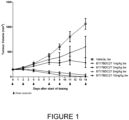
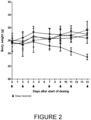
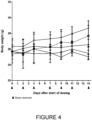
- BT17BDC-27 was more efficacious than BT17BDC-28, as it cleared tumours within 14 days ( Figure 1 ) at 10 mg/kg. A slight reduction in body weight was observable at this dose ( Figure 2 ). Conversely, at 10 mg/kg, BT17BDC-28 led to tumour growth stasis but not active regression ( Figure 3 ) while no weight loss was observed for BT17BDC-28 ( Figure 4 ). BT17BDC-27 merits further attention due to appreciable efficacy and tolerability at doses equal or lower than 5 mg/kg.
Landscapes
- Health & Medical Sciences (AREA)
- Chemical & Material Sciences (AREA)
- Life Sciences & Earth Sciences (AREA)
- Organic Chemistry (AREA)
- General Health & Medical Sciences (AREA)
- Medicinal Chemistry (AREA)
- Proteomics, Peptides & Aminoacids (AREA)
- Pharmacology & Pharmacy (AREA)
- Animal Behavior & Ethology (AREA)
- Public Health (AREA)
- Veterinary Medicine (AREA)
- Engineering & Computer Science (AREA)
- Bioinformatics & Cheminformatics (AREA)
- Molecular Biology (AREA)
- Epidemiology (AREA)
- Biochemistry (AREA)
- General Chemical & Material Sciences (AREA)
- Nuclear Medicine, Radiotherapy & Molecular Imaging (AREA)
- Chemical Kinetics & Catalysis (AREA)
- Biophysics (AREA)
- Genetics & Genomics (AREA)
- Toxicology (AREA)
- Gastroenterology & Hepatology (AREA)
- Medicines That Contain Protein Lipid Enzymes And Other Medicines (AREA)
- Peptides Or Proteins (AREA)
- Medicinal Preparation (AREA)
- Pharmaceuticals Containing Other Organic And Inorganic Compounds (AREA)
Applications Claiming Priority (2)
| Application Number | Priority Date | Filing Date | Title |
|---|---|---|---|
| GBGB1607827.1A GB201607827D0 (en) | 2016-05-04 | 2016-05-04 | Bicyclic peptide-toxin conjugates specific for MT1-MMP |
| PCT/GB2017/051250 WO2017191460A1 (en) | 2016-05-04 | 2017-05-04 | Bicyclic peptide-toxin conjugates specific for mt1-mmp |
Publications (2)
| Publication Number | Publication Date |
|---|---|
| EP3452096A1 EP3452096A1 (en) | 2019-03-13 |
| EP3452096B1 true EP3452096B1 (en) | 2025-01-29 |
Family
ID=56234400
Family Applications (1)
| Application Number | Title | Priority Date | Filing Date |
|---|---|---|---|
| EP17723745.0A Active EP3452096B1 (en) | 2016-05-04 | 2017-05-04 | Bicyclic peptide-toxin conjugates specific for mt1-mmp |
Country Status (8)
| Country | Link |
|---|---|
| US (1) | US10994019B2 (enExample) |
| EP (1) | EP3452096B1 (enExample) |
| JP (1) | JP6942147B2 (enExample) |
| CN (1) | CN109414510B (enExample) |
| DK (1) | DK3452096T3 (enExample) |
| ES (1) | ES3010545T3 (enExample) |
| GB (1) | GB201607827D0 (enExample) |
| WO (1) | WO2017191460A1 (enExample) |
Families Citing this family (42)
| Publication number | Priority date | Publication date | Assignee | Title |
|---|---|---|---|---|
| SI3215518T1 (sl) | 2014-10-29 | 2021-08-31 | Bicyclerd Limited | Biciklični peptidni ligandi, značilni za MT1-MMP |
| GB201607827D0 (en) | 2016-05-04 | 2016-06-15 | Bicycle Therapeutics Ltd | Bicyclic peptide-toxin conjugates specific for MT1-MMP |
| WO2018096365A1 (en) * | 2016-11-27 | 2018-05-31 | Bicyclerd Limited | Methods for treating cancer |
| JP2020502238A (ja) | 2016-12-23 | 2020-01-23 | バイスクルアールディー・リミテッド | 新規連結構造を有するペプチド誘導体 |
| WO2018127699A1 (en) * | 2017-01-06 | 2018-07-12 | Bicyclerd Limited | Compounds for treating cancer |
| CA3087881A1 (en) | 2017-01-17 | 2018-07-26 | Michael David FORREST | Therapeutic inhibitors of the reverse mode of atp synthase |
| CN110545850A (zh) | 2017-03-10 | 2019-12-06 | 奎亚培格制药公司 | 可释放的缀合物 |
| EP3615550A1 (en) | 2017-04-27 | 2020-03-04 | BicycleTx Limited | Bicyclic peptide ligands and uses thereof |
| EP3645549A1 (en) | 2017-06-26 | 2020-05-06 | BicycleRD Limited | Bicyclic peptide ligands with detectable moieties and uses thereof |
| BR112019028172A2 (pt) | 2017-07-13 | 2020-10-06 | Michael David Forrest | moduladores terapêuticos do modo reverso da atp sintase |
| CN111183147B (zh) | 2017-08-04 | 2024-07-05 | 拜斯科技术开发有限公司 | Cd137特异性的双环肽配体 |
| US20200283482A1 (en) * | 2017-08-14 | 2020-09-10 | Bicyclerd Limited | Bicyclic peptide ligand prr-a conjugates and uses thereof |
| GB201721265D0 (en) | 2017-12-19 | 2018-01-31 | Bicyclerd Ltd | Bicyclic peptide ligands specific for EphA2 |
| TWI825046B (zh) * | 2017-12-19 | 2023-12-11 | 英商拜西可泰克斯有限公司 | Epha2特用之雙環胜肽配位基 |
| WO2019162682A1 (en) | 2018-02-23 | 2019-08-29 | Bicycletx Limited | Multimeric bicyclic peptide ligands |
| BR112020015071A2 (pt) | 2018-03-09 | 2021-01-05 | Quiapeg Pharmaceuticals Ab | Conjugados de anticorpos liberáveis |
| GB201810320D0 (en) | 2018-06-22 | 2018-08-08 | Bicycletx Ltd | Peptide ligands for binding to CD38 |
| GB201810329D0 (en) | 2018-06-22 | 2018-08-08 | Bicycletx Ltd | Peptide ligands for binding to integrin avB3 |
| US11180531B2 (en) | 2018-06-22 | 2021-11-23 | Bicycletx Limited | Bicyclic peptide ligands specific for Nectin-4 |
| GB201810316D0 (en) | 2018-06-22 | 2018-08-08 | Bicyclerd Ltd | Peptide ligands for binding to EphA2 |
| GB201810327D0 (en) | 2018-06-22 | 2018-08-08 | Bicycletx Ltd | Peptide ligands for binding to IL-17 |
| WO2020053815A1 (en) | 2018-09-12 | 2020-03-19 | Quiapeg Pharmaceuticals Ab | Releasable glp-1 conjugates |
| EP3870597A1 (en) | 2018-10-23 | 2021-09-01 | BicycleTx Limited | Bicyclic peptide ligands and uses thereof |
| GB201820325D0 (en) | 2018-12-13 | 2019-01-30 | Bicyclerd Ltd | Bicyclic peptide ligands specific for psma |
| GB201820295D0 (en) | 2018-12-13 | 2019-01-30 | Bicyclerd Ltd | Bicyclic peptide ligands specific for MT1-MMP |
| JP2022513806A (ja) * | 2018-12-13 | 2022-02-09 | バイスクルテクス・リミテッド | Mt1-mmpに特異的な二環式ペプチドリガンド |
| GB201820288D0 (en) | 2018-12-13 | 2019-01-30 | Bicycle Tx Ltd | Bicycle peptide ligaands specific for MT1-MMP |
| WO2020128527A1 (en) * | 2018-12-21 | 2020-06-25 | Bicyclerd Limited | Bicyclic peptide ligands specific for pd-l1 |
| WO2020128526A1 (en) * | 2018-12-21 | 2020-06-25 | Bicycletx Limited | Bicyclic peptide ligands specific for pd-l1 |
| GB201900526D0 (en) * | 2019-01-15 | 2019-03-06 | Bicyclerd Ltd | Bicyclic peptide ligands specific for caix |
| WO2020225577A1 (en) * | 2019-05-09 | 2020-11-12 | Bicycletx Limited | Bicyclic peptide ligands specific for ox40 |
| TWI869398B (zh) | 2019-05-10 | 2025-01-11 | 英商拜西克爾德有限公司 | 治療癌症之方法 |
| CN112048013B (zh) * | 2019-06-05 | 2021-11-05 | 深圳先进技术研究院 | 靶向脑胶质瘤的多肽化合物及其合成方法与应用 |
| TWI862640B (zh) | 2019-07-30 | 2024-11-21 | 英商拜西可泰克斯有限公司 | 異質雙環肽複合物 |
| CN119192401A (zh) * | 2019-10-03 | 2024-12-27 | 拜斯科技术开发有限公司 | 异串联双环肽复合物 |
| WO2022029420A1 (en) | 2020-08-03 | 2022-02-10 | Bicycletx Limited | Peptide-based linkers |
| US20250186539A2 (en) | 2021-01-11 | 2025-06-12 | Bicycletx Limited | Methods for treating cancer |
| KR20230135586A (ko) | 2021-01-24 | 2023-09-25 | 마이클 데이비드 포레스트 | Atp 합성효소 억제제 - 미용 및 치료 용도 |
| GB202114282D0 (en) | 2021-10-06 | 2021-11-17 | Bicyclerd Ltd | Bicyclic peptide ligand drug conjugates |
| JP2024537396A (ja) * | 2021-10-14 | 2024-10-10 | シーザン ハイスーク ファーマシューティカル カンパニー リミテッド | EphA2の二環式ペプチドリガンド及びそのコンジュゲート |
| CN118251405A (zh) * | 2021-11-16 | 2024-06-25 | 西藏海思科制药有限公司 | Mt1-mmp的双环肽配体及其缀合物 |
| GB202214528D0 (en) | 2022-10-03 | 2022-11-16 | Owlstone Med Ltd | A compound |
Family Cites Families (27)
| Publication number | Priority date | Publication date | Assignee | Title |
|---|---|---|---|---|
| CA2495795C (en) * | 2002-08-16 | 2011-12-13 | Immunogen, Inc. | Cross-linkers with high reactivity and solubility and their use in the preparation of conjugates for targeted delivery of small molecule drugs |
| EP1452868A2 (en) | 2003-02-27 | 2004-09-01 | Pepscan Systems B.V. | Method for selecting a candidate drug compound |
| US20070112176A1 (en) * | 2003-04-04 | 2007-05-17 | Daiichi Pharmaceutical Co., Ltd. | Lipid membrane structure containing anti-mt-mmp monoclonal antibody |
| PL1844337T3 (pl) | 2005-01-24 | 2013-12-31 | Pepscan Systems Bv | Związki wiążące, związki immunogenne i peptydomimetyki |
| ES2509959T5 (en) | 2008-02-05 | 2024-12-19 | Bicyclerd Ltd | Methods and compositions |
| GB0913775D0 (en) * | 2009-08-06 | 2009-09-16 | Medical Res Council | Multispecific peptides |
| GB0914110D0 (en) | 2009-08-12 | 2009-09-16 | Medical Res Council | Peptide libraries |
| JP2013518558A (ja) * | 2010-02-04 | 2013-05-23 | メディカル リサーチ カウンシル | 構造化されたペプチドプロセシング |
| CN103906865B (zh) | 2011-10-07 | 2017-12-08 | 拜斯科医疗有限公司 | 结构化多肽特异性的调控 |
| US20140274759A1 (en) | 2013-03-15 | 2014-09-18 | Bicycle Therapeutics Limited | Modification of polypeptides |
| GB201306623D0 (en) | 2013-04-11 | 2013-05-29 | Bicycle Therapeutics Ltd | Modulation of structured polypeptide specificity |
| WO2015063465A2 (en) | 2013-10-28 | 2015-05-07 | Bicycle Therapeutics Limited | Novel polypeptides |
| SI3215518T1 (sl) | 2014-10-29 | 2021-08-31 | Bicyclerd Limited | Biciklični peptidni ligandi, značilni za MT1-MMP |
| GB201600911D0 (en) * | 2016-01-18 | 2016-03-02 | Bicycle Therapeutics Ltd | Stabilized peptide derivatives |
| GB201607827D0 (en) | 2016-05-04 | 2016-06-15 | Bicycle Therapeutics Ltd | Bicyclic peptide-toxin conjugates specific for MT1-MMP |
| WO2018096365A1 (en) | 2016-11-27 | 2018-05-31 | Bicyclerd Limited | Methods for treating cancer |
| JP2020502238A (ja) | 2016-12-23 | 2020-01-23 | バイスクルアールディー・リミテッド | 新規連結構造を有するペプチド誘導体 |
| EP3559019A1 (en) | 2016-12-23 | 2019-10-30 | BicycleTX Limited | Peptide ligands for binding to mt1-mmp |
| WO2018127699A1 (en) | 2017-01-06 | 2018-07-12 | Bicyclerd Limited | Compounds for treating cancer |
| GB201706477D0 (en) | 2017-04-24 | 2017-06-07 | Bicycle Therapeutics Ltd | Modification of polypeptides |
| EP3615550A1 (en) | 2017-04-27 | 2020-03-04 | BicycleTx Limited | Bicyclic peptide ligands and uses thereof |
| EP3645549A1 (en) | 2017-06-26 | 2020-05-06 | BicycleRD Limited | Bicyclic peptide ligands with detectable moieties and uses thereof |
| TWI825046B (zh) | 2017-12-19 | 2023-12-11 | 英商拜西可泰克斯有限公司 | Epha2特用之雙環胜肽配位基 |
| WO2019162682A1 (en) | 2018-02-23 | 2019-08-29 | Bicycletx Limited | Multimeric bicyclic peptide ligands |
| KR20200139236A (ko) | 2018-04-04 | 2020-12-11 | 바이사이클티엑스 리미티드 | 헤테로탠덤 비사이클릭 펩티드 복합체 |
| EP3870597A1 (en) | 2018-10-23 | 2021-09-01 | BicycleTx Limited | Bicyclic peptide ligands and uses thereof |
| CA3116504A1 (en) | 2018-10-30 | 2020-05-07 | Bicyclerd Limited | Bt1718 for use in treating cancer |
-
2016
- 2016-05-04 GB GBGB1607827.1A patent/GB201607827D0/en not_active Ceased
-
2017
- 2017-05-04 DK DK17723745.0T patent/DK3452096T3/da active
- 2017-05-04 US US16/097,305 patent/US10994019B2/en active Active
- 2017-05-04 ES ES17723745T patent/ES3010545T3/es active Active
- 2017-05-04 JP JP2018557405A patent/JP6942147B2/ja active Active
- 2017-05-04 CN CN201780031804.XA patent/CN109414510B/zh active Active
- 2017-05-04 WO PCT/GB2017/051250 patent/WO2017191460A1/en not_active Ceased
- 2017-05-04 EP EP17723745.0A patent/EP3452096B1/en active Active
Also Published As
| Publication number | Publication date |
|---|---|
| WO2017191460A1 (en) | 2017-11-09 |
| DK3452096T3 (da) | 2025-03-03 |
| CN109414510B (zh) | 2022-07-19 |
| GB201607827D0 (en) | 2016-06-15 |
| CN109414510A (zh) | 2019-03-01 |
| US20190134213A1 (en) | 2019-05-09 |
| ES3010545T3 (en) | 2025-04-03 |
| US10994019B2 (en) | 2021-05-04 |
| JP6942147B2 (ja) | 2021-09-29 |
| JP2019523214A (ja) | 2019-08-22 |
| EP3452096A1 (en) | 2019-03-13 |
Similar Documents
| Publication | Publication Date | Title |
|---|---|---|
| EP3452096B1 (en) | Bicyclic peptide-toxin conjugates specific for mt1-mmp | |
| US12318454B2 (en) | Bicyclic peptide ligands specific for MT1-MMP | |
| US11261214B2 (en) | Bicyclic peptide ligand specific for CD137 | |
| US12377155B2 (en) | Bicyclic peptide ligands specific for PSMA | |
| CA3154672A1 (en) | Bicyclic peptide ligand drug conjugates | |
| EP3897849A1 (en) | Bicyclic peptide ligands specific for pd-l1 | |
| US20220088118A1 (en) | Bicyclic peptide ligands specific for caix | |
| US20220008545A1 (en) | BICYCLIC PEPTIDE LIGANDS SPECIFIC FOR FAPa | |
| HK40058108A (en) | Bicyclic peptide ligands specific for mt1-mmp | |
| RU2824959C2 (ru) | Бициклические пептидные лиганды, специфичные для mt1-mmp | |
| WO2023057759A1 (en) | Bicyclic peptide ligand drug conjugates | |
| HK1243438B (en) | Bicyclic peptide ligands specific for mt1-mmp |
Legal Events
| Date | Code | Title | Description |
|---|---|---|---|
| STAA | Information on the status of an ep patent application or granted ep patent |
Free format text: STATUS: UNKNOWN |
|
| STAA | Information on the status of an ep patent application or granted ep patent |
Free format text: STATUS: THE INTERNATIONAL PUBLICATION HAS BEEN MADE |
|
| PUAI | Public reference made under article 153(3) epc to a published international application that has entered the european phase |
Free format text: ORIGINAL CODE: 0009012 |
|
| STAA | Information on the status of an ep patent application or granted ep patent |
Free format text: STATUS: REQUEST FOR EXAMINATION WAS MADE |
|
| 17P | Request for examination filed |
Effective date: 20181122 |
|
| AK | Designated contracting states |
Kind code of ref document: A1 Designated state(s): AL AT BE BG CH CY CZ DE DK EE ES FI FR GB GR HR HU IE IS IT LI LT LU LV MC MK MT NL NO PL PT RO RS SE SI SK SM TR |
|
| AX | Request for extension of the european patent |
Extension state: BA ME |
|
| DAV | Request for validation of the european patent (deleted) | ||
| DAX | Request for extension of the european patent (deleted) | ||
| STAA | Information on the status of an ep patent application or granted ep patent |
Free format text: STATUS: EXAMINATION IS IN PROGRESS |
|
| 17Q | First examination report despatched |
Effective date: 20191219 |
|
| P01 | Opt-out of the competence of the unified patent court (upc) registered |
Effective date: 20230504 |
|
| GRAP | Despatch of communication of intention to grant a patent |
Free format text: ORIGINAL CODE: EPIDOSNIGR1 |
|
| STAA | Information on the status of an ep patent application or granted ep patent |
Free format text: STATUS: GRANT OF PATENT IS INTENDED |
|
| RIC1 | Information provided on ipc code assigned before grant |
Ipc: A61K 31/5365 20060101ALI20240227BHEP Ipc: A61P 35/00 20060101ALI20240227BHEP Ipc: A61K 47/64 20170101AFI20240227BHEP |
|
| INTG | Intention to grant announced |
Effective date: 20240319 |
|
| GRAJ | Information related to disapproval of communication of intention to grant by the applicant or resumption of examination proceedings by the epo deleted |
Free format text: ORIGINAL CODE: EPIDOSDIGR1 |
|
| STAA | Information on the status of an ep patent application or granted ep patent |
Free format text: STATUS: EXAMINATION IS IN PROGRESS |
|
| INTC | Intention to grant announced (deleted) | ||
| GRAP | Despatch of communication of intention to grant a patent |
Free format text: ORIGINAL CODE: EPIDOSNIGR1 |
|
| STAA | Information on the status of an ep patent application or granted ep patent |
Free format text: STATUS: GRANT OF PATENT IS INTENDED |
|
| INTG | Intention to grant announced |
Effective date: 20240913 |
|
| GRAS | Grant fee paid |
Free format text: ORIGINAL CODE: EPIDOSNIGR3 |
|
| GRAA | (expected) grant |
Free format text: ORIGINAL CODE: 0009210 |
|
| STAA | Information on the status of an ep patent application or granted ep patent |
Free format text: STATUS: THE PATENT HAS BEEN GRANTED |
|
| RAP3 | Party data changed (applicant data changed or rights of an application transferred) |
Owner name: BICYCLERD LIMITED |
|
| RIN1 | Information on inventor provided before grant (corrected) |
Inventor name: BALDASSARRE, LEONARDO Inventor name: PAVAN, SILVIA Inventor name: TEUFEL, DANIEL |
|
| AK | Designated contracting states |
Kind code of ref document: B1 Designated state(s): AL AT BE BG CH CY CZ DE DK EE ES FI FR GB GR HR HU IE IS IT LI LT LU LV MC MK MT NL NO PL PT RO RS SE SI SK SM TR |
|
| REG | Reference to a national code |
Ref country code: GB Ref legal event code: FG4D |
|
| REG | Reference to a national code |
Ref country code: CH Ref legal event code: EP |
|
| REG | Reference to a national code |
Ref country code: DE Ref legal event code: R096 Ref document number: 602017087537 Country of ref document: DE |
|
| REG | Reference to a national code |
Ref country code: IE Ref legal event code: FG4D |
|
| REG | Reference to a national code |
Ref country code: DK Ref legal event code: T3 Effective date: 20250224 |
|
| REG | Reference to a national code |
Ref country code: NL Ref legal event code: FP |
|
| PGFP | Annual fee paid to national office [announced via postgrant information from national office to epo] |
Ref country code: NL Payment date: 20250514 Year of fee payment: 9 |
|
| PG25 | Lapsed in a contracting state [announced via postgrant information from national office to epo] |
Ref country code: RS Free format text: LAPSE BECAUSE OF FAILURE TO SUBMIT A TRANSLATION OF THE DESCRIPTION OR TO PAY THE FEE WITHIN THE PRESCRIBED TIME-LIMIT Effective date: 20250429 |
|
| PG25 | Lapsed in a contracting state [announced via postgrant information from national office to epo] |
Ref country code: FI Free format text: LAPSE BECAUSE OF FAILURE TO SUBMIT A TRANSLATION OF THE DESCRIPTION OR TO PAY THE FEE WITHIN THE PRESCRIBED TIME-LIMIT Effective date: 20250129 |
|
| PG25 | Lapsed in a contracting state [announced via postgrant information from national office to epo] |
Ref country code: PL Free format text: LAPSE BECAUSE OF FAILURE TO SUBMIT A TRANSLATION OF THE DESCRIPTION OR TO PAY THE FEE WITHIN THE PRESCRIBED TIME-LIMIT Effective date: 20250129 |
|
| PGFP | Annual fee paid to national office [announced via postgrant information from national office to epo] |
Ref country code: DE Payment date: 20250512 Year of fee payment: 9 |
|
| PGFP | Annual fee paid to national office [announced via postgrant information from national office to epo] |
Ref country code: GB Payment date: 20250514 Year of fee payment: 9 Ref country code: ES Payment date: 20250618 Year of fee payment: 9 Ref country code: DK Payment date: 20250516 Year of fee payment: 9 |
|
| REG | Reference to a national code |
Ref country code: LT Ref legal event code: MG9D |
|
| PG25 | Lapsed in a contracting state [announced via postgrant information from national office to epo] |
Ref country code: IS Free format text: LAPSE BECAUSE OF FAILURE TO SUBMIT A TRANSLATION OF THE DESCRIPTION OR TO PAY THE FEE WITHIN THE PRESCRIBED TIME-LIMIT Effective date: 20250529 Ref country code: NO Free format text: LAPSE BECAUSE OF FAILURE TO SUBMIT A TRANSLATION OF THE DESCRIPTION OR TO PAY THE FEE WITHIN THE PRESCRIBED TIME-LIMIT Effective date: 20250429 |
|
| PGFP | Annual fee paid to national office [announced via postgrant information from national office to epo] |
Ref country code: IT Payment date: 20250512 Year of fee payment: 9 |
|
| REG | Reference to a national code |
Ref country code: AT Ref legal event code: MK05 Ref document number: 1762813 Country of ref document: AT Kind code of ref document: T Effective date: 20250129 |
|
| PG25 | Lapsed in a contracting state [announced via postgrant information from national office to epo] |
Ref country code: HR Free format text: LAPSE BECAUSE OF FAILURE TO SUBMIT A TRANSLATION OF THE DESCRIPTION OR TO PAY THE FEE WITHIN THE PRESCRIBED TIME-LIMIT Effective date: 20250129 |
|
| PG25 | Lapsed in a contracting state [announced via postgrant information from national office to epo] |
Ref country code: LV Free format text: LAPSE BECAUSE OF FAILURE TO SUBMIT A TRANSLATION OF THE DESCRIPTION OR TO PAY THE FEE WITHIN THE PRESCRIBED TIME-LIMIT Effective date: 20250129 Ref country code: PT Free format text: LAPSE BECAUSE OF FAILURE TO SUBMIT A TRANSLATION OF THE DESCRIPTION OR TO PAY THE FEE WITHIN THE PRESCRIBED TIME-LIMIT Effective date: 20250529 |
|
| PGFP | Annual fee paid to national office [announced via postgrant information from national office to epo] |
Ref country code: FR Payment date: 20250514 Year of fee payment: 9 |
|
| PG25 | Lapsed in a contracting state [announced via postgrant information from national office to epo] |
Ref country code: BG Free format text: LAPSE BECAUSE OF FAILURE TO SUBMIT A TRANSLATION OF THE DESCRIPTION OR TO PAY THE FEE WITHIN THE PRESCRIBED TIME-LIMIT Effective date: 20250129 Ref country code: GR Free format text: LAPSE BECAUSE OF FAILURE TO SUBMIT A TRANSLATION OF THE DESCRIPTION OR TO PAY THE FEE WITHIN THE PRESCRIBED TIME-LIMIT Effective date: 20250430 |
|
| PGFP | Annual fee paid to national office [announced via postgrant information from national office to epo] |
Ref country code: CH Payment date: 20250601 Year of fee payment: 9 |
|
| PG25 | Lapsed in a contracting state [announced via postgrant information from national office to epo] |
Ref country code: AT Free format text: LAPSE BECAUSE OF FAILURE TO SUBMIT A TRANSLATION OF THE DESCRIPTION OR TO PAY THE FEE WITHIN THE PRESCRIBED TIME-LIMIT Effective date: 20250129 |
|
| PG25 | Lapsed in a contracting state [announced via postgrant information from national office to epo] |
Ref country code: SE Free format text: LAPSE BECAUSE OF FAILURE TO SUBMIT A TRANSLATION OF THE DESCRIPTION OR TO PAY THE FEE WITHIN THE PRESCRIBED TIME-LIMIT Effective date: 20250129 |
|
| PG25 | Lapsed in a contracting state [announced via postgrant information from national office to epo] |
Ref country code: SM Free format text: LAPSE BECAUSE OF FAILURE TO SUBMIT A TRANSLATION OF THE DESCRIPTION OR TO PAY THE FEE WITHIN THE PRESCRIBED TIME-LIMIT Effective date: 20250129 |
|
| PG25 | Lapsed in a contracting state [announced via postgrant information from national office to epo] |
Ref country code: CZ Free format text: LAPSE BECAUSE OF FAILURE TO SUBMIT A TRANSLATION OF THE DESCRIPTION OR TO PAY THE FEE WITHIN THE PRESCRIBED TIME-LIMIT Effective date: 20250129 Ref country code: EE Free format text: LAPSE BECAUSE OF FAILURE TO SUBMIT A TRANSLATION OF THE DESCRIPTION OR TO PAY THE FEE WITHIN THE PRESCRIBED TIME-LIMIT Effective date: 20250129 |
|
| PG25 | Lapsed in a contracting state [announced via postgrant information from national office to epo] |
Ref country code: RO Free format text: LAPSE BECAUSE OF FAILURE TO SUBMIT A TRANSLATION OF THE DESCRIPTION OR TO PAY THE FEE WITHIN THE PRESCRIBED TIME-LIMIT Effective date: 20250129 |
|
| PG25 | Lapsed in a contracting state [announced via postgrant information from national office to epo] |
Ref country code: SK Free format text: LAPSE BECAUSE OF FAILURE TO SUBMIT A TRANSLATION OF THE DESCRIPTION OR TO PAY THE FEE WITHIN THE PRESCRIBED TIME-LIMIT Effective date: 20250129 |
|
| REG | Reference to a national code |
Ref country code: DE Ref legal event code: R097 Ref document number: 602017087537 Country of ref document: DE |
|
| PLBE | No opposition filed within time limit |
Free format text: ORIGINAL CODE: 0009261 |
|
| STAA | Information on the status of an ep patent application or granted ep patent |
Free format text: STATUS: NO OPPOSITION FILED WITHIN TIME LIMIT |