EP3437152B1 - Batteriemanagementsystem mit mehreren beobachtern - Google Patents
Batteriemanagementsystem mit mehreren beobachtern Download PDFInfo
- Publication number
- EP3437152B1 EP3437152B1 EP17714203.1A EP17714203A EP3437152B1 EP 3437152 B1 EP3437152 B1 EP 3437152B1 EP 17714203 A EP17714203 A EP 17714203A EP 3437152 B1 EP3437152 B1 EP 3437152B1
- Authority
- EP
- European Patent Office
- Prior art keywords
- battery
- management system
- model
- parameters
- applying
- Prior art date
- Legal status (The legal status is an assumption and is not a legal conclusion. Google has not performed a legal analysis and makes no representation as to the accuracy of the status listed.)
- Active
Links
Images


Classifications
-
- B—PERFORMING OPERATIONS; TRANSPORTING
- B60—VEHICLES IN GENERAL
- B60L—PROPULSION OF ELECTRICALLY-PROPELLED VEHICLES; SUPPLYING ELECTRIC POWER FOR AUXILIARY EQUIPMENT OF ELECTRICALLY-PROPELLED VEHICLES; ELECTRODYNAMIC BRAKE SYSTEMS FOR VEHICLES IN GENERAL; MAGNETIC SUSPENSION OR LEVITATION FOR VEHICLES; MONITORING OPERATING VARIABLES OF ELECTRICALLY-PROPELLED VEHICLES; ELECTRIC SAFETY DEVICES FOR ELECTRICALLY-PROPELLED VEHICLES
- B60L3/00—Electric devices on electrically-propelled vehicles for safety purposes; Monitoring operating variables, e.g. speed, deceleration or energy consumption
- B60L3/0023—Detecting, eliminating, remedying or compensating for drive train abnormalities, e.g. failures within the drive train
- B60L3/0046—Detecting, eliminating, remedying or compensating for drive train abnormalities, e.g. failures within the drive train relating to electric energy storage systems, e.g. batteries or capacitors
-
- B—PERFORMING OPERATIONS; TRANSPORTING
- B60—VEHICLES IN GENERAL
- B60L—PROPULSION OF ELECTRICALLY-PROPELLED VEHICLES; SUPPLYING ELECTRIC POWER FOR AUXILIARY EQUIPMENT OF ELECTRICALLY-PROPELLED VEHICLES; ELECTRODYNAMIC BRAKE SYSTEMS FOR VEHICLES IN GENERAL; MAGNETIC SUSPENSION OR LEVITATION FOR VEHICLES; MONITORING OPERATING VARIABLES OF ELECTRICALLY-PROPELLED VEHICLES; ELECTRIC SAFETY DEVICES FOR ELECTRICALLY-PROPELLED VEHICLES
- B60L58/00—Methods or circuit arrangements for monitoring or controlling batteries or fuel cells, specially adapted for electric vehicles
- B60L58/10—Methods or circuit arrangements for monitoring or controlling batteries or fuel cells, specially adapted for electric vehicles for monitoring or controlling batteries
-
- B—PERFORMING OPERATIONS; TRANSPORTING
- B60—VEHICLES IN GENERAL
- B60L—PROPULSION OF ELECTRICALLY-PROPELLED VEHICLES; SUPPLYING ELECTRIC POWER FOR AUXILIARY EQUIPMENT OF ELECTRICALLY-PROPELLED VEHICLES; ELECTRODYNAMIC BRAKE SYSTEMS FOR VEHICLES IN GENERAL; MAGNETIC SUSPENSION OR LEVITATION FOR VEHICLES; MONITORING OPERATING VARIABLES OF ELECTRICALLY-PROPELLED VEHICLES; ELECTRIC SAFETY DEVICES FOR ELECTRICALLY-PROPELLED VEHICLES
- B60L58/00—Methods or circuit arrangements for monitoring or controlling batteries or fuel cells, specially adapted for electric vehicles
- B60L58/10—Methods or circuit arrangements for monitoring or controlling batteries or fuel cells, specially adapted for electric vehicles for monitoring or controlling batteries
- B60L58/12—Methods or circuit arrangements for monitoring or controlling batteries or fuel cells, specially adapted for electric vehicles for monitoring or controlling batteries responding to state of charge [SoC]
-
- B—PERFORMING OPERATIONS; TRANSPORTING
- B60—VEHICLES IN GENERAL
- B60L—PROPULSION OF ELECTRICALLY-PROPELLED VEHICLES; SUPPLYING ELECTRIC POWER FOR AUXILIARY EQUIPMENT OF ELECTRICALLY-PROPELLED VEHICLES; ELECTRODYNAMIC BRAKE SYSTEMS FOR VEHICLES IN GENERAL; MAGNETIC SUSPENSION OR LEVITATION FOR VEHICLES; MONITORING OPERATING VARIABLES OF ELECTRICALLY-PROPELLED VEHICLES; ELECTRIC SAFETY DEVICES FOR ELECTRICALLY-PROPELLED VEHICLES
- B60L58/00—Methods or circuit arrangements for monitoring or controlling batteries or fuel cells, specially adapted for electric vehicles
- B60L58/10—Methods or circuit arrangements for monitoring or controlling batteries or fuel cells, specially adapted for electric vehicles for monitoring or controlling batteries
- B60L58/16—Methods or circuit arrangements for monitoring or controlling batteries or fuel cells, specially adapted for electric vehicles for monitoring or controlling batteries responding to battery ageing, e.g. to the number of charging cycles or the state of health [SoH]
-
- G—PHYSICS
- G01—MEASURING; TESTING
- G01R—MEASURING ELECTRIC VARIABLES; MEASURING MAGNETIC VARIABLES
- G01R31/00—Arrangements for testing electric properties; Arrangements for locating electric faults; Arrangements for electrical testing characterised by what is being tested not provided for elsewhere
- G01R31/36—Arrangements for testing, measuring or monitoring the electrical condition of accumulators or electric batteries, e.g. capacity or state of charge [SoC]
- G01R31/367—Software therefor, e.g. for battery testing using modelling or look-up tables
-
- G—PHYSICS
- G01—MEASURING; TESTING
- G01R—MEASURING ELECTRIC VARIABLES; MEASURING MAGNETIC VARIABLES
- G01R31/00—Arrangements for testing electric properties; Arrangements for locating electric faults; Arrangements for electrical testing characterised by what is being tested not provided for elsewhere
- G01R31/36—Arrangements for testing, measuring or monitoring the electrical condition of accumulators or electric batteries, e.g. capacity or state of charge [SoC]
- G01R31/382—Arrangements for monitoring battery or accumulator variables, e.g. SoC
- G01R31/3842—Arrangements for monitoring battery or accumulator variables, e.g. SoC combining voltage and current measurements
-
- G—PHYSICS
- G01—MEASURING; TESTING
- G01R—MEASURING ELECTRIC VARIABLES; MEASURING MAGNETIC VARIABLES
- G01R31/00—Arrangements for testing electric properties; Arrangements for locating electric faults; Arrangements for electrical testing characterised by what is being tested not provided for elsewhere
- G01R31/36—Arrangements for testing, measuring or monitoring the electrical condition of accumulators or electric batteries, e.g. capacity or state of charge [SoC]
- G01R31/392—Determining battery ageing or deterioration, e.g. state of health
-
- H—ELECTRICITY
- H01—ELECTRIC ELEMENTS
- H01M—PROCESSES OR MEANS, e.g. BATTERIES, FOR THE DIRECT CONVERSION OF CHEMICAL ENERGY INTO ELECTRICAL ENERGY
- H01M10/00—Secondary cells; Manufacture thereof
- H01M10/05—Accumulators with non-aqueous electrolyte
- H01M10/052—Li-accumulators
-
- H—ELECTRICITY
- H01—ELECTRIC ELEMENTS
- H01M—PROCESSES OR MEANS, e.g. BATTERIES, FOR THE DIRECT CONVERSION OF CHEMICAL ENERGY INTO ELECTRICAL ENERGY
- H01M10/00—Secondary cells; Manufacture thereof
- H01M10/42—Methods or arrangements for servicing or maintenance of secondary cells or secondary half-cells
- H01M10/425—Structural combination with electronic components, e.g. electronic circuits integrated to the outside of the casing
-
- H—ELECTRICITY
- H01—ELECTRIC ELEMENTS
- H01M—PROCESSES OR MEANS, e.g. BATTERIES, FOR THE DIRECT CONVERSION OF CHEMICAL ENERGY INTO ELECTRICAL ENERGY
- H01M10/00—Secondary cells; Manufacture thereof
- H01M10/42—Methods or arrangements for servicing or maintenance of secondary cells or secondary half-cells
- H01M10/425—Structural combination with electronic components, e.g. electronic circuits integrated to the outside of the casing
- H01M10/4257—Smart batteries, e.g. electronic circuits inside the housing of the cells or batteries
-
- H—ELECTRICITY
- H01—ELECTRIC ELEMENTS
- H01M—PROCESSES OR MEANS, e.g. BATTERIES, FOR THE DIRECT CONVERSION OF CHEMICAL ENERGY INTO ELECTRICAL ENERGY
- H01M10/00—Secondary cells; Manufacture thereof
- H01M10/42—Methods or arrangements for servicing or maintenance of secondary cells or secondary half-cells
- H01M10/44—Methods for charging or discharging
-
- H—ELECTRICITY
- H01—ELECTRIC ELEMENTS
- H01M—PROCESSES OR MEANS, e.g. BATTERIES, FOR THE DIRECT CONVERSION OF CHEMICAL ENERGY INTO ELECTRICAL ENERGY
- H01M10/00—Secondary cells; Manufacture thereof
- H01M10/42—Methods or arrangements for servicing or maintenance of secondary cells or secondary half-cells
- H01M10/48—Accumulators combined with arrangements for measuring, testing or indicating the condition of cells, e.g. the level or density of the electrolyte
-
- H—ELECTRICITY
- H02—GENERATION; CONVERSION OR DISTRIBUTION OF ELECTRIC POWER
- H02J—ELECTRIC POWER NETWORKS; CIRCUIT ARRANGEMENTS OR SYSTEMS FOR SUPPLYING OR DISTRIBUTING ELECTRIC POWER; SYSTEMS FOR STORING ELECTRIC ENERGY
- H02J7/00—Circuit arrangements for charging or discharging batteries or for supplying loads from batteries
- H02J7/80—Circuit arrangements for charging or discharging batteries or for supplying loads from batteries including monitoring or indicating arrangements
- H02J7/82—Control of state of charge [SOC]
-
- H—ELECTRICITY
- H02—GENERATION; CONVERSION OR DISTRIBUTION OF ELECTRIC POWER
- H02J—ELECTRIC POWER NETWORKS; CIRCUIT ARRANGEMENTS OR SYSTEMS FOR SUPPLYING OR DISTRIBUTING ELECTRIC POWER; SYSTEMS FOR STORING ELECTRIC ENERGY
- H02J7/00—Circuit arrangements for charging or discharging batteries or for supplying loads from batteries
- H02J7/80—Circuit arrangements for charging or discharging batteries or for supplying loads from batteries including monitoring or indicating arrangements
- H02J7/84—Control of state of health [SOH]
-
- H—ELECTRICITY
- H02—GENERATION; CONVERSION OR DISTRIBUTION OF ELECTRIC POWER
- H02J—ELECTRIC POWER NETWORKS; CIRCUIT ARRANGEMENTS OR SYSTEMS FOR SUPPLYING OR DISTRIBUTING ELECTRIC POWER; SYSTEMS FOR STORING ELECTRIC ENERGY
- H02J7/00—Circuit arrangements for charging or discharging batteries or for supplying loads from batteries
- H02J7/90—Regulation of charging or discharging current or voltage
-
- B—PERFORMING OPERATIONS; TRANSPORTING
- B60—VEHICLES IN GENERAL
- B60L—PROPULSION OF ELECTRICALLY-PROPELLED VEHICLES; SUPPLYING ELECTRIC POWER FOR AUXILIARY EQUIPMENT OF ELECTRICALLY-PROPELLED VEHICLES; ELECTRODYNAMIC BRAKE SYSTEMS FOR VEHICLES IN GENERAL; MAGNETIC SUSPENSION OR LEVITATION FOR VEHICLES; MONITORING OPERATING VARIABLES OF ELECTRICALLY-PROPELLED VEHICLES; ELECTRIC SAFETY DEVICES FOR ELECTRICALLY-PROPELLED VEHICLES
- B60L2240/00—Control parameters of input or output; Target parameters
- B60L2240/40—Drive Train control parameters
- B60L2240/54—Drive Train control parameters related to batteries
- B60L2240/545—Temperature
-
- B—PERFORMING OPERATIONS; TRANSPORTING
- B60—VEHICLES IN GENERAL
- B60L—PROPULSION OF ELECTRICALLY-PROPELLED VEHICLES; SUPPLYING ELECTRIC POWER FOR AUXILIARY EQUIPMENT OF ELECTRICALLY-PROPELLED VEHICLES; ELECTRODYNAMIC BRAKE SYSTEMS FOR VEHICLES IN GENERAL; MAGNETIC SUSPENSION OR LEVITATION FOR VEHICLES; MONITORING OPERATING VARIABLES OF ELECTRICALLY-PROPELLED VEHICLES; ELECTRIC SAFETY DEVICES FOR ELECTRICALLY-PROPELLED VEHICLES
- B60L2240/00—Control parameters of input or output; Target parameters
- B60L2240/40—Drive Train control parameters
- B60L2240/54—Drive Train control parameters related to batteries
- B60L2240/547—Voltage
-
- B—PERFORMING OPERATIONS; TRANSPORTING
- B60—VEHICLES IN GENERAL
- B60L—PROPULSION OF ELECTRICALLY-PROPELLED VEHICLES; SUPPLYING ELECTRIC POWER FOR AUXILIARY EQUIPMENT OF ELECTRICALLY-PROPELLED VEHICLES; ELECTRODYNAMIC BRAKE SYSTEMS FOR VEHICLES IN GENERAL; MAGNETIC SUSPENSION OR LEVITATION FOR VEHICLES; MONITORING OPERATING VARIABLES OF ELECTRICALLY-PROPELLED VEHICLES; ELECTRIC SAFETY DEVICES FOR ELECTRICALLY-PROPELLED VEHICLES
- B60L2240/00—Control parameters of input or output; Target parameters
- B60L2240/40—Drive Train control parameters
- B60L2240/54—Drive Train control parameters related to batteries
- B60L2240/549—Current
-
- B—PERFORMING OPERATIONS; TRANSPORTING
- B60—VEHICLES IN GENERAL
- B60L—PROPULSION OF ELECTRICALLY-PROPELLED VEHICLES; SUPPLYING ELECTRIC POWER FOR AUXILIARY EQUIPMENT OF ELECTRICALLY-PROPELLED VEHICLES; ELECTRODYNAMIC BRAKE SYSTEMS FOR VEHICLES IN GENERAL; MAGNETIC SUSPENSION OR LEVITATION FOR VEHICLES; MONITORING OPERATING VARIABLES OF ELECTRICALLY-PROPELLED VEHICLES; ELECTRIC SAFETY DEVICES FOR ELECTRICALLY-PROPELLED VEHICLES
- B60L2260/00—Operating Modes
- B60L2260/40—Control modes
- B60L2260/44—Control modes by parameter estimation
-
- H—ELECTRICITY
- H01—ELECTRIC ELEMENTS
- H01M—PROCESSES OR MEANS, e.g. BATTERIES, FOR THE DIRECT CONVERSION OF CHEMICAL ENERGY INTO ELECTRICAL ENERGY
- H01M10/00—Secondary cells; Manufacture thereof
- H01M10/42—Methods or arrangements for servicing or maintenance of secondary cells or secondary half-cells
- H01M10/425—Structural combination with electronic components, e.g. electronic circuits integrated to the outside of the casing
- H01M2010/4271—Battery management systems including electronic circuits, e.g. control of current or voltage to keep battery in healthy state, cell balancing
-
- H—ELECTRICITY
- H01—ELECTRIC ELEMENTS
- H01M—PROCESSES OR MEANS, e.g. BATTERIES, FOR THE DIRECT CONVERSION OF CHEMICAL ENERGY INTO ELECTRICAL ENERGY
- H01M10/00—Secondary cells; Manufacture thereof
- H01M10/42—Methods or arrangements for servicing or maintenance of secondary cells or secondary half-cells
- H01M10/425—Structural combination with electronic components, e.g. electronic circuits integrated to the outside of the casing
- H01M2010/4278—Systems for data transfer from batteries, e.g. transfer of battery parameters to a controller, data transferred between battery controller and main controller
-
- Y—GENERAL TAGGING OF NEW TECHNOLOGICAL DEVELOPMENTS; GENERAL TAGGING OF CROSS-SECTIONAL TECHNOLOGIES SPANNING OVER SEVERAL SECTIONS OF THE IPC; TECHNICAL SUBJECTS COVERED BY FORMER USPC CROSS-REFERENCE ART COLLECTIONS [XRACs] AND DIGESTS
- Y02—TECHNOLOGIES OR APPLICATIONS FOR MITIGATION OR ADAPTATION AGAINST CLIMATE CHANGE
- Y02E—REDUCTION OF GREENHOUSE GAS [GHG] EMISSIONS, RELATED TO ENERGY GENERATION, TRANSMISSION OR DISTRIBUTION
- Y02E60/00—Enabling technologies; Technologies with a potential or indirect contribution to GHG emissions mitigation
- Y02E60/10—Energy storage using batteries
-
- Y—GENERAL TAGGING OF NEW TECHNOLOGICAL DEVELOPMENTS; GENERAL TAGGING OF CROSS-SECTIONAL TECHNOLOGIES SPANNING OVER SEVERAL SECTIONS OF THE IPC; TECHNICAL SUBJECTS COVERED BY FORMER USPC CROSS-REFERENCE ART COLLECTIONS [XRACs] AND DIGESTS
- Y02—TECHNOLOGIES OR APPLICATIONS FOR MITIGATION OR ADAPTATION AGAINST CLIMATE CHANGE
- Y02T—CLIMATE CHANGE MITIGATION TECHNOLOGIES RELATED TO TRANSPORTATION
- Y02T10/00—Road transport of goods or passengers
- Y02T10/60—Other road transportation technologies with climate change mitigation effect
- Y02T10/70—Energy storage systems for electromobility, e.g. batteries
Definitions
- the invention generally relates to secondary batteries, and more particularly to a method of managing the operation of a secondary battery.
- Rechargeable lithium batteries are attractive energy storage devices for portable electric and electronic devices and electric and hybrid-electric vehicles because of their high specific energy compared to other electrochemical energy storage devices.
- a typical lithium cell contains a negative electrode, a positive electrode, and a separator located between the negative and positive electrodes. Both electrodes contain active materials that react with lithium reversibly.
- the negative electrode may include lithium metal, which can be electrochemically dissolved and deposited reversibly.
- US 2015/326038 discloses a battery management system that includes a battery pack and a controller.
- the controller is configured to receive pack terminal voltage and current data.
- the controller may estimate battery model parameters in an equivalent circuit model and output state variable values indicative of fast and slow dynamics of the voltage responses.
- the controller may also output parameter values indicative of feedback gains to compute a current limit in a state feedback structure.
- the controller may further estimate battery current limits based on the state variable values and the feedback gains to control operation of the battery pack.
- EP 2 816 366 discloses a method and a corresponding device, for monitoring a charge of a battery.
- the method comprises obtaining a battery current measurement value and a battery voltage measurement value, and applying a current integration method to update a primary charge estimate value representative of the charge stored in the battery by taking into account the battery current measurement value.
- the method further comprises determining an ancillary charge estimate value representative of the charge stored in the battery using a battery model taking into account the battery voltage measurement value, and determining an error value for said ancillary charge estimate value, in which the error value expresses the reliability of the battery model taking the battery voltage measurement value into account.
- the method also comprises applying a correction to the primary charge estimate value as function of the ancillary charge estimate value and the error value. Interpretation of the correction applied in this manner allows determination of current sensor offset and battery capacity change.
- US 2014/278167 discloses adaptive estimation techniques to create a battery state estimator to estimate power capabilities of the battery pack in a vehicle.
- the estimator adaptively updates circuit model parameters used to calculate the voltage states of the ECM of a battery pack.
- the adaptive estimation techniques may also be used to calculate a solid-state diffusion voltage effects within the battery pack.
- the adaptive estimator is used to increase robustness of the calculation to sensor noise, modeling error, and battery pack degradation.
- Embodiments of the disclosure are related to systems and methods for managing the operation of a battery management system that estimates various states and parameters of a battery using multiple state observers.
- One embodiment includes a method of managing a battery system, the battery system including one or more battery cells, one or more sensors coupled to the one or more battery cells and configured to measure one or more characteristics of the one or more battery cells, and a battery management system coupled to the one or more sensors and including a microprocessor and a memory.
- the method comprising receiving, by the battery management system, one or more measured characteristics of the one or more battery cells from the one or more sensors, receiving, by the battery management system, one or more estimated parameters of the one or more battery cells, estimating, by the battery management system, one or more states of the one or more battery cells by applying a first battery model to account for physical parameters of a chemical composition of the one or more battery cells based on the one or more measured characteristics and the one or more estimated parameters of the battery, updating, by the battery management system, at least a portion of the one or more estimated parameters based at least in part on the estimation of the one or more states of the one or more battery cells by applying two or more separate battery models to account for physical parameters of a chemical composition of the one or more battery cells, updating, by the battery management system, the one or more states of the one or more battery cells based at least in part on the updated estimated parameters of the one or more parameters of the one or more battery cells, and regulating by the battery management system, one or more of charging or discharging of the battery based on the
- the battery management system comprising a processor and a memory storing instructions that, when executed by the processor, cause the battery management system to receive one or more measured characteristics of one or more battery cells from one or more sensors, wherein the one or more battery cells and the one or more sensors are part of a battery system, receive one or more estimated parameters of the one or more battery cells, estimate one or more states of the one or more battery cells by applying a first battery model to account for physical parameters of a chemical composition of the one or more battery cells based on the one or more measured characteristics and the one or more estimated parameters of the battery, update at least a portion of the one or more estimated parameters based at least in part on the estimation of the one or more states of the one or more battery cells by applying two or more separate battery models to account for physical parameters of a chemical composition of the one or more battery cells, update the one or more states of the one or more battery cells based at least in part on the updated estimated parameters of the one or more parameters of the one or more battery cells, and regulate one or more of charging
- the battery system 100 includes an anode tab 110, an anode 120, a separator 130, a cathode 150, a cathode tab 160, a sensing circuitry 170, and a battery management system 180.
- the separator 130 may be an electrically insulating separator.
- the electrically insulating separator comprises a porous polymeric film.
- the thickness dimension of the components of a battery cell 102 may be for the anode 120 about 5 to about 110 micrometers, for the separator 130 less than about 50 micrometers or in certain embodiments less than about 10 micrometers, and for the cathode 150 about 50 to about 110 micrometers.
- lithium is oxidized at the anode 120 to form a lithium ion.
- the lithium ion migrates through the separator 130 of the battery cell 102 to the cathode 150.
- the lithium ions return to the anode 120 and are reduced to lithium.
- the lithium may be deposited as lithium metal on the anode 120 in the case of a lithium anode 120 or inserted into the host structure in the case of an insertion material anode 120, such as graphite, and the process is repeated with subsequent charge and discharge cycles.
- the lithium cations are combined with electrons and the host material (e.g., graphite), resulting in an increase in the degree of lithiation, or "state of charge" of the host material.
- the host material e.g., graphite
- the anode 120 may comprise an oxidizable metal, such as lithium or an insertion material that can insert Li or some other ion (e.g., Na, Mg, or other suitable ion).
- the cathode 150 may comprise various materials such as sulfur or sulfur-containing materials (e.g., polyacrylonitrile-sulfur composites (PAN-S composites), lithium sulfide (Li 2 S)); vanadium oxides(e.g., vanadium pentoxide (V 2 O5)); metal fluorides (e.g., fluorides of titanium, vanadium, iron, cobalt, bismuth, copper and combinations thereof); lithium-insertion materials (e.g., lithium nickel manganese cobalt oxide (NMC), lithium-rich NMC, lithium nickel manganese oxide (LiNi 0.5 Mn 1.5 O 4 )); lithium transition metal oxides (e.g., lithium cobalt oxide (LiCoO 2 ), lithium manganese oxide (LiMn 2 O
- the battery management system 180 is communicatively connected to the battery cell 102.
- the battery management system 180 is electrically connected to the battery cell 102 via electrical links (e.g., wires).
- the battery management system 180 may be wirelessly connected to the battery cell 102 via a wireless communication network.
- the battery management system 180 may include for example a microcontroller (with memory and input/output components on a single chip or within a single housing) or may include separately configured components, for example, a microprocessor, memory, and input/output components.
- the battery management system 180 may also be implemented using other components or combinations of components including, for example, a digital signal processor (DSP), an application specific integrated circuit (ASIC), a field-programmable gate array (FPGA), or other circuitry.
- DSP digital signal processor
- ASIC application specific integrated circuit
- FPGA field-programmable gate array
- the processor may include one or more levels of caching, such as a level cache memory, one or more processor cores, and registers.
- the example processor core may include an arithmetic logic unit (ALU), a floating point unit (FPU), or any combination thereof.
- the battery management system 180 may also include a user interface, a communication interface, and other computer implemented devices for performing features not defined herein may be incorporated into the system.
- the battery management system 180 may include other computer implemented devices such as a communication interface, a user interface, a network communication link, and an interface bus for facilitating communication between various interface devices, computing implemented devices, and one or more peripheral interfaces to the microprocessor.
- a memory of the battery management system 180 stores computer-readable instructions that, when executed by the electronic processor of the battery management system 180, cause the battery management system and, more particularly the electronic processor, to perform or control the performance of various functions or methods attributed to battery management system 180 herein (e.g., receive measured characteristics, receive estimated characteristics, calculate a state or parameter of the battery system, apply multiple battery models and observers, regulate the operation of the battery system).
- various functions or methods attributed to battery management system 180 herein e.g., receive measured characteristics, receive estimated characteristics, calculate a state or parameter of the battery system, apply multiple battery models and observers, regulate the operation of the battery system.
- the memory may include any transitory, non-transitory, volatile, non-volatile, magnetic, optical, or electrical media, such as a random access memory (RAM), read-only memory (ROM), non-volatile RAM (NVRAM), electrically-erasable programmable ROM (EEPROM), flash memory, or any other digital or analog media.
- RAM random access memory
- ROM read-only memory
- NVRAM non-volatile RAM
- EEPROM electrically-erasable programmable ROM
- flash memory or any other digital or analog media.
- the functions attributed to the battery management system 180 herein may be embodied as software, firmware, hardware or any combination thereof.
- the battery management system 180 may be embedded in a computing device and the sensing circuity 170 is configured to communicate with the battery management system 180 of the computing device external to the battery cell 102.
- the sensing circuitry 170 is configured to have wireless and/or wired communication with the battery management system 180.
- the sensing circuitry 170 and the battery management system 180 of the external device are configured to communicate with each other via a network.
- the battery management system 180 is remotely located on a server and the sensing circuitry 170 is configured to transmit data of the battery cell 102 to the battery management system 180.
- the battery management system 180 is configured to receive the data and send the data to an electronic device for display as human readable format.
- the computing device may be a cellular phone, a tablet, a personal digital assistant (PDA), a laptop, a computer, a wearable device, or other suitable computing device.
- the network may be a cloud computing network, a server, a wireless area network (WAN), a local area network (LAN), an in-vehicle network, a cloud computing network, or other suitable network.
- the battery management system 180 is configured to receive data from the sensing circuitry 170 including current, voltage, temperature, and/or resistance measurements. Battery management system 180 is also configured to determine a condition of the battery cell 102. Based on the determined condition of battery cell 102, the battery management system 180 may alter the operating parameters of the battery cell 102 to maintain the internal structure of the battery cell 102. The battery management system 180 may also notify a user of the condition of the battery cell 102.
- the battery cell 102 may be closed system. In such a system after the battery cell 102 is produced the casing is sealed to prevent external elements, such as air and moisture, from entering the battery cell 102 and potentially causing degradation of components resulting in reduced performance and shorter life.
- a closed battery cell 102 presents various challenges to the battery management system 180.
- the closed system does not allow the direct observation of the condition of the components of the battery cell 102.
- conditions as monitored and measured by the sensing circuitry 170 may be processed or evaluated to determine various characteristics of the battery cell 102, such as voltage, current, resistance, power, temperature and combinations thereof, during operation or while at rest, and pass those measured characteristics to a battery management system 180 which can interpret the measured characteristics in order to determine the condition of the battery cell 102.
- a state observer is a system that provides an estimate of the internal states of a system, from measurements of the inputs and outputs of the system.
- State observers typically include a model of the system and an estimation algorithm for determining the internal states based on the external observations.
- the complexity of the system models and estimation algorithms are directly related to the computational complexity of implementing the state observer.
- the battery system 200 includes a battery management system 205 which receives inputs from sensing circuitry 170 of the condition of a battery 210.
- the state and parameter estimator 220 of the battery management system 205 estimates one or more states and/or parameters of the battery 210 based on the inputs from the sensing circuitry 170.
- the estimates of the states and parameters of the battery 210 are sent to a control module 230 which then regulates the operation of the battery 210.
- the battery 210 includes one or more battery cells 102 as described above.
- FIG. 3 is block diagram illustrating an embodiment of a state and parameter estimation system 220 of FIG. 2 .
- the state and parameter estimator 220 includes a first state observer 310, a second state observer 320, and a third state observer 330.
- the first state observer 310 includes a detailed battery model ⁇ 1 that estimates the internal states of the battery 210.
- the battery model ⁇ 1 includes an electrochemical model of the battery cell 102.
- the internal states of the ⁇ 1 battery model are summarized in the state vector W (e.g., lithium concentration distribution in the electrolyte, lithium concentration distribution in the solid phase, potential distribution in the electrolyte, potential distribution in the solid phase, ionic current distribution in the electrolyte, electronic current distribution in the solid phase, molar flux distribution between electrolyte and solid phase, internal temperature).
- the input to the model ⁇ 1 of the first state observer 310 includes the applied current I and the ambient temperature T amb .
- the measured output of the battery model ⁇ 1 includes the voltage V, which is a simple linear algebraic expression of the internal states W.
- the battery model ⁇ 1 has parameters P, which are assumed to be known at the beginning of life. These parameters, however, change over the lifespan of the battery cell 102 due to various aging phenomena associated with the battery cell 102.
- the first state observer 310 is designed to run in real-time using approaches described herein. For example, the output errors between measured and predicted outputs are injected back into the first state observer 310 at appropriate locations such that the estimated states quickly converge to the true internal states of the battery 210.
- Alternative methods for obtaining internal state estimates could also be based on Kalman filtering theory (extended KF, unscented KF, sigma point KF, iterated KF, etc.), moving horizon estimator theory, or other applicable methods.
- An important feature of the first state observer 310 is its robustness with respect to uncertain kinetic parameters.
- the battery models described above assume knowledge of the model parameters at all times.
- the model parameters are continuously changing due to undesired processes occurring within the battery cells 102.
- one or more parameter estimation algorithms can be employed.
- the parameters of the first state observer 310 are separated into groups based on the sensitivity of internal state estimation with respect to parameter uncertainty.
- the battery model ⁇ 1 parameters may be grouped into kinetic parameters P k and thermodynamic parameters Pt.
- Thermodynamic parameters P t describe the equilibrium structure of the battery model ⁇ 1.
- Thermodynamic parameters can vary due to changing conditions during operation of the battery 210 (e.g., due to changes in the internal temperature of the battery 210).
- the first state observer 310 will be sensitive to uncertainties in the thermodynamic parameters Pt. As illustrated in FIG. 3 , the first state observer 310 receives measured signals (e.g., a measured voltage signal V M , a measured current signal I M , and a measured temperature signal T M ) and estimates of the thermodynamic and kinetic parameters from the second state observer 320 and the third state observer 330, respectively, and estimates the internal states vector ⁇ .
- measured signals e.g., a measured voltage signal V M , a measured current signal I M , and a measured temperature signal T M
- the second state observer 320 receives the measured signals as described above, the state vector ⁇ from the first state observer 310, and the kinetic parameters P k from the third state observer 330 and estimates the thermodynamic parameters Pt using a less complex second battery model ⁇ 2 to describe the battery cell 102 (e.g., the single particle model as described herein).
- the main requirement of the second battery model ⁇ 2 is that it has the exact same equilibrium structure as the first battery model ⁇ 1 , and thus the second battery model ⁇ 2 shares the same thermodynamic parameters Pt.
- the second state observer 320 is operated simultaneously with the first state observer 310 and estimates a subset of the averaged internal states (which also appear in ⁇ 1 ) in addition to the parameters Pt.
- the thermodynamic parameters Pt are part of the state vector for the second state observer 320 in contrast to being part of the parameter vector for the first state observer 310.
- the second state observer 320 forms a loop with the first state observer 310 and the third state observer 330 and provides the estimated thermodynamic parameters Pt to the first state observer 310 and the third state observer 330.
- the third state observer 330 receives the measured signals as described above, the state vector ⁇ from the first state observer 310, and the thermodynamic parameters Pt from the second state observer 320 and estimates the kinetic parameters P k .
- the basis for the third state observer 330 is a third battery model ⁇ 3 , whose structure is derived from the input-output behavior of the first battery model ⁇ 1 .
- the third state observer 330 forms a loop with the first state observer 310 and the second state observer 320 and provides the estimated kinetic parameters to the first state observer 310 and the second state observer 320.
- the three state observers 310, 320, and 330 are tuned such that the speed of convergence is fastest for the first state observer 310, followed by the second state observer 320, and finally the third state observer 330.
- the second state observer 320 and the third state observer 330 can incorporate knowledge of parameter changes based on first principle aging models.
- the first state observer 310 provides the control module 230 of the battery management system 205 with up-to-date estimates of internal states ⁇ based on the model ⁇ 1 , the measured signals (e.g., a measured voltage signal V m , a measured current signal I m , and a measure temperature signal T m ), and the estimated parameter values P ⁇ t and P ⁇ k as described above.
- the second state observer 320 and the third state observer 330 update the estimated parameter values in P ⁇ t and P ⁇ k using the measured signals V m , I m , and T m , and the estimated internal states ⁇ based on the second and third battery models ⁇ 2 and ⁇ 3 , respectively.
- the first state observer 310 includes the first battery model ⁇ 1 of the one or more battery cells 102 (e.g., electrochemical model, thermodynamic model, kinetic model, equivalent circuit model), and an estimation algorithm (e.g., Kalman filter, Moving Horizon Estimation, Least Squares Estimation) which can be used to estimate one or more states and/or parameters of the battery cell 102.
- the first state observer 310 exhibits a first computational complexity based on the first battery model ⁇ 1 and estimation algorithm.
- the second state observer 320 includes the second battery model ⁇ 2 of the one or more battery cells 102 (e.g., electrochemical model, thermodynamic model, kinetic model, equivalent circuit model), and an estimation algorithm (e.g., Kalman filter, Moving Horizon Estimation, Least Squares Estimation) which can be used to estimate one or more states and/or parameters of the battery cell 102.
- the second state observer 320 exhibits a second computational complexity based on the second battery model ⁇ 2 and estimation algorithm.
- the third state observer 330 includes the third battery model ⁇ 3 of the one or more battery cells 102 (e.g., electrochemical model, thermodynamic model, kinetic model, equivalent circuit model), and an estimation algorithm (e.g., Kalman filter, Moving Horizon Estimation, Least Squares Estimation) which can be used to estimate one or more states and/or parameters of the battery cell 102.
- the third state observer 330 exhibits a third computational complexity based on the third battery model ⁇ 3 and estimation algorithm.
- the battery models and/or estimation algorithms of the state observers 310-330 may be selected in order to reduce the overall computational complexity of the state and/or parameter estimation.
- the first computational complexity is greater than the second computational complexity.
- the second computational complexity is greater than the third computational complexity.
- the first computational complexity is greater than the second computational complexity and the second computational complexity is greater than the third computational complexity.
- the three state observers are tuned such that the speed of convergence is fastest for the first state observer 310, followed by the second state observer 320, and finally the third state observer 330.
- the state observers 310-330 receive one or more measured voltages V m , one or more measured currents I m , and/or one or more measured T m from one or more battery cells 102.
- the first state observer 310 estimates a state vector ⁇ and sends the estimate of ⁇ to the second state observer 320 and third state observer 330.
- the second state observer 320 estimates one or more of the thermodynamic parameters included in the battery model of the first state observer 310 and sends the estimate to the first state observer 310 and the third state observer 330.
- the third state observer 330 estimates one or more of the kinetic parameters included in the battery model of the first state observer 310 and sends the estimate to the first state observer 310 and second state observer 320.
- the first state observer 310 using the measured inputs and the outputs from the second state observer 320 and third state observer 330 provides an updated state estimate ⁇ to the control module 230.
- the state observers 310-330 may further include information of parameter changes based on first principle aging models.
- the state and parameter estimator 220 may include the state and parameter estimation system 300. As illustrated in FIG. 3 , the state and parameter estimation system 300 sends the estimated states and/or parameters to the control module 230. The control module 230 as described above in FIG. 2 regulates the operation of the battery 210 as described above in FIG. 2 based at least in part on the estimated states and/or parameters received from the state and parameter estimation system 300.
- the charge transfer reactions at the anode 120, and cathode 150 may be modelled by an electrochemical model, such as the Newman Model, providing the basis to describe various battery cell 102 parameters during both the charging and discharging of the battery cell 102.
- the Newman Model may allow the estimation of various parameters including cathode particle radius, which can vary due to the degree of lithiation of the cathode 150, which also may be called the state-of-charge of the battery cell 102, anode particle radius, ion diffusion rates in the anode 120, cathode 150, and electrolyte, intercalation current and transference number, solution conductivity in the anode 120, cathode 150, and electrolyte, cell porosity of the anode 120 and cathode 150, and equilibrium potential of the anode 120 and cathode 150.
- the Newman Model may include ordinary and partial differential equations (PDEs) to describe the behavior of the various parameters within the battery cell 102.
- PDEs differential equations
- the Newman Model is an electrochemical-based model of the actual chemical and electrical processes occurring in the Li-ion batteries.
- the full Newman Model is extremely complex and requires a large number of immeasurable physical parameters to be identified. Identification of such large set of parameters involved in the nonlinear PDE and differential algebraic equations (DAEs) with current computational capacity is impractical. This gives rise to various electrochemical models that approximate the dynamics of the Newman Model.
- the Reduced-Order-Model (ROM), Mayhew, C.; Wei He; Kroener, C.; Klein, R.; Chaturvedi, N.; Kojic, A., "Investigation of projection-based model-reduction techniques for solid-phase diffusion in Li-ion batteries," American Control Conference (ACC), 2014 , pp.123-128, 4-6 June 2014 , the contents of which are hereby incorporated by reference in their entirety, allows the model order reduction of the Newman Model of Li-ion cells while retaining the complete model structure of the of the baseline cell.
- the ROM of the Newman Model is able to accurately predict behavior of a truth model, while reducing computation time and memory requirements. This contributes to the complexity of the parameter and state identification process.
- less computationally complex battery models e.g., equivalent circuit model, single particle model
- electrochemical and non-electrochemical models can be used in combination to describe the operation and condition of the battery cell 102.
- the Single Particle Model Chaturvedi et al., "Modeling, estimation, and control challenges for Li-ion batteries” 2010 American Control Conference Marriott Waterfront, Baltimore, MD, USA June 30-July 02, 2010 , the contents of which are hereby incorporated by reference in their entirety, describes a reduction in the computational complexity of electrochemical models, such as the Newman Model, by assuming uniform local parameters across the electrodes allowing a porous electrode to be modelled as a collection of single particles experiencing uniform conditions.
- the Single Particle Model includes the same equilibrium structure as a more complex electrochemical model while reducing computation time and memory requirements.
- Various methods can be used for state and parameter estimation (e.g., Extended Kalman filter, Unscented Kalman filter, Sigma point Kalman filter, Iterated Kalman filter, Moving Horizon Estimation, Reduced Least Squares Estimation, Ordinary Least Squares Estimation, Non-Linear Least Squares Estimation, Polynomial Least Squares Estimation, or other applicable methods).
- the various estimation methods may be used alone or in combination to estimate the states and parameters of the battery cell 102.
- an Extended Kalman Filter describes the process model as a nonlinear time varying model in discrete time, but uses a local linearization at each time step.
- the set of outputs from the electrochemical model via the Extended Kalman Filter (EKF) can include estimation of both rapidly varying states of the battery cell 102 and estimation of slowly varying parameters of the battery cell 102.
- the state of the battery cell 102 in combination with the present input to the mathematical model allows the model to predict the present output of the battery cell 102.
- States of a battery cell may for example include the state-of charge (e.g., for a lithium battery the degree of lithiation) or overpotentials.
- Parameters of the battery cell 102 typically vary more slowly over time than the states of the battery cell 102.
- Information of the parameters of battery cell which may be called the state-of-health of the battery, relate to the long term functioning of the battery cell 102. Additionally, some embodiments comprise parameters which are not directly determinable from the measurement of the current battery cell 102 characteristics (e.g., volume fractions of active materials in the anode 120 and cathode 150, total cyclable lithium in the battery cell 102, electrolyte conductivity and radii of particles in the anode 120 and cathode 150).
- the Moving Horizon Estimation (MHE) method is a model predictive estimator which can be used by a controller (e.g., a controller that operates as a battery management system) to solve an open-loop control problem by using the current states and parameters of the modeled system as the initial states of the modeled system at the next discrete time interval.
- Predictive estimators such as the Moving Horizon Estimation (MHE) method, use a moving window of the most recent information and carry over the last estimate to the next time instant.
- Moving Horizon Estimation (MHE) uses a series of continuously sampled measurements over time to estimate the states and parameters of the system. The measurements may contain noise in addition to the measurement.
- the states, parameters, and noise may be estimated by solving the mathematical model within a set of constraints.
- the MHE method seeks to minimize the difference (error) between the estimated value of the characteristic and the actual measured value of the characteristic over a series of discrete time measurements collected over a predetermined time horizon. That is, a cost function of the MHE method is composed of the deviation of the estimated output (e.g., an error between the measured characteristic and the estimated characteristic) from the measured output and an arrival cost that assumes a weight on the previously estimated states and parameters.
- the arrival cost summarizes the effect of the previously measured and estimated data on the current estimation.
- a Kalman Filter covariance update formula can compute the arrival cost explicitly.
- a non-linear unconstrained system can be linearized at the currently estimated point and removing the constraints, and then the Kalman Filter can be employed to the approximated system.
- This application of the Kalman Filter to the approximated system is defined as an Extended Kalman Filter (EKF).
- EKF Extended Kalman Filter
- a battery management system e.g., the battery management system 180 or 205 as described above
- the arrival cost gain may be modeled as time varying or time invariant. Additionally, the battery management system can characterize the effect of parameters identifiability in the estimation process and suspension of estimation under low excitation.
- the battery management system 180 can use a Kalman Filter based method.
- the battery management system 180 may assume that the probability density functions of the noises in states, parameters and output are shape invariant Gaussian distributions, that is, Gaussian distributions with time-invariant covariance matrices.
- battery cells 102 undergo varying discharge, charge, and idle operations during relatively short time periods as the vehicle accelerates, decelerates, and stops during operation. From simulation and empirical data, different parameters and states of the Reduced Order Model (ROM) of Li-ion battery have different noise levels and different influence on the output and their noise and influence levels depend on the battery's state of operation.
- ROM Reduced Order Model
- the battery management system may assume that the noise covariance matrix in estimation of states and parameters is a time-varying matrix that depends on the sensitivity of output on states and parameters at each horizon.
- the battery management system 180 may employ different notions of states and parameters' sensitivity such as partial derivatives of output versus states and parameters and variations in the output over one drive cycle due to perturbation in states and parameters.
- the battery management system 180 may also define a direct relation between noise covariance matrix and the sensitivity of output on parameters and states.
- the noise covariance matrix has an inverse relation with the arrival cost gains. For example, if the sensitivity of a parameter or state is gradually decreasing over a drive or charge cycle, then the entries in the noise covariance matrix associated with that parameter or state will also decrease which results in an increase in the associated arrival cost gain. If the arrival cost gain increases then the rate of change in that parameter or state during the prediction phase decreases and hence the parameter or state will have a higher tendency to retain its current value.
- the battery management system 180 may use this inverse relationship to create an automatic estimation suspension mechanism which smoothly takes the focus away from the estimation of one or more parameters and/or states.
- the battery management system 180 may employ various methods. For example, the battery management system 180 suspends the estimation process, that is, the battery management system sets the parameters equal to the last identified values and predicted states according to the system dynamics under a low input persistency of excitation.
- the battery management system may define an input persistency of excitation to be an integration of a power gain of a current over the estimation time horizon.
- the battery management system may suspend the estimation of one or more parameters under low gradient of output or states function versus those parameters.
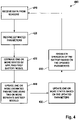
- FIG. 4 is a flowchart of a method 400 of managing the operation of a battery system using multiple state observers.
- the battery management system 180 receives data from one or more sensors 170 which measure one or more characteristics of one or more battery cells 102.
- the battery management system 180 receives one or more estimated parameters of the one or more battery cells 102.
- the battery management system 180 estimates one or more states of the one or more battery cells by applying a first battery model to account for physical parameters of a chemical composition of the one or more battery cells 102 based on the one or more measured characteristics of the battery 210 and the one or more estimated parameters of the battery 210.
- the battery management system 180 updates at least a portion of the one or more estimated parameters based at least in part on the estimation of the one or more states of the one or more battery cells 102 by applying two or more separate battery models to account for physical parameters of a chemical composition of the one or more battery cells 102.
- the battery management system 180 updates the one or more states of the one or more battery cells 102 based at least in part on the updated estimated parameters of the one or more parameters of the one or more battery cells 102.
- the battery management system 180 regulates one or more of charging or discharging of the battery based on the updated estimation of the one or more states of the one or more battery cells 102.
- the first battery model comprises an electrochemical-based battery model based on differential algebraic equations.
- estimating, by the battery management system, one or more states of the one or more battery cells by applying the electrochemical-based battery model that applies differential algebraic equations to account for physical parameters of a chemical composition of the one or more battery cell includes applying a Kalman filter, a Moving Horizon Estimation, or a Least Squares Estimation.
- the Kalman filter is selected from the list consisting of an extended Kalman filter, an unscented Kalman filter, a sigma point Kalman filter, and an iterated Kalman filter.
- the Least Squares Estimation is selected from the list consisting of a Reduced Least Squares Estimation, an Ordinary Least Squares Estimation, a Non-Linear Least Squares Estimation, and a Polynomial Least Squares Estimation.
- the first battery model includes an electrochemical-based Reduced-Order-Model of a Newman model.
- the two or more separate battery models includes an equivalent circuit model, a single particle model, or an electrochemical-based battery model based on differential algebraic equations.
- updating, by the battery management system, one or more states of the one or more battery cells applies a Kalman filter, a Moving Horizon Estimation, or a Least Squares Estimation.
- the one or more state of the one or more battery cells includes one or more of a state-of-charge or a state-of-health of the one or more battery cells.
- the one or more sensors are further configured to measure a voltage, and a current of the one or more battery cells, the method further comprising receiving, by the battery management system from the one or more sensors, a measurement of the voltage of the one or more battery cell and a temporally corresponding measurement of the current of the one or more battery cells.
- estimating by the battery management system, one or more states of the one or more battery cells by applying the first battery model is based at least in part on the updated parameters estimated by the battery management system by applying the two or more separate battery models.
- the two or more separate battery models include one or more of an equivalent circuit model, a single particle model, or an electrochemical-based battery model based on differential algebraic equations.
- the two or more separate battery models includes a second battery model and a third battery model and estimating by the battery management system, one or more parameters of the one or more battery cells by applying the two or more separate battery models includes estimating by the battery management system, one or more parameters of the one or more battery cells by applying the second battery model based on the parameters estimated by the battery management system by applying the third battery model.
- estimating by the battery management system, one or more states of the one or more battery cells by applying the first battery model is based on the parameters estimated by the battery management system by applying the second battery model and the parameters estimated by the battery management system by applying the third battery model.
- applying two or more separate battery models to account for physical parameters of a chemical composition of the one or more battery cells includes applying a Kalman filter, a Moving Horizon Estimation, or a Least Squares Estimation.
Landscapes
- Engineering & Computer Science (AREA)
- Power Engineering (AREA)
- Manufacturing & Machinery (AREA)
- Chemical & Material Sciences (AREA)
- Chemical Kinetics & Catalysis (AREA)
- Electrochemistry (AREA)
- General Chemical & Material Sciences (AREA)
- Sustainable Energy (AREA)
- Sustainable Development (AREA)
- Life Sciences & Earth Sciences (AREA)
- Transportation (AREA)
- Mechanical Engineering (AREA)
- Physics & Mathematics (AREA)
- General Physics & Mathematics (AREA)
- Microelectronics & Electronic Packaging (AREA)
- Secondary Cells (AREA)
- Charge And Discharge Circuits For Batteries Or The Like (AREA)
- Tests Of Electric Status Of Batteries (AREA)
Claims (17)
- Verfahren zum Verwalten eines Batteriesystems (210), wobei das Batteriesystem (210) enthälteine oder mehrere Batteriezellen,einen oder mehrere Sensoren (170), die an die eine oder mehreren Batteriezellen gekoppelt und ausgelegt sind zum Messen einer oder mehrerer Charakteristika der einen oder mehreren Batteriezellen, undein Batteriemanagementsystem (205), das an den einen oder die mehreren Sensoren (170) gekoppelt ist und einen Mikroprozessor, einen Speicher, einen Zustands- und Parameterschätzer (220) und ein Steuermodul (230) enthält,wobei das Verfahren umfasst:Empfangen, durch das Batteriemanagementsystem, einer oder mehrerer gemessener Charakteristika der einen oder mehreren Batteriezellen von dem einen oder den mehreren Sensoren;Empfangen, durch das Batteriemanagementsystem (205), eines oder mehrerer geschätzter Parameter der einen oder mehreren Batteriezellen;Schätzen, durch das Batteriemanagementsystem (205), eines oder mehrere Zustände der einen oder mehreren Batteriezellen durch Anwenden eines ersten Batteriemodells zum Berücksichtigen physischer Parameter einer chemischen Zusammensetzung der einen oder mehreren Batteriezellen auf Basis der einen oder mehreren gemessenen Charakteristika und des einen oder der mehreren geschätzten Parameter des einen oder der mehreren Batteriezellen;Aktualisieren, durch das Batteriemanagementsystem, mindestens eines Abschnitts der einen oder mehreren geschätzten Parameter mindestens teilweise auf Basis der Schätzung des einen oder der mehreren Zustände der einen oder mehreren Batteriezellen durch Anwenden von zwei oder mehr separaten Batteriemodellen zum Berücksichtigen physischer Parameter einer chemischen Zusammensetzung der einen oder mehreren Batteriezellen;Aktualisieren, durch das Batteriemanagementsystem, des einen oder der mehreren Zustände der einen oder mehreren Batteriezellen mindestens teilweise auf Basis der aktualisierten geschätzten Parameter des einen oder der mehreren Parameter der einen oder mehreren Batteriezellen; undSenden an das Steuermodul (230) einer Schätzung der Zustände und Parameter einer Batterie (210),Regeln, durch das Steuermodul (230) des Batteriemanagementsystems (205), eines oder mehrerer des Ladens oder Entladens der Batterie (210) auf Basis der aktualisierten Schätzung des einen oder der mehreren Zustände der einen oder mehreren Batteriezellen;wobei die zwei oder mehr separaten Batteriemodelle ein zweites Batteriemodell und ein drittes Batteriemodell beinhalten, undSchätzen durch das Batteriemanagementsystem eines oder mehrerer Parameter der einen oder mehreren Batteriezellen durch Anwenden der zwei oder mehr separaten Batteriemodelle beinhaltet das Schätzen durch das Batteriemanagementsystem, eines oder mehrerer Parameter der einen oder mehreren Batteriezellen durch Anwenden des zweiten Batteriemodells auf Basis der durch das Batteriemanagementsystem geschätzten Parameter durch Anwenden des dritten Batteriemodells,
undwobei das Schätzen durch das Batteriemanagementsystem von einem oder mehreren Zuständen der einen oder mehreren Batteriezellen durch Anwenden des ersten Batteriemodells auf durch das Batteriemanagementsystem geschätzten Parametern durch Anwenden des zweiten Batteriemodells und der Parameter, geschätzt durch das Batteriemanagementsystem, durch Anwenden des dritten Batteriemodells basiert. - Verfahren nach Anspruch 1, wobei das erste Batteriemodell ein elektrochemisch basiertes Batteriemodell auf Basis von differential-algebraischen Gleichungen umfasst.
- Verfahren nach Anspruch 2, wobei das Schätzen, durch das Batteriemanagementsystem, eines oder mehrerer Zustände der einen oder mehreren Batteriezellen durch Anwenden des elektrochemisch basierten Batteriemodells, das differential-algebraische Gleichungen anwendet zum Berücksichtigen von physischen Parametern einer chemischen Zusammensetzung der einen oder mehreren Batteriezellen, das Anwenden eines Kalman-Filters, einer Moving-Horizon-Schätzung oder einer Least-Squares-Schätzung beinhaltet.
- Verfahren nach Anspruch 3, wobei das Kalman-Filter ausgewählt ist aus der Gruppe bestehend aus einem Extended-Kalman-Filter, einem Unscented-Kalman-Filter, einem Sigma-Point-Kalman-Filter und einem iterierten Kalman-Filter.
- Verfahren nach Anspruch 3, wobei die Least-Squares-Schätzung ausgewählt ist aus der Gruppe bestehend aus einer Reduced-Least-Squares-Schätzung, einer Ordinary-Least-Squares-Schätzung, einer Non-Linear-Least-Squares-Schätzung und einer Polynomial-Least-Squares-Schätzung.
- Verfahren nach Anspruch 1, wobei das erste Batteriemodell ein elektrochemisch basiertes Reduced-Order-Model eines Newman-Modells beinhaltet.
- Verfahren nach Anspruch 1, wobei die zwei oder mehr separaten Batteriemodelle ein Äquivalenzschaltungsmodell, ein Einzelpartikelmodell oder ein elektrochemisch basiertes Batteriemodell auf Basis von differential-algebraischen Gleichungen beinhalten.
- Verfahren nach Anspruch 1, wobei das Aktualisieren, durch das Batteriemanagementsystem, des einen oder der mehreren Zustände der einen oder mehreren Batteriezellen das Anwenden eines Kalman-Filters, einer Moving-Horizon-Schätzung oder einer Least-Squares-Schätzung beinhaltet.
- Verfahren nach Anspruch 1, wobei der eine oder die mehreren Zustände der einen oder mehreren Batteriezellen eine oder mehrere eines Ladezustands oder eines Gesundheitszustands der einen oder mehreren Batteriezellen beinhalten.
- Verfahren nach Anspruch 1, wobei der eine oder die mehreren Sensoren weiter ausgelegt sind zum Messen einer Spannung und eines Stroms der einen oder mehreren Batteriezellen, wobei das Verfahren weiter das Empfangen durch das Batteriemanagementsystem von dem einen oder den mehreren Sensoren einer Messung der Spannung der einen oder mehreren Batteriezellen und einer zeitlich entsprechenden Messung des Stroms der einen oder mehreren Batteriezellen umfasst.
- Verfahren nach Anspruch 1, wobei das Schätzen durch das Batteriemanagementsystem, von einem oder mehreren Zuständen der einen oder mehreren Batteriezellen durch Anwenden des ersten Batteriemodells mindestens teilweise auf den durch das Batteriemanagementsystem geschätzten aktualisierten Parametern durch Anwenden der zwei oder mehr separaten Batteriemodelle basiert.
- Verfahren nach Anspruch 1, wobei die zwei oder mehr separaten Batteriemodelle eines oder mehrere eines Äquivalenzschaltungsmodells, eines Einzelpartikelmodells oder eines elektrochemisch basierten Batteriemodells auf Basis von differential-algebraischen Gleichungen beinhalten.
- Verfahren nach Anspruch 1, wobei das Anwenden von zwei oder mehr separaten Batteriemodellen zum Berücksichtigen von physischen Parametern einer chemischen Zusammensetzung der einen oder mehreren Batteriezellen das Anwenden eines Kalman-Filters, einer Moving-Horizon-Schätzung oder einer Least-Squares-Schätzung beinhaltet.
- Batteriemanagementsystem (205), das in der Lage ist zum Empfangen von Eingaben von einer Erfassungsschaltungsanordnung (170) bezüglich eines Zustands einer Batterie (210), umfassend:einen Zustands- und Parameterschätzer (220) und ein Steuermodul (230),einen Prozessor und einen Speicher, der Anweisungen speichert, die bei Ausführung durch den Prozessor bewirken, dass das Batteriemanagementsystem (205) verrichtet:Empfangen einer oder mehrerer gemessener Charakteristika einer oder mehrerer Batteriezellen von einem oder mehreren Sensoren,wobei die eine oder mehreren Batteriezellen und der eine oder die mehreren Sensoren Teil eines Batteriesystems sind;Empfangen eines oder mehrerer geschätzter Parameter der einen oder mehreren Batteriezellen;Schätzen, durch das Managementsystem (205), eines oder mehrerer Zustände der einen oder mehreren Batteriezellen durch Anwenden eines ersten Batteriemodells zum Berücksichtigen physischer Parameter einer chemischen Zusammensetzung der einen oder mehreren Batteriezellen auf Basis der einen oder mehreren gemessenen Charakteristika und des einen oder der mehreren geschätzten Parameter der einen oder mehreren Batteriezellen;Aktualisieren mindestens eines Abschnitts des einen oder der mehreren geschätzten Parameter mindestens teilweise auf Basis der Schätzung des einen oder der mehreren Zustände der einen oder mehreren Batteriezellen durch Anwenden von zwei oder mehr separaten Batteriemodellen zum Berücksichtigen physischer Parameter einer chemischen Zusammensetzung der einen oder mehreren Batteriezellen;Aktualisieren des einen oder der mehreren Zustände der einen oder mehreren Batteriezellen mindestens teilweise auf Basis der aktualisierten geschätzten Parameter des einen oder der mehreren Parameter der einen oder mehreren Batteriezellen;Senden an das Steuermodul (230) einer Schätzung der Zustände und Parameter einer Batterie (210), undRegeln, durch das Steuermodul (230), eines oder mehrerer des Ladens oder Entladens der Batterie auf Basis der aktualisierten Schätzung des einen oder der mehreren Zustände der einen oder mehreren Batteriezellen;wobei die zwei oder mehr separaten Batteriemodelle ein zweites Batteriemodell und ein drittes Batteriemodell beinhalten und eine Schätzung eines oder mehrerer Parameter der einen oder mehreren Batteriezellen durch Anwenden der zwei oder mehr separaten Batteriemodelle eine Schätzung eines oder mehrerer Parameter der einen oder mehreren Batteriezellen durch Anwenden des zweiten Batteriemodells auf Basis der durch das Anwenden des dritten Batteriemodells geschätzten Parameter beinhaltet, undwobei das Schätzen durch das Batteriemanagementsystem eines oder mehrerer Zustände der einen oder mehreren Batteriezellen durch Anwenden des ersten Batteriemodells auf den durch das Batteriemanagementsystem durch Anwenden des zweiten Batteriemodells geschätzten Parametern und den durch das Batteriemanagementsystem durch Anwenden des dritten Batteriemodells geschätzten Parametern basiert.
- Batteriemanagementsystem nach Anspruch 14, wobei das erste Batteriemodell ein elektrochemisch basiertes Batteriemodell auf Basis von differential-algebraischen Gleichungen umfasst; und wobei das Schätzen von einem oder mehreren Zuständen der einen oder mehreren Batteriezellen durch Anwenden des ersten Batteriemodells das Anwenden eines Kalman-Filters, einer Moving-Horizon-Schätzung oder einer Least-Squares-Schätzung beinhaltet.
- Batteriemanagementsystem nach Anspruch 14, wobei das Anwenden von zwei oder mehr separaten Batteriemodellen zum Berücksichtigen physischer Parameter einer chemischen Zusammensetzung der einen oder mehreren Batteriezellen das Anwenden eines Kalman-Filters, einer Moving-Horizon-Schätzung oder einer Least-Squares-Schätzung beinhaltet.
- Batteriemanagementsystem nach Anspruch 14, wobei das Schätzen eines oder mehrerer Zustände der einen oder mehreren Batteriezellen durch Anwenden des ersten Batteriemodells mindestens teilweise auf den durch das Batteriemanagementsystem durch Anwenden der zwei oder mehr separaten Batteriemodelle geschätzten aktualisierten Parameter basiert.
Applications Claiming Priority (2)
| Application Number | Priority Date | Filing Date | Title |
|---|---|---|---|
| US15/087,576 US9960625B2 (en) | 2016-03-31 | 2016-03-31 | Battery management system with multiple observers |
| PCT/EP2017/057358 WO2017167777A1 (en) | 2016-03-31 | 2017-03-29 | Battery management system with multiple observers |
Publications (2)
| Publication Number | Publication Date |
|---|---|
| EP3437152A1 EP3437152A1 (de) | 2019-02-06 |
| EP3437152B1 true EP3437152B1 (de) | 2022-08-24 |
Family
ID=58448545
Family Applications (1)
| Application Number | Title | Priority Date | Filing Date |
|---|---|---|---|
| EP17714203.1A Active EP3437152B1 (de) | 2016-03-31 | 2017-03-29 | Batteriemanagementsystem mit mehreren beobachtern |
Country Status (6)
| Country | Link |
|---|---|
| US (1) | US9960625B2 (de) |
| EP (1) | EP3437152B1 (de) |
| JP (1) | JP6738433B2 (de) |
| KR (1) | KR102150271B1 (de) |
| CN (1) | CN109153339B (de) |
| WO (1) | WO2017167777A1 (de) |
Cited By (1)
| Publication number | Priority date | Publication date | Assignee | Title |
|---|---|---|---|---|
| EP4636418A1 (de) * | 2024-04-15 | 2025-10-22 | Samsung Sdi Co., Ltd. | Verfahren und system zur schätzung des batteriezustands auf der basis einer zusammengesetzten wahrscheinlichkeitsvariablen |
Families Citing this family (41)
| Publication number | Priority date | Publication date | Assignee | Title |
|---|---|---|---|---|
| US10933893B2 (en) * | 2011-06-13 | 2021-03-02 | Transportation Ip Holdings, Llc | Vehicle electric supply system |
| US11072246B2 (en) * | 2015-03-11 | 2021-07-27 | University Of Washington | Electrochemical cell diagnostic systems and methods using second order and higher harmonic components |
| US10224579B2 (en) | 2015-12-31 | 2019-03-05 | Robert Bosch Gmbh | Evaluating capacity fade in dual insertion batteries using potential and temperature measurements |
| US10263447B2 (en) | 2016-01-29 | 2019-04-16 | Robert Bosch Gmbh | Secondary battery management system |
| US10243385B2 (en) | 2016-01-29 | 2019-03-26 | Robert Bosch Gmbh | Secondary battery management system |
| US10447054B2 (en) * | 2016-05-20 | 2019-10-15 | Robert Bosch Gmbh | Staircase charging |
| US11462929B2 (en) * | 2016-10-04 | 2022-10-04 | University Of Washington | Systems and methods for direct estimation of battery parameters using only charge/discharge curves |
| CN107390138B (zh) * | 2017-09-13 | 2019-08-27 | 山东大学 | 动力电池等效电路模型参数迭代辨识新方法 |
| KR102203245B1 (ko) | 2017-11-01 | 2021-01-13 | 주식회사 엘지화학 | 배터리 soc 추정 장치 및 방법 |
| JP7110223B2 (ja) * | 2017-11-02 | 2022-08-01 | 株式会社半導体エネルギー研究所 | 給電装置およびその動作方法 |
| AT521643B1 (de) * | 2018-08-31 | 2020-09-15 | Avl List Gmbh | Verfahren und Batteriemanagementsystem zum Ermitteln eines Gesundheitszustandes einer Sekundärbatterie |
| JP7203375B2 (ja) * | 2018-11-20 | 2023-01-13 | マレリ株式会社 | 充電率推定装置及び充電率推定方法 |
| US10471847B1 (en) * | 2018-12-14 | 2019-11-12 | Sf Motors, Inc. | Multi-particle reduced order Li-ion battery controller |
| DE102018221962A1 (de) * | 2018-12-17 | 2020-06-18 | Robert Bosch Gmbh | Verfahren zur Ermittlung mindestens einer Betriebskenngröße für den Betrieb eines elektrischen Energiespeichers sowie entsprechendes Computerprogramm, maschinenlesbares Speichermedium und Rechnervorrichtung |
| US11899069B2 (en) | 2018-12-21 | 2024-02-13 | Cummins Inc. | SOC and SOH co-estimation systems and methods for electric vehicles |
| KR102805834B1 (ko) * | 2019-01-11 | 2025-05-12 | 삼성전자주식회사 | 배터리 관리 방법 및 장치 |
| US11069926B1 (en) * | 2019-02-14 | 2021-07-20 | Vcritonc Alpha, Inc. | Controlling ongoing battery system usage via parametric linear approximation |
| KR102768452B1 (ko) * | 2019-04-05 | 2025-02-13 | 주식회사 엘지에너지솔루션 | 배터리 관리 장치 및 방법 |
| CN109991549B (zh) * | 2019-04-24 | 2021-02-09 | 东南大学 | 锂离子电池荷电状态及内阻的联合预测方法 |
| US12320854B2 (en) | 2019-06-12 | 2025-06-03 | Volvo Truck Corporation | Method for estimating a battery state |
| CN113853524B (zh) * | 2019-06-12 | 2022-08-26 | 沃尔沃卡车集团 | 用于估计电池状态的方法 |
| KR102871577B1 (ko) * | 2019-09-04 | 2025-10-17 | 삼성전자주식회사 | 배터리 충전 장치 및 방법 |
| US11515587B2 (en) * | 2019-10-10 | 2022-11-29 | Robert Bosch Gmbh | Physics-based control of battery temperature |
| KR102809114B1 (ko) * | 2019-10-25 | 2025-05-15 | 주식회사 엘지에너지솔루션 | 배터리의 soc를 추정하기 위한 장치, 그것을 포함하는 전기 차량 및 그 방법 |
| US11581585B2 (en) | 2020-03-10 | 2023-02-14 | Samsung Electronics Co., Ltd. | Methods and electronic devices for obtaining information on a battery pack |
| US20210349155A1 (en) | 2020-05-07 | 2021-11-11 | Zitara Technologies, Inc. | Battery analysis system and method |
| US20230305067A1 (en) * | 2020-08-28 | 2023-09-28 | Sedemac Mechatronics Pvt Ltd | A method for estimating state of charge and state of health of a battery and a system thereof |
| EP4016098B1 (de) | 2020-12-18 | 2025-04-16 | HOPPECKE Systemtechnik GmbH | Verfahren und vorrichtung zur robusten online-zustandsbestimmung von grossen batteriespeichersystemen |
| CN113866638A (zh) * | 2021-08-24 | 2021-12-31 | 陈九廷 | 一种电池参数推测方法、装置、设备及介质 |
| DE102021004618A1 (de) * | 2021-09-13 | 2021-11-25 | FEV Europe GmbH | Batteriemanagementsystem mit Leistungszustandsprädiktion für einen Akkumulator |
| EP4413386A4 (de) * | 2021-10-04 | 2025-08-06 | Zitara Tech Inc | System und verfahren zur batterieverwaltung |
| EP4420183A1 (de) * | 2021-10-19 | 2024-08-28 | Repsol, S.A. | Steuerung von li-ionen-batteriesystemen |
| CN114187970B (zh) * | 2021-11-30 | 2024-06-25 | 清华大学 | 一种基于电化学机理的锂离子电池内外特性仿真方法 |
| KR20240121276A (ko) | 2021-12-09 | 2024-08-08 | 지타라 테크놀로지스, 인크. | 배터리 상태를 결정하기 위한 시스템 및 방법 |
| CN115032556A (zh) * | 2022-06-27 | 2022-09-09 | 国网湖北省电力有限公司电力科学研究院 | 储能电池系统状态评估方法、装置、存储介质及电子设备 |
| EP4322043A1 (de) * | 2022-06-28 | 2024-02-14 | Tata Consultancy Services Limited | Verfahren und system zur identifizierung einer elektrolytzusammensetzung für optimale batterieleistung |
| US20240377982A1 (en) * | 2023-05-12 | 2024-11-14 | Micron Technology, Inc. | Multi-port communication of memory devices for vehicle management systems |
| KR102685360B1 (ko) * | 2023-06-19 | 2024-07-16 | 주식회사 프랭클린테크놀로지 | 배터리의 soh를 추정할 수 있는 전자 단말 장치 및 그 동작 방법 |
| WO2025072884A1 (en) * | 2023-09-27 | 2025-04-03 | Iontra Inc | Method and system for optimal charging process of lithium-ion batteries to mitigate cell degradation in real time |
| US12493078B2 (en) | 2023-10-11 | 2025-12-09 | Zitara Technologies, Inc. | System and method for degradation based battery control |
| DE102024114511A1 (de) * | 2024-05-23 | 2025-11-27 | Bayerische Motoren Werke Aktiengesellschaft | Verfahren zum Betreiben einer Energiespeichervorrichtung für ein elektrisch antreibbares Kraftfahrzeug, Computerprogramm und/oder computerlesbares Medium, Datenverarbeitungsvorrichtung, Kraftfahrzeug |
Family Cites Families (51)
| Publication number | Priority date | Publication date | Assignee | Title |
|---|---|---|---|---|
| US6805998B2 (en) * | 2000-03-24 | 2004-10-19 | Cymbet Corporation | Method and apparatus for integrated-battery devices |
| US6639385B2 (en) | 2001-08-07 | 2003-10-28 | General Motors Corporation | State of charge method and apparatus |
| US6892148B2 (en) | 2002-12-29 | 2005-05-10 | Texas Instruments Incorporated | Circuit and method for measurement of battery capacity fade |
| US8103485B2 (en) | 2004-11-11 | 2012-01-24 | Lg Chem, Ltd. | State and parameter estimation for an electrochemical cell |
| JP5058814B2 (ja) | 2004-11-29 | 2012-10-24 | エルジー・ケム・リミテッド | バッテリーの状態及びパラメーターの推定システム及び方法 |
| DE102005008511B4 (de) | 2005-02-24 | 2019-09-12 | Tdk Corporation | MEMS-Mikrofon |
| US7612532B2 (en) | 2005-06-21 | 2009-11-03 | Gm Global Technology Operations, Inc. | Method for controlling and monitoring using a state estimator having variable forgetting factors |
| KR100804698B1 (ko) | 2006-06-26 | 2008-02-18 | 삼성에스디아이 주식회사 | 배터리 soc 추정 방법 및 이를 이용하는 배터리 관리시스템 및 구동 방법 |
| JP4802945B2 (ja) | 2006-08-31 | 2011-10-26 | トヨタ自動車株式会社 | 二次電池の制御システムおよびそれを搭載したハイブリッド車両 |
| US7687678B2 (en) * | 2007-05-10 | 2010-03-30 | Cisco Technology, Inc. | Electronic bandage with flexible electronic controller |
| WO2008154956A1 (en) | 2007-06-20 | 2008-12-24 | Robert Bosch Gmbh | Charging method based on battery model |
| US8321164B2 (en) | 2008-09-25 | 2012-11-27 | GM Global Technology Operations LLC | Method and system for determining a state of charge of a battery based on a transient response |
| DE102009000782A1 (de) | 2008-12-04 | 2010-06-10 | Robert Bosch Gmbh | Verfahren zur Bestimmung des Ladezustands einer sekundären Interkalationszelle einer wiedereaufladbaren Batterie |
| US8116998B2 (en) | 2009-01-30 | 2012-02-14 | Bae Systems Controls, Inc. | Battery health assessment estimator |
| US8188715B2 (en) | 2009-05-15 | 2012-05-29 | Robert Bosch Gmbh | Method for determining extent and type of capacity fade |
| EP2273327A1 (de) | 2009-06-24 | 2011-01-12 | ABB Research Ltd. | Schätzen der Anfangszustände eines Systemmodells für die Steuerung eines industriellen Prozesses. |
| US8508191B2 (en) | 2009-07-29 | 2013-08-13 | The Regents Of The University Of Michigan | System for scheduling battery charge and discharge in a reconfigurable battery |
| FR2949565B1 (fr) | 2009-09-02 | 2012-12-21 | Inst Francais Du Petrole | Methode amelioree pour estimer les caracteristiques non mesurables d'un systeme electrochimique |
| US8467984B2 (en) | 2009-09-30 | 2013-06-18 | Battelle Energy Alliance, Llc | Systems, methods and computer readable media for estimating capacity loss in rechargeable electrochemical cells |
| US8346495B2 (en) | 2010-04-22 | 2013-01-01 | Battelle Energy Alliance, Llc | Systems, methods and computer-readable media to model kinetic performance of rechargeable electrochemical devices |
| FR2961351B1 (fr) | 2010-06-15 | 2012-07-20 | Saft Groupe Sa | Systeme de surveillance de l'etat d'une batterie |
| WO2011160258A1 (zh) | 2010-06-24 | 2011-12-29 | 松下电器产业株式会社 | 获取电池的劣化度的方法和系统 |
| US20120101753A1 (en) | 2010-10-20 | 2012-04-26 | Gm Global Technology Operations, Inc. | Adaptive slowly-varying current detection |
| US8724832B2 (en) | 2011-08-30 | 2014-05-13 | Qualcomm Mems Technologies, Inc. | Piezoelectric microphone fabricated on glass |
| EP2761317A2 (de) | 2011-09-30 | 2014-08-06 | KPIT Technologies Limited | System und verfahren zur bestimmung des ladezustands einer batterie |
| JP5798067B2 (ja) * | 2012-03-13 | 2015-10-21 | プライムアースEvエナジー株式会社 | 二次電池の状態推定装置 |
| US10230137B2 (en) | 2012-05-23 | 2019-03-12 | The Regents Of The University Of Michigan | Estimating core temperatures of battery cells in a battery pack |
| CN102680795B (zh) * | 2012-05-29 | 2014-11-05 | 哈尔滨工业大学 | 一种二次电池内阻的实时在线估计方法 |
| US9086462B2 (en) | 2012-08-15 | 2015-07-21 | GM Global Technology Operations LLC | Systems and methods for battery parameter estimation |
| WO2014050073A1 (ja) | 2012-09-26 | 2014-04-03 | 三洋電機株式会社 | 電池状態推定装置及び蓄電池システム |
| JP5944291B2 (ja) | 2012-10-05 | 2016-07-05 | カルソニックカンセイ株式会社 | バッテリのパラメータ等推定装置およびその推定方法 |
| KR101547006B1 (ko) | 2012-10-26 | 2015-08-24 | 주식회사 엘지화학 | 배터리 잔존 용량 추정 장치 및 방법 |
| JP6107142B2 (ja) * | 2013-01-08 | 2017-04-05 | トヨタ自動車株式会社 | 電源制御装置、電源モデル更新方法、プログラム、媒体 |
| JP6239241B2 (ja) | 2013-02-04 | 2017-11-29 | 株式会社東芝 | 電池性能推定方法および電池性能推定装置 |
| US10870360B2 (en) | 2013-02-12 | 2020-12-22 | Cps Technology Holdings Llc | Battery monitoring network |
| JP6407896B2 (ja) | 2013-02-21 | 2018-10-17 | ローベルト ボツシユ ゲゼルシヤフト ミツト ベシユレンクテル ハフツングRobert Bosch Gmbh | リチウムバッテリシステムの総容量および個々の電極の容量を推定するための方法およびシステム |
| US10664562B2 (en) | 2013-02-24 | 2020-05-26 | Fairchild Semiconductor Corporation and University of Connecticut | Battery state of charge tracking, equivalent circuit selection and benchmarking |
| US9575128B2 (en) | 2013-03-12 | 2017-02-21 | GM Global Technology Operations LLC | Battery state-of-charge estimation for hybrid and electric vehicles using extended kalman filter techniques |
| US9668032B2 (en) | 2013-05-16 | 2017-05-30 | Nergysense, Llc | Apparatus, system and method for a cloud based universal fleet monitoring system |
| US20140350877A1 (en) | 2013-05-25 | 2014-11-27 | North Carolina State University | Battery parameters, state of charge (soc), and state of health (soh) co-estimation |
| EP2816366A1 (de) | 2013-06-18 | 2014-12-24 | VITO NV (Vlaamse Instelling voor Technologisch Onderzoek NV) | Überwachung der in einer Batterie gespeicherten Ladung |
| US10393813B2 (en) | 2013-08-27 | 2019-08-27 | The Regents Of The University Of Michigan | On-board state of health monitoring of batteries using incremental capacity analysis |
| WO2015056963A1 (ko) | 2013-10-14 | 2015-04-23 | 주식회사 엘지화학 | 혼합 양극재를 포함하는 이차 전지의 상태 추정 장치 및 그 방법 |
| WO2015056964A1 (ko) | 2013-10-14 | 2015-04-23 | 주식회사 엘지화학 | 하이브리드 이차 전지의 상태 추정 장치 및 그 방법 |
| US20150226807A1 (en) | 2014-02-12 | 2015-08-13 | Seeo, Inc | Determination of nominal cell resistance for real-time estimation of state-of-charge in lithium batteries |
| KR102435833B1 (ko) * | 2014-02-28 | 2022-08-24 | 가부시키가이샤 한도오따이 에네루기 켄큐쇼 | 전자 기기 |
| US9446678B2 (en) | 2014-03-05 | 2016-09-20 | Ford Global Technologies, Llc | Battery model with robustness to cloud-specific communication issues |
| US9533597B2 (en) | 2014-03-05 | 2017-01-03 | Ford Global Technologies, Llc | Parameter identification offloading using cloud computing resources |
| JP2015178963A (ja) | 2014-03-18 | 2015-10-08 | 株式会社東芝 | 算出装置及び算出方法 |
| US9312722B2 (en) | 2014-05-09 | 2016-04-12 | Ford Global Technologies, Llc | System and method for battery power management |
| CN104267354B (zh) * | 2014-10-29 | 2017-03-01 | 哈尔滨工业大学 | 一种动力电池的峰值功率预测方法 |
-
2016
- 2016-03-31 US US15/087,576 patent/US9960625B2/en active Active
-
2017
- 2017-03-29 JP JP2018551453A patent/JP6738433B2/ja active Active
- 2017-03-29 CN CN201780033268.7A patent/CN109153339B/zh active Active
- 2017-03-29 EP EP17714203.1A patent/EP3437152B1/de active Active
- 2017-03-29 KR KR1020187031388A patent/KR102150271B1/ko active Active
- 2017-03-29 WO PCT/EP2017/057358 patent/WO2017167777A1/en not_active Ceased
Cited By (1)
| Publication number | Priority date | Publication date | Assignee | Title |
|---|---|---|---|---|
| EP4636418A1 (de) * | 2024-04-15 | 2025-10-22 | Samsung Sdi Co., Ltd. | Verfahren und system zur schätzung des batteriezustands auf der basis einer zusammengesetzten wahrscheinlichkeitsvariablen |
Also Published As
| Publication number | Publication date |
|---|---|
| JP2019512858A (ja) | 2019-05-16 |
| US9960625B2 (en) | 2018-05-01 |
| WO2017167777A1 (en) | 2017-10-05 |
| KR102150271B1 (ko) | 2020-09-01 |
| CN109153339A (zh) | 2019-01-04 |
| CN109153339B (zh) | 2022-04-29 |
| US20170288414A1 (en) | 2017-10-05 |
| KR20180128961A (ko) | 2018-12-04 |
| EP3437152A1 (de) | 2019-02-06 |
| JP6738433B2 (ja) | 2020-08-12 |
Similar Documents
| Publication | Publication Date | Title |
|---|---|---|
| EP3437152B1 (de) | Batteriemanagementsystem mit mehreren beobachtern | |
| US10985588B2 (en) | Secondary battery management system | |
| US10447054B2 (en) | Staircase charging | |
| US10686321B2 (en) | Secondary battery management | |
| US10243385B2 (en) | Secondary battery management system | |
| CN109716150B (zh) | 具有远程参数估计的二次电池管理系统 | |
| EP3475712B1 (de) | Verfahren und vorrichtung zur schätzung einer spannung einer batterie | |
| CN112005124A (zh) | 电池状态评估方法 |
Legal Events
| Date | Code | Title | Description |
|---|---|---|---|
| STAA | Information on the status of an ep patent application or granted ep patent |
Free format text: STATUS: UNKNOWN |
|
| STAA | Information on the status of an ep patent application or granted ep patent |
Free format text: STATUS: THE INTERNATIONAL PUBLICATION HAS BEEN MADE |
|
| PUAI | Public reference made under article 153(3) epc to a published international application that has entered the european phase |
Free format text: ORIGINAL CODE: 0009012 |
|
| STAA | Information on the status of an ep patent application or granted ep patent |
Free format text: STATUS: REQUEST FOR EXAMINATION WAS MADE |
|
| 17P | Request for examination filed |
Effective date: 20181031 |
|
| AK | Designated contracting states |
Kind code of ref document: A1 Designated state(s): AL AT BE BG CH CY CZ DE DK EE ES FI FR GB GR HR HU IE IS IT LI LT LU LV MC MK MT NL NO PL PT RO RS SE SI SK SM TR |
|
| AX | Request for extension of the european patent |
Extension state: BA ME |
|
| RIC1 | Information provided on ipc code assigned before grant |
Ipc: G01R 31/36 20190101ALI20171006BHEP Ipc: B60L 3/00 20190101ALI20171006BHEP Ipc: B60L 11/18 20060101ALI20171006BHEP Ipc: H01M 10/42 20060101ALI20171006BHEP Ipc: H01M 10/052 20100101AFI20171006BHEP |
|
| DAV | Request for validation of the european patent (deleted) | ||
| DAX | Request for extension of the european patent (deleted) | ||
| RAP1 | Party data changed (applicant data changed or rights of an application transferred) |
Owner name: ROBERT BOSCH GMBH |
|
| REG | Reference to a national code |
Ref country code: DE Ref legal event code: R079 Ref document number: 602017060966 Country of ref document: DE Free format text: PREVIOUS MAIN CLASS: H01M0010052000 Ipc: B60L0058160000 |
|
| GRAP | Despatch of communication of intention to grant a patent |
Free format text: ORIGINAL CODE: EPIDOSNIGR1 |
|
| STAA | Information on the status of an ep patent application or granted ep patent |
Free format text: STATUS: GRANT OF PATENT IS INTENDED |
|
| RIC1 | Information provided on ipc code assigned before grant |
Ipc: H01M 10/42 20060101ALI20220331BHEP Ipc: H01M 10/052 20100101ALI20220331BHEP Ipc: G01R 31/367 20190101ALI20220331BHEP Ipc: B60L 58/10 20190101ALI20220331BHEP Ipc: B60L 58/16 20190101AFI20220331BHEP |
|
| INTG | Intention to grant announced |
Effective date: 20220414 |
|
| GRAS | Grant fee paid |
Free format text: ORIGINAL CODE: EPIDOSNIGR3 |
|
| GRAA | (expected) grant |
Free format text: ORIGINAL CODE: 0009210 |
|
| STAA | Information on the status of an ep patent application or granted ep patent |
Free format text: STATUS: THE PATENT HAS BEEN GRANTED |
|
| AK | Designated contracting states |
Kind code of ref document: B1 Designated state(s): AL AT BE BG CH CY CZ DE DK EE ES FI FR GB GR HR HU IE IS IT LI LT LU LV MC MK MT NL NO PL PT RO RS SE SI SK SM TR |
|
| REG | Reference to a national code |
Ref country code: CH Ref legal event code: EP |
|
| REG | Reference to a national code |
Ref country code: DE Ref legal event code: R096 Ref document number: 602017060966 Country of ref document: DE |
|
| REG | Reference to a national code |
Ref country code: IE Ref legal event code: FG4D |
|
| REG | Reference to a national code |
Ref country code: AT Ref legal event code: REF Ref document number: 1513425 Country of ref document: AT Kind code of ref document: T Effective date: 20220915 |
|
| REG | Reference to a national code |
Ref country code: LT Ref legal event code: MG9D |
|
| REG | Reference to a national code |
Ref country code: NL Ref legal event code: MP Effective date: 20220824 |
|
| PG25 | Lapsed in a contracting state [announced via postgrant information from national office to epo] |
Ref country code: SE Free format text: LAPSE BECAUSE OF FAILURE TO SUBMIT A TRANSLATION OF THE DESCRIPTION OR TO PAY THE FEE WITHIN THE PRESCRIBED TIME-LIMIT Effective date: 20220824 Ref country code: RS Free format text: LAPSE BECAUSE OF FAILURE TO SUBMIT A TRANSLATION OF THE DESCRIPTION OR TO PAY THE FEE WITHIN THE PRESCRIBED TIME-LIMIT Effective date: 20220824 Ref country code: PT Free format text: LAPSE BECAUSE OF FAILURE TO SUBMIT A TRANSLATION OF THE DESCRIPTION OR TO PAY THE FEE WITHIN THE PRESCRIBED TIME-LIMIT Effective date: 20221226 Ref country code: NO Free format text: LAPSE BECAUSE OF FAILURE TO SUBMIT A TRANSLATION OF THE DESCRIPTION OR TO PAY THE FEE WITHIN THE PRESCRIBED TIME-LIMIT Effective date: 20221124 Ref country code: NL Free format text: LAPSE BECAUSE OF FAILURE TO SUBMIT A TRANSLATION OF THE DESCRIPTION OR TO PAY THE FEE WITHIN THE PRESCRIBED TIME-LIMIT Effective date: 20220824 Ref country code: LV Free format text: LAPSE BECAUSE OF FAILURE TO SUBMIT A TRANSLATION OF THE DESCRIPTION OR TO PAY THE FEE WITHIN THE PRESCRIBED TIME-LIMIT Effective date: 20220824 Ref country code: LT Free format text: LAPSE BECAUSE OF FAILURE TO SUBMIT A TRANSLATION OF THE DESCRIPTION OR TO PAY THE FEE WITHIN THE PRESCRIBED TIME-LIMIT Effective date: 20220824 Ref country code: FI Free format text: LAPSE BECAUSE OF FAILURE TO SUBMIT A TRANSLATION OF THE DESCRIPTION OR TO PAY THE FEE WITHIN THE PRESCRIBED TIME-LIMIT Effective date: 20220824 |
|
| REG | Reference to a national code |
Ref country code: AT Ref legal event code: MK05 Ref document number: 1513425 Country of ref document: AT Kind code of ref document: T Effective date: 20220824 |
|
| PG25 | Lapsed in a contracting state [announced via postgrant information from national office to epo] |
Ref country code: PL Free format text: LAPSE BECAUSE OF FAILURE TO SUBMIT A TRANSLATION OF THE DESCRIPTION OR TO PAY THE FEE WITHIN THE PRESCRIBED TIME-LIMIT Effective date: 20220824 Ref country code: IS Free format text: LAPSE BECAUSE OF FAILURE TO SUBMIT A TRANSLATION OF THE DESCRIPTION OR TO PAY THE FEE WITHIN THE PRESCRIBED TIME-LIMIT Effective date: 20221224 Ref country code: HR Free format text: LAPSE BECAUSE OF FAILURE TO SUBMIT A TRANSLATION OF THE DESCRIPTION OR TO PAY THE FEE WITHIN THE PRESCRIBED TIME-LIMIT Effective date: 20220824 Ref country code: GR Free format text: LAPSE BECAUSE OF FAILURE TO SUBMIT A TRANSLATION OF THE DESCRIPTION OR TO PAY THE FEE WITHIN THE PRESCRIBED TIME-LIMIT Effective date: 20221125 |
|
| PG25 | Lapsed in a contracting state [announced via postgrant information from national office to epo] |
Ref country code: SM Free format text: LAPSE BECAUSE OF FAILURE TO SUBMIT A TRANSLATION OF THE DESCRIPTION OR TO PAY THE FEE WITHIN THE PRESCRIBED TIME-LIMIT Effective date: 20220824 Ref country code: RO Free format text: LAPSE BECAUSE OF FAILURE TO SUBMIT A TRANSLATION OF THE DESCRIPTION OR TO PAY THE FEE WITHIN THE PRESCRIBED TIME-LIMIT Effective date: 20220824 Ref country code: ES Free format text: LAPSE BECAUSE OF FAILURE TO SUBMIT A TRANSLATION OF THE DESCRIPTION OR TO PAY THE FEE WITHIN THE PRESCRIBED TIME-LIMIT Effective date: 20220824 Ref country code: DK Free format text: LAPSE BECAUSE OF FAILURE TO SUBMIT A TRANSLATION OF THE DESCRIPTION OR TO PAY THE FEE WITHIN THE PRESCRIBED TIME-LIMIT Effective date: 20220824 Ref country code: CZ Free format text: LAPSE BECAUSE OF FAILURE TO SUBMIT A TRANSLATION OF THE DESCRIPTION OR TO PAY THE FEE WITHIN THE PRESCRIBED TIME-LIMIT Effective date: 20220824 Ref country code: AT Free format text: LAPSE BECAUSE OF FAILURE TO SUBMIT A TRANSLATION OF THE DESCRIPTION OR TO PAY THE FEE WITHIN THE PRESCRIBED TIME-LIMIT Effective date: 20220824 |
|
| REG | Reference to a national code |
Ref country code: DE Ref legal event code: R097 Ref document number: 602017060966 Country of ref document: DE |
|
| PG25 | Lapsed in a contracting state [announced via postgrant information from national office to epo] |
Ref country code: SK Free format text: LAPSE BECAUSE OF FAILURE TO SUBMIT A TRANSLATION OF THE DESCRIPTION OR TO PAY THE FEE WITHIN THE PRESCRIBED TIME-LIMIT Effective date: 20220824 Ref country code: EE Free format text: LAPSE BECAUSE OF FAILURE TO SUBMIT A TRANSLATION OF THE DESCRIPTION OR TO PAY THE FEE WITHIN THE PRESCRIBED TIME-LIMIT Effective date: 20220824 |
|
| PG25 | Lapsed in a contracting state [announced via postgrant information from national office to epo] |
Ref country code: AL Free format text: LAPSE BECAUSE OF FAILURE TO SUBMIT A TRANSLATION OF THE DESCRIPTION OR TO PAY THE FEE WITHIN THE PRESCRIBED TIME-LIMIT Effective date: 20220824 |
|
| PLBE | No opposition filed within time limit |
Free format text: ORIGINAL CODE: 0009261 |
|
| STAA | Information on the status of an ep patent application or granted ep patent |
Free format text: STATUS: NO OPPOSITION FILED WITHIN TIME LIMIT |
|
| 26N | No opposition filed |
Effective date: 20230525 |
|
| PG25 | Lapsed in a contracting state [announced via postgrant information from national office to epo] |
Ref country code: SI Free format text: LAPSE BECAUSE OF FAILURE TO SUBMIT A TRANSLATION OF THE DESCRIPTION OR TO PAY THE FEE WITHIN THE PRESCRIBED TIME-LIMIT Effective date: 20220824 |
|
| PG25 | Lapsed in a contracting state [announced via postgrant information from national office to epo] |
Ref country code: MC Free format text: LAPSE BECAUSE OF FAILURE TO SUBMIT A TRANSLATION OF THE DESCRIPTION OR TO PAY THE FEE WITHIN THE PRESCRIBED TIME-LIMIT Effective date: 20220824 |
|
| REG | Reference to a national code |
Ref country code: CH Ref legal event code: PL |
|
| GBPC | Gb: european patent ceased through non-payment of renewal fee |
Effective date: 20230329 |
|
| REG | Reference to a national code |
Ref country code: BE Ref legal event code: MM Effective date: 20230331 |
|
| PG25 | Lapsed in a contracting state [announced via postgrant information from national office to epo] |
Ref country code: LU Free format text: LAPSE BECAUSE OF NON-PAYMENT OF DUE FEES Effective date: 20230329 |
|
| REG | Reference to a national code |
Ref country code: IE Ref legal event code: MM4A |
|
| PG25 | Lapsed in a contracting state [announced via postgrant information from national office to epo] |
Ref country code: GB Free format text: LAPSE BECAUSE OF NON-PAYMENT OF DUE FEES Effective date: 20230329 |
|
| PG25 | Lapsed in a contracting state [announced via postgrant information from national office to epo] |
Ref country code: LI Free format text: LAPSE BECAUSE OF NON-PAYMENT OF DUE FEES Effective date: 20230331 Ref country code: IE Free format text: LAPSE BECAUSE OF NON-PAYMENT OF DUE FEES Effective date: 20230329 Ref country code: GB Free format text: LAPSE BECAUSE OF NON-PAYMENT OF DUE FEES Effective date: 20230329 Ref country code: CH Free format text: LAPSE BECAUSE OF NON-PAYMENT OF DUE FEES Effective date: 20230331 |
|
| PG25 | Lapsed in a contracting state [announced via postgrant information from national office to epo] |
Ref country code: BE Free format text: LAPSE BECAUSE OF NON-PAYMENT OF DUE FEES Effective date: 20230331 |
|
| PG25 | Lapsed in a contracting state [announced via postgrant information from national office to epo] |
Ref country code: BG Free format text: LAPSE BECAUSE OF FAILURE TO SUBMIT A TRANSLATION OF THE DESCRIPTION OR TO PAY THE FEE WITHIN THE PRESCRIBED TIME-LIMIT Effective date: 20220824 |
|
| PG25 | Lapsed in a contracting state [announced via postgrant information from national office to epo] |
Ref country code: BG Free format text: LAPSE BECAUSE OF FAILURE TO SUBMIT A TRANSLATION OF THE DESCRIPTION OR TO PAY THE FEE WITHIN THE PRESCRIBED TIME-LIMIT Effective date: 20220824 |
|
| PGFP | Annual fee paid to national office [announced via postgrant information from national office to epo] |
Ref country code: DE Payment date: 20250522 Year of fee payment: 9 |
|
| PGFP | Annual fee paid to national office [announced via postgrant information from national office to epo] |
Ref country code: IT Payment date: 20250331 Year of fee payment: 9 |
|
| PG25 | Lapsed in a contracting state [announced via postgrant information from national office to epo] |
Ref country code: CY Free format text: LAPSE BECAUSE OF FAILURE TO SUBMIT A TRANSLATION OF THE DESCRIPTION OR TO PAY THE FEE WITHIN THE PRESCRIBED TIME-LIMIT; INVALID AB INITIO Effective date: 20170329 |
|
| PG25 | Lapsed in a contracting state [announced via postgrant information from national office to epo] |
Ref country code: HU Free format text: LAPSE BECAUSE OF FAILURE TO SUBMIT A TRANSLATION OF THE DESCRIPTION OR TO PAY THE FEE WITHIN THE PRESCRIBED TIME-LIMIT; INVALID AB INITIO Effective date: 20170329 |
|
| PG25 | Lapsed in a contracting state [announced via postgrant information from national office to epo] |
Ref country code: TR Free format text: LAPSE BECAUSE OF FAILURE TO SUBMIT A TRANSLATION OF THE DESCRIPTION OR TO PAY THE FEE WITHIN THE PRESCRIBED TIME-LIMIT Effective date: 20220824 |
|
| PGFP | Annual fee paid to national office [announced via postgrant information from national office to epo] |
Ref country code: FR Payment date: 20260324 Year of fee payment: 10 |