EP3428612B1 - Schnelle probenvorbereitung für die analytische untersuchung mittels dispersiver energetisierter extraktion - Google Patents
Schnelle probenvorbereitung für die analytische untersuchung mittels dispersiver energetisierter extraktion Download PDFInfo
- Publication number
- EP3428612B1 EP3428612B1 EP18182634.8A EP18182634A EP3428612B1 EP 3428612 B1 EP3428612 B1 EP 3428612B1 EP 18182634 A EP18182634 A EP 18182634A EP 3428612 B1 EP3428612 B1 EP 3428612B1
- Authority
- EP
- European Patent Office
- Prior art keywords
- extraction
- solvent
- sample cup
- sample
- reaction chamber
- Prior art date
- Legal status (The legal status is an assumption and is not a legal conclusion. Google has not performed a legal analysis and makes no representation as to the accuracy of the status listed.)
- Active
Links
Images


Classifications
-
- G—PHYSICS
- G01—MEASURING; TESTING
- G01N—INVESTIGATING OR ANALYSING MATERIALS BY DETERMINING THEIR CHEMICAL OR PHYSICAL PROPERTIES
- G01N1/00—Sampling; Preparing specimens for investigation
- G01N1/28—Preparing specimens for investigation including physical details of (bio-)chemical methods covered elsewhere, e.g. G01N33/50, C12Q
- G01N1/34—Purifying; Cleaning
-
- G—PHYSICS
- G01—MEASURING; TESTING
- G01N—INVESTIGATING OR ANALYSING MATERIALS BY DETERMINING THEIR CHEMICAL OR PHYSICAL PROPERTIES
- G01N1/00—Sampling; Preparing specimens for investigation
- G01N1/02—Devices for withdrawing samples
- G01N1/10—Devices for withdrawing samples in the liquid or fluent state
-
- B—PERFORMING OPERATIONS; TRANSPORTING
- B01—PHYSICAL OR CHEMICAL PROCESSES OR APPARATUS IN GENERAL
- B01D—SEPARATION
- B01D11/00—Solvent extraction
- B01D11/02—Solvent extraction of solids
- B01D11/0261—Solvent extraction of solids comprising vibrating mechanisms, e.g. mechanical, acoustical
- B01D11/0265—Applying ultrasound
-
- B—PERFORMING OPERATIONS; TRANSPORTING
- B01—PHYSICAL OR CHEMICAL PROCESSES OR APPARATUS IN GENERAL
- B01D—SEPARATION
- B01D11/00—Solvent extraction
- B01D11/04—Solvent extraction of solutions which are liquid
-
- G—PHYSICS
- G01—MEASURING; TESTING
- G01N—INVESTIGATING OR ANALYSING MATERIALS BY DETERMINING THEIR CHEMICAL OR PHYSICAL PROPERTIES
- G01N1/00—Sampling; Preparing specimens for investigation
- G01N1/28—Preparing specimens for investigation including physical details of (bio-)chemical methods covered elsewhere, e.g. G01N33/50, C12Q
- G01N1/40—Concentrating samples
- G01N1/4022—Concentrating samples by thermal techniques; Phase changes
-
- G—PHYSICS
- G01—MEASURING; TESTING
- G01N—INVESTIGATING OR ANALYSING MATERIALS BY DETERMINING THEIR CHEMICAL OR PHYSICAL PROPERTIES
- G01N1/00—Sampling; Preparing specimens for investigation
- G01N1/28—Preparing specimens for investigation including physical details of (bio-)chemical methods covered elsewhere, e.g. G01N33/50, C12Q
- G01N1/40—Concentrating samples
- G01N1/4055—Concentrating samples by solubility techniques
-
- G—PHYSICS
- G01—MEASURING; TESTING
- G01N—INVESTIGATING OR ANALYSING MATERIALS BY DETERMINING THEIR CHEMICAL OR PHYSICAL PROPERTIES
- G01N30/00—Investigating or analysing materials by separation into components using adsorption, absorption or similar phenomena or using ion-exchange, e.g. chromatography or field flow fractionation
- G01N30/02—Column chromatography
- G01N30/04—Preparation or injection of sample to be analysed
- G01N30/06—Preparation
-
- B—PERFORMING OPERATIONS; TRANSPORTING
- B01—PHYSICAL OR CHEMICAL PROCESSES OR APPARATUS IN GENERAL
- B01D—SEPARATION
- B01D11/00—Solvent extraction
- B01D11/02—Solvent extraction of solids
- B01D11/0215—Solid material in other stationary receptacles
- B01D11/0253—Fluidised bed of solid materials
- B01D11/0257—Fluidised bed of solid materials using mixing mechanisms, e.g. stirrers, jets
-
- B—PERFORMING OPERATIONS; TRANSPORTING
- B01—PHYSICAL OR CHEMICAL PROCESSES OR APPARATUS IN GENERAL
- B01D—SEPARATION
- B01D11/00—Solvent extraction
- B01D11/04—Solvent extraction of solutions which are liquid
- B01D11/0419—Solvent extraction of solutions which are liquid in combination with an electric or magnetic field or with vibrations
- B01D11/0423—Applying ultrasound
-
- G—PHYSICS
- G01—MEASURING; TESTING
- G01N—INVESTIGATING OR ANALYSING MATERIALS BY DETERMINING THEIR CHEMICAL OR PHYSICAL PROPERTIES
- G01N1/00—Sampling; Preparing specimens for investigation
- G01N1/28—Preparing specimens for investigation including physical details of (bio-)chemical methods covered elsewhere, e.g. G01N33/50, C12Q
- G01N1/44—Sample treatment involving radiation, e.g. heat
-
- G—PHYSICS
- G01—MEASURING; TESTING
- G01N—INVESTIGATING OR ANALYSING MATERIALS BY DETERMINING THEIR CHEMICAL OR PHYSICAL PROPERTIES
- G01N1/00—Sampling; Preparing specimens for investigation
- G01N1/02—Devices for withdrawing samples
- G01N1/10—Devices for withdrawing samples in the liquid or fluent state
- G01N2001/1031—Sampling from special places
- G01N2001/105—Sampling from special places from high-pressure reactors or lines
-
- G—PHYSICS
- G01—MEASURING; TESTING
- G01N—INVESTIGATING OR ANALYSING MATERIALS BY DETERMINING THEIR CHEMICAL OR PHYSICAL PROPERTIES
- G01N1/00—Sampling; Preparing specimens for investigation
- G01N1/28—Preparing specimens for investigation including physical details of (bio-)chemical methods covered elsewhere, e.g. G01N33/50, C12Q
- G01N1/40—Concentrating samples
- G01N1/4055—Concentrating samples by solubility techniques
- G01N2001/4061—Solvent extraction
-
- G—PHYSICS
- G01—MEASURING; TESTING
- G01N—INVESTIGATING OR ANALYSING MATERIALS BY DETERMINING THEIR CHEMICAL OR PHYSICAL PROPERTIES
- G01N30/00—Investigating or analysing materials by separation into components using adsorption, absorption or similar phenomena or using ion-exchange, e.g. chromatography or field flow fractionation
- G01N30/02—Column chromatography
- G01N30/04—Preparation or injection of sample to be analysed
- G01N30/06—Preparation
- G01N2030/062—Preparation extracting sample from raw material
Definitions
- the present invention relates to analytical chemistry, and in particular relates to sample preparation for molecular analysis.
- a sample of the product In order to carry out molecular analysis (the task of identifying one or more compounds in a sample) of any product, a sample of the product must be in such a form that it can be easily analyzed by chromatography, spectroscopy, mass spectroscopy and/or nuclear magnetic resonance instrumentation
- sample preparation some intermediate steps, generally referred to as “sample preparation", must be carried out to isolate the compounds of interest from the sample matrix in which they might be found and prepare them for analysis by instrumentation.
- sample preparation i.e., drawing one or more compounds of interest from a sample by mixing the sample with a solvent into which the desired compound(s) will be extracted from the sample so that it can be measured by an analytical technique.
- sample preparation in the form of extraction has been carried out by the well-understood Soxhlet method which was invented in the 19th century.
- Soxhlet technique a single portion of solvent circulates repeatedly through a sample matrix until extraction is complete.
- Soxhlet method has an advantage, it allows an extraction to continue on its own accord for as long as the boiling flask is heated and the condenser is cold.
- ultra-sonication i.e., the irradiation of a liquid sample with ultrasonic (>20 kHz) waves resulting in agitation.
- ultra-sonication has an advantage of speeding up the extraction process the disadvantages are that it is a labor intensive, manual process and uses large amounts of solvents.
- MAE microwave-assisted extraction
- MAE uses microwave energy to heat solvents in contact with a sample in order to partition analytes from the sample matrix into the solvent.
- the main advantage of MAE is the ability to rapidly heat the sample solvent mixture.
- the extraction can be performed at elevated temperatures that accelerate the extraction of the compounds of interest from the sample matrix.
- MAE accelerates the extraction process, but has its disadvantages as well.
- a polar solvent is needed to provide dipole rotation and ionic conduction through reversals of dipoles and displacement of charged ions present in the solute and the solvent, limiting non-polar solvent use.
- MAE uses expensive, highpressure vessels that do not provide a means of filtering the extract, and they must be cooled before pressure can be released.
- PFE Pressureurized Fluid Extraction
- ASE Accelerated Solvent Extraction
- PFE was initially used for environmental contaminants (EPA Method 3545, herbicides, pesticides, hydrocarbons) in soil, sediments and animal tissues but has expanded to use in foods, pharmaceutical products and other biological samples.
- PFE provides an efficient extraction, but still has not overcome the major bottlenecks associated with the many steps necessary to prepare a sample for analysis.
- PFE utilizes multiple-component cells and many steps.
- the cells are tightly packed with the sample and other packing material to eliminate any void areas in the cell, enhance separation, and avoid channeling.
- Preparing a cell for analysis can typically take 15 minutes.
- the cells are pre-pressurized at pressures up to 1500 psi (3.45 MPa) and heated up to 200°C prior to adding the solvent. Extraction is based on chromatographic principles to force the hot solvent through the column. Cycle times can take up to 20 minutes and the requirements of high pressure lead to secondary disadvantages with respect to cost and maintenance.
- extraction-based sample preparation continues to be recognized as a major bottleneck in analytical techniques.
- the invention relates to an extraction method for preparing analytes for molecular analysis.
- the invention provides an extraction method for preparing analytes for molecular analysis according to claim 1.
- the method of the invention may further comprise pre-pressurizing the reaction chamber to about 25 psi (0.17 MPa) between the steps of placing the extraction sample in the sample cup and of heating the liquid extraction solvent in the reaction chamber.
- the step of adding liquid extraction solvent into the sample cup is optionally carried out from positions selected from the group consisting of the top of the sample cup, the bottom of the sample cup, and both the top and bottom of the sample cup.
- An extraction method of the invention may further comprise driving the liquid extraction solvent into a cooling coil in liquid communication with the outlet valve in the reaction chamber, and in which the cooling coil has a length sufficient to reduce the temperature of common extraction solvents for a time sufficient to reduce the temperature of the extraction solvent to below the solvent's boiling point at ambient pressure in the cooling coil.
- step of driving the solvent comprises:
- An extraction method of the invention may further comprise agitating, and pressurizing the extraction solvent and the sample matrix in the sample cup.
- the agitating step suitably comprises bubbling gas that is inert to the sample matrix through the bottom of the sample cup, and/or wherein the agitating step is carried out prior to the heating and pressurization steps.
- the open filtered end of the sample cup supports a filter or filter media and allows solvent extract to drain from the sample cup.
- an extraction method of the invention further comprises applying ultrasonic agitation during the pressurized heating step.
- a method of the invention may further comprise conductively heating the reaction chamber to a temperature of between 90°C and 180°C and generating resulting pressures of between 50 (0.34 MPa) and 250 psi (1.72 MPa).
- the extraction solvent may be selected from the group consisting of water, weak acids, weak bases, ethyl acetate, methyl tertiary-butyl ether ("MTBE"), methylene chloride, hexane, acetone, hexane 2-propanol, cyclohexane, acetonitrile, methanol and mixtures thereof.
- MTBE methyl tertiary-butyl ether
- An exemplary extraction method for preparing samples for analytical analysis comprises the steps of:
- the exemplary extraction method may further comprise:
- the sample cup may have an open mouth at one end and a partially open floor at the opposite end, and the step of dispensing solvent into the sample cup may be carried out from positions selected from the group consisting of the top of the sample cup, the bottom of the sample cup, and top and bottom of the sample cup.
- the partially open floor optionally supports a filter or filter media and allows solvent extract to drain from the sample cup.
- the exemplary extraction method may further comprise bubbling gas that is inert to the sample matrix through the bottom of said sample cup.
- the exemplary extraction method may further comprise applying ultrasonic agitation during the pressurized heating step.
- the exemplary extraction method may further comprise conductively heating the sample chamber to a temperature of between about 90°C and 180°C and generating resulting pressures of between about 50 (0.34 MPa) and 250 psi (1.72 MPa).
- the extraction solvent is optionally selected from the group consisting of water, weak acids, weak bases, ethyl acetate, methyl tertiary-butyl ether ("MTBE"), methylene chloride, hexane, acetone, hexane 2-propanol, cyclohexane, acetonitrile, methanol and mixtures thereof.
- MTBE methyl tertiary-butyl ether
- the release of the solvent extract to atmospheric pressure drives the solvent extract into the cooling coil.
- a further exemplary extraction method comprises the steps of:
- the step of heating the solvent outside of the sample cup can comprise heating the reaction chamber.
- the sample cup may have a mouth opposite from its open filtered end; and the exemplary extraction method optionally further comprises: sealing the sample cup between a sealing cover at the vessel mouth and an outlet valve in the reaction chamber so that the heating step increases the vapor pressure of the extraction solvent above the solvent's vapor pressure at ambient temperature and pressure.
- the further exemplary extraction method can further comprise pre-pressurizing the reaction chamber to about 25 psi (0.17 MPa) between the steps of placing the extraction sample in the sample cup and of heating the solvent in the reaction chamber.
- the step of adding extraction solvent into the sample cup may be carried out from positions selected from the group consisting of the top of the sample cup, the bottom of the sample cup, and both the top and bottom of the sample cup.
- the further exemplary extraction method may further comprise releasing the outlet valve on the reaction chamber so that the vapor pressure in the reaction chamber drives the extraction solvent out of the sample cup through the open filtered end and through the outlet valve.
- the further exemplary extraction method optionally further comprises driving the solvent into a cooling coil in liquid communication with the outlet valve in the reaction chamber, and in which the cooling coil has a length sufficient to reduce the temperature of common extraction solvents for a time sufficient to reduce the temperature of the extraction solvent to below the solvent's boiling point at ambient pressure in the cooling coil.
- the step of driving the solvent can comprise:
- the further exemplary extraction method optionally further comprises agitating, and pressurizing the extraction solvent and the sample matrix in the sample cup.
- the open filtered end of the sample cup optionally supports a filter or filter media and allows solvent extract to drain from the sample cup.
- the agitating step may comprise bubbling gas that is inert to the sample matrix through the bottom of the sample cup.
- the agitating step may be carried out prior to the heating and pressurization steps.
- the further exemplary extraction method may further comprise applying ultrasonic agitation during the pressurized heating step.
- the further exemplary extraction method may further comprise conductively heating the reaction chamber to a temperature of between about 90°C and 180°C and generating resulting pressures of between about 50 (0.34 MPa) and 250 psi (1.72 MPa).
- the extraction solvent may be selected from the group consisting of water, weak acids, weak bases, ethyl acetate, methyl tertiary-butyl ether ("MTBE"), methylene chloride, hexane, acetone, hexane 2-propanol, cyclohexane, acetonitrile, methanol and mixtures thereof.
- MTBE methyl tertiary-butyl ether
- the sample cup has an open mouth at one end and a partially open floor at the opposite end, and the step of placing solvent into the sample cup is carried out from positions selected from the group consisting of the top of the sample cup, the bottom of the sample cup, and both the top and bottom of the sample cup.
- the partially open floor supports a filter or filter media and allows solvent extract to drain from the sample cup.
- the yet further exemplary extraction method may further comprise dispersing the solvent and the sample matrix by bubbling gas that is inert to the sample matrix through the bottom of the sample cup.
- the dispersing step is carried out prior to the heating and pressurization of the pressure chamber.
- the yet further exemplary extraction method may further comprise applying ultrasonic agitation during the pressurized heating step.
- the yet further exemplary extraction method may further comprise conductively heating the sample chamber to a temperature of between about 90°C and 180°C and generating resulting pressures of between about 50 (0.34 MPa) and 250 psi (1.72 MPa).
- the extraction solvent is selected from the group consisting of water, weak acids, weak bases, ethyl acetate, methyl tertiary-butyl ether ("MTBE"), methylene chloride, hexane, acetone, hexane 2-propanol, cyclohexane, acetonitrile, methanol and mixtures thereof.
- MTBE methyl tertiary-butyl ether
- An example not part of the invention, shows a heated pressurized agitated mixture of an extraction solvent and a sample matrix containing an analyte in a heat conductive sample cup that is inside of a reaction chamber that also contains heated extraction solvent outside of said sample cup.
- An exemplary extraction method for preparing analytes for molecular analysis comprises dispersing an extraction solvent and a sample matrix containing an analyte after the extraction solvent and the sample matrix analyte have been placed into a heat conductive sample cup and, heated, and pressurized.
- solvent is used in its well understood chemical sense; e.g., "a substance capable of dissolving another substance (solute) to form a uniformly dispersed mixture (solution) at the molecular or ionic size level.”
- organic is used in its well understood sense to "embrace all compounds of carbon” other than certain small molecule combinations of carbon with oxygen, sulfur, and metals, and in some cases halogens. See, Lewis, HAWLEY'S CONDENSED CHEMICAL DICTIONARY, 15th Edition, 2007, John Wiley & Sons
- sample matrix is the material to be tested for the presence and optionally the amount of analyte.
- analyte is the molecular compound of interest.
- analyte can include samples with a plurality of analytes within a single sample.
- solvent extract is the solution of analyte in a solvent following extraction.
- sample cup is the container for the sample matrix and the solvent.
- the "collection vessel” is the container that collects the solvent extract following cooling.
- the invention is an extraction method for preparing samples for molecular analysis.
- an extraction solvent and a sample matrix are placed into a sample cup, and the sample cup is positioned in a pressure resistant heating chamber.
- Typical (but not limiting) sample matrices include food, food packaging, and soil.
- samples should be extracted using a solvent system that gives optimum reproducible recovery of the analytes of interest from the sample matrix, at the concentrations of interest.
- the choice of extraction solvent depends on the analytes of interest and no single solvent is universally applicable to all analytes.
- Typical (but not limiting) solid-liquid extraction solvents for molecular analysis include water, weak acids, weak bases, acetone, hexane 2-propanol, cyclohexane, dichloromethane, acetonitrile, methanol, and mixtures thereof.
- the step of heating the reaction chamber to in turn heat the sample cup creates a sufficient pre-equilibrium thermal gradient to assist in mixing and agitating the solvent and the sample.
- the reaction chamber is pre-pressurized (about 25 psi (0.17 MPa) has been found to be sufficient) to enhance the extraction and potentially enhance the pre-equilibrium thermal gradient and its potential benefits.
- the sample matrix can also be described as loosely packed in the sample cup.
- loose is likewise relative, it is used here in its normal sense as being free from anything that binds or restrains and free or released from fastening or attachment ( Urdang, THE RANDOM HOUSE COLLEGE DICTIONARY, Random House Inc. (1972 )). Because the sample matrix is loose, the addition of solvent from the top, the bottom, or both, helps disperse the sample matrix in the solvent.
- the extraction solvent and the sample matrix can also be mixed in the cup in the chamber using an agitating flow of a gas that is otherwise inert to the sample matrix, the analyte or the solvent.
- a gas that is otherwise inert to the sample matrix, the analyte or the solvent.
- the gas can accordingly be selected based on the known parameters, and that in some cases compressed air will be appropriate while in others nitrogen or hydrogen may be best (with care based upon hydrogen's flammable characteristics). In other cases one of the noble gases (e.g., helium, argon) may be best.
- the sample matrix and the solvent are then heated in the sample cup in the reaction chamber to a temperature at which evaporated solvent generates an above-atmospheric pressure.
- a temperature of 90°C-180°C is exemplary (the US Environmental Protection Agency suggests 120°C for soil), at which temperature typical organic extraction solvents generate a corresponding pressure of 50-250 pounds per square inch (psi) (0.34 -1.72 MPa).
- psi pounds per square inch
- the time to reach this temperature is about 90 seconds, at which point extraction is substantially complete (it being understood that extraction is an equilibrium process).
- the pressure generated by the vapor from the solvent is then used to drain the solvent extract from the sample cup into a cooling coil that has a length sufficient to reduce the temperature of the extract to near ambient (e.g., 25°C) while the solvent extract is in the coil.
- the solvent extract is then collected from the coil, typically in a collection vessel.
- metal tubing with a length of about 10 feet (3.048 metres) tends to provide a dwell time of about 30 seconds, which is sufficient to cool the solvent extract to ambient or near-ambient temperature.
- the coil is typically used for space saving purposes, but a coil shape is optional rather than mandatory.
- the sample matrix and the extraction solvent can be added in amounts that are typical in this field.
- a solid matrix is collected in a manner that provides between about 5 or 10 grams (g) of the sample matrix of interest.
- the amount of extraction solvent will be proportional; typically about 30-100 milliliters (mL).
- Figure 1 is a schematic diagram of the basic elements of an instrument to carry out the method steps of the present invention.
- Figure 1 illustrates a number of the features of the method in the context of a schematic diagram.
- Figure 1 illustrates a heat-conductive, pressure-resistant sample cup 10 surrounded by a pressure resistant reaction chamber 12.
- a typical sample cup is a cylinder form of a heat-conductive material. Because the sample cup 10 is inside the reaction chamber 12, it experiences little or no differential pressure, and thus its mass can be minimized to encourage thermal transfer.
- an aluminum cylinder about 3.5 inches (8.9 cm) long and about 1.25 inches (3.2 cm) in diameter, with a wall thickness of about 0.1 inches (2.54 mm) has been found to be appropriate.
- the terms "heat conductive” or “thermally conductive” are used herein in their well-understood sense to represent materials through which heat passes relatively quickly. The opposite is, of course, the term “insulating,” which is likewise well-understood as describing materials through which heat passes more slowly.
- An appropriate sample cup is a cylinder that has an open mouth at one end and a partially open floor at or near the opposite end. Small changes in shape or position (i.e. of the cup, its mouth, or the open end) are, of course, within the expected scope of the invention.
- the partially open floor supports a filter or filter media and allow solvent extract to drain from the sample cup. The solvent can be dispensed into the sample cup from the top of the sample cup, through the bottom of the sample cup, or both.
- the combination of extraction solvent and the sample matrix that contains an analyte (schematically diagrammed by the horizontal lines 11) are maintained in the sample cup 10 using the one open and filtered end 13.
- the filter medium is designated at 14.
- Figure 1 also shows that additional extraction solvent optionally can be added to the reaction chamber 12 outside of the sample cup 10 as indicated by the dotted line 15 to jacket the sample cup 10.
- a closure 46 seals the sample cup 10 in the reaction vessel 12.
- a heater 16 heats the solvent 15 in the reaction chamber 12 outside of the sample cup 10 to in turn heat the sample cup 10, the sample matrix 11 and the extraction solvent until the temperature generates an above-atmospheric pressure that together with the increased temperature drives the analyte substantially from the sample matrix into the extraction solvent.
- the solvent extract is then released by opening the reaction chamber to atmospheric pressure at the open end (e. g., using valve 21) so that the solvent extract can travel to a cooling tube 17 which has a length sufficient to cool the solvent extract to ambient or near-ambient temperatures so that the cooled solvent extract can be collected ready for analysis, for example in a collection vessel 20.
- the sample matrix is placed in the sample cup 10 which is then placed in the thermally conductive reaction chamber 12.
- a solvent from a supply 22 is delivered to the sample cup 10 (and thus to the sample matrix) through the valve 33, the associated passageways 24 and 25, and the delivery head 26.
- a liquid matrix sample can be delivered from a syringe pump 27, 30 and the valve 33. Additionally, solvent can be added to the bottom of the reaction chamber 12 using the valve 33, the line 28, the valve 21, and the line 31.
- Figure 1 also illustrates that the gas agitation is carried out by delivering an inert gas from a supply 37 to a position at or near the bottom of the sample cup using the passageways 40 and 41, as controlled by the valve 42. If a secondary agitation is required, it can be carried out with a device such as the ultrasonic generator 43 which would typically be a piezoelectric transducer.
- the draining step takes place when the valve 21 is opened to atmospheric pressure so that the pressurized solvent vapor in the thermally conductive chamber 12 pushes the liquid solvent extract out through the passageway 31, then through the valve 21, and then cooling coil 17.
- the cooling coil is connected to a collection vessel 20 by the collection tube 32.
- solvent can flow from the solvent supply 22 to the rotary valve 30 through the line 24.
- the line 47 connects the rotary valve 30 with the auxiliary valve 33.
- the line 28 connects the auxiliary valve 33 to the gas valve 21 which in turn can use the line 31 to deliver solvent to the bottom of the reaction chamber 12.
- the line 48 connects the rotary valve 30 to the syringe 40 so that liquids from the supply 22 can be metered into the syringe 40 from the supply 22 and thereafter from the syringe 40 into the sample cup and through the lines 35 to 25 and the dispenser head 26.
- the dotted line 15 represents the position of solvent between the sample cup 10 and the reaction chamber 12 when the solvent is used to jacket the sample cup 10.
- the gas supply 37 can supply extra pressure to the headspace through the lines 50 and 47 which, along with the gas flow to several other items, is controlled by the valve 32.
- the line 51 joins the valve 32 to the vent 35.
- the line 52 connects the valve 32 to the pressure gauge 23 and the pressure gauge 23 is wired to the processor 38 through the communication line 53.
- the processor 38 is also connected to the thermocouple 44 using the communication line 54 so that monitored combinations of temperature and vapor pressure for various sample extractions can be used to develop helpful standardized information.
- the gas supply at 37 is also connected to the valve 21 through an appropriate line or tube 184.
- a pressure head seal 46 seals the sample cup in the reaction chamber.
- Line 56 drains solvent from valve 21 to the coil 17, and line 32 drains the coil 17 to the collection vessel 20.
- the steps include placing an extraction solvent and the sample matrix containing the analyte into a sample cup. Thereafter, the sample matrix and the extraction solvent are agitated, heated, and pressurized in the sample cup to extract the analyte from the heated sample matrix and into the heated extraction solvent. The pressurized heated extraction solvent extract is then drained at atmospheric pressure from the sample cup and through the cooling coil until the drained extraction solvent extract approaches or reaches ambient temperature. The cooled extraction solvent extract is then collected for analysis.
- the headspace in the sample cup 10 above the solvent 11 can be pressurized from the gas source 37 using the valve 32 and the line 47.
- a second agitation step can be carried out before, or concurrently with, the heating and pressurizing steps, and typically using ultrasonic vibration.
- agitation can be carried out by feeding a gas that is inert to the solvent and the analyte.
- the step of draining the release solvent includes draining the heated release solvent in a coil that has a length sufficient to cool the drained release solvent to approach or reaching ambient temperature while the release solvent is in the coil. At that point, the release solvent containing the analyte is at a temperature ready for molecular analysis in conventional equipment.
- the method of the invention is appropriate for preparing any analyte that is stable at the expected temperatures and pressures.
- Solvents can be selected from the group consisting of water, weak acids, weak bases, ethyl acetate, methyl tertiary-butyl ether ("MTBE"), methylene chloride, hexane, acetone, hexane 2-propanol, cyclohexane, acetonitrile, methanol and mixtures thereof, but are not limited to that particular group.
- MTBE methyl tertiary-butyl ether
- An ultrasonic second agitation step can be used during the pressurized heating step.
- the release of the solvent extract to atmospheric pressure is used to drive the solvent extract from the sample cup and into the cooling coil.
- the representative heating temperatures are 90-180°C and representative resulting pressures are between about 50 (0.34 MPa) and 250 psi (1.72 MPa).
- An example not part of the invention, shows the heated pressurized agitated mixture of an extraction solvent and a sample matrix containing an analyte in a sample cup.
- Example 1-Table 1 Environmental Application; Extraction of BNA's from soil Method Sample Size (g) Solvent (1:1 v/v) Volume (mL) Time (minutes) Temperature (°C) Pressure (psi)/(MP a) Soxhlet 10 Hexane/ Acetone 150 1440 100 N/A Example 1 5 Hexane/ Acetone 30 5 100 ⁇ 350/2.41 ASE 5 Dichlorome thane/ Acetone 50 26 100 1500/10.3 4
- Table 1 plots data from the extraction of bases neutrals and acids ("BNA's”) from soil comparing Soxhlet (EPA 3540C), the current invention (Example 1), and accelerated solvent extraction (ASE; EPA 3545).
- BNA's bases neutrals and acids
- EPA 3540C Soxhlet
- Example 1 the current invention
- ASE accelerated solvent extraction
- the volume and time for the indicated ASE's are taken from a run using the parameters set forth in Dionex application note 317. Analysis was carried out using gas chromatography followed by mass spectroscopy (GCMS; EPA 8270).
- the method of the invention uses significantly less solvent and takes significantly less time than the other methods.
- the preparation of the ASE extraction cell is generally tedious with over 10 components and steps, whereas the present invention uses just three straightforward pieces.
- preparation of an ASE extraction cell takes about 15 minutes, while the invention is ready in a few seconds.
- Table 2 summarizes the data by percentage for BNA's in certified reference material (CRM) soil obtained from Waters Corporation (Milford, MA 01757 U.S.A.; ERA catalog number 727).
- CCM certified reference material
- the goal is to obtain 100% recovery of the materials known to be present in the CRM sample.
- all of the recoveries were within the quality control performance acceptance limits, but the invention (Example 1) recovered all 39 analytes, while ASE recovered only 38, and failed to identify 2-methylnaphthalene. The invention accordingly had the best overall performance in terms of the analytes recovered and the percent recovery of the analytes.
- Figure 2 is an exemplary full scan chromatogram of the BNA CMR extraction based on Example 1.
- Figure 3 is an overlay of the Example 1 extraction according to the invention as compared to the ASE extraction. Each of the higher peaks represents the Example 1 extraction which significantly outperformed ASE in recovery. Additionally, the absence of an ASE peak at retention time 10.36 (2-methylnaphthalene) demonstrated the failure of ASE to identify this analyte.
- Example 2-Table 3 Extraction of Phthalates from Polyethylene Method Sample Size (g) Solvent (70:30 v/v) Volume (mL) Time (minutes) Temperature °C Pressure (psi)/(MPa) Soxhlet 0.5 Acetone/ Cyclohexane 150 1440 100 N/A Example 2 0.5 Acetone/ Cyclohexane 30 10 140 ⁇ 350/2.41 ASE 0.5 Hexane 50 63 120 1500/10.34
- Table 3 is a comparison chart as between Soxhlet, the invention (Example 2), and ASE for the extraction of phthalates from polyethylene.
- the volume and time for ASE are from a run using the parameters stated in a Dionex publication ( Knowles, D; Dorich, B; Carlson, R; Murphy, B; Francis, E; Peterson, J, Richter, B.
- Example 2 used significantly less solvent and took significantly less time than the other methods.
- Example 2-Table 4 CRM Recovery Data (%) Analyte Soxhlet Example 2 % Soxhlet Example 2 Example 2 w/ Agitation % Soxhlet Example 2 w/ Agitation ASE % Soxhlet ASE Bis (2-ethylhexyl) phthalate 72.6 57.7 79 73.4 101 24.3 33 Di-n-octyl phthalate 85.5 68.2 80 80.7 94 31.4 37
- Table 4 compares the recovery data by percentage for extraction of phthalates from polyethylene in a CRM sample (SPEX CertiPrep CRM-PE001; Metuchen, NJ 08840, USA).
- agitation was carried out with 30 seconds of both bubbling and sonication prior to heating.
- the invention Example 2 recovery data was significantly better than ASE and showed an improvement with the use of agitation.
- Example 2's results with agitation match Soxhlet data which is considered the "gold standard" for extraction. All analytes in the CRM were recovered for all methods.
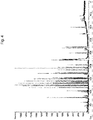
- Figure 4 is a sample full scan chromatogram of the Example 2 polyethylene CRM extraction using the invention.
Landscapes
- Physics & Mathematics (AREA)
- Life Sciences & Earth Sciences (AREA)
- Health & Medical Sciences (AREA)
- Chemical & Material Sciences (AREA)
- Immunology (AREA)
- Biochemistry (AREA)
- General Health & Medical Sciences (AREA)
- General Physics & Mathematics (AREA)
- Analytical Chemistry (AREA)
- Pathology (AREA)
- Engineering & Computer Science (AREA)
- Acoustics & Sound (AREA)
- Chemical Kinetics & Catalysis (AREA)
- Biomedical Technology (AREA)
- Molecular Biology (AREA)
- Mechanical Engineering (AREA)
- Hydrology & Water Resources (AREA)
- Sampling And Sample Adjustment (AREA)
- Extraction Or Liquid Replacement (AREA)
Claims (11)
- Extraktionsverfahren zur Vorbereitung von Analysen für Molekularanalyse, welches folgende Schritte aufweist:Anordnen einer Extraktionsprobe (11) mit einer Probenmatrix, die einen Analyten enthält, in einem wärmeleitfähigen Probennapf (10), der von einer Reaktionskammer (12) umgeben ist, wobei der wärmeleitende Probennapf (10) ein offenes mit Filter versehenes Ende (13) und eine Mündung gegenüberliegend zu seinem offenen mit Filter versehenen Ende hat und wobei ein Auslassventil (21) in der Reaktionskammer (12) vorgesehen ist;Abdichten der Mündung des Probennapfes (10) zwischen einer Dichtungsabdeckung (46) an der Mündung und einem Auslassventil (21) in der Reaktionskammer (12);Zugeben eines flüssigen Extraktionslösungsmittels zu sowohl dem Inneren des Probennapfes (10) als auch zur Reaktionskammer (12) außerhalb des Probennapfes (10); undAufheizen des flüssigen Extraktionslösungsmittels (15) innerhalb der Reaktionskammer außerhalb des Probennapfes (10), um wiederum den Probennapf (10) aufzuheizen, das flüssige Extraktionslösungsmittel innerhalb des Probennapfes (10) aufzuheizen und die Extraktionsprobe (11) in dem Probennapf (10) aufzuheizen, bis die Temperatur einen Druck über dem Atmosphärendruck erzeugt, der zusammen mit der erhöhten Temperatur den Analyten im Wesentlichen aus der Probenmatrix in das flüssige Extraktionslösungsmittel treibt;Freigeben bzw. Öffnen des Auslassventils (21) an der Reaktionskammer (12), sodass der Dampfdruck in der Reaktionskammer (12) den flüssigen Lösungsmittelextrakt aus dem Probennapf (10) durch das offene mit Filter versehene Ende (13) und durch das Auslassventil (21) in eine Kühlspirale (17) in Strömungsmittelverbindung mit dem Auslassventil (21) in der Reaktionskammer (12) treibt, wobei das Freigeben des Lösungsmittelextraktes zum Atmosphärendruck den Lösungsmittelextrakt in die Kühlspirale (17) treibt, und wobei die Kühlspirale eine ausreichende Länge hat, um die Temperatur des Lösungsmittelextraktes auf Umgebungstemperatur oder nahe der Umgebungstemperatur in der Spirale (17) zu verringern; undSammeln des gefilterten Lösungsmittelextraktes aus der Spirale (17).
- Extraktionsverfahren nach Anspruch 1, wobei der Schritt des Aufheizens des flüssigen Extraktionslösungsmittels außerhalb des Probennapfes (10) aufweist, die Reaktionskammer (12) aufzuheizen.
- Extraktionsverfahren nach irgendeinem vorhergehenden Anspruch, das weiter aufweist, die Reaktionskammer (12) auf ungefähr 25 psi (0,17 MPa) unter Vordruck zu setzen, und zwar zwischen den Schritten des Anordnens der Extraktionsprobe in dem Probennapf (10) und des Aufheizens des flüssigen Extraktionslösungsmittels in der Reaktionskammer (12).
- Extraktionsverfahren nach irgendeinem vorhergehenden Anspruch, wobei der Schritt des Zugebens von flüssigem Extraktionslösungsmittel in den Probennapf (10) von Positionen ausgeführt wird, die aus der Gruppe ausgewählt sind, die aus dem Oberteil des Probennapfes (10), dem Unterteil des Probennapfes (10) und sowohl dem Oberteil als auch dem Unterteil des Probennapfes (10) besteht.
- Extraktionsverfahren nach Anspruch 1, welches weiter aufweist, das flüssige Extraktionslösungsmittel in eine Kühlspirale (17) in Strömungsmittelverbindung mit dem Auslassventil (21) in der Reaktionskammer (12) zu treiben, und wobei die Kühlspirale (17) eine ausreichende Länge hat, um die Temperatur von üblichen Extraktionslösungsmitteln für eine ausreichende Zeit zu reduzieren, um die Temperatur des Extraktionslösungsmittels auf unterhalb des Siedepunktes des Lösungsmittels bei Umgebungsdruck in der Kühlspirale zu verringern.
- Extraktionsverfahren nach Anspruch 5, wobei der Schritt des Treibens des Lösungsmittels Folgendes aufweist:Treiben des Extraktionslösungsmittels in die Kühlspirale (17) bis der abgelaufene Extraktionslösungsmittelextrakt sich einer Umgebungstemperatur annähert oder diese erreicht; undSammeln des abgekühlten Extraktionslösungsmittelextraktes zur Analyse.
- Extraktionsverfahren nach irgendeinem vorhergehenden Anspruch, das weiter aufweist, das Extraktionslösungsmittel und die Probenmatrix (11) in dem Probennapf (10) zu bewegen und unter Druck zu setzen, wobei der Bewegungsschritt optional aufweist, Gas, welches inert für die Probenmatrix (11) ist, durch den Unterteil des Probennapfes (10) einzublasen und/oder wobei der Bewegungsschritt vor den Schritten des Aufheizens und des Unter-Druck-Setzens ausgeführt wird.
- Extraktionsverfahren nach irgendeinem vorhergehenden Anspruch, wobei das offene mit Filter versehene Ende (13) des Probennapfes (10) einen Filter oder ein Filtermedium (14) trägt und gestattet, dass Lösungsmittelextrakt aus dem Probennapf (10) abläuft.
- Extraktionsverfahren nach Anspruch 8, welches weiter aufweist, Ultraschallbewegung während des Aufheizungsschrittes unter Druck anzuwenden.
- Verfahren nach irgendeinem vorhergehenden Anspruch, welches weiter aufweist, die Reaktionskammer (12) durch Leitung auf eine Temperatur zwischen 90°C und 180°C aufzuheizen und daraus resultierende Drücke von zwischen 50 psi (0,34 MPa) und 250 psi (1,72 MPa) zu erzeugen.
- Extraktionsverfahren nach irgendeinem vorhergehenden Anspruch, wobei das Extraktionslösungsmittel aus der Gruppe ausgewählt ist, die aus Wasser, schwachen Säuren, schwachen Basen, Ethylazetat, Methyltert-butylether (MTBE), Methylenchlorid, Hexan, Aceton, Hexan-2-Propanol, Cyclohexan, Acetonitril, Methanol und Mischungen davon besteht.
Applications Claiming Priority (1)
| Application Number | Priority Date | Filing Date | Title |
|---|---|---|---|
| US15/644,920 US10330573B2 (en) | 2017-07-10 | 2017-07-10 | Rapid sample preparation for analytical analysis using dispersive energized extraction |
Publications (3)
| Publication Number | Publication Date |
|---|---|
| EP3428612A1 EP3428612A1 (de) | 2019-01-16 |
| EP3428612B1 true EP3428612B1 (de) | 2021-10-06 |
| EP3428612B8 EP3428612B8 (de) | 2021-11-24 |
Family
ID=61936812
Family Applications (1)
| Application Number | Title | Priority Date | Filing Date |
|---|---|---|---|
| EP18182634.8A Not-in-force EP3428612B8 (de) | 2017-07-10 | 2018-07-10 | Schnelle probenvorbereitung für die analytische untersuchung mittels dispersiver energetisierter extraktion |
Country Status (9)
| Country | Link |
|---|---|
| US (3) | US10330573B2 (de) |
| EP (1) | EP3428612B8 (de) |
| JP (2) | JP6561179B2 (de) |
| KR (1) | KR101991303B1 (de) |
| CN (1) | CN107941590A (de) |
| AU (3) | AU2017219168B1 (de) |
| CA (2) | CA3008357C (de) |
| GB (1) | GB2566585B (de) |
| TW (1) | TW201908709A (de) |
Families Citing this family (6)
| Publication number | Priority date | Publication date | Assignee | Title |
|---|---|---|---|---|
| US10241014B2 (en) | 2017-07-10 | 2019-03-26 | Cem Corporation | Instrument for analytical sample preparation |
| US10330573B2 (en) | 2017-07-10 | 2019-06-25 | Cem Corporation | Rapid sample preparation for analytical analysis using dispersive energized extraction |
| US10295447B2 (en) | 2017-07-10 | 2019-05-21 | Cem Corporation | Rapid energized dispersive solid phase extraction (SPE) for analytical analysis |
| CN109613106B (zh) * | 2018-11-23 | 2023-12-12 | 中国科学院生态环境研究中心 | 用于高通量质谱检测的多功能模块化样品前处理器件及其使用方法 |
| CN112557534B (zh) * | 2020-11-30 | 2023-05-05 | 遵义医科大学 | 一种空气环境内分泌干扰物检测方法 |
| CN113671065B (zh) * | 2021-07-26 | 2023-07-07 | 中国核电工程有限公司 | 一种测定高放废液中磷酸三丁酯的方法及装置 |
Family Cites Families (67)
| Publication number | Priority date | Publication date | Assignee | Title |
|---|---|---|---|---|
| NL29077C (de) | 1930-11-18 | |||
| GB477567A (en) | 1935-10-10 | 1938-01-03 | Bataafsche Petroleum | A process for extracting liquid mixtures in countercurrent |
| GB530345A (en) | 1938-09-19 | 1940-12-10 | Corn Prod Refining Co | Improvements in and relating to extraction processes and apparatus |
| GB613568A (en) | 1946-06-17 | 1948-11-30 | Eduard Rickert | Rotary extraction, drying or like apparatus for treating, in particular, granular, flocculent or pulverulent materials |
| FR978542A (de) | 1946-12-30 | 1950-04-16 | ||
| US2643940A (en) | 1951-09-14 | 1953-06-30 | Us Sec The Dept Of The Interio | Extractor for removing soluble constituents in chemical analysis |
| GB776938A (en) | 1954-09-08 | 1957-06-12 | Rose Downs & Thompson Ltd | Improvements in and relating to solvent extraction and filtration process and apparatus therefor |
| GB845131A (en) | 1956-12-07 | 1960-08-17 | Mueller Hans Karl | A process and apparatus for the aftertreatment of chemical substances |
| BE638262A (de) | 1962-10-18 | |||
| NO118852B (de) | 1963-06-26 | 1970-02-23 | Hydro Chem & Mineral Corp | |
| FR1426417A (fr) | 1965-01-07 | 1966-01-28 | Inst Corps Gras | Procédé et appareillage pour la rupture des émulsions et la séparation de leurs constituants par filtration |
| DE1619769A1 (de) | 1967-05-22 | 1971-03-18 | Dow Chemical Co | Extraktionsverfahren und Vorrichtung zu seiner Durchfuehrung |
| IT994599B (it) | 1972-08-23 | 1975-10-20 | Technicon Instr | Separatore per separare fluidi immiscibili in flusso continuo |
| DE2250933B2 (de) | 1972-10-18 | 1978-02-16 | Siemens AG, 1000 Berlin und 8000 München | Verfahren zur extraktion von stoffen |
| US4265860A (en) | 1980-03-27 | 1981-05-05 | J & W Scientific, Incorporated | High pressure Soxhlet extractor |
| US4429049A (en) | 1982-02-22 | 1984-01-31 | Mead Corporation | Method for the analysis of organic pollutants |
| US5017500A (en) | 1988-10-11 | 1991-05-21 | C. Gerhardt Fabrik & Lager Chemischer Apparate Gmbh & Co K.G. | Fat extraction process and apparatus |
| US5272094A (en) | 1989-05-04 | 1993-12-21 | Board Of Supervisors Of Louisiana State University And Agricultural And Mechanical College | Isolation of components from biological specimens via matrix solid phase dispersion |
| US5601707A (en) | 1990-07-13 | 1997-02-11 | Isco, Inc. | Apparatus and method for supercritical fluid extraction or supercritical fluid chromatography |
| US5653885A (en) | 1990-07-13 | 1997-08-05 | Isco, Inc. | Apparatus and method for supercritical fluid extraction |
| US5268103A (en) * | 1990-07-13 | 1993-12-07 | Isco, Inc. | Apparatus and method for supercritical fluid extraction |
| US5932095A (en) | 1990-07-13 | 1999-08-03 | Isco, Inc. | Multi-chambered supercritical fluid extraction cartridge |
| US5344571A (en) | 1992-02-18 | 1994-09-06 | University Of Texas System Board Of Regents | Method for separating isoanalytes and measuring analytes in fluids |
| DE4223116A1 (de) * | 1992-04-30 | 1993-11-04 | Mikrowellen Labor Systeme | Vorrichtung zur verdampfungsbehandlung von vorzugsweise fluessigen stoffen, insbesondere reagenzstoffen, oder zum aufbereiten oder analysieren von probenmaterial |
| IT1258958B (it) | 1992-06-08 | 1996-03-11 | Getters Spa | Processo perfezionato per la realizzazione di intercapedini termicamente isolanti mediante vuoto e materiali coibenti |
| US5443795A (en) | 1993-06-09 | 1995-08-22 | Cem Corporation | Explosion proof microwave heated solvent extraction apparatus |
| US5858178A (en) | 1994-03-22 | 1999-01-12 | Lautenschlaeger; Werner | Process and device for preparing and/or extracting samples using a vaporizable agent at high temperature |
| US5660727A (en) | 1994-06-14 | 1997-08-26 | Dionex Corporation | Automated analyte supercritical fluid extraction apparatus |
| JPH0829432A (ja) | 1994-07-15 | 1996-02-02 | Shimadzu Corp | 自動試料調製装置 |
| EP0724901B1 (de) | 1995-02-02 | 2002-09-25 | ISCO, Inc. | Vorrichtung und Verfahren zur Extraktion oder Chromatographie mit einem überkritischen Fluid |
| DE19503591A1 (de) | 1995-02-03 | 1996-08-08 | Werner Lautenschlaeger | Verfahren und Vorrichtung zur Extraktions-Behandlung einer Probe |
| US6794127B1 (en) | 1997-06-16 | 2004-09-21 | Diversa Corporation | Capillary array-based sample screening |
| IT1284992B1 (it) | 1996-10-18 | 1998-05-28 | Alfonso Bialetti & C Spa | Caffettiera a pressione per la preparazione di infuso di caffe' |
| US6048457A (en) | 1997-02-26 | 2000-04-11 | Millipore Corporation | Cast membrane structures for sample preparation |
| US6221655B1 (en) | 1998-08-01 | 2001-04-24 | Cytosignal | Spin filter assembly for isolation and analysis |
| US6803237B2 (en) | 2000-01-25 | 2004-10-12 | Woods Hole Oceanographic Institution | Sequential processing reaction vessel for chemical fractionation and analysis |
| JP2005214785A (ja) | 2004-01-29 | 2005-08-11 | Toyota Central Res & Dev Lab Inc | 抽出分離装置及び抽出分離部材 |
| EP1570889A1 (de) | 2004-03-01 | 2005-09-07 | Nederlandse Organisatie voor toegepast-natuurwetenschappelijk Onderzoek TNO | Verfahren zur Herstellung und Gewinnung von Fermentationsprodukten durch Lösungsmittelimprägnierte Träger |
| DE202007002435U1 (de) | 2007-02-19 | 2007-05-16 | Mikrowellen-Systeme Mws Gmbh | Heißextraktion |
| EP2214829B1 (de) | 2007-11-20 | 2012-12-26 | 3M Innovative Properties Company | Probenvorbereitungsbehälter und -verfahren |
| US20090221079A1 (en) | 2008-02-28 | 2009-09-03 | Dionex Corporation | Sample pretreatment and extraction |
| AU2010256429B2 (en) | 2009-06-05 | 2015-09-17 | Integenx Inc. | Universal sample preparation system and use in an integrated analysis system |
| US8234795B2 (en) * | 2009-07-29 | 2012-08-07 | Dole Fresh Vegetables, Inc. | Vertical drum drier |
| EP2371437B1 (de) | 2010-03-29 | 2013-02-20 | Milestone S.r.l. | Mikrowellenintegrierter Soxhlet-Aufsatz |
| US20130337132A1 (en) | 2011-01-06 | 2013-12-19 | Strix Limited | Liquid heating apparatus |
| US9169455B2 (en) | 2011-10-27 | 2015-10-27 | Jerry Hamler | Process for extracting oil from plants and animal matter |
| US8859793B2 (en) | 2011-10-27 | 2014-10-14 | Jerry Hamler | Process for extracting oil from plants and animal matter |
| US9459184B2 (en) | 2012-03-08 | 2016-10-04 | Dionex Corporation | Sorption of water from a sample using a polymeric drying agent |
| US9440166B2 (en) * | 2012-08-30 | 2016-09-13 | Dionex Corporation | Method and device to extract an analyte from a sample with gas assistance |
| US9574799B2 (en) | 2012-12-12 | 2017-02-21 | Continuous Extractions, Llc | Extractor and concentrator |
| US20140193303A1 (en) | 2013-01-04 | 2014-07-10 | Matthew A. Ellis | Apparatus for Extracting Oil From Oil-Bearing Plant Material |
| US9687754B2 (en) | 2013-01-04 | 2017-06-27 | Matthew Ellis | Apparatus for extracting oil from oil-bearing plants |
| JP6214031B2 (ja) * | 2013-07-19 | 2017-10-18 | 国立研究開発法人理化学研究所 | 放射線検出器のための信号データ処理方法、信号データ処理装置、および放射線検出システム |
| EP3102329B1 (de) | 2014-02-05 | 2018-10-10 | Talis Biomedical Corporation | Probenvorbereitungsmodul mit stufenweisem druckbeaufschlagungsmechanismus |
| US9375697B2 (en) * | 2014-03-12 | 2016-06-28 | Dionex Corporation | Extraction cell assembly with quick-release seal removal |
| KR102379619B1 (ko) * | 2014-05-30 | 2022-03-25 | 가부시키가이샤 스미카 분세키 센터 | 분석용 샘플의 회수 방법 및 그 이용 |
| US9739692B2 (en) | 2015-03-27 | 2017-08-22 | Dionex Corporation | Pump-less method and apparatus for solvent extraction from a sample |
| US10564076B2 (en) | 2015-06-16 | 2020-02-18 | Agilent Technologies, Inc. | Compositions and methods for analytical sample preparation |
| EP3106816A1 (de) | 2015-06-19 | 2016-12-21 | Bleckmann GmbH & Co. KG | Wärmeaustauschvorrichtung und verfahren dafür |
| KR101810942B1 (ko) * | 2015-09-04 | 2018-01-25 | (주)나노엔텍 | 샘플 전처리 시스템 및 그 제어방법 |
| KR101808231B1 (ko) * | 2015-09-04 | 2017-12-13 | (주)나노엔텍 | 샘플 전처리 모듈 및 이를 이용한 샘플 전처리 방법 |
| CN205728021U (zh) * | 2016-05-11 | 2016-11-30 | 上海旭梅香精有限公司 | 一种带香气回收装置的油炸提取设备 |
| CN205740906U (zh) * | 2016-06-29 | 2016-11-30 | 东营市俊源石油技术开发有限公司 | 石油醚萃取分离装置 |
| US10082246B2 (en) | 2017-02-07 | 2018-09-25 | Lawrence Livermore National Security, Llc | Cryogenic pressurized storage with hump-reinforced vacuum jacket |
| US10241014B2 (en) | 2017-07-10 | 2019-03-26 | Cem Corporation | Instrument for analytical sample preparation |
| US10330573B2 (en) * | 2017-07-10 | 2019-06-25 | Cem Corporation | Rapid sample preparation for analytical analysis using dispersive energized extraction |
| US10295447B2 (en) | 2017-07-10 | 2019-05-21 | Cem Corporation | Rapid energized dispersive solid phase extraction (SPE) for analytical analysis |
-
2017
- 2017-07-10 US US15/644,920 patent/US10330573B2/en not_active Expired - Fee Related
- 2017-08-29 AU AU2017219168A patent/AU2017219168B1/en not_active Ceased
- 2017-10-31 CN CN201711051205.2A patent/CN107941590A/zh active Pending
-
2018
- 2018-06-15 CA CA3008357A patent/CA3008357C/en not_active Expired - Fee Related
- 2018-06-15 CA CA3039904A patent/CA3039904C/en active Active
- 2018-06-22 AU AU2018204538A patent/AU2018204538B2/en not_active Ceased
- 2018-07-04 TW TW107123106A patent/TW201908709A/zh unknown
- 2018-07-05 JP JP2018128266A patent/JP6561179B2/ja active Active
- 2018-07-10 GB GB1811271.4A patent/GB2566585B/en not_active Expired - Fee Related
- 2018-07-10 EP EP18182634.8A patent/EP3428612B8/de not_active Not-in-force
- 2018-07-10 KR KR1020180080003A patent/KR101991303B1/ko not_active Expired - Fee Related
- 2018-08-22 US US16/108,309 patent/US10677696B2/en active Active
-
2019
- 2019-07-22 JP JP2019134293A patent/JP2019194621A/ja not_active Withdrawn
- 2019-09-30 AU AU2019240553A patent/AU2019240553B2/en not_active Ceased
-
2020
- 2020-01-16 US US16/744,332 patent/US20210116336A1/en not_active Abandoned
Non-Patent Citations (1)
| Title |
|---|
| None * |
Also Published As
| Publication number | Publication date |
|---|---|
| AU2018204538A1 (en) | 2018-08-16 |
| CA3008357A1 (en) | 2018-08-17 |
| CN107941590A (zh) | 2018-04-20 |
| AU2019240553B2 (en) | 2021-04-22 |
| AU2019240553A1 (en) | 2019-10-17 |
| US20190011337A1 (en) | 2019-01-10 |
| JP6561179B2 (ja) | 2019-08-14 |
| EP3428612B8 (de) | 2021-11-24 |
| US10330573B2 (en) | 2019-06-25 |
| KR101991303B1 (ko) | 2019-06-20 |
| US10677696B2 (en) | 2020-06-09 |
| US20190011341A1 (en) | 2019-01-10 |
| CA3008357C (en) | 2019-05-28 |
| US20210116336A1 (en) | 2021-04-22 |
| KR20190006459A (ko) | 2019-01-18 |
| AU2017219168B1 (en) | 2018-08-02 |
| CA3039904A1 (en) | 2018-08-17 |
| GB201811271D0 (en) | 2018-08-29 |
| GB2566585B (en) | 2020-05-13 |
| GB2566585A (en) | 2019-03-20 |
| CA3039904C (en) | 2020-01-28 |
| AU2018204538B2 (en) | 2019-08-22 |
| TW201908709A (zh) | 2019-03-01 |
| JP2019194621A (ja) | 2019-11-07 |
| EP3428612A1 (de) | 2019-01-16 |
| JP2019015727A (ja) | 2019-01-31 |
Similar Documents
| Publication | Publication Date | Title |
|---|---|---|
| AU2019240553B2 (en) | Rapid sample preparation for analytical analysis using dispersive energized extraction | |
| EP3428613B1 (de) | Instrument zur analytischen probenvorbereitung | |
| AU2018267555B2 (en) | Rapid energized dispersive solid phase extraction (spe) for analytical analysis |
Legal Events
| Date | Code | Title | Description |
|---|---|---|---|
| PUAI | Public reference made under article 153(3) epc to a published international application that has entered the european phase |
Free format text: ORIGINAL CODE: 0009012 |
|
| STAA | Information on the status of an ep patent application or granted ep patent |
Free format text: STATUS: REQUEST FOR EXAMINATION WAS MADE |
|
| 17P | Request for examination filed |
Effective date: 20180710 |
|
| AK | Designated contracting states |
Kind code of ref document: A1 Designated state(s): AL AT BE BG CH CY CZ DE DK EE ES FI FR GB GR HR HU IE IS IT LI LT LU LV MC MK MT NL NO PL PT RO RS SE SI SK SM TR |
|
| AX | Request for extension of the european patent |
Extension state: BA ME |
|
| STAA | Information on the status of an ep patent application or granted ep patent |
Free format text: STATUS: EXAMINATION IS IN PROGRESS |
|
| 17Q | First examination report despatched |
Effective date: 20190807 |
|
| GRAP | Despatch of communication of intention to grant a patent |
Free format text: ORIGINAL CODE: EPIDOSNIGR1 |
|
| STAA | Information on the status of an ep patent application or granted ep patent |
Free format text: STATUS: GRANT OF PATENT IS INTENDED |
|
| INTG | Intention to grant announced |
Effective date: 20201123 |
|
| GRAJ | Information related to disapproval of communication of intention to grant by the applicant or resumption of examination proceedings by the epo deleted |
Free format text: ORIGINAL CODE: EPIDOSDIGR1 |
|
| GRAP | Despatch of communication of intention to grant a patent |
Free format text: ORIGINAL CODE: EPIDOSNIGR1 |
|
| GRAJ | Information related to disapproval of communication of intention to grant by the applicant or resumption of examination proceedings by the epo deleted |
Free format text: ORIGINAL CODE: EPIDOSDIGR1 |
|
| STAA | Information on the status of an ep patent application or granted ep patent |
Free format text: STATUS: EXAMINATION IS IN PROGRESS |
|
| INTG | Intention to grant announced |
Effective date: 20210512 |
|
| GRAP | Despatch of communication of intention to grant a patent |
Free format text: ORIGINAL CODE: EPIDOSNIGR1 |
|
| STAA | Information on the status of an ep patent application or granted ep patent |
Free format text: STATUS: GRANT OF PATENT IS INTENDED |
|
| INTC | Intention to grant announced (deleted) | ||
| INTG | Intention to grant announced |
Effective date: 20210621 |
|
| GRAS | Grant fee paid |
Free format text: ORIGINAL CODE: EPIDOSNIGR3 |
|
| GRAA | (expected) grant |
Free format text: ORIGINAL CODE: 0009210 |
|
| STAA | Information on the status of an ep patent application or granted ep patent |
Free format text: STATUS: THE PATENT HAS BEEN GRANTED |
|
| AK | Designated contracting states |
Kind code of ref document: B1 Designated state(s): AL AT BE BG CH CY CZ DE DK EE ES FI FR GB GR HR HU IE IS IT LI LT LU LV MC MK MT NL NO PL PT RO RS SE SI SK SM TR |
|
| REG | Reference to a national code |
Ref country code: GB Ref legal event code: FG4D |
|
| RBV | Designated contracting states (corrected) |
Designated state(s): AL AT BE BG CH CY CZ DE DK EE ES FI FR GR HR HU IE IS IT LI LT LU LV MC MK MT NL NO PL PT RO RS SE SI SK SM TR |
|
| REG | Reference to a national code |
Ref country code: CH Ref legal event code: EP Ref country code: AT Ref legal event code: REF Ref document number: 1436607 Country of ref document: AT Kind code of ref document: T Effective date: 20211015 |
|
| REG | Reference to a national code |
Ref country code: DE Ref legal event code: R096 Ref document number: 602018024514 Country of ref document: DE |
|
| REG | Reference to a national code |
Ref country code: IE Ref legal event code: FG4D |
|
| REG | Reference to a national code |
Ref country code: CH Ref legal event code: PK Free format text: BERICHTIGUNG B8 |
|
| REG | Reference to a national code |
Ref country code: LT Ref legal event code: MG9D |
|
| REG | Reference to a national code |
Ref country code: NL Ref legal event code: MP Effective date: 20211006 |
|
| REG | Reference to a national code |
Ref country code: AT Ref legal event code: MK05 Ref document number: 1436607 Country of ref document: AT Kind code of ref document: T Effective date: 20211006 |
|
| PG25 | Lapsed in a contracting state [announced via postgrant information from national office to epo] |
Ref country code: RS Free format text: LAPSE BECAUSE OF FAILURE TO SUBMIT A TRANSLATION OF THE DESCRIPTION OR TO PAY THE FEE WITHIN THE PRESCRIBED TIME-LIMIT Effective date: 20211006 Ref country code: LT Free format text: LAPSE BECAUSE OF FAILURE TO SUBMIT A TRANSLATION OF THE DESCRIPTION OR TO PAY THE FEE WITHIN THE PRESCRIBED TIME-LIMIT Effective date: 20211006 Ref country code: FI Free format text: LAPSE BECAUSE OF FAILURE TO SUBMIT A TRANSLATION OF THE DESCRIPTION OR TO PAY THE FEE WITHIN THE PRESCRIBED TIME-LIMIT Effective date: 20211006 Ref country code: BG Free format text: LAPSE BECAUSE OF FAILURE TO SUBMIT A TRANSLATION OF THE DESCRIPTION OR TO PAY THE FEE WITHIN THE PRESCRIBED TIME-LIMIT Effective date: 20220106 Ref country code: AT Free format text: LAPSE BECAUSE OF FAILURE TO SUBMIT A TRANSLATION OF THE DESCRIPTION OR TO PAY THE FEE WITHIN THE PRESCRIBED TIME-LIMIT Effective date: 20211006 |
|
| PG25 | Lapsed in a contracting state [announced via postgrant information from national office to epo] |
Ref country code: IS Free format text: LAPSE BECAUSE OF FAILURE TO SUBMIT A TRANSLATION OF THE DESCRIPTION OR TO PAY THE FEE WITHIN THE PRESCRIBED TIME-LIMIT Effective date: 20220206 Ref country code: SK Free format text: LAPSE BECAUSE OF FAILURE TO SUBMIT A TRANSLATION OF THE DESCRIPTION OR TO PAY THE FEE WITHIN THE PRESCRIBED TIME-LIMIT Effective date: 20211006 Ref country code: SE Free format text: LAPSE BECAUSE OF FAILURE TO SUBMIT A TRANSLATION OF THE DESCRIPTION OR TO PAY THE FEE WITHIN THE PRESCRIBED TIME-LIMIT Effective date: 20211006 Ref country code: PT Free format text: LAPSE BECAUSE OF FAILURE TO SUBMIT A TRANSLATION OF THE DESCRIPTION OR TO PAY THE FEE WITHIN THE PRESCRIBED TIME-LIMIT Effective date: 20220207 Ref country code: PL Free format text: LAPSE BECAUSE OF FAILURE TO SUBMIT A TRANSLATION OF THE DESCRIPTION OR TO PAY THE FEE WITHIN THE PRESCRIBED TIME-LIMIT Effective date: 20211006 Ref country code: NO Free format text: LAPSE BECAUSE OF FAILURE TO SUBMIT A TRANSLATION OF THE DESCRIPTION OR TO PAY THE FEE WITHIN THE PRESCRIBED TIME-LIMIT Effective date: 20220106 Ref country code: NL Free format text: LAPSE BECAUSE OF FAILURE TO SUBMIT A TRANSLATION OF THE DESCRIPTION OR TO PAY THE FEE WITHIN THE PRESCRIBED TIME-LIMIT Effective date: 20211006 Ref country code: LV Free format text: LAPSE BECAUSE OF FAILURE TO SUBMIT A TRANSLATION OF THE DESCRIPTION OR TO PAY THE FEE WITHIN THE PRESCRIBED TIME-LIMIT Effective date: 20211006 Ref country code: HR Free format text: LAPSE BECAUSE OF FAILURE TO SUBMIT A TRANSLATION OF THE DESCRIPTION OR TO PAY THE FEE WITHIN THE PRESCRIBED TIME-LIMIT Effective date: 20211006 Ref country code: GR Free format text: LAPSE BECAUSE OF FAILURE TO SUBMIT A TRANSLATION OF THE DESCRIPTION OR TO PAY THE FEE WITHIN THE PRESCRIBED TIME-LIMIT Effective date: 20220107 Ref country code: ES Free format text: LAPSE BECAUSE OF FAILURE TO SUBMIT A TRANSLATION OF THE DESCRIPTION OR TO PAY THE FEE WITHIN THE PRESCRIBED TIME-LIMIT Effective date: 20211006 |
|
| REG | Reference to a national code |
Ref country code: DE Ref legal event code: R097 Ref document number: 602018024514 Country of ref document: DE |
|
| PG25 | Lapsed in a contracting state [announced via postgrant information from national office to epo] |
Ref country code: SM Free format text: LAPSE BECAUSE OF FAILURE TO SUBMIT A TRANSLATION OF THE DESCRIPTION OR TO PAY THE FEE WITHIN THE PRESCRIBED TIME-LIMIT Effective date: 20211006 Ref country code: RO Free format text: LAPSE BECAUSE OF FAILURE TO SUBMIT A TRANSLATION OF THE DESCRIPTION OR TO PAY THE FEE WITHIN THE PRESCRIBED TIME-LIMIT Effective date: 20211006 Ref country code: EE Free format text: LAPSE BECAUSE OF FAILURE TO SUBMIT A TRANSLATION OF THE DESCRIPTION OR TO PAY THE FEE WITHIN THE PRESCRIBED TIME-LIMIT Effective date: 20211006 Ref country code: DK Free format text: LAPSE BECAUSE OF FAILURE TO SUBMIT A TRANSLATION OF THE DESCRIPTION OR TO PAY THE FEE WITHIN THE PRESCRIBED TIME-LIMIT Effective date: 20211006 Ref country code: CZ Free format text: LAPSE BECAUSE OF FAILURE TO SUBMIT A TRANSLATION OF THE DESCRIPTION OR TO PAY THE FEE WITHIN THE PRESCRIBED TIME-LIMIT Effective date: 20211006 |
|
| PLBE | No opposition filed within time limit |
Free format text: ORIGINAL CODE: 0009261 |
|
| STAA | Information on the status of an ep patent application or granted ep patent |
Free format text: STATUS: NO OPPOSITION FILED WITHIN TIME LIMIT |
|
| 26N | No opposition filed |
Effective date: 20220707 |
|
| PG25 | Lapsed in a contracting state [announced via postgrant information from national office to epo] |
Ref country code: AL Free format text: LAPSE BECAUSE OF FAILURE TO SUBMIT A TRANSLATION OF THE DESCRIPTION OR TO PAY THE FEE WITHIN THE PRESCRIBED TIME-LIMIT Effective date: 20211006 |
|
| PG25 | Lapsed in a contracting state [announced via postgrant information from national office to epo] |
Ref country code: SI Free format text: LAPSE BECAUSE OF FAILURE TO SUBMIT A TRANSLATION OF THE DESCRIPTION OR TO PAY THE FEE WITHIN THE PRESCRIBED TIME-LIMIT Effective date: 20211006 |
|
| REG | Reference to a national code |
Ref country code: DE Ref legal event code: R119 Ref document number: 602018024514 Country of ref document: DE |
|
| PG25 | Lapsed in a contracting state [announced via postgrant information from national office to epo] |
Ref country code: MC Free format text: LAPSE BECAUSE OF FAILURE TO SUBMIT A TRANSLATION OF THE DESCRIPTION OR TO PAY THE FEE WITHIN THE PRESCRIBED TIME-LIMIT Effective date: 20211006 |
|
| REG | Reference to a national code |
Ref country code: CH Ref legal event code: PL |
|
| REG | Reference to a national code |
Ref country code: BE Ref legal event code: MM Effective date: 20220731 |
|
| PG25 | Lapsed in a contracting state [announced via postgrant information from national office to epo] |
Ref country code: LU Free format text: LAPSE BECAUSE OF NON-PAYMENT OF DUE FEES Effective date: 20220710 Ref country code: LI Free format text: LAPSE BECAUSE OF NON-PAYMENT OF DUE FEES Effective date: 20220731 Ref country code: FR Free format text: LAPSE BECAUSE OF NON-PAYMENT OF DUE FEES Effective date: 20220731 Ref country code: CH Free format text: LAPSE BECAUSE OF NON-PAYMENT OF DUE FEES Effective date: 20220731 |
|
| PG25 | Lapsed in a contracting state [announced via postgrant information from national office to epo] |
Ref country code: IT Free format text: LAPSE BECAUSE OF FAILURE TO SUBMIT A TRANSLATION OF THE DESCRIPTION OR TO PAY THE FEE WITHIN THE PRESCRIBED TIME-LIMIT Effective date: 20211006 Ref country code: DE Free format text: LAPSE BECAUSE OF NON-PAYMENT OF DUE FEES Effective date: 20230201 Ref country code: BE Free format text: LAPSE BECAUSE OF NON-PAYMENT OF DUE FEES Effective date: 20220731 |
|
| PG25 | Lapsed in a contracting state [announced via postgrant information from national office to epo] |
Ref country code: IE Free format text: LAPSE BECAUSE OF NON-PAYMENT OF DUE FEES Effective date: 20220710 |
|
| PG25 | Lapsed in a contracting state [announced via postgrant information from national office to epo] |
Ref country code: HU Free format text: LAPSE BECAUSE OF FAILURE TO SUBMIT A TRANSLATION OF THE DESCRIPTION OR TO PAY THE FEE WITHIN THE PRESCRIBED TIME-LIMIT; INVALID AB INITIO Effective date: 20180710 |
|
| PG25 | Lapsed in a contracting state [announced via postgrant information from national office to epo] |
Ref country code: MK Free format text: LAPSE BECAUSE OF FAILURE TO SUBMIT A TRANSLATION OF THE DESCRIPTION OR TO PAY THE FEE WITHIN THE PRESCRIBED TIME-LIMIT Effective date: 20211006 Ref country code: CY Free format text: LAPSE BECAUSE OF FAILURE TO SUBMIT A TRANSLATION OF THE DESCRIPTION OR TO PAY THE FEE WITHIN THE PRESCRIBED TIME-LIMIT Effective date: 20211006 |
|
| PG25 | Lapsed in a contracting state [announced via postgrant information from national office to epo] |
Ref country code: MT Free format text: LAPSE BECAUSE OF FAILURE TO SUBMIT A TRANSLATION OF THE DESCRIPTION OR TO PAY THE FEE WITHIN THE PRESCRIBED TIME-LIMIT Effective date: 20211006 |
|
| PG25 | Lapsed in a contracting state [announced via postgrant information from national office to epo] |
Ref country code: TR Free format text: LAPSE BECAUSE OF FAILURE TO SUBMIT A TRANSLATION OF THE DESCRIPTION OR TO PAY THE FEE WITHIN THE PRESCRIBED TIME-LIMIT Effective date: 20211006 |