EP3427820B1 - Verfahren zur entfernung von arsen aus einer flüssigkeit - Google Patents
Verfahren zur entfernung von arsen aus einer flüssigkeit Download PDFInfo
- Publication number
- EP3427820B1 EP3427820B1 EP18182927.6A EP18182927A EP3427820B1 EP 3427820 B1 EP3427820 B1 EP 3427820B1 EP 18182927 A EP18182927 A EP 18182927A EP 3427820 B1 EP3427820 B1 EP 3427820B1
- Authority
- EP
- European Patent Office
- Prior art keywords
- mxene
- arsenic
- liquid
- adsorption
- ions
- Prior art date
- Legal status (The legal status is an assumption and is not a legal conclusion. Google has not performed a legal analysis and makes no representation as to the accuracy of the status listed.)
- Active
Links
Images




Classifications
-
- C—CHEMISTRY; METALLURGY
- C02—TREATMENT OF WATER, WASTE WATER, SEWAGE, OR SLUDGE
- C02F—TREATMENT OF WATER, WASTE WATER, SEWAGE, OR SLUDGE
- C02F1/00—Treatment of water, waste water, or sewage
- C02F1/28—Treatment of water, waste water, or sewage by sorption
- C02F1/281—Treatment of water, waste water, or sewage by sorption using inorganic sorbents
-
- B—PERFORMING OPERATIONS; TRANSPORTING
- B01—PHYSICAL OR CHEMICAL PROCESSES OR APPARATUS IN GENERAL
- B01J—CHEMICAL OR PHYSICAL PROCESSES, e.g. CATALYSIS OR COLLOID CHEMISTRY; THEIR RELEVANT APPARATUS
- B01J20/00—Solid sorbent compositions or filter aid compositions; Sorbents for chromatography; Processes for preparing, regenerating or reactivating thereof
- B01J20/02—Solid sorbent compositions or filter aid compositions; Sorbents for chromatography; Processes for preparing, regenerating or reactivating thereof comprising inorganic material
- B01J20/0203—Solid sorbent compositions or filter aid compositions; Sorbents for chromatography; Processes for preparing, regenerating or reactivating thereof comprising inorganic material comprising compounds of metals not provided for in B01J20/04
- B01J20/0211—Compounds of Ti, Zr, Hf
-
- B—PERFORMING OPERATIONS; TRANSPORTING
- B01—PHYSICAL OR CHEMICAL PROCESSES OR APPARATUS IN GENERAL
- B01J—CHEMICAL OR PHYSICAL PROCESSES, e.g. CATALYSIS OR COLLOID CHEMISTRY; THEIR RELEVANT APPARATUS
- B01J20/00—Solid sorbent compositions or filter aid compositions; Sorbents for chromatography; Processes for preparing, regenerating or reactivating thereof
- B01J20/02—Solid sorbent compositions or filter aid compositions; Sorbents for chromatography; Processes for preparing, regenerating or reactivating thereof comprising inorganic material
- B01J20/0203—Solid sorbent compositions or filter aid compositions; Sorbents for chromatography; Processes for preparing, regenerating or reactivating thereof comprising inorganic material comprising compounds of metals not provided for in B01J20/04
- B01J20/0259—Compounds of N, P, As, Sb, Bi
-
- B—PERFORMING OPERATIONS; TRANSPORTING
- B01—PHYSICAL OR CHEMICAL PROCESSES OR APPARATUS IN GENERAL
- B01J—CHEMICAL OR PHYSICAL PROCESSES, e.g. CATALYSIS OR COLLOID CHEMISTRY; THEIR RELEVANT APPARATUS
- B01J20/00—Solid sorbent compositions or filter aid compositions; Sorbents for chromatography; Processes for preparing, regenerating or reactivating thereof
- B01J20/02—Solid sorbent compositions or filter aid compositions; Sorbents for chromatography; Processes for preparing, regenerating or reactivating thereof comprising inorganic material
- B01J20/0203—Solid sorbent compositions or filter aid compositions; Sorbents for chromatography; Processes for preparing, regenerating or reactivating thereof comprising inorganic material comprising compounds of metals not provided for in B01J20/04
- B01J20/0274—Solid sorbent compositions or filter aid compositions; Sorbents for chromatography; Processes for preparing, regenerating or reactivating thereof comprising inorganic material comprising compounds of metals not provided for in B01J20/04 characterised by the type of anion
-
- B—PERFORMING OPERATIONS; TRANSPORTING
- B01—PHYSICAL OR CHEMICAL PROCESSES OR APPARATUS IN GENERAL
- B01J—CHEMICAL OR PHYSICAL PROCESSES, e.g. CATALYSIS OR COLLOID CHEMISTRY; THEIR RELEVANT APPARATUS
- B01J20/00—Solid sorbent compositions or filter aid compositions; Sorbents for chromatography; Processes for preparing, regenerating or reactivating thereof
- B01J20/30—Processes for preparing, regenerating, or reactivating
- B01J20/3085—Chemical treatments not covered by groups B01J20/3007 - B01J20/3078
-
- C—CHEMISTRY; METALLURGY
- C01—INORGANIC CHEMISTRY
- C01B—NON-METALLIC ELEMENTS; COMPOUNDS THEREOF; METALLOIDS OR COMPOUNDS THEREOF NOT COVERED BY SUBCLASS C01C
- C01B32/00—Carbon; Compounds thereof
- C01B32/90—Carbides
- C01B32/914—Carbides of single elements
- C01B32/921—Titanium carbide
-
- C—CHEMISTRY; METALLURGY
- C02—TREATMENT OF WATER, WASTE WATER, SEWAGE, OR SLUDGE
- C02F—TREATMENT OF WATER, WASTE WATER, SEWAGE, OR SLUDGE
- C02F2101/00—Nature of the contaminant
- C02F2101/10—Inorganic compounds
- C02F2101/103—Arsenic compounds
Definitions
- the disclosure of the present patent application relates to the removal of water contaminants, and particularly to removal of arsenic from water.
- Arsenic pollution in water is one of the most important ecological and health issues in the world today. Arsenic occurs naturally in the environment as a tasteless and odorless semi-metal element. Arsenic also can occur from anthropogenic sources, such as industrial and agricultural activities. The maximum acceptable contaminant level (MCL) of arsenic in drinking water is 10 ⁇ g/L. Exposure to arsenic is associated with numerous health problems, including a variety of different types of cancer, arsenicosis, and kidney, skin, and lung problems.
- Arsenic in neutral water presents as an oxo-anion in two dominant forms, namely arsenite (As (III)) and arsenate (As (V)).
- As (III) is considered a hard acid and mostly forms complexes with oxides and nitrogen.
- As (V) acts as a soft acid, and mostly forms complexes with sulfides.
- the oxo-anion properties allow arsenic and its derivatives to interact with other metal hydroxide surfaces through formation of monodentate and bidentate inner surface complexes, providing a basis for arsenic removal by adsorption.
- Coagulation, oxidation/chemical precipitation, ion-exchange filtration and reverse osmosis filtering are examples of known arsenic removal techniques from drinking water. All of these techniques, however, have numerous drawbacks and restrictions, thus limiting their scope of application. For example, chemical oxidation and precipitation are performed by the addition of chemical reagents, which is then followed by the separation of clean water and the precipitated solids. This method, however, results in byproducts from the reagent addition, as well as producing significant amounts of sludge. Reverse osmosis and other membrane filtration methods, such as ultrafiltration, are expensive processes, requiring high energy consumption. Ion-exchange filtration is known to release harmful chemicals into the environment. Thus, a method of removing arsenic from a liquid solving the aforementioned problems is desired.
- CN 106268610 A describes as method to prepare a two-dimensional titanium carbide adsorbing material, useful for removing dye molecules and heavy metal ions from wastewater.
- US 2006/0091078 A1 describes a method for removing dissolved contaminants from solution using a surface-activated crystalline titanium oxide having a high adsorptive capacity and a high rate of adsorption with respect to dissolved contaminants, in particular, arsenate and arsenite.
- the method for removing arsenic from a liquid includes using at least one compound from a group of layered ternary carbides and nitrides, known as MAX phases, to adsorb arsenic from the liquid.
- MXene having the formula M n+1 X n , i.e. Ti 3 C 2 is the preferred adsorbent. Ti 3 C 2 is added to contaminated water for adsorbing arsenic therefrom.
- the method for removing arsenic from a liquid includes using an adsorbent including a two-dimensional nano material to adsorb arsenic from the liquid, as described in claim 1.
- the liquid comprises water and arsenic can be present in the water as an oxo-anion in two dominant forms, namely arsenite (As (III)) and arsenate (As (V)).
- Known two-dimensional nano materials are layered ternary carbides and nitrides, known as MAX phases.
- MXene having the formula M n+1 X n , is produced by selectively etching out the A element from a MAX phase.
- MXenes have good structural and chemical stabilities, a large specific surface area, reducibility, good dispensability, hydrophilic surfaces, reversible adsorption properties, outstanding electrical conductivities, and are environmentally friendly.
- Titanium (III) Carbide (II) (Ti 3 C 2 ) is the two-dimensional metal carbide adsorbent.
- Ti 3 C 2 nanosheets can be prepared by an intercalation and exfoliation process.
- the Ti 3 C 2 include nanosheets with few layers. The present inventors have found that when Ti 3 C 2 is added to contaminated water, arsenic can be removed therefrom.
- the removal capacity can be 0.8 mg/g, with a residual concentration far below the standard limit (10 ⁇ g/L) set by the World Health Organization for drinking water. It has been further found that Ti 3 C 2 can efficiently remove arsenic from water that is also contaminated with other heavy metals, such as chromium six (Cr (VI)) and lead (Pb (II)).
- Ti 3 C 2 adsorbent was prepared by room temperature exfoliation ofTi 3 AlC 3 using hydrofluoric acid: Ti 3 AlC 2 + 3 ⁇ HF ⁇ AlF 3 + 3 2 H 2 + Ti 3 C 2 Ti 3 C 2 + 2 H 2 O ⁇ Ti 3 C 2 OH 2 + H 2 Ti 3 C 2 + 2 ⁇ HF ⁇ Ti 3 C 2 F 2 + H 2
- the MAX phase (Ti 3 AlC 2 ) was synthesized by mixing commercial Ti 2 AlC and TiC in a 1:1 molar ratio using ball-milling for 20 h. The MAX phase was then sintered under an inert environment using a tube furnace up to 1300 °C with a heating rate of 5 °C /min. The resulting powder is then exfoliated by 50 wt. % HF to selectively remove the Al layer from the sintered MAX phase (which is now changed to Ti 3 C 2 T x ).
- the agglomerated MXene (Ti 3 C 2 T x ) was then dispersed by dispersing Ti 3 C 2 T x powder in ethanol solution and ultra-sonication under argon for 1 h at 60% amplitude. The dispersed Ti 3 C 2 T x nanosheets were then collected using centrifugation and drying overnight. All chemicals used in this study were reagent grade. TraceCERT® (Sigma-Aldrich) 1000 mg/L As in nitric acid was used as the arsenic standard solution (Sigma-Aldrich). To adjust the pH of the solutions HCl and NaOH are used.
- the Ti 3 C 2 adsorbent was added to a sample of contaminated water and adsorption of the arsenic contaminant from the water was found to have a removal efficiency of up to 85%.
- the arsenic concentration in the water was analyzed using a Brucker Aurora Elite Inductive Coupled Plasma-Mass Spectrometer (ICP-MS). To prepare the samples for analysis, untreated and treated water samples were preserved and diluted 100 times with 1% w/w HNO 3 /H 2 O prior to the testing.
- the arsenic concentration was analyzed in helium collision mode (67 ml/min) using a dwell time of 30 msec, 10 replicates and a plasma power of 1450W.
- FE-SEM Field-emission scanning electron microscopy
- EDS OXFORD instruments, INCAx-Max20, United Kingdom
- XPS AXIS Ultra DLD X-ray photoelectron spectroscopy
- the zeta potentials of the MXene nanosheets were measured using Zetasizer (Nano ZS 90, Malvern Instruments Ltd., Malvern, UK) equipped with a 4.0 mW internal laser, which works on the principle of dynamic light scattering (DLS).
- the zeta potential measurements were performed at room temperature (25 °C), with a scattering angle of 90°.
- XRD Powder X-ray diffraction
- the peaks at 6.6°, 9°, 19° and 38° of the stacked MXene corresponds to Ti 3 AlC 2 .
- the peak at 6.6° gets broader and the peaks at 9° and 38° fade due to the formation of TiO 2 nanoparticles on the surface of the MXene.
- the XRD peaks at 25.5°, 45°, 47° and 52.5° on the stacked MXene. XRD patterns are for the TiO 2 nanoparticles.
- the adsorption capacity of the Ti 3 C 2 adsorbent to adsorb arsenic was evaluated using batch tests at different pH values, ranging from 3 to 8. 10 mL of ultra-pure water contaminated with 1 ppm (1 mg/L) of arsenic (in the form of NaAsO2), was mixed with 10 mg of the Ti 3 C 2 adsorbent and left for 24 hours. The solution was mixed with a magnetic shaker at room temperature. One sample was taken immediately after 20 seconds of rigorous shaking, and other samples were taken, respectively, after 10 minutes, 30 minutes, 60 minutes, 90 minutes, 120 minutes and 1,440 minutes to determine the optimum contact time.
- ICP-MS inductively coupled plasma mass spectrometry
- the pH of the solution was adjusted using 0.1 M HCl and 0.1 M NaOH solutions to study the effect of pH on adsorption capacity and removal efficiency.
- Different MXene loadings in 50 ml polypropylene conical tubes containing 20 ml arsenic solution with concentration of 1 ppm were used. The tubes were shaken using a mechanical shaker at a speed of 100 rpm.
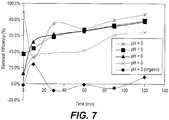
- the effect of contact time on the removal efficiency of arsenic by MXene was examined using 1 ppm arsenic solution, 100 mg MXene and different pH values. Samples at different time intervals were collected and analyzed for arsenic using ICP-MS. After measuring the initial pH of the solution, an acid or a base was added drop-by-drop to achieve a pH of 3, 5, 6 or 8. A similar protocol was used to adjust the pH of the solution using a trimethylamine organic base.
- the arsenic analysis was conducted using inductively coupled plasma mass spectrometry. The samples, taken at the different times given above, were dosed and preserved with 1:3 HNO 3 /H 2 O prior to the testing.
- Scanning electron microscopy was performed using FEI QUANTA 200 ENVIRONMENTAL SCANNING ELECTRON MICROSCOPE (ESEM) with a resolution of 5nm and a magnification of X200K to observe the morphology and structure of material. Samples were kept on aluminum stub and gold sputtered prior to imaging.
- AXIS Ultra DLD X-ray photoelectron spectroscopy was used to analyze samples for elements on the surface and also to identify the oxidation sheets for each element with their surface chemical bonding.
- the measurement of zeta potential and particle size of the nanoparticles was carried out using a ZETASIZER (NANO ZS 90, Malvern Instruments Ltd., Malvern UK) equipped with a 4.0 mW internal laser, which works on the principle of dynamic light scattering (DLS).
- the measurements were performed at room temperature (25°C), with scattering angle of 90°.
- the intensity-weighed mean diameter of the bulk population of particles was given by the z-average diameter value of the particles.
- Figs. 1A-1D are scanning electron microscope (SEM) images of Ti 3 C 2 MXene particles produced as described above, specifically showing the Ti 3 C 2 layers spread apart due to the exfoliation treatment by the hydrofluoric acid.
- the appearance of "book”-like layers is caused by etching away the Al layers in the initial Ti 3 AlC 2 particles. This is a clear indication of delamination, which is typical of MXenes.
- the gaps are typically between 30 nm and 100 nm.
- the thickness of each MXene layer is approximately 40-50 nm (best seen in the high magnification images of Figs. 1B and 1D ). It can be seen that the MXene contains few lamellar grains with densely aligned layered structures.
- MXenes There are two different types of structures for MXenes which can be observed for a two-dimensional (2D) layered edge.
- One type of structure is in the form of sheets with a small ball attachment and the other is "clean," without the ball. It is believed that the ball-like structures may also be MXene sheets, but ones which nucleated and grew from the hydrofluoric acid (HF) treatment. Elemental analysis performed by X-ray photoelectron spectroscopy (XPS) confirmed this. SEM-EDS analysis revealed the distribution of the elemental composition on the MXene surface. From the analysis, 61% of the weight of the sample is Ti and C and the rest are impurities such as F, Al, Cl, etc., produced during the exfoliation and the unstacking process.
- XPS X-ray photoelectron spectroscopy
- the 2p XPS analysis of the Ti 3 C 2 MXene after arsenic adsorption (pH 6) is shown in Fig. 2 .
- Fig. 2 The 2p XPS analysis of the Ti 3 C 2 MXene after arsenic adsorption (pH 6) is shown in Fig. 2 .
- the concentration of Ti, C, O, Na, Al, and As are calculated to be 18%, 20%, 19%, 3%, 12% and 12.5%, respectively.
- Most of the concentrations of F and Al are mainly due to formation of AlF 3 nanoparticles during the etching process of the initial Ti 3 AlC 2 .
- An analysis of particle size and zeta potential was performed by observing the change in size and potential of the Ti 3 C 2 MXene.
- the average particle size of the Ti 3 C 2 MXene is shown in Fig. 4 .
- the particle size distribution was calculated by intensity percentage, volume percentage, and particle number.
- the mean particle size of the Ti 3 C 2 MXene was found to be about 400 nm. An MXene particle of this size is loose in structure and is easily crushed and ground into powder.
- the zeta potential of the Ti 3 C 2 MXene is shown in Fig. 5 .
- the zeta potential analysis provides the magnitude and a measure of the effective surface charge density associated with the double layer around the particle. It can be seen in Fig. 5 that the Ti 3 C 2 MXene is positively charged in solution, with the existence of a repulsive electrostatic interaction in the aqueous medium.
- Fig. 10 The pH-dependent zeta potential analysis of the MXene is shown in Fig. 10 .
- the zeta potential analysis plot of Fig. 10 gives the measure of the effective surface charge density associated with the double layer around the particle.
- PZC isoelectric point or point of zero charge
- the hydroxyl groups keep decreasing by increasing the pH, which proportionally increases the negative sign of the MXene's zeta potential.
- the zeta potential of the MXene keeps decreasing (increase in negative sign of zeta potential) by increasing the pH up to a pH of 11, where the MXene surface charge again increases (decrease in negative sign of zeta potential).
- the sudden change in the sign of the zeta potential may be due to the desorption of arsenic (As) ions from the surface of the MXene.
- As arsenic
- As ions The adsorption of As ions is more dominant in a neutral environment compared to a basic environment.
- the surface of the MXene becomes less negative.
- arsenic ions are adsorbed on the surface of the MXene, the electrical double layer interactions cause a heterogeneous distribution of charges on the surface which, in turn, causes a reduction on the effect of the double layer repulsion during the adsorption process.
- the pH value of the Ti 3 C 2 MXene in solution ranges between 3.5 and 3.7. This is in contrast to other carbon adsorbents, such as activated carbon or carbon nanotubes, where the pH is mostly in the range of 5-7.
- the pH of the medium is an important factor which significantly affects arsenic removal.
- Fig. 6A shows the effect of different pH values on the removal efficiency of arsenic
- Fig. 6B shows adsorption capacity of the Ti 3 C 2 MXene as a function of pH of the medium after two hours.
- removal and adsorption of arsenic is pH dependent. As can be clearly seen, adsorption increased by increasing pH up to a point, and then drops thereafter.
- the Ti may separate from the MXene structure, causing damage.
- the optimal pH for the MXene solution is about 5.
- the pH of 5 for the MXene solution is improved by the Ti-O bond, which shows high sorption affinity toward metallic ions.
- the As (III) is partly attached to the surface of the MXene by covalent bonds with the Ti-O bond, forming Ti-O-As (III), as shown in Fig. 3C .
- porous structure of Ti 3 C 2 T x was analyzed using the adsorption-desorption of liquid N 2 at 77 K.
- the specific surface area of delaminated Ti 3 C 2 T x increases sharply with sonication from 3.5 m 2 /g to 13 m 2 /g due to the unstacking of Mxene layers. Unstacking of the MXene layers provide extra surface area (i.e., extra active sites) for adsorption of arsenic ions.
- the adsorption-desorption isotherms are shown in Figs. 11A and 11B .
- the adsorption-desorption isotherm of the MXene follows the type IV nitrogen adsorption isotherm, exhibiting a clear hysteresis loop representing mesoporous slit-shaped pores.
- the slit-shaped pores are formed due to the multi-layer 2D parallel structure of Ti 3 C 2 T x and signify the mesoporous nature of the MXene.
- the average pore diameter of Ti 3 C 2 T x found from the Barrett-Joyner-Halenda (BJH) isotherm in Fig. 11B ranges between 10 nm to 220 nm, with the majority of the pore diameters being in the range of 100 nm.
- the stacking of the MXene did not significantly improve the pore size distribution of the MXene, as can be seen in Fig. 11B .
- thermogravimetric analysis (TGA) with a heating rate of 10 °C/min in air and nitrogen was used. TGA was performed using an SDT Q600 manufactured by TA Instruments of Delaware. The thermogravimetric analysis (TGA) and differential thermal analysis (DTA) curve of Ti 3 C 2 T x is shown in Fig. 12 . The analysis was performed under argon from room temperature to 1350 °C. As shown in Fig. 12 , the thermal characteristics of Ti 3 C 2 T x are divided into three different stages.
- the first stage which starts from room temperature up to 200 °C, is associated with loss of water, moisture, gases such as O 2 , and solvents which are physically attached to the surface of Ti 3 C 2 T x .
- the weight loss corresponding to this stage is around 3-4% of the original weight of the sample.
- the second stage is associated with 5% weight loss and ranges from 300 °C to 650 °C.
- the weight loss in this step is due to the loss of a hydroxyl group (-OH) from the surface of the MXene.
- the third and last stage which ranges from 650 °C to 1350 °C, is associated with a weight loss of about 9%, and is due to the reduction of TiO 2 to form metallic Ti.
- Figs. 13A and 13B clearly illustrate the lamellar nature of the materials and their excellent stability after the arsenic removal test. Adsorption of As ions on the regions with higher oxygen content is higher.
- the adsorption of arsenic from water is highly pH-dependent.
- Arsenic adsorption is highly dependent on pH, where maximum adsorption occurs in the highly acidic pH range.
- Adsorption of arsenic keeps decreasing as the pH values of the solution increase, where the minimum adsorption occurs at a pH of 8. This can be correlated to the zeta potential of the MXene in a water environment. As described above with reference to Fig. 10 , the MXene is positively charged below a pH of 2.41 and then changes to a negative charge at higher pH. On the other hand, arsenic is protonated at the lower pH.
- H 3 AsO 4 and H 2 AsO 4 - are the dominant arsenic species, while as the pH increases to 6, H 2 A S O 4 - and HAsO 4 2- are the main arsenic species in water.
- arsenic species such as HAsO 4 2- and AsO 4 3- are the dominant species. Therefore, at a pH less than pHZPC (2.41), the surface of MXene is positively charged and tends to attract negatively charged arsenic species.
- the pH goes above the pH ZPC , the hydroxyl group on the surface of the MXene gets deprotonated and become negatively charged. This change in charge causes less adsorption for the arsenic species in water.
- the final arsenic concentration decreases with increasing adsorbent dosage.
- the maximum removal of arsenic using the MXene was obtained at 100 mg.
- MXene dosage is another important factor which plays a major role in the arsenic uptake and can control the capacity of MXene at a given concentration.
- the removal efficiency of arsenic by MXene increases with increasing adsorbent dosage.
- the maximum removal efficiency was found to be at pH 3 with 100 mg of MXene.
- the free adsorption sites on the surface of adsorbent available for the removal of contaminants increases proportionally.
- MXene's surface is terminated mainly by OH, F, and O groups.
- the sheet-like structure of MXene helps ions to be adsorbed within the sheet through an intercalation process.
- the 002 peak of MXene shifts to a lower angle and becomes broader, causing an increase in the d-spacing between the MXene sheets.
- the etching process results in decreasing the thickness of the MXene sheets and consequently increasing the interlayer distance between each MXene layer.
- the interlayer distance between each MXene sheet is estimated to be in the range of 7-20 ⁇ , depending on the extent of exfoliation and the type of acid used to exfoliate the MAX phase. Comparing the atomic radius of arsenic, which is around 114 pm, to the inter-layer distance between MXene sheets, it can be concluded that some of the arsenic ions are intercalated within the MXene layers, either chemically or physically.
- the third and last possible route for arsenic adsorption is through an ion-exchange process.
- the presence of functional groups such as -OH and -F may act as a capturing site for arsenic adsorption by an ion exchange reaction. This is evident from the XPS analysis, where As was captured by functional groups, such as -OH and -F groups.
- the arsenic will be attracted to the functional groups and undergo ion exchange. These groups are mostly negatively charged, forming Ti-As and O-As bonding.
- the distribution coefficient ( K D ) can be used as a mathematical indication to demonstrate the selectivity and affinity of an ion towards an adsorbent.
- the calculated distribution coefficient was in the following order: Ba > Sr > Ca > Pb > Cr > > As, with K D values of 68 mg/mL, 64.3 mg/mL, 63.9 mg/mL, 61.5 mg/mL, 36 mg/mL and 3.6 mg/mL, respectively.
- the MXene surface in the pH range above 2.41 is negatively charged, therefore ions with a higher electronegativity are adsorbed more by MXene compared to those with lower electronegativity.
- the electronegativities of As, Cr, Pb, Sr and Ba are 2.2, 1.56, 1.55, 0.99 and 1.04, respectively (As > Cr > Pb > Sr > Ba). Comparing the electronegativity values with the adsorption removal efficiencies in Fig. 14 , the affinity of MXene to remove the multiple ions is in the order of Ba > Sr> Pb > Cr > As.
Landscapes
- Chemical & Material Sciences (AREA)
- Organic Chemistry (AREA)
- Inorganic Chemistry (AREA)
- Analytical Chemistry (AREA)
- Chemical Kinetics & Catalysis (AREA)
- Life Sciences & Earth Sciences (AREA)
- Hydrology & Water Resources (AREA)
- Engineering & Computer Science (AREA)
- Environmental & Geological Engineering (AREA)
- Water Supply & Treatment (AREA)
- Water Treatment By Sorption (AREA)
- Solid-Sorbent Or Filter-Aiding Compositions (AREA)
Claims (7)
- Verfahren zur Entfernung von Arsen aus einer Flüssigkeit, umfassend die Schritte:Bereitstellen eines MXens mit der Formel Ti3C2, undZugeben des MXens zu der Flüssigkeit, wobei die Flüssigkeit Wasser und Arsen umfasst, und das MXen Arsen aus der Flüssigkeit adsorbiert.
- Verfahren zur Entfernung von Arsen aus einer Flüssigkeit nach Anspruch 1, wobei der Schritt zum Bereitstellen des MXens Aufschluss von Titan(III)aluminiumcarbid(II) (Ti3AlC3) bei Raumtemperatur unter Verwendung von Fluorwasserstoffsäure (HF) umfasst.
- Verfahren zur Entfernung von Arsen aus einer Flüssigkeit nach einem der vorhergehenden Ansprüche, wobei die Flüssigkeit eine Lösung, die Blei (Pb) und Chrom (Cr(VI)) enthält, umfasst.
- Verfahren zur Entfernung von Arsen aus einer Flüssigkeit nach Anspruch 2, umfassend die Schritte:Durchführen eines Aufschlusses von Titan(III)aluminiumcarbid(II) (Ti3AlC3) bei Raumtemperatur unter Verwendung von Fluorwasserstoffsäure (HF) zur Bildung von Ti3C2, undZugeben des Ti3C2 zur Flüssigkeit, wobei die Flüssigkeit Arsen enthält, wobei das Ti3C2das Arsen aus der Flüssigkeit adsorbiert.
- Verfahren zur Entfernung von Arsen aus einer Flüssigkeit nach Anspruch 4, wobei die Flüssigkeit eine Lösung, die Blei (Pb) und Chrom (Cr(VI)) enthält, umfasst.
- Verfahren zur Entfernung von Arsen aus einer Flüssigkeit nach Anspruch 4 oder Anspruch 5, wobei ein pH-Wert der Flüssigkeit im Bereich von ungefähr 3,5 bis ungefähr 3,7 liegt.
- Verfahren zur Entfernung von Arsen aus einer Flüssigkeit nach Anspruch 4 oder Anspruch 5, wobei ein pH-Wert der Flüssigkeit 5 beträgt.
Applications Claiming Priority (2)
| Application Number | Priority Date | Filing Date | Title |
|---|---|---|---|
| US201762531148P | 2017-07-11 | 2017-07-11 | |
| US16/030,807 US11053138B2 (en) | 2017-07-11 | 2018-07-09 | Method of removing arsenic from a liquid |
Publications (2)
| Publication Number | Publication Date |
|---|---|
| EP3427820A1 EP3427820A1 (de) | 2019-01-16 |
| EP3427820B1 true EP3427820B1 (de) | 2020-05-20 |
Family
ID=63108393
Family Applications (1)
| Application Number | Title | Priority Date | Filing Date |
|---|---|---|---|
| EP18182927.6A Active EP3427820B1 (de) | 2017-07-11 | 2018-07-11 | Verfahren zur entfernung von arsen aus einer flüssigkeit |
Country Status (2)
| Country | Link |
|---|---|
| US (1) | US11053138B2 (de) |
| EP (1) | EP3427820B1 (de) |
Families Citing this family (12)
| Publication number | Priority date | Publication date | Assignee | Title |
|---|---|---|---|---|
| CN111215021B (zh) * | 2019-12-03 | 2023-06-30 | 中南大学 | 一种碳化钛/聚间苯二胺复合材料及其制备方法和应用 |
| CN111229314B (zh) * | 2020-02-26 | 2022-09-30 | 淮阴师范学院 | 一种羧芳基功能化的MXene材料及其制备方法和应用 |
| CN111323506B (zh) * | 2020-03-23 | 2023-01-17 | 湖南农业大学 | 一种高油脂植物样品中植物激素测定的方法 |
| CN112169816A (zh) * | 2020-09-21 | 2021-01-05 | 东莞理工学院 | 一种三维多孔MXene组装体及其制备方法和应用 |
| CN112226644B (zh) * | 2020-09-25 | 2021-12-28 | 河海大学 | 一种MXene增强铜基复合材料及其制备方法 |
| CN113058540A (zh) * | 2021-04-01 | 2021-07-02 | 广西大学 | 一种可降低水、土环境中砷、锑毒性和迁移性的吸附氧化剂及其应用 |
| CN113209933B (zh) * | 2021-04-15 | 2022-07-01 | 中国工程物理研究院材料研究所 | 一种MXene气凝胶的制备方法及其对磷和铀酰的吸附应用 |
| CN113731185B (zh) * | 2021-04-19 | 2023-09-19 | 保定源汉升新材料科技有限公司 | 一种去除液相难降解有机污染物的复合薄膜及其合成方法 |
| CN113087117B (zh) * | 2021-04-29 | 2022-09-16 | 东莞理工学院 | 一种MXene强化类芬顿氧化降解重金属络合物和回收重金属的方法 |
| CN113410454A (zh) * | 2021-06-09 | 2021-09-17 | 昆明理工大学 | 一种多孔层状二氧化钛的制备方法与应用 |
| CN116265098B (zh) * | 2023-02-22 | 2024-11-22 | 江苏科技大学 | 一种以MXene为载体负载钴的催化材料及其制法 |
| CN116850978B (zh) * | 2023-08-03 | 2024-11-08 | 西北大学 | 一种基于改性腐殖酸和二维金属碳化钛的复合吸附材料及其制备方法与应用 |
Citations (1)
| Publication number | Priority date | Publication date | Assignee | Title |
|---|---|---|---|---|
| US20060091078A1 (en) * | 2002-02-14 | 2006-05-04 | Xiaoguang Meng | Methods of preparing a surface-activated titanium oxide product and of using same in water treatment processes |
Family Cites Families (14)
| Publication number | Priority date | Publication date | Assignee | Title |
|---|---|---|---|---|
| US6200483B1 (en) * | 1998-10-07 | 2001-03-13 | Corning Incorporated | Structured materials for purification of liquid streams and method of making and using same |
| US7473369B2 (en) * | 2002-02-14 | 2009-01-06 | The Trustees Of The Stevens Institute Of Technology | Methods of preparing a surface-activated titanium oxide product and of using same in water treatment processes |
| US20090297885A1 (en) * | 2008-05-30 | 2009-12-03 | Kishor Purushottam Gadkaree | Composite Comprising An Inorganic Substrate With A Coating Comprising Activated Carbon And Metal Sulfide |
| US7608190B1 (en) * | 2008-11-14 | 2009-10-27 | N.A. Water Systems, LLC | Process for removing barium from water |
| WO2012075389A2 (en) * | 2010-12-02 | 2012-06-07 | Douglas Frederick Sr | Method for treating a variety of wastewater streams |
| US9193595B2 (en) * | 2011-06-21 | 2015-11-24 | Drexel University | Compositions comprising free-standing two-dimensional nanocrystals |
| CA2858140A1 (en) | 2011-12-05 | 2013-06-13 | Diamond Innovations, Inc. | Sintered cubic boron nitride cutting tool |
| US9719179B2 (en) * | 2012-05-23 | 2017-08-01 | High Sierra Energy, LP | System and method for treatment of produced waters |
| GB201322462D0 (en) * | 2013-12-18 | 2014-02-05 | Johnson Matthey Plc | Method for preparing a sorbent |
| CN103922289B (zh) | 2014-04-08 | 2015-08-12 | 河南理工大学 | 一种二维晶体化合物复合金属氧化物纳米粉体及其制备、应用 |
| US10573768B2 (en) * | 2014-09-25 | 2020-02-25 | Drexel University | Physical forms of MXene materials exhibiting novel electrical and optical characteristics |
| CN107532062B (zh) * | 2015-04-20 | 2020-07-03 | 德雷塞尔大学 | 具有名义晶胞组成M’2M”nXn+1的二维有序双过渡金属碳化物 |
| KR102373455B1 (ko) * | 2015-09-24 | 2022-03-11 | 삼성전자주식회사 | 멕신(MXene) 나노시트 및 그 제조방법 |
| CN106268610A (zh) | 2016-10-11 | 2017-01-04 | 东南大学 | 一种二维碳化钛吸附材料的制备方法 |
-
2018
- 2018-07-09 US US16/030,807 patent/US11053138B2/en active Active
- 2018-07-11 EP EP18182927.6A patent/EP3427820B1/de active Active
Patent Citations (1)
| Publication number | Priority date | Publication date | Assignee | Title |
|---|---|---|---|---|
| US20060091078A1 (en) * | 2002-02-14 | 2006-05-04 | Xiaoguang Meng | Methods of preparing a surface-activated titanium oxide product and of using same in water treatment processes |
Also Published As
| Publication number | Publication date |
|---|---|
| EP3427820A1 (de) | 2019-01-16 |
| US11053138B2 (en) | 2021-07-06 |
| US20190016609A1 (en) | 2019-01-17 |
Similar Documents
| Publication | Publication Date | Title |
|---|---|---|
| US11053138B2 (en) | Method of removing arsenic from a liquid | |
| Shahzad et al. | Mercuric ion capturing by recoverable titanium carbide magnetic nanocomposite | |
| Fard et al. | Barium removal from synthetic natural and produced water using MXene as two dimensional (2-D) nanosheet adsorbent | |
| Jun et al. | Effective removal of Pb (ii) from synthetic wastewater using Ti 3 C 2 T x MXene | |
| Li et al. | Extremely high arsenic removal capacity for mesoporous aluminium magnesium oxide composites | |
| Xu et al. | Removal of Pb (II) from aqueous solution by hydrous manganese dioxide: adsorption behavior and mechanism | |
| Wang et al. | Removal of Cd (II) from water by using nano-scale molybdenum disulphide sheets as adsorbents | |
| Liu et al. | 3D graphene/δ-MnO 2 aerogels for highly efficient and reversible removal of heavy metal ions | |
| Zhou et al. | Simultaneous adsorption of As (V) and Cr (VI) by zeolite supporting sulfide nanoscale zero-valent iron: Competitive reaction, affinity and removal mechanism | |
| Khan et al. | 3D flower like δ-MnO2/MXene Nano-hybrids for the removal of hexavalent Cr from wastewater | |
| Verma et al. | Adsorptive removal of Pb (II) ions from aqueous solution using CuO nanoparticles synthesized by sputtering method | |
| US20120168383A1 (en) | Graphene-iron oxide complex and fabrication method thereof | |
| Kumar et al. | Confined metastable 2‐line ferrihydrite for affordable point‐of‐use arsenic‐free drinking water | |
| Dey et al. | Synthesis of pure nickel (III) oxide nanoparticles at room temperature for Cr (VI) ion removal | |
| US10933399B2 (en) | Method of removing barium from a liquid | |
| US20180208734A1 (en) | Magnetic hydrophobic porous graphene sponge for environmental and biological/medical applications | |
| Shah et al. | Selective capture of CO 2 by poly (amido amine) dendrimer-loaded organoclays | |
| Fard et al. | Two-dimensional MXene for efficient arsenic removal from aqueous solutions: experimental and molecular dynamics simulation | |
| Shamsayei et al. | Layer-by-layer assembly of layered double hydroxide/histidine/δ-MnO2 nanosheets: Synthesis, characterization, and applications | |
| Silva et al. | Graphene-oxide loading on natural zeolite particles for enhancement of adsorption properties | |
| Shapira et al. | Emerging investigator series: Molybdenum disulfide-enabled activated carbon-a multifunctional adsorbent for practical water treatment applications | |
| Kaur et al. | Magnesium ferrite-nitrogen–doped graphene oxide nanocomposite: effective adsorptive removal of lead (II) and arsenic (III) | |
| Zhang et al. | Exfoliated MXene/poly-melamine-formaldehyde composite membranes for removal of heavy metals and organics from aqueous solutions | |
| Raj et al. | Nano-alumina wrapped carbon microspheres for ultrahigh elimination of pentavalent arsenic and fluoride from potable water | |
| Lei et al. | Preparation and evaluation of aminopropyl-functionalized manganese-loaded SBA-15 for copper removal from aqueous solution |
Legal Events
| Date | Code | Title | Description |
|---|---|---|---|
| PUAI | Public reference made under article 153(3) epc to a published international application that has entered the european phase |
Free format text: ORIGINAL CODE: 0009012 |
|
| STAA | Information on the status of an ep patent application or granted ep patent |
Free format text: STATUS: THE APPLICATION HAS BEEN PUBLISHED |
|
| AK | Designated contracting states |
Kind code of ref document: A1 Designated state(s): AL AT BE BG CH CY CZ DE DK EE ES FI FR GB GR HR HU IE IS IT LI LT LU LV MC MK MT NL NO PL PT RO RS SE SI SK SM TR |
|
| AX | Request for extension of the european patent |
Extension state: BA ME |
|
| RIN1 | Information on inventor provided before grant (corrected) |
Inventor name: PREUD'HOMME, HUGUES Inventor name: HILAL, NIDAL Inventor name: RHADFI, TARIK Inventor name: HUSSEIN, A. MUTAZ Inventor name: KHRAISHEH, MARWAN K. Inventor name: FARD, AHMED MOHAMMED |
|
| STAA | Information on the status of an ep patent application or granted ep patent |
Free format text: STATUS: REQUEST FOR EXAMINATION WAS MADE |
|
| 17P | Request for examination filed |
Effective date: 20190716 |
|
| RBV | Designated contracting states (corrected) |
Designated state(s): AL AT BE BG CH CY CZ DE DK EE ES FI FR GB GR HR HU IE IS IT LI LT LU LV MC MK MT NL NO PL PT RO RS SE SI SK SM TR |
|
| RIC1 | Information provided on ipc code assigned before grant |
Ipc: B01J 20/02 20060101ALI20190930BHEP Ipc: C02F 1/28 20060101ALI20190930BHEP Ipc: C02F 101/10 20060101ALN20190930BHEP Ipc: B01J 20/30 20060101AFI20190930BHEP |
|
| GRAP | Despatch of communication of intention to grant a patent |
Free format text: ORIGINAL CODE: EPIDOSNIGR1 |
|
| STAA | Information on the status of an ep patent application or granted ep patent |
Free format text: STATUS: GRANT OF PATENT IS INTENDED |
|
| INTG | Intention to grant announced |
Effective date: 20191203 |
|
| GRAS | Grant fee paid |
Free format text: ORIGINAL CODE: EPIDOSNIGR3 |
|
| GRAA | (expected) grant |
Free format text: ORIGINAL CODE: 0009210 |
|
| STAA | Information on the status of an ep patent application or granted ep patent |
Free format text: STATUS: THE PATENT HAS BEEN GRANTED |
|
| AK | Designated contracting states |
Kind code of ref document: B1 Designated state(s): AL AT BE BG CH CY CZ DE DK EE ES FI FR GB GR HR HU IE IS IT LI LT LU LV MC MK MT NL NO PL PT RO RS SE SI SK SM TR |
|
| REG | Reference to a national code |
Ref country code: GB Ref legal event code: FG4D |
|
| REG | Reference to a national code |
Ref country code: CH Ref legal event code: EP |
|
| REG | Reference to a national code |
Ref country code: DE Ref legal event code: R096 Ref document number: 602018004735 Country of ref document: DE |
|
| REG | Reference to a national code |
Ref country code: AT Ref legal event code: REF Ref document number: 1272254 Country of ref document: AT Kind code of ref document: T Effective date: 20200615 |
|
| REG | Reference to a national code |
Ref country code: LT Ref legal event code: MG4D |
|
| REG | Reference to a national code |
Ref country code: NL Ref legal event code: MP Effective date: 20200520 |
|
| PG25 | Lapsed in a contracting state [announced via postgrant information from national office to epo] |
Ref country code: LT Free format text: LAPSE BECAUSE OF FAILURE TO SUBMIT A TRANSLATION OF THE DESCRIPTION OR TO PAY THE FEE WITHIN THE PRESCRIBED TIME-LIMIT Effective date: 20200520 Ref country code: IS Free format text: LAPSE BECAUSE OF FAILURE TO SUBMIT A TRANSLATION OF THE DESCRIPTION OR TO PAY THE FEE WITHIN THE PRESCRIBED TIME-LIMIT Effective date: 20200920 Ref country code: PT Free format text: LAPSE BECAUSE OF FAILURE TO SUBMIT A TRANSLATION OF THE DESCRIPTION OR TO PAY THE FEE WITHIN THE PRESCRIBED TIME-LIMIT Effective date: 20200921 Ref country code: FI Free format text: LAPSE BECAUSE OF FAILURE TO SUBMIT A TRANSLATION OF THE DESCRIPTION OR TO PAY THE FEE WITHIN THE PRESCRIBED TIME-LIMIT Effective date: 20200520 Ref country code: GR Free format text: LAPSE BECAUSE OF FAILURE TO SUBMIT A TRANSLATION OF THE DESCRIPTION OR TO PAY THE FEE WITHIN THE PRESCRIBED TIME-LIMIT Effective date: 20200821 Ref country code: SE Free format text: LAPSE BECAUSE OF FAILURE TO SUBMIT A TRANSLATION OF THE DESCRIPTION OR TO PAY THE FEE WITHIN THE PRESCRIBED TIME-LIMIT Effective date: 20200520 Ref country code: NO Free format text: LAPSE BECAUSE OF FAILURE TO SUBMIT A TRANSLATION OF THE DESCRIPTION OR TO PAY THE FEE WITHIN THE PRESCRIBED TIME-LIMIT Effective date: 20200820 |
|
| PG25 | Lapsed in a contracting state [announced via postgrant information from national office to epo] |
Ref country code: LV Free format text: LAPSE BECAUSE OF FAILURE TO SUBMIT A TRANSLATION OF THE DESCRIPTION OR TO PAY THE FEE WITHIN THE PRESCRIBED TIME-LIMIT Effective date: 20200520 Ref country code: RS Free format text: LAPSE BECAUSE OF FAILURE TO SUBMIT A TRANSLATION OF THE DESCRIPTION OR TO PAY THE FEE WITHIN THE PRESCRIBED TIME-LIMIT Effective date: 20200520 Ref country code: BG Free format text: LAPSE BECAUSE OF FAILURE TO SUBMIT A TRANSLATION OF THE DESCRIPTION OR TO PAY THE FEE WITHIN THE PRESCRIBED TIME-LIMIT Effective date: 20200820 Ref country code: HR Free format text: LAPSE BECAUSE OF FAILURE TO SUBMIT A TRANSLATION OF THE DESCRIPTION OR TO PAY THE FEE WITHIN THE PRESCRIBED TIME-LIMIT Effective date: 20200520 |
|
| REG | Reference to a national code |
Ref country code: AT Ref legal event code: MK05 Ref document number: 1272254 Country of ref document: AT Kind code of ref document: T Effective date: 20200520 |
|
| PG25 | Lapsed in a contracting state [announced via postgrant information from national office to epo] |
Ref country code: AL Free format text: LAPSE BECAUSE OF FAILURE TO SUBMIT A TRANSLATION OF THE DESCRIPTION OR TO PAY THE FEE WITHIN THE PRESCRIBED TIME-LIMIT Effective date: 20200520 Ref country code: NL Free format text: LAPSE BECAUSE OF FAILURE TO SUBMIT A TRANSLATION OF THE DESCRIPTION OR TO PAY THE FEE WITHIN THE PRESCRIBED TIME-LIMIT Effective date: 20200520 |
|
| PG25 | Lapsed in a contracting state [announced via postgrant information from national office to epo] |
Ref country code: CZ Free format text: LAPSE BECAUSE OF FAILURE TO SUBMIT A TRANSLATION OF THE DESCRIPTION OR TO PAY THE FEE WITHIN THE PRESCRIBED TIME-LIMIT Effective date: 20200520 Ref country code: IT Free format text: LAPSE BECAUSE OF FAILURE TO SUBMIT A TRANSLATION OF THE DESCRIPTION OR TO PAY THE FEE WITHIN THE PRESCRIBED TIME-LIMIT Effective date: 20200520 Ref country code: ES Free format text: LAPSE BECAUSE OF FAILURE TO SUBMIT A TRANSLATION OF THE DESCRIPTION OR TO PAY THE FEE WITHIN THE PRESCRIBED TIME-LIMIT Effective date: 20200520 Ref country code: RO Free format text: LAPSE BECAUSE OF FAILURE TO SUBMIT A TRANSLATION OF THE DESCRIPTION OR TO PAY THE FEE WITHIN THE PRESCRIBED TIME-LIMIT Effective date: 20200520 Ref country code: DK Free format text: LAPSE BECAUSE OF FAILURE TO SUBMIT A TRANSLATION OF THE DESCRIPTION OR TO PAY THE FEE WITHIN THE PRESCRIBED TIME-LIMIT Effective date: 20200520 Ref country code: AT Free format text: LAPSE BECAUSE OF FAILURE TO SUBMIT A TRANSLATION OF THE DESCRIPTION OR TO PAY THE FEE WITHIN THE PRESCRIBED TIME-LIMIT Effective date: 20200520 Ref country code: EE Free format text: LAPSE BECAUSE OF FAILURE TO SUBMIT A TRANSLATION OF THE DESCRIPTION OR TO PAY THE FEE WITHIN THE PRESCRIBED TIME-LIMIT Effective date: 20200520 Ref country code: SM Free format text: LAPSE BECAUSE OF FAILURE TO SUBMIT A TRANSLATION OF THE DESCRIPTION OR TO PAY THE FEE WITHIN THE PRESCRIBED TIME-LIMIT Effective date: 20200520 |
|
| REG | Reference to a national code |
Ref country code: DE Ref legal event code: R097 Ref document number: 602018004735 Country of ref document: DE |
|
| PG25 | Lapsed in a contracting state [announced via postgrant information from national office to epo] |
Ref country code: SK Free format text: LAPSE BECAUSE OF FAILURE TO SUBMIT A TRANSLATION OF THE DESCRIPTION OR TO PAY THE FEE WITHIN THE PRESCRIBED TIME-LIMIT Effective date: 20200520 Ref country code: MC Free format text: LAPSE BECAUSE OF FAILURE TO SUBMIT A TRANSLATION OF THE DESCRIPTION OR TO PAY THE FEE WITHIN THE PRESCRIBED TIME-LIMIT Effective date: 20200520 Ref country code: PL Free format text: LAPSE BECAUSE OF FAILURE TO SUBMIT A TRANSLATION OF THE DESCRIPTION OR TO PAY THE FEE WITHIN THE PRESCRIBED TIME-LIMIT Effective date: 20200520 |
|
| PLBE | No opposition filed within time limit |
Free format text: ORIGINAL CODE: 0009261 |
|
| STAA | Information on the status of an ep patent application or granted ep patent |
Free format text: STATUS: NO OPPOSITION FILED WITHIN TIME LIMIT |
|
| 26N | No opposition filed |
Effective date: 20210223 |
|
| REG | Reference to a national code |
Ref country code: BE Ref legal event code: MM Effective date: 20200731 |
|
| PG25 | Lapsed in a contracting state [announced via postgrant information from national office to epo] |
Ref country code: LU Free format text: LAPSE BECAUSE OF NON-PAYMENT OF DUE FEES Effective date: 20200711 Ref country code: FR Free format text: LAPSE BECAUSE OF NON-PAYMENT OF DUE FEES Effective date: 20200720 |
|
| PG25 | Lapsed in a contracting state [announced via postgrant information from national office to epo] |
Ref country code: SI Free format text: LAPSE BECAUSE OF FAILURE TO SUBMIT A TRANSLATION OF THE DESCRIPTION OR TO PAY THE FEE WITHIN THE PRESCRIBED TIME-LIMIT Effective date: 20200520 Ref country code: BE Free format text: LAPSE BECAUSE OF NON-PAYMENT OF DUE FEES Effective date: 20200731 |
|
| PG25 | Lapsed in a contracting state [announced via postgrant information from national office to epo] |
Ref country code: IE Free format text: LAPSE BECAUSE OF NON-PAYMENT OF DUE FEES Effective date: 20200711 |
|
| REG | Reference to a national code |
Ref country code: CH Ref legal event code: PL |
|
| PG25 | Lapsed in a contracting state [announced via postgrant information from national office to epo] |
Ref country code: LI Free format text: LAPSE BECAUSE OF NON-PAYMENT OF DUE FEES Effective date: 20210731 Ref country code: CH Free format text: LAPSE BECAUSE OF NON-PAYMENT OF DUE FEES Effective date: 20210731 |
|
| PG25 | Lapsed in a contracting state [announced via postgrant information from national office to epo] |
Ref country code: TR Free format text: LAPSE BECAUSE OF FAILURE TO SUBMIT A TRANSLATION OF THE DESCRIPTION OR TO PAY THE FEE WITHIN THE PRESCRIBED TIME-LIMIT Effective date: 20200520 Ref country code: MT Free format text: LAPSE BECAUSE OF FAILURE TO SUBMIT A TRANSLATION OF THE DESCRIPTION OR TO PAY THE FEE WITHIN THE PRESCRIBED TIME-LIMIT Effective date: 20200520 Ref country code: CY Free format text: LAPSE BECAUSE OF FAILURE TO SUBMIT A TRANSLATION OF THE DESCRIPTION OR TO PAY THE FEE WITHIN THE PRESCRIBED TIME-LIMIT Effective date: 20200520 |
|
| PG25 | Lapsed in a contracting state [announced via postgrant information from national office to epo] |
Ref country code: MK Free format text: LAPSE BECAUSE OF FAILURE TO SUBMIT A TRANSLATION OF THE DESCRIPTION OR TO PAY THE FEE WITHIN THE PRESCRIBED TIME-LIMIT Effective date: 20200520 |
|
| GBPC | Gb: european patent ceased through non-payment of renewal fee |
Effective date: 20220711 |
|
| PG25 | Lapsed in a contracting state [announced via postgrant information from national office to epo] |
Ref country code: GB Free format text: LAPSE BECAUSE OF NON-PAYMENT OF DUE FEES Effective date: 20220711 |
|
| PGFP | Annual fee paid to national office [announced via postgrant information from national office to epo] |
Ref country code: DE Payment date: 20250722 Year of fee payment: 8 |