EP3419989B1 - Redox-markierte oligonukleotidsonden und deren verwendung - Google Patents
Redox-markierte oligonukleotidsonden und deren verwendung Download PDFInfo
- Publication number
- EP3419989B1 EP3419989B1 EP17757346.6A EP17757346A EP3419989B1 EP 3419989 B1 EP3419989 B1 EP 3419989B1 EP 17757346 A EP17757346 A EP 17757346A EP 3419989 B1 EP3419989 B1 EP 3419989B1
- Authority
- EP
- European Patent Office
- Prior art keywords
- nucleic acid
- oligonucleotide probe
- sequence
- redox
- nuclease
- Prior art date
- Legal status (The legal status is an assumption and is not a legal conclusion. Google has not performed a legal analysis and makes no representation as to the accuracy of the status listed.)
- Active
Links
Images




Classifications
-
- C—CHEMISTRY; METALLURGY
- C12—BIOCHEMISTRY; BEER; SPIRITS; WINE; VINEGAR; MICROBIOLOGY; ENZYMOLOGY; MUTATION OR GENETIC ENGINEERING
- C12Q—MEASURING OR TESTING PROCESSES INVOLVING ENZYMES, NUCLEIC ACIDS OR MICROORGANISMS; COMPOSITIONS OR TEST PAPERS THEREFOR; PROCESSES OF PREPARING SUCH COMPOSITIONS; CONDITION-RESPONSIVE CONTROL IN MICROBIOLOGICAL OR ENZYMOLOGICAL PROCESSES
- C12Q1/00—Measuring or testing processes involving enzymes, nucleic acids or microorganisms; Compositions therefor; Processes of preparing such compositions
- C12Q1/68—Measuring or testing processes involving enzymes, nucleic acids or microorganisms; Compositions therefor; Processes of preparing such compositions involving nucleic acids
- C12Q1/6813—Hybridisation assays
- C12Q1/6816—Hybridisation assays characterised by the detection means
- C12Q1/6825—Nucleic acid detection involving sensors
-
- C—CHEMISTRY; METALLURGY
- C07—ORGANIC CHEMISTRY
- C07H—SUGARS; DERIVATIVES THEREOF; NUCLEOSIDES; NUCLEOTIDES; NUCLEIC ACIDS
- C07H21/00—Compounds containing two or more mononucleotide units having separate phosphate or polyphosphate groups linked by saccharide radicals of nucleoside groups, e.g. nucleic acids
- C07H21/04—Compounds containing two or more mononucleotide units having separate phosphate or polyphosphate groups linked by saccharide radicals of nucleoside groups, e.g. nucleic acids with deoxyribosyl as saccharide radical
-
- C—CHEMISTRY; METALLURGY
- C12—BIOCHEMISTRY; BEER; SPIRITS; WINE; VINEGAR; MICROBIOLOGY; ENZYMOLOGY; MUTATION OR GENETIC ENGINEERING
- C12P—FERMENTATION OR ENZYME-USING PROCESSES TO SYNTHESISE A DESIRED CHEMICAL COMPOUND OR COMPOSITION OR TO SEPARATE OPTICAL ISOMERS FROM A RACEMIC MIXTURE
- C12P19/00—Preparation of compounds containing saccharide radicals
- C12P19/26—Preparation of nitrogen-containing carbohydrates
- C12P19/28—N-glycosides
- C12P19/30—Nucleotides
- C12P19/34—Polynucleotides, e.g. nucleic acids, oligoribonucleotides
-
- C—CHEMISTRY; METALLURGY
- C12—BIOCHEMISTRY; BEER; SPIRITS; WINE; VINEGAR; MICROBIOLOGY; ENZYMOLOGY; MUTATION OR GENETIC ENGINEERING
- C12Q—MEASURING OR TESTING PROCESSES INVOLVING ENZYMES, NUCLEIC ACIDS OR MICROORGANISMS; COMPOSITIONS OR TEST PAPERS THEREFOR; PROCESSES OF PREPARING SUCH COMPOSITIONS; CONDITION-RESPONSIVE CONTROL IN MICROBIOLOGICAL OR ENZYMOLOGICAL PROCESSES
- C12Q1/00—Measuring or testing processes involving enzymes, nucleic acids or microorganisms; Compositions therefor; Processes of preparing such compositions
- C12Q1/68—Measuring or testing processes involving enzymes, nucleic acids or microorganisms; Compositions therefor; Processes of preparing such compositions involving nucleic acids
- C12Q1/6813—Hybridisation assays
- C12Q1/6816—Hybridisation assays characterised by the detection means
-
- C—CHEMISTRY; METALLURGY
- C12—BIOCHEMISTRY; BEER; SPIRITS; WINE; VINEGAR; MICROBIOLOGY; ENZYMOLOGY; MUTATION OR GENETIC ENGINEERING
- C12Q—MEASURING OR TESTING PROCESSES INVOLVING ENZYMES, NUCLEIC ACIDS OR MICROORGANISMS; COMPOSITIONS OR TEST PAPERS THEREFOR; PROCESSES OF PREPARING SUCH COMPOSITIONS; CONDITION-RESPONSIVE CONTROL IN MICROBIOLOGICAL OR ENZYMOLOGICAL PROCESSES
- C12Q1/00—Measuring or testing processes involving enzymes, nucleic acids or microorganisms; Compositions therefor; Processes of preparing such compositions
- C12Q1/68—Measuring or testing processes involving enzymes, nucleic acids or microorganisms; Compositions therefor; Processes of preparing such compositions involving nucleic acids
- C12Q1/6876—Nucleic acid products used in the analysis of nucleic acids, e.g. primers or probes
Definitions
- compositions and methods for detection of nucleic acids relate to compositions and methods for detection of nucleic acids. More specifically, this document relates to sequence specific electrochemically labeled oligonucleotide probes for the detection of nucleic acids and methods associated therewith.
- Detection of trace levels of target nucleic acids can play a significant role in the detection of pathogens and genetic disease and with helping to tailor treatment regimens to particular infections or genotypes.
- Certain isothermal nucleic acid amplification methods are able to amplify target nucleic acid from trace levels to very high and detectable levels within a matter of minutes.
- Such isothermal methods e.g., Recombinase Polymerase Amplification (RPA) or Nicking and Extension Amplification Reaction (NEAR), can allow users to detect and quantify a particular sequence in trace amounts, facilitating point-of-care testing and increasing the accessibility and speed of diagnostics.
- the present disclosure is based, at least in part, on the development of oligonucleotide probes, compositions comprising the oligonucleotide probes, and methods of use thereof for monitoring (i.e., detecting, quantifying) a target nucleic acid sequence.
- the oligonucleotide probes disclosed herein have several advantages including, for example, providing an accurate, sensitive and reproducible platform
- the disclosure features an oligonucleotide probe comprising one or more modified residues, e.g., a modified internal residue, conjugated to a redox moiety and a 3' blocking group to prevent polymerase extension.
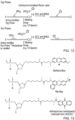
- the one or more modified residues can be, for example, an abasic residue, tetrahydrofuran (d-spacer), or a dR-O-[C]n nucleotide that lacks a base and has a sugar with a carbon at a 1' position, and wherein the carbon at the 1' position is covalently linked through an oxygen atom to a carbon atom of a linker containing n carbon atoms, in which the linker is conjugated to the redox moiety.
- the redox moiety can be a phenothiazine, a phenoxazine, a ferrocene, ruthenium (II), osmium (II), an anthraquinone, a phenazine, or derivatives thereof.
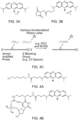
- the redox moiety can be a phenothiazine derivative consisting of methylene blue or PZ9 or one of the following structures:
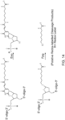
- the modified residue conjugated to the redox moiety can have the structure of: or
- the modified residue conjugated to a redox moiety has a structure selected from the group consisting of: and wherein represents a redox moiety.
- the disclosure features an oligonucleotide probe comprising a 3' blocking group to prevent polymerase extension.
- the disclosure features an oligonucleotide probe comprising one or more modified internal residues, e.g., a modified internal residue, conjugated to a redox moiety and a 3' blocking group to prevent polymerase extension.
- modified internal residues e.g., a modified internal residue, conjugated to a redox moiety and a 3' blocking group to prevent polymerase extension.
- the oligonucleotide probe comprises a nucleic acid sequence of AAGCAATTGAGGAGTGCCTGATTAAT[dR-RM]ATCCCTGGGTTTTG (SEQ ID NO:1); GTCTGGCTGTCAGTAAGTAT[dR-RM]CTAGAGTCCCGTTTT (SEQ ID NO: 2); TCAGCTACAATCAAGACTACTCGTTAA[dR-RM]TAATGAATCCTCA (SEQ ID NO: 3); or GCACACTTGTCACCTACATTTCTGATT[dR-RM]GTGGACTCTAACAT (SEQ ID NO: 4), wherein dR-RM represents a deoxyribonucleotide conjugated to RM, wherein RM represents a redox moiety.
- the oligonucleotide probe comprises a nucleic acid sequence of CATCAGCTTTTGGAGCTTGAGAGTCAT[T(methylene blue)]A[dSpacer]GTTTTTGAGCTTCAC (SEQ ID NO: 5), GAACCAAGAAGCATTRAGCAAAACCCAGGGA[T(methylene blue)] [dSpacer]ATTAATCAGGCACTC (SEQ ID NO: 6), or ACTGATGATATTCAGC[T(methylene blue)]ACAA[T(methylene blue)]CAAGAC[T(methylene blue)]A[dSpacer]TCGTTAAGTAATGAA (SEQ ID NO: 7), wherein "dspacer" is an abasic site mimic.
- the oligonucleotide can comprise more than one modified residues, e.g, two or more, three or more, or four or more modified residues, wherein each modified residue is conjugated to a redox moiety.
- the oligonucleotide probe can comprise a first modified residue conjugated to a first redox moiety at a first internal site and a second modified residue conjugated to a second redox moiety at a second internal site.
- the first redox moiety and the second redox moiety can be the same, or different.
- the oligonucleotide probe is cleavable by a nuclease selected from the group consisting of AP endonuclease, DNA glycosylase/lyase and DNA glycosylase at the non-complementary or modified residue when the oligonucleotide probe is hybridized to a complementary nucleic acid sequence.
- the oligonucleotide probe can be, for example, 12 to 30, 12-40, or 12-60 residues in length.
- the disclosure features a composition comprising an oligonucleotide probe as described herein and a nuclease.
- the nuclease is capable of cleaving the oligonucleotide probe at the non-complementary or modified residue when hybridized to a complementary nucleic acid sequence.
- the nuclease is selected from the group consisting of AP endonuclease, DNA glycosylase/lyase and DNA glycosylase.
- the nuclease can be Fpg or ExoIII.
- the composition can be lyophilized.
- the disclosure features a composition
- a composition comprising an oligonucleotide probe as described herein, a recombinase agent, one or more nucleic acid primers, and a nuclease.
- the nuclease is capable of cleaving the oligonucleotide probe at the non-complementary or modified residue when hybridized to a complementary nucleic acid sequence.
- the nuclease is selected from the group consisting of AP endonuclease, DNA glycosylase/lyase and DNA glycosylase.
- the nuclease can be Fpg or ExoIII.
- the composition can be lyophilized.
- the disclosure features a method of identifying the presence or absence of a target nucleic acid sequence in a sample, the method comprising performing isothermal nucleic acid amplification on the sample to form a nucleic acid amplification mixture, contacting the nucleic acid amplification mixture with an oligonucleotide probe and at least one nuclease, wherein the oligonucleotide probe comprises a sequence complementary to the target polynucleotide sequence, one or more modified internal residues conjugated to a redox moiety, and a 3' blocking group to prevent polymerase extension, and identifying the presence or absence of a target nucleic acid sequence in a sample by electrochemically detecting a signal of a cleaved redox moiety, wherein a detectable signal is indicative of the presence of the target nucleic acid sequence.
- the step of contacting the nucleic acid amplification mixture with an oligonucleotide probe and at least one nuclease can be performed by contacting the mixture with the oligonucleotide probe and the least one nuclease concurrently.
- the step of contacting the nucleic acid amplification mixture with an oligonucleotide probe and at least one nuclease can be performed by contacting the mixture with the oligonucleotide probe and the least one nuclease sequentially.
- the step of performing isothermal nucleic acid amplification is conducted in the presence of the nuclease and the oligonucleotide probe.
- the nuclease is capable of cleaving the oligonucleotide probe at the modified internal residue when hybridized to a complementary target nucleic acid sequence.
- the nuclease is not capable of cleaving the oligonucleotide probe unless hybridized to a complementary nucleic acid sequence.
- Electrochemically detecting a signal can be performed using pulse voltammetry, amperometry, or impedance measurement.
- the redox label prior to cleavage of the oligonucleotide probe by the nuclease, does not generate an electrical current in response to the electrical potential applied across electrodes in contact with the nucleic acid amplification mixture.
- the redox moiety can be a phenothiazine, a phenoxazine, a ferrocene, ruthenium (II), osmium (II), an anthraquinone, a phenazine, or derivatives thereof.
- the redox moiety can be a phenothiazine derivative such as methylene blue and PZ9.
- the oligonucleotide probe comprises a nucleic acid sequence that is at least 90% identical to CATCAGCTTTTGGAGCTTGAGAGTCAT[T(methylene blue)]A[dSpacer]GTTTTTGAGCTTCAC (SEQ ID NO: 5), GAACCAAGAAGCATTRAGCAAAACCCAGGGA[T(methylene blue)][dSpacer]ATTAATCAGGCACTC (SEQ ID NO: 6), or ACTGATGATATTCAGC[T(methylene blue)]ACAA[T(methylene blue)]CAAGAC[T(methylene blue)]A[dSpacer]TCGTTAAGTAATGAA (SEQ ID NO: 7).
- the oligonucleotide probe comprises a nucleic sequence selected from the group consisting of nucleic acid sequences at least 90% identical to AAGCAATTGAGGAGTGCCTGATTAAT[dR-RM]ATCCCTGGGTTTTG (SEQ ID NO:1), GTCTGGCTGTCAGTAAGTAT[dR-RM]CTAGAGTCCCGTTTT (SEQ ID NO: 2); TCAGCTACAATCAAGACTACTCGTTAA[dR-RM]TAATGAATCCTCA (SEQ ID NO: 3); and GCACACTTGTCACCTACATTTCTGATT[dR-RM]GTGGACTCTAACAT (SEQ ID NO: 4), wherein RM represents a redox moiety.
- the oligonucleotide probe comprises a nucleic sequence selected from the group consisting of nucleic acid sequences at least 90% identical to CATCAGCTTTTGGAGCTTGAGAGTCAT[T(methylene blue)]A[dSpacer]GTTTTTGAGCTTCAC (SEQ ID NO: 5), GAACCAAGAAGCATTRAGCAAAACCCAGGGA[T(methylene blue)][dSpacer]ATTAATCAGGCACTC (SEQ ID NO: 6), and ACTGATGATATTCAGC[T(methylene blue)]ACAA[T(methylene blue)]CAAGAC[T(methylene blue)]A[dSpacer]TCGTTAAGTAATGAA (SEQ ID NO: 7).
- the oligonucleotide probe comprises a first modified residue conjugated to a first redox moiety at a first internal site and a second modified residue conjugated to a second redox moiety at a second internal site.
- the first redox moiety and the second redox moiety are the same, or are different.
- the oligonucleotide has a nucleotide sequence substantially complementary to a gene sequence of any of the organisms described herein, e.g., any of the bacteria, fungi, parasite, and/or viruses described herein.
- the oligonucleotide has a nucleotide sequence substantially complementary to a Streptococcus gene sequence (e.g., Streptococcus pyogenes gene sequence), an Influenza A gene sequence, an Influenza B gene sequence, a Campylobacter gene sequence, a Salmonella gene sequence, a Neisseria gene sequence, a Chlamydia gene sequence, or a Listeria gene sequence.
- a Streptococcus gene sequence e.g., Streptococcus pyogenes gene sequence
- an Influenza A gene sequence e.g., an Influenza B gene sequence
- Campylobacter gene sequence e.g., a Salmonella gene sequence
- Neisseria gene sequence e.g., a Neisseria gene sequence
- Chlamydia gene sequence e.g., Chlamydia gene sequence
- the oligonucleotide probe is cleavable by a nuclease selected from the group consisting of AP endonuclease, DNA glycosylase/lyase and DNA glycosylase at the non-complementary or modified residue when hybridized to a complementary nucleic acid sequence.
- the disclosure provides a method comprising performing a first round of amplification on a target nucleic acid comprising a target polynucleotide sequence to form a first amplified polynucleotide product, performing a second round of amplification on the first amplified polynucleotide product to form a second amplified polynucleotide product comprising the target polynucleotide sequence, wherein the second amplified polynucleotide product comprises a smaller polynucleotide sequence completely contained within the first amplified polynucleotide product, contacting the second amplified polynucleotide product with a first oligonucleotide probe and a at least one nuclease, the first oligonucleotide probed comprising one or more internal non-complementary or modified residue conjugated to a redox moiety and having a sequence complementary to the target polynucleotide sequence to form a double strand
- the disclosure provides a method comprising performing a first round of amplification on a target nucleic acid comprising a target polynucleotide sequence to form a first amplified polynucleotide product; performing additional successive rounds of amplification on the first amplified polynucleotide product to form additional amplified polynucleotide products, each product comprising the target polynucleotide sequence, wherein the amplified polynucleotide product from each successive n+1 round of amplification comprises a smaller polynucleotide sequence completely contained within the amplified polynucleotide product of the prior nth round; contacting the second amplified polynucleotide product with a first oligonucleotide probe and a at least one nuclease, the first oligonucleotide probed comprising one or more internal non-complementary or modified residue conjugated to a redox moiety and having a sequence complementary to the
- the nuclease is capable of cleaving the oligonucleotide probe at the modified internal residue when hybridized to a complementary target nucleic acid sequence. In some instances, the nuclease is not capable of cleaving the oligonucleotide probe unless hybridized to a complementary nucleic acid sequence.
- the process of amplifying the first and second amplified polynucleotide product comprises Recombinase Polymerase amplification (RPA) or nicking and extension amplification reaction (NEAR).
- RPA Recombinase Polymerase amplification
- NEAR nicking and extension amplification reaction
- electrochemically detecting a signal is performed using differential pulse voltammetry, amperometry, or impedance measurement.
- the redox label prior to cleavage of the oligonucleotide probe by the nuclease, does not generate an electrical current in response to the electrical potential applied across electrodes in contact with the nucleic acid amplification mixture.
- the redox moiety is selected from the group consisting of a phenothiazine, a phenoxazine, a ferrocene, ruthenium (II), osmium (II), an anthraquinone, a phenazine, and derivatives thereof.
- the redox moiety is a phenothiazine derivative selected from methylene blue or PZ9.
- the modified internal residue conjugated to a redox moiety has a structure selected from the group consisting of: and Formula III. In some instances, wherein the modified internal residue conjugated to a redox moiety has a structure of: wherein represents a redox moiety.
- the oligonucleotide can comprise more than one modified residues, e.g, two or more, three or more, or four or more modified residues, wherein each modified residue is conjugated to a redox moiety.
- the oligonucleotide probe can comprise a first modified residue conjugated to a first redox moiety at a first internal site and a second modified residue conjugated to a second redox moiety at a second internal site.
- the first redox moiety and the second redox moiety can be the same, or different.
- the oligonucleotide probe is cleavable by a nuclease, selected from, AP endonuclease, DNA glycosylase/lyase or DNA glycosylase, at the non-complementary or modified residue when hybridized to a complementary nucleic acid sequence.
- a nuclease selected from, AP endonuclease, DNA glycosylase/lyase or DNA glycosylase, at the non-complementary or modified residue when hybridized to a complementary nucleic acid sequence.
- one or more includes at least one, more suitably, one, two, three, four, five, ten, twenty, fifty, etc., of the item to which "one or more” refers.
- first, second, third and the like are used in this disclosure in their relative sense only. It will be understood that, unless otherwise noted, those terms are used merely as a matter of convenience in the description of one or more of the embodiments. The terms “first”, “second”, “third” and the like are only used to distinguish one element from another element, and the scope of the rights of the disclosed technology should not be limited by these terms. For example, a first element may be designated as a second element, and similarly the second element may be designated as the first element.
- sample refers to a biological material that is isolated from its environment (e.g., blood or tissue from an animal, cells, or conditioned media from tissue culture) and is suspected of containing, or known to contain an analyte or other desired material.
- a sample can also be a partially purified fraction of a tissue or bodily fluid, e.g., from a subject having a specific disease or condition.
- a sample can also be a crude sample or a sample that has not been purified.
- a sample can be diluted, treated with a lysing solution, or treated with an enzyme prior to use in the methods described herein.
- a reference sample can be a "normal" sample, from a donor not having the disease or condition.
- a reference sample can also be from an untreated donor or cell culture not treated with an active agent (e.g., no treatment or administration of vehicle only) or not subjected to conditions to induce a disease state.
- a reference sample can also be taken at a "zero time point" prior to contacting the cell with the agent to be tested.
- the term "patient” or “subject” is used throughout the specification to describe an animal, human or non-human, rodent or non-rodent, to whom treatment according to the methods of the present invention is provided.
- Veterinary and non-veterinary applications are contemplated.
- the term includes but is not limited to birds, reptiles, amphibians, and mammals, e.g., humans, monkeys and other primates, pigs, rodents such as mice and rats, rabbits, guinea pigs, hamsters, cows, horses, cats, dogs, sheep and goats.
- Preferred subjects are humans (adult, juvenile, or neonate), farm animals, and domestic pets such as cats and dogs.
- nucleic acid refers to primers, probes, oligomer fragments to be detected, oligomer controls and unlabeled blocking oligomers and shall be generic to polydeoxyribonucleotides (containing 2-deoxy-D-ribose), to polyribonucleotides (containing D-ribose), and to any other type of polynucleotide which is an N glycoside of a purine or pyrimidine base, or modified purine or pyrimidine bases.
- nucleic acid refers only to the primary structure of the molecule. Thus, these terms include double- and single-stranded DNA, as well as double- and single stranded RNA.
- oligonucleotide refers to a nucleic acid comprised of a sequence of approximately at least 6 nucleotides, preferably at least about 10-12 nucleotides, and more preferably at least about 15-20 nucleotides corresponding to a region of the designated nucleotide sequence. "Corresponding" means identical to or complementary to the designated sequence.
- target nucleic acid refers to a region of the nucleic acid which is to be either amplified, detected or both.
- the target sequence resides between the two primer sequences used for amplification.
- probe or "oligonucleotide probe” are used interchangeably and refer to a labeled oligonucleotide which forms a duplex structure with a sequence in the target nucleic acid, due to complementarity of at least one sequence in the probe with a sequence in the target region.
- the probes are attached onto a solid surface (e.g., an electrode surface).
- Oligonucleotide probes e.g., redox labeled oligonucleotides
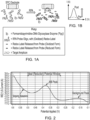
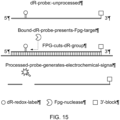
- FIG. 1 The principal underlying this electrochemical (or 'Echem') detection method is depicted in FIG. 1 .
- the disclosure provides oligonucleotide probes labeled with one or more electrochemically active labels, including, for example a redox moiety.
- label refers to any atom or molecule which can be used to provide a detectable signal, including a quantifiable signal, and which can be attached to a nucleic acid or protein.
- Labeled oligonucleotide probes provided herein are capable of producing a unique and detectable electrochemical signal following release of the redox moiety from hybridization of the oligonucleotide probe to a target nucleic acid sequence and sequence-dependent cleaving (i.e., release) of the redox moiety from the oligonucleotide.
- a peak in current is observed at a voltage which corresponds to the oxidation potential of the label.
- a 'redox moiety' or 'redox label' refers to any atom or molecule that may be detected using a reduction potential for electrochemical read-out.
- redox moieties suitable for use in the oligonucleotides disclosed herein include, for example, ferricyanide, ferrocene, nicotinamide adenine dinucleotide (phosphate), diamines, phenanthroline, ruthenium (II), osmium (II), anthraquinone, quinone, phenothiazine, phenazine, phenoxazine, dichlorophenolindophenol tetrazolium dyes, phenylimino-benzophenoxazine, and derivatives thereof.
- redox moieties suitable for use in the oligonucleotides disclosed herein can be found, for example, in EP1481083 , EP1808494 and US6134461 .
- the variety of moieties that may be coupled to the residue suggest multiple strategies to detect successful processing of the probe as evidence of the presence of a specific target nucleic acid.
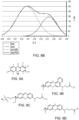
- phenothiazine derivatives suitable for use as redox moieties in the compositions and methods disclosed herein are provided in Table 1.
- Table 1. Designation Chemical Name and Structure ⁇ Methylene Blue 3,7-bis(Dimethylamino)-phenothiazin-5-ium chloride
- PZ1 Mono(triethylammonium) 5-(3-phenothiazinylideneamino)isophthalate
- PZ2 5-(2-Methoxy-3-phenothiazinylideneamino)isophthalic acid
- PZ3 5-(2-Trifluoromethyl-3-phenothiazinylideneamino)isophthalic acid
- PZ6* m -(7-( m -
- Phenoxazines represent a distinct class of redox-active organic compounds that bear a structural similarity to the phenothiazines described above.
- a non-limiting list of phenoxazines derivatives suitable for use as redox moieties in the compositions and methods disclosed herein are provided in Table 2.
- Phenazines represent a distinct class of redox-active organic compounds that bear a structural resemblance to the phenothiazines and phenoxazines described above.
- a non-limiting example of a phenazine suitable for use as a redox moiety in the compositions and methods is provided below (Formula VI):
- a further class of redox-active organic compounds suitable for use as redox moieties in the compositions and methods are anthraquinones and derivatives thereof.
- Anthraquinone derivatives suitable for use as redox moieties in the compositions and methods disclosed herein are provided in Table 3. Table 3.
- Metal complexes' which are defined by the identity of the metal and its associated ligands, are exemplary redox moieties suitable for use in the oligonucleotide probes disclosed herein.
- Ruthenium (II) complexes are provided as a further class of redox moieties suitable for use as redox moieties in the compositions and methods for electrochemical (Echem) detection described herein.
- the commercially available NHS ester of a Ru(II) complex is provided (Formula II, Sigma-Aldrich product # 96631):
- Osmium (II) complexes are provided as a further class of redox moieties suitable for use as redox moieties in the compositions and methods for Echem detection described herein.
- Chemical structure of the octahedral Os(II) complex synthesized in-house, [Os(bpy)2(cbpy)](PF6) 2 is provided (Formula III):
- Iron (II) complexes are provided as a further class of redox moieties suitable for use as redox moieties in the compositions and methods for Echem detection described herein.
- Chemical structures of exemplary carboxylic acid-functionalized ferrocene derivatives for RPA probe labelling are provided below (Formula IX and X):
- the redox moiety is conjugated to the oligonucleotide probe.
- the redox moiety can be conjugated to an internal non-complementary or modified residue.
- Exemplary redox-moieties modified for conjugation to an oligonucleotide probe of the present disclosure are described herein and shown below:
- the oligonucleotide probe can comprise a 3 rd , 4 th , 5 th , or 6 th modified residue conjugated to a 3 rd , 4 th , 5 th or 6 th redox moiety respectively at a 3 rd , 4 th , 5 th , or 6 th internal site respectively.
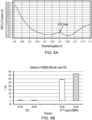
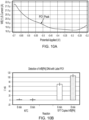
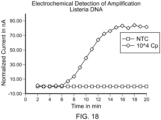
- Each time point on each graph was derived from methylene blue (MB) peak height current obtained by single differential pulse voltammetry (DPV) sweep between -0.5V and -0.2V vs Ag/AgCl.
- DPV parameters pulse width 10ms, step 5mV, sweep rate 20mV/s, amplitude 75mV).
Landscapes
- Chemical & Material Sciences (AREA)
- Life Sciences & Earth Sciences (AREA)
- Organic Chemistry (AREA)
- Health & Medical Sciences (AREA)
- Engineering & Computer Science (AREA)
- Wood Science & Technology (AREA)
- Zoology (AREA)
- Molecular Biology (AREA)
- Biochemistry (AREA)
- Proteomics, Peptides & Aminoacids (AREA)
- Biotechnology (AREA)
- Genetics & Genomics (AREA)
- General Health & Medical Sciences (AREA)
- Analytical Chemistry (AREA)
- General Engineering & Computer Science (AREA)
- Bioinformatics & Cheminformatics (AREA)
- Microbiology (AREA)
- Immunology (AREA)
- Physics & Mathematics (AREA)
- Biophysics (AREA)
- Chemical Kinetics & Catalysis (AREA)
- General Chemical & Material Sciences (AREA)
- Measuring Or Testing Involving Enzymes Or Micro-Organisms (AREA)
- Saccharide Compounds (AREA)
Claims (19)
- Oligonukleotidsonde, umfassend:einen oder mehrere modifizierte interne Reste, die an einen Redoxanteil konjugiert sind; undeine 3'-Blockiergruppe, um eine Polymeraseverlängerung zu verhindern,wobei der modifizierte Rest ein dR-O-[C]n-Nukleotid ist, dem eine Base fehlt und das einen Zucker mit einem Kohlenstoff an einer 1'-Position aufweist, und wobei der Kohlenstoff an der 1'-Position durch ein Sauerstoffatom kovalent mit einem Kohlenstoffatom eines Linkers, der n Kohlenstoffatome enthält, verknüpft ist, wobei der Linker an den Redoxanteil konjugiert ist,und wobei die Oligonukleotidsonde durch eine Nuklease, die aus der Gruppe bestehend aus AP-Endonuklease, DNA-Glykosylase/Lyase und DNA-Glykosylase ausgewählt ist, an dem nichtkomplementären oder modifizierten Rest spaltbar ist, wenn sie an eine komplementäre Nukleinsäuresequenz hybridisiert ist.
- Oligonukleotidsonde nach Anspruch 1, wobei der Redoxanteil ein Reduktionspotential von -0,28 V bis -0,52 V aufweist.
- Oligonukleotidsonde nach Anspruch 1 oder Anspruch 2, wobei der Redoxanteil ausgewählt ist aus der Gruppe bestehend aus:(a) einem Phenothiazin, einem Phenoxazin, einem Ferrocen, Ruthenium(II), Osmium(II), einem Anthrachinon, einem Phenazin und Derivaten davon, optional wobei der Redoxanteil ein Phenothiazinderivat ist, das aus Methylenblau oder PZ9 besteht; oder(b) den folgenden Strukturen:


- Oligonukleotidsonde nach einem der Ansprüche 1 bis 3, wobei der modifizierte Rest, der an einen Redoxanteil konjugiert ist, eine Struktur aufweist, die ausgewählt ist aus der Gruppe bestehend aus:(a)

 (b) :
(b) :
- Oligonukleotidsonde nach einem der Ansprüche 1 bis 4, umfassend eine Nukleotidsequenz mit einer Sequenz, die zu mindestens 90 % mit einer Nukleinsäuresequenz identisch ist, die ausgewählt ist aus der Gruppe bestehend aus:AAGCAATTGAGGAGTGCCTGATTAAT[dR-RM]ATCCCTGGGTTTTG (SEQ ID Nr. 1);GTCTGGCTGTCAGTAAGTAT[dR-RM]CTAGAGTCCCGTTTT (SEQ ID Nr. 2);TCAGCTACAATCAAGACTACTCGTTAA[dR-RM]TAATGAATCCTCA (SEQ ID Nr. 3) undGCACACTTGTCACCTACATTTCTGATT[dR-RM]GTGGACTCTAACAT (SEQ ID Nr. 4),wobei dR-RM ein Desoxyribonukleotid ist, das an einen Redoxanteil konjugiert ist.
- Oligonukleotidsonde nach Anspruch 1 oder Anspruch 2, umfassend eine Nukleotidsequenz mit einer Sequenz, die zu mindestens 90 % mit einer Nukleinsäuresequenz identisch ist, die ausgewählt ist aus der Gruppe bestehend aus:CATCAGCTTTTGGAGCTTGAGAGTCAT[T(mb)]A[dSpacer]GTTTTTGAGC TTCAC (SEQ ID Nr. 5);GAACCAAGAAGCATTRAGCAAAACCCAGGGA[T(mb)][dSpacer]ATTAATCAGGCA CTC (SEQ ID Nr. 6) undACTGATGATATTCAGC[T(mb)]ACAA[T(mb)]CAAGAC[T(mb)]A[dSpacer]TC GTTAAGTAATGAA (SEQ ID Nr. 7), wobei mb Methylenblau ist.
- Oligonukleotidsonde nach einem der Ansprüche 1 bis 4, umfassend mehr als einen modifizierten Rest, wobei jeder modifizierte Rest an einen Redoxanteil konjugiert ist, optional umfassend einen ersten modifizierten Rest, der an einer ersten internen Stelle an einen ersten Redoxanteil konjugiert ist, und einen zweiten modifizierten Rest, der an einer zweiten internen Stelle an einen zweiten Redoxanteil konjugiert ist, wobei (i) der erste Redoxanteil und der zweite Redoxanteil gleich sind oder (ii) der erste Redoxanteil und der zweite Redoxanteil unterschiedlich sind.
- Oligonukleotidsonde nach einem der Ansprüche 1 bis 7, wobei die Oligonukleotidsonde 12 bis 30, 12-40 oder 12-60 Reste lang ist.
- Zusammensetzung, umfassend:das Oligonukleotid nach einem der Ansprüche 1 bis 8;ein Rekombinasemittel;einen oder mehrere Nukleinsäureprimer undeine Nuklease, die aus der Gruppe bestehend aus AP-Endonuklease, DNA-Glykosylase/Lyase und DNA-Glykosylase ausgewählt ist,optional wobei die Zusammensetzung lyophilisiert ist.
- Zusammensetzung nach Anspruch 9, wobei die Nuklease dazu fähig ist, die Oligonukleotidsonde an dem nichtkomplementären oder modifizierten Rest zu spalten, wenn sie an eine komplementäre Nukleinsäuresequenz hybridisiert ist, optional wobei die Nuklease Fpg oder ExoIII ist.
- Verfahren, umfassend:Inkontaktbringen einer Oligonukleotidsonde nach einem der Ansprüche 1 bis 8, wobei die besagte Oligonukleotidsonde eine Sequenz umfasst, die komplementär zu einer Zielpolynukleotidsequenz ist, mit der Zielnukleinsäuresequenz mit einem Nukleinsäureamplifikationsgemischs;Inkontaktbringen des Gemischs mit einer Nuklease undelektrochemisches Nachweisen eines Signals von dem gespaltenen Redoxanteil, wobei ein nachweisbares Signal die Gegenwart einer Zielnukleinsäuresequenz angibt.
- Verfahren nach Anspruch 11, wobei die Nuklease dazu fähig ist, die Oligonukleotidsonde an dem nichtkomplementären oder modifizierten Rest zu spalten, wenn sie an eine komplementäre Nukleinsäuresequenz hybridisiert ist, wobei die Nuklease nicht dazu in der Lage ist, die Oligonukleotidsonde zu spalten, sofern sie nicht an eine komplementäre Nukleinsäuresequenz hybridisiert ist.
- Verfahren nach Anspruch 11 oder Anspruch 12, wobei das elektrochemische Nachweisen eines Signals unter Verwendung von Differentialpulsvoltammetrie, Amperometrie oder Impedanzmessung durchgeführt wird, und/oder wobei der Redoxmarker vor dem Spalten der Oligonukleotidsonde keinen elektrischen Strom als Reaktion auf das elektrische Potential, das über Elektroden in Kontakt mit dem Reaktionsgemisch angewendet wird, erzeugt.
- Verfahren nach einem der Ansprüche 11 bis 13, wobei das Oligonukleotid eine Nukleotidsequenz aufweist, die im Wesentlichen komplementär zu einer Gensequenz ist, die aus der Gruppe bestehend aus einer Streptococcus-Gensequenz, einer Influenza-A-Gensequenz, einer Influenza-B-Gensequenz, einer Campylobacter-Gensequenz, einer Salmonella-Gensequenz, einer Neisseria-Gensequenz, einer Chlamydia-Gensequenz oder einer Listeria-Gensequenz ausgewählt ist.
- Verfahren, umfassend:Durchführen einer ersten Amplifikationsrunde an einer Zielnukleinsäure, umfassend eine Zielpolynukleotidsequenz, um ein erstes amplifiziertes Polynukleotidprodukt zu bilden;Durchführen zusätzlicher sukzessiver Amplifikationsrunden an dem ersten amplifizierten Polynukleotidprodukt, um zusätzliche amplifizierte Polynukleotidprodukte zu bilden, wobei jedes Produkt die Zielpolynukleotidsequenz umfasst, wobei das amplifizierte Polynukleotidprodukt aus jeder sukzessiven n+1 Amplifikationsrunde eine kleinere Polynukleotidsequenz umfasst, die vollständig in dem amplifizierten Polynukleotidprodukt der vorherigen n-ten Runde enthalten ist;Inkontaktbringen eines zweiten amplifizierten Polynukleotidprodukts mit einem ersten Oligonukleotid, wobei das besagte Oligonukleotid eine Oligonukleotidsonde nach einem der Ansprüche 1 bis 8 ist, und mindestens einer Nuklease, um ein doppelsträngiges Nukleinsäureprodukt zu bilden;Spalten des Redoxanteils von dem doppelsträngigen Nukleinsäureprodukt undelektrochemisches Nachweisen eines Signals von dem gespaltenen Redoxanteil, wobei ein nachweisbares Signal die Gegenwart des zweiten amplifizierten Polynukleotidprodukts angibt.
- Verfahren nach Anspruch 15, wobei(i) die Nuklease dazu fähig ist, die Oligonukleotidsonde an dem modifizierten internen Rest zu spalten, wenn sie an eine komplementäre Zielnukleinsäuresequenz hybridisiert ist, oder(ii) die Nuklease nicht dazu fähig ist, die Oligonukleotidsonde zu spalten, sofern sie nicht an eine komplementäre Nukleinsäuresequenz hybridisiert ist.
- Verfahren nach Anspruch 15, wobei der Vorgang des Amplifizierens des ersten und des zweiten amplifizierten Polynukleotidprodukts einer Rekombinase-Polymerase-Amplifikation (RPA) oder eine Einzelstrangbruchsenzym-Amplifikationsreaktion (NEAR) umfasst.
- Verfahren nach Anspruch 15, wobei das elektrochemische Nachweisen eines Signals unter Verwendung von Differentialpulsvoltammetrie, Amperometrie oder Impedanzmessung durchgeführt wird.
- Verfahren nach Anspruch 15, wobei der Redoxmarker vor der Spaltung der Oligonukleotidsonde durch die Nuklease keinen elektrischen Strom als Reaktion auf das elektrische Potential, das über Elektroden in Kontakt mit dem Nukleinsäureamplifikationsgemisch angewendet wird, erzeugt.
Priority Applications (1)
| Application Number | Priority Date | Filing Date | Title |
|---|---|---|---|
| EP25164444.9A EP4556571A3 (de) | 2016-02-26 | 2017-02-24 | Redoxmarkierte oligonukleotidsonden und deren verwendung |
Applications Claiming Priority (2)
| Application Number | Priority Date | Filing Date | Title |
|---|---|---|---|
| US201662300242P | 2016-02-26 | 2016-02-26 | |
| PCT/US2017/019446 WO2017147486A1 (en) | 2016-02-26 | 2017-02-24 | Redox labeled oligonucleotide probes and their use |
Related Child Applications (1)
| Application Number | Title | Priority Date | Filing Date |
|---|---|---|---|
| EP25164444.9A Division EP4556571A3 (de) | 2016-02-26 | 2017-02-24 | Redoxmarkierte oligonukleotidsonden und deren verwendung |
Publications (3)
| Publication Number | Publication Date |
|---|---|
| EP3419989A1 EP3419989A1 (de) | 2019-01-02 |
| EP3419989A4 EP3419989A4 (de) | 2019-11-06 |
| EP3419989B1 true EP3419989B1 (de) | 2025-03-19 |
Family
ID=59685695
Family Applications (2)
| Application Number | Title | Priority Date | Filing Date |
|---|---|---|---|
| EP25164444.9A Pending EP4556571A3 (de) | 2016-02-26 | 2017-02-24 | Redoxmarkierte oligonukleotidsonden und deren verwendung |
| EP17757346.6A Active EP3419989B1 (de) | 2016-02-26 | 2017-02-24 | Redox-markierte oligonukleotidsonden und deren verwendung |
Family Applications Before (1)
| Application Number | Title | Priority Date | Filing Date |
|---|---|---|---|
| EP25164444.9A Pending EP4556571A3 (de) | 2016-02-26 | 2017-02-24 | Redoxmarkierte oligonukleotidsonden und deren verwendung |
Country Status (4)
| Country | Link |
|---|---|
| US (2) | US11649484B2 (de) |
| EP (2) | EP4556571A3 (de) |
| ES (1) | ES3032616T3 (de) |
| WO (1) | WO2017147486A1 (de) |
Families Citing this family (9)
| Publication number | Priority date | Publication date | Assignee | Title |
|---|---|---|---|---|
| US10196678B2 (en) | 2014-10-06 | 2019-02-05 | ALVEO Technologies Inc. | System and method for detection of nucleic acids |
| BR112018067739A2 (pt) * | 2016-03-04 | 2019-01-08 | Alere San Diego Inc. | amplificação da polimerase recombinase nested automatizada |
| KR102461735B1 (ko) | 2016-09-23 | 2022-11-01 | 알베오 테크놀로지스 인크. | 분석물을 검출하기 위한 방법 및 조성물 |
| AU2018227436A1 (en) | 2017-02-28 | 2019-09-12 | Abbott Diagnostics Scarborough, Inc. | Microfluidic devices and related methods |
| CN108841919B (zh) * | 2018-06-12 | 2021-07-06 | 艾吉泰康生物科技(北京)有限公司 | 一种嵌合式sda法制备探针 |
| AU2019401601A1 (en) | 2018-12-20 | 2021-07-15 | Alveo Technologies, Inc. | Handheld impedance-based diagnostic test system for detecting analytes |
| AU2019402900A1 (en) * | 2018-12-20 | 2021-07-15 | Alveo Technologies, Inc. | Isothermal amplification with electrical detection |
| US12472492B2 (en) | 2020-08-14 | 2025-11-18 | Alveo Technologies, Inc. | Systems and methods of sample depositing and testing |
| IT202200021390A1 (it) * | 2022-10-18 | 2024-04-18 | Francesco Ricci | Biosensori elettrochimici trascrizionali senza l’ausilio di cellule per il rilevamento di analiti molecolari e relativo metodo |
Family Cites Families (17)
| Publication number | Priority date | Publication date | Assignee | Title |
|---|---|---|---|---|
| US6365346B1 (en) * | 1998-02-18 | 2002-04-02 | Dade Behring Inc. | Quantitative determination of nucleic acid amplification products |
| US6134461A (en) | 1998-03-04 | 2000-10-17 | E. Heller & Company | Electrochemical analyte |
| JP2005519630A (ja) * | 2001-04-03 | 2005-07-07 | クリニカル・マイクロ・センサーズ・インコーポレイテッド | 異なるレドックス電位を有する標識を用いた核酸反応 |
| US7399590B2 (en) | 2002-02-21 | 2008-07-15 | Asm Scientific, Inc. | Recombinase polymerase amplification |
| DK1499738T3 (da) | 2002-02-21 | 2008-11-17 | Asm Scient Inc | Recombinase-polymerease-amplifikation |
| GB0205455D0 (en) | 2002-03-07 | 2002-04-24 | Molecular Sensing Plc | Nucleic acid probes, their synthesis and use |
| US20040086892A1 (en) * | 2002-11-06 | 2004-05-06 | Crothers Donald M. | Universal tag assay |
| WO2007011946A2 (en) * | 2005-07-15 | 2007-01-25 | Applera Corporation | Detection of nucleic acid amplification |
| ES2420831T3 (es) | 2005-07-25 | 2013-08-27 | Alere San Diego, Inc. | Procedimientos para multiplexar la ampliación de la recombinasa polimerasa |
| US8071308B2 (en) | 2006-05-04 | 2011-12-06 | Alere San Diego, Inc. | Recombinase polymerase amplification |
| US9689031B2 (en) | 2007-07-14 | 2017-06-27 | Ionian Technologies, Inc. | Nicking and extension amplification reaction for the exponential amplification of nucleic acids |
| JP5847076B2 (ja) | 2009-05-20 | 2016-01-20 | バイオサイト インコーポレイテッド | Dnaグリコシラーゼ/リアーゼおよびapエンドヌクレアーゼ基質 |
| ES3022638T3 (en) | 2009-06-05 | 2025-05-28 | Abbott Diagnostics Scarborough Inc | Recombinase polymerase amplification reagents |
| EP2459585B1 (de) | 2009-07-30 | 2024-09-04 | Icahn School of Medicine at Mount Sinai | Influenzaviren und ihre verwendung |
| GB201021896D0 (en) | 2010-12-22 | 2011-02-02 | Atlas Genetics Ltd | Novel compounds and their use in analytical methods |
| JP5961247B2 (ja) * | 2011-04-07 | 2016-08-02 | アリーア サン ディエゴ, インコーポレイテッド | リコンビナーゼポリメラーゼ増幅混合物のモニタリング |
| WO2013056241A2 (en) * | 2011-10-14 | 2013-04-18 | Pacific Biosciences Of California, Inc. | Real-time redox sequencing |
-
2017
- 2017-02-24 EP EP25164444.9A patent/EP4556571A3/de active Pending
- 2017-02-24 US US16/079,273 patent/US11649484B2/en active Active
- 2017-02-24 ES ES17757346T patent/ES3032616T3/es active Active
- 2017-02-24 EP EP17757346.6A patent/EP3419989B1/de active Active
- 2017-02-24 WO PCT/US2017/019446 patent/WO2017147486A1/en not_active Ceased
-
2023
- 2023-05-15 US US18/317,200 patent/US12275985B2/en active Active
Also Published As
| Publication number | Publication date |
|---|---|
| ES3032616T3 (en) | 2025-07-22 |
| EP3419989A4 (de) | 2019-11-06 |
| EP3419989A1 (de) | 2019-01-02 |
| US20190136300A1 (en) | 2019-05-09 |
| US20240052399A1 (en) | 2024-02-15 |
| EP4556571A3 (de) | 2025-09-03 |
| WO2017147486A1 (en) | 2017-08-31 |
| EP4556571A2 (de) | 2025-05-21 |
| US12275985B2 (en) | 2025-04-15 |
| US11649484B2 (en) | 2023-05-16 |
Similar Documents
| Publication | Publication Date | Title |
|---|---|---|
| US12275985B2 (en) | Redox labeled oligonucleotide probes and their use | |
| Fantoni et al. | A hitchhiker’s guide to click-chemistry with nucleic acids | |
| Samanta et al. | Nucleic‐acid structures as intracellular probes for live cells | |
| US12319963B2 (en) | Type V CRISPR/Cas effector proteins for cleaving ssDNAs and detecting target DNAs | |
| Yuan et al. | Universal and naked-eye gene detection platform based on the clustered regularly interspaced short palindromic repeats/Cas12a/13a system | |
| CA2770588C (en) | Target discriminative probe(td) having modified dual specificity oligonucleotide(mdso) and uses thereof | |
| JP6758474B2 (ja) | 等温増幅の成分およびプロセス | |
| JP5847076B2 (ja) | Dnaグリコシラーゼ/リアーゼおよびapエンドヌクレアーゼ基質 | |
| CN109001167B (zh) | 一种基于适配体和碳点的链置换信号放大荧光传感器检测三磷酸腺苷的方法及试剂盒 | |
| KR20220044681A (ko) | 샘플내 하나 이상의 표적 핵산 분석물을 검출하기 위한 키트, 및 이를 제조 및 이용하는 방법 | |
| KR20230080414A (ko) | 샘플에서 하나 이상의 표적 분석물을 검출하기 위한 키트 및 이의 제조 및 사용 방법 | |
| JP6876437B2 (ja) | 鎖侵入に基づくdna増幅法 | |
| Ortiz et al. | PCR incorporation of polyoxometalate modified deoxynucleotide triphosphates and their application in molecular electrochemical sensing of yersinia pestis | |
| CN106868111A (zh) | 利用通用TaqMan探针检测SNP的方法和试剂盒 | |
| Kuhn et al. | Labeling of unique sequences in double-stranded DNA at sites of vicinal nicks generated by nicking endonucleases | |
| Ravan | Translating nucleic-acid hybridization into universal DNA-reporter sequences | |
| Wu et al. | Engineering molecular beacons for intracellular imaging | |
| Huang et al. | Electrochemical detection of point mutation based on surface hybridization assay conjugated allele-specific polymerase chainreaction | |
| EP3230468B1 (de) | Verfahren und kits zum nachweis von antibiotikaresistenten bakterien | |
| WO2018020831A1 (ja) | 遺伝子変異を有するポリヌクレオチド配列の簡便検出法 | |
| Liu et al. | An ultrasensitive electrochemical DNA sensing strategy free from pre-immobilization via G-quadruplex based homogenous proximity hybridization | |
| US20110186448A1 (en) | Detection and discrimination of target dna sequence and single nucleotide polymorphism directly on double-stranded oligonucleotide and pcr product without denaturation of dsdna sample based on pna-dsdna hybrid and utilizing pna probe | |
| WO2010113452A1 (ja) | 遺伝子型の識別方法 | |
| Xue et al. | Exploring the Enhancement Effect of Dithiothreitol on CRISPR/Cas12b Biosensing System | |
| JP5707719B2 (ja) | 標的塩基配列の識別方法 |
Legal Events
| Date | Code | Title | Description |
|---|---|---|---|
| STAA | Information on the status of an ep patent application or granted ep patent |
Free format text: STATUS: THE INTERNATIONAL PUBLICATION HAS BEEN MADE |
|
| PUAI | Public reference made under article 153(3) epc to a published international application that has entered the european phase |
Free format text: ORIGINAL CODE: 0009012 |
|
| STAA | Information on the status of an ep patent application or granted ep patent |
Free format text: STATUS: REQUEST FOR EXAMINATION WAS MADE |
|
| 17P | Request for examination filed |
Effective date: 20180926 |
|
| AK | Designated contracting states |
Kind code of ref document: A1 Designated state(s): AL AT BE BG CH CY CZ DE DK EE ES FI FR GB GR HR HU IE IS IT LI LT LU LV MC MK MT NL NO PL PT RO RS SE SI SK SM TR |
|
| AX | Request for extension of the european patent |
Extension state: BA ME |
|
| DAV | Request for validation of the european patent (deleted) | ||
| DAX | Request for extension of the european patent (deleted) | ||
| A4 | Supplementary search report drawn up and despatched |
Effective date: 20191007 |
|
| RIC1 | Information provided on ipc code assigned before grant |
Ipc: C12P 19/34 20060101ALI20190930BHEP Ipc: C12Q 1/68 20180101ALI20190930BHEP Ipc: C07H 21/04 20060101AFI20190930BHEP |
|
| RIN1 | Information on inventor provided before grant (corrected) |
Inventor name: ORLOWSKI, GRZEGORZ ARTUR Inventor name: ARMES, NIALL A. Inventor name: ZHOU, CHENG Inventor name: PIEPENBURG, OLAF Inventor name: BOWLER, FRANK RAY Inventor name: GREETHAM, HAZEL LUCY |
|
| RAP1 | Party data changed (applicant data changed or rights of an application transferred) |
Owner name: ABBOTT DIAGNOSTICS SCARBOROUGH, INC. |
|
| STAA | Information on the status of an ep patent application or granted ep patent |
Free format text: STATUS: EXAMINATION IS IN PROGRESS |
|
| 17Q | First examination report despatched |
Effective date: 20220401 |
|
| P01 | Opt-out of the competence of the unified patent court (upc) registered |
Effective date: 20230530 |
|
| REG | Reference to a national code |
Ref country code: DE Ref legal event code: R079 Free format text: PREVIOUS MAIN CLASS: C07H0021040000 Ipc: C12Q0001681600 Ref country code: DE Ref legal event code: R079 Ref document number: 602017088401 Country of ref document: DE Free format text: PREVIOUS MAIN CLASS: C07H0021040000 Ipc: C12Q0001681600 |
|
| GRAP | Despatch of communication of intention to grant a patent |
Free format text: ORIGINAL CODE: EPIDOSNIGR1 |
|
| STAA | Information on the status of an ep patent application or granted ep patent |
Free format text: STATUS: GRANT OF PATENT IS INTENDED |
|
| RIC1 | Information provided on ipc code assigned before grant |
Ipc: C12P 19/34 20060101ALI20240313BHEP Ipc: C07H 21/04 20060101ALI20240313BHEP Ipc: C12Q 1/6816 20180101AFI20240313BHEP |
|
| INTG | Intention to grant announced |
Effective date: 20240410 |
|
| GRAJ | Information related to disapproval of communication of intention to grant by the applicant or resumption of examination proceedings by the epo deleted |
Free format text: ORIGINAL CODE: EPIDOSDIGR1 |
|
| STAA | Information on the status of an ep patent application or granted ep patent |
Free format text: STATUS: EXAMINATION IS IN PROGRESS |
|
| INTC | Intention to grant announced (deleted) | ||
| GRAP | Despatch of communication of intention to grant a patent |
Free format text: ORIGINAL CODE: EPIDOSNIGR1 |
|
| STAA | Information on the status of an ep patent application or granted ep patent |
Free format text: STATUS: GRANT OF PATENT IS INTENDED |
|
| INTG | Intention to grant announced |
Effective date: 20241002 |
|
| GRAS | Grant fee paid |
Free format text: ORIGINAL CODE: EPIDOSNIGR3 |
|
| GRAA | (expected) grant |
Free format text: ORIGINAL CODE: 0009210 |
|
| STAA | Information on the status of an ep patent application or granted ep patent |
Free format text: STATUS: THE PATENT HAS BEEN GRANTED |
|
| AK | Designated contracting states |
Kind code of ref document: B1 Designated state(s): AL AT BE BG CH CY CZ DE DK EE ES FI FR GB GR HR HU IE IS IT LI LT LU LV MC MK MT NL NO PL PT RO RS SE SI SK SM TR |
|
| REG | Reference to a national code |
Ref country code: GB Ref legal event code: FG4D |
|
| REG | Reference to a national code |
Ref country code: CH Ref legal event code: EP |
|
| REG | Reference to a national code |
Ref country code: DE Ref legal event code: R096 Ref document number: 602017088401 Country of ref document: DE |
|
| REG | Reference to a national code |
Ref country code: IE Ref legal event code: FG4D |
|
| REG | Reference to a national code |
Ref country code: NL Ref legal event code: FP |
|
| PG25 | Lapsed in a contracting state [announced via postgrant information from national office to epo] |
Ref country code: RS Free format text: LAPSE BECAUSE OF FAILURE TO SUBMIT A TRANSLATION OF THE DESCRIPTION OR TO PAY THE FEE WITHIN THE PRESCRIBED TIME-LIMIT Effective date: 20250619 |
|
| PG25 | Lapsed in a contracting state [announced via postgrant information from national office to epo] |
Ref country code: FI Free format text: LAPSE BECAUSE OF FAILURE TO SUBMIT A TRANSLATION OF THE DESCRIPTION OR TO PAY THE FEE WITHIN THE PRESCRIBED TIME-LIMIT Effective date: 20250319 |
|
| REG | Reference to a national code |
Ref country code: LT Ref legal event code: MG9D |
|
| PG25 | Lapsed in a contracting state [announced via postgrant information from national office to epo] |
Ref country code: NO Free format text: LAPSE BECAUSE OF FAILURE TO SUBMIT A TRANSLATION OF THE DESCRIPTION OR TO PAY THE FEE WITHIN THE PRESCRIBED TIME-LIMIT Effective date: 20250619 |
|
| PG25 | Lapsed in a contracting state [announced via postgrant information from national office to epo] |
Ref country code: HR Free format text: LAPSE BECAUSE OF FAILURE TO SUBMIT A TRANSLATION OF THE DESCRIPTION OR TO PAY THE FEE WITHIN THE PRESCRIBED TIME-LIMIT Effective date: 20250319 |
|
| PG25 | Lapsed in a contracting state [announced via postgrant information from national office to epo] |
Ref country code: LV Free format text: LAPSE BECAUSE OF FAILURE TO SUBMIT A TRANSLATION OF THE DESCRIPTION OR TO PAY THE FEE WITHIN THE PRESCRIBED TIME-LIMIT Effective date: 20250319 |
|
| PG25 | Lapsed in a contracting state [announced via postgrant information from national office to epo] |
Ref country code: GR Free format text: LAPSE BECAUSE OF FAILURE TO SUBMIT A TRANSLATION OF THE DESCRIPTION OR TO PAY THE FEE WITHIN THE PRESCRIBED TIME-LIMIT Effective date: 20250620 Ref country code: BG Free format text: LAPSE BECAUSE OF FAILURE TO SUBMIT A TRANSLATION OF THE DESCRIPTION OR TO PAY THE FEE WITHIN THE PRESCRIBED TIME-LIMIT Effective date: 20250319 |
|
| REG | Reference to a national code |
Ref country code: ES Ref legal event code: FG2A Ref document number: 3032616 Country of ref document: ES Kind code of ref document: T3 Effective date: 20250722 |
|
| REG | Reference to a national code |
Ref country code: AT Ref legal event code: MK05 Ref document number: 1777001 Country of ref document: AT Kind code of ref document: T Effective date: 20250319 |
|
| PG25 | Lapsed in a contracting state [announced via postgrant information from national office to epo] |
Ref country code: SE Free format text: LAPSE BECAUSE OF FAILURE TO SUBMIT A TRANSLATION OF THE DESCRIPTION OR TO PAY THE FEE WITHIN THE PRESCRIBED TIME-LIMIT Effective date: 20250319 |
|
| PG25 | Lapsed in a contracting state [announced via postgrant information from national office to epo] |
Ref country code: SM Free format text: LAPSE BECAUSE OF FAILURE TO SUBMIT A TRANSLATION OF THE DESCRIPTION OR TO PAY THE FEE WITHIN THE PRESCRIBED TIME-LIMIT Effective date: 20250319 |
|
| PG25 | Lapsed in a contracting state [announced via postgrant information from national office to epo] |
Ref country code: PT Free format text: LAPSE BECAUSE OF FAILURE TO SUBMIT A TRANSLATION OF THE DESCRIPTION OR TO PAY THE FEE WITHIN THE PRESCRIBED TIME-LIMIT Effective date: 20250721 |
|
| PG25 | Lapsed in a contracting state [announced via postgrant information from national office to epo] |
Ref country code: PL Free format text: LAPSE BECAUSE OF FAILURE TO SUBMIT A TRANSLATION OF THE DESCRIPTION OR TO PAY THE FEE WITHIN THE PRESCRIBED TIME-LIMIT Effective date: 20250319 Ref country code: IT Free format text: LAPSE BECAUSE OF FAILURE TO SUBMIT A TRANSLATION OF THE DESCRIPTION OR TO PAY THE FEE WITHIN THE PRESCRIBED TIME-LIMIT Effective date: 20250319 |
|
| PG25 | Lapsed in a contracting state [announced via postgrant information from national office to epo] |
Ref country code: AT Free format text: LAPSE BECAUSE OF FAILURE TO SUBMIT A TRANSLATION OF THE DESCRIPTION OR TO PAY THE FEE WITHIN THE PRESCRIBED TIME-LIMIT Effective date: 20250319 |
|
| PG25 | Lapsed in a contracting state [announced via postgrant information from national office to epo] |
Ref country code: EE Free format text: LAPSE BECAUSE OF FAILURE TO SUBMIT A TRANSLATION OF THE DESCRIPTION OR TO PAY THE FEE WITHIN THE PRESCRIBED TIME-LIMIT Effective date: 20250319 Ref country code: CZ Free format text: LAPSE BECAUSE OF FAILURE TO SUBMIT A TRANSLATION OF THE DESCRIPTION OR TO PAY THE FEE WITHIN THE PRESCRIBED TIME-LIMIT Effective date: 20250319 |
|
| PG25 | Lapsed in a contracting state [announced via postgrant information from national office to epo] |
Ref country code: RO Free format text: LAPSE BECAUSE OF FAILURE TO SUBMIT A TRANSLATION OF THE DESCRIPTION OR TO PAY THE FEE WITHIN THE PRESCRIBED TIME-LIMIT Effective date: 20250319 |
|
| PG25 | Lapsed in a contracting state [announced via postgrant information from national office to epo] |
Ref country code: SK Free format text: LAPSE BECAUSE OF FAILURE TO SUBMIT A TRANSLATION OF THE DESCRIPTION OR TO PAY THE FEE WITHIN THE PRESCRIBED TIME-LIMIT Effective date: 20250319 |
|
| PG25 | Lapsed in a contracting state [announced via postgrant information from national office to epo] |
Ref country code: IS Free format text: LAPSE BECAUSE OF FAILURE TO SUBMIT A TRANSLATION OF THE DESCRIPTION OR TO PAY THE FEE WITHIN THE PRESCRIBED TIME-LIMIT Effective date: 20250719 |