EP3417075B1 - Diagnostische vorrichtungen und zugehöriges verfahren - Google Patents
Diagnostische vorrichtungen und zugehöriges verfahren Download PDFInfo
- Publication number
- EP3417075B1 EP3417075B1 EP17753580.4A EP17753580A EP3417075B1 EP 3417075 B1 EP3417075 B1 EP 3417075B1 EP 17753580 A EP17753580 A EP 17753580A EP 3417075 B1 EP3417075 B1 EP 3417075B1
- Authority
- EP
- European Patent Office
- Prior art keywords
- rpob
- sample
- analysis
- katg
- nucleic acid
- Prior art date
- Legal status (The legal status is an assumption and is not a legal conclusion. Google has not performed a legal analysis and makes no representation as to the accuracy of the status listed.)
- Active
Links
Images




Classifications
-
- C—CHEMISTRY; METALLURGY
- C12—BIOCHEMISTRY; BEER; SPIRITS; WINE; VINEGAR; MICROBIOLOGY; ENZYMOLOGY; MUTATION OR GENETIC ENGINEERING
- C12Q—MEASURING OR TESTING PROCESSES INVOLVING ENZYMES, NUCLEIC ACIDS OR MICROORGANISMS; COMPOSITIONS OR TEST PAPERS THEREFOR; PROCESSES OF PREPARING SUCH COMPOSITIONS; CONDITION-RESPONSIVE CONTROL IN MICROBIOLOGICAL OR ENZYMOLOGICAL PROCESSES
- C12Q1/00—Measuring or testing processes involving enzymes, nucleic acids or microorganisms; Compositions therefor; Processes of preparing such compositions
- C12Q1/68—Measuring or testing processes involving enzymes, nucleic acids or microorganisms; Compositions therefor; Processes of preparing such compositions involving nucleic acids
- C12Q1/6876—Nucleic acid products used in the analysis of nucleic acids, e.g. primers or probes
- C12Q1/6888—Nucleic acid products used in the analysis of nucleic acids, e.g. primers or probes for detection or identification of organisms
- C12Q1/689—Nucleic acid products used in the analysis of nucleic acids, e.g. primers or probes for detection or identification of organisms for bacteria
-
- C—CHEMISTRY; METALLURGY
- C12—BIOCHEMISTRY; BEER; SPIRITS; WINE; VINEGAR; MICROBIOLOGY; ENZYMOLOGY; MUTATION OR GENETIC ENGINEERING
- C12M—APPARATUS FOR ENZYMOLOGY OR MICROBIOLOGY; APPARATUS FOR CULTURING MICROORGANISMS FOR PRODUCING BIOMASS, FOR GROWING CELLS OR FOR OBTAINING FERMENTATION OR METABOLIC PRODUCTS, i.e. BIOREACTORS OR FERMENTERS
- C12M1/00—Apparatus for enzymology or microbiology
- C12M1/34—Measuring or testing with condition measuring or sensing means, e.g. colony counters
-
- B—PERFORMING OPERATIONS; TRANSPORTING
- B01—PHYSICAL OR CHEMICAL PROCESSES OR APPARATUS IN GENERAL
- B01L—CHEMICAL OR PHYSICAL LABORATORY APPARATUS FOR GENERAL USE
- B01L3/00—Containers or dishes for laboratory use, e.g. laboratory glassware; Droppers
- B01L3/50—Containers for the purpose of retaining a material to be analysed, e.g. test tubes
- B01L3/502—Containers for the purpose of retaining a material to be analysed, e.g. test tubes with fluid transport, e.g. in multi-compartment structures
- B01L3/5023—Containers for the purpose of retaining a material to be analysed, e.g. test tubes with fluid transport, e.g. in multi-compartment structures with a sample being transported to, and subsequently stored in an absorbent for analysis
-
- C—CHEMISTRY; METALLURGY
- C12—BIOCHEMISTRY; BEER; SPIRITS; WINE; VINEGAR; MICROBIOLOGY; ENZYMOLOGY; MUTATION OR GENETIC ENGINEERING
- C12M—APPARATUS FOR ENZYMOLOGY OR MICROBIOLOGY; APPARATUS FOR CULTURING MICROORGANISMS FOR PRODUCING BIOMASS, FOR GROWING CELLS OR FOR OBTAINING FERMENTATION OR METABOLIC PRODUCTS, i.e. BIOREACTORS OR FERMENTERS
- C12M23/00—Constructional details, e.g. recesses, hinges
- C12M23/02—Form or structure of the vessel
- C12M23/04—Flat or tray type, drawers
-
- C—CHEMISTRY; METALLURGY
- C12—BIOCHEMISTRY; BEER; SPIRITS; WINE; VINEGAR; MICROBIOLOGY; ENZYMOLOGY; MUTATION OR GENETIC ENGINEERING
- C12Q—MEASURING OR TESTING PROCESSES INVOLVING ENZYMES, NUCLEIC ACIDS OR MICROORGANISMS; COMPOSITIONS OR TEST PAPERS THEREFOR; PROCESSES OF PREPARING SUCH COMPOSITIONS; CONDITION-RESPONSIVE CONTROL IN MICROBIOLOGICAL OR ENZYMOLOGICAL PROCESSES
- C12Q1/00—Measuring or testing processes involving enzymes, nucleic acids or microorganisms; Compositions therefor; Processes of preparing such compositions
- C12Q1/68—Measuring or testing processes involving enzymes, nucleic acids or microorganisms; Compositions therefor; Processes of preparing such compositions involving nucleic acids
-
- B—PERFORMING OPERATIONS; TRANSPORTING
- B01—PHYSICAL OR CHEMICAL PROCESSES OR APPARATUS IN GENERAL
- B01L—CHEMICAL OR PHYSICAL LABORATORY APPARATUS FOR GENERAL USE
- B01L2200/00—Solutions for specific problems relating to chemical or physical laboratory apparatus
- B01L2200/06—Fluid handling related problems
- B01L2200/0647—Handling flowable solids, e.g. microscopic beads, cells, particles
-
- B—PERFORMING OPERATIONS; TRANSPORTING
- B01—PHYSICAL OR CHEMICAL PROCESSES OR APPARATUS IN GENERAL
- B01L—CHEMICAL OR PHYSICAL LABORATORY APPARATUS FOR GENERAL USE
- B01L2300/00—Additional constructional details
- B01L2300/08—Geometry, shape and general structure
- B01L2300/0809—Geometry, shape and general structure rectangular shaped
- B01L2300/0816—Cards, e.g. flat sample carriers usually with flow in two horizontal directions
-
- B—PERFORMING OPERATIONS; TRANSPORTING
- B01—PHYSICAL OR CHEMICAL PROCESSES OR APPARATUS IN GENERAL
- B01L—CHEMICAL OR PHYSICAL LABORATORY APPARATUS FOR GENERAL USE
- B01L2300/00—Additional constructional details
- B01L2300/08—Geometry, shape and general structure
- B01L2300/0809—Geometry, shape and general structure rectangular shaped
- B01L2300/0825—Test strips
-
- B—PERFORMING OPERATIONS; TRANSPORTING
- B01—PHYSICAL OR CHEMICAL PROCESSES OR APPARATUS IN GENERAL
- B01L—CHEMICAL OR PHYSICAL LABORATORY APPARATUS FOR GENERAL USE
- B01L2300/00—Additional constructional details
- B01L2300/08—Geometry, shape and general structure
- B01L2300/0861—Configuration of multiple channels and/or chambers in a single devices
- B01L2300/0864—Configuration of multiple channels and/or chambers in a single devices comprising only one inlet and multiple receiving wells, e.g. for separation, splitting
-
- B—PERFORMING OPERATIONS; TRANSPORTING
- B01—PHYSICAL OR CHEMICAL PROCESSES OR APPARATUS IN GENERAL
- B01L—CHEMICAL OR PHYSICAL LABORATORY APPARATUS FOR GENERAL USE
- B01L2400/00—Moving or stopping fluids
- B01L2400/04—Moving fluids with specific forces or mechanical means
- B01L2400/0403—Moving fluids with specific forces or mechanical means specific forces
- B01L2400/0406—Moving fluids with specific forces or mechanical means specific forces capillary forces
-
- B—PERFORMING OPERATIONS; TRANSPORTING
- B01—PHYSICAL OR CHEMICAL PROCESSES OR APPARATUS IN GENERAL
- B01L—CHEMICAL OR PHYSICAL LABORATORY APPARATUS FOR GENERAL USE
- B01L2400/00—Moving or stopping fluids
- B01L2400/04—Moving fluids with specific forces or mechanical means
- B01L2400/0403—Moving fluids with specific forces or mechanical means specific forces
- B01L2400/0457—Moving fluids with specific forces or mechanical means specific forces passive flow or gravitation
-
- C—CHEMISTRY; METALLURGY
- C12—BIOCHEMISTRY; BEER; SPIRITS; WINE; VINEGAR; MICROBIOLOGY; ENZYMOLOGY; MUTATION OR GENETIC ENGINEERING
- C12Q—MEASURING OR TESTING PROCESSES INVOLVING ENZYMES, NUCLEIC ACIDS OR MICROORGANISMS; COMPOSITIONS OR TEST PAPERS THEREFOR; PROCESSES OF PREPARING SUCH COMPOSITIONS; CONDITION-RESPONSIVE CONTROL IN MICROBIOLOGICAL OR ENZYMOLOGICAL PROCESSES
- C12Q1/00—Measuring or testing processes involving enzymes, nucleic acids or microorganisms; Compositions therefor; Processes of preparing such compositions
- C12Q1/68—Measuring or testing processes involving enzymes, nucleic acids or microorganisms; Compositions therefor; Processes of preparing such compositions involving nucleic acids
- C12Q1/6806—Preparing nucleic acids for analysis, e.g. for polymerase chain reaction [PCR] assay
-
- C—CHEMISTRY; METALLURGY
- C12—BIOCHEMISTRY; BEER; SPIRITS; WINE; VINEGAR; MICROBIOLOGY; ENZYMOLOGY; MUTATION OR GENETIC ENGINEERING
- C12Q—MEASURING OR TESTING PROCESSES INVOLVING ENZYMES, NUCLEIC ACIDS OR MICROORGANISMS; COMPOSITIONS OR TEST PAPERS THEREFOR; PROCESSES OF PREPARING SUCH COMPOSITIONS; CONDITION-RESPONSIVE CONTROL IN MICROBIOLOGICAL OR ENZYMOLOGICAL PROCESSES
- C12Q1/00—Measuring or testing processes involving enzymes, nucleic acids or microorganisms; Compositions therefor; Processes of preparing such compositions
- C12Q1/68—Measuring or testing processes involving enzymes, nucleic acids or microorganisms; Compositions therefor; Processes of preparing such compositions involving nucleic acids
- C12Q1/6844—Nucleic acid amplification reactions
- C12Q1/686—Polymerase chain reaction [PCR]
-
- C—CHEMISTRY; METALLURGY
- C12—BIOCHEMISTRY; BEER; SPIRITS; WINE; VINEGAR; MICROBIOLOGY; ENZYMOLOGY; MUTATION OR GENETIC ENGINEERING
- C12Q—MEASURING OR TESTING PROCESSES INVOLVING ENZYMES, NUCLEIC ACIDS OR MICROORGANISMS; COMPOSITIONS OR TEST PAPERS THEREFOR; PROCESSES OF PREPARING SUCH COMPOSITIONS; CONDITION-RESPONSIVE CONTROL IN MICROBIOLOGICAL OR ENZYMOLOGICAL PROCESSES
- C12Q1/00—Measuring or testing processes involving enzymes, nucleic acids or microorganisms; Compositions therefor; Processes of preparing such compositions
- C12Q1/68—Measuring or testing processes involving enzymes, nucleic acids or microorganisms; Compositions therefor; Processes of preparing such compositions involving nucleic acids
- C12Q1/6869—Methods for sequencing
Definitions
- the present disclosure relates to a device for analysing liquid samples, and a diagnostic method employing said device.
- Infectious diseases are responsible for more than 56 million deaths yearly (>153 000 per day), where the remaining billions of affected people suffer from post-infectious morbidity conditions like malnutrition, poor mental and physical growth, impaired cognitive development, etc.
- Prevalent infections like diarrhea, HIV, and Tuberculosis (TB) contribute more than half of the total mortality rates and require immediate medical attention.
- WHO World Health Organization
- UNICEF World Health Organization
- about 2 billion people suffer diarrhoeic diseases and 1.9 million children younger than 5 years of age die every year. This amounts to 18% of all childhood deaths (>5000 deaths per day).
- In 2014 about 36.9 million people were reported with HIV, where 2.6 million are children.
- the mortality rates are minimal in developed countries, about 50-80% are reported from developing countries in African and South-East Asian regions, where people lack good health care facilities and proper infectious disease diagnostics.
- MTB Mycobacterium tuberculosis
- INF isoniazid
- RAF rifampicin
- MDR-TB multidrug-resistant TB
- Further mutations in MTB contribute to extensive drug-resistance (XDR-TB) to most of the remaining antibiotics, which present a challenge for diagnosis and treatment.
- XDR-TB extensive drug-resistance
- PCR polymerase chain reaction
- NAAT nucleic acid amplification tests
- the GeneType MTBDR plus probe-hybridization assay (Hain Lifescience GmbH, Nehren, Germany) is capable of detecting multiple resistance markers in parallel, but the system is estimated to detect only 95% and 74% of RIF and INH resistant strains, respectively. Additionally, these two tests are difficult to perform at resource-limited laboratories because of the requirement of trained laboratory personnel and infrastructure. Thus, the capacity and requirement for instrumentation and skilled personnel of currently available nucleic acid amplification tests (NAATs) hinder prompt detection of MDR-TB in resource-limited settings.
- NAATs nucleic acid amplification tests
- EP0634215 discloses a lateral-flow device for testing multiple analytes on parallel test strips.
- a device for analysing liquid samples comprising amplified nucleic acids comprising:
- the device of present disclosure may for example make use of lateral flow nucleic acid biosensors (LFNAB).
- LFNAB lateral flow nucleic acid biosensors
- the tags comprising a nucleic acid sequence that is complementary to the predetermined nucleic acid sequence are immobilized on a membrane, for example a nitrocellulose membrane or a nylon membrane. As sample passes over the analysis strip, nucleic acid molecules comprising the predetermined nucleic acid sequence will bind to their complementary immobilized sequences.
- the device according to the invention makes it possible to analyze samples without requiring further advanced medical analysis equipment which makes it very useful in geographical areas where the access to medical analysis equipment is limited.
- the device due to its characteristic design, provides a detailed result facilitates correct and effective medication, avoiding empirical treatment. Therefore, it is very advantageous for the patient, and helps to avoid unnecessary adverse effects and reduces the amount of medications prescribed without treating the patient.
- the sample pad and analysis sections are protected by the housing and ready for use without requiring any preparations.
- the device of the present disclosure provides a way of providing information about for example the drug-susceptibility pattern at the early stages of diagnosis, which could certainly help clinicians to start appropriate treatment of infectious diseases. Additionally, the present device is suitable for use in peripheral laboratory settings.
- the different segments of the analysis sections comprising a backing film covered by a transparent layer generates a very distinct three-dimensional mark appearing in the transparent layer of the indicating segment that facilitates the reading of the result and ensures that the result is read correctly.
- infectious diseases refers to physiological illness caused by microorganisms, such as bacteria, viruses, parasites or fungi. Infectious diseases can spread, directly or indirectly, between or among humans and animals.
- nucleic acids refers to any form of deoxyribonucleic acid (DNA), which is composed of bases like adenine, guanine, cytosine, and thymine that carries genetic codes and determines biological role of any living organism. Similar to DNA but more versatile ribonucleic acids (RNA) that are formed by adenine, guanine, cytosine, and uracil transfers genetic codes and transmits the information. Therefore, the term nucleic acids refer to any form of DNA or RNA and their associates.
- DNA deoxyribonucleic acid
- RNA ribonucleic acids
- Non limiting examples of such associates include cDNA, mRNA, tRNA, rRNA, snRNA, miRNA, si RNA, piRNa, rnRNA, scaRNA, long ncRNA, extracellular DNA and extracellular RNA.
- peripheral laboratory settings refers to any clinical laboratory, for example rural health care centers and medical camps, with very limited medical facilities, for example lacking standard equipment, dressings and drugs, antibiotics, as well as having limited or even lacking of health care personnel trained to provide diagnosis and treatment.
- the first and second sample analysis section are configured to analyse if the liquid sample comprises a wild type variant of gene or partial gene, or if it comprises a mutant variant of said gene or partial gene.
- wild type variant and its corresponding mutant variant are referred to as a "wild type - mutant variant pair".
- a mutant sequence of a gene or a partial gene differs from the wild type sequence of said gene or partial gene by at least one nucleotide position.
- the analysis section of the first sample analysis strip comprises at least one segment comprising at least a partial nucleic acid sequence of a wild type gene and the analysis section of the second sample analysis strip comprises at least one segment comprising the corresponding nucleic acid sequence of a mutant of said gene, which corresponding nucleic acid sequence encompasses at least one mutation.
- said nucleic acid sequences are approximately 10-40 nucleotides long, such as 18-30 nucleotides long.
- said nucleic acid sequences are approximately 60-130 nucleotides, such as 70-120 nucleotides long.
- said nucleic acid sequence is biotinylated and/or attached with protein or peptide.
- the term "corresponding" refers to a nucleic acid sequence which comprises the mutation or multiple mutations whose presence or absence is to be detected.
- the nucleic acid sequence of a mutant gene to its corresponding wild type gene comprises the variations of same or complementary nucleic acid sequences at 5' and/or 3' of the site of the mutation or mutations.
- said at least a partial nucleic acid sequence in said least one segment is coupled or conjugated or hybridised or immobilised to the analysis section, for example by covalent means or by hydrophobic means.
- said at least partial nucleic acid sequence is covalently coupled to the at least one segment of the analysis section.
- said at least partial nucleic acid sequence is coupled by hydrophobic or ionic or hydrogen bonding to the at least one segment of the analysis section.
- said at least partial nucleic acid sequence in said at least one segment of the analysis section may be attached by means of non-specific physical adsorption of a single-stranded DNA to a nitrocellulose, covalent attachment via diazo coupling, or by photochemical methods.
- the nucleic acid to be attached may be heat-denatured and applied to the membrane in a salt buffer immobilized by UV irradiation (in the case of a nylon membrane) or baking (in the case of a nitrocellulose membrane) or modifying ionic interactions.
- UV irradiation in the case of a nylon membrane
- baking in the case of a nitrocellulose membrane
- LFNAB Lateral flow biosensors
- the general principle is that test molecules in the reaction mixture flow by capillary movement mediated by gravitation and the visual signals (color change) are developed on the membrane strips by means of hybridization of substrates, such as for example streptavidin, biotin, horseradish peroxidase, conjugated gold nanoparticles (AuNP) or fluorophores.
- substrates such as for example streptavidin, biotin, horseradish peroxidase, conjugated gold nanoparticles (AuNP) or fluorophores.
- said analysis sections are formed of a transparent cellulose or polymer material. These materials favourable due to their sustainable character.
- the backing film and the three-dimensional mark appearing in the segments have different colours in order to further improve the accuracy during the reading of the detected result and ensure that the information from the device is read correctly.
- the analysis section or strip comprises a membrane selected from the group consisting of nylon membrane, PVDF membrane, nitrocellulose membrane.
- said membrane is a nitrocellulose membrane.
- the analysis strip and the analysis section are of the same material.
- each sample analysis section may contain several segments, wherein each segment comprises a nucleic acid sequence which either corresponds to the mutant or wild type sequence.
- the sample pad and the part of the elongated sample analysis strips extending from the sample pad to the first segment is formed in one piece of material. This embodiment is very favourable since the sample will be able to flow faster, facilitating capillary forces, from the sample pad and through the sample analysis strips.
- each sample analysis section contains at least 2 segments comprising different nucleic acids, such as at least 4 segments, such as at least 6 segments and such as at least 10 segments.
- the present invention may be used for the detection of any Gram-positive or Gram-negative bacteria and their resistance markers.
- the present invention may also be used for the detection of for example pathogens causing diseases like actimomycsis, anthrax, Brucellosis, Caphylobacter infections, Cholera, Clostridial infections, diphtheria, diarrhea, enterococcal infections, erysipeothricosis, gas gangrene, enteric infections (due to Klebsiella, Enterobactor, Serratia, Escheria coli), Legionellosis, Leptospirosis, Lesteriosis, Lyme disease, meningococcal infections, pertussis, plague, Pneumonia, Pseudomonal infections, Salmonellosis, typhoid, meningococcal infections, Staphylococcal infections and cryptosporidial infections.
- pathogens like actimomycsis, anthrax, Brucellosis, Caphylobacter infections,
- markers for the above mentioned diseases may be detected, such as but not limited to methicillin resistance, extended spectrum beta-lactamase resistance, vancomycin resistance and metallo-resistance.
- the present invention may also be useful for the identification of DNA and RNA viruses causing diseases animals and plants and their resistance markers, such as, but not limited to viruses that belong to the category of adeno, Epstein-Barr, Herpes, Hepatitis, Cytomegalovirus, influenza, HIV/AIDS, papilloma, polio, rabies, parainfluenza, respiratory syncytial, rubella and varicella-zoster.
- the present invention may also be useful for the identification of fungal infections and their markers, such as, but not limited to, Aspergillosis, Blastomycosis, Candidiasis, Coccidioidomycosis (Valley Fever), C . neoformans infection, C. gattii, eye infections including Histoplasmosis, Mucormycosis, Pneumocystis pneumonia, worm infections like Ringworm, Round worm, Filariasis, Sporotrichosis and Ascaris.
- markers such as, but not limited to, Aspergillosis, Blastomycosis, Candidiasis, Coccidioidomycosis (Valley Fever), C . neoformans infection, C. gattii, eye infections including Histoplasmosis, Mucormycosis, Pneumocystis pneumonia, worm infections like Ringworm, Round worm, Filariasis, Sporotrichosis and Ascaris.
- the present device may be used in a genetic test for detection of pathogenic microbes and their resistance markers, including Mycobacterium tuberculosis complex.
- the Mycobacterium tuberculosis complex refers to a genetically related group of Mycobacterium species that can cause tuberculosis in humans, animals and other multicellular organisms.
- Non limiting examples of Mycobacteria species includes Mycobacterium tuberculosis, Mycobacterium africanum, Mycobacterium bovis, Mycobacterium microti, Mycobacterium canetti, Mycobacterium caprae, Mycobacterium pinnipedii, Mycobacterium suricattae, Mycobacterium mungi, Mycobacterium avium, Mycobacterium intracellulare, Mycobacterium paratuberculosis, and non-tuberculosis mycobacterium strains including Mycobacterium leprae and Mycobacterium lepromatosis.
- the present invention is described in the context of a genetic test for detection antibiotic resistance markers in Mycobacterium tuberculosis complex. The skilled person will realize that this example in not to be viewed as limiting in any way.
- the device of the present disclosure is equally suitable in a genetic test for the indication of presence or absence of any nucleic acid with a predetermined sequence in a sample.
- antibiotic resistance refers to the presence of a mutation or mutations in the genes or modifications in proteins or enzymes in any living being which give rise to resistance to antimicrobials, including antibiotics. Such resistant phenotypes/genotypes do not respond to antibiotics.
- antibiotic resistance marker refers to the mutant variant of a gene, which variant confers the resistance to antimicrobials, including antibiotics.
- mutant-wild type variant pair may comprise an antibiotic resistance marker, which confers antibiotic resistance via mutation at any nucleotide position in genes, such as rpoB, katG, inhA, gyrA, rrs, eis or emb; and its wild type sequence, which does not confer antibiotic resistance.
- Non-limiting examples of antibiotic resistance markers of the Mycobacterium tuberculosis complex include rpoB 176 TGC, rpoB 432 GGC, rpoB 432 ACC, rpoB 432 AGC, rpoB 432 CAG, rpoB 432 CTG, rpoB 432 AGC, rpoB 432 CAG, rpoB 436 CTG, rpoB 437 AGC, rpoB 438 CAA, rpoB 438 TTC, rpoB 438 ATG, rpoB 441 GAC, rpoB 441 AAC, rpoB 441 CAG, rpoB 444 AAC, rpoB 444 CCG, rpoB 444 CTG, rpoB 447 TCG, rpoB 447 GGG, rpoB 447 TTG, rpoB 447 ACC, r
- Non-limiting examples of corresponding wild type sequences include the conserved gene regions of katG wt, rpoB wt, gyrA wt, rrs wt, eis wt, emb wt, ahpC wt, oxyR wt, and rpsL wt, for example the gene sequences at the codons of rpoB 516 wt, katG 315 wt, rpoB 331 wt, rpoB 531 wt, rpoB 526 wt, inhA - 15 wt, rrs 1401 wt, gyrA 94 wt, gyrA 90 wt, rpoB 533 wt, emb 306wt, eis -10wt, eis -12wt, and eis -15 wt.
- an example of a mutant-wild type variant pair is
- a device as disclosed herein wherein said gene comprises an antibiotic resistance marker, such as a Mycobacterium tuberculosis complex antibiotic resistance marker.
- said antibiotic resistance marker is selected from the group consisting of rpoB 176 TGC, rpoB 432 GGC, rpoB 432 ACC, rpoB 432 AGC, rpoB 432 CAG, rpoB 432 CTG, rpoB 432 AGC, rpoB 432 CAG, rpoB 436 CTG, rpoB 437 AGC, rpoB 438 CAA, rpoB 438 TTC, rpoB 438 ATG, rpoB 441 GAC, rpoB 441 AAC, rpoB 441 CAG, rpoB 444 AAC, rpoB 444 CCG, rpoB 444 CTG, rpoB 444 CTG, rpo
- said antibiotic resistance marker is selected from the group consisting of rpoB 176 TGC, rpoB 432 GGC, rpoB 432 ACC, rpoB 432 AGC, rpoB 432 CAG, rpoB 432 CTG, rpoB 432 AGC, rpoB 432 CAG, rpoB 436 CTG, rpoB 437 AGC, rpoB 438 CAA, rpoB 438 TTC, rpoB 438 ATG, rpoB 441 GAC, rpoB 441 AAC, rpoB 441 CAG, rpoB 444 AAC, rpoB 444 CCG, rpoB 444 CTG, rpoB 447 TCG, rpoB 447 GGG, rpoB 447 TTG, rpoB 447 ACC, rpoB 451 CAC
- said antibiotic resistance marker is selected from the group consisting of katG 269 CGT, katG 463 CTG, katG 379 ACC, katG 98 TGC, katG 352 GAA, katG 463 CTG, katG 315 ACC, katG 202 GCA, katG 203 ACT, katG 518 GGTC insertion, katG 315 AAC, katG127 CCG, katG 506 TAG, katG 315 ACA, katG 315 ACG, katG 315 ACT, katG 315 ATC, katG 315 AGA, katG 315 GGC, katG 315 CGC, inhA -15 T, inhA -8, inhA -17G, inhA-17T, inhA -34G, inhA -34T, mutations of inhA -47 T.
- said antibiotic resistance marker is selected from the group consisting of, gyrA 94G, gyrA 90T, gyrA 90V, gyrA S91P, gyrA D94A, gyrA D94G, gyrA 94N, gyrA 94H, In one embodiment, said antibiotic resistance marker is selected from the group consisting of, ahpC -oxyR mutations at codons -10, -6, -39,-48, -15, 12 and -9, rrs 483 T, rrs 485 G, rrs 496A, rrs 491T, rrs 512T, rrs 798T, rrs 877A, rrs 904G, rrs 906 C, rrs 904 T, rrs 1401G, rpsL 43 AGG, rpsL 88 CAG, rpsL 128 G
- said at least one segment comprises a nucleic acid sequence of an antibiotic resistance marker selected from the group consisting of rpoB 176 TGC, rpoB 432 GGC, rpoB 432 ACC, rpoB 432 AGC, rpoB 432 CAG, rpoB 432 CTG, rpoB 432 AGC, rpoB 432 CAG, rpoB 436 CTG, rpoB 437 AGC, rpoB 438 CAA, rpoB 438 TTC, rpoB 438 ATG, rpoB 441 GAC, rpoB 441 AAC, rpoB 441 CAG, rpoB 444 AAC, rpoB 444 CCG, rpoB 444 CTG, rpoB 447 TCG, rpoB 447 GGG, rpoB 447 TTG
- said at least one segment comprises a nucleic acid sequence of an antibiotic resistance marker selected from the group consisting of rpoB 176 TGC, rpoB 432 GGC, rpoB 432 ACC, rpoB 432 AGC, rpoB 432 CAG, rpoB 432 CTG, rpoB 432 AGC, rpoB 432 CAG, rpoB 436 CTG, rpoB 437 AGC, rpoB 438 CAA, rpoB 438 TTC, rpoB 438 ATG, rpoB 441 GAC, rpoB 441 AAC, rpoB 441 CAG, rpoB 444 AAC, rpoB 444 CCG, rpoB 444 CTG, rpoB 447 TCG, rpoB 447 GGG, rpoB 447 TTG, rpoB 4
- said at least one segment comprises a nucleic acid sequence of an antibiotic resistance marker selected from the group consisting of katG 269 CGT, katG 463 CTG, katG 379 ACC, katG 98 TGC, katG 352 GAA, katG 463 CTG, katG 315 ACC, katG 202 GCA, katG 203 ACT, katG 518 GGTC insertion, katG 315 AAC, katG127 CCG, katG 506 TAG, katG 315 ACA, katG 315 ACG, katG 315 ACT, katG 315 ATC, katG 315 AGA, katG 315 GGC, katG 315 CGC, inhA -15 T, inhA -8, inhA -17G, inhA-17T, inhA -34G, inhA -34T, mutations of inhA -47 T.
- an antibiotic resistance marker selected from the group consisting of
- said at least one segment comprises a nucleic acid sequence of an antibiotic resistance marker selected from the group consisting of, ahpC -oxyR mutations at codons -10, -6, -39, -48, -15, 12 and -9, rrs 1401G, gyrA 94G, gyrA 90T, gyrA 90V, gyrA S91P, gyrA D94A, gyrA D94G, gyrA 94N, gyrA 94H, emb 306v ATG, emb306i ATG, eis -10G/A, eis -12C/T, eis -15 C/G, and rrs 1401 A/G.
- an antibiotic resistance marker selected from the group consisting of, ahpC -oxyR mutations at codons -10, -6, -39, -48, -15, 12 and -9, rrs 1401G, g
- said at least one segment comprises a nucleic acid sequence of an antibiotic resistance marker selected from the group consisting of rpoB 513 CCA, rpoB 515 ATC, rpoB 516 TAC, rpoB 516 GTC, rpoB 522 TGG, rpoB 526 CGC, rpoB 526, rpoB 526 GAC, rpoB 526 CTC, rpoB 526 ACC, rpoB 531 TTG, rpoB 531 TGG and rpoB 533 CCG.
- antibiotic resistance marker of the X group is referred to below as antibiotic resistance marker of the X group.
- said at least one segment comprises a nucleic acid sequence of an antibiotic resistance marker selected from the group consisting of katG 315 ACC, katG 202 GCA, katG 203 ACT, katG 518 GGTC insertion, katG 315 AAC, katG127 CCG, katG 506 TAG, katG 315 ACA, katG 315 ACG, katG 315 ACT, katG 315 ATC, katG 315 AGA, katG 315 GGC, katG 315 CGC, inhA -15 T, inhA -8, inhA -17G and inhA -17T.
- antibiotic resistance marker of the Y group is referred to below as antibiotic resistance marker of the Y group.
- said at least one segment comprises a nucleic acid sequence of an antibiotic resistance marker selected from the group consisting of rpoB 516 TAC, rpoB 516 GTC, rpoB 526 CGC, rpoB 526, rpoB 526 GAC, rpoB 526 CTC, rpoB 526 ACC, rpoB 531 TTG, rpoB 531 TGG, rpoB 533 CCG, inhA -15 T, inhA -8, inhA -17G, inhA -17T, katG 315 ACC, katG 315 AAC, katG 315 ACA, katG 315 ACG, katG 315 ACT, katG 315 ATC, katG 315 AGA, katG 315 GGC and katG 315 CGC.
- an antibiotic resistance marker selected from the group consisting of rpoB 516 TAC, rpoB 516 GTC
- said at least one segment comprises a nucleic acid sequence of an antibiotic resistance marker selected from the group consisting of ahpC -oxyR mutations at codons -10, -6, -39, -48, -15, 12 and-9, rrs 1401G, gyrA 94G, gyrA 90T, gyrA 90V, gyrA S91P, gyrA D94A, gyrA D94G, gyrA 94N, gyrA 94H, emb 306v ATG, emb306i ATG, eis -10G/A, eis-12C/T, eis -15 C/G, and rrs 1401 A/G.
- said at least one segment of comprises a nucleic acid sequence of an antibiotic resistance marker selected from the group consisting of rpoB 531 TTG and katG 315 ACC. In one particular embodiment, said at least one segment of comprises a nucleic acid sequence selected from SEQ ID NO:2 and SEQ ID NO:4.
- an analysis section as disclosed herein may comprise a several segments, wherein each segment comprises a nucleic acid sequence of an antibiotic resistance marker which is different from the nucleic acid sequence in the other segments.
- the analysis section may comprise segments each comprising a nucleic acid sequence of a different antibiotic resistance marker.
- the markers listed above may be freely combined in one or more analysis sections.
- any analysis section may comprise a segment comprising any one of the listed antibiotic resistance marker in the X group above and a segment comprising any one of the listed antibiotic resistance marker in the Y group above.
- An analysis section may comprise a segment comprising a marker from the X group, a segment comprising a marker from the Y group, a segment comprising a marker from the Z group and a segment comprising a marker from the P group. It is also possible that an analysis section may comprise a segment comprising one or more markers from the one group and one or more segments comprising different markers from the same group. The skilled person will appreciate that the combinations listed here are not limiting.
- said analysis section as disclosed herein comprises at least two segments, such as at least three segments, such as at least six segments, such as at least nine segments, such as least twelve segments, such as at least fourteen segments, which comprise nucleic acid sequence of different antibiotic resistance markers, such as different antibiotic resistance markers selected from different or the same groups listed above.
- an analysis section may comprise segments comprising a nucleic acid sequence of antibiotic resistance markers rpoB 176 TGC, rpoB 432 GGC, rpoB 438 CAA, rpoB 447 ACC, rpoB 516 TAC, rpoB 526 CGC, rpoB 531 TTG, katG 315 ACA, inha-15T, rrs 1401 G, gyrA 94G, emb 306v ATG and ies -10G/A, or a subset thereof.
- an analysis section may comprise segments comprising a nucleic acid sequence of antibiotic resistance markers rpoB 432 ACC, rpoB 438 ATG, rpoB 447 GGG, rpoB 516 GTC, rpoB526 GAC, rpoB 531 TGG, katG 315 ACT, inhA -8, gyrA 90T, emb 306i ATG and ies -12C/T, or a subset thereof.
- an analysis section may comprise segments comprising a nucleic acid sequence of antibiotic resistance markers rpoB 432 CAG, rpoB 438 TTC, rpoB 447 TCG., rpoB 526 CTC, katG 315 GGC, inhA -17G and ies-15 C/G, or a subset thereof.
- an analysis section may comprise segments comprising a nucleic acid sequence of antibiotic markers rrs 483 T, rrs 485 G, rrs 496A, rrs 491 T, rrs 512T, rrs 798T, rrs 877A, rrs 904G, rrs 906 C, rrs 904 T, rrs 1401G, rpsL 43 AGG, rpsL 88 CAG, rpsL 128 G, rpsL 263 G and rpsL 262 C or a subset thereof.
- an analysis section may comprise segments comprising a nucleic acid sequence of antibiotic resistance markers rpoB 432 CTG, rpoB 447 TTG, rpoB 526 ACC and katG 315 CGC or a subset thereof.
- said at least one segment comprising at least a partial nucleic acid sequence of a wild type gene comprises a sequence selected from, but non-limiting to, katG, rpoB, gyrA, rrs, eis, emb, ahpC, oxyR, at the codons of rpoB 516 wt, katG 315 wt, rpoB 331 wt, rpoB 531 wt, rpoB 526 wt, inhA- 15 wt, rrs 1401 wt, gyrA 94 wt, gyrA 90 wt, rpoB 533 wt, emb 306wt, eis -10wt, eis -12wt, and eis -15 wt.
- an example of a mutant-wild type variant pair is rpoB 516 TAC and rpoB 516 wt.
- said at least one segment comprising at least a partial nucleic acid sequence of a wild type gene comprises a sequence selected from rpoB 531 wt and katG 315 wt.
- said at least one segment comprises a sequence selected from SEQ ID NO:1 and SEQ ID NO:3.
- the device as disclosed herein allows for analysis of the presence of absence of corresponding wild type sequences in the sample. For the sake of brevity, all such combinations of corresponding wild type sequences are not listed there. In one embodiment, all relevant wild type sequences are analyzed on one analysis section comprising several segments, wherein each segment comprises different wild type nucleic acid sequence.
- an analysis section may comprise segments comprising a nucleic acid sequence of rpoB 176 wt, rpoB 432 wt, rpoB 438 wt, rpoB 447 wt, rpoB 516 wt, rpoB 526 wt, rpoB 531 wt, katG 315 wt, inhA -8, inhA -15, inhA -17 wt, 16s rRNA wt, gyrA 90, gyrA 91, gyrA 92, gyrA 93, gyrA 94, wt, emb 306 wt and ies -10, ies -12, eis -15 wt.
- an analysis section may comprise segments comprising a nucleic acid sequences of rpoB 432 wt, rpoB 438 wt, rpoB 447 wt, rpoB 516 wt, rpoB 5
- analysis section may comprise segments comprising a nucleic acid sequence of antibiotic resistance markers and a corresponding nucleic acid sequence of a wild type gene.
- analysis section may comprise segments comprising a nucleic acid sequence of rpoB 176 wt and rpoB 176 TGC; rpoB 432 wt, rpoB 432 GGC, rpoB 432 ACC, rpoB 432 CAG and rpoB 432 CTG; rpoB 438 wt, rpoB 438 CAA, rpoB 438 ATG and rpoB 438 TTC; rpoB 447 wt, rpoB 447 ACC, rpoB 447 GGG, rpoB 447 TCG and rpoB 447 TTG; rpoB 516 wt, rpoB 516 TAC and rpoB 516 GTC
- the device as disclosed herein comprises an analysis section for analysis of the wild type as illustrated in column 1 of Table 1 and at least one analysis section selected from sections illustrated in columns 2-5 in Table 1, such as column 1 and 2, column 1 and 3, column 1 and 4 and column 1 and 5. Also envisioned are combinations of an analysis section according to column 1 with columns 2 and 3; 2 and 4; 2 and 5, 3 and 4; 3 and 5; 4 and 5; 2, 3 and 4; 3, 4 and 5; 2, 4 and 5; 2, 3 and 5; or 2, 3, 4 and 5.
- a sample analysis section may comprise at least a segment which enables detection of the bacterial species, such as one of the species included in the Mycobacterium tuberculosis complex. Additionally, the skilled person will appreciate that each sample analysis section may comprise a segment which acts as a control for any of the wild type and its mutation causing resistance in Mycobacterium species.
- a device which comprises a sample analysis section comprising a control segment.
- said control segment comprises at least a partial sequence of a house keeping gene of the bacterial species, such as a house keeping gene of Mycobacterium tuberculosis species and its resistance markers. In one particular embodiment, said sequence is SEQ ID NO:5.
- the sample pad and elongated sample analyse strips are formed of absorbent fibre material through which the sample is able to flow by gravitational force or capillary movement.
- Other alternatives of materials are transparent cellulose materials or polymer materials.
- the device is intended to be arranged for example on a table or desk such that the sample pad and elongated sample analysis strips are arranged substantially horizontal in order to facilitate the flow of the sample within the elongated sample analysis strips. Furthermore, the absorbent material used in the sample pad and analyse strips ensures that the sample is transferred to the sample analysis section.
- One preferred embodiment of the device comprises a backing film made up of plastic or inert or opaque substance, arranged opposite to the inlet passage and the openings in the housing.
- the backing film prevents the liquid sample from leaking from the sample pad or sample analyse strip material before reaching the sample analysis section thereby improving the accuracy of the analysis result.
- the elongated sample analysis strips first extend in substantially radial direction from the centre of the sample pad before they are angled such that the analysis sections are arranged parallel to each other and the result is detectable from the combination of segments arranged transverse to the elongated sample analysis strips.
- This embodiment is favourable since the sample easily can flow from the sample pad to the elongated sample strips which ensure that enough sample is transferred to each elongated sample analysis strip.
- the corresponding segments of the first and second analysis section are arranged transverse to the analysis sections. This embodiment of the device makes it easy to read the correct analysis result in an easy and reliable way, for example, wild type and mutant genotypes.
- a detection agent is present in the sample analysis sections. In one embodiment, the detection agent is present in the segments of the analysis sections only.
- One embodiment of the device comprises a third elongated sample analysis strip configured to analyse different aspects of the nucleic acid sample, wherein the analysis section of said third sample strip is configured to analyse the presence or absence of nucleic acids with different predetermined sequences and have substantially the same length and is arranged between said first and second elongated sample analysis strip such that the analysis result is detectable from the combination of the corresponding segments of the three analysis strips.
- the third elongated sample analysis strip further increases the diagnostic accuracy of the analysis since further phenotypic variations could be detected.
- an angle ⁇ within the range of 40° - 80° is formed between the first and second elongated sample strip, and a notch, extending from the periphery towards the centre of the sample pad, is formed in the sample pad between the first and second elongated sample strip such that the sample is directed towards the first and second elongated sample strip.
- the third elongated sample strip extends in substantially radial direction from the sample pad from the tip of the notch.
- One embodiment of the device comprising a fourth and fifth elongated sample analysis strip configured to analyse different aspects of the nucleic acid sample, wherein the analysis section of said fourth and fifth sample strips are configured to analyse the presence or absence of nucleic acids with different predetermined sequences and have substantially the same length and is arranged on opposite sides of the first and second elongated sample analysis strip such that the analysis result is detectable from the combination of the corresponding segments of all four or five analysis strips.
- the fourth and fifth elongated sample analysis strip further increases the accuracy and provides details of the analysis since parameters like genus, species, housekeeping genes, wild type and resistance gene markers could be detected.
- the fourth and fifth elongated sample strip extend in substantially radial direction from the centre of the sample pad before they are angled such that the analysis sections are arranged parallel to each other as well as the first and second analysis sections and aligned with the analysis sections of the first and second elongated sample strip.
- One embodiment of the device comprises a support structure formed within the housing to support the sample pad and elongated sample strips in the correct position within the housing which is very important to ensure that the analysis result is displayed correctly.
- a diagnostic method for determining the presence or absence of a target nucleic acid with a predetermined sequence in a sample from a subject comprising the steps of:
- the said amplified target nucleic acid obtained in step b) is directly or indirectly coupled to a detection agent prior to applying the amplified target nucleic acid to the sample pad of the device.
- the amplified target nucleic acid obtained in step b) and the detection agent are separately added to the sample pad of the device, such that direct or indirect coupling occurs in situ.
- said amplified target nucleic acid is added prior to the addition of the detection agent.
- said detection agent is added prior to the addition of the amplified target nucleic acid.
- the detection agent is present in the sample pad and/or the analysis sections. In one embodiment, said detection agent is present in the segments of the analysis sections only. Hence, in this embodiment, the amplified target nucleic acid obtained in step b) in not coupled to a detection agent before it is added to the sample pad of the device as disclosed herein.
- said biological sample is obtained from said subject in a non-invasive manner, such as a non-surgical manner, which manner does not entail any risk to said patient and does not need to be performed by a medical professional.
- the biological sample is a primary bacterial culture from said subject.
- said sample is a sample selected from biological fluids such as urine, blood, sputum and tissues, such as urine, blood and sputum, such as urine and sputum.
- the incubation in step e) is period sufficient to enable detection, which period is less than 180 minutes, such less than 120 minutes, such as less than 90 minutes, such as less than 80 minutes. It will be appreciated that the fast provision of analysis results is beneficial.
- step c) is performed simultaneously with step b). In another embodiment, step c) is performed after step b).
- the selective amplification in step b) is a multiplex selective amplification.
- a multiplex selective amplification refers to the simultaneous selective amplification of multiple different predetermined nucleic acid sequences in one reaction vial.
- target molecules may be amplified by a nucleic acid amplification method, such as isothermal amplification, however it remains a challenge to correctly identify point mutations in the target DNA, for example in case of drug resistant bacterial infections.
- a nucleic acid amplification method such as isothermal amplification
- a method wherein the selective amplification in step b) is selected from the group consisting of polymerase chain reaction (PCR), reverse transcriptase PCR (RT-PCR), Branched DNA (quantiplex bDNA) tests, ligase chain reaction, transcription mediated amplification (TMA), Nucleic acid sequence-based amplification (NASBA), rolling circle amplification (RCA) in combination with target recognition by padlock probes (PLPs)
- PCR polymerase chain reaction
- RT-PCR reverse transcriptase PCR
- Branched DNA quantiplex bDNA tests
- ligase chain reaction ligase chain reaction
- TMA transcription mediated amplification
- NASBA Nucleic acid sequence-based amplification
- RCA rolling circle amplification
- PLPs are linear oligonucleotide probes contain detection, restriction, specific tag and linker sequences, where the 5' and 3' arms (ends) are designed to hybridize to the target sequence. As the probe ends hybridize in juxtaposition on the target specific site, a perfect match at the 3' end is required for ligation, efficiently discriminating point mutations.
- the linker segment in the middle contains sequences with functions for amplification, identification and detection, even in a highly multiplexed fashion.
- the ligation-mediated circularized padlock can undergo RCA to produce a single-stranded concatemer, containing multiple complementary repeats of the PLP sequence.
- the concatemer may be restriction digested, re-ligated into new circles and subjected to an additional round of RCA, known as circle-to-circle amplification (C2CA).
- C2CA circle-to-circle amplification
- the restriction-digested amplicons (monomers) are hybridized in a sandwich fashion to their common tags of AuNP oligonucleotides and to the respective wild type and mutant oligonucleotide tags immobilized on the lateral flow strips to produce visual signals.
- the selective amplification in step b) is rolling circle amplification in combination with target recognition by padlock probes optionally comprising a circle-to-circle amplification step.
- said padlock probes are 70-120 nucleotides long, for example, 70 to 100 nucleotides long.
- the application step employs at least one padlock probe which is specific for an antibiotic resistance marker selected from the group consisting of rpoB 176 TGC, rpoB 432 GGC, rpoB 432 ACC, rpoB 432 AGC, rpoB 432 CAG, rpoB 432 CTG, rpoB 432 AGC, rpoB 432 CAG, rpoB 436 CTG, rpoB 437 AGC, rpoB 438 CAA, rpoB 438 TTC, rpoB 438 ATG, rpoB 441 GAC, rpoB 441 AAC, rpoB 441 CAG, rpoB 444 AAC, rpoB 444 CCG, rpoB 444 CTG, rpoB 447 TCG, rpoB 447 GGG, rpoB 447 TTG,
- Non-limiting examples of corresponding wild type sequences include katG , rpoB, gyrA , rrs, eis, emb, ahpC, oxyR, at the codons of rpoB 516 wt, katG 315 wt, rpoB 331 wt, rpoB 531 wt, rpoB 526 wt, inhA - 15 wt, rrs 1401 wt, gyrA 94 wt, gyrA 90 wt, rpoB 533 wt, emb 306wt, eis -8 wt, eis -10wt, eis -12wt, eis-15 wt, rrs 483 wt, rrs 485 wt, rrs 496A wt, rrs 491 wt, rrs 512 wt, r
- the application step employs at least padlock probes which are specific for the antibiotic resistance markers rpoB 513 CCA, rpoB 515 ATC, rpoB 516 TAC, rpoB 516 GTC, rpoB 522 TGG, rpoB 526 CGC, rpoB 526, rpoB 526 GAC, rpoB 526 CTC, rpoB 526 ACC, rpoB 531 TTG, rpoB 531 TGG and rpoB 533 CCG, and padlock probes which is specific for the corresponding wild type sequence.
- the application step employs at least padlock probes which are specific for the antibiotic resistance markers katG 315 ACC, katG 202 GCA, katG 203 ACT, katG 518 GGTC insertion, katG 315 AAC, katG127 CCG, katG 506 TAG, katG 315 ACA, katG 315 ACG, katG 315 ACT, katG 315 ATC, katG 315 AGA, katG 315 GGC, katG 315 CGC, inhA-15 T, inhA -8, inhA -17G and inhA -17T, and padlock probes which is specific for the corresponding wild type sequence.
- the application step employs at least padlock probes which are specific for the antibiotic resistance markers rpoB 516 TAC, rpoB 516 GTC, rpoB 526 CGC, rpoB 526, rpoB 526 GAC, rpoB 526 CTC, rpoB 526 ACC, rpoB 531 TTG, rpoB 531 TGG, rpoB 533 CCG, inhA -15 T, inhA -8, inhA-17G, inhA -17T, katG 315 ACC, katG 315 AAC, katG 315 ACA, katG 315 ACG, katG 315 ACT, katG 315 ATC, katG 315 AGA, katG 315 GGC and katG 315 CGC, and padlock probes which is specific for the corresponding wild type sequence.
- the application step employs at least padlock probes which are specific for the antibiotic resistance markers ahpC -oxyR mutations at codons -10, -6, -39, -48, -15, 12 and -9, rrs 1401G, gyrA 94G, gyrA 90T, gyrA 90V, gyrA S91P, gyrA D94A, gyrA D94G, gyrA 94N, gyrA 94H, emb 306v ATG, emb306i ATG, eis -10G/A, eis -12C/T, eis - 15 C/G, and rrs 1401 A/G, and padlock probes which is specific for the corresponding wild type sequence.
- the application step employs at least padlock probes which are specific for the antibiotic resistance markers rpoB 176 TGC, rpoB 432 GGC, rpoB 438 CAA, rpoB 447 ACC, rpoB 516 TAC, rpoB 526 CGC, rpoB 531 TTG, katG 315 ACA, inha-15T, rrs 1401 G, gyrA 94G, emb 306v ATG and ies -10G/A and padlock probes which is specific for the corresponding wild type sequence.
- the application step employs at least padlock probes which are specific for the antibiotic resistance markers rpoB 432 ACC, rpoB 438 ATG, rpoB 447 GGG, rpoB 516 GTC, rpoB526 GAC, rpoB 531 TGG, katG 315 ACT, inhA -8, gyrA 90T, emb 306i ATG and ies -12C/T and padlock probes which is specific for the corresponding wild type sequence.
- the application step employs at least padlock probes which are specific for the antibiotic resistance markers rpoB 432 CAG, rpoB 438 TTC, rpoB 447 TCG, rpoB 526 CTC, katG 315 GGC, inhA -17G and ies-15 C/G and padlock probes which is specific for the corresponding wild type sequence.
- the application step employs at least padlock probes which are specific for the antibiotic resistance markers rpoB 432 CTG, rpoB 447 TTG, rpoB 526 ACC and katG 315 CGC and padlock probes which is specific for the corresponding wild type sequence.
- the padlock probes used in the selective amplification in step b) may be specific for the antibiotic resistance markers rpoB 516 TAC, rpoB 516 GTC and for the corresponding wt sequence rpoB 516 wt, respectively.
- the padlock probes used in the selective amplification in step b) may be specific for the antibiotic resistance markers rpoB 531 TGG and rpoB 531 wt, respectively.
- said padlock probes comprise the sequence SEQ ID NO:10 and SEQ ID NO:9, respectively.
- the padlock probes used in the selective amplification in step b) may be specific for the antibiotic resistance markers katG 315 ACC and katG315 wt, respectively.
- said padlock probes comprise the sequence SEQ ID NO:8 and SEQ ID NO:7, respectively.
- the skilled person will appreciate that several different padlock probes may be combined in one selective amplification, for example one selective amplification reaction may be carried out using several padlock probes each specific for one of rpoB 531 TGG, rpoB 531 wt, katG 315 ACC and katG315 wt.
- the padlocks probes are at least one of SEQ ID NO:7-10, such as at least two of SEQ ID NO:7-10, such as at least three SEQ ID NO:7-10, such as all four of SEQ ID NO:7-10.
- said padlocks probes are SEQ ID NO:7 and 8.
- said padlock probes are SEQ ID NO:9 and 10.
- the amplified target nucleic acid molecule is coupled to a detection agent.
- Such coupling may be direct or indirect coupling, for example via means on an additional nucleic acid molecule.
- Methods of coupling a detection molecule to a nucleic acid molecule are well established in the art and the skilled person is aware of suitable methods, including electrical or mechanical or ionic or chemical or in combination of these methods.
- Non-limiting examples of organic and inorganic nucleic acid detection agents and their combination include radionuclides, gold nanoparticles, fluorophores or any colored substances, aptamers or linkers, streptavidin-associated agents, biotin, horseradish peroxidase, or conjugated gold nanoparticles (AuNP).
- said detection agent are gold nanoparticles, such a gold nanoparticles conjugated to a nucleic acid molecule.
- said detection agent is visually detectable.
- said detection agent provides a color signal.
- kits comprising a device as described herein and at least one probe specific for a multi-resistance marker, at least one probe which is specific for the corresponding wild type sequence, and a detection agent as disclosed herein.
- the padlock probes combinations thereof as described may be used.
- the description of the resistance markers and padlock probes in relation to the first and second aspects of the present disclosure are equally relevant for this third aspect.
- the nucleic acid amplification may involve combinatorial usage and integration of padlock probes, rolling circle amplification, lateral flow read-out device and gold nanoparticles to provide visible signals of view for simplified evaluation of the test result, as discussed in detail below.
- lateral flow test strip may have nucleic acid conjugated oligonucleotides with or with out gold nanoparticles as an integral part and a method for the preparation of said test strip for the detection and/or determination of a nucleic acid.
- Nucleic acid conjugated gold nanoparticles are stabilized in dry form and retain all their properties after rehydration (shape, texture, mobility, hybridization capacity and colloidal state). The presence of the target nucleic acid in the sample is detected by the formation of two red bands on the test and control zones.
- the device 10 illustrated in figure 6a comprises a rectangular protective housing 11 that has a front side 12, back side 13 and four side surfaces 14.
- the device 10 is intended to be arranged substantially horizontal with the front side 12 facing upwards during use.
- a substantially circular sample inlet passage 15 is formed such that the sample that needs to be analysed could access a sample pad 16 from the outside of the housing 11. Furthermore, two openings 17 through which the analysis result could be viewed are formed in the front side of the housing. The openings 17 could be covered by a transparent layer to protect the interior of the housing.
- the size and shape of the sample inlet passage 15 and the openings 17 could be modified in several ways without departing from the scope of the invention. For example, the two openings could be replaced by one larger opening.
- the housing is for example made of a plastic material that provides support for the different components of the device and provides the required protection to the device.
- the housing encloses a sample pad 16 and a first 18 and second 19 elongated sample analysis strips illustrated schematically in figure 6b .
- the sample pad 16 is in the illustrated embodiments substantially circular and made of an absorbent fibre material for example made of glass, synthetic fibres or a cellulose material.
- the liquid sample is supplied to the sample pad 16 and flowing through the sample pad by capillary movement to the first 18 and second 19 elongated sample analysis strips. This embodiment is illustrated in figure 5b and figure 8 .
- a notch 23 extending from the periphery of the sample pad towards the centre of the sample pad is formed in the sample pad between the first and second elongated analysis strip.
- the illustrated sample pad is substantially circular but the shape could be modified in several ways to facilitate the flow of the sample to the elongated sample analysis strips. An alternative shape could be like a droplet with the narrow end facing the elongated sample analysis strips.
- the first section of the sample analysis strips, connected to the sample pad 16, is preferably made of the same material as the sample pad 16 to transfer the sample to the respective sample analysis section 20.
- the sample pad and the part of the elongated sample analysis strips extending from the sample pad to the sample analysis section is formed in one piece of material.
- the analysis sections 20 of the first and second elongated sample strips have the same length and are arranged parallel to each other side by side such that the result is readable from the front side of the housing from the combined result from the two sample analysis sections 20 of each strip.
- Each analysis section comprises the same number of segments 22.
- the segments 22 in each sample analyse section are arranged side by side to provide the desired contact between adjacent segments and make it possible for the sample to flow through the sample analysis section.
- the sample analysis section i.e. the different segments arranged adjacent to each other, are made of a transparent material arranged above the backing film 31.
- the transparent material has a thickness of at least 0.1 mm and once one of the segments is detecting the predetermined gene or substance in the sample, a three-dimensional mark appears within the transparent layer of the segment.
- the transparent layer in combination with the backing film provides a very distinct mark that is easy for the user to read.
- the different segments are not visible on the analysis strips but when the sample is applied, a mark will appear in the segment corresponding to the result from the analysed sample. The result is detectable by the combination of the two corresponding transverse segments of the first and second sample analysis stripe.
- An angle ⁇ within the range of 40° - 80° is formed between the first and second elongated sample strip to ensure that the sample flows easily into the elongated sample analysis strips.
- FIG 6a and 6b an alternative embodiment of the device is illustrated schematically.
- the housing has substantially the same design as in the previous embodiment but the device comprises an additional third elongated sample analysis strip arranged between the first and second elongated sample analysis strip.
- the third elongated sample analysis strip is substantially identical to the first and second elongated sample analysis strip and makes it possible to analyse further characteristics in the same device.
- the third elongated sample strip extend in substantially radial direction from the centre of the sample pad from the tip of the notch formed between the first and second elongated sample analysis strip.
- FIG 7a and 7b a further alternative embodiment 50 of the device 30 is illustrated schematically.
- the housing has substantially the same design as in the previous embodiment but the device comprises a fourth 25 and a fifth 26 elongated sample analysis strip arranged on outside the first and second elongated sample analysis strip, i.e. on opposite sides of the first and second elongated sample analysis strip.
- the fourth and fifth elongated sample analysis strips are substantially identical to the first and second elongated sample analysis strip and makes it possible to analyse further characteristics in the same device.
- the fourth and fifth elongated sample strip first extend in substantially radial direction from the centre of the sample pad before they are angled such that the sample sections are arranged parallel and side by side to the sample sections of the first and second elongated sample analysis section.
- An angle ⁇ within the range of 60° - 100° is formed between the fourth and fifth elongated sample strip to ensure that the sample is flowing easily into all elongated sample analysis strips.
- sample section is illustrated in perspective.
- the sample pad 16 and elongated sample analysis strips 18, 19, 24, 25, 26 preferably comprises a plastic backing film 31 arranged opposite to the inlet passage 15 and the openings 17 in the housing to prevent that the liquid sample is leaking from the sample pad and elongated sample analysis strips.
- Each of the first, second, third, fourth and fifth elongated sample analysis strip comprises a analysis section 20 comprising a number of segments prepared to display a mark if a predetermined nucleic acid sequences are detected in the liquid sample flowing through the sample section 20.
- Each of the first, second, third, fourth and fifth elongated sample analysis strip furthermore comprises an absorbent pad 28 arranged in the end of the sample strip. The absorbent pad facilitates the flow of sample through the analysis section 20.
- the different segments 22 of the sample sections 20 are not visible before the sample has been applied and the result is displayed on the sample analysis section by a line or symbol that are appearing on the sample analysis strip if the particular bacteria or nucleic acid is triggering the marking on that segment is detected in the sample.
- the number of segments in the sample section 20 could be adapted to the specific analysis that the device is adapted for but mostly comprises at least 5 segments.
- the analysis result is read from the combination of the result indicated on the respective sample analysis sections arranged side by side, i.e. the two, three or five segments arranged transverse to the sample sections 20.
- MTB Mycobacterium tuberculosis complex
- Bacterial strains and DNA extraction The reference strain MTB H37Rv (ATCC 25618) and ten clinical MTB isolates (Table 2) were cultured on Lowenstein-Jensen medium with and without 40 mg/L of RIF, respectively. DNA was extracted and 10 ⁇ g of genomic DNA was fragmented enzymatically using 10 U each of Nael andHpyCH4V, and 1x CutSmart buffer (New England Biolabs, Ipswich, MA, USA) at 37°C for 90 min followed by enzyme inactivation at 65°C for 20 min. DNA concentration was measured by the dsDNA HS and BR assays using Qubit 2.0 fluorometer (Life Technologies, Carlsbad, CA, USA). Table 2. Genotypic information on strains.
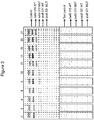
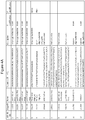
- Padlock probes and rolling circle amplification Sequences of oligonucleotides used in this study are given in Figure 4 .
- Four PLPs were designed to target two codons in the genes katG and rpoB and their corresponding wild type sequences ( katG 315 ACC (MUT), katG 315 AGC (WT), rpoB 531 TTG (MUT) and rpoB 531 TCG (WT).
- the PLPs were phosphorylated at the 5' end by incubating a reaction mixture consisting of 1 ⁇ M oligonucleotide, 1x PNK buffer A, 1 mM ATP), and 1 U/ ⁇ l T4 polynucleotide kinase (Thermo Scientific, Waltham, MA, USA) at 37°C for 30 min, followed by enzyme inactivation at 65°C for 20 min. Confirmation of PLP efficacy was done by performing C2CA [ Dahl et al. Proc Natl Acad Sci USA 2004, 101, 4548-4553 ] with modifications. Sensitivity of the assay was evaluated by LF strips with amplicons prepared from 300 pg, 3 ng, 30 ng and 300 ng of genomic DNA.
- Gold nanoparticles were prepared by a standard citrate reduction method [ Frens G. Nature Phys Sci. 1973, 241, 20-22 ] with modifications .
- a standard citrate reduction method [ Frens G. Nature Phys Sci. 1973, 241, 20-22 ] with modifications .
- 100 mL of 0.01% HAuCI4 in MilliQ water was boiled with vigorous stirring.
- Four milliliters of 1% trisodium citrate solution was added and after turning wine-red.
- thiolated oligonucleotide designed to hybridize to a sequence present in all C2CA monomers, was reduced by 500 mM of DTT in SSC buffer for 30 min.
- a NAPTM-5 column (GE Healthcare Biosciences, Little Chalfont, UK) was used to purify the oligonucleotides and eluted directly into 1 mL of AuNPs. After incubating it for 2 h at 37°C, 1 M NaCl was incrementally added and kept for 'aging' at 4°C.
- the solution was centrifuged at 13,000 g for 25 min, the supernatant discarded and the AuNP-oligonucleotide conjugates re-dispersed in 1 mL of 5% BSA, 0.25% Tween 20 and 20 mM Tris-HCl (pH 8.0).
- TEM images of the prepared AuNP were obtained at 100 kV to check the quality of the prepared particles.
- the AuNP-oligonucleotide conjugates were characterized by measuring their light absorption at 520 nm in a Multi-Mode Microplate Reader (SpectraMaxR M5, Molecular Devices) and their surface charge ( ⁇ -potential) was measured by dynamic light scattering (DLS) using Zetasizer Nano ZS90 (Malvern, UK) equipped with a 4.0 mW HeNe laser and an avalanche photodiode detector.
- DLS dynamic light scattering
- the 100 x 5 mm LF strip consists of a sample application pad, nitrocellulose membrane and absorbent pad that are mounted on a thin plastic backing.
- the dry sample pad (25 x 5 mm), after saturation with 1% BSA, 1% Triton X-100, 20 mM Tris-HCl, 100 mM NaCl; pH 8.0), fixed on one end of the nitrocellulose membrane (45 x 5 mm) with an overlap of 2-3 mm and the absorbent pad (30 x 5 mm) was fixed on the other end of the nitrocellulose membrane.
- the biotinylated strip oligonucleotides ( Figure 3 ) were immobilized in test and control zones on the nitrocellulose membrane.
- the control zone contained one line of immobilized oligonucleotides complementary to the AuNP-oligonucleotide conjugates.
- the test zone contained 4 lines separated by 3 mm, where each line consisted of unique strip oligonucleotides for detection of the C2CA monomers corresponding to their specific genotypes of katG 315 WT, katG 315 MUT (AGC/ACC), rpoB 531 WT and rpoB 531 MUT (TCG/TTG) by hybridization .
- Fifty micromolar of the strip oligonucleotide was mixed with an equal volume of 1x PBS containing 15 ⁇ M of streptavidin.
- the streptavidin-conjugated oligonucleotide was immobilized on the nitrocellulose membrane using a nanoplotter (Nano-Plotter NP2.0, GeSiM, Grosserkmannsdorf, Germany).
- C2CA amplicons on lateral flow strips Fifty-five microliters of the C2CA monomers (amplified nucleic acid fragments) were hybridized with 13 ⁇ L of AuNP-oligonucleotide conjugates and applied to the sample pad of LF strips, drop by drop. The sample was allowed to flow for 5-7 min and washed with 4x SSC buffer for visualization of the red color bands. Color development in the control line indicated the positive assay control, while the signals from each test line specifically referred to presence of WT and/or MUT genotypes of katG 315 and rpoB 531.
- the present Example provides a proof-of-principle assay which able to produce rapid visual signals to discriminate between wild type and the mutations in katG and rpoB genes, causing MDR-TB, i.e. resistance to INH and RIF.
- the method can produce visual signals in approximately 75 min and the results can guide clinicians in taking informed decisions on public health control actions as well as adjusting to an effective antibiotic regimen.
- This assay provides preliminary alternative information to the time-consuming conventional DST and offers a compatible solution for resource-limited clinical laboratories.
- there present inventors have developed a simple, specific and cost-effective diagnostic test for the prompt identification of drug and/or antibiotic resistance.
- the DNA-based test is suitable for application in resource-limited clinical laboratories and provides information about the drug and/or antibiotic resistance pattern of bacteria infecting a patient, which is valuable for clinicians in order to take appropriate actions for treatment and infection control.
- Limit of detection of padlock probe-lateral flow test Limit of detection (LOD) of this PLP-LF assay was performed in triplicates by testing various dilutions of genomic DNA from the reference strain MTB H37Rv. Since both signals were clearly observed with 300 ng of DNA ( Figure 2A ), in this proof-of-concept study, further experiments with DNA from clinical samples (Table 2) were performed using this amount. Densitograms ( Figure 2B ) based on the local pixel density of red color signals developed on lateral flow strips correlated with the visual observation.
- the signal intensity of rpoB 531 WT was lower compared to katG 315 WT, which could be due to the high GC content in the target region of the rpoB gene, potentially resulting in a lower yield of C2CA monomers. Minor variations were observed among the densitograms of control lines, even though the lateral flow strips from the same printing session were used. The improvements to achieve higher sensitivity would enable direct testing on sputum samples.
Landscapes
- Chemical & Material Sciences (AREA)
- Health & Medical Sciences (AREA)
- Life Sciences & Earth Sciences (AREA)
- Organic Chemistry (AREA)
- Engineering & Computer Science (AREA)
- Zoology (AREA)
- Wood Science & Technology (AREA)
- Analytical Chemistry (AREA)
- Bioinformatics & Cheminformatics (AREA)
- Proteomics, Peptides & Aminoacids (AREA)
- General Health & Medical Sciences (AREA)
- Biotechnology (AREA)
- Genetics & Genomics (AREA)
- Microbiology (AREA)
- Biochemistry (AREA)
- General Engineering & Computer Science (AREA)
- Clinical Laboratory Science (AREA)
- Physics & Mathematics (AREA)
- Biophysics (AREA)
- Molecular Biology (AREA)
- Immunology (AREA)
- Biomedical Technology (AREA)
- Sustainable Development (AREA)
- Chemical Kinetics & Catalysis (AREA)
- Hematology (AREA)
- Medicinal Chemistry (AREA)
- Measuring Or Testing Involving Enzymes Or Micro-Organisms (AREA)
- Air Bags (AREA)
- Application Of Or Painting With Fluid Materials (AREA)
- Indicating And Signalling Devices For Elevators (AREA)
Claims (15)
- Vorrichtung (10; 30; 50) zum Analysieren von flüssigen Proben, die amplifizierte Nukleinsäuren umfassen, wobei die Vorrichtung umfasst:ein Probenkissen (16);einen ersten (18) und einen zweiten (19) Probenanalysestreifen, die dazu ausgebildet sind, unterschiedliche Aspekte der Nukleinsäureprobe zu analysieren, wobei der erste und zweite Streifen länglich sind und sich ab dem Probenkissen erstrecken, und jeder aus dem ersten und zweiten Streifen einen im Wesentlichen geraden Analyseabschnitt (20) umfasst, der in eine Anzahl von Segmenten (22) unterteilt ist, die jeder dazu ausgebildet sind, anzuzeigen, ob eine Zielnukleinsäure mit einer vorbestimmten Sequenz in der Probe vorhanden ist oder fehlt, wobei die Zielnukleinsäure mit einer vorbestimmten Sequenz direkt oder indirekt an ein Detektionsmolekül gekoppelt ist, undwobei die Analyseabschnitte des ersten und zweiten Probenanalysestreifens einen Trägerfilm umfasst, der von einer transparenten Schicht mit einer Dicke von mindestens 0,1 mm bedeckt ist, die Analyseabschnitte dazu ausgebildet sind, das Vorhandensein oder Fehlen von Nukleinsäuren mit unterschiedlichen vorbestimmten Sequenzen zu analysieren, wobei die Analyseabschnitte des ersten und zweiten Probenanalysestreifens im Wesentlichen dieselbe Länge aufweisen und derart nebeneinander angeordnet sind, dass das Analyseergebnis anhand der Kombination dreidimensionaler Markierungen detektiert werden kann, die in der transparenten Schicht von ausgerichteten Segmenten des ersten und zweiten Analysestreifens erscheinen,wobei die Segmente Nukleinsäuresequenzen umfassen, die zu den vorbestimmten Sequenzen von Zielnukleinsäuren, deren Vorhandensein oder Fehlen analysiert wird, komplementär sind; undein Gehäuse (11), das das Probenkissen und mindestens zwei längliche Probenanalysestreifen umschließt, wobei das Gehäuse eine Vorderseite (12), in der ein Probeneinlasskanal (15) derart gebildet ist, dass das Probenkissen von der Außenseite des Gehäuses her zugänglich ist, und mindestens eine Öffnung (17) derart umfasst, dass das Analyseergebnis von der Außenseite des Gehäuses her detektiert werden kann.
- Vorrichtung zum Analysieren von amplifizierte Nukleinsäuren umfassenden flüssigen Proben nach Anspruch 1, wobei der Analyseabschnitt des ersten Probenanalysestreifens mindestens ein Segment umfasst, das mindestens eine partielle Nukleinsäuresequenz eines Wildtyp-Gens umfasst, und der Analyseabschnitt des zweiten Probenanalysestreifens mindestens ein Segment umfasst, das die entsprechende Nukleinsäuresequenz einer Mutante des Gens umfasst, wobei die entsprechende Nukleinsäuresequenz mindestens eine Mutation beinhaltet.
- Vorrichtung zum Analysieren von amplifizierte Nukleinsäuren umfassenden flüssigen Proben nach Anspruch 2, wobei das Gen mindestens einen Antibiotikaresistenzmarker, wie etwa einen Mycobacterium tuberculosis-Antibiotikaresistenzmarker, wie etwa mindestens einen Antibiotikaresistenzmarker, ausgewählt aus der Gruppe bestehend aus rpoB 516 TAC, rpoB 516 GTC, katG 315 ACC, rpoB 531 TTG, rpoB 531 TGG, rpoB 526 TAC, rpoB 526 GAC, rpoB 526 CTC, rpoB 526 ACC, inhA - 15 T, rrs 1401 G, gyrA 94 GGC, gyrA 90 GTG und rpoB 533 CCG umfasst.
- Vorrichtung zum Analysieren von amplifizierte Nukleinsäuren umfassenden flüssigen Proben nach einem der Ansprüche 1-3, wobei die Analyseabschnitte Lateralfluss-Biosensoren sind oder aus einem transparenten Cellulose- oder Polymermaterial gebildet sind.
- Vorrichtung nach einem der vorstehenden Ansprüche, wobei der Trägerfilm (31) und die dreidimensionale Markierung, die in den Segmenten erscheint, unterschiedliche Farben aufweisen.
- Vorrichtung nach einem der vorstehenden Ansprüche, wobei das Probenkissen und die länglichen Probenanalysestreifen aus einem absorbierenden Fasermaterial gebildet sind, durch das die Probe durch Gravitationskraft und/oder Kapillarbewegung fließen kann.
- Vorrichtung nach einem der vorstehenden Ansprüche, wobei das Probenkissen und der Teil der länglichen Probenanalysestreifen, der sich ab dem Probenkissen zum ersten Segment erstreckt, aus einem Stück Material gebildet ist.
- Vorrichtung nach einem der vorstehenden Ansprüche, wobei sich der erste und zweite längliche Probenstreifen zuerst in einer im Wesentlichen radialen Richtung ab der Mitte des Probenkissens erstrecken, bevor sie derart abgewinkelt sind, dass die Analyseabschnitte des ersten und zweiten länglichen Probenanalysestreifens im Wesentlichen parallel zueinander angeordnet sind und das Ergebnis anhand der Kombination von Segmenten, die quer zu den länglichen Probenanalysestreifen angeordnet sind, detektiert werden kann.
- Vorrichtung nach einem der vorstehenden Ansprüche, die einen dritten länglichen Probenanalysestreifen (24) umfasst, der dazu ausgebildet ist, unterschiedliche Aspekte der Nukleinsäureprobe zu analysieren, wobei der Analyseabschnitt des dritten Probenstreifens dazu ausgebildet ist, das Vorhandensein oder Fehlen von Nukleinsäuren mit unterschiedlichen vorbestimmten Sequenzen zu analysieren und im Wesentlichen dieselbe Länge aufweisen und derart zwischen dem ersten und zweiten länglichen Probenanalysestreifen angeordnet ist, dass das Analyseergebnis anhand der Kombination der entsprechenden Segmente der drei Analysestreifen detektiert werden kann, wobei sich der dritte längliche Probenstreifen vorzugsweise in einer im Wesentlichen radialen Richtung ab dem Probenkissen ab der Spitze einer Kerbe (23) erstreckt.
- Vorrichtung nach Anspruch 8, wobei zwischen dem ersten und zweiten länglichen Probenstreifen ein Winkel α im Bereich von 40° - 80° gebildet ist, und im Probenkissen zwischen dem ersten und zweiten länglichen Probenstreifen eine Kerbe (23), die sich ab dem Umfang zur Mitte des Probenkissens hin erstreckt, derart gebildet ist, dass die Probe zum ersten und zweiten länglichen Probenstreifen hin gelenkt wird.
- Vorrichtung nach Anspruch einem aus Anspruch 1 bis 10, die einen vierten (25) und fünften (26) länglichen Probenanalysestreifen umfasst, die dazu ausgebildet sind, unterschiedliche Aspekte der Nukleinsäureprobe zu analysieren, wobei der Analyseabschnitt des vierten und fünften Probenstreifens dazu ausgebildet sind, das Vorhandensein oder Fehlen von Nukleinsäuren mit unterschiedlichen vorbestimmten Sequenzen zu analysieren, und im Wesentlichen dieselbe Länge aufweisen und auf gegenüberliegenden Seiten des ersten und zweiten länglichen Probenanalysestreifens derart angeordnet sind, dass das Analyseergebnis anhand der Kombination der entsprechenden Segmente aller vier oder fünf Analysestreifen detektiert werden kann, wobei sich der vierte und fünfte längliche Probenstreifen vorzugsweise in im Wesentlichen radialer Richtung ab der Mitte des Probenkissens erstrecken, bevor sie derart abgewinkelt sind, dass die Analyseabschnitte parallel zueinander sowie dem ersten und zweiten Analyseabschnitt angeordnet und mit den Analyseabschnitten des ersten und zweiten länglichen Probestreifens ausgerichtet sind.
- Vorrichtung nach einem der vorstehenden Ansprüche, wobei im Gehäuse eine Haltestruktur gebildet ist, um das Probenkissen und die länglichen Probenstreifen in der korrekten Position im Gehäuse zu halten.
- Verfahren zum Bestimmen des Vorhandenseins oder Fehlens einer Zielnukleinsäure mit einer vorbestimmten Sequenz in einer Probe von einem Individuum, wobei das Verfahren die Schritte umfasst des:a) Bereitstellens einer biologischen Probe, die zuvor in einer nicht invasiven Art und Weise von einem Individuum gewonnen wurde,b) Unterziehens der Probe einer selektiven Amplifikation mindestens einer Zielnukleinsäure mit einer vorbestimmten Sequenz, um amplifizierte Zielnukleinsäure zu gewinnen,c) Aufbringens der amplifizierten Zielnukleinsäure auf das Probenkissen der Vorrichtung (10; 30; 50) nach einem der Ansprüche 1-12,d) Inkubierens der Vorrichtung über einen Zeitraum, der ausreicht, um Detektion der Zielnukleinsäure mittels eines Detektionsmittels zu ermöglichen, unde) Detektierens des Vorhandenseins oder Fehlens der mindestens einen Zielnukleinsäure mit einer vorbestimmten Sequenz.
- Verfahren nach Anspruch 13, wobei die Nukleinsäure DNA oder RNA ist, wie etwa bakterielle DNA, wie etwa DNA aus dem Mycobacterium tuberculosis-Komplex.
- Set, das eine Vorrichtung nach einem der Ansprüche 1-12 und mindestens eine Sonde, die für einen Multiresistenzmarker spezifisch ist, mindestens eine Sonde, die für die entsprechende Wildtyp-Sequenz spezifisch ist, und ein Detektionsmittel umfasst.
Priority Applications (2)
| Application Number | Priority Date | Filing Date | Title |
|---|---|---|---|
| HRP20210070TT HRP20210070T8 (hr) | 2016-02-15 | 2017-02-15 | Dijagnostički uređaj i odgovarajuća metoda |
| PL17753580T PL3417075T3 (pl) | 2016-02-15 | 2017-02-15 | Urządzenie diagnostyczne i sposób z nim związany |
Applications Claiming Priority (2)
| Application Number | Priority Date | Filing Date | Title |
|---|---|---|---|
| SE1650197 | 2016-02-15 | ||
| PCT/SE2017/050147 WO2017142467A1 (en) | 2016-02-15 | 2017-02-15 | Diagnostic device and related method |
Publications (3)
| Publication Number | Publication Date |
|---|---|
| EP3417075A1 EP3417075A1 (de) | 2018-12-26 |
| EP3417075A4 EP3417075A4 (de) | 2019-01-09 |
| EP3417075B1 true EP3417075B1 (de) | 2020-10-28 |
Family
ID=59626151
Family Applications (1)
| Application Number | Title | Priority Date | Filing Date |
|---|---|---|---|
| EP17753580.4A Active EP3417075B1 (de) | 2016-02-15 | 2017-02-15 | Diagnostische vorrichtungen und zugehöriges verfahren |
Country Status (9)
| Country | Link |
|---|---|
| US (1) | US11788040B2 (de) |
| EP (1) | EP3417075B1 (de) |
| CN (1) | CN109219667B (de) |
| EA (1) | EA201891636A1 (de) |
| ES (1) | ES2846973T3 (de) |
| HR (1) | HRP20210070T8 (de) |
| PL (1) | PL3417075T3 (de) |
| PT (1) | PT3417075T (de) |
| WO (1) | WO2017142467A1 (de) |
Families Citing this family (5)
| Publication number | Priority date | Publication date | Assignee | Title |
|---|---|---|---|---|
| BE1026457B1 (fr) * | 2018-07-04 | 2020-02-06 | Coris Bioconcept | Procédé et dispositif pour la détection et différenciation de mutations ponctuelles chez des microorganismes par oligochromatographie |
| WO2020100159A1 (en) * | 2018-11-13 | 2020-05-22 | Translational Health Science And Technology Institute | A novel aptamer and an electrochemical biosensor for the rapid detection and diagnosis of tuberculous meningitis |
| CN110646418B (zh) * | 2019-10-24 | 2021-10-15 | 福建医科大学 | 以纳米金为显色探针的钪离子快速测定方法 |
| CN113388690A (zh) * | 2021-07-02 | 2021-09-14 | 海南医学院 | 检测结核分枝杆菌及治疗药物耐药相关的基因突变位点的引物和探针及试剂盒 |
| CN121164617A (zh) * | 2024-06-19 | 2025-12-19 | 浙江东方基因生物制品股份有限公司 | 一种检测装置以及方法 |
Family Cites Families (20)
| Publication number | Priority date | Publication date | Assignee | Title |
|---|---|---|---|---|
| DE3725766A1 (de) | 1987-08-04 | 1989-02-16 | Boehringer Mannheim Gmbh | Testtraeger zur bestimmung eines analyten aus blut und verfahren zu seiner herstellung |
| DE4323672A1 (de) | 1993-07-15 | 1995-01-19 | Boehringer Mannheim Gmbh | Vorrichtung zur gleichzeitigen Bestimmung von Analyten |
| US6979424B2 (en) | 1998-03-17 | 2005-12-27 | Cepheid | Integrated sample analysis device |
| US6818456B2 (en) * | 2001-07-20 | 2004-11-16 | Varian, Inc. | Color contrast system for lateral flow immunoassay tests |
| CN1786712A (zh) * | 2004-12-07 | 2006-06-14 | 盛进生物工程(深圳)有限公司 | 定量的快速水平侧流方法及系统 |
| JP2008084984A (ja) * | 2006-09-26 | 2008-04-10 | Fujifilm Corp | 光ナノインプリントリソグラフィ用光硬化性組成物およびそれを用いたパターン形成方法 |
| AP2703A (en) * | 2006-09-28 | 2013-07-24 | Macfarlane Burnet Inst For Medical Res & Public Health Ltd | A method of diagnosis and kit therefor |
| US20080317633A1 (en) | 2007-04-30 | 2008-12-25 | Stc.Unm | Multiplex lateral flow devices and methods |
| US20100173423A1 (en) | 2009-01-06 | 2010-07-08 | Inverness Medical Switzerland Gmbh | Multiple testing apparatus and method |
| WO2012031234A2 (en) * | 2010-09-03 | 2012-03-08 | Life Technologies Corporation | Methods, systems and apparatus for sequencing |
| KR101394221B1 (ko) * | 2011-10-06 | 2014-05-14 | 주식회사 인지바이오 | 한 번의 시료 주입으로 순차적인 반응 조건의 변화가 가능한 멤브레인 센서 |
| CN102520172A (zh) * | 2011-12-12 | 2012-06-27 | 北京陆桥技术有限责任公司 | 单增李斯特氏菌核酸层析检测试剂盒及其检测方法和应用 |
| WO2013163353A1 (en) | 2012-04-24 | 2013-10-31 | Arizona Board Of Regents, Acting For And On Behalf Of Northern Arizona University | Rapid multiplex lateral flow assay device |
| KR101409263B1 (ko) * | 2012-10-16 | 2014-07-02 | 바디텍메드 주식회사 | 서브패드를 구비한 측방유동 분석용 스트립 및 이에 사용되는 측방유동 분석용 카트리지 |
| JP6272895B2 (ja) * | 2012-12-03 | 2018-01-31 | ザ セクレタリー オブ ステイト フォー エンバイロンメント,フード アンド ルーラル アフェアーズ | デバイスおよび装置 |
| US20160077091A1 (en) * | 2013-04-26 | 2016-03-17 | Express Diagnostics International, Inc. | Portable testing system for detecting selected drugs or compounds in noncontrolled environments |
| US20150056687A1 (en) * | 2013-04-26 | 2015-02-26 | Express Diagnostics Int'l., Inc. | Lateral flow devices and methods of manufacture and use |
| CN105899947A (zh) * | 2013-09-04 | 2016-08-24 | 克雷多生物医学私人有限公司 | 分析测试装置、试剂盒和使用方法 |
| CN104263834B (zh) * | 2014-09-26 | 2018-02-06 | 亚能生物技术(深圳)有限公司 | 用于结核分枝杆菌耐药突变基因检测的核酸膜条和试剂盒 |
| CN106153891B (zh) * | 2015-04-09 | 2018-08-28 | 清华大学 | 三维生物标志物检测装置、制备方法及检测生物标志物的方法 |
-
2017
- 2017-02-15 ES ES17753580T patent/ES2846973T3/es active Active
- 2017-02-15 EP EP17753580.4A patent/EP3417075B1/de active Active
- 2017-02-15 CN CN201780023777.1A patent/CN109219667B/zh active Active
- 2017-02-15 WO PCT/SE2017/050147 patent/WO2017142467A1/en not_active Ceased
- 2017-02-15 US US16/076,672 patent/US11788040B2/en active Active
- 2017-02-15 PL PL17753580T patent/PL3417075T3/pl unknown
- 2017-02-15 EA EA201891636A patent/EA201891636A1/ru unknown
- 2017-02-15 PT PT177535804T patent/PT3417075T/pt unknown
- 2017-02-15 HR HRP20210070TT patent/HRP20210070T8/hr unknown
Non-Patent Citations (1)
| Title |
|---|
| None * |
Also Published As
| Publication number | Publication date |
|---|---|
| EP3417075A1 (de) | 2018-12-26 |
| HRP20210070T8 (hr) | 2021-04-30 |
| EA201891636A1 (ru) | 2019-01-31 |
| CN109219667A (zh) | 2019-01-15 |
| WO2017142467A1 (en) | 2017-08-24 |
| PT3417075T (pt) | 2021-01-28 |
| HRP20210070T1 (hr) | 2021-04-02 |
| PL3417075T3 (pl) | 2021-08-02 |
| US11788040B2 (en) | 2023-10-17 |
| US20190048304A1 (en) | 2019-02-14 |
| CN109219667B (zh) | 2023-02-28 |
| ES2846973T3 (es) | 2021-07-30 |
| EP3417075A4 (de) | 2019-01-09 |
Similar Documents
| Publication | Publication Date | Title |
|---|---|---|
| US11788040B2 (en) | Diagnostic device and related method | |
| Soo et al. | A simple gold nanoparticle probes assay for identification of Mycobacterium tuberculosis and Mycobacterium tuberculosis complex from clinical specimens | |
| EP1290224B1 (de) | Diagnostisches kit zur identifikation und feststellung von wirkstoffresistenz bei mykobakterium sowie herstellungsmethoden davon | |
| EP1746156B1 (de) | Sonde und primer zum nachweis von tuberkelbazillen sowie verfahren zum nachweis von tuberkelbazillen beim menschen damit | |
| KR102259445B1 (ko) | 클라미디아 트라코마티스 검출용 프라이머 세트 및 이것을 사용한 클라미디아 트라코마티스 검출 방법, 그리고 그것을 위한 시약 키트 | |
| Bhattacharya et al. | Development of a new sensitive and efficient multiplex polymerase chain reaction (PCR) for identification and differentiation of different mycobacterial species | |
| US7642084B2 (en) | Assay systems, kits and methods for detecting microorganisms | |
| US20100261163A1 (en) | Method for simultaneous detection of Mycobacterium tuberculosis complex and identification of mutations in mycobacterial DNA resulting in the resistance of microorganisms to rifampicin and isoniazid on biological microarrays, set of primers, biochip, and set of oligonucleotide probes used in the method | |
| Tondro et al. | An optical genosensor for Enterococcus faecalis using conjugated gold nanoparticles-rRNA oligonucleotide | |
| Pedrosa et al. | Gold nanoprobes for multi loci assessment of multi-drug resistant tuberculosis | |
| Brooks et al. | Diagnosis of Helicobacter pylori infection by polymerase chain reaction: is it worth it? | |
| KR102274011B1 (ko) | 결핵균 및 비결핵항산균을 동시에 감별하여 검출할 수 있는 고감도 다중 등온증폭반응용 프라이머 세트 | |
| JP2006510348A5 (de) | ||
| WO2003031654A1 (en) | Microarray comprising probes for mycobacteria species genotyping, m. tuberculosis strain differenciation, and antibiotic-resistant strain detection | |
| Takarada et al. | Rapid detection of rifampicin-resistant Mycobacterium tuberculosis, based on isothermal DNA amplification and DNA chromatography | |
| ES2689308T3 (es) | Cebadores para detección y tipado de cepas bacterianas productoras de carbapenemasas, método y kit de detección | |
| Zakariah et al. | Highly sensitive of an electrochemical DNA biosensor detection towards toxic dinoflagellates Alexandrium minutum (A. minutum) | |
| Yu et al. | Rapid and sensitive detection of fluoroquinolone-resistant Escherichia coli from urine samples using a genotyping DNA microarray | |
| Shenai et al. | Rapid speciation of 15 clinically relevant mycobacteria with simultaneous detection of resistance to rifampin, isoniazid, and streptomycin in Mycobacterium tuberculosis complex | |
| KR100990756B1 (ko) | 결핵균 약제 내성 진단용 프로브 및 그 키트 | |
| Lim et al. | Development of a real‐time PCR‐based method for rapid differential identification of Mycobacterium species | |
| Anthony et al. | Direct detection of Staphylococcus aureus mRNA using a flow through microarray | |
| US20160177378A1 (en) | Method for simultaneous detection of bacteria and fungi in a biological preparation by pcr, primers as well as bacteria and fungi detection kit | |
| KR102334343B1 (ko) | 결핵균 및 비결핵항산균을 동시에 감별하여 검출할 수 있는 고감도 다중 등온증폭반응용 프라이머 세트 | |
| St. Amand et al. | Use of specific rRNA oligonucleotide probes for microscopic detection of Mycobacterium avium complex organisms in tissue |
Legal Events
| Date | Code | Title | Description |
|---|---|---|---|
| STAA | Information on the status of an ep patent application or granted ep patent |
Free format text: STATUS: THE INTERNATIONAL PUBLICATION HAS BEEN MADE |
|
| PUAI | Public reference made under article 153(3) epc to a published international application that has entered the european phase |
Free format text: ORIGINAL CODE: 0009012 |
|
| STAA | Information on the status of an ep patent application or granted ep patent |
Free format text: STATUS: REQUEST FOR EXAMINATION WAS MADE |
|
| 17P | Request for examination filed |
Effective date: 20180912 |
|
| AK | Designated contracting states |
Kind code of ref document: A1 Designated state(s): AL AT BE BG CH CY CZ DE DK EE ES FI FR GB GR HR HU IE IS IT LI LT LU LV MC MK MT NL NO PL PT RO RS SE SI SK SM TR |
|
| AX | Request for extension of the european patent |
Extension state: BA ME |
|
| A4 | Supplementary search report drawn up and despatched |
Effective date: 20181211 |
|
| RIC1 | Information provided on ipc code assigned before grant |
Ipc: C12Q 1/68 20180101AFI20181205BHEP Ipc: B01L 3/00 20060101ALI20181205BHEP |
|
| DAV | Request for validation of the european patent (deleted) | ||
| DAX | Request for extension of the european patent (deleted) | ||
| REG | Reference to a national code |
Ref country code: DE Ref legal event code: R079 Ref document number: 602017026399 Country of ref document: DE Free format text: PREVIOUS MAIN CLASS: C12Q0001680000 Ipc: C12Q0001689000 |
|
| GRAP | Despatch of communication of intention to grant a patent |
Free format text: ORIGINAL CODE: EPIDOSNIGR1 |
|
| STAA | Information on the status of an ep patent application or granted ep patent |
Free format text: STATUS: GRANT OF PATENT IS INTENDED |
|
| RIC1 | Information provided on ipc code assigned before grant |
Ipc: B01L 3/00 20060101ALI20200528BHEP Ipc: C12Q 1/689 20180101AFI20200528BHEP |
|
| INTG | Intention to grant announced |
Effective date: 20200629 |
|
| GRAS | Grant fee paid |
Free format text: ORIGINAL CODE: EPIDOSNIGR3 |
|
| GRAA | (expected) grant |
Free format text: ORIGINAL CODE: 0009210 |
|
| STAA | Information on the status of an ep patent application or granted ep patent |
Free format text: STATUS: THE PATENT HAS BEEN GRANTED |
|
| AK | Designated contracting states |
Kind code of ref document: B1 Designated state(s): AL AT BE BG CH CY CZ DE DK EE ES FI FR GB GR HR HU IE IS IT LI LT LU LV MC MK MT NL NO PL PT RO RS SE SI SK SM TR |
|
| REG | Reference to a national code |
Ref country code: GB Ref legal event code: FG4D |
|
| REG | Reference to a national code |
Ref country code: CH Ref legal event code: EP |
|
| REG | Reference to a national code |
Ref country code: AT Ref legal event code: REF Ref document number: 1328285 Country of ref document: AT Kind code of ref document: T Effective date: 20201115 |
|
| REG | Reference to a national code |
Ref country code: DE Ref legal event code: R096 Ref document number: 602017026399 Country of ref document: DE |
|
| REG | Reference to a national code |
Ref country code: IE Ref legal event code: FG4D |
|
| REG | Reference to a national code |
Ref country code: HR Ref legal event code: TUEP Ref document number: P20210070T Country of ref document: HR |
|
| REG | Reference to a national code |
Ref country code: RO Ref legal event code: EPE |
|
| REG | Reference to a national code |
Ref country code: PT Ref legal event code: SC4A Ref document number: 3417075 Country of ref document: PT Date of ref document: 20210128 Kind code of ref document: T Free format text: AVAILABILITY OF NATIONAL TRANSLATION Effective date: 20210121 |
|
| REG | Reference to a national code |
Ref country code: SE Ref legal event code: TRGR |
|
| RAP2 | Party data changed (patent owner data changed or rights of a patent transferred) |
Owner name: EMPE DIAGNOSTICS AB |
|
| REG | Reference to a national code |
Ref country code: AT Ref legal event code: MK05 Ref document number: 1328285 Country of ref document: AT Kind code of ref document: T Effective date: 20201028 |
|
| REG | Reference to a national code |
Ref country code: NL Ref legal event code: MP Effective date: 20201028 |
|
| REG | Reference to a national code |
Ref country code: HR Ref legal event code: T1PR Ref document number: P20210070 Country of ref document: HR |
|
| REG | Reference to a national code |
Ref country code: HR Ref legal event code: ODRP Ref document number: P20210070 Country of ref document: HR Payment date: 20210331 Year of fee payment: 5 |
|
| PG25 | Lapsed in a contracting state [announced via postgrant information from national office to epo] |
Ref country code: GR Free format text: LAPSE BECAUSE OF FAILURE TO SUBMIT A TRANSLATION OF THE DESCRIPTION OR TO PAY THE FEE WITHIN THE PRESCRIBED TIME-LIMIT Effective date: 20210129 Ref country code: FI Free format text: LAPSE BECAUSE OF FAILURE TO SUBMIT A TRANSLATION OF THE DESCRIPTION OR TO PAY THE FEE WITHIN THE PRESCRIBED TIME-LIMIT Effective date: 20201028 Ref country code: NO Free format text: LAPSE BECAUSE OF FAILURE TO SUBMIT A TRANSLATION OF THE DESCRIPTION OR TO PAY THE FEE WITHIN THE PRESCRIBED TIME-LIMIT Effective date: 20210128 Ref country code: RS Free format text: LAPSE BECAUSE OF FAILURE TO SUBMIT A TRANSLATION OF THE DESCRIPTION OR TO PAY THE FEE WITHIN THE PRESCRIBED TIME-LIMIT Effective date: 20201028 |
|
| REG | Reference to a national code |
Ref country code: HR Ref legal event code: T8IS Ref document number: P20210070 Country of ref document: HR |
|
| REG | Reference to a national code |
Ref country code: LT Ref legal event code: MG4D |
|
| PG25 | Lapsed in a contracting state [announced via postgrant information from national office to epo] |
Ref country code: AT Free format text: LAPSE BECAUSE OF FAILURE TO SUBMIT A TRANSLATION OF THE DESCRIPTION OR TO PAY THE FEE WITHIN THE PRESCRIBED TIME-LIMIT Effective date: 20201028 Ref country code: BG Free format text: LAPSE BECAUSE OF FAILURE TO SUBMIT A TRANSLATION OF THE DESCRIPTION OR TO PAY THE FEE WITHIN THE PRESCRIBED TIME-LIMIT Effective date: 20210128 Ref country code: IS Free format text: LAPSE BECAUSE OF FAILURE TO SUBMIT A TRANSLATION OF THE DESCRIPTION OR TO PAY THE FEE WITHIN THE PRESCRIBED TIME-LIMIT Effective date: 20210228 Ref country code: LV Free format text: LAPSE BECAUSE OF FAILURE TO SUBMIT A TRANSLATION OF THE DESCRIPTION OR TO PAY THE FEE WITHIN THE PRESCRIBED TIME-LIMIT Effective date: 20201028 |
|
| PG25 | Lapsed in a contracting state [announced via postgrant information from national office to epo] |
Ref country code: NL Free format text: LAPSE BECAUSE OF FAILURE TO SUBMIT A TRANSLATION OF THE DESCRIPTION OR TO PAY THE FEE WITHIN THE PRESCRIBED TIME-LIMIT Effective date: 20201028 |
|
| REG | Reference to a national code |
Ref country code: DE Ref legal event code: R097 Ref document number: 602017026399 Country of ref document: DE |
|
| PG25 | Lapsed in a contracting state [announced via postgrant information from national office to epo] |
Ref country code: SK Free format text: LAPSE BECAUSE OF FAILURE TO SUBMIT A TRANSLATION OF THE DESCRIPTION OR TO PAY THE FEE WITHIN THE PRESCRIBED TIME-LIMIT Effective date: 20201028 Ref country code: LT Free format text: LAPSE BECAUSE OF FAILURE TO SUBMIT A TRANSLATION OF THE DESCRIPTION OR TO PAY THE FEE WITHIN THE PRESCRIBED TIME-LIMIT Effective date: 20201028 Ref country code: CZ Free format text: LAPSE BECAUSE OF FAILURE TO SUBMIT A TRANSLATION OF THE DESCRIPTION OR TO PAY THE FEE WITHIN THE PRESCRIBED TIME-LIMIT Effective date: 20201028 Ref country code: EE Free format text: LAPSE BECAUSE OF FAILURE TO SUBMIT A TRANSLATION OF THE DESCRIPTION OR TO PAY THE FEE WITHIN THE PRESCRIBED TIME-LIMIT Effective date: 20201028 Ref country code: SM Free format text: LAPSE BECAUSE OF FAILURE TO SUBMIT A TRANSLATION OF THE DESCRIPTION OR TO PAY THE FEE WITHIN THE PRESCRIBED TIME-LIMIT Effective date: 20201028 |
|
| REG | Reference to a national code |
Ref country code: ES Ref legal event code: FG2A Ref document number: 2846973 Country of ref document: ES Kind code of ref document: T3 Effective date: 20210730 |
|
| PG25 | Lapsed in a contracting state [announced via postgrant information from national office to epo] |
Ref country code: DK Free format text: LAPSE BECAUSE OF FAILURE TO SUBMIT A TRANSLATION OF THE DESCRIPTION OR TO PAY THE FEE WITHIN THE PRESCRIBED TIME-LIMIT Effective date: 20201028 |
|
| PLBE | No opposition filed within time limit |
Free format text: ORIGINAL CODE: 0009261 |
|
| STAA | Information on the status of an ep patent application or granted ep patent |
Free format text: STATUS: NO OPPOSITION FILED WITHIN TIME LIMIT |
|
| PG25 | Lapsed in a contracting state [announced via postgrant information from national office to epo] |
Ref country code: MC Free format text: LAPSE BECAUSE OF FAILURE TO SUBMIT A TRANSLATION OF THE DESCRIPTION OR TO PAY THE FEE WITHIN THE PRESCRIBED TIME-LIMIT Effective date: 20201028 |
|
| 26N | No opposition filed |
Effective date: 20210729 |
|
| REG | Reference to a national code |
Ref country code: BE Ref legal event code: MM Effective date: 20210228 |
|
| PG25 | Lapsed in a contracting state [announced via postgrant information from national office to epo] |
Ref country code: LU Free format text: LAPSE BECAUSE OF NON-PAYMENT OF DUE FEES Effective date: 20210215 Ref country code: AL Free format text: LAPSE BECAUSE OF FAILURE TO SUBMIT A TRANSLATION OF THE DESCRIPTION OR TO PAY THE FEE WITHIN THE PRESCRIBED TIME-LIMIT Effective date: 20201028 |
|
| PG25 | Lapsed in a contracting state [announced via postgrant information from national office to epo] |
Ref country code: SI Free format text: LAPSE BECAUSE OF FAILURE TO SUBMIT A TRANSLATION OF THE DESCRIPTION OR TO PAY THE FEE WITHIN THE PRESCRIBED TIME-LIMIT Effective date: 20201028 |
|
| PG25 | Lapsed in a contracting state [announced via postgrant information from national office to epo] |
Ref country code: IE Free format text: LAPSE BECAUSE OF NON-PAYMENT OF DUE FEES Effective date: 20210215 |
|
| REG | Reference to a national code |
Ref country code: HR Ref legal event code: ODRP Ref document number: P20210070 Country of ref document: HR Payment date: 20220118 Year of fee payment: 6 |
|
| PG25 | Lapsed in a contracting state [announced via postgrant information from national office to epo] |
Ref country code: IS Free format text: LAPSE BECAUSE OF FAILURE TO SUBMIT A TRANSLATION OF THE DESCRIPTION OR TO PAY THE FEE WITHIN THE PRESCRIBED TIME-LIMIT Effective date: 20210228 |
|
| PG25 | Lapsed in a contracting state [announced via postgrant information from national office to epo] |
Ref country code: BE Free format text: LAPSE BECAUSE OF NON-PAYMENT OF DUE FEES Effective date: 20210228 |
|
| REG | Reference to a national code |
Ref country code: HR Ref legal event code: ODRP Ref document number: P20210070 Country of ref document: HR Payment date: 20230127 Year of fee payment: 7 |
|
| P01 | Opt-out of the competence of the unified patent court (upc) registered |
Effective date: 20230510 |
|
| PG25 | Lapsed in a contracting state [announced via postgrant information from national office to epo] |
Ref country code: CY Free format text: LAPSE BECAUSE OF FAILURE TO SUBMIT A TRANSLATION OF THE DESCRIPTION OR TO PAY THE FEE WITHIN THE PRESCRIBED TIME-LIMIT Effective date: 20201028 |
|
| PG25 | Lapsed in a contracting state [announced via postgrant information from national office to epo] |
Ref country code: HU Free format text: LAPSE BECAUSE OF FAILURE TO SUBMIT A TRANSLATION OF THE DESCRIPTION OR TO PAY THE FEE WITHIN THE PRESCRIBED TIME-LIMIT; INVALID AB INITIO Effective date: 20170215 |
|
| REG | Reference to a national code |
Ref country code: HR Ref legal event code: ODRP Ref document number: P20210070 Country of ref document: HR Payment date: 20240116 Year of fee payment: 8 |
|
| PG25 | Lapsed in a contracting state [announced via postgrant information from national office to epo] |
Ref country code: MK Free format text: LAPSE BECAUSE OF FAILURE TO SUBMIT A TRANSLATION OF THE DESCRIPTION OR TO PAY THE FEE WITHIN THE PRESCRIBED TIME-LIMIT Effective date: 20201028 |
|
| PG25 | Lapsed in a contracting state [announced via postgrant information from national office to epo] |
Ref country code: MT Free format text: LAPSE BECAUSE OF FAILURE TO SUBMIT A TRANSLATION OF THE DESCRIPTION OR TO PAY THE FEE WITHIN THE PRESCRIBED TIME-LIMIT Effective date: 20201028 |
|
| REG | Reference to a national code |
Ref country code: HR Ref legal event code: ODRP Ref document number: P20210070 Country of ref document: HR Payment date: 20250120 Year of fee payment: 9 |
|
| REG | Reference to a national code |
Ref country code: HR Ref legal event code: ODRP Ref document number: P20210070 Country of ref document: HR Payment date: 20260116 Year of fee payment: 10 |
|
| REG | Reference to a national code |
Ref country code: CH Ref legal event code: U11 Free format text: ST27 STATUS EVENT CODE: U-0-0-U10-U11 (AS PROVIDED BY THE NATIONAL OFFICE) Effective date: 20260301 |
|
| PGFP | Annual fee paid to national office [announced via postgrant information from national office to epo] |
Ref country code: SE Payment date: 20260219 Year of fee payment: 10 |
|
| PGFP | Annual fee paid to national office [announced via postgrant information from national office to epo] |
Ref country code: GB Payment date: 20260217 Year of fee payment: 10 |
|
| PGFP | Annual fee paid to national office [announced via postgrant information from national office to epo] |
Ref country code: ES Payment date: 20260303 Year of fee payment: 10 |
|
| PGFP | Annual fee paid to national office [announced via postgrant information from national office to epo] |
Ref country code: DE Payment date: 20260217 Year of fee payment: 10 |
|
| PGFP | Annual fee paid to national office [announced via postgrant information from national office to epo] |
Ref country code: HR Payment date: 20260116 Year of fee payment: 10 |
|
| PGFP | Annual fee paid to national office [announced via postgrant information from national office to epo] |
Ref country code: RO Payment date: 20260205 Year of fee payment: 10 Ref country code: IT Payment date: 20260223 Year of fee payment: 10 |
|
| PGFP | Annual fee paid to national office [announced via postgrant information from national office to epo] |
Ref country code: FR Payment date: 20260217 Year of fee payment: 10 |
|
| PGFP | Annual fee paid to national office [announced via postgrant information from national office to epo] |
Ref country code: TR Payment date: 20260126 Year of fee payment: 10 |
|
| PGFP | Annual fee paid to national office [announced via postgrant information from national office to epo] |
Ref country code: CH Payment date: 20260301 Year of fee payment: 10 Ref country code: PT Payment date: 20260121 Year of fee payment: 10 |
|
| PGFP | Annual fee paid to national office [announced via postgrant information from national office to epo] |
Ref country code: PL Payment date: 20260119 Year of fee payment: 10 |