EP3406827B1 - Druckernussanordnung für einen beweglichen flügel - Google Patents
Druckernussanordnung für einen beweglichen flügel Download PDFInfo
- Publication number
- EP3406827B1 EP3406827B1 EP18169604.8A EP18169604A EP3406827B1 EP 3406827 B1 EP3406827 B1 EP 3406827B1 EP 18169604 A EP18169604 A EP 18169604A EP 3406827 B1 EP3406827 B1 EP 3406827B1
- Authority
- EP
- European Patent Office
- Prior art keywords
- spring
- guide element
- nut
- handle follower
- helical spring
- Prior art date
- Legal status (The legal status is an assumption and is not a legal conclusion. Google has not performed a legal analysis and makes no representation as to the accuracy of the status listed.)
- Active
Links
Images
Classifications
-
- E—FIXED CONSTRUCTIONS
- E05—LOCKS; KEYS; WINDOW OR DOOR FITTINGS; SAFES
- E05B—LOCKS; ACCESSORIES THEREFOR; HANDCUFFS
- E05B3/00—Fastening knobs or handles to lock or latch parts
- E05B3/06—Fastening knobs or handles to lock or latch parts by means arranged in or on the rose or escutcheon
- E05B3/065—Fastening knobs or handles to lock or latch parts by means arranged in or on the rose or escutcheon with spring biasing means for moving the handle over a substantial distance, e.g. to its horizontal position
-
- E—FIXED CONSTRUCTIONS
- E05—LOCKS; KEYS; WINDOW OR DOOR FITTINGS; SAFES
- E05B—LOCKS; ACCESSORIES THEREFOR; HANDCUFFS
- E05B15/00—Other details of locks; Parts for engagement by bolts of fastening devices
- E05B15/04—Spring arrangements in locks
- E05B2015/0431—Modifying spring characteristic or tension
-
- E—FIXED CONSTRUCTIONS
- E05—LOCKS; KEYS; WINDOW OR DOOR FITTINGS; SAFES
- E05B—LOCKS; ACCESSORIES THEREFOR; HANDCUFFS
- E05B15/00—Other details of locks; Parts for engagement by bolts of fastening devices
- E05B15/04—Spring arrangements in locks
- E05B2015/0437—Attachments or mountings; Mounting of springs
- E05B2015/0441—Tensioning after mounting
Definitions
- the invention relates to a printer nut arrangement for a movable wing of the type mentioned in the preamble of claim 1 and a mating case and lock case for a lock of a movable wing, each comprising such a printer nut arrangement, and a method for mounting a spring arrangement for such a printer nut arrangement.
- nut assemblies for a movable wing with a nut which is rotatably mounted in a housing and at least one actuating element which can be acted upon by the nut, which, when the nut is actuated against spring action, unlocks an associated lock.
- the printer nut is coupled via an actuating arm to the actuating element and via a spring arm to a spring element of a spring arrangement, which generates the spring action.
- Such a follower arrangement can be used, for example, in counter boxes or lock boxes for panic door locks.
- a challenge with the known printer nut arrangements is to mount the spring arrangement with the spring element in the area of the pressure nut with a desired length and preload. As a rule, special expensive tools are required for the assembly of the spring arrangement, which is part of the printer nut arrangement.
- a lock with a lock case, a faceplate, a spring-loaded bolt, an auxiliary latch and a cross latch is known.
- the lock case there is a generic pressure nut arrangement with a rotatably mounted printer nut and at least one actuating element which can be acted upon by the printer nut Arranged, which causes the lock to be unlocked when the nut is actuated against a spring effect.
- the printer nut is coupled to the actuating element and a spring element of a spring arrangement, which generates the spring action.
- the GB 2 323 626 A describes a locking arrangement comprising a housing and a locking bolt, which is normally biased to extend out of the housing and can be retracted by movement in a direction of an external operating handle transmitted via a driver, and adjusting means for changing the spring force, the returns the driver to its rest position when the operating handle is released.
- the DE 202014 003 684 U1 discloses a printer nut arrangement for a movable wing, with a printer nut rotatably mounted in a housing, at least one actuating element which can be acted upon by the printer nut and which, when the printer nut is actuated against a spring action, unlocks an associated lock, the printer nut using an actuating arm with the Actuating element and via a spring arm is coupled to a spring element of a spring arrangement which generates the spring action, the spring arrangement comprising an adjusting device, by means of which a prestressing force of the spring element can be set.
- the invention has for its object to provide a printer nut assembly for a movable wing, which can be easily assembled without special tools and the spring preload can be easily adjusted, as well as a mating case and a lock case for a lock of a movable wing, each comprising such a printer nut assembly.
- the invention is based on the object of specifying a simple method for assembling a spring arrangement for a printer nut arrangement.
- a printer nut arrangement for a movable wing which can be easily assembled without special tools and whose spring preload can be easily adjusted, as well as a mating case and a lock case for a lock of a movable wing, which each comprise such a printer nut arrangement
- a second guide element in the area of the screw head arranged and fixed to the housing, the second guide element securing the screw against rotation. This can advantageously prevent the set pretension from changing during operation.
- a mating case and a lock case for a lock of a movable wing are proposed, each of which has a housing and such a printer nut arrangement.
- Embodiments of the mating box according to the invention and / or of the lock box according to the invention can be used, for example, for door leaves or window leaves.
- a preassembly assembly is assembled, which comprises a first guide element, a spiral spring without pretension, a screw and a nut.
- the pre-assembly module is coupled with a mounted printer nut and the pre-tension of the coil spring is pre-adjusted via the screw-nut connection.
- first guide element is fixed to the base plate and then the spring preload is adjusted via the screw-nut connection until a desired preload of the coil spring is reached.
- a second guide element is fixed to the floor panel, the second guide element fixing the screw in a rotationally fixed manner.
- Embodiments of the present invention enable assembly of the printer nut assembly and the spring assembly for the printer nut assembly with normal tools, such as wrenches and screwdrivers, without expensive special tools.
- the prestressing force of the spring element can easily be set to a desired value by the adjusting device.
- the spring element can be designed as a spiral spring. This enables a particularly cost-effective and simple implementation of the coupling between the printer nut and the spring arrangement, since the spring arm of the printer nut can act on a first end of the spiral spring.
- the configuration of the printer nut arrangement according to the invention that the setting device comprises a cylinder screw with a screw head and a threaded shaft and a nut, enables a simple and inexpensive implementation of the setting device, which can be combined in combination with a first guide element to form a pre-assembly module.
- the first guide element and the spiral spring can be pushed onto the threaded shaft and held captively between the screw head and the nut.
- the spring arm can have a fork-shaped end region which at least partially encompasses the threaded shaft.
- the nut can act on the spring arm and, via the spring arm, on the spiral spring.
- first guide element can be attached to the housing in the assembled state and can guide the threaded shaft in a rotatable manner.
- the screw head can be on a first side of the first guide element and the coil spring can rest with a second side on a second side of the first guide element opposite the first side.
- the first guide element and the spiral spring can be pushed onto a threaded shaft of the screw and the nut can then be screwed onto the threaded shaft during the assembly of the pre-assembly module.
- a spring arm of the printer nut can act on a first end of the spiral spring after coupling with the preassembly module and at least partially encompass the threaded shaft.
- the pre-adjustment of the spring preload of the coil spring can be carried out simply by turning the screw and / or the nut, as a result of which the nut can act on the spring arm and the screw head on the first guide element and the effective distance between the spring arm and the first guide element can reduce by moving the first guide element towards the spring arm and shortening the effective length of the coil spring and tensioning the coil spring.
- the spring preload of the coil spring can be adjusted simply by turning the screw and / or the nut, whereby the nut can act on the spring arm and move it towards the first guide element and the screw head, which is rotatably mounted on the first guide element and axially is fixed, so that the effective distance between the spring arm and the first guide element is further reduced and the effective length of the coil spring is further shortened and the coil spring can be tensioned further.
- a fine adjustment of the spring preload of the spiral spring can be carried out simply by turning the nut, whereby the nut acts on the spring arm and this can be moved towards the first guide element and the screw head, which is rotatably mounted on the second guide element, so that the effective distance between further reduce the spring arm and the first guide element and further shorten the effective length of the coil spring and the coil spring can be tensioned further.
- the first guide element and the second guide element can be fixed on the cover plate, the nut being able to remain accessible from the outside through an opening in the cover plate. This enables simple fine adjustment or readjustment of the spring preload during operation.
- a counter box 1 for a lock of a movable wing comprises a housing 3, a printer nut 12 rotatably mounted therein and at least one actuating element, not shown, which can be acted upon by the printer nut 12 and which actuates the printer nut when the spring nut is actuated against spring action 12 unlocks an associated lock.
- the printer nut 12 is coupled via an actuating arm 14 to the actuating element and via a spring arm 16 to a spring element 22 of a spring arrangement 20, which produces the spring action.
- the housing 3 of the mating box 1 comprises a base plate 5 and a cover plate 6, which also forms the rear wall of the housing 3 and a faceplate 4, which forms a front wall of the housing 3. At least one opening is made in the faceplate, through which a slide, not shown, engages in the unlocked state.
- the housing 3 shown and the printer nut arrangement 10 can also be used for a lock case 2 according to the invention for a lock of a movable wing.
- the movable wing can be, for example, a door wing or a window wing.
- the actuating element which can be acted upon by the pressure nut 12 can actuate a first thrust element in a first actuation direction when the pressure nut 12 is actuated against a spring action.
- the first thrust element can be coupled to a second thrust element via a first transmission device and to a slider via a second transmission device.
- the slide In order to enclose a latch and / or a bolt of a lock with a full panic function, the slide can be brought into a position protruding from the housing 3 through a corresponding opening in a faceplate 4.
- the first push element can be coupled to a first locking rod and the second push element can be coupled to a second locking rod.
- the first transmission device can convert the first actuation direction of the first thrust element into an opposite second actuation direction of the second thrust element.
- the second transmission device can convert the first actuation direction of the first thrust element into a third actuation direction of the slide.
- the first transmission device can be designed, for example, as a rack and pinion drive and can include a first rack formed on the first thrust element, which can be coupled via a gearwheel to a second rack formed on the second thrust element.
- the printer nut assembly 10 for a movable wing in the exemplary embodiment shown comprises the printer nut 12, which is rotatably mounted in the housing 3, and at least one actuating element (not shown in greater detail) which can be acted upon by the printer nut 12 and which unlocks a when the printer nut 12 is actuated against spring action associated lock causes.
- the printer nut 12 is coupled via an actuating arm 14 to the actuating element and via a spring arm 16 to a spring element 22 of a spring arrangement 20, which produces the spring action.
- the spring arrangement 20 comprises an adjusting device 24, via which a prestressing force of the spring element 22 can be set.
- the spring element 22 is designed in the illustrated embodiment as a spiral spring 22A. How in particular from 3 to 5 It can also be seen that the spring arm 16 of the printer nut 12 acts on a first end of the spiral spring 22A.
- the setting device 24 comprises a cylinder screw 26 with a screw head 26.1 and a threaded shaft 26.2 and a nut 28.
- a corresponding preassembly assembly 21 comprises the setting device 24 and a first guide element 29A. After assembly of the preassembly 21, the first guide element 29A and the spiral spring 22A are pushed onto the threaded shaft 26.2 and held captively between the screw head 26.1 and the nut 28. This pre-assembly module 21 can then simply be placed on the base plate 5 and coupled to the spring arm 16 of the printer nut 12. How out 3 to 5 can also be seen, the spring arm 16 has a fork-shaped
- the first guide element 29A is fastened to the housing 3 in the assembled state and guides the threaded shaft 26.1 in a rotatable manner.
- the screw head 26.1 bears on a first side of the first guide element 29A and the coil spring 22A has a second side on a second side of the first guide element 29A opposite the first side.
- a second guide element 29B is arranged in the area of the screw head 26.1 and fixed to the housing 3. The second guide element 29B secures the screw 26 against rotation.
- the preassembly assembly 21 is first assembled, which comprises the first guide element 29A, the spiral spring 22A without pretension, the screw 26 and a nut 28.
- the first guide element 29A and the spiral spring 22A are pushed onto the threaded shaft 26.2 of the screw 26 during the assembly of the preassembly module 21 and then the nut 28 is screwed onto the threaded shaft 26.2. Then the preassembly 21 is coupled to an assembled printer nut 12.
- Fig. 3 shows the printer nut assembly 10 after the coupling of the preassembly 21 with the printer nut 12.
- the bias of the spiral spring 22A is pre-adjusted via the screw-nut connection.
- the spring preload of the coil spring 22A is pre-adjusted by turning the screw 26 and / or the nut 28 and can be carried out using conventional standard tools such as a suitable screw wrench or a screwdriver.
- the nut 28 acts on the spring arm 16 and the screw head 26.1 on the first guide element 29A and the effective distance between the spring arm 16 and the first guide element 29A is reduced by moving the first guide element 29A towards the spring arm 16. This shortens the effective length of the coil spring 22A and the coil spring 22A is tensioned.
- the first guide element 29A is fixed on the base plate 5.
- the first guide element 29A is fastened to the base plate 5 with a fastening screw 7, which is screwed through a hole in the base plate 5 into a threaded bore in the first guide element 29A.
- FIG. 4 shows the printer nut assembly 10 after the pre-adjustment of the spring preload of the coil spring 22A and the fixing of the first guide element 29A to the floor panel.
- the spring preload of the spiral spring 22A can now be adjusted via the screw-nut connection until a desired preload of the spiral spring 22A is reached.
- the spring preload of the spiral spring 22A is adjusted by turning the screw 26 and / or the nut 28 with a conventional standard tool, as a result of which the nut 28 acts on the spring arm 16 and moves it towards the first guide element 29A and the screw head 26.1.
- the screw head 26.1 or the screw 26 is rotatably supported on the first guide element 29A and axially fixed, so that the effective distance between the spring arm 16 and the first guide element 29A is further reduced. This further shortens the effective length of the coil spring 22A and further tensions the coil spring 22A.
- the second guide element 29B After adjusting the spring preload of the spiral spring 22A, the second guide element 29B is fixed on the base plate 5, the second guide element 29B fixing the screw 26 in a rotationally fixed manner.
- the second guide element 29B is fastened to the base plate 5 with a fastening screw 7, which is screwed through a hole in the base plate 5 into a threaded bore in the second guide element 29B.
- the screw 26 After the second guide element 29B has been fixed on the floor panel 5, the screw 26 is axially fixed by the first guide element 29A and secured against rotation by the second guide element 29A.
- Fig. 5 shows the printer nut assembly 10 after the adjustment of the spring preload of the coil spring 22A and the fixing of the second guide element 29B to the floor panel.
- first guide element 29A and the second guide element 29B are fastened to the cover plate 6 with fastening screws 8, which are screwed through holes in the cover plate 6 into corresponding threaded bores in the first guide element 29A and in the second guide element 29B.
- Fig. 6 shows the printer nut arrangement 10 after the cover plate 6 has been put on.
- the nut 28 remains accessible from the outside through an opening 6.1 in the cover plate 6.
- the spring preload of the spiral spring 22A can be easily readjusted with conventional standard tools during operation.
Landscapes
- Engineering & Computer Science (AREA)
- Mechanical Engineering (AREA)
- Accessory Devices And Overall Control Thereof (AREA)
- Springs (AREA)
Description
- Die Erfindung betrifft eine Druckernussanordnung für einen beweglichen Flügel der im Oberbegriff des Patentanspruchs 1 genannten Art sowie einen Gegenkasten und Schlosskasten für ein Schloss eines beweglichen Flügels, welche jeweils eine solche Druckernussanordnung umfassen, und ein Verfahren zur Montage einer Federanordnung für eine solche Druckernussanordnung.
- Aus dem Stand der Technik sind Druckernussanordnungen für einen beweglichen Flügel, mit einer in einem Gehäuse drehbar gelagerten Druckernuss und mindestens einem von der Druckernuss beaufschlagbaren Betätigungselement bekannt, welches bei einer gegen eine Federwirkung erfolgten Betätigung der Druckernuss eine Entriegelung eines zugehörigen Schlosses bewirkt. Hierbei ist die Druckernuss über einen Betätigungsarm mit dem Betätigungselement und über einen Federarm mit einem Federelement einer Federanordnung gekoppelt, welche die Federwirkung erzeugt. Eine solche Druckernussanordnung kann beispielsweise in Gegenkästen oder Schlosskästen für Paniktürschlösser eingesetzt werden. Eine Herausforderung bei den bekannten Druckernussanordnungen besteht darin, die Federanordnung mit dem Federelement im Bereich der Drucknuss mit einer gewünschten Länge und Vorspannung zu montieren. In der Regel sind für die Montage der Federanordnung, welche Teil der Druckernussanordnung ist, spezielle teure Werkzeuge erforderlich.
- Aus der
DE 102 61 129 A1 ist ein Schloss mit einem Schlosskasten, einer Stulp, einem federbeaufschlagten Riegel, einer Hilfsfalle und einer Kreuzfalle bekannt. Im Schlosskasten ist eine gattungsgemäße Drucknussanordnung mit einer drehbar gelagerten Druckernuss und mindestens einem von der Druckernuss beaufschlagbaren Betätigungselement angeordnet, welches bei einer gegen eine Federwirkung erfolgten Betätigung der Druckernuss eine Entriegelung des Schlosses bewirkt. Hierbei ist die Druckernuss mit dem Betätigungselement und einem Federelement einer Federanordnung gekoppelt, welche die Federwirkung erzeugt. - Die
GB 2 323 626 A - Die
DE 202014 003 684 U1 offenbart eine Druckernussanordnung für einen beweglichen Flügel, mit einer in einem Gehäuse drehbar gelagerten Druckernuss, mindestens einem von der Druckernuss beaufschlagbaren Betätigungselement, welches bei einer gegen eine Federwirkung erfolgten Betätigung der Druckernuss eine Entriegelung eines zugehörigen Schlosses bewirkt, wobei die Druckernuss über einen Betätigungsarm mit dem Betätigungselement und über einen Federarm mit einem Federelement einer Federanordnung gekoppelt ist, welche die Federwirkung erzeugt, wobei die Federanordnung eine Einstellvorrichtung umfasst, über welche eine Vorspannkraft des Federelements einstellbar ist. - Der Erfindung liegt die Aufgabe zugrunde, eine Druckernussanordnung für einen beweglichen Flügel, welche einfach ohne Spezialwerkzeug montiert und deren Federvorspannung einfach eingestellt werden kann, sowie einen Gegenkasten und einen Schlosskasten für ein Schloss eines beweglichen Flügels anzugeben, welche jeweils eine solche Druckernussanordnung umfassen.
- Zudem liegt der Erfindung die Aufgabe zugrunde, ein einfaches Verfahren zur Montage einer Federanordnung für eine Druckernussanordnung anzugeben.
- Diese Aufgaben werden durch die Merkmale der Druckernussanordnung für einen beweglichen Flügel nach Patentanspruch 1, durch die Merkmale des Gegenkastens für ein Schloss eines beweglichen Flügels nach Patentanspruch 8, durch die Merkmale des Schlosskastens für ein Schloss eines beweglichen Flügels nach Patentanspruch 10 und durch die Merkmale des Verfahren zur Montage einer Federanordnung für eine Druckernussanordnung nach Patentanspruch 12 gelöst.
- Vorteilhafte Ausgestaltungen und Weiterbildungen der Erfindung sind in den übrigen Ansprüchen angegeben.
- Um eine Druckernussanordnung für einen beweglichen Flügel, welche einfach ohne Spezialwerkzeug montiert und deren Federvorspannung einfach eingestellt werden kann, sowie einen Gegenkasten und einen Schlosskasten für ein Schloss eines beweglichen Flügels anzugeben, welche jeweils eine solche Druckernussanordnung umfassen, ist ein zweites Führungselement im Bereich des Schraubenkopfes angeordnet und am Gehäuse fixiert, wobei das zweite Führungselement die Schraube gegen Verdrehen sichert. Dadurch kann in vorteilhafter Weise verhindert werden, dass sich die eingestellte Vorspannung während des Betriebs verändert.
- Zudem werden ein Gegenkasten und ein Schlosskasten für ein Schloss eines beweglichen Flügels vorgeschlagen, welche jeweils ein Gehäuse und eine solche Druckernussanordnung aufweisen. Ausführungsformen des erfindungsgemäßen Gegenkastens und/oder des erfindungsgemäßen Schlosskastens können beispielsweise für Türflügel oder Fensterflügel verwendet werden.
- Um ein einfaches Verfahren zur Montage einer Federanordnung für eine Druckernussanordnung anzugeben, wird eine Vormontagebaugruppe zusammengebaut, welche ein erstes Führungselement, eine Spiralfeder ohne Vorspannung, eine Schraube und eine Mutter umfasst. Die Vormontagebaugruppe wird mit einer montierten Druckernuss gekoppelt und die Vorspannung der Spiralfeder wird über die Schraube-Mutter-Verbindung vorjustiert.
- Dann wird das erste Führungselement am Bodenblech fixiert und anschließend wird die Federvorspannung über die Schraube-Mutter-Verbindung justiert, bis eine gewünschte Vorspannung der Spiralfeder erreicht ist. Abschließend wird ein zweites Führungselement am Bodenblech fixiert, wobei das zweite Führungselement die Schraube drehfest fixiert.
- Ausführungsformen der vorliegenden Erfindung ermöglichen die Montage der Druckernussanordnung und der Federanordnung für die Druckernussanordnung mit normalem Werkzeug, wie Schraubenschlüssel und Schraubendreher ohne teures Spezialwerkzeug. Durch die Einstellvorrichtung kann die Vorspannkraft des Federelements einfach auf einen gewünschten Wert eingestellt werden.
- In weiterer vorteilhafter Ausgestaltung der Druckernussanordnung kann das Federelement als Spiralfeder ausgeführt werden. Dies ermöglicht eine besonders kostengünstige und einfache Umsetzung der Kopplung zwischen Druckernuss und Federanordnung, da der Federarm der Druckernuss auf ein erstes Ende der Spiralfeder wirken kann.
- Durch die erfindungsgemäße Ausgestaltung der Druckernussanordnung, dass die Einstellvorrichtung eine Zylinderschraube mit einem Schraubenkopf und einem Gewindeschaft und eine Mutter umfasst, wird eine einfache und kostengünstige Implementierung der Einstellvorrichtung ermöglicht, welche in Kombination mit einem ersten Führungselement zu einer Vormontagebaugruppe zusammengefasst werden kann. Hierbei kann das erste Führungselement und die Spiralfeder auf den Gewindeschaft aufgeschoben und zwischen dem Schraubenkopf und der Mutter verliersicher gehalten werden. Zur einfachen Kopplung der Druckernuss mit der Federanordnung kann der Federarm einen gabelförmigen Endbereich aufweisen, welcher den Gewindeschaft zumindest teilweise umgreift. Hierbei kann die Mutter auf den Federarm und über den Federarm auf die Spiralfeder wirken. Zudem kann das erste Führungselement im montierten Zustand am Gehäuse befestigt werden und den Gewindeschaft drehbeweglich führen. Der Schraubenkopf kann an einer ersten Seite des ersten Führungselements und die Spiralfeder kann mit einer zweiten Seite an einer der ersten Seite gegenüberliegenden zweiten Seite des ersten Führungselements anliegen.
- In vorteilhafter Ausgestaltung des Verfahrens zur Montage einer Federanordnung für eine Druckernussanordnung kann während des Zusammenbaus der Vormontagebaugruppe das erste Führungselement und die Spiralfeder auf einen Gewindeschaft der Schraube aufgeschoben und anschließend die Mutter auf den Gewindeschaft aufgeschraubt werden. Zudem kann ein Federarm der Druckernuss nach der Kopplung mit der Vormontagebaugruppe auf ein erstes Ende der Spiralfeder wirken und den Gewindeschaft zumindest teilweise umgreifen. In vorteilhafter Weise kann die Vorjustierung der Federvorspannung der Spiralfeder einfach durch Drehen der Schraube und/oder der Mutter durchgeführt werden, wodurch die Mutter auf den Federarm und der Schraubenkopf auf das erste Führungselement wirken kann und sich der wirksame Abstand zwischen dem Federarm und dem ersten Führungselement reduzieren kann, in dem das erste Führungselement auf den Federarm zubewegt wird und sich die wirksame Länge der Spiralfeder verkürzen und die Spiralfeder gespannt werden kann. Anschließend kann die Justierung der Federvorspannung der Spiralfeder einfach durch Drehen der Schraube und/oder der Mutter durchgeführt werden, wodurch die Mutter auf den Federarm wirken kann und dieser auf das erste Führungselement und den Schraubenkopf zubewegt werden kann, welcher drehbeweglich am ersten Führungselement gelagert und axial fixiert ist, so dass sich der wirksame Abstand zwischen dem Federarm und dem ersten Führungselement weiter reduzieren und die wirksame Länge der Spiralfeder weiter verkürzt und die Spiralfeder weiter gespannt werden kann. Eine Feinjustierung der Federvorspannung der Spiralfeder kann einfach durch Drehen der Mutter durchgeführt werden, wodurch die Mutter auf den Federarm wirkt und dieser auf das erste Führungselement und den Schraubenkopf zubewegt werden kann, welcher drehfest am zweiten Führungselement gelagert ist, so dass sich der wirksame Abstand zwischen dem Federarm und dem ersten Führungselement weiter reduzieren und die wirksame Länge der Spiralfeder weiter verkürzt und die Spiralfeder weiter gespannt werden kann.
- In weiterer vorteilhafter Ausgestaltung des Verfahrens zur Montage einer Federanordnung für eine Druckernussanordnung kann das erste Führungselement und das zweite Führungselement am Deckelblech fixiert werden, wobei die Mutter durch eine Öffnung im Deckelblech von außen zugänglich bleiben kann. Dies ermöglicht eine einfach Feinjustierung bzw. Nachjustierung der Federvorspannung während des Betriebs.
- Nachfolgend werden Ausführungsbeispiele der Erfindung anhand von zeichnerischen Darstellungen näher erläutert. In den zeichnerischen Darstellungen bezeichnen gleiche Bezugszeichen Komponenten bzw. Elemente, die gleiche bzw. analoge Funktionen ausführen.
- Dabei zeigen:
- Fig. 1
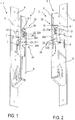
- eine schematische perspektivische Darstellung einer Unterseite eines Gegenkastens oder Schlosskastens für ein Schloss eines beweglichen Flügels,
- Fig. 2
- eine schematische perspektivische Darstellung einer Oberseite des Gegenkastens oder Schlosskastens für ein Schloss eines beweglichen Flügels aus
Fig. 1 , - Fig. 3
- eine schematische Darstellung des Gegenkastens oder Schlosskastens für ein Schloss eines beweglichen Flügels aus
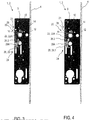
Fig. 1 und 2 ohne Deckelblech mit den erfindungswesentlichen Teile eines Ausführungsbeispiels einer erfindungsgemäßen Druckernussanordnung für einen beweglichen Flügel nach dem Koppeln der Vormontagebaugruppe mit der Druckernuss, - Fig. 4
- eine schematische Darstellung der erfindungsgemäßen Druckernussanordnung für einen beweglichen Flügel aus
Fig. 3 nach der Justierung der Federvorspannung der Federvorrichtung, - Fig. 5
- eine schematische Darstellung der erfindungsgemäßen Druckernussanordnung für einen beweglichen Flügel aus
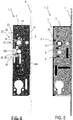
Fig. 3 und 4 nach Fixierung des zweiten Führungselements, und - Fig. 6
- eine schematische Darstellung der erfindungsgemäßen Druckernussanordnung für einen beweglichen Flügel aus
Fig. 3 bis 5 nach dem Aufsetzen des Deckelblechs und der Fixierung des ersten und zweiten Führungselements am Deckelblech. - Wie aus
Fig. 1 bis 6 ersichtlich ist, umfasst das dargestellte Ausführungsbeispiel eines erfindungsgemäßen Gegenkastens 1 für ein Schloss eines beweglichen Flügels ein Gehäuse 3, eine darin drehbar gelagerte Druckernuss 12 und mindestens ein von der Druckernuss 12 beaufschlagbares nicht näher dargestelltes Betätigungselement, welches bei einer gegen eine Federwirkung erfolgte Betätigung der Druckernuss 12 eine Entriegelung eines zugehörigen Schlosses bewirkt. Hierbei ist die Druckernuss 12 über einen Betätigungsarm 14 mit dem Betätigungselement und über einen Federarm 16 mit einem Federelement 22 einer Federanordnung 20 gekoppelt, welche die Federwirkung erzeugt. Wie ausFig. 1 bis 6 weiter ersichtlich ist, umfasst das Gehäuse 3 des Gegenkastens 1 ein Bodenblech 5 und ein Deckelblech 6, welches auch die Rückwand des Gehäuses 3 bildet und eine Stulpplatte 4, welche eine Vorderwand des Gehäuses 3 ausbildet. In die Stulpplatte ist mindestens eine Öffnung eingebracht, weiche ein nicht näher dargestellter Schieber im entriegelten Zustand durchgreift. - Wie aus
Fig. 1 bis 6 ersichtlich ist, kann das dargestellte Gehäuse 3 und die Druckernussanordnung 10 auch für einen erfindungsgemäßen Schlosskasten 2 für ein Schloss eines beweglichen Flügels verwendet werden. - Bei dem beweglichen Flügel kann es sich beispielsweise um einen Türflügel oder einen Fensterflügel handeln.
- Bei einer möglichen Ausführungsform des Gegenkastens 1 für ein Schloss eines Flügels kann das von der Druckernuss 12 beaufschlagbare Betätigungselement bei einer gegen eine Federwirkung erfolgte Betätigung der Druckernuss 12 ein erstes Schubelement in eine erste Betätigungsrichtung betätigen. Das erste Schubelement kann über eine erste Übertragungsvorrichtung mit einem zweiten Schubelement und über eine zweite Übertragungsvorrichtung mit einem Schieber gekoppelt werden. Der Schieber kann zum Einschließen einer Falle und/oder eines Riegels eines Schlosses mit Vollpanikfunktion durch eine korrespondierende Öffnung in einer Stulpplatte 4 in eine aus dem Gehäuse 3 vorstehende Stellung gebracht werden. Das erste Schubelement kann mit einer ersten Schließstange gekoppelt sein, und das zweite Schubelement kann mit einer zweiten Schließstange gekoppelt sein. Zudem kann die erste Übertragungsvorrichtung die erste Betätigungsrichtung des ersten Schubelements in eine entgegengesetzte zweite Betätigungsrichtung des zweiten Schubelements umwandeln. Die zweite Übertragungsvorrichtung kann die erste Betätigungsrichtung des ersten Schubelements in eine dritte Betätigungsrichtung des Schiebers umwandeln. Hierbei kann die erste Übertragungsvorrichtung beispielsweise als Zahnstangenantrieb ausgeführt sein und eine am ersten Schubelement ausgebildete erste Zahnstange umfassen, weiche über ein Zahnrad mit einer am zweiten Schubelement ausgebildeten zweiten Zahnstange gekoppelt sein kann.
- Wie aus
Fig. 1 bis 6 weiter ersichtlich ist, umfasst die Druckernussanordnung 10 für einen beweglichen Flügel im dargestellten Ausführungsbeispiel die im Gehäuse 3 drehbar gelagerte Druckernuss 12 und mindestens ein von der Druckernuss 12 beaufschlagbares nicht näher dargestelltes Betätigungselement, welches bei einer gegen eine Federwirkung erfolgten Betätigung der Druckernuss 12 eine Entriegelung eines zugehörigen Schlosses bewirkt. Hierbei ist die Druckernuss 12 über einen Betätigungsarm 14 mit dem Betätigungselement und über einen Federarm 16 mit einem Federelement 22 einer Federanordnung 20 gekoppelt, welche die Federwirkung erzeugt. Erfindungsgemäß umfasst die Federanordnung 20 eine Einstellvorrichtung 24, über welche eine Vorspannkraft des Federelements 22 einstellbar ist. - Wie aus
Fig. 1 bis 6 weiter ersichtlich ist, ist das Federelement 22 im dargestellten Ausführungsbeispiel als Spiralfeder 22A ausgeführt. Wie insbesondere ausFig. 3 bis 5 weiter ersichtlich ist, wirkt der Federarm 16 der Druckernuss 12 auf ein erstes Ende der Spiralfeder 22A. Im dargestellten Ausführungsbeispiel umfasst die Einstellvorrichtung 24 eine Zylinderschraube 26 mit einem Schraubenkopf 26.1 und einem Gewindeschaft 26.2 sowie eine Mutter 28. Eine korrespondierende Vormontagebaugruppe 21 umfasst die Einstellvorrichtung 24 und ein erstes Führungselement 29A. Nach dem Zusammenbau der Vormontagebaugruppe 21 sind das erste Führungselement 29A und die Spiralfeder 22A auf den Gewindeschaft 26.2 aufgeschoben und zwischen dem Schraubenkopf 26.1 und der Mutter 28 verliersicher gehalten. Diese Vormontagebaugruppe 21 kann dann einfach auf das Bodenblech 5 aufgesetzt und mit dem Federarm 16 der Druckernuss 12 gekoppelt werden. Wie ausFig. 3 bis 5 weiter ersichtlich ist, weist der Federarm 16 einen gabelförmigen - Endbereich auf, welcher den Gewindeschaft 26.2 zumindest teilweise so umgreift, dass die Mutter 28 auf den Federarm 16 und über den Federarm 16 auf die Spiralfeder 22A wirkt.
- Wie aus
Fig. 1 bis 6 weiter ersichtlich ist, ist das erste Führungselement 29A im montierten Zustand am Gehäuse 3 befestigt und führt den Gewindeschaft 26.1 drehbeweglich. Hierbei liegt der Schraubenkopf 26.1 an einer ersten Seite des ersten Führungselements 29A und die Spiralfeder 22A mit einer zweiten Seite an einer der ersten Seite gegenüberliegenden zweiten Seite des ersten Führungselements 29A an. Zudem ist ein zweites Führungselement 29B im Bereich des Schraubenkopfes 26.1 angeordnet und am Gehäuse 3 fixiert. Das zweite Führungselement 29B sichert die Schraube 26 gegen Verdrehen. - Bei der Durchführung des erfindungsgemäßen Verfahrens zur Montage einer Federanordnung 20 für eine Druckernussanordnung 10 wird zuerst die Vormontagebaugruppe 21 zusammengebaut, welche das erste Führungselement 29A, die Spiralfeder 22A ohne Vorspannung, die Schraube 26 und eine Mutter 28 umfasst.
- Im dargestellten Ausführungsbeispiel werden während des Zusammenbaus der Vormontagebaugruppe 21 das erste Führungselement 29A und die Spiralfeder 22A auf den Gewindeschaft 26,2 der Schraube 26 aufgeschoben und anschließend wird die Mutter 28 auf den Gewindeschaft 26.2 aufgeschraubt. Dann wird die Vormontagebaugruppe 21 mit einer montierten Druckernuss 12 gekoppelt.
Fig. 3 zeigt die Druckernussanordnung 10 nach der Kopplung der Vormontagebaugruppe 21 mit der Druckernuss 12. - Wie aus
Fig. 3 weiter ersichtlich ist, umgreift ein Federarm 16 der Druckernuss 12 nach der Kopplung mit der Vormontagebaugruppe 21 den Gewindeschaft 26.2 zumindest teilweise und wirkt auf ein erstes Ende der Spiralfeder 22A. In einem weiteren Schritt wird die Vorspannung der Spiralfeder 22A über die Schraube-Mutter-Verbindung vorjustiert. Die Vorjustierung der Federvorspannung der Spiralfeder 22A wird durch Drehen der Schraube 26 und/oder der Mutter 28 durchgeführt und kann mit herkömmlichem Standardwerkzeug, wie einem passenden Schraubenschlüsse oder einem Schraubendreher ausgeführt werden. Hierbei wirkt die Mutter 28 auf den Federarm 16 und der Schraubenkopf 26.1 auf das erste Führungselement 29A und der wirksame Abstand zwischen dem Federarm 16 und dem ersten Führungselement 29A reduziert sich, in dem das erste Führungselement 29A auf den Federarm 16 zubewegt wird. Dadurch verkürzt sich die wirksame Länge der Spiralfeder 22A und die Spiralfeder 22A wird gespannt. Nach der Vorjustierung der Federvorspannung der Spiralfeder 22A wird das erste Führungselement 29A am Bodenblech 5 fixiert. Im dargestellten Ausführungsbeispiel wird das erste Führungselement 29A mit einer Befestigungsschraube 7, welche durch ein Loch im Bodenblech 5 in eine Gewindebohrung im ersten Führungselement 29A eingeschraubt wird, am Bodenblech 5 befestigt. Nach der Fixierung des ersten Führungselements 29A am Bodenblech 5 ist die Schraube 26 durch das erste Führungselement 29A axial fixiert und drehbeweglich gelagert.Fig. 4 zeigt die Druckernussanordnung 10 nach der Vorjustierung der Federvorspannung der Spiralfeder 22A und der Fixierung des ersten Führungselements 29A am Bodenblech. - Wie aus
Fig. 4 weiter ersichtlich ist, kann jetzt die Justierung der Federvorspannung der Spiralfeder 22A über die Schraube-Mutter-Verbindung durchgeführt werden, bis eine gewünschte Vorspannung der Spiralfeder 22A erreicht ist. Die Justierung der Federvorspannung der Spiralfeder 22A wird durch Drehen der Schraube 26 und/oder der Mutter 28 mit herkömmlichem Standardwerkzeug durchgeführt, wodurch die Mutter 28 auf den Federarm 16 wirkt und dieser auf das erste Führungselement 29A und den Schraubenkopf 26.1 zubewegt wird. Der Schraubenkopf 26.1 bzw. die Schraube 26 ist drehbeweglich am ersten Führungselement 29A gelagert und axial fixiert, so dass sich der wirksame Abstand zwischen dem Federarm 16 und dem ersten Führungselement 29A weiter reduziert. Dadurch wird die wirksame Länge der Spiralfeder 22A weiter verkürzt und die Spiralfeder 22A weiter gespannt. Nach der Justierung der Federvorspannung der Spiralfeder 22A wird das zweite Führungselement 29B am Bodenblech 5 fixiert, wobei das zweite Führungselement 29B die Schraube 26 drehfest fixiert. Im dargestellten Ausführungsbeispiel wird das zweite Führungselement 29B mit einer Befestigungsschraube 7, welche durch ein Loch im Bodenblech 5 in eine Gewindebohrung im zweiten Führungselement 29B eingeschraubt wird, am Bodenblech 5 befestigt. Nach der Fixierung des zweiten Führungselements 29B am Bodenblech 5 ist die Schraube 26 durch das erste Führungselement 29A axial fixiert und durch das zweite Führungselement 29A gegen Verdrehen gesichert.Fig. 5 zeigt die Druckernussanordnung 10 nach der Justierung der Federvorspannung der Spiralfeder 22A und der Fixierung des zweiten Führungselements 29B am Bodenblech. - Wie aus
Fig. 5 weiter ersichtlich ist, kann nun noch eine Feinjustierung bzw. Nachjustierung der Federvorspannung der Spiralfeder 22A durch Drehen der Mutter 28 durchgeführt werden, wodurch die Mutter 28 auf den Federarm 16 wirkt und dieser auf das erste Führungselement 29A und den Schraubenkopf 26.1 zubewegt wird, welcher drehfest am zweiten Führungselement 29B gelagert ist, so dass sich der wirksame Abstand zwischen dem Federarm 16 und dem ersten Führungselement 29A weiter reduziert. Dadurch wird die wirksame Länge der Spiralfeder 22A weiter verkürzt und die Spiralfeder 22A weiter gespannt. Anschließend wird das Deckelblech 6 aufgesetzt und das erste Führungselement 29A und das zweite Führungselement 29B werden am Deckelblech 6 fixiert. Im dargestellten Ausführungsbeispiel werden das erste Führungselement 29A und das zweite Führungselement 29B mit Befestigungsschrauben 8, welche durch Löcher im Deckelblech 6 in korrespondierende Gewindebohrungen im ersten Führungselement 29A und im zweiten Führungselement 29B eingeschraubt werden, am Deckelblech 6 befestigt.Fig. 6 zeigt die Druckernussanordnung 10 nach dem Aufsetzen des Deckelbelchs 6. - Wie aus
Fig. 1, 2 und6 weiter ersichtlich ist, bleibt die Mutter 28 durch eine Öffnung 6.1 im Deckelblech 6 von außen zugänglich. Dadurch kann während des Betriebs die Federvorspannung der Spiralfeder 22A mit herkömmlichem Standardwerkzeug einfach nachjustiert werden. -
- 1
- Gegenkasten
- 2
- Schlosskasten
- 3
- Gehäuse
- 4
- Stulpplatte
- 5
- Bodenblech
- 6
- Deckelblech
- 6.1
- Öffnung
- 7
- Befestigungsschraube (Bodenblech)
- 8
- Befestigungsschraube (Deckelblech)
- 10
- Druckernussanordnung
- 12
- Druckernuss
- 14
- Betätigungsarm
- 16
- Federarm
- 20
- Federanordnung
- 21
- Vormontagebaugruppe
- 22
- Federelement
- 22A
- Spiralfeder
- 24
- Einstellvorrichtung
- 26
- Schraube
- 26.1
- Schraubenkopf
- 26.2
- Gewindeschaft
- 28
- Mutter
- 29A
- erstes Führungselement
- 29B
- zweites Führungselement
Claims (18)
- Druckernussanordnung (10) für einen beweglichen Flügel, mit einer in einem Gehäuse (3) drehbar gelagerten Druckernuss (12), mindestens einem von der Druckernuss (12) beaufschlagbaren Betätigungselement, welches bei einer gegen eine Federwirkung erfolgten Betätigung der Druckernuss (12) eine Entriegelung eines zugehörigen Schlosses bewirkt, wobei die Druckernuss (12) über einen Betätigungsarm (14) mit dem Betätigungselement und über einen Federarm (16) mit einem Federelement (22) einer Federanordnung (20) gekoppelt ist, welche die Federwirkung erzeugt, wobei die Federanordnung (20) eine Einstellvorrichtung (24) umfasst, über welche eine Vorspannkraft des Federelements (22) einstellbar ist und die Einstellvorrichtung (24) eine Zylinderschraube (26) mit einem Schraubenkopf (26.1) und einem Gewindeschaft (26.2) und eine Mutter (28) umfasst
dadurch gekennzeichnet,
dass ein zweites Führungselement (29B) im Bereich des Schraubenkopfes (26.1) angeordnet und am Gehäuse (3) fixiert ist, wobei das zweite Führungselement (29B) die Zylinderschraube (26) gegen Verdrehen sichert. - Druckernussanordnung (10) nach Anspruch 1,
dadurch gekennzeichnet,
dass das Federelement (22) als Spiralfeder (22A) ausgeführt ist. - Druckernussanordnung (10) nach Anspruch 2,
dadurch gekennzeichnet,
dass der Federarm (16) der Druckernuss (12) auf ein erstes Ende der Spiralfeder (22A) wirkt. - Druckernussanordnung (10) nach einem der Ansprüche 1 bis 3,
dadurch gekennzeichnet,
dass eine Vormontagebaugruppe (21) die Einstellvorrichtung (24) und ein erstes Führungselement (29A) umfasst. - Druckernussanordnung (10) nach Anspruch 4,
dadurch gekennzeichnet,
dass das erste Führungselement (29A) und die Spiralfeder (22A) auf den Gewindeschaft (26.2) aufgeschoben und zwischen dem Schraubenkopf (26.1) und der Mutter (28) verliersicher gehalten sind. - Druckernussanordnung (10) nach Anspruch 5,
dadurch gekennzeichnet,
dass der Federarm (16) einen gabelförmigen Endbereich aufweist, welcher den Gewindeschaft (26.2) zumindest teilweise umgreift, wobei die Mutter (28) auf den Federarm (16) und über den Federarm (16) auf die Spiralfeder (22A) wirkt. - Druckernussanordnung (10) nach Anspruch 6,
dadurch gekennzeichnet,
dass das erste Führungselement (29A) im montierten Zustand am Gehäuse (3) befestigt ist und den Gewindeschaft (26.1) drehbeweglich führt, wobei der Schraubenkopf (26.1) an einer ersten Seite des ersten Führungselements (29A) und die Spiralfeder (22A) mit einer zweiten Seite an einer der ersten Seite gegenüberliegenden zweiten Seite des ersten Führungselements (29A) anliegt. - Gegenkasten (1) für ein Schloss eines beweglichen Flügels, mit einem Gehäuse (3) und einer Druckernussanordnung (10),
dadurch gekennzeichnet,
dass die Druckernussanordnung (10) nach zumindest einem der Ansprüche 1 bis 7 ausgeführt ist. - Gegenkasten (1) nach Anspruch 8,
dadurch gekennzeichnet,
dass der bewegliche Flügel ein Türflügel oder ein Fensterflügel ist. - Schlosskasten (2) für ein Schloss eines beweglichen Flügels, mit einem Gehäuse (3) und einer Druckernussanordnung (10),
dadurch gekennzeichnet,
dass die Druckernussanordnung (10) nach zumindest einem der Ansprüche 1 bis 7 ausgeführt ist. - Schlosskasten (2) nach Anspruch 10,
dadurch gekennzeichnet,
dass der bewegliche Flügel ein Türflügel oder ein Fensterflügel ist. - Verfahren zur Montage einer Federanordnung (20) für eine Druckernussanordnung (10), welche nach zumindest einem der Ansprüche 1 bis 7 ausgeführt ist, gekennzeichnet durch die Schritte:Zusammenbau einer Vormontagebaugruppe (21), welche ein erstes Führungselement (29A), eine Spiralfeder (22A) ohne Vorspannung, eine Zylinderschraube (26) und eine Mutter (28) umfasst,Koppeln der Vormontagebaugruppe (21) mit einer montierten Druckernuss (12),Vorjustierung der Vorspannung der Spiralfeder (22A) über die Schraube-Mutter-Verbindung,Fixieren des ersten Führungselements (29A) am Bodenblech (5),Justierung der Federvorspannung über die Schraube-Mutter-Verbindung bis eine gewünschte Vorspannung der Spiralfeder (22A) erreicht ist,Fixieren eines zweiten Führungselements (29B) am Bodenblech (5), wobei das zweite Führungselement (29B) die Zylinderschraube (26) drehfest fixiert.
- Verfahren nach Anspruch 12,
dadurch gekennzeichnet,
dass während des Zusammenbaus der Vormontagebaugruppe (21) das erste Führungselement (29A) und die Spiralfeder (22A) auf einen Gewindeschaft (26.2) der Zylinderschraube (26) aufgeschoben werden und anschließend die Mutter (28) auf den Gewindeschaft (26.2) aufgeschraubt wird. - Verfahren nach Anspruch 12 oder 13,
dadurch gekennzeichnet,
dass ein Federarm (16) der Druckernuss (12) nach der Kopplung mit der Vormontagebaugruppe (21) auf ein erstes Ende der Spiralfeder (22A) wirkt und den Gewindeschaft (26.2) zumindest teilweise umgreift. - Verfahren nach einem der Ansprüche 12 bis 14,
dadurch gekennzeichnet,
dass die Vorjustierung der Federvorspannung der Spiralfeder (22A) durch Drehen der Zylinderschraube (26) und/oder der Mutter (28) durchgeführt wird, wodurch die Mutter (28) auf den Federarm (16) und der Schraubenkopf (26.1) auf das erste Führungselement (29A) wirkt und sich der wirksame Abstand zwischen dem Federarm (16) und dem ersten Führungselement (29A) reduziert, in dem das erste Führungselement (29A) auf den Federarm (16) zubewegt wird und sich die wirksame Länge der Spiralfeder (22A) verkürzt und die Spiralfeder (22A) gespannt wird. - Verfahren nach Anspruch 15,
dadurch gekennzeichnet,
dass die Justierung der Federvorspannung der Spiralfeder (22A) durch Drehen der Zylinderschraube (26) und/oder der Mutter (28) durchgeführt wird, wodurch die Mutter (28) auf den Federarm (16) wirkt und dieser auf das erste Führungselement (29A) und den Schraubenkopf (26.1) zubewegt wird, welcher drehbeweglich am ersten Führungselement (29A) gelagert und axial fixiert ist, so dass sich der wirksame Abstand zwischen dem Federarm (16) und dem ersten Führungselement (29A) weiter reduziert und die wirksame Länge der Spiralfeder (22A) weiter verkürzt und die Spiralfeder (22A) weiter gespannt wird. - Verfahren nach Anspruch 16,
dadurch gekennzeichnet,
dass eine Feinjustierung der Federvorspannung der Spiralfeder (22A) durch Drehen der Mutter (28) durchgeführt wird, wodurch die Mutter (28) auf den Federarm (16) wirkt und dieser auf das erste Führungselement (29A) und den Schraubenkopf (26.1) zubewegt wird, welcher drehfest am zweiten Führungselement (29B) gelagert ist, so dass sich der wirksame Abstand zwischen dem Federarm (16) und dem ersten Führungselement (29A) weiter reduziert und die wirksame Länge der Spiralfeder (22A) weiter verkürzt und die Spiralfeder (22A) weiter gespannt wird. - Verfahren nach einem der Ansprüche 12 bis 17,
dadurch gekennzeichnet,
dass ein Deckelblech (6) aufgesetzt wird, und das erste Führungselement (29A) und das zweite Führungselement (29B) am Deckelblech (6) fixiert werden, wobei die Mutter (28) durch eine Öffnung (6.1) im Deckelblech (6) von außen zugänglich bleibt.
Priority Applications (1)
| Application Number | Priority Date | Filing Date | Title |
|---|---|---|---|
| PL18169604T PL3406827T3 (pl) | 2017-05-23 | 2018-04-26 | Układ orzecha naciskowego do ruchomego skrzydła |
Applications Claiming Priority (1)
| Application Number | Priority Date | Filing Date | Title |
|---|---|---|---|
| DE102017208731.5A DE102017208731A1 (de) | 2017-05-23 | 2017-05-23 | Druckernussanordnung für einen beweglichen Flügel |
Publications (2)
| Publication Number | Publication Date |
|---|---|
| EP3406827A1 EP3406827A1 (de) | 2018-11-28 |
| EP3406827B1 true EP3406827B1 (de) | 2020-08-05 |
Family
ID=62067539
Family Applications (1)
| Application Number | Title | Priority Date | Filing Date |
|---|---|---|---|
| EP18169604.8A Active EP3406827B1 (de) | 2017-05-23 | 2018-04-26 | Druckernussanordnung für einen beweglichen flügel |
Country Status (5)
| Country | Link |
|---|---|
| EP (1) | EP3406827B1 (de) |
| DE (1) | DE102017208731A1 (de) |
| ES (1) | ES2820555T3 (de) |
| HU (1) | HUE051224T2 (de) |
| PL (1) | PL3406827T3 (de) |
Family Cites Families (8)
| Publication number | Priority date | Publication date | Assignee | Title |
|---|---|---|---|---|
| GB2323626B (en) | 1997-03-25 | 2001-06-13 | Newman Tonks Group Plc | Latch assembly |
| US6557909B2 (en) * | 2001-09-28 | 2003-05-06 | Von Morris Corporation | Mortise lock |
| DE10261129B4 (de) | 2002-12-20 | 2005-01-13 | Geze Gmbh | Selbstverriegelndes Schloss |
| DE20307656U1 (de) | 2003-05-16 | 2004-09-23 | Casma S.P.A. | Ganzglastürschloss |
| DE202009008431U1 (de) | 2009-06-15 | 2009-08-27 | Bks Gmbh | Einsteckschloss |
| DE102011053502A1 (de) * | 2010-12-23 | 2012-06-28 | Dorma Gmbh & Co Kg | Schloss mit einer Nulllagenverstellung des Türdrückers |
| DE202014003684U1 (de) * | 2014-05-02 | 2014-05-28 | Heinz-Werner Nowak | Drückerverstellung für Glastürschlösser |
| CN104806074B (zh) * | 2015-05-06 | 2017-06-16 | 张治军 | 一种锁紧件及应用该锁紧件的锁 |
-
2017
- 2017-05-23 DE DE102017208731.5A patent/DE102017208731A1/de not_active Ceased
-
2018
- 2018-04-26 ES ES18169604T patent/ES2820555T3/es active Active
- 2018-04-26 EP EP18169604.8A patent/EP3406827B1/de active Active
- 2018-04-26 PL PL18169604T patent/PL3406827T3/pl unknown
- 2018-04-26 HU HUE18169604A patent/HUE051224T2/hu unknown
Non-Patent Citations (1)
| Title |
|---|
| None * |
Also Published As
| Publication number | Publication date |
|---|---|
| EP3406827A1 (de) | 2018-11-28 |
| DE102017208731A1 (de) | 2018-11-29 |
| PL3406827T3 (pl) | 2021-02-08 |
| HUE051224T2 (hu) | 2021-03-01 |
| ES2820555T3 (es) | 2021-04-21 |
Similar Documents
| Publication | Publication Date | Title |
|---|---|---|
| DE3835349A1 (de) | Schloss | |
| EP3299562A1 (de) | Spindelantriebseinrichtung | |
| DE102014202765A1 (de) | Befestigungskonzept zur spielfreien Montage von Verstellantrieben in einem Kraftfahrzeug | |
| WO2012004151A1 (de) | Vorrichtung zum einstellen und arretieren der lage einer führungsschiene für eine verstellbare fensterscheibe in einer fahrzeugtür | |
| EP1270350A2 (de) | Justiereinrichtung und zugehöriges Betätigungswerkzeug | |
| EP3406827B1 (de) | Druckernussanordnung für einen beweglichen flügel | |
| EP4438836B1 (de) | Schliesssystem und tür oder fenster mit derartigem schliesssystem | |
| DE10040834C1 (de) | Einsteckschloß mit einer Treibstangenaufnahme | |
| DE69618315T2 (de) | Abnehmbarer Griff für Türen oder Fenster insbesondere in Metallprofilen | |
| EP2149664A2 (de) | Scharnierband mit einer Unterkonstruktion zur Befestigung an einem Türblatt | |
| DE1500858C3 (de) | Verschluß für Türen oder Fenster | |
| DE19800858C2 (de) | Einstellvorrichtung zum Längenausgleich für einen Betätigungszug | |
| EP1084660B1 (de) | Vorrichtung zur vertikalen Einstellung für Möbelschubladen | |
| DE19956537C1 (de) | Türdrückergarnitur | |
| DE102023114287B3 (de) | Stellantrieb für eine Fahrzeugklappe und Verfahren zur Verschwenkung einer Fahrzeugklappe | |
| DE102024203615B4 (de) | Vorrichtung zum Dämpfen einer Öffnungsbewegung eines Fahrzeugelements | |
| EP2682548A1 (de) | Türfeststeller für Kraftfahrzeuge | |
| DE102010029985B4 (de) | Fenster, Tür oder dergleichen mit einer Verriegelungsvorrichtung mit Getriebegehäuse sowie Verfahren zur Herstellung eines derartigen Fensters, einer derartigen Tür oder dergleichen | |
| DE3206760A1 (de) | Zentrale tuerblockiervorrichtung, insbesondere fuer die wagentueren von kraftfahrzeugen | |
| EP1580371B1 (de) | Beschlaganordnung | |
| EP3850175B1 (de) | Einrichtung zur justierung eines türantriebs | |
| DE202024102517U1 (de) | Beschlag eines Fensters oder einer Tür | |
| EP4650553A1 (de) | Beschlag eines fensters oder einer tür | |
| DE202011005241U1 (de) | Stangenführung | |
| DE102023109526A1 (de) | Montagebügel |
Legal Events
| Date | Code | Title | Description |
|---|---|---|---|
| PUAI | Public reference made under article 153(3) epc to a published international application that has entered the european phase |
Free format text: ORIGINAL CODE: 0009012 |
|
| STAA | Information on the status of an ep patent application or granted ep patent |
Free format text: STATUS: THE APPLICATION HAS BEEN PUBLISHED |
|
| AK | Designated contracting states |
Kind code of ref document: A1 Designated state(s): AL AT BE BG CH CY CZ DE DK EE ES FI FR GB GR HR HU IE IS IT LI LT LU LV MC MK MT NL NO PL PT RO RS SE SI SK SM TR |
|
| AX | Request for extension of the european patent |
Extension state: BA ME |
|
| STAA | Information on the status of an ep patent application or granted ep patent |
Free format text: STATUS: REQUEST FOR EXAMINATION WAS MADE |
|
| 17P | Request for examination filed |
Effective date: 20190515 |
|
| RBV | Designated contracting states (corrected) |
Designated state(s): AL AT BE BG CH CY CZ DE DK EE ES FI FR GB GR HR HU IE IS IT LI LT LU LV MC MK MT NL NO PL PT RO RS SE SI SK SM TR |
|
| STAA | Information on the status of an ep patent application or granted ep patent |
Free format text: STATUS: EXAMINATION IS IN PROGRESS |
|
| 17Q | First examination report despatched |
Effective date: 20191008 |
|
| GRAP | Despatch of communication of intention to grant a patent |
Free format text: ORIGINAL CODE: EPIDOSNIGR1 |
|
| STAA | Information on the status of an ep patent application or granted ep patent |
Free format text: STATUS: GRANT OF PATENT IS INTENDED |
|
| INTG | Intention to grant announced |
Effective date: 20200416 |
|
| GRAS | Grant fee paid |
Free format text: ORIGINAL CODE: EPIDOSNIGR3 |
|
| GRAA | (expected) grant |
Free format text: ORIGINAL CODE: 0009210 |
|
| STAA | Information on the status of an ep patent application or granted ep patent |
Free format text: STATUS: THE PATENT HAS BEEN GRANTED |
|
| AK | Designated contracting states |
Kind code of ref document: B1 Designated state(s): AL AT BE BG CH CY CZ DE DK EE ES FI FR GB GR HR HU IE IS IT LI LT LU LV MC MK MT NL NO PL PT RO RS SE SI SK SM TR |
|
| REG | Reference to a national code |
Ref country code: GB Ref legal event code: FG4D Free format text: NOT ENGLISH |
|
| REG | Reference to a national code |
Ref country code: CH Ref legal event code: EP |
|
| REG | Reference to a national code |
Ref country code: AT Ref legal event code: REF Ref document number: 1298911 Country of ref document: AT Kind code of ref document: T Effective date: 20200815 |
|
| REG | Reference to a national code |
Ref country code: DE Ref legal event code: R096 Ref document number: 502018002064 Country of ref document: DE |
|
| REG | Reference to a national code |
Ref country code: IE Ref legal event code: FG4D Free format text: LANGUAGE OF EP DOCUMENT: GERMAN |
|
| REG | Reference to a national code |
Ref country code: NL Ref legal event code: FP |
|
| REG | Reference to a national code |
Ref country code: LT Ref legal event code: MG4D |
|
| PG25 | Lapsed in a contracting state [announced via postgrant information from national office to epo] |
Ref country code: FI Free format text: LAPSE BECAUSE OF FAILURE TO SUBMIT A TRANSLATION OF THE DESCRIPTION OR TO PAY THE FEE WITHIN THE PRESCRIBED TIME-LIMIT Effective date: 20200805 Ref country code: LT Free format text: LAPSE BECAUSE OF FAILURE TO SUBMIT A TRANSLATION OF THE DESCRIPTION OR TO PAY THE FEE WITHIN THE PRESCRIBED TIME-LIMIT Effective date: 20200805 Ref country code: PT Free format text: LAPSE BECAUSE OF FAILURE TO SUBMIT A TRANSLATION OF THE DESCRIPTION OR TO PAY THE FEE WITHIN THE PRESCRIBED TIME-LIMIT Effective date: 20201207 Ref country code: HR Free format text: LAPSE BECAUSE OF FAILURE TO SUBMIT A TRANSLATION OF THE DESCRIPTION OR TO PAY THE FEE WITHIN THE PRESCRIBED TIME-LIMIT Effective date: 20200805 Ref country code: NO Free format text: LAPSE BECAUSE OF FAILURE TO SUBMIT A TRANSLATION OF THE DESCRIPTION OR TO PAY THE FEE WITHIN THE PRESCRIBED TIME-LIMIT Effective date: 20201105 Ref country code: GR Free format text: LAPSE BECAUSE OF FAILURE TO SUBMIT A TRANSLATION OF THE DESCRIPTION OR TO PAY THE FEE WITHIN THE PRESCRIBED TIME-LIMIT Effective date: 20201106 Ref country code: SE Free format text: LAPSE BECAUSE OF FAILURE TO SUBMIT A TRANSLATION OF THE DESCRIPTION OR TO PAY THE FEE WITHIN THE PRESCRIBED TIME-LIMIT Effective date: 20200805 Ref country code: BG Free format text: LAPSE BECAUSE OF FAILURE TO SUBMIT A TRANSLATION OF THE DESCRIPTION OR TO PAY THE FEE WITHIN THE PRESCRIBED TIME-LIMIT Effective date: 20201105 |
|
| PG25 | Lapsed in a contracting state [announced via postgrant information from national office to epo] |
Ref country code: RS Free format text: LAPSE BECAUSE OF FAILURE TO SUBMIT A TRANSLATION OF THE DESCRIPTION OR TO PAY THE FEE WITHIN THE PRESCRIBED TIME-LIMIT Effective date: 20200805 Ref country code: LV Free format text: LAPSE BECAUSE OF FAILURE TO SUBMIT A TRANSLATION OF THE DESCRIPTION OR TO PAY THE FEE WITHIN THE PRESCRIBED TIME-LIMIT Effective date: 20200805 Ref country code: IS Free format text: LAPSE BECAUSE OF FAILURE TO SUBMIT A TRANSLATION OF THE DESCRIPTION OR TO PAY THE FEE WITHIN THE PRESCRIBED TIME-LIMIT Effective date: 20201205 |
|
| REG | Reference to a national code |
Ref country code: HU Ref legal event code: AG4A Ref document number: E051224 Country of ref document: HU |
|
| REG | Reference to a national code |
Ref country code: ES Ref legal event code: FG2A Ref document number: 2820555 Country of ref document: ES Kind code of ref document: T3 Effective date: 20210421 |
|
| PG25 | Lapsed in a contracting state [announced via postgrant information from national office to epo] |
Ref country code: EE Free format text: LAPSE BECAUSE OF FAILURE TO SUBMIT A TRANSLATION OF THE DESCRIPTION OR TO PAY THE FEE WITHIN THE PRESCRIBED TIME-LIMIT Effective date: 20200805 Ref country code: DK Free format text: LAPSE BECAUSE OF FAILURE TO SUBMIT A TRANSLATION OF THE DESCRIPTION OR TO PAY THE FEE WITHIN THE PRESCRIBED TIME-LIMIT Effective date: 20200805 Ref country code: RO Free format text: LAPSE BECAUSE OF FAILURE TO SUBMIT A TRANSLATION OF THE DESCRIPTION OR TO PAY THE FEE WITHIN THE PRESCRIBED TIME-LIMIT Effective date: 20200805 Ref country code: SM Free format text: LAPSE BECAUSE OF FAILURE TO SUBMIT A TRANSLATION OF THE DESCRIPTION OR TO PAY THE FEE WITHIN THE PRESCRIBED TIME-LIMIT Effective date: 20200805 |
|
| REG | Reference to a national code |
Ref country code: DE Ref legal event code: R097 Ref document number: 502018002064 Country of ref document: DE |
|
| PG25 | Lapsed in a contracting state [announced via postgrant information from national office to epo] |
Ref country code: AL Free format text: LAPSE BECAUSE OF FAILURE TO SUBMIT A TRANSLATION OF THE DESCRIPTION OR TO PAY THE FEE WITHIN THE PRESCRIBED TIME-LIMIT Effective date: 20200805 |
|
| PLBE | No opposition filed within time limit |
Free format text: ORIGINAL CODE: 0009261 |
|
| STAA | Information on the status of an ep patent application or granted ep patent |
Free format text: STATUS: NO OPPOSITION FILED WITHIN TIME LIMIT |
|
| PG25 | Lapsed in a contracting state [announced via postgrant information from national office to epo] |
Ref country code: SK Free format text: LAPSE BECAUSE OF FAILURE TO SUBMIT A TRANSLATION OF THE DESCRIPTION OR TO PAY THE FEE WITHIN THE PRESCRIBED TIME-LIMIT Effective date: 20200805 |
|
| 26N | No opposition filed |
Effective date: 20210507 |
|
| PG25 | Lapsed in a contracting state [announced via postgrant information from national office to epo] |
Ref country code: SI Free format text: LAPSE BECAUSE OF FAILURE TO SUBMIT A TRANSLATION OF THE DESCRIPTION OR TO PAY THE FEE WITHIN THE PRESCRIBED TIME-LIMIT Effective date: 20200805 |
|
| PG25 | Lapsed in a contracting state [announced via postgrant information from national office to epo] |
Ref country code: MC Free format text: LAPSE BECAUSE OF FAILURE TO SUBMIT A TRANSLATION OF THE DESCRIPTION OR TO PAY THE FEE WITHIN THE PRESCRIBED TIME-LIMIT Effective date: 20200805 |
|
| PG25 | Lapsed in a contracting state [announced via postgrant information from national office to epo] |
Ref country code: IE Free format text: LAPSE BECAUSE OF NON-PAYMENT OF DUE FEES Effective date: 20210426 |
|
| PG25 | Lapsed in a contracting state [announced via postgrant information from national office to epo] |
Ref country code: IS Free format text: LAPSE BECAUSE OF FAILURE TO SUBMIT A TRANSLATION OF THE DESCRIPTION OR TO PAY THE FEE WITHIN THE PRESCRIBED TIME-LIMIT Effective date: 20201205 |
|
| P01 | Opt-out of the competence of the unified patent court (upc) registered |
Effective date: 20230510 |
|
| PG25 | Lapsed in a contracting state [announced via postgrant information from national office to epo] |
Ref country code: CY Free format text: LAPSE BECAUSE OF FAILURE TO SUBMIT A TRANSLATION OF THE DESCRIPTION OR TO PAY THE FEE WITHIN THE PRESCRIBED TIME-LIMIT Effective date: 20200805 |
|
| PGFP | Annual fee paid to national office [announced via postgrant information from national office to epo] |
Ref country code: NL Payment date: 20230419 Year of fee payment: 6 Ref country code: LU Payment date: 20230419 Year of fee payment: 6 |
|
| PGFP | Annual fee paid to national office [announced via postgrant information from national office to epo] |
Ref country code: IT Payment date: 20230426 Year of fee payment: 6 Ref country code: FR Payment date: 20230424 Year of fee payment: 6 Ref country code: ES Payment date: 20230627 Year of fee payment: 6 Ref country code: CZ Payment date: 20230419 Year of fee payment: 6 |
|
| PGFP | Annual fee paid to national office [announced via postgrant information from national office to epo] |
Ref country code: HU Payment date: 20230421 Year of fee payment: 6 |
|
| PGFP | Annual fee paid to national office [announced via postgrant information from national office to epo] |
Ref country code: BE Payment date: 20230419 Year of fee payment: 6 |
|
| PGFP | Annual fee paid to national office [announced via postgrant information from national office to epo] |
Ref country code: GB Payment date: 20230419 Year of fee payment: 6 |
|
| PG25 | Lapsed in a contracting state [announced via postgrant information from national office to epo] |
Ref country code: MK Free format text: LAPSE BECAUSE OF FAILURE TO SUBMIT A TRANSLATION OF THE DESCRIPTION OR TO PAY THE FEE WITHIN THE PRESCRIBED TIME-LIMIT Effective date: 20200805 |
|
| PG25 | Lapsed in a contracting state [announced via postgrant information from national office to epo] |
Ref country code: MT Free format text: LAPSE BECAUSE OF FAILURE TO SUBMIT A TRANSLATION OF THE DESCRIPTION OR TO PAY THE FEE WITHIN THE PRESCRIBED TIME-LIMIT Effective date: 20200805 |
|
| REG | Reference to a national code |
Ref country code: NL Ref legal event code: MM Effective date: 20240501 |
|
| PG25 | Lapsed in a contracting state [announced via postgrant information from national office to epo] |
Ref country code: LU Free format text: LAPSE BECAUSE OF NON-PAYMENT OF DUE FEES Effective date: 20240426 |
|
| GBPC | Gb: european patent ceased through non-payment of renewal fee |
Effective date: 20240426 |
|
| REG | Reference to a national code |
Ref country code: BE Ref legal event code: MM Effective date: 20240430 |
|
| PG25 | Lapsed in a contracting state [announced via postgrant information from national office to epo] |
Ref country code: LU Free format text: LAPSE BECAUSE OF NON-PAYMENT OF DUE FEES Effective date: 20240426 |
|
| PG25 | Lapsed in a contracting state [announced via postgrant information from national office to epo] |
Ref country code: HU Free format text: LAPSE BECAUSE OF NON-PAYMENT OF DUE FEES Effective date: 20240427 |
|
| PG25 | Lapsed in a contracting state [announced via postgrant information from national office to epo] |
Ref country code: NL Free format text: LAPSE BECAUSE OF NON-PAYMENT OF DUE FEES Effective date: 20240501 Ref country code: BE Free format text: LAPSE BECAUSE OF NON-PAYMENT OF DUE FEES Effective date: 20240430 |
|
| PG25 | Lapsed in a contracting state [announced via postgrant information from national office to epo] |
Ref country code: GB Free format text: LAPSE BECAUSE OF NON-PAYMENT OF DUE FEES Effective date: 20240426 |
|
| PG25 | Lapsed in a contracting state [announced via postgrant information from national office to epo] |
Ref country code: FR Free format text: LAPSE BECAUSE OF NON-PAYMENT OF DUE FEES Effective date: 20240430 |
|
| PG25 | Lapsed in a contracting state [announced via postgrant information from national office to epo] |
Ref country code: CZ Free format text: LAPSE BECAUSE OF NON-PAYMENT OF DUE FEES Effective date: 20240426 |
|
| PG25 | Lapsed in a contracting state [announced via postgrant information from national office to epo] |
Ref country code: NL Free format text: LAPSE BECAUSE OF NON-PAYMENT OF DUE FEES Effective date: 20240501 Ref country code: HU Free format text: LAPSE BECAUSE OF NON-PAYMENT OF DUE FEES Effective date: 20240427 Ref country code: GB Free format text: LAPSE BECAUSE OF NON-PAYMENT OF DUE FEES Effective date: 20240426 Ref country code: FR Free format text: LAPSE BECAUSE OF NON-PAYMENT OF DUE FEES Effective date: 20240430 Ref country code: CZ Free format text: LAPSE BECAUSE OF NON-PAYMENT OF DUE FEES Effective date: 20240426 Ref country code: BE Free format text: LAPSE BECAUSE OF NON-PAYMENT OF DUE FEES Effective date: 20240430 |
|
| PG25 | Lapsed in a contracting state [announced via postgrant information from national office to epo] |
Ref country code: IT Free format text: LAPSE BECAUSE OF NON-PAYMENT OF DUE FEES Effective date: 20240426 |
|
| REG | Reference to a national code |
Ref country code: ES Ref legal event code: FD2A Effective date: 20250530 |
|
| PGFP | Annual fee paid to national office [announced via postgrant information from national office to epo] |
Ref country code: PL Payment date: 20250418 Year of fee payment: 8 Ref country code: DE Payment date: 20250430 Year of fee payment: 8 |
|
| PG25 | Lapsed in a contracting state [announced via postgrant information from national office to epo] |
Ref country code: ES Free format text: LAPSE BECAUSE OF NON-PAYMENT OF DUE FEES Effective date: 20240427 |
|
| PGFP | Annual fee paid to national office [announced via postgrant information from national office to epo] |
Ref country code: CH Payment date: 20250501 Year of fee payment: 8 |
|
| PGFP | Annual fee paid to national office [announced via postgrant information from national office to epo] |
Ref country code: AT Payment date: 20250423 Year of fee payment: 8 |
|
| PG25 | Lapsed in a contracting state [announced via postgrant information from national office to epo] |
Ref country code: TR Free format text: LAPSE BECAUSE OF FAILURE TO SUBMIT A TRANSLATION OF THE DESCRIPTION OR TO PAY THE FEE WITHIN THE PRESCRIBED TIME-LIMIT Effective date: 20200805 |