EP3396028B1 - Direct electrochemical synthesis of doped conductive polymers on metal alloys - Google Patents
Direct electrochemical synthesis of doped conductive polymers on metal alloys Download PDFInfo
- Publication number
- EP3396028B1 EP3396028B1 EP18166401.2A EP18166401A EP3396028B1 EP 3396028 B1 EP3396028 B1 EP 3396028B1 EP 18166401 A EP18166401 A EP 18166401A EP 3396028 B1 EP3396028 B1 EP 3396028B1
- Authority
- EP
- European Patent Office
- Prior art keywords
- aniline
- metal surface
- toluidine
- aluminum
- methyl
- Prior art date
- Legal status (The legal status is an assumption and is not a legal conclusion. Google has not performed a legal analysis and makes no representation as to the accuracy of the status listed.)
- Active
Links
Images

Classifications
-
- C—CHEMISTRY; METALLURGY
- C25—ELECTROLYTIC OR ELECTROPHORETIC PROCESSES; APPARATUS THEREFOR
- C25D—PROCESSES FOR THE ELECTROLYTIC OR ELECTROPHORETIC PRODUCTION OF COATINGS; ELECTROFORMING; APPARATUS THEREFOR
- C25D11/00—Electrolytic coating by surface reaction, i.e. forming conversion layers
- C25D11/02—Anodisation
- C25D11/04—Anodisation of aluminium or alloys based thereon
- C25D11/18—After-treatment, e.g. pore-sealing
- C25D11/24—Chemical after-treatment
- C25D11/246—Chemical after-treatment for sealing layers
-
- C—CHEMISTRY; METALLURGY
- C08—ORGANIC MACROMOLECULAR COMPOUNDS; THEIR PREPARATION OR CHEMICAL WORKING-UP; COMPOSITIONS BASED THEREON
- C08K—Use of inorganic or non-macromolecular organic substances as compounding ingredients
- C08K5/00—Use of organic ingredients
- C08K5/36—Sulfur-, selenium-, or tellurium-containing compounds
- C08K5/39—Thiocarbamic acids; Derivatives thereof, e.g. dithiocarbamates
- C08K5/40—Thiurams, i.e. compounds containing groups
-
- C—CHEMISTRY; METALLURGY
- C09—DYES; PAINTS; POLISHES; NATURAL RESINS; ADHESIVES; COMPOSITIONS NOT OTHERWISE PROVIDED FOR; APPLICATIONS OF MATERIALS NOT OTHERWISE PROVIDED FOR
- C09D—COATING COMPOSITIONS, e.g. PAINTS, VARNISHES OR LACQUERS; FILLING PASTES; CHEMICAL PAINT OR INK REMOVERS; INKS; CORRECTING FLUIDS; WOODSTAINS; PASTES OR SOLIDS FOR COLOURING OR PRINTING; USE OF MATERIALS THEREFOR
- C09D5/00—Coating compositions, e.g. paints, varnishes or lacquers, characterised by their physical nature or the effects produced; Filling pastes
- C09D5/08—Anti-corrosive paints
- C09D5/088—Autophoretic paints
-
- C—CHEMISTRY; METALLURGY
- C09—DYES; PAINTS; POLISHES; NATURAL RESINS; ADHESIVES; COMPOSITIONS NOT OTHERWISE PROVIDED FOR; APPLICATIONS OF MATERIALS NOT OTHERWISE PROVIDED FOR
- C09D—COATING COMPOSITIONS, e.g. PAINTS, VARNISHES OR LACQUERS; FILLING PASTES; CHEMICAL PAINT OR INK REMOVERS; INKS; CORRECTING FLUIDS; WOODSTAINS; PASTES OR SOLIDS FOR COLOURING OR PRINTING; USE OF MATERIALS THEREFOR
- C09D5/00—Coating compositions, e.g. paints, varnishes or lacquers, characterised by their physical nature or the effects produced; Filling pastes
- C09D5/44—Coating compositions, e.g. paints, varnishes or lacquers, characterised by their physical nature or the effects produced; Filling pastes for electrophoretic applications
-
- C—CHEMISTRY; METALLURGY
- C25—ELECTROLYTIC OR ELECTROPHORETIC PROCESSES; APPARATUS THEREFOR
- C25D—PROCESSES FOR THE ELECTROLYTIC OR ELECTROPHORETIC PRODUCTION OF COATINGS; ELECTROFORMING; APPARATUS THEREFOR
- C25D11/00—Electrolytic coating by surface reaction, i.e. forming conversion layers
- C25D11/02—Anodisation
- C25D11/04—Anodisation of aluminium or alloys based thereon
-
- C—CHEMISTRY; METALLURGY
- C25—ELECTROLYTIC OR ELECTROPHORETIC PROCESSES; APPARATUS THEREFOR
- C25D—PROCESSES FOR THE ELECTROLYTIC OR ELECTROPHORETIC PRODUCTION OF COATINGS; ELECTROFORMING; APPARATUS THEREFOR
- C25D11/00—Electrolytic coating by surface reaction, i.e. forming conversion layers
- C25D11/02—Anodisation
- C25D11/04—Anodisation of aluminium or alloys based thereon
- C25D11/06—Anodisation of aluminium or alloys based thereon characterised by the electrolytes used
- C25D11/08—Anodisation of aluminium or alloys based thereon characterised by the electrolytes used containing inorganic acids
-
- C—CHEMISTRY; METALLURGY
- C25—ELECTROLYTIC OR ELECTROPHORETIC PROCESSES; APPARATUS THEREFOR
- C25D—PROCESSES FOR THE ELECTROLYTIC OR ELECTROPHORETIC PRODUCTION OF COATINGS; ELECTROFORMING; APPARATUS THEREFOR
- C25D11/00—Electrolytic coating by surface reaction, i.e. forming conversion layers
- C25D11/02—Anodisation
- C25D11/26—Anodisation of refractory metals or alloys based thereon
-
- C—CHEMISTRY; METALLURGY
- C25—ELECTROLYTIC OR ELECTROPHORETIC PROCESSES; APPARATUS THEREFOR
- C25D—PROCESSES FOR THE ELECTROLYTIC OR ELECTROPHORETIC PRODUCTION OF COATINGS; ELECTROFORMING; APPARATUS THEREFOR
- C25D9/00—Electrolytic coating other than with metals
- C25D9/02—Electrolytic coating other than with metals with organic materials
-
- C—CHEMISTRY; METALLURGY
- C09—DYES; PAINTS; POLISHES; NATURAL RESINS; ADHESIVES; COMPOSITIONS NOT OTHERWISE PROVIDED FOR; APPLICATIONS OF MATERIALS NOT OTHERWISE PROVIDED FOR
- C09D—COATING COMPOSITIONS, e.g. PAINTS, VARNISHES OR LACQUERS; FILLING PASTES; CHEMICAL PAINT OR INK REMOVERS; INKS; CORRECTING FLUIDS; WOODSTAINS; PASTES OR SOLIDS FOR COLOURING OR PRINTING; USE OF MATERIALS THEREFOR
- C09D5/00—Coating compositions, e.g. paints, varnishes or lacquers, characterised by their physical nature or the effects produced; Filling pastes
- C09D5/44—Coating compositions, e.g. paints, varnishes or lacquers, characterised by their physical nature or the effects produced; Filling pastes for electrophoretic applications
- C09D5/4476—Coating compositions, e.g. paints, varnishes or lacquers, characterised by their physical nature or the effects produced; Filling pastes for electrophoretic applications comprising polymerisation in situ
Definitions
- This disclosure relates generally to the discovery of improved methods of reducing corrosion on metals and metal alloys without using hexavalent chromium reagents. More particularly, the disclosure relates to preparing corrosion resistant metals using doped conducting polymers such as polyaniline (PANI) on metal alloys such as aluminum alloys.
- PANI polyaniline
- Electropolymerization of aniline to produce PANI is a well-known process.
- Pournaghi-Azar and Habibi disclose PANI coatings on aluminum and aluminum-platinum surfaces from sulfuric acid solutions ( Pournaghi-Azar and Habibi Electrochimica Acta 52 (2007) 4222-4230 ).
- PANI has been presented as a corrosion protection system for active metal surfaces through a passivation mechanism.
- Biallozor and Kupniewska review electrodeposition of conducting polymers on active metals including use of PANI on aluminum for corrosion protection ( Biallozor and Kupniewska Synthetic Metals 155 (2005) 443-449 ).
- PANI On aluminum alloys, PANI has been shown to function as a barrier to corrosion in its basic or de-doped form. In its doped form utilizing traditional sulfonic acid dopants, corrosion protection has not been observed due to the continuous oxidation of the metal by the film resulting in delamination.
- Conroy and Breslin disclose PANI coatings prepared on pure aluminum from a tosylic acid (p-toluenesulfonic acid, CH 3 C 6 H 4 SO 3 H) solution ( Conroy and Breslin Electrochimica Acta 48 (2003) 721-732 ). They observe the formation of aluminum oxides, however they note that "there was little evidence of any corrosion protection by the polyaniline coatings.”
- U.S. Patent No. 6,328,874 discloses electrodeposition of PANI on aluminum and aluminum alloys with polystyrene sulfonic acid (PSSA) and sulfuric acid PSSA mixtures and the characterization of aluminum oxide coatings formed by the process.
- PSSA polystyrene sulfonic acid
- U.S. Patent No. 6,942,899 discloses solution deposited PANI films on aluminum or aluminum alloys doped with organic acids such as DMcT or 2-mercapto thiazoline.
- WO2014/172004 states corrosion inhibition systems, including coated substrates, coating materials and corrosion inhibition compounds, and methods of making the same. These systems and methods include corrosion inhibition compounds that are responsive to corrosion at a surface, releasing active inhibitor groups upon a corrosion stimulus. The active inhibitor groups are selected to block corrosion at the surface by inhibiting oxidation reactions, reduction reactions and/or by forming a passivation layer.
- US2008/272341 states methods and compositions for protecting a metal surface against corrosion.
- the method involves applying to the metal surface a coating formulation that comprises a radiation curable resin and a corrosion-responsive agent that is capable of releasing a corrosion-inhibiting ion in response to exposure to ionic species characteristic of those present on a metal surface undergoing oxidative corrosion; and exposing the coating formulation to radiation whereby the radiation curable resin forms a corrosion-resisting coating having a low spontaneous release rate of the corrosion-responsive agent into the environment.
- the method for preparing a corrosion-resistant anodized metal surface comprises anodizing a metal surface with a solution comprising an aniline-monomer and sealing the metal surface with a seal solution comprising a thiol inhibitor so as to form the corrosion-resistant anodized metal surface, wherein the aniline monomer is a substituted aniline monomer selected from 2-(methylamino)aniline, 2,3-dimethylaniline, 2,4-dimethoxyaniline, 2,5 dibutylaniline, 2,5 dimethoxyaniline, 2,5 dimethyl aniline, 2,5-dichloroaniline, 2-acetylaniline, 2-bromoaniline, 2-cyclohexylaniline, 2-dimethylaminoaniline, 2-ethylthioaniline, 2-methyl-4-methoxycarbonylaniline, 2-methylthiomethylaniline, 2-thiomethylaniline, 3-(n-butanesulfonic acid) aniline, 3-acetamidoaniline, 3-amin
- an anodized metal component comprises: at least one anodized metal surface prepared by anodizing a metal surface with a solution comprising an aniline-monomer to form a basic polyaniline; exposing the basic polyaniline on the anodized metal surface to a thiol inhibitor so as to form a doped polyaniline on the anodized metal surface, wherein the aniline monomer is a substituted aniline monomer selected from 2-(methylamino)aniline, 2,3-dimethylaniline, 2,4-dimethoxyaniline, 2,5 dibutylaniline, 2,5 dimethoxyaniline, 2,5 dimethylaniline, 2,5-dichloroaniline, 2-acetylaniline, 2-bromoaniline, 2-cyclohexylaniline, 2-dimethylaminoaniline, 2-ethylthioaniline, 2-methyl-4-methoxycarbonylaniline
- the metal surface comprises an aluminum or an aluminum alloy.
- the aluminum or aluminum alloy metal is an aluminum clad aluminum alloy.
- the metal surface comprises a titanium or a titanium alloy.
- the thiol inhibitor is 2,5-mercapto-1,3,5-thiadiazole (DMcT).
- DMcT 2,5-mercapto-1,3,5-thiadiazole
- the thiol inhibitor is DMcT in the seal solution at a concentration of about 0.01M.
- the seal solution has a temperature of about 20 °C to about 100 °C for the sealing step.
- the method optionally further comprises testing to validate the corrosion-resistant anodized metal surface.
- the disclosure provides an alternative to Cr(VI) solution-based processing to prepare corrosion-resistant metals. More specifically, the disclosure relates to the preparing and doping of polyanilines on metal surfaces.
- PANI was successfully electropolymerized during the anodization of aluminum alloy leading to a thick PANI coating on a metal or metal oxide surface.
- a de-doping and redoping process using a thiol inhibitor, dimercaptothiadiazole, resulted in a doped PANI coating.
- the doped PANI coating protected the aluminum alloys from environmental corrosion.
- the environmental exposure electrochemically reduces the doped polyaniline and releases the free thiols which act to inhibit oxidation of the aluminum. See the exemplary schematic in Figure 1 .
- the negatively charged thiol inhibitors may interact electrostatically with the positively charged metal oxide surface, which is thought to predominate on anodized aluminum under acidic conditions. See Bolanca and Hladnik "Some Properties of the Anodized Aluminum Surface” in the 15th World Conference on Nondestructive Testing Roma (Italy) 15-21 October 2000.
- the free thiol groups may covalently bind to active metal sites blocking their availability for participation in the corrosion process.
- the present disclosure provides a method for preparing a corrosion-resistant anodized metal surface which comprises anodizing a metal surface with a solution comprising a substituted aniline-monomer and sealing the metal surface with a seal solution comprising a thiol inhibitor so as to form the corrosion-resistant anodized metal surface.
- the disclosure also provides a method for making a doped polyaniline on a metal surface comprising electrochemically depositing an aniline-monomer on a metal surface to form a basic polyaniline, exposing the basic polyaniline on the metal surface to a thiol inhibitor so as to form a doped polyaniline on the metal surface.
- anodized metal component comprising: at least one anodized metal surface prepared by electrochemically depositing an aniline-monomer on a metal surface to form a basic polyaniline; exposing the basic polyaniline on the metal surface to a thiol inhibitor so as to form a doped polyaniline on the metal surface.
- the metal surface may be an aluminum or an aluminum alloy including an aluminum clad aluminum alloy.
- aluminum alloys include 2014, 2024, 2195, 2219, 2519, 6013, 7075, or 7150. It may be an alloy such as 2024-T3.
- the metal surface may be a titanium or a titanium alloy such as 6-4 or 6-6-2.
- the aniline-monomer is a substituted aniline monomer.
- the aniline monomer may be an alkyl aniline such as methyl aniline, ethyl aniline, butyl aniline.
- the thiol inhibitor is a dithiol.
- the dithiol may be 2,5-mercapto-1,3,5-thiadiazole (DMcT).
- Examples of anodized aluminum alloy metal components include 2014:(PANI):(DMcT); 2014:(polybutylaniline):(DMcT);
- the DMcT in the seal solution may be present at a concentration of about 0.01M.
- the seal solution may have a temperature of about 20 °C to about 100 °C for the sealing step.
- the methods disclosed herein may further comprise testing to validate the corrosion-resistant anodized metal surface.
- aniline monomer includes substituted and unsubstituted anilines.
- Substituted aniline monomers used in the first aspect according to claim 1 and the second aspect according to claim 10 are 2-(methylamino)aniline, 2,3-dimethylaniline, 2,4-dimethoxyaniline, 2,5 dibutylaniline, 2,5 dimethoxyaniline, 2,5 dimethylaniline, 2,5-dichloroaniline, 2-acetylaniline, 2-bromoaniline, 2-cyclohexylaniline, 2-dimethylaminoaniline, 2-ethylthioaniline, 2-methyl-4-methoxycarbonylaniline, 2-methylthiomethylaniline, 2-thiomethylaniline, 3-(n-butanesulfonic acid) aniline, 3-acetamidoaniline, 3-amino-9-methylcarbazole, 3-aminocarbazole, 3-bromoaniline, 3-phenoxyaniline, 3-propoxymethylaniline, 4-(2,
- thiol inhibitor includes monothiols, dithiols, triols, polythiols, thiol dimers, thiol trimers, thiol polymers, and salts thereof. It includes monothiols of the general formulation RSH, where R is an organic radical and may disassociate into RS- H+. A non-limiting example of a monothiol is 2-mercaptothiazoline. Dithiols have the general formulation HSRSH, where R is any organic radical. Dithiols may disassociate into HSRS- H+.
- Non-limiting examples of thiols are 1-(4-hydroxypheny 1)-1H -tetrazol-5 -thiol, 1,3,4 thiadiazole, 11-perfluorobutylundecanethiol, 1-dodecanethiol, 1-phenyl-2,5-dithiohydrazodicarbonamide, 1-pyrollidinecarbodithioic acid, 2 mercapto-5-nitro benzimidazole, 2-( ⁇ 6-Methyl- 7-[(E)-phenyldiazenyl] -5H - [1,2,4]triazolo [3,4-b][1,3,4]thiadiazin -3-yl ⁇ methyl) phthalazin- 1(2H)-one, 2,1,3-benzothiazole, 2,5-dimercapto-1,3,4-thiadiazole (DMcT)(bismuthiol), 2-[(5-Mercapto-4H-1,2,4-triazol-3-
- the aluminum alloys of the disclosure may be binary, ternary, quaternary or other alloys with elements such as copper, iron, lithium, magnesium, manganese, nickel, silicon, silver, vanadium, zinc, or zirconium.
- Examples of aluminum alloys include but are not limited to 1100, 1350, 2014 ⁇ , 2024 ⁇ , 2195 ⁇ , 2219 ⁇ , 2519 ⁇ , 3003, 3104, 3105, 5052, 5083, 5182, 5657, 6022, 6111, 6013 ⁇ , 6061, 6063, 6201, 7005, 7075 ⁇ , 7150 ⁇ , 8079, 8011 ( ⁇ indicates usage in the aerospace industry, see Sanders (2012) "Aluminum and Aluminum Alloys" in Kirk-Othmer Encyclopedia of Chemical Technology, New York: John Wiley, pp.
- Preferred aluminum alloys are alloys with copper (0.8-6.5%), manganese (0.0-0.8%), and magnesium (0.2-2.5%).
- Preferred titanium alloys include 6-4 and 6-6-3.
- Other metal or metal alloys useful in the disclosure include hafnium, niobium, tantalum, or zirconium.
- the anodizing bath liquid comprises a mixture of water and an aniline-monomer.
- the composition for the bath liquid comprises water; an aniline monomer (such as aniline) at a concentration of from about 0.1 M in the aniline-monomer to saturated in the aniline-monomer, preferably from about 0.2 M to about 0.8 M in the aniline-monomer and more preferably from about 0.4 M to about 0.6 M in the aniline-monomer.
- the electrodes are supplied with direct current from a constant voltage source.
- the anodization is carried out under potentiostatic conditions with the voltage held constant and with the cell current constantly dropping as the cell resistance increases due to the formation of the coating on the metal surface.
- the cell voltage is initially ramped up from close to 0 V to the operating voltage at the start of the anodization. Such ramping can be done within the first few minutes of operation. In some examples, the voltage may be ramped for about 1 to about 2 minutes.
- Controlled potential electrolysis of the mixture is generally carried out at an electrical potential between the anode and cathode of from about 5 volts to about 60 volts, preferably from about 10 volts to about 40 volts, and more preferably from about 15 volts to about 25 volts. It is preferable that the current density during the anodization be from about 10 to about 25 milliamps/cm 2 , or higher. Although one example of the present disclosure is carried out at a controlled potential, one skilled in the art will readily recognize that the method may also be performed at a constant current or with variable current or potential.
- the anodization of the present disclosure is carried out at a temperature from about 5 °C to about 40 °C; preferably from about 10 °C to about 30 °C; and most preferably, from about 18 °C to about 26 °C.
- the bath liquid is usually cooled to maintain the desired temperature.
- the cooling can be carried out by any conventional cooling method, such as cooling coils in the bath, or by circulation of the bath liquid through an external cooling bath.
- the bath liquid may be agitated during anodization.
- the disclosure does not require agitation.
- agitation may be used for temperature control. Evolution of hydrogen at the cathode often provides sufficient agitation and mixing for a successful anodization.
- the anodization is allowed to proceed at least until a coating of a thickness sufficient to provide corrosion protection is formed on the metal surface. This usually takes from about 5 min. to about 60 min. and a conventional time for the formation of an effective coating is about 15 min. to about 40 min.
- the overall thickness is preferably from about 0.01 mil (0.254 ⁇ m) to about 1.0 mil (25.4 ⁇ m), more preferably from about 0.1 mil (2.54 ⁇ m) to about 0.8 mil (20.32 ⁇ m) and even more preferably from about 0.3 mil (7.62 ⁇ m) to about 0.5 mil (12.7 ⁇ m).
- the cell voltage is turned off and the coated metal is removed from the anodization bath. After the coating is formed, it is preferred that it not be dried before being “sealed”. Sealing is a well-known process that is commonly used to complete the conventional anodization process for metal parts.
- the thiol inhibitor sealer solution may have a thiol present in a concentration of about 5 X 10 -6 M to about 0.1 M in the thiol inhibitor preferably from about 1 X 10 -5 M to about 1 X 10 -2 M in the thiol inhibitor, and more preferably from about 1 X 10 -4 M to about 1 X 10 -3 M in the thiol inhibitor. In some examples, the solution will be saturated in the thiol inhibitor.
- the sealing is from about 20 °C to about 100 °C; preferably from about 80 °C to about 100 °C; and most preferably, from about 90 °C to about 100 °C.
- the sealing solution may have a pH of about 5.0 to about 7.5.
- 3"x6"x0.032" 2024-T3 bare aluminum panels were solvent wiped with methyl n-propyl ketone (MPK), alkaline cleaned, deoxidized and anodized at various time intervals at 19 volts in 10% sulfuric acid solution containing aniline at a concentration of 28.6 grams/liter (0.31 M). After the anodization process, the panels were rinsed in deionized water and sealed at various time intervals in a saturated solution of DMcT (12.5 grams/liter)(0.008 M) adjusted to pH 6 at a temperature of ca 100°C. Control panels were anodized without aniline and sealed in either hot DI water or 5% potassium dichromate.
- MPK methyl n-propyl ketone
- Table 1 summarizes process parameters for anodizing and sealing steps.
- a green-blue teal coating was obtained.
- the coating turned blue (de-doped) when rinse with DI water, and turned green again (became doped) when sealed in DMcT.
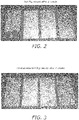
- Figure 2 shows the salt fog (conditions specified in ASTM B117) results after 2 weeks of exposure.
- the three panels on the left were anodized for 35 minutes, whereas the one on the right was anodized for 20 minutes prior to sealing.
- Figure 3 shows the reverse sides of the panels shown in Figure 2 .
- the panels anodized for 35 minutes maintain their doping (as indicated by the green color) after salt fog exposure, while the panel anodized for 20 minutes does not (as indicated by the blue color).
- the dark brown material at the bottom of the first panel of Figure 2 is unknown.
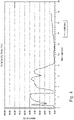
- Figure 4 shows the optical reflectance analysis for a PANI-DMcT panel.
- the optical reflectance is similar to the literature for anodized aluminum except for the peak at about 0.5 micron and the magnitude of the optical reflectance is lower for the PANI-DMcT panel.
- the reflectance analysis was performed on a Labsphere Integrating Sphere (North Sutton, NH) attachment connected to a Nicolet 6700 FTIR (Thermo Fisher Scientific, Inc).
- Polyaniline was successfully electropolymerized during the anodization of 2024 aluminum alloy.
- the resulting coating was doped in the sulfuric acid/aniline anodization bath, and readily de-doped by rinsing with water. Sealing the PANI coated oxide in DMcT re-doped the PANI as indicated by the change of color from blue to yellow-green.
- the coatings were initially conductive, but lost their conductivity over time. Salt fog results indicate that a thicker oxide remains doped for a longer period of time versus a thinner oxide.
Landscapes
- Chemical & Material Sciences (AREA)
- Organic Chemistry (AREA)
- Engineering & Computer Science (AREA)
- Materials Engineering (AREA)
- Chemical Kinetics & Catalysis (AREA)
- Electrochemistry (AREA)
- Metallurgy (AREA)
- Life Sciences & Earth Sciences (AREA)
- Health & Medical Sciences (AREA)
- Wood Science & Technology (AREA)
- Medicinal Chemistry (AREA)
- Polymers & Plastics (AREA)
- General Chemical & Material Sciences (AREA)
- Inorganic Chemistry (AREA)
- Molecular Biology (AREA)
- Paints Or Removers (AREA)
- Macromolecular Compounds Obtained By Forming Nitrogen-Containing Linkages In General (AREA)
- Preventing Corrosion Or Incrustation Of Metals (AREA)
- Compositions Of Macromolecular Compounds (AREA)
- Polymers With Sulfur, Phosphorus Or Metals In The Main Chain (AREA)
Applications Claiming Priority (2)
| Application Number | Priority Date | Filing Date | Title |
|---|---|---|---|
| US14/188,259 US10557210B2 (en) | 2014-02-24 | 2014-02-24 | Direct electrochemical synthesis of doped conductive polymers on metal alloys |
| EP15155273.4A EP2910668B1 (en) | 2014-02-24 | 2015-02-16 | Direct electrochemical synthesis of doped conductive polymers on metal alloys |
Related Parent Applications (1)
| Application Number | Title | Priority Date | Filing Date |
|---|---|---|---|
| EP15155273.4A Division EP2910668B1 (en) | 2014-02-24 | 2015-02-16 | Direct electrochemical synthesis of doped conductive polymers on metal alloys |
Publications (3)
| Publication Number | Publication Date |
|---|---|
| EP3396028A2 EP3396028A2 (en) | 2018-10-31 |
| EP3396028A3 EP3396028A3 (en) | 2019-02-27 |
| EP3396028B1 true EP3396028B1 (en) | 2022-04-06 |
Family
ID=52469717
Family Applications (2)
| Application Number | Title | Priority Date | Filing Date |
|---|---|---|---|
| EP18166401.2A Active EP3396028B1 (en) | 2014-02-24 | 2015-02-16 | Direct electrochemical synthesis of doped conductive polymers on metal alloys |
| EP15155273.4A Active EP2910668B1 (en) | 2014-02-24 | 2015-02-16 | Direct electrochemical synthesis of doped conductive polymers on metal alloys |
Family Applications After (1)
| Application Number | Title | Priority Date | Filing Date |
|---|---|---|---|
| EP15155273.4A Active EP2910668B1 (en) | 2014-02-24 | 2015-02-16 | Direct electrochemical synthesis of doped conductive polymers on metal alloys |
Country Status (5)
| Country | Link |
|---|---|
| US (1) | US10557210B2 (enExample) |
| EP (2) | EP3396028B1 (enExample) |
| JP (2) | JP6441089B2 (enExample) |
| CN (1) | CN104862756B (enExample) |
| CA (1) | CA2878540C (enExample) |
Families Citing this family (7)
| Publication number | Priority date | Publication date | Assignee | Title |
|---|---|---|---|---|
| US20190112726A1 (en) * | 2016-03-28 | 2019-04-18 | Okuno Chemical Industries Co., Ltd. | Sealing liquid for anodic oxide coating films of aluminum alloy, concentrated liquid and sealing method |
| JP6862316B2 (ja) * | 2016-09-08 | 2021-04-21 | Jfeスチール株式会社 | 耐遅れ破壊特性に優れた高強度鋼板およびその製造方法 |
| CN109972185A (zh) * | 2019-04-17 | 2019-07-05 | 邓华斌 | 一种铝合金无镍环保封孔剂及其制备方法 |
| CN110144611B (zh) * | 2019-06-10 | 2021-10-22 | 河北工业大学 | 一种镁合金表面耐蚀耐磨复合涂层及其制备方法 |
| US11952679B2 (en) * | 2019-08-30 | 2024-04-09 | The Regents Of The University Of Michigan | Optimized growth of stable hybrid perovskite materials for electromagnetic and particle radiation detection |
| US12448526B2 (en) | 2020-10-08 | 2025-10-21 | The Boeing Company | Conjugated polymer compositions, articles thereof, and methods thereof |
| US11987669B2 (en) | 2020-10-08 | 2024-05-21 | The Boeing Company | Polyaniline compositions, articles thereof, and methods thereof |
Family Cites Families (20)
| Publication number | Priority date | Publication date | Assignee | Title |
|---|---|---|---|---|
| US3647645A (en) * | 1969-11-14 | 1972-03-07 | Rohr Corp | Method for selective anodizing of perforated panels |
| US5536452A (en) * | 1993-12-07 | 1996-07-16 | Black; Robert H. | Aqueous shower rinsing composition and a method for keeping showers clean |
| US5928795A (en) | 1995-02-03 | 1999-07-27 | Polymer Alloys Llc | Corrosion resistant aluminum article coated with emeraldine base polyaniline |
| US5980723A (en) * | 1997-08-27 | 1999-11-09 | Jude Runge-Marchese | Electrochemical deposition of a composite polymer metal oxide |
| US6328874B1 (en) | 1998-01-05 | 2001-12-11 | Mcdonnell Douglas Corporation | Anodically formed intrinsically conductive polymer-aluminum oxide composite as a coating on aluminum |
| US7578921B2 (en) | 2001-10-02 | 2009-08-25 | Henkel Kgaa | Process for anodically coating aluminum and/or titanium with ceramic oxides |
| US7235142B2 (en) * | 2002-01-04 | 2007-06-26 | University Of Dayton | Non-toxic corrosion-protection rinses and seals based on cobalt |
| US20040035498A1 (en) * | 2002-06-04 | 2004-02-26 | Lumimove, Inc. D/B/A/ Crosslink Polymer Research | Corrosion-responsive coating formulations for protection of metal surfaces |
| US6942899B2 (en) * | 2002-07-08 | 2005-09-13 | The Boeing Company | Coating for inhibiting oxidation of a substrate |
| US7021993B2 (en) | 2002-07-19 | 2006-04-04 | Cabot Microelectronics Corporation | Method of polishing a substrate with a polishing system containing conducting polymer |
| JP4240961B2 (ja) | 2002-09-04 | 2009-03-18 | チッソ株式会社 | 改質された導電性ポリマーフイルム及びその製造方法 |
| US7125610B2 (en) * | 2003-03-17 | 2006-10-24 | Kemet Electronics Corporation | Capacitor containing aluminum anode foil anodized in low water content glycerine-phosphate electrolyte without a pre-anodizing hydration step |
| CN101203628A (zh) * | 2004-10-01 | 2008-06-18 | 普立万公司 | 阴极保护化合物在经处理的金属制品上的应用 |
| US8101014B2 (en) | 2004-11-10 | 2012-01-24 | Chemetall Gmbh | Process for coating metallic surfaces with a multicomponent aqueous composition |
| ES2748506T3 (es) | 2004-11-10 | 2020-03-17 | Chemetall Gmbh | Proceso para producir un recubrimiento de reparación en una superficie metálica recubierta |
| JP4603934B2 (ja) | 2005-05-31 | 2010-12-22 | 新日本製鐵株式会社 | 大気環境中において変色を生じにくい発色の純チタン |
| US8691028B2 (en) * | 2006-05-10 | 2014-04-08 | The Boeing Company | Article having a hexavalent-chromium-free, corrosion-inhibiting organic conversion coating thereon, and its preparation |
| JP2010520096A (ja) | 2007-03-05 | 2010-06-10 | ヘイーズ,スコット | 多層かつ複合的な耐腐食性コーティング |
| KR101285485B1 (ko) | 2008-12-26 | 2013-07-23 | 니혼 파커라이징 가부시키가이샤 | 금속의 전해 세라믹스 코팅방법, 금속의 전해 세라믹스 코팅용 전해액 및 금속재료 |
| US9771483B2 (en) | 2013-04-19 | 2017-09-26 | The Boeing Company | Systems, compositions, and methods for corrosion inhibition |
-
2014
- 2014-02-24 US US14/188,259 patent/US10557210B2/en active Active
-
2015
- 2015-01-16 CA CA2878540A patent/CA2878540C/en active Active
- 2015-01-19 JP JP2015007555A patent/JP6441089B2/ja active Active
- 2015-02-12 CN CN201510075092.4A patent/CN104862756B/zh active Active
- 2015-02-16 EP EP18166401.2A patent/EP3396028B1/en active Active
- 2015-02-16 EP EP15155273.4A patent/EP2910668B1/en active Active
-
2018
- 2018-11-15 JP JP2018214451A patent/JP6856608B2/ja active Active
Non-Patent Citations (3)
| Title |
|---|
| BERRIN DURAN ET AL: "Poly(-methyl aniline) thin films on copper: Synthesis, characterization and corrosion protection", THIN SOLID FILMS, ELSEVIER, AMSTERDAM, NL, vol. 519, no. 18, 23 February 2011 (2011-02-23), pages 5868 - 5874, XP028227151, ISSN: 0040-6090, [retrieved on 20110302], DOI: 10.1016/J.TSF.2011.02.084 * |
| D'APRANO G ET AL: "Steric and electronic effects in methyl and methoxy substituted polyanilines", JOURNAL OF ELECTROANALYTICAL CHEMISTRY AND INTERFACIAL ELECTROCHEMISTRY, ELSEVIER, AMSTERDAM, NL, vol. 351, no. 1-2, 1 June 1993 (1993-06-01), pages 145 - 158, XP026534138, ISSN: 0022-0728, [retrieved on 19930601], DOI: 10.1016/0022-0728(93)80230-F * |
| YAGAN A ET AL: "Electrochemical synthesis of poly(N-methylaniline) on an iron electrode and its corrosion performance", ELECTROCHIMICA ACTA,, vol. 53, no. 16, 30 June 2008 (2008-06-30), pages 5242 - 5251, XP022619706, ISSN: 0013-4686, [retrieved on 20080223], DOI: 10.1016/J.ELECTACTA.2008.02.055 * |
Also Published As
| Publication number | Publication date |
|---|---|
| EP3396028A3 (en) | 2019-02-27 |
| US20150240378A1 (en) | 2015-08-27 |
| JP6856608B2 (ja) | 2021-04-07 |
| EP3396028A2 (en) | 2018-10-31 |
| EP2910668A2 (en) | 2015-08-26 |
| CN104862756B (zh) | 2019-05-03 |
| CA2878540A1 (en) | 2015-08-24 |
| CN104862756A (zh) | 2015-08-26 |
| CA2878540C (en) | 2017-09-05 |
| US10557210B2 (en) | 2020-02-11 |
| JP2019023357A (ja) | 2019-02-14 |
| JP2015158008A (ja) | 2015-09-03 |
| EP2910668A3 (en) | 2015-12-02 |
| EP2910668B1 (en) | 2018-04-11 |
| JP6441089B2 (ja) | 2018-12-19 |
Similar Documents
| Publication | Publication Date | Title |
|---|---|---|
| EP2910668B1 (en) | Direct electrochemical synthesis of doped conductive polymers on metal alloys | |
| JP7343474B2 (ja) | しわの発生が防止された銅箔、それを含む電極、それを含む二次電池、及びその製造方法 | |
| US12281394B2 (en) | Copper foil with anti-wrinkle property, electrode comprising same, secondary battery comprising same, and manufacturing method therefor | |
| US20040005478A1 (en) | Coating for inhibiting oxidation of a substrate | |
| EP2171131B1 (en) | Method to electrodeposit metals using ionic liquids in the presence of an additive | |
| US11041251B2 (en) | Use of a disulfide/dithiol compound in a seal for anodized aluminum | |
| US20170117552A1 (en) | Electric copper foil, and current collector for lithium secondary battery and lithium secondary battery including the same | |
| JP4818517B2 (ja) | 導電性組成物、導電体及びその形成法 | |
| US20210062353A1 (en) | Leveling agent and copper plating composition comprising the same | |
| BR112014017080B1 (pt) | cinta ou chapa de aço estanhada e processo para passivação da superfície de cinta de aço estanhada ou chapa de aço estanhada | |
| US11972908B2 (en) | Solid electrolytic capacitor with conductive polymer layer attaining excellent metal ion migration resistance | |
| TW201510277A (zh) | 鋰離子二次電池負極集電體用銅箔 | |
| KR102627860B1 (ko) | 내식성이 우수한 전기아연도금 금속용 크로메이트 및 코팅 처리방법 | |
| CN118639282B (zh) | 一种锡喷镀溶液、其配制方法及其在喷镀工艺中的应用 | |
| CN112812273A (zh) | 一种用于阴极电泳涂料的聚环氧季铵盐乳液及其制备方法、应用 | |
| KR20250104831A (ko) | 내부식성이 향상된 리드탭 | |
| KR20250104832A (ko) | 내부식성이 향상된 리드탭 | |
| JP2006063364A (ja) | 加工密着性を改善した有機樹脂被覆鋼板 |
Legal Events
| Date | Code | Title | Description |
|---|---|---|---|
| PUAI | Public reference made under article 153(3) epc to a published international application that has entered the european phase |
Free format text: ORIGINAL CODE: 0009012 |
|
| STAA | Information on the status of an ep patent application or granted ep patent |
Free format text: STATUS: THE APPLICATION HAS BEEN PUBLISHED |
|
| AC | Divisional application: reference to earlier application |
Ref document number: 2910668 Country of ref document: EP Kind code of ref document: P |
|
| AK | Designated contracting states |
Kind code of ref document: A2 Designated state(s): AL AT BE BG CH CY CZ DE DK EE ES FI FR GB GR HR HU IE IS IT LI LT LU LV MC MK MT NL NO PL PT RO RS SE SI SK SM TR |
|
| PUAL | Search report despatched |
Free format text: ORIGINAL CODE: 0009013 |
|
| AK | Designated contracting states |
Kind code of ref document: A3 Designated state(s): AL AT BE BG CH CY CZ DE DK EE ES FI FR GB GR HR HU IE IS IT LI LT LU LV MC MK MT NL NO PL PT RO RS SE SI SK SM TR |
|
| RIC1 | Information provided on ipc code assigned before grant |
Ipc: C25D 9/02 20060101AFI20190121BHEP Ipc: C25D 11/24 20060101ALI20190121BHEP Ipc: C25D 11/08 20060101ALI20190121BHEP Ipc: C09D 5/44 20060101ALI20190121BHEP Ipc: C09D 5/08 20060101ALI20190121BHEP Ipc: C25D 11/26 20060101ALI20190121BHEP Ipc: C25D 11/04 20060101ALI20190121BHEP |
|
| STAA | Information on the status of an ep patent application or granted ep patent |
Free format text: STATUS: REQUEST FOR EXAMINATION WAS MADE |
|
| STAA | Information on the status of an ep patent application or granted ep patent |
Free format text: STATUS: EXAMINATION IS IN PROGRESS |
|
| 17P | Request for examination filed |
Effective date: 20190822 |
|
| RBV | Designated contracting states (corrected) |
Designated state(s): AL AT BE BG CH CY CZ DE DK EE ES FI FR GB GR HR HU IE IS IT LI LT LU LV MC MK MT NL NO PL PT RO RS SE SI SK SM TR |
|
| 17Q | First examination report despatched |
Effective date: 20190918 |
|
| RIC1 | Information provided on ipc code assigned before grant |
Ipc: C25D 11/08 20060101ALI20200603BHEP Ipc: C25D 11/26 20060101ALI20200603BHEP Ipc: C08K 5/40 20060101ALI20200603BHEP Ipc: C09D 5/44 20060101ALI20200603BHEP Ipc: C25D 11/04 20060101ALI20200603BHEP Ipc: C09D 5/08 20060101ALI20200603BHEP Ipc: C25D 9/02 20060101AFI20200603BHEP Ipc: C25D 11/24 20060101ALI20200603BHEP |
|
| GRAP | Despatch of communication of intention to grant a patent |
Free format text: ORIGINAL CODE: EPIDOSNIGR1 |
|
| STAA | Information on the status of an ep patent application or granted ep patent |
Free format text: STATUS: GRANT OF PATENT IS INTENDED |
|
| GRAJ | Information related to disapproval of communication of intention to grant by the applicant or resumption of examination proceedings by the epo deleted |
Free format text: ORIGINAL CODE: EPIDOSDIGR1 |
|
| STAA | Information on the status of an ep patent application or granted ep patent |
Free format text: STATUS: EXAMINATION IS IN PROGRESS |
|
| INTG | Intention to grant announced |
Effective date: 20210211 |
|
| INTC | Intention to grant announced (deleted) | ||
| GRAP | Despatch of communication of intention to grant a patent |
Free format text: ORIGINAL CODE: EPIDOSNIGR1 |
|
| STAA | Information on the status of an ep patent application or granted ep patent |
Free format text: STATUS: GRANT OF PATENT IS INTENDED |
|
| INTG | Intention to grant announced |
Effective date: 20210412 |
|
| GRAJ | Information related to disapproval of communication of intention to grant by the applicant or resumption of examination proceedings by the epo deleted |
Free format text: ORIGINAL CODE: EPIDOSDIGR1 |
|
| STAA | Information on the status of an ep patent application or granted ep patent |
Free format text: STATUS: EXAMINATION IS IN PROGRESS |
|
| INTC | Intention to grant announced (deleted) | ||
| GRAP | Despatch of communication of intention to grant a patent |
Free format text: ORIGINAL CODE: EPIDOSNIGR1 |
|
| STAA | Information on the status of an ep patent application or granted ep patent |
Free format text: STATUS: GRANT OF PATENT IS INTENDED |
|
| INTG | Intention to grant announced |
Effective date: 20211021 |
|
| GRAS | Grant fee paid |
Free format text: ORIGINAL CODE: EPIDOSNIGR3 |
|
| GRAA | (expected) grant |
Free format text: ORIGINAL CODE: 0009210 |
|
| STAA | Information on the status of an ep patent application or granted ep patent |
Free format text: STATUS: THE PATENT HAS BEEN GRANTED |
|
| AC | Divisional application: reference to earlier application |
Ref document number: 2910668 Country of ref document: EP Kind code of ref document: P |
|
| AK | Designated contracting states |
Kind code of ref document: B1 Designated state(s): AL AT BE BG CH CY CZ DE DK EE ES FI FR GB GR HR HU IE IS IT LI LT LU LV MC MK MT NL NO PL PT RO RS SE SI SK SM TR |
|
| REG | Reference to a national code |
Ref country code: GB Ref legal event code: FG4D |
|
| REG | Reference to a national code |
Ref country code: CH Ref legal event code: EP |
|
| REG | Reference to a national code |
Ref country code: AT Ref legal event code: REF Ref document number: 1481417 Country of ref document: AT Kind code of ref document: T Effective date: 20220415 |
|
| REG | Reference to a national code |
Ref country code: IE Ref legal event code: FG4D |
|
| REG | Reference to a national code |
Ref country code: DE Ref legal event code: R096 Ref document number: 602015078140 Country of ref document: DE |
|
| REG | Reference to a national code |
Ref country code: LT Ref legal event code: MG9D |
|
| REG | Reference to a national code |
Ref country code: NL Ref legal event code: MP Effective date: 20220406 |
|
| REG | Reference to a national code |
Ref country code: AT Ref legal event code: MK05 Ref document number: 1481417 Country of ref document: AT Kind code of ref document: T Effective date: 20220406 |
|
| PG25 | Lapsed in a contracting state [announced via postgrant information from national office to epo] |
Ref country code: NL Free format text: LAPSE BECAUSE OF FAILURE TO SUBMIT A TRANSLATION OF THE DESCRIPTION OR TO PAY THE FEE WITHIN THE PRESCRIBED TIME-LIMIT Effective date: 20220406 |
|
| PG25 | Lapsed in a contracting state [announced via postgrant information from national office to epo] |
Ref country code: SE Free format text: LAPSE BECAUSE OF FAILURE TO SUBMIT A TRANSLATION OF THE DESCRIPTION OR TO PAY THE FEE WITHIN THE PRESCRIBED TIME-LIMIT Effective date: 20220406 Ref country code: PT Free format text: LAPSE BECAUSE OF FAILURE TO SUBMIT A TRANSLATION OF THE DESCRIPTION OR TO PAY THE FEE WITHIN THE PRESCRIBED TIME-LIMIT Effective date: 20220808 Ref country code: NO Free format text: LAPSE BECAUSE OF FAILURE TO SUBMIT A TRANSLATION OF THE DESCRIPTION OR TO PAY THE FEE WITHIN THE PRESCRIBED TIME-LIMIT Effective date: 20220706 Ref country code: LT Free format text: LAPSE BECAUSE OF FAILURE TO SUBMIT A TRANSLATION OF THE DESCRIPTION OR TO PAY THE FEE WITHIN THE PRESCRIBED TIME-LIMIT Effective date: 20220406 Ref country code: HR Free format text: LAPSE BECAUSE OF FAILURE TO SUBMIT A TRANSLATION OF THE DESCRIPTION OR TO PAY THE FEE WITHIN THE PRESCRIBED TIME-LIMIT Effective date: 20220406 Ref country code: GR Free format text: LAPSE BECAUSE OF FAILURE TO SUBMIT A TRANSLATION OF THE DESCRIPTION OR TO PAY THE FEE WITHIN THE PRESCRIBED TIME-LIMIT Effective date: 20220707 Ref country code: FI Free format text: LAPSE BECAUSE OF FAILURE TO SUBMIT A TRANSLATION OF THE DESCRIPTION OR TO PAY THE FEE WITHIN THE PRESCRIBED TIME-LIMIT Effective date: 20220406 Ref country code: ES Free format text: LAPSE BECAUSE OF FAILURE TO SUBMIT A TRANSLATION OF THE DESCRIPTION OR TO PAY THE FEE WITHIN THE PRESCRIBED TIME-LIMIT Effective date: 20220406 Ref country code: BG Free format text: LAPSE BECAUSE OF FAILURE TO SUBMIT A TRANSLATION OF THE DESCRIPTION OR TO PAY THE FEE WITHIN THE PRESCRIBED TIME-LIMIT Effective date: 20220706 Ref country code: AT Free format text: LAPSE BECAUSE OF FAILURE TO SUBMIT A TRANSLATION OF THE DESCRIPTION OR TO PAY THE FEE WITHIN THE PRESCRIBED TIME-LIMIT Effective date: 20220406 |
|
| PG25 | Lapsed in a contracting state [announced via postgrant information from national office to epo] |
Ref country code: RS Free format text: LAPSE BECAUSE OF FAILURE TO SUBMIT A TRANSLATION OF THE DESCRIPTION OR TO PAY THE FEE WITHIN THE PRESCRIBED TIME-LIMIT Effective date: 20220406 Ref country code: PL Free format text: LAPSE BECAUSE OF FAILURE TO SUBMIT A TRANSLATION OF THE DESCRIPTION OR TO PAY THE FEE WITHIN THE PRESCRIBED TIME-LIMIT Effective date: 20220406 Ref country code: LV Free format text: LAPSE BECAUSE OF FAILURE TO SUBMIT A TRANSLATION OF THE DESCRIPTION OR TO PAY THE FEE WITHIN THE PRESCRIBED TIME-LIMIT Effective date: 20220406 Ref country code: IS Free format text: LAPSE BECAUSE OF FAILURE TO SUBMIT A TRANSLATION OF THE DESCRIPTION OR TO PAY THE FEE WITHIN THE PRESCRIBED TIME-LIMIT Effective date: 20220806 |
|
| REG | Reference to a national code |
Ref country code: DE Ref legal event code: R097 Ref document number: 602015078140 Country of ref document: DE |
|
| PG25 | Lapsed in a contracting state [announced via postgrant information from national office to epo] |
Ref country code: SM Free format text: LAPSE BECAUSE OF FAILURE TO SUBMIT A TRANSLATION OF THE DESCRIPTION OR TO PAY THE FEE WITHIN THE PRESCRIBED TIME-LIMIT Effective date: 20220406 Ref country code: SK Free format text: LAPSE BECAUSE OF FAILURE TO SUBMIT A TRANSLATION OF THE DESCRIPTION OR TO PAY THE FEE WITHIN THE PRESCRIBED TIME-LIMIT Effective date: 20220406 Ref country code: RO Free format text: LAPSE BECAUSE OF FAILURE TO SUBMIT A TRANSLATION OF THE DESCRIPTION OR TO PAY THE FEE WITHIN THE PRESCRIBED TIME-LIMIT Effective date: 20220406 Ref country code: EE Free format text: LAPSE BECAUSE OF FAILURE TO SUBMIT A TRANSLATION OF THE DESCRIPTION OR TO PAY THE FEE WITHIN THE PRESCRIBED TIME-LIMIT Effective date: 20220406 Ref country code: DK Free format text: LAPSE BECAUSE OF FAILURE TO SUBMIT A TRANSLATION OF THE DESCRIPTION OR TO PAY THE FEE WITHIN THE PRESCRIBED TIME-LIMIT Effective date: 20220406 Ref country code: CZ Free format text: LAPSE BECAUSE OF FAILURE TO SUBMIT A TRANSLATION OF THE DESCRIPTION OR TO PAY THE FEE WITHIN THE PRESCRIBED TIME-LIMIT Effective date: 20220406 |
|
| PLBE | No opposition filed within time limit |
Free format text: ORIGINAL CODE: 0009261 |
|
| STAA | Information on the status of an ep patent application or granted ep patent |
Free format text: STATUS: NO OPPOSITION FILED WITHIN TIME LIMIT |
|
| 26N | No opposition filed |
Effective date: 20230110 |
|
| PG25 | Lapsed in a contracting state [announced via postgrant information from national office to epo] |
Ref country code: AL Free format text: LAPSE BECAUSE OF FAILURE TO SUBMIT A TRANSLATION OF THE DESCRIPTION OR TO PAY THE FEE WITHIN THE PRESCRIBED TIME-LIMIT Effective date: 20220406 |
|
| PG25 | Lapsed in a contracting state [announced via postgrant information from national office to epo] |
Ref country code: SI Free format text: LAPSE BECAUSE OF FAILURE TO SUBMIT A TRANSLATION OF THE DESCRIPTION OR TO PAY THE FEE WITHIN THE PRESCRIBED TIME-LIMIT Effective date: 20220406 |
|
| P01 | Opt-out of the competence of the unified patent court (upc) registered |
Effective date: 20230516 |
|
| PG25 | Lapsed in a contracting state [announced via postgrant information from national office to epo] |
Ref country code: MC Free format text: LAPSE BECAUSE OF FAILURE TO SUBMIT A TRANSLATION OF THE DESCRIPTION OR TO PAY THE FEE WITHIN THE PRESCRIBED TIME-LIMIT Effective date: 20220406 |
|
| REG | Reference to a national code |
Ref country code: CH Ref legal event code: PL |
|
| REG | Reference to a national code |
Ref country code: BE Ref legal event code: MM Effective date: 20230228 |
|
| PG25 | Lapsed in a contracting state [announced via postgrant information from national office to epo] |
Ref country code: LU Free format text: LAPSE BECAUSE OF NON-PAYMENT OF DUE FEES Effective date: 20230216 Ref country code: LI Free format text: LAPSE BECAUSE OF NON-PAYMENT OF DUE FEES Effective date: 20230228 Ref country code: CH Free format text: LAPSE BECAUSE OF NON-PAYMENT OF DUE FEES Effective date: 20230228 |
|
| REG | Reference to a national code |
Ref country code: IE Ref legal event code: MM4A |
|
| PG25 | Lapsed in a contracting state [announced via postgrant information from national office to epo] |
Ref country code: IT Free format text: LAPSE BECAUSE OF FAILURE TO SUBMIT A TRANSLATION OF THE DESCRIPTION OR TO PAY THE FEE WITHIN THE PRESCRIBED TIME-LIMIT Effective date: 20220406 Ref country code: IE Free format text: LAPSE BECAUSE OF NON-PAYMENT OF DUE FEES Effective date: 20230216 |
|
| PG25 | Lapsed in a contracting state [announced via postgrant information from national office to epo] |
Ref country code: BE Free format text: LAPSE BECAUSE OF NON-PAYMENT OF DUE FEES Effective date: 20230228 |
|
| PG25 | Lapsed in a contracting state [announced via postgrant information from national office to epo] |
Ref country code: BG Free format text: LAPSE BECAUSE OF FAILURE TO SUBMIT A TRANSLATION OF THE DESCRIPTION OR TO PAY THE FEE WITHIN THE PRESCRIBED TIME-LIMIT Effective date: 20220406 |
|
| PG25 | Lapsed in a contracting state [announced via postgrant information from national office to epo] |
Ref country code: BG Free format text: LAPSE BECAUSE OF FAILURE TO SUBMIT A TRANSLATION OF THE DESCRIPTION OR TO PAY THE FEE WITHIN THE PRESCRIBED TIME-LIMIT Effective date: 20220406 |
|
| PG25 | Lapsed in a contracting state [announced via postgrant information from national office to epo] |
Ref country code: CY Free format text: LAPSE BECAUSE OF FAILURE TO SUBMIT A TRANSLATION OF THE DESCRIPTION OR TO PAY THE FEE WITHIN THE PRESCRIBED TIME-LIMIT; INVALID AB INITIO Effective date: 20150216 |
|
| PG25 | Lapsed in a contracting state [announced via postgrant information from national office to epo] |
Ref country code: HU Free format text: LAPSE BECAUSE OF FAILURE TO SUBMIT A TRANSLATION OF THE DESCRIPTION OR TO PAY THE FEE WITHIN THE PRESCRIBED TIME-LIMIT; INVALID AB INITIO Effective date: 20150216 |
|
| PG25 | Lapsed in a contracting state [announced via postgrant information from national office to epo] |
Ref country code: TR Free format text: LAPSE BECAUSE OF FAILURE TO SUBMIT A TRANSLATION OF THE DESCRIPTION OR TO PAY THE FEE WITHIN THE PRESCRIBED TIME-LIMIT Effective date: 20220406 |
|
| PGFP | Annual fee paid to national office [announced via postgrant information from national office to epo] |
Ref country code: GB Payment date: 20260227 Year of fee payment: 12 |
|
| PGFP | Annual fee paid to national office [announced via postgrant information from national office to epo] |
Ref country code: DE Payment date: 20260227 Year of fee payment: 12 |
|
| PGFP | Annual fee paid to national office [announced via postgrant information from national office to epo] |
Ref country code: FR Payment date: 20260225 Year of fee payment: 12 |