EP3395707B2 - Getränkedose aus einheitlicher aluminiumlegierung - Google Patents
Getränkedose aus einheitlicher aluminiumlegierung Download PDFInfo
- Publication number
- EP3395707B2 EP3395707B2 EP17168246.1A EP17168246A EP3395707B2 EP 3395707 B2 EP3395707 B2 EP 3395707B2 EP 17168246 A EP17168246 A EP 17168246A EP 3395707 B2 EP3395707 B2 EP 3395707B2
- Authority
- EP
- European Patent Office
- Prior art keywords
- beverage
- layer
- thickness
- adhesion promoter
- aluminum alloy
- Prior art date
- Legal status (The legal status is an assumption and is not a legal conclusion. Google has not performed a legal analysis and makes no representation as to the accuracy of the status listed.)
- Active
Links
Images

Classifications
-
- B—PERFORMING OPERATIONS; TRANSPORTING
- B65—CONVEYING; PACKING; STORING; HANDLING THIN OR FILAMENTARY MATERIAL
- B65D—CONTAINERS FOR STORAGE OR TRANSPORT OF ARTICLES OR MATERIALS, e.g. BAGS, BARRELS, BOTTLES, BOXES, CANS, CARTONS, CRATES, DRUMS, JARS, TANKS, HOPPERS, FORWARDING CONTAINERS; ACCESSORIES, CLOSURES, OR FITTINGS THEREFOR; PACKAGING ELEMENTS; PACKAGES
- B65D17/00—Rigid or semi-rigid containers specially constructed to be opened by cutting or piercing, or by tearing of frangible members or portions
- B65D17/02—Rigid or semi-rigid containers specially constructed to be opened by cutting or piercing, or by tearing of frangible members or portions of curved cross-section, e.g. cans of circular or elliptical cross-section
-
- B—PERFORMING OPERATIONS; TRANSPORTING
- B65—CONVEYING; PACKING; STORING; HANDLING THIN OR FILAMENTARY MATERIAL
- B65D—CONTAINERS FOR STORAGE OR TRANSPORT OF ARTICLES OR MATERIALS, e.g. BAGS, BARRELS, BOTTLES, BOXES, CANS, CARTONS, CRATES, DRUMS, JARS, TANKS, HOPPERS, FORWARDING CONTAINERS; ACCESSORIES, CLOSURES, OR FITTINGS THEREFOR; PACKAGING ELEMENTS; PACKAGES
- B65D1/00—Rigid or semi-rigid containers having bodies formed in one piece, e.g. by casting metallic material, by moulding plastics, by blowing vitreous material, by throwing ceramic material, by moulding pulped fibrous material or by deep-drawing operations performed on sheet material
- B65D1/02—Bottles or similar containers with necks or like restricted apertures, designed for pouring contents
- B65D1/0207—Bottles or similar containers with necks or like restricted apertures, designed for pouring contents characterised by material, e.g. composition, physical features
- B65D1/0215—Bottles or similar containers with necks or like restricted apertures, designed for pouring contents characterised by material, e.g. composition, physical features multilayered
-
- B—PERFORMING OPERATIONS; TRANSPORTING
- B65—CONVEYING; PACKING; STORING; HANDLING THIN OR FILAMENTARY MATERIAL
- B65D—CONTAINERS FOR STORAGE OR TRANSPORT OF ARTICLES OR MATERIALS, e.g. BAGS, BARRELS, BOTTLES, BOXES, CANS, CARTONS, CRATES, DRUMS, JARS, TANKS, HOPPERS, FORWARDING CONTAINERS; ACCESSORIES, CLOSURES, OR FITTINGS THEREFOR; PACKAGING ELEMENTS; PACKAGES
- B65D1/00—Rigid or semi-rigid containers having bodies formed in one piece, e.g. by casting metallic material, by moulding plastics, by blowing vitreous material, by throwing ceramic material, by moulding pulped fibrous material or by deep-drawing operations performed on sheet material
- B65D1/12—Cans, casks, barrels, or drums
- B65D1/14—Cans, casks, barrels, or drums characterised by shape
- B65D1/16—Cans, casks, barrels, or drums characterised by shape of curved cross-section, e.g. cylindrical
- B65D1/165—Cylindrical cans
-
- B—PERFORMING OPERATIONS; TRANSPORTING
- B65—CONVEYING; PACKING; STORING; HANDLING THIN OR FILAMENTARY MATERIAL
- B65D—CONTAINERS FOR STORAGE OR TRANSPORT OF ARTICLES OR MATERIALS, e.g. BAGS, BARRELS, BOTTLES, BOXES, CANS, CARTONS, CRATES, DRUMS, JARS, TANKS, HOPPERS, FORWARDING CONTAINERS; ACCESSORIES, CLOSURES, OR FITTINGS THEREFOR; PACKAGING ELEMENTS; PACKAGES
- B65D17/00—Rigid or semi-rigid containers specially constructed to be opened by cutting or piercing, or by tearing of frangible members or portions
- B65D17/06—Integral, or permanently secured, end or side closures
- B65D17/08—Closures secured by folding or rolling and pressing
-
- B—PERFORMING OPERATIONS; TRANSPORTING
- B65—CONVEYING; PACKING; STORING; HANDLING THIN OR FILAMENTARY MATERIAL
- B65D—CONTAINERS FOR STORAGE OR TRANSPORT OF ARTICLES OR MATERIALS, e.g. BAGS, BARRELS, BOTTLES, BOXES, CANS, CARTONS, CRATES, DRUMS, JARS, TANKS, HOPPERS, FORWARDING CONTAINERS; ACCESSORIES, CLOSURES, OR FITTINGS THEREFOR; PACKAGING ELEMENTS; PACKAGES
- B65D2565/00—Wrappers or flexible covers; Packaging materials of special type or form
- B65D2565/38—Packaging materials of special type or form
- B65D2565/381—Details of packaging materials of special type or form
- B65D2565/385—Details of packaging materials of special type or form especially suited for or with means facilitating recycling
- B65D2565/386—Details of packaging materials of special type or form especially suited for or with means facilitating recycling packaging containers consisting of two or more parts made of the same material
-
- Y—GENERAL TAGGING OF NEW TECHNOLOGICAL DEVELOPMENTS; GENERAL TAGGING OF CROSS-SECTIONAL TECHNOLOGIES SPANNING OVER SEVERAL SECTIONS OF THE IPC; TECHNICAL SUBJECTS COVERED BY FORMER USPC CROSS-REFERENCE ART COLLECTIONS [XRACs] AND DIGESTS
- Y02—TECHNOLOGIES OR APPLICATIONS FOR MITIGATION OR ADAPTATION AGAINST CLIMATE CHANGE
- Y02W—CLIMATE CHANGE MITIGATION TECHNOLOGIES RELATED TO WASTEWATER TREATMENT OR WASTE MANAGEMENT
- Y02W30/00—Technologies for solid waste management
- Y02W30/50—Reuse, recycling or recovery technologies
- Y02W30/80—Packaging reuse or recycling, e.g. of multilayer packaging
Definitions
- the invention relates to a beverage can comprising a can body for containing the beverage and a can lid for closing the can body, wherein the can body is made of an aluminum alloy of type AA3XXX.
- the invention also relates to the use of an aluminum alloy strip made of an aluminum alloy of type AA3XXX for producing a can lid for a beverage can.
- Two-piece beverage cans typically consist of a can end with a tab for opening the beverage can, and a can body, also known as the base, which is connected to the can end by a flange during production.
- Type AA3xxx aluminum alloys are typically used for the can body. These alloys are particularly characterized by good forming properties during the deep-drawing process and sufficient strength for the can body.
- alloy systems with a higher magnesium content of type AA5xxx usually type AA5182 or AA5052, are used for the can end, and type AA5042 is also used for the tab.
- AA3xxx aluminum alloys for the can end, as these are compatible with the aluminum alloys of the can body, thus creating a Unialloy beverage can.
- significantly thicker material would be required for ends made from AA3xxx alloys, meaning that such cans cannot compete economically with beverage cans made from different aluminum alloys, which require less material.
- Previous attempts to produce a beverage can consisting of a uniform alloy concept have therefore failed.
- the international patent application WO 2016/063876 A1 an aluminum alloy of type AA5xxx for a beverage can end, which has high magnesium content in the alloy. From the international patent application WO 2016/063876 A1 an aluminum alloy of type AA5xxx for a beverage can end, which has high magnesium content in the alloy. From the international patent application WO 2016/063876 A1 an aluminum alloy of type AA5xxx for a beverage can end, which has high magnesium content in the alloy. From the international patent application WO 2016/063876 A1 an aluminum alloy of type AA5xxx for a beverage can end, which has high magnesium content in the alloy. From the international patent application WO 2016/063876 A1 an aluminum alloy of type AA5xxx for a beverage can end, which has high magnesium content in the alloy. From the international patent application WO 2016/063876 A1 an aluminum alloy of type AA5xxx for a beverage can end, which has high magnesium content in the alloy. From the international patent application WO 2016/063876 A1 an
- Patent application WO 2017/016686 A1 Furthermore, a can lid for a resealable can is known, which has a sealing layer on the outer and inner surfaces, with which plastic materials for the resealable lid can be firmly bonded to the metal layer via a heat seal.
- the latter international patent application does not contain any information on the alloy systems to be used for the can lid or the can body.
- the invention aims to propose a beverage can that consists of a uniform alloy concept, is economically producible, and exhibits improved recycling behavior. Furthermore, the invention aims to provide a use of an aluminum alloy strip made of an AA3XXX aluminum alloy for the production of the can end of the beverage can according to the invention. This object is achieved by a beverage can according to claim 1 and a use of an aluminum alloy strip according to claim 7.
- the stated object for a beverage can is achieved in that the can end is formed from an aluminum alloy of the AA3xxx type and has a coating at least over part of its surface, preferably over the entire surface, which coating comprises an adhesion promoter layer and a polypropylene layer with a thickness of 5 to 100 ⁇ m, preferably 10 to 75 ⁇ m.
- the coating is arranged on the side of the can end facing the can body.
- the can end also has an outer lacquer layer, which primarily serves to protect against corrosion and to achieve forming properties during production.
- only the adhesion promoter layer and the polypropylene layer are provided on the side of the can end facing the can body in order to make the production process as cost-effective as possible.
- the internal pressure stability of can ends made from an aluminum alloy strip consisting of an aluminum alloy of type AA3xxx can be achieved by additionally bonding a polypropylene layer with a thickness of 5 to 100 ⁇ m, preferably 10 to 75 ⁇ m, to the metal of the can end via an adhesive layer.
- Tests and simulations have shown that the necessary internal pressure stability for beverage cans can be achieved by combining the metal layer and the polypropylene layer. with an interposed adhesion promoter layer. This makes it possible to provide a uniform alloy concept for beverage cans using AA3xxx alloys.
- the recyclability of the beverage can according to the invention, which exclusively comprises AA3xxx aluminum alloys, is thereby significantly improved.
- the adhesion promoter layer has sealing properties and optionally comprises polyolefin.
- Sealing properties mean that the adhesion promoter layer is capable of establishing the bond between the polypropylene layer and the metal layer of the can end under the influence of heat and of maintaining this bond at the service temperatures.
- Polyolefin has the property of being able to adjust the sealing properties specifically to the sealing temperatures to be used and can provide high adhesive forces.
- the adhesion promoter layer is preferably provided by using a polyolefin dispersion during its production. This makes it possible to provide even extremely thin layer thicknesses of the adhesion promoter layer with good adhesive properties.
- the beverage can according to the invention features a polypropylene layer.
- Polypropylene exhibits excellent properties with respect to food and is also safe for recycling.
- a polypropylene layer with a thickness of 5 to 100 ⁇ m, preferably 10 to 75 ⁇ m, can provide the required internal pressure stability of the can lid.
- the polypropylene layer of the beverage can can be provided particularly easily using a polypropylene film. This allows, for example, economical and Large-scale known lamination processes are used to produce the aluminum alloy strip of the can end.
- the adhesion promoter layer has a thickness of 2 to 20 g/m 2 , preferably 2 to 10 g/m 2 .
- the adhesion between the polypropylene layer and the metal layer of the can end can be ensured with particularly reliable process reliability.
- an aluminum alloy of the type AA3104, AA3105 or AA3004 is preferably provided as the aluminum alloy for the can body and/or the can end. If identical aluminum alloys are used for the can body and the can end, maximum metal yield can be achieved by recycling the cans. In this case, for example, the recycled metal alloy can be used directly for the production of can bodies and can ends.
- the adhesion promoter layer preferably has a thickness of 0.5 to 20 g/m 2 , more preferably 2 to 10 g/m 2 . With an appropriate adhesion promoter layer thickness, the adhesion between the polymer layer and the metal layer of the can end can be ensured with particularly reliable process reliability.
- a can end with a metal thickness of 0.12 mm to 0.23 mm, preferably 0.16 mm to 0.23 mm, is provided. Using these metal thicknesses achieves particularly low metal consumption while still providing a can end with sufficient internal pressure stability.
- the above-identified object is achieved by using an aluminum alloy strip to produce a can end for a beverage can.
- the strip is made of an AA3xxx aluminum alloy, has a coating at least partially, preferably over its entire surface, and preferably on the side facing the can body, which coating comprises an adhesion promoter layer and a polypropylene layer with a thickness of 5 to 100 ⁇ m, preferably 10 to 75 ⁇ m.
- the use of the aluminum alloy strip makes it possible to produce a can end made of an AA3xxx aluminum alloy that has the necessary internal pressure stability for use in beverage cans.
- the internal pressure stability allows the contents of the beverage can to be pressurized, for example because the beverage contains carbon dioxide or because the closed interior of the beverage can has been heated by sunlight, without the can end bulging.
- the coating system consists only of the adhesion promoter layer and the polypropylene layer, so that a particularly simple layer system is provided on one side of the aluminum strip.
- the aluminum alloy strip used has a metal thickness of 0.12 mm to 0.23 mm, preferably 0.16 mm to 0.23 mm.
- the aluminum alloy strip can provide the necessary internal pressure stability for the can end with minimal metal usage.
- an aluminum alloy of type AA 3104, AA 3105, or AA3004 is provided as the aluminum alloy for the aluminum alloy strip used according to the invention.
- These alloys are characterized by sufficient strength in conjunction with the inventive structure of the aluminum alloy strip and, moreover, can be easily formed.
- the aluminum alloy of the aluminum alloy strip used can also be matched to the can body, so that a single alloy can be used for a beverage can. This enables an optimized unialloy concept that further improves the reuse options of the recycled metal for the production of beverage cans.
- the adhesion promoter layer preferably has sealing properties and optionally comprises polyolefin. Sealing properties have proven advantageous in that they enable the use of economical lamination processes during the production of the polypropylene layer. Furthermore, the adhesive forces are provided by temperature influences and can be precisely controlled. Finally, polyolefins provide high sealing forces and offer good diffusion barriers for media to the aluminum alloy strip.
- the adhesion promoter layer has a thickness of 2 to 20 g/m 2 , preferably 2-10 g/m 2 .
- the selected layer thicknesses ensure that the necessary adhesion forces to the polypropylene layer are reliably provided.
- the adhesion promoter layer can be produced in the strip process.
- an adhesion promoter coating comprising a polyolefin dispersion is used to produce the adhesion promoter layer.
- a lacquer layer with a thickness of 1-10 g/m 2 , preferably 2-8 g/m 2 , is provided on the outer side of the aluminum alloy strip.
- the outer lacquer layer serves, on the one hand, to protect the aluminum alloy strip from corrosion and, on the other hand, to improve forming properties.
- the outer lacquer can also be used as a basis for a
- the coating layer on the outer side can also contain polyolefin, for example, and can be applied using a coating comprising a polyolefin dispersion.
- an aluminum alloy strip for producing a can end makes it possible to produce a beverage can with a uniform aluminum alloy concept from aluminum alloys of type AA3xxx.
- the can end 3 of the beverage can shown is provided at least partially, but preferably over its entire surface, preferably on the side facing the can body, with a coating comprising an adhesion promoter layer and a polymer layer with a thickness of 5 to 100 ⁇ m, preferably 10 to 75 ⁇ m.
- the adhesion promoter layer is intended to bond the polymer layer to the metal layer of the can end with sufficient adhesive force. This ensures that the can end consisting of an aluminum alloy of type AA3xxx, despite its lower strength compared to a can end made of an aluminum alloy of type AA5xxx, has sufficient internal pressure stability against bulging, for example when the internal pressure of the beverage can increases or decreases. Due to the alloy concept, the beverage can 1 according to the invention can be recycled particularly well and produced economically.
- the adhesion promoter layer of the can end exhibits sealing properties, allowing the polymer layer to be produced using economical lamination processes during the manufacture of the can end. Furthermore, it has been shown that the sealing properties can also provide a sufficiently high adhesive force to the polymer layer. If the adhesion promoter layer optionally contains polyolefin, particularly high adhesive forces can be provided during the sealing process and used to bond the metal to the polymer layer.
- a can end 3 is shown, which is manufactured separately from the can body 2. Both the can end 3 and the can body 2 are then flanged 4, as shown in Fig. 1
- the can lid 3 has a gas- and watertight connection as indicated.
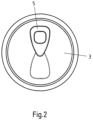
- Fig. 2 additionally has a tab 5, which is preferably made from an identical aluminum alloy as the can lid during manufacture of the can lid.
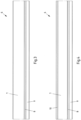
- FIG. 3 An embodiment of an aluminum alloy strip 6 used according to the invention is now shown, which has a metal layer 7 made of an aluminum alloy of the type AA3xxx, in particular of the type AA3104, AA3105 or AA3004.
- this is an aluminum alloy of type AA3104 with a metal thickness of 0.225 mm.
- an adhesion promoter layer 8 with sealing properties is applied to the side of the aluminum alloy strip 6 facing the can body containing polyolefin.
- the adhesion promoter layer 8 typically has a thickness of 0.5-20 g/m 2 , in this case 4 g/m 2 , and was produced in the illustrated embodiment using a polyolefin dispersion.
- a polypropylene film is preferably additionally provided on the side of the aluminum alloy strip 6 facing the can body.
- this is a polypropylene film with a thickness of 10 ⁇ m. It has been shown that the processing properties are not impaired by the appropriate coating of the aluminum alloy strip consisting of an AA3xxx aluminum alloy. This means that can ends for beverage cans with sufficient internal pressure stability can be produced and used from an AA3xxx aluminum alloy without major changes to the production processes. Finally, can ends produced from the illustrated embodiment can provide the internal pressure stability required for the beverage can, so that the illustrated aluminum alloy strip is particularly well suited for producing a beverage can consisting of a uniform aluminum alloy.
- FIG. 4 An inventive variant of the embodiment from Fig. 3 shows Fig. 4 , which additionally has a lacquer layer 10 on the outer side, which is applied to protect the external metal from corrosion and to improve the forming properties.
- the thickness of the outer lacquer layer is 1 to 10 g/m 2 , preferably 2 to 8 g/m 2 . In the present exemplary embodiment, the layer thickness is 4 g/m 2 .
- the outer lacquer layer is also produced on the basis of a polyolefin dispersion.
- the use of the aluminum alloy strip according to the invention makes it possible to provide a beverage can based on a uniform alloy concept of type AA3xxx in a simple manner and thus to further improve the recyclability of the beverage can.
Landscapes
- Engineering & Computer Science (AREA)
- Mechanical Engineering (AREA)
- Ceramic Engineering (AREA)
- Laminated Bodies (AREA)
- Rigid Containers With Two Or More Constituent Elements (AREA)
Description
- Die Erfindung betrifft eine Getränkedose bestehend aus einem Dosenkörper zur Aufnahme des Getränks und einem Dosendeckel zum Verschließen des Dosenkörpers, wobei der Dosenkörper aus einer Aluminiumlegierung vom Typ AA3XXX ausgebildet ist. Daneben betrifft die Erfindung eine Verwendung eines Aluminiumlegierungsband aus einer Aluminiumlegierung vom Typ AA3XXX zur Herstellung eines Dosendeckels für eine Getränkedose.
- Zweiteilige Getränkedosen bestehen in der Regel aus einem Dosendeckel mit einer Lasche zum Öffnen der Getränkedose sowie einem Dosenkörper, auch als Unterteil bezeichnet, welcher mit dem Dosendeckel über eine Bördelung bei der Herstellung verbunden wird. Für den Dosenkörper werden in der Regel Aluminiumlegierungen vom Typ AA3xxx eingesetzt. Diese Legierungen zeichnen sich insbesondere durch gute Umformeigenschaften beim Tiefziehprozess sowie ausreichende Festigkeiten für den Dosenkörper aus. Für den Dosendeckel werden allerdings Legierungssysteme mit höherem Magnesiumanteil vom Typ AA5xxx, meistens vom Typ AA5182 oder AA5052 und für die Lasche auch vom Typ AA5042 verwendet. Der Grund für die Verwendung höherfester Aluminiumlegierungen für den Dosendeckel liegt darin, dass diese Legierungen die notwendige Innendruckstabilität bereitstellen können, sollte der Innenraum der Getränkedose, beispielsweise bei kohlensäurehaltigen Getränken oder beim Erwärmen des Doseninhalts, unter Druck stehen. Andernfalls kommt es zu einem unerwünschten Ausbeulen des Dosendeckels, wenn der Innendruck zu groß wird. Beim Recyceln der Getränkedosen führt der erhöhte Magnesiumgehalt des Dosendeckels dazu, dass das Magnesium teilweise abbrennt und zu einem erhöhten Krätzeanteil in der Aluminiumsschmelze führt. Das Recycling gestaltet sich zusätzlich auch deshalb schwieriger, weil unterschiedliche Legierungssysteme, also Aluminiumlegierungen vom Typ AA3xxx und AA5xxx eingeschmolzen werden und damit eine Aluminiumschmelze erhalten wird, welche nicht unmittelbar der Ausgangslegierung des Reziklats entspricht. Für das Recycling wäre es daher wünschenswert, Aluminiumlegierungen vom Typ AA3xxx für den Dosendeckel einzusetzen, da diese mit den Aluminiumlegierungen des Dosenkörpers kompatibel sind und so eine Unialloy-Getränkedose bereitgestellt werden kann. Um die notwendige Innendruckstabilität zur Verfügung zu stellen, müssten aber deutlich höhere Materialdicken für Deckel bestehend aus AA3xxx-Legierungen verwendet werden, sodass entsprechende Dosen wirtschaftlich mit den weniger Material benötigenden Getränkedosen bestehend aus unterschiedlichen Aluminiumlegierungen nicht konkurrieren können. Bisherige Versuche eine aus einem einheitlichen Legierungskonzept bestehende Getränkedose (Unialloy-Getränkedose) wirtschaftlich bereitzustellen, sind daher gescheitert.
- So ist beispielsweise aus der internationalen Patentanmeldung
WO 2016/063876 A1 eine Aluminiumlegierung vom Typ AA5xxx für einen Getränkedosendeckel bekannt, welche hohe Magnesiumanteile in der Legierung aufweist. Aus der internationalen - Patentanmeldung
WO 2017/016686 A1 ist darüber hinaus ein Dosendeckel für eine wiederverschließbare Dose bekannt, welcher auf der äußeren und inneren Oberfläche eine Versiegelungsschicht aufweist, mit welcher Kunststoffmaterialien für den wiederverschließbaren Deckel über eine Heißversiegelung fest mit der Metallschicht verbunden werden können. Hinweise auf die zu verwendenden Legierungssysteme für den Dosendeckel bzw. den Dosenkörper enthält die zuletzt genannte internationale Patentanmeldung nicht. - Dokument
US2015376739 A1 offenbart eine Getränkedose nach dem Oberbegriff des Anspruchs 1 - Hiervon ausgehend hat sich die Erfindung die Aufgabe gestellt, eine Getränkedose vorzuschlagen, welche aus einem einheitlichen Legierungskonzept besteht, wirtschaftlich herstellbar ist und ein verbessertes Recyclingverhalten aufweist. Darüber hinaus hat sich die Erfindung die Aufgabe gestellt, eine Verwendung eines Aluminiumlegierungsband aus einer Aluminiumlegierung vom Typ AA3XXX für die Herstellung des Dosendeckels der erfindungsgemäßen Getränkedose bereitzustellen. Die Aufgabe wird durch eine Getränkedose nach Patentanspruch 1 und eine Verwendung eines Aluminiumlegierungsbands nach Patentanspruch 7 gelöst.
- Gemäß einer ersten Lehre der vorliegenden Erfindung wird die aufgezeigte Aufgabe für eine Getränkedose dadurch gelöst, dass der Dosendeckel aus einer Aluminiumlegierung vom Typ AA3xxx ausgebildet ist und zumindest teilflächig, vorzugsweise vollflächig eine Beschichtung aufweist, welche eine Haftvermittlerschicht und eine Polypropylenschicht mit einer Dicke von 5 bis 100 µm, vorzugsweise 10 bis 75 µm umfasst. Erfindungsgemäß ist die Beschichtung auf der zum Dosenkörper weisenden Seite des Dosendeckels angeordnet. Erfindungsgemäß weist der Dosendeckel auch eine äußere Lackschicht auf, welche vorwiegend zum Korrosionsschutz und zur Erzielung von Umformeigenschaften in der Herstellung dient. Schließlich sind weiter bevorzugt auf der zum Dosenkörper weisenden Seite des Dosendeckels nur die Haftvermittlerschicht und die Polypropylenschicht vorgesehen, um den Produktionsprozess möglichst kostengünstig zu gestalten.
- Es wurde erkannt, dass die Innendruckstabilität von Dosendeckeln hergestellt aus einem Aluminiumlegierungsband bestehend aus einer Aluminiumlegierung vom Typ AA3xxx dadurch bereitgestellt werden kann, dass zusätzlich eine Polypropylenschicht mit einer Dicke von 5 bis 100 µm, vorzugsweise 10 bis 75 µm fest mit dem Metall des Dosendeckels über eine Haftvermittlerschicht verbunden ist. Versuche und Simulationen haben gezeigt, dass die notwendige Innendruckstabilität für Getränkedosen durch die Kombination an Metallschicht und Polypropylenschicht mit einer dazwischen angeordneten Haftvermittlerschicht bereitgestellt werden kann. Damit ist es möglich, ein einheitliches Legierungskonzept für Getränkedosen durch AA3xxx Legierungen zur Verfügung zu stellen. Die Recyclingfähigkeiten der erfindungsgemäßen Getränkedose, welche ausschließlich Aluminiumlegierungen vom Typ AA3xxx aufweist, sind dadurch deutlich verbessert.
- Gemäß einer erster Ausgestaltung der erfindungsgemäßen Getränkedose besitzt die Haftvermittlerschicht Siegeleigenschaften und weist optional Polyolefin auf. Unter Siegeleigenschaften wird verstanden, dass die Haftvermittlerschicht unter Wärmeeinwirkung in der Lage ist, die Verbindung zwischen der Polypropylenschicht und der Metallschicht des Dosendeckels aufzubauen und bei den Gebrauchstemperaturen zur Verfügung zu stellen. Polyolefin besitzt die Eigenschaft, die Siegeleigenschaften spezifisch auf die zu verwendenden Siegeltemperaturen gut einstellen zu können und hohe Haftkräfte bereitstellen kann. Bevorzugt wird die Haftvermittlerschicht durch Verwendung einer Polyolefindispersion bei deren Herstellung bereitgestellt. Hierdurch können auch extrem geringe Schichtdicken der Haftvermittlerschicht mit guten Hafteigenschaften bereitgestellt werden.
- Bei der erfindungsgemäßen Getränkedose ist eine Polypropylenschicht, vorgesehen. Polypropylen weist in Bezug auf Lebensmittel sehr gute Eigenschaften auf und ist auch beim Recycling der Getränkedose unbedenklich. Erfindungsgemäß kann eine Polypropylenschicht mit einer Dicke von 5 bis 100 µm, vorzugsweise 10 bis 75 um die erforderliche Innendruckstabilität des Dosendeckels bereitstellen.
- Besonders einfach kann die Polypropylenschicht der Getränkedose gemäß einer nächsten Ausgestaltung mit einer Polypropylenfolie bereitgestellt werden. Hierdurch können beispielsweise wirtschaftliche und großtechnisch bekannte Laminierungsprozesse für die Herstellung des Aluminiumlegierungsbandes des Dosendeckels verwendet werden.
- Erfindungsgemäß weist die Haftvermittlerschicht eine Dicke von 2 bis 20 g/m2, vorzugsweise 2 bis 10 g/m2 auf. Bei entsprechender Haftvermittlerschichtdicke kann besonders prozesssicher die Haftung zwischen der Polypropylenschicht und der Metallschicht des Dosendeckels gewährleistet werden.
- Bevorzugt ist als Aluminiumlegierung für den Dosenkörper und/oder den Dosendeckel gemäß einer weiteren Ausgestaltung eine Aluminiumlegierung vom Typ AA3104, AA3105 oder AA3004 vorgesehen. Werden identische Aluminiumlegierungen für den Dosenkörper und den Dosendeckel verwendet, kann über ein Recycling der Dosen eine maximale Metallausbeute erreicht werden. So kann in diesem Fall beispielsweise die recycelte Metalllegierung unmittelbar für die Herstellung von Dosenkörpern und Dosendeckeln verwendet werden. Vorzugsweise weist die Haftvermittlerschicht eine Dicke von 0,5 bis 20 g/m2, vorzugsweise 2 bis 10 g/m2 auf. Bei entsprechender Haftvermittlerschichtdicke kann besonders prozesssicher die Haftung zwischen der Polymerschicht und der Metallschicht des Dosendeckels gewährleistet werden.
- Erfindungsgemäß ist ein Dosendeckel mit einer Metalldicke von 0,12 mm bis 0,23 mm, vorzugsweise 0,16 mm bis 0,23 mm vorgesehen. Bei Verwendung dieser Metalldicken wird ein besonders niedriger Metallverbrauch erzielt und trotzdem ein ausreichend innendruckstabiler Dosendeckel bereitgestellt.
- Gemäß einer zweiten Lehre der vorliegenden Erfindung wird die oben aufgezeigte Aufgabe durch die Verwendung eines Aluminiumlegierungsbands zur Herstellung eines Dosendeckels für eine Getränkedose gelöst, wobei das Band aus einer Aluminiumlegierung vom Typ AA3xxx besteht, zumindest teilflächig, vorzugsweise vollflächig und vorzugsweise auf der zum Dosenkörper weisenden Seite eine Beschichtung aufweist, welche eine Haftvermittlerschicht und eine Polypropylenschicht mit einer Dicke von 5 bis 100 µm, vorzugsweise 10 bis 75 µm umfasst. Wie bereits zuvor ausgeführt, kann durch die Verwendung des Aluminiumlegierungsbands ein Dosendeckel aus einer AA3xxx Aluminiumlegierung hergestellt werden, welcher die notwendige Innendruckstabilität für die Verwendung in Getränkedosen aufweist. Die Innendruckstabilität erlaubt es, dass der Inhalt der Getränkedose unter Druck stehen kann, beispielsweise weil das Getränk Kohlensäure enthält oder durch Sonneneinstrahlung der geschlossene Innenraum der Getränkedose erwärmt wurde, ohne dass der Dosendeckel sich ausbeult. Bevorzugt besteht das Beschichtungssystem nur aus der Haftvermittlerschicht und der Polypropylenschicht, so dass ein besonders einfaches Schichtsystem auf einer Seite des Aluminiumbandes vorgesehen ist.
- Erfindungsgemäß weist das verwendete Aluminiumlegierungsband eine Metalldicke von 0,12 mm bis 0,23 mm, vorzugsweise 0,16 mm bis 0,23 mm auf. Das Aluminiumlegierungsband kann in diesem Fall mit minimalem Metalleinsatz die notwendige Innendruckstabilität für den Dosendeckel bereitstellen.
- Vorzugsweise ist als Aluminiumlegierung eine Aluminiumlegierung vom Typ AA 3104, AA 3105 oder AA3004 für das erfindungsgemäß verwendete Aluminiumlegierungsband vorgesehen. Die genannten Legierungen zeichnen sich durch ausreichende Festigkeit in Verbindung mit dem erfindungsgemäßen Aufbau des Aluminiumlegierungsbandes aus und können darüber hinaus auch sehr gut umgeformt werden. Insbesondere kann die Aluminiumlegierung des verwendeten Aluminiumlegierungsbandes auch auf den Dosenkörper abgestimmt werden, sodass eine einzige Legierung für eine Getränkedose verwendbar ist. Hierdurch wird ein optimiertes Unialloy-Konzept möglich, dass die Wiederverwertungsmöglichkeiten des recycelten Metalls für die Herstellung von Getränkedosen noch einmal verbessert.
- Bevorzugt besitzt die Haftvermittlerschicht gemäß einer weiteren Ausgestaltung des verwendeten Aluminiumlegierungsbands Siegeleigenschaften und weist optional Polyolefin auf. Siegeleigenschaften haben sich insofern als vorteilhaft erwiesen, als dass diese ermöglichen, beim Verarbeitungsprozess zur Herstellung der Polypropylenschicht auch auf wirtschaftliche Laminierungsprozesse zurückgreifen zu können. Darüber hinaus erfolgt die Bereitstellung der Adhäsionskräfte durch Temperatureinwirkung und kann präzise gesteuert werden. Schließlich ergeben Polyolefine hohe Siegelkräfte und bieten gute Diffusionssperren für Medien zum Aluminiumlegierungsband.
- Bei einer erfindungsgemäßen Verwendung des Aluminiumlegierungsbandes weist die Haftvermittlerschicht eine Dicke von 2 bis 20 g/m2, vorzugsweise 2-10 g/m2 auf. Bei den gewählten Schichtdicken wird gewährleistet, dass die notwendigen Adhäsionkräfte zur Polypropylenschicht prozesssicher bereitgestellt werden. Die Erzeugung der Haftvermittlerschicht kann im Bandprozess erfolgen. Bevorzugt wird zur Herstellung der Haftvermittlerschicht ein Haftvermittlerlack aufweisend eine Polyolefindispersion eingesetzt.
- Bei einer erfindungsgemäßen Verwendung des Aluminiumlegierungsbandes ist auf der äußeren Seite des Aluminiumlegierungsbandes eine Lackschicht mit einer Dicke von 1-10 g/m2, bevorzugt 2-8 g/ m2 vorgesehen. Die äußere Lackschicht dient einerseits zum Korrosionsschutz des Aluminiumlegierungsbandes und andererseits zur Verbesserung von Umformeigenschaften. Der Außenlack kann aber auch als Grundlage für einen möglicherweise aufzubringenden Aufdruck auf die Außenseite, respektive auf den Dosendeckel der Getränkedose dienen. Die Lackschicht auf der äußeren Seite kann beispielsweise ebenfalls Polyolefin enthalten und über einen Lack aufweisend eine Polyolefindispersion bereitgestellt werden.
- Durch die erfindungsgemäße Verwendung eines Aluminiumlegierungsbandes zur Herstellung eines Dosendeckels wird ermöglicht, eine Getränkedose mit einem einheitlichen Aluminiumlegierungskonzept aus Aluminiumlegierungen vom Typ AA3xxx herzustellen.
- Die Erfindung soll im Weiteren anhand von Ausführungsbeispielen in Verbindung mit der Zeichnung näher erläutert werden. Die Zeichnung zeigt in
- Fig. 1
- eine schematische, perspektivische Darstellung eines Ausführungsbeispiels einer erfindungsgemäßen Getränkedose,
- Fig. 2
- in einer schematischen Draufsicht einen Dosendeckel hergestellt gemäß einem Ausführungsbeispiel durch Verwendung eines erfindungsgemäßen Aluminiumlegierungsbandes,
- Fig. 3
- ein Ausführungsbeispiel eines erfindungsgemäßen Aluminiumlegierungsbandes in einer schematischen Schnittansicht und
- Fig. 4
- ein weiteres Ausführungsbeispiel eines erfindungsgemäßen Aluminiumlegierungsbandes in einer schematischen Schnittansicht.
- In
Fig. 1 ist schematisch eine Getränkedose 1 bestehend aus einem Dosenkörper 2 zur Aufnahme eines Getränks sowie einem Dosendeckel 3 zum Verschließen des Dosenkörpers 2 dargestellt. Die erfindungsgemäße Getränkedose gemäß dem vorliegenden Ausführungsbeispiel weist sowohl im Dosenkörper als auch im Dosendeckel eine Aluminiumlegierung vom Typ AA3xxx auf. - Der Dosendeckel 3 der dargestellten Getränkedose ist hierzu zumindest teilflächig, vorzugsweise aber vollflächig, vorzugsweise auf der zum Dosenkörper weisenden Seite mit einer Beschichtung versehen, welche eine Haftvermittlerschicht und eine Polymerschicht mit einer Dicke von 5 bis 100 µm, vorzugsweise 10 bis 75 µm aufweist. Die Haftvermittlerschicht soll die Polymerschicht mit der Metallschicht des Dosendeckels mit ausreichender Haftkraft verbinden. Dies gewährleistet, dass der Dosendeckel bestehend aus einer Aluminiumlegierung vom Typ AA3xxx trotz der geringeren Festigkeit gegenüber einem Dosendeckel aus einer Aluminiumlegierung vom Typ AA5xxx eine ausreichende Innendruckstabilität gegen Ausbeulen beispielsweise bei einer Erhöhung oder Verringerung des Innendrucks der Getränkedose aufweist. Die erfindungsgemäße Getränkedose 1 kann aufgrund des Legierungskonzepts besonders gut recycelt werden und wirtschaftlich hergestellt werden.
- Vorzugsweise weist die Haftvermittlerschicht des Dosendeckels Siegeleigenschaften auf, sodass bei der Herstellung des Dosendeckels die Polymerschicht durch wirtschaftliche Laminierungsprozesse hergestellt werden kann. Darüber hinaus hat sich gezeigt, dass die Siegeleigenschaften auch eine hinreichend hohe Haftkraft zur Polymerschicht bereitstellen können. Enthält die Haftvermittlerschicht optional Polyolefin, können besonders hohe Haftkräfte beim Siegelvorgang zur Verfügung gestellt werden und zur Verbindung des Metalls mit der Polymerschicht genutzt werden.
- In
Fig. 2 ist nun in einer schematischen Draufsicht ein Ausführungsbeispiel eines Dosendeckels 3 dargestellt, welcher getrennt vom Dosenkörper 2 hergestellt wird. Beide, der Dosendeckel 3 und der Dosenkörper 2 werden dann über eine Bördelung 4, wie sie inFig. 1 angedeutet ist, gas- und wasserdicht miteinander verbunden. Der Dosendeckel 3 weist gemäßFig. 2 zusätzlich eine Lasche 5 auf, welche bevorzugt bei der Herstellung des Dosendeckels aus einer identischen Aluminiumlegierung wie der Dosendeckel hergestellt wird. - In
Fig. 3 ist nun ein Ausführungsbeispiel eines erfindungsgemäß verwendeten Aluminiumlegierungsbandes 6 dargestellt, welches eine Metallschicht 7 aus einer Aluminiumlegierung vom Typ AA3xxx, insbesondere vom Typ AA3104, AA3105 oder AA3004 aufweist. In dem dargestellten Ausführungsbeispiel inFig. 3 ist dies beispielsweise eine Aluminiumlegierung vom Typ AA3104 mit einer Metalldicke von 0,225 mm. - Als Haftvermittlerschicht 8 ist auf der dem Dosenkörper zugewandten Seite des Aluminiumlegierungsbands 6 eine Haftvermittlerschicht 8 mit Siegeleigenschaften enthaltend Polyolefin angeordnet. Die Haftvermittlerschicht 8 weist üblicherweise eine Dicke von 0,5-20 g/m2, vorliegend von 4 g/m2 auf und wurde in dem dargestellten Ausführungsbeispiel unter Verwendung einer Polyolefindispersion hergestellt.
- Auf der dem Dosenkörper zugewandten Seite des Aluminiumlegierungsbands 6 ist vorzugsweise zusätzlich eine Polypropylenfolie vorgesehen. Im dargestellten Ausführungsbeispiel handelt es sich um eine Polypropylenfolie mit einer Dicke von 10 µm. Es hat sich gezeigt, dass durch die entsprechende Beschichtung des Aluminiumlegierungsbands bestehend aus einer AA3xxx Aluminiumlegierung die Verarbeitungseigenschaften nicht beeinträchtigt werden. Damit können ausreichend innendruckstabile Dosendeckel für Getränkedosen ohne große Umstellung der Produktionsprozesse aus einer Aluminiumlegierung vom Typ AA3xxx hergestellt und verwendet werden können. Schließlich können aus dem dargestellten Ausführungsbeispiel hergestellte Dosendeckel die für die Getränkedose erforderlichen Innendruckstabilität bereitstellen, so dass das dargestellte Aluminiumlegierungsband besonders gut geeignet ist, um eine aus einer einheitlichen Aluminiumlegierung bestehenden Getränkedose bereitzustellen.
- Eine erfindungsgemäße Variante des Ausführungsbeispiels aus
Fig. 3 zeigtFig. 4 , welche zusätzlich auf der äußeren Seite eine Lackschicht 10 aufweist, die zum Korrosionsschutz des außenliegenden Metalls und zur Verbesserung der Umformeigenschaften aufgebracht wird. Die Dicke der äußeren Lackschicht weist 1 bis 10 g/m2, vorzugsweise 2 bis 8 g/ m2 auf. Im vorliegenden Ausführungsbeispiel beträgt die Schichtdicke 4 g/m2. Die äußere Lackschicht ist hier ebenfalls auf Basis einer Polyolefindispersion hergestellt worden. - Es hat sich herausgestellt, dass durch die erfindungsgemäße Verwendung des Aluminiumlegierungsbands auf einfache Art und Weise eine Getränkedose basierend auf einem einheitlichen Legierungskonzept vom Typ AA3xxx bereitgestellt werden kann und damit die Recyclingfähigkeit der Getränkedose weiter verbessert werden kann.
Claims (12)
- Getränkedose (1) für kohlensäurehaltige Getränke bestehend aus einem Dosenkörper (2) zur Aufnahme des Getränks und einem Dosendeckel (3) zum Verschließen des Dosenkörpers (2), wobei der Dosenkörper (2) aus einer Aluminiumlegierung vom Typ AA3xxx ausgebildet ist, wobei der Dosendeckel (3) aus einer Aluminiumlegierung vom Typ AA3xxx ausgebildet ist,
dadurch gekennzeichnet, dass
der Dosendeckel (3) zumindest teilflächig, vorzugsweise vollflächig eine Beschichtung aufweist, welche eine Haftvermittlerschicht (8) und eine Polypropylenschicht (9) mit einer Dicke von 5 bis 100 µm, vorzugsweise 10 bis 75 µm umfasst, wobei die Beschichtung aus Haftvermittler und Polypropylenschicht auf der zum Dosenkörper weisenden Seite des Dosendeckels angeordnet ist, der Dosendeckel (3) eine Metalldicke von 0,12 mm bis 0,23 mm aufweist und die Haftvermittlerschicht (8) eine Dicke von 2 - 20 g/m2 aufweist, wobei auf der äußeren Seite des Dosendeckels (3) eine Lackschicht (10) mit einer Dicke von 1 bis 10 g/m2 vorgesehen ist. - Getränkedose nach Anspruch 1,
dadurch gekennzeichnet, dass
die Haftvermittlerschicht (8) Siegeleigenschaften besitzt und optional Polyolefine aufweist. - Getränkedose nach einem der Ansprüche 1 oder 2,
dadurch gekennzeichnet, dass
die Polyproylenschicht (9) mit einer Polypropylenfolie bereitgestellt wird. - Getränkedose nach einem der Ansprüche 1 bis 3,
dadurch gekennzeichnet, dass
als Aluminiumlegierung für den Dosenkörper (2) und/oder den Dosendeckel (3) eine Aluminiumlegierung vom Typ AA 3104, AA 3105 oder AA 3004 vorgesehen ist. - Getränkedose nach einem der Ansprüche 1 bis 4,
dadurch gekennzeichnet, dass
die Haftvermittlerschicht (8) eine Dicke von 2 - 10 g/m2 aufweist. - Getränkedose nach einem der Ansprüche 1 bis 5,
dadurch gekennzeichnet, dass
ein Dosendeckel (3) mit einer Metalldicke von 0,16 mm bis 0,23 mm vorgesehen ist. - Verwendung eines Aluminiumlegierungsbands (6) zur Herstellung eines Getränkedosendeckels (3) für eine Getränkedose gemäß Anspruch 1 bis 6, wobei das Band (6) eine Aluminiumlegierung (7) vom Typ AA3xxx aufweist,
dadurch gekennzeichnet, dass
das Aluminiumlegierungsband (6) zumindest teilflächig, vorzugsweise vollflächig eine Beschichtung aufweist, welche eine Haftvermittlerschicht (8) und eine Polypropylenschicht (9) mit einer Dicke von 5 bis 100 µm, vorzugsweise 10 bis 75 µm umfasst, die Haftvermittlerschicht (8) eine Dicke von 2 - 20 g/m2 aufweist und das Band eine Metalldicke (7) von 0,12 mm bis 0,23 mm aufweist, wobei auf der äußeren Seite des Aluminiumlegierungsbandes (6) eine Lackschicht (10) mit einer Dicke von 1 bis 10 g/m2 vorgesehen ist. - Verwendung nach Anspruch 7,
dadurch gekennzeichnet, dass das Band eine Metalldicke (7) von 0,16 mm bis 0,23 mm aufweist. - Verwendung nach Anspruch 7 oder 8,
dadurch gekennzeichnet, dass
als Aluminiumlegierung (7) eine Aluminiumlegierung vom Typ AA 3104, AA 3105 oder AA 3004 vorgesehen ist. - Verwendung nach einem der Ansprüche 7 bis 9,
dadurch gekennzeichnet, dass
die Haftvermittlerschicht (8) Siegeleigenschaften besitzt und optional Polyolefine aufweist. - Verwendung nach einem der Ansprüche 7 bis 10,
dadurch gekennzeichnet, dass
die Haftvermittlerschicht (8) eine Dicke von 2 - 10 g/m2 aufweist. - Verwendung nach einem der Ansprüche 7 bis 11,
dadurch gekennzeichnet, dass
auf der äußeren Seite des Aluminiumlegierungsbandes (6) eine Lackschicht (10) mit einer Dicke von 2 bis 8 g/m2 vorgesehen ist.
Priority Applications (1)
| Application Number | Priority Date | Filing Date | Title |
|---|---|---|---|
| EP17168246.1A EP3395707B2 (de) | 2017-04-26 | 2017-04-26 | Getränkedose aus einheitlicher aluminiumlegierung |
Applications Claiming Priority (1)
| Application Number | Priority Date | Filing Date | Title |
|---|---|---|---|
| EP17168246.1A EP3395707B2 (de) | 2017-04-26 | 2017-04-26 | Getränkedose aus einheitlicher aluminiumlegierung |
Publications (4)
| Publication Number | Publication Date |
|---|---|
| EP3395707A1 EP3395707A1 (de) | 2018-10-31 |
| EP3395707B1 EP3395707B1 (de) | 2021-09-01 |
| EP3395707B8 EP3395707B8 (de) | 2021-10-06 |
| EP3395707B2 true EP3395707B2 (de) | 2025-05-21 |
Family
ID=58671399
Family Applications (1)
| Application Number | Title | Priority Date | Filing Date |
|---|---|---|---|
| EP17168246.1A Active EP3395707B2 (de) | 2017-04-26 | 2017-04-26 | Getränkedose aus einheitlicher aluminiumlegierung |
Country Status (1)
| Country | Link |
|---|---|
| EP (1) | EP3395707B2 (de) |
Families Citing this family (1)
| Publication number | Priority date | Publication date | Assignee | Title |
|---|---|---|---|---|
| JP2026508656A (ja) * | 2023-03-15 | 2026-03-11 | スペイラ ゲゼルシャフト ミット ベシュレンクテル ハフツング | 飲料用缶蓋のためのヒートシール可能なアルミニウム合金ストリップ |
Citations (1)
| Publication number | Priority date | Publication date | Assignee | Title |
|---|---|---|---|---|
| GB2242159A (en) † | 1990-03-19 | 1991-09-25 | Toyo Kohan Co Ltd | Copolyester resin film - metal sheet laminates |
Family Cites Families (14)
| Publication number | Priority date | Publication date | Assignee | Title |
|---|---|---|---|---|
| GB8724242D0 (en) | 1987-10-15 | 1987-11-18 | Metal Box Plc | Laminated metal sheet |
| GB8724240D0 (en) | 1987-10-15 | 1987-11-18 | Metal Box Plc | Laminated metal sheet |
| GB8724237D0 (en) | 1987-10-15 | 1987-11-18 | Metal Box Plc | Laminated metal sheet |
| GB8724239D0 (en) | 1987-10-15 | 1987-11-18 | Metal Box Plc | Laminated metal sheet |
| JPH01279056A (ja) * | 1988-04-30 | 1989-11-09 | Toyo Seikan Kaisha Ltd | 易開封性蓋 |
| US5197536A (en) | 1991-05-13 | 1993-03-30 | Reynolds Metals Company | Polymer laminated drag cast can stock and method |
| GB9204972D0 (en) | 1992-03-06 | 1992-04-22 | Cmb Foodcan Plc | Laminated metal sheet |
| GB9510515D0 (en) | 1995-05-24 | 1995-07-19 | Metal Box Plc | Containers |
| JP3059083B2 (ja) | 1995-09-01 | 2000-07-04 | スカイアルミニウム株式会社 | リサイクルに好適な缶蓋用アルミニウム合金積層板およびその製造方法 |
| GB9707688D0 (en) | 1997-04-16 | 1997-06-04 | Metal Box Plc | Container ends |
| DK1982923T3 (da) * | 2006-02-09 | 2011-06-20 | Toyo Seikan Kaisha Ltd | Låg med nem åbning |
| WO2015200570A2 (en) | 2014-06-27 | 2015-12-30 | Novelis Inc. | Alloy for tabstock and can end |
| WO2016063876A1 (ja) | 2014-10-20 | 2016-04-28 | 株式会社神戸製鋼所 | 缶蓋用アルミニウム合金板 |
| DE102015112428A1 (de) | 2015-07-29 | 2017-02-02 | Gregor Anton Piech | Dosendeckel |
-
2017
- 2017-04-26 EP EP17168246.1A patent/EP3395707B2/de active Active
Patent Citations (1)
| Publication number | Priority date | Publication date | Assignee | Title |
|---|---|---|---|---|
| GB2242159A (en) † | 1990-03-19 | 1991-09-25 | Toyo Kohan Co Ltd | Copolyester resin film - metal sheet laminates |
Also Published As
| Publication number | Publication date |
|---|---|
| EP3395707A1 (de) | 2018-10-31 |
| EP3395707B1 (de) | 2021-09-01 |
| EP3395707B8 (de) | 2021-10-06 |
Similar Documents
| Publication | Publication Date | Title |
|---|---|---|
| DE69811515T2 (de) | Metallkapsel mit kunstoffeinlage | |
| DE3638385C2 (de) | Verfahren zum Verbinden von Gegenständen aus Superlegierungen auf Nickelbasis und Foliensatz zur Durchführung dieses Verfahrens | |
| DE102008014758A1 (de) | Geschlossene Portionspackung mit Dichtung | |
| DE2023923B2 (de) | Laminierte Metallbehälter Wand mit einem Metallplattenteil und einem entfern baren Abreißstreifen | |
| EP0805733B1 (de) | Laserunterstütztes plattieren von band | |
| EP0046444A2 (de) | Metall-Kunststoffverbundfolie | |
| DE102016112953A1 (de) | Metallische Dose und zugehöriger Dosendeckel | |
| EP0064948B1 (de) | Verfahren zur Herstellung von Deckeln mit einem mindestens ein Ausgiessloch abdeckenden Verschlussstreifen, insbesondere für Getränkedosen | |
| DE2250594A1 (de) | Verfahren zur herstellung einer mit einem oeffnungsmechanismus versehenen geschichteten metallbehaelterwand und nach diesem verfahren hergestellte geschichtete metallbehaelterwand | |
| DE102014206375A1 (de) | Verfahren und Vorrichtung zum Fügen von Bauteilen, von denen wenigstens eines aus einem faserverstärkten Kunststoff gebildet ist | |
| EP3265265B1 (de) | Verfahren zum herstellen eines werkstoffverbunds und provisorischer verbund | |
| EP3395707B1 (de) | Getränkedose aus einheitlicher aluminiumlegierung | |
| DE69430850T2 (de) | Dosenteil mit metall/kunststoff/metallstruktur | |
| EP2206655A2 (de) | Deckel zum Verschliessen einer Behälteröffnung, Verpackung mit einem Behälter und einem solchen Deckel sowie Verfahren zum Versiegeln eines Behälters mit einem solchen Deckel | |
| EP0088725A2 (de) | Verfahren zum Herstellen eines Dosendeckels | |
| DE102008028686A1 (de) | Verbundbauteil und Verfahren zu dessen Herstellung | |
| DE69320854T2 (de) | Laminiertes Stahlblech für geschweisste Dosen | |
| DE69427408T2 (de) | Tiefgezogener und abgestreckter behälter von metallkunstoff und ihren herstellungsverfahren | |
| DE102020106476A1 (de) | SCHWEIßEN VON UNGLEICHEN MATERIALIEN MIT MERKMALEN IN DER ANLAGEFLÄCHE | |
| DE69920597T2 (de) | Mehrschichtige Verpackungsfolie und damit versehene wiederverschliessbare Verpackung | |
| DE102005031916A1 (de) | Fügeelement zum mechanischen Fügen | |
| DE2318668B2 (de) | Deckel für einen fließfähige Güter fassenden Behälter | |
| DE2353304A1 (de) | Kapselverschluss zum verschliessen von behaeltern verschiedener art und verfahren zu dessen herstellung | |
| DE8530324U1 (de) | Zusammengesetztes Tiefziehteil | |
| DE102008007994A1 (de) | Verwendung eines Fügeelements für das formschlüssige Verbinden von zumindest einem ersten mit einem zweiten Fügeteil |
Legal Events
| Date | Code | Title | Description |
|---|---|---|---|
| PUAI | Public reference made under article 153(3) epc to a published international application that has entered the european phase |
Free format text: ORIGINAL CODE: 0009012 |
|
| STAA | Information on the status of an ep patent application or granted ep patent |
Free format text: STATUS: THE APPLICATION HAS BEEN PUBLISHED |
|
| AK | Designated contracting states |
Kind code of ref document: A1 Designated state(s): AL AT BE BG CH CY CZ DE DK EE ES FI FR GB GR HR HU IE IS IT LI LT LU LV MC MK MT NL NO PL PT RO RS SE SI SK SM TR |
|
| AX | Request for extension of the european patent |
Extension state: BA ME |
|
| STAA | Information on the status of an ep patent application or granted ep patent |
Free format text: STATUS: REQUEST FOR EXAMINATION WAS MADE |
|
| 17P | Request for examination filed |
Effective date: 20190418 |
|
| RBV | Designated contracting states (corrected) |
Designated state(s): AL AT BE BG CH CY CZ DE DK EE ES FI FR GB GR HR HU IE IS IT LI LT LU LV MC MK MT NL NO PL PT RO RS SE SI SK SM TR |
|
| STAA | Information on the status of an ep patent application or granted ep patent |
Free format text: STATUS: EXAMINATION IS IN PROGRESS |
|
| 17Q | First examination report despatched |
Effective date: 20190606 |
|
| GRAP | Despatch of communication of intention to grant a patent |
Free format text: ORIGINAL CODE: EPIDOSNIGR1 |
|
| STAA | Information on the status of an ep patent application or granted ep patent |
Free format text: STATUS: GRANT OF PATENT IS INTENDED |
|
| INTG | Intention to grant announced |
Effective date: 20200908 |
|
| GRAJ | Information related to disapproval of communication of intention to grant by the applicant or resumption of examination proceedings by the epo deleted |
Free format text: ORIGINAL CODE: EPIDOSDIGR1 |
|
| STAA | Information on the status of an ep patent application or granted ep patent |
Free format text: STATUS: EXAMINATION IS IN PROGRESS |
|
| INTC | Intention to grant announced (deleted) | ||
| GRAP | Despatch of communication of intention to grant a patent |
Free format text: ORIGINAL CODE: EPIDOSNIGR1 |
|
| STAA | Information on the status of an ep patent application or granted ep patent |
Free format text: STATUS: GRANT OF PATENT IS INTENDED |
|
| INTG | Intention to grant announced |
Effective date: 20210316 |
|
| GRAS | Grant fee paid |
Free format text: ORIGINAL CODE: EPIDOSNIGR3 |
|
| GRAA | (expected) grant |
Free format text: ORIGINAL CODE: 0009210 |
|
| STAA | Information on the status of an ep patent application or granted ep patent |
Free format text: STATUS: THE PATENT HAS BEEN GRANTED |
|
| GRAT | Correction requested after decision to grant or after decision to maintain patent in amended form |
Free format text: ORIGINAL CODE: EPIDOSNCDEC |
|
| AK | Designated contracting states |
Kind code of ref document: B1 Designated state(s): AL AT BE BG CH CY CZ DE DK EE ES FI FR GB GR HR HU IE IS IT LI LT LU LV MC MK MT NL NO PL PT RO RS SE SI SK SM TR |
|
| RAP3 | Party data changed (applicant data changed or rights of an application transferred) |
Owner name: SPEIRA GMBH |
|
| REG | Reference to a national code |
Ref country code: GB Ref legal event code: FG4D Free format text: NOT ENGLISH |
|
| RIN1 | Information on inventor provided before grant (corrected) |
Inventor name: HUELLENHUETTER, THOMAS Inventor name: BAKIREL, ISHAK Inventor name: ENGLER, DR. OLAF Inventor name: MERTENS, MANFRED Inventor name: KASPER, BORIS |
|
| REG | Reference to a national code |
Ref country code: AT Ref legal event code: REF Ref document number: 1426020 Country of ref document: AT Kind code of ref document: T Effective date: 20210915 Ref country code: CH Ref legal event code: PK Free format text: BERICHTIGUNG B8 Ref country code: CH Ref legal event code: PK Free format text: BERICHTIGUNGEN Ref country code: CH Ref legal event code: EP |
|
| REG | Reference to a national code |
Ref country code: DE Ref legal event code: R096 Ref document number: 502017011339 Country of ref document: DE |
|
| REG | Reference to a national code |
Ref country code: IE Ref legal event code: FG4D Free format text: LANGUAGE OF EP DOCUMENT: GERMAN |
|
| RIN2 | Information on inventor provided after grant (corrected) |
Inventor name: HUELLENHUETTER, THOMAS Inventor name: BAKIREL, ISHAK Inventor name: ENGLER, DR. OLAF Inventor name: MERTENS, MANFRED Inventor name: KASPER, BORIS |
|
| REG | Reference to a national code |
Ref country code: LT Ref legal event code: MG9D |
|
| REG | Reference to a national code |
Ref country code: NL Ref legal event code: MP Effective date: 20210901 |
|
| PG25 | Lapsed in a contracting state [announced via postgrant information from national office to epo] |
Ref country code: RS Free format text: LAPSE BECAUSE OF FAILURE TO SUBMIT A TRANSLATION OF THE DESCRIPTION OR TO PAY THE FEE WITHIN THE PRESCRIBED TIME-LIMIT Effective date: 20210901 Ref country code: SE Free format text: LAPSE BECAUSE OF FAILURE TO SUBMIT A TRANSLATION OF THE DESCRIPTION OR TO PAY THE FEE WITHIN THE PRESCRIBED TIME-LIMIT Effective date: 20210901 Ref country code: LT Free format text: LAPSE BECAUSE OF FAILURE TO SUBMIT A TRANSLATION OF THE DESCRIPTION OR TO PAY THE FEE WITHIN THE PRESCRIBED TIME-LIMIT Effective date: 20210901 Ref country code: BG Free format text: LAPSE BECAUSE OF FAILURE TO SUBMIT A TRANSLATION OF THE DESCRIPTION OR TO PAY THE FEE WITHIN THE PRESCRIBED TIME-LIMIT Effective date: 20211201 Ref country code: NO Free format text: LAPSE BECAUSE OF FAILURE TO SUBMIT A TRANSLATION OF THE DESCRIPTION OR TO PAY THE FEE WITHIN THE PRESCRIBED TIME-LIMIT Effective date: 20211201 Ref country code: ES Free format text: LAPSE BECAUSE OF FAILURE TO SUBMIT A TRANSLATION OF THE DESCRIPTION OR TO PAY THE FEE WITHIN THE PRESCRIBED TIME-LIMIT Effective date: 20210901 Ref country code: FI Free format text: LAPSE BECAUSE OF FAILURE TO SUBMIT A TRANSLATION OF THE DESCRIPTION OR TO PAY THE FEE WITHIN THE PRESCRIBED TIME-LIMIT Effective date: 20210901 Ref country code: HR Free format text: LAPSE BECAUSE OF FAILURE TO SUBMIT A TRANSLATION OF THE DESCRIPTION OR TO PAY THE FEE WITHIN THE PRESCRIBED TIME-LIMIT Effective date: 20210901 |
|
| PG25 | Lapsed in a contracting state [announced via postgrant information from national office to epo] |
Ref country code: PL Free format text: LAPSE BECAUSE OF FAILURE TO SUBMIT A TRANSLATION OF THE DESCRIPTION OR TO PAY THE FEE WITHIN THE PRESCRIBED TIME-LIMIT Effective date: 20210901 Ref country code: LV Free format text: LAPSE BECAUSE OF FAILURE TO SUBMIT A TRANSLATION OF THE DESCRIPTION OR TO PAY THE FEE WITHIN THE PRESCRIBED TIME-LIMIT Effective date: 20210901 Ref country code: GR Free format text: LAPSE BECAUSE OF FAILURE TO SUBMIT A TRANSLATION OF THE DESCRIPTION OR TO PAY THE FEE WITHIN THE PRESCRIBED TIME-LIMIT Effective date: 20211202 |
|
| REG | Reference to a national code |
Ref country code: DE Ref legal event code: R026 Ref document number: 502017011339 Country of ref document: DE |
|
| PG25 | Lapsed in a contracting state [announced via postgrant information from national office to epo] |
Ref country code: IS Free format text: LAPSE BECAUSE OF FAILURE TO SUBMIT A TRANSLATION OF THE DESCRIPTION OR TO PAY THE FEE WITHIN THE PRESCRIBED TIME-LIMIT Effective date: 20220101 Ref country code: SM Free format text: LAPSE BECAUSE OF FAILURE TO SUBMIT A TRANSLATION OF THE DESCRIPTION OR TO PAY THE FEE WITHIN THE PRESCRIBED TIME-LIMIT Effective date: 20210901 Ref country code: SK Free format text: LAPSE BECAUSE OF FAILURE TO SUBMIT A TRANSLATION OF THE DESCRIPTION OR TO PAY THE FEE WITHIN THE PRESCRIBED TIME-LIMIT Effective date: 20210901 Ref country code: RO Free format text: LAPSE BECAUSE OF FAILURE TO SUBMIT A TRANSLATION OF THE DESCRIPTION OR TO PAY THE FEE WITHIN THE PRESCRIBED TIME-LIMIT Effective date: 20210901 Ref country code: PT Free format text: LAPSE BECAUSE OF FAILURE TO SUBMIT A TRANSLATION OF THE DESCRIPTION OR TO PAY THE FEE WITHIN THE PRESCRIBED TIME-LIMIT Effective date: 20220103 Ref country code: NL Free format text: LAPSE BECAUSE OF FAILURE TO SUBMIT A TRANSLATION OF THE DESCRIPTION OR TO PAY THE FEE WITHIN THE PRESCRIBED TIME-LIMIT Effective date: 20210901 Ref country code: EE Free format text: LAPSE BECAUSE OF FAILURE TO SUBMIT A TRANSLATION OF THE DESCRIPTION OR TO PAY THE FEE WITHIN THE PRESCRIBED TIME-LIMIT Effective date: 20210901 Ref country code: CZ Free format text: LAPSE BECAUSE OF FAILURE TO SUBMIT A TRANSLATION OF THE DESCRIPTION OR TO PAY THE FEE WITHIN THE PRESCRIBED TIME-LIMIT Effective date: 20210901 Ref country code: AL Free format text: LAPSE BECAUSE OF FAILURE TO SUBMIT A TRANSLATION OF THE DESCRIPTION OR TO PAY THE FEE WITHIN THE PRESCRIBED TIME-LIMIT Effective date: 20210901 |
|
| PLBI | Opposition filed |
Free format text: ORIGINAL CODE: 0009260 |
|
| PLAB | Opposition data, opponent's data or that of the opponent's representative modified |
Free format text: ORIGINAL CODE: 0009299OPPO |
|
| PLAX | Notice of opposition and request to file observation + time limit sent |
Free format text: ORIGINAL CODE: EPIDOSNOBS2 |
|
| 26 | Opposition filed |
Opponent name: NOVELIS INC. Effective date: 20220601 Opponent name: C-TEC CONSTELLIUM TECHNOLOGY CENTER / CONSTELLIUM NEUF-BRISACH / CONSTELLIUM MUSCLE SHOALS LLC Effective date: 20220531 |
|
| R26 | Opposition filed (corrected) |
Opponent name: NOVELIS INC. Effective date: 20220601 Opponent name: C-TEC CONSTELLIUM TECHNOLOGY CENTER / CONSTELLIUM NEUF-BRISACH / CONSTELLIUM MUSCLE SHOALS LLC Effective date: 20220531 |
|
| PG25 | Lapsed in a contracting state [announced via postgrant information from national office to epo] |
Ref country code: IT Free format text: LAPSE BECAUSE OF FAILURE TO SUBMIT A TRANSLATION OF THE DESCRIPTION OR TO PAY THE FEE WITHIN THE PRESCRIBED TIME-LIMIT Effective date: 20210901 Ref country code: DK Free format text: LAPSE BECAUSE OF FAILURE TO SUBMIT A TRANSLATION OF THE DESCRIPTION OR TO PAY THE FEE WITHIN THE PRESCRIBED TIME-LIMIT Effective date: 20210901 |
|
| PG25 | Lapsed in a contracting state [announced via postgrant information from national office to epo] |
Ref country code: SI Free format text: LAPSE BECAUSE OF FAILURE TO SUBMIT A TRANSLATION OF THE DESCRIPTION OR TO PAY THE FEE WITHIN THE PRESCRIBED TIME-LIMIT Effective date: 20210901 |
|
| PLBB | Reply of patent proprietor to notice(s) of opposition received |
Free format text: ORIGINAL CODE: EPIDOSNOBS3 |
|
| REG | Reference to a national code |
Ref country code: CH Ref legal event code: PL |
|
| GBPC | Gb: european patent ceased through non-payment of renewal fee |
Effective date: 20220426 |
|
| REG | Reference to a national code |
Ref country code: BE Ref legal event code: MM Effective date: 20220430 |
|
| PG25 | Lapsed in a contracting state [announced via postgrant information from national office to epo] |
Ref country code: MC Free format text: LAPSE BECAUSE OF FAILURE TO SUBMIT A TRANSLATION OF THE DESCRIPTION OR TO PAY THE FEE WITHIN THE PRESCRIBED TIME-LIMIT Effective date: 20210901 Ref country code: LU Free format text: LAPSE BECAUSE OF NON-PAYMENT OF DUE FEES Effective date: 20220426 Ref country code: LI Free format text: LAPSE BECAUSE OF NON-PAYMENT OF DUE FEES Effective date: 20220430 Ref country code: GB Free format text: LAPSE BECAUSE OF NON-PAYMENT OF DUE FEES Effective date: 20220426 Ref country code: FR Free format text: LAPSE BECAUSE OF NON-PAYMENT OF DUE FEES Effective date: 20220430 Ref country code: CH Free format text: LAPSE BECAUSE OF NON-PAYMENT OF DUE FEES Effective date: 20220430 |
|
| PG25 | Lapsed in a contracting state [announced via postgrant information from national office to epo] |
Ref country code: BE Free format text: LAPSE BECAUSE OF NON-PAYMENT OF DUE FEES Effective date: 20220430 |
|
| PG25 | Lapsed in a contracting state [announced via postgrant information from national office to epo] |
Ref country code: IE Free format text: LAPSE BECAUSE OF NON-PAYMENT OF DUE FEES Effective date: 20220426 |
|
| P01 | Opt-out of the competence of the unified patent court (upc) registered |
Effective date: 20230519 |
|
| PLAB | Opposition data, opponent's data or that of the opponent's representative modified |
Free format text: ORIGINAL CODE: 0009299OPPO |
|
| R26 | Opposition filed (corrected) |
Opponent name: NOVELIS INC. Effective date: 20220601 |
|
| PG25 | Lapsed in a contracting state [announced via postgrant information from national office to epo] |
Ref country code: HU Free format text: LAPSE BECAUSE OF FAILURE TO SUBMIT A TRANSLATION OF THE DESCRIPTION OR TO PAY THE FEE WITHIN THE PRESCRIBED TIME-LIMIT; INVALID AB INITIO Effective date: 20170426 |
|
| PG25 | Lapsed in a contracting state [announced via postgrant information from national office to epo] |
Ref country code: MK Free format text: LAPSE BECAUSE OF FAILURE TO SUBMIT A TRANSLATION OF THE DESCRIPTION OR TO PAY THE FEE WITHIN THE PRESCRIBED TIME-LIMIT Effective date: 20210901 Ref country code: CY Free format text: LAPSE BECAUSE OF FAILURE TO SUBMIT A TRANSLATION OF THE DESCRIPTION OR TO PAY THE FEE WITHIN THE PRESCRIBED TIME-LIMIT Effective date: 20210901 |
|
| PG25 | Lapsed in a contracting state [announced via postgrant information from national office to epo] |
Ref country code: MT Free format text: LAPSE BECAUSE OF FAILURE TO SUBMIT A TRANSLATION OF THE DESCRIPTION OR TO PAY THE FEE WITHIN THE PRESCRIBED TIME-LIMIT Effective date: 20210901 |
|
| APBP | Date of receipt of notice of appeal recorded |
Free format text: ORIGINAL CODE: EPIDOSNNOA2O |
|
| APAH | Appeal reference modified |
Free format text: ORIGINAL CODE: EPIDOSCREFNO |
|
| APBU | Appeal procedure closed |
Free format text: ORIGINAL CODE: EPIDOSNNOA9O |
|
| PUAH | Patent maintained in amended form |
Free format text: ORIGINAL CODE: 0009272 |
|
| STAA | Information on the status of an ep patent application or granted ep patent |
Free format text: STATUS: PATENT MAINTAINED AS AMENDED |
|
| 27A | Patent maintained in amended form |
Effective date: 20250521 |
|
| AK | Designated contracting states |
Kind code of ref document: B2 Designated state(s): AL AT BE BG CH CY CZ DE DK EE ES FI FR GB GR HR HU IE IS IT LI LT LU LV MC MK MT NL NO PL PT RO RS SE SI SK SM TR |
|
| REG | Reference to a national code |
Ref country code: DE Ref legal event code: R102 Ref document number: 502017011339 Country of ref document: DE |
|
| PG25 | Lapsed in a contracting state [announced via postgrant information from national office to epo] |
Ref country code: TR Free format text: LAPSE BECAUSE OF FAILURE TO SUBMIT A TRANSLATION OF THE DESCRIPTION OR TO PAY THE FEE WITHIN THE PRESCRIBED TIME-LIMIT Effective date: 20210901 |
|
| PGFP | Annual fee paid to national office [announced via postgrant information from national office to epo] |
Ref country code: DE Payment date: 20260422 Year of fee payment: 10 |
|
| PGFP | Annual fee paid to national office [announced via postgrant information from national office to epo] |
Ref country code: AT Payment date: 20260427 Year of fee payment: 10 |