EP3394045B1 - Cokristall, dessen herstellungsverfahren und arzneimittel den cokristall enthaltend - Google Patents
Cokristall, dessen herstellungsverfahren und arzneimittel den cokristall enthaltend Download PDFInfo
- Publication number
- EP3394045B1 EP3394045B1 EP16831645.3A EP16831645A EP3394045B1 EP 3394045 B1 EP3394045 B1 EP 3394045B1 EP 16831645 A EP16831645 A EP 16831645A EP 3394045 B1 EP3394045 B1 EP 3394045B1
- Authority
- EP
- European Patent Office
- Prior art keywords
- acid
- compound
- cocrystal
- cocrystals
- solution
- Prior art date
- Legal status (The legal status is an assumption and is not a legal conclusion. Google has not performed a legal analysis and makes no representation as to the accuracy of the status listed.)
- Active
Links
- 0 Cc1c(*)nc(C(N2)=NNC2=*)c(*)c1* Chemical compound Cc1c(*)nc(C(N2)=NNC2=*)c(*)c1* 0.000 description 2
Images


Classifications
-
- C—CHEMISTRY; METALLURGY
- C07—ORGANIC CHEMISTRY
- C07D—HETEROCYCLIC COMPOUNDS
- C07D401/00—Heterocyclic compounds containing two or more hetero rings, having nitrogen atoms as the only ring hetero atoms, at least one ring being a six-membered ring with only one nitrogen atom
- C07D401/14—Heterocyclic compounds containing two or more hetero rings, having nitrogen atoms as the only ring hetero atoms, at least one ring being a six-membered ring with only one nitrogen atom containing three or more hetero rings
-
- A—HUMAN NECESSITIES
- A61—MEDICAL OR VETERINARY SCIENCE; HYGIENE
- A61K—PREPARATIONS FOR MEDICAL, DENTAL OR TOILETRY PURPOSES
- A61K31/00—Medicinal preparations containing organic active ingredients
- A61K31/33—Heterocyclic compounds
- A61K31/395—Heterocyclic compounds having nitrogen as a ring hetero atom, e.g. guanethidine or rifamycins
- A61K31/435—Heterocyclic compounds having nitrogen as a ring hetero atom, e.g. guanethidine or rifamycins having six-membered rings with one nitrogen as the only ring hetero atom
- A61K31/47—Quinolines; Isoquinolines
- A61K31/472—Non-condensed isoquinolines, e.g. papaverine
- A61K31/4725—Non-condensed isoquinolines, e.g. papaverine containing further heterocyclic rings
-
- A—HUMAN NECESSITIES
- A61—MEDICAL OR VETERINARY SCIENCE; HYGIENE
- A61K—PREPARATIONS FOR MEDICAL, DENTAL OR TOILETRY PURPOSES
- A61K9/00—Medicinal preparations characterised by special physical form
- A61K9/14—Particulate form, e.g. powders, Processes for size reducing of pure drugs or the resulting products, Pure drug nanoparticles
- A61K9/141—Intimate drug-carrier mixtures characterised by the carrier, e.g. ordered mixtures, adsorbates, solid solutions, eutectica, co-dried, co-solubilised, co-kneaded, co-milled, co-ground products, co-precipitates, co-evaporates, co-extrudates, co-melts; Drug nanoparticles with adsorbed surface modifiers
- A61K9/145—Intimate drug-carrier mixtures characterised by the carrier, e.g. ordered mixtures, adsorbates, solid solutions, eutectica, co-dried, co-solubilised, co-kneaded, co-milled, co-ground products, co-precipitates, co-evaporates, co-extrudates, co-melts; Drug nanoparticles with adsorbed surface modifiers with organic compounds
-
- A—HUMAN NECESSITIES
- A61—MEDICAL OR VETERINARY SCIENCE; HYGIENE
- A61P—SPECIFIC THERAPEUTIC ACTIVITY OF CHEMICAL COMPOUNDS OR MEDICINAL PREPARATIONS
- A61P29/00—Non-central analgesic, antipyretic or antiinflammatory agents, e.g. antirheumatic agents; Non-steroidal antiinflammatory drugs [NSAID]
-
- A—HUMAN NECESSITIES
- A61—MEDICAL OR VETERINARY SCIENCE; HYGIENE
- A61P—SPECIFIC THERAPEUTIC ACTIVITY OF CHEMICAL COMPOUNDS OR MEDICINAL PREPARATIONS
- A61P35/00—Antineoplastic agents
-
- A—HUMAN NECESSITIES
- A61—MEDICAL OR VETERINARY SCIENCE; HYGIENE
- A61P—SPECIFIC THERAPEUTIC ACTIVITY OF CHEMICAL COMPOUNDS OR MEDICINAL PREPARATIONS
- A61P37/00—Drugs for immunological or allergic disorders
-
- A—HUMAN NECESSITIES
- A61—MEDICAL OR VETERINARY SCIENCE; HYGIENE
- A61P—SPECIFIC THERAPEUTIC ACTIVITY OF CHEMICAL COMPOUNDS OR MEDICINAL PREPARATIONS
- A61P43/00—Drugs for specific purposes, not provided for in groups A61P1/00-A61P41/00
-
- C—CHEMISTRY; METALLURGY
- C07—ORGANIC CHEMISTRY
- C07C—ACYCLIC OR CARBOCYCLIC COMPOUNDS
- C07C55/00—Saturated compounds having more than one carboxyl group bound to acyclic carbon atoms
- C07C55/02—Dicarboxylic acids
- C07C55/08—Malonic acid
-
- C—CHEMISTRY; METALLURGY
- C07—ORGANIC CHEMISTRY
- C07C—ACYCLIC OR CARBOCYCLIC COMPOUNDS
- C07C57/00—Unsaturated compounds having carboxyl groups bound to acyclic carbon atoms
- C07C57/02—Unsaturated compounds having carboxyl groups bound to acyclic carbon atoms with only carbon-to-carbon double bonds as unsaturation
- C07C57/13—Dicarboxylic acids
- C07C57/145—Maleic acid
-
- C—CHEMISTRY; METALLURGY
- C07—ORGANIC CHEMISTRY
- C07C—ACYCLIC OR CARBOCYCLIC COMPOUNDS
- C07C59/00—Compounds having carboxyl groups bound to acyclic carbon atoms and containing any of the groups OH, O—metal, —CHO, keto, ether, groups, groups, or groups
- C07C59/235—Saturated compounds containing more than one carboxyl group
- C07C59/245—Saturated compounds containing more than one carboxyl group containing hydroxy or O-metal groups
-
- C—CHEMISTRY; METALLURGY
- C07—ORGANIC CHEMISTRY
- C07C—ACYCLIC OR CARBOCYCLIC COMPOUNDS
- C07C59/00—Compounds having carboxyl groups bound to acyclic carbon atoms and containing any of the groups OH, O—metal, —CHO, keto, ether, groups, groups, or groups
- C07C59/235—Saturated compounds containing more than one carboxyl group
- C07C59/245—Saturated compounds containing more than one carboxyl group containing hydroxy or O-metal groups
- C07C59/265—Citric acid
-
- C—CHEMISTRY; METALLURGY
- C07—ORGANIC CHEMISTRY
- C07C—ACYCLIC OR CARBOCYCLIC COMPOUNDS
- C07C59/00—Compounds having carboxyl groups bound to acyclic carbon atoms and containing any of the groups OH, O—metal, —CHO, keto, ether, groups, groups, or groups
- C07C59/40—Unsaturated compounds
- C07C59/42—Unsaturated compounds containing hydroxy or O-metal groups
- C07C59/48—Unsaturated compounds containing hydroxy or O-metal groups containing six-membered aromatic rings
- C07C59/50—Mandelic acid
-
- C—CHEMISTRY; METALLURGY
- C07—ORGANIC CHEMISTRY
- C07C—ACYCLIC OR CARBOCYCLIC COMPOUNDS
- C07C59/00—Compounds having carboxyl groups bound to acyclic carbon atoms and containing any of the groups OH, O—metal, —CHO, keto, ether, groups, groups, or groups
- C07C59/40—Unsaturated compounds
- C07C59/42—Unsaturated compounds containing hydroxy or O-metal groups
- C07C59/54—Unsaturated compounds containing hydroxy or O-metal groups containing six-membered aromatic rings and other rings
-
- C—CHEMISTRY; METALLURGY
- C07—ORGANIC CHEMISTRY
- C07C—ACYCLIC OR CARBOCYCLIC COMPOUNDS
- C07C65/00—Compounds having carboxyl groups bound to carbon atoms of six—membered aromatic rings and containing any of the groups OH, O—metal, —CHO, keto, ether, groups, groups, or groups
- C07C65/01—Compounds having carboxyl groups bound to carbon atoms of six—membered aromatic rings and containing any of the groups OH, O—metal, —CHO, keto, ether, groups, groups, or groups containing hydroxy or O-metal groups
- C07C65/03—Compounds having carboxyl groups bound to carbon atoms of six—membered aromatic rings and containing any of the groups OH, O—metal, —CHO, keto, ether, groups, groups, or groups containing hydroxy or O-metal groups monocyclic and having all hydroxy or O-metal groups bound to the ring
- C07C65/05—Compounds having carboxyl groups bound to carbon atoms of six—membered aromatic rings and containing any of the groups OH, O—metal, —CHO, keto, ether, groups, groups, or groups containing hydroxy or O-metal groups monocyclic and having all hydroxy or O-metal groups bound to the ring o-Hydroxy carboxylic acids
-
- C—CHEMISTRY; METALLURGY
- C07—ORGANIC CHEMISTRY
- C07C—ACYCLIC OR CARBOCYCLIC COMPOUNDS
- C07C65/00—Compounds having carboxyl groups bound to carbon atoms of six—membered aromatic rings and containing any of the groups OH, O—metal, —CHO, keto, ether, groups, groups, or groups
- C07C65/01—Compounds having carboxyl groups bound to carbon atoms of six—membered aromatic rings and containing any of the groups OH, O—metal, —CHO, keto, ether, groups, groups, or groups containing hydroxy or O-metal groups
- C07C65/03—Compounds having carboxyl groups bound to carbon atoms of six—membered aromatic rings and containing any of the groups OH, O—metal, —CHO, keto, ether, groups, groups, or groups containing hydroxy or O-metal groups monocyclic and having all hydroxy or O-metal groups bound to the ring
- C07C65/05—Compounds having carboxyl groups bound to carbon atoms of six—membered aromatic rings and containing any of the groups OH, O—metal, —CHO, keto, ether, groups, groups, or groups containing hydroxy or O-metal groups monocyclic and having all hydroxy or O-metal groups bound to the ring o-Hydroxy carboxylic acids
- C07C65/10—Salicylic acid
-
- C—CHEMISTRY; METALLURGY
- C07—ORGANIC CHEMISTRY
- C07B—GENERAL METHODS OF ORGANIC CHEMISTRY; APPARATUS THEREFOR
- C07B2200/00—Indexing scheme relating to specific properties of organic compounds
- C07B2200/13—Crystalline forms, e.g. polymorphs
Definitions
- the present invention relates to a cocrystal of (S)-3-(1-((1-acryloylpyrrolidin-3-yl)oxy)isoquinolin-3-yl)-1H-1,2,4-triazol-5(4H)-one and a production method thereof.
- Patent document 1 describes a compound represented by the formula 1: wherein each group is as defined in patent document 1 (hereinafter sometimes to be abbreviated as "compound 1”) as a pyridinyl triazolone derivative or a fused pyridinyl triazolone derivative, which is an inhibitor of Bruton's tyrosine kinase (hereinafter sometimes to be abbreviated as "BTK").
- compound 1 a compound represented by the formula 1: wherein each group is as defined in patent document 1 (hereinafter sometimes to be abbreviated as "compound 1”) as a pyridinyl triazolone derivative or a fused pyridinyl triazolone derivative, which is an inhibitor of Bruton's tyrosine kinase (hereinafter sometimes to be abbreviated as "BTK").
- BTK Bruton's tyrosine kinase
- Cocrystal generally means a crystal in which multicomponents constituting the cocrystal are bonded by a bond or interaction other than an ionic bond (e.g., a hydrogen bond, Van der Waals' force, a ⁇ - ⁇ bond, etc.), and is distinguished from a salt in which multicomponents are bonded by an ionic bond.
- ionic bond e.g., a hydrogen bond, Van der Waals' force, a ⁇ - ⁇ bond, etc.
- patent document 1 WO 2014/164558
- An object of the present invention is to improve dissolution property and oral absorbability of compound (A).
- the present inventors have conducted intensive studies and found that a cocrystal of compound (A) and an organic acid capable of forming a cocrystal with compound (A) selected from gentisic acid, salicylic acid, maleic acid, malonic acid, malic acid, mandelic acid or citric acid, shows improved dissolution properties as compared to compound (A).
- an organic acid capable of forming a cocrystal with compound (A) selected from gentisic acid, salicylic acid, maleic acid, malonic acid, malic acid, mandelic acid or citric acid.
- the dissolution property and oral absorbability of compound (A) can be improved by converting compound (A) to a cocrystal of compound (A) and an organic acid capable of forming a cocrystal with compound (A).
- the present invention provides a cocrystal of compound (A) and an organic acid capable of forming a cocrystal with compound (A), wherein the organic acid is gentisic acid, salicylic acid, maleic acid, malonic acid, malic acid, mandelic acid or citric acid.
- the cocrystal of the present invention is superior in the dissolution property (solubility and dissolution rate) as compared to compound (A), as shown in the following Experimental Examples.
- the cocrystal of the present invention superior in the dissolution property is also superior in the oral absorbability.
- the cocrystal of the present invention may be a nonhydrate or a hydrate.
- the organic acid is gentisic acid, salicylic acid, maleic acid, malonic acid, malic acid, mandelic acid or citric acid, each represented by the following formula.
- the malic acid may be L-malic acid, D-malic acid or a mixture thereof, preferably L-malic acid.
- the mandelic acid may be L-mandelic acid, D-mandelic acid or a mixture thereof, preferably DL-mandelic acid (i.e., (+/-)-mandelic acid).
- the organic acid is more preferably gentisic acid, salicylic acid or maleic acid, further preferably gentisic acid.
- the cocrystal of compound (A) and gentisic acid may be a nonhydrate or a hydrate.
- the cocrystal of compound (A) and gentisic acid is preferably a nonhydrate, a monohydrate or a trihydrate, more preferably a nonhydrate.
- the molar ratio of compound (A) and gentisic acid (compound (A):gentisic acid) in the cocrystal of these is preferably 1:0.5 - 1:5, more preferably 1:0.9 - 1:3.1, further preferably 1:1 or 1:3, particularly preferably 1:1.
- a cocrystal of compound (A) and gentisic acid is preferably a cocrystal showing a powder X-ray diffraction pattern having characteristic peaks at lattice spacings (d) of about 13.04 ⁇ 0.2, 5.96 ⁇ 0.2, 4.67 ⁇ 0.2, 3.63 ⁇ 0.2 and 3.28 ⁇ 0.2 angstroms, more preferably a cocrystal showing a powder X-ray diffraction pattern having characteristic peaks at lattice spacings (d) of about 13.04 ⁇ 0.2, 10.92 ⁇ 0.2, 9.97 ⁇ 0.2, 5.96 ⁇ 0.2, 4.67 ⁇ 0.2, 3.63 ⁇ 0.2 and 3.28 ⁇ 0.2 angstroms, further preferably a cocrystal showing a powder X-ray diffraction pattern having characteristic peaks at lattice spacings (d) of about 13.04 ⁇ 0.2, 10.92 ⁇ 0.2, 9.97 ⁇ 0.2, 6.14 ⁇ 0.2, 5.96 ⁇ 0.2, 5.28 ⁇ 0.2,
- the molar ratio of compound (A) and gentisic acid (compound (A):gentisic acid) in a cocrystal showing such powder X-ray diffraction pattern is 1:1.
- a cocrystal showing such powder X-ray diffraction pattern is a nonhydrate.
- another cocrystal of compound (A) and gentisic acid is preferably a cocrystal showing a powder X-ray diffraction pattern having characteristic peaks at lattice spacings (d) of about 25.97 ⁇ 0.2, 13.06 ⁇ 0.2, 6.54 ⁇ 0.2, 5.24 ⁇ 0.2 and 5.02 ⁇ 0.2 angstroms, more preferably a cocrystal showing a powder X-ray diffraction pattern having characteristic peaks at lattice spacings (d) of about 25.97 ⁇ 0.2, 13.06 ⁇ 0.2, 7.64 ⁇ 0.2, 7.08 ⁇ 0.2, 6.54 ⁇ 0.2, 5.24 ⁇ 0.2 and 5.02 ⁇ 0.2 angstroms, further preferably a cocrystal showing a powder X-ray diffraction pattern having characteristic peaks at lattice spacings (d) of about 25.97 ⁇ 0.2, 13.06 ⁇ 0.2, 7.98 ⁇ 0.2, 7.64 ⁇ 0.2, 7.08 ⁇ 0.2, 6.54 ⁇
- the molar ratio of compound (A) and gentisic acid (compound (A):gentisic acid) in a cocrystal showing such powder X-ray diffraction pattern is 1:3.
- a cocrystal showing such powder X-ray diffraction pattern is a trihydrate.
- a still another cocrystal of compound (A) and gentisic acid is preferably a cocrystal showing a powder X-ray diffraction pattern having characteristic peaks at lattice spacings (d) of about 25.08 ⁇ 0.2, 6.83 ⁇ 0.2, 6.25 ⁇ 0.2, 5.25 ⁇ 0.2 and 5.01 ⁇ 0.2 angstroms, more preferably a cocrystal showing a powder X-ray diffraction pattern having characteristic peaks at lattice spacings (d) of about 25.08 ⁇ 0.2, 7.20 ⁇ 0.2, 6.83 ⁇ 0.2, 6.42 ⁇ 0.2, 6.25 ⁇ 0.2, 5.25 ⁇ 0.2 and 5.01 ⁇ 0.2 angstroms, further preferably a cocrystal showing a powder X-ray diffraction pattern having characteristic peaks at lattice spacings (d) of about 25.08 ⁇ 0.2, 9.02 ⁇ 0.2, 7.20 ⁇ 0.2, 6.83 ⁇ 0.2, 6.42 ⁇ 0.2,
- the molar ratio of compound (A) and gentisic acid (compound (A):gentisic acid) in a cocrystal showing such powder X-ray diffraction pattern is 1:3.
- a cocrystal showing such powder X-ray diffraction pattern is a monohydrate.
- the cocrystal can be produced by adding compound (A) to a saturated solution of an organic acid capable of forming a cocrystal with compound (A) wherein the organic acid is gentisic acid, salicylic acid, maleic acid, malonic acid, malic acid, mandelic acid or citric acid (herein referred to as compound (I)) and stirring the mixture.
- compound (I) gentisic acid, salicylic acid, maleic acid, malonic acid, malic acid, mandelic acid or citric acid
- production method 1 is explained below by using compound (I) as a representative example of an organic acid as described above.
- Examples of the solvent of the saturated solution of compound (I) include acetonitrile, dimethyl sulfoxide (DMSO), dimethylacetamide (DMAc), methanol, ethanol, isopropanol, tetrahydrofuran (THF), acetone, ethyl acetate, N-methylpyrrolidone (NMP), acetic acid and water. Only one kind of solvent may be used or two or more kinds thereof may be used in combination. Of these, acetonitrile is preferable.
- the amount of the saturated solution of compound (I) to be used is preferably 1 - 1000 mL, more preferably 10 - 100 mL, relative to 1 g of compound (A).
- the stirring rate varies depending on the scale of the instrument to be used, it is, for example, 1 - 1200 rpm, preferably 20 - 600 rpm.
- the stirring temperature is preferably 0 - 100°C, more preferably 20 - 30°C.
- the stirring time is preferably 2 hr - 6 days, more preferably 1 day - 6 days.
- the cocrystal of compound (A) can also be produced by mixing a strongly basic aqueous solution of compound (A) and a solution of an organic acid capable of forming a cocrystal with compound (A), wherein the organic acid is gentisic acid, salicylic acid, maleic acid, malonic acid, malic acid, mandelic acid or citric acid (herein referred to as compound (I)), and stirring the mixture.
- the production method of this disclosure (hereinafter sometimes to be abbreviated as "production method 2") is explained below by using compound (I) as a representative example of an organic acid as described above.
- strong base Only one kind of strong base may be used or two or more kinds thereof may be used in combination.
- the strong base include sodium hydroxide, potassium hydroxide, lithium hydroxide and cesium hydroxide. Of these, sodium hydroxide or potassium hydroxide is preferable, sodium hydroxide is more preferable.
- the concentration of compound (A) in the strongly basic aqueous solution is preferably 0.010 - 0.200 mol/L, more preferably 0.100 - 0.200 mol/L, further preferably 0.150 - 0.200 mol/L.
- the concentration of the strong base in the strongly basic aqueous solution is preferably 0.010 - 0.200 mol/L, more preferably 0.100 - 0.200 mol/L, further preferably 0.150 - 0.200 mol/L.
- examples of the solvent of the solution of compound (I) include the following:
- a mixed solvent of the organic solvent of the above-mentioned (iii) and water is preferable, a mixed solvent of isopropyl alcohol and water is more preferable.
- the amount of the organic solvent (particularly, isopropyl alcohol) in the mixed solvent is preferably 1 - 99% by volume, more preferably 30 - 70% by volume, further preferably 45 - 55% by volume.
- the concentration of compound (I) in a mixed solution of a strongly basic aqueous solution of compound (A) and a solution of compound (I) is preferably 0.298 - 0.592 mol/L, more preferably 0.388 - 0.592 mol/L, further preferably 0.388 - 0.479 mol/L.
- the amount of compound (I) to be used is preferably 2.3 - 5.2 mol, more preferably 3.0 - 5.2 mol, further preferably 3.0 - 4.0 mol, relative to 1 mol of compound (A).
- the stirring rate of the mixed solution varies depending on the scale of the instrument to be used, it is, for example, 1 - 1200 rpm, preferably 20 - 600 rpm.
- the stirring temperature is preferably 0 - 100°C, more preferably 20 - 30°C.
- the stirring time is preferably 0.1 hr - 10 days, more preferably 0.5 day - 3 days.
- the solution of compound (I) is preferably added dropwise to a strongly basic aqueous solution of compound (A) and the mixture is mixed.
- the mixture of the strongly basic aqueous solution of compound (A) and the solution of compound (I) may be irradiated with ultrasonic waves before, during or after stirring the mixture.
- the ultrasonic irradiation time is preferably 1 min - 3 days, more preferably 1 - 3 hr.
- a cocrystal of compound (A) and compound (I) is added as a seed crystal to the mixture of the strongly basic aqueous solution of compound (A) and the solution of compound (I).
- the amount of the seed crystal (cocrystal) to be added is preferably 0.1 - 200 mg, more preferably 0.5 - 50 mg, further preferably 0.5 - 10 mg, relative to 1 g of compound (A).
- the seed crystal the cocrystal prepared in advance in production method 1 or 2 can be used. While the timing of addition of the seed crystal is not particularly limited, it is preferably added after mixing the strongly basic aqueous solution of compound (A) and the solution of compound (I) and before stirring of the mixture.
- the present invention also provides a medicament (pharmaceutical composition or formulation) containing the cocrystal of the present invention.
- a medicament pharmaceutical composition or formulation
- the following definitions are used unless specifically described.
- Subject refers to a mammal, including a human.
- “Pharmaceutically acceptable” substances refer to those substances which are suitable for administration to subjects.
- Treating refers to reversing, alleviating, inhibiting the progress of, or preventing a disease, disorder or condition to which such term applies, or to reversing, alleviating, inhibiting the progress of, or preventing one or more symptoms of such disorder, disease or condition.
- Treatment refers to the act of the "treating", as defined immediately above.
- Drug drug
- drug substance drug substance
- active pharmaceutical ingredient refers to a compound that may be used for treating a subject in need of treatment.
- Effective amount of a drug refers to the quantity of the drug that may be used for treating a subject and may depend on the weight and age of the subject and the route of administration, among other things.
- Excipient refers to any diluent or vehicle for a drug.
- “Pharmaceutical composition” refers to the combination of one or more drug substances and one or more excipients.
- Drug product refers to a pharmaceutical composition suitable for treating a subject in need of treatment and generally may be in the form of tablets, capsules, sachets containing powder or granules, liquid solutions or suspensions, patches, films.
- Condition associated with BTK relate to a disease, disorder or condition in a subject for which inhibition of BTK may provide a therapeutic or prophylactic benefit.
- the cocrystals of the present invention may be administered alone, or in combination with each other, or with one or more pharmacologically active compounds which are different from the cocrystals of the present invention.
- the cocrystals of the present invention and one or more of these compounds are administered as a pharmaceutical composition (formulation) in association with one or more pharmaceutically acceptable excipients.
- the choice of excipients depends on a particular mode of administration, the effect of the excipient on solubility and stability, and the nature of the dosage form, among other things.
- Useful pharmaceutical compositions and methods for their preparation may be found, for example, in A.R. Gennaro (ed.), Remington: The Science and Practice of Pharmacy (20th ed., 2000 ).
- the cocrystals of the present invention may be administered orally.
- Oral administration may involve swallowing in which case compound (A) enters the bloodstream via the gastrointestinal tract.
- oral administration may involve mucosal administration (e.g., buccal, sublingual, supralingual administration) such that compound (A) enters the bloodstream through the oral mucosa.
- Formulations suitable for oral administration include solid, semi-solid and liquid systems such as tablets; soft or hard capsules containing multi-particulates or nano-particulates, liquids, or powders; lozenges which may be liquid-filled; chews; gels; fast dispersing dosage forms; films; ovules; sprays; and buccal or mucoadhesive patches.
- Liquid formulations include suspensions, solutions, syrups and elixirs.
- Such formulations may be employed as fillers in soft or hard capsules (made, e.g., from gelatin or hydroxypropylmethylcellulose) and typically comprise a carrier (e.g., water, ethanol, polyethylene glycol, propylene glycol, methylcellulose, a suitable oil) and one or more emulsifying agents, suspending agents or both.
- a carrier e.g., water, ethanol, polyethylene glycol, propylene glycol, methylcellulose, a suitable oil
- emulsifying agents e.g., ethanol, polyethylene glycol, propylene glycol, methylcellulose, a suitable oil
- Liquid formulations may also be prepared by the reconstitution of a solid (e.g., from a sachet).
- cocrystals of the present invention may also be used in fast-dissolving and fast-disintegrating dosage forms such as those described in Liang and Chen, Expert Opinion in Therapeutic Patents (2001) 11(6):981-986 .
- the active pharmaceutical ingredient may comprise from about 1 wt% to about 80 wt% of the dosage form, more typically from about 5 wt% to about 60 wt% of the dosage form.
- tablets may include one or more disintegrants, binders, diluents, surfactants, glidants, lubricants, anti-oxidants, colorants, flavoring agents, preservatives and taste-masking agents.
- disintegrants examples include sodium starch glycolate, sodium carboxymethyl cellulose, calcium carboxymethyl cellulose, croscarmellose sodium, crospovidone, polyvinylpyrrolidone, methyl cellulose, microcrystalline cellulose, C 1-6 alkyl-substituted hydroxypropylcellulose, starch, pregelatinized starch and sodium alginate.
- the disintegrant will comprise from about 1 wt% to about 25 wt%, preferably from about 5 wt% to about 20 wt% of the dosage form.
- Binders are generally used to impart cohesive qualities to a tablet formulation. Suitable binders include microcrystalline cellulose, gelatin, sugars, polyethylene glycol, natural and synthetic gums, polyvinylpyrrolidone, pregelatinized starch, hydroxypropylcellulose and hydroxypropylmethylcellulose. Tablets may also contain diluents such as lactose (monohydrate, spray-dried monohydrate, anhydrous), mannitol, xylitol, dextrose, sucrose, sorbitol, microcrystalline cellulose, starch and dibasic calcium phosphate dihydrate.
- lactose monohydrate, spray-dried monohydrate, anhydrous
- mannitol xylitol
- dextrose sucrose
- sorbitol microcrystalline cellulose
- starch dibasic calcium phosphate dihydrate
- Tablets may also include surfactants such as sodium lauryl sulfate and polysorbate 80, and glidants such as silicon dioxide and talc.
- surfactants may comprise from about 0.2 wt% to about 5 wt% of the tablet, and glidants may comprise from about 0.2 wt% to about 1 wt% of the tablet.
- Tablets may also contain lubricants such as magnesium stearate, calcium stearate, zinc stearate, sodium stearyl fumarate, and mixtures of magnesium stearate with sodium lauryl sulfate.
- Lubricants may comprise from about 0.25 wt% to about 10 wt%, preferably from about 0.5 wt% to about 3 wt% of the tablet.
- Tablet blends may be compressed directly or by roller compaction to form tablets. Tablet blends or portions of blends may alternatively be wet-, dry- or melt-granulated, melt congealed, or extruded before tableting. If desired, prior to blending, one or more of the components may be sized by screening or milling or both.
- the final dosage form may comprise one or more layers, and may be coated, uncoated or encapsulated.
- Exemplary tablets may contain up to about 80 wt% of API, from about 10 wt% to about 90 wt% of binder, from about 0 wt% to about 85 wt% of diluent, from about 2 wt% to about 10 wt% of disintegrant, and from about 0.25 wt% to about 10 wt% of lubricant.
- a typical film includes one or more film-forming polymers, binders, humectants, plasticizers, stabilizers or emulsifiers, viscosity-modifying agents and solvents.
- film ingredients may include anti-oxidants, colorants, flavorants and flavor enhancers, preservatives, salivary stimulating agents, cooling agents, co-solvents (including oils), emollients, bulking agents, anti-foaming agents, surfactants and taste-masking agents.
- Some components of the formulation may perform more than one function.
- the amount of API in the film may depend on its solubility. If water soluble, the API would typically comprise from about 1 wt% to about 80 wt% of the non-solvent components (solutes) in the film, preferably from about 20 wt% to about 50 wt% of the solutes in the film. A less soluble API may comprise a greater proportion of the composition, typically up to about 88 wt% of the non-solvent components in the film.
- the film-forming polymer may be selected from natural polysaccharides, proteins or synthetic hydrocolloids, and typically comprises from about 0.01 wt% to about 99 wt%, preferably from about 30 wt% to about 80wt% of the film.
- Film dosage forms are typically prepared by evaporative drying of thin aqueous films coated onto a peelable backing support or paper, which may be carried out in a drying oven or tunnel (e.g., in a combined coating-drying apparatus), in lyophilization equipment, or in a vacuum oven.
- Useful solid formulations for oral administration may include immediate release formulations and modified release formulations.
- Modified release formulations include delayed-, sustained-, pulsed-, controlled-, targeted- and programmed-release.
- suitable modified release formulations see US Patent No. 6,106,864 .
- Other useful release technologies such as high energy dispersions and osmotic and coated particles, see Verma et al, Pharmaceutical Technology On-line (2001) 25(2):1-14 .
- the cocrystals of the present invention may also be administered directly into the blood stream, muscle or an internal organ of the subject.
- Suitable techniques for parenteral administration include intravenous, intraarterial, intraperitoneal, intrathecal, intraventricular, intraurethral, intrasternal, intracranial, intramuscular, intrasynovial, and subcutaneous administration.
- Suitable devices for parenteral administration include needle injectors, including microneedle injectors, needle-free injectors, and infusion devices.
- Parenteral formulations are typically aqueous solutions which may contain excipients such as salts, carbohydrates and buffering agents (e.g., pH of from 3 to 9).
- the cocrystals of the present invention may be more suitably formulated as a sterile non-aqueous solution or as a dried form to be used in conjunction with a suitable vehicle such as sterile, pyrogen-free water.
- a suitable vehicle such as sterile, pyrogen-free water.
- the preparation of parenteral formulations under sterile conditions may be readily accomplished using standard pharmaceutical techniques.
- solubility of compounds which are used in the preparation of parenteral solutions may be increased through appropriate formulation techniques such as the incorporation of solubility-enhancing agents.
- Formulations for parenteral administration may be formulated to be immediate or modified release. Modified release formulations include delayed, sustained, pulsed, controlled, targeted and programmed release.
- the cocrystals of the present invention may be formulated as a suspension, a solid, a semi-solid or a thixotropic liquid for administration as an implanted depot providing modified release of the active compound.
- examples of such formulations include drug-coated stents, and semi-solids or suspensions comprising drug-loaded poly(DL-lactic-coglycolic)acid (hereinafter sometimes to be abbreviated as "PGLA”) microspheres.
- PGLA drug-loaded poly(DL-lactic-coglycolic)acid
- the cocrystals of the present invention may also be administered topically, intradermally or transdermally to the skin or mucosa.
- Typical formulations for this purpose include gels, hydrogels, lotions, solutions, creams, ointments, dusting powders, dressings, foams, films, skin patches, wafers, implants, sponges, fibers, bandages and microemulsions.
- Liposomes may also be used.
- Typical carriers may include alcohol, water, mineral oil, liquid petrolatum, white petrolatum, glycerin, polyethylene glycol and propylene glycol.
- Topical formulations may also include penetration enhancers. See, e.g., Finnin and Morgan, J. Pharm. Sci. 88(10):955-958 (1999 ).
- Topical administration examples include delivery by electroporation, iontophoresis, phonophoresis, sonophoresis, microneedle or needle-free (e.g. PowderjectTM and BiojectTM) injection.
- Formulations for topical administration may be formulated to be immediate or modified release as described above.
- the cocrystals of the present invention may also be administered intranasally or by inhalation, typically in the form of a dry powder, an aerosol spray or nasal drops.
- An inhaler may be used to administer the dry powder, which comprises the API alone, a powder blend of the API and a diluent such as lactose, or a mixed component particle that includes the API and a phospholipid such as phosphatidylcholine.
- the powder may include a bioadhesive agent, e.g., chitosan or cyclodextrin.
- a pressurized container, pump, sprayer, atomizer or nebulizer may be used to generate the aerosol spray from a solution or suspension comprising the API, one or more agents for dispersing, solubilizing or extending the release of the API (e.g., ethanol with or without water), one or more solvents (e.g., 1,1,1,2-tetrafluoroethane or 1,1,1,2,3,3,3-heptafluoropropane) which serve as a propellant, and an optional surfactant such as sorbitan trioleate, oleic acid, and an oligolactic acid.
- An atomizer using electrohydrodynamics may be used to produce a fine mist.
- the drug Prior to use in a dry powder or suspension formulation, the drug is usually comminuted to a particle size suitable for delivery by inhalation (typically 90% of the particles, based on volume, having a largest dimension less than 5 microns). This may be achieved by any appropriate size reduction method such as spiral jet milling, fluid bed jet milling, supercritical fluid processing, high pressure homogenization and spray drying.
- Capsules, blisters and cartridges for use in an inhaler or insufflator may be formulated to contain a powder mixture of the active compound, a suitable powder base such as lactose and starch, and a performance modifier such as L-leucine, mannitol and magnesium stearate.
- the lactose may be anhydrous or monohydrated.
- Other suitable excipients include dextran, glucose, maltose, sorbitol, xylitol, fructose, sucrose and trehalose.
- a suitable solution formulation for use in an atomizer using electrohydrodynamics to produce a fine mist may contain from about 1 ⁇ g to about 20 mg of the API per actuation, and the actuation volume may vary from about 1 ⁇ L to about 100 ⁇ L.
- a typical formulation may comprise one or more cocrystals of the present invention, propylene glycol, sterile water, ethanol and NaCl.
- Formulations for inhaled administration, intranasal administration, or both may be formulated to be immediate or modified release using, for example, PGLA.
- Suitable flavors such as menthol and levomenthol, or sweeteners such as saccharin and sodium saccharin, may be added to formulations intended for inhaled/intranasal administration.
- the dosage unit is determined by means of a valve that delivers a metered amount.
- Units are typically arranged to administer a metered dose or "puff" containing from about 10 ⁇ g to about 1000 ⁇ g of the API.
- the overall daily dose will typically range from about 100 ⁇ g to about 10 mg which may be administered in a single dose or, more usually, as divided doses throughout the day.
- cocrystals of the present invention may be administered rectally or vaginally, e.g., in the form of a suppository, pessary or enema. Cocoa butter is a traditional suppository base, but various alternatives may be used as appropriate.
- Formulations for rectal or vaginal administration may be formulated to be immediate or modified release as described above.
- the cocrystals of the present invention may also be administered directly to the eye or ear, typically in the form of drops of a micronized suspension or solution in isotonic and pH-adjusted sterile saline.
- Other formulations suitable for ocular and aural administration include ointments, gels, biodegradable implants (e.g. absorbable gel sponges, collagen), non-biodegradable implants (e.g. silicone), wafers, lenses, particulate, or vesicular systems such as niosomes or liposomes.
- the formulation may include one or more polymers and a preservative such as benzalkonium chloride.
- Typical polymers include crossed-linked polyacrylic acid, polyvinylalcohol, hyaluronic acid, cellulosic polymers (e.g., hydroxypropylmethylcellulose, hydroxyethylcellulose, methyl cellulose) and heteropolysaccharide polymers (e.g., gelan gum). Such formulations may also be delivered by iontophoresis. Formulations for ocular or aural administration may be formulated to be immediate or modified release as described above.
- the cocrystals of the present invention may be combined with soluble macromolecular entities such as cyclodextrin and its derivatives, and polyethylene glycol-containing polymers.
- soluble macromolecular entities such as cyclodextrin and its derivatives, and polyethylene glycol-containing polymers.
- API-cyclodextrin complexes are generally useful for most dosage forms and routes of administration. Both inclusion and non-inclusion complexes may be used.
- the cyclodextrin may be used as an auxiliary additive, i.e. as a carrier, diluent or solubilizer.
- Alpha-, beta- and gamma-cyclodextrins are commonly used for these purposes. See, e.g., WO 91/11172 , WO 94/02518 and WO 98/55148 .
- the cocrystals of the present invention may be combined with each other or with one or more other pharmaceutically active compounds to treat various diseases, disorders or conditions.
- the active compounds may be combined in a single dosage form as described above or may be provided in the form of a kit which is suitable for coadministration of the compositions.
- the kit comprises (1) two or more different pharmaceutical compositions, at least one of which contains the cocrystals of the present invention; and (2) a device for separately retaining the two pharmaceutical compositions such as a divided bottle or a divided foil packet.
- An example of such a kit is the familiar blister pack used for the packaging of tablets or capsules.
- the kit is suitable for administering different types of dosage forms (e.g., oral and parenteral) or for administering different pharmaceutical compositions at separate dosing intervals or for titrating the different pharmaceutical compositions against one another.
- the kit typically comprises directions for administration, and may be provided with a memory aid.
- the total daily dose of the cocrystals of the present invention is typically in the range of about 0.1 mg to about 3000 mg depending on the route of administration.
- oral administration may require a total daily dose of from about 1 mg to about 3000 mg
- an intravenous dose may only require a total daily dose of from about 0.1 mg to about 300 mg.
- the total daily dose may be administered in single or divided doses and, at the physician's discretion, may fall outside of the typical ranges given above. Although these dosages are based on an average human subject having a weight of about 60 kg to about 70 kg, the physician will be able to determine the appropriate dose for a patient (e.g., an infant) whose weight falls outside of this weight range.
- the cocrystals of the present invention may show low toxity and be superior in the dissolution property and oral absorbability, and be useful as a material of a medicament (pharmaceutical composition or formulation).
- the cocrystals of the present invention may be used to treat diseases, disorders or conditions for which inhibition of BTK is indicated.
- diseases, disorders or conditions generally relate to any unhealthy or abnormal state in a subject for which the inhibition of BTK provides a therapeutic benefit.
- Such diseases, disorders or conditions may involve the immune system and inflammation, including Type I hypersensitivity (allergic) reactions (allergic rhinitis, allergic asthma and atopic dermatitis); autoimmune diseases (rheumatoid arthritis, multiple sclerosis, systemic lupus erythematosus, psoriasis, lupus nephritis, immune thrombocytopenic purpura, Sjögren's syndrome, ankylopoietic spondylarthritis and Behcet's disease); inflammatory bowel disease; inflammation of the lung (chronic obstructive pulmonary disease), atherosclerosis, thrombosis and myocardial infarction.
- Type I hypersensitivity allergic reactions
- allergic asthma and atopic dermatitis rheumatoid arthritis, multiple sclerosis, systemic lupus erythematosus, psoriasis, lupus nephritis, immune thrombocytopenic
- the cocrystals of the present invention may also be used to treat diseases, disorders or conditions related to abnormal cell proliferation, including hematological malignancies such as acute myeloid leukemia, B-cell chronic lymphocytic leukemia, B-cell lymphoma (e.g., mantle cell lymphoma), T-cell lymphoma (e.g., peripheral T-cell lymphoma) and multiple myeloma, as well as epithelial cancers (i.e., carcinomas) such as lung cancer (small cell lung cancer and non-small cell lung cancer), pancreatic cancer and colorectal cancer.
- hematological malignancies such as acute myeloid leukemia, B-cell chronic lymphocytic leukemia, B-cell lymphoma (e.g., mantle cell lymphoma), T-cell lymphoma (e.g., peripheral T-cell lymphoma) and multiple myeloma
- epithelial cancers i.e.
- the cocrystals of the present invention may also be used to treat other types of cancer, including leukemia (chronic myeloid leukemia and chronic lymphocytic leukemia); breast cancer, genitourinary cancer, skin cancer, bone cancer, prostate cancer and liver cancer; brain cancer; cancer of the larynx, gall bladder, rectum, parathyroid, thyroid, adrenal, neural tissue, bladder, head, neck, stomach, bronchi and kidneys; basal cell carcinoma, squamous cell carcinoma, metastatic skin carcinoma, osteosarcoma, Ewing's sarcoma, reticulum cell sarcoma and Kaposi's sarcoma; myeloma, giant cell tumor, islet cell tumor, acute and chronic lymphocytic and granulocytic tumors, hairy-cell tumor, adenoma, medullary carcinoma, pheochromocytoma, mucosal neurode
- the cocrystals of the present invention may also be used to treat other diseases, disorders or conditions related to abnormal cell proliferation, including non-malignant proliferative diseases such as benign prostatic hypertrophy, restinosis, hyperplasia, synovial proliferation disorder, idiopathic plasmacytic lymphadenopathy, retinopathy or other neovascular disorders of the eye, among others.
- non-malignant proliferative diseases such as benign prostatic hypertrophy, restinosis, hyperplasia, synovial proliferation disorder, idiopathic plasmacytic lymphadenopathy, retinopathy or other neovascular disorders of the eye, among others.
- the cocrystals of the present invention may also be used to treat autoimmune diseases, disorders or conditions in addition to those listed above.
- diseases, disorders or conditions include Crohns disease, dermatomyositis, diabetes mellitus type 1, Goodpasture's syndrome, Graves' disease, Guillain-Barre syndrome, Hashimoto's disease, mixed connective tissue damage, myasthenia gravis, narcolepsy, pemphigus vulgaris, pernicious anemia, polymyositis, primary biliary cirrhosis, temporal arteritis, ulcerative colitis, vasculitis and Wegener's granulomatosis, among others.
- the cocrystals of the present invention may be used to treat inflammatory diseases, disorders or conditions including asthma, chronic inflammation, chronic prostatitis, glomerulonephritis, hypersensitivities, inflammatory bowel diseases (ulcerative colitis in addition to Crohn's disease), pelvic inflammatory disease, reperfusion injury, transplant rejection, vasculitis and systemic inflammatory response syndrome.
- inflammatory diseases, disorders or conditions including asthma, chronic inflammation, chronic prostatitis, glomerulonephritis, hypersensitivities, inflammatory bowel diseases (ulcerative colitis in addition to Crohn's disease), pelvic inflammatory disease, reperfusion injury, transplant rejection, vasculitis and systemic inflammatory response syndrome.
- the cocrystals of the present invention may also be used to treat specific diseases or conditions that may fall within one or more general disorders described above, including arthritis.
- the cocrystals of the present invention may also be used to treat other arthritis diseases, including ankylopoietic spondylarthritis, avascular necrosis, Behcet's disease, bursitis, calcium pyrophosphate dihydrate crystal deposition disease (pseudo gout), carpal tunnel syndrome, Ehlers-Danlos syndrome, fibromyalgia, Fifth disease, giant cell arteritis, gout, juvenile dermatomyositis, juvenile rheumatoid arthritis, juvenile spondyloarthropathy, Lyme disease, Marfan syndrome, myositis, osteoarthritis, osteogenesis imperfect, osteoporosis, Paget
- the cocrystals of the present invention may be combined with one or more other pharmacologically active compounds or therapies for the treatment of one or more diseases, disorders or conditions for which BTK is indicated, including those involving the immune system, inflammation and abnormal cell proliferation.
- the cocrystals of the present invention may be administered simultaneously, sequentially or separately in combination with one or more compounds or therapies for treating arthritis, including rheumatoid arthritis and osteoarthritis, or for treating cancer, including hematological malignancies such as acute myeloid leukemia, B-cell chronic lymphocytic leukemia, B-cell lymphoma, T-cell lymphoma and multiple myeloma, and carcinomas such as lung cancer, pancreatic cancer and colorectal cancer.
- Such combinations may offer significant therapeutic advantages, including fewer side effects, improved ability to treat underserved patient populations or synergistic activity.
- the cocrystals of the present invention when used to treat arthritis, may be combined with one or more nonsteroidal anti-inflammatory drugs (NSAIDs), analgesics, corticosteroids, biological response modifiers, and protein-A immunoadsorption therapy.
- NSAIDs nonsteroidal anti-inflammatory drugs
- analgesics analgesics
- corticosteroids corticosteroids
- biological response modifiers protein-A immunoadsorption therapy
- protein-A immunoadsorption therapy e.g., ad arthritis
- DMARDs disease modifying antirheumatic drugs
- NSAIDs include apazone, aspirin, celecoxib, diclofenac (with and without misoprostol), diflunisal, etodolac, fenoprofen, flurbiprofen, ibuprofen, indomethacin, ketoprofen, meclofenamate sodium, mefenamic acid, meloxicam, nabumetone, naproxen, oxaprozin, phenylbutazone, piroxicam, choline and magnesium salicylates, salsalate and sulindac.
- Representative analgesics include acetaminophen and morphine sulfate, as well as codeine, hydrocodone, oxycodone, propoxyphene and tramadol, all with or without acetaminophen.
- Representative corticosteroids include betamethasone, cortisone acetate, dexamethasone, hydrocortisone, methylprednisolone, predonisolone and prednisone.
- Representative biological response modifiers include TNF- ⁇ inhibitors such as adalimumab, etanercept and infliximab; selective B-cell inhibitors such as rituximab; IL-1 inhibitors such as anakinra; and selective costimulation modulators such as abatacept.
- TNF- ⁇ inhibitors such as adalimumab, etanercept and infliximab
- selective B-cell inhibitors such as rituximab
- IL-1 inhibitors such as anakinra
- selective costimulation modulators such as abatacept.
- Representative DMARDs include auranofin (oral gold), azathioprine, chlorambucil, cyclophosamide, cyclosporine, sodium aurothiomalate (injectable gold), hydroxychloroquine, leflunomide, methotrexate, minocycline, mycophenolate mofetil, penicillamine, sulfasalazine and JAK3 inhibitors (e.g., tofacitinib).
- auranofin oral gold
- azathioprine chlorambucil
- cyclophosamide cyclosporine
- sodium aurothiomalate injectable gold
- hydroxychloroquine leflunomide
- methotrexate minocycline
- minocycline mycophenolate mofetil
- penicillamine sulfasalazine
- JAK3 inhibitors e.g., tofacitinib
- Representative osteoporosis agents include bisphosphonates such as alendronate, ibandronate, risedronate and zoledronic acid; selective estrogen receptor modulators such as droloxifene, lasofoxifene and raloxifene; hormones such as calcitonin, estrogens and parathyroid hormone; and immunosuppressant agents such as azathioprine, cyclosporine and rapamycin.
- Particularly useful combinations for treating rheumatoid arthritis include a combination of the cocrystals of the present invention and methotrexate; a combination of the cocrystals of the present invention and one or more biological response modifiers such as leflunomide, etanercept, adalimumab and infliximab; and a combination of the cocrystals of the present invention, methotrexate and one or more biological response modifiers such as leflunomide, etanercept, adalimumab and infliximab.
- the cocrystals of the present invention may be combined with one or more cardiovascular agents such as calcium channel blockers, statins, fibrates, beta-blockers, ACE inhibitors and platelet aggregation inhibitors.
- cardiovascular agents such as calcium channel blockers, statins, fibrates, beta-blockers, ACE inhibitors and platelet aggregation inhibitors.
- the cocrystals of the present invention may also be combined with one or more compounds or therapies for treating cancer.
- chemotherapeutic agents i.e., cytotoxic or antineoplastic agents
- alkylating agents antibiotics, antimetabolic agents, plant-derived agents and topoisomerase inhibitors
- molecularly targeted drugs which block the growth and spread of cancer by interfering with specific molecules involved in tumor growth and progression.
- Molecularly targeted drugs include both small molecules and biologics.
- alkylating agents include bischloroethylamines (nitrogen mustards, e.g., chlorambucil, cyclophosphamide, ifosfamide, mechlorethamine, melphalan and uracil mustard); aziridines (e.g., thiotepa); alkyl alkane sulfonates (e.g., busulfan); nitrosoureas (e.g., carmustine, lomustine and streptozocin); nonclassical alkylating agents (e.g., altretamine, dacarbazine and procarbazine); and platinum compounds (e.g., carboplatin, cisplatin, nedaplatin, oxaliplatin, satraplatin and triplatin tetranitrate).
- nitrogen mustards e.g., chlorambucil, cyclophosphamide, ifosfamide, mechloreth
- antibiotic agents include anthracyclines (e.g., aclarubicin, amrubicin, daunorubicin, doxorubicin, epirubicin, idarubicin, pirarubicin, valrubicin and zorubicin); anthracenediones (e.g., mitoxantrone and pixantrone); and streptomyces (e.g., actinomycin, bleomycin, dactinomycin, mitomycin C and plicamycin).
- anthracyclines e.g., aclarubicin, amrubicin, daunorubicin, doxorubicin, epirubicin, idarubicin, pirarubicin, valrubicin and zorubicin
- anthracenediones e.g., mitoxantrone and pixantrone
- streptomyces e.g., actinomycin,
- antimetabolic agents include dihydrofolate reductase inhibitors (e.g., aminopterin, methotrexate and pemetrexed); thymidylate synthase inhibitors (e.g., raltitrexed and pemetrexed); folinic acids (e.g., leucovorin); adenosine deaminase inhibitors (e.g., pentostatin); halogenated/ribonucleotide reductase inhibitors (e.g., cladribine, clofarabine and fludarabine); thiopurines (e.g., thioguanine and mercaptopurine); thymidylate synthase inhibitors (e.g., fluorouracil, capecitabine, tegafur, carmofur and floxuridine); DNA polymerase inhibitors (e.g., cytarabine); ribonucleotide reducta
- Representative plant-derived agents include vinca alkaloids (e.g., vincristine, vinblastine, vindesine, vinzolidine and vinorelbine), podophyllotoxins (e.g., etoposide and teniposide), and taxanes (e.g., docetaxel, larotaxel, ortataxel, paclitaxel and tesetaxel).
- vinca alkaloids e.g., vincristine, vinblastine, vindesine, vinzolidine and vinorelbine
- podophyllotoxins e.g., etoposide and teniposide
- taxanes e.g., docetaxel, larotaxel, ortataxel, paclitaxel and tesetaxel.
- Representative type I topoisomerase inhibitors include camptothecins such as belotecan, irinotecan, rubitecan and topotecan.
- Representative type II topoisomerase inhibitors include amsacrine, etoposide, etoposide phosphate and teniposide, which are derivatives of epipodophyllotoxins.
- cytokines include interleukin-2 (IL-2, aldesleukin), interleukin 4 (IL-4), interleukin 12 (IL-12) and interferon, which includes more than 23 related subtypes.
- cytokines include granulocyte colony stimulating factors (CSF) (e.g., filgrastim) and granulocyte macrophage colony stimulating factors (GM-CSF or CSF2) (e.g., sargramostim, namilumab).
- CSF granulocyte colony stimulating factors
- GM-CSF or CSF2 granulocyte macrophage colony stimulating factors
- immuno-modulating agents include bacillus Calmette-Guerin, levamisole and octreotide; monoclonal antibodies against tumor antigens such as trastuzumab and rituximab; and cancer vaccines, which induce an immune response to tumors.
- Specific molecularly targeted drugs include selective estrogen receptor modulators such as tamoxifen, toremifene, fulvestrant and raloxifene; antiandrogens such as bicalutamide, nilutamide, megestrol and flutamide; and aromatase inhibitors such as exemestane, anastrozole and letrozole.
- selective estrogen receptor modulators such as tamoxifen, toremifene, fulvestrant and raloxifene
- antiandrogens such as bicalutamide, nilutamide, megestrol and flutamide
- aromatase inhibitors such as exemestane, anastrozole and letrozole.
- agents which inhibit signal transduction include agents which inhibit signal transduction, such as imatinib, dasatinib, nilotinib, trastuzumab, gefitinib, erlotinib, cetuximab, lapatinib, panitumumab and temsirolimus; agents that induce apoptosis, such as bortezomib; agents that block angiogenesis, such as bevacizumab, sorafenib and sunitinib; agents that help the immune system destroy cancer cells, such as rituximab and alemtuzumab; and monoclonal antibodies which deliver toxic molecules to cancer cells, such as gemtuzumab ozogamicin, tositumomab, 131I-tositumomab and ibritumomab tiuxetan.
- agents which inhibit signal transduction such as imatinib, dasatinib, ni
- the cocrystals of the present invention can also be used for the treatment of allergic conjunctivitis, uveitis, blepharitis, keratitis, optic neuritis, Graves ophthalmopathy, scleritis, ocular histoplasmosis syndrome, ocular cicatricial pemphigoid, diabetic retinopathy or cancer-related autoimmune retinopathy.
- room temperature generally means about 10°C - about 35°C.
- ratios and percentages indicated for mixed solvents mean volume ratio and % by volume, unless otherwise specified.
- the melting point here is the temperature at the intersection with the tangent line of the inflection point (point of maximum gradient) of the DSC curve shown up to the melting process from the baseline on the melting start side to the peak top in the measurement results, namely, the melting reaction starting point temperature (onset temperature).
- measuring apparatus METTLER TOLEDO(TGA/DSC1&DSC1) measurement conditions
- Production Example 1 Production of cocrystals of compound (A) and gentisic acid
- the content of gentisic acid in the cocrystal measured by UPLC under the following conditions was 1.007 mol per 1 mol of compound (A).
- the base pKa of the compound (A) and the acid pKa of the gentisic acid were measured using a Sirius T3 titrator manufactured by Sirius.
- the base pKa means an acid dissociation constant from the protonated state, and the acid pKa means the acid dissociation constant of the acid itself.
- the base pKa of compound (A) was not more than 2 (outside the measurement range of the above-mentioned titrator), and an accurate value could not be measured.
- the acid pKa of gentisic acid was 3.23.
- the "base pKa of compound (A) - acid pKa of gentisic acid” was less than 0, and proton transfer is impossible between compound (A) and gentisic acid.
- the acid pKa of other carboxylic acids used in other Production Examples is considered to be in the range of 3 to 5, proton transfer between compound (A) and other carboxylic acid is also considered to be impossible in other Production Examples.
- Production Example 2 Production of cocrystals of compound (A) and gentisic acid
- Gentisic acid (about 4.5 g) was suspended in acetonitrile (60 mL) and the suspension was stirred with a magnetic stirrer at room temperature for less than 1 hr. Undissolved crystals were filtrated off and a saturated solution was prepared.
- the melting point of the cocrystals measured under the above-mentioned conditions was 224°C.
- the difference in the melting points of the cocrystals of Production Examples 1 and 2 is considered to be attributable to a measurement error.
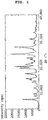
- Powder X-ray diffraction of the obtained cocrystals was measured under the above-mentioned conditions to find a powder X-ray diffraction pattern having characteristic peaks at lattice spacings (d) of about 12.92, 10.86, 9.87, 6.11, 5.94, 5.26, 4.66, 3.62 and 3.26 angstroms.
- the 2 ⁇ and d values of the powder X-ray diffraction peaks of the cocrystals measured under the above-mentioned conditions are shown in Table 3.
- a powder X-ray diffraction chart of the cocrystals obtained by measuring under the above-mentioned conditions is shown in Fig. 1
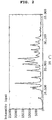
- a powder X-ray diffraction chart of compound (A) is shown in Fig. 2
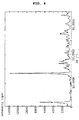
- a powder X-ray diffraction chart of gentisic acid is shown in Fig. 3 . Since no weight loss was observed in thermal analysis, it was confirmed that the cocrystal was a nonhydrate.
- Production Example 3 Production of cocrystals of compound (A) and gentisic acid
- the cocrystals (1 mg) obtained in Production Example 2 were added as seed crystals, and the mixture was stirred with a magnetic stirrer at room temperature for 4 hr.
- Production Example 4 Production of cocrystals of compound (A) and gentisic acid
- a solution of gentisic acid (40.35 g) in a mixed solvent (161 mL, isopropyl alcohol amount 50%) of isopropyl alcohol and water was filtrated to remove dust, and then, the container used was washed with a mixed solvent of isopropyl alcohol and water (9 mL, isopropyl alcohol amount 50%), and the washing liquid was filtered. The filtrate and the washing liquid were combined to give a solution of gentisic acid.
- a solution (345 mL) of compound (A) (23.0 g) in 0.25 mol/L aqueous sodium hydroxide was filtrated to remove dust, the container used was washed with a mixed solvent (23 mL, isopropyl alcohol amount 50%) of isopropyl alcohol and water, and the washing was filtered. The filtrate and the washing were combined to give a solution of compound (A).
- the solution of gentisic acid obtained as mentioned above was added dropwise to the solution of compound (A).
- the solution of gentisic acid was added dropwise, the container used was washed with a mixed solvent (9 mL, isopropyl alcohol amount 50%) of isopropyl alcohol and water, and the washing liquid was added dropwise.
- the concentration of gentisic acid in the mixed solution after dropwise addition was 0.479 mol/L.
- the cocrystals (23 mg) obtained in Production Example 3 were added as seed crystals, and the mixture was stirred using an impeller (three-one motor) at 300 rpm at room temperature for 2 days.
- the crystals were collected by filtration, and washed with a mixed solvent (115 mL, isopropyl alcohol amount 20%) of isopropyl alcohol and water to give wet crystals.
- Powder X-ray diffraction of the obtained cocrystals was measured under the above-mentioned conditions to find a powder X-ray diffraction pattern having characteristic peaks at lattice spacings (d) of about 13.09, 10.95, 9.98, 6.15, 5.98, 5.29, 4.68, 3.63 and 3.27 angstroms.
- the 2 ⁇ and d values of the powder X-ray diffraction peaks of the cocrystals measured under the above-mentioned conditions are shown in Table 5. Since no weight loss was observed in thermal analysis, it was confirmed that the cocrystal was a nonhydrate.
- Production Example 5 Production of cocrystals of compound (A) and gentisic acid
- the cocrystals (1 mg) obtained in Production Example 3 were added as seed crystals, and the mixture was stirred using a magnetic stirrer at room temperature for 2 hr.
- the crystals were collected by filtration, and washed with a mixed solvent (5 mL, isopropyl alcohol amount 20%) of isopropyl alcohol and water and then with acetone (5 mL) to give wet crystals.
- Powder X-ray diffraction of the obtained cocrystals was measured under the above-mentioned conditions to find a powder X-ray diffraction pattern having characteristic peaks at lattice spacings (d) of about 13.05, 10.92, 9.98, 6.16, 5.96, 5.29, 4.67, 3.64 and 3.28 angstroms.
- the 2 ⁇ and d values of the powder X-ray diffraction peaks of the cocrystals measured under the above-mentioned conditions are shown in Table 6. Since no weight loss was observed in thermal analysis, it was confirmed that the cocrystal was a nonhydrate.
- Production Example 6 Production of cocrystals of compound (A) and gentisic acid
- a solution of gentisic acid (1.75 g) in a mixed solvent (7 mL, isopropyl alcohol amount 50%) of isopropyl alcohol and water (concentration of gentisic acid 1.63 mol/L) was added dropwise to a solution of compound (A) (1.0 g) in 0.25 mol/L aqueous sodium hydroxide (15 mL, concentration of compound (A) 0.190 mol/L) at room temperature.
- the concentration of gentisic acid in the mixed solution after dropwise addition was 0.495 mol/L.
- the cocrystals (1 mg) obtained in Production Example 3 were added as seed crystals, and the mixture was stirred with a magnetic stirrer at room temperature for 2.5 hr.
- the crystals were collected by filtration, and washed with a mixed solvent (5 mL, isopropyl alcohol amount 20%) of isopropyl alcohol and water to give wet crystals.
- Powder X-ray diffraction of the obtained cocrystals was measured under the above-mentioned conditions to find a powder X-ray diffraction pattern having characteristic peaks at lattice spacings (d) of about 13.09, 10.95, 10.01, 6.14, 5.98, 5.29, 4.67, 3.65 and 3.28 angstroms.
- the 2 ⁇ and d values of the powder X-ray diffraction peaks of the cocrystals measured under the above-mentioned conditions are shown in Table 7. Since no weight loss was observed in thermal analysis, it was confirmed that the cocrystal was a nonhydrate.
- Production Example 7 Production of cocrystals of compound (A) and gentisic acid
- a solution of gentisic acid (1.32 g) in a mixed solvent (5 mL, isopropyl alcohol amount 50%) of isopropyl alcohol and water (concentration of gentisic acid 1.71 mol/L) was added dropwise to a solution of compound (A) (1.0 g) in 0.25 mol/L aqueous sodium hydroxide (15 mL) and a mixed solvent (1 mL) of isopropyl alcohol and water (isopropyl alcohol amount 50%) at room temperature.
- the container used for the dropwise addition was washed with a mixed solvent (1 mL) of isopropyl alcohol and water (isopropyl alcohol amount 50%), and the washing liquid was added dropwise.
- the concentration of gentisic acid in the mixed solution after dropwise addition was 0.388 mol/L.
- the cocrystal (1 mg) obtained in Production Example 3 were added as seed crystals, and the mixture was stirred using an impeller (three-one motor) at room temperature for one day.
- the crystals were collected by filtration, and washed with a mixed solvent (5 mL) of isopropyl alcohol and water (isopropyl alcohol amount 20%) to give wet crystals.
- Powder X-ray diffraction of the obtained cocrystals was measured under the above-mentioned conditions to find a powder X-ray diffraction pattern having characteristic peaks at lattice spacings (d) of about 12.94, 10.85, 9.90, 6.12, 5.94, 5.28, 4.66, 3.63 and 3.28 angstroms.
- the 2 ⁇ and d values of the powder X-ray diffraction peaks of the cocrystals measured under the above-mentioned conditions are shown in Table 8. Since no weight loss was observed in thermal analysis, it was confirmed that the cocrystal was a nonhydrate.
- Production Example 8 Production of cocrystals of compound (A) and gentisic acid (pulverized product)
- a solution of gentisic acid (52.64 g) in a mixed solvent (200 mL) of isopropyl alcohol and water (isopropyl alcohol amount 50%) was filtrated to remove dust, the container used was washed with a mixed solvent (16 mL) of isopropyl alcohol and water (isopropyl alcohol amount 50%), and the washing was filtered. The filtrate and the washing were combined to give a solution of gentisic acid.
- the solution of gentisic acid obtained as mentioned above was added dropwise to the solution of compound (A). After the solution of gentisic acid was added dropwise, the container used was washed with a mixed solvent (16 mL, isopropyl alcohol amount 50%) of isopropyl alcohol and water, and the washing liquid was added dropwise.
- the concentration of gentisic acid in the mixed solution after dropwise addition was 0.392 mol/L.
- the obtained powder (50 g) was pulverized in a jet mill to give a pulverized product (43.26 g, yield 86.5%).
- Powder X-ray diffraction of the obtained cocrystals (pulverized product) was measured under the above-mentioned conditions to find a powder X-ray diffraction pattern having characteristic peaks at lattice spacings (d) of about 12.86, 10.82, 9.89, 6.10, 5.92, 5.26, 4.64, 3.63 and 3.27 angstroms.
- the 2 ⁇ and d values of the powder X-ray diffraction peaks of the cocrystals (pulverized product) measured under the above-mentioned conditions are shown in Table 9.
- Production Example 9 Production of cocrystals of compound (A) and salicylic acid
- the content of salicylic acid in the cocrystal as measured by UPLC under the following conditions was 1.035 mol per 1 mol of compound (A).
- Production Example 10 Production of cocrystals of compound (A) and maleic acid
- the crystals in the suspension were collected by filtration, washed twice with acetonitrile, and suction dried to give the object cocrystals (753 mg, yield 83.0%) as a white powder.
- the melting point of the cocrystals measured under the above-mentioned conditions was 188°C.
- the 2 ⁇ and d values of the powder X-ray diffraction peaks of the cocrystals measured under the above-mentioned conditions are shown in Table 12.
- the content of maleic acid in the cocrystal as measured by ion chromatography under the following conditions was 1.076 mol per 1 mol of compound (A).
- Production Example 11 Production of cocrystals of compound (A) and citric acid
- the content of citric acid in the cocrystal as measured by ion chromatography under the following conditions was 0.976 mol per 1 mol of compound (A).
- Production Example 12 Production of cocrystals of compound (A) and malonic acid
- the content of malonic acid in the cocrystal as measured by ion chromatography under the following conditions was 1.521 mol per 1 mol of compound (A).
- Production Example 13 Production of cocrystals of compound (A) and malic acid
- the content of malic acid in the cocrystal as measured by ion chromatography under the following conditions was 0.993 mol per 1 mol of compound (A).
- Production Example 14 Production of cocrystals of compound (A) and mandelic acid
- the content of mandelic acid in the cocrystal as measured by ion chromatography under the following conditions was 1.531 mol per 1 mol of compound (A).
- Production Example 15 Production of cocrystals of compound (A) and gentisic acid
- the water content of the obtained cocrystals by Karl Fischer moisture measurement was 6.2%. From this water content, it was confirmed that the obtained cocrystal was a trihydrate. In TGA and DSC of the obtained cocrystals, a weight loss of about 2.2% or more was observed between 25°C and about 80°C, followed by a weight loss of about 1.8% between about 80°C and about 140°C, along with which the cocrystals melted.
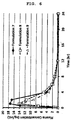
- Powder X-ray diffraction of the obtained cocrystals was measured under the above-mentioned conditions to find a powder X-ray diffraction pattern having characteristic peaks at lattice spacings (d) of about 25.97, 13.06, 7.98, 7.64, 7.08, 6.54, 6.01, 5.24 and 5.02 angstroms.
- the 2 ⁇ and d values of the powder X-ray diffraction peaks of the cocrystals measured under the above-mentioned conditions are shown in Table 17.
- the powder X-ray diffraction chart of the cocrystals obtained by measurement under the above-mentioned conditions is shown in Fig. 4 .
- the content of gentisic acid in the cocrystal as measured by UPLC under the following conditions was 3.07 mol per 1 mol of compound (A).
- Production Example 16 Production of cocrystals of compound (A) and gentisic acid
- the water content of the obtained cocrystals by Karl Fischer moisture measurement under the same conditions as in Production Example 15 was 2.5%. From this water content, it was confirmed that the obtained cocrystal was a monohydrate. In TGA and DSC of the obtained cocrystals, a weight loss of about 2.4% was observed between about 80°C and about 140°C, along with which the cocrystals melted. Powder X-ray diffraction of the obtained cocrystals was measured under the above-mentioned conditions to find a powder X-ray diffraction pattern having characteristic peaks at lattice spacings (d) of about 25.08, 9.02, 7.20, 6.83, 6.42, 6.25, 5.98, 5.25 and 5.01 angstroms.
- the content of gentisic acid in the cocrystal as measured by UPLC under the following conditions was 3.05 mol per 1 mol of compound (A).
- the first fluid (JP1), the second fluid (JP2) and the second fluid containing 20 mM sodium glycochenodeoxycholate (JP2/GCDC) of the Japanese Pharmacopoeia disintegration test were added at 400 ⁇ L each to the crystals or cocrystals (0.4 mg) of compound (A), and the mixture was heated to 37°C under air atmosphere, and shaken by a vortex mixer for 2 hr at 500 rpm. After shaking, the mixture was passed through a 0.45 ⁇ m PVDF filter, and the filtrate was analyzed by HPLC. From a chromatogram comparison with the standard solution (0.1 mg/mL), the solubility of the crystals of the single compound and the cocrystals was calculated.
- the prepared disc was adhered to the inside of a rotating shaft of the United States Pharmacopeia dissolution test 1 (basket), and inserted, while rotating at 200 rpm, in the second fluid (250 mL) of the Japanese Pharmacopoeia disintegration test containing cholic acid heated to 37°C.
- the second fluid containing the crystals or cocrystals was collected by 0.5 mL at 1 min intervals, and analyzed by HPLC. From a chromatogram comparison with the standard solution (0.05 mg/mL), the concentration of the crystals or the cocrystals was calculated, and the dissolution rate thereof was calculated. The results of the dissolution rate are shown in Table 22.
- Production Example 17 Production of formulation 1 containing cocrystals of compound (A)
- the cocrystals obtained in Production Example 8 (pulverized product, 86.4 mg), D-mannitol (1917.6 mg, PEARLITOL 100SD, manufactured by ROQUETTE), microcrystalline cellulose (240 mg, CEOLUS PH-102, manufactured by Asahi Kasei Corporation), croscarmellose sodium (120 mg, Ac-Di-Sol, manufactured by FMC Corporation), and light anhydrous silicic acid (12 mg, AEROSIL 200 Pharma, manufactured by NIPPON AEROSIL CO., LTD.) were weighed in a mortar, and mixed with a pestle.
- composition per one tablet of formulation 1 component amount (mg) cocrystal of Production Example 8 (pulverized product) (as compound (A)) 7.2 (5) D-mannitol (PEARITOL 100SD) 159.8 microcrystalline cellulose (CEOLUS PH-102) 20 croscarmellose sodium (Ac-Di-Sol) 10 light anhydrous silicic acid (AEROSIL 200 Pharma) 1 magnesium stearate 2 total 200
- Production Example 18 Production of formulation 2 containing cocrystals of compound (A)
- the cocrystals obtained in Production Example 8 (pulverized product, 86.4 mg), D-mannitol (1845.6 mg, PEARLITOL 100SD, manufactured by ROQUETTE), microcrystalline cellulose (240 mg, CEOLUS PH-102, manufactured by Asahi Kasei Corporation), hydroxypropylcellulose (72 mg, grade L, manufactured by Nippon Soda Co., Ltd.), croscarmellose sodium (120 mg, Ac-Di-Sol, manufactured by FMC Corporation), and light anhydrous silicic acid (12 mg, AEROSIL 200 Pharma, manufactured by NIPPON AEROSIL CO., LTD.) were weighed in a mortar, and mixed with a pestle.
- Production Example 19 Production of formulation 3 containing cocrystals of compound (A)
- the cocrystals obtained in Production Example 8 (pulverized product, 86.4 mg), D-mannitol (1821.6 mg, PEARLITOL 200SD, manufactured by ROQUETTE), microcrystalline cellulose (240 mg, CEOLUS PH-102, manufactured by Asahi Kasei Corporation), hydroxypropylcellulose (72 mg, grade L, manufactured by Nippon Soda Co., Ltd.), croscarmellose sodium (120 mg, Ac-Di-Sol, manufactured by FMC Corporation), and light anhydrous silicic acid (12 mg, AEROSIL 200 Pharma, manufactured by NIPPON AEROSIL CO., LTD.) were weighed in a mortar, and mixed with a pestle.
- D-mannitol 1821.6 mg, PEARLITOL 200SD, manufactured by ROQUETTE
- microcrystalline cellulose 240 mg, CEOLUS PH-102, manufactured by Asahi Kasei Corporation
- hydroxypropylcellulose 72 mg, grade L, manufactured by Nippon Soda
- Magnesium stearate (48 mg, manufactured by TAIHEI CHEMICAL INDUSTRIAL CO., LTD.) was added and mixed therewith to give a mixed powder.
- a desk-top tablet press (HANDTAB-200, manufactured by ICHIHASHI SEIKI CO., LTD.)
- the mixed powder was compressed at compression force 9 kN to give formulation 3 (tablet) (diameter 8 mm, 200 mg per one tablet).
- Table 25 The composition per one tablet of formulation 3 is shown in Table 25.
- composition per one tablet of formulation 3 component amount (mg) cocrystal of Production Example 8 (pulverized product) (as compound (A)) 7.2 (5) D-mannitol (PEARITOL 200SD) 151.8 microcrystalline cellulose (CEOLUS PH-102) 20 hydroxypropylcellulose (HPC-L) 6 croscarmellose sodium (Ac-Di-Sol) 10 light anhydrous silicic acid (AEROSIL 200 Pharma) 1 magnesium stearate 4 total 200
- Production Example 20 Production of formulation 4 containing cocrystals of compound (A)
- the cocrystals obtained in Production Example 8 (pulverized product, 86.4 mg), D-mannitol (1581.6 mg, PEARLITOL 200SD, manufactured by ROQUETTE), microcrystalline cellulose (480 mg, CEOLUS PH-102, manufactured by Asahi Kasei Corporation), hydroxypropylcellulose (72 mg, grade L, manufactured by Nippon Soda Co., Ltd.), croscarmellose sodium (120 mg, Ac-Di-Sol, manufactured by FMC Corporation), and light anhydrous silicic acid (12 mg, AEROSIL 200 Pharma, manufactured by NIPPON AEROSIL CO., LTD.) were weighed in a mortar, and mixed with a pestle.
- Magnesium stearate (48 mg, manufactured by TAIHEI CHEMICAL INDUSTRIAL CO., LTD.) was added and mixed therewith to give a mixed powder.
- a desk-top tablet press (HANDTAB-200, manufactured by ICHIHASHI SEIKI CO., LTD.)
- the mixed powder was compressed at a compression force 9 kN to give formulation 4 (tablet) (diameter 8 mm, 200 mg per one tablet).
- Table 26 The composition per one tablet of formulation 4 is shown in Table 26.
- composition per one tablet of formulation 4 Component amount (mg) cocrystal of Production Example 8 (pulverized product) (as compound (A)) 7.2 (5) D-mannitol (PEARITOL 200SD) 131.8 microcrystalline cellulose (CEOLUS PH-102) 40 hydroxypropylcellulose (HPC-L) 6 croscarmellose sodium (Ac-Di-Sol) 10 light anhydrous silicic acid (AEROSIL 200 Pharma) 1 magnesium stearate 4 total 200
- Production Example 21 Production of formulation 5 containing cocrystals of compound (A)
- D-mannitol (312.04 g, PEARLITOL 200SD, manufactured by ROQUETTE)
- microcrystalline cellulose 60 g, CEOLUS UF-702, manufactured by Asahi Kasei Corporation
- hydroxypropylcellulose 24 g, grade
- the primary mixed powder was weighed by 398.3 g, microcrystalline cellulose (45 g, CEOLUS KG-802, manufactured by Asahi Kasei Corporation) and magnesium stearate (6.75 g, manufactured by TAIHEI CHEMICAL INDUSTRIAL CO., LTD.) were added, and they were mixed to give a secondary mixed powder.
- the obtained secondary mixed powder was compressed by a rotary tablet press (Correct 19K, manufactured by KIKUSUI SEISAKUSHO LTD.) at compression force 6 kN to give an uncoated tablet (diameter 9 mm, 300 mg per one tablet).
- composition per one tablet of formulation 5 Component amount (mg) cocrystal of Production Example 4 (as compound (A)) 35.98 (25) D-mannitol (PEARITOL 200SD) 156.02 microcrystalline cellulose (CEOLUS UF-702) 30 hydroxypropylcellulose (HPC-L) 12 low substituted hydroxypropylcellulose (LH-B1) 30 light anhydrous silicic acid (AEROSIL 200 Pharma) 1.5 microcrystalline cellulose (CEOLUS KG-802) 30 magnesium stearate 4.5 OPADRY 12 total 312
- Production Example 22 Production of formulation 6 containing cocrystals of compound (A)
- the cocrystals (79.16 g) obtained in Production Example 4, D-mannitol (154.48 g, PEARLITOL 50C, manufactured by ROQUETTE), microcrystalline cellulose (33 g, CEOLUS PH-101, manufactured by Asahi Kasei Corporation), and low substituted hydroxypropylcellulose (24.75 g, grade LH-B1, manufactured by Shin-Etsu Chemical Co., Ltd.) were weighed and placed in a fluid bed granulator (LAB-1, manufactured by Powrex Corporation), granulated by spraying an aqueous solution of 6(w/w)% hydroxypropylcellulose (grade L, manufactured by Nippon Soda Co., Ltd.) (165 g), and dried to give granules.
- LAB-1 fluid bed granulator
- the granules were sieved, and the obtained sieved granules (219.1 g) were weighed.
- Low substituted hydroxypropylcellulose (18 g, grade LH-B1, manufactured by Shin-Etsu Chemical Co., Ltd.
- magnesium stearate (2.88 g, manufactured by TAIHEI CHEMICAL INDUSTRIAL CO., LTD.) were added and mixed to give a mixed granules.
- the obtained mixed granules were compressed by a rotary tablet press (Correct 19K, manufactured by KIKUSUI SEISAKUSHO LTD.) at compression force 6 kN to give an uncoated tablet (diameter 7 mm, 150 mg per one tablet).
- the dose was set to 10 mg as compound (A), the cocrystals (14.4 mg) obtained in Production Example 1, the cocrystals (14.1 mg) obtained in Production Example 9 or the cocrystals (13.6 mg) obtained in Production Example 10 (each 10 mg as compound (A)) were filled in gelatin capsules to give formulations 7 - 9 (capsule).
- One capsule each of the obtained formulations 7 - 9 was orally administered to a beagle dog as described below.
- Each of the obtained formulations was orally administered to a beagle dog (male, 5 heads) in a fasted state. Each formulation was administered to the same group of 5 beagle dogs. In each administration, a pre-administration treatment with a pentagastrin solution was performed 15 minutes before the administration. The blood samples were collected 15 and 30 min, and 1, 2, 4, 6, 8, 12 and 24 hr after administration, and centrifuged to give plasma. The plasma concentration of compound (A) was measured using LC and MS/MS under the following conditions.
- the maximum blood concentration (C max ) and the maximum blood concentration reaching time (T max ) of the drug (compound (A)) were calculated from the plasma concentration and time curve of compound (A).
- the area under the blood concentration-time curve (AUC 0-24h ) of 0 to 24 hours was calculated by the linear trapidoidal method.
- the results are shown in Table 31 and Fig. 6 .
- the values such as T max and the like in Table 31 are average values, and the numerical values in parentheses indicate standard deviation (S.D.).
- composition per one tablet of formulation 10 is shown in Table 32.
- Table 32 composition per one tablet of formulation 10 component amount (mg) compound (A) 300 D-mannitol 43 microcrystalline cellulose 30 hydroxypropylcellulose 9 sodium carboxymethyl starch 15 magnesium stearate 3 total 400
- the dose was set to 100 mg as compound (A), the cocrystal (144 mg) obtained in Production Example 1 (100 mg as compound (A)) were filled in a gelatin capsule to give formulation 11 (capsule) and one capsule each was orally administered to a beagle dog.
- Each of the obtained formulations was orally administered to a beagle dog (male, 5 heads) in a fasted state. Each formulation was administered to the same group of 5 beagle dogs. In each administration, a pre-administration treatment with a pentagastrin solution was performed 15 minutes before the administration. The blood samples were collected 15 and 30 min, and 1, 2, 4, 6, 8, 12 and 24 hr after administration, and centrifuged to give plasma. The plasma concentration of compound (A) was measured using LC and MS/MS under the conditions shown in Experimental Example 4.
- the maximum blood concentration (C max ) and the maximum blood concentration reaching time (T max ) of the drug (compound (A)) were calculated from the plasma concentration and time curve of compound (A).
- the area under the blood concentration-time curve (AUC 0-24h ) of 0 to 24 hours was calculated by the linear trapidoidal method.
- the results are shown in Table 33 and Fig. 7 .
- the values such as T max and the like in Table 33 are average values, and the numerical values in parentheses indicate standard deviation (S.D.).
- formulation active ingredient in formulation dose *1 (mg/head) T max (hr) C max (ng/mL) AUC 0-24h (ng ⁇ h/mL) formulation 10 compound (A) 300 1.6 (0.5) 4.7 (1.0) 30.2 (14.5) formulation 11 cocrystal of Production Example 1 100 1.3 (0.7) 229.0 (106.5) 585.5 (231.6) *1 dose as compound (A)
- the cocrystal of the present invention is superior in the dissolution property and oral absorbability, and is useful as a material of a medicament (pharmaceutical composition or formulation).
Landscapes
- Chemical & Material Sciences (AREA)
- Organic Chemistry (AREA)
- Health & Medical Sciences (AREA)
- Veterinary Medicine (AREA)
- Pharmacology & Pharmacy (AREA)
- Public Health (AREA)
- General Health & Medical Sciences (AREA)
- Medicinal Chemistry (AREA)
- Animal Behavior & Ethology (AREA)
- Life Sciences & Earth Sciences (AREA)
- Nuclear Medicine, Radiotherapy & Molecular Imaging (AREA)
- General Chemical & Material Sciences (AREA)
- Chemical Kinetics & Catalysis (AREA)
- Bioinformatics & Cheminformatics (AREA)
- Engineering & Computer Science (AREA)
- Epidemiology (AREA)
- Immunology (AREA)
- Pain & Pain Management (AREA)
- Rheumatology (AREA)
- Pharmaceuticals Containing Other Organic And Inorganic Compounds (AREA)
- Plural Heterocyclic Compounds (AREA)
- Acyclic And Carbocyclic Compounds In Medicinal Compositions (AREA)
- Organic Low-Molecular-Weight Compounds And Preparation Thereof (AREA)
Claims (9)
- Cokristall von (S)-3-(1-((1-Acryloylpyrrolidin-3-yl)oxy)isochinolin-3-yl)-1H-1,2,4-triazol-5(4H)-on und einer organischen Säure, die in der Lage ist, einen Cokristall mit der vorstehend genannten Verbindung zu bilden, wobei die organische Säure Gentisinsäure, Salicylsäure, Maleinsäure, Malonsäure, Äpfelsäure, Mandelsäure oder Citronensäure ist.
- Cokristall nach Anspruch 1, wobei die organische Säure Gentisinsäure, Salicylsäure oder Maleinsäure ist.
- Cokristall nach Anspruch 1, wobei die organische Säure Gentisinsäure ist.
- Cokristall nach Anspruch 3, wobei ein Molverhältnis von (S)-3-(1-((1-Acryloylpyrrolidin-3-yl)oxy)isochinolin-3-yl)-1H-1,2,4-triazol-5(4H)-on und Gentisinsäure ((S)-3-(1-((1-Acryloylpyrrolidin-3-yl)oxy)isochinolin-3-yl)-1H-1,2,4-triazol-5(4H)-on : Gentisinsäure) 1:0,5 - 1:5 beträgt.
- Arzneimittel, umfassend den Cokristall nach irgendeinem der Ansprüche 1 bis 4.
- Verfahren zur Herstellung des Cokristalls nach Anspruch 1, umfassend
das Mischen und Rühren einer stark basischen wässrigen Lösung von (S)-3-(1-((1-Acryloylpyrrolidin-3-yl)oxy)isochinolin-3-yl)-1H-1,2,4-triazol-5(4H)-on und einer Lösung einer organischen Säure, wobei das Herstellungsverfahren das Hinzufügen eines Cokristalls von (S)-3-(1-((1-Acryloylpyrrolidin-3-yl)oxy)isochinolin-3-yl)-1H-1,2,4-triazol-5(4H)-on und einer organischen Säure als Impfkristall zur Mischung der stark basischen wässrigen Lösung von (S)-3-(1-((1-Acryloylpyrrolidin-3-yl)oxy)isochinolin-3-yl)-1H-1,2,4-triazol-5(4H)-on und der Lösung der organischen Säure umfasst, wobei die organische Säure Gentisinsäure, Salicylsäure, Maleinsäure, Malonsäure, Äpfelsäure, Mandelsäure oder Citronensäure ist. - Herstellungsverfahren nach Anspruch 6, wobei die organische Säure in der Mischlösung der stark basischen wässrigen Lösung von (S)-3-(1-((1-Acryloylpyrrolidin-3-yl)oxy)isochinolin-3-yl)-1H-1,2,4-triazol-5(4H)-on und der Lösung der organischen Säure eine Konzentration von 0,298 - 0,592 mol/L aufweist.
- Herstellungsverfahren nach Anspruch 6, wobei die organische Säure in der Mischlösung der stark basischen wässrigen Lösung von (S)-3-(1-((1-Acryloylpyrrolidin-3-yl)oxy)isochinolin-3-yl)-1H-1,2,4-triazol-5(4H)-on und der Lösung der organischen Säure eine Konzentration von 0,388 - 0,592 mol/L aufweist.
- Herstellungsverfahren nach Anspruch 6, wobei ein Lösungsmittel der Lösung der organischen Säure(i) Wasser,(ii) mindestens ein organisches Lösungsmittel, das ausgewählt ist aus der Gruppe bestehend aus Isopropylalkohol, Dimethylsulfoxid, N,N-Dimethylformamid, N,N-Dimethylacetamid, Methanol, Ethanol, 1-Propanol, Tetrahydrofuran, Aceton, 2,2,2-Trifluorethanol, Acetonitril, 1-Methyl-2-pyrrolidon und Essigsäure, oder(iii) ein gemischtes Lösungsmittel von mindestens einem organischen Lösungsmittel, das ausgewählt ist aus der in (ii) beschriebenen Gruppe, und Wasserist.
Priority Applications (1)
| Application Number | Priority Date | Filing Date | Title |
|---|---|---|---|
| PL16831645T PL3394045T3 (pl) | 2015-12-24 | 2016-12-22 | Kokryształ, sposób jego wytwarzania i lek zawierający kokryształ |
Applications Claiming Priority (2)
| Application Number | Priority Date | Filing Date | Title |
|---|---|---|---|
| JP2015252658 | 2015-12-24 | ||
| PCT/JP2016/089224 WO2017111179A1 (en) | 2015-12-24 | 2016-12-22 | Cocrystal, production method thereof, and medicament containing cocrystal |
Publications (2)
| Publication Number | Publication Date |
|---|---|
| EP3394045A1 EP3394045A1 (de) | 2018-10-31 |
| EP3394045B1 true EP3394045B1 (de) | 2021-05-19 |
Family
ID=57910088
Family Applications (1)
| Application Number | Title | Priority Date | Filing Date |
|---|---|---|---|
| EP16831645.3A Active EP3394045B1 (de) | 2015-12-24 | 2016-12-22 | Cokristall, dessen herstellungsverfahren und arzneimittel den cokristall enthaltend |
Country Status (25)
| Country | Link |
|---|---|
| US (1) | US10836745B2 (de) |
| EP (1) | EP3394045B1 (de) |
| JP (1) | JP6876704B2 (de) |
| KR (1) | KR102687603B1 (de) |
| CN (1) | CN108473467B (de) |
| AR (1) | AR107132A1 (de) |
| AU (1) | AU2016375899B2 (de) |
| CA (1) | CA3009610C (de) |
| CL (1) | CL2018001725A1 (de) |
| CO (1) | CO2018006473A2 (de) |
| DK (1) | DK3394045T3 (de) |
| EA (1) | EA039213B1 (de) |
| EC (1) | ECSP18055921A (de) |
| ES (1) | ES2877089T3 (de) |
| HK (1) | HK1256362A1 (de) |
| IL (1) | IL260195A (de) |
| MX (1) | MX380656B (de) |
| PH (1) | PH12018501356A1 (de) |
| PL (1) | PL3394045T3 (de) |
| SG (1) | SG11201805331QA (de) |
| TN (1) | TN2018000221A1 (de) |
| TW (1) | TWI722080B (de) |
| UY (1) | UY37046A (de) |
| WO (1) | WO2017111179A1 (de) |
| ZA (1) | ZA201804393B (de) |
Families Citing this family (6)
| Publication number | Priority date | Publication date | Assignee | Title |
|---|---|---|---|---|
| CN111315233B (zh) * | 2017-10-06 | 2024-01-12 | 嘉吉公司 | 甜菊醇糖苷增溶剂 |
| CA3078545A1 (en) | 2017-10-06 | 2019-04-11 | Cargill, Incorporated | Stabilized steviol glycoside compositions and uses thereof |
| BR112021019811A2 (pt) | 2019-04-06 | 2021-12-07 | Cargill Inc | Composição de glicosídeo de esteviol, bebida, métodos para reduzir um atributo sensorial indesejável de uma solução aquosa de glicosídeo de esteviol, para reduzir a persistência de doçura de um componente de glicosídeo de esteviol em uma composição comestível e para reduzir o amargor de um componente de glicosídeo de esteviol em uma composição comestível, e, soluções aquosa de glicosídeo de esteviol com reduzida persistência de doçura e aquosa de glicosídeo de esteviol com reduzido amargor |
| CN110818692B (zh) * | 2019-11-08 | 2023-03-24 | 中国海洋大学 | 一种替加氟与丁香酸的共晶及其制备方法 |
| TWI845802B (zh) * | 2020-04-21 | 2024-06-21 | 健亞生物科技股份有限公司 | 硫酸羥氯喹之晶體 |
| CN117383998A (zh) * | 2023-09-28 | 2024-01-12 | 天津理工大学 | 一种共晶的制备方法 |
Family Cites Families (14)
| Publication number | Priority date | Publication date | Assignee | Title |
|---|---|---|---|---|
| US5376645A (en) | 1990-01-23 | 1994-12-27 | University Of Kansas | Derivatives of cyclodextrins exhibiting enhanced aqueous solubility and the use thereof |
| KR0166088B1 (ko) | 1990-01-23 | 1999-01-15 | . | 수용해도가 증가된 시클로덱스트린 유도체 및 이의 용도 |
| GB9518953D0 (en) | 1995-09-15 | 1995-11-15 | Pfizer Ltd | Pharmaceutical formulations |
| GB9711643D0 (en) | 1997-06-05 | 1997-07-30 | Janssen Pharmaceutica Nv | Glass thermoplastic systems |
| CO4940418A1 (es) | 1997-07-18 | 2000-07-24 | Novartis Ag | Modificacion de cristal de un derivado de n-fenil-2- pirimidinamina, procesos para su fabricacion y su uso |
| AR015947A1 (es) | 1997-10-07 | 2001-05-30 | Schering Corp | Una forma 1 polimorfica (-)-4-[4-[4-[4-[[(2r-cis]-5-(2,4-difluorfenil)tetrahidro-5-(1h-1,2,4-triazol-1-ilmetil)furan-3-il]-metoxi]fenil]-1-piperazinil]fenil-2,4-dihidro-2-[(s)-1-etil-2-(s)-hidroxipropil]-3h-1,2,4-triazol-3-ona, composicion farmaceutica que la contiene y su uso para preparar un medic |
| US6608055B2 (en) | 2001-06-22 | 2003-08-19 | Boehringer Ingelheim Pharma Kg | Crystalline anticholinergic, processes for preparing it and its use for preparing a pharmaceutical composition |
| US6737432B2 (en) | 2001-10-31 | 2004-05-18 | Boehringer Ingelheim Pharma Kg | Crystalline form of telmisartan sodium |
| US7927613B2 (en) | 2002-02-15 | 2011-04-19 | University Of South Florida | Pharmaceutical co-crystal compositions |
| JP5233671B2 (ja) | 2007-02-28 | 2013-07-10 | 日本精工株式会社 | チルト式ステアリング装置 |
| US7741330B1 (en) | 2009-10-12 | 2010-06-22 | Pharmacyclics, Inc. | Pyrazolo-pyrimidine inhibitors of Bruton's tyrosine kinase |
| CN102770434A (zh) | 2009-12-03 | 2012-11-07 | 阿斯利康(瑞典)有限公司 | 三唑并[4,5-d]嘧啶血小板聚集抑制剂的共晶体 |
| MX2014000518A (es) | 2011-07-13 | 2014-05-30 | Pharmacyclics Inc | Inhibidores de la tirosina quinasa de bruton. |
| JO3377B1 (ar) | 2013-03-11 | 2019-03-13 | Takeda Pharmaceuticals Co | مشتقات بيريدينيل وبيريدينيل مندمج |
-
2016
- 2016-12-22 EP EP16831645.3A patent/EP3394045B1/de active Active
- 2016-12-22 MX MX2018007721A patent/MX380656B/es unknown
- 2016-12-22 TW TW105142683A patent/TWI722080B/zh active
- 2016-12-22 PL PL16831645T patent/PL3394045T3/pl unknown
- 2016-12-22 US US15/388,063 patent/US10836745B2/en active Active
- 2016-12-22 JP JP2018532473A patent/JP6876704B2/ja active Active
- 2016-12-22 CN CN201680075516.XA patent/CN108473467B/zh active Active
- 2016-12-22 AR ARP160103985A patent/AR107132A1/es active IP Right Grant
- 2016-12-22 DK DK16831645.3T patent/DK3394045T3/da active
- 2016-12-22 WO PCT/JP2016/089224 patent/WO2017111179A1/en not_active Ceased
- 2016-12-22 UY UY0001037046A patent/UY37046A/es not_active Application Discontinuation
- 2016-12-22 KR KR1020187021264A patent/KR102687603B1/ko active Active
- 2016-12-22 EA EA201891467A patent/EA039213B1/ru unknown
- 2016-12-22 ES ES16831645T patent/ES2877089T3/es active Active
- 2016-12-22 CA CA3009610A patent/CA3009610C/en active Active
- 2016-12-22 SG SG11201805331QA patent/SG11201805331QA/en unknown
- 2016-12-22 HK HK18115451.0A patent/HK1256362A1/zh unknown
- 2016-12-22 TN TNP/2018/000221A patent/TN2018000221A1/en unknown
- 2016-12-22 AU AU2016375899A patent/AU2016375899B2/en active Active
-
2018
- 2018-06-21 IL IL260195A patent/IL260195A/en unknown
- 2018-06-22 CL CL2018001725A patent/CL2018001725A1/es unknown
- 2018-06-22 PH PH12018501356A patent/PH12018501356A1/en unknown
- 2018-06-22 CO CONC2018/0006473A patent/CO2018006473A2/es unknown
- 2018-06-29 ZA ZA2018/04393A patent/ZA201804393B/en unknown
- 2018-07-24 EC ECSENADI201855921A patent/ECSP18055921A/es unknown
Non-Patent Citations (1)
| Title |
|---|
| None * |
Also Published As
Similar Documents
| Publication | Publication Date | Title |
|---|---|---|
| EP3394045B1 (de) | Cokristall, dessen herstellungsverfahren und arzneimittel den cokristall enthaltend | |
| CN111214480A (zh) | 吉西他滨前药 | |
| TW201414734A (zh) | 氮雜吲哚衍生物 | |
| CN112898269A (zh) | 化合物的结晶形式 | |
| JP2020521739A (ja) | 併用療法 | |
| TW202104225A (zh) | 原肌球蛋白相關激酶(trk)抑制劑之醫藥調配物 | |
| TW202110827A (zh) | 吡唑化合物之非吸濕性結晶鹽及其醫藥組合物及用途 | |
| US11786608B2 (en) | Isoquinolinyl triazolone complexes | |
| CN113330007A (zh) | 尼拉帕利游离碱的晶体形式 | |
| BR112018012915B1 (pt) | Co-cristal, método de produção do mesmo, e medicamento contendo co-cristal | |
| CN117157282A (zh) | N-{3-[(1s)-1-{[6-(3,4-二甲氧基苯基)吡嗪-2-基]氨基}乙基]苯基}-5-甲基吡啶-3-甲酰胺的结晶形式及相关产品和方法 | |
| EP3831381A1 (de) | Feste dispersion eines hydantoinderivats | |
| US20240360135A1 (en) | Imidazo[1,2-b]pyridazinyl compounds and uses thereof | |
| HK40045075A (en) | Crystalline forms of a compound | |
| WO2011159920A1 (en) | [5,6]-dihydro-2h-pyran-2-one derivatives |
Legal Events
| Date | Code | Title | Description |
|---|---|---|---|
| STAA | Information on the status of an ep patent application or granted ep patent |
Free format text: STATUS: UNKNOWN |
|
| STAA | Information on the status of an ep patent application or granted ep patent |
Free format text: STATUS: THE INTERNATIONAL PUBLICATION HAS BEEN MADE |
|
| PUAI | Public reference made under article 153(3) epc to a published international application that has entered the european phase |
Free format text: ORIGINAL CODE: 0009012 |
|
| STAA | Information on the status of an ep patent application or granted ep patent |
Free format text: STATUS: REQUEST FOR EXAMINATION WAS MADE |
|
| 17P | Request for examination filed |
Effective date: 20180621 |
|
| AK | Designated contracting states |
Kind code of ref document: A1 Designated state(s): AL AT BE BG CH CY CZ DE DK EE ES FI FR GB GR HR HU IE IS IT LI LT LU LV MC MK MT NL NO PL PT RO RS SE SI SK SM TR |
|
| AX | Request for extension of the european patent |
Extension state: BA ME |
|
| REG | Reference to a national code |
Ref country code: HK Ref legal event code: DE Ref document number: 1256362 Country of ref document: HK |
|
| STAA | Information on the status of an ep patent application or granted ep patent |
Free format text: STATUS: EXAMINATION IS IN PROGRESS |
|
| 17Q | First examination report despatched |
Effective date: 20200217 |
|
| GRAP | Despatch of communication of intention to grant a patent |
Free format text: ORIGINAL CODE: EPIDOSNIGR1 |
|
| STAA | Information on the status of an ep patent application or granted ep patent |
Free format text: STATUS: GRANT OF PATENT IS INTENDED |
|
| RIC1 | Information provided on ipc code assigned before grant |
Ipc: C07C 59/245 20060101ALI20200617BHEP Ipc: C07C 59/50 20060101ALI20200617BHEP Ipc: C07C 59/265 20060101ALI20200617BHEP Ipc: C07C 59/54 20060101ALI20200617BHEP Ipc: A61P 35/00 20060101ALI20200617BHEP Ipc: A61K 31/4725 20060101ALI20200617BHEP Ipc: C07C 55/08 20060101ALI20200617BHEP Ipc: C07C 57/145 20060101ALI20200617BHEP Ipc: C07D 401/14 20060101AFI20200617BHEP Ipc: C07C 65/05 20060101ALI20200617BHEP Ipc: C07C 65/10 20060101ALI20200617BHEP |
|
| INTG | Intention to grant announced |
Effective date: 20200716 |
|
| GRAJ | Information related to disapproval of communication of intention to grant by the applicant or resumption of examination proceedings by the epo deleted |
Free format text: ORIGINAL CODE: EPIDOSDIGR1 |
|
| STAA | Information on the status of an ep patent application or granted ep patent |
Free format text: STATUS: EXAMINATION IS IN PROGRESS |
|
| GRAP | Despatch of communication of intention to grant a patent |
Free format text: ORIGINAL CODE: EPIDOSNIGR1 |
|
| STAA | Information on the status of an ep patent application or granted ep patent |
Free format text: STATUS: GRANT OF PATENT IS INTENDED |
|
| INTC | Intention to grant announced (deleted) | ||
| INTG | Intention to grant announced |
Effective date: 20201221 |
|
| GRAS | Grant fee paid |
Free format text: ORIGINAL CODE: EPIDOSNIGR3 |
|
| GRAA | (expected) grant |
Free format text: ORIGINAL CODE: 0009210 |
|
| STAA | Information on the status of an ep patent application or granted ep patent |
Free format text: STATUS: THE PATENT HAS BEEN GRANTED |
|
| AK | Designated contracting states |
Kind code of ref document: B1 Designated state(s): AL AT BE BG CH CY CZ DE DK EE ES FI FR GB GR HR HU IE IS IT LI LT LU LV MC MK MT NL NO PL PT RO RS SE SI SK SM TR |
|
| REG | Reference to a national code |
Ref country code: GB Ref legal event code: FG4D |
|
| REG | Reference to a national code |
Ref country code: CH Ref legal event code: EP |
|
| REG | Reference to a national code |
Ref country code: DE Ref legal event code: R096 Ref document number: 602016058172 Country of ref document: DE |
|
| REG | Reference to a national code |
Ref country code: AT Ref legal event code: REF Ref document number: 1393852 Country of ref document: AT Kind code of ref document: T Effective date: 20210615 |
|
| REG | Reference to a national code |
Ref country code: IE Ref legal event code: FG4D |
|
| REG | Reference to a national code |
Ref country code: SE Ref legal event code: TRGR |
|
| REG | Reference to a national code |
Ref country code: NL Ref legal event code: FP |
|
| REG | Reference to a national code |
Ref country code: FI Ref legal event code: FGE |
|
| REG | Reference to a national code |
Ref country code: DK Ref legal event code: T3 Effective date: 20210812 |
|
| REG | Reference to a national code |
Ref country code: GR Ref legal event code: EP Ref document number: 20210401811 Country of ref document: GR Effective date: 20210813 |
|
| REG | Reference to a national code |
Ref country code: LT Ref legal event code: MG9D |
|
| REG | Reference to a national code |
Ref country code: NO Ref legal event code: T2 Effective date: 20210519 |
|
| PG25 | Lapsed in a contracting state [announced via postgrant information from national office to epo] |
Ref country code: BG Free format text: LAPSE BECAUSE OF FAILURE TO SUBMIT A TRANSLATION OF THE DESCRIPTION OR TO PAY THE FEE WITHIN THE PRESCRIBED TIME-LIMIT Effective date: 20210819 Ref country code: HR Free format text: LAPSE BECAUSE OF FAILURE TO SUBMIT A TRANSLATION OF THE DESCRIPTION OR TO PAY THE FEE WITHIN THE PRESCRIBED TIME-LIMIT Effective date: 20210519 Ref country code: LT Free format text: LAPSE BECAUSE OF FAILURE TO SUBMIT A TRANSLATION OF THE DESCRIPTION OR TO PAY THE FEE WITHIN THE PRESCRIBED TIME-LIMIT Effective date: 20210519 |
|
| REG | Reference to a national code |
Ref country code: ES Ref legal event code: FG2A Ref document number: 2877089 Country of ref document: ES Kind code of ref document: T3 Effective date: 20211116 |
|
| PG25 | Lapsed in a contracting state [announced via postgrant information from national office to epo] |
Ref country code: LV Free format text: LAPSE BECAUSE OF FAILURE TO SUBMIT A TRANSLATION OF THE DESCRIPTION OR TO PAY THE FEE WITHIN THE PRESCRIBED TIME-LIMIT Effective date: 20210519 Ref country code: IS Free format text: LAPSE BECAUSE OF FAILURE TO SUBMIT A TRANSLATION OF THE DESCRIPTION OR TO PAY THE FEE WITHIN THE PRESCRIBED TIME-LIMIT Effective date: 20210919 Ref country code: RS Free format text: LAPSE BECAUSE OF FAILURE TO SUBMIT A TRANSLATION OF THE DESCRIPTION OR TO PAY THE FEE WITHIN THE PRESCRIBED TIME-LIMIT Effective date: 20210519 Ref country code: PT Free format text: LAPSE BECAUSE OF FAILURE TO SUBMIT A TRANSLATION OF THE DESCRIPTION OR TO PAY THE FEE WITHIN THE PRESCRIBED TIME-LIMIT Effective date: 20210920 |
|
| REG | Reference to a national code |
Ref country code: AT Ref legal event code: UEP Ref document number: 1393852 Country of ref document: AT Kind code of ref document: T Effective date: 20210519 |
|
| PG25 | Lapsed in a contracting state [announced via postgrant information from national office to epo] |
Ref country code: SM Free format text: LAPSE BECAUSE OF FAILURE TO SUBMIT A TRANSLATION OF THE DESCRIPTION OR TO PAY THE FEE WITHIN THE PRESCRIBED TIME-LIMIT Effective date: 20210519 Ref country code: SK Free format text: LAPSE BECAUSE OF FAILURE TO SUBMIT A TRANSLATION OF THE DESCRIPTION OR TO PAY THE FEE WITHIN THE PRESCRIBED TIME-LIMIT Effective date: 20210519 Ref country code: EE Free format text: LAPSE BECAUSE OF FAILURE TO SUBMIT A TRANSLATION OF THE DESCRIPTION OR TO PAY THE FEE WITHIN THE PRESCRIBED TIME-LIMIT Effective date: 20210519 Ref country code: CZ Free format text: LAPSE BECAUSE OF FAILURE TO SUBMIT A TRANSLATION OF THE DESCRIPTION OR TO PAY THE FEE WITHIN THE PRESCRIBED TIME-LIMIT Effective date: 20210519 Ref country code: RO Free format text: LAPSE BECAUSE OF FAILURE TO SUBMIT A TRANSLATION OF THE DESCRIPTION OR TO PAY THE FEE WITHIN THE PRESCRIBED TIME-LIMIT Effective date: 20210519 |
|
| REG | Reference to a national code |
Ref country code: DE Ref legal event code: R097 Ref document number: 602016058172 Country of ref document: DE |
|
| VS25 | Lapsed in a validation state [announced via postgrant information from nat. office to epo] |
Ref country code: MD Free format text: LAPSE BECAUSE OF FAILURE TO SUBMIT A TRANSLATION OF THE DESCRIPTION OR TO PAY THE FEE WITHIN THE PRESCRIBED TIME-LIMIT Effective date: 20210519 |
|
| PLBE | No opposition filed within time limit |
Free format text: ORIGINAL CODE: 0009261 |
|
| STAA | Information on the status of an ep patent application or granted ep patent |
Free format text: STATUS: NO OPPOSITION FILED WITHIN TIME LIMIT |
|
| 26N | No opposition filed |
Effective date: 20220222 |
|
| PG25 | Lapsed in a contracting state [announced via postgrant information from national office to epo] |
Ref country code: IS Free format text: LAPSE BECAUSE OF FAILURE TO SUBMIT A TRANSLATION OF THE DESCRIPTION OR TO PAY THE FEE WITHIN THE PRESCRIBED TIME-LIMIT Effective date: 20210919 Ref country code: AL Free format text: LAPSE BECAUSE OF FAILURE TO SUBMIT A TRANSLATION OF THE DESCRIPTION OR TO PAY THE FEE WITHIN THE PRESCRIBED TIME-LIMIT Effective date: 20210519 |
|
| PG25 | Lapsed in a contracting state [announced via postgrant information from national office to epo] |
Ref country code: MC Free format text: LAPSE BECAUSE OF FAILURE TO SUBMIT A TRANSLATION OF THE DESCRIPTION OR TO PAY THE FEE WITHIN THE PRESCRIBED TIME-LIMIT Effective date: 20210519 |
|
| PG25 | Lapsed in a contracting state [announced via postgrant information from national office to epo] |
Ref country code: LU Free format text: LAPSE BECAUSE OF NON-PAYMENT OF DUE FEES Effective date: 20211222 Ref country code: IE Free format text: LAPSE BECAUSE OF NON-PAYMENT OF DUE FEES Effective date: 20211222 |
|
| P01 | Opt-out of the competence of the unified patent court (upc) registered |
Effective date: 20230428 |
|
| PG25 | Lapsed in a contracting state [announced via postgrant information from national office to epo] |
Ref country code: CY Free format text: LAPSE BECAUSE OF FAILURE TO SUBMIT A TRANSLATION OF THE DESCRIPTION OR TO PAY THE FEE WITHIN THE PRESCRIBED TIME-LIMIT Effective date: 20210519 |
|
| PG25 | Lapsed in a contracting state [announced via postgrant information from national office to epo] |
Ref country code: HU Free format text: LAPSE BECAUSE OF FAILURE TO SUBMIT A TRANSLATION OF THE DESCRIPTION OR TO PAY THE FEE WITHIN THE PRESCRIBED TIME-LIMIT; INVALID AB INITIO Effective date: 20161222 |
|
| PG25 | Lapsed in a contracting state [announced via postgrant information from national office to epo] |
Ref country code: MK Free format text: LAPSE BECAUSE OF FAILURE TO SUBMIT A TRANSLATION OF THE DESCRIPTION OR TO PAY THE FEE WITHIN THE PRESCRIBED TIME-LIMIT Effective date: 20210519 |
|
| VS25 | Lapsed in a validation state [announced via postgrant information from nat. office to epo] |
Ref country code: MA Free format text: LAPSE BECAUSE OF FAILURE TO SUBMIT A TRANSLATION OF THE DESCRIPTION OR TO PAY THE FEE WITHIN THE PRESCRIBED TIME-LIMIT Effective date: 20210519 |
|
| PG25 | Lapsed in a contracting state [announced via postgrant information from national office to epo] |
Ref country code: MT Free format text: LAPSE BECAUSE OF FAILURE TO SUBMIT A TRANSLATION OF THE DESCRIPTION OR TO PAY THE FEE WITHIN THE PRESCRIBED TIME-LIMIT Effective date: 20210519 |
|
| PGFP | Annual fee paid to national office [announced via postgrant information from national office to epo] |
Ref country code: NL Payment date: 20241121 Year of fee payment: 9 |
|
| PGFP | Annual fee paid to national office [announced via postgrant information from national office to epo] |
Ref country code: DE Payment date: 20241121 Year of fee payment: 9 |
|
| PGFP | Annual fee paid to national office [announced via postgrant information from national office to epo] |
Ref country code: NO Payment date: 20241122 Year of fee payment: 9 |
|
| PGFP | Annual fee paid to national office [announced via postgrant information from national office to epo] |
Ref country code: DK Payment date: 20241121 Year of fee payment: 9 |
|
| PGFP | Annual fee paid to national office [announced via postgrant information from national office to epo] |
Ref country code: PL Payment date: 20241125 Year of fee payment: 9 Ref country code: FI Payment date: 20241121 Year of fee payment: 9 Ref country code: GR Payment date: 20241122 Year of fee payment: 9 Ref country code: BE Payment date: 20241121 Year of fee payment: 9 |
|
| PGFP | Annual fee paid to national office [announced via postgrant information from national office to epo] |
Ref country code: GB Payment date: 20241122 Year of fee payment: 9 |
|
| PGFP | Annual fee paid to national office [announced via postgrant information from national office to epo] |
Ref country code: FR Payment date: 20241121 Year of fee payment: 9 |
|
| PGFP | Annual fee paid to national office [announced via postgrant information from national office to epo] |
Ref country code: AT Payment date: 20241122 Year of fee payment: 9 |
|
| PGFP | Annual fee paid to national office [announced via postgrant information from national office to epo] |
Ref country code: SE Payment date: 20241121 Year of fee payment: 9 |
|
| PGFP | Annual fee paid to national office [announced via postgrant information from national office to epo] |
Ref country code: TR Payment date: 20241126 Year of fee payment: 9 |
|
| PGFP | Annual fee paid to national office [announced via postgrant information from national office to epo] |
Ref country code: ES Payment date: 20250102 Year of fee payment: 9 |
|
| PGFP | Annual fee paid to national office [announced via postgrant information from national office to epo] |
Ref country code: CH Payment date: 20250101 Year of fee payment: 9 |
|
| PGFP | Annual fee paid to national office [announced via postgrant information from national office to epo] |
Ref country code: IT Payment date: 20241126 Year of fee payment: 9 |
|
| REG | Reference to a national code |
Ref country code: HK Ref legal event code: WD Ref document number: 1256362 Country of ref document: HK |