EP3393995B1 - Method for porosification of construction materials using siloxanes and porosified building materials - Google Patents
Method for porosification of construction materials using siloxanes and porosified building materials Download PDFInfo
- Publication number
- EP3393995B1 EP3393995B1 EP16826701.1A EP16826701A EP3393995B1 EP 3393995 B1 EP3393995 B1 EP 3393995B1 EP 16826701 A EP16826701 A EP 16826701A EP 3393995 B1 EP3393995 B1 EP 3393995B1
- Authority
- EP
- European Patent Office
- Prior art keywords
- siloxane
- porosification
- sample
- building component
- slurry
- Prior art date
- Legal status (The legal status is an assumption and is not a legal conclusion. Google has not performed a legal analysis and makes no representation as to the accuracy of the status listed.)
- Active
Links
Images
Classifications
-
- C—CHEMISTRY; METALLURGY
- C04—CEMENTS; CONCRETE; ARTIFICIAL STONE; CERAMICS; REFRACTORIES
- C04B—LIME, MAGNESIA; SLAG; CEMENTS; COMPOSITIONS THEREOF, e.g. MORTARS, CONCRETE OR LIKE BUILDING MATERIALS; ARTIFICIAL STONE; CERAMICS; REFRACTORIES; TREATMENT OF NATURAL STONE
- C04B38/00—Porous mortars, concrete, artificial stone or ceramic ware; Preparation thereof
- C04B38/02—Porous mortars, concrete, artificial stone or ceramic ware; Preparation thereof by adding chemical blowing agents
-
- C—CHEMISTRY; METALLURGY
- C04—CEMENTS; CONCRETE; ARTIFICIAL STONE; CERAMICS; REFRACTORIES
- C04B—LIME, MAGNESIA; SLAG; CEMENTS; COMPOSITIONS THEREOF, e.g. MORTARS, CONCRETE OR LIKE BUILDING MATERIALS; ARTIFICIAL STONE; CERAMICS; REFRACTORIES; TREATMENT OF NATURAL STONE
- C04B28/00—Compositions of mortars, concrete or artificial stone, containing inorganic binders or the reaction product of an inorganic and an organic binder, e.g. polycarboxylate cements
- C04B28/02—Compositions of mortars, concrete or artificial stone, containing inorganic binders or the reaction product of an inorganic and an organic binder, e.g. polycarboxylate cements containing hydraulic cements other than calcium sulfates
-
- C—CHEMISTRY; METALLURGY
- C04—CEMENTS; CONCRETE; ARTIFICIAL STONE; CERAMICS; REFRACTORIES
- C04B—LIME, MAGNESIA; SLAG; CEMENTS; COMPOSITIONS THEREOF, e.g. MORTARS, CONCRETE OR LIKE BUILDING MATERIALS; ARTIFICIAL STONE; CERAMICS; REFRACTORIES; TREATMENT OF NATURAL STONE
- C04B28/00—Compositions of mortars, concrete or artificial stone, containing inorganic binders or the reaction product of an inorganic and an organic binder, e.g. polycarboxylate cements
- C04B28/02—Compositions of mortars, concrete or artificial stone, containing inorganic binders or the reaction product of an inorganic and an organic binder, e.g. polycarboxylate cements containing hydraulic cements other than calcium sulfates
- C04B28/04—Portland cements
-
- C—CHEMISTRY; METALLURGY
- C04—CEMENTS; CONCRETE; ARTIFICIAL STONE; CERAMICS; REFRACTORIES
- C04B—LIME, MAGNESIA; SLAG; CEMENTS; COMPOSITIONS THEREOF, e.g. MORTARS, CONCRETE OR LIKE BUILDING MATERIALS; ARTIFICIAL STONE; CERAMICS; REFRACTORIES; TREATMENT OF NATURAL STONE
- C04B28/00—Compositions of mortars, concrete or artificial stone, containing inorganic binders or the reaction product of an inorganic and an organic binder, e.g. polycarboxylate cements
- C04B28/02—Compositions of mortars, concrete or artificial stone, containing inorganic binders or the reaction product of an inorganic and an organic binder, e.g. polycarboxylate cements containing hydraulic cements other than calcium sulfates
- C04B28/10—Lime cements or magnesium oxide cements
- C04B28/12—Hydraulic lime
-
- C—CHEMISTRY; METALLURGY
- C04—CEMENTS; CONCRETE; ARTIFICIAL STONE; CERAMICS; REFRACTORIES
- C04B—LIME, MAGNESIA; SLAG; CEMENTS; COMPOSITIONS THEREOF, e.g. MORTARS, CONCRETE OR LIKE BUILDING MATERIALS; ARTIFICIAL STONE; CERAMICS; REFRACTORIES; TREATMENT OF NATURAL STONE
- C04B28/00—Compositions of mortars, concrete or artificial stone, containing inorganic binders or the reaction product of an inorganic and an organic binder, e.g. polycarboxylate cements
- C04B28/14—Compositions of mortars, concrete or artificial stone, containing inorganic binders or the reaction product of an inorganic and an organic binder, e.g. polycarboxylate cements containing calcium sulfate cements
-
- C—CHEMISTRY; METALLURGY
- C04—CEMENTS; CONCRETE; ARTIFICIAL STONE; CERAMICS; REFRACTORIES
- C04B—LIME, MAGNESIA; SLAG; CEMENTS; COMPOSITIONS THEREOF, e.g. MORTARS, CONCRETE OR LIKE BUILDING MATERIALS; ARTIFICIAL STONE; CERAMICS; REFRACTORIES; TREATMENT OF NATURAL STONE
- C04B2111/00—Mortars, concrete or artificial stone or mixtures to prepare them, characterised by specific function, property or use
- C04B2111/40—Porous or lightweight materials
Definitions
- the invention concerns the porosification of construction materials using siloxanes and building materials porosified by siloxanes.
- the invention especially concerns the use of H-siloxane for the porosification of cementitious building materials.
- the porosification of cementitious building materials for example, gypsum or cement based building materials, is known from prior art.
- the porosification of the building material effects a reduction of the weight of the individual building components.
- the porosification can also be functionally desirable, if for example the generated porosity enables the use as thermal insulating building components.
- Another option of porosification of building materials is to actively make the building material porous during the production.
- Active porosification of concrete can for example be achieved by the addition of aluminium powder or paste. Aluminium powder or paste reacts in the alkaline medium with water to aluminium hydroxide while releasing hydrogen. The reaction of the aluminium powder or paste is time delayed and can in some conditions lead to undesirable post-swelling.
- US 2008/257218 A1 discloses a method for producing a porous, cementitious building component using siloxanes as surfactants.
- siloxanes can be added to the slurry, which makes the entire building component water-repellent.
- the siloxanes can also be applied as a coating on the finished building component, which means it is only externally water-repellent.
- the object is achieved by a method according to claim 1 and by a building component according to claim 14.
- the invention-related method for the production of a porous, cementitious building component includes at least the step of mixing a binder with water and with an active porosification agent. The mixture is formed and the formed building component is dried.
- the active porosification agent is H-siloxane.
- a reduction of the gross weight of the cementitious building component of at least 10 wt.% is achieved solely by the active porosification of the H-siloxane.
- the reduction of the gross weight referes to a plate that contains no siloxane porosification agent, but otherwise has the identical composition and dimension.
- H-siloxane is used for active porosification and can be used for various building materials (for example, calcium sulphate based cement, such as gypsum and anhydrite or hydraulic cement, for example Portland cement).
- building materials for example, calcium sulphate based cement, such as gypsum and anhydrite or hydraulic cement, for example Portland cement.
- the pores brought into the building material lead to a reduction of the gross density and thus the total weight. In this way lighter products can be manufactured; the thermal conductivity of the product is reduced. Furthermore, the manufactured products are mass hydrophobised.
- An H-siloxane according to this invention is a polymethyl hydrogen siloxane which has low viscosity at room temperature, i.e. preferably being liquid.
- the slurry i.e. a mixture of at least the binder, the porosification agent and water, is set at a pH value higher than 11. At this pH value the H-siloxane develops its strongest porosification effect.
- the pH value setting of the slurry can be achieved, for example, with calcium hydroxide.
- other additives that push the pH value into alkaline are also possible. A person skilled in the art will know the appropriate additive.
- the active porosification of the slurry leads to a reduction of the gross weight of the finished building component of at least 10 wt.%, preferably of at least 20 wt.% and especially preferred of at least 30 wt.%.
- the reduction is determined on the the difference to the gross weight of an identical building component that was produced without the addition of a porosification agent.
- a passive porosification in addition to the active porosification of the building component a passive porosification can be effected by the addition of at least one air-entraining substance (air-entraining agent).
- the air-entraining substance can be, for example, a tenside known for this purpose by a person skilled in the art, for example anionic surfactants, such as sulphonates (olefin sulphonates, hydroxylated sulphonates with ethoxylated fatty alcohols or the like).
- the air-entraining agent is preferably used in quantities between 0.02 and 0.1 wt.%, based on the quantity of the binder.
- the amount of the air-entraining agent is in any case significantly lower than the amount of the active porosification agent.
- the inventors have surprisingly-found that through the addition of low quantities of an air-entraining agent the reaction of the H-siloxane can be intensified.
- siloxane does not lose its hydrophobic effect through the foaming of the building material.
- a porous, cementitious building component can be produced with a mass hydrophobisation.
- the active porosification agent or the H-siloxane can be added directly to the slurry.
- the dry parts of the building component that is essentially the binder
- the dried, sprayed parts are storeable.
- an air brush gun for example, can be used or any method for fine, uniform distribution of a liquid onto a powdered material familiar to the person skilled in the art.
- the storable variants of the method according to the invention are useful for light plasters and trowelling compounds, that must be mixed with water at the location of use. The porosification is only then effected.
- the invention also includes a porous, cementitious building component, that was produced according to the above described method.
- the building component can be especially a trowelling compound, a plaster, a partition wall board or a building panel, preferably a gypsum plaster board or a gypsum fibreboard.
- the building component is mass hydrophobised.
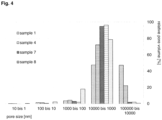
- At least 40 vol.-% of the pores, preferably at least 60 vol.-% of the pores have a relative pore size of 1000 to 10000 nm.
- H-siloxane was added in different concentrations (0.5; 1.0 and 3.0 wt.% based on the quantity of calcined gypsum used) to the mixing water.
- Samples 1 to 3 are zero samples, thus contain no porosification agent.
- FGD flue gas desulphurization
- Sample 2 an ⁇ -hemihydrate was used as binder.
- Sample 3 contains 70 wt.% calcined FGD gypsum and 30 wt.% calcined natural gypsum as binder. All other samples differ only by the quantity and type of incorporated additives. All samples were prepared with water, formed into prisms and dried.
- Table 1 Composition and gross density of the selected samples Composition Gross density [kg/m 3 ] Sample 1 30 wt.% FGD, 70 wt.% natural gypsum, calcined 1072 Sample 2 100 wt.% ⁇ -hemihydrate 1741 Sample 3 70 wt.% FGD, 30 wt.% natural gypsum, calcined 1133 Sample 4 Sample 1 + 0.5 wt.% H-siloxane + pH 8 894 Sample 5 Sample 1 + 1 wt.% H-siloxane + pH 8 845 Sample 6 Sample 1 + 3 wt.% H-siloxane + pH 12 624 Sample 7 Sample 1 + 1 wt.% H-siloxane + pH 12 714 Sample 8 Sample 1 + 1 wt.% H-siloxane + pH 12 +OSB 632 Sample 9 Sample 1 + 1 wt.% H-siloxane + pH 12 +Poro264 751 Sample 10 Sample 1 + 1 wt
- Poro264 Pore generator based on an olefin sulphonate was added in a quantity of 0.1 wt.% based on the quantity of the calcined gypsum used (sum of natural and FGD gypsum).
- Poro265 Pore generator based on a wood rosin derivative with dried maleic resin was added in a quantity of 0.1 wt.% based on the quantity of the calcined gypsum used (sum of natural and FGD gypsum).
- Alenal Tartaric acid retarder was added in a quantity of 0.02 wt.% based on the quantity of the calcined gypsum used (sum of natural and FGD gypsum).
- PPE Retarder based on degraded polyamide with calcium and bone meal was added in a quantity of 0.01 wt.% based on the quantity of the calcined gypsum used (sum of natural and FGD gypsum).
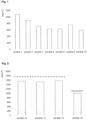
- Results show that a reduction of the gross density of up to 350-400 kg/m 3 can be achieved (see Fig. 1 , Tab. 1: Comparison, e.g. Sample 1 and Sample 4). A delay of the gypsum using tartaric acid (Alenal) or PPE has no significant effect on the resulting gross density, Tab. 1: Comparison of Sample 7 and Sample 11 or Sample 12. The grain size of the stucco is not crucial, this is shown by tests with ⁇ -gypsum sieved to 63 ⁇ m (Tab. 1, Comparison Sample 13 and Sample 15).
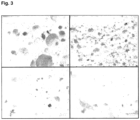
- Porosification with H-siloxane usually results in spherical pores (see Fig. 3 ); more than 50% of the pores have a pore size of 1000 to 10000 nm (see Fig. 4 ).
- H-siloxane is especially useful when low weight/gross densities are required. Also a reduction of the thermal conductivity can be achieved with this type of porosification. Since H-siloxane can be added to the mixing water and also be sprayed on a dry calcium sulphate mixture, a broad field of applications is possible. The original hydrophobic effect is still present.
- Fig. 1 shows a comparison of the gross densities of samples of various compositions based on ⁇ -hemihydrate.
- the black line at a gross density of 1072 kg/m 3 is the gross density of the non-porous Sample 1 in Tab. 1 and is used as a reference value.
- Sample 5 and Sample 7 have identical compositions, but were processed at different pH values. This clearly illustrates that the porosification effect of the H-siloxane used is pH value dependent and increases with an increasing pH value.
- Sample 6 is compared with Sample 7 the influence of the quantity of the H-siloxane is seen.
- Sample 7 contains 1 wt.% and Sample 6 contains 3 wt.% H-siloxane. With an increasing quantity of H-siloxane, the gross density of the sample decreases.
- Fig. 2 shows a similar comparison as Fig. 1 , however here ⁇ -hemihydrate was used as a binderthe same tendencies as shown in Fig. 1 can be confirmed.
- the effect of various grain sizes of the binder (cement) were examined. It is illustrated that no significant effect on the porosification effect of the H-siloxane seems to exist here.
- Fig. 3 shows light microscopic images of gypsum building materials porosified with H-siloxane at various pH values. The samples were taken with identical magnification. The pores show different sizes and are essentially spherical shaped.
Landscapes
- Chemical & Material Sciences (AREA)
- Engineering & Computer Science (AREA)
- Ceramic Engineering (AREA)
- Chemical Kinetics & Catalysis (AREA)
- Materials Engineering (AREA)
- Structural Engineering (AREA)
- Organic Chemistry (AREA)
- Inorganic Chemistry (AREA)
- General Chemical & Material Sciences (AREA)
- Curing Cements, Concrete, And Artificial Stone (AREA)
Applications Claiming Priority (2)
| Application Number | Priority Date | Filing Date | Title |
|---|---|---|---|
| DE102015016733 | 2015-12-22 | ||
| PCT/EP2016/002147 WO2017108182A1 (en) | 2015-12-22 | 2016-12-21 | Method for porosification of construction materials using siloxanes and porosified building materials |
Publications (3)
| Publication Number | Publication Date |
|---|---|
| EP3393995A1 EP3393995A1 (en) | 2018-10-31 |
| EP3393995C0 EP3393995C0 (en) | 2024-05-29 |
| EP3393995B1 true EP3393995B1 (en) | 2024-05-29 |
Family
ID=57821907
Family Applications (1)
| Application Number | Title | Priority Date | Filing Date |
|---|---|---|---|
| EP16826701.1A Active EP3393995B1 (en) | 2015-12-22 | 2016-12-21 | Method for porosification of construction materials using siloxanes and porosified building materials |
Country Status (12)
| Country | Link |
|---|---|
| EP (1) | EP3393995B1 (es) |
| JP (1) | JP6954516B2 (es) |
| BR (1) | BR112018012609B1 (es) |
| CL (1) | CL2018001678A1 (es) |
| CO (1) | CO2018006363A2 (es) |
| EA (1) | EA037830B1 (es) |
| EC (1) | ECSP18046800A (es) |
| ES (1) | ES2983911T3 (es) |
| PL (1) | PL3393995T3 (es) |
| TN (1) | TN2018000184A1 (es) |
| UA (1) | UA124057C2 (es) |
| WO (1) | WO2017108182A1 (es) |
Families Citing this family (2)
| Publication number | Priority date | Publication date | Assignee | Title |
|---|---|---|---|---|
| JP7408663B2 (ja) * | 2018-12-20 | 2024-01-05 | クナウフ ギプス カーゲー | 改善された耐高温性を有する石膏建築材料 |
| JP7312153B2 (ja) * | 2020-10-09 | 2023-07-20 | 双葉電子工業株式会社 | 乾燥剤組成物、封止構造体、及び有機el素子 |
Family Cites Families (6)
| Publication number | Priority date | Publication date | Assignee | Title |
|---|---|---|---|---|
| DE3429311C1 (de) * | 1984-08-09 | 1985-12-05 | Bayer Ag, 5090 Leverkusen | Verfahren zur Herstellung wasserabweisender poroeser Formkoerper aus Gips |
| DE4128424A1 (de) * | 1991-08-27 | 1993-03-04 | Knauf Westdeutsche Gips | Verfahren zur herstellung von wasserabweisenden poroesen gipsformkoerpern |
| JP2001163683A (ja) * | 1999-12-03 | 2001-06-19 | Sumitomo Kinzoku Kozan Siporex Kk | 耐炭酸化性に優れた軽量気泡コンクリート |
| AU2008242914B2 (en) * | 2007-04-16 | 2013-07-18 | James Hardie Technology Limited | Light weight additive, method of making and uses thereof |
| EP2164820A4 (en) * | 2007-06-19 | 2011-05-25 | Georgia Tech Res Inst | HIGH SOLID PUZZLE FOAM MATERIALS AND METHOD OF MANUFACTURING THEREOF |
| GB0809526D0 (en) * | 2008-05-27 | 2008-07-02 | Dow Corning | Gypsum materials |
-
2016
- 2016-12-21 BR BR112018012609-8A patent/BR112018012609B1/pt active IP Right Grant
- 2016-12-21 JP JP2018533244A patent/JP6954516B2/ja active Active
- 2016-12-21 PL PL16826701.1T patent/PL3393995T3/pl unknown
- 2016-12-21 WO PCT/EP2016/002147 patent/WO2017108182A1/en not_active Ceased
- 2016-12-21 EA EA201891172A patent/EA037830B1/ru unknown
- 2016-12-21 ES ES16826701T patent/ES2983911T3/es active Active
- 2016-12-21 UA UAA201806825A patent/UA124057C2/uk unknown
- 2016-12-21 EP EP16826701.1A patent/EP3393995B1/en active Active
- 2016-12-21 TN TNP/2018/000184A patent/TN2018000184A1/en unknown
-
2018
- 2018-06-20 CO CONC2018/0006363A patent/CO2018006363A2/es unknown
- 2018-06-20 EC ECSENADI201846800A patent/ECSP18046800A/es unknown
- 2018-06-20 CL CL2018001678A patent/CL2018001678A1/es unknown
Also Published As
| Publication number | Publication date |
|---|---|
| CL2018001678A1 (es) | 2018-10-05 |
| TN2018000184A1 (en) | 2019-10-04 |
| EP3393995C0 (en) | 2024-05-29 |
| CO2018006363A2 (es) | 2018-07-10 |
| PL3393995T3 (pl) | 2024-07-29 |
| UA124057C2 (uk) | 2021-07-14 |
| EP3393995A1 (en) | 2018-10-31 |
| EA037830B1 (ru) | 2021-05-26 |
| WO2017108182A1 (en) | 2017-06-29 |
| JP2019500310A (ja) | 2019-01-10 |
| ES2983911T3 (es) | 2024-10-28 |
| WO2017108182A8 (en) | 2018-03-15 |
| ECSP18046800A (es) | 2018-07-31 |
| JP6954516B2 (ja) | 2021-10-27 |
| BR112018012609A2 (pt) | 2018-12-04 |
| BR112018012609B1 (pt) | 2023-03-07 |
| EA201891172A1 (ru) | 2018-12-28 |
Similar Documents
| Publication | Publication Date | Title |
|---|---|---|
| KR100758830B1 (ko) | 내수성이개선된석고목재섬유제품 | |
| RU2237041C1 (ru) | Сырьевая смесь для изготовления конструктивного теплоизоляционного пенобетона | |
| US9975808B2 (en) | Ultra-light cementitious compositions and related methods | |
| US6706128B2 (en) | Method of providing void space in gypsum wallboard and in a gypsum core composition | |
| WO2018017441A1 (en) | Lightweight foamed cement, cement board, and methods for making same | |
| JP2002539061A (ja) | 耐水性プレハブ構造部材 | |
| KR102706750B1 (ko) | 재생 석고를 함유하는 황산칼슘 혼합물에 대한 강력한 일차 계면활성제로서의 이염 | |
| EP2327672A1 (en) | Plaster-based material including an agent capable of trapping formaldehyde. | |
| JPH06104324B2 (ja) | 水硬性結合剤及びセメント質混合物製造方法 | |
| CN110734245A (zh) | 水化热抑制型混凝土抗裂防水剂、其制备方法及其应用 | |
| EP3393995B1 (en) | Method for porosification of construction materials using siloxanes and porosified building materials | |
| AU7190700A (en) | Application of polymethylhydrogen siloxane for producing a water resistant gypsum product and gypsum/wood fiber board and gypsum board | |
| CN115215626A (zh) | 抹灰石膏、抹灰石膏的预制品及抹灰石膏的制备方法 | |
| CN113955966A (zh) | 砂浆用多功能助剂、制备方法及石膏基轻质抹灰砂浆组合物 | |
| JP4617073B2 (ja) | 急硬性材料及び急硬性セメント組成物 | |
| EP3805177A1 (en) | A method of producing lightweight ceramic sand from lignite fly ash, composition and use thereof | |
| US4222784A (en) | Novel binder and its utilization for preparing quick-setting mortars and microconcretes | |
| EP3008032B1 (en) | Thermally conductive screed | |
| KR20210013972A (ko) | 방수 석고보드 조성물 및 이로부터 제조된 방수 석고보드 | |
| JP2011157243A (ja) | 軽量気泡コンクリートの製造方法 | |
| RU2237037C1 (ru) | Сухая смесь | |
| CZ10996A3 (en) | Expansion binding agent and the use of such expansion binding agent | |
| Oliveira et al. | Plaster for internal coatings of partition walls incorporating untreated phosphosypsum | |
| RU2237036C1 (ru) | Сухая штукатурная смесь | |
| CN114105594A (zh) | 一种轻质抹灰石膏粉及其制备方法和应用 |
Legal Events
| Date | Code | Title | Description |
|---|---|---|---|
| STAA | Information on the status of an ep patent application or granted ep patent |
Free format text: STATUS: UNKNOWN |
|
| STAA | Information on the status of an ep patent application or granted ep patent |
Free format text: STATUS: THE INTERNATIONAL PUBLICATION HAS BEEN MADE |
|
| PUAI | Public reference made under article 153(3) epc to a published international application that has entered the european phase |
Free format text: ORIGINAL CODE: 0009012 |
|
| STAA | Information on the status of an ep patent application or granted ep patent |
Free format text: STATUS: REQUEST FOR EXAMINATION WAS MADE |
|
| 17P | Request for examination filed |
Effective date: 20180720 |
|
| AK | Designated contracting states |
Kind code of ref document: A1 Designated state(s): AL AT BE BG CH CY CZ DE DK EE ES FI FR GB GR HR HU IE IS IT LI LT LU LV MC MK MT NL NO PL PT RO RS SE SI SK SM TR |
|
| AX | Request for extension of the european patent |
Extension state: BA ME |
|
| DAV | Request for validation of the european patent (deleted) | ||
| DAX | Request for extension of the european patent (deleted) | ||
| STAA | Information on the status of an ep patent application or granted ep patent |
Free format text: STATUS: EXAMINATION IS IN PROGRESS |
|
| 17Q | First examination report despatched |
Effective date: 20200417 |
|
| GRAP | Despatch of communication of intention to grant a patent |
Free format text: ORIGINAL CODE: EPIDOSNIGR1 |
|
| STAA | Information on the status of an ep patent application or granted ep patent |
Free format text: STATUS: GRANT OF PATENT IS INTENDED |
|
| INTG | Intention to grant announced |
Effective date: 20231221 |
|
| RIN1 | Information on inventor provided before grant (corrected) |
Inventor name: BAESE, RAUNO |
|
| GRAS | Grant fee paid |
Free format text: ORIGINAL CODE: EPIDOSNIGR3 |
|
| GRAA | (expected) grant |
Free format text: ORIGINAL CODE: 0009210 |
|
| STAA | Information on the status of an ep patent application or granted ep patent |
Free format text: STATUS: THE PATENT HAS BEEN GRANTED |
|
| AK | Designated contracting states |
Kind code of ref document: B1 Designated state(s): AL AT BE BG CH CY CZ DE DK EE ES FI FR GB GR HR HU IE IS IT LI LT LU LV MC MK MT NL NO PL PT RO RS SE SI SK SM TR |
|
| REG | Reference to a national code |
Ref country code: CH Ref legal event code: EP |
|
| REG | Reference to a national code |
Ref country code: IE Ref legal event code: FG4D |
|
| REG | Reference to a national code |
Ref country code: DE Ref legal event code: R096 Ref document number: 602016087758 Country of ref document: DE |
|
| U01 | Request for unitary effect filed |
Effective date: 20240614 |
|
| U07 | Unitary effect registered |
Designated state(s): AT BE BG DE DK EE FI FR IT LT LU LV MT NL PT SE SI Effective date: 20240625 |
|
| PG25 | Lapsed in a contracting state [announced via postgrant information from national office to epo] |
Ref country code: IS Free format text: LAPSE BECAUSE OF FAILURE TO SUBMIT A TRANSLATION OF THE DESCRIPTION OR TO PAY THE FEE WITHIN THE PRESCRIBED TIME-LIMIT Effective date: 20240929 |
|
| PG25 | Lapsed in a contracting state [announced via postgrant information from national office to epo] |
Ref country code: HR Free format text: LAPSE BECAUSE OF FAILURE TO SUBMIT A TRANSLATION OF THE DESCRIPTION OR TO PAY THE FEE WITHIN THE PRESCRIBED TIME-LIMIT Effective date: 20240529 |
|
| PG25 | Lapsed in a contracting state [announced via postgrant information from national office to epo] |
Ref country code: GR Free format text: LAPSE BECAUSE OF FAILURE TO SUBMIT A TRANSLATION OF THE DESCRIPTION OR TO PAY THE FEE WITHIN THE PRESCRIBED TIME-LIMIT Effective date: 20240830 |
|
| REG | Reference to a national code |
Ref country code: ES Ref legal event code: FG2A Ref document number: 2983911 Country of ref document: ES Kind code of ref document: T3 Effective date: 20241028 |
|
| PG25 | Lapsed in a contracting state [announced via postgrant information from national office to epo] |
Ref country code: NO Free format text: LAPSE BECAUSE OF FAILURE TO SUBMIT A TRANSLATION OF THE DESCRIPTION OR TO PAY THE FEE WITHIN THE PRESCRIBED TIME-LIMIT Effective date: 20240829 Ref country code: IS Free format text: LAPSE BECAUSE OF FAILURE TO SUBMIT A TRANSLATION OF THE DESCRIPTION OR TO PAY THE FEE WITHIN THE PRESCRIBED TIME-LIMIT Effective date: 20240929 Ref country code: HR Free format text: LAPSE BECAUSE OF FAILURE TO SUBMIT A TRANSLATION OF THE DESCRIPTION OR TO PAY THE FEE WITHIN THE PRESCRIBED TIME-LIMIT Effective date: 20240529 Ref country code: GR Free format text: LAPSE BECAUSE OF FAILURE TO SUBMIT A TRANSLATION OF THE DESCRIPTION OR TO PAY THE FEE WITHIN THE PRESCRIBED TIME-LIMIT Effective date: 20240830 Ref country code: RS Free format text: LAPSE BECAUSE OF FAILURE TO SUBMIT A TRANSLATION OF THE DESCRIPTION OR TO PAY THE FEE WITHIN THE PRESCRIBED TIME-LIMIT Effective date: 20240829 |
|
| PG25 | Lapsed in a contracting state [announced via postgrant information from national office to epo] |
Ref country code: CZ Free format text: LAPSE BECAUSE OF FAILURE TO SUBMIT A TRANSLATION OF THE DESCRIPTION OR TO PAY THE FEE WITHIN THE PRESCRIBED TIME-LIMIT Effective date: 20240529 |
|
| PG25 | Lapsed in a contracting state [announced via postgrant information from national office to epo] |
Ref country code: SK Free format text: LAPSE BECAUSE OF FAILURE TO SUBMIT A TRANSLATION OF THE DESCRIPTION OR TO PAY THE FEE WITHIN THE PRESCRIBED TIME-LIMIT Effective date: 20240529 Ref country code: RO Free format text: LAPSE BECAUSE OF FAILURE TO SUBMIT A TRANSLATION OF THE DESCRIPTION OR TO PAY THE FEE WITHIN THE PRESCRIBED TIME-LIMIT Effective date: 20240529 |
|
| PG25 | Lapsed in a contracting state [announced via postgrant information from national office to epo] |
Ref country code: SM Free format text: LAPSE BECAUSE OF FAILURE TO SUBMIT A TRANSLATION OF THE DESCRIPTION OR TO PAY THE FEE WITHIN THE PRESCRIBED TIME-LIMIT Effective date: 20240529 |
|
| PG25 | Lapsed in a contracting state [announced via postgrant information from national office to epo] |
Ref country code: SM Free format text: LAPSE BECAUSE OF FAILURE TO SUBMIT A TRANSLATION OF THE DESCRIPTION OR TO PAY THE FEE WITHIN THE PRESCRIBED TIME-LIMIT Effective date: 20240529 Ref country code: SK Free format text: LAPSE BECAUSE OF FAILURE TO SUBMIT A TRANSLATION OF THE DESCRIPTION OR TO PAY THE FEE WITHIN THE PRESCRIBED TIME-LIMIT Effective date: 20240529 Ref country code: RO Free format text: LAPSE BECAUSE OF FAILURE TO SUBMIT A TRANSLATION OF THE DESCRIPTION OR TO PAY THE FEE WITHIN THE PRESCRIBED TIME-LIMIT Effective date: 20240529 Ref country code: CZ Free format text: LAPSE BECAUSE OF FAILURE TO SUBMIT A TRANSLATION OF THE DESCRIPTION OR TO PAY THE FEE WITHIN THE PRESCRIBED TIME-LIMIT Effective date: 20240529 |
|
| U20 | Renewal fee for the european patent with unitary effect paid |
Year of fee payment: 9 Effective date: 20241227 |
|
| PLBE | No opposition filed within time limit |
Free format text: ORIGINAL CODE: 0009261 |
|
| STAA | Information on the status of an ep patent application or granted ep patent |
Free format text: STATUS: NO OPPOSITION FILED WITHIN TIME LIMIT |
|
| 26N | No opposition filed |
Effective date: 20250303 |
|
| PG25 | Lapsed in a contracting state [announced via postgrant information from national office to epo] |
Ref country code: MC Free format text: LAPSE BECAUSE OF FAILURE TO SUBMIT A TRANSLATION OF THE DESCRIPTION OR TO PAY THE FEE WITHIN THE PRESCRIBED TIME-LIMIT Effective date: 20240529 |
|
| REG | Reference to a national code |
Ref country code: CH Ref legal event code: PL |
|
| GBPC | Gb: european patent ceased through non-payment of renewal fee |
Effective date: 20241221 |
|
| PG25 | Lapsed in a contracting state [announced via postgrant information from national office to epo] |
Ref country code: GB Free format text: LAPSE BECAUSE OF NON-PAYMENT OF DUE FEES Effective date: 20241221 |
|
| PG25 | Lapsed in a contracting state [announced via postgrant information from national office to epo] |
Ref country code: CH Free format text: LAPSE BECAUSE OF NON-PAYMENT OF DUE FEES Effective date: 20241231 |
|
| PG25 | Lapsed in a contracting state [announced via postgrant information from national office to epo] |
Ref country code: IE Free format text: LAPSE BECAUSE OF NON-PAYMENT OF DUE FEES Effective date: 20241221 |
|
| PGFP | Annual fee paid to national office [announced via postgrant information from national office to epo] |
Ref country code: PL Payment date: 20251206 Year of fee payment: 10 |
|
| U20 | Renewal fee for the european patent with unitary effect paid |
Year of fee payment: 10 Effective date: 20251229 |
|
| PGFP | Annual fee paid to national office [announced via postgrant information from national office to epo] |
Ref country code: ES Payment date: 20260102 Year of fee payment: 10 |