EP3392746A1 - System and method for providing haptic stimulus based on position - Google Patents
System and method for providing haptic stimulus based on position Download PDFInfo
- Publication number
- EP3392746A1 EP3392746A1 EP18176378.0A EP18176378A EP3392746A1 EP 3392746 A1 EP3392746 A1 EP 3392746A1 EP 18176378 A EP18176378 A EP 18176378A EP 3392746 A1 EP3392746 A1 EP 3392746A1
- Authority
- EP
- European Patent Office
- Prior art keywords
- user
- respect
- haptic stimulus
- interface device
- content
- Prior art date
- Legal status (The legal status is an assumption and is not a legal conclusion. Google has not performed a legal analysis and makes no representation as to the accuracy of the status listed.)
- Withdrawn
Links
Images

Classifications
-
- A—HUMAN NECESSITIES
- A63—SPORTS; GAMES; AMUSEMENTS
- A63F—CARD, BOARD, OR ROULETTE GAMES; INDOOR GAMES USING SMALL MOVING PLAYING BODIES; VIDEO GAMES; GAMES NOT OTHERWISE PROVIDED FOR
- A63F13/00—Video games, i.e. games using an electronically generated display having two or more dimensions
- A63F13/25—Output arrangements for video game devices
- A63F13/28—Output arrangements for video game devices responding to control signals received from the game device for affecting ambient conditions, e.g. for vibrating players' seats, activating scent dispensers or affecting temperature or light
- A63F13/285—Generating tactile feedback signals via the game input device, e.g. force feedback
-
- G—PHYSICS
- G06—COMPUTING OR CALCULATING; COUNTING
- G06F—ELECTRIC DIGITAL DATA PROCESSING
- G06F3/00—Input arrangements for transferring data to be processed into a form capable of being handled by the computer; Output arrangements for transferring data from processing unit to output unit, e.g. interface arrangements
- G06F3/01—Input arrangements or combined input and output arrangements for interaction between user and computer
- G06F3/011—Arrangements for interaction with the human body, e.g. for user immersion in virtual reality
-
- A—HUMAN NECESSITIES
- A63—SPORTS; GAMES; AMUSEMENTS
- A63F—CARD, BOARD, OR ROULETTE GAMES; INDOOR GAMES USING SMALL MOVING PLAYING BODIES; VIDEO GAMES; GAMES NOT OTHERWISE PROVIDED FOR
- A63F13/00—Video games, i.e. games using an electronically generated display having two or more dimensions
- A63F13/40—Processing input control signals of video game devices, e.g. signals generated by the player or derived from the environment
- A63F13/42—Processing input control signals of video game devices, e.g. signals generated by the player or derived from the environment by mapping the input signals into game commands, e.g. mapping the displacement of a stylus on a touch screen to the steering angle of a virtual vehicle
- A63F13/428—Processing input control signals of video game devices, e.g. signals generated by the player or derived from the environment by mapping the input signals into game commands, e.g. mapping the displacement of a stylus on a touch screen to the steering angle of a virtual vehicle involving motion or position input signals, e.g. signals representing the rotation of an input controller or a player's arm motions sensed by accelerometers or gyroscopes
-
- B—PERFORMING OPERATIONS; TRANSPORTING
- B06—GENERATING OR TRANSMITTING MECHANICAL VIBRATIONS IN GENERAL
- B06B—METHODS OR APPARATUS FOR GENERATING OR TRANSMITTING MECHANICAL VIBRATIONS OF INFRASONIC, SONIC, OR ULTRASONIC FREQUENCY, e.g. FOR PERFORMING MECHANICAL WORK IN GENERAL
- B06B1/00—Methods or apparatus for generating mechanical vibrations of infrasonic, sonic, or ultrasonic frequency
- B06B1/02—Methods or apparatus for generating mechanical vibrations of infrasonic, sonic, or ultrasonic frequency making use of electrical energy
- B06B1/06—Methods or apparatus for generating mechanical vibrations of infrasonic, sonic, or ultrasonic frequency making use of electrical energy operating with piezoelectric effect or with electrostriction
-
- G—PHYSICS
- G06—COMPUTING OR CALCULATING; COUNTING
- G06F—ELECTRIC DIGITAL DATA PROCESSING
- G06F3/00—Input arrangements for transferring data to be processed into a form capable of being handled by the computer; Output arrangements for transferring data from processing unit to output unit, e.g. interface arrangements
- G06F3/01—Input arrangements or combined input and output arrangements for interaction between user and computer
- G06F3/016—Input arrangements with force or tactile feedback as computer generated output to the user
-
- H—ELECTRICITY
- H10—SEMICONDUCTOR DEVICES; ELECTRIC SOLID-STATE DEVICES NOT OTHERWISE PROVIDED FOR
- H10N—ELECTRIC SOLID-STATE DEVICES NOT OTHERWISE PROVIDED FOR
- H10N30/00—Piezoelectric or electrostrictive devices
- H10N30/20—Piezoelectric or electrostrictive devices with electrical input and mechanical output, e.g. functioning as actuators or vibrators
-
- A—HUMAN NECESSITIES
- A63—SPORTS; GAMES; AMUSEMENTS
- A63F—CARD, BOARD, OR ROULETTE GAMES; INDOOR GAMES USING SMALL MOVING PLAYING BODIES; VIDEO GAMES; GAMES NOT OTHERWISE PROVIDED FOR
- A63F13/00—Video games, i.e. games using an electronically generated display having two or more dimensions
- A63F13/20—Input arrangements for video game devices
- A63F13/21—Input arrangements for video game devices characterised by their sensors, purposes or types
- A63F13/211—Input arrangements for video game devices characterised by their sensors, purposes or types using inertial sensors, e.g. accelerometers or gyroscopes
-
- A—HUMAN NECESSITIES
- A63—SPORTS; GAMES; AMUSEMENTS
- A63F—CARD, BOARD, OR ROULETTE GAMES; INDOOR GAMES USING SMALL MOVING PLAYING BODIES; VIDEO GAMES; GAMES NOT OTHERWISE PROVIDED FOR
- A63F2300/00—Features of games using an electronically generated display having two or more dimensions, e.g. on a television screen, showing representations related to the game
- A63F2300/10—Features of games using an electronically generated display having two or more dimensions, e.g. on a television screen, showing representations related to the game characterized by input arrangements for converting player-generated signals into game device control signals
- A63F2300/1037—Features of games using an electronically generated display having two or more dimensions, e.g. on a television screen, showing representations related to the game characterized by input arrangements for converting player-generated signals into game device control signals being specially adapted for converting control signals received from the game device into a haptic signal, e.g. using force feedback
-
- A—HUMAN NECESSITIES
- A63—SPORTS; GAMES; AMUSEMENTS
- A63F—CARD, BOARD, OR ROULETTE GAMES; INDOOR GAMES USING SMALL MOVING PLAYING BODIES; VIDEO GAMES; GAMES NOT OTHERWISE PROVIDED FOR
- A63F2300/00—Features of games using an electronically generated display having two or more dimensions, e.g. on a television screen, showing representations related to the game
- A63F2300/10—Features of games using an electronically generated display having two or more dimensions, e.g. on a television screen, showing representations related to the game characterized by input arrangements for converting player-generated signals into game device control signals
- A63F2300/105—Features of games using an electronically generated display having two or more dimensions, e.g. on a television screen, showing representations related to the game characterized by input arrangements for converting player-generated signals into game device control signals using inertial sensors, e.g. accelerometers, gyroscopes
-
- G—PHYSICS
- G06—COMPUTING OR CALCULATING; COUNTING
- G06F—ELECTRIC DIGITAL DATA PROCESSING
- G06F2203/00—Indexing scheme relating to G06F3/00 - G06F3/048
- G06F2203/01—Indexing scheme relating to G06F3/01
- G06F2203/013—Force feedback applied to a game
Definitions
- the invention relates to the providing haptic stimulus to users based on position.
- haptic stimulus may enhance one or more aspects of the experience of the users associated with the content.
- conventional systems do not vary the haptic stimulus based on position information related to the position of the user or a body part of the user. Instead, the haptic feedback is determined and generated without regard for the position of the users, the position of the actuators generating the haptic feedback, the position of the user interface device conveying the visual and/or audio content, and/or other positions.
- One aspect of the invention relates to a system configured to provide haptic stimulus to one or more users.
- the system comprises a user interface, an actuator, and one or more processors.
- the user interface device has a content delivery portion from which sensory content is conveyed to one or more users.
- the actuator is configured to generate haptic stimulus associated with the sensory content being conveyed to at least one of the one or more users.
- the one or more processors are configured to execute computer program modules.
- the computer program modules comprise a stimulus module, and an actuator module.
- the stimulus module is configured to determine haptic stimulus to be generated for the one or more users that is associated with the sensory content being conveyed to the one or more users, wherein the haptic stimulus varies as a function of position with respect to the content delivery portion of the user interface device.
- the actuator control module is configured to control the actuator to generate the haptic stimulus determined by the stimulus module.
- Another aspect of the invention relates to a method of providing haptic stimulus to a user.
- the method comprises conveying content to a user at a content delivery portion of a user interface device; determining haptic stimulus to be generated for the user that is associated with the content conveyed to the user, wherein the haptic stimulus varies as a function of position with respect to the content delivery portion of the user interface device; and generating the haptic stimulus.
- the system comprises a user interface device, an actuator, and one or more processors.
- the user interface device has a content delivery portion from which sensory content is conveyed to a user.
- the actuator is configured to generate haptic stimulus associated with the sensory content being conveyed to the user configured to be born by a first portion of the body of the user.
- the one or more processors are configured to execute computer program modules, the computer program modules comprising a stimulus module and an actuator control module.
- the stimulus module is configured to determine haptic stimulus to be generated for the user that is associated with the sensory content being conveyed to the user, wherein the haptic stimulus varies as a function of position of the first portion of the body of the user with respect to a second portion of the body of the user.
- the actuator control module is configured to control the actuator to generate the haptic stimulus determined by the stimulus module.
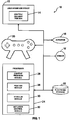
- FIG. 1 illustrates a system 10 configured to provide haptic stimulus associated with other sensory content being conveyed to one or more users. This may enhance the experience provided to the one or more users by the content.
- the sensory content may include video content, video game content, audio content, three-dimensional content, and/or other content.
- the system 10 is configured to vary the haptic stimulus associated with the other sensory content based on position information. Such position information may include information related to the position of the one or more users, the position of a controller (e.g., a game controller), the position of an actuator delivering the haptic stimulus, and/or other position information.
- system 10 includes one or more of a user interface device 12 comprising a content delivery portion 14, one or more actuators 16, one or more sensors 18, one or more controllers 20, electronic storage 22, one or more processors 24, and/or other components.
- the user interface device 12 is configured to provide sensory content to one or more users.
- the sensory content is conveyed to the one or more users through content delivery portion 14 of user interface device 12.
- the user interface device 12 is configured to be positioned at a fixed location during the conveyance of content to the users, and not be moved and/or carried about by the users. This is not intended to be limiting, as one or more of the principles described herein could be extended to systems in which the user interface device is movable/portable (e.g., portable gaming systems, smartphones, etc.).
- user interface device 12 includes an electronic display. In this embodiment, the display surface of the electronic display functions as content delivery portion 14 of user interface device 12.
- user interface device 12 includes an audio speaker. In this embodiment, the area at which sound is emitted from user interface device 12 functions as content delivery portion 14.
- user interface device 12 includes an electronic display and an audio speaker.
- the sensory content provided to users by user interface device 12 may include video, such as movies, television, and/or other video.
- the sensory content provided to users by user interface device 12 may include graphics (dynamic and/or still) associated with a videogame, a virtual world, a simulation, and/or other computer generated graphics.
- user interface device 12 may further provide audio content to users associated with the visual content.
- a movie or television show, a videogame, or other types of visual content may be associated with a sound track that is conveyed to the users simultaneously with the visual content.
- user interface device 12 is configured to deliver audio content to the users without accompanying visual content.
- user interface device 12 is capable of conveying three-dimensional views of content to users through a display surface that functions as content delivery portion 14.
- the three-dimensional views may include three-dimensional views of video content, computer generated images, and/or other visual content.
- user interface device 12 may include one or more of systems employing active 3D glasses, lenticular displays, and/or other types of three-dimensional displays.
- the actuators 16 are configured to generate haptic stimulus for the users. As such, at least some of actuators 16 are in contact with the users, or in contact with objects that contact the users, during conveyance of the sensory content to the users by user interface device 12.
- one or more of actuators 16 may be positioned in or on a floor surface supporting the users (e.g., installed in the floor, carried by a mat lying on the floor, etc.), one or more of actuators 16 may be carried by a brace or other wearable item worn by the users, one or more of the actuators 16 may be carried by objects that are carried by the users (e.g., carried by controllers 20), one or more of actuators 16 may be carried by furniture on which the users are seated or lying, and/or one or more of the actuators 16 may be carried by or disposed in or on other objects that contact the users.
- haptic stimulus refers to tactile feedback that is applied to the users.
- feedback may include one or more of vibrations, forces, and/or motions that are applied physically to the user by the actuators 16 and/or the objects with which both actuators 16 and the user are in contact.
- Non-contact tactile feedback in the form of ultrasonic energy, or other forms of energy may also be implemented as haptic stimulus.
- the actuators 16 may include any device configured to generate such feedback for application to the users.
- actuators 16 may include one or more of a piezoelectric actuator, a pneumatic actuator, a eccentric mass actuator, an electroactive polymer actuator, an electrostatic surface actuator, shape memory alloy, and/or other actuators.
- actuators 16 are shown in FIG. 1 as a single entity, this is for illustrative purposes only.
- actuators 16 includes a plurality of actuators.
- the plurality of actuators may be included in, carried by, and/or in contact with a single object or device.
- the plurality of actuators may include actuators included in, carried by, and/or in contact with a plurality of separate objects or devices.
- the sensors 18 are configured to generate output signals that convey information related to position.
- the output signals convey information related to the position of one or more of at least one user, actuators 16 (e.g., if one or more of actuators 16 are included in or carried by a movable object), controllers 20, and/or other objects.
- the positions for which information is conveyed by the output signals of sensors 18 may include one or more of positions in an absolute coordinate system, positions with respect to user interface device 12 (e.g., positions with respect to content delivery portion 14), positions of one or both of actuators 16 and/or sensors 18 with respect to a user and/or the user's body parts, positions of users with respect to each other, and/or positions with respect to other objects.
- sensors 18 may include one or more of an accelerometer, a gyroscope, a digital compass, a ultrasonic echo-location sensor, an optical distance or proximity sensor, an imaging sensor (e.g., video or still imaging), RF sensors, and/or other sensors. It will be appreciated that the output signals of sensors 18 may directly convey positional information, such as distances, orientations, angles, and/or other positional information. The output signals of sensors 18 may indirectly convey positional information.
- sensors 18 may convey information related to time derivatives of position (e.g., acceleration), images from which position can be determined, and/or other types of information from which position may be determined.
- the output signals may be output from sensors 18 "raw," or sensors 18 may include capabilities for providing some preliminary processing.
- sensors 18 include one or more sensors that are carried by other components of system 10 (e.g., actuators 16, sensors 18, etc.). In one embodiment, sensors 18 include one or more sensors that are not moved during use. In one embodiment, sensors 18 include one or more sensors that are provided as separate components that are wearable by users.
- controllers 20 are configured to provide user interaction and control with respect to system 10.
- controllers 20 include one or more game controllers implemented by users to manipulate virtual characters and/or objects in a videogame, virtual world, and/or simulation.
- controllers 20 include one or more electronics controllers configured to provide users with control over configurations and/or settings of one or more other components in system 10 (e.g., a remote control for user interface device 12).
- the controllers 20 may include handheld controllers, camera controllers that work in conjunction with handheld components (e.g., Sony PlayStation® Eye and PlayStation® Motion Controller), and/or controllers that are not handheld (e.g., flight simulation controls, driving simulation controls, etc.).
- electronic storage 22 comprises electronic storage media that electronically stores information.
- the electronic storage media of electronic storage 22 may include one or both of system storage that is provided integrally (i.e., substantially non-removable) with system 10 and/or removable storage that is removably connectable to system 10 via, for example, a port (e.g., a USB port, a firewire port, etc.) or a drive (e.g., a disk drive, etc.).
- a port e.g., a USB port, a firewire port, etc.
- a drive e.g., a disk drive, etc.
- Electronic storage 22 may include one or more of optically readable storage media (e.g., optical disks, etc.), magnetically readable storage media (e.g., magnetic tape, magnetic hard drive, floppy drive, etc.), electrical charge-based storage media (e.g., EEPROM, RAM, etc.), solid-state storage media (e.g., flash drive, etc.), and/or other electronically readable storage media.
- Electronic storage 22 may store software algorithms, information determined by processor 24, content to be conveyed to users through user interface device 12, and/or other information that enables system 10 to function properly.
- Electronic storage 22 may be a separate component within system 10, or electronic storage 22 may be provided integrally with one or more other components of system 10 (e.g., user interface device 12, processor 24, etc.).
- Processor 24 is configured to provide information processing capabilities in system 10.
- processor 24 may include one or more of a digital processor, an analog processor, a digital circuit designed to process information, an analog circuit designed to process information, a state machine, and/or other mechanisms for electronically processing information.
- processor 24 is shown in FIG. 1 as a single entity, this is for illustrative purposes only.
- processor 24 may include a plurality of processing units. These processing units may be physically located within the same device, or processor 24 may represent processing functionality of a plurality of devices operating in coordination.
- processor 24 the functionality attributed below to processor 24 is divided between a first processor provided in a computer, a videogame console, an optical disk player, and/or other home entertainment equipment, and a second processor that communicates with the first processor to provide position information to the first processor.
- processor 24 may be configured to execute one or more computer program modules.
- the one or more computer program modules may include one or more of a content provision module 26, a position module 28, a stimulus module 30, an actuator control module 32, and/or other modules.
- Processor 24 may be configured to execute modules 26, 28, 30, and/or 32 by software; hardware; firmware; some combination of software, hardware, and/or firmware; and/or other mechanisms for configuring processing capabilities on processor 24.
- modules 26, 28, 30, and 32 are illustrated in FIG. 1 as being co-located within a single processing unit, in implementations in which processor 24 includes multiple processing units, one or more of modules 26, 28, 30, and/or 32 may be located remotely from the other modules.
- the description of the functionality provided by the different modules 26, 28, 30, and/or 32 described below is for illustrative purposes, and is not intended to be limiting, as any of modules 26, 28, 30, and/or 32 may provide more or less functionality than is described.
- one or more of modules 26, 28, 30, and/or 32 may be eliminated, and some or all of its functionality may be provided by other ones of modules 26, 28, 30, and/or 32.
- processor 24 may be configured to execute one or more additional modules that may perform some or all of the functionality attributed below to one of modules 26, 28, 30, and/or 32.
- the content provision module 26 is configured to control the provision of content to the users via user interface device 12. If the content includes computer generated images (e.g., in a videogame, virtual world, simulation, etc.), content provision module 26 is configured to generate the images and/or views for display to the users through user interface device 12. If the content includes video and/or still images, content provision module 26 is configured to access the video and/or still images and to generate views of the video and/or still images for display on user interface device 12. If the content includes audio content, content provision module 26 is configured to generate the electronic signals that will drive user interface device 12 to output the appropriate sounds. The content, or information from which the content is derived, may be obtained by content provision module 26 from electronic storage 22.
- content provision module 26 may be obtained by content provision module 26 from electronic storage 22.
- the position module 28 is configured to determine position information from the output signals generated by sensors 18.
- the position information may include information related to one or more of positions of users, positions of actuators 16, positions of sensors 18, positions of controllers 20, and/or other positions.
- the information related to position determined by position module 28 may describe the position of one or more objects (e.g., users, actuators 16, sensors 18, controllers 20, etc. ) in an absolute coordinate system, with respect to other objects, and/or in other contexts.
- position information or “information related to position” does not refer to gestures or movements correlated with control inputs. Instead, “position information” or “information related to position” refers simply to information that describes the position of an object, either in a coordinate system or with respect to some other object. Such information may include, without limitation, coordinates, distances, rotational orientations, and/or angular relationships.
- the stimulus module 30 is configured to determine haptic stimulus to be generated for the user. Determining the haptic stimulus includes determining which one(s) of actuators 16 should apply the stimulus, and/or determining one or more parameters of the haptic stimulus. Such one or more parameters may include one or more of magnitude of force, directivity and orientation, location of the stimulus, frequency of vibration, magnitude, duration, and/or other parameters.
- the haptic stimulus determined by stimulus module 30 is associated with the sensory content being conveyed by user interface device 12. As such, the stimulus may be dictated, at least to some extent, by the information stored electronically with the content (e.g., on electronic storage 22).
- the haptic stimulus is determined by stimulus module 30 to enhance one or more aspects of the experience provided by the content. For example, the haptic stimulus may be determined to enhance one or more of the realism of the content, the enjoyability of content, perception of the content by the users, and/or other aspects of the experience provided by the content being conveyed to the users via user interface device 12.
- stimulus module 30 is configured to determine the haptic stimulus based on information related to position. This includes varying the haptic stimulus based on user position with respect to user interface device 12, position of one body part of a user with respect to another body part of the user, position of one user with respect to one or more other users, and/or position information. In varying the haptic stimulus based on position, stimulus module 30 may change the stimulus in distinct steps, or smoothly.
- stimulus module 30 may vary the haptic stimulus such that each of the predetermined viewing angles receives haptic stimulus corresponding to its three-dimensional view.
- the haptic stimulus provided to the user that is further away may reflect "shielding" by the user standing in the middle.
- the determination of the haptic stimulus to account for position information may be based on determinations of position information by position module 28, and/or position information related to the positions of actuators 16 that is prestored or configured. It will be appreciated that the discussion of varying haptic stimulus based on position information described herein is distinct from varying haptic stimulus based on input or control gestures.
- the determination of haptic stimulus based on position by stimulus module 30 is not dependent on a gesture or physical maneuver being performed by a user. Instead, haptic stimulus determined by stimulus module 30 that corresponds to a given control or input gesture would vary based on the position of the user (or relative positions of the users body parts) during performance of the control or input gesture). Similarly, haptic stimulus that does not correspond to a control or input gesture (e.g., associated with an effect or component of the content being conveyed to the user) may be determined by stimulus module 30 to vary based on similar position information.
- stimulus module 30 determines haptic stimulus to be generated for a user to coincide with the directivity and orientation of an effect in the content being conveyed to the user. For example, if user interface device 12 is configured to generate three-dimensional images through a display surface functioning as content delivery portion 14, the haptic stimulus is varied as a function of viewing angle, distance from content delivery portion 14, and/or both viewing angle and distance to convey the directivity and orientation of a visual entity in a three-dimensional view being conveyed by user interface device 12. Other position-related parameters may be used instead, or in conjunction with, viewing angle and/or distance to vary the haptic stimulus.
- the haptic stimulus is determined by stimulus module 30 to mimic being hit by the ball for users positioned on or near the path. Users positioned off of the path, on the other hand, would not receive such stimulus. It will be appreciated that some other projectile may be substituted for the ball.
- the haptic stimulus can be used to enhance the realism of the explosion. This would include determining the magnitude, amount, and/or type of haptic stimulus to coincide with the directivity and orientation of the explosion.
- actuators 16 include one or more actuators that are fixed positionally with respect to user interface device 12 during conveyance of the content.
- actuators 16 may include actuators carried by or included in furniture, a floor, a mat, and/or other objects that are fixed during conveyance of the content.
- stimulus module 30 may determine haptic stimulus for the fixed positions of actuators 16.
- Position information related to these fixed positions may include one or more of position information that is preconfigured and/or prestored for use by stimulus module 30.
- actuators 16 include one or more actuators that are included in or carried by objects that are worn, carried, or otherwise moved by the user.
- the haptic stimulus to be generated by the portable actuators is determined by stimulus module 30 based on position information received by stimulus module 30 from position module 28 that is related to the position of the users and/or the movable actuators with respect to user interface device 12.
- the movable actuators may be included in game controllers, wearable braces, a pillow, a stuffed animal, a toy, and/or other objects.
- the stimulus module 30 is configured to determine the haptic stimulus based on the relative positions of body parts of a user. For example, if the user is holding one of controllers 20, position module 28 may determine the position of the controller 20 with respect to the trunk of the user. As the controller 20 gets closer to, or farther away from the user, the haptic stimulus determined by stimulus module 30 may vary based on the change in relative position. This change may be made simply by including the relative position between the trunk of the user and controller 20 in a determination of the position of the user with respect to user interface device 12 ( e.g ., instead of assuming 20 to reflect the position of the user without adjustment), or the change may be made specifically based on motion of the controller 20 into and/or away from the trunk of the user.
- the stimulus takes into account both the position of the user (and/or the controller 20) with respect to the user interface device 12 and the position of the controller with respect to the user.
- the stimulus determined for the user in response to the user moving the controller 20 from his body to an arms length away from his body may be different from leaving the controller 20 at his body but stepping forward an arm's length.
- stepping forward half and arm's length while extending his arm's halfway may result in a different stimulation than either of moving only the arms or only stepping forward.
- the haptic stimulus is determined to vary based on a rotational orientation of the controller 20 with respect to the trunk of the user, or other information related to the relative positions of the controller 20 with respect to the trunk of the user.
- the actuator control module 32 is configured to control actuators 16 to generate the haptic stimulus determined by stimulus module 30. This includes communicating the haptic stimulus to be generated from processor 24 to actuators 16. The haptic stimulus to be generated may be communicated over wired communication links, wireless communication links, and/or other communication links between processor 24 and actuators 16. In one embodiment, at least a portion of the functionality attributed to the actuator control module 32 is disposed in a processor carried by controller 20, and/or some other object that carries one or more of actuators 16.
- FIG. 2 illustrates a method 34 of providing haptic stimulus associated with other sensory content being conveyed to one or more users.
- the operations of method 34 presented below are intended to be illustrative. In some embodiments, method 34 may be accomplished with one or more additional operations not described, and/or without one or more of the operations discussed. Additionally, the order in which the operations of method 34 are illustrated in FIG. 2 and described below is not intended to be limiting.
- method 34 may be implemented in one or more processing devices (e.g., a digital processor, an analog processor, a digital circuit designed to process information, an analog circuit designed to process information, a state machine, and/or other mechanisms for electronically processing information).
- the one or more processing devices may include one or more devices executing some or all of the operations of method 34 in response to instructions stored electronically on an electronic storage medium.
- the one or more processing devices may include one or more devices configured through hardware, firmware, and/or software to be specifically designed for execution of one or more of the operations of method 34.
- sensory content is conveyed to one or more users.
- the sensory content may include visual content, audio content, and/or other sensory content.
- the sensory content is conveyed to the one or more users by a user interface device similar to or the same as user interface device 12, having a content delivery portion similar to or the same as content delivery portion 14 (shown in FIG. 1 and described above).
- position information may be determined.
- the position information may be related to the position(s) of one or more of a user, one or more body parts of a user, a controller ( e.g ., a game controller), an actuator, and/or other objects.
- the position information may indicate position in an absolute coordinate system, relative to the user interface device, the content delivery portion, a user, and/or other objects.
- operation 38 is performed by a position module similar to or the same as position module 28 (shown in FIG. 1 and described above).
- haptic stimulus to be generated for the one or more users is determined.
- the haptic stimulus is associated with the content conveyed to the user.
- the haptic stimulus is determined such that it varies as a function of position information.
- the position information may describe the position of one or more of a user, one or more body parts of a user, a controller ( e.g ., a game controller), an actuator, and/or other objects.
- the position information may indicate position in an absolute coordinate system, relative to the user interface device, the content delivery portion, a user, and/or other objects.
- the position information may include the position information determined at operation 38, position information that is preconfigured and/or prestored, and/or other position information.
- operation 40 is performed by a stimulus module similar to or the same as stimulus module 30 (shown in FIG. 1 and described above).
- operation 42 the haptic stimulus is generated for the user.
- operation 42 is performed by one or more actuators similar to or the same as actuators 16 (shown in FIG. 1 and described above).
Landscapes
- Engineering & Computer Science (AREA)
- General Engineering & Computer Science (AREA)
- Theoretical Computer Science (AREA)
- Human Computer Interaction (AREA)
- Multimedia (AREA)
- Physics & Mathematics (AREA)
- General Physics & Mathematics (AREA)
- Mechanical Engineering (AREA)
- User Interface Of Digital Computer (AREA)
Abstract
Description
- The present application claims priority to
U.S. Patent Application No. 12/751,780 - The invention relates to the providing haptic stimulus to users based on position.
- Systems that provide haptic stimulus to users in conjunction with visual and/or audio content are known. It is generally understood that haptic stimulus may enhance one or more aspects of the experience of the users associated with the content. However, conventional systems do not vary the haptic stimulus based on position information related to the position of the user or a body part of the user. Instead, the haptic feedback is determined and generated without regard for the position of the users, the position of the actuators generating the haptic feedback, the position of the user interface device conveying the visual and/or audio content, and/or other positions.
- One aspect of the invention relates to a system configured to provide haptic stimulus to one or more users. In one embodiment, the system comprises a user interface, an actuator, and one or more processors. The user interface device has a content delivery portion from which sensory content is conveyed to one or more users. The actuator is configured to generate haptic stimulus associated with the sensory content being conveyed to at least one of the one or more users. The one or more processors are configured to execute computer program modules. The computer program modules comprise a stimulus module, and an actuator module. The stimulus module is configured to determine haptic stimulus to be generated for the one or more users that is associated with the sensory content being conveyed to the one or more users, wherein the haptic stimulus varies as a function of position with respect to the content delivery portion of the user interface device. The actuator control module is configured to control the actuator to generate the haptic stimulus determined by the stimulus module.
- Another aspect of the invention relates to a method of providing haptic stimulus to a user. In one embodiment, the method comprises conveying content to a user at a content delivery portion of a user interface device; determining haptic stimulus to be generated for the user that is associated with the content conveyed to the user, wherein the haptic stimulus varies as a function of position with respect to the content delivery portion of the user interface device; and generating the haptic stimulus.
- Yet another aspect of the invention relates to a system configured to provide haptic stimulus to a user. In one embodiment, the system comprises a user interface device, an actuator, and one or more processors. The user interface device has a content delivery portion from which sensory content is conveyed to a user. The actuator is configured to generate haptic stimulus associated with the sensory content being conveyed to the user configured to be born by a first portion of the body of the user. The one or more processors are configured to execute computer program modules, the computer program modules comprising a stimulus module and an actuator control module. The stimulus module is configured to determine haptic stimulus to be generated for the user that is associated with the sensory content being conveyed to the user, wherein the haptic stimulus varies as a function of position of the first portion of the body of the user with respect to a second portion of the body of the user. The actuator control module is configured to control the actuator to generate the haptic stimulus determined by the stimulus module.
- These and other objects, features, and characteristics of the present invention, as well as the methods of operation and functions of the related elements of structure and the combination of parts and economies of manufacture, will become more apparent upon consideration of the following description and the appended claims with reference to the accompanying drawings, all of which form a part of this specification, wherein like reference numerals designate corresponding parts in the various figures. It is to be expressly understood, however, that the drawings are for the purpose of illustration and description only and are not intended as a definition of the limits of the invention. As used in the specification and in the claims, the singular form of "a", "an", and "the" include plural referents unless the context clearly dictates otherwise.
-
-
FIG. 1 illustrates a system configured to provide haptic stimulus associated with other sensory content, according to one or more embodiments of the invention. -
FIG. 2 illustrates a method of providing haptic stimulus associated with other sensory content, in accordance with one or more embodiments of the invention. -
FIG. 1 illustrates asystem 10 configured to provide haptic stimulus associated with other sensory content being conveyed to one or more users. This may enhance the experience provided to the one or more users by the content. The sensory content may include video content, video game content, audio content, three-dimensional content, and/or other content. Thesystem 10 is configured to vary the haptic stimulus associated with the other sensory content based on position information. Such position information may include information related to the position of the one or more users, the position of a controller (e.g., a game controller), the position of an actuator delivering the haptic stimulus, and/or other position information. In one embodiment,system 10 includes one or more of auser interface device 12 comprising acontent delivery portion 14, one ormore actuators 16, one ormore sensors 18, one ormore controllers 20,electronic storage 22, one ormore processors 24, and/or other components. - The
user interface device 12 is configured to provide sensory content to one or more users. The sensory content is conveyed to the one or more users throughcontent delivery portion 14 ofuser interface device 12. In one embodiment, theuser interface device 12 is configured to be positioned at a fixed location during the conveyance of content to the users, and not be moved and/or carried about by the users. This is not intended to be limiting, as one or more of the principles described herein could be extended to systems in which the user interface device is movable/portable (e.g., portable gaming systems, smartphones, etc.). In one embodiment,user interface device 12 includes an electronic display. In this embodiment, the display surface of the electronic display functions ascontent delivery portion 14 ofuser interface device 12. In one embodiment,user interface device 12 includes an audio speaker. In this embodiment, the area at which sound is emitted fromuser interface device 12 functions ascontent delivery portion 14. In one embodiment,user interface device 12 includes an electronic display and an audio speaker. - The sensory content provided to users by
user interface device 12 may include video, such as movies, television, and/or other video. The sensory content provided to users byuser interface device 12 may include graphics (dynamic and/or still) associated with a videogame, a virtual world, a simulation, and/or other computer generated graphics. In embodiments in whichuser interface device 12 conveys video, computer generated graphics, and/or other visual content to users,user interface device 12 may further provide audio content to users associated with the visual content. For example, a movie or television show, a videogame, or other types of visual content, may be associated with a sound track that is conveyed to the users simultaneously with the visual content. In one embodiment,user interface device 12 is configured to deliver audio content to the users without accompanying visual content. - In one embodiment in which
user interface device 12 is an electronic display,user interface device 12 is capable of conveying three-dimensional views of content to users through a display surface that functions ascontent delivery portion 14. The three-dimensional views may include three-dimensional views of video content, computer generated images, and/or other visual content. By way of non-limiting example, in this embodiment,user interface device 12 may include one or more of systems employing active 3D glasses, lenticular displays, and/or other types of three-dimensional displays. - The
actuators 16 are configured to generate haptic stimulus for the users. As such, at least some ofactuators 16 are in contact with the users, or in contact with objects that contact the users, during conveyance of the sensory content to the users byuser interface device 12. By way of non-limiting example, one or more ofactuators 16 may be positioned in or on a floor surface supporting the users (e.g., installed in the floor, carried by a mat lying on the floor, etc.), one or more ofactuators 16 may be carried by a brace or other wearable item worn by the users, one or more of theactuators 16 may be carried by objects that are carried by the users (e.g., carried by controllers 20), one or more ofactuators 16 may be carried by furniture on which the users are seated or lying, and/or one or more of theactuators 16 may be carried by or disposed in or on other objects that contact the users. - As used herein, the term "haptic stimulus" refers to tactile feedback that is applied to the users. For example, such feedback may include one or more of vibrations, forces, and/or motions that are applied physically to the user by the
actuators 16 and/or the objects with which bothactuators 16 and the user are in contact. Non-contact tactile feedback in the form of ultrasonic energy, or other forms of energy may also be implemented as haptic stimulus. Theactuators 16 may include any device configured to generate such feedback for application to the users. For example,actuators 16 may include one or more of a piezoelectric actuator, a pneumatic actuator, a eccentric mass actuator, an electroactive polymer actuator, an electrostatic surface actuator, shape memory alloy, and/or other actuators. - It will be appreciated that although
actuators 16 are shown inFIG. 1 as a single entity, this is for illustrative purposes only. In one embodiment,actuators 16 includes a plurality of actuators. The plurality of actuators may be included in, carried by, and/or in contact with a single object or device. Or, the plurality of actuators may include actuators included in, carried by, and/or in contact with a plurality of separate objects or devices. - The
sensors 18 are configured to generate output signals that convey information related to position. In one embodiment, the output signals convey information related to the position of one or more of at least one user, actuators 16 (e.g., if one or more ofactuators 16 are included in or carried by a movable object),controllers 20, and/or other objects. The positions for which information is conveyed by the output signals ofsensors 18 may include one or more of positions in an absolute coordinate system, positions with respect to user interface device 12 (e.g., positions with respect to content delivery portion 14), positions of one or both ofactuators 16 and/orsensors 18 with respect to a user and/or the user's body parts, positions of users with respect to each other, and/or positions with respect to other objects. - One or more of any of a variety of sensors that generate output signals that convey information related to position may be implemented in
system 10 assensors 18. By way of non-limiting example,sensors 18 may include one or more of an accelerometer, a gyroscope, a digital compass, a ultrasonic echo-location sensor, an optical distance or proximity sensor, an imaging sensor (e.g., video or still imaging), RF sensors, and/or other sensors. It will be appreciated that the output signals ofsensors 18 may directly convey positional information, such as distances, orientations, angles, and/or other positional information. The output signals ofsensors 18 may indirectly convey positional information. For example,sensors 18 may convey information related to time derivatives of position (e.g., acceleration), images from which position can be determined, and/or other types of information from which position may be determined. The output signals may be output fromsensors 18 "raw," orsensors 18 may include capabilities for providing some preliminary processing. - In one embodiment,
sensors 18 include one or more sensors that are carried by other components of system 10 (e.g., actuators 16,sensors 18, etc.). In one embodiment,sensors 18 include one or more sensors that are not moved during use. In one embodiment,sensors 18 include one or more sensors that are provided as separate components that are wearable by users. - The
controllers 20 are configured to provide user interaction and control with respect tosystem 10. In one embodiment,controllers 20 include one or more game controllers implemented by users to manipulate virtual characters and/or objects in a videogame, virtual world, and/or simulation. In one embodiment,controllers 20 include one or more electronics controllers configured to provide users with control over configurations and/or settings of one or more other components in system 10 (e.g., a remote control for user interface device 12). Thecontrollers 20 may include handheld controllers, camera controllers that work in conjunction with handheld components (e.g., Sony PlayStation® Eye and PlayStation® Motion Controller), and/or controllers that are not handheld (e.g., flight simulation controls, driving simulation controls, etc.). - In one embodiment,
electronic storage 22 comprises electronic storage media that electronically stores information. The electronic storage media ofelectronic storage 22 may include one or both of system storage that is provided integrally (i.e., substantially non-removable) withsystem 10 and/or removable storage that is removably connectable tosystem 10 via, for example, a port (e.g., a USB port, a firewire port, etc.) or a drive (e.g., a disk drive, etc.).Electronic storage 22 may include one or more of optically readable storage media (e.g., optical disks, etc.), magnetically readable storage media (e.g., magnetic tape, magnetic hard drive, floppy drive, etc.), electrical charge-based storage media (e.g., EEPROM, RAM, etc.), solid-state storage media (e.g., flash drive, etc.), and/or other electronically readable storage media.Electronic storage 22 may store software algorithms, information determined byprocessor 24, content to be conveyed to users throughuser interface device 12, and/or other information that enablessystem 10 to function properly.Electronic storage 22 may be a separate component withinsystem 10, orelectronic storage 22 may be provided integrally with one or more other components of system 10 (e.g.,user interface device 12,processor 24, etc.). -
Processor 24 is configured to provide information processing capabilities insystem 10. As such,processor 24 may include one or more of a digital processor, an analog processor, a digital circuit designed to process information, an analog circuit designed to process information, a state machine, and/or other mechanisms for electronically processing information. Althoughprocessor 24 is shown inFIG. 1 as a single entity, this is for illustrative purposes only. In some implementations,processor 24 may include a plurality of processing units. These processing units may be physically located within the same device, orprocessor 24 may represent processing functionality of a plurality of devices operating in coordination. For example, in one embodiment, the functionality attributed below toprocessor 24 is divided between a first processor provided in a computer, a videogame console, an optical disk player, and/or other home entertainment equipment, and a second processor that communicates with the first processor to provide position information to the first processor. - As is shown in
FIG. 1 ,processor 24 may be configured to execute one or more computer program modules. The one or more computer program modules may include one or more of acontent provision module 26, aposition module 28, astimulus module 30, anactuator control module 32, and/or other modules.Processor 24 may be configured to executemodules processor 24. - It should be appreciated that although
modules FIG. 1 as being co-located within a single processing unit, in implementations in whichprocessor 24 includes multiple processing units, one or more ofmodules different modules modules modules modules processor 24 may be configured to execute one or more additional modules that may perform some or all of the functionality attributed below to one ofmodules - The
content provision module 26 is configured to control the provision of content to the users viauser interface device 12. If the content includes computer generated images (e.g., in a videogame, virtual world, simulation, etc.),content provision module 26 is configured to generate the images and/or views for display to the users throughuser interface device 12. If the content includes video and/or still images,content provision module 26 is configured to access the video and/or still images and to generate views of the video and/or still images for display onuser interface device 12. If the content includes audio content,content provision module 26 is configured to generate the electronic signals that will driveuser interface device 12 to output the appropriate sounds. The content, or information from which the content is derived, may be obtained bycontent provision module 26 fromelectronic storage 22. - The
position module 28 is configured to determine position information from the output signals generated bysensors 18. The position information may include information related to one or more of positions of users, positions ofactuators 16, positions ofsensors 18, positions ofcontrollers 20, and/or other positions. The information related to position determined byposition module 28 may describe the position of one or more objects (e.g., users,actuators 16,sensors 18,controllers 20, etc.) in an absolute coordinate system, with respect to other objects, and/or in other contexts. As used herein, "position information" or "information related to position" does not refer to gestures or movements correlated with control inputs. Instead, "position information" or "information related to position" refers simply to information that describes the position of an object, either in a coordinate system or with respect to some other object. Such information may include, without limitation, coordinates, distances, rotational orientations, and/or angular relationships. - The
stimulus module 30 is configured to determine haptic stimulus to be generated for the user. Determining the haptic stimulus includes determining which one(s) ofactuators 16 should apply the stimulus, and/or determining one or more parameters of the haptic stimulus. Such one or more parameters may include one or more of magnitude of force, directivity and orientation, location of the stimulus, frequency of vibration, magnitude, duration, and/or other parameters. - The haptic stimulus determined by
stimulus module 30 is associated with the sensory content being conveyed byuser interface device 12. As such, the stimulus may be dictated, at least to some extent, by the information stored electronically with the content (e.g., on electronic storage 22). The haptic stimulus is determined bystimulus module 30 to enhance one or more aspects of the experience provided by the content. For example, the haptic stimulus may be determined to enhance one or more of the realism of the content, the enjoyability of content, perception of the content by the users, and/or other aspects of the experience provided by the content being conveyed to the users viauser interface device 12. - To enhance the one or more aspects of the experience provided by the content being conveyed to the users via
user interface device 12,stimulus module 30 is configured to determine the haptic stimulus based on information related to position. This includes varying the haptic stimulus based on user position with respect touser interface device 12, position of one body part of a user with respect to another body part of the user, position of one user with respect to one or more other users, and/or position information. In varying the haptic stimulus based on position,stimulus module 30 may change the stimulus in distinct steps, or smoothly. For example, ifuser interface device 12 is configured to provide three-dimensional views at discrete, predetermined viewing angles with respect to the display surface functioning ascontent delivery portion 14, thenstimulus module 30 may vary the haptic stimulus such that each of the predetermined viewing angles receives haptic stimulus corresponding to its three-dimensional view. As another example, if one user is standing behind another user with respect touser interface device 12, the haptic stimulus provided to the user that is further away may reflect "shielding" by the user standing in the middle. - The determination of the haptic stimulus to account for position information may be based on determinations of position information by
position module 28, and/or position information related to the positions ofactuators 16 that is prestored or configured. It will be appreciated that the discussion of varying haptic stimulus based on position information described herein is distinct from varying haptic stimulus based on input or control gestures. The determination of haptic stimulus based on position bystimulus module 30 is not dependent on a gesture or physical maneuver being performed by a user. Instead, haptic stimulus determined bystimulus module 30 that corresponds to a given control or input gesture would vary based on the position of the user (or relative positions of the users body parts) during performance of the control or input gesture). Similarly, haptic stimulus that does not correspond to a control or input gesture (e.g., associated with an effect or component of the content being conveyed to the user) may be determined bystimulus module 30 to vary based on similar position information. - In one embodiment,
stimulus module 30 determines haptic stimulus to be generated for a user to coincide with the directivity and orientation of an effect in the content being conveyed to the user. For example, ifuser interface device 12 is configured to generate three-dimensional images through a display surface functioning ascontent delivery portion 14, the haptic stimulus is varied as a function of viewing angle, distance fromcontent delivery portion 14, and/or both viewing angle and distance to convey the directivity and orientation of a visual entity in a three-dimensional view being conveyed byuser interface device 12. Other position-related parameters may be used instead, or in conjunction with, viewing angle and/or distance to vary the haptic stimulus. - As a specific instance of this example, if a ball in the three-dimensional view is projected outward away from
content delivery portion 14 along a path, the haptic stimulus is determined bystimulus module 30 to mimic being hit by the ball for users positioned on or near the path. Users positioned off of the path, on the other hand, would not receive such stimulus. It will be appreciated that some other projectile may be substituted for the ball. As another specific instance of this example, if an explosion is shown in the three-dimensional view, the haptic stimulus can be used to enhance the realism of the explosion. This would include determining the magnitude, amount, and/or type of haptic stimulus to coincide with the directivity and orientation of the explosion. - These instances of generating haptic stimulus to coincide with the directivity and/or orientation of an effect in a three-dimensional view being conveyed by
user interface device 12 are not intended to be limiting. Other instances of this exemplary use of position information to determine haptic stimulus may be implemented without departing from the scope of this disclosure. It will be appreciated that the description of varying haptic stimulus to reflect the directivity and/or orientation of events in the content being conveyed byuser interface device 12 are not limited to three-dimensional views, or even to visual effects. The same principles may be applied to effects in two-dimensional views, and/or to audio effects. - In one embodiment, actuators 16 include one or more actuators that are fixed positionally with respect to
user interface device 12 during conveyance of the content. For example, actuators 16 may include actuators carried by or included in furniture, a floor, a mat, and/or other objects that are fixed during conveyance of the content. In this embodiment,stimulus module 30 may determine haptic stimulus for the fixed positions ofactuators 16. Position information related to these fixed positions may include one or more of position information that is preconfigured and/or prestored for use bystimulus module 30. - In one embodiment, actuators 16 include one or more actuators that are included in or carried by objects that are worn, carried, or otherwise moved by the user. In this embodiment, the haptic stimulus to be generated by the portable actuators is determined by
stimulus module 30 based on position information received bystimulus module 30 fromposition module 28 that is related to the position of the users and/or the movable actuators with respect touser interface device 12. For example, the movable actuators may be included in game controllers, wearable braces, a pillow, a stuffed animal, a toy, and/or other objects. - In one embodiment, the
stimulus module 30 is configured to determine the haptic stimulus based on the relative positions of body parts of a user. For example, if the user is holding one ofcontrollers 20,position module 28 may determine the position of thecontroller 20 with respect to the trunk of the user. As thecontroller 20 gets closer to, or farther away from the user, the haptic stimulus determined bystimulus module 30 may vary based on the change in relative position. This change may be made simply by including the relative position between the trunk of the user andcontroller 20 in a determination of the position of the user with respect to user interface device 12 (e.g., instead of assuming 20 to reflect the position of the user without adjustment), or the change may be made specifically based on motion of thecontroller 20 into and/or away from the trunk of the user. - In one embodiment, the stimulus takes into account both the position of the user (and/or the controller 20) with respect to the
user interface device 12 and the position of the controller with respect to the user. For example, the stimulus determined for the user in response to the user moving thecontroller 20 from his body to an arms length away from his body may be different from leaving thecontroller 20 at his body but stepping forward an arm's length. Similarly, stepping forward half and arm's length while extending his arm's halfway may result in a different stimulation than either of moving only the arms or only stepping forward. - In one embodiment, the haptic stimulus is determined to vary based on a rotational orientation of the
controller 20 with respect to the trunk of the user, or other information related to the relative positions of thecontroller 20 with respect to the trunk of the user. - The
actuator control module 32 is configured to controlactuators 16 to generate the haptic stimulus determined bystimulus module 30. This includes communicating the haptic stimulus to be generated fromprocessor 24 toactuators 16. The haptic stimulus to be generated may be communicated over wired communication links, wireless communication links, and/or other communication links betweenprocessor 24 andactuators 16. In one embodiment, at least a portion of the functionality attributed to theactuator control module 32 is disposed in a processor carried bycontroller 20, and/or some other object that carries one or more ofactuators 16. -
FIG. 2 illustrates amethod 34 of providing haptic stimulus associated with other sensory content being conveyed to one or more users. The operations ofmethod 34 presented below are intended to be illustrative. In some embodiments,method 34 may be accomplished with one or more additional operations not described, and/or without one or more of the operations discussed. Additionally, the order in which the operations ofmethod 34 are illustrated inFIG. 2 and described below is not intended to be limiting. - In some embodiments,
method 34 may be implemented in one or more processing devices (e.g., a digital processor, an analog processor, a digital circuit designed to process information, an analog circuit designed to process information, a state machine, and/or other mechanisms for electronically processing information). The one or more processing devices may include one or more devices executing some or all of the operations ofmethod 34 in response to instructions stored electronically on an electronic storage medium. The one or more processing devices may include one or more devices configured through hardware, firmware, and/or software to be specifically designed for execution of one or more of the operations ofmethod 34. - At an
operation 36, sensory content is conveyed to one or more users. The sensory content may include visual content, audio content, and/or other sensory content. The sensory content is conveyed to the one or more users by a user interface device similar to or the same asuser interface device 12, having a content delivery portion similar to or the same as content delivery portion 14 (shown inFIG. 1 and described above). - At an
operation 38, position information may be determined. The position information may be related to the position(s) of one or more of a user, one or more body parts of a user, a controller (e.g., a game controller), an actuator, and/or other objects. The position information may indicate position in an absolute coordinate system, relative to the user interface device, the content delivery portion, a user, and/or other objects. In one embodiment,operation 38 is performed by a position module similar to or the same as position module 28 (shown inFIG. 1 and described above). - At an
operation 40, haptic stimulus to be generated for the one or more users is determined. The haptic stimulus is associated with the content conveyed to the user. The haptic stimulus is determined such that it varies as a function of position information. The position information may describe the position of one or more of a user, one or more body parts of a user, a controller (e.g., a game controller), an actuator, and/or other objects. The position information may indicate position in an absolute coordinate system, relative to the user interface device, the content delivery portion, a user, and/or other objects. The position information may include the position information determined atoperation 38, position information that is preconfigured and/or prestored, and/or other position information. In one embodiment,operation 40 is performed by a stimulus module similar to or the same as stimulus module 30 (shown inFIG. 1 and described above). - At an
operation 42, the haptic stimulus is generated for the user. In one embodiment,operation 42 is performed by one or more actuators similar to or the same as actuators 16 (shown inFIG. 1 and described above). - Although the invention has been described in detail for the purpose of illustration based on what is currently considered to be the most practical and preferred embodiments, it is to be understood that such detail is solely for that purpose and that the invention is not limited to the disclosed embodiments, but, on the contrary, is intended to cover modifications and equivalent arrangements that are within the spirit and scope of the appended claims. For example, it is to be understood that the present invention contemplates that, to the extent possible, one or more features of any embodiment can be combined with one or more features of any other embodiment.
- The following numbered clauses on
pages 12 to 16 of the present description correspond to the claims ofPCT/US2011/030661 as filed, from which European Patent Application No.11718538.9 11718538.9 subsequent pages 17 and 18 of the specification which begin with the heading "CLAIMS". -
- 1. A system configured to provide haptic stimulus to one or more users, the system comprising:
- a user interface device having a content delivery portion from which sensory content is conveyed to one or more users;
- an actuator configured to generate haptic stimulus associated with the sensory content being conveyed to at least one of the one or more users; and
- one or more processors configured to execute computer program modules, the computer program modules comprising:
- a stimulus module configured to determine haptic stimulus to be generated for the one or more users that is associated with the sensory content being conveyed to the one or more users, wherein the haptic stimulus varies as a function of position with respect to the content delivery portion of the user interface device; and
- an actuator control module configured to control the actuator to generate the haptic stimulus determined by the stimulus module.
- 2. The system of clause 1, wherein the user interface device includes an electronic display and wherein the content delivery portion includes a display surface from which views of visual content are conveyed to the one or more users.
- 3. The system of clause 2, wherein the user interface device is configured such that the views of content conveyed to the one or more users at the display surface are three-dimensional views.
- 4. The system of clause 3, wherein the electronic display device is configured such that the three-dimensional views conveyed to the one or more users at the display surface are viewable at discrete, predetermined viewing angles, and wherein the stimulus module is configured such that the haptic stimulus for the individual discrete, predetermined viewing angles are different from each other.
- 5. The system of clause 4, wherein the differences in haptic stimulus determined for the individual discrete, predetermined viewing angles reflect a directivity and orientation of a visual effect present in the three-dimensional views being conveyed at the discrete, predetermined viewing angles concomitantly with the haptic stimulus.
- 6. The system of clause 1, further comprising:
- a sensor configured to generate output signals conveying information related to the position of a first user with respect to the content delivery portion of the user interface device; and
- wherein the computer program modules further comprise:
- a position module configured to determine information related to the position of the first user with respect to the content delivery portion of the user interface device based on the output signals generated by the sensor, and
- wherein the stimulus module is configured such that the haptic stimulus is determined based on the determination of position made by the position module.
- 7. The system of clause 6, wherein the sensor is configured such that the output signals convey information related to the position of a handheld controller associated with the first user.
- 8. The system of clause 7, wherein the actuator is carried by the handheld controller.
- 9. The system of clause 6, wherein the sensor is configured such that the output signals convey an image that includes the first user, and the position module is configured to determine information related to the position of the first user with respect to the content delivery portion based on analysis of the image.
- 10. The system of clause 6, wherein the user interface device includes an electronic display and wherein the content delivery portion includes a display surface from which views of visual content are conveyed to the first user, wherein the position module is configured such that the information related to the position of the user with respect to the display surface includes viewing angle with respect to the display surface, and wherein the stimulus module is configured such that the haptic stimulus varies as a function of viewing angle with respect to the display surface.
- 11. The system of clause 1, wherein the user interface device includes an electronic display and wherein the content delivery portion includes a display surface from which views of visual content are conveyed to the user, and wherein the stimulus module is configured such that the haptic stimulus varies as a function of viewing angle with respect to the display surface without regard for distance from the display surface.
- 12. The system of clause 1, wherein the content conveyed to the user through the user interface device includes scenes of a videogame.
- 13. A method of providing haptic stimulus to a user, the method comprising:
- conveying content to a user at a content delivery portion of a user interface device;
- determining haptic stimulus to be generated for the user that is associated with the content conveyed to the user, wherein the haptic stimulus varies as a function of position with respect to the content delivery portion of the user interface device; and
- generating the haptic stimulus.
- 14. The method of clause 13, wherein conveying content to a user at a content delivery portion of a user interface device includes displaying views of the content to the user at a display surface.
- 15. The method of
clause 14, wherein the views of the content conveyed to the user at the display surface are three-dimensional views. - 16. The method of clause 15, wherein the three-dimensional views conveyed to the user at the display surface are viewable at discrete, predetermined viewing angles, and wherein determining haptic stimulus to be generated for the user comprises determining separate haptic stimulus for the individual discrete, predetermined viewing angles.
- 17. The method of
clause 16, wherein the differences in haptic stimulus determined for the individual discrete, predetermined viewing angles reflect a directivity and orientation of a visual effect present in the three-dimensional views being conveyed at the discrete, predetermined viewing angles concomitantly with generation of the haptic stimulus. - 18. The method of clause 13, further comprising:
- determining information related to the position of the user with respect to the display surface, and
- wherein determining haptic stimulus associated with the videogame to be generated for the user comprises determining the haptic stimulus based on the determination of position.
- 19. The method of
clause 18, wherein determining information related to the position of the user comprises determining information related to the position of a handheld controller associated with the user. - 20. The method of clause 19, wherein the haptic stimulus is generated by the handheld controller.
- 21. The method of
clause 18, wherein determining information related to the position of the user comprises capturing an image that includes the user, and analyzing the captured image to determine information related to the position of the user with respect to the display surface. - 22. The method of
clause 18, wherein determining information related to the position of the user comprises determining the viewing angle of the user with respect to the display surface, and wherein the determined haptic stimulus varies as a function of viewing angle with respect to the display surface. - 23. The method of clause 13, wherein the determined haptic stimulus varies as a function of viewing angle with respect to the display surface without regard for distance from the display surface.
- 24. A system configured to provide haptic stimulus to a user, the system comprising:
- a user interface device having a content delivery portion from which sensory content is conveyed to a user;
- an actuator configured to generate haptic stimulus associated with the sensory content being conveyed to the user configured to be born by a first portion of the body of the user; and
- one or more processors configured to execute computer program modules, the computer program modules comprising:
- a stimulus module configured to determine haptic stimulus to be generated for the user that is associated with the sensory content being conveyed to the user, wherein the haptic stimulus varies as a function of position of the first portion of the body of the user with respect to a second portion of the body of the user; and
- an actuator control module configured to control the actuator to generate the haptic stimulus determined by the stimulus module.
- 25. The system of
clause 24, wherein the computer program modules further comprise a position module configured to determine the position of the first portion of the body of the user with respect to the second portion of the body of the user. - 26. The system of clause 25, further comprising a sensor configured to generate an output signal conveying information related to the position of the first portion of the body of the user with respect to the second portion of the body of the user, wherein the position module is configured to determine the position of the first portion of the body of the user with respect to the second portion of the body of the user based on the output signal generated by the sensor.
- 27. The system of
clause 24, further comprising a game controller configured to carry the actuator. - 28. The system of clause 27, wherein the first portion of the body of the user includes a hand of the user carrying the game controller.
- 29. The system of
clause 28, wherein the second portion of the body of the user includes the trunk of the user.
Claims (15)
- A method of generating haptic stimulus, the method comprising:generating, by a processor, visual content for display on a user interface device in communication with the processor;receiving, from a handheld controller associated with a user, a control input that indicates user interaction with the visual content;determining, by the processor, position information that indicates at least one of the following: (i) a position of the handheld controller with respect to the user interface device or with respect to the user, (ii) a position of a first body part of the user with respect to a second body part of the user, or (iii) a position of the user with respect to a second user;determining, by the processor, haptic stimulus based on the position information and based on the visual content being displayed on the user interface device; andcontrolling an actuator to generate the haptic stimulus that is determined.
- The method of claim 1, wherein the position information indicates the position of the handheld controller with respect to the user interface device, such that the haptic stimulus is determined based on the position of the handheld controller with respect to the user interface device.
- The method of claim 1, wherein the position information indicates the position of the handheld controller with respect to the user, such that the haptic stimulus is determined based on the position of the handheld controller with respect to the user.
- The method of claim 3, wherein the haptic stimulus is varied as the handheld controller is moved closer to or farther away from the user.
- The method of claim 3, wherein the haptic stimulus is varied based on a rotational orientation of the handheld controller with respect to the user.
- The method of any one of claims 1-5, wherein the actuator is included in the handheld controller.
- The method of any one of claims 1-6, wherein the control input indicates user interaction in a virtual world being simulated by the user interface device.
- The method of claim 1, wherein the position information indicates the position of the first body part of the user with respect to the second body part of the user, such that the haptic stimulus is determined based on the position of the first body part of the user with respect to the second body part of the user.
- The method of claim 8, wherein the first body part is a body part holding the handheld controller, and wherein the second body part is a trunk of the user.
- The method of claim 1, wherein the position information indicates the position of the user with respect to the second user, such that the haptic stimulus is determined based on the position of the user with respect to the second user.
- The method of claim 10, wherein the haptic stimulus is based on whether the user is standing behind the second user with respect to the user interface device, wherein the user interface device is positioned at a fixed location such that it is not moved by the user or the second user.
- The method of any one of claims 1-10, wherein the user interface device is a portable device.
- The method of any one of claims 1-12, wherein the position information is determined via a signal from a sensor that is not moved during use.
- The method of claim 13, wherein the sensor is a proximity sensor, and wherein the position information indicates a position of the user with respect to the sensor.
- A computer program product comprising an electronic storage medium that stores instructions which, when executed by a processor, causes the processor to execute a method according to any one of claims 1-14.
Applications Claiming Priority (3)
| Application Number | Priority Date | Filing Date | Title |
|---|---|---|---|
| US12/751,780 US8540571B2 (en) | 2010-03-31 | 2010-03-31 | System and method for providing haptic stimulus based on position |
| PCT/US2011/030661 WO2011123599A1 (en) | 2010-03-31 | 2011-03-31 | System and method for providing haptic stimulus based on position |
| EP11718538.9A EP2553547B1 (en) | 2010-03-31 | 2011-03-31 | System and method for providing haptic stimulus based on position |
Related Parent Applications (1)
| Application Number | Title | Priority Date | Filing Date |
|---|---|---|---|
| EP11718538.9A Division EP2553547B1 (en) | 2010-03-31 | 2011-03-31 | System and method for providing haptic stimulus based on position |
Publications (1)
| Publication Number | Publication Date |
|---|---|
| EP3392746A1 true EP3392746A1 (en) | 2018-10-24 |
Family
ID=44533501
Family Applications (2)
| Application Number | Title | Priority Date | Filing Date |
|---|---|---|---|
| EP11718538.9A Not-in-force EP2553547B1 (en) | 2010-03-31 | 2011-03-31 | System and method for providing haptic stimulus based on position |
| EP18176378.0A Withdrawn EP3392746A1 (en) | 2010-03-31 | 2011-03-31 | System and method for providing haptic stimulus based on position |
Family Applications Before (1)
| Application Number | Title | Priority Date | Filing Date |
|---|---|---|---|
| EP11718538.9A Not-in-force EP2553547B1 (en) | 2010-03-31 | 2011-03-31 | System and method for providing haptic stimulus based on position |
Country Status (6)
| Country | Link |
|---|---|
| US (3) | US8540571B2 (en) |
| EP (2) | EP2553547B1 (en) |
| JP (3) | JP5893605B2 (en) |
| KR (3) | KR20130040853A (en) |
| CN (2) | CN102822772B (en) |
| WO (1) | WO2011123599A1 (en) |
Families Citing this family (51)
| Publication number | Priority date | Publication date | Assignee | Title |
|---|---|---|---|---|
| US10013857B2 (en) * | 2011-12-21 | 2018-07-03 | Qualcomm Incorporated | Using haptic technologies to provide enhanced media experiences |
| JP6541292B2 (en) * | 2012-02-15 | 2019-07-10 | イマージョン コーポレーションImmersion Corporation | High resolution haptic effect generation using primitives |
| US10252151B2 (en) | 2012-03-15 | 2019-04-09 | Motorika Limited | Gyroscopic apparatuses and methods of using same |
| US20130260886A1 (en) * | 2012-03-29 | 2013-10-03 | Adam Smith | Multi-sensory Learning Game System |
| DE102012208355A1 (en) * | 2012-05-18 | 2013-11-21 | Robert Bosch Gmbh | Arrangement and method for generating a sense of touch of a user |
| US8947387B2 (en) * | 2012-12-13 | 2015-02-03 | Immersion Corporation | System and method for identifying users and selecting a haptic response |
| WO2014117125A1 (en) * | 2013-01-28 | 2014-07-31 | Bayer Materialscience Llc | Electroactive polymer actuators and feedback system therefor |
| US9833697B2 (en) * | 2013-03-11 | 2017-12-05 | Immersion Corporation | Haptic sensations as a function of eye gaze |
| EP3211511A1 (en) * | 2013-03-15 | 2017-08-30 | Immersion Corporation | Programmable haptic peripheral |
| US9092954B2 (en) * | 2013-03-15 | 2015-07-28 | Immersion Corporation | Wearable haptic device |
| US9274603B2 (en) | 2013-05-24 | 2016-03-01 | Immersion Corporation | Method and apparatus to provide haptic feedback based on media content and one or more external parameters |
| CN104417430A (en) * | 2013-08-29 | 2015-03-18 | 范钦 | Waistband type driving safety tactile system |
| US9164587B2 (en) | 2013-11-14 | 2015-10-20 | Immersion Corporation | Haptic spatialization system |
| US9619029B2 (en) | 2013-11-14 | 2017-04-11 | Immersion Corporation | Haptic trigger control system |
| US9639158B2 (en) * | 2013-11-26 | 2017-05-02 | Immersion Corporation | Systems and methods for generating friction and vibrotactile effects |
| US10437341B2 (en) * | 2014-01-16 | 2019-10-08 | Immersion Corporation | Systems and methods for user generated content authoring |
| US10067566B2 (en) * | 2014-03-19 | 2018-09-04 | Immersion Corporation | Systems and methods for a shared haptic experience |
| US9958829B2 (en) * | 2014-05-07 | 2018-05-01 | International Business Machines Corporation | Sensory holograms |
| US9588586B2 (en) * | 2014-06-09 | 2017-03-07 | Immersion Corporation | Programmable haptic devices and methods for modifying haptic strength based on perspective and/or proximity |
| US9715279B2 (en) * | 2014-06-09 | 2017-07-25 | Immersion Corporation | Haptic devices and methods for providing haptic effects via audio tracks |
| US10185396B2 (en) | 2014-11-12 | 2019-01-22 | Immersion Corporation | Haptic trigger modification system |
| US9174134B1 (en) | 2014-11-12 | 2015-11-03 | Immersion Corporation | Peripheral device with haptic diminishment prevention component |
| US9846484B2 (en) * | 2014-12-04 | 2017-12-19 | Immersion Corporation | Systems and methods for controlling haptic signals |
| CA2875033C (en) * | 2014-12-17 | 2022-07-26 | Fayez Idris | Contactless tactile feedback on gaming terminal with 3d display |
| US10427034B2 (en) * | 2014-12-17 | 2019-10-01 | Igt Canada Solutions Ulc | Contactless tactile feedback on gaming terminal with 3D display |
| US10403084B2 (en) * | 2014-12-17 | 2019-09-03 | Igt Canada Solutions Ulc | Contactless tactile feedback on gaming terminal with 3D display |
| US10613628B2 (en) * | 2014-12-23 | 2020-04-07 | Immersion Corporation | Media driven haptics |
| US10613629B2 (en) | 2015-03-27 | 2020-04-07 | Chad Laurendeau | System and method for force feedback interface devices |
| EP3099030A1 (en) * | 2015-05-26 | 2016-11-30 | Thomson Licensing | Method and device for encoding/decoding a packet comprising data representative of a haptic effect |
| EP3118723A1 (en) | 2015-07-13 | 2017-01-18 | Thomson Licensing | Method and apparatus for providing haptic feedback and interactivity based on user haptic space (hapspace) |
| KR102639118B1 (en) * | 2015-09-08 | 2024-02-22 | 소니그룹주식회사 | Information processing devices, methods and computer programs |
| CN105677017B (en) * | 2015-12-28 | 2019-04-26 | 联想(北京)有限公司 | A kind of control method, keyboard, electronic equipment and electronic device |
| FR3046575B1 (en) * | 2016-01-07 | 2021-12-03 | Peugeot Citroen Automobiles Sa | CONTROL BODY |
| CN108885477A (en) * | 2016-02-25 | 2018-11-23 | 瑟克公司 | Touch panel system with a variety of tracking modes and the mechanical force alignment sensor for being integrated with capacitance positions following function |
| KR102427212B1 (en) * | 2016-07-07 | 2022-07-29 | 소니그룹주식회사 | Information processing devices, information processing methods and programs |
| JP6650890B2 (en) * | 2017-01-06 | 2020-02-19 | 任天堂株式会社 | Game system, game program, information processing device, and game control method |
| US20180232051A1 (en) * | 2017-02-16 | 2018-08-16 | Immersion Corporation | Automatic localized haptics generation system |
| US10748437B2 (en) | 2017-08-14 | 2020-08-18 | Parker Appleton LYNCH | Learning aid apparatus and system |
| CN109395307B (en) * | 2017-08-17 | 2024-04-26 | 李硕 | Long jump pad based on visual excitation |
| US11334226B2 (en) * | 2018-02-20 | 2022-05-17 | Sony Corporation | Information processing device, information processing method, and program |
| US11709550B2 (en) * | 2018-06-19 | 2023-07-25 | Sony Corporation | Information processing apparatus, method for processing information, and program |
| US12141357B2 (en) | 2018-10-19 | 2024-11-12 | Sony Group Corporation | Information processor, information processing method, and program |
| CN109966735B (en) * | 2019-03-02 | 2023-05-30 | 黄鑫 | Touch simulation game handle system and touch simulation method |
| US11282281B2 (en) * | 2019-11-13 | 2022-03-22 | At&T Intellectual Property I, L.P. | Activation of extended reality actuators based on content analysis |
| WO2022244849A1 (en) * | 2021-05-19 | 2022-11-24 | アルプスアルパイン株式会社 | Sensation control method, sensation control system, conversion model generation method, conversion model generation system, relational expression conversion method, and program |
| KR102741273B1 (en) * | 2022-02-16 | 2024-12-12 | 한국전자통신연구원 | System and method for reproducing tactile content using spatial information |
| EP4300264B1 (en) * | 2022-07-01 | 2025-12-17 | Wyvrn | Method and apparatus of signaling/parsing haptic data |
| TWI847338B (en) * | 2022-11-01 | 2024-07-01 | 華碩電腦股份有限公司 | Vibration control method for electronic device |
| JP2024089983A (en) * | 2022-12-22 | 2024-07-04 | 日本放送協会 | Sensory presentation device and program |
| US12436617B2 (en) * | 2023-06-26 | 2025-10-07 | Adeia Guides Inc. | Systems and methods for balancing haptics and graphics rendering processing with content adaptation |
| US12574430B2 (en) | 2023-11-22 | 2026-03-10 | Adeia Guides Inc. | Distributed extended reality (XR) computing optimization at client device in communication with edge node |
Citations (5)
| Publication number | Priority date | Publication date | Assignee | Title |
|---|---|---|---|---|
| WO2001024158A1 (en) * | 1999-09-28 | 2001-04-05 | Immersion Corporation | Controlling haptic sensations for vibrotactile feedback interface devices |
| US20080174550A1 (en) * | 2005-02-24 | 2008-07-24 | Kari Laurila | Motion-Input Device For a Computing Terminal and Method of its Operation |
| US20090184921A1 (en) * | 2008-01-18 | 2009-07-23 | Microsoft Corporation | Input Through Sensing of User-Applied Forces |
| US20100013611A1 (en) * | 2008-07-21 | 2010-01-21 | Astrium Gmbh | Method and Apparatus for Informing a User of the Position of an Information Source Relative to the User Position |
| US20100053151A1 (en) * | 2008-09-02 | 2010-03-04 | Samsung Electronics Co., Ltd | In-line mediation for manipulating three-dimensional content on a display device |
Family Cites Families (54)
| Publication number | Priority date | Publication date | Assignee | Title |
|---|---|---|---|---|
| JP3391071B2 (en) * | 1993-12-27 | 2003-03-31 | 株式会社セガ | game machine |
| DE69514926T2 (en) * | 1994-08-18 | 2000-10-05 | Interval Research Corp | INPUT DEVICE FOR VIDEO WITH TACTILE FEEDBACK DEPENDING ON THE CONTENT OF THE VIDEO |
| EP0864145A4 (en) * | 1995-11-30 | 1998-12-16 | Virtual Technologies Inc | Tactile feedback man-machine interface device |
| US6028593A (en) * | 1995-12-01 | 2000-02-22 | Immersion Corporation | Method and apparatus for providing simulated physical interactions within computer generated environments |
| US6084587A (en) * | 1996-08-02 | 2000-07-04 | Sensable Technologies, Inc. | Method and apparatus for generating and interfacing with a haptic virtual reality environment |
| JP2001504605A (en) * | 1996-08-14 | 2001-04-03 | ラティポフ,ヌラフメド,ヌリスラモビチ | Method for tracking and displaying a user's location and orientation in space, method for presenting a virtual environment to a user, and systems for implementing these methods |
| US6042555A (en) * | 1997-05-12 | 2000-03-28 | Virtual Technologies, Inc. | Force-feedback interface device for the hand |
| US20020035995A1 (en) * | 1997-07-22 | 2002-03-28 | Jurgen G. Schmidt | Method and apparatus for inducing alternating tactile stimulations |
| JPH11300049A (en) * | 1998-04-20 | 1999-11-02 | Hitachi Ltd | Shooting game equipment |
| JP2000033184A (en) * | 1998-05-14 | 2000-02-02 | Masanobu Kujirada | Game and event device of whole body motion input type |
| US6184868B1 (en) * | 1998-09-17 | 2001-02-06 | Immersion Corp. | Haptic feedback control devices |
| JP2001104641A (en) * | 1999-10-13 | 2001-04-17 | Namco Ltd | Game equipment |
| JP2001104642A (en) * | 1999-10-13 | 2001-04-17 | Namco Ltd | Game equipment |
| US6924787B2 (en) * | 2000-04-17 | 2005-08-02 | Immersion Corporation | Interface for controlling a graphical image |
| JP2001356875A (en) * | 2000-06-13 | 2001-12-26 | Toshiba Corp | Pointer display system |
| JP2002123840A (en) * | 2000-10-17 | 2002-04-26 | Nippon Telegr & Teleph Corp <Ntt> | Realistic virtual reality providing processing method and apparatus |
| US7409441B2 (en) | 2001-05-18 | 2008-08-05 | Sony Computer Entertainment Inc. | Display apparatus for accessing desired web site |
| JP2003085590A (en) * | 2001-09-13 | 2003-03-20 | Nippon Telegr & Teleph Corp <Ntt> | Three-dimensional information operation method and device, three-dimensional information operation program, and recording medium for the program |
| JP3466176B2 (en) * | 2001-12-21 | 2003-11-10 | コナミ株式会社 | GAME METHOD, GAME PROGRAM, GAME DEVICE, AND GAME SYSTEM |
| US9682319B2 (en) * | 2002-07-31 | 2017-06-20 | Sony Interactive Entertainment Inc. | Combiner method for altering game gearing |
| US20040095311A1 (en) | 2002-11-19 | 2004-05-20 | Motorola, Inc. | Body-centric virtual interactive apparatus and method |
| EP1533678A1 (en) * | 2003-11-24 | 2005-05-25 | Sony International (Europe) GmbH | Physical feedback channel for entertaining or gaming environments |
| HU0401034D0 (en) * | 2004-05-24 | 2004-08-30 | Ratai Daniel | System of three dimension induting computer technology, and method of executing spatial processes |
| JP4484065B2 (en) * | 2004-06-25 | 2010-06-16 | 三星モバイルディスプレイ株式會社 | Light emitting display device, light emitting display device driving device, and light emitting display device driving method |
| US7376903B2 (en) * | 2004-06-29 | 2008-05-20 | Ge Medical Systems Information Technologies | 3D display system and method |
| MX2007000786A (en) | 2004-07-23 | 2007-04-09 | Koninkl Philips Electronics Nv | Pointing device and method for item location and/or selection assistance. |
| JP2006324952A (en) * | 2005-05-19 | 2006-11-30 | Hitachi Ltd | Television equipment |
| JP3998151B2 (en) * | 2005-06-27 | 2007-10-24 | 株式会社タイトー | Video gun game machine |
| US7280097B2 (en) * | 2005-10-11 | 2007-10-09 | Zeetoo, Inc. | Human interface input acceleration system |
| NL1030440C2 (en) * | 2005-11-16 | 2007-05-21 | Univ Twente | Motion tracking system. |
| JP2007156561A (en) * | 2005-11-30 | 2007-06-21 | Canon Inc | Mixed reality presentation method and mixed reality presentation system |
| KR100812624B1 (en) * | 2006-03-02 | 2008-03-13 | 강원대학교산학협력단 | Stereovision-Based Virtual Reality Device |
| JP4982877B2 (en) * | 2006-03-23 | 2012-07-25 | 国立大学法人名古屋大学 | Tactile display device, multi-degree-of-freedom actuator, and handling device |
| JP5136742B2 (en) * | 2006-10-13 | 2013-02-06 | 株式会社セガ | Electronic game device, electronic game control method, and game program |
| JP4926799B2 (en) * | 2006-10-23 | 2012-05-09 | キヤノン株式会社 | Information processing apparatus and information processing method |
| JP4146874B2 (en) * | 2006-12-22 | 2008-09-10 | 株式会社コナミデジタルエンタテインメント | Shooting toy |
| US8269834B2 (en) * | 2007-01-12 | 2012-09-18 | International Business Machines Corporation | Warning a user about adverse behaviors of others within an environment based on a 3D captured image stream |
| JP5286267B2 (en) * | 2007-08-03 | 2013-09-11 | 株式会社キャメロット | Game device, game program, and object operation method |
| WO2009031646A1 (en) * | 2007-09-07 | 2009-03-12 | Konami Digital Entertainment Co., Ltd. | Image processor, game device, and computer program |
| JP4739302B2 (en) * | 2007-09-14 | 2011-08-03 | 独立行政法人科学技術振興機構 | Penetrating tactile sense presentation device |
| US20090088659A1 (en) * | 2007-09-27 | 2009-04-02 | Immersion Corporation | Biological Sensing With Haptic Feedback |
| US8098235B2 (en) * | 2007-09-28 | 2012-01-17 | Immersion Corporation | Multi-touch device having dynamic haptic effects |
| US20090098519A1 (en) * | 2007-10-10 | 2009-04-16 | Jennifer Byerly | Device and method for employment of video games to provide physical and occupational therapy and measuring and monitoring motor movements and cognitive stimulation and rehabilitation |
| US9986293B2 (en) * | 2007-11-21 | 2018-05-29 | Qualcomm Incorporated | Device access control |
| US20090135133A1 (en) * | 2007-11-26 | 2009-05-28 | Kunzler Patrik A | 3D Motion Control System and Method |
| US8226479B2 (en) * | 2008-04-07 | 2012-07-24 | Disney Enterprises, Inc. | Group decision haptic feedback systems and methods |
| JP2009276996A (en) * | 2008-05-14 | 2009-11-26 | Canon Inc | Information processing apparatus, and information processing method |
| JP2010009558A (en) * | 2008-05-28 | 2010-01-14 | Oki Semiconductor Co Ltd | Image recognition device, electrical device operation control unit, electric appliance, image recognition program, and semiconductor device |
| KR101495172B1 (en) * | 2008-07-29 | 2015-02-24 | 엘지전자 주식회사 | Mobile terminal and method for controlling image thereof |
| JP4697279B2 (en) * | 2008-09-12 | 2011-06-08 | ソニー株式会社 | Image display device and detection method |
| US9399167B2 (en) * | 2008-10-14 | 2016-07-26 | Microsoft Technology Licensing, Llc | Virtual space mapping of a variable activity region |
| US20100128112A1 (en) * | 2008-11-26 | 2010-05-27 | Samsung Electronics Co., Ltd | Immersive display system for interacting with three-dimensional content |
| US8953029B2 (en) * | 2009-05-08 | 2015-02-10 | Sony Computer Entertainment America Llc | Portable device interaction via motion sensitive controller |
| JP5638797B2 (en) * | 2009-12-25 | 2014-12-10 | 株式会社カプコン | GAME DEVICE AND GAME PROGRAM |
-
2010
- 2010-03-31 US US12/751,780 patent/US8540571B2/en not_active Expired - Fee Related
-
2011
- 2011-03-31 WO PCT/US2011/030661 patent/WO2011123599A1/en not_active Ceased
- 2011-03-31 EP EP11718538.9A patent/EP2553547B1/en not_active Not-in-force
- 2011-03-31 CN CN201180016371.3A patent/CN102822772B/en not_active Expired - Fee Related
- 2011-03-31 KR KR1020127028473A patent/KR20130040853A/en not_active Ceased
- 2011-03-31 JP JP2013502828A patent/JP5893605B2/en not_active Expired - Fee Related
- 2011-03-31 KR KR1020187030936A patent/KR20180119704A/en not_active Abandoned
- 2011-03-31 KR KR1020187000989A patent/KR101914423B1/en not_active Expired - Fee Related
- 2011-03-31 EP EP18176378.0A patent/EP3392746A1/en not_active Withdrawn
- 2011-03-31 CN CN201610031251.5A patent/CN105718053A/en active Pending
-
2013
- 2013-09-23 US US13/998,001 patent/US9987555B2/en not_active Expired - Fee Related
-
2016
- 2016-02-24 JP JP2016033055A patent/JP6368329B2/en not_active Expired - Fee Related
-
2018
- 2018-02-26 JP JP2018031766A patent/JP2018125007A/en active Pending
- 2018-05-07 US US15/972,353 patent/US20180250590A1/en not_active Abandoned
Patent Citations (5)
| Publication number | Priority date | Publication date | Assignee | Title |
|---|---|---|---|---|
| WO2001024158A1 (en) * | 1999-09-28 | 2001-04-05 | Immersion Corporation | Controlling haptic sensations for vibrotactile feedback interface devices |
| US20080174550A1 (en) * | 2005-02-24 | 2008-07-24 | Kari Laurila | Motion-Input Device For a Computing Terminal and Method of its Operation |
| US20090184921A1 (en) * | 2008-01-18 | 2009-07-23 | Microsoft Corporation | Input Through Sensing of User-Applied Forces |
| US20100013611A1 (en) * | 2008-07-21 | 2010-01-21 | Astrium Gmbh | Method and Apparatus for Informing a User of the Position of an Information Source Relative to the User Position |
| US20100053151A1 (en) * | 2008-09-02 | 2010-03-04 | Samsung Electronics Co., Ltd | In-line mediation for manipulating three-dimensional content on a display device |
Also Published As
| Publication number | Publication date |
|---|---|
| KR20180119704A (en) | 2018-11-02 |
| US8540571B2 (en) | 2013-09-24 |
| CN102822772B (en) | 2016-02-17 |
| KR20180008890A (en) | 2018-01-24 |
| EP2553547B1 (en) | 2018-06-13 |
| US20180250590A1 (en) | 2018-09-06 |
| JP5893605B2 (en) | 2016-03-23 |
| KR20130040853A (en) | 2013-04-24 |
| WO2011123599A1 (en) | 2011-10-06 |
| JP2016129048A (en) | 2016-07-14 |
| JP2013524351A (en) | 2013-06-17 |
| US20140043228A1 (en) | 2014-02-13 |
| KR101914423B1 (en) | 2018-11-01 |
| EP2553547A1 (en) | 2013-02-06 |
| JP2018125007A (en) | 2018-08-09 |
| US9987555B2 (en) | 2018-06-05 |
| CN102822772A (en) | 2012-12-12 |
| US20110244963A1 (en) | 2011-10-06 |
| CN105718053A (en) | 2016-06-29 |
| JP6368329B2 (en) | 2018-08-01 |
Similar Documents
| Publication | Publication Date | Title |
|---|---|---|
| US8540571B2 (en) | System and method for providing haptic stimulus based on position | |
| US8947387B2 (en) | System and method for identifying users and selecting a haptic response | |
| US10347093B2 (en) | Programmable haptic devices and methods for modifying haptic effects to compensate for audio-haptic interference | |
| JP6576697B2 (en) | Programmable haptic device and method for changing haptic intensity based on field of view and / or proximity | |
| US8419545B2 (en) | Method and system for controlling movements of objects in a videogame | |
| EP2243525A2 (en) | Method and system for creating a shared game space for a networked game | |
| EP3364272A1 (en) | Automatic localized haptics generation system | |
| KR100812624B1 (en) | Stereovision-Based Virtual Reality Device | |
| CN113383294B (en) | Method and system for resolving hemispherical ambiguity in six-degree-of-freedom pose measurements | |
| US10216261B2 (en) | Method of suppressing VR sickness, system for executing the method , and information processing device | |
| US10661163B2 (en) | Video game with haptic signal that is disabled based on losing contact with a surface | |
| EP2460569A2 (en) | Scheme for Detecting and Tracking User Manipulation of a Game Controller Body and for Translating Movements Thereof into Inputs and Game Commands | |
| CN108014491A (en) | A VR game system | |
| EP4610785A1 (en) | Input device, control apparatus, control method, information processing apparatus, and information processing method | |
| KR20230121953A (en) | Stereovision-Based Virtual Reality Device |
Legal Events
| Date | Code | Title | Description |
|---|---|---|---|
| PUAI | Public reference made under article 153(3) epc to a published international application that has entered the european phase |
Free format text: ORIGINAL CODE: 0009012 |
|
| AC | Divisional application: reference to earlier application |
Ref document number: 2553547 Country of ref document: EP Kind code of ref document: P |
|
| AK | Designated contracting states |
Kind code of ref document: A1 Designated state(s): AL AT BE BG CH CY CZ DE DK EE ES FI FR GB GR HR HU IE IS IT LI LT LU LV MC MK MT NL NO PL PT RO RS SE SI SK SM TR |
|
| 17P | Request for examination filed |
Effective date: 20190424 |
|
| RBV | Designated contracting states (corrected) |
Designated state(s): AL AT BE BG CH CY CZ DE DK EE ES FI FR GB GR HR HU IE IS IT LI LT LU LV MC MK MT NL NO PL PT RO RS SE SI SK SM TR |
|
| 17Q | First examination report despatched |
Effective date: 20190625 |
|
| STAA | Information on the status of an ep patent application or granted ep patent |
Free format text: STATUS: THE APPLICATION IS DEEMED TO BE WITHDRAWN |
|
| 18D | Application deemed to be withdrawn |
Effective date: 20200630 |