EP3386541B1 - Wässrige pharmazeutische formulierung mit anti-pd-1-antikörper avelumab - Google Patents
Wässrige pharmazeutische formulierung mit anti-pd-1-antikörper avelumab Download PDFInfo
- Publication number
- EP3386541B1 EP3386541B1 EP16818985.0A EP16818985A EP3386541B1 EP 3386541 B1 EP3386541 B1 EP 3386541B1 EP 16818985 A EP16818985 A EP 16818985A EP 3386541 B1 EP3386541 B1 EP 3386541B1
- Authority
- EP
- European Patent Office
- Prior art keywords
- concentration
- formulation
- avelumab
- mannitol
- acetate
- Prior art date
- Legal status (The legal status is an assumption and is not a legal conclusion. Google has not performed a legal analysis and makes no representation as to the accuracy of the status listed.)
- Active
Links
Images





Classifications
-
- A—HUMAN NECESSITIES
- A61—MEDICAL OR VETERINARY SCIENCE; HYGIENE
- A61K—PREPARATIONS FOR MEDICAL, DENTAL OR TOILETRY PURPOSES
- A61K39/00—Medicinal preparations containing antigens or antibodies
- A61K39/395—Antibodies; Immunoglobulins; Immune serum, e.g. antilymphocytic serum
- A61K39/39591—Stabilisation, fragmentation
-
- C—CHEMISTRY; METALLURGY
- C07—ORGANIC CHEMISTRY
- C07K—PEPTIDES
- C07K16/00—Immunoglobulins [IG], e.g. monoclonal or polyclonal antibodies
- C07K16/18—Immunoglobulins [IG], e.g. monoclonal or polyclonal antibodies against material from animals or humans
- C07K16/28—Immunoglobulins [IG], e.g. monoclonal or polyclonal antibodies against material from animals or humans against receptors, cell surface antigens or cell surface determinants
- C07K16/2803—Immunoglobulins [IG], e.g. monoclonal or polyclonal antibodies against material from animals or humans against receptors, cell surface antigens or cell surface determinants against the immunoglobulin superfamily
- C07K16/2818—Immunoglobulins [IG], e.g. monoclonal or polyclonal antibodies against material from animals or humans against receptors, cell surface antigens or cell surface determinants against the immunoglobulin superfamily against CD28 or CD152
-
- A—HUMAN NECESSITIES
- A61—MEDICAL OR VETERINARY SCIENCE; HYGIENE
- A61K—PREPARATIONS FOR MEDICAL, DENTAL OR TOILETRY PURPOSES
- A61K39/00—Medicinal preparations containing antigens or antibodies
- A61K39/395—Antibodies; Immunoglobulins; Immune serum, e.g. antilymphocytic serum
-
- A—HUMAN NECESSITIES
- A61—MEDICAL OR VETERINARY SCIENCE; HYGIENE
- A61P—SPECIFIC THERAPEUTIC ACTIVITY OF CHEMICAL COMPOUNDS OR MEDICINAL PREPARATIONS
- A61P35/00—Antineoplastic agents
-
- C—CHEMISTRY; METALLURGY
- C07—ORGANIC CHEMISTRY
- C07K—PEPTIDES
- C07K16/00—Immunoglobulins [IG], e.g. monoclonal or polyclonal antibodies
- C07K16/18—Immunoglobulins [IG], e.g. monoclonal or polyclonal antibodies against material from animals or humans
- C07K16/28—Immunoglobulins [IG], e.g. monoclonal or polyclonal antibodies against material from animals or humans against receptors, cell surface antigens or cell surface determinants
- C07K16/2803—Immunoglobulins [IG], e.g. monoclonal or polyclonal antibodies against material from animals or humans against receptors, cell surface antigens or cell surface determinants against the immunoglobulin superfamily
- C07K16/2827—Immunoglobulins [IG], e.g. monoclonal or polyclonal antibodies against material from animals or humans against receptors, cell surface antigens or cell surface determinants against the immunoglobulin superfamily against B7 molecules, e.g. CD80, CD86
-
- A—HUMAN NECESSITIES
- A61—MEDICAL OR VETERINARY SCIENCE; HYGIENE
- A61K—PREPARATIONS FOR MEDICAL, DENTAL OR TOILETRY PURPOSES
- A61K39/00—Medicinal preparations containing antigens or antibodies
- A61K2039/54—Medicinal preparations containing antigens or antibodies characterised by the route of administration
-
- C—CHEMISTRY; METALLURGY
- C07—ORGANIC CHEMISTRY
- C07K—PEPTIDES
- C07K2317/00—Immunoglobulins specific features
- C07K2317/20—Immunoglobulins specific features characterized by taxonomic origin
- C07K2317/21—Immunoglobulins specific features characterized by taxonomic origin from primates, e.g. man
-
- C—CHEMISTRY; METALLURGY
- C07—ORGANIC CHEMISTRY
- C07K—PEPTIDES
- C07K2317/00—Immunoglobulins specific features
- C07K2317/40—Immunoglobulins specific features characterized by post-translational modification
- C07K2317/41—Glycosylation, sialylation, or fucosylation
-
- C—CHEMISTRY; METALLURGY
- C07—ORGANIC CHEMISTRY
- C07K—PEPTIDES
- C07K2317/00—Immunoglobulins specific features
- C07K2317/70—Immunoglobulins specific features characterized by effect upon binding to a cell or to an antigen
- C07K2317/76—Antagonist effect on antigen, e.g. neutralization or inhibition of binding
Definitions
- the present invention relates to a novel anti-PD-L1 antibody formulation.
- the invention relates to an aqueous pharmaceutical formulation of the anti-PD-L1 antibody Avelumab.
- the programmed death 1 (PD-1) receptor and PD-1 ligands 1 and 2 play integral roles in immune regulation.
- PD-1 is activated by PD-L1 and PD-L2 expressed by stromal cells, tumor cells, or both, initiating T-cell death and localized immune suppression ( Dong H, Zhu G, Tamada K, Chen L. B7-H1, a third member of the B7 family, co-stimulates T-cell proliferation and interleukin-10 secretion. Nat Med 1999;5:1365-69 ; Freeman GJ, Long AJ, Iwai Y, et al.
- Avelumab (also known as MSB0010718C) is a fully human monoclonal antibody of the immunoglobulin (Ig) G1 isotype. Avelumab selectively binds to PD-L1 and competitively blocks its interaction with PD-1.
- Ig immunoglobulin
- Avelumab targets tumor cells, and therefore is expected to have fewer side effects, including a lower risk of autoimmune-related safety issues, as blockade of PD-L1 leaves the PD-L2 - PD-1 pathway intact to promote peripheral self-tolerance ( Latchman Y, Wood CR, Chernova T, et al. PD-L1 is a second ligand for PD-1 and inhibits T cell activation. Nat Immunol 2001;2(3):261-68 ).
- Avelumab is currently being tested in the clinic in a number of cancer types including non-small cell lung cancer, urothelial carcinoma, mesothelioma, Merkel cell carcinoma, gastric or gastroesophageal junction cancer, ovarian cancer, and breast cancer.
- Avelumab and sequence variants and antigen binding fragments thereof are disclosed in WO2013079174 , where the antibody having the amino acid sequence of Avelumab is referred to as A09-246-2 . Also disclosed are methods of manufacturing and certain medical uses. Further medical uses of Avelumab are described in WO2016137985 , PCT/IB2016/052748 , PCT/US2016/037498 , PCT/US2016/053939 , U.S. patent application Ser. No.'s 62/341,921 . WO2013079174 also describes in section 2.4 a human aqueous formulation of an antibody having the amino acid sequence of Avelumab.
- This formulation comprises the antibody in a concentration of 10 mg/ml, methionine as an antioxidant and has a pH of 5.5.
- a formulation study for an aglycosylated anti-PD-L1 antibody of the IgG1 type is described in WO2015048520 , where a formulation with a pH of 5.8 was selected for clinical studies.
- Avelumab is generally delivered to a patient via intravenous infusion, and is thus provided in an aqueous form
- the present invention relates to further aqueous formulations that are suitable to stabilize Avelumab with its post-translational modifications, and at higher concentrations as disclosed in WO2013079174 .
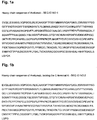
- Figure 1a shows the full length heavy chain sequence of Avelumab, as expressed by the CHO cells used as the host organism. It is frequently observed, however, that in the course of antibody production the C-terminal lysine (K) of the heavy chain is cleaved off. Located in the Fc part, this modification has no influence on the antibody - antigen binding. Therefore, in some embodiments the C-terminal lysine (K) of the heavy chain sequence of Avelumab is absent.
- Figure 1b SEQ ID NO:2
- Figure 2 shows the full length light chain sequence of Avelumab.
- glycosylation A post-translational modification of high relevance is glycosylation.
- proteins, such as antibodies which are recombinantly produced in eukaryotic host cells. Recombinant IgG antibodies contain a conserved N-linked glycosylation site at a certain asparagine residue of the Fc region in the CH2 domain.
- IgG antibody N-glycan structures are predominantly biantennary complex-type structures, comprising b-D-N-acetylglucosamine (GlcNac), mannose (Man) and frequently galactose (Gal) and fucose (Fuc) units.
- glycosylation affects the solubility and stability of an antibody, it is prudent to take this parameter into account when a stable, pharmaceutically suitable formulation of the antibody is to be developed.
- Avelumab fully characterized by its amino acid sequence and its post-translational modifications, in a number of aqueous formulations without the presence of an antioxidant, at pH values as low as 5.2.
- references herein to "Avelumab” include the anti-PD-L1 antibody of the IgG1 type as defined in WO2013079174 by its amino acid sequence, and as defined in the present patent application by its amino acid sequence and by its post-translational modifications.
- References herein to "Avelumab” may include biosimilars which, for instance, may share at least 75%, suitably at least 80%, suitably at least 85%, suitably at least 90%, suitably at least 95%, suitably at least 96%, suitably at least 97%, suitably at least 98% or most suitably at least 99% amino acid sequence identity with the amino acid sequences disclosed in WO2013079174 .
- references herein to "Avelumab” may include biosimilars which differ in the post-translational modifications, especially in the glycosylation pattern, herein disclosed.
- biosimilar also known as follow-on biologics
- biosimilar is well known in the art, and the skilled person would readily appreciate when a drug substance would be considered a biosimilar of Avelumab.
- biosimilar is generally used to describe subsequent versions (generally from a different source) of "innovator biopharmaceutical products” ("biologics” whose drug substance is made by a living organism or derived from a living organism or through recombinant DNA or controlled gene expression methodologies) that have been previously officially granted marketing authorisation. Since biologics have a high degree of molecular complexity, and are generally sensitive to changes in manufacturing processes (e.g.
- buffer or “buffer solution” refers to a generally aqueous solution comprising a mixture of an acid (usually a weak acid, e.g. acetic acid, citric acid, imidazolium form of histidine) and its conjugate base (e.g.
- an acetate or citrate salt for example, sodium acetate, sodium citrate, or histidine
- a base usually a weak base, e.g. histidine
- its conjugate acid e.g. protonated histidine salt
- a “buffer system” comprises one or more buffering agent(s) and/or an acid/base conjugate(s) thereof, and more suitably comprises one or more buffering agent(s) and an acid/base conjugate(s) thereof, and most suitably comprises one buffering agent only and an acid/base conjugate thereof.
- any concentrations stipulated herein in relation to a “buffer system” i.e. a buffer concentration
- concentrations stipulated herein in relation to a “buffer system” suitably refer to the combined concentration of all the relevant buffering species (i.e.
- a given concentration of a histidine buffer system generally relates to the combined concentration of histidine and the imidazolium form of histidine.
- concentrations are usually straightforward to calculate by reference to the input quantities of histidine or a salt thereof.
- the overall pH of the composition comprising the relevant buffer system is generally a reflection of the equilibrium concentration of each of the relevant buffering species (i.e. the balance of buffering agent(s) to acid/base conjugate(s) thereof).
- buffering agent refers to an acid or base component (usually a weak acid or weak base) of a buffer or buffer solution.
- a buffering agent helps maintain the pH of a given solution at or near to a pre-determined value, and the buffering agents are generally chosen to complement the pre-determined value.
- a buffering agent is suitably a single compound which gives rise to a desired buffering effect, especially when said buffering agent is mixed with (and suitably capable of proton exchange with) an appropriate amount (depending on the pre-determined pH desired) of its corresponding "acid/base conjugate", or if the required amount of its corresponding "acid/base conjugate” is formed in situ - this may be achieved by adding strong acid or base until the required pH is reached.
- sodium acetate buffer system it is possible to start out with a solution of sodium acetate (basic) which is then acidified with, e.g., hydrochloric acid, or to a solution of acetic acid (acidic), sodium hydroxide or sodium acetate is added until the desired pH is reached.
- a solution of sodium acetate basic
- acidified e.g., hydrochloric acid
- acetic acid acidic
- a “stabiliser” refers to a component which facilitates maintenance of the structural integrity of the biopharmaceutical drug, particularly during freezing and/or lyophilization and/or storage (especially when exposed to stress). This stabilising effect may arise for a variety of reasons, though typically such stabilisers may act as osmolytes which mitigate against protein denaturation.
- stabilisers are amino acids (i.e. free amino acids not part of a peptide or protein - e.g. glycine, arginine, histidine, aspartic acid, lysine) and sugar stabilisers, such as a sugar polyol (e.g. mannitol, sorbitol), and/or a disaccharide (e.g. trehalose, sucrose, maltose, lactose).
- a sugar polyol e.g. mannitol, sorbitol
- a disaccharide e.g. trehalose, sucrose, maltos
- antioxidants or surfactants are excluded from the meaning of the term “stabilisers” as used herein, even if they may exhibit, i.a. stabilising activity.
- surfactant refers to a surface-active agent, preferably a nonionic surfactant.
- surfactants used herein include polysorbate (for example, polysorbate 20 (polyoxyethylene (20) sorbitan monolaurate) also known under the tradename Tween 20); poloxamer (e.g. poloxamer 188, a non-ionic triblock copolymers composed of a central hydrophobic chain of polyoxypropylene (polypropylene oxide)) flanked by two hydrophilic chains of polyoxyethylene (poly(ethylene oxide)), also known under the tradename Lutrol F 68).
- stable generally refers to the physical stability and/or chemical stability and/or biological stability of a component, typically an active or composition thereof, during preservation/storage.
- surfactants are excluded from the meaning of the term "surfactants” as used herein, even if they may exhibit, i.a. surfactant activity.
- antioxidant refers to an agent capable of preventing or decreasing oxidation of the biopharmaceutical drug to be stabilized in the formulation.
- Antioxidants include radical scavengers (e.g. ascorbic acid, BHT, sodium sulfite, p-amino benzoic acid, glutathione or propyl gallate), chelating agents (e.g. EDTA or citric acid) or chain terminators (e.g. methionine or N-acetyl cysteine).
- radical scavengers e.g. ascorbic acid, BHT, sodium sulfite, p-amino benzoic acid, glutathione or propyl gallate
- chelating agents e.g. EDTA or citric acid
- chain terminators e.g. methionine or N-acetyl cysteine
- a “diluent” is an agent that constitutes the balance of ingredients in any liquid pharmaceutical composition, for instance so that the weight percentages total 100%.
- the liquid pharmaceutical composition is an aqueous pharmaceutical composition, so that a "diluent” as used herein is water, preferably water for injection (WFI).
- WFI water for injection
- particle size or "pore size” refers respectively to the length of the longest dimension of a given particle or pore. Both sizes may be measured using a laser particle size analyser and/or electron microscopes (e.g. tunneling electron microscope, TEM, or scanning electron microscope, SEM). The particle count (for any given size) can be obtained using the protocols and equipment outlined in the Examples, which relates to the particle count of sub-visible particles.
- the term “percent share” in connection with glycan species refers directly to the number of different species.
- the term “said FA2G1 has a share of 25% - 41% of all glycan species” means that in 50 antibody molecules analysed, having 100 heavy chains, 25-41 of the heavy chains will exhibit the FA2G1 glycosylation pattern.
- references to “treating” or “treatment” include prophylaxis as well as the alleviation of established symptoms of a condition.
- Treating” or “treatment” of a state, disorder or condition therefore includes: (1) preventing or delaying the appearance of clinical symptoms of the state, disorder or condition developing in a human that may be afflicted with or predisposed to the state, disorder or condition but does not yet experience or display clinical or subclinical symptoms of the state, disorder or condition, (2) inhibiting the state, disorder or condition, i.e., arresting, reducing or delaying the development of the disease or a relapse thereof (in case of maintenance treatment) or at least one clinical or subclinical symptom thereof, or (3) relieving or attenuating the disease, i.e., causing regression of the state, disorder or condition or at least one of its clinical or subclinical symptoms.
- the invention provides a novel aqueous pharmaceutical antibody formulation, comprising:
- the formulation does not comprise any antioxidant.
- the concentration of Avelumab in the said formulation is about 10 mg/mL to about 20 mg/mL. In another embodiment the concentration of acetate or histidine in the said formulation is about 10 mM. In yet another embodiment the concentration of D-mannitol or trehalose in the said formulation is about 280 mM, or for the combination of arginine HCI and glutamic acid, the concentration of arginine HCl is about 150 mM and the concentration of glutamic acid is about 50 mM. In yet another embodiment the concentration of Poloxamer 188 or Polysorbate 20 in the said formulation is about 0.5 mg/mL. In yet another embodiment the pH of the said formulation is 5.2 ( ⁇ 0.1) to 5.5 ( ⁇ 0.1).
- the said formulation comprises acetate in a concentration of about 10 mM, and does not comprise any other buffering agent.
- the said formulation comprises D-mannitol or trehalose in a concentration of about 280 mM, and does not comprise any other stabiliser.
- the said formulation comprises Polysorbate 20 or Poloxamer 188 in a concentration of about 0.5 mg/mL, and does not comprise any other surfactant.
- the said formulation consists of:
- the latter formulation is made by combining:
- the invention concerns an aqueous pharmaceutical antibody formulation, whose pH is adjusted with sodium hydroxide. Therefore, the formulation consists of Avelumab in a concentration of 20 mg/mL as the active ingredient; and glacial acetic acid, D-mannitol, Polysorbate 20, sodium hydroxide and water for injection as the excipients; wherein the formulation has a pH of 5.0 to 5.6, preferably 5.2 ( ⁇ 0.1).
- the formulation has a osmolality between 270 and 330 mOsm/kg.
- said Avelumab in the formulations as described above has the heavy chain sequence of either Fig. 1a (SEQ ID NO:1) or Fig. 1b (SEQ ID NO:2), the light chain sequence of Fig. 2 (SEQ ID NO:3), and carries a glycosylation on Asn300 comprising FA2 and FA2G1 as the main glycan species, having a joint share of > 70% of all glycan species.
- the said FA2 has a share of 44% - 54% and said FA2G1 has a share of 25% - 41% of all glycan species.
- the said FA2 in the Avelumab glycosylation the said FA2 has a share of 47% - 52% and said FA2G1 has a share of 29% - 37% of all glycan species. In a preferred embodiment, in the Avelumab glycosylation the said FA2 has a share of about 49% and said FA2G1 has a share of about 30% - about 35% of all glycan species.
- the Avelumab glycosylation further comprises as minor glycan species A2 with a share of ⁇ 5%, A2G1 with a share of ⁇ 5%, A2G2 with a share of ⁇ 5% and FA2G2 with a share of ⁇ 7% of all glycan species.
- said A2 has a share of 3%-5%
- said A2G1 has a share of ⁇ 4%
- said A2G2 has a share of ⁇ 3%
- said FA2G2 has a share of 5%-6% of all glycan species.
- said A2 has a share of about 3.5% - about 4.5%
- said A2G1 has a share of about 0.5% - about 3.5%
- said A2G2 has a share of ⁇ 2.5%
- said FA2G2 has a share of about 5.5% of all glycan species.
- the said Avelumab in the formulation as described above has the heavy chain sequence of Fig. 1b (SEQ ID NO:2).
- Avelumab formulation as described above is for intravenous (IV) administration.
- the present invention provides a drug delivery device comprising a liquid pharmaceutical composition as defined herein.
- the drug delivery device comprises a chamber within which the pharmaceutical composition resides.
- the drug delivery device is sterile.
- the drug delivery device may a vial, ampoule, syringe, injection pen (e.g. essentially incorporating a syringe), or i.v. (intravenous) bag.
- the aqueous pharmaceutical formulations are parenterally administered, preferably via sub-cutaneous injection, intramuscular injection, i.v. injection or i.v. infusion. The most preferred way of administration is i.v. infusion.
- the drug delivery device is a vial containing the formulation as described above.
- the said vial contains 200 mg avelumab in 10 mL of solution for a concentration of 20 mg/mL.
- the vial is a glass vial.
- the invention provides a method of treating cancer comprising administering the formulation as described above to a patient.
- the cancer to be treated is selected from non-small cell lung cancer, urothelial carcinoma, bladder cancer, mesothelioma, Merkel cell carcinoma, gastric or gastroesophageal junction cancer, ovarian cancer, breast cancer, thymoma, adenocarcinoma of the stomach, adrenocortical carcinoma, head and neck squamous cell carcinoma, renal cell carcinoma, melanoma, and/or classical Hodgkin's lymphoma.
- thermal stress mechanical stress, light exposure, osmolality, turbidity, protein content, total aggregates, fragmentation, pH, isoforms, circular dichroism, sub-visible particles and biological activity were determined as stability parameters according to the following protocols:
- the samples in the original vial container were incubated in a thermostatic cabinet at a temperature of 40°C ⁇ 2°C (RH 75% ⁇ 5%) and withdrawn at pre-determined time points.
- the samples in the original vial container were incubated in a thermostatic cabinet at a temperature of 25°C ⁇ 2°C (RH 60% ⁇ 5%) and withdrawn at pre-determined time points.
- the samples in the original vial container were placed on an orbital shaker maintained at 300 rpm for up to 24 hours (room temperature).
- the samples in the original vial container were exposed to a light source for 7 hours adjusting the irradiance level in the Suntest machine to 765 W/m 2 (radiation wavelength between 320 nm and 800 nm).
- Normal human plasma has an osmolality of about 280 mOSm/kg (Medical Physiology - Principles for Clinical Medicine. Edited by by Rodney A. Rhoades PhD, David R. Bell PhD).
- solutions with osmolality close to 300 mOsm/kg are to be targeted when developing parenteral formulations. Acceptable ranges (as per product specifications) are 250 - 400 mOsm/kg.
- osmolality was determined by a cryoscopic method determining the freezing point depression of water solutions after addition of solutes. Amount of solutes, and hence the observed osmolality value is proportional to the observed freezing point depression of the compounded solution.
- the turbidity of the solutions were determined with a nephelometer with the capability to measure scattered or attenuated light (Hach Lange Model 2100AN). About 3 mL of solution in reduced volume cuvettes were illuminated by an 870 ⁇ 30 nm light emitting diode (LED) assembly. A detector monitors the scattered light and provided the turbidity (NTU) of the solution by comparison with a series of standards of known turbidity.
- NTU turbidity
- Protein content was determined via the optical density of solutions (diluted to ⁇ 0.5 mg/mL protein concentration with relevant buffer) at 280 nm and 320 nm in 1 cm path length quartz cuvettes. Assuming a molar extinction coefficient of 1.46 cm 2 /mg, protein concentration was obtained by applying the formula: (A280 - A320)/(1.46 cm 2 /mg x 1 cm).
- the amount of aggregates was determined by the SE-HPLC method.
- a sample volume of 20 ⁇ L (sample diluted to about 0.5 mL with PBS) was injected in a TSK gel Super SW3000 4.6 mm x 30 cm (cod. 18675) kept at a temperature of 22 ⁇ 5°C at a flow rate of 0.35 mL/min (mobile phase was 50 mM sodium phosphate + 0.4 sodium perchlorate at pH 6.3 ⁇ 0.1).
- UV detection at 214 nm.
- Low molecular species were determined by Bioanalyzer. Samples are analyzed at a concentration ranging between 1.25 - 3.75 mg/mL (dilutions made with purified water). 3 ⁇ L of each diluted sample were merged with 2 ⁇ L of the corresponding sample buffer (with the addition of DTT when tests were conducted under reducing conditions) and 1 ⁇ L of a 60 mM maleimide solution. The samples were heated for 5 minutes at 70°C, then 84 ⁇ L of purified water were added and the solutions vortexed and spun down. 6 ⁇ L were loaded onto the chip (0.25 - 0.75 ⁇ g of protein). The chip was placed into the Agilent 2100 Bioanalyzer and the analysis started within the following five minutes.
- Isoforms distribution was determined by iCE.
- An Fc coated capillary cartridge (100 mm internal diameter and 50 mm length) was used. The separation is conducted using a 100 mM NaOH solution in 0.1% methylcellulose as a cathodic solution and a 80 mM o-phosphoric acid in 0.1% methylcellulose as an anodic solution.
- the samples were prepared starting from 80 ⁇ L of master mix solution (obtained mixing 700 ⁇ L of 0.1% methylcellulose, 10 ⁇ L of Pharmalyte 5-8, 70 ⁇ L of Pharmalyte 8-10.5, 10 ⁇ L of a 7.65 pl marker and 10 ⁇ L of a 9.77 pl marker), to which the suitable volume of washed Avelumab sample (corresponding to 200 ⁇ g of protein after washing to remove formulation components) was added. An amount of purified water corresponding to (120 ⁇ L - volume of washed Avelumab sample added at the previous step) is added. The separation is conducted at a detection wavelength of 280 nm setting pre-focusing and focusing times of 1 and 15 minutes respectively and pre-focusing and focusing voltages of 1500 V and 3000 V respectively. Samples were injected at a pressure of 1000 mBar.
- pH was determined by conventional potentiometry.
- Sub-visible particles were counted through the technique of light obscuration method using a Pamas SVSS-C particle counter. Samples were diluted 5-fold with purified water to obtain a final volume of at least 25 mL to be tested.
- the method used is based on the ability of Avelumab, absorbed on an ELISA plate, to bind in a dose-dependent manner its antigen PD-L1 present on the cell line HEK-293 (hPDL1, permanently transfected with PD-L1).
- Dosages used were 400, 200, 100, 50, 25, 12.5, 6.25 and 3.12 ng/mL. From the data obtained EC 50 values were calculated.
- the present invention also provides a method of manufacturing an aqueous pharmaceutical formulation as defined herein.
- the method suitably comprises mixing together, in any particular order deemed appropriate, any relevant components required to form the aqueous pharmaceutical formulation.
- the skilled person may refer to the examples or techniques well known in the art for forming aqueous pharmaceutical formulations (especially those for injection via syringe, or i.v. infusion).
- the method may involve first preparing a pre-mixture (or pre-solution) of some or all components (optionally with some or all of the diluent) excluding Avelumab, and Avelumab may then itself (optionally with or pre-dissolved in some of the diluent) be mixed with the pre-mixture (or pre-solution) to afford the aqueous pharmaceutical formulation, or a composition to which final components are then added to furnish the final aqueous pharmaceutical formulation.
- the method involves forming a buffer system, suitably a buffer system comprising a buffering agent as defined herein.
- the buffer system is suitably formed in a pre-mixture prior to the addition of Avelumab.
- the buffer system may be formed through simply mixing the buffering agent (supplied ready-made) with its acid/base conjugate (suitably in appropriate relative quantities to provide the desired pH - this can be determined by the skilled person either theoretically or experimentally).
- the pH of either the pre-mixture of final aqueous pharmaceutical formulation may be judiciously adjusted by adding the required quantity of base or acid, or a quantity of buffering agent or acid/base conjugate.
- the buffering agent and/or buffer system is pre-formed as a separate mixture, and the buffer system is transferred to a precursor of the aqueous pharmaceutical formulation (comprising some or all components save for the buffering agent and/or buffer system, suitably comprising Avelumab and potentially only Avelumab) via buffer exchange (e.g. using diafiltration until the relevant concentrations or osmolality is reached). Additional excipients may be added thereafter if necessary in order to produce the final liquid pharmaceutical composition.
- the pH may be adjusted once or before all the components are present.
- aqueous pharmaceutical formulation may be filtered, suitably to remove particulate matter.
- filtration is through filters sized at or below 1 ⁇ m, suitably at 0.22 ⁇ m.
- filtration is through either PES filters or PVDF filters, suitably with 0.22 ⁇ m PES filters.
- an aqueous pharmaceutical formulation can be used to prepare an IV solution, so that the antibody drug substance can be administered intravenously.
- the preparation of the IV solution typically consists of a certain amount of solution being withdrawn from saline bags (e.g. 0.9% or 0.45% saline) with a plastic syringe (PP) and a needle and replaced with aqueous pharmaceutical formulation.
- saline bags e.g. 0.9% or 0.45% saline
- PP plastic syringe
- the amount of solution replaced will depend on the body weight of the patients.
- Avelumab is an IgG with two heavy and two light chain molecules.
- the amino acid sequences of the two chains are shown in Figures 1a (SEQ ID NO:1) / 1b (SEQ ID NO:2) and 2 (SEQ ID NO:3), respectively.
- the molecule contains one N-glycosylation site on Asn300 of the heavy chain.
- the main structure identified by MALDI-TOF was a complex, biantennary type core fucosylated oligosaccaride with zero (G0F), one (G1F), or two galactose (G2F) residues.
- the main species are G0F and G1F.
- Avelumab glycans fluorescence labeled by 2-aminobenzamide have been analysed by HILIC-UPLC-ESI-Q-TOF.
- Figure 4 shows the UPLC profile of the glycan species found.
- the geometric shapes representing the glycan building blocks correspond to the following molecular entities: Man ⁇ Fuc ⁇ Gal ⁇ GalNAc GlcNAc ⁇ NANA NGNA Man: mannose, Fuc: fucose, Gal: galactose, GalNAc: N-Acetylgalactosamine, NANA: sialic acid, NGNA: N-glycolylneuraminic acid
- the glycan nomenclature used follows the Oxford Notation as proposed by Harvey et al. (Proteomics 2009, 9, 3796-3801 ).
- the Fuc-GlcNAc connectivity is ⁇ 1-6.
- the GlcNAc-Man connectivity is ⁇ 1-2.
- the Gal-GlcNAc connectivity is ⁇ 1-4.
- the glycan mapping analysis confirmed the identification carried out by peptide mapping (that allowed to identify the two main glycan species), in addition secondary and minor species were also characterized by this method, specific for glycan analysis.
- Table 3 illustrates the selection of DoE1 formulas investigated.
- DoE1 allowed a selection of suitable buffer/pH, excipient type and surfactant type to be made, that were used for the subsequent DoE2 study described in Example 3.
- Table 3 DoE1 screening formulations ID Avelumab (mg / mL) pH Buffer (10 mM) Excipient Surfactant Surfactant concentration (mg / mL) DoE1-1 10 5.00 Acetate Mannitol (51 mg/mL 1 ) Poloxamer 188 0.5 DoE1-2 10 5.00 Acetate Trehalose dihydrate (106 mg/mL 1 ) Tween 20 0.5 DoE1-3 10 5.00 Citrate Mannitol (51 mg/mL 1 ) Poloxamer 188 0.2 DoE1-4 10 5.25 Acetate Trehalose dihydrate (106 mg/mL 1 ) Tween 20 0.2 DoE1-5 10 5.25 Acetate Arginine HCl (21.1 mg/mL 2 )+ Glutamic acid (7.4 mg/mL 3 ) Poloxamer 188
- the pre-formulated drug substance (DS) (10 ( ⁇ 1) mg/mL Avelumab, 1.36 mg/mL Sodium acetate trihydrate, 51 mg/mL D-Mannitol, 0.21 mg/mL L-Methionine, hydrochloric acid q.b. to pH 5.5) was buffer exchanged by tangential flow filtration (using Pellicon XL Biomax Cassettes with a 10 kDa cut-off) in the three buffers: 10 mM sodium acetate pH 5.0, 10 mM sodium citrate pH 5.0 and 10 mM histidine pH 5.75 until a three-fold volume exchange was achieved. At each step the DS solution was diluted 5-fold with relevant buffer.
- Final target protein concentration in the exchanged DS material was > 10 mg/mL.
- the required excipients were then added to the relevant buffer-exchanged DS material, pH and final solution weight adjusted to the target so as to obtain the DP compositions listed in Table 3.
- the sequence of addition of ingredients to the exchanged DS solutions was as follows: Add D-Mannitol or Trehalose dihydrate or Arginine HCl + Glutamic acid to the exchanged DS solution, stir until complete dissolution, add L-Methionine and stir until complete dissolution (only for Reference), add Poloxamer 188 or Polysorbate 20 (50 mg/mL stock solution), stir until complete dissolution, check pH and adjust to target with sodium hydroxide.
- Drug product (DP) solutions were filled (8 mL) in DIN6R vials (Schott). Visual inspection during the DS diafiltration process revealed that sodium citrate buffer caused generally higher opalescence, whilst remarkably clearer solutions were obtained when exchanges were made in sodium acetate and in histidine buffers.
- the osmolality values of the DP formulations relevant to the DoE1 screening were comprised in the range 299 - 396 mOsm/kg, with most formulations having osmolalities below around 360 mOsm/kg.
- DoE1 formulations were determined yb SE-HPLC at time 0 and after 2 and 4 weeks of storage at 40°C.
- Turbidity by nephelometry in DoE1 formulations was determined at time 0 and after 2 and 4 weeks of storage at 40°C.
- the DoE1 formulations were subjected to 24-hour orbital shaking in vials at 300 rpm (room temperature). Upon stress termination the samples were tested for aggregates and opalescence.
- Turbidity of DoE1 formulations was determined by nephelometry (2100AN IS, Hach Lange) after mechanical stress and compared to time 0 results. The data were evaluated by ANOVA and a moderately significant impact deriving from surfactant presence (0.01 ⁇ p-value ⁇ 0.05) was observed. Either Tween 20 or Poloxamer 188 can help minimize turbidity changes after mechanical stress.
- the DoE1 formulations were subjected to 7-hour irradiation at 765W/m 2 (Suntest CPS, Atlas). Upon light stress termination the samples were tested for aggregates, opalescence, pH and isoforms profile.
- Sodium acetate and histidine are the buffers to be preferred in order to minimize aggregation changes.
- Table 5 Components of highly stabilized Avelumab formulations at 10 mg/mL protein concentration ID# Buffer pH Excipient Surfactant Extrapolated 10 mM Acetate 5.20 Trehalose dihydrate (280 mM) Tween 20 (0.5 mg/mL) DoE1-4 10 mM Acetate 5.25 Trehalose dihydrate (280 mM) Tween 20 (0.2 mg/mL)
- a second DoE screening "DoE2" aimed at fine-tuning the formulations selected upon DoE1 completion and concurrently increasing protein concentration to 20 mg/mL.
- the DoE2 study was conducted to comparatively evaluate the effect of D-Mannitol vs. Trehalose dihydrate, and the impact of surfactant (either Tween 20 or Poloxamer 188, or no surfactant) in sodium acetate buffer at pH 5.2, at the increased protein concentration of 20 mg/mL.
- surfactant either Tween 20 or Poloxamer 188, or no surfactant
- Two pH 5.5 reference samples have been included in the design: "Reference" with L-Methionine, and a reference formulation without L-Methionine, corresponding to DoE1-8.
- the pre-formulated drug substance (DS) (27.1 mg/mL Avelumab in 10 mM sodium acetate pH 5.5) was used. The required excipients were then added to the DS material.
- the sequence of addition of ingredients to the DS solution was as follows: Add D-Mannitol or Trehalose dihydrate, stir until complete dissolution, add Poloxamer 188 or Polysorbate 20 (20 mg/mL stock solution), stir until complete dissolution, add L-Methionine and stir until complete dissolution (only for Reference), stir until complete dissolution, check pH and adjust to target with sodium hydroxide or diluted acetic acid.
- DP solutions were filled (8 mL) in DIN6R vials.
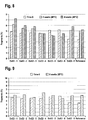
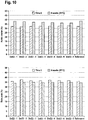
- the isoforms profile by iCE280 (Fast IEF Analyzer, Convergent Bioscience) in DoE2 formulations was determined at time 0 and after 4 weeks of storage at 40°C. Upon storage at 40°C typically increases in the acidic cluster can be determined, while a concurrent decrease in the basic isoforms is observed.
- CD spectra (J-810 Spectropolarimeter, Jasco) of DoE2 formulations were collected at time 0 and after 4 weeks at 40°C and 8 weeks at 25°C in the near UV range. Protein in all formulation generally retains its tertiary structure after 4 weeks at 40°C and 8 weeks at 25°C.
- DoE2 Formulation 3 (the formula most preferred and finally selected for further use at 20 mg/mL) was compared in terms of isoforms profiles to the reference formula at time 0, after 4 weeks at 40°C and 8 weeks at 25°C in order to evaluate whether different behavior between the two formulas are present over stability time at different conditions. The results are presented in Table 19.
- Table 19 Isoforms profiles by iCE280 of DoE2 Formulation 3 and Reference formulation at time 0, after 4 weeks (40°C) and 8 weeks (25°C) ID# Buffer pH Excipient Surfacta nt Clus ter Time 0 4 weeks (40°C) 8 weeks (25°C)
- the 10 mg/mL samples (from the DoE1 set) were 2-fold diluted with 200 ⁇ L of 6% H 2 O 2 , obtaining a final protein concentration of about 5 mg/mL and 3% H 2 O 2 , and then incubated 3h at 5°C. At the end of the incubation the sample was washed versus water by ultracentrifugation using an Amicon Ultra (Millipore) 4 mL 10 kDa (4 washes 1 mL each step). The final protein concentration after Amicon treatment was about 10mg/mL.
- DoE1 Formulation 8 is identical to Reference formula of DoE2, except for the presence of L-Methionine: the forced oxidation with H 2 O 2 (3 hours at 2-8°C) of the two formulas and following testing by iCE280 (oxidation generally leads to increase in more acidic species in electropherograms) and Bioanalyzer aimed to determine whether any differences arise in the two formulations due to the presence of the antioxidant agent.
- Tables 20 and 21 The results are presented in Tables 20 and 21.
- Table 20 Isoforms profiles by iCE280 of DoE1 Formulation 8 and Reference formulation after forced oxidation treatment.
- Upper table samples stored at 2-8°C.
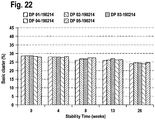
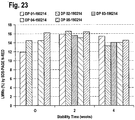
- Avelumab formulations 1, 2, 3, 4 and 5 listed in Table 22 were manufactured and used for a long term stability study.
- the manufacturing process included a compounding followed by a sterilizing double-filtration step through a 0.22 ⁇ m membrane (PES and PVDF filters were tested) before the final filling in vials.
- Formulation 5 corresponds to the Reference used also in the DoE-1 and -2 studies as described in Example 2 and 3.
- DP compositions Ingredient(s) DP Compositions Formulation 1 (DP 01-190214) Formulation 2 (DP 02-190214) Formulation 3 (DP 03-180214) Formulation 4 (DP 04-180214) Reference (DP 05-190214) Avelumab 20 mg/mL 20 mg/mL 10 mg/mL 10 mg/mL 10 mg/mL Sodium acetate buffer 10 mM 10 mM 10 mM 10 mM 10 mM Mannitol 51 mg/mL 0 mg/mL 51 mg/mL 0 mg/mL 51 mg/mL Trehalose Dihydrate 0 mg/mL 106 mg/mL 0 mg/mL 106 mg/mL 0 mg/mL 0 mg/mL Polysorbate 20 0.5 mg/mL 0.5 mg/mL 0.5 mg/mL 0.5 mg/mL 0.5 mg/mL 0.5 mg/mL 0.5 mg/mL L-Methionine 0 0 0 0 1.4 m
- the osmolality was determined and found in line with expected value (range: 320 - 350 mOsm/kg).
- Protein content remains therefore unaltered over 12 month stability at 2-8 °C (Values within specifications).
- the samples showed a time 0 value of LMWs by SDS-PAGE N-RED in the range 11.9 - 16.2 %, followed by a + 5-7 % increase at the next point (8 weeks) and by minor changes over the rest of stability, up to six months.
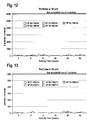
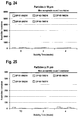
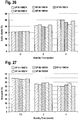
- sub-visible particles per container the counts were below the limits set by United States, European and Japanese Pharmacopoeia for solutions for infusion or injection with nominal content of less than 100 mL (6000 per container equal to or greater than 10 ⁇ m and 600 per container equal to or greater than 25 ⁇ m).
- the relevant bar charts for the two particle size ranges are shown in Figure 12 and Figure 13 respectively for sub-visible particles ⁇ 10 ⁇ m and sub-visible particles ⁇ 25 ⁇ m
- Bioactivity values were typically in the range 89 - 110% for all time points tested in the course of the stability study. No decrease observed upon storage.
- Protein content remains therefore unaltered over six-month stability at 25°C. Values within specifications.
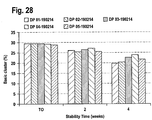
- the samples showed a time 0 value of LMWs by SDS-PAGE N-RED in the range 11.9 - 16.2%, followed by step-wise increase at the next point (4 weeks) followed by minor changes over the rest of stability, up to six months ( Figure 17 ).
- Bioactivity values were typically in the range 90 - 110% for all time points tested in the course of the stability study. No decreases observed upon stability at 25°C.
- Acidic cluster tends to increase over storage at 25°C. All samples show acidic cluster increase of about + 10% after six months at 25°C and concurrent decrease in main peak (- 5% after 6 months) and basic cluster (- 5% after 6 months).
- Concentration of formulations 3 and 4 and Reference DP was found in the range 9.5 - 10.0 mg/mL during the study, with no tendency towards loss in protein over time. Values within specifications.
- Heat stress is, in conclusion, not detrimental to protein content at the conditions tested_(up to 1 month at 40° C).
- Bioactivity values were typically in the range 99 - 120 % for all time points tested in the course of the stability study. No decrease observed upon thermal stress in the samples.
- Acidic cluster tends to increase over storage at 40°C.
- DP compositions were manufactured and their stability studied over a period of 24 months: Table 24: DP compositions Ingredient(s) DP Compositions DP 01-160414 DP 02-160414 avelumab 20 mg/mL 20 mg/mL Acetate Acid Glacial (100%) 0.60 mg/mL * 0.60 mg/mL * Mannitol 51 mg/mL 51 mg/mL Polysorbate 20 0.5 mg/mL 0.5 mg/mL sodium hydroxide 0.30 mg/mL ** 0.30 mg/mL ** Filling volume 10 mL 30 mL Strength 200 mg/vial 600 mg/vial * Corresponding to 10 mM Sodium Acetate ** Final pH: 5.2
- Both formulations correspond to formulation DP 01-190214 as shown in Table 22.
- the only difference is that a fixed amount of 0.3 mg/mL (7.5 mM) of sodium hydroxide was used to yield a pH of 5.2 when combined with 0.6 mg/mL glacial acetic acid.
- the sole difference between formulations DP 01-160414 and DP 02-160414 is that the latter formulation has a volume of 30 mL per vial, while the former has 10 mL per vial.
- Holding time before filtration in bags, up to 24 hours at room temperatures
- holding time after filtration in bags, up to 72 hours at room temperature
- shaking up to 24 hours at 200 rpm at room temperature
Landscapes
- Health & Medical Sciences (AREA)
- Chemical & Material Sciences (AREA)
- Immunology (AREA)
- Medicinal Chemistry (AREA)
- Life Sciences & Earth Sciences (AREA)
- Organic Chemistry (AREA)
- General Health & Medical Sciences (AREA)
- Animal Behavior & Ethology (AREA)
- Veterinary Medicine (AREA)
- Public Health (AREA)
- Pharmacology & Pharmacy (AREA)
- Molecular Biology (AREA)
- Genetics & Genomics (AREA)
- Bioinformatics & Cheminformatics (AREA)
- Microbiology (AREA)
- Mycology (AREA)
- Proteomics, Peptides & Aminoacids (AREA)
- Engineering & Computer Science (AREA)
- Epidemiology (AREA)
- Biophysics (AREA)
- Biochemistry (AREA)
- Chemical Kinetics & Catalysis (AREA)
- General Chemical & Material Sciences (AREA)
- Nuclear Medicine, Radiotherapy & Molecular Imaging (AREA)
- Medicines Containing Antibodies Or Antigens For Use As Internal Diagnostic Agents (AREA)
- Medicinal Preparation (AREA)
- Peptides Or Proteins (AREA)
Claims (41)
- Wässrige pharmazeutische Antikörperformulierung, umfassend:(i) Avelumab in einer Konzentration von 1 mg/ml bis 30 mg/ml als Antikörper;(ii) Acetat oder Histidin in einer Konzentration von 5 mM bis 15 mM als Puffermittel;(iii) D-Mannitol oder Trehalose in einer Konzentration von 240 mM bis 320 mM oder eine Kombination von Arginin-HCl in einer Konzentration von 50 bis 150 mM und Glutaminsäure in einer Konzentration von 25 mM bis 75 mM als Stabilisator;(iv) Poloxamer 188 oder Polysorbat 20 in einer Konzentration von 0,25 mg/ml bis 0,75 mg/ml als Tensid oder kein Tensid;wobei die Formulierung kein Antioxidans umfasst und ferner wobei die Formulierung einen pH von 5,0 bis 6,0 aufweist.
- Formulierung nach Anspruch 1, wobei der pH bei 5,0 bis 5,6 liegt.
- Formulierung nach Anspruch 1 oder 2, wobei die Konzentration von Avelumab bei etwa 10 mg/ml bis etwa 20 mg/ml liegt.
- Formulierung nach Anspruch 1-3, wobei die Konzentration des Acetats oder Histidins bei etwa 10 mM liegt.
- Formulierung nach Anspruch 1-3, wobei die Konzentration des D-Mannitols bzw. der Trehalose bei etwa 280 mM liegt oder für die Kombination von Arginin-HCl und Glutaminsäure die Konzentration von Arginin-HCl bei etwa 150 mM und die Konzentration von Glutaminsäure bei etwa 50 mM liegt.
- Formulierung nach Anspruch 1-3, wobei die Konzentration des Poloxamer 188 oder Polysorbat 20 etwa 0,5 mg/ml beträgt.
- Formulierung nach Anspruch 1-3, wobei der pH bei 5,2 (± 0,1) bis 5,5 (± 0,1) liegt.
- Formulierung nach einem der Ansprüche 1-7, umfassend Acetat in einer Konzentration von etwa 10 mM und kein anderes Puffermittel.
- Formulierung nach einem der Ansprüche 1-8, umfassend D-Mannitol oder Trehalose in einer Konzentration von etwa 280 mM und keinen anderen Stabilisator.
- Formulierung nach einem der Ansprüche 1-9, umfassend Polysorbat 20 oder Poloxamer 188 in einer Konzentration von etwa 0,5 mg/ml und kein anderes Tensid.
- Wässrige pharmazeutische Antikörperformulierung, umfassend:(i) Avelumab in einer Konzentration von etwa 10 mg/ml als Antikörper;(ii) Acetat in einer Konzentration von etwa 10 mM als Puffermittel;(iii) D-Mannitol oder Trehalose in einer Konzentration von etwa 280 mM als Stabilisator;(iv) Polysorbat 20 oder Poloxamer 188 in einer Konzentration von etwa 0,5 mg/ml als Tensid;wobei die Formulierung kein Antioxidans umfasst und ferner wobei die Formulierung einen pH von 5,5 (± 0,1) aufweist.
- Formulierung nach Anspruch 9, umfassend:(i) Avelumab in einer Konzentration von 10 mg/ml;(ii) Acetat in einer Konzentration von 10 mM;(iii) D-Mannitol oder Trehalose in einer Konzentration von 280 mM;(iv) Polysorbat 20 oder Poloxamer 188 in einer Konzentration von 0,5 mg/ml;wobei die Formulierung einen pH von 5,5 (± 0,1) aufweist.
- Formulierung nach Anspruch 10, bestehend aus:(i) Avelumab in einer Konzentration von 10 mg/ml;(ii) Natriumacetat-Trihydrat in einer Konzentration von 10 mM;(iii) D-Mannitol oder Trehalose in einer Konzentration von 280 mM;(iv) Polysorbat 20 oder Poloxamer 188 in einer Konzentration von 0,5 mg/ml;(v) HCl zum Einstellen des pH;(vi) Wasser (zur Injektion) als Lösungsmittel;wobei die Formulierung einen pH von 5,5 (± 0,1) aufweist.
- Formulierung nach Anspruch 13, bestehend aus:(i) Avelumab in einer Konzentration von 10 mg/ml;(ii) Natriumacetat-Trihydrat in einer Konzentration von 10 mM;(iii) Trehalose-Dihydrat in einer Konzentration von 280 mM;(iv) Polysorbat 20 in einer Konzentration von 0,5 mg/ml;(v) HCl zum Einstellen des pH;(vi) Wasser (zur Injektion) als Verdünnungsmittel;wobei die Formulierung einen pH von 5,5 (± 0,1) aufweist.
- Formulierung nach Anspruch 11, bestehend aus:(i) Avelumab in einer Konzentration von 10 mg/ml;(ii) Natriumacetat-Trihydrat in einer Konzentration von 10 mM;(iii) D-Mannitol in einer Konzentration von 280 mM;(iv) Polysorbat 20 in einer Konzentration von 0,5 mg/ml;(v) HCl zum Einstellen des pH;(vi) Wasser (zur Injektion) als Verdünnungsmittel;wobei die Formulierung einen pH von 5,5 (± 0,1) aufweist.
- Formulierung nach Anspruch 1, umfassend:(i) Avelumab in einer Konzentration von etwa 20 mg/ml als Antikörper;(ii) Acetat in einer Konzentration von etwa 10 mM als Puffermittel;(iii) D-Mannitol oder Trehalose in einer Konzentration von etwa 280 mM als Stabilisator;(iv) Polysorbat 20 oder Poloxamer 188 in einer Konzentration von etwa 0,5 mg/ml als Tensid;wobei die Formulierung einen pH von 5,2 (± 0,1) aufweist.
- Formulierung nach Anspruch 16, umfassend:(i) Avelumab in einer Konzentration von 20 mg/ml;(ii) Acetat in einer Konzentration von 10 mM;(iii) D-Mannitol oder Trehalose in einer Konzentration von 280 mM;(iv) Polysorbat 20 oder Poloxamer 188 in einer Konzentration von 0,5 mg/ml;wobei die Formulierung einen pH von 5,5 (± 0,1) aufweist.
- Formulierung nach Anspruch 16, bestehend aus:(i) Avelumab in einer Konzentration von 20 mg/ml;(ii) Essigsäure in einer Konzentration von 10 mM;(iii) D-Mannitol oder Trehalose-Dihydrat in einer Konzentration von 280 mM;(iv) Polysorbat 20 oder Poloxamer 188 in einer Konzentration von 0,5 mg/ml;(v) Natriumacetat zum Einstellen des pH;(vi) Wasser (zur Injektion) als Verdünnungsmittel;wobei die Formulierung einen pH von 5,2 (± 0,1) aufweist.
- Formulierung nach Anspruch 18, bestehend aus:(i) Avelumab in einer Konzentration von 20 mg/ml;(ii) Essigsäure in einer Konzentration von 10 mM;(iii) D-Mannitol in einer Konzentration von 280 mM;(iv) Polysorbat 20 in einer Konzentration von 0,5 mg/ml;(v) Natriumacetat zum Einstellen des pH;(vi) Wasser (zur Injektion) als Verdünnungsmittel;wobei die Formulierung einen pH von 5,2 (± 0,1) aufweist.
- Formulierung nach Anspruch 18, bestehend aus:(i) Avelumab in einer Konzentration von 20 mg/ml;(ii) Essigsäure in einer Konzentration von 10 mM;(iii) Trehalose-Dihydrat in einer Konzentration von 280 mM;(iv) Polysorbat 20 in einer Konzentration von 0,5 mg/ml;(v) Natriumacetat zum Einstellen des pH;(vi) Wasser (zur Injektion) als Verdünnungsmittel;wobei die Formulierung einen pH von 5,2 (± 0,1) aufweist.
- Formulierung nach Anspruch 18, bestehend aus:(i) Avelumab in einer Konzentration von 20 mg/ml;(ii) Essigsäure in einer Konzentration von 10 mM;(iii) D-Mannitol in einer Konzentration von 280 mM;(iv) Poloxamer 188 in einer Konzentration von 0,5 mg/ml;(v) Natriumacetat zum Einstellen des pH;(vi) Wasser (zur Injektion) als Verdünnungsmittel;wobei die Formulierung einen pH von 5,2 (± 0,1) aufweist.
- Formulierung nach Anspruch 18, bestehend aus:(i) Avelumab in einer Konzentration von 20 mg/ml;(ii) Essigsäure in einer Konzentration von 10 mM;(iii) Trehalose-Dihydrat in einer Konzentration von 280 mM;(iv) Poloxamer 188 in einer Konzentration von 0,5 mg/ml;(v) Natriumacetat zum Einstellen des pH;(vi) Wasser (zur Injektion) als Verdünnungsmittel;wobei die Formulierung einen pH von 5,2 (± 0,1) aufweist.
- Formulierung nach Anspruch 16, bestehend aus:(i) Avelumab in einer Konzentration von 20 mg/ml;(ii) Essigsäure in einer Konzentration von 10 mM;(iii) D-Mannitol in einer Konzentration von 280 mM;(iv) Polysorbat 20 in einer Konzentration von 0,5 mg/ml;(v) Natriumhydroxid in einer Konzentration von 7,5 mM;(vi) Wasser (zur Injektion) als Verdünnungsmittel;wobei die Formulierung einen pH von 5,2 (± 0,1) aufweist.
- Formulierung nach Anspruch 23, wobei die Formulierung durch Zusammengeben des Folgenden hergestellt wird:(i) 20 mg/ml Avelumab;(ii) 0,6 mg/ml Eisessig;(iii) 51 mg/ml D-Mannitol;(iv) 0,5 mg/ml Polysorbat 20;(v) 0,3 mg/ml Natriumhydroxid;(vi) Wasser (zur Injektion) als Verdünnungsmittel.
- Formulierung nach Anspruch 2, bestehend aus:(i) Avelumab in einer Konzentration von 20 mg/ml;(ii) Essigsäure in einer Konzentration von 0,6 mg/ml;(iii) D-Mannitol in einer Konzentration von 51 mg/ml;(iv) Polysorbat 20 in einer Konzentration von 0,5 mg/ml;(v) Natriumhydroxid in einer Konzentration von 0,3 mg/ml;(vi) Wasser (zur Injektion) als Verdünnungsmittel;wobei die Formulierung einen pH von 5,0 bis 5,6 aufweist.
- Wässrige pharmazeutische Antikörperformulierung, bestehend aus Avelumab in einer Konzentration von 20 mg/ml als Wirkstoff; und Eisessig, D-Mannitol Polysorbat 20, Natriumhydroxid und Wasser zur Injektion als Exzipienten, wobei die Formulierung einen pH von 5,0 bis 5,6 aufweist.
- Formulierung nach Anspruch 26, die einen pH von 5,2 (± 0,1) aufweist.
- Formulierung nach einem der Ansprüche 1-27, wobei das Avelumab die Schwere-Kette-Sequenz unter entweder (SEQ ID NO:1) oder (SEQ ID NO:2), die Leichte-Kette-Sequenz unter (SEQ ID NO:3) aufweist und eine Glykosylierung an Asn300 trägt, die FA2 and FA2G1 als Hauptglycanspezies, mit einem gemeinsamen Anteil von > 70% an allen Glycanspezies, umfasst.
- Formulierung nach Anspruch 28, wobei bei der Avelumab-Glykosylierung das FA2 einen Anteil von 44% - 54% und das FA2G1 einen Anteil von 25% - 41% an allen Glycanspezies hat.
- Formulierung nach Anspruch 29, wobei bei der Avelumab-Glykosylierung das FA2 einen Anteil von 47% - 52% und das FA2G1 einen Anteil von 29% - 37% an allen Glycanspezies hat.
- Formulierung nach Anspruch 28, wobei bei der Avelumab-Glykosylierung das FA2 einen Anteil von etwa 49% und das FA2G1 einen Anteil von etwa 30% - etwa 35% an allen Glycanspezies hat.
- Formulierung nach einem der Ansprüche 28-31, wobei die Avelumab-Glykosylierung ferner als Nebenglycanspezies A2 mit einem Anteil von < 5%, A2G1 mit einem Anteil von < 5%, A2G2 mit einem Anteil von < 5% und FA2G2 mit einem Anteil von < 7% an allen Glycanspezies umfasst.
- Formulierung nach Anspruch 32, wobei bei der Avelumab-Glykosylierung das A2 einen Anteil von 3%-5%, das A2G1 einen Anteil von < 4%, das A2G2 einen Anteil von < 3% und das FA2G2 einen Anteil von 5%-6% an allen Glycanspezies hat.
- Formulierung nach Anspruch 33, wobei bei der Avelumab-Glykosylierung das A2 einen Anteil von etwa 3,5% - etwa 4,5%, das A2G1 einen Anteil von etwa 0,5% - etwa 3,5%, das A2G2 einen Anteil von < 2,5% und das FA2G2 einen Anteil von etwa 5,5% an allen Glycanspezies hat.
- Formulierung nach einem der Ansprüche 28-34, wobei das Avelumab die Schwere-Kette-Sequenz unter (SEQ ID NO:2) aufweist.
- Formulierung nach einem der Ansprüche 1-35, die zur intravenösen (IV) Verabreichung vorgesehen ist.
- Ampulle, enthaltend die Formulierung nach Anspruch 36.
- Ampulle nach Anspruch 37, die 200 mg Avelumab in 10 ml Lösung für eine Konzentration von 20 mg/ml enthält.
- Ampulle nach Anspruch 37 oder 38, bei der es sich um eine Glasampulle handelt.
- Formulierung nach einem der Ansprüche 1-36 zur Verwendung bei der Behandlung von Krebs.
- Formulierung zur Verwendung gemäß Anspruch 40, wobei der Krebs ausgewählt ist aus nicht kleinzelligem Lungenkrebs, Urothelkarzinom, Blasenkrebs, Mesotheliom, Merkelzellkarzinom, Magenkrebs oder Krebs des gastroösophagealen Übergangs, Ovarialkarzinom, Brustkrebs, Thymom, Adenokarzinom des Magens, Nebennierenrindenkarzinom, Plattenepithelkarzinom im Kopf- und Halsbereich, Nierenzellkarzinom, Melanom und/oder klassischem Hodgkin-Lymphom.
Priority Applications (6)
| Application Number | Priority Date | Filing Date | Title |
|---|---|---|---|
| EP20184113.7A EP3747466A1 (de) | 2015-12-07 | 2016-12-05 | Wässrige pharmazeutische formulierung |
| SI201630940T SI3386541T1 (sl) | 2015-12-07 | 2016-12-05 | Vodna farmacevtska formulacija, ki vsebuje protitelo proti PD-1 avelumab |
| PL16818985T PL3386541T3 (pl) | 2015-12-07 | 2016-12-05 | Wodna formulacja farmaceutyczna zawierającą przeciwciało anty-pd-1 awelumab |
| RS20201201A RS61029B1 (sr) | 2015-12-07 | 2016-12-05 | Vodena formulacija koja sadrži avelumab antitelo na pd-1 |
| SM20200497T SMT202000497T1 (it) | 2015-12-07 | 2016-12-05 | Formulazione farmaceutica acquosa comprendente l'anticorpo anti-pd-1 avelumab |
| HRP20201573TT HRP20201573T1 (hr) | 2015-12-07 | 2016-12-05 | Vodena farmaceutska formulacija koja sadrži anti-pd-1 protutijelo avelumab |
Applications Claiming Priority (2)
| Application Number | Priority Date | Filing Date | Title |
|---|---|---|---|
| EP15198233 | 2015-12-07 | ||
| PCT/EP2016/002040 WO2017097407A1 (en) | 2015-12-07 | 2016-12-05 | Aqueous pharmaceutical formulation comprising anti-pd-1 antibody avelumab |
Related Child Applications (1)
| Application Number | Title | Priority Date | Filing Date |
|---|---|---|---|
| EP20184113.7A Division EP3747466A1 (de) | 2015-12-07 | 2016-12-05 | Wässrige pharmazeutische formulierung |
Publications (2)
| Publication Number | Publication Date |
|---|---|
| EP3386541A1 EP3386541A1 (de) | 2018-10-17 |
| EP3386541B1 true EP3386541B1 (de) | 2020-07-08 |
Family
ID=54838201
Family Applications (2)
| Application Number | Title | Priority Date | Filing Date |
|---|---|---|---|
| EP16818985.0A Active EP3386541B1 (de) | 2015-12-07 | 2016-12-05 | Wässrige pharmazeutische formulierung mit anti-pd-1-antikörper avelumab |
| EP20184113.7A Withdrawn EP3747466A1 (de) | 2015-12-07 | 2016-12-05 | Wässrige pharmazeutische formulierung |
Family Applications After (1)
| Application Number | Title | Priority Date | Filing Date |
|---|---|---|---|
| EP20184113.7A Withdrawn EP3747466A1 (de) | 2015-12-07 | 2016-12-05 | Wässrige pharmazeutische formulierung |
Country Status (34)
| Country | Link |
|---|---|
| US (2) | US11058769B2 (de) |
| EP (2) | EP3386541B1 (de) |
| JP (1) | JP6925337B2 (de) |
| KR (1) | KR102697026B1 (de) |
| CN (1) | CN108367072B (de) |
| AR (1) | AR107014A1 (de) |
| AU (1) | AU2016368099C1 (de) |
| CA (1) | CA3007481C (de) |
| CL (1) | CL2018001488A1 (de) |
| CO (1) | CO2018005525A2 (de) |
| CY (1) | CY1123358T1 (de) |
| DK (1) | DK3386541T3 (de) |
| EA (1) | EA201891339A1 (de) |
| ES (1) | ES2823279T3 (de) |
| HR (1) | HRP20201573T1 (de) |
| HU (1) | HUE050811T2 (de) |
| IL (1) | IL259563B (de) |
| LT (1) | LT3386541T (de) |
| MX (1) | MX389289B (de) |
| MY (1) | MY195681A (de) |
| NZ (1) | NZ743964A (de) |
| PE (1) | PE20181400A1 (de) |
| PH (1) | PH12018500894A1 (de) |
| PL (1) | PL3386541T3 (de) |
| PT (1) | PT3386541T (de) |
| RS (1) | RS61029B1 (de) |
| SA (1) | SA518391743B1 (de) |
| SG (1) | SG11201804758QA (de) |
| SI (1) | SI3386541T1 (de) |
| SM (1) | SMT202000497T1 (de) |
| TW (1) | TWI630917B (de) |
| UA (1) | UA123270C2 (de) |
| WO (1) | WO2017097407A1 (de) |
| ZA (1) | ZA201804534B (de) |
Families Citing this family (34)
| Publication number | Priority date | Publication date | Assignee | Title |
|---|---|---|---|---|
| US9624298B2 (en) | 2011-11-28 | 2017-04-18 | Merck Patent Gmbh | Anti-PD-L1 antibodies and uses thereof |
| EP3757130A1 (de) | 2013-09-26 | 2020-12-30 | Costim Pharmaceuticals Inc. | Verfahren zur behandlung von blutkrebs |
| CA2935423C (en) | 2014-01-24 | 2023-11-07 | Dana-Farber Cancer Institute, Inc. | Antibody molecules to pd-1 and uses thereof |
| AU2015210750B2 (en) | 2014-01-31 | 2020-08-20 | Children's Medical Center Corporation | Antibody molecules to TIM-3 and uses thereof |
| WO2015138920A1 (en) | 2014-03-14 | 2015-09-17 | Novartis Ag | Antibody molecules to lag-3 and uses thereof |
| WO2016040882A1 (en) | 2014-09-13 | 2016-03-17 | Novartis Ag | Combination therapies of egfr inhibitors |
| WO2016061142A1 (en) | 2014-10-14 | 2016-04-21 | Novartis Ag | Antibody molecules to pd-l1 and uses thereof |
| CN108112254B (zh) | 2015-03-13 | 2022-01-28 | 西托姆克斯治疗公司 | 抗-pdl1抗体、可活化的抗-pdl1抗体、及其使用方法 |
| ES2878188T3 (es) | 2015-07-29 | 2021-11-18 | Novartis Ag | Terapias de combinación que comprenden moléculas de anticuerpos contra LAG-3 |
| CN108367072B (zh) | 2015-12-07 | 2022-12-27 | 默克专利股份有限公司 | 含抗-pd-l1抗体avelumab的水性药物制剂 |
| US10059769B2 (en) | 2016-06-13 | 2018-08-28 | I-Mab | Anti-PD-L1 antibodies and uses thereof |
| WO2018065938A1 (en) | 2016-10-06 | 2018-04-12 | Pfizer Inc. | Dosing regimen of avelumab for the treatment of cancer |
| UA129583C2 (uk) * | 2017-03-06 | 2025-06-11 | Мерк Патент Гмбх | Водний фармацевтичний склад, який містить антитіло проти pd-l1 авелумаб |
| BR112019025188A2 (pt) | 2017-06-01 | 2020-06-23 | Cytomx Therapeutics, Inc. | Anticorpos anti-pdl1 ativáveis e métodos de uso dos mesmos |
| CN111246886B (zh) * | 2017-11-02 | 2022-03-15 | 正大天晴药业集团股份有限公司 | 一种抗pd-l1人源化单克隆抗体的药物组合物 |
| EP3730126B1 (de) * | 2017-12-22 | 2025-05-14 | Samsung Bioepis Co., Ltd. | Vegf-antagonist enthaltende flüssige zusammensetzung |
| CN111819198A (zh) * | 2017-12-28 | 2020-10-23 | 尤利乌斯·马克西米利安维尔茨堡大学 | 具有非FcγR依赖性激动活性的肿瘤坏死因子(TNF)受体超家族(TNFRSF)受体-激活抗体融合蛋白(具有非FcγR依赖性激动活性的TNFRSF受体-激活抗体融合蛋白;TRAAFFIAA) |
| CN112041348B (zh) | 2018-07-25 | 2023-09-22 | 天境生物科技(上海)有限公司 | 抗cd73抗pd-l1双特异性抗体 |
| WO2020060192A1 (ko) * | 2018-09-18 | 2020-03-26 | 삼성바이오에피스 주식회사 | 고농도의 계면활성제를 포함하는 트라스투주맙 안정화 액체 제제 |
| AU2019388808A1 (en) * | 2018-11-29 | 2021-06-17 | Harbour Biomed Therapeutics Limited | Anti-PD-L1 antibody preparation |
| SG11202108627SA (en) | 2019-02-18 | 2021-09-29 | Lilly Co Eli | Therapeutic antibody formulation |
| TWI761869B (zh) * | 2019-06-25 | 2022-04-21 | 大陸商信達生物製藥(蘇州)有限公司 | 包含抗cd47/pd-l1雙特異性抗體的製劑及其製備方法和用途 |
| CN111420049A (zh) * | 2019-08-22 | 2020-07-17 | Biocad股份公司 | 抗-pd1抗体prolgolimab的水性药物组合物及其应用 |
| TW202123965A (zh) | 2019-09-09 | 2021-07-01 | 德商百靈佳殷格翰國際股份有限公司 | 抗-il-23p19抗體調配物 |
| US12121565B2 (en) | 2019-09-13 | 2024-10-22 | Duke University | Methods of treatment of specific cancers with NLRP3 inhibitors and anti-PD1/PD-L1 antibodies |
| US12380963B2 (en) | 2019-10-14 | 2025-08-05 | The Medical College Of Wisconsin, Inc. | Gene expression signature of hyperprogressive disease (HPD) in patients after anti-PD-1 immunotherapy |
| EP4051321A4 (de) | 2019-10-30 | 2023-11-22 | Duke University | Immuntherapie mit kombinationstherapie mit einem immuntoxin |
| US20220387529A1 (en) | 2019-11-04 | 2022-12-08 | Duke University | Treatment for primary and metastatic cancer |
| EP4074338A4 (de) * | 2019-12-13 | 2024-03-06 | Samsung Bioepis Co., Ltd. | Stabile pharmazeutische anti-pd-1-antikörper-zubereitung |
| EP4077388A1 (de) * | 2019-12-18 | 2022-10-26 | Tesaro, Inc. | Biopharmazeutische zusammensetzungen und zugehörige verfahren |
| KR102683876B1 (ko) * | 2020-11-11 | 2024-07-11 | 가톨릭대학교 산학협력단 | 표적 치료제의 치료 효과 증진을 위한 항체 기반 컨쥬게이트 |
| IL309662A (en) | 2021-07-02 | 2024-02-01 | Univ Yale | Compositions and methods for treating cancers |
| EP4395832A1 (de) | 2021-08-31 | 2024-07-10 | Yale University | Zusammensetzungen und verfahren zur behandlung von krebs |
| CN120813375A (zh) | 2023-01-30 | 2025-10-17 | 凯玛布有限公司 | 抗体 |
Family Cites Families (24)
| Publication number | Priority date | Publication date | Assignee | Title |
|---|---|---|---|---|
| US20040033228A1 (en) * | 2002-08-16 | 2004-02-19 | Hans-Juergen Krause | Formulation of human antibodies for treating TNF-alpha associated disorders |
| JO3000B1 (ar) * | 2004-10-20 | 2016-09-05 | Genentech Inc | مركبات أجسام مضادة . |
| US7728117B2 (en) | 2005-09-02 | 2010-06-01 | Glycomimetics, Inc. | Heterobifunctional pan-selectin inhibitors |
| CA2634547C (en) | 2005-12-20 | 2016-10-11 | Bristol-Myers Squibb Company | Stable ctla4 formulation for subcutaneous administration |
| WO2009126556A1 (en) | 2008-04-08 | 2009-10-15 | Glycomimetics, Inc. | Pan-selectin inhibitor with enhanced pharmacokinetic activity |
| EP4209510B1 (de) * | 2008-12-09 | 2024-01-31 | F. Hoffmann-La Roche AG | Anti-pd-l1-antikörper und deren verwendung zur verbesserung der t-zellfunktion |
| EP2196476A1 (de) | 2008-12-10 | 2010-06-16 | Novartis Ag | Antikörperformulierung |
| CN102686241A (zh) * | 2009-12-29 | 2012-09-19 | 霍夫曼-拉罗奇有限公司 | 抗体配制剂 |
| US8921328B2 (en) | 2010-09-14 | 2014-12-30 | Glycomimetics, Inc. | E-selectin antagonists |
| MX341076B (es) * | 2011-03-31 | 2016-08-04 | Merck Sharp & Dohme | Formulaciones estables de anticuerpos para el receptor humano pd-1 de meurte programada y tratamientos relacionados. |
| US9624298B2 (en) * | 2011-11-28 | 2017-04-18 | Merck Patent Gmbh | Anti-PD-L1 antibodies and uses thereof |
| NZ627859A (en) | 2012-01-23 | 2015-09-25 | Regeneron Pharma | Stabilized formulations containing anti-ang2 antibodies |
| US9216219B2 (en) * | 2012-06-12 | 2015-12-22 | Novartis Ag | Anti-BAFFR antibody formulation |
| DK3049441T3 (da) | 2013-09-27 | 2020-02-03 | Hoffmann La Roche | Anti-PDL1-antistofformuleringer |
| JP6526025B2 (ja) * | 2013-10-16 | 2019-06-05 | オンコバイオロジクス,インコーポレイティド | 抗体安定性を増強する緩衝液製剤 |
| RU2695332C2 (ru) * | 2014-05-15 | 2019-07-23 | Бристол-Маерс Сквибб Компани | Лечение рака легкого с помощью комбинации антитела против pd-1 и другого противоракового средства |
| CN105085680A (zh) * | 2014-05-23 | 2015-11-25 | 复旦大学 | 人源化抗PD-1及c-MET双特异性抗体及其制备方法和应用 |
| BR112017018234A2 (pt) | 2015-02-26 | 2018-04-17 | Merck Patent Gmbh | inibidores de pd-1 / pd-l1 para o tratamento de câncer |
| WO2016181349A1 (en) | 2015-05-14 | 2016-11-17 | Pfizer Inc. | Combinations comprising a pyrrolidine-2,5-dione ido1 inhibitor and an anti-body |
| HK1251474A1 (zh) | 2015-06-08 | 2019-02-01 | 豪夫迈‧罗氏有限公司 | 使用抗ox40抗体和pd-1轴结合拮抗剂治疗癌症的方法 |
| RU2766890C2 (ru) | 2015-06-16 | 2022-03-16 | Мерк Патент Гмбх | Комбинированные способы лечения антагонистами pd-l1 |
| CA3000386A1 (en) | 2015-09-30 | 2017-04-06 | Merck Patent Gmbh | Combination of a pd-1 axis binding antagonist and an alk inhibitor for treating alk-negative cancer |
| CN108367072B (zh) | 2015-12-07 | 2022-12-27 | 默克专利股份有限公司 | 含抗-pd-l1抗体avelumab的水性药物制剂 |
| UA129583C2 (uk) | 2017-03-06 | 2025-06-11 | Мерк Патент Гмбх | Водний фармацевтичний склад, який містить антитіло проти pd-l1 авелумаб |
-
2016
- 2016-12-05 CN CN201680071740.1A patent/CN108367072B/zh active Active
- 2016-12-05 CA CA3007481A patent/CA3007481C/en active Active
- 2016-12-05 NZ NZ743964A patent/NZ743964A/en unknown
- 2016-12-05 DK DK16818985.0T patent/DK3386541T3/da active
- 2016-12-05 LT LTEP16818985.0T patent/LT3386541T/lt unknown
- 2016-12-05 EA EA201891339A patent/EA201891339A1/ru unknown
- 2016-12-05 MX MX2018006875A patent/MX389289B/es unknown
- 2016-12-05 SI SI201630940T patent/SI3386541T1/sl unknown
- 2016-12-05 HU HUE16818985A patent/HUE050811T2/hu unknown
- 2016-12-05 WO PCT/EP2016/002040 patent/WO2017097407A1/en not_active Ceased
- 2016-12-05 EP EP16818985.0A patent/EP3386541B1/de active Active
- 2016-12-05 HR HRP20201573TT patent/HRP20201573T1/hr unknown
- 2016-12-05 PT PT168189850T patent/PT3386541T/pt unknown
- 2016-12-05 AU AU2016368099A patent/AU2016368099C1/en active Active
- 2016-12-05 EP EP20184113.7A patent/EP3747466A1/de not_active Withdrawn
- 2016-12-05 PL PL16818985T patent/PL3386541T3/pl unknown
- 2016-12-05 US US16/060,319 patent/US11058769B2/en active Active
- 2016-12-05 MY MYPI2018702171A patent/MY195681A/en unknown
- 2016-12-05 PE PE2018001077A patent/PE20181400A1/es unknown
- 2016-12-05 JP JP2018529213A patent/JP6925337B2/ja active Active
- 2016-12-05 SM SM20200497T patent/SMT202000497T1/it unknown
- 2016-12-05 SG SG11201804758QA patent/SG11201804758QA/en unknown
- 2016-12-05 UA UAA201807363A patent/UA123270C2/uk unknown
- 2016-12-05 ES ES16818985T patent/ES2823279T3/es active Active
- 2016-12-05 KR KR1020187019480A patent/KR102697026B1/ko active Active
- 2016-12-05 RS RS20201201A patent/RS61029B1/sr unknown
- 2016-12-06 TW TW105140288A patent/TWI630917B/zh active
- 2016-12-07 AR ARP160103760A patent/AR107014A1/es not_active Application Discontinuation
-
2018
- 2018-04-26 PH PH12018500894A patent/PH12018500894A1/en unknown
- 2018-05-23 IL IL259563A patent/IL259563B/en active IP Right Grant
- 2018-05-25 CO CONC2018/0005525A patent/CO2018005525A2/es unknown
- 2018-06-04 CL CL2018001488A patent/CL2018001488A1/es unknown
- 2018-06-06 SA SA518391743A patent/SA518391743B1/ar unknown
- 2018-07-06 ZA ZA201804534A patent/ZA201804534B/en unknown
-
2020
- 2020-09-24 CY CY20201100904T patent/CY1123358T1/el unknown
- 2020-12-09 US US17/116,587 patent/US20210100903A1/en not_active Abandoned
Non-Patent Citations (2)
| Title |
|---|
| CHUMSAE ET AL: "Comparison of methionine oxidation in thermal stability and chemically stressed samples of a fully human monoclonal antibody", JOURNAL OF CHROMATOGRAPHY B: BIOMEDICAL SCIENCES & APPLICATIONS, ELSEVIER, AMSTERDAM, NL, vol. 850, no. 1-2, 24 April 2007 (2007-04-24), pages 285 - 294, XP022044072, ISSN: 1570-0232, DOI: 10.1016/J.JCHROMB.2006.11.050 * |
| LAM X M ET AL: "ANTIOXIDANTS FOR PREVENTION OF METHIONINE OXIDATION IN RECOMBINANT MONOCLONAL ANTIBODY HER2", JOURNAL OF PHARMACEUTICAL SCIENCES, AMERICAN PHARMACEUTICAL ASSOCIATION, US, vol. 86, no. 11, 1 November 1997 (1997-11-01), pages 1250 - 1255, XP008038003, ISSN: 0022-3549, DOI: 10.1021/JS970143S * |
Also Published As
Similar Documents
| Publication | Publication Date | Title |
|---|---|---|
| US20210100903A1 (en) | Aqueous pharmaceutical formulation comprising anti-pd-l1 antibody avelumab | |
| CN110392578B (zh) | 水性抗pd-l1抗体制剂 | |
| US20110158987A1 (en) | Novel antibody formulation | |
| CA3073703A1 (en) | Liquid pharmaceutical composition | |
| KR20240024941A (ko) | 항-pd1 항체의 제제 | |
| EP3714902B1 (de) | Stabilisierung von pharmazeutischen zusammensetzungen mit polysorbat | |
| EA043092B1 (ru) | Водный фармацевтический препарат, который содержит антитело к pd-l1 авелумаб | |
| BR112018010211B1 (pt) | Formulação farmacêutica aquosa de anticorpo, seu uso e frasco compreendendo a mesma | |
| HK1257781B (en) | Aqueous pharmaceutical formulation comprising anti-pd-l1 antibody avelumab | |
| HK40017102B (zh) | 水性抗pd-l1抗体制剂 | |
| NZ756413B2 (en) | Aqueous anti-pd-l1 antibody formulation | |
| HK40102754A (en) | High concentration anti-ass protofibril antibody formulations and methods of use thereof | |
| HK40017102A (zh) | 水性抗pd-l1抗体制剂 |
Legal Events
| Date | Code | Title | Description |
|---|---|---|---|
| STAA | Information on the status of an ep patent application or granted ep patent |
Free format text: STATUS: UNKNOWN |
|
| STAA | Information on the status of an ep patent application or granted ep patent |
Free format text: STATUS: THE INTERNATIONAL PUBLICATION HAS BEEN MADE |
|
| PUAI | Public reference made under article 153(3) epc to a published international application that has entered the european phase |
Free format text: ORIGINAL CODE: 0009012 |
|
| STAA | Information on the status of an ep patent application or granted ep patent |
Free format text: STATUS: REQUEST FOR EXAMINATION WAS MADE |
|
| 17P | Request for examination filed |
Effective date: 20180604 |
|
| AK | Designated contracting states |
Kind code of ref document: A1 Designated state(s): AL AT BE BG CH CY CZ DE DK EE ES FI FR GB GR HR HU IE IS IT LI LT LU LV MC MK MT NL NO PL PT RO RS SE SI SK SM TR |
|
| AX | Request for extension of the european patent |
Extension state: BA ME |
|
| DAV | Request for validation of the european patent (deleted) | ||
| DAX | Request for extension of the european patent (deleted) | ||
| STAA | Information on the status of an ep patent application or granted ep patent |
Free format text: STATUS: EXAMINATION IS IN PROGRESS |
|
| 17Q | First examination report despatched |
Effective date: 20190603 |
|
| GRAP | Despatch of communication of intention to grant a patent |
Free format text: ORIGINAL CODE: EPIDOSNIGR1 |
|
| STAA | Information on the status of an ep patent application or granted ep patent |
Free format text: STATUS: GRANT OF PATENT IS INTENDED |
|
| INTG | Intention to grant announced |
Effective date: 20200429 |
|
| GRAS | Grant fee paid |
Free format text: ORIGINAL CODE: EPIDOSNIGR3 |
|
| GRAA | (expected) grant |
Free format text: ORIGINAL CODE: 0009210 |
|
| STAA | Information on the status of an ep patent application or granted ep patent |
Free format text: STATUS: THE PATENT HAS BEEN GRANTED |
|
| AK | Designated contracting states |
Kind code of ref document: B1 Designated state(s): AL AT BE BG CH CY CZ DE DK EE ES FI FR GB GR HR HU IE IS IT LI LT LU LV MC MK MT NL NO PL PT RO RS SE SI SK SM TR |
|
| REG | Reference to a national code |
Ref country code: CH Ref legal event code: EP Ref country code: AT Ref legal event code: REF Ref document number: 1287732 Country of ref document: AT Kind code of ref document: T Effective date: 20200715 |
|
| REG | Reference to a national code |
Ref country code: DE Ref legal event code: R096 Ref document number: 602016039675 Country of ref document: DE |
|
| REG | Reference to a national code |
Ref country code: IE Ref legal event code: FG4D |
|
| REG | Reference to a national code |
Ref country code: DK Ref legal event code: T3 Effective date: 20200921 |
|
| REG | Reference to a national code |
Ref country code: NL Ref legal event code: FP |
|
| REG | Reference to a national code |
Ref country code: HR Ref legal event code: TUEP Ref document number: P20201573 Country of ref document: HR |
|
| REG | Reference to a national code |
Ref country code: FI Ref legal event code: FGE Ref country code: RO Ref legal event code: EPE |
|
| REG | Reference to a national code |
Ref country code: PT Ref legal event code: SC4A Ref document number: 3386541 Country of ref document: PT Date of ref document: 20201012 Kind code of ref document: T Free format text: AVAILABILITY OF NATIONAL TRANSLATION Effective date: 20201007 |
|
| REG | Reference to a national code |
Ref country code: SE Ref legal event code: TRGR |
|
| REG | Reference to a national code |
Ref country code: EE Ref legal event code: FG4A Ref document number: E019705 Country of ref document: EE Effective date: 20200916 |
|
| REG | Reference to a national code |
Ref country code: NO Ref legal event code: T2 Effective date: 20200708 |
|
| REG | Reference to a national code |
Ref country code: SK Ref legal event code: T3 Ref document number: E 35397 Country of ref document: SK |
|
| REG | Reference to a national code |
Ref country code: HR Ref legal event code: T1PR Ref document number: P20201573 Country of ref document: HR |
|
| REG | Reference to a national code |
Ref country code: GR Ref legal event code: EP Ref document number: 20200402638 Country of ref document: GR Effective date: 20201116 |
|
| REG | Reference to a national code |
Ref country code: HR Ref legal event code: ODRP Ref document number: P20201573 Country of ref document: HR Payment date: 20201203 Year of fee payment: 5 |
|
| REG | Reference to a national code |
Ref country code: HU Ref legal event code: AG4A Ref document number: E050811 Country of ref document: HU |
|
| REG | Reference to a national code |
Ref country code: DE Ref legal event code: R097 Ref document number: 602016039675 Country of ref document: DE |
|
| REG | Reference to a national code |
Ref country code: ES Ref legal event code: FG2A Ref document number: 2823279 Country of ref document: ES Kind code of ref document: T3 Effective date: 20210506 |
|
| PLBE | No opposition filed within time limit |
Free format text: ORIGINAL CODE: 0009261 |
|
| STAA | Information on the status of an ep patent application or granted ep patent |
Free format text: STATUS: NO OPPOSITION FILED WITHIN TIME LIMIT |
|
| 26N | No opposition filed |
Effective date: 20210409 |
|
| REG | Reference to a national code |
Ref country code: HR Ref legal event code: ODRP Ref document number: P20201573 Country of ref document: HR Payment date: 20211203 Year of fee payment: 6 |
|
| REG | Reference to a national code |
Ref country code: HR Ref legal event code: ODRP Ref document number: P20201573 Country of ref document: HR Payment date: 20221130 Year of fee payment: 7 |
|
| REG | Reference to a national code |
Ref country code: AT Ref legal event code: UEP Ref document number: 1287732 Country of ref document: AT Kind code of ref document: T Effective date: 20200708 |
|
| P01 | Opt-out of the competence of the unified patent court (upc) registered |
Effective date: 20230602 |
|
| REG | Reference to a national code |
Ref country code: HR Ref legal event code: ODRP Ref document number: P20201573 Country of ref document: HR Payment date: 20231030 Year of fee payment: 8 |
|
| REG | Reference to a national code |
Ref country code: HR Ref legal event code: ODRP Ref document number: P20201573 Country of ref document: HR Payment date: 20241025 Year of fee payment: 9 |
|
| PGFP | Annual fee paid to national office [announced via postgrant information from national office to epo] |
Ref country code: PT Payment date: 20251121 Year of fee payment: 10 |
|
| PGFP | Annual fee paid to national office [announced via postgrant information from national office to epo] |
Ref country code: LU Payment date: 20251119 Year of fee payment: 10 Ref country code: NL Payment date: 20251119 Year of fee payment: 10 |
|
| REG | Reference to a national code |
Ref country code: HR Ref legal event code: ODRP Ref document number: P20201573 Country of ref document: HR Payment date: 20251127 Year of fee payment: 10 |
|
| REG | Reference to a national code |
Ref country code: CH Ref legal event code: U11 Free format text: ST27 STATUS EVENT CODE: U-0-0-U10-U11 (AS PROVIDED BY THE NATIONAL OFFICE) Effective date: 20260101 |
|
| PGFP | Annual fee paid to national office [announced via postgrant information from national office to epo] |
Ref country code: DE Payment date: 20251126 Year of fee payment: 10 Ref country code: IS Payment date: 20251205 Year of fee payment: 10 |
|
| PGFP | Annual fee paid to national office [announced via postgrant information from national office to epo] |
Ref country code: LT Payment date: 20251119 Year of fee payment: 10 Ref country code: GB Payment date: 20251119 Year of fee payment: 10 |
|
| PGFP | Annual fee paid to national office [announced via postgrant information from national office to epo] |
Ref country code: MC Payment date: 20251124 Year of fee payment: 10 Ref country code: NO Payment date: 20251121 Year of fee payment: 10 |
|
| PGFP | Annual fee paid to national office [announced via postgrant information from national office to epo] |
Ref country code: SM Payment date: 20251120 Year of fee payment: 10 Ref country code: MK Payment date: 20251125 Year of fee payment: 10 Ref country code: AT Payment date: 20251121 Year of fee payment: 10 |
|
| PGFP | Annual fee paid to national office [announced via postgrant information from national office to epo] |
Ref country code: IT Payment date: 20251119 Year of fee payment: 10 Ref country code: FI Payment date: 20251119 Year of fee payment: 10 Ref country code: DK Payment date: 20251119 Year of fee payment: 10 |
|
| PGFP | Annual fee paid to national office [announced via postgrant information from national office to epo] |
Ref country code: HR Payment date: 20251127 Year of fee payment: 10 Ref country code: HU Payment date: 20251212 Year of fee payment: 10 Ref country code: FR Payment date: 20251119 Year of fee payment: 10 |
|
| PGFP | Annual fee paid to national office [announced via postgrant information from national office to epo] |
Ref country code: TR Payment date: 20251127 Year of fee payment: 10 Ref country code: AL Payment date: 20251222 Year of fee payment: 10 Ref country code: GR Payment date: 20251121 Year of fee payment: 10 Ref country code: BE Payment date: 20251119 Year of fee payment: 10 |
|
| PGFP | Annual fee paid to national office [announced via postgrant information from national office to epo] |
Ref country code: SE Payment date: 20251119 Year of fee payment: 10 |
|
| PGFP | Annual fee paid to national office [announced via postgrant information from national office to epo] |
Ref country code: IE Payment date: 20251121 Year of fee payment: 10 Ref country code: CY Payment date: 20251120 Year of fee payment: 10 Ref country code: CZ Payment date: 20251204 Year of fee payment: 10 |
|
| PGFP | Annual fee paid to national office [announced via postgrant information from national office to epo] |
Ref country code: MT Payment date: 20251203 Year of fee payment: 10 Ref country code: LV Payment date: 20251119 Year of fee payment: 10 |
|
| PGFP | Annual fee paid to national office [announced via postgrant information from national office to epo] |
Ref country code: PL Payment date: 20251126 Year of fee payment: 10 Ref country code: BG Payment date: 20251127 Year of fee payment: 10 |
|
| PGFP | Annual fee paid to national office [announced via postgrant information from national office to epo] |
Ref country code: EE Payment date: 20251121 Year of fee payment: 10 |
|
| PGFP | Annual fee paid to national office [announced via postgrant information from national office to epo] |
Ref country code: RO Payment date: 20251203 Year of fee payment: 10 Ref country code: SK Payment date: 20251124 Year of fee payment: 10 |
|
| PGFP | Annual fee paid to national office [announced via postgrant information from national office to epo] |
Ref country code: RS Payment date: 20251127 Year of fee payment: 10 |
|
| PGFP | Annual fee paid to national office [announced via postgrant information from national office to epo] |
Ref country code: SI Payment date: 20251125 Year of fee payment: 10 |
|
| PGFP | Annual fee paid to national office [announced via postgrant information from national office to epo] |
Ref country code: ES Payment date: 20260102 Year of fee payment: 10 |
|
| PGFP | Annual fee paid to national office [announced via postgrant information from national office to epo] |
Ref country code: CH Payment date: 20260101 Year of fee payment: 10 |