EP3377460B1 - Konstruktionseinheiten in form von ziegeln, blöcken oder platten aus wiederverwertbaren materialien und nebenprodukten, verfahren zur herstellung der konstruktionseinheiten und deren verwendung - Google Patents
Konstruktionseinheiten in form von ziegeln, blöcken oder platten aus wiederverwertbaren materialien und nebenprodukten, verfahren zur herstellung der konstruktionseinheiten und deren verwendung Download PDFInfo
- Publication number
- EP3377460B1 EP3377460B1 EP16801034.6A EP16801034A EP3377460B1 EP 3377460 B1 EP3377460 B1 EP 3377460B1 EP 16801034 A EP16801034 A EP 16801034A EP 3377460 B1 EP3377460 B1 EP 3377460B1
- Authority
- EP
- European Patent Office
- Prior art keywords
- aggregate
- size
- gypsum
- construction unit
- range
- Prior art date
- Legal status (The legal status is an assumption and is not a legal conclusion. Google has not performed a legal analysis and makes no representation as to the accuracy of the status listed.)
- Active
Links
Images


Classifications
-
- C—CHEMISTRY; METALLURGY
- C04—CEMENTS; CONCRETE; ARTIFICIAL STONE; CERAMICS; REFRACTORIES
- C04B—LIME, MAGNESIA; SLAG; CEMENTS; COMPOSITIONS THEREOF, e.g. MORTARS, CONCRETE OR LIKE BUILDING MATERIALS; ARTIFICIAL STONE; CERAMICS; REFRACTORIES; TREATMENT OF NATURAL STONE
- C04B33/00—Clay-wares
- C04B33/02—Preparing or treating the raw materials individually or as batches
- C04B33/13—Compounding ingredients
- C04B33/1315—Non-ceramic binders
-
- C—CHEMISTRY; METALLURGY
- C04—CEMENTS; CONCRETE; ARTIFICIAL STONE; CERAMICS; REFRACTORIES
- C04B—LIME, MAGNESIA; SLAG; CEMENTS; COMPOSITIONS THEREOF, e.g. MORTARS, CONCRETE OR LIKE BUILDING MATERIALS; ARTIFICIAL STONE; CERAMICS; REFRACTORIES; TREATMENT OF NATURAL STONE
- C04B28/00—Compositions of mortars, concrete or artificial stone, containing inorganic binders or the reaction product of an inorganic and an organic binder, e.g. polycarboxylate cements
- C04B28/14—Compositions of mortars, concrete or artificial stone, containing inorganic binders or the reaction product of an inorganic and an organic binder, e.g. polycarboxylate cements containing calcium sulfate cements
-
- C—CHEMISTRY; METALLURGY
- C04—CEMENTS; CONCRETE; ARTIFICIAL STONE; CERAMICS; REFRACTORIES
- C04B—LIME, MAGNESIA; SLAG; CEMENTS; COMPOSITIONS THEREOF, e.g. MORTARS, CONCRETE OR LIKE BUILDING MATERIALS; ARTIFICIAL STONE; CERAMICS; REFRACTORIES; TREATMENT OF NATURAL STONE
- C04B28/00—Compositions of mortars, concrete or artificial stone, containing inorganic binders or the reaction product of an inorganic and an organic binder, e.g. polycarboxylate cements
- C04B28/14—Compositions of mortars, concrete or artificial stone, containing inorganic binders or the reaction product of an inorganic and an organic binder, e.g. polycarboxylate cements containing calcium sulfate cements
- C04B28/142—Compositions of mortars, concrete or artificial stone, containing inorganic binders or the reaction product of an inorganic and an organic binder, e.g. polycarboxylate cements containing calcium sulfate cements containing synthetic or waste calcium sulfate cements
- C04B28/143—Compositions of mortars, concrete or artificial stone, containing inorganic binders or the reaction product of an inorganic and an organic binder, e.g. polycarboxylate cements containing calcium sulfate cements containing synthetic or waste calcium sulfate cements the synthetic calcium sulfate being phosphogypsum
-
- C—CHEMISTRY; METALLURGY
- C04—CEMENTS; CONCRETE; ARTIFICIAL STONE; CERAMICS; REFRACTORIES
- C04B—LIME, MAGNESIA; SLAG; CEMENTS; COMPOSITIONS THEREOF, e.g. MORTARS, CONCRETE OR LIKE BUILDING MATERIALS; ARTIFICIAL STONE; CERAMICS; REFRACTORIES; TREATMENT OF NATURAL STONE
- C04B14/00—Use of inorganic materials as fillers, e.g. pigments, for mortars, concrete or artificial stone; Treatment of inorganic materials specially adapted to enhance their filling properties in mortars, concrete or artificial stone
- C04B14/02—Granular materials, e.g. microballoons
- C04B14/04—Silica-rich materials; Silicates
- C04B14/10—Clay
-
- C—CHEMISTRY; METALLURGY
- C04—CEMENTS; CONCRETE; ARTIFICIAL STONE; CERAMICS; REFRACTORIES
- C04B—LIME, MAGNESIA; SLAG; CEMENTS; COMPOSITIONS THEREOF, e.g. MORTARS, CONCRETE OR LIKE BUILDING MATERIALS; ARTIFICIAL STONE; CERAMICS; REFRACTORIES; TREATMENT OF NATURAL STONE
- C04B28/00—Compositions of mortars, concrete or artificial stone, containing inorganic binders or the reaction product of an inorganic and an organic binder, e.g. polycarboxylate cements
- C04B28/001—Compositions of mortars, concrete or artificial stone, containing inorganic binders or the reaction product of an inorganic and an organic binder, e.g. polycarboxylate cements containing unburned clay
-
- C—CHEMISTRY; METALLURGY
- C04—CEMENTS; CONCRETE; ARTIFICIAL STONE; CERAMICS; REFRACTORIES
- C04B—LIME, MAGNESIA; SLAG; CEMENTS; COMPOSITIONS THEREOF, e.g. MORTARS, CONCRETE OR LIKE BUILDING MATERIALS; ARTIFICIAL STONE; CERAMICS; REFRACTORIES; TREATMENT OF NATURAL STONE
- C04B28/00—Compositions of mortars, concrete or artificial stone, containing inorganic binders or the reaction product of an inorganic and an organic binder, e.g. polycarboxylate cements
- C04B28/14—Compositions of mortars, concrete or artificial stone, containing inorganic binders or the reaction product of an inorganic and an organic binder, e.g. polycarboxylate cements containing calcium sulfate cements
- C04B28/142—Compositions of mortars, concrete or artificial stone, containing inorganic binders or the reaction product of an inorganic and an organic binder, e.g. polycarboxylate cements containing calcium sulfate cements containing synthetic or waste calcium sulfate cements
- C04B28/144—Compositions of mortars, concrete or artificial stone, containing inorganic binders or the reaction product of an inorganic and an organic binder, e.g. polycarboxylate cements containing calcium sulfate cements containing synthetic or waste calcium sulfate cements the synthetic calcium sulfate being a flue gas desulfurization product
-
- C—CHEMISTRY; METALLURGY
- C04—CEMENTS; CONCRETE; ARTIFICIAL STONE; CERAMICS; REFRACTORIES
- C04B—LIME, MAGNESIA; SLAG; CEMENTS; COMPOSITIONS THEREOF, e.g. MORTARS, CONCRETE OR LIKE BUILDING MATERIALS; ARTIFICIAL STONE; CERAMICS; REFRACTORIES; TREATMENT OF NATURAL STONE
- C04B32/00—Artificial stone not provided for in other groups of this subclass
-
- C—CHEMISTRY; METALLURGY
- C04—CEMENTS; CONCRETE; ARTIFICIAL STONE; CERAMICS; REFRACTORIES
- C04B—LIME, MAGNESIA; SLAG; CEMENTS; COMPOSITIONS THEREOF, e.g. MORTARS, CONCRETE OR LIKE BUILDING MATERIALS; ARTIFICIAL STONE; CERAMICS; REFRACTORIES; TREATMENT OF NATURAL STONE
- C04B33/00—Clay-wares
- C04B33/02—Preparing or treating the raw materials individually or as batches
- C04B33/04—Clay; Kaolin
-
- C—CHEMISTRY; METALLURGY
- C04—CEMENTS; CONCRETE; ARTIFICIAL STONE; CERAMICS; REFRACTORIES
- C04B—LIME, MAGNESIA; SLAG; CEMENTS; COMPOSITIONS THEREOF, e.g. MORTARS, CONCRETE OR LIKE BUILDING MATERIALS; ARTIFICIAL STONE; CERAMICS; REFRACTORIES; TREATMENT OF NATURAL STONE
- C04B33/00—Clay-wares
- C04B33/02—Preparing or treating the raw materials individually or as batches
- C04B33/13—Compounding ingredients
- C04B33/131—Inorganic additives
-
- C—CHEMISTRY; METALLURGY
- C04—CEMENTS; CONCRETE; ARTIFICIAL STONE; CERAMICS; REFRACTORIES
- C04B—LIME, MAGNESIA; SLAG; CEMENTS; COMPOSITIONS THEREOF, e.g. MORTARS, CONCRETE OR LIKE BUILDING MATERIALS; ARTIFICIAL STONE; CERAMICS; REFRACTORIES; TREATMENT OF NATURAL STONE
- C04B33/00—Clay-wares
- C04B33/02—Preparing or treating the raw materials individually or as batches
- C04B33/13—Compounding ingredients
- C04B33/132—Waste materials; Refuse; Residues
- C04B33/1324—Recycled material, e.g. tile dust, stone waste, spent refractory material
-
- C—CHEMISTRY; METALLURGY
- C04—CEMENTS; CONCRETE; ARTIFICIAL STONE; CERAMICS; REFRACTORIES
- C04B—LIME, MAGNESIA; SLAG; CEMENTS; COMPOSITIONS THEREOF, e.g. MORTARS, CONCRETE OR LIKE BUILDING MATERIALS; ARTIFICIAL STONE; CERAMICS; REFRACTORIES; TREATMENT OF NATURAL STONE
- C04B33/00—Clay-wares
- C04B33/02—Preparing or treating the raw materials individually or as batches
- C04B33/13—Compounding ingredients
- C04B33/132—Waste materials; Refuse; Residues
- C04B33/135—Combustion residues, e.g. fly ash, incineration waste
-
- C—CHEMISTRY; METALLURGY
- C04—CEMENTS; CONCRETE; ARTIFICIAL STONE; CERAMICS; REFRACTORIES
- C04B—LIME, MAGNESIA; SLAG; CEMENTS; COMPOSITIONS THEREOF, e.g. MORTARS, CONCRETE OR LIKE BUILDING MATERIALS; ARTIFICIAL STONE; CERAMICS; REFRACTORIES; TREATMENT OF NATURAL STONE
- C04B33/00—Clay-wares
- C04B33/02—Preparing or treating the raw materials individually or as batches
- C04B33/13—Compounding ingredients
- C04B33/14—Colouring matters
-
- C—CHEMISTRY; METALLURGY
- C04—CEMENTS; CONCRETE; ARTIFICIAL STONE; CERAMICS; REFRACTORIES
- C04B—LIME, MAGNESIA; SLAG; CEMENTS; COMPOSITIONS THEREOF, e.g. MORTARS, CONCRETE OR LIKE BUILDING MATERIALS; ARTIFICIAL STONE; CERAMICS; REFRACTORIES; TREATMENT OF NATURAL STONE
- C04B33/00—Clay-wares
- C04B33/32—Burning methods
-
- B—PERFORMING OPERATIONS; TRANSPORTING
- B28—WORKING CEMENT, CLAY, OR STONE
- B28B—SHAPING CLAY OR OTHER CERAMIC COMPOSITIONS; SHAPING SLAG; SHAPING MIXTURES CONTAINING CEMENTITIOUS MATERIAL, e.g. PLASTER
- B28B3/00—Producing shaped articles from the material by using presses; Presses specially adapted therefor
- B28B3/20—Producing shaped articles from the material by using presses; Presses specially adapted therefor wherein the material is extruded
-
- C—CHEMISTRY; METALLURGY
- C04—CEMENTS; CONCRETE; ARTIFICIAL STONE; CERAMICS; REFRACTORIES
- C04B—LIME, MAGNESIA; SLAG; CEMENTS; COMPOSITIONS THEREOF, e.g. MORTARS, CONCRETE OR LIKE BUILDING MATERIALS; ARTIFICIAL STONE; CERAMICS; REFRACTORIES; TREATMENT OF NATURAL STONE
- C04B2235/00—Aspects relating to ceramic starting mixtures or sintered ceramic products
- C04B2235/02—Composition of constituents of the starting material or of secondary phases of the final product
- C04B2235/30—Constituents and secondary phases not being of a fibrous nature
- C04B2235/34—Non-metal oxides, non-metal mixed oxides, or salts thereof that form the non-metal oxides upon heating, e.g. carbonates, nitrates, (oxy)hydroxides, chlorides
- C04B2235/3418—Silicon oxide, silicic acids or oxide forming salts thereof, e.g. silica sol, fused silica, silica fume, cristobalite, quartz or flint
-
- C—CHEMISTRY; METALLURGY
- C04—CEMENTS; CONCRETE; ARTIFICIAL STONE; CERAMICS; REFRACTORIES
- C04B—LIME, MAGNESIA; SLAG; CEMENTS; COMPOSITIONS THEREOF, e.g. MORTARS, CONCRETE OR LIKE BUILDING MATERIALS; ARTIFICIAL STONE; CERAMICS; REFRACTORIES; TREATMENT OF NATURAL STONE
- C04B2235/00—Aspects relating to ceramic starting mixtures or sintered ceramic products
- C04B2235/02—Composition of constituents of the starting material or of secondary phases of the final product
- C04B2235/30—Constituents and secondary phases not being of a fibrous nature
- C04B2235/34—Non-metal oxides, non-metal mixed oxides, or salts thereof that form the non-metal oxides upon heating, e.g. carbonates, nitrates, (oxy)hydroxides, chlorides
- C04B2235/349—Clays, e.g. bentonites, smectites such as montmorillonite, vermiculites or kaolines, e.g. illite, talc or sepiolite
-
- C—CHEMISTRY; METALLURGY
- C04—CEMENTS; CONCRETE; ARTIFICIAL STONE; CERAMICS; REFRACTORIES
- C04B—LIME, MAGNESIA; SLAG; CEMENTS; COMPOSITIONS THEREOF, e.g. MORTARS, CONCRETE OR LIKE BUILDING MATERIALS; ARTIFICIAL STONE; CERAMICS; REFRACTORIES; TREATMENT OF NATURAL STONE
- C04B2235/00—Aspects relating to ceramic starting mixtures or sintered ceramic products
- C04B2235/02—Composition of constituents of the starting material or of secondary phases of the final product
- C04B2235/30—Constituents and secondary phases not being of a fibrous nature
- C04B2235/44—Metal salt constituents or additives chosen for the nature of the anions, e.g. hydrides or acetylacetonate
- C04B2235/448—Sulphates or sulphites
-
- C—CHEMISTRY; METALLURGY
- C04—CEMENTS; CONCRETE; ARTIFICIAL STONE; CERAMICS; REFRACTORIES
- C04B—LIME, MAGNESIA; SLAG; CEMENTS; COMPOSITIONS THEREOF, e.g. MORTARS, CONCRETE OR LIKE BUILDING MATERIALS; ARTIFICIAL STONE; CERAMICS; REFRACTORIES; TREATMENT OF NATURAL STONE
- C04B2235/00—Aspects relating to ceramic starting mixtures or sintered ceramic products
- C04B2235/02—Composition of constituents of the starting material or of secondary phases of the final product
- C04B2235/50—Constituents or additives of the starting mixture chosen for their shape or used because of their shape or their physical appearance
- C04B2235/54—Particle size related information
- C04B2235/5418—Particle size related information expressed by the size of the particles or aggregates thereof
- C04B2235/5427—Particle size related information expressed by the size of the particles or aggregates thereof millimeter or submillimeter sized, i.e. larger than 0,1 mm
-
- C—CHEMISTRY; METALLURGY
- C04—CEMENTS; CONCRETE; ARTIFICIAL STONE; CERAMICS; REFRACTORIES
- C04B—LIME, MAGNESIA; SLAG; CEMENTS; COMPOSITIONS THEREOF, e.g. MORTARS, CONCRETE OR LIKE BUILDING MATERIALS; ARTIFICIAL STONE; CERAMICS; REFRACTORIES; TREATMENT OF NATURAL STONE
- C04B2235/00—Aspects relating to ceramic starting mixtures or sintered ceramic products
- C04B2235/02—Composition of constituents of the starting material or of secondary phases of the final product
- C04B2235/50—Constituents or additives of the starting mixture chosen for their shape or used because of their shape or their physical appearance
- C04B2235/54—Particle size related information
- C04B2235/5418—Particle size related information expressed by the size of the particles or aggregates thereof
- C04B2235/5436—Particle size related information expressed by the size of the particles or aggregates thereof micrometer sized, i.e. from 1 to 100 micron
-
- C—CHEMISTRY; METALLURGY
- C04—CEMENTS; CONCRETE; ARTIFICIAL STONE; CERAMICS; REFRACTORIES
- C04B—LIME, MAGNESIA; SLAG; CEMENTS; COMPOSITIONS THEREOF, e.g. MORTARS, CONCRETE OR LIKE BUILDING MATERIALS; ARTIFICIAL STONE; CERAMICS; REFRACTORIES; TREATMENT OF NATURAL STONE
- C04B2235/00—Aspects relating to ceramic starting mixtures or sintered ceramic products
- C04B2235/65—Aspects relating to heat treatments of ceramic bodies such as green ceramics or pre-sintered ceramics, e.g. burning, sintering or melting processes
- C04B2235/656—Aspects relating to heat treatments of ceramic bodies such as green ceramics or pre-sintered ceramics, e.g. burning, sintering or melting processes characterised by specific heating conditions during heat treatment
-
- Y—GENERAL TAGGING OF NEW TECHNOLOGICAL DEVELOPMENTS; GENERAL TAGGING OF CROSS-SECTIONAL TECHNOLOGIES SPANNING OVER SEVERAL SECTIONS OF THE IPC; TECHNICAL SUBJECTS COVERED BY FORMER USPC CROSS-REFERENCE ART COLLECTIONS [XRACs] AND DIGESTS
- Y02—TECHNOLOGIES OR APPLICATIONS FOR MITIGATION OR ADAPTATION AGAINST CLIMATE CHANGE
- Y02W—CLIMATE CHANGE MITIGATION TECHNOLOGIES RELATED TO WASTEWATER TREATMENT OR WASTE MANAGEMENT
- Y02W30/00—Technologies for solid waste management
- Y02W30/50—Reuse, recycling or recovery technologies
- Y02W30/91—Use of waste materials as fillers for mortars or concrete
Definitions
- the present invention relates to construction units comprising gypsum, clay and aggregate; and methods of making construction units in accordance with the claims.
- CN104556928A describes a formula and production method of fly ash environmentally friendly wall bricks.
- KR20140115119A describes a pavement composition with non-shrinkage for soil road and a construction method for road paving.
- CN103332949A describes a high-strength aerated concrete block and a preparation method.
- GB2434365 describes building product based on clay and gypsum.
- gypsum obtained for example, from recycled waste plasterboard from the construction industry or flue-gas gypsum which is a by-product from fossil-fueled power plants, could be used to make a construction unit.
- gypsum can replace in part the clay or cement in construction units.
- construction units comprising gypsum require less virgin materials.
- the resulting gypsum construction units are therefore more environmentally friendly.
- construction units do not require to be fired. This means less energy is needed to make the construction units. As a consequence, there is less impact on the environment, and waste can be recycled from the construction industry.
- the invention provides a construction unit comprising gypsum, clay and aggregate materials in accordance with the claims.
- gypsum and aggregate in the construction unit replaces a proportion of the clay in the unit and the use of plasticisers such as sodium silicate provided to form traditional construction units.
- plasticisers such as sodium silicate provided to form traditional construction units.
- the clay and sodium silicate are typically quarried they thus require energy in their extraction and deplete natural reserves as well as requiring firing in their production.
- the aggregate material may be obtained from recycled inert construction and demolition waste.
- Suitably, around 90% of the content of the construction unit may be waste or recyclable material.
- the construction unit can have an attractive appearance, for example as provided by a texture on the surface of the construction unit and/or with the colour of the construction unit.
- the construction unit can have a smooth surface similar to that of a clay brick.
- various pigments can be incorporated into the construction unit to provide colour variants of the construction unit. These pigments can also be recyclable material in keeping with the environmental credentials of the construction unit.
- construction units provide thermal mass and buffering of internal relative humidity.
- the invention provides a construction unit in accordance with claim 1.
- the construction unit may additionally not comprise organic matter.
- the aggregate materials are in accordance with claim 1.
- the aggregate materials of the described construction units may comprise sand.
- sand in the range of: a) 20-65%; b) 20-60; c) 20-55; d) 25-65 25-60%; e) 25-55%; f) 30-65%; g) 30-60%; or h) 30-55%.
- the gypsum may be in the range of: a) 5-35%; b) 5-30% c) 5-25%; d) 5-20%; e) 10-35%; f) 10-30%; g) 10-25% or h) 10-20%.
- Clay may be in the range of: a) 5-40%; b) 5-15%; c) 5-25% or d) 8-12%.
- the aggregate materials comprise any three or more of the following: aggregate of size- a) 6-20mm; b) 2-6mm; c) 600 ⁇ m-2mm; d) 200-600 ⁇ m and e) 60-200 ⁇ m, wherein the aggregate materials comprise at least one of a) orb) in accordance with the claims.
- the aggregate materials of any of the described construction units may comprise:
- the aggregate of size 6-20mm and/or aggregate of size 2-6mm may be gravel.
- the aggregate of size 600 ⁇ m-2mm; 200-600 ⁇ m and/or 60-200 ⁇ m may be sand.
- an additive for example a pigment may be added to the construction unit.
- At least 90% of the construction unit may comprise waste or recyclable material.
- a method of making a construction unit comprising gypsum, clay and aggregate materials comprising;
- the method may not include firing the construction units and/or the method may as a first step comprise obtaining waste gypsum destined for landfill, for example gypsum from the construction industry or flu-gas desulfurization gypsum which is a by-product of fossil-fuel power plants.
- Air-drying utilises 85% less energy than methods to form fired bricks.
- An unfired construction unit made by the method can have less than 15% of the embodied carbon of fired clay bricks and less than 25% of the embodied carbon of lightweight block works.
- Using waste gypsum means avoiding the expense and environmental impact of landfill.
- the gypsum may be processed to reduce its moisture content prior to mixing it with the clay and aggregate materials. For example, the moisture content of the gypsum may be reduced to form gypsum in the hemihydrate state. This can be done by heating or pressurisation. With regards to heating, the gypsum may be heated at approximately 80-200°C. For example, the gypsum may be heated at approximately 150°C for approximately 24 hours.
- the construction unit produced by the method may not comprise: a) organic matter or b) tar.
- the aggregate materials used in the method may comprise sand.
- sand in the range of: a) 20-65%; b) 20-60; c) 20-55; d) 25-65 25-60%; e) 25-55%; f) 30-65%; g) 30-60%; or h) 30-55%.
- the gypsum may be in the range of: a) 5-35%; b) 5-30% c) 5-25%; d) 5-20%; e) 10-35%; f) 10-30%; g) 10-25% or h) 10-20%.
- Clay may be in the range of: a) 5-40%; b) 5-35; c) 5-30%; d) 5-25; e) 5-20%; f) 5-15%; g) 8-20%; h) 8-15; or i) 8-12%.
- the aggregate materials comprise any three or more of the following: aggregate of size a) 6-20mm; b) 2-6mm; c) 600 ⁇ m-2mm; d) 200-600 ⁇ m and e) 60-200 ⁇ m, wherein the aggregate materials comprise at least one of a) orb) in accordance with the claims.
- the aggregate materials used in the method may comprise:
- the aggregate of size approximately 6-20mm and/or aggregate of size 2-6mm may be gravel.
- the aggregate of size 600 ⁇ m-2mm; 200-600 ⁇ m and/or 60-200 ⁇ m may be sand.
- Pigment is optionally mixed with the gypsum, clay and aggregate materials.
- At least 90% of the construction unit may comprise waste or recyclable material.
- the invention also provides a construction unit obtained or obtainable by the above method.
- kits comprising at least one construction unit of the present invention and an ecological mortar.
- the ecological mortar may be a lime mortar.
- Sand may be in the range of: a) 20-65%; b) 20-60; c) 20-55; d) 25-65 25-60%; e) 25-55%; f) 30-65%; g) 30-60%; or h) 30-55%.
- the gypsum may be in the range of: a) 5-35%; b) 5-30% c) 5-25%; d) 5-20%; e) 10-35%; f) 10-30%; g) 10-25% or h) 10-20%.
- Clay may be in the range of: a) 5-40%; b) 5-15%; c) 5-25% or d) 8-12%.
- the aggregate materials comprise any three or more of the following: aggregate of size a) 6-20mm; b) 2-6mm; c) 600 ⁇ m-2mm; d) 200-600 ⁇ m and e) 60-200 ⁇ m, wherein the aggregate materials comprise at least one of a) or b) in accordance with the claims.
- the aggregate materials of the raw mix may comprise:
- the aggregate of size 6-20mm and/or aggregate of size 2-6mm may be gravel.
- the aggregate of size 600 ⁇ m-2mm; 200-600 ⁇ m and/or 60-200 ⁇ m may be sand. Additionally, an additive, for example a pigment may be added to the raw mix.
- At least 90% of the raw mix may comprise waste or recyclable material.
- Construction units are compressed or compacted masses of material made by extrusion or moulding.
- the construction unit of the present invention comprising gypsum, clay and aggregate material may be any size or shape.
- Examples of construction units include bricks, blocks and tiles.
- a construction unit may be a brick provided as a rectangular-shaped block which can be similar in size to those bricks used in construction.
- the standard brick size is approximately 215mm (length) ⁇ 102.5mm (width) ⁇ 65 mm (height) in size.
- modern standard bricks sizes are about 8 ⁇ 3 5 ⁇ 8 ⁇ 21 ⁇ 4 inches (203mm ⁇ 92mm ⁇ 57 mm (length ⁇ width ⁇ height)).
- the more commonly used brick size in the United States (also called the modular brick) is about 7 5 ⁇ 8 ⁇ 3 5 ⁇ 8 ⁇ 2 1 ⁇ 4 inches (194mm (length) ⁇ 92mm (width) ⁇ 57 (height) mm).
- the European Brick (EF) measures approximately 240mm (length) ⁇ 100mm (width) ⁇ 71 mm (height).
- Gypsum is a soft sulphate mineral composed of calcium sulphate dihydrate, with the chemical formula CaSO 4 .2H 2 0.
- the partially dehydrated mineral is called calcium sulphate hemihydrate or calcined gypsum (commonly known as plaster of Paris).
- the dehydration (specifically known as calcination) begins at approximately 80 C (176 F), although in dry air, some dehydration will take place already at 50 C.
- Calcined gypsum has an unusual property: when mixed with water at normal (ambient) temperatures, it quickly reverts chemically to the preferred dihydrate form, while physically "setting" to form a rigid and relatively strong gypsum crystal lattice.
- this calcined gypsum or gypsum mortar as it is commonly known can be mixed with water to form a paste which is then spread and sandwiched between layers of facing paper to form gypsum board or plaster board.
- the paste sets and hardens, it has effectively reverted back to being gypsum rock as explained above.
- gypsum any form of gypsum, including any form of recycled gypsum or any form of raw unprocessed gypsum, can be utilised in the method of the present invention or in the construction unit of the present invention.
- the gypsum can be natural, mined gypsum or synthetic gypsum.
- An example of synthetic gypsum is Flue-Gas Desulferization gypsum which is a by-product of desulfurization of flue gas from the stacks of fossil-fueled power plants. Use of this type of gypsum reduces environmental pollution due to reducing requirements for natural gypsum. Other waste or by-product gypsum can also be used.
- the gypsum used is gypsum recycled from waste from the construction industry, for example, from waste plasterboard. If waste plasterboard is used to make the construction unit, the waste plasterboard can be suitably pre-treated / reprocessed before being added to the construction unit. Suitably, consistent and verifiable quality of re-processed gypsum may be used. This can for example be achieved by only using The British Standard Institution's specification PAS 109:2013 which also ensures defined grades of re-processed gypsum. Briefly, the British Standard Specification PAS 109:2013 involves separating the waste gypsum into defined particle sizes, and checking the purity of the waste gypsum mix.
- the waste gypsum can undergo further pre-treatment before being used in the method for making a construction unit.
- the waste gypsum may be sieved.
- the gypsum may be sieved through a 600 ⁇ m sieve.
- the gypsum retained on the 600 ⁇ m sieve may be discarded. That is, only the gypsum particles of less than 600 ⁇ m may be used in the construction unit.
- the gypsum is processed to reduce the moisture content.
- the gypsum is obtained in the dihydrate form (CaSO 4 (H 2 0) 2 ).
- the moisture content of the gypsum is reduced to where the gypsum is in the hemihydrate state (CaSO 4 (H 2 0) 0.5 ).
- Lowering the moisture content of the waste gypsum improves its microstructure properties resulting in a smaller void fraction.
- Lowering the moisture content also improves the workability of the gypsum as it takes longer to harden once mixed with the other components of the construction unit. This allows a better mix with the other components resulting in better bonding of the components which in turn also results in better mechanical properties and improved strength of the construction unit.
- the gypsum may be heated at between a) 80-250°C; or b) 100-200°C.
- the gypsum may be heated at approximately 150°C for approximately 24 hours; or a higher temperature, for example 200°C, could be used for less than 24 hours.
- pressure may be used to reduce the moisture content of the gypsum.
- Gypsum in its hemihydrate form has lost 75% of its water content. Therefore, to test if the gypsum has reached its hemihydrate state, the gypsum may be weighed before and after heat and/or pressure treatment. The water loss of the gypsum based on the weight loss after treatment can then be calculated.
- the construction unit can comprise gypsum in a quantity of 5%, 6% 7%, 8%, 9%, 10%, 11%, 12%, 13%, 14%, 15%, 16%, 17%, 18%, 19%, 20%, 21%, 22%, 23%, 24%, 25%, 26%, 27%, 28%, 29%, 30%, 31%, 32%, 33%, 34% or 35% of the construction unit by dry mass.
- 5-35%; 5-30%; 5-25%; 5-20%; 5-15%; 10-35%; 10 - 30%; 10-25%; 10-20%; 15-35%; 15-30% or 15-25% by dry mass of the construction unit can comprise gypsum.
- 10 or 15% by dry mass of the construction unit can be gypsum.
- Clay is a natural soil material that comprises one or more minerals. These minerals can comprise hydrous aluminium phyllosilicates. Additionally, clay may comprise metal oxides.
- Clay for use in the construction units of the present invention can be obtained from natural deposits. Alternatively, or additionally, recycled clay soil may be used.
- the construction unit can comprise clay in a quantity of 5%, 6%, 7%, 8%, 9%, 10%, 11%, 12%, 13%, 14%, 15%, 16%, 17%, 18%, 19%, 20%, 21%, 22%, 23% 24%, 25%, 26%, 27%, 28%, 29%, 30%, 31%, 32%, 33%, 34%, 35%, 36%, 37%, 38%, 39% or 40% of the construction unit by dry mass.
- the construction unit can comprise in the range of 5-40%; 5-35; 5-30%; 5-25; 5-20%; 5-15%; 8-20%; 8-15; 8-12%; 5-40%; 5-30%; 5-20%; 5% to 15%; 10-40%; 10-30%; or 10-20% clay.
- the construction unit can comprise about 10% clay by dry mass in the construction unit.
- the clay can be soil that has been formally classified as clay.
- Aggregate material for use in the construction unit can comprise pieces of crushed stone (i.e. gravel and sand).
- the aggregate material intersperses between the gypsum and clay.
- aggregate of different dimensions can be utilised to give the necessary strength to the construction unit.
- the size of aggregate material can vary.
- the aggregate can be below 1mm in largest cross-sectional width or 5, 10, 15, 20mm in cross-sectional width.
- the aggregate material is provided by aggregate of size in accordance with the claims.
- the aggregate of size 6-20mm can be in a quantity of 3%, 4%, 5%, 6%, 7%, 8%, 9%, 10%, 11%, 12%, 13%, 14%, 15%, 16%, 17%, 18%, 19%, 20%, 21%, 22%, 23% 24%, or 25%.
- the aggregate of size 6-20mm may be used at a range of 3-20%; 3-15%; 3-10%; 5-25%; 5-20%; 5-15%; 7-25%; 7-20%; 7-15%; 7-10%; 10-25%; 10-20%; or 10-15%.
- the aggregate of size 6-20mm may be medium gravel.
- the aggregate of size 2-6mm can be in a quantity of 15%, 16%, 17%, 18%, 19%, 20%, 21%, 22%, 23% 24%, 25%, 26%, 27%, 28%, 29%, 30%, 31%, 32%, 33%, 34%, 35%, 36%, 37%, 38%, 39% or 40%.
- the aggregate of size 2-6mm can be used at a range of 15-35%; 15-30%; 15-25%; 20-40%; or 20-30%.
- the aggregate of size 2-6mm may be fine gravel.
- Sand may also be added in a quantity of 20%, 21%, 22%, 23% 24%, 25%, 26%, 27%, 28%, 29%, 30%, 31%, 32%, 33%, 34%, 35%, 36%, 37%, 38%, 39%; 40%; 41%, 42%, 43%, 44%, 45%, 46%, 47%, 48%, 49%, 50%, 51%, 52%, 53%, 54%, 55%, 56%, 57%, 58%, 59%, 60%, 61%, 61%, 62%, 63%, 64% or 65%.
- the sand can be used at a range of 20-65%; 20-60%; 20-55%; 20-50%; 25-65%; 25-60%; 25-55%; 25-50%; 30-65%; 30-60%; 30-55%; 30-50%; 35-65%; 35-60%; 35-55% or 35-50%.
- the sand may be coarse, medium and/or fine sand.
- a mixture of two or more sizes of sand may be used. For example, 10-40% of coarse sand, 10-30% medium sand and/or 3-15% fine sand to obtain sand in a quantity of 20-65% by dry mass in the construction unit. For example,
- the aggregate materials comprise a mix of aggregate of size: in accordance with the claims.
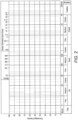
- a well-graded particle distribution can be seen in Figure 3 .
- the typical method of obtaining particle size distribution of aggregates is undertaken by shaking a dried sample of the material through a set of sieves and recording the mass retained in each sieve.
- the classification system adopted by the British Standards Institute is the MIT (Massachusetts Institute of technology) system.
- the percentage passing is the percentage of the total mass that have passed through an individual sieve following the Standard in terms of sieves' size and order for testing].
- the aggregate materials used comprises a mixture of three aggregate sizes in accordance with the claims.
- the aggregate of size 6-20mm can be in a quantity of 3%, 4%, 5%, 6%, 7%, 8%, 9%, 10%, 11%, 12%, 13%, 14%, 15%, 16%, 17%, 18%, 19%, 20%, 21%, 22%, 23% 24%, or 25%.
- the aggregate of size 6-20mm may be used at a range of 3-20%; 3-15%; 3-10%; 5-25%; 5-20%; 5-15%; 7-25%; 7-20%; 7-15%; 7-10%; 10-25%; 10-20%; or 10-15%.
- the aggregate of size 6-20mm may be medium gravel.
- the aggregate of size 2-6mm can be in a quantity of 15%, 16%, 17%, 18%, 19%, 20%, 21%, 22%, 23% 24%, 25%, 26%, 27%, 28%, 29%, 30%, 31%, 32%, 33%, 34%, 35%, 36%, 37%, 38%, 39% or 40%.
- the aggregate of size 2-6mm can be used at a range of 15-35%; 15-30%; 15-25%; 20-40%; or 20-30%.
- the aggregate of size 2-6mm may be fine gravel.
- the aggregate of size 600 ⁇ m-2mm can be in a quantity of 10%, 11%, 12%, 13%, 14%, 15%, 16%, 17%, 18%, 19%, 20%, 21%, 22%, 23% 24%, 25%, 26%, 27%, 28%, 29%, 30%, 31%, 32%, 33%, 34%, 35%, 36%, 37%, 38%, 39% or 40%,
- the aggregate of size 600 ⁇ m-2mm can be used at a range of 10-35%; 10-30%; 10-25%; 10-20%; 15-30% or 15-25%.
- the aggregate of size 600 ⁇ m-2mm may be coarse sand.
- the aggregate of size 200-600 ⁇ m can be in a quantity of 10%, 11%, 12%, 13%, 14%, 15%, 16%, 17%, 18%, 19%, 20%, 21%, 22%, 23% 24%, 25%, 26%, 27%, 28%, 29% or 30%.
- the aggregate of size 200-600 ⁇ m can be used at a range of 10-25%; 10-20%; 15-30% or 15-25%.
- the aggregate of size 200-600 ⁇ m may be medium sand.
- the aggregate of size 60-200 ⁇ m can be in a quantity of 3%, 4%, 5%, 6%, 7%, 8%, 9%, 10%, 11%, 12%, 13%, 14% or 15%.
- the aggregate of size 60-200 ⁇ m can be used at a range of 3-10%; 5-15%; or 5-10%.
- the aggregate of size 60-200 ⁇ m may be fine sand.
- construction unit mixes examples include:
- the aggregate material can be in a quantity of 60-90% of the construction unit by dry mass.
- the aggregate material can be in a quantity of 60, 65, 70, 75, 80, 85 or 90% by dry mass.
- the aggregate material is preferably from inert construction and demolition waste.
- the percentages used to define the construction unit are percentages by dry mass.
- the construction units of the invention are air-dried.
- air-dried bricks do not have associated emissions from the production plant during manufacture, they have a much lower embodied energy (roughly 1/10 th that of traditional fired bricks).
- the average embodied energy for a traditional fired brick is approximately 3 MJ/kg as opposed to 0.44 MJ/kg for air-dried bricks.
- Air-dried bricks can also help regulate humidity within a building. Academic research indicates that unfired masonry has a much higher potential to regulate the indoor humidity than conventional construction materials. Therefore, hygroscopic walls and ceilings as would be provided by the construction units described give substantial stability to indoor relative humidity. As a result of the benefits of this humidity buffering, using unfired masonry may reduce mould growth, reduce energy consumption of air conditioning and increase the durability of building materials.
- Air dried bricks also have a higher thermal mass due to their density.
- the air dried bricks may have thermal conductivities of approximately 0.38-0.74 W/mk.
- fired concrete brick thermal conductivities range from 1.2-1.8 W/mk.
- pigment or other additive can be added to increase the waterproofing of the construction units.
- Pigments such as toners from recycled print cartridges may provide characteristics so that the construction unit does not absorb as much moisture as without inclusion of pigments.
- the pigment may enhance the intermolecular bond between the gypsum, clay and aggregate materials in the construction unit.
- such pigment may also provide colour to the units for aesthetic purposes.
- pigment may be added to the construction unit in an amount of up to 15% by dry mass of the construction unit.
- the pigment may be from recycled sources.
- the pigment may be recycled from waste printer cartridges.
- the pigment may be obtainable from recycled toner cartridges in line with the environmental credentials of the invention.
- the pigment particles may intersperse between the gypsum and clay provided in the construction unit.
- the inclusion of particular types of pigments for example recycled waste toner from printer cartridges may make the resulting construction units more resistant to water ingress and/or water transport through the construction unit.
- the pigment may have a particle size of 5 microns, 10 microns, 15 microns, or 20 microns.
- the pigment can be added in a quantity of 1 - 30% of total dry mass of the construction unit, preferably, between 5 to 20%.
- organic material such as sewage may be excluded.
- organic material means the constituents of the construction unit are not well defined and may cause the resulting construction unit to be unstable due to decay. Furthermore, the organic material may cause the construction unit to have an unattractive smell.
- Organic material may be defined as carbon-containing substances formed by living organisms.
- Added salt for example, in the form of sea salt may also be excluded as it causes the resulting construction units to stain, particularly in wet conditions. More importantly, salt may also leak out of the construction unit, causing degradation of nearby mortar and thus structural damage.
- Tar is toxic. Furthermore, tar is not environmentally friendly thus not in keeping with the green credentials of the construction unit described.
- the method can comprise pre-processing/ pre-treatment of the gypsum prior to use in the method.
- pre-treatment of waste plasterboard to provide gypsum for use in the method of manufacture of the construction units of the present invention includes; shredding, crushing, and/or air separation processes to produce a coarse grade material with particle size distribution 0.063 - 16mm for example, as specified by Table 1, PAS 109:2013 Specification for the production of reprocessed gypsum from waste plasterboard.
- Further pre-treatment of the plasterboard may be provided using grinding, for example using a hammer mill to grind and screen the gypsum to provide coarse grade material in with a particular material particle size distribution 0.063 - 2mm for example, as specified by Table 1, PAS 109:2013 which can be found at https://www.gov.uk/government/publications/recycled-gypsum-from-waste-plasterboard-quality-protocol/recycled-gypsum-from-waste-plasterboard-quality-protocol.
- the gypsum can be sieved though a 600 ⁇ m before being used in the method.
- the moisture content of the gypsum is reduced so that the gypsum forms a hemihydrate state.
- Lowering the moisture content of the waste gypsum improves its microstructure properties resulting in a smaller void fraction and better mechanical properties. This in turn improves the strength in the construction unit.
- gypsum may be heated at between 80-250°C; 80-200°C; 80-150°C; or 100-150°C.
- the gypsum may be heated at these temperatures for 1-2 days, approximately 1 day; 6-24 hours; 12-24 hours; 18-24 hours; 6-18 hours; or 6-12 hours.
- the gypsum may be heated at approximately 150°C for approximately 24 hours; or a higher temperature, for example 200°C, could be used for less than 24 hours.
- pressure may be used to reduce the moisture content of the gypsum.
- Gypsum in its hemihydrate form has lost 75% of its water content. Therefore, to test if the gypsum has reached its hemihydrate state, the gypsum may be weighed before and after heat and/or pressure treatment. The water loss of the gypsum based on the weight loss after treatment can then be calculated. For example:
- the molecular weight of gypsum CaSO 4 .(H 2 0) 2 172.64.
- the water makes up 34.014g of this molecular weight.
- the water content reduces.
- the gypsum reaches its hemihydrate state. That is, if the gypsum initially weighed 172.64g before heating. After heating, the gypsum molecular weight will be approximately 147g (138.6 of gypsum and 8.6g of water) if the hemihydrate state has been achieved.
- Pre-processing / pre-treatment of one or more of the other components may also, alternatively be carried out.
- the components may be sorted by particle size. This can be done by sieving the components to control the particle size used for manufacture of the construction units.
- clay in pre-processing, can be broken down (for example using a hammer drill) and passed through a 150 ⁇ m sieve.
- the clay particle size may vary up to a maximum of 0.002mm.
- One or more of the other components (clay or aggregate) of the construction unit may be dried prior to mixing. Drying helps ensure the moisture content in the finished brick unit is controlled and optimised for improved performance characteristics.
- drying of the other components (clay or aggregate) for use in the manufacture of the construction unit may be carried out in an oven.
- the temperature of the oven for drying may be around 105°C.
- the drying may be carried out at a temperature of 60, 65, 70, 75, 80, 85, 90, 95, 100, 105 or 110°C for at least 24 hours. Drying may be carried out in as specified by British Standard BS-EN 772-1, Methods of Test for Masonry Units for construction units with clay soils.
- Drying may be carried out from 1 hour to overnight depending on the initial moisture content of the component. For example, drying of aggregate may be overnight or for 6-24 hours at 105°C. Drying of clay may be 6-24 hours at 105°C.
- the components can be stored in airtight containers to ensure the components are not rehydrated by ambient moisture in the air.
- the moisture content of the components of the construction unit can be tested before mixing.
- drying of the components may not be needed, and/or the amount of water added to the mixture may be adjusted to take into account the moisture content of the components during manufacture of the construction unit.
- a moisture content of 8-40%, for example 12 - 26%, of total dry mass of construction unit may be reached prior to mixing.
- the method used to test the components for moisture content can be using any suitable method as known in the art, for example in the laboratory to determine the moisture content of the clay, gypsum or aggregates, a sample of the material can be taken and weighed, then oven dried at 105°C for 24 hours before being weighed again. The difference in mass allows for the moisture content to be calculated (moisture content is the mass of the water divided by the mass of the dry solids). Alternatively, a moisture sensor can be used to determine the moisture content of the materials.
- the components gypsum, aggregate materials and clay are mixed, until a homogenous mixture is reached.
- An additive for example a pigment such as a toner, may also be added to the gypsum, clay and aggregate materials.
- the mixing is stopped and water is added to the mixture.
- the gypsum, clay and aggregate mixture is then mixed with the water. This mixing may take, for example 1 minute.
- the mixing can be done by a mechanical mixer or may be manually mixed.
- water is added to the mixture until the mixture has water/moisture content in the range 8-40%, for example 12 - 26%, of total dry mass of the construction unit.
- the construction unit can then be compressed, compacted or extruded. Following compression, compaction or extrusion, the construction unit can be air dried until equalisation of the internal moisture and relative humidity of the air is reached.
- the gypsum, clay and aggregate mixture may have a final water/moisture content of 12 - 26% prior to being placed in a mould (e.g. stainless steel mould).
- the mixture may be poured into the mould in a single step or incrementally. This can help avoid the development of air gaps which may occur in the corners of the mould.
- the use of a vibrating plate may also avoid the development of air gaps.
- the mixture is then compacted in the mould.
- compaction can be carried out using a mechanical press.
- a steel insert can be placed on top of the mixture inside the mould to enable a uniform pressure across the surface.
- the mould, filled with the mixture can then be positioned under the mechanical press, and subjected to a minimum 10 kN force. This achieves full compaction in a single layer.
- the top surface of the mixture in the mould may be levelled before compaction occurs.
- Compaction can be carried out manually or automatically.
- a construction unit of larger size can be compacted in multiple layers.
- Each layer is compressed as per the process described above, but instead is subjected to a force before the addition of the subsequent layer of mixture. Additionally, between layers, scattering of the top surface may be required to ensure adequate bonding of layers.
- bulk density can be calculated knowing the mass and volume of the construction unit.
- the gypsum, clay and aggregate mixture may be left in the mould for 4 hours or more.
- Air drying is an alternative to firing. Air drying involves leaving the compacted, compressed or extruded construction unit in the open air to dry for a period of time. The air drying or curing is preferably done in a manner that ensures sufficient airflow around all surfaces of the construction unit. For example, a rack may be used.
- the air cure can be performed at ambient temperature (e.g. at room temperature between 4-35°C).
- the air can have moisture content depending on relative humidity.
- the progress of the air curing can be monitored by weighing the construction unit.
- the weight of the construction unit does not significantly change, for example when measured over 2 or more days, the construction unit is ready for use.
- the unit has reached the curing time.
- a construction unit of the present invention can have compressive strength from 1 to 20 N/mm 2 .
- the compressive strength of a construction unit can be between 8 and 15 N/mm 2 .
- the mean compressive strength per unit may be 4, 5, 6, 7, 8, 9, 10, 11 or 12 N/mm 2 .
- the construction unit can be used on the external face of a building.
- the construction unit can also be used for the internal walls of a building.
- the construction unit can be used as a structural unit.
- a raw mix for making a brick comprises the gypsum, clay and aggregate materials in accordance with the claims.
- the water content of the raw mix can be calculated and the mix then used with additional water if necessary according to the method above.
- the mix may be sealed in an air-tight container with water content calculated and displayed on the container such that the raw mix is ready for use with only the indicated water amount to be added.
- Example 1 Method of manufacturing a construction unit in a laboratory
- the manufacture can include five stages.
- the gypsum was passed through a 600 ⁇ m sieve using a vibration plate. All material passing through the sieve, landing on the baseplate, was used in construction unit production. This material was placed in an oven at 140°C for 8 hours before commencing the next stage.
- the gypsum typically then has 25% of the initial water contained within its chemical structure. That is, the gypsum is in its hemihydrate form.
- Mineral demolition waste can provide recycled, washed aggregates and sand forming the aggregate components; gravel, coarse and fine sand. These components are typically placed in an oven at 105°C for 24 hours to ensure all moisture has left the material.
- clay for use in the construction units arrived unbroken in large clumps. Before it was broken down, the clay was dried in an oven at 105°C overnight. Large clumps were broken down using a hammer drill or equivalent until the material passed through a 150 ⁇ m sieve. This fine clay was then dried out overnight at 105°C to remove any moisture present.
- Table 1 shows the initial mixture components of two construction units (bricks) produced.
- Table 1 Mixture components of a construction unit of the invention. soil type (British Standard Classification) Particle Size (mm) % of total dry mass fine sand 0.06-0.2 6 5 medium sand 0.2-0.6 17 16 coarse sand 0.6-2.0 20 19 fine gravel 2.0-6.0 26 24 medium gravel 6.0-20.0 6 6 clay 0-0.15 10 9 gypsum 0.15-0.30 15 14 toner (additive) 0.09 0 7
- the final brick had a mass around 2700g.
- the total mass may change as the moisture may change, depending on relative humidity conditions.
- the manufacturing method can comprise;
- the mixing process ensures a homogenous mixture which allows for good compaction of the mixture to form the construction unit. Initially, once weighed out, all dry materials were mixed using a mechanical mortar mixer for 30 seconds until a homogeneous mixture was reached. The mixer was stopped and the water was added, if required, to reach the desired moisture content of 12 - 26% of total dry mass before mixing for a further one minute. As the mixture sets quickly it is important to remove the material immediately and begin the compaction process.
- a mechanical press or equivalent was used to provide such compaction.
- the mixture was placed in a stainless steel brick mould using a metal scraper in increments to push the mixture into the corners of the mould, with a level top surface before compaction. Once full the mould was placed under the compaction machine and a steel insert is placed inside brick mould to ensure uniform pressure was achieved.
- the mechanical press exerts a 10kN force upon the mixture ensuring compaction in a single layer.
- the construction units may be manufactured in different shapes as desired.
- the construction unit (brick) was ready to be finished using the same scraper.
- surplus water diffused to the top surface allowing the top surface to be smoothed off by pressing down on the scraper and pulling it across the top of the brick.
- This process achieved a smooth flat finish along the top of the unit/brick and was repeated in both directions.
- the unit/brick was then left in the mould for an hour before its removal. Once the mould was removed the unit/brick was left to dry at normal atmosphere i.e. (15°C-20°C) or a minimum of 14 days, but potentially up to 28 days. This air drying caused the unit/brick to reach ambient temperature and moisture content.
- the construction unit may have different surface finishes as desired.
- FIG. 3 The particle distribution of the brick of table 2 without toner is shown in Figure 3 .
- This figure shows the brick has a well-graded particle distribution. That is, a brick where plotting the aggregate particle size against the percentage passing results in a curve which is generally constant over the full range of particle sizes such that there is no deficiency or excess of any particular aggregate particle size.
- Table 3 Comparing the compressive strength of construction units with different clays (Clay type A and clay type B) Observed Compressive Strength Characteristics Clay Type Max Strength (N/mm 2 ) No.
- the initial rate of water absorption was calculated according to the UK BS EN standard 772-11 ("Methods of test for masonry units Part 11: Determination of water absorption of AC, AAC, MS and NS masonry units due to capillary action and the initial rate of water absorption of clay masonry units").
- a face of the construction unit was immersed in water for a specified period of time (dependent on the type of construction unit being assessed, please see below).
- the masonry unit was re-weighed after immersion, and any increase in mass can be attributed to any water absorbed during the immersion period.
- a high concentration of soluble salts results in effervescence from brick walls of the salts present, usually seen in the form of a white deposit on the surface of the bricks. This is visually undesirable and can cause corrosion and/or degradation of the surrounding building materials. Thus, soluble salt testing is carried out.
- Ten bricks were tested in order to investigate the suction profile (matric suction - water capillary action within the material as well as osmotic suction due to chemical reaction) of the bricks with and without toner powder.
- four bricks contained no toner powder; three with a mixture of recycled toner powder at three different quantities (low, medium and high relating to a single amount of toner powder, then double the amount then quadruple the amount) added.
Landscapes
- Chemical & Material Sciences (AREA)
- Engineering & Computer Science (AREA)
- Ceramic Engineering (AREA)
- Organic Chemistry (AREA)
- Materials Engineering (AREA)
- Structural Engineering (AREA)
- Dispersion Chemistry (AREA)
- Inorganic Chemistry (AREA)
- Chemical Kinetics & Catalysis (AREA)
- Environmental & Geological Engineering (AREA)
- Combustion & Propulsion (AREA)
- Civil Engineering (AREA)
- Processing Of Solid Wastes (AREA)
- Curing Cements, Concrete, And Artificial Stone (AREA)
Claims (15)
- Konstruktionseinheit, wobei die Einheit Gips, Ton und Zuschlagstoffe umfasst, wobei die Zuschlagstoffe drei oder mehr verschiedene Größenbereiche von Zuschlag umfassen und wobei die Größenbereiche mindestens einen umfassen von a) 6 bis 20 mm; oder b) 2 bis 6 mm; und mindestens einen von c) 600 µm bis 2 mm; d) 200 bis 600 µm und/oder e) 60 bis 200 µm, wobei die Zuschlaggröße dem British Soil Classification System entspricht; und
wobei die Zuschlagstoffe umfassen:a) Zuschlag der Größe 6 bis 20 mm im Bereich von 3 bis 25 % (w/w) Trockenmasse;b) Zuschlag der Größe 2 bis 6 mm im Bereich von 15 bis 40 % (w/w) Trockenmasse;c) Zuschlag der Größe 600 µm bis 2 mm im Bereich von 10 bis 40 % (w/w) Trockenmasse;d) Zuschlag der Größe 200 bis 600 µm im Bereich von 10 bis 30 % (w/w) Trockenmasse;e) Zuschlag der Größe 60 bis 200 µm im Bereich von 3 bis 15 % (w/w) Trockenmasse, wobei die Konstruktionseinheit keinen Zement umfasst. - Konstruktionseinheit nach Anspruch 1, wobei:a) der Gipsanteil im Bereich von 5 bis 35 % (w/w) Trockenmasse liegt oderb) der Tonanteil im Bereich von 5 bis 40 % (w/w) Trockenmasse liegt.
- Konstruktionseinheit nach Anspruch 1 bis 2, wobei die Zuschlagstoffe umfassen:a) Zuschlag der Größe 6 bis 20 mm im Bereich von 3 bis 15 % (w/w) Trockenmasse;b) Zuschlag der Größe 2 bis 6 mm im Bereich von 20 bis 30 % (w/w) Trockenmasse;c) Zuschlag der Größe 600 µm bis 2 mm im Bereich von 10 bis 40 % (w/w) Trockenmasse;d) Zuschlag der Größe 200 bis 600 µm im Bereich von 10 bis 30 % (w/w) Trockenmasse; odere) Zuschlag der Größe 60 bis 200 µm im Bereich von 3 bis 15 % (w/w) Trockenmasse.
- Konstruktionseinheit nach Anspruch 1 bis 3, wobei der Zuschlag der Größe:a) 6 bis 20 mm und/oder Zuschlag der Größe 2 bis 6 mm Kies ist: oderb) 600 µm bis 2 mm; 200 bis 600 µm und/oder 60 bis 200 µm Sand ist.
- Konstruktionseinheit nach einem der vorhergehenden Ansprüche, wobei die Konstruktionseinheit wiederverwerteten Gips, wiederverwerten Lehmboden oder Zuschlag umfasst, die aus wiederverwertetem inertem Konsturktions- und Abbruchabfall gewonnen wurden.
- Konstruktionseinheit nach einem der vorhergehenden Ansprüche, ferner umfassend einen Zusatzstoff, vorzugsweise wobei der Zusatzstoff ein Pigment ist.
- Konstruktionseinheit nach einem der vorhergehenden Ansprüche, wobei die Konstruktionseinheit keinen Teer umfasst.
- Rohmischung zur Herstellung einer ungebrannten Konstruktionseinheit, wobei die Rohmischung Gips, Ton und Zuschlagstoffe umfasst, wobei die Zuschlagstoffe drei oder mehr verschiedene Größenbereiche von Zuschlag umfassen und wobei die Größenbereiche mindestens einen umfassen von a) 6 bis 20 mm; oder b) 2 bis 6 mm; und mindestens einen von c) 600 µm bis 2 mm; d) 200 bis 600 µm und/oder e) 60 bis 200 µm, wobei die Zuschlaggröße dem British Soil Classification System entspricht; und
wobei die Zuschlagstoffe umfassen:a) Zuschlag der Größe 6 bis 20 mm im Bereich von 3 bis 25 % (w/w) Trockenmasse;b) Zuschlag der Größe 2 bis 6 mm im Bereich von 15 bis 40 % (w/w) Trockenmasse;c) Zuschlag der Größe 600 µm bis 2 mm im Bereich von 10 bis 40 % (w/w) Trockenmasse;d) Zuschlag der Größe 200 bis 600 µm im Bereich von 10 bis 30 % (w/w) Trockenmasse;e) Zuschlag der Größe 60 bis 200 µm im Bereich von 3 bis 15 % (w/w) Trockenmasse, wobei die Rohmischung keinen Zement umfasst. - Verfahren zur Herstellung der Konstruktionseinheit nach Anspruch 1 bis 7, umfassenda) Zusammenmischen von Gips, Ton und Zuschlagstoffen;b) Hinzufügen von Wasser zu dem gemischten Gips-, Ton- und Zuschlagstoffmaterial, sodass ein Wassergehalt in einem Bereich von 8 bis 40 % (w/w) Trockenmasse des gemischten Materials bereitgestellt wird;c) Verdichten, Komprimieren oder Extrudieren des gemischten Materials aus Schritt b; undd) Trocknenlassen des gemischten Materials aus Schritt c), wobei das Verfahren kein Hinzufügen von Zement zum Bilden der Konstruktionseinheit umfasst.
- Verfahren nach Anspruch 9, wobei es sich bei dem Gips um wiederverwerteten Gips oder Rauchgasentschwefelungsgips handelt.
- Verfahren nach einem der Ansprüche 9 bis 10, umfassend den weiteren Schritt des Verarbeitens des Gipses, um seinen Feuchtigkeitsgehalt vor seinem Mischen mit dem Ton und den Zuschlagstoffen zu reduzieren.
- Verfahren nach Anspruch 11, wobei der Verarbeitungsschritt das Reduzieren des Gipses zum Bilden von Halbhydrat-Gips umfasst.
- Verfahren nach Anspruch 11 oder 12, wobei der Verarbeitungsschritt das Erhitzen oder Unter-Druck-Setzen des Gipses umfasst, um seinen Feuchtigkeitsgehalt zu reduzieren, vorzugsweise wobei das Erhitzen bei einer Temperatur von 80 bis 200 °C, vorzugsweise 150 °C, über 24 Stunden durchgeführt wird.
- Konstruktionseinheit nach Anspruch 1 bis 7, wobei die Konstruktionseinheit ungebrannt ist.
- Verfahren nach Anspruch 9 bis 13, wobei das Verfahren nicht das Brennen der Konstruktionseinheiten einschließt.
Priority Applications (2)
| Application Number | Priority Date | Filing Date | Title |
|---|---|---|---|
| EP24212331.3A EP4520740A2 (de) | 2015-11-20 | 2016-11-18 | Baueinheit |
| EP25175549.2A EP4574799A2 (de) | 2015-11-20 | 2016-11-18 | Konstruktionseinheiten in form von ziegeln, blöcken oder platten aus wiederverwertbaren materialien und nebenprodukten, verfahren zur herstellung der konstruktionseinheiten und deren verwendung |
Applications Claiming Priority (2)
| Application Number | Priority Date | Filing Date | Title |
|---|---|---|---|
| GBGB1520515.6A GB201520515D0 (en) | 2015-11-20 | 2015-11-20 | Construction unit |
| PCT/GB2016/053609 WO2017085510A1 (en) | 2015-11-20 | 2016-11-18 | Construction units in form of bricks, blocks or tiles made from recyclable materials and by-products, method of making the construction units and their use |
Related Child Applications (3)
| Application Number | Title | Priority Date | Filing Date |
|---|---|---|---|
| EP25175549.2A Division EP4574799A2 (de) | 2015-11-20 | 2016-11-18 | Konstruktionseinheiten in form von ziegeln, blöcken oder platten aus wiederverwertbaren materialien und nebenprodukten, verfahren zur herstellung der konstruktionseinheiten und deren verwendung |
| EP24212331.3A Division EP4520740A2 (de) | 2015-11-20 | 2016-11-18 | Baueinheit |
| EP24212331.3A Division-Into EP4520740A2 (de) | 2015-11-20 | 2016-11-18 | Baueinheit |
Publications (3)
| Publication Number | Publication Date |
|---|---|
| EP3377460A1 EP3377460A1 (de) | 2018-09-26 |
| EP3377460B1 true EP3377460B1 (de) | 2024-11-13 |
| EP3377460B8 EP3377460B8 (de) | 2024-12-25 |
Family
ID=55133121
Family Applications (3)
| Application Number | Title | Priority Date | Filing Date |
|---|---|---|---|
| EP16801034.6A Active EP3377460B8 (de) | 2015-11-20 | 2016-11-18 | Konstruktionseinheiten in form von ziegeln, blöcken oder platten aus wiederverwertbaren materialien und nebenprodukten, verfahren zur herstellung der konstruktionseinheiten und deren verwendung |
| EP25175549.2A Withdrawn EP4574799A2 (de) | 2015-11-20 | 2016-11-18 | Konstruktionseinheiten in form von ziegeln, blöcken oder platten aus wiederverwertbaren materialien und nebenprodukten, verfahren zur herstellung der konstruktionseinheiten und deren verwendung |
| EP24212331.3A Withdrawn EP4520740A2 (de) | 2015-11-20 | 2016-11-18 | Baueinheit |
Family Applications After (2)
| Application Number | Title | Priority Date | Filing Date |
|---|---|---|---|
| EP25175549.2A Withdrawn EP4574799A2 (de) | 2015-11-20 | 2016-11-18 | Konstruktionseinheiten in form von ziegeln, blöcken oder platten aus wiederverwertbaren materialien und nebenprodukten, verfahren zur herstellung der konstruktionseinheiten und deren verwendung |
| EP24212331.3A Withdrawn EP4520740A2 (de) | 2015-11-20 | 2016-11-18 | Baueinheit |
Country Status (7)
| Country | Link |
|---|---|
| US (1) | US10669205B2 (de) |
| EP (3) | EP3377460B8 (de) |
| DK (1) | DK3377460T3 (de) |
| ES (1) | ES3007558T3 (de) |
| GB (2) | GB201520515D0 (de) |
| PL (1) | PL3377460T3 (de) |
| WO (1) | WO2017085510A1 (de) |
Families Citing this family (4)
| Publication number | Priority date | Publication date | Assignee | Title |
|---|---|---|---|---|
| CN107244889B (zh) * | 2017-06-14 | 2020-10-02 | 佛山市高明区新粤丰建材有限公司 | 一种全抛釉砖的制备方法 |
| TN2017000455A1 (fr) * | 2017-10-30 | 2019-04-12 | Ben Ali Mohamed | Matériau moulé composite écologique à base de plâtre et de sable pour toute construction des murs, des blocs pleins ou alvéolés et tout autre type d'enveloppe |
| EP3733626A4 (de) * | 2017-12-27 | 2021-08-11 | Mori Pérez, Walter Aurelio | Verfahren zur herstellung von rezyklierten aggregaten, materialien und produkten für die konstruktion durch recycling von bau- und abbruchabfällen |
| CN109354476A (zh) * | 2018-11-26 | 2019-02-19 | 徐州振丰新型墙体材料有限公司 | 一种高韧性煤矸石砖及其制备方法 |
Citations (1)
| Publication number | Priority date | Publication date | Assignee | Title |
|---|---|---|---|---|
| GB2434365A (en) * | 2006-01-18 | 2007-07-25 | Akristos Ltd | Building product based on clay and gypsum |
Family Cites Families (19)
| Publication number | Priority date | Publication date | Assignee | Title |
|---|---|---|---|---|
| GB191111062A (en) | 1911-10-03 | 1912-06-27 | Charles Lurie | An Improvement in Variable Speed Gearing for Motor Cycles. |
| GB796420A (en) | 1954-07-28 | 1958-06-11 | Inst Internat Financier | Mortar mix and method of processing in an extrusion press |
| NL8503127A (nl) | 1985-11-13 | 1987-06-01 | Aardelite Holding Bv | Werkwijze voor het vervaardigen van bouwmateriaal op basis van kolenas. |
| FR2665698B1 (fr) * | 1990-08-10 | 1993-09-10 | Conroy Michel | Ciment complemente melange a des granulats selectionnes, pour l'obtention de mortier ou beton sans retrait, auto-lissant et auto-nivelant. |
| EP0729926A1 (de) | 1995-03-03 | 1996-09-04 | Gyproc Benelux | Verfahren zur Herstellung von Gipsbauteilen und nach diesem Verfahren hergestellte Gipsbauteile |
| JP2010532307A (ja) | 2007-06-29 | 2010-10-07 | インダストリー ファウンデーション オブ チョンナム ナショナル ユニバーシティー | セメントを含まないアルカリ活性結合材、それを用いたモルタルの製造方法およびセメントを含まないアルカリ活性補強モルタルの製造方法 |
| RU2378215C2 (ru) | 2007-12-24 | 2010-01-10 | Общество с ограниченной ответственностью "Оникс Плюс" | Сырьевая смесь |
| RU2393134C1 (ru) | 2009-06-03 | 2010-06-27 | Юлия Алексеевна Щепочкина | Керамическая масса для производства кирпича |
| FR2964379B1 (fr) | 2010-09-02 | 2013-03-01 | Lafarge Sa | Beton permeable a faible cout co2 et a aspect homogene |
| KR101376590B1 (ko) * | 2012-06-27 | 2014-03-20 | (주)포스코 | 압출기 람 자동 후진장치 |
| KR20140115119A (ko) * | 2013-03-20 | 2014-09-30 | 광진산업개발(주) | 무수축성 특성을 갖는 황토 도로 포장 조성물 및 그 황토 도로 포장 조성물을 이용한 도로 포장 방법 |
| KR101338625B1 (ko) | 2013-03-28 | 2013-12-06 | 고광식 | 하폐수 슬러지를 이용한 세라믹블록의 제조방법 |
| CN105473529A (zh) * | 2013-04-24 | 2016-04-06 | 知识产权古里亚有限责任公司 | 挤出的轻质热绝缘水泥基材料 |
| CN103332949B (zh) | 2013-05-30 | 2015-04-01 | 铜陵丰泽建材科技有限公司 | 高强度加气混凝土砌块及其制备方法 |
| CN104556853A (zh) | 2013-10-24 | 2015-04-29 | 哈尔滨宏万智科技开发有限公司 | 一种绿色环保粉煤灰隔音砖的配方及生产方法 |
| CN104556928A (zh) | 2013-10-24 | 2015-04-29 | 哈尔滨宏万智科技开发有限公司 | 一种粉煤灰环保墙砖的配方及生产方法 |
| CN104230306A (zh) | 2014-08-28 | 2014-12-24 | 黄艳 | 一种利用污泥制备的建筑材料 |
| SK7329Y1 (sk) | 2014-11-20 | 2016-01-07 | Verko S R O | Polymérová betónová zmes |
| TWM500788U (zh) | 2014-11-21 | 2015-05-11 | Hou mei li | 環保磚 |
-
2015
- 2015-11-20 GB GBGB1520515.6A patent/GB201520515D0/en not_active Ceased
-
2016
- 2016-11-18 EP EP16801034.6A patent/EP3377460B8/de active Active
- 2016-11-18 WO PCT/GB2016/053609 patent/WO2017085510A1/en not_active Ceased
- 2016-11-18 US US15/776,189 patent/US10669205B2/en active Active
- 2016-11-18 GB GB1619583.6A patent/GB2544656B/en active Active
- 2016-11-18 DK DK16801034.6T patent/DK3377460T3/da active
- 2016-11-18 EP EP25175549.2A patent/EP4574799A2/de not_active Withdrawn
- 2016-11-18 EP EP24212331.3A patent/EP4520740A2/de not_active Withdrawn
- 2016-11-18 ES ES16801034T patent/ES3007558T3/es active Active
- 2016-11-18 PL PL16801034.6T patent/PL3377460T3/pl unknown
Patent Citations (1)
| Publication number | Priority date | Publication date | Assignee | Title |
|---|---|---|---|---|
| GB2434365A (en) * | 2006-01-18 | 2007-07-25 | Akristos Ltd | Building product based on clay and gypsum |
Also Published As
| Publication number | Publication date |
|---|---|
| PL3377460T3 (pl) | 2025-03-24 |
| ES3007558T3 (en) | 2025-03-20 |
| GB2544656A (en) | 2017-05-24 |
| WO2017085510A1 (en) | 2017-05-26 |
| EP4520740A2 (de) | 2025-03-12 |
| EP3377460B8 (de) | 2024-12-25 |
| GB201619583D0 (en) | 2017-01-04 |
| EP3377460A1 (de) | 2018-09-26 |
| US20190337854A1 (en) | 2019-11-07 |
| GB2544656B (en) | 2019-01-09 |
| US10669205B2 (en) | 2020-06-02 |
| EP4574799A2 (de) | 2025-06-25 |
| GB201520515D0 (en) | 2016-01-06 |
| DK3377460T3 (da) | 2025-02-03 |
| CA3005406A1 (en) | 2017-05-26 |
Similar Documents
| Publication | Publication Date | Title |
|---|---|---|
| Pozo-Antonio | Evolution of mechanical properties and drying shrinkage in lime-based and lime cement-based mortars with pure limestone aggregate | |
| De Brito et al. | Mechanical behaviour of non-structural concrete made with recycled ceramic aggregates | |
| Chouhan et al. | Gainful utilization of dimensional limestone waste as fine aggregate in cement mortar mixes | |
| Kalagri et al. | The effect of aggregate size and type of binder on microstructure and mechanical properties of NHL mortars | |
| Salavessa et al. | Historical plasterwork techniques inspire new formulations | |
| DE112017005549T5 (de) | Mehrschichtiges isolierendes Bausystem für ein Gebäude-Verfahren zu seiner Herstellung-Trockenzusammensetzung zur Verwendung bei seiner Herstellung | |
| Saingam et al. | Synergizing Portland Cement, high-volume fly ash and calcined calcium carbonate in producing self-compacting concrete: A comprehensive investigation of rheological, mechanical, and microstructural properties | |
| Özkılıç et al. | Bond properties and anisotropy performance of 3D-printed construction and demolition waste-based geopolymers: Effect of operational-and material-oriented parameters | |
| Sun et al. | Strength assessment and mechanism analysis of cement stabilized reclaimed lime-fly ash macadam | |
| EP3377460B1 (de) | Konstruktionseinheiten in form von ziegeln, blöcken oder platten aus wiederverwertbaren materialien und nebenprodukten, verfahren zur herstellung der konstruktionseinheiten und deren verwendung | |
| EP3442927B1 (de) | Verfahren zur herstellung von porenbetonformkörpern | |
| WO2019216851A2 (en) | Cement-based light precast mortar with expanded perlite aggregate | |
| EP3129201B1 (de) | Verfahren zur herstellung von mauerwerkverbundstoffmaterialien | |
| US6802896B2 (en) | Concrete aggregate | |
| Akinwande et al. | Development of insulating masonry bricks from wood fiber and varying milled glass proportion | |
| US20240351241A1 (en) | Compressed concrete block with low mass per unit area comprising a raw clay matrix and associated methods | |
| Malaiškienė et al. | Effectiveness of technogenic waste usage in products of building ceramics and expanded clay concrete | |
| Umoh | Recycling demolition waste sandcrete blocks as aggregate in concrete | |
| Singhal et al. | Mechanical properties of ground granulated blast furnace slag based geopolymer concrete incorporating alccofine with different concentration and curing temperature | |
| CN105218055B (zh) | 自密实免振捣混凝土及其制备方法 | |
| CA3005406C (en) | Construction units in form of bricks, blocks or tiles made from recyclable materials and by-products, method of making the construction units and their use | |
| US20230047807A1 (en) | Hemp based geopolymer compositions and methods of use thereof | |
| Sharma | Partial replacement of cement by silica fume | |
| Apata et al. | Evaluating locally available materials as partial replacement for cement | |
| Mohamed et al. | Limestone Calcined Clay Cement‑based rubberized self‑compacting concrete: Fresh, mechanical, durability, and embodied‑carbon assessment |
Legal Events
| Date | Code | Title | Description |
|---|---|---|---|
| STAA | Information on the status of an ep patent application or granted ep patent |
Free format text: STATUS: UNKNOWN |
|
| STAA | Information on the status of an ep patent application or granted ep patent |
Free format text: STATUS: THE INTERNATIONAL PUBLICATION HAS BEEN MADE |
|
| PUAI | Public reference made under article 153(3) epc to a published international application that has entered the european phase |
Free format text: ORIGINAL CODE: 0009012 |
|
| STAA | Information on the status of an ep patent application or granted ep patent |
Free format text: STATUS: REQUEST FOR EXAMINATION WAS MADE |
|
| 17P | Request for examination filed |
Effective date: 20180604 |
|
| AK | Designated contracting states |
Kind code of ref document: A1 Designated state(s): AL AT BE BG CH CY CZ DE DK EE ES FI FR GB GR HR HU IE IS IT LI LT LU LV MC MK MT NL NO PL PT RO RS SE SI SK SM TR |
|
| AX | Request for extension of the european patent |
Extension state: BA ME |
|
| DAV | Request for validation of the european patent (deleted) | ||
| DAX | Request for extension of the european patent (deleted) | ||
| STAA | Information on the status of an ep patent application or granted ep patent |
Free format text: STATUS: EXAMINATION IS IN PROGRESS |
|
| 17Q | First examination report despatched |
Effective date: 20190618 |
|
| REG | Reference to a national code |
Ref country code: DE Ref legal event code: R079 Free format text: PREVIOUS MAIN CLASS: C04B0028140000 Ipc: C04B0028000000 Ref country code: DE Ref legal event code: R079 Ref document number: 602016090245 Country of ref document: DE Free format text: PREVIOUS MAIN CLASS: C04B0028140000 Ipc: C04B0028000000 |
|
| GRAP | Despatch of communication of intention to grant a patent |
Free format text: ORIGINAL CODE: EPIDOSNIGR1 |
|
| STAA | Information on the status of an ep patent application or granted ep patent |
Free format text: STATUS: GRANT OF PATENT IS INTENDED |
|
| RIC1 | Information provided on ipc code assigned before grant |
Ipc: C04B 28/14 19850101ALI20230106BHEP Ipc: C04B 28/00 19850101AFI20230106BHEP |
|
| INTG | Intention to grant announced |
Effective date: 20230215 |
|
| GRAJ | Information related to disapproval of communication of intention to grant by the applicant or resumption of examination proceedings by the epo deleted |
Free format text: ORIGINAL CODE: EPIDOSDIGR1 |
|
| STAA | Information on the status of an ep patent application or granted ep patent |
Free format text: STATUS: EXAMINATION IS IN PROGRESS |
|
| GRAP | Despatch of communication of intention to grant a patent |
Free format text: ORIGINAL CODE: EPIDOSNIGR1 |
|
| STAA | Information on the status of an ep patent application or granted ep patent |
Free format text: STATUS: GRANT OF PATENT IS INTENDED |
|
| INTC | Intention to grant announced (deleted) | ||
| INTG | Intention to grant announced |
Effective date: 20230714 |
|
| GRAJ | Information related to disapproval of communication of intention to grant by the applicant or resumption of examination proceedings by the epo deleted |
Free format text: ORIGINAL CODE: EPIDOSDIGR1 |
|
| STAA | Information on the status of an ep patent application or granted ep patent |
Free format text: STATUS: EXAMINATION IS IN PROGRESS |
|
| GRAP | Despatch of communication of intention to grant a patent |
Free format text: ORIGINAL CODE: EPIDOSNIGR1 |
|
| STAA | Information on the status of an ep patent application or granted ep patent |
Free format text: STATUS: GRANT OF PATENT IS INTENDED |
|
| INTC | Intention to grant announced (deleted) | ||
| INTG | Intention to grant announced |
Effective date: 20240312 |
|
| GRAS | Grant fee paid |
Free format text: ORIGINAL CODE: EPIDOSNIGR3 |
|
| GRAA | (expected) grant |
Free format text: ORIGINAL CODE: 0009210 |
|
| STAA | Information on the status of an ep patent application or granted ep patent |
Free format text: STATUS: THE PATENT HAS BEEN GRANTED |
|
| AK | Designated contracting states |
Kind code of ref document: B1 Designated state(s): AL AT BE BG CH CY CZ DE DK EE ES FI FR GB GR HR HU IE IS IT LI LT LU LV MC MK MT NL NO PL PT RO RS SE SI SK SM TR |
|
| REG | Reference to a national code |
Ref country code: GB Ref legal event code: FG4D |
|
| REG | Reference to a national code |
Ref country code: CH Ref legal event code: EP |
|
| REG | Reference to a national code |
Ref country code: CH Ref legal event code: PK Free format text: BERICHTIGUNG B8 |
|
| REG | Reference to a national code |
Ref country code: DE Ref legal event code: R081 Ref document number: 602016090245 Country of ref document: DE Owner name: KENOTEQ LTD, GB Free format text: FORMER OWNER: HERIOT-WATT UNIVERSITY, EDINBURGH, GB |
|
| REG | Reference to a national code |
Ref country code: IE Ref legal event code: FG4D |
|
| REG | Reference to a national code |
Ref country code: DE Ref legal event code: R096 Ref document number: 602016090245 Country of ref document: DE |
|
| RAP2 | Party data changed (patent owner data changed or rights of a patent transferred) |
Owner name: KENOTEQ LTD |
|
| P01 | Opt-out of the competence of the unified patent court (upc) registered |
Free format text: CASE NUMBER: APP_62746/2024 Effective date: 20241125 |
|
| REG | Reference to a national code |
Ref country code: DK Ref legal event code: T3 Effective date: 20250128 |
|
| REG | Reference to a national code |
Ref country code: SE Ref legal event code: TRGR |
|
| REG | Reference to a national code |
Ref country code: NL Ref legal event code: FP |
|
| REG | Reference to a national code |
Ref country code: LT Ref legal event code: MG9D |
|
| REG | Reference to a national code |
Ref country code: ES Ref legal event code: FG2A Ref document number: 3007558 Country of ref document: ES Kind code of ref document: T3 Effective date: 20250320 |
|
| PG25 | Lapsed in a contracting state [announced via postgrant information from national office to epo] |
Ref country code: HR Free format text: LAPSE BECAUSE OF FAILURE TO SUBMIT A TRANSLATION OF THE DESCRIPTION OR TO PAY THE FEE WITHIN THE PRESCRIBED TIME-LIMIT Effective date: 20241113 Ref country code: IS Free format text: LAPSE BECAUSE OF FAILURE TO SUBMIT A TRANSLATION OF THE DESCRIPTION OR TO PAY THE FEE WITHIN THE PRESCRIBED TIME-LIMIT Effective date: 20250313 Ref country code: PT Free format text: LAPSE BECAUSE OF FAILURE TO SUBMIT A TRANSLATION OF THE DESCRIPTION OR TO PAY THE FEE WITHIN THE PRESCRIBED TIME-LIMIT Effective date: 20250313 |
|
| PG25 | Lapsed in a contracting state [announced via postgrant information from national office to epo] |
Ref country code: FI Free format text: LAPSE BECAUSE OF FAILURE TO SUBMIT A TRANSLATION OF THE DESCRIPTION OR TO PAY THE FEE WITHIN THE PRESCRIBED TIME-LIMIT Effective date: 20241113 |
|
| PG25 | Lapsed in a contracting state [announced via postgrant information from national office to epo] |
Ref country code: BG Free format text: LAPSE BECAUSE OF FAILURE TO SUBMIT A TRANSLATION OF THE DESCRIPTION OR TO PAY THE FEE WITHIN THE PRESCRIBED TIME-LIMIT Effective date: 20241113 |
|
| PG25 | Lapsed in a contracting state [announced via postgrant information from national office to epo] |
Ref country code: NO Free format text: LAPSE BECAUSE OF FAILURE TO SUBMIT A TRANSLATION OF THE DESCRIPTION OR TO PAY THE FEE WITHIN THE PRESCRIBED TIME-LIMIT Effective date: 20250213 |
|
| PG25 | Lapsed in a contracting state [announced via postgrant information from national office to epo] |
Ref country code: LV Free format text: LAPSE BECAUSE OF FAILURE TO SUBMIT A TRANSLATION OF THE DESCRIPTION OR TO PAY THE FEE WITHIN THE PRESCRIBED TIME-LIMIT Effective date: 20241113 Ref country code: GR Free format text: LAPSE BECAUSE OF FAILURE TO SUBMIT A TRANSLATION OF THE DESCRIPTION OR TO PAY THE FEE WITHIN THE PRESCRIBED TIME-LIMIT Effective date: 20250214 |
|
| PG25 | Lapsed in a contracting state [announced via postgrant information from national office to epo] |
Ref country code: RS Free format text: LAPSE BECAUSE OF FAILURE TO SUBMIT A TRANSLATION OF THE DESCRIPTION OR TO PAY THE FEE WITHIN THE PRESCRIBED TIME-LIMIT Effective date: 20250213 |
|
| PG25 | Lapsed in a contracting state [announced via postgrant information from national office to epo] |
Ref country code: SM Free format text: LAPSE BECAUSE OF FAILURE TO SUBMIT A TRANSLATION OF THE DESCRIPTION OR TO PAY THE FEE WITHIN THE PRESCRIBED TIME-LIMIT Effective date: 20241113 |
|
| PG25 | Lapsed in a contracting state [announced via postgrant information from national office to epo] |
Ref country code: LU Free format text: LAPSE BECAUSE OF NON-PAYMENT OF DUE FEES Effective date: 20241118 |
|
| PG25 | Lapsed in a contracting state [announced via postgrant information from national office to epo] |
Ref country code: RO Free format text: LAPSE BECAUSE OF FAILURE TO SUBMIT A TRANSLATION OF THE DESCRIPTION OR TO PAY THE FEE WITHIN THE PRESCRIBED TIME-LIMIT Effective date: 20241113 |
|
| PG25 | Lapsed in a contracting state [announced via postgrant information from national office to epo] |
Ref country code: SK Free format text: LAPSE BECAUSE OF FAILURE TO SUBMIT A TRANSLATION OF THE DESCRIPTION OR TO PAY THE FEE WITHIN THE PRESCRIBED TIME-LIMIT Effective date: 20241113 |
|
| PG25 | Lapsed in a contracting state [announced via postgrant information from national office to epo] |
Ref country code: CZ Free format text: LAPSE BECAUSE OF FAILURE TO SUBMIT A TRANSLATION OF THE DESCRIPTION OR TO PAY THE FEE WITHIN THE PRESCRIBED TIME-LIMIT Effective date: 20241113 |
|
| PG25 | Lapsed in a contracting state [announced via postgrant information from national office to epo] |
Ref country code: IT Free format text: LAPSE BECAUSE OF FAILURE TO SUBMIT A TRANSLATION OF THE DESCRIPTION OR TO PAY THE FEE WITHIN THE PRESCRIBED TIME-LIMIT Effective date: 20241113 |
|
| REG | Reference to a national code |
Ref country code: DE Ref legal event code: R097 Ref document number: 602016090245 Country of ref document: DE |
|
| PG25 | Lapsed in a contracting state [announced via postgrant information from national office to epo] |
Ref country code: MC Free format text: LAPSE BECAUSE OF FAILURE TO SUBMIT A TRANSLATION OF THE DESCRIPTION OR TO PAY THE FEE WITHIN THE PRESCRIBED TIME-LIMIT Effective date: 20241113 |
|
| PLBE | No opposition filed within time limit |
Free format text: ORIGINAL CODE: 0009261 |
|
| STAA | Information on the status of an ep patent application or granted ep patent |
Free format text: STATUS: NO OPPOSITION FILED WITHIN TIME LIMIT |
|
| 26N | No opposition filed |
Effective date: 20250814 |
|
| PG25 | Lapsed in a contracting state [announced via postgrant information from national office to epo] |
Ref country code: IE Free format text: LAPSE BECAUSE OF NON-PAYMENT OF DUE FEES Effective date: 20241118 |
|
| REG | Reference to a national code |
Ref country code: CH Ref legal event code: U11 Free format text: ST27 STATUS EVENT CODE: U-0-0-U10-U11 (AS PROVIDED BY THE NATIONAL OFFICE) Effective date: 20251205 |
|
| PGFP | Annual fee paid to national office [announced via postgrant information from national office to epo] |
Ref country code: NL Payment date: 20251111 Year of fee payment: 10 |
|
| PGFP | Annual fee paid to national office [announced via postgrant information from national office to epo] |
Ref country code: DE Payment date: 20251113 Year of fee payment: 10 |
|
| PGFP | Annual fee paid to national office [announced via postgrant information from national office to epo] |
Ref country code: GB Payment date: 20251104 Year of fee payment: 10 |
|
| PGFP | Annual fee paid to national office [announced via postgrant information from national office to epo] |
Ref country code: AT Payment date: 20251106 Year of fee payment: 10 |
|
| PGFP | Annual fee paid to national office [announced via postgrant information from national office to epo] |
Ref country code: DK Payment date: 20251111 Year of fee payment: 10 |
|
| PGFP | Annual fee paid to national office [announced via postgrant information from national office to epo] |
Ref country code: FR Payment date: 20251110 Year of fee payment: 10 |
|
| PGFP | Annual fee paid to national office [announced via postgrant information from national office to epo] |
Ref country code: BE Payment date: 20251105 Year of fee payment: 10 |
|
| PGFP | Annual fee paid to national office [announced via postgrant information from national office to epo] |
Ref country code: SE Payment date: 20251121 Year of fee payment: 10 Ref country code: CH Payment date: 20251205 Year of fee payment: 10 |
|
| PGFP | Annual fee paid to national office [announced via postgrant information from national office to epo] |
Ref country code: PL Payment date: 20251106 Year of fee payment: 10 |
|
| PGFP | Annual fee paid to national office [announced via postgrant information from national office to epo] |
Ref country code: ES Payment date: 20251204 Year of fee payment: 10 |