EP3376228A2 - Verfahren zum nachweis biogener amin-botenstoffe - Google Patents
Verfahren zum nachweis biogener amin-botenstoffe Download PDFInfo
- Publication number
- EP3376228A2 EP3376228A2 EP18162230.9A EP18162230A EP3376228A2 EP 3376228 A2 EP3376228 A2 EP 3376228A2 EP 18162230 A EP18162230 A EP 18162230A EP 3376228 A2 EP3376228 A2 EP 3376228A2
- Authority
- EP
- European Patent Office
- Prior art keywords
- messenger
- inorganic
- biogenic amine
- fluorescent dye
- organic
- Prior art date
- Legal status (The legal status is an assumption and is not a legal conclusion. Google has not performed a legal analysis and makes no representation as to the accuracy of the status listed.)
- Granted
Links
Images


Classifications
-
- G—PHYSICS
- G01—MEASURING; TESTING
- G01N—INVESTIGATING OR ANALYSING MATERIALS BY DETERMINING THEIR CHEMICAL OR PHYSICAL PROPERTIES
- G01N33/00—Investigating or analysing materials by specific methods not covered by groups G01N1/00 - G01N31/00
- G01N33/48—Biological material, e.g. blood, urine; Haemocytometers
- G01N33/50—Chemical analysis of biological material, e.g. blood, urine; Testing involving biospecific ligand binding methods; Immunological testing
- G01N33/58—Chemical analysis of biological material, e.g. blood, urine; Testing involving biospecific ligand binding methods; Immunological testing involving labelled substances
- G01N33/582—Chemical analysis of biological material, e.g. blood, urine; Testing involving biospecific ligand binding methods; Immunological testing involving labelled substances with fluorescent label
-
- G—PHYSICS
- G01—MEASURING; TESTING
- G01N—INVESTIGATING OR ANALYSING MATERIALS BY DETERMINING THEIR CHEMICAL OR PHYSICAL PROPERTIES
- G01N31/00—Investigating or analysing non-biological materials by the use of the chemical methods specified in the subgroup; Apparatus specially adapted for such methods
- G01N31/22—Investigating or analysing non-biological materials by the use of the chemical methods specified in the subgroup; Apparatus specially adapted for such methods using chemical indicators
-
- G—PHYSICS
- G01—MEASURING; TESTING
- G01N—INVESTIGATING OR ANALYSING MATERIALS BY DETERMINING THEIR CHEMICAL OR PHYSICAL PROPERTIES
- G01N33/00—Investigating or analysing materials by specific methods not covered by groups G01N1/00 - G01N31/00
- G01N33/48—Biological material, e.g. blood, urine; Haemocytometers
- G01N33/50—Chemical analysis of biological material, e.g. blood, urine; Testing involving biospecific ligand binding methods; Immunological testing
- G01N33/53—Immunoassay; Biospecific binding assay; Materials therefor
- G01N33/543—Immunoassay; Biospecific binding assay; Materials therefor with an insoluble carrier for immobilising immunochemicals
- G01N33/54313—Immunoassay; Biospecific binding assay; Materials therefor with an insoluble carrier for immobilising immunochemicals the carrier being characterised by its particulate form
- G01N33/5432—Liposomes or microcapsules
-
- G—PHYSICS
- G01—MEASURING; TESTING
- G01N—INVESTIGATING OR ANALYSING MATERIALS BY DETERMINING THEIR CHEMICAL OR PHYSICAL PROPERTIES
- G01N33/00—Investigating or analysing materials by specific methods not covered by groups G01N1/00 - G01N31/00
- G01N33/48—Biological material, e.g. blood, urine; Haemocytometers
- G01N33/50—Chemical analysis of biological material, e.g. blood, urine; Testing involving biospecific ligand binding methods; Immunological testing
- G01N33/74—Chemical analysis of biological material, e.g. blood, urine; Testing involving biospecific ligand binding methods; Immunological testing involving hormones or other non-cytokine intercellular protein regulatory factors such as growth factors, including receptors to hormones and growth factors
-
- G—PHYSICS
- G01—MEASURING; TESTING
- G01N—INVESTIGATING OR ANALYSING MATERIALS BY DETERMINING THEIR CHEMICAL OR PHYSICAL PROPERTIES
- G01N33/00—Investigating or analysing materials by specific methods not covered by groups G01N1/00 - G01N31/00
- G01N33/48—Biological material, e.g. blood, urine; Haemocytometers
- G01N33/50—Chemical analysis of biological material, e.g. blood, urine; Testing involving biospecific ligand binding methods; Immunological testing
- G01N33/94—Chemical analysis of biological material, e.g. blood, urine; Testing involving biospecific ligand binding methods; Immunological testing involving narcotics or drugs or pharmaceuticals, neurotransmitters or associated receptors
- G01N33/9406—Neurotransmitters
-
- G—PHYSICS
- G01—MEASURING; TESTING
- G01N—INVESTIGATING OR ANALYSING MATERIALS BY DETERMINING THEIR CHEMICAL OR PHYSICAL PROPERTIES
- G01N2800/00—Detection or diagnosis of diseases
- G01N2800/24—Immunology or allergic disorders
Definitions
- the present invention relates to a method for detecting a biogenic amine messenger in an ex-vivo rapid test.
- Biogenic amine messengers naturally occur in the form of hormones and neurotransmitters. For example, they are released by cells in response to certain stimuli or serve to communicate between individual cells or cell networks. In this way, the concentration of certain amine messenger substances, for example in a blood sample, can provide information about cell processes and reactions taking place in an organism.
- biogenic amine messenger histamine is released, for example, in certain allergic reaction.
- Such hypersensitivity reactions are classified into four different types and are basically due to a malfunction of the immune system.
- the invention described herein relates primarily to type I allergic reactions. These allergic reactions are based on a common mechanism ( FIG. 1 ).
- the allergen is presented by antigen-presenting cells in such a way that predominantly a Th2 response is triggered.
- This generates antigen-specific B cells that form antibodies of the IgE class.
- These antibodies bind to IgE receptors on the surface of mast cells and basophilic granulocytes.
- an allergic reaction may be triggered. This will be a signal cascade triggered, resulting in the release of mediators from granules of mast cells / granulocytes.
- the mediators include histamine, serotonin, leukotrienes, heparin and various enzymes.
- a combination with tests by which a specific activation of the target cells (mast cells and basophilic granulocytes) can be determined is desirable. Since blood cells are the most accessible, basophilic granulocytes are usually used. For the proof of activation, either the released mediators (eg histamine, leukotrienes, tryptase, etc.) or the surface detectable vesicle proteins after degranulation are measured.
- the released mediators eg histamine, leukotrienes, tryptase, etc.
- the surface detectable vesicle proteins after degranulation are measured.
- the object of the present invention to provide an alternative ex vivo detection method for biogenic amine messengers.
- the detection method should provide both qualitative and quantitative results.
- the inventively used inorganic-organic hybrid compounds consist of an inorganic metal cation selected from the group consisting of Cu + , Cu 2+ , Ag + , Zn 2+ , Au + and Au 3+ , and an organic fluorescent dye anion, which contains at least one carboxylate group.
- Such inorganic-organic hybrid compounds are distinguished by the fact that the luminescence of the fluorescent dye in the solid state is extinguished.
- the method described is based on the fact that the inorganic-organic hybrid compounds react with a biogenic amine messenger.
- the biogenic amine messenger displaces the organic fluorescent dye anion due to its higher affinity for the inorganic metal cation.
- the fluorescent dye anion now present in free form again has luminescence properties and its concentration can then be determined photometrically, for example by flow cytometry.
- the amount of the released fluorescent dye anion is dependent on the amount of biogenic amine messenger.
- the organic fluorescent dye anion is not substantially limited as long as it has at least one carboxylate group as a functional group. This functional group can coordinate to the inorganic metal cation.
- the fluorescence of the fluorescent dye anion is quenched when coordinated to the inorganic metal cation and can reappear when the fluorescent dye anion is in free form.
- the excitation of the fluorescent dye with visible light and the associated emission is in the visible to infrared spectral range of the light.
- fluorescent dye anions for example, anions of fluorescein and fluorescein derivatives, perylene derivatives, rhodamine and rhodamine derivatives and cyanines can be used.
- the organic fluorescent dye anion is particularly preferably an anion of calcein or 3,4,9,10-perylenetetracarboxylic acid.
- the solubility of the inorganic-organic hybrid compound according to the invention can be influenced.
- the inorganic metal cation is selected from the group consisting of Cu + , Cu 2+ , Ag + , Zn 2+ , Au + and Au 3+ .
- the inorganic metal cation is Cu + , Cu 2+ or Ag + .
- the method according to the invention serves to detect biogenic amine messengers.
- the biogenic amine messenger is selected from the group consisting of histamine, serotonin, dopamine, ⁇ -aminobutyric acid, epinephrine, norepinephrine, heparin, thyroxine and triiodothyronine.
- the biogenic amine messenger histamine is particularly preferred.
- the inorganic-organic hybrid compound of the present invention is in the form of nanoparticles having a particle diameter in the range of 1 to 100 nm, wherein the particle diameter can be determined by electron microscopy and / or dynamic light scattering.
- a very high concentration of fluorescent dye anions is generally present in the nanoparticles of the inorganic-organic hybrid compound used according to the invention, as a result of which the local fluorescence intensity after contacting with a biogenic amine messenger is greater than the fluorescence intensity when using a soluble dye-metal compound. Complex is greatly increased.
- inorganic-organic hybrid compounds in the form of nanoparticles are less susceptible to degradation, for example by photobleaching.
- the inorganic-organic hybrid compound is functionalized with an antibody, peptide or oligonucleotide.
- the inorganic-organic hybrid compound itself can cause reactions of cells, for example an allergic reaction, which can be detected directly by a change in fluorescence.
- such surface functionalization may also be serve to bind the inorganic-organic hybrid compound to target cells, so as to distinguish, for example, in a single sample, cells that release a biogenic amine messenger from cells, where this is not the case.
- Cells within the scope of the present invention are not further limited and include human and animal cells and particles such as mast cells, platelets and leukocytes, pluripotent stem cells, preferably not embryonic stem cells, and differentiated cells and tissues or histological tissue sections from them.
- the inorganic-organic hybrid compound is fixed on a substrate.
- specific rapid tests for the detection of certain biogenic amine messengers according to the "lab-on-a-chip" principle can be provided.
- the inorganic-organic hybrid compound has an X-ray amorphous structure.
- the inorganic-organic hybrid compound may also be in crystalline form.
- the inorganic-organic hybrid compound is sparingly soluble in water and has a molar solubility of ⁇ 10 -2 mol / l.
- the inorganic-organic hybrid compound preferably has a molar solubility of ⁇ 10 -4 mol / l. This is advantageous, inter alia, with regard to the synthesis of the inorganic-organic hybrid compounds according to the invention, since in this way the inorganic-organic hybrid compound can be precipitated from soluble precursor compounds.
- the measurement or determination of the molar solubility can take place by means of Lambert-Beer's law on the determination of the concentration of the dissolved, fluorescent anion (in the absence of biogenic amines).
- step (a) the salt of the fluorescent dye, optionally with an increase in temperature and adjusting the pH, is stirred in water until it is completely dissolved.
- step (b) The addition of the metal salt solution in step (b) can be carried out at elevated temperature. After combining the two solutions, a color change is observed and the inorganic-organic hybrid compounds according to the invention precipitate out as nanoparticles.
- step (c) the reaction mixture is stirred until the reaction is complete and then centrifuged off.
- the resulting pellet is resuspended twice in water and centrifuged again and finally dispersed in water or a buffer solution.
- the biogenic amine messenger is preferably histamine.
- the histamine is preferably derived from IgE-mediated activation of basophilic granulocytes.
- the IgE-mediated activation of basophilic granulocytes preferably takes place ex vivo .
- basophil granulocytes of a donor are freed from the surface bound IgE molecules by applying a low pH washing procedure.
- the basophilic granulocytes prepared in this way are loaded with patient-specific IgE antibodies by incubation with the serum to be tested, so that anti-IgE-loaded inorganic-organic hybrid compounds can bind specifically to the basophilic granulocytes.
- the basophilic granulocytes release histamine.
- the histamine displaces the organic fluorescent dye anion, which is thereby free in solution.
- the amount of free fluorescent dye anion is dependent on the amount of released histamine.
- the amount of histamine released in turn, depends on the strength of the immune response. In this way, a concentration of histamine determined in step (c) can be correlated with the intensity of an immune reaction.
- step (b) the concentration of the organic dye anion present in solution is determined photometrically. Due to the competitive nature of the release by the histamine can be directly deduced from the photometrically determined concentration of the organic dye anion on the concentration of the histamine (step (c)). Here, a higher concentration of the organic dye anion correlates with a higher concentration of histamine. The concentration of histamine can in turn be used to deduce the intensity of the immune response.
- Correlating here means deriving a quantity of another known size by means of e.g. known proportions or experiments with defined conditions.
- the synthesis of Ag 2 PTC nanoparticles takes place via a water-based precipitation reaction of AgNO 3 with perylenetetracarboxylic acid (PTC).
- PTCA perylenetetracarboxylic anhydride
- the color of the liquid changes from bright green to orange-brown.
- the reaction mixture is stirred for 5 min and then worked up.
- the orange-brown suspension is washed twice with water, ie centrifuged (15 min, 25000 rpm), and re-suspended in water. Finally, depending on the intended use, it is dispersed in water or buffer solution.
- MNZ Mononuclear cells
- This MNZ cell fraction contains the population of basophilic granulocytes.
- the IgE molecules bound to the basophilic granulocytes can be removed ("stripping").
- the allergen to be tested is added, a positive response results in a release of histamine, which is converted into a fluorescent signal by the Ag 4 (PTCDA) nanoparticles. If the allergen does not cause histamine release, there is no increase in the fluorescence signal.
Landscapes
- Health & Medical Sciences (AREA)
- Life Sciences & Earth Sciences (AREA)
- Engineering & Computer Science (AREA)
- Immunology (AREA)
- Molecular Biology (AREA)
- Chemical & Material Sciences (AREA)
- Biomedical Technology (AREA)
- Hematology (AREA)
- Urology & Nephrology (AREA)
- Analytical Chemistry (AREA)
- Pathology (AREA)
- General Physics & Mathematics (AREA)
- General Health & Medical Sciences (AREA)
- Biochemistry (AREA)
- Physics & Mathematics (AREA)
- Cell Biology (AREA)
- Medicinal Chemistry (AREA)
- Food Science & Technology (AREA)
- Microbiology (AREA)
- Biotechnology (AREA)
- Bioinformatics & Cheminformatics (AREA)
- Pharmacology & Pharmacy (AREA)
- Endocrinology (AREA)
- Biophysics (AREA)
- Investigating Or Analysing Materials By The Use Of Chemical Reactions (AREA)
- Investigating Or Analyzing Non-Biological Materials By The Use Of Chemical Means (AREA)
- Investigating Or Analysing Biological Materials (AREA)
Abstract
Description
- Die vorliegende Erfindung betrifft ein Verfahren zum Nachweis eines biogenen Amin-Botenstoffs in einem ex-vivo Schnelltest.
- Biogene Amin-Botenstoffe kommen natürlich in Form von Hormonen und Neurotransmittern vor. Sie werden beispielsweise von Zellen als Antwort auf bestimmte Reize ausgeschüttet oder dienen der Kommunikation zwischen einzelnen Zellen oder Zellverbünden. Auf diese Weise kann die Konzentration bestimmter Amin-Botenstoffe, beispielsweise in einer Blutprobe, Rückschlüsse über in einem Organismus ablaufende Zellprozesse und Reaktionen liefern.
- Der biogene Amin-Botenstoff Histamin wird beispielsweise bei bestimmten allergischen Reaktion ausgeschüttet.
- Allergien sind in modernen Industriegesellschaften sehr häufig. Nach Zahlen des Europäischen Zentrums für Allergieforschung (ECARF) leiden rund 20 bis 30% der Bevölkerung an allergischem Schnupfen.
- Solche Überempfindlichkeitsreaktionen werden in vier verschiedene Typen eingeteilt und sind grundsätzlich auf eine Fehlreaktion des Immunsystems zurückzuführen. Die hier beschriebene Erfindung bezieht sich maßgeblich auf allergische Reaktionen des Typs I. Diese allergischen Reaktionen beruhen auf einem gemeinsamen Mechanismus (
Figur 1 ). - Während der Sensibilisierungsphase wird dabei das Allergen durch Antigenpräsentierende Zellen so präsentiert, dass überwiegend eine Th2-Antwort ausgelöst wird. Dabei werden Antigen-spezifische B-Zellen generiert, die Antikörper der IgE-Klasse bilden. Diese Antikörper binden an IgE-Rezeptoren auf der Oberfläche von Mastzellen und basophilen Granulozyten.
- Kommt es nach der Sensibilisierung zu einem weiteren Kontakt mit dem Allergen kann eine allergische Reaktion ausgelöst werden. Hierbei wird eine Signalkaskade ausgelöst, die zur Freisetzung von Mediatoren aus Granula der Mastzellen/Granulozyten führt. Zu den Mediatoren gehören Histamin, Serotonin, Leukotriene, Heparin und verschiedene Enzyme.
- Der Nachweis des für die allergische Reaktion verantwortlichen Allergens ist häufig langwierig und schwierig. Oft sind hierfür in vivo Provokationstests nötig, die nicht ohne Risiko für den Patienten sind. Die Kenntnis des Allergens ist jedoch entscheidend für die Therapie und Prophylaxe.
- Bisher verfügbare in vitro Allergie-Diagnostik ist zum Beispiel in der Leitlinie der Deutschen Gesellschaft für Allergologie und klinische Immunologie beschrieben (DGAKI). Wegen mangelnder Standardisierung und/oder testspezifischer Probleme sind die Ergebnisse jedoch oft nur bedingt vergleichbar und aussagefähig. Zwar gibt die Messung von Gesamt-IgE im Blut einen Hinweis auf Atopie, lässt jedoch keine Rückschlüsse auf eine spezifische Sensibilisierung zu. Der Nachweis von Allergenspezifischen IgEs zeigt eine spezifische Sensibilisierung an, deren klinische Relevanz jedoch durch zusätzliche Tests (in vivolin vitro) bestätigt werden muss.
- Um die in vitro Diagnostik allergener Antikörper aussagefähiger zu machen, ist eine Kombination mit Tests wünschenswert, durch die eine spezifische Aktivierung der Zielzellen (Mastzellen und basophile Granulozyten) bestimmt werden kann. Da Blutzellen am einfachsten zugänglich sind, werden meist basophile Granulozyten verwendet. Für den Aktivierungsnachweis werden entweder die freigesetzten Mediatoren (z.B. Histamin, Leukotriene, Tryptase, etc.) oder die nach Degranulation auf der Oberfläche nachweisbaren Vesikelproteine gemessen.
- Für den Histamin-Nachweis wurden Kompetitions-ELISAs entwickelt. Vor kurzem wurden auch neue Fluoreszenz-basierte Methoden für den Histamin-Nachweis beschrieben. Die Standardisierung und Praktikabilität der bisherigen Tests wird jedoch oft als unbefriedigend beurteilt.
- Insbesondere beruhen herkömmliche Fluoreszenz-basierte Methoden für den Nachweis von Histamin im Speziellen und von biogenen Amin-Botenstoffen im Allgemeinen auf löslichen Farbstoff-Metall-Komplexen. Dies hat im Vergleich zu schwerlöslichen und nanopartikulären Farbstoff-Metall-Komplexen den Nachteil, dass die Fluoreszenz über die ganze Probe verteilt und dadurch weniger intensiv ist. Des Weiteren sind individuelle, gelöste Fluoreszenzfarbstoff-Moleküle anfällig für Photobleichen.
- Zusätzlich weist die gegenwärtige Allergiediagnostik folgende Nachteile auf:
- In vivo Provokationstests können mit einem Risiko für den Patienten verbunden sein,
- die Bestimmung des gesamt IgE Gehalts (ex vivo) liefert keinen Nachweis für ein spezifisches Allergen,
- der Nachweis von Allergen-spezifischem IgE (ex vivo) liefert nur qualitative Hinweise auf ein spezifisches Allergen,
- in vitro Diagnostik ist aufwändig und in ihrer Zuverlässigkeit und Aussagefähigkeit unbefriedigend.
- Vor diesem Hintergrund ist es die Aufgabe der vorliegenden Erfindung, ein alternatives ex vivo Nachweisverfahren für biogene Amin-Botenstoffe bereitzustellen. Das Nachweisverfahren soll hierbei sowohl qualitative als auch quantitative Ergebnisse liefern.
- Diese Aufgabe wird durch die in den Ansprüchen gekennzeichneten Ausführungsformen gelöst.
- Insbesondere stellt die vorliegende Erfindung ein Verfahren zum Nachweis eines biogenen Amin-Botenstoffs in einem ex-vivo Schnelltest bereit, umfassend die Schritte
- (a) in Kontakt bringen einer anorganisch-organischen Hybridverbindung in Form von Nanopartikeln mit einem Partikeldurchmesser im Bereich von 1 bis 100 nm, bestehend aus einem anorganischen Metall-Kation, ausgewählt aus der Gruppe, bestehend aus Cu+, Cu2+, Ag+, Zn2+, Au+ und Au3+, und einem organischen Fluoreszenzfarbstoff-Anion, das mindestens eine Carboxylat-Gruppe enthält, mit dem biogenen Amin-Botenstoff in einer Suspension, wobei die anorganisch-organische Hybridverbindung eine molare Löslichkeit in Wasser von höchstens 10-2 mol/l aufweist und wobei das organische Fluoreszenzfarbstoff-Anion aufgrund der höheren Affinität des biogenen Amin-Botenstoffs zu dem anorganischen Metall-Kation in einer Menge relativ zu der Menge des biogenen Amin-Botenstoffs freigesetzt wird;
- (b) photometrisches Bestimmen der Konzentration des freien organischen Fluoreszenzfarbstoff-Anions; und
- (c) Korrelieren der Konzentration des freien organischen Fluoreszenzfarbstoff-Anions mit der Konzentration des biogenen Amin-Botenstoffs.
- Die erfindungsgemäß verwendeten anorganisch-organischen Hybridverbindungen bestehen aus einem anorganischen Metall-Kation, ausgewählt aus der Gruppe, bestehend aus Cu+, Cu2+, Ag+, Zn2+, Au+ und Au3+, und einem organischen Fluoreszenzfarbstoff-Anion, das mindestens eine Carboxylat-Gruppe enthält. Solche anorganisch-organischen Hybridverbindungen zeichnen sich dadurch aus, dass die Lumineszenz des Fluoreszenzfarbstoffes im Festkörper gelöscht ist. Das beschriebene Verfahren beruht darauf, dass die anorganisch-organischen Hybridverbindungen mit einem biogenen Amin-Botenstoff reagieren. Hierbei verdrängt der biogene Amin-Botenstoff auf Grund seiner höheren Affinität zu dem anorganischen Metall-Kation das organische Fluoreszenzfarbstoff-Anion. Das nun in freier Form vorliegende Fluoreszenzfarbstoff-Anion weist wieder Lumineszenzeigenschaften auf und seine Konzentration kann dann photometrisch bestimmt werden, beispielsweise mit Durchflusszytometrie. Hierbei ist die Menge des freigesetzten Fluoreszenzfarbstoff-Anions abhängig von der Menge biogenen Amin-Botenstoffs.
- Das organische Fluoreszenzfarbstoff-Anion unterliegt keiner wesentlichen Beschränkung, sofern es mindestens eine Carboxylatgruppe als funktionelle Gruppe aufweist. Diese funktionelle Gruppe kann an das anorganische Metall-Kation koordinieren. Bevorzugt ist die Fluoreszenz des Fluoreszenzfarbstoff-Anions gelöscht, wenn es an das anorganische Metall-Kation koordiniert ist und kann wieder auftreten, wenn das Fluoreszenzfarbstoff-Anion in freier Form vorliegt. Bevorzugt erfolgt die Anregung des Fluoreszenzfarbstoffes mit sichtbarem Licht und die dazugehörige Emission liegt im sichtbaren bis infraroten Spektralbereich des Lichts. Als solche Fluoreszenzfarbstoff-Anionen können zum Beispiel Anionen von Fluorescein und Fluorescein-Derivaten, Perylen-Derivaten, Rhodamin und Rhodamin-Derivaten und Cyaninen eingesetzt werden. Besonders bevorzugt ist das organische Fluoreszenzfarbstoff-Anion ein Anion von Calcein oder 3,4,9,10-Perylentetracarbonsäure.
- Durch die Auswahl des anorganischen Metall-Kations kann die Löslichkeit der erfindungsgemäßen anorganisch-organischen Hybridverbindung beeinflusst werden. Um eine in Wasser schwerlösliche anorganisch-organische Hybridverbindung mit einer molaren Löslichkeit von ≤ 10-2 mol/l zu erhalten, ist das anorganische Metall-Kation ausgewählt aus der Gruppe, bestehend aus Cu+, Cu2+, Ag+, Zn2+, Au+ und Au3+. In einer bevorzugten Ausführungsform ist das anorganische Metall-Kation Cu+, Cu2+ oder Ag+.
- Das erfindungsgemäße Verfahren dient dem Nachweis biogener Amin-Botenstoffe. In einer bevorzugten Ausführungsform ist der biogene Amin-Botenstoff aus der Gruppe, bestehend aus Histamin, Serotonin, Dopamin, γ-Aminobuttersäure, Adrenalin, Noradrenalin, Heparin, Thyroxin und Triiodthyronin, ausgewählt. Besonders bevorzugt ist der biogene Amin-Botenstoff Histamin.
- Die anorganisch-organische Hybridverbindung der vorliegenden Erfindung liegt in Form von Nanopartikeln mit einem Partikeldurchmesser im Bereich von 1 bis 100 nm vor, wobei der Partikeldurchmesser mittels Elektronenmikroskopie und/oder dynamischer Lichtstreuung bestimmt werden kann. In den Nanopartikeln der erfindungsgemäß eingesetzten anorganisch-organischen Hybridverbindung liegt in der Regel eine sehr hohe Konzentration an Fluoreszenzfarbstoff-Anionen vor, wodurch die lokale Fluoreszenzintensität nach dem Inkontaktbringen mit einem biogenen Amin-Botenstoff im Vergleich zu der Fluoreszenzintensität bei Verwendung eines löslichen Farbstoff-Metall-Komplexes stark erhöht ist. Durch den so erreichten hohen Kontrast der Fluoreszenz der Nanopartikel im Vergleich zur Hintergrundfluoreszenz führen auch geringe Konzentrationen eines biogenen Amin-Botenstoffes zu einer nachweisbaren Änderung der Fluoreszenzintensität. Des Weiteren sind anorganisch-organische Hybridverbindungen in Form von Nanopartikeln weniger anfällig für Degradation, beispielsweise durch Photobleichen.
- In einer bevorzugten Ausführungsform des Verfahrens der vorliegenden Erfindung ist die anorganisch-organische Hybridverbindung mit einem Antikörper, Peptid oder Oligonukleotid funktionalisiert. Auf diese Weise kann die anorganisch-organische Hybridverbindung selbst Reaktionen von Zellen, beispielsweise eine allergische Reaktion, hervorrufen, deren Nachweis direkt über eine Änderung der Fluoreszenz erfolgen kann. Des Weiteren kann eine solche Oberflächenfunktionalisierung auch dazu dienen, die anorganisch-organische Hybridverbindung an Zielzellen zu binden, um so beispielsweise in einer einzelnen Probe Zellen, die einen biogenen Amin-Botenstoff freisetzen, von Zellen, wo dies nicht der Fall ist, zu unterscheiden.
- Zellen im Rahmen der vorliegenden Erfindung sind nicht weiter beschränkt und beinhalten menschliche und tierische Zellen und Partikel, wie Mastzellen, Thrombozyten und Leukozyten, pluripotente Stammzellen, wobei es sich vorzugsweise nicht um embryonale Stammzellen handelt, und aus ihnen differenzierte Zellen und Gewebe oder histologische Gewebeschnitte.
- In einer weiteren bevorzugten Ausführungsform ist die anorganisch-organische Hybridverbindung auf einem Substrat fixiert. Auf diese Weise können beispielsweise spezifische Schnelltests für den Nachweis bestimmter biogener Amin-Botenstoffe gemäß dem "Lab-on-a-Chip"-Prinzip bereitgestellt werden.
- Üblicherweise weist die anorganisch-organische Hybridverbindung eine röntgenamorphe Struktur auf. Die anorganisch-organische Hybridverbindung kann jedoch auch in kristalliner Form vorliegen.
- Wie bereits vorstehend ausgeführt, ist die anorganisch-organische Hybridverbindung in Wasser schwerlöslich und weist eine molare Löslichkeit von ≤ 10-2 mol/l auf. Vorzugsweise weist die anorganisch-organische Hybridverbindung eine molare Löslichkeit von ≤ 10-4 mol/l auf. Dies ist unter anderem hinsichtlich der Synthese der erfindungsgemäßen anorganisch-organischen Hybridverbindungen vorteilhaft, da sich so die anorganisch-organische Hybridverbindung aus löslichen Vorläuferverbindungen ausfällen lässt. Die Messung bzw. Bestimmung der molaren Löslichkeit kann mittels des Lambert-Beer'schen Gesetzes über die Konzentrationsbestimmung des gelösten, fluoreszierenden Anions (in Abwesenheit biogener Amine) erfolgen.
- Eine typische Synthese einer anorganisch-organischen Hybridverbindung erfolgt als Fällungsreaktion aus wässriger Lösung und umfasst die Schritte:
- (a) Lösen eines Salzes eines Fluoreszenzfarbstoffes in Wasser;
- (b) Zugabe einer Lösung eines Metallsalzes in Wasser;
- (c) Nachrühren des Reaktionsgemisches und anschließendes Aufarbeiten.
- Um in Schritt (a) eine Lösung zu erhalten, wird das Salz des Fluoreszenzfarbstoffes, gegebenenfalls unter Temperaturerhöhung und Einstellen des pH-Wertes, in Wasser gerührt, bis es vollständig gelöst ist.
- Die Zugabe der Metallsalzlösung in Schritt (b) kann bei erhöhter Temperatur erfolgen. Nach Zusammenbringen der beiden Lösungen ist ein Farbumschlag zu beobachten und die erfindungsgemäßen anorganisch-organischen Hybridverbindungen fallen als Nanopartikel aus.
- In Schritt (c) wird das Reaktionsgemisch bis zum Abschluss der Reaktion weiter gerührt und anschließend abzentrifugiert. Das erhaltene Pellet wird zweimal in Wasser resuspendiert und erneut abzentrifugiert und zuletzt in Wasser oder einer Pufferlösung dispergiert.
- Wie vorstehend beschrieben ist der biogene Amin-Botenstoff bevorzugt Histamin. Wenn der biogene Amin-Botenstoff Histamin ist, stammt das Histamin bevorzugt von einer IgE-vermittelten Aktivierung basophiler Granulozyten.
- Die IgE-vermittelte Aktivierung basophiler Granulozyten findet vorzugsweise ex vivo statt. Hierfür werden basophile Granulozyten eines Spenders durch Anwendung eines Waschverfahrens bei niedrigem pH-Wert von den an der Oberfläche gebundenen IgE Molekülen befreit. Die so vorbereiteten basophilen Granulozyten werden durch Inkubieren mit dem zu testenden Serum mit Patienten-spezifischen IgE Antikörpern beladen, so dass mit Anti-IgE-beladene anorganisch-organische Hybridverbindungen spezifisch an die basophilen Granulozyten binden können. Bei positiver Reaktion auf ein zu testendes Allergen schütten die basophilen Granulozyten Histamin aus. Durch seine höhere Affinität zu dem anorganischen Metall-Kation der anorganisch-organischen Hybridverbindung verdrängt das Histamin das organische Fluoreszenzfarbstoff-Anion, das dadurch frei in Lösung vorliegt. Die Menge des freien Fluoreszenzfarbstoff-Anions ist dabei abhängig von der Menge an freigesetztem Histamin. Die Menge von freigesetztem Histamin ist wiederrum abhängig von der Stärke der Immunantwort. Auf diese Weise kann eine in Schritt (c) bestimmte Konzentration von Histamin mit der Intensität einer Immunreaktion korreliert werden.
- In einer bevorzugten Ausführungsform umfasst Schritt (a) des erfindungsgemäßen Verfahrens vorzugsweise die Schritte
- (a1) Isolieren von mononukleären Spenderzellen mittels Dichtegradientenzentrifugation, die die Population der basophilen Granulozyten enthalten;
- (a2) Entfernen der auf der Oberfläche der basophilen Granulozyten gebundenen IgE Moleküle mittels Waschen bei niedrigem pH (stripping);
- (a3) Beladen der basophilen Granulozyten mit Patienten-spezifischen IgE Molekülen durch Inkubieren mit dem zu testenden Serum;
- (a4) Waschen der Zellpopulation;
- (a5) Zugeben einer mit Anti-IgE-beladenen, wie vorstehend definierten anorganisch-organischen Hybridverbindung, beispielsweise Ag4(PTCDA)-Nanopartikel; und
- (a6) Hinzufügen des zu testenden Allergens.
- In Schritt (b) wird die Konzentration des in Lösung vorliegenden organischen Farbstoff-Anions photometrisch bestimmt. Aufgrund der kompetitiven Art der Freisetzung durch das Histamin kann von der photometrisch bestimmten Konzentration des organischen Farbstoff-Anions direkt auf die Konzentration des Histamins rückgeschlossen werden (Schritt (c)). Hierbei korreliert eine höhere Konzentration des organischen Farbstoff-Anions mit einer höheren Konzentration des Histamins. Von der Konzentration des Histamins kann wiederum auf die Intensität der Immunantwort geschlossen werden.
- Korrelieren bezeichnet hierbei das Ableiten einer Größe von einer anderen, bekannten Größe mit Hilfe von z.B. bekannten Proportionalitäten oder Experimenten mit definierten Bedingungen.
- Die Figuren zeigen:
-
Figur 1 : IgE-vermittelte Aktivierungsphase. Die diagnostischen Tests durch die Verwendung von Allergen + Antikörper-modifizierten Nanopartikeln werden durch Hybridnanopartikel realisiert. -
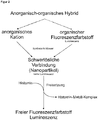
Figur 2 : Schematische Darstellung der Synthese der nicht-fluoreszierenden Nanopartikel und deren Verwendung zur Detektion von Histamin über eine Freisetzung des dann lumineszierenden Fluoreszenzfarbstoffs. -
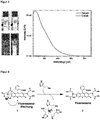
Figur 3 : Fluoreszenzlöschung von Calcein während der Partikelbildung: Cu(calc)-Suspension (links) und Calceinlösung (rechts) unter A) Kaltlicht, B) UV-Licht bei 245 nm; C) Emissionsspektrum der Cu(calc)-Nanopartikel (rot) und Calceinlösung (schwarz), jeweils 0,5 µm. -
Figur 4 : Mechanismus der Freisetzung von Calcein mit Hilfe des biogenen Amin-Botenstoffes Histamin aus dem entsprechenden Metallkomplex M(calc). -
Figur 5 : Umkehrung der Fluoreszenzlöschung durch Histamin. Die bevorzugte Komplexbildung von Histamin mit Cu2+ setzt Calcein aus Cu(calc)-Nanopartikeln frei. Die freigesetzte Menge an Calcein und damit auch die Lumineszenzintensität (gemessen nach einer Stunde) ist von der Konzentration an Histamin abhängig: 0,5 µM Cu(calc) + 0, 0,5, 5,0, 50,0, 500,0, 5000,0 µM Histamin. - Die Synthese von Cu(calc)-Nanopartikeln erfolgt über eine wasserbasierte Fällungsreaktion von Cu(NO3)2 x 3H2O mit Natriumcalceinat. Natriumcalceinat (100 mg, 0,15 mmol, 1,1 eq) wird bei 75 °C für mindestens eine Stunde in 250 mL Wasser gelöst. Dies resultiert in einer gelben, schwach lumineszierenden Lösung. Nach Absenken der Temperatur auf 65 °C wird eine Lösung von Cu(NO3)2 x 3H2O (32 mg, 0,14 mmol, 1,0 eq) in 0,5 mL Wasser injiziert. Dabei findet eine sofortige Farbänderung der Flüssigkeit von leuchtend gelb zu gelborange statt. Das Reaktionsgemisch wird zwei Mal mit Wasser gewaschen, d.h. abzentrifugiert (15 min, 25000 rpm), und erneut in Wasser resuspendiert. Zuletzt wird je nach Verwendungszweck in Wasser oder Pufferlösung dispergiert.
- Die Synthese von Ag2PTC-Nanopartikeln erfolgt über eine wasserbasierte Fällungsreaktion von AgNO3 mit Perylentetracarbonsäure (PTC). Perylentetracarbonsäure wird in Form ihres Anhydrids, Perylentetracarbonsäureanhydrid (PTCA), eingesetzt (70 mg, 0,18 mmol, 1 eq) und in 50 mL Wasser suspendiert. Diese Suspension wird mit NaOH (10 M) auf pH=8 eingestellt, für eine Stunde auf 60 °C erhitzt und anschließend über Nacht gerührt. Man erhält eine rote Suspension und eine grüne Lösung. Bei einer Temperatur von 65 °C wird eine Lösung von AgNO3 (15 mg, 0,09 mmol, 0,5 eq) in 5 mL Wasser zugegeben. Dabei ändert sich die Farbe der Flüssigkeit von leuchtend grün zu orange-braun. Das Reaktionsgemisch wird 5 min nachgerührt und anschließend aufgearbeitet. Die orangebraune Suspension wird zweimal mit Wasser gewaschen, d.h. abzentrifugiert (15 min, 25000 rpm), und erneut in Wasser resuspendiert. Zuletzt wird je nach Verwendungszweck in Wasser oder Pufferlösung dispergiert.
- Mononukleäre Zellen (MNZ) werden von Spendern mittels Dichtegradientenzentrifugation isoliert. Diese MNZ-Zellfraktion enthält die Population der basophilen Granulozyten. Durch Anwendung eines Waschverfahrens mit niedrigem pH können die auf den basophilen Granulozyten gebundenen IgE Moleküle entfernt werden ("Stripping"). Durch Inkubation der Zellpopulation mit zu testendem Serum können die basophilen Granulozyten mit Patienten-spezifischen IgE-Molekülen beladen werden. Werden nach Waschen der Zellpopulation mit Anti-IgE-beladene Ag4(PTCDA)-Nanopartikel hinzugefügt, binden diese spezifisch an die basophilen Granulozyten (PTCDA = 3,4,9,10-Perylentetracarbonsäuredianhydrid). Wird zusätzlich das zu testende Allergen hinzugefügt, findet bei positiver Reaktion eine Ausschüttung von Histamin statt, das durch die Ag4(PTCDA)-Nanopartikel in ein Fluoreszenzsignal umgewandelt wird. Verursacht das Allergen keine Ausschüttung von Histamin, findet keine Erhöhung des Fluoreszenzsignals statt.
Claims (13)
- Verfahren zum Nachweis eines biogenen Amin-Botenstoffs in einem ex-vivo Schnelltest, umfassend die Schritte(a) in Kontakt bringen einer anorganisch-organischen Hybridverbindung in Form von Nanopartikeln mit einem Partikeldurchmesser im Bereich von 1 bis 100 nm, bestehend aus einem anorganischen Metall-Kation, ausgewählt aus der Gruppe, bestehend aus Cu+, Cu2+, Ag+, Zn2+, Au+ und Au3+, und einem organischen Fluoreszenzfarbstoff-Anion, das mindestens eine Carboxylat-Gruppe enthält, mit dem biogenen Amin-Botenstoff in einer Suspension, wobei die anorganisch-organische Hybridverbindung eine molare Löslichkeit in Wasser von höchstens 10-2 mol/l aufweist und wobei das organische Fluoreszenzfarbstoff-Anion aufgrund der höheren Affinität des biogenen Amin-Botenstoffs zu dem anorganischen Metall-Kation in einer Menge relativ zu der Menge des biogenen Amin-Botenstoffs freigesetzt wird;(b) photometrisches Bestimmen der Konzentration des freien organischen Fluoreszenzfarbstoff-Anions; und(c) Korrelieren der Konzentration des freien organischen Fluoreszenzfarbstoff-Anions mit der Konzentration des biogenen Amin-Botenstoffs.
- Verfahren nach Anspruch 1, wobei das organische Fluoreszenzfarbstoff-Anion ein Anion eines Fluoreszenzfarbstoffes, ausgewählt aus der Gruppe, bestehend aus Fluorescein und Fluorescein-Derivaten, Perylen-Derivaten, Rhodamin und Rhodamin-Derivaten und Cyaninen, ist.
- Verfahren nach Anspruch 1 oder 2, wobei das organische Fluoreszenzfarbstoff-Anion ein Anion von Calcein oder 3,4,9,10-Perylentetracarbonsäure ist.
- Verfahren nach einem der Ansprüche 1 bis 3, wobei der biogene Amin-Botenstoff aus der Gruppe, bestehend aus Histamin, Serotonin, Dopamin, γ-Aminobuttersäure, Adrenalin, Noradrenalin, Heparin, Thyroxin und Triiodthyronin, ausgewählt ist.
- Verfahren nach einem der Ansprüche 1 bis 4, wobei der biogene Amin-Botenstoff Histamin ist.
- Verfahren nach Anspruch 5, wobei das Histamin bei einer IgE-vermittelten Aktivierung basophiler Granulozyten freigesetzt wird.
- Verfahren nach einem der Ansprüche 1 bis 6, wobei das anorganische Metallkation Cu+, Cu2+ oder Ag+ ist.
- Verfahren nach einem der Ansprüche 1 bis 7, wobei die anorganisch-organische Hybridverbindung in kristalliner oder röntgenamorpher Form vorliegt.
- Verfahren nach einem der Ansprüche 1 bis 8, wobei die photometrische Bestimmung der Konzentration des freien organischen Fluoreszenzfarbstoff-Anions mittels Durchflusszytometrie durchgeführt wird.
- Verfahren nach einem der Ansprüche 1 bis 9, wobei die anorganisch-organische Hybridverbindung mit einem Antikörper, Peptid oder Oligonukleotid funktionalisiert ist.
- Verfahren nach einem der Ansprüche 1 bis 10, wobei die anorganisch-organische Hybridverbindung auf einem Substrat fixiert ist.
- Verfahren nach einem der Ansprüche 5 bis 11, wobei die in Schritt (c) bestimmte Konzentration des Histamins mit der Intensität einer Immunreaktion korreliert wird.
- Verfahren nach Anspruch 12, wobei Schritt (a) die folgenden Schritte umfasst:(a1) Isolieren von mononukleären Spenderzellen mittels Dichtegradientenzentrifugation, die die Population der basophilen Granulozyten enthalten;(a2) Entfernen der auf der Oberfläche der basophilen Granulozyten gebundenen IgE Moleküle mittels Waschen bei niedrigem pH (stripping);(a3) Beladen der basophilen Granulozyten mit Patienten-spezifischen IgE Molekülen durch Inkubieren mit dem zu testenden Serum;(a4) Waschen der Zellpopulation;(a5) Zugeben einer mit Anti-IgE-beladenen, wie vorstehend definierten anorganisch-organischen Hybridverbindung, vorzugsweise Ag4(PTCDA)-Nanopartikel; und(a6) Hinzufügen eines zu testenden Allergens.
Applications Claiming Priority (1)
| Application Number | Priority Date | Filing Date | Title |
|---|---|---|---|
| DE102017002642.4A DE102017002642A1 (de) | 2017-03-17 | 2017-03-17 | Fluoreszenzerkennung von Allergien mit Hybridnanopartikeln |
Publications (3)
| Publication Number | Publication Date |
|---|---|
| EP3376228A2 true EP3376228A2 (de) | 2018-09-19 |
| EP3376228A3 EP3376228A3 (de) | 2018-10-31 |
| EP3376228B1 EP3376228B1 (de) | 2020-02-12 |
Family
ID=61873263
Family Applications (1)
| Application Number | Title | Priority Date | Filing Date |
|---|---|---|---|
| EP18162230.9A Active EP3376228B1 (de) | 2017-03-17 | 2018-03-16 | Verfahren zum nachweis biogener amin-botenstoffe |
Country Status (2)
| Country | Link |
|---|---|
| EP (1) | EP3376228B1 (de) |
| DE (1) | DE102017002642A1 (de) |
Family Cites Families (1)
| Publication number | Priority date | Publication date | Assignee | Title |
|---|---|---|---|---|
| DE102014004512A1 (de) * | 2014-03-28 | 2015-10-01 | Georg-August-Universität Göttingen Stiftung Öffentlichen Rechts Bereich Universitätsmedizin | Anorganisch-organische Hybridverbindung |
-
2017
- 2017-03-17 DE DE102017002642.4A patent/DE102017002642A1/de not_active Ceased
-
2018
- 2018-03-16 EP EP18162230.9A patent/EP3376228B1/de active Active
Also Published As
| Publication number | Publication date |
|---|---|
| DE102017002642A1 (de) | 2018-09-20 |
| EP3376228B1 (de) | 2020-02-12 |
| EP3376228A3 (de) | 2018-10-31 |
Similar Documents
| Publication | Publication Date | Title |
|---|---|---|
| DE2953524C2 (de) | ||
| DE3000483C2 (de) | ||
| DE3322373C2 (de) | Testmittel und Verfahren zum Nachweis von Antigenen und/oder Antikörpern | |
| DE69125992T2 (de) | Verfahren und Kit für Immunoassay | |
| EP0461392B1 (de) | Testträger zur Bestimmung von Ionen | |
| DE69829606T2 (de) | Reagenz und Verfahren zur Klassifizierung und Zählung von Leukozyten | |
| DE2632478A1 (de) | Verfahren zur erfassung und trennung von antigenen und antikoerperchen im blut und in anderen proben | |
| DE102007052517A1 (de) | ELISPOT-Verfahren mit zwei Filtersystemen | |
| DE102006016014A1 (de) | Vorrichtung und Verfahren zur Detektion von biologischen Molekülen | |
| WO2004014540A9 (de) | Farbkodierte layer-by-layer mikrokapseln als kombinatorische analysebibliotheken und als spezifische optische sensoren | |
| DE69026024T2 (de) | Künstlicher Träger zur Immobilisierung von biologischen Proteinen und Verfahren zu seiner Herstellung | |
| CN114563385A (zh) | 一种基于谷胱甘肽保护的金铜纳米团簇与Ce3+形成组装体的荧光探针及其应用 | |
| CN106243244B (zh) | 一种具有聚集诱导发光特性的羧化壳聚糖纳米荧光探针及其制备方法 | |
| EP1295124B1 (de) | Kompetitives assay-verfahren | |
| EP3376228B1 (de) | Verfahren zum nachweis biogener amin-botenstoffe | |
| DE3412340A1 (de) | Substrat zur fluoreszenzimmunanalyse von biologischen fluessigkeiten | |
| EP3441765B1 (de) | Verfahren zum nachweis einer basophilenaktivierung | |
| DE68927247T2 (de) | Künstliche Trägerteilchen und Verfahren zu deren Herstellung | |
| CN111777598B (zh) | 一种检测Cu2+并能利用Cu2+检测HPO42–的荧光探针及其制备方法和应用 | |
| DE10108808A1 (de) | Fluoreszierende Mikroteilchen | |
| EP0991948A1 (de) | Nachweis und bestimmung von phenolartigen inhaltsstoffen mittels direkter nasschemischer methoden | |
| Tino et al. | A new in vivo model system to assess the toxicity of semiconductor nanocrystals | |
| EP2326955B1 (de) | Verfahren zur markierung und/oder identifizierung von biomolekülen | |
| DE69533072T2 (de) | Technik zur mikroverkapselung von markierungen | |
| CH622350A5 (de) |
Legal Events
| Date | Code | Title | Description |
|---|---|---|---|
| PUAI | Public reference made under article 153(3) epc to a published international application that has entered the european phase |
Free format text: ORIGINAL CODE: 0009012 |
|
| STAA | Information on the status of an ep patent application or granted ep patent |
Free format text: STATUS: THE APPLICATION HAS BEEN PUBLISHED |
|
| AK | Designated contracting states |
Kind code of ref document: A2 Designated state(s): AL AT BE BG CH CY CZ DE DK EE ES FI FR GB GR HR HU IE IS IT LI LT LU LV MC MK MT NL NO PL PT RO RS SE SI SK SM TR |
|
| AX | Request for extension of the european patent |
Extension state: BA ME |
|
| PUAL | Search report despatched |
Free format text: ORIGINAL CODE: 0009013 |
|
| AK | Designated contracting states |
Kind code of ref document: A3 Designated state(s): AL AT BE BG CH CY CZ DE DK EE ES FI FR GB GR HR HU IE IS IT LI LT LU LV MC MK MT NL NO PL PT RO RS SE SI SK SM TR |
|
| AX | Request for extension of the european patent |
Extension state: BA ME |
|
| RIC1 | Information provided on ipc code assigned before grant |
Ipc: G01N 33/543 20060101ALI20180927BHEP Ipc: G01N 33/58 20060101AFI20180927BHEP |
|
| STAA | Information on the status of an ep patent application or granted ep patent |
Free format text: STATUS: REQUEST FOR EXAMINATION WAS MADE |
|
| 17P | Request for examination filed |
Effective date: 20190124 |
|
| RBV | Designated contracting states (corrected) |
Designated state(s): AL AT BE BG CH CY CZ DE DK EE ES FI FR GB GR HR HU IE IS IT LI LT LU LV MC MK MT NL NO PL PT RO RS SE SI SK SM TR |
|
| GRAJ | Information related to disapproval of communication of intention to grant by the applicant or resumption of examination proceedings by the epo deleted |
Free format text: ORIGINAL CODE: EPIDOSDIGR1 |
|
| GRAP | Despatch of communication of intention to grant a patent |
Free format text: ORIGINAL CODE: EPIDOSNIGR1 |
|
| GRAP | Despatch of communication of intention to grant a patent |
Free format text: ORIGINAL CODE: EPIDOSNIGR1 |
|
| STAA | Information on the status of an ep patent application or granted ep patent |
Free format text: STATUS: GRANT OF PATENT IS INTENDED |
|
| INTG | Intention to grant announced |
Effective date: 20190927 |
|
| GRAS | Grant fee paid |
Free format text: ORIGINAL CODE: EPIDOSNIGR3 |
|
| GRAA | (expected) grant |
Free format text: ORIGINAL CODE: 0009210 |
|
| STAA | Information on the status of an ep patent application or granted ep patent |
Free format text: STATUS: THE PATENT HAS BEEN GRANTED |
|
| AK | Designated contracting states |
Kind code of ref document: B1 Designated state(s): AL AT BE BG CH CY CZ DE DK EE ES FI FR GB GR HR HU IE IS IT LI LT LU LV MC MK MT NL NO PL PT RO RS SE SI SK SM TR |
|
| REG | Reference to a national code |
Ref country code: GB Ref legal event code: FG4D Free format text: NOT ENGLISH |
|
| REG | Reference to a national code |
Ref country code: CH Ref legal event code: EP |
|
| REG | Reference to a national code |
Ref country code: AT Ref legal event code: REF Ref document number: 1232837 Country of ref document: AT Kind code of ref document: T Effective date: 20200215 |
|
| REG | Reference to a national code |
Ref country code: DE Ref legal event code: R096 Ref document number: 502018000740 Country of ref document: DE |
|
| REG | Reference to a national code |
Ref country code: IE Ref legal event code: FG4D Free format text: LANGUAGE OF EP DOCUMENT: GERMAN |
|
| REG | Reference to a national code |
Ref country code: CH Ref legal event code: NV Representative=s name: BOHEST AG, CH |
|
| PG25 | Lapsed in a contracting state [announced via postgrant information from national office to epo] |
Ref country code: NO Free format text: LAPSE BECAUSE OF FAILURE TO SUBMIT A TRANSLATION OF THE DESCRIPTION OR TO PAY THE FEE WITHIN THE PRESCRIBED TIME-LIMIT Effective date: 20200512 Ref country code: RS Free format text: LAPSE BECAUSE OF FAILURE TO SUBMIT A TRANSLATION OF THE DESCRIPTION OR TO PAY THE FEE WITHIN THE PRESCRIBED TIME-LIMIT Effective date: 20200212 Ref country code: FI Free format text: LAPSE BECAUSE OF FAILURE TO SUBMIT A TRANSLATION OF THE DESCRIPTION OR TO PAY THE FEE WITHIN THE PRESCRIBED TIME-LIMIT Effective date: 20200212 |
|
| REG | Reference to a national code |
Ref country code: LT Ref legal event code: MG4D |
|
| REG | Reference to a national code |
Ref country code: NL Ref legal event code: MP Effective date: 20200212 |
|
| PG25 | Lapsed in a contracting state [announced via postgrant information from national office to epo] |
Ref country code: SE Free format text: LAPSE BECAUSE OF FAILURE TO SUBMIT A TRANSLATION OF THE DESCRIPTION OR TO PAY THE FEE WITHIN THE PRESCRIBED TIME-LIMIT Effective date: 20200212 Ref country code: LV Free format text: LAPSE BECAUSE OF FAILURE TO SUBMIT A TRANSLATION OF THE DESCRIPTION OR TO PAY THE FEE WITHIN THE PRESCRIBED TIME-LIMIT Effective date: 20200212 Ref country code: HR Free format text: LAPSE BECAUSE OF FAILURE TO SUBMIT A TRANSLATION OF THE DESCRIPTION OR TO PAY THE FEE WITHIN THE PRESCRIBED TIME-LIMIT Effective date: 20200212 Ref country code: BG Free format text: LAPSE BECAUSE OF FAILURE TO SUBMIT A TRANSLATION OF THE DESCRIPTION OR TO PAY THE FEE WITHIN THE PRESCRIBED TIME-LIMIT Effective date: 20200512 Ref country code: GR Free format text: LAPSE BECAUSE OF FAILURE TO SUBMIT A TRANSLATION OF THE DESCRIPTION OR TO PAY THE FEE WITHIN THE PRESCRIBED TIME-LIMIT Effective date: 20200513 Ref country code: IS Free format text: LAPSE BECAUSE OF FAILURE TO SUBMIT A TRANSLATION OF THE DESCRIPTION OR TO PAY THE FEE WITHIN THE PRESCRIBED TIME-LIMIT Effective date: 20200612 |
|
| PG25 | Lapsed in a contracting state [announced via postgrant information from national office to epo] |
Ref country code: NL Free format text: LAPSE BECAUSE OF FAILURE TO SUBMIT A TRANSLATION OF THE DESCRIPTION OR TO PAY THE FEE WITHIN THE PRESCRIBED TIME-LIMIT Effective date: 20200212 |
|
| PG25 | Lapsed in a contracting state [announced via postgrant information from national office to epo] |
Ref country code: SK Free format text: LAPSE BECAUSE OF FAILURE TO SUBMIT A TRANSLATION OF THE DESCRIPTION OR TO PAY THE FEE WITHIN THE PRESCRIBED TIME-LIMIT Effective date: 20200212 Ref country code: RO Free format text: LAPSE BECAUSE OF FAILURE TO SUBMIT A TRANSLATION OF THE DESCRIPTION OR TO PAY THE FEE WITHIN THE PRESCRIBED TIME-LIMIT Effective date: 20200212 Ref country code: LT Free format text: LAPSE BECAUSE OF FAILURE TO SUBMIT A TRANSLATION OF THE DESCRIPTION OR TO PAY THE FEE WITHIN THE PRESCRIBED TIME-LIMIT Effective date: 20200212 Ref country code: DK Free format text: LAPSE BECAUSE OF FAILURE TO SUBMIT A TRANSLATION OF THE DESCRIPTION OR TO PAY THE FEE WITHIN THE PRESCRIBED TIME-LIMIT Effective date: 20200212 Ref country code: CZ Free format text: LAPSE BECAUSE OF FAILURE TO SUBMIT A TRANSLATION OF THE DESCRIPTION OR TO PAY THE FEE WITHIN THE PRESCRIBED TIME-LIMIT Effective date: 20200212 Ref country code: SM Free format text: LAPSE BECAUSE OF FAILURE TO SUBMIT A TRANSLATION OF THE DESCRIPTION OR TO PAY THE FEE WITHIN THE PRESCRIBED TIME-LIMIT Effective date: 20200212 Ref country code: EE Free format text: LAPSE BECAUSE OF FAILURE TO SUBMIT A TRANSLATION OF THE DESCRIPTION OR TO PAY THE FEE WITHIN THE PRESCRIBED TIME-LIMIT Effective date: 20200212 Ref country code: ES Free format text: LAPSE BECAUSE OF FAILURE TO SUBMIT A TRANSLATION OF THE DESCRIPTION OR TO PAY THE FEE WITHIN THE PRESCRIBED TIME-LIMIT Effective date: 20200212 Ref country code: PT Free format text: LAPSE BECAUSE OF FAILURE TO SUBMIT A TRANSLATION OF THE DESCRIPTION OR TO PAY THE FEE WITHIN THE PRESCRIBED TIME-LIMIT Effective date: 20200705 |
|
| REG | Reference to a national code |
Ref country code: DE Ref legal event code: R097 Ref document number: 502018000740 Country of ref document: DE |
|
| PG25 | Lapsed in a contracting state [announced via postgrant information from national office to epo] |
Ref country code: MC Free format text: LAPSE BECAUSE OF FAILURE TO SUBMIT A TRANSLATION OF THE DESCRIPTION OR TO PAY THE FEE WITHIN THE PRESCRIBED TIME-LIMIT Effective date: 20200212 |
|
| PLBE | No opposition filed within time limit |
Free format text: ORIGINAL CODE: 0009261 |
|
| STAA | Information on the status of an ep patent application or granted ep patent |
Free format text: STATUS: NO OPPOSITION FILED WITHIN TIME LIMIT |
|
| REG | Reference to a national code |
Ref country code: BE Ref legal event code: MM Effective date: 20200331 |
|
| PG25 | Lapsed in a contracting state [announced via postgrant information from national office to epo] |
Ref country code: LU Free format text: LAPSE BECAUSE OF NON-PAYMENT OF DUE FEES Effective date: 20200316 |
|
| 26N | No opposition filed |
Effective date: 20201113 |
|
| PG25 | Lapsed in a contracting state [announced via postgrant information from national office to epo] |
Ref country code: IT Free format text: LAPSE BECAUSE OF FAILURE TO SUBMIT A TRANSLATION OF THE DESCRIPTION OR TO PAY THE FEE WITHIN THE PRESCRIBED TIME-LIMIT Effective date: 20200212 Ref country code: IE Free format text: LAPSE BECAUSE OF NON-PAYMENT OF DUE FEES Effective date: 20200316 |
|
| PG25 | Lapsed in a contracting state [announced via postgrant information from national office to epo] |
Ref country code: BE Free format text: LAPSE BECAUSE OF NON-PAYMENT OF DUE FEES Effective date: 20200331 Ref country code: PL Free format text: LAPSE BECAUSE OF FAILURE TO SUBMIT A TRANSLATION OF THE DESCRIPTION OR TO PAY THE FEE WITHIN THE PRESCRIBED TIME-LIMIT Effective date: 20200212 Ref country code: SI Free format text: LAPSE BECAUSE OF FAILURE TO SUBMIT A TRANSLATION OF THE DESCRIPTION OR TO PAY THE FEE WITHIN THE PRESCRIBED TIME-LIMIT Effective date: 20200212 |
|
| PGFP | Annual fee paid to national office [announced via postgrant information from national office to epo] |
Ref country code: GB Payment date: 20220328 Year of fee payment: 5 Ref country code: DE Payment date: 20220315 Year of fee payment: 5 Ref country code: CH Payment date: 20220324 Year of fee payment: 5 |
|
| PG25 | Lapsed in a contracting state [announced via postgrant information from national office to epo] |
Ref country code: TR Free format text: LAPSE BECAUSE OF FAILURE TO SUBMIT A TRANSLATION OF THE DESCRIPTION OR TO PAY THE FEE WITHIN THE PRESCRIBED TIME-LIMIT Effective date: 20200212 Ref country code: MT Free format text: LAPSE BECAUSE OF FAILURE TO SUBMIT A TRANSLATION OF THE DESCRIPTION OR TO PAY THE FEE WITHIN THE PRESCRIBED TIME-LIMIT Effective date: 20200212 Ref country code: CY Free format text: LAPSE BECAUSE OF FAILURE TO SUBMIT A TRANSLATION OF THE DESCRIPTION OR TO PAY THE FEE WITHIN THE PRESCRIBED TIME-LIMIT Effective date: 20200212 |
|
| PGFP | Annual fee paid to national office [announced via postgrant information from national office to epo] |
Ref country code: FR Payment date: 20220324 Year of fee payment: 5 |
|
| PG25 | Lapsed in a contracting state [announced via postgrant information from national office to epo] |
Ref country code: MK Free format text: LAPSE BECAUSE OF FAILURE TO SUBMIT A TRANSLATION OF THE DESCRIPTION OR TO PAY THE FEE WITHIN THE PRESCRIBED TIME-LIMIT Effective date: 20200212 Ref country code: AL Free format text: LAPSE BECAUSE OF FAILURE TO SUBMIT A TRANSLATION OF THE DESCRIPTION OR TO PAY THE FEE WITHIN THE PRESCRIBED TIME-LIMIT Effective date: 20200212 |
|
| REG | Reference to a national code |
Ref country code: DE Ref legal event code: R119 Ref document number: 502018000740 Country of ref document: DE |
|
| REG | Reference to a national code |
Ref country code: CH Ref legal event code: PL |
|
| GBPC | Gb: european patent ceased through non-payment of renewal fee |
Effective date: 20230316 |
|
| PG25 | Lapsed in a contracting state [announced via postgrant information from national office to epo] |
Ref country code: GB Free format text: LAPSE BECAUSE OF NON-PAYMENT OF DUE FEES Effective date: 20230316 |
|
| PG25 | Lapsed in a contracting state [announced via postgrant information from national office to epo] |
Ref country code: LI Free format text: LAPSE BECAUSE OF NON-PAYMENT OF DUE FEES Effective date: 20230331 Ref country code: GB Free format text: LAPSE BECAUSE OF NON-PAYMENT OF DUE FEES Effective date: 20230316 Ref country code: FR Free format text: LAPSE BECAUSE OF NON-PAYMENT OF DUE FEES Effective date: 20230331 Ref country code: DE Free format text: LAPSE BECAUSE OF NON-PAYMENT OF DUE FEES Effective date: 20231003 Ref country code: CH Free format text: LAPSE BECAUSE OF NON-PAYMENT OF DUE FEES Effective date: 20230331 |
|
| REG | Reference to a national code |
Ref country code: AT Ref legal event code: MM01 Ref document number: 1232837 Country of ref document: AT Kind code of ref document: T Effective date: 20230316 |
|
| PG25 | Lapsed in a contracting state [announced via postgrant information from national office to epo] |
Ref country code: AT Free format text: LAPSE BECAUSE OF NON-PAYMENT OF DUE FEES Effective date: 20230316 |
|
| PG25 | Lapsed in a contracting state [announced via postgrant information from national office to epo] |
Ref country code: AT Free format text: LAPSE BECAUSE OF NON-PAYMENT OF DUE FEES Effective date: 20230316 |
|
| PGFP | Annual fee paid to national office [announced via postgrant information from national office to epo] |
Ref country code: AT Payment date: 20260410 Year of fee payment: 5 |