EP3348698A1 - Wäschebehandlungsvorrichtung und verfahren dafür - Google Patents
Wäschebehandlungsvorrichtung und verfahren dafür Download PDFInfo
- Publication number
- EP3348698A1 EP3348698A1 EP17182164.8A EP17182164A EP3348698A1 EP 3348698 A1 EP3348698 A1 EP 3348698A1 EP 17182164 A EP17182164 A EP 17182164A EP 3348698 A1 EP3348698 A1 EP 3348698A1
- Authority
- EP
- European Patent Office
- Prior art keywords
- treating
- unit
- region
- course
- operation command
- Prior art date
- Legal status (The legal status is an assumption and is not a legal conclusion. Google has not performed a legal analysis and makes no representation as to the accuracy of the status listed.)
- Granted
Links
Images






Classifications
-
- D—TEXTILES; PAPER
- D06—TREATMENT OF TEXTILES OR THE LIKE; LAUNDERING; FLEXIBLE MATERIALS NOT OTHERWISE PROVIDED FOR
- D06F—LAUNDERING, DRYING, IRONING, PRESSING OR FOLDING TEXTILE ARTICLES
- D06F29/00—Combinations of a washing machine with other separate apparatus in a common frame or the like, e.g. with rinsing apparatus
- D06F29/005—Combinations of a washing machine with other separate apparatus in a common frame or the like, e.g. with rinsing apparatus the other separate apparatus being a drying appliance
-
- D—TEXTILES; PAPER
- D06—TREATMENT OF TEXTILES OR THE LIKE; LAUNDERING; FLEXIBLE MATERIALS NOT OTHERWISE PROVIDED FOR
- D06F—LAUNDERING, DRYING, IRONING, PRESSING OR FOLDING TEXTILE ARTICLES
- D06F31/00—Washing installations comprising an assembly of several washing machines or washing units, e.g. continuous flow assemblies
-
- D—TEXTILES; PAPER
- D06—TREATMENT OF TEXTILES OR THE LIKE; LAUNDERING; FLEXIBLE MATERIALS NOT OTHERWISE PROVIDED FOR
- D06F—LAUNDERING, DRYING, IRONING, PRESSING OR FOLDING TEXTILE ARTICLES
- D06F33/00—Control of operations performed in washing machines or washer-dryers
- D06F33/30—Control of washing machines characterised by the purpose or target of the control
- D06F33/32—Control of operational steps, e.g. optimisation or improvement of operational steps depending on the condition of the laundry
-
- D—TEXTILES; PAPER
- D06—TREATMENT OF TEXTILES OR THE LIKE; LAUNDERING; FLEXIBLE MATERIALS NOT OTHERWISE PROVIDED FOR
- D06F—LAUNDERING, DRYING, IRONING, PRESSING OR FOLDING TEXTILE ARTICLES
- D06F33/00—Control of operations performed in washing machines or washer-dryers
- D06F33/50—Control of washer-dryers characterised by the purpose or target of the control
- D06F33/52—Control of the operational steps, e.g. optimisation or improvement of operational steps depending on the condition of the laundry
-
- D—TEXTILES; PAPER
- D06—TREATMENT OF TEXTILES OR THE LIKE; LAUNDERING; FLEXIBLE MATERIALS NOT OTHERWISE PROVIDED FOR
- D06F—LAUNDERING, DRYING, IRONING, PRESSING OR FOLDING TEXTILE ARTICLES
- D06F58/00—Domestic laundry dryers
- D06F58/32—Control of operations performed in domestic laundry dryers
- D06F58/34—Control of operations performed in domestic laundry dryers characterised by the purpose or target of the control
- D06F58/36—Control of operational steps, e.g. for optimisation or improvement of operational steps depending on the condition of the laundry
-
- D—TEXTILES; PAPER
- D06—TREATMENT OF TEXTILES OR THE LIKE; LAUNDERING; FLEXIBLE MATERIALS NOT OTHERWISE PROVIDED FOR
- D06F—LAUNDERING, DRYING, IRONING, PRESSING OR FOLDING TEXTILE ARTICLES
- D06F2101/00—User input for the control of domestic laundry washing machines, washer-dryers or laundry dryers
-
- D—TEXTILES; PAPER
- D06—TREATMENT OF TEXTILES OR THE LIKE; LAUNDERING; FLEXIBLE MATERIALS NOT OTHERWISE PROVIDED FOR
- D06F—LAUNDERING, DRYING, IRONING, PRESSING OR FOLDING TEXTILE ARTICLES
- D06F2101/00—User input for the control of domestic laundry washing machines, washer-dryers or laundry dryers
- D06F2101/02—Characteristics of laundry or load
- D06F2101/04—Quantity, e.g. weight
-
- D—TEXTILES; PAPER
- D06—TREATMENT OF TEXTILES OR THE LIKE; LAUNDERING; FLEXIBLE MATERIALS NOT OTHERWISE PROVIDED FOR
- D06F—LAUNDERING, DRYING, IRONING, PRESSING OR FOLDING TEXTILE ARTICLES
- D06F2101/00—User input for the control of domestic laundry washing machines, washer-dryers or laundry dryers
- D06F2101/10—Spin speed
-
- D—TEXTILES; PAPER
- D06—TREATMENT OF TEXTILES OR THE LIKE; LAUNDERING; FLEXIBLE MATERIALS NOT OTHERWISE PROVIDED FOR
- D06F—LAUNDERING, DRYING, IRONING, PRESSING OR FOLDING TEXTILE ARTICLES
- D06F2101/00—User input for the control of domestic laundry washing machines, washer-dryers or laundry dryers
- D06F2101/12—Washing temperature
-
- D—TEXTILES; PAPER
- D06—TREATMENT OF TEXTILES OR THE LIKE; LAUNDERING; FLEXIBLE MATERIALS NOT OTHERWISE PROVIDED FOR
- D06F—LAUNDERING, DRYING, IRONING, PRESSING OR FOLDING TEXTILE ARTICLES
- D06F2101/00—User input for the control of domestic laundry washing machines, washer-dryers or laundry dryers
- D06F2101/20—Operation modes, e.g. delicate laundry washing programs, service modes or refreshment cycles
-
- D—TEXTILES; PAPER
- D06—TREATMENT OF TEXTILES OR THE LIKE; LAUNDERING; FLEXIBLE MATERIALS NOT OTHERWISE PROVIDED FOR
- D06F—LAUNDERING, DRYING, IRONING, PRESSING OR FOLDING TEXTILE ARTICLES
- D06F2103/00—Parameters monitored or detected for the control of domestic laundry washing machines, washer-dryers or laundry dryers
-
- D—TEXTILES; PAPER
- D06—TREATMENT OF TEXTILES OR THE LIKE; LAUNDERING; FLEXIBLE MATERIALS NOT OTHERWISE PROVIDED FOR
- D06F—LAUNDERING, DRYING, IRONING, PRESSING OR FOLDING TEXTILE ARTICLES
- D06F2105/00—Systems or parameters controlled or affected by the control systems of washing machines, washer-dryers or laundry dryers
- D06F2105/58—Indications or alarms to the control system or to the user
-
- D—TEXTILES; PAPER
- D06—TREATMENT OF TEXTILES OR THE LIKE; LAUNDERING; FLEXIBLE MATERIALS NOT OTHERWISE PROVIDED FOR
- D06F—LAUNDERING, DRYING, IRONING, PRESSING OR FOLDING TEXTILE ARTICLES
- D06F25/00—Washing machines with receptacles, e.g. perforated, having a rotary movement, e.g. oscillatory movement, the receptacle serving both for washing and for centrifugally separating water from the laundry and having further drying means, e.g. using hot air
-
- D—TEXTILES; PAPER
- D06—TREATMENT OF TEXTILES OR THE LIKE; LAUNDERING; FLEXIBLE MATERIALS NOT OTHERWISE PROVIDED FOR
- D06F—LAUNDERING, DRYING, IRONING, PRESSING OR FOLDING TEXTILE ARTICLES
- D06F34/00—Details of control systems for washing machines, washer-dryers or laundry dryers
- D06F34/28—Arrangements for program selection, e.g. control panels therefor; Arrangements for indicating program parameters, e.g. the selected program or its progress
-
- D—TEXTILES; PAPER
- D06—TREATMENT OF TEXTILES OR THE LIKE; LAUNDERING; FLEXIBLE MATERIALS NOT OTHERWISE PROVIDED FOR
- D06F—LAUNDERING, DRYING, IRONING, PRESSING OR FOLDING TEXTILE ARTICLES
- D06F34/00—Details of control systems for washing machines, washer-dryers or laundry dryers
- D06F34/28—Arrangements for program selection, e.g. control panels therefor; Arrangements for indicating program parameters, e.g. the selected program or its progress
- D06F34/32—Arrangements for program selection, e.g. control panels therefor; Arrangements for indicating program parameters, e.g. the selected program or its progress characterised by graphical features, e.g. touchscreens
Definitions
- Embodiments of the present disclosure relate to a laundry treating apparatus and a method of the same.
- a laundry treating apparatus typically means an electric appliance for performing washing, drying or washing or drying clothes and other washing objects. Such a conventional laundry treating apparatus may be capable of performing only a washing or drying function or both of the washing and drying functions.
- a laundry treating apparatus including a steam supply device to have a refresh function for eliminating wrinkles, bad smell and static electricity from clothes has been released recently.
- the conventional laundry treating apparatus is classified based on a direction of laundry loading into a front load type and a top load type.
- a typical example of such a horizontal loading type is a drum type washing machine or drum type drying machine.
- the front load type laundry treating apparatus has a front opening and a drum shaft parallel with or tilted a preset angle with respect the ground.
- the top load type laundry treating apparatus has a top opening and a drum shaft perpendicular to the ground.
- each house is equipped with one large-capacity laundry treating apparatus.
- the laundry treating apparatus is used several times to treat clothes and laundry after sorting the clothes and laundry based on kinds and types. For example, in case of sorting some laundry such as clothes for adults from lingerie or clothes for infants before washing, one washing process for the former is performed and another washing process for the latter is re-performed. Accordingly, the overall wash process takes much time and consumes much energy.
- a wash course provided in the large-capacity laundry treating apparatus is usually for a large amount of laundry and then requires a lot of wash water. Also, such a wash course rotates a large drum or inner tub and then consumes much electricity.
- the wash course is set for a large amount of laundry and it takes relatively much time.
- the large-capacity laundry treating apparatus includes a wash course set mainly for normal clothes, so that it may not be appropriate for clothes made of delicate fabric such as lingerie or clothes for infants.
- the large-capacity laundry treating apparatus is also inappropriate for a small amount of washing. Consumers usually collect clothes to wash for several days or more. It is not recommended to leave such lingerie and infant clothes which needs washing for a long time, considering sanitation. When such washing or laundry is neglected for a long time, contaminants or dirt might be stuck on fabric only not to be washed off completely.
- a new laundry treating apparatus is recently released which consists of a small-capacity laundry treating apparatus and a large-capacity laundry treating apparatus combined with each other to overcome the disadvantages of the conventional laundry treating apparatus.
- FIG. 1 illustrates one example of the combined laundry treating apparatus.
- the laundry treating apparatus 1 includes a front load type laundry treating device 10 provided in a top portion as a large-capacity laundry treating device; and a bottom top load type laundry treating apparatus 20 as a drawer type small-capacity laundry treating device.
- the front load type laundry treating device includes a cabinet 11 defining the external appearance and having an opening formed in the front; a front door 12 for opening and closing the opening; and a front laundry accommodating portion 13 provided in the cabinet 11 and accommodating clothes to wash.
- the top load type laundry treating device includes a top cabinet 21 defining the external appearance and having an opening formed in a top; a top drawer 23 retractable with respect to the top cabinet 21; a top door 22 for opening and closing the opening; and a second top laundry accommodating portion 24 provided in the top cabinet 21 and accommodating clothes to wash.
- front type laundry treating device 10 and the top load type laundry treating device 20 are washing machines, small-sized clothes are washed in the top load type laundry treating device and middle-and-large-sized clothes are washed in the front type laundry treating device, only to promote space application and save water, energy and time.
- the laundry treating apparatus may further include a first manipulation unit 15 for facilitating the user's manipulation of the front type laundry treating device 10; and a second manipulation unit 25 for facilitating the user's manipulation of the top load type laundry treating device 20, which is operable independently from the first manipulation unit.
- the user has to bend the waist inconveniently and move a top drawer 23 partially.
- a drawer panel 23a has to be more projected from the front of the top drawer 23 to enhance the user's access to the second manipulation unit 15.
- a first display unit 16 for displaying a current state of the front load laundry treating device 10 and a second display unit 26 for displaying a current state of the top load laundry treating device 20 are provided independent from each other.
- the user has to check both the first display unit 16 and the second display unit 26 separately so as to check the states of the front type laundry treating device 10 and the top load laundry treating device 20.
- the user has to partially move out the top drawer 23 from the top cabinet 21 inconveniently so as to check the second display unit 26.
- another type laundry treating apparatus combined with the large-capacity laundry treating device and the small-capacity laundry treating device in a different way may also have disadvantages that a manipulation unit for manipulating the large-capacity laundry treating device and a manipulation unit for manipulating the small-capacity laundry treating device are provided separately and that a display unit for displaying the large-capacity laundry treating device and a display unit for displaying the small-capacity laundry treating device are provided separately.
- Embodiments of the present invention provide a laundry treating apparatus which may allow a user to manipulate a first laundry treating device (hereinafter, a first treating unit) and a second treating device (hereinafter, a second treating unit) by using one manipulation unit.
- a first laundry treating device hereinafter, a first treating unit
- a second treating device hereinafter, a second treating unit
- Embodiments of the present invention also provide a laundry treating apparatus which is capable of displaying current states of the first and second treating units by using one display unit and allowing the user to recognize the states easily.
- Embodiments of the present invention also provide a laundry treating apparatus which may include a display unit capable of performing the function of the display unit and the function of the manipulation unit and facilitate the manipulation and displaying of the first and second treating units simultaneously.
- Embodiments of the present invention also provide a laundry treating apparatus which may effectively control the first and second treating units by using one control unit.
- Embodiments of the present invention also provide a laundry treating apparatus which may allow the user to effectively control the first and second laundry treating devices by controlling a display unit differently for a case of operating the first and second laundry treating devices simultaneously and a case of operating one of the two units.
- Embodiments of the present invention also provide a laundry treating apparatus which may include one display unit integrally combined with a display unit for the first treating unit and a display unit for the second laundry treating device and be capable of maximizing user accessibility and state recognition.
- Embodiments of the present invention also provide a laundry treating apparatus which may facilitate the user to clearly recognize and distinguish the case of using both of the first and second treating units simultaneously from the case of using one of the two devices by using one display unit.
- Embodiments of the present disclosure also provide a control method of a laundry treating apparatus comprising a first treating unit performing at least one of a wash cycle configured to remove foreign substances from clothes and a dry cycle configured to dry moisture from clothes; and a second treating unit provided adjacent to the first treating unit and performing one or more of the wash cycle and the dry cycle; and a display unit displaying a current state of at least one treating unit or receiving an operation command for performing at least one of the wash and dry cycles, the control method comprising: a select request step for displaying select information on the display unit so as to allow the user to select at least one of the first and second treating units, when power is supplied to the display unit; a course display step for displaying the operation command performable in the selected treating unit on the display unit, when the select information is selected; and a process display step for displaying a processing state of the operation command performed in the selected treating unit on the display unit.
- the select information, the operation command and the progressing state of the operation command may be dividedly displayed on first and second regions which are provided in the display unit or a third region combined with the first and second regions.
- the third region may overlap at least partly with the first and seonc region.
- the third region may include the full display area including the first the second region.
- the third region may be arranged in the middle of the common display and may further include the first and second display region.
- the select information may include at least one of first select information for selecting the first treating unit and second select information for selecting the second treating unit.
- the idea of the invention is to provide a common display for controlling both treating units depending on whether they are operated or not. So the user has not to manipulate two different display units. If only one of the treating units is operated or needed the display is then used for manipulating and controlling only the operated treating unit. Thus, the full display area is available for conveniently displaying all information required for controlling the laundry treating process.
- the control method of the laundry treating apparatus may further comprise a sense step for sensing whether the first treating unit and the second treating unit are activated, wherein the select request step dividedly displays the first select information and the second select information on the first region and the second region, respectively, when the sense step senses that the first treating unit and the second treating unit are activated, and the select request step displays only the select information of the activated treating unit on the third region combined with the first and second regions, when the sense step senses that only one of the first and second treating units is activated.
- Each of the first and second treating units may comprise a power supply unit for supplying power, and the sense step determines whether the first and second treating units are activated based on the state where power is supplied to the first and second treating units.
- the sense step may display an operation ready state of the laundry treating apparatus on the display unit.
- the course display step may dividedly display an operation command performable in the first treating unit on the first region and an operation command performable in the second treating unit on the second region, when both the first select information and the second select information are selected, and the course display step displays an operation command performable in the selected treating unit on the third region combined with the first and second regions, when the first select information or the second select information is selected.
- the course display step may display an operation command performable in one of the first and second treating units on the third region combined with the first and second regions, when the first select information and the second select information are selected, and then displays an operation command performable in the other treating unit on the third region, when the select of the operation command performable in one of the first and second treating units is completed, and the course display step may display an operation command performable in the selected treating unit on the third region combined with the first and second regions, when the first select information or the second select information is selected.
- the operation command displayed in the course display step may comprise a normal course comprises a course configured to perform at least one of a wash cycle for removing foreign substances from clothes and a rinse cycle for rinsing clothes; and a special course comprising an allergy care course for keeping clothes over a specific temperature for a preset time period, and a stain care course for removing stains from clothes by increasing the repeating number, duration time and cycle temperature of preset wash and rinse cycles.
- the course display step may dividedly display the normal course and the special course on the first region and the second region of the display unit, respectively.
- the course display step may display the normal course on the third region of the display unit, and displays the special course on the third region when an external force for sliding the display unit in one direction is applied.
- the control method of the laundry treating apparatus may further comprise a course input sense step for sensing whether the operation command performable in the first treating unit and the operation command performable in the second treating unit are input in the course display step, when the first select information and the second select information are selected in the select request step, and sensing whether an operation command performable in the selected treating unit is input when the first select information or the second select information is selected in the select request step.
- the course display step may be repeated, when the operation command performable in the selected treating unit is not input in the course input sense step.
- the control method of the laundry treating apparatus may further comprise a setting change step for changing at least one piece of setting information including the preset laundry amount, the temperature, the drum RPM and the repeated number of the rinsing cycle, when the input of the operation command is complete in the course display step.
- the setting change step may dividedly display the setting information on the display unit. When the divided region is pressed, the setting change step may display at least one of the changeable setting information. When one region of the displayed regions of the changed setting information is selected, the setting change step may change the setting information into the selected setting information.
- the preset operation command may be performed, when there is no input in the setting change step for a preset time period.
- the progress display step may dividedly display a progressing state of the first treating unit on the first region and a progressing state of the second treating unit on the second region, when the operation command is performed in the first and second treating units simultaneously, and the progress display step may display only the progressing state of the treating unit where the operation command is performed on the third region combined with the first and second regions, when the operation command is performed in one of the first and second treating units.
- the control method of the laundry treating apparatus may further comprise an end determine step for determining whether at least one of the first and second treating units ends the operation when the operation command is performed in the first and second treating units simultaneously, wherein the end determine step displays a progressing state of the other treating unit on the third region, when the performance of the operation command is ended in one of the first and second treating units.
- the control method of the laundry treating apparatus may further comprise a guide step for displaying guidelines of a display unit manipulation on the display unit, when power is supplied to the laundry treating apparatus.
- the guide step may display icons for start, no re-start and remove of the manipulation guideline and confirm of the remove, no re-start and start of the manipulation guideline on the display unit.
- Embodiments of the present disclosure also provide a laundry treating apparatus comprising a first treating unit for washing or drying clothes; a second treating unit provided in at least one of upper, lower and lateral portion of the first treating unit and washing or drying clothes; and a display unit displaying current states of the first and second treating units and displaying screens related with the first and second treating units to allow a user to input an operation command performed in the first and second treating units to wash or dry clothes.
- the display unit dividedly may display the screens related with the first and second treating units, when the first and second treating units are activated, and the display unit may display only a screen related with the activated treating unit, when one of the first and second treating units is activated.
- the laundry treating apparatus may further comprise a control unit for determining whether the first and second treating units are activated, wherein the control unit determines whether the first and second treating units are activated based on the power supply to the first and second treating units.
- the laundry treating apparatus is capable of facilitating the user to select the first treating unit and the second treating unit easily by using one display unit and determine an operate command and recognize a current operation state of the selected treating unit.
- the laundry treating apparatus is capable of facilitating the user to clearly recognize and distinguish the case of using both of the first and second treating units simultaneously from the case of using one of the two devices by using one display unit.
- the laundry treating apparatus is capable of allowing a user to manipulate a first laundry treating device (hereinafter, a first treating unit) and a second laundry treating device (hereinafter, a second treating unit) by using one manipulation unit.
- a first laundry treating device hereinafter, a first treating unit
- a second laundry treating device hereinafter, a second treating unit
- the laundry treating apparatus is capable of displaying current states of the first and second treating units by using one display unit and allowing the user to recognize the states easily.
- the laundry treating apparatus may include a display unit capable of performing the function of the display unit and the function of the manipulation unit and facilitate the manipulation and displaying of the first and second treating units simultaneously.
- the laundry treating apparatus is capable of effectively controlling the first and second treating units by using one control unit.
- the laundry treating apparatus is capable of allowing the user to effectively control the first and second laundry treating devices by controlling a display unit differently for a case of operating the first and second laundry treating devices simultaneously and a case of operating one of the two units.
- the laundry treating apparatus may include one display unit integrally combined with a display unit for the first treating unit and a display unit for the second laundry treating device and be capable of maximizing user accessibility and state recognition.
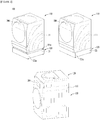
- FIG. 2 illustrates embodiments of a laundry treating apparatus combined with two or more laundry treating devices including a display unit and a manipulation unit, respectively.
- the laundry treating apparatus 100 may include a first treating unit 110 as main laundry treating device and a second treating unit 120 as sub-laundry treating device.
- the first treating unit 110 may be provided as a washer configured to perform a wash cycle for removing foreign substances from clothes or a dryer configured to perform a dry cycle for drying moisture contained in the clothes.
- the first treating unit 110 may perform the drying cycle for drying clothes.
- the second treating unit 120 may be also provided as the washer configured to perform the wash cycle for removing foreign substances from clothes or the dryer configured to drying the clothes containing moisture.
- the second treating unit 120 may perform the dry cycle for drying the clothes.
- the first treating unit 110 may have a larger size than the second treating unit 120 to have a larger washing-drying capacity than the second treating unit 120.
- the second treating unit 120 may be coupled to the first treating unit 110 (see FIG. 2(a) ) independently or integrally formed with the first treating unit 110 (see FIG. 2(b) and (c) ).
- one display 200 may be provided to display operational states of the first and second treating units 110 and 120 and receive an operation command for controlling the first and second treating units 110 and 120 to perform at least one of the wash cycle and the dry cycle.
- the display unit 200 may be provided in at least one of the first and second treating units 110 and 120, even when the first and second treating units 110 and 120 are independently provided or integrally formed as one body.
- the display unit 200 may include a display panel for displaying a state of the first treating unit 110 and a state of the second treating unit 120.
- the display unit 200 may be a touch panel to function as a manipulation unit configured to allow the user to input an operation command to the first treating unit 110 and the second treating unit 120.
- the display unit 200 may function as the display unit and the manipulation unit for the first and second treating units 110 and 120.
- the display unit 200 is connected with a control unit for controlling the first and second treating units 110 and 120 simultaneously and transceive a control signal with the control unit.
- the control unit may include a sensor for sensing current states of the first and second treating units 110 and 120 and transmit the sensed states to the display unit 200.
- the display unit 200 may display the current states of the first and second treating units 110 and 120.
- the display unit 200 transmits the operation command to the control unit and the control unit put the first and second treating units 110 and 120 into operation.
- Both of the first and second treating units 110 and 120 may be manipulated and controlled by using one display unit 200, so as to maximize the user's convenience.
- the display unit 200 is capable of displaying the current state of the first treating unit 110 and the current state of the second treating unit 120, so that the user can recognize the currents state of the first and second treating units 110 and 120 at the same time.
- the second treating unit 120 may be independently provided from the first treating unit 110 and it may be coupled to the first treating unit 110 only to form one laundry treating apparatus.
- the first treating unit 110 may include a first cabinet 111 defining the external appearance and the second treating unit 120 may include a second cabinet 121 defining the external appearance and independently provided from the second cabinet 111.
- the second treating unit 120 may be arranged on or under the first treating unit 110 or on a lateral surface of the first treating unit 110 side by side.
- the second treating unit 120 may be arranged in any one of the upper, lower and lateral portion of the first treating unit 110, only if the second treating unit separable from the first treating unit 110 is provided together with the first treating unit as one body.
- the first treating unit 110 may be provided as a front load type laundry treating device and the second treating unit 120 may be a top load type laundry treating device.
- the second treating unit 120 may be a drawer type so as to avoid interference with the front load type laundry treating device.
- the second treating unit 120 may include a drawer 121a movable from the second cabinet 121 outward; and a laundry accommodating portion provided in the drawer 121a.
- a plurality of connecting members 111a may be disposed on an upper surface of the second cabinet 112 of the second treating unit 120 and a plurality of grooves (not shown) receiving the connecting members 111a may be provided in an upper portion of the second cabinet 112 of the second treating unit 120.
- the control unit provided one of the first and second treating units 110 and 120 is configured to integrate the control of the first and second treating units 110 and 120.
- the connecting members 111 may be provided as connectors configured to transmit electrical signals of the first and second treating units 110 and 120.
- the second treating unit 120 may be configured to operate only when the first treating unit 110 is disposed thereon, so as to prevent the turn-over after the drawer 121a is moved outward.
- the display unit 200 may be provided in the first treating unit 110 to display the current states of the first and second treating units 110 and 120 and to input operation commands to the first and second treating units 110 and 120.
- FIG. 2(a) illustrates one embodiment of the first treating unit 110 and the second treating unit 120 which are independently coupled to each other. It is not excluded that the first treating unit 110 is the top load type and the second treating unit 120 is the front type.
- the second treating unit 120 in any portions of the first treating unit 110, for example, an upper portion, a lower portion and a lateral portion of the first treating unit 110.
- the first treating unit 110 is the front load type and the second treating unit 120 is the top load type.
- FIG. 2(b) shows the second treating unit 120 provided under the first treating unit 110.
- FIG. 3(c) shows the second treating unit 120 provided on the first treating unit 110.
- the first treating unit 110 and the second treating unit 120 may be provided in one cabinet 111 defining the external appearance.
- the second treating unit 120 may include the drawer 121 a movable front the cabinet 111 forward to avoid the interference with the first treating unit 110; and the laundry accommodating portion provided in the drawer 121.
- the display unit 200 may be in the cabinet 111 and configured to display the current states of the first and second treating units 110 and 120 and input operation commands to the first and second treating units 110 and 120.
- the first treating unit 110 is provided on the second treating unit 120 so that the display unit 200 may be provided in the cabinet 111 where the first treating unit 110 is provided.
- the first and second treating units 110 and 120 may be provided in one cabinet 111 defining the external appearance.
- the display unit 200 may be provided in the cabinet 111 and configured to display the current states of the first and second treating units 110 and 120 and input operation commands to the first and second treating units 110 and 120.
- the second treating unit 120 is provided on the first treating unit 110 so that the display unit 200 may be provided in the cabinet 111 where the second treating unit 120 is provided.
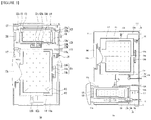
- FIG. 3 illustrates internal configuration of the laundry treating apparatus in accordance with the present disclosure.
- FIG. 3 (a) illustrates that the first treating unit 110 is provided on the second treating unit 120 and FIG. 3 (b) illustrates that the first treating unit 110 is provided under the second treating unit 120.
- FIG. 3 (a) and FIG. 3 (b) illustrate that the first treating unit 110 and the second treating unit 120 are provided in one cabinet 111. That is for convenient description sake and it is possible to arrange the first treating unit 110 and the second treating unit 120 are independently provided in cabinets, respectively.
- FIGS. 3 (a) and (b) illustrate that the first treating unit 110 is the front load type and the second treating unit 120 is the top load type. That is also for convenient description sake and the reverse case is possible.
- the first treating unit 110 may include a first tub 112 provided in the cabinet 111 and holding water; a first drum rotatably mounted in the first tub 112 and accommodating clothes to wash; a first drive unit 114 provided in one surface of the first tub 112 and configured to rotate the first drum 114; a first water supply unit 115 for supplying water to the first tub 112; and a first drainage unit for draining water from the first tub 112.
- the first drive unit 114 may include a first stator 114a configured to form a rotation magnetic field; a first rotor 114b rotatable by the rotation magnetic field; and a shaft 114c connecting the rotor with one surface of the drum.
- the first drive unit may include a motor provided in a predetermined portion of the first tub 112; a shaft projected from a rear surface of the tub and connecting one surface of the drum to the tub; a pulley provided in the shaft and the motor; and a belt connecting the pulleys with each other.
- the first water supply unit 115 may include a first water supply pipe 115a connecting the first tub 112 to an external water supply source; and a first water supply valve 115b for adjusting the water flow of the first water supply pipe 115a.
- the first drainage unit 116 may include a first drainage pipe 116a extended from the first tub 112 to the outside of the cabinet 111; and a first drainage pump 116b providing a power for draining water from the first tub 112, in communication with the first drainage pipe 116a.
- the second treating unit 120 may include the same components only with the difference sizes.
- the second treating unit 120 may include a second tub 122 provided in a top, bottom or lateral surface of the first treating unit 110 within the cabinet 111 and holding water; a second drum 123 rotatably mounted in the second tub 122 and accommodating clothes to wash; a second drive unit 124 provided in one surface of the second tub and configured to rotate the second drum; a second water supply unit 125 for supplying water to the second tub 120; and a second drainage unit 127 for draining water from the second tub 120.
- the first treating unit 110 may include a first support 112a supporting the first tub 112 in the cabinet 111 and the second treating unit 120 may include a second support 122a supporting the second tub 122 in the cabinet 111.
- the first support 112a and the second support 112a may be provided as combination of a spring and a damper or combination of a bracket and a connect bar.
- the first support 112a and the second support 122a may be formed in any shapes only if capable of supporting the first tub 112 and the second tub 122.
- the cabinet 111 may further include a partition wall 111 partitioning off the first and second treating units 110 and 120 from each other.
- the drawer 111a movable from the cabinet 111 outward may be provided and the second tub 122 and the second drum 123 may be provided in the drawer 111a.
- the second drive unit 124 may include a second stator 124a forming a rotation magnetic field; a second rotor 122b rotatable by the rotation magnetic field; and a second shaft 122b connecting the rotor to one surface of the drum.
- the second drive unit may include a motor provided in a predetermined portion of the second tub 122; a shaft projected from a rear surface of the tub and connecting one surface of the drum to the tub; a pulley provided in the shaft and the motor; and a belt connecting the pulleys with each other.
- the second water supply unit 125 may include a second water supply pipe 125a connecting the second tub 122 to an external water supply source; and a second water supply valve 125b for adjusting the water flow of the second water supply pipe 125a.
- the second drainage unit 126 may include a second drainage pipe 126a extended from the second tub 122 to the outside of the cabinet 111; and a second drainage pump 126b providing a power for draining water from the second tub 122, in communication with the second drainage pipe 126a.
- the first treating unit 110 may further include a first heater 118 for heating the water held in the first tub 110; and a hot air supply unit 119 for supplying heated or hot air to the first tub 110.
- first heater 118 is provided below the first tub 110 and a sheath heater may be provided as the first heater.
- the first heater 118 may be formed in any shapes only if capable of heating the water inside the first tub 110.
- the hot air supply unit 119 may include a duct 119a for supplying air to the first tub 110; a duct heater 119b provided in the duct 119; and a fan 119c blowing air to the first tub 110 from the duct 119b.
- the second treating unit 120 may also include a heater 118 and a hot air supply unit 119, like the first treating unit 110.
- first treating unit 110 and the second treating unit 120 may include power supply units for supplying power thereto, respectively.
- the power supply unit may include a switch provided in the cabinet 111 and connected to an external power supply source. It is preferred that the switch is provided in a preset portion of the display unit 200.
- the power supply unit may include a first power supply unit for supplying power to the first treating unit 110; and a second power supply source for supplying power to the second treating unit 120.
- At least one of the first and second treating units 110 and 120 may be a dryer.
- One of the first and second treating units 110 and 120 provided as dryer may include no water supply unit, no drainage unit, no tub and no heater.
- the laundry treating apparatus may further include a control unit 300 configured to controlling the first and second treating units 110 and 120.
- the control unit is capable of controlling all of the configurations provided in the first and second treating units 110 and 120.
- the control unit 300 may be connected with the display unit 200 to transceiver a control signal.
- the control unit 300 may be integrally formed with the display unit 200 as one body or independently formed from the display unit 200.
- the control unit may control the heater 118 and the hot air supply unit 119 provided at least one of the first and second treating units.
- the connect member 111a for electrically connecting the first and second treating units 110 and 120 with each other may be provided in case they are independently provided.
- the connect member 111a may function to transmit a control signal of the control unit 300 provided in one of the first and second treating units 110 and 120.
- FIG. 5 illustrates the display unit 200 of the laundry treating apparatus in accordance with the present disclosure.
- the display unit 200 may be formed in any shapes only if capable of displaying current states of the first and second treating units 110 and 120 or allowing the user to input operation commands of the first and second treating units 110 and 120.
- the display unit 200 is provided in a circular shape.
- the display unit 200 may be a touch panel so as to receive the operation command by enabling the overall region to sense an external force or electricity of the surface.
- the display unit 200 may include a first region 210 and a second region 220 which are distinguished from each other.
- Both of the first and second regions 210 and 220 are capable of displaying screens and sensing the external force or electricity to receive the operation command.
- the first and second regions 210 and 220 may be provided by dividing the display unit 200 (see FIG. 5 (a) ) or a predetermined region of the display unit 200 is formed as the first region 210 and another region distant from the first region is formed as the second region 220 (see FIG. 5 (b) ).
- first region 210 and the second region 220 may be provided side by side.
- the display unit 200 may display a screen on the full region so that the first region 210 and the second region 220 can selectively display a screen based on a specific control signal.
- the display unit 200 may further include a third region 230 provided as the integration of the first and second regions 210 and 220.
- the third region 230 may occupy the full screen of the display unit 200.
- the third region 230 may be overlapped with the first and second regions 210 and 220.
- the display unit 200 may display the current states of the first and second treating units and screens related with the first and second treating units so as to receive operation commands configured to wash or dry clothes in the first and second treating units.
- the currents states of the first and second treating units mean a state where the first and the second treating units 110 and 120 are linked to the control unit 300 or the display unit 200.
- the screen capable of receiving the operation commands mean the courses for performing washing or drying cycles in the first and second treating units 110 and 120.
- the display unit 200 displays screens related with the first and second while describing a control method of the laundry treating apparatus.
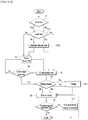
- FIG. 6 illustrates a control method for controlling the first and second treating units 110 and 120 by using one display unit 200.
- FIGS. 7 through 13 illustrate screens displayed on the display unit 200 in steps of the control method.
- the control unit 300 When the power is supplied to the display unit 200, the control unit 300 is implemented to perform a sense step (S1) for sensing whether the first treating unit 110 and the second treating unit 120 are activated on the display unit 200.
- the sense step (S1) may be implemented to display an operation preparing state S100 of the laundry treating apparatus on the display unit 200 such as booting or loading (see FIG. 7 ).
- the state where the first and second treating units 110 and 120 are activated may mean a state where the first and second treating units 110 and 120 are ready to receive and perform an operation command from the display unit 200 or the control unit 300.
- the state where the units 110 and 120 are activated may mean a state where they are linked to the display unit and ready to transmit their current states to the display unit 200.
- first power supply unit 118 when the first power supply unit 118 is input to the first treating unit 110 or the second power supply unit 128 is input to the second treating unit 120, it is determined that the first or second treating unit 110 or 120 is activated.
- a selection request step (S2) for displaying select information S200 for allowing the user to select the first and second treating units 110 and 120 on the display unit 200 may be performed.
- the select request step (S2) is implemented to allow the user to select the unit to control or operate.
- the select information S200 may mean that names of the activated treating unit are displayed on the display unit 200 (for example, the first treating unit and the second treating unit).
- the select request step (S2) means that the treating unit the user selects to control or operate is specified.
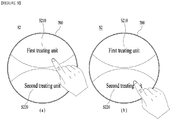
- the select information S200 may include a first select information s210 for selecting the first treating unit 110; and second select information s220 for selecting the second treating unit 120 (see FIG. 8 (a) ).
- the select request step (S2) may display the first select information S210 in the first region 210 and the second select information S220 in the second region 220 distinguishably.
- the display unit 200 is divided into top and bottom regions as the first and second regions 210 and 220.
- the first select information S210 is displayed on the first region 210 and the second select information S220 is displayed on the second region 220 (see FIG. 8 (a) ).
- the display unit 200 may be divided into left and right regions as the first and second regions 210 and 220.
- the first select information and the second select information may be displayed in the first region 210 and the second region 220, respectively.
- the right and left displaying might confuse the user and it is preferred that the display unit 200 is divided into upper and lower regions.
- the select request step (S2) may display only the select information S200 of the activated treating unit on the third region 230.
- the select information may be the first select information S210 or the second select information S220 (see F IGS. 8 (b) and (c)).
- select information S210, S220 of the activated treating unit may be displayed on the full region of the display unit 200 (for example, names).
- the user is able to check the activated treating unit and avoid loading clothes in the wrong unit.
- the user is able to select the select information S200 by pressing the display unit 200.
- the user may select the select information S200 by pressing the first region 210 and the second region 220 (see FIG. 9 ).
- the user may press the first and second regions 210 and 220 simultaneously in a preset time period or press a OK button (not shown) after pressing the first and second regions 210 and 220.
- a course select step (S3) may be implemented to display specific contents of an operation command which is performed in the selected one of the first and second treating units 110 and 120.
- the course display step (S3) may display an operation command S310 which is performable in the first treating unit 110 in the first region 210 and an operation command S320 which is performable in the second treating unit 120 in the second region 220 (see FIG. 10 (a) ).
- the user is able to input the operation command S310 implemented in the first treating unit and the operation command S320 implemented in the second treating unit separately.
- an operation command S300 performable in the selected treating unit may be displayed in the third region 230 combined with the first and second regions 210 and 220 (see FIG. 10 (b) ).
- that the first select information S210 or the second select information S220 is selected in the select request step (S2) may include a case that only one select information is selected even when both of the treating units are activated and a case that the select information of the activated treating unit is selected after the first treating unit or the second treating unit is activated.
- the user is able to input the intended operation command to the selected treating unit appropriately.
- the course display step (S3) displays operation commands S310 performable in one of the treating units 110 and 120 in the third region 230. After that, the user selects the operation command performable in the one of the treating units and then the course display step (S3) displays operation commands (S320) performable in the other treating unit in the third region 230 sequentially (see FIG. 10 (c) ).
- the user may apply a slide force from the first region 210 to the second region 220 of the display unit 200.
- the course display step (S3 may display only the contents of the operation commands S300 performable in the selected treating unit in the third region 230 combined with the first region 210 and the second region 220.
- the operation commands S300 may be specific commands for performing at least one of washing and drying cycles in the first and second treating units 110 and 120.
- the operation commands may include a normal course S330 configured of a course performing one or more of a wash cycle configured to removing foreign substances from clothes, a rinse cycle configured to rinse clothes and a dry cycle configured to dry clothes; and a special course S340 configured of an allergy care cycle configured to keep clothes over a preset specific temperature for a preset time period, a stain-remove cycle configured to remove stains from clothes by increasing the repetition number, duration time and cycle temperature of the preset washing and rinsing cycles.
- a normal course S330 configured of a course performing one or more of a wash cycle configured to removing foreign substances from clothes, a rinse cycle configured to rinse clothes and a dry cycle configured to dry clothes
- a special course S340 configured of an allergy care cycle configured to keep clothes over a preset specific temperature for a preset time period, a stain-remove cycle configured to remove stains from clothes by increasing the repetition number, duration time and cycle temperature of the preset washing and rinsing cycles.
- the normal course (330) may be configured of a normal course S331; a speed wash course S332; a heavy duty course S333; a wool course S334; and a perm press course S335, in case the first treating unit 110 is and the second treating unit 120 are provided as washers.
- the courses may be displayed on the display unit 200 as icons (see FIG. 10 (d) ).
- the normal course S331 may mean the course configured to perform washing at an average water level, an average duration time, an average water temperature and an average RPM of all the courses or cycles performed in the first or second treating units 110 or 120.
- the speed wash course S332 may mean a shortened course with a shorter duration time than the normal course.
- the heavy duty course S333 may mean a course for washing relatively heavier clothes than the normal course, with an increased water amount or an increased RPM compared with the average water amount and RPM of the normal course.
- the wool course S334 may mean a course configured to perform washing with a lowered water amount and a lowered RPM compared with the average water amount and RPM of the normal course.
- the perm press course S335 may mean a course configured to press wrinkles by rotating the drum additionally after ending the spinning cycle.
- the special course S340 may be configured of an allergy care course S341; a stain care course S342; a delicate course S343; an outdoor course S344; and a direct wear course S345.
- the courses may be displayed on the display unit 200 as icons (see FIG. 10 (d) ).
- the outdoor course S343 may mean a course in which the drum is rotated at a higher RPM than the normal course.
- the direct wear course S345 may mean a course configured to perform the dry cycle after the wash cycle and then prevent wrinkles by rotating the drum for a preset time period.
- the normal course S330 and the special course S340 operated in the selected treating unit after displayed in the course display step (S3) may be displayed in the first region 210 and the second region 220, respectively.
- the course display step (S3) may display specific contents or icons of the normal course S330 in the third region 230 of the display unit 200.
- specific contents or icons of the special course S340 are displayed in the third region 230 (see FIG. 10 (d) ).
- the course display step (S3) may display first the operation commands S300 performable in one of the first and second treating units 110 and 120 in the third region 230.
- the course display step (S3) may display operation commands S300 performable in the other treating unit in the third region later.
- the normal course S330 is displayed first.
- the special course S340 may be displayed later.
- the first select information S210 or the second select information S220 may be selected in the select request step (S2), which may include a case of displaying only the selected information of one treating unit in the select request step (S2) after one of the treating units is activated in the sense step (S1) as mentioned above.
- the course display step (S2) may display only the operation commands performable in the selected treating unit.
- the course display step (S2) may display contents of the normal course S330 and contents of the special course S340 in the first region 210 and the second region 220, respectively.
- one of the normal and special courses S330 and S340 may be displayed in the third region 230 and the other course may be displayed when the external force for sliding is applied.
- the control method of the laundry treating apparatus in accordance with the present disclosure may further include a course input sense step (S4) for sensing whether operation commands of the selected treating unit in the course display step (S3) is input.
- S4 course input sense step for sensing whether operation commands of the selected treating unit in the course display step (S3) is input.
- control unit 300 in the course input sense step (S4) may sense whether the operation commands S300 performable in the first treating unit and the operation commands performable in the second treating unit are input in the course display step (S3).
- control unit 300 in the course input sense step (S4) may sense whether the operation commands S300 performable in the selected treating unit are input.
- the current step returns to the course display step (S3) to induce the user to input the operation command to the selected treating unit.
- the current state may be in standby until the user inputs the operation command or display alarm information for inducing input to the display unit 200.
- the user is likely to wash or dry specific clothes over or below a preset temperature or strengthen a soaking function for clothes. That is, the user intends to change the contents set in each course to perform a wash or dry cycle for specific clothes.
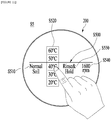
- a setting change step (S5) may be performed to change one of setting information S500 which includes laundry amount and/or contamination levels S510, temperature S520, drum RPM S540 and rinsing number S530 (see FIG. 11 ).
- the setting change step (S5) is implemented to change one or more of the setting information S500 set in the normal course S330 and the special course S340, to be fitted to the user's intension.
- the setting information S500 is dividedly displayed on the display unit 200.
- one or more of changeable setting information 500 may be displayed.
- One of the displayed changeable setting information S500 is selected and then the setting information is changed into the selected setting information (see FIG. 11 ).
- a personalized wash or dry cycle fitted to the user's intension may be performed.
- the user may not intend to change the setting in the setting change step (S5).
- the user may usually trust the setting information of the normal and special courses and not intend to change the setting information in the setting change step.
- the control flow of the laundry treating apparatus pauses without changing the setting information in the setting change step (S5), the performing of the operation commands S300 may be delayed.
- the preset operation command S300 may be performed in the selected treating unit as it is, unless any inputs are made in the setting change step (S5) for a preset time period.
- the selected treating unit may perform the input operation commands S300.
- a process display step (S6) configured to display a process state S600 of the operation command performed in the selected treating unit in the display unit 200 may be performed.
- the process display step (S6) may provide certain information including the laundry amount S610, the water temperature S620, the drum RPM S630 and the currently processing course S640.
- the process display step (S6) may display contents including the remaining time S650, the currently progressing cycle S660 and specific description of the course or cycle (see FIG. 12 (a) ).
- the user is able to check whether the intended operation commands is performed in the selected treating unit and whether the selected treating unit is malfunctioned.
- control unit 300 may further perform an end determine step (S7) configured to determine whether the operation of the first treating unit 110 and the operation of the second treating unit 120 end, when the first and second treating units 110 and 1200 are ready to perform the operation commands simultaneously.
- S7 end determine step configured to determine whether the operation of the first treating unit 110 and the operation of the second treating unit 120 end, when the first and second treating units 110 and 1200 are ready to perform the operation commands simultaneously.
- control unit may display only the processing state of the other one, when sensing that one of the first and second treating units 110 and 120 ends the performance of the operation command (see FIG. 12 (b) ).
- only the operation state of the currently progressing treating unit may be displayed so that the user may be provided with only meaningful information.
- control unit 300 may provide the user with the display state information of the laundry treating apparatus including the first treating unit 110 and the second treating unit 120 on the display unit 200.
- control unit may control the laundry treating apparatus including the first treating unit 110 and the second treating unit 120 by allowing the user to manipulate the display unit 200.
- the displaying order, input method and contents displayed on the display unit 200 may not be familiar to the user who uses the laundry treating apparatus for the first time.
- control unit 300 may perform a guide step (S2-1) configured to display guidelines about the manipulation method of the display unit 200.
- the guide step (S2-1) may be performed before or after the sense step (S1). In other words, it is after the select request step (S2) that the user starts to manipulate the display unit 200, so that the guide step (S2-1) can be performed before the select request step (S2).
- start, remove and no re-start of the guidelines to manipulate the display unit 200 and confirm of the start, remove and no re-start may be displayed on divided regions of the display unit 200.
- icons implemented to display start S221, remove S222, no more of the display unit use guidelines and confirm of the no more guidelines S224 on divided regions of the display unit 200 (see FIG. 13 ).
- the user is able to touch the surface of the display unit 200 which displays icons for the start S221, the remove S222, the no re-start of the use guidelines and no more guidelines S223 and then touch the confirm icon.
- a guideline describe step (S2-2) may be implemented to display specific use guidelines about the manipulation manual of the display unit 200.
- the guideline describe step (S2-2) may be configured of select request step (S2) and the course input step (S4) tutorial.
- the guide step (S2-1) ends and the select request step (S2) is implemented.
- the guide step (S2) may be omitted from the next power-ON.
Landscapes
- Engineering & Computer Science (AREA)
- Textile Engineering (AREA)
- Control Of Washing Machine And Dryer (AREA)
Applications Claiming Priority (1)
| Application Number | Priority Date | Filing Date | Title |
|---|---|---|---|
| KR1020170006093 | 2017-01-13 |
Publications (2)
| Publication Number | Publication Date |
|---|---|
| EP3348698A1 true EP3348698A1 (de) | 2018-07-18 |
| EP3348698B1 EP3348698B1 (de) | 2021-04-14 |
Family
ID=59381197
Family Applications (1)
| Application Number | Title | Priority Date | Filing Date |
|---|---|---|---|
| EP17182164.8A Active EP3348698B1 (de) | 2017-01-13 | 2017-07-19 | Wäschebehandlungsvorrichtung und verfahren dafür |
Country Status (4)
| Country | Link |
|---|---|
| US (1) | US11198964B2 (de) |
| EP (1) | EP3348698B1 (de) |
| CN (1) | CN108301165B (de) |
| AU (1) | AU2017204095B2 (de) |
Cited By (2)
| Publication number | Priority date | Publication date | Assignee | Title |
|---|---|---|---|---|
| US11560661B2 (en) | 2019-11-29 | 2023-01-24 | Samsung Electronics Co., Ltd. | Washing machine and control method thereof |
| EP4567180A4 (de) * | 2022-09-27 | 2025-11-05 | Lg Electronics Inc | Wäschebehandlungsvorrichtung und steuerungsverfahren dafür |
Families Citing this family (11)
| Publication number | Priority date | Publication date | Assignee | Title |
|---|---|---|---|---|
| CN111197230A (zh) * | 2018-11-19 | 2020-05-26 | 青岛海尔洗衣机有限公司 | 衣物处理设备和用于衣物处理设备的控制方法 |
| KR102236743B1 (ko) * | 2020-01-03 | 2021-04-06 | 삼성전자주식회사 | 의류 처리 장치 및 그 제어 방법 |
| USD996751S1 (en) * | 2021-03-08 | 2023-08-22 | Lg Electronics Inc. | Electric washing machine |
| CN115404637B (zh) | 2021-05-28 | 2026-03-10 | Lg电子株式会社 | 衣物处理装置 |
| CN115404631B (zh) * | 2021-05-28 | 2026-03-10 | Lg电子株式会社 | 衣物处理装置 |
| CN115404638B (zh) | 2021-05-28 | 2026-03-10 | Lg电子株式会社 | 衣物处理装置 |
| CN115404636B (zh) | 2021-05-28 | 2025-11-25 | Lg电子株式会社 | 衣物处理装置 |
| KR102757410B1 (ko) * | 2021-06-28 | 2025-01-21 | 엘지전자 주식회사 | 의류처리장치 및 상기 의류처리장치를 구비하는 시스템 |
| KR102892368B1 (ko) * | 2022-09-27 | 2025-12-02 | 엘지전자 주식회사 | 의류처리장치 |
| KR20250020122A (ko) * | 2023-08-03 | 2025-02-11 | 엘지전자 주식회사 | 의류처리장치 |
| KR20250020105A (ko) * | 2023-08-03 | 2025-02-11 | 엘지전자 주식회사 | 의류처리장치 |
Citations (3)
| Publication number | Priority date | Publication date | Assignee | Title |
|---|---|---|---|---|
| EP1548174A1 (de) * | 2003-12-26 | 2005-06-29 | Lg Electronics Inc. | Vorrichtung und Verfahren zur Steuerung eines Systems bestehend aus Waschmaschine und Trockner |
| US20090145174A1 (en) * | 2007-11-21 | 2009-06-11 | Lg Electronics Inc. | Washing machine |
| US20160215432A1 (en) * | 2015-01-27 | 2016-07-28 | Samsung Electronics Co., Ltd. | Washing machine and method for controlling the same |
Family Cites Families (12)
| Publication number | Priority date | Publication date | Assignee | Title |
|---|---|---|---|---|
| KR100373095B1 (ko) | 2000-10-16 | 2003-02-25 | 삼성전자주식회사 | 냉장고를 이용한 홈네트워크 시스템 및 방법 |
| KR101138600B1 (ko) | 2005-03-19 | 2012-05-10 | 엘지전자 주식회사 | 원격 모니터링 시스템 및 그 제어방법 |
| KR100652459B1 (ko) | 2005-11-25 | 2006-12-01 | 엘지전자 주식회사 | 일체형 세탁 건조기 |
| KR101075227B1 (ko) * | 2006-07-25 | 2011-10-19 | 삼성전자주식회사 | 2조식 세탁기의 운전제어방법 |
| KR20120023497A (ko) | 2010-09-02 | 2012-03-13 | 삼성전자주식회사 | 세탁기 및 그 제어방법 |
| JP6296356B2 (ja) | 2012-10-29 | 2018-03-20 | パナソニックIpマネジメント株式会社 | 操作装置 |
| WO2014124105A2 (en) * | 2013-02-07 | 2014-08-14 | Electrolux Home Products, Inc. | User control interface for an appliance, and associated method |
| CN106032612B (zh) | 2015-03-10 | 2019-05-03 | 青岛海高设计制造有限公司 | 洗衣机及洗衣机控制界面的交互方法 |
| CN106032625B (zh) * | 2015-03-11 | 2019-12-13 | 青岛海尔滚筒洗衣机有限公司 | 一种洗衣机和洗衣机的控制方法 |
| CN106283485B (zh) * | 2015-05-14 | 2019-11-12 | 青岛海尔洗衣机有限公司 | 一种洗衣机显示方式 |
| KR102503947B1 (ko) * | 2016-01-05 | 2023-02-27 | 엘지전자 주식회사 | 의류처리장치 |
| MX2016002637A (es) * | 2016-02-29 | 2017-08-30 | Mabe Sa De Cv | Metodo de lavado con infusor en una lavadora de carga vertical (aqua). |
-
2017
- 2017-06-16 AU AU2017204095A patent/AU2017204095B2/en active Active
- 2017-07-19 EP EP17182164.8A patent/EP3348698B1/de active Active
- 2017-07-28 US US15/663,184 patent/US11198964B2/en active Active
- 2017-08-24 CN CN201710732291.7A patent/CN108301165B/zh active Active
Patent Citations (3)
| Publication number | Priority date | Publication date | Assignee | Title |
|---|---|---|---|---|
| EP1548174A1 (de) * | 2003-12-26 | 2005-06-29 | Lg Electronics Inc. | Vorrichtung und Verfahren zur Steuerung eines Systems bestehend aus Waschmaschine und Trockner |
| US20090145174A1 (en) * | 2007-11-21 | 2009-06-11 | Lg Electronics Inc. | Washing machine |
| US20160215432A1 (en) * | 2015-01-27 | 2016-07-28 | Samsung Electronics Co., Ltd. | Washing machine and method for controlling the same |
Cited By (4)
| Publication number | Priority date | Publication date | Assignee | Title |
|---|---|---|---|---|
| US11560661B2 (en) | 2019-11-29 | 2023-01-24 | Samsung Electronics Co., Ltd. | Washing machine and control method thereof |
| EP4023806A4 (de) * | 2019-11-29 | 2023-02-22 | Samsung Electronics Co., Ltd. | Waschmaschine und steuerungsverfahren dafür |
| EP4379483A3 (de) * | 2019-11-29 | 2024-07-17 | Samsung Electronics Co., Ltd. | Waschmaschine und steuerungsverfahren dafür |
| EP4567180A4 (de) * | 2022-09-27 | 2025-11-05 | Lg Electronics Inc | Wäschebehandlungsvorrichtung und steuerungsverfahren dafür |
Also Published As
| Publication number | Publication date |
|---|---|
| EP3348698B1 (de) | 2021-04-14 |
| AU2017204095A1 (en) | 2018-08-02 |
| AU2017204095B2 (en) | 2019-08-08 |
| US11198964B2 (en) | 2021-12-14 |
| CN108301165B (zh) | 2021-01-29 |
| CN108301165A (zh) | 2018-07-20 |
| US20180202091A1 (en) | 2018-07-19 |
Similar Documents
| Publication | Publication Date | Title |
|---|---|---|
| EP3348698B1 (de) | Wäschebehandlungsvorrichtung und verfahren dafür | |
| KR101999701B1 (ko) | 의류처리장치 및 그 제어방법 | |
| KR101710399B1 (ko) | 세탁장치의 제어방법 | |
| EP3133202B1 (de) | Zusatzwaschmaschine | |
| KR101830733B1 (ko) | 세탁장치 | |
| US8459066B2 (en) | Input device of washing machine and control method of the same | |
| JP2021007635A (ja) | 衣類処理装置 | |
| EP4023806B1 (de) | Waschmaschine und steuerungsverfahren dafür | |
| US7802855B2 (en) | Home appliance having a door | |
| CN101617077B (zh) | 复合洗衣机及其控制方法 | |
| AU2020216025B2 (en) | Laundry treating apparatus and control method of on-line system containing the same | |
| AU2020217289B2 (en) | Laundry treating apparatus and control method of on-line system containing the same | |
| EP1266059A1 (de) | Wäschegerät | |
| AU2001240810A1 (en) | Laundry appliance | |
| US11566362B2 (en) | Washing machine capable of controlling control panel related to operation of heaters | |
| KR20100086891A (ko) | 세탁기의 제어 장치 및 그의 제어 방법 | |
| US10988882B2 (en) | Laundry treatment appliance slider-based user interface | |
| US20250043483A1 (en) | Laundry treating apparatus | |
| US20250043487A1 (en) | Laundry treating apparatus | |
| US20250043485A1 (en) | Laundry treating apparatus | |
| KR20230157124A (ko) | 세탁물 처리기기 | |
| KR20160042413A (ko) | 세탁장치 |
Legal Events
| Date | Code | Title | Description |
|---|---|---|---|
| PUAI | Public reference made under article 153(3) epc to a published international application that has entered the european phase |
Free format text: ORIGINAL CODE: 0009012 |
|
| STAA | Information on the status of an ep patent application or granted ep patent |
Free format text: STATUS: THE APPLICATION HAS BEEN PUBLISHED |
|
| AK | Designated contracting states |
Kind code of ref document: A1 Designated state(s): AL AT BE BG CH CY CZ DE DK EE ES FI FR GB GR HR HU IE IS IT LI LT LU LV MC MK MT NL NO PL PT RO RS SE SI SK SM TR |
|
| AX | Request for extension of the european patent |
Extension state: BA ME |
|
| STAA | Information on the status of an ep patent application or granted ep patent |
Free format text: STATUS: REQUEST FOR EXAMINATION WAS MADE |
|
| 17P | Request for examination filed |
Effective date: 20190115 |
|
| RBV | Designated contracting states (corrected) |
Designated state(s): AL AT BE BG CH CY CZ DE DK EE ES FI FR GB GR HR HU IE IS IT LI LT LU LV MC MK MT NL NO PL PT RO RS SE SI SK SM TR |
|
| STAA | Information on the status of an ep patent application or granted ep patent |
Free format text: STATUS: EXAMINATION IS IN PROGRESS |
|
| 17Q | First examination report despatched |
Effective date: 20190527 |
|
| REG | Reference to a national code |
Ref country code: DE Ref legal event code: R079 Ref document number: 602017036556 Country of ref document: DE Free format text: PREVIOUS MAIN CLASS: D06F0039000000 Ipc: D06F0034320000 |
|
| GRAP | Despatch of communication of intention to grant a patent |
Free format text: ORIGINAL CODE: EPIDOSNIGR1 |
|
| STAA | Information on the status of an ep patent application or granted ep patent |
Free format text: STATUS: GRANT OF PATENT IS INTENDED |
|
| RIC1 | Information provided on ipc code assigned before grant |
Ipc: D06F 29/00 20060101ALN20201008BHEP Ipc: D06F 25/00 20060101ALN20201008BHEP Ipc: D06F 101/00 20200101ALN20201008BHEP Ipc: D06F 105/58 20200101ALN20201008BHEP Ipc: D06F 31/00 20060101ALI20201008BHEP Ipc: D06F 101/20 20200101ALN20201008BHEP Ipc: D06F 34/32 20200101AFI20201008BHEP |
|
| INTG | Intention to grant announced |
Effective date: 20201105 |
|
| GRAS | Grant fee paid |
Free format text: ORIGINAL CODE: EPIDOSNIGR3 |
|
| GRAA | (expected) grant |
Free format text: ORIGINAL CODE: 0009210 |
|
| STAA | Information on the status of an ep patent application or granted ep patent |
Free format text: STATUS: THE PATENT HAS BEEN GRANTED |
|
| AK | Designated contracting states |
Kind code of ref document: B1 Designated state(s): AL AT BE BG CH CY CZ DE DK EE ES FI FR GB GR HR HU IE IS IT LI LT LU LV MC MK MT NL NO PL PT RO RS SE SI SK SM TR |
|
| REG | Reference to a national code |
Ref country code: GB Ref legal event code: FG4D |
|
| REG | Reference to a national code |
Ref country code: CH Ref legal event code: EP |
|
| REG | Reference to a national code |
Ref country code: DE Ref legal event code: R096 Ref document number: 602017036556 Country of ref document: DE |
|
| REG | Reference to a national code |
Ref country code: IE Ref legal event code: FG4D |
|
| REG | Reference to a national code |
Ref country code: AT Ref legal event code: REF Ref document number: 1382476 Country of ref document: AT Kind code of ref document: T Effective date: 20210515 |
|
| REG | Reference to a national code |
Ref country code: LT Ref legal event code: MG9D |
|
| REG | Reference to a national code |
Ref country code: AT Ref legal event code: MK05 Ref document number: 1382476 Country of ref document: AT Kind code of ref document: T Effective date: 20210414 |
|
| REG | Reference to a national code |
Ref country code: NL Ref legal event code: MP Effective date: 20210414 |
|
| PG25 | Lapsed in a contracting state [announced via postgrant information from national office to epo] |
Ref country code: FI Free format text: LAPSE BECAUSE OF FAILURE TO SUBMIT A TRANSLATION OF THE DESCRIPTION OR TO PAY THE FEE WITHIN THE PRESCRIBED TIME-LIMIT Effective date: 20210414 Ref country code: LT Free format text: LAPSE BECAUSE OF FAILURE TO SUBMIT A TRANSLATION OF THE DESCRIPTION OR TO PAY THE FEE WITHIN THE PRESCRIBED TIME-LIMIT Effective date: 20210414 Ref country code: HR Free format text: LAPSE BECAUSE OF FAILURE TO SUBMIT A TRANSLATION OF THE DESCRIPTION OR TO PAY THE FEE WITHIN THE PRESCRIBED TIME-LIMIT Effective date: 20210414 Ref country code: AT Free format text: LAPSE BECAUSE OF FAILURE TO SUBMIT A TRANSLATION OF THE DESCRIPTION OR TO PAY THE FEE WITHIN THE PRESCRIBED TIME-LIMIT Effective date: 20210414 Ref country code: BG Free format text: LAPSE BECAUSE OF FAILURE TO SUBMIT A TRANSLATION OF THE DESCRIPTION OR TO PAY THE FEE WITHIN THE PRESCRIBED TIME-LIMIT Effective date: 20210714 Ref country code: NL Free format text: LAPSE BECAUSE OF FAILURE TO SUBMIT A TRANSLATION OF THE DESCRIPTION OR TO PAY THE FEE WITHIN THE PRESCRIBED TIME-LIMIT Effective date: 20210414 |
|
| PG25 | Lapsed in a contracting state [announced via postgrant information from national office to epo] |
Ref country code: PL Free format text: LAPSE BECAUSE OF FAILURE TO SUBMIT A TRANSLATION OF THE DESCRIPTION OR TO PAY THE FEE WITHIN THE PRESCRIBED TIME-LIMIT Effective date: 20210414 Ref country code: NO Free format text: LAPSE BECAUSE OF FAILURE TO SUBMIT A TRANSLATION OF THE DESCRIPTION OR TO PAY THE FEE WITHIN THE PRESCRIBED TIME-LIMIT Effective date: 20210714 Ref country code: PT Free format text: LAPSE BECAUSE OF FAILURE TO SUBMIT A TRANSLATION OF THE DESCRIPTION OR TO PAY THE FEE WITHIN THE PRESCRIBED TIME-LIMIT Effective date: 20210816 Ref country code: SE Free format text: LAPSE BECAUSE OF FAILURE TO SUBMIT A TRANSLATION OF THE DESCRIPTION OR TO PAY THE FEE WITHIN THE PRESCRIBED TIME-LIMIT Effective date: 20210414 Ref country code: RS Free format text: LAPSE BECAUSE OF FAILURE TO SUBMIT A TRANSLATION OF THE DESCRIPTION OR TO PAY THE FEE WITHIN THE PRESCRIBED TIME-LIMIT Effective date: 20210414 Ref country code: IS Free format text: LAPSE BECAUSE OF FAILURE TO SUBMIT A TRANSLATION OF THE DESCRIPTION OR TO PAY THE FEE WITHIN THE PRESCRIBED TIME-LIMIT Effective date: 20210814 Ref country code: LV Free format text: LAPSE BECAUSE OF FAILURE TO SUBMIT A TRANSLATION OF THE DESCRIPTION OR TO PAY THE FEE WITHIN THE PRESCRIBED TIME-LIMIT Effective date: 20210414 |
|
| REG | Reference to a national code |
Ref country code: DE Ref legal event code: R097 Ref document number: 602017036556 Country of ref document: DE |
|
| PG25 | Lapsed in a contracting state [announced via postgrant information from national office to epo] |
Ref country code: SM Free format text: LAPSE BECAUSE OF FAILURE TO SUBMIT A TRANSLATION OF THE DESCRIPTION OR TO PAY THE FEE WITHIN THE PRESCRIBED TIME-LIMIT Effective date: 20210414 Ref country code: SK Free format text: LAPSE BECAUSE OF FAILURE TO SUBMIT A TRANSLATION OF THE DESCRIPTION OR TO PAY THE FEE WITHIN THE PRESCRIBED TIME-LIMIT Effective date: 20210414 Ref country code: ES Free format text: LAPSE BECAUSE OF FAILURE TO SUBMIT A TRANSLATION OF THE DESCRIPTION OR TO PAY THE FEE WITHIN THE PRESCRIBED TIME-LIMIT Effective date: 20210414 Ref country code: RO Free format text: LAPSE BECAUSE OF FAILURE TO SUBMIT A TRANSLATION OF THE DESCRIPTION OR TO PAY THE FEE WITHIN THE PRESCRIBED TIME-LIMIT Effective date: 20210414 Ref country code: EE Free format text: LAPSE BECAUSE OF FAILURE TO SUBMIT A TRANSLATION OF THE DESCRIPTION OR TO PAY THE FEE WITHIN THE PRESCRIBED TIME-LIMIT Effective date: 20210414 Ref country code: CZ Free format text: LAPSE BECAUSE OF FAILURE TO SUBMIT A TRANSLATION OF THE DESCRIPTION OR TO PAY THE FEE WITHIN THE PRESCRIBED TIME-LIMIT Effective date: 20210414 Ref country code: DK Free format text: LAPSE BECAUSE OF FAILURE TO SUBMIT A TRANSLATION OF THE DESCRIPTION OR TO PAY THE FEE WITHIN THE PRESCRIBED TIME-LIMIT Effective date: 20210414 |
|
| PLBE | No opposition filed within time limit |
Free format text: ORIGINAL CODE: 0009261 |
|
| STAA | Information on the status of an ep patent application or granted ep patent |
Free format text: STATUS: NO OPPOSITION FILED WITHIN TIME LIMIT |
|
| REG | Reference to a national code |
Ref country code: CH Ref legal event code: PL |
|
| 26N | No opposition filed |
Effective date: 20220117 |
|
| GBPC | Gb: european patent ceased through non-payment of renewal fee |
Effective date: 20210719 |
|
| PG25 | Lapsed in a contracting state [announced via postgrant information from national office to epo] |
Ref country code: MC Free format text: LAPSE BECAUSE OF FAILURE TO SUBMIT A TRANSLATION OF THE DESCRIPTION OR TO PAY THE FEE WITHIN THE PRESCRIBED TIME-LIMIT Effective date: 20210414 |
|
| REG | Reference to a national code |
Ref country code: BE Ref legal event code: MM Effective date: 20210731 |
|
| PG25 | Lapsed in a contracting state [announced via postgrant information from national office to epo] |
Ref country code: LI Free format text: LAPSE BECAUSE OF NON-PAYMENT OF DUE FEES Effective date: 20210731 Ref country code: GB Free format text: LAPSE BECAUSE OF NON-PAYMENT OF DUE FEES Effective date: 20210719 Ref country code: CH Free format text: LAPSE BECAUSE OF NON-PAYMENT OF DUE FEES Effective date: 20210731 |
|
| PG25 | Lapsed in a contracting state [announced via postgrant information from national office to epo] |
Ref country code: IS Free format text: LAPSE BECAUSE OF FAILURE TO SUBMIT A TRANSLATION OF THE DESCRIPTION OR TO PAY THE FEE WITHIN THE PRESCRIBED TIME-LIMIT Effective date: 20210814 Ref country code: LU Free format text: LAPSE BECAUSE OF NON-PAYMENT OF DUE FEES Effective date: 20210719 Ref country code: FR Free format text: LAPSE BECAUSE OF NON-PAYMENT OF DUE FEES Effective date: 20210731 Ref country code: AL Free format text: LAPSE BECAUSE OF FAILURE TO SUBMIT A TRANSLATION OF THE DESCRIPTION OR TO PAY THE FEE WITHIN THE PRESCRIBED TIME-LIMIT Effective date: 20210414 |
|
| PG25 | Lapsed in a contracting state [announced via postgrant information from national office to epo] |
Ref country code: IT Free format text: LAPSE BECAUSE OF FAILURE TO SUBMIT A TRANSLATION OF THE DESCRIPTION OR TO PAY THE FEE WITHIN THE PRESCRIBED TIME-LIMIT Effective date: 20210414 Ref country code: IE Free format text: LAPSE BECAUSE OF NON-PAYMENT OF DUE FEES Effective date: 20210719 Ref country code: BE Free format text: LAPSE BECAUSE OF NON-PAYMENT OF DUE FEES Effective date: 20210731 |
|
| PG25 | Lapsed in a contracting state [announced via postgrant information from national office to epo] |
Ref country code: HU Free format text: LAPSE BECAUSE OF FAILURE TO SUBMIT A TRANSLATION OF THE DESCRIPTION OR TO PAY THE FEE WITHIN THE PRESCRIBED TIME-LIMIT; INVALID AB INITIO Effective date: 20170719 |
|
| PG25 | Lapsed in a contracting state [announced via postgrant information from national office to epo] |
Ref country code: CY Free format text: LAPSE BECAUSE OF FAILURE TO SUBMIT A TRANSLATION OF THE DESCRIPTION OR TO PAY THE FEE WITHIN THE PRESCRIBED TIME-LIMIT Effective date: 20210414 |
|
| PG25 | Lapsed in a contracting state [announced via postgrant information from national office to epo] |
Ref country code: GR Free format text: LAPSE BECAUSE OF FAILURE TO SUBMIT A TRANSLATION OF THE DESCRIPTION OR TO PAY THE FEE WITHIN THE PRESCRIBED TIME-LIMIT Effective date: 20210414 |
|
| PG25 | Lapsed in a contracting state [announced via postgrant information from national office to epo] |
Ref country code: MK Free format text: LAPSE BECAUSE OF FAILURE TO SUBMIT A TRANSLATION OF THE DESCRIPTION OR TO PAY THE FEE WITHIN THE PRESCRIBED TIME-LIMIT Effective date: 20210414 |
|
| PG25 | Lapsed in a contracting state [announced via postgrant information from national office to epo] |
Ref country code: TR Free format text: LAPSE BECAUSE OF FAILURE TO SUBMIT A TRANSLATION OF THE DESCRIPTION OR TO PAY THE FEE WITHIN THE PRESCRIBED TIME-LIMIT Effective date: 20210414 |
|
| PG25 | Lapsed in a contracting state [announced via postgrant information from national office to epo] |
Ref country code: MT Free format text: LAPSE BECAUSE OF FAILURE TO SUBMIT A TRANSLATION OF THE DESCRIPTION OR TO PAY THE FEE WITHIN THE PRESCRIBED TIME-LIMIT Effective date: 20210414 |
|
| PGFP | Annual fee paid to national office [announced via postgrant information from national office to epo] |
Ref country code: DE Payment date: 20250609 Year of fee payment: 9 |