EP3338277B1 - Pillow set with snoring noise cancellation - Google Patents
Pillow set with snoring noise cancellation Download PDFInfo
- Publication number
- EP3338277B1 EP3338277B1 EP16757467.2A EP16757467A EP3338277B1 EP 3338277 B1 EP3338277 B1 EP 3338277B1 EP 16757467 A EP16757467 A EP 16757467A EP 3338277 B1 EP3338277 B1 EP 3338277B1
- Authority
- EP
- European Patent Office
- Prior art keywords
- pillow
- unit
- microphone
- pillow unit
- noise
- Prior art date
- Legal status (The legal status is an assumption and is not a legal conclusion. Google has not performed a legal analysis and makes no representation as to the accuracy of the status listed.)
- Active
Links
Images

Classifications
-
- A—HUMAN NECESSITIES
- A47—FURNITURE; DOMESTIC ARTICLES OR APPLIANCES; COFFEE MILLS; SPICE MILLS; SUCTION CLEANERS IN GENERAL
- A47G—HOUSEHOLD OR TABLE EQUIPMENT
- A47G9/00—Bed-covers; Counterpanes; Travelling rugs; Sleeping rugs; Sleeping bags; Pillows
- A47G9/10—Pillows
- A47G9/1045—Pillows shaped as, combined with, or convertible into other articles, e.g. dolls, sound equipments, bags or the like
-
- A—HUMAN NECESSITIES
- A47—FURNITURE; DOMESTIC ARTICLES OR APPLIANCES; COFFEE MILLS; SPICE MILLS; SUCTION CLEANERS IN GENERAL
- A47G—HOUSEHOLD OR TABLE EQUIPMENT
- A47G9/00—Bed-covers; Counterpanes; Travelling rugs; Sleeping rugs; Sleeping bags; Pillows
- A47G9/10—Pillows
-
- A—HUMAN NECESSITIES
- A61—MEDICAL OR VETERINARY SCIENCE; HYGIENE
- A61F—FILTERS IMPLANTABLE INTO BLOOD VESSELS; PROSTHESES; DEVICES PROVIDING PATENCY TO, OR PREVENTING COLLAPSING OF, TUBULAR STRUCTURES OF THE BODY, e.g. STENTS; ORTHOPAEDIC, NURSING OR CONTRACEPTIVE DEVICES; FOMENTATION; TREATMENT OR PROTECTION OF EYES OR EARS; BANDAGES, DRESSINGS OR ABSORBENT PADS; FIRST-AID KITS
- A61F5/00—Orthopaedic methods or devices for non-surgical treatment of bones or joints; Nursing devices ; Anti-rape devices
- A61F5/56—Devices for preventing snoring
-
- G—PHYSICS
- G10—MUSICAL INSTRUMENTS; ACOUSTICS
- G10K—SOUND-PRODUCING DEVICES; METHODS OR DEVICES FOR PROTECTING AGAINST, OR FOR DAMPING, NOISE OR OTHER ACOUSTIC WAVES IN GENERAL; ACOUSTICS NOT OTHERWISE PROVIDED FOR
- G10K11/00—Methods or devices for transmitting, conducting or directing sound in general; Methods or devices for protecting against, or for damping, noise or other acoustic waves in general
- G10K11/16—Methods or devices for protecting against, or for damping, noise or other acoustic waves in general
- G10K11/175—Methods or devices for protecting against, or for damping, noise or other acoustic waves in general using interference effects; Masking sound
- G10K11/178—Methods or devices for protecting against, or for damping, noise or other acoustic waves in general using interference effects; Masking sound by electro-acoustically regenerating the original acoustic waves in anti-phase
- G10K11/1781—Methods or devices for protecting against, or for damping, noise or other acoustic waves in general using interference effects; Masking sound by electro-acoustically regenerating the original acoustic waves in anti-phase characterised by the analysis of input or output signals, e.g. frequency range, modes, transfer functions
- G10K11/17813—Methods or devices for protecting against, or for damping, noise or other acoustic waves in general using interference effects; Masking sound by electro-acoustically regenerating the original acoustic waves in anti-phase characterised by the analysis of input or output signals, e.g. frequency range, modes, transfer functions characterised by the analysis of the acoustic paths, e.g. estimating, calibrating or testing of transfer functions or cross-terms
- G10K11/17815—Methods or devices for protecting against, or for damping, noise or other acoustic waves in general using interference effects; Masking sound by electro-acoustically regenerating the original acoustic waves in anti-phase characterised by the analysis of input or output signals, e.g. frequency range, modes, transfer functions characterised by the analysis of the acoustic paths, e.g. estimating, calibrating or testing of transfer functions or cross-terms between the reference signals and the error signals, i.e. primary path
-
- G—PHYSICS
- G10—MUSICAL INSTRUMENTS; ACOUSTICS
- G10K—SOUND-PRODUCING DEVICES; METHODS OR DEVICES FOR PROTECTING AGAINST, OR FOR DAMPING, NOISE OR OTHER ACOUSTIC WAVES IN GENERAL; ACOUSTICS NOT OTHERWISE PROVIDED FOR
- G10K11/00—Methods or devices for transmitting, conducting or directing sound in general; Methods or devices for protecting against, or for damping, noise or other acoustic waves in general
- G10K11/16—Methods or devices for protecting against, or for damping, noise or other acoustic waves in general
- G10K11/175—Methods or devices for protecting against, or for damping, noise or other acoustic waves in general using interference effects; Masking sound
- G10K11/178—Methods or devices for protecting against, or for damping, noise or other acoustic waves in general using interference effects; Masking sound by electro-acoustically regenerating the original acoustic waves in anti-phase
- G10K11/1781—Methods or devices for protecting against, or for damping, noise or other acoustic waves in general using interference effects; Masking sound by electro-acoustically regenerating the original acoustic waves in anti-phase characterised by the analysis of input or output signals, e.g. frequency range, modes, transfer functions
- G10K11/17813—Methods or devices for protecting against, or for damping, noise or other acoustic waves in general using interference effects; Masking sound by electro-acoustically regenerating the original acoustic waves in anti-phase characterised by the analysis of input or output signals, e.g. frequency range, modes, transfer functions characterised by the analysis of the acoustic paths, e.g. estimating, calibrating or testing of transfer functions or cross-terms
- G10K11/17817—Methods or devices for protecting against, or for damping, noise or other acoustic waves in general using interference effects; Masking sound by electro-acoustically regenerating the original acoustic waves in anti-phase characterised by the analysis of input or output signals, e.g. frequency range, modes, transfer functions characterised by the analysis of the acoustic paths, e.g. estimating, calibrating or testing of transfer functions or cross-terms between the output signals and the error signals, i.e. secondary path
-
- G—PHYSICS
- G10—MUSICAL INSTRUMENTS; ACOUSTICS
- G10K—SOUND-PRODUCING DEVICES; METHODS OR DEVICES FOR PROTECTING AGAINST, OR FOR DAMPING, NOISE OR OTHER ACOUSTIC WAVES IN GENERAL; ACOUSTICS NOT OTHERWISE PROVIDED FOR
- G10K11/00—Methods or devices for transmitting, conducting or directing sound in general; Methods or devices for protecting against, or for damping, noise or other acoustic waves in general
- G10K11/16—Methods or devices for protecting against, or for damping, noise or other acoustic waves in general
- G10K11/175—Methods or devices for protecting against, or for damping, noise or other acoustic waves in general using interference effects; Masking sound
- G10K11/178—Methods or devices for protecting against, or for damping, noise or other acoustic waves in general using interference effects; Masking sound by electro-acoustically regenerating the original acoustic waves in anti-phase
- G10K11/1781—Methods or devices for protecting against, or for damping, noise or other acoustic waves in general using interference effects; Masking sound by electro-acoustically regenerating the original acoustic waves in anti-phase characterised by the analysis of input or output signals, e.g. frequency range, modes, transfer functions
- G10K11/17821—Methods or devices for protecting against, or for damping, noise or other acoustic waves in general using interference effects; Masking sound by electro-acoustically regenerating the original acoustic waves in anti-phase characterised by the analysis of input or output signals, e.g. frequency range, modes, transfer functions characterised by the analysis of the input signals only
- G10K11/17823—Reference signals, e.g. ambient acoustic environment
-
- G—PHYSICS
- G10—MUSICAL INSTRUMENTS; ACOUSTICS
- G10K—SOUND-PRODUCING DEVICES; METHODS OR DEVICES FOR PROTECTING AGAINST, OR FOR DAMPING, NOISE OR OTHER ACOUSTIC WAVES IN GENERAL; ACOUSTICS NOT OTHERWISE PROVIDED FOR
- G10K11/00—Methods or devices for transmitting, conducting or directing sound in general; Methods or devices for protecting against, or for damping, noise or other acoustic waves in general
- G10K11/16—Methods or devices for protecting against, or for damping, noise or other acoustic waves in general
- G10K11/175—Methods or devices for protecting against, or for damping, noise or other acoustic waves in general using interference effects; Masking sound
- G10K11/178—Methods or devices for protecting against, or for damping, noise or other acoustic waves in general using interference effects; Masking sound by electro-acoustically regenerating the original acoustic waves in anti-phase
- G10K11/1783—Methods or devices for protecting against, or for damping, noise or other acoustic waves in general using interference effects; Masking sound by electro-acoustically regenerating the original acoustic waves in anti-phase handling or detecting of non-standard events or conditions, e.g. changing operating modes under specific operating conditions
- G10K11/17833—Methods or devices for protecting against, or for damping, noise or other acoustic waves in general using interference effects; Masking sound by electro-acoustically regenerating the original acoustic waves in anti-phase handling or detecting of non-standard events or conditions, e.g. changing operating modes under specific operating conditions by using a self-diagnostic function or a malfunction prevention function, e.g. detecting abnormal output levels
- G10K11/17835—Methods or devices for protecting against, or for damping, noise or other acoustic waves in general using interference effects; Masking sound by electro-acoustically regenerating the original acoustic waves in anti-phase handling or detecting of non-standard events or conditions, e.g. changing operating modes under specific operating conditions by using a self-diagnostic function or a malfunction prevention function, e.g. detecting abnormal output levels using detection of abnormal input signals
-
- G—PHYSICS
- G10—MUSICAL INSTRUMENTS; ACOUSTICS
- G10K—SOUND-PRODUCING DEVICES; METHODS OR DEVICES FOR PROTECTING AGAINST, OR FOR DAMPING, NOISE OR OTHER ACOUSTIC WAVES IN GENERAL; ACOUSTICS NOT OTHERWISE PROVIDED FOR
- G10K11/00—Methods or devices for transmitting, conducting or directing sound in general; Methods or devices for protecting against, or for damping, noise or other acoustic waves in general
- G10K11/16—Methods or devices for protecting against, or for damping, noise or other acoustic waves in general
- G10K11/175—Methods or devices for protecting against, or for damping, noise or other acoustic waves in general using interference effects; Masking sound
- G10K11/178—Methods or devices for protecting against, or for damping, noise or other acoustic waves in general using interference effects; Masking sound by electro-acoustically regenerating the original acoustic waves in anti-phase
- G10K11/1785—Methods, e.g. algorithms; Devices
- G10K11/17853—Methods, e.g. algorithms; Devices of the filter
- G10K11/17854—Methods, e.g. algorithms; Devices of the filter the filter being an adaptive filter
-
- G—PHYSICS
- G10—MUSICAL INSTRUMENTS; ACOUSTICS
- G10K—SOUND-PRODUCING DEVICES; METHODS OR DEVICES FOR PROTECTING AGAINST, OR FOR DAMPING, NOISE OR OTHER ACOUSTIC WAVES IN GENERAL; ACOUSTICS NOT OTHERWISE PROVIDED FOR
- G10K11/00—Methods or devices for transmitting, conducting or directing sound in general; Methods or devices for protecting against, or for damping, noise or other acoustic waves in general
- G10K11/16—Methods or devices for protecting against, or for damping, noise or other acoustic waves in general
- G10K11/175—Methods or devices for protecting against, or for damping, noise or other acoustic waves in general using interference effects; Masking sound
- G10K11/178—Methods or devices for protecting against, or for damping, noise or other acoustic waves in general using interference effects; Masking sound by electro-acoustically regenerating the original acoustic waves in anti-phase
- G10K11/1785—Methods, e.g. algorithms; Devices
- G10K11/17857—Geometric disposition, e.g. placement of microphones
-
- G—PHYSICS
- G10—MUSICAL INSTRUMENTS; ACOUSTICS
- G10K—SOUND-PRODUCING DEVICES; METHODS OR DEVICES FOR PROTECTING AGAINST, OR FOR DAMPING, NOISE OR OTHER ACOUSTIC WAVES IN GENERAL; ACOUSTICS NOT OTHERWISE PROVIDED FOR
- G10K11/00—Methods or devices for transmitting, conducting or directing sound in general; Methods or devices for protecting against, or for damping, noise or other acoustic waves in general
- G10K11/16—Methods or devices for protecting against, or for damping, noise or other acoustic waves in general
- G10K11/175—Methods or devices for protecting against, or for damping, noise or other acoustic waves in general using interference effects; Masking sound
- G10K11/178—Methods or devices for protecting against, or for damping, noise or other acoustic waves in general using interference effects; Masking sound by electro-acoustically regenerating the original acoustic waves in anti-phase
- G10K11/1785—Methods, e.g. algorithms; Devices
- G10K11/17861—Methods, e.g. algorithms; Devices using additional means for damping sound, e.g. using sound absorbing panels
-
- G—PHYSICS
- G10—MUSICAL INSTRUMENTS; ACOUSTICS
- G10K—SOUND-PRODUCING DEVICES; METHODS OR DEVICES FOR PROTECTING AGAINST, OR FOR DAMPING, NOISE OR OTHER ACOUSTIC WAVES IN GENERAL; ACOUSTICS NOT OTHERWISE PROVIDED FOR
- G10K11/00—Methods or devices for transmitting, conducting or directing sound in general; Methods or devices for protecting against, or for damping, noise or other acoustic waves in general
- G10K11/16—Methods or devices for protecting against, or for damping, noise or other acoustic waves in general
- G10K11/175—Methods or devices for protecting against, or for damping, noise or other acoustic waves in general using interference effects; Masking sound
- G10K11/178—Methods or devices for protecting against, or for damping, noise or other acoustic waves in general using interference effects; Masking sound by electro-acoustically regenerating the original acoustic waves in anti-phase
- G10K11/1787—General system configurations
- G10K11/17879—General system configurations using both a reference signal and an error signal
- G10K11/17881—General system configurations using both a reference signal and an error signal the reference signal being an acoustic signal, e.g. recorded with a microphone
-
- G—PHYSICS
- G10—MUSICAL INSTRUMENTS; ACOUSTICS
- G10K—SOUND-PRODUCING DEVICES; METHODS OR DEVICES FOR PROTECTING AGAINST, OR FOR DAMPING, NOISE OR OTHER ACOUSTIC WAVES IN GENERAL; ACOUSTICS NOT OTHERWISE PROVIDED FOR
- G10K11/00—Methods or devices for transmitting, conducting or directing sound in general; Methods or devices for protecting against, or for damping, noise or other acoustic waves in general
- G10K11/16—Methods or devices for protecting against, or for damping, noise or other acoustic waves in general
- G10K11/175—Methods or devices for protecting against, or for damping, noise or other acoustic waves in general using interference effects; Masking sound
- G10K11/178—Methods or devices for protecting against, or for damping, noise or other acoustic waves in general using interference effects; Masking sound by electro-acoustically regenerating the original acoustic waves in anti-phase
- G10K11/1787—General system configurations
- G10K11/17885—General system configurations additionally using a desired external signal, e.g. pass-through audio such as music or speech
-
- A—HUMAN NECESSITIES
- A47—FURNITURE; DOMESTIC ARTICLES OR APPLIANCES; COFFEE MILLS; SPICE MILLS; SUCTION CLEANERS IN GENERAL
- A47G—HOUSEHOLD OR TABLE EQUIPMENT
- A47G9/00—Bed-covers; Counterpanes; Travelling rugs; Sleeping rugs; Sleeping bags; Pillows
- A47G2009/006—Bed-covers; Counterpanes; Travelling rugs; Sleeping rugs; Sleeping bags; Pillows comprising sound equipment
-
- G—PHYSICS
- G10—MUSICAL INSTRUMENTS; ACOUSTICS
- G10K—SOUND-PRODUCING DEVICES; METHODS OR DEVICES FOR PROTECTING AGAINST, OR FOR DAMPING, NOISE OR OTHER ACOUSTIC WAVES IN GENERAL; ACOUSTICS NOT OTHERWISE PROVIDED FOR
- G10K2210/00—Details of active noise control [ANC] covered by G10K11/178 but not provided for in any of its subgroups
- G10K2210/10—Applications
Definitions
- the present disclosure generally relates to noise cancelling devices, systems, and methods, specifically to anti-snoring systems and methods producing anti-noise.
- Low-frequency noise pollution such as that caused by snoring
- other ambient noise such as sirens, traffic, crying babies, and televisions can cause disruptions in sleeping.
- Snoring in particular is credited with sleep disruption of a significant portion of sleepers.
- Snoring is an acoustic phenomenon generated by vibrating tissue structures due to obstruction in the upper airway during sleep, and is a prominent problem in modern society.
- Some references including the U.S. National Commission on Sleep Disorders Research, estimate that about 74 million Americans snore every night, and about 38% of Americans are disturbed by snoring and suffer from daytime fatigue.
- the intermittent nature of snoring can disrupt the sleep of the snorer's bed partner, causing stress and social nuisance.
- the sleep disruption has been linked to excessive daytime sleepiness of the snorer and their bed partner. This can result in loss of productivity in the work environment and lead to occupational accidents, or even reduce one's ability to safely operate a car.
- snore sounds are typically generated by vibrations of the soft palate during sleep and often are nonstationary, intermittent, complex sounds having a transient nature and high short-term sound levels. Additionally, frequency content of snore sounds can change abruptly. As such, actively modeling and canceling snore sounds is difficult.
- ANC active noise control
- WO2011/015979 A1 discloses an active sound reduction system for the attenuation of snoring sound emitted by a human being including a primary sound source, at least one speaker as a secondary sound source for producing an attenuating sound to be superimposed with the sound emitted by the primary sound source, a reference microphone for receiving sound from the primary source and at least one error microphone allocated to each speaker to form a speaker/microphone pair.
- the at least one error microphone is provided as a directional microphone pointing at its allocated speaker to receive residual sound resulting from the superimposition of the sound from the primary source and the corresponding speaker.
- the invention relates to an anti-snoring system as defined in claim 1.
- like-numbered components generally have similar features, and thus each feature of each like-numbered component is not necessarily fully elaborated upon.
- linear or circular dimensions are used in the description of the disclosed systems, devices, and methods, such dimensions are not intended to limit the types of shapes that can be used in conjunction with such systems, devices, and methods. A person skilled in the art will recognize that an equivalent to such linear and circular dimensions can be determined for any geometric shape. Sizes and shapes of the systems and devices, and the components thereof, can depend at least on the size and shape of the components with which the systems and devices will be used, and the methods and procedures in which the systems and devices will be used.
- Noise canceling systems have been developed for use in various applications.
- anti-noise producing systems and devices can be utilized to cancel unwanted ambient noise in a variety of settings.
- bedding, pillows, headrests, and other devices that are capable of producing anti-noise can be implemented to cancel ambient noise while a user is sleeping.
- pillows may include anti-noise producing components so as to cancel ambient noise such as snoring sounds produced by a bed or roommate.
- head rests or other seating components such as those found on airplanes, trains, or buses, can be configured with anti-noise components so as to cancel ambient noise, including talking, snoring, engine noise, announcements, sirens, or any other unwanted ambient noise so as to provide a quiet seating and sleeping environment for passengers.
- the systems and methods described herein can be used in asymmetric systems-systems with only one reference microphone unit-or in symmetric systems-systems having more than one reference microphone unit.
- the systems and devices described herein can be employed in a complementary (i.e ., symmetric) system such that the system includes a pair of pillow units or other bedding units such that each unit cancels out the sound produced by the user of the other unit.
- a complementary system can be employed to cancel out the noise created by each sleeper as opposed to just one.
- Fig. 1 illustrates an asymmetric system
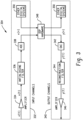
- Fig. 2 illustrates a complementary system.
- Such complementary systems such as that shown in Fig. 2 , can include wireless coupling between the complementary pillow units.
- FIG. 1 illustrates an asymmetric anti-snoring system 100 having a first pillow unit 102, a control unit 104, and at least one reference microphone 106.
- the asymmetric anti-snoring system 100 can be configured to produce anti-noise such that user 108 is not disturbed by ambient environmental noise such as snoring.
- the first pillow unit 102 is a pillow configured for use by a sleeping user 108 in a bed.
- the pillow unit 102 can be any head-rest unit configured to provide support to the user's head.
- the first pillow unit 102 can be formed of any known material including a variety of fabrics, leathers, cotton fiber, polyester fiber, rayon fiber, lyocell fiber, polyurethane foam, viscoelastic polyurethane foam, down, goose-down, or any other suitable materials.
- the first pillow unit 102 has at least one error microphone 110 and at least one speaker 112.
- the at least one error microphone can be positioned on or in the pillow unit 102 such that the at least one error microphone is in proximity to the user's 108 ears.
- the at least one speaker can be positioned on or in the pillow unit 102 such that sound emitted from the at least one speaker is easily heard by the user 108.
- the at least one speaker can also be positioned so that it is not easily heard by persons outside of the area proximal to the sleeping surface 114 of the pillow unit 102, although in some aspects the at least one speaker can be heard by a person outside of the area proximal to the sleeping surface 114 such as the sleeping partner lying in the same bed as the user 108.
- the system 100 further includes a control unit 104 operatively coupled to the first pillow unit 102 and the at least one reference microphone 106 such that it receives a signal from the at least one error microphone 110 disposed in the first pillow unit 102 and the at least one reference microphone 106.
- the control unit 104 can be connected via an operative coupling 116.
- the control unit 104 can be configured to produce an anti-noise in the at least one speaker 112 disposed in the first pillow unit 102 by processing the signals received from the at least one error microphone 110 and the at least one reference microphone 106 using gated dynamic adjustments such that the anti-noise cancels any sound produced proximate the at least one reference microphone 106.
- the anti-snoring system 100 can also include at least one reference microphone 106 that is configured to capture sound produced proximate to the at least one reference microphone 106.
- microphone means any sensor that is capable of detecting a sound.
- the sound can be a snoring sound made by a snorer within audible proximity to user 108.
- the sound can be any unwanted environmental sound.
- more than one pillow unit can be implemented. Such systems are referred to herein as symmetric systems.
- the at least one reference microphone 106, 206a, 206b can be positioned in any manner that is suitable to provide causality for the signal processing and operation of the ANC system and generates an audio signal that is sufficiently representative of the acoustical signal to be cancelled by the ANC system.
- a person of ordinary skill will appreciate, however, that it is not always true that the closer the reference microphone is to the noise source, the better the performance.
- an anti-snoring system 200 includes a first pillow unit 202 that is operatively coupled to a control unit 204 and a second pillow unit 218 that includes at least one reference microphone 206a disposed on or in the second pillow unit 218.
- the at least one reference microphone 206a can be disposed on or in the second pillow unit 218 such that the reference microphone 206a can detect a snore sound produced by a user 220 of the second pillow unit 218.
- the first pillow unit 202 can also include at least one reference microphone 206b.
- the at least one reference microphone 206b can be disposed on or in the first pillow unit 202 such that the at least one reference microphone 206b can detect a snore sound produced by a user 208 of the first pillow unit 202.
- An electronic data path between a snorer's pillow and the partner pillow can exist to facilitate ANC processing.
- the system can use a simple wired path or can include wireless connections.
- the operative coupling 116, 216 can be any coupling that is effective to transmit signals between the inputs and outputs of the control unit, which can include a wired, wireless coupling, or both.
- the operative coupling 216 between the first pillow unit 202, second pillow unit 218, control unit 204, the at least one reference microphone 206a, 206b can be a wired connection.
- the system can incorporate a wireless link, such as an RF link, between the system components.
- a wireless link such as an RF link
- the operative coupling 216 between the first pillow unit 202, second pillow unit 218, control unit 204, the at least one reference microphone 206a, 206b, the at least one error microphones 210, and/or the at least one speakers 212 can be a wireless connection.
- Any suitable wireless communication hardware and protocol can be employed including radio frequency (“RF"), Bluetooth, wireless personal area networks or wireless local area networks utilizing dedicated microwave, modulated laser light, cellular networks, or any other wireless communication protocol.
- a wireless link can add delay to the system.
- delay can be imposed by the wireless system such as in data packetizing, wireless protocols, and/or encoding/decoding. This delay, however, can be compensated for digitally in the ANC processing algorithm within the control unit, up to a small limiting amount. In some aspects, the delay imposed by the wireless system cannot be in excess of a value that would require the ANC system to operate in a causal manner.
- the control unit 104, 204 can include a signal processing unit for sending and receiving signals as well as processing and analyzing signals.
- the control unit 104, 204 can include various processing components. These components can include, but are not limited to, a power supply, signal amplifiers, at least one computer processor, memory, input and output channels, digital signal processing unit ("DSP"), and/or wireless transmitters and receivers, such as an RF transmitter/receiver.
- DSP digital signal processing unit
- the control unit can be wirelessly coupled to the first bedding unit and the reference unit.
- the control unit can be any external computing device, including but not limited to bedding control systems such as adjustable and/or hospital bed control systems, smart phones, tablets, and/or personal computers.
- control unit can include a power supply.
- the power supply can be any suitable power supply including either AC or DC sources.
- the power supply can be any of a battery, an AC cord configured to plug in to an AC socket or a DC socket such as a socket that is disposed directly on a bedding unit, inductive coupling sources such as Qi TM produced by Wireless Power Consortium, and/or any other power source.
- an example control unit 304 can include at least one input channel 332.
- the number of input channels 332 can be equal to the total number of error microphones and reference microphones in the anti-snore system.
- the input channels 332 can be analog, and can include signal conditioning circuitry, a preamplifier 334 with adequate gain, an anti-aliasing low pass filter 336, and an analog-to-digital converter (ADC) 338.
- the input channels 332 can receive signals (or noise) from the error microphones and the reference microphones.
- control unit 304 can have at least one output channel 340.
- the number of output channels 340 can be equal to the number of speakers 112, 212 in the anti-snoring system.
- the output channels 340 can be analog, and can include a digital-to-analog converter (DAC) 342, smoothing (reconstruction) low pass filter 344, and power amplifier 346 to drive the at least one speaker.
- DAC digital-to-analog converter
- the output channels 340 can send a signal to the speakers 112, 212 to make sound, such as the desired anti-noise sound.
- a digital signal processing unit (DSP) 348 generally includes a processor with memory.
- the DSP receives signals from the input channels 332 and sends signals to the output channels 340.
- the DSP can also interface (i.e. input and output) with other digital systems 350, such as, but not limited to, audio players for entertainment, digital storage devices for sound recording and phone interfaces for hands-free communications.
- the DSP can also include an algorithm(s) for processing signals for operation of the anti-snoring system.
- the algorithm(s) can, for example, control interactions between the at least one error microphone 110, 210, the at least one speaker 112, 212, and the at least one reference microphone 106, 206a, 206b.
- the algorithm can be at least one of (a) multiple-channel broadband feedforward active noise control for reducing noise, (b) adaptive acoustic echo cancellation for hands-free communication, (c) signal detection to avoid recording silence periods and sound recognition for non-invasive detection, or (d) integration of active noise control and acoustic echo cancellation.
- Each of these algorithms are described more fully in U.S. Patent No. 8,325,934 to Kuo et al .
- the DSP can also include other functions such as non-invasive monitoring using microphone signals and an alarm to wake the user up or call caregivers for emergency situations.
- control unit 304 using the DSP 348, can be configured to further process the input signals using a variety signal processing techniques in order to produce the appropriate anti-noise output signal to be transmitted to the at least one speaker in either the first or second pillow units in such a manner as will avoid improper processing and/or will aid in system functionality.
- processing methods can be implemented in the DSP 348, as is described below, that limit the improper convergence of the ANC anti-noise signal.
- Signal processing methods can include gated dynamic adjustment, primary path training, ultrasonic primary path training, secondary path training, adaptive step size filtering, and automatic gain control. Additionally, auxiliary supplemental audio and sleep analysis functionality can be utilized. Each of these processing methods and functions is described below.
- the system of the present invention includes dynamic adjustment of the adaptive filter.
- the filter is constantly adjusting regardless of whether there is a snore event, silence, or some non-snore sound. This continuous adjustment can lead to a convergence on non-optimal ANC; that is, dynamic adjustments when snores are not occurring can cause the system to improperly adjust, gradually converging toward an ineffective ANC.
- a gated dynamic adjustment algorithm or scheme is used to better adjust during periods of no snoring.
- “Gated dynamic adjustment” as defined herein means that rather than constantly or continuously adapting a dynamic filter, adjustments to the dynamic filter are dependent on the presence of snoring sounds within certain SPL limits.
- a noise gate controlled by the reference microphone can turn the adjustment on when the sound level at the reference microphone exceeds a certain threshold. When the sound is below the threshold, the adjustments are frozen. In this manner, when a new snore event occurs, the adjustments are "ready" and at or near the proper level.
- Detection of the snore is more than simply detecting sound above a threshold.
- Digital pattern recognition on the reference microphone signal intelligently determines if the sound is actually a snore or some spurious sound. The adjustments only take place for actual snores or other identifiable, undesirable sounds.
- a more complex gate arrangement utilizing "fuzzy logic" controls can be used.
- the fuzzy logic algorithm allows the adjustment control to be partially on following a non-linear function. For example, detecting a quiet snore with low confidence may open the adjustment gate a small amount, but a loud snore may open the gate fully.
- Multiple inputs other than the simple sound level at the microphone may be inputs to the fuzzy logic system including ambient noise at the reference mic and error mics, confidence in the snore detection, and accelerometers in the snorer's pillow. Fuzzy logic has been shown to be an effective means of controlling non-linear systems which cannot be fully quantified.
- primary path training may be employed.
- the distance between the at least one reference microphone in the snorer's pillow, and the at least one error microphone in the partner's pillow is defined herein as the "primary path.”
- Primary path training is defined as processing a signal received in an error microphone and a reference microphone to account for the distance between the at least one error microphone and the at least one reference microphone.
- primary path training is accomplished by transmitting a controlled test signal-white or pink noise, for example-from the snorer's speaker and analyzing the received controlled test signal in the error microphones in the partner's pillow and the reference microphone in the snorer's pillow.
- the control unit 204 causes a test signal to play from at least one speaker 212 in the second pillow unit 218.
- the control unit 204 analyzes the test signal detected in the at least one error microphone 210 in the first pillow unit 202 and the at least one reference microphone 206a in the second pillow unit 218. In this way, the primary path is quantified and a filter is synthesized.
- This primary path filter supplements the dynamic filter in the ANC algorithm to achieve closer to ideal cancellation.
- a "secondary path" is trained. That is, a controlled test signal is transmitted from the speakers in a pillow unit to the error microphones within the same a pillow unit. By measuring the response at the error microphones, the acoustic system (speakers, acoustic path, error microphones) is quantified and a filter response is synthesized. This filter response is used to compensate for the non-ideal system response when calculating ANC anti-noise signals.
- an inherent constraint to the ANC system is that the primary path distance between the snorer and the at least one error microphone is variable.
- Primary path training as described above can compensate for this primary path distance but if the primary path changes after training-such as if a sleeping person moves his or her pillow in the night-the primary path training can require adjusting.
- the primary path can be repeatedly trained, for example at least to measure the distance of the primary path, by transmitting an ultrasonic signal between the snorer's pillow and the error microphones. Even as the partners sleep, training can take place as the signal is above the range of human hearing. By transmitting and receiving this ultrasonic signal, the distance of the primary path can constantly or periodically be monitored supplementing the ANC processing computations.
- ultrasonic primary path training can utilize speakers and microphones having sufficient response capabilities at ultrasonic frequencies and can also include high sampling rate to digitize the ultrasonic signals and present them to a DSP for analysis & processing.
- step size mu ( ⁇ )
- W adaptive filter
- adaptive step size A relationship between the maximum value of the step size and the length of the adaptive filter may be developed in order to help maintain the stability of the ANC system.
- the product of the step size and the length of the adaptive filter should be examined and not allowed to exceed a predefined value.
- a criterion may be developed to help select the best step size of the adaptive filter to maximize the noise cancellation for a broad range of sound pressure levels (SPL).
- This criterion would be based on the SPL of the residual noise remaining in the "quiet zone" (around the error microphones & sleep partner's ears) when the ANC is active. This has the benefit of taking the actual SPL of the remaining noise into account for the selection of the step size.
- This criterion can also be useful for optimizing other parameters of the ANC system.
- Anti-snore systems can optionally include an automatic gain control (AGC) circuit at one or more points in the audio signal path.
- AGC automatic gain control
- “automatic gain control” means a processing algorithm or circuit that provides a controlled signal amplitude at its output, based on the amplitude in the input signal. In this way, the overall dynamic range of the system is increased. In some aspects, during the presence of loud inputs, the gain is lowered.
- the software is aware of the gain setting and can compensate digitally during processing and the reverse can be true for quiet input signals.
- anti-snoring systems can optionally include inputs for auxiliary supplemental audio, i.e., sounds which are intended to be heard, rather than canceled out.
- auxiliary supplemental audio i.e., sounds which are intended to be heard, rather than canceled out.
- sleep sounds nature sounds, waves, binaural beats, etc.
- Music, television, telephone, or public address audio can also be played by the at least one speaker disposed within either the first or second pillow units or bedding units.
- the control unit can be operatively coupled to the desired sound producing device, such as a cell phone, television, or public address system such as on an airplane.
- the control unit can be configured to cease ANC processing during the playback of auxiliary supplemental audio or alternatively can superimpose the auxiliary supplemental audio over the anti-noise produced.
- sensors can be included in the pillows including accelerometers, thermometers, pressure sensors, heart rate monitors, respiration rate monitors, and any other sensor. These sensors for both the snorer and partner can be used to analyze the sleep state, quality, and quantity of the user's sleep. In some aspects, this data can be transmitted to a computer or smartphone for analysis and snoring may be correlated to the sleep disturbance of the partner. Through analysis of this data, the effectiveness of the snore cancellation and other measures to improve sleep, can be tracked, quantified, and optimized.
- the algorithms used to generate anti-noise can be sensitive to the input signal's power (or magnitude). If the power of the input signal in certain frequency ranges-for example, less than 100 Hz-has low power either because of the signal itself, the primary path, secondary path, and/or also the frequency response of the microphones or loudspeakers, the convergence of the adaptive filter can be affected and the filter can even diverge in some aspects. As is described below, the primary path and secondary paths of the ANC system, the frequency response of microphones, and the speakers can affect the effectiveness of noise cancellation in certain frequency regions, or maybe the feedback from secondary speaker to the reference sensor.
- the frequency response of system components is related to the performance of the ANC system.
- system components having a desirable response can be included.
- ANC works well for low frequency noise, for example noise that is generally less than or equal to about 1,000 Hz.
- ANC can be paired with noise filters configured for high frequency noise, such as noise that is greater than about 1,000 Hz.
- passive noise controls including but not limited to noise blocks and noise absorbing foams, can be used.
- the sampling frequency (or "Fs") can be about 2 kHz and the cut-off frequency of anti-aliasing filters can be approximately 800 Hz, although it will be appreciated that any suitable Fs and cut-off frequencies can be utilized.
- Latency can be related to software-for example, processing methods-and the processor's clock speed.
- sampling frequency and down sampling processing can relate to latency.
- processes used for buffering samples and down sampling can cause delay.
- input signals can be processed sample by sample, as opposed to block by block, to limit latency.
Landscapes
- Engineering & Computer Science (AREA)
- Physics & Mathematics (AREA)
- Acoustics & Sound (AREA)
- Multimedia (AREA)
- Health & Medical Sciences (AREA)
- General Health & Medical Sciences (AREA)
- Otolaryngology (AREA)
- Pulmonology (AREA)
- Orthopedic Medicine & Surgery (AREA)
- Animal Behavior & Ethology (AREA)
- Audiology, Speech & Language Pathology (AREA)
- Biomedical Technology (AREA)
- Heart & Thoracic Surgery (AREA)
- Vascular Medicine (AREA)
- Life Sciences & Earth Sciences (AREA)
- Nursing (AREA)
- Public Health (AREA)
- Veterinary Medicine (AREA)
- Soundproofing, Sound Blocking, And Sound Damping (AREA)
- Orthopedics, Nursing, And Contraception (AREA)
- Circuit For Audible Band Transducer (AREA)
- Bedding Items (AREA)
- Transducers For Ultrasonic Waves (AREA)
Applications Claiming Priority (2)
| Application Number | Priority Date | Filing Date | Title |
|---|---|---|---|
| US14/830,765 US9734815B2 (en) | 2015-08-20 | 2015-08-20 | Pillow set with snoring noise cancellation |
| PCT/US2016/047515 WO2017031293A1 (en) | 2015-08-20 | 2016-08-18 | Pillow set with snoring noise cancellation |
Publications (2)
| Publication Number | Publication Date |
|---|---|
| EP3338277A1 EP3338277A1 (en) | 2018-06-27 |
| EP3338277B1 true EP3338277B1 (en) | 2025-02-12 |
Family
ID=56801852
Family Applications (1)
| Application Number | Title | Priority Date | Filing Date |
|---|---|---|---|
| EP16757467.2A Active EP3338277B1 (en) | 2015-08-20 | 2016-08-18 | Pillow set with snoring noise cancellation |
Country Status (6)
| Country | Link |
|---|---|
| US (2) | US9734815B2 (enExample) |
| EP (1) | EP3338277B1 (enExample) |
| JP (1) | JP6993320B2 (enExample) |
| CN (1) | CN107924674A (enExample) |
| CA (1) | CA2994301C (enExample) |
| WO (1) | WO2017031293A1 (enExample) |
Families Citing this family (37)
| Publication number | Priority date | Publication date | Assignee | Title |
|---|---|---|---|---|
| IL236506A0 (en) * | 2014-12-29 | 2015-04-30 | Netanel Eyal | A wearable noise canceling device |
| US10657949B2 (en) * | 2015-05-29 | 2020-05-19 | Sound United, LLC | System and method for integrating a home media system and other home systems |
| US10212519B2 (en) | 2015-11-19 | 2019-02-19 | The Lovesac Company | Electronic furniture systems with integrated internal speakers |
| US12507009B2 (en) | 2015-11-19 | 2025-12-23 | The Lovesac Company | Systems and methods for correcting sound loss through partially acoustically transparent materials |
| US11689856B2 (en) | 2015-11-19 | 2023-06-27 | The Lovesac Company | Electronic furniture systems with integrated induction charger |
| US11832039B2 (en) | 2021-04-12 | 2023-11-28 | The Lovesac Company | Tuning calibration technology for systems and methods for acoustically correcting sound loss through fabric |
| US12495253B2 (en) | 2015-11-19 | 2025-12-09 | The Lovesac Company | Systems and methods for tuning based on furniture configuration |
| US12647727B2 (en) | 2015-11-19 | 2026-06-02 | The Lovesac Company | Systems and methods for tuning based on furniture configuration |
| WO2017196453A1 (en) * | 2016-05-09 | 2017-11-16 | Snorehammer, Inc. | Snoring active noise-cancellation, masking, and suppression |
| US20180055725A1 (en) * | 2016-08-31 | 2018-03-01 | Mykal Mitchell | System for sleep aid |
| EP3558178B1 (en) * | 2016-12-23 | 2021-03-17 | Koninklijke Philips N.V. | System for treating snoring among at least two users |
| EP3349211B1 (en) * | 2017-01-17 | 2020-03-11 | Flexound Systems OY | Active control of sound and vibration |
| KR101924594B1 (ko) * | 2017-03-07 | 2018-12-03 | 김용국 | 노이즈 캔슬링 베개에서 소음을 차단하는 방법 및 노이즈 캔슬링 베개 |
| WO2018215836A1 (en) * | 2017-05-25 | 2018-11-29 | Mari Co., Ltd. | Anti-snoring apparatus, anti-snoring method, and program |
| CN107464551A (zh) * | 2017-07-17 | 2017-12-12 | 江西智能无限物联科技有限公司 | 智能降噪鼾声消除器 |
| CN107468001A (zh) * | 2017-10-17 | 2017-12-15 | 宁波同行者信息科技有限公司 | 一种智能a字护枕 |
| CN111566726A (zh) | 2017-12-28 | 2020-08-21 | 京瓷株式会社 | 电子设备、控制系统、控制方法和控制程序 |
| CN109360548A (zh) * | 2018-12-07 | 2019-02-19 | 中船第九设计研究院工程有限公司 | 一种船舶舱室用主动降噪系统 |
| CN111369964B (zh) * | 2018-12-26 | 2023-08-18 | 宁波方太厨具有限公司 | 基于主动降噪的白噪声助眠方法及装置 |
| TWI689897B (zh) * | 2019-04-02 | 2020-04-01 | 中原大學 | 可攜式智慧型噪音抑制及音訊播放裝置 |
| CN109864515B (zh) * | 2019-04-19 | 2024-03-29 | 西安凌软创新电子科技有限公司 | 一种反馈式降噪枕头 |
| CN110368173A (zh) * | 2019-08-27 | 2019-10-25 | 东南大学 | 基于鼾声识别的睡眠呼吸暂停综合症辅助治疗枕头 |
| CN110751936B (zh) * | 2019-10-14 | 2020-09-08 | 深圳市维业装饰集团股份有限公司 | 智能降噪吊顶 |
| US12020678B2 (en) * | 2019-11-04 | 2024-06-25 | Richard Stoerger | Noise cancelling soundbar device and system |
| US12542992B2 (en) * | 2019-11-04 | 2026-02-03 | Richard Stoerger | Noise cancelling soundbar device and system |
| US12057097B2 (en) * | 2019-11-08 | 2024-08-06 | Harman Becker Automotive Systems Gmbh | Earphone system and method for operating an earphone system |
| US11642491B2 (en) * | 2019-12-05 | 2023-05-09 | Theodore H. Schmiechen | Apparatus for vibration cancellation |
| WO2022214007A1 (zh) * | 2021-04-06 | 2022-10-13 | 孙瑞峰 | 一种基于扩张式消声器的止鼾装置 |
| US11516575B1 (en) | 2021-06-15 | 2022-11-29 | Sandra Leigh Warlick | Sleep-enabling headwear |
| US11647840B2 (en) | 2021-06-16 | 2023-05-16 | The Lovesac Company | Furniture console and methods of using the same |
| CN114582311A (zh) * | 2022-01-14 | 2022-06-03 | 西安理工大学 | 主动降噪睡枕及其降噪方法 |
| WO2023139754A1 (ja) * | 2022-01-21 | 2023-07-27 | 日本電信電話株式会社 | 騒音抑圧装置、騒音抑圧システム、騒音抑圧方法、およびプログラム |
| WO2023150919A1 (zh) * | 2022-02-08 | 2023-08-17 | 深圳市韶音科技有限公司 | 一种主动降噪音频设备、方法和存储介质 |
| WO2023230012A1 (en) | 2022-05-24 | 2023-11-30 | SleepDev LLC | Diagnostics and therapy for sleep respiratory issues using positional therapy ear device with audibl notification |
| CN115211812A (zh) * | 2022-06-21 | 2022-10-21 | 上海贝氪若宝健康科技有限公司 | 基于鼾声和呼吸声特征比对的共眠鼾声识别方法及系统 |
| CN117204819A (zh) * | 2023-09-05 | 2023-12-12 | 慕思健康睡眠股份有限公司 | 打鼾行为的检测方法、系统、设备及存储介质 |
| WO2026041915A1 (en) * | 2024-08-21 | 2026-02-26 | Resmed Pty Ltd. | Measuring carbon dioxide using ear-worn devices to detect pathologies |
Family Cites Families (15)
| Publication number | Priority date | Publication date | Assignee | Title |
|---|---|---|---|---|
| JP3269098B2 (ja) * | 1991-12-03 | 2002-03-25 | 松下電器産業株式会社 | 騒音制御装置 |
| US5844996A (en) * | 1993-02-04 | 1998-12-01 | Sleep Solutions, Inc. | Active electronic noise suppression system and method for reducing snoring noise |
| JPH08140807A (ja) * | 1994-11-24 | 1996-06-04 | Brother Ind Ltd | 消音枕 |
| US7835529B2 (en) | 2003-03-19 | 2010-11-16 | Irobot Corporation | Sound canceling systems and methods |
| JP2007089814A (ja) * | 2005-09-28 | 2007-04-12 | Toshiba Corp | 機能性枕システム |
| JP4742226B2 (ja) | 2005-09-28 | 2011-08-10 | 国立大学法人九州大学 | 能動消音制御装置及び方法 |
| GB2479672B (en) * | 2006-04-01 | 2011-11-30 | Wolfson Microelectronics Plc | Ambient noise-reduction control system |
| US8325934B2 (en) * | 2007-12-07 | 2012-12-04 | Board Of Trustees Of Northern Illinois University | Electronic pillow for abating snoring/environmental noises, hands-free communications, and non-invasive monitoring and recording |
| US9247346B2 (en) | 2007-12-07 | 2016-01-26 | Northern Illinois Research Foundation | Apparatus, system and method for noise cancellation and communication for incubators and related devices |
| US8410942B2 (en) * | 2009-05-29 | 2013-04-02 | L&P Property Management Company | Systems and methods to adjust an adjustable bed |
| CN102473406B (zh) * | 2009-08-07 | 2014-02-26 | 皇家飞利浦电子股份有限公司 | 主动减噪系统和方法 |
| JP5295086B2 (ja) | 2009-12-11 | 2013-09-18 | 鹿島建設株式会社 | 能動騒音制御装置及び能動騒音制御方法 |
| JP2012123135A (ja) | 2010-12-08 | 2012-06-28 | Panasonic Corp | 能動騒音低減装置 |
| US20140169580A1 (en) * | 2012-09-04 | 2014-06-19 | Irina Levitov | Broadband active quiet pillow |
| IL236506A0 (en) * | 2014-12-29 | 2015-04-30 | Netanel Eyal | A wearable noise canceling device |
-
2015
- 2015-08-20 US US14/830,765 patent/US9734815B2/en active Active
-
2016
- 2016-08-18 CN CN201680047136.5A patent/CN107924674A/zh active Pending
- 2016-08-18 CA CA2994301A patent/CA2994301C/en active Active
- 2016-08-18 EP EP16757467.2A patent/EP3338277B1/en active Active
- 2016-08-18 WO PCT/US2016/047515 patent/WO2017031293A1/en not_active Ceased
- 2016-08-18 JP JP2018504739A patent/JP6993320B2/ja active Active
-
2017
- 2017-07-07 US US15/643,588 patent/US9865243B2/en active Active
Also Published As
| Publication number | Publication date |
|---|---|
| WO2017031293A1 (en) | 2017-02-23 |
| CA2994301C (en) | 2024-02-27 |
| US20170309267A1 (en) | 2017-10-26 |
| CA2994301A1 (en) | 2017-02-23 |
| JP6993320B2 (ja) | 2022-02-04 |
| US20170053637A1 (en) | 2017-02-23 |
| JP2018530772A (ja) | 2018-10-18 |
| CN107924674A (zh) | 2018-04-17 |
| EP3338277A1 (en) | 2018-06-27 |
| US9865243B2 (en) | 2018-01-09 |
| US9734815B2 (en) | 2017-08-15 |
Similar Documents
| Publication | Publication Date | Title |
|---|---|---|
| US9865243B2 (en) | Pillow set with snoring noise cancellation | |
| CA2900913C (en) | Smart pillows and processes for providing active noise cancellation and biofeedback | |
| JP6797159B2 (ja) | Anrヘッドホンで周囲の自然さを提供すること | |
| EP2217113B1 (en) | Electronic pillow for active noise control and echo cancellation | |
| US20210350816A1 (en) | Compressive hear-through in personal acoustic devices | |
| US20210241745A1 (en) | Dynamic sound masking based on monitoring biosignals and environmental noises | |
| US10242657B2 (en) | Snoring active noise-cancellation, masking, and suppression | |
| CN110891478B (zh) | 用于测量和夹带呼吸的耳机 | |
| JP5956083B2 (ja) | Anrヘッドホンでの閉塞効果低減処理 | |
| US20170148428A1 (en) | Audio headset with active noise control, anti-occlusion control and passive attenuation cancelling, as a function of the presence or the absence of a voice activity of the headset user | |
| CN105916087B (zh) | 包括抗反馈断电检测器的听力装置 | |
| US10848848B2 (en) | Earphones for measuring and entraining respiration | |
| US20150170633A1 (en) | Bone-conduction noise cancelling headphones | |
| US11019419B2 (en) | Headphone operation during headphone insertion detection | |
| US20170071369A1 (en) | Electronic pillow pad of snore and noise cancellation and the method thereof | |
| US12057097B2 (en) | Earphone system and method for operating an earphone system | |
| CN116055935A (zh) | 一种睡眠降噪耳机及其自动调节降噪级别的方法 | |
| CN206026485U (zh) | 一种数字式可调节助讲器 | |
| TW201212662A (en) | Method and apparatus for wirelessly and actively reducing noise |
Legal Events
| Date | Code | Title | Description |
|---|---|---|---|
| STAA | Information on the status of an ep patent application or granted ep patent |
Free format text: STATUS: THE INTERNATIONAL PUBLICATION HAS BEEN MADE |
|
| STAA | Information on the status of an ep patent application or granted ep patent |
Free format text: STATUS: THE APPLICATION HAS BEEN WITHDRAWN |
|
| STAA | Information on the status of an ep patent application or granted ep patent |
Free format text: STATUS: THE INTERNATIONAL PUBLICATION HAS BEEN MADE |
|
| PUAI | Public reference made under article 153(3) epc to a published international application that has entered the european phase |
Free format text: ORIGINAL CODE: 0009012 |
|
| STAA | Information on the status of an ep patent application or granted ep patent |
Free format text: STATUS: REQUEST FOR EXAMINATION WAS MADE |
|
| 17P | Request for examination filed |
Effective date: 20180315 |
|
| AK | Designated contracting states |
Kind code of ref document: A1 Designated state(s): AL AT BE BG CH CY CZ DE DK EE ES FI FR GB GR HR HU IE IS IT LI LT LU LV MC MK MT NL NO PL PT RO RS SE SI SK SM TR |
|
| AX | Request for extension of the european patent |
Extension state: BA ME |
|
| DAV | Request for validation of the european patent (deleted) | ||
| DAX | Request for extension of the european patent (deleted) | ||
| STAA | Information on the status of an ep patent application or granted ep patent |
Free format text: STATUS: EXAMINATION IS IN PROGRESS |
|
| 17Q | First examination report despatched |
Effective date: 20210309 |
|
| P01 | Opt-out of the competence of the unified patent court (upc) registered |
Effective date: 20230630 |
|
| GRAP | Despatch of communication of intention to grant a patent |
Free format text: ORIGINAL CODE: EPIDOSNIGR1 |
|
| STAA | Information on the status of an ep patent application or granted ep patent |
Free format text: STATUS: GRANT OF PATENT IS INTENDED |
|
| RIC1 | Information provided on ipc code assigned before grant |
Ipc: A61F 5/56 20060101ALI20240814BHEP Ipc: A47G 9/10 20060101ALI20240814BHEP Ipc: G10K 11/178 20060101AFI20240814BHEP |
|
| INTG | Intention to grant announced |
Effective date: 20240826 |
|
| GRAS | Grant fee paid |
Free format text: ORIGINAL CODE: EPIDOSNIGR3 |
|
| GRAA | (expected) grant |
Free format text: ORIGINAL CODE: 0009210 |
|
| STAA | Information on the status of an ep patent application or granted ep patent |
Free format text: STATUS: THE PATENT HAS BEEN GRANTED |
|
| AK | Designated contracting states |
Kind code of ref document: B1 Designated state(s): AL AT BE BG CH CY CZ DE DK EE ES FI FR GB GR HR HU IE IS IT LI LT LU LV MC MK MT NL NO PL PT RO RS SE SI SK SM TR |
|
| REG | Reference to a national code |
Ref country code: GB Ref legal event code: FG4D |
|
| REG | Reference to a national code |
Ref country code: CH Ref legal event code: EP |
|
| REG | Reference to a national code |
Ref country code: DE Ref legal event code: R096 Ref document number: 602016091193 Country of ref document: DE |
|
| REG | Reference to a national code |
Ref country code: IE Ref legal event code: FG4D |
|
| REG | Reference to a national code |
Ref country code: NL Ref legal event code: MP Effective date: 20250212 |
|
| PG25 | Lapsed in a contracting state [announced via postgrant information from national office to epo] |
Ref country code: RS Free format text: LAPSE BECAUSE OF FAILURE TO SUBMIT A TRANSLATION OF THE DESCRIPTION OR TO PAY THE FEE WITHIN THE PRESCRIBED TIME-LIMIT Effective date: 20250512 |
|
| PG25 | Lapsed in a contracting state [announced via postgrant information from national office to epo] |
Ref country code: FI Free format text: LAPSE BECAUSE OF FAILURE TO SUBMIT A TRANSLATION OF THE DESCRIPTION OR TO PAY THE FEE WITHIN THE PRESCRIBED TIME-LIMIT Effective date: 20250212 |
|
| PG25 | Lapsed in a contracting state [announced via postgrant information from national office to epo] |
Ref country code: PL Free format text: LAPSE BECAUSE OF FAILURE TO SUBMIT A TRANSLATION OF THE DESCRIPTION OR TO PAY THE FEE WITHIN THE PRESCRIBED TIME-LIMIT Effective date: 20250212 |
|
| PG25 | Lapsed in a contracting state [announced via postgrant information from national office to epo] |
Ref country code: ES Free format text: LAPSE BECAUSE OF FAILURE TO SUBMIT A TRANSLATION OF THE DESCRIPTION OR TO PAY THE FEE WITHIN THE PRESCRIBED TIME-LIMIT Effective date: 20250212 |
|
| REG | Reference to a national code |
Ref country code: LT Ref legal event code: MG9D |
|
| PG25 | Lapsed in a contracting state [announced via postgrant information from national office to epo] |
Ref country code: IS Free format text: LAPSE BECAUSE OF FAILURE TO SUBMIT A TRANSLATION OF THE DESCRIPTION OR TO PAY THE FEE WITHIN THE PRESCRIBED TIME-LIMIT Effective date: 20250612 Ref country code: NO Free format text: LAPSE BECAUSE OF FAILURE TO SUBMIT A TRANSLATION OF THE DESCRIPTION OR TO PAY THE FEE WITHIN THE PRESCRIBED TIME-LIMIT Effective date: 20250512 |
|
| PG25 | Lapsed in a contracting state [announced via postgrant information from national office to epo] |
Ref country code: NL Free format text: LAPSE BECAUSE OF FAILURE TO SUBMIT A TRANSLATION OF THE DESCRIPTION OR TO PAY THE FEE WITHIN THE PRESCRIBED TIME-LIMIT Effective date: 20250212 |
|
| PG25 | Lapsed in a contracting state [announced via postgrant information from national office to epo] |
Ref country code: HR Free format text: LAPSE BECAUSE OF FAILURE TO SUBMIT A TRANSLATION OF THE DESCRIPTION OR TO PAY THE FEE WITHIN THE PRESCRIBED TIME-LIMIT Effective date: 20250212 |
|
| PG25 | Lapsed in a contracting state [announced via postgrant information from national office to epo] |
Ref country code: LV Free format text: LAPSE BECAUSE OF FAILURE TO SUBMIT A TRANSLATION OF THE DESCRIPTION OR TO PAY THE FEE WITHIN THE PRESCRIBED TIME-LIMIT Effective date: 20250212 Ref country code: PT Free format text: LAPSE BECAUSE OF FAILURE TO SUBMIT A TRANSLATION OF THE DESCRIPTION OR TO PAY THE FEE WITHIN THE PRESCRIBED TIME-LIMIT Effective date: 20250612 |
|
| PG25 | Lapsed in a contracting state [announced via postgrant information from national office to epo] |
Ref country code: BG Free format text: LAPSE BECAUSE OF FAILURE TO SUBMIT A TRANSLATION OF THE DESCRIPTION OR TO PAY THE FEE WITHIN THE PRESCRIBED TIME-LIMIT Effective date: 20250212 Ref country code: GR Free format text: LAPSE BECAUSE OF FAILURE TO SUBMIT A TRANSLATION OF THE DESCRIPTION OR TO PAY THE FEE WITHIN THE PRESCRIBED TIME-LIMIT Effective date: 20250513 |
|
| REG | Reference to a national code |
Ref country code: AT Ref legal event code: MK05 Ref document number: 1766864 Country of ref document: AT Kind code of ref document: T Effective date: 20250212 |
|
| PG25 | Lapsed in a contracting state [announced via postgrant information from national office to epo] |
Ref country code: SE Free format text: LAPSE BECAUSE OF FAILURE TO SUBMIT A TRANSLATION OF THE DESCRIPTION OR TO PAY THE FEE WITHIN THE PRESCRIBED TIME-LIMIT Effective date: 20250212 |
|
| PG25 | Lapsed in a contracting state [announced via postgrant information from national office to epo] |
Ref country code: SM Free format text: LAPSE BECAUSE OF FAILURE TO SUBMIT A TRANSLATION OF THE DESCRIPTION OR TO PAY THE FEE WITHIN THE PRESCRIBED TIME-LIMIT Effective date: 20250212 |
|
| PG25 | Lapsed in a contracting state [announced via postgrant information from national office to epo] |
Ref country code: DK Free format text: LAPSE BECAUSE OF FAILURE TO SUBMIT A TRANSLATION OF THE DESCRIPTION OR TO PAY THE FEE WITHIN THE PRESCRIBED TIME-LIMIT Effective date: 20250212 |
|
| PG25 | Lapsed in a contracting state [announced via postgrant information from national office to epo] |
Ref country code: IT Free format text: LAPSE BECAUSE OF FAILURE TO SUBMIT A TRANSLATION OF THE DESCRIPTION OR TO PAY THE FEE WITHIN THE PRESCRIBED TIME-LIMIT Effective date: 20250212 |
|
| PGFP | Annual fee paid to national office [announced via postgrant information from national office to epo] |
Ref country code: GB Payment date: 20250827 Year of fee payment: 10 |
|
| PG25 | Lapsed in a contracting state [announced via postgrant information from national office to epo] |
Ref country code: AT Free format text: LAPSE BECAUSE OF FAILURE TO SUBMIT A TRANSLATION OF THE DESCRIPTION OR TO PAY THE FEE WITHIN THE PRESCRIBED TIME-LIMIT Effective date: 20250212 |
|
| PGFP | Annual fee paid to national office [announced via postgrant information from national office to epo] |
Ref country code: FR Payment date: 20250825 Year of fee payment: 10 |
|
| PG25 | Lapsed in a contracting state [announced via postgrant information from national office to epo] |
Ref country code: CZ Free format text: LAPSE BECAUSE OF FAILURE TO SUBMIT A TRANSLATION OF THE DESCRIPTION OR TO PAY THE FEE WITHIN THE PRESCRIBED TIME-LIMIT Effective date: 20250212 Ref country code: EE Free format text: LAPSE BECAUSE OF FAILURE TO SUBMIT A TRANSLATION OF THE DESCRIPTION OR TO PAY THE FEE WITHIN THE PRESCRIBED TIME-LIMIT Effective date: 20250212 |
|
| PG25 | Lapsed in a contracting state [announced via postgrant information from national office to epo] |
Ref country code: RO Free format text: LAPSE BECAUSE OF FAILURE TO SUBMIT A TRANSLATION OF THE DESCRIPTION OR TO PAY THE FEE WITHIN THE PRESCRIBED TIME-LIMIT Effective date: 20250212 |
|
| PG25 | Lapsed in a contracting state [announced via postgrant information from national office to epo] |
Ref country code: SK Free format text: LAPSE BECAUSE OF FAILURE TO SUBMIT A TRANSLATION OF THE DESCRIPTION OR TO PAY THE FEE WITHIN THE PRESCRIBED TIME-LIMIT Effective date: 20250212 |
|
| REG | Reference to a national code |
Ref country code: DE Ref legal event code: R097 Ref document number: 602016091193 Country of ref document: DE |
|
| PLBE | No opposition filed within time limit |
Free format text: ORIGINAL CODE: 0009261 |
|
| STAA | Information on the status of an ep patent application or granted ep patent |
Free format text: STATUS: NO OPPOSITION FILED WITHIN TIME LIMIT |
|
| REG | Reference to a national code |
Ref country code: CH Ref legal event code: L10 Free format text: ST27 STATUS EVENT CODE: U-0-0-L10-L00 (AS PROVIDED BY THE NATIONAL OFFICE) Effective date: 20251224 |
|
| 26N | No opposition filed |
Effective date: 20251113 |
|
| REG | Reference to a national code |
Ref country code: DE Ref legal event code: R119 Ref document number: 602016091193 Country of ref document: DE |
|
| REG | Reference to a national code |
Ref country code: CH Ref legal event code: H13 Free format text: ST27 STATUS EVENT CODE: U-0-0-H10-H13 (AS PROVIDED BY THE NATIONAL OFFICE) Effective date: 20260324 |
|
| PG25 | Lapsed in a contracting state [announced via postgrant information from national office to epo] |
Ref country code: MC Free format text: LAPSE BECAUSE OF FAILURE TO SUBMIT A TRANSLATION OF THE DESCRIPTION OR TO PAY THE FEE WITHIN THE PRESCRIBED TIME-LIMIT Effective date: 20250212 |
|
| PG25 | Lapsed in a contracting state [announced via postgrant information from national office to epo] |
Ref country code: LU Free format text: LAPSE BECAUSE OF NON-PAYMENT OF DUE FEES Effective date: 20250818 |
|
| PG25 | Lapsed in a contracting state [announced via postgrant information from national office to epo] |
Ref country code: CH Free format text: LAPSE BECAUSE OF NON-PAYMENT OF DUE FEES Effective date: 20250831 |
|
| REG | Reference to a national code |
Ref country code: BE Ref legal event code: MM Effective date: 20250831 |
|
| PG25 | Lapsed in a contracting state [announced via postgrant information from national office to epo] |
Ref country code: LT Free format text: LAPSE BECAUSE OF FAILURE TO SUBMIT A TRANSLATION OF THE DESCRIPTION OR TO PAY THE FEE WITHIN THE PRESCRIBED TIME-LIMIT Effective date: 20250212 |
|
| PG25 | Lapsed in a contracting state [announced via postgrant information from national office to epo] |
Ref country code: DE Free format text: LAPSE BECAUSE OF NON-PAYMENT OF DUE FEES Effective date: 20260303 |
|
| PG25 | Lapsed in a contracting state [announced via postgrant information from national office to epo] |
Ref country code: IE Free format text: LAPSE BECAUSE OF NON-PAYMENT OF DUE FEES Effective date: 20250818 Ref country code: BE Free format text: LAPSE BECAUSE OF NON-PAYMENT OF DUE FEES Effective date: 20250831 |