EP3328894B1 - Il2rbeta/common gamma chain antibodies - Google Patents
Il2rbeta/common gamma chain antibodies Download PDFInfo
- Publication number
- EP3328894B1 EP3328894B1 EP16762975.7A EP16762975A EP3328894B1 EP 3328894 B1 EP3328894 B1 EP 3328894B1 EP 16762975 A EP16762975 A EP 16762975A EP 3328894 B1 EP3328894 B1 EP 3328894B1
- Authority
- EP
- European Patent Office
- Prior art keywords
- antibody
- seq
- cells
- bispecific
- binding fragment
- Prior art date
- Legal status (The legal status is an assumption and is not a legal conclusion. Google has not performed a legal analysis and makes no representation as to the accuracy of the status listed.)
- Active
Links
Images



























Classifications
-
- C—CHEMISTRY; METALLURGY
- C07—ORGANIC CHEMISTRY
- C07K—PEPTIDES
- C07K16/00—Immunoglobulins [IG], e.g. monoclonal or polyclonal antibodies
- C07K16/18—Immunoglobulins [IG], e.g. monoclonal or polyclonal antibodies against material from animals or humans
- C07K16/28—Immunoglobulins [IG], e.g. monoclonal or polyclonal antibodies against material from animals or humans against receptors, cell surface antigens or cell surface determinants
- C07K16/2866—Immunoglobulins [IG], e.g. monoclonal or polyclonal antibodies against material from animals or humans against receptors, cell surface antigens or cell surface determinants against receptors for cytokines, lymphokines, interferons
-
- A—HUMAN NECESSITIES
- A61—MEDICAL OR VETERINARY SCIENCE; HYGIENE
- A61K—PREPARATIONS FOR MEDICAL, DENTAL OR TOILETRY PURPOSES
- A61K38/00—Medicinal preparations containing peptides
- A61K38/16—Peptides having more than 20 amino acids; Gastrins; Somatostatins; Melanotropins; Derivatives thereof
- A61K38/17—Peptides having more than 20 amino acids; Gastrins; Somatostatins; Melanotropins; Derivatives thereof from animals; from humans
- A61K38/19—Cytokines; Lymphokines; Interferons
- A61K38/20—Interleukins [IL]
- A61K38/2013—IL-2
-
- A—HUMAN NECESSITIES
- A61—MEDICAL OR VETERINARY SCIENCE; HYGIENE
- A61K—PREPARATIONS FOR MEDICAL, DENTAL OR TOILETRY PURPOSES
- A61K39/00—Medicinal preparations containing antigens or antibodies
- A61K39/395—Antibodies; Immunoglobulins; Immune serum, e.g. antilymphocytic serum
- A61K39/39533—Antibodies; Immunoglobulins; Immune serum, e.g. antilymphocytic serum against materials from animals
- A61K39/3955—Antibodies; Immunoglobulins; Immune serum, e.g. antilymphocytic serum against materials from animals against proteinaceous materials, e.g. enzymes, hormones, lymphokines
-
- A—HUMAN NECESSITIES
- A61—MEDICAL OR VETERINARY SCIENCE; HYGIENE
- A61K—PREPARATIONS FOR MEDICAL, DENTAL OR TOILETRY PURPOSES
- A61K47/00—Medicinal preparations characterised by the non-active ingredients used, e.g. carriers or inert additives; Targeting or modifying agents chemically bound to the active ingredient
- A61K47/50—Medicinal preparations characterised by the non-active ingredients used, e.g. carriers or inert additives; Targeting or modifying agents chemically bound to the active ingredient the non-active ingredient being chemically bound to the active ingredient, e.g. polymer-drug conjugates
- A61K47/51—Medicinal preparations characterised by the non-active ingredients used, e.g. carriers or inert additives; Targeting or modifying agents chemically bound to the active ingredient the non-active ingredient being chemically bound to the active ingredient, e.g. polymer-drug conjugates the non-active ingredient being a modifying agent
- A61K47/68—Medicinal preparations characterised by the non-active ingredients used, e.g. carriers or inert additives; Targeting or modifying agents chemically bound to the active ingredient the non-active ingredient being chemically bound to the active ingredient, e.g. polymer-drug conjugates the non-active ingredient being a modifying agent the modifying agent being an antibody, an immunoglobulin or a fragment thereof, e.g. an Fc-fragment
- A61K47/6835—Medicinal preparations characterised by the non-active ingredients used, e.g. carriers or inert additives; Targeting or modifying agents chemically bound to the active ingredient the non-active ingredient being chemically bound to the active ingredient, e.g. polymer-drug conjugates the non-active ingredient being a modifying agent the modifying agent being an antibody, an immunoglobulin or a fragment thereof, e.g. an Fc-fragment the modifying agent being an antibody or an immunoglobulin bearing at least one antigen-binding site
- A61K47/6849—Medicinal preparations characterised by the non-active ingredients used, e.g. carriers or inert additives; Targeting or modifying agents chemically bound to the active ingredient the non-active ingredient being chemically bound to the active ingredient, e.g. polymer-drug conjugates the non-active ingredient being a modifying agent the modifying agent being an antibody, an immunoglobulin or a fragment thereof, e.g. an Fc-fragment the modifying agent being an antibody or an immunoglobulin bearing at least one antigen-binding site the antibody targeting a receptor, a cell surface antigen or a cell surface determinant
-
- A—HUMAN NECESSITIES
- A61—MEDICAL OR VETERINARY SCIENCE; HYGIENE
- A61P—SPECIFIC THERAPEUTIC ACTIVITY OF CHEMICAL COMPOUNDS OR MEDICINAL PREPARATIONS
- A61P31/00—Antiinfectives, i.e. antibiotics, antiseptics, chemotherapeutics
-
- A—HUMAN NECESSITIES
- A61—MEDICAL OR VETERINARY SCIENCE; HYGIENE
- A61P—SPECIFIC THERAPEUTIC ACTIVITY OF CHEMICAL COMPOUNDS OR MEDICINAL PREPARATIONS
- A61P35/00—Antineoplastic agents
-
- A—HUMAN NECESSITIES
- A61—MEDICAL OR VETERINARY SCIENCE; HYGIENE
- A61P—SPECIFIC THERAPEUTIC ACTIVITY OF CHEMICAL COMPOUNDS OR MEDICINAL PREPARATIONS
- A61P37/00—Drugs for immunological or allergic disorders
- A61P37/02—Immunomodulators
- A61P37/04—Immunostimulants
-
- A—HUMAN NECESSITIES
- A61—MEDICAL OR VETERINARY SCIENCE; HYGIENE
- A61P—SPECIFIC THERAPEUTIC ACTIVITY OF CHEMICAL COMPOUNDS OR MEDICINAL PREPARATIONS
- A61P37/00—Drugs for immunological or allergic disorders
- A61P37/02—Immunomodulators
- A61P37/06—Immunosuppressants, e.g. drugs for graft rejection
-
- C—CHEMISTRY; METALLURGY
- C07—ORGANIC CHEMISTRY
- C07K—PEPTIDES
- C07K16/00—Immunoglobulins [IG], e.g. monoclonal or polyclonal antibodies
- C07K16/08—Immunoglobulins [IG], e.g. monoclonal or polyclonal antibodies against material from viruses
- C07K16/10—RNA viruses
- C07K16/112—Retroviridae (F), e.g. leukemia viruses
-
- C—CHEMISTRY; METALLURGY
- C07—ORGANIC CHEMISTRY
- C07K—PEPTIDES
- C07K16/00—Immunoglobulins [IG], e.g. monoclonal or polyclonal antibodies
- C07K16/18—Immunoglobulins [IG], e.g. monoclonal or polyclonal antibodies against material from animals or humans
- C07K16/24—Immunoglobulins [IG], e.g. monoclonal or polyclonal antibodies against material from animals or humans against cytokines, lymphokines or interferons
- C07K16/244—Interleukins [IL]
- C07K16/246—IL-2
-
- C—CHEMISTRY; METALLURGY
- C07—ORGANIC CHEMISTRY
- C07K—PEPTIDES
- C07K16/00—Immunoglobulins [IG], e.g. monoclonal or polyclonal antibodies
- C07K16/18—Immunoglobulins [IG], e.g. monoclonal or polyclonal antibodies against material from animals or humans
- C07K16/28—Immunoglobulins [IG], e.g. monoclonal or polyclonal antibodies against material from animals or humans against receptors, cell surface antigens or cell surface determinants
- C07K16/2896—Immunoglobulins [IG], e.g. monoclonal or polyclonal antibodies against material from animals or humans against receptors, cell surface antigens or cell surface determinants against molecules with a "CD"-designation, not provided for elsewhere
-
- C—CHEMISTRY; METALLURGY
- C07—ORGANIC CHEMISTRY
- C07K—PEPTIDES
- C07K16/00—Immunoglobulins [IG], e.g. monoclonal or polyclonal antibodies
- C07K16/46—Hybrid immunoglobulins
- C07K16/468—Immunoglobulins having two or more different antigen binding sites, e.g. multifunctional antibodies
-
- C—CHEMISTRY; METALLURGY
- C12—BIOCHEMISTRY; BEER; SPIRITS; WINE; VINEGAR; MICROBIOLOGY; ENZYMOLOGY; MUTATION OR GENETIC ENGINEERING
- C12N—MICROORGANISMS OR ENZYMES; COMPOSITIONS THEREOF; PROPAGATING, PRESERVING, OR MAINTAINING MICROORGANISMS; MUTATION OR GENETIC ENGINEERING; CULTURE MEDIA
- C12N5/00—Undifferentiated human, animal or plant cells, e.g. cell lines; Tissues; Cultivation or maintenance thereof; Culture media therefor
- C12N5/06—Animal cells or tissues; Human cells or tissues
- C12N5/0602—Vertebrate cells
- C12N5/0634—Cells from the blood or the immune system
- C12N5/0636—T lymphocytes
-
- C—CHEMISTRY; METALLURGY
- C12—BIOCHEMISTRY; BEER; SPIRITS; WINE; VINEGAR; MICROBIOLOGY; ENZYMOLOGY; MUTATION OR GENETIC ENGINEERING
- C12N—MICROORGANISMS OR ENZYMES; COMPOSITIONS THEREOF; PROPAGATING, PRESERVING, OR MAINTAINING MICROORGANISMS; MUTATION OR GENETIC ENGINEERING; CULTURE MEDIA
- C12N5/00—Undifferentiated human, animal or plant cells, e.g. cell lines; Tissues; Cultivation or maintenance thereof; Culture media therefor
- C12N5/06—Animal cells or tissues; Human cells or tissues
- C12N5/0602—Vertebrate cells
- C12N5/0634—Cells from the blood or the immune system
- C12N5/0646—Natural killers cells [NK], NKT cells
-
- A—HUMAN NECESSITIES
- A61—MEDICAL OR VETERINARY SCIENCE; HYGIENE
- A61K—PREPARATIONS FOR MEDICAL, DENTAL OR TOILETRY PURPOSES
- A61K39/00—Medicinal preparations containing antigens or antibodies
- A61K2039/505—Medicinal preparations containing antigens or antibodies comprising antibodies
-
- A—HUMAN NECESSITIES
- A61—MEDICAL OR VETERINARY SCIENCE; HYGIENE
- A61K—PREPARATIONS FOR MEDICAL, DENTAL OR TOILETRY PURPOSES
- A61K39/00—Medicinal preparations containing antigens or antibodies
- A61K2039/57—Medicinal preparations containing antigens or antibodies characterised by the type of response, e.g. Th1, Th2
-
- A—HUMAN NECESSITIES
- A61—MEDICAL OR VETERINARY SCIENCE; HYGIENE
- A61K—PREPARATIONS FOR MEDICAL, DENTAL OR TOILETRY PURPOSES
- A61K38/00—Medicinal preparations containing peptides
- A61K38/16—Peptides having more than 20 amino acids; Gastrins; Somatostatins; Melanotropins; Derivatives thereof
- A61K38/17—Peptides having more than 20 amino acids; Gastrins; Somatostatins; Melanotropins; Derivatives thereof from animals; from humans
- A61K38/1703—Peptides having more than 20 amino acids; Gastrins; Somatostatins; Melanotropins; Derivatives thereof from animals; from humans from vertebrates
- A61K38/1709—Peptides having more than 20 amino acids; Gastrins; Somatostatins; Melanotropins; Derivatives thereof from animals; from humans from vertebrates from mammals
-
- C—CHEMISTRY; METALLURGY
- C07—ORGANIC CHEMISTRY
- C07K—PEPTIDES
- C07K2317/00—Immunoglobulins specific features
- C07K2317/20—Immunoglobulins specific features characterized by taxonomic origin
- C07K2317/21—Immunoglobulins specific features characterized by taxonomic origin from primates, e.g. man
-
- C—CHEMISTRY; METALLURGY
- C07—ORGANIC CHEMISTRY
- C07K—PEPTIDES
- C07K2317/00—Immunoglobulins specific features
- C07K2317/30—Immunoglobulins specific features characterized by aspects of specificity or valency
- C07K2317/31—Immunoglobulins specific features characterized by aspects of specificity or valency multispecific
-
- C—CHEMISTRY; METALLURGY
- C07—ORGANIC CHEMISTRY
- C07K—PEPTIDES
- C07K2317/00—Immunoglobulins specific features
- C07K2317/30—Immunoglobulins specific features characterized by aspects of specificity or valency
- C07K2317/33—Crossreactivity, e.g. for species or epitope, or lack of said crossreactivity
-
- C—CHEMISTRY; METALLURGY
- C07—ORGANIC CHEMISTRY
- C07K—PEPTIDES
- C07K2317/00—Immunoglobulins specific features
- C07K2317/50—Immunoglobulins specific features characterized by immunoglobulin fragments
- C07K2317/51—Complete heavy chain or Fd fragment, i.e. VH + CH1
-
- C—CHEMISTRY; METALLURGY
- C07—ORGANIC CHEMISTRY
- C07K—PEPTIDES
- C07K2317/00—Immunoglobulins specific features
- C07K2317/50—Immunoglobulins specific features characterized by immunoglobulin fragments
- C07K2317/515—Complete light chain, i.e. VL + CL
-
- C—CHEMISTRY; METALLURGY
- C07—ORGANIC CHEMISTRY
- C07K—PEPTIDES
- C07K2317/00—Immunoglobulins specific features
- C07K2317/50—Immunoglobulins specific features characterized by immunoglobulin fragments
- C07K2317/52—Constant or Fc region; Isotype
- C07K2317/524—CH2 domain
-
- C—CHEMISTRY; METALLURGY
- C07—ORGANIC CHEMISTRY
- C07K—PEPTIDES
- C07K2317/00—Immunoglobulins specific features
- C07K2317/50—Immunoglobulins specific features characterized by immunoglobulin fragments
- C07K2317/52—Constant or Fc region; Isotype
- C07K2317/526—CH3 domain
-
- C—CHEMISTRY; METALLURGY
- C07—ORGANIC CHEMISTRY
- C07K—PEPTIDES
- C07K2317/00—Immunoglobulins specific features
- C07K2317/50—Immunoglobulins specific features characterized by immunoglobulin fragments
- C07K2317/56—Immunoglobulins specific features characterized by immunoglobulin fragments variable (Fv) region, i.e. VH and/or VL
- C07K2317/565—Complementarity determining region [CDR]
-
- C—CHEMISTRY; METALLURGY
- C07—ORGANIC CHEMISTRY
- C07K—PEPTIDES
- C07K2317/00—Immunoglobulins specific features
- C07K2317/50—Immunoglobulins specific features characterized by immunoglobulin fragments
- C07K2317/56—Immunoglobulins specific features characterized by immunoglobulin fragments variable (Fv) region, i.e. VH and/or VL
- C07K2317/567—Framework region [FR]
-
- C—CHEMISTRY; METALLURGY
- C07—ORGANIC CHEMISTRY
- C07K—PEPTIDES
- C07K2317/00—Immunoglobulins specific features
- C07K2317/60—Immunoglobulins specific features characterized by non-natural combinations of immunoglobulin fragments
-
- C—CHEMISTRY; METALLURGY
- C07—ORGANIC CHEMISTRY
- C07K—PEPTIDES
- C07K2317/00—Immunoglobulins specific features
- C07K2317/60—Immunoglobulins specific features characterized by non-natural combinations of immunoglobulin fragments
- C07K2317/62—Immunoglobulins specific features characterized by non-natural combinations of immunoglobulin fragments comprising only variable region components
- C07K2317/622—Single chain antibody (scFv)
-
- C—CHEMISTRY; METALLURGY
- C07—ORGANIC CHEMISTRY
- C07K—PEPTIDES
- C07K2317/00—Immunoglobulins specific features
- C07K2317/60—Immunoglobulins specific features characterized by non-natural combinations of immunoglobulin fragments
- C07K2317/64—Immunoglobulins specific features characterized by non-natural combinations of immunoglobulin fragments comprising a combination of variable region and constant region components
-
- C—CHEMISTRY; METALLURGY
- C07—ORGANIC CHEMISTRY
- C07K—PEPTIDES
- C07K2317/00—Immunoglobulins specific features
- C07K2317/70—Immunoglobulins specific features characterized by effect upon binding to a cell or to an antigen
- C07K2317/71—Decreased effector function due to an Fc-modification
-
- C—CHEMISTRY; METALLURGY
- C07—ORGANIC CHEMISTRY
- C07K—PEPTIDES
- C07K2317/00—Immunoglobulins specific features
- C07K2317/70—Immunoglobulins specific features characterized by effect upon binding to a cell or to an antigen
- C07K2317/75—Agonist effect on antigen
-
- C—CHEMISTRY; METALLURGY
- C07—ORGANIC CHEMISTRY
- C07K—PEPTIDES
- C07K2317/00—Immunoglobulins specific features
- C07K2317/70—Immunoglobulins specific features characterized by effect upon binding to a cell or to an antigen
- C07K2317/76—Antagonist effect on antigen, e.g. neutralization or inhibition of binding
-
- C—CHEMISTRY; METALLURGY
- C07—ORGANIC CHEMISTRY
- C07K—PEPTIDES
- C07K2317/00—Immunoglobulins specific features
- C07K2317/90—Immunoglobulins specific features characterized by (pharmaco)kinetic aspects or by stability of the immunoglobulin
-
- C—CHEMISTRY; METALLURGY
- C07—ORGANIC CHEMISTRY
- C07K—PEPTIDES
- C07K2317/00—Immunoglobulins specific features
- C07K2317/90—Immunoglobulins specific features characterized by (pharmaco)kinetic aspects or by stability of the immunoglobulin
- C07K2317/92—Affinity (KD), association rate (Ka), dissociation rate (Kd) or EC50 value
-
- C—CHEMISTRY; METALLURGY
- C07—ORGANIC CHEMISTRY
- C07K—PEPTIDES
- C07K2317/00—Immunoglobulins specific features
- C07K2317/90—Immunoglobulins specific features characterized by (pharmaco)kinetic aspects or by stability of the immunoglobulin
- C07K2317/94—Stability, e.g. half-life, pH, temperature or enzyme-resistance
-
- C—CHEMISTRY; METALLURGY
- C07—ORGANIC CHEMISTRY
- C07K—PEPTIDES
- C07K2319/00—Fusion polypeptide
-
- C—CHEMISTRY; METALLURGY
- C07—ORGANIC CHEMISTRY
- C07K—PEPTIDES
- C07K2319/00—Fusion polypeptide
- C07K2319/01—Fusion polypeptide containing a localisation/targetting motif
- C07K2319/03—Fusion polypeptide containing a localisation/targetting motif containing a transmembrane segment
Definitions
- the present invention relates to antibodies that bind to interleukin 2 receptor ⁇ (IL-2R ⁇ ; CD122) and common ⁇ chain ( ⁇ c; CD132).
- IL-2R ⁇ interleukin 2 receptor ⁇
- ⁇ c common ⁇ chain
- IL-2 is an essential cytokine that plays a central role in maintaining T cell homeostasis and mediating proper immune responses. Its high potency as an immune stimulator has led to clinical uses to treat a range of conditions, including cancers and AIDS; it is also widely used as an adjuvant for vaccination to stimulate activation and proliferation of various effector cells.
- VLS vascular leak syndrome
- IL-2 exerts its pleiotropic functions by binding to different combinations of receptor components expressed on different cell types: the alpha chain (IL-2R ⁇ , also known as CD25), the beta chain (IL-2R ⁇ , or CD122), and the common cytokine receptor gamma chain (IL-2R ⁇ , ⁇ c, or CD132).
- Isolated IL-2R ⁇ has been termed the "low affinity" IL-2 receptor (binding affinity K D ⁇ 10 nM) and is not involved in signal transduction.
- a complex of IL-2R ⁇ and ⁇ c binds IL-2 with intermediate affinity (K D ⁇ 1 nM), although IL-2R ⁇ alone has very low affinity (K D ⁇ 100 nM) and ⁇ c alone has virtually no detectable binding affinity for IL-2.
- a complex with all three subunits, IL-2R ⁇ , IL-2R ⁇ , and ⁇ c binds IL-2 with high affinity (K D ⁇ 10 pM).
- IL-2R ⁇ and ⁇ c are necessary and sufficient for effective signal transduction through the interaction of their cytoplasmic domains and subsequent kinase activation of multiple signaling pathways; IL-2R ⁇ plays no role in signal transduction.
- High-affinity ⁇ - ⁇ - ⁇ c IL-2Rs are typically found on CD4+ T regulatory cells (Tregs) as well as recently-activated T cells.
- Intermediate-affinity ⁇ - ⁇ c IL-2Rs are present at a low level on na ⁇ ve CD8+ cells, but are prominent on antigen-experienced (memory) and memory-phenotype (MP) CD8+ T cells as well as natural killer (NK) cells. Both MPCD8+ T cells and NK cells express very high levels of IL-2R ⁇ and readily respond to IL-2.
- VLS is caused by the release of proinflammatory cytokines from IL-2-activated NK cells.
- IL-2-induced pulmonary edema may result from direct binding of IL-2 to lung endothelial cells, which express functional high affinity ⁇ - ⁇ - ⁇ c IL-2Rs.
- mAb monoclonal antibody
- IL-2/mAb an IL-2/anti-IL-2 mAb
- the present invention is concerned with antibodies, or antigen binding fragments, that bind to CD122 and/or common ⁇ chain ( ⁇ c).
- Heavy and light chain polypeptides for CD122 and common ⁇ chain ( ⁇ c) binding antibodies are also disclosed.
- the antibodies, antigen binding fragments and polypeptides may be provided in isolated and/or purified form and may be formulated into compositions suitable for use in research, therapy and diagnosis.
- the present invention provides a bispecific antibody or bispecific antigen binding fragment, optionally isolated, which is capable of binding to CD122 and common ⁇ chain ( ⁇ c) as defined in the claims.
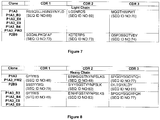
- an antibody or antigen binding fragment optionally isolated, which is capable of binding to CD122, comprising the amino acid sequences i) to vi): i) LC-CDR1: TGTSSDIGX 1 YDFX 2 S (SEQ ID NO:85) RAGQAISSWLA (SEQ ID NO:6); QASQDIGNYLN (SEQ ID NO:10); or TRSSGSIASNYVQ (SEQ ID NO:14); ii) LC-CDR2: DX 3 NNRX 4 S (SEQ ID NO:86); KASNLES (SEQ ID NO:7); DASNLET (SEQ ID NO:11); or DDNQRPT (SEQ ID NO:15); iii) LC-CDR3: SAYTSSDTX 5 V (SEQ ID NO:87); QQYQSYPYT (SEQ ID NO:8); LQLYDYPLT (SEQ ID NO:12); or QSSHSTAVV (SEQ ID NO:
- LC-CDR1 is one of TGTSSDIGHYDFVS (SEQ ID NO:2), TGTSSDIGDYDFVS (SEQ ID NO:18), TGTSSDIGHYDFIS (SEQ ID NO:25), RAGQAISSWLA (SEQ ID NO:6), QASQDIGNYLN (SEQ ID NO:10), or TRSSGSIASNYVQ (SEQ ID NO:14).
- LC-CDR2 is one of DINNRPS (SEQ ID NO:3), DNNNRPS (SEQ ID NO:20), DFNNRPS (SEQ ID NO:26), DINNRAS (SEQ ID NO:32), KASNLES (SEQ ID NO:7), DASNLET (SEQ ID NO:11), or DDNQRPT (SEQ ID NO:15).
- LC-CDR3 is one of SAYTSSDTLV (SEQ ID NO:4), SAYTSSDTVV (SEQ ID NO:22), QYQSYPYT (SEQ ID NO:8), LQLYDYPLT (SEQ ID NO:12), or QSSHSTAVV (SEQ ID NO:16).
- HC-CDR1 is one of NYYMH (SEQ ID NO:36), NYYIH (SEQ ID NO:54), TYAMH (SEQ ID NO:40), SYAMS (SEQ ID NO:44), or GYYWS (SEQ ID NO:48).
- HC-CDR2 is one of AIMPSRGGTSYPQKFQG (SEQ ID NO:37), WINTGNGNTKYSQNFQG (SEQ ID NO:41), AISGSGGSTYYADSVKG (SEQ ID NO:45), or EINHSGSTNYNPSLKS (SEQ ID NO:49).
- HC-CDR3 is one of GEYYYDSSGYYY (SEQ ID NO:38), GEYYYDSSGYYN (SEQ ID NO:52), DLGQLERLYFW (SEQ ID NO:42), DLGDY (SEQ ID NO:46), or SSSGDAFD (SEQ ID NO:50).
- the present disclosure provides an antibody or fragment, or an isolated light chain polypeptide, having at least one light chain variable region incorporating the following CDRs: LC-CDR1: TGTSSDIGHYDFVS (SEQ ID NO:2) LC-CDR2: DINNRPS (SEQ ID NO:3) LC-CDR3: SAYTSSDTLV (SEQ ID NO:4).
- the present disclosure provides an antibody or fragment, or an isolated light chain polypeptide, having at least one light chain variable region incorporating the following CDRs: LC-CDR1: TGTSSDIGDYDFVS (SEQ ID NO:18) LC-CDR2: DINNRPS (SEQ ID NO:3) LC-CDR3: SAYTSSDTLV (SEQ ID NO:4)
- the present disclosure provides an antibody or fragment, or an isolated light chain polypeptide, having at least one light chain variable region incorporating the following CDRs: LC-CDR1: TGTSSDIGHYDFVS (SEQ ID NO:2) LC-CDR2: DNNNRPS (SEQ ID NO:20) LC-CDR3: SAYTSSDTLV (SEQ ID NO:4).
- the present disclosure provides an antibody or fragment, or an isolated light chain polypeptide, having at least one light chain variable region incorporating the following CDRs: LC-CDR1: TGTSSDIGHYDFVS (SEQ ID NO:2) LC-CDR2: DINNRPS (SEQ ID NO:3) LC-CDR3: SAYTSSDTVV (SEQ ID NO:22).
- the present disclosure provides an antibody or fragment, or an isolated light chain polypeptide, having at least one light chain variable region incorporating the following CDRs: LC-CDR1: TGTSSDIGHYDFIS (SEQ ID NO:25) LC-CDR2: DFNNRPS (SEQ ID NO:26) LC-CDR3: SAYTSSDTLV (SEQ ID NO:4).
- the present disclosure provides an antibody or fragment, or an isolated light chain polypeptide, having at least one light chain variable region incorporating the following CDRs: LC-CDR1: TGTSSDIGHYDFVS (SEQ ID NO:2) LC-CDR2: DNNNRPS (SEQ ID NO:20) LC-CDR3: SAYTSSDTVV (SEQ ID NO:22)
- the present disclosure provides an antibody or fragment, or an isolated light chain polypeptide, having at least one light chain variable region incorporating the following CDRs: LC-CDR1: TGTSSDIGHYDFVS (SEQ ID NO:2) LC-CDR2: DNNNRAS (SEQ ID NO:32) LC-CDR3: SAYTSSDTVV (SEQ ID NO:22)
- the present disclosure provides an antibody or fragment, or an isolated light chain polypeptide, having at least one light chain variable region incorporating the following CDRs: LC-CDR1: TGTSSDIGDYDFVS (SEQ ID NO:18) LC-CDR2: DINNRPS (SEQ ID NO:3) LC-CDR3: SAYTSSDTVV (SEQ ID NO:22)
- the present disclosure provides an antibody or fragment, or an isolated light chain polypeptide, having at least one light chain variable region incorporating the following CDRs: LC-CDR1: RAGQAISSWLA (SEQ ID NO:6) LC-CDR2: KASNLES (SEQ ID NO:7) LC-CDR3: QQYQSYPYT (SEQ ID NO:8).
- the present disclosure provides an antibody or fragment, or an isolated light chain polypeptide, having at least one light chain variable region incorporating the following CDRs: LC-CDR1: QASQDIGNYLN (SEQ ID NO:10) LC-CDR2: DASNLET (SEQ ID NO:11) LC-CDR3: LQLYDYPLT (SEQ ID NO:12)
- the present disclosure provides an antibody or fragment, or an isolated light chain polypeptide, having at least one light chain variable region incorporating the following CDRs: LC-CDR1: TRSSGSIASNYVQ (SEQ ID NO:14) LC-CDR2: DDNQRPT (SEQ ID NO:15) LC-CDR3: QSSHSTAVV (SEQ ID NO:16)
- the present disclosure provides an antibody or fragment, or an isolated heavy chain polypeptide, having at least one heavy chain variable region incorporating the following CDRs: HC-CDR1: NYYMH (SEQ ID NO:36) HC-CDR2: AIMPSRGGTSYPQKFQG (SEQ ID NO:37) HC-CDR3: GEYYYDSSGYYY (SEQ ID NO:38)
- the present disclosure provides an antibody or fragment, or an isolated heavy chain polypeptide, having at least one heavy chain variable region incorporating the following CDRs: HC-CDR1: NYYMH (SEQ ID NO:36) HC-CDR2: AIMPSRGGTSYPQKFQG (SEQ ID NO:37) HC-CDR3: GEYYYDSSGYYY (SEQ ID NO:38)
- the present disclosure provides an antibody or fragment, or an isolated heavy chain polypeptide, having at least one heavy chain variable region incorporating the following CDRs: HC-CDR1: NYYMH (SEQ ID NO:36) HC-CDR2: AIMPSRGGTSYPQKFQG (SEQ ID NO:37) HC-CDR3: GEYYYDSSGYYN (SEQ ID NO:52)
- the present disclosure provides an antibody or fragment, or an isolated heavy chain polypeptide, having at least one heavy chain variable region incorporating the following CDRs: HC-CDR1: NYYIH (SEQ ID NO:54) HC-CDR2: AIMPSRGGTSYPQKFQG (SEQ ID NO:37) HC-CDR3: GEYYYDSSGYYY (SEQ ID NO:38)
- the present disclosure provides an antibody or fragment, or an isolated heavy chain polypeptide, having at least one heavy chain variable region incorporating the following CDRs: HC-CDR1: TYAMH (SEQ ID NO:40) HC-CDR2: WINTGNGNTKYSQNFQG (SEQ ID NO:41) HC-CDR3: DLGQLERLYFW (SEQ ID NO:42)
- the present disclosure provides an antibody or fragment, or an isolated heavy chain polypeptide, having at least one heavy chain variable region incorporating the following CDRs: HC-CDR1: SYAMS (SEQ ID NO:44) HC-CDR2: AISGSGGSTYYADSVKG (SEQ ID NO:45) HC-CDR3: DLGDY (SEQ ID NO:46)
- the present disclosure provides an antibody or fragment, or an isolated heavy chain polypeptide, having at least one heavy chain variable region incorporating the following CDRs: HC-CDR1: GYYWS (SEQ ID NO:48) HC-CDR2: EINHSGSTNYNPSLKS (SEQ ID NO:49) HC-CDR3: SSSGDAFD (SEQ ID NO:50)
- an antibody or antigen binding fragment optionally isolated, which is capable of binding to CD122, comprising a light chain and a heavy chain variable region sequence, wherein:
- the degree of sequence identity may be one of 86%, 87%, 88%, 89%, 90%, 91%, 92%, 93%, 94%, 95%, 96%, 97%, 98%, 99%, or 100%.
- an antibody or antigen binding fragment optionally isolated, which is capable of binding to CD122, comprising a light chain and a heavy chain variable region sequence, wherein:
- the degree of sequence identity may be one of 86%, 87%, 88%, 89%, 90%, 91%, 92%, 93%, 94%, 95%, 96%, 97%, 98%, 99%, or 100%.
- an antibody or antigen binding fragment optionally isolated, which is capable of binding to CD122, which is a bispecific antibody or a bispecific antigen binding fragment comprising (i) an antigen binding fragment according to the present disclosure, and (ii) an antigen binding fragment capable of binding to common ⁇ chain ( ⁇ c).
- an antibody or antigen binding fragment is capable of binding to common ⁇ chain ( ⁇ c), comprising the amino acid sequences i) to vi): i) LC-CDR1: RSSQSLLHSNGYNYLD (SEQ ID NO:68); or SGDALPKQFAF (SEQ ID NO:72); ii) LC-CDR2: LGSNRDS (SEQ ID NO:69); or KDTERPS (SEQ ID NO:73); iii) LC-CDR3: MQGTHWPWT (SEQ ID NO:70); or QSPDSSGTVEV (SEQ ID NO:74); iv) HC-CDR1: GYYWS (SEQ ID NO:48); or SSSYYWG (SEQ ID NO:79); v) HC-CDR2: EINHX 8 GSTNYNPSLKS (SEQ ID NO:90); or SIYYSGSTYYNPSLK (SEQ ID NO:80); vi) HC
- LC-CDR1 is RSSQSLLHSNGYNYLD (SEQ ID NO:68) or SGDALPKQFAF (SEQ ID NO:72).
- LC-CDR2 is LGSNRDS (SEQ ID NO:69) or KDTERPS (SEQ ID NO:73).
- LC-CDR3 is MQGTHWPWT(SEQ ID NO:70) or QSPDSSGTVEV (SEQ ID NO:74).
- HC-CDR1 is GYYWS (SEQ ID NO:48) or SSSYYWG (SEQ ID NO:79).
- HC-CDR2 is one of EINHSGSTNYNPSLKS (SEQ ID NO:49), EINHFGSTNYNPSLKS (SEQ ID NO:83), or SIYYSGSTYYNPSLK (SEQ ID NO:80).
- HC-CDR3 is SPGGYSGGYFQH (SEQ ID NO:77) or DILTGYALDY (SEQ ID NO:81).
- the present disclosure provides an antibody or fragment, or an isolated light chain polypeptide, having at least one light chain variable region incorporating the following CDRs: LC-CDR1: RSSQSLLHSNGYNYLD (SEQ ID NO:68) LC-CDR2: LGSNRDS (SEQ ID NO:69) LC-CDR3: MQGTHWPWT (SEQ ID NO:70)
- the present disclosure provides an antibody or fragment, or an isolated light chain polypeptide, having at least one light chain variable region incorporating the following CDRs: LC-CDR1: SGDALPKQFAF (SEQ ID NO:72) LC-CDR2: KDTERPS (SEQ ID NO:73) LC-CDR3: QSPDSSGTVEV (SEQ ID NO:74).
- the present disclosure provides an antibody or fragment, or an isolated heavy chain polypeptide, having at least one heavy chain variable region incorporating the following CDRs: HC-CDR1: GYYWS (SEQ ID NO:48) HC-CDR2: EINHSGSTNYNPSLKS (SEQ ID NO:49) HC-CDR3: SPGGYSGGYFQH (SEQ ID NO:77).
- the present disclosure provides an antibody or fragment, or an isolated heavy chain polypeptide, having at least one heavy chain variable region incorporating the following CDRs: HC-CDR1: GYYWS (SEQ ID NO:48) HC-CDR2: EINHFGSTNYNPSLKS (SEQ ID NO:83) HC-CDR3: SPGGYSGGYFQH (SEQ ID NO:77).
- the present disclosure provides an antibody or fragment, or an isolated heavy chain polypeptide, having at least one heavy chain variable region incorporating the following CDRs: HC-CDR1: SSSYYWG (SEQ ID NO:79) HC-CDR2: SIYYSGSTYYNPSLK (SEQ ID NO:80) HC-CDR3: DILTGYALDY (SEQ ID NO:81).
- an antibody or antigen binding fragment optionally isolated which is capable of binding to common ⁇ chain ( ⁇ c), comprising a light chain and a heavy chain variable region sequence, wherein:
- the degree of sequence identity may be one of 86%, 87%, 88%, 89%, 90%, 91%, 92%, 93%, 94%, 95%, 96%, 97%, 98%, 99%, or 100%.
- an antibody or antigen binding fragment optionally isolated, which is capable of binding to common ⁇ chain ( ⁇ c), comprising a light chain and a heavy chain variable region sequence, wherein:
- the degree of sequence identity may be one of 86%, 87%, 88%, 89%, 90%, 91%, 92%, 93%, 94%, 95%, 96%, 97%, 98%, 99%, or 100%.
- an antibody or antigen binding fragment optionally isolated, which is capable of binding to common ⁇ chain ( ⁇ c), which is a bispecific antibody or a bispecific antigen binding fragment comprising (i) an antigen binding fragment according to the present disclosure, and (ii) an antigen binding fragment capable of binding to CD122.
- an antibody or antigen binding fragment optionally isolated, which is capable of binding to common ⁇ chain ( ⁇ c) and CD122, comprising:
- an in vitro complex optionally isolated, comprising an antibody or antigen binding fragment, according to the present disclosure bound to CD122, optionally wherein the antibody or antigen binding fragment is bound to common ⁇ chain ( ⁇ c).
- ⁇ c common ⁇ chain
- an in vitro complex optionally isolated, comprising an antibody or antigen binding fragment, according to the present disclosure bound to common ⁇ chain ( ⁇ c), optionally wherein the antibody or antigen binding fragment is bound to CD122.
- ⁇ c common ⁇ chain
- the antibody or antigen binding fragment according to the present invention is conjugated to a drug moiety or a detectable moiety.
- the present invention provides a chimeric antigen receptor (CAR) comprising a bispecific antigen binding fragment according to the present invention.
- CAR chimeric antigen receptor
- the present invention provides a cell comprising a chimeric antigen receptor (CAR) according to the present invention.
- CAR chimeric antigen receptor
- composition comprising the antibody, antigen binding fragment, conjugate, chimeric antigen receptor (CAR) or cell according to the present invention, and at least one pharmaceutically-acceptable carrier, excipient, adjuvant or diluent.
- CAR chimeric antigen receptor
- the present invention provides an isolated nucleic acid encoding the antibody, antigen binding fragment, conjugate, or chimeric antigen receptor (CAR) according to the present invention, as defined in the claims.
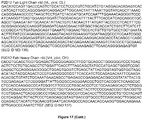
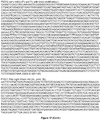
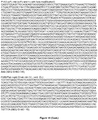
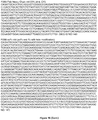
- Nucleic acids of the present disclosure may have a sequence of one of SEQ ID NOs 130, 131, 132, 133, 134, 135, 136, 137, 138, 19, 140, 141, 142, 143, 144, 145, 146 or 147 ( Figures 17 and 18 ), or a coding sequence which is degenerate as a result of the genetic code, or may have a nucleotide sequence having at least 70% identity thereto, optionally one of 75%, 80%, 85%, 86%, 87%, 88%, 89%, 90%, 91%, 92%, 93%, 94%, 95%, 96%, 97%, 98%, 99%, or 100%.
- Also disclosed herein is a vector comprising the nucleic acid according to the present invention.
- the host cell comprising the vector according to the present invention.
- the host cell may be eukaryotic, or mammalian, e.g. Chinese Hamster Ovary (CHO), or human or may be a prokaryotic cell, e.g. E. coli.
- CHO Chinese Hamster Ovary
- prokaryotic cell e.g. E. coli.
- Also disclosed herein is a method for making an antibody, antigen binding fragment, conjugate, or chimeric antigen receptor (CAR) according to the present invention, comprising culturing the host cell according to the present invention under conditions suitable for the expression of a vector encoding the antibody, antigen binding fragment, conjugate or CAR, and recovering the antibody, antigen binding fragment, conjugate or CAR, and recovering the antibody, antigen binding fragment, polypeptide, conjugate or CAR.
- CAR chimeric antigen receptor
- the present invention provides an antibody, antigen binding fragment, polypeptide, chimeric antigen receptor (CAR), cell or composition according to the present invention for use in therapy, or in a method of medical treatment.
- CAR chimeric antigen receptor
- the present invention provides an antibody, antigen binding fragment, polypeptide, conjugate, chimeric antigen receptor (CAR), cell or composition according to the present invention for use in the treatment of cancer.
- CAR chimeric antigen receptor
- the present invention provides an antibody, antigen binding fragment, polypeptide, conjugate, chimeric antigen receptor (CAR), cell or composition according to the present invention for use in the treatment of an infectious disease.
- CAR chimeric antigen receptor
- an antibody, antigen binding fragment, polypeptide, conjugate, chimeric antigen receptor (CAR), cell or composition according to the present invention in the manufacture of a medicament for use in the treatment of cancer.
- an antibody, antigen binding fragment, polypeptide, conjugate, chimeric antigen receptor (CAR), cell or composition according to the present invention in the manufacture of a medicament for use in the treatment of an infectious disease.
- Also disclosed herein is a method of treating cancer comprising administering an antibody, antigen binding fragment, polypeptide, conjugate, chimeric antigen receptor (CAR), cell or composition according to the present invention to a patient suffering from a cancer.
- an antibody, antigen binding fragment, polypeptide, conjugate, chimeric antigen receptor (CAR), cell or composition according to the present invention to a patient suffering from a cancer.
- CAR chimeric antigen receptor
- Also disclosed herein is a method of treating an infectious disease comprising administering an antibody, antigen binding fragment, polypeptide, conjugate, chimeric antigen receptor (CAR), cell or composition according to the present invention to a patient suffering from an infectious disease.
- an antibody, antigen binding fragment, polypeptide, conjugate, chimeric antigen receptor (CAR), cell or composition according to the present invention to a patient suffering from an infectious disease.
- CAR chimeric antigen receptor
- the present invention provides a method comprising contacting, in vitro, a sample containing, or suspected to contain, CD122 and/or common ⁇ chain ( ⁇ c) with an antibody, antigen binding fragment, chimeric antigen receptor (CAR), cell or composition according to the present invention and detecting the formation of a complex of the antibody, antigen binding fragment, conjugate, CAR or cell with CD122 and/or ⁇ c.
- ⁇ c common ⁇ chain
- Also disclosed herein is a method of diagnosing a disease or condition in a subject, the method comprising contacting, preferably in vitro, a sample from the subject with an antibody, antigen binding fragment, conjugate, chimeric antigen receptor (CAR), cell or composition according to the present invention and detecting the formation of a complex of the antibody, antigen binding fragment, conjugate, CAR or cell with CD122 and/or common ⁇ chain ( ⁇ c).
- a sample from the subject with an antibody, antigen binding fragment, conjugate, chimeric antigen receptor (CAR), cell or composition according to the present invention and detecting the formation of a complex of the antibody, antigen binding fragment, conjugate, CAR or cell with CD122 and/or common ⁇ chain ( ⁇ c).
- CAR chimeric antigen receptor
- Also disclosed herein is a method of selecting or stratifying a subject for treatment with an CD122 and/or common ⁇ chain ( ⁇ c)-targeted agent, the method comprising contacting, preferably in vitro, a sample from the subject with an antibody, antigen binding fragment, conjugate, chimeric antigen receptor (CAR), cell or composition according to the present invention and detecting the formation of a complex of the antibody, antigen binding fragment, conjugate, CAR or cell with CD122 and/or ⁇ c.
- ⁇ c common ⁇ chain
- an antibody, antigen binding fragment, conjugate, chimeric antigen receptor (CAR), cell or composition according to the present invention for the detection of CD122 and/or common ⁇ chain ( ⁇ c) in vitro or in vivo.
- an antibody, antigen binding fragment, conjugate, chimeric antigen receptor (CAR), cell or composition according to the present invention is also disclosed herein as an in vitro or in vivo diagnostic or prognostic agent.
- the present invention provides a method for expanding a population of T cells and/or NK cells, wherein T cells and/or NK cells are contacted in vitro or ex vivo with an antibody, antigen binding fragment, conjugate, chimeric antigen receptor (CAR), cell or composition according to the present invention.
- T cells and/or NK cells are contacted in vitro or ex vivo with an antibody, antigen binding fragment, conjugate, chimeric antigen receptor (CAR), cell or composition according to the present invention.
- CAR chimeric antigen receptor
- Also disclosed herein is a method of treating an infectious disease or a cancer in a subject, the method comprising culturing T cells and/or NK cells obtained from a blood sample from a subject in the presence of an antibody, antigen binding fragment, conjugate, chimeric antigen receptor (CAR), cell or composition according to the present invention so as to expand a T cell and/or NK cell population, collecting expanded T cells and/or NK cells, and administering the expanded T cells and/or NK cells to a subject in need of treatment.
- CAR chimeric antigen receptor
- Also disclosed herein is a method of treating an infectious disease or a cancer in a subject, the method comprising administering an antibody, antigen binding fragment, conjugate, chimeric antigen receptor (CAR), cell or composition according to the present invention to the subject so as to expand a T cell and/or NK cell population.
- an antibody, antigen binding fragment, conjugate, chimeric antigen receptor (CAR), cell or composition according to the present invention to the subject so as to expand a T cell and/or NK cell population.
- the present disclosure encompasses the nucleotide and amino acid sequences of a bispecific antibody with specificity for interleukin-2 receptor (IL-2R) chains ⁇ and ⁇ , able to stimulate cells expressing the medium affinity IL-2R ⁇ - ⁇ and not preferentially cells expressing the high affinity IL-2R ⁇ - ⁇ - ⁇ .
- IL-2R interleukin-2 receptor
- This disclosure describes the design of an IL-2R ⁇ -independent IL-2R agonist in which receptor activation is achieved through heterodimerization of the ⁇ - ⁇ c components by bispecific antibodies (or bi-functional proteins) possessing anti-IL-2R ⁇ (CD122) and anti- ⁇ c (CD132) specificities.
- Use of such molecules can convey desired immune stimulation by activation of immune cells, particularly the T cells, without preferential and high activation of cells expressing the high affinity ⁇ - ⁇ - ⁇ c IL-2R.
- Such molecules would be useful as vaccine adjuvants.
- Isolated nucleotide and amino-acid sequences for two fully human monoclonal antibodies binding to IL-2R ⁇ (CD122) or IL-2R ⁇ c (CD132) are described.
- bispecific antibody construct containing variable domains derived from the aforementioned isolated monoclonal antibodies and able to bind both IL-2R ⁇ and IL-2R ⁇ c are described.
- Bifunctional protein containing IL-2R ⁇ and IL-2R ⁇ c binding domains derived from the sequences of the aforementioned isolated monoclonal antibodies are described.
- Antibodies according to the present disclosure preferably bind to CD122 (interleukin 2 receptor ⁇ (IL-2R ⁇ )) and/or common ⁇ chain ( ⁇ c).
- CD122 interleukin 2 receptor ⁇ (IL-2R ⁇ )
- ⁇ c common ⁇ chain
- the antibody/fragment binds to human CD122 and/or human ⁇ c.
- the antibody/fragment binds to non-human primate CD122 and/or non-human primate ⁇ c.
- antibody we include a fragment or derivative thereof, or a synthetic antibody or synthetic antibody fragment. Antibodies according to the present invention may be provided in isolated form.
- antibodies can be prepared to most antigens.
- the antigen-binding portion may be a part of an antibody (for example a Fab fragment) or a synthetic antibody fragment (for example a single chain Fv fragment [ScFv]).
- Suitable monoclonal antibodies to selected antigens may be prepared by known techniques, for example those disclosed in " Monoclonal Antibodies: A manual of techniques ", H Zola (CRC Press, 1988 ) and in " Monoclonal Hybridoma Antibodies: Techniques and Applications ", J G R Hurrell (CRC Press, 1982 ). Chimeric antibodies are discussed by Neuberger et al (1988, 8th International Biotechnology Symposium Part 2, 792-799 ).
- Monoclonal antibodies are useful in the methods of the invention and are a homogenous population of antibodies specifically targeting a single epitope on an antigen.
- Antigen binding fragments of antibodies such as Fab and Fab 2 fragments may also be used/provided as can genetically engineered antibodies and antibody fragments.
- the variable heavy (V H ) and variable light (V L ) domains of the antibody are involved in antigen recognition, a fact first recognised by early protease digestion experiments. Further confirmation was found by "humanisation" of rodent antibodies.
- Variable domains of rodent origin may be fused to constant domains of human origin such that the resultant antibody retains the antigenic specificity of the rodent parent antibody ( Morrison et al (1984) Proc. Natl. Acad. Sd. USA 81, 6851-6855 ).
- variable domains that antigenic specificity is conferred by variable domains and is independent of the constant domains is known from experiments involving the bacterial expression of antibody fragments, all containing one or more variable domains.
- variable domains include Fab-like molecules ( Better et al (1988) Science 240, 1041 ); Fv molecules ( Skerra et al (1988) Science 240, 1038 ); single-chain Fv (ScFv) molecules where the V H and V L partner domains are linked via a flexible oligopeptide ( Bird et al (1988) Science 242, 423 ; Huston et al (1988) Proc. Natl. Acad. Sd.
- ScFv molecules we mean molecules wherein the V H and V L partner domains are covalently linked, e.g. by a flexible oligopeptide.
- Fab, Fv, ScFv and dAb antibody fragments can all be expressed in and secreted from E. coli, thus allowing the facile production of large amounts of the said fragments.
- the present invention provides an antibody or antigen binding fragment which is capable of binding to CD122 and ⁇ c, as defined in the claims.
- the antibody/fragment is a bispecific antibody or a bispecific antigen binding fragment.
- the bispecific antibody or bispecific antigen binding fragment may be isolated.
- the bispecific antibodies and bispecific antigen binding fragments comprise an antibody/fragment which is capable of binding to CD122, e.g. an antibody/fragment as described herein.
- the bispecific antibodies and bispecific antigen binding fragments comprise an antibody/fragment which is capable of binding to ⁇ c, e.g. an antibody/fragment as described herein.
- the bispecific antibodies/fragments comprise an antibody/fragment capable of binding to CD122, and an antibody/fragment capable of binding to another target protein.
- the bispecific antibodies/fragments comprise an antibody/fragment capable of binding to ⁇ c, and an antibody/fragment capable of binding to another target protein.
- the antigen binding fragment capable of binding to another target protein may be capable of binding to another protein other than CD122 or ⁇ c.
- a bispecific antibody which binds ⁇ c but does not bind to CD122.
- An antigen-binding fragment of a bispecific antibody/fragment according to the present disclosure may be any fragment of a polypeptide which is capable of binding to an antigen.
- an antigen binding fragment comprises at least the three light chain complementarity determining regions (CDRs) (i.e. LC-CDR1, LC-CDR2 and LC-CDR3) and three heavy chain CDRs (i.e. HC-CDR1, HC-CDR2 and HC-CDR3) which together define the antigen binding region of an antibody or antigen binding fragment.
- CDRs light chain complementarity determining regions
- HC-CDR1, HC-CDR2 and HC-CDR3 three heavy chain CDRs
- an antigen binding fragment may comprise the light chain variable domain and heavy chain variable domain of an antibody or antigen binding fragment.
- an antigen binding fragment may comprise the light chain polypeptide and heavy chain polypeptide of an antibody or antigen binding fragment.
- Bispecific antibodies and fragments according to the invention may be provided in any suitable format, such as those formats described in Kontermann MAbs 2012, 4(2): 182-197 .
- a bispecific antibody or bispecific antigen binding fragment may be a bispecific antibody conjugate (e.g. an IgG2, F(ab') 2 or CovX-Body), a bispecific IgG or IgG-like molecule (e.g.
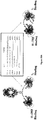
- an scFv dimer format is preferred in which two scFv, each exhibiting specific binding for a different antigen, are connected by a linker, e.g. as illustrated in Figure 25A , right.
- a linker may be an amino acid sequence of any desired length, e.g. one of 2 to 50 amino acids, 5 to 50 amino acids, 5 to 40 amino acids, 5 to 30 amino acids, 5 to 20 amino acids, or 5 to 10 amino acids.
- bispecific antibodies and bispecific antigen binding fragments are produced and prepared.
- Methods for producing bispecific antibodies include chemically crosslinking of antibodies or antibody fragments, e.g. with reducible disulphide or non-reducible thioether bonds, for example as described in Segal and Bast, 2001. Production of Bispecific Antibodies. Current Protocols in Immunology. 14:IV:2.13:2.13.1-2.13.16 .
- SPDP N -succinimidyl-3-(-2-pyridyldithio)-propionate
- SPDP N -succinimidyl-3-(-2-pyridyldithio)-propionate
- SPDP N -succinimidyl-3-(-2-pyridyldithio)-propionate
- bispecific antibodies include fusing antibody-producing hybridomas e.g. with polyethylene glycol, to produce a quadroma cell capable of secreting bispecific antibody, for example as described in D. M. and Bast, B. J. 2001. Production of Bispecific Antibodies. Current Protocols in Immunology. 14:IV:2.13:2.13.1-2.13.16 .
- Bispecific antibodies and bispecific antigen binding fragments according to the present invention can also be produced recombinantly, by expression from e.g. a nucleic acid construct encoding polypeptides for the antigen binding molecules, for example as described in Antibody Engineering: Methods and Protocols, Second Edition (Humana Press, 2012), at Chapter 40: Production of Bispecific Antibodies: Diabodies and Tandem scFv (Hornig and Farber-Schwarz ), or French, How to make bispecific antibodies, Methods Mol. Med. 2000; 40:333-339 .
- a DNA construct encoding the light and heavy chain variable domains for the two antigen binding fragments i.e. the light and heavy chain variable domains for the antigen binding fragment capable of binding CD122 or ⁇ c, and the light and heavy chain variable domains for the antigen binding fragment capable of binding to another target protein
- sequences encoding a suitable linker or dimerization domain between the antigen binding fragments can be prepared by molecular cloning techniques.
- Recombinant bispecific antibody can thereafter be produced by expression (e.g. in vitro ) of the construct in a suitable host cell (e.g. a mammalian host cell), and expressed recombinant bispecific antibody can then optionally be purified.
- Antibodies may be produced by a process of affinity maturation in which a modified antibody is generated that has an improvement in the affinity of the antibody for antigen, compared to an unmodified parent antibody.
- Affinity-matured antibodies may be produced by procedures known in the art, e.g., Marks et al.,Rio/Technology 10:779-783 (1992 ); Barbas et al. Proc Nat. Acad. Sci. USA 91:3809-3813 (1994 ); Schier et al. Gene 169:147-155 (1995 ); Yelton et al. J. Immunol. 155:1994-2004 (1995 ); Jackson et al., J. Immunol. 154(7):331 0-15 9 (1995 ); and Hawkins etal, J. Mol. Biol. 226:889-896 (1992 ).
- Antibodies according to the present disclosure may exhibit specific binding to CD122, and/or ⁇ c.
- An antibody that specifically binds to a target molecule preferably binds the target with greater affinity, and/or with greater duration than it binds to other targets.
- the present antibodies may bind with greater affinity to CD122 and/or ⁇ c than to one or more members of the type I cytokine receptor family.
- the extent of binding of an antibody to an unrelated target is less than about 10% of the binding of the antibody to the target as measured, e.g., by ELISA, SPR, Bio-Layer Interferometry or by a radioimmunoassay (RIA).
- the binding specificity may be reflected in terms of binding affinity where the anti-CD122 and/or ⁇ c antibody of the present disclosure binds to CD122 and/or ⁇ c with a K D that is at least 0.1 order of magnitude (i.e. 0.1 x 10 n , where n is an integer representing the order of magnitude) greater than the K D of the antibody towards another target molecule.
- This may optionally be one of at least 0.2, 0.3, 0.4, 0.5, 0.6, 0.7, 0.8, 0.9, 1.0, 1.5, or 2.0.
- Binding affinity of an antibody for its target is often described in terms of its dissociation constant (K D ). Binding affinity can be measured by methods known in the art, such as by ELISA, Surface Plasmon Resonance (SPR; see e.g. Hearty et al., Methods Mol Biol (2012) 907:411-442 ), Bio-Layer Interferometry (see e.g. Lad et al., (2015) J Biomol Screen 20(4): 498-507 ), or by a radiolabeled antigen binding assay (RIA) performed with the Fab version of the antibody and antigen molecule.
- SPR Surface Plasmon Resonance
- RIA radiolabeled antigen binding assay
- the antibody according to the present disclosure has a dissociation constant (K D ) for CD122 of one of ⁇ 1 x 10 -6 M, ⁇ 7.5 x 10 -7 M, ⁇ 5 x 10 -7 M, ⁇ 4.5 x 10 -7 M, ⁇ 4 x 10 -7 M, ⁇ 5 x 10 -7 M, ⁇ 4.5 x 10 -7 M, ⁇ 3 x 10 -7 M, ⁇ 3.5 x 10 -7 M, ⁇ 3 x 10 -7 M, ⁇ 2.5x10 -7 M, ⁇ 2 x 10 -7 M, ⁇ 1.9 x 10 -7 M, ⁇ 1.8 x 10 -7 M, ⁇ 1.7 x 10 -7 M, ⁇ 1.6 x 10 -7 M, ⁇ 1.5 x 10 -7 M, ⁇ 1.4 x 10 -7 M, ⁇ 1.3 x 10 -7 M, ⁇ 1.2 x 10 -7 M, ⁇ 1.1 x 10 -7 M, ⁇ 1 x 10 -7 M, ⁇ 8 x 10 -7 M,
- the antibody according to the present disclosure has a K D for ⁇ c of one of ⁇ 10 x 10 -7 M, ⁇ 7.5 x 10 -7 M, ⁇ 5 x 10 -7 M, ⁇ 2.5 x 10 -7 M, ⁇ 1 x 10 -7 M, ⁇ 9.5 x 10 -8 M, ⁇ 9 x 10 -8 M, ⁇ 8.5 x 10 -8 M, ⁇ 8 x 10 -8 M, ⁇ 7.5 x 10 -8 M, ⁇ 7 x 10 -8 M, ⁇ 6.5 x 10 -8 M, ⁇ 6 x 10 -8 M, ⁇ 5.5 x 10 -8 M, ⁇ 5 x 10 -8 M, ⁇ 4.5 x 10 -8 M, ⁇ 4 x 10 -8 M, ⁇ 3.5 x 10 -8 M, ⁇ 3 x 10 -8 M, ⁇ 2.5 x 10 -8 M, ⁇ 2 x 10 -8 M, ⁇ 1.5 x 10 -8 M, ⁇ 1 x 10 -8 M,
- the antibody according to the present disclosure has a K D for CD122 of one of ⁇ 1 x 10 -6 M, ⁇ 7.5 x 10 -7 M, ⁇ 5 x 10 -7 M, ⁇ 4.5 x 10 -7 M, ⁇ 4 x 10 -7 M, ⁇ 5 x 10 -7 M, ⁇ 4.5 x 10 -7 M, ⁇ 3 x 10 -7 M, ⁇ 3.5 x 10 -7 M, ⁇ 3 x 10 -7 M, ⁇ 2.5 x 10 -7 M, ⁇ 2 x 10 -7 M, ⁇ 1.9 x 10 -7 M, ⁇ 1.8 x 10 -7 M, ⁇ 1.7 x 10 -7 M, ⁇ 1.6 x 10 -7 M, ⁇ 1.5 x 10 -7 M, ⁇ 1.4 x 10 -7 M, ⁇ 1.3 x 10 -7 M, ⁇ 1.2 x 10 -7 M, ⁇ 1.1 x 10 -7 M, ⁇ 1 x 10 -7 M, ⁇ 8 x 10 -8 M, ⁇
- the antibody according to the present invention binds to CD122 and/or ⁇ c expressed at the cell surface of a cell expressing CD122 and/or ⁇ c.
- Such binding can be analysed by analysis of binding of the antibody to PBMCs incubated with the antibody, or cells transfected with constructs expressing CD122 and/or ⁇ c, and subsequent analysis of antibody binding, e.g. by flow cytometry.
- the antibody according to the present invention is an agonist of one or more signalling pathways which are activated by signal transduction through receptors comprising CD122 and/or ⁇ c, e.g. IL-2 receptor and/or IL-15 receptor.
- the antibody is capable of stimulating signalling through one or more immune receptor complexes comprising CD122 and/or ⁇ c, e.g. IL-2 receptor and/or IL-15 receptor.
- the antibody is an IL-2 receptor agonist. Accordingly in some embodiments, the antibody is capable of activating IL-2/IL-2 receptor-mediated signalling and associated functions. For example, the in some embodiments, the antibody is capable of promoting cell division/proliferation/survival of a cell expressing the IL-2 receptor.
- the antibody is an IL-15 receptor agonist. Accordingly in some embodiments, the antibody is capable of activating IL-15/IL-15 receptor-mediated signalling and associated functions. For example, the in some embodiments, the antibody is capable of promoting cell division/proliferation/survival of a cell expressing the IL-15 receptor.
- bispecific antibodies according to the present invention may preferentially bind (e.g. with greater affinity and/or specificity) receptors comprising or consisting of CD122 and ⁇ c compared to receptors that further comprise CD25.
- Bispecific antibodies may preferentially stimulate receptors (or cells expressing receptors) comprising or consisting of CD122 and ⁇ c, but not further comprising CD25.
- bispecific antibodies according to the present invention that bind CD122 and ⁇ c preferably do not exhibit significant inhibition of ligand binding to receptors having the common gamma chain and not containing CD122, e.g. receptors other than IL-2R and IL-15R.
- bispecific antibodies according to the present invention may be specific for receptors comprising both CD122 and ⁇ c over receptors that comprise ⁇ c but do not comprise CD122.
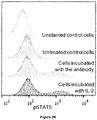
- the antibody according to the present invention is capable of stimulating CD122: ⁇ c mediated signalling through one of more of the following intracellular signalling pathways: STAT5, Akt, ERK.
- STAT5, Akt, ERK intracellular signalling pathways can be analysed by methods well known to the skilled person, such as e.g. by detection of phosphorylated STAT5, phosphorylated Akt and optionally phosphorylated ERK, respectively following stimulation of cells expressing CD122 and/or ⁇ c with the antibody.
- the antibody according to the present invention is a less potent stimulator of intracellular signalling in Treg cells than IL-2.
- treatment with the antibody may result in less phosphorylation of STAT5 as compared to treatment with IL-2.
- the antibody is capable of stimulating proliferation of immune cells in vitro and or in vivo. Stimulation of proliferation results in an increase in the number of the cell type whose proliferation is stimulated, effective to achieve expansion of the cell population.
- the antibody is useful in stimulating proliferation and/or expansion of leukocytes in vitro or in vivo, preferably exhibiting reduced toxicity when compared to the effects of a corresponding amount of IL-2.
- the antibody is capable of stimulating proliferation of IL-2 dependent cells. In some embodiments, the antibody is capable of stimulating proliferation of CD3+ T cells (e.g. CD4+ T cells, CD8+ T cells) and/or NK cells.
- CD3+ T cells e.g. CD4+ T cells, CD8+ T cells
- an antibody is capable of stimulating proliferation of cells can be analysed in vitro by methods well known in the art, such as by analysis of the number of a given cell type before and after stimulation, and/or by another assay, such as thymidine incorporation, CFSE dilution (e.g. as described in Anthony et al., 2012 Cells 1:127-140 ), AlamarBlue signal etc.
- the antibody according to the present invention is capable of binding to non-human primate (e.g. cynomolgous macaque) CD122 and/or ⁇ c.
- the antibody may be cross-reactive for human and non-human primate CD122 and/or ⁇ c.
- the antibody is capable of stimulating IL-2/IL-2 receptor- and/or IL-15/IL-15 receptor-mediated mediated signalling in cells expressing non-human primate (e.g. cynomolgous macaque) CD122 and/or ⁇ c.
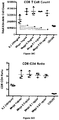
- the antibody of the present invention is capable of stimulating proliferation of CD3+ T cells. In some embodiments, the antibody of the present invention is capable of stimulating proliferation of CD4+ T cells. In some embodiments, the antibody of the present invention is capable of stimulating proliferation of CD8+ T cells.
- the antibody of the present invention is capable of increasing the ratio of CD8+ T cells to CD4+ T cells. That is, in some embodiments, following stimulation (e.g. in vitro or in vivo ) of a population of cells comprising CD8+ T cells and CD4+ T cells, the ratio of CD8+ T cells to CD4+ T cells may be higher following stimulation as compared to before stimulation.
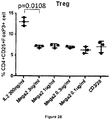
- the antibody of the present invention is not a potent stimulator of proliferation of CD4+FoxP3+ cells (i.e. Tregs). In some embodiments, the antibody does not stimulate proliferation of Tregs.
- the antibody of the invention stimulates proliferation of Tregs to a lesser extent than IL-2. That is, in some embodiments, the antibody of the invention is a less potent agonist of proliferation of Tregs than IL-2. In some embodiments, the antibody of the disclosure stimulates proliferation of Tregs to an extent which is ⁇ 1 times, ⁇ 0.8 times, ⁇ 0.6 times, ⁇ 0.4 times, ⁇ 0.2 times, ⁇ 0.1 times the level of proliferation of Tregs stimulated by treatment with IL-2 at a comparable concentration, in a given assay.
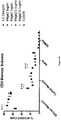
- the antibody of the present invention preferentially stimulates proliferation of the effector memory subset of CD8+ T cells over the central memory CD8+ T cell and na ⁇ ve CD8+ T cell populations.
- the antibody of the present disclosure stimulates proliferation of effector memory CD8+ T cells to a greater extent than IL-2 at a comparable concentration, in a given assay.
- the antibody of the present invention is capable of stimulating proliferation of antigen-specific T cells, e.g. antigen-specific CD8+ T cells and/or antigen-specific CD4+ T cells. Stimulation may occur in vitro or in vivo.
- the antibody of the present invention is capable of stimulating proliferation of antigen-specific CD8+ cytotoxic T lymphocytes (CTLs).
- CTLs cytotoxic T lymphocytes
- the antibody of the present disclosure is capable of stimulating proliferation of antigen-specific T cells to a greater extent than IL-2 at a comparable concentration, in a given assay.
- the antibody of the present disclosure is capable of stimulating proliferation of antigen-specific CD8+ T cells to a greater extent than IL-2 at a comparable concentration, in a given assay.
- the antibody of the present invention is capable of increasing the ratio of antigen-specific CD8+ T cells to CD4+ T cells. This may occur in vitro or in vivo. That is, in some embodiments, following stimulation (e.g. in vitro ) of a population of cells comprising antigen-specific CD8+ T cells and CD4+ T cells, the ratio of CD8+ T cells to CD4+ T cells is higher following stimulation as compared to before stimulation. In some embodiments, the antibody of the disclosure is capable of increasing the ratio of antigen-specific CD8+ T cells to CD4+ T cells to a greater extent than IL-2 at a comparable concentration, in a given assay.
- the antibody of the present invention is capable of stimulating proliferation of CD8+ PD1+ T cells (e.g. antigen-specific CD8+PD1 + T cells). In some embodiments, the antibody of the present disclosure is capable of stimulating proliferation of CD8+ PD1+ T cells to a greater extent than IL-2 at a comparable concentration, in a given assay.
- CD8+ PD1+ T cells e.g. antigen-specific CD8+PD1 + T cells.
- the antibody of the present disclosure is capable of stimulating proliferation of CD8+ PD1+ T cells to a greater extent than IL-2 at a comparable concentration, in a given assay.
- the antibody of the present invention is capable of reducing the proportion of Tregs as a proportion of CD4+ T cells. That is, in some embodiments, following treatment of a population of CD4+ T cells with the antibody, the percentage of the CD4+ T cells which are Tregs is reduced. In some embodiments, the antibody of the present disclosure is capable of reducing the proportion of Tregs as a proportion of CD4+ T cells to a greater extent than IL-2 at a comparable concentration, in a given assay.
- the antibody of the present invention is capable of stimulating CTL cytotoxicity.
- Ability of an antibody to stimulate CTL cytotoxicity can be measured by methods known to the skilled person. Cytotoxicity of a T cell to a given target cell can be investigated, for example, using any of the methods reviewed in Zaritskaya et al. Expert Rev Vaccines (2011), 9(6):601-616 .
- the antibody is capable of stimulating the proliferation of immune cells in vivo. In some embodiments, the antibody is capable of stimulating the proliferation of CD3+ cells in vivo. In some embodiments, the antibody is capable of stimulating the proliferation of CD8+ T cells in vivo. In some embodiments, the antibody is capable of stimulating the proliferation of CD4+ T cells in vivo. In some embodiments, the antibody is capable of stimulating the proliferation of NK cells in vivo.
- stimulation or expansion of cells having desired characteristics may occur in vitro or in vivo.
- In vitro stimulation or expansion may provide a population of cells enriched for desired characteristics that may be collected and used for a desired purpose, which may include administration to a subject.
- In vivo stimulation or expansion may enrich for a population of cells that are beneficial to the subject, e.g. in treating or preventing a disease.
- In vivo stimulation or expansion may have an adjuvant effect or action.
- the antibody of the present invention comprises the antibody/fragment of a CD122-binding antibody clone. In some aspects, the antibody comprises the antibody/fragment of clone P2C4 or a variant of P2C4. In some aspects, the antibody comprises the antibody/fragment of clone P2C4_A4 or a variant of P2C4_A4. In some aspects, the antibody comprises the antibody/fragment of clone P2C4_B1 or a variant of P2C4_B1. In some aspects, the antibody comprises the antibody/fragment of clone P2C4_B5 or a variant of P2C4_B5.
- the antibody comprises the antibody/fragment of clone P2C4_C1 or a variant of P2C4_C1. In some aspects, the antibody comprises the antibody/fragment of clone P2C4_C4 or a variant of P2C4_C4. In some aspects, the antibody comprises the antibody/fragment of clone P2C4_C7 or a variant of P2C4_C7. In some aspects, the antibody comprises the antibody/fragment of clone P2C4_D10 or a variant of P2C4_010. In some aspects, the antibody comprises the antibody/fragment of clone P2C4_E6 or a variant of P2C4_E6.
- the antibody comprises the antibody/fragment of clone P2C4_E7 or a variant of P2C4_E7. In some aspects, the antibody comprises the antibody/fragment of clone P2C4_F8 or a variant of P2C4_F8. In some aspects, the antibody comprises the antibody/fragment of clone P2C4_C1 D10 or a variant of P2C4_C1 D10. In some aspects, the antibody comprises the antibody/fragment of clone P2C4_FW2 or a variant of P2C4_FW2. In some aspects, the antibody comprises the antibody/fragment of clone P2H7 or a variant of P2H7.
- the antibody comprises the antibody/fragment of clone P2D12 or a variant of P2D12. In some aspects, the antibody comprises the antibody/fragment of clone P1G11 or a variant of P1G11. In some aspects, the antibody comprises the antibody/fragment of clone P2C4_A9 or a variant of P2C4_A9. In some aspects, the antibody comprises the antibody/fragment of clone P2C4_B6 or a variant of P2C4_B6. In some aspects, the antibody comprises the antibody/fragment of clone P2C4_E9 or a variant of P2C4_E9.
- the antibody comprises the antibody/fragment of clone P2C4_B8 or a variant of P2C4_B8. In some aspects, the antibody comprises the antibody/fragment of clone P2C4_B12 or a variant of P2C4_B12. In some aspects, the antibody comprises the antibody/fragment of clone P2C4_C12 or a variant of P2C4_C12. In some aspects, the antibody comprises the antibody/fragment of clone P2C4_E2 or a variant of P2C4_E2. In some aspects, the antibody comprises the antibody/fragment of clone P2C4_E3 or a variant of P2C4_E3.
- the antibody comprises the antibody/fragment of clone P2C4_E8 or a variant of P2C4_E8. In some aspects, the antibody comprises the antibody/fragment of clone P2C4_F11 or a variant of P2C4_F11. In some aspects, the antibody comprises the antibody/fragment of clone P2C4_G2 or a variant of P2C4_G2. In some aspects, the antibody comprises the antibody/fragment of clone P2C4_G11 or a variant of P2C4_G11. In some aspects, the antibody comprises the antibody/fragment of clone P2C4_H1 or a variant of P2C4_H1.
- the antibody comprises the antibody/fragment of clone P2C4_H2 or a variant of P2C4_H2. In some aspects, the antibody comprises the antibody/fragment of clone P2C4_H3 or a variant of P2C4_H3.
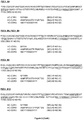
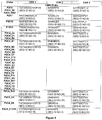
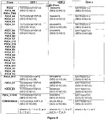
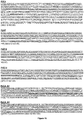
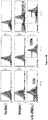
- the amino acid sequences of the VL domains of the CD122-binding antibody clones of the preceding paragraph are shown in Figure 1 , as are the CDRs defined according to the Kabat system.
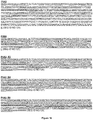
- the amino acid sequences of the VH domains of the CD122-binding antibody clones of the preceding paragraph are shown in Figure 2 , as are the CDRs defined according to the Kabat system.
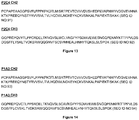
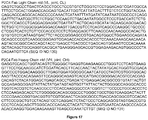
- the full amino acid sequences of the antibody constructs (including linkers) are shown in Figure 15 , and the encoding nucleotide sequences are shown in Figure 17 .
- Antibodies according to the present disclosure may comprise the CDRs of P2C4, P2C4_A4, P2C4_B1, P2C4_B5, P2C4_C1, P2C4_C4, P2C4_C7, 2C4_D10, P2C4_E6, P2C4_E7, P2C4_F8, P2C4_C1D10, P2C4_FW2, P2H7, P2D12, P1G11, P2C4_A9, P2C4_B6, P2C4_E9, P2C4_B8, P2C4_B12, P2C4_C12, P2C4_E2, P2C4_E3, P2C4_E8, P2C4_F11, P2C4_G2, P2C4_G11, P2C4_H1, P2C4_H2, or P2C4_H3.
- P2C4_F11 P2C4_G2, P2C
- Antibodies according to the present disclosure may comprise VL and/or VH chains comprising an amino acid sequence that has a high percentage sequence identity to one or more of the VL and/or VH amino acid sequences shown in Figures 1 and 2 , respectively.
- antibodies according to the present disclosure include antibodies that bind CD122 and have a VL chain that comprises an amino acid sequence having at least 70%, more preferably one of at least 75%, 80%, 85%, 86%, 87%, 88%, 89%, 90%, 91%, 92%, 93%, 94%, 95%, 96%, 97%, 98%, 99%, or 100%, sequence identity to the VL chain amino acid sequence of one of SEQ ID NOs:1, 17, 19, 21, 23, 24, 27, 28, 29, 30, 31, 33, 34, 148, 149, 5, 9, or 13 shown in Figure 1 .
- Antibodies according to the present disclosure include antibodies that bind CD122 and have VH chain that comprises an amino acid sequence having at least 70%, more preferably one of at least 75%, 80%, 85%, 86%, 87%, 88%, 89%, 90%, 91%, 92%, 93%, 94%, 95%, 96%, 97%, 98%, 99%, or 100%, sequence identity to the VH chain amino acid sequence of one of SEQ ID NOs:35, 51, 53, 55, 56, 57, 58, 59, 60, 61, 62, 63, 64, 65, 66, 150, 151, 39, 43, or 47 shown in Figure 2 .
- Antibodies according to the present disclosure include an antibody or CD122-binding fragment thereof having the amino acid sequence encoded by the nucleotide sequence of any one of SEQ ID NOs:130, 131, 132, 133, 134, 135, 136, 137, 138, 139, 140, or 141 shown in Figure 17 .
- Antibodies of the present disclosure include an antibody comprising the VL and/or VH domain sequence of an amino acid sequence encoded by the nucleotide sequence of any one of SEQ ID NOs:130, 131, 132, 133, 134, 135, 136, 137, 138, 139, 140, or 141 shown in Figure 17 .
- the antibody of the present invention comprises the antibody/fragment of a yc-binding antibody clone. In some aspects, the antibody comprises the antibody/fragment of clone P1A3 or a variant of P1A3. In some aspects, the antibody comprises the antibody/fragment of clone P1A3_B3 or a variant of P1A3_B3. In some aspects, the antibody comprises the antibody/fragment of clone P1A3_E8 or a variant of P1A3_E8. In some aspects, the antibody comprises the antibody/fragment of clone P1A3_E9 or a variant of P1A3_E9.
- the antibody comprises the antibody/fragment of clone P1A3_B4 or a variant of P1A3_B4. In some aspects, the antibody comprises the antibody/fragment of clone P1A3_FW2 or a variant of P1A3_FW2. In some aspects, the antibody comprises the antibody/fragment of clone P2B9 or a variant of P2B9.
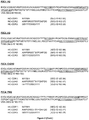
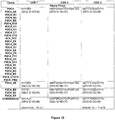
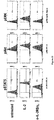
- the amino acid sequences of the VL domains of the ⁇ c-binding antibody clones of the preceding paragraph are shown in Figure 3 , as are the CDRs defined according to the Kabat system.
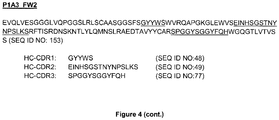
- the amino acid sequences of the VH domains of the ⁇ c-binding antibody clones of the preceding paragraph are shown in Figure 4 , as are the CDRs defined according to the Kabat system.
- the full amino acid sequences of the antibody constructs (including linkers) are shown in Figure 16 , and the encoding nucleotide sequences are shown in Figure 18 .
- Antibodies according to the present disclosure may comprise the CDRs of P1A3, P1A3_B3 P1A3_E8, P1A3_E9, P1A3_B4, P1A3_FW2, or P2B9.
- one or two or three or four of the six CDR sequences may vary.
- a variant may have one or two amino acid substitutions in one or two of the six CDR sequences.
- Antibodies according to the present disclosure may comprise VL and/or VH chains comprising an amino acid sequence that has a high percentage sequence identity to one or more of the VL and/or VH amino acid sequences shown in Figures 3 and 4 , respectively.
- antibodies according to the present disclosure include antibodies that bind ⁇ c and have VL chain that comprises an amino acid sequence having at least 70%, more preferably one of at least 75%, 80%, 85%, 86%, 87%, 88%, 89%, 90%, 91%, 92%, 93%, 94%, 95%, 96%, 97%, 98%, 99%, or 100%, sequence identity to the VL chain amino acid sequence of one of SEQ ID NOs:67, 152, 71, or 75 shown in Figure 3 .
- Antibodies according to the present disclosure include antibodies that bind ⁇ c and have VH chain that comprises an amino acid sequence having at least 70%, more preferably one of at least 75%, 80%, 85%, 86%, 87%, 88%, 89%, 90%, 91%, 92%, 93%, 94%, 95%, 96%, 97%, 98%, 99%, or 100%, sequence identity to the VH chain amino acid sequence of one of SEQ ID NOs:76, 153, 78, 82 or 84 shown in Figure 4 .
- Antibodies according to the present disclosure include an antibody or ⁇ c-binding fragment thereof having the amino acid sequence encoded by the nucleotide sequence of any one of SEQ ID NOs:142, 143, 144, 145, 146, or 147 shown in Figure 18 .
- Antibodies of the present disclosure include an antibody comprising the VL and/or VH domain sequence of an amino acid sequence encoded by the nucleotide sequence of any one of SEQ ID NOs:142, 143, 144, 145, 146, or 147 shown in Figure 18 .
- the antibody of the present invention comprises the antibody/fragment of a CD122-binding antibody clone, e.g. a CD122-binding antibody clone as described, and also comprises a yc-binding clone, e.g. a yc-binding clone as described herein, as defined in the claims.
- the light and heavy chain CDRs disclosed herein may also be particularly useful in conjunction with a number of different framework regions. Accordingly, light and/or heavy chains having LC-CDR1-3 or HC-CDR1-3 may possess an alternative framework region. Suitable framework regions are well known in the art and are described for example in M. Lefranc & G. Le:franc (2001) "The Immunoglobulin FactsBook", Academic Press .
- Antibodies according to the present invention may be detectably labelled or, at least, capable of detection.
- the antibody may be labelled with a radioactive atom or a coloured molecule or a fluorescent molecule or a molecule which can be readily detected in any other way. Suitable detectable molecules include fluorescent proteins, luciferase, enzyme substrates, and radiolabels.
- the binding moiety may be directly labelled with a detectable label or it may be indirectly labelled.
- the binding moiety may be an unlabelled antibody which can be detected by another antibody which is itself labelled.
- the second antibody may have bound to it biotin and binding of labelled streptavidin to the biotin is used to indirectly label the first antibody.
- the present invention provides a chimeric antigen receptor (CAR) capable of binding to CD122 and/or ⁇ c as defined in the claims.
- CARs according to the present disclosure comprises one or more antigen binding fragments or polypeptides according to the present disclosure.
- CARs Chimeric Antigen Receptors
- Antigen-binding fragments according to the present invention are provided herein as the antigen-binding domain of a chimeric antigen receptor (CAR).
- the CAR comprises a VL domain and a VH domain according to any embodiment of an antibody, antigen binding fragment or polypeptide described herein.
- the antigen bound by the CAR according to the present invention is CD122 and/or ⁇ c.
- CARs may be combined with costimulatory ligands, chimeric costimulatory receptors or cytokines to further enhance T cell potency, specificity and safety ( Sadelain et al., The basic principles of chimeric antigen receptor (CAR) design. Cancer Discov. 2013 April; 3(4): 388-398. doi:10.1158/2159-8290.CD-12-0548 ).
- the present invention also provides a cell comprising a CAR according to the invention, as defined in the claims.
- the CAR according to the present invention may be used to generate T cells targeted to cells expressing CD122 and/or ⁇ c.
- Engineering of CARs into T cells may be performed during culture, in vitro, for transduction and expansion, such as happens during expansion of T cells for adoptive T cell therapy.
- the transduction may utilize a variety of methods, but stable gene transfer is required to enable sustained CAR expression in clonally expanding and persisting T cells.
- a CAR typically combines an antigen binding domain with an intracellular domain of the CD3- zeta chain or FcyRI protein in a single chimeric protein.
- the structural features of a CAR are described by Sjouke et al., (The pharmacology of second-generation chimeric antigen receptors. Nature Reviews Drug Discovery, 14, 499 509 (2015) doi:10.1038/nrd4597 ).
- a CAR typically has an extracellular antigen-binding domain linked to a transmembrane domain and endodomain.
- An optional hinge or spacer domain may provide separation between the binding moiety and transmembrane domain and may act as a flexible linker.
- the antigen recognition domain of the CAR is, or is derived from, an antibody, antigen binding fragment or polypeptide which is capable of binding to CD122 and/or ⁇ c, as described herein.
- Hinge or spacer regions of the CAR may be flexible domains allowing the binding moiety to orient in different directions.
- Hinge or spacer regions may be derived from IgG1 or the CH2CH3 region of immunoglobulin.
- Transmembrane domains may be hydrophobic alpha helix that spans the cell membrane.
- the transmembrane domain associated with the endodomain is commonly used.
- the endodomain is responsible for receptor clustering/dimerization after antigen binding and for initiation of signal transduction to the cell.
- One commonly used transmembrane domain is the CD3-zeta transmembrane and endodomain.
- Intracellular domains from one or more co-stimulatory protein receptors, such as CD28 4-1BB, OX40, ICOS, may optionally be incorporated into the cytoplasmic tail of the CAR to provide additional co-stimulatory signaling, which may be beneficial in terms of anti-tumor activity.
- a CAR comprises an extracellular domain having an antigen recognition domain, a transmembrane domain, and a cytoplasmic domain.
- a transmembrane domain that is naturally associated with one of the domains in the CAR may be used or the transmembrane domain can be selected or modified by amino acid substitution to avoid binding of such domains to the transmembrane domains of the same or different surface membrane proteins to minimize interactions with other members of the receptor complex.
- the cytoplasmic domain may be designed to comprise the CD28 and/or 4-1BB signaling domain by itself or be combined with any other desired cytoplasmic domain(s).
- the cytoplasmic domain may be designed to further comprise the signaling domain of CD3-zeta.
- the cytoplasmic domain of the CAR can include but is not limited to CD3-zeta, 4-1BB and CD28 signaling modules and combinations thereof.
- the present disclosure also provides CAR T cells comprising as a CAR an antigen binding fragment capable of binding to CD122 and/or ⁇ c, according to the present disclosure.
- CAR T cells of the disclosure can be generated by introducing a lentiviral vector in vitro comprising a desired CAR, for example a CAR comprising anti-IL2R ⁇ / ⁇ c, CD8a hinge and transmembrane domain, and human 4-1BB and CD3zeta signaling domains, into the cells.
- a desired CAR for example a CAR comprising anti-IL2R ⁇ / ⁇ c, CD8a hinge and transmembrane domain, and human 4-1BB and CD3zeta signaling domains.
- the CAR T cells of the disclosure are able to replicate in vivo resulting in long-term persistence that can lead to sustained tumor control.
- the disclosure relates to administering a genetically modified T cell expressing a CAR capable of binding to CD122 and/or ⁇ c for the treatment of a patient having cancer or at risk of having cancer or an infectious disease using lymphocyte infusion.
- a genetically modified T cell expressing a CAR capable of binding to CD122 and/or ⁇ c for the treatment of a patient having cancer or at risk of having cancer or an infectious disease using lymphocyte infusion.
- lymphocyte infusion is used in the treatment.
- Autologous lymphocyte infusion is used in the treatment.
- Autologous PBMCs are collected from a patient in need of treatment and T cells are activated and expanded using the methods described herein and known in the art and then infused back into the patient.
- Antibodies, or antigen binding fragments, described herein may be used in methods that involve the binding of the antibody or antigen binding fragment to CD122 and/or ⁇ c. Such methods may involve detection of the bound complex of antibody, or antigen binding fragment, and CD122 and/or ⁇ c. As such, in one embodiment a method is provided, the method comprising contacting a sample containing, or suspected to contain, CD122 and/or ⁇ c with an antibody or antigen binding fragment as described herein and detecting the formation of a complex of antibody, or antigen binding fragment, and CD122 and/or ⁇ c.
- Suitable method formats are well known in the art, including immunoassays such as sandwich assays, e.g. ELISA.
- the method may involve labelling the antibody, or antigen binding fragment, or CD122 and/or ⁇ c, or both, with a detectable label, e.g. fluorescent, luminescent or radio- label.
- CD122 and/or ⁇ c expression may be measured by immunohistochemistry (IHC), for example of a tissue sample obtained by biopsy.
- IHC immunohistochemistry
- Methods of this kind may provide the basis of a method of diagnosis of a disease or condition requiring detection and or quantitation of CD122 and/or ⁇ c. Such methods may be performed in vitro on a patient sample, or following processing of a patient sample. Once the sample is collected, the patient is not required to be present for the in vitro method of diagnosis to be performed and therefore the method may be one which is not practised on the human or animal body.
- Such methods may involve determining the amount of CD122 and/or ⁇ c present in a patient sample.
- the method may further comprise comparing the determined amount against a standard or reference value as part of the process of reaching a diagnosis.
- Other diagnostic tests may be used in conjunction with those described here to enhance the accuracy of the diagnosis or prognosis or to confirm a result obtained by using the tests described here.
- the level of CD122 and/or ⁇ c present in a patient sample may be indicative that a patient may respond to treatment with an anti-CD122 and/or anti- ⁇ c antibody.
- the presence of a high level of CD122 and/or ⁇ c in a sample may be used to select a patient for treatment with an anti-CD122 and/or anti- ⁇ c antibody.
- the antibodies of the present invention may therefore be used to select a patient for treatment with anti-CD122 and/or anti- ⁇ c antibody therapy.
- Detection in a sample of anti-CD122 and/or anti- ⁇ c antibody may be used for the purpose of diagnosis of an infectious disease, autoimmune disorder or a cancerous condition in the patient, diagnosis of a predisposition to an infectious disease, autoimmune disorder or a cancerous condition or for providing a prognosis (prognosticating) of an infectious disease, autoimmune disorder or a cancerous condition.
- the diagnosis or prognosis may relate to an existing (previously diagnosed) infectious disease, autoimmune disorder or cancerous condition.
- a sample may be taken from any tissue or bodily fluid.
- the sample may comprise or may be derived from: a quantity of blood; a quantity of serum derived from the individual's blood which may comprise the fluid portion of the blood obtained after removal of the fibrin clot and blood cells; a tissue sample or biopsy; or cells isolated from said individual.
- Methods according to the present invention may preferably performed in vitro.
- in vitro is intended to encompass experiments with cells in culture whereas the term “in vivo” is intended to encompass experiments with and/or treatment of intact multi-cellular organisms.
- Antibodies, antigen binding fragments and polypeptides according to the present disclosure and compositions comprising such agents may be provided for use in methods of medical treatment. Treatment may be provided to subjects having a disease or condition in need of treatment.
- Methods of medical treatment may involve treatment of cancer by a method of ameliorating, treating, or preventing a malignancy in a human subject wherein the steps of the method assist or boost the immune system in eradicating cancerous cells.
- Such methods may include the administration of cells, antibodies, proteins, or nucleic acids according to the present disclosure that invoke an active (or achieve a passive) immune response to destroy cancerous cells.
- Methods of treatment may optionally include the coadministration of biological adjuvants (e.g., interleukins, cytokines, Bacillus Comette-Guerin, monophosphoryl lipid A, etc.) in combination with conventional therapies for treating cancer such as chemotherapy, radiation, or surgery.
- biological adjuvants e.g., interleukins, cytokines, Bacillus Comette-Guerin, monophosphoryl lipid A, etc.
- Methods of treatment may involve administering a composition according to the present disclosure as a vaccine that works by activating the immune system to prevent or destroy cancer cell growth.
- Methods of medical treatment may also involve in vivo, ex vivo, and adoptive immunotherapies, including those using autologous and/or heterologous cells or immortalized cell lines.
- the disease or condition may be one of an infectious disease, an autoimmune disorder (e.g. e.g. Crohn's disease, Multiple Sclerosis), a cancer, an inflammatory disease (e.g. arthritis), a disease/disorder associated with deficient IL-2-mediated signalling and/or IL-15-mediated signalling, deficient T cell proliferation or T cell dysfunction.
- an infectious disease e.g. e.g. Crohn's disease, Multiple Sclerosis
- a cancer e.g. Crohn's disease, Multiple Sclerosis
- an inflammatory disease e.g. arthritis
- a disease/disorder associated with deficient IL-2-mediated signalling and/or IL-15-mediated signalling e.g. IL-2-mediated signalling and/or IL-15-mediated signalling, deficient T cell proliferation or T cell dysfunction.
- the treatment is of a disease or disorder for which increased IL-2-mediated signalling and/or IL-15-mediated signalling is therapeutic.
- the treatment is of a disease or disorder associated with a deficient T cell response, e.g. a deficient CD8+ T cell response.
- the treatment may be aimed at preventing or treating a disease/disorder by one of more of: increasing the number of CD3+ T cells, increasing the number of CD4+ T cells, increasing the number of CD8+ T cells, increasing the number of CD8+ effector T cells (e.g. CTLs), increasing the number NK cells, increasing the ratio of CD8+ T cells to CD4+ T cells, or decreasing the proportion of Tregs.
- the T-cell dysfunctional disorder may be manifest as an infection, or inability to mount an effective immune response against an infection.
- the infection may be chronic, persistent, latent or slow, and may be the result of bacterial, viral, fungal or parasitic infection.
- treatment may be provided to patients having a bacterial, viral or fungal infection.
- bacterial infections include infection with Helicobacter pylori.
- viral infections include infection with EBV, HIV, hepatitis B or hepatitis C.
- the T-cell dysfunctional disorder may be associated with a cancer, such as tumor immune escape.
- a cancer such as tumor immune escape.
- Many human tumors express tumor-associated antigens recognised by T cells and capable of inducing an immune response.
- Cancers may also be treated where there is no indication of a T-cell dysfunctional disorder but the use of an antibody, antigen binding fragment or polypeptide according to the present disclosure promotes an effective immune response.
- the treatment may be aimed at prevention of a disease/disorder associated with deficient/reduced IL-2-mediated signalling and/or IL-15-mediated signalling.
- the antibodies, antigen binding fragments and polypeptides may be used to formulate pharmaceutical compositions or medicaments and subjects may be prophylactically treated against development of a disease state. This may take place before the onset of symptoms of the disease state, and/or may be given to subjects considered to be at greater risk of the disease or disorder.
- Treatment may comprise co-therapy with a vaccine, e.g. T-cell vaccine, which may involve simultaneous, separate or sequential therapy, or combined administration of vaccine and antibody, antigen binding fragment or polypeptide in a single composition.
- a vaccine e.g. T-cell vaccine
- the antibody, antigen binding fragment or polypeptide may be provided as an adjuvant to the vaccine.
- an antibody, antigen binding fragment or polypeptide is preferably in a "therapeutically effective amount", this being sufficient to show benefit to the individual.
- the actual amount administered, and rate and time-course of administration, will depend on the nature and severity of the disease being treated. Prescription of treatment, e.g. decisions on dosage etc., is within the responsibility of general practitioners and other medical doctors, and typically takes account of the disorder to be treated, the condition of the individual patient, the site of delivery, the method of administration and other factors known to practitioners. Examples of the techniques and protocols mentioned above can be found in Remington's Pharmaceutical Sciences, 20th Edition, 2000, pub. Lippincott, Williams & Wilkins .
- the CARs and cells comprising the CARs (i.e. CAR-T cells) of the present disclosure find use to treat autoimmune disorders, e.g. Crohn's disease, Multiple Sclerosis.
- the CAR-T cells are effective to kill autoimmune aggressor cells (e.g. autoreactive T cells) expressing CD122 and/or ⁇ c.
- Antibodies, antigen binding fragments, and polypeptides, CARs and cells according to the present disclosure may be formulated as pharmaceutical compositions or medicaments for clinical use and may comprise a pharmaceutically acceptable carrier, diluent, excipient or adjuvant.
- methods are also provided for the production of pharmaceutically useful compositions, such methods of production may comprise one or more steps selected from: isolating an antibody, antigen binding fragment, polypeptide, CAR or cell as described herein; and/or mixing an isolated antibody, antigen binding fragment or polypeptide as described herein with a pharmaceutically acceptable carrier, adjuvant, excipient or diluent.
- a further aspect of the present disclosure relates to a method of formulating or producing a medicament or pharmaceutical composition for use in a method of medical treatment, method comprising formulating a pharmaceutical composition or medicament by mixing an antibody, antigen binding fragment, polypeptide, CAR or cell as described herein with a pharmaceutically acceptable carrier, adjuvant, excipient or diluent.
- An infection may be any infection or infectious disease, e.g. bacterial, viral, fungal, or parasitic infection. In some embodiments it may be particularly desirable to treat chronic/persistent infections, e.g. where such infections are associated with T cell dysfunction or T cell exhaustion.
- T cell exhaustion is a state of T cell dysfunction that arises during many chronic infections (including viral, bacterial and parasitic), as well as in cancer ( Wherry Nature Immunology Vol. 12, No.6, p492-499, June 2011 ).
- bacterial infections examples include infection by Bacillus spp., Bordetella pertussis, Clostridium spp., Corynebacterium spp., Vibrio chloerae, Staphylococcus spp., Streptococcus spp. Escherichia, Klebsiella, Proteus, Yersinia, Erwina, Salmonella, Listeria sp, Helicobacter pylori, mycobacteria (e.g. Mycobacterium tuberculosis ) and Pseudomonas aeruginosa.
- the bacterial infection may be sepsis or tuberculosis.
- viral infections examples include infection by Epstein-Barr virus, influenza virus, measles virus, hepatitis B virus (HBV), hepatitis C virus (HCV), human immunodeficiency virus (HIV), lymphocytic choriomeningitis virus (LCMV), Herpes simplex virus and human papilloma virus.
- HBV hepatitis B virus
- HCV hepatitis C virus
- HMV human immunodeficiency virus
- LCMV lymphocytic choriomeningitis virus
- Herpes simplex virus Herpes simplex virus and human papilloma virus.
- fungal infections examples include infection by Alternaria sp, Aspergillus sp, Candida sp and Histoplasma sp.
- the fungal infection may be fungal sepsis or histoplasmosis.
- parasitic infections examples include infection by Plasmodium species (e.g. Plasmodium falciparum, Plasmodium yoeli, Plasmodium ovale, Plasmodium vivax, or Plasmodium chabaudi chabaudi ).
- the parasitic infection may be a disease such as malaria, leishmaniasis and toxoplasmosis.
- a cancer may be any unwanted cell proliferation (or any disease manifesting itself by unwanted cell proliferation), neoplasm or tumor or increased risk of or predisposition to the unwanted cell proliferation, neoplasm or tumor.
- the cancer may be benign or malignant and may be primary or secondary (metastatic).
- a neoplasm or tumor may be any abnormal growth or proliferation of cells and may be located in any tissue. Examples of tissues include the adrenal gland, adrenal medulla, anus, appendix, bladder, blood, bone, bone marrow, brain, breast, cecum, central nervous system (including or excluding the brain) cerebellum, cervix, colon, duodenum, endometrium, epithelial cells (e.g.
- kidney oesophagus
- glial cells heart, ileum, jejunum, kidney, lacrimal glad, larynx, liver, lung, lymph, lymph node, lymphoblast, maxilla, mediastinum, mesentery, myometrium, nasopharynx, omentum, oral cavity, ovary, pancreas, parotid gland, peripheral nervous system, peritoneum, pleura, prostate, salivary gland, sigmoid colon, skin, small intestine, soft tissues, spleen, stomach, testis, thymus, thyroid gland, tongue, tonsil, trachea, uterus, vulva, white blood cells.
- Tumors to be treated may be nervous or non-nervous system tumors.
- Nervous system tumors may originate either in the central or peripheral nervous system, e.g. glioma, medulloblastoma, meningioma, neurofibroma, ependymoma, Schwannoma, neurofibrosarcoma, astrocytoma and oligodendroglioma.
- Non-nervous system cancers/tumors may originate in any other non-nervous tissue, examples include melanoma, mesothelioma, lymphoma, myeloma, leukemia, Non-Hodgkin's lymphoma (NHL), Hodgkin's lymphoma, chronic myelogenous leukemia (CML), acute myeloid leukemia (AML), myelodysplastic syndrome (MDS), cutaneous T-cell lymphoma (CTCL), chronic lymphocytic leukemia (CLL), hepatoma, epidermoid carcinoma, prostate carcinoma, breast cancer, lung cancer, colon cancer, ovarian cancer, pancreatic cancer, thymic carcinoma, NSCLC, haematologic cancer and sarcoma.
- NHL Non-Hodgkin's lymphoma
- CML chronic myelogenous leukemia
- AML acute myeloid leukemia
- MDS myelodysplastic syndrome
- CTCL
- kidney cancer e.g. renal carcinoma
- bladder cancer e.g., melanoma, kidney cancer (e.g. renal carcinoma) or bladder cancer.
- the cancer is an EBV or HPV positive cancer.
- Adoptive cell transfer therapy generally refers to a process in which white blood cells are removed from a subject, typically by drawing a blood sample from which white blood cells are separated, expanded in vitro or ex vivo and returned either to the same subject or to a different subject.
- the treatment is typically aimed at increasing the amount/concentration of an active form of the required cell population in the subject.
- the antibodies/fragments of the present invention provide a means of expanding the number and/or enhancing the activity of cells expressing CD122 and/or ⁇ c.
- the cells are T cells and/or NK cells.
- a method for expanding a population of cells wherein cells are contacted in vitro or ex vivo with an antibody, antigen binding fragment or composition according to the present invention. Also disclosed herein is a method for expanding a population of cells in a subject, comprising an administering an antibody/fragment an antibody, antigen binding fragment, polypeptide or composition according to the present disclosure to a subject.
- the antibodies/fragments of the present invention are capable of delivering a survival signal to cells expressing CD122 and/or ⁇ c.
- the antibodies/fragments are useful to enhance/promote the survival of a cell or a population of cells (e.g. T cells (e.g. CD8+ T cells (e.g. CTLs), CD4+ T cells) and/or NK cells), e.g. in vitro, in vivo or ex vivo.
- a method for enhancing/promoting the survival of a cell or a population of cells wherein cells are contacted in vitro, in vivo or ex vivo with an antibody, antigen binding fragment, polypeptide or composition according to the present disclosure. Also disclosed herein is a method for enhancing/promoting the survival of a cell or a population of cells in a subject, comprising an administering an antibody/fragment an antibody, antigen binding fragment, polypeptide or composition according to the present disclosure to the subject.
- the methods may optionally comprise one or more of the following steps: taking a blood sample from a subject; isolating cells (e.g. one of PBMCs, T cells, NK cells etc.) from the blood sample; culturing the cells in in vitro or ex vivo cell culture (where they may be contacted with the antibody, antigen binding fragment or polypeptide), collecting an expanded population of cells; mixing the cells with an adjuvant, diluent, or carrier; administering the expanded cells to a subject.
- cells e.g. one of PBMCs, T cells, NK cells etc.
- the present disclosure provides a method of treatment of a subject, e.g. a subject having a T-cell dysfunctional disorder, the method comprising obtaining a blood sample from a subject in need of treatment, culturing T cells obtained from the blood sample in the presence of an antibody, antigen binding fragment, polypeptide or composition according to the present disclosure so as to expand the T cell population, collecting expanded T cells, and administering the expanded T cells to a subject in need of treatment.
- the T cells may be obtained from a subject requiring treatment, and may be isolated and/or purified. They may be a CD4 + and/or CD8 + T-cell population. They may be a CD122+ and/or ⁇ c+ population.
- T cells may be contacted with the antibody, antigen binding fragment, polypeptide or composition under conditions and for a period of time suitable to allow expansion of the T cells to a desired number of cells. After a suitable period of time the T cells may be harvested, optionally concentrated, and may be mixed with a suitable carrier, adjuvant or diluent and returned to the subject's body. A subject may undergo one or more rounds of such therapy.
- T cell expansion Methods of T cell expansion are well known in the art, such as those described in Kalamasz et al., J Immunother 2004 Sep-Oct; 27(5):405-18 ; Montes et al., Clin Exp Immunol 2005 Nov;142(2):292-302 ; Wölfl and Greenburg Nature Protocols 9 p950-966 27 March 2014 ; Trickett and Kwan Journal of Immunological Methods Vol. 275, Issues 1-2, 1 April 2003, p251-255 ; Butler et al PLoSONE 7(1) 12 Jan 2012 .
- compositions may be administered alone or in combination with other treatments, either simultaneously or sequentially dependent upon the condition to be treated.
- an antibody, antigen binding fragment, polypeptide, CAR, cell or composition of the present disclosure and an anti-infective agent or chemotherapeutic agent (therapeutic agent) may be administered simultaneously or sequentially.
- treatment with an antibody, antigen binding fragment or polypeptide of the present disclosure may be accompanied by chemotherapy.
- Simultaneous administration refers to administration of the antibody, antigen binding fragment or polypeptide and therapeutic agent together, for example as a pharmaceutical composition containing both agents (combined preparation), or immediately after each other and optionally via the same route of administration, e.g. to the same artery, vein or other blood vessel.
- Sequential administration refers to administration of one of the antibody, antigen binding fragment or polypeptide or therapeutic agent followed after a given time interval by separate administration of the other agent. It is not required that the two agents are administered by the same route, although this is the case in some embodiments.
- the time interval may be any time interval.
- the antibody, antigen binding fragment, polypeptide, or composition of the present disclosure may be administered to a patient undergoing treatment by adoptive cell transfer.
- the administration may be aimed at stimulating proliferation of the adoptively transferred cells in the patient in vivo.
- an antibody, antigen binding fragment or polypeptide of the present disclosure may be administered in combination with an anti-infective agent, as described above.
- the anti-infective agent may be an agent known to have action against the microorganism or virus responsible for the infection.
- Suitable anti-infective agents include antibiotics (such as penicillins, cephalosporins, rifamycins, lipiarmycins, quinolones, sulfonamides, macrolides, lincosamides, tetracyclines, cyclic lipopeptides, glycylcyclines, oxazolidinones, and lipiarmycins), antiviral agents (such as reverse transcriptase inhibitors, integrase inhibitors, transcription factor inhibitors, antisense and siRNA agents and protease inhibitors), anti-fungal agents (such as polyenes, imidiazoles, triazoles, thiazoles, allylamines, and echinocandins) and anti-parasitic agents (such as antinematode agents, anticestode agents, antitrematode agents, antiamoebic agents and antiprotozoal agents).
- antibiotics such as penicillins, cephalosporins,
- Chemotherapy and radiotherapy respectively refer to treatment of a cancer with a drug or with ionising radiation (e.g. radiotherapy using X-rays or ⁇ -rays).
- the drug may be a chemical entity, e.g. small molecule pharmaceutical, antibiotic, DNA intercalator, protein inhibitor (e.g. kinase inhibitor), or a biological agent, e.g. antibody, antibody fragment, nucleic acid or peptide aptamer, nucleic acid (e.g. DNA, RNA), peptide, polypeptide, or protein.
- the drug may be formulated as a pharmaceutical composition or medicament.
- the formulation may comprise one or more drugs (e.g. one or more active agents) together with one or more pharmaceutically acceptable diluents, excipients or carriers.
- a treatment may involve administration of more than one drug.
- a drug may be administered alone or in combination with other treatments, either simultaneously or sequentially dependent upon the condition to be treated.
- the chemotherapy may be a co-therapy involving administration of two drugs, one or more of which may be intended to treat the cancer.
- the chemotherapy may be administered by one or more routes of administration, e.g. parenteral, intravenous injection, oral, subcutaneous, intradermal or intratumoral.
- routes of administration e.g. parenteral, intravenous injection, oral, subcutaneous, intradermal or intratumoral.
- the chemotherapy may be administered according to a treatment regime.
- the treatment regime may be a pre-determined timetable, plan, scheme or schedule of chemotherapy administration which may be prepared by a physician or medical practitioner and may be tailored to suit the patient requiring treatment.
- the treatment regime may indicate one or more of: the type of chemotherapy to administer to the patient; the dose of each drug or radiation; the time interval between administrations; the length of each treatment; the number and nature of any treatment holidays, if any etc.
- a single treatment regime may be provided which indicates how each drug is to be administered.
- Chemotherapeutic drugs and biologics may be selected from: alkylating agents such as cisplatin, carboplatin, mechlorethamine, cyclophosphamide, chlorambucil, ifosfamide; purine or pyrimidine anti-metabolites such as azathiopurine or mercaptopurine; alkaloids and terpenoids, such as vinca alkaloids (e.g.
- anthracyline antibiotics such as dactinomycin, doxorubicin (AdriamycinTM), epirubicin, bleomycin, rapamycin; antibody based agents, such as anti-PD-1 antibodies, anti-PD-L1 antibodies, anti-TIM-3 antibodies, anti-CTLA-4, anti-4-1BB, anti-GITR, anti-CD27, anti-BLTA, anti-OX43, anti-VEGF, anti-TNF ⁇ , anti-IL-2, antiGpIIb/IIIa, anti-CD-52, anti-CD20, anti-RSV, anti-HER2/neu(erbB2), anti-TNF receptor, anti-EGFR antibodies, monoclonal antibodies or antibody fragments, examples include: cetuximab, panitumumab, infliximab, basiliximab, bevacizumab (Avastin®), abciximab, daclizumab, gemtuzumab, alemtuzumab, ritux
- the chemotherapeutic agent is an anti-PD-1 antibody, anti-PD-L1 antibody, anti-TIM-3 antibody, anti-LAG-3, anti-CTLA-4, anti-41BB, anti-GITR, anti-CD27, anti-BLTA, anti-OX43, anti-VEGF, anti-TNF ⁇ , anti-IL2, anti-GpIIb/IIIa, anti-CD-52, anti-CD20, anti-RSV, anti-HER2/neu(erbB2), anti-TNF receptor, anti-EGFR or other antibody.
- the chemotherapeutic agent is an immune checkpoint inhibitor or costimulation molecule.
- chemotherapeutic drugs may be selected from: 13-cis-Retinoic Acid, 2-Chlorodeoxyadenosine, 5-Azacitidine 5-Fluorouracil, 6-Mercaptopurine, 6-Thioguanine, Abraxane, Accutane®, Actinomycin-D Adriamycin®, Adrucil®, Afinitor®, Agrylin®, Ala-Cort®, Aldesleukin, Alemtuzumab, ALIMTA, Alitretinoin, Alkaban-AQ®, Alkeran®, All-transretinoic Acid, Alpha Interferon, Altretamine, Amethopterin, Amifostine, Aminoglutethimide, Anagrelide, Anandron®, Anastrozole, Arabinosylcytosine, Aranesp®, Aredia®, Arimidex®, Aromasin®, Arranon®, Arsenic Trioxide, Asparaginase, ATRA Avastin®
- Antibodies, antigen binding fragments, polypeptides and other therapeutic agents, medicaments and pharmaceutical compositions according to aspects of the present disclosure may be formulated for administration by a number of routes, including but not limited to, parenteral, intravenous, intra-arterial, intramuscular, subcutaneous, intradermal, intratumoral and oral.
- Antibodies, antigen binding fragments, polypeptides and other therapeutic agents may be formulated in fluid or solid form. Fluid formulations may be formulated for administration by injection to a selected region of the human or animal body.
- Multiple doses of the antibody, antigen binding fragment, polypeptide, CAR, cell, or composition of the disclosure may be provided.
- One or more, or each, of the doses may be accompanied by simultaneous or sequential administration of another therapeutic agent.
- Multiple doses may be separated by a predetermined time interval, which may be selected to be one of 1, 2, 3, 4, 5, 6, 7, 8, 9, 10, 11, 12, 13, 14, 15, 16, 17, 18, 19, 20, 21, 22, 23, 24, 25, 26, 27, 28, 29, 30, or 31 days, or 1, 2, 3, 4, 5, or 6 months.
- doses may be given once every 7, 14, 21 or 28 days (plus or minus 3, 2, or 1 days).
- the antibody of the present invention has favourable pharmacokinetics as compared to IL-2 as a therapeutic agent.
- An advantage of the antibody/fragment of the present invention is the improved half-life in vivo, e.g. in the blood or serum, as compared to IL-2, which means that administration of the antibody/fragment can be less frequent, and/or of a lower amount of the agent.
- kits of parts are also disclosed herein.
- the kit may have at least one container having a predetermined quantity of the antibody, fragment, polypeptide, CAR, cell or composition.
- the kit may provide the antibody, fragment, polypeptide, CAR, or cell in the form of a medicament or pharmaceutical composition, and may be provided together with instructions for administration to a patient in order to treat a specified disease or condition.
- the antibody, fragment, polypeptide, CAR, cell or composition may be formulated so as to be suitable for injection or infusion to a tumor or to the blood.
- the kit may further comprise at least one container having a predetermined quantity of another therapeutic agent (e.g. anti-infective agent or chemotherapy agent).
- the kit may also comprise a second medicament or pharmaceutical composition such that the two medicaments or pharmaceutical compositions may be administered simultaneously or separately such that they provide a combined treatment for the specific disease or condition.
- the therapeutic agent may also be formulated so as to be suitable for injection or infusion to a tumor or to the blood.
- the subject to be treated may be any animal or human.
- the subject is preferably mammalian, more preferably human.
- the subject may be a non-human mammal, but is more preferably human.
- the subject may be male or female.
- the subject may be a patient.
- a subject may have been diagnosed with a disease or condition requiring treatment, or be suspected of having such a disease or condition.
- the polypeptide may be expressed from a nucleotide sequence.
- the nucleotide sequence may be contained in a vector present in a cell, or may be incorporated into the genome of the cell.
- a "vector” as used herein is an oligonucleotide molecule (DNA or RNA) used as a vehicle to transfer exogenous genetic material into a cell.
- the vector may be an expression vector for expression of the genetic material in the cell.
- Such vectors may include a promoter sequence operably linked to the nucleotide sequence encoding the gene sequence to be expressed.
- a vector may also include a termination codon and expression enhancers. Any suitable vectors, promoters, enhancers and termination codons known in the art may be used to express polypeptides from a vector according to the disclosure.
- Suitable vectors include plasmids, binary vectors, viral vectors and artificial chromosomes (e.g. yeast artificial chromosomes).
- operably linked may include the situation where a selected nucleotide sequence and regulatory nucleotide sequence (e.g. promoter and/or enhancer) are covalently linked in such a way as to place the expression of the nucleotide sequence under the influence or control of the regulatory sequence (thereby forming an expression cassette).
- a regulatory sequence is operably linked to the selected nucleotide sequence if the regulatory sequence is capable of effecting transcription of the nucleotide sequence.
- the resulting transcript may then be translated into a desired protein or polypeptide.
- the cell may be a prokaryote or eukaryote.
- Suitable prokaryotic cells include E.coli.
- Examples of eukaryotic cells include a yeast cell, a plant cell, insect cell or a mammalian cell.
- the cell is not a prokaryotic cell because some prokaryotic cells do not allow for the same post-translational modifications as eukaryotes.
- very high expression levels are possible in eukaryotes and proteins can be easier to purify from eukaryotes using appropriate tags.
- Specific plasmids may also be utilised which enhance secretion of the protein into the media.
- Methods of producing a polypeptide of interest may involve culture or fermentation of a cell modified to express the polypeptide.
- the culture or fermentation may be performed in a bioreactor provided with an appropriate supply of nutrients, air/oxygen and/or growth factors.
- Secreted proteins can be collected by partitioning culture media/fermentation broth from the cells, extracting the protein content, and separating individual proteins to isolate secreted polypeptide. Culture, fermentation and separation techniques are well known to those of skill in the art.
- Bioreactors include one or more vessels in which cells may be cultured. Culture in the bioreactor may occur continuously, with a continuous flow of reactants into, and a continuous flow of cultured cells from, the reactor. Alternatively, the culture may occur in batches.
- the bioreactor monitors and controls environmental conditions such as pH, oxygen, flow rates into and out of, and agitation within the vessel such that optimum conditions are provided for the cells being cultured.
- any suitable method for separating polypeptides/proteins from cell culture known in the art may be used. In order to isolate a polypeptide/protein of interest from a culture, it may be necessary to first separate the cultured cells from media containing the polypeptide/protein of interest. If the polypeptide/protein of interest is secreted from the cells, the cells may be separated from the culture media that contains the secreted polypeptide/protein by centrifugation. If the polypeptide/protein of interest collects within the cell, it will be necessary to disrupt the cells prior to centrifugation, for example using sonification, rapid freeze-thaw or osmotic lysis. Centrifugation will produce a pellet containing the cultured cells, or cell debris of the cultured cells, and a supernatant containing culture medium and the polypeptide/protein of interest.
- polypeptide/protein of interest may be desirable to isolate the polypeptide/protein of interest from the supernatant or culture medium, which may contain other protein and non-protein components.
- a common approach to separating polypeptide/protein components from a supernatant or culture medium is by precipitation.
- Polypeptides/proteins of different solubility are precipitated at different concentrations of precipitating agent such as ammonium sulfate.
- precipitating agent such as ammonium sulfate
- water soluble proteins are extracted.
- Dialysis may be subsequently used to remove ammonium sulfate from the separated proteins.
- polypeptide/protein of interest Once the polypeptide/protein of interest has been isolated from culture it may be necessary to concentrate the protein.
- a number of methods for concentrating a protein of interest are known in the art, such as ultrafiltration or lyophilisation.
- Alignment for purposes of determining percent amino acid or nucleotide sequence identity can be achieved in various ways known to a person of skill in the art, for instance, using publicly available computer software such as ClustalW 1.82. T-coffee or Megalign (DNASTAR) software. When using such software, the default parameters, e.g. for gap penalty and extension penalty, are preferably used.
- the inventors describe the isolation of anti-IL-2R ⁇ and anti- ⁇ c antibodies, construction, engineering and in vitro and in vivo functional characterisation of bispecific anti-IL-2R ⁇ / ⁇ c antibodies.
- Example 1 Isolation of anti-human IL-2R ⁇ and anti-human vc antibodies
- Anti-IL-2R ⁇ and anti- ⁇ c antibodies were isolated from a human antibody phage display library via in vitro selection. Specific Fab antibodies were originally identified by ELISA using recombinant IL-2R ⁇ and ⁇ c proteins as antigens.
- Example 2 Construction of a bispecific antibody targeting the medium affinity IL-2R ⁇ - ⁇ c
- Clones showing a strong binding in ELISA were selected and used to construct a "knob-in-hole” monovalent, bispecific human antibody based on a single chain variable fragment (scFv) linked to a IgG1 backbone Fc region as schematised in Figure 19 .
- scFv single chain variable fragment
- the "knob-in-hole” format prevents homodimerisation and formation of bivalent, monospecific antibodies.
- a LALA mutation substitution of leucine residues 234 and 235 in wild type heavy chain constant domain 2 by alanine was introduced in the Fc portion of the antibody to abrogate binding to Fc receptor.
- P1A3 and P2C4 scFv were tied with a linker to form a bispecific antibody composed of two single chain variable domains connected by a linker ( Figure 25A , right). Different linker sizes were tested ( Figure 25C ) and activity was tested by measuring NK92 cell growth.
- the bis-scFv was effective in maintaining proliferation of NK92 cells in the absence of IL-2.
- the linker size between the two single chain fragments did not affect the bispecific compound activity ( Figure 25C ).
- the binding of the bispecific antibody to either IL-2R ⁇ or ⁇ c was analysed by flow cytometry.
- Antibodies were incubated with HEK-293.6E cells that had previously been transfected with constructs encoding either IL-2R ⁇ or ⁇ c.
- Binding to the cells was detected using a fluorescent-conjugated secondary antibody.
- An isotype IgG1 was used as a negative control.
- Bispecific constructs with specificity for either IL-2R ⁇ or ⁇ c and for an irrelevant target were also tested.
- the anti-IL-2R ⁇ / ⁇ c antibody was shown to bind to cells expressing its targets ( Figure 21A ).
- the antibody showed a very high affinity for IL-2R ⁇ or ⁇ c chains, with a very rapid binding and a very slow dissociation ( Figure 20 ).
- the bispecific IgG anti-IL-2R ⁇ / ⁇ c antibody was tested on PBMCs isolated from healthy donors to check which cell subsets it binds to.
- Antibody or isotype IgG control were added to PBMCs and detected with a fluorescently-conjugated secondary anti-human IgG antibody in flow cytometry assays.
- the anti-IL-2R ⁇ / ⁇ c bispecific antibody did not show high binding for CD4+ or CD8+ T cells. However, the antibody bound efficiently to CD56+ NK cells, CD19+ B cells and CD14+/CD16+ monocytes ( Figure 21B ).
- IL-2 is known to trigger intracellular signalling via STAT5, ERK and Akt pathways.
- the anti-IL-2R ⁇ / ⁇ c bispecific antibody was tested for its ability to induce signalling through these pathways.
- IL-2-sensitive NK92 cells were deprived from serum and then stimulated either with IL-2 (100 U/ml, i.e. ⁇ 0.5 nM 1 ) or the anti-IL-2R ⁇ / ⁇ c antibody (10 ⁇ g/ml, i.e. ⁇ 95nM 2 ) for 30 minutes, and phosphorylation of STAT5, Akt and ERK was detected using fluorescent antibodies in flow cytometry assays.
- the anti-IL-2R ⁇ / ⁇ c antibody induced STAT5 and Akt phosphorylation, although in a milder way than IL-2 ( Figure 22 ). In this assay, the IL-2R ⁇ / ⁇ c antibody did not trigger phosphorylation of ERK ( Figure 22 ).
- IL-2 One of the biggest obstacles to therapeutic use of IL-2 is the preferential stimulation of cells expressing the high affinity heterotrimeric receptor CD25, e.g. regulatory T cells (Tregs), activated T cells, activated B cells, some myeloid precursor cells, and epithelial cells.
- regulatory T cells Tregs
- activated T cells activated B cells
- some myeloid precursor cells e.g., myeloid precursor cells, and epithelial cells.
- Phosphorylation of STAT5 in the presence of IL-2 or anti-IL-2R ⁇ / ⁇ c antibody was measured by flow cytometry in Tregs, CD8+ T cells and NK cells obtained from healthy donors.
- IL-2 small amounts of IL-2 were sufficient to activate NK or T cells, but even at low levels of IL-2 Tregs were preferentially and strongly activated. At concentrations giving less than 20% activation of the STAT5 signaling pathway in NK or CD8+ T cells, Tregs already showed 100% activation ( Figure 23 ).
- the bispecific antibody showed a different activation profile with a lower preferential activation of Tregs.
- Tregs showed between 39 and 49% STAT5 phosphorylation.
- concentrations giving 50% of activation in NK and CD8+ T cells the Treg population was still not completely activated, with 73-78% STAT5 phosphorylation ( Figure 23 ).
- Viability and growth of NK92 cells was measured with Alamar blue dye in the absence of IL-2.
- the anti-IL-2R ⁇ / ⁇ c antibody was able to maintain proliferation of NK92 cells in the absence of IL-2, whilst the antibody constructs binding to only one chain of the IL-2 receptor did not show any effect ( Figure 24 ).
- Linkers of different length were analysed in the bispecific antibody format, or bispecific scFv format, as represented schematically in Figure 25A . Briefly, P1A3 and P2C4 scFv were linked with linkers of different size, and the activity was tested by measuring NK92 cell growth.
- the anti-IL-2R ⁇ / ⁇ c antibody was also tested on Non-Human Primate cells. Briefly, Cynomolgus splenocytes were incubated in the presence of human IL-2 or the bispecific antibody and STAT5 phosphorylation was measured. The antibody was found to be cross-reactive with Cynomolgus IL-2R, and triggered phosphorylation of STAT5 as efficiently as human IL-2 ( Figure 26 ).
- Example 7 Modulation of the immune response: control of T cell expansion in a non-specific stimulation setting
- PBMCs Peripheral blood mononuclear cells
- the antibody triggers T cell proliferation to a lesser extent than IL-2 ( Figure 27A to 27C ).
- the bispecific antibody shows a dose-dependent effect on T cell proliferation ( Figure 27A to 27D ).
- the CD8:CD4 cell ratio was not significantly different in the presence of the anti-IL-2R ⁇ / ⁇ c antibody as compared to when cells were cultured with IL-2 ( Figure 27D ).
- Tregs express the high affinity IL-2 receptor sub-chain IL-2R ⁇ .
- IL-2 preferentially stimulates regulatory T cells amongst CD3+CD4+ T cells; such Treg expansion was not triggered by the bispecific anti-IL-2R ⁇ / ⁇ c antibody ( Figure 28 ).
- the bispecific anti-IL-2R ⁇ / ⁇ c antibody triggers greater expansion of the effector memory CD8+ T cell subset, whilst triggering less expansion of the central memory and na ⁇ ve CD8+ T cell subsets as compared to expansion in response to stimulation with IL-2 ( Figure 29 ).
- Example 8 Modulation of the immune response: control of T cell expansion in a specific stimulation setting
- LCLs lymphoblastoid cell lines
- Irradiated LCLs were co-cultured at a density of 1 x 10 5 cells/ml with 2 x 10 6 autologous PBMCs/ml for 2 weeks, in the presence of IL-2, the anti-IL-2R ⁇ / ⁇ c bispecific antibody or anti-CD3/CD28 beads (positive control). Cells were then analysed for proliferation and the proportions of different cell subsets.
- a cytotoxic killing assay was performed using a fluorescent peptide substrate for granzyme B and capsase 8. Expanded T-cells were co-incubated with live LCLs at a ratio of 2:1 for one hour. Killing was measured by analysis of peptide-fluorescent positive cells by flow cytometry, which indicated that cells were undergoing CTL-induced programmed cell death.
- the bispecific antibody triggers expansion of T cells, even at low concentrations.
- Anti-IL-2R ⁇ / ⁇ c bispecific antibody-mediated T cell expansion is slightly greater than expansion observed following stimulation with IL-2 ( Figure 30A ).
- the antibody does not significantly influence the number of CD4+ T cells ( Figure 30B )
- the antibody elicits an increase in the number of CD8+ T cells to a greater extent than IL-2 ( Figure 30C ), and hence increased the CD8:CD4 cell ratio ( Figure 30D ).
- the anti-IL-2R ⁇ / ⁇ c antibody favours the expansion of effector CD8+ T cells over CD8+ memory cells as compared to stimulation with IL-2 ( Figure 31A ).
- the anti-IL-2R ⁇ / ⁇ c antibody also triggers an increase in the CD8+ PD-1+ subset ( Figure 31B ), whilst decreasing the proportion of Tregs ( Figure 31C ).
- the anti-IL-2R ⁇ / ⁇ c bispecific antibody is able to elicit CTL cytotoxicity.
- the antibody-mediated cytotoxicity is lower than cytotoxicity triggered by IL-2 ( Figure 32 ).
- the bispecific anti-IL-2R ⁇ / ⁇ c antibody triggers a different mechanism of action than that of IL-2.
- the antibody preferentially elicits expansion of effector CD8+ T cells.
- the antibody allows stimulation of cytotoxic T cells but does not preferentially stimulate Tregs as IL-2 does.
- bispecific antibodies One of the greatest challenges whilst constructing bispecific antibodies is the stability of the heterogenic construct. Unlike monospecific IgGs, the present bispecific anti-IL-2R ⁇ / ⁇ c antibody is an artificial assembling of two different pairs of light/heavy chains.
- Thermostability of the clones was assessed after heating for 4 hours between 45°C and 65°C, by measuring binding to their respective target, either ⁇ c ( Figure 33A and 33B ) or IL-2R ⁇ ( Figure 34A and 34B ), in ELISA.
- the mutated clones showed higher thermal stability than the parent clones.
- clones were engrafted in frameworks of antibodies that were known to be highly stable.
- P2C4 and P1A3 were engrafted into frameworks of antibodies known to have high stability. ELISA experiments were conducted to ensure that the new clones retained the ability to bind to IL-2R ⁇ and ⁇ c.
- Bispecific antibody constructs were prepared including one of the following short linkers between the scFv and constant domain (antibody format: VH domain - linker - VL domain - short linker - hinge - CH2 domain (+ LALA) - CH3 domain (+ knob/hole + cys)): NSGAGTAAA (SEQ ID NO:157) or GGGGSAAA (SEQ ID NO:158).
- bispecific antibodies were found to bind to with similar affinity irrespective of the identity of the short linker ( Figures 36A and 36B ).
- Bispecific antibodies were constructed with the new sequences and binding was assessed by ELISA on either IL-2R ⁇ or IL-2Ryc. The constructs were found to bind similar or better affinity than the parent bispecific antibodies to IL-2R ( Figures 37A and 37B ).
- PBMCs were cultured for 1 week in the presence of cyclosporine and EBV, and for 2 additional weeks in refreshed media with cyclosporine but without EBV. After culture, cells were transferred to a G-Rex column and growth was monitored.
- LCLs were irradiated to act as an antigen source for CTLs.
- PBMCs were co-cultured with LCLs at an effector to stimulator (E:S) ratio of 40:1.
- E:S effector to stimulator
- Cells were stimulated by addition of IL-2, the anti-IL-2R ⁇ / ⁇ c bispecific antibody, or CD3/28 beads.
- cells After 7 days, cells underwent a media change and additional stimulations. At day 10, cells were analysed for lymphocyte expansion and phenotype by flow cytometry.
- the impact of the bispecific antibody on the expansion of regulatory T cells (Tregs) was then measured and compared to expansion of Tregs in response to stimulation with IL-2, in the antigen specific (autologous LCL co-culture) and non-specific (anti-CD3/CD28 microbead) settings.
- Addition of the bispecific antibody results in significantly reduced expansion of Tregs as compared to Treg expansion in response to IL-2, in both the non-specific ( Figure 39A ) and antigen-specific stimulation settings ( Figure 39B ).
- Example 12 In vivo data in Non-Human Primates
- macaques were administered a single dose of the anti-IL-2R ⁇ / ⁇ c antibody, intravenously through the femoral artery; macaque A received 1 mg/kg, macaque B received 5 mg/kg, and macaque C received 10mg/kg. Blood was collected before antibody injection and at 1 h, 24 h, 72 h and 120 h post-injection.
- PBMCs peripheral blood mononuclear cells
- Veterinary physical examination indicated no abnormalities in general appearance, mucosal membranes, cardiovascular, respiratory, integumentary, alimentary, musculoskeletal, nervous, urogenital, auditory, or ocular systems. Animals displayed no clinical findings of febrile illness or depression. One animal (macaque B) showed mild weight loss from which he recovered during the course of the study. Animals showed no overt signs of toxicity commonly associated with IL-2 administration (PMID: 1418698 and 8454416).
- NK cell proliferation was also observed in response to the antibody treatment ( Figures 42A and 42B ). It should be noted that this expansion was observed after a single dose of antibody, compared to continuous infusion or repeated doses required for IL-2, suggesting that anti-IL-2R ⁇ / ⁇ c bispecific antibody has a longer half-life than IL-2.
Landscapes
- Health & Medical Sciences (AREA)
- Chemical & Material Sciences (AREA)
- Life Sciences & Earth Sciences (AREA)
- Immunology (AREA)
- Organic Chemistry (AREA)
- Engineering & Computer Science (AREA)
- General Health & Medical Sciences (AREA)
- Genetics & Genomics (AREA)
- Medicinal Chemistry (AREA)
- Bioinformatics & Cheminformatics (AREA)
- Biomedical Technology (AREA)
- Biochemistry (AREA)
- Zoology (AREA)
- Wood Science & Technology (AREA)
- Biotechnology (AREA)
- Proteomics, Peptides & Aminoacids (AREA)
- Molecular Biology (AREA)
- Biophysics (AREA)
- Animal Behavior & Ethology (AREA)
- Pharmacology & Pharmacy (AREA)
- Public Health (AREA)
- Veterinary Medicine (AREA)
- Microbiology (AREA)
- Cell Biology (AREA)
- Hematology (AREA)
- General Engineering & Computer Science (AREA)
- Nuclear Medicine, Radiotherapy & Molecular Imaging (AREA)
- General Chemical & Material Sciences (AREA)
- Chemical Kinetics & Catalysis (AREA)
- Epidemiology (AREA)
- Gastroenterology & Hepatology (AREA)
- Virology (AREA)
- Oncology (AREA)
- Endocrinology (AREA)
- Mycology (AREA)
- Communicable Diseases (AREA)
- Transplantation (AREA)
- Peptides Or Proteins (AREA)
- Medicines Containing Antibodies Or Antigens For Use As Internal Diagnostic Agents (AREA)
- Micro-Organisms Or Cultivation Processes Thereof (AREA)
Priority Applications (2)
| Application Number | Priority Date | Filing Date | Title |
|---|---|---|---|
| EP18187373.8A EP3428193B1 (en) | 2015-08-06 | 2016-08-05 | Il2rbeta/common gamma chain antibodies |
| PL16762975T PL3328894T3 (pl) | 2015-08-06 | 2016-08-05 | Przeciwciała dla il2rbeta/wspólnego łańcucha gamma |
Applications Claiming Priority (2)
| Application Number | Priority Date | Filing Date | Title |
|---|---|---|---|
| SG10201506227V | 2015-08-06 | ||
| PCT/EP2016/068780 WO2017021540A1 (en) | 2015-08-06 | 2016-08-05 | Il2rbeta/common gamma chain antibodies |
Related Child Applications (2)
| Application Number | Title | Priority Date | Filing Date |
|---|---|---|---|
| EP18187373.8A Division EP3428193B1 (en) | 2015-08-06 | 2016-08-05 | Il2rbeta/common gamma chain antibodies |
| EP18187373.8A Division-Into EP3428193B1 (en) | 2015-08-06 | 2016-08-05 | Il2rbeta/common gamma chain antibodies |
Publications (2)
| Publication Number | Publication Date |
|---|---|
| EP3328894A1 EP3328894A1 (en) | 2018-06-06 |
| EP3328894B1 true EP3328894B1 (en) | 2018-11-14 |
Family
ID=56889037
Family Applications (2)
| Application Number | Title | Priority Date | Filing Date |
|---|---|---|---|
| EP16762975.7A Active EP3328894B1 (en) | 2015-08-06 | 2016-08-05 | Il2rbeta/common gamma chain antibodies |
| EP18187373.8A Active EP3428193B1 (en) | 2015-08-06 | 2016-08-05 | Il2rbeta/common gamma chain antibodies |
Family Applications After (1)
| Application Number | Title | Priority Date | Filing Date |
|---|---|---|---|
| EP18187373.8A Active EP3428193B1 (en) | 2015-08-06 | 2016-08-05 | Il2rbeta/common gamma chain antibodies |
Country Status (16)
| Country | Link |
|---|---|
| US (5) | US10167338B2 (enExample) |
| EP (2) | EP3328894B1 (enExample) |
| JP (1) | JP6908591B2 (enExample) |
| KR (1) | KR102753399B1 (enExample) |
| CN (2) | CN107922496B (enExample) |
| AU (1) | AU2016301970A1 (enExample) |
| CA (1) | CA2994906A1 (enExample) |
| CY (1) | CY1121197T1 (enExample) |
| DK (1) | DK3328894T3 (enExample) |
| ES (2) | ES2710618T3 (enExample) |
| HU (1) | HUE043421T2 (enExample) |
| PL (1) | PL3328894T3 (enExample) |
| PT (1) | PT3328894T (enExample) |
| TR (1) | TR201901445T4 (enExample) |
| TW (1) | TW201713699A (enExample) |
| WO (1) | WO2017021540A1 (enExample) |
Cited By (1)
| Publication number | Priority date | Publication date | Assignee | Title |
|---|---|---|---|---|
| US12552874B2 (en) | 2019-11-26 | 2026-02-17 | Ramot At Tel-Aviv University Ltd. | Antibodies to carbohydrate antigens |
Families Citing this family (78)
| Publication number | Priority date | Publication date | Assignee | Title |
|---|---|---|---|---|
| WO2012149540A1 (en) | 2011-04-28 | 2012-11-01 | The Broad Institute Inc | Inhibitors of histone deacetylase |
| PT3328894T (pt) | 2015-08-06 | 2019-02-13 | Agency Science Tech & Res | Anticorpos de cadeia comum gama/il2rbeta |
| ES2987986T3 (es) | 2016-06-10 | 2024-11-18 | Gadeta B V | Nuevo método para identificar cadenas de receptores de células T delta (o células T gamma) o partes de estas que intervienen en una respuesta antitumoral o antiinfecciosa |
| AU2018268087B2 (en) | 2017-05-18 | 2022-03-17 | Umc Utrecht Holding B.V. | Compositions and methods for cell targeting therapies |
| CN111954680B (zh) * | 2017-11-10 | 2024-03-15 | 新加坡科技研究局 | IL2Rβ/共同γ链抗体 |
| US20210017248A1 (en) * | 2018-03-16 | 2021-01-21 | The Regents Of The University Of California | Cellular signaling domain engineering in chimeric antigen receptor-modified regulatory t cells |
| CA3100349A1 (en) * | 2018-05-17 | 2019-11-21 | The Board Of Trustees Of The Leland Stanford Junior University | Receptor inhibition by phosphatase recruitment |
| KR20210055694A (ko) * | 2018-08-06 | 2021-05-17 | 메디카인 인코포레이티드 | Il-2 수용체 결합 화합물 |
| CA3109139A1 (en) | 2018-08-30 | 2020-03-05 | HCW Biologics, Inc. | Methods of treating aging-related disorders |
| CN112996805A (zh) | 2018-08-30 | 2021-06-18 | Hcw生物科技公司 | 多链嵌合多肽和其用途 |
| WO2020047333A1 (en) | 2018-08-30 | 2020-03-05 | HCW Biologics, Inc. | Single-chain chimeric polypeptides and uses thereof |
| TWI897855B (zh) * | 2018-10-26 | 2025-09-21 | 美商免疫遺傳股份有限公司 | E p C A M 抗體、可活化抗體及免疫偶聯物以及其用途 |
| WO2020094836A1 (en) | 2018-11-09 | 2020-05-14 | Euchloe Bio Pte. Ltd. | Il2rbeta/common gamma chain antibodies |
| WO2020094834A1 (en) | 2018-11-09 | 2020-05-14 | Euchloe Bio Pte. Ltd. | Il2rbeta/common gamma chain antibodies |
| CN113474370B (zh) * | 2019-02-01 | 2025-04-01 | 瑞泽恩制药公司 | 抗IL2受体γ抗原结合蛋白 |
| AU2020294797B2 (en) | 2019-06-21 | 2025-12-18 | Immunitybio, Inc. | Multi-chain chimeric polypeptides and uses thereof |
| MX2022005411A (es) | 2019-11-05 | 2022-08-10 | Medikine Inc | COMPUESTOS DE UNIÓN A IL-2RßYC. |
| CA3160466A1 (en) | 2019-11-05 | 2021-05-14 | Medikine, Inc. | Dual il-2r and il-7r binding compounds |
| AU2020414355A1 (en) * | 2019-12-24 | 2022-08-11 | Neoleukin Therapeutics, Inc. | Combination therapy using an IL-2 receptor agonist and an immune checkpoint inhibitor |
| US11746139B2 (en) * | 2020-02-03 | 2023-09-05 | Medikine, Inc. | IL-7Rαγc binding compounds |
| AU2021217959A1 (en) | 2020-02-03 | 2022-08-18 | Medikine, Inc. | IL-7Rα binding compounds |
| CN116670163A (zh) | 2020-02-11 | 2023-08-29 | Hcw生物科技公司 | 治疗年龄相关疾病和炎性疾病的方法 |
| WO2021163299A1 (en) | 2020-02-11 | 2021-08-19 | HCW Biologics, Inc. | Chromatography resin and uses thereof |
| CA3169243A1 (en) | 2020-02-11 | 2021-08-19 | HCW Biologics, Inc. | Methods of activating regulatory t cells |
| MX2022010034A (es) | 2020-02-16 | 2022-12-13 | Aulos Bioscience Inc | Anticuerpos anti-il-2 diseñados. |
| AU2021262794B2 (en) | 2020-04-29 | 2026-06-18 | Immunitybio, Inc. | Anti-CD26 proteins and uses thereof |
| BR102020009679A2 (pt) | 2020-05-14 | 2021-11-23 | Fundação Universidade Federal Do Abc - Ufabc | Anticorpos recombinantes humanos para inibição da calicreína tecidual humana 7 (klk7) e uso em doenças relacionadas ao processo de descamação da pele |
| WO2021247003A1 (en) | 2020-06-01 | 2021-12-09 | HCW Biologics, Inc. | Methods of treating aging-related disorders |
| US12024545B2 (en) | 2020-06-01 | 2024-07-02 | HCW Biologics, Inc. | Methods of treating aging-related disorders |
| IL298608A (en) | 2020-06-01 | 2023-01-01 | Hcw Biologics Inc | Methods for treating disorders related to aging |
| WO2022032005A2 (en) | 2020-08-05 | 2022-02-10 | Synthekine, Inc. | Il10rb binding molecules and methods of use |
| EP4192502A4 (en) | 2020-08-05 | 2024-10-09 | Synthekine, Inc. | Compositions and methods related to il27 receptor binding |
| CA3190415A1 (en) * | 2020-08-05 | 2022-02-10 | Synthekine, Inc. | Il2rb/il2rg synthetic cytokines |
| US12540188B2 (en) | 2020-08-05 | 2026-02-03 | Synthekine, Inc. | IL10Rα/IL2Rγ synthetic cytokines |
| WO2022031884A2 (en) | 2020-08-05 | 2022-02-10 | Synthekine, Inc. | Il2rg binding molecules and methods of use |
| WO2022031929A1 (en) | 2020-08-05 | 2022-02-10 | Synthekine, Inc. | Il12rb1-binding molecules and methods of use |
| KR102846963B1 (ko) | 2020-08-05 | 2025-08-18 | 신테카인, 인크. | IL27Rα 결합 분자 및 사용 방법 |
| WO2022032042A1 (en) | 2020-08-05 | 2022-02-10 | Synthekine, Inc. | Il12 receptor synthetic cytokines and methods of use |
| WO2022031942A2 (en) | 2020-08-05 | 2022-02-10 | Synthekine, Inc. | Il12rb2 binding molecules and methods of use |
| MX2023001491A (es) | 2020-08-05 | 2023-03-08 | Synthekine Inc | Moleculas de union a gp130 y metodos de uso. |
| EP4192489A4 (en) | 2020-08-05 | 2024-12-11 | Synthekine, Inc. | IL2RB-BINDING MOLECULES AND METHODS OF USE |
| US12122839B2 (en) | 2020-08-05 | 2024-10-22 | Synthekine, Inc. | IFNGR binding synthetic cytokines and methods of use |
| WO2022032023A2 (en) | 2020-08-05 | 2022-02-10 | Synthekine, Inc. | Il23r binding molecules and methods of use |
| JP7743500B2 (ja) | 2020-08-05 | 2025-09-24 | シンセカイン インコーポレイテッド | Il10受容体結合性分子および使用方法 |
| WO2022031885A2 (en) | 2020-08-05 | 2022-02-10 | Synthekine, Inc. | Il10ra binding molecules and methods of use |
| WO2022031890A1 (en) | 2020-08-05 | 2022-02-10 | Synthekine, Inc. | Ifngr2 binding molecules and methods of use |
| US20250333520A1 (en) * | 2021-01-11 | 2025-10-30 | Synthekine, Inc. | Compositions and methods related to il2 receptor binding |
| WO2022150791A2 (en) * | 2021-01-11 | 2022-07-14 | Synthekine, Inc. | Compositions and methods related to il2 receptor binding |
| AU2022218137A1 (en) | 2021-02-03 | 2023-08-24 | Mozart Therapeutics, Inc. | Binding agents and methods of using the same |
| EP4301785A4 (en) * | 2021-03-05 | 2025-04-23 | Atreca, Inc. | ANTI-EPHA2 ANTIBODIES |
| US11993657B2 (en) * | 2021-03-16 | 2024-05-28 | Jn Biosciences Llc | Bifunctional molecules for treatment of immune disorders |
| TW202304994A (zh) | 2021-04-02 | 2023-02-01 | 美商泰尼歐生物公司 | 促效性抗il-2r抗體及使用方法 |
| TW202317637A (zh) | 2021-08-26 | 2023-05-01 | 日商協和麒麟股份有限公司 | 與cd116及cd131結合之雙特異性抗體 |
| EP4402161A1 (en) | 2021-09-17 | 2024-07-24 | Parker Institute For Cancer Immunotherapy | Switch receptors using il-9 signaling domains |
| WO2023076876A1 (en) | 2021-10-26 | 2023-05-04 | Mozart Therapeutics, Inc. | Modulation of immune responses to viral vectors |
| EP4426742A4 (en) * | 2021-11-02 | 2025-12-24 | Shanghai Epimab Biotherapeutics Co Ltd | Anti-CD122 antibodies, anti-CD132 antibodies and associated bispecific binding proteins |
| CA3248133A1 (en) | 2022-01-24 | 2023-07-27 | Novimmune Sa | COMPOSITION AND METHODS FOR THE SELECTIVE ACTIVATION OF CYTOKINE SIGNALING PATHWAYS |
| CN118974078A (zh) * | 2022-02-04 | 2024-11-15 | 小利兰·斯坦福大学董事会 | 替代细胞因子多肽 |
| AU2023228683B2 (en) | 2022-03-02 | 2025-12-04 | Immunitybio, Inc. | Method of treating pancreatic cancer |
| US11999771B2 (en) | 2022-04-07 | 2024-06-04 | Medikine, Inc. | IL-7Rαγc ligand immunoglobulin fusion proteins |
| US12594323B2 (en) | 2022-04-13 | 2026-04-07 | Immunitybio, Inc. | Methods of reducing neuroinflammation |
| WO2024040195A1 (en) | 2022-08-17 | 2024-02-22 | Capstan Therapeutics, Inc. | Conditioning for in vivo immune cell engineering |
| AU2023354399A1 (en) * | 2022-09-30 | 2025-04-17 | Forte Subsidiary, Inc. | Anti-cd122 antibodies and uses thereof |
| WO2024086754A2 (en) * | 2022-10-19 | 2024-04-25 | Tentarix Biotherapeutics, Inc. | Multi variable domain therapeutic immunoglobulin |
| CN120858116A (zh) | 2023-01-06 | 2025-10-28 | 泰温治疗私人有限公司 | 抗原结合分子 |
| EP4646274A1 (en) * | 2023-01-06 | 2025-11-12 | Twain Therapeutics Pte. Ltd. | Antigen-binding molecules |
| TW202434646A (zh) * | 2023-02-22 | 2024-09-01 | 大陸商百奧賽圖(北京)醫藥科技股份有限公司 | 抗il2ra抗體及其用途 |
| EP4719352A1 (en) | 2023-05-31 | 2026-04-08 | Capstan Therapeutics, Inc. | Lipid nanoparticle formulations and compositions |
| US20250127728A1 (en) | 2023-10-05 | 2025-04-24 | Capstan Therapeutics, Inc. | Constrained Ionizable Cationic Lipids and Lipid Nanoparticles |
| WO2025076113A1 (en) | 2023-10-05 | 2025-04-10 | Capstan Therapeutics, Inc. | Ionizable cationic lipids with conserved spacing and lipid nanoparticles |
| US20250302763A1 (en) | 2024-02-22 | 2025-10-02 | Capstan Therapeutics, Inc. | Immune engineering amplification |
| WO2025217454A2 (en) | 2024-04-11 | 2025-10-16 | Capstan Therapeutics, Inc. | Ionizable cationic lipids and lipid nanoparticles |
| WO2025217452A1 (en) | 2024-04-11 | 2025-10-16 | Capstan Therapeutics, Inc. | Constrained ionizable cationic lipids and lipid nanoparticles |
| WO2026033134A1 (en) | 2024-08-09 | 2026-02-12 | Twain Therapeutics Pte. Ltd. | Antigen-binding molecules |
| WO2026033139A1 (en) | 2024-08-09 | 2026-02-12 | Twain Therapeutics Pte. Ltd. | Antigen-binding molecules |
| WO2026043909A1 (en) | 2024-08-19 | 2026-02-26 | HCW Biologics, Inc. | Single-chain chimeric polypeptides and uses thereof |
| US20260132185A1 (en) | 2024-08-19 | 2026-05-14 | HCW Biologics, Inc. | Multi-chain chimeric polypeptides and uses thereof |
| WO2026152120A2 (en) | 2025-01-13 | 2026-07-16 | HCW Biologics, Inc. | Chimeric polypeptides and uses thereof |
Family Cites Families (13)
| Publication number | Priority date | Publication date | Assignee | Title |
|---|---|---|---|---|
| WO1996021732A1 (en) | 1995-01-09 | 1996-07-18 | Boehringer Ingelheim International Gmbh | Il-2r-associated polypeptide and dna molecules coding therefor |
| AU2937597A (en) * | 1996-05-10 | 1997-12-05 | Biogen, Inc. | Common gamma chain blocking agents |
| DZ2788A1 (fr) * | 1998-05-15 | 2003-12-01 | Bayer Ag | Agonistes et antagonistes selectifs à IL-2. |
| US20070098685A1 (en) | 2005-01-19 | 2007-05-03 | Brand Stephen J | Methods and kits to treat chronic inflammatory immune diseases by administering a proteasome inhibitor and an interleukin 2 receptor agonist |
| JP2009542592A (ja) | 2006-07-06 | 2009-12-03 | メルク パテント ゲゼルシャフト ミット ベシュレンクテル ハフツング | Il−2媒介性免疫応答の有効性を高める組成物および方法 |
| CA2672229A1 (en) * | 2006-12-14 | 2008-06-19 | Actogenix N.V. | Delivery of binding molecules to induce immunomodulation |
| EP2560994B1 (en) * | 2010-04-08 | 2016-10-12 | JN Biosciences LLC | Antibodies to cd122 |
| WO2013168150A1 (en) * | 2012-05-07 | 2013-11-14 | Immune Pharmaceuticals Ltd. | Method of generating human monoclonal antibodies |
| US20140044675A1 (en) * | 2012-08-10 | 2014-02-13 | Roche Glycart Ag | Interleukin-2 fusion proteins and uses thereof |
| AU2013302696B9 (en) * | 2012-08-14 | 2018-08-09 | Ibc Pharmaceuticals, Inc. | T-cell redirecting bispecific antibodies for treatment of disease |
| US9682143B2 (en) * | 2012-08-14 | 2017-06-20 | Ibc Pharmaceuticals, Inc. | Combination therapy for inducing immune response to disease |
| US20150093399A1 (en) * | 2013-08-28 | 2015-04-02 | Bioasis Technologies, Inc. | Cns-targeted conjugates having modified fc regions and methods of use thereof |
| PT3328894T (pt) | 2015-08-06 | 2019-02-13 | Agency Science Tech & Res | Anticorpos de cadeia comum gama/il2rbeta |
-
2016
- 2016-08-05 PT PT16762975T patent/PT3328894T/pt unknown
- 2016-08-05 TR TR2019/01445T patent/TR201901445T4/tr unknown
- 2016-08-05 AU AU2016301970A patent/AU2016301970A1/en not_active Abandoned
- 2016-08-05 ES ES16762975T patent/ES2710618T3/es active Active
- 2016-08-05 ES ES18187373T patent/ES2841799T3/es active Active
- 2016-08-05 CN CN201680046297.2A patent/CN107922496B/zh active Active
- 2016-08-05 US US15/229,336 patent/US10167338B2/en active Active
- 2016-08-05 WO PCT/EP2016/068780 patent/WO2017021540A1/en not_active Ceased
- 2016-08-05 DK DK16762975.7T patent/DK3328894T3/en active
- 2016-08-05 KR KR1020187006234A patent/KR102753399B1/ko active Active
- 2016-08-05 JP JP2018506135A patent/JP6908591B2/ja active Active
- 2016-08-05 US US15/750,425 patent/US10472421B2/en active Active
- 2016-08-05 HU HUE16762975A patent/HUE043421T2/hu unknown
- 2016-08-05 EP EP16762975.7A patent/EP3328894B1/en active Active
- 2016-08-05 CA CA2994906A patent/CA2994906A1/en active Pending
- 2016-08-05 CN CN202210993771.XA patent/CN115925939A/zh active Pending
- 2016-08-05 EP EP18187373.8A patent/EP3428193B1/en active Active
- 2016-08-05 PL PL16762975T patent/PL3328894T3/pl unknown
- 2016-08-05 TW TW105124993A patent/TW201713699A/zh unknown
-
2018
- 2018-02-28 US US15/908,218 patent/US10472423B2/en active Active
- 2018-03-16 US US15/922,921 patent/US10246512B2/en active Active
- 2018-08-24 US US16/112,008 patent/US10696747B2/en active Active
-
2019
- 2019-01-29 CY CY20191100118T patent/CY1121197T1/el unknown
Non-Patent Citations (1)
| Title |
|---|
| None * |
Cited By (1)
| Publication number | Priority date | Publication date | Assignee | Title |
|---|---|---|---|---|
| US12552874B2 (en) | 2019-11-26 | 2026-02-17 | Ramot At Tel-Aviv University Ltd. | Antibodies to carbohydrate antigens |
Also Published As
| Publication number | Publication date |
|---|---|
| PL3328894T3 (pl) | 2019-05-31 |
| KR102753399B1 (ko) | 2025-01-10 |
| TR201901445T4 (tr) | 2019-02-21 |
| JP2018527912A (ja) | 2018-09-27 |
| EP3428193B1 (en) | 2020-09-30 |
| AU2016301970A1 (en) | 2018-03-22 |
| US20180208663A1 (en) | 2018-07-26 |
| EP3328894A1 (en) | 2018-06-06 |
| PT3328894T (pt) | 2019-02-13 |
| ES2710618T3 (es) | 2019-04-26 |
| CN115925939A (zh) | 2023-04-07 |
| US10167338B2 (en) | 2019-01-01 |
| DK3328894T3 (en) | 2019-02-04 |
| US20180237528A1 (en) | 2018-08-23 |
| US10472421B2 (en) | 2019-11-12 |
| TW201713699A (zh) | 2017-04-16 |
| US10472423B2 (en) | 2019-11-12 |
| CN107922496A (zh) | 2018-04-17 |
| EP3428193A1 (en) | 2019-01-16 |
| KR20180037239A (ko) | 2018-04-11 |
| CN107922496B (zh) | 2022-11-01 |
| US20160367664A1 (en) | 2016-12-22 |
| JP6908591B2 (ja) | 2021-07-28 |
| US20180362655A1 (en) | 2018-12-20 |
| WO2017021540A1 (en) | 2017-02-09 |
| US20180194853A1 (en) | 2018-07-12 |
| US10696747B2 (en) | 2020-06-30 |
| CY1121197T1 (el) | 2020-05-29 |
| ES2841799T3 (es) | 2021-07-09 |
| US10246512B2 (en) | 2019-04-02 |
| HUE043421T2 (hu) | 2019-08-28 |
| CA2994906A1 (en) | 2017-02-09 |
Similar Documents
| Publication | Publication Date | Title |
|---|---|---|
| US10696747B2 (en) | IL2R common gamma chain antibodies | |
| US20240052046A1 (en) | Il2rbeta/common gamma chain antibodies | |
| US11072659B2 (en) | Anti-PD-1 antibodies | |
| US11142574B2 (en) | Anti-TIM-3 antibodies | |
| US20200055935A1 (en) | Anti-TIM-3 Antibodies | |
| WO2020094834A1 (en) | Il2rbeta/common gamma chain antibodies | |
| WO2020094836A1 (en) | Il2rbeta/common gamma chain antibodies | |
| HK1250996A1 (en) | Il2rbeta/common gamma chain antibodies | |
| HK1250996B (en) | Il2rbeta/common gamma chain antibodies | |
| HK40084551A (en) | Il2rbeta/common gamma chain antibodies |
Legal Events
| Date | Code | Title | Description |
|---|---|---|---|
| STAA | Information on the status of an ep patent application or granted ep patent |
Free format text: STATUS: THE INTERNATIONAL PUBLICATION HAS BEEN MADE |
|
| PUAI | Public reference made under article 153(3) epc to a published international application that has entered the european phase |
Free format text: ORIGINAL CODE: 0009012 |
|
| STAA | Information on the status of an ep patent application or granted ep patent |
Free format text: STATUS: REQUEST FOR EXAMINATION WAS MADE |
|
| 17P | Request for examination filed |
Effective date: 20180223 |
|
| AK | Designated contracting states |
Kind code of ref document: A1 Designated state(s): AL AT BE BG CH CY CZ DE DK EE ES FI FR GB GR HR HU IE IS IT LI LT LU LV MC MK MT NL NO PL PT RO RS SE SI SK SM TR |
|
| AX | Request for extension of the european patent |
Extension state: BA ME |
|
| STAA | Information on the status of an ep patent application or granted ep patent |
Free format text: STATUS: EXAMINATION IS IN PROGRESS |
|
| 17Q | First examination report despatched |
Effective date: 20180608 |
|
| GRAP | Despatch of communication of intention to grant a patent |
Free format text: ORIGINAL CODE: EPIDOSNIGR1 |
|
| STAA | Information on the status of an ep patent application or granted ep patent |
Free format text: STATUS: GRANT OF PATENT IS INTENDED |
|
| INTG | Intention to grant announced |
Effective date: 20180731 |
|
| GRAS | Grant fee paid |
Free format text: ORIGINAL CODE: EPIDOSNIGR3 |
|
| GRAA | (expected) grant |
Free format text: ORIGINAL CODE: 0009210 |
|
| STAA | Information on the status of an ep patent application or granted ep patent |
Free format text: STATUS: THE PATENT HAS BEEN GRANTED |
|
| DAV | Request for validation of the european patent (deleted) | ||
| DAX | Request for extension of the european patent (deleted) | ||
| AK | Designated contracting states |
Kind code of ref document: B1 Designated state(s): AL AT BE BG CH CY CZ DE DK EE ES FI FR GB GR HR HU IE IS IT LI LT LU LV MC MK MT NL NO PL PT RO RS SE SI SK SM TR |
|
| REG | Reference to a national code |
Ref country code: AT Ref legal event code: REF Ref document number: 1064701 Country of ref document: AT Kind code of ref document: T Effective date: 20181115 Ref country code: CH Ref legal event code: EP |
|
| REG | Reference to a national code |
Ref country code: DE Ref legal event code: R096 Ref document number: 602016007227 Country of ref document: DE |
|
| REG | Reference to a national code |
Ref country code: IE Ref legal event code: FG4D |
|
| REG | Reference to a national code |
Ref country code: HK Ref legal event code: DE Ref document number: 1250996 Country of ref document: HK |
|
| REG | Reference to a national code |
Ref country code: RO Ref legal event code: EPE |
|
| REG | Reference to a national code |
Ref country code: DK Ref legal event code: T3 Effective date: 20190130 |
|
| REG | Reference to a national code |
Ref country code: PT Ref legal event code: SC4A Ref document number: 3328894 Country of ref document: PT Date of ref document: 20190213 Kind code of ref document: T Free format text: AVAILABILITY OF NATIONAL TRANSLATION Effective date: 20190207 |
|
| REG | Reference to a national code |
Ref country code: SE Ref legal event code: TRGR |
|
| REG | Reference to a national code |
Ref country code: NL Ref legal event code: FP |
|
| REG | Reference to a national code |
Ref country code: NO Ref legal event code: T2 Effective date: 20181114 |
|
| REG | Reference to a national code |
Ref country code: LT Ref legal event code: MG4D |
|
| REG | Reference to a national code |
Ref country code: GR Ref legal event code: EP Ref document number: 20190400296 Country of ref document: GR Effective date: 20190422 |
|
| REG | Reference to a national code |
Ref country code: ES Ref legal event code: FG2A Ref document number: 2710618 Country of ref document: ES Kind code of ref document: T3 Effective date: 20190426 |
|
| PG25 | Lapsed in a contracting state [announced via postgrant information from national office to epo] |
Ref country code: LV Free format text: LAPSE BECAUSE OF FAILURE TO SUBMIT A TRANSLATION OF THE DESCRIPTION OR TO PAY THE FEE WITHIN THE PRESCRIBED TIME-LIMIT Effective date: 20181114 Ref country code: HR Free format text: LAPSE BECAUSE OF FAILURE TO SUBMIT A TRANSLATION OF THE DESCRIPTION OR TO PAY THE FEE WITHIN THE PRESCRIBED TIME-LIMIT Effective date: 20181114 Ref country code: LT Free format text: LAPSE BECAUSE OF FAILURE TO SUBMIT A TRANSLATION OF THE DESCRIPTION OR TO PAY THE FEE WITHIN THE PRESCRIBED TIME-LIMIT Effective date: 20181114 Ref country code: IS Free format text: LAPSE BECAUSE OF FAILURE TO SUBMIT A TRANSLATION OF THE DESCRIPTION OR TO PAY THE FEE WITHIN THE PRESCRIBED TIME-LIMIT Effective date: 20190314 |
|
| PG25 | Lapsed in a contracting state [announced via postgrant information from national office to epo] |
Ref country code: RS Free format text: LAPSE BECAUSE OF FAILURE TO SUBMIT A TRANSLATION OF THE DESCRIPTION OR TO PAY THE FEE WITHIN THE PRESCRIBED TIME-LIMIT Effective date: 20181114 Ref country code: AL Free format text: LAPSE BECAUSE OF FAILURE TO SUBMIT A TRANSLATION OF THE DESCRIPTION OR TO PAY THE FEE WITHIN THE PRESCRIBED TIME-LIMIT Effective date: 20181114 |
|
| REG | Reference to a national code |
Ref country code: SK Ref legal event code: T3 Ref document number: E 30084 Country of ref document: SK |
|
| PGFP | Annual fee paid to national office [announced via postgrant information from national office to epo] |
Ref country code: MC Payment date: 20190529 Year of fee payment: 4 Ref country code: PT Payment date: 20190522 Year of fee payment: 4 |
|
| REG | Reference to a national code |
Ref country code: DE Ref legal event code: R097 Ref document number: 602016007227 Country of ref document: DE |
|
| REG | Reference to a national code |
Ref country code: HU Ref legal event code: AG4A Ref document number: E043421 Country of ref document: HU |
|
| PG25 | Lapsed in a contracting state [announced via postgrant information from national office to epo] |
Ref country code: EE Free format text: LAPSE BECAUSE OF FAILURE TO SUBMIT A TRANSLATION OF THE DESCRIPTION OR TO PAY THE FEE WITHIN THE PRESCRIBED TIME-LIMIT Effective date: 20181114 Ref country code: SM Free format text: LAPSE BECAUSE OF FAILURE TO SUBMIT A TRANSLATION OF THE DESCRIPTION OR TO PAY THE FEE WITHIN THE PRESCRIBED TIME-LIMIT Effective date: 20181114 |
|
| PGFP | Annual fee paid to national office [announced via postgrant information from national office to epo] |
Ref country code: MT Payment date: 20190527 Year of fee payment: 4 Ref country code: RO Payment date: 20190522 Year of fee payment: 4 Ref country code: TR Payment date: 20190522 Year of fee payment: 4 Ref country code: GR Payment date: 20190522 Year of fee payment: 4 |
|
| PLBE | No opposition filed within time limit |
Free format text: ORIGINAL CODE: 0009261 |
|
| STAA | Information on the status of an ep patent application or granted ep patent |
Free format text: STATUS: NO OPPOSITION FILED WITHIN TIME LIMIT |
|
| PGFP | Annual fee paid to national office [announced via postgrant information from national office to epo] |
Ref country code: SK Payment date: 20190524 Year of fee payment: 4 |
|
| 26N | No opposition filed |
Effective date: 20190815 |
|
| PGFP | Annual fee paid to national office [announced via postgrant information from national office to epo] |
Ref country code: CY Payment date: 20190527 Year of fee payment: 4 Ref country code: IE Payment date: 20190725 Year of fee payment: 4 Ref country code: FI Payment date: 20190729 Year of fee payment: 4 Ref country code: CZ Payment date: 20190709 Year of fee payment: 4 |
|
| PGFP | Annual fee paid to national office [announced via postgrant information from national office to epo] |
Ref country code: HU Payment date: 20191025 Year of fee payment: 4 |
|
| REG | Reference to a national code |
Ref country code: AT Ref legal event code: UEP Ref document number: 1064701 Country of ref document: AT Kind code of ref document: T Effective date: 20181114 |
|
| REG | Reference to a national code |
Ref country code: FI Ref legal event code: MAE |
|
| PG25 | Lapsed in a contracting state [announced via postgrant information from national office to epo] |
Ref country code: MC Free format text: LAPSE BECAUSE OF NON-PAYMENT OF DUE FEES Effective date: 20200831 |
|
| REG | Reference to a national code |
Ref country code: SK Ref legal event code: MM4A Ref document number: E 30084 Country of ref document: SK Effective date: 20200805 |
|
| PG25 | Lapsed in a contracting state [announced via postgrant information from national office to epo] |
Ref country code: FI Free format text: LAPSE BECAUSE OF NON-PAYMENT OF DUE FEES Effective date: 20200805 Ref country code: GR Free format text: LAPSE BECAUSE OF NON-PAYMENT OF DUE FEES Effective date: 20210304 Ref country code: HU Free format text: LAPSE BECAUSE OF NON-PAYMENT OF DUE FEES Effective date: 20200806 Ref country code: CZ Free format text: LAPSE BECAUSE OF NON-PAYMENT OF DUE FEES Effective date: 20200805 Ref country code: CY Free format text: LAPSE BECAUSE OF NON-PAYMENT OF DUE FEES Effective date: 20200805 Ref country code: PT Free format text: LAPSE BECAUSE OF NON-PAYMENT OF DUE FEES Effective date: 20210308 Ref country code: RO Free format text: LAPSE BECAUSE OF NON-PAYMENT OF DUE FEES Effective date: 20200805 |
|
| PG25 | Lapsed in a contracting state [announced via postgrant information from national office to epo] |
Ref country code: BG Free format text: LAPSE BECAUSE OF NON-PAYMENT OF DUE FEES Effective date: 20210228 |
|
| PG25 | Lapsed in a contracting state [announced via postgrant information from national office to epo] |
Ref country code: SK Free format text: LAPSE BECAUSE OF NON-PAYMENT OF DUE FEES Effective date: 20200805 |
|
| PG25 | Lapsed in a contracting state [announced via postgrant information from national office to epo] |
Ref country code: IE Free format text: LAPSE BECAUSE OF NON-PAYMENT OF DUE FEES Effective date: 20200805 |
|
| PG25 | Lapsed in a contracting state [announced via postgrant information from national office to epo] |
Ref country code: SI Free format text: LAPSE BECAUSE OF FAILURE TO SUBMIT A TRANSLATION OF THE DESCRIPTION OR TO PAY THE FEE WITHIN THE PRESCRIBED TIME-LIMIT Effective date: 20181114 |
|
| PG25 | Lapsed in a contracting state [announced via postgrant information from national office to epo] |
Ref country code: TR Free format text: LAPSE BECAUSE OF NON-PAYMENT OF DUE FEES Effective date: 20200805 Ref country code: MT Free format text: LAPSE BECAUSE OF NON-PAYMENT OF DUE FEES Effective date: 20200805 Ref country code: MK Free format text: LAPSE BECAUSE OF FAILURE TO SUBMIT A TRANSLATION OF THE DESCRIPTION OR TO PAY THE FEE WITHIN THE PRESCRIBED TIME-LIMIT Effective date: 20181114 |
|
| REG | Reference to a national code |
Ref country code: AT Ref legal event code: MM01 Ref document number: 1064701 Country of ref document: AT Kind code of ref document: T Effective date: 20210805 |
|
| PG25 | Lapsed in a contracting state [announced via postgrant information from national office to epo] |
Ref country code: AT Free format text: LAPSE BECAUSE OF NON-PAYMENT OF DUE FEES Effective date: 20210805 |
|
| P01 | Opt-out of the competence of the unified patent court (upc) registered |
Effective date: 20230521 |
|
| PGFP | Annual fee paid to national office [announced via postgrant information from national office to epo] |
Ref country code: NL Payment date: 20250723 Year of fee payment: 10 Ref country code: LU Payment date: 20250721 Year of fee payment: 10 |
|
| PGFP | Annual fee paid to national office [announced via postgrant information from national office to epo] |
Ref country code: ES Payment date: 20250901 Year of fee payment: 10 |
|
| PGFP | Annual fee paid to national office [announced via postgrant information from national office to epo] |
Ref country code: DK Payment date: 20250723 Year of fee payment: 10 Ref country code: DE Payment date: 20250723 Year of fee payment: 10 |
|
| PGFP | Annual fee paid to national office [announced via postgrant information from national office to epo] |
Ref country code: NO Payment date: 20250722 Year of fee payment: 10 |
|
| PGFP | Annual fee paid to national office [announced via postgrant information from national office to epo] |
Ref country code: IT Payment date: 20250821 Year of fee payment: 10 |
|
| PGFP | Annual fee paid to national office [announced via postgrant information from national office to epo] |
Ref country code: GB Payment date: 20250721 Year of fee payment: 10 Ref country code: BE Payment date: 20250722 Year of fee payment: 10 |
|
| PGFP | Annual fee paid to national office [announced via postgrant information from national office to epo] |
Ref country code: FR Payment date: 20250723 Year of fee payment: 10 |
|
| PGFP | Annual fee paid to national office [announced via postgrant information from national office to epo] |
Ref country code: CH Payment date: 20250901 Year of fee payment: 10 Ref country code: SE Payment date: 20250723 Year of fee payment: 10 |
|
| PGFP | Annual fee paid to national office [announced via postgrant information from national office to epo] |
Ref country code: PL Payment date: 20260521 Year of fee payment: 11 |