EP3320002B1 - Système de polymérisation par addition de michael à double clic et photopolymérisation - Google Patents
Système de polymérisation par addition de michael à double clic et photopolymérisation Download PDFInfo
- Publication number
- EP3320002B1 EP3320002B1 EP16736119.5A EP16736119A EP3320002B1 EP 3320002 B1 EP3320002 B1 EP 3320002B1 EP 16736119 A EP16736119 A EP 16736119A EP 3320002 B1 EP3320002 B1 EP 3320002B1
- Authority
- EP
- European Patent Office
- Prior art keywords
- alkyl
- aryl
- monomer
- acrylate
- cyclic
- Prior art date
- Legal status (The legal status is an assumption and is not a legal conclusion. Google has not performed a legal analysis and makes no representation as to the accuracy of the status listed.)
- Not-in-force
Links
- 0 C*(c1ccc(C(C)(C)c(cc2)ccc2OCCOC(C=C)=O)cc1)OCCC(C)(C)OC(C=C)=O Chemical compound C*(c1ccc(C(C)(C)c(cc2)ccc2OCCOC(C=C)=O)cc1)OCCC(C)(C)OC(C=C)=O 0.000 description 4
- DXFUAEPQGVNMKB-UHFFFAOYSA-N CC(C)(CCOC(C)(C)c1ccc(C(C)(C)c(cc2)ccc2OCCOC(C=C)=O)cc1)OC(C=C)=O Chemical compound CC(C)(CCOC(C)(C)c1ccc(C(C)(C)c(cc2)ccc2OCCOC(C=C)=O)cc1)OC(C=C)=O DXFUAEPQGVNMKB-UHFFFAOYSA-N 0.000 description 1
- VHRGRCVQAFMJIZ-UHFFFAOYSA-N NCCCCCN Chemical compound NCCCCCN VHRGRCVQAFMJIZ-UHFFFAOYSA-N 0.000 description 1
Images



Classifications
-
- C—CHEMISTRY; METALLURGY
- C08—ORGANIC MACROMOLECULAR COMPOUNDS; THEIR PREPARATION OR CHEMICAL WORKING-UP; COMPOSITIONS BASED THEREON
- C08F—MACROMOLECULAR COMPOUNDS OBTAINED BY REACTIONS ONLY INVOLVING CARBON-TO-CARBON UNSATURATED BONDS
- C08F2/00—Processes of polymerisation
- C08F2/46—Polymerisation initiated by wave energy or particle radiation
- C08F2/48—Polymerisation initiated by wave energy or particle radiation by ultraviolet or visible light
-
- C—CHEMISTRY; METALLURGY
- C08—ORGANIC MACROMOLECULAR COMPOUNDS; THEIR PREPARATION OR CHEMICAL WORKING-UP; COMPOSITIONS BASED THEREON
- C08F—MACROMOLECULAR COMPOUNDS OBTAINED BY REACTIONS ONLY INVOLVING CARBON-TO-CARBON UNSATURATED BONDS
- C08F2/00—Processes of polymerisation
- C08F2/60—Polymerisation by the diene synthesis
-
- C—CHEMISTRY; METALLURGY
- C08—ORGANIC MACROMOLECULAR COMPOUNDS; THEIR PREPARATION OR CHEMICAL WORKING-UP; COMPOSITIONS BASED THEREON
- C08F—MACROMOLECULAR COMPOUNDS OBTAINED BY REACTIONS ONLY INVOLVING CARBON-TO-CARBON UNSATURATED BONDS
- C08F220/00—Copolymers of compounds having one or more unsaturated aliphatic radicals, each having only one carbon-to-carbon double bond, and only one being terminated by only one carboxyl radical or a salt, anhydride ester, amide, imide or nitrile thereof
- C08F220/02—Monocarboxylic acids having less than ten carbon atoms; Derivatives thereof
- C08F220/10—Esters
- C08F220/12—Esters of monohydric alcohols or phenols
- C08F220/16—Esters of monohydric alcohols or phenols of phenols or of alcohols containing two or more carbon atoms
- C08F220/18—Esters of monohydric alcohols or phenols of phenols or of alcohols containing two or more carbon atoms with acrylic or methacrylic acids
-
- C—CHEMISTRY; METALLURGY
- C08—ORGANIC MACROMOLECULAR COMPOUNDS; THEIR PREPARATION OR CHEMICAL WORKING-UP; COMPOSITIONS BASED THEREON
- C08G—MACROMOLECULAR COMPOUNDS OBTAINED OTHERWISE THAN BY REACTIONS ONLY INVOLVING UNSATURATED CARBON-TO-CARBON BONDS
- C08G73/00—Macromolecular compounds obtained by reactions forming a linkage containing nitrogen with or without oxygen or carbon in the main chain of the macromolecule, not provided for in groups C08G12/00 - C08G71/00
- C08G73/02—Polyamines
-
- C—CHEMISTRY; METALLURGY
- C08—ORGANIC MACROMOLECULAR COMPOUNDS; THEIR PREPARATION OR CHEMICAL WORKING-UP; COMPOSITIONS BASED THEREON
- C08G—MACROMOLECULAR COMPOUNDS OBTAINED OTHERWISE THAN BY REACTIONS ONLY INVOLVING UNSATURATED CARBON-TO-CARBON BONDS
- C08G73/00—Macromolecular compounds obtained by reactions forming a linkage containing nitrogen with or without oxygen or carbon in the main chain of the macromolecule, not provided for in groups C08G12/00 - C08G71/00
- C08G73/02—Polyamines
- C08G73/024—Polyamines containing oxygen in the form of ether bonds in the main chain
-
- C—CHEMISTRY; METALLURGY
- C08—ORGANIC MACROMOLECULAR COMPOUNDS; THEIR PREPARATION OR CHEMICAL WORKING-UP; COMPOSITIONS BASED THEREON
- C08G—MACROMOLECULAR COMPOUNDS OBTAINED OTHERWISE THAN BY REACTIONS ONLY INVOLVING UNSATURATED CARBON-TO-CARBON BONDS
- C08G81/00—Macromolecular compounds obtained by interreacting polymers in the absence of monomers, e.g. block polymers
- C08G81/02—Macromolecular compounds obtained by interreacting polymers in the absence of monomers, e.g. block polymers at least one of the polymers being obtained by reactions involving only carbon-to-carbon unsaturated bonds
- C08G81/024—Block or graft polymers containing sequences of polymers of C08C or C08F and of polymers of C08G
-
- C—CHEMISTRY; METALLURGY
- C08—ORGANIC MACROMOLECULAR COMPOUNDS; THEIR PREPARATION OR CHEMICAL WORKING-UP; COMPOSITIONS BASED THEREON
- C08G—MACROMOLECULAR COMPOUNDS OBTAINED OTHERWISE THAN BY REACTIONS ONLY INVOLVING UNSATURATED CARBON-TO-CARBON BONDS
- C08G2280/00—Compositions for creating shape memory
Definitions
- the present invention relates to a dual cure polymerization system combining aza-Michael addition polymerization and photopolymerization.
- the present invention also relates to compositions and articles obtainable by a process of the invention and uses thereof.
- substituted refers to the replacement of hydrogen radicals in a given structure with the radical of a specified substituent.
- substituents When more than one position in any given structure may be substituted with more than one substituent selected from a specified group, the substituent may be either the same or different at every position.
- aliphatic as used herein, includes both saturated and unsaturated, straight chain (i.e., unbranched) or branched aliphatic hydrocarbons, which are optionally substituted with one or more functional groups.
- aliphatic is intended herein to include, but is not limited to, alkyl, alkenyl, alkynyl moieties.
- alkyl refers to straight and branched alkyl groups. An analogous convention applies to other generic terms such as “alkenyl”, “alkynyl” and the like.
- lower alkyl is used to indicate those alkyl groups (substituted, unsubstituted, branched or unbranched) having about 1-6 carbon atoms.
- Illustrative alkyl groups include, but are not limited to, for example, methyl, ethyl, n-propyl, isopropyl, allyl, n-butyl, sec-butyl, isobutyl, tert-butyl, n-pentyl, sec-pentyl, isopentyl, tert-pentyl, n-hexyl, sec-hexyl, moieties and the like, which again, may bear one or more substituents.
- Alkenyl groups include, but are not limited to, for example, ethenyl, propenyl, butenyl, 1-methyl-2-buten-l-yl, and the like.
- alkynyl groups include, but are not limited to, ethynyl, 2-propynyl (propargyl), 1-propynyl and the like.
- alicyclic refers to compounds which combine the properties of aliphatic and cyclic compounds and include but are not limited to cyclic, or polycyclic aliphatic hydrocarbons and bridged cycloalkyl compounds, which are optionally substituted with one or more functional groups.
- alicyclic is intended herein to include, but is not limited to, cycloalkyl, cycloalkenyl, and cycloalkynyl moieties, which are optionally substituted with one or more functional groups.
- Illustrative alicyclic groups thus include, but are not limited to, for example, cyclopropyl,-CH 2 -cyclopropyl, cyclobutyl, -CH 2 -cyclobutyl, cyclopentyl, -CH 2 -cyclopentyl-n, cyclohexyl,-CH 2 -cyclohexyl, cyclohexenylethyl, cyclohexanylethyl, norbornyl moieties and the like, which again, may bear one or more substituents.
- cycloalkyl refers specifically to cyclic alkyl groups having three to seven, preferably three to ten carbon atoms.
- Suitable cycloalkyls include, but are not limited to cyclopropyl, cyclobutyl, cyclopentyl, cyclohexyl, cycloheptyl and the like, which, as in the case of aliphatic, heteroaliphatic or heterocyclic moieties, may optionally be substituted.
- An analogous convention applies to other generic terms such as “cycloalkenyl”, “cycloalkynyl” and the like.
- heteroalkyl refers to aliphatic or alkyl moieties in which one or more carbon atoms in the main chain have been substituted with a heteroatom.
- heteroalkyl group refers to an alkyl chain which contains one or more oxygen, sulfur, nitrogen, phosphorus or silicon atoms, i.e., in place of carbon atoms.
- Heteroalkyl moieties may be branched or linear unbranched.
- heterocyclic refers to compounds which combine the properties of heteroaliphatic and cyclic compounds and include but are not limited to saturated and unsaturated mono- or polycyclic heterocycles such as morpholino, pyrrolidinyl, furanyl, thiofuranyl, pyrrolyl etc., which are optionally substituted with one or more functional groups, as defined herein.
- heterocyclic refers to a non-aromatic 5-, 6- or 7- membered ring or a polycyclic group, including, but not limited to a bi- or tri-cyclic group comprising fused six-membered rings having between one and three heteroatoms independently selected from oxygen, sulfur and nitrogen, wherein (i) each 5-membered ring has 0 to 2 double bonds and each 6-membered ring has 0 to 2 double bonds, (ii) the nitrogen and sulfur heteroatoms may optionally be oxidized, (iii) the nitrogen heteroatom may optionally be quaternized, and (iv) any of the above heterocyclic rings may be fused to an aryl or heteroaryl ring.
- heterocycles include, but are not limited to, pyrrolidinyl, pyrazolinyl, pyrazolidinyl, imidazolinyl, imidazolidinyl, piperidinyl, piperazinyl, oxazolidinyl, isoxazolidinyl, morpholinyl, thiazolidinyl, isothiazolidinyl, and tetrahydrofuryl.
- aromatic moiety or "aryl”, as used herein, refers to stable substituted or unsubstituted unsaturated mono- or polycyclic hydrocarbon moieties having preferably 3-14 carbon atoms, comprising at least one ring satisfying the Hückel rule for aromaticity.
- aromatic moieties include, but are not limited to, phenyl, indanyl, indenyl, naphthyl, phenanthryl and anthracyl.
- heteroaryl moiety refers to unsaturated mono-heterocyclic or polyheterocyclic moieties having preferably 3-14 carbon atoms and at least one ring atom selected from S, O and N, comprising at least one ring satisfying the Hückel rule for aromaticity.
- heteroaryl refers to a cyclic unsaturated radical having from about five to about ten ring atoms of which one ring atom is selected from S, O and N; zero, one or two ring atoms are additional heteroatoms independently selected from S, O and N; and the remaining ring atoms are carbon, the radical being joined to the rest of the molecule via any of the ring atoms, such as, for example, pyridyl, pyrazinyl, pyrimidinyl, pyrrolyl, pyrazolyl, imidazolyl, thiazolyl, oxazolyl, isooxazolyl, thiadiazolyl, oxadiazolyl, thiophenyl, furanyl, quinolinyl, isoquinolinyl, and the like.
- heteroaryl moieties include, but are not limited to, pyridyl, quinolinyl, dihydroquinoliny
- amine refers to a group having the structure -N(R) 2 wherein each occurrence of R is independently hydrogen, or an aliphatic, heteroaliphatic, aryl or heteroaryl moiety, or the R groups, taken together, may form a heterocyclic moiety.
- halogen refers to an atom selected from fluorine, chlorine, bromine and iodine.
- substituents, atoms or moieties to which these terms refer are selected from the list of variables independently from each other (i.e., they may be identical or the same).
- a dual cure polymerization process comprising steps of:
- Steps i) through iii) are carried out in sequential order i) -> ii) -> iii).
- irradiation step ii) is carried out when step i) is substantially complete.
- complete means that the aza Michael reaction of step i) has reached a steady state whereby the conversion rate (I)->(I A ) or (II)->(II A ) is about zero.
- the conversion rate may be determined by conventional methods, such as following the reaction by NMR.
- the reactivity of amines in the case of the Michael addition is as follows: secondary amine (original)> primary amine> 2 ° amine (formed).
- the polymerization process may be considered as a multi-step method.
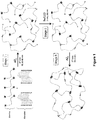
- a photochemical step (ii) may be inserted between the two aza-Michael steps to reinforce the mechanical properties ( Figure 1 ).
- the difference in reactivity between AZ1 and AZ2 allows to use photochemistry in a controllable and reproducible way to fine-tune the properties of the end-product.
- the electrophile monomer if of formula (I) above, wherein R 1 represents H or methyl.
- R 1 represents H or methyl.
- a catalyst may be used in the reaction mixture to allow the Michael addition in steps (i) and (iii) to proceed.
- steps (i) and (iii) may be carried out in the presence of a suitable catalyst. Any catalyst conventionally used in Michael addition chemistry may be used. Exemplary catalysts include:
- the electrophile monomer (I) may represent an acrylamide monomer wherein R 1 and R 2 are each H and EWG 1 represents wherein R C represents H, C 1-20 alkyl, C 2-20 alkenyl, C 2-20 alkynyl, C 1-20 heteroalkyl, C 2-20 heteroalkenyl, C 2-20 heteroalkynyl, C 7-20 aralkyl, C 1-20 heteroalkylC 6-10 aryl, C 6-10 aryl, 5 or 6-membered heteroaryl or 5 or 6-membered heterocycle; wherein each of the foregoing groups may be optionally substituted with halogen, -CN, C 1-6 alkyl, C 6-10 aryl, or -OR C1 where R C1 represents C 1-6 alkyl; and each of the alkyl, alkenyl and alkynyl moieties may be linear, branched or cyclic.
- R C represents a linear, branched or cyclic C 1-6 alkyl moiety
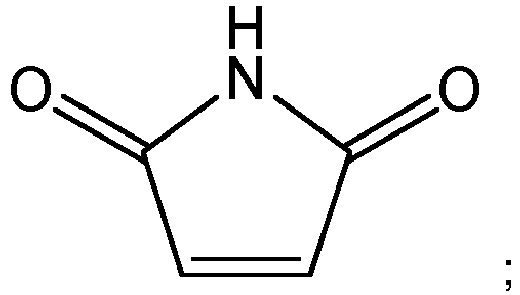
- the electrophile monomer (I) may represent a maleimide monomer having the structure
- the electrophile monomer (I) may represent a cyanoacrylate monomer wherein R 1 is -CN, R 2 is H, and EWG 1 represents wherein R B represents C 1-20 alkyl, C 2-20 alkenyl, C 2-20 alkynyl, C 1-20 heteroalkyl, C 2-20 heteroalkenyl, C 2-20 heteroalkynyl, C 7-20 aralkyl, C 1-20 heteroalkylC 6-10 aryl, C 6-10 aryl, 5 or 6-membered heteroaryl or 5 or 6-membered heterocycle; wherein each of the foregoing groups may be optionally substituted with halogen, -CN, C 1-6 alkyl, C 6-10 aryl, or -OR B1 where R B1 represents C 1-6 alkyl; and each of the alkyl, alkenyl and alkynyl moieties may be linear, branched or cyclic.
- R B may represent C 1-20 alkyl, C 1-20 heteroalkyl, C 7-20 aralkyl, C 1-20 heteroalkylC 6-10 aryl, C 6-10 aryl, 5 or 6-membered heteroaryl or 5 or 6-membered heterocycle; wherein each of the foregoing groups may be optionally substituted with C 1-6 alkyl, C 6-10 aryl, or -OR B1 where R B1 represents C 1-6 alkyl; and each of the alkyl moieties may be linear, branched or cyclic.
- R B represents a linear, branched or cyclic C 1-6 alkyl moiety or a C 6-10 aryl moiety.
- the electrophile monomer (I) may represent a vinylsulfone monomer wherein R 1 and R 2 are each H and EWG 1 represents wherein R D represents C 1-20 alkyl, C 2-20 alkenyl, C 2-20 alkynyl, C 1-20 heteroalkyl, C 2-20 heteroalkenyl, C 2-20 heteroalkynyl, C 7-20 aralkyl, C 1-20 heteroalkylC 6-10 aryl, C 6-10 aryl, 5 or 6-membered heteroaryl or 5 or 6-membered heterocycle; wherein each of the foregoing groups may be optionally substituted with halogen, -CN, C 1-6 alkyl, C 6-10 aryl, or -OR D1 where R D1 represents C 1-6 alkyl; and each of the alkyl, alkenyl and alkynyl moieties may be linear, branched or cyclic.
- R D may represent C 1-20 alkyl, C 2-20 alkenyl, C 1-20 heteroalkyl, C 2-20 heteroalkenyl, or C 6-10 aryl; wherein each of the foregoing groups may be optionally substituted with C 1-6 alkyl, C 6-10 aryl, or -OR D1 where R D1 represents C 1-6 alkyl; and each of the alkyl and alkenyl moieties may be linear, branched or cyclic.
- R D represents a linear, branched or cyclic C 1-6 alkyl moiety, a C 6-10 aryl moiety or a vinyl moiety.
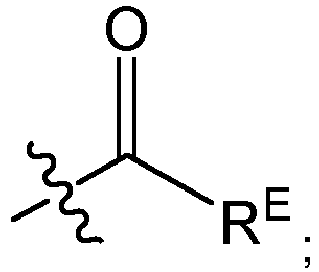
- the electrophile monomer (I) may represent an ⁇ , ⁇ -unsaturated ketone monomer wherein R 1 and R 2 are each H and EWG 1 represents wherein R E represents C 1-20 alkyl, C 2-20 alkenyl, C 2-20 alkynyl, C 1-20 heteroalkyl, C 2-20 heteroalkenyl, C 2-20 heteroalkynyl, C 7-20 aralkyl, C 1-20 heteroalkylC 6-10 aryl, C 6-10 aryl, 5 or 6-membered heteroaryl or 5 or 6-membered heterocycle; wherein each of the foregoing groups may be optionally substituted with halogen, -CN, C 1-6 alkyl, C 6-10 aryl, or -OR E1 where R E1 represents C 1-6 alkyl; and each of the alkyl, alkenyl and alkynyl moieties may be linear, branched or cyclic.
- R E may represent C 1-20 alkyl, C 2-20 alkenyl, C 1-20 heteroalkyl, C 2-20 heteroalkenyl, C 7-20 aralkyl, C 6-10 aryl, or 5 or 6-membered heteroaryl; wherein each of the foregoing groups may be optionally substituted with C 1-6 alkyl, C 6-10 aryl, or -OR E1 where R E1 represents C 1-6 alkyl; and each of the alkyl and alkenyl moieties may be linear, branched or cyclic.
- R E represents a linear, branched or cyclic C 1-6 alkyl moiety or a C 6-10 aryl moiety.
- the electrophile monomer (I) may represent an ⁇ , ⁇ -unsaturated aldehyde monomer wherein R 1 and R 2 are each H and EWG 1 represents
- the electrophile monomer (I) may represent a nitro ethylene monomer wherein R 1 and R 2 are each H and EWG 1 represents -NO 2 .
- the electrophile monomer (I) may represent a vinylphosphonate monomer wherein R 1 and R 2 are each H and EWG 1 represents wherein R F1 and R F2 independently represent C 1-20 alkyl, C 2-20 alkenyl, C 2-20 alkynyl, C 7-20 aralkyl, or C 6-10 aryl; wherein each of the foregoing groups may be optionally substituted with halogen, -CN, C 1-6 alkyl, C 6-10 aryl, or -OR FF1 where R FF1 represents C 1-6 alkyl; and each of the alkyl, alkenyl and alkynyl moieties may be linear, branched or cyclic.
- R F1 and R F2 may independently represent C 1-20 alkyl or C 6-10 aryl; wherein each of the foregoing groups may be optionally substituted with C 1-6 alkyl, C 6-10 aryl, or -OR FF1 where R FF1 represents C 1-6 alkyl; and each of the alkyl moieties may be linear, branched or cyclic.
- R F1 and R F2 independently represent C 1-6 alkyl.
- the electrophile monomer (I) may represent a vinylpyridine monomer having the structure
- the electrophile monomer (I) may represent a ⁇ -keto acetylene monomer wherein EWG 2 represents wherein R E represents C 1-20 alkyl, C 2-20 alkenyl, C 2-20 alkynyl, C 1-20 heteroalkyl, C 2-20 heteroalkenyl, C 2-20 heteroalkynyl, C 7-20 aralkyl, C 1-20 heteroalkylC 6-10 aryl, C 6-10 aryl, 5 or 6-membered heteroaryl or 5 or 6-membered heterocycle; wherein each of the foregoing groups may be optionally substituted with halogen, -CN, C 1-6 alkyl, C 6-10 aryl, or - OR E1 where R E1 represents C 1-6 alkyl; and each of the alkyl, alkenyl and alkynyl moieties may be linear, branched or cyclic.
- R E may represent C 1-20 alkyl, C 2-20 alkenyl, C 1-20 heteroalkyl, C 2-20 heteroalkenyl, C 7-20 aralkyl, C 6-10 aryl, or 5 or 6-membered heteroaryl; wherein each of the foregoing groups may be optionally substituted with C 1-6 alkyl, C 6-10 aryl, or -OR E1 where R E1 represents C 1-6 alkyl; and each of the alkyl and alkenyl moieties may be linear, branched or cyclic.
- R E represents a linear, branched or cyclic C 1-6 alkyl moiety or a C 6-10 aryl moiety.
- the electrophile monomer (I) may represent an acetylene ester monomer wherein EWG 2 represents wherein R B represents C 1-20 alkyl, C 2-20 alkenyl, C 2-20 alkynyl, C 1-20 heteroalkyl, C 2-20 heteroalkenyl, C 2-20 heteroalkynyl, C 7-20 aralkyl, C 1-20 heteroalkylC 6-10 aryl, C 6-10 aryl, 5 or 6-membered heteroaryl or 5 or 6-membered heterocycle; wherein each of the foregoing groups may be optionally substituted with halogen, -CN, C 1-6 alkyl, C 6-10 aryl, or-OR B1 where R B1 represents C 1-6 alkyl; and each of the alkyl, alkenyl and alkynyl moieties may be linear, branched or cyclic.
- R B may represent C 1-20 alkyl, C 1-20 heteroalkyl, C 7-20 aralkyl, C 1-20 heteroalkylC 6-10 aryl, C 6-10 aryl, 5 or 6-membered heteroaryl or 5 or 6-membered heterocycle; wherein each of the foregoing groups may be optionally substituted with C 1-6 alkyl, C 6-10 aryl, or -OR B1 where R B1 represents C 1-6 alkyl; and each of the alkyl moieties may be linear, branched or cyclic.
- R B represents a linear, branched or cyclic C 1-6 alkyl moiety or a C 6-10 aryl moiety.
- each of the foregoing R B , R C , R D , R E , R F1 and R F2 substituents may further bear one or more additional Michael acceptor double-bonds and/or radically polymerizable double bonds.
- each of the foregoing R B , R C , R D , R E , R F1 and R F2 substituents may further bear one or more acryl or methacryl groups: wherein R'1 represents H or methyl, preferably H. More preferably, each of the R B , R C , R D , R E , R F1 and R F2 substituents may further bear one or more acrylate or methacrylate groups, most preferably acrylate groups.
- the electrophile monomer (I) may be an acrylate ester, acrylonitrile, acrylamide, maleimide, cyanoacrylate, vinylsulfone, or ⁇ , ⁇ -unsaturated ketone monomer, as further defined above.
- the electrophile monomer (I) may be an acrylate ester, as further defined above. More advantageously, the electrophile monomer (I) may be an acrylate ester having the structure: wherein R B is as defined above. Accordingly, there is provided a dual cure polymerization process comprising steps of:
- R B may represent C 1-20 alkyl, C 1-20 heteroalkyl, C 7-20 aralkyl, C 1-20 heteroalkylC 6-10 aryl, C 6-10 aryl, 5 or 6-membered heteroaryl or 5 or 6-membered heterocycle; wherein each of the foregoing groups may be optionally substituted with C 1-6 alkyl, C 6-10 aryl, or -OR B1 where R B1 represents C 1-6 alkyl; and each of the alkyl moieties may be linear, branched or cyclic.
- R B represents a linear, branched or cyclic C 1-6 alkyl moiety or a C 6-10 aryl moiety.
- the acrylate monomer may be any acrylate resin known in the art.
- the electrophile monomer may be an acrylate, a polyester acrylate, a urethane acrylate, an epoxy acrylate, or a silicone acrylate monomer.
- Such acrylate resins are commercially available, for example from Sartomer, or Allnex.
- acrylate monomers we may mention:
- polyester acrylate monomers we may mention: monofunctional polyester acrylate monomers, bifunctional polyester acrylate monomers (such as, CN2036®, CN2203®, CN2267®, CN2505®, CN2609®,CN2610®), trifunctional polyester acrylate monomers such as CN2634®, tetrafunctional polyester acrylate monomers such as CN203®, CN2555®, CN2560®, CN2295®, CN2303®, CN2305®, CN2562®, CN291®, CN293®.
- monofunctional polyester acrylate monomers such as, CN2036®, CN2203®, CN2267®, CN2505®, CN2609®,CN2610®
- trifunctional polyester acrylate monomers such as CN2634®
- tetrafunctional polyester acrylate monomers such as CN203®, CN2555®, CN2560®, CN2295®, CN2303
- urethane acrylate monomers we may mention: monofunctional urethane acrylate monomers; bifunctional urethane acrylate monomers such as CN9001®, CN9002®, CN910A70®, CN9167®, CN9170A86®, CN9200®, CN963B80®, CN964A85®, CN965®, CN966H90®, CN9761®, CN9761A75®, CN981®, CN991®, CN996®; trifunctional urethane acrylate monomers such as CN9245S®, CN9250A75®, CN9260D75®, CN970A60®, CN998B80®; tetrafunctional urethane acrylate monomers such as CN9165A®, CN925®, CN9276®; higher urethane acrylate monomers (functionality >4) such as CN9210®, CN92
- epoxy acrylate monomers we may mention: monofunctional epoxy acrylate monomers such as CN131B®, CN152®; bifunctional epoxy acrylate monomers such as CN UVE150/80®, CN UVE151M®, CN104®, CN104A60®, CN104A80®, CN104B80®, CN104D80®, CN109®, CN110®, CN116®, CN132®, CN164®, CN186®, CN2003EU®; trifunctional epoxy acrylate monomers such as CN112C60®, CN113D70®, CN122A80®, CN127®; tetrafunctional epoxy acrylate monomers; higher epoxy acrylate monomers (functionality >4) such as CN111®.
- monofunctional epoxy acrylate monomers such as CN131B®, CN152®
- bifunctional epoxy acrylate monomers such as CN UVE150/80®, CN UVE151M®, CN104®, CN104
- silicone acrylate monomers we may mention bifunctional silicone acrylate monomers such as CN9800®.
- the electrophile monomer may be Tertiobutyl cyclohexanol acrylate (TBCHA), 2-(2-ethoxyethoxy) ethyl acrylate (EOEOEA), C16/C18 alkyl acrylate, Tetrahydrofurfuryl acrylate (THFA), C12 alkyl acrylate (Lauryl acrylate), C12/C14 acrylate, 2-phenoxyethyl acrylate (2-PEA), Isodecyl acrylate (IDA), Ethoxylated 4 phenyl acrylate (P4EOA), 3,3,5-trimethyl cyclohexanol acrylate (TMCHA), Iso octyl acrylate (IOA), Octyl decyl acrylate (ODA), Tridecyl acrylate (TDA), Polycaprolactone acrylate (CAPA), Ethoxylated 4 nonyl phenol acrylate (NP4EOA), Isoborn
- the electrophile monomer contains one Michael acceptor double-bond, and the nucleophile monomer contains one primary amine functional group.
- the electrophile monomer contains two Michael acceptor double-bonds, and the nucleophile monomer contains two primary amine functional groups.
- the electrophile monomer may have the structure: wherein R represents C 1-20 alkyl, C 2-20 alkenyl, C 2-20 alkynyl, C 1-20 heteroalkyl, C 2-20 heteroalkenyl, C 2-20 heteroalkynyl, C 7-20 aralkyl, C 1-20 heteroalkylC 6-10 aryl, C 6-10 aryl, 5 or 6-membered heteroaryl or 5 or 6-membered heterocycle; wherein each of the foregoing groups may be optionally substituted with halogen, -CN, C 1-6 alkyl, C 6-10 aryl, -OR A where R A represents C 1-6 alkyl; and each of the alkyl, alkenyl and alkynyl moieties may be linear, branched or cyclic.
- R may represent C 1-20 alkyl, C 1-20 heteroalkyl, C 7-20 aralkyl, C 1-20 heteroalkylC 6-10 aryl or C 6-10 aryl; wherein each of the foregoing groups may be optionally substituted with C 1-6 alkyl, C 6-10 aryl, -OR A where R A represents C 1-6 alkyl; and each of the alkyl moieties may be linear, branched or cyclic.
- this electrophile monomer may be reacted by a diamine in step (i) of the method of the invention.
- the nucleophilic monomer R 3 -NH 2 may be any compound bearing a primary amine functional group.
- the nucleophilic monomer may not contain functional groups that may be more reactive towards the Michael acceptor double-bonds present on the electrophile monomer than primary amines, so as not to compete with the Aza-Michael reaction.
- the nucleophilic monomer may contain -OH or -SH functional groups which are less reactive than primary amine functional groups towards Michael addition.
- the nucleophilic monomer R 3 -NH 2 may be an aliphatic or cyclo-aliphatic primary amine, such as:
- the nucleophilic monomer may be 1-hexylamine or 1,5-diaminopentane, preferably 1,5-diaminopentane.
- the electrophile monomer contains two Michael acceptor double-bonds, and the nucleophile monomer contains two primary amine functional groups, wherein the electrophile monomer may have the structure:
- the ratio (Michael acceptor double-bonds of the electrophile monomer)/(primary amine functional groups of the nucleophile monomer) may range from 1.1/1 to 100/1, more preferably the ratio may be 1.5/1 to 20/1; most preferably the ratio may be 2/1 to 10/1.
- the light source used in step ii) may be a UV or visible light source, such as LED, arc lamp, incandescence lamp or natural light.
- irradiation step ii) is carried out when step i) is substantially complete.
- step ii) is carried out in the presence of a photoinitiator. Any photoinitiator conventionally used in the art may be used.
- the photoinitiator may be selected from:
- the method according to this first aspect of the invention may carried out in the absence of a catalyst and the electrophile monomer has the structure : wherein EWG 1 represents wherein R B represents C 1-20 alkyl, C 2-20 alkenyl, C 2-20 alkynyl, C 1-20 heteroalkyl, C 2-20 heteroalkenyl, C 2-20 heteroalkynyl, C 7-20 aralkyl, C 1-20 heteroalkylC 6-10 aryl, C 6-10 aryl, 5 or 6-membered heteroaryl or 5 or 6-membered heterocycle; wherein each of the foregoing groups may be optionally substituted with halogen, -CN, C 1-6 alkyl, C 6-10 aryl, or -OR B1 where R B1 represents C 1-6 alkyl; and each of the alkyl, alkenyl and alkynyl moieties may be linear, branched or cyclic; preferably, R B may represent C 1-20 alkyl, C 1-20 heteroalky
- the electrophile and nucleophile monomers are liquid at room temperature, so that the process is carried out at room temperature in the absence of solvent.
- This solvent-free variant is particularly advantageous as it responds to ever-increasing demands for environmentally-friendly and cost efficient processes.
- one of the electrophile or nucleophile monomer is solid at room temperature a solvent may be used throughout the process. Any solvent conventionally used in polymer chemistry may be used.
- Typical solvents for the Aza-Michael reaction include methanol, ethanol, cresol, m-cresol, diethyl ether, tetrahydrofuran, benzene, xylene, toluene, dioxane, water, trifluoroethanol (TFE), hexafluoroisopropyl alcohol (HFIP), acetonitrile, 1,2-Dichloroethane, dichloromethane, poly(ethylene glycol), Dimethylformamide, 1-Butyl-3-methylimidazolium hexafluorophosphate, 1-Butyl-3-methylimidazolium tetrafluoroborate, 2-propanol (iPrOH) ⁇ 2H 2 O, Tetra-n-butylammonium bromide, dimethylsulfoxide, acetic acid, Dimethylacetamide, mixtures of two or more of these solvents.
- step iii) is carried out without additional energy or processing step other
- IPN interpenetrating polymer networks
- the electrophile monomer (I) may be an acrylate monomer having the structure: and electrophile monomer (II) is a methacrylate monomer having the structure: wherein R EWG1 and R EWG2 independently represent C 1-20 alkyl, C 2-20 alkenyl, C 2-20 alkynyl, C 1-20 heteroalkyl, C 2-20 heteroalkenyl, C 2-20 heteroalkynyl, C 7-20 aralkyl, C 1-20 heteroalkylC 6-10 aryl, C 6-10 aryl, 5 or 6-membered heteroaryl or 5 or 6-membered heterocycle; wherein each of the foregoing groups may be optionally substituted with halogen, -CN, C 1-6 alkyl, C 6-10 aryl, -OR 2A where R 2A represents C 1-6 alkyl; and each of the alkyl, alkenyl and alkynyl moieties may be linear, branched or cyclic; wherein R EWG1 may
- the methacrylate monomer (II) may be any suitable methacrylate monomer conventionally used in the art.
- methacrylate monomer (II) may be a methacrylate monomer, a urethane methacrylate monomer, or an epoxy methacrylate monomer.
- methacrylate resins are commercially available, for example from Sartomer, or Allnex (under the commercial name Ebecryl®).:
- methacrylate monomers we may mention:
- the nucleophilic monomer R 3A -NH-R 3B may be any compound bearing a primary or secondary amine functional group.
- the nucleophilic monomer may not contain functional groups that may be more reactive towards the Michael acceptor double-bonds present on the electrophile monomer than primary or secondary amines, so as not to compete with the Aza-Michael reaction.
- the nucleophilic monomer may contain - OH or -SH functional groups which are less reactive than primary or secondary amine functional groups towards Michael addition.
- the nucleophilic monomer R 3A -NH-R 3B may be any of the primary amines described above in relation to the invention.
- the nucleophilic monomer R 3A -NH-R 3B may be an aliphatic, cyclo-aliphatic or aromatic secondary amine. Examples include: N,N'-Dimethyl-1,6-hexanediamine, N,N'-Diethyl-2-butene-1,4-diamine, N,N'-Diisopropylethylenediamine, N,N'-Diisopropyl-1,3-propanediamine, N,N'-Dimethyl-1,3-propanediamine, N,N'-Diphenyl-p-phenylenediamine, 1,4,8,12-Tetraazacyclopentadecane.
- the method according to the invention can generally be carried out using conventional methods of mixing the above described components in a suitable mixing device such as, but not limited to, stirred tanks, dissolvers, homogenizers, microfluidizers, extruders, or other equipment conventionally used in the field.
- a suitable mixing device such as, but not limited to, stirred tanks, dissolvers, homogenizers, microfluidizers, extruders, or other equipment conventionally used in the field.
- the process may further comprise a step of adding a material / reinforcement designed for this purpose using known methods.
- the method further comprises a step of impregnating composite reinforcements with the material obtained in step (i) in a mold, such as a silicone mold, prior to the application of light source.
- a mold such as a silicone mold
- the composite reinforcements may be any reinforcing conventionally used in the manufacture and implementation of composite materials.
- the composite reinforcements may be selected from:
- the composite reinforcements may be selected from glass fibers, carbon fibers, aramid fibers, basalt fibers, silica fibers, polymer fibers (such as polyesters, poly (p-phenylene-2,6 -benzobisoxazole), aliphatic and aromatic polyamides, polyethylene, polymethyl methacrylate, polytetrafluoroethylene), natural fibers (such as nettle, flax or hemp fibers) ...
- polymer fibers such as polyesters, poly (p-phenylene-2,6 -benzobisoxazole), aliphatic and aromatic polyamides, polyethylene, polymethyl methacrylate, polytetrafluoroethylene
- natural fibers such as nettle, flax or hemp fibers
- the composite reinforcements may be previously disposed in a mold, and then impregnated by the composition obtained in step(i), before application of light radiation (step (ii)).
- composite reinforcements may be pre-impregnated with the composition obtained in step (i). Then the mixture may be deposited / spread evenly over the mold, either manually or using an automated robot, in the case of mass production.
- the process may further include a step of adding any other additive conventionally used in the field of resins, composite materials and applications. Examples of suitable additives include :
- tackifier refers to polymers which increase the tack properties, that is to say, the intrinsic viscosity or self-adhesion, the compositions so that, after a slight pressure a short period, they adhere firmly to surfaces.
- the invention provides articles obtainable by a polymerization process according to any one variant of the method according to the invention, as described above.
- the shape-memory polymer articles may be a composite, a wound-healing material/article, or an anti-scratch coating material.
- the present invention offers many advantages, including:
- polymer materials/compositions of this invention and their preparation can be understood further by the examples that illustrate some of the processes by which these polymer materials/compositions are prepared or used.
- Ethoxylated Bisphenol A Diacrylate (“EBAD”, also referred to as SR349®) was obtained from Sartomer, Irgacure 819® was procured from BASF. 1,5-diaminopentane (“DP", cadaverine) was purchased from Sigma Aldrich.
- the electrophile monomer e.g., EBAD
- nucleophile monomer e.g., DP
- Example 1 three stage polymerization system (cadaverine + EBAD)
- Thermal properties of the different components were evaluated using Q200 from TA Instruments. Products were placed in hermetically sealed aluminium pans (between 5 and 10 mg) and heated from -80 to 30 °C for stage 1 characterization, from -40 to 40 °C for stage 2 characterization and from -20 to 70 °C for stage 2 characterization (10 °C.min -1 ramp).
- RT-FTIR Real Time Fourier Transform Infrared spectroscopy
- thermo-mechanical properties of the UV-cured materials were investigated with a Q800 DMA (TA Instruments) in the tensile configuration.
- the samples were rectangular (12.8 *5.3 *0.070 mm) free films removed from polypropylene substrates. Temperatures ranged from -20 to 100 °C (example 1) and -20 to 140 °C (example 2) and the heating rate was set at 2 °C/min. The amplitude and frequency of the oscillatory deformations were adjusted to 15 ⁇ m and 1 Hz, respectively
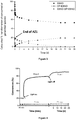
- NMR calculated % transformation of the different species consumed or generated at different polymerization stage are displayed in Figure 3 and Table 1.
- Polymer glass transition temperature (Tg) and EBAD conversion are shown in Table 2.
- Kinetic of EBAD-conversion during Stage 2 and Stage 3 is displayed in Figure 4 .
- Stage 1 polymer exhibits a low Tg of -31 °C and a EBAD-conversion of 19 %.
- Photopolymerization of residual acrylates enabled stage 2 to increase Tg and EBAD-conversion. Indeed, a significant increase in both Tg (16 °C) and EBAD-conversion (79 %) during stage 2 (photo-curing stage) was observed, in contrast to the first stage.
- stage 3 preserves the ability to polymerize in a vitrified media. Vitrification problem taking place in standard photopolymerization is not a limiting factor anymore. This crosslinking is, otherwise, controllable according to the initial ratio and the conversion obtained after stage 2.
- the first stage takes advantage from the powerful click reaction called AZ1 that is orthogonal to the desired second stage reaction.
- the AZ1 reaction forms a quasi-linear polymer the properties of which can be tuned by changing backbones, functionality of acrylate and/or amine. By bringing this reaction to an off-stoichiometric state, reactive acrylate moieties will be present in the media at the end of stage one.
- Stage 2 is a photopolymerization step which is carried out in a particular window-time (between end of AZ1 and beginning of AZ2).
- stage 3 the AZ2 reaction takes over and reaches a nearly total conversion. Indeed, by allowing sufficient time to finish the global aza-Michael reaction, it is possible to perform AZ2 in a rigid media.
- This third reaction acts as another way to crosslink the material and helps to reach a higher conversion and a more homogeneous network. Indeed, Figure 5 shows a decrease of the tan( ⁇ ) peak width during Stage 3.
- Example 2 three stage polymerization system (cadaverine + SR833s®)
- Example 1 The same reaction protocol as Example 1 was used, replacing EBAD (SR349®) with SR833s (DP/SR833S ratio 1:4).
- Example 3 three stage polymerization system (cadaverine + HDDA)
- Example 1 The same reaction protocol as Example 1 is used, replacing EBAD (SR349®) with HDDA. Similar results to Example 1 are obtained.
- IPN network formation has been studied by RT-FTIR, DSC and DMA. Briefly, Irgacure 819® (2.5 wt %) was first added to the acrylate and/or methacrylate and then, the mixture (acrylate+methacrylate+irgacure819®) was mixed with DP in a pillbox while respecting amine:acrylate ratio of 1:1. After a determined reaction time, the mixture was both:
- the method of the invention provides a new method for synthesizing IPN: a two step method combining a thermal polymerization step at room temperature (Aza-Michael click reaction) and a photopolymerization step.
- Example 5A The same reaction protocol as Example 5A was used, replacing DP with N,N'-dimethyl-1,6-hexanediamine . Similar results to Example 5A were obtained.
- Example 5B IPN (N,N-dimethyl-1,6-hexanediamine + divinylsulfone + SR348C®)
- Example 5A The same reaction protocol as Example 5A was used, replacing DP-EBAD with a mixture N,N'-dimethyl-1,6-hexanediamine-divinylsulfone in a ratio 1:1 Similar results to Example 5A were obtained.
- Persoz hardness was determined using an Elcometer® Persoz Pendulum Hardness tester 220 V model (Persoz hardness of glass is 420 s). To characterize our samples, time taken for the amplitude of oscillation to decrease from 12° to 4°was characterized.
- Flexibility/elongation is the pliability or rigidity of a material. It expresses the extent to which it resists bending. Pliability was investigated through a bend test. A mandrel with a diameter of 8 mm was used. Samples made on aluminium plates were hence bent uniformly on this mandrel and samples were examined (naked eyes) to point out the apparition of cracks or failures.
- the film made according to the invention exhibits both a high hardness and an increased elasticity.
- the film exhibited shape-memory properties, as evidenced in Figure 9 .
- Irgacure 819® (2.5 wt %) was first added to the acrylate and then, the mixture was mixed with DP in a pillbox. After a determined reaction time, the mixture was impregnated manually onto 6 plies of unidirectional glass fibers (450 g/m 2 ). The 6-ply samples were finally cured using a LED (395 nm) onto a conveyor belt with a dose of 14 J/cm 2 . Final samples had a thickness of 2 mm and were tested on an Instrom tensile test machine according to ISO 14130: Determination of apparent interlaminar shear strength by short-beam method.
Landscapes
- Chemical & Material Sciences (AREA)
- Health & Medical Sciences (AREA)
- Chemical Kinetics & Catalysis (AREA)
- Medicinal Chemistry (AREA)
- Polymers & Plastics (AREA)
- Organic Chemistry (AREA)
- Addition Polymer Or Copolymer, Post-Treatments, Or Chemical Modifications (AREA)
- Organic Low-Molecular-Weight Compounds And Preparation Thereof (AREA)
Claims (19)
- Procédé de polymérisation à double réticulation comprenant les étapes suivantes :(i) faire réagir un monomère électrophile ayant la structure (I) ou (II) :
 R1 représente H, méthyle ou CN ;R2 représente H ou, lorsque EWG1 représente -C(=O)NHRA, R2 et RA représentent ensemble un groupement oxo -C(=O)- ;EWG1 et EWG2 représentent indépendamment un groupe attracteur d'électrons contenant facultativement une ou plusieurs autres doubles liaisons accepteurs de Michael et/ou une ou plusieurs doubles liaisons polymérisables par voie radicalaire ;avec un monomère nucléophile, R3-NH2, portant un groupe fonctionnel amine primaire dans lequel R3 représente le radical du monomère nucléophile ;
dans lequel les doubles liaisons accepteurs de Michael du monomère électrophile sont en excès stoechiométrique par rapport aux groupes fonctionnels amine primaire du monomère nucléophile ;
formant ainsi un produit d'addition Michael amine secondaire (IA) ou (IIA) ayant la structure (ii) soumettre le produit obtenu à l'étape i) à une source de lumière appropriée pour effectuer la photopolymérisation des doubles liaisons résiduelles accepteurs de Michael et/ou des doubles liaisons polymérisables par voie radicalaire, n'ayant pas réagi ; et(iii) permettre aux groupes fonctionnels amine secondaire du produit d'addition de Michael de réagir par addition de Michael avec des doubles liaisons résiduelles accepteurs de Michael n'ayant pas réagi.
 - Procédé de polymérisation selon la revendication 1, dans lequel :- le monomère électrophile (I) représente un monomère ester d'acrylate dans lequel R1 et R2 sont chacun H et EWG1 représente
 - le monomère électrophile (I) représente un monomère acrylonitrile dans lequel R1 et R2 sont chacun H et EWG1 représente
 - le monomère électrophile (I) représente un monomère acrylamide dans lequel R1 et R2 sont chacun H et EWG1 représente
 - le monomère électrophile (I) représente un monomère maléimide ayant la structure
 - le monomère électrophile (I) représente un monomère cyanoacrylate dans lequel R1 est -CN, R2 est H, et EWG1 représente
 - le monomère électrophile (I) représente un monomère vinylsulfone dans lequel R1 et R2 sont chacun H et EWG1 représente
 - le monomère électrophile (I) représente un monomère cétone α,β-insaturé dans lequel R1 et R2 sont chacun H et EWG1 représente
 - le monomère électrophile (I) représente un monomère aldéhyde α,β-insaturé dans lequel R1 et R2 sont chacun H et EWG1 représente
 - le monomère électrophile (I) représente un monomère nitroéthylène dans lequel R1 et R2 sont chacun H et EWG1 représente -NO2 ;- le monomère électrophile (I) représente un monomère vinylphosphonate dans lequel R1 et R2 sont chacun H et EWG1 représente
 - le monomère électrophile (I) représente un monomère vinylpyridine ayant la structure
 - le monomère électrophile (II) représente un monomère β-cétoacétylénique dans lequel EWG2 représente
 - le monomère électrophile (II) représente un monomère ester d'acétylène dans lequel EWG2 représentedans lequel chacun des substituants RB, RC, RD, RE, RF1 et RF2 peut en outre porter un ou plusieurs groupes acryle ou méthacryle :

- Procédé de polymérisation selon la revendication 1 ou 2, dans lequel R3 représente un groupe alkyle en C1-20, alcényle en C2-20, alcynyle en C2-20, hétéroalkyle en C1-20, hétéroalcényle en C2-20, hétéroalcynyle en C2-20, aralkyle en C7-20, aryle en C6-10, hétéroaryle à 5 ou 6 chaînons ou hétérocycle à 5 ou 6 chaînons; dans laquelle chacun des groupes précédents peut être facultativement substitué par -NH2, halogène, -CN, alkyle en C1-6, -C(=O)OR3A où R3A représente alkyle en C1-6 ou aryle en C6-10, ou-OR3B où R3B représente H, alkyle en C1-6 ou aryle en C6-10 éventuellement substitué par -NH2 ; et chacun des groupements alkyle, alcényle et alcynyle peut être linéaire, ramifié ou cyclique ; de préférence R3 représente un groupe alkyle en C1-20, hétéroalkyle en C1-20, aralkyle en C7-20 ou aryle en C6-10 ; où chacun des groupes précédents peut être éventuellement substitué par -NH2, alkyle en C1-6, -C(=O)OR3A où R3A représente alkyle en C1-6 ou aryle en C6-10 ou -OR3B où R3B représente H, alkyle en C1-6 ou aryle en C6-10 éventuellement substitué en outre par -NH2, et chacun des groupements alkyle peut être linéaire, ramifié ou cyclique.
- Procédé de polymérisation selon l'une quelconque des revendications 1 à 3, dans lequel le monomère électrophile contient une double liaison accepteur de Michael, et le monomère nucléophile contient un groupe fonctionnel amine primaire.
- Procédé de polymérisation selon l'une quelconque des revendications 1 à 3, dans lequel le monomère électrophile contient deux doubles liaisons accepteurs de Michael, et le monomère nucléophile contient deux groupes fonctionnels amine primaire.
- Procédé de polymérisation selon la revendication 5, dans lequel le monomère électrophile a la structure :
 dans laquelle R représente un groupe groupe alkyle en C1-20, alcényle en C2-20, alcynyle en C2-20, hétéroalkyle en C1-20, hétéroalcényle en C2-20, hétéroalcynyle en C2-20, aralkyle en C7-20, C1-20hétéroalkylC6-10aryle, aryle en C6-10, hétéroaryle à 5 ou 6 chaînons ou hétérocycle à 5 ou 6 chaînons; où chacun des groupes ci-dessus peut être éventuellement substitué par halogène, -CN, alkyle en C1-6, aryle en C6-10,-ORA où RA représente un alkyle en C1-6 ; et chacun des groupements alkyle, alcényle et alcynyle peut être linéaire, ramifié ou cyclique ; de préférence R représente un alkyle en C1-20, un hétéroalkyle en C1-20, un aralkyle en C7-20, un C1-20hétéroalkylC6-10aryle ou un aryle en C6-10 ; où chacun des groupes ci-dessus peut être éventuellement substitué par un alkyle en C1-6, un aryle en C6-10, -ORA où RA représente un alkyle en C1-6 ; et chacun des groupements alkyle peut être linéaire, ramifié ou cyclique ;et le monomère nucléophile a la structure NH2R'NH2, dans laquelle R' représente un groupe alkyle en C1-20, alcényle en C2-20, alcynyle en C2-20, hétéroalkyle en C1-20, hétéroalcényle en C2-20, hétéroalcynyle en C2-20, aralkyle en C7-20, aryle en C6-10, ou hétéroaryle à 5 ou 6 chaînons; où chacun des groupes ci-dessus peut être éventuellement substitué par halogène, -CN, alkyle en C1-6, aryle en C6-10, -ORA où RA représente un alkyle en C1-6 ; et chacun des groupements alkyle, alcényle et alcynyle peut être linéaire, ramifié ou cyclique ; de préférence R' représente un alkyle en C1-20, un hétéroalkyle en C1-20, un aralkyle en C7-20, ou un aryle en C6-10 ; où chacun des groupes ci-dessus peut être éventuellement substitué par un alkyle en C1-6, un aryle en C6-10, -OR'A où R'A représente un alkyle en C1-6 ; et chacun des groupements alkyle peut être linéaire, ramifié ou cyclique
 - Procédé de polymérisation selon la revendication 6, dans lequel le monomère électrophile est un acrylate de polyester, un acrylate d'uréthane, un acrylate d'époxy ou un monomère acrylate tel que l'un des suivants : Tertiobutyl cyclohexanol acrylate (TBCHA), 2-(2-éthoxyéthoxy) éthyl acrylate (EOEOEA), C16/C18 alkyl acrylate, Tétrahydrofurfuryl acrylate (THFA), C12 alkyl acrylate (Lauryl acrylate), C12/C14 acrylate, 2-phénoxyéthyl acrylate (2-PEA), Isodécyl acrylate (IDA), 4 phenyl acrylate éthoxylé (P4EOA), 3,3,5- triméthyl cyclohexanol acrylate (TMCHA), Iso octyl acrylate (IOA), Octyl décyl acrylate (ODA), Tridécyl acrylate (TDA), Polycaprolactone acrylate (CAPA), 4 nonyl phenol acrylate éthoxylé (NP4EOA), Isobornyl acrylate (IBOA), triméthylolpropane formai acrylate cyclique (CTFA), (5) hexanediol diacrylate éthoxylé (HD5EODA), C18 alkyl acrylate (Stearyl acrylate), C18/C22 alkyl acrylate (Béhényl acrylate), 1,6-hexanediol diacrylate (HDDA), Polyéthylène glycol (200) diacrylate (PEG200DA), Tétraéthylène glycol diacrylate (TTEGDA), Triéthylène glycol diacrylate (TIEGDA), Tripropylène glycol diacrylate (TPGDA), Polybutadiène diacrylate (PBDDA), 3-méthyl 1,5-pentanediol diacrylate (MPDA), Polyéthylène glycol (400) diacrylate (PEG400DA), 3 bisphenol A diacrylate éthoxylé (BPA3EODA), Dipropylène glycol diacrylate (DPGDA), 1,10 décanediol diacrylate (DDDA), 4 bisphenol A diacrylate éthoxylé (BPA4EODA), 10 bisphenol A diacrylate éthoxylé (BPA10EODA), Esterdiol diacrylate (EDDA), Polyéthylène glycol 600 diacrylate (PEG600DA), diacrylate alcoxylé, Tricyclodécanediméthanol diacrylate (TCDDMDA), 2 neopentyl glycol diacrylate propoxylé (PONPGDA), Triméthylolpropane triacrylate (TMPTA), Tris (2-hydroxyéthyl) isocyanurate triacrylate (THEICTA), Pentaérythritol triacrylate (PETIA), 3 trimethylolpropane triacrylate éthoxylé (TMP3EOTA), 3 trimethylolpropane triacrylate propoxylé (TMP3POTA), 6 trimethylolpropane triacrylate éthoxylé (TMP6EOTA), 9 trimethylolpropane triacrylate éthoxylé (TMP9EOTA), 3 glyceryl triacrylate propoxylé (GPTA), 15 trimethylolpropane triacrylate éthoxylé (TMP15EOTA), Triméthylolpropane triacrylate (TMPTA), 12 glyceryl triacrylate éthoxylé (G12EOTA), (20) trimethylolpropane triacrylate éthoxylé (TMP20EOTA), 4 pentaerythritol tetraacrylate éthoxylé (PETTA), Di-triméthylolpropane tétraacrylate (Di TMPTTA), Dipentaérythritol pentaacrylate (Di PEPA),


- Procédé de polymérisation selon l'une quelconque des revendications 1 à 7, dans lequel le monomère nucléophile est :• une amine primaire aliphatique ou cycloaliphatique, telle que :- les amines monofonctionnelles telles que hexylamine, diethylaminopropylamine, 1,3-Dimethylamylamine, Ethanolamine, Isobutylamine, Tyramine;- les amines bifonctionnelles telles que 1,2-diaminoethane NH2-(CH2)2-NH2, 1,4-diaminobutane NH2-(CH2)4-NH2, 1,6-diaminohexane NH2-(CH2)6-NH2, 1,8-diaminooctane NH2-(CH2)8-NH2, 1,12-diaminododecane NH2-(CH2)12-NH2, 1,16-diaminohexadecane NH2-(CH2)16-NH2, isophorone diamine (IPDA), 3,3'-Dimethyl-4,4'diamino-dicyclohexylmethane, Neopentanediamine, 3,3'-Diamino-N-methyldipropylamine, 1,3-Cyclohexanebis(methylamine), 1,2-Diaminocyclohexane, 2,2-Bis(aminoethoxy)propane, 1,5-Diamino-2-methylpentane, 4,4'-Methylenebis(cyclohexylamine), 4,4'-Methylenebis(2,6-diethylaniline), 3,3'-Methylenedianiline, 4,4'-(1,4-Phenylenediisopropylidene)bisaniline, 4,4'-(1,3-Phenylenedioxy)dianiline, Poly(1,4-butanediol)bis(4-aminobenzoate), 2,4,6-Trimethyl-m-phenylenediamine;- les amines trifonctionnelles telles que tris(2-aminoethyl)amine N[(CH2)2-NH2]3• une amine primaire aromatique telle que Ar-CH2-NH2, NH2-Ar-NH2, NH2-CH2-Ar-CH2-NH2, NH2-Ar-CH2-NH2, Ar-CH2-NH-(CH2)2-NH2, NH2-Ar-Ar-NH2 ou NH2-Ar-O-Ar-NH2, dans laquelle Ar représente un groupement phényle éventuellement substitué
de préférence 1-hexylamine ou 1,5-diaminopentane, plus préférentiellement 1,5-diaminopentane. - Procédé de polymérisation selon l'une quelconque des revendications précédentes, dans lequel, dans le mélange réactionnel initial de polymérisation, le rapport (doubles liaisons accepteurs de Michael du monomère électrophile)/(groupes fonctionnels amine primaire du monomère nucléophile) va de 1,1/1 à 100/1, de préférence le rapport est de 1,5/1 à 20/1 ; le plus préférentiellement le rapport est 2/1 à 10/1.
- Procédé de polymérisation selon l'une quelconque des revendications précédentes, dans lequel la source de lumière utilisée à l'étape ii) est une source de lumière UV ou visible, telle que LED, lampe à arc, lampe à incandescence ou lumière naturelle.
- Procédé de polymérisation selon l'une quelconque des revendications précédentes, dans lequel l'étape ii) est effectuée en présence d'un photo-amorceur.
- Procédé de polymérisation selon la revendication 11, dans lequel le photo-amorceurs est choisi parmi :∘ Les photo-amorceurs de radicaux libres de type I▪ de la famille des acétophénones, alkoxyacétophénones et dérivés, tels que 2,2-diméthoxy-2-phenyleacétophénone et 2,2-diéthyl-2-phénylacétophénone ;▪ de la famille des hydroxyacétophénones et dérivés, tels que 2,2-diméthyl-2-hydroxyacétophénone, 1-hydroxycyclohexylephényle cétone, 2-hydroxy-4'-(2-hydroxyéthoxy)-2-méthyl-propriophénone et 2-hydroxy-4'-(2-hydroxypropoxy)-2-méthyl-propriophénone ;▪ de la famille des alkylaminoacétophénones et dérivés, tels que 2-méthyl-4'-(méthylthio)-2-morpholino-propriophénone, 2-benzyl-2-(diméthylamino)-4-morpholino-butyrophénone et 2-(4-(méthylbenzyl)-2-(diméthylamino)-4-morpholino-butyrophenone ;▪ de la famille des éthers de benzoïne et dérivés, tels que benzyl-, méthyl- et isopropyl- éthers de benzoïne;▪ de la famille des oxides de phosphine et dérivés, tels que oxide de diphényl-(2,4,6-triméthylbenzoyl)phosphine (TPO), oxide d'éthyl-(2,4,6-triméthylbenzoyl)phénylphosphine (TPO-L) et oxide de bis-(2,6-diméthoxybenzoyl)-2,4,4-trimethylphenyle phosphine (BAPO) ;∘ Les photo-amorceurs de radicaux libres de type II▪ de la famille des benzophénones et dérivés, tels que 4-phénylbenzophénone, 4-(4'methylphénylthio)benzophenone, 1-[4-[(4-benzoylphenyl)thio]phényl]-2-methyl-2-[(4-methylphenyl)sulfonyl]-1-propanone ;▪ de la famille des thioxanthones et dérivés, tels que isopropylthioxanthone (ITX), 2,4-diethylthioxanthone, 2,4-dimethylthioxantone, 2-chlorothioxanthone et 1-chloro-4-isopropylthioxanthone ;▪ de la famille des quinones et dérivés, tels que antraquinones y compris 2-éthylantraquinone et les camphorquinones;▪ de la famille des esters de formate de benzoyle et dérivés, tels que méthylbenzoylformate ;▪ de la famille des métallocènes et dérivés, tels que le ferrocène, bis(eta 5-2,4-cyclopentadièn-1-yl)-bis(2,6-difluoro)-3-(1H-pyrrol-1-yl)-phényl) de titane et (cumène)cyclopentadiényl hexafluorophosphate de fer;▪ de la famille des cétones de dibenzylidène et dérivés, tels que as p-diméthylaminocétone ;▪ de la famille des coumarines et dérivés, tels que la 5-méthoxy coumarine, 7-méthoxy coumarine, 7-diéthylamino coumarine et N-phénylglycin coumarine;∘ les photo-amorceurs de la famille des colorants tels que les triazines et dérivés, les fluorones et dérivés, les cyanines et dérivés, les safranines et dérivés, 4,5,6,7-tétrachloro-3',6'-dihydroxy-2',4',5',7'-tétraiodo-3H-spiro[isobenzofuran-1,9'-xanthen]-3-one, pyrylium ou thiopyrylium et dérivés, les thiazines et dérivés, les flavines et dérivés, les pyronines et dérivés, les oxazines et dérivés, les rhodamines et dérivés;∘ un mélange d'au moins deux des photo-amorceurs susmentionnés.
- Procédé de polymérisation selon l'une quelconque des revendications précédentes, dans lequel le procédé est mis en oeuvre en l'absence d'un catalyseur et le monomère électrophile a la structure :


- Procédé de polymérisation selon l'une quelconque des revendications précédentes, dans lequel les monomères électrophile(s) et nucléophile(s) sont liquides à température ambiante, de sorte que le procédé est effectué en l'absence de solvant.
- Procédé de polymérisation selon l'une quelconque des revendications précédentes, dans lequel l'étape iii) est effectuée sans énergie supplémentaire ou étape de traitement autre que celle consistant à laisser la réaction d'addition aza-Michael secondaire se poursuivre à température ambiante, permettant ainsi au produit polymère de se consolider spontanément.
- Composition pouvant être obtenue par un procédé de polymérisation selon l'une quelconque des revendications précédentes.
- Article susceptible d'être obtenu par un procédé de polymérisation selon l'une quelconque des revendications précédentes.
- Utilisation d'un procédé de polymérisation selon l'une quelconque des revendications 1 à 15 pour la fabrication d'articles polymères à mémoire de forme.
- Utilisation selon la revendication 18, dans laquelle les articles en polymère à mémoire de forme sont un composite, un matériau cicatrisant ou un matériau de revêtement anti-rayures.
Applications Claiming Priority (2)
| Application Number | Priority Date | Filing Date | Title |
|---|---|---|---|
| EP15306146.0A EP3115381A1 (fr) | 2015-07-10 | 2015-07-10 | Système de polymérisation par addition de michael à double clic et photopolymérisation |
| PCT/EP2016/065942 WO2017009127A1 (fr) | 2015-07-10 | 2016-07-06 | Système de polymérisation par double addition click de michaël et photopolymérisation |
Publications (2)
| Publication Number | Publication Date |
|---|---|
| EP3320002A1 EP3320002A1 (fr) | 2018-05-16 |
| EP3320002B1 true EP3320002B1 (fr) | 2019-05-01 |
Family
ID=53776513
Family Applications (2)
| Application Number | Title | Priority Date | Filing Date |
|---|---|---|---|
| EP15306146.0A Withdrawn EP3115381A1 (fr) | 2015-07-10 | 2015-07-10 | Système de polymérisation par addition de michael à double clic et photopolymérisation |
| EP16736119.5A Not-in-force EP3320002B1 (fr) | 2015-07-10 | 2016-07-06 | Système de polymérisation par addition de michael à double clic et photopolymérisation |
Family Applications Before (1)
| Application Number | Title | Priority Date | Filing Date |
|---|---|---|---|
| EP15306146.0A Withdrawn EP3115381A1 (fr) | 2015-07-10 | 2015-07-10 | Système de polymérisation par addition de michael à double clic et photopolymérisation |
Country Status (5)
| Country | Link |
|---|---|
| US (1) | US10577436B2 (fr) |
| EP (2) | EP3115381A1 (fr) |
| CA (1) | CA2987493A1 (fr) |
| ES (1) | ES2741052T3 (fr) |
| WO (1) | WO2017009127A1 (fr) |
Families Citing this family (5)
| Publication number | Priority date | Publication date | Assignee | Title |
|---|---|---|---|---|
| CN111642129B (zh) * | 2018-12-31 | 2023-06-23 | 浙江迅实科技有限公司 | 一种酰亚胺末端的预聚物及其制备方法、可固化树脂组合物、其用途和双重固化方法 |
| CN111454431A (zh) * | 2020-04-17 | 2020-07-28 | 深圳市前海博扬研究院有限公司 | 一类耐高温黄变的环氧树脂固化剂及其制备方法 |
| CN113501904B (zh) * | 2021-07-30 | 2022-04-08 | 浙江巨圣氟化学有限公司 | 一种全氟代烷基乙烯基醚共聚物的制备方法 |
| CN114349950B (zh) * | 2021-12-15 | 2024-08-27 | 深圳先进技术研究院 | 一种抗体合成菌-纳米刺激剂杂合体系统及其应用 |
| CN116283529A (zh) * | 2022-09-05 | 2023-06-23 | 宁波龙欣精细化工有限公司 | 一种合成1,4-二羟基蒽醌的工艺 |
Family Cites Families (8)
| Publication number | Priority date | Publication date | Assignee | Title |
|---|---|---|---|---|
| DE2835451C2 (de) | 1978-08-12 | 1985-10-24 | Saarbergwerke AG, 6600 Saarbrücken | Verfahren zum Verfestigen von Kohle und/oder Gestein im Bergbau |
| EP0249201A3 (fr) | 1986-06-10 | 1989-07-19 | Union Carbide Corporation | Revêtement à base d'époxyde cycloaliphatique résistant à l'affaissement, ayant une haute teneur en matières solides qui contient un polymère à bas poids moléculaire et à haute Tg comme additif résistant à l'affaissement |
| NO170944C (no) | 1987-01-24 | 1992-12-30 | Akzo Nv | Fortykkede, vandige preparater, samt anvendelse av slike |
| DE4310413A1 (de) | 1993-03-31 | 1994-10-06 | Basf Lacke & Farben | Nichtwäßriger Lack und Verfahren zur Herstellung einer zweischichtigen Decklackierung |
| WO1997012945A1 (fr) | 1995-10-06 | 1997-04-10 | Cabot Corporation | Agents thixotropes aqueux pour systemes a base aqueuse |
| BRPI0416519A (pt) * | 2003-11-14 | 2007-03-06 | Ashland Licensing & Intellectu | composição oligomérica lìquida, produto polimerizado curado, método para fabricar e para usar uma composição oligomérica lìquida, e, substrato |
| US20130277890A1 (en) * | 2010-11-04 | 2013-10-24 | The Regents Of The University Of Colorado, A Body Corporate | Dual-Cure Polymer Systems |
| FR3022544B1 (fr) * | 2014-06-23 | 2018-01-05 | Arkema France | Oligomeres acryles multifonctionnels de structure ramifiee, par polyaddition entre amines et acrylates multifonctionnels. |
-
2015
- 2015-07-10 EP EP15306146.0A patent/EP3115381A1/fr not_active Withdrawn
-
2016
- 2016-07-06 WO PCT/EP2016/065942 patent/WO2017009127A1/fr not_active Ceased
- 2016-07-06 US US15/743,637 patent/US10577436B2/en not_active Expired - Fee Related
- 2016-07-06 CA CA2987493A patent/CA2987493A1/fr not_active Abandoned
- 2016-07-06 ES ES16736119T patent/ES2741052T3/es active Active
- 2016-07-06 EP EP16736119.5A patent/EP3320002B1/fr not_active Not-in-force
Non-Patent Citations (1)
| Title |
|---|
| None * |
Also Published As
| Publication number | Publication date |
|---|---|
| EP3320002A1 (fr) | 2018-05-16 |
| EP3115381A1 (fr) | 2017-01-11 |
| WO2017009127A1 (fr) | 2017-01-19 |
| US10577436B2 (en) | 2020-03-03 |
| ES2741052T3 (es) | 2020-02-07 |
| CA2987493A1 (fr) | 2017-01-19 |
| US20180319936A1 (en) | 2018-11-08 |
Similar Documents
| Publication | Publication Date | Title |
|---|---|---|
| EP3320002B1 (fr) | Système de polymérisation par addition de michael à double clic et photopolymérisation | |
| US6673851B2 (en) | Self-photoinitiating multifunctional acrylates | |
| US9458299B1 (en) | Polyhemiaminal and polyhexahydrotriazine materials from 1,4 conjugate addition reactions | |
| JP5301752B2 (ja) | 活性エネルギー線硬化型塗料用組成物 | |
| US10125223B2 (en) | Multifunctional acrylic oligomers of branched structure, by polyaddition between multifunctional amines and acrylates | |
| KR20060052928A (ko) | 자가-광개시 다관능가 아크릴레이트와 티올의 이중 경화반응 생성물 및 합성 방법 | |
| CN110982246B (zh) | 一种3d打印用材料及其制备方法 | |
| KR20070097294A (ko) | 자가-광개시 다관능성 아크릴레이트와 지환족 에폭시화합물의 이중 경화 반응 생성물 | |
| KR20140072182A (ko) | 폴리히드록실-치환 아미노 화합물, 이를 함유하는 중합체, 및 이의 용도 | |
| JP2007534800A (ja) | 光開始剤を配合した放射線硬化性マイケル付加樹脂 | |
| AU2003282835B2 (en) | Oligomers from multifunctional acrylates | |
| JP2001510220A (ja) | 放射線硬化可能なコーティング組成物 | |
| US12503396B2 (en) | Process for the manufacture of articles made of conglomerate material | |
| WO2014208212A1 (fr) | Composition de résine durcissable par des rayons énergétiques et feuille d'amortisseur de vibrations | |
| JP2001310916A (ja) | 重合性樹脂組成物、その製造方法及びその硬化物 | |
| KR20070017395A (ko) | 자가-광개시 수분산성 아크릴레이트 이오노머 및 합성법 | |
| KR20010071082A (ko) | 비닐 화합물의 제조 방법 | |
| JPH0617423B2 (ja) | 硬化性組成物 | |
| JP2004107448A (ja) | 側鎖に環内オレフィンを有する脂環基を含有する重合体と、当該重合体を含有する活性エネルギー線硬化型組成物 | |
| JPH021720A (ja) | 硬化性樹脂組成物及びその硬化物 | |
| JPH05247139A (ja) | 硬化性組成物 | |
| JPH0617424B2 (ja) | 硬化性組成物 |
Legal Events
| Date | Code | Title | Description |
|---|---|---|---|
| STAA | Information on the status of an ep patent application or granted ep patent |
Free format text: STATUS: THE INTERNATIONAL PUBLICATION HAS BEEN MADE |
|
| PUAI | Public reference made under article 153(3) epc to a published international application that has entered the european phase |
Free format text: ORIGINAL CODE: 0009012 |
|
| STAA | Information on the status of an ep patent application or granted ep patent |
Free format text: STATUS: REQUEST FOR EXAMINATION WAS MADE |
|
| 17P | Request for examination filed |
Effective date: 20180103 |
|
| AK | Designated contracting states |
Kind code of ref document: A1 Designated state(s): AL AT BE BG CH CY CZ DE DK EE ES FI FR GB GR HR HU IE IS IT LI LT LU LV MC MK MT NL NO PL PT RO RS SE SI SK SM TR |
|
| AX | Request for extension of the european patent |
Extension state: BA ME |
|
| DAV | Request for validation of the european patent (deleted) | ||
| DAX | Request for extension of the european patent (deleted) | ||
| GRAP | Despatch of communication of intention to grant a patent |
Free format text: ORIGINAL CODE: EPIDOSNIGR1 |
|
| STAA | Information on the status of an ep patent application or granted ep patent |
Free format text: STATUS: GRANT OF PATENT IS INTENDED |
|
| RIC1 | Information provided on ipc code assigned before grant |
Ipc: C08G 73/02 20060101ALI20181019BHEP Ipc: C08F 2/60 20060101ALI20181019BHEP Ipc: C08F 2/48 20060101AFI20181019BHEP |
|
| INTG | Intention to grant announced |
Effective date: 20181119 |
|
| GRAS | Grant fee paid |
Free format text: ORIGINAL CODE: EPIDOSNIGR3 |
|
| GRAA | (expected) grant |
Free format text: ORIGINAL CODE: 0009210 |
|
| STAA | Information on the status of an ep patent application or granted ep patent |
Free format text: STATUS: THE PATENT HAS BEEN GRANTED |
|
| AK | Designated contracting states |
Kind code of ref document: B1 Designated state(s): AL AT BE BG CH CY CZ DE DK EE ES FI FR GB GR HR HU IE IS IT LI LT LU LV MC MK MT NL NO PL PT RO RS SE SI SK SM TR |
|
| REG | Reference to a national code |
Ref country code: GB Ref legal event code: FG4D |
|
| REG | Reference to a national code |
Ref country code: AT Ref legal event code: REF Ref document number: 1126791 Country of ref document: AT Kind code of ref document: T Effective date: 20190515 Ref country code: CH Ref legal event code: EP |
|
| REG | Reference to a national code |
Ref country code: DE Ref legal event code: R096 Ref document number: 602016013278 Country of ref document: DE |
|
| REG | Reference to a national code |
Ref country code: IE Ref legal event code: FG4D |
|
| REG | Reference to a national code |
Ref country code: NL Ref legal event code: FP |
|
| REG | Reference to a national code |
Ref country code: CH Ref legal event code: NV Representative=s name: NOVAGRAAF INTERNATIONAL SA, CH |
|
| REG | Reference to a national code |
Ref country code: LT Ref legal event code: MG4D |
|
| PG25 | Lapsed in a contracting state [announced via postgrant information from national office to epo] |
Ref country code: FI Free format text: LAPSE BECAUSE OF FAILURE TO SUBMIT A TRANSLATION OF THE DESCRIPTION OR TO PAY THE FEE WITHIN THE PRESCRIBED TIME-LIMIT Effective date: 20190501 Ref country code: NO Free format text: LAPSE BECAUSE OF FAILURE TO SUBMIT A TRANSLATION OF THE DESCRIPTION OR TO PAY THE FEE WITHIN THE PRESCRIBED TIME-LIMIT Effective date: 20190801 Ref country code: LT Free format text: LAPSE BECAUSE OF FAILURE TO SUBMIT A TRANSLATION OF THE DESCRIPTION OR TO PAY THE FEE WITHIN THE PRESCRIBED TIME-LIMIT Effective date: 20190501 Ref country code: HR Free format text: LAPSE BECAUSE OF FAILURE TO SUBMIT A TRANSLATION OF THE DESCRIPTION OR TO PAY THE FEE WITHIN THE PRESCRIBED TIME-LIMIT Effective date: 20190501 Ref country code: SE Free format text: LAPSE BECAUSE OF FAILURE TO SUBMIT A TRANSLATION OF THE DESCRIPTION OR TO PAY THE FEE WITHIN THE PRESCRIBED TIME-LIMIT Effective date: 20190501 Ref country code: AL Free format text: LAPSE BECAUSE OF FAILURE TO SUBMIT A TRANSLATION OF THE DESCRIPTION OR TO PAY THE FEE WITHIN THE PRESCRIBED TIME-LIMIT Effective date: 20190501 Ref country code: PT Free format text: LAPSE BECAUSE OF FAILURE TO SUBMIT A TRANSLATION OF THE DESCRIPTION OR TO PAY THE FEE WITHIN THE PRESCRIBED TIME-LIMIT Effective date: 20190901 |
|
| PG25 | Lapsed in a contracting state [announced via postgrant information from national office to epo] |
Ref country code: BG Free format text: LAPSE BECAUSE OF FAILURE TO SUBMIT A TRANSLATION OF THE DESCRIPTION OR TO PAY THE FEE WITHIN THE PRESCRIBED TIME-LIMIT Effective date: 20190801 Ref country code: GR Free format text: LAPSE BECAUSE OF FAILURE TO SUBMIT A TRANSLATION OF THE DESCRIPTION OR TO PAY THE FEE WITHIN THE PRESCRIBED TIME-LIMIT Effective date: 20190802 Ref country code: LV Free format text: LAPSE BECAUSE OF FAILURE TO SUBMIT A TRANSLATION OF THE DESCRIPTION OR TO PAY THE FEE WITHIN THE PRESCRIBED TIME-LIMIT Effective date: 20190501 Ref country code: RS Free format text: LAPSE BECAUSE OF FAILURE TO SUBMIT A TRANSLATION OF THE DESCRIPTION OR TO PAY THE FEE WITHIN THE PRESCRIBED TIME-LIMIT Effective date: 20190501 |
|
| REG | Reference to a national code |
Ref country code: AT Ref legal event code: MK05 Ref document number: 1126791 Country of ref document: AT Kind code of ref document: T Effective date: 20190501 |
|
| PG25 | Lapsed in a contracting state [announced via postgrant information from national office to epo] |
Ref country code: IS Free format text: LAPSE BECAUSE OF FAILURE TO SUBMIT A TRANSLATION OF THE DESCRIPTION OR TO PAY THE FEE WITHIN THE PRESCRIBED TIME-LIMIT Effective date: 20190901 |
|
| PG25 | Lapsed in a contracting state [announced via postgrant information from national office to epo] |
Ref country code: AT Free format text: LAPSE BECAUSE OF FAILURE TO SUBMIT A TRANSLATION OF THE DESCRIPTION OR TO PAY THE FEE WITHIN THE PRESCRIBED TIME-LIMIT Effective date: 20190501 Ref country code: DK Free format text: LAPSE BECAUSE OF FAILURE TO SUBMIT A TRANSLATION OF THE DESCRIPTION OR TO PAY THE FEE WITHIN THE PRESCRIBED TIME-LIMIT Effective date: 20190501 Ref country code: EE Free format text: LAPSE BECAUSE OF FAILURE TO SUBMIT A TRANSLATION OF THE DESCRIPTION OR TO PAY THE FEE WITHIN THE PRESCRIBED TIME-LIMIT Effective date: 20190501 Ref country code: CZ Free format text: LAPSE BECAUSE OF FAILURE TO SUBMIT A TRANSLATION OF THE DESCRIPTION OR TO PAY THE FEE WITHIN THE PRESCRIBED TIME-LIMIT Effective date: 20190501 Ref country code: RO Free format text: LAPSE BECAUSE OF FAILURE TO SUBMIT A TRANSLATION OF THE DESCRIPTION OR TO PAY THE FEE WITHIN THE PRESCRIBED TIME-LIMIT Effective date: 20190501 Ref country code: SK Free format text: LAPSE BECAUSE OF FAILURE TO SUBMIT A TRANSLATION OF THE DESCRIPTION OR TO PAY THE FEE WITHIN THE PRESCRIBED TIME-LIMIT Effective date: 20190501 |
|
| REG | Reference to a national code |
Ref country code: DE Ref legal event code: R097 Ref document number: 602016013278 Country of ref document: DE |
|
| REG | Reference to a national code |
Ref country code: ES Ref legal event code: FG2A Ref document number: 2741052 Country of ref document: ES Kind code of ref document: T3 Effective date: 20200207 |
|
| PG25 | Lapsed in a contracting state [announced via postgrant information from national office to epo] |
Ref country code: SM Free format text: LAPSE BECAUSE OF FAILURE TO SUBMIT A TRANSLATION OF THE DESCRIPTION OR TO PAY THE FEE WITHIN THE PRESCRIBED TIME-LIMIT Effective date: 20190501 Ref country code: MC Free format text: LAPSE BECAUSE OF FAILURE TO SUBMIT A TRANSLATION OF THE DESCRIPTION OR TO PAY THE FEE WITHIN THE PRESCRIBED TIME-LIMIT Effective date: 20190501 |
|
| PLBE | No opposition filed within time limit |
Free format text: ORIGINAL CODE: 0009261 |
|
| STAA | Information on the status of an ep patent application or granted ep patent |
Free format text: STATUS: NO OPPOSITION FILED WITHIN TIME LIMIT |
|
| PG25 | Lapsed in a contracting state [announced via postgrant information from national office to epo] |
Ref country code: TR Free format text: LAPSE BECAUSE OF FAILURE TO SUBMIT A TRANSLATION OF THE DESCRIPTION OR TO PAY THE FEE WITHIN THE PRESCRIBED TIME-LIMIT Effective date: 20190501 |
|
| 26N | No opposition filed |
Effective date: 20200204 |
|
| PG25 | Lapsed in a contracting state [announced via postgrant information from national office to epo] |
Ref country code: PL Free format text: LAPSE BECAUSE OF FAILURE TO SUBMIT A TRANSLATION OF THE DESCRIPTION OR TO PAY THE FEE WITHIN THE PRESCRIBED TIME-LIMIT Effective date: 20190501 |
|
| PG25 | Lapsed in a contracting state [announced via postgrant information from national office to epo] |
Ref country code: SI Free format text: LAPSE BECAUSE OF FAILURE TO SUBMIT A TRANSLATION OF THE DESCRIPTION OR TO PAY THE FEE WITHIN THE PRESCRIBED TIME-LIMIT Effective date: 20190501 Ref country code: LU Free format text: LAPSE BECAUSE OF NON-PAYMENT OF DUE FEES Effective date: 20190706 |
|
| PG25 | Lapsed in a contracting state [announced via postgrant information from national office to epo] |
Ref country code: IE Free format text: LAPSE BECAUSE OF NON-PAYMENT OF DUE FEES Effective date: 20190706 |
|
| PG25 | Lapsed in a contracting state [announced via postgrant information from national office to epo] |
Ref country code: CY Free format text: LAPSE BECAUSE OF FAILURE TO SUBMIT A TRANSLATION OF THE DESCRIPTION OR TO PAY THE FEE WITHIN THE PRESCRIBED TIME-LIMIT Effective date: 20190501 |
|
| PG25 | Lapsed in a contracting state [announced via postgrant information from national office to epo] |
Ref country code: HU Free format text: LAPSE BECAUSE OF FAILURE TO SUBMIT A TRANSLATION OF THE DESCRIPTION OR TO PAY THE FEE WITHIN THE PRESCRIBED TIME-LIMIT; INVALID AB INITIO Effective date: 20160706 Ref country code: MT Free format text: LAPSE BECAUSE OF FAILURE TO SUBMIT A TRANSLATION OF THE DESCRIPTION OR TO PAY THE FEE WITHIN THE PRESCRIBED TIME-LIMIT Effective date: 20190501 |
|
| PGFP | Annual fee paid to national office [announced via postgrant information from national office to epo] |
Ref country code: NL Payment date: 20210723 Year of fee payment: 6 |
|
| PGFP | Annual fee paid to national office [announced via postgrant information from national office to epo] |
Ref country code: FR Payment date: 20210728 Year of fee payment: 6 Ref country code: IT Payment date: 20210730 Year of fee payment: 6 |
|
| PGFP | Annual fee paid to national office [announced via postgrant information from national office to epo] |
Ref country code: ES Payment date: 20210819 Year of fee payment: 6 Ref country code: DE Payment date: 20210721 Year of fee payment: 6 Ref country code: GB Payment date: 20210728 Year of fee payment: 6 Ref country code: CH Payment date: 20210727 Year of fee payment: 6 Ref country code: BE Payment date: 20210723 Year of fee payment: 6 |
|
| PG25 | Lapsed in a contracting state [announced via postgrant information from national office to epo] |
Ref country code: MK Free format text: LAPSE BECAUSE OF FAILURE TO SUBMIT A TRANSLATION OF THE DESCRIPTION OR TO PAY THE FEE WITHIN THE PRESCRIBED TIME-LIMIT Effective date: 20190501 |
|
| REG | Reference to a national code |
Ref country code: DE Ref legal event code: R119 Ref document number: 602016013278 Country of ref document: DE |
|
| REG | Reference to a national code |
Ref country code: CH Ref legal event code: PL |
|
| REG | Reference to a national code |
Ref country code: NL Ref legal event code: MM Effective date: 20220801 |
|
| GBPC | Gb: european patent ceased through non-payment of renewal fee |
Effective date: 20220706 |
|
| REG | Reference to a national code |
Ref country code: BE Ref legal event code: MM Effective date: 20220731 |
|
| PG25 | Lapsed in a contracting state [announced via postgrant information from national office to epo] |
Ref country code: LI Free format text: LAPSE BECAUSE OF NON-PAYMENT OF DUE FEES Effective date: 20220731 Ref country code: FR Free format text: LAPSE BECAUSE OF NON-PAYMENT OF DUE FEES Effective date: 20220731 Ref country code: CH Free format text: LAPSE BECAUSE OF NON-PAYMENT OF DUE FEES Effective date: 20220731 |
|
| PG25 | Lapsed in a contracting state [announced via postgrant information from national office to epo] |
Ref country code: GB Free format text: LAPSE BECAUSE OF NON-PAYMENT OF DUE FEES Effective date: 20220706 Ref country code: DE Free format text: LAPSE BECAUSE OF NON-PAYMENT OF DUE FEES Effective date: 20230201 Ref country code: BE Free format text: LAPSE BECAUSE OF NON-PAYMENT OF DUE FEES Effective date: 20220731 |
|
| PG25 | Lapsed in a contracting state [announced via postgrant information from national office to epo] |
Ref country code: NL Free format text: LAPSE BECAUSE OF NON-PAYMENT OF DUE FEES Effective date: 20220801 |
|
| PG25 | Lapsed in a contracting state [announced via postgrant information from national office to epo] |
Ref country code: IT Free format text: LAPSE BECAUSE OF NON-PAYMENT OF DUE FEES Effective date: 20220706 |
|
| REG | Reference to a national code |
Ref country code: ES Ref legal event code: FD2A Effective date: 20230825 |
|
| PG25 | Lapsed in a contracting state [announced via postgrant information from national office to epo] |
Ref country code: ES Free format text: LAPSE BECAUSE OF NON-PAYMENT OF DUE FEES Effective date: 20220707 |