EP3310408B1 - Dialyselösung, verwendung einer dialyselösung sowie chemische verbindung - Google Patents
Dialyselösung, verwendung einer dialyselösung sowie chemische verbindung Download PDFInfo
- Publication number
- EP3310408B1 EP3310408B1 EP16731509.2A EP16731509A EP3310408B1 EP 3310408 B1 EP3310408 B1 EP 3310408B1 EP 16731509 A EP16731509 A EP 16731509A EP 3310408 B1 EP3310408 B1 EP 3310408B1
- Authority
- EP
- European Patent Office
- Prior art keywords
- starch
- dialysis solution
- solution according
- dialysis
- mol
- Prior art date
- Legal status (The legal status is an assumption and is not a legal conclusion. Google has not performed a legal analysis and makes no representation as to the accuracy of the status listed.)
- Active
Links
Images







Classifications
-
- A—HUMAN NECESSITIES
- A61—MEDICAL OR VETERINARY SCIENCE; HYGIENE
- A61K—PREPARATIONS FOR MEDICAL, DENTAL OR TOILETRY PURPOSES
- A61K31/00—Medicinal preparations containing organic active ingredients
- A61K31/66—Phosphorus compounds
- A61K31/662—Phosphorus acids or esters thereof having P—C bonds, e.g. foscarnet, trichlorfon
-
- A—HUMAN NECESSITIES
- A61—MEDICAL OR VETERINARY SCIENCE; HYGIENE
- A61K—PREPARATIONS FOR MEDICAL, DENTAL OR TOILETRY PURPOSES
- A61K31/00—Medicinal preparations containing organic active ingredients
- A61K31/70—Carbohydrates; Sugars; Derivatives thereof
- A61K31/715—Polysaccharides, i.e. having more than five saccharide radicals attached to each other by glycosidic linkages; Derivatives thereof, e.g. ethers, esters
- A61K31/716—Glucans
- A61K31/718—Starch or degraded starch, e.g. amylose, amylopectin
-
- A—HUMAN NECESSITIES
- A61—MEDICAL OR VETERINARY SCIENCE; HYGIENE
- A61K—PREPARATIONS FOR MEDICAL, DENTAL OR TOILETRY PURPOSES
- A61K33/00—Medicinal preparations containing inorganic active ingredients
-
- A—HUMAN NECESSITIES
- A61—MEDICAL OR VETERINARY SCIENCE; HYGIENE
- A61M—DEVICES FOR INTRODUCING MEDIA INTO, OR ONTO, THE BODY; DEVICES FOR TRANSDUCING BODY MEDIA OR FOR TAKING MEDIA FROM THE BODY; DEVICES FOR PRODUCING OR ENDING SLEEP OR STUPOR
- A61M1/00—Suction or pumping devices for medical purposes; Devices for carrying-off, for treatment of, or for carrying-over, body-liquids; Drainage systems
- A61M1/14—Dialysis systems; Artificial kidneys; Blood oxygenators ; Reciprocating systems for treatment of body fluids, e.g. single needle systems for hemofiltration or pheresis
- A61M1/28—Peritoneal dialysis ; Other peritoneal treatment, e.g. oxygenation
- A61M1/287—Dialysates therefor
-
- A—HUMAN NECESSITIES
- A61—MEDICAL OR VETERINARY SCIENCE; HYGIENE
- A61P—SPECIFIC THERAPEUTIC ACTIVITY OF CHEMICAL COMPOUNDS OR MEDICINAL PREPARATIONS
- A61P7/00—Drugs for disorders of the blood or the extracellular fluid
- A61P7/08—Plasma substitutes; Perfusion solutions; Dialytics or haemodialytics; Drugs for electrolytic or acid-base disorders, e.g. hypovolemic shock
-
- C—CHEMISTRY; METALLURGY
- C08—ORGANIC MACROMOLECULAR COMPOUNDS; THEIR PREPARATION OR CHEMICAL WORKING-UP; COMPOSITIONS BASED THEREON
- C08B—POLYSACCHARIDES; DERIVATIVES THEREOF
- C08B31/00—Preparation of derivatives of starch
- C08B31/02—Esters
- C08B31/06—Esters of inorganic acids
- C08B31/066—Starch phosphates, e.g. phosphorylated starch
-
- C—CHEMISTRY; METALLURGY
- C08—ORGANIC MACROMOLECULAR COMPOUNDS; THEIR PREPARATION OR CHEMICAL WORKING-UP; COMPOSITIONS BASED THEREON
- C08L—COMPOSITIONS OF MACROMOLECULAR COMPOUNDS
- C08L3/00—Compositions of starch, amylose or amylopectin or of their derivatives or degradation products
- C08L3/04—Starch derivatives, e.g. crosslinked derivatives
- C08L3/06—Esters
-
- A—HUMAN NECESSITIES
- A61—MEDICAL OR VETERINARY SCIENCE; HYGIENE
- A61M—DEVICES FOR INTRODUCING MEDIA INTO, OR ONTO, THE BODY; DEVICES FOR TRANSDUCING BODY MEDIA OR FOR TAKING MEDIA FROM THE BODY; DEVICES FOR PRODUCING OR ENDING SLEEP OR STUPOR
- A61M1/00—Suction or pumping devices for medical purposes; Devices for carrying-off, for treatment of, or for carrying-over, body-liquids; Drainage systems
- A61M1/14—Dialysis systems; Artificial kidneys; Blood oxygenators ; Reciprocating systems for treatment of body fluids, e.g. single needle systems for hemofiltration or pheresis
- A61M1/16—Dialysis systems; Artificial kidneys; Blood oxygenators ; Reciprocating systems for treatment of body fluids, e.g. single needle systems for hemofiltration or pheresis with membranes
- A61M1/1654—Dialysates therefor
Definitions
- the present invention relates to a dialysis solution with at least one osmotic agent.
- Dialysis solutions such as those used in peritoneal dialysis, hemodialysis, hemodiafiltration, etc., are known in numerous different compositions.
- the DE 10 2004 023 828 A1 a solution for peritoneal dialysis that contains electrolytes and an osmotic in the form of glucose.
- the US 6,248,726 B1 discloses a dialysis solution which, as an osmotic agent, has a soluble degraded starch with an average molecular weight of about 3000 Daltons.
- the glucose used as an osmotic agent accelerates the transport of water across the membrane and thus improves the ultrafiltration rate.
- Another well-known osmotic agent is icodextrin, which is a starch-based, branched glucose polymer.
- the present invention is based on the object of developing a dialysis solution in such a way that its ultrafiltration performance is increased compared to known dialysis solutions.
- the osmotic agent is starch alkyl phosphonate and in particular starch propyl phosphonate or starch ethyl phosphonate.
- Starch propyl phosphonates are produced, for example, by reacting starch and propyl phosphonic anhydride, but the invention is not limited to this route of synthesizing starch propyl phosphonates.
- the invention also includes further starch alkyl phosphonates, for example starch ethyl phosphonates, which can be obtained, among other things, by reacting starch with ethyl phosphonic anhydride.
- starch alkyl phosphonates for example starch ethyl phosphonates, which can be obtained, among other things, by reacting starch with ethyl phosphonic anhydride.
- starch alkyl phosphonates are very effective when used as osmotic agents.
- starch alkyl phosphonate starch propyl phosphonate
- starch ethyl phosphonate etc. can refer to these substances as such and also their salt in the context of the present invention.
- a salt of this substance is preferably a pharmaceutically acceptable salt, especially the sodium salt.
- the dialysis solution contains exactly one type or also several types of different starch alkylphosphonates.
- These several types of starch alkyl phosphonates can differ, for example, in the average degree of substitution and / or also in the molecular mass and / or in the starting material from which they are produced.
- the dialysis solution does not contain any other osmotic agent apart from starch alkyl phosphonate.
- the invention also encompasses embodiments in which, in addition to starch alkyl phosphonate, one or more further osmotics, such as glucose and / or icodextrin, are present.
- the starch alkyl phosphonate of the dialysis solution according to the invention is preferably completely water-soluble.
- the average degree of substitution of the starch alkyl phosphonate in the dialysis solution according to the invention is preferably in the range from 0.1 to 1.2.
- degree of substitution is understood to mean the average number of substituents per anhydroglucose unit of the starch.
- the degree of substitution can have values between 0 and 3.
- a range of the average degree of substitution in the range from 0.2 to 0.5 is preferred.
- the starch alkyl phosphonate of the dialysis solution according to the invention is preferably produced by reacting polysaccharides, in particular starch and preferably degraded starch.
- the polysaccharides, especially the starch have a number average molar mass Mn, preferably in the range from 1,000 g / mol-50,000 g / mol, more preferably in the range from 1,000 g / mol-20,000 g / mol and particularly preferably in the range from 3,000 g / mol - 5,000 g / mol.
- the reduction of the starch with sodium borohydride takes place before the conversion to starch n-propyl phosphonate or to starch alkyl phosphonate or starch n-alkyl phosphonate.
- the starch (reduction) can also be treated with other hydride transfer reagents such as tetraalkylammonium borohydride, sodium cyanoborohydride, lithium cyanoborohydride or borane-amine complexes (e.g. borane-t-butylamine complex).
- the starch can thus be reduced before it is converted into the starch alkyl phosphonate.
- a method for producing the osmoticum according to the invention can comprise one or more of the method steps disclosed in the context of this invention.
- the dialysis solution preferably contains electrolytes and at least one buffer.
- the electrolytes can be ions of sodium and / or potassium and / or calcium and / or magnesium. Chloride is preferably included as the anion.
- the pH is preferably between 5.0 and 8.0, particularly preferably between 5.5 and 6.5.
- the mixed pH value (after mixing the partial solutions) is preferably between 5.0 and 8.0, and particularly preferably between 6.5 and 7.5.
- the pH of the acidic partial solution is preferably between 3.0 and 5.0 and the pH of the basic partial solution is preferably between 7.0 and 9.0.
- the dialysis solution according to the invention can be used, for example, in hemodialysis, in hemodiafiltration or also in peritoneal dialysis.
- the present invention further relates to the dialysis solution according to the invention for use in a blood treatment method.
- the blood treatment process can be hemodialysis or also hemodiafiltration.
- the starch alkyl phosphonate which is used in the dialysis solution according to the invention is preferably produced from one or more polysaccharides and in particular from starch by a method known per se.
- Polysaccharides, in particular starch with different molecular masses and in particular with comparatively low molecular masses in the range of 1,000 g / mol - 50,000 g / mol, more preferably in the range of 1,000 g / mol - 20,000 g / mol and particularly preferably in the range of 3,000 g / mol - 5,000 g / mol can be used.
- the preferably completely water-soluble starch alkyl phosphonates according to the invention preferably have an average degree of substitution (DS) in the range from 0.1 to 1.2 and in particular in the range from 0.2 to 0.5.
- DS average degree of substitution
- starch alkyl phosphonates are extremely effective when used as osmotic agents.
- degree of substitution is understood to mean the average number of substituents per anhydroglucose unit of the starch.
- the degree of substitution can have values between 0 and 3.
- the starch alkyl phosphonate used in the context of the present invention is preferably produced by reacting polysaccharides, in particular starch and preferably degraded starch.
- the polysaccharides, especially the starch have a number average molar mass Mn, preferably in the range from 1,000 g / mol-50,000 g / mol, more preferably in the range from 1,000 g / mol-20,000 g / mol and particularly preferably in the range from 3,000 g / mol - 5,000 g / mol.
- starch propyl phosphonate is made up of the repeating units constructed or contains these repeating units.
- R H
- other substituents are also conceivable and encompassed by the invention.
- Substitution with propyl phosphonate is preferably possible at positions 6, 2 and 3 of the glucose units, with positions 6 and 2 being predominantly substituted.
- By choosing the reaction conditions it is also possible to achieve a preferred substitution at the 6 or 2 position. In the homogeneous reaction conditions shown in Examples 1 to 4, the substitution takes place predominantly at position 6.
- By heterogeneous reaction conditions e.g. preferred substitution at position 2 is possible with NaOH.
- the number of propyl phosphonate units or alkyl phosphonate units per anhydroglucose unit is the degree of substitution mentioned in the context of the present invention.
- Starches from various sources e.g. from potato, corn, cassava (tapioca), rice, peas, wheat and other types of grain
- special starch types such as Hylon VII, amiocapowder or waxy maize starch are conceivable as starting materials for the production of the starch alkyl phosphonate.
- Hylon VII, amiocapowder or waxy maize starch are conceivable as starting materials for the production of the starch alkyl phosphonate.
- the above list is exemplary and not exhaustive.
- Figure 1 shows a tube 10, the wall of which is formed by a semipermeable membrane.
- the membrane can be cellulose or regenerated cellulose, for example.
- a dialysis solution L1 which contains an osmoticum.
- the tube 10 is in a solution L2, which has the same composition as the solution L1 in the tube 10 with the only difference that the solution L2 does not have an osmotic agent.
- Solutions 1, 2 and 3 have starch propyl phosphonates with an average degree of substitution DS of 1.19 (solution 1), DS of 0.62 (solution 2) and DS of 0.23 (solution 3).
- the reference numerals 4 and 5 relate to solutions with glucose (solution 4) and with icodextrin (solution 5).
- the reference character A shows the result when using glucose and makes it clear that after a contact time of 24 hours there has been an increase in volume of 10%.
- the reference character B shows the result when using an icodextrin solution, which causes an increase in volume of 40% after a contact time of 24 hours.
- the reference character C denotes solutions with different starches or starch derivatives based on a tapioca starch with a number average molar mass of 4,898 g / mol (in Figure 3 referred to as "tapioca starch 1") and the reference character D shows solutions with different strengths and starch derivatives based on a tapioca starch with a number-average molar mass of 3,321 g / mol (in Figure 3 referred to as "tapioca starch 2").
- the strengths of groups C and D used are shown with increasing average degrees of substitution (DS) from left to right. The increase in volume caused by the use of these osmotics is roughly in the range 35% to 55%.
- the reference character E shows a dialysis solution according to the present invention which contains starch propyl phosphonate with an average degree of substitution (DS) of 0.54.
- This filled tube was stored with agitation for 24 hours at a temperature of 38 ° C. in a bath of the same test solution, but without an osmotic agent.
- the increase in volume of the filling volume of the tube which reflects the osmotic effect of the agent, was determined at various times.
- the osmotic agents according to the present invention were compared with known osmotic agents in the form of glucose and icodextrin.
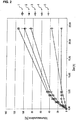
- Figure 2 shows that after 24 hours of exposure, the increase in volume of the tube for all dialysis solutions containing starch propyl phosphonates is over 80%. The maximum value achieved is an increase in volume of approx. 115% after 24 hours.
- the osmotics according to the invention not only show an increased ultrafiltration efficiency after 24 hours, but also a higher value than icodextrin with short residence times.
- the starch propyl phosphonates according to solutions 1, 2 and 3 were produced from tapioca starch with a number average molar mass of 3,321 g / mol.
- the number average molar mass is given by Mn.
- Average degree of substitution DS (determined by means of 1 H-NMR spectroscopy): 0.54.
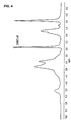
- Figure 4 shows the 1 H-NMR spectrum of starch propyl phosphonate, recorded in DMSO-d6 mixed with trifluoroacetic acid and Figure 5 shows the 13 C-NMR spectrum of starch propyl phosphonate, recorded in DMSO-d6.
- degraded tapioca starch with a molar mass (Mn) of 4,898 g / mol is reacted under identical conditions as in example 1.
- Precipitation and reprecipitation from aqueous solution are carried out with acetone.
- 1 H and 13 C NMR spectra confirm the structure ( Figures 6 and 7th ).
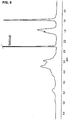
- Figure 6 shows the 1 H-NMR spectrum of starch propyl phosphonate, recorded in DMSO-d6 mixed with trifluoroacetic acid and Figure 7 shows the 13 C-NMR spectrum of starch propyl phosphonate, recorded in DMSO-d6.
- the starch derivative is isolated and purified by precipitation and reprecipitation from water with isopropanol. 1 H and 13 C NMR spectra confirm the structure ( Figures 8 and 9 ).
- Figure 8 shows the 1 H-NMR spectrum of starch propyl phosphonate, recorded in DMSO-d6 mixed with trifluoroacetic acid and Figure 9 shows the 13 C-NMR spectrum of starch propyl phosphonate, recorded in DMSO-d6.
- the starch derivative is isolated and purified by precipitation and reprecipitation from water with isopropanol.
- 1 H- and 13 C-NMR spectra confirm the structure ( Figures 10 and 11 ). DS (determined by means of 1 H-NMR spectroscopy): 1.19.
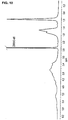
- Figure 10 shows the 1 H-NMR spectrum of starch propyl phosphonate, recorded in DMSO-d6 mixed with trifluoroacetic acid and Figure 11 shows the 13 C-NMR spectrum of starch propyl phosphonate, recorded in DMSO-d6.
- Example 1 20.0 g of the starch treated with sodium borohydride are reacted with 11.8 g (0.3 mol / mol AGE) T3P in DMF (50%, w / w).
- the product is isolated and purified by precipitation in ethanol and reprecipitation from water in ethanol, dissolved in 400 mL water, the solution treated with Amberlite IR120 (H + form) and freeze-dried.
- 1 H and 13 C NMR spectra confirm the structure ( Figures 12 and 13).
- Figure 12 shows the 1 H-NMR spectrum of starch propyl phosphonate recorded in D 2 O and Figure 13 shows the 13 C-NMR spectrum of starch propyl phosphonate, recorded in D 2 O.
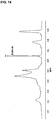
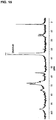
- Figure 14 shows the 1 H-NMR spectrum of starch ethyl phosphonate recorded in DMSO-d6 mixed with trifluoroacetic acid and Figure 15 shows the 13 C-NMR spectrum of starch ethyl phosphonate recorded in DMSO-d6.
- the present invention provides a dialysis solution which, compared to known dialysis solutions, has a considerably increased osmotic activity, which is due to the use of starch alkyl phosphonate as an osmotic agent.
- the dialysis solution is therefore suitable, for example, as a peritoneal dialysis solution or also in the context of hemodialysis, hemodiafiltration, hemofiltration or also in the context of other blood treatment processes in which a treatment solution in the form of the dialysis solution according to the invention or as a substitution solution is used.
Landscapes
- Health & Medical Sciences (AREA)
- Chemical & Material Sciences (AREA)
- Life Sciences & Earth Sciences (AREA)
- Medicinal Chemistry (AREA)
- General Health & Medical Sciences (AREA)
- Veterinary Medicine (AREA)
- Public Health (AREA)
- Animal Behavior & Ethology (AREA)
- Pharmacology & Pharmacy (AREA)
- Epidemiology (AREA)
- Engineering & Computer Science (AREA)
- Organic Chemistry (AREA)
- Chemical Kinetics & Catalysis (AREA)
- Heart & Thoracic Surgery (AREA)
- Urology & Nephrology (AREA)
- Emergency Medicine (AREA)
- Polymers & Plastics (AREA)
- Inorganic Chemistry (AREA)
- Hematology (AREA)
- Vascular Medicine (AREA)
- Anesthesiology (AREA)
- Biomedical Technology (AREA)
- Materials Engineering (AREA)
- Biochemistry (AREA)
- Molecular Biology (AREA)
- Bioinformatics & Cheminformatics (AREA)
- Diabetes (AREA)
- General Chemical & Material Sciences (AREA)
- Nuclear Medicine, Radiotherapy & Molecular Imaging (AREA)
- Polysaccharides And Polysaccharide Derivatives (AREA)
- External Artificial Organs (AREA)
- Pharmaceuticals Containing Other Organic And Inorganic Compounds (AREA)
- Medicinal Preparation (AREA)
Description
- Die vorliegende Erfindung betrifft eine Dialyselösung mit wenigstens einem Osmotikum.
- Dialyselösungen, wie sie beispielsweise bei der Peritonealdialyse, Hämodialyse, Hämodiafiltration etc. eingesetzt werden, sind in zahlreichen unterschiedlichen Zusammensetzungen bekannt.
- So offenbart beispielsweise die
DE 10 2004 023 828 A1 eine Lösung für eine Peritonealdialyse, die neben Elektrolyten ein Osmotikum in Form von Glucose enthält. - Die
US 6,248,726 B1 offenbart eine Dialyselösung, die als Osmotikum eine lösliche abgebaute Stärke mit einem mittleren Molekulargewicht von etwa 3000 Dalton aufweist. - Die als Osmotikum dienende Glucose führt dazu, dass der Transport von Wasser über die Membran beschleunigt und somit die Ultrafiltrationsrate verbessert wird. Ein weiteres bekanntes Osmotikum ist Icodextrin, bei dem es sich um ein stärkebasiertes, verzweigtes Glucosepolymer handelt.
- Der vorliegenden Erfindung liegt die Aufgabe zugrunde, eine Dialyselösung dahingehend weiterzubilden, dass deren Ultrafiltrationsleistung gegenüber bekannten Dialyselösungen gesteigert ist.
- Diese Aufgabe wird durch eine Dialyselösung mit den Merkmalen des Anspruchs 1 gelöst. Danach ist vorgesehen, dass es sich bei dem Osmotikum um Stärkealkylphosphonat und insbesondere um Stärkepropylphosphonat oder Stärkeethylphosphonat handelt.
- Stärkepropylphosphonate werden beispielsweise durch Reaktion von Stärke und Propylphosphonsäureanhydrid hergestellt, jedoch ist die Erfindung nicht auf diesen Weg der Synthese von Stärkepropylphosphonaten beschränkt.
- Von der Erfindung sind auch weitere Stärkealkylphosphonate umfasst, zum Beispiel Stärkeethylphosphonate, welche unter anderem durch Umsetzung von Stärke mit Ethylphosphonsäureanhydrid erhalten werden können.
- Es hat sich überraschenderweise gezeigt, dass Stärkealklyphosphonate eine sehr hohe Wirksamkeit bei der Verwendung als osmotische Agenzien aufweisen.
- An dieser Stelle wird darauf hingewiesen, dass die Begriffe "Stärkealkylphosphonat", "Stärkepropylphosphonat", "Stärkeethylphosphonat" etc. im Rahmen der vorliegenden Erfindung diese Substanzen als solche sowie auch deren Salz bezeichnen können. Ein Salz dieser Substanz ist vorzugsweise ein pharmazeutisch akzeptables Salz, insbesondere das Natriumsalz.
- In einer Ausgestaltung der Erfindung ist vorgesehen, dass die Dialyselösung genau eine Art oder auch mehrere Arten unterschiedlicher Stärkealkylphosphonate enthält. Diese mehreren Arten von Stärkealkylphosphonaten können sich beispielsweise im durchschnittlichen Substitutionsgrad und/oder auch in der molekularen Masse und/oder in dem Edukt unterscheiden, aus dem sie hergestellt sind.
- In einer weiteren Ausgestaltung der Erfindung ist vorgesehen, dass die Dialyselösung außer Stärkealkylphosphonat kein weiteres Osmotikum enthält.
- Von der Erfindung sind jedoch auch Ausführungsformen umfasst, bei denen außer Stärkealkylphosphonat ein oder mehrere weitere Osmotika, wie beispielsweise Glucose und/oder Icodextrin vorliegen.
- Vorzugsweise ist das Stärkealkylphosphonat der erfindungsgemäßen Dialyselösung vollständig wasserlöslich.
- Der durchschnittliche Substitutionsgrad des Stärkealkylphosphonats der erfindungsgemäßen Dialyselösung liegt vorzugsweise im Bereich von 0,1 bis 1,2.
- Unter dem Begriff "Substitutionsgrad" wird im Rahmen der vorliegenden Erfindung die mittlere Anzahl von Substituenten pro Anhydroglucoseeinheit der Stärke verstanden. Der Substitutionsgrad kann Werte zwischen 0 und 3 annehmen.
- Bevorzugt ist ein Bereich des durchschnittlichen Substitutionsgrades im Bereich von 0,2 bis 0,5.
- Vorzugsweise ist das Stärkealkylphosphonat der erfindungsgemäßen Dialyselösung durch Umsetzung von Polysacchariden, insbesondere von Stärke und vorzugsweise von abgebauter Stärke hergestellt. Dabei weisen die Polysaccharide, insbesondere die Stärke eine zahlenmittlere Molmasse Mn vorzugsweise im Bereich von 1.000 g/mol - 50.000 g/mol, weiter vorzugsweise im Bereich von 1.000 g/mol - 20.000 g/mol und besonders bevorzugt im Bereich von 3.000 g/mol - 5.000 g/mol auf.
- In einer weiteren bevorzugten Ausgestaltung der Erfindung erfolgt die Reduktion der Stärke mit Natriumborhydrid vor der Umsetzung zum Stärke-n-propylphosphonat bzw. zum Stärkealkylphosphonat bzw. Stärke-n-alkylphosphonat. Die Behandlung der Stärke (Reduktion) kann über die Verwendung von Natriumborhydrid hinaus auch mit weiteren Hydridübertragungsreagenzien wie Tetraalkylammoniumborhydrid, Natriumcyanoborhydrid, Lithiumcyanoborhydrid oder Boran-Amin-komplexen (z.B. Boran-t-butylamin-Komplex) erfolgen.
- Gemäß einem Verfahren zur Herstellung des erfindungsgemäßen Osmotikums kann somit die Stärke reduziert werden, bevor sie zu dem Stärkealkylphosphonat umgesetzt wird.
- Ein Verfahren zur Herstellung des erfindungsgemäßen Osmotikums kann einen oder mehrere der im Rahmen dieser Erfindung offenbarten Verfahrensschritte umfassen.
- Die Reduktion des Ausgangsmaterials führt nach Substitution und Sterilisierung zu annähernd farblosen Proben, während die bisher synthetisierten (unreduzierten) Proben eine Braunfärbung aufwiesen, die auf bisher unbekannte Nebenprodukte zurückzuführen ist. Von der Performance her findet sich kein Unterschied zwischen reduzierten und unreduzierten Proben.
- Vorzugsweise enthält die Dialyselösung außer dem oder den Osmotika Elektrolyte sowie wenigstens einen Puffer.
- Bei den Elektrolyten kann es sich um Ionen von Natrium und/oder Kalium und/oder Calcium und/oder Magnesium handeln. Als Anion ist vorzugsweise Chlorid enthalten.
- Der oder die Puffer können Laktationen und/oder Hydrogencarbonationen aufweisen. Der Puffer dient zur Einstellung eines physiologischen pH-Wertes. Der pH-Wert der Dialyselösung liegt vorzugsweise im Bereich zwischen 5,0 und 8,0. Besonders bevorzugt liegt der pH-Wert der Dialyselösung im Bereich von 6,8 bis 7,2.
- Handelt es sich um ein Einkammerbeutelsystem liegt der pH-Wert vorzugsweise zwischen 5,0 und 8,0, besonders bevorzugt zwischen 5,5 und 6,5. Handelt es sich um ein Zweikammerbeutelsystem liegt der Misch pH-Wert (nach dem Mischen der - Teillösungen) vorzugsweise zwischen 5,0 und 8,0, und besonders bevorzugt zwischen 6,5 und 7,5. Der pH-Wert der sauren Teillösung liegt vorzugsweise zwischen 3,0 und 5,0 und der pH-Wert der basischen Teillösung liegt vorzugsweise zwischen 7,0 und 9,0.
- In einer Ausführungsform liegen die Elektrolyte, soweit vorhanden und unabhängig voneinander, in den folgenden Konzentrationen in der Dialyselösung vor (Angaben in mmol/l):
- Natriumionen 125-150
- Kaliumionen 0-4,5
- Calciumionen 0-2,5
- Magnesiumionen 0-5
- Chloridionen 90-120
- Lactat/Milchsäure/(Hydrogen)Carbonat/CO2 30-60
- Die erfindungsgemäße Dialyselösung kann beispielsweise bei der Hämodialyse, bei der Hämodiafiltration oder auch bei der Peritonealdialyse eingesetzt werden.
- Die vorliegende Erfindung betrifft des Weiteren die erfindungsgemäße Dialyselösung zur Verwendung in einem Blutbehandlungsverfahren.
- Wie ausgeführt, kann es sich bei dem Blutbehandlungsverfahren um die Hämodialyse oder auch um die Hämodiafiltration handeln.
- Auch ist der Einsatz der erfindungsgemäßen Dialyselösung bei der Peritonealdialyse denkbar und von der Erfindung mit umfasst.
- Vorzugsweise wird das Stärkealkylphosphonat, das in der erfindungsgemäßen Dialyselösung Verwendung findet, aus einem oder mehreren Polysacchariden und insbesondere aus Stärke nach einem an sich bekannten Verfahren hergestellt. Dabei können Polysaccharide, insbesondere Stärke mit unterschiedlichen molekularen Massen und insbesondere mit vergleichsweise geringen molekularen Massen im Bereich von 1.000 g/mol - 50.000 g/mol, weiter vorzugsweise im Bereich von 1.000 g/mol - 20.000 g/mol und besonders bevorzugt im Bereich von 3.000 g/mol - 5.000 g/mol verwendet werden.
- Vorzugsweise weisen die bevorzugt vollständig wasserlöslichen Stärkealkylphosphonate gemäß der Erfindung einen durchschnittlichen Substitutionsgrad (DS) im Bereich von 0,1 bis 1,2 und insbesondere im Bereich von 0,2 bis 0,5 auf.
- Wie dies aus den im Folgenden dargestellten Ausführungsbeispielen hervorgeht, zeigen Stärkealkylphosphonate bei der Verwendung als osmotische Agenzien eine hervorragende Wirksamkeit.
- Unter dem Begriff "Substitutionsgrad" wird im Rahmen der vorliegenden Erfindung die mittlere Anzahl von Substituenten pro Anhydroglucoseeinheit der Stärke verstanden. Der Substitutionsgrad kann Werte zwischen 0 und 3 annehmen.
- Vorzugsweise ist das im Rahmen der vorliegenden Erfindung eingesetzte Stärkealkylphosphonat durch Umsetzung von Polysacchariden, insbesondere von Stärke und vorzugsweise von abgebauter Stärke hergestellt. Dabei weisen die Polysaccharide, insbesondere die Stärke eine zahlenmittlere Molmasse Mn vorzugsweise im Bereich von 1.000 g/mol - 50.000 g/mol, weiter vorzugsweise im Bereich von 1.000 g/mol - 20.000 g/mol und besonders bevorzugt im Bereich von 3.000 g/mol - 5.000 g/mol auf.
- Vorzugsweise ist das Stärkepropylphosphonat aus den sich wiederholenden Einheiten

- Die Substitution mit Propylphosphonat ist vorzugsweise an den Positionen 6, 2 und 3 der Glucoseeinheiten möglich, wobei überwiegend die Positionen 6 und 2 substituiert werden. Durch die Wahl der Reaktionsbedingungen ist es weiterhin möglich, eine bevorzugte Substitution an Position 6 oder 2 zu erreichen. Bei den in den Beispielen 1 bis 4 wiedergegebenen homogenen Reaktionsbedingungen erfolgt die Substitution überwiegend an Position 6. Durch heterogene Reaktionsbedingungen z.B. mit NaOH ist eine bevorzugte Substitution an der Position 2 möglich.
- Die Anzahl der Propylphosphonateinheiten bzw. Alkylphosphonateinheiten pro Anhydroglucoseeinheit ist der im Rahmen der vorliegenden Erfindung genannte Substitutionsgrad.
- Als Ausgangsmaterialien für die Herstellung des Stärkealkylphosphonats sind Stärken verschiedener Quelle (z.B. aus Kartoffel, Mais, Maniok (Tapioka), Reis, Erbse, Weizen und weitere Getreidearten) sowie spezielle Stärketypen wie Hylon VII, Amiocapowder oder Wachsmaisstärke denkbar. Die vorstehende Aufzählung ist exemplarisch und nicht abschließend.
- Weitere Einzelheiten und Vorteile werden anhand eines in der Zeichnung dargestellten Ausführungsbeispiels näher erläutert.
- Es zeigen:
- Figur 1:
- Schematische Darstellungen eines mit der erfindungsgemäßen Dialyselösung gefüllten Schlauches zu unterschiedlichen Zeitpunkten,
- Figur 2:
- Die Zunahme des Volumens eines mit einer Dialyselösung gefüllten Schlauches für verschiedene Osmotika über die Zeit und
- Figur 3:
- Die Volumenzunahme des Schlauches nach 24 Stunden Einwirkzeit für verschiedene Osmotika,
- Figuren 4 bis 15:
- 1H-NMR und 13C-NMR Spektren von unterschiedlichen Stärkepropylphosphonaten und Stärkeethylphosphonaten.
-
Figur 1 zeigt einen Schlauch 10, dessen Wandung durch eine semipermeable Membran gebildet wird. Bei der Membran kann es sich beispielsweise um Cellulose bzw. um regenerierte Cellulose handeln. - In dem Inneren des Schlauches 10 befindet sich eine Dialyselösung L1, die ein Osmotikum enthält. Der Schlauch 10 befindet sich in einer Lösung L2, die dieselbe Zusammensetzung aufweist wie die Lösung L1 in dem Schlauch 10 mit dem einzigen Unterschied, dass die Lösung L2 kein Osmotikum aufweist.
-
Figur 1 , linke Darstellung zeigt die Anordnung zum Zeitpunkt T=0, d.h. zu dem Versuchsbeginn, zu dem der gefüllte Schlauch 10 in die Lösung L2 eingesetzt wurde. -
Figur 1 , mittlere Darstellung zeigt die Anordnung nach zweistündiger Einwirkdauer (T=2 h) undFigur 1 , rechte Darstellung zeigt die Anordnung nach 24-stündiger Einwirkdauer (T=24 h). - Wie dies aus einem Vergleich der Abbildungen gemäß
Figur 1 hervorgeht, ist aufgrund der osmotischen Wirkung der Lösung L1 Wasser in den Schlauch eingeströmt, womit sich dessen Volumen über die Zeit entsprechend vergrößert. -
Figur 2 zeigt die Volumenzunahme in % (ausgehend von dem Versuchsstart bei T=0) über die Zeit bei einem weiteren Schlauchversuch für Lösungen mit unterschiedlichen Osmotika. Dabei weisen die Lösungen 1, 2 und 3 Stärkepropylphosphonate mit einem durchschnittlichen Substitutionsgrad DS von 1,19 (Lösung 1), DS von 0,62 (Lösung 2) und DS von 0,23 (Lösung 3) auf. - Die Bezugszeichen 4 und 5 betreffen Lösungen mit Glucose (Lösung 4) und mit Icodextrin (Lösung 5).
- Die Auswertung der Ergebnisse für unterschiedliche Osmotika ist in
Figur 3 gezeigt, wobeiFigur 3 auf der Ordinate den Volumenzuwachs, d.h. die UF-Performance (UF=Ultrafiltration) des Schlauches 10 nach 24-stündiger Einwirkdauer zeigt. Der Wert 0 % bedeutet, dass sich gegenüber dem Versuchsbeginn (T=0) keine Volumenänderung ergeben hat, der Wert 100 % bedeutet gegenüber dem Ausgangszustand bei T=0 eine Volumenverdopplung. - Die Versuchsbedingungen, die den Ergebnissen gemäß
Figur 2 undFigur 3 zugrunde liegen, waren für beideFiguren 2 und3 identisch. - Das Bezugszeichen A zeigt das Ergebnis bei dem Einsatz von Glucose und verdeutlicht, dass nach 24-stündiger Einwirkzeit eine Volumenzunahme um 10% erfolgt ist. Das Bezugszeichen B zeigt das Ergebnis bei der Verwendung einer Icodextrinlösung, die nach 24-stündiger Einwirkdauer eine Volumenzunahme von 40% bewirkt.
- Das Bezugszeichen C kennzeichnet Lösungen mit unterschiedlichen Stärken bzw. Stärkederivaten basierend auf einer Tapiokastärke mit einer zahlenmittleren Molmasse von 4.898 g/mol (in
Figur 3 als "Tapiokastärke 1" bezeichnet) und das Bezugszeichen D zeigt Lösungen mit unterschiedlichen Stärken und Stärkederviaten basierend auf einer Tapiokastärke mit einer zahlenmittleren Molmasse von 3.321 g/mol (inFigur 3 als "Tapiokastärke 2" bezeichnet). Die verwendeten Stärken der Gruppen C und D sind jeweils mit steigenden durchschnittlichen Substitutionsgraden (DS) von links nach rechts wiedergegeben. Der durch den Einsatz dieser Osmotika bedingte Volumenzuwachs liegt in etwa in der Spanne 35 % bis 55 %. - Das Bezugszeichen E zeigt eine Dialyselösung gemäß der vorliegenden Erfindung, die Stärkepropylphosphonat enthält und zwar mit einem durchschnittlichen Substitutionsgrad (DS) von 0,54.
- Aus
Figur 3 wird deutlich, dass bei dem Einsatz der erfindungsgmäßen Osmotika, d.h. bei dem Einsatz von Stärkepropylphosphonaten ein Volumenzuwachs von über 90% erzielt wird, d.h. ein Volumenzuwachs, der deutlich über dem liegt, der mit bekannten Osmotika erreicht wird. - Der Gehalt (Gew.-%) an Osmotikum aller in
Figur 3 gezeigten Lösungen sowie deren sonstige Zusammensetzung ist identisch. - Die Versuchsbedingungen für die Ergebnisse gemäß
Figur 2 und3 sind wie folgt:
In einen Schlauch mit einer semipermeablen Schlauchwandung aus regenerierter Cellulose (MWCO: 1000 Da, Fa. Roth) wurde ein Füllvolumen von 10 ml einer Flüssigkeit eingefüllt. Diese Flüssigkeit besteht aus einer wässrigen Lösung eines osmotischen Agens (Stärkepropylphosphonat, Glucose, Icodextrin, Stärke oder Stärkederivat) mit einer Konzentration des Osmotikums von 5 Gew.-%, wobei weitere Inhaltsstoffe durch Ca2+ in einer Konzentration von 1 mmol/l, Mg2+ in einer Konzentration von 0,5 mmol/l, Na+ in einer Konzentration von 138 mmol/l, Cl- in einer Konzentration von 106 mmol/l und Lactat in einer Konzentration von 35 mmol/l vorliegen. - Dieser gefüllte Schlauch wurde bei einer Temperatur von 38 °C in einem Bad derselben Versuchslösung allerdings ohne osmotisches Agens für 24 Stunden unter Bewegung gelagert.
- Zu verschiedenen Zeitpunkten wurde die Volumenzunahme des Füllvolumens des Schlauches ermittelt, die die osmotische Wirkung des Agens wiederspiegelt. Wie dies aus
Figur 2 ersichtlich ist, wurden die osmotischen Agenzien gemäß der vorliegenden Erfindung mit bekanntem osmotischen Agenzien in Form von Glucose und Icodextrin verglichen. -
Figur 2 zeigt, dass nach 24-stündiger Einwirkdauer die Volumenzunahme des Schlauches für sämtliche Dialyselösungen, die Stärkepropylphosphonate enthalten über 80 % liegt. Als Maximalwert wird eine Volumenzunahme von ca. 115 % nach 24 Stunden erreicht. - Demgegenüber liegen die Endwerte nach 24 h für Icodextrin bei ca. 35 % und von Glucose bei ca. 13 %.
- Die erfindungsgemäßen Osmotika zeigen nicht nur eine erhöhte Ultrafiltrationseffizienz nach 24 Stunden, sondern gegenüber Icodextrin auch einen höheren Wert bei geringen Verweildauern.
- Während die Volumenzunahme bei Icodextrin im Wesentlichen linear verläuft, ist bei den Dialyselösungen, die Stärkepropylphosphonate enthalten, ein vergleichsweise steiler Anstieg zu erkennen, der dann, bei höheren Verweilzeiten etwas abflacht und in einen im Wesentlichen linearen Verlauf übergeht.
- Der Anstieg des Schlauchvolumens bei kleinen Verweilzeiten ist bei dem Einsatz von Stärkepropylphosphonaten vergleichbar mit dem von Glucose. Bei höheren Werten ist jedoch der Volumenanstieg bei Glucose als Osmotikum weitaus geringer und bleibt ab einer Verweildauer von ca. drei Stunden konstant, wie dies aus
Figur 2 hervorgeht. - Die Stärkepropylphosphonate gemäß der Lösungen 1, 2 und 3 wurden aus Tapiokastärke mit einer zahlenmittleren Molmasse von 3.321 g/mol hergestellt.
- Die zahlenmittlere Molmasse ist im Rahmen der vorliegenden Erfindung mit Mn angegeben.
- Im Folgenden werden Ausführungsbeispiele zur Herstellung von Stärkepropylphosphonat beschrieben. Bis auf die jeweils genannten Unterschiede waren die Herstellbedingungen für alle vier im Folgenden aufgeführten Beispiele identisch:
- 40,0 g abgebaute Tapiokastärke (Mn= 3.321 g/mol) werden in 360 ml N,N-Dimethylformamid (DMF) suspendiert und unter Stickstoffatmosphäre bei 120 °C 2 h unter Rühren behandelt. Nach dem Abkühlen auf 80 °C werden 14 g LiCI zugefügt und unter weiterem Rühren löst sich die Stärke nach ca. 1 h auf.
- Die Lösung wird auf 100 °C erhitzt und 23,6 g (0,3 mol/mol Anhydroglucoseeinheit, AGE) Propylphosphonsäureanhydrid (T3P) in DMF (51,5 %, w/w) zugegeben. Nach 3 h Reaktionszeit wird das Produkt in 3 l Ethanol gefällt, filtriert, dreimal mit 1 l Ethanol gewaschen und aus 70 ml Wasser in 1 I Ethanol umgefällt.
- Das Produkt wird in 400 ml Wasser gelöst, die Lösung mit Amberlite IR120 (H+-Form) behandelt, der Ionenaustauscher abgetrennt und die Polymerlösung gefriergetrocknet. Der Strukturbeleg erfolgte durch 1H- und 13C-NMR-Spektren (
Figuren 4 und5 ). - Durchschnittlicher Substitutionsgrad DS (bestimmt mittels 1H-NMR-Spektroskopie): 0,54.
-
Figur 4 zeigt das 1H-NMR-Spektrum von Stärkepropylphosphonat, aufgenommen in DMSO-d6 versetzt mit Trifluoressigsäure undFigur 5 zeigt das 13C-NMR-Spektrum von Stärkepropylphosphonat, aufgenommen in DMSO-d6. - Gemäß Beispiel 1 wird abgebaute Tapiokastärke mit einer Molmasse (Mn) von 4.898 g/mol unter identischen Bedingungen wie in Beispiel 1 umgesetzt. Das Fällen und Umfällen aus wässriger Lösung erfolgen mit Aceton. 1H- und 13C-NMR-Spektren bestätigen die Struktur (
Figuren 6 und7 ). - DS (bestimmt mittels 1H-NMR-Spektroskopie): 0,70.
-
Figur 6 zeigt das 1H-NMR-Spektrum von Stärkepropylphosphonat, aufgenommen in DMSO-d6 versetzt mit Trifluoressigsäure undFigur 7 zeigt das 13C-NMR-Spektrum von Stärkepropylphosphonat, aufgenommen in DMSO-d6. - Gemäß Beispiel 1 werden 40,0 g abgebaute Tapiokastärke (Mn = 3.321g/mol) mit 7,9 g (0,1 mol/mol AGE) T3P in DMF (50 %, w/w) umgesetzt. Das Stärkederivat wird durch Fällung und Umfällung aus Wasser mit Isopropanol isoliert und gereinigt. 1H- und 13C-NMRSpektren bestätigen die Struktur (
Figuren 8 und9 ). - DS (bestimmt mittels 1H-NMR-Spektroskopie): 0,23.
-
Figur 8 zeigt das 1H-NMR-Spektrum von Stärkepropylphosphonat, aufgenommen in DMSO-d6 versetzt mit Trifluoressigsäure undFigur 9 zeigt das 13C-NMR-Spektrum von Stärkepropylphosphonat, aufgenommen in DMSO-d6. - Gemäß Beispiel 1 werden 40,0 g abgebaute Tapiokastärke (Mn= 3.321 g/mol) mit 47,1 g (0,6 mol/mol AGE) T3P in DMF (50 %, w/w) umgesetzt. Das Stärkederivat wird durch Fällung und Umfällung aus Wasser mit Isopropanol isoliert und gereinigt. 1H- und 13C-NMR Spektren bestätigen die Struktur (
Figuren 10 und11 ). DS (bestimmt mittels 1H-NMR-Spektroskopie): 1,19. -
Figur 10 zeigt das 1H-NMR-Spektrum von Stärkepropylphosphonat, aufgenommen in DMSO-d6 versetzt mit Trifluoressigsäure undFigur 11 zeigt das 13C-NMR-Spektrum von Stärkepropylphosphonat, aufgenommen in DMSO-d6. - 60 g Tapioastärke (Mn = 3.321g/mol) werden in 150 mL Wasser bei 80 °C gelöst und die Lösung mit Natriumhydrogencarbonat auf einen pH-Wert von 8 eingestellt. Nach Abkühlung auf 60 °C wird portionsweise 1,37 g Natriumborhydrid (2 mol/mol reduzierende Endgruppe) zugefügt und lässt das Reaktionsgemisch 24 h unter Rühren reagieren. Nach dem Abkühlen auf Raumtemperatur wird die Lösung mit 15%iger Salzsäure auf einen pH-Wert von 6 eingestellt und 1 h gerührt. Das Produkt wird in 1,5 L Ethanol gefällt, filtriert, drei Mal mit 500 mL Ethanol gewaschen und im Vakuum bei 40 °C getrocknet. Mit Hilfe des Fehlingtests sind keine Carbonylgruppen nachweisbar.
- Gemäß Beispiel 1 werden 20,0 g der mit Natriumborhydrid behandelten Stärke mit 11,8 g (0,3 mol/mol AGE) T3P in DMF (50 %, w/w) umgesetzt. Das Produkt wird durch Fällung in Ethanol und Umfällung aus Wasser in Ethanol isoliert und gereinigt, in 400 mL Wasser gelöst, die Lösung mit Amberlite IR120 (H+ -Form) behandelt und gefriergetrocknet. 1H- und 13C-NMR-Spektren bestätigen die Struktur (Abbildungen 12 und 13).
- 1 DS (bestimmt mittels H-NMR-Spektroskopie): 0,39.
-
Figur 12 zeigt das 1H-NMR-Spektrum von Stärkepropylphosphonat aufgenommen in D2O undFigur 13 zeigt das 13C-NMR-Spektrum von Stärkepropylphosphonat, aufgenommen in D2O. - 1,0 g der gemäß Beispiel 5 mit Natriumborhydrid behandelten Stärke werden bei 120 °C in 9 mL N,N-Dimethylacetamid (DMAc) unter Rühren gelöst. Nach Abkühlen auf 100 °C werden 0,51 g (0,3 mol/mol AGE) Ethylphosphonsäureanhydrid gelöst in Ethylacetat (66 %, w/w) zugegeben. Nach 3 h Reaktionszeit wird das Produkt in 100 mL Isopropanol gefällt, filtriert, dreimal mit 100 mL Isopropanol gewaschen und aus 5 mL Wasser in 50 mL Isopropanol umgefällt. Das Produkt wird in 50 mL Wasser gelöst und die Polymerlösung gefriergetrocknet. 1H- und 13C-NMR-Spektren bestätigen die Struktur (Abbildungen 14 und 15).
- DS (bestimmt mittels 1H-NMR-Spektroskopie): 0,43.
- Im Synthesebeispiel 6 wurde eine neue Lösungsmittelkombination (DMAc + Ethylacetat) verwendet, die im Vergleich zum bisher verwendeten DMF zu einem Produkt mit verbesserter Reinheit führt. Dies wurde auch bei der Synthese der Stärkepropylphosphonate beobachtet.
-
Figur 14 zeigt das 1H-NMR-Spektrum von Stärkeethylphosphonat aufgenommen in DMSO-d6 versetzt mit Trifluoressigsäure undFigur 15 zeigt das 13C-NMR-Spektrum von Stärkeethylphosphonat aufgenommen in DMSO-d6. - Durch die vorliegende Erfindung wird eine Dialyselösung bereitgestellt, die gegenüber bekannten Dialyselösungen eine erheblich erhöhte osmotische Aktivität aufweist, was auf den Einsatz von Stärkealkylphosphonat als Osmotikum zurückzuführen ist.
- Damit eignet sich die Dialyselösung beispielsweise als Peritonealdialyselösung oder auch im Rahmen der Hämodialyse, Hämodiafiltration, Hämofiltration oder auch im Rahmen sonstiger Blutbehandlungsverfahren, bei denen eine Behandlungslösung in Form der erfindungsgemäßen Dialyselösung oder als Substitutionslösung zum Einsatz kommt.
Claims (13)
- Dialyselösung mit wenigstens einem Osmotikum,
dadurch gekennzeichnet,
dass es sich bei dem Osmotikum um Stärkealkylphosphonat und insbesondere um Stärkepropylphosphonat und/oder Stärkeethylphosphonat handelt. - Dialyselösung nach Anspruch 1, dadurch gekennzeichnet, dass die Dialyselösung genau eine Art eines Stärkealkylphosphonates oder mehrere Arten von Stärkealkylphosphonaten enthält.
- Dialyselösung nach Anspruch 1 oder 2, dadurch gekennzeichnet, dass die Dialyselösung außer Stärkealkylphosphonat kein weiteres Osmotikum enthält.
- Dialyselösung nach einem der vorhergehenden Ansprüche, dadurch gekennzeichnet, dass das Stärkealkylphosphonat vollständig wasserlöslich ist und/oder dass das Stärkealkylphosphonat aus reduzierter Stärke gebildet ist.
- Dialyselösung nach einem der vorhergehenden Ansprüche, dadurch gekennzeichnet, dass das Stärkealkylphosphonat einen durchschnittlichen Substitutionsgrad im Bereich von 0,1 bis 1,2 aufweist.
- Dialyselösung nach Anspruch 5, dadurch gekennzeichnet, dass das Stärkealkylphosphonat einen durchschnittlichen Substitutionsgrad im Bereich von 0,2 bis 0,5 aufweist.
- Dialyselösung nach einem der vorhergehenden Ansprüche, dadurch gekennzeichnet, dass das Stärkealkylphosphonat aus einem Polysaccharid, vorzugsweise aus abgebauter Stärke mit einem mittleren Molekulargewicht Mn im Bereich von 1.000-50.000 g/mol, vorzugsweise 1.000-20.000 g/mol und besonders bevorzugt 3.000-5.000 g/mol hergestellt ist.
- Dialyselösung nach einem der vorhergehenden Ansprüche, dadurch gekennzeichnet, dass die Lösung Elektrolyte sowie einen Puffer aufweist.
- Dialyselösung nach Anspruch 8, dadurch gekennzeichnet, dass die Elektrolyte die Ionen von Natrium und/oder Kalium und/oder Calcium und/oder Magnesium umfassen.
- Dialyselösung nach Anspruch 8 oder 9, dadurch gekennzeichnet, dass der Puffer Lactationen und/oder Hydrogencarbonationen aufweist.
- Dialyselösung gemäß einem der Ansprüche 1 bis 10 zur Verwendung in einem Dialyseverfahren.
- Dialyselösung nach Anspruch 11, dadurch gekennzeichnet, dass es sich bei dem Dialyseverfahren um die Hämodialyse oder um die Hämodiafiltration handelt.
- Dialyselösung nach Anspruch 11, dadurch gekennzeichnet, dass es sich bei dem Dialyseverfahren um die Peritonealdialyse handelt.
Priority Applications (1)
| Application Number | Priority Date | Filing Date | Title |
|---|---|---|---|
| EP20201491.6A EP3789055B1 (de) | 2015-06-16 | 2016-06-15 | Dialyselösung, verwendung einer dialyselösung sowie chemische verbindung |
Applications Claiming Priority (2)
| Application Number | Priority Date | Filing Date | Title |
|---|---|---|---|
| DE102015007626.4A DE102015007626A1 (de) | 2015-06-16 | 2015-06-16 | Dialyselösung, Verwendung einer Dialyselösung sowie chemische Verbindung |
| PCT/EP2016/000999 WO2016202455A1 (de) | 2015-06-16 | 2016-06-15 | Dialyselösung, verwendung einer dialyselösung sowie chemische verbindung |
Related Child Applications (2)
| Application Number | Title | Priority Date | Filing Date |
|---|---|---|---|
| EP20201491.6A Division EP3789055B1 (de) | 2015-06-16 | 2016-06-15 | Dialyselösung, verwendung einer dialyselösung sowie chemische verbindung |
| EP20201491.6A Division-Into EP3789055B1 (de) | 2015-06-16 | 2016-06-15 | Dialyselösung, verwendung einer dialyselösung sowie chemische verbindung |
Publications (2)
| Publication Number | Publication Date |
|---|---|
| EP3310408A1 EP3310408A1 (de) | 2018-04-25 |
| EP3310408B1 true EP3310408B1 (de) | 2020-11-25 |
Family
ID=56194421
Family Applications (2)
| Application Number | Title | Priority Date | Filing Date |
|---|---|---|---|
| EP16731509.2A Active EP3310408B1 (de) | 2015-06-16 | 2016-06-15 | Dialyselösung, verwendung einer dialyselösung sowie chemische verbindung |
| EP20201491.6A Active EP3789055B1 (de) | 2015-06-16 | 2016-06-15 | Dialyselösung, verwendung einer dialyselösung sowie chemische verbindung |
Family Applications After (1)
| Application Number | Title | Priority Date | Filing Date |
|---|---|---|---|
| EP20201491.6A Active EP3789055B1 (de) | 2015-06-16 | 2016-06-15 | Dialyselösung, verwendung einer dialyselösung sowie chemische verbindung |
Country Status (5)
| Country | Link |
|---|---|
| US (1) | US10076531B2 (de) |
| EP (2) | EP3310408B1 (de) |
| CN (1) | CN107708763B (de) |
| DE (1) | DE102015007626A1 (de) |
| WO (1) | WO2016202455A1 (de) |
Family Cites Families (11)
| Publication number | Priority date | Publication date | Assignee | Title |
|---|---|---|---|---|
| US3553194A (en) * | 1967-12-28 | 1971-01-05 | Staley Mfg Co A E | Starch phosphonates |
| US4002730A (en) * | 1975-01-13 | 1977-01-11 | The Procter & Gamble Company | Radionuclide carriers |
| US6248726B1 (en) | 1985-06-22 | 2001-06-19 | M L Laboratories Plc | Method of peritoneal dialysis using glucose polymer solutions |
| FR2840612B1 (fr) | 2002-06-06 | 2005-05-06 | Roquette Freres | Polymeres solubles de glucose hautement branches et leur procede d'obtention |
| DE102004023828A1 (de) | 2004-05-13 | 2005-12-08 | Fresenius Medical Care Deutschland Gmbh | Lösung für die Peritonealdialyse |
| RU2007124639A (ru) * | 2004-11-30 | 2009-01-10 | ТИШЬЮ ТЕКНОЛОДЖИЗ, Эл Эл Си (US) | Производные крахмала и другие производные, способы их получения и применение для заживления ран |
| FR2897869B1 (fr) * | 2006-02-28 | 2011-05-06 | Roquette Freres | Polymeres solubles de glucose hautement branches pour la nutrition enterale, parenterale et pour la dialyse peritoneale |
| CN101391114B (zh) * | 2008-11-03 | 2011-06-08 | 北京东方康桥医药科技有限公司 | 一种止血材料的制备方法 |
| DE102010012183A1 (de) * | 2010-03-19 | 2011-09-22 | Fresenius Medical Care Deutschland Gmbh | Veresterte Polysaccharid-Osmotika |
| EP2570181A1 (de) * | 2011-09-15 | 2013-03-20 | InstrAction GmbH | Sorptionsmittel mit einer aliphatischen Einheit mit einer anionischen oder entprotonisierbaren Gruppe auf dessen Oberfläche zur Reinigung organischer Moleküle |
| DE102011112526A1 (de) * | 2011-09-07 | 2013-03-07 | Fresenius Medical Care Deutschland Gmbh | Pharmazeutische Zusammensetzung enthaltend carboxylierte Stärke |
-
2015
- 2015-06-16 DE DE102015007626.4A patent/DE102015007626A1/de not_active Ceased
-
2016
- 2016-06-07 US US15/175,384 patent/US10076531B2/en active Active
- 2016-06-15 WO PCT/EP2016/000999 patent/WO2016202455A1/de not_active Ceased
- 2016-06-15 EP EP16731509.2A patent/EP3310408B1/de active Active
- 2016-06-15 EP EP20201491.6A patent/EP3789055B1/de active Active
- 2016-06-15 CN CN201680035214.XA patent/CN107708763B/zh active Active
Non-Patent Citations (1)
| Title |
|---|
| None * |
Also Published As
| Publication number | Publication date |
|---|---|
| DE102015007626A1 (de) | 2016-12-22 |
| EP3789055A1 (de) | 2021-03-10 |
| WO2016202455A8 (de) | 2017-12-07 |
| CN107708763A (zh) | 2018-02-16 |
| EP3789055B1 (de) | 2022-07-27 |
| US20160367574A1 (en) | 2016-12-22 |
| EP3310408A1 (de) | 2018-04-25 |
| CN107708763B (zh) | 2021-05-14 |
| WO2016202455A1 (de) | 2016-12-22 |
| US10076531B2 (en) | 2018-09-18 |
Similar Documents
| Publication | Publication Date | Title |
|---|---|---|
| EP0147685B1 (de) | Ether des beta-Cyclodextrins und ein Verfahren zu ihrer Herstellung | |
| DE68917009T2 (de) | Sulfaminoderivate von Chondroitinsulfat, Dermatansulfat und Hyaluronsäure und ihre pharmakologischen Eigenschaften. | |
| DE3712246C2 (de) | ||
| DE69417035T2 (de) | Heparinderivate mit antimetastatischer wirkung | |
| DE3102621A1 (de) | Verfahren zur herstellung von heparinen mit niederem molekulargewicht mit ausgezeichneten pharmakologischen eigenschaften, nach dem verfahren hergestellte heparine und diese enthaltende arzneimittel | |
| EP0146841A2 (de) | Wasserlösliche Mischether des beta-Cyclodextrins und ein Verfahren zu ihrer Herstellung | |
| EP2072530A1 (de) | Verfahren zur Herstellung aminogruppenhaltiger Cellulosederivate in ionischer Flüssigkeit | |
| DE68904617T2 (de) | Jodhaltige polymere mit skeletten von dextran, verfahren zu ihrer herstellung und ihre verwendungen als kontrastmittel. | |
| DE2604481C2 (de) | ||
| DE102010012183A1 (de) | Veresterte Polysaccharid-Osmotika | |
| DE3873524T2 (de) | Iodierte polymere, verfahren zu ihrer herstellung und ihre verwendung als kontrastmittel. | |
| DE10221055A1 (de) | Verfahren zur hämokompatiblen Beschichtung von Oberflächen | |
| DE2339953A1 (de) | Hydroxyalkyl- oder mercaptoalkylglucane | |
| US3697502A (en) | Method of making iron dextran-preparations | |
| EP0593605B1 (de) | Verfahren zur herstellung von stärkeestern für klinische, insbesondere parenterale anwendung | |
| EP3789055B1 (de) | Dialyselösung, verwendung einer dialyselösung sowie chemische verbindung | |
| EP3373975B1 (de) | Dialyselösung mit wenigstens einem osmotikum | |
| AU2015320003C1 (en) | Iron (III) hydroxide complexes with activated glucose syrups and process for preparing same | |
| DE1946722A1 (de) | Verfahren zur Herstellung von Diaminoalkylgruppen enthaltenden Cellulosederivaten | |
| DE2541220B2 (de) | Folien aus modifizierter regeneratcellulose und verfahren zu ihrer herstellung | |
| DE2336378A1 (de) | Verfahren zur herstellung eines wasserloeslichen polysaccharids | |
| AT397250B (de) | Verfahren zur herstellung von heparinsalzen | |
| DE1954960A1 (de) | Verfahren zur Herstellung von Eisen-Dextran-Praeparaten | |
| EP0427190A2 (de) | Polyelektrolytkomplexe zur Behandlung und Prophylaxe von Viruserkrankungen sowie Verfahren zu deren Herstellung | |
| DE68916640T2 (de) | Basische metallcomplexesaurer oligo-und polysaccharide;obst,gemüse und pharmazeutische zusammensetzungen, welche diese komplexe enthalten. |
Legal Events
| Date | Code | Title | Description |
|---|---|---|---|
| STAA | Information on the status of an ep patent application or granted ep patent |
Free format text: STATUS: THE INTERNATIONAL PUBLICATION HAS BEEN MADE |
|
| PUAI | Public reference made under article 153(3) epc to a published international application that has entered the european phase |
Free format text: ORIGINAL CODE: 0009012 |
|
| STAA | Information on the status of an ep patent application or granted ep patent |
Free format text: STATUS: REQUEST FOR EXAMINATION WAS MADE |
|
| 17P | Request for examination filed |
Effective date: 20180115 |
|
| AK | Designated contracting states |
Kind code of ref document: A1 Designated state(s): AL AT BE BG CH CY CZ DE DK EE ES FI FR GB GR HR HU IE IS IT LI LT LU LV MC MK MT NL NO PL PT RO RS SE SI SK SM TR |
|
| AX | Request for extension of the european patent |
Extension state: BA ME |
|
| DAV | Request for validation of the european patent (deleted) | ||
| DAX | Request for extension of the european patent (deleted) | ||
| REG | Reference to a national code |
Ref country code: DE Ref legal event code: R079 Ref document number: 502016011785 Country of ref document: DE Free format text: PREVIOUS MAIN CLASS: A61M0001280000 Ipc: A61P0007080000 |
|
| GRAP | Despatch of communication of intention to grant a patent |
Free format text: ORIGINAL CODE: EPIDOSNIGR1 |
|
| STAA | Information on the status of an ep patent application or granted ep patent |
Free format text: STATUS: GRANT OF PATENT IS INTENDED |
|
| RIC1 | Information provided on ipc code assigned before grant |
Ipc: C08B 31/06 20060101ALI20200519BHEP Ipc: C08B 31/04 20060101ALI20200519BHEP Ipc: A61K 33/00 20060101ALI20200519BHEP Ipc: A61P 7/08 20060101AFI20200519BHEP Ipc: A61M 1/28 20060101ALI20200519BHEP |
|
| INTG | Intention to grant announced |
Effective date: 20200616 |
|
| GRAS | Grant fee paid |
Free format text: ORIGINAL CODE: EPIDOSNIGR3 |
|
| GRAA | (expected) grant |
Free format text: ORIGINAL CODE: 0009210 |
|
| STAA | Information on the status of an ep patent application or granted ep patent |
Free format text: STATUS: THE PATENT HAS BEEN GRANTED |
|
| AK | Designated contracting states |
Kind code of ref document: B1 Designated state(s): AL AT BE BG CH CY CZ DE DK EE ES FI FR GB GR HR HU IE IS IT LI LT LU LV MC MK MT NL NO PL PT RO RS SE SI SK SM TR |
|
| REG | Reference to a national code |
Ref country code: GB Ref legal event code: FG4D Free format text: NOT ENGLISH |
|
| REG | Reference to a national code |
Ref country code: CH Ref legal event code: EP |
|
| REG | Reference to a national code |
Ref country code: DE Ref legal event code: R096 Ref document number: 502016011785 Country of ref document: DE |
|
| REG | Reference to a national code |
Ref country code: AT Ref legal event code: REF Ref document number: 1337612 Country of ref document: AT Kind code of ref document: T Effective date: 20201215 |
|
| REG | Reference to a national code |
Ref country code: IE Ref legal event code: FG4D Free format text: LANGUAGE OF EP DOCUMENT: GERMAN |
|
| REG | Reference to a national code |
Ref country code: NL Ref legal event code: MP Effective date: 20201125 |
|
| PG25 | Lapsed in a contracting state [announced via postgrant information from national office to epo] |
Ref country code: GR Free format text: LAPSE BECAUSE OF FAILURE TO SUBMIT A TRANSLATION OF THE DESCRIPTION OR TO PAY THE FEE WITHIN THE PRESCRIBED TIME-LIMIT Effective date: 20210226 Ref country code: FI Free format text: LAPSE BECAUSE OF FAILURE TO SUBMIT A TRANSLATION OF THE DESCRIPTION OR TO PAY THE FEE WITHIN THE PRESCRIBED TIME-LIMIT Effective date: 20201125 Ref country code: NO Free format text: LAPSE BECAUSE OF FAILURE TO SUBMIT A TRANSLATION OF THE DESCRIPTION OR TO PAY THE FEE WITHIN THE PRESCRIBED TIME-LIMIT Effective date: 20210225 Ref country code: PT Free format text: LAPSE BECAUSE OF FAILURE TO SUBMIT A TRANSLATION OF THE DESCRIPTION OR TO PAY THE FEE WITHIN THE PRESCRIBED TIME-LIMIT Effective date: 20210325 Ref country code: RS Free format text: LAPSE BECAUSE OF FAILURE TO SUBMIT A TRANSLATION OF THE DESCRIPTION OR TO PAY THE FEE WITHIN THE PRESCRIBED TIME-LIMIT Effective date: 20201125 |
|
| PG25 | Lapsed in a contracting state [announced via postgrant information from national office to epo] |
Ref country code: IS Free format text: LAPSE BECAUSE OF FAILURE TO SUBMIT A TRANSLATION OF THE DESCRIPTION OR TO PAY THE FEE WITHIN THE PRESCRIBED TIME-LIMIT Effective date: 20210325 Ref country code: LV Free format text: LAPSE BECAUSE OF FAILURE TO SUBMIT A TRANSLATION OF THE DESCRIPTION OR TO PAY THE FEE WITHIN THE PRESCRIBED TIME-LIMIT Effective date: 20201125 Ref country code: PL Free format text: LAPSE BECAUSE OF FAILURE TO SUBMIT A TRANSLATION OF THE DESCRIPTION OR TO PAY THE FEE WITHIN THE PRESCRIBED TIME-LIMIT Effective date: 20201125 Ref country code: BG Free format text: LAPSE BECAUSE OF FAILURE TO SUBMIT A TRANSLATION OF THE DESCRIPTION OR TO PAY THE FEE WITHIN THE PRESCRIBED TIME-LIMIT Effective date: 20210225 Ref country code: SE Free format text: LAPSE BECAUSE OF FAILURE TO SUBMIT A TRANSLATION OF THE DESCRIPTION OR TO PAY THE FEE WITHIN THE PRESCRIBED TIME-LIMIT Effective date: 20201125 |
|
| REG | Reference to a national code |
Ref country code: LT Ref legal event code: MG9D |
|
| PG25 | Lapsed in a contracting state [announced via postgrant information from national office to epo] |
Ref country code: HR Free format text: LAPSE BECAUSE OF FAILURE TO SUBMIT A TRANSLATION OF THE DESCRIPTION OR TO PAY THE FEE WITHIN THE PRESCRIBED TIME-LIMIT Effective date: 20201125 |
|
| PG25 | Lapsed in a contracting state [announced via postgrant information from national office to epo] |
Ref country code: RO Free format text: LAPSE BECAUSE OF FAILURE TO SUBMIT A TRANSLATION OF THE DESCRIPTION OR TO PAY THE FEE WITHIN THE PRESCRIBED TIME-LIMIT Effective date: 20201125 Ref country code: SK Free format text: LAPSE BECAUSE OF FAILURE TO SUBMIT A TRANSLATION OF THE DESCRIPTION OR TO PAY THE FEE WITHIN THE PRESCRIBED TIME-LIMIT Effective date: 20201125 Ref country code: EE Free format text: LAPSE BECAUSE OF FAILURE TO SUBMIT A TRANSLATION OF THE DESCRIPTION OR TO PAY THE FEE WITHIN THE PRESCRIBED TIME-LIMIT Effective date: 20201125 Ref country code: CZ Free format text: LAPSE BECAUSE OF FAILURE TO SUBMIT A TRANSLATION OF THE DESCRIPTION OR TO PAY THE FEE WITHIN THE PRESCRIBED TIME-LIMIT Effective date: 20201125 Ref country code: LT Free format text: LAPSE BECAUSE OF FAILURE TO SUBMIT A TRANSLATION OF THE DESCRIPTION OR TO PAY THE FEE WITHIN THE PRESCRIBED TIME-LIMIT Effective date: 20201125 Ref country code: SM Free format text: LAPSE BECAUSE OF FAILURE TO SUBMIT A TRANSLATION OF THE DESCRIPTION OR TO PAY THE FEE WITHIN THE PRESCRIBED TIME-LIMIT Effective date: 20201125 |
|
| REG | Reference to a national code |
Ref country code: DE Ref legal event code: R097 Ref document number: 502016011785 Country of ref document: DE |
|
| PG25 | Lapsed in a contracting state [announced via postgrant information from national office to epo] |
Ref country code: DK Free format text: LAPSE BECAUSE OF FAILURE TO SUBMIT A TRANSLATION OF THE DESCRIPTION OR TO PAY THE FEE WITHIN THE PRESCRIBED TIME-LIMIT Effective date: 20201125 |
|
| PLBE | No opposition filed within time limit |
Free format text: ORIGINAL CODE: 0009261 |
|
| STAA | Information on the status of an ep patent application or granted ep patent |
Free format text: STATUS: NO OPPOSITION FILED WITHIN TIME LIMIT |
|
| PG25 | Lapsed in a contracting state [announced via postgrant information from national office to epo] |
Ref country code: NL Free format text: LAPSE BECAUSE OF FAILURE TO SUBMIT A TRANSLATION OF THE DESCRIPTION OR TO PAY THE FEE WITHIN THE PRESCRIBED TIME-LIMIT Effective date: 20201125 Ref country code: AL Free format text: LAPSE BECAUSE OF FAILURE TO SUBMIT A TRANSLATION OF THE DESCRIPTION OR TO PAY THE FEE WITHIN THE PRESCRIBED TIME-LIMIT Effective date: 20201125 |
|
| 26N | No opposition filed |
Effective date: 20210826 |
|
| PG25 | Lapsed in a contracting state [announced via postgrant information from national office to epo] |
Ref country code: SI Free format text: LAPSE BECAUSE OF FAILURE TO SUBMIT A TRANSLATION OF THE DESCRIPTION OR TO PAY THE FEE WITHIN THE PRESCRIBED TIME-LIMIT Effective date: 20201125 |
|
| PG25 | Lapsed in a contracting state [announced via postgrant information from national office to epo] |
Ref country code: MC Free format text: LAPSE BECAUSE OF FAILURE TO SUBMIT A TRANSLATION OF THE DESCRIPTION OR TO PAY THE FEE WITHIN THE PRESCRIBED TIME-LIMIT Effective date: 20201125 Ref country code: ES Free format text: LAPSE BECAUSE OF FAILURE TO SUBMIT A TRANSLATION OF THE DESCRIPTION OR TO PAY THE FEE WITHIN THE PRESCRIBED TIME-LIMIT Effective date: 20201125 |
|
| REG | Reference to a national code |
Ref country code: CH Ref legal event code: PL |
|
| REG | Reference to a national code |
Ref country code: BE Ref legal event code: MM Effective date: 20210630 |
|
| PG25 | Lapsed in a contracting state [announced via postgrant information from national office to epo] |
Ref country code: LU Free format text: LAPSE BECAUSE OF NON-PAYMENT OF DUE FEES Effective date: 20210615 |
|
| PG25 | Lapsed in a contracting state [announced via postgrant information from national office to epo] |
Ref country code: LI Free format text: LAPSE BECAUSE OF NON-PAYMENT OF DUE FEES Effective date: 20210630 Ref country code: IE Free format text: LAPSE BECAUSE OF NON-PAYMENT OF DUE FEES Effective date: 20210615 Ref country code: CH Free format text: LAPSE BECAUSE OF NON-PAYMENT OF DUE FEES Effective date: 20210630 |
|
| PG25 | Lapsed in a contracting state [announced via postgrant information from national office to epo] |
Ref country code: IS Free format text: LAPSE BECAUSE OF FAILURE TO SUBMIT A TRANSLATION OF THE DESCRIPTION OR TO PAY THE FEE WITHIN THE PRESCRIBED TIME-LIMIT Effective date: 20210325 |
|
| PG25 | Lapsed in a contracting state [announced via postgrant information from national office to epo] |
Ref country code: BE Free format text: LAPSE BECAUSE OF NON-PAYMENT OF DUE FEES Effective date: 20210630 |
|
| REG | Reference to a national code |
Ref country code: AT Ref legal event code: MM01 Ref document number: 1337612 Country of ref document: AT Kind code of ref document: T Effective date: 20210615 |
|
| PG25 | Lapsed in a contracting state [announced via postgrant information from national office to epo] |
Ref country code: AT Free format text: LAPSE BECAUSE OF NON-PAYMENT OF DUE FEES Effective date: 20210615 |
|
| PG25 | Lapsed in a contracting state [announced via postgrant information from national office to epo] |
Ref country code: CY Free format text: LAPSE BECAUSE OF FAILURE TO SUBMIT A TRANSLATION OF THE DESCRIPTION OR TO PAY THE FEE WITHIN THE PRESCRIBED TIME-LIMIT Effective date: 20201125 |
|
| P01 | Opt-out of the competence of the unified patent court (upc) registered |
Effective date: 20230606 |
|
| PG25 | Lapsed in a contracting state [announced via postgrant information from national office to epo] |
Ref country code: HU Free format text: LAPSE BECAUSE OF FAILURE TO SUBMIT A TRANSLATION OF THE DESCRIPTION OR TO PAY THE FEE WITHIN THE PRESCRIBED TIME-LIMIT; INVALID AB INITIO Effective date: 20160615 |
|
| PG25 | Lapsed in a contracting state [announced via postgrant information from national office to epo] |
Ref country code: MK Free format text: LAPSE BECAUSE OF FAILURE TO SUBMIT A TRANSLATION OF THE DESCRIPTION OR TO PAY THE FEE WITHIN THE PRESCRIBED TIME-LIMIT Effective date: 20201125 |
|
| PG25 | Lapsed in a contracting state [announced via postgrant information from national office to epo] |
Ref country code: TR Free format text: LAPSE BECAUSE OF FAILURE TO SUBMIT A TRANSLATION OF THE DESCRIPTION OR TO PAY THE FEE WITHIN THE PRESCRIBED TIME-LIMIT Effective date: 20201125 |
|
| PG25 | Lapsed in a contracting state [announced via postgrant information from national office to epo] |
Ref country code: MT Free format text: LAPSE BECAUSE OF FAILURE TO SUBMIT A TRANSLATION OF THE DESCRIPTION OR TO PAY THE FEE WITHIN THE PRESCRIBED TIME-LIMIT Effective date: 20201125 |
|
| PGFP | Annual fee paid to national office [announced via postgrant information from national office to epo] |
Ref country code: DE Payment date: 20250520 Year of fee payment: 10 |
|
| PGFP | Annual fee paid to national office [announced via postgrant information from national office to epo] |
Ref country code: GB Payment date: 20250520 Year of fee payment: 10 |
|
| PGFP | Annual fee paid to national office [announced via postgrant information from national office to epo] |
Ref country code: IT Payment date: 20250520 Year of fee payment: 10 |
|
| PGFP | Annual fee paid to national office [announced via postgrant information from national office to epo] |
Ref country code: FR Payment date: 20250520 Year of fee payment: 10 |