EP3290564B1 - Caoutchouc amortissant les vibrations - Google Patents
Caoutchouc amortissant les vibrations Download PDFInfo
- Publication number
- EP3290564B1 EP3290564B1 EP16786554.2A EP16786554A EP3290564B1 EP 3290564 B1 EP3290564 B1 EP 3290564B1 EP 16786554 A EP16786554 A EP 16786554A EP 3290564 B1 EP3290564 B1 EP 3290564B1
- Authority
- EP
- European Patent Office
- Prior art keywords
- vibration
- rubber
- inclusive
- loss factor
- washing machine
- Prior art date
- Legal status (The legal status is an assumption and is not a legal conclusion. Google has not performed a legal analysis and makes no representation as to the accuracy of the status listed.)
- Active
Links
Images


Classifications
-
- C—CHEMISTRY; METALLURGY
- C08—ORGANIC MACROMOLECULAR COMPOUNDS; THEIR PREPARATION OR CHEMICAL WORKING-UP; COMPOSITIONS BASED THEREON
- C08L—COMPOSITIONS OF MACROMOLECULAR COMPOUNDS
- C08L21/00—Compositions of unspecified rubbers
-
- C—CHEMISTRY; METALLURGY
- C08—ORGANIC MACROMOLECULAR COMPOUNDS; THEIR PREPARATION OR CHEMICAL WORKING-UP; COMPOSITIONS BASED THEREON
- C08K—Use of inorganic or non-macromolecular organic substances as compounding ingredients
- C08K3/00—Use of inorganic substances as compounding ingredients
- C08K3/18—Oxygen-containing compounds, e.g. metal carbonyls
- C08K3/20—Oxides; Hydroxides
- C08K3/22—Oxides; Hydroxides of metals
-
- C—CHEMISTRY; METALLURGY
- C08—ORGANIC MACROMOLECULAR COMPOUNDS; THEIR PREPARATION OR CHEMICAL WORKING-UP; COMPOSITIONS BASED THEREON
- C08L—COMPOSITIONS OF MACROMOLECULAR COMPOUNDS
- C08L11/00—Compositions of homopolymers or copolymers of chloroprene
-
- C—CHEMISTRY; METALLURGY
- C08—ORGANIC MACROMOLECULAR COMPOUNDS; THEIR PREPARATION OR CHEMICAL WORKING-UP; COMPOSITIONS BASED THEREON
- C08L—COMPOSITIONS OF MACROMOLECULAR COMPOUNDS
- C08L23/00—Compositions of homopolymers or copolymers of unsaturated aliphatic hydrocarbons having only one carbon-to-carbon double bond; Compositions of derivatives of such polymers
- C08L23/02—Compositions of homopolymers or copolymers of unsaturated aliphatic hydrocarbons having only one carbon-to-carbon double bond; Compositions of derivatives of such polymers not modified by chemical after-treatment
- C08L23/16—Ethylene-propylene or ethylene-propylene-diene copolymers
-
- C—CHEMISTRY; METALLURGY
- C08—ORGANIC MACROMOLECULAR COMPOUNDS; THEIR PREPARATION OR CHEMICAL WORKING-UP; COMPOSITIONS BASED THEREON
- C08L—COMPOSITIONS OF MACROMOLECULAR COMPOUNDS
- C08L23/00—Compositions of homopolymers or copolymers of unsaturated aliphatic hydrocarbons having only one carbon-to-carbon double bond; Compositions of derivatives of such polymers
- C08L23/02—Compositions of homopolymers or copolymers of unsaturated aliphatic hydrocarbons having only one carbon-to-carbon double bond; Compositions of derivatives of such polymers not modified by chemical after-treatment
- C08L23/18—Homopolymers or copolymers of hydrocarbons having four or more carbon atoms
- C08L23/20—Homopolymers or copolymers of hydrocarbons having four or more carbon atoms having four to nine carbon atoms
- C08L23/22—Copolymers of isobutene; Butyl rubber; Homopolymers or copolymers of other iso-olefins
-
- C—CHEMISTRY; METALLURGY
- C08—ORGANIC MACROMOLECULAR COMPOUNDS; THEIR PREPARATION OR CHEMICAL WORKING-UP; COMPOSITIONS BASED THEREON
- C08L—COMPOSITIONS OF MACROMOLECULAR COMPOUNDS
- C08L23/00—Compositions of homopolymers or copolymers of unsaturated aliphatic hydrocarbons having only one carbon-to-carbon double bond; Compositions of derivatives of such polymers
- C08L23/26—Compositions of homopolymers or copolymers of unsaturated aliphatic hydrocarbons having only one carbon-to-carbon double bond; Compositions of derivatives of such polymers modified by chemical after-treatment
- C08L23/28—Compositions of homopolymers or copolymers of unsaturated aliphatic hydrocarbons having only one carbon-to-carbon double bond; Compositions of derivatives of such polymers modified by chemical after-treatment by reaction with halogens or halogen-containing compounds
-
- C—CHEMISTRY; METALLURGY
- C08—ORGANIC MACROMOLECULAR COMPOUNDS; THEIR PREPARATION OR CHEMICAL WORKING-UP; COMPOSITIONS BASED THEREON
- C08L—COMPOSITIONS OF MACROMOLECULAR COMPOUNDS
- C08L23/00—Compositions of homopolymers or copolymers of unsaturated aliphatic hydrocarbons having only one carbon-to-carbon double bond; Compositions of derivatives of such polymers
- C08L23/26—Compositions of homopolymers or copolymers of unsaturated aliphatic hydrocarbons having only one carbon-to-carbon double bond; Compositions of derivatives of such polymers modified by chemical after-treatment
- C08L23/28—Compositions of homopolymers or copolymers of unsaturated aliphatic hydrocarbons having only one carbon-to-carbon double bond; Compositions of derivatives of such polymers modified by chemical after-treatment by reaction with halogens or halogen-containing compounds
- C08L23/283—Iso-olefin halogenated homopolymers or copolymers
-
- C—CHEMISTRY; METALLURGY
- C08—ORGANIC MACROMOLECULAR COMPOUNDS; THEIR PREPARATION OR CHEMICAL WORKING-UP; COMPOSITIONS BASED THEREON
- C08L—COMPOSITIONS OF MACROMOLECULAR COMPOUNDS
- C08L9/00—Compositions of homopolymers or copolymers of conjugated diene hydrocarbons
- C08L9/02—Copolymers with acrylonitrile
-
- D—TEXTILES; PAPER
- D06—TREATMENT OF TEXTILES OR THE LIKE; LAUNDERING; FLEXIBLE MATERIALS NOT OTHERWISE PROVIDED FOR
- D06F—LAUNDERING, DRYING, IRONING, PRESSING OR FOLDING TEXTILE ARTICLES
- D06F37/00—Details specific to washing machines covered by groups D06F21/00 - D06F25/00
- D06F37/20—Mountings, e.g. resilient mountings, for the rotary receptacle, motor, tub or casing; Preventing or damping vibrations
-
- D—TEXTILES; PAPER
- D06—TREATMENT OF TEXTILES OR THE LIKE; LAUNDERING; FLEXIBLE MATERIALS NOT OTHERWISE PROVIDED FOR
- D06F—LAUNDERING, DRYING, IRONING, PRESSING OR FOLDING TEXTILE ARTICLES
- D06F37/00—Details specific to washing machines covered by groups D06F21/00 - D06F25/00
- D06F37/20—Mountings, e.g. resilient mountings, for the rotary receptacle, motor, tub or casing; Preventing or damping vibrations
- D06F37/22—Mountings, e.g. resilient mountings, for the rotary receptacle, motor, tub or casing; Preventing or damping vibrations in machines with a receptacle rotating or oscillating about a horizontal axis
-
- D—TEXTILES; PAPER
- D06—TREATMENT OF TEXTILES OR THE LIKE; LAUNDERING; FLEXIBLE MATERIALS NOT OTHERWISE PROVIDED FOR
- D06F—LAUNDERING, DRYING, IRONING, PRESSING OR FOLDING TEXTILE ARTICLES
- D06F39/00—Details of washing machines not specific to a single type of machines covered by groups D06F9/00 - D06F27/00
- D06F39/12—Casings; Tubs
- D06F39/125—Supporting arrangements for the casing, e.g. rollers or legs
-
- F—MECHANICAL ENGINEERING; LIGHTING; HEATING; WEAPONS; BLASTING
- F16—ENGINEERING ELEMENTS AND UNITS; GENERAL MEASURES FOR PRODUCING AND MAINTAINING EFFECTIVE FUNCTIONING OF MACHINES OR INSTALLATIONS; THERMAL INSULATION IN GENERAL
- F16F—SPRINGS; SHOCK-ABSORBERS; MEANS FOR DAMPING VIBRATION
- F16F1/00—Springs
- F16F1/36—Springs made of rubber or other material having high internal friction, e.g. thermoplastic elastomers
- F16F1/3605—Springs made of rubber or other material having high internal friction, e.g. thermoplastic elastomers characterised by their material
-
- F—MECHANICAL ENGINEERING; LIGHTING; HEATING; WEAPONS; BLASTING
- F16—ENGINEERING ELEMENTS AND UNITS; GENERAL MEASURES FOR PRODUCING AND MAINTAINING EFFECTIVE FUNCTIONING OF MACHINES OR INSTALLATIONS; THERMAL INSULATION IN GENERAL
- F16F—SPRINGS; SHOCK-ABSORBERS; MEANS FOR DAMPING VIBRATION
- F16F1/00—Springs
- F16F1/36—Springs made of rubber or other material having high internal friction, e.g. thermoplastic elastomers
- F16F1/373—Springs made of rubber or other material having high internal friction, e.g. thermoplastic elastomers characterised by having a particular shape
- F16F1/3732—Springs made of rubber or other material having high internal friction, e.g. thermoplastic elastomers characterised by having a particular shape having an annular or the like shape, e.g. grommet-type resilient mountings
-
- F—MECHANICAL ENGINEERING; LIGHTING; HEATING; WEAPONS; BLASTING
- F16—ENGINEERING ELEMENTS AND UNITS; GENERAL MEASURES FOR PRODUCING AND MAINTAINING EFFECTIVE FUNCTIONING OF MACHINES OR INSTALLATIONS; THERMAL INSULATION IN GENERAL
- F16F—SPRINGS; SHOCK-ABSORBERS; MEANS FOR DAMPING VIBRATION
- F16F15/00—Suppression of vibrations in systems; Means or arrangements for avoiding or reducing out-of-balance forces, e.g. due to motion
- F16F15/02—Suppression of vibrations of non-rotating, e.g. reciprocating systems; Suppression of vibrations of rotating systems by use of members not moving with the rotating systems
- F16F15/04—Suppression of vibrations of non-rotating, e.g. reciprocating systems; Suppression of vibrations of rotating systems by use of members not moving with the rotating systems using elastic means
- F16F15/08—Suppression of vibrations of non-rotating, e.g. reciprocating systems; Suppression of vibrations of rotating systems by use of members not moving with the rotating systems using elastic means with rubber springs ; with springs made of rubber and metal
-
- F—MECHANICAL ENGINEERING; LIGHTING; HEATING; WEAPONS; BLASTING
- F16—ENGINEERING ELEMENTS AND UNITS; GENERAL MEASURES FOR PRODUCING AND MAINTAINING EFFECTIVE FUNCTIONING OF MACHINES OR INSTALLATIONS; THERMAL INSULATION IN GENERAL
- F16F—SPRINGS; SHOCK-ABSORBERS; MEANS FOR DAMPING VIBRATION
- F16F2224/00—Materials; Material properties
- F16F2224/02—Materials; Material properties solids
- F16F2224/025—Elastomers
-
- F—MECHANICAL ENGINEERING; LIGHTING; HEATING; WEAPONS; BLASTING
- F16—ENGINEERING ELEMENTS AND UNITS; GENERAL MEASURES FOR PRODUCING AND MAINTAINING EFFECTIVE FUNCTIONING OF MACHINES OR INSTALLATIONS; THERMAL INSULATION IN GENERAL
- F16F—SPRINGS; SHOCK-ABSORBERS; MEANS FOR DAMPING VIBRATION
- F16F2228/00—Functional characteristics, e.g. variability, frequency-dependence
- F16F2228/001—Specific functional characteristics in numerical form or in the form of equations
- F16F2228/005—Material properties, e.g. moduli
- F16F2228/007—Material properties, e.g. moduli of solids, e.g. hardness
Definitions
- the present invention relates to a washing machine including an anti-vibration rubber leg.
- Washing machines have leg rubbers, which are made of an elastic body, at the four corners of their bottom surfaces for reduced vibration and improved ease of installation.
- Examples of such washing machines include drum-type washing machines described in Japanese Unexamined Patent Application Publication Nos. 2006-204715 (Patent Literature 1) and H11-164986 (Patent Literature 2).
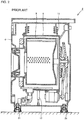
- a drum-type washing machine 1 disclosed in Patent Literature 1 includes: an outer cabinet 4 that has a base 3 at the bottom; a wash tub 6 that is accommodated in the outer cabinet 4 and is elastically supported on its lower side by anti-vibration means; and a spin tub 8 (drum) that is accommodated in the wash tub 6 and is driven to turn by drive means.
- the spin tub 8 functions as a common tub for wash, rinse, spin, and dry cycles.
- the drum-type washing machine of Patent Literature 1 has elastic leg rubbers 31 attached to the four corners of the base 3.
- a drum-type washing machine 2 of Patent Literature 2 uses a structure in which a wash tub 6 accommodating a spin tub 8 is suspended from an outer cabinet 4 by spring bodies 11.
- the drum-type washing machine 2 further has an anti-vibration damper 12 in order to reduce vibration when a dry cycle is started.
- the drum-type washing machine of Patent Literature 2 also has leg rubbers 31 under fixed legs fixed to the bottom of the outer cabinet 4.
- WO 2014/002995 A1 discloses a cushioning rubber member interposed between an accumulator for storing refrigerant to be taken up by a compressor main body and a fixing member for fixing the accumulator to the compressor main body, where the cushioning member comprises a butyl rubber.
- JP 2005 179525 A relates to a rubber composition for vibration isolation, having excellent vibration isolation performance giving stable tan ⁇ over a wide temperature region from low temperatures to high temperatures.
- the drum-type washing machine disclosed in Patent Literature 1 has a structure that is effective when expected installation locations are in buildings with low stiffness such as Japanese-style houses with wooden structures and when vibration and noise are desired to be reduced.
- the drum-type washing machine disclosed in Patent Literature 2 has a more standard structure than Patent Literature 1, and this structure is common in the world market.
- the drum-type washing machine operates with action and spin speed corresponding to each cycle (wash, rinse, spin, and dry).
- the spin speed of the drum need be increased for the spin cycle because as large a centrifugal force as possible is required to squeeze out as much water as possible.
- recent washing machines are used in the region from the start of the dry cycle (spin speed: 0 rpm) to their maximum spin speed (e.g., 1,800 rpm), and the washing machines always go through an intermediate region thereof when they are started and stopped.
- the washing machines are therefore temporarily used in this intermediate region.
- the body (outer cabinet) of the washing machine may resonate with the spin speed of the drum in a region where the spin speed of the drum matches the natural frequency of the body of the washing machine, which amplifies vibration.
- Patent Literature 1 elastic auxiliary legs are further attached between the leg rubbers in the four corners in order to restrain vibration and noise.
- the leg rubbers formed by combination of a low hardness, low resilience rubber member and a high hardness rubber member are used in order to prevent an increase in vibration in the spin cycle.
- vibration is not sufficiently reduced by the techniques disclosed in Patent Literatures 1 and 2.
- the inventors looked at the fact that anti-vibration rubbers for washing machines are used in the temperature range of -10°C to 40°C, both inclusive, and conceived that vibration can be reduced by increasing a loss factor, which is an index of vibration energy absorption, in this temperature range.
- the inventors arrived at the idea that, for washing machines with a natural frequency in a high frequency region close to their maximum spin speed, vibration can be reduced by implementing an anti-vibration rubber having a high loss factor in the high frequency region, and thus completed the invention.
- An anti-vibration rubber of the present invention is an anti-vibration rubber for washing machines.
- the anti-vibration rubber In temperature variance measurement of dynamic viscoelasticity at a frequency of 30 Hz, the anti-vibration rubber has a maximum loss factor at a temperature of -10°C to 40°C, both inclusive, and has a loss factor of 0.4 or more in an entire temperature range of -10°C to 40°C, both inclusive, at the frequency of 30 Hz.
- the anti-vibration rubber of the present invention has a maximum loss factor within the temperature range of -10°C to 40°C, both inclusive, a high loss factor can be maintained in the temperature range in which the anti-vibration rubber for washing machines is used. Since the anti-vibration rubber has a loss factor of 0.4 or more in the entire temperature range of -10°C to 40°C, both inclusive, at the frequency of 30 Hz, a high loss factor can always be maintained in a high spin speed region close to a maximum spin speed of washing machines in the temperature range in which washing machines are used. Vibration can therefore be reduced.
- the anti-vibration rubber of the present invention contains a polymer component, and the polymer component mainly contains butyl rubber.
- An anti-vibration rubber having a high loss factor in the temperature range of -10°C to 40°C, both inclusive, can thus be implemented.
- the butyl rubber be halogenated butyl rubber. This can reduce compression set.
- the anti-vibration rubber of the present invention further contain a metal oxide as a vulcanizing agent. This can reduce compression set.
- the anti-vibration rubber of the present invention further contain a tackifying resin.
- An anti-vibration rubber having a high loss factor in the temperature range of -10°C to 40°C, both inclusive, can thus be implemented.
- the anti-vibration rubber of the present invention further contain a processing aid.
- An anti-vibration rubber with improved processability can thus be implemented.
- the anti-vibration rubber of the present invention can reduce vibration.
- An anti-vibration rubber of an embodiment of the present invention is an anti-vibration rubber for washing machines.
- the anti-vibration rubber of the present embodiment is used for leg rubbers 31 of washing machines and is disposed at positions similar to those of the leg rubbers 31 of Figs. 1 and 2 .
- the anti-vibration rubber of the present embodiment is suitably used for washing machines with a natural frequency at 1,000 rpm or higher. That is, the anti-vibration rubber of the present embodiment is suitably used for washing machines including a wash tub holding therein a spin tub that turns, and an outer cabinet accommodating the wash tub and having a natural frequency at 1,000 rpm or higher.
- the anti-vibration rubber of the present embodiment has a maximum loss factor at a temperature of -10°C to 40°C, both inclusive, preferably 0°C to 40°C, both inclusive, and more preferably 5°C to 35°C, both inclusive.
- the anti-vibration rubber has a loss factor of 0.4 or more, preferably 0.45 or more, in the entire temperature range of -10°C to 40°C, both inclusive, at a frequency of 30 Hz.
- the anti-vibration rubber preferably has a loss factor of 0.5 or more, more preferably 0.6 or more, in the entire temperature range of 0°C to 40°C, both inclusive, at the frequency of 30 Hz. In view of anti-vibration properties, the higher the loss factor is, the more preferable.
- the "loss factor (tan ⁇ )" is one of evaluation indices of anti-vibration properties of anti-vibration materials, and for example, is a value that is measured according to JIS K 6394 (testing methods and small testing devices for dynamic properties of vulcanized rubber and thermoplastic rubber). A high loss factor indicates that the anti-vibration rubber has a strong ability to reduce vibration.
- Compression permanent set of the anti-vibration rubber is preferably 30% or less.
- the "compression permanent set” is a value that is measured according to JIS K 6262 (methods for determining compression set of vulcanized rubber and thermoplastic rubber at ambient, high, and low temperatures). Low compression permanent set indicates that the anti-vibration rubber has a strong ability to recover when compressed for a long period of time.
- Such an anti-vibration rubber (vulcanized anti-vibration rubber) of the present embodiment is made of a rubber composition containing a polymer component, a tackifying resin, a processing aid, a vulcanizing agent, a vulcanization accelerator, and a filler.
- the rubber composition will be described below.
- the polymer component is not particularly limited as long as it is a rubber material. However, it is preferable that the polymer component mainly contain butyl rubber. As used herein, "mainly contain” means 50 mass% or more of the total polymer component.
- butyl rubber examples include halogenated butyl rubber and regular butyl rubber, and halogenated butyl rubber is preferred.
- halogenated butyl rubber examples include chlorobutyl rubber and brominated butyl rubber, and chlorobutyl rubber is preferred.
- Either a single kind of polymer component or a mixture of two or more kinds of polymer components may be used, but it is preferable to use a single kind of halogenated rubber. That is, it is preferable that the polymer component mainly contain halogenated butyl rubber and the remainder of the polymer component be unavoidable impurities.
- the tackifying resin to be used herein preferably has a melting point in the range of 90°C to 150°C, both inclusive.
- the tackifying resin include rosin resin, terpene resin, petroleum resin, coal resin, phenolic resin, xylene resin, and coumarone resin.
- One of these resins may be used solely or a mixture of two or more of these resins may be used.
- the tackifying resin be one or more kinds of resins selected from the group consisting of rosin resin, terpene resin, petroleum resin, coal resin, phenolic resin, and xylene resin.
- the tackifying resin preferably has a melting point of 90°C or higher, more preferably 100°C or higher, even more preferably 120°C or higher, most preferably in the range of 120°C to 150°C, both inclusive.
- the content of the tackifying resin is preferably in the range of 10 to 60 parts by mass, both inclusive, more preferably 25 to 60 parts by mass, both inclusive, even more preferably 35 to 60 parts by mass, both inclusive, most preferably 40 to 60 parts by mass, both inclusive, per 100 parts by mass of the polymer component.
- the content of the tackifying resin having a melting point of 120°C to 150°C, both inclusive is preferably in the range of 40 to 60 parts by mass, both inclusive, per 100 parts by mass of the polymer component.
- the vulcanizing agent is not particularly limited.
- the vulcanizing agent include sulfur, a sulfur-based vulcanizing agent such as tetraalkylthiuram disulfide, a metal oxide, an organic peroxide, and a resin vulcanizing agent.
- One of these vulcanizing agents may be used solely or a mixture of two or more of these vulcanizing agents may be used.
- the vulcanizing agent contain a metal oxide.
- the metal oxide is not particularly limited. Examples of the metal oxide include zinc oxide and magnesium oxide, and zinc oxide is preferred.
- the content of the vulcanizing agent is preferably in the range of 1 to 50 parts by mass, both inclusive, more preferably 3 to 10 parts by mass, both inclusive, per 100 parts by mass of the polymer component.
- the vulcanization accelerator is not particularly limited.
- the vulcanization accelerator include thiazoles such as dibenzothiazyl disulfide, sulfenamides such as N-cyclohexyl-2-benzothiazole sulfenamide, thiurams such as tetramethylthiuram disulfide, and dithiocarbamates such as zinc dimethyldithiocarbamate.
- thiazoles such as dibenzothiazyl disulfide, sulfenamides such as N-cyclohexyl-2-benzothiazole sulfenamide, thiurams such as tetramethylthiuram disulfide, and dithiocarbamates such as zinc dimethyldithiocarbamate.
- One of these vulcanization accelerators may be used solely or a mixture of two or more of these vulcanization accelerators may be used.
- the content of the vulcanization accelerator is preferably in the range of
- the vulcanizing agent means a compounding agent that preferentially reacts with a rubber material.
- the vulcanization accelerator (vulcanization accelerator aid) means a compounding agent that facilitates a reaction that is caused by the vulcanizing agent and accelerates the reaction or that increases crosslink density.
- the processing aid is not particularly limited as long as it is a material that improves processability.
- Examples of the processing aid include stearic acid and amines. One of these processing aids may be used solely or a mixture of two or more of these processing aids may be used.
- the processing aid is preferably a compound having a fatty acid skeleton, more preferably stearic acid.
- the content of the processing aid is preferably in the range of 0.3 to 10 parts by mass, both inclusive, more preferably 0.3 to 5 parts by mass, both inclusive, per 100 parts by mass of the polymer component. If the content of the processing aid is less than 0.3 parts by mass, processability during kneading is not sufficiently improved. If the content of the processing aid is more than 10 parts by mass, compression set may be deteriorated.
- the filler is not particularly limited.
- Examples of the filler include carbon black, silica, calcium carbonate, talc, clay, and titanium white.
- One of these fillers may be used solely or a mixture of two or more of these fillers may be used.
- the rubber composition may further contain a softener, a plasticizer, an anti-aging agent, a reinforcing agent, etc. as appropriate in addition to the substances described above.
- a method for producing the anti-vibration rubber of the present embodiment will be described below.
- a polymer component, a tackifying resin, a vulcanizing agent, a vulcanization accelerator, and a filler are kneaded with an open roll, an internal kneading machine (e.g., Intermix, kneader, or Banbury mixer), etc. to produce an unvulcanized rubber composition.
- an internal kneading machine e.g., Intermix, kneader, or Banbury mixer
- the rubber compression is vulcanized by, e.g., compression press molding, preferably by transfer molding etc.
- the anti-vibration rubber of the present embodiment can thus be produced.
- Table 1 shows the contents of each component and the evaluation results of Samples 1 to 10.
- Table 2 specifically shows the components listed in Table 1.
- a polymer component, a tackifying resin, a filler, a vulcanizing agent, a vulcanization accelerator, and a processing aid were kneaded with a kneading machine as shown in Tables 1 and 2 to produce rubber compositions of Samples 1 to 6.
- Each of the rubber compositions of Samples 1 to 6 was then vulcanized by heating at 160°C for 30 minutes to produce anti-vibration rubbers of Samples 1 to 6.
- the anti-vibration rubbers of Samples 1 to 6 contain halogenated butyl rubber as a polymer component, a tackifying resin, a filler, a processing aid, a vulcanizing agent, and a vulcanization accelerator, and the remainder is unavoidable impurities.
- a polymer component, a filler, a vulcanizing agent, a vulcanization accelerator, a processing aid, and a softener were kneaded with a kneading machine as shown in Tables 1 and 2 to produce rubber compositions of Samples 7 to 9.
- Each of the rubber compositions of Samples 7 to 9 was then vulcanized by heating at 160°C for 30 minutes with a molding machine to produce anti-vibration rubbers of Samples 7 to 9.
- a polymer component, a tackifying resin, a filler, a vulcanizing agent, a vulcanization accelerator, and a processing aid were kneaded with a kneading machine as shown in Tables 1 and 2 to produce a rubber composition of Sample 10.
- the rubber composition of Sample 10 was then vulcanized by heating at 160°C for 30 minutes to produce an anti-vibration rubber of Sample 10.
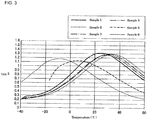
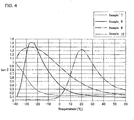
- Loss factors of the anti-vibration rubbers of Samples 1 to 10 were measured according to JIS K 6394 with a dynamic viscoelasticity measuring device Rheogel-E4000 made by UBM. The measurement was carried out under the following conditions. Test pieces of 15 mm long, 5 mm wide, and 2 mm thick were used and were strained in the vertical direction at a test interval (interval between upper and lower chucks) of 10 mm, initial strain (mean strain) of 10% (1 mm), amplitude of ⁇ 0.02% ( ⁇ 2 ⁇ m), and a frequency of 30 Hz. The results are shown in Table 1 and Figs. 3 and 4 .
- the anti-vibration rubbers of Samples 1 to 10 were used as leg rubbers of washing machines with a natural frequency at 1,400 rpm, and vibration amplitude (amount of amplitude) at 25°C was measured. The results are shown in Fig. 5 and Tables 1 and 3.
- "Anti-Vibration Properties" in Table 1 “X” indicates that the amount of amplitude at the natural frequency of the washing machine was 0.2 mm or less, “Y” indicates that the amount of amplitude at the natural frequency of the washing machine was more than 0.2 mm and 0.3 mm or less, and “Z” indicates that the amount of amplitude at the natural frequency of the washing machine was more than 0.3 mm.
- Vulcanizing Agent A I Zinc Oxide Zinc Oxide THE HONJO CHEMICAL CORPORATION NOF B Dicumylperoxide PERCUMYL D CORPORATION C Sulfur SULFAX A Tsurumi Chemical Industry Co., ltd. D Alkylphenol Formaldehyde Resin TACKIROL 201 Taoka Chemical Co., Ltd. Vulcanization Accelerator Vulcanization Accelerator Aid A Zinc Oxide Zinc Oxide THE HONJO CHEMICAL CORPORATION B ZnEDC NOCCELER Ez OUCHI SHINKO CHEMICAL INDUSTRIAL CO.,LTD.
- each of the anti-vibration rubbers of Samples 1 to 6 had a maximum loss factor at a temperature of -10°C to 40°C, both inclusive, and had a loss factor of 0.4 or more in the entire temperature range of -10°C to 40°C, both inclusive, at the frequency of 30 Hz.
- Fig. 3 in temperature variance measurement of dynamic viscoelasticity at a frequency of 30 Hz, each of the anti-vibration rubbers of Samples 1 to 6 had a maximum loss factor at a temperature of -10°C to 40°C, both inclusive, and had a loss factor of 0.4 or more in the entire temperature range of -10°C to 40°C, both inclusive, at the frequency of 30 Hz.
- each of the anti-vibration rubbers of Samples 1 to 5 had a maximum loss factor at a temperature of 0°C to 40°C, both inclusive, and had a loss factor of 0.5 or more in the entire temperature range of 0°C to 40°C, both inclusive, at the frequency of 30 Hz.
- each of the anti-vibration rubbers of Samples 7 to 9 had a maximum loss factor at a temperature of -25°C or lower, and each of the anti-vibration rubbers of Samples 7 to 10 had a loss factor of less than 0.4 in a part of the temperature range of -10°C to 40°C, both inclusive, at the frequency of 30 Hz.
- the anti-vibration rubber of Sample 10 has a high loss factor at around 20°C at the frequency of 30 Hz, but a high loss factor cannot be maintained in the low temperature range of -10° to 5°C. It was thus confirmed the anti-vibration rubber of Sample 10 had poor anti-vibration properties.
- Example 1 it was confirmed that anti-vibration rubbers having a maximum loss factor at a temperature of -10°C to 40°C, both inclusive, and having a loss factor of 0.4 or more in the entire temperature range of -10°C to 40°C, both inclusive, at the frequency of 30 Hz in temperature variance measurement of dynamic viscoelasticity at the frequency of 30 Hz can reduce vibration when attached to washing machines.
- the anti-vibration rubber of the present invention is suitably used for washing machines with a natural frequency at 1,000 rpm or higher.
- anti-vibration rubbers having a maximum loss factor at a temperature of -10°C to 40°C, both inclusive, and having a loss factor of 0.4 or more in the entire temperature range of -10°C to 40°C, both inclusive, at the frequency of 30 Hz in temperature variance measurement of dynamic viscoelasticity at the frequency of 30 Hz can be implemented by using a rubber composition containing a polymer component mainly containing butyl rubber, a tackifying resin, and a metal oxide serving as a vulcanizing agent.
- Table 4 shows the contents of each component and the evaluation results of Samples 2, 11, and 12.
- Sample 2 in Table 4 is the same as Sample 2 in Table 1.
- Components of Samples 11 and 12 are specifically shown in Table 2.
- a polymer component, a tackifying resin, a filler, a vulcanizing agent, a vulcanization accelerator, and a processing aid were kneaded with a kneading machine as shown in Tables 2 and 4 to produce a rubber composition of Sample 11.
- a polymer component, a tackifying resin, a filler, a vulcanizing agent, and a vulcanization accelerator were kneaded with a kneading machine as shown in Tables 2 and 4 to produce a rubber composition of Sample 12.
- Each of the rubber compositions of Samples 11 and 12 was then vulcanized by heating at 160°C for 30 minutes to produce anti-vibration rubbers of Samples 11 and 12.
- a sulfur-based vulcanizing agent was used as a vulcanizing agent of Sample 11, and a resin vulcanizing agent was used as a vulcanizing agent of Sample 12.
- zinc oxide was used as a vulcanization accelerator.
- each of the anti-vibration rubbers of Samples 11 and 12 had a maximum loss factor at a temperature of -10°C to 40°C, both inclusive, and had a loss factor of 0.4 or more in the entire temperature range of -10°C to 40°C, both inclusive, at the frequency of 30 Hz.
- Sample 2 containing a metal oxide as a vulcanizing agent exhibited lower compression set than Sample 11 containing a sulfur-based vulcanizing agent as a vulcanizing agent.
- Sample 2 exhibited satisfactory compression set at high temperatures, which indicates that Sample 2 has excellent long-term reliability.
- Sample 2 containing a metal oxide as a vulcanizing agent and containing stearic acid as a processing aid exhibited higher processability than Sample 12 containing a resin vulcanizing agent as a vulcanizing agent and containing no processing aid.
- Sample 1 and 3 to 6 also contain a metal oxide as a vulcanizing agent and contain stearic acid as a processing aid. Accordingly, it was found that, like Sample 2 shown in Table 4, Samples 1 and 3 to 4 also exhibited satisfactory compression set and high processability.
- Example 2 It was found from Example 2 that the use of a metal oxide as a vulcanizing agent can improve compression set in addition to providing high anti-vibration properties and that addition of a processing aid can further improve processability.
Landscapes
- Chemical & Material Sciences (AREA)
- Engineering & Computer Science (AREA)
- Health & Medical Sciences (AREA)
- Chemical Kinetics & Catalysis (AREA)
- Medicinal Chemistry (AREA)
- Polymers & Plastics (AREA)
- Organic Chemistry (AREA)
- General Engineering & Computer Science (AREA)
- Textile Engineering (AREA)
- Mechanical Engineering (AREA)
- General Chemical & Material Sciences (AREA)
- Physics & Mathematics (AREA)
- Aviation & Aerospace Engineering (AREA)
- Acoustics & Sound (AREA)
- Combustion & Propulsion (AREA)
- Vibration Prevention Devices (AREA)
- Compositions Of Macromolecular Compounds (AREA)
- Springs (AREA)
- Main Body Construction Of Washing Machines And Laundry Dryers (AREA)
- Oil, Petroleum & Natural Gas (AREA)
Claims (5)
- Machine à laver incluant un caoutchouc de pied anti-vibration, dans laquelle
dans une mesure de variance de température de viscoélasticité dynamique à une fréquence de 30 Hz, ledit caoutchouc de pied anti-vibration a un facteur de perte maximum à une température de -10°C inclus à 40°C inclus,
ledit caoutchouc de pied anti-vibration a un facteur de perte de 0,4 ou plus dans une plage de température entière de -10°C inclus à 40°C inclus, à la fréquence de 30 Hz, et
la compression rémanente dudit caoutchouc de pied anti-vibration est de 30 % ou moins,
ledit caoutchouc anti-vibration comprend un composant polymère consistant essentiellement de caoutchouc butyle, d'une résine collante et d'un oxyde métallique comme agent vulcanisant. - Machine à laver selon la revendication 1, dans laquelle
ledit pied en caoutchouc anti-vibration contient 10 inclus à 60 parts inclus en masse de ladite résine collante pour 100 parts en masse dudit composant polymère. - Machine à laver selon la revendication 1, dans laquelle
ledit caoutchouc butyle est du caoutchouc butyle halogéné. - Machine à laver selon l'une quelconque des revendications 1 à 3, dans laquelle
ledit caoutchouc anti-vibration est un caoutchouc vulcanisé. - Machine à laver selon l'une quelconque des revendications 1 à 4, dans laquelle
ledit caoutchouc anti-vibration contient en outre un auxiliaire de traitement.
Priority Applications (1)
| Application Number | Priority Date | Filing Date | Title |
|---|---|---|---|
| PL16786554T PL3290564T3 (pl) | 2015-04-30 | 2016-04-28 | Guma tłumiąca drgania |
Applications Claiming Priority (2)
| Application Number | Priority Date | Filing Date | Title |
|---|---|---|---|
| JP2015092808A JP6006828B1 (ja) | 2015-04-30 | 2015-04-30 | 防振ゴム |
| PCT/JP2016/063336 WO2016175278A1 (fr) | 2015-04-30 | 2016-04-28 | Caoutchouc amortissant les vibrations |
Publications (3)
| Publication Number | Publication Date |
|---|---|
| EP3290564A1 EP3290564A1 (fr) | 2018-03-07 |
| EP3290564A4 EP3290564A4 (fr) | 2018-09-26 |
| EP3290564B1 true EP3290564B1 (fr) | 2020-07-08 |
Family
ID=57123216
Family Applications (1)
| Application Number | Title | Priority Date | Filing Date |
|---|---|---|---|
| EP16786554.2A Active EP3290564B1 (fr) | 2015-04-30 | 2016-04-28 | Caoutchouc amortissant les vibrations |
Country Status (7)
| Country | Link |
|---|---|
| US (2) | US20170335095A1 (fr) |
| EP (1) | EP3290564B1 (fr) |
| JP (1) | JP6006828B1 (fr) |
| KR (1) | KR101814351B1 (fr) |
| CN (2) | CN109576948B (fr) |
| PL (1) | PL3290564T3 (fr) |
| WO (1) | WO2016175278A1 (fr) |
Families Citing this family (4)
| Publication number | Priority date | Publication date | Assignee | Title |
|---|---|---|---|---|
| JP6006828B1 (ja) | 2015-04-30 | 2016-10-12 | ヤマウチ株式会社 | 防振ゴム |
| EP3667696A1 (fr) * | 2018-12-14 | 2020-06-17 | ASML Netherlands B.V. | Appareil à platine approprié pour appareil d'inspection de faisceaux d'électrons |
| DE102021202353A1 (de) * | 2021-03-11 | 2022-09-15 | BSH Hausgeräte GmbH | Dämpfungsbauteil für ein Haushaltsgerät zur Pflege von Wäschestücken mit spezifischen elastischen Material, sowie Haushaltsgerät |
| CN114015169B (zh) * | 2021-11-09 | 2026-07-14 | 深圳市乐普泰科技股份有限公司 | 一种阻燃高阻尼橡胶及其阻尼减震垫的制备方法 |
Family Cites Families (13)
| Publication number | Priority date | Publication date | Assignee | Title |
|---|---|---|---|---|
| JP3743146B2 (ja) * | 1997-12-03 | 2006-02-08 | 松下電器産業株式会社 | ドラム式洗濯機 |
| KR20000012104A (ko) * | 1998-07-31 | 2000-02-25 | 야마우치 이치로 | 초저경도 고무 방진재료 |
| KR100351817B1 (ko) * | 2000-01-13 | 2002-09-11 | 엘지전자 주식회사 | 오픈케이블 수신 시스템 및 시스템 진단 방법 |
| AU2002368472A1 (en) * | 2002-12-13 | 2004-07-09 | Shishiai-Kabushikigaisha | Vibration-damping engineering plastic |
| SE525794C2 (sv) * | 2003-07-11 | 2005-04-26 | Infineon Technologies Ag | Förfarande och system för att överföra hemlig data i ett kommunikationsnätverk |
| KR20050038118A (ko) * | 2003-10-21 | 2005-04-27 | 삼성전자주식회사 | 세탁기 |
| JP2005179525A (ja) * | 2003-12-19 | 2005-07-07 | Yamauchi Corp | 防振用ゴム組成物 |
| CN1683670A (zh) * | 2004-04-12 | 2005-10-19 | 乐金电子(天津)电器有限公司 | 减振型洗衣机 |
| JP2006204715A (ja) * | 2005-01-31 | 2006-08-10 | Toshiba Corp | 洗濯機 |
| PL1918446T3 (pl) * | 2006-10-31 | 2010-07-30 | Electrolux Home Products Corp Nv | Urządzenie gospodarstwa domowego |
| CN101759938A (zh) | 2010-02-10 | 2010-06-30 | 东南大学 | 一种低频振动高耗能粘弹性材料 |
| JP5616400B2 (ja) * | 2012-06-28 | 2014-10-29 | ヤマウチ株式会社 | 緩衝ゴム部材 |
| JP6006828B1 (ja) | 2015-04-30 | 2016-10-12 | ヤマウチ株式会社 | 防振ゴム |
-
2015
- 2015-04-30 JP JP2015092808A patent/JP6006828B1/ja active Active
-
2016
- 2016-04-28 PL PL16786554T patent/PL3290564T3/pl unknown
- 2016-04-28 EP EP16786554.2A patent/EP3290564B1/fr active Active
- 2016-04-28 WO PCT/JP2016/063336 patent/WO2016175278A1/fr not_active Ceased
- 2016-04-28 US US15/525,889 patent/US20170335095A1/en not_active Abandoned
- 2016-04-28 CN CN201910086308.5A patent/CN109576948B/zh active Active
- 2016-04-28 CN CN201680002417.9A patent/CN106795682B/zh active Active
- 2016-04-28 KR KR1020177006453A patent/KR101814351B1/ko active Active
-
2018
- 2018-09-12 US US16/129,397 patent/US10266686B2/en active Active
Non-Patent Citations (1)
| Title |
|---|
| None * |
Also Published As
| Publication number | Publication date |
|---|---|
| WO2016175278A1 (fr) | 2016-11-03 |
| CN106795682B (zh) | 2021-04-09 |
| CN109576948A (zh) | 2019-04-05 |
| JP6006828B1 (ja) | 2016-10-12 |
| US20170335095A1 (en) | 2017-11-23 |
| CN106795682A (zh) | 2017-05-31 |
| KR101814351B1 (ko) | 2018-01-02 |
| US20190010320A1 (en) | 2019-01-10 |
| JP2016209073A (ja) | 2016-12-15 |
| PL3290564T3 (pl) | 2021-03-08 |
| EP3290564A4 (fr) | 2018-09-26 |
| KR20170034436A (ko) | 2017-03-28 |
| EP3290564A1 (fr) | 2018-03-07 |
| US10266686B2 (en) | 2019-04-23 |
| CN109576948B (zh) | 2021-08-27 |
Similar Documents
| Publication | Publication Date | Title |
|---|---|---|
| US10266686B2 (en) | Anti-vibration rubber | |
| JP5404716B2 (ja) | 高減衰組成物 | |
| JP5130195B2 (ja) | 高減衰ゴム組成物 | |
| JP5420224B2 (ja) | 防振ゴム用ゴム組成物、防振ゴムおよびその製造方法 | |
| US20110166276A1 (en) | Antivibration rubber composition | |
| EP3252100A1 (fr) | Composition de caoutchouc pour caoutchoucs d'amortissement des vibrations | |
| EP3290563B1 (fr) | Caoutchouc amortissant les vibrations | |
| JP2002187987A (ja) | ゴム組成物 | |
| JP7340455B2 (ja) | エチレン-プロピレン-非共役ポリエン共重合体を含有するゴム組成物 | |
| JP5130198B2 (ja) | 高減衰ゴム組成物 | |
| JP2015160903A (ja) | 高減衰組成物、制震ダンパおよび免震支承 | |
| JP4622619B2 (ja) | 防振ゴム組成物 | |
| JP3753493B2 (ja) | 高減衰ゴム支承用ゴム組成物 | |
| JPH10219033A (ja) | 高減衰支承用ゴム組成物 | |
| JP2007070373A (ja) | ランフラットタイヤ補強ライナー用ゴム組成物 | |
| JPH1134218A (ja) | 免震構造体 | |
| JP2011256279A (ja) | 高減衰組成物 | |
| JP2013043912A (ja) | 高減衰組成物およびその製造方法 | |
| JP2004307621A (ja) | 防振ゴム用ゴム組成物 | |
| JP5741040B2 (ja) | ブチルゴム組成物 | |
| JP2007063480A (ja) | ゴム組成物 | |
| JP2011038056A (ja) | ブラダー用ゴム組成物及びブラダー | |
| JP2005343926A (ja) | 減衰材料 | |
| JP2016089058A (ja) | ゴム組成物および防振ゴム |
Legal Events
| Date | Code | Title | Description |
|---|---|---|---|
| STAA | Information on the status of an ep patent application or granted ep patent |
Free format text: STATUS: THE INTERNATIONAL PUBLICATION HAS BEEN MADE |
|
| PUAI | Public reference made under article 153(3) epc to a published international application that has entered the european phase |
Free format text: ORIGINAL CODE: 0009012 |
|
| STAA | Information on the status of an ep patent application or granted ep patent |
Free format text: STATUS: REQUEST FOR EXAMINATION WAS MADE |
|
| 17P | Request for examination filed |
Effective date: 20170510 |
|
| AK | Designated contracting states |
Kind code of ref document: A1 Designated state(s): AL AT BE BG CH CY CZ DE DK EE ES FI FR GB GR HR HU IE IS IT LI LT LU LV MC MK MT NL NO PL PT RO RS SE SI SK SM TR |
|
| AX | Request for extension of the european patent |
Extension state: BA ME |
|
| DAV | Request for validation of the european patent (deleted) | ||
| DAX | Request for extension of the european patent (deleted) | ||
| RIC1 | Information provided on ipc code assigned before grant |
Ipc: C08L 23/28 20060101ALI20180815BHEP Ipc: C08L 9/02 20060101ALI20180815BHEP Ipc: D06F 37/22 20060101AFI20180815BHEP Ipc: C08L 23/16 20060101ALI20180815BHEP Ipc: F16F 1/36 20060101ALI20180815BHEP Ipc: F16F 15/08 20060101ALI20180815BHEP Ipc: D06F 37/20 20060101ALI20180815BHEP Ipc: C08L 11/00 20060101ALI20180815BHEP |
|
| A4 | Supplementary search report drawn up and despatched |
Effective date: 20180823 |
|
| STAA | Information on the status of an ep patent application or granted ep patent |
Free format text: STATUS: EXAMINATION IS IN PROGRESS |
|
| 17Q | First examination report despatched |
Effective date: 20190726 |
|
| REG | Reference to a national code |
Ref country code: DE Ref legal event code: R079 Ref document number: 602016039606 Country of ref document: DE Free format text: PREVIOUS MAIN CLASS: D06F0037220000 Ipc: D06F0039120000 |
|
| RIC1 | Information provided on ipc code assigned before grant |
Ipc: F16F 1/373 20060101ALI20191211BHEP Ipc: C08L 23/28 20060101ALI20191211BHEP Ipc: C08L 23/16 20060101ALI20191211BHEP Ipc: C08L 11/00 20060101ALI20191211BHEP Ipc: F16F 1/36 20060101ALI20191211BHEP Ipc: D06F 37/20 20060101ALI20191211BHEP Ipc: D06F 39/12 20060101AFI20191211BHEP Ipc: C08L 9/02 20060101ALI20191211BHEP Ipc: D06F 37/22 20060101ALI20191211BHEP |
|
| GRAP | Despatch of communication of intention to grant a patent |
Free format text: ORIGINAL CODE: EPIDOSNIGR1 |
|
| STAA | Information on the status of an ep patent application or granted ep patent |
Free format text: STATUS: GRANT OF PATENT IS INTENDED |
|
| INTG | Intention to grant announced |
Effective date: 20200203 |
|
| GRAS | Grant fee paid |
Free format text: ORIGINAL CODE: EPIDOSNIGR3 |
|
| GRAA | (expected) grant |
Free format text: ORIGINAL CODE: 0009210 |
|
| STAA | Information on the status of an ep patent application or granted ep patent |
Free format text: STATUS: THE PATENT HAS BEEN GRANTED |
|
| AK | Designated contracting states |
Kind code of ref document: B1 Designated state(s): AL AT BE BG CH CY CZ DE DK EE ES FI FR GB GR HR HU IE IS IT LI LT LU LV MC MK MT NL NO PL PT RO RS SE SI SK SM TR |
|
| REG | Reference to a national code |
Ref country code: CH Ref legal event code: EP Ref country code: AT Ref legal event code: REF Ref document number: 1288550 Country of ref document: AT Kind code of ref document: T Effective date: 20200715 |
|
| REG | Reference to a national code |
Ref country code: DE Ref legal event code: R096 Ref document number: 602016039606 Country of ref document: DE |
|
| REG | Reference to a national code |
Ref country code: IE Ref legal event code: FG4D |
|
| REG | Reference to a national code |
Ref country code: LT Ref legal event code: MG4D |
|
| REG | Reference to a national code |
Ref country code: AT Ref legal event code: MK05 Ref document number: 1288550 Country of ref document: AT Kind code of ref document: T Effective date: 20200708 |
|
| REG | Reference to a national code |
Ref country code: NL Ref legal event code: MP Effective date: 20200708 |
|
| PG25 | Lapsed in a contracting state [announced via postgrant information from national office to epo] |
Ref country code: FI Free format text: LAPSE BECAUSE OF FAILURE TO SUBMIT A TRANSLATION OF THE DESCRIPTION OR TO PAY THE FEE WITHIN THE PRESCRIBED TIME-LIMIT Effective date: 20200708 Ref country code: LT Free format text: LAPSE BECAUSE OF FAILURE TO SUBMIT A TRANSLATION OF THE DESCRIPTION OR TO PAY THE FEE WITHIN THE PRESCRIBED TIME-LIMIT Effective date: 20200708 Ref country code: HR Free format text: LAPSE BECAUSE OF FAILURE TO SUBMIT A TRANSLATION OF THE DESCRIPTION OR TO PAY THE FEE WITHIN THE PRESCRIBED TIME-LIMIT Effective date: 20200708 Ref country code: NO Free format text: LAPSE BECAUSE OF FAILURE TO SUBMIT A TRANSLATION OF THE DESCRIPTION OR TO PAY THE FEE WITHIN THE PRESCRIBED TIME-LIMIT Effective date: 20201008 Ref country code: GR Free format text: LAPSE BECAUSE OF FAILURE TO SUBMIT A TRANSLATION OF THE DESCRIPTION OR TO PAY THE FEE WITHIN THE PRESCRIBED TIME-LIMIT Effective date: 20201009 Ref country code: ES Free format text: LAPSE BECAUSE OF FAILURE TO SUBMIT A TRANSLATION OF THE DESCRIPTION OR TO PAY THE FEE WITHIN THE PRESCRIBED TIME-LIMIT Effective date: 20200708 Ref country code: SE Free format text: LAPSE BECAUSE OF FAILURE TO SUBMIT A TRANSLATION OF THE DESCRIPTION OR TO PAY THE FEE WITHIN THE PRESCRIBED TIME-LIMIT Effective date: 20200708 Ref country code: BG Free format text: LAPSE BECAUSE OF FAILURE TO SUBMIT A TRANSLATION OF THE DESCRIPTION OR TO PAY THE FEE WITHIN THE PRESCRIBED TIME-LIMIT Effective date: 20201008 Ref country code: PT Free format text: LAPSE BECAUSE OF FAILURE TO SUBMIT A TRANSLATION OF THE DESCRIPTION OR TO PAY THE FEE WITHIN THE PRESCRIBED TIME-LIMIT Effective date: 20201109 Ref country code: AT Free format text: LAPSE BECAUSE OF FAILURE TO SUBMIT A TRANSLATION OF THE DESCRIPTION OR TO PAY THE FEE WITHIN THE PRESCRIBED TIME-LIMIT Effective date: 20200708 |
|
| PG25 | Lapsed in a contracting state [announced via postgrant information from national office to epo] |
Ref country code: RS Free format text: LAPSE BECAUSE OF FAILURE TO SUBMIT A TRANSLATION OF THE DESCRIPTION OR TO PAY THE FEE WITHIN THE PRESCRIBED TIME-LIMIT Effective date: 20200708 Ref country code: LV Free format text: LAPSE BECAUSE OF FAILURE TO SUBMIT A TRANSLATION OF THE DESCRIPTION OR TO PAY THE FEE WITHIN THE PRESCRIBED TIME-LIMIT Effective date: 20200708 Ref country code: IS Free format text: LAPSE BECAUSE OF FAILURE TO SUBMIT A TRANSLATION OF THE DESCRIPTION OR TO PAY THE FEE WITHIN THE PRESCRIBED TIME-LIMIT Effective date: 20201108 |
|
| PG25 | Lapsed in a contracting state [announced via postgrant information from national office to epo] |
Ref country code: NL Free format text: LAPSE BECAUSE OF FAILURE TO SUBMIT A TRANSLATION OF THE DESCRIPTION OR TO PAY THE FEE WITHIN THE PRESCRIBED TIME-LIMIT Effective date: 20200708 |
|
| REG | Reference to a national code |
Ref country code: DE Ref legal event code: R097 Ref document number: 602016039606 Country of ref document: DE |
|
| PG25 | Lapsed in a contracting state [announced via postgrant information from national office to epo] |
Ref country code: SM Free format text: LAPSE BECAUSE OF FAILURE TO SUBMIT A TRANSLATION OF THE DESCRIPTION OR TO PAY THE FEE WITHIN THE PRESCRIBED TIME-LIMIT Effective date: 20200708 Ref country code: EE Free format text: LAPSE BECAUSE OF FAILURE TO SUBMIT A TRANSLATION OF THE DESCRIPTION OR TO PAY THE FEE WITHIN THE PRESCRIBED TIME-LIMIT Effective date: 20200708 Ref country code: DK Free format text: LAPSE BECAUSE OF FAILURE TO SUBMIT A TRANSLATION OF THE DESCRIPTION OR TO PAY THE FEE WITHIN THE PRESCRIBED TIME-LIMIT Effective date: 20200708 Ref country code: CZ Free format text: LAPSE BECAUSE OF FAILURE TO SUBMIT A TRANSLATION OF THE DESCRIPTION OR TO PAY THE FEE WITHIN THE PRESCRIBED TIME-LIMIT Effective date: 20200708 Ref country code: RO Free format text: LAPSE BECAUSE OF FAILURE TO SUBMIT A TRANSLATION OF THE DESCRIPTION OR TO PAY THE FEE WITHIN THE PRESCRIBED TIME-LIMIT Effective date: 20200708 |
|
| PLBE | No opposition filed within time limit |
Free format text: ORIGINAL CODE: 0009261 |
|
| STAA | Information on the status of an ep patent application or granted ep patent |
Free format text: STATUS: NO OPPOSITION FILED WITHIN TIME LIMIT |
|
| PG25 | Lapsed in a contracting state [announced via postgrant information from national office to epo] |
Ref country code: AL Free format text: LAPSE BECAUSE OF FAILURE TO SUBMIT A TRANSLATION OF THE DESCRIPTION OR TO PAY THE FEE WITHIN THE PRESCRIBED TIME-LIMIT Effective date: 20200708 |
|
| 26N | No opposition filed |
Effective date: 20210409 |
|
| PG25 | Lapsed in a contracting state [announced via postgrant information from national office to epo] |
Ref country code: SK Free format text: LAPSE BECAUSE OF FAILURE TO SUBMIT A TRANSLATION OF THE DESCRIPTION OR TO PAY THE FEE WITHIN THE PRESCRIBED TIME-LIMIT Effective date: 20200708 |
|
| PG25 | Lapsed in a contracting state [announced via postgrant information from national office to epo] |
Ref country code: SI Free format text: LAPSE BECAUSE OF FAILURE TO SUBMIT A TRANSLATION OF THE DESCRIPTION OR TO PAY THE FEE WITHIN THE PRESCRIBED TIME-LIMIT Effective date: 20200708 |
|
| PG25 | Lapsed in a contracting state [announced via postgrant information from national office to epo] |
Ref country code: MC Free format text: LAPSE BECAUSE OF FAILURE TO SUBMIT A TRANSLATION OF THE DESCRIPTION OR TO PAY THE FEE WITHIN THE PRESCRIBED TIME-LIMIT Effective date: 20200708 |
|
| GBPC | Gb: european patent ceased through non-payment of renewal fee |
Effective date: 20210428 |
|
| PG25 | Lapsed in a contracting state [announced via postgrant information from national office to epo] |
Ref country code: LU Free format text: LAPSE BECAUSE OF NON-PAYMENT OF DUE FEES Effective date: 20210428 |
|
| REG | Reference to a national code |
Ref country code: BE Ref legal event code: MM Effective date: 20210430 |
|
| PG25 | Lapsed in a contracting state [announced via postgrant information from national office to epo] |
Ref country code: GB Free format text: LAPSE BECAUSE OF NON-PAYMENT OF DUE FEES Effective date: 20210428 Ref country code: LI Free format text: LAPSE BECAUSE OF NON-PAYMENT OF DUE FEES Effective date: 20210430 Ref country code: CH Free format text: LAPSE BECAUSE OF NON-PAYMENT OF DUE FEES Effective date: 20210430 |
|
| PG25 | Lapsed in a contracting state [announced via postgrant information from national office to epo] |
Ref country code: IE Free format text: LAPSE BECAUSE OF NON-PAYMENT OF DUE FEES Effective date: 20210428 |
|
| PG25 | Lapsed in a contracting state [announced via postgrant information from national office to epo] |
Ref country code: IS Free format text: LAPSE BECAUSE OF FAILURE TO SUBMIT A TRANSLATION OF THE DESCRIPTION OR TO PAY THE FEE WITHIN THE PRESCRIBED TIME-LIMIT Effective date: 20201108 |
|
| PG25 | Lapsed in a contracting state [announced via postgrant information from national office to epo] |
Ref country code: BE Free format text: LAPSE BECAUSE OF NON-PAYMENT OF DUE FEES Effective date: 20210430 |
|
| PG25 | Lapsed in a contracting state [announced via postgrant information from national office to epo] |
Ref country code: HU Free format text: LAPSE BECAUSE OF FAILURE TO SUBMIT A TRANSLATION OF THE DESCRIPTION OR TO PAY THE FEE WITHIN THE PRESCRIBED TIME-LIMIT; INVALID AB INITIO Effective date: 20160428 |
|
| PG25 | Lapsed in a contracting state [announced via postgrant information from national office to epo] |
Ref country code: CY Free format text: LAPSE BECAUSE OF FAILURE TO SUBMIT A TRANSLATION OF THE DESCRIPTION OR TO PAY THE FEE WITHIN THE PRESCRIBED TIME-LIMIT Effective date: 20200708 |
|
| PG25 | Lapsed in a contracting state [announced via postgrant information from national office to epo] |
Ref country code: MK Free format text: LAPSE BECAUSE OF FAILURE TO SUBMIT A TRANSLATION OF THE DESCRIPTION OR TO PAY THE FEE WITHIN THE PRESCRIBED TIME-LIMIT Effective date: 20200708 |
|
| PG25 | Lapsed in a contracting state [announced via postgrant information from national office to epo] |
Ref country code: MT Free format text: LAPSE BECAUSE OF FAILURE TO SUBMIT A TRANSLATION OF THE DESCRIPTION OR TO PAY THE FEE WITHIN THE PRESCRIBED TIME-LIMIT Effective date: 20200708 |
|
| PGFP | Annual fee paid to national office [announced via postgrant information from national office to epo] |
Ref country code: IT Payment date: 20260320 Year of fee payment: 11 |
|
| PGFP | Annual fee paid to national office [announced via postgrant information from national office to epo] |
Ref country code: FR Payment date: 20260309 Year of fee payment: 11 |
|
| PGFP | Annual fee paid to national office [announced via postgrant information from national office to epo] |
Ref country code: PL Payment date: 20260311 Year of fee payment: 11 |
|
| PGFP | Annual fee paid to national office [announced via postgrant information from national office to epo] |
Ref country code: DE Payment date: 20260305 Year of fee payment: 11 |
|
| PGFP | Annual fee paid to national office [announced via postgrant information from national office to epo] |
Ref country code: TR Payment date: 20260421 Year of fee payment: 11 |