EP3257948B1 - Method for linking point of care rapid diagnostic testing results to laboratory-based methods - Google Patents
Method for linking point of care rapid diagnostic testing results to laboratory-based methods Download PDFInfo
- Publication number
- EP3257948B1 EP3257948B1 EP17165677.0A EP17165677A EP3257948B1 EP 3257948 B1 EP3257948 B1 EP 3257948B1 EP 17165677 A EP17165677 A EP 17165677A EP 3257948 B1 EP3257948 B1 EP 3257948B1
- Authority
- EP
- European Patent Office
- Prior art keywords
- sample
- poc
- test
- processed
- stabilization
- Prior art date
- Legal status (The legal status is an assumption and is not a legal conclusion. Google has not performed a legal analysis and makes no representation as to the accuracy of the status listed.)
- Active
Links
- 0 CC(CC*)=NC* Chemical compound CC(CC*)=NC* 0.000 description 1
Images

Classifications
-
- C—CHEMISTRY; METALLURGY
- C12—BIOCHEMISTRY; BEER; SPIRITS; WINE; VINEGAR; MICROBIOLOGY; ENZYMOLOGY; MUTATION OR GENETIC ENGINEERING
- C12Q—MEASURING OR TESTING PROCESSES INVOLVING ENZYMES, NUCLEIC ACIDS OR MICROORGANISMS; COMPOSITIONS OR TEST PAPERS THEREFOR; PROCESSES OF PREPARING SUCH COMPOSITIONS; CONDITION-RESPONSIVE CONTROL IN MICROBIOLOGICAL OR ENZYMOLOGICAL PROCESSES
- C12Q1/00—Measuring or testing processes involving enzymes, nucleic acids or microorganisms; Compositions therefor; Processes of preparing such compositions
- C12Q1/68—Measuring or testing processes involving enzymes, nucleic acids or microorganisms; Compositions therefor; Processes of preparing such compositions involving nucleic acids
- C12Q1/6806—Preparing nucleic acids for analysis, e.g. for polymerase chain reaction [PCR] assay
-
- C—CHEMISTRY; METALLURGY
- C12—BIOCHEMISTRY; BEER; SPIRITS; WINE; VINEGAR; MICROBIOLOGY; ENZYMOLOGY; MUTATION OR GENETIC ENGINEERING
- C12Q—MEASURING OR TESTING PROCESSES INVOLVING ENZYMES, NUCLEIC ACIDS OR MICROORGANISMS; COMPOSITIONS OR TEST PAPERS THEREFOR; PROCESSES OF PREPARING SUCH COMPOSITIONS; CONDITION-RESPONSIVE CONTROL IN MICROBIOLOGICAL OR ENZYMOLOGICAL PROCESSES
- C12Q1/00—Measuring or testing processes involving enzymes, nucleic acids or microorganisms; Compositions therefor; Processes of preparing such compositions
- C12Q1/70—Measuring or testing processes involving enzymes, nucleic acids or microorganisms; Compositions therefor; Processes of preparing such compositions involving virus or bacteriophage
-
- G—PHYSICS
- G01—MEASURING; TESTING
- G01N—INVESTIGATING OR ANALYSING MATERIALS BY DETERMINING THEIR CHEMICAL OR PHYSICAL PROPERTIES
- G01N33/00—Investigating or analysing materials by specific methods not covered by groups G01N1/00 - G01N31/00
- G01N33/48—Biological material, e.g. blood, urine; Haemocytometers
- G01N33/50—Chemical analysis of biological material, e.g. blood, urine; Testing involving biospecific ligand binding methods; Immunological testing
- G01N33/53—Immunoassay; Biospecific binding assay; Materials therefor
- G01N33/569—Immunoassay; Biospecific binding assay; Materials therefor for microorganisms, e.g. protozoa, bacteria, viruses
- G01N33/56983—Viruses
Definitions
- POC point of care
- swab specimens 100 are used almost exclusively to deliver sample into solution 110 for the rapid test 120.
- Processing and testing the sample in the physician's office and other non-laboratory sample collection sites does not contemplate a means for enabling lab-based testing such as confirmatory and/or reflex testing or other tests the require lab-based analysis.
- a physician or other administrator of a POC rapid test
- a lab-based test using the sample collected at the site (e.g. the physician's office). Therefore, an opportunity to perform lab-based testing on such samples is lost.
- Swab samples 130 collected at POC sites within a hospital or clinic are almost exclusively placed within a volume of liquid transport media 140 for transfer to the testing laboratory for remote testing.
- the diluted samples 150 may be further processed by adding them to a solution 160 for a rapid test 170.
- this method often results in a POC sample diluted 5 to 10-fold, or more, which can diminish performance of the rapid test due to sample dilution effects.
- Collection and transport of a second swab at the POC site could be used to address the need to perform laboratory-based testing, although this is clearly not the standard of practice and doubles the number of samples to be taken.
- variations in collection methods, organism load, etc. could lead to erroneous results when comparing the test results between two independently collected swab specimens. Accordingly, a system and method that addresses these problems is desired.
- FOO, H., ET AL "Laboratory test performance in young adults during influenza outbreaks at World Teen Day 2008", J. CLIN. VIR., Vol. 46, No. 4, pp. 384-386 (December 1, 2009) (Elsevier, Amsterdam, NL ) compared the performance of point of care tests (POC) for influenza with immunofluorescence assays (IFAs) and with nucleic acid tests.
- POC point of care tests
- USAID "AVIAN INFLUENZA COMMODITIES TRAINING GUIDE, March 1, 2007 describes test kits for influenza detection.
- WO 2008/096225 A2 to NATHANIEL, ANDREW HOMER (August 14, 2008 ) describes a kit for in situ detection of trace quantities of drugs on a surface.
- a method for using a sample initially collected at the point of care (POC) as source for sample for use in a laboratory that is not at the point of care (POC) comprising:
- the stabilization transport diluent stabilizes nucleic acids in the processed sample and comprises at least one buffer and at least one salt.
- the method above wherein the nucleic acid assay is polymerase chain reaction (PCR).
- the sample suspected of containing a target microorganism is selected from the group consisting of a biological sample and an environmental sample.
- a method for using a single sample suspected of containing a target microorganism for both a POC test immunoassay and a laboratory test comprising:
- the stabilization transport diluent stabilizes nucleic acids in the processed sample and comprises at least one buffer and at least one salt.
- the sample suspected of containing a target microorganism is selected from the group consisting of a biological sample and an environmental sample.
- a method for testing a single biological or environmental sample using both a POC test and a laboratory test that indicate the presence or absence of microorganisms in the sample comprising:
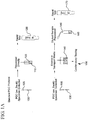
- FIG. 1A illustrates the current standard protocol for POC and lab-based testing.
- a specimen 105 is collected, for example, using a swab 100.
- Other conventional implements for collecting biological samples are contemplated for use herein. Such implements, such as a scraper or spatula are not described in detail herein and are well known to those skilled in the art.
- Specimen 105 is then processed directly by placing swab 100 with sample 105 in solution 110 for POC rapid testing 120. In this situation, any remaining sample is discarded and a new sample must be collected for additional lab-based testing such as confirmatory testing or reflex testing.
- specimen 105 on swab 130 is first diluted in transport media 140.
- a portion of the diluted transport media 140 containing specimen 105 is further processed in solution 160 for POC testing 170.
- processed specimen 105 is diluted to a level that diminishes the results of POC testing 170 as illustrated in Example 1 below.
- the remaining portion in the diluent is used for laboratory testing 150, such as subtyping and reflex testing.
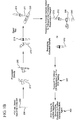
- FIGS. 1B illustrates one embodiment of the method for POC and laboratory testing of the present invention.
- Specimen 205 is collected on swab 200 and processed directly using a rapid test processing reagent 210 that is optimized for producing the maximum clinical performance for the particular immunoassay.
- the swab 200 is removed and the rapid test container 215 is closed with dispenser lid 216.
- the capped test container 215 with dispenser lid 216 is used to dispense a portion of processed sample 211 onto rapid test strip 220.
- Rapid POC testing 220 is performed using a portion of the specimen 211 processed in the rapid test processing reagent.
- the remaining portion 212 of the processed sample after POC testing is transported 300 to the clinical lab for laboratory testing 400.
- the remaining portion 212 of the processed sample after POC testing is added to transport vial 230 that contains stabilization transport diluent 240.
- the stabilization transport diluent is designed to help maintain the integrity of the sample.
- the stabilized sample is then transported to the clinical lab 300 for confirmatory or other laboratory testing 400.
- This embodiment illustrates how one sample, specimen 205, can be processed at the POC site for both POC testing and lab-based testing. This embodiment also demonstrates that a sample processed in conditions optimal for POC testing can be used for lab-based testing.
- Rapid tests There are a variety of rapid tests that are currently commercially available. Such rapid tests are not described in detail herein, but are available from a variety of sources including Becton Dickinson, Alere, Quidel, Meridian, Genzyme, etc. The invention is not limited to use with a particular rapid test.
- H1N1 positive clinical specimen collected by upper nasal swab from an individual exhibiting positive flu symptoms.
- the swab was placed in 3 ml of commercially available transport media (BDTM Universal Viral Transport Media available from Becton Dickinson) and confirmation that the sample tested positive for H1N1 was obtained.
- transport media BDTM Universal Viral Transport Media available from Becton Dickinson
- certain 50 ⁇ l aliquots of that specimen were obtained.
- One aliquot was mixed directly with a rapid test processing reagent for the immunoassay and others were further diluted (5X, 25X, 125X or 625X) with stabilization transport diluent prior to mixing with the rapid test processing reagent.
- the immunoassay test results in Table 1 demonstrate the effect of specimen dilution on rapid test performance. Samples diluted greater than 1:5 resulted in a negative rapid immunoassay test. In order to provide optimal POC clinical performance, specimen dilution should therefore be minimized or avoided. Dilution of the specimen (excluding the initial placement of the sample into solution) greater than 1:5 diminishes the possibility of detection with a rapid immunoassay test.
- the use of direct swab processing in the POC setting enhances the clinical performance of rapid immunoassays. However, standard POC testing methods using direct swab samples, as noted above, do not enable lab-based testing because of initial placement of such samples into a transport diluent.
- RNA samples were mixed with 25 ⁇ l rapid test processing reagent.
- One set of processed samples was stored at room temperature (RT) for 5 minutes prior to RNA extraction using a Qiagen Viral RNA miniprep kit according to the manufacturer's instructions. Additional sets of processed samples were stored for 4 hours at either 4°C or RT prior to RNA extraction.
- a 5 ⁇ l portion of the extracted RNA samples was then used as target for reverse transcription-polymerase chain reaction (RT-PCR) with primers specific for the matrix gene of influenza A virus.
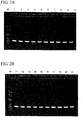
- RT-PCR results are shown in FIGS. 2A and 2B .
- Tables 2 and 3 show the processing conditions corresponding to each lane of the agarose gel of the RT-PCR results shown in FIGS 2A and 2B .
- Table 2 Lanes of Agarose Gel of FIG. 2A Processing Method Lane on Agarose Gel Molecular Weight Marker M Sample diluted 1:5, processed for rapid test, RNA extraction immediately 1 Sample diluted 1:5, processed for rapid test, stored at 4°C for 4 hrs before RNA extraction 2 Sample diluted 1:5, processed for rapid test, stored at Room Temperature for 4 hrs before RNA extraction 3 Sample diluted 1:25, processed for rapid test, RNA extraction immediately 4 Sample diluted 1:25, processed for rapid test, stored at 4°C for 4 hrs before RNA extraction 5 Sample diluted 1:25, processed for rapid test, stored at Room Temperature for 4 hrs before RNA extraction 6 Sample diluted 1:5, RNA extraction (no rapid test/no rapid test reagent) 7 Sample diluted 1:25, RNA extraction (no rapid test/no rapid test reagent) 8 Sample diluted 1:125, RNA extraction
- Figures 2A and 2B demonstrate that samples processed for rapid immunoassay testing could also be used for RNA extraction, which enabled lab-based PCR testing to be performed.
- RNA was extracted from samples diluted well below the limit of detection for the rapid test, indicating that even small amounts of viral RNA remained stable in the processed sample. Storage of the processed samples at 4°C or room temperature for up to four hours before RNA extraction also indicates the viral nucleic acid remained stable after processing.
- Comparison of PCR test results using RNA isolated from the processed samples to RNA extracted directly from the sample dilutions demonstrated that the integrity of the viral RNA was minimally affected by the processing step for the rapid test.
- RNA in processed samples was examined using two different rapid test processing reagents optimized for use in the rapid immunoassay for influenza A/B.
- Sample processing for rapid immunoassays typically involves the use of a relatively gentle lysis treatment mediated by a reagent containing various salts and detergents.
- Two different formulations for the rapid test processing reagent were examined for compatibility with the described method.
- Formulation A contained Tris buffer, NaCl, 16% detergent at a pH of 7.8.
- Formulation B contained Tris buffer, NaCl, 6% detergent at a pH of 8.0.
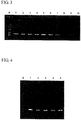
- FIG. 3 demonstrates both formulation A and formulation B are compatible with use of the processed sample for RNA extraction and PCR testing.
- Storage of the processed samples at 4°C for up to 24 hours prior to RNA extraction suggests little degradation of the viral RNA occurred in samples processed with either formulation.
- prolonged storage of the extracted samples at RT demonstrated decreased PCR performance, possibly due to viral RNA degradation over time (lanes 8, 10).
- stabilization transport diluents Two potential stabilization transport diluents were examined in an attempt to increase stability of viral RNA in samples processed for POC testing.
- the stabilization transport diluent was designed to help maintain the integrity of nucleic acids present in the sample.
- Various formulations are possible where optimal pH conditions, buffer types, salts, chelating agents, enzyme inhibitors, nucleic acid binding proteins, chaotropes, etc. may be employed.
- Stabilization transport diluent A contained Qiagen viral RNA lysis/binding buffer.
- Stabilization transport diluent B contained 6 M guanidine thiocyanate + 20 mM EDTA. Aliquots of an H1N1 positive clinical specimen were processed using rapid test processing reagent B.
- the processed samples were immediately used for RNA extraction or mixed with one of the two different stabilization transport diluents and stored at 4°C for up to six days prior to RNA extraction. A portion of the extracted RNA samples was then used as target for RT-PCR with primers specific for the matrix gene of the influenza A virus.
- the RT-PCR results are shown in FIG. 4 .
- Table 5 shows the processing conditions corresponding to each lane of the agarose gel of the RT-PCR results shown in FIG. 4 .
- Table 5 Lanes of Agarose Gel of FIG. 4.
- RNA extraction immediately 1 Sample processed for rapid test, mixed with stabilization transport diluent A, stored at 4°C for 3 days before RNA extraction 2 Sample processed for rapid test, mixed with stabilization transport diluent B, stored at 4°C for 3 days before RNA extraction 3 Sample processed for rapid test, mixed with stabilization transport diluent A, stored at 4°C for 6 days before RNA extraction 4 Sample processed for rapid test, mixed with stabilization transport diluent B, stored at 4°C for 6 days before RNA extraction 5
- RNA extracted from samples processed for POC testing that had been stored for up to 6 days at 4°C was extracted from samples processed for POC testing that had been stored for up to 6 days at 4°C. Comparing the PCR results from the stored samples (lanes 2-5) to those obtained using RNA extracted immediately after processing (lane 1) suggest little, if any, degradation of the viral RNA occurred over time in the processed samples treated with either stabilization transport diluent.
- a stabilization transport diluent was used in an attempt to increase stability of the viral RNA in samples processed for POC testing, particularly when samples are stored for extended periods of time at room temperature.
- Aliquots of an H1N1 positive clinical specimen were processed using rapid test processing reagent formulation B described in Example 3, and the processed samples were immediately used for RNA extraction, or mixed with stabilization transport diluent A and stored at RT and 4°C for up to seven days prior to RNA extraction.
- a portion of the extracted RNA samples was then used as target for RT-PCR with primers specific for the matrix gene of the influenza A virus.
- the PCR results are shown in FIG. 5 .
- Table 6 shows the processing conditions corresponding to each lane of the agarose gel of the RT-PCR results shown in FIG. 5 .
- Table 6 Lanes of Agarose Gel of FIG. 5. Processing Method Lane on Agarose Gel Molecular Weight Marker M Sample processed for rapid test, RNA extraction immediately 1 Sample processed for rapid test, mixed with stabilization transport diluent, stored at 4°C for 3 days before RNA extraction 2 Sample processed for rapid test, mixed with stabilization transport diluent, stored at 4°C for 4 days before RNA extraction 3 Sample processed for rapid test, mixed with stabilization transport diluent, stored at 4°C for 5 days before RNA extraction 4 Sample processed for rapid test, mixed with stabilization transport diluent, stored at 4°C for 6 days before RNA extraction 5 Sample processed for rapid test, mixed with stabilization transport diluent, stored at 4°C for 7 days before RNA extraction 6 Sample processed for rapid test, mixed with stabilization transport diluent, stored at room temperature for 1 day before RNA extraction 7 Sample processed for rapid test, mixed with stabilization transport diluent, stored at room temperature for 2 days before RNA extraction 8 Sample processed for rapid test, mixed with
- FIG. 5 demonstrates that intact viral RNA can be extracted from processed samples mixed with the stabilization transport diluent after storage of the samples for up to 7 days at 4°C or up to 4 days at room temperature.
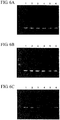
- Stabilization transport diluent B was used to examine stabilization properties across different influenza strains: A: Influenza A strain A/Solomon Island/03/06 (H1N1); B: Influenza A strain A/Wisconsin/67/2005 (H3N2); and C: Influenza B strain B/Jiangsu/10/2003.
- Table 7 shows the processing conditions corresponding to each lane of the agarose gel of the RT-PCR results shown in FIG. 6 .
- FIG. 6 demonstrates that intact viral RNA from various strains can be extracted from processed samples mixed with the stabilization transport diluent after storage of the samples for up to 7 days at 4°C or up to 14 days at -20°C.
- intact viral RNA was extracted after storage under all conditions.
- FIG. 1B Utility of one embodiment of the method of the present invention illustrated in FIG. 1B was demonstrated in a clinical trial performed during the 2010-2011 influenza season.
- Paired nasopharyngeal (NPS) or upper nasal swabs (NS) were collected from patients enrolled in the POC influenza study.
- One swab was processed directly for use in an investigational rapid immunoassay at the POC site and then a portion (3 to 5 drops) of the remaining sample was mixed with the stabilization transport diluent B (200 ⁇ l) and stored at either 2 to 8°C for up to 5 days or -20°C for up to two weeks prior to being sent to a laboratory for PCR analysis.
- the second swab was placed in 3 ml of viral transport media and sent directly to a clinical laboratory for PCR testing.
- RNA samples Five microliters of extracted RNA was used for PCR amplification using a Cepheid SmartCycler II instrument according to the assay procedure described in the Prodesse ProFlu+ package insert. Interpretation of PCR results for specimens and controls was determined using the Cepheid SmartCycler Dx software according to the protocols outlined in the Prodesse ProFlu+ package insert. The positive and negative percent agreement between results obtained from the POC stabilized sample (POC PCR) and the swab-in-transport media sample (Reference PCR) are shown below in Table 7.
- Table 7 demonstrates that samples can be processed for rapid POC testing and a portion of that processed sample can be used for lab-based testing such as PCR. Greater than 91.9% agreement was obtained in various viral strains when comparing a sample that was directly processed for PCR to a sample that was first processed under conditions optimal for rapid POC testing and then subsequently processed for PCR.
Landscapes
- Health & Medical Sciences (AREA)
- Life Sciences & Earth Sciences (AREA)
- Chemical & Material Sciences (AREA)
- Engineering & Computer Science (AREA)
- Organic Chemistry (AREA)
- Immunology (AREA)
- Analytical Chemistry (AREA)
- Molecular Biology (AREA)
- Zoology (AREA)
- Wood Science & Technology (AREA)
- Proteomics, Peptides & Aminoacids (AREA)
- Biochemistry (AREA)
- General Health & Medical Sciences (AREA)
- Biotechnology (AREA)
- Microbiology (AREA)
- Physics & Mathematics (AREA)
- Virology (AREA)
- Hematology (AREA)
- Biomedical Technology (AREA)
- Urology & Nephrology (AREA)
- Bioinformatics & Cheminformatics (AREA)
- General Engineering & Computer Science (AREA)
- Genetics & Genomics (AREA)
- Biophysics (AREA)
- Chemical Kinetics & Catalysis (AREA)
- Tropical Medicine & Parasitology (AREA)
- Cell Biology (AREA)
- Food Science & Technology (AREA)
- Medicinal Chemistry (AREA)
- General Physics & Mathematics (AREA)
- Pathology (AREA)
- Measuring Or Testing Involving Enzymes Or Micro-Organisms (AREA)
- Investigating Or Analysing Biological Materials (AREA)
- Sampling And Sample Adjustment (AREA)
Applications Claiming Priority (3)
| Application Number | Priority Date | Filing Date | Title |
|---|---|---|---|
| US36607610P | 2010-07-20 | 2010-07-20 | |
| EP11810337.3A EP2596121A4 (en) | 2010-07-20 | 2011-07-20 | METHOD FOR CONNECTING THE RESULTS OF DIAGNOSTIC TESTS TO A POINT OF CARE WITH LAB BASED METHODS |
| PCT/US2011/044674 WO2012012527A2 (en) | 2010-07-20 | 2011-07-20 | Method for linking point of care rapid diagnostic testing results to laboratory-based methods |
Related Parent Applications (1)
| Application Number | Title | Priority Date | Filing Date |
|---|---|---|---|
| EP11810337.3A Division EP2596121A4 (en) | 2010-07-20 | 2011-07-20 | METHOD FOR CONNECTING THE RESULTS OF DIAGNOSTIC TESTS TO A POINT OF CARE WITH LAB BASED METHODS |
Publications (2)
| Publication Number | Publication Date |
|---|---|
| EP3257948A1 EP3257948A1 (en) | 2017-12-20 |
| EP3257948B1 true EP3257948B1 (en) | 2019-10-02 |
Family
ID=45497436
Family Applications (2)
| Application Number | Title | Priority Date | Filing Date |
|---|---|---|---|
| EP17165677.0A Active EP3257948B1 (en) | 2010-07-20 | 2011-07-20 | Method for linking point of care rapid diagnostic testing results to laboratory-based methods |
| EP11810337.3A Ceased EP2596121A4 (en) | 2010-07-20 | 2011-07-20 | METHOD FOR CONNECTING THE RESULTS OF DIAGNOSTIC TESTS TO A POINT OF CARE WITH LAB BASED METHODS |
Family Applications After (1)
| Application Number | Title | Priority Date | Filing Date |
|---|---|---|---|
| EP11810337.3A Ceased EP2596121A4 (en) | 2010-07-20 | 2011-07-20 | METHOD FOR CONNECTING THE RESULTS OF DIAGNOSTIC TESTS TO A POINT OF CARE WITH LAB BASED METHODS |
Country Status (8)
| Country | Link |
|---|---|
| US (1) | US9945855B2 (enExample) |
| EP (2) | EP3257948B1 (enExample) |
| JP (1) | JP5911861B2 (enExample) |
| CN (2) | CN103069002A (enExample) |
| AU (1) | AU2011282214B2 (enExample) |
| CA (1) | CA2805486C (enExample) |
| ES (1) | ES2761654T3 (enExample) |
| WO (1) | WO2012012527A2 (enExample) |
Families Citing this family (10)
| Publication number | Priority date | Publication date | Assignee | Title |
|---|---|---|---|---|
| WO2013039931A1 (en) * | 2011-09-13 | 2013-03-21 | Monk Akarshala Design Private Limited | Learning facility management in a modular learning system |
| AU2013246418B2 (en) | 2012-04-13 | 2017-02-23 | Becton, Dickinson And Company | Reflex testing of samples using residual materials from a prior test |
| WO2015019195A2 (en) * | 2013-08-07 | 2015-02-12 | Xagenic Inc. | Systems, devices, and methods for deploying onboard reagents in a diagnostic device |
| GB201703383D0 (en) | 2017-03-02 | 2017-04-19 | Gargle Tech Ltd | Testing for particulates |
| US11262367B2 (en) | 2017-12-15 | 2022-03-01 | Evanostics Llc | Optical reader for analyte testing |
| EP3846939B1 (en) | 2018-09-05 | 2023-05-03 | Hero Scientific Ltd | Testing for particulates |
| US11864868B2 (en) * | 2018-12-12 | 2024-01-09 | Morgan State University | Modular, portable and rapidly deployable system for health assessment |
| US12066383B2 (en) | 2018-12-18 | 2024-08-20 | Aspida Dx Inc. | Optical analyte detection |
| EP4118412A1 (en) | 2020-03-11 | 2023-01-18 | Hero Scientific Ltd | Testing devices |
| CA3202405A1 (en) | 2021-01-06 | 2022-07-14 | Zvi Feldman | Filtration sampling devices |
Family Cites Families (36)
| Publication number | Priority date | Publication date | Assignee | Title |
|---|---|---|---|---|
| BE791340A (fr) * | 1972-01-06 | 1973-03-01 | Becton Dickinson Co | Nouveaux procede et appareil de prelevement de culture et d'identification de micro-organismes des humeurs |
| US4666850A (en) * | 1983-10-28 | 1987-05-19 | Becton, Dickinson And Company | Microbial pathogen detecting system and process |
| US4693972A (en) * | 1984-01-16 | 1987-09-15 | Becton, Dickinson And Company | Composition and method for rapid detection of microorganisms in clinical samples |
| US4618576A (en) * | 1984-02-27 | 1986-10-21 | Becton Dickinson And Company | Diagnostic test for Streptococcus A |
| US5091316A (en) * | 1988-06-09 | 1992-02-25 | Becton, Dickinson And Company | Biological sample collection and transport device |
| US5084005A (en) * | 1988-07-13 | 1992-01-28 | Becton, Dickinson And Company | Swab for collection of biological samples |
| US5700636A (en) * | 1990-10-19 | 1997-12-23 | Becton Dickinson And Company | Methods for selectively detecting microorganisms associated with vaginal infections in complex biological samples |
| US5747265A (en) | 1992-10-30 | 1998-05-05 | T Cell Diagnostics, Inc. | Method for measuring the amount of a cell-associated molecule |
| US6514461B1 (en) * | 1997-02-14 | 2003-02-04 | Escreen, Inc. | System for automatically testing a fluid specimen |
| US6267722B1 (en) * | 1998-02-03 | 2001-07-31 | Adeza Biomedical Corporation | Point of care diagnostic systems |
| US6394952B1 (en) * | 1998-02-03 | 2002-05-28 | Adeza Biomedical Corporation | Point of care diagnostic systems |
| US6602718B1 (en) * | 2000-11-08 | 2003-08-05 | Becton, Dickinson And Company | Method and device for collecting and stabilizing a biological sample |
| CN100386441C (zh) * | 2000-11-08 | 2008-05-07 | 贝克顿迪肯森公司 | 收集和稳定生物样品的装置、抑制体外基因诱导的方法和制备全血样品的方法 |
| US20040176705A1 (en) * | 2003-03-04 | 2004-09-09 | Stevens Timothy A. | Cartridge having an integrated collection element for point of care system |
| US7662562B2 (en) * | 2004-08-10 | 2010-02-16 | Becton, Dickinson And Company | Method for rapid identification of microorganisms |
| JP2006084351A (ja) * | 2004-09-16 | 2006-03-30 | Denka Seiken Co Ltd | 検体浮遊液組成物、キット及び検査方法 |
| US20060246423A1 (en) | 2005-02-10 | 2006-11-02 | Adelson Martin E | Method and kit for the collection and maintenance of the detectability of a plurality of microbiological species in a single gynecological sample |
| US20060286557A1 (en) * | 2005-06-15 | 2006-12-21 | Basehore Lee S | Combined lysis and PCR buffer |
| GB0601302D0 (en) | 2006-01-23 | 2006-03-01 | Semikhodskii Andrei | Diagnostic methods and apparatus |
| CA2659773A1 (en) | 2006-02-21 | 2007-08-30 | Nanogen, Inc. | Methods and compositions for analyte detection |
| US8084443B2 (en) * | 2007-10-01 | 2011-12-27 | Longhorn Vaccines & Diagnostics Llc | Biological specimen collection and transport system and methods of use |
| US20090098527A1 (en) * | 2006-09-12 | 2009-04-16 | Fischer Gerald W | Biological organism identification product and methods |
| US8097419B2 (en) * | 2006-09-12 | 2012-01-17 | Longhorn Vaccines & Diagnostics Llc | Compositions and method for rapid, real-time detection of influenza A virus (H1N1) swine 2009 |
| US8080645B2 (en) * | 2007-10-01 | 2011-12-20 | Longhorn Vaccines & Diagnostics Llc | Biological specimen collection/transport compositions and methods |
| US7989185B2 (en) * | 2006-11-29 | 2011-08-02 | The Board Of Trustees Of The Leland Stanford Junior University | Rapid, informative diagnostic assay for influenza viruses including H5N1 |
| JP5431644B2 (ja) | 2006-12-28 | 2014-03-05 | シスメックス株式会社 | 呼吸器感染症の検査方法 |
| WO2008096225A2 (en) | 2007-02-05 | 2008-08-14 | Andrew Homer Nathaniel | Drug detection kit and method |
| US7748283B2 (en) * | 2007-02-16 | 2010-07-06 | Whatman, Inc. | Controlled transfer biological sample collection devices and methods of using such devices |
| TW200844441A (en) * | 2007-05-11 | 2008-11-16 | Animal Health Res Inst Council Of Agriculture | Method of testing foot–and- mouth disease (FMD) by using immunochromatographic |
| EP2247753B1 (en) * | 2008-02-01 | 2014-06-25 | Siemens Healthcare Diagnostics Inc. | Urine transport medium |
| US8802370B2 (en) | 2008-05-23 | 2014-08-12 | Strand Diagnostics, Llc | Method and apparatus to minimize diagnostic and other errors due to transposition of biological specimens among subjects |
| WO2010064628A1 (ja) | 2008-12-05 | 2010-06-10 | オリンパス株式会社 | 核酸含有試料の調製方法、試料調製用溶液、及び核酸の解析方法 |
| USD655424S1 (en) * | 2009-11-18 | 2012-03-06 | Becton, Dickinson And Company | Cassette for a medical device |
| US20120003710A1 (en) * | 2010-02-19 | 2012-01-05 | Barbara Dawn Leinweber | Isolation of Biomolecules from Biological Samples |
| US10023903B2 (en) * | 2011-08-04 | 2018-07-17 | The Regents Of The University Of California | Saliva collection, processing, stabilization, and storage method |
| US8603769B2 (en) * | 2011-10-07 | 2013-12-10 | Becton, Dickinson And Company | Method for direct and rapid identification of microorganisms and antimicrobial susceptibility testing from positive blood cultures |
-
2011
- 2011-07-20 WO PCT/US2011/044674 patent/WO2012012527A2/en not_active Ceased
- 2011-07-20 JP JP2013520836A patent/JP5911861B2/ja active Active
- 2011-07-20 US US13/810,948 patent/US9945855B2/en active Active
- 2011-07-20 ES ES17165677T patent/ES2761654T3/es active Active
- 2011-07-20 CN CN201180039453XA patent/CN103069002A/zh active Pending
- 2011-07-20 CA CA2805486A patent/CA2805486C/en active Active
- 2011-07-20 CN CN201710902140.1A patent/CN107663553A/zh active Pending
- 2011-07-20 EP EP17165677.0A patent/EP3257948B1/en active Active
- 2011-07-20 AU AU2011282214A patent/AU2011282214B2/en active Active
- 2011-07-20 EP EP11810337.3A patent/EP2596121A4/en not_active Ceased
Non-Patent Citations (1)
| Title |
|---|
| None * |
Also Published As
| Publication number | Publication date |
|---|---|
| CA2805486A1 (en) | 2012-01-26 |
| EP2596121A2 (en) | 2013-05-29 |
| WO2012012527A3 (en) | 2012-07-05 |
| US20130216998A1 (en) | 2013-08-22 |
| EP3257948A1 (en) | 2017-12-20 |
| JP5911861B2 (ja) | 2016-04-27 |
| WO2012012527A8 (en) | 2013-03-14 |
| AU2011282214B2 (en) | 2015-07-23 |
| US9945855B2 (en) | 2018-04-17 |
| CN107663553A (zh) | 2018-02-06 |
| EP2596121A4 (en) | 2013-12-18 |
| JP2013533487A (ja) | 2013-08-22 |
| CA2805486C (en) | 2018-03-06 |
| WO2012012527A2 (en) | 2012-01-26 |
| AU2011282214A1 (en) | 2013-02-07 |
| ES2761654T3 (es) | 2020-05-20 |
| CN103069002A (zh) | 2013-04-24 |
Similar Documents
| Publication | Publication Date | Title |
|---|---|---|
| EP3257948B1 (en) | Method for linking point of care rapid diagnostic testing results to laboratory-based methods | |
| RU2595421C2 (ru) | Композиции и способы для обнаружения и идентификации последовательностей нуклеиновых кислот в биологических образцах | |
| US8097419B2 (en) | Compositions and method for rapid, real-time detection of influenza A virus (H1N1) swine 2009 | |
| EP1330553B1 (en) | A kit for detecting non-pathogenic or pathogenic influenza a subtype h5 virus | |
| TWI631217B (zh) | 生物體識別產品及方法 | |
| Mota et al. | Recombinase polymerase amplification in the molecular diagnosis of microbiological targets and its applications | |
| Matsuzaki et al. | A nationwide epidemic of influenza C virus infection in Japan in 2004 | |
| US9481912B2 (en) | Compositions and methods for detecting and identifying nucleic acid sequences in biological samples | |
| US11041216B2 (en) | Compositions and methods for detecting and quantifying nucleic acid sequences in blood samples | |
| Truong et al. | Unexpected cases in field diagnosis of African swine fever virus in Vietnam: The needs consideration when performing molecular diagnostic tests | |
| IE20210233A1 (en) | Compositions and methods for screening biological samples | |
| CN117157412A (zh) | 用于储存生物样品的组合物和方法 | |
| WO2017091809A1 (en) | Compositions and methods for detecting and quantifying nucleic acid sequences in blood samples | |
| WO2021248053A2 (en) | Point-of-care sars-cov-2 virus diagnostic device and methods of use thereof | |
| JP2000342261A (ja) | ブルクホルデリア・セパシアの検出法及び検出用キット | |
| JP2010207157A (ja) | 核酸含有リポソームを用いた遺伝子解析方法及び遺伝子解析キット | |
| CN116940678A (zh) | 用于RT-qPCR检测的SARS-CoV-2检测试剂盒 | |
| de Mello | The role of laboratory diagnosis of influenza | |
| KR20190072994A (ko) | 세타리아황색위축바이러스 감염 진단용 프라이머 세트 | |
| Ojuromi | Molecular Studies on Microsporidia Species and their Prevalence in Lagos, Nigeria |
Legal Events
| Date | Code | Title | Description |
|---|---|---|---|
| PUAI | Public reference made under article 153(3) epc to a published international application that has entered the european phase |
Free format text: ORIGINAL CODE: 0009012 |
|
| STAA | Information on the status of an ep patent application or granted ep patent |
Free format text: STATUS: THE APPLICATION HAS BEEN PUBLISHED |
|
| AC | Divisional application: reference to earlier application |
Ref document number: 2596121 Country of ref document: EP Kind code of ref document: P |
|
| AK | Designated contracting states |
Kind code of ref document: A1 Designated state(s): AL AT BE BG CH CY CZ DE DK EE ES FI FR GB GR HR HU IE IS IT LI LT LU LV MC MK MT NL NO PL PT RO RS SE SI SK SM TR |
|
| STAA | Information on the status of an ep patent application or granted ep patent |
Free format text: STATUS: REQUEST FOR EXAMINATION WAS MADE |
|
| STAA | Information on the status of an ep patent application or granted ep patent |
Free format text: STATUS: EXAMINATION IS IN PROGRESS |
|
| 17P | Request for examination filed |
Effective date: 20180620 |
|
| RBV | Designated contracting states (corrected) |
Designated state(s): AL AT BE BG CH CY CZ DE DK EE ES FI FR GB GR HR HU IE IS IT LI LT LU LV MC MK MT NL NO PL PT RO RS SE SI SK SM TR |
|
| 17Q | First examination report despatched |
Effective date: 20180716 |
|
| GRAP | Despatch of communication of intention to grant a patent |
Free format text: ORIGINAL CODE: EPIDOSNIGR1 |
|
| STAA | Information on the status of an ep patent application or granted ep patent |
Free format text: STATUS: GRANT OF PATENT IS INTENDED |
|
| INTG | Intention to grant announced |
Effective date: 20190415 |
|
| GRAS | Grant fee paid |
Free format text: ORIGINAL CODE: EPIDOSNIGR3 |
|
| GRAA | (expected) grant |
Free format text: ORIGINAL CODE: 0009210 |
|
| STAA | Information on the status of an ep patent application or granted ep patent |
Free format text: STATUS: THE PATENT HAS BEEN GRANTED |
|
| AC | Divisional application: reference to earlier application |
Ref document number: 2596121 Country of ref document: EP Kind code of ref document: P |
|
| AK | Designated contracting states |
Kind code of ref document: B1 Designated state(s): AL AT BE BG CH CY CZ DE DK EE ES FI FR GB GR HR HU IE IS IT LI LT LU LV MC MK MT NL NO PL PT RO RS SE SI SK SM TR |
|
| REG | Reference to a national code |
Ref country code: GB Ref legal event code: FG4D |
|
| REG | Reference to a national code |
Ref country code: CH Ref legal event code: EP Ref country code: AT Ref legal event code: REF Ref document number: 1186205 Country of ref document: AT Kind code of ref document: T Effective date: 20191015 |
|
| REG | Reference to a national code |
Ref country code: DE Ref legal event code: R096 Ref document number: 602011062544 Country of ref document: DE |
|
| REG | Reference to a national code |
Ref country code: IE Ref legal event code: FG4D |
|
| REG | Reference to a national code |
Ref country code: NL Ref legal event code: MP Effective date: 20191002 |
|
| REG | Reference to a national code |
Ref country code: LT Ref legal event code: MG4D |
|
| REG | Reference to a national code |
Ref country code: AT Ref legal event code: MK05 Ref document number: 1186205 Country of ref document: AT Kind code of ref document: T Effective date: 20191002 |
|
| PG25 | Lapsed in a contracting state [announced via postgrant information from national office to epo] |
Ref country code: NL Free format text: LAPSE BECAUSE OF FAILURE TO SUBMIT A TRANSLATION OF THE DESCRIPTION OR TO PAY THE FEE WITHIN THE PRESCRIBED TIME-LIMIT Effective date: 20191002 Ref country code: AT Free format text: LAPSE BECAUSE OF FAILURE TO SUBMIT A TRANSLATION OF THE DESCRIPTION OR TO PAY THE FEE WITHIN THE PRESCRIBED TIME-LIMIT Effective date: 20191002 Ref country code: BG Free format text: LAPSE BECAUSE OF FAILURE TO SUBMIT A TRANSLATION OF THE DESCRIPTION OR TO PAY THE FEE WITHIN THE PRESCRIBED TIME-LIMIT Effective date: 20200102 Ref country code: FI Free format text: LAPSE BECAUSE OF FAILURE TO SUBMIT A TRANSLATION OF THE DESCRIPTION OR TO PAY THE FEE WITHIN THE PRESCRIBED TIME-LIMIT Effective date: 20191002 Ref country code: GR Free format text: LAPSE BECAUSE OF FAILURE TO SUBMIT A TRANSLATION OF THE DESCRIPTION OR TO PAY THE FEE WITHIN THE PRESCRIBED TIME-LIMIT Effective date: 20200103 Ref country code: NO Free format text: LAPSE BECAUSE OF FAILURE TO SUBMIT A TRANSLATION OF THE DESCRIPTION OR TO PAY THE FEE WITHIN THE PRESCRIBED TIME-LIMIT Effective date: 20200102 Ref country code: LT Free format text: LAPSE BECAUSE OF FAILURE TO SUBMIT A TRANSLATION OF THE DESCRIPTION OR TO PAY THE FEE WITHIN THE PRESCRIBED TIME-LIMIT Effective date: 20191002 Ref country code: PL Free format text: LAPSE BECAUSE OF FAILURE TO SUBMIT A TRANSLATION OF THE DESCRIPTION OR TO PAY THE FEE WITHIN THE PRESCRIBED TIME-LIMIT Effective date: 20191002 Ref country code: PT Free format text: LAPSE BECAUSE OF FAILURE TO SUBMIT A TRANSLATION OF THE DESCRIPTION OR TO PAY THE FEE WITHIN THE PRESCRIBED TIME-LIMIT Effective date: 20200203 Ref country code: SE Free format text: LAPSE BECAUSE OF FAILURE TO SUBMIT A TRANSLATION OF THE DESCRIPTION OR TO PAY THE FEE WITHIN THE PRESCRIBED TIME-LIMIT Effective date: 20191002 Ref country code: LV Free format text: LAPSE BECAUSE OF FAILURE TO SUBMIT A TRANSLATION OF THE DESCRIPTION OR TO PAY THE FEE WITHIN THE PRESCRIBED TIME-LIMIT Effective date: 20191002 |
|
| REG | Reference to a national code |
Ref country code: ES Ref legal event code: FG2A Ref document number: 2761654 Country of ref document: ES Kind code of ref document: T3 Effective date: 20200520 |
|
| PG25 | Lapsed in a contracting state [announced via postgrant information from national office to epo] |
Ref country code: HR Free format text: LAPSE BECAUSE OF FAILURE TO SUBMIT A TRANSLATION OF THE DESCRIPTION OR TO PAY THE FEE WITHIN THE PRESCRIBED TIME-LIMIT Effective date: 20191002 Ref country code: RS Free format text: LAPSE BECAUSE OF FAILURE TO SUBMIT A TRANSLATION OF THE DESCRIPTION OR TO PAY THE FEE WITHIN THE PRESCRIBED TIME-LIMIT Effective date: 20191002 Ref country code: IS Free format text: LAPSE BECAUSE OF FAILURE TO SUBMIT A TRANSLATION OF THE DESCRIPTION OR TO PAY THE FEE WITHIN THE PRESCRIBED TIME-LIMIT Effective date: 20200224 Ref country code: CZ Free format text: LAPSE BECAUSE OF FAILURE TO SUBMIT A TRANSLATION OF THE DESCRIPTION OR TO PAY THE FEE WITHIN THE PRESCRIBED TIME-LIMIT Effective date: 20191002 |
|
| PG25 | Lapsed in a contracting state [announced via postgrant information from national office to epo] |
Ref country code: AL Free format text: LAPSE BECAUSE OF FAILURE TO SUBMIT A TRANSLATION OF THE DESCRIPTION OR TO PAY THE FEE WITHIN THE PRESCRIBED TIME-LIMIT Effective date: 20191002 |
|
| REG | Reference to a national code |
Ref country code: DE Ref legal event code: R097 Ref document number: 602011062544 Country of ref document: DE |
|
| PG2D | Information on lapse in contracting state deleted |
Ref country code: IS |
|
| PG25 | Lapsed in a contracting state [announced via postgrant information from national office to epo] |
Ref country code: RO Free format text: LAPSE BECAUSE OF FAILURE TO SUBMIT A TRANSLATION OF THE DESCRIPTION OR TO PAY THE FEE WITHIN THE PRESCRIBED TIME-LIMIT Effective date: 20191002 Ref country code: DK Free format text: LAPSE BECAUSE OF FAILURE TO SUBMIT A TRANSLATION OF THE DESCRIPTION OR TO PAY THE FEE WITHIN THE PRESCRIBED TIME-LIMIT Effective date: 20191002 Ref country code: EE Free format text: LAPSE BECAUSE OF FAILURE TO SUBMIT A TRANSLATION OF THE DESCRIPTION OR TO PAY THE FEE WITHIN THE PRESCRIBED TIME-LIMIT Effective date: 20191002 Ref country code: IS Free format text: LAPSE BECAUSE OF FAILURE TO SUBMIT A TRANSLATION OF THE DESCRIPTION OR TO PAY THE FEE WITHIN THE PRESCRIBED TIME-LIMIT Effective date: 20200202 |
|
| PLBE | No opposition filed within time limit |
Free format text: ORIGINAL CODE: 0009261 |
|
| STAA | Information on the status of an ep patent application or granted ep patent |
Free format text: STATUS: NO OPPOSITION FILED WITHIN TIME LIMIT |
|
| PG25 | Lapsed in a contracting state [announced via postgrant information from national office to epo] |
Ref country code: SK Free format text: LAPSE BECAUSE OF FAILURE TO SUBMIT A TRANSLATION OF THE DESCRIPTION OR TO PAY THE FEE WITHIN THE PRESCRIBED TIME-LIMIT Effective date: 20191002 Ref country code: SM Free format text: LAPSE BECAUSE OF FAILURE TO SUBMIT A TRANSLATION OF THE DESCRIPTION OR TO PAY THE FEE WITHIN THE PRESCRIBED TIME-LIMIT Effective date: 20191002 |
|
| 26N | No opposition filed |
Effective date: 20200703 |
|
| PG25 | Lapsed in a contracting state [announced via postgrant information from national office to epo] |
Ref country code: SI Free format text: LAPSE BECAUSE OF FAILURE TO SUBMIT A TRANSLATION OF THE DESCRIPTION OR TO PAY THE FEE WITHIN THE PRESCRIBED TIME-LIMIT Effective date: 20191002 |
|
| PG25 | Lapsed in a contracting state [announced via postgrant information from national office to epo] |
Ref country code: MC Free format text: LAPSE BECAUSE OF FAILURE TO SUBMIT A TRANSLATION OF THE DESCRIPTION OR TO PAY THE FEE WITHIN THE PRESCRIBED TIME-LIMIT Effective date: 20191002 |
|
| REG | Reference to a national code |
Ref country code: CH Ref legal event code: PL |
|
| REG | Reference to a national code |
Ref country code: BE Ref legal event code: MM Effective date: 20200731 |
|
| PG25 | Lapsed in a contracting state [announced via postgrant information from national office to epo] |
Ref country code: CH Free format text: LAPSE BECAUSE OF NON-PAYMENT OF DUE FEES Effective date: 20200731 Ref country code: LI Free format text: LAPSE BECAUSE OF NON-PAYMENT OF DUE FEES Effective date: 20200731 Ref country code: LU Free format text: LAPSE BECAUSE OF NON-PAYMENT OF DUE FEES Effective date: 20200720 |
|
| PG25 | Lapsed in a contracting state [announced via postgrant information from national office to epo] |
Ref country code: BE Free format text: LAPSE BECAUSE OF NON-PAYMENT OF DUE FEES Effective date: 20200731 |
|
| PG25 | Lapsed in a contracting state [announced via postgrant information from national office to epo] |
Ref country code: IE Free format text: LAPSE BECAUSE OF NON-PAYMENT OF DUE FEES Effective date: 20200720 |
|
| PG25 | Lapsed in a contracting state [announced via postgrant information from national office to epo] |
Ref country code: TR Free format text: LAPSE BECAUSE OF FAILURE TO SUBMIT A TRANSLATION OF THE DESCRIPTION OR TO PAY THE FEE WITHIN THE PRESCRIBED TIME-LIMIT Effective date: 20191002 Ref country code: MT Free format text: LAPSE BECAUSE OF FAILURE TO SUBMIT A TRANSLATION OF THE DESCRIPTION OR TO PAY THE FEE WITHIN THE PRESCRIBED TIME-LIMIT Effective date: 20191002 Ref country code: CY Free format text: LAPSE BECAUSE OF FAILURE TO SUBMIT A TRANSLATION OF THE DESCRIPTION OR TO PAY THE FEE WITHIN THE PRESCRIBED TIME-LIMIT Effective date: 20191002 |
|
| PG25 | Lapsed in a contracting state [announced via postgrant information from national office to epo] |
Ref country code: MK Free format text: LAPSE BECAUSE OF FAILURE TO SUBMIT A TRANSLATION OF THE DESCRIPTION OR TO PAY THE FEE WITHIN THE PRESCRIBED TIME-LIMIT Effective date: 20191002 |
|
| PGFP | Annual fee paid to national office [announced via postgrant information from national office to epo] |
Ref country code: GB Payment date: 20250619 Year of fee payment: 15 |
|
| PGFP | Annual fee paid to national office [announced via postgrant information from national office to epo] |
Ref country code: FR Payment date: 20250619 Year of fee payment: 15 |
|
| PGFP | Annual fee paid to national office [announced via postgrant information from national office to epo] |
Ref country code: ES Payment date: 20250801 Year of fee payment: 15 |
|
| PGFP | Annual fee paid to national office [announced via postgrant information from national office to epo] |
Ref country code: DE Payment date: 20250620 Year of fee payment: 15 |
|
| PGFP | Annual fee paid to national office [announced via postgrant information from national office to epo] |
Ref country code: IT Payment date: 20250619 Year of fee payment: 15 |