EP3246337B1 - Transgene pflanze mit der eigenschaft eines verbesserten samenertrags und verbesserten wachstums - Google Patents
Transgene pflanze mit der eigenschaft eines verbesserten samenertrags und verbesserten wachstums Download PDFInfo
- Publication number
- EP3246337B1 EP3246337B1 EP17174064.0A EP17174064A EP3246337B1 EP 3246337 B1 EP3246337 B1 EP 3246337B1 EP 17174064 A EP17174064 A EP 17174064A EP 3246337 B1 EP3246337 B1 EP 3246337B1
- Authority
- EP
- European Patent Office
- Prior art keywords
- protein
- tmt
- tmt1
- plant
- plants
- Prior art date
- Legal status (The legal status is an assumption and is not a legal conclusion. Google has not performed a legal analysis and makes no representation as to the accuracy of the status listed.)
- Active
Links
- 0 CCCCC=C(CCC=C[C@@]1C(CCCC*C(C)CC)C1)Cl#* Chemical compound CCCCC=C(CCC=C[C@@]1C(CCCC*C(C)CC)C1)Cl#* 0.000 description 3
Images



Classifications
-
- C—CHEMISTRY; METALLURGY
- C12—BIOCHEMISTRY; BEER; SPIRITS; WINE; VINEGAR; MICROBIOLOGY; ENZYMOLOGY; MUTATION OR GENETIC ENGINEERING
- C12N—MICROORGANISMS OR ENZYMES; COMPOSITIONS THEREOF; PROPAGATING, PRESERVING, OR MAINTAINING MICROORGANISMS; MUTATION OR GENETIC ENGINEERING; CULTURE MEDIA
- C12N15/00—Mutation or genetic engineering; DNA or RNA concerning genetic engineering, vectors, e.g. plasmids, or their isolation, preparation or purification; Use of hosts therefor
- C12N15/09—Recombinant DNA-technology
- C12N15/63—Introduction of foreign genetic material using vectors; Vectors; Use of hosts therefor; Regulation of expression
- C12N15/79—Vectors or expression systems specially adapted for eukaryotic hosts
- C12N15/82—Vectors or expression systems specially adapted for eukaryotic hosts for plant cells, e.g. plant artificial chromosomes (PACs)
- C12N15/8241—Phenotypically and genetically modified plants via recombinant DNA technology
- C12N15/8261—Phenotypically and genetically modified plants via recombinant DNA technology with agronomic (input) traits, e.g. crop yield
-
- C—CHEMISTRY; METALLURGY
- C07—ORGANIC CHEMISTRY
- C07K—PEPTIDES
- C07K14/00—Peptides having more than 20 amino acids; Gastrins; Somatostatins; Melanotropins; Derivatives thereof
- C07K14/415—Peptides having more than 20 amino acids; Gastrins; Somatostatins; Melanotropins; Derivatives thereof from plants
-
- C—CHEMISTRY; METALLURGY
- C12—BIOCHEMISTRY; BEER; SPIRITS; WINE; VINEGAR; MICROBIOLOGY; ENZYMOLOGY; MUTATION OR GENETIC ENGINEERING
- C12N—MICROORGANISMS OR ENZYMES; COMPOSITIONS THEREOF; PROPAGATING, PRESERVING, OR MAINTAINING MICROORGANISMS; MUTATION OR GENETIC ENGINEERING; CULTURE MEDIA
- C12N15/00—Mutation or genetic engineering; DNA or RNA concerning genetic engineering, vectors, e.g. plasmids, or their isolation, preparation or purification; Use of hosts therefor
- C12N15/09—Recombinant DNA-technology
- C12N15/11—DNA or RNA fragments; Modified forms thereof; Non-coding nucleic acids having a biological activity
-
- Y—GENERAL TAGGING OF NEW TECHNOLOGICAL DEVELOPMENTS; GENERAL TAGGING OF CROSS-SECTIONAL TECHNOLOGIES SPANNING OVER SEVERAL SECTIONS OF THE IPC; TECHNICAL SUBJECTS COVERED BY FORMER USPC CROSS-REFERENCE ART COLLECTIONS [XRACs] AND DIGESTS
- Y02—TECHNOLOGIES OR APPLICATIONS FOR MITIGATION OR ADAPTATION AGAINST CLIMATE CHANGE
- Y02A—TECHNOLOGIES FOR ADAPTATION TO CLIMATE CHANGE
- Y02A40/00—Adaptation technologies in agriculture, forestry, livestock or agroalimentary production
- Y02A40/10—Adaptation technologies in agriculture, forestry, livestock or agroalimentary production in agriculture
- Y02A40/146—Genetically Modified [GMO] plants, e.g. transgenic plants
Definitions
- the present invention relates to the use of a transgenic plant that comprises a nucleotide sequence which codes for a TMT (tonoplast monosaccharide transporter) protein, or a homologue thereof, as well as a regulatory nucleotide sequence, operably linked therewith, for the control of an increased gene expression of the TMT protein in the plant cells of the transgenic plant, wherein said TMT protein, or the homologue thereof, exhibits a sequence identity of at least 70% with an amino acid sequence of Arabidopsis thaliana TMT (tonoplast monosaccharide transporter) protein TMT1 according to SEQ ID NO: 1, characterized in that said TMT protein, or the homologue thereof, is overexpressed in said plant cells of the transgenic plant resulting in an enhanced seed yield and increased growth as compared with the wild type, for the production of biomass, oils or proteins produced therefrom.
- TMT transgenic plant that comprises a nucleotide sequence which codes for a TMT (tonoplast monosaccharide transporter
- rapeseed In Janick, JE Simon, eds, New Crops. Wiley, New York, p. 330-301 ).
- the main ingredients of rapeseed are predominantly oil (about 35-45%) and protein (20-22%).
- the oil is accordingly the main energy store of the mature grains.
- a close relative of rape is the model organism Arabidopsis thaliana, which is used in genetic research and is an excellent representative of the physiology of higher plants. For this reason, the results obtained in the model plant Arabidopsis thaliana can also be transferred to other plant species. Because of the ability of plants to act as oil and protein provider, attempts have already been underway for a relatively long time to enhance the plant yield and the seed yield during cultivation in order ultimately to increase the amount of oil or protein produced during production. If the yields of seed can successfully be enhanced, then an increase in the oil and protein harvest per hectare is accordingly to be expected.
- WO 2008/092935 A2 Such an approach is followed in WO 2008/092935 A2 .
- That specification describes a method of enhancing the harvest in plants by modulating the expression of a nucleic acid which codes for the YEP (yield enhancing protein) protein.
- the YEP is selected from a group of cellular proteins, in particular a nucleosome sampling protein 1-like polypeptide (NAP1-like), a LikeSm polypeptide (Lsm protein), a truncated cyclinH (CycH Tr ) polypeptide, a Remorin polypeptide and a DREB protein.
- NAP1-like nucleosome sampling protein 1-like polypeptide
- Lsm protein LikeSm polypeptide
- CycH Tr truncated cyclinH
- Photosynthesis is a process in which light energy is converted into biochemical energy and in which sugars, starch, amino acids and organic acids are ultimately produced in the leaf. If the sugars in particular are not removed from the leaf quickly enough, a build-up occurs in the cytosol of the individual photosynthetic cells.
- the vacuole as an organelle of a plant cell occupies a volume of about 90% in a photosynthetically active plant cell ( Martinola et al., 2007, Vacuolar transporters and their essential role in plant metabolism, J Exp Bot 58: 83-102 ) and is therefore of immense importance for the storage of sugar on account of its size alone ( Neuhaus HE, 2007, Transport of primary metabolites across the plant vacuolar membrane. FEBS Lett 581: 2223-2226 ).
- the tonoplast monosaccharide transporter (TMT) protein comprises three isoforms in Arabidopsis thaliana, which are denoted TMT1, TMT2 and TMT3.
- TMT1 and TMT2 exhibit a tissue- and cell-type-specific expression pattern, whereas the TMT3 gene is expressed only very weakly.
- TMT Plant Monosaccharide Transporter
- the TMT (Tonoplast Monosaccharide Transporter) gene family was also investigated in more detail and homologues were identified in other plant organisms ( Johnson et al., The monosaccharide transporter gene family in land plants is ancient and shows differential subfamily expression and expansion across lineages, 2006. BMC Evol. Biol., 6:64-83 ; Wingenter et al., Increased Activity of the Vacuolar Monosaccharide Transporter TMT1 Alters Cellular Sugar Partitioning, Sugar Signalling, and Seed Yield in Arabidopsis, 2010. Plant Physiol. 154:665-677 ).
- Oryza sativa tonoplast monosaccharide transporters OsTMT1 and OsTMT2 have been found to localise at the tonoplast, and are highly expressed in bundle sheath cells and in vascular parenchyma and companion cells in leaves ( Jung-II Cho," Expression analysis and functional characterization of the monosaccharide transporters, OsTMTs, involving vacuolar sugar transport in rice (Oryza sativa), New Phytologist 186:657-668 (2010 )). Furthermore, glucose uptake studies using vacuoles isolated from transgenic mutant Arabidopsis (tmt1-2-3) expressing OsTMT1 demonstrated that OsTMTs are capable of transporting glucose into vacuoles.
- TMT tonoplast monosaccharide transporter
- the method according to the invention can be used to enhance the oil and protein yield in rape significantly.
- the invention it is thereby possible to increase the harvests of cultivated and useful plants that are of worldwide importance, and products produced therefrom.
- the method according to the invention is based on the overexpression of the tonoplast monosaccharide transporter (TMT) protein, or a homologue or analogue thereof, in isogenic or transgenic cells of monocotyledonous or dicotyledonous plants.
- TMT tonoplast monosaccharide transporter
- the cDNA clone according to the invention (identification no. 8B8T74) codes for 734 amino acids and exhibits a sequence similarity of 32% with the bacterial glucose transporter GTR from Synechocystis and 26% similarity with the Arabidopsis glucose transport protein STP1 localised in the plasma membrane ( Wormit et al., 2006, Molecular identification and physiological characterization of a novel monosaccharide transporter from Arabidopsis involved in vacuolar sugar transport.
- TMT tonoplast monosaccharide transporter protein
- the TMT1 protein has 12 transmembrane domains and a relatively large centrally localised hydrophilic loop which connects domains 6 and 7 to one another. This loop contains about 320 amino acid residues and is accordingly four to five times larger than corresponding structures in other known monosaccharide transport proteins in prokaryotes and eukaryotes.
- the cDNA sequence of the tonoplast monosaccharide transporter (TMT) protein in Arabidopsis thaliana is shown in SEQ ID NO: 2 and the amino acid sequence derived therefrom is shown in SEQ ID NO: 1.
- TMT tonoplast monosaccharide transporter
- the larger seeds of the overexpression mutants provide the seedlings with more energy, which would represent an advantage over the wild-type seedlings in particular in the early phase of development.
- sugar transport proteins that are localised in the vacuole membrane are known in both monocotyledonous and dicotyledonous plant cells, it is understandable that the principle according to the invention is generally transferable to corresponding sugar transport proteins.
- TMT transoplast monosaccharide transporter
- a “homologue” within the scope of the invention therefore denotes a transport protein which exhibits a high sequence identity with the TMT (tonoplast monosaccharide transporter) protein TMT1 of Arabidopsis thaliana.
- a homologue has a sequence identity of 50%, 60%, 70%, 75%, 80%, 85%, 90%, 95%, 96%, 97%, 98%, 99% or 100% with an amino acid sequence of Arabidopsis thaliana TMT (tonoplast monosaccharide transporter) protein TMT1.
- an “analogue” within the scope of the invention denotes a sugar transport protein which is localised in the vacuole membrane and performs the function of transporting sugar from the cytoplasm into the vacuole without there necessarily having to be a sequence homology to the TMT (tonoplast monosaccharide transporter) protein.
- An analogue therefore has the same function as the TMT1 protein but can be structurally different. Unlike a homologue, a genetic relationship is not a prerequisite.
- the TMT (tonoplast monosaccharide transporter) protein TMT1 of Arabidopsis thaliana having an amino acid sequence according to SEQ ID No 1, or a homologue or analogue thereof is used to enhance the seed yield to promote the growth of monocotyledonous or dicotyledonous plants.
- a nucleotide sequence which codes for the TMT (tonoplast monosaccharide transporter) protein, or a homologue or analogue thereof is preferably introduced into the plant cells and overexpressed in the plant cells under the control of a constitutive or inducible promoter.
- constitutive promoters are the cauliflower mosaic virus 35S promoter, the Agrobacterium tumefaciens nopaline/octopine synthase promoter or the maize Emu promoter.
- light-inducible promoters such as, for example, the RUBISCO small subunit rbcS promoter (rice, tomato).
- the methods for gene expression of genes in plant cells are generally conventionally known and described in the literature, as are the specific cloning methods and the controlled regulation of gene expression.
- termination sequences for the controlled expression of genes may also be necessary.
- marker genes e.g. GFP
- other selection genes for which specific antibodies for detection are available, for example against the c-myc motif.
- Gene expression can take place either by cloning of a plasmid with the corresponding nucleotide sequences or by incorporation into the genome of the plant cell. Stable integration into the genome of the plant cell and the possibility of targeted regulation of gene expression leads to a stable expression of the TMT (tonoplast monosaccharide transporter) protein, or a homologue or analogue thereof, in the plant cell.
- TMT transoplast monosaccharide transporter
- TMT transplast monosaccharide transporter
- the overexpression of TMT (tonoplast monosaccharide transporter) protein, or a homologue or analogue thereof is possible in both isogenic and transgenic plant cells.
- the endogenous gene for the transporter protein in question is overexpressed and ultimately leads to enhanced seed production and more rapid growth of the plant as compared with the wild type.
- sugar transport protein from other plant species for the overexpression so that a transgenic gene expression in the transfected plant cells is obtained.
- the gene for the TMT (tonoplast monosaccharide transporter) protein TMT1 of Arabidopsis thaliana can be transfected into the rape plant Brassica napus and the gene can be expressed.
- TMT transgenic embryonic monosaccharide transporter
- a homologue or analogue thereof in plant cells, in particular in plant cells having a high vacuolar storage capacity, such as Brassica napus, is particularly interesting economically because larger amounts of oil or protein can be produced here.
- endosperm production or potato tuber production can be increased by the targeted insertion of the gene according to the invention for TMT (tonoplast monosaccharide transporter) protein and its expression, as a result of which a higher starch yield is achieved, which in turn increases the production of bioethanol.
- TMT transplast monosaccharide transporter
- the targeted incorporation and the expression of TMT (tonoplast monosaccharide transporter) protein, or a homologue or analogue thereof, in isogenic or transgenic plants cells further leads to an enhancement of the yield per unit area, because the plants reach harvest size much earlier and can accordingly be modified. It is therefore possible to achieve more harvests on the same cultivation area in a shorter time.
- the method according to the invention leads to marked increases in harvest with a markedly improved biomass yield per unit area as compared with the wild-type plants.
- the method according to the invention can in principle be used in all monocotyledonous and dicotyledonous plants. Cultivated plants and useful plants in particular are economically interesting, such as, for example, the rape Brassica napus. Preference is given, for example, to the species and their higher genera of Arabidopsis thaliana, Brassica napus, Brassica oleracea, Brassica rapa, Arachis hypogea, Boechera stricta, Bruguiera gymnorhiza, Citrus paradisi, Poncirus trifoliate, Euphorbia esula, Fragaria vesca, Gossypium hirsutum, Gossypium raimondii, Glycine max, Helianthus annuus, Ipomoea nil, Lycopersicon esculentum, Lactuca perennis, Lactuca saligna, Lactuca serriola, Lactuca sativa, Lotus japonicus, Malus domestica, Medic
- the invention relates further to a transgenic plant having the property of an enhanced seed yield and increased growth as compared with the wild type, comprising a nucleotide sequence which codes for a TMT (tonoplast monosaccharide transporter) protein, as well as a regulatory nucleotide sequence, operably linked therewith, for the control of an increased gene expression of the TMT protein in the plant cells of the transgenic plant.
- the nucleotide sequence codes for TMT (tonoplast monosaccharide transporter) protein TMT1 of Arabidopsis thaliana according to SEQ ID NO: 1, or a homologue or analogue thereof.
- the transgenic plant according to the invention can be used in the cultivation of cultivated plants or useful plants. Further, it can be used in the production of biomass, oils or proteins produced therefrom.
- the invention also includes the gene construct which comprises a nucleotide sequence which codes for a TMT (tonoplast monosaccharide transporter) protein TMT1 of Arabidopsis thaliana according to SEQ ID NO: 1, or a homologue or analogue thereof, as well as regulatory nucleotide sequences, operably linked therewith, for the control of an increased gene expression of the TMT protein in a plant cell.
- TMT transplast monosaccharide transporter
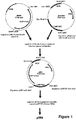
- Attmt-cDNA a changed Attmt-cDNA, which contains a c-myc motif in the region of the hydrophilic loop between the putative transmembrane domains 6 and 7, was used. This is the construct pMUT3 (see Fig. 1 ).
- the entire cDNA sequence was first cut from the plasmid pMUT3 with the restriction enzymes EcoRI and Clal and ligated into the plasmid pHannibal linearised with the same enzymes (pSR3).
- pSR3 the restriction enzymes EcoRI and Clal
- a further restriction digestion with the restriction enzyme Notl from plasmid pSR3 led to isolation of the cassette, which was finally introduced into the plant transformation vector pART27 (pSR6).
- Attmt1 SEQ ID NO: 2
- c-myc motif Emphasised in red
- the cloning diagram shown in Fig. 1 shows the production of the overexpression construct pSR6 based on the Attmt1 cDNA.
- sequences of the vectors pMUT3 and pSR3 so obtained are given in the sequence listing or SEQ ID NO. 3 and SEQ ID NO. 4.
- transfected plant cells carry a kanamycin resistance gene, only those seedlings in which transfection with the tmt1 -cDNA has been successful can develop, because such cells develop resistance to the antibiotic.
- the selection of the overexpression cell lines was carried out by a Northern blot analysis, by selecting those lines which exhibit a marked increase in the Attmt1 transcript amount as compared with the wild type.
- Arabidopsis seeds were incubated for two days in the dark at 4°C for inhibition.
- Wild-type plants, the homozygotic mutant cell line tmt1-2 and the three tmt1 overexpression cell lines 1, 4 and 10 were cultivated on plates for nine weeks and cultivated at 22°C under short-day conditions (10 hours' light, 14 hours' darkness) in a growth chamber. Thereafter, the plants were switched to long-day conditions (14 hours' light, 10 hours' darkness) at 22°C. Watering was continued for three weeks under those conditions. Then watering was stopped and the plants were cultivated further until complete dryness of the infructescence was noted.
- the seeds of the individual plants were carried out with the aid of a seed collector (Aracon 720).
- fatty acid quantification For fatty acid quantification, 0.1 g of fully mature and air-dried seeds was homogenised in a mortar in liquid nitrogen. Then a volume of 1.5 ml of isopropanol was added and further homogenisation was carried out. The suspension was transferred to a reaction vessel having a volume of 1.5 ml and incubated for 12 hours at 4°C in a laboratory agitator at 100 rpm.
- 0.1 g of seed was homogenised in a mortar at room temperature. Then a volume of 1000 ⁇ l of buffer medium (50 mM HEPES, 5 mM MGCl 2 , pH 7.5, 1% Triton X100, 15% glycerol, 2% SDS, 1 mM EDTA, PMSF, 1/100 (v/v)) was added and further homogenisation was carried out. The suspension was transferred to 1.5 ml reaction vessels, and the samples were centrifuged for 10 min. at 12,000 g at room temperature. The supernatant was transferred to new 1.5 ml reaction vessels and the proteins were quantified with BCA reagent according to the manufacturer's recommendations.
- buffer medium 50 mM HEPES, 5 mM MGCl 2 , pH 7.5, 1% Triton X100, 15% glycerol, 2% SDS, 1 mM EDTA, PMSF, 1/100 (v/v)
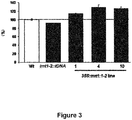
- Fig. 3 shows the thousand-kernel weight of Arabidopsis seeds.
- a wild-type Arabidopsis plant As control there was used a wild-type Arabidopsis plant as well as a tmt1-2 mutant which exhibited greatly reduced vacuolar TMT activity ( Wormit et al., 2006, Molecular identification and physiological characterization of a novel monosaccharide transporter from Arabidopsis involved in vacuolar sugar transport. Plant Cell 18: 3476-3490 ).
- Overexpression with overexpression lines 1, 4 and 10 leads to a significant increase in the thousand-kernel weight as compared with the wild type.
- Fig. 4 shows the oil and lipid contents of Arabidopsis seeds.
- the oil content ( Fig. 4A ) and the protein content ( Fig. 4B ) are increased as compared with the wild-type Arabidopsis plants (WT) and the three independent TMT1 overexpression lines.
- Fig. 5 shows the number of seeds per silique in Arabidopsis.
- the average number of seeds per silique of wild-type Arabidopsis plants (WT) and the three independent TMT1 overexpression lines is virtually the same.
- Fig. 6 summarises the total weight of the seeds per Arabidopsis plant. The average total weight of all mature seeds on wild-type Arabidopsis plants (WT) and the three independent TMT1 overexpression lines is shown. The total weight of the seeds is markedly increased in the overexpression lines as compared with the wild type. In Fig. 6A , this can already be seen visually, while in Fig. 6B a quantification of the seeds per plant was carried out.
- Fig. 7 shows the development of Arabidopsis plants after 15 and 34 days.
- the overexpression lines exhibit markedly stimulated growth after only 15 days and are markedly larger compared with the wild-type Arabidopsis plant. An overexpression of TMT1 therefore leads to increased growth of the plants.
Landscapes
- Health & Medical Sciences (AREA)
- Life Sciences & Earth Sciences (AREA)
- Genetics & Genomics (AREA)
- Chemical & Material Sciences (AREA)
- Engineering & Computer Science (AREA)
- Organic Chemistry (AREA)
- Molecular Biology (AREA)
- Biomedical Technology (AREA)
- Wood Science & Technology (AREA)
- Zoology (AREA)
- Biotechnology (AREA)
- General Engineering & Computer Science (AREA)
- Bioinformatics & Cheminformatics (AREA)
- General Health & Medical Sciences (AREA)
- Biophysics (AREA)
- Biochemistry (AREA)
- Microbiology (AREA)
- Physics & Mathematics (AREA)
- Plant Pathology (AREA)
- Botany (AREA)
- Gastroenterology & Hepatology (AREA)
- Medicinal Chemistry (AREA)
- Proteomics, Peptides & Aminoacids (AREA)
- Cell Biology (AREA)
- Breeding Of Plants And Reproduction By Means Of Culturing (AREA)
- Peptides Or Proteins (AREA)
- Physiology (AREA)
- Developmental Biology & Embryology (AREA)
- Environmental Sciences (AREA)
Claims (6)
- Verwendung einer transgenen Pflanze, umfassend eine Nukleotidsequenz, welche für ein TMT (Tonoplast-Monosaccharid-Transporter)-Protein oder ein Homolog davon kodiert, sowie eine damit operabel verbundene regulatorische Nukleotidsequenz zur Steuerung einer erhöhten Genexpression des TMT-Proteins in den Pflanzenzellen der transgenen Pflanze, wobei das TMT-Protein oder das Homolog davon eine Sequenzidentität von wenigstens 70% mit einer Aminosäuresequenz des Arabidopsis thaliana TMT (Tonoplast-Monosaccharid-Transporter)-Proteins TMT1 gemäß SEQ ID NO: 1 aufweist, dadurch gekennzeichnet, dass das TMT-Protein oder das Homolog davon in den Pflanzenzellen der transgenen Pflanze überexprimiert wird, was zu einer erhöhten Samenausbeute und einem erhöhten Wachstum im Vergleich zum Wildtyp führt, zur Herstellung von Biomasse, Ölen oder daraus hergestellten Proteinen.
- Verwendung nach Anspruch 1, dadurch gekennzeichnet, dass die Nukleotidsequenz für das TMT (Tonoplast-Monosaccharid-Transporter)-Protein TMT1 von Arabidopsis thaliana gemäß SEQ ID NO: 1 kodiert.
- Verwendung nach Anspruch 1, dadurch gekennzeichnet, dass das TMT (Tonoplast-Monosaccharid-Transporter)-Protein oder das Homolog davon die Aminosäuresequenz von Arabidopsis thaliana TMT1 gemäß SEQ ID NO: 1 umfasst.
- Verwendung nach Anspruch 1, 2 oder 3, dadurch gekennzeichnet, dass das TMT-Protein (Tonoplast-Monosaccharid-Transporter) oder das Homolog davon in den Pflanzenzellen unter der Kontrolle eines konstitutiven oder induzierbaren Promotors überexprimiert wird.
- Verwendung nach einem der Ansprüche 1 bis 4, dadurch gekennzeichnet, dass das TMT (Tonoplast-Monosaccharid-Transporter)-Protein eine Sequenzidentität von 70 %, 75 %, 80 %, 85 %, 90 %, 95 %, 96 %, 97 %, 98 %, 99 % oder 100 % mit einer Aminosäuresequenz des TMT (Tonoplast-Monosaccharid-Transporter)-Proteins TMT1 von Arabidopsis thaliana gemäß SEQ ID NO: 1 aufweist.
- Verwendung nach einem der Ansprüche 1 bis 5, dadurch gekennzeichnet, dass die Pflanzen Kultur- oder Nutzpflanzen der Arten oder höheren Gattungen Arabidopsis thaliana, Brassica napus, Brassica oleracea, Brassica rapa, Arachis hypogea, Boechera stricta, Bruguiera gymnorhiza, Citrus paradisi, Poncirus trifoliate, Euphorbia esula, Fragaria vesca, Gossypium hirsutum, Gossypium raimondii, Glycine max, Helianthus annuus, Ipomoea nil, Lycopersicon esculentum, Lactuca perennis, Lactuca saligna, Lactuca serriola, Lactuca sativa, Lotus japonicus, Malus domestica, Medicago truncatula, Nicotiana tabacum, Oryza australiensis, Oryza brachyanth, Oryza punctata, Oryza ridleyi, Oryza rufipogon, Oryza sativa, Populus trichocarpa, Poncirus trifoliata, Prunus persica, Solanum tuberosum Sorghum bicolor, Triticum aestivum, Zea mays, Saccharum officinarum, Panicum virgatum, Miscanthus, Vitis vinifera, Cannabis sativa sind.
Applications Claiming Priority (3)
| Application Number | Priority Date | Filing Date | Title |
|---|---|---|---|
| DE102010013166A DE102010013166B4 (de) | 2010-03-27 | 2010-03-27 | Verfahren zur Erhöhung des Samenertrages sowie Förderung des Wachstums von Pflanzen |
| PCT/EP2010/007942 WO2011120549A1 (en) | 2010-03-27 | 2010-12-23 | Method of enhancing the seed yield and promoting the growth of plants |
| EP10805213.5A EP2552946B1 (de) | 2010-03-27 | 2010-12-23 | Verfahren zur verbesserung des saatertrags und zur förderung des wachstums von pflanzen |
Related Parent Applications (1)
| Application Number | Title | Priority Date | Filing Date |
|---|---|---|---|
| EP10805213.5A Division EP2552946B1 (de) | 2010-03-27 | 2010-12-23 | Verfahren zur verbesserung des saatertrags und zur förderung des wachstums von pflanzen |
Publications (2)
| Publication Number | Publication Date |
|---|---|
| EP3246337A1 EP3246337A1 (de) | 2017-11-22 |
| EP3246337B1 true EP3246337B1 (de) | 2021-07-21 |
Family
ID=43654459
Family Applications (2)
| Application Number | Title | Priority Date | Filing Date |
|---|---|---|---|
| EP17174064.0A Active EP3246337B1 (de) | 2010-03-27 | 2010-12-23 | Transgene pflanze mit der eigenschaft eines verbesserten samenertrags und verbesserten wachstums |
| EP10805213.5A Not-in-force EP2552946B1 (de) | 2010-03-27 | 2010-12-23 | Verfahren zur verbesserung des saatertrags und zur förderung des wachstums von pflanzen |
Family Applications After (1)
| Application Number | Title | Priority Date | Filing Date |
|---|---|---|---|
| EP10805213.5A Not-in-force EP2552946B1 (de) | 2010-03-27 | 2010-12-23 | Verfahren zur verbesserung des saatertrags und zur förderung des wachstums von pflanzen |
Country Status (10)
| Country | Link |
|---|---|
| US (2) | US20130205445A1 (de) |
| EP (2) | EP3246337B1 (de) |
| CN (1) | CN103097401B (de) |
| CA (1) | CA2794318C (de) |
| DE (1) | DE102010013166B4 (de) |
| EA (1) | EA029227B1 (de) |
| ES (1) | ES2637617T3 (de) |
| HU (1) | HUE036118T2 (de) |
| PL (1) | PL2552946T3 (de) |
| WO (1) | WO2011120549A1 (de) |
Families Citing this family (12)
| Publication number | Priority date | Publication date | Assignee | Title |
|---|---|---|---|---|
| WO2015009760A1 (en) * | 2013-07-15 | 2015-01-22 | Donald Danforth Plant Science Center | Enhanced oil production and stress tolerance in plants |
| DE102014005337A1 (de) * | 2014-04-11 | 2015-10-15 | Friedrich-Alexander-Universität Erlangen-Nürnberg | Tonoplastidäre Protonen/Zucker-Antiporter-Proteine und deren Verwendung zur Erhöhung der Saccharosekonzentration eines Saccharosespeicherorgans von Pflanzen |
| CN106146635B (zh) * | 2015-04-24 | 2020-03-06 | 中国农业大学 | 玉米ZmSTP1蛋白及其编码基因与应用 |
| BR112020021983A2 (pt) | 2018-05-29 | 2021-01-26 | Monsanto Technology Llc | plantas transgênicas com traços potencializados |
| CN110606878B (zh) * | 2019-09-26 | 2021-02-19 | 中国农业科学院油料作物研究所 | 一种蛋白及其基因在控制植物种子性状中的应用 |
| CN110669782B (zh) * | 2019-10-10 | 2022-11-01 | 南京农业大学 | 大豆糖转运体基因GmSWEET39的应用 |
| CN113637676B (zh) * | 2020-04-24 | 2023-04-07 | 中国热带农业科学院热带生物技术研究所 | 一种甘蔗液泡膜二羧酸转运蛋白基因及其应用 |
| US20230193309A1 (en) * | 2020-04-27 | 2023-06-22 | Suzhou Qi Biodesign Biotechnology Company Limited | Method for obtaining wheat with increased resistance to powdery mildew |
| CN111808181B (zh) * | 2020-07-22 | 2021-02-26 | 宁夏农林科学院农业生物技术研究中心(宁夏农业生物技术重点实验室) | 马铃薯液泡膜单糖转运蛋白StTMT2基因的应用 |
| CN116790653A (zh) * | 2023-05-30 | 2023-09-22 | 浙江师范大学 | 基因增加植物生物量与种子产量的用途 |
| CN116675751B (zh) * | 2023-06-08 | 2024-01-26 | 山东农业大学 | SWEET1g蛋白及其编码基因在抗马铃薯病毒中的应用 |
| CN119776403B (zh) * | 2023-10-08 | 2026-02-10 | 中国农业科学院蔬菜花卉研究所 | TST3b蛋白质及其相关生物材料在调控番茄可溶性糖含量中的应用 |
Family Cites Families (3)
| Publication number | Priority date | Publication date | Assignee | Title |
|---|---|---|---|---|
| US6936467B2 (en) * | 2000-03-27 | 2005-08-30 | University Of Delaware | Targeted chromosomal genomic alterations with modified single stranded oligonucleotides |
| US20060150283A1 (en) * | 2004-02-13 | 2006-07-06 | Nickolai Alexandrov | Sequence-determined DNA fragments and corresponding polypeptides encoded thereby |
| EP2275560A3 (de) | 2007-01-31 | 2012-01-25 | BASF Plant Science GmbH | Transgene Pflanzen, enthaltend als Transgen ein Mitglied der REMORIN Gen Familie oder eine Konsenssequenz davon, mit verbesserten Eigenschaften bezüglich des Ertrags und Verfahren zu ihrer Herstellung |
-
2010
- 2010-03-27 DE DE102010013166A patent/DE102010013166B4/de not_active Expired - Fee Related
- 2010-12-23 ES ES10805213.5T patent/ES2637617T3/es active Active
- 2010-12-23 EA EA201290915A patent/EA029227B1/ru unknown
- 2010-12-23 PL PL10805213T patent/PL2552946T3/pl unknown
- 2010-12-23 US US13/637,908 patent/US20130205445A1/en not_active Abandoned
- 2010-12-23 CA CA2794318A patent/CA2794318C/en not_active Expired - Fee Related
- 2010-12-23 CN CN201080066864.3A patent/CN103097401B/zh not_active Expired - Fee Related
- 2010-12-23 HU HUE10805213A patent/HUE036118T2/hu unknown
- 2010-12-23 EP EP17174064.0A patent/EP3246337B1/de active Active
- 2010-12-23 EP EP10805213.5A patent/EP2552946B1/de not_active Not-in-force
- 2010-12-23 WO PCT/EP2010/007942 patent/WO2011120549A1/en not_active Ceased
-
2019
- 2019-11-05 US US16/674,788 patent/US20200120890A1/en not_active Abandoned
Non-Patent Citations (1)
| Title |
|---|
| None * |
Also Published As
| Publication number | Publication date |
|---|---|
| EP2552946A1 (de) | 2013-02-06 |
| EA201290915A1 (ru) | 2013-07-30 |
| CA2794318C (en) | 2016-09-13 |
| EP3246337A1 (de) | 2017-11-22 |
| US20200120890A1 (en) | 2020-04-23 |
| CN103097401B (zh) | 2017-10-20 |
| HUE036118T2 (hu) | 2018-06-28 |
| EP2552946B1 (de) | 2017-06-07 |
| DE102010013166B4 (de) | 2012-08-09 |
| PL2552946T3 (pl) | 2017-11-30 |
| CN103097401A (zh) | 2013-05-08 |
| CA2794318A1 (en) | 2011-10-06 |
| DE102010013166A1 (de) | 2011-09-29 |
| EA029227B1 (ru) | 2018-02-28 |
| WO2011120549A1 (en) | 2011-10-06 |
| US20130205445A1 (en) | 2013-08-08 |
| ES2637617T3 (es) | 2017-10-13 |
Similar Documents
| Publication | Publication Date | Title |
|---|---|---|
| EP3246337B1 (de) | Transgene pflanze mit der eigenschaft eines verbesserten samenertrags und verbesserten wachstums | |
| CN109134632B (zh) | 调控植物根发育的蛋白及其编码基因和应用 | |
| PL184108B1 (pl) | Konstrukcja genetyczna, rośliny o właściwościach opóźnionego starzenia się, sposób wprowadzania do roślin właściwości opóźnionego starzenia się, sposób wytwarzania roślin, rośliny zawierające sekwencję związanego ze starzeniem się promotora oraz sekwencja związanego ze starzeniem się promotora | |
| WO2011095528A1 (en) | A method for increasing photosynthetic carbon fixation using glycolate dehydrogenase multi-subunit fusion protein | |
| JPH08507923A (ja) | Dna、dna構築物、細胞及びそれから誘導された植物 | |
| CN114369147B (zh) | Bfne基因在番茄株型改良和生物产量提高中的应用 | |
| JP2025131733A (ja) | 緑藻類ベストロフィン重炭酸塩トランスポーター | |
| CN111333708B (zh) | 一种来源于玉米的具有延迟开花期功能的基因及其应用 | |
| WO2014069339A1 (ja) | 植物に多収性を付与する核酸、収量が増加した形質転換植物を作製する方法、植物の収量を増大させる方法 | |
| CN110684088B (zh) | 蛋白ZmbZIPa3及其编码基因在调控植物生长发育与耐逆性中的应用 | |
| AU2011273569B2 (en) | Gene involved in the development of the seed | |
| MX2014007711A (es) | Metodos para mejorar rendimiento de cultivos. | |
| CN119775378A (zh) | 一种提高植物花青素含量的蛋白AaBBX21及其编码基因的应用 | |
| KR101902915B1 (ko) | 수발아 저항성을 증진시키는 벼 유래 OsPHS2 유전자 및 이의 용도 | |
| WO2006057306A1 (ja) | ストレス耐性及び/又は生産性を改良したイネ科植物、及びその作出方法 | |
| CN120536490B (zh) | PpSec61γ在调控植物叶绿素降解中的用途 | |
| WO2008064413A1 (en) | Plants with hexose accumulating tissues having an altered hexose concentration | |
| CN121992021A (zh) | 一种甘薯耐低温相关蛋白IbNAC90及其相关生物材料与应用 | |
| KR20020057944A (ko) | Mite-유사 인자 및 전사 활성화 인자 | |
| CN117025630A (zh) | 黄瓜CsERF1B基因及其编码蛋白和应用 | |
| CN117844829A (zh) | 大豆耐热蛋白GmBSK1及其编码基因在调控植物抗逆性中的应用 | |
| CN110257422A (zh) | OsGPT1基因的应用及应用方法 | |
| CN108559752A (zh) | 一种苹果中调控种子数量的MdMYB98基因及其应用 | |
| KR20150048299A (ko) | 식물에서 아미노산 함량을 증가시키는 안쓰라닐레이트 합성효소 변이체 및 이의 용도 | |
| CZ2000451A3 (cs) | Způsob zvýšení výnosů rostlin |
Legal Events
| Date | Code | Title | Description |
|---|---|---|---|
| PUAI | Public reference made under article 153(3) epc to a published international application that has entered the european phase |
Free format text: ORIGINAL CODE: 0009012 |
|
| STAA | Information on the status of an ep patent application or granted ep patent |
Free format text: STATUS: THE APPLICATION HAS BEEN PUBLISHED |
|
| AC | Divisional application: reference to earlier application |
Ref document number: 2552946 Country of ref document: EP Kind code of ref document: P |
|
| AK | Designated contracting states |
Kind code of ref document: A1 Designated state(s): AL AT BE BG CH CY CZ DE DK EE ES FI FR GB GR HR HU IE IS IT LI LT LU LV MC MK MT NL NO PL PT RO RS SE SI SK SM TR |
|
| RIN1 | Information on inventor provided before grant (corrected) |
Inventor name: NEUHAUS, EKKEHARD Inventor name: WORMIT, ALEXANDRA Inventor name: TRENTMANN, OLIVER Inventor name: WINGENTER, KARINA |
|
| RIN1 | Information on inventor provided before grant (corrected) |
Inventor name: TRENTMANN, OLIVER Inventor name: WORMIT, ALEXANDRA Inventor name: NEUHAUS, EKKEHARD Inventor name: WINGENTER, KARINA |
|
| STAA | Information on the status of an ep patent application or granted ep patent |
Free format text: STATUS: REQUEST FOR EXAMINATION WAS MADE |
|
| 17P | Request for examination filed |
Effective date: 20180123 |
|
| RBV | Designated contracting states (corrected) |
Designated state(s): AL AT BE BG CH CY CZ DE DK EE ES FI FR GB GR HR HU IE IS IT LI LT LU LV MC MK MT NL NO PL PT RO RS SE SI SK SM TR |
|
| STAA | Information on the status of an ep patent application or granted ep patent |
Free format text: STATUS: EXAMINATION IS IN PROGRESS |
|
| 17Q | First examination report despatched |
Effective date: 20191021 |
|
| GRAP | Despatch of communication of intention to grant a patent |
Free format text: ORIGINAL CODE: EPIDOSNIGR1 |
|
| STAA | Information on the status of an ep patent application or granted ep patent |
Free format text: STATUS: GRANT OF PATENT IS INTENDED |
|
| RIC1 | Information provided on ipc code assigned before grant |
Ipc: C12N 15/82 20060101ALI20210129BHEP Ipc: C07K 14/415 20060101AFI20210129BHEP Ipc: A01H 5/00 20180101ALN20210129BHEP |
|
| INTG | Intention to grant announced |
Effective date: 20210225 |
|
| GRAS | Grant fee paid |
Free format text: ORIGINAL CODE: EPIDOSNIGR3 |
|
| GRAA | (expected) grant |
Free format text: ORIGINAL CODE: 0009210 |
|
| STAA | Information on the status of an ep patent application or granted ep patent |
Free format text: STATUS: THE PATENT HAS BEEN GRANTED |
|
| AC | Divisional application: reference to earlier application |
Ref document number: 2552946 Country of ref document: EP Kind code of ref document: P |
|
| AK | Designated contracting states |
Kind code of ref document: B1 Designated state(s): AL AT BE BG CH CY CZ DE DK EE ES FI FR GB GR HR HU IE IS IT LI LT LU LV MC MK MT NL NO PL PT RO RS SE SI SK SM TR |
|
| REG | Reference to a national code |
Ref country code: GB Ref legal event code: FG4D |
|
| REG | Reference to a national code |
Ref country code: CH Ref legal event code: EP |
|
| REG | Reference to a national code |
Ref country code: DE Ref legal event code: R096 Ref document number: 602010067318 Country of ref document: DE |
|
| REG | Reference to a national code |
Ref country code: AT Ref legal event code: REF Ref document number: 1412538 Country of ref document: AT Kind code of ref document: T Effective date: 20210815 |
|
| REG | Reference to a national code |
Ref country code: IE Ref legal event code: FG4D |
|
| REG | Reference to a national code |
Ref country code: LT Ref legal event code: MG9D |
|
| REG | Reference to a national code |
Ref country code: NL Ref legal event code: MP Effective date: 20210721 |
|
| REG | Reference to a national code |
Ref country code: AT Ref legal event code: MK05 Ref document number: 1412538 Country of ref document: AT Kind code of ref document: T Effective date: 20210721 |
|
| PG25 | Lapsed in a contracting state [announced via postgrant information from national office to epo] |
Ref country code: SE Free format text: LAPSE BECAUSE OF FAILURE TO SUBMIT A TRANSLATION OF THE DESCRIPTION OR TO PAY THE FEE WITHIN THE PRESCRIBED TIME-LIMIT Effective date: 20210721 Ref country code: RS Free format text: LAPSE BECAUSE OF FAILURE TO SUBMIT A TRANSLATION OF THE DESCRIPTION OR TO PAY THE FEE WITHIN THE PRESCRIBED TIME-LIMIT Effective date: 20210721 Ref country code: AT Free format text: LAPSE BECAUSE OF FAILURE TO SUBMIT A TRANSLATION OF THE DESCRIPTION OR TO PAY THE FEE WITHIN THE PRESCRIBED TIME-LIMIT Effective date: 20210721 Ref country code: BG Free format text: LAPSE BECAUSE OF FAILURE TO SUBMIT A TRANSLATION OF THE DESCRIPTION OR TO PAY THE FEE WITHIN THE PRESCRIBED TIME-LIMIT Effective date: 20211021 Ref country code: LT Free format text: LAPSE BECAUSE OF FAILURE TO SUBMIT A TRANSLATION OF THE DESCRIPTION OR TO PAY THE FEE WITHIN THE PRESCRIBED TIME-LIMIT Effective date: 20210721 Ref country code: NL Free format text: LAPSE BECAUSE OF FAILURE TO SUBMIT A TRANSLATION OF THE DESCRIPTION OR TO PAY THE FEE WITHIN THE PRESCRIBED TIME-LIMIT Effective date: 20210721 Ref country code: NO Free format text: LAPSE BECAUSE OF FAILURE TO SUBMIT A TRANSLATION OF THE DESCRIPTION OR TO PAY THE FEE WITHIN THE PRESCRIBED TIME-LIMIT Effective date: 20211021 Ref country code: PT Free format text: LAPSE BECAUSE OF FAILURE TO SUBMIT A TRANSLATION OF THE DESCRIPTION OR TO PAY THE FEE WITHIN THE PRESCRIBED TIME-LIMIT Effective date: 20211122 Ref country code: HR Free format text: LAPSE BECAUSE OF FAILURE TO SUBMIT A TRANSLATION OF THE DESCRIPTION OR TO PAY THE FEE WITHIN THE PRESCRIBED TIME-LIMIT Effective date: 20210721 Ref country code: FI Free format text: LAPSE BECAUSE OF FAILURE TO SUBMIT A TRANSLATION OF THE DESCRIPTION OR TO PAY THE FEE WITHIN THE PRESCRIBED TIME-LIMIT Effective date: 20210721 Ref country code: ES Free format text: LAPSE BECAUSE OF FAILURE TO SUBMIT A TRANSLATION OF THE DESCRIPTION OR TO PAY THE FEE WITHIN THE PRESCRIBED TIME-LIMIT Effective date: 20210721 |
|
| PG25 | Lapsed in a contracting state [announced via postgrant information from national office to epo] |
Ref country code: PL Free format text: LAPSE BECAUSE OF FAILURE TO SUBMIT A TRANSLATION OF THE DESCRIPTION OR TO PAY THE FEE WITHIN THE PRESCRIBED TIME-LIMIT Effective date: 20210721 Ref country code: LV Free format text: LAPSE BECAUSE OF FAILURE TO SUBMIT A TRANSLATION OF THE DESCRIPTION OR TO PAY THE FEE WITHIN THE PRESCRIBED TIME-LIMIT Effective date: 20210721 Ref country code: GR Free format text: LAPSE BECAUSE OF FAILURE TO SUBMIT A TRANSLATION OF THE DESCRIPTION OR TO PAY THE FEE WITHIN THE PRESCRIBED TIME-LIMIT Effective date: 20211022 |
|
| REG | Reference to a national code |
Ref country code: DE Ref legal event code: R097 Ref document number: 602010067318 Country of ref document: DE |
|
| PG25 | Lapsed in a contracting state [announced via postgrant information from national office to epo] |
Ref country code: DK Free format text: LAPSE BECAUSE OF FAILURE TO SUBMIT A TRANSLATION OF THE DESCRIPTION OR TO PAY THE FEE WITHIN THE PRESCRIBED TIME-LIMIT Effective date: 20210721 |
|
| PLBE | No opposition filed within time limit |
Free format text: ORIGINAL CODE: 0009261 |
|
| STAA | Information on the status of an ep patent application or granted ep patent |
Free format text: STATUS: NO OPPOSITION FILED WITHIN TIME LIMIT |
|
| PG25 | Lapsed in a contracting state [announced via postgrant information from national office to epo] |
Ref country code: SM Free format text: LAPSE BECAUSE OF FAILURE TO SUBMIT A TRANSLATION OF THE DESCRIPTION OR TO PAY THE FEE WITHIN THE PRESCRIBED TIME-LIMIT Effective date: 20210721 Ref country code: SK Free format text: LAPSE BECAUSE OF FAILURE TO SUBMIT A TRANSLATION OF THE DESCRIPTION OR TO PAY THE FEE WITHIN THE PRESCRIBED TIME-LIMIT Effective date: 20210721 Ref country code: RO Free format text: LAPSE BECAUSE OF FAILURE TO SUBMIT A TRANSLATION OF THE DESCRIPTION OR TO PAY THE FEE WITHIN THE PRESCRIBED TIME-LIMIT Effective date: 20210721 Ref country code: EE Free format text: LAPSE BECAUSE OF FAILURE TO SUBMIT A TRANSLATION OF THE DESCRIPTION OR TO PAY THE FEE WITHIN THE PRESCRIBED TIME-LIMIT Effective date: 20210721 Ref country code: CZ Free format text: LAPSE BECAUSE OF FAILURE TO SUBMIT A TRANSLATION OF THE DESCRIPTION OR TO PAY THE FEE WITHIN THE PRESCRIBED TIME-LIMIT Effective date: 20210721 Ref country code: AL Free format text: LAPSE BECAUSE OF FAILURE TO SUBMIT A TRANSLATION OF THE DESCRIPTION OR TO PAY THE FEE WITHIN THE PRESCRIBED TIME-LIMIT Effective date: 20210721 |
|
| 26N | No opposition filed |
Effective date: 20220422 |
|
| REG | Reference to a national code |
Ref country code: DE Ref legal event code: R119 Ref document number: 602010067318 Country of ref document: DE |
|
| PG25 | Lapsed in a contracting state [announced via postgrant information from national office to epo] |
Ref country code: MC Free format text: LAPSE BECAUSE OF FAILURE TO SUBMIT A TRANSLATION OF THE DESCRIPTION OR TO PAY THE FEE WITHIN THE PRESCRIBED TIME-LIMIT Effective date: 20210721 Ref country code: IT Free format text: LAPSE BECAUSE OF FAILURE TO SUBMIT A TRANSLATION OF THE DESCRIPTION OR TO PAY THE FEE WITHIN THE PRESCRIBED TIME-LIMIT Effective date: 20210721 |
|
| REG | Reference to a national code |
Ref country code: CH Ref legal event code: PL |
|
| GBPC | Gb: european patent ceased through non-payment of renewal fee |
Effective date: 20211223 |
|
| REG | Reference to a national code |
Ref country code: BE Ref legal event code: MM Effective date: 20211231 |
|
| PG25 | Lapsed in a contracting state [announced via postgrant information from national office to epo] |
Ref country code: LU Free format text: LAPSE BECAUSE OF NON-PAYMENT OF DUE FEES Effective date: 20211223 Ref country code: IE Free format text: LAPSE BECAUSE OF NON-PAYMENT OF DUE FEES Effective date: 20211223 Ref country code: GB Free format text: LAPSE BECAUSE OF NON-PAYMENT OF DUE FEES Effective date: 20211223 Ref country code: DE Free format text: LAPSE BECAUSE OF NON-PAYMENT OF DUE FEES Effective date: 20220701 |
|
| PG25 | Lapsed in a contracting state [announced via postgrant information from national office to epo] |
Ref country code: FR Free format text: LAPSE BECAUSE OF NON-PAYMENT OF DUE FEES Effective date: 20211231 Ref country code: BE Free format text: LAPSE BECAUSE OF NON-PAYMENT OF DUE FEES Effective date: 20211231 |
|
| PG25 | Lapsed in a contracting state [announced via postgrant information from national office to epo] |
Ref country code: LI Free format text: LAPSE BECAUSE OF NON-PAYMENT OF DUE FEES Effective date: 20211231 Ref country code: CH Free format text: LAPSE BECAUSE OF NON-PAYMENT OF DUE FEES Effective date: 20211231 |
|
| PG25 | Lapsed in a contracting state [announced via postgrant information from national office to epo] |
Ref country code: HU Free format text: LAPSE BECAUSE OF FAILURE TO SUBMIT A TRANSLATION OF THE DESCRIPTION OR TO PAY THE FEE WITHIN THE PRESCRIBED TIME-LIMIT; INVALID AB INITIO Effective date: 20101223 Ref country code: CY Free format text: LAPSE BECAUSE OF FAILURE TO SUBMIT A TRANSLATION OF THE DESCRIPTION OR TO PAY THE FEE WITHIN THE PRESCRIBED TIME-LIMIT Effective date: 20210721 |
|
| PG25 | Lapsed in a contracting state [announced via postgrant information from national office to epo] |
Ref country code: MK Free format text: LAPSE BECAUSE OF FAILURE TO SUBMIT A TRANSLATION OF THE DESCRIPTION OR TO PAY THE FEE WITHIN THE PRESCRIBED TIME-LIMIT Effective date: 20210721 |
|
| PG25 | Lapsed in a contracting state [announced via postgrant information from national office to epo] |
Ref country code: TR Free format text: LAPSE BECAUSE OF FAILURE TO SUBMIT A TRANSLATION OF THE DESCRIPTION OR TO PAY THE FEE WITHIN THE PRESCRIBED TIME-LIMIT Effective date: 20210721 |
|
| PG25 | Lapsed in a contracting state [announced via postgrant information from national office to epo] |
Ref country code: MT Free format text: LAPSE BECAUSE OF FAILURE TO SUBMIT A TRANSLATION OF THE DESCRIPTION OR TO PAY THE FEE WITHIN THE PRESCRIBED TIME-LIMIT Effective date: 20210721 |