EP3243532B1 - Duftstoffkörper - Google Patents
Duftstoffkörper Download PDFInfo
- Publication number
- EP3243532B1 EP3243532B1 EP17170372.1A EP17170372A EP3243532B1 EP 3243532 B1 EP3243532 B1 EP 3243532B1 EP 17170372 A EP17170372 A EP 17170372A EP 3243532 B1 EP3243532 B1 EP 3243532B1
- Authority
- EP
- European Patent Office
- Prior art keywords
- fragrance
- carrier body
- fibre
- carrier
- polyamide
- Prior art date
- Legal status (The legal status is an assumption and is not a legal conclusion. Google has not performed a legal analysis and makes no representation as to the accuracy of the status listed.)
- Active
Links
Images


Classifications
-
- A—HUMAN NECESSITIES
- A61—MEDICAL OR VETERINARY SCIENCE; HYGIENE
- A61L—METHODS OR APPARATUS FOR STERILISING MATERIALS OR OBJECTS IN GENERAL; DISINFECTION, STERILISATION OR DEODORISATION OF AIR; CHEMICAL ASPECTS OF BANDAGES, DRESSINGS, ABSORBENT PADS OR SURGICAL ARTICLES; MATERIALS FOR BANDAGES, DRESSINGS, ABSORBENT PADS OR SURGICAL ARTICLES
- A61L9/00—Disinfection, sterilisation or deodorisation of air
- A61L9/01—Deodorant compositions
- A61L9/014—Deodorant compositions containing sorbent material, e.g. activated carbon
-
- A—HUMAN NECESSITIES
- A61—MEDICAL OR VETERINARY SCIENCE; HYGIENE
- A61L—METHODS OR APPARATUS FOR STERILISING MATERIALS OR OBJECTS IN GENERAL; DISINFECTION, STERILISATION OR DEODORISATION OF AIR; CHEMICAL ASPECTS OF BANDAGES, DRESSINGS, ABSORBENT PADS OR SURGICAL ARTICLES; MATERIALS FOR BANDAGES, DRESSINGS, ABSORBENT PADS OR SURGICAL ARTICLES
- A61L9/00—Disinfection, sterilisation or deodorisation of air
- A61L9/015—Disinfection, sterilisation or deodorisation of air using gaseous or vaporous substances, e.g. ozone
- A61L9/02—Disinfection, sterilisation or deodorisation of air using gaseous or vaporous substances, e.g. ozone using substances evaporated in the air by heating or combustion
-
- A—HUMAN NECESSITIES
- A61—MEDICAL OR VETERINARY SCIENCE; HYGIENE
- A61L—METHODS OR APPARATUS FOR STERILISING MATERIALS OR OBJECTS IN GENERAL; DISINFECTION, STERILISATION OR DEODORISATION OF AIR; CHEMICAL ASPECTS OF BANDAGES, DRESSINGS, ABSORBENT PADS OR SURGICAL ARTICLES; MATERIALS FOR BANDAGES, DRESSINGS, ABSORBENT PADS OR SURGICAL ARTICLES
- A61L9/00—Disinfection, sterilisation or deodorisation of air
- A61L9/015—Disinfection, sterilisation or deodorisation of air using gaseous or vaporous substances, e.g. ozone
- A61L9/02—Disinfection, sterilisation or deodorisation of air using gaseous or vaporous substances, e.g. ozone using substances evaporated in the air by heating or combustion
- A61L9/03—Apparatus therefor
- A61L9/037—Apparatus therefor comprising a wick
-
- D—TEXTILES; PAPER
- D01—NATURAL OR MAN-MADE THREADS OR FIBRES; SPINNING
- D01D—MECHANICAL METHODS OR APPARATUS IN THE MANUFACTURE OF ARTIFICIAL FILAMENTS, THREADS, FIBRES, BRISTLES OR RIBBONS
- D01D5/00—Formation of filaments, threads, or the like
- D01D5/28—Formation of filaments, threads, or the like while mixing different spinning solutions or melts during the spinning operation; Spinnerette packs therefor
- D01D5/30—Conjugate filaments; Spinnerette packs therefor
- D01D5/34—Core-skin structure; Spinnerette packs therefor
-
- D—TEXTILES; PAPER
- D01—NATURAL OR MAN-MADE THREADS OR FIBRES; SPINNING
- D01F—CHEMICAL FEATURES IN THE MANUFACTURE OF ARTIFICIAL FILAMENTS, THREADS, FIBRES, BRISTLES OR RIBBONS; APPARATUS SPECIALLY ADAPTED FOR THE MANUFACTURE OF CARBON FILAMENTS
- D01F8/00—Conjugated, i.e. bi- or multicomponent, artificial filaments or the like; Manufacture thereof
- D01F8/04—Conjugated, i.e. bi- or multicomponent, artificial filaments or the like; Manufacture thereof from synthetic polymers
- D01F8/12—Conjugated, i.e. bi- or multicomponent, artificial filaments or the like; Manufacture thereof from synthetic polymers with at least one polyamide as constituent
-
- D—TEXTILES; PAPER
- D01—NATURAL OR MAN-MADE THREADS OR FIBRES; SPINNING
- D01F—CHEMICAL FEATURES IN THE MANUFACTURE OF ARTIFICIAL FILAMENTS, THREADS, FIBRES, BRISTLES OR RIBBONS; APPARATUS SPECIALLY ADAPTED FOR THE MANUFACTURE OF CARBON FILAMENTS
- D01F8/00—Conjugated, i.e. bi- or multicomponent, artificial filaments or the like; Manufacture thereof
- D01F8/04—Conjugated, i.e. bi- or multicomponent, artificial filaments or the like; Manufacture thereof from synthetic polymers
- D01F8/14—Conjugated, i.e. bi- or multicomponent, artificial filaments or the like; Manufacture thereof from synthetic polymers with at least one polyester as constituent
Definitions
- the present invention relates to a fragrance body.
- fragrances are used in a variety of ways, particularly in households or, for example, in motor vehicles.
- Conventional fragrance bodies can be produced, for example, by mixing a fragrance (perfume) with a plastic granulate (loading) and subsequent injection molding of the respective fragrance body.
- the fragrance is distributed homogeneously in the fragrance body.
- fragrance lamps for air freshening which have a fragrance bowl heated by a tea light, for example, into which essential oils or fragrances or dissolved fragrances are introduced in the liquid state, whereby the fragrances through evaporation into the gaseous Skip the state and thus create the desired air freshening.
- fragrance bodies in which the fragrance is incorporated into a plastic body, can only provide a very reduced fragrance release, when using fragrance lamps there is often the problem that the liquid spills if the fragrance lamp is improperly handled and in so far, for example, carpets or furniture can become soiled.
- WO 2011/123723 A1 disclose fragrance carriers with a bimodal fiber structure with monocomponent fibers and / or two-component fibers (core / sheath).
- the present invention is based on the object of at least partially eliminating the disadvantages described when carrying out air freshening.
- the invention solves this problem with a fragrance body, comprising a carrier body, which carries a substance or liquid mixture comprising at least one solvent and at least one perfume (odorant) dissolved in this in volume, wherein the fragrance body is designed to release fragrance when heated and the carrier body has a fiber structure with a bimodal fiber structure, and wherein a first type of fiber comprises a polyamide core with a polyester sheath and a second type of fiber comprises a non-sheathed polyamide fiber.
- the fragrance body according to the invention can provide a carrier for the mixture of substances or liquids, comprising at least one solvent and at least one perfume dissolved in this, in which the mixture is bound in volume and at room temperature and at elevated temperatures up to about 150 ° C. or even 200 ° C. does not emerge in liquid form from the carrier body. Spilling of the mixture of substances or liquids containing the perfume is therefore ruled out.
- the fragrance release can be determined by setting the temperature in a fragrance lamp, for example by providing a certain distance between the heat source, which can be provided by a tea light, from the fragrance body.
- a bimodal fiber structure has proven to be according to the invention in order to set an advantageous fiber structure of the carrier body.
- a first type of fiber comprising a polyamide core with a polyester sheath
- a second type of fiber comprising a polyamide fiber
- the mixture of substances or liquids can be kept optimally in the volume of the carrier body.
- the fibers used have the necessary temperature resistance so that, for example, burning or coking of the carrier body can be reliably excluded when the fragrance body according to the invention is used.
- the fiber structure of the carrier body has a capillary structure through a corresponding arrangement of the two types of fibers.
- An expedient fiber structuring can be achieved in that the fibers of both fiber types extend essentially around a predetermined direction, in particular back and forth or in a zigzag fashion, the fiber length being approximately ⁇ 15% of the extension of the carrier body in the predetermined direction.
- the design of a multiplicity of capillaries in the carrier body can be achieved, which capillaries essentially extend in one direction, for example in the direction of the height of the carrier body.
- the fiber length is 10 to 20% of the extent of the carrier body in the predetermined direction.
- the support body has about 70% by weight of polyamide and about 30% by weight of polyester.
- the support body comprises 60 to 80% by weight of polyamide and 40 to 20% by weight of polyester, preferably when the support body has 65 to 75% by weight of polyamide and 35 to 25 wt .-% polyester, based on the total weight of the support body.
- the fragrance body according to the invention can expediently be colored in order to achieve a certain optical impression.
- the shape of the carrier body can be adapted to the respective use, for example for use in a fragrance lamp.
- a cylinder-shaped support body has been found to be particularly useful, the dimensions of which can be adapted to the respective application.
- the diameter of the cylindrical support body can be up to 30 mm be, in particular 19.5 mm or 25.5 mm.
- the height of the carrier body can be adapted and, for example, be between 3 mm and 5 mm.
- the carrier body is punched or shaped from a cylindrical original shape, or is extruded in a special shape, so that the carrier body can have any structure with regard to its base area and a shape adapted to the respective application.
- the carrier body can have any base area that defines the cross section perpendicular to the extrusion direction of the carrier body.
- the carrier body of the fragrance body according to the invention can have a density between 0.14 g / cm 3 to 0.19 g / cm 3 , for example 0.15 g / cm 3 or 0.18 g / cm 3 .
- the fiber thickness of the uncoated polyamide fiber has a value which is between 8 ⁇ m and 12 ⁇ m, in particular 9 ⁇ m or between 10 ⁇ m and 12 ⁇ m.
- the carrier body is impregnated with the mixture of substances or liquids containing the fragrance.
- This impregnation can expediently be carried out at a temperature which is elevated to room temperature, e.g. 80 ° C, which can conveniently be below the boiling point of the fragrance. This can for example be between 90 ° C and 100 ° C, in particular about 95 ° C.
- the at least one solvent has a boiling temperature> 220 °, in particular> 230 °.
- the invention further relates to a packaged fragrance body, in which a fragrance body according to the invention is packaged airtight, in particular arranged in an airtight sachet.
- the invention also relates to a fragrance device, in particular a fragrance lamp with a fragrance bowl, in which a fragrance body according to the invention can be inserted.
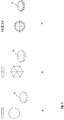
- Figures 1a - c show three differently shaped fragrance bodies 10, 20, 30 according to the invention, each in a perspective view, a top view and a side view. These differ only in terms of their respective footprint.
- the fragrance body according to the invention can be designed with any base area.
- a respective carrier body which defines the geometric shape of the fragrance body, is impregnated with a mixture of substances or liquids, this mixture at least one solvent and at least one perfume dissolved in it, i.e. comprises a fragrance.
- the carrier body is designed as a fiber structure with a bimodal fiber structure, the first type of fiber being a polyamide fiber covered with polyester and the second type being a non-covered polyamide fiber.
- the fibers of the two types of fibers are arranged with respect to one another in such a way that a capillary structure results over the entire volume of the carrier body, in which the mixture of substances or liquids described is received.
- All of the fibers in the carrier body extend essentially around a predetermined direction, ie back and forth in this direction, the respective fiber length about ⁇ 15% (from 10 to 20%, preferably from 12 to 18%) of the extent of the carrier body in the predetermined direction.
- this predetermined direction is oriented parallel to the vertical direction of the fragrance bodies, so that this direction also defines the direction of the capillary formed by the fiber structure.
- the carrier body in a first variant, a density of 0.15 g / cm 3 and in a second variant to a density of 0.18 g / cm 3.
- the two variants differ in terms of capillary sizes and can be selected to optimize the load-bearing capacity of the carrier body in terms of the physical properties of the mixture of substances or liquids.
- the essentially cylindrical fibers have a thickness between 10 and 12 ⁇ m.
- Figures 2a, b show the packaging of a fragrance body 10 according to the invention in an airtight sachet 40 ( Figure 2a ), in which Figure 2b shows the sachet in an open state with the fragrance body 10.
- the sachet is made from a plastic film.
- FIG 3 shows the exemplary use of a fragrance body 10 according to the invention in a fragrance lamp 50.
- the fragrance lamp 50 comprises a cube-shaped frame 51, which is open on two sides and carries a tea light 52 on its inner base, which heats a fragrance bowl 53 placed on the top of the support frame , in which a fragrance body 10 according to the invention is inserted.
- the heating of the fragrance body 10 and the mixture carried therein increases the evaporation rate of the fragrance, the physical properties of the substance or liquid mixture and the carrier body being set so that the mixture remains in the carrier material at the operating temperature generated by the tea light, so that the Fragrance cup 53 remains dry and there is no risk of liquid being spilled when handling the fragrance lamp.
- the fragrance lamp can also be operated electrically, for example by means of an electrical heater that heats the fragrance bowl or by an electrically operated lamp, for example designed as an incandescent lamp, which emits its waste heat to the fragrance bowl or the fragrance body via thermal radiation.
- an electrically operated lamp for example designed as an incandescent lamp, which emits its waste heat to the fragrance bowl or the fragrance body via thermal radiation.
Landscapes
- Health & Medical Sciences (AREA)
- Engineering & Computer Science (AREA)
- Epidemiology (AREA)
- Public Health (AREA)
- Textile Engineering (AREA)
- Veterinary Medicine (AREA)
- General Health & Medical Sciences (AREA)
- Animal Behavior & Ethology (AREA)
- Chemical & Material Sciences (AREA)
- Life Sciences & Earth Sciences (AREA)
- Chemical Kinetics & Catalysis (AREA)
- General Chemical & Material Sciences (AREA)
- Materials Engineering (AREA)
- Mechanical Engineering (AREA)
- Disinfection, Sterilisation Or Deodorisation Of Air (AREA)
- Fats And Perfumes (AREA)
Description
- Die vorliegende Erfindung betrifft einen Duftstoffkörper.
- Zur Lufterfrischung werden heute Duftmittel vielfältig insbesondere im Haushalt oder beispielsweise auch in Kraftfahrzeugen verwendet. Herkömmliche Duftstoffkörper können beispielsweise durch Mischen eines Riechstoffs (Parfüm) mit einem Kunststoffgranulat (Beladen) und nachfolgendem Spritzgießen des jeweiligen Duftstoffkörpers hergestellt werden. Der Duftstoff ist so homogen in dem Duftstoffkörper verteilt. Darüber hinaus ist insbesondere für Haushaltszwecke bekannt, zur Lufterfrischung Duftlampen zu verwenden, welche eine, beispielsweise durch ein Teelicht erhitzte Duftschale aufweisen, in die ätherische Öle bzw. Duftstoffe oder gelöste Duftstoffe im flüssigen Aggregatzustand eingebracht werden, wobei durch die Duftstoffe durch Verdunstung in den gasförmigen Zustand übergehen und somit die gewünschte Lufterfrischung erzeugen.
- Während die angegebenen Duftstoffkörper, bei welchen der Duftstoff in einen Kunststoffkörper eingebunden ist, nur eine sehr reduzierte Duftabgabe bereitstellen kann, besteht bei der Verwendung von Duftlampen häufig das Problem, dass die Flüssigkeit bei unsachgemäßer Handhabung der Duftlampe verschüttet und insofern beispielsweise Teppiche oder Möbel verschmutzt werden können.
-
WO 2011/123723 A1 ,WO 2007/136795 A1 ,US 2003/211799 A1 ,WO 2013/025585 A1 offenbaren Duftstoffträgerkörper mit einem bimodalen Faseraufbau mit Monokomponentenfasern und/oder Zweikomponentenfasern (Kern/Mantel). - Der vorliegenden Erfindung liegt die Aufgabe zugrunde, die beschriebenen Nachteile bei der Durchführung einer Lufterfrischung zumindest teilweise zu beheben. Die Erfindung löst diese Aufgabe mit einem Duftstoffkörper, umfassend einen Trägerkörper, welcher eine Stoff- oder Flüssigkeitsmischung, umfassend zumindest ein Lösungsmittel und zumindest ein in diesem gelöstes Parfum (Riechstoff) im Volumen trägt, wobei der Duftstoffkörper zur Abgabe von Duft bei Erwärmung ausgebildet ist und der Trägerkörper eine Faserstrukturierung mit einem bimodalen Faseraufbau aufweist, und wobei eine erste Faserart einen Polyamidkern mit einer Polyesterumhüllung umfasst und eine zweite Faserart eine nicht ummantelte Polyamid-Faser umfasst.
- Der erfindungsgemäße Duftstoffkörper kann durch das Vorsehen einer Faserstrukturierung, umfassend im Wesentlichen zwei unterschiedliche Faserarten, einen Träger für die Stoff- oder Flüssigkeitsmischung, umfassend zumindest ein Lösungsmittel und zumindest ein in diesem gelöstes Parfum bereitstellen, in welchem die Mischung im Volumen gebunden ist und bei Zimmertemperatur sowie bei erhöhten Temperaturen bis etwa 150°C oder gar 200°C nicht flüssig aus dem Trägerkörper austritt. Ein Verschütten der das Parfum enthaltenden Stoff- oder Flüssigkeitsmischung ist somit ausgeschlossen. Darüber hinaus kann durch das Vorsehen einer erhöhten Temperatur des Duftstoffkörpers die Duftabgabe durch Einstellen der Temperatur in einer Duftlampe, beispielsweise durch Vorsehen einer bestimmten Beabstandung der Wärmequelle, die durch ein Teelicht bereitgestellt sein kann, zum Duftstoffkörper, festgelegt werden. Dabei hat sich zur Einstellung einer vorteilhaften Faserstrukturierung des Trägerkörpers das Vorsehen eines bimodalen Faseraufbaus als erfindungsgemäß herausgestellt. Durch die Verwendung einer ersten Faserart, umfassend einen Polyamidkern mit einer Polyesterumhüllung und einer zweiten Faserart, umfassend eine Polyamidfaser kann die Stoff- oder Flüssigkeitsmischung optimal im Volumen des Trägerkörpers gehalten werden. Ferner weisen die verwendeten Fasern die notwendige Temperaturresistenz auf, sodass beispielsweise ein Verbrennen oder Verkokeln des Trägerkörpers bei der Verwendung des erfindungsgemäßen Duftstoffkörpers sicher ausgeschlossen werden kann.
- Weiterbildungen der Erfindung und weitere erfindungsgemäße Merkmale sind in der allgemeinen Beschreibung, der Figurenbeschreibung sowie in den Zeichnungen angegeben.
- Um die Rückhaltung der den Riechstoff beinhaltenden Stoff- oder Flüssigkeitsmischung im Trägerkörper weiter zu verbessern, kann vorgesehen sein, dass die Faserstrukturierung des Trägerkörpers eine Kapillarstruktur durch eine entsprechende Anordnung der zwei Faserarten aufweist.
- Eine zweckmäßige Faserstrukturierung kann dadurch erzielt werden, dass sich die Fasern beider Faserarten im Wesentlichen um eine vorbestimmte Richtung, insbesondere hin und her oder in Zickzackart erstrecken, wobei die Faserlänge etwa ±15% der Erstreckung des Trägerkörpers in die vorbestimmte Richtung betragen kann. Durch diese Maßnahme kann die Gestaltung einer Vielzahl von Kapillaren im Trägerkörper erreicht werden, die sich im Wesentlichen in eine Richtung, beispielsweise in Richtung der Höhe des Trägerkörpers erstrecken.
- Es ist erfindungsgemäß ganz besonders bevorzugt, wenn die Faserlänge 10 bis 20% der Erstreckung des Trägerkörpers in die vorbestimmte Richtung beträgt.
- Es hat sich als besonders zweckmäßig für die Tragfähigkeit und die Duftabgabe bei erhöhter Temperatur herausgestellt, wenn der Tragkörper etwa 70% Gewichtsanteil Polyamid und etwa 30% Gewichtsanteil Polyester aufweist.
- Es hat sich als ganz besonders zweckmäßig für die Tragfähigkeit und die Duftabgabe bei erhöhter Temperatur herausgestellt, wenn der Tragkörper 60 bis 80 Gew-% Polyamid und 40 bis 20 Gew.-% Polyester aufweist, bevorzugt wenn der Tragkörper 65 bis 75 Gew-% Polyamid und 35 bis 25 Gew.-% Polyester aufweist, bezogen auf das Gesamtgewicht des Tragkörpers.
- Zweckmäßigerweise kann der erfindungsgemäße Duftstoffkörper zur Erzielung eines bestimmten optischen Eindruckes eingefärbt sein.
- Die Gestalt des Trägerkörpers kann an die jeweilige Verwendung, beispielsweise für die Verwendung in einer Duftlampe angepasst sein. Besonders zweckmäßig hat sich ein zylinderförmig gestalteter Trägerkörper herausgestellt, wobei dessen Abmessungen an die jeweilige Anwendung angepasst sein können. Dabei kann beispielsweise der Durchmesser des zylinderförmigen Trägerkörpers bis zu 30 mm betragen, insbesondere bei 19,5 mm oder 25,5 mm liegen. In gleicher Weise kann die Höhe des Trägerkörpers angepasst sein und beispielsweise zwischen 3 mm und 5 mm liegen.
- Besonders zweckmäßig kann es sein, wenn der Trägerkörper aus einer zylinderförmigen Urform ausgestanzt bzw. ausgeformt ist, oder in einer speziellen Form extrudiert wird, sodass der Trägerkörper in Bezug auf seine Grundfläche eine beliebige Strukturierung und an die jeweilige Anwendung angepasste Form aufweisen kann. Insbesondere bei der Extrusion des Trägerkörpers kann dieser eine beliebige Grundfläche aufweisen, die den Querschnitt senkrecht zur Extrusionsrichtung des Trägerkörpers festlegt.
- Um ein bestimmtes Hohlraumvolumen zur Aufnahme der den Riechstoff aufweisenden Stoff- bzw. Flüssigkeitsmischung bereitzustellen, kann der Trägerkörper des erfindungsgemäßen Duftstoffkörpers eine Dichte aufweisen, die zwischen 0,14 g/cm3 bis 0,19 g/cm3 liegt, beispielsweise 0,15 g/cm3 oder 0,18 g/cm3 betragen.
- Es hat sich als zweckmäßig herausgestellt, wenn die Faserdicke der unbeschichteten Polyamidfaser einen Wert aufweist, der zwischen 8 µm und 12 µm liegt, insbesondere 9 µm beträgt oder zwischen 10 µm und 12 µm liegt.
- Um die Funktionsfähigkeit des erfindungsgemäßen Duftstoffkörpers auch bei erhöhten Temperaturen im Bereich von etwa 80 bis 130° oder gar 150°C bereitzustellen, kann zweckmäßigerweise vorgesehen sein, dass alle Bestandteile des Trägerkörpers bei einer Temperatur von 220°C im festen Aggregatzustand befinden.
- Bei der Herstellung des erfindungsgemäßen Duftstoffkörpers kann zweckmäßigerweise vorgesehen sein, dass der Trägerkörper mit der den Duftstoff enthaltenden Stoff- oder Flüssigkeitsmischung getränkt ist. Diese Tränkung kann zweckmäßigerweise bei einer zur Zimmertemperatur erhöhten Temperatur von z.B. 80 °C erfolgen, die zweckmäßigerweise unterhalb der Siedetemperatur des Duftmittels liegen kann. Diese kann beispielsweise zwischen 90°C und 100°C liegen, insbesondere etwa 95°C betragen.
- Vorzugsweise kann dabei vorgesehen sein, dass das zumindest eine Lösungsmittel eine Siedetemperatur > 220°, insbesondere > 230° aufweist.
- Die Erfindung betrifft ferner einen verpackten Duftstoffkörper, bei dem ein erfindungsgemäßer Duftstoffkörper luftdicht verpackt, insbesondere in einem luftdichten Sachet angeordnet ist. Die Erfindung betrifft darüber hinaus eine Duftvorrichtung, insbesondere eine Duftlampe mit einer Duftschale, in welche ein erfindungsgemäßer Duftstoffkörper einsetzbar ist.
- Die Erfindung wird im Folgenden durch das Beschreiben einiger Ausführungsformen unter Bezugnahme auf die beiliegenden Zeichnungen erläutert, wobei
- Figuren 1a - c
- unterschiedliche geometrische Gestaltungen eines erfindungsgemäßen Duftstoffkörpers in einer perspektivischen Ansicht, einer Aufsicht sowie einer Seitenansicht,
- Figur 2a, b
- den Einschluss eines erfindungsgemäßen Duftkörpers in einem Sachet in einer geschlossenen Form zum Transport sowie geöffnet und
- Figur 3
- die Verwendung eines erfindungsgemäßen Duftstoffkörpers in einer beispielhaften Duftlampe zeigt.
-
Figuren 1a - c zeigen drei unterschiedlich geformte erfindungsgemäße Duftstoffkörper 10, 20, 30, jeweils in einer perspektivischen Ansicht, einer Aufsicht sowie einer Seitenansicht. Diese unterscheiden sich allein in Bezug auf ihre jeweilige Grundfläche. Letztlich kann der erfindungsgemäße Duftstoffkörper mit einer beliebigen Grundfläche ausgebildet sein. Darüber hinaus ist es auch möglich, den Duftstoffkörper in Bezug auf die dritte Dimension, d.h. seine Höhe komplex auszubilden, sodass der Duftstoffkörper grundsätzlich eine beliebige Gestalt einnehmen kann. - All diesen Varianten ist gemein, dass ein jeweiliger Trägerkörper, welcher die geometrische Gestalt des Duftstoffkörpers festlegt, mit einer Stoff- oder Flüssigkeitsmischung getränkt ist, wobei diese Mischung zumindest ein Lösungsmittel und zumindest ein in diesem gelöstes Parfum, d.h. ein Riechstoff umfasst.
- Erfindungsgemäß ist der Trägerkörper als Faserstrukturierung mit einem bimodalen Faseraufbau gestaltet, wobei die erste Faserart eine mit Polyester umhüllte Polyamidfaser und die zweite Faserart eine nicht ummantelte Polyamidfaser darstellt. Die Fasern der beiden Faserarten sind in der beschriebenen Ausführungsform so zueinander angeordnet, dass sich eine Kapillarstruktur über das gesamte Volumen des Trägerkörpers ergibt, in welcher die beschriebene Stoff- oder Flüssigkeitsmischung aufgenommen ist. Dabei erstrecken sich alle Fasern im Trägerkörper im Wesentlichen um eine vorbestimmte Richtung, d.h. hin und her um diese Richtung, wobei die jeweilige Faserlänge etwa ± 15% (von 10 bis 20%, vorzugsweise von 12 bis 18%) der Erstreckung des Trägerkörpers in die vorbestimmte Richtung beträgt. In der beschriebenen Ausführungsform ist diese vorbestimmte Richtung parallel zur Höhenrichtung der Duftstoffkörper orientiert, sodass diese Richtung auch die Richtung der durch die Faserstrukturierung gebildeten Kapillare festlegt.
- In den beschriebenen Ausführungsformen weist der Trägerkörper in einer ersten Variante eine Dichte von 0,15 g/cm3 und in einer zweiten Variante eine Dichte von 0,18g/cm3 auf. Die beiden Varianten unterscheiden sich insofern in Bezug auf die Kapillargrößen und können zur Optimierung der Tragfähigkeit des Trägerkörpers in Bezug auf die physikalischen Eigenschaften der Stoff- oder Flüssigkeitsmischung ausgewählt werden. In der beschriebenen Ausführungsform weisen die im Wesentlichen zylindrischen Fasern eine Dicke zwischen 10 und 12 µm auf.
-
Figuren 2a, b zeigen das Verpacken eines erfindungsgemäßen Duftstoffkörpers 10 in einem luftdicht verschlossenen Sachet 40 (Figur 2a ), wobeiFigur 2b das Sachet in einem geöffneten Zustand mit dem Duftkörper 10 zeigt. In der beschriebenen Ausführungsform ist das Sachet aus einer Kunststofffolie gestaltet. -
Figur 3 zeigt die beispielhafte Verwendung eines erfindungsgemäßen Duftstoffkörpers 10 in einer Duftlampe 50. Die Duftlampe 50 umfasst ein kubusförmiges Gestell 51, das zu zwei Seiten offen gestaltet ist und an seinem inneren Boden ein Teelicht 52 trägt, das eine an der Oberseite des Traggestells platzierte Duftschale 53 erhitzt, in welche ein erfindungsgemäßer Duftstoffkörper 10 eingesetzt ist. - Durch die Erwärmung des Duftstoffkörpers 10 und des darin getragenen Gemischs erhöht sich die Verdunstungsrate des Duftstoffes, wobei die physikalischen Eigenschaften des Stoff- oder Flüssigkeitsgemischs und des Trägerkörpers so eingestellt sind, dass bei der durch das Teelicht erzeugten Betriebstemperatur das Gemisch im Trägermaterial verbleibt, sodass die Duftschale 53 trocken bleibt und keine Gefahr besteht, dass bei der Handhabung der Duftlampe Flüssigkeit verschüttet wird.
- In einer nicht dargestellten Ausführungsform kann die Duftlampe auch elektrisch betrieben werden, beispielsweise mittels einer elektrischen Heizung, welche die Duftschale erwärmt oder durch ein elektrisch betriebenes, beispielsweise als Glühlampe ausgebildetes Leuchtmittel, das seine Abwärme über Wärmestrahlung an die Duftschale bzw. den Duftstoffkörper abgibt.
-
- 10,20,30
- Duftstoffkörper
- 40
- Sachet
- 50
- Duftlampe
- 51
- Gestell
- 52
- Teelicht
- 53
- Duftschale
Claims (12)
- Duftstoffkörper (10, 20, 30) umfassend einen Trägerkörper, welcher eine Stoff- oder Flüssigkeitsmischung umfassend zumindest ein Lösungsmittel und zumindest ein in diesem gelöstes Parfüm im Volumen trägt, wobei der Duftstoffkörper zur Abgabe von Duft bei Erwärmung ausgebildet ist und der Trägerkörper eine Faserstrukturierung mit einem bimodalen Faseraufbau aufweist, dadurch gekennzeichnet, dass eine erste Faserart einen Polyamidkern mit einer Polyesterumhüllung umfasst und eine zweite Faserart eine nicht ummantelte Polyamid-Faser umfasst.
- Duftstoffkörper (10, 20, 30) nach Anspruch 1, dadurch gekennzeichnet, dass die Faserstrukturierung des Trägerkörpers eine Kapillarstruktur umfasst.
- Duftstoffkörper (10, 20, 30) nach Anspruch 1 oder 2, dadurch gekennzeichnet, dass der Trägerkörper 60 bis 80 Gew-% Polyamid und 40 bis 20 Gew.-% Polyester aufweist, bezogen auf das Gesamtgewicht des Trägerkörpers.
- Duftstoffkörper (10, 20, 30) nach einem der Ansprüche 1 bis 3, dadurch gekennzeichnet, dass der Trägerkörper zylinderförmig aufgebaut ist oder eine mehreckige Grundfläche aufweist.
- Duftstoffkörper (10, 20, 30) nach einem der Ansprüche 1 bis 4, dadurch gekennzeichnet, dass der Trägerkörper aus einer zylinderförmigen Urform ausgestanzt bzw. ausgeformt oder der Trägerkörper extrudiert ist.
- Duftstoffkörper (10, 20, 30) nach einem der Ansprüche 1 bis 5, dadurch gekennzeichnet, dass der Trägerkörper eine Dichte zwischen 0,14 g/cm3 bis 0,19 g/cm3 aufweist.
- Duftstoffkörper (10, 20, 30) nach einem der Ansprüche 1 bis 6, dadurch gekennzeichnet, dass die Faserdicke der unbeschichteten Polyamidfaser einen Wert aufweist, der zwischen 8 µm und 12 µm, insbesondere bei 9 µm oder zwischen 10 µm und 12 µm liegt.
- Duftstoffkörper (10, 20, 30) nach einem der Ansprüche 1 bis 7, dadurch gekennzeichnet, dass alle Bestandteile des Trägerkörpers bei einer Temperatur von 220°C im festen Aggregatzustand vorliegen.
- Duftstoffkörper (10, 20, 30) nach einem der Ansprüche 1 bis 8, dadurch gekennzeichnet, dass der Trägerkörper mit der Stoff- oder Flüssigkeitsmischung umfassend zumindest ein Lösungsmittel und zumindest ein in diesem gelösten Parfüm getränkt ist.
- Duftstoffkörper (10, 20, 30) nach einem der Ansprüche 1 bis 9, dadurch gekennzeichnet, dass das zumindest eine Lösungsmittel eine Siedetemperatur größer 220°C aufweist.
- Verpackter Duftstoffkörper, bei dem ein Duftstoffkörper nach einem der Ansprüche 1 bis 10 in einer luftdichten Verpackung angeordnet ist.
- Duftstoffeinrichtung, insbesondere Duftlampe (50), mit einer beheizbaren Duftschale (53), sowie einem Duftstoffkörper (10, 20, 30) nach einem der Ansprüche 1 bis 10 zum Einsetzen in die Duftschale.
Applications Claiming Priority (1)
| Application Number | Priority Date | Filing Date | Title |
|---|---|---|---|
| DE202016102602.4U DE202016102602U1 (de) | 2016-05-13 | 2016-05-13 | Duftstoffkörper |
Publications (2)
| Publication Number | Publication Date |
|---|---|
| EP3243532A1 EP3243532A1 (de) | 2017-11-15 |
| EP3243532B1 true EP3243532B1 (de) | 2020-11-25 |
Family
ID=56682598
Family Applications (1)
| Application Number | Title | Priority Date | Filing Date |
|---|---|---|---|
| EP17170372.1A Active EP3243532B1 (de) | 2016-05-13 | 2017-05-10 | Duftstoffkörper |
Country Status (2)
| Country | Link |
|---|---|
| EP (1) | EP3243532B1 (de) |
| DE (1) | DE202016102602U1 (de) |
Family Cites Families (4)
| Publication number | Priority date | Publication date | Assignee | Title |
|---|---|---|---|---|
| US20020193030A1 (en) * | 2001-04-20 | 2002-12-19 | Li Yao | Functional fibers and fibrous materials |
| JP2009537279A (ja) * | 2006-05-19 | 2009-10-29 | ポーレックス コーポレイション | インジケータをともなう蒸気ディスペンサ |
| CN103037907A (zh) * | 2010-03-31 | 2013-04-10 | 境味股份有限公司 | 用于嗅觉活性物质的方法、组合物和制品 |
| EP2744525A1 (de) * | 2011-08-15 | 2014-06-25 | Porex Corporation | Leitender verbunddocht sowie verfahren zu seiner herstellung und verwendung |
-
2016
- 2016-05-13 DE DE202016102602.4U patent/DE202016102602U1/de not_active Expired - Lifetime
-
2017
- 2017-05-10 EP EP17170372.1A patent/EP3243532B1/de active Active
Non-Patent Citations (1)
| Title |
|---|
| None * |
Also Published As
| Publication number | Publication date |
|---|---|
| EP3243532A1 (de) | 2017-11-15 |
| DE202016102602U1 (de) | 2016-07-21 |
Similar Documents
| Publication | Publication Date | Title |
|---|---|---|
| DE602005002331T2 (de) | Dochtanordnung | |
| DE602004010614T2 (de) | Verfahren zur aktiven Abgabe flüchtiger Substanzen aus einem Spender | |
| DE69813238T2 (de) | Flüssig-raumlufterfrischer mit dochteffekt durch nicht-poröse kapillarkanäle | |
| DE60005048T2 (de) | Vorrichtung zum verdampfen | |
| DE68917068T2 (de) | Heiz-rauchgenerator. | |
| DE60302048T2 (de) | Vorrichtung zur abgabe von flüchtigen stoffen | |
| DE112017000718T5 (de) | Behälter, Behältereinsätze und assoziierte Verfahren zur Herstellung von Behältern | |
| WO2012129709A1 (de) | Beduftungsvorrichtung für ein fahrzeug | |
| EP1331014A2 (de) | Vorrichtung zur Halterung eines in einem Behälter für mittels einer Verdampfungsvorrichtung zu verdampfende flüchtige Substanzen, insbesondere Insektizide und/oder Duftstoffe, einsetzbaren Dochtes | |
| DE10119481B4 (de) | Luftfilter für Karosseriegehäuse eines Fahrzeugs, Fahrzeug mit einem derartigen Filter und Herstellungsverfahren | |
| DE2518297B2 (de) | Abgabebehaelter fuer ein luftbehandlungsgel | |
| DE102007044978A1 (de) | Verfahren und Vorrichtung zur Beduftung von Innenräumen | |
| EP1071352B1 (de) | Werkzeug zur haarbehandlung, applikator-haarerfassungselement, verfahren und verwendung | |
| WO2006111397A1 (de) | Chromatographiesäule | |
| DE202004010015U1 (de) | Luftverbesserungsvorrichtung zur Verwendung in Kraftfahrzeugen und Kartusche für die Luftverbesserungsvorrichtung | |
| EP3243532A1 (de) | Duftstoffkörper | |
| DE102015205068A1 (de) | Mit einem Duftstoff versehenes stabförmiges Element sowie Verfahren zu dessen Herstellung | |
| DE102007052372A1 (de) | Duftlampe | |
| WO1986004484A1 (fr) | Dispositif pour condenser des materiaux actifs contenus dans de la pate chimique ou d'autres materiaux porteurs, comme le pyrethre | |
| EP3421895A1 (de) | Luftaufbereitungseinrichtung zum einsatz in einem luftströmungspfad eines klimatisierungssystems in einer mobilen einrichtung | |
| DE4430291C2 (de) | Vorrichtung zum Verdunsten eines flüssigen Wirkstoffs | |
| EP4144385A1 (de) | Beduftungsvorrichtung für ein fahrzeug | |
| JPS62170253A (ja) | 蒸散芯 | |
| DE102016120085B4 (de) | Heizelement und Vorrichtung zum Erwärmen einer Flüssigkeit wie Milch | |
| AT522673A1 (de) | Kosmetikbehältnis |
Legal Events
| Date | Code | Title | Description |
|---|---|---|---|
| PUAI | Public reference made under article 153(3) epc to a published international application that has entered the european phase |
Free format text: ORIGINAL CODE: 0009012 |
|
| STAA | Information on the status of an ep patent application or granted ep patent |
Free format text: STATUS: THE APPLICATION HAS BEEN PUBLISHED |
|
| AK | Designated contracting states |
Kind code of ref document: A1 Designated state(s): AL AT BE BG CH CY CZ DE DK EE ES FI FR GB GR HR HU IE IS IT LI LT LU LV MC MK MT NL NO PL PT RO RS SE SI SK SM TR |
|
| AX | Request for extension of the european patent |
Extension state: BA ME |
|
| STAA | Information on the status of an ep patent application or granted ep patent |
Free format text: STATUS: REQUEST FOR EXAMINATION WAS MADE |
|
| 17P | Request for examination filed |
Effective date: 20180515 |
|
| RBV | Designated contracting states (corrected) |
Designated state(s): AL AT BE BG CH CY CZ DE DK EE ES FI FR GB GR HR HU IE IS IT LI LT LU LV MC MK MT NL NO PL PT RO RS SE SI SK SM TR |
|
| STAA | Information on the status of an ep patent application or granted ep patent |
Free format text: STATUS: EXAMINATION IS IN PROGRESS |
|
| 17Q | First examination report despatched |
Effective date: 20190502 |
|
| REG | Reference to a national code |
Ref country code: DE Ref legal event code: R079 Ref document number: 502017008329 Country of ref document: DE Free format text: PREVIOUS MAIN CLASS: A61L0009014000 Ipc: D01F0008120000 |
|
| GRAP | Despatch of communication of intention to grant a patent |
Free format text: ORIGINAL CODE: EPIDOSNIGR1 |
|
| STAA | Information on the status of an ep patent application or granted ep patent |
Free format text: STATUS: GRANT OF PATENT IS INTENDED |
|
| RIC1 | Information provided on ipc code assigned before grant |
Ipc: D01F 8/14 20060101ALI20200513BHEP Ipc: A61L 9/03 20060101ALI20200513BHEP Ipc: A61L 9/014 20060101ALI20200513BHEP Ipc: D01D 5/34 20060101ALI20200513BHEP Ipc: A61L 9/02 20060101ALI20200513BHEP Ipc: D01F 8/12 20060101AFI20200513BHEP |
|
| INTG | Intention to grant announced |
Effective date: 20200608 |
|
| GRAS | Grant fee paid |
Free format text: ORIGINAL CODE: EPIDOSNIGR3 |
|
| GRAA | (expected) grant |
Free format text: ORIGINAL CODE: 0009210 |
|
| STAA | Information on the status of an ep patent application or granted ep patent |
Free format text: STATUS: THE PATENT HAS BEEN GRANTED |
|
| RAP1 | Party data changed (applicant data changed or rights of an application transferred) |
Owner name: MANTZ GMBH |
|
| AK | Designated contracting states |
Kind code of ref document: B1 Designated state(s): AL AT BE BG CH CY CZ DE DK EE ES FI FR GB GR HR HU IE IS IT LI LT LU LV MC MK MT NL NO PL PT RO RS SE SI SK SM TR |
|
| REG | Reference to a national code |
Ref country code: GB Ref legal event code: FG4D Free format text: NOT ENGLISH |
|
| REG | Reference to a national code |
Ref country code: CH Ref legal event code: EP |
|
| REG | Reference to a national code |
Ref country code: AT Ref legal event code: REF Ref document number: 1338422 Country of ref document: AT Kind code of ref document: T Effective date: 20201215 |
|
| REG | Reference to a national code |
Ref country code: DE Ref legal event code: R096 Ref document number: 502017008329 Country of ref document: DE |
|
| REG | Reference to a national code |
Ref country code: IE Ref legal event code: FG4D Free format text: LANGUAGE OF EP DOCUMENT: GERMAN |
|
| REG | Reference to a national code |
Ref country code: NL Ref legal event code: MP Effective date: 20201125 |
|
| PG25 | Lapsed in a contracting state [announced via postgrant information from national office to epo] |
Ref country code: GR Free format text: LAPSE BECAUSE OF FAILURE TO SUBMIT A TRANSLATION OF THE DESCRIPTION OR TO PAY THE FEE WITHIN THE PRESCRIBED TIME-LIMIT Effective date: 20210226 Ref country code: FI Free format text: LAPSE BECAUSE OF FAILURE TO SUBMIT A TRANSLATION OF THE DESCRIPTION OR TO PAY THE FEE WITHIN THE PRESCRIBED TIME-LIMIT Effective date: 20201125 Ref country code: NO Free format text: LAPSE BECAUSE OF FAILURE TO SUBMIT A TRANSLATION OF THE DESCRIPTION OR TO PAY THE FEE WITHIN THE PRESCRIBED TIME-LIMIT Effective date: 20210225 Ref country code: RS Free format text: LAPSE BECAUSE OF FAILURE TO SUBMIT A TRANSLATION OF THE DESCRIPTION OR TO PAY THE FEE WITHIN THE PRESCRIBED TIME-LIMIT Effective date: 20201125 Ref country code: PT Free format text: LAPSE BECAUSE OF FAILURE TO SUBMIT A TRANSLATION OF THE DESCRIPTION OR TO PAY THE FEE WITHIN THE PRESCRIBED TIME-LIMIT Effective date: 20210325 |
|
| PG25 | Lapsed in a contracting state [announced via postgrant information from national office to epo] |
Ref country code: IS Free format text: LAPSE BECAUSE OF FAILURE TO SUBMIT A TRANSLATION OF THE DESCRIPTION OR TO PAY THE FEE WITHIN THE PRESCRIBED TIME-LIMIT Effective date: 20210325 Ref country code: PL Free format text: LAPSE BECAUSE OF FAILURE TO SUBMIT A TRANSLATION OF THE DESCRIPTION OR TO PAY THE FEE WITHIN THE PRESCRIBED TIME-LIMIT Effective date: 20201125 Ref country code: LV Free format text: LAPSE BECAUSE OF FAILURE TO SUBMIT A TRANSLATION OF THE DESCRIPTION OR TO PAY THE FEE WITHIN THE PRESCRIBED TIME-LIMIT Effective date: 20201125 Ref country code: BG Free format text: LAPSE BECAUSE OF FAILURE TO SUBMIT A TRANSLATION OF THE DESCRIPTION OR TO PAY THE FEE WITHIN THE PRESCRIBED TIME-LIMIT Effective date: 20210225 Ref country code: SE Free format text: LAPSE BECAUSE OF FAILURE TO SUBMIT A TRANSLATION OF THE DESCRIPTION OR TO PAY THE FEE WITHIN THE PRESCRIBED TIME-LIMIT Effective date: 20201125 |
|
| REG | Reference to a national code |
Ref country code: LT Ref legal event code: MG9D |
|
| PG25 | Lapsed in a contracting state [announced via postgrant information from national office to epo] |
Ref country code: HR Free format text: LAPSE BECAUSE OF FAILURE TO SUBMIT A TRANSLATION OF THE DESCRIPTION OR TO PAY THE FEE WITHIN THE PRESCRIBED TIME-LIMIT Effective date: 20201125 |
|
| PG25 | Lapsed in a contracting state [announced via postgrant information from national office to epo] |
Ref country code: CZ Free format text: LAPSE BECAUSE OF FAILURE TO SUBMIT A TRANSLATION OF THE DESCRIPTION OR TO PAY THE FEE WITHIN THE PRESCRIBED TIME-LIMIT Effective date: 20201125 Ref country code: EE Free format text: LAPSE BECAUSE OF FAILURE TO SUBMIT A TRANSLATION OF THE DESCRIPTION OR TO PAY THE FEE WITHIN THE PRESCRIBED TIME-LIMIT Effective date: 20201125 Ref country code: LT Free format text: LAPSE BECAUSE OF FAILURE TO SUBMIT A TRANSLATION OF THE DESCRIPTION OR TO PAY THE FEE WITHIN THE PRESCRIBED TIME-LIMIT Effective date: 20201125 Ref country code: SM Free format text: LAPSE BECAUSE OF FAILURE TO SUBMIT A TRANSLATION OF THE DESCRIPTION OR TO PAY THE FEE WITHIN THE PRESCRIBED TIME-LIMIT Effective date: 20201125 Ref country code: RO Free format text: LAPSE BECAUSE OF FAILURE TO SUBMIT A TRANSLATION OF THE DESCRIPTION OR TO PAY THE FEE WITHIN THE PRESCRIBED TIME-LIMIT Effective date: 20201125 Ref country code: SK Free format text: LAPSE BECAUSE OF FAILURE TO SUBMIT A TRANSLATION OF THE DESCRIPTION OR TO PAY THE FEE WITHIN THE PRESCRIBED TIME-LIMIT Effective date: 20201125 |
|
| REG | Reference to a national code |
Ref country code: DE Ref legal event code: R097 Ref document number: 502017008329 Country of ref document: DE |
|
| PG25 | Lapsed in a contracting state [announced via postgrant information from national office to epo] |
Ref country code: DK Free format text: LAPSE BECAUSE OF FAILURE TO SUBMIT A TRANSLATION OF THE DESCRIPTION OR TO PAY THE FEE WITHIN THE PRESCRIBED TIME-LIMIT Effective date: 20201125 |
|
| PLBE | No opposition filed within time limit |
Free format text: ORIGINAL CODE: 0009261 |
|
| STAA | Information on the status of an ep patent application or granted ep patent |
Free format text: STATUS: NO OPPOSITION FILED WITHIN TIME LIMIT |
|
| PG25 | Lapsed in a contracting state [announced via postgrant information from national office to epo] |
Ref country code: IT Free format text: LAPSE BECAUSE OF FAILURE TO SUBMIT A TRANSLATION OF THE DESCRIPTION OR TO PAY THE FEE WITHIN THE PRESCRIBED TIME-LIMIT Effective date: 20201125 Ref country code: AL Free format text: LAPSE BECAUSE OF FAILURE TO SUBMIT A TRANSLATION OF THE DESCRIPTION OR TO PAY THE FEE WITHIN THE PRESCRIBED TIME-LIMIT Effective date: 20201125 Ref country code: NL Free format text: LAPSE BECAUSE OF FAILURE TO SUBMIT A TRANSLATION OF THE DESCRIPTION OR TO PAY THE FEE WITHIN THE PRESCRIBED TIME-LIMIT Effective date: 20201125 |
|
| 26N | No opposition filed |
Effective date: 20210826 |
|
| PG25 | Lapsed in a contracting state [announced via postgrant information from national office to epo] |
Ref country code: SI Free format text: LAPSE BECAUSE OF FAILURE TO SUBMIT A TRANSLATION OF THE DESCRIPTION OR TO PAY THE FEE WITHIN THE PRESCRIBED TIME-LIMIT Effective date: 20201125 |
|
| PG25 | Lapsed in a contracting state [announced via postgrant information from national office to epo] |
Ref country code: MC Free format text: LAPSE BECAUSE OF FAILURE TO SUBMIT A TRANSLATION OF THE DESCRIPTION OR TO PAY THE FEE WITHIN THE PRESCRIBED TIME-LIMIT Effective date: 20201125 Ref country code: LU Free format text: LAPSE BECAUSE OF NON-PAYMENT OF DUE FEES Effective date: 20210510 Ref country code: ES Free format text: LAPSE BECAUSE OF FAILURE TO SUBMIT A TRANSLATION OF THE DESCRIPTION OR TO PAY THE FEE WITHIN THE PRESCRIBED TIME-LIMIT Effective date: 20201125 |
|
| PG25 | Lapsed in a contracting state [announced via postgrant information from national office to epo] |
Ref country code: IE Free format text: LAPSE BECAUSE OF NON-PAYMENT OF DUE FEES Effective date: 20210510 |
|
| PG25 | Lapsed in a contracting state [announced via postgrant information from national office to epo] |
Ref country code: IS Free format text: LAPSE BECAUSE OF FAILURE TO SUBMIT A TRANSLATION OF THE DESCRIPTION OR TO PAY THE FEE WITHIN THE PRESCRIBED TIME-LIMIT Effective date: 20210325 |
|
| PG25 | Lapsed in a contracting state [announced via postgrant information from national office to epo] |
Ref country code: HU Free format text: LAPSE BECAUSE OF FAILURE TO SUBMIT A TRANSLATION OF THE DESCRIPTION OR TO PAY THE FEE WITHIN THE PRESCRIBED TIME-LIMIT; INVALID AB INITIO Effective date: 20170510 |
|
| PG25 | Lapsed in a contracting state [announced via postgrant information from national office to epo] |
Ref country code: CY Free format text: LAPSE BECAUSE OF FAILURE TO SUBMIT A TRANSLATION OF THE DESCRIPTION OR TO PAY THE FEE WITHIN THE PRESCRIBED TIME-LIMIT Effective date: 20201125 |
|
| PG25 | Lapsed in a contracting state [announced via postgrant information from national office to epo] |
Ref country code: MK Free format text: LAPSE BECAUSE OF FAILURE TO SUBMIT A TRANSLATION OF THE DESCRIPTION OR TO PAY THE FEE WITHIN THE PRESCRIBED TIME-LIMIT Effective date: 20201125 |
|
| PG25 | Lapsed in a contracting state [announced via postgrant information from national office to epo] |
Ref country code: MT Free format text: LAPSE BECAUSE OF FAILURE TO SUBMIT A TRANSLATION OF THE DESCRIPTION OR TO PAY THE FEE WITHIN THE PRESCRIBED TIME-LIMIT Effective date: 20201125 |
|
| PGFP | Annual fee paid to national office [announced via postgrant information from national office to epo] |
Ref country code: DE Payment date: 20250526 Year of fee payment: 9 |
|
| PGFP | Annual fee paid to national office [announced via postgrant information from national office to epo] |
Ref country code: GB Payment date: 20250526 Year of fee payment: 9 |
|
| PGFP | Annual fee paid to national office [announced via postgrant information from national office to epo] |
Ref country code: BE Payment date: 20250526 Year of fee payment: 9 |
|
| PGFP | Annual fee paid to national office [announced via postgrant information from national office to epo] |
Ref country code: FR Payment date: 20250526 Year of fee payment: 9 |
|
| PGFP | Annual fee paid to national office [announced via postgrant information from national office to epo] |
Ref country code: CH Payment date: 20250601 Year of fee payment: 9 |
|
| PGFP | Annual fee paid to national office [announced via postgrant information from national office to epo] |
Ref country code: AT Payment date: 20250526 Year of fee payment: 9 |
|
| PG25 | Lapsed in a contracting state [announced via postgrant information from national office to epo] |
Ref country code: TR Free format text: LAPSE BECAUSE OF FAILURE TO SUBMIT A TRANSLATION OF THE DESCRIPTION OR TO PAY THE FEE WITHIN THE PRESCRIBED TIME-LIMIT Effective date: 20201125 |