EP3240481B1 - Verfahren und vorrichtung zur ableitung eines geisteszustandes einer person - Google Patents
Verfahren und vorrichtung zur ableitung eines geisteszustandes einer person Download PDFInfo
- Publication number
- EP3240481B1 EP3240481B1 EP15875799.7A EP15875799A EP3240481B1 EP 3240481 B1 EP3240481 B1 EP 3240481B1 EP 15875799 A EP15875799 A EP 15875799A EP 3240481 B1 EP3240481 B1 EP 3240481B1
- Authority
- EP
- European Patent Office
- Prior art keywords
- signal
- subject
- level
- bio
- standard deviation
- Prior art date
- Legal status (The legal status is an assumption and is not a legal conclusion. Google has not performed a legal analysis and makes no representation as to the accuracy of the status listed.)
- Active
Links
Images





Classifications
-
- A—HUMAN NECESSITIES
- A61—MEDICAL OR VETERINARY SCIENCE; HYGIENE
- A61B—DIAGNOSIS; SURGERY; IDENTIFICATION
- A61B5/00—Measuring for diagnostic purposes; Identification of persons
- A61B5/16—Devices for psychotechnics; Testing reaction times ; Devices for evaluating the psychological state
- A61B5/165—Evaluating the state of mind, e.g. depression, anxiety
-
- A—HUMAN NECESSITIES
- A61—MEDICAL OR VETERINARY SCIENCE; HYGIENE
- A61B—DIAGNOSIS; SURGERY; IDENTIFICATION
- A61B5/00—Measuring for diagnostic purposes; Identification of persons
- A61B5/02—Detecting, measuring or recording for evaluating the cardiovascular system, e.g. pulse, heart rate, blood pressure or blood flow
- A61B5/0205—Simultaneously evaluating both cardiovascular conditions and different types of body conditions, e.g. heart and respiratory condition
-
- A—HUMAN NECESSITIES
- A61—MEDICAL OR VETERINARY SCIENCE; HYGIENE
- A61B—DIAGNOSIS; SURGERY; IDENTIFICATION
- A61B5/00—Measuring for diagnostic purposes; Identification of persons
- A61B5/02—Detecting, measuring or recording for evaluating the cardiovascular system, e.g. pulse, heart rate, blood pressure or blood flow
- A61B5/021—Measuring pressure in heart or blood vessels
-
- A—HUMAN NECESSITIES
- A61—MEDICAL OR VETERINARY SCIENCE; HYGIENE
- A61B—DIAGNOSIS; SURGERY; IDENTIFICATION
- A61B5/00—Measuring for diagnostic purposes; Identification of persons
- A61B5/02—Detecting, measuring or recording for evaluating the cardiovascular system, e.g. pulse, heart rate, blood pressure or blood flow
- A61B5/024—Measuring pulse rate or heart rate
-
- A—HUMAN NECESSITIES
- A61—MEDICAL OR VETERINARY SCIENCE; HYGIENE
- A61B—DIAGNOSIS; SURGERY; IDENTIFICATION
- A61B5/00—Measuring for diagnostic purposes; Identification of persons
- A61B5/02—Detecting, measuring or recording for evaluating the cardiovascular system, e.g. pulse, heart rate, blood pressure or blood flow
- A61B5/024—Measuring pulse rate or heart rate
- A61B5/02405—Determining heart rate variability
-
- A—HUMAN NECESSITIES
- A61—MEDICAL OR VETERINARY SCIENCE; HYGIENE
- A61B—DIAGNOSIS; SURGERY; IDENTIFICATION
- A61B5/00—Measuring for diagnostic purposes; Identification of persons
- A61B5/08—Measuring devices for evaluating the respiratory organs
- A61B5/0816—Measuring devices for examining respiratory frequency
-
- A—HUMAN NECESSITIES
- A61—MEDICAL OR VETERINARY SCIENCE; HYGIENE
- A61B—DIAGNOSIS; SURGERY; IDENTIFICATION
- A61B5/00—Measuring for diagnostic purposes; Identification of persons
- A61B5/103—Measuring devices for testing the shape, pattern, colour, size or movement of the body or parts thereof, for diagnostic purposes
- A61B5/11—Measuring movement of the entire body or parts thereof, e.g. head or hand tremor or mobility of a limb
- A61B5/1118—Determining activity level
-
- A—HUMAN NECESSITIES
- A61—MEDICAL OR VETERINARY SCIENCE; HYGIENE
- A61B—DIAGNOSIS; SURGERY; IDENTIFICATION
- A61B5/00—Measuring for diagnostic purposes; Identification of persons
- A61B5/16—Devices for psychotechnics; Testing reaction times ; Devices for evaluating the psychological state
-
- A—HUMAN NECESSITIES
- A61—MEDICAL OR VETERINARY SCIENCE; HYGIENE
- A61B—DIAGNOSIS; SURGERY; IDENTIFICATION
- A61B5/00—Measuring for diagnostic purposes; Identification of persons
- A61B5/72—Signal processing specially adapted for physiological signals or for diagnostic purposes
- A61B5/7235—Details of waveform analysis
-
- A—HUMAN NECESSITIES
- A61—MEDICAL OR VETERINARY SCIENCE; HYGIENE
- A61B—DIAGNOSIS; SURGERY; IDENTIFICATION
- A61B5/00—Measuring for diagnostic purposes; Identification of persons
- A61B5/72—Signal processing specially adapted for physiological signals or for diagnostic purposes
- A61B5/7235—Details of waveform analysis
- A61B5/7239—Details of waveform analysis using differentiation including higher order derivatives
-
- A—HUMAN NECESSITIES
- A61—MEDICAL OR VETERINARY SCIENCE; HYGIENE
- A61B—DIAGNOSIS; SURGERY; IDENTIFICATION
- A61B5/00—Measuring for diagnostic purposes; Identification of persons
- A61B5/72—Signal processing specially adapted for physiological signals or for diagnostic purposes
- A61B5/7235—Details of waveform analysis
- A61B5/7264—Classification of physiological signals or data, e.g. using neural networks, statistical classifiers, expert systems or fuzzy systems
-
- A—HUMAN NECESSITIES
- A61—MEDICAL OR VETERINARY SCIENCE; HYGIENE
- A61B—DIAGNOSIS; SURGERY; IDENTIFICATION
- A61B5/00—Measuring for diagnostic purposes; Identification of persons
- A61B5/72—Signal processing specially adapted for physiological signals or for diagnostic purposes
- A61B5/7271—Specific aspects of physiological measurement analysis
- A61B5/7275—Determining trends in physiological measurement data; Predicting development of a medical condition based on physiological measurements, e.g. determining a risk factor
-
- A—HUMAN NECESSITIES
- A61—MEDICAL OR VETERINARY SCIENCE; HYGIENE
- A61B—DIAGNOSIS; SURGERY; IDENTIFICATION
- A61B5/00—Measuring for diagnostic purposes; Identification of persons
- A61B5/74—Details of notification to user or communication with user or patient; User input means
- A61B5/7405—Details of notification to user or communication with user or patient; User input means using sound
- A61B5/741—Details of notification to user or communication with user or patient; User input means using sound using synthesised speech
-
- A—HUMAN NECESSITIES
- A61—MEDICAL OR VETERINARY SCIENCE; HYGIENE
- A61B—DIAGNOSIS; SURGERY; IDENTIFICATION
- A61B5/00—Measuring for diagnostic purposes; Identification of persons
- A61B5/74—Details of notification to user or communication with user or patient; User input means
- A61B5/742—Details of notification to user or communication with user or patient; User input means using visual displays
- A61B5/743—Displaying an image simultaneously with additional graphical information, e.g. symbols, charts, function plots
-
- A—HUMAN NECESSITIES
- A61—MEDICAL OR VETERINARY SCIENCE; HYGIENE
- A61B—DIAGNOSIS; SURGERY; IDENTIFICATION
- A61B5/00—Measuring for diagnostic purposes; Identification of persons
- A61B5/74—Details of notification to user or communication with user or patient; User input means
- A61B5/7465—Arrangements for interactive communication between patient and care services, e.g. by using a telephone network
-
- G—PHYSICS
- G16—INFORMATION AND COMMUNICATION TECHNOLOGY [ICT] SPECIALLY ADAPTED FOR SPECIFIC APPLICATION FIELDS
- G16H—HEALTHCARE INFORMATICS, i.e. INFORMATION AND COMMUNICATION TECHNOLOGY [ICT] SPECIALLY ADAPTED FOR THE HANDLING OR PROCESSING OF MEDICAL OR HEALTHCARE DATA
- G16H10/00—ICT specially adapted for the handling or processing of patient-related medical or healthcare data
- G16H10/60—ICT specially adapted for the handling or processing of patient-related medical or healthcare data for patient-specific data, e.g. for electronic patient records
-
- G—PHYSICS
- G16—INFORMATION AND COMMUNICATION TECHNOLOGY [ICT] SPECIALLY ADAPTED FOR SPECIFIC APPLICATION FIELDS
- G16H—HEALTHCARE INFORMATICS, i.e. INFORMATION AND COMMUNICATION TECHNOLOGY [ICT] SPECIALLY ADAPTED FOR THE HANDLING OR PROCESSING OF MEDICAL OR HEALTHCARE DATA
- G16H20/00—ICT specially adapted for therapies or health-improving plans, e.g. for handling prescriptions, for steering therapy or for monitoring patient compliance
- G16H20/70—ICT specially adapted for therapies or health-improving plans, e.g. for handling prescriptions, for steering therapy or for monitoring patient compliance relating to mental therapies, e.g. psychological therapy or autogenous training
-
- G—PHYSICS
- G16—INFORMATION AND COMMUNICATION TECHNOLOGY [ICT] SPECIALLY ADAPTED FOR SPECIFIC APPLICATION FIELDS
- G16H—HEALTHCARE INFORMATICS, i.e. INFORMATION AND COMMUNICATION TECHNOLOGY [ICT] SPECIALLY ADAPTED FOR THE HANDLING OR PROCESSING OF MEDICAL OR HEALTHCARE DATA
- G16H40/00—ICT specially adapted for the management or administration of healthcare resources or facilities; ICT specially adapted for the management or operation of medical equipment or devices
- G16H40/60—ICT specially adapted for the management or administration of healthcare resources or facilities; ICT specially adapted for the management or operation of medical equipment or devices for the operation of medical equipment or devices
- G16H40/67—ICT specially adapted for the management or administration of healthcare resources or facilities; ICT specially adapted for the management or operation of medical equipment or devices for the operation of medical equipment or devices for remote operation
-
- A—HUMAN NECESSITIES
- A61—MEDICAL OR VETERINARY SCIENCE; HYGIENE
- A61B—DIAGNOSIS; SURGERY; IDENTIFICATION
- A61B2560/00—Constructional details of operational features of apparatus; Accessories for medical measuring apparatus
- A61B2560/02—Operational features
- A61B2560/0266—Operational features for monitoring or limiting apparatus function
- A61B2560/0271—Operational features for monitoring or limiting apparatus function using a remote monitoring unit
-
- A—HUMAN NECESSITIES
- A61—MEDICAL OR VETERINARY SCIENCE; HYGIENE
- A61B—DIAGNOSIS; SURGERY; IDENTIFICATION
- A61B5/00—Measuring for diagnostic purposes; Identification of persons
- A61B5/0002—Remote monitoring of patients using telemetry, e.g. transmission of vital signals via a communication network
-
- A—HUMAN NECESSITIES
- A61—MEDICAL OR VETERINARY SCIENCE; HYGIENE
- A61B—DIAGNOSIS; SURGERY; IDENTIFICATION
- A61B5/00—Measuring for diagnostic purposes; Identification of persons
- A61B5/145—Measuring characteristics of blood in vivo, e.g. gas concentration or pH-value ; Measuring characteristics of body fluids or tissues, e.g. interstitial fluid or cerebral tissue
- A61B5/14507—Measuring characteristics of blood in vivo, e.g. gas concentration or pH-value ; Measuring characteristics of body fluids or tissues, e.g. interstitial fluid or cerebral tissue specially adapted for measuring characteristics of body fluids other than blood
-
- A—HUMAN NECESSITIES
- A61—MEDICAL OR VETERINARY SCIENCE; HYGIENE
- A61M—DEVICES FOR INTRODUCING MEDIA INTO, OR ONTO, THE BODY; DEVICES FOR TRANSDUCING BODY MEDIA OR FOR TAKING MEDIA FROM THE BODY; DEVICES FOR PRODUCING OR ENDING SLEEP OR STUPOR
- A61M21/00—Other devices or methods to cause a change in the state of consciousness; Devices for producing or ending sleep by mechanical, optical, or acoustical means, e.g. for hypnosis
- A61M2021/0005—Other devices or methods to cause a change in the state of consciousness; Devices for producing or ending sleep by mechanical, optical, or acoustical means, e.g. for hypnosis by the use of a particular sense, or stimulus
- A61M2021/0027—Other devices or methods to cause a change in the state of consciousness; Devices for producing or ending sleep by mechanical, optical, or acoustical means, e.g. for hypnosis by the use of a particular sense, or stimulus by the hearing sense
-
- A—HUMAN NECESSITIES
- A61—MEDICAL OR VETERINARY SCIENCE; HYGIENE
- A61M—DEVICES FOR INTRODUCING MEDIA INTO, OR ONTO, THE BODY; DEVICES FOR TRANSDUCING BODY MEDIA OR FOR TAKING MEDIA FROM THE BODY; DEVICES FOR PRODUCING OR ENDING SLEEP OR STUPOR
- A61M21/00—Other devices or methods to cause a change in the state of consciousness; Devices for producing or ending sleep by mechanical, optical, or acoustical means, e.g. for hypnosis
- A61M2021/0005—Other devices or methods to cause a change in the state of consciousness; Devices for producing or ending sleep by mechanical, optical, or acoustical means, e.g. for hypnosis by the use of a particular sense, or stimulus
- A61M2021/0044—Other devices or methods to cause a change in the state of consciousness; Devices for producing or ending sleep by mechanical, optical, or acoustical means, e.g. for hypnosis by the use of a particular sense, or stimulus by the sight sense
- A61M2021/005—Other devices or methods to cause a change in the state of consciousness; Devices for producing or ending sleep by mechanical, optical, or acoustical means, e.g. for hypnosis by the use of a particular sense, or stimulus by the sight sense images, e.g. video
Definitions
- the present invention relates to a method and apparatus for deriving a mental state of a subject.
- a positive form of stress also known as eustress
- eustress motivates and fuels the individual to achieve his/her peak performance. Individuals experiencing this positive stress often describe themselves as being "pumped up” or “being psyched”. It is also believed that there is an ideal amount of eustress that an individual needs to experience in order to work at his/her optimum level. Too little eustress and an individual may get bored, while too much eustress may however lead the individual to act recklessly, make poor decisions, and be worn down (both physically and mentally).
- negative stress or distress is often associated with an individual experiencing negative emotions such as anxiety or worry. This kind of negative stress undesirably reduces performance and causes mental and physical drawbacks as described above.
- HRV Heart Rate Variability
- Described herein is a method for deriving a mental state of a subject, the method comprising: (i) receiving a bio-signal from the subject; (ii) calculating respective statistical variations of at least two physiological parameters derived from the bio-signal; (iii) determining an arousal level of the subject based on the calculated statistical variations of the at least two physiological parameters; (iv) deriving a time-domain heart rate variability signal from the bio-signal for calculating at least two heart rate variability parameters; (v) determining a valence level of the subject based on the at least two heart rate variability parameters; and (vi) deriving the mental state from the arousal level and valence level.
- the method may further comprise using a first of the at least two heart rate variability parameters for determining an initial valence level of the subject, and using a second of the at least two heart rate variability parameters as a conditional threshold parameter for verifying the initial valence level to obtain the valence level in step (v).
- the LF/HF ratio and kurtosis value may be calculated from a frequency-domain signal obtained from the time-domain heart rate variability signal.
- the reference signal may include a sine wave representing a time-domain reference signal.
- the method may further include configuring a machine learning classifier to collectively use the calculated statistical variations for determining the arousal level.
- the machine learning classifier may include Support Vector Machine, Na ⁇ ve Bayes or k-Nearest Neighbours.
- the computer program may be downloadable over the internet.
- a computer program stored in a memory of an electronic device, the computer program having a set of instructions, when executed, is arranged to control a processor of the electronic device to: (i) receive a bio-signal from a subject; (ii) calculate respective statistical variations of at least two physiological parameters derived from the bio-signal; (iii) determine an arousal level of the subject based on the calculated statistical variations of the at least two physiological parameters; (iv) derive a time-domain heart rate variability signal from the bio-signal for calculating at least two heart rate variability parameters; (v) determine a valence level of the subject based on the at least two heart rate variability parameters; and (vi) derive a mental state of the subject from the arousal level and valence level.
- the apparatus may be in the form of an electronic device.
- the electronic device may be a telecommunications device or a wearable device.
- the apparatus may include a wearable device and a telecommunications device having a receiver; and wherein the wearable device includes a signal sensing device for obtaining the bio-signal from the subject, and a data processing module for determining data relating to the bio-signal, wherein the receiver of the telecommunications device is arranged to receive the determined data of the bio-signal.
- the wearable device includes a signal sensing device for obtaining the bio-signal from the subject, and a data processing module for determining data relating to the bio-signal, wherein the receiver of the telecommunications device is arranged to receive the determined data of the bio-signal.
- the electronic device may include at least one LED and one Photodiode, the LED arranged to emit light onto a surface of the subject and the Photodiode arranged to receive light reflected by the surface of the subject from the emitted light, the reflected light corresponding to the data relating to the at least five cardiac cycles of the bio-signal.
- the at least two heart rate variability parameters may be selected from the group consisting of a heart rate variability coherence of the subject, a LF/HF ratio and a kurtosis value.
- Also described is a method for determining an arousal level of a subject comprising: (i) receiving a bio-signal from the subject; (ii) calculating respective statistical variations of at least two physiological parameter derived from the bio-signal; and (iii) determining an arousal level of the subject based on the calculated statistical variations of the at least two physiological parameters, wherein the at least two physiological parameters are selected from the group consisting of respiration rate, heart rate and pulse pressure.
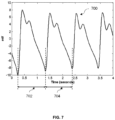
- receiving the bio-signal may include receiving data related to at least five consecutive cardiac cycles of the bio-signal.
- the data may include time intervals of the at least five cardiac cycles relating to a systolic peak, start time and end time of each cardiac cycle.
- the arousal level is determined to be in the stress level if the calculated standard deviation of the pulse pressure is greater than a threshold value, in which the threshold value is within a range of about 3.0-12.0 mmHg mercury level.
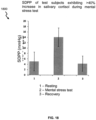
- Also described is a method for determining an arousal level of a subject comprising: (i) receiving a bio-signal from the subject; (ii) calculating statistical variations of at least two physiological parameters derived from the bio-signal; and (iii) determining an arousal level of the subject based on the calculated statistical variations of the at least two physiological parameters, wherein the arousal level is determined to be in a stress level if the calculated statistical variation of at least one physiological parameter corresponds to more than 40% increase in salivary cortisol of the subject.
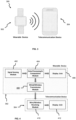
- FIG. 3 is a schematic diagram of an apparatus 300 (comprising a wearable device 302 and a telecommunication device 304) for deriving a mental state of a subject (not shown), according to a first embodiment of the invention.
- FIG. 4 shows the schematics of the apparatus 300.
- the subject is a user of the apparatus 300.
- the wearable device 302 is realisable in different forms, for example as a wrist watch. Of course, it will be appreciated that in other envisaged embodiments, the wearable device 302 may also be in any other form suitable to be worn on any part of a user's body, such as his/her arms, ears, chest, fingers, neck, or foot.
- the apparatus 300 also includes other types of physiological parameters sensors (not shown in FIG. 4 ) such as ECG, EEG, EMG, GSR, temperature sensor and/or pressure sensor that are usable in conjunction with the signal sensing module 402.
- the different physiological parameters sensors may be arranged separate from the wearable device 302 or integrated therewithin.
- the different physiological parameters sensors are configured to obtain various physiological parameters (e.g. body temperature and GSR) of the user, and may be positioned on the same or different locations of the user's body (as the wearable device 302) during sensing.
- the wearable device 302 includes a wired/wireless transmission module 408 arranged to wired/wirelessly communicate the output result to the telecommunications device 304.
- the telecommunication device 304 includes a corresponding wired/wireless receiver module 410 for receiving signals relating to the output results from the wearable device 302 and a display unit 412 for displaying the received results to the subject.
- a user of the wearable device 302 and telecommunication device 304 may be one same individual or different individuals, but for ease of explanation in this embodiment, it is assumed that the user operating the wearable device 302 and telecommunication device 304 is the same individual.
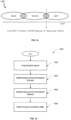
- step 1508 the wearable device 302 determines and derives a mental state of the subject based on the calculated arousal level and valence level. The derived mental state is then transmitted in the form of a suitable signal by the wearable device 302 to the telecommunication device 304 to be displayed to the subject himself.
- FIG. 17 shows another chart diagram 1700, in which afore described methods are used to enable a more detailed classification of different levels of arousal and valence into even more levels of emotional states, such as "Angry”, “Alert”, “Excited”, “Stress”, “Normal”, “Happy”, “Depressed”, “Bored” or “Relaxed”.
- the HR and PP may be selected, and respective standard deviations of the HR and PP (i.e. SDHR and SDPP) are calculated.
- standard deviations of the HR and PP i.e. SDHR and SDPP
- more than two physiological parameters may also be used to enhance the accuracy of the final results obtained at step 610.
- the size of a processing window is defined as a specified time duration of said window, but to be understood is an example and therefore not to be construed as being the only definition possible. For instance, relating to calculating the subject's SDPP and SDHR, it has been determined that an accuracy suitable for calculating the SDPP and SDHR may for example, but without limitation, be achieved by utilizing a predetermined window size of about 30 seconds depending on specific accuracy requirement.
- the size of each processing window may also be adaptively configured during the segmenting process so that more cardiac cycles (i.e. more than five) are included in each processing window to ensure high accuracy of results.
- the pulse pressure may be selected as an example of one of the physiological parameters to be used, and SDPP may be used because of the significant difference determined in related measurement values for stressful and non-stressful situations.
- FIG. 8 is a table 800 depicting a list of parameters and respective associated classifying performance from a clinical study performed. It will be appreciated from the said table 800 that a low p-value obtained for SDPP clearly shows the most significant differences in value between the stressful and non-stressful situations.
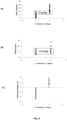
- FIG. 9a and FIG. 9b illustrate that there are still however overlapping data in each parameter that cannot be used to accurately classify between stressful and non-stressful situations.
- the SVM classifier is utilized to also classify the overlapping classes of data.
- FIG. 9c The improved results are shown in FIG. 9c in which the trained SVM classifier is substantially able to distinguish between stressful and non-stressful situations.
- a HRV coherence of the subject is calculated by correlating the HRV signal with a reference signal.
- the reference signal is, for example, a sine wave representing a time-domain reference signal.
- a frequency domain analysis is performed (using Fast Fourier Transform (FFT) algorithm) on the time-domain HRV signal to derive a PSD graph to calculate at least one related frequency-domain parameter.
- the at least one frequency-domain parameter includes a LF/HF (Low Frequency/High Frequency) ratio and a kurtosis value, but in alternative embodiments, other suitable features may also be included.
- a valence level of the subject is determined (in this instance) based on the calculated HRV coherence, LF/HF ratio, and kurtosis value. It is to be appreciated that the HRV coherence, LF/HF ratio, and kurtosis value may also collectively be termed as HRV parameters/features.
- step 1004 is, mutatis mutandis, similar to step 604 of the method of FIG. 6 (as afore described), and hence for sake of brevity, the explanation will not be repeated.
- Detailed description of the subsequent steps 1006-1012 of the method of FIG. 10 is now set out below.
- steps 1006 and 1008 the teachings of a PCT application, having publication number WO2014/031082 , can be referred to.
- the interested reader is directed to the afore said PCT application WO2014/031082 for full details on how to derive a time-domain HRV signal from the bio-signal for subsequently correlating with a reference signal in order to obtain the HRV coherence of the subject.
- any other known methods for calculating the HRV coherence may also be used, and not just limited to only the method described in PCT application WO2014/031082 .
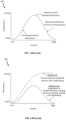
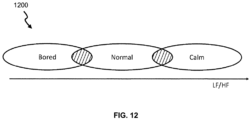
- the LF/HF ratio is commonly used to differentiate emotions of different levels of valence. But as depicted in shaded portions of a Venn diagram 1200 in FIG. 12 , there is still overlapping of closely related emotions based on a same value of LF/HF ratio.
- the HRV coherence is also determined to be closely related to the (emotional) valence level.
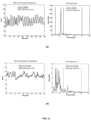
- the kurtosis analysis of the PSD as shown in FIGs. 13a and 13b , the kurtosis value is found to be highly related to the HRV coherence of an individual. For this embodiment, it is thus determined that a combined analysis of the HRV coherence, LF/HF ratio and kurtosis value provides the highest accuracy in determining a valence level of the subject.
- the valence level is derived collectively from the HRV coherence, LF/HF ratio and kurtosis value.
- a value of the LF/HF ratio typically indicates a corresponding emotional valence of a subject but it is to be appreciated that a boundary that separates closely related emotional states (i.e. see FIG. 16 or FIG. 17 ) is still vague. Nonetheless, an initial level of the valence is still determinable.
- the HRV coherence and kurtosis value are used to further assist with verifying that the initially determined valence level is correct. For example, if the subject is in a calm state (i.e.
- all the steps 1502-1508 in the flow diagram 150 of FIG. 15 may be performed by one electronic device which may be the telecommunications device 304 (instead of the wearable device 302), or other envisaged suitable electronic devices.
- the various modules - signal sensing, data processing module 402, 404 may form parts of the same electronic device, possibly as part of the telecommunications device 304.
- the single electronic device may also be realised as a wearable sensing device to be worn on the subject's body.
- steps 1504-1508 of the method in FIG. 15 may alternatively be performed by a data processing module (not shown) of the telecommunications device 304, instead of the wearable device 302, if it is determined (for example) that the data processing module of the telecommunications device 304 possesses a higher processing power than that of the wearable device 302, but however not to be construed as a limiting.
- performance of steps 1504-1508 of FIG. 15 may also dynamically be allocated between the data processing module of the telecommunications device 304, and the data processing module 404 of the wearable device 302, depending on a desired configuration effected by a user of the apparatus 300.
- the more than 40% increase (i.e. > 40%) in salivary cortisol empirically corresponds to a cut-off threshold range of about 3.0-12.0 mmHg mercury level measured, and more specifically, that range may further be within a range of about 6.0-10.0 mmHg mercury level.
- a cut-off threshold value of about 8.0 mmHg mercury level may beneficially be used as an accurate indicator, if necessary. So, using the said cut-off threshold value, the machine learning classifier is thus not required in this embodiment.
- the proposed apparatus 300 may provide individuals with bio-feedback, trainings or interventions to assist with managing stress or improving into one of the healthy mental states.
- One example is using breathing training to improve the HRV coherence as taught in the PCT application, having publication number WO2014/031082 .
- the wearable device 302 may also include an audio output module (e.g. in the form of a speaker), in which instructions for the breathing training are given to users via the display unit 406 and the audio output module.
- the instructions for the breathing training may also be administered through the telecommunication device 304 or any other suitable external devices.
- audio/visual stimulations effected via the apparatus 300
- interventions similarly effected via the apparatus 300
- generating vibrations, alerts and/or emails to alert the individual of prolonged stress exposures.
- the apparatus 300 is able to help with monitoring and altering emotions, and, as will be appreciated, is thus especially useful in situations where emotions plays an important part to the outcome of a situation in concern.
- using the apparatus 300 therefore allows individuals to more easily and knowingly alter their emotions so that their performance of the related tasks may greatly be enhanced.
- it may help working adults/students detect and decrease their arousal level at any time they think is hampering their related performance, such as attention level or creative thinking.
- companies may use the proposed apparatus 300 to help monitor the emotional states of their staffs, such as whether a particular staff is facing problem(s) like a burnout or is lacking motivation (i.e. low arousal) to perform his/her job well, and accordingly determine whether remedy measures are required to help that staff.
- the proposed apparatus 300 is also beneficially applicable to the sports sector. While it is important for athletes to be psyched up (i.e. positively aroused) to achieve optimum performance during competitions, it is entirely a different matter if the athletes are attempting to learn/master a new skill/technique, where a calm mind (i.e. low arousal, and positive valence) is more beneficial. For coaches, on the other hand, being able to analyse the emotional states and trends of their athletes may be useful for understanding the effectiveness of trainings conducted, as well as aiding the coaches with selecting suitable athletes for participating in competitions.
- the kurtosis value and/or the LF/HF ratio are/is used as conditional thresholds to further assist with the verification.
- the LF/HF ratio is used to define an initial valence, while only the kurtosis value is used as a conditional threshold for the verification.
Landscapes
- Health & Medical Sciences (AREA)
- Life Sciences & Earth Sciences (AREA)
- Engineering & Computer Science (AREA)
- Public Health (AREA)
- General Health & Medical Sciences (AREA)
- Medical Informatics (AREA)
- Physics & Mathematics (AREA)
- Biomedical Technology (AREA)
- Veterinary Medicine (AREA)
- Animal Behavior & Ethology (AREA)
- Biophysics (AREA)
- Pathology (AREA)
- Heart & Thoracic Surgery (AREA)
- Molecular Biology (AREA)
- Surgery (AREA)
- Cardiology (AREA)
- Physiology (AREA)
- Psychiatry (AREA)
- Pulmonology (AREA)
- Hospice & Palliative Care (AREA)
- Developmental Disabilities (AREA)
- Social Psychology (AREA)
- Psychology (AREA)
- Child & Adolescent Psychology (AREA)
- Artificial Intelligence (AREA)
- Educational Technology (AREA)
- Computer Vision & Pattern Recognition (AREA)
- Signal Processing (AREA)
- Vascular Medicine (AREA)
- Primary Health Care (AREA)
- Epidemiology (AREA)
- Nursing (AREA)
- Fuzzy Systems (AREA)
- Oral & Maxillofacial Surgery (AREA)
- Audiology, Speech & Language Pathology (AREA)
- Mathematical Physics (AREA)
- Nuclear Medicine, Radiotherapy & Molecular Imaging (AREA)
- Radiology & Medical Imaging (AREA)
- Dentistry (AREA)
- Evolutionary Computation (AREA)
Claims (10)
- Einrichtung zum Bestimmen eines Erregungsniveaus eines Subjekts, wobei die Einrichtung umfasst:(i) einen Empfänger zum Empfangen eines Biosignals von dem Subjekt;(ii) einen Prozessor zum Berechnen jeweiliger statistischer Variationen von mindestens zwei physiologischen Parametern, die von dem Biosignal abgeleitet sind, wobei einer davon einen Pulsdruck einschließt; und(iii) Bestimmen eines Erregungsniveaus des Subjekts auf der Grundlage der berechneten statistischen Variationen der mindestens zwei physiologischen Parameter,wobei der andere der mindestens zwei physiologischen Parameter aus der Gruppe ausgewählt wird, die aus der Atmungsrate und Herzfrequenz besteht,wobei das Berechnen der statistischen Variation der mindestens zwei physiologischen Parameter das Berechnen der Standardabweichung des Pulsdrucks einschließt, unddadurch gekennzeichnet, dassdas Erregungsniveau als in einem Stressniveau befindlich bestimmt wird, wenn die berechnete Standardabweichung des Pulsdrucks größer als ein Schwellenwert ist, wobei der Schwellenwert innerhalb eines Bereichs von etwa 3,0 bis 12,0 mm Hg Quecksilbersäule liegt.
- Einrichtung nach Anspruch 1, wobei das Empfangen des Biosignals das Empfangen von Daten einschließt, die sich auf mindestens fünf aufeinanderfolgende Herzzyklen des Biosignals beziehen.
- Einrichtung nach Anspruch 2, wobei die Daten Zeitintervalle der mindestens fünf Herzzyklen in Bezug auf einen systolischen Spitzenwert, eine Startzeit und eine Endzeit jedes Herzzyklus einschließen.
- Einrichtung nach einem der vorhergehenden Ansprüche, wobei das Berechnen der statistischen Variation der mindestens zwei physiologischen Parameter das Berechnen der Standardabweichung der Herzfrequenz oder der Atemfrequenz einschließt.
- Einrichtung nach einem der vorhergehenden Ansprüche, wobei das Erregungsniveau als im Stressniveau befindlich bestimmt wird, wenn die berechnete Standardabweichung des Pulsdrucks größer als der Schwellenwert ist, wobei der Schwellenwert innerhalb eines Bereichs von etwa 6,0 bis 10,0 mm Hg Quecksilbersäule liegt.
- Einrichtung nach einem der vorhergehenden Ansprüche, ferner umfassend das Filtern des empfangenen Biosignals und das Unterteilen des gefilterten Biosignals in eine Vielzahl von Verarbeitungsfenstern.
- Einrichtung nach Anspruch 6, wobei das Berechnen der jeweiligen statistischen Variationen das Berechnen der Standardabweichung der mindestens zwei physiologischen Parameter von jeweiligen Verarbeitungsfenstern der Vielzahl von Verarbeitungsfenstern einschließt.
- Einrichtung nach Anspruch 7, wobei die statistischen Variationen aus einer Standardabweichung, Mittelwertverschiebung und einem quadratischen Mittelwert aufeinanderfolgender Differenzen ausgewählt sind.
- Einrichtung nach einem der vorhergehenden Ansprüche, wobei die statistischen Variationen von mindestens zwei physiologischen Parametern die Standardabweichung der Herzfrequenz und die Standardabweichung des Pulsdrucks sind.
- Einrichtung nach einem der vorhergehenden Ansprüche, die von einer tragbaren Vorrichtung ausgeführt wird.
Applications Claiming Priority (2)
| Application Number | Priority Date | Filing Date | Title |
|---|---|---|---|
| SG2014000622 | 2014-12-30 | ||
| PCT/SG2015/050500 WO2016108754A1 (en) | 2014-12-30 | 2015-12-23 | Method and apparatus for deriving a mental state of a subject |
Publications (4)
| Publication Number | Publication Date |
|---|---|
| EP3240481A1 EP3240481A1 (de) | 2017-11-08 |
| EP3240481A4 EP3240481A4 (de) | 2018-11-21 |
| EP3240481C0 EP3240481C0 (de) | 2025-04-16 |
| EP3240481B1 true EP3240481B1 (de) | 2025-04-16 |
Family
ID=56284754
Family Applications (1)
| Application Number | Title | Priority Date | Filing Date |
|---|---|---|---|
| EP15875799.7A Active EP3240481B1 (de) | 2014-12-30 | 2015-12-23 | Verfahren und vorrichtung zur ableitung eines geisteszustandes einer person |
Country Status (9)
| Country | Link |
|---|---|
| US (2) | US11076788B2 (de) |
| EP (1) | EP3240481B1 (de) |
| JP (2) | JP6903579B2 (de) |
| KR (1) | KR20170109554A (de) |
| CN (1) | CN107427267B (de) |
| AU (1) | AU2015372661B2 (de) |
| NZ (1) | NZ732929A (de) |
| SG (1) | SG11201704941SA (de) |
| WO (1) | WO2016108754A1 (de) |
Families Citing this family (14)
| Publication number | Priority date | Publication date | Assignee | Title |
|---|---|---|---|---|
| US10732722B1 (en) * | 2016-08-10 | 2020-08-04 | Emaww | Detecting emotions from micro-expressive free-form movements |
| EP3409205A1 (de) * | 2017-05-30 | 2018-12-05 | Koninklijke Philips N.V. | Vorrichtung, system und verfahren zur bestimmung eines emotionalen zustands eines benutzers |
| JP6710474B2 (ja) * | 2017-09-21 | 2020-06-17 | 日本電信電話株式会社 | コルチゾール濃度推定装置、コルチゾール濃度推定方法、及びプログラム |
| JP6621453B2 (ja) * | 2017-09-21 | 2019-12-18 | 日本電信電話株式会社 | 性ホルモン濃度推定装置、性ホルモン濃度推定方法、及びプログラム |
| JP7058383B2 (ja) * | 2017-10-02 | 2022-04-22 | 日本電気株式会社 | 情動判定装置、情動判定方法、及びプログラム |
| WO2019075522A1 (en) * | 2017-10-19 | 2019-04-25 | Medibio Limited | RISK INDICATOR |
| WO2019168474A1 (en) * | 2018-03-02 | 2019-09-06 | Nitto Denko Corporation | Method, computing device and wearable device for sleep stage detection |
| KR102142183B1 (ko) * | 2018-04-30 | 2020-08-06 | 한국과학기술원 | 사용자의 심리활동과 생체신호에 기반한 감정 추정 방법 및 그 시스템 |
| KR102574087B1 (ko) | 2018-07-27 | 2023-09-04 | 삼성전자주식회사 | 광 센서, 광 센서 어레이, 생체 신호 측정 장치 및 방법 |
| CN109157230A (zh) * | 2018-08-06 | 2019-01-08 | 广州杰赛科技股份有限公司 | 心理压力检测方法和系统、计算机设备、计算机存储介质 |
| CN111184521B (zh) * | 2020-01-20 | 2023-01-06 | 北京津发科技股份有限公司 | 一种压力识别手环 |
| JP7501633B2 (ja) * | 2020-07-15 | 2024-06-18 | 日本電気株式会社 | 生体情報取得装置、生体情報取得方法、およびプログラム |
| JP7632482B2 (ja) * | 2020-12-25 | 2025-02-19 | 日本電気株式会社 | 生体測定装置、システム、生体測定方法、およびプログラム |
| JP2023065808A (ja) * | 2021-10-28 | 2023-05-15 | エヌ・ティ・ティ・コミュニケーションズ株式会社 | 情報提供装置、情報提供方法及びコンピュータプログラム |
Citations (1)
| Publication number | Priority date | Publication date | Assignee | Title |
|---|---|---|---|---|
| WO2014063160A1 (en) * | 2012-10-19 | 2014-04-24 | Basis Science, Inc. | Detection of emotional states |
Family Cites Families (26)
| Publication number | Priority date | Publication date | Assignee | Title |
|---|---|---|---|---|
| US8932227B2 (en) * | 2000-07-28 | 2015-01-13 | Lawrence A. Lynn | System and method for CO2 and oximetry integration |
| JPH1119076A (ja) * | 1997-07-07 | 1999-01-26 | Pola Chem Ind Inc | 香りの抗ストレス効果の測定法 |
| JP3108765B2 (ja) * | 1999-03-24 | 2000-11-13 | 工業技術院長 | 慢性ストレス判定方法及びその装置、記録媒体、判定シート |
| IL130818A (en) * | 1999-07-06 | 2005-07-25 | Intercure Ltd | Interventive-diagnostic device |
| US7689437B1 (en) | 2000-06-16 | 2010-03-30 | Bodymedia, Inc. | System for monitoring health, wellness and fitness |
| JP2002112969A (ja) * | 2000-09-02 | 2002-04-16 | Samsung Electronics Co Ltd | 身体及び感情状態の認識装置及び方法 |
| JP2003061921A (ja) * | 2001-08-30 | 2003-03-04 | Mitsuba Corp | 体調判別方法および体調判別装置 |
| JP2005305132A (ja) * | 2004-03-24 | 2005-11-04 | Matsushita Electric Ind Co Ltd | 機器操作器、表示器、環境制御システムおよびプログラム |
| JP4081686B2 (ja) | 2004-07-05 | 2008-04-30 | ソニー株式会社 | 生体情報の処理装置および映像音響再生装置 |
| JP3931895B2 (ja) | 2004-07-29 | 2007-06-20 | 株式会社デンソー | 生体情報表示装置 |
| US8244355B2 (en) * | 2004-10-29 | 2012-08-14 | Medtronic, Inc. | Method and apparatus to provide diagnostic index and therapy regulated by subject's autonomic nervous system |
| US20080214903A1 (en) | 2005-02-22 | 2008-09-04 | Tuvi Orbach | Methods and Systems for Physiological and Psycho-Physiological Monitoring and Uses Thereof |
| CN101708121B (zh) * | 2009-07-15 | 2012-07-04 | 香港中文大学 | 耳挂式低功耗生理参数监测装置 |
| WO2011153318A2 (en) * | 2010-06-02 | 2011-12-08 | Q-Tec Systems Llc | Method and apparatus for monitoring emotion in an interactive network |
| US20140221866A1 (en) * | 2010-06-02 | 2014-08-07 | Q-Tec Systems Llc | Method and apparatus for monitoring emotional compatibility in online dating |
| JP2013537435A (ja) | 2010-06-07 | 2013-10-03 | アフェクティヴァ,インコーポレイテッド | ウェブサービスを用いた心理状態分析 |
| US20130245396A1 (en) * | 2010-06-07 | 2013-09-19 | Affectiva, Inc. | Mental state analysis using wearable-camera devices |
| US20120150003A1 (en) * | 2010-12-09 | 2012-06-14 | Siemens Medical Solutions Usa, Inc. | System Non-invasive Cardiac Output Determination |
| EP2713881B1 (de) | 2011-06-01 | 2020-10-07 | Koninklijke Philips N.V. | Verfahren und system zur unterstützung von patienten |
| JP5828111B2 (ja) | 2011-07-28 | 2015-12-02 | パナソニックIpマネジメント株式会社 | 心理状態評価装置、心理状態評価システムおよびプログラム |
| EP2559377B1 (de) * | 2011-08-17 | 2019-09-11 | BIOTRONIK SE & Co. KG | Verfahren und implantierbares medizinisches system zum monitoring von atemparametern sowie ein entsprechendes computerprogramm und ein entsprechendes computerlesbares speichermedium |
| US9641239B2 (en) * | 2012-06-22 | 2017-05-02 | Fitbit, Inc. | Adaptive data transfer using bluetooth |
| US9168020B2 (en) | 2012-08-13 | 2015-10-27 | Fujitsu Limited | Frequency domain analysis transform of renal blood flow doppler signal to determine stress levels |
| US20150208931A1 (en) * | 2012-08-23 | 2015-07-30 | Nitto Denko Corporation | Method and device for quantifying heart rate variability (hrv) coherence |
| JP6117552B2 (ja) * | 2012-12-28 | 2017-04-19 | 株式会社Kri | 生活習慣病判定支援装置および生活習慣病判定支援システム |
| JP2016538097A (ja) * | 2013-10-23 | 2016-12-08 | クアンタス, インコーポレイテッド | 消費者バイオメトリックデバイス |
-
2015
- 2015-12-23 WO PCT/SG2015/050500 patent/WO2016108754A1/en not_active Ceased
- 2015-12-23 KR KR1020177021053A patent/KR20170109554A/ko not_active Abandoned
- 2015-12-23 CN CN201580076908.3A patent/CN107427267B/zh not_active Expired - Fee Related
- 2015-12-23 NZ NZ732929A patent/NZ732929A/en not_active IP Right Cessation
- 2015-12-23 AU AU2015372661A patent/AU2015372661B2/en not_active Ceased
- 2015-12-23 JP JP2017534975A patent/JP6903579B2/ja active Active
- 2015-12-23 SG SG11201704941SA patent/SG11201704941SA/en unknown
- 2015-12-23 US US15/537,967 patent/US11076788B2/en active Active
- 2015-12-23 EP EP15875799.7A patent/EP3240481B1/de active Active
-
2021
- 2021-06-23 JP JP2021104055A patent/JP7191159B2/ja active Active
- 2021-06-28 US US17/360,403 patent/US20210321924A1/en active Pending
Patent Citations (1)
| Publication number | Priority date | Publication date | Assignee | Title |
|---|---|---|---|---|
| WO2014063160A1 (en) * | 2012-10-19 | 2014-04-24 | Basis Science, Inc. | Detection of emotional states |
Also Published As
| Publication number | Publication date |
|---|---|
| KR20170109554A (ko) | 2017-09-29 |
| JP2018504188A (ja) | 2018-02-15 |
| WO2016108754A1 (en) | 2016-07-07 |
| AU2015372661A1 (en) | 2017-07-06 |
| AU2015372661B2 (en) | 2021-04-01 |
| US20170340257A1 (en) | 2017-11-30 |
| NZ732929A (en) | 2022-04-29 |
| US11076788B2 (en) | 2021-08-03 |
| JP2021154150A (ja) | 2021-10-07 |
| SG11201704941SA (en) | 2017-07-28 |
| EP3240481C0 (de) | 2025-04-16 |
| CN107427267B (zh) | 2021-07-23 |
| JP7191159B2 (ja) | 2022-12-16 |
| US20210321924A1 (en) | 2021-10-21 |
| EP3240481A1 (de) | 2017-11-08 |
| EP3240481A4 (de) | 2018-11-21 |
| JP6903579B2 (ja) | 2021-07-14 |
| CN107427267A (zh) | 2017-12-01 |
Similar Documents
| Publication | Publication Date | Title |
|---|---|---|
| US20210321924A1 (en) | Method And Apparatus For Deriving A Mental State Of A Subject | |
| US11504020B2 (en) | Systems and methods for multivariate stroke detection | |
| de Zambotti et al. | Sensors capabilities, performance, and use of consumer sleep technology | |
| JP6721156B2 (ja) | 生体情報分析装置、システム、及び、プログラム | |
| CN109843163B (zh) | 用于标记睡眠状态的方法和系统 | |
| JP6799536B2 (ja) | 加速度計を用いるウェアラブル痛みモニタ | |
| CN106256316B (zh) | 用于评估生理老化水平的方法和设备 | |
| US12097049B2 (en) | Methods, apparatus and systems for adaptable presentation of sensor data | |
| US20240306967A1 (en) | Signal processing apparatus and method | |
| Maier et al. | Smartcoping-A mobile solution for stress recognition and prevention | |
| Assaf et al. | Sleep detection using physiological signals from a wearable device | |
| Poli | Measurement and processing of multimodal physiological signals in response to external stimuli by wearable devices and evaluation of parameters influencing data acquisition | |
| Dai | Smart Sensing and Clinical Predictions with Wearables: From Physiological Signals to Mental Health | |
| Küçüktütüncü | Dynamic modulation of portable device interface with the assessment of cognitive load using built-in sensors | |
| Li | Towards Accessible Personal Stress Mobile Information Displays Informed by Physiological Stress Data Fusion |
Legal Events
| Date | Code | Title | Description |
|---|---|---|---|
| STAA | Information on the status of an ep patent application or granted ep patent |
Free format text: STATUS: THE INTERNATIONAL PUBLICATION HAS BEEN MADE |
|
| PUAI | Public reference made under article 153(3) epc to a published international application that has entered the european phase |
Free format text: ORIGINAL CODE: 0009012 |
|
| STAA | Information on the status of an ep patent application or granted ep patent |
Free format text: STATUS: REQUEST FOR EXAMINATION WAS MADE |
|
| 17P | Request for examination filed |
Effective date: 20170705 |
|
| AK | Designated contracting states |
Kind code of ref document: A1 Designated state(s): AL AT BE BG CH CY CZ DE DK EE ES FI FR GB GR HR HU IE IS IT LI LT LU LV MC MK MT NL NO PL PT RO RS SE SI SK SM TR |
|
| AX | Request for extension of the european patent |
Extension state: BA ME |
|
| DAV | Request for validation of the european patent (deleted) | ||
| DAX | Request for extension of the european patent (deleted) | ||
| A4 | Supplementary search report drawn up and despatched |
Effective date: 20181018 |
|
| RIC1 | Information provided on ipc code assigned before grant |
Ipc: A61B 5/16 20060101AFI20181012BHEP Ipc: A61B 5/145 20060101ALN20181012BHEP |
|
| STAA | Information on the status of an ep patent application or granted ep patent |
Free format text: STATUS: EXAMINATION IS IN PROGRESS |
|
| 17Q | First examination report despatched |
Effective date: 20210625 |
|
| RIC1 | Information provided on ipc code assigned before grant |
Ipc: A61B 5/145 20060101ALN20240924BHEP Ipc: A61B 5/16 20060101AFI20240924BHEP |
|
| GRAP | Despatch of communication of intention to grant a patent |
Free format text: ORIGINAL CODE: EPIDOSNIGR1 |
|
| STAA | Information on the status of an ep patent application or granted ep patent |
Free format text: STATUS: GRANT OF PATENT IS INTENDED |
|
| RIC1 | Information provided on ipc code assigned before grant |
Ipc: A61B 5/145 20060101ALN20241014BHEP Ipc: A61B 5/16 20060101AFI20241014BHEP |
|
| INTG | Intention to grant announced |
Effective date: 20241119 |
|
| GRAS | Grant fee paid |
Free format text: ORIGINAL CODE: EPIDOSNIGR3 |
|
| GRAA | (expected) grant |
Free format text: ORIGINAL CODE: 0009210 |
|
| STAA | Information on the status of an ep patent application or granted ep patent |
Free format text: STATUS: THE PATENT HAS BEEN GRANTED |
|
| AK | Designated contracting states |
Kind code of ref document: B1 Designated state(s): AL AT BE BG CH CY CZ DE DK EE ES FI FR GB GR HR HU IE IS IT LI LT LU LV MC MK MT NL NO PL PT RO RS SE SI SK SM TR |
|
| REG | Reference to a national code |
Ref country code: GB Ref legal event code: FG4D |
|
| REG | Reference to a national code |
Ref country code: CH Ref legal event code: EP |
|
| REG | Reference to a national code |
Ref country code: IE Ref legal event code: FG4D |
|
| REG | Reference to a national code |
Ref country code: DE Ref legal event code: R096 Ref document number: 602015091468 Country of ref document: DE |
|
| U01 | Request for unitary effect filed |
Effective date: 20250514 |
|
| U07 | Unitary effect registered |
Designated state(s): AT BE BG DE DK EE FI FR IT LT LU LV MT NL PT RO SE SI Effective date: 20250520 |
|
| PG25 | Lapsed in a contracting state [announced via postgrant information from national office to epo] |
Ref country code: ES Free format text: LAPSE BECAUSE OF FAILURE TO SUBMIT A TRANSLATION OF THE DESCRIPTION OR TO PAY THE FEE WITHIN THE PRESCRIBED TIME-LIMIT Effective date: 20250416 |
|
| PG25 | Lapsed in a contracting state [announced via postgrant information from national office to epo] |
Ref country code: NO Free format text: LAPSE BECAUSE OF FAILURE TO SUBMIT A TRANSLATION OF THE DESCRIPTION OR TO PAY THE FEE WITHIN THE PRESCRIBED TIME-LIMIT Effective date: 20250716 Ref country code: GR Free format text: LAPSE BECAUSE OF FAILURE TO SUBMIT A TRANSLATION OF THE DESCRIPTION OR TO PAY THE FEE WITHIN THE PRESCRIBED TIME-LIMIT Effective date: 20250717 |
|
| PG25 | Lapsed in a contracting state [announced via postgrant information from national office to epo] |
Ref country code: PL Free format text: LAPSE BECAUSE OF FAILURE TO SUBMIT A TRANSLATION OF THE DESCRIPTION OR TO PAY THE FEE WITHIN THE PRESCRIBED TIME-LIMIT Effective date: 20250416 |
|
| PG25 | Lapsed in a contracting state [announced via postgrant information from national office to epo] |
Ref country code: HR Free format text: LAPSE BECAUSE OF FAILURE TO SUBMIT A TRANSLATION OF THE DESCRIPTION OR TO PAY THE FEE WITHIN THE PRESCRIBED TIME-LIMIT Effective date: 20250416 |
|
| PG25 | Lapsed in a contracting state [announced via postgrant information from national office to epo] |
Ref country code: RS Free format text: LAPSE BECAUSE OF FAILURE TO SUBMIT A TRANSLATION OF THE DESCRIPTION OR TO PAY THE FEE WITHIN THE PRESCRIBED TIME-LIMIT Effective date: 20250716 |
|
| PG25 | Lapsed in a contracting state [announced via postgrant information from national office to epo] |
Ref country code: IS Free format text: LAPSE BECAUSE OF FAILURE TO SUBMIT A TRANSLATION OF THE DESCRIPTION OR TO PAY THE FEE WITHIN THE PRESCRIBED TIME-LIMIT Effective date: 20250816 |