EP3239332B1 - Hochfester stahl mit hervorragender sprödbruchstablität und herstellungsverfahren dafür - Google Patents
Hochfester stahl mit hervorragender sprödbruchstablität und herstellungsverfahren dafür Download PDFInfo
- Publication number
- EP3239332B1 EP3239332B1 EP15873591.0A EP15873591A EP3239332B1 EP 3239332 B1 EP3239332 B1 EP 3239332B1 EP 15873591 A EP15873591 A EP 15873591A EP 3239332 B1 EP3239332 B1 EP 3239332B1
- Authority
- EP
- European Patent Office
- Prior art keywords
- steel
- less
- rolling
- thickness
- strength steel
- Prior art date
- Legal status (The legal status is an assumption and is not a legal conclusion. Google has not performed a legal analysis and makes no representation as to the accuracy of the status listed.)
- Active
Links
Images
Classifications
-
- C—CHEMISTRY; METALLURGY
- C22—METALLURGY; FERROUS OR NON-FERROUS ALLOYS; TREATMENT OF ALLOYS OR NON-FERROUS METALS
- C22C—ALLOYS
- C22C38/00—Ferrous alloys, e.g. steel alloys
- C22C38/04—Ferrous alloys, e.g. steel alloys containing manganese
-
- C—CHEMISTRY; METALLURGY
- C21—METALLURGY OF IRON
- C21D—MODIFYING THE PHYSICAL STRUCTURE OF FERROUS METALS; GENERAL DEVICES FOR HEAT TREATMENT OF FERROUS OR NON-FERROUS METALS OR ALLOYS; MAKING METAL MALLEABLE, e.g. BY DECARBURISATION OR TEMPERING
- C21D8/00—Modifying the physical properties of ferrous metals or ferrous alloys by deformation combined with, or followed by, heat treatment
- C21D8/02—Modifying the physical properties of ferrous metals or ferrous alloys by deformation combined with, or followed by, heat treatment during manufacturing of plates or strips
- C21D8/021—Modifying the physical properties of ferrous metals or ferrous alloys by deformation combined with, or followed by, heat treatment during manufacturing of plates or strips involving particular fabrication steps or treatments of ingots or slabs
-
- C—CHEMISTRY; METALLURGY
- C21—METALLURGY OF IRON
- C21D—MODIFYING THE PHYSICAL STRUCTURE OF FERROUS METALS; GENERAL DEVICES FOR HEAT TREATMENT OF FERROUS OR NON-FERROUS METALS OR ALLOYS; MAKING METAL MALLEABLE, e.g. BY DECARBURISATION OR TEMPERING
- C21D8/00—Modifying the physical properties of ferrous metals or ferrous alloys by deformation combined with, or followed by, heat treatment
- C21D8/02—Modifying the physical properties of ferrous metals or ferrous alloys by deformation combined with, or followed by, heat treatment during manufacturing of plates or strips
- C21D8/0221—Modifying the physical properties of ferrous metals or ferrous alloys by deformation combined with, or followed by, heat treatment during manufacturing of plates or strips characterised by the working steps
- C21D8/0226—Hot rolling
-
- C—CHEMISTRY; METALLURGY
- C21—METALLURGY OF IRON
- C21D—MODIFYING THE PHYSICAL STRUCTURE OF FERROUS METALS; GENERAL DEVICES FOR HEAT TREATMENT OF FERROUS OR NON-FERROUS METALS OR ALLOYS; MAKING METAL MALLEABLE, e.g. BY DECARBURISATION OR TEMPERING
- C21D8/00—Modifying the physical properties of ferrous metals or ferrous alloys by deformation combined with, or followed by, heat treatment
- C21D8/02—Modifying the physical properties of ferrous metals or ferrous alloys by deformation combined with, or followed by, heat treatment during manufacturing of plates or strips
- C21D8/0247—Modifying the physical properties of ferrous metals or ferrous alloys by deformation combined with, or followed by, heat treatment during manufacturing of plates or strips characterised by the heat treatment
- C21D8/0263—Modifying the physical properties of ferrous metals or ferrous alloys by deformation combined with, or followed by, heat treatment during manufacturing of plates or strips characterised by the heat treatment following hot rolling
-
- C—CHEMISTRY; METALLURGY
- C22—METALLURGY; FERROUS OR NON-FERROUS ALLOYS; TREATMENT OF ALLOYS OR NON-FERROUS METALS
- C22C—ALLOYS
- C22C38/00—Ferrous alloys, e.g. steel alloys
- C22C38/02—Ferrous alloys, e.g. steel alloys containing silicon
-
- C—CHEMISTRY; METALLURGY
- C22—METALLURGY; FERROUS OR NON-FERROUS ALLOYS; TREATMENT OF ALLOYS OR NON-FERROUS METALS
- C22C—ALLOYS
- C22C38/00—Ferrous alloys, e.g. steel alloys
- C22C38/08—Ferrous alloys, e.g. steel alloys containing nickel
-
- C—CHEMISTRY; METALLURGY
- C22—METALLURGY; FERROUS OR NON-FERROUS ALLOYS; TREATMENT OF ALLOYS OR NON-FERROUS METALS
- C22C—ALLOYS
- C22C38/00—Ferrous alloys, e.g. steel alloys
- C22C38/12—Ferrous alloys, e.g. steel alloys containing tungsten, tantalum, molybdenum, vanadium, or niobium
-
- C—CHEMISTRY; METALLURGY
- C22—METALLURGY; FERROUS OR NON-FERROUS ALLOYS; TREATMENT OF ALLOYS OR NON-FERROUS METALS
- C22C—ALLOYS
- C22C38/00—Ferrous alloys, e.g. steel alloys
- C22C38/14—Ferrous alloys, e.g. steel alloys containing titanium or zirconium
-
- C—CHEMISTRY; METALLURGY
- C22—METALLURGY; FERROUS OR NON-FERROUS ALLOYS; TREATMENT OF ALLOYS OR NON-FERROUS METALS
- C22C—ALLOYS
- C22C38/00—Ferrous alloys, e.g. steel alloys
- C22C38/16—Ferrous alloys, e.g. steel alloys containing copper
-
- C—CHEMISTRY; METALLURGY
- C21—METALLURGY OF IRON
- C21D—MODIFYING THE PHYSICAL STRUCTURE OF FERROUS METALS; GENERAL DEVICES FOR HEAT TREATMENT OF FERROUS OR NON-FERROUS METALS OR ALLOYS; MAKING METAL MALLEABLE, e.g. BY DECARBURISATION OR TEMPERING
- C21D2201/00—Treatment for obtaining particular effects
- C21D2201/05—Grain orientation
-
- C—CHEMISTRY; METALLURGY
- C21—METALLURGY OF IRON
- C21D—MODIFYING THE PHYSICAL STRUCTURE OF FERROUS METALS; GENERAL DEVICES FOR HEAT TREATMENT OF FERROUS OR NON-FERROUS METALS OR ALLOYS; MAKING METAL MALLEABLE, e.g. BY DECARBURISATION OR TEMPERING
- C21D2211/00—Microstructure comprising significant phases
- C21D2211/002—Bainite
-
- C—CHEMISTRY; METALLURGY
- C21—METALLURGY OF IRON
- C21D—MODIFYING THE PHYSICAL STRUCTURE OF FERROUS METALS; GENERAL DEVICES FOR HEAT TREATMENT OF FERROUS OR NON-FERROUS METALS OR ALLOYS; MAKING METAL MALLEABLE, e.g. BY DECARBURISATION OR TEMPERING
- C21D2211/00—Microstructure comprising significant phases
- C21D2211/005—Ferrite
-
- C—CHEMISTRY; METALLURGY
- C21—METALLURGY OF IRON
- C21D—MODIFYING THE PHYSICAL STRUCTURE OF FERROUS METALS; GENERAL DEVICES FOR HEAT TREATMENT OF FERROUS OR NON-FERROUS METALS OR ALLOYS; MAKING METAL MALLEABLE, e.g. BY DECARBURISATION OR TEMPERING
- C21D2211/00—Microstructure comprising significant phases
- C21D2211/009—Pearlite
-
- C—CHEMISTRY; METALLURGY
- C21—METALLURGY OF IRON
- C21D—MODIFYING THE PHYSICAL STRUCTURE OF FERROUS METALS; GENERAL DEVICES FOR HEAT TREATMENT OF FERROUS OR NON-FERROUS METALS OR ALLOYS; MAKING METAL MALLEABLE, e.g. BY DECARBURISATION OR TEMPERING
- C21D8/00—Modifying the physical properties of ferrous metals or ferrous alloys by deformation combined with, or followed by, heat treatment
- C21D8/02—Modifying the physical properties of ferrous metals or ferrous alloys by deformation combined with, or followed by, heat treatment during manufacturing of plates or strips
- C21D8/0247—Modifying the physical properties of ferrous metals or ferrous alloys by deformation combined with, or followed by, heat treatment during manufacturing of plates or strips characterised by the heat treatment
-
- C—CHEMISTRY; METALLURGY
- C21—METALLURGY OF IRON
- C21D—MODIFYING THE PHYSICAL STRUCTURE OF FERROUS METALS; GENERAL DEVICES FOR HEAT TREATMENT OF FERROUS OR NON-FERROUS METALS OR ALLOYS; MAKING METAL MALLEABLE, e.g. BY DECARBURISATION OR TEMPERING
- C21D9/00—Heat treatment, e.g. annealing, hardening, quenching or tempering, adapted for particular articles; Furnaces therefor
- C21D9/46—Heat treatment, e.g. annealing, hardening, quenching or tempering, adapted for particular articles; Furnaces therefor for sheet metals
Definitions
- the present disclosure relates to a high-strength steel having excellent brittle crack arrestability, and a method of manufacturing the same.
- brittle crack arrestability indicating the stability of structures
- a case in which a guaranteed level of brittle crack arrestability is required for application thereof to major structures such as ships or the like has increased.
- brittle crack arrestability may be significantly lowered.
- EP 2006407 A1 discloses a thick steel plate having the composition (in weight %) C: 0.08; Mn: 1.5; Ni: 0.4; Nb: 0.006; Ti: 0.014; Cu: 0.4; Si: 0.1: P: 0.006; S: 0.005 and the balance Fe and inevitable impurities.
- the steel plate has a thickness of 50mm and a microstructure comprising 30% ferrite, 5% pearlite and 65% bainite.
- EP 2660346 A2 discloses a steel plate having the composition (in weight %) C: 0.02-0.06; Mn: 1.0-1.6; Ni: 0.7-2.0; Nb: 0.003-0.02; Ti: 0.003-0.015; Cu: 0.4-0.9; Si: 0.1-0.35; P: ⁇ 0.01; S: ⁇ 0.005 and the balance iron and inevitable impurities.
- EP 2119803 A1 discloses a thick steel plate with a bainite / pearlite / ferrite microstructure.
- the thickness is greater than 50mm and the crack arrestability is 6000 N/ (mm 1.5 ) or more below -10°C.
- An aspect of the present disclosure is to provide a high-strength steel having excellent brittle crack arrestability.
- Another aspect of the present disclosure is to provide a method of manufacturing a high-strength steel having excellent brittle crack arrestability.
- a high-strength steel having excellent brittle crack arrestability includes 0.05 wt% to 0.1 wt% of carbon (C), 1.5 wt% to 2.2 wt% of manganese (Mn), 0.3 wt% to 1.2 wt% of nickel (Ni), 0.005 wt% to 0.1 wt% of niobium (Nb), 0.005 wt% to 0.1 wt% of titanium (Ti), 0.1 wt% to 0.5 wt% of copper (Cu), 0.1 wt% to 0.3 wt% of silicon (Si), 100 ppm or less of phosphorus (P), 40 ppm or less of sulfur (S), and the remainder being iron (Fe) and other inevitably contained impurities, the high-strength steel having a microstructure including one structure selected from the group consisting of a single-phase structure of ferrite, a single-phase structure of bainite, a complex
- the contents of Cu and Ni may be set such that a weight ratio of Cu/Ni may be 0.6 or less, in detail, 0.5% or less.
- a method of manufacturing a high-strength steel having excellent brittle crack arrestability includes reheating a slab to a temperature between 950°C and 1100°C and then rough-rolling the slab at a temperature between 1100°C and 900°C, the slab including 0.05 wt% to 0.1 wt% of carbon (C), 1.5 wt% to 2.2 wt% of manganese (Mn), 0.3 wt% to 1.2 wt% of nickel (Ni), 0.005 wt% to 0.1 wt% of niobium (Nb), 0.005 wt% to 0.1 wt% of titanium (Ti), 0.1 wt% to 0.5 wt% of copper (Cu), 0.1 wt% to 0.3 wt% of silicon (Si), 100 ppm or less of phosphorus (P), 40 ppm or less of sulfur (S), and the remainder being iron (Fe) and other inevitably contained im
- C carbon
- Mn
- a grain size of a 1/4t portion (t referring to a thickness of a steel sheet) of a bar after the rough-rolling and before the finish-rolling preferably is 100 ⁇ m or less and, in further detail, may be 80 ⁇ m or less.
- a reduction ratio during the finish-rolling may be set such that a ratio of a slab thickness (mm)/a steel sheet thickness (mm) after finish-rolling may be 3.8 or above.
- the cooling of the steel sheet may be performed at a cooling rate of a central portion of the steel sheet of 1.5°C/s or higher.
- a high-strength steel having a high yield strength and excellent brittle crack arrestability may be obtained.
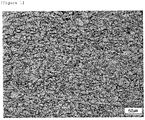
- Fig. 1 is an image of a central portion of Inventive steel 6 in a thickness direction, captured using an optical microscope.
- the inventors of the present disclosure conducted research and experimentation into improving the yield strength and brittle crack arrestability of a thick steel having a thickness of 50 mm or more, and the present disclosure was proposed based on the research results.
- the yield strength and brittle crack arrestability of a relatively thick steel may be further improved by controlling a steel composition, a structure, a texture and manufacturing conditions of steel.
- a main concept in the present disclosure is as follows.
- a high-strength steel having excellent brittle crack arrestability includes 0.05 wt% to 0.1 wt% of carbon (C), 1.5 wt% to 2 .2 wt% of manganese (Mn), 0.3 wt% to 1.2 wt% of nickel (Ni), 0.005 wt% to 0.1 wt% of niobium (Nb), 0.005 wt% to 0.1 wt% of titanium (Ti), 0.1 wt% to 0.5 wt% of copper (Cu), 0.
- ferrite 1 wt% to 0.3 wt% of silicon (Si), 100 ppm or less of phosphorus (P), 40 ppm or less of sulfur (S), and the remainder being iron (Fe) and other inevitably contained impurities; and has a microstructure including one structure selected from the group consisting of a single-phase structure of ferrite, a single-phase structure of bainite, a complex structure of ferrite and bainite, a complex structure of ferrite and pearlite, and a complex structure of ferrite, bainite and pearlite.
- C is a relatively important element in securing basic strength
- C is contained in steel within an appropriate range.
- C is added in an amount of 0.05% or more.
- a content of C exceeds 0.1%, low temperature toughness of steel may be lowered due to the formation of a relatively large amount of martensite-austenite constituent (MA), the relatively high strength of the ferrite itself, a relatively large amount of low-temperature transformation phases, and the like.
- MA martensite-austenite constituent
- the content of C is limited to 0.05% to 0.1%, in detail, 0.059% to 0.081%, in further detail, 0.065% to 0.075%.
- Mn is a useful element in improving strength of steel via solid solution strengthening and improving hardenability of steel to produce low temperature transformation phases.
- Mn may be a main element in securing the strength of a central portion of a thick material.
- the content of Mn is 1.5% or more.
- the content of Mn is limited to 1.5% to 2.2%, in detail, 1.58% to 2.11%, in further detail, 1.7% to 2.0%.
- Ni is an important element for facilitating cross slip of dislocation at a relatively low temperature to improve impact toughness and for improving hardenability to improve steel strength. In order to obtain such an effect, Ni is added in an amount of 0.3% or more. However, if Ni is added in an amount of 1.2% or more, the hardenability may be excessively increased to generate a low-temperature transformation phase and thus reduce toughness of steel, and manufacturing costs may also be increased due to a relatively high cost of Ni as compared with other hardenable elements.
- an upper limit of the Ni content is limited to 1.2%.
- the content of Ni may be limited to 0.45% to 1.02%, and in further detail, may be limited to 0 . 55% to 0.95%.
- Nb precipitates in the form of NbC or NbCN to improve the strength of a base material.
- Nb dissolved at the time of reheating at a relatively high temperature may be relatively finely precipitated in the form of NbC at the time of rolling, thereby suppressing recrystallization of austenite to refine the structure.
- Nb is added in an amount of 0.005% or more, but if Nb is added excessively, a possibility of causing a brittle crack at an edge of steel may be present, and thus an upper limit of the Nb content is to 0.1%.
- the content of Nb may be limited to 0.012% to 0.031%, and in more detail, may be limited to 0.017% to 0.025%.
- Ti is a component precipitated as TiN at the time of reheating to suppress the growth of crystal grains of a base material and a weld heat affected portion to thus significantly improve low-temperature toughness. In order to obtain such an effect, Ti is added in an amount of 0.005% or more.
- the content of Ti exceeds 0.1%, a continuous casting nozzle may be clogged, or low temperature toughness may be reduced by crystallization in a central portion. Therefore the content of Ti is limited to 0.005% to 0.1%.
- the content of Ti may be limited to 0.011% to 0.023%, in further detail, 0.014% to 0.018%.
- P and S are elements causing brittleness at grain boundaries or the formation of coarse inclusions to induce brittleness.
- the content of P is limited to 100 ppm or less, and the content of S is limited to 40 ppm or less.
- Si silicon: 0.1% to 0.3%
- Si is a substitutional element, which improves the strength of steel through solid solution strengthening and has a relatively strong deoxidizing effect.
- Si since Si may be an essential element for the production of clean steel, Si is added in an amount of 0.1% or more. However, if Si is added in a relatively large amount, a coarse martensite-austenite constituent (MA) phase may be formed to lower brittle crack arrestability. Thus, an upper limit of Si content is 0.3%.
- the content of Si may be limited to 0.16% to 0.27%, and in further detail, may be limited to 0.19% to 0.25%.
- Cu is an important element in improving the hardenability and providing a solid solution strengthening to improve the strength of steel, and may also be a main element for increasing yield strength through the formation of upsilon Cu precipitates during tempering application.
- Cu is added in an amount of 0.1% or more.
- an upper limit of Cu content is 0.5%.
- the content of Cu may be limited to 0.19% to 0.42%, in further detail, 0.25% to 0.35%.
- the contents of Cu and Ni may be set such that a weight ratio of Cu/Ni may be 0.6 or less, in detail, 0.5% or less.
- a surface quality may be further improved.
- iron (Fe) is provided as a remainder thereof.
- the impurities are known to those skilled in the art, and thus need not be particularly described in this specification.
- the steel according to an exemplary embodiment has a microstructure including a single structure selected from the group consisting of a single phase structure of ferrite, a single phase structure of bainite, a complex structure of ferrite and bainite, a complex structure of ferrite and pearlite, and a complex structure of ferrite, bainite and pearlite.
- ferrite polygonal ferrite or acicular ferrite is used, and as the bainite, granular bainite is used.
- microstructure of the steel is a complex structure including pearlite
- a fraction of pearlite is limited to 20% or less.
- a grain size of a crystal grain having a high angle boundary in which a difference in crystal orientations measured in a region from a surface layer portion of a steel plate to a 1/4 thickness point thereof in a thickness direction using an EBSD method is 15 degrees or more, is 15 ⁇ m (micrometers) or less.
- the strength of the steel may be improved through strengthening by grain refinement, and further, the occurrence and propagation of cracks may be significantly reduced, thereby improving brittle crack arrestability.
- an area ratio of a (100) plane forming an angle of less than 15 degrees with respect to a plane thereof parallel to a rolling direction in a region from the surface layer portion of a steel plate to the 1/4 thickness point thereof in the thickness direction is 30% or more.
- a main reason for controlling a texture as described above is as follows.
- Cracks may propagate in a width direction of the steel plate, that is, in a direction perpendicular to the rolling direction, and a brittle fracture surface of a body-centered cubic structure (BCC) may be the (100) plane.
- BCC body-centered cubic structure
- an area ratio of the (100) plane forming an angle of less than 15 degrees with respect to the plane of the steel plate parallel to the rolling direction may be a maximum area ratio.
- the texture of the steel in the region thereof from the surface layer portion to the 1/4 thickness point of the steel plate in the thickness direction is controlled.
- the (100) plane forming an angle of less than 15 degrees with respect to the plane of the steel plate parallel to the rolling direction, may serve to block propagation of cracks.
- the area ratio of the (100) plane forming an angle of less than 15 degrees with respect to the plane parallel to the rolling direction in the region from the surface layer portion to the 1/4 thickness point of a steel plate in the thickness direction is controlled to 30% or more, even in the case in which cracking occurs, the propagation of cracks may be blocked, and brittle crack arrestability may be improved.
- the steel has a yield strength of 390 MPa or more.
- the steel has a thickness of 50 mm or more, and in detail, may have a thickness of 50 mm to 100 mm, in further detail, a thickness of 80 mm to 100 mm.
- a method of manufacturing a high-strength steel having excellent brittle crack arrestability includes reheating a slab to a temperature between 950°C and 1100°C and then rough-rolling the slab at a temperature between 1100°C and 900°C, the slab including 0.05 wt% to 0.1 wt% of carbon (C), 1.5 wt% to 2.2 wt% of manganese (Mn), 0.3 wt% to 1.2 wt% of nickel (Ni), 0.005 wt% to 0.1 wt% of niobium (Nb), 0.005 wt% to 0.1 wt% of titanium (Ti), 0.1 wt% to 0.5 wt% of copper (Cu), 0.1 wt% to 0.3 wt% of silicon (Si), 100 ppm or less of phosphorus (P), 40 ppm or less of sulfur (S), and the remainder being iron (Fe) and other inevitably contained impurities; obtaining a steel sheet
- the slab is reheated before rough rolling.
- the slab reheating temperature is 950°C or higher, to dissolve carbonitride of Ti and/or Nb formed during casting. Further, in order to sufficiently dissolve the carbonitride of Ti and/or Nb, the slab reheating temperature may be 1000°C or higher. However, if reheating to an excessively high temperature is performed austenite may be coarsened. Therefore an upper limit of the reheating temperature is 1100°C.
- the reheated slab is rough-rolled.
- a rough rolling temperature may be set to be a temperature (Tnr) at which recrystallization of the austenite is stopped, or more.
- Tnr a temperature at which recrystallization of the austenite is stopped
- An effect of reducing a size of austenite and breaking a cast structure such as dendrites formed during casting by rolling may be obtained.
- the rough rolling temperature is limited to 1100°C to 900°C.
- a reduction ratio per pass with respect to the last three passes during rough rolling is 5% or more, and a total cumulative reduction ratio is 40% or more.
- the growth of crystal grains may occur at a relatively high temperature, while when the last three passes are performed, a grain growth rate may be decreased due to air cooling of a bar during rolling standing by.
- a reduction ratio of the last three passes during rough rolling may relatively significantly affect a grain size of an ultimately obtained microstructure.
- the reduction ratio per pass of the rough rolling is lowered, since sufficient deformation may not be transferred to a central portion of a steel plate, toughness degradation may occur due to coarsening of the grain of the central portion of the steel plate.
- the reduction ratio per pass of the last three passes is limited to 5% or more.
- a cumulative reduction ratio at the time of rough rolling is set to be 40% or more.
- a roughly rolled bar is subjected to finish rolling at Ar 3 (ferrite transformation start temperature) +30°C to Ar 3 -30°C to obtain a steel sheet.
- a further refined microstructure may be obtained.
- relatively fine ferrite may be formed at grain boundaries and inside crystal grains due to strain induced transformation, thereby providing an effect of reducing a grain unit.
- a cumulative reduction ratio at the time of finish rolling is maintained at 40% or higher, and a reduction ratio per pass excluding last hot rolling for shape control may be maintained at 8% or more.
- a grain size of a crystal grain having a high angle boundary in which a difference in crystal orientations measured in a region from a surface layer portion of a steel plate to a 1/4 thickness point thereof in a thickness direction using an EBSD method is 15 degrees or more, may be 15 ⁇ m (micrometers) or less, and thus, a relatively fine microstructure having the grain size as described above may be obtained.
- finish rolling temperature is lowered to Ar 3 -30°C or below, coarse ferrite may be formed before rolling, and the steel may thus be lengthwise elongated during rolling, to lower impact toughness. If the finish rolling is performed at Ar 3 +30°C or higher, fine grains may not be effectively obtained. Thus, finish rolling is performed within a finish rolling temperature range of Ar 3 +30°C to Ar 3 -30°C.
- a grain size of a 1/4t portion (t referring to a thickness of a steel sheet) of a bar after the rough rolling and before the finish rolling is set to be 150 ⁇ m or less, in detail 100 ⁇ m or less, in further detail, 80 ⁇ m or less.
- the grain size of the 1/4t portion of the bar after the rough rolling and before the finish rolling may be controlled according to rough rolling conditions and the like.
- a microstructure ultimately obtained according to refining of austenite grains may be refined, thereby improving low temperature impact toughness.
- a reduction ratio during the finish rolling is set such that a ratio of a slab thickness (mm)/a steel sheet thickness (mm) after finish rolling is 3.5 or above and optionally 3.8 or above.
- a yield/tensile strength and low temperature toughness may be improved through an ultimately obtained refined microstructure.
- toughness of a central portion of a steel sheet may be improved through the reduced grain size in a central portion of the steel sheet in a thickness direction.
- the steel sheet After the finish rolling, the steel sheet has a thickness of 50 mm or more, and in detail, may have 50 mm to 100 mm, in further detail, 80 mm to 100 mm.
- the steel sheet After the finish rolling, the steel sheet is cooled to 700°C or less.
- the yield strength may be 390 MPa or less.
- the cooling of a central portion of the steel sheet may be performed at a cooling rate of 1.5°C/s or higher. If the cooling rate of the central portion of the steel sheet is less than 1.5°C/s, the microstructure may not be properly formed and the yield strength may be 390Mpa or less.
- the cooling of the steel sheet is performed at an average cooling rate from 2°C/s to 300°C/s.
- a 400 mm steel slab having a composition described in the following Table 1 was reheated to a temperature of 1045°C, and was then followed by rough rolling at a temperature of 1015°C to prepare a bar.
- a cumulative reduction ratio during the rough rolling was set to be 50%.
- a thickness of the rough-rolled bar was 180 mm, and a grain size of a 1/4 t portion thereof after the rough rolling and before the finish rolling was 95 ⁇ m.
- the steel sheet was subjected to finish rolling at a temperature obtained by deducting an Ar3 temperature from a finish rolling temperature, shown in the following Table 2, to obtain a steel sheet having a thickness shown in Table 2. Then, the steel sheet was cooled to a temperature of 700°C or less at a cooling rate of 4°C/sec.
- a microstructure, a yield strength, an average grain size of the 1/4t portion in a thickness direction, an area ratio of a (100) plane forming an angle of less than 15 degrees with respect to a plane thereof parallel to a rolling direction in a region from a surface layer portion of a steel plate to a 1/4 point thereof in the thickness direction, and a Kca value (a brittle crack arrestability coefficient) were measured.
- the measurement results are described in Table 2 below.
- Kca values in Table 2 are values obtained by performing an ESSO test on the steel sheet.
- Steel Grade Steel Composition (Weight%) C Si Mn Ni Cu Ti Nb P(ppm) S(ppm) Cu/Ni weight% Inventive Steel 1 0.059 0.16 1.
- Comparative Steel 2 in which a content of C has a value higher than an upper limit of a C content of an exemplary embodiment in the present disclosure, it can be seen that even when a grain size of austenite in a central portion thereof was refined through cooling during rough rolling, upper bainite was formed, and thus, a grain size of a microstructure ultimately obtained was 32.
- an area ratio of a (100) plane forming an angle of less than 15 degrees with respect to a plane of a steel plate parallel to a rolling direction in a region from a surface layer portion of the steel plate to a 1/4 thickness point thereof in a thickness direction was 30% or less
- an impact transition temperature was -40°C or higher due to having the upper bainite in which brittleness easily occurs as a base structure
- a Kca value was 6000 or less at -10°C.
- Comparative Steel 3 in which a content of Si has a value higher than an upper limit of a Si content of an exemplary embodiment in the present disclosure, it can be seen that even when a grain size of austenite in a central portion thereof was refined through cooling during rough rolling, upper bainite was partially formed in the central portion, and further, as a relatively large amount of Si was added, an MA structure was coarsely formed in a large amount, and thus, a Kca value also was a value of 6000 or less at -10°C.
- Comparative Steel 4 in which a content of Mn has a value higher than an upper limit of a Mn content of an exemplary embodiment in the present disclosure, it can be seen that a microstructure of a base material was upper bainite due to having relatively high hardenability, and even when a grain size of austenite in a central portion thereof was refined through cooling during rough rolling, a grain size of a microstructure ultimately obtained was 32.2 pm, and an area ratio of a (100) plane forming an angle of less than 15 degrees with respect to a plane of a steel plate parallel to a rolling direction in a region from a surface layer portion of the steel plate to a 1/4 thickness point thereof in a thickness direction was 30% or less, and furthermore, an impact transition temperature was -40°C or higher, and a Kca value also was 6000 or less at -10°C.
- Comparative Steel 5 in which a content of Ni has a value higher than an upper limit of a Ni content of an exemplary embodiment in the present disclosure, it can be seen that a microstructure of a base material was granular bainite and upper bainite due to relatively high hardenability, and even when a grain size of austenite in a central portion thereof was refined through cooling during rough rolling, a grain size of a microstructure ultimately obtained was 28.7 pm, an impact transition temperature was -40°C or higher, and furthermore, a Kca value also was 6000 or less at -10°C.
- ferrite and pearlite structures a single phase structure of acicular ferrite, a complex structure of acicular ferrite and granular bainite, or a complex structure of acicular ferrite, pearlite and granular bainite was included as a microstructure in the steel sheet, while satisfying a yield strength of 390 MPa or more and a grain size of 15pm or less in a 1/4t portion.
- an area ratio of a (100) plane forming an angle of less than 15 degrees with respect to a plane of a steel plate parallel to a rolling direction in a region from a surface layer portion of the steel plate to a 1/4 point thereof in a thickness direction was 30% or more
- an impact transition temperature was -40°C or lower
- a Kca value satisfied a value of 6000 or more at -10°C.
- FIG. 1 illustrates an image of a central portion of Inventive Steel 6 in a thickness direction, captured using an optical microscope. It can be appreciated as illustrated in FIG. 1 that a structure of a central portion of a steel sheet in a thickness direction is relatively fine.
Landscapes
- Chemical & Material Sciences (AREA)
- Engineering & Computer Science (AREA)
- Materials Engineering (AREA)
- Mechanical Engineering (AREA)
- Metallurgy (AREA)
- Organic Chemistry (AREA)
- Physics & Mathematics (AREA)
- Thermal Sciences (AREA)
- Crystallography & Structural Chemistry (AREA)
- Heat Treatment Of Steel (AREA)
Claims (6)
- Hochfester Stahl mit ausgezeichneter Sprödrissarretierbarkeit, Folgendes umfassend:
0,05 Gew.-% bis 0,1 Gew.-% Kohlenstoff (C), 1,5 Gew.-% bis 2,2 Gew.-% Mangan (Mn), 0,3 Gew.-% bis 1,2 Gew.-% Nickel (Ni), 0,005 Gew.-% bis 0,1 Gew.-% Niob (Nb), 0,005 Gew.-% bis 0,1 Gew.-% Titan (Ti), 0,1 Gew.-% bis 0,5 Gew.-% Kupfer (Cu), 0,1 Gew.-% bis 0,3 Gew.-% Silicium (Si), 100 ppm oder weniger Phosphor (P), 40 ppm oder weniger Schwefel (S) und wobei der Rest Eisen (Fe) und andere unvermeidlich enthaltene Verunreinigungen ist, wobei der hochfeste Stahl eine Mikrostruktur, einschließlich einer Struktur aufweist, die aus der Gruppe ausgewählt ist, die aus Folgendem besteht: einer einphasigen Ferritstruktur, einer einphasigen Bainitstruktur, einer komplexen Ferrit- und Bainitstruktur, einer komplexen Ferrit- und Perlitstruktur und einer komplexen Ferrit-, Bainit- und Perlitstruktur, und eine Dicke von 50 mm oder mehr aufweist, wobei der Ferrit nadelförmiger Ferrit oder polygonaler Ferrit ist und der Bainit körniger Bainit ist, wobei, wenn die Mikrostruktur des hochfesten Stahls eine komplexe Struktur, einschließlich Perlit, ist, ein Anteil von Perlit 20 % oder weniger beträgt, wobei in dem hochfesten Stahl eine Korngröße eines Kristallkorns, die eine hohe Winkelgrenze aufweist, bei der eine Differenz der Kristallorientierungen, die in einem Bereich von einem Oberflächenschichtabschnitt bis zu einem 1/4-Dickenpunkt davon in einer Dickenrichtung unter Verwendung eines EBSD-Verfahrens gemessen wird, 15 Grad oder mehr ist, 15 |jm oder weniger ist, wobei in dem hochfesten Stahl eine Fließfestigkeit davon 390 MPa oder mehr ist, eine Charpy-Bruchoberflächenübergangstemperatur in einem Oberflächenschichtabschnitt und einem 1/4t-Abschnitt davon in einer Dickenrichtung -40 °C oder weniger ist und ein Kca-Wert von 6.000 N/(mm1,5) oder mehr durch ein Ausführen eines ESSO-Tests erhalten wird, und wobei in dem hochfesten Stahl ein Flächenverhältnis einer (100) Ebene, die einen Winkel von weniger als 15 Grad in Bezug auf eine Ebene davon parallel zu einer Walzrichtung in einem Bereich von einem Oberflächenschichtabschnitt zu einem 1/4-Dickenpunkt des hochfesten Stahls in einer Dickenrichtung ausbildet, 30 % oder mehr beträgt. - Hochfester Stahl nach Anspruch 1, wobei die Gehalte an Cu und Ni derart eingestellt sind, dass ein Gewichtsverhältnis von Cu/Ni 0,6 oder weniger beträgt.
- Hochfester Stahl nach Anspruch 1, wobei der hochfeste Stahl eine Dicke von 80 mm bis 100 mm aufweist.
- Verfahren zum Herstellen eines hochfesten Stahls mit ausgezeichneter Sprödrissarretierbarkeit, wobei das Verfahren Folgendes umfasst:Wiedererhitzen einer Bramme auf eine Temperatur zwischen 950 °C und 1100 °C und anschließendes Grobwalzen der Bramme bei einer Temperatur zwischen 1100 °C und 900 °C, wobei die Bramme 0,05 Gew.-% bis 0,1 Gew.-% Kohlenstoff (C), 1,5 Gew.-% bis 2,2 Gew.-% Mangan (Mn), 0,3 Gew.-% bis 1,2 Gew.-% Nickel (Ni), 0,005 Gew.-% bis 0,1 Gew.-% Niob (Nb), 0,005 Gew.-% bis 0,1 Gew.-% Titan (Ti), 0,1 Gew.-% bis 0,5 Gew.-% Kupfer (Cu), 0,1 Gew.-% bis 0,3 Gew.-% Silicium (Si), 100 ppm oder weniger Phosphor (P), 40 ppm oder weniger Schwefel (S) enthält und wobei der Rest Eisen (Fe) und andere unvermeidlich enthaltene Verunreinigungen ist;Erhalten eines Stahlblechs mit einer Dicke von 50 mm oder mehr durch Fertigwalzen eines grobgewalzten Stabes bei einer Temperatur zwischen Ar3 +30 °C und Ar3 -30 °C; undAbkühlen des Stahlblechs auf eine Temperatur von 700 °C oder weniger, wobei bei dem Grobwalzen ein Verringerungsverhältnis pro Durchgang in Bezug auf die letzten drei Durchgänge 5 % oder mehr beträgt und ein kumuliertes Gesamtverringerungsverhältnis 40 % oder mehr beträgt, wobei eine Korngröße eines 1/4t-Abschnitts, in dem t eine Dicke eines Stahlblechs ist, eines Stabes nach dem Grobwalzen und vor dem Fertigwalzen 150 |jm oder weniger beträgt, wobei ein Verringerungsverhältnis während des Fertigwalzens derart eingestellt ist, dass ein Verhältnis einer Brammendicke (mm)/einer Stahlblechdicke (mm) nach dem Fertigwalzen bei 3,5 oder darüber liegt, und wobei das Abkühlen des Stahlblechs mit einer durchschnittlichen Abkühlgeschwindigkeit von 2 °C/s bis 300 °C/s durchgeführt wird.
- Verfahren nach Anspruch 4, wobei die Gehalte an Cu und Ni derart eingestellt sind, dass ein Gewichtsverhältnis von Cu/Ni 0,6 oder weniger beträgt.
- Verfahren nach Anspruch 4, wobei das Abkühlen des Stahlblechs bei einer Abkühlgeschwindigkeit von einem zentralen Abschnitt des Stahlblechs von 1,5 °C/s oder höher durchgeführt wird.
Applications Claiming Priority (2)
| Application Number | Priority Date | Filing Date | Title |
|---|---|---|---|
| KR20140189128 | 2014-12-24 | ||
| PCT/KR2015/014059 WO2016105064A1 (ko) | 2014-12-24 | 2015-12-21 | 취성균열전파 저항성이 우수한 고강도 강재 및 그 제조방법 |
Publications (3)
| Publication Number | Publication Date |
|---|---|
| EP3239332A1 EP3239332A1 (de) | 2017-11-01 |
| EP3239332A4 EP3239332A4 (de) | 2017-11-22 |
| EP3239332B1 true EP3239332B1 (de) | 2019-11-20 |
Family
ID=56151010
Family Applications (1)
| Application Number | Title | Priority Date | Filing Date |
|---|---|---|---|
| EP15873591.0A Active EP3239332B1 (de) | 2014-12-24 | 2015-12-21 | Hochfester stahl mit hervorragender sprödbruchstablität und herstellungsverfahren dafür |
Country Status (6)
| Country | Link |
|---|---|
| US (1) | US10883159B2 (de) |
| EP (1) | EP3239332B1 (de) |
| JP (1) | JP6475837B2 (de) |
| KR (1) | KR101747000B1 (de) |
| CN (1) | CN107109592A (de) |
| WO (1) | WO2016105064A1 (de) |
Families Citing this family (12)
| Publication number | Priority date | Publication date | Assignee | Title |
|---|---|---|---|---|
| US10822671B2 (en) | 2014-12-24 | 2020-11-03 | Posco | High-strength steel having superior brittle crack arrestability, and production method therefor |
| US20170327922A1 (en) * | 2014-12-24 | 2017-11-16 | Posco | High-strength steel having superior brittle crack arrestability, and production method therefor |
| KR101819356B1 (ko) * | 2016-08-08 | 2018-01-17 | 주식회사 포스코 | 취성균열전파 저항성이 우수한 극후물 강재 및 그 제조방법 |
| KR101940880B1 (ko) * | 2016-12-22 | 2019-01-21 | 주식회사 포스코 | 저온인성 및 후열처리 특성이 우수한 내sour 후판 강재 및 그 제조방법 |
| KR101917455B1 (ko) * | 2016-12-22 | 2018-11-09 | 주식회사 포스코 | 표면부 nrl-dwt 물성이 우수한 극후물 강재 및 그 제조방법 |
| KR101917456B1 (ko) * | 2016-12-22 | 2018-11-09 | 주식회사 포스코 | 표면부 nrl-dwt 물성이 우수한 극후물 강재 및 그 제조방법 |
| KR102209561B1 (ko) * | 2018-11-30 | 2021-01-28 | 주식회사 포스코 | 취성균열전파 저항성이 우수한 극후물 강재 및 그 제조방법 |
| KR102209547B1 (ko) * | 2018-12-19 | 2021-01-28 | 주식회사 포스코 | 취성균열개시 저항성이 우수한 구조용 극후물 강재 및 그 제조방법 |
| KR102237486B1 (ko) * | 2019-10-01 | 2021-04-08 | 주식회사 포스코 | 중심부 극저온 변형시효충격인성이 우수한 고강도 극후물 강재 및 그 제조방법 |
| KR102255822B1 (ko) * | 2019-12-06 | 2021-05-25 | 주식회사 포스코 | 저온충격인성이 우수한 노말라이징 열처리 강판 및 제조방법 |
| KR102485116B1 (ko) * | 2020-08-26 | 2023-01-04 | 주식회사 포스코 | 표면부 nrl-dwt 물성이 우수한 구조용 극후물 강재 및 그 제조 방법 |
| JP7616164B2 (ja) * | 2021-07-19 | 2025-01-17 | Jfeスチール株式会社 | 鋼板およびその製造方法 |
Family Cites Families (22)
| Publication number | Priority date | Publication date | Assignee | Title |
|---|---|---|---|---|
| JPH04180521A (ja) | 1990-11-14 | 1992-06-26 | Kobe Steel Ltd | 高降伏強度高靭性厚肉高張力鋼板の製造方法 |
| WO1995026424A1 (en) | 1994-03-29 | 1995-10-05 | Nippon Steel Corporation | Steel plate excellent in prevention of brittle crack propagation and low-temperature toughness and process for producing the plate |
| JPH083636A (ja) | 1994-06-17 | 1996-01-09 | Sumitomo Metal Ind Ltd | 低降伏比高靱性鋼の製造方法 |
| JP3039862B1 (ja) | 1998-11-10 | 2000-05-08 | 川崎製鉄株式会社 | 超微細粒を有する加工用熱延鋼板 |
| JP4830330B2 (ja) | 2005-03-25 | 2011-12-07 | Jfeスチール株式会社 | 厚肉低降伏比高張力鋼板の製造方法 |
| KR100660230B1 (ko) | 2005-12-26 | 2006-12-21 | 주식회사 포스코 | 두께 중심부의 강도와 인성이 우수한 용접구조용 극후물강판 및 그 제조방법 |
| JP4058097B2 (ja) * | 2006-04-13 | 2008-03-05 | 新日本製鐵株式会社 | アレスト性に優れた高強度厚鋼板 |
| JP4605117B2 (ja) | 2006-07-25 | 2011-01-05 | 住友金属工業株式会社 | Lpg・アンモニア運搬船用タンクに用いられる鋼材 |
| JP5064150B2 (ja) * | 2006-12-14 | 2012-10-31 | 新日本製鐵株式会社 | 脆性き裂伝播停止性能に優れた高強度厚鋼板 |
| JP4309946B2 (ja) | 2007-03-05 | 2009-08-05 | 新日本製鐵株式会社 | 脆性き裂伝播停止特性に優れた厚手高強度鋼板およびその製造方法 |
| KR101120351B1 (ko) | 2008-09-04 | 2012-03-13 | 가부시키가이샤 고베 세이코쇼 | 후강판 |
| KR101360737B1 (ko) | 2009-12-28 | 2014-02-07 | 주식회사 포스코 | 취성 균열 발생 저항성이 우수한 고강도 강판 및 그 제조방법 |
| KR20120075274A (ko) * | 2010-12-28 | 2012-07-06 | 주식회사 포스코 | 극저온 인성이 우수한 고강도 강판 및 그 제조방법 |
| WO2013099179A1 (ja) | 2011-12-27 | 2013-07-04 | Jfeスチール株式会社 | 脆性き裂伝播停止特性に優れた高強度厚鋼板およびその製造方法 |
| JP5304925B2 (ja) | 2011-12-27 | 2013-10-02 | Jfeスチール株式会社 | 脆性亀裂伝播停止特性に優れた構造用高強度厚鋼板およびその製造方法 |
| TWI463018B (zh) * | 2012-04-06 | 2014-12-01 | Nippon Steel & Sumitomo Metal Corp | 具優異裂縫阻滯性之高強度厚鋼板 |
| JP2013221189A (ja) | 2012-04-17 | 2013-10-28 | Nippon Steel & Sumitomo Metal Corp | 脆性亀裂伝播停止性能に優れた高強度厚鋼板 |
| JP2013221190A (ja) | 2012-04-17 | 2013-10-28 | Nippon Steel & Sumitomo Metal Corp | 脆性亀裂伝播停止性能に優れた高強度厚鋼板 |
| KR20130134333A (ko) | 2012-05-30 | 2013-12-10 | 현대제철 주식회사 | 고강도 강판 및 그 제조 방법 |
| KR20140098900A (ko) | 2013-01-31 | 2014-08-11 | 현대제철 주식회사 | 고강도 극후물 강판 및 그 제조 방법 |
| US20170327922A1 (en) | 2014-12-24 | 2017-11-16 | Posco | High-strength steel having superior brittle crack arrestability, and production method therefor |
| US10822671B2 (en) | 2014-12-24 | 2020-11-03 | Posco | High-strength steel having superior brittle crack arrestability, and production method therefor |
-
2015
- 2015-12-21 EP EP15873591.0A patent/EP3239332B1/de active Active
- 2015-12-21 CN CN201580071220.6A patent/CN107109592A/zh active Pending
- 2015-12-21 JP JP2017532035A patent/JP6475837B2/ja active Active
- 2015-12-21 WO PCT/KR2015/014059 patent/WO2016105064A1/ko not_active Ceased
- 2015-12-21 US US15/535,607 patent/US10883159B2/en active Active
- 2015-12-24 KR KR1020150186725A patent/KR101747000B1/ko active Active
Non-Patent Citations (1)
| Title |
|---|
| None * |
Also Published As
| Publication number | Publication date |
|---|---|
| WO2016105064A1 (ko) | 2016-06-30 |
| KR20160078927A (ko) | 2016-07-05 |
| EP3239332A4 (de) | 2017-11-22 |
| CN107109592A (zh) | 2017-08-29 |
| JP6475837B2 (ja) | 2019-02-27 |
| JP2018504523A (ja) | 2018-02-15 |
| EP3239332A1 (de) | 2017-11-01 |
| KR101747000B1 (ko) | 2017-06-15 |
| US10883159B2 (en) | 2021-01-05 |
| WO2016105064A8 (ko) | 2016-11-24 |
| US20190093204A1 (en) | 2019-03-28 |
Similar Documents
| Publication | Publication Date | Title |
|---|---|---|
| EP3239332A1 (de) | Hochfester stahl mit hervorragender sprödbruchstablität und herstellungsverfahren dafür | |
| EP3239330B1 (de) | Hochfester stahl mit hervorragender sprödbruchstablität und herstellungsverfahren dafür | |
| EP3239331B1 (de) | Hochfester stahl mit hervorragender sprödbruchstablität und herstellungsverfahren dafür | |
| EP3561111B1 (de) | Dickes stahlblech mit hervorragender kryogener schlagfestigkeit und herstellungsverfahren dafür | |
| EP3385401B1 (de) | Hochfester stahl mit ausgezeichneter sprödbruchstabilität und schweissteilsprödbruchbeständigkeit und herstellungsverfahren dafür | |
| EP3385402B1 (de) | Hochfester stahl mit ausgezeichneter sprödbruchstabilität und schweissteile mit sprödbruchstabilität und herstellungsverfahren dafür | |
| KR101819356B1 (ko) | 취성균열전파 저항성이 우수한 극후물 강재 및 그 제조방법 | |
| KR101585724B1 (ko) | 중심부 저온 파괴전파 저항성 및 항복비 특성이 동시에 우수한 후물 라인파이프 강재 및 그 제조방법 | |
| EP3561113B1 (de) | Ultradickes stahlmaterial mit hervorragenden nrl-dwt-eigenschaften des oberflächenteils und verfahren zur herstellung davon | |
| EP3822383B1 (de) | Warmgewalztes beschichtetes stahlblech mit hoher festigkeit, hoher verformbarkeit, hervorragender backhärtbarkeit und verfahren zu seiner herstellung | |
| KR101657840B1 (ko) | 취성균열전파 저항성이 우수한 고강도 강재 및 그 제조방법 | |
| KR20200064511A (ko) | 연성 및 저온 인성이 우수한 고강도 강재 및 이의 제조방법 | |
| EP3239329B1 (de) | Ultradicker baustahl mit ausgezeichneter beständigkeit gegen sprödrissausbreitung und herstellungsverfahren dafür | |
| KR101917455B1 (ko) | 표면부 nrl-dwt 물성이 우수한 극후물 강재 및 그 제조방법 | |
| KR101685842B1 (ko) | 열연강판 및 그 제조 방법 |
Legal Events
| Date | Code | Title | Description |
|---|---|---|---|
| STAA | Information on the status of an ep patent application or granted ep patent |
Free format text: STATUS: THE INTERNATIONAL PUBLICATION HAS BEEN MADE |
|
| PUAI | Public reference made under article 153(3) epc to a published international application that has entered the european phase |
Free format text: ORIGINAL CODE: 0009012 |
|
| STAA | Information on the status of an ep patent application or granted ep patent |
Free format text: STATUS: REQUEST FOR EXAMINATION WAS MADE |
|
| 17P | Request for examination filed |
Effective date: 20170712 |
|
| AK | Designated contracting states |
Kind code of ref document: A1 Designated state(s): AL AT BE BG CH CY CZ DE DK EE ES FI FR GB GR HR HU IE IS IT LI LT LU LV MC MK MT NL NO PL PT RO RS SE SI SK SM TR |
|
| AX | Request for extension of the european patent |
Extension state: BA ME |
|
| A4 | Supplementary search report drawn up and despatched |
Effective date: 20171023 |
|
| RIC1 | Information provided on ipc code assigned before grant |
Ipc: C21D 8/02 20060101ALI20171017BHEP Ipc: C21D 9/46 20060101ALI20171017BHEP Ipc: C22C 38/02 20060101ALI20171017BHEP Ipc: C22C 38/12 20060101ALI20171017BHEP Ipc: C22C 38/08 20060101ALI20171017BHEP Ipc: C22C 38/14 20060101ALI20171017BHEP Ipc: C22C 38/16 20060101ALI20171017BHEP Ipc: C22C 38/04 20060101AFI20171017BHEP |
|
| DAV | Request for validation of the european patent (deleted) | ||
| DAX | Request for extension of the european patent (deleted) | ||
| STAA | Information on the status of an ep patent application or granted ep patent |
Free format text: STATUS: EXAMINATION IS IN PROGRESS |
|
| 17Q | First examination report despatched |
Effective date: 20180817 |
|
| GRAP | Despatch of communication of intention to grant a patent |
Free format text: ORIGINAL CODE: EPIDOSNIGR1 |
|
| STAA | Information on the status of an ep patent application or granted ep patent |
Free format text: STATUS: GRANT OF PATENT IS INTENDED |
|
| RIC1 | Information provided on ipc code assigned before grant |
Ipc: C22C 38/16 20060101ALI20190510BHEP Ipc: C22C 38/02 20060101ALI20190510BHEP Ipc: C22C 38/12 20060101ALI20190510BHEP Ipc: C21D 8/02 20060101ALI20190510BHEP Ipc: C22C 38/08 20060101ALI20190510BHEP Ipc: C22C 38/14 20060101ALI20190510BHEP Ipc: C21D 9/46 20060101ALN20190510BHEP Ipc: C22C 38/04 20060101AFI20190510BHEP |
|
| INTG | Intention to grant announced |
Effective date: 20190606 |
|
| GRAS | Grant fee paid |
Free format text: ORIGINAL CODE: EPIDOSNIGR3 |
|
| GRAA | (expected) grant |
Free format text: ORIGINAL CODE: 0009210 |
|
| STAA | Information on the status of an ep patent application or granted ep patent |
Free format text: STATUS: THE PATENT HAS BEEN GRANTED |
|
| AK | Designated contracting states |
Kind code of ref document: B1 Designated state(s): AL AT BE BG CH CY CZ DE DK EE ES FI FR GB GR HR HU IE IS IT LI LT LU LV MC MK MT NL NO PL PT RO RS SE SI SK SM TR |
|
| REG | Reference to a national code |
Ref country code: GB Ref legal event code: FG4D |
|
| REG | Reference to a national code |
Ref country code: CH Ref legal event code: EP |
|
| RAP2 | Party data changed (patent owner data changed or rights of a patent transferred) |
Owner name: POSCO |
|
| REG | Reference to a national code |
Ref country code: IE Ref legal event code: FG4D |
|
| REG | Reference to a national code |
Ref country code: DE Ref legal event code: R096 Ref document number: 602015042309 Country of ref document: DE |
|
| REG | Reference to a national code |
Ref country code: AT Ref legal event code: REF Ref document number: 1204269 Country of ref document: AT Kind code of ref document: T Effective date: 20191215 |
|
| REG | Reference to a national code |
Ref country code: NL Ref legal event code: MP Effective date: 20191120 |
|
| REG | Reference to a national code |
Ref country code: LT Ref legal event code: MG4D |
|
| PG25 | Lapsed in a contracting state [announced via postgrant information from national office to epo] |
Ref country code: SE Free format text: LAPSE BECAUSE OF FAILURE TO SUBMIT A TRANSLATION OF THE DESCRIPTION OR TO PAY THE FEE WITHIN THE PRESCRIBED TIME-LIMIT Effective date: 20191120 Ref country code: NL Free format text: LAPSE BECAUSE OF FAILURE TO SUBMIT A TRANSLATION OF THE DESCRIPTION OR TO PAY THE FEE WITHIN THE PRESCRIBED TIME-LIMIT Effective date: 20191120 Ref country code: LV Free format text: LAPSE BECAUSE OF FAILURE TO SUBMIT A TRANSLATION OF THE DESCRIPTION OR TO PAY THE FEE WITHIN THE PRESCRIBED TIME-LIMIT Effective date: 20191120 Ref country code: BG Free format text: LAPSE BECAUSE OF FAILURE TO SUBMIT A TRANSLATION OF THE DESCRIPTION OR TO PAY THE FEE WITHIN THE PRESCRIBED TIME-LIMIT Effective date: 20200220 Ref country code: FI Free format text: LAPSE BECAUSE OF FAILURE TO SUBMIT A TRANSLATION OF THE DESCRIPTION OR TO PAY THE FEE WITHIN THE PRESCRIBED TIME-LIMIT Effective date: 20191120 Ref country code: LT Free format text: LAPSE BECAUSE OF FAILURE TO SUBMIT A TRANSLATION OF THE DESCRIPTION OR TO PAY THE FEE WITHIN THE PRESCRIBED TIME-LIMIT Effective date: 20191120 Ref country code: NO Free format text: LAPSE BECAUSE OF FAILURE TO SUBMIT A TRANSLATION OF THE DESCRIPTION OR TO PAY THE FEE WITHIN THE PRESCRIBED TIME-LIMIT Effective date: 20200220 Ref country code: GR Free format text: LAPSE BECAUSE OF FAILURE TO SUBMIT A TRANSLATION OF THE DESCRIPTION OR TO PAY THE FEE WITHIN THE PRESCRIBED TIME-LIMIT Effective date: 20200221 |
|
| PG25 | Lapsed in a contracting state [announced via postgrant information from national office to epo] |
Ref country code: RS Free format text: LAPSE BECAUSE OF FAILURE TO SUBMIT A TRANSLATION OF THE DESCRIPTION OR TO PAY THE FEE WITHIN THE PRESCRIBED TIME-LIMIT Effective date: 20191120 Ref country code: IS Free format text: LAPSE BECAUSE OF FAILURE TO SUBMIT A TRANSLATION OF THE DESCRIPTION OR TO PAY THE FEE WITHIN THE PRESCRIBED TIME-LIMIT Effective date: 20200320 Ref country code: HR Free format text: LAPSE BECAUSE OF FAILURE TO SUBMIT A TRANSLATION OF THE DESCRIPTION OR TO PAY THE FEE WITHIN THE PRESCRIBED TIME-LIMIT Effective date: 20191120 |
|
| PG25 | Lapsed in a contracting state [announced via postgrant information from national office to epo] |
Ref country code: AL Free format text: LAPSE BECAUSE OF FAILURE TO SUBMIT A TRANSLATION OF THE DESCRIPTION OR TO PAY THE FEE WITHIN THE PRESCRIBED TIME-LIMIT Effective date: 20191120 |
|
| PG25 | Lapsed in a contracting state [announced via postgrant information from national office to epo] |
Ref country code: RO Free format text: LAPSE BECAUSE OF FAILURE TO SUBMIT A TRANSLATION OF THE DESCRIPTION OR TO PAY THE FEE WITHIN THE PRESCRIBED TIME-LIMIT Effective date: 20191120 Ref country code: CZ Free format text: LAPSE BECAUSE OF FAILURE TO SUBMIT A TRANSLATION OF THE DESCRIPTION OR TO PAY THE FEE WITHIN THE PRESCRIBED TIME-LIMIT Effective date: 20191120 Ref country code: DK Free format text: LAPSE BECAUSE OF FAILURE TO SUBMIT A TRANSLATION OF THE DESCRIPTION OR TO PAY THE FEE WITHIN THE PRESCRIBED TIME-LIMIT Effective date: 20191120 Ref country code: EE Free format text: LAPSE BECAUSE OF FAILURE TO SUBMIT A TRANSLATION OF THE DESCRIPTION OR TO PAY THE FEE WITHIN THE PRESCRIBED TIME-LIMIT Effective date: 20191120 Ref country code: PT Free format text: LAPSE BECAUSE OF FAILURE TO SUBMIT A TRANSLATION OF THE DESCRIPTION OR TO PAY THE FEE WITHIN THE PRESCRIBED TIME-LIMIT Effective date: 20200412 |
|
| REG | Reference to a national code |
Ref country code: CH Ref legal event code: PL |
|
| REG | Reference to a national code |
Ref country code: AT Ref legal event code: MK05 Ref document number: 1204269 Country of ref document: AT Kind code of ref document: T Effective date: 20191120 |
|
| REG | Reference to a national code |
Ref country code: DE Ref legal event code: R097 Ref document number: 602015042309 Country of ref document: DE |
|
| REG | Reference to a national code |
Ref country code: BE Ref legal event code: MM Effective date: 20191231 |
|
| PG25 | Lapsed in a contracting state [announced via postgrant information from national office to epo] |
Ref country code: SK Free format text: LAPSE BECAUSE OF FAILURE TO SUBMIT A TRANSLATION OF THE DESCRIPTION OR TO PAY THE FEE WITHIN THE PRESCRIBED TIME-LIMIT Effective date: 20191120 Ref country code: SM Free format text: LAPSE BECAUSE OF FAILURE TO SUBMIT A TRANSLATION OF THE DESCRIPTION OR TO PAY THE FEE WITHIN THE PRESCRIBED TIME-LIMIT Effective date: 20191120 Ref country code: MC Free format text: LAPSE BECAUSE OF FAILURE TO SUBMIT A TRANSLATION OF THE DESCRIPTION OR TO PAY THE FEE WITHIN THE PRESCRIBED TIME-LIMIT Effective date: 20191120 |
|
| PLBE | No opposition filed within time limit |
Free format text: ORIGINAL CODE: 0009261 |
|
| STAA | Information on the status of an ep patent application or granted ep patent |
Free format text: STATUS: NO OPPOSITION FILED WITHIN TIME LIMIT |
|
| 26N | No opposition filed |
Effective date: 20200821 |
|
| GBPC | Gb: european patent ceased through non-payment of renewal fee |
Effective date: 20200220 |
|
| PG25 | Lapsed in a contracting state [announced via postgrant information from national office to epo] |
Ref country code: IE Free format text: LAPSE BECAUSE OF NON-PAYMENT OF DUE FEES Effective date: 20191221 Ref country code: LU Free format text: LAPSE BECAUSE OF NON-PAYMENT OF DUE FEES Effective date: 20191221 Ref country code: ES Free format text: LAPSE BECAUSE OF FAILURE TO SUBMIT A TRANSLATION OF THE DESCRIPTION OR TO PAY THE FEE WITHIN THE PRESCRIBED TIME-LIMIT Effective date: 20191120 |
|
| PG25 | Lapsed in a contracting state [announced via postgrant information from national office to epo] |
Ref country code: BE Free format text: LAPSE BECAUSE OF NON-PAYMENT OF DUE FEES Effective date: 20191231 Ref country code: SI Free format text: LAPSE BECAUSE OF FAILURE TO SUBMIT A TRANSLATION OF THE DESCRIPTION OR TO PAY THE FEE WITHIN THE PRESCRIBED TIME-LIMIT Effective date: 20191120 Ref country code: AT Free format text: LAPSE BECAUSE OF FAILURE TO SUBMIT A TRANSLATION OF THE DESCRIPTION OR TO PAY THE FEE WITHIN THE PRESCRIBED TIME-LIMIT Effective date: 20191120 Ref country code: PL Free format text: LAPSE BECAUSE OF FAILURE TO SUBMIT A TRANSLATION OF THE DESCRIPTION OR TO PAY THE FEE WITHIN THE PRESCRIBED TIME-LIMIT Effective date: 20191120 Ref country code: LI Free format text: LAPSE BECAUSE OF NON-PAYMENT OF DUE FEES Effective date: 20191231 Ref country code: CH Free format text: LAPSE BECAUSE OF NON-PAYMENT OF DUE FEES Effective date: 20191231 |
|
| PG25 | Lapsed in a contracting state [announced via postgrant information from national office to epo] |
Ref country code: IT Free format text: LAPSE BECAUSE OF FAILURE TO SUBMIT A TRANSLATION OF THE DESCRIPTION OR TO PAY THE FEE WITHIN THE PRESCRIBED TIME-LIMIT Effective date: 20191120 Ref country code: GB Free format text: LAPSE BECAUSE OF NON-PAYMENT OF DUE FEES Effective date: 20200220 |
|
| PG25 | Lapsed in a contracting state [announced via postgrant information from national office to epo] |
Ref country code: CY Free format text: LAPSE BECAUSE OF FAILURE TO SUBMIT A TRANSLATION OF THE DESCRIPTION OR TO PAY THE FEE WITHIN THE PRESCRIBED TIME-LIMIT Effective date: 20191120 |
|
| PG25 | Lapsed in a contracting state [announced via postgrant information from national office to epo] |
Ref country code: MT Free format text: LAPSE BECAUSE OF FAILURE TO SUBMIT A TRANSLATION OF THE DESCRIPTION OR TO PAY THE FEE WITHIN THE PRESCRIBED TIME-LIMIT Effective date: 20191120 Ref country code: HU Free format text: LAPSE BECAUSE OF FAILURE TO SUBMIT A TRANSLATION OF THE DESCRIPTION OR TO PAY THE FEE WITHIN THE PRESCRIBED TIME-LIMIT; INVALID AB INITIO Effective date: 20151221 |
|
| PG25 | Lapsed in a contracting state [announced via postgrant information from national office to epo] |
Ref country code: TR Free format text: LAPSE BECAUSE OF FAILURE TO SUBMIT A TRANSLATION OF THE DESCRIPTION OR TO PAY THE FEE WITHIN THE PRESCRIBED TIME-LIMIT Effective date: 20191120 |
|
| PG25 | Lapsed in a contracting state [announced via postgrant information from national office to epo] |
Ref country code: MK Free format text: LAPSE BECAUSE OF FAILURE TO SUBMIT A TRANSLATION OF THE DESCRIPTION OR TO PAY THE FEE WITHIN THE PRESCRIBED TIME-LIMIT Effective date: 20191120 |
|
| REG | Reference to a national code |
Ref country code: DE Ref legal event code: R081 Ref document number: 602015042309 Country of ref document: DE Owner name: POSCO CO., LTD, POHANG-SI, KR Free format text: FORMER OWNER: POSCO, POHANG-SI, GYEONGSANGBUK-DO, KR Ref country code: DE Ref legal event code: R081 Ref document number: 602015042309 Country of ref document: DE Owner name: POSCO CO., LTD, POHANG- SI, KR Free format text: FORMER OWNER: POSCO, POHANG-SI, GYEONGSANGBUK-DO, KR Ref country code: DE Ref legal event code: R081 Ref document number: 602015042309 Country of ref document: DE Owner name: POSCO HOLDINGS INC., KR Free format text: FORMER OWNER: POSCO, POHANG-SI, GYEONGSANGBUK-DO, KR |
|
| REG | Reference to a national code |
Ref country code: DE Ref legal event code: R081 Ref document number: 602015042309 Country of ref document: DE Owner name: POSCO CO., LTD, POHANG-SI, KR Free format text: FORMER OWNER: POSCO HOLDINGS INC., SEOUL, KR Ref country code: DE Ref legal event code: R081 Ref document number: 602015042309 Country of ref document: DE Owner name: POSCO CO., LTD, POHANG- SI, KR Free format text: FORMER OWNER: POSCO HOLDINGS INC., SEOUL, KR |
|
| PGFP | Annual fee paid to national office [announced via postgrant information from national office to epo] |
Ref country code: DE Payment date: 20251105 Year of fee payment: 11 |
|
| PGFP | Annual fee paid to national office [announced via postgrant information from national office to epo] |
Ref country code: FR Payment date: 20251111 Year of fee payment: 11 |