EP3239291A1 - Bakterienstamm und verfahren für hohen durchsatz von zucker in der mikrobiellen umwandlung in biosynthetische produkte - Google Patents
Bakterienstamm und verfahren für hohen durchsatz von zucker in der mikrobiellen umwandlung in biosynthetische produkte Download PDFInfo
- Publication number
- EP3239291A1 EP3239291A1 EP16000936.1A EP16000936A EP3239291A1 EP 3239291 A1 EP3239291 A1 EP 3239291A1 EP 16000936 A EP16000936 A EP 16000936A EP 3239291 A1 EP3239291 A1 EP 3239291A1
- Authority
- EP
- European Patent Office
- Prior art keywords
- coli
- host cell
- recombinant host
- cells
- protein
- Prior art date
- Legal status (The legal status is an assumption and is not a legal conclusion. Google has not performed a legal analysis and makes no representation as to the accuracy of the status listed.)
- Withdrawn
Links
Images


Classifications
-
- C—CHEMISTRY; METALLURGY
- C12—BIOCHEMISTRY; BEER; SPIRITS; WINE; VINEGAR; MICROBIOLOGY; ENZYMOLOGY; MUTATION OR GENETIC ENGINEERING
- C12N—MICROORGANISMS OR ENZYMES; COMPOSITIONS THEREOF; PROPAGATING, PRESERVING, OR MAINTAINING MICROORGANISMS; MUTATION OR GENETIC ENGINEERING; CULTURE MEDIA
- C12N1/00—Microorganisms; Compositions thereof; Processes of propagating, maintaining or preserving microorganisms or compositions thereof; Processes of preparing or isolating a composition containing a microorganism; Culture media therefor
- C12N1/20—Bacteria; Culture media therefor
-
- C—CHEMISTRY; METALLURGY
- C12—BIOCHEMISTRY; BEER; SPIRITS; WINE; VINEGAR; MICROBIOLOGY; ENZYMOLOGY; MUTATION OR GENETIC ENGINEERING
- C12N—MICROORGANISMS OR ENZYMES; COMPOSITIONS THEREOF; PROPAGATING, PRESERVING, OR MAINTAINING MICROORGANISMS; MUTATION OR GENETIC ENGINEERING; CULTURE MEDIA
- C12N15/00—Mutation or genetic engineering; DNA or RNA concerning genetic engineering, vectors, e.g. plasmids, or their isolation, preparation or purification; Use of hosts therefor
- C12N15/09—Recombinant DNA-technology
- C12N15/63—Introduction of foreign genetic material using vectors; Vectors; Use of hosts therefor; Regulation of expression
- C12N15/70—Vectors or expression systems specially adapted for E. coli
-
- C—CHEMISTRY; METALLURGY
- C12—BIOCHEMISTRY; BEER; SPIRITS; WINE; VINEGAR; MICROBIOLOGY; ENZYMOLOGY; MUTATION OR GENETIC ENGINEERING
- C12N—MICROORGANISMS OR ENZYMES; COMPOSITIONS THEREOF; PROPAGATING, PRESERVING, OR MAINTAINING MICROORGANISMS; MUTATION OR GENETIC ENGINEERING; CULTURE MEDIA
- C12N9/00—Enzymes; Proenzymes; Compositions thereof; Processes for preparing, activating, inhibiting, separating or purifying enzymes
- C12N9/0004—Oxidoreductases (1.)
- C12N9/0008—Oxidoreductases (1.) acting on the aldehyde or oxo group of donors (1.2)
-
- C—CHEMISTRY; METALLURGY
- C12—BIOCHEMISTRY; BEER; SPIRITS; WINE; VINEGAR; MICROBIOLOGY; ENZYMOLOGY; MUTATION OR GENETIC ENGINEERING
- C12N—MICROORGANISMS OR ENZYMES; COMPOSITIONS THEREOF; PROPAGATING, PRESERVING, OR MAINTAINING MICROORGANISMS; MUTATION OR GENETIC ENGINEERING; CULTURE MEDIA
- C12N9/00—Enzymes; Proenzymes; Compositions thereof; Processes for preparing, activating, inhibiting, separating or purifying enzymes
- C12N9/10—Transferases (2.)
- C12N9/12—Transferases (2.) transferring phosphorus containing groups, e.g. kinases (2.7)
- C12N9/1235—Diphosphotransferases (2.7.6)
-
- C—CHEMISTRY; METALLURGY
- C12—BIOCHEMISTRY; BEER; SPIRITS; WINE; VINEGAR; MICROBIOLOGY; ENZYMOLOGY; MUTATION OR GENETIC ENGINEERING
- C12N—MICROORGANISMS OR ENZYMES; COMPOSITIONS THEREOF; PROPAGATING, PRESERVING, OR MAINTAINING MICROORGANISMS; MUTATION OR GENETIC ENGINEERING; CULTURE MEDIA
- C12N9/00—Enzymes; Proenzymes; Compositions thereof; Processes for preparing, activating, inhibiting, separating or purifying enzymes
- C12N9/14—Hydrolases (3)
- C12N9/16—Hydrolases (3) acting on ester bonds (3.1)
-
- C—CHEMISTRY; METALLURGY
- C12—BIOCHEMISTRY; BEER; SPIRITS; WINE; VINEGAR; MICROBIOLOGY; ENZYMOLOGY; MUTATION OR GENETIC ENGINEERING
- C12P—FERMENTATION OR ENZYME-USING PROCESSES TO SYNTHESISE A DESIRED CHEMICAL COMPOUND OR COMPOSITION OR TO SEPARATE OPTICAL ISOMERS FROM A RACEMIC MIXTURE
- C12P21/00—Preparation of peptides or proteins
- C12P21/02—Preparation of peptides or proteins having a known sequence of two or more amino acids, e.g. glutathione
-
- C—CHEMISTRY; METALLURGY
- C12—BIOCHEMISTRY; BEER; SPIRITS; WINE; VINEGAR; MICROBIOLOGY; ENZYMOLOGY; MUTATION OR GENETIC ENGINEERING
- C12P—FERMENTATION OR ENZYME-USING PROCESSES TO SYNTHESISE A DESIRED CHEMICAL COMPOUND OR COMPOSITION OR TO SEPARATE OPTICAL ISOMERS FROM A RACEMIC MIXTURE
- C12P7/00—Preparation of oxygen-containing organic compounds
- C12P7/40—Preparation of oxygen-containing organic compounds containing a carboxyl group including Peroxycarboxylic acids
-
- C—CHEMISTRY; METALLURGY
- C12—BIOCHEMISTRY; BEER; SPIRITS; WINE; VINEGAR; MICROBIOLOGY; ENZYMOLOGY; MUTATION OR GENETIC ENGINEERING
- C12P—FERMENTATION OR ENZYME-USING PROCESSES TO SYNTHESISE A DESIRED CHEMICAL COMPOUND OR COMPOSITION OR TO SEPARATE OPTICAL ISOMERS FROM A RACEMIC MIXTURE
- C12P7/00—Preparation of oxygen-containing organic compounds
- C12P7/40—Preparation of oxygen-containing organic compounds containing a carboxyl group including Peroxycarboxylic acids
- C12P7/54—Acetic acid
-
- C—CHEMISTRY; METALLURGY
- C12—BIOCHEMISTRY; BEER; SPIRITS; WINE; VINEGAR; MICROBIOLOGY; ENZYMOLOGY; MUTATION OR GENETIC ENGINEERING
- C12P—FERMENTATION OR ENZYME-USING PROCESSES TO SYNTHESISE A DESIRED CHEMICAL COMPOUND OR COMPOSITION OR TO SEPARATE OPTICAL ISOMERS FROM A RACEMIC MIXTURE
- C12P7/00—Preparation of oxygen-containing organic compounds
- C12P7/40—Preparation of oxygen-containing organic compounds containing a carboxyl group including Peroxycarboxylic acids
- C12P7/56—Lactic acid
-
- C—CHEMISTRY; METALLURGY
- C12—BIOCHEMISTRY; BEER; SPIRITS; WINE; VINEGAR; MICROBIOLOGY; ENZYMOLOGY; MUTATION OR GENETIC ENGINEERING
- C12Y—ENZYMES
- C12Y301/00—Hydrolases acting on ester bonds (3.1)
- C12Y301/07—Diphosphoric monoester hydrolases (3.1.7)
- C12Y301/07002—Guanosine-3',5'-bis(diphosphate) 3'-diphosphatase (3.1.7.2)
Definitions
- the present invention relates to recombinant Escherichia coli (E. coli) host cells comprising, in relation to wild-type cells, at least one mutation selected from the group consisting of deletion of the gene relA ( ⁇ relA ); amino acid substitutions R290E and K292D in the protein guanosine-3',5'-bis pyrophosphate 3'-pyrophosphohydrolase (bifunctional (p)ppGpp synthetase II; SpoT) ( spoT [R290E;K292D]); and amino acid substitution G267C in the protein pyruvate dehydrogenase subunit E1 (AceE) ( aceE [G267C]).
- Said recombinant host cells are characterized by increased sugar uptake rates that lead to increased productivity when using said cells for the production of biosynthetic products.
- the present invention further relates to respective methods for the biosynthetic production of a product of interest using said host cells.
- Aerobic industrial production processes in microbial systems generally are subject to technical limitations concerning oxygen transfer rates and efficient cooling of the process. For this reason, such processes usually have to be carried out under conditions of reduced metabolic activity of the cells during the actual production phase. In this manner, the production process can be maintained within the boundaries of technical limitations. However, productivity of the process, i.e., the amount of generated product per reactor volume and time, is also reduced.
- the reduction of the metabolic activity of cells is conventionally achieved by specifically adjusted substrate limitations, e.g. of sugar, nitrogen sources, or phosphate, or by the use of suboptimal temperatures or pH values. For these reasons, the production phase is usually characterized by a strong limitation of cell growth.
- the technical problem underlying the present invention is the provision of recombinant microbial host cells displaying significantly increased sugar uptake rates at low growth rates, as well as production processes using the same.
- the present invention relates to a recombinant Escherichia coli ( E. coli ) host cell, wherein said cell comprises at least one of the following mutations in relation to a wild-type cell:
- the term "recombinant cell” refers to a cell whose genome has been artificially altered as compared to a wild-type cell.
- E. coli strains that are encompassed in the present invention are not particularly limited and respective strains are known in the art.
- the recombinant host cell is derived from E. coli strain E. coli K-12, more preferably from E. coli strain E. coli K-12 substrain MG1655.
- mutation as used herein relates to any permanent alteration of the nucleotide sequence of the genome of the host cell. Further, the term “mutation in relation to a wild-type cell” as used herein relates to the fact that said mutation is not present in a wild-type cell, but is present in the host cells of the present invention.
- the first mutation that can be present in the host cells of the present invention is deletion of the gene relA ( ⁇ relA ).
- deletion as used herein relates to the removal of any number of nucleotides that leads to a complete abolishment of the expression of functionally active protein.
- deletion of a gene may encompass removal of the entire gene or the entire coding sequence, or removal of only few or a single nucleotide(s) leading to a complete abolishment of expression or a total loss of protein activity.
- Said gene relA encodes the enzyme (p)ppGpp synthetase I (also known as GTP pyrophosphokinase). Sequence information for this gene can be found under EcoGene Accession Number EG10835. Sequence information for the respective protein can be found under UniProtKB/Swiss-Prot Accession Number P0AG20.
- the enzyme (p)ppGpp synthetase I catalyzes the conversion of ATP and GTP into pppGpp by adding the pyrophosphate from ATP onto the 3' carbon of the ribose in GTP releasing AMP. Thus, said enzyme is a key mediator of the E .
- coli stringent response which is a stress response in reaction to amino-acid starvation, fatty acid limitation, iron limitation, heat shock and other stress conditions.
- the stringent response is signaled by the alarmone (p)ppGpp (guanosine penta- or tetraphosphate), and modulates transcription of up to 1/3 of all genes in the cell. This in turn causes the cell to divert resources away from growth and division and toward amino acid synthesis in order to promote survival until nutrient conditions improve.
- p alarmone
- ppGpp guanosine penta- or tetraphosphate
- Methods for gene deletion in E. coli are not particularly limited and are known in the art.
- the second mutation that can be present in the host cells of the present invention is the presence of amino acid substitutions R290E and K292D in the protein guanosine-3',5'-bis pyrophosphate 3'-pyrophosphohydrolase (bifunctional (p)ppGpp synthetase II; SpoT) ( spoT [R290E;K292D]).
- Said protein is encoded by the gene spoT. Sequence information for this gene can be found under EcoGene Accession Number EG10966. Sequence information for the respective protein can be found under UniProtKB/Swiss-Prot Accession Number P0AG24.
- the bifunctional enzyme (p)ppGpp synthetase II catalyzes the hydrolysis as well as the synthesis of (p)ppGpp. Thus, said enzyme is an important regulator of the E. coli stringent response.
- Methods for introducing amino acid substitutions in a particular protein are not particularly limited and are known in the art. They include any methods of altering the respective coding sequence so that the substitute amino acid instead of the wild-type amino acid is encoded.
- the third mutation that can be present in the host cells of the present invention is the presence of amino acid substitution G267C in the protein pyruvate dehydrogenase subunit E1 (AceE) ( aceE [G267C]).
- Said protein is encoded by the gene aceE. Sequence information for this gene can be found under EcoGene Accession Number EG10024. Sequence information for the respective protein can be found under UniProtKB/Swiss-Prot Accession Number P0AFG8.
- Pyruvate dehydrogenase subunit E1 is a part of the E.
- PDC coli pyruvate dehydrogenase complex
- the host cells of the present invention comprise the above mutation (i). In other preferred embodiments, said host cells comprise at least two of the above mutations (i) to (iii), preferably mutations (i) and (ii). In particularly preferred embodiments, said host cells comprise all three of the above mutations (i) to (iii).
- the present invention relates to a method for the biosynthetic production of a product of interest (POI), wherein said POI is produced in a recombinant host cell according to the present invention.
- POI product of interest
- biosynthetic production as used herein relates to the fact that the POI is produced via endogenous biosynthesis in the host cells of the present invention or by help of said host cells.
- the POI does not underlie any specific restrictions, provided it can be biosynthetically produced in the host cells of the present inventions.
- the POI is a protein and said protein is expressed in the host cells of the present invention.
- the POI is an organic molecule and said organic molecule is produced in the host cells of the present invention as a metabolite.
- the organic molecule is selected from the group consisting of pyruvate, lactate, and acetate.
- the organic molecule is a molecule that benefits from a high precursor supply from the central metabolism, as well as from higher energy supply in the form of ATP and reduction equivalents such as NADH/NADPH, due to elevated catabolic activities in the host cell.
- the term "produced in the host cells as a metabolite" relates to the fact that the POI is the result of a particular metabolic pathway of the host cells of the present invention.
- This metabolic pathway may be an endogenous pathway that is already present in wild-type cells, or an engineered pathway that is implemented or modified transgenically.
- the starting material for the production of said metabolite is a sugar, preferably a sugar selected from the group consisting of glucose, fructose, mannose, xylose, arabinose, and sucrose, wherein glucose is particularly preferred.
- the starting material is a substrate that is metabolized in the central metabolism of E. coli, preferably a substrate that is transported into the cell via the phosphotransferase system (PTS).
- PTS phosphotransferase system
- the method of the present invention is be carried out under conditions of reduced metabolic activity of the cells during the actual production phase, in order to maintain the production process within the boundaries of the technical limitations described above.
- metabolic activity is reduced by limiting the amount of available nitrogen sources.
- the methods of the present invention as defined above comprise the steps of:
- Means of rendering a host cell capable of producing one or more particular POI do not underlie any specific restrictions and are known in the art.
- respective culture techniques and conditions are known in the art.
- such techniques include batch or continuous flow processes in bioreactors, fed-batch processes with our without cell retention, immobilized or submerged cultivated cells, and E. coli biofilms, optionally in an industrial scale.
- the present invention relates to the use of a recombinant host cell of the present invention for the biosynthetic production of a product of interest (POI).
- POI product of interest
- the present invention advantageously achieves a two- to three-fold increase of sugar uptake rates in resting, non-growing cells as compared to wild-type cells. This results in a two- to three-fold increased carbon source flow in the cells which can supply processes for the production of a microbial product of interest. Thus, process productivity can be increased by the same factor.
- solutions A, B and C, described above, were prepared separately and also separately sterilized at 120°C for 20 min.
- Solutions D, E and F were separately prepared and sterile filtrated at 0.2 ⁇ m pore size.
- 100 mL 10x salts 1 mL 1000x Ca 2+ stock solution, 1 mL 1000x Mg 2+ stock solution, 0.5 mL 2000x TES, 1 mL 1000x Vitamin stock solution, 10 mL 50% w/v glucose stock solution and 886.5 mL sterile water were mixed.
- Sterile 500 mL Erlenmeyer shaking flasks with baffles were filled with 60 mL of the preculture minimal medium.
- the preculture was carried out in parallel with three uniquely inoculated shaking flasks at 37°C and constant agitation. After incubation, the bacterial cells were harvested by centrifugation (4500 x g, 10 min, 4°C) and diluted to an Optical Density of about 8.0 in a volume of 5 mL. This cell suspension was used for inoculation of the bioreactors.
- solutions B and C were prepared separately and also separately sterilized at 120°C for 20 min.
- Solutions D, E and F were separately prepared and sterile filtrated at 0.2 ⁇ m pore size. All fermentation processes were carried out in a parallel cultivation system consisting of three identical HWS glass bioreactors with a working volume of 250 mL each. After assemblage of the cultivation system, every bioreactor was separately filled with 20 mL of 10x salts (solution A.2) and 160 mL of water. This diluted salt solution was sterilized in every bioreactor at 120°C for 20 min. After sterilization a total volume of 15 mL containing: 7.2 mL 50% w/v glucose stock solution ( E .
- coli K-12 MG1655 aceE [G267C] 0.2 mL 1000x Ca 2+ stock solution, 0.2 mL 1000x Mg 2+ stock solution, 0.1 mL 2000x TES, 0.2 mL 1000x Vitamin stock solution and 7.1 mL water or 3.1 mL water or 2.3 mL water, respectively, was added sterile to every vessel.
- Each bioreactor was inoculated with 5 mL of a concentrated preculture giving a starting Optical Density of 0.2. Fermentations were performed at a constant temperature of 37°C, agitation and good oxygen supply. The process length varied for every E . coli K-12 MG1655 strain. Individual fermentation durations are mentioned for the corresponding strains in Examples 1 to 4, below.
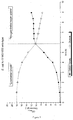
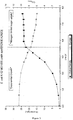
- coli K-12 MG1655 strain was growing exponentially at its very specific maximum growth rate and consumed glucose with its individual biomass-specific uptake rate under non-limited conditions. This state is termed as "Exponential Growth” in Figures 1 , 2 , 3 and 4 .
- a fixed nitrogen concentration in the minimal medium enables the bacterial cells to form a certain total biomass before entering nitrogen-depleted nutritional conditions.
- the subsequent N-limited growth phase is further termed as "Nitrogen-limited Growth” in Figures 1 , 2 , 3 and 4 .
- bacterial growth was highly limited due to nitrogen-depletion. However, the glucose concentration remained abundantly and the rates for biomass-specific glucose consumption under limited growth conditions could be calculated.
- Escherichia coli K-12 MG1655 wild-type was cultivated under preculture conditions in shaking flasks, as described above, for 12 hours with constant agitation. These bacterial cells were then transferred into the three bioreactors under sterile conditions to start the batch cultivation process.
- Escherichia coli K-12 MG1655 wild-type cells were cultivated for a total period of 9 hours with a starting concentration of glucose being 18 g/L.
- the maximal biomass-specific growth rate was 0.718 ⁇ 0.007 h -1 and glucose was consumed at a biomass-specific rate of 1.765 ⁇ 0.056 g Glc /g cdw ⁇ h (cdw: cell dry weight).
- Escherichia coli K-12 MG1655 aceE [G267C] was cultivated under preculture conditions in shaking flasks, as described above, for 29.5 hours with constant agitation. These bacterial cells were then transferred into the three bioreactors under sterile conditions to start the batch cultivation process. Escherichia coli K-12 MG1655 aceE [G267C] cells were cultivated for a total period of 23.5 hours with a starting concentration of glucose being 30 g/L. In the exponential growth phase the maximal biomass-specific growth rate was 0.201 ⁇ 0.004 h -1 and glucose was consumed at a biomass-specific rate of 1.512 ⁇ 0.022 g Glc /g cdw ⁇ h.
- Escherichia coli K-12 MG1655 ⁇ relA spoT [R290E;K292D] was cultivated under preculture conditions in shaking flasks, as described above, for 11 hours with constant agitation. These bacterial cells were then transferred into the three bioreactors under sterile conditions to start the batch cultivation process. Escherichia coli K-12 MG1655 ⁇ relA spoT [R290E;K292D] cells were cultivated for a total period of 8.4 hours with a starting concentration of glucose being 28 g/L.
- Escherichia coli K-12 MG1655 ⁇ relA spoT [R290E;K292D] aceE [G267C] was cultivated under preculture conditions in shaking flasks, as described above, for 29 hours with constant agitation. These bacterial cells were then transferred into the three bioreactors under sterile conditions to start the batch cultivation process.
- Escherichia coli K-12 MG1655 ⁇ relA spoT [R290E;K292D] aceE [G267C] cells were cultivated for a total period of 21.3 hours with a starting concentration of glucose being 28 g/L.
- Table 1 shows the comparison of biomass-specific rates in different Escherichia coli K-12 MG1655 mutant strains and the wild-type during the nitrogen-limited batch cultivation phase. Values are calculated from at least three parallel fermentations n ⁇ 3. For further comparison, the literature value for m s true is given in the last row of Table 1. It designates the "true" maintenance coefficient for glucose for non-growing cells at carbon-limitation conditions.
- Table 1 Glucose uptake (N-limited) qs [g/g cdw ⁇ h] Growth (N-limited) ⁇ [h -1 ] Strain ⁇ ⁇ ⁇ ⁇ E. coli K-12 MG1655 wild-type 0.245 0.011 0.043 0.004 E.
- Table 2 shows the comparison of biomass-specific rates in different Escherichia coli K-12 MG1655 mutant strains and the wild-type during the initial batch cultivation phase of exponential growth with all nutrients in excess. Values are calculated from at least three parallel fermentations n ⁇ 3. Table 2 Glucose uptake (Excess) qs[g/g cdw ⁇ h] Growth (Excess) ⁇ [h -1 ] Strain ⁇ ⁇ ⁇ ⁇ E. coli K-12 MG1655 wild-type 1.765 0.056 0.718 0.007 E. coli K-12 MG1655 aceE [G267C] 1.512 0.022 0.201 0.004 E.
- ppGpp synthesis e.g. by over-expression of relA
- an increase in ppGpp synthesis should be advantageous for the intracellular availability of carbon sources.
- an artificial reduction of the availability of ATP should result in E . coli sugar uptake rates.
Landscapes
- Chemical & Material Sciences (AREA)
- Life Sciences & Earth Sciences (AREA)
- Organic Chemistry (AREA)
- Health & Medical Sciences (AREA)
- Engineering & Computer Science (AREA)
- Zoology (AREA)
- Wood Science & Technology (AREA)
- Genetics & Genomics (AREA)
- Bioinformatics & Cheminformatics (AREA)
- Biotechnology (AREA)
- General Engineering & Computer Science (AREA)
- Microbiology (AREA)
- Biochemistry (AREA)
- General Health & Medical Sciences (AREA)
- Biomedical Technology (AREA)
- Molecular Biology (AREA)
- Medicinal Chemistry (AREA)
- Chemical Kinetics & Catalysis (AREA)
- General Chemical & Material Sciences (AREA)
- Tropical Medicine & Parasitology (AREA)
- Virology (AREA)
- Proteomics, Peptides & Aminoacids (AREA)
- Physics & Mathematics (AREA)
- Biophysics (AREA)
- Plant Pathology (AREA)
- Micro-Organisms Or Cultivation Processes Thereof (AREA)
- Preparation Of Compounds By Using Micro-Organisms (AREA)
Priority Applications (4)
| Application Number | Priority Date | Filing Date | Title |
|---|---|---|---|
| EP16000936.1A EP3239291A1 (de) | 2016-04-26 | 2016-04-26 | Bakterienstamm und verfahren für hohen durchsatz von zucker in der mikrobiellen umwandlung in biosynthetische produkte |
| US16/093,479 US20190144815A1 (en) | 2016-04-26 | 2017-03-22 | Bacterial strain and method for high throughput of sugar in the microbial conversion into biosynthetic products |
| DE112017002181.2T DE112017002181T5 (de) | 2016-04-26 | 2017-03-22 | Bakterienstamm und Verfahren für einen hohen Durchsatz von Zucker bei der mikrobiellen Umwandlung in biosynthetische Produkte |
| PCT/EP2017/000358 WO2017186327A1 (en) | 2016-04-26 | 2017-03-22 | Bacterial strain and method for high throughput of sugar in the microbial conversion into biosynthetic products |
Applications Claiming Priority (1)
| Application Number | Priority Date | Filing Date | Title |
|---|---|---|---|
| EP16000936.1A EP3239291A1 (de) | 2016-04-26 | 2016-04-26 | Bakterienstamm und verfahren für hohen durchsatz von zucker in der mikrobiellen umwandlung in biosynthetische produkte |
Publications (1)
| Publication Number | Publication Date |
|---|---|
| EP3239291A1 true EP3239291A1 (de) | 2017-11-01 |
Family
ID=55910064
Family Applications (1)
| Application Number | Title | Priority Date | Filing Date |
|---|---|---|---|
| EP16000936.1A Withdrawn EP3239291A1 (de) | 2016-04-26 | 2016-04-26 | Bakterienstamm und verfahren für hohen durchsatz von zucker in der mikrobiellen umwandlung in biosynthetische produkte |
Country Status (4)
| Country | Link |
|---|---|
| US (1) | US20190144815A1 (de) |
| EP (1) | EP3239291A1 (de) |
| DE (1) | DE112017002181T5 (de) |
| WO (1) | WO2017186327A1 (de) |
Cited By (2)
| Publication number | Priority date | Publication date | Assignee | Title |
|---|---|---|---|---|
| CN110468092A (zh) * | 2019-08-26 | 2019-11-19 | 天津科技大学 | 一株高产l-缬氨酸的基因工程菌及其构建方法与应用 |
| CN118879803A (zh) * | 2024-08-06 | 2024-11-01 | 黑龙江红菌生物科技有限公司 | 一种提高l-缬氨酸发酵效率的方法 |
Families Citing this family (1)
| Publication number | Priority date | Publication date | Assignee | Title |
|---|---|---|---|---|
| CN112680392A (zh) * | 2020-12-28 | 2021-04-20 | 南通大学 | 一株ExPEC双基因缺失株及由其制备的疫苗 |
Citations (1)
| Publication number | Priority date | Publication date | Assignee | Title |
|---|---|---|---|---|
| EP2204441A1 (de) * | 2008-12-19 | 2010-07-07 | Wacker Chemie AG | Verfahren zur fermentativen Herstellung von heterologen Proteinen mittels Escherichia coli |
-
2016
- 2016-04-26 EP EP16000936.1A patent/EP3239291A1/de not_active Withdrawn
-
2017
- 2017-03-22 DE DE112017002181.2T patent/DE112017002181T5/de not_active Withdrawn
- 2017-03-22 WO PCT/EP2017/000358 patent/WO2017186327A1/en not_active Ceased
- 2017-03-22 US US16/093,479 patent/US20190144815A1/en not_active Abandoned
Patent Citations (1)
| Publication number | Priority date | Publication date | Assignee | Title |
|---|---|---|---|---|
| EP2204441A1 (de) * | 2008-12-19 | 2010-07-07 | Wacker Chemie AG | Verfahren zur fermentativen Herstellung von heterologen Proteinen mittels Escherichia coli |
Non-Patent Citations (9)
| Title |
|---|
| DANIEL R. BROWN ET AL: "Nitrogen stress response and stringent response are coupled in Escherichia coli", NATURE COMMUNICATIONS, vol. 5, 20 June 2014 (2014-06-20), XP055309096, DOI: 10.1038/ncomms5115 * |
| HARDIMAN ET AL: "Topology of the global regulatory network of carbon limitation in Escherichia coli", JOURNAL OF BIOTECHNOLOGY, ELSEVIER SCIENCE PUBLISHERS, AMSTERDAM, NL, vol. 132, no. 4, 21 August 2007 (2007-08-21), pages 359 - 374, XP022373160, ISSN: 0168-1656, DOI: 10.1016/J.JBIOTEC.2007.08.029 * |
| IMAIZUMI A ET AL: "The effect of intracellular ppGpp levels on glutamate and lysine overproduction in Escherichia coli", JOURNAL OF BIOTECHNOLOGY, ELSEVIER SCIENCE PUBLISHERS, AMSTERDAM, NL, vol. 125, no. 3, 18 April 2006 (2006-04-18), pages 328 - 337, XP024956656, ISSN: 0168-1656, [retrieved on 20060918], DOI: 10.1016/J.JBIOTEC.2006.03.015 * |
| MANUEL MONTERO ET AL: "Systematic Production of Inactivating and Non-Inactivating Suppressor Mutations at the relA Locus That Compensate the Detrimental Effects of Complete spoT Loss and Affect Glycogen Content in Escherichia coli", PLOS ONE, vol. 9, no. 9, 4 September 2014 (2014-09-04), pages e106938, XP055308946, DOI: 10.1371/journal.pone.0106938 * |
| SAURET-GUETO S ET AL: "A mutant pyruvate dehydrogenase E1 subunit allows survival of Escherichia coli strains defective in 1-deoxy-d-xylulose 5-phosphate synthase", FEBS LETTERS, ELSEVIER, AMSTERDAM, NL, vol. 580, no. 3, 9 January 2006 (2006-01-09), pages 736 - 740, XP028030414, ISSN: 0014-5793, [retrieved on 20060206], DOI: 10.1016/J.FEBSLET.2005.12.092 * |
| SO RA LEE: "Construction of Escherichia coli K-12 Strain Deficient in relA and spoT Using the [lambda] Red Site-Specific Recombinase System", JOURNAL OF EXPERIMENTAL MICROBIOLOGY AND IMMUNOLOGY, vol. 16, April 2012 (2012-04-01), pages 90 - 95, XP055308950 * |
| SÓNIA CARNEIRO ET AL: "Influence of the RelA Activity on E. coli Metabolism by Metabolite Profiling of Glucose-Limited Chemostat Cultures", METABOLITES, vol. 2, no. 4, 12 October 2012 (2012-10-12), pages 717 - 732, XP055308940, ISSN: 2218-1989, DOI: 10.3390/metabo2040717 * |
| TEDIN K ET AL: "Comparison of Delta relA strains of Escherichia coli and Salmonella enterica serovar Typhimurium suggests a role for ppGpp in attenuation regulation of branched-chain amino acid biosynthesis", JOURNAL OF BACTERIOLOGY, AMERICAN SOCIETY FOR MICROBIOLOGY, US, vol. 183, no. 21, November 2001 (2001-11-01), pages 6184 - 6196, XP002291474, ISSN: 0021-9193, DOI: 10.1128/JB.183.21.6184-6196.2001 * |
| TOBIAS BERGMILLER ET AL: "Single-cell time-lapse analysis of depletion of the universally conserved essential protein YgjD", BMC MICROBIOLOGY, BIOMED CENTRAL LTD, GB, vol. 11, no. 1, 27 May 2011 (2011-05-27), pages 118, XP021099671, ISSN: 1471-2180, DOI: 10.1186/1471-2180-11-118 * |
Cited By (2)
| Publication number | Priority date | Publication date | Assignee | Title |
|---|---|---|---|---|
| CN110468092A (zh) * | 2019-08-26 | 2019-11-19 | 天津科技大学 | 一株高产l-缬氨酸的基因工程菌及其构建方法与应用 |
| CN118879803A (zh) * | 2024-08-06 | 2024-11-01 | 黑龙江红菌生物科技有限公司 | 一种提高l-缬氨酸发酵效率的方法 |
Also Published As
| Publication number | Publication date |
|---|---|
| WO2017186327A8 (en) | 2018-12-27 |
| DE112017002181T5 (de) | 2019-01-03 |
| US20190144815A1 (en) | 2019-05-16 |
| WO2017186327A1 (en) | 2017-11-02 |
Similar Documents
| Publication | Publication Date | Title |
|---|---|---|
| RU2549689C2 (ru) | Микроорганизм с повышенной продукцией l-аминокислот и способ получения l-аминокислот с его применением | |
| RU2600875C2 (ru) | Микроорганизм, способный продуцировать l- аминокислоту, и способ получения l-аминокислоты с применением этого микроорганизма | |
| EP2239336B1 (de) | Mikroorganismen zur herstellung von l-aminosäuren sowie verfahren zur herstellung von l-aminosäuren damit | |
| Carnes | Fermentation design for the manufacture of therapeutic plasmid DNA | |
| US12065682B2 (en) | Method for producing L-theanine via fermentation by a genetically engineered bacterium and the application thereof | |
| JP2004236660A (ja) | L−メチオニンを発酵により製造するための微生物菌株、プラスミド、微生物菌株の製法、およびl−メチオニンの製法 | |
| CN119193449B (zh) | 一种生产nmn的重组大肠杆菌及其制备方法和应用 | |
| CN118853722A (zh) | 一种基于甲基苹果酸途径提高合成l-异亮氨酸产量的方法及工程菌株 | |
| US20190144815A1 (en) | Bacterial strain and method for high throughput of sugar in the microbial conversion into biosynthetic products | |
| Goel et al. | Suppressed acid formation by cofeeding of glucose and citrate in Bacillus cultures: emergence of pyruvate kinase as a potential metabolic engineering site | |
| JP2024163267A5 (de) | ||
| KR100464906B1 (ko) | 발효에 의한 o-아세틸-l-세린의 제조방법 | |
| EP2522720B1 (de) | Mutantenstamm zur herstellung von l-ornithin oder l-arginin sowie herstellungsverfahren dafür | |
| US20250283131A1 (en) | Microorganism producing purine nucleotides and method for producing purine nucleotides using the same | |
| KR101214632B1 (ko) | 타우린 생성용 재조합 변이 미생물 및 이를 이용한 타우린의 제조방법 | |
| CN101654666B (zh) | 用于生产d-乳酸的生物催化剂 | |
| EP3119874B1 (de) | Mikroorganismen mit verbesserter l-aminosäuren-produktivität und verfahren zur herstellung von l-aminosäuren damit | |
| JP7819351B2 (ja) | 界面活性剤を含むレチノール生産用微生物培地組成物及びその使用 | |
| EP4555076A1 (de) | Thiaminproduktionsproduktion mikrobieller zellfabriken | |
| CN117004625A (zh) | 一种氧调控基因及其过表达突变株和用于维生素b12工业生产中的应用 | |
| CN117586999A (zh) | 一种半连续发酵高产酶新工艺 | |
| JP4582573B2 (ja) | ピルビン酸の製造方法及びl−バリンの製造方法 | |
| EP3521305A1 (de) | Corynebacterium spp. stämme mit erhöhter wachstumsrate und/oder zuckeraufnahme | |
| JPWO2015005451A1 (ja) | 2−デオキシ−シロ−イノソースの生産方法 | |
| JP7819352B2 (ja) | 抗酸化剤を含むレチノール生産用微生物培地組成物及びその使用 |
Legal Events
| Date | Code | Title | Description |
|---|---|---|---|
| PUAI | Public reference made under article 153(3) epc to a published international application that has entered the european phase |
Free format text: ORIGINAL CODE: 0009012 |
|
| AK | Designated contracting states |
Kind code of ref document: A1 Designated state(s): AL AT BE BG CH CY CZ DE DK EE ES FI FR GB GR HR HU IE IS IT LI LT LU LV MC MK MT NL NO PL PT RO RS SE SI SK SM TR |
|
| AX | Request for extension of the european patent |
Extension state: BA ME |
|
| STAA | Information on the status of an ep patent application or granted ep patent |
Free format text: STATUS: THE APPLICATION IS DEEMED TO BE WITHDRAWN |
|
| 18D | Application deemed to be withdrawn |
Effective date: 20180503 |