EP3237468B1 - Process to prepare polyethylene for pipes - Google Patents
Process to prepare polyethylene for pipes Download PDFInfo
- Publication number
- EP3237468B1 EP3237468B1 EP15813081.5A EP15813081A EP3237468B1 EP 3237468 B1 EP3237468 B1 EP 3237468B1 EP 15813081 A EP15813081 A EP 15813081A EP 3237468 B1 EP3237468 B1 EP 3237468B1
- Authority
- EP
- European Patent Office
- Prior art keywords
- ethylene
- reactor
- polymer
- polymerisation
- molecular weight
- Prior art date
- Legal status (The legal status is an assumption and is not a legal conclusion. Google has not performed a legal analysis and makes no representation as to the accuracy of the status listed.)
- Active
Links
Images
Classifications
-
- C—CHEMISTRY; METALLURGY
- C08—ORGANIC MACROMOLECULAR COMPOUNDS; THEIR PREPARATION OR CHEMICAL WORKING-UP; COMPOSITIONS BASED THEREON
- C08F—MACROMOLECULAR COMPOUNDS OBTAINED BY REACTIONS ONLY INVOLVING CARBON-TO-CARBON UNSATURATED BONDS
- C08F210/00—Copolymers of unsaturated aliphatic hydrocarbons having only one carbon-to-carbon double bond
- C08F210/02—Ethene
-
- B—PERFORMING OPERATIONS; TRANSPORTING
- B29—WORKING OF PLASTICS; WORKING OF SUBSTANCES IN A PLASTIC STATE IN GENERAL
- B29C—SHAPING OR JOINING OF PLASTICS; SHAPING OF MATERIAL IN A PLASTIC STATE, NOT OTHERWISE PROVIDED FOR; AFTER-TREATMENT OF THE SHAPED PRODUCTS, e.g. REPAIRING
- B29C48/00—Extrusion moulding, i.e. expressing the moulding material through a die or nozzle which imparts the desired form; Apparatus therefor
- B29C48/03—Extrusion moulding, i.e. expressing the moulding material through a die or nozzle which imparts the desired form; Apparatus therefor characterised by the shape of the extruded material at extrusion
- B29C48/09—Articles with cross-sections having partially or fully enclosed cavities, e.g. pipes or channels
-
- C—CHEMISTRY; METALLURGY
- C07—ORGANIC CHEMISTRY
- C07F—ACYCLIC, CARBOCYCLIC OR HETEROCYCLIC COMPOUNDS CONTAINING ELEMENTS OTHER THAN CARBON, HYDROGEN, HALOGEN, OXYGEN, NITROGEN, SULFUR, SELENIUM OR TELLURIUM
- C07F17/00—Metallocenes
-
- C—CHEMISTRY; METALLURGY
- C08—ORGANIC MACROMOLECULAR COMPOUNDS; THEIR PREPARATION OR CHEMICAL WORKING-UP; COMPOSITIONS BASED THEREON
- C08F—MACROMOLECULAR COMPOUNDS OBTAINED BY REACTIONS ONLY INVOLVING CARBON-TO-CARBON UNSATURATED BONDS
- C08F10/00—Homopolymers and copolymers of unsaturated aliphatic hydrocarbons having only one carbon-to-carbon double bond
-
- C—CHEMISTRY; METALLURGY
- C08—ORGANIC MACROMOLECULAR COMPOUNDS; THEIR PREPARATION OR CHEMICAL WORKING-UP; COMPOSITIONS BASED THEREON
- C08F—MACROMOLECULAR COMPOUNDS OBTAINED BY REACTIONS ONLY INVOLVING CARBON-TO-CARBON UNSATURATED BONDS
- C08F10/00—Homopolymers and copolymers of unsaturated aliphatic hydrocarbons having only one carbon-to-carbon double bond
- C08F10/02—Ethene
-
- C—CHEMISTRY; METALLURGY
- C08—ORGANIC MACROMOLECULAR COMPOUNDS; THEIR PREPARATION OR CHEMICAL WORKING-UP; COMPOSITIONS BASED THEREON
- C08F—MACROMOLECULAR COMPOUNDS OBTAINED BY REACTIONS ONLY INVOLVING CARBON-TO-CARBON UNSATURATED BONDS
- C08F110/00—Homopolymers of unsaturated aliphatic hydrocarbons having only one carbon-to-carbon double bond
- C08F110/02—Ethene
-
- C—CHEMISTRY; METALLURGY
- C08—ORGANIC MACROMOLECULAR COMPOUNDS; THEIR PREPARATION OR CHEMICAL WORKING-UP; COMPOSITIONS BASED THEREON
- C08F—MACROMOLECULAR COMPOUNDS OBTAINED BY REACTIONS ONLY INVOLVING CARBON-TO-CARBON UNSATURATED BONDS
- C08F2/00—Processes of polymerisation
- C08F2/001—Multistage polymerisation processes characterised by a change in reactor conditions without deactivating the intermediate polymer
-
- C—CHEMISTRY; METALLURGY
- C08—ORGANIC MACROMOLECULAR COMPOUNDS; THEIR PREPARATION OR CHEMICAL WORKING-UP; COMPOSITIONS BASED THEREON
- C08F—MACROMOLECULAR COMPOUNDS OBTAINED BY REACTIONS ONLY INVOLVING CARBON-TO-CARBON UNSATURATED BONDS
- C08F2/00—Processes of polymerisation
- C08F2/38—Polymerisation using regulators, e.g. chain terminating agents, e.g. telomerisation
-
- C—CHEMISTRY; METALLURGY
- C08—ORGANIC MACROMOLECULAR COMPOUNDS; THEIR PREPARATION OR CHEMICAL WORKING-UP; COMPOSITIONS BASED THEREON
- C08F—MACROMOLECULAR COMPOUNDS OBTAINED BY REACTIONS ONLY INVOLVING CARBON-TO-CARBON UNSATURATED BONDS
- C08F210/00—Copolymers of unsaturated aliphatic hydrocarbons having only one carbon-to-carbon double bond
- C08F210/16—Copolymers of ethene with alpha-alkenes, e.g. EP rubbers
-
- C—CHEMISTRY; METALLURGY
- C08—ORGANIC MACROMOLECULAR COMPOUNDS; THEIR PREPARATION OR CHEMICAL WORKING-UP; COMPOSITIONS BASED THEREON
- C08F—MACROMOLECULAR COMPOUNDS OBTAINED BY REACTIONS ONLY INVOLVING CARBON-TO-CARBON UNSATURATED BONDS
- C08F297/00—Macromolecular compounds obtained by successively polymerising different monomer systems using a catalyst of the ionic or coordination type without deactivating the intermediate polymer
- C08F297/06—Macromolecular compounds obtained by successively polymerising different monomer systems using a catalyst of the ionic or coordination type without deactivating the intermediate polymer using a catalyst of the coordination type
- C08F297/08—Macromolecular compounds obtained by successively polymerising different monomer systems using a catalyst of the ionic or coordination type without deactivating the intermediate polymer using a catalyst of the coordination type polymerising mono-olefins
- C08F297/083—Macromolecular compounds obtained by successively polymerising different monomer systems using a catalyst of the ionic or coordination type without deactivating the intermediate polymer using a catalyst of the coordination type polymerising mono-olefins the monomers being ethylene or propylene
-
- C—CHEMISTRY; METALLURGY
- C08—ORGANIC MACROMOLECULAR COMPOUNDS; THEIR PREPARATION OR CHEMICAL WORKING-UP; COMPOSITIONS BASED THEREON
- C08F—MACROMOLECULAR COMPOUNDS OBTAINED BY REACTIONS ONLY INVOLVING CARBON-TO-CARBON UNSATURATED BONDS
- C08F4/00—Polymerisation catalysts
- C08F4/42—Metals; Metal hydrides; Metallo-organic compounds; Use thereof as catalyst precursors
- C08F4/44—Metals; Metal hydrides; Metallo-organic compounds; Use thereof as catalyst precursors selected from light metals, zinc, cadmium, mercury, copper, silver, gold, boron, gallium, indium, thallium, rare earths or actinides
- C08F4/60—Metals; Metal hydrides; Metallo-organic compounds; Use thereof as catalyst precursors selected from light metals, zinc, cadmium, mercury, copper, silver, gold, boron, gallium, indium, thallium, rare earths or actinides together with refractory metals, iron group metals, platinum group metals, manganese, rhenium technetium or compounds thereof
- C08F4/62—Refractory metals or compounds thereof
- C08F4/64—Titanium, zirconium, hafnium or compounds thereof
-
- C—CHEMISTRY; METALLURGY
- C08—ORGANIC MACROMOLECULAR COMPOUNDS; THEIR PREPARATION OR CHEMICAL WORKING-UP; COMPOSITIONS BASED THEREON
- C08F—MACROMOLECULAR COMPOUNDS OBTAINED BY REACTIONS ONLY INVOLVING CARBON-TO-CARBON UNSATURATED BONDS
- C08F4/00—Polymerisation catalysts
- C08F4/42—Metals; Metal hydrides; Metallo-organic compounds; Use thereof as catalyst precursors
- C08F4/44—Metals; Metal hydrides; Metallo-organic compounds; Use thereof as catalyst precursors selected from light metals, zinc, cadmium, mercury, copper, silver, gold, boron, gallium, indium, thallium, rare earths or actinides
- C08F4/60—Metals; Metal hydrides; Metallo-organic compounds; Use thereof as catalyst precursors selected from light metals, zinc, cadmium, mercury, copper, silver, gold, boron, gallium, indium, thallium, rare earths or actinides together with refractory metals, iron group metals, platinum group metals, manganese, rhenium technetium or compounds thereof
- C08F4/62—Refractory metals or compounds thereof
- C08F4/64—Titanium, zirconium, hafnium or compounds thereof
- C08F4/642—Component covered by group C08F4/64 with an organo-aluminium compound
- C08F4/6428—Component covered by group C08F4/64 with an organo-aluminium compound with an aluminoxane, i.e. a compound containing an Al-O-Al- group
-
- C—CHEMISTRY; METALLURGY
- C08—ORGANIC MACROMOLECULAR COMPOUNDS; THEIR PREPARATION OR CHEMICAL WORKING-UP; COMPOSITIONS BASED THEREON
- C08F—MACROMOLECULAR COMPOUNDS OBTAINED BY REACTIONS ONLY INVOLVING CARBON-TO-CARBON UNSATURATED BONDS
- C08F4/00—Polymerisation catalysts
- C08F4/42—Metals; Metal hydrides; Metallo-organic compounds; Use thereof as catalyst precursors
- C08F4/44—Metals; Metal hydrides; Metallo-organic compounds; Use thereof as catalyst precursors selected from light metals, zinc, cadmium, mercury, copper, silver, gold, boron, gallium, indium, thallium, rare earths or actinides
- C08F4/60—Metals; Metal hydrides; Metallo-organic compounds; Use thereof as catalyst precursors selected from light metals, zinc, cadmium, mercury, copper, silver, gold, boron, gallium, indium, thallium, rare earths or actinides together with refractory metals, iron group metals, platinum group metals, manganese, rhenium technetium or compounds thereof
- C08F4/62—Refractory metals or compounds thereof
- C08F4/64—Titanium, zirconium, hafnium or compounds thereof
- C08F4/659—Component covered by group C08F4/64 containing a transition metal-carbon bond
- C08F4/6592—Component covered by group C08F4/64 containing a transition metal-carbon bond containing at least one cyclopentadienyl ring, condensed or not, e.g. an indenyl or a fluorenyl ring
- C08F4/65922—Component covered by group C08F4/64 containing a transition metal-carbon bond containing at least one cyclopentadienyl ring, condensed or not, e.g. an indenyl or a fluorenyl ring containing at least two cyclopentadienyl rings, fused or not
- C08F4/65927—Component covered by group C08F4/64 containing a transition metal-carbon bond containing at least one cyclopentadienyl ring, condensed or not, e.g. an indenyl or a fluorenyl ring containing at least two cyclopentadienyl rings, fused or not two cyclopentadienyl rings being mutually bridged
-
- C—CHEMISTRY; METALLURGY
- C08—ORGANIC MACROMOLECULAR COMPOUNDS; THEIR PREPARATION OR CHEMICAL WORKING-UP; COMPOSITIONS BASED THEREON
- C08F—MACROMOLECULAR COMPOUNDS OBTAINED BY REACTIONS ONLY INVOLVING CARBON-TO-CARBON UNSATURATED BONDS
- C08F4/00—Polymerisation catalysts
- C08F4/42—Metals; Metal hydrides; Metallo-organic compounds; Use thereof as catalyst precursors
- C08F4/72—Metals; Metal hydrides; Metallo-organic compounds; Use thereof as catalyst precursors selected from metals not provided for in group C08F4/44
- C08F4/74—Metals; Metal hydrides; Metallo-organic compounds; Use thereof as catalyst precursors selected from metals not provided for in group C08F4/44 selected from refractory metals
- C08F4/76—Metals; Metal hydrides; Metallo-organic compounds; Use thereof as catalyst precursors selected from metals not provided for in group C08F4/44 selected from refractory metals selected from titanium, zirconium, hafnium, vanadium, niobium or tantalum
-
- C—CHEMISTRY; METALLURGY
- C08—ORGANIC MACROMOLECULAR COMPOUNDS; THEIR PREPARATION OR CHEMICAL WORKING-UP; COMPOSITIONS BASED THEREON
- C08L—COMPOSITIONS OF MACROMOLECULAR COMPOUNDS
- C08L23/00—Compositions of homopolymers or copolymers of unsaturated aliphatic hydrocarbons having only one carbon-to-carbon double bond; Compositions of derivatives of such polymers
- C08L23/02—Compositions of homopolymers or copolymers of unsaturated aliphatic hydrocarbons having only one carbon-to-carbon double bond; Compositions of derivatives of such polymers not modified by chemical after-treatment
- C08L23/04—Homopolymers or copolymers of ethene
- C08L23/06—Polyethylene
-
- C—CHEMISTRY; METALLURGY
- C08—ORGANIC MACROMOLECULAR COMPOUNDS; THEIR PREPARATION OR CHEMICAL WORKING-UP; COMPOSITIONS BASED THEREON
- C08L—COMPOSITIONS OF MACROMOLECULAR COMPOUNDS
- C08L23/00—Compositions of homopolymers or copolymers of unsaturated aliphatic hydrocarbons having only one carbon-to-carbon double bond; Compositions of derivatives of such polymers
- C08L23/02—Compositions of homopolymers or copolymers of unsaturated aliphatic hydrocarbons having only one carbon-to-carbon double bond; Compositions of derivatives of such polymers not modified by chemical after-treatment
- C08L23/04—Homopolymers or copolymers of ethene
- C08L23/08—Copolymers of ethene
-
- C—CHEMISTRY; METALLURGY
- C08—ORGANIC MACROMOLECULAR COMPOUNDS; THEIR PREPARATION OR CHEMICAL WORKING-UP; COMPOSITIONS BASED THEREON
- C08L—COMPOSITIONS OF MACROMOLECULAR COMPOUNDS
- C08L23/00—Compositions of homopolymers or copolymers of unsaturated aliphatic hydrocarbons having only one carbon-to-carbon double bond; Compositions of derivatives of such polymers
- C08L23/02—Compositions of homopolymers or copolymers of unsaturated aliphatic hydrocarbons having only one carbon-to-carbon double bond; Compositions of derivatives of such polymers not modified by chemical after-treatment
- C08L23/04—Homopolymers or copolymers of ethene
- C08L23/08—Copolymers of ethene
- C08L23/0807—Copolymers of ethene with unsaturated hydrocarbons only containing four or more carbon atoms
- C08L23/0815—Copolymers of ethene with unsaturated hydrocarbons only containing four or more carbon atoms with aliphatic 1-olefins containing one carbon-to-carbon double bond
-
- F—MECHANICAL ENGINEERING; LIGHTING; HEATING; WEAPONS; BLASTING
- F16—ENGINEERING ELEMENTS AND UNITS; GENERAL MEASURES FOR PRODUCING AND MAINTAINING EFFECTIVE FUNCTIONING OF MACHINES OR INSTALLATIONS; THERMAL INSULATION IN GENERAL
- F16L—PIPES; JOINTS OR FITTINGS FOR PIPES; SUPPORTS FOR PIPES, CABLES OR PROTECTIVE TUBING; MEANS FOR THERMAL INSULATION IN GENERAL
- F16L9/00—Rigid pipes
- F16L9/12—Rigid pipes of plastics with or without reinforcement
-
- C—CHEMISTRY; METALLURGY
- C08—ORGANIC MACROMOLECULAR COMPOUNDS; THEIR PREPARATION OR CHEMICAL WORKING-UP; COMPOSITIONS BASED THEREON
- C08F—MACROMOLECULAR COMPOUNDS OBTAINED BY REACTIONS ONLY INVOLVING CARBON-TO-CARBON UNSATURATED BONDS
- C08F2420/00—Metallocene catalysts
-
- C—CHEMISTRY; METALLURGY
- C08—ORGANIC MACROMOLECULAR COMPOUNDS; THEIR PREPARATION OR CHEMICAL WORKING-UP; COMPOSITIONS BASED THEREON
- C08F—MACROMOLECULAR COMPOUNDS OBTAINED BY REACTIONS ONLY INVOLVING CARBON-TO-CARBON UNSATURATED BONDS
- C08F2420/00—Metallocene catalysts
- C08F2420/04—Cp or analog not bridged to a non-Cp X ancillary anionic donor
-
- C—CHEMISTRY; METALLURGY
- C08—ORGANIC MACROMOLECULAR COMPOUNDS; THEIR PREPARATION OR CHEMICAL WORKING-UP; COMPOSITIONS BASED THEREON
- C08F—MACROMOLECULAR COMPOUNDS OBTAINED BY REACTIONS ONLY INVOLVING CARBON-TO-CARBON UNSATURATED BONDS
- C08F2500/00—Characteristics or properties of obtained polyolefins; Use thereof
- C08F2500/05—Bimodal or multimodal molecular weight distribution
-
- C—CHEMISTRY; METALLURGY
- C08—ORGANIC MACROMOLECULAR COMPOUNDS; THEIR PREPARATION OR CHEMICAL WORKING-UP; COMPOSITIONS BASED THEREON
- C08F—MACROMOLECULAR COMPOUNDS OBTAINED BY REACTIONS ONLY INVOLVING CARBON-TO-CARBON UNSATURATED BONDS
- C08F2500/00—Characteristics or properties of obtained polyolefins; Use thereof
- C08F2500/12—Melt flow index or melt flow ratio
-
- C—CHEMISTRY; METALLURGY
- C08—ORGANIC MACROMOLECULAR COMPOUNDS; THEIR PREPARATION OR CHEMICAL WORKING-UP; COMPOSITIONS BASED THEREON
- C08F—MACROMOLECULAR COMPOUNDS OBTAINED BY REACTIONS ONLY INVOLVING CARBON-TO-CARBON UNSATURATED BONDS
- C08F2500/00—Characteristics or properties of obtained polyolefins; Use thereof
- C08F2500/18—Bulk density
-
- C—CHEMISTRY; METALLURGY
- C08—ORGANIC MACROMOLECULAR COMPOUNDS; THEIR PREPARATION OR CHEMICAL WORKING-UP; COMPOSITIONS BASED THEREON
- C08L—COMPOSITIONS OF MACROMOLECULAR COMPOUNDS
- C08L2203/00—Applications
- C08L2203/18—Applications used for pipes
Definitions
- the present invention relates to a multistage polymerisation process for the preparation of a multimodal polyethylene, wherein at least the first and second polymerisation stages are carried out in the presence of an unsupported metallocene catalyst.
- Polyethylene and in particular high density polyethylene (HDPE), is the most commonly used material for the production of pipes.
- Polyethylene used for the manufacture of HOPE pipes needs to meet certain mechanical criteria, such as impact resistance, toughness and scratch resistance, as well as chemical requirements, e.g. resistance to corrosion.
- the pipes are often used at high inner pressures and subjected to external mechanical forces. Although the overall pressure is usually well below the yield stress of the polymer, mechanical failure almost always occurs before the polymer is chemically degraded. It is generally accepted that this is due to the existence of local heterogeneities of micrometer size in the polyethylene pipe causing a strong localized stress distribution around the flaws that exceeds the yield stress.
- Such a stress concentration induces the formation and growth of a craze by rupture of the craze fibrils.
- PE with as low local heterogeneities as possible.
- these heterogeneities originate from supported catalysts where, especially when metallocene catalysts are concerned, silica or other related inorganic carriers are used.
- Polyethylene pipes are particularly suited for non-conventional pipe installation due to their flexibility, deformability and availability in long lengths.
- the widespread use of modern relining techniques and fast pipe installation practices call for high material requirements and guarantees of performance, particularly with respect to the effect of scratches, notches, nicks and impingements that are inherent to these techniques and facilitates slow crack growth (SCG).
- SCG slow crack growth
- no-dig or trenchless installation methods e.g. pipe bursting, horizontal direction drilling
- the pipe is dragged horizontally through the ground.
- no-dig methods e.g. pipe bursting, horizontal direction drilling
- the no-dig methods give the disadvantage of a high tendency for protruding stones, rocks etc.
- polyethylene used for their production must meet certain requirements.
- polyethylene used for pipe production has the following properties: Property Units Suitable range Molecular weight (Mw) g/mol 100,000-500,000 MFR 5 g/10 min 0,2-1,4 (EN12201) Density g/cm 3 935-960
- HOPE pipe made using Ziegler Natta catalysts are usually prepared with two reactors operating in series; one reactor making a lower molecular weight homopolymer and one reactor making a higher molecular weight polymer containing comonomer which gives a better property profile compared to monomodal chromium HOPE.
- Ziegler Natta catalysts enable high molecular weight, high density polyethylene to be produced which provides the polyethylene with its required mechanical properties.
- Metallocene catalysts are attractive to use in polyethylene pipe production because they achieve much more homogeneous comonomer incorporation in the polymer compared to Ziegler Natta and chromium catalysts.
- homogeneous comonomer incorporation means that comonomer is incorporated in similar quantities into polymer chains across the whole molecular weight range.
- Ziegler Natta catalysts comonomer is typically incorporated only in polymer chains with certain molecular weight.
- the improved comonomer incorporation property with metallocenes will improve significantly, for example, slow crack growth and rapid crack propagation behaviour of the polymer which has crucial impact on the pipe properties.
- metallocene catalysts are exploited to a much lesser extent commericially for the production of polyethylene for pipe production than Ziegler Natta catalysts.
- metallocene catalysts When metallocene catalysts are employed in commercial scale processes, they tend to be used on external carriers or supports. The use of supports avoids the problems of reactor fouling, poor polymer morphology and low polymer bulk density which are typically encountered with the use of unsupported metallocenes.
- Supported metallocene catalysts however, have relatively low activities and invariably yield polyethylene of relatively low molecular weight which means they are not suitable for pipe production. Due to the low polymerisation activity, supported metallocene catalysts also yield polyethylene with high ash content and high gel content.
- high ash content and high gel content often lead to mechanical failures in the pipe, meaning cracks and breakages. They also often affect the pipe appearance and performance by introducing roughness on the inner and outer surface which has an effect e.g. on the flowability of liquids. Also, high ash content has an effect on the electrical properties of the polymer leading to higher conductivity.
- Silica is typically used as a carrier in supported metallocene catalysts and thus remains in the produced polymer.
- Silica is a hard material and will scratch steel.
- Silica particles present in a polymer will scratch the metal surfaces of polymer melt handling equipment, e.g. extruders and dies, both in the polymer production plant as well as in the later melt forming into useful products as the polymer flows along the metal surfaces, under a melt pressure of hundreds of bars. The continued scratching over time results in the polymer melt handling equipment eventually getting worn out.
- the level of foreign, e.g. silica, particles in the produced polymer is extremely important because the amount of, e.g. catalyst, residues inside the polymer plays an important role in determining the application where the polymer can be used. For example, film with high strength and clarity, electronics, optical media and pharmaceutical packaging require minimum level of residues in the polymer.
- WO98/58001 is focussed on the use of supported metallocene catalysts. It teaches that it is particularly desirable that the metallocene complex is supported on a solid substrate for use in the polymerisations.
- the preferred substrates are porous particulates such as inorganic oxides, e.g silica, alumina, silica-alumina, zirconia, inorganic halides or porous polymer particles. All of the examples in WO98/58001 employ supported metallocene catalysts.
- WO98/58001 teaches that its process yields a polyethylene having a MFR 2 of 0.01 to 100 g/10 min, a weight average molecular weight of 30,000 to 500,000 g/mol, a melting point of 100-165 °C and a crystallinity of 20 to 70 %.
- the examples of WO98/58001 illustrate the preparation of numerous polyethylenes.
- the MFR 2 values of the polymers produced is always greater than 1 g/10min (c.f. the above 0.01 g/10min minimum of the range) and in many cases is significantly greater with some examples producing polymers having MFR 2 values of 43 and 32 g/10 min.
- US2011/0091674 discloses multimodal copolymers of ethylene and their preparation in a multistage polymerisation process carried out in the presence of a metallocene catalyst.
- the catalyst is used in solid form, either on a particulate support such as silica, on solidified alumoxane, or as solid particles prepared using emulsion solidification technology.
- WO2013/113797 discloses a process for the production of multimodal polyethylene using a three stage polymerisation process.
- WO2013/113797 is focussed on the use of a Ziegler Natta catalyst system for the polymerisation process.
- WO2013/091837 discloses bridged bis(indenyl) ligands, methods for their preparation, and their use in the preparation of metallocene complexes which may be used in the polymerisation of ethylene.
- the polyethylene must have a high molecular weight, a low MFRs, a high bulk density (indicating good particle morphology) and ideally a low ash and gel content.
- the present invention provides a process for the preparation of multimodal polyethylene particles, said multimodal polyethylene particles preferably having a bimodal or trimodal molecular weight distribution, comprising:
- the present invention provides a process for preparing a pipe comprising:
- polyethylene refers to a polymer that comprises at least 50 % wt, still more preferably at least 75 % wt, still more preferably at least 85 % wt and yet more preferably at least 90 % wt units derived from ethylene.
- ethylene homopolymer refers to a polymer which consists essentially of repeat units deriving from ethylene.
- Homopolymers may, for example, comprise at least 99 %wt, preferably at least 99.5 %wt, more preferably at least 99.9 %wt and still more preferably at least 99.95 %wt, e.g. 100 %wt, of repeat units deriving from ethylene.
- ethylene copolymer refers to a polymer comprising repeat units from ethylene and at least one other monomer. In typical copolymers at least 0.05 %wt, more preferably at least 0.1 %wt and still more preferably at least 0.4 %wt of repeat units derive from at least one monomer other than ethylene. Typically ethylene copolymers will not comprise more than 15 % by weight of repeat units deriving from monomers other than ethylene.
- %wt is expressed relative to the weight of polyethylene unless otherwise specified.
- LMW polymer refers to the lower molecular weight ethylene polymer.
- HMW1 refers to the first higher molecular weight ethylene copolymer.
- HMW2 refers to the second higher molecular weight ethylene polymer.
- HMW1 and HMW2 each have higher molecular weights than the LMW polymer. Either of HMW1 or HMW2 may have the highest molecular weight or they may have the same molecular weight.
- molecular weight the weight average molecular weight (Mw) is meant unless otherwise specified.
- multimodal refers to a polymer comprising a plurality of components or fractions, which have been produced under multistage polymerisation conditions resulting in different weight average molecular weights and molecular weight distributions for the components and/or in different comonomer contents.
- multi refers to the number of different components present in the polymer.
- a polymer consisting of two components only is called “bimodal” and a polymer consisting of three components only is called “trimodal”.
- multimodal molecular weight distribution refers to the form of the molecular weight distribution curve, i.e. the appearance of the graph of the polymer weight fraction as a function of its molecular weight.
- a polyethylene having a multimodal molecular weight distribution can show two or more maxima or at least be distinctly broadened in comparison with the curves for the individual components.
- multimodality may show as a difference in melting or crystallisation temperature curves of components.
- a polymer comprising one component produced under constant polymerisation conditions is referred to herein as unimodal.
- multimodal composition refers to a composition comprising a plurality of components or fractions, which are each different in composition. Preferably the components or fractions each have a different constituent composition.
- a composition comprising an ethylene homopolymer, an ethylene copolymer comprising 0.1 % wt comonomer is a multimodal composition, specifically a bimodal composition.
- multistage polymerisation refers to a polymerisation which is carried out in two or more stages. Generally each stage is carried out in a separate reactor.
- multistage polymerisation is used interchangeably with multistep polymerisation.
- polymerisation stage refers to a polymerisation step wherein the amount of polyethylene produced constitutes at least 1 %wt, preferably at least 3 %wt and more preferably at least 5 %wt of the final multimodal polyethylene.
- Some polymerisations comprise a prepolymerisation stage wherein the polymerisation catalyst is polymerised with a relatively small amount of monomer.
- a prepolymerisation typically produces up to 3 %wt and certainly does not produce more than 5 %wt of the final polyethylene and is not considered herein to be a polymerisation stage.
- the term catalyst system refers to the total active entity that catalyses the polymerisation reaction.
- the catalyst system is a coordination catalyst system comprising a transition metal compound (the active site precursor) and an activator (sometimes referred to as a cocatalyst) that is able to activate the transition metal compound.
- metalocene catalyst refers to a complex of a group 3-10 metal having at least two ligands wherein each of the ligands comprise a delocalised pi system of electrons.
- unsupported refers to the absence of an external carrier. In other words the metallocene is not supported on or carried on another external carrier. Typical examples of supports are silica and alumina.
- slurry polymerisation refers to a polymerisation wherein the polymer forms as a solid in a liquid.
- the liquid may be a monomer of the polymer. In the latter case the polymerisation is sometimes referred to as a bulk polymerisation.
- the term slurry polymerisation encompasses what is sometimes referred to in the art as supercritical polymerisation, i.e. a polymerisation wherein the polymer is a solid suspended in a fluid that is relatively close to its critical point, or if the fluid is a mixture, its pseudocritical point.
- a fluid may be considered relatively close to its critical point if its compressibility factor is less than double its critical compressibility factor or, in the case of a mixture, its pseudocritical compressibility factor.
- hydrocarbyl group covers any group comprising carbon and hydrogen only.
- halogen encompasses atoms selected from the group consisting of F, CI, Br and I.
- alkyl refers to saturated, straight chained, branched or cyclic groups. Alkyl groups may be substituted or unsubstituted.
- alkenyl refers to straight chained, branched or cyclic group comprising a double bond. Alkenyl groups may be substituted or unsubstituted.
- alkynyl refers to straight chained, branched or cyclic groups comprising a triple bond. Alkynyl groups may be substituted or unsubstituted.
- cycloalkyl refers to a saturated or partially saturated mono- or bicyclic alkyl ring system containing 3 to 10 carbon atoms. Cycloalkyl groups may be substituted or unsubstituted.
- alkoxy refers to O-alkyl groups, wherein alkyl is as defined above.
- haloalkyl refers to saturated, straight chained, branched or cyclic groups in which one or more hydrogen atoms are replaced by a halo atom, e.g. F or Cl, especially F.
- fluorocarbon refers to a hydrocarbon in which one or more hydrogen atoms are replaced by a fluorine atom.
- fluorocarbyl refers to any group comprising carbon, fluorine and hydrogen.
- fluorocarbonsurfactant refers to synthetic organofluorine chemical compounds that have multiple fluorine atoms; they can be polyfluorinated or perfluorinated, and they have a hydrophilic head group, e.g. CO 2 H, SO 3 H, OH, and a hydrophobic fluorinated tail.
- aryl refers to a group comprising at least one aromatic ring.
- aryl encompasses heteroaryl as well as fused ring systems wherein one or more aromatic ring is fused to a cycloalkyl ring.
- Aryl groups may be substituted or unsubstituted.
- arylalkyl or “aralkyl” refers to an alkyl group as hereinbefore defined that is substituted with an aryl group as hereinbefore defined.
- arylalkenyl refers to an alkenyl group as hereinbefore described that is substituted with an aryl group as hereinbefore defined.
- aryloxy refers to O-aryl groups, wherein aryl is as defined above.
- arylalkoxy refers to O-arylalkyl groups, wherein arylalkyl is as defined above.
- heteroaryl refers to a group comprising at least one aromatic ring in which one or more ring carbon atoms are replaced by at least one hetero atom such as -O-, -N- or -S-.
- the process of the present invention is a multistage polymerisation process, wherein ethylene and optionally an ⁇ -olefin comonomer, is polymerised in a first polymerisation stage to produce a first ethylene polymer and then, in the presence of the first ethylene polymer, a second polymerisation stage with ethylene and optionally an ⁇ -olefin comonomer is carried out.
- the first and second polymerisation stages are both carried out with an unsupported metallocene catalyst.
- the activity of the unsupported catalyst is high and the overall activity of the polymerisations is high.
- the multimodal polyethylene obtained by the process of the present invention has a multimodal molecular weight distribution, a surprisingly high molecular weight (Mw) of at least 50,000 g/mol and a bulk density, reflecting good particle morphology, of at least 250 g/dm 3 .
- the multimodal polyethylene is therefore suitable for extrusion to form pipes.
- the process of the present invention employs an unsupported metallocene catalyst.
- the metallocene catalysts of the present invention do not include a carrier such as silica or alumina.
- the absence of a support brings a number of advantages including higher catalytic activity per mol of metal compared to supported catalysts.
- the unsupported metallocene catalyst employed in the process of the invention produces multimodal polyethylene of higher molecular weight, lower MFR 2/5 and comparable bulk density to the corresponding supported metallocene catalyst under the same conditions.
- the unsupported metallocene catalyst also unexpectedly produces multimodal polyethylene with low ash content and low gels.
- the multimodal polyethylene obtained in the process is suitable for the production of pipes.
- the metallocene catalyst is a complex of a group 3 to 10 metal having at least two ligands wherein each of the ligands comprises a delocalised pi system of electrons.
- the ligand comprises a cyclopentadienyl group.
- the ligand may be, for example, substituted or unsubstituted cyclopentadienyl, substituted or unsubstituted indenyl, substituted or unsubstituted fluorenyl or substituted or unsubstituted tetrahydroindenyl.
- Suitable ligands therefore include those of the following structures, which may each be optionally substituted:
- Metallocenes comprising substituted or unsubstituted cyclopentadienyl, substituted or unsubstituted indenyl or substituted or unsubstituted tetrahydroindenyl ligands are preferred. Metallocenes comprising substituted or unsubstituted tetrahydroindenyl ligands are particularly preferred.
- metallocenes for use in the process of the invention, two ligands are present, optionally joined by a bridging group.
- the substitution pattern on the two ligands may be the same or different.
- the metallocenes employed in the present invention may be symmetrical or asymmetrical.
- the metallocene preferably comprises at least one metal ion of group 3 to 10, more preferably group 4 to 6 and still more preferably group 4.
- the metal ion is ⁇ -bonded to the pi electrons of the ligands.
- Preferred metal ions are formed by a metal selected from Zr, Hf or Ti, more preferably Zr or Hf and still more preferably Zr.
- Preferred metallocenes are compounds of formula (I): (Cp) 2 L n MX 2 (I) wherein
- Cp is preferably an unsubstituted or substituted ligand comprising at least one cyclopentadienyl group. More preferably Cp is a substituted or unsubstituted cyclopentadienyl, substituted or unsubstituted indenyl or substituted or unsubstituted tetrahydroindenyl. Still more preferably Cp is a cyclopentadienyl, indenyl or tetrahydroindenyl, each optionally substituted as defined above. Yet more preferably Cp is a substituted or unsubstituted tetrahydroindenyl.
- the one or more optional substituent(s) present on Cp groups are independently selected from halogen, hydrocarbyl (e.g. C 1-20 alkyl, C 2-20 alkenyl, C 2-20 alkynyl, C 3-12 cycloalkyl, C 6-20 aryl or C 7-20 arylalkyl), C 3-12 cycloalkyl which contains 1, 2, 3 or 4 heteroatom(s) in the ring moiety, C 6-20 heteroaryl, C 1-20 haloalkyl, -SiR" 3 , -OSiR” 3 , -SR", -PR", -OR” or -NR" 2 , wherein each R" is independently a hydrogen or hydrocarbyl, e.g.
- the two substituents R" can form a ring, e.g. five or six-membered ring, together with the nitrogen atom to which they are attached.
- each Cp is substituted by 1, 2, 3 or 4 substituents as defined above, preferably 1, 2 or 3 substituents and more preferably 1 or 2 substituents, e.g. 1 substituent.
- Preferred substituents are selected from C 1-20 alkyl, C 6-20 aryl, C 7-20 arylalkyl (wherein the aryl ring alone or as part of a further moiety may further be substituted as indicated above), -OSiR" 3 , wherein R" is independently a hydrogen or hydrocarbyl, e.g. C 1-20 alkyl, C 2-20 alkenyl, C 2-20 alkynyl, C 3-20 cycloalkyl or C 6-20 aryl; or e.g.
- the two substituents R" can form a ring, e.g. five or six-membered ring, together with the nitrogen atom to which they are attached.
- C 1-20 alkyl is a particularly preferred substituent. Methyl, ethyl, propyl (e.g. n-propyl), butyl (e.g. n-butyl), pentyl (e.g. n-pentyl) and hexyl (e.g. n-hexyl) are especially preferred.
- each Cp is unsubstituted.
- n is 0, i.e. there is no bridge between ligands. In other preferred compounds of formula (I) n is 1.
- each R′′′ is independently C 1-20 alkyl, C 3-12 cycloalkyl, C 6-20 aryl or tri(C 1-20 alkyl)silyl, such as trimethylsilyl.
- L if present i.e. n is 1) is a methylene, ethylene or silyl bridge, whereby the silyl may be substituted as defined above. More preferably when L is present it is a methylene or ethylene bridge and especially preferably an ethylene bridge.
- M is preferably a Group 4 transition metal, e.g. Ti, Zr or Hf, especially Zr or Hf and particularly Zr.
- the oxidation state of the metal ion is primarily governed by the nature of the metal ion in question and the stability of the individual oxidation states of each metal ion. Preferably, however, the metal ion will be in the 3+ or 4+ oxidation state, and especially 4+.
- each X independently is preferably H, halogen, C 1-20 alkyl, C 1-20 alkoxy, C 2-20 alkenyl, C 2-20 alkynyl, C 3-12 cycloalkyl, C 6-20 aryl, C 6-20 aryloxy, C 7-20 arylalkyl, C 7-20 arylalkenyl, -SR", -PR", SiR" 3 , -OSiR” 3 , -NR" 2 or -CH 2 Y wherein Y is C 6-20 aryl, C 6-20 heteroaryl, C 1-20 alkoxy, C 6-20 aryloxy, -NR" 2 , -SR", -PR" 3 , -SiR” 3 , or - OSi” 3 and wherein each R" is independently a hydrogen or hydrocarbyl, e.g.
- X is halogen, C 1-20 alkyl, C 1-20 alkoxy, C 6-20 aryl, C 7-20 arylalkenyl or NR" 2 as defined above, e.g. -N(C 1-20 alkyl) 2 . More preferably each X is halide, particularly preferably Cl.
- the ligands present on the metallocene are identical.
- the ligands are present in equivalent positions on each ring.
- the metallocene compounds of the invention are in racemic form.
- metallocenes are those of formula (II): wherein
- M is a Group 4 transition metal, e.g. Ti, Zr or Hf, especially Zr or Hf and particularly Hf.
- X is preferably H, halogen, C 1-20 alkyl, C 1-20 alkoxy, C 2-20 alkenyl, C 2-20 alkynyl, C 3-12 -cycloalkyl, C 6-20 aryl, C 6-20 aryloxy, C 7-20 arylalkyl, C 7-20 arylalkenyl, -SR", -PR" 3 , -SiR" 3 , - OSiR" 3 , -NR" 2 or -CH 2 -Y, wherein Y is C 6-20 aryl, C 6-20 heteroaryl, C 1-20 alkoxy, C 6-20 aryloxy, NR" 2 , -SR", -PR" 3 , -SiR” 3 , or - OSiR” 3 and wherein each R" is independently a hydrogen or hydrocarbyl, e.g.
- X is halogen, C 1-20 alkyl, C 1-20 alkoxy, C 6-20 aryl, C 7-20 arylalkenyl or -NR" 2 as defined above, e.g. -N(C 1-20 alkyl) 2 . More preferably each X is halide, particularly preferably Cl.
- R 1 and R 1 ' are each independently C 1-20 hydrocarbyl groups and more preferably C 1-20 alkyl groups or C 6-20 aryl groups, still more preferably C 1-20 alkyl groups. Yet more preferably R 1 and R 1 ' are C 1-10 alkyl groups and especially preferably C 1-6 alkyl groups. Most especially preferred hydrocarbyl groups are methyl, ethyl, propyl, isopropyl, n-butyl, tertbutyl, phenyl or benzyl.
- R 2 , R 2 ', R 3 , R 3 ', R 4 , R 4 ', R 5 and R 5 ' are each independently H.
- X is H, halogen, C 1-20 alkyl, C 1-20 alkoxy, C 2-20 alkenyl, C 2-20 alkynyl, C 3-12 -cycloalkyl, C 6-20 aryl, C 6-20 aryloxy, C 7-20 arylalkyl, C 7-20 arylalkenyl, -SR", -PR" 3 , -SiR" 3 , - OSiR" 3 , -NR" 2 or -CH 2 -Y, wherein Y is C 6-20 aryl, C 6-20 heteroaryl, C 1-20 alkoxy, C 6-20 aryloxy, NR" 2 , -SR", -PR" 3 , -SiR” 3 , or -OSiR” 3 and wherein each R" is independently a hydrogen or hydrocarbyl, e.g.
- M is a Group 4 transition metal, e.g. Ti, Zr or Hf, especially Zr or Hf and particularly Zr.
- X is preferably H, halogen, C 1-20 alkyl, C 1-20 alkoxy, C 2-20 alkenyl, C 2-20 alkynyl, C 3-12 -cycloalkyl, C 6-20 aryl, C 6-20 aryloxy, C 7-20 arylalkyl, C 7-20 arylalkenyl, -SR", -PR" 3 , -SiR" 3 , - OSiR" 3 , -NR" 2 or -CH 2 -Y, wherein Y is C 6-20 aryl, C 6-20 heteroaryl, C 1-20 alkoxy, C 6-20 aryloxy, NR" 2 , -SR", -PR" 3 , -SiR” 3 , or - OSiR” 3 and wherein each R" is independently a hydrogen or hydrocarbyl, e.g.
- X is halogen, C 1-20 alkyl, C 1-20 alkoxy, C 6-20 aryl, C 7-20 arylalkenyl or -NR" 2 as defined above, e.g. -N(C 1-20 alkyl) 2 . More preferably each X is halide, particularly preferably CI.
- R 1 , R 1' , R 2 , R 2 ' are each independently H.
- Particularly preferred metallocenes include (nBuCp) 2 ZrCl 2 , (Ind) 2 ZrCl 2 and Et-(tetrahydroindenyl) 2 ZrCl 2 , (tetrahydroindenyl) 2 ZrCl 2 , Et-(Ind) 2 ZrCl 2 , (nBuCp) 2 HfCl 2 , (Ind) 2 HfCl 2 and Et-(tetrahydroindenyl) 2 HfCl 2 , (tetrahydroindenyl) 2 HfCl 2 and Et-(Ind) 2 HfCl 2 .
- the preparation of the metallocenes can be carried out according or analogously to the methods known from the literature and is within the skills of a person skilled in the field.
- the ligands required to form the metallocenes of the invention can be synthesised by any process and the skilled organic chemist would be able to devise various synthetic protocols for the manufacture of the necessary ligands.
- the catalyst is preferably produced without using fluorocarbon or fluorocarbonsurfactant.
- a cocatalyst is preferably employed along with the metallocene catalyst.
- the cocatalyst may be, for example, aluminoxane, borane or borate.
- the cocatalyst is an aluminoxane cocatalyst.
- the aluminoxane is diluted in a C 3-10 saturated alkane or an aromatic hydrocarbon. More preferably the aluminoxane is diluted in a C 4-10 saturated alkane or toluene.
- the cocatalyst may be added to the reactor together with the metallocene catalyst or as a separate feed.
- a mixture of the aluminoxane and metallocene is diluted in a C 3-10 saturated alkane or an aromatic hydrocarbon and fed to the reactor. More preferably a mixture of the aluminoxane and metallocene is diluted in a C 4-10 saturated alkane or toluene and fed to the reactor.
- the solvent is a C 3-10 saturated alkane preferably the solvent is selected from propane, isobutane, hexane and cyclohexane.
- the solvent is a C 4-10 saturated alkane preferably the solvent is selected from hexane and cyclohexane.
- the aluminoxane cocatalyst is preferably oligomeric.
- the aluminoxane cocatalyst is of formula (IV): wherein
- Aluminoxanes are formed on partial hydrolysis of organoaluminum compounds, for example those of the formula AlR 3 , AlR 2 Y and Al 2 R 3 Y 3 where R can be, for example, C 1-10 alkyl, preferably C 1-5 alkyl, C 3-10 cycloalkyl, C 7-12 aralkyl, C 7-12 alkaryl, phenyl or naphthyl, wherein Y is hydrogen, halogen (preferably chlorine or bromine), or C 1-10 alkoxy (preferably methoxy or ethoxy).
- the resulting oxygen-containing aluminoxanes are not in general pure compounds but mixtures of oligomers of the formula (IV).
- the aluminoxane is a cage-like (e.g. multicyclic) molecule, e.g. with an approximate formula (Al 1 . 4 R 0.8 O) n where n is 10-60 and R is an alkyl group, e.g. a C 1-20 alkyl group.
- R is a C 1-8 alkyl group, e.g. methyl.
- Methylaluminoxane is a mixture of oligomers with a distribution of molecular weights, preferably with an average molecular weight of 700 to 1500. MAO is a preferred aluminoxane for use in the catalyst system. Since the aluminoxanes used in the process of the invention as cocatalysts are not, owing to their mode of preparation, pure compounds, the molarity of aluminoxane solutions hereinafter is based on their aluminium content.
- the ratio of Al in the aluminoxane to the metal ion of the metallocene is preferably in the range 20:1 to 1000:1 mol/mol, preferably 50:1 to 500:1, especially 100:1 to 200:1 mol/mol.
- the aluminoxane may be modified with an aluminium alkyl or aluminium alkoxy compound.
- aluminium alkyls in particular, aluminium trialkyls such as trimethyl aluminium, triethyl aluminium and tri isobutyl aluminium. Trimethyl aluminium is particularly preferred.
- Preferred metallocenes and cocatalysts of the present invention are not modified with an organoaluminium compound.
- Aluminoxanes such as MAO
- MAO aluminoxanes
- the process of the present invention is a multistage polymerisation process.
- the process comprises two or three stages or steps and still more preferably two stages or steps.
- each stage or step of the multistage process is carried out in a different reactor.
- the process is semi-continuous or continuous. More preferably the process is continuous.
- At least the first and second polymerisation stages are carried out in slurry conditions.
- Other polymerisation stages may each be carried out in slurry, supercritical or gas phase conditions.
- the third polymerisation stage is carried out in slurry, supercritical or gas phase conditions and more preferably in slurry conditions.
- Suitable polymerisation processes include, for example, Hostalen staged (where catalyst system and polymer sequentially pass from reactor to reactor) tank slurry reactor process for polyethylene by LyondellBasell, LyondellBasell-Maruzen staged tank slurry reactor process for polyethylene, Mitsui staged tank slurry reactor process for polyethylene by Mitsui, CPC single loop slurry polyethylene process by Chevron Phillips, Innovene staged loop slurry process by Ineos, Borstar staged slurry loop and gas phase reactor process for polyethylene by Borealis and Spheripol polypropylene staged slurry (bulk) loop and gas phase process by LyondellBasell.
- Hostalen staged where catalyst system and polymer sequentially pass from reactor to reactor
- tank slurry reactor process for polyethylene by LyondellBasell LyondellBasell-Maruzen staged tank slurry reactor process for polyethylene
- Mitsui staged tank slurry reactor process for polyethylene by Mitsui CPC
- the conditions for carrying out slurry polymerisations are well established in the art.
- the polymerisation is preferably carried out in conventional circulating loop or stirred tank reactors, preferably in stirred tank reactors.
- the reaction temperature is preferably in the range 30 to 120 °C, e.g. 50 to 100 °C.
- the reaction pressure will preferably be in the range 1 to 100 bar, e.g. 5 to 70 bar or 2 to 50 bar.
- the total residence time in the reactors is preferably in the range 0.2 to 6 hours, e.g. 0.5 to 1.5 hours.
- the diluent used for slurry polymerisations will generally be an aliphatic hydrocarbon having a boiling point in the range -70 to 100 °C.
- the diluent is preferably a hydrocarbon of 3 - 10 carbon atoms.
- it is n-hexane or isobutane.
- it is n-hexane.
- the conditions for carrying out gas phase polymerisation are well established in the art.
- the polymerisation is preferably carried out in a conventional gas phase reactor such as a bed fluidised by gas feed or in a mechanically agitated bed, or in a circulating bed process.
- the gas phase reaction temperature is preferably in the range 30 to 120 °C, e.g. 50 to 100 °C.
- the total gauge pressure is preferably in the range 1 to 100 bar, e.g. 10 to 40 bar.
- the total monomer partial pressure is preferably in the range 2 to 20 bar, e.g. 3 to 10 bar.
- the residence time in each gas phase reactor is preferably in the range 0.3 to 7 hours, more preferably 0.5 to 4 hours, still more preferably 0.7 to 3 hours, e.g. 0.9 to 2 hours.
- Hydrogen is also preferably fed into the gas phase reactor to function as a molecular weight regulator.
- nitrogen is also fed into the gas phase reactor. It functions as a flushing gas.
- a C 3-8 saturated hydrocarbon is also fed into the gas phase reactor.
- a C 3-6 alkane e.g. propane, n-butane
- the ⁇ -olefin comonomer is preferably an alpha olefin of 3 - 10 carbon atoms.
- it is propylene, 1-butene, 1-pentene, 4-methyl-pentene-1, n-hexene or n-octene.
- the comonomer is propylene, 1-butene, 1-pentene or 4-methyl-pentene-1. More preferably, the comonomer is 1-butene or 1-pentene and most preferably it is 1-butene.
- Hydrogen is preferably fed into at least one, and preferably all, of the reactors to function as a molecular weight regulator.
- the first polymerisation stage is carried out in the presence of hydrogen and particularly preferably in the presence of a relatively high level of hydrogen.
- the ratio of hydrogen and ethylene in the first reactor is preferably 0.1-10 mol/kmol and more preferably 0.2 to 4 mol/kmol.
- the second polymerisation stage may be carried out in the absence or presence of hydrogen. Any additional (e.g. third), polymerisation stage may be carried out in the absence or presence of hydrogen.
- hydrogen is preferably present in a lower level than in the first polymerisation stage.
- the ratio of hydrogen and ethylene is preferably 0 to 0.1:1 mol/kmol and more preferably 0 to 0.2:1 mol/kmol.
- a significant advantage of using metallocene catalyst in polymerisation is that a very low amount of hydrogen in the reactor is required to produce the same polymer melt index compared to Ziegler Natta catalysts. This is due to high conversion of hydrogen by metallocene catalysts compared to Ziegler Natta catalysts.
- very low partial pressure of hydrogen can be used with metallocene catalyst which enables use of increased ethylene pressure in reactor, thereby achieving higher production rate with low feed rate of catalyst, and thereby lowering catalyst cost. This is especially important in processes where low reactor total pressures are used (e.g. Hostalen, Mitsui CX).
- Use of low level of hydrogen in the first reactor means also that only low level of hydrogen needs to be removed before the second reactor stage is started.
- use of metallocene catalyst means a cheap, simple operation for the hydrogen separation system (if needed at all) and low entrainment/losses of valuable materials like ethylene and the volatile slurry liquid.
- a solution of unsupported metallocene catalyst and optionally cocatalyst (e.g. aluminoxane) in a solvent is initially prepared.
- a separate solution of cocatalyst (e.g. aluminoxane) in a solvent is prepared.
- a solution of unsupported metallocene catalyst in a solvent is employed.
- a solution of cocatalyst (e.g. aluminoxane) in a solvent is employed.
- the solvent for both solutions is a C 3-10 saturated alkane or an aromatic hydrocarbon.
- the solvent is an aromatic hydrocarbon
- the solvent is selected from toluene, benzene, ethylbenzene, propylbenzene, butylbenzene and xylene.
- Toluene is a preferred solvent.
- the solvent is a C 3-10 saturated alkane
- the solvent is selected from propane, isobutane, hexane and cyclohexane.
- the solvent is a C 3-10 saturated alkane
- the solvent is selected from a C 4-10 saturated alkane, more preferably hexane and cyclohexane.
- the solutions may each comprise one or more solvents. Preferably the same solvent is employed for both solutions.
- a first reactor is initially charged with diluent and hydrogen.
- the above described solutions i.e. metallocene and optionally cocatalyst and cocatalyst respectively
- ethylene and optionally ⁇ -olefin comonomer are then fed into the reactor.
- the cocatalyst may be added to the reactor together with the metallocene catalyst or as a separate feed.
- the polymer precipitates out of solution as it forms.
- the polymerisation reactions are carried out as a continuous or semi-continuous process.
- monomers, diluent and hydrogen are preferably fed continuously or semi-continuously into the reactor.
- the slurry from any previous reactor may be fed continuously or semi-continuously.
- the catalyst system when a direct feed is required, is also fed continuously or semi-continuously into the reactor.
- polymer slurry is continuously or semi-continuously removed from the reactor.
- semi-continuously is meant that addition and/or removal is controlled so they occur at relatively short time intervals compared to the polymer residence time in the reactor, e.g. between 20 seconds to 2 minutes, for at least 75 % (e.g. 100 %) of the duration of the polymerisation.
- the catalyst employed in the process of the invention is unsupported and has a high activity.
- the catalyst activity is greater than 20,000 kg PE/(mol metal*h), more preferably greater than 40,000 kg PE/(mol metal*h) and still more preferably greater than 60,000 kg PE/(mol metal*h).
- this is thought to be due to the greater access of the active site of the catalyst to the ethylene and comonomers which results in a higher concentration of monomers in the active site of the catalyst. Economically these advantages are significant versus the use of supported catalysts.
- the process of the invention Preferably no reactor fouling occurs in the process of the invention.
- the fouling denotes the phenomenon that particles of the polymerization product or particles of the solid catalyst in the slurry or gas phase deposit on the walls of a reactor. Particles may also deposit on other reactor surfaces, including impeller, process equipment, etc. The accumulation of particles on the reactor walls results in various problems including reduced heat transfer, reduced polymer production rate and decreased ability to control the process.
- a tank or loop reactor equipped with a stirrer is used.
- the first polymerisation stage there is no reactor fouling in the first polymerisation stage.
- this manifests in the production of a first ethylene polymer having a bulk density of 100 to 200 g/dm 3 .
- the ethylene polymer from the first polymerisation stage is in the form of free flowing particles.
- This manifests in the production of a multimodal polyethylene having a bulk density of at least 250 g/dm 3 , e.g. 250-400 g/cm 3 . This is highly beneficial as the multimodal polyethylene particles with good morphology are facile to handle and to process by extrusion in the manufacture of pipes.
- reactor fouling is commonplace with the use of unsupported metallocene catalysts, generally due to inferior polymer morphology. Without wishing to be bound by theory the absence of reactor fouling is thought to be due to preferable production of homopolymer and controlled use of hydrogen in the first polymerisation stage. The production of homopolymer with higher melting point compared to ethylene copolymer and production of low molecular weight polyethylene in controlled molecular weight range in the first stage reactor are believed to be the key factors to be able to avoid fouling also in the later stages.
- the first polymerisation stage produces a lower molecular weight ethylene (LMW) polymer.
- the first polymerisation stage produces a homopolymer.
- the second polymerisation stage produces a higher molecular weight ethylene (HMW) polymer.
- the second polymerisation stage produces a copolymer.
- a preferred process of the invention consists of a first polymerisation stage and a second polymerisation stage.
- the first polymerisation stage preferably produces 10 to 60 %wt and still more preferably 30 to 55 %wt of the multimodal polyethylene.
- the second polymerisation stage preferably produces 35 to 99 %wt, more preferably 40 to 85 %wt and still more preferably 45 to 70 %wt of the multimodal polyethylene.
- the first reactor is preferably fed with catalyst, ethylene, optionally ⁇ -olefin and hydrogen. Diluent is also fed. Preferably essentially the catalyst for all of the reactors is fed to the first reactor.
- the conditions used for polymerisation, and especially hydrogen and comonomer levels in the reactor depend on the metallocene catalyst type used. The skilled man will be able to make any necessary modifications.
- the conditions for carrying out the polymerisation in the first reactor are generally as follows: Temperature: 50 to 270 °C, more preferably 60 to 120 °C, still more preferably 50 to 100 °C, yet more preferably 70 to 90 °C Pressure: 1 to 220 bar, preferably 1 to 60 bar, more preferably 1 to 35 bar, still more preferably 5 to 15 bar (if hexane is used) and 15 to 35 bar (if isobutane is used) Partial pressure of ethylene: 1-200 bar, preferably 1-15 bar, more preferably 1-10 bar, still more preferably 2-10 bar Residence time: 1 minute to 6 hours, preferably 10 minutes to 4 hours, more preferably 15 minutes-1 hour Diluent/solvent: C 4-10 saturated alkane, preferably hexane or isobutane as d
- the optional comonomer is 1-butene or 1-hexene.
- the flow out of first reactor is directed to the second reactor.
- the most volatile components are preferably removed from the outgoing flow of the first reactor such that more than 80 % of the hydrogen, more preferably at least 90 % of the hydrogen and more preferably substantially all of the hydrogen, is removed before the flow enters the second reactor.
- the second reactor is fed with ethylene and optionally ⁇ -olefin comonomer.
- Hydrogen is preferably present at a lower level than in the first reactor or absent.
- the conditions for carrying out the polymerisation in the second reactor are as follows: Temperature: 50 to 290 °C, preferably 50 to 100 °C, more preferably 60 to 100 °C, still more preferably 70 to 90 °C Pressure: 1 to 200 bar, preferably 1 to 60 bar, more preferably 1 to 15 bar, still more preferably 2 to 15 bar, yet more preferably 2 to 10 bar, e.g.
- Partial pressure of ethylene 0.2-200 bar, preferably 0.5 to 15 bar, more preferably 0.5-10 bar, e.g. 0.7 to 8 bar
- Residence time 1 minute to 4 hours, preferably 10 minutes to 4 hours, more preferably 15 minutes to 2 hours, yet more preferably 15 minutes-1 hour
- Diluent/solvent C 4-10 saturated alkane, preferably hexane or isobutane as diluents.
- Hydrogen in reactor H 2 :ethylene, mol/kmol: 0 to 1:1, preferably 0 to 0.2:1
- Comonomer in reactor Comonomer: ethylene, mol/kmol: 0.1:1 to 200:1, preferably 2:1 to 50:1
- the optional comonomer is 1-butene or 1-hexene.
- H 2 is absent.
- a further preferred process of the invention consists of a first polymerisation stage, a second polymerisation stage and a third polymerisation stage.
- the third polymerisation is carried out in slurry conditions.
- the first polymerisation produces a homopolymer.
- the second and/or third polymerisation produces a copolymer.
- the second and third polymerisation is carried out in the presence of a lower amount of hydrogen than the first polymerisation stage or in absence of hydrogen.
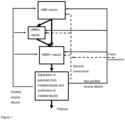
- One preferred three stage polymerisation comprises sequential steps (a)-(c):
- the multimodal polyethylene is prepared by preparing its ethylene polymer components in sequence from lowest molecular weight to highest molecular weight, i.e. the molecular weight of the components increases in the order LMW ⁇ HMW1 ⁇ HMW2.
- the multimodal polyethylene is prepared by preparing its ethylene polymer components in sequence from lowest comonomer content to highest comonomer content, i.e. the comonomer content of the components increases in the order LMW ⁇ HMW1 ⁇ HMW2.
- the LMW polymer will generally also be the lowest molecular weight polymer, but either of HMW1 or HMW2 may be the highest molecular weight polymer.
- HMW2 has the highest comonomer content and the highest molecular weight.
- the lower molecular weight ethylene polymer is present in the second reactor. In a further preferred process only a portion of the lower molecular weight ethylene polymer is present in the second reactor. Preferably the other portion of the lower molecular weight ethylene polymer is transferred directly to the polymerisation of the second higher molecular weight ethylene polymer in the third reactor. In a particularly preferred process, during the polymerisation to produce a second higher molecular weight ethylene polymer, the lower molecular weight ethylene polymer and the first higher molecular weight ethylene polymer, are present in the third reactor.
- first (LMW) reactor essentially all of the catalyst used in the reactors is preferably fed to first (LMW) reactor.
- the first reactor is also preferably fed with ethylene, optionally ⁇ -olefin and hydrogen. Diluent is also fed.
- the conditions for carrying out the polymerisation in the first reactor are as follows: Temperature: 50 to 270 °C, more preferably 60 to 120 °C, still more preferably 50 to 100 °C, yet more preferably 70 to 90 °C Pressure: 1 to 220 bar, preferably 1 to 60 bar, more preferably 1 to 35 bar, still more preferably 5 to 15 bar (if hexane is used) and 15 to 35 bar (if isobutane is used) Partial pressure of ethylene: 1-200 bar, preferably 1-15 bar, more preferably 1-10 bar, still more preferably 2-10 bar Residence time: 1 minute to 6 hours, preferably 10 minutes to 4 hours, more preferably 15 minutes-1 hour Diluent/solvent: C 4-10 saturated alkane, preferably
- the optional comonomer is 1-butene or 1-hexene.
- the polymerisation in the first reactor preferably produces 30 - 70 % wt of the total multimodal polyethylene, more preferably 35 - 65 % wt, still more preferably 40-60 % wt and most preferably 45 - 55 % wt.
- the flow out of first (LMW) reactor is preferably directed to the second reactor. Preferably 100 % of flow goes to the second reactor.
- the most volatile components are preferably removed from the outgoing flow of the first reactor such that more than 80 % of the hydrogen, more preferably at least 90 % of the hydrogen and still more preferably 100 % of the hydrogen, is removed before the flow enters the second reactor.
- the second reactor is fed with ethylene and optionally ⁇ -olefin comonomer. Hydrogen is optionally fed into the second reactor. Diluent is also preferably fed into the second reactor.
- the conditions for carrying out the polymerisation in the second reactor are as follows: Temperature: 50 to 290 °C, preferably 50 to 100 °C, more preferably 60 to 100 °C, still more preferably 70 to 90 °C Pressure: 1 to 200 bar, preferably 1 to 60 bar, more preferably 1 to 15 bar, still more preferably 2 to 15 bar, yet more preferably 2 to 10 bar, e.g.
- Hydrogen in reactor H 2 :ethylene, mol/kmol: 0 to 1:1, preferably 0 to 0.2:1
- Comonomer in reactor Comonomer:ethylene, mol/kmol: 0.1:1 to 200:1, preferably 1:1 to 20:1
- 30 - 70 % wt of the total multimodal polyethylene is preferably made, more preferably 35 - 65 % wt, still more preferably 40-60 % wt and most preferably 40 - 50 % wt.
- Essentially all of the flow out of second reactor is preferably fed into the third reactor. Any hydrogen is preferably removed.
- To the third reactor is fed ethylene and optionally ⁇ -olefin comonomer. Hydrogen is also optionally fed to the third reactor. Diluent is additionally preferably fed to the third reactor.
- the conditions for carrying out the polymerisation in the third reactor are as follows: Temperature: 50 to 320 °C, more preferably 50 to 100 °C, still more preferably 60 to 100 °C, yet more preferably 70 to 90 °C Pressure: 0.5 to 220 bar, more preferably 1 to 60 bar, still more preferably 1 to 10 bar, preferably 1.5 to 7 bar, still more preferably 5 to 15 bar (if hexane is used) and 15 to 35 bar (if isobutane is used) Partial pressure of ethylene: 0.2 to 200 bar, more preferably 0.25 to 10 bar, still more preferably 0.3-4 bar Residence time: 0.2 minutes to 2 hours, preferably 2 minutes to 1 hour, more preferably 5 to 30 minutes Diluent/solvent: C 4-10 saturated alkane, preferably hexane or isobutane as diluent Hydrogen in reactor (H 2 :ethylene, mol/kmol): 0 to 1:1, preferably 0 to 0.2:1 Comonomer in reactor (
- the optional comonomer is 1-butene or 1-hexene.
- the molar ratio between ⁇ -olefin comonomer and ethylene in the third reactor is preferably 1.5-20 times, more preferably 2-15 times, and still more preferably 3-10 times higher, than the molar ratio between comonomer and ethylene in the second reactor.
- 0.5 - 30 % wt of the total multimodal polyethylene is preferably made.
- at least 1.0 % wt, e.g. 1.2 % wt or 1.5 %wt of the total multimodal polyethylene is made in the third reactor.
- Preferably less than 30 % wt, e.g. 27 % wt or 25 % wt of the total multimodal polyethylene is made in the third reactor.
- Particularly preferably 1 to 25 % wt, more preferably 1.5 - 15 % wt and most preferably 1.5 - 9 % wt of the total multimodal polyethylene is made.
- the polymerisation of the second and third reactor may be performed as polymerization in different zones with different polymerisation conditions within a single reactor shell.
- this is not preferred.
- the multimodal polyethylene is prepared by preparing its ethylene polymer components in the sequence lower molecular weight ethylene polymer, second higher molecular weight ethylene copolymer and then first higher molecular weight ethylene copolymer.
- This preferred process comprises the sequential steps (a)-(c):
- the LMW polymer will generally also be the lowest molecular weight polymer, but either of HMW1 or HMW2 may be the highest molecular weight polymer.
- HMW2 has the highest comonomer content and the highest molecular weight.
- the lower molecular weight ethylene polymer is present in the second reactor. In a further preferred process only a portion of the lower molecular weight ethylene polymer is present in the second reactor. Preferably the other portion of the lower molecular weight ethylene polymer is transferred directly to the polymerisation of the first higher molecular weight ethylene polymer in the third reactor. In a further preferred process, during the polymerisation to produce a first higher molecular weight ethylene polymer, the lower molecular weight ethylene polymer and the second higher molecular weight ethylene polymer, are present in the third reactor.
- essentially all of the catalyst used in the reactors is preferably fed to the first reactor.
- To the first reactor is also preferably fed ethylene, hydrogen and optionally ⁇ -olefir comonomer.
- Diluent is also preferably fed to the first reactor.
- the conditions for carrying out the polymerisation in the first reactor are as follows: Temperature: 50 to 270 °C, more preferably 50 to 120 °C, more preferably 50 to 100 °C, still more preferably 70 to 90 °C Pressure: 1 to 220 bar, preferably 1 to 70 bar, more preferably 3 to 20 bar, still more preferably 5 to 15 bar (if hexane is used) and 15 to 35 bar (if isobutane is used) Partial pressure of ethylene: 0.2 to 200 bar, more preferably 0.5 to 15 bar, still more preferably 1-10 bar, e.g. 2-10 bar Residence time: 1 minute to 6 hours, preferably 10 minutes to 4 hours, more preferably 15 minutes-2 hours Diluent/solvent: C 4-10 saturated alkane, preferably hexane or isobutane as diluent
- Hydrogen in reactor H 2 :ethylene, mol/kmol: 0.1:1 to 10:1, preferably 0.2:1 to 4:1.
- Comonomer in reactor (comonomer:ethylene, mol/kmol): 0 to 50:1, preferably 0 to 10:1, more preferably 0.
- the optional comonomer is 1-butene, 1-pentene, 1-hexene or 1-octene and more preferably 1-butene or 1-hexene.
- the polymerisation in the first reactor preferably produces 30 - 70 % wt of the total multimodal polyethylene, more preferably 35 - 65 % wt, still more preferably 40-60 % wt and most preferably 45 - 55 % wt.
- Hydrogen is preferably removed from the flow out of the first reactor.
- the flow out of first reactor e.g. after removing hydrogen, may all be transferred to the second reactor. More preferably however it is split between going directly to the third reactor and going via the second reactor.
- Optionally unwanted compounds are removed from the flow.
- the most volatile components are preferably removed from the outgoing flow of the first reactor, e.g. such that more than 96 % of the hydrogen is removed before the flow enters the second reactor and more than 80 % of the hydrogen is removed before flow enters third reactor directly.
- the flow entering the second reactor and the flow entering the third reactor directly therefore comprises mainly polyethylene and diluent.
- substantially all (e.g. all) of the hydrogen is removed before the flow is split.
- the optional split may be achieved using control via mass flow measurements of, e.g. the slurry, and/or using volumetric feeders or switch flow between the second and third reactors in short sequences.
- the second reactor is fed ethylene and optionally ⁇ -olefin comonomer. Hydrogen is also optionally fed to the second reactor. A significant fraction of the comonomer feed is preferably nonpurified recycle stream from the third reactor. Diluent is preferably fed to the second reactor.
- the conditions for carrying out polymerisation in the second reactor are as follows: Temperature: 50 to 290 °C, preferably 55 to 120 °C, more preferably 50 to 100 °C, e.g. 60 to 100 °C, yet more preferably 70 to 90 °C Pressure: 0.5 to 220 bar, preferably 0.75 to 70 bar, more preferably 1 to 50 bar, still more preferably 1 to 16 bar, e.g.
- Partial pressure of ethylene 0.2 to 200 bar, preferably 0.3 to 10 bar, more preferably 0.3-4 bar
- Residence time 0.2 minutes to 1 hour, preferably 1 minute to 1 hour, preferably 2 to 20 minutes
- Diluent Either absent (for gas phase) or C 4-10 saturated alkane, more preferably hexane or isobutane as diluents, and still more preferably hexane as diluent
- Hydrogen in reactor H 2 :ethylene, mol/kmol: 0 to 1:1, preferably 0 to 0.2:1
- Comonomer in reactor Comonomer:ethylene, mol/kmol: 0.1:1 to 200:1, preferably 10:1 to 50:1
- the optional comonomer is 1-butene, 1-pentene, 1-hexene or 1-octene and most preferably 1-butene or 1-hexene.
- Essentially all of the polymer flow out of second reactor is preferably fed into the third reactor.
- This flow comprises mainly polyethylene and diluent.
- volatiles are partially removed from the flow before it enters the third reactor, e.g. volatile comonomer (e.g. 1-butene) may be removed from the flow.
- Any polymer flow out of the first reactor that does not enter the second reactor is also preferably fed into the third reactor.
- the third reactor is fed ethylene and optionally ⁇ -olefin comonomer.
- hydrogen is fed to the third reactor.
- Diluent or solvent is optionally fed to the third reactor.
- the major amount of the comonomer feed comes with the polymer from the second reactor.
- the conditions for carrying out the polymerisation in the third reactor are as follows: Temperature: 50 to 320 °C, preferably 50 to 120 °C, more preferably 50 to 100 °C and still more preferably 70 to 90 °C Pressure: 1 to 220 bar, preferably 1 to 70 bar, more preferably 1 to 50 bar, still more preferably 1 to 15 bar, and still more preferably 2 to 10 bar, e.g.
- Partial pressure of ethylene 0.4-200 bar, more preferably 0.5 to 15 bar, still more preferably 0.5-6 bar
- Residence time 1 minute to 4 hours, preferably 0.5 to 4 hours, more preferably 1-2 hours
- Diluent Either absent (for gas phase) or C 4-10 saturated alkane, more preferably hexane or isobutane as diluents, still more preferably hexane as diluent
- Hydrogen in reactor H 2 :ethylene, mol/kmol): 0 to 1:1, preferably 0 to 0.2:1
- Comonomer in reactor Comonomer:ethylene, mol/kmol): 0.1:1 to 200:1, preferably 1:1 to 20:1
- the optional comonomer is 1-butene, 1-pentene, 1-hexene or 1-octene and still more preferably 1-butene or 1-hexene
- the molar ratio comonomer/ethylene is preferably 5-90 % of that in the second reactor, more preferably 10-40 % of that in the second reactor.
- 30 - 70 % wt of the total multimodal polymer is preferably made, more preferably 35 - 65 % wt, still more preferably 40-60 %wt and most preferably 40 - 50 % wt.
- a portion or part of the flow leaving the third reactor is recycled to the second reactor.
- the polyethylene is preferably obtained by centrifugation or flashing.
- the final multimodal polyethylene particles for processing into articles such as pipes and films will often contain additives such as carbon black and colourants as described below which are typically compounded into the polyethylene as a concentrated masterbatch after polyethylene synthesis is completed.
- additives such as carbon black and colourants as described below which are typically compounded into the polyethylene as a concentrated masterbatch after polyethylene synthesis is completed.
- the following details in relation to the polyethylene refer to the polyethylene per se and do not include any further additives unless explicitly stated.
- the multimodal polyethylene preferably has a bimodal or trimodal molecular weight distribution. More preferably the multimodal polyethylene has a bimodal molecular weight distribution.
- the multimodality and broad molecular weight distribution of the polyethylene ensures that an attractive balance of polymer properties can be achieved. In particular it ensures that a high molecular weight polymer is achieved and hence makes the polyethylene suitable for pipe production. This is thought to be achieved because the unsupported catalyst provides easy access for ethylene to the active site of the catalyst which means that a high concentration of ethylene at the active site may be achieved.
- the multimodal polyethylene has a multimodal (e.g. bimodal or trimodal) composition.
- the overall amount of ethylene monomer present in the multimodal polyethylene is preferably 50-99.9 % wt, more preferably 50-99.5 % wt, still more preferably 75-99.0 % wt, e.g. 85 to 98 % wt.
- Particularly preferably the overall amount of ethylene monomer in the multimodal polyethylene is 92-99.8 % wt and more preferably 98 to 99.9 % wt.
- the comonomer is selected from propylene, 1-butene, 1-pentene, 4-methyl-1-pentene, 1-hexene, 1-octene and mixtures thereof.
- the ⁇ -olefin is 1-butene.
- a significant advantage of using metallocene catalyst in copolymerisation, specifically to produce polyethylene pipe, is that homogeneous comonomer incorporation in the polymer is obtained compared to Ziegler Natta and chromium catalysts.
- the improved comonomer incorporation property with metallocenes significantly enhances, for example, slow crack growth and rapid crack propagation behaviour of the polymer which has crucial impact on the polyethylene pipe properties.
- the weight average molecular weight (Mw) of the multimodal polyethylene of the present invention is at least 50,000 g/mol, more preferably 100,000-250,000 g/mol, still more preferably 130,000-225,000 g/mol and yet more preferably 140,000-200,000 g/mol.
- the Mn (number average molecular weight) of the multimodal polyethylene is preferably 18,000-40,000 g/mol, still more preferably 20,000-35,000 g/mol and yet more preferably 20,000-30,000 g/mol.
- the molecular weight distribution (MWD) of the multimodal polyethylene is preferably 1 to 25, more preferably 2 to 15 and still more preferably 5 to 10.
- the multimodal polyethylene preferably has a MFR 2 of less than 0.2 g/10min. Still more preferably the multimodal polyethylene has a MFR 2 of 0.005-0.2, more preferably 0.0075-0.2, still more preferably 0.01 to 0.1 and yet more preferably 0.015 to 0.05 g/10min.
- the multimodal polyethylene preferably has a MFR 6 of less than 1 g/10min. Still more preferably the multimodal polyethylene has a MFR 6 of 0.05 to 1, more preferably 0.01 to 0.9, still more preferably 0.1 to 0.8 and yet more preferably 0.3 to 0.75 g/10min. This is an acceptable range of production of pipes, i.e. it ensures that the polyethylene may be extrusion moulded.
- These MFR values are significantly lower than the MFRs of polyethylenes produced using a supported version of an otherwise identical catalyst.
- the multimodal polyethylene preferably has a melting temperature of 120-135 °C, still more preferably 125-133 °C and yet more preferably 127-132 °C.
- the multimodal polyethylene preferably has a density of 920 to 980 kg/dm 3 . More preferably the multimodal polyethylene is a high density polyethylene (HDPE). HOPE has the advantage of having a relatively low inherent weight, yet high mechanical strength, corrosion and chemical resistance and long-term stability. Preferably the multimodal polyethylene has a density of 920-970 kg/m 3 , more preferably 935-963 kg/m 3 , still more preferably 940-960 kg/m 3 and yet more preferably 945-955 kg/m 3 .
- HDPE high density polyethylene
- HOPE has the advantage of having a relatively low inherent weight, yet high mechanical strength, corrosion and chemical resistance and long-term stability.
- the multimodal polyethylene has a density of 920-970 kg/m 3 , more preferably 935-963 kg/m 3 , still more preferably 940-960 kg/m 3 and yet more preferably 945-955 kg/m 3 .
- the multimodal polyethylene preferably in form of powder, preferably has a bulk density of 250 to 400 g/dm 3 , more preferably 250 to 350 g/dm 3 and still more preferably 250 to 300 g/dm 3 .
- the multimodal polyethylene, preferably in form of powder has a bulk density of at least 250 g/dm 3 , more preferably at least 300 g/dm 3 .
- the multimodal polyethylene of the present invention preferably has an ash content of 0 to 800 wt ppm, more preferably 0 to 600 wt ppm, still more preferably 0 to 400 wt ppm.
- Ash is typically metal oxides which derive from the catalyst, cocatalyst and polymer additives.
- supported metallocene catalysts typically silica or other related inorganic carriers are used.
- the supported metallocene catalysts typically suffer from low polymerisation activity.
- the use of carriers combined with low polymerisation activity lead to high ash content and high local heterogeneities in the polymer. When unsupported catalysts described in the present application are used, significantly lower ash content and local heterogeneities in the polymer are obtained.
- Ash is produced by heating the polymer comprising remnants of catalyst, cocatalyst and catalyst additives to high temperatures.
- ash level is significantly increased e.g. by use of carrier in the catalyst.
- Increased ash level gives increase to local heterogeneities in the polymer structure which often lead to mechanical failures in the pipe, meaning cracks and breakages, which deteriorates especially the slow crack growth properties of the pipe. They also affect the pipe appearance and performance by introducing roughness on the inner and outer surface which has effect e.g. on the flowability of liquids.
- high ash content has effect on the electrical properties of the polymer leading to higher conductivity.
- the multimodal polyethylene of the present invention preferably contains less than 100 wt ppm of material of hardness more than 3 on Moh's scale, more preferably 50 - 4, preferably 20 - 5, and most preferably less than 10 wt ppm of a material with hardness on Moh's scale of more than 6.
- Moh's scale is a practical scale to determine which material scratches which.
- Silica is a hard material, having a hardness of 7.0 on Moh's scale. The material with the higher Moh's hardness will scratch the material with the lower Moh's hardness. Since typical steel grades are 4.0 - 4.5 on this scale, silica will scratch steel.
- Silica particles present in polyethylene will therefore scratch the metal surfaces of polymer melt handling equipment which over time results in the equipment getting worn and eventually needing replacement.
- Silica is typically used as a carrier in supported metallocene catalysts and thus remains in the polymer produced by processes using supported metallocenes.
- the multimodal polyethylene of the present invention preferably does not contain silica. It may, however, contain a small amount of aluminium based residues. However, this will be present as minute particles of Al(OH) 3 (Al 2 O 3 ⁇ 3H 2 O). This compound is not hard. Its hardness on Moh's scale is only 3.0. Therefore, it will not scratch the metal surfaces of melt handling equipment and wear will be reduced to a minimum.
- Bimodal and trimodal polyethylene grades require high intensity melt mixing to become homogeneous.
- the bimodal and trimodal grades have a particularly high need for polymer without particles giving scratching and thereby wear.
- multimodal polyethylene has a particular need for low silica content.
- the multimodal polyethylene of the present invention is preferably produced without using fluorocarbon or fluorocarbonsurfactant.
- the multimodal polyethylene of the present invention preferably has a fluorocarbon and fluorocarbyl content of less than 20 wtppm, more preferably less than 15 wtppm, even more preferably less than 10 wtppm and most preferably less than 5 wtppm. This is advantageous as there is an increasing concern over environmental and health aspects of the persistent and bioaccumulating fluorosurfactants. There are also similar concerns over fluorocarbons.
- the first ethylene polymer is a metallocene polymer, i.e. it is prepared by metallocene catalysed polymerisation.
- the first ethylene polymer present in the multimodal polyethylene may be an ethylene homopolymer or ethylene copolymer.
- Preferred copolymers comprise one or more (e.g. one) ⁇ -olefin comonomers.
- Preferred ⁇ -olefin comonomers are selected from propylene, 1-butene, 1-pentene, 4-methyl-1-pentene, 1-hexene, 1-octene and mixtures thereof.
- the ⁇ -olefin is 1-butene.
- the first ethylene polymer is an ethylene homopolymer.
- the first ethylene polymer is a lower molecular weight polymer than the second and if present third ethylene polymers.
- the weight average molecular weight (Mw) of the first ethylene polymer is preferably 10,000-80,000 g/mol, still more preferably 15,000-60,000 g/mol and yet more preferably 20,000-45,000 g/mol, e.g. 25,000-40,000 g/mol.
- the Mn of the first ethylene polymer is preferably 5,000-40,000 g/mol, still more preferably 7,000-20,000 g/mol and yet more preferably 8,000-15,000 g/mol, e.g. 10,000 g/mol.
- the MWD (Mw/Mn) of the first ethylene polymer is preferably 1,8-5, still more preferably 2,0-4 and yet more preferably 2,3-3,5.
- the first ethylene polymer has a MFR 2 of at least 10 g/10min, more preferably 10-1000 g/10min, still more preferably 50-600 g/10min, yet more preferably 150-500 g/10min and yet more preferably 250-350 g/10min.
- the first ethylene polymer preferably has a MFR 2 of 100-300 g/10min.
- the first ethylene polymer has a density of 960-975 kg/m 3 , more preferably 965-974 kg/m 3 and still more preferably 969-972 kg/m 3 .
- the first ethylene polymer preferably has a melting temperature of 128-135 °C, still more preferably 130-134,5 °C and yet more preferably 132-134 °C.
- the amount of the first ethylene polymer present in the multimodal polyethylene is preferably 1-65 % wt, more preferably 10-60 % wt, still more preferably 30-55 % wt and yet more preferably 40-50 % wt, wherein % wt is based on the weight of the polyethylene.
- the second ethylene polymer is a metallocene polymer, i.e. it is prepared by metallocene catalysed polymerisation.
- the second ethylene polymer present in the multimodal polyethylene may be an ethylene homopolymer or ethylene copolymer but is preferably an ethylene copolymer.
- Preferred copolymers comprise one or more (e.g. one) ⁇ -olefin comonomers.
- Preferred ⁇ -olefin comonomers are selected from propylene, 1-butene, 1-pentene, 4-methyl-1-pentene, 1-hexene, 1-octene and mixtures thereof.
- the ⁇ -olefin is 1-butene.
- the amount of ⁇ -olefin comonomer is 0.3 to 8 %wt.
- the weight average molecular weight (Mw) of the second ethylene polymer is preferably 150,000-700,000 g/mol, still more preferably 200,000-600,000 g/mol and yet more preferably 300,000-500,000 g/mol.
- the Mn of the second ethylene polymer is preferably 20,000-350,000 g/mol, still more preferably 50,000-200,000 g/mol and yet more preferably 80,000-150,000 g/mol.
- the MWD (Mw/Mn) of the second ethylene polymer is preferably 2-8 and still more preferably 2.5-5.
- the second ethylene polymer has a MFR 21 of 0.3-4 g/10min, still more preferably 0.5-3.5 g/10min and yet more preferably 1 to 2.5 g/10min.
- the second ethylene polymer has a MFR 5 of 0.02-0.04 g/10min and still more preferably 0.025 to 0.035 g/10min.
- the second ethylene polymer has a density of 890-940 kg/m 3 , more preferably 900-935 kg/m 3 and still more preferably 910-930 kg/m 3 .
- the amount of the second ethylene polymer present in the multimodal polyethylene is preferably 35-99 % wt, more preferably 40-85 % wt, still more preferably 45-70 % wt and yet more preferably 50-60 % wt, wherein % wt is based on the weight of the polyethylene.
- the HMW1 polymer is a metallocene polymer, i.e. it is prepared by metallocene catalysed polymerisation.
- the HMW1 polymer present in the multimodal polyethylene may be an ethylene homopolymer or ethylene copolymer but is preferably an ethylene copolymer.
- Preferred copolymers comprise one or more (e.g. one) ⁇ -olefin comonomers.
- Preferred ⁇ -olefin comonomers are selected from propylene, 1-butene, 1-pentene, 4-methyl-1-pentene, 1-hexene, 1-octene and mixtures thereof.
- the ⁇ -olefin is 1-butene.
- the amount of ⁇ -olefin comonomer is 0.3 to 2.5 %wt.
- the weight average molecular weight (Mw) of the HMW1 polymer is preferably 200,000-700,000 g/mol, still more preferably 250,000-600,000 g/mol and yet more preferably 300,000-500,000 g/mol.
- the Mn of the HMW1 polymer is preferably 25,000-350,000 g/mol, still more preferably 50,000-200,000 g/mol and yet more preferably 80,000-150,000 g/mol.
- the MWD (Mw/Mn) of the HMW1 polymer is preferably 2-8 and still more preferably 2.5-5.
- the HMW1 polymer has a MFR 21 of 0.3-4 g/10min, still more preferably 0.5-3.5 g/10min and yet more preferably 1 to 2.5 g/10min.
- the HMW1 polymer has a MFR 6 of 0.02-0.04 g/10min and still more preferably 0.025 to 0.035 g/10min.
- the HMW1 polymer has a density of 890-930 kg/m 3 , more preferably 900-925 kg/m 3 and still more preferably 910-920 kg/m 3 .
- the amount of the HMW1 polymer present in the multimodal polyethylene is preferably 30-70 % wt, more preferably 35-65 % wt, still more preferably 40-60 % wt and yet more preferably 40-50 % wt, wherein % wt is based on the weight of the polyethylene.
- the HMW2 polymer is a metallocene polymer, i.e. it is prepared by metallocene catalysed polymerisation.
- the weight average molecular weight (Mw) of the HMW2 polymer is preferably 300,000-1,000,000 g/mol, still more preferably 400,000-800,000 g/mol and yet more preferably 500,000-750,000 g/mol.
- the Mn of the HMW2 polymer is preferably 40,000-500,000 g/mol, still more preferably 50,000-300,000 g/mol and yet more preferably 70,000-250,000 g/mol.
- the MWD (Mw/Mn) of the HMW2 polymer is preferably 2-8 and still more preferably 2.5-5.
- the HMW2 polymer has a MFR 21 of 0.0075-1 g/10min.
- the HMW2 polymer has a density of 890-925 kg/m 3 , more preferably 900-920 kg/m 3 and still more preferably 905-915 kg/m 3 .
- the amount of the HMW2 polymer present in the multimodal polyethylene is preferably 0.5-30 % wt, more preferably 1.0-25 % wt, still more preferably 1.5-15 % wt and yet more preferably 1.5-9 % wt, wherein % wt is based on the weight of the polyethylene.
- the polymer When the final multimodal polyethylene is obtained from a slurry reactor, the polymer is removed therefrom and the diluent preferably separated from it by flashing or filtration. The major part of the diluent and any unconverted comonomer is preferably recycled back to the polymerisation reactor(s). Preferably the polymer is then dried (e.g. to remove residues of liquids and gases from the reactor).
- the polymer is subjected to a deashing step, i.e. to washing with an alcohol, optionally mixed with a hydrocarbon liquid, or water. Preferably there is no deashing step.
- the polyethylene from the reactors is preferably in a free-flowing state, preferably bv having relatively large particles of high bulk density.
- a pigment e.g. carbon black
- Pigments are preferably added in the form of a master batch.
- additives e.g. polymer processing agents or antiblock
- the additives are preferably used as masterbatches and pellets mixed therewith before being, e.g. moulded into articles such as pipes.
- Preferred properties of the multimodal polyethylene obtainable by (e.g. obtained by) a process as hereinbefore defined are as set out above in relation to the polymerisation process.
- Such a metallocene multimodal polyethylene may comprise:
- the multimodal polyethylene has a Mw of 100,000-250,000 g/mol, still more preferably 130,000-225,000 g/mol and yet more preferably 140,000-200,000 g/mol.
- the multimodal polyethylene has a Mn of 18,000 to 40,000 g/mol, more preferably 20,000 to 35,000 g/mol, and more preferably 20,000 to 30,000 g/mol.
- the multimodal polyethylene has MWD of 1 to 25, preferably 2 to 15 and still more preferably 5 to 10.
- the multimodal polyethylene has a MFR 2 of 0.005-0.2, more preferably 0.0075-0.2, still more preferably 0.01 to 0.1 and yet more preferably 0.015 to 0.05 g/10min.
- the multimodal polyethylene has a MFR 5 of 0.05 to 1, more preferably 0.01 to 0.9, still more preferably 0.1 to 0.8 and yet more preferably 0.3 to 0.75 g/10min.
- the multimodal polyethylene has a density of 920-970 kg/m 3 , more preferably 935-963 kg/m 3 , still more preferably 940-960 kg/m 3 and yet more preferably 945-955 kg/m 3 .
- the multimodal polyethylene preferably in the form of powder, has a bulk density of 250 to 400 g/dm 3 , more preferably 250 to 350 g/dm 3 and still more preferably 250 to 300 g/dm 3 .
- the multimodal polyethylene has a fluorocarbon and fluorocarbyl content of less than 20 wtppm, more preferably less than 15 wtppm, even more preferably less than 10 wtppm and most preferably less than 5 wtppm.
- the multimodal polyethylene is preferably used in extrusion and more preferably in pipe extrusion.
- a process for preparing a pipe comprises:
- the multimodal polyethylene is used in pipe applications.
- it is used in HDPE pipes, e.g. according to PE80 or PE100 standards.
- the pipes may be used e.g. for water and gas distribution, sewer, wastewater, agricultural uses, slurries, chemicals etc.
- Melt indexes (MFR 2 and MFR 6 ) were measured according to ISO 1133 at loads of 2.16 and 5.0 kg respectively. The measurements were at 190 °C.
- a Waters Alliance GPCV2000 instrument equipped with refractive index detector and online viscosimeter was used with 1 PLgel GUARD + 3 PLgel MIXED-B and 1,2,4-trichlorobenzene (TCB, stabilised with 250 mg/l 2,6-Di tert butyl-4-methyl-phenol) as solvent at 160 °C and at a constant flow rate of 1 ml/min. 206 ⁇ l of sample solution were injected per analysis.
- the column set was calibrated using universal calibration (according to ISO 16014-2:2003) with 15 narrow molecular weight distribution polystyrene (PS) standards in the range of 0.58 kg/mol to 7500 kg/mol.
- PS narrow molecular weight distribution polystyrene
- Comonomer content (% wt) was determined based on Fourier transform infrared spectroscopy (FTIR) determination calibrated with C13-NMR.
- FTIR Fourier transform infrared spectroscopy
- Density of materials was measured according to ISO 1183:1987 (E), method D, with isopropanol-water as gradient liquid.
- the cooling rate of the plaques when crystallising the samples was 15 °C/min. Conditioning time was 16 hours.
- Polymerisation activity (kg PE/mol metal * h) was calculated in each polymerisation stage based on polymer yield, molar level of the metallocene complex and residence time in the reactor.
- Polymerisation productivity (kg PE/mol metal) was calculated in each polymerisation stage based on polymer yield and molar level of the metallocene complex.
- bulk density is measured on polymer powder.
- the bulk density of a powder (loose bulk density) is the ratio of the mass of an untapped powder sample and its volume (g/dm 3 ).
- the bulk density of a polymer powder was determined by measuring ca. 100 g of powder sample and let it flow freely through a funnel into a 100 ml cylinder with certified volume and measuring the powder weight.
- Particle size of the polymer was analysed from the dry powder by using Malvern Mastersizer 2000.
- the median is called the d50.
- the d50 has been defined as the diameter where half of the population lies below this value. Similarly, 90 percent of the distribution lies below the d90, and 10 percent of the population lies below the d10.
- Ash content of the polymer samples was measured by heating the polymer in a microwave oven at 650°C during 20 minutes according to ISO 3451-1.
- the foreign particle content of the polymer samples was analysed using light microscopy (Leica MZ16a; Contrast mode: Transmitted light/dark field) on the pressed thin film sample.
- the samples were prepared by melting one gram of the polymer powder and hot-pressing it to a film between two Mylar sheets, with thickness approx. 200 ⁇ m.
- the quantification of the foreign particles was done by image analysis on the pressed thin film samples (3,3 ⁇ 2,5 mm).
- the catalyst was:
- RI refers to the polymerisation in and the product of the first reactor
- RII refers to the polymerisation in the second reactor and the product of the first and second reactor together, which is the final polyethylene product in a two stage polymerisation.
- example 1 and comparative example 1 are under identical conditions and with the same catalyst except that in example 1 the catalyst is unsupported, rather than supported as in comparative example 1.
- the polymerisations were run without the use of hydrogen in the second stage in order to produce bimodal polymers of the highest MW possible in the conditions employed.
Landscapes
- Chemical & Material Sciences (AREA)
- Organic Chemistry (AREA)
- Polymers & Plastics (AREA)
- Health & Medical Sciences (AREA)
- Chemical Kinetics & Catalysis (AREA)
- Medicinal Chemistry (AREA)
- Engineering & Computer Science (AREA)
- General Engineering & Computer Science (AREA)
- Mechanical Engineering (AREA)
- Materials Engineering (AREA)
- Inorganic Chemistry (AREA)
- Crystallography & Structural Chemistry (AREA)
- Transition And Organic Metals Composition Catalysts For Addition Polymerization (AREA)
- Addition Polymer Or Copolymer, Post-Treatments, Or Chemical Modifications (AREA)
- Polymerisation Methods In General (AREA)
Applications Claiming Priority (2)
| Application Number | Priority Date | Filing Date | Title |
|---|---|---|---|
| GB1422957.9A GB2533770B (en) | 2014-12-22 | 2014-12-22 | Polyethylene for pipes |
| PCT/EP2015/080876 WO2016102513A1 (en) | 2014-12-22 | 2015-12-21 | Polyethylene for pipes |
Publications (3)
| Publication Number | Publication Date |
|---|---|
| EP3237468A1 EP3237468A1 (en) | 2017-11-01 |
| EP3237468C0 EP3237468C0 (en) | 2024-07-17 |
| EP3237468B1 true EP3237468B1 (en) | 2024-07-17 |
Family
ID=54884071
Family Applications (1)
| Application Number | Title | Priority Date | Filing Date |
|---|---|---|---|
| EP15813081.5A Active EP3237468B1 (en) | 2014-12-22 | 2015-12-21 | Process to prepare polyethylene for pipes |
Country Status (15)
| Country | Link |
|---|---|
| US (2) | US10604603B2 (enExample) |
| EP (1) | EP3237468B1 (enExample) |
| JP (2) | JP6800162B2 (enExample) |
| KR (1) | KR102526141B1 (enExample) |
| CN (2) | CN113214421B (enExample) |
| BR (1) | BR112017013265A2 (enExample) |
| CA (1) | CA2971787C (enExample) |
| GB (1) | GB2533770B (enExample) |
| HU (1) | HUE069082T2 (enExample) |
| MX (1) | MX2017008336A (enExample) |
| MY (2) | MY181088A (enExample) |
| RU (1) | RU2694769C2 (enExample) |
| SA (2) | SA517381801B1 (enExample) |
| SG (1) | SG11201705120WA (enExample) |
| WO (1) | WO2016102513A1 (enExample) |
Families Citing this family (31)
| Publication number | Priority date | Publication date | Assignee | Title |
|---|---|---|---|---|
| GB2533770B (en) * | 2014-12-22 | 2021-02-10 | Norner Verdandi As | Polyethylene for pipes |
| GB201611295D0 (en) * | 2016-06-29 | 2016-08-10 | Norner Verdandi As | Polyethylene for pipes |
| WO2018013285A1 (en) * | 2016-07-14 | 2018-01-18 | Exxonmobil Chemical Patents Inc. | Dual metallocene-catalyzed bimodal copolymer compositions |
| ES2752741T3 (es) * | 2016-09-12 | 2020-04-06 | Thai Polyethylene Co Ltd | Tubería de polietileno multimodal |
| WO2018075245A1 (en) * | 2016-10-19 | 2018-04-26 | Exxonmobil Chemical Patents Inc. | Mixed catalyst systems and methods of using the same |
| US10683376B2 (en) * | 2017-11-07 | 2020-06-16 | Nova Chemicals (International) S.A. | Manufacturing ethylene interpolymer products at higher production rate |
| US11312845B2 (en) * | 2017-11-07 | 2022-04-26 | Nova Chemicals (International) S.A. | Ethylene interpolymer products and films |
| US10995166B2 (en) | 2017-11-07 | 2021-05-04 | Nova Chemicals (International) S.A. | Ethylene interpolymer products and films |
| ES2946586T3 (es) | 2017-12-26 | 2023-07-21 | Dow Global Technologies Llc | Procedimiento para la producción de polímeros a base de etileno multimodales |
| SG11202005765YA (en) | 2017-12-26 | 2020-07-29 | Dow Global Technologies Llc | Dual reactor solution process for the production of multimodal ethylene-based polymer |
| KR102663559B1 (ko) * | 2017-12-26 | 2024-05-20 | 다우 글로벌 테크놀로지스 엘엘씨 | 다중모드 에틸렌계 중합체 처리 시스템 및 방법 |
| CN111655744B (zh) | 2017-12-26 | 2023-04-28 | 陶氏环球技术有限责任公司 | 韧性改善的多峰型乙烯类聚合物组合物 |
| KR102656043B1 (ko) | 2017-12-26 | 2024-04-12 | 다우 글로벌 테크놀로지스 엘엘씨 | 저온에서 개선된 인성을 갖는 다봉형 에틸렌계 중합체를 갖는 조성물 |
| KR102219312B1 (ko) * | 2018-08-30 | 2021-02-24 | 주식회사 엘지화학 | 폴리에틸렌 및 이의 염소화 폴리에틸렌 |
| EP3856801B1 (en) | 2018-09-28 | 2024-09-04 | Univation Technologies, LLC | Bimodal polyethylene copolymer composition and pipe made thereof |
| KR102479346B1 (ko) | 2018-11-12 | 2022-12-19 | 주식회사 엘지화학 | 폴리올레핀 제조 공정에서의 파울링 예측 방법 |
| KR102178360B1 (ko) | 2019-02-20 | 2020-11-12 | 주식회사 엘지화학 | 고내압성을 갖는 폴리에틸렌 및 이를 포함하는 가교 폴리에틸렌 파이프 |
| EP3909988B1 (en) | 2019-02-20 | 2025-12-03 | LG Chem, Ltd. | Polyethylene having high degree of crosslinking and cross-linked polyethylene pipe comprising same |
| WO2020171625A1 (ko) * | 2019-02-20 | 2020-08-27 | 주식회사 엘지화학 | 우수한 물성의 가교 폴리에틸렌 파이프 |
| CN114364735B (zh) * | 2019-07-17 | 2024-04-26 | 博里利斯股份公司 | 制备聚合物组合物的方法 |
| WO2021009189A1 (en) * | 2019-07-17 | 2021-01-21 | Borealis Ag | Process for producing a polymer composition |
| EP4185621B1 (en) * | 2020-07-23 | 2026-06-03 | Borealis GmbH | Process for the preparation of a multimodal polyethylene |
| JP7717148B2 (ja) * | 2020-08-31 | 2025-08-01 | ヴェオリア・ウォーター・ソリューションズ・アンド・テクノロジーズ・サポート | 移動床バイオフィルムリアクタ用のバイオフィルム担体 |
| US11578156B2 (en) | 2020-10-20 | 2023-02-14 | Chevron Phillips Chemical Company Lp | Dual metallocene polyethylene with improved processability for lightweight blow molded products |
| US11124586B1 (en) | 2020-11-09 | 2021-09-21 | Chevron Phillips Chemical Company Lp | Particle size control of metallocene catalyst systems in loop slurry polymerization reactors |
| EP4259670A2 (en) | 2020-12-08 | 2023-10-18 | Chevron Phillips Chemical Company Lp | Particle size control of supported chromium catalysts in loop slurry polymerization reactors |
| EP4053194B1 (en) * | 2021-03-03 | 2023-08-02 | Borealis AG | Monolayer blown film |
| EP4108435B1 (en) * | 2021-06-24 | 2024-05-01 | Borealis AG | Polyethylene composition with improved processability |
| EP4108434B1 (en) * | 2021-06-24 | 2024-04-17 | Borealis AG | Polyethylene copolymer for a film layer |
| MX2024003133A (es) | 2021-09-13 | 2024-06-19 | Chevron Phillips Chemical Co Lp | Modificacion con hidrociclon de componentes de sistema catalizador para uso en polimerizaciones de olefina. |
| EP4357371A1 (en) | 2022-10-17 | 2024-04-24 | Thai Polyethylene Co., Ltd. | Multimodal polyethylene composition and extrusion article comprising the same |
Citations (1)
| Publication number | Priority date | Publication date | Assignee | Title |
|---|---|---|---|---|
| US20080146755A1 (en) * | 2006-12-19 | 2008-06-19 | Orass Hamed | Polymer supported metallocene catalyst composition for polymerizing olefins |
Family Cites Families (28)
| Publication number | Priority date | Publication date | Assignee | Title |
|---|---|---|---|---|
| CA2060019A1 (en) * | 1991-03-04 | 1992-09-05 | Phil Marvin Stricklen | Process for producing polyolefins having a bimodal molecular weight distribution |
| US5473020A (en) | 1994-06-30 | 1995-12-05 | Phillips Petroleum Company | Polymer bound ligands, polymer bound metallocenes, catalyst systems, preparation, and use |
| WO1998002246A1 (en) | 1996-07-11 | 1998-01-22 | Mobil Oil Corporation | Supported metallocene catalyst for olefin polymerization |
| ID19921A (id) * | 1997-02-19 | 1998-08-20 | Union Carbide Chem Plastic | Produksi bahan poliolefin dengan ukuran partikel yang terkendali |
| GB9712663D0 (en) * | 1997-06-16 | 1997-08-20 | Borealis As | Process |
| US6144882A (en) | 1997-07-17 | 2000-11-07 | Medtronic, Inc. | Medical electrical lead |
| EP1042376B1 (en) | 1997-12-23 | 2003-05-21 | ExxonMobil Chemical Patents Inc. | Ethylene polymerization process in a liquid reaction medium |
| EP0989141A1 (en) | 1998-09-25 | 2000-03-29 | Fina Research S.A. | Production of multimodal polyethelene |
| EP1323747A1 (en) | 2001-12-19 | 2003-07-02 | Borealis Technology Oy | Production of olefin polymerisation catalysts |
| US6878454B1 (en) * | 2003-12-05 | 2005-04-12 | Univation Technologies, Llc | Polyethylene films |
| ES2318384T3 (es) * | 2005-06-30 | 2009-05-01 | Borealis Technology Oy | Capa exterior de funda para cables de potencia o de comuniccion. |
| EP1860126A1 (en) * | 2006-05-26 | 2007-11-28 | INEOS Manufacturing Belgium NV | Polyolefin powder |
| KR101141494B1 (ko) | 2007-09-05 | 2012-05-03 | 에스케이이노베이션 주식회사 | 다봉 분자량 분포를 갖는 에틸렌 공중합체 및 이의제조방법 |
| EP2130859A1 (en) * | 2008-06-02 | 2009-12-09 | Borealis AG | Polymer compositions having improved homogeneity and odour, a method for making them and pipes made thereof |
| EP2130863A1 (en) * | 2008-06-02 | 2009-12-09 | Borealis AG | High density polymer compositions, a method for their preparation and pressure-resistant pipes made therefrom |
| KR101152413B1 (ko) | 2008-09-12 | 2012-06-05 | 에스케이이노베이션 주식회사 | 에틸렌 공중합체 및 이의 제조방법 |
| CA2741717C (en) * | 2008-10-31 | 2017-05-09 | Borealis Ag | Multimodal polymer |
| EP2186831B1 (en) * | 2008-11-10 | 2013-01-02 | Borealis AG | Process for the preparation of an unsupported, solid olefin polymerisation catalyst and use in polymerisation of olefins |
| WO2010084051A1 (en) * | 2009-01-23 | 2010-07-29 | Evonik Oxeno Gmbh | Pe mib film zn/cr |
| KR101248421B1 (ko) * | 2010-07-15 | 2013-03-28 | 에스케이이노베이션 주식회사 | 탄성 및 가공성이 우수한 에틸렌 공중합체 |
| CN103339187B (zh) | 2011-02-15 | 2016-01-20 | 埃克森美孚化学专利公司 | 热塑性聚烯烃共混物 |
| WO2013070602A1 (en) * | 2011-11-08 | 2013-05-16 | Univation Technologies, Llc | Methods for producing polyolefins with catalyst systems |
| US9000200B2 (en) * | 2011-12-19 | 2015-04-07 | Saudi Basic Industries Corporation | Process for the preparation of metallocene complexes |
| GB2498936A (en) * | 2012-01-31 | 2013-08-07 | Norner Innovation As | Polyethylene with multi-modal molecular weight distribution |
| DE102012201500A1 (de) * | 2012-02-02 | 2013-08-08 | Robert Bosch Gmbh | Digitalkamera und Verfahren zum Betrieb einer Digitalkamera |
| AU2015250852B2 (en) | 2014-04-23 | 2017-12-07 | Total Research & Technology Feluy | Pipe comprising a metallocene-catalyzed polyethylene resin |
| GB2533770B (en) * | 2014-12-22 | 2021-02-10 | Norner Verdandi As | Polyethylene for pipes |
| GB201611295D0 (en) * | 2016-06-29 | 2016-08-10 | Norner Verdandi As | Polyethylene for pipes |
-
2014
- 2014-12-22 GB GB1422957.9A patent/GB2533770B/en not_active Expired - Fee Related
-
2015
- 2015-12-21 HU HUE15813081A patent/HUE069082T2/hu unknown
- 2015-12-21 KR KR1020177020614A patent/KR102526141B1/ko active Active
- 2015-12-21 CN CN202110508000.2A patent/CN113214421B/zh active Active
- 2015-12-21 CA CA2971787A patent/CA2971787C/en active Active
- 2015-12-21 EP EP15813081.5A patent/EP3237468B1/en active Active
- 2015-12-21 CN CN201580075419.6A patent/CN107207659B/zh active Active
- 2015-12-21 MY MYPI2017000957A patent/MY181088A/en unknown
- 2015-12-21 MY MYPI2020006475A patent/MY196024A/en unknown
- 2015-12-21 RU RU2017126222A patent/RU2694769C2/ru active
- 2015-12-21 MX MX2017008336A patent/MX2017008336A/es unknown
- 2015-12-21 WO PCT/EP2015/080876 patent/WO2016102513A1/en not_active Ceased
- 2015-12-21 JP JP2017551025A patent/JP6800162B2/ja active Active
- 2015-12-21 SG SG11201705120WA patent/SG11201705120WA/en unknown
- 2015-12-21 BR BR112017013265A patent/BR112017013265A2/pt not_active Application Discontinuation
- 2015-12-21 US US15/538,380 patent/US10604603B2/en active Active
-
2017
- 2017-06-22 SA SA517381801A patent/SA517381801B1/ar unknown
- 2017-06-22 SA SA521421470A patent/SA521421470B1/ar unknown
-
2020
- 2020-03-02 US US16/806,397 patent/US10995169B2/en active Active
- 2020-10-12 JP JP2020171801A patent/JP2021036040A/ja active Pending
Patent Citations (1)
| Publication number | Priority date | Publication date | Assignee | Title |
|---|---|---|---|---|
| US20080146755A1 (en) * | 2006-12-19 | 2008-06-19 | Orass Hamed | Polymer supported metallocene catalyst composition for polymerizing olefins |
Also Published As
| Publication number | Publication date |
|---|---|
| SG11201705120WA (en) | 2017-07-28 |
| MY196024A (en) | 2023-03-07 |
| US10604603B2 (en) | 2020-03-31 |
| JP2018501394A (ja) | 2018-01-18 |
| RU2017126222A3 (enExample) | 2019-02-25 |
| EP3237468A1 (en) | 2017-11-01 |
| MY181088A (en) | 2020-12-17 |
| WO2016102513A1 (en) | 2016-06-30 |
| JP2021036040A (ja) | 2021-03-04 |
| CN107207659A (zh) | 2017-09-26 |
| GB2533770A (en) | 2016-07-06 |
| HUE069082T2 (hu) | 2025-02-28 |
| US20200270383A1 (en) | 2020-08-27 |
| RU2017126222A (ru) | 2019-01-24 |
| EP3237468C0 (en) | 2024-07-17 |
| RU2694769C2 (ru) | 2019-07-16 |
| SA517381801B1 (ar) | 2021-09-08 |
| KR102526141B1 (ko) | 2023-04-26 |
| CA2971787C (en) | 2023-05-02 |
| JP6800162B2 (ja) | 2020-12-16 |
| US10995169B2 (en) | 2021-05-04 |
| GB2533770B (en) | 2021-02-10 |
| CN113214421B (zh) | 2023-05-09 |
| SA521421470B1 (ar) | 2022-11-25 |
| CN107207659B (zh) | 2021-06-04 |
| KR20170115494A (ko) | 2017-10-17 |
| MX2017008336A (es) | 2018-04-24 |
| CA2971787A1 (en) | 2016-06-30 |
| US20170369612A1 (en) | 2017-12-28 |
| BR112017013265A2 (pt) | 2018-01-09 |
| CN113214421A (zh) | 2021-08-06 |
Similar Documents
| Publication | Publication Date | Title |
|---|---|---|
| US10995169B2 (en) | Polyethylene for pipes | |
| JP7361733B2 (ja) | マルチモーダルポリエチレンポリマーおよび前記ポリマーの調製方法 | |
| US20190185594A1 (en) | Polyethylene for pipes | |
| CN104004123B (zh) | 具有改进的加工性和熔体破裂特征的聚合物树脂以及包括该聚合物树脂的组合物和制品 | |
| KR20180137545A (ko) | 폴리올레핀 조성물 | |
| US9376557B2 (en) | Process for preparing polyethylene blend comprising metallocene produced resins and chromium produced resins | |
| JP5611237B2 (ja) | Pe mibスラリー重合 | |
| WO2012119956A1 (en) | Method of preparing pelleted polyethylene products |
Legal Events
| Date | Code | Title | Description |
|---|---|---|---|
| STAA | Information on the status of an ep patent application or granted ep patent |
Free format text: STATUS: THE INTERNATIONAL PUBLICATION HAS BEEN MADE |
|
| PUAI | Public reference made under article 153(3) epc to a published international application that has entered the european phase |
Free format text: ORIGINAL CODE: 0009012 |
|
| STAA | Information on the status of an ep patent application or granted ep patent |
Free format text: STATUS: REQUEST FOR EXAMINATION WAS MADE |
|
| 17P | Request for examination filed |
Effective date: 20170718 |
|
| AK | Designated contracting states |
Kind code of ref document: A1 Designated state(s): AL AT BE BG CH CY CZ DE DK EE ES FI FR GB GR HR HU IE IS IT LI LT LU LV MC MK MT NL NO PL PT RO RS SE SI SK SM TR |
|
| AX | Request for extension of the european patent |
Extension state: BA ME |
|
| DAV | Request for validation of the european patent (deleted) | ||
| DAX | Request for extension of the european patent (deleted) | ||
| STAA | Information on the status of an ep patent application or granted ep patent |
Free format text: STATUS: EXAMINATION IS IN PROGRESS |
|
| 17Q | First examination report despatched |
Effective date: 20210615 |
|
| RAP1 | Party data changed (applicant data changed or rights of an application transferred) |
Owner name: NORNER AS |
|
| P01 | Opt-out of the competence of the unified patent court (upc) registered |
Effective date: 20230517 |
|
| GRAP | Despatch of communication of intention to grant a patent |
Free format text: ORIGINAL CODE: EPIDOSNIGR1 |
|
| STAA | Information on the status of an ep patent application or granted ep patent |
Free format text: STATUS: GRANT OF PATENT IS INTENDED |
|
| INTG | Intention to grant announced |
Effective date: 20240220 |
|
| GRAS | Grant fee paid |
Free format text: ORIGINAL CODE: EPIDOSNIGR3 |
|
| GRAA | (expected) grant |
Free format text: ORIGINAL CODE: 0009210 |
|
| STAA | Information on the status of an ep patent application or granted ep patent |
Free format text: STATUS: THE PATENT HAS BEEN GRANTED |
|
| AK | Designated contracting states |
Kind code of ref document: B1 Designated state(s): AL AT BE BG CH CY CZ DE DK EE ES FI FR GB GR HR HU IE IS IT LI LT LU LV MC MK MT NL NO PL PT RO RS SE SI SK SM TR |
|
| REG | Reference to a national code |
Ref country code: GB Ref legal event code: FG4D |
|
| REG | Reference to a national code |
Ref country code: CH Ref legal event code: EP |
|
| REG | Reference to a national code |
Ref country code: DE Ref legal event code: R096 Ref document number: 602015089245 Country of ref document: DE |
|
| REG | Reference to a national code |
Ref country code: IE Ref legal event code: FG4D |
|
| U01 | Request for unitary effect filed |
Effective date: 20240816 |
|
| P04 | Withdrawal of opt-out of the competence of the unified patent court (upc) registered |
Free format text: CASE NUMBER: APP_48688/2024 Effective date: 20240826 |
|
| U07 | Unitary effect registered |
Designated state(s): AT BE BG DE DK EE FI FR IT LT LU LV MT NL PT RO SE SI Effective date: 20240902 |
|
| REG | Reference to a national code |
Ref country code: SK Ref legal event code: T3 Ref document number: E 44865 Country of ref document: SK |
|
| U20 | Renewal fee for the european patent with unitary effect paid |
Year of fee payment: 10 Effective date: 20241107 |
|
| P05 | Withdrawal of opt-out of the competence of the unified patent court (upc) changed |
Free format text: CASE NUMBER: APP_48688/2024 Effective date: 20240902 |
|
| PG25 | Lapsed in a contracting state [announced via postgrant information from national office to epo] |
Ref country code: NO Free format text: LAPSE BECAUSE OF FAILURE TO SUBMIT A TRANSLATION OF THE DESCRIPTION OR TO PAY THE FEE WITHIN THE PRESCRIBED TIME-LIMIT Effective date: 20241017 |
|
| PG25 | Lapsed in a contracting state [announced via postgrant information from national office to epo] |
Ref country code: PL Free format text: LAPSE BECAUSE OF FAILURE TO SUBMIT A TRANSLATION OF THE DESCRIPTION OR TO PAY THE FEE WITHIN THE PRESCRIBED TIME-LIMIT Effective date: 20240717 Ref country code: GR Free format text: LAPSE BECAUSE OF FAILURE TO SUBMIT A TRANSLATION OF THE DESCRIPTION OR TO PAY THE FEE WITHIN THE PRESCRIBED TIME-LIMIT Effective date: 20241018 |
|
| PG25 | Lapsed in a contracting state [announced via postgrant information from national office to epo] |
Ref country code: IS Free format text: LAPSE BECAUSE OF FAILURE TO SUBMIT A TRANSLATION OF THE DESCRIPTION OR TO PAY THE FEE WITHIN THE PRESCRIBED TIME-LIMIT Effective date: 20241117 |
|
| PG25 | Lapsed in a contracting state [announced via postgrant information from national office to epo] |
Ref country code: HR Free format text: LAPSE BECAUSE OF FAILURE TO SUBMIT A TRANSLATION OF THE DESCRIPTION OR TO PAY THE FEE WITHIN THE PRESCRIBED TIME-LIMIT Effective date: 20240717 |
|
| PG25 | Lapsed in a contracting state [announced via postgrant information from national office to epo] |
Ref country code: RS Free format text: LAPSE BECAUSE OF FAILURE TO SUBMIT A TRANSLATION OF THE DESCRIPTION OR TO PAY THE FEE WITHIN THE PRESCRIBED TIME-LIMIT Effective date: 20241017 Ref country code: ES Free format text: LAPSE BECAUSE OF FAILURE TO SUBMIT A TRANSLATION OF THE DESCRIPTION OR TO PAY THE FEE WITHIN THE PRESCRIBED TIME-LIMIT Effective date: 20240717 |
|
| PG25 | Lapsed in a contracting state [announced via postgrant information from national office to epo] |
Ref country code: RS Free format text: LAPSE BECAUSE OF FAILURE TO SUBMIT A TRANSLATION OF THE DESCRIPTION OR TO PAY THE FEE WITHIN THE PRESCRIBED TIME-LIMIT Effective date: 20241017 Ref country code: PL Free format text: LAPSE BECAUSE OF FAILURE TO SUBMIT A TRANSLATION OF THE DESCRIPTION OR TO PAY THE FEE WITHIN THE PRESCRIBED TIME-LIMIT Effective date: 20240717 Ref country code: NO Free format text: LAPSE BECAUSE OF FAILURE TO SUBMIT A TRANSLATION OF THE DESCRIPTION OR TO PAY THE FEE WITHIN THE PRESCRIBED TIME-LIMIT Effective date: 20241017 Ref country code: IS Free format text: LAPSE BECAUSE OF FAILURE TO SUBMIT A TRANSLATION OF THE DESCRIPTION OR TO PAY THE FEE WITHIN THE PRESCRIBED TIME-LIMIT Effective date: 20241117 Ref country code: HR Free format text: LAPSE BECAUSE OF FAILURE TO SUBMIT A TRANSLATION OF THE DESCRIPTION OR TO PAY THE FEE WITHIN THE PRESCRIBED TIME-LIMIT Effective date: 20240717 Ref country code: GR Free format text: LAPSE BECAUSE OF FAILURE TO SUBMIT A TRANSLATION OF THE DESCRIPTION OR TO PAY THE FEE WITHIN THE PRESCRIBED TIME-LIMIT Effective date: 20241018 Ref country code: ES Free format text: LAPSE BECAUSE OF FAILURE TO SUBMIT A TRANSLATION OF THE DESCRIPTION OR TO PAY THE FEE WITHIN THE PRESCRIBED TIME-LIMIT Effective date: 20240717 |
|
| REG | Reference to a national code |
Ref country code: HU Ref legal event code: AG4A Ref document number: E069082 Country of ref document: HU |
|
| PG25 | Lapsed in a contracting state [announced via postgrant information from national office to epo] |
Ref country code: SM Free format text: LAPSE BECAUSE OF FAILURE TO SUBMIT A TRANSLATION OF THE DESCRIPTION OR TO PAY THE FEE WITHIN THE PRESCRIBED TIME-LIMIT Effective date: 20240717 |
|
| PLBE | No opposition filed within time limit |
Free format text: ORIGINAL CODE: 0009261 |
|
| STAA | Information on the status of an ep patent application or granted ep patent |
Free format text: STATUS: NO OPPOSITION FILED WITHIN TIME LIMIT |
|
| 26N | No opposition filed |
Effective date: 20250422 |
|
| PG25 | Lapsed in a contracting state [announced via postgrant information from national office to epo] |
Ref country code: MC Free format text: LAPSE BECAUSE OF FAILURE TO SUBMIT A TRANSLATION OF THE DESCRIPTION OR TO PAY THE FEE WITHIN THE PRESCRIBED TIME-LIMIT Effective date: 20240717 |
|
| REG | Reference to a national code |
Ref country code: CH Ref legal event code: PL |
|
| PG25 | Lapsed in a contracting state [announced via postgrant information from national office to epo] |
Ref country code: CH Free format text: LAPSE BECAUSE OF NON-PAYMENT OF DUE FEES Effective date: 20241231 |
|
| PG25 | Lapsed in a contracting state [announced via postgrant information from national office to epo] |
Ref country code: IE Free format text: LAPSE BECAUSE OF NON-PAYMENT OF DUE FEES Effective date: 20241221 |
|
| U20 | Renewal fee for the european patent with unitary effect paid |
Year of fee payment: 11 Effective date: 20251110 |
|
| PGFP | Annual fee paid to national office [announced via postgrant information from national office to epo] |
Ref country code: GB Payment date: 20251001 Year of fee payment: 11 |
|
| PGFP | Annual fee paid to national office [announced via postgrant information from national office to epo] |
Ref country code: HU Payment date: 20251127 Year of fee payment: 11 |
|
| PGFP | Annual fee paid to national office [announced via postgrant information from national office to epo] |
Ref country code: TR Payment date: 20251219 Year of fee payment: 11 |
|
| PGFP | Annual fee paid to national office [announced via postgrant information from national office to epo] |
Ref country code: CZ Payment date: 20251208 Year of fee payment: 11 |
|
| PGFP | Annual fee paid to national office [announced via postgrant information from national office to epo] |
Ref country code: SK Payment date: 20251112 Year of fee payment: 11 |
|
| U1N | Appointed representative for the unitary patent procedure changed after the registration of the unitary effect |
Representative=s name: MARKS & CLERK LLP; GB |
|
| PG25 | Lapsed in a contracting state [announced via postgrant information from national office to epo] |
Ref country code: CY Free format text: LAPSE BECAUSE OF FAILURE TO SUBMIT A TRANSLATION OF THE DESCRIPTION OR TO PAY THE FEE WITHIN THE PRESCRIBED TIME-LIMIT Effective date: 20240717 |