EP3237397B1 - Isochinolinverbindungen zur behandlung von hiv - Google Patents
Isochinolinverbindungen zur behandlung von hiv Download PDFInfo
- Publication number
- EP3237397B1 EP3237397B1 EP15823844.4A EP15823844A EP3237397B1 EP 3237397 B1 EP3237397 B1 EP 3237397B1 EP 15823844 A EP15823844 A EP 15823844A EP 3237397 B1 EP3237397 B1 EP 3237397B1
- Authority
- EP
- European Patent Office
- Prior art keywords
- compound
- hiv
- inhibitors
- pharmaceutically acceptable
- alkyl
- Prior art date
- Legal status (The legal status is an assumption and is not a legal conclusion. Google has not performed a legal analysis and makes no representation as to the accuracy of the status listed.)
- Active
Links
- 0 C*c1c(*)c(*)c(C(C)C)nc1* Chemical compound C*c1c(*)c(*)c(C(C)C)nc1* 0.000 description 8
- SCUAIKICEMNTRP-SNAWJCMRSA-N Cc(cc(/C=C/C#N)cc1C)c1-c1cccc2c1cc(Nc(nc1)ncc1C#N)nc2N Chemical compound Cc(cc(/C=C/C#N)cc1C)c1-c1cccc2c1cc(Nc(nc1)ncc1C#N)nc2N SCUAIKICEMNTRP-SNAWJCMRSA-N 0.000 description 1
- QGYAENSOPUAKAV-SNAWJCMRSA-N Cc1cc(/C=C/C#N)cc(C)c1-c1cccc2c1cc(Nc(cc1)ccc1C#N)nc2 Chemical compound Cc1cc(/C=C/C#N)cc(C)c1-c1cccc2c1cc(Nc(cc1)ccc1C#N)nc2 QGYAENSOPUAKAV-SNAWJCMRSA-N 0.000 description 1
- SEUSFEKWVIFWTN-UHFFFAOYSA-N Nc(nc1)ncc1C#N Chemical compound Nc(nc1)ncc1C#N SEUSFEKWVIFWTN-UHFFFAOYSA-N 0.000 description 1
Classifications
-
- C—CHEMISTRY; METALLURGY
- C07—ORGANIC CHEMISTRY
- C07D—HETEROCYCLIC COMPOUNDS
- C07D401/00—Heterocyclic compounds containing two or more hetero rings, having nitrogen atoms as the only ring hetero atoms, at least one ring being a six-membered ring with only one nitrogen atom
- C07D401/02—Heterocyclic compounds containing two or more hetero rings, having nitrogen atoms as the only ring hetero atoms, at least one ring being a six-membered ring with only one nitrogen atom containing two hetero rings
- C07D401/12—Heterocyclic compounds containing two or more hetero rings, having nitrogen atoms as the only ring hetero atoms, at least one ring being a six-membered ring with only one nitrogen atom containing two hetero rings linked by a chain containing hetero atoms as chain links
-
- A—HUMAN NECESSITIES
- A61—MEDICAL OR VETERINARY SCIENCE; HYGIENE
- A61K—PREPARATIONS FOR MEDICAL, DENTAL OR TOILETRY PURPOSES
- A61K31/00—Medicinal preparations containing organic active ingredients
- A61K31/33—Heterocyclic compounds
- A61K31/395—Heterocyclic compounds having nitrogen as a ring hetero atom, e.g. guanethidine or rifamycins
- A61K31/435—Heterocyclic compounds having nitrogen as a ring hetero atom, e.g. guanethidine or rifamycins having six-membered rings with one nitrogen as the only ring hetero atom
- A61K31/47—Quinolines; Isoquinolines
- A61K31/472—Non-condensed isoquinolines, e.g. papaverine
-
- A—HUMAN NECESSITIES
- A61—MEDICAL OR VETERINARY SCIENCE; HYGIENE
- A61K—PREPARATIONS FOR MEDICAL, DENTAL OR TOILETRY PURPOSES
- A61K31/00—Medicinal preparations containing organic active ingredients
- A61K31/33—Heterocyclic compounds
- A61K31/395—Heterocyclic compounds having nitrogen as a ring hetero atom, e.g. guanethidine or rifamycins
- A61K31/435—Heterocyclic compounds having nitrogen as a ring hetero atom, e.g. guanethidine or rifamycins having six-membered rings with one nitrogen as the only ring hetero atom
- A61K31/47—Quinolines; Isoquinolines
- A61K31/472—Non-condensed isoquinolines, e.g. papaverine
- A61K31/4725—Non-condensed isoquinolines, e.g. papaverine containing further heterocyclic rings
-
- A—HUMAN NECESSITIES
- A61—MEDICAL OR VETERINARY SCIENCE; HYGIENE
- A61K—PREPARATIONS FOR MEDICAL, DENTAL OR TOILETRY PURPOSES
- A61K31/00—Medicinal preparations containing organic active ingredients
- A61K31/33—Heterocyclic compounds
- A61K31/395—Heterocyclic compounds having nitrogen as a ring hetero atom, e.g. guanethidine or rifamycins
- A61K31/495—Heterocyclic compounds having nitrogen as a ring hetero atom, e.g. guanethidine or rifamycins having six-membered rings with two or more nitrogen atoms as the only ring heteroatoms, e.g. piperazine or tetrazines
- A61K31/4965—Non-condensed pyrazines
- A61K31/497—Non-condensed pyrazines containing further heterocyclic rings
-
- A—HUMAN NECESSITIES
- A61—MEDICAL OR VETERINARY SCIENCE; HYGIENE
- A61K—PREPARATIONS FOR MEDICAL, DENTAL OR TOILETRY PURPOSES
- A61K31/00—Medicinal preparations containing organic active ingredients
- A61K31/33—Heterocyclic compounds
- A61K31/395—Heterocyclic compounds having nitrogen as a ring hetero atom, e.g. guanethidine or rifamycins
- A61K31/495—Heterocyclic compounds having nitrogen as a ring hetero atom, e.g. guanethidine or rifamycins having six-membered rings with two or more nitrogen atoms as the only ring heteroatoms, e.g. piperazine or tetrazines
- A61K31/50—Pyridazines; Hydrogenated pyridazines
- A61K31/501—Pyridazines; Hydrogenated pyridazines not condensed and containing further heterocyclic rings
-
- A—HUMAN NECESSITIES
- A61—MEDICAL OR VETERINARY SCIENCE; HYGIENE
- A61K—PREPARATIONS FOR MEDICAL, DENTAL OR TOILETRY PURPOSES
- A61K31/00—Medicinal preparations containing organic active ingredients
- A61K31/33—Heterocyclic compounds
- A61K31/395—Heterocyclic compounds having nitrogen as a ring hetero atom, e.g. guanethidine or rifamycins
- A61K31/495—Heterocyclic compounds having nitrogen as a ring hetero atom, e.g. guanethidine or rifamycins having six-membered rings with two or more nitrogen atoms as the only ring heteroatoms, e.g. piperazine or tetrazines
- A61K31/505—Pyrimidines; Hydrogenated pyrimidines, e.g. trimethoprim
- A61K31/506—Pyrimidines; Hydrogenated pyrimidines, e.g. trimethoprim not condensed and containing further heterocyclic rings
-
- A—HUMAN NECESSITIES
- A61—MEDICAL OR VETERINARY SCIENCE; HYGIENE
- A61K—PREPARATIONS FOR MEDICAL, DENTAL OR TOILETRY PURPOSES
- A61K45/00—Medicinal preparations containing active ingredients not provided for in groups A61K31/00 - A61K41/00
- A61K45/06—Mixtures of active ingredients without chemical characterisation, e.g. antiphlogistics and cardiaca
-
- A—HUMAN NECESSITIES
- A61—MEDICAL OR VETERINARY SCIENCE; HYGIENE
- A61P—SPECIFIC THERAPEUTIC ACTIVITY OF CHEMICAL COMPOUNDS OR MEDICINAL PREPARATIONS
- A61P31/00—Antiinfectives, i.e. antibiotics, antiseptics, chemotherapeutics
- A61P31/12—Antivirals
- A61P31/14—Antivirals for RNA viruses
- A61P31/18—Antivirals for RNA viruses for HIV
-
- C—CHEMISTRY; METALLURGY
- C07—ORGANIC CHEMISTRY
- C07D—HETEROCYCLIC COMPOUNDS
- C07D217/00—Heterocyclic compounds containing isoquinoline or hydrogenated isoquinoline ring systems
- C07D217/22—Heterocyclic compounds containing isoquinoline or hydrogenated isoquinoline ring systems with hetero atoms or with carbon atoms having three bonds to hetero atoms with at the most one bond to halogen, e.g. ester or nitrile radicals, directly attached to carbon atoms of the nitrogen-containing ring
Definitions
- NNRTIs non-nucleoside reverse transcriptase inhibitors
- HAART highly active antiretroviral therapy
- Described herein are compounds of Formula (I) and pharmaceutically acceptable salts thereof, compositions and formulations containing such compounds, or pharmaceutically acceptable salts thereof, and methods of using and making such compounds, or pharmaceutically acceptable salts thereof.
- the present disclosure relates to compounds of Formula (I) or a tautomer thereof, or pharmaceutically acceptable salt thereof, wherein
- the current disclosure relates to a pharmaceutical composition
- a pharmaceutical composition comprising a compound of Formula (I), or a pharmaceutically acceptable salt thereof, and a pharmaceutically acceptable carrier.
- the current disclosure relates to an article of manufacture comprising a unit dosage of a compound of Formula (I), or a pharmaceutically acceptable salt thereof.
- the current disclosure relates to compounds for use in a method of inhibiting reverse transcriptase in a subject in need thereof, comprising administering a compound of Formula (I), or a pharmaceutically acceptable salt thereof, to the subject.
- the current disclosure relates to compounds for use in a method for treating or preventing an HIV infection in a subject in need thereof, comprising administering to the subject a compound of Formula (I), or a pharmaceutically acceptable salt thereof.
- the current disclosure relates to compounds for use in a method for preventing an HIV infection in a subject, comprising administering to the subject a compound of Formula (I), or a pharmaceutically acceptable salt thereof.
- the subject is at risk of contracting the HIV virus, such as a subject who has one or more risk factors known to be associated with contracting the HIV virus.
- the current disclosure relates to compounds for use in a method for treating or preventing an HIV infection in a subject in need thereof, comprising administering to the subject a compound of Formula (I), or a pharmaceutically acceptable salt thereof, in combination with a therapeutically effective amount of one or more additional therapeutic agents.
- the current disclosure relates to a compound of Formula (I), or a pharmaceutically acceptable salt thereof, for use in medical therapy.
- the current disclosure relates to a compound of Formula (I), or a pharmaceutically acceptable salt thereof, for use in treating or preventing an HIV virus infection in a subject.
- the current disclosure relates to the use of a compound of Formula (I), or a pharmaceutically acceptable salt thereof, for the manufacture of a medicament for treating or preventing an HIV virus infection in a subject.
- a dash at the front or end of a chemical group is a matter of convenience to indicate the point of attachment to a parent moiety; chemical groups may be depicted with or without one or more dashes without losing their ordinary meaning.
- a wavy line drawn through a line in a chemical structure or a dashed line drawn through a line in a chemical structure indicates a point of attachment of a group.
- a dashed line within a chemical structure indicates an optional bond.
- a prefix such as "C u-v " or (C u -C v ) indicates that the following group has from u to v carbon atoms. For example, "C 1-6 alkyl” indicates that the alkyl group has from 1 to 6 carbon atoms.
- Alkyl as used herein is a linear or branched saturated monovalent hydrocarbon.
- an alkyl group can have 1 to 20 carbon atoms ( i.e., (C 1-20 )alkyl) or an alkyl group can have 1 to 10 carbon atoms ( i.e., (C 1-10 )alkyl), or an alkyl group can have 1 to 8 carbon atoms ( i.e., (C 1-8 )alkyl), or 1 to 6 carbon atoms ( i.e., (C 1-6 alkyl), or 1 to 4 carbon atoms ( i.e., (C 1-4 )alkyl).
- alkyl groups include, but are not limited to, methyl (Me, -CH 3 ), ethyl (Et, -CH 2 CH 3 ), 1-propyl ( n -Pr, n -propyl, -CH 2 CH 2 CH 3 ), 2-propyl ( i -Pr, i -propyl, -CH(CH 3 ) 2 ), 1-butyl ( n -Bu, n -butyl, -CH 2 CH 2 CH 2 CH 3 ), 2-methyl-1-propyl ( i -Bu, i -butyl, -CH 2 CH(CH 3 ) 2 ), 2-butyl ( s -Bu, s -butyl, -CH(CH 3 )CH 2 CH 3 ), 2-methyl-2-propyl ( t- Bu, t -butyl, -C(CH 3 ) 3 ), 1-pentyl ( n -pentyl, -CH 2 CH 3
- aryl refers to a single all carbon aromatic ring or a multiple condensed all carbon ring system wherein at least one of the rings is aromatic.
- an aryl group has 6 to 20 annular carbon atoms, 6 to 14 annular carbon atoms, or 6 to 12 annular carbon atoms.
- Aryl includes a phenyl radical.
- Aryl also includes multiple condensed ring systems (e.g., ring systems comprising 2, 3 or 4 rings) having about 9 to 20 carbon atoms in which at least one ring is aromatic and wherein the other rings may be aromatic or not aromatic (i.e., carbocycle).
- Such multiple condensed ring systems are optionally substituted with one or more (e.g., 1, 2 or 3) oxo groups on any carbocycle portion of the multiple condensed ring system.
- the rings of the multiple condensed ring system can be connected to each other via fused, spiro and bridged bonds when allowed by valency requirements. It is also to be understood that when reference is made to a certain atom-range membered aryl (e.g., 6-12 membered aryl), the atom range is for the total ring (annular) atoms of the aryl.
- a 6-membered aryl would include phenyl and a 10-membered aryl would include naphthyl and 1, 2, 3, 4-tetrahydronaphthyl.
- aryl groups include, but are not limited to, phenyl, indenyl, naphthyl, 1, 2, 3, 4-tetrahydronaphthyl, anthracenyl, and the like.
- Arylalkyl refers to an alkyl radical as defined herein in which one of the hydrogen atoms bonded to a carbon atom is replaced with an aryl radical as described herein ( i.e., an aryl-alkyl- moiety).
- the alkyl group of the "arylalkyl” includes alkyl groups that are 1 to 6 carbon atoms (i.e. aryl(C 1 -C 6 )alkyl).
- Arylalkyl groups include, but are not limited to, benzyl, 2-phenylethan-1-yl, 1-phenylpropan-1-yl, naphthylmethyl, 2-naphthylethan-1-yl and the like.
- Bosonic acid refers to the group -B(OH) 2 .
- Bosenonic acid ester refers to an ester derivative of a boronic acid compound. Suitable boronic acid ester derivatives include those of the formula -B(OR) 2 where each R is independently alkyl, aryl, arylalkyl, heteroalkyl, or heteroaryl. Additionally, the two R groups of -B(OR) 2 may be taken together to form a cyclic ester, e.g . having the structure where each R may be the same or different. Examples of boronic acid ester include boronic acid pinacol ester and boronic acid catechol ester.
- Cycloalkyl refers to a single saturated or partially unsaturated all carbon ring having 3 to 20 annular carbon atoms ( i.e., C 3 -C 20 cycloalkyl), for example from 3 to 12 annular atoms, for example from 3 to 10 annular atoms.
- the term “cycloalkyl” also includes multiple condensed, saturated and partially unsaturated all carbon ring systems ( e.g. , ring systems comprising 2, 3 or 4 carbocyclic rings). Accordingly, cycloalkyl includes multicyclic carbocycles such as a bicyclic carbocycles ( e.g.
- bicyclic carbocycles having about 6 to 12 annular carbon atoms such as bicyclo[3.1.0]hexane and bicyclo[2.1.1]hexane
- polycyclic carbocycles e.g., tricyclic and tetracyclic carbocycles with up to about 20 annular carbon atoms.
- the rings of a multiple condensed ring system can be connected to each other via fused, spiro and bridged bonds when allowed by valency requirements.
- Non-limiting examples of monocyclic cycloalkyl include cyclopropyl, cyclobutyl, cyclopentyl, 1-cyclopent-1-enyl, 1-cyclopent-2-enyl, 1-cyclopent-3-enyl, cyclohexyl, 1-cyclohex-1-enyl, 1-cyclohex-2-enyl and 1-cyclohex-3-enyl.
- Halo or halogen refers to fluoro, chloro, bromo and iodo.
- Haloalkyl refers to substitution of alkyl groups with 1, 2, 3, 4 or 5 or, in some embodiments, 1, 2 or 3 halogen groups, e.g., -CH 2 Cl, -CH 2 F, -CH 2 Br, -CFClBr, -CH 2 CH 2 Cl, -CH 2 CH 2 F, -CF 3 , -CH 2 CF 3 , -CH 2 CCl 3 , and the like, and further includes those alkyl groups such as perfluoroalkyl in which all hydrogen atoms are replaced by fluorine atoms.
- halogen groups e.g., -CH 2 Cl, -CH 2 F, -CH 2 Br, -CFClBr, -CH 2 CH 2 Cl, -CH 2 CH 2 F, -CF 3 , -CH 2 CF 3 , -CH 2 CCl 3 , and the like, and further includes those alkyl groups such as perfluoroalkyl in which all hydrogen atom
- heteroalkyl refers to an alkyl as defined herein, wherein one or more of the carbon atoms of the alkyl are replaced by an O, S, or NR q , (or if the carbon atom being replaced is a terminal carbon with an OH, SH or N(R q ) 2 ) wherein each R q is independently H or (C 1 -C 6 )alkyl.
- (C 1 -C 8 )heteroalkyl intends a heteroalkyl wherein one or more carbon atoms of a C 1 -C 8 alkyl is replaced by a heteroatom (e.g., O, S, NR q , OH, SH or N(R q ) 2 ), which may the same or different.
- heteroalkyls include but are not limited to methoxymethyl, ethoxymethyl, methoxy, 2-hydroxyethyl and N,N'-dimethylpropylamine.
- a heteroatom of a heteroalkyl may optionally be oxidized or alkylated.
- a heteroatom may be placed at any interior position of the heteroalkyl group or at a position at which the group is attached to the remainder of the molecule.
- Examples include, but are not limited to, -CH 2 OCH 3 , -CH 2 CH 2 NHCH 3 , -CH 2 CH 2 N(CH 3 ) -CH 3 ,-CH 2 SCH 2 CH 3 , -S(O)CH 3 , -CH 2 CH 2 S(O) 2 CH 3 , -CH 2 CH 2 OCH 3 , -CHCHN(CH 3 )CH 3 ,-CH 2 NHOCH 3 and -CH 2 OC(CH 3 ) 3 .
- heteroaryl refers to a single aromatic ring that has at least one atom other than carbon in the ring, wherein the atom is selected from the group consisting of oxygen, nitrogen and sulfur; the term also includes multiple condensed ring systems that have at least one such aromatic ring, which multiple condensed ring systems are further described below.
- the term includes single aromatic rings of from about 1 to 6 annular carbon atoms and about 1-4 annular heteroatoms selected from the group consisting of oxygen, nitrogen and sulfur in the rings.
- the sulfur and nitrogen atoms may also be present in an oxidized form provided the ring is aromatic.
- Such rings include but are not limited to pyridyl, pyrimidinyl, oxazolyl or furyl.
- the term also includes multiple condensed ring systems (e.g., ring systems comprising 2, 3 or 4 rings) wherein a heteroaryl group, as defined above, can be condensed with one or more rings selected from heteroaryls (to form for example a naphthyridinyl such as 1,8-naphthyridinyl), heterocycloalkyls, (to form for example a 1, 2, 3, 4-tetrahydronaphthyridinyl such as 1, 2, 3, 4-tetrahydro-1,8-naphthyridinyl), cycloalkyls (to form for example 5,6,7,8-tetrahydroquinolyl) and aryls (to form for example indazolyl) to form the multiple condensed ring system.
- heteroaryls to form for example a naphthyridinyl such as 1,8-naphthyridinyl
- heterocycloalkyls to form for example a 1, 2, 3,
- a heteroaryl (a single aromatic ring or multiple condensed ring system) has about 1-20 annular carbon atoms and about 1-6 annular heteroatoms.
- Such multiple condensed ring systems may be optionally substituted with one or more (e.g., 1, 2, 3 or 4) oxo groups on the carbocycle or heterocycle portions of the condensed ring.
- the rings of the multiple condensed ring system can be connected to each other via fused, spiro and bridged bonds when allowed by valency requirements. It is to be understood that the individual rings of the multiple condensed ring system may be connected in any order relative to one another.
- the point of attachment of a multiple condensed ring system (as defined above for a heteroaryl) can be at any position of the multiple condensed ring system including a heteroaryl, heterocycle, aryl or carbocycle portion of the multiple condensed ring system and at any suitable atom of the multiple condensed ring system including a carbon atom and heteroatom (e.g., a nitrogen).
- heteroaryls include but are not limited to pyridyl, pyrrolyl, pyrazinyl, pyrimidinyl, pyridazinyl, pyrazolyl, thienyl, indolyl, imidazolyl, oxazolyl, thiazolyl, furyl, oxadiazolyl, thiadiazolyl, quinolyl, isoquinolyl, benzothiazolyl, benzoxazolyl, indazolyl, quinoxalyl, quinazolyl, 5,6,7,8-tetrahydroisoquinolinyl benzofuranyl, benzimidazolyl and thianaphthenyl.
- Heterocycloalkyl or “heterocyclyl” as used herein refers to a single saturated or partially unsaturated non-aromatic ring or a non-aromatic multiple ring system that has at least one heteroatom in the ring (at least one annular heteroatom selected from oxygen, nitrogen, and sulfur). Unless otherwise specified, a heterocycloalkyl group has from 5 to about 20 annular atoms, for example from 5 to 14 annular atoms, for example from 5 to 10 annular atoms.
- the term includes single saturated or partially unsaturated rings (e.g., 3, 4, 5, 6 or 7-membered rings) having from about 1 to 6 annular carbon atoms and from about 1 to 3 annular heteroatoms selected from the group consisting of oxygen, nitrogen and sulfur in the ring.
- the term also includes single saturated or partially unsaturated rings (e.g., 5, 6, 7, 8, 9, or 10-membered rings) having from about 4 to 9 annular carbon atoms and from about 1 to 3 annular heteroatoms selected from the group consisting of oxygen, nitrogen and sulfur in the ring.
- the rings of the multiple condensed ring system can be connected to each other via fused, spiro and bridged bonds when allowed by valency requirements.
- Heterocycloalkyl groups include, but are not limited to, azetidine, aziridine, imidazolidine, imino-oxoimidazolidine, morpholine, oxirane (epoxide), oxetane, piperazine, piperidine, pyrazolidine, piperidine, pyrrolidine, pyrrolidinone, tetrahydrofuran, tetrahydrothiophene, dihydropyridine, tetrahydropyridine, quinuclidine, N-bromopyrrolidine, N-chloropiperidine, and the like.
- Tautomers refers to isomers of a compound that differ from each other in the position of a proton and/or in electronic distribution. Thus, both proton migration tautomers and valence tautomers are intended and described and it is understood that more than two tautomers may exist for a given compound.
- “Pharmaceutically acceptable” refers to compounds, salts, compositions, dosage forms and other materials which are useful in preparing a pharmaceutical composition that is suitable for veterinary or human pharmaceutical use.
- “Pharmaceutically acceptable salt” refers to a salt of a compound that is pharmaceutically acceptable and that possesses (or can be converted to a form that possesses) the desired pharmacological activity of the parent compound.
- Such salts include acid addition salts formed with inorganic acids such as hydrochloric acid, hydrobromic acid, sulfuric acid, nitric acid, phosphoric acid, and the like; or formed with organic acids such as acetic acid, benzenesulfonic acid, benzoic acid, camphorsulfonic acid, citric acid, ethanesulfonic acid, fumaric acid, glucoheptonic acid, gluconic acid, lactic acid, maleic acid, malonic acid, mandelic acid, methanesulfonic acid, 2-napththalenesulfonic acid, oleic acid, palmitic acid, propionic acid, stearic acid, succinic acid, tartaric acid, p-toluenesulfonic acid,
- a sodium or potassium a sodium or potassium
- an alkaline earth ion e.g. calcium or magnesium
- an aluminum ion or coordinates with an organic base such as diethanolamine, triethanolamine, N -methylglucamine and the like.
- ammonium and substituted or quaternized ammonium salts are also included in this definition. Representative non-limiting lists of pharmaceutically acceptable salts can be found in S.M. Berge et al., J. Pharma Sci., 66(1), 1-19 (1977 ), and Remington: The Science and Practice of Pharmacy, R. Hendrickson, ed., 21st edition, Lippincott, Williams & Wilkins, Philadelphia, PA, (2005), at p. 732 , Table 38-5,.
- Subject and “subjects” refers to humans, domestic animals (e.g. , dogs and cats), farm animals (e.g., cattle, horses, sheep, goats and pigs), laboratory animals (e.g., mice, rats, hamsters, guinea pigs, pigs, rabbits, dogs, and monkeys), and the like.
- domestic animals e.g. , dogs and cats
- farm animals e.g., cattle, horses, sheep, goats and pigs
- laboratory animals e.g., mice, rats, hamsters, guinea pigs, pigs, rabbits, dogs, and monkeys
- treatment is an approach for obtaining beneficial or desired results.
- beneficial or desired results include, but are not limited to, alleviation of a symptom and/or diminishment of the extent of a symptom and/or preventing a worsening of a symptom associated with a disease or condition.
- treatment includes one or more of the following: a) inhibiting the disease or condition (e.g., decreasing one or more symptoms resulting from the disease or condition, and/or diminishing the extent of the disease or condition); b) slowing or arresting the development of one or more symptoms associated with the disease or condition (e.g ., stabilizing the disease or condition, delaying the worsening or progression of the disease or condition); and c) relieving the disease or condition, e.g., causing the regression of clinical symptoms, ameliorating the disease state, delaying the progression of the disease, increasing the quality of life, and/or prolonging survival.
- a sufficient or significant delay can, in effect, encompass prevention, in that the individual does not develop the disease or condition.
- a method that "delays" development of AIDS is a method that reduces the probability of disease development in a given time frame and/or reduces extent of the disease in a given time frame, when compared to not using the method. Such comparisons may be based on clinical studies, using a statistically significant number of subjects.
- the development of AIDS can be detected using known methods, such as confirming an individual's HIV + status and assessing the individual's T-cell count or other indication of AIDS development, such as extreme fatigue, weight loss, persistent diarrhea, high fever, swollen lymph nodes in the neck, armpits or groin, or presence of an opportunistic condition that is known to be associated with AIDS (e.g., a condition that is generally not present in individuals with functioning immune systems but does occur in AIDS patients). Development may also refer to disease progression that may be initially undetectable and includes occurrence, recurrence and onset.
- prevention refers to a regimen that protects against the onset of the disease or disorder such that the clinical symptoms of the disease do not develop.
- prevention relates to administration of a therapy (e.g., administration of a therapeutic substance) to a subject before signs of the disease are detectable in the subject (e.g., administration of a therapeutic substance to an subject in the absence of detectable infectious agent (e.g., virus) in the subject).
- the subject may be an individual at risk of developing the disease or disorder, such as an individual who has one or more risk factors known to be associated with development or onset of the disease or disorder.
- preventing HIV infection refers to administering to a subject who does not have a detectable HIV infection an anti-HIV therapeutic substance. It is understood that the subject for anti-HIV preventative therapy may be an individual at risk of contracting the HIV virus.
- an "at risk” individual is an individual who is at risk of developing a condition to be treated.
- An individual “at risk” may or may not have detectable disease or condition, and may or may not have displayed detectable disease prior to the treatment of methods described herein.
- “At risk” denotes that an individual has one or more so-called risk factors, which are measurable parameters that correlate with development of a disease or condition and are known in the art. An individual having one or more of these risk factors has a higher probability of developing the disease or condition than an individual without these risk factor(s). For example, individuals at risk for AIDS are those having HIV.
- the term "effective amount” refers to an amount that is effective to elicit the desired biological or medical response, including the amount of a compound that, when administered to a subject for treating a disease, is sufficient to effect such treatment for the disease.
- the effective amount will vary depending on the compound, the disease, and its severity and the age, weight, etc., of the subject to be treated.
- the effective amount can include a range of amounts.
- an effective amount may be in one or more doses, i.e., a single dose or multiple doses may be required to achieve the desired treatment endpoint.
- An effective amount may be considered in the context of administering one or more therapeutic agents, and a single agent may be considered to be given in an effective amount if, in conjunction with one or more other agents, a desirable or beneficial result may be or is achieved.
- Suitable doses of any co-administered compounds may optionally be lowered due to the combined action (e.g., additive or synergistic effects) of the compounds.
- the present disclosure includes all tautomers of compounds detailed herein, even if only one tautomer is expressly represented (e.g., both tautomeric forms are intended and described by the presentation of one tautomeric form where a pair of two tautomers may exist).
- a compound containing a lactam e.g., by structure or chemical name
- the corresponding lactim tautomer is included by this disclosure and described the same as if the lactim were expressly recited either alone or together with the lactam.
- the present disclosure includes all such tautuomers even if only a single tautomeric form is depicted by chemical name and/or structure.
- compositions detailed herein may comprise a compound of the present disclosure in a racemic or non-racemic mixture of stereoisomers or may comprise a compound of the present disclosure as a substantially pure isomer.
- Stereoisomers include enantiomers and diastereomers.
- the compounds may exist in stereoisomeric form if they possess one or more asymmetric centers or a double bond with asymmetric substitution and, therefore, can be produced as individual stereoisomers or as mixtures. Unless otherwise indicated, the description is intended to include individual stereoisomers as well as mixtures.
- the methods for the determination of stereochemistry and the separation of stereoisomers are well-known in the art ( see, e.g., Chapter 4 of Advanced Organic Chemistry, 4th ed., J. March, John Wiley and Sons, New York, 1992 ).
- this disclosure also includes any compound disclosed herein that may be enriched at any or all atoms above naturally occurring isotopic ratios with one or more isotopes such as, but not limited to, deuterium ( 2 H or D).
- the deuterium atom is a nonradioactive isotope of the hydrogen atom.
- Such compounds may increase resistance to metabolism, and thus may be useful for increasing the half-life of the compounds when administered to a mammal. See, e.g., Foster, "Deuterium Isotope Effects in Studies of Drug Metabolism", Trends Pharmacol. Sci., 5(12):524-527 (1984 ).
- Such compounds are synthesized by means well known in the art, for example by employing starting materials in which one or more hydrogen atoms have been replaced by deuterium.
- the compounds of Formula I may exist in tautomeric forms. It is understood that two or more tautomeric forms may exist for a given compound structure.
- a compound of Formula I (where R 2 is -OH) may exist in at least the following tautomeric forms:
- the compounds disclosed herein may contain chiral centers, which may be either of the ( R ) or ( S ) configuration, or which may comprise a mixture thereof. Accordingly, the present disclosure includes stereoisomers of the compounds described herein, where applicable, either individually or admixed in any proportions. Stereoisomers may include, but are not limited to, enantiomers, diastereomers, racemic mixtures, and combinations thereof. Such stereoisomers can be prepared and separated using conventional techniques, either by reacting enantiomeric starting materials, or by separating isomers of compounds of the present disclosure.
- the compounds of the present disclosure may be compounds according to Formula (I) with one or more chiral centers, which may be either of the (R) or (S) configuration, or which may comprise a mixture thereof.
- the present disclosure includes both racemic mixtures of a compound of formula I and isolated isomers of Formula (I) or any variation thereof. Where more than one chiral center is present in a compound of the present disclosure, some, none, or all of the chiral centers may be enantiomerically enriched. Thus, mixtures of a compound of Formula (I) may be racemic with respect to one or more chiral centers and/or enantiomerically enriched with respect to one or more chiral centers.
- the present disclosure relates to a compound of formula (I) or a tautomer or pharmaceutically acceptable salt thereof, wherein
- R 2 is -H, -NR b R c or -OH.
- R 2 is -H, -NH 2 or -OH.
- R 2 is -NH 2 . In certain embodiments, R 2 is-H.
- R 3 and R 4 are each independently -H,-OR a , halogen, -NR b R c , -C(O)OR a , or -C(O)NR b R c . In certain embodiments in formula (I), R 3 and R 4 are each independently -H, C(O)OR a or -C(O)NR b R c .
- R 3 and R 4 are each -H.
- the present disclosure relates to compounds of formula (la), which are compounds of formula (I): or a tautomer or pharmaceutically acceptable salt thereof.
- the present disclosure relates to compounds of formula (lb), which are compounds of formula (I): or a tautomer or pharmaceutically acceptable salt thereof.
- R 5 and R 6 are each independently halogen, -O-C 1-6 alkyl or C 1-6 alkyl, wherein each C 1-6 alkyl is optionally substituted with 1, 2, 3, 4 or 5 R 8 groups, which may be the same or different.
- R 5 and R 6 are each independently C 1-3 alkyl.
- R 5 and R 6 are each independently -CH 3 .
- R 1 is -H, -CN, -O-C 1-6 alkyl, -CF 3 , -O-C 1-3 haloalkyl or halogen.
- R 1 -CN In certain embodiments in formula (I), (Ia), and (Ib), R 1 -CN.
- each R 7 is independently -H, halogen, -O-C 1-6 alkyl or C 1-6 alkyl, wherein each C 1-6 alkyl is optionally substituted with 1, 2, 3, 4 or 5 R 8 groups, which may be the same or different.
- each R 7 is independently -H or C 1-3 alkyl.
- each R 7 is -H.
- any variable for of formula (I), (Ia) and (lb), may be combined with any variable of R 2 in formula (I), (Ia) and (Ib), the same as if each and every combination were specifically and individually listed.
- R 2 is -NH 2 .
- R 2 is-NH 2 .
- R 2 is-NH 2 .
- R 2 is -H.
- R 2 is-NH 2 .
- R 2 is -H.
- any variable for R 5 of formula (I), (Ia) and (Ib), may be combined with any variable of R 2 in formula (I), (Ia) and (Ib), the same as if each and every combination were specifically and individually listed.
- R 5 is methyl and R 2 is -NH 2 .
- R 5 is methyl and R 2 is -H.
- any variable for R 6 of formula (I), (Ia) and (lb), may be combined with any variable of R 2 in formula (I), (Ia) and (Ib), the same as if each and every combination were specifically and individually listed.
- R 6 is methyl and R 2 is -NH 2 .
- R 6 is methyl and R 2 is -H.
- any variable for R 3 of formula (I), (Ia) and (Ib), may be combined with any variable of R 2 in formula (I), (Ia) and (Ib), the same as if each and every combination were specifically and individually listed.
- R 3 is -H and R 2 is -NH 2 .
- R 3 is -Hand R 2 is -H.
- any variable for R 4 of formula (I), (Ia) and (Ib), may be combined with any variable of R 2 in formula (I), (Ia) and (Ib), the same as if each and every combination were specifically and individually listed.
- R 4 is -H and R 2 is -NH 2 .
- R 4 is -H and R 2 is-H.
- any variable for R 1 of formula (I), (Ia) and (Ib), may be combined with any variable of R 2 in formula (I), (Ia) and (Ib), the same as if each and every combination were specifically and individually listed.
- R 1 is -CN and R 2 is -NH 2 .
- R 1 is CN and R 2 is -H.
- the compounds may have any one or more of the following structural features:
- the compounds conform to at least one of features (a)-(d). In another variation, the compounds conform to two or more (and in certain variations, all) of features (a)-(d). In a particular variation, the compounds conform to feature (a). In another variation, the compounds conform to features (a) and (b). In another variation, the compounds conform to features (a) and (c). In another variation, the compounds conform to features (a) and (d).
- the compounds may have any one or more of the following structural features:
- the compounds conform to at least one of features (a)-(d). In another variation, the compounds conform to two or more (and in certain variations, all) of features (a)-(d). In a particular variation, the compounds conform to feature (a). In another variation, the compounds conform to features (a) and (b). In another variation, the compounds conform to features (a) and (c). In another variation, the compounds conform to features (a) and (d).
- the present disclosure relates to the following compounds or a pharmaceutically acceptable salt thereof. Structure Compound ID 1 2 3 4 5 6
- compositions comprising the compounds disclosed herein, or pharmaceutically acceptable salts thereof, may be prepared with conventional carriers (e.g., inactive ingredient or excipient material) which may be selected in accord with ordinary practice. Tablets may contain excipients including glidants, fillers, binders and the like. Aqueous compositions may be prepared in sterile form, and when intended for delivery by other than oral administration generally may be isotonic. All compositions may optionally contain excipients such as those set forth in the Rowe et al, Handbook of Pharmaceutical Excipients, 5th edition, American Pharmacists Association, 1986 .
- Excipients can include ascorbic acid and other antioxidants, chelating agents such as EDTA, carbohydrates such as dextrin, hydroxyalkylcellulose, hydroxyalkylmethylcellulose, stearic acid and the like.
- the composition is disclosed as a solid dosage form, including a solid oral dosage form.
- the pH of a composition may range from about 3 to about 11, but is ordinarily about 7 to 10.
- compositions both for veterinary and for human use, comprise at least one compound of formula (I), together with one or more acceptable carriers and optionally other therapeutic ingredients.
- the pharmaceutical composition comprises a compound of formula (I), or a tautomer or a pharmaceutically acceptable salt thereof, a pharmaceutically acceptable carrier and one other therapeutic ingredient.
- the carrier(s) are "acceptable" in the sense of being compatible with the other ingredients of the composition and physiologically innocuous to the recipient thereof.
- compositions include those suitable for various administration routes, including oral administration.
- the compositions may conveniently be presented in unit dosage form and may be prepared by any of the methods well known in the art of pharmacy. Such methods include the step of bringing into association the active ingredient (e.g., a compound of formula (I) or a pharmaceutical salt thereof) with one or more inactive ingredients (e.g., a carrier, pharmaceutical excipient, etc.).
- the compositions may be prepared by uniformly and intimately bringing into association the active ingredient with liquid carriers or finely divided solid carriers or both, and then, if necessary, shaping the product. Techniques and formulations generally are found in Remington: The Science and Practice of Pharmacy, 21st Edition, Lippincott Wiliams and Wilkins, Philadelphia, Pa., 2006 .
- compositions described herein that are suitable for oral administration may be presented as discrete units (a unit dosage form) including but not limited to capsules, cachets or tablets each containing a predetermined amount of the active ingredient.
- compositions disclosed herein comprise one or more compounds disclosed herein, or a pharmaceutically acceptable salt thereof, together with one or more pharmaceutically acceptable carriers or excipients and optionally other therapeutic agents.
- Pharmaceutical compositions containing the active ingredient may be in any form suitable for the intended method of administration. When used for oral use for example, tablets, troches, lozenges, aqueous or oil suspensions, dispersible powders or granules, emulsions, hard or soft capsules, syrups or elixirs may be prepared.
- Compositions intended for oral use may be prepared according to any method known to the art for the manufacture of pharmaceutical compositions and such compositions may contain one or more agents including sweetening agents, flavoring agents, coloring agents and preserving agents, in order to provide a palatable preparation.
- Tablets containing the active ingredient in admixture with non-toxic pharmaceutically acceptable excipient which are suitable for manufacture of tablets are acceptable.
- excipients may be, for example, inert diluents, such as calcium or sodium carbonate, lactose, lactose monohydrate, croscarmellose sodium, povidone, calcium or sodium phosphate; granulating and disintegrating agents, such as maize starch, or alginic acid; binding agents, such as cellulose, microcrystalline cellulose, starch, gelatin or acacia; and lubricating agents, such as magnesium stearate, stearic acid or talc.
- inert diluents such as calcium or sodium carbonate, lactose, lactose monohydrate, croscarmellose sodium, povidone, calcium or sodium phosphate
- granulating and disintegrating agents such as maize starch, or alginic acid
- binding agents such as cellulose, microcrystalline cellulose, starch,
- Tablets may be uncoated or may be coated by known techniques including microencapsulation to delay disintegration and adsorption in the gastrointestinal tract and thereby provide a sustained action over a longer period.
- a time delay material such as glyceryl monostearate or glyceryl distearate alone or with a wax may be employed.
- a dosage form for oral administration to humans may contain approximately 1 to 1000 mg of active material formulated with an appropriate and convenient amount of carrier material (e.g., inactive ingredient or excipient material).
- carrier material e.g., inactive ingredient or excipient material
- the carrier material varies from about 5 to about 95% of the total compositions (weight:weight).
- compositions of these embodiments may include other agents conventional in the art having regard to the type of composition in question, for example those suitable for oral administration may include flavoring agents.
- compositions comprising an active ingredient disclosed herein does not contain an agent that affects the rate at which the active ingredient is metabolized.
- compositions comprising a compound of formula (I) in certain embodiments do not comprise an agent that would affect ( e.g., slow, hinder or retard) the metabolism of a compound of formula (I) or any other active ingredient administered separately, sequentially or simultaneously with a compound of formula (I).
- any of the methods, kits, articles of manufacture and the like detailed herein in certain embodiments do not comprise an agent that would affect (e.g., slow, hinder or retard) the metabolism of a compound of formula (I) or any other active ingredient administered separately, sequentially or simultaneously with a compound of any one of formula (I).
- the individual in need thereof is a human who has been infected with HIV.
- the individual in need thereof is a human who has been infected with HIV but who has not developed AIDS.
- the individual in need thereof is an individual at risk for developing AIDS.
- the individual in need thereof is a human who has been infected with HIV and who has developed AIDS.
- a compound of Formula (I), or a pharmaceutically acceptable salt thereof is administered to the individual separately, sequentially or simultaneously with another active ingredient for treating HIV, such as HIV protease inhibiting compounds, HIV non-nucleoside inhibitors of reverse transcriptase, HIV nucleoside inhibitors of reverse transcriptase, HIV nucleotide inhibitors of reverse transcriptase, HIV integrase inhibitors, gp41 inhibitors, CXCR4 inhibitors, gp120 inhibitors, CCR5 inhibitors, capsid polymerization inhibitors, and other drugs for treating HIV, and combinations thereof.
- HIV protease inhibiting compounds such as HIV protease inhibiting compounds, HIV non-nucleoside inhibitors of reverse transcriptase, HIV nucleoside inhibitors of reverse transcriptase, HIV nucleotide inhibitors of reverse transcriptase, HIV integrase inhibitors, gp41 inhibitors, CXCR4 inhibitors, gp120 inhibitors, CCR5 inhibitors, capsid
- a method for treating or preventing an HIV viral infection in an individual comprising administering a compound of formula (I), or a pharmaceutically acceptable salt thereof, to the individual is disclosed.
- a method for inhibiting the replication of the HIV virus, treating AIDS or delaying the onset of AIDS in an individual comprising administering a compound of any formula (I), or a pharmaceutically acceptable salt thereof, to the individual is disclosed.
- a method for preventing an HIV infection in an individual comprising administering a compound of formula (I), or a pharmaceutically acceptable salt thereof, to the individual is disclosed.
- the individual is at risk of contracting the HIV virus, such as an individual who has one or more risk factors known to be associated with contracting the HIV virus.
- a method for treating an HIV infection in an individual comprising administering a compound of formula (I), or a pharmaceutically acceptable salt thereof, to the individual is disclosed.
- a method for treating an HIV infection in an individual comprising administering to the individual in need thereof a therapeutically effective amount of a compound of formula (I), or a pharmaceutically acceptable salt thereof, in combination with a therapeutically effective amount of one or more additional therapeutic agents selected from the group consisting of HIV protease inhibiting compounds, HIV non-nucleoside inhibitors of reverse transcriptase, HIV nucleoside inhibitors of reverse transcriptase, HIV nucleotide inhibitors of reverse transcriptase, HIV integrase inhibitors, gp41 inhibitors, CXCR4 inhibitors, gp120 inhibitors, CCR5 inhibitors, capsid polymerization inhibitors, and other drugs for treating HIV, and combinations thereof is disclosed.
- additional therapeutic agents selected from the group consisting of HIV protease inhibiting compounds, HIV non-nucleoside inhibitors of reverse transcriptase, HIV nucleoside inhibitors of reverse transcriptase, HIV nucleotide inhibitors of reverse transcriptase, HIV integrase
- a compound of formula (I), or a pharmaceutically acceptable salt thereof for use in medical therapy of an HIV viral infection e.g. HIV-1 or the replication of the HIV virus (e.g. HIV-1) or AIDS or delaying the onset of AIDS in an individual ( e.g., a human)
- HIV viral infection e.g. HIV-1 or the replication of the HIV virus (e.g. HIV-1) or AIDS or delaying the onset of AIDS in an individual (e.g., a human)
- a compound of any of formula (I), or a pharmaceutically acceptable salt thereof for use in the manufacture of a medicament for treating an HIV viral infection or the replication of the HIV virus or AIDS or delaying the onset of AIDS in an individual e.g., a human
- One embodiment relates to a compound of formula (I), or a pharmaceutically acceptable salt thereof, for use in the prophylactic or therapeutic treatment of an HIV infection or AIDS or for use in the therapeutic treatment or delaying the onset of AIDS is disclosed.
- a compound of formula (I), or a pharmaceutically acceptable salt thereof for the manufacture of a medicament for an HIV virus infection in an individual (e.g., a human) is disclosed.
- a compound of any of formula (I), or a pharmaceutically acceptable salt thereof, for use in the prophylactic or therapeutic treatment of an HIV virus infection is disclosed.
- the administration is to an individual (e.g., a human) in need of the treatment. In certain embodiments, in the methods of use, the administration is to an individual ( e.g., a human) who is at risk of developing AIDS.
- the compound of formula (I), or a pharmaceutically acceptable salt thereof is for use in therapy.
- the compound of formula (I), or a pharmaceutically acceptable salt thereof is for use in a method of treating an HIV viral infection or the replication of the HIV virus or AIDS or delaying the onset of AIDS in an individual ( e.g., a human).
- the individual in need thereof is a human who has been infected with HIV.
- the individual in need thereof is a human who has been infected with HIV but who has not developed AIDS.
- the individual in need thereof is an individual at risk for developing AIDS.
- the individual in need thereof is a human who has been infected with HIV and who has developed AIDS.
- Also disclosed herein is a compound of formula (I), or a pharmaceutically acceptable salt thereof, for use in the therapeutic treatment or delaying the onset of AIDS.
- Also disclosed herein is a compound of formula (I), or a pharmaceutically acceptable salt thereof, for use in the prophylactic or therapeutic treatment of an HIV infection.
- a compound of formula (I), or a pharmaceutically acceptable salt thereof can be used as a research tool (e.g. to study the inhibition of HIV reverse transcriptase in a subject or in vitro ).
- One or more compounds disclosed herein which are of the Formula (I) can be administered by any route appropriate to the condition to be treated. Suitable routes include oral, rectal, nasal, topical (including buccal and sublingual), transdermal, vaginal and parenteral (including subcutaneous, intramuscular, intravenous, intradermal, intrathecal and epidural), and the like. It will be appreciated that the preferred route may vary with, for example, the condition of the recipient. In certain embodiments, the compounds disclosed are orally bioavailable and can be dosed orally.
- the compound such as a compound of Formula (I) may be administered to an individual in accordance with an effective dosing regimen for a desired period of time or duration, such as at least about one month, at least about 2 months, at least about 3 months, at least about 6 months, or at least about 12 months or longer.
- the compound is administered on a daily or intermittent schedule for the duration of the individual's life.
- the dosage or dosing frequency of a compound of Formula (I) may be adjusted over the course of the treatment, based on the judgment of the administering physician.
- the compound may be administered to an individual (e.g., a human) in an effective amount. In certain embodiments, the compound is administered once daily.
- a compound as disclosed herein may be administered in a dosage amount of the compound of Formula I that is effective.
- the dosage amount can be from 10 mg to 1000.mg of compound.
- compounds for use in a method for treating or preventing an HIV infection in a human having or at risk of having the infection comprising administering to the human a therapeutically effective amount of a compound disclosed herein, or a pharmaceutically acceptable salt thereof, in combination with a therapeutically effective amount of one or more (e.g., one, two, three, one or two, or one to three) additional therapeutic agents.
- a therapeutically effective amount of a compound disclosed herein, or a pharmaceutically acceptable salt thereof in combination with a therapeutically effective amount of one or more (e.g., one, two, three, one or two, or one to three) additional therapeutic agents.
- a method for treating an HIV infection in a human having or at risk of having the infection comprising administering to the human a therapeutically effective amount of a compound disclosed herein, or a pharmaceutically acceptable salt thereof, in combination with a therapeutically effective amount of one or more (e.g., one, two, three, one or two, or one to three) additional therapeutic agents.
- a therapeutically effective amount of a compound disclosed herein, or a pharmaceutically acceptable salt thereof in combination with a therapeutically effective amount of one or more (e.g., one, two, three, one or two, or one to three) additional therapeutic agents.
- the present disclosure relates to compounds for use in a method for treating an HIV infection, comprising administering to a patient in need thereof a therapeutically effective amount of a compound disclosed herein, or a pharmaceutically acceptable salt, thereof, in combination with a therapeutically effective amount of one or more additional therapeutic agents which are suitable for treating an HIV infection.
- the another active ingredient for treating HIV is selected from the group consisting of HIV protease inhibiting compounds, HIV non-nucleoside inhibitors of reverse transcriptase, HIV nucleoside inhibitors of reverse transcriptase, HIV nucleotide inhibitors of reverse transcriptase, HIV integrase inhibitors, gp41 inhibitors, CXCR4 inhibitors, gp120 inhibitors, CCR5 inhibitors, capsid polymerization inhibitors, and other drugs for treating HIV, and combinations thereof.
- Also disclosed herein is a compound of formula (I), or a pharmaceutically acceptable salt thereof, for use in a method of treating or preventing HIV, wherein the compound of formula (I) or a pharmaceutically acceptable salt thereof is administered simultaneously, separately or sequentially with another active ingredient for treating HIV.
- the another active ingredient for treating HIV is selected from the group consisting of HIV protease inhibiting compounds, HIV non-nucleoside inhibitors of reverse transcriptase, HIV nucleoside inhibitors of reverse transcriptase, HIV nucleotide inhibitors of reverse transcriptase, HIV integrase inhibitors, gp41 inhibitors, CXCR4 inhibitors, gp120 inhibitors, CCR5 inhibitors, capsid polymerization inhibitors, and other drugs for treating HIV, and combinations thereof.
- a compound as disclosed herein may be combined with one or more additional therapeutic agents in any dosage amount of the compound of Formula I (e.g., from 10 mg to 1000 mg of compound).
- compositions comprising a compound disclosed herein, or a pharmaceutically acceptable salt thereof, in combination with one or more (e.g., one, two, three, one or two, or one to three) additional therapeutic agents, and a pharmaceutically acceptable carrier, diluent or excipient are disclosed.
- kits comprising a compound disclosed herein, or a pharmaceutically acceptable salt thereof, in combination with one or more (e.g., one, two, three, one or two, or one to three) additional therapeutic agents are disclosed.
- the additional therapeutic agent may be an anti-HIV agent.
- the additional therapeutic agent is selected from the group consisting of HIV protease inhibitors, HIV non-nucleoside or non-nucleotide inhibitors of reverse transcriptase, HIV nucleoside or nucleotide inhibitors of reverse transcriptase, HIV integrase inhibitors, HIV non-catalytic site (or allosteric) integrase inhibitors, HIV entry inhibitors (e.g., CCR5 inhibitors, gp41 inhibitors (i.e., fusion inhibitors) and CD4 attachment inhibitors), CXCR4 inhibitors, gp120 inhibitors, G6PD and NADH-oxidase inhibitors, HIV vaccines, HIV maturation inhibitors, latency reversing agents (e.g., histone deacetylase inhibitors, proteasome inhibitors, protein kinase C (PKC) activators, and BRD4 inhibitors), compounds that target HIV protease inhibitors, HIV non-
- the additional therapeutic is selected from the group consisting of HIV protease inhibitors, HIV non-nucleoside or non-nucleotide inhibitors of reverse transcriptase, HIV nucleoside or nucleotide inhibitors of reverse transcriptase, HIV integrase inhibitors, HIV non-catalytic site (or allosteric) integrase inhibitors, pharmacokinetic enhancers, and combinations thereof.
- a compound of Formula (I) is formulated as a tablet, which may optionally contain one or more other compounds useful for treating HIV.
- the tablet can contain another active ingredient for treating HIV, such as HIV protease inhibitors, HIV non-nucleoside or non-nucleotide inhibitors of reverse transcriptase, HIV nucleoside or nucleotide inhibitors of reverse transcriptase, HIV integrase inhibitors, HIV non-catalytic site (or allosteric) integrase inhibitors, pharmacokinetic enhancers, and combinations thereof.
- such tablets are suitable for once daily dosing.
- the additional therapeutic agent is selected from one or more of:
- a compound disclosed herein, or a pharmaceutically acceptable salt thereof is combined with one, two, three, four or more additional therapeutic agents. In certain embodiments, a compound disclosed herein, or a pharmaceutically acceptable salt thereof, is combined with two additional therapeutic agents. In other embodiments, a compound disclosed herein, or a pharmaceutically acceptable salt thereof, is combined with three additional therapeutic agents. In further embodiments, a compound disclosed herein, or a pharmaceutically acceptable salt thereof, is combined with four additional therapeutic agents.
- the one, two, three, four or more additional therapeutic agents can be different therapeutic agents selected from the same class of therapeutic agents, and/or they can be selected from different classes of therapeutic agents.
- a compound disclosed herein, or a pharmaceutically acceptable salt thereof is combined with an HIV nucleoside or nucleotide inhibitor of reverse transcriptase and an HIV non-nucleoside inhibitor of reverse transcriptase.
- a compound disclosed herein, or a pharmaceutically acceptable salt thereof is combined with an HIV nucleoside or nucleotide inhibitor of reverse transcriptase, and an HIV protease inhibiting compound.
- a compound disclosed herein, or a pharmaceutically acceptable salt thereof is combined with an HIV nucleoside or nucleotide inhibitor of reverse transcriptase, an HIV non-nucleoside inhibitor of reverse transcriptase, and an HIV protease inhibiting compound.
- a compound disclosed herein, or a pharmaceutically acceptable salt thereof is combined with an HIV nucleoside or nucleotide inhibitor of reverse transcriptase, an HIV non-nucleoside inhibitor of reverse transcriptase, and a pharmacokinetic enhancer.
- a compound disclosed herein, or a pharmaceutically acceptable salt thereof is combined with at least one HIV nucleoside inhibitor of reverse transcriptase, an integrase inhibitor, and a pharmacokinetic enhancer.
- a compound disclosed herein, or a pharmaceutically acceptable salt thereof is combined with two HIV nucleoside or nucleotide inhibitors of reverse transcriptase.
- a compound disclosed herein, or a pharmaceutically acceptable salt thereof is combined with one, two, three, four or more additional therapeutic agents selected from raltegravir, Truvada® (tenofovir disoproxil fumarate +emtricitabine, TDF+FTC), maraviroc, enfuvirtide , Epzicom® (Livexa®, abacavir sulfate +lamivudine, ABC+3TC), Trizivir® (abacavir sulfate+zidovudine+lamivudine, ABC+AZT+3TC), adefovir, adefovir dipivoxil, Stribild® (elvitegravir+cobicistat+tenofovir disoproxil fumarate +emtricitabine), rilpivirine, rilpivirine hydrochloride, Complera® (Eviplera®, rilpivirine+tenofovir diso
- a compound disclosed herein, or a pharmaceutically acceptable salt thereof is combined with abacavir sulfate, tenofovir, tenofovir disoproxil, tenofovir disoproxil fumarate, tenofovir disoproxil hemifumarate, tenofovir alafenamide or tenofovir alafenamide hemifumarate.
- a compound disclosed herein, or a pharmaceutically acceptable salt thereof is combined with tenofovir, tenofovir disoproxil, tenofovir disoproxil fumarate, tenofovir alafenamide, or tenofovir alafenamide hemifumarate.
- a compound disclosed herein, or a pharmaceutically acceptable salt thereof is combined with a first additional therapeutic agent selected from the group consisting of: abacavir sulfate, tenofovir, tenofovir disoproxil, tenofovir disoproxil fumarate, tenofovir alafenamide, and tenofovir alafenamide hemifumarate and a second additional therapeutic agent selected from the group consisting of emtricitabine and lamivudine.
- a first additional therapeutic agent selected from the group consisting of: abacavir sulfate, tenofovir, tenofovir disoproxil, tenofovir disoproxil fumarate, tenofovir alafenamide, and tenofovir alafenamide hemifumarate
- a second additional therapeutic agent selected from the group consisting of emtricitabine and lamivudine.
- a compound disclosed herein, or a pharmaceutically acceptable salt thereof is combined with a first additional therapeutic agent selected from the group consisting of: tenofovir, tenofovir disoproxil, tenofovir disoproxil fumarate, tenofovir alafenamide, and tenofovir alafenamide hemifumarate and a second additional therapeutic agent, wherein the second additional therapeutic agent is emtricitabine.
- a compound disclosed herein, or a pharmaceutically acceptable salt thereof is combined with 5-30 mg tenofovir alafenamide fumarate, tenofovir alafenamide hemifumarate, or tenofovir alafenamide and 200 mg emtricitabine.
- a compound disclosed herein, or a pharmaceutically acceptable salt thereof is combined with 5-10; 5-15; 5-20; 5-25; 25-30; 20-30; 15-30; or 10-30 mg tenofovir alafenamide fumarate, tenofovir alafenamide hemifumarate, or tenofovir alafenamide and 200 mg emtricitabine.
- a compound disclosed herein, or a pharmaceutically acceptable salt thereof is combined with 10 mg tenofovir alafenamide fumarate, tenofovir alafenamide hemifumarate, or tenofovir alafenamide and 200 mg emtricitabine. In certain embodiments, a compound disclosed herein, or a pharmaceutically acceptable salt thereof, is combined with 25 mg tenofovir alafenamide fumarate, tenofovir alafenamide hemifumarate, or tenofovir alafenamide and 200 mg emtricitabine.
- a compound as disclosed herein may be combined with the agents disclosed herein in any dosage amount of the compound (e.g., from 10 mg to 500 mg of compound) the same as if each combination of dosages were specifically and individually listed.
- a compound disclosed herein, or a pharmaceutically acceptable salt thereof is combined with 200-400 mg tenofovir disoproxil fumarate, tenofovir disoproxil hemifumarate, or tenofovir disoproxil and 200 mg emtricitabine.
- a compound disclosed herein, or a pharmaceutically acceptable salt thereof is combined with 200-250; 200-300; 200-350; 250-350; 250-400; 350-400; 300-400; or 250-400 mg tenofovir disoproxil fumarate, tenofovir disoproxil hemifumarate, or tenofovir disoproxil and 200 mg emtricitabine.
- a compound disclosed herein, or a pharmaceutically acceptable salt thereof is combined with 300 mg tenofovir disoproxil fumarate, tenofovir disoproxil hemifumarate, or tenofovir disoproxil and 200 mg emtricitabine.
- a compound as disclosed herein e.g., a compound of formula (I)
- the components of the composition are administered as a simultaneous or sequential regimen.
- the combination may be administered in two or more administrations.
- a compound disclosed herein is combined with one or more additional therapeutic agents in a unitary dosage form for simultaneous administration to a patient, for example as a solid dosage form for oral administration.
- a compound disclosed herein is administered with one or more additional therapeutic agents.
- Co-administration of a compound disclosed herein with one or more additional therapeutic agents generally refers to simultaneous or sequential administration of a compound disclosed herein and one or more additional therapeutic agents, such that therapeutically effective amounts of the compound disclosed herein and one or more additional therapeutic agents are both present in the body of the patient.
- Co-administration includes administration of unit dosages of the compounds disclosed herein before or after administration of unit dosages of one or more additional therapeutic agents, for example, administration of the compound disclosed herein within seconds, minutes, or hours of the administration of one or more additional therapeutic agents.
- a unit dose of a compound disclosed herein is administered first, followed within seconds or minutes by administration of a unit dose of one or more additional therapeutic agents.
- a unit dose of one or more additional therapeutic agents is administered first, followed by administration of a unit dose of a compound disclosed herein within seconds or minutes.
- a unit dose of a compound disclosed herein is administered first, followed, after a period of hours (e.g., 1-12 hours), by administration of a unit dose of one or more additional therapeutic agents.
- a unit dose of one or more additional therapeutic agents is administered first, followed, after a period of hours (e.g., 1-12 hours), by administration of a unit dose of a compound disclosed herein.
- compounds for use in a method for treating or preventing an HIV infection in a human having or at risk of having the infection comprising administering to the human a therapeutically effective amount of a compound disclosed herein, or a pharmaceutically acceptable salt thereof, in combination with a therapeutically effective amount of one or more (e.g., one, two, three, one or two, or one to three) additional therapeutic agents.
- a therapeutically effective amount of a compound disclosed herein, or a pharmaceutically acceptable salt thereof in combination with a therapeutically effective amount of one or more (e.g., one, two, three, one or two, or one to three) additional therapeutic agents.
- compounds for use in a method for treating an HIV infection in a human having or at risk of having the infection comprising administering to the human a therapeutically effective amount of a compound disclosed herein, or a pharmaceutically acceptable salt thereof, in combination with a therapeutically effective amount of one or more (e.g., one, two, three, one or two, or one to three) additional therapeutic agents.
- compositions comprising a compound disclosed herein, or a pharmaceutically acceptable salt thereof, in combination with one or more (e.g., one, two, three, one or two, or one to three) additional therapeutic agents, and a pharmaceutically acceptable carrier, diluent, or excipient are provided.
- the present disclosure provides compounds for use in a method for treating an HIV infection, comprising administering to a patient in need thereof a therapeutically effective amount of a compound disclosed herein, or a pharmaceutically acceptable salt thereof, in combination with a therapeutically effective amount of one or more additional therapeutic agents which are suitable for treating an HIV infection.
- a compound disclosed herein, or a pharmaceutically acceptable salt thereof is combined with one, two, three, four, or more additional therapeutic agents. In certain embodiments, a compound disclosed herein, or a pharmaceutically acceptable salt thereof, is combined with two additional therapeutic agents. In other embodiments, a compound disclosed herein, or a pharmaceutically acceptable salt thereof, is combined with three additional therapeutic agents. In further embodiments, a compound disclosed herein, or a pharmaceutically acceptable salt thereof, is combined with four additional therapeutic agents.
- the one, two, three, four, or more additional therapeutic agents can be different therapeutic agents selected from the same class of therapeutic agents, and/or they can be selected from different classes of therapeutic agents.
- a compound disclosed herein is administered with one or more additional therapeutic agents.
- Co-administration of a compound disclosed herein with one or more additional therapeutic agents generally refers to simultaneous or sequential administration of a compound disclosed herein and one or more additional therapeutic agents, such that therapeutically effective amounts of the compound disclosed herein and the one or more additional therapeutic agents are both present in the body of the patient.
- the combination may be administered in two or more administrations.
- Co-administration includes administration of unit dosages of the compounds disclosed herein before or after administration of unit dosages of one or more additional therapeutic agents.
- the compound disclosed herein may be administered within seconds, minutes, or hours of the administration of the one or more additional therapeutic agents.
- a unit dose of a compound disclosed herein is administered first, followed within seconds or minutes by administration of a unit dose of one or more additional therapeutic agents.
- a unit dose of one or more additional therapeutic agents is administered first, followed by administration of a unit dose of a compound disclosed herein within seconds or minutes.
- a unit dose of a compound disclosed herein is administered first, followed, after a period of hours (e.g., 1-12 hours), by administration of a unit dose of one or more additional therapeutic agents.
- a unit dose of one or more additional therapeutic agents is administered first, followed, after a period of hours (e.g., 1-12 hours), by administration of a unit dose of a compound disclosed herein.
- a compound disclosed herein is combined with one or more additional therapeutic agents in a unitary dosage form for simultaneous administration to a patient, for example as a solid dosage form for oral administration.
- a compound of Formula (I) is formulated as a tablet, which may optionally contain one or more other compounds useful for treating HIV.
- the tablet can contain another active ingredient for treating HIV, such as HIV protease inhibitors, HIV non-nucleoside or non-nucleotide inhibitors of reverse transcriptase, HIV nucleoside or nucleotide inhibitors of reverse transcriptase, HIV integrase inhibitors, HIV non-catalytic site (or allosteric) integrase inhibitors, pharmacokinetic enhancers, and combinations thereof.
- such tablets are suitable for once daily dosing.
- the additional therapeutic agent may be an anti-HIV agent.
- the additional therapeutic agent is selected from the group consisting of combination drugs for HIV, other drugs for treating HIV, HIV protease inhibitors, HIV non-nucleoside or non-nucleotide inhibitors of reverse transcriptase, HIV nucleoside or nucleotide inhibitors of reverse transcriptase, HIV integrase inhibitors, HIV non-catalytic site (or allosteric) integrase inhibitors, HIV entry inhibitors, HIV maturation inhibitors, latency reversing agents, compounds that target the HIV capsid, immune-based therapies, phosphatidylinositol 3-kinase (PI3K) inhibitors, HIV antibodies, bispecific antibodies and "antibody-like" therapeutic proteins, HIV p17 matrix protein inhibitors, IL-13 antagonists, peptidyl-prolyl cis-trans isomerase A modulators, protein disulfide isomerase inhibitors, complement
- combination drugs include ATRIPLA® (efavirenz, tenofovir disoproxil fumarate, and emtricitabine); COMPLERA® (EVIPLERA®; rilpivirine, tenofovir disoproxil fumarate, and emtricitabine); STRIBILD® (elvitegravir, cobicistat, tenofovir disoproxil fumarate, and emtricitabine); TRUVADA® (tenofovir disoproxil fumarate and emtricitabine; TDF+FTC); darunavir, tenofovir alafenamide hemifumarate, emtricitabine, and cobicistat; efavirenz, lamivudine, and tenofovir disoproxil fumarate; lamivudine and tenofovir disoproxil fumarate; tenofovir and lamivudine; tenofovir alaf
- Examples of other drugs for treating HIV include acemannan, alisporivir, BanLec, deferiprone, Gamimune, metenkefalin, naltrexone, Prolastin, REP 9, RPI-MN, VSSP, H1viral, SB-728-T, 1,5-dicaffeoylquinic acid, rHIV7-shl-TAR-CCR5RZ, AAV-eCD4-Ig gene therapy, MazF gene therapy, BlockAide, ABX-464, AG-1105, BIT-225, CYT-107, HGTV-43, HS-10234, IMO-3100, IND-02, MK-1376, MK-8507, MK-8591, NOV-205, PA-1050040 (PA-040), PGC-007, SCY-635, TR-452, TEV-90110, TEV-90112, TEV-90111, TEV-90113, RN-18, Immuglo, and VIR-576.
- HIV protease inhibitors include amprenavir, atazanavir, brecanavir, darunavir, fosamprenavir, fosamprenavir calcium, indinavir, indinavir sulfate, lopinavir, nelfinavir, nelfinavir mesylate, ritonavir, saquinavir, saquinavir mesylate, tipranavir, DG-17, TMB-657 (PPL-100), T-169, and TMC-310911.
- HIV non-nucleoside or non-nucleotide inhibitors of reverse transcriptase include dapivirine, delavirdine, delavirdine mesylate, doravirine, efavirenz, etravirine, lentinan, nevirapine, rilpivirine, AIC-292, KM-023, and VM-1500.
- HIV nucleoside or nucleotide inhibitors of reverse transcriptase examples include adefovir, adefovir dipivoxil, emtricitabine, tenofovir, tenofovir alafenamide, tenofovir alafenamide fumarate, tenofovir alafenamide hemifumarate, tenofovir disoproxil, tenofovir disoproxil fumarate, tenofovir disoproxil hemifumarate, VIDEX® and VIDEX EC® (didanosine, ddl), abacavir, abacavir sulfate, alovudine, apricitabine, censavudine, didanosine, elvucitabine, festinavir, fosalvudine tidoxil, fozivudine tidoxil, lamivudine, phosphazid, stav
- HIV integrase inhibitors examples include elvitegravir, curcumin, derivatives of curcumin, chicoric acid, derivatives of chicoric acid, 3,5-dicaffeoylquinic acid, derivatives of 3,5-dicaffeoylquinic acid, aurintricarboxylic acid, derivatives of aurintricarboxylic acid, caffeic acid phenethyl ester, derivatives of caffeic acid phenethyl ester, tyrphostin, derivatives of tyrphostin, quercetin, derivatives of quercetin, raltegravir, dolutegravir, JTK-351, and cabotegravir.
- curcumin derivatives of curcumin
- chicoric acid derivatives of chicoric acid
- 3,5-dicaffeoylquinic acid derivatives of 3,5-dicaffeoylquinic acid
- aurintricarboxylic acid derivatives of aurintricarboxylic acid
- HIV non-catalytic site or allosteric, integrase inhibitors (NCINI) include CX-05045, CX-05168, T-169, and CX-14442.
- HIV entry (fusion) inhibitors examples include cenicriviroc, CCR5 inhibitors, gp41 inhibitors, CD4 attachment inhibitors, gp120 inhibitors, and CXCR4 inhibitors.
- CCR5 inhibitors examples include aplaviroc, vicriviroc, maraviroc, cenicriviroc, PRO-140, adaptavir (RAP-101), nifeviroc (TD-0232), TD-0680, and vMIP (Haimipu).
- gp41 inhibitors examples include albuvirtide, enfuvirtide, and sifuvirtide.
- CD4 attachment inhibitors examples include ibalizumab.
- gp120 inhibitors examples include Radha-108 (receptol) and BMS-663068
- CXCR4 inhibitors examples include plerixafor, and vMIP (Haimipu).
- HIV maturation inhibitors examples include BMS-955176 and GSK-2838232.
- latency reversing agents examples include histone deacetylase (HDAC) inhibitors, proteasome inhibitors such as velcade, protein kinase C (PKC) activators, BET-bromodomain 4 (BRD4) inhibitors, ionomycin, PMA, SAHA (suberanilohydroxamic acid, or suberoyl, anilide, and hydroxamic acid), IL-15, JQ1, disulfram, amphotericin B, and GSK-343.
- HDAC histone deacetylase
- PLC protein kinase C
- BET-bromodomain 4 (BRD4) inhibitors examples include ionomycin, PMA, SAHA (suberanilohydroxamic acid, or suberoyl, anilide, and hydroxamic acid), IL-15, JQ1, disulfram, amphotericin B, and GSK-343.
- HDAC inhibitors examples include romidepsin, vorinostat, and panobinostat.
- PKC activators examples include indolactam, prostratin, ingenol B, and DAG-lactones.
- capsid inhibitors examples include capsid polymerization inhibitors or capsid disrupting compounds, HIV nucleocapsid p7 (NCp7) inhibitors such as azodicarbonamide, and HIV p24 capsid protein inhibitors.
- NCp7 HIV nucleocapsid p7
- immune-based therapies include toll-like receptors modulators such as tlr1, tlr2, tlr3, tlr4, tlr5, tlr6, tlr7, tlr8, tlr9, tlr10, tlr11, tlr12, and tlr13; programmed cell death protein 1 (Pd-1) modulators; programmed death-ligand 1 (Pd-L1) modulators; IL-15 agonists; DermaVir; interleukin-7; plaquenil (hydroxychloroquine); proleukin (aldesleukin, IL-2); interferon alfa; interferon alfa-2b; interferon alfa-n3; pegylated interferon alfa; interferon gamma; hydroxyurea; mycophenolate mofetil (MPA) and its ester derivative mycophenolate mofetil (MMF); ribavirin; polymer polyethyleneimine (PEI);
- PI3K inhibitors include idelalisib, alpelisib, buparlisib, CAI orotate, copanlisib, duvelisib, gedatolisib, neratinib, panulisib, perifosine, pictilisib, pilaralisib, puquitinib mesylate, rigosertib, rigosertib sodium, sonolisib, taselisib, AMG-319, AZD-8186, BAY-1082439, CLR-1401, CLR-457, CUDC-907, DS-7423, EN-3342, GSK-2126458, GSK-2269577, GSK-2636771, INCB-040093, LY-3023414, MLN-1117, PQR-309, RG-7666, RP-6530, RV-1729, SAR-245409, SAR-260301, SF-1126
- HIV antibodies examples include DARTs®, DUOBODIES®, BITES®, XmAbs®, TandAbs®, Fab derivatives, BMS-936559, TMB-360, and those targeting HIV gp120 or gp41.
- Examples of those targeting HIV gp120 or gp41 include bavituximab, UB-421, C2F5, C2G12, C4E10, C2F5+C2G12+C4E10, 3-BNC-117, PGT145, PGT121, MDX010 (ipilimumab), VRC01, A32, 7B2, 10E8, VRC-07-523, MGD-014 and VRC07.
- Examples of pharmacokinetic enhancers include cobicistat and ritonavir.
- Examples of additional therapeutic agents include the compounds disclosed in WO 2004/096286 (Gilead Sciences), WO 2006/015261 (Gilead Sciences), WO 2006/110157 (Gilead Sciences), WO 2012/003497 (Gilead Sciences), WO 2012/003498 (Gilead Sciences), WO 2012/145728 (Gilead Sciences), WO 2013/006738 (Gilead Sciences), WO 2013/159064 (Gilead Sciences), WO 2014/100323 (Gilead Sciences), US 2013/0165489 (University of Pennsylvania), US 2014/0221378 (Japan Tobacco), US 2014/0221380 (Japan Tobacco), WO 2009/062285 (Boehringer Ingelheim), WO 2010/130034 (Boehringer Ingelheim), WO 2013/006792 (Pharma Resources), US 20140221356 (Gilead Sciences); WO 2013/091096 (Boehringer Ingelheim); and US 20100143301
- HIV vaccines include peptide vaccines, recombinant subunit protein vaccines, live vector vaccines, DNA vaccines, CD4-derived peptide vaccines, vaccine combinations, rgp120 (AIDSVAX), ALVAC HIV (vCP1521)/AIDSVAX B/E (gp120) (RV144), monomeric gp120 HIV-1 subtype C vaccine, Remune, ITV-1, Contre Vir, Ad5-ENVA-48, DCVax-001 (CDX-2401), Vacc-4x, Vacc-C5, VAC-3S, multiclade DNA recombinant adenovirus-5 (rAd5), Pennvax-G, Pennvax-GP , VRC-HIV MAB060-00-AB, HIV-TriMix-mRNA vaccine, HIV-LAMP-vax, Ad35, Ad35-GRIN, NAcGM3/VSSP ISA-51, poly-ICLC adjuvanted vaccines, TatImmune, GTU-multiHIV (FIT-06), gp
- a compound disclosed herein, or a pharmaceutically acceptable salt thereof is combined with one, two, three, four or more additional therapeutic agents selected from ATRIPLA® (efavirenz, tenofovir disoproxil fumarate, and emtricitabine); COMPLERA® (EVIPLERA®; rilpivirine, tenofovir disoproxil fumarate, and emtricitabine); STRIBILD® (elvitegravir, cobicistat, tenofovir disoproxil fumarate, and emtricitabine); TRUVADA® (tenofovir disoproxil fumarate and emtricitabine; TDF +FTC); adefovir; adefovir dipivoxil; cobicistat; emtricitabine; tenofovir; tenofovir disoproxil; tenofovir disoproxil fumarate; tenofovir alafenamide;
- ATRIPLA®
- a compound disclosed herein, or a pharmaceutically acceptable salt thereof is combined with an HIV nucleoside or nucleotide inhibitor of reverse transcriptase and an HIV non-nucleoside inhibitor of reverse transcriptase.
- a compound disclosed herein, or a pharmaceutically acceptable salt thereof is combined with an HIV nucleoside or nucleotide inhibitor of reverse transcriptase, and an HIV protease inhibiting compound.
- a compound disclosed herein, or a pharmaceutically acceptable salt thereof is combined with an HIV nucleoside or nucleotide inhibitor of reverse transcriptase, an HIV non-nucleoside inhibitor of reverse transcriptase, and a pharmacokinetic enhancer.
- a compound disclosed herein, or a pharmaceutically acceptable salt thereof is combined with at least one HIV nucleoside inhibitor of reverse transcriptase, an integrase inhibitor, and a pharmacokinetic enhancer.
- a compound disclosed herein, or a pharmaceutically acceptable salt thereof is combined with two HIV nucleoside or nucleotide inhibitors of reverse transcriptase.
- a compound disclosed herein, or a pharmaceutically acceptable salt thereof is combined with abacavir sulfate, tenofovir, tenofovir disoproxil, tenofovir disoproxil fumarate, tenofovir disoproxil hemifumarate, tenofovir alafenamide, or tenofovir alafenamide hemifumarate.
- a compound disclosed herein, or a pharmaceutically acceptable salt thereof is combined with a first additional therapeutic agent selected from the group consisting of abacavir sulfate, tenofovir, tenofovir disoproxil, tenofovir disoproxil fumarate, tenofovir alafenamide, and tenofovir alafenamide hemifumarate, and a second additional therapeutic agent selected from the group consisting of emtricitabine and lamivudine.
- a first additional therapeutic agent selected from the group consisting of abacavir sulfate, tenofovir, tenofovir disoproxil, tenofovir disoproxil fumarate, tenofovir alafenamide, and tenofovir alafenamide hemifumarate
- a second additional therapeutic agent selected from the group consisting of emtricitabine and lamivudine.
- a compound disclosed herein, or a pharmaceutically acceptable salt thereof is combined with a first additional therapeutic agent selected from the group consisting of tenofovir, tenofovir disoproxil, tenofovir disoproxil fumarate, tenofovir alafenamide, and tenofovir alafenamide hemifumarate, and a second additional therapeutic agent, wherein the second additional therapeutic agent is emtricitabine.
- a compound as disclosed herein may be combined with one or more additional therapeutic agents in any dosage amount of the compound of Formula (I) (e.g., from 50 mg to 1000 mg of compound).
- a compound disclosed herein, or a pharmaceutically acceptable salt thereof is combined with 5-30 mg tenofovir alafenamide fumarate, tenofovir alafenamide hemifumarate, or tenofovir alafenamide, and 200 mg emtricitabine.
- a compound disclosed herein, or a pharmaceutically acceptable salt thereof is combined with 5-10, 5-15, 5-20, 5-25, 25-30, 20-30, 15-30, or 10-30 mg tenofovir alafenamide fumarate, tenofovir alafenamide hemifumarate, or tenofovir alafenamide, and 200 mg emtricitabine.
- a compound disclosed herein, or a pharmaceutically acceptable salt thereof is combined with 10 mg tenofovir alafenamide fumarate, tenofovir alafenamide hemifumarate, or tenofovir alafenamide, and 200 mg emtricitabine. In certain embodiments, a compound disclosed herein, or a pharmaceutically acceptable salt thereof, is combined with 25 mg tenofovir alafenamide fumarate, tenofovir alafenamide hemifumarate, or tenofovir alafenamide, and 200 mg emtricitabine.
- a compound as disclosed herein may be combined with the agents provided herein in any dosage amount of the compound (e.g., from 50 mg to 500 mg of compound) the same as if each combination of dosages were specifically and individually listed.
- a compound disclosed herein, or a pharmaceutically acceptable salt thereof is combined with 200-400 mg tenofovir disoproxil fumarate, tenofovir disoproxil hemifumarate, or tenofovir disoproxil, and 200 mg emtricitabine.
- a compound disclosed herein, or a pharmaceutically acceptable salt thereof is combined with 200-250, 200-300, 200-350, 250-350, 250-400, 350-400, 300-400, or 250-400 mg tenofovir disoproxil fumarate, tenofovir disoproxil hemifumarate, or tenofovir disoproxil, and 200 mg emtricitabine.
- a compound disclosed herein, or a pharmaceutically acceptable salt thereof is combined with 300 mg tenofovir disoproxil fumarate, tenofovir disoproxil hemifumarate, or tenofovir disoproxil, and 200 mg emtricitabine.
- a compound as disclosed herein e.g., a compound of formula (I)
- kits comprising a compound disclosed herein, or a pharmaceutically acceptable salt thereof, in combination with one or more (e.g., one, two, three, one or two, or one to three) additional therapeutic agents are provided.
- the present disclosure relates to a kit comprising a compound of formula (I), or a pharmaceutically acceptable salt thereof.
- the kit may further comprise instructions for use, e.g., for use in inhibiting an HIV reverse transcriptase, such as for use in treating an HIV infection or AIDS or as a research tool.
- the instructions for use are generally written instructions, although electronic storage media (e.g. , magnetic diskette or optical disk) containing instructions are also acceptable.
- kits comprising one or more containers comprising a compound of any of formula (I), or a pharmaceutically acceptable salt thereof.
- Optionally associated with such container(s) can be a notice in the form prescribed by a governmental agency regulating the manufacture, use or sale of pharmaceuticals, which notice reflects approval by the agency for the manufacture, use or sale for human administration.
- Each component if there is more than one component
- kits may be packaged in separate containers or some components can be combined in one container where cross-reactivity and shelf life permit.
- the kits may be in unit dosage forms, bulk packages ( e.g., multi-dose packages) or sub-unit doses. Kits may also include multiple unit doses of the compounds and instructions for use and be packaged in quantities sufficient for storage and use in pharmacies ( e.g., hospital pharmacies and compounding pharmacies).
- articles of manufacture comprising a unit dosage of a compound of any of formula (I), or a pharmaceutically acceptable salt thereof, in suitable packaging for use in the methods described herein.
- suitable packaging is known in the art and includes, for example, vials, vessels, ampules, bottles, jars, flexible packaging and the like.
- An article of manufacture may further be sterilized and/or sealed.
- the present disclosure is also directed to processes and intermediates useful for preparing the subject compounds or pharmaceutically acceptable salts thereof.
- Compounds as described herein can be purified by any of the means known in the art, including chromatographic means, such as high performance liquid chromatography (HPLC), preparative thin layer chromatography, flash column chromatography and ion exchange chromatography. Any suitable stationary phase can be used, including normal and reversed phases as well as ionic resins. Most typically the disclosed compounds are purified via silica gel and/or alumina chromatography. See, e.g., Introduction to Modern Liquid Chromatography, 2nd ed., ed. L. R. Snyder and J. J. Kirkland, John Wiley and Sons, 1979 ; and Thin Layer Chromatography, E. Stahl (ed.), Springer-Verlag, New York, 1969 .
- HPLC high performance liquid chromatography
- Any suitable stationary phase can be used, including normal and reversed phases as well as ionic resins.
- Most typically the disclosed compounds are purified via silica gel and/or alumina chromatography. See, e.g
- any of the processes for preparation of the subject compounds it may be necessary and/or desirable to protect sensitive or reactive groups on any of the molecules concerned. This may be achieved by means of conventional protecting groups as described in standard works, such as T. W. Greene and P. G. M. Wuts, "Protective Groups in Organic Synthesis," 4th ed., Wiley, New York 2006 .
- the protecting groups may be removed at a convenient subsequent stage using methods known from the art.
- the embodiments are also directed to processes and intermediates useful for preparing the subject compounds or pharmaceutically acceptable salts thereof.
- Compounds as described herein can be purified by any of the means known in the art, including chromatographic means, such as high performance liquid chromatography (HPLC), preparative thin layer chromatography, flash column chromatography and ion exchange chromatography. Any suitable stationary phase can be used, including normal and reversed phases as well as ionic resins. Most typically the disclosed compounds are purified via silica gel and/or alumina chromatography. See, e.g., Introduction to Modern Liquid Chromatography, 2nd ed., ed. L. R. Snyder and J. J. Kirkland, John Wiley and Sons, 1979 ; and Thin Layer Chromatography, E. Stahl (ed.), Springer-Verlag, New York, 1969 .
- HPLC high performance liquid chromatography
- Any suitable stationary phase can be used, including normal and reversed phases as well as ionic resins.
- Most typically the disclosed compounds are purified via silica gel and/or alumina chromatography. See, e.g
- any of the processes for preparation of the subject compounds it may be necessary and/or desirable to protect sensitive or reactive groups on any of the molecules concerned. This may be achieved by means of conventional protecting groups as described in standard works, such as T. W. Greene and P. G. M. Wuts, "Protective Groups in Organic Synthesis," 4th ed., Wiley, New York 2006 .
- the protecting groups may be removed at a convenient subsequent stage using methods known from the art.
- Scheme 1 shows a representative synthesis of the compounds of the embodiments.
- the methodology is compatible with a wide variety of functionalities.
- R 1 , R 2 , R 3 , R 4 , R 5 , R 6 , X 1 , X 2 , X 3 , and X 4 are as defined herein.
- Y 1a , Z 1a , and Z 2a are precursor moieties to forming the proper bonds and moieties in formula (I). Starting materials may be obtained from commercial sources or via well-established synthetic procedures. The synthesis of formula 1-B is discussed below in Scheme 2.
- a coupling reaction between formula 1-A and 1-B occurs to produce formula 1-C.
- a palladium-catalyzed reaction between an aryl halide and an organoboron compound e.g., Suzuki coupling reaction
- Z 1a in formula 1-A can be a halide, such as iodo or bromo
- Z 2a in formula 1-B can be a boronic acid or boronic acid ester.
- the coupling step includes a palladium catalyst, such as 1,1'-bis(di- tert -butylphosphino)ferrocene palladium dichloride or 1,1'-bis(diphenylphosphino)ferrocene palladium dichloride.
- a palladium catalyst such as 1,1'-bis(di- tert -butylphosphino)ferrocene palladium dichloride or 1,1'-bis(diphenylphosphino)ferrocene palladium dichloride.
- a palladium-catalyzed reaction between an organotin compound and an aryl halide e.g., Stille coupling reaction
- Z 1a in formula 1-A can be an organotin moiety (-SnR 4 , where R is an alkyl group)
- Z 2a in formula 1-B can be a halide, such as iodo or bromo.
- the coupling step includes a palladium catalyst, such as bis(tri- tert -butylphosphine)palladium(0).
- a coupling reaction between formula 1-C and 1-D occurs to produce a compound of formula (I).
- the amino group of formula 1-D reacts with formula 1-C to displace Y 1a , which is a leaving group, such as halogen, triflate, mesylate, and tosylate.
- Y 1a is halogen, such as iodo, bromo, or chloro.
- the coupling step includes a palladium catalyst, such as palladium (II) acetate in a combination with (9,9-dimethyl-9 H -xanthene-4,5-diyl)bis(diphenylphosphine).
- Scheme 2 shows a representative synthesis of formula 1-B.
- the methodology is compatible with a wide variety of functionalities.
- R 5 and R 6 are as defined herein. Also in Scheme 2, as discussed below, Q 1a , X 1a , and X 2a are precursor moieties to forming the proper bonds and moieties in formula 1-B. Starting materials may be obtained from commercial sources or via well-established synthetic procedures.
- a coupling reaction between formula 2-A and 2-B occurs to produce formula 2-C.
- a palladium-catalyzed reaction between an aryl halide and an alkene compound e.g., Heck coupling reaction
- X 1a in formula 2-A can be a halide, such as iodo or bromo
- X 2a in formula 2-B can be hydrogen.
- the Heck coupling reaction can be carried out in the presence of a palladium catalyst, such as palladium(II) acetate in a combination with tri(o-tolyl)phosphine.
- Q 1a in formula 2-A and 2-C is a precursor moiety to a boronic acid in formula 1-B, wherein Z 2a is a boronic acid or boronic acid ester.
- a borylation reaction of formula 2-C occurs to produce a compound of formula 1-B.
- a cross-coupling reaction of 4,4,4',4',5,5,5',5'-octamethyl-2,2'-bi(1,3,2-dioxaborolane) with an aryl halide e.g., Miyaura borylation reaction
- Q 1a in formula 2-C can be a halide, such as iodo, or bromo.
- Formula 2-C can react with 4,4,4',4',5,5,5',5'-octamethyl-2,2'-bi(1,3,2-dioxaborolane) to provide for formula 1-B, in which Z 2a is
- the borylation step includes a palladium catalyst, such as palladium(II) acetate in a combination with dicyclohexyl(2',6'-dimethoxy-[1,1'-biphenyl]-2-yl)phosphine.
- Other borylation reactions can be used.
- the present disclosure relates to a process of preparing a compound of the present disclosure, the process involving: reacting a compound of formula: with a compound of formula: thereby producing a compound of formula wherein R 1 , R 2 , R 3 , R 4 , R 5 , R 6 , X 1 , X 2 , X 3 , X 4 , and Y 1a are as defined herein.
- the above processes further involve the step of forming a salt of a compound of the present disclosure.
- Embodiments are directed to the other processes described herein; and to the product prepared by any of the processes described herein.
- Step 1 Synthesis of 4-bromo-2-(hydroxyimino)-2,3-dihydro-1 H -inden-1-one (Compound 1a)
- Step 5 Synthesis of ( E )-3-(3,5-dimethyl-4-(4,4,5,5-tetramethyl-1,3,2-dioxaborolan-2-yl)phenyl)acrylonitrile (compound 1e)
- Step 6 synthesis of ( E )-3-(4-(1-amino-3-chloroisoquinolin-5-yl)-3,5-dimethylphenyl)acrylonitrile (compound 1f)
- Step 7 synthesis of ( E )-2-((1-amino-5-(4-(2-cyanovinyl)-2,6-dimethylphenyl)isoquinolin-3-yl)amino)pyrimidine-5-carbonitrile (compound 1)
- reaction mixture was cooled down to room temperature and diluted with water and ethyl acetate.
- the organic layer was separated and washed twice with brine, dried over magnesium sulfate, 0.05 volume equivalent of hexane added and this mixture was filtered through a 2 cm layer of silica gel which was washed with additional ethyl acetate. Combined organics were concentrated down under reduced pressure.
- the crude residue was purified by reverse phase chromatography (10-80% acetonitrile in water with 0.1% trifluoroacetic acid) to afford the TFA salt of compound 4.
- Step 1 Synthesis of ( E )-3-(4-(3-chloroisoquinolin-5-yl)-3,5-dimethylphenyl)acrytonitrile (compound 5a)
- Step 2 Synthesis of ( E )-6-((5-(4-(2-cyanovinyl)-2,6-dimethylphenyl)isoquinolin-3-yl)amino)nicotinonitrile (compound 5)
- the reaction mixture was cooled down to room temperature and diluted with water and ethyl acetate.
- the organic layer was separated and washed twice with brine, dried over magnesium sulfate, 0.05 volume equivalent of hexane added and this mixture was filtered through a 2 cm layer of silica gel which was washed with additional ethyl acetate. Combined organics were concentrated down under reduced pressure.
- the crude residue was purified by reverse phase chromatography (10-80% acetonitrile in water with 0.1% trifluoroacetic acid) to afford the TFA salt of compound 5.
- Ten-point serial dilutions of compounds with half-log step size were generated in DMSO.
- AZT (5 ⁇ M) was used as the positive control and DMSO as the negative control.
- the Echo acoustic dispenser was used to deliver 200nL of serially diluted compound into sterile 384 well tissue culture assay plates. Two million MT-4 cells were incubated with each of the 3 viruses at MOI of 0.0005 in separate 1 mL infection tubes for 1 hour at 37°C. The cells were diluted in cell culture medium (RPMI + 10% FBS) to 50,000 cells/mL. The infected cells were added to 384 well assay plates containing serially dilute compounds.
- NPV nevirapine
- Rilpivirine was obtained from Key Organics Ltd. (Camelford, Cornwall, United Kingdom; Catalogue #KE-0036).
- Efavirenz was obtained from Toronto Research Chemicals, Inc. (Toronto, Canada; Catalogue #E425000). The results are shown below in Table 2. Further details and background can be found in Janssen et al, J. Med. Chem, 2005, 48, 1901-1909 ; Das et al., Proc. Nat. Acad.
- EC 50 may be evaluated by techniques known in the art.
- the compounds exhibit an EC 50 of less than about 3000 nM in the wild-type or any of the HIV RT mutants (e.g., K103N and Y181C), as measured by the method provided in the "high throughput screening of anti-HIV mutants K103N and Y181C" assay section discussed above.
- the compounds exhibit an EC 50 of less than about 1000 nM, 500 nM, 400 nM, 300 nM, 250 nM, 200 nM, 100 nM, 50 nM, 25 nM, 10 nM, 5 nM, or 1 nM in the wild-type or any of the HIV RT mutants (e.g., K103N and Y181C).
- AVIVA's CHO cell line which stably expresses hERG channels, was used for the study.
- Cells were cultured in DMEM/F12 containing 10% FBS, 1% penicillin/streptomycin and 500 ⁇ g/ml G418. Before testing, cells were harvested using Accumax (Innovative Cell Technologies).
- test articles were prepared from 10 mM DMSO stock solutions. Solutions were mixed by sonication for 20 min, followed by vigorous vortexing. Prior to testing, compounds were diluted to test concentrations in glass vials using External Solution. Dilutions were prepared no longer than 20 min prior to use.
- External solution containing 0.1% DMSO vehicle was applied to the cells to establish a baseline. After allowing the current to stabilize for 3 to 10 min, test articles were applied. Test article solutions were added to cells in 4 separate additions. Cells were kept in test solution until effect of the test article reached steady state, to a maximum of 12 min. Next, 1 ⁇ M cisapride (positive control) was added. Finally, washout with External Solution was performed until the recovery current reached steady state.
- the hERG assay was also run for rilpivirine ("RPV"). The result was 0.5 ⁇ M.
Landscapes
- Health & Medical Sciences (AREA)
- Chemical & Material Sciences (AREA)
- Organic Chemistry (AREA)
- Life Sciences & Earth Sciences (AREA)
- Veterinary Medicine (AREA)
- Public Health (AREA)
- General Health & Medical Sciences (AREA)
- Animal Behavior & Ethology (AREA)
- Pharmacology & Pharmacy (AREA)
- Medicinal Chemistry (AREA)
- Epidemiology (AREA)
- Virology (AREA)
- Communicable Diseases (AREA)
- Nuclear Medicine, Radiotherapy & Molecular Imaging (AREA)
- General Chemical & Material Sciences (AREA)
- Chemical Kinetics & Catalysis (AREA)
- Oncology (AREA)
- Molecular Biology (AREA)
- Tropical Medicine & Parasitology (AREA)
- AIDS & HIV (AREA)
- Pharmaceuticals Containing Other Organic And Inorganic Compounds (AREA)
- Other In-Based Heterocyclic Compounds (AREA)
- Plural Heterocyclic Compounds (AREA)
- Medicines That Contain Protein Lipid Enzymes And Other Medicines (AREA)
Claims (15)
- Verbindung der Formel I:
 X1, X2, X3 und X4 jeweils unabhängig voneinander für C(R7) oder N stehen, wobei 0 bis 2 der Reste X1, X2, X3 und X4 für N stehen,R1 für -H, -CN, -ORa, C1-6-Halogenalkyl oder Halogen steht,R2 für -H, -NRbRc, -SRa, -ORa oder C1-6-Alkyl steht, wobei C1-6-Alkyl gegebenenfalls durch 1, 2, 3, 4 oder 5 gleiche oder verschiedene R8-Gruppen substituiert ist,R3 und R4 jeweils unabhängig voneinander für -H, -ORa, Halogen, -NRbRc, -C(O)ORa, -CN, -C(O)NRbRc, -NHC(O)NRbRc, -OC(O)NRbRc, CH2C(O)NRbRc, C1-6-Alkyl oder C1-6-Heteroalkyl stehen, wobei C1-6-Alkyl und C1-6-Heteroalkyl jeweils gegebenenfalls durch 1, 2, 3, 4 oder 5 gleiche oder verschiedene R8-Gruppen substituiert sind,R5 und R6 jeweils unabhängig voneinander für Halogen, -ORa oder C1-6-Alkyl stehen, wobei C1-6-Alkyl jeweils gegebenenfalls durch 1, 2, 3, 4 oder 5 gleiche oder verschiedene R8-Gruppen substituiert ist,R7 jeweils unabhängig für -H, Halogen, -ORa oder C1-6-Alkyl steht, wobei C1-6-Alkyl jeweils gegebenenfalls durch 1, 2, 3, 4 oder 5 gleiche oder verschiedene R8-Gruppen substituiert ist,R8 jeweils unabhängig für C1-6-Alkyl, C1-6-Heteroalkyl, Aryl, Heteroaryl, Halogen, -ORa, -C(O)Ra, -C(O)ORa, -C(O)NRbRc, -OC(O)NRbRc, -NRbC(O)ORa, -SRa, -S(O)1-2Ra, -S(O)2F, -S(O)2NRbRc, -NRbS(O)2Ra, -N3, -CN oder -NO2 steht, wobei C1-6-Alkyl, C1-6-Heteroalkyl, Aryl und Heteroaryl jeweils gegebenenfalls durch 1, 2, 3, 4 oder 5 gleiche oder verschiedene Gruppen Halogen, -ORa, -C(O)Ra, -C(O)ORa, -C(O)NRbRc, -OC(O)NRbRc, -NRbC(O)ORa, -SRa, -S(O)1-2Ra, -S(O)2F, -S(O)2NRbRc, -NRbS(O)2Ra, -N3, -CN oder -NO2 substituiert sind,Ra jeweils unabhängig für -H, C1-6-Alkyl, C1-6-Halogenalkyl, C1-6-Heteroalkyl, Aryl oder Heteroaryl steht, wobei Aryl und Heteroaryl jeweils gegebenenfalls durch 1, 2, 3, 4 oder 5 gleiche oder verschiedene R21-Gruppen substituiert sind,Rb und Rc jeweils unabhängig voneinander für -H, -NH2, C1-6-Alkyl, C1-6-Heteroalkyl, Aryl oder Heteroaryl stehen, wobei C1-6-Alkyl, C1-6-Heteroalkyl, Aryl und Heteroaryl jeweils gegebenenfalls durch 1, 2, 3, 4 oder 5 R21-Gruppen substituiert sind, oder Rb und Rc zusammen mit den Atomen, an die sie gebunden sind, C1-10-Heterocycloalkyl bilden,R21 für C1-6-Alkyl, -CN, Aryl, Heteroaryl oder Halogen steht.
 - Verbindung nach Anspruch 1 oder ein Tautomer oder ein pharmazeutisch unbedenkliches Salz davon, wobei R2 für -H, -NRbRc oder -OH steht, wobei R2 gegebenenfalls für -H, -NH2 oder -OH steht.
- Verbindung nach einem der Ansprüche 1 bis 2 oder ein Tautomer oder ein pharmazeutisch unbedenkliches Salz davon, wobei R3 und R4 jeweils unabhängig voneinander für -H, -ORa, Halogen, -NRbRc, -C(O)ORa oder -C(O)NRbRc stehen, wobei R3 und R4 jeweils gegebenenfalls unabhängig voneinander für -H, C(O)ORa oder -C(O)NRbRc stehen, wobei R3 und R4 gegebenenfalls jeweils für -H stehen.
- Verbindung nach einem der Ansprüche 1 bis 3, wobei es sich bei der Verbindung der Formel I um eine Verbindung der Formel Ia handelt:
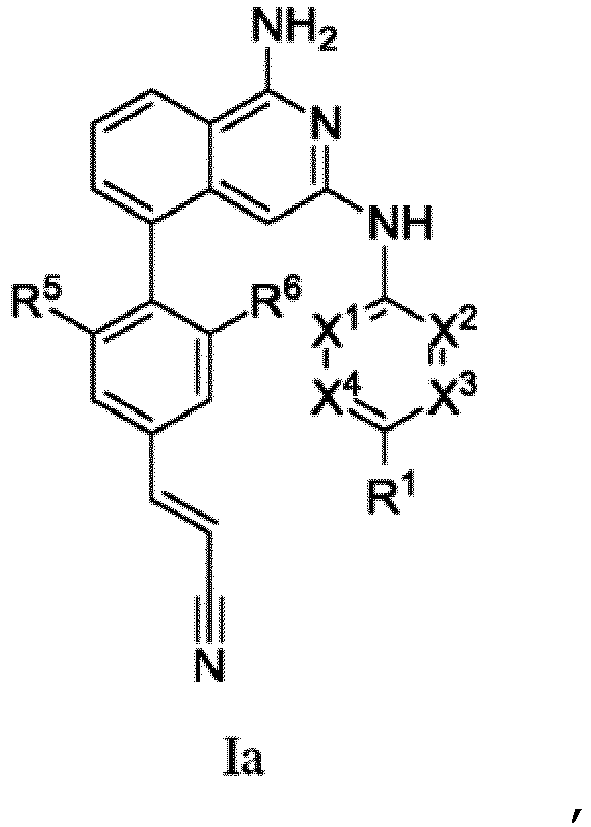

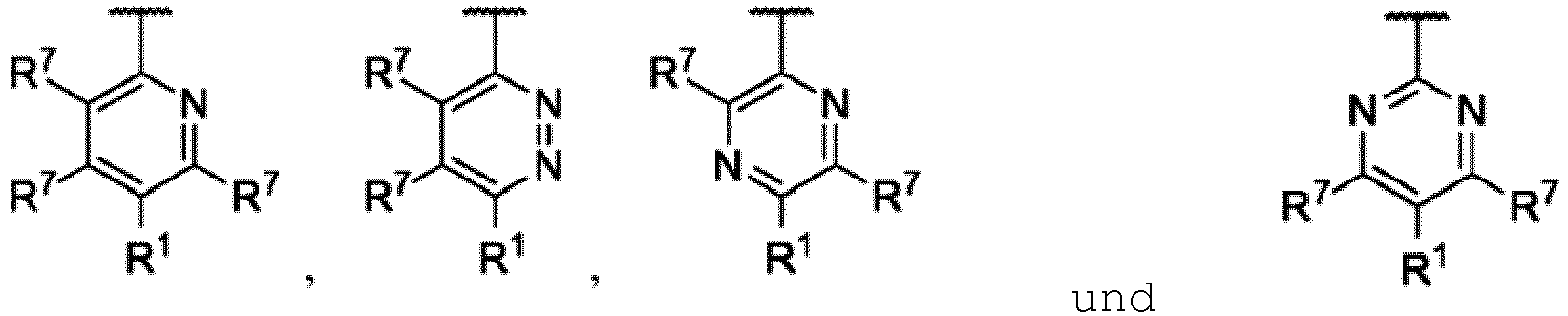


- Verbindung nach einem der Ansprüche 1 bis 4 oder ein Tautomer oder ein pharmazeutisch unbedenkliches Salz davon, wobei R5 und R6 jeweils unabhängig voneinander für Halogen, -O-C1-6-Alkyl oder C1-6-Alkyl stehen, wobei C1-6-Alkyl jeweils gegebenenfalls durch 1, 2, 3, 4 oder 5 gleiche oder verschiedene R8-Gruppen substituiert ist, wobei R5 und R6 gegebenenfalls jeweils unabhängig voneinander für C1-3-Alkyl oder -CH3 stehen.
- Verbindung nach einem der Ansprüche 1 bis 5 oder ein Tautomer oder ein pharmazeutisch unbedenkliches Salz davon, wobei R1 für -H, -CN, -O-C1-6-Alkyl, -CF3, -O-C1-3-Halogenalkyl oder Halogen steht, wobei R1 gegebenenfalls für -CN steht.
- Verbindung nach einem der Ansprüche 1 bis 6 oder ein Tautomer oder ein pharmazeutisch unbedenkliches Salz davon, wobei R7 jeweils unabhängig für -H, Halogen, -0-C1-6-Alkyl oder C1-6-Alkyl steht, wobei C1-6-Alkyl jeweils gegebenenfalls durch 1, 2, 3, 4 oder 5 gleiche oder verschiedene R8-Gruppen substituiert ist, wobei R7 gegebenenfalls jeweils unabhängig für -H oder C1-3-Alkyl steht, wobei R7 gegebenenfalls jeweils für -H steht.
- Verbindung nach einem der Ansprüche 1 bis 7, wobei die Verbindung aus


oder ein Tautomer oder pharmazeutisch unbedenkliches Salz davon. - Pharmazeutische Zusammensetzung, umfassend eine Verbindung nach einem der Ansprüche 1 bis 8 oder ein Tautomer oder pharmazeutisch unbedenkliches Salz davon und einen pharmazeutisch unbedenklichen Träger, gegebenenfalls weiterhin umfassend mindestens einen oder mehrere zusätzliche Therapeutika, wobei das mindestens eine bzw. die mehreren zusätzlichen Therapeutika gegebenenfalls ausgewählt sind aus der Gruppe bestehend aus HIV-Protease-inhibierenden Verbindungen, HIVreverse-Transkriptase-Nichtnukleosid-Inhibitoren, HIVreverse-Transkriptase-Nukleosidinhibitoren, HIVreverse-Transkriptase-Nukleotidinhibitoren, HIV-Integrase-Inhibitoren, gp41-Inhibitoren, CXCR4-Inhibitoren, gp120-Inhibitoren, CCR5-Inhibitoren, Inhibitoren der Kapsidpolymerisation und anderen Arzneimitteln zur Behandlung von HIV und Kombinationen davon.
- Kit, umfassend eine Verbindung nach einem der Ansprüche 1 bis 8 oder ein Tautomer oder pharmazeutisch unbedenkliches Salz davon.
- Erzeugnis, umfassend eine Einheitsdosis einer Verbindung nach einem der Ansprüche 1 bis 8 oder eines Tautomers oder pharmazeutisch unbedenklichen Salzes davon.
- Verbindung nach einem der Ansprüche 1 bis 8 oder ein Tautomer oder pharmazeutisch unbedenkliches Salz davon zur Verwendung in einem Verfahren zur Behandlung oder Prävention einer HIV-Infektion in einem Subjekt, bei dem man dem dessen bedürftigen Subjekt eine Verbindung nach einem der Ansprüche 1 bis 19 oder ein Tautomer oder pharmazeutisch unbedenkliches Salz davon in Kombination mit einer therapeutisch wirksamen Menge eines oder mehrerer zusätzlicher Therapeutika, die ausgewählt sind aus der Gruppe bestehend aus HIV-Protease-inhibierenden Verbindungen, HIV-reverse-Transkriptase-Nichtnukleosid-Inhibitoren, HIV-reverse-Transkriptase-Nukleosidinhibitoren, HIV-reverse-Transkriptase-Nukleotidinhibitoren, HIV-Integrase-Inhibitoren, gp41-Inhibitoren, CXCR4-Inhibitoren, gp120-Inhibitoren, CCR5-Inhibitoren, Inhibitoren der Kapsidpolymerisation und anderen Arzneimitteln zur Behandlung von HIV und Kombinationen davon verabreicht.
- Verbindung nach einem der Ansprüche 1 bis 8 oder ein Tautomer oder pharmazeutisch unbedenkliches Salz davon zur Verwendung in der medizinischen Therapie.
- Verbindung nach einem der Ansprüche 1 bis 8 oder ein Tautomer oder ein pharmazeutisch unbedenkliches Salz davon zur Verwendung bei der Behandlung oder Prävention einer HIV-Virus-Infektion in einem Subjekt.
- Verwendung einer Verbindung nach einem der Ansprüche 1-8 oder ein Tautomer oder ein pharmazeutisch unbedenkliches Salz davon zum Inhibieren der HIV-reverse-Transkriptase in vitro.
Applications Claiming Priority (2)
| Application Number | Priority Date | Filing Date | Title |
|---|---|---|---|
| US201462096769P | 2014-12-24 | 2014-12-24 | |
| PCT/US2015/000310 WO2016105534A1 (en) | 2014-12-24 | 2015-12-23 | Isoquinoline compounds for the treatment of hiv |
Publications (2)
| Publication Number | Publication Date |
|---|---|
| EP3237397A1 EP3237397A1 (de) | 2017-11-01 |
| EP3237397B1 true EP3237397B1 (de) | 2018-11-21 |
Family
ID=55168341
Family Applications (1)
| Application Number | Title | Priority Date | Filing Date |
|---|---|---|---|
| EP15823844.4A Active EP3237397B1 (de) | 2014-12-24 | 2015-12-23 | Isochinolinverbindungen zur behandlung von hiv |
Country Status (17)
| Country | Link |
|---|---|
| US (1) | US9624195B2 (de) |
| EP (1) | EP3237397B1 (de) |
| JP (1) | JP6356919B2 (de) |
| KR (1) | KR101960624B1 (de) |
| CN (1) | CN107428693B (de) |
| AU (1) | AU2015371257B2 (de) |
| BR (1) | BR112017013440A2 (de) |
| CA (1) | CA2972017C (de) |
| EA (1) | EA201791304A1 (de) |
| ES (1) | ES2705709T3 (de) |
| HK (1) | HK1244271B (de) |
| IL (1) | IL253052A0 (de) |
| MX (1) | MX2017008518A (de) |
| NZ (1) | NZ733125A (de) |
| PT (1) | PT3237397T (de) |
| SG (1) | SG11201705184PA (de) |
| WO (1) | WO2016105534A1 (de) |
Families Citing this family (31)
| Publication number | Priority date | Publication date | Assignee | Title |
|---|---|---|---|---|
| TWI770552B (zh) | 2014-12-24 | 2022-07-11 | 美商基利科學股份有限公司 | 喹唑啉化合物 |
| CA2972014C (en) | 2014-12-24 | 2019-09-24 | Gilead Sciences, Inc. | Fused pyrimidine compounds for the treatment of hiv |
| SG11201705184PA (en) | 2014-12-24 | 2017-07-28 | Gilead Sciences Inc | Isoquinoline compounds for the treatment of hiv |
| WO2016106050A1 (en) | 2014-12-26 | 2016-06-30 | Emory University | N4-hydroxycytidine and derivatives and anti-viral uses related thereto |
| TWI808055B (zh) | 2016-05-11 | 2023-07-11 | 美商滬亞生物國際有限公司 | Hdac 抑制劑與 pd-1 抑制劑之組合治療 |
| TWI794171B (zh) | 2016-05-11 | 2023-03-01 | 美商滬亞生物國際有限公司 | Hdac抑制劑與pd-l1抑制劑之組合治療 |
| RU2020116571A (ru) | 2017-12-07 | 2021-11-22 | Эмори Юниверсити | N4-гидроксицитидин и производные и связанные с этим противовирусные применения |
| KR20240151256A (ko) | 2019-03-22 | 2024-10-17 | 길리애드 사이언시즈, 인코포레이티드 | 가교된 트리시클릭 카르바모일피리돈 화합물 및 그의 제약 용도 |
| KR102987126B1 (ko) | 2020-03-20 | 2026-07-07 | 길리애드 사이언시즈, 인코포레이티드 | 4'-c-치환된-2-할로-2'-데옥시아데노신 뉴클레오시드의 프로드러그 및 이의 제조 및 사용 방법 |
| CN116437958A (zh) | 2020-11-11 | 2023-07-14 | 吉利德科学公司 | 鉴定对采用gp120 CD4结合位点导向的抗体的疗法敏感的HIV患者的方法 |
| AU2022403012B2 (en) | 2021-12-03 | 2026-02-12 | Gilead Sciences, Inc. | Therapeutic compounds for hiv virus infection |
| AU2022399845B2 (en) | 2021-12-03 | 2026-03-26 | Gilead Sciences, Inc. | Therapeutic compounds for hiv virus infection |
| FI4440702T3 (fi) | 2021-12-03 | 2025-08-08 | Gilead Sciences Inc | Terapeuttisia yhdisteitä hiv-virusinfektiota varten |
| TWI856796B (zh) | 2022-04-06 | 2024-09-21 | 美商基利科學股份有限公司 | 橋聯三環胺甲醯基吡啶酮化合物及其用途 |
| US20240034724A1 (en) | 2022-07-01 | 2024-02-01 | Gilead Sciences, Inc. | Therapeutic compounds useful for the prophylactic or therapeutic treatment of an hiv virus infection |
| CN119768183A (zh) | 2022-08-26 | 2025-04-04 | 吉利德科学公司 | 用于广泛中和抗体的给药和安排方案 |
| WO2024076915A1 (en) | 2022-10-04 | 2024-04-11 | Gilead Sciences, Inc. | 4'-thionucleoside analogues and their pharmaceutical use |
| EP4698174A1 (de) | 2023-04-19 | 2026-02-25 | Gilead Sciences, Inc. | Dosierungsschema eines kapsidinhibitors |
| TW202448483A (zh) | 2023-05-31 | 2024-12-16 | 美商基利科學股份有限公司 | 用於hiv之治療性化合物 |
| WO2024249573A1 (en) | 2023-05-31 | 2024-12-05 | Gilead Sciences, Inc. | Solid forms of compounds useful in the treatment of hiv |
| CN122295099A (zh) | 2023-07-28 | 2026-06-26 | 吉利德科学公司 | 用于治疗和预防hiv的来那卡帕韦的每周方案 |
| AU2023462614A1 (en) | 2023-08-23 | 2026-03-19 | Gilead Sciences, Inc. | Dosing regimen of hiv capsid inhibitor |
| AU2024360779A1 (en) | 2023-10-11 | 2026-04-16 | Gilead Sciences, Inc. | Bridged tricyclic carbamoylpyridone compounds and uses thereof |
| IL327206A (en) | 2023-10-11 | 2026-05-01 | Gilead Sciences Inc | Bridged tricyclic carbamoylpyridone compounds and their uses |
| KR20260093341A (ko) | 2023-10-11 | 2026-06-19 | 길리애드 사이언시즈, 인코포레이티드 | 가교 트리시클릭 카르바모일피리돈 화합물 및 이의 용도 |
| WO2025137245A1 (en) | 2023-12-22 | 2025-06-26 | Gilead Sciences, Inc. | Solid forms of hiv integrase inhibitors |
| WO2025184447A1 (en) | 2024-03-01 | 2025-09-04 | Gilead Sciences, Inc. | Pharmaceutical compositions comprising hiv integrase inhibitors |
| WO2025184452A1 (en) | 2024-03-01 | 2025-09-04 | Gilead Sciences, Inc. | Solid forms of hiv integrase inhibitors |
| US20250333424A1 (en) | 2024-03-01 | 2025-10-30 | Gilead Sciences, Inc. | Antiviral compounds |
| WO2025260028A1 (en) | 2024-06-14 | 2025-12-18 | Gilead Sciences, Inc. | Pharmaceutical compositions comprising hiv integrase inhibitors |
| WO2026076265A1 (en) | 2024-10-03 | 2026-04-09 | Gilead Sciences, Inc. | Combination therapy comprising bridged tricyclic carbamoylpyridone compounds and p-glycoprotein inhibitors |
Family Cites Families (65)
| Publication number | Priority date | Publication date | Assignee | Title |
|---|---|---|---|---|
| NZ197420A (en) | 1980-07-01 | 1984-04-27 | Ici Australia Ltd | -(quinazolin-(2-or 4-)(oxy,ylthio or amino)phen(oxy or ylthio)alkanoic acid derivatives |
| JPH11209350A (ja) | 1998-01-26 | 1999-08-03 | Eisai Co Ltd | 含窒素複素環誘導体およびその医薬 |
| ES2270867T3 (es) * | 1999-09-23 | 2007-04-16 | Astrazeneca Ab | Compuestos de quinazolina terapeuticos. |
| CA2386955A1 (en) | 1999-11-22 | 2001-05-31 | Warner-Lambert Company | Quinazolines and their use for inhibiting cyclin-dependent kinase enzymes |
| GB0002032D0 (en) | 2000-01-28 | 2000-03-22 | Zeneca Ltd | Chemical compounds |
| CA2417059A1 (en) | 2000-08-02 | 2002-02-07 | Celltech R&D Limited | 3-substituted isoquinolin-1-yl derivatives |
| PL359920A1 (en) | 2000-09-20 | 2004-09-06 | Merck Patent Gmbh | 4-amino-quinazolines |
| GB0217015D0 (en) | 2002-07-23 | 2002-08-28 | Bioacta Ltd | Peptide 4 |
| AU2003255482A1 (en) | 2002-10-02 | 2004-04-23 | Merck Patent Gmbh | Use of 4 amino-quinazolines as anti cancer agents |
| SG182849A1 (en) | 2003-04-25 | 2012-08-30 | Gilead Sciences Inc | Antiviral phosphonate analogs |
| WO2004108711A1 (en) | 2003-06-05 | 2004-12-16 | Astrazeneca Ab | Pyrazinil quinazoline derivatives for use in the treatment of tumours |
| JP2007008816A (ja) | 2003-10-15 | 2007-01-18 | Ube Ind Ltd | 新規イソキノリン誘導体 |
| PT2258376T (pt) | 2004-07-27 | 2019-05-31 | Gilead Sciences Inc | Análogos fosfonatados de compostos inibidores do vih |
| US20070054916A1 (en) | 2004-10-01 | 2007-03-08 | Amgen Inc. | Aryl nitrogen-containing bicyclic compounds and methods of use |
| BRPI0517272A (pt) | 2004-10-29 | 2008-10-07 | Tibotec Pharm Ltd | derivados de pirimidina bicìclicos de inibição de hiv |
| EP1844023A1 (de) | 2004-12-31 | 2007-10-17 | Sk Chemicals Co., Ltd. | Chinazolinderivate zur behandlung und prävention von diabetes und obesitas |
| WO2006099301A2 (en) | 2005-03-10 | 2006-09-21 | The Regents Of The University Of California | Apoptosis inhibitors |
| EP1878727A4 (de) | 2005-04-28 | 2013-11-13 | Kyowa Hakko Kirin Co Ltd | 2-aminochinazolinderivate |
| EP1899322B1 (de) | 2005-06-28 | 2009-09-02 | Sanofi-Aventis | Isochinolinderivate als inhibitoren von rho-kinase |
| PT1910333E (pt) | 2005-07-26 | 2013-08-01 | Sanofi Sa | Derivados de isoquinolona substituída com piperidinilo como inibidores da rho-cinase |
| US7989461B2 (en) | 2005-12-23 | 2011-08-02 | Amgen Inc. | Substituted quinazolinamine compounds for the treatment of cancer |
| CN102351791B (zh) * | 2006-01-27 | 2014-10-29 | 菲布罗根有限公司 | 使低氧诱导因子(hif)稳定的氰基异喹啉化合物 |
| TW200808739A (en) | 2006-04-06 | 2008-02-16 | Novartis Vaccines & Diagnostic | Quinazolines for PDK1 inhibition |
| WO2007125405A2 (en) | 2006-05-01 | 2007-11-08 | Pfizer Products Inc. | Substituted 2-amino-fused heterocyclic compounds |
| EP2079724B1 (de) | 2006-07-20 | 2010-05-26 | Amgen Inc. | Substituierte pyridonverbindungen und anwendungsverfahren |
| US8027888B2 (en) | 2006-08-31 | 2011-09-27 | Experian Interactive Innovation Center, Llc | Online credit card prescreen systems and methods |
| JPWO2008050808A1 (ja) | 2006-10-24 | 2010-02-25 | 協和発酵キリン株式会社 | 2−アミノキナゾリン誘導体 |
| BRPI0720710A2 (pt) | 2006-12-27 | 2014-12-23 | Sanofi Aventis | Derivados de isoquinolona e isoquinolinona substituídos com cicloalquilamina |
| CN101595094B (zh) | 2006-12-27 | 2013-02-20 | 塞诺菲-安万特股份有限公司 | 环烷基胺取代的异喹诺酮衍生物 |
| JP5421783B2 (ja) | 2006-12-27 | 2014-02-19 | サノフイ | Rhoキナーゼ阻害剤としての置換イソキノロン及びイソキノリノン誘導体 |
| US20090004185A1 (en) | 2007-01-11 | 2009-01-01 | Wyeth | Amino-substituted quinazoline derivatives as inhibitors of beta-catenin/tcf-4 pathway and cancer treatment agents |
| AU2008235455A1 (en) | 2007-04-06 | 2008-10-16 | Novartis Ag | 2, 6-naphthyridine derivatives as protein kinase modulators |
| WO2008157500A1 (en) | 2007-06-17 | 2008-12-24 | Kalypsys, Inc. | Aminoquinazoline cannabinoid receptor modulators for treatment of disease |
| US8354429B2 (en) | 2007-11-16 | 2013-01-15 | Gilead Sciences, Inc. | Inhibitors of human immunodeficiency virus replication |
| US20110039845A1 (en) | 2008-04-23 | 2011-02-17 | Kyowa Hakko Kirin Co., Ltd. | 2-aminoquinazoline derivative |
| JP5599783B2 (ja) | 2008-05-30 | 2014-10-01 | アムジエン・インコーポレーテツド | Pi3キナーゼの阻害薬 |
| GB0812969D0 (en) | 2008-07-15 | 2008-08-20 | Sentinel Oncology Ltd | Pharmaceutical compounds |
| WO2010018155A1 (de) | 2008-08-15 | 2010-02-18 | Basf Se | Verfahren zur herstellung von nanoskaligen organischen feststoffpartikeln |
| UY32306A (es) | 2008-12-09 | 2010-07-30 | Gilead Sciences Inc | Derivados de pteridinona y pirimidinodiazepinona y composiciones farmacéuticas que modulan en forma selectiva los receptores tipo toll, métodos y usos |
| CA2748319A1 (en) | 2008-12-29 | 2010-07-08 | Fovea Pharmaceuticals | Substituted quinazoline compounds of general formula (i) and uses thereof for treating disorders relating to tyrosine kinase dysregulation |
| US8338441B2 (en) | 2009-05-15 | 2012-12-25 | Gilead Sciences, Inc. | Inhibitors of human immunodeficiency virus replication |
| WO2011035416A1 (en) | 2009-09-25 | 2011-03-31 | Aegera Therapeutics Inc. | Hsp90 modulating compounds, compositions, methods and uses |
| WO2011139637A1 (en) | 2010-05-03 | 2011-11-10 | Philadelphia Health & Education Corporation | Small-molecule modulators of hiv-1 capsid stability and methods thereof |
| TW201210597A (en) | 2010-06-09 | 2012-03-16 | Gilead Sciences Inc | Inhibitors of hepatitis C virus |
| TW201204723A (en) | 2010-06-22 | 2012-02-01 | Fovea Pharmaceuticals | Heterocyclic compounds, their preparation and their therapeutic application |
| WO2011163610A2 (en) | 2010-06-25 | 2011-12-29 | Rutgers, The State University Of New Jersey | Antimicrobial agents |
| EP2588455B1 (de) | 2010-07-02 | 2018-04-04 | Gilead Sciences, Inc. | 2-quinolinyl-essigsäure derivate als hiv antivirale verbindungen |
| CN103140474A (zh) | 2010-07-02 | 2013-06-05 | 吉里德科学公司 | 治疗aids的萘-2-基乙酸衍生物 |
| WO2012044090A2 (ko) | 2010-09-29 | 2012-04-05 | 크리스탈지노믹스(주) | 단백질 키나제 억제 활성을 갖는 신규한 아미노퀴나졸린 화합물 |
| KR20120038060A (ko) | 2010-10-13 | 2012-04-23 | 롬엔드하스전자재료코리아유한회사 | 신규한 유기 전자재료용 화합물 및 이를 포함하는 유기 전계 발광 소자 |
| CA2817460A1 (en) | 2010-12-17 | 2012-06-21 | F. Hoffmann-La Roche Ag | Substituted 6,6-fused nitrogenous heterocyclic compounds and uses thereof |
| WO2012116237A2 (en) | 2011-02-23 | 2012-08-30 | Intellikine, Llc | Heterocyclic compounds and uses thereof |
| MX2013012266A (es) | 2011-04-21 | 2013-11-22 | Gilead Sciences Inc | Compuestos de benzotiazol y su uso farmaceutico. |
| CA2840095A1 (en) | 2011-07-06 | 2013-01-10 | Gilead Sciences, Inc. | Compounds for the treatment of hiv |
| CN102863512B (zh) | 2011-07-07 | 2016-04-20 | 上海泓博智源医药技术有限公司 | 抗病毒化合物 |
| JP6144698B2 (ja) | 2011-12-20 | 2017-06-07 | ベーリンガー インゲルハイム インターナショナル ゲゼルシャフト ミット ベシュレンクテル ハフツング | Hiv複製の阻害剤としての縮合三環式化合物 |
| ES2571479T3 (es) | 2012-04-20 | 2016-05-25 | Gilead Sciences Inc | Derivados del ácido benzotiazol-6-il acético y su uso para tratar una infección por VIH |
| EA030003B1 (ru) | 2012-12-21 | 2018-06-29 | Джилид Сайэнс, Инк. | Полициклическое карбамоилпиридоновое соединение и его фармацевтическое применение для лечения вич-инфекции |
| HK1214817A1 (en) | 2012-12-27 | 2016-08-05 | Japan Tobacco Inc. | Substituted spiropyrido[1,2-a]pyrazine derivative and medicinal use thereof as hiv integrase inhibitor |
| EP2769723A1 (de) | 2013-02-22 | 2014-08-27 | Ruprecht-Karls-Universität Heidelberg | Verbindungen zur Verwendung bei der Hemmung einer HIV-Kapsid-Anordnung |
| EP2769722A1 (de) | 2013-02-22 | 2014-08-27 | Ruprecht-Karls-Universität Heidelberg | Verbindungen zur Verwendung bei der Hemmung einer HIV-Kapsid-Anordnung |
| US9914709B2 (en) * | 2013-06-21 | 2018-03-13 | Yale University | Compositions and methods of treating HIV-1 infections using same |
| SG11201705184PA (en) | 2014-12-24 | 2017-07-28 | Gilead Sciences Inc | Isoquinoline compounds for the treatment of hiv |
| TWI770552B (zh) | 2014-12-24 | 2022-07-11 | 美商基利科學股份有限公司 | 喹唑啉化合物 |
| CA2972014C (en) | 2014-12-24 | 2019-09-24 | Gilead Sciences, Inc. | Fused pyrimidine compounds for the treatment of hiv |
-
2015
- 2015-12-23 SG SG11201705184PA patent/SG11201705184PA/en unknown
- 2015-12-23 AU AU2015371257A patent/AU2015371257B2/en active Active
- 2015-12-23 US US14/998,131 patent/US9624195B2/en active Active
- 2015-12-23 JP JP2017534246A patent/JP6356919B2/ja active Active
- 2015-12-23 BR BR112017013440-3A patent/BR112017013440A2/pt not_active Application Discontinuation
- 2015-12-23 HK HK18103630.0A patent/HK1244271B/en unknown
- 2015-12-23 KR KR1020177020463A patent/KR101960624B1/ko active Active
- 2015-12-23 PT PT15823844T patent/PT3237397T/pt unknown
- 2015-12-23 ES ES15823844T patent/ES2705709T3/es active Active
- 2015-12-23 WO PCT/US2015/000310 patent/WO2016105534A1/en not_active Ceased
- 2015-12-23 NZ NZ733125A patent/NZ733125A/en not_active IP Right Cessation
- 2015-12-23 CN CN201580075766.9A patent/CN107428693B/zh active Active
- 2015-12-23 EP EP15823844.4A patent/EP3237397B1/de active Active
- 2015-12-23 MX MX2017008518A patent/MX2017008518A/es unknown
- 2015-12-23 CA CA2972017A patent/CA2972017C/en active Active
- 2015-12-23 EA EA201791304A patent/EA201791304A1/ru unknown
-
2017
- 2017-06-21 IL IL253052A patent/IL253052A0/en unknown
Non-Patent Citations (1)
| Title |
|---|
| None * |
Also Published As
| Publication number | Publication date |
|---|---|
| SG11201705184PA (en) | 2017-07-28 |
| BR112017013440A2 (pt) | 2018-01-09 |
| KR101960624B1 (ko) | 2019-03-20 |
| HK1244271B (en) | 2019-11-29 |
| NZ733125A (en) | 2018-06-29 |
| JP6356919B2 (ja) | 2018-07-11 |
| EA201791304A1 (ru) | 2017-12-29 |
| PT3237397T (pt) | 2019-02-08 |
| US20160237062A1 (en) | 2016-08-18 |
| ES2705709T3 (es) | 2019-03-26 |
| CA2972017A1 (en) | 2016-06-30 |
| JP2018500356A (ja) | 2018-01-11 |
| CN107428693B (zh) | 2020-05-29 |
| AU2015371257B2 (en) | 2018-09-06 |
| WO2016105534A1 (en) | 2016-06-30 |
| EP3237397A1 (de) | 2017-11-01 |
| CA2972017C (en) | 2019-06-11 |
| HK1246776A1 (zh) | 2018-09-14 |
| US9624195B2 (en) | 2017-04-18 |
| IL253052A0 (en) | 2017-08-31 |
| MX2017008518A (es) | 2017-10-25 |
| AU2015371257A1 (en) | 2017-07-13 |
| CN107428693A (zh) | 2017-12-01 |
| KR20170096049A (ko) | 2017-08-23 |
Similar Documents
| Publication | Publication Date | Title |
|---|---|---|
| EP3237414B1 (de) | Kondensierte pyrimidinverbindungen zur behandlung von hiv | |
| US9624195B2 (en) | Isoquinoline compounds | |
| EP3237398B1 (de) | Chinazolinderivate zur behandlung von hiv | |
| HK1244271A1 (en) | Isoquinoline compounds for the treatment of hiv | |
| HK1244270A1 (en) | Fused pyrimidine compounds for the tratment of hiv | |
| HK1244001A1 (en) | Quinazoline derivatives used to treat hiv | |
| HK40069165A (en) | Quinazoline derivatives used to treat hiv | |
| HK40011507A (en) | Quinazoline derivatives used to treat hiv | |
| HK40011507B (en) | Quinazoline derivatives used to treat hiv | |
| HK1246776B (en) | Isoquinoline compounds for the treatment of hiv |
Legal Events
| Date | Code | Title | Description |
|---|---|---|---|
| PUAI | Public reference made under article 153(3) epc to a published international application that has entered the european phase |
Free format text: ORIGINAL CODE: 0009012 |
|
| 17P | Request for examination filed |
Effective date: 20170719 |
|
| AK | Designated contracting states |
Kind code of ref document: A1 Designated state(s): AL AT BE BG CH CY CZ DE DK EE ES FI FR GB GR HR HU IE IS IT LI LT LU LV MC MK MT NL NO PL PT RO RS SE SI SK SM TR |
|
| AX | Request for extension of the european patent |
Extension state: BA ME |
|
| GRAP | Despatch of communication of intention to grant a patent |
Free format text: ORIGINAL CODE: EPIDOSNIGR1 |
|
| INTG | Intention to grant announced |
Effective date: 20180522 |
|
| REG | Reference to a national code |
Ref country code: HK Ref legal event code: DE Ref document number: 1244271 Country of ref document: HK |
|
| GRAS | Grant fee paid |
Free format text: ORIGINAL CODE: EPIDOSNIGR3 |
|
| GRAA | (expected) grant |
Free format text: ORIGINAL CODE: 0009210 |
|
| AK | Designated contracting states |
Kind code of ref document: B1 Designated state(s): AL AT BE BG CH CY CZ DE DK EE ES FI FR GB GR HR HU IE IS IT LI LT LU LV MC MK MT NL NO PL PT RO RS SE SI SK SM TR |
|
| AX | Request for extension of the european patent |
Extension state: BA ME |
|
| REG | Reference to a national code |
Ref country code: CH Ref legal event code: EP |
|
| REG | Reference to a national code |
Ref country code: IE Ref legal event code: FG4D |
|
| REG | Reference to a national code |
Ref country code: DE Ref legal event code: R096 Ref document number: 602015020197 Country of ref document: DE |
|
| REG | Reference to a national code |
Ref country code: AT Ref legal event code: REF Ref document number: 1067364 Country of ref document: AT Kind code of ref document: T Effective date: 20181215 |
|
| REG | Reference to a national code |
Ref country code: PT Ref legal event code: SC4A Ref document number: 3237397 Country of ref document: PT Date of ref document: 20190208 Kind code of ref document: T Free format text: AVAILABILITY OF NATIONAL TRANSLATION Effective date: 20190204 |
|
| REG | Reference to a national code |
Ref country code: NL Ref legal event code: FP |
|
| REG | Reference to a national code |
Ref country code: ES Ref legal event code: FG2A Ref document number: 2705709 Country of ref document: ES Kind code of ref document: T3 Effective date: 20190326 |
|
| PG25 | Lapsed in a contracting state [announced via postgrant information from national office to epo] |
Ref country code: FI Free format text: LAPSE BECAUSE OF FAILURE TO SUBMIT A TRANSLATION OF THE DESCRIPTION OR TO PAY THE FEE WITHIN THE PRESCRIBED TIME-LIMIT Effective date: 20181121 Ref country code: HR Free format text: LAPSE BECAUSE OF FAILURE TO SUBMIT A TRANSLATION OF THE DESCRIPTION OR TO PAY THE FEE WITHIN THE PRESCRIBED TIME-LIMIT Effective date: 20181121 Ref country code: LV Free format text: LAPSE BECAUSE OF FAILURE TO SUBMIT A TRANSLATION OF THE DESCRIPTION OR TO PAY THE FEE WITHIN THE PRESCRIBED TIME-LIMIT Effective date: 20181121 Ref country code: IS Free format text: LAPSE BECAUSE OF FAILURE TO SUBMIT A TRANSLATION OF THE DESCRIPTION OR TO PAY THE FEE WITHIN THE PRESCRIBED TIME-LIMIT Effective date: 20190321 Ref country code: LT Free format text: LAPSE BECAUSE OF FAILURE TO SUBMIT A TRANSLATION OF THE DESCRIPTION OR TO PAY THE FEE WITHIN THE PRESCRIBED TIME-LIMIT Effective date: 20181121 Ref country code: NO Free format text: LAPSE BECAUSE OF FAILURE TO SUBMIT A TRANSLATION OF THE DESCRIPTION OR TO PAY THE FEE WITHIN THE PRESCRIBED TIME-LIMIT Effective date: 20190221 Ref country code: BG Free format text: LAPSE BECAUSE OF FAILURE TO SUBMIT A TRANSLATION OF THE DESCRIPTION OR TO PAY THE FEE WITHIN THE PRESCRIBED TIME-LIMIT Effective date: 20190221 |
|
| PGFP | Annual fee paid to national office [announced via postgrant information from national office to epo] |
Ref country code: BE Payment date: 20190327 Year of fee payment: 13 Ref country code: NL Payment date: 20181226 Year of fee payment: 4 |
|
| PG25 | Lapsed in a contracting state [announced via postgrant information from national office to epo] |
Ref country code: RS Free format text: LAPSE BECAUSE OF FAILURE TO SUBMIT A TRANSLATION OF THE DESCRIPTION OR TO PAY THE FEE WITHIN THE PRESCRIBED TIME-LIMIT Effective date: 20181121 Ref country code: GR Free format text: LAPSE BECAUSE OF FAILURE TO SUBMIT A TRANSLATION OF THE DESCRIPTION OR TO PAY THE FEE WITHIN THE PRESCRIBED TIME-LIMIT Effective date: 20190222 Ref country code: SE Free format text: LAPSE BECAUSE OF FAILURE TO SUBMIT A TRANSLATION OF THE DESCRIPTION OR TO PAY THE FEE WITHIN THE PRESCRIBED TIME-LIMIT Effective date: 20181121 Ref country code: AL Free format text: LAPSE BECAUSE OF FAILURE TO SUBMIT A TRANSLATION OF THE DESCRIPTION OR TO PAY THE FEE WITHIN THE PRESCRIBED TIME-LIMIT Effective date: 20181121 |
|
| PG25 | Lapsed in a contracting state [announced via postgrant information from national office to epo] |
Ref country code: CZ Free format text: LAPSE BECAUSE OF FAILURE TO SUBMIT A TRANSLATION OF THE DESCRIPTION OR TO PAY THE FEE WITHIN THE PRESCRIBED TIME-LIMIT Effective date: 20181121 Ref country code: PL Free format text: LAPSE BECAUSE OF FAILURE TO SUBMIT A TRANSLATION OF THE DESCRIPTION OR TO PAY THE FEE WITHIN THE PRESCRIBED TIME-LIMIT Effective date: 20181121 Ref country code: DK Free format text: LAPSE BECAUSE OF FAILURE TO SUBMIT A TRANSLATION OF THE DESCRIPTION OR TO PAY THE FEE WITHIN THE PRESCRIBED TIME-LIMIT Effective date: 20181121 |
|
| PGFP | Annual fee paid to national office [announced via postgrant information from national office to epo] |
Ref country code: PT Payment date: 20190208 Year of fee payment: 4 |
|
| VS25 | Lapsed in a validation state [announced via postgrant information from nat. office to epo] |
Ref country code: MD Free format text: LAPSE BECAUSE OF FAILURE TO SUBMIT A TRANSLATION OF THE DESCRIPTION OR TO PAY THE FEE WITHIN THE PRESCRIBED TIME-LIMIT Effective date: 20181121 |
|
| REG | Reference to a national code |
Ref country code: DE Ref legal event code: R097 Ref document number: 602015020197 Country of ref document: DE |
|
| PG25 | Lapsed in a contracting state [announced via postgrant information from national office to epo] |
Ref country code: SK Free format text: LAPSE BECAUSE OF FAILURE TO SUBMIT A TRANSLATION OF THE DESCRIPTION OR TO PAY THE FEE WITHIN THE PRESCRIBED TIME-LIMIT Effective date: 20181121 Ref country code: MC Free format text: LAPSE BECAUSE OF FAILURE TO SUBMIT A TRANSLATION OF THE DESCRIPTION OR TO PAY THE FEE WITHIN THE PRESCRIBED TIME-LIMIT Effective date: 20181121 Ref country code: RO Free format text: LAPSE BECAUSE OF FAILURE TO SUBMIT A TRANSLATION OF THE DESCRIPTION OR TO PAY THE FEE WITHIN THE PRESCRIBED TIME-LIMIT Effective date: 20181121 Ref country code: LU Free format text: LAPSE BECAUSE OF NON-PAYMENT OF DUE FEES Effective date: 20181223 Ref country code: SM Free format text: LAPSE BECAUSE OF FAILURE TO SUBMIT A TRANSLATION OF THE DESCRIPTION OR TO PAY THE FEE WITHIN THE PRESCRIBED TIME-LIMIT Effective date: 20181121 Ref country code: EE Free format text: LAPSE BECAUSE OF FAILURE TO SUBMIT A TRANSLATION OF THE DESCRIPTION OR TO PAY THE FEE WITHIN THE PRESCRIBED TIME-LIMIT Effective date: 20181121 |
|
| PLBE | No opposition filed within time limit |
Free format text: ORIGINAL CODE: 0009261 |
|
| STAA | Information on the status of an ep patent application or granted ep patent |
Free format text: STATUS: NO OPPOSITION FILED WITHIN TIME LIMIT |
|
| 26N | No opposition filed |
Effective date: 20190822 |
|
| PG25 | Lapsed in a contracting state [announced via postgrant information from national office to epo] |
Ref country code: SI Free format text: LAPSE BECAUSE OF FAILURE TO SUBMIT A TRANSLATION OF THE DESCRIPTION OR TO PAY THE FEE WITHIN THE PRESCRIBED TIME-LIMIT Effective date: 20181121 |
|
| PG25 | Lapsed in a contracting state [announced via postgrant information from national office to epo] |
Ref country code: MT Free format text: LAPSE BECAUSE OF NON-PAYMENT OF DUE FEES Effective date: 20181223 |
|
| REG | Reference to a national code |
Ref country code: AT Ref legal event code: UEP Ref document number: 1067364 Country of ref document: AT Kind code of ref document: T Effective date: 20181121 |
|
| PG25 | Lapsed in a contracting state [announced via postgrant information from national office to epo] |
Ref country code: TR Free format text: LAPSE BECAUSE OF FAILURE TO SUBMIT A TRANSLATION OF THE DESCRIPTION OR TO PAY THE FEE WITHIN THE PRESCRIBED TIME-LIMIT Effective date: 20181121 |
|
| PG25 | Lapsed in a contracting state [announced via postgrant information from national office to epo] |
Ref country code: CY Free format text: LAPSE BECAUSE OF FAILURE TO SUBMIT A TRANSLATION OF THE DESCRIPTION OR TO PAY THE FEE WITHIN THE PRESCRIBED TIME-LIMIT Effective date: 20181121 Ref country code: HU Free format text: LAPSE BECAUSE OF FAILURE TO SUBMIT A TRANSLATION OF THE DESCRIPTION OR TO PAY THE FEE WITHIN THE PRESCRIBED TIME-LIMIT; INVALID AB INITIO Effective date: 20151223 Ref country code: MK Free format text: LAPSE BECAUSE OF NON-PAYMENT OF DUE FEES Effective date: 20181121 |
|
| REG | Reference to a national code |
Ref country code: CH Ref legal event code: PL |
|
| REG | Reference to a national code |
Ref country code: NL Ref legal event code: MM Effective date: 20200101 |
|
| REG | Reference to a national code |
Ref country code: BE Ref legal event code: MM Effective date: 20191231 |
|
| PG25 | Lapsed in a contracting state [announced via postgrant information from national office to epo] |
Ref country code: NL Free format text: LAPSE BECAUSE OF NON-PAYMENT OF DUE FEES Effective date: 20200101 |
|
| PG25 | Lapsed in a contracting state [announced via postgrant information from national office to epo] |
Ref country code: CH Free format text: LAPSE BECAUSE OF NON-PAYMENT OF DUE FEES Effective date: 20191231 Ref country code: LI Free format text: LAPSE BECAUSE OF NON-PAYMENT OF DUE FEES Effective date: 20191231 Ref country code: BE Free format text: LAPSE BECAUSE OF NON-PAYMENT OF DUE FEES Effective date: 20191231 |
|
| PG25 | Lapsed in a contracting state [announced via postgrant information from national office to epo] |
Ref country code: PT Free format text: LAPSE BECAUSE OF NON-PAYMENT OF DUE FEES Effective date: 20201013 |
|
| VS25 | Lapsed in a validation state [announced via postgrant information from nat. office to epo] |
Ref country code: MA Free format text: LAPSE BECAUSE OF FAILURE TO SUBMIT A TRANSLATION OF THE DESCRIPTION OR TO PAY THE FEE WITHIN THE PRESCRIBED TIME-LIMIT Effective date: 20181121 |
|
| REG | Reference to a national code |
Ref country code: AT Ref legal event code: MM01 Ref document number: 1067364 Country of ref document: AT Kind code of ref document: T Effective date: 20201223 |
|
| PG25 | Lapsed in a contracting state [announced via postgrant information from national office to epo] |
Ref country code: AT Free format text: LAPSE BECAUSE OF NON-PAYMENT OF DUE FEES Effective date: 20201223 |
|
| PGFP | Annual fee paid to national office [announced via postgrant information from national office to epo] |
Ref country code: DE Payment date: 20250930 Year of fee payment: 11 |
|
| PGFP | Annual fee paid to national office [announced via postgrant information from national office to epo] |
Ref country code: GB Payment date: 20251001 Year of fee payment: 11 |
|
| PGFP | Annual fee paid to national office [announced via postgrant information from national office to epo] |
Ref country code: IT Payment date: 20251121 Year of fee payment: 11 |
|
| PGFP | Annual fee paid to national office [announced via postgrant information from national office to epo] |
Ref country code: FR Payment date: 20251117 Year of fee payment: 11 |
|
| PGFP | Annual fee paid to national office [announced via postgrant information from national office to epo] |
Ref country code: IE Payment date: 20251001 Year of fee payment: 11 |
|
| PGFP | Annual fee paid to national office [announced via postgrant information from national office to epo] |
Ref country code: ES Payment date: 20260114 Year of fee payment: 11 |