EP3218887B1 - Sequential and coordinated flashing of electronic roadside flares with active energy conservation - Google Patents
Sequential and coordinated flashing of electronic roadside flares with active energy conservation Download PDFInfo
- Publication number
- EP3218887B1 EP3218887B1 EP15858697.4A EP15858697A EP3218887B1 EP 3218887 B1 EP3218887 B1 EP 3218887B1 EP 15858697 A EP15858697 A EP 15858697A EP 3218887 B1 EP3218887 B1 EP 3218887B1
- Authority
- EP
- European Patent Office
- Prior art keywords
- flare
- flares
- light
- electronic
- emitting
- Prior art date
- Legal status (The legal status is an assumption and is not a legal conclusion. Google has not performed a legal analysis and makes no representation as to the accuracy of the status listed.)
- Active
Links
Images










Classifications
-
- F—MECHANICAL ENGINEERING; LIGHTING; HEATING; WEAPONS; BLASTING
- F21—LIGHTING
- F21V—FUNCTIONAL FEATURES OR DETAILS OF LIGHTING DEVICES OR SYSTEMS THEREOF; STRUCTURAL COMBINATIONS OF LIGHTING DEVICES WITH OTHER ARTICLES, NOT OTHERWISE PROVIDED FOR
- F21V23/00—Arrangement of electric circuit elements in or on lighting devices
- F21V23/04—Arrangement of electric circuit elements in or on lighting devices the elements being switches
- F21V23/0407—Arrangement of electric circuit elements in or on lighting devices the elements being switches for flashing
-
- F—MECHANICAL ENGINEERING; LIGHTING; HEATING; WEAPONS; BLASTING
- F21—LIGHTING
- F21L—LIGHTING DEVICES OR SYSTEMS THEREOF, BEING PORTABLE OR SPECIALLY ADAPTED FOR TRANSPORTATION
- F21L2/00—Systems of electric lighting devices
-
- G—PHYSICS
- G08—SIGNALLING
- G08B—SIGNALLING SYSTEMS, e.g. PERSONAL CALLING SYSTEMS; ORDER TELEGRAPHS; ALARM SYSTEMS
- G08B5/00—Visible signalling systems, e.g. visible personal calling systems or remote indication of seats occupied
- G08B5/006—Portable traffic signalling devices
-
- G—PHYSICS
- G08—SIGNALLING
- G08G—TRAFFIC CONTROL SYSTEMS
- G08G1/00—Traffic control systems for road vehicles
- G08G1/09—Arrangements for giving variable traffic instructions
- G08G1/095—Traffic lights
- G08G1/0955—Traffic lights transportable
-
- H—ELECTRICITY
- H05—ELECTRIC TECHNIQUES NOT OTHERWISE PROVIDED FOR
- H05B—ELECTRIC HEATING; ELECTRIC LIGHT SOURCES NOT OTHERWISE PROVIDED FOR; CIRCUIT ARRANGEMENTS FOR ELECTRIC LIGHT SOURCES, IN GENERAL
- H05B45/00—Circuit arrangements for operating light-emitting diodes [LED]
- H05B45/10—Controlling the intensity of the light
-
- H—ELECTRICITY
- H05—ELECTRIC TECHNIQUES NOT OTHERWISE PROVIDED FOR
- H05B—ELECTRIC HEATING; ELECTRIC LIGHT SOURCES NOT OTHERWISE PROVIDED FOR; CIRCUIT ARRANGEMENTS FOR ELECTRIC LIGHT SOURCES, IN GENERAL
- H05B47/00—Circuit arrangements for operating light sources in general, i.e. where the type of light source is not relevant
- H05B47/10—Controlling the light source
- H05B47/105—Controlling the light source in response to determined parameters
-
- H—ELECTRICITY
- H05—ELECTRIC TECHNIQUES NOT OTHERWISE PROVIDED FOR
- H05B—ELECTRIC HEATING; ELECTRIC LIGHT SOURCES NOT OTHERWISE PROVIDED FOR; CIRCUIT ARRANGEMENTS FOR ELECTRIC LIGHT SOURCES, IN GENERAL
- H05B47/00—Circuit arrangements for operating light sources in general, i.e. where the type of light source is not relevant
- H05B47/10—Controlling the light source
- H05B47/175—Controlling the light source by remote control
- H05B47/19—Controlling the light source by remote control via wireless transmission
-
- H—ELECTRICITY
- H05—ELECTRIC TECHNIQUES NOT OTHERWISE PROVIDED FOR
- H05B—ELECTRIC HEATING; ELECTRIC LIGHT SOURCES NOT OTHERWISE PROVIDED FOR; CIRCUIT ARRANGEMENTS FOR ELECTRIC LIGHT SOURCES, IN GENERAL
- H05B47/00—Circuit arrangements for operating light sources in general, i.e. where the type of light source is not relevant
- H05B47/10—Controlling the light source
- H05B47/175—Controlling the light source by remote control
- H05B47/198—Grouping of control procedures or address assignation to light sources
- H05B47/1985—Creation of lighting zones or scenes
-
- F—MECHANICAL ENGINEERING; LIGHTING; HEATING; WEAPONS; BLASTING
- F21—LIGHTING
- F21V—FUNCTIONAL FEATURES OR DETAILS OF LIGHTING DEVICES OR SYSTEMS THEREOF; STRUCTURAL COMBINATIONS OF LIGHTING DEVICES WITH OTHER ARTICLES, NOT OTHERWISE PROVIDED FOR
- F21V23/00—Arrangement of electric circuit elements in or on lighting devices
- F21V23/04—Arrangement of electric circuit elements in or on lighting devices the elements being switches
- F21V23/0442—Arrangement of electric circuit elements in or on lighting devices the elements being switches activated by means of a sensor, e.g. motion or photodetectors
- F21V23/0471—Arrangement of electric circuit elements in or on lighting devices the elements being switches activated by means of a sensor, e.g. motion or photodetectors the sensor detecting the proximity, the presence or the movement of an object or a person
-
- F—MECHANICAL ENGINEERING; LIGHTING; HEATING; WEAPONS; BLASTING
- F21—LIGHTING
- F21V—FUNCTIONAL FEATURES OR DETAILS OF LIGHTING DEVICES OR SYSTEMS THEREOF; STRUCTURAL COMBINATIONS OF LIGHTING DEVICES WITH OTHER ARTICLES, NOT OTHERWISE PROVIDED FOR
- F21V23/00—Arrangement of electric circuit elements in or on lighting devices
- F21V23/04—Arrangement of electric circuit elements in or on lighting devices the elements being switches
- F21V23/0442—Arrangement of electric circuit elements in or on lighting devices the elements being switches activated by means of a sensor, e.g. motion or photodetectors
- F21V23/0492—Arrangement of electric circuit elements in or on lighting devices the elements being switches activated by means of a sensor, e.g. motion or photodetectors the sensor detecting a change in orientation, a movement or an acceleration of the lighting device, e.g. a tilt switch
-
- F—MECHANICAL ENGINEERING; LIGHTING; HEATING; WEAPONS; BLASTING
- F21—LIGHTING
- F21V—FUNCTIONAL FEATURES OR DETAILS OF LIGHTING DEVICES OR SYSTEMS THEREOF; STRUCTURAL COMBINATIONS OF LIGHTING DEVICES WITH OTHER ARTICLES, NOT OTHERWISE PROVIDED FOR
- F21V33/00—Structural combinations of lighting devices with other articles, not otherwise provided for
- F21V33/0064—Health, life-saving or fire-fighting equipment
- F21V33/0076—Safety or security signalisation, e.g. smoke or burglar alarms, earthquake detectors; Self-defence devices
-
- F—MECHANICAL ENGINEERING; LIGHTING; HEATING; WEAPONS; BLASTING
- F21—LIGHTING
- F21W—INDEXING SCHEME ASSOCIATED WITH SUBCLASSES F21K, F21L, F21S and F21V, RELATING TO USES OR APPLICATIONS OF LIGHTING DEVICES OR SYSTEMS
- F21W2111/00—Use or application of lighting devices or systems for signalling, marking or indicating, not provided for in codes F21W2102/00 – F21W2107/00
- F21W2111/02—Use or application of lighting devices or systems for signalling, marking or indicating, not provided for in codes F21W2102/00 – F21W2107/00 for roads, paths or the like
-
- F—MECHANICAL ENGINEERING; LIGHTING; HEATING; WEAPONS; BLASTING
- F21—LIGHTING
- F21Y—INDEXING SCHEME ASSOCIATED WITH SUBCLASSES F21K, F21L, F21S and F21V, RELATING TO THE FORM OR THE KIND OF THE LIGHT SOURCES OR OF THE COLOUR OF THE LIGHT EMITTED
- F21Y2115/00—Light-generating elements of semiconductor light sources
- F21Y2115/10—Light-emitting diodes [LED]
-
- H—ELECTRICITY
- H05—ELECTRIC TECHNIQUES NOT OTHERWISE PROVIDED FOR
- H05B—ELECTRIC HEATING; ELECTRIC LIGHT SOURCES NOT OTHERWISE PROVIDED FOR; CIRCUIT ARRANGEMENTS FOR ELECTRIC LIGHT SOURCES, IN GENERAL
- H05B45/00—Circuit arrangements for operating light-emitting diodes [LED]
- H05B45/10—Controlling the intensity of the light
- H05B45/12—Controlling the intensity of the light using optical feedback
-
- H—ELECTRICITY
- H05—ELECTRIC TECHNIQUES NOT OTHERWISE PROVIDED FOR
- H05B—ELECTRIC HEATING; ELECTRIC LIGHT SOURCES NOT OTHERWISE PROVIDED FOR; CIRCUIT ARRANGEMENTS FOR ELECTRIC LIGHT SOURCES, IN GENERAL
- H05B47/00—Circuit arrangements for operating light sources in general, i.e. where the type of light source is not relevant
- H05B47/10—Controlling the light source
- H05B47/155—Coordinated control of two or more light sources
-
- H—ELECTRICITY
- H05—ELECTRIC TECHNIQUES NOT OTHERWISE PROVIDED FOR
- H05B—ELECTRIC HEATING; ELECTRIC LIGHT SOURCES NOT OTHERWISE PROVIDED FOR; CIRCUIT ARRANGEMENTS FOR ELECTRIC LIGHT SOURCES, IN GENERAL
- H05B47/00—Circuit arrangements for operating light sources in general, i.e. where the type of light source is not relevant
- H05B47/10—Controlling the light source
- H05B47/175—Controlling the light source by remote control
- H05B47/19—Controlling the light source by remote control via wireless transmission
- H05B47/195—Controlling the light source by remote control via wireless transmission the transmission using visible or infrared light
-
- H—ELECTRICITY
- H05—ELECTRIC TECHNIQUES NOT OTHERWISE PROVIDED FOR
- H05B—ELECTRIC HEATING; ELECTRIC LIGHT SOURCES NOT OTHERWISE PROVIDED FOR; CIRCUIT ARRANGEMENTS FOR ELECTRIC LIGHT SOURCES, IN GENERAL
- H05B47/00—Circuit arrangements for operating light sources in general, i.e. where the type of light source is not relevant
- H05B47/10—Controlling the light source
- H05B47/175—Controlling the light source by remote control
- H05B47/196—Controlling the light source by remote control characterised by user interface arrangements
Definitions
- the present invention relates generally to the fields of electronics and traffic engineering and more particularly to flare devices and methods for marking hazards or intended routes of travel on roadways and the like.
- Flashing orange traffic safety lamps are commonplace along highways and waterways. Passive cones are often used to mark the boundaries or edges of roadways. They are used during road construction, traffic detours, and for emergency to route traffic through unfamiliar redirection. These passive cones are typically used over an entire 24-hour period, which includes darkness and may include poor visibility. Always on, or blinking, lights or reflectors are often used to define the border of a road that has temporarily changed and no longer follows the path that drivers expect or have become use to seeing.
- Traffic is often controlled using large, trailer-like signs with electric generators or photocells that are towed behind a vehicle and left at the detour site. These signs create a large arrow that directs traffic, but the arrow does not guide the driver around a curve or through unfamiliar road courses.
- nautical traffic entering a harbor is guided via buoys and shore- based lights, which when set upon the backdrop of terrestrial lighting, can be confusing.
- emergency or temporary aircraft runways for military, civilian, police, and Coast Guard air equipment, both fixed wing and rotary wing lack proper sequenced lights that designate direction and location of the runway.
- This invention provides a system that is both low in cost and easy to implement, one that can be deployed quickly when necessary to aid aviators when landing or taking off on open fields or highways.
- WO2014130842 (SELEVAN JAMES R) describes systems and methods for marking a route, path or boundary.
- Signaling modules are positioned in an array to mark the route, path or boundary.
- the modules undergo radiofrequency communication with one another and emit signals in sequence from a first-positioned module of the array to a last-positioned module of the array.
- a selected one or more of the modules is/are programmed or adapted to emit a signal that is distinguishable from the signals emitted by the other modules.
- the present invention provides new electronic flare devices and their methods of use.
- an electronic light emitting flare as set out in appended claims 1 to 6, a system as set out in appended claims 7 to 13 and related methods of use as set out in appended claims 14 and 15 wherein the flare generally comprises; a housing comprising a top wall, bottom wall and at least one side wall, wherein at least a portion of the side wall is translucent and at least a portion of the top wall is translucent; a plurality of light emitters positioned within the housing; a power source; and electronic circuitry connected to the power source and light emitters to drive at least some of the light emitters to emit flashes of light directed through said at least one all or translucent portions of the housing side wall; and alternately drive at least some of the light emitters to emit flashes of light directed through said translucent portion of the top wall; and switching circuitry to switch back and forth between a) a side emitting mode wherein light emitters emit flashes of light directed through said at least one translucent portion of the side wall and b) a top emitting mode wherein
- the electronic circuitry and/or other components of the flare may be adapted to facilitate various novel features such as self-synchronization, remote control, motion-actuated or percussion-actuated features, dynamic shifting between side-emitting and top-emitting light emitters in response to changes in positional orientation (e.g., vertical vs. horizontal) of the flare; overrides to cause continued emission from side-emitting or top-emitting light emitters irrespective of changes in the flare's positional orientation; use of the flare(s) for illumination of traffic cones and other hazard marking or traffic safety objects or devices, group on/off features, frequency specificity to facilitate use of separate groups of flares in proximity to one another, selection and changing of flashing patterns, etc.
- positional orientation e.g., vertical vs. horizontal
- use of the flare(s) for illumination of traffic cones and other hazard marking or traffic safety objects or devices, group on/off features, frequency specificity to facilitate use of separate groups of flares in proximity to one another, selection and changing of flash
- Wireless coordination of flashing between flares e.g., causing flares in a row or array to flash in consecutive sequence or other desired pattern
- various different modalities such as radiofrequency transmission, light, or sound waves.
- the flare can analyze sensors to establish a communication link.
- the media through which the information is transferred can be light, sound, or radio waves.
- the microcontroller will receive information from a radio receiver, light sensor, or sound sensor. Once the information about number and position of other sensors is received the microcontroller can then establish its position in the sequence and broadcast a message that tells other flares where it is in the string, its relative distance, temperature, elevation, etc.
- flare devices of the present invention may utilize flocking protocols to facilitate the desired inter-flare communication and function.
- flocking protocols are described in copending United States Patent Application Serial No. 14/186,582 filed February 21, 2014 .
- some embodiments of flare devices of the present invention may utilize mesh networks to facilitate the desired inter-flare communication and function. Examples of such mesh networks are described in United States Patent No. 8,154,424 issued April 10, 2012 as well as United States Patent Application Publications US2013/0293398 published November 17, 2013 and US2013/0271294 published October 17, 2013 .
- Light emitted from one flare can represent a message that is received by another flare.
- This message could be as simple as a "trigger" event to tell the second flare to turn on, or it could be more complex.
- presence of light from one flare would trigger an event in another flare.
- This second flare might delay, for example, 100 milliseconds and then flash. In the ideal setting this could represent a simple method of providing a sequential pattern of flashes.
- flare number 4 for example, would receive light from flare number 1 and flash at an inappropriate interval.
- the sequential flashing of flares cannot rely upon the simple trigger of a preceding flare.
- the message to other flares can be "embedded" within the light signal in a Pulse Width Modulated” scheme.
- a 40 or 100 millisecond (as an example) steady flash of light to the human observer can actually represent a 2, 4, 8, 16, 32, 64 bit or greater word length containing information that would provide coordinating information.
- the LED and associated drive electronics can respond to signals and voltages that are nanoseconds in length.
- An 80 millisecond flash of light (appearing as a single flash to the human observer) can actually be made up of a series of thousands of rapid flashes "modulated" on and off so quickly that the human eye cannot discern the pulsed nature of the flash.
- the orange or red or blue or other color LED flashing to alert drivers is also the light source to send the message.
- the photodetector could be chosen or "tuned” to respond to only one color.
- the presence of the digital word modulated in the warning flash eliminates the need to narrow the sensitivity spectrum of light. Any light sensed by the photo-detector will represent "noise", but only light modulated with the appropriate digital code will result in the microcontroller responding correctly.
- the physics of the Light Emitting Diode that emits the light could be used to an advantage by also being used as a light sensor.
- the LED can be used as a light sensor to pick up transmitted light from other flares. This would eliminate or mitigate the need for additional photo-detectors.
- each of these could be used as a photo-detector thereby 'looking" in a 380 degree circle.
- the orientation of the flare on the roadway is irrelevant; the operator can toss the flares onto the roadway without regard for whether it is pointed in a particular direction to pick up the light beam from an adjacent flare.
- light of a specific frequency or spectrum could be used to transmit information.
- light in the infra-red or ultra-violet frequency range could be used.
- Photo-detectors sensitive to only these frequencies would filter out "noise" present on the roadway at night.
- Sunlight white light
- the information content Pulse Width Modulation
- Light intensity in addition to color and modulation adds additional information to the microcontroller.
- the "brightness" or intensity of light emanating from a flare can aid in determining sequence.
- the relative intensity of the received light could "disambiguate” light emitted from two or more flares. If the lights are physically placed in a linear "string" or path and flare number 5 senses light from flare number 4 and number 3, it could identify which is which by measuring the intensity of the light received. It would then be able to identify number 3 (weaker flash therefore farther away) and number 4.
- Radio Transmission - Light represents an inexpensive means of transmitting information between flares.
- the transmission of light is inefficient when compared to radio transmission.
- Light can be blocked by opaque objects that might find their way between the flares (cars, people, cones, etc.).
- the range of transmission is limited due to energy requirements.
- Radio transmission provides a solution to these limitations. Using radio waves a flare could send digital or analog signals to other flares that identify its sequence in the pattern much in the same way as light could be used.
- Sound transmission - Ultrasonic or other frequency sound can be used as a transmission media.
- Modulated sound waves could carry information defining flare number and location relative to other flares.
- sound waves diminish in strength in a relative and predictable way, the strength of the sound "heard" from two different flares at different distances would aid the microcontroller firmware in establishing which is farther away and what the sequence number is.
- the frequency could be filtered to eliminate noise produced by vehicles on the roadway.
- the flares can be networked using a "mesh" network where information is transmitted between flares, up and down a group, without need for a master flare or slave flare, and where all communication is internal to the group of flares. No external signal is required, but could be used to remotely control the group of flares. If one flare is turned on and it is in "range” of communication with only one flare, this second flare would then send the "state" to any other flares within range. Similarly, the remote control unit needs to be in range of only one flare for the command to be distributed to all of the flares.
- the flares can be mounted in a vertical position (as opposed to horizontal on the road surface). This vertical orientation might be used when magnetically attaching the flare to the tail-gate panel of a truck or the side of a vehicle.
- This vertical orientation might be used when magnetically attaching the flare to the tail-gate panel of a truck or the side of a vehicle.
- the flare is designed for light output in the horizontal plane (on the road surface), when placed vertically much of the light energy would be directed towards the sky, ground, and left and right.
- a sensor could detect the "tilt" using an accelerometer, gyroscope, MEMS device, mechanical ball tilt sensor, thermal tilt sensor, light detecting tilt sensor, etc. and send this information regarding orientation angle to the microcontroller.
- the microcontroller "aware" of the angle of tilt, would choose which LEDs to illuminate (for example, the side LEDs when horizontal and “top” LEDs when mounted vertically on its side or magnetically attached to the tail gate of a vehicle).
- This dynamic choice of LED to illuminate based upon angle of tilt maximizes light output in the direction of approaching traffic and minimizes unnecessary battery consumption associated with lighting LEDs not visible to oncoming traffic.
- the side lights When placed in the vertical plane the side lights could be turned off and LEDs located in the top of the flare directed towards on-coming traffic could be turned on.
- Motion-Actuated or Percussion-Actuated On/Off Feature In some instances, such as during nighttime operation in areas which are not well lit, it may be difficult to see standard buttons on the surface of an enclosure. Rather than using a discrete on/off switch such as a capacitance button or other specifically-located actuator to cause the flare to begin emitting light (i.e., "turn on") or cease emitting light (i.e., "turn off'), the flares of the present invention may optionally be equipped with an on/off switch which is activated by a motion or percussion sensor, such as an accelerometer, tilt sensor, gyroscope or MEMS (micro electrical mechanical system) set to detect a particular movement of, or percussion (e.g., tapping) on the flare.
- a motion or percussion sensor such as an accelerometer, tilt sensor, gyroscope or MEMS (micro electrical mechanical system) set to detect a particular movement of, or percussion (e.g., tapping) on the flare.
- the electronic circuitry of the flare may be adapted so that rapid partial rotation of the flare in a first (e.g., clockwise) direction causes the flare to turn on and subsequent rapid partial rotation of the flare in the opposite (e.g., counterclockwise) direction causes the flare to turn off.
- on and off might be triggered by turning the flare upside down, or via some other motion or percussion.
- percussing e.g., tapping or rapping
- the flare with the palm of the operator's hand could be used as a trigger to turn the flare off or on, with the sensor "tuned" to exclude normal vibration to be expected during transport and storage.
- the circuitry may be adapted to recognize a specific number of consecutive percussions (e.g., three consecutive taps or raps) as the signal to cause the flare to initially turn on or subsequently turn of.
- a 3-axis accelerometer may be used to detect acceleration in the X, Y, and Z axis. For example, simply turning the flare over three times within a defined period (e.g., 3 seconds) would result in the Z-axis experiencing a swing from +9.8 meters per second per second (+1G) to -1G.
- the microcontroller would receive this information from the accelerometer via an interrupt signal.
- This preprogrammed "gesture”, stored in the accelerometer, would generate an interrupt from the accelerometer, and this interrupt would “wake” the microcontroller from a low-power "sleep” mode. Hence, the microcontroller can be in a low-power state (sleep) while the device is off.
- the accelerometer has sufficient intelligence to recognize the preprogrammed gesture and wake the microcontroller from its low power mode.
- the preprogrammed gesture must utilize the X, Y, and Z axis to insure proper turn-on but avoid false startup. When horizontal, the X and Y axis experience 0 (zero) acceleration. Only the Z axis is experiencing +1G. However, if the surface is bumped up and down the accelerometer would experience acceleration on the Z-axis only and this could mimic turning the flare over to the other side. Thus, the flare would turn on if three bumps of sufficient magnitude occurred within the allotted time period.
- X- and Y-axis information is introduced.
- a simple bounce of the horizontally-oriented flare in the trunk of the car would be interpreted as turning over of the flare (Z-axis would transition from +1G to -1G). If X- and Y-axis changes were expected as well, then vertical displacement alone would not falsely turn on the flare.
- X- or Y-axis must transition from 0G to +1G (or -1G) to 0G.
- Group On/Off Feature Some embodiments of the invention may be equipped with a group on/off feature whereby turning off any one of the flares would turn off all of the flares in the group. Using radio, sound, light, etc., to transmit information between flares one could send a message from any one flare to the remainder of flares within proximity. This message could be used to turn off all of the flares by simply turning off any single flare.
- the ability to turn all of the flares off by turning off a signal flare allows the operator to retrieve the flares from the roadside while they are still flashing. This would reduce the likelihood that a flare would be inadvertently left behind on the dark roadway.
- the flashing group of flares would represent a warning beacon to oncoming traffic that the operator is on the side of the road.
- the operator could enter the safety of their vehicle or exit the roadway and turn off any one flare. The entire group of flares would extinguish. The operator does not have to turn off all of the flares individually.
- Elevation of the LED above the road surface may vary as a function of position in the string.
- the height of the LEDs providing illumination could vary.
- the height above the road surface of number 1 could be 3 inches, with each flare progressing in height by 6 inches.
- the last flare in the string might be 5 feet above the road surface (on a flexible stalk). This would add additional perspective for a driver from a distance, offering linear as well as elevation cues to the hazard ahead.
- the flare With LEDs aimed in specific directions, including vertically towards the sky, the flare is designed to purposely illuminate the inside of a container, barrel, cone, or delineator. When placed on the road surface under a traffic cone, barrel, delineator, etc., light emanating from the flare in the vertical direction efficiently illuminates the container. However, light aimed vertically when the flare is on the road surface and not placed under a container leads to inefficiency of energy use as this light is directed skyward. Dynamic switching of side versus top (vertical) LEDs is accomplished using a tilt sensor (accelerometer) and the information the sensor provides to the microcontroller. It is necessary, when placed under a container, to override the tilt sensor. The user must be able to "lock" the choice of LEDs (top or side) for a particular deployment. This effectively disables dynamic, tilt-sensing microcontroller control of the LED choice.
- a tilt sensor accelerelerometer
- the "locking" feature can be activated by pressing two buttons simultaneously, or by pressing and holding one button for a prolonged switch closure (2 seconds or more, for example).
- a single tap of a button could lock the orientation of LED illumination, or step through choices such as a single press turns on the side LEDs, a second press turns on the top LEDs, a third press turns on both side and top LEDs, and the cycle repeats itself with additional presses of the button.
- Motion Actuated LED Switching dynamic switching of LED orientation using a tilt sensor or accelerometer, locking of LED orientation using various user interface button presses, all can be implemented in either a standalone flare or one communicating with its neighbors.
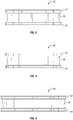
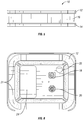
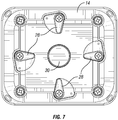
- Figures 1 through 7 show one a non-limiting example of a flare 10 of the present invention.
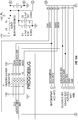
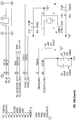
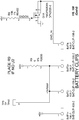
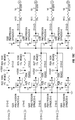
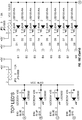
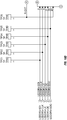
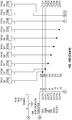
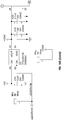
- Figures 10A through 10D are electrical circuit diagrams for this embodiment of the flare10 and Appendix A sets for a component list that corresponds to the electrical diagrams of Figures 10A through 10D .
- the flare 10 of this example comprises a top wall 12, bottom wall 14 and side wall 16.
- the side wall 16 is translucent.
- translucent windows 23a, 23b, 23c and 23d are formed in the top wall 12.
- the entire or substantially all of the top wall 12 may be translucent.
- the bottom wall 14 may be entirely or substantially non-translucent or devoid of any locations where light is directed from or through the bottom wall.
- the flare 10 Defined within the walls of the flare 10 is an interior area which houses a battery, electronic circuitry and a plurality of LEDs. Some of the LEDs (i.e., side-emitting LEDs) are positioned to direct emitted light through the translucent side wall 16 so that light is projected around (e.g., 360 degrees) the flare 10.
- Figure 9 shows an example of how the side-emitting LEDs may be positioned to cast their light through the side wall 16 such that the light will be visible 380 degrees around the flare 10.
- the side-emitting LEDs may be slightly angled upwardly such that the emitted light will rise from the flare 10 when the flare is positioned bottom-side-down on the ground or roadway surface. For example, if the side-emitting LEDs are angled 5 degrees above horizontal, light from the side-emitting LED's will be clearly visible to motorists approaching from a distance of about 120 feet.
- LEDs are positioned to direct light through the translucent windows 23a, 23b, 23c, 23d in the top wall 12 of the flare 10.
- On the top wall 12 of the flare 10 are a control button 18, a power button 20, a small green indicator LED 22a and a small red indicator LED 22b.
- the control button 18 is also referred to herein as the pi ( ⁇ ) button.
- the bottom wall 14 may be fully, substantially or at least partially opaque or non- translucent.
- a portion of the bottom wall 14 comprises a battery compartment cover 30 which is held in place by latches 28. When it is desired to access or change the battery or batteries, the latches 28 may be opened and the battery compartment cover 30 removed.
- four (4) AA cell batteries are positioned inside the device under the battery compartment cover 30.
- Other alternative power sources including solar collectors and/or rechargeable batteries, may be used instead of the standard AA cell batteries of this embodiment.
- the power button 20 is briefly depressed or tapped. Once the power button is pressed a steady green LED 22a on the top wall 12 will illuminate. This indicates that the flare and radio are powering up.
- the first flare 10 will take approximately 4 seconds to turn on. At the end of the 4 seconds the green LED will disappear and, if the flare 10 is positioned horizontally, 12 side-emitting LEDs will emit flashing light directed through the side wall 16. Alternatively, if the flare is positioned vertically, 4 bright top-emitting LEDs will emit flashing light through the top wall windows 23a-23d.
- the operator may briefly depress (e.g., tap) power button 20 of another flare in the group. Similar to the first flare 10, once the power button 20 is pressed a steady green LED will illuminate on the top wall 12 of the second flare 10, indicating that the second flare is powering up. This second flare 10 will take about 1 second to turn on. At the end of the 1 second period the green LED will disappear and the side-emitting LEDs or top-emitting LEDs of the second flare 10 will begin to flash depending on the orientation (i.e., vertical or horizontal) of the second flare 10.
- the 2nd flare 10 will automatically identify itself as the second flare in the sequence and will begin to emit flashes of light in sequence (i.e., a specific time after) flashes emitted from the first flare 10. This set up procedure is then repeated for the remaining flares 10 in the group.
- Each preceding flare 10 must be flashing (and this transmitting its sequence number) before turning on the next flare 10.
- each flare 10 may initially be held above the ground in line-of-site of the preceding flare when turning on, thereby ensuring that the flare 10 will receive the radio signal from the preceding flare without attenuation of the signal due to proximity to the ground.
- All of the flares in the group may be picked up all the flares and placed in a carry case while they are still flashing. This will help to prevent the user from inadvertently leaving inoperative flares on the side of the road.
- the carrying case may be constructed such that the flares flashing inside of the case will cause the case to illuminate thereby enhancing the ability of oncoming vehicle drivers to see and avoid a user who is carrying the case.
- the user may then hold down the power button 20 on any one of the flares 10 in the case, thereby causing all of the flares 10 in the case to power off.
- any communication between flares to pass along flash pattern, top versus side LED choice (for battery saving), on/off, sequence pattern (one flare marching, two flares marching, fast march, slow march, etc.) can be mimicked by a remote control device, Smart Phone app, cellular communication, infra-red controller, etc.
- the operator can turn on and off the entire group of flares, control the operation, direction of flash, battery saving, flash pattern, amongst other features, from a distance away from moving vehicles and in the safety of their vehicle. They need not be close to flare number 1, as any flare in the mesh network or "flock” passes all commands to all flares in the network or "flock". The operator could be close to number 20 of 30 flares and control the entire network.
- the ability to inhibit the LED flashing while maintaining radio communication is a key feature in battery savings. Law enforcement, for example, will set up an alcohol check point using flares to alert and guide approaching vehicles. They typically will set up the DUI check point several hours prior to actual beginning surveillance. If the flares were flashing during this entire period and the 8 hours of the active surveillance battery consumption would be excessive. However, with a remote control unit the operator could set up the flare pattern, test that they are flashing as desired, and then "inhibit" the flashing of the LEDs to save battery.
- the continuing radio communication maintains sequence numbers, patterns, direction of flashing LEDs, etc., and occurs during milliseconds each second and consumes little power. Hours later when the operator wishes to commence inspection of vehicles, she can simply tap a button on the remote control to turn on the flashing LEDs. It is the LEDs that consume the majority of battery capacity and this capability mitigates this cause of battery drain.
- the flare 10 may be equipped with an accelerometer or gravity sensor, as discussed above and the accelerometer or gravity sensor may be operative to sense the current orientation (i.e., horizontal or vertical) of the flare 10 and to cause either the top-emitting or side-emitting LEDs to emit light, depending on which orientation is sensed.
- the current orientation i.e., horizontal or vertical
- the accelerometer or gravity sensor may be operative to sense the current orientation (i.e., horizontal or vertical) of the flare 10 and to cause either the top-emitting or side-emitting LEDs to emit light, depending on which orientation is sensed.
- the flare 10 When the flare 10 is in the horizontal orientation (lying flat on the ground) the 12 side-emitting LEDs will emit flashes of light through the translucent side wall 16.
- the flare 10 is in the vertical orientation (e.g., when magnetically attached to the back of a truck tailgate) the 4 top-emitting LEDs will emit flashes of light through the top wall windows 23a-23d.
- the flare 10 will default to a "dynamic positioning" mode wherein the accelerometer or gravity sensor will cause the flare 10 to automatically switch back and forth between side emitting mode and top emitting mode as the flare 10 undergoes changes between horizontal and vertical orientation.
- the flare 10 is equipped with the above-described locking feature which overrides the default dynamic positioning mode of the flare 10.
- Use of this locking feature allows the flare 10 to be locked in top-emitting mode so that it will continue to emit flashes of light directed through the top wall windows 23a-23d even when the flare 10 is placed in a horizontal orientation.
- the pi ( ⁇ ) button 18 is pressed.
- the green indicator LED 22a will flash once to indicate that the flare is locked in the top emitting mode.
- Pressing the pi ( ⁇ ) button 18 a second time will cause the flare 10 to transition to and become locked in side-emitting mode, wherein the side-emitting LEDs emit light through the side wall 16 and the brighter top-emitting LEDs are turned off.
- the green indicator LED 22a will then flash twice to indicate that the flare 10 is now locked in side-emitting mode.
- Pressing the pi ( ⁇ ) button 18 a third time will disengage the locking feature and restore the flare 10 to its default dynamic LED orientation mode.
- the green indicator LED 22a will flash three times to indicate the flare is now in the default state.
- Patterns Once a plurality of the flares 10 are operating, the user has the option of choosing between 5 flashing patterns. To change patterns, the operator simply taps (does not hold) the power button 20 on one of the flares 10 in the group. This will cause the flare to cycle through a series of available flashing patters, e.g., Pattern 1 (default), Pattern 2, Pattern 3, Pattern 4, Pattern 5, and back to Pattern 1. In this example, the default Pattern 1 is a bright, slow and smooth pattern. Pattern 5 is a fast pattern, Pattern 2 is two flares 10 flashing as a pair and marching down the string of pared flares, and Pattern 3 is two flares flashing separated by a non-flashing flare, thereby spacing the flash out. Pattern 4 is a tail-off flash pattern. Once one of the flares 10 in the group is changed to a non-default flash pattern, all of the remaining flares 10 in the group will then self-synchronize to that selected flash pattern due to the mesh network or flocking protocol used, as described above.
- Pattern 1 default
- the flares 10 can be assigned to specific groups and set to different group frequencies. Flares in each group may bear identifying marks (e.g., yellow, blue, green, beige, or black dots) to indicate different groups. For example, different police units might carry different group numbers so that they do not interfere with each other when deployed in close proximity.
- identifying marks e.g., yellow, blue, green, beige, or black dots
Landscapes
- Engineering & Computer Science (AREA)
- General Engineering & Computer Science (AREA)
- Physics & Mathematics (AREA)
- General Physics & Mathematics (AREA)
- Business, Economics & Management (AREA)
- Emergency Management (AREA)
- Computer Networks & Wireless Communication (AREA)
- Circuit Arrangement For Electric Light Sources In General (AREA)
- Road Signs Or Road Markings (AREA)
- Refuge Islands, Traffic Blockers, Or Guard Fence (AREA)
- Illuminated Signs And Luminous Advertising (AREA)
- Non-Portable Lighting Devices Or Systems Thereof (AREA)
- Computer Security & Cryptography (AREA)
- Environmental & Geological Engineering (AREA)
- Microelectronics & Electronic Packaging (AREA)
- Traffic Control Systems (AREA)
- Arrangement Of Elements, Cooling, Sealing, Or The Like Of Lighting Devices (AREA)
Applications Claiming Priority (2)
| Application Number | Priority Date | Filing Date | Title |
|---|---|---|---|
| US201462080294P | 2014-11-15 | 2014-11-15 | |
| PCT/US2015/060770 WO2016077812A1 (en) | 2014-11-15 | 2015-11-15 | Sequential and coordinated flashing of electronic roadside flares with active energy conservation |
Publications (3)
| Publication Number | Publication Date |
|---|---|
| EP3218887A1 EP3218887A1 (en) | 2017-09-20 |
| EP3218887A4 EP3218887A4 (en) | 2018-07-18 |
| EP3218887B1 true EP3218887B1 (en) | 2020-10-14 |
Family
ID=55955183
Family Applications (1)
| Application Number | Title | Priority Date | Filing Date |
|---|---|---|---|
| EP15858697.4A Active EP3218887B1 (en) | 2014-11-15 | 2015-11-15 | Sequential and coordinated flashing of electronic roadside flares with active energy conservation |
Country Status (4)
| Country | Link |
|---|---|
| US (2) | US9835319B2 (enExample) |
| EP (1) | EP3218887B1 (enExample) |
| JP (3) | JP6776251B2 (enExample) |
| WO (1) | WO2016077812A1 (enExample) |
Families Citing this family (24)
| Publication number | Priority date | Publication date | Assignee | Title |
|---|---|---|---|---|
| US20130293396A1 (en) | 2008-03-15 | 2013-11-07 | James R. Selevan | Sequenced guiding systems for vehicles and pedestrians |
| US11313546B2 (en) * | 2014-11-15 | 2022-04-26 | James R. Selevan | Sequential and coordinated flashing of electronic roadside flares with active energy conservation |
| JP6776251B2 (ja) * | 2014-11-15 | 2020-10-28 | セレバン、ジェームズ アール.SELEVAN,James R. | 能動的省エネルギを伴う電子式ロードサイド警告灯の逐次的および協調的点滅 |
| US10124757B1 (en) * | 2015-07-23 | 2018-11-13 | Traffic Safety Specialists Inc. | Vehicle collision avoidance system |
| US9630554B1 (en) * | 2016-01-11 | 2017-04-25 | Tychicus E. Whitfield | Labor light system |
| US10551014B2 (en) | 2017-02-10 | 2020-02-04 | James R. Selevan | Portable electronic flare carrying case and system |
| USD854437S1 (en) * | 2017-02-10 | 2019-07-23 | Pi Variables, Inc. | Portable electronic flare system |
| US11725785B2 (en) | 2017-02-10 | 2023-08-15 | James R. Selevan | Portable electronic flare carrying case and system |
| USD854438S1 (en) * | 2017-02-10 | 2019-07-23 | Pi Variables, Inc. | Portable electronic flare |
| WO2018148587A1 (en) | 2017-02-10 | 2018-08-16 | Selevan James R | Portable electronic flare carrying case and system |
| USD848890S1 (en) * | 2017-06-13 | 2019-05-21 | Maschinenfabrik Reinhausen Gmbh | Dial for a measuring instrument |
| CN115376362B (zh) | 2017-07-06 | 2025-02-25 | 詹姆斯·R·塞勒凡 | 移动行人或车辆位置同步信号装置和方法 |
| US11739928B2 (en) | 2017-08-10 | 2023-08-29 | Archangel Device Llc | Safety light |
| GB201716442D0 (en) | 2017-10-06 | 2017-11-22 | Highway Resource Solutions Ltd | Governing the operation of an asset within a geo-zone |
| US11035529B2 (en) | 2019-01-29 | 2021-06-15 | Northern Optotronics Inc. | Electronic twist flare |
| KR102004299B1 (ko) * | 2019-06-12 | 2019-07-26 | 박상준 | 2차사고 예방용 알림장치 |
| CN112738962B (zh) * | 2019-10-28 | 2024-04-05 | 松下知识产权经营株式会社 | 照明系统 |
| EP4087978A4 (en) * | 2020-01-11 | 2024-01-17 | Adam Jordan Selevan | Devices and methods for channelizing vehicular traffic and enhancing workzone safety |
| US12578074B2 (en) * | 2021-11-24 | 2026-03-17 | Archangel Device Llc | System and method for portable, safety lighting |
| US12277845B2 (en) | 2021-12-29 | 2025-04-15 | Adam Jordan Selevan | Vehicular incursion alert systems and methods |
| US12673608B2 (en) * | 2022-01-27 | 2026-07-07 | Oshkosh Corporation | Coordinated vehicle lights and dynamic aerial envelope control |
| US12385196B2 (en) | 2022-02-11 | 2025-08-12 | Daniel Joseph Selevan | Networkable devices for internal illumination of traffic cones and other traffic channelizing devices |
| WO2025029861A1 (en) | 2023-07-31 | 2025-02-06 | Selevan Adam Jordan | Backup power and communication systems for traffic signals |
| AT527578B1 (de) | 2023-11-20 | 2025-04-15 | Armin Pointinger | Verfahren zum Betrieb einer Signalleuchte für Verkehrsflächen |
Family Cites Families (64)
| Publication number | Priority date | Publication date | Assignee | Title |
|---|---|---|---|---|
| US3500378A (en) | 1965-06-21 | 1970-03-10 | Thomas E Pickering | Battery-operated barrier light having resilient cushion mounting structure |
| US3787867A (en) | 1971-04-12 | 1974-01-22 | Automatic Power Division Pennw | Navigational aid system |
| US4132983A (en) | 1976-01-12 | 1979-01-02 | Royal Industries, Inc. | Radio synchronized warning light system |
| US4345305A (en) * | 1980-08-11 | 1982-08-17 | Flik, Inc. | Portable electronic safety flare system |
| DE3523062A1 (de) | 1984-06-27 | 1986-01-09 | Kyocera Corp., Kyoto | Selbstleuchtender lichtsignalgeber und verwendung desselben in einer lichtsignalgeberanordnung |
| US4827245A (en) | 1988-02-23 | 1989-05-02 | Falcor Group Inc. | Portable strobe light system |
| SE500233C2 (sv) | 1989-06-16 | 1994-05-09 | Swedish Airport Technology Han | Armatur för nedsänkt banljus |
| US5294924A (en) * | 1992-01-23 | 1994-03-15 | Cads Electronic Systems, Inc. | Flashing warning light for a traffic control device |
| US5754124A (en) | 1996-11-13 | 1998-05-19 | Pittco, Inc. | Electrical hazard warning system |
| JP2887130B1 (ja) * | 1998-03-10 | 1999-04-26 | 東海旅客鉄道株式会社 | 鉄道保線用の携帯合図灯具 |
| US6705745B1 (en) | 1999-06-08 | 2004-03-16 | 911Ep, Inc. | Rotational led reflector |
| US20040100396A1 (en) | 2000-04-20 | 2004-05-27 | Chris Antico | Remote synchronisation |
| US6486797B1 (en) * | 2001-01-05 | 2002-11-26 | Lighting And Electronic Design | Turbo flare hazard maker |
| US20020154787A1 (en) | 2001-02-20 | 2002-10-24 | Rice Richard F. | Acoustical to optical converter for providing pleasing visual displays |
| CA2343435C (en) | 2001-04-06 | 2006-12-05 | International Road Dynamics Inc. | Dynamic work zone safety system |
| US6499858B2 (en) * | 2001-04-27 | 2002-12-31 | David Alan Hart | Illumination device for safety markers |
| US6549121B2 (en) * | 2001-07-31 | 2003-04-15 | Philip Francis Povey | Illuminated emergency signaling device |
| ES2390215T3 (es) * | 2001-09-17 | 2012-11-07 | Philips Solid-State Lighting Solutions, Inc. | Productos basados en diodos emisores de luz |
| AU2002343172A1 (en) | 2001-10-19 | 2003-04-28 | J. Marc Hutchins | Informational system using lighted message arrays for providing direction and guidance to traffic ways |
| US20030164666A1 (en) | 2002-03-01 | 2003-09-04 | Crunk Paul D. | Lamp reflect-reflector/reflect-reflector baffle |
| US10180244B2 (en) * | 2002-04-25 | 2019-01-15 | Haralambos A. Stamatatos | Illuminating safety and notification device |
| US6963275B2 (en) * | 2002-05-31 | 2005-11-08 | Nu-Tech Innovative Products, Llc | Portable warning light apparatus |
| US20040056779A1 (en) | 2002-07-01 | 2004-03-25 | Rast Rodger H. | Transportation signaling device |
| US7088222B1 (en) | 2002-11-13 | 2006-08-08 | Powerflare Corporation | Ruggedized illuminating, marking, or signaling device and system |
| US7106179B1 (en) | 2002-11-13 | 2006-09-12 | Powerflare Corporation | Deployment system for ruggedized illuminating, marking, or signaling device |
| GB0304861D0 (en) | 2003-03-04 | 2003-04-09 | Koninkl Philips Electronics Nv | Object location |
| US6929378B2 (en) | 2003-08-05 | 2005-08-16 | Mien-Hang Wang | Chain-control device for solar road studs and solar energy flash device |
| JP2005113636A (ja) * | 2003-10-10 | 2005-04-28 | Kinboshi:Kk | 誘導灯支持補助具 |
| US7344266B2 (en) * | 2003-11-03 | 2008-03-18 | Perry Coman | Portable radial projection light source arrangement |
| ES2343964T3 (es) * | 2003-11-20 | 2010-08-13 | Philips Solid-State Lighting Solutions, Inc. | Gestor de sistema de luces. |
| CN101095185A (zh) * | 2004-02-09 | 2007-12-26 | 直觉控制系统公司 | 折叠电子显示器 |
| US7163312B2 (en) | 2004-10-05 | 2007-01-16 | Woodyard Joe E | Spotlight system and method |
| JP3108195U (ja) * | 2004-10-12 | 2005-04-07 | 旭電機化成株式会社 | 信号灯 |
| US8341289B2 (en) | 2005-05-17 | 2012-12-25 | Rajant Corporation | System and method for communication in a wireless mobile ad-hoc network |
| US7563158B2 (en) | 2005-07-01 | 2009-07-21 | Poly-Clip System Corp. | Automatic rack loader |
| EP2829939B1 (en) | 2005-12-02 | 2019-11-13 | iRobot Corporation | Autonomous coverage robot navigation system |
| WO2007067932A2 (en) * | 2005-12-06 | 2007-06-14 | Dialight Corporation | Method and apparatus for providing an led light for use in hazardous locations |
| US20070194906A1 (en) | 2006-02-22 | 2007-08-23 | Federal Signal Corporation | All hazard residential warning system |
| US20070222640A1 (en) | 2006-03-14 | 2007-09-27 | Guelzow Thomas K Ii | Portable hazard marker with sensing and communications systems |
| US7804251B2 (en) | 2006-04-10 | 2010-09-28 | Bwt Property Inc. | LED signaling apparatus with infrared emission |
| US20070273509A1 (en) * | 2006-05-26 | 2007-11-29 | Cooper Technologies Company | System for controlling the operation of a lamp in multiple operational modes |
| US7525424B2 (en) | 2006-08-15 | 2009-04-28 | Patented Technology Incorporated | Illuminated trail marker apparatus |
| US7747223B2 (en) | 2007-03-29 | 2010-06-29 | Research In Motion Limited | Method, system and mobile device for prioritizing a discovered device list |
| US20090187300A1 (en) | 2008-01-22 | 2009-07-23 | David Wayne Everitt | Integrated vehicle computer system |
| US20130293396A1 (en) | 2008-03-15 | 2013-11-07 | James R. Selevan | Sequenced guiding systems for vehicles and pedestrians |
| US20130271294A1 (en) | 2008-03-15 | 2013-10-17 | James R. Selevan | Sequenced guiding systems with location designation capability |
| US8154424B2 (en) | 2008-03-15 | 2012-04-10 | Selevan James R | Sequenced vehicular traffic guiding system |
| DE102009051115A1 (de) | 2008-11-04 | 2010-05-06 | Werma Holding Gmbh + Co. Kg | Warnleuchtvorrichtung mit wenigstens zwei Warnleuchten |
| US8348464B2 (en) * | 2009-04-14 | 2013-01-08 | Mcdermott Kevin F | Gravity controlled lighting device |
| US8220950B1 (en) * | 2009-04-21 | 2012-07-17 | Morton Sunshine | Distress marker system |
| US8876347B2 (en) * | 2010-01-06 | 2014-11-04 | BR Methods, Inc. | Device for controlling light from an LED |
| US8121050B2 (en) | 2010-04-08 | 2012-02-21 | Exelis Inc. | Maintaining time of day synchronization |
| KR101688022B1 (ko) | 2010-06-30 | 2016-12-20 | 가부시키가이샤 파토라이토 | 발광 장치 |
| FR2973860A1 (fr) | 2011-04-06 | 2012-10-12 | Bright In Res & Devolopment | Procede et dispositif d'eclairage a leds programmable |
| JP5775354B2 (ja) | 2011-04-28 | 2015-09-09 | 株式会社トプコン | 離着陸ターゲット装置及び自動離着陸システム |
| US8550653B2 (en) * | 2011-05-12 | 2013-10-08 | Aervoe Industries, Inc. | LED flare |
| US9060409B2 (en) * | 2012-02-13 | 2015-06-16 | Lumenetix, Inc. | Mobile device application for remotely controlling an LED-based lamp |
| US8602584B2 (en) * | 2012-03-14 | 2013-12-10 | Project Aj, Inc. | Cone light |
| US9143189B2 (en) | 2012-03-30 | 2015-09-22 | Broadcom Corporation | Mobile device searching using multiple antennas |
| US9046229B2 (en) * | 2012-11-07 | 2015-06-02 | Aervoe Industries, Inc. | Stackable LED flare and system |
| US9155166B2 (en) * | 2012-12-18 | 2015-10-06 | Cree, Inc. | Efficient routing tables for lighting networks |
| WO2014115541A1 (ja) * | 2013-01-22 | 2014-07-31 | 株式会社ラパンクリエイト | コントローラおよび発光装置 |
| WO2014130842A1 (en) * | 2013-02-22 | 2014-08-28 | Selevan James R | Sequenced guiding systems |
| JP6776251B2 (ja) * | 2014-11-15 | 2020-10-28 | セレバン、ジェームズ アール.SELEVAN,James R. | 能動的省エネルギを伴う電子式ロードサイド警告灯の逐次的および協調的点滅 |
-
2015
- 2015-11-15 JP JP2017544855A patent/JP6776251B2/ja active Active
- 2015-11-15 US US14/941,646 patent/US9835319B2/en active Active
- 2015-11-15 EP EP15858697.4A patent/EP3218887B1/en active Active
- 2015-11-15 WO PCT/US2015/060770 patent/WO2016077812A1/en not_active Ceased
-
2017
- 2017-12-04 US US15/831,065 patent/US10443828B2/en active Active
-
2020
- 2020-10-07 JP JP2020169964A patent/JP2021006700A/ja active Pending
-
2022
- 2022-04-18 JP JP2022068386A patent/JP7405895B2/ja active Active
Non-Patent Citations (1)
| Title |
|---|
| None * |
Also Published As
| Publication number | Publication date |
|---|---|
| WO2016077812A1 (en) | 2016-05-19 |
| US20160186971A1 (en) | 2016-06-30 |
| JP2017537448A (ja) | 2017-12-14 |
| JP2021006700A (ja) | 2021-01-21 |
| JP2022087345A (ja) | 2022-06-09 |
| JP6776251B2 (ja) | 2020-10-28 |
| EP3218887A4 (en) | 2018-07-18 |
| US9835319B2 (en) | 2017-12-05 |
| EP3218887A1 (en) | 2017-09-20 |
| US20180224109A1 (en) | 2018-08-09 |
| US10443828B2 (en) | 2019-10-15 |
| JP7405895B2 (ja) | 2023-12-26 |
Similar Documents
| Publication | Publication Date | Title |
|---|---|---|
| US9835319B2 (en) | Sequential and coordinated flashing of electronic roadside flares with active energy conservation | |
| US12203637B2 (en) | Sequential and coordinated flashing of electronic roadside flares with active energy conservation | |
| US11769418B2 (en) | Sequenced guiding systems for vehicles and pedestrians | |
| CN114929967A (zh) | 用于疏导车辆交通并且增强工作区安全性的装置和方法 | |
| US8564456B2 (en) | Sequenced vehicular traffic guiding system | |
| US10643468B2 (en) | Traffic light control device, method, and system | |
| US20130271294A1 (en) | Sequenced guiding systems with location designation capability | |
| ITRM20100152A1 (it) | Sistema di sorveglianza adattivo modulare per mezzi strutture persone | |
| US12359384B2 (en) | Traffic marker illumination device | |
| WO2014130842A1 (en) | Sequenced guiding systems | |
| JP6213870B2 (ja) | 照明装置及び照明システム | |
| KR20190059194A (ko) | 보행자의 차도 인접거리를 기반으로 시각적 경고를 생성하는 보행자 경고 시스템 | |
| GB2506967A (en) | Remotely operated portable runway lighting system |
Legal Events
| Date | Code | Title | Description |
|---|---|---|---|
| STAA | Information on the status of an ep patent application or granted ep patent |
Free format text: STATUS: THE INTERNATIONAL PUBLICATION HAS BEEN MADE |
|
| PUAI | Public reference made under article 153(3) epc to a published international application that has entered the european phase |
Free format text: ORIGINAL CODE: 0009012 |
|
| STAA | Information on the status of an ep patent application or granted ep patent |
Free format text: STATUS: REQUEST FOR EXAMINATION WAS MADE |
|
| 17P | Request for examination filed |
Effective date: 20170605 |
|
| AK | Designated contracting states |
Kind code of ref document: A1 Designated state(s): AL AT BE BG CH CY CZ DE DK EE ES FI FR GB GR HR HU IE IS IT LI LT LU LV MC MK MT NL NO PL PT RO RS SE SI SK SM TR |
|
| AX | Request for extension of the european patent |
Extension state: BA ME |
|
| DAV | Request for validation of the european patent (deleted) | ||
| DAX | Request for extension of the european patent (deleted) | ||
| A4 | Supplementary search report drawn up and despatched |
Effective date: 20180620 |
|
| RIC1 | Information provided on ipc code assigned before grant |
Ipc: H05B 33/08 20060101ALI20180614BHEP Ipc: F21V 23/04 20060101ALI20180614BHEP Ipc: G08G 1/0955 20060101AFI20180614BHEP Ipc: H05B 37/02 20060101ALI20180614BHEP Ipc: G08G 1/09 20060101ALI20180614BHEP Ipc: G08B 5/00 20060101ALI20180614BHEP Ipc: F21V 33/00 20060101ALI20180614BHEP Ipc: G08B 5/22 20060101ALI20180614BHEP Ipc: F21L 2/00 20060101ALI20180614BHEP |
|
| STAA | Information on the status of an ep patent application or granted ep patent |
Free format text: STATUS: EXAMINATION IS IN PROGRESS |
|
| 17Q | First examination report despatched |
Effective date: 20190329 |
|
| REG | Reference to a national code |
Ref country code: DE Ref legal event code: R079 Ref document number: 602015060604 Country of ref document: DE Free format text: PREVIOUS MAIN CLASS: G08G0001095500 Ipc: H05B0047105000 |
|
| RIC1 | Information provided on ipc code assigned before grant |
Ipc: H05B 47/105 20200101AFI20200403BHEP Ipc: H05B 47/19 20200101ALI20200403BHEP Ipc: H05B 45/00 20200101ALI20200403BHEP |
|
| GRAP | Despatch of communication of intention to grant a patent |
Free format text: ORIGINAL CODE: EPIDOSNIGR1 |
|
| STAA | Information on the status of an ep patent application or granted ep patent |
Free format text: STATUS: GRANT OF PATENT IS INTENDED |
|
| INTG | Intention to grant announced |
Effective date: 20200602 |
|
| GRAS | Grant fee paid |
Free format text: ORIGINAL CODE: EPIDOSNIGR3 |
|
| GRAA | (expected) grant |
Free format text: ORIGINAL CODE: 0009210 |
|
| STAA | Information on the status of an ep patent application or granted ep patent |
Free format text: STATUS: THE PATENT HAS BEEN GRANTED |
|
| AK | Designated contracting states |
Kind code of ref document: B1 Designated state(s): AL AT BE BG CH CY CZ DE DK EE ES FI FR GB GR HR HU IE IS IT LI LT LU LV MC MK MT NL NO PL PT RO RS SE SI SK SM TR |
|
| REG | Reference to a national code |
Ref country code: GB Ref legal event code: FG4D |
|
| REG | Reference to a national code |
Ref country code: AT Ref legal event code: REF Ref document number: 1324844 Country of ref document: AT Kind code of ref document: T Effective date: 20201015 Ref country code: CH Ref legal event code: EP |
|
| REG | Reference to a national code |
Ref country code: CH Ref legal event code: NV Representative=s name: TR-IP CONSULTING LLC, CH |
|
| REG | Reference to a national code |
Ref country code: DE Ref legal event code: R096 Ref document number: 602015060604 Country of ref document: DE |
|
| REG | Reference to a national code |
Ref country code: IE Ref legal event code: FG4D |
|
| REG | Reference to a national code |
Ref country code: SE Ref legal event code: TRGR |
|
| REG | Reference to a national code |
Ref country code: AT Ref legal event code: MK05 Ref document number: 1324844 Country of ref document: AT Kind code of ref document: T Effective date: 20201014 |
|
| REG | Reference to a national code |
Ref country code: NL Ref legal event code: MP Effective date: 20201014 |
|
| PG25 | Lapsed in a contracting state [announced via postgrant information from national office to epo] |
Ref country code: FI Free format text: LAPSE BECAUSE OF FAILURE TO SUBMIT A TRANSLATION OF THE DESCRIPTION OR TO PAY THE FEE WITHIN THE PRESCRIBED TIME-LIMIT Effective date: 20201014 Ref country code: PT Free format text: LAPSE BECAUSE OF FAILURE TO SUBMIT A TRANSLATION OF THE DESCRIPTION OR TO PAY THE FEE WITHIN THE PRESCRIBED TIME-LIMIT Effective date: 20210215 Ref country code: RS Free format text: LAPSE BECAUSE OF FAILURE TO SUBMIT A TRANSLATION OF THE DESCRIPTION OR TO PAY THE FEE WITHIN THE PRESCRIBED TIME-LIMIT Effective date: 20201014 Ref country code: NL Free format text: LAPSE BECAUSE OF FAILURE TO SUBMIT A TRANSLATION OF THE DESCRIPTION OR TO PAY THE FEE WITHIN THE PRESCRIBED TIME-LIMIT Effective date: 20201014 Ref country code: NO Free format text: LAPSE BECAUSE OF FAILURE TO SUBMIT A TRANSLATION OF THE DESCRIPTION OR TO PAY THE FEE WITHIN THE PRESCRIBED TIME-LIMIT Effective date: 20210114 Ref country code: GR Free format text: LAPSE BECAUSE OF FAILURE TO SUBMIT A TRANSLATION OF THE DESCRIPTION OR TO PAY THE FEE WITHIN THE PRESCRIBED TIME-LIMIT Effective date: 20210115 |
|
| REG | Reference to a national code |
Ref country code: LT Ref legal event code: MG4D |
|
| PG25 | Lapsed in a contracting state [announced via postgrant information from national office to epo] |
Ref country code: PL Free format text: LAPSE BECAUSE OF FAILURE TO SUBMIT A TRANSLATION OF THE DESCRIPTION OR TO PAY THE FEE WITHIN THE PRESCRIBED TIME-LIMIT Effective date: 20201014 Ref country code: LV Free format text: LAPSE BECAUSE OF FAILURE TO SUBMIT A TRANSLATION OF THE DESCRIPTION OR TO PAY THE FEE WITHIN THE PRESCRIBED TIME-LIMIT Effective date: 20201014 Ref country code: IS Free format text: LAPSE BECAUSE OF FAILURE TO SUBMIT A TRANSLATION OF THE DESCRIPTION OR TO PAY THE FEE WITHIN THE PRESCRIBED TIME-LIMIT Effective date: 20210214 Ref country code: BG Free format text: LAPSE BECAUSE OF FAILURE TO SUBMIT A TRANSLATION OF THE DESCRIPTION OR TO PAY THE FEE WITHIN THE PRESCRIBED TIME-LIMIT Effective date: 20210114 Ref country code: AT Free format text: LAPSE BECAUSE OF FAILURE TO SUBMIT A TRANSLATION OF THE DESCRIPTION OR TO PAY THE FEE WITHIN THE PRESCRIBED TIME-LIMIT Effective date: 20201014 Ref country code: ES Free format text: LAPSE BECAUSE OF FAILURE TO SUBMIT A TRANSLATION OF THE DESCRIPTION OR TO PAY THE FEE WITHIN THE PRESCRIBED TIME-LIMIT Effective date: 20201014 |
|
| PG25 | Lapsed in a contracting state [announced via postgrant information from national office to epo] |
Ref country code: HR Free format text: LAPSE BECAUSE OF FAILURE TO SUBMIT A TRANSLATION OF THE DESCRIPTION OR TO PAY THE FEE WITHIN THE PRESCRIBED TIME-LIMIT Effective date: 20201014 |
|
| REG | Reference to a national code |
Ref country code: DE Ref legal event code: R097 Ref document number: 602015060604 Country of ref document: DE |
|
| PG25 | Lapsed in a contracting state [announced via postgrant information from national office to epo] |
Ref country code: SK Free format text: LAPSE BECAUSE OF FAILURE TO SUBMIT A TRANSLATION OF THE DESCRIPTION OR TO PAY THE FEE WITHIN THE PRESCRIBED TIME-LIMIT Effective date: 20201014 Ref country code: RO Free format text: LAPSE BECAUSE OF FAILURE TO SUBMIT A TRANSLATION OF THE DESCRIPTION OR TO PAY THE FEE WITHIN THE PRESCRIBED TIME-LIMIT Effective date: 20201014 Ref country code: EE Free format text: LAPSE BECAUSE OF FAILURE TO SUBMIT A TRANSLATION OF THE DESCRIPTION OR TO PAY THE FEE WITHIN THE PRESCRIBED TIME-LIMIT Effective date: 20201014 Ref country code: CZ Free format text: LAPSE BECAUSE OF FAILURE TO SUBMIT A TRANSLATION OF THE DESCRIPTION OR TO PAY THE FEE WITHIN THE PRESCRIBED TIME-LIMIT Effective date: 20201014 Ref country code: SM Free format text: LAPSE BECAUSE OF FAILURE TO SUBMIT A TRANSLATION OF THE DESCRIPTION OR TO PAY THE FEE WITHIN THE PRESCRIBED TIME-LIMIT Effective date: 20201014 Ref country code: LT Free format text: LAPSE BECAUSE OF FAILURE TO SUBMIT A TRANSLATION OF THE DESCRIPTION OR TO PAY THE FEE WITHIN THE PRESCRIBED TIME-LIMIT Effective date: 20201014 Ref country code: MC Free format text: LAPSE BECAUSE OF FAILURE TO SUBMIT A TRANSLATION OF THE DESCRIPTION OR TO PAY THE FEE WITHIN THE PRESCRIBED TIME-LIMIT Effective date: 20201014 Ref country code: LU Free format text: LAPSE BECAUSE OF NON-PAYMENT OF DUE FEES Effective date: 20201115 |
|
| PLBE | No opposition filed within time limit |
Free format text: ORIGINAL CODE: 0009261 |
|
| STAA | Information on the status of an ep patent application or granted ep patent |
Free format text: STATUS: NO OPPOSITION FILED WITHIN TIME LIMIT |
|
| PG25 | Lapsed in a contracting state [announced via postgrant information from national office to epo] |
Ref country code: DK Free format text: LAPSE BECAUSE OF FAILURE TO SUBMIT A TRANSLATION OF THE DESCRIPTION OR TO PAY THE FEE WITHIN THE PRESCRIBED TIME-LIMIT Effective date: 20201014 |
|
| 26N | No opposition filed |
Effective date: 20210715 |
|
| PG25 | Lapsed in a contracting state [announced via postgrant information from national office to epo] |
Ref country code: AL Free format text: LAPSE BECAUSE OF FAILURE TO SUBMIT A TRANSLATION OF THE DESCRIPTION OR TO PAY THE FEE WITHIN THE PRESCRIBED TIME-LIMIT Effective date: 20201014 |
|
| PG25 | Lapsed in a contracting state [announced via postgrant information from national office to epo] |
Ref country code: SI Free format text: LAPSE BECAUSE OF FAILURE TO SUBMIT A TRANSLATION OF THE DESCRIPTION OR TO PAY THE FEE WITHIN THE PRESCRIBED TIME-LIMIT Effective date: 20201014 |
|
| PG25 | Lapsed in a contracting state [announced via postgrant information from national office to epo] |
Ref country code: IS Free format text: LAPSE BECAUSE OF FAILURE TO SUBMIT A TRANSLATION OF THE DESCRIPTION OR TO PAY THE FEE WITHIN THE PRESCRIBED TIME-LIMIT Effective date: 20210214 Ref country code: TR Free format text: LAPSE BECAUSE OF FAILURE TO SUBMIT A TRANSLATION OF THE DESCRIPTION OR TO PAY THE FEE WITHIN THE PRESCRIBED TIME-LIMIT Effective date: 20201014 Ref country code: MT Free format text: LAPSE BECAUSE OF FAILURE TO SUBMIT A TRANSLATION OF THE DESCRIPTION OR TO PAY THE FEE WITHIN THE PRESCRIBED TIME-LIMIT Effective date: 20201014 Ref country code: CY Free format text: LAPSE BECAUSE OF FAILURE TO SUBMIT A TRANSLATION OF THE DESCRIPTION OR TO PAY THE FEE WITHIN THE PRESCRIBED TIME-LIMIT Effective date: 20201014 |
|
| PG25 | Lapsed in a contracting state [announced via postgrant information from national office to epo] |
Ref country code: MK Free format text: LAPSE BECAUSE OF FAILURE TO SUBMIT A TRANSLATION OF THE DESCRIPTION OR TO PAY THE FEE WITHIN THE PRESCRIBED TIME-LIMIT Effective date: 20201014 |
|
| REG | Reference to a national code |
Ref country code: CH Ref legal event code: U11 Free format text: ST27 STATUS EVENT CODE: U-0-0-U10-U11 (AS PROVIDED BY THE NATIONAL OFFICE) Effective date: 20251201 |
|
| PGFP | Annual fee paid to national office [announced via postgrant information from national office to epo] |
Ref country code: DE Payment date: 20251128 Year of fee payment: 11 |
|
| PGFP | Annual fee paid to national office [announced via postgrant information from national office to epo] |
Ref country code: GB Payment date: 20251127 Year of fee payment: 11 |
|
| PGFP | Annual fee paid to national office [announced via postgrant information from national office to epo] |
Ref country code: IT Payment date: 20251119 Year of fee payment: 11 |
|
| PGFP | Annual fee paid to national office [announced via postgrant information from national office to epo] |
Ref country code: FR Payment date: 20251125 Year of fee payment: 11 |
|
| PGFP | Annual fee paid to national office [announced via postgrant information from national office to epo] |
Ref country code: BE Payment date: 20251127 Year of fee payment: 11 |
|
| PGFP | Annual fee paid to national office [announced via postgrant information from national office to epo] |
Ref country code: CH Payment date: 20251201 Year of fee payment: 11 Ref country code: SE Payment date: 20251127 Year of fee payment: 11 |
|
| PGFP | Annual fee paid to national office [announced via postgrant information from national office to epo] |
Ref country code: IE Payment date: 20251127 Year of fee payment: 11 |