EP3209317B1 - Terlipressin for treating hepatorenal syndrome type 1 - Google Patents
Terlipressin for treating hepatorenal syndrome type 1 Download PDFInfo
- Publication number
- EP3209317B1 EP3209317B1 EP15791430.0A EP15791430A EP3209317B1 EP 3209317 B1 EP3209317 B1 EP 3209317B1 EP 15791430 A EP15791430 A EP 15791430A EP 3209317 B1 EP3209317 B1 EP 3209317B1
- Authority
- EP
- European Patent Office
- Prior art keywords
- terlipressin
- patient
- days
- administration
- serum creatinine
- Prior art date
- Legal status (The legal status is an assumption and is not a legal conclusion. Google has not performed a legal analysis and makes no representation as to the accuracy of the status listed.)
- Active
Links
Images
Classifications
-
- A—HUMAN NECESSITIES
- A61—MEDICAL OR VETERINARY SCIENCE; HYGIENE
- A61K—PREPARATIONS FOR MEDICAL, DENTAL OR TOILETRY PURPOSES
- A61K38/00—Medicinal preparations containing peptides
- A61K38/04—Peptides having up to 20 amino acids in a fully defined sequence; Derivatives thereof
- A61K38/08—Peptides having 5 to 11 amino acids
- A61K38/095—Oxytocins; Vasopressins; Related peptides
-
- A—HUMAN NECESSITIES
- A61—MEDICAL OR VETERINARY SCIENCE; HYGIENE
- A61B—DIAGNOSIS; SURGERY; IDENTIFICATION
- A61B5/00—Measuring for diagnostic purposes; Identification of persons
- A61B5/02—Detecting, measuring or recording for evaluating the cardiovascular system, e.g. pulse, heart rate, blood pressure or blood flow
- A61B5/0205—Simultaneously evaluating both cardiovascular conditions and different types of body conditions, e.g. heart and respiratory condition
-
- A—HUMAN NECESSITIES
- A61—MEDICAL OR VETERINARY SCIENCE; HYGIENE
- A61B—DIAGNOSIS; SURGERY; IDENTIFICATION
- A61B5/00—Measuring for diagnostic purposes; Identification of persons
- A61B5/02—Detecting, measuring or recording for evaluating the cardiovascular system, e.g. pulse, heart rate, blood pressure or blood flow
- A61B5/024—Measuring pulse rate or heart rate
-
- A—HUMAN NECESSITIES
- A61—MEDICAL OR VETERINARY SCIENCE; HYGIENE
- A61B—DIAGNOSIS; SURGERY; IDENTIFICATION
- A61B5/00—Measuring for diagnostic purposes; Identification of persons
- A61B5/145—Measuring characteristics of blood in vivo, e.g. gas concentration or pH-value ; Measuring characteristics of body fluids or tissues, e.g. interstitial fluid or cerebral tissue
- A61B5/14542—Measuring characteristics of blood in vivo, e.g. gas concentration or pH-value ; Measuring characteristics of body fluids or tissues, e.g. interstitial fluid or cerebral tissue for measuring blood gases
-
- A—HUMAN NECESSITIES
- A61—MEDICAL OR VETERINARY SCIENCE; HYGIENE
- A61K—PREPARATIONS FOR MEDICAL, DENTAL OR TOILETRY PURPOSES
- A61K38/00—Medicinal preparations containing peptides
- A61K38/16—Peptides having more than 20 amino acids; Gastrins; Somatostatins; Melanotropins; Derivatives thereof
- A61K38/17—Peptides having more than 20 amino acids; Gastrins; Somatostatins; Melanotropins; Derivatives thereof from animals; from humans
- A61K38/38—Albumins
-
- A—HUMAN NECESSITIES
- A61—MEDICAL OR VETERINARY SCIENCE; HYGIENE
- A61K—PREPARATIONS FOR MEDICAL, DENTAL OR TOILETRY PURPOSES
- A61K45/00—Medicinal preparations containing active ingredients not provided for in groups A61K31/00 - A61K41/00
- A61K45/06—Mixtures of active ingredients without chemical characterisation, e.g. antiphlogistics and cardiaca
-
- A—HUMAN NECESSITIES
- A61—MEDICAL OR VETERINARY SCIENCE; HYGIENE
- A61K—PREPARATIONS FOR MEDICAL, DENTAL OR TOILETRY PURPOSES
- A61K9/00—Medicinal preparations characterised by special physical form
- A61K9/0012—Galenical forms characterised by the site of application
- A61K9/0019—Injectable compositions; Intramuscular, intravenous, arterial, subcutaneous administration; Compositions to be administered through the skin in an invasive manner
-
- A—HUMAN NECESSITIES
- A61—MEDICAL OR VETERINARY SCIENCE; HYGIENE
- A61M—DEVICES FOR INTRODUCING MEDIA INTO, OR ONTO, THE BODY; DEVICES FOR TRANSDUCING BODY MEDIA OR FOR TAKING MEDIA FROM THE BODY; DEVICES FOR PRODUCING OR ENDING SLEEP OR STUPOR
- A61M27/00—Drainage appliance for wounds or the like, i.e. wound drains, implanted drains
- A61M27/002—Implant devices for drainage of body fluids from one part of the body to another
-
- A—HUMAN NECESSITIES
- A61—MEDICAL OR VETERINARY SCIENCE; HYGIENE
- A61P—SPECIFIC THERAPEUTIC ACTIVITY OF CHEMICAL COMPOUNDS OR MEDICINAL PREPARATIONS
- A61P1/00—Drugs for disorders of the alimentary tract or the digestive system
- A61P1/16—Drugs for disorders of the alimentary tract or the digestive system for liver or gallbladder disorders, e.g. hepatoprotective agents, cholagogues, litholytics
-
- A—HUMAN NECESSITIES
- A61—MEDICAL OR VETERINARY SCIENCE; HYGIENE
- A61P—SPECIFIC THERAPEUTIC ACTIVITY OF CHEMICAL COMPOUNDS OR MEDICINAL PREPARATIONS
- A61P13/00—Drugs for disorders of the urinary system
- A61P13/12—Drugs for disorders of the urinary system of the kidneys
-
- A—HUMAN NECESSITIES
- A61—MEDICAL OR VETERINARY SCIENCE; HYGIENE
- A61P—SPECIFIC THERAPEUTIC ACTIVITY OF CHEMICAL COMPOUNDS OR MEDICINAL PREPARATIONS
- A61P43/00—Drugs for specific purposes, not provided for in groups A61P1/00-A61P41/00
-
- A—HUMAN NECESSITIES
- A61—MEDICAL OR VETERINARY SCIENCE; HYGIENE
- A61P—SPECIFIC THERAPEUTIC ACTIVITY OF CHEMICAL COMPOUNDS OR MEDICINAL PREPARATIONS
- A61P5/00—Drugs for disorders of the endocrine system
-
- A—HUMAN NECESSITIES
- A61—MEDICAL OR VETERINARY SCIENCE; HYGIENE
- A61P—SPECIFIC THERAPEUTIC ACTIVITY OF CHEMICAL COMPOUNDS OR MEDICINAL PREPARATIONS
- A61P5/00—Drugs for disorders of the endocrine system
- A61P5/10—Drugs for disorders of the endocrine system of the posterior pituitary hormones, e.g. oxytocin, ADH
-
- A—HUMAN NECESSITIES
- A61—MEDICAL OR VETERINARY SCIENCE; HYGIENE
- A61P—SPECIFIC THERAPEUTIC ACTIVITY OF CHEMICAL COMPOUNDS OR MEDICINAL PREPARATIONS
- A61P5/00—Drugs for disorders of the endocrine system
- A61P5/38—Drugs for disorders of the endocrine system of the suprarenal hormones
-
- A—HUMAN NECESSITIES
- A61—MEDICAL OR VETERINARY SCIENCE; HYGIENE
- A61P—SPECIFIC THERAPEUTIC ACTIVITY OF CHEMICAL COMPOUNDS OR MEDICINAL PREPARATIONS
- A61P9/00—Drugs for disorders of the cardiovascular system
-
- G—PHYSICS
- G01—MEASURING; TESTING
- G01N—INVESTIGATING OR ANALYSING MATERIALS BY DETERMINING THEIR CHEMICAL OR PHYSICAL PROPERTIES
- G01N15/00—Investigating characteristics of particles; Investigating permeability, pore-volume or surface-area of porous materials
- G01N15/10—Investigating individual particles
-
- G—PHYSICS
- G01—MEASURING; TESTING
- G01N—INVESTIGATING OR ANALYSING MATERIALS BY DETERMINING THEIR CHEMICAL OR PHYSICAL PROPERTIES
- G01N33/00—Investigating or analysing materials by specific methods not covered by groups G01N1/00 - G01N31/00
- G01N33/48—Biological material, e.g. blood, urine; Haemocytometers
- G01N33/483—Physical analysis of biological material
- G01N33/487—Physical analysis of biological material of liquid biological material
- G01N33/49—Blood
- G01N33/4925—Blood measuring blood gas content, e.g. O2, CO2, HCO3
-
- G—PHYSICS
- G01—MEASURING; TESTING
- G01N—INVESTIGATING OR ANALYSING MATERIALS BY DETERMINING THEIR CHEMICAL OR PHYSICAL PROPERTIES
- G01N15/00—Investigating characteristics of particles; Investigating permeability, pore-volume or surface-area of porous materials
- G01N15/01—Investigating characteristics of particles; Investigating permeability, pore-volume or surface-area of porous materials specially adapted for biological cells, e.g. blood cells
- G01N2015/016—White blood cells
-
- G—PHYSICS
- G01—MEASURING; TESTING
- G01N—INVESTIGATING OR ANALYSING MATERIALS BY DETERMINING THEIR CHEMICAL OR PHYSICAL PROPERTIES
- G01N15/00—Investigating characteristics of particles; Investigating permeability, pore-volume or surface-area of porous materials
- G01N15/10—Investigating individual particles
- G01N2015/1024—Counting particles by non-optical means
Definitions
- Principles and embodiments of the present disclosure relate generally to methods of treating patients with type-1 hepatorenal syndrome.
- Hepatorenal Syndrome Type-1 (HRS Type 1 or HRS-1) is the development of acute kidney failure in patients with late-stage liver cirrhosis in the absence of any other cause. It is characterized by rapid onset of renal failure with a high mortality rate that exceeds 80% with within three months. Renal failure is an identified complication of cirrhosis of the liver; and, acute renal failure is known to have poor prognosis for patients with cirrhosis of the liver. In various instances, the renal failure may be caused by hypovolemia, hepatorenal syndrome without ongoing infection, or hepatorenal syndrome with an ongoing infection. Unfortunately, patients with HRS Type-1 may die from renal failure while waiting for a liver transplant. Currently, there is no way of determining which patients could maximally benefit from terlipressin treatment to reverse HRS Type-1.
- HRS Hepatorenal Syndrome
- HRS Hepatorenal Syndrome
- HRS is indicated by low glomerular filtration rate due to renal vasoconstriction, splanchnic and peripheral arterial vasodilatation producing decreased vascular resistance, and portal hypertension.
- HRS is indicated by cirrhosis with ascites, serum levels of creatinine >133 ⁇ mol/l (1.5 mg/dL), no improvement of serum levels of creatinine (decrease to a level of ⁇ 133 ⁇ mol/l) after at least 2 days of diuretic withdrawal and volume expansion with albumin, and the absence of shock and parenchymal kidney disease.
- HRS Type 1 is indicated by doubling of the initial serum levels of creatinine to >226 ⁇ mol/l (2.56 mg/dL) in ⁇ 2 weeks.
- kidney function such as sodium and solute-free water retention, which can lead to ascites and edema, and to renal failure by causing intrarenal vasoconstriction and hypoperfusion.
- Ascites can result from the combination of portal hypertension and splanchnic arterial vasodilation that alters intestinal capillary pressure and permeability, which facilitates the accumulation of the retained fluid in the abdominal cavity.
- a factor contributing to ascites formation is a splanchnic vasodilation that results in a decreased effective arterial blood volume.
- Portal hypertension also results from increased hepatic resistance to portal blood flow in cirrhotic livers, and may induce splanchnic vasodilation.
- hyponatremia is also a frequent complication of patients with cirrhosis and ascites that is associated with increased morbidity.
- SIRS Systemic Inflammatory Response Syndrome
- core body temperature less than 36°C (96.8°F) or greater than 38°C (100.4°F)
- a heart rate of greater than 90 beats per minute a heart rate of greater than 90 beats per minute
- tachypnea high respiratory rate
- CO2 an arterial partial pressure of carbon dioxide (CO2) of less than 4.3 kPa (32 mmHg)
- a white blood cell count less than 4000 cells/mm 3 (4 x 10⁹ cells/L) or greater than 12,000 cells/mm 3 (12 x 109 cells/L); or the presence of greater than 10% immature neutrophils (band forms) band forms greater than 3% is called bandemia or a "left-shift.”
- SIRS can be diagnosed when two or more of these criteria are present.
- Sepsis has been defined as a systemic inflammatory response to infection, and septic shock is sepsis complicated by either hypotension that is refractory to fluid resuscitation or by hyperlactatemia.
- HRS and SIRS typically indicates a short life span if not effectively treated with the proper medication within a short span of time. It is therefore paramount that the most effective treatments for patients presenting with particular symptoms be identified and the patients started on an appropriate regimen as quickly as possible.
- Terlipressin is a synthetic analogue of vasopressin having a prolonged effect, which acts as a peptidic vasopressin VIa receptor agonist.
- Terlipressin is a derivative of vasotocin prepared by extending the N-terminal by three amino acid residues, and used as a vasoactive drug in the management of hypotension.
- Terlipressin may be synthesized by coupling amino acids stepwise to one another in a liquid or solid phase with a peptide synthesizer.
- Terlipressin is a prodrug that slowly metabolizes to lysine-vasopressin and in this way provides prolonged biological effect.
- the half-life of terlipressin is 6 hours (the duration of action is 2-10 hr), as opposed to the short half-life of vasopressin, which is only 6 minutes (the duration of action is 30-60 min).
- the active ingredient N-[N-(N-glycylglycyl)glycyl]-8-L-lysinevasopressin, is a synthetically manufactured hormonogen of 8-lysine vasopressin, composed of 12 amino acids and having the characteristic ring structure of a cyclic nonapeptide with a disulfide bridge between the fourth and the ninth amino acid. Three glycyl-amino acids are substituted at position 1 (cysteine) of 8-lysine-vasopressin.
- This N-terminal extension of 8-lysine-vasopressin the metabolic degradation rate of the active ingredient is significantly reduced, because the glycyl molecules inhibit rapid N-terminal enzymatic degradation.
- the present invention avoids the unnecessary administration of drug to patients who are critically ill because of the surprising discovery that terlipressin is very effective in patients exhibiting certain criteria but is not effective in patients that do not meet this criteria. As with most medication, side effects and complications may be a problem. Possible warnings and precautions associated with terlipressin include ischemia. Ischemic events (cardiac, gastrointestinal, and skin) can occur following administration of terlipressin and may require temporary interruption, dose decrease, or permanent discontinuation. Manifestations may include angina, ECG changes, severe abdominal pain with GI bleeding, peripheral cyanosis and extremity pain.
- terlipressin due to its constrictive effects on smooth muscle, terlipressin should be used with caution in patients with severe asthma or chronic obstructive pulmonary disease (COPD). Patients with these disorders who receive terlipressin should be closely monitored and any bronchospasm should be treated symptomatically. Also, terlipressin may cause fetal harm when administered to a pregnant woman, since it causes significant increases in uterine activity and reduction in endometrial blood flow.
- COPD chronic obstructive pulmonary disease
- Principles of the present disclosure relate generally to methods of treating patients having HRS-1 by administering terlipressin to the patients to obtain reversal of the HRS-1.
- response criteria provide a new and useful function of indicating a likelihood of improved response by a patient to the administration of terlipressin.
- An aspect of the disclosure relates to terlipressin for use in the treatment of Hepatorenal Syndrome Type-1 (HRS-1) in a patient who does not have overt sepsis, septic shock, or uncontrolled infection and meeting two or more of the following three criteria (i)-(iii) for Systemic Inflammatory Response Syndrome (SIRS):
- criterion (iii) is a HCO 3 level of ⁇ 23 mmol/L; it may alternatively be a HCO 3 level of ⁇ 21 mmol/L.
- the dosage of terlipressin is in the range of 2.0 mg to 12.0 mg per day for 1 to 28 days; such as wherein the amount of terlipressin to be administered to the patient is in the range of about 0.5 mg to about 2.0 mg every 4 to 6 hours.
- the use may also include determining if the patient has a reduction in serum creatinine (SCr) level during the 1 to 28 days of terlipressin administration.
- SCr serum creatinine
- the amount of terlipressin administered to the patient is in the range of about 0.5 mg to about 2.0 mg every 4 to 6 hours. In some embodiments, the terlipressin is administered as a single dose once every 4 to 6 hours.
- the use further comprises determining if the patient has a reduction in serum creatinine (SCr) level during the initial 1 to 4 days of terlipressin administration.
- SCr serum creatinine
- the use further comprises discontinuing administration of terlipressin to the patient if the patient does not show a reduction in SCr level during the initial 1 to 4 days of treatment.
- the use further comprises continuing administration of terlipressin to the patient for an additional 3 to 12 days if the patient shows a reduction in SCr level during the initial 1 to 4 days.
- the use of terlipressin produces a reversal of the HRS-1, defined as a decrease in SCr level to ⁇ 1.5 mg/dl.
- the use further comprises treating the patient with up to a maximum of 100 g per day of albumin for each day of the time period that the patient is administered terlipressin.
- pharmacological agents such as nor-epinephrine, vasopressin, or a combination of midodrine and octreotide.
- a number of experimental agents have shown some effect in improving kidney function in patients with HRS.
- N-acetylcysteine misoprostol (a synthetic analogue of prostaglandin E1 and a renal vasodilator), and an (ET)a endothelin receptor antagonist, BQ123, which is a cyclic peptide consisting of five amino acids in the following sequence: D-tryptamine-D-aspartic acid-L-proline-D-valine-L-leucine.
- TIPS transjugular intrahepatic portosystemic shunt
- a self-expandable metal stent inserted into a hepatic blood vessel to divert blood flow and hence reduce portal pressure. Renal support in the form of dialysis is commonly instituted to manage acute fluid overload in HRS-1 patients, particularly if pharmacological therapies fail.
- the only effective and permanent treatment for end-stage cirrhosis and HRS is liver transplantation.
- the patient is tested to determine if the patient's renal function is improved compared to prior to treatment with terlipressin.
- the use further comprises determining that the patient has cirrhosis of the liver with a Child-Pugh score of B or C.
- the terlipressin is administered to the patient as a continuous IV drip.
- the dosage of terlipressin administered to the patient does not exceed 4.0 mg over each 24 hour period of administration.
- the use comprises determining a baseline serum creatinine level for the patient within 2 days prior to starting the administration of terlipressin to the patient and testing the patient at least once within four days after starting the administration of terlipressin to determine if the patient's serum creatinine level has decreased compared to the baseline level.
- the administration of terlipressin to the patient is continued if testing the patient's serum creatinine level after starting the administration of terlipressin shows that the patient's serum creatinine level has decreased compared to the baseline level, and the administration is discontinued if the patient does not exhibit a decrease in the serum creatinine level.
- the patient's serum creatinine level is shown to have decreased compared to the baseline level, and then administration of terlipressin to the patient is continued for an additional 3 days to 12 days (e.g., 3 to 8 days).
- the serum creatinine level is tested and shown to have decreased to ⁇ 1.5 mg/dL.
- administration of terlipressin to the patient may be continued until at least one SCr value of ⁇ 1.5 mg/dL is obtained.
- the duration of treatment may be extend to a maximum of 15 days or 16 days if HRS reversal was first achieved on days 13 or 14, respectively.
- terlipressin can be in a bolus or slow IV injection. Treating a patient with HRS type-1 with the disclosed invention can be repeated one or more times or as necessary. In one aspect, if HRS type 1 recurs after discontinuation of initial treatment, terlipressin may be re-administered using the same dosing regimen for up to an additional 1 day, 2 days, 3 days, 4 days 5 days, 6 days, one week, two weeks, or three weeks. In another aspect, terlipressin can be discontinued 2 days following HRS-1 reversal or when a serum creatinine level ⁇ 1.5 mg/dL is first reached.
- terlipressin for use in the treatment of Hepatorenal Syndrome Type-1 (HRS-1). Accordingly, various embodiments of the present disclosure provide such uses for treating a patient with terlipressin or terlipressin and albumin.
- the patient is evaluated to determine the particular disease and/or syndrome he or she may be suffering from, and beginning a treatment regimen for patients that will benefit from the administration of terlipressin.
- the patient has end stage liver disease complicated with acute kidney failure, specifically, HRS, and is treated with terlipressin.
- End-stage liver disease may be cirrhosis of the liver or fulminant liver failure.
- the end-stage liver disease may be complicated by impaired renal function.
- the present disclosure describes a method of diagnosis of patients that show improved response to terlipressin treatment, as indicated by an increased probability of HRS reversal.
- the method of identifying an HRS-1 patient with an increased likelihood of responding to a terlipressin treatment regimen comprises identifying a patient as having end stage liver disease and impaired renal function, determining if the patient also exhibits at least two out of three criteria for SIRS, wherein the three response criteria include (1) a white blood cell count (WBC) that is less than 4,000 cells/mm 3 or greater than 12,000 cells/mm 3 , (2) a heart rate of greater than 90 beats per minute (BPM), and (3) either an HCO 3 ⁇ 23 mmol/L, where HCO 3 is considered a surrogate measurement that approximates the response criteria of arterial partial pressure of carbon dioxide (PaCO 2 ) ⁇ 32 mmHg, or >20 breaths per minute.
- a heart rate of > 90 BPM and an HCO3 ⁇ 23 mmol/L may be applied as the response criteria.
- the present invention relates to terlipressin for use in the treatment of HRS-1 in a patient who does not have overt sepsis, septic shock, or uncontrolled infection that is also exhibiting at least two of the following three response criteria:
- the amount of terlipressin used is effective to produce a reduction in serum creatinine of at least 25% from baseline, reversal of HRS, and/or confirmed HRS reversal.
- one or more single dosages of terlipressin is administered to the subject, thereby treating the HRS-1.
- the terlipressin dosage is administered to the patient in the range of about 0.5 mg to about 2.0 mg every 4 to 6 hours, as a series of single doses, so that the patient receives a single dose in the range of about 0.5 mg to about 2.0 mg of terlipressin followed by another single dose 4 to 6 hours later.
- a patient may receive 4 to 6 doses over a 24 hour period, where each dose is in the range of about 0.5 mg to about 2.0 mg.
- the total dosage does not exceed 4.0 mg over a 24 hour period.
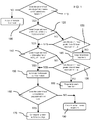
- FIG. 1 shows an exemplary method of treating a patient via an embodiment of a terlipressin treatment protocol.
- a patient who is initially identified as having end stage liver disease, for which treatment with a vasodilator may provide an improvement in renal function, is tested to determine the extent of the patient's cirrhosis and renal failure.
- a patient is initially identified as having end stage live disease and impaired renal function.
- a patient may be suffering from cirrhosis of the liver or fulminant liver failure, where a patient identified with cirrhosis of the liver may have a Child-Pugh score of A, B, or C.
- a patient identified with cirrhosis of the liver that has a Child-Pugh score of B or C may be considered a viable candidate for terlipressin treatment.
- a patient identified with cirrhosis of the liver that has a Child-Pugh score of C may be considered a viable candidate for terlipressin treatment.
- Various complications of end-stage liver disease, and in particular cirrhosis are recognized and have a notably poor prognosis.
- a treatment protocol comprising dosages of terlipressin surprisingly provides reversal of one or more complicating factors, such as vasodilation, and reduces mortality from the associated complications within a 90 day window starting with treatment.
- the terlipressin treatment protocol comprises identifying a patient having end-stage liver disease and impaired renal function, where the identified patient may benefit from a treatment comprising administration of terlipressin, determining if the patient also exhibits at least two out of three response criteria, and initiating terlipressin treatment by administering a daily dosage of terlipressin to the patient in an amount effective to produce an improvement in renal function, wherein an improvement in renal function is indicated by a reduction in SCr of at least 25% from baseline, reversal of HRS (defined as a decrease in SCr level to ⁇ 1.5 mg/dl), and/or confirmed HRS reversal (defined as two serum creatinine values of ⁇ 1.5 mg/dL at least 48 hours apart)).
- the terlipressin dosage may be in the range of about 0.1 mg to about 10 mg, or 0.5 mg to about 5.0 mg, or 0.5 mg to about 2.0 mg, or about 0.5 mg to about 1.0 mg, or about 1.0 mg to about 2.0 mg per single administration.
- the injections may be administered intravenously as slow bolus injections over 2 minutes, where the dose may be repeated every four to six hours. If on day 4 of therapy (after a minimum of 10 doses), SCr had decreased, but by less than 30% from the baseline value, the dose may be increased to 2 mg every 6 hours ( ⁇ 30 min) (8 mg/day).
- the dose may not be increased if the subject had coronary artery disease; or in the clinical setting of circulatory overload, pulmonary edema, or treatment-refractory bronchospasm.
- terlipressin may be restarted at the same or lower dose (i.e., 0.5 to 1 mg q6h).
- a patient that is not diagnosed with an end-stage liver disease and impairment of renal function is excluded from the terlipressin treatment.
- the patient is tested for three specific response criteria, where the criteria include a determination of (1) whether the white blood cell count (WBC) is less than 4,000 cells/mm 3 or greater than 12,000 cells/mm 3 , (2) whether the patient has a heart rate of greater than 90 beats per minute (BPM), and/or (3) whether the patient has tachypnea with greater than 20 breaths per minute or HCO 3 ⁇ 23 mmol/L or(PaCO 2 ) ⁇ 32 mmHg.
- the response criterion of a patient's core body temperature being less than 36°C (96.8°F) or greater than 38°C (100.4°F) is not measured or considered in determining if the patient has two or more response criteria.
- the criteria may be tested in any order.
- a patient is tested to determine if the patient's WBC is ⁇ 4,000 or > 12,000 cells/mm3.
- the testing is specifically directed at determining if the patient's leukocytes are less than 4000 cells/mm 3 (4 x 10⁹ cells/L) or greater than 12,000 cells/mm 3 (12 x 109 cells/L).
- the patient is not tested for the presence of greater than 10% immature neutrophils (band forms).
- the testing method to determine the WBC may be any of the methods known in the art.
- the patient may still be diagnosed with SIRS if the patient meets the two other response criteria.
- a patient that has a WBC ⁇ 4,000 or > 12,000 cells/mm3 is considered to meet that response criterion.
- a patient that does not have a WBC outside the range of 4,000 to 12,000 cells/mm3 is tested to determine if the patient's heart rate is >90 BPM. If the patient's heart rate is >90 BPM, the patient will be considered to meet that response criterion.
- the testing method to determine the patient's heart rate may be any of the methods known in the art.
- a patient that has a WBC outside the range of 4,000 to 12,000 cells/mm3 is tested to determine if the patient's heart rate is >90 BPM. If the patient's heart rate is >90 BPM, the patient will be considered to meet that response criterion.
- a patient that does not exhibit both a WBC ⁇ 4,000 or > 12,000 cells/mm3 and a heart rate that is >90 BPM is considered to not qualify for two of the three response criteria, and therefore does not meet the requirements to be treated with terlipressin.
- a patient failing to meet at least two of the three response criteria is excluded from the terlipressin treatment.
- Such a patient may be treated instead with one or more other pharmacological agents such as nor-epinephrine, vasopressin, or a combination of midodrine and octreotide.
- any of the following may be used: N-acetylcysteine, misoprostol, and/or BQ123.
- TIPS transjugular intrahepatic portosystemic shunt
- a patient that has a WBC outside the range of 4,000 to 12,000 cells/mm3 or a heart rate that is >90 BPM is tested to determine if the patient has >20 breaths per minute or an HCO 3 ⁇ 23 mmol/L. If the patient has >20 breaths per minute or an HCO 3 ⁇ 23 mmol/L, the patient will be considered to meet that response criterion. In various embodiments, a patient with an HCO 3 ⁇ 23 mmol/L will be considered to meet that response criterion.
- the testing method to determine the patient's breathing rate or HCO 3 may be any of the methods known in the art.
- a patient that has a WBC outside the range of 4,000 to 12,000 cells/mm3 is tested to determine if the patient has a breathing rate that is >20 breaths per minute or an HCO 3 ⁇ 23 mmol/L. If the patient has a breathing rate that is >20 breaths per minute or an HCO 3 ⁇ 23 mmol/L, the patient will be considered to meet that response criterion. In various embodiments, a patient with an HCO 3 ⁇ 23 mmol/L will be considered to meet that response criterion.
- the patient if the patient has a WBC outside the range of 4,000 to 12,000 cells/mm3 and the patient has >20 breaths per minute or an HCO 3 ⁇ 23 mmol/L, the patient is considered to qualify for two of the three response criteria, and therefore meets the requirements to be treated with terlipressin unless otherwise excluded.
- the patient if the patient has a heart rate that is >90 BPM and the patient has a breathing rate that is >20 breaths per minute or an HCO 3 ⁇ 23 mmol/L, the patient is considered to qualify for two of the three response criteria, and therefore meets the requirements to be treated with terlipressin unless otherwise excluded.
- a patient that has a WBC outside the range of 4,000 to 12,000 cells/mm3, but does not have >20 breaths per minute or an HCO 3 ⁇ 23 mmol/L is tested to determine if the patient's heart rate is >90 BPM. If the patient's heart rate is >90 BPM, the patient will be considered to meet that response criterion.
- the patient in which the patient has a WBC outside the range of 4,000 to 12,000 cells/mm3, but the patient does not have >20 breaths per minute or an HCO 3 ⁇ 23 mmol/L, the patient is tested to determine if the patient's heart rate is >90 BPM. If the patient's heart rate is >90 BPM, the patient will be considered to meet that response criterion.
- the patient if the patient has a breathing rate that is >20 breaths per minute or an HCO 3 ⁇ 23 mmol/L a heart rate that is >90 BPM and the patient has a breathing rate that is >20 breaths per minute or an HCO3 ⁇ 21 mmol/L, the patient is considered to qualify for two of the three response criteria, and therefore meets the requirements to be treated with terlipressin unless otherwise excluded.
- a patient that does not exhibit (1) a breathing rate that is >20 breaths per minute or an HCO 3 ⁇ 23 mmol/L and does not exhibit (2) a heart rate that is >90 BPM is considered to not qualify for at least two of the three response criteria, and therefore does not meet the requirements to be treated with terlipressin.
- a patient failing to meet at least two of the three response criteria is excluded from the terlipressin treatment.
- Optional alternative treatments for such a patient are described above.
- tests for the response criteria have be discussed in a particular order for the exemplary embodiment, the tests may be done in any particular order.
- temperature is not a response criterion because patient temperature may not provide an accurate indication of patient response to terlipressin.
- patient temperatures are excluded from the set of response criteria.
- a patient that has end stage liver disease with impaired renal function, and qualifies for at least two of the three response criteria is started on terlipressin.
- terlipressin is administered to the patient for one to four days.
- the patient is administered terlipressin for four days unless the patient experiences an adverse event.
- the terlipressin is administered to the patient as an IV drip.
- the terlipressin treatment protocol comprises administering a dosage of terlipressin in the range of about 0.1 mg to about 10 mg, or 0.5 mg to about 5.0 mg, or 0.5 mg to about 2.0 mg, or about 0.5 mg to about 1.0 mg, or about 1.0 mg to about 2.0 mg to the patient over about four hours to about six hours as an IV drip.
- the patient is administered terlipressin as an IV about every 4 to 6 hours for 1 to 4 days.
- the terlipressin may be administered for at least 4 days.
- the patient is administered terlipressin as a slow bolus over 2 minutes about every 4 to 6 hours for 1 to 4 days.
- the terlipressin may be administered for at least 4 days.
- the patient that is being administered the terlipressin is tested at least once during the one to four day period of administration to determine if the patient is responding to the terlipressin.
- the patient may be tested once prior to beginning the administration of the terlipressin to establish a baseline and once during the one to four days of terlipressin administration, or once prior to beginning the administration of the terlipressin to establish a baseline and once at the end of the four days of administration of the terlipressin.
- the patient's creatinine levels are measured to determine if there has been a reduction in the patient's serum creatinine, where a reduction in serum creatinine levels of about 1.0 mg/dL or greater, or in the range of about 1.0 mg/dL to about 2.0 mg/dL, or a reduction of about 1.7 mg/dL from the patient's initial baseline value indicates an improvement in renal function and that the patient is responding to the terlipressin.
- improvement in renal function is indicated by a decrease in serum creatinine level of about 25% in the patient receiving terlipressin.
- a patient may have his or her serum creatinine levels measured once a day or once every other day for each of the four day period after administration of terlipressin has begun, wherein a measurement made on the first day of terlipressin administration may be recorded and used as the baseline creatinine level.
- the use may comprise testing the patient's SCr level during the 1 to 4 days of terlipressin administration and determining if the patient has a reduction in SCr level by the end of the 1 to 4 days of terlipressin administration.
- the serum creatinine levels may be measured by any of the methods known in the art, for example, the Jaffe reaction using alkaline picrate.
- the GFR may be measured directly by clearance studies of exogenous markers, such as inulin, iohexol, iothalamate, and Cr51-EDTA, or by estimated glomerular filtration rate (eGFR) using creatinine testing methods that are traceable to a reference method based on isotope dilution-mass spectrometry (IDMS).
- exogenous markers such as inulin, iohexol, iothalamate, and Cr51-EDTA
- eGFR estimated glomerular filtration rate
- IDMS isotope dilution-mass spectrometry
- a patient that shows a positive response to the administration of the terlipressin evidenced by a reduction in the patient's serum creatinine level is continued on the terlipressin at the dosage in the range of about 0.1 mg to about 10 mg, or 0.5 mg to about 5.0 mg, or 0.5 mg to about 2.0 mg, or about 0.5 mg to about 1.0 mg, or about 1.0 mg to about 2.0 mg.
- the dosage administered to the patient may be adjusted based upon the measured serum creatinine level(s).
- a patient being administered terlipressin may have their serum creatinine levels monitored for the entire time period that the patient is receiving terlipressin.
- the patient's serum creatinine level may be tested every day, or every other day, or every third day, or every fourth day, to confirm that the patient is still responding positively to the terlipressin treatment.
- the patient's terlipressin dosage may be increased from about 0.5 mg to about 1.0 mg to about 1.0 mg to about 2.0 mg after 2-3 days of terlipressin administration to the patient if there is ⁇ 1.5 mg/dL decrease in SCr during the first 2-3 days of treatment.
- the dosage may be repeated every four to six hours for a time period of one or more days until the patient shows recovery, or until the patient no longer shows improvement.
- the terlipressin may be administered to the patient for a time period in the range of about two days to about sixteen days, or for a time period in the range of about four days to about eight days. In various embodiments, the time period is in the range of about seven days. In various embodiments, the terlipressin treatment may be continued until there is a complete response. In various embodiments, the duration of treatment of a patient with terlipressin may be 1 to 28 days.
- a patient that does not show any improvement by the end of four days may have the terlipressin discontinued, where improvement is indicated by a decrease in serum creatinine levels over the one to four days the terlipressin is administered.
- the patient may be tested on the third or fourth day after starting treatment with the terlipressin to determine if there is a decrease in serum creatinine levels indicating a response to the treatment.
- a patient is provided 2 days of anti-infective therapy for documented or suspected infection before starting administration of terlipressin if an infection is suspected.
- a patient may be started on the terlipressin treatment protocol after the patient has been administered the anti-infective therapy.
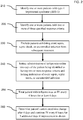
- FIG. 2 illustrates an exemplary embodiment of a terlipressin treatment protocol.
- Principles and embodiments of the present disclosure also relate to providing terlipressin as an IV every four to six hours to patients that have been identified with HRS-1 and two or more of three specific response criteria.
- a patient is tested for (1) a white blood cell count (WBC) ⁇ 4 or > 12 cells/ ⁇ L; (2) a heart rate (HR) >90 beats per minute (bpm), and (3) HCO 3 ⁇ 23 mmol/L.
- WBC white blood cell count
- HR heart rate
- HCO 3 HCO 3 ⁇ 23 mmol/L.
- a non-SIRS patient is defined as subjects with ⁇ 2 of the response criteria described above.
- temperature is not used as a response criteria.
- terlipressin is administered to patients presenting with a particular set of symptoms to mitigate the vasoconstriction in the kidneys, and improve renal function as indicated by a reduction in serum creatinine levels of about 1.7 mg/dL from initial baseline.
- one or more patients that may be presenting with end-stage liver disease are tested to determine whether they are suffering from cirrhosis with ascites, and have serum levels of creatinine > 133 ⁇ mol/l.
- a patient identified as having HRS is further tested and/or their medical history checked to determine if the initial serum levels of creatinine have doubled to greater than 226 ⁇ mol/l in less than 2 weeks indicating type 1 HRS.
- the HRS indications may include serum creatinine levels.
- the patient is tested to determine if the same patient is exhibiting at least two out of three criteria indicating SIRS, wherein the three criteria include a (1) WBC ⁇ 4 or > 12 cells/ ⁇ L; (2) HR >90 bpm, and (3) HCO 3 ⁇ 23 mmol/L.
- Patients not identified as exhibiting at least two of the three response criteria in addition to HRS-1 are excluded from the terlipressin treatment protocol.
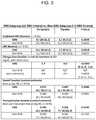
- Patients having HRS-1 and exhibiting at least two of the three response criteria have surprisingly shown improved response to terlipressin treatment compared to non-SIRS HRS-1 patients, as indicated by reversal of the HRS indications, as shown in FIG. 3 .
- patients that have been identified as having HRS-1 and exhibit at least two response criteria are tested to determine if they may also have an uncontrolled infection, sepsis, or septic shock, wherein patients identified as exhibiting an uncontrolled infection, sepsis, or septic shock are excluded from the terlipressin treatment protocol.
- patients that have HRS-1, have at least two of the three response criteria, and do not have an uncontrolled infection, sepsis, or septic shock are started on the terlipressin treatment.
- the terlipressin treatment is started within 48 hours of the initial diagnosis that the patient has both HRS-1 and at least two of three response criteria.
- the treatment protocol is started within 48 hours of the initial diagnosis, and treatment may be terminated once an uncontrolled infection, sepsis, or septic shock manifests or is determined.
- a baseline serum creatinine level may be determined for the patient prior to starting the administration of terlipressin to the patient; and the administration of terlipressin started within 2 days or within 3 days, or within 4 days of determining the baseline serum creatinine level.
- the patient may be tested at least once daily within four days after starting the administration of terlipressin to determine if the patient exhibits a decrease in the serum creatinine level compared to the previously determined baseline serum creatinine level.
- terlipressin treatment of the patient is started and the patient receives a dosage of terlipressin.
- the terlipressin may be administered to a patient as a slow infusion over 24 hours, wherein the dosage over the 24 hour period may be in the range of about 2.0 mg to about 12 mg. In various embodiments, the dosage over the 24 hour period may be in the range of about 2.0 mg to about 4.0 mg.
- the terlipressin is administered as a continuous intravenous (IV) drip lasting from about 4 hours to about 6 hours, and comprising a dosage of about 0.5 mg to about 2.0 mg.
- IV intravenous
- the terlipressin dosage may be a dosage of about 0.5 mg to about 2.0 mg administered intravenously every 4 to 6 hours as a slow bolus injection over 2 minutes.
- the terlipressin is used to treat the patient exhibiting HRS-1 and at least two of the three response criteria. The patient is also tested to determine that the patient does not have an uncontrolled infection, sepsis, or septic shock before using the terlipressin to treat the HRS-1 patient.
- the terlipressin dosage is given as a continuous IV feed.
- the terlipressin dosage is 1 mg administered intravenously every 6 hours as a slow bolus injection over 2 minutes.
- the terlipressin dosage is not given as a bolus.
- the terlipressin may be administered to the patient for up to 4 days, wherein the patient may be tested each day of the four days to determine whether the patient is responding to the terlipressin treatment.
- a response to the terlipressin treatment may be indicated by a change in the patient's serum creatinine levels, where indication may be a reduction in SCr of at least 25% from baseline.
- the terlipressin may be administered for at least 4 days.
- the amount of serum creatinine change is determined after 4 days of treatment with terlipressin, and the treatment with terlipressin continued if the serum creatinine level has improved.
- a sufficient improvement in serum creatinine levels after 4 days of treatment is indicated by a decrease of at least 1.0 mg/dL in serum creatinine level, or a decrease of about 1.7 mg/dL in serum creatinine level.
- the patient receives terlipressin for an additional 3 days to 8 days if improvement was exhibited over the previous 1 to 4 days. In various embodiments, the patient receives terlipressin for an additional 3 days to 4 days if improvement was exhibited over the previous 1 to 4 days.
- the administration of terlipressin to the patient is continued for an additional 3 days to 12 days beyond the initial 4 days if the patient exhibits a decrease in the serum creatinine level.
- administration of terlipressin to the patient may be continued until at least one SCr value ⁇ 1.5 mg/dL is obtained.
- the duration of treatment may be extend to a maximum of 15 days or 16 days if HRS reversal was first achieved on days 13 or 14, respectively.
- the duration of treatment of a patient with terlipressin may be 1 to 28 days.
- a decrease in the serum creatinine level may be indicated by a reduction in SCr of at least 1% or of at least 5% or at least 10% or at least 15% or at least 20% or at least 25% from baseline.
- the patient may have been administered albumin prior to beginning the terlipressin treatment protocol, and/or prior to the determination that the patient has HRS-1, and at least two of the three response criteria.
- albumin may be administered to a patient 7 days to 2 days before starting administration of terlipressin to the patient.
- the albumin treatment comprises administering 1 gram albumin per 1 kg of patient weight up to a maximum of 100 g per day of albumin to a patient.
- albumin may be administered in the range of about 20 g/day to about 50 g/day, where the albumin may be administered for the time period that the patient is administered terlipressin.
- a non-limiting embodiment of a method of treating HRS-1 patients exhibiting at least two of three response criteria with terlipressin comprises administering to a patient in need of such treatment a dosage of terlipressin in the range of 2.0 mg to 12.0 mg per day for 1 to 28 days, or in the range of 2.0 mg to 4.0 mg per day for 1 to 7 days, wherein the dosage may be administered as a continuous IV feed or as a slow bolus injection.
- Embodiments of the present disclosure also relate to treating patients with HRS-1 and meeting two or more response criteria with one dose of terlipressin every six hours, where the dose is in the range of about 0.5 mg to 2.0 mg, for 3 to 8 days to achieve reversal of the HRS- 1.
- Embodiments of the present disclosure also relate to initiating terlipressin treatment within 48 hours of determining that a patient is presenting with HRS-1 and at least two of three response criteria, but without sepsis, septic shock, or uncontrolled infection.
- FIG. 3 shows the unexpected results produced by an exemplary treatment protocol.
- Exclusion criteria were intended to product a patient sample limited to individuals with functional renal impairment secondary to cirrhosis and ascites, who could safely be administered terlipressin and who could be expected to survive through the active study period.
- exclusion criteria was an exclusion criterion for patients with systemic inflammatory response syndrome (SIRS), defined as the presence of 2 or more of the following findings: (1) temperature > 38°C or ⁇ 36°C; (2) heart rate > 90/min; (3) respiratory rate of > 20/min or a PaCO2 of ⁇ 32 mm Hg; (4) white blood cell count of > 12,000 cells/ ⁇ L or ⁇ 4,000/ ⁇ L. This was based on the concern of enrolling patients with uncontrolled infection.
- SIRS systemic inflammatory response syndrome
- HRS type 1 allows for patients with ongoing bacterial infection, but not sepsis or uncontrolled infection, to be considered as having HRS type 1 (as opposed to renal dysfunction associated with infection) ( Sagruo F, Gerbes A, Gines P, Wong F, Arroyo V., Diagnosis, prevention and treatment of hepatorenal syndrome in cirrhosis, Gut. 2007; 56:1310-1318 ).
- the trial protocol required 2 days of anti-infective therapy for documented or suspected infection, allowing enrollment where any SIRS criteria were felt to be most likely explained by underlying hepatic decompensation or other non-infection clinical circumstances. This approach was felt to minimize the chances of enrolling patients at high risk for serious infection while not unduly restricting the enrollment of subjects with HRS type 1.
- HRS type 1 The patients selected for treatment clinically met the criteria for HRS type 1, where IAC criteria for HRS type 1 allows for patients with ongoing bacterial infection, but not sepsis, to be considered as having HRS type 1, as opposed to renal dysfunction associated with infection. A diagnosis of HRS was not made where the patient remained with obvious manifestations of uncontrolled infection despite antibiotic treatment.
- treatment with the blinded study drug continued until at least two SCr values ⁇ 1.5 mg/dL were obtained at least 48 hours apart, or up to 14 days. Duration of treatment was allowed to extend to a maximum of 15 or 16 days if HRS reversal was first achieved on days 13 or 14, respectively.
- Patients in the active treatment group received terlipressin 1 mg intravenously every 6 hours as a slow bolus injection over 2 minutes. Criteria for dose increases, study discontinuation, treatment resumption and treatment completion during the active study period were provided for.
- the dosing regimen for patients in the placebo (6 mL lyophilized mannitol solution) group was identical to the terlipressin regimen.
- the follow-up period began after the end of study treatment and concluded 90 days after the start of study treatment. Survival, renal replacement therapy, and transplantation were assessed.
- the SIRS subgroup of patients in this study was defined as any subject with ⁇ 2 of 3 criteria available from the study database which included: (1) WBC ⁇ 4 or > 12 cells/ ⁇ L; (2) HR>90 bpm and (3) HCO 3 ⁇ 21 mmol/L.
- the latter criterion represented an approximation of the SIRS criterion PaCO 2 of ⁇ 32 mm Hg.
- This approximation was derived from the observed HCO3 in subjects with HRS in whom a PaCO 2 value was available and the calculated HCO 3 in subjects with decompensated liver disease and PaCO 2 of ⁇ 32 mm Hg.
- the non-SIRS subgroup was defined as subjects with ⁇ 2 criteria described above. Terlipressin response was analyzed in the SIRS and non-SIRS subgroups to determine whether SIRS status had any effect on terlipressin efficacy.
- reversal of HRS is indicated by a decrease in SCr level to ⁇ 1.5 mg/dl, and confirmed reversal of HRS is defined as two SCr values of ⁇ 1.5 mg/dL at least 48 hours apart.
Landscapes
- Health & Medical Sciences (AREA)
- Life Sciences & Earth Sciences (AREA)
- Engineering & Computer Science (AREA)
- Chemical & Material Sciences (AREA)
- General Health & Medical Sciences (AREA)
- Public Health (AREA)
- Veterinary Medicine (AREA)
- Animal Behavior & Ethology (AREA)
- Medicinal Chemistry (AREA)
- Pharmacology & Pharmacy (AREA)
- Biomedical Technology (AREA)
- Physics & Mathematics (AREA)
- Bioinformatics & Cheminformatics (AREA)
- Immunology (AREA)
- Pathology (AREA)
- Epidemiology (AREA)
- Hematology (AREA)
- Chemical Kinetics & Catalysis (AREA)
- Organic Chemistry (AREA)
- Nuclear Medicine, Radiotherapy & Molecular Imaging (AREA)
- General Chemical & Material Sciences (AREA)
- Biophysics (AREA)
- Molecular Biology (AREA)
- Gastroenterology & Hepatology (AREA)
- Heart & Thoracic Surgery (AREA)
- Analytical Chemistry (AREA)
- Biochemistry (AREA)
- General Physics & Mathematics (AREA)
- Cardiology (AREA)
- Proteomics, Peptides & Aminoacids (AREA)
- Urology & Nephrology (AREA)
- Physiology (AREA)
- Medical Informatics (AREA)
- Surgery (AREA)
- Ecology (AREA)
- Food Science & Technology (AREA)
- Diabetes (AREA)
- Endocrinology (AREA)
- Dispersion Chemistry (AREA)
- Zoology (AREA)
Priority Applications (6)
| Application Number | Priority Date | Filing Date | Title |
|---|---|---|---|
| HRP20220225TT HRP20220225T1 (hr) | 2014-10-24 | 2015-10-22 | Terlipresin za liječenje hepatorenalnog sindroma tip 1 |
| EP21205752.5A EP3978074B1 (en) | 2014-10-24 | 2015-10-22 | Terlipressin for treating hepatorenal syndrome type 1 |
| PL15791430T PL3209317T3 (pl) | 2014-10-24 | 2015-10-22 | Terlipresyna do leczenia zespołu wątrobowo-nerkowego typu 1 |
| SI201531790T SI3209317T1 (sl) | 2014-10-24 | 2015-10-22 | Terlipresin za zdravljenje hepatorenalnega sindroma tipa 1 |
| EP21208813.2A EP3981420B1 (en) | 2014-10-24 | 2015-10-22 | Terlipressin for treating hepatorenal syndrome type 1 |
| DK21205752.5T DK3978074T3 (da) | 2014-10-24 | 2015-10-22 | Terlipressin til behandling af hepatorenalt syndrom type 1 |
Applications Claiming Priority (3)
| Application Number | Priority Date | Filing Date | Title |
|---|---|---|---|
| US201462068357P | 2014-10-24 | 2014-10-24 | |
| US201562151384P | 2015-04-22 | 2015-04-22 | |
| PCT/US2015/056861 WO2016065117A1 (en) | 2014-10-24 | 2015-10-22 | Method of treating patients with hepatorenal syndrome type 1 |
Related Child Applications (3)
| Application Number | Title | Priority Date | Filing Date |
|---|---|---|---|
| EP21205752.5A Division EP3978074B1 (en) | 2014-10-24 | 2015-10-22 | Terlipressin for treating hepatorenal syndrome type 1 |
| EP21205752.5A Division-Into EP3978074B1 (en) | 2014-10-24 | 2015-10-22 | Terlipressin for treating hepatorenal syndrome type 1 |
| EP21208813.2A Division EP3981420B1 (en) | 2014-10-24 | 2015-10-22 | Terlipressin for treating hepatorenal syndrome type 1 |
Publications (2)
| Publication Number | Publication Date |
|---|---|
| EP3209317A1 EP3209317A1 (en) | 2017-08-30 |
| EP3209317B1 true EP3209317B1 (en) | 2021-12-08 |
Family
ID=54478246
Family Applications (3)
| Application Number | Title | Priority Date | Filing Date |
|---|---|---|---|
| EP15791430.0A Active EP3209317B1 (en) | 2014-10-24 | 2015-10-22 | Terlipressin for treating hepatorenal syndrome type 1 |
| EP21205752.5A Active EP3978074B1 (en) | 2014-10-24 | 2015-10-22 | Terlipressin for treating hepatorenal syndrome type 1 |
| EP21208813.2A Active EP3981420B1 (en) | 2014-10-24 | 2015-10-22 | Terlipressin for treating hepatorenal syndrome type 1 |
Family Applications After (2)
| Application Number | Title | Priority Date | Filing Date |
|---|---|---|---|
| EP21205752.5A Active EP3978074B1 (en) | 2014-10-24 | 2015-10-22 | Terlipressin for treating hepatorenal syndrome type 1 |
| EP21208813.2A Active EP3981420B1 (en) | 2014-10-24 | 2015-10-22 | Terlipressin for treating hepatorenal syndrome type 1 |
Country Status (15)
| Country | Link |
|---|---|
| US (2) | US10335452B2 (enExample) |
| EP (3) | EP3209317B1 (enExample) |
| JP (4) | JP6673915B2 (enExample) |
| CN (2) | CN107206049B (enExample) |
| AU (1) | AU2015335855A1 (enExample) |
| CA (1) | CA2965325A1 (enExample) |
| DK (2) | DK3209317T3 (enExample) |
| ES (2) | ES2904492T3 (enExample) |
| FI (1) | FI3978074T3 (enExample) |
| HR (1) | HRP20220225T1 (enExample) |
| HU (1) | HUE058066T2 (enExample) |
| PL (2) | PL3209317T3 (enExample) |
| PT (2) | PT3978074T (enExample) |
| SI (1) | SI3209317T1 (enExample) |
| WO (1) | WO2016065117A1 (enExample) |
Families Citing this family (10)
| Publication number | Priority date | Publication date | Assignee | Title |
|---|---|---|---|---|
| RU2678833C2 (ru) | 2008-09-17 | 2019-02-04 | Киазма Инк. | Фармацевтические композиции и соответствующие способы доставки |
| AU2015335855A1 (en) * | 2014-10-24 | 2017-05-18 | Mallinckrodt Hospital Products IP Limited | Method of treating patients with hepatorenal syndrome type 1 |
| US20200046798A1 (en) * | 2014-10-24 | 2020-02-13 | Mallinckrodt Hospital Products IP Limited | Method of treating patients with hepatorenal syndrome type 1 |
| US20210290725A1 (en) * | 2014-10-24 | 2021-09-23 | Mallinckrodt Pharmaceuticals Ireland Limited | Method of treating patients with hepatorenal syndrome type 1 |
| MA46586A (fr) | 2016-10-21 | 2019-08-28 | Chiasma Inc | Compositions de terlipressine et leurs procédés d'utilisation |
| KR20220011697A (ko) | 2019-05-22 | 2022-01-28 | 바이오비에 아이앤씨. | 테를리프레신 제형 |
| CN110251469B (zh) * | 2019-07-31 | 2021-11-09 | 南京康舟医药科技有限公司 | 一种醋酸特利加压素制剂及其制备方法 |
| CA3159575A1 (en) * | 2019-10-30 | 2021-05-06 | Mallinckrodt Hospital Products IP Unlimited Company | Method of treating patients with hepatorenal syndrome type 1 and low mean arterial pressure |
| WO2023183339A1 (en) * | 2022-03-22 | 2023-09-28 | Ocelot Bio, Inc. | Selective vasopressin receptor agonist for end-stage liver disease |
| US20240156895A1 (en) * | 2022-10-28 | 2024-05-16 | Mallinckrodt Pharmaceuticals Ireland Limited | Compositions for improving kidney function in patients with hepatorenal syndrome |
Family Cites Families (13)
| Publication number | Priority date | Publication date | Assignee | Title |
|---|---|---|---|---|
| EP1188443A1 (en) | 2000-09-15 | 2002-03-20 | Ferring BV | Improved protocol for paracentesis |
| US7785857B2 (en) * | 2006-08-31 | 2010-08-31 | Saint Louis University | Protein C variant |
| GB0617581D0 (en) * | 2006-09-07 | 2006-10-18 | Ucl Business Plc | Biomarkers for assessing liver function |
| US20080221551A1 (en) * | 2007-03-09 | 2008-09-11 | Flowmedica, Inc. | Acute kidney injury treatment systems and methods |
| EP2175874A2 (en) | 2007-08-14 | 2010-04-21 | Ferring B.V. | Use of peptidic vasopressin receptor agonists |
| CN104330574B (zh) * | 2008-11-10 | 2017-04-12 | 阿斯图特医药公司 | 用于诊断和预后肾损伤和肾衰竭的方法和组合物 |
| MX355507B (es) | 2009-03-09 | 2018-04-19 | Bioatla Llc | Proteinas mirac. |
| ES2517340T3 (es) | 2009-06-08 | 2014-11-03 | Ucl Business Plc | Tratamiento de la hipertensión portal usando L-ornitina y fenilacetato |
| KR20130026504A (ko) * | 2010-07-14 | 2013-03-13 | 큠버랜드 에멀징 테크놀로지스 아이앤씨 | 트롬복산-a2 수용체 길항제를 이용한 간신증후군 및 간성뇌증의 치료방법 |
| JP2012159356A (ja) * | 2011-01-31 | 2012-08-23 | Mochida Pharmaceut Co Ltd | 敗血症診断用組合せマーカー |
| CN103254295A (zh) * | 2013-05-31 | 2013-08-21 | 青岛国大生物制药股份有限公司 | 特利加压素的制备方法 |
| AU2015335855A1 (en) * | 2014-10-24 | 2017-05-18 | Mallinckrodt Hospital Products IP Limited | Method of treating patients with hepatorenal syndrome type 1 |
| JP2017014206A (ja) | 2015-06-30 | 2017-01-19 | ナノアンティバイオティクス,インコーポレイテッド | 腹水の治療 |
-
2015
- 2015-10-22 AU AU2015335855A patent/AU2015335855A1/en not_active Abandoned
- 2015-10-22 EP EP15791430.0A patent/EP3209317B1/en active Active
- 2015-10-22 PL PL15791430T patent/PL3209317T3/pl unknown
- 2015-10-22 DK DK15791430.0T patent/DK3209317T3/da active
- 2015-10-22 HR HRP20220225TT patent/HRP20220225T1/hr unknown
- 2015-10-22 US US14/920,392 patent/US10335452B2/en active Active
- 2015-10-22 PT PT212057525T patent/PT3978074T/pt unknown
- 2015-10-22 WO PCT/US2015/056861 patent/WO2016065117A1/en not_active Ceased
- 2015-10-22 DK DK21205752.5T patent/DK3978074T3/da active
- 2015-10-22 CN CN201580062745.3A patent/CN107206049B/zh active Active
- 2015-10-22 HU HUE15791430A patent/HUE058066T2/hu unknown
- 2015-10-22 EP EP21205752.5A patent/EP3978074B1/en active Active
- 2015-10-22 CN CN202111342532.XA patent/CN114028536B/zh active Active
- 2015-10-22 JP JP2017521988A patent/JP6673915B2/ja active Active
- 2015-10-22 PL PL21205752.5T patent/PL3978074T3/pl unknown
- 2015-10-22 FI FIEP21205752.5T patent/FI3978074T3/fi active
- 2015-10-22 ES ES15791430T patent/ES2904492T3/es active Active
- 2015-10-22 ES ES21205752T patent/ES2987577T3/es active Active
- 2015-10-22 CA CA2965325A patent/CA2965325A1/en not_active Abandoned
- 2015-10-22 SI SI201531790T patent/SI3209317T1/sl unknown
- 2015-10-22 PT PT157914300T patent/PT3209317T/pt unknown
- 2015-10-22 EP EP21208813.2A patent/EP3981420B1/en active Active
-
2019
- 2019-05-14 US US16/411,944 patent/US20190328831A1/en not_active Abandoned
- 2019-08-28 JP JP2019155678A patent/JP6989571B2/ja active Active
-
2021
- 2021-06-21 JP JP2021102221A patent/JP7346494B2/ja active Active
-
2022
- 2022-09-14 JP JP2022146052A patent/JP2022171795A/ja not_active Withdrawn
Non-Patent Citations (1)
| Title |
|---|
| None * |
Also Published As
Similar Documents
| Publication | Publication Date | Title |
|---|---|---|
| EP3978074B1 (en) | Terlipressin for treating hepatorenal syndrome type 1 | |
| US20240374675A1 (en) | Method of treating patients with hepatorenal syndrome type 1 | |
| US20220143132A1 (en) | Method of treating patients with hepatorenal syndrome type 1 | |
| US20250276033A1 (en) | Compositions for improving kidney function in patients with hepatorenal syndrome | |
| US20200237856A1 (en) | Method of treating patients with hepatorenal syndrome type 1 | |
| US20210128676A1 (en) | Method of treating patients with hepatorenal syndrome type 1 and low mean arterial pressure | |
| EP4351619A1 (en) | Method of treating patients with hepatorenal syndrome type 1 |
Legal Events
| Date | Code | Title | Description |
|---|---|---|---|
| REG | Reference to a national code |
Ref country code: HR Ref legal event code: TUEP Ref document number: P20220225 Country of ref document: HR |
|
| STAA | Information on the status of an ep patent application or granted ep patent |
Free format text: STATUS: THE INTERNATIONAL PUBLICATION HAS BEEN MADE |
|
| PUAI | Public reference made under article 153(3) epc to a published international application that has entered the european phase |
Free format text: ORIGINAL CODE: 0009012 |
|
| STAA | Information on the status of an ep patent application or granted ep patent |
Free format text: STATUS: REQUEST FOR EXAMINATION WAS MADE |
|
| 17P | Request for examination filed |
Effective date: 20170518 |
|
| AK | Designated contracting states |
Kind code of ref document: A1 Designated state(s): AL AT BE BG CH CY CZ DE DK EE ES FI FR GB GR HR HU IE IS IT LI LT LU LV MC MK MT NL NO PL PT RO RS SE SI SK SM TR |
|
| AX | Request for extension of the european patent |
Extension state: BA ME |
|
| RIN1 | Information on inventor provided before grant (corrected) |
Inventor name: POTENZIANO, JIM Inventor name: JAMIL, KHURRAM Inventor name: PAPPAS, STEPHEN CHRIS |
|
| DAV | Request for validation of the european patent (deleted) | ||
| DAX | Request for extension of the european patent (deleted) | ||
| STAA | Information on the status of an ep patent application or granted ep patent |
Free format text: STATUS: EXAMINATION IS IN PROGRESS |
|
| 17Q | First examination report despatched |
Effective date: 20181217 |
|
| REG | Reference to a national code |
Ref country code: DE Ref legal event code: R079 Ref document number: 602015075643 Country of ref document: DE Free format text: PREVIOUS MAIN CLASS: A61K0038110000 Ipc: A61K0038100000 |
|
| GRAP | Despatch of communication of intention to grant a patent |
Free format text: ORIGINAL CODE: EPIDOSNIGR1 |
|
| STAA | Information on the status of an ep patent application or granted ep patent |
Free format text: STATUS: GRANT OF PATENT IS INTENDED |
|
| RIC1 | Information provided on ipc code assigned before grant |
Ipc: A61K 38/10 20060101AFI20210520BHEP Ipc: A61P 13/12 20060101ALI20210520BHEP |
|
| INTG | Intention to grant announced |
Effective date: 20210623 |
|
| RAP1 | Party data changed (applicant data changed or rights of an application transferred) |
Owner name: MALLINCKRODT PHARMACEUTICALS IRELAND LIMITED |
|
| GRAS | Grant fee paid |
Free format text: ORIGINAL CODE: EPIDOSNIGR3 |
|
| GRAA | (expected) grant |
Free format text: ORIGINAL CODE: 0009210 |
|
| STAA | Information on the status of an ep patent application or granted ep patent |
Free format text: STATUS: THE PATENT HAS BEEN GRANTED |
|
| AK | Designated contracting states |
Kind code of ref document: B1 Designated state(s): AL AT BE BG CH CY CZ DE DK EE ES FI FR GB GR HR HU IE IS IT LI LT LU LV MC MK MT NL NO PL PT RO RS SE SI SK SM TR |
|
| REG | Reference to a national code |
Ref country code: GB Ref legal event code: FG4D |
|
| REG | Reference to a national code |
Ref country code: AT Ref legal event code: REF Ref document number: 1453249 Country of ref document: AT Kind code of ref document: T Effective date: 20211215 Ref country code: CH Ref legal event code: EP |
|
| REG | Reference to a national code |
Ref country code: DE Ref legal event code: R096 Ref document number: 602015075643 Country of ref document: DE |
|
| REG | Reference to a national code |
Ref country code: IE Ref legal event code: FG4D |
|
| REG | Reference to a national code |
Ref country code: PT Ref legal event code: SC4A Ref document number: 3209317 Country of ref document: PT Date of ref document: 20220119 Kind code of ref document: T Free format text: AVAILABILITY OF NATIONAL TRANSLATION Effective date: 20220112 |
|
| REG | Reference to a national code |
Ref country code: SE Ref legal event code: TRGR |
|
| REG | Reference to a national code |
Ref country code: DK Ref legal event code: T3 Effective date: 20220202 |
|
| REG | Reference to a national code |
Ref country code: RO Ref legal event code: EPE Ref country code: FI Ref legal event code: FGE |
|
| REG | Reference to a national code |
Ref country code: NL Ref legal event code: FP |
|
| REG | Reference to a national code |
Ref country code: GR Ref legal event code: EP Ref document number: 20220400327 Country of ref document: GR Effective date: 20220309 |
|
| REG | Reference to a national code |
Ref country code: NO Ref legal event code: T2 Effective date: 20211208 |
|
| REG | Reference to a national code |
Ref country code: ES Ref legal event code: FG2A Ref document number: 2904492 Country of ref document: ES Kind code of ref document: T3 Effective date: 20220405 |
|
| REG | Reference to a national code |
Ref country code: LT Ref legal event code: MG9D |
|
| PG25 | Lapsed in a contracting state [announced via postgrant information from national office to epo] |
Ref country code: RS Free format text: LAPSE BECAUSE OF FAILURE TO SUBMIT A TRANSLATION OF THE DESCRIPTION OR TO PAY THE FEE WITHIN THE PRESCRIBED TIME-LIMIT Effective date: 20211208 Ref country code: LT Free format text: LAPSE BECAUSE OF FAILURE TO SUBMIT A TRANSLATION OF THE DESCRIPTION OR TO PAY THE FEE WITHIN THE PRESCRIBED TIME-LIMIT Effective date: 20211208 |
|
| REG | Reference to a national code |
Ref country code: HR Ref legal event code: T1PR Ref document number: P20220225 Country of ref document: HR |
|
| PG25 | Lapsed in a contracting state [announced via postgrant information from national office to epo] |
Ref country code: LV Free format text: LAPSE BECAUSE OF FAILURE TO SUBMIT A TRANSLATION OF THE DESCRIPTION OR TO PAY THE FEE WITHIN THE PRESCRIBED TIME-LIMIT Effective date: 20211208 |
|
| REG | Reference to a national code |
Ref country code: SK Ref legal event code: T3 Ref document number: E 39302 Country of ref document: SK |
|
| REG | Reference to a national code |
Ref country code: HU Ref legal event code: AG4A Ref document number: E058066 Country of ref document: HU |
|
| PG25 | Lapsed in a contracting state [announced via postgrant information from national office to epo] |
Ref country code: SM Free format text: LAPSE BECAUSE OF FAILURE TO SUBMIT A TRANSLATION OF THE DESCRIPTION OR TO PAY THE FEE WITHIN THE PRESCRIBED TIME-LIMIT Effective date: 20211208 Ref country code: EE Free format text: LAPSE BECAUSE OF FAILURE TO SUBMIT A TRANSLATION OF THE DESCRIPTION OR TO PAY THE FEE WITHIN THE PRESCRIBED TIME-LIMIT Effective date: 20211208 |
|
| REG | Reference to a national code |
Ref country code: DE Ref legal event code: R097 Ref document number: 602015075643 Country of ref document: DE |
|
| PLBE | No opposition filed within time limit |
Free format text: ORIGINAL CODE: 0009261 |
|
| STAA | Information on the status of an ep patent application or granted ep patent |
Free format text: STATUS: NO OPPOSITION FILED WITHIN TIME LIMIT |
|
| REG | Reference to a national code |
Ref country code: HR Ref legal event code: ODRP Ref document number: P20220225 Country of ref document: HR Payment date: 20221005 Year of fee payment: 8 |
|
| PG25 | Lapsed in a contracting state [announced via postgrant information from national office to epo] |
Ref country code: AL Free format text: LAPSE BECAUSE OF FAILURE TO SUBMIT A TRANSLATION OF THE DESCRIPTION OR TO PAY THE FEE WITHIN THE PRESCRIBED TIME-LIMIT Effective date: 20211208 |
|
| 26N | No opposition filed |
Effective date: 20220909 |
|
| PG25 | Lapsed in a contracting state [announced via postgrant information from national office to epo] |
Ref country code: MC Free format text: LAPSE BECAUSE OF FAILURE TO SUBMIT A TRANSLATION OF THE DESCRIPTION OR TO PAY THE FEE WITHIN THE PRESCRIBED TIME-LIMIT Effective date: 20211208 Ref country code: IT Free format text: LAPSE BECAUSE OF FAILURE TO SUBMIT A TRANSLATION OF THE DESCRIPTION OR TO PAY THE FEE WITHIN THE PRESCRIBED TIME-LIMIT Effective date: 20211208 |
|
| P01 | Opt-out of the competence of the unified patent court (upc) registered |
Effective date: 20230601 |
|
| REG | Reference to a national code |
Ref country code: HR Ref legal event code: ODRP Ref document number: P20220225 Country of ref document: HR Payment date: 20231006 Year of fee payment: 9 |
|
| REG | Reference to a national code |
Ref country code: AT Ref legal event code: UEP Ref document number: 1453249 Country of ref document: AT Kind code of ref document: T Effective date: 20211208 |
|
| PG25 | Lapsed in a contracting state [announced via postgrant information from national office to epo] |
Ref country code: CY Free format text: LAPSE BECAUSE OF FAILURE TO SUBMIT A TRANSLATION OF THE DESCRIPTION OR TO PAY THE FEE WITHIN THE PRESCRIBED TIME-LIMIT Effective date: 20211208 |
|
| PG25 | Lapsed in a contracting state [announced via postgrant information from national office to epo] |
Ref country code: MK Free format text: LAPSE BECAUSE OF FAILURE TO SUBMIT A TRANSLATION OF THE DESCRIPTION OR TO PAY THE FEE WITHIN THE PRESCRIBED TIME-LIMIT Effective date: 20211208 |
|
| PG25 | Lapsed in a contracting state [announced via postgrant information from national office to epo] |
Ref country code: MT Free format text: LAPSE BECAUSE OF FAILURE TO SUBMIT A TRANSLATION OF THE DESCRIPTION OR TO PAY THE FEE WITHIN THE PRESCRIBED TIME-LIMIT Effective date: 20211208 |
|
| REG | Reference to a national code |
Ref country code: HR Ref legal event code: ODRP Ref document number: P20220225 Country of ref document: HR Payment date: 20241007 Year of fee payment: 10 |
|
| REG | Reference to a national code |
Ref country code: HR Ref legal event code: ODRP Ref document number: P20220225 Country of ref document: HR Payment date: 20251010 Year of fee payment: 11 |
|
| PGFP | Annual fee paid to national office [announced via postgrant information from national office to epo] |
Ref country code: SI Payment date: 20250930 Year of fee payment: 11 |
|
| REG | Reference to a national code |
Ref country code: CH Ref legal event code: U11 Free format text: ST27 STATUS EVENT CODE: U-0-0-U10-U11 (AS PROVIDED BY THE NATIONAL OFFICE) Effective date: 20251101 |
|
| PGFP | Annual fee paid to national office [announced via postgrant information from national office to epo] |
Ref country code: HU Payment date: 20251007 Year of fee payment: 11 |
|
| PGFP | Annual fee paid to national office [announced via postgrant information from national office to epo] |
Ref country code: NL Payment date: 20251026 Year of fee payment: 11 Ref country code: LU Payment date: 20251027 Year of fee payment: 11 |
|
| PGFP | Annual fee paid to national office [announced via postgrant information from national office to epo] |
Ref country code: PT Payment date: 20251006 Year of fee payment: 11 |
|
| PGFP | Annual fee paid to national office [announced via postgrant information from national office to epo] |
Ref country code: IS Payment date: 20251014 Year of fee payment: 11 Ref country code: DE Payment date: 20251029 Year of fee payment: 11 |
|
| PGFP | Annual fee paid to national office [announced via postgrant information from national office to epo] |
Ref country code: GB Payment date: 20251027 Year of fee payment: 11 |
|
| PGFP | Annual fee paid to national office [announced via postgrant information from national office to epo] |
Ref country code: NO Payment date: 20251029 Year of fee payment: 11 |
|
| PGFP | Annual fee paid to national office [announced via postgrant information from national office to epo] |
Ref country code: AT Payment date: 20251029 Year of fee payment: 11 |
|
| PGFP | Annual fee paid to national office [announced via postgrant information from national office to epo] |
Ref country code: FI Payment date: 20251027 Year of fee payment: 11 Ref country code: DK Payment date: 20251027 Year of fee payment: 11 |
|
| PGFP | Annual fee paid to national office [announced via postgrant information from national office to epo] |
Ref country code: HR Payment date: 20251010 Year of fee payment: 11 Ref country code: FR Payment date: 20251027 Year of fee payment: 11 |
|
| PGFP | Annual fee paid to national office [announced via postgrant information from national office to epo] |
Ref country code: TR Payment date: 20251007 Year of fee payment: 11 Ref country code: GR Payment date: 20251029 Year of fee payment: 11 Ref country code: BE Payment date: 20251027 Year of fee payment: 11 |
|
| PGFP | Annual fee paid to national office [announced via postgrant information from national office to epo] |
Ref country code: SE Payment date: 20251027 Year of fee payment: 11 Ref country code: CH Payment date: 20251101 Year of fee payment: 11 |
|
| PGFP | Annual fee paid to national office [announced via postgrant information from national office to epo] |
Ref country code: IE Payment date: 20251027 Year of fee payment: 11 Ref country code: CZ Payment date: 20251007 Year of fee payment: 11 |
|
| PGFP | Annual fee paid to national office [announced via postgrant information from national office to epo] |
Ref country code: PL Payment date: 20251001 Year of fee payment: 11 Ref country code: BG Payment date: 20251016 Year of fee payment: 11 |
|
| PGFP | Annual fee paid to national office [announced via postgrant information from national office to epo] |
Ref country code: SK Payment date: 20251002 Year of fee payment: 11 Ref country code: RO Payment date: 20251006 Year of fee payment: 11 |
|
| PGFP | Annual fee paid to national office [announced via postgrant information from national office to epo] |
Ref country code: ES Payment date: 20251103 Year of fee payment: 11 |