EP3204185B1 - A brazing material for brazing articles of austenitic stainless steel and method therefore - Google Patents
A brazing material for brazing articles of austenitic stainless steel and method therefore Download PDFInfo
- Publication number
- EP3204185B1 EP3204185B1 EP15777665.9A EP15777665A EP3204185B1 EP 3204185 B1 EP3204185 B1 EP 3204185B1 EP 15777665 A EP15777665 A EP 15777665A EP 3204185 B1 EP3204185 B1 EP 3204185B1
- Authority
- EP
- European Patent Office
- Prior art keywords
- brazing
- brazing material
- percentage
- brazed
- stainless steel
- Prior art date
- Legal status (The legal status is an assumption and is not a legal conclusion. Google has not performed a legal analysis and makes no representation as to the accuracy of the status listed.)
- Active
Links
Images


Classifications
-
- B—PERFORMING OPERATIONS; TRANSPORTING
- B23—MACHINE TOOLS; METAL-WORKING NOT OTHERWISE PROVIDED FOR
- B23K—SOLDERING OR UNSOLDERING; WELDING; CLADDING OR PLATING BY SOLDERING OR WELDING; CUTTING BY APPLYING HEAT LOCALLY, e.g. FLAME CUTTING; WORKING BY LASER BEAM
- B23K35/00—Rods, electrodes, materials, or media, for use in soldering, welding, or cutting
- B23K35/22—Rods, electrodes, materials, or media, for use in soldering, welding, or cutting characterised by the composition or nature of the material
- B23K35/24—Selection of soldering or welding materials proper
- B23K35/30—Selection of soldering or welding materials proper with the principal constituent melting at less than 1550°C
- B23K35/3053—Fe as the principal constituent
- B23K35/308—Fe as the principal constituent with Cr as next major constituent
- B23K35/3086—Fe as the principal constituent with Cr as next major constituent containing Ni or Mn
-
- B—PERFORMING OPERATIONS; TRANSPORTING
- B23—MACHINE TOOLS; METAL-WORKING NOT OTHERWISE PROVIDED FOR
- B23K—SOLDERING OR UNSOLDERING; WELDING; CLADDING OR PLATING BY SOLDERING OR WELDING; CUTTING BY APPLYING HEAT LOCALLY, e.g. FLAME CUTTING; WORKING BY LASER BEAM
- B23K35/00—Rods, electrodes, materials, or media, for use in soldering, welding, or cutting
- B23K35/02—Rods, electrodes, materials, or media, for use in soldering, welding, or cutting characterised by mechanical features, e.g. shape
- B23K35/0222—Rods, electrodes, materials, or media, for use in soldering, welding, or cutting characterised by mechanical features, e.g. shape for use in soldering or brazing
- B23K35/0233—Sheets or foils
-
- B—PERFORMING OPERATIONS; TRANSPORTING
- B23—MACHINE TOOLS; METAL-WORKING NOT OTHERWISE PROVIDED FOR
- B23K—SOLDERING OR UNSOLDERING; WELDING; CLADDING OR PLATING BY SOLDERING OR WELDING; CUTTING BY APPLYING HEAT LOCALLY, e.g. FLAME CUTTING; WORKING BY LASER BEAM
- B23K35/00—Rods, electrodes, materials, or media, for use in soldering, welding, or cutting
- B23K35/02—Rods, electrodes, materials, or media, for use in soldering, welding, or cutting characterised by mechanical features, e.g. shape
- B23K35/0222—Rods, electrodes, materials, or media, for use in soldering, welding, or cutting characterised by mechanical features, e.g. shape for use in soldering or brazing
- B23K35/0244—Powders, particles or spheres; Preforms made therefrom
-
- C—CHEMISTRY; METALLURGY
- C22—METALLURGY; FERROUS OR NON-FERROUS ALLOYS; TREATMENT OF ALLOYS OR NON-FERROUS METALS
- C22C—ALLOYS
- C22C38/00—Ferrous alloys, e.g. steel alloys
- C22C38/02—Ferrous alloys, e.g. steel alloys containing silicon
-
- C—CHEMISTRY; METALLURGY
- C22—METALLURGY; FERROUS OR NON-FERROUS ALLOYS; TREATMENT OF ALLOYS OR NON-FERROUS METALS
- C22C—ALLOYS
- C22C38/00—Ferrous alloys, e.g. steel alloys
- C22C38/18—Ferrous alloys, e.g. steel alloys containing chromium
- C22C38/34—Ferrous alloys, e.g. steel alloys containing chromium with more than 1.5% by weight of silicon
-
- C—CHEMISTRY; METALLURGY
- C22—METALLURGY; FERROUS OR NON-FERROUS ALLOYS; TREATMENT OF ALLOYS OR NON-FERROUS METALS
- C22C—ALLOYS
- C22C38/00—Ferrous alloys, e.g. steel alloys
- C22C38/18—Ferrous alloys, e.g. steel alloys containing chromium
- C22C38/40—Ferrous alloys, e.g. steel alloys containing chromium with nickel
- C22C38/44—Ferrous alloys, e.g. steel alloys containing chromium with nickel with molybdenum or tungsten
-
- C—CHEMISTRY; METALLURGY
- C22—METALLURGY; FERROUS OR NON-FERROUS ALLOYS; TREATMENT OF ALLOYS OR NON-FERROUS METALS
- C22C—ALLOYS
- C22C38/00—Ferrous alloys, e.g. steel alloys
- C22C38/18—Ferrous alloys, e.g. steel alloys containing chromium
- C22C38/40—Ferrous alloys, e.g. steel alloys containing chromium with nickel
- C22C38/54—Ferrous alloys, e.g. steel alloys containing chromium with nickel with boron
-
- C—CHEMISTRY; METALLURGY
- C22—METALLURGY; FERROUS OR NON-FERROUS ALLOYS; TREATMENT OF ALLOYS OR NON-FERROUS METALS
- C22C—ALLOYS
- C22C38/00—Ferrous alloys, e.g. steel alloys
- C22C38/18—Ferrous alloys, e.g. steel alloys containing chromium
- C22C38/40—Ferrous alloys, e.g. steel alloys containing chromium with nickel
- C22C38/58—Ferrous alloys, e.g. steel alloys containing chromium with nickel with more than 1.5% by weight of manganese
-
- F—MECHANICAL ENGINEERING; LIGHTING; HEATING; WEAPONS; BLASTING
- F28—HEAT EXCHANGE IN GENERAL
- F28D—HEAT-EXCHANGE APPARATUS, NOT PROVIDED FOR IN ANOTHER SUBCLASS, IN WHICH THE HEAT-EXCHANGE MEDIA DO NOT COME INTO DIRECT CONTACT
- F28D9/00—Heat-exchange apparatus having stationary plate-like or laminated conduit assemblies for both heat-exchange media, the media being in contact with different sides of a conduit wall
-
- F—MECHANICAL ENGINEERING; LIGHTING; HEATING; WEAPONS; BLASTING
- F28—HEAT EXCHANGE IN GENERAL
- F28F—DETAILS OF HEAT-EXCHANGE AND HEAT-TRANSFER APPARATUS, OF GENERAL APPLICATION
- F28F21/00—Constructions of heat-exchange apparatus characterised by the selection of particular materials
- F28F21/08—Constructions of heat-exchange apparatus characterised by the selection of particular materials of metal
- F28F21/081—Heat exchange elements made from metals or metal alloys
- F28F21/082—Heat exchange elements made from metals or metal alloys from steel or ferrous alloys
- F28F21/083—Heat exchange elements made from metals or metal alloys from steel or ferrous alloys from stainless steel
-
- F—MECHANICAL ENGINEERING; LIGHTING; HEATING; WEAPONS; BLASTING
- F28—HEAT EXCHANGE IN GENERAL
- F28F—DETAILS OF HEAT-EXCHANGE AND HEAT-TRANSFER APPARATUS, OF GENERAL APPLICATION
- F28F21/00—Constructions of heat-exchange apparatus characterised by the selection of particular materials
- F28F21/08—Constructions of heat-exchange apparatus characterised by the selection of particular materials of metal
- F28F21/089—Coatings, claddings or bonding layers made from metals or metal alloys
-
- B—PERFORMING OPERATIONS; TRANSPORTING
- B23—MACHINE TOOLS; METAL-WORKING NOT OTHERWISE PROVIDED FOR
- B23K—SOLDERING OR UNSOLDERING; WELDING; CLADDING OR PLATING BY SOLDERING OR WELDING; CUTTING BY APPLYING HEAT LOCALLY, e.g. FLAME CUTTING; WORKING BY LASER BEAM
- B23K2101/00—Articles made by soldering, welding or cutting
- B23K2101/04—Tubular or hollow articles
- B23K2101/14—Heat exchangers
-
- B—PERFORMING OPERATIONS; TRANSPORTING
- B23—MACHINE TOOLS; METAL-WORKING NOT OTHERWISE PROVIDED FOR
- B23K—SOLDERING OR UNSOLDERING; WELDING; CLADDING OR PLATING BY SOLDERING OR WELDING; CUTTING BY APPLYING HEAT LOCALLY, e.g. FLAME CUTTING; WORKING BY LASER BEAM
- B23K2103/00—Materials to be soldered, welded or cut
- B23K2103/02—Iron or ferrous alloys
- B23K2103/04—Steel or steel alloys
- B23K2103/05—Stainless steel
Definitions
- the present invention relates to a brazing material comprising:
- the invention relates to a use of a brazing material according to the above for brazing together article of stainless steel.
- the invention relates to a heat exchanger made from plates from austenitic stainless steel being brazed with a brazing material according to the invention.
- Brazing is a commonly used and well-known method for joining articles by melting a metal or alloy having a lower melting point than the material of the articles to be joined.
- Common examples of brazing are joining copper articles by a copper-phosphorous brazing material and articles of stainless steel by a copper brazing material.
- the brazing material has a lower melting point than the material to be joined, that the wetting between the molten brazing material and the material to be brazed is good, that the brittle phases are kept at a minimum, that it does not entrain too much into the base material and weaken it or make its melting point decrease such that the base material melts during the brazing cycle or make important elements of the brazing material migrate from the base material to the brazing material, hence altering the properties of the base material. For example, if Nickel (Ni) would migrate from the base material to the brazing material, there is a risk that the base material would not be austenitic after the brazing.
- the cost of the brazing material is an issue - it is not unusual to use Silver (Ag) as a brazing material, at least in part, and, having general knowledge of the Silver (Ag) price, it is not difficult to comprehend that omission of Silver (Ag) will make a large difference on the prize of the brazing material.
- Another common brazing material is Nickel and Nickel based alloys, which also are a relatively costly.
- Brazed heat exchangers have been used for a long time; usually, such heat exchangers comprise a number of heat exchanger plates provided with a pressed pattern of ridges and grooves adapted to keep the plates on a distance form one another under formation of interplate flow channels for media to exchange heat.
- the plates will contact one another in crossing points between the ridges and grooves of neighboring plates, and in order to keep the plates together, the plates are brazed to one another in these crossing points.
- a common material of the heat exchanger plates is austenitic stainless steel, e.g. 316 or 304 stainless steel, and a common brazing material is copper.
- the heat exchanger plates are usually brazed in a furnace under vacuum or a controlled atmosphere. Copper brazing of stainless steel plates is a very efficient and reliable method for joining the heat exchanger plates, but in some applications, the copper brazings are not sufficient. For example, copper is sensitive to some chemicals (e.g. ammonia) and if tap water is heated by the heat exchanger, copper ions may be dissolved into the tap water, especially if the water to be heated contains salts.
- some chemicals e.g. ammonia
- EP 1 347 859 One example of an Iron (Fe) based brazing material according to the prior art is disclosed in EP 1 347 859 .
- Tests of the disclosed brazing materials of EP 1 347 859 which brazing materials contain high amounts of Silicon (Si) (at least 10% for brazing materials that melted at a temperature of 1190 degrees centigrade), have shown severe problems with formation of brittle nickel silicides and erosion of the base material due to dissolution of melting point depressant, i.e. Silicon (Si) into the base material and hence melting of the base material.
- Si Silicon
- US2011/0226459 relates to an iron-based brazing material comprising a brazing alloy which comprises Si, B and P for lowering the liquidus temperature of the brazing material.
- a brazing material comprising:
- the content of Molybdenum (Mo) may be 1.9-2.2%.
- the percentage of Nickel (Ni) may be 13.1-13,3 %.
- the percentage of Chromium (Cr) may be 18.0-18.2 %. This percentage also mimics the Chromium (Cr) content of the base material to be brazed.
- the percentage of Silicon (Si) may be 7.5-8.2 %.
- the percentage of Silicon (Si) may be 7.8-8.0%.
- the percentage of Manganese (Mn) may be 4.0-5.5%.
- the erosion may be even more reduced if the percentage of Manganese (Mn) is 5.0-5.5% or 5.1-5.3%.
- the percentage of Boron (B) may 0.9-1.2%. In order to further reduce the formation of chromium borides, the percentage of Boron (B) may be 1.0-1.1%.
- the brazing material may be used for brazing together article of austenitic stainless steel, especially of the type 304 or 316.
- One example of articles suitable to be brazed is heat exchanger plates.
- the brazing material according to the invention contains:
- brazing material constituents all cooperate to give the desired properties. It is hence not possible to amend the percentage of one constituent and foresee the effect on the brazing material as a whole, concerning e.g. melting point, corrosion resistance, erosion and strength.
- Iron Iron is used for two reasons: the first reason is that it is a low cost metal and the second reason is that it will make a brazing material mimicking the base material to be brazed (in this case 316 or 304 stainless steel); Nickel (Ni) will give the brazing material its austenitic properties. If less Nickel than defined above is used, the risk of excessive formation of ferritic phases in the brazing joint is increased. Also, there will be a risk that Nickel in the base material will migrate to the brazing joint during the brazing process, hence increasing the risk of formation of ferritic phases in the base material. If more Nickel than defined above is used, the cost of the brazing material will increase.
- Chromium (Cr) content will give the brazing joint its corrosion resistance - smaller amounts than defined above will give less corrosion resistance, while larger amounts will increase the cost of the brazing material and influence the melting temperature of the brazing material in a non-desired manner. Increased amounts of Chromium will, however, increase the melting temperature. Chromium also works as a ferrite stabilizer - by adding an amount of Chromium to the brazing material that about equals the amount of Chromium in the material to be brazed, the base material composition is mimicked.
- Molybdenum (Mo) will also increase the corrosion resistance of the brazing material. If less Molybdenum than defined above is used, the corrosion resistance will decrease. Molybdenum is an expensive metal - hence, the cost of the brazing material will increase if more Molybdenum is used. Moreover, Molybdenum is a ferrite stabilizer, and the used level is tailored to mimic the austenitic base material to be brazed.
- Manganese (Mn) is a constituent that reduces the erosion of the base material, i.e. the material being joined by brazing.
- the Manganese will evaporate during the brazing process, at least to some extent, and excessive amounts of manganese is added to the brazing material, the evaporated Manganese will foul the interior of the brazing furnaces in which the brazing is performed.
- the Manganese will reduce erosion significantly, without causing too much fouling of the furnace interior or the vacuum pumps used to pump out gas from the furnace in case it is desired to use vacuum during the brazing.
- Manganese is an austenite stabilizer, and will to some extent counteract the melt depressant Silicon, which is a ferrite stabilizer. In the prior art, the austenite stabilizing properties seem to be neglected, just like its erosion reducing properties. Also, the interaction between the Silicon and the Manganese properties when it comes to ferrite/austenite formation are not mentioned in conjunction with brazing material.
- Silicon (Si) is added for reduction of the melting temperature. It also increases the wettability of the brazing material to the base material. If less Silicon than defined is used, the melting point of the brazing material is not decreased sufficiently, while more Silicon than defined above will give a weaker brazing joint, due to formation of brittle Silicide phases. Moreover, the erosion of the base material increases with large amounts of Silicon.
- Boron (B) is also added for depressing the melting point.
- B Boron
- the Boron may react with the other constituents of the brazing material and the base material to form borides, primarily chromium borides, which are very brittle and hence decreases the strength of the brazing joints. Increased amounts of Boron will worsen the corrosion properties. However, in the amounts defined above, the boride formation and corrosion resistance have turned out to be within acceptable limits.
- the liquidus temperature should be below 1170 degrees C.
- a liquidus temperature of 1190 degrees C may, however, be acceptable in some cases.
- the brazing material has a liquidus temperature of less than 1170 degrees C, e.g. 1160 degrees C.
- the brazing material entrains the base material and lowers its melting temperature, such that the base material melts, are acceptable.
- brazing material compositions Table 1; the percentages of the respective element are given as weight percent. Alloy_Lot_No C S Mo Ni Cr Si Mn Fe B T_sol T_liq G118 0,04 0,009 2,04 13,3 18,1 7,9 5,1 Bal. 1,08 1115 1160 G227 0,043 0,005 2,04 13,4 18,9 8,1 5,3 Bal. 1,04 1110 1163 G228 0,057 0,004 2,18 13,5 18,6 7,8 5,5 Bal. 2,05 1088 1145 G35 0,029 0,003 2,1 12,8 17 12,4 0 Bal.
- Examples G228 - G74 are comparative examples.
- Fig. 1a DTA-TGA measurements for the brazing alloys G74, G71, G72 and G69 are shown. As can be noted, the melting temperatures for these materials ranges from 1092 degrees C (for G74) to 1133 degrees C (for G69) it can further be noted that there is a distinct DSC peak at 1092 degrees C for the G72 brazing material, indicating that one component of the brazing material will start to melt that the rest of the brazing material.
- Fig. 1b DTA-TGA measurements for the brazing alloy G118 is shown. As can be noted, this material is completely melted at 1160 degrees C, and there is also a slight peak at 1115 degrees C, indicating that some of the material melts at this temperature.
- the erosion i.e. the phenomenon that the brazing material, or at least the melting point depressants thereof, has a minimum (it is desired with an as low erosion as possible) for 3-5.5% Manganese.
- Silicon in amounts of more than 9% rapidly increases erosion.
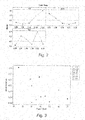
- Fig. 2 Plots of erosion as a function of Silicon, Manganese and Boron percentages are shown. As can be seen, the erosion increases rapidly above 8-9% Silicon, while Manganese percentages above 3% decrease the erosion. When it comes to the content of Boron, the results are indecisive.
- Fig. 3 a scatterplot showing erosion ratio on the X-axis and the difference between brazing temperature and melting temperature is shown.
- the brazing alloys G71 and G74 stand out when it comes to low erosion.
- G72 has similar Mn content as G71, the higher Si content in G72 seems to increase the erosion rate.
- the erosion ratio is defined as (h 0 -h 1 )/h 0 , wherein h 0 is the material thickness before brazing and h 1 is the undissolved material thickness after brazing.
- Another effect of addition of Manganese is that the solidus and liquidus temperatures of the brazing material after the brazing cycle will be higher than the solidus and liquidus temperatures under a brazing cycle. This is due to the Manganese, which has liquidus lowering properties, vaporizing during the brazing operation, meaning that if the brazed article is reheated after the brazing, it must be heated to a higher temperature before the brazing joints melt. The vaporized Manganese will not entrain into the base material; rather, it will leave the furnace in which the brazing is performed through the vacuum pumps usually deployed to evacuate the furnace. The Boron, which as mentioned also has some liquidus lowering properities, will also to some extent leave the brazing material, since it will migrate into the base material during the brazing cycle, hence increasing the solidus and liquidus temperatures of the brazing material.
- a brazing material In order to manufacture a brazing material according to the invention, it is preferred to blend alloys containing some or all of the desired metals of the brazing material according to the invention, and/or elemental metal, and melt the blend to form a uniform alloy containing all the desired elements in the desired percentages. It should be noted that vaporizing of the Manganese during the blending and consecutive melting of the brazing material can be avoided if the melting is performed in a protective atmosphere rather than under vacuum. Once melted and blended, the alloy is poured into one or several molds and allowed to solidify to form ingots of brazing alloy. It should be noted that in some cases, it might be suitable to use rather small molds for obtaining small ingots, since there might be a small risk that the elements of the brazing alloy might separate during the solidification in the mold.
- the ingots After the ingots have solidified, they are crushed. In order to even out possible differences between the compositions of the ingots, a batch of powder may be mixed. The powder is then mixed with a binder to form a paste.
- More common methods of forming a powder are, however, water or gas atomization.
- the brazing material is made in form of ribbons or foils, e.g. by melt spinning.
- the excellent properties of the G118 braze material come at a price - the melting temperature of this brazing material is considerably higher than for prior art brazing materials.
- Iron based brazing materials having a considerably lower melting temperature than the base material to be brazed.
- the brazing temperature has been kept slightly above the melting temperature of the brazing material.
- the prime reason for this approach has been to reduce erosion of the base material, which, as mentioned above, results due to melting point depressant migrating into the base material such that its melting temperature decreases.
- brazing material of the invention and high brazing temperatures, i.e. above 1200 degrees C, preferably above 1230 degrees C, brazing joints exhibiting high strength, limited corrosion due to entrainment of melting point depressant into base material and excellent corrosion resistance at a reasonable price have been achieved.
- a suitable brazing process for brazing articles of austenitic stainless steels with the brazing material according to the invention may e.g. comprise:
- One reason for the excellent result of the combination between the brazing method of Swedish patent application 1351284-3 and the brazing material according to the present invention may be the high temperature - by placing the brazing material such that no brazing material is located between the surfaces to be brazed to one another, the diffusion bonding between the surfaces to be brazed increases (due to the parts coming in close contact with one another), and diffusion brazing increases with increasing temperature.
- the brazing joint has a strength exceeding the theoretical strength of the brazing material. Tests have shown that this might be due to the diffusion or trans liquid phase bonding process - if the items to be joined are located very close to one another during the brazing process, the base material of the items to be joined will start to migrate into one another, such that a metallic bond is formed without or with minimal melting of the base material. This also reduces the amount of brittle phases (e.g. nickel silicides and chromium borides) in the joint.
- brittle phases e.g. nickel silicides and chromium borides
Landscapes
- Engineering & Computer Science (AREA)
- Mechanical Engineering (AREA)
- Chemical & Material Sciences (AREA)
- Materials Engineering (AREA)
- Metallurgy (AREA)
- Organic Chemistry (AREA)
- Physics & Mathematics (AREA)
- Thermal Sciences (AREA)
- General Engineering & Computer Science (AREA)
- Ceramic Products (AREA)
- Pressure Welding/Diffusion-Bonding (AREA)
Applications Claiming Priority (2)
| Application Number | Priority Date | Filing Date | Title |
|---|---|---|---|
| SE1451185 | 2014-10-08 | ||
| PCT/EP2015/072972 WO2016055430A1 (en) | 2014-10-08 | 2015-10-06 | A brazing material for brazing articles of austenitic stainless steel and method therefore |
Publications (2)
| Publication Number | Publication Date |
|---|---|
| EP3204185A1 EP3204185A1 (en) | 2017-08-16 |
| EP3204185B1 true EP3204185B1 (en) | 2019-10-02 |
Family
ID=54266558
Family Applications (1)
| Application Number | Title | Priority Date | Filing Date |
|---|---|---|---|
| EP15777665.9A Active EP3204185B1 (en) | 2014-10-08 | 2015-10-06 | A brazing material for brazing articles of austenitic stainless steel and method therefore |
Country Status (7)
| Country | Link |
|---|---|
| US (1) | US20180236611A1 (enExample) |
| EP (1) | EP3204185B1 (enExample) |
| JP (1) | JP2017534462A (enExample) |
| KR (1) | KR20170071526A (enExample) |
| CN (2) | CN106794555A (enExample) |
| SE (1) | SE542232C2 (enExample) |
| WO (1) | WO2016055430A1 (enExample) |
Families Citing this family (6)
| Publication number | Priority date | Publication date | Assignee | Title |
|---|---|---|---|---|
| SE539565C2 (en) * | 2015-06-03 | 2017-10-10 | Swep Int Ab | Brazing method for brazing articles, a brazed heat exchangerand a brazing alloy |
| DE102016116265A1 (de) * | 2016-08-31 | 2018-03-01 | Faurecia Emissions Control Technologies, Germany Gmbh | Lotwerkstoff auf Kupferbasis und Verwendung des Lotwerkstoffs |
| EP3515231B1 (en) | 2016-09-21 | 2020-08-05 | Carrier Corporation | Cooling unit for generating cooled area |
| SE540384C2 (en) | 2016-12-16 | 2018-09-04 | Swep Int Ab | Brazing material |
| CN107363430A (zh) * | 2017-07-29 | 2017-11-21 | 安徽华众焊业有限公司 | 一种低银含磷铜的钎料 |
| CN109128583B (zh) * | 2018-10-15 | 2020-12-29 | 华北水利水电大学 | 一种用于真空钎焊高氮钢的钎料及其制备方法 |
Family Cites Families (11)
| Publication number | Priority date | Publication date | Assignee | Title |
|---|---|---|---|---|
| US3561953A (en) * | 1968-03-19 | 1971-02-09 | Toyota Motor Co Ltd | Austenitic heat-resisting steel containing nickel, chromium and manganese |
| US4410604A (en) * | 1981-11-16 | 1983-10-18 | The Garrett Corporation | Iron-based brazing alloy compositions and brazed assemblies with iron based brazing alloys |
| US4444587A (en) * | 1983-02-03 | 1984-04-24 | Huntington Alloys, Inc. | Brazing alloy |
| SE523855C2 (sv) * | 2000-11-10 | 2004-05-25 | Alfa Laval Corp Ab | Järnbaserat lodmaterial för sammanfogning av elememt och lödd produkt framställd härmed |
| SE524928C2 (sv) * | 2001-06-05 | 2004-10-26 | Alfa Laval Corp Ab | Järnbaserat lodmaterial för sammanfogning av element genom lödning samt lödd produkt framställd härmed |
| SE531988C2 (sv) * | 2006-11-17 | 2009-09-22 | Alfa Laval Corp Ab | Lodmaterial samt förfarande för lödning med detta material |
| ATE533591T1 (de) * | 2008-03-19 | 2011-12-15 | Hoeganaes Ab Publ | Hartlot auf eisen-chrom-basis |
| CN101244494B (zh) * | 2008-03-28 | 2010-06-09 | 常州华通焊丝有限公司 | 低温装备用奥氏体不锈钢埋弧焊焊丝 |
| JP5718924B2 (ja) * | 2009-09-18 | 2015-05-13 | ホガナス アクチボラゲット | 鉄−クロム系鑞材 |
| CN103079752A (zh) * | 2010-09-13 | 2013-05-01 | 福田金属箔粉工业株式会社 | 钎焊用镍基耐盐酸腐蚀合金 |
| WO2013077113A1 (ja) * | 2011-11-24 | 2013-05-30 | 福田金属箔粉工業株式会社 | 濡れ広がり性と耐食性に優れたNi-Cr系ろう材 |
-
2015
- 2015-10-06 SE SE1750386A patent/SE542232C2/en unknown
- 2015-10-06 EP EP15777665.9A patent/EP3204185B1/en active Active
- 2015-10-06 WO PCT/EP2015/072972 patent/WO2016055430A1/en not_active Ceased
- 2015-10-06 CN CN201580054700.1A patent/CN106794555A/zh active Pending
- 2015-10-06 JP JP2017518500A patent/JP2017534462A/ja active Pending
- 2015-10-06 KR KR1020177012343A patent/KR20170071526A/ko not_active Withdrawn
- 2015-10-06 CN CN202010541750.5A patent/CN111673314A/zh active Pending
- 2015-10-06 US US15/517,426 patent/US20180236611A1/en not_active Abandoned
Non-Patent Citations (1)
| Title |
|---|
| None * |
Also Published As
| Publication number | Publication date |
|---|---|
| SE1750386A1 (en) | 2017-03-30 |
| EP3204185A1 (en) | 2017-08-16 |
| US20180236611A1 (en) | 2018-08-23 |
| CN111673314A (zh) | 2020-09-18 |
| KR20170071526A (ko) | 2017-06-23 |
| WO2016055430A1 (en) | 2016-04-14 |
| JP2017534462A (ja) | 2017-11-24 |
| SE542232C2 (en) | 2020-03-17 |
| CN106794555A (zh) | 2017-05-31 |
Similar Documents
| Publication | Publication Date | Title |
|---|---|---|
| US20180236611A1 (en) | A brazing material for brazing articles of austenitic stainless steel and method therefore | |
| US5378294A (en) | Copper alloys to be used as brazing filler metals | |
| KR101812618B1 (ko) | 철-크롬계 브레이징 용가재 | |
| CN1474732B (zh) | 焊接材料及以此所制得的产品 | |
| JP6439795B2 (ja) | ろう付け用Ni基アモルファス合金薄帯、それを用いたステンレス鋼製接合物 | |
| CN108136548B (zh) | 钎焊合金 | |
| JPS5929661B2 (ja) | 銅ベ−ス非晶質均質合金 | |
| CN106794556A (zh) | 铝合金钎焊板和硬钎焊方法 | |
| US20130333810A9 (en) | Iron- and nickel-based brazing foil and method for brazing | |
| CN101890593B (zh) | 一种钎焊金刚石工具用镍基钎焊料及其制备方法 | |
| GB2464012A (en) | Iron-based brazing foil and method for brazing | |
| US20180133849A1 (en) | Ti-based filler alloy compositions | |
| CN105364335A (zh) | Al-Ag-Cu-Mg铝基合金态钎料及其制备方法 | |
| JP2015033716A (ja) | アルミニウム合金ブレージングシートの製造方法および該製造方法で得られるアルミニウム合金ブレージングシート | |
| JP5008969B2 (ja) | 液相拡散接合用合金 | |
| US8894780B2 (en) | Nickel/iron-based braze and process for brazing | |
| US10940565B2 (en) | Low-melting nickel-based alloys for braze joining | |
| CN100494436C (zh) | 一种低熔点无铅焊料合金 | |
| SE529913C2 (sv) | Förfarande för lödning av föremål av rostfritt stål, förfarande för lödning av värmeväxlare av rostfritt stål samt lött föremål samt lödd värmeväxlare | |
| KR20240014463A (ko) | 젖음 퍼짐성이 우수한 니켈 경납재 | |
| CN110072665A (zh) | 钎焊材料 | |
| JPH01107997A (ja) | Ni基合金ロー材 | |
| JPH02151378A (ja) | 酸化雰囲気中で接合可能なCr含有材料の液相拡散接合用合金箔 | |
| JP2004001064A (ja) | 鉄系低融点接合用合金 | |
| KR20220100873A (ko) | 열교환기용 저융점 니켈-망가니즈-실리콘계 납땜 필러 금속 |
Legal Events
| Date | Code | Title | Description |
|---|---|---|---|
| STAA | Information on the status of an ep patent application or granted ep patent |
Free format text: STATUS: THE INTERNATIONAL PUBLICATION HAS BEEN MADE |
|
| PUAI | Public reference made under article 153(3) epc to a published international application that has entered the european phase |
Free format text: ORIGINAL CODE: 0009012 |
|
| STAA | Information on the status of an ep patent application or granted ep patent |
Free format text: STATUS: REQUEST FOR EXAMINATION WAS MADE |
|
| 17P | Request for examination filed |
Effective date: 20170330 |
|
| AK | Designated contracting states |
Kind code of ref document: A1 Designated state(s): AL AT BE BG CH CY CZ DE DK EE ES FI FR GB GR HR HU IE IS IT LI LT LU LV MC MK MT NL NO PL PT RO RS SE SI SK SM TR |
|
| AX | Request for extension of the european patent |
Extension state: BA ME |
|
| DAV | Request for validation of the european patent (deleted) | ||
| DAX | Request for extension of the european patent (deleted) | ||
| STAA | Information on the status of an ep patent application or granted ep patent |
Free format text: STATUS: EXAMINATION IS IN PROGRESS |
|
| 17Q | First examination report despatched |
Effective date: 20180906 |
|
| REG | Reference to a national code |
Ref country code: DE Ref legal event code: R079 Ref document number: 602015039122 Country of ref document: DE Free format text: PREVIOUS MAIN CLASS: B23K0035300000 Ipc: C22C0038340000 |
|
| GRAP | Despatch of communication of intention to grant a patent |
Free format text: ORIGINAL CODE: EPIDOSNIGR1 |
|
| STAA | Information on the status of an ep patent application or granted ep patent |
Free format text: STATUS: GRANT OF PATENT IS INTENDED |
|
| RIC1 | Information provided on ipc code assigned before grant |
Ipc: B23K 101/04 20060101ALI20190319BHEP Ipc: B23K 35/02 20060101ALI20190319BHEP Ipc: C22C 38/34 20060101AFI20190319BHEP Ipc: C22C 38/44 20060101ALI20190319BHEP Ipc: F28F 21/08 20060101ALI20190319BHEP Ipc: C22C 38/58 20060101ALI20190319BHEP Ipc: C22C 38/54 20060101ALI20190319BHEP Ipc: B23K 35/30 20060101ALI20190319BHEP |
|
| INTG | Intention to grant announced |
Effective date: 20190423 |
|
| GRAS | Grant fee paid |
Free format text: ORIGINAL CODE: EPIDOSNIGR3 |
|
| GRAA | (expected) grant |
Free format text: ORIGINAL CODE: 0009210 |
|
| STAA | Information on the status of an ep patent application or granted ep patent |
Free format text: STATUS: THE PATENT HAS BEEN GRANTED |
|
| AK | Designated contracting states |
Kind code of ref document: B1 Designated state(s): AL AT BE BG CH CY CZ DE DK EE ES FI FR GB GR HR HU IE IS IT LI LT LU LV MC MK MT NL NO PL PT RO RS SE SI SK SM TR |
|
| REG | Reference to a national code |
Ref country code: GB Ref legal event code: FG4D |
|
| REG | Reference to a national code |
Ref country code: CH Ref legal event code: EP Ref country code: AT Ref legal event code: REF Ref document number: 1186242 Country of ref document: AT Kind code of ref document: T Effective date: 20191015 |
|
| REG | Reference to a national code |
Ref country code: DE Ref legal event code: R096 Ref document number: 602015039122 Country of ref document: DE |
|
| REG | Reference to a national code |
Ref country code: IE Ref legal event code: FG4D |
|
| REG | Reference to a national code |
Ref country code: NL Ref legal event code: MP Effective date: 20191002 |
|
| REG | Reference to a national code |
Ref country code: LT Ref legal event code: MG4D |
|
| REG | Reference to a national code |
Ref country code: AT Ref legal event code: MK05 Ref document number: 1186242 Country of ref document: AT Kind code of ref document: T Effective date: 20191002 |
|
| PG25 | Lapsed in a contracting state [announced via postgrant information from national office to epo] |
Ref country code: ES Free format text: LAPSE BECAUSE OF FAILURE TO SUBMIT A TRANSLATION OF THE DESCRIPTION OR TO PAY THE FEE WITHIN THE PRESCRIBED TIME-LIMIT Effective date: 20191002 Ref country code: GR Free format text: LAPSE BECAUSE OF FAILURE TO SUBMIT A TRANSLATION OF THE DESCRIPTION OR TO PAY THE FEE WITHIN THE PRESCRIBED TIME-LIMIT Effective date: 20200103 Ref country code: NO Free format text: LAPSE BECAUSE OF FAILURE TO SUBMIT A TRANSLATION OF THE DESCRIPTION OR TO PAY THE FEE WITHIN THE PRESCRIBED TIME-LIMIT Effective date: 20200102 Ref country code: PL Free format text: LAPSE BECAUSE OF FAILURE TO SUBMIT A TRANSLATION OF THE DESCRIPTION OR TO PAY THE FEE WITHIN THE PRESCRIBED TIME-LIMIT Effective date: 20191002 Ref country code: LT Free format text: LAPSE BECAUSE OF FAILURE TO SUBMIT A TRANSLATION OF THE DESCRIPTION OR TO PAY THE FEE WITHIN THE PRESCRIBED TIME-LIMIT Effective date: 20191002 Ref country code: SE Free format text: LAPSE BECAUSE OF FAILURE TO SUBMIT A TRANSLATION OF THE DESCRIPTION OR TO PAY THE FEE WITHIN THE PRESCRIBED TIME-LIMIT Effective date: 20191002 Ref country code: LV Free format text: LAPSE BECAUSE OF FAILURE TO SUBMIT A TRANSLATION OF THE DESCRIPTION OR TO PAY THE FEE WITHIN THE PRESCRIBED TIME-LIMIT Effective date: 20191002 Ref country code: NL Free format text: LAPSE BECAUSE OF FAILURE TO SUBMIT A TRANSLATION OF THE DESCRIPTION OR TO PAY THE FEE WITHIN THE PRESCRIBED TIME-LIMIT Effective date: 20191002 Ref country code: FI Free format text: LAPSE BECAUSE OF FAILURE TO SUBMIT A TRANSLATION OF THE DESCRIPTION OR TO PAY THE FEE WITHIN THE PRESCRIBED TIME-LIMIT Effective date: 20191002 Ref country code: BG Free format text: LAPSE BECAUSE OF FAILURE TO SUBMIT A TRANSLATION OF THE DESCRIPTION OR TO PAY THE FEE WITHIN THE PRESCRIBED TIME-LIMIT Effective date: 20200102 Ref country code: PT Free format text: LAPSE BECAUSE OF FAILURE TO SUBMIT A TRANSLATION OF THE DESCRIPTION OR TO PAY THE FEE WITHIN THE PRESCRIBED TIME-LIMIT Effective date: 20200203 Ref country code: AT Free format text: LAPSE BECAUSE OF FAILURE TO SUBMIT A TRANSLATION OF THE DESCRIPTION OR TO PAY THE FEE WITHIN THE PRESCRIBED TIME-LIMIT Effective date: 20191002 |
|
| PG25 | Lapsed in a contracting state [announced via postgrant information from national office to epo] |
Ref country code: RS Free format text: LAPSE BECAUSE OF FAILURE TO SUBMIT A TRANSLATION OF THE DESCRIPTION OR TO PAY THE FEE WITHIN THE PRESCRIBED TIME-LIMIT Effective date: 20191002 Ref country code: HR Free format text: LAPSE BECAUSE OF FAILURE TO SUBMIT A TRANSLATION OF THE DESCRIPTION OR TO PAY THE FEE WITHIN THE PRESCRIBED TIME-LIMIT Effective date: 20191002 Ref country code: CZ Free format text: LAPSE BECAUSE OF FAILURE TO SUBMIT A TRANSLATION OF THE DESCRIPTION OR TO PAY THE FEE WITHIN THE PRESCRIBED TIME-LIMIT Effective date: 20191002 Ref country code: IS Free format text: LAPSE BECAUSE OF FAILURE TO SUBMIT A TRANSLATION OF THE DESCRIPTION OR TO PAY THE FEE WITHIN THE PRESCRIBED TIME-LIMIT Effective date: 20200224 |
|
| REG | Reference to a national code |
Ref country code: CH Ref legal event code: PL |
|
| PG25 | Lapsed in a contracting state [announced via postgrant information from national office to epo] |
Ref country code: AL Free format text: LAPSE BECAUSE OF FAILURE TO SUBMIT A TRANSLATION OF THE DESCRIPTION OR TO PAY THE FEE WITHIN THE PRESCRIBED TIME-LIMIT Effective date: 20191002 |
|
| REG | Reference to a national code |
Ref country code: DE Ref legal event code: R097 Ref document number: 602015039122 Country of ref document: DE |
|
| PG2D | Information on lapse in contracting state deleted |
Ref country code: IS |
|
| PG25 | Lapsed in a contracting state [announced via postgrant information from national office to epo] |
Ref country code: MC Free format text: LAPSE BECAUSE OF FAILURE TO SUBMIT A TRANSLATION OF THE DESCRIPTION OR TO PAY THE FEE WITHIN THE PRESCRIBED TIME-LIMIT Effective date: 20191002 Ref country code: RO Free format text: LAPSE BECAUSE OF FAILURE TO SUBMIT A TRANSLATION OF THE DESCRIPTION OR TO PAY THE FEE WITHIN THE PRESCRIBED TIME-LIMIT Effective date: 20191002 Ref country code: CH Free format text: LAPSE BECAUSE OF NON-PAYMENT OF DUE FEES Effective date: 20191031 Ref country code: EE Free format text: LAPSE BECAUSE OF FAILURE TO SUBMIT A TRANSLATION OF THE DESCRIPTION OR TO PAY THE FEE WITHIN THE PRESCRIBED TIME-LIMIT Effective date: 20191002 Ref country code: LI Free format text: LAPSE BECAUSE OF NON-PAYMENT OF DUE FEES Effective date: 20191031 Ref country code: DK Free format text: LAPSE BECAUSE OF FAILURE TO SUBMIT A TRANSLATION OF THE DESCRIPTION OR TO PAY THE FEE WITHIN THE PRESCRIBED TIME-LIMIT Effective date: 20191002 Ref country code: LU Free format text: LAPSE BECAUSE OF NON-PAYMENT OF DUE FEES Effective date: 20191006 Ref country code: IS Free format text: LAPSE BECAUSE OF FAILURE TO SUBMIT A TRANSLATION OF THE DESCRIPTION OR TO PAY THE FEE WITHIN THE PRESCRIBED TIME-LIMIT Effective date: 20200202 |
|
| PLBE | No opposition filed within time limit |
Free format text: ORIGINAL CODE: 0009261 |
|
| STAA | Information on the status of an ep patent application or granted ep patent |
Free format text: STATUS: NO OPPOSITION FILED WITHIN TIME LIMIT |
|
| REG | Reference to a national code |
Ref country code: BE Ref legal event code: MM Effective date: 20191031 |
|
| PG25 | Lapsed in a contracting state [announced via postgrant information from national office to epo] |
Ref country code: IT Free format text: LAPSE BECAUSE OF FAILURE TO SUBMIT A TRANSLATION OF THE DESCRIPTION OR TO PAY THE FEE WITHIN THE PRESCRIBED TIME-LIMIT Effective date: 20191002 Ref country code: SK Free format text: LAPSE BECAUSE OF FAILURE TO SUBMIT A TRANSLATION OF THE DESCRIPTION OR TO PAY THE FEE WITHIN THE PRESCRIBED TIME-LIMIT Effective date: 20191002 Ref country code: BE Free format text: LAPSE BECAUSE OF NON-PAYMENT OF DUE FEES Effective date: 20191031 Ref country code: SM Free format text: LAPSE BECAUSE OF FAILURE TO SUBMIT A TRANSLATION OF THE DESCRIPTION OR TO PAY THE FEE WITHIN THE PRESCRIBED TIME-LIMIT Effective date: 20191002 |
|
| 26N | No opposition filed |
Effective date: 20200703 |
|
| PG25 | Lapsed in a contracting state [announced via postgrant information from national office to epo] |
Ref country code: IE Free format text: LAPSE BECAUSE OF NON-PAYMENT OF DUE FEES Effective date: 20191006 |
|
| PG25 | Lapsed in a contracting state [announced via postgrant information from national office to epo] |
Ref country code: SI Free format text: LAPSE BECAUSE OF FAILURE TO SUBMIT A TRANSLATION OF THE DESCRIPTION OR TO PAY THE FEE WITHIN THE PRESCRIBED TIME-LIMIT Effective date: 20191002 |
|
| PG25 | Lapsed in a contracting state [announced via postgrant information from national office to epo] |
Ref country code: CY Free format text: LAPSE BECAUSE OF FAILURE TO SUBMIT A TRANSLATION OF THE DESCRIPTION OR TO PAY THE FEE WITHIN THE PRESCRIBED TIME-LIMIT Effective date: 20191002 |
|
| PG25 | Lapsed in a contracting state [announced via postgrant information from national office to epo] |
Ref country code: MT Free format text: LAPSE BECAUSE OF FAILURE TO SUBMIT A TRANSLATION OF THE DESCRIPTION OR TO PAY THE FEE WITHIN THE PRESCRIBED TIME-LIMIT Effective date: 20191002 Ref country code: HU Free format text: LAPSE BECAUSE OF FAILURE TO SUBMIT A TRANSLATION OF THE DESCRIPTION OR TO PAY THE FEE WITHIN THE PRESCRIBED TIME-LIMIT; INVALID AB INITIO Effective date: 20151006 |
|
| PG25 | Lapsed in a contracting state [announced via postgrant information from national office to epo] |
Ref country code: TR Free format text: LAPSE BECAUSE OF FAILURE TO SUBMIT A TRANSLATION OF THE DESCRIPTION OR TO PAY THE FEE WITHIN THE PRESCRIBED TIME-LIMIT Effective date: 20191002 |
|
| PG25 | Lapsed in a contracting state [announced via postgrant information from national office to epo] |
Ref country code: MK Free format text: LAPSE BECAUSE OF FAILURE TO SUBMIT A TRANSLATION OF THE DESCRIPTION OR TO PAY THE FEE WITHIN THE PRESCRIBED TIME-LIMIT Effective date: 20191002 |
|
| P01 | Opt-out of the competence of the unified patent court (upc) registered |
Effective date: 20230514 |
|
| PGFP | Annual fee paid to national office [announced via postgrant information from national office to epo] |
Ref country code: DE Payment date: 20251014 Year of fee payment: 11 |
|
| PGFP | Annual fee paid to national office [announced via postgrant information from national office to epo] |
Ref country code: GB Payment date: 20251013 Year of fee payment: 11 |
|
| PGFP | Annual fee paid to national office [announced via postgrant information from national office to epo] |
Ref country code: FR Payment date: 20251013 Year of fee payment: 11 |