EP3204051B1 - Mri imaging of amyloid plaque using liposomes - Google Patents
Mri imaging of amyloid plaque using liposomes Download PDFInfo
- Publication number
- EP3204051B1 EP3204051B1 EP15849750.3A EP15849750A EP3204051B1 EP 3204051 B1 EP3204051 B1 EP 3204051B1 EP 15849750 A EP15849750 A EP 15849750A EP 3204051 B1 EP3204051 B1 EP 3204051B1
- Authority
- EP
- European Patent Office
- Prior art keywords
- phospholipid
- polymer
- liposomal composition
- aromatic
- represented
- Prior art date
- Legal status (The legal status is an assumption and is not a legal conclusion. Google has not performed a legal analysis and makes no representation as to the accuracy of the status listed.)
- Active
Links
- 0 CN(CC*)c1ccc(C=Cc2ncncc2)cc1 Chemical compound CN(CC*)c1ccc(C=Cc2ncncc2)cc1 0.000 description 16
- ODTLZTIGSOCEMS-SNAWJCMRSA-N CCC(COCCN(C)c1ccc(/C=C/c(cn2)ccc2O)cc1)O Chemical compound CCC(COCCN(C)c1ccc(/C=C/c(cn2)ccc2O)cc1)O ODTLZTIGSOCEMS-SNAWJCMRSA-N 0.000 description 1
- OYMDVSALDXWFJX-ONEGZZNKSA-N CCCN(CCO)c1ccc(/C=C/c(cn2)ccc2O)cc1 Chemical compound CCCN(CCO)c1ccc(/C=C/c(cn2)ccc2O)cc1 OYMDVSALDXWFJX-ONEGZZNKSA-N 0.000 description 1
Images











Classifications
-
- A—HUMAN NECESSITIES
- A61—MEDICAL OR VETERINARY SCIENCE; HYGIENE
- A61K—PREPARATIONS FOR MEDICAL, DENTAL OR TOILETRY PURPOSES
- A61K49/00—Preparations for testing in vivo
- A61K49/06—Nuclear magnetic resonance [NMR] contrast preparations; Magnetic resonance imaging [MRI] contrast preparations
- A61K49/18—Nuclear magnetic resonance [NMR] contrast preparations; Magnetic resonance imaging [MRI] contrast preparations characterised by a special physical form, e.g. emulsions, microcapsules, liposomes
- A61K49/1806—Suspensions, emulsions, colloids, dispersions
- A61K49/1812—Suspensions, emulsions, colloids, dispersions liposomes, polymersomes, e.g. immunoliposomes
-
- A—HUMAN NECESSITIES
- A61—MEDICAL OR VETERINARY SCIENCE; HYGIENE
- A61K—PREPARATIONS FOR MEDICAL, DENTAL OR TOILETRY PURPOSES
- A61K49/00—Preparations for testing in vivo
- A61K49/001—Preparation for luminescence or biological staining
- A61K49/0013—Luminescence
- A61K49/0017—Fluorescence in vivo
- A61K49/0019—Fluorescence in vivo characterised by the fluorescent group, e.g. oligomeric, polymeric or dendritic molecules
- A61K49/0021—Fluorescence in vivo characterised by the fluorescent group, e.g. oligomeric, polymeric or dendritic molecules the fluorescent group being a small organic molecule
- A61K49/0032—Methine dyes, e.g. cyanine dyes
- A61K49/0034—Indocyanine green, i.e. ICG, cardiogreen
-
- A—HUMAN NECESSITIES
- A61—MEDICAL OR VETERINARY SCIENCE; HYGIENE
- A61K—PREPARATIONS FOR MEDICAL, DENTAL OR TOILETRY PURPOSES
- A61K49/00—Preparations for testing in vivo
- A61K49/001—Preparation for luminescence or biological staining
- A61K49/0063—Preparation for luminescence or biological staining characterised by a special physical or galenical form, e.g. emulsions, microspheres
- A61K49/0069—Preparation for luminescence or biological staining characterised by a special physical or galenical form, e.g. emulsions, microspheres the agent being in a particular physical galenical form
- A61K49/0076—Preparation for luminescence or biological staining characterised by a special physical or galenical form, e.g. emulsions, microspheres the agent being in a particular physical galenical form dispersion, suspension, e.g. particles in a liquid, colloid, emulsion
- A61K49/0084—Preparation for luminescence or biological staining characterised by a special physical or galenical form, e.g. emulsions, microspheres the agent being in a particular physical galenical form dispersion, suspension, e.g. particles in a liquid, colloid, emulsion liposome, i.e. bilayered vesicular structure
-
- A—HUMAN NECESSITIES
- A61—MEDICAL OR VETERINARY SCIENCE; HYGIENE
- A61K—PREPARATIONS FOR MEDICAL, DENTAL OR TOILETRY PURPOSES
- A61K49/00—Preparations for testing in vivo
- A61K49/06—Nuclear magnetic resonance [NMR] contrast preparations; Magnetic resonance imaging [MRI] contrast preparations
- A61K49/08—Nuclear magnetic resonance [NMR] contrast preparations; Magnetic resonance imaging [MRI] contrast preparations characterised by the carrier
- A61K49/10—Organic compounds
-
- A—HUMAN NECESSITIES
- A61—MEDICAL OR VETERINARY SCIENCE; HYGIENE
- A61K—PREPARATIONS FOR MEDICAL, DENTAL OR TOILETRY PURPOSES
- A61K49/00—Preparations for testing in vivo
- A61K49/06—Nuclear magnetic resonance [NMR] contrast preparations; Magnetic resonance imaging [MRI] contrast preparations
- A61K49/08—Nuclear magnetic resonance [NMR] contrast preparations; Magnetic resonance imaging [MRI] contrast preparations characterised by the carrier
- A61K49/10—Organic compounds
- A61K49/12—Macromolecular compounds
- A61K49/126—Linear polymers, e.g. dextran, inulin, PEG
Definitions
- AD Alzheimer's disease
- AD is a neurodegenerative illness characterized by memory loss and other cognitive deficits.
- AD is the most common form of dementia and affects one in every eight people over the age of 65 and one in every two over the age of 85.
- AD is the sixth leading cause of death in the United States.
- Over 5.5 million Americans suffer from AD, with an estimated annual cost of $200 billion USD.
- By 2050 it is projected that AD will affect over 20 million Americans at an annual price tag of $1.1 Trillion USD (in 2011 dollars).
- USD $600 billion
- AD Alzheimer's disease
- PET imaging agents Two positron emission tomography (PET) imaging agents that bind specifically to amyloid plaques have recently been approved by the FDA, and can be used for the detection of amyloid plaques.
- PET imaging also requires the use of radio-isotopes, and carries the risk of significant radiation: an amyloid scan is estimated to expose the patient to about 7mSv of radiation dose, roughly equivalent to several CT scans, as a typical head CT may be about 2mSv.
- Availability of radioactive PET agents also remains a challenge, due to their short half-life.
- a non-radioactive amyloid imaging agent would be of significant interest, addressing both the distribution challenges and the radiation dose concerns with current PET imaging agents, and in combination with a tau imaging agent, possibly constituting a diagnostic for AD.
- liposomes targeted to amyloid plaque by the thioflavine analog Methoxy-XO4 penetrated the blood-brain barrier (BBB), and successfully bound the majority of amyloid plaques in the APP/PSEN1 mouse model of AD.
- Existing amyloid binding ligands, including methoxy-XO4 are, however, hydrophobic. In liposomal formulations, they interfere with the lipid bilayer. When loaded with Gd chelates for MRI T1 contrast, methoxy-XO4 targeted liposomes were unstable to the osmotic gradient created by the high Gd chelate internal concentration, and were destabilized.
- US201225 8044 describes lipid-based nanoparticle compositions, which may be useful for imaging and/or the treatment of amyloid- ⁇ plaque deposits characteristic of Alzheimer's Disease.
- the present application appreciates that detecting amyloid deposits may be a challenging endeavor.
- a liposomal composition is provided by the present disclosure.
- the liposomal composition may include a membrane.
- the membrane may include a phospholipid-polymer-aromatic conjugate.
- the aromatic moiety in the phospholipid-polymer-aromatic conjugate may be represented by Structural Formula I : -X-Ar-R 1 -Het ( I ) or a pharmaceutically acceptable salt thereof.
- X may be -R 2 -O- or -R 2 -N(R 3 )-.
- R 1 may be C 2 -C 6 alkyl or alkenyl.
- R 2 may be a linking group including 1 to 6 carbon atoms.
- R 2 may include one of: alkylene or alkoxyalkylene.
- R 3 may be hydrogen, C 1 -C 6 alkyl, or C 1 -C 6 alkoxyalkyl.
- Ar may be a monocyclic or polycyclic group.
- Ar may include at least one aromatic or heteroaromatic ring. Het may be a monocyclic or polycyclic group.
- Het may include at least one heteroaromatic ring.
- the aromatic moiety in the phospholipid-polymcr-aromatic conjugate represented by Formula I may further be substituted.
- R 2 may be substituted with zero, one or more of: hydroxyl, C 1 -C 6 alkyl, and C 1 -C 6 hydroxy alkyl.
- Ar, Het, R 1 , and R 3 other than hydrogen may be independently substituted with zero, one or more of: halogen; -OH; alkyl, -O-alkyl, aryl, - O-aryl or -(O-alkylene) 1-6 optionally substituted with -OH or halogen; -NH 2 ; -NH-alkyl; - N-dialkyl; carboxyl; sulfonyl; carbamoyl; and glycosyl.
- a liposomal composition for use in a method for imaging amyloid deposits in a subject may include introducing into the subject a detectable quantity of a liposomal composition.
- the method may include allowing sufficient time for the liposomal composition to be associated with one or more amyloid deposits.
- the method may include detecting the liposomal composition associated with the one or more amyloid deposits.
- the liposomal composition of the method may include a membrane.
- a nonradioactive magnetic resonance imaging (MRI) contrast enhancing agent may be at least one of encapsulated by or bound to the membrane.
- the membrane may include a phospholipid-polymcr-aromatic conjugate.
- the aromatic moiety in the phospholipid-polymer-aromatic conjugate may be represented by Structural Formula I ; -X-Ar-R 1 -Het ( I ) or a pharmaceutically acceptable salt thereof.
- X may be -R 2 -O- or -R 2 -N(R 3 )-.
- R 1 may be C 2 -C 6 alkyl or alkenyl.
- R 2 may be a linking group including 1 to 6 carbon atoms.
- R 2 may include one of: alkylene or alkoxyalkylene.
- R 3 may be hydrogen, C 1 -C 6 alkyl, or C 1 -C 6 alkoxyalkyl.
- Ar may be a monocyclic or polycyclic group. Ar may include at least one aromatic or heteroaromatic ring. Het may be a monocyclic or polycyclic group. Het may include at least one heteroaromatic ring.
- the aromatic moiety in the phospholipid-polymer-aromatic conjugate represented by Formula I may further be substituted.
- R 2 may be substituted with zero, one or more of: hydroxyl, C 1 -C 6 alkyl, and C 1 -C 6 hydroxyalkyl.
- Ar, Het, R 1 , and R 3 other than hydrogen may be independently substituted with zero, one or more of: halogen; -OH; alkyl, -O-alkyl, aryl, - O-aryrl or -(O-alkylene) 1-6 optionally substituted with -OH or halogen; -NH 2 ; -NH-alkyl; - N-dialkyl; carboxyl; sulfonyl; carbamoyl; and glycosyl.
- a phospholipid-polymer-aromatic conjugate is disclosed.
- the aromatic moiety in the phospholipid-polymer-aromatic conjugate may be represented by Structural Formula I : -X-Ar-R 1 -Het ( I ) or a pharmaceutically acceptable salt thereof.
- X may be R 2 -O- or -R 2 -N(R 3 )-
- R 1 may be C 2 -C 6 alkyl or alkenyl
- R 2 may be a linking group including 1 to 6 carbon atoms.
- R 2 may include one of: alkylcnc or alkoxyalkylene.
- R 1 may be hydrogen, C 1 -C 6 alkyl, or C 1- C 6 alkoxyalkyl.
- Ar may be a monocyclic or polycyclic group. Ar may include at least one aromatic or heteroaromatic ring. Het may be a monocyclic or polycyclic group. Het may include at least one heteroaromatic ring.
- the aromatic moiety in the phospholipid-polymer-aromatic conjugate represented by Formula I may further be substituted.
- R 2 may be substituted with zero, one or more of: hydroxyl, C 1 -C 6 alkyl, and C 1 -C 6 hydroxyalkyl.
- Ar, Het, R 1 , and R 3 other than hydrogen may be independently substituted with zero, one or more of: halogen; -OH; alkyl, -O-alkyl, aryl, - O-aryl or -(O-alkylene) 1 6 optionally substituted with -OH or halogen; -NH 2 ; -NH-alkyl; - N-dialkyl; carboxyl; sulfonyl; carbamoyl; and glycosyl.
- R 1 may be C 2 -C 6 alkyl or alkenyl.
- R 5 may be hydrogen, hydroxyl, H-R 2 -, HO-R 2 -, H-R 2 -N(R 3 )-, or HO-R 2 -N(R 3 )-,
- R 2 may be a linking group including 1 to 6 carbon atoms.
- R 2 may include one of: alkylene, or alkoxyalkylene.
- R 3 may be hydrogen, C 1 -C 6 alkyl, or C 1 -C 6 alkoxyalkyl.
- Ar may be a monocyclic or polycyclic group. Ar may include at least one aromatic or heteroaromatic ring. Het may be a monocyclic or polycyclic group. Het may include at least one heteroaromatic ring.
- the compound represented by Structural Formula II may further be substituted. For example, R 2 may be substituted with zero, one or more of: hydroxyl, C 1 -C 6 alkyl, and C 1 -C 6 hydroxyalkyl.
- Ar, Het, R 1 , and R 3 other than hydrogen may be independently substituted with zero, one or more of: halogen; -OH; alkyl, -O-alkyl, aryl, -O-aryl or -(O-alkylene) 1 6 optionally substituted with -OH or halogen; -NH 2 ; -NH-alkyl; -N-dialkyl; carboxyl; sulfonyl; carbamoyl; and glycosyl.
- a kit for imaging amyloid deposits in a subject may include instructions and a liposomal composition.
- the instructions may direct a user to introduce into the subject a detectable quantity of the liposomal composition.
- the instructions may direct the user to allow sufficient time for the liposomal composition to be associated with one or more amyloid deposits.
- the instructions may direct the user to detect the liposomal composition associated with the one or more amyloid deposits.
- the liposomal composition of the kit may include a membrane.
- a nonradioactive magnetic resonance imaging (MRI) contrast enhancing agent may be at least one of encapsulated by or bound to the membrane.
- the membrane may include a phospholipid-polymer-aromatic conjugate.
- the aromatic moiety in the phospholipid-polymer-aromatic conjugate may be represented by Structural Formula I : -X-Ar-R 1 -Het ( I ) or a pharmaceutically acceptable salt thereof.
- X may be - R 2 -O- or -R 2 -N(R 3 )-.
- R 1 may be C 2 -C 6 alkyl or alkenyl.
- R 2 may be a linking group including 1 to 6 carbon atoms.
- R 2 may include one of: alkylene or alkoxyalkylene.
- R 5 may be hydrogen, C 1 -C 6 alkyl, or C 1 -C 6 alkoxyalkyl.
- Ar may be a monocyclic or polycyclic group. Ar may include at least one aromatic or heteroaromatic ring. Het may be a monocyclic or polycyclic group. Het may include at least one heteroaromatic ring.
- the aromatic moiety in the phospholipid-polymer-aromatic conjugate represented by Formula I may further be substituted.
- R 2 may be substituted with zero, one or more of: hydroxyl, C 1 -C 6 alkyl, and C 1 -C 6 hydroxyalkyl.
- Ar, Het, R 1 , and R 3 other than hydrogen may be independently substituted with zero, one or more of: halogen; -OH; alkyl, -O-alkyl, aryl, -O-aryl or -(O-alkylene) 1 6 optionally substituted with -OH or halogen; -NH 2 ; -NH-alkyl; -N-dialkyl; carboxyl; sulfonyl; carbamoyl; and glycosyl.
- the claimed invention includes a liposomal composition as defined in claims 1-6.
- the claimed invention further includes a liposomal composition for use in the method for imaging amyloid deposits in a patient as defined in claims 7-13.
- the claimed invention also includes a kit for imaging amyloid deposits as defined in claims 14-15.
- a liposomal composition may include a membrane.
- the membrane may include a phospholipid-polymer-aromatic conjugate.
- the aromatic moiety in the phospholipid-polymer-aromatic conjugate may be represented by Structural Formula I : X-Ar-R 1 -Het ( I ) or a pharmaceutically acceptable salt thereof.
- X may be -R 2 -O- or -R 2 -N(R 3 )-.
- R 1 may be C 2 -C 6 alkyl or alkenyl.
- R 2 may be a linking group including 1 to 6 carbon atoms.
- R 2 may include one of: alkylene or alkoxyalkylene.
- R 3 may be hydrogen, C 1 -C 6 alkyl, or C 1 -C 6 alkoxyalkyl.
- Ar may be a monocyclic or polycyclic group. Ar may include at least one aromatic or heteroaromatic ring. Het may be a monocyclic or polycyclic group. Het may include at least one heteroaromatic ring. The aromatic moiety in the phospholipid-polymer-aromatic conjugate represented by Formula I may further be substituted.
- R 2 may be substituted with zero, one or more of: hydroxyl, C 1 -C 6 alkyl, and C 1 -C 6 hydroxyalkyl.
- Ar, Het, R 1 , and R 3 other than hydrogen may be independently substituted with zero, one or more of: halogen; -OH; alkyl, -O-alkyl, aryl, -O-aryl or -(O-alkylene) 1-6 optionally substituted with -OH or halogen; -NH 2 ; -NH-alkyl; -N-dialkyl; carboxyl; sulfonyl; carbamoyl; and glycosyl.
- a phospholipid-polymer-aromatic conjugate is provided.
- the aromatic moiety in the phospholipid-polymer-aromatic conjugate may be represented by Structural Formula I : -X-Ar-R 1 -Het ( I ) or a pharmaceutically acceptable salt thereof, wherein the variables, e.g., X, Ar, R 1 , Het, and the like may represent the same moieties as in Structural Formula I of the liposome composition or Structural Formula II of the compound as described herein.
- a compound represented by Structural Formula II is provided: R 5 -Ar-R 1 -Het ( II ) or a pharmaceutically acceptable salt thereof, wherein the variables, e.g., Ar, R 1 , Het, R 5 and the like may represent the same moieties as in Structural Formula I of the liposome composition or Structural Formula I of the phospholipid-polymer-aromatic conjugate as described herein.
- R 5 may be hydrogen, hydroxyl, H-R 2 -, HO-R 2 -, H-R 2 -N(R 3 )-, or HO-R 2 -N(R 3 )-. In some embodiments, R 5 may be hydroxyl, H-R 2 -, HO-R 2 -, H-R 2 -N(R 3 )-, or HO-R 2 -N(R 3 )-. R 5 may be H-R 2 -, HO-R 2 -, H-R 2 -N(R 3 )-, or HO-R 2 -N(R 3 )-.
- R 5 may be H-R 2 - or H-R 2 -N(R 3 )-.
- R 5 may be HO-R 2 - or HO-R 2 -N(R 3 )-.
- R 5 may be H-R 2 - or HO-R 2 -.
- R 1 may be C 2 alkyl or alkenyl.
- R 1 may be C 2 -C 6 alkenyl.
- R 1 may be C 2 -C 6 alkenyl in a trans or cis configuration, for example, trans.
- R 1 may be trans 1,2-ethenyl.
- one, two, three, or four ring atoms of the heteroaromatic rings included by Ar and Het each independently may be one of: N, O, or S.
- two ring atoms of the heteroaromatic ring represented by Het each may be one of: N, O, or S.
- Het and/or Ar may each include at least one heteroaromatic ring selected from the group consisting of: pyridine, pyrimidine, pyrazine, pyridazine, thiophene, furan, pyrrole, thiazole, oxazole, diazole, thiadiazole, oxadiazole, and triazole.
- Het and/or Ar may each include, for example, one of: phenyl, pyridine, pyrimidine, pyrazine, pyridazine, thiophene, furan, pyrrole, thiazole, oxazole, diazole, thiadiazole, oxadiazole, triazole, benzofuran, indole, benzothiophene, thienopyrimidine, benzooxazole, benzothiazole, benzooxadiazole, or benzothiadiazole.
- Het may include one of: pyridine, pyrimidine, thienopyrimidine, or benzothiazole.
- Ar may include one of phenyl or indole.
- Ar and Het may be independently substituted with zero, one or more of: F, Cl, Br, I, alkyl, aryl, -OH, -O-alkyl, -O-aryl, -NH 2 , -NH-alkyl, -N-dialkyl, carboxyl, sulfonyl, carbamoyl, and glycosyl.
- the aromatic moiety in the phospholipid-polymer-aromatic conjugate may be represented by -O-Ar-R 1 -Het.
- the compound may be represented by H-O-Ar-R 1 -Het.
- Het and/or Ar may be substituted by - O-alkyl.
- Het and/or Ar may be substituted by methoxy.
- Het may be monocyclic.
- One or two ring atoms of the heteroaromatic ring included by Het may be N.
- the aromatic moiety in the phospholipid-polymer-aromatic conjugate may be represented by:
- the compound of Structural Formula II may be represented by: R 5 may be H, hydroxyl, H-R 2 -, HO-R 2 -, H-R 2 -N(R 3 )-, or HO-R 2 -N(R 3 )-.
- the aromatic moiety in the phospholipid-polymer-aromatic conjugate may be represented by:
- the compound of Structural Formula II may be represented by: R 5 may be H, hydroxyl, H-R 2 -, HO-R 2 -, H-R 2 -N(R 3 )-, or HO-R 2 -N(R 3 )-.
- R 5 may be hydroxyl.
- the compound may be:
- the phospholipid-polymer-aromatic conjugate may be represented by:
- the variable n may be any integer from about 10 to about 100, for example, about 60 to about 100, about 70 to about 90, about 75 to about 85, about 77, and the like.
- the variable m may be one of: 12, 13, 14, 15, 16, 17, or 18.
- n may be 77 and m may be 14.
- n may be 77 and m may be 16.
- the aromatic moiety in the phospholipid-polymer-aromatic conjugate may be represented by -R 2 -N(R 3 )-Ar-R 1 -Het.
- Ar may be unsubstituted.
- Ar may be monocyclic.
- Ar may include a carbocyclic aromatic ring, for example, Ar may be a phenyl ring.
- Ar may be indole.
- Ar may be unsubstituted 1,4-phenylene or unsubstituted 1,5-indolyl.
- Het may be monocyclic.
- One or two ring atoms of the heteroaromatic ring included by Het may be N.
- R 2 may be substituted with zero, one or more -OH.
- R 3 may be C 1 -C 6 alkyl substituted with zero, one or more of: -OH and alkyl optionally substituted with one or more -OH.
- R 3 may be C 1 -C 3 alkyl or hydroxyalkyl.
- the aromatic moiety in the phospholipid-polymer-aromatic conjugate may be represented by: Pyrimidine P may be substituted with zero, one, or more of-OH, -O-alkyl, and -NH 2 .
- the aromatic moiety in the phospholipid-polymer-aromatic conjugate may be represented by: Pyrimidine P may be substituted with zero, one, or two of-OH, -OMe, and -NH 2 .
- the compound of Structural Formula II may be represented by: R 5 ' may be hydrogen or hydroxyl.
- the aromatic moiety in the phospholipid-polymer-aromatic conjugate may be represented by one of:
- the compound of Structural Formula II may be represented by: R 5 ' may be hydrogen or hydroxyl.
- the compound may be one of: or
- the phospholipid-polymer-aromatic conjugate may be represented by one of: or
- the variable n may be any integer from about 10 to about 100, for example, about 60 to about 100, about 70 to about 90, about 75 to about 85, or about 77.
- the variable m may be one of: 12, 13, 14, 15, 16, 17, or 18.
- n may be 77 and m may be 14.
- n may be 77 and m may be 16.
- Het may include a bicyclic heteroaromatic group.
- one, two, three, or four ring atoms of the bicyclic heteroaromatic group included by Het each may be one of: N, O, or S.
- the aromatic moiety in the phospholipid-polymer-aromatic conjugate may be represented by:
- the aromatic moiety in the phospholipid-polymer-aromatic conjugate may be represented by:
- the compound of Structural Formula II may be represented by: R 5 ' may be hydrogen or hydroxyl.
- the aromatic moiety in the phospholipid-polymer-aromatic conjugate may be represented by:
- the compound of Structural Formula II may be represented by: R 5 ' may be hydrogen or hydroxyl.
- the compound may be represented by:
- the phospholipid-polymer-aromatic conjugate may be represented by: or
- the variable n may be any integer from about 10 to about 100, for example, about 60 to about 100, about 70 to about 90, about 75 to about 85, or about 77.
- the variable m may be one of: 12, 13, 14, 15, 16, 17, or 18.
- n may be 77 and m may be 14.
- n may be 77 and m may be 16.
- the aromatic moiety in the phospholipid-polymer-aromatic conjugate may be represented by:
- the compound of Structural Formula II may be represented by:
- R 5 ' may be hydrogen or hydroxyl.
- R 4 may be H.
- R 4 may be alkyl optionally substituted with -OH.
- -OR 4 may be -(O-alkylene) 1-6 optionally substituted with - OH.
- the aromatic moiety in the phospholipid-polymer-aromatic conjugate may be represented by one of:
- the compound of Structural Formula II may be represented by: or R 5 ' may be hydrogen or hydroxyl.
- the compound may be represented by one of: or
- the phospholipid-polymer-aromatic conjugate may be represented by one of: or
- the variable n may be any integer from about 10 to about 100, for example, about 60 to about 100, about 70 to about 90, about 75 to about 85, or about 77.
- the variable m may be one of: 12, 13, 14, 15, 16, 17, or 18.
- n may be 77 and m may be 14.
- n may be 77 and m may be 16.
- the aromatic moiety in the phospholipid-polymer-aromatic conjugate may be represented by: R 4 may be H. R 4 may be alkyl optionally substituted with -OH. -OR 4 may be -(O-alkylene) 1-6 optionally substituted with -OH.
- the compound of Structural Formula II may be represented by: R 5 ' may be hydrogen or hydroxyl.
- the aromatic moiety in the phospholipid-polymer-aromatic conjugate may be represented by:
- the compound of Structural Formula II may be represented by:
- the phospholipid-polymer-aromatic conjugate may be represented by:
- the compounds may include any one of Compounds i-xiii.
- the phospholipid moiety in the phospholipid-polymer-aromatic conjugate may be represented by the following structural formula:
- the variable m may be one of: 12, 13, 14, 15, 16, 17, or 18.
- m may be 14 or 16.
- the phospholipid moiety in the phospholipid-polymer-aromatic conjugate may be one of: 1,2-dipalmitoyl-sn-glycero-3-phosphocholine (DPPC), 1,2-distearoyl-sn-glycero-3-phosphoethanolamine (DSPE), 1,2-distearoyl-sn-glycero-3-phosphocholine (DSPC), or 1,2-Dipalmitoyl-sn-glycero-3-phospho ethanolamine (DPPE).
- DPPC 1,2-dipalmitoyl-sn-glycero-3-phosphocholine
- DSPE 1,2-distearoyl-sn-glycero-3-phosphoethanolamine
- DSPC 1,2-distearoyl
- Suitable phospholipids may also include those disclosed herein, and may further include those disclosed in U.S. Patent No. 7,785,568 issued to Annapragada et al. .
- Suitable polymer derivatized phospholipids may include those disclosed herein, and may further include those disclosed in U.S. Patent No. 7,785,568 .
- the polymer moiety in the phospholipid-polymer-aromatic conjugate may include a hydrophilic polymer, e.g., a poly(alkylene oxide).
- the hydrophilic poly(alkylene oxide) may include between about 10 and about 100 repeat units, and having, e.g., a molecular weight ranging from 500 - 10,000 Daltons.
- the hydrophilic poly(alkylene oxide) may include, for example, poly(ethylene oxide), poly (propylene oxide) and the like.
- the polymer moiety in the phospholipid-polymer-aromatic conjugate may be conjugated to the phospholipid moiety via an amide or carbamate group.
- the polymer moiety in the phospholipid-polymer-aromatic conjugate may be conjugated to the aromatic moiety via an amide, carbamate, poly (alkylene oxide), triazole, combinations thereof, and the like.
- the polymer moiety in the phospholipid-polymer-aromatic conjugate may be represented by one of the following structural formula: or
- the variable n may be any integer from about 10 to about 100, for example, about 60 to about 100, about 70 to about 90, about 75 to about 85, or about 77.
- the phospholipid-polymer moiety in the phospholipid-polymer-aromatic conjugate may be represented by one of the following structural formula: or
- the variable n may be any integer from about 10 to about 100, for example, about 60 to about 100, about 70 to about 90, about 75 to about 85, or about 77.
- the variable m may be one of: 12, 13, 14, 15, 16, 17, or 18.
- n may be 77 and m may be 14.
- n may be 77 and m may be 16.
- the liposomal composition may further include a nonradioactive magnetic resonance imaging (MRI) contrast enhancing agent that may be at least one of encapsulated by or bound to the membrane.
- MRI magnetic resonance imaging
- the nonradioactive magnetic resonance imaging (MRI) contrast enhancing agent may be both encapsulated by and bound to the membrane, e.g., to provide a dual contrast agent liposome.
- the liposomal composition may be characterized by a per-particle relaxivity in mM -1 s -1 of at least about one or more of about: 100,000, 125,000, 150, 000, 165,000, 180,000, 190,000, and 200,000.
- Detecting the liposomal formulation may include detecting using magnetic resonance imaging, for example, in a magnetic field range of between about 1T to about 3.5T, or about 1.5 to about 3T.
- the nonradioactive MRI contrast enhancing agent may include gadolinium.
- the nonradioactive MRI contrast enhancing agent may include (diethylenetriaminepentaacetic acid)-bis(stearylamide), gadolinium salt (Gd- DTPA-BSA).
- Gadolinium paramagnetic chelates such as GdDTPA, GdDOTA, GdHPDO3A, GdDTPA-BMA, and GdDTPA-BSA are known MRI contrast agents. See U.S. Patent No. 5,676,928 issued to Klaveness et al. .
- the membrane may include one or more stabilizing excipients.
- the one or more stabilizing excipients may include a sterol, e.g., cholesterol, or a fatty acid.
- the membrane may include a first phospholipid.
- the membrane may include a second phospholipid.
- the second phospholipid may be derivatized with a hydrophilic polymer that may include, for example, a hydrophilic poly(alkylene oxide).
- the hydrophilic poly(alkylene oxide) may include between about 10 and about 100 repeat units.
- the hydrophilic poly(alkylene oxide) may include, for example, poly(ethylene oxide), poly (propylene oxide) and the like.
- the phospholipid moieties in each of the "first phospholipid," the "second phospholipid,” and in the phospholipid-polymer-aromatic conjugate are selected independently.
- the membrane of the liposome composition may include: DPPC; cholesterol; diethylenetriamine pentaacetic acid)-bis(stearylamide), gadolinium salt; and 1,2-distearoyl-sn-glycero-3- phosphoethanolamine-N- [methoxy (polyethylene glycol)-2000] ("DSPE-mPEG-2000"; CAS No. 147867-65-0 ).
- the phospholipid-polymer-aromatic conjugate may be represented by one of the following structural formula: or
- variable n may be any integer from about 10 to about 100, for example, about 60 to about 100, about 70 to about 90, about 75 to about 85, or about 77.
- the variable m may be one of: 12, 13, 14, 15, 16, 17, or 18.
- n may be 77 and m may be 14.
- n may be 77 and m may be 16.
- one or more alternative amyloid ligands in addition to the aromatic moieties and compounds described herein may include, for example, Congo red and its derivatives, Thioflavin T and its derivatives, and Chrysamine G and its derivatives.
- Such alternative amyloid ligands may be conjugated with a hydrophilic polymer, e.g., PEG (having, e.g., a molecular weight ranging from 500 - 10,000 Da) and the like, and a lipid, e.g., DPPC, DSPE, DSPC, DPPE, and the like, to form a lipid-hydrophilic polymer-amyloid ligand conjugate.
- the lipid-polymcr-amyloid ligand conjugate may be incorporated into the liposomal composition described herein.
- a liposomal composition for use in a method for imaging amyloid deposits in a subject is provided in the present disclosure.
- the method may include introducing into the subject a detectable quantity of a liposomal composition.
- the method may include allowing sufficient time for the liposomal composition to be associated with one or more amyloid deposits.
- the method may include detecting the liposomal composition associated with the one or more amyloid deposits.
- the liposomal composition of the method may include a membrane.
- a nonradioactive magnetic resonance imaging (MRI) contrast enhancing agent may be at least one of encapsulated by or bound to the membrane.
- the membrane may include a phospholipid-polymer-aromatic conjugate.
- the aromatic moiety in the phospholipid-polymer-aromatic conjugate may be represented by Structural Formula I ; -X-Ar-R 1 -Het ( I ) or a pharmaceutically acceptable salt thereof.
- X may be -R 2 -O- or -R 2 -N(R 3 )-.
- R 1 may be C 2 -C 6 alkyl or alkenyl.
- R 2 may be a linking group including 1 to 6 carbon atoms.
- R 2 may include one of: alkylene or alkoxyalkylene.
- R 3 may be hydrogen, C 1 -C 6 alkyl, or C 1 -C 6 alkoxyalkyl.
- Ar may be a monocyclic or polycyclic group. Ar may include at least one aromatic or heteroaromatic ring. Het may be a monocyclic or polycyclic group. Het may include at least one heteroaromatic ring.
- the aromatic moiety in the phospholipid-polymer-aromatic conjugate represented by Formula I may further be substituted.
- R 2 may be substituted with zero, one or more of: hydroxyl, C 1 -C 6 alkyl, and C 1 -C 6 hydroxyalkyl.
- Ar, Het, R 1 , and R 3 other than hydrogen may be independently substituted with zero, one or more of: halogen; -OH; alkyl, aryl, -O-aryl or - (O-alkylene) 1-6 optionally substituted with -OH or halogen; -NH 2 ; -NH-alkyl; -N-dialkyl; carboxyl; sulfonyl; carbamoyl; and glycosyl.
- the liposomal composition and the phospholipid-polymer-aromatic conjugate used in the method may include any values described herein for the liposomal composition and the phospholipid-polymer-aromatic conjugate.
- the detecting may include detecting using magnetic resonance imaging.
- the detecting may include detecting by fluorescence imaging (FI).
- the detecting may include detecting by SPECT imaging and/or PET imaging, and the non-radioactive contrast enhancing agent may be replaced with a radioactive contrast enhancing agent.
- the radioactive contrast enhancing agent may include, for example, those agents deemed appropriate for use with SPECT imaging and/or PET imaging in the National Institute of Health's Molecular Imaging and Contrast Agent Database (“MICAD"). Any other suitable type of imaging methodology known by those skilled in the art is contemplated, including, but not limited to, PET imaging.
- the method may include diagnosing the patient with Alzheimer's disease according to detecting the liposomal composition associated with the one or more amyloid deposits.
- the method may include identifying the patient as potentially having Alzheimer's disease according to detecting the liposomal composition associated with the one or more amyloid deposits.
- the method may include subjecting the patient to an analysis for tau neurofibrillary tangles, for example, a PET analysis for tau neurofibrillary tangles.
- the method may include, upon determining the presence of tau neurofibrillary tangles in conjunction with detecting the liposomal composition associated with the one or more amyloid deposits, diagnosing the patent with Alzheimer's disease.
- the liposomal composition and the phospholipid-polymer-aromatic conjugate used in the method may include any values described herein for the liposomal composition and the phospholipid-polymer-aromatic conjugate.
- a kit for imaging amyloid deposits in a subject is provided in the present disclosure.
- the kit may include any liposomal composition described herein.
- the instructions may direct a user to introduce into the subject a detectable quantity of the liposomal composition.
- the instructions may direct the user to allow sufficient time for the liposomal composition to be associated with one or more amyloid deposits.
- the instructions may direct the user to detect the liposomal composition associated with the one or more amyloid deposits.
- the liposomal composition of the kit may include a membrane.
- a nonradioactive magnetic resonance imaging (MRI) contrast enhancing agent may be at least one of encapsulated by or bound to the membrane.
- the membrane may include a phospholipid-polymer-aromatic conjugate.
- the aromatic moiety in the phospholipid-polymer-aromatic conjugate may be represented by Structural Formula I : -X-Ar-R 1 -Het ( I ) or a pharmaceutically acceptable salt thereof.
- X may be - R 2 -O- or -R 2 -N(R 3 )-.
- R 1 may be C 2 -C 6 alkyl or alkenyl.
- R 2 may be a linking group including 1 to 6 carbon atoms.
- R 2 may include one of: alkylene or alkoxyalkylene.
- R 3 may be hydrogen, C 1 -C 6 alkyl, or C 1 -C 6 alkoxyalkyl.
- Ar may be a monocyclic or polycyclic group. Ar may include at least one aromatic or heteroaromatic ring. Het may be a monocyclic or polycyclic group. Het may include at least one heteroaromatic ring.
- the aromatic moiety in the phospholipid-polymer-aromatic conjugate represented by Formula I may further be substituted.
- R 2 may be substituted with zero, one or more of: hydroxyl, C 1 -C 6 alkyl, and C 1 -C 6 hydroxyalkyl.
- Ar, Het, R 1 , and R 3 other than hydrogen may be independently substituted with zero, one or more of: halogen; -OH; alkyl, -O-alkyl, aryl, -O-aryl or -(O-alkylene) 1 6 optionally substituted with -OH or halogen; -NH 2 ; -NH-alkyl; -N-dialkyl; carboxyl; sulfonyl; carbamoyl; and glycosyl.
- the instructions may direct a user to carry out any of the method steps described herein.
- the instructions may direct a user to diagnose the patient with Alzheimer's disease according to detecting the liposomal composition associated with the one or more amyloid deposits.
- the instructions may direct a user to identify the patient as potentially having Alzheimer's disease according to detecting the liposomal composition associated with the one or more amyloid deposits.
- the instructions may direct the user to subject the patient to an analysis for tau neurofibrillary tangles, for example, a PET analysis for tau neurofibrillary tangles.
- the instructions may direct the user to diagnose the patent with Alzheimer's disease upon determining the presence of tau neurofibrillary tangles in conjunction with detecting the liposomal composition associated with the one or more amyloid deposits.
- NMR peak multiplicities are denoted as follows: s (singlet), d (doublet), t (triplet), q (quartet), bs (broad singlet), dd (doublet of doublet), tt (triplet of triplet), ddd (doublet of doublet of doublet), and m (multiplet). Coupling constants (J) are given in hertz (Hz).
- HRMS High resolution mass spectra
- HRMS were obtained from The Ohio State University Mass Spectrometry and Proteomics Facility, Columbus OH
- HRMS and matrix-assisted laser desorption/ionization (MALDI) spectra were also obtained from Mass Spectrometry Unit of the BioScience Research Collaborative at Rice University, Houston, Texas.
- TLC Thin layer chromatography
- silica gel 60 F254 plates EMD Chemical Inc., Gibbstown, NJ
- components were visualized by ultraviolet light (254 nm) and/or phosphomolybdic acid, 20 wt% solution in ethanol.
- SiliFlash silica gel (230-400 mesh) was used for all column chromatography.
- Compound i was prepared by reacting 4-hydroxy-3-methoxybenzaldehyde (466 mg, 3.06 mmol) with 4-methylpyrimidine (140 ⁇ L, 1.53 mmol) and potassium tert- butoxide (687 mg, 6.12 mmol) in N , N dimethyl formamide (24 mL). The reaction mixture was filtered through celite and Compound i was isolated by silica gel chromatography using an ethyl acetate/methanol/hexane solvent mixture.
- O- and N-hydroxyethyl compounds and derivatives may be prepared as follows.
- Compound i may be treated with ethylene carbonate to produce the corresponding alkoxylated derivative.
- the reaction may include the addition of an acid, or Lewis acid.
- the reaction may include reaction temperatures above ambient temperature.
- either O- or N-hydroxyethyl compounds or derivatives may be prepared by an alkylation with a ⁇ -hydroxyhalide, such as 2-bromoethanol (not illustrated).
- the O- and N-hydroxyethyl compounds may be used as substrates for the corresponding glycerol derivatives as described in Example 7.
- N -hydroxyethyl Compounds ii-vi may alternatively be prepared by reductive amination with 2-hydroxyethanal (glycolaldehyde) in the presence of hydrogen and a catalyst, such as Pd/C.
- a catalyst such as Pd/C.
- Compound ii was prepared by reacting N -methyl- N -(2-hydroxyethyl)-4-aminobenzaldehyde (200 mg, 1.12 mmol) with 4-methylpyrimidine (112 ⁇ L, 1.23 mmol) and potassium tert -butoxide (376 mg, 3.35 mmol) in N , N- dimethyl formamide (10 mL) for 4 hours at 80 °C. The resulting mixture was cooled to ambient temperature, filtered through celite and concentrated.
- Compound iii was prepared by reacting 4-(bis(hydroxyethyl)amino)benzaldehyde (234 mg, 1.12 mmol) with of -4-methylpyrimidine (112 ⁇ L, 1.23 mmol) and of potassium tert -butoxide (376 mg, 3.35 mmol) in N , N- dimethyl formamide (10 mL) for 12 hours at 80 °C. The resulting mixture was cooled to ambient temperature and filtered through celite and concentrated. Compound iii was isolated as the major component of a mixture by silica gel chromatography using an ethyl acetate/methanol/hexane solvent system.
- Compound A was prepared by adding 4-toluenesulfonyl chloride (301 mg, 1.58 mmol) to a solution of Compound iii (300 mg, 1.05 mmol) in pyridine (10 mL) at 0 °C and the mixture was allowed to warm to room temperature overnight. The pyridine was removed under reduced pressure and N , N- dimethyl formamide (15 mL) was added to the crude tosylate residue. Sodium azide (410 mg, 6.31 mmol) was added to the solution and the resulting mixture was heated at 60 °C overnight.
- Compound iv was prepared by reacting 4-(bis(hydroxylethyl)amino)benzaldehyde (250 mg, 1.20 mmol)with benzothiazole (178 mg, 1.32 mmol) and potassium tert -butoxide (404 mg, 3.6 mmol) in N , N- dimethyl formamide (10 mL) for 5 hours in a sealed bomb. The reaction mixture was filtered through celite. Compound iv (89 mg, 0.26 mmol, 22%) was isolated by silica gel chromatography using an ethyl acetate/methanol/hexane solvent mixture.
- Compounds v, vi, vii, and viii may be readily prepared by first reacting the corresponding 4-aminobenzaldehyde under standard Takai conditions (e.g., triiodomethane (iodoform), chromium dichloride, in tetrahydrofuran for 3 h at 0 °C) to afford the corresponding vinyl iodide.
- Takai conditions e.g., triiodomethane (iodoform), chromium dichloride, in tetrahydrofuran for 3 h at 0 °C
- PROPHETIC EXAMPLE 7 Syntheses of glycerol derivatives
- Azide compounds E1 and E2 may be prepared by converting the corresponding alcohol, such as one of Compounds ii, iii, iv, v, or vi into a suitable leaving group, such as a tosylate, mesylate, triflate, or halide. Reaction with glycerol may displace the suitable leaving group to generate glycerol-substituted Compounds B .
- Compound B may be directly prepared by reaction of Compounds ii, iii, iv, v, or vi with 2-oxiranemethanol.
- Chemoselective functionalization of the more reactive primary alcohol in Compounds B may provide Compounds C and/or epoxide Compounds D. Treating Compounds C or D with an azide source such as sodium azide may furnish primary azide Compounds E1.
- Compounds E2 may be prepared by a sequence of reactions beginning with a chemoselective protection of a primary alcohol in Compound B, such as a silyl ether. Subsequently converting the free secondary alcohol into a suitable leaving group, such as a tosylate, followed by substitution with sodium azide, may give Compound E2 after deprotection. Alternatively, the protecting group may be removed after conjugation, e.g., after conjugating via the [3+2] cyclization reaction, as illustrated in Example 8.
- the solution containing the crude triazole was loaded into a 2000 MWCO dialysis bag and dialyzed against MES buffer (50 mM, 5 L) and twice against water (5 L) for 12 h each.
- the solution was freeze-dried and the corresponding conjugate (565 mg, 0.12 mmol, 87%) was obtained as a colorless powder.
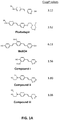
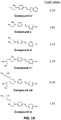
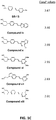
- FIGS. 1A , 1B , and 1C show CLogP values and structures for various compounds in table form, including Compounds i-xiii, and known compounds MeXO4, SB-13 and Florbetapir.
- CLogP is the log of the partition coefficient for relative concentrations of the compound in octanol vs water as Log[Conc., octanol/Conc. Water].
- Lower CLogP values correspond to greater hydrophilicity.
- MeXO4 exhibits high affinity for amyloid plaques, we reasoned that the stilbene structures in SB-13 and the clinically used Florbetapir may provide sensitivity and specificity in binding.
- benzothiazole or pyrimidyl moieties may generate analogues with lower CLogPs and increased H-bonding potential, compared to known compounds.
- capping the nitrogen with hydroxyethyl group(s) could further increase the hydrophilicity and increase the potential for the ligand to remain floating in an aqueous medium external to the liposome instead of inserting into the lipid bilayer of the liposome.
- Compounds such as i-xiii were therefore devised with side-chain modifications generally expected to increase the hydrophilicity of the stilbene core to enhance a ligand's ability to be presented on a liposome surface without destabilizing the bilayer.
- Compounds i-xiii are each more hydrophilic than previous compound MeXO4 by several orders of magnitude. Without wishing to be bound by theory, it is believed that higher hydrophilicity may facilitate interaction and binding with amyloid beta fibrils, for example, by increasing the presence of the corresponding compounds in the hydrophilic environment outside of the liposomes in a configuration available for binding, by increasing binding interactions with amyloid beta fibrils, and the like.
- Nonionic groups such as hydroxy and methoxy were selected to promote hydrophilicity without increasing the ionic character, out of concern that increased ionic character may reduce BBB permeability.
- Compounds i, ii, and iii had the three lowest CLogP values (1.56, 1.80, and 1.06, respectively). Spectrofluorometric testing showed that compounds ii and iii both had absorption and emission maxima at 404 nm and 550 nm, while compound i exhibited an absorption maximum at 346 nm without a visible emission maximum. Compounds ii and iii may be used for ease of detection by fluorescence and relatively low CLogP values.
- a ⁇ fibrils were synthesized according to the method of Klunk et al. Ann Neurol, 2004; 55: 306-19 . Briefly, A ⁇ (1-40) peptide (rPeptide, Bogart, GA) was dissolved in phospho-buffered saline, pH 7.4 to a final concentration of 433 ⁇ g/mL (100 ⁇ M). The solution was stirred using a magnetic stir bar at 700 rpm for 4 h at room temperature to drive the formation of fibrils. The stock solution was aliquoted and stored at -80 °C for future use. The stock solutions were stirred thoroughly before removing aliquots for binding assays to maintain a homogenous suspension of fibrils. The stock solutions were stirred thoroughly prior to removing aliquots for binding assays, to insure a homogenous suspension of fibrils.
- Binding assay The binding affinity of the compounds or compound-labeled liposomes with the amyloid fibrils was measured by following methods. Ligand-labeled liposomes, ligand stock solutions, and Chrysamine G for competition assays were diluted with 10 mM Tris-HCl, pH 7.4 to 500 nM. Fibril stock solution was mixed with a stock solution of the compound or the compound-labeled liposomes in a 200 ⁇ L reaction mix to give a final concentration of fibrils (20 ⁇ M) with test compounds varying from 0.0625 - 2.0 ⁇ M. The binding mixture was incubated at room temperature for 1 h.
- the incubated binding mixture was centrifuged for 20 min at 16,400 rpm to separate the fibrils.
- the fibril precipitate was washed twice with Tris-HCl. Fluorescence was then measured in a FilterMax F-5 multi-mode plate reader (Molecular Devices, Sunnyvale, CA), using excitation and emission wavelengths of 405 nm and 535 nm, respectively.
- Competitive binding assays used 20 ⁇ M of fibrils, 1.0 ⁇ M test compounds and varying amounts of the non-fluorescent competitor, Chrysamine G and incubated for 1 h.
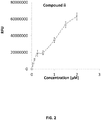
- FIG. 2 is a binding profile showing the binding of Compound ii to fibrils, plotted as relative fluorescence unit (RFU) versus concentration in ⁇ M.
- FIG. 3 is a binding profile showing the binding of Compound iii to fibrils, plotted as relative fluorescence unit (RFU) versus concentration in ⁇ M.
- FIG. 4 is a binding profile showing the binding of MeXO4 (a previous compound) to fibrils, plotted as relative fluorescence unit (RFU) versus concentration in ⁇ M.
- REU relative fluorescence unit
- FIGS. 5A-D illustrate aspects of the binding of Compounds ii and iii .
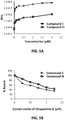
- FIG . 5A is a graph showing that Compounds ii and iii bind to amyloid fibrils plotted as relative fluorescence unit (RFU) versus concentration in ⁇ M.
- FIG. 5B is a competitive binding profile showing the binding of Compounds ii and iii, each bound stably to fibrils in suspension in competition with Chrysamine-G, plotted as % bound versus concentration of Chrysamine-G in ⁇ M, consistent with specificity to the Thioflavin binding site. This shows that Compounds ii and iii are indeed capable of binding to amyloid plaques, even being relatively hydrophilic.
- FIG. 5C is a fluorescent microscopy image showing that Compound iii specifically stains amyloid plaques in a section of human brain tissue from the frontal cortex of an AD autopsy case.
- FIG. 5D is a fluorescent microscopy image showing that Compound iii labels cerebral amyloid angiopathy in aged dog brain tissue. Images were collected on an Olympus BX-51 epifluorescent microscope using the broadpass filter. Green labeling represents Compound iii while yellow represents nonspecific autofluorescence. Scale bars represent 50 ⁇ m in length.
- FIG. 6 is a competitive binding profile showing the binding of previous compound MeXO4 and liposomal MeXO4, each to fibrils in competition with Chrysamine-G, plotted as % bound versus concentration of Chrysamine-G in ⁇ M.
- Compounds ii and iii show much higher competitive binding versus Chrysamine-G compared to prior compound MeXO4 or liposomal MeXO4.
- Compound ii was about 45% bound and Compound iii was about 55% bound.
- prior compound MeXO4 was about 20% bound and liposomal MeXO4 was about 5% bound.
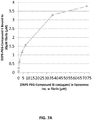
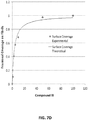
- FIG. 7A is a graph of compound-labeled liposome binding profiles, showing the amount of the conjugate of DSPE-PEG- Compound iii bound to 20 ⁇ M fibrils, plotted versus the concentration of DSPE-PEG -Compound iii in the liposome compositions.
- Correlation functions were averaged for 2 minutes for each sample, using a dust-discrimination algorithm that eliminated correlation function slices that showed long term correlation functions significantly higher than baseline, indicating contamination with large particle sizes characteristic of dust.
- Stability of the preparations was measured in PBS and reconstituted bovine plasma (RBP).
- An aliquot of the preparation was diluted 10x with either PBS or RBP and 200 ⁇ L of the diluted material placed in a dialysis bag, which was in turn placed in 200 mL PBS and slowly stirred for 24 hours.
- Samples of the external buffer were taken periodically during the 24 hour period and assayed for Gd content by ICP-AES. Leakage in bovine plasma was ⁇ 5% in both buffer and bovine plasma.
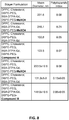
- FIG. 8 is a table showing the mean diameters and polydispersity indices of liposomes prepared with one of the MeXO4 targeting ligand, Compound iii , or PEGylated liposomes with no ligand. All liposomes included bis-stearylamide-DTPA-Gd in the bilayer, Gd-BOPTA (Gadobenate dimeglumine) in the liposome core interior, DPPC (55%), and cholesterol (40%).
- the liposomes were prepared by extrusion through track-etch membranes, including 5 extrusion passes through 400/200 nm membranes and 5 extrusion passes through 100 nm membranes targeted to give a mean diameter around 100-150 nm and a low polydispersity index, e.g., as demonstrated by the PEGylated liposomes with no ligand.
- the MeXO4 liposomes however, exhibit a larger diameter and polydispersity, consistent with interference of the MeXO4 ligand with the bilayer as confirmed by negative stain electron microscopy (see also FIG. 9A ).
- the replacement of the XO4 ligand with Compound iii resulted in liposomes of less than about 150 nm in diameter, with a low polydispersity.
- the Gd On incubation with reconstituted bovine plasma at 37 °C for 24 hours (plasma leak test), the Gd remained practically 100% associated with the particles, confirming that the modified ligand yielded a stable bilayer.
- Hydrophobic ligands like MeXO4 are believed to re-enter the bilayer and compromise its integrity, as reflected in the larger diameter of the resulting particles.
- a more hydrophilic ligand like Compound iii better maintains bilayer integrity and particle size post-extrusion.
- DPPC 1,2-dihexadecanoyl-sn-glycero-3-phosphocholine
- cholesterol purchased from Lipoid Inc., Newark NJ, USA.
- DSPE-PEG3400- Compound iii was prepared as described above. 1,2-distearoyl-sn-glycero-3-phosphoethanolamine-N-[methoxy(polyethylene glycol)-2000] (DSPE-MPEG2000) was purchased from Corden Pharma, Liestahl, Switzerland.
- DPPC DPPC, cholesterol, DSPE-MPEG2000, bis-stearylamine-DTPA-Gd (BSA-DTPA-Gd), and DSPE-PEG3400-
- Compound iii :: 31:25:40:2:2) were dissolved in ethanol to achieve a total concentration of 150 mM.
- a 65 ⁇ M solution of ICG was made in 500 mM of gadobenate dimeglumine.
- the ethanolic solution of lipids was hydrated with a ten-fold excess of the ICG/gadobenate dimeglumine solution at 65 °C for 30 minutes, allowing multilamellar liposomes to form.
- the mixture was then extruded in a 10 mL Lipex extruder (Northern Lipids Inc., Burnaby, Canada) using a 200 nm polycarbonate track-etch filter (10 passes) followed by a 100 nm polycarbonate filter (10 passes).
- the suspension was then diafiltered using a MICROKROS® (Spectrum Laboratories, Inc., Collinso Dominguez, CA) cross-flow diafiltration cartridge (500kD cutoff), exchanging the external buffer for phosphate buffered saline (PBS, pH 7.2) for 15 volume exchanges.
- MICROKROS® Specific Laboratories, Inc., Collinso Dominguez, CA
- PBS phosphate buffered saline
- ICG content was measured by near-IR fluorescence (excitation 780 nm/ emission 820 nm) in the diafiltrate at every volume exchange, and after the first volume exchange, practically no ICG was detected. The vast majority of the ICG lost from the retentate was present in the first volume exchange. Of the starting ICG, ⁇ 95% was estimated to remain associated with the liposomes.
- FIG. 9A shows negative stain TEM images of liposomes bearing DSPE-PEG-XO4 in the bilayer.
- FIG. 9B shows negative stain TEM images of liposomes bearing untargeted liposomes (identical bilayer structure, with no MeXO4 ).
- the negative stain used was 1% uranyl acetate. Note the involuted and incomplete spheroids in the left hand image, consistent with the MeXO4 ligand interfering with and disrupting the bilayer. By contrast, the absence of MeXO4 and presence of Compound iii leads to consistent spheroidal structures typical of liposomes.
- Liposomes were prepared decorated with surface Gd chelates on the surface of the lipid bilayer (Gd chelates conjugated to a lipid anchor BSA-DTPA-Gd such that bis-stearyl chains insert into the bilayer of the liposomes). These liposomes demonstrated high Gd molar relaxivity at low field strengths as shown in FIG. 10A .
- the example liposomes are compared to a free Gd chelate (GadobenateDimelglumine, MULTIHANCETM, Bracco Imaging, Monroe Township, NJ) at lower field strengths, but the difference erodes at higher field strengths to the point where at 9.4T, the free chelate is more relaxive than the surface presentation
- mice were purchased from Taconic Biosciences, Inc., Hudson, NY. TetO/APP mice were a kind gift of Dr. Joanna Jankowsky at Baylor College of Medicine. All APP- control animals were age-matched non-transgenic littermates of APP+ animals in this study. All TG2576 mice were imaged on a 1.0T Bruker Icon system (Bruker Instruments, Billerica, MA) at MD Anderson Cancer Center.
- Anesthesia was induced in an isoflurane inhalation box using 5% isoflurane in air. Mice were then placed on a custom fabricated sled with integral face-cone for continued anesthesia delivery by inhalation (1.5-3% isoflurane in air) and transferred to the magnet cavity.
- APP+ and APP- mice in the test group were injected with Compound iii targeted liposomes (150 mM total lipid concentration, 37.5 mM total Gd concentration, injection volume 4 ⁇ L/g body weight, 0.15 mmol Gd/kg), while APP+ mice in the control group were injected with untargeted (i.e. no Compound iii present) liposomes with identical parameters. 4 days after injection, the mice were anesthetized and imaged again using an identical sequence. The half-life of the PEGylated liposomes prepared in this study was about 18 to 24 hours, and the 4-day interval was chosen to facilitate clearance of the unbound agent from the bloodstream, in order to reduce background signal.
- T1 relaxation measurements were then performed on a 60Hz Bruker minispec MQ benchtop relaxometer (Bruker Instruments, Billerica, MA). Longitudinal relaxation times (T1) were obtained using an inversion recovery sequence. A plot of relaxation rate (1/T1) against Gd concentration yielded a straight line with slope defined as the T1 relaxivity (r1). For relaxivity measurements at higher field strengths (1.5T to 9.4T), the same samples were imaged on corresponding MRI instruments using T1-weighted fast spoiled gradient echo (FSPGR) sequence. The slope of 1/T1 versus concentration plot was used to estimate the relaxivity at each field strength.
- FSPGR fast spoiled gradient echo
- Dual-Gd liposomes targeted to amyloid plaques using the Compound iii ligand were therefore tested for their ability to image amyloid plaques in mice.
- the dual-Gd/ Compound iii liposomes resulted in signal enhancement, in patterns characteristic of amyloid deposition, in two distinct strains of amyloid bearing mice (15 month old TetO/APPswe-ind and 9 month old Tg2576).
- the 4-day delay was designed to allow unbound liposomes to clear from the circulation. PEGylated liposomes have a circulation half life of about 24 hours, and past experience suggested the 4-day delay was sufficient for near complete elimination of liposomes from the blood pool.
- mice Immediately after the 4-day post images were acquired, the mice were sacrificially perfused with saline followed by 10% formalin, the brain was excised and submerged in 10% formalin for 24 hours, then transferred to 30% sucrose and refrigerated until the brain sank (usually about 72 hours). Whole brain NIR imaging was performed at this stage. The brain was then embedded in OCT solution and stored at -80 °C prior to serial sectioning. Sections were cut at 30 ⁇ m thickness, washed in tris-buffered saline with 0.2% tween.
- FIGS. 11A-F Exemplary images from this study are shown in FIGS. 11A-F .
- FIG. 11A depicts results for a TetO/APPswe-ind mouse, 15 months old, wherein APP production was suppressed until 6 weeks of age by doxycycline in diet.
- FIG. 11A depicts results for a TetO/APPswe-ind mouse, 15 months old, wherein APP production was suppressed until 6 weeks of age by doxycycline in diet.
- FIG. 11A depict
- FIG. 11B depicts results for a pre-injection scan of the mouse of FIG. 11A .
- FIGS. 11C , D depict results for a Tg2576 mouse (APPswe) 9 months old and a pre-injection scan of the same mouse, respectively.
- FIG. 11E depicts results for a Tg2576 mouse injected with untargeted (non-amyloid-binding) particles.
- FIG. 11F depicts results for a non-transgenic sibling of the mouse of FIG. 11E , injected with amyloid-targeted particles. Total signal was mapped to a "rainbow" color map using Osirix software (available online at http://www.osirix-viewer.com/).
- the range from the predominant blue background to green foreground represents a >2x signal increase.
- the range from green to yellow indicates a further 2x increase.
- 9 month old Tg2576 mice showed a very different pattern of labeling (pial, hippocampal and some signal in the ventricles) compared to older TetO/APP mice, (extensive cortical and hippocampal signal with no ventricular signal) suggesting slow clearance from the CSF in the Tg2576 example. 6/6 animals in each group were consistent with these images, with the exception of the Tg2576 APP+ animals, of which 2/6 showed this enhancement pattern. The remaining 4/6 showed no enhancement, and were indistinguishable from the non-transgenic sibling animals. Immunohistochemistry using the 4G8 antibody to A ⁇ , however, revealed that the 4 animals that showed no enhancement also did not have significant amyloid pathology in the brain.
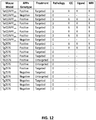
- FIG. 12 shows amyloid pathology score by immunohistochemistry using the 4G8 antibody, imaging agent used ( Compound iii targeted or control untargeted) and individual measures of nanoparticle presence in mouse brain.
- Semi-quantitative scoring of A ⁇ plaques was by a four-tier scale of 0 (none), 1 (sparse), 2 (moderate), and 3 (severe/frequent). Presence of positive signal for ICG, ligand, and MRI was denoted by an "X" and absence by a "-”. There was a near 100% correlation between the immunohistochemistry results and each of the measures of nanoparticle presence.
- APP+ mice of either strain (TetO/APPswe, or Tg2576) treated with the targeted agent showed positive signal in MRI, immunohistochemistry and fluorescent markers of nanoparticle presence, while APP+ mice of either strain treated with untargeted agent showed no signal, and APP- mice showed no signal regardless of treatment.
- the data is consistent with the targeted agent being able to access and bind amyloid plaques, while being cleared in the absence of binding, and with no binding occurring in the absence of the targeting ligand.
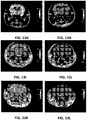
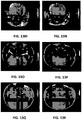
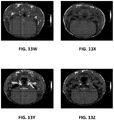
- FIGS. 13A-13Z represent 13 pairs of MRI images representative of the data summarized in FIG. 12 .
- the right hand image is pre-contrast and the left hand image is 3-4 days post contrast. All image pairs were arranged at the same window level and width to provide similar or identical color maps.
- Each image pair is identified by a mouse (strain (TetO/APP or Tg2576), genotype (APP+ or APP-), and the treatment ( Compound iii -targeted particles, or untargeted particles).
- EXAMPLE 15 Example Liposomes Image Amyloid Plaques By IR Fluorescence in Mice
- the liposomes also contained ⁇ 0.6 mole% Indocyanine Green (ICG) in the bilayer, for near-infrared imaging.
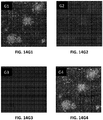
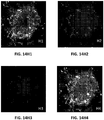
- FIGS. 14A -H4 show results from near infrared imaging of mouse brains post mortem. Confocal imaging of brain sections from Tg2576 mice revealed enhanced ICG signal in the cortex and hippocampus of the transgenic mice, showing greater localization in the APP+ brain ( FIG. 14A ) when compared to the non-transgenic controls ( FIG. 14B ). At high magnification, FIG. 14E revealed the characteristic punctate structure of amyloid deposits corresponding to FIG. 14A ; FIG. 14F corresponds to the controls of FIG. 14B .
- ICG Indocyanine Green
- the whole brains of TetO/APP+ mice showed greater near infrared fluorescence ( FIG. 14C ) than their APP- sibling controls ( FIG. 14D ).
- Liposomes with saturated lipid and cholesterol in the bilayer when extruded through 100 nm membranes, result in liposomes with diameter around 100 nm. Particle sizes considerably larger than 100 nm are associated with bilayer destabilization, vesicle fusion, and the formation of multi-lamellar structures, as demonstrated with MeXO4 liposomes in FIG. 8 and FIG. 9 .
- the relatively hydrophobic MeXO4 ligand when tethered onto a liposome surface by a flexible PEG tether, may is believed to partition into the bilayer, accounting for the compromise in bilayer stability s demonstrated with MeXO4 liposomes in FIG. 8 and FIG. 9A .
- MeXO4 ligand Upon replacement of the MeXO4 ligand with the more hydrophilic Compound iii ligand, any propensity for the ligand to partition into the bilayer was eliminated or reduced, accounting for the retained bilayer integrity demonstrated by the data in in FIG. 8 observed for Compound iii targeted liposomes.
- Compound iii to bind amyloid pathology was tested using human brain tissue obtained from autopsy of an 88 year old human AD patient.
- Compound iii clearly stains the human tissue in a focal pattern consistent with the staining of amyloid plaques ( FIG. 5C ).
- Aged canines are a natural model of beta-amyloid deposition and incubation of a section of frontal cortex from a 12.3 year old beagle in Compound iii also showed CAA labeling ( FIG. 5D ).
- the T1 relaxivity of liposomal surface Gd was 2.5x higher than that of a free molecular chelate at 1.4T and 1.5T, but at higher fields, the free molecular chelate exhibited a higher relaxivity. Accordingly, relaxivity and in vivo imaging were tested at a low (1T) field strength.
- a targeted liposome such as the Compound iii targeted liposome considered here
- a molecular target such as the beta sheet structure of an amyloid plaque
- each molecular target may be associated with an entire liposome, and the corresponding signal in the MR image may be attributable to the entire liposome.
- the relaxivity on a liposome molar basis may therefore be linearly related to the signal associated with the molecular target.
- the relaxivity of surface Gd liposomes was therefore measured on a liposome molar basis, as a function of increasing Gd chelate concentration in the liposome bilayer.
- the results in FIG. 10B show an expected linear dependence of relaxivity on the number of Gd chelates in the bilayer.
- the T1 relaxivity on a per-particle basis was estimated to be around 190,000 mM-1s-1. For ⁇ 120 nm diameter particles, this may correspond to roughly 48,000 Gd chelates per particle, of which half may be on the outer leaflet of the liposome bilayer, and half may beon the inner leaflet. Assuming that the inner leaflet Gd is not substantially active for T1 relaxation while the outer leaflet chelates are, this suggests a molar relaxivity on a per-Gd basis of roughly 8 mM-1s-1, of the same order as that measured using the 1.4T relaxometer ( FIG. 10A ).
- FIGS. 11A-F Such permeability of the blood brain barrier was consistent with past observations of the ability of MeXO4 targeted liposomes to cross the BBB and label amyloid plaques in the APP/PSEN1 mouse model of AD. Also, past observations demonstrated the ability of untargeted liposomes to cross the BBB in the TetO/APP model of AD, and demonstrated significant leakage across the BBB in age-dependent and amyloid-dependent manners.
- mice tested showed leaks in the choroid plexus, older mice (>14 months of age) showed significantly higher leak along major blood vessels, while APP+ mice showed greater leak in the cerebral cortex.
- the TetO/APP mice in the present study were all >14 months old and showed more widespread signal in the brain, while the Tg2576 mice were all 9-10 months old and showed less signal, concentrated around pial and cortical vessels.
- 6/6 TetO/APP mice showed clear signal in the brain, consistent with localization of the targeted agent, only 2/6 Tg2576 animals showed clear brain signal. Immunohistochemically, however, the same 2/6 Tg2576 animals exhibited amyloid pathology, while the remaining 4/6 did not.
- FIGS. 14A -H4 Confirmation of the localization of the particles to amyloid plaques comes from the data in FIGS. 14A -H4 .
- Whole brain near-IR images visualizing the Indocyanine label FIGS. 14C-D ) were consistent with increased localization in APP+ brains compared to APP- brains.
- Slices through the cortex and hippocampus of APP+ and APP- mice FIGS. 14A-B ) showed significant localization in the APP+ brain, with the maximum intensity observed in the cerebral cortex and portions of the hippocampus. Significant staining was also observed in the thalamus, and was consistent with thalamic signal in the MR image ( FIG. 14C ) of the same mouse.
- FIGS. 14E-F Under high magnification of the cerebral cortex, the ICG signal in the APP+ mouse brain was seen to be both punctate, consistent with labeling of focal plaques, and along blood vessel walls, consistent with labeling of CAA.
- FIGS. 14G1-H4 Detailed histological examination of individual focal plaques ( FIGS. 14G1-H4 ) in the cerebral cortex reveal that the ligand targeted particles appeared to label both the dense and diffuse sections of the plaque.
- the 4G8 antibody visualized with FITC is labeled green, the ICG is labeled red, while the Compound iii ligand is labeled blue.
- FIGS. 14G1-G4 show a field with 3 focal plaques visible. Also in the field is a more diffuse surrounding amyloid deposition pattern. The 4G8 antibody labels both these entities.
- the focal plaques appeared to have a relatively uniform amyloid density at the center, and higher density in the periphery, consistent with numerous other observations of plaques in mice using antibody and thioflavin-S staining.
- the ICG and Compound iii labels (red and blue respectively) are well correlated with each other and with the antibody label, demonstrating a low density of binding in the center of the plaques and high density nodules in the periphery, leaving little doubt that the liposomal particles bind intact to the plaques, and label both the high density focal plaques as well as lower density diffuse plaques.
- Tg2576 mice Some differences were noted in the MRI signal patterns between the TetO/APP and TG2576 mice, with the former showing signal in the cerebral cortex, hippocampus, and striatum, consistent with preferential amyloid deposition in these areas due to heterogeneous activity of the CaMkII ⁇ promoter. A more complete deposition pattern was observed in the Tg2576 mice, consistent with more uniform plaque deposition. The Tg2576 mice also showed strong ventricular signal that may be due to the continued presence of the agent in the cerebrospinal fluid, the likely transport medium for the extravasated liposomes.
- This BBB penetration does not require any active transport mechanism because previous work demonstrated that simple PEGylated liposomes are readily transported through the BBB. Retention of liposomes at the sites of amyloid deposition, for extended periods of time, however, depends on binding to a molecular target.
- MeXO4 as the binding ligand in our previous work demonstrated binding to amyloid plaques and visualization ex vivo by microscopy.
- the present methods, ligands, conjugates and liposomes are believed to readily facilitate crossing the BBB in humans. It is known from MRI studies performed in AD and MCI patients that the BBB indeed compromised and the extent of compromise is independent of amyloid burden. Also, a recent study using DCE-MRI confirmed that the BBB in the aging human hippocampus breaks down and becomes permeable. Confirmation that the agent binds amyloid pathology other than in a mouse overexpression model is demonstrated herein by testing binding to amyloid deposits in dog brain and human brain slices in vitro. Accordingly, the present methods, ligands, conjugates and liposomes may function in humans.
- the present application demonstrates MRI imaging of amyloid plaques in rodent models at clinically acceptable field strengths, which is believed to extend to analysis of plaques and diagnosis of AD in humans.
- the described MRI imaging may offer a number of substantial benefits over current non-invasive imaging technologies, such as PET imaging, including increased availability, reduced cost, and enhanced resolution.
- PET imaging may offer worldwide availability.
- T1 agents may be extremely attractive because of their positive signal, leading to increased confidence in signal interpretation.
- the work described herein is targeted for use in low field (1-3T) scanners consistent with state-of-the-art MRI scanners for human imaging.
- the work herein may be used in conjunction with a secondary marker, such as identification of neurofibrillary Tau tangles, to diagnose AD.
- substituted refers to an organic group as defined below (e.g., an alkyl group) in which one or more bonds to a hydrogen atom contained therein are replaced by a bond to non-hydrogen or non-carbon atoms.
- Substituted groups also include groups in which one or more bonds to a carbon(s) or hydrogen(s) atom are replaced by one or more bonds, including double or triple bonds, to a heteroatom.
- a substituted group is substituted with one or more substituents, unless otherwise specified.
- a substituted group is substituted with 1, 2, 3, 4, 5, or 6 substituents.
- substituent groups include: halogens (i.e., F, Cl, Br, and I); hydroxyls; alkoxy, alkenoxy, aryloxy, aralkyloxy, heterocyclyloxy, and heterocyclylalkoxy groups; carbonyls (oxo); carboxyls; esters; urethanes; oximes; hydroxylamines; alkoxyamines; aralkoxyamines; thiols; sulfides; sulfoxides; sulfones; sulfonyls; sulfonamides; amines; N-oxides; hydrazines; hydrazides; hydrazones; azides; amides; ureas; amidines; guanidines; enamines; imides; isocyanates; isothiocyanates; cyanates; thiocyanates; imines; nitro groups; nitriles (i.e., CN
- Substituted ring groups such as substituted cycloalkyl, aryl, heterocyclyl and heteroaryl groups also include rings and ring systems in which a bond to a hydrogen atom is replaced with a bond to a carbon atom. Therefore, substituted cycloalkyl, aryl, heterocyclyl and heteroaryl groups may also be substituted with substituted or unsubstituted alkyl, alkenyl, and alkynyl groups as defined below.
- Alkyl groups include straight chain and branched chain alkyl groups having from 1 to 12 carbon atoms, and typically from 1 to 10 carbons or, in some embodiments, from 1 to 8, 1 to 6, or 1 to 4 carbon atoms.
- straight chain alkyl groups include groups such as methyl, ethyl, n-propyl, n-butyl, n-pentyl, n-hexyl, n-heptyl, and n-octyl groups.
- branched alkyl groups include, but are not limited to, isopropyl, isobutyl, sec-butyl, tert-butyl, neopentyl, isopentyl, and 2,2-dimethylpropyl groups.
- Representative substituted alkyl groups may be substituted one or more times with substituents such as those listed above and include, without limitation, haloalkyl (e.g., trifluoromethyl), hydroxyalkyl, thioalkyl, aminoalkyl, alkylaminoalkyl, dialkylaminoalkyl, alkoxyalkyl, carboxyalkyl, and the like.
- Cycloalkyl groups include mono-, bi- or tricyclic alkyl groups having from 3 to 12 carbon atoms in the ring(s), or, in some embodiments, 3 to 10, 3 to 8, or 3 to 4, 5, or 6 carbon atoms.
- Exemplary monocyclic cycloalkyl groups include, but are not limited to, cyclopropyl, cyclobutyl, cyclopentyl, cyclohexyl, cycloheptyl, and cyclooctyl groups.
- the cycloalkyl group has 3 to 8 ring members, whereas in other embodiments, the number of ring carbon atoms ranges from 3 to 5, 3 to 6, or 3 to 7.
- Bi- and tricyclic ring systems include both bridged cycloalkyl groups and fused rings, such as, but not limited to, bicyclo[2.1.1]hexane, adamantyl, decalinyl, and the like.
- Substituted cycloalkyl groups may be substituted one or more times with non-hydrogen and non-carbon groups as defined above.
- substituted cycloalkyl groups also include rings that are substituted with straight or branched chain alkyl groups as defined above.
- Representative substituted cycloalkyl groups may be mono-substituted or substituted more than once, such as, but not limited to, 2,2-, 2,3-, 2,4- 2,5- or 2,6-disubstituted cyclohexyl groups, which may be substituted with substituents such as those listed above.
- Aryl groups are cyclic aromatic hydrocarbons that do not contain heteroatoms.
- Aryl groups herein include monocyclic, bicyclic and tricyclic ring systems.
- aryl groups include, but are not limited to, phenyl, azulenyl, heptalenyl, biphenyl, fluorenyl, phenanthrenyl, anthracenyl, indenyl, indanyl, pentalenyl, and naphthyl groups.
- aryl groups contain 6-14 carbons, and in others from 6 to 12 or even 6-10 carbon atoms in the ring portions of the groups.
- the aryl groups are phenyl or naphthyl.
- aryl groups includes groups containing fused rings, such as fused aromatic-aliphatic ring systems (e.g., indanyl, tetrahydronaphthyl, and the like), it does not include aryl groups that have other groups, such as alkyl or halo groups, bonded to one of the ring members. Rather, groups such as tolyl are referred to as substituted aryl groups.
- Representative substituted aryl groups may be mono-substituted or substituted more than once.
- monosubstituted aryl groups include, but are not limited to, 2-, 3-, 4-, 5-, or 6-substituted phenyl or naphthyl groups, which may be substituted with substituents such as those listed above.
- Aralkyl groups are alkyl groups as defined above in which a hydrogen or carbon bond of an alkyl group is replaced with a bond to an aryl group as defined above.
- aralkyl groups contain 7 to 16 carbon atoms, 7 to 14 carbon atoms, or 7 to 10 carbon atoms.
- Substituted aralkyl groups may be substituted at the alkyl, the aryl or both the alkyl and aryl portions of the group.
- Representative aralkyl groups include but are not limited to benzyl and phenethyl groups and fused (cycloalkylaryl)alkyl groups such as 4-indanylethyl.
- Representative substituted aralkyl groups may be substituted one or more times with substituents such as those listed above.
- Heterocyclic groups include aromatic (also referred to as heteroaryl) and non-aromatic ring compounds containing 3 or more ring members of which one or more is a heteroatom such as, but not limited to, N, O, and S.
- the heterocyclyl group contains 1, 2, 3 or 4 heteroatoms.
- heterocyclic groups include mono-, bi- and tricyclic rings having 3 to 16 ring members, whereas other such groups have 3 to 6, 3 to 10, 3 to 12, or 3 to 14 ring members.
- Heterocyclic groups encompass aromatic, partially unsaturated and saturated ring systems, such as, for example, imidazolyl, imidazolinyl and imidazolidinyl groups.
- heterocyclic group includes fused ring species including those comprising fused aromatic and non-aromatic groups, such as, for example, benzotriazolyl, 2,3-dihydrobenzo[1,4]dioxinyl, and benzo[1,3]dioxolyl.
- the phrase also includes bridged polycyclic ring systems containing a heteroatom such as, but not limited to, quinuclidyl.
- the phrase does not include heterocyclic groups that have other groups, such as alkyl, oxo or halo groups, bonded to one of the ring members.
- Heterocyclic groups include, but are not limited to, aziridinyl, azetidinyl, pyrrolidinyl, imidazolidinyl, pyrazolidinyl, thiazolidinyl, tetrahydrothiophenyl, tetrahydrofuranyl, dioxolyl, furanyl, thiophenyl, pyrrolyl, pyrrolinyl, imidazolyl, imidazolinyl, pyrazolyl, pyrazolinyl, triazolyl, tetrazolyl, oxazolyl, isoxazolyl, thiazolyl, thiazolinyl, isothiazolyl, thiadiazolyl, oxadiazolyl, piperidyl, piperazinyl, morpholinyl, thiomorpholinyl, tetrahydr
- substituted heterocyclic groups may be mono-substituted or substituted more than once, such as, but not limited to, pyridyl or morpholinyl groups, which are 2-, 3-, 4-, 5-, or 6-substituted, or disubstituted with various substituents such as those listed above.
- Heteroaryl groups are aromatic ring compounds containing 5 or more ring members, of which one or more is a heteroatom such as, but not limited to, N, O, and S.
- Heteroaryl groups include, but are not limited to, groups such as pyrrolyl, pyrazolyl, triazolyl, tetrazolyl, oxazolyl, isoxazolyl, thiazolyl, pyridinyl, pyridazinyl, pyrimidinyl, pyrazinyl, thiophenyl, benzothiophenyl, furanyl, benzofuranyl, indolyl, azaindolyl (pyrrolopyridinyl), indazolyl, benzimidazolyl, imidazopyridinyl (azabenzimidazolyl), pyrazolopyridinyl, triazolopyridinyl, benzotriazolyl, benzoxazolyl, benzothi
- Heteroaryl groups include fused ring compounds in which all rings are aromatic such as indolyl groups and include fused ring compounds in which only one of the rings is aromatic, such as 2,3-dihydro indolyl groups.
- heteroaryl groups includes fused ring compounds, the phrase does not include heteroaryl groups that have other groups bonded to one of the ring members, such as alkyl groups. Rather, heteroaryl groups with such substitution are referred to as "substituted heteroaryl groups.”
- Representative substituted heteroaryl groups may be substituted one or more times with various substituents such as those listed above.
- Heteroaralkyl groups are alkyl groups as defined above in which a hydrogen or carbon bond of an alkyl group is replaced with a bond to a heteroaryl group as defined above. Substituted heteroaralkyl groups may be substituted at the alkyl, the heteroaryl or both the alkyl and heteroaryl portions of the group. Representative substituted heteroaralkyl groups may be substituted one or more times with substituents such as those listed above.
- Groups described herein having two or more points of attachment i.e., divalent, trivalent, or polyvalent
- divalent alkyl groups are alkylene groups
- divalent aryl groups are arylene groups
- divalent heteroaryl groups are heteroarylene groups
- Substituted groups having a single point of attachment to the compound of the technology are not referred to using the "ene" designation.
- chloroethyl is not referred to herein as chloroethylene.
- Alkoxy groups are hydroxyl groups (-OH) in which the bond to the hydrogen atom is replaced by a bond to a carbon atom of a substituted or unsubstituted alkyl group as defined above.
- linear alkoxy groups include, but are not limited to, methoxy, ethoxy, propoxy, butoxy, pentoxy, hexoxy, and the like.
- branched alkoxy groups include, but are not limited to, isopropoxy, sec-butoxy, tert-butoxy, isopentoxy, isohexoxy, and the like.
- cycloalkoxy groups include, but are not limited to, cyclopropyloxy, cyclobutyloxy, cyclopentyloxy, cyclohexyloxy, and the like.
- Representative substituted alkoxy groups may be substituted one or more times with substituents such as those listed above.
- amine refers to NR a R b groups, wherein R a and R b are independently hydrogen, or a substituted or unsubstituted alkyl, alkenyl, alkynyl, cycloalkyl, aryl, aralkyl, heterocyclylalkyl or heterocyclyl group as defined herein.
- the amine is alkylamino, dialkylamino, arylamino, or alkylarylamino.
- the amine is NH 2 , methylamino, dimethylamino, ethylamino, diethylamino, propylamino, isopropylamino, phenylamino, or benzylamino.
- alkylamino is defined as NR c R d , wherein at least one of R c and R d is alkyl and the other is alkyl or hydrogen.
- arylamino is defined as NR e R f , wherein at least one of R e and R f is aryl and the other is aryl or hydrogen.
- halogen refers to bromine, chlorine, fluorine, or iodine. In some embodiments, the halogen is fluorine. In other embodiments, the halogen is chlorine or bromine.
Landscapes
- Health & Medical Sciences (AREA)
- Veterinary Medicine (AREA)
- Epidemiology (AREA)
- Life Sciences & Earth Sciences (AREA)
- Animal Behavior & Ethology (AREA)
- General Health & Medical Sciences (AREA)
- Public Health (AREA)
- Chemical & Material Sciences (AREA)
- Radiology & Medical Imaging (AREA)
- Nuclear Medicine, Radiotherapy & Molecular Imaging (AREA)
- Dispersion Chemistry (AREA)
- Engineering & Computer Science (AREA)
- Biomedical Technology (AREA)
- Medicinal Chemistry (AREA)
- Immunology (AREA)
- Medicines Containing Antibodies Or Antigens For Use As Internal Diagnostic Agents (AREA)
- Medicinal Preparation (AREA)
- Acyclic And Carbocyclic Compounds In Medicinal Compositions (AREA)
- Polyethers (AREA)
- Pharmaceuticals Containing Other Organic And Inorganic Compounds (AREA)
Priority Applications (2)
| Application Number | Priority Date | Filing Date | Title |
|---|---|---|---|
| EP19172751.0A EP3542828A1 (en) | 2014-10-08 | 2015-10-08 | Mri imaging of amyloid plaque using liposomes |
| EP22152987.8A EP4035688B1 (en) | 2014-10-08 | 2015-10-08 | Mri imaging of amyloid plaque using liposomes |
Applications Claiming Priority (3)
| Application Number | Priority Date | Filing Date | Title |
|---|---|---|---|
| US201462061514P | 2014-10-08 | 2014-10-08 | |
| US201562111057P | 2015-02-02 | 2015-02-02 | |
| PCT/US2015/054732 WO2016057812A1 (en) | 2014-10-08 | 2015-10-08 | Mri imaging of amyloid plaque using liposomes |
Related Child Applications (2)
| Application Number | Title | Priority Date | Filing Date |
|---|---|---|---|
| EP22152987.8A Division EP4035688B1 (en) | 2014-10-08 | 2015-10-08 | Mri imaging of amyloid plaque using liposomes |
| EP19172751.0A Division EP3542828A1 (en) | 2014-10-08 | 2015-10-08 | Mri imaging of amyloid plaque using liposomes |
Publications (3)
| Publication Number | Publication Date |
|---|---|
| EP3204051A1 EP3204051A1 (en) | 2017-08-16 |
| EP3204051A4 EP3204051A4 (en) | 2018-06-27 |
| EP3204051B1 true EP3204051B1 (en) | 2019-05-29 |
Family
ID=55653789
Family Applications (3)
| Application Number | Title | Priority Date | Filing Date |
|---|---|---|---|
| EP15849750.3A Active EP3204051B1 (en) | 2014-10-08 | 2015-10-08 | Mri imaging of amyloid plaque using liposomes |
| EP19172751.0A Withdrawn EP3542828A1 (en) | 2014-10-08 | 2015-10-08 | Mri imaging of amyloid plaque using liposomes |
| EP22152987.8A Active EP4035688B1 (en) | 2014-10-08 | 2015-10-08 | Mri imaging of amyloid plaque using liposomes |
Family Applications After (2)
| Application Number | Title | Priority Date | Filing Date |
|---|---|---|---|
| EP19172751.0A Withdrawn EP3542828A1 (en) | 2014-10-08 | 2015-10-08 | Mri imaging of amyloid plaque using liposomes |
| EP22152987.8A Active EP4035688B1 (en) | 2014-10-08 | 2015-10-08 | Mri imaging of amyloid plaque using liposomes |
Country Status (10)
| Country | Link |
|---|---|
| US (4) | US9744251B2 (cg-RX-API-DMAC7.html) |
| EP (3) | EP3204051B1 (cg-RX-API-DMAC7.html) |
| JP (1) | JP6505235B2 (cg-RX-API-DMAC7.html) |
| KR (1) | KR102409017B1 (cg-RX-API-DMAC7.html) |
| CN (1) | CN107106708B (cg-RX-API-DMAC7.html) |
| AU (2) | AU2015330824A1 (cg-RX-API-DMAC7.html) |
| CA (1) | CA2963941C (cg-RX-API-DMAC7.html) |
| ES (2) | ES2743704T3 (cg-RX-API-DMAC7.html) |
| MX (1) | MX371295B (cg-RX-API-DMAC7.html) |
| WO (1) | WO2016057812A1 (cg-RX-API-DMAC7.html) |
Families Citing this family (19)
| Publication number | Priority date | Publication date | Assignee | Title |
|---|---|---|---|---|
| WO2012139080A2 (en) | 2011-04-06 | 2012-10-11 | Board Of Regents Of The University Of Texas System | Lipid-based nanoparticles |
| CA2848994A1 (en) | 2012-01-20 | 2013-07-25 | Ananth Annapragada | Methods and compositions for objectively characterizing medical images |
| EP3204051B1 (en) | 2014-10-08 | 2019-05-29 | Texas Children's Hospital | Mri imaging of amyloid plaque using liposomes |
| WO2018015546A1 (en) | 2016-07-22 | 2018-01-25 | Ac Immune S.A. | Compounds for imaging tau protein aggregates |
| KR102472003B1 (ko) | 2016-07-22 | 2022-11-29 | 에이씨 이뮨 에스에이 | 타우 단백질 응집체를 이미징하기 위한 화합물 |
| EP3512570B1 (en) * | 2016-09-16 | 2024-08-28 | Texas Children's Hospital | Liposomal gadolinium (gd) contrast agent for t1-mri |
| US11241510B2 (en) | 2016-11-30 | 2022-02-08 | Texas Children's Hospital | Hydrophilic fluorinated molecules for liposomal 19F MRI probes with unique MR signatures |
| EP3743423A1 (en) | 2018-01-24 | 2020-12-02 | AC Immune SA | Gamma-carboline compounds for the detection of tau aggregates |
| US20210041447A1 (en) | 2018-01-24 | 2021-02-11 | Ac Immune Sa | Azacarboline compounds for the detection of tau aggregates |
| CN116173238A (zh) * | 2018-03-29 | 2023-05-30 | 微脉管治疗有限公司 | 用于检测和治疗阿尔茨海默病的组合物及方法 |
| WO2019234243A1 (en) | 2018-06-08 | 2019-12-12 | Ac Immune Sa | Novel compounds for diagnosis |
| JP7545393B2 (ja) * | 2019-01-24 | 2024-09-04 | アルゼカ バイオサイエンシズ、エルエルシー | 誤って折りたたまれたタンパク質を画像化するための機能化リポソーム |
| US20210128755A1 (en) * | 2019-07-08 | 2021-05-06 | Alzeca Biosciences, LLC | Targeting ligands for tau pathology |
| US11614451B2 (en) | 2019-07-08 | 2023-03-28 | Alzeca Biosciences, LLC | Targeting ligands for tau pathology |
| CN115916263B (zh) * | 2020-01-29 | 2025-10-03 | 德克萨斯儿童医院 | 用于淀粉样蛋白沉积mri的靶向对比剂 |
| US11779664B2 (en) | 2020-02-12 | 2023-10-10 | Texas Children's Hospital | Targeted contrast agents for MRI of alpha-synuclein deposition |
| CN115279424A (zh) * | 2020-02-12 | 2022-11-01 | 德克萨斯儿童医院 | 用于α-突触核蛋白沉积MRI的靶向对比剂 |
| CN115970009A (zh) * | 2023-02-08 | 2023-04-18 | 丽水市中心医院 | Vhpk多肽修饰的荧光纳米脂质体给药系统、其制备方法及应用 |
| CN116869938A (zh) * | 2023-07-26 | 2023-10-13 | 安徽医科大学 | 一种1,2,4-噁二唑-吡啶脂质体及其制备方法和应用 |
Family Cites Families (35)
| Publication number | Priority date | Publication date | Assignee | Title |
|---|---|---|---|---|
| US5204085A (en) | 1985-01-08 | 1993-04-20 | Mallinckrodt Medical, Inc. | Method for enhancing the safety of metal-ligand chelates as X-ray contrast agents |
| DE69527194T2 (de) | 1994-03-28 | 2003-02-06 | Daiichi Pharmaceutical Co., Ltd. | Liposomen enthaltend ein röntgen- oder ultraschallkontrastmittel |
| US6071532A (en) * | 1996-10-15 | 2000-06-06 | Emory University | Synthesis of glycophospholipid and peptide-phospholipid conjugates and uses thereof |
| JP4829454B2 (ja) | 1999-11-30 | 2011-12-07 | ジ・アリゾナ・ボード・オブ・リージェンツ・オン・ビハーフ・オブ・ザ・ユニバーシティ・オブ・アリゾナ | 放射線感受性リポソーム |
| AU2002211517A1 (en) | 2000-10-04 | 2002-04-15 | California Institute Of Technology | Magnetic resonance imaging agents for in vivo labeling and detection of amyloid deposits |
| WO2002094191A2 (en) | 2001-05-23 | 2002-11-28 | New York University | Detection of alzheimer's amyloid by magnetic resonance imaging |
| JP2005519129A (ja) | 2002-03-05 | 2005-06-30 | クリーブランド ステート ユニバーシティー | エアロゾル薬物送達のための凝集粒子 |
| WO2004096120A2 (en) * | 2003-05-01 | 2004-11-11 | Nst Neurosurvival Technologies Ltd. | Compounds that selectively bind to membranes of apoptotic cells |
| US7208174B2 (en) | 2003-12-18 | 2007-04-24 | Hoffmann-La Roche Inc. | Liposome compositions |
| US20100031378A1 (en) | 2008-08-04 | 2010-02-04 | Edwards Joel A | Novel gene disruptions, compositions and methods relating thereto |
| US7713517B2 (en) | 2004-04-21 | 2010-05-11 | Marval Biosciences, Inc. | Compositions and methods for enhancing contrast in imaging |
| US8357351B2 (en) | 2004-04-21 | 2013-01-22 | Ananth Annapragada | Nano-scale contrast agents and methods of use |
| US20070292354A1 (en) | 2004-09-23 | 2007-12-20 | Guerbet | Contrast Agents Encapsulating Systems for Cest Imaging |
| WO2007041855A1 (en) | 2005-10-13 | 2007-04-19 | Waratah Pharmaceuticals, Inc. | Scyllo-inositol derivatives and their use in the treatment of diseases characterised by abnormal protein folding or aggregation or amyloid formation, deposition, accumulation or persistence |
| WO2007048019A2 (en) | 2005-10-20 | 2007-04-26 | The Penn State Research Foundation | Delivery system for diagnostic and therapeutic agents |
| US20090123047A1 (en) | 2007-03-21 | 2009-05-14 | Yfantis Spyros A | Method and system for characterizing prostate images |
| EP1982733A1 (en) | 2007-04-17 | 2008-10-22 | Bayer Schering Pharma Aktiengesellschaft | Use of a contrast agent for magnetic resonance imaging of endoleaks |
| US7858803B2 (en) | 2007-04-27 | 2010-12-28 | The General Hospital Corporation | Imaging tracers for early detection and treatment of amyloid plaques caused by Alzheimer's disease and related disorders |
| WO2009015397A1 (en) | 2007-07-26 | 2009-01-29 | Nanoscan Imaging, Llc | Methods for imaging using improved nanoparticulate contrast agents |
| US8642013B2 (en) | 2007-12-05 | 2014-02-04 | Ananth Annapragada | Nano-scale contrast agents and methods of use |
| CA2711503A1 (en) * | 2008-01-08 | 2009-07-16 | Biogenerix Ag | Glycoconjugation of polypeptides using oligosaccharyltransferases |
| ITMI20081052A1 (it) | 2008-06-10 | 2009-12-11 | Univ Milano Bicocca | Liposomi in grado di legare efficacemente il peptide beta-amiloide |
| AU2009257279A1 (en) | 2008-06-13 | 2009-12-17 | Marval Biosciences, Inc. | Imaging of atherosclerotic plaques using liposomal imaging agents |
| WO2010017094A2 (en) | 2008-07-31 | 2010-02-11 | The General Hospital Corporation | CURCUMIN DERIVATIVES FOR AMYLOID-β PLAQUE IMAGING |
| AR074760A1 (es) | 2008-12-18 | 2011-02-09 | Metabolex Inc | Agonistas del receptor gpr120 y usos de los mismos en medicamentos para el tratamiento de diabetes y el sindrome metabolico. |
| CN102438591A (zh) | 2009-03-19 | 2012-05-02 | 马维尔生物科学公司 | 用于增强成像对比度的组合物和方法 |
| US20120263646A1 (en) | 2009-10-15 | 2012-10-18 | Guerbet | Imaging agents and their use for the diagnostic in vivo of neurodegenerative diseases, notably alzheimer's disease and derivative diseases |
| ES2526124T3 (es) | 2010-06-16 | 2015-01-07 | Cymabay Therapeutics, Inc. | Agonistas del receptor GPR120 y sus usos |
| CN103429226A (zh) | 2011-03-02 | 2013-12-04 | 森苏林公司 | 囊泡组合物 |
| WO2012139080A2 (en) * | 2011-04-06 | 2012-10-11 | Board Of Regents Of The University Of Texas System | Lipid-based nanoparticles |
| GB201112056D0 (en) | 2011-07-14 | 2011-08-31 | Univ Leuven Kath | Antibodies |
| CA2848994A1 (en) | 2012-01-20 | 2013-07-25 | Ananth Annapragada | Methods and compositions for objectively characterizing medical images |
| US9377472B2 (en) | 2012-04-30 | 2016-06-28 | Amoneta Diagnostics | Biological complex specific for Alzheimer's disease detection in vitro and use thereof |
| CA2906035A1 (en) | 2013-03-14 | 2014-09-25 | Celtaxsys, Inc. | Inhibitors of leukotriene a4 hydrolase |
| EP3204051B1 (en) | 2014-10-08 | 2019-05-29 | Texas Children's Hospital | Mri imaging of amyloid plaque using liposomes |
-
2015
- 2015-10-08 EP EP15849750.3A patent/EP3204051B1/en active Active
- 2015-10-08 JP JP2017538918A patent/JP6505235B2/ja active Active
- 2015-10-08 MX MX2017004695A patent/MX371295B/es active IP Right Grant
- 2015-10-08 US US14/878,745 patent/US9744251B2/en active Active
- 2015-10-08 ES ES15849750T patent/ES2743704T3/es active Active
- 2015-10-08 CN CN201580066712.6A patent/CN107106708B/zh active Active
- 2015-10-08 CA CA2963941A patent/CA2963941C/en active Active
- 2015-10-08 ES ES22152987T patent/ES3032054T3/es active Active
- 2015-10-08 EP EP19172751.0A patent/EP3542828A1/en not_active Withdrawn
- 2015-10-08 KR KR1020177012354A patent/KR102409017B1/ko active Active
- 2015-10-08 EP EP22152987.8A patent/EP4035688B1/en active Active
- 2015-10-08 WO PCT/US2015/054732 patent/WO2016057812A1/en not_active Ceased
- 2015-10-08 AU AU2015330824A patent/AU2015330824A1/en not_active Abandoned
-
2016
- 2016-12-01 US US15/366,667 patent/US10537649B2/en active Active
-
2019
- 2019-11-08 US US16/677,751 patent/US20200069820A1/en not_active Abandoned
-
2020
- 2020-02-14 US US16/791,068 patent/US11141495B2/en active Active
-
2021
- 2021-05-25 AU AU2021203388A patent/AU2021203388B2/en active Active
Non-Patent Citations (1)
| Title |
|---|
| None * |
Also Published As
| Publication number | Publication date |
|---|---|
| WO2016057812A1 (en) | 2016-04-14 |
| EP3204051A4 (en) | 2018-06-27 |
| US9744251B2 (en) | 2017-08-29 |
| MX371295B (es) | 2020-01-24 |
| AU2021203388A1 (en) | 2021-06-24 |
| US11141495B2 (en) | 2021-10-12 |
| US20160101197A1 (en) | 2016-04-14 |
| CN107106708A (zh) | 2017-08-29 |
| JP6505235B2 (ja) | 2019-04-24 |
| US20170080111A1 (en) | 2017-03-23 |
| KR20170103748A (ko) | 2017-09-13 |
| HK1243335A1 (zh) | 2018-07-13 |
| ES3032054T3 (en) | 2025-07-15 |
| US20200179540A1 (en) | 2020-06-11 |
| EP4035688C0 (en) | 2025-03-26 |
| ES2743704T3 (es) | 2020-02-20 |
| AU2015330824A1 (en) | 2017-05-25 |
| KR102409017B1 (ko) | 2022-06-16 |
| AU2021203388B2 (en) | 2024-05-30 |
| US20200069820A1 (en) | 2020-03-05 |
| EP4035688B1 (en) | 2025-03-26 |
| EP4035688A1 (en) | 2022-08-03 |
| JP2017532378A (ja) | 2017-11-02 |
| CN107106708B (zh) | 2021-06-18 |
| CA2963941C (en) | 2023-08-01 |
| BR112017007238A2 (pt) | 2018-01-16 |
| CA2963941A1 (en) | 2016-04-14 |
| US10537649B2 (en) | 2020-01-21 |
| EP3204051A1 (en) | 2017-08-16 |
| EP3542828A1 (en) | 2019-09-25 |
| MX2017004695A (es) | 2018-01-24 |
Similar Documents
| Publication | Publication Date | Title |
|---|---|---|
| AU2021203388B2 (en) | MRI Imaging Of Amyloid Plaque Using Liposomes | |
| Tanifum et al. | A novel liposomal nanoparticle for the imaging of amyloid plaque by magnetic resonance imaging | |
| KR102035187B1 (ko) | 지질-기반 나노입자들 | |
| Cittadino et al. | In vivo magnetic resonance imaging detection of paramagnetic liposomes loaded with amphiphilic Gadolinium (III) complexes: impact of molecular structure on relaxivity and excretion efficiency | |
| JP7545393B2 (ja) | 誤って折りたたまれたタンパク質を画像化するための機能化リポソーム | |
| HK40010427A (en) | Mri imaging of amyloid plaque using liposomes | |
| US20230136718A1 (en) | Functionalized liposomes for imaging misfolded proteins | |
| BR112017007238B1 (pt) | Composição lipossomal compreendendo um conjugado fosfolipídiopolímero-aromático e um agente potencializador de contraste de imagem de ressonância magnética não radioativo para geração de imagem de depósitos amiloides | |
| HK1243335B (zh) | 使用脂质体进行的淀粉样蛋白斑mri成像 | |
| Rashid | Lanthanide-Based Responsive Contrast Agents for Magnetic Resonance Imaging | |
| Aime et al. | Recent Developments of Contrast Agents, CEST and Low Fields |
Legal Events
| Date | Code | Title | Description |
|---|---|---|---|
| STAA | Information on the status of an ep patent application or granted ep patent |
Free format text: STATUS: THE INTERNATIONAL PUBLICATION HAS BEEN MADE |
|
| PUAI | Public reference made under article 153(3) epc to a published international application that has entered the european phase |
Free format text: ORIGINAL CODE: 0009012 |
|
| STAA | Information on the status of an ep patent application or granted ep patent |
Free format text: STATUS: REQUEST FOR EXAMINATION WAS MADE |
|
| 17P | Request for examination filed |
Effective date: 20170504 |
|
| AK | Designated contracting states |
Kind code of ref document: A1 Designated state(s): AL AT BE BG CH CY CZ DE DK EE ES FI FR GB GR HR HU IE IS IT LI LT LU LV MC MK MT NL NO PL PT RO RS SE SI SK SM TR |
|
| AX | Request for extension of the european patent |
Extension state: BA ME |
|
| DAV | Request for validation of the european patent (deleted) | ||
| DAX | Request for extension of the european patent (deleted) | ||
| REG | Reference to a national code |
Ref country code: DE Ref legal event code: R079 Ref document number: 602015031209 Country of ref document: DE Free format text: PREVIOUS MAIN CLASS: A61K0049040000 Ipc: A61K0049000000 |
|
| A4 | Supplementary search report drawn up and despatched |
Effective date: 20180530 |
|
| RIC1 | Information provided on ipc code assigned before grant |
Ipc: A61K 49/10 20060101ALI20180524BHEP Ipc: A61K 49/18 20060101ALI20180524BHEP Ipc: A61K 49/00 20060101AFI20180524BHEP |
|
| STAA | Information on the status of an ep patent application or granted ep patent |
Free format text: STATUS: EXAMINATION IS IN PROGRESS |
|
| 17Q | First examination report despatched |
Effective date: 20180905 |
|
| GRAP | Despatch of communication of intention to grant a patent |
Free format text: ORIGINAL CODE: EPIDOSNIGR1 |
|
| STAA | Information on the status of an ep patent application or granted ep patent |
Free format text: STATUS: GRANT OF PATENT IS INTENDED |
|
| INTG | Intention to grant announced |
Effective date: 20181211 |
|
| GRAS | Grant fee paid |
Free format text: ORIGINAL CODE: EPIDOSNIGR3 |
|
| GRAA | (expected) grant |
Free format text: ORIGINAL CODE: 0009210 |
|
| STAA | Information on the status of an ep patent application or granted ep patent |
Free format text: STATUS: THE PATENT HAS BEEN GRANTED |
|
| AK | Designated contracting states |
Kind code of ref document: B1 Designated state(s): AL AT BE BG CH CY CZ DE DK EE ES FI FR GB GR HR HU IE IS IT LI LT LU LV MC MK MT NL NO PL PT RO RS SE SI SK SM TR |
|
| REG | Reference to a national code |
Ref country code: GB Ref legal event code: FG4D |
|
| REG | Reference to a national code |
Ref country code: CH Ref legal event code: EP |
|
| REG | Reference to a national code |
Ref country code: AT Ref legal event code: REF Ref document number: 1137881 Country of ref document: AT Kind code of ref document: T Effective date: 20190615 |
|
| REG | Reference to a national code |
Ref country code: DE Ref legal event code: R096 Ref document number: 602015031209 Country of ref document: DE |
|
| REG | Reference to a national code |
Ref country code: IE Ref legal event code: FG4D |
|
| REG | Reference to a national code |
Ref country code: CH Ref legal event code: NV Representative=s name: COSMOVICI INTELLECTUAL PROPERTY SARL, CH |
|
| REG | Reference to a national code |
Ref country code: NL Ref legal event code: MP Effective date: 20190529 |
|
| REG | Reference to a national code |
Ref country code: LT Ref legal event code: MG4D |
|
| PG25 | Lapsed in a contracting state [announced via postgrant information from national office to epo] |
Ref country code: PT Free format text: LAPSE BECAUSE OF FAILURE TO SUBMIT A TRANSLATION OF THE DESCRIPTION OR TO PAY THE FEE WITHIN THE PRESCRIBED TIME-LIMIT Effective date: 20190930 Ref country code: SE Free format text: LAPSE BECAUSE OF FAILURE TO SUBMIT A TRANSLATION OF THE DESCRIPTION OR TO PAY THE FEE WITHIN THE PRESCRIBED TIME-LIMIT Effective date: 20190529 Ref country code: HR Free format text: LAPSE BECAUSE OF FAILURE TO SUBMIT A TRANSLATION OF THE DESCRIPTION OR TO PAY THE FEE WITHIN THE PRESCRIBED TIME-LIMIT Effective date: 20190529 Ref country code: AL Free format text: LAPSE BECAUSE OF FAILURE TO SUBMIT A TRANSLATION OF THE DESCRIPTION OR TO PAY THE FEE WITHIN THE PRESCRIBED TIME-LIMIT Effective date: 20190529 Ref country code: FI Free format text: LAPSE BECAUSE OF FAILURE TO SUBMIT A TRANSLATION OF THE DESCRIPTION OR TO PAY THE FEE WITHIN THE PRESCRIBED TIME-LIMIT Effective date: 20190529 Ref country code: NO Free format text: LAPSE BECAUSE OF FAILURE TO SUBMIT A TRANSLATION OF THE DESCRIPTION OR TO PAY THE FEE WITHIN THE PRESCRIBED TIME-LIMIT Effective date: 20190829 Ref country code: LT Free format text: LAPSE BECAUSE OF FAILURE TO SUBMIT A TRANSLATION OF THE DESCRIPTION OR TO PAY THE FEE WITHIN THE PRESCRIBED TIME-LIMIT Effective date: 20190529 |
|
| PG25 | Lapsed in a contracting state [announced via postgrant information from national office to epo] |
Ref country code: RS Free format text: LAPSE BECAUSE OF FAILURE TO SUBMIT A TRANSLATION OF THE DESCRIPTION OR TO PAY THE FEE WITHIN THE PRESCRIBED TIME-LIMIT Effective date: 20190529 Ref country code: BG Free format text: LAPSE BECAUSE OF FAILURE TO SUBMIT A TRANSLATION OF THE DESCRIPTION OR TO PAY THE FEE WITHIN THE PRESCRIBED TIME-LIMIT Effective date: 20190829 Ref country code: GR Free format text: LAPSE BECAUSE OF FAILURE TO SUBMIT A TRANSLATION OF THE DESCRIPTION OR TO PAY THE FEE WITHIN THE PRESCRIBED TIME-LIMIT Effective date: 20190830 Ref country code: LV Free format text: LAPSE BECAUSE OF FAILURE TO SUBMIT A TRANSLATION OF THE DESCRIPTION OR TO PAY THE FEE WITHIN THE PRESCRIBED TIME-LIMIT Effective date: 20190529 |
|
| REG | Reference to a national code |
Ref country code: AT Ref legal event code: MK05 Ref document number: 1137881 Country of ref document: AT Kind code of ref document: T Effective date: 20190529 |
|
| PG25 | Lapsed in a contracting state [announced via postgrant information from national office to epo] |
Ref country code: AT Free format text: LAPSE BECAUSE OF FAILURE TO SUBMIT A TRANSLATION OF THE DESCRIPTION OR TO PAY THE FEE WITHIN THE PRESCRIBED TIME-LIMIT Effective date: 20190529 Ref country code: NL Free format text: LAPSE BECAUSE OF FAILURE TO SUBMIT A TRANSLATION OF THE DESCRIPTION OR TO PAY THE FEE WITHIN THE PRESCRIBED TIME-LIMIT Effective date: 20190529 Ref country code: EE Free format text: LAPSE BECAUSE OF FAILURE TO SUBMIT A TRANSLATION OF THE DESCRIPTION OR TO PAY THE FEE WITHIN THE PRESCRIBED TIME-LIMIT Effective date: 20190529 Ref country code: DK Free format text: LAPSE BECAUSE OF FAILURE TO SUBMIT A TRANSLATION OF THE DESCRIPTION OR TO PAY THE FEE WITHIN THE PRESCRIBED TIME-LIMIT Effective date: 20190529 Ref country code: RO Free format text: LAPSE BECAUSE OF FAILURE TO SUBMIT A TRANSLATION OF THE DESCRIPTION OR TO PAY THE FEE WITHIN THE PRESCRIBED TIME-LIMIT Effective date: 20190529 Ref country code: CZ Free format text: LAPSE BECAUSE OF FAILURE TO SUBMIT A TRANSLATION OF THE DESCRIPTION OR TO PAY THE FEE WITHIN THE PRESCRIBED TIME-LIMIT Effective date: 20190529 Ref country code: SK Free format text: LAPSE BECAUSE OF FAILURE TO SUBMIT A TRANSLATION OF THE DESCRIPTION OR TO PAY THE FEE WITHIN THE PRESCRIBED TIME-LIMIT Effective date: 20190529 |
|
| PG25 | Lapsed in a contracting state [announced via postgrant information from national office to epo] |
Ref country code: SM Free format text: LAPSE BECAUSE OF FAILURE TO SUBMIT A TRANSLATION OF THE DESCRIPTION OR TO PAY THE FEE WITHIN THE PRESCRIBED TIME-LIMIT Effective date: 20190529 |
|
| REG | Reference to a national code |
Ref country code: DE Ref legal event code: R097 Ref document number: 602015031209 Country of ref document: DE |
|
| PG25 | Lapsed in a contracting state [announced via postgrant information from national office to epo] |
Ref country code: TR Free format text: LAPSE BECAUSE OF FAILURE TO SUBMIT A TRANSLATION OF THE DESCRIPTION OR TO PAY THE FEE WITHIN THE PRESCRIBED TIME-LIMIT Effective date: 20190529 |
|
| PLBE | No opposition filed within time limit |
Free format text: ORIGINAL CODE: 0009261 |
|
| STAA | Information on the status of an ep patent application or granted ep patent |
Free format text: STATUS: NO OPPOSITION FILED WITHIN TIME LIMIT |
|
| PG25 | Lapsed in a contracting state [announced via postgrant information from national office to epo] |
Ref country code: PL Free format text: LAPSE BECAUSE OF FAILURE TO SUBMIT A TRANSLATION OF THE DESCRIPTION OR TO PAY THE FEE WITHIN THE PRESCRIBED TIME-LIMIT Effective date: 20190529 |
|
| 26N | No opposition filed |
Effective date: 20200303 |
|
| PG25 | Lapsed in a contracting state [announced via postgrant information from national office to epo] |
Ref country code: SI Free format text: LAPSE BECAUSE OF FAILURE TO SUBMIT A TRANSLATION OF THE DESCRIPTION OR TO PAY THE FEE WITHIN THE PRESCRIBED TIME-LIMIT Effective date: 20190529 Ref country code: MC Free format text: LAPSE BECAUSE OF FAILURE TO SUBMIT A TRANSLATION OF THE DESCRIPTION OR TO PAY THE FEE WITHIN THE PRESCRIBED TIME-LIMIT Effective date: 20190529 |
|
| PG25 | Lapsed in a contracting state [announced via postgrant information from national office to epo] |
Ref country code: LU Free format text: LAPSE BECAUSE OF NON-PAYMENT OF DUE FEES Effective date: 20191008 |
|
| PGFP | Annual fee paid to national office [announced via postgrant information from national office to epo] |
Ref country code: IE Payment date: 20200825 Year of fee payment: 6 |
|
| PG25 | Lapsed in a contracting state [announced via postgrant information from national office to epo] |
Ref country code: CY Free format text: LAPSE BECAUSE OF FAILURE TO SUBMIT A TRANSLATION OF THE DESCRIPTION OR TO PAY THE FEE WITHIN THE PRESCRIBED TIME-LIMIT Effective date: 20190529 |
|
| PG25 | Lapsed in a contracting state [announced via postgrant information from national office to epo] |
Ref country code: IS Free format text: LAPSE BECAUSE OF FAILURE TO SUBMIT A TRANSLATION OF THE DESCRIPTION OR TO PAY THE FEE WITHIN THE PRESCRIBED TIME-LIMIT Effective date: 20190929 |
|
| PG25 | Lapsed in a contracting state [announced via postgrant information from national office to epo] |
Ref country code: MT Free format text: LAPSE BECAUSE OF FAILURE TO SUBMIT A TRANSLATION OF THE DESCRIPTION OR TO PAY THE FEE WITHIN THE PRESCRIBED TIME-LIMIT Effective date: 20190529 Ref country code: HU Free format text: LAPSE BECAUSE OF FAILURE TO SUBMIT A TRANSLATION OF THE DESCRIPTION OR TO PAY THE FEE WITHIN THE PRESCRIBED TIME-LIMIT; INVALID AB INITIO Effective date: 20151008 |
|
| PG25 | Lapsed in a contracting state [announced via postgrant information from national office to epo] |
Ref country code: MK Free format text: LAPSE BECAUSE OF FAILURE TO SUBMIT A TRANSLATION OF THE DESCRIPTION OR TO PAY THE FEE WITHIN THE PRESCRIBED TIME-LIMIT Effective date: 20190529 |
|
| PGFP | Annual fee paid to national office [announced via postgrant information from national office to epo] |
Ref country code: IT Payment date: 20220316 Year of fee payment: 7 |
|
| PG25 | Lapsed in a contracting state [announced via postgrant information from national office to epo] |
Ref country code: IE Free format text: LAPSE BECAUSE OF NON-PAYMENT OF DUE FEES Effective date: 20211008 |
|
| REG | Reference to a national code |
Ref country code: ES Ref legal event code: FD2A Effective date: 20221125 |
|
| PG25 | Lapsed in a contracting state [announced via postgrant information from national office to epo] |
Ref country code: ES Free format text: LAPSE BECAUSE OF NON-PAYMENT OF DUE FEES Effective date: 20211009 |
|
| PG25 | Lapsed in a contracting state [announced via postgrant information from national office to epo] |
Ref country code: IT Free format text: LAPSE BECAUSE OF NON-PAYMENT OF DUE FEES Effective date: 20221008 |
|
| PGFP | Annual fee paid to national office [announced via postgrant information from national office to epo] |
Ref country code: DE Payment date: 20241020 Year of fee payment: 10 |
|
| PGFP | Annual fee paid to national office [announced via postgrant information from national office to epo] |
Ref country code: BE Payment date: 20241020 Year of fee payment: 10 |
|
| PGFP | Annual fee paid to national office [announced via postgrant information from national office to epo] |
Ref country code: FR Payment date: 20241020 Year of fee payment: 10 |
|
| PGFP | Annual fee paid to national office [announced via postgrant information from national office to epo] |
Ref country code: ES Payment date: 20241121 Year of fee payment: 10 |
|
| PGFP | Annual fee paid to national office [announced via postgrant information from national office to epo] |
Ref country code: CH Payment date: 20241101 Year of fee payment: 10 |
|
| PGFP | Annual fee paid to national office [announced via postgrant information from national office to epo] |
Ref country code: GB Payment date: 20250930 Year of fee payment: 11 |