EP3198168B1 - Artikel, insbesondere ein luftfederbalg, ein metall-gummi-element oder ein schwingungsdämpfer - Google Patents
Artikel, insbesondere ein luftfederbalg, ein metall-gummi-element oder ein schwingungsdämpfer Download PDFInfo
- Publication number
- EP3198168B1 EP3198168B1 EP15741969.8A EP15741969A EP3198168B1 EP 3198168 B1 EP3198168 B1 EP 3198168B1 EP 15741969 A EP15741969 A EP 15741969A EP 3198168 B1 EP3198168 B1 EP 3198168B1
- Authority
- EP
- European Patent Office
- Prior art keywords
- article
- rubber
- fire
- textile
- retardant
- Prior art date
- Legal status (The legal status is an assumption and is not a legal conclusion. Google has not performed a legal analysis and makes no representation as to the accuracy of the status listed.)
- Active
Links
Images
Classifications
-
- F—MECHANICAL ENGINEERING; LIGHTING; HEATING; WEAPONS; BLASTING
- F16—ENGINEERING ELEMENTS AND UNITS; GENERAL MEASURES FOR PRODUCING AND MAINTAINING EFFECTIVE FUNCTIONING OF MACHINES OR INSTALLATIONS; THERMAL INSULATION IN GENERAL
- F16F—SPRINGS; SHOCK-ABSORBERS; MEANS FOR DAMPING VIBRATION
- F16F1/00—Springs
- F16F1/36—Springs made of rubber or other material having high internal friction, e.g. thermoplastic elastomers
- F16F1/3605—Springs made of rubber or other material having high internal friction, e.g. thermoplastic elastomers characterised by their material
-
- B—PERFORMING OPERATIONS; TRANSPORTING
- B29—WORKING OF PLASTICS; WORKING OF SUBSTANCES IN A PLASTIC STATE IN GENERAL
- B29D—PRODUCING PARTICULAR ARTICLES FROM PLASTICS OR FROM SUBSTANCES IN A PLASTIC STATE
- B29D22/00—Producing hollow articles
- B29D22/02—Inflatable articles
- B29D22/023—Air springs; Air bellows
-
- B—PERFORMING OPERATIONS; TRANSPORTING
- B32—LAYERED PRODUCTS
- B32B—LAYERED PRODUCTS, i.e. PRODUCTS BUILT-UP OF STRATA OF FLAT OR NON-FLAT, e.g. CELLULAR OR HONEYCOMB, FORM
- B32B1/00—Layered products having a non-planar shape
-
- B—PERFORMING OPERATIONS; TRANSPORTING
- B32—LAYERED PRODUCTS
- B32B—LAYERED PRODUCTS, i.e. PRODUCTS BUILT-UP OF STRATA OF FLAT OR NON-FLAT, e.g. CELLULAR OR HONEYCOMB, FORM
- B32B1/00—Layered products having a non-planar shape
- B32B1/08—Tubular products
-
- B—PERFORMING OPERATIONS; TRANSPORTING
- B32—LAYERED PRODUCTS
- B32B—LAYERED PRODUCTS, i.e. PRODUCTS BUILT-UP OF STRATA OF FLAT OR NON-FLAT, e.g. CELLULAR OR HONEYCOMB, FORM
- B32B25/00—Layered products comprising a layer of natural or synthetic rubber
- B32B25/04—Layered products comprising a layer of natural or synthetic rubber comprising rubber as the main or only constituent of a layer, which is next to another layer of the same or of a different material
- B32B25/08—Layered products comprising a layer of natural or synthetic rubber comprising rubber as the main or only constituent of a layer, which is next to another layer of the same or of a different material of synthetic resin
-
- B—PERFORMING OPERATIONS; TRANSPORTING
- B32—LAYERED PRODUCTS
- B32B—LAYERED PRODUCTS, i.e. PRODUCTS BUILT-UP OF STRATA OF FLAT OR NON-FLAT, e.g. CELLULAR OR HONEYCOMB, FORM
- B32B25/00—Layered products comprising a layer of natural or synthetic rubber
- B32B25/10—Layered products comprising a layer of natural or synthetic rubber next to a fibrous or filamentary layer
-
- B—PERFORMING OPERATIONS; TRANSPORTING
- B32—LAYERED PRODUCTS
- B32B—LAYERED PRODUCTS, i.e. PRODUCTS BUILT-UP OF STRATA OF FLAT OR NON-FLAT, e.g. CELLULAR OR HONEYCOMB, FORM
- B32B27/00—Layered products comprising a layer of synthetic resin
- B32B27/12—Layered products comprising a layer of synthetic resin next to a fibrous or filamentary layer
-
- B—PERFORMING OPERATIONS; TRANSPORTING
- B32—LAYERED PRODUCTS
- B32B—LAYERED PRODUCTS, i.e. PRODUCTS BUILT-UP OF STRATA OF FLAT OR NON-FLAT, e.g. CELLULAR OR HONEYCOMB, FORM
- B32B27/00—Layered products comprising a layer of synthetic resin
- B32B27/18—Layered products comprising a layer of synthetic resin characterised by the use of special additives
-
- B—PERFORMING OPERATIONS; TRANSPORTING
- B32—LAYERED PRODUCTS
- B32B—LAYERED PRODUCTS, i.e. PRODUCTS BUILT-UP OF STRATA OF FLAT OR NON-FLAT, e.g. CELLULAR OR HONEYCOMB, FORM
- B32B27/00—Layered products comprising a layer of synthetic resin
- B32B27/28—Layered products comprising a layer of synthetic resin comprising synthetic resins not wholly covered by any one of the sub-groups B32B27/30 - B32B27/42
- B32B27/283—Layered products comprising a layer of synthetic resin comprising synthetic resins not wholly covered by any one of the sub-groups B32B27/30 - B32B27/42 comprising polysiloxanes
-
- B—PERFORMING OPERATIONS; TRANSPORTING
- B32—LAYERED PRODUCTS
- B32B—LAYERED PRODUCTS, i.e. PRODUCTS BUILT-UP OF STRATA OF FLAT OR NON-FLAT, e.g. CELLULAR OR HONEYCOMB, FORM
- B32B27/00—Layered products comprising a layer of synthetic resin
- B32B27/30—Layered products comprising a layer of synthetic resin comprising vinyl (co)polymers; comprising acrylic (co)polymers
- B32B27/304—Layered products comprising a layer of synthetic resin comprising vinyl (co)polymers; comprising acrylic (co)polymers comprising vinyl halide (co)polymers, e.g. PVC, PVDC, PVF, PVDF
-
- B—PERFORMING OPERATIONS; TRANSPORTING
- B32—LAYERED PRODUCTS
- B32B—LAYERED PRODUCTS, i.e. PRODUCTS BUILT-UP OF STRATA OF FLAT OR NON-FLAT, e.g. CELLULAR OR HONEYCOMB, FORM
- B32B27/00—Layered products comprising a layer of synthetic resin
- B32B27/32—Layered products comprising a layer of synthetic resin comprising polyolefins
-
- B—PERFORMING OPERATIONS; TRANSPORTING
- B32—LAYERED PRODUCTS
- B32B—LAYERED PRODUCTS, i.e. PRODUCTS BUILT-UP OF STRATA OF FLAT OR NON-FLAT, e.g. CELLULAR OR HONEYCOMB, FORM
- B32B27/00—Layered products comprising a layer of synthetic resin
- B32B27/32—Layered products comprising a layer of synthetic resin comprising polyolefins
- B32B27/327—Layered products comprising a layer of synthetic resin comprising polyolefins comprising polyolefins obtained by a metallocene or single-site catalyst
-
- B—PERFORMING OPERATIONS; TRANSPORTING
- B32—LAYERED PRODUCTS
- B32B—LAYERED PRODUCTS, i.e. PRODUCTS BUILT-UP OF STRATA OF FLAT OR NON-FLAT, e.g. CELLULAR OR HONEYCOMB, FORM
- B32B27/00—Layered products comprising a layer of synthetic resin
- B32B27/36—Layered products comprising a layer of synthetic resin comprising polyesters
-
- B—PERFORMING OPERATIONS; TRANSPORTING
- B32—LAYERED PRODUCTS
- B32B—LAYERED PRODUCTS, i.e. PRODUCTS BUILT-UP OF STRATA OF FLAT OR NON-FLAT, e.g. CELLULAR OR HONEYCOMB, FORM
- B32B5/00—Layered products characterised by the non- homogeneity or physical structure, i.e. comprising a fibrous, filamentary, particulate or foam layer; Layered products characterised by having a layer differing constitutionally or physically in different parts
- B32B5/02—Layered products characterised by the non- homogeneity or physical structure, i.e. comprising a fibrous, filamentary, particulate or foam layer; Layered products characterised by having a layer differing constitutionally or physically in different parts characterised by structural features of a fibrous or filamentary layer
-
- B—PERFORMING OPERATIONS; TRANSPORTING
- B32—LAYERED PRODUCTS
- B32B—LAYERED PRODUCTS, i.e. PRODUCTS BUILT-UP OF STRATA OF FLAT OR NON-FLAT, e.g. CELLULAR OR HONEYCOMB, FORM
- B32B5/00—Layered products characterised by the non- homogeneity or physical structure, i.e. comprising a fibrous, filamentary, particulate or foam layer; Layered products characterised by having a layer differing constitutionally or physically in different parts
- B32B5/02—Layered products characterised by the non- homogeneity or physical structure, i.e. comprising a fibrous, filamentary, particulate or foam layer; Layered products characterised by having a layer differing constitutionally or physically in different parts characterised by structural features of a fibrous or filamentary layer
- B32B5/024—Woven fabric
-
- B—PERFORMING OPERATIONS; TRANSPORTING
- B32—LAYERED PRODUCTS
- B32B—LAYERED PRODUCTS, i.e. PRODUCTS BUILT-UP OF STRATA OF FLAT OR NON-FLAT, e.g. CELLULAR OR HONEYCOMB, FORM
- B32B7/00—Layered products characterised by the relation between layers; Layered products characterised by the relative orientation of features between layers, or by the relative values of a measurable parameter between layers, i.e. products comprising layers having different physical, chemical or physicochemical properties; Layered products characterised by the interconnection of layers
- B32B7/04—Interconnection of layers
- B32B7/05—Interconnection of layers the layers not being connected over the whole surface, e.g. discontinuous connection or patterned connection
-
- F—MECHANICAL ENGINEERING; LIGHTING; HEATING; WEAPONS; BLASTING
- F16—ENGINEERING ELEMENTS AND UNITS; GENERAL MEASURES FOR PRODUCING AND MAINTAINING EFFECTIVE FUNCTIONING OF MACHINES OR INSTALLATIONS; THERMAL INSULATION IN GENERAL
- F16F—SPRINGS; SHOCK-ABSORBERS; MEANS FOR DAMPING VIBRATION
- F16F1/00—Springs
- F16F1/36—Springs made of rubber or other material having high internal friction, e.g. thermoplastic elastomers
- F16F1/38—Springs made of rubber or other material having high internal friction, e.g. thermoplastic elastomers with a sleeve of elastic material between a rigid outer sleeve and a rigid inner sleeve or pin, i.e. bushing-type
-
- F—MECHANICAL ENGINEERING; LIGHTING; HEATING; WEAPONS; BLASTING
- F16—ENGINEERING ELEMENTS AND UNITS; GENERAL MEASURES FOR PRODUCING AND MAINTAINING EFFECTIVE FUNCTIONING OF MACHINES OR INSTALLATIONS; THERMAL INSULATION IN GENERAL
- F16F—SPRINGS; SHOCK-ABSORBERS; MEANS FOR DAMPING VIBRATION
- F16F9/00—Springs, vibration-dampers, shock-absorbers, or similarly-constructed movement-dampers using a fluid or the equivalent as damping medium
- F16F9/02—Springs, vibration-dampers, shock-absorbers, or similarly-constructed movement-dampers using a fluid or the equivalent as damping medium using gas only or vacuum
- F16F9/04—Springs, vibration-dampers, shock-absorbers, or similarly-constructed movement-dampers using a fluid or the equivalent as damping medium using gas only or vacuum in a chamber with a flexible wall
- F16F9/0409—Springs, vibration-dampers, shock-absorbers, or similarly-constructed movement-dampers using a fluid or the equivalent as damping medium using gas only or vacuum in a chamber with a flexible wall characterised by the wall structure
-
- F—MECHANICAL ENGINEERING; LIGHTING; HEATING; WEAPONS; BLASTING
- F16—ENGINEERING ELEMENTS AND UNITS; GENERAL MEASURES FOR PRODUCING AND MAINTAINING EFFECTIVE FUNCTIONING OF MACHINES OR INSTALLATIONS; THERMAL INSULATION IN GENERAL
- F16F—SPRINGS; SHOCK-ABSORBERS; MEANS FOR DAMPING VIBRATION
- F16F9/00—Springs, vibration-dampers, shock-absorbers, or similarly-constructed movement-dampers using a fluid or the equivalent as damping medium
- F16F9/02—Springs, vibration-dampers, shock-absorbers, or similarly-constructed movement-dampers using a fluid or the equivalent as damping medium using gas only or vacuum
- F16F9/04—Springs, vibration-dampers, shock-absorbers, or similarly-constructed movement-dampers using a fluid or the equivalent as damping medium using gas only or vacuum in a chamber with a flexible wall
- F16F9/0418—Springs, vibration-dampers, shock-absorbers, or similarly-constructed movement-dampers using a fluid or the equivalent as damping medium using gas only or vacuum in a chamber with a flexible wall having a particular shape, e.g. annular, spherical, tube-like
-
- F—MECHANICAL ENGINEERING; LIGHTING; HEATING; WEAPONS; BLASTING
- F16—ENGINEERING ELEMENTS AND UNITS; GENERAL MEASURES FOR PRODUCING AND MAINTAINING EFFECTIVE FUNCTIONING OF MACHINES OR INSTALLATIONS; THERMAL INSULATION IN GENERAL
- F16F—SPRINGS; SHOCK-ABSORBERS; MEANS FOR DAMPING VIBRATION
- F16F9/00—Springs, vibration-dampers, shock-absorbers, or similarly-constructed movement-dampers using a fluid or the equivalent as damping medium
- F16F9/02—Springs, vibration-dampers, shock-absorbers, or similarly-constructed movement-dampers using a fluid or the equivalent as damping medium using gas only or vacuum
- F16F9/04—Springs, vibration-dampers, shock-absorbers, or similarly-constructed movement-dampers using a fluid or the equivalent as damping medium using gas only or vacuum in a chamber with a flexible wall
- F16F9/05—Springs, vibration-dampers, shock-absorbers, or similarly-constructed movement-dampers using a fluid or the equivalent as damping medium using gas only or vacuum in a chamber with a flexible wall the flexible wall being of the rolling diaphragm type
-
- F—MECHANICAL ENGINEERING; LIGHTING; HEATING; WEAPONS; BLASTING
- F16—ENGINEERING ELEMENTS AND UNITS; GENERAL MEASURES FOR PRODUCING AND MAINTAINING EFFECTIVE FUNCTIONING OF MACHINES OR INSTALLATIONS; THERMAL INSULATION IN GENERAL
- F16F—SPRINGS; SHOCK-ABSORBERS; MEANS FOR DAMPING VIBRATION
- F16F9/00—Springs, vibration-dampers, shock-absorbers, or similarly-constructed movement-dampers using a fluid or the equivalent as damping medium
- F16F9/32—Details
- F16F9/38—Covers for protection or appearance
-
- B—PERFORMING OPERATIONS; TRANSPORTING
- B32—LAYERED PRODUCTS
- B32B—LAYERED PRODUCTS, i.e. PRODUCTS BUILT-UP OF STRATA OF FLAT OR NON-FLAT, e.g. CELLULAR OR HONEYCOMB, FORM
- B32B2255/00—Coating on the layer surface
- B32B2255/02—Coating on the layer surface on fibrous or filamentary layer
-
- B—PERFORMING OPERATIONS; TRANSPORTING
- B32—LAYERED PRODUCTS
- B32B—LAYERED PRODUCTS, i.e. PRODUCTS BUILT-UP OF STRATA OF FLAT OR NON-FLAT, e.g. CELLULAR OR HONEYCOMB, FORM
- B32B2260/00—Layered product comprising an impregnated, embedded, or bonded layer wherein the layer comprises an impregnation, embedding, or binder material
- B32B2260/02—Composition of the impregnated, bonded or embedded layer
-
- B—PERFORMING OPERATIONS; TRANSPORTING
- B32—LAYERED PRODUCTS
- B32B—LAYERED PRODUCTS, i.e. PRODUCTS BUILT-UP OF STRATA OF FLAT OR NON-FLAT, e.g. CELLULAR OR HONEYCOMB, FORM
- B32B2262/00—Composition or structural features of fibres which form a fibrous or filamentary layer or are present as additives
- B32B2262/02—Synthetic macromolecular fibres
-
- B—PERFORMING OPERATIONS; TRANSPORTING
- B32—LAYERED PRODUCTS
- B32B—LAYERED PRODUCTS, i.e. PRODUCTS BUILT-UP OF STRATA OF FLAT OR NON-FLAT, e.g. CELLULAR OR HONEYCOMB, FORM
- B32B2262/00—Composition or structural features of fibres which form a fibrous or filamentary layer or are present as additives
- B32B2262/02—Synthetic macromolecular fibres
- B32B2262/0261—Polyamide fibres
-
- B—PERFORMING OPERATIONS; TRANSPORTING
- B32—LAYERED PRODUCTS
- B32B—LAYERED PRODUCTS, i.e. PRODUCTS BUILT-UP OF STRATA OF FLAT OR NON-FLAT, e.g. CELLULAR OR HONEYCOMB, FORM
- B32B2262/00—Composition or structural features of fibres which form a fibrous or filamentary layer or are present as additives
- B32B2262/06—Vegetal fibres
-
- B—PERFORMING OPERATIONS; TRANSPORTING
- B32—LAYERED PRODUCTS
- B32B—LAYERED PRODUCTS, i.e. PRODUCTS BUILT-UP OF STRATA OF FLAT OR NON-FLAT, e.g. CELLULAR OR HONEYCOMB, FORM
- B32B2262/00—Composition or structural features of fibres which form a fibrous or filamentary layer or are present as additives
- B32B2262/08—Animal fibres, e.g. hair, wool, silk
-
- B—PERFORMING OPERATIONS; TRANSPORTING
- B32—LAYERED PRODUCTS
- B32B—LAYERED PRODUCTS, i.e. PRODUCTS BUILT-UP OF STRATA OF FLAT OR NON-FLAT, e.g. CELLULAR OR HONEYCOMB, FORM
- B32B2262/00—Composition or structural features of fibres which form a fibrous or filamentary layer or are present as additives
- B32B2262/10—Inorganic fibres
-
- B—PERFORMING OPERATIONS; TRANSPORTING
- B32—LAYERED PRODUCTS
- B32B—LAYERED PRODUCTS, i.e. PRODUCTS BUILT-UP OF STRATA OF FLAT OR NON-FLAT, e.g. CELLULAR OR HONEYCOMB, FORM
- B32B2307/00—Properties of the layers or laminate
-
- B—PERFORMING OPERATIONS; TRANSPORTING
- B32—LAYERED PRODUCTS
- B32B—LAYERED PRODUCTS, i.e. PRODUCTS BUILT-UP OF STRATA OF FLAT OR NON-FLAT, e.g. CELLULAR OR HONEYCOMB, FORM
- B32B2307/00—Properties of the layers or laminate
- B32B2307/50—Properties of the layers or laminate having particular mechanical properties
- B32B2307/51—Elastic
-
- B—PERFORMING OPERATIONS; TRANSPORTING
- B32—LAYERED PRODUCTS
- B32B—LAYERED PRODUCTS, i.e. PRODUCTS BUILT-UP OF STRATA OF FLAT OR NON-FLAT, e.g. CELLULAR OR HONEYCOMB, FORM
- B32B2307/00—Properties of the layers or laminate
- B32B2307/50—Properties of the layers or laminate having particular mechanical properties
- B32B2307/546—Flexural strength; Flexion stiffness
-
- B—PERFORMING OPERATIONS; TRANSPORTING
- B32—LAYERED PRODUCTS
- B32B—LAYERED PRODUCTS, i.e. PRODUCTS BUILT-UP OF STRATA OF FLAT OR NON-FLAT, e.g. CELLULAR OR HONEYCOMB, FORM
- B32B2597/00—Tubular articles, e.g. hoses, pipes
-
- B—PERFORMING OPERATIONS; TRANSPORTING
- B32—LAYERED PRODUCTS
- B32B—LAYERED PRODUCTS, i.e. PRODUCTS BUILT-UP OF STRATA OF FLAT OR NON-FLAT, e.g. CELLULAR OR HONEYCOMB, FORM
- B32B2605/00—Vehicles
-
- F—MECHANICAL ENGINEERING; LIGHTING; HEATING; WEAPONS; BLASTING
- F16—ENGINEERING ELEMENTS AND UNITS; GENERAL MEASURES FOR PRODUCING AND MAINTAINING EFFECTIVE FUNCTIONING OF MACHINES OR INSTALLATIONS; THERMAL INSULATION IN GENERAL
- F16F—SPRINGS; SHOCK-ABSORBERS; MEANS FOR DAMPING VIBRATION
- F16F2224/00—Materials; Material properties
- F16F2224/02—Materials; Material properties solids
-
- F—MECHANICAL ENGINEERING; LIGHTING; HEATING; WEAPONS; BLASTING
- F16—ENGINEERING ELEMENTS AND UNITS; GENERAL MEASURES FOR PRODUCING AND MAINTAINING EFFECTIVE FUNCTIONING OF MACHINES OR INSTALLATIONS; THERMAL INSULATION IN GENERAL
- F16F—SPRINGS; SHOCK-ABSORBERS; MEANS FOR DAMPING VIBRATION
- F16F2230/00—Purpose; Design features
- F16F2230/0023—Purpose; Design features protective
-
- F—MECHANICAL ENGINEERING; LIGHTING; HEATING; WEAPONS; BLASTING
- F16—ENGINEERING ELEMENTS AND UNITS; GENERAL MEASURES FOR PRODUCING AND MAINTAINING EFFECTIVE FUNCTIONING OF MACHINES OR INSTALLATIONS; THERMAL INSULATION IN GENERAL
- F16F—SPRINGS; SHOCK-ABSORBERS; MEANS FOR DAMPING VIBRATION
- F16F2238/00—Type of springs or dampers
- F16F2238/02—Springs
-
- F—MECHANICAL ENGINEERING; LIGHTING; HEATING; WEAPONS; BLASTING
- F16—ENGINEERING ELEMENTS AND UNITS; GENERAL MEASURES FOR PRODUCING AND MAINTAINING EFFECTIVE FUNCTIONING OF MACHINES OR INSTALLATIONS; THERMAL INSULATION IN GENERAL
- F16G—BELTS, CABLES, OR ROPES, PREDOMINANTLY USED FOR DRIVING PURPOSES; CHAINS; FITTINGS PREDOMINANTLY USED THEREFOR
- F16G1/00—Driving-belts
- F16G1/21—Driving-belts built-up from superimposed layers, e.g. zig-zag folded
Definitions
- the invention relates to an article with a base body made of a polymer material with elastic properties, in particular an air spring bellows, a metal-rubber element or a vibration damper.
- Articles made of polymeric materials, which are used for the suspension of motor vehicles or rail vehicles, for example, and/or serve to dampen vibrations, are manufactured using elastomeric mixtures, also referred to as rubber mixtures. These elastomeric compounds, which are commonly used for the basic properties of such articles, are well known.
- Articles with outstanding elastic properties, such as metal-rubber elements or vibration dampers preferably contain vulcanized rubber mixtures that are predominantly based on natural rubber (NR) and/or polyisoprene rubber (IR). Items with very good weather, mineral oil and heat resistance, such as air spring bellows, preferably contain vulcanized rubber mixtures that are predominantly based on chloroprene rubber (CR).
- WO 2014/019008 A1 to solve this problem, it is proposed to use an exclusively sulfur-crosslinked additional outer layer containing a thermoplastic polymer containing vinyl acetate, an unsaturated elastomer containing double bonds and at least one flame retardant.
- This additional outer layer must be vulcanized onto the component or the base body of the component at comparatively high vulcanization temperatures using a specifically controlled vulcanization process.
- a vulcanization process must therefore be carried out twice in succession. This means not only higher production costs, but the double vulcanization can also lead to undesired and harmful reversion processes in the already vulcanized polymer mixture located under the outer layer.
- a flame-retardant coating is vulcanized directly onto the elastomer body. This ensures shielding of the elastomer body, at least in the areas to which the flame-retardant coating has been applied.
- the coating contains at least one polymeric binder and, as a flame-retardant substance, at least expandable graphite, which is also referred to as expandable graphite.
- the coating composition is first dissolved in solvents in compliance with all necessary safety measures, then applied to the component and finally vulcanized.
- a problem here is the abrasion resistance of the coating composition.
- an air spring bellows is known which is provided with a separate protective sleeve made of a textile material.
- the protective sleeve protects the air spring bellows from dirt.
- the object of the invention is now to provide an article which is characterized by optimized fire protection behavior in order to meet the more stringent requirements, in particular those described in EN-45545. At the same time, the necessary physical properties of the article should remain at a comparable level and the complexity of the manufacturing process should not increase significantly.
- the article has a base body made of a polymer material with elastic properties, an article surface that is completely or partially provided with at least one cover, the cover made of at least one textile fabric and / or at least one textile Three-dimensional structure and / or is formed from at least one shrink film, which (s) can each have a fire-retardant effect and / or is fire-retardant and the coating has no direct connection to the article surface.
- a cover is a kind of cover made of fabric that protects something.
- the cover protects the article from destruction by a possible fire.
- the cover consists of at least one textile fabric and/or at least one textile space structure and/or at least one shrink film, each of which can have a fire-retardant effect and/or is equipped with a fire-retardant finish.
- partially means that only specific, defined areas or sections of the article surface of the entire article are provided with a coating.
- the cover is not directly connected to the article surface.
- the entire article surface is fireproof in the case of a complete oversight and with a partial oversight the areas or sections of the article surface covered with the coating are fire-protected.
- the adhesion quality of a firmly connected textile fabric or textile space structure with the article surface based on at least one polymer is generally greater than with purely fire protection-optimized coatings.
- the adhesion quality between the textile and the article surface can be further increased by a specially adhesion-friendly optimized preparation of the inner textile side.
- the article as a whole is more fire-resistant than one or more coating applications alone.
- the cover is not directly connected to the article surface, no adhesion-friendly preparation of the textile is required.
- the textile fabric or spatial structure can thus be equipped with fire-retardant properties from both sides and as a result the fire-retardant equipment can expand to both sides in the event of a fire. This means double protection against the heat source or the flames.
- Adhesion can be achieved by using a suitable adhesion layer or mixture, or by activating the article surface, for example by etching. Adhesion can also be achieved through the use of a suitable priming agent, such as a primer, to functionalize the article surface.
- a suitable priming agent such as a primer
- the coating forms an adhesive bond with the article surface.
- the textile fabric can preferably be designed as a felt, fleece, woven fabric, mesh, knitted fabric, knitted fabric or scrim. It is preferably woven fabric, in which the surface is produced by crossing two thread systems, namely warp and weft, or knitted fabric, in which a loop formed by means of thread in another loop is looped in and the resulting stitches may be formed using one or more threads.
- bi-stretch fabric When using a woven fabric, the use of a so-called bi-stretch fabric has proven particularly advantageous.
- the fabric can follow all directions of stretching of the article and also of the article blank, in particular without undesirable folds forming in the crowning process, e.g. in the production of air spring bellows.
- the textile space structure can be in the form of a tube, stocking or semi-finished textile product.
- a hose or stocking can ideally adapt to the contour of the article, in particular the air spring bellows, the metal-rubber element or the vibration damper.
- Textile fibers are generally linear structures in which the ratio of length to diameter is significantly greater than 1, resulting in sufficient flexibility and suppleness. It is possible to use staple fibers with a limited length, but also filaments, ie continuous fibers in the form of monofilaments or multifilaments.
- the textile fibers also include flock fibers, although they cannot be spun, and also rubber fibers, metal fibers or spinning paper if they can be processed into textiles.
- Natural fibers can preferably be used as textile fibers. These can be natural mineral fibers such as asbestos fibers or rock wool, natural plant fibers such as cotton, flax or hemp, or natural animal fibers such as wool or silk.
- fibers made of natural polymers such as regenerated fibers based on cellulose, such as viscose, lyocell or rubber
- fibers made of synthetic polymers such as polyacrylonitrile, polypropylene, polyester, polyamide, polyurethane, polyphenylene sulfide, polyoxadiazole, aramid, co-poly para aramid, polyimide, polyetherimide, polyetheretherketone, polyethylene-2,6-naphthalate, polyphenylene, polyphenylene oxide, polyphenylene sulfide, polyphenylene ether, polybenzoxazole.
- natural polymers such as regenerated fibers based on cellulose, such as viscose, lyocell or rubber
- synthetic polymers such as polyacrylonitrile, polypropylene, polyester, polyamide, polyurethane, polyphenylene sulfide, polyoxadiazole, aramid, co-poly para aramid, polyimide, polyetherimide,
- textile fibers made from inorganic materials such as glass, ceramics, carbon, metal or stone such as basalt.
- the textile fibers can be used alone or in combination, i.e. as hybrid fibers.
- Which fibers are used for the textile fabric or three-dimensional structure depends essentially on the type of article, e.g. rubber-metal element or vibration damper or air spring, the composition of the polymer base body, the connection of the flat or three-dimensional structure to the base body, adherent or not adherent, and the intended use of the article.
- the application essentially determines the required elasticity and flexibility that the article must have over the entire period of use.
- the materials mentioned can be used alone or in combination, for example as a hybrid yarn. Additional fire-retardant equipment may not be necessary here.
- the fire-retardant finish on the textile fabric or three-dimensional structure is preferably cold-vulcanized, very preferably crosslinked as a reaction with atmospheric oxygen or by UV radiation, using peroxides suitable for this purpose.
- the textile can be equipped with the fire-retardant substance on one or both sides.
- the fire-retardant substance is generally provided on one side, namely on the outside of the article. It may be possible to additionally equip the adhesive layer used to form an adhesive bond or the adhesive itself with fire resistance.
- the textile fabric or three-dimensional structure can be equipped with a fire-retardant finish on both sides, i.e. on the front and back.
- Stannates such as zinc stannate or zinc hydroxystannate, hydroxides such as magnesium hydroxide or aluminum hydroxide, cyanurates such as melamine cyanurate, borates such as zinc borate, phosphorus-containing components such as resorcinol diphosphate or aromatic polyphosphates, nitrogen-containing components such as ammonium phosphate, intumescent mixtures, carbonates such as calcium carbonate or Magnesium carbonate, or expandable graphite in question.
- hydroxides such as magnesium hydroxide or aluminum hydroxide
- cyanurates such as melamine cyanurate
- borates such as zinc borate
- phosphorus-containing components such as resorcinol diphosphate or aromatic polyphosphates
- nitrogen-containing components such as ammonium phosphate
- intumescent mixtures carbonates such as calcium carbonate or Magnesium carbonate, or expandable graphite in question.
- Intumescent mixtures swell to form foams. They are used to protect combustible materials such as plastics or wood, but also steel, which loses its strength at elevated temperatures, against the effects of heat and fire. If necessary, small amounts of antimony trioxide can also be used in combination with at least one of the flame retardants mentioned, despite the health-endangering effect.
- the coating can also be at least one shrink film.
- This shrink film can be used alone or in combination with at least one textile fabric and/or with at least one textile space structure.
- the coating can consist of one or more layers.
- Shrink films are cold-stretched thermoplastic films that shrink back to their original state, particularly during heat treatment.
- the shrinkage is used in the present articles, so that the film on the Partially or completely fixed part surface.
- the shrink film is preferably in the form of a shrink tube.
- Shrink tubing can be used here, which shrinks under the action of heat, but the use of so-called "cold shrink tubing" is also possible. The latter manage without any heat effect, which offers the advantage that the reversion of the polymer mixtures located under the coating is reduced or prevented.
- polyethylene terephthalate polyethylene
- polyvinyl chloride polyvinyl chloride
- EPDM polymethyl methacrylate
- silicone polymethyl methacrylate
- the shrink film can be inherently flame retardant or equipped with a flame retardant finish.
- the fire-retardant finish on the shrink film is preferably cold-vulcanized, very preferably as a reaction with atmospheric oxygen or by UV crosslinking using peroxides suitable for this purpose. This ensures that there is no pre-shrinkage of the film.
- the shrink film in particular the shrink tube, can be provided with the fire-retardant substance on one side or on both sides.
- the fire-retardant substance is generally provided on one side, namely on the outside of the article. It may be possible to additionally equip the adhesive layer used to form an adhesive bond or the adhesive itself with fire resistance.
- the shrink film in particular the shrink tube, can be fire-retardant on both sides, i.e. on the front and back.
- Stannates such as zinc stannate or zinc hydroxystannate, hydroxides such as magnesium hydroxide or aluminum hydroxide, cyanurates such as melamine cyanurate, borates such as zinc borate, phosphorus-containing components such as resorcinol diphosphate or aromatic polyphosphates, nitrogen-containing components such as ammonium phosphate, intumescent mixtures, carbonates such as calcium carbonate or Magnesium carbonate, or expandable graphite in question.
- hydroxides such as magnesium hydroxide or aluminum hydroxide
- cyanurates such as melamine cyanurate
- borates such as zinc borate
- phosphorus-containing components such as resorcinol diphosphate or aromatic polyphosphates
- nitrogen-containing components such as ammonium phosphate
- intumescent mixtures carbonates such as calcium carbonate or Magnesium carbonate, or expandable graphite in question.
- Intumescent mixtures swell to form foams. They are used to protect combustible materials such as plastics or wood, but also steel, which loses its strength at elevated temperatures, against the effects of heat and fire. If necessary, small amounts of antimony trioxide can also be used in combination with at least one of the flame retardants mentioned, despite the health-endangering effect.
- the cover is used in particular for the following items:
- Tubular bodies include the product group of all types of delivery hoses, air spring bellows (cross-layer bellows, axial bellows) and compensators in various designs (e.g. torsion compensator, lateral compensator).
- the structural concept is the same everywhere, namely comprising an outer layer (mantle), an inner layer (core) and in particular an embedded single- or multi-layer reinforcement.
- the inner layer can also have a media-resistant inliner, for example in the form of a PTFE film, for example in the case of chemical hoses.
- An additional barrier layer with a low permeation rate in particular in the form of films, for example as a polyamide film, can also be present, with air conditioning hoses being mentioned here in particular.
- the outer layer of a tubular body, particularly the entire surface of the outer layer, is provided with the cover.
- Drive belts which are usually provided with an embedded strength member with parallel tension members (tension cords) running in the longitudinal direction, come in various forms, namely as flat belts, V-belts, V-ribbed belts, toothed belts and composite cables, each of which has a substructure with a power transmission zone and a cover layer have as a belt back.
- the main difference lies in the construction of the power transmission zone, due to different surface geometries, for example a tooth-shaped profile in toothed belts.
- the coating is used in particular in the power transmission zone, optionally also in the top layer.
- the coating can also be used in addition to the flame-retardant edge sealing.
- the damping element comprises a polymeric material with elastic properties and is usually used as part of a metal-polymer composite Use, namely in the form of a bearing with a bearing upper part and bearing lower part, a bushing with core and sleeve or a metal-rubber spring element, such as a layer or cone spring. All free surfaces of the damping element are preferably provided with the coating.
- (partially) vulcanizable polymer mixtures are used to form the base body, with the following two material variants being worth mentioning because of their elastic properties:
- the polymer mixture is a vulcanizable thermoplastic-free rubber mixture containing at least one rubber component and other mixture ingredients.
- the following rubber components should be mentioned in particular: ethylene-propylene rubber (EPM), ethylene-propylene-diene rubber (EPDM), nitrile rubber (NBR), (partially) hydrogenated nitrile rubber (HNBR), fluorine rubber (FKM), chloroprene Rubber (CR), Natural Rubber (NR), Styrene Butadiene Rubber (SBR), Isoprene Rubber (IR), Butyl Rubber (IIR), Bromobutyl Rubber (BIIR), Chlorobutyl Rubber (CIIR) , Brominated Copolymer of Isobutylene and Paramethylstyrene (BIMS) , butadiene rubber (BR) , chlorinated polyethylene (CM), chlorosulfonated polyethylene (CSM), polyepichlorohydrin (ECO), terpolymers of ECO with ethylene oxide and uns
- the aforementioned types of rubber can be unblended. It is also possible to use a blend, in particular in conjunction with one of the aforementioned types of rubber, for example an NR/BR blend or a BR/SBR blend.
- V-ribbed belts V-ribbed belts
- NBR vaned belts
- the usual mixture ingredients include at least one crosslinker or a crosslinker system (crosslinking agent and accelerator). Additional mixing ingredients are usually a filler and/or a processing aid and/or a plasticizer and/or an anti-aging agent and, if appropriate, other additives (e.g. color pigments, reinforcing fibers). In this regard, reference is made to the general state of rubber compound technology.
- the polymer mixture is a partially vulcanizable polymer mixture containing at least one thermoplastic component, at least one rubber component that is at least partially crosslinkable, and other mixture ingredients.
- the preferred thermoplastic components are: polyolefin, in particular polyethylene (PE) or polypropylene (PP), polystyrene (PS), polyamide (PA), for example PA6 or PA6.6, polyester, for example PET, PEN or PBT.
- EPM, EPDM, SBR, CR, NR, NBR, FKM, ACM or AEM are to be mentioned here as rubber components, which in particular are not blended with any other rubber component.
- the mixing technology is used for variant A, in particular the teaching according to the published application DE 100 04 632 A1 referred.
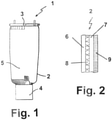
- FIG. 1 shows an air spring arrangement 1, comprising an air spring bellows 2 and the two connection components cover 3 and rolling piston 4, specifically with the formation of a volume-elastic air chamber 5.
- the air spring bellows consists of an inner layer 6 and outer layer 7 as an elastic base body, for example made of a vulcanized rubber mixture based on NR, a reinforcement layer 8 embedded between the inner layer 6 and outer layer 7, for example in Form of a polyamide fabric, and a coating 9, which is in direct contact with the outer layer 8.
- the cover 9 in the form of a fabric is equipped with at least one flame retardant.
Landscapes
- Engineering & Computer Science (AREA)
- General Engineering & Computer Science (AREA)
- Mechanical Engineering (AREA)
- Textile Engineering (AREA)
- Chemical & Material Sciences (AREA)
- Chemical Kinetics & Catalysis (AREA)
- Laminated Bodies (AREA)
- Compositions Of Macromolecular Compounds (AREA)
Description
- Die Erfindung betrifft einen Artikel mit einem Grundkörper aus einem polymeren Werkstoff mit elastischen Eigenschaften, insbesondere einen Luftfederbalg, ein Metall-Gummi-Element oder einen Schwingungsdämpfer.
- Artikel aus polymeren Werkstoffen, die zur Federung bspw. von Kraftfahrzeugen oder Schienenfahrzeugen eingesetzt werden und / oder der Schwingungsdämpfung dienen, werden unter Verwendung elastomerer Mischungen, auch als Kautschukmischungen bezeichnet, hergestellt. Diese, für die grundlegenden Eigenschaften solcher Artikel üblicherweise verwendeten elastomeren Mischungen sind hinreichend bekannt. Artikel mit herausragenden elastischen Eigenschaften, wie bspw. Metall-Gummi Elemente oder Schwingungsdämpfer, enthalten vorzugsweise vulkanisierte Kautschukmischungen, die überwiegend auf Naturkautschuk (NR) und / oder Polyisoprenkautschuk (IR) basieren. Artikel mit einer sehr guten Witterungs-, Mineralöl- und Wärmebeständigkeit, wie bspw. Luftfederbälge, enthalten vorzugsweise vulkanisierte Kautschukmischungen, die überwiegend auf Chloroprenkautschuk (CR) basieren.
- Allerdings zeigen Artikel mit diesen elastomeren Mischungen deutliche Nachteile im Brandverhalten. Im Brandfall entstehen unter anderem dichte Rauchgase. Beim Verbrennungsprozess der genannten elastomeren Mischungen, die überwiegend auf NR und / oder IR basieren, ist die Wärmefreisetzungsrate besonders hoch. Beim Verbrennungsprozess der elastomeren Mischungen, die überwiegend auf CR basieren, ist das entstehende Rauchgas für Mensch und Tier toxisch.
- Aufgrund der in den letzten Jahren gestiegenen Anforderungen hinsichtlich des Brandschutzes, welche sich vor allem in der verschärften Brandschutznorm EN45545 zeigt, ergibt sich ein erhöhter Bedarf an brandschutzoptimierten Polymerartikeln. Diesen Brandschutzanforderungen können sowohl die genannten elastomeren Mischungen, die überwiegend auf NR und / oder IR basieren, vor allem aufgrund der geforderten maximalen Wärmefreisetzungsrate, als auch die flammwidrigen elastomeren Mischungen, die überwiegend auf CR basieren, insbesondere aufgrund der geforderten Rauchgastoxizität, nicht mehr gerecht werden. Somit erfüllen die Artikel, welche diese elastomeren Mischungen enthalten, die verschärften Anforderungen zumeist nicht mehr. Eine übliche Methode das Brandverhalten von Kautschukmischungen zu verbessern, ist das direkte Einmischen von brandhemmenden Substanzen. Allerdings führt diese Maßnahme bei den betroffenen Artikeln in der Regel dazu, dass sich die physikalischen Eigenschaften, insbesondere die Federungs-, Setz- bzw. Schwingungseigenschaften signifikant verschlechtern.
- In
WO 2014/019008 A1 wird zur Lösung dieses Problems vorgeschlagen, eine ausschließlich schwefelvernetzte zusätzliche äußere Lage, enthaltend ein Vinylacetathaltiges thermoplastisches Polymer, ein Doppelbindungen-enthaltendes, ungesättigtes Elastomer und zumindest ein Flammschutzmittel, zu verwenden. Diese zusätzliche äußere Lage muss über ein gezielt gesteuertes Vulkanisationsverfahren auf das Bauteil bzw. auf den Grundkörper des Bauteils bei vergleichsweise hohen Vulkanisationstemperaturen aufvulkanisiert werden. InWO 2014/019008A1 muss somit zweimal hintereinander ein Vulkanisationsprozess durchgeführt werden. Dies bedeutet nicht nur einen produktionstechnisch höheren Aufwand, sondern die zweifache Vulkanisation kann auch zu unerwünschten und schädlichen Reversionsvorgängen in der unter der äußeren Lage befindlichen bereits vulkanisierten Polymermischung, führen. Besonders an Polymermischungen, die überwiegend auf NR und / oder IR basieren, zeigen sich bei einer Übervulkanisation signifikante Reversionsvorgänge. Um das Brandverhalten des Gesamtartikels zu verbessern muss diese zusätzliche äußere Lage des Weiteren eine gleichmäßige Mindestlagendicke besitzen, wofür eine aufwendige und teure zweite Vulkanisationsform notwendig ist. Zusätzlich hat diese äußere Lage mit einer Zusammensetzung gemäßWO 2014/019008 A1 deutliche Nachteile hinsichtlich der Mineralölbeständigkeit, was insbesondere im Schienenverkehr, ganz besonders bei Luftfedern, ungünstig ist. - In
EP 2196492 B1 wird eine flammhemmende Beschichtung direkt auf den Elastomerkörper vulkanisiert. Dies gewährleistet, zumindest in den Bereichen, auf denen die flammhemmende Beschichtung aufgebracht wurde, eine Abschirmung des Elastomerkörpers. Hierbei enthält die Beschichtung wenigstens einen polymeren Binder und als flammhemmende Substanz wenigstens Blähgraphit, welcher auch als expandierbarer Graphit bezeichnet wird. Die Beschichtungszusammensetzung wird zunächst unter Einhaltung aller erforderlichen Sicherheitsmaßnahmen in Lösemitteln gelöst, im Anschluss auf das Bauteil aufgebracht und abschließend vulkanisiert. Problematisch ist hierbei die Abriebbeständigkeit der Beschichtungszusammensetzung. Des Weiteren muss sowohl die Elastizität als auch die Bruchdehnung der Beschichtung so eingestellt sein, dass im Fahrzeugbetrieb eine vorzeitige Rißbildung in der Beschichtung bzw. eine Versprödung der Beschichtung nicht eintritt. Ist die Rißbildung der Beschichtung zu stark fortgeschritten, ist der Grundkörper nicht mehr vollständig geschützt. Bei zu starker Versprödung kann im Brandfall die Beschichtung durch das Aufblähen (=Volumenzunahme) des Blähgraphits unmittelbar mit zahlreichen Rissen durchsetzt werden oder sogar unmittelbar abfallen. Durch die Vulkanisation der Beschichtung kann es, wie bereits oben erwähnt, bei den darunterliegenden Lagen zu Reversionsbildung kommen. - Aus der
EP1371872A2 ist ein Luftfederbalg bekannt, der mit einer separaten Schutzmanschette aus einer textilen Werkstoff versehen ist. Die Schutzmanschette schützt den Luftfederbalg vor Schmutz. - Da Luftfederbälge, Metall-Gummi-Elemente und Schwingungsdämpfer sehr starken mechanischen Belastungen ausgesetzt sind, insbesondere im Einsatz im Schienenverkehr, müssen derartige Beschichtungen vergleichbare elastische Eigenschaften besitzen, wie der polymere Grundkörper, damit derartige Beschichtungen im Einsatz keine vorzeitigen Risse aufweisen oder sich sogar ablösen. Dies gestaltet sich mit der in
WO 2014/019008 A1 beschriebenen Materialkombination schwierig und ggf. nachteilig. InEP 2196492 B1 muss eine ausreichend große Menge an Blähgraphit eingesetzt werden, um den entsprechenden Brandschutz gewährleisten zu können, was wiederum negativen Einfluss auf die physikalischen Eigenschaften, insbesondere der Elastizität und der Bruchdehnung hat. - Zusätzlich stellen beide Möglichkeiten einen deutlichen Mehr-Aufwand im industriellen Herstellprozess dar und insbesondere die Verwendung von organischen Lösemitteln kann zu gesundheitlichen Problemen der Produktionsmitarbeiter führen.
- Die Aufgabe der Erfindung besteht nun darin, einen Artikel bereitzustellen, der sich durch ein optimiertes Brandschutzverhalten auszeichnet, um die verschärften Anforderungen, insbesondere die in EN-45545 beschriebenen, zu erfüllen. Gleichzeitig sollen die notwendigen physikalischen Eigenschaften des Artikels auf einem vergleichbaren Niveau verbleiben und die Komplexität im Herstellprozess nicht nennenswert erhöht werden.
- Gelöst wird diese Aufgabe dadurch, dass der Artikel mit einem Grundkörper aus einem polymeren Werkstoff mit elastischen Eigenschaften, eine Artikeloberfläche besitzt, die vollständig oder teilweise mit wenigstens einem Überzug versehen ist, wobei der Überzug aus wenigstens einem textilen Flächengebilde und / oder aus wenigstens einem textilen Raumgebilde und / oder aus wenigstens einer Schrumpffolie gebildet wird, welche(s) jeweils von sich aus brandhemmend wirken kann und / oder brandhemmend ausgestattet ist und wobei der Überzug keine unmittelbare Verbindung zur Artikeloberfläche hat.
- Als Überzug wird gemäß Duden eine Art Hülle aus Stoff bezeichnet, die etwas schützt. Im Rahmen der vorliegenden Erfindung schützt der Überzug den Artikel vor der Zerstörung durch einen möglichen Brand. Der Überzug besteht hierbei aus wenigstens einem textilen Flächengebilde und / oder aus wenigstens einem textilen Raumgebilde und / oder aus wenigstens einer Schrumpffolie, welche(s) jeweils von sich aus brandhemmend wirken kann und / oder brandhemmend ausgestattet ist.
- Teilweise bedeutet in diesem Zusammenhang, dass lediglich bestimmte, definierte Bereiche bzw. Abschnitte der Artikeloberfläche des Gesamtartikels mit einem Überzug versehen sind.
- Der Uberzug steht mit der Artikeloberfläche in keiner unmittelbaren Verbindung. Ist der Uberzug in einem nicht beanspruchten Beispiel fest haftend mit dem Artikel verbunden, so ist bei einem vollständigen Versehen die gesamte Artikeloberfläche brandgeschützt und bei einem teilweise Versehen sind die mit dem Überzug bedeckten Bereiche bzw. Abschnitte der Artikeloberfläche brandgeschützt.
- Die Haftungsgüte eines fest verbundenen textilen Flächengebildes oder textilen Raumgebildes mit der auf wenigstens einem Polymer basierenden Artikeloberfläche ist in der Regel größer als bei reinen brandschutzoptimierten Beschichtungen. Zu den physikalischen und chemischen Bindungsanteilen kommt ein zusätzlicher Anteil an mechanischer Bindung aufgrund der Verankerung der textilen Fäden des textilen Flächengebildes oder Raumgebildes in die Gummioberfläche. Durch eine speziell haftungsfreundlich optimierte Präparierung der innenliegenden Textilseite kann die Haftungsgüte zwischen Textil und Artikeloberfläche zusätzlich gesteigert werden.
- Wenn der Überzug selbst nicht brennbar ist, ist der Artikel insgesamt stärker brandgeschützt als bei einem oder mehrerer Beschichtungsaufträge allein.
- Steht der Uberzug erfindungsgemäß in keiner unmittelbaren Verbindung zu der Artikeloberfläche, so wird keine haftfreundliche Präparierung des Textils benötigt. Das textile Flächen- oder Raumgebilde kann somit von beiden Seiten aus brandhemmend ausgestattet werden und dadurch kann die brandhemmende Ausstattung im Brandfall zu beiden Seiten expandieren. Dies bedeutet einen doppelten Schutz gegenüber der Hitzequelle bzw. den Flammen.
- Des Weiteren bestehen geringere Anforderungen an die Flexibilität bzw. Elastizität des Überzugs sowie der Elastizität und Bruchdehnung der brandhemmenden Ausstattung des Überzugs, wenn der Überzug, mit oder ohne Ausstattung, nicht fest haftend ist, und somit die Bewegungen des Artikels nicht komplett mitgehen muss. Ebenso sind zur Erzielung einer ausreichenden Haftungsgüte-ggf. vorzunehmende rezeptive Änderungen der Polymermischung aus dem der Grundkörper des Artikels besteht, nicht notwendig.
- Eine Haftung lässt sich durch Verwendung einer geeigneten Haftschicht bzw. Haftmischung oder durch Aktivierung der Artikeloberfläche, zum Beispiel durch Ätzen, erzielen. Eine Haftung kann auch durch die Verwendung eines geeigneten Mittels zur Grundierung, bspw. eines Primers, mit dem die Artikeloberfläche funktionalisiert wird, erzielt werden. Die Funktionalisierung der Artikeloberfläche durch Halogenieren, insbesondere Chlorieren, hat sich als besonders gut geeignet erwiesen. Aber auch andere Möglichkeiten und Arten bzw. Verfahren der Funktionalisierung sind denkbar. Bei Haftung bildet der Überzug mit der Artikeloberfläche einen Haftverbund.
- Das textile Flächengebilde kann hierbei bevorzugt als Filz, Vlies, Gewebe, Geflecht, Gewirk, Gestrick oder Gelege ausgebildet sein. Es handelt sich bevorzugt um Webware (engl. woven fabric), bei der die Fläche durch Verkreuzen von zwei Fadensystemen, nämlich Kette und Schuss, hergestellt wird, oder um eine Maschenware (engl. knitted fabric), bei denen eine mittels Faden gebildete Schleife in eine andere Schleife hineingeschlungen ist und wobei die auf diese Weise entstehenden Maschen unter Verwendung eines oder mehrerer Fäden gebildet werden können.
- Bei Verwendung eines Gewebes hat sich insbesondere die Verwendung eines so genannten Bi-Stretchgewebes als vorteilhaft erwiesen. Bei Verwendung eines Bi-Stretchgewebes können vom Gewebe alle Dehnungsrichtungen des Artikels und auch schon des Artikelrohlings mitgegangen werden, insbesondere ohne dass es zu unerwünschten Faltenbildungen im Bombierverfahren z.B. bei der Herstellung von Luftfederbälgen kommt.
- Das textile Raumgebilde kann als Schlauch, Strumpf oder textiles Halbzeug vorliegen. Ein derartiger Schlauch oder Strumpf kann sich idealerweise der Kontur des Artikels, insbesondere des Luftfederbalges, des Metall-Gummi-Elements oder des Schwingungsdämpfers anpassen.
- Beide textile Gebilde sind jeweils als Textilfasern aufgebaut, die sich im textilen Fertigungsverfahren verarbeiten lassen, insbesondere durch Verspinnen. Textilfasern sind in der Regel linienförmige Gebilde, bei denen das Verhältnis von Länge zu Durchmesser wesentlich größer als 1 ist, so dass sich eine ausreichende Bieg- und Schmiegsamkeit ergibt. Es können Spinnfasern mit begrenzter Länge, aber auch Filamente, d.h. Endlosfasern als Mono- oder Multifilamente, verwendet werden. Zu den textilen Fasern zählen auch Flockfasern, obwohl sie nicht verspinnbar sind, und auch Gummifasern, Metallfasern oder Spinnpapier, wenn diese textil verarbeitet werden können.
- Als Textilfasern können bevorzugt Naturfasern verwendet werden. Hierbei kann es sich um mineralische Naturfasern, wie bspw. Asbestfasern oder Steinwolle, pflanzliche Naturfasern, wie bspw. aus Baumwolle, Flachs oder Hanf, oder auch um tierische Naturfasern, wie bspw. aus Wolle oder Seide, handeln.
- Weiterhin können als Textilfasern bevorzugt Fasern aus natürlichen Polymeren, wie bspw. Regeneratfasern auf Cellulosebasis, wie Viskose, Lyocell oder Gummi, oder auch Fasern aus synthetischen Polymeren, wie bspw. Polyacrylnitril, Polypropylen, Polyester, Polyamid, Polyurethan, Polyphenylensulfid, Polyoxadiazol, Aramid, co-poly para Aramid, Polyimid, Polyetherimid, Polyetheretherketon, Polyethylen-2,6-naphthalat, Polyphenylen, Polyphenylenoxid, Polyphenylensulfid, Polyphenylenether, Polybenzoxazole, eingesetzt werden.
- Es ist ebenso denkbar, Textilfasern aus anorganischen Stoffen wie Glas, Keramik, Kohlenstoff (Carbon), Metall oder Gestein, wie bspw. Basalt, zu verwenden.
- Die Textilfasern können alleine oder in Kombination, d.h. als Hybridfaser, eingesetzt werden.
- Welche Fasern für das textile Flächen- oder Raumgebilde eingesetzt wird, hängt im Wesentlichen von der Art des Artikels, bspw. Gummi-Metall Element bzw. Schwingungsdämpfer oder Luftfeder, der Zusammensetzung des polymeren Grundkörpers, der Anbindung des Flächen- oder Raumgebildes an den Grundkörper, fest anhaftend oder nicht fest anhaftend, und dem Anwendungszweck des Artikels ab. Die Anwendung bestimmt im Wesentlichen die erforderliche Elastizität und Flexibilität, die der Artikel während der gesamten Einsatzdauer erfüllen muss.
- Bestimmte Fasern bieten von sich aus schon einen ausreichenden Brandschutz, wie bspw. Polyoxadiazol, Polyetherimid, Aramide, wie m-Aramid, p-Aramid oder co-poly-para Aramid, Metall, Glas, Keramik, Gestein, Carbon, modifiziertes Polyester, modifizierte Viskose.
- Die genannten Materialien können alleine oder in Kombination, bspw. als Hybridgarn, verwendet werden. Hier kann auf eine zusätzliche brandhemmende Ausstattung unter Umständen verzichtet werden.
- Die genannten Materialien können auch gemäß
DE 10 2012 112 581 A1 als Sperrfäden in das Textil eingearbeitet sein. - In einer besonders bevorzugten Ausführungsform ist das textile Flächen- oder Raumgebilde mit wenigstens einer brandhemmenden Substanz ausgestattet. Ausgestattet heißt im Rahmen der vorliegenden Erfindung folgendes:
- Die flammhemmende Substanz wird auf das textile Flächengebilde oder das textile Raumgebilde mittels Streichen, Sprühen, Rakeln, oder Dippen oder über ein Kalandrierverfahren aufgebracht. Hierzu befindet sich die flammhemmende Substanz bevorzugt in einer Lösung oder einer Mischung mit geeigneter Viskosität. Diese Lösung bzw. Mischung ist bevorzugt wasserbasiert, frei von organischen Lösemitteln, frei von Halogenen und Halogenverbindungen und enthält zusätzlich wenigstens ein Bindemittel.
- Die flammhemmende Substanz wird auf die einzelne Textilfaser des textilen Flächengebildes oder des textilen Raumgebildes durch Streichen, Sprühen oder Dippen aufgebracht. Hierzu befindet sich die flammhemmende Substanz bevorzugt in einer Lösung oder in einer Mischung mit geeigneter Viskosität. Diese Lösung bzw. Mischung ist bevorzugt wasserbasiert, frei von organischen Lösemitteln, frei von Halogenen und Halogenverbindungen und enthält zusätzlich wenigstens ein Bindemittel. Hierbei kann die flammhemmende Substanz besonders gut in die Textilfaser eindringen. Erst danach wird aus der mit Flammschutzmittel versehenen Textilfaser das textile Flächengebilde oder das textile Raumgebilde hergestellt. Das textile Gebilde ist hierbei besonders gut mit dem Flammschutzmittel ausgestattet.
- Die brandhemmende Ausstattung auf dem textilen Flächen- oder Raumgebilde wird in beiden Fällen bevorzugt kaltvulkanisiert, ganz bevorzugt als Reaktion mit Luftsauerstoff oder durch UV-Bestrahlung, unter Einsatz von hierzu geeigneten Peroxiden, vernetzt.
- Die Ausstattung des Textils mit der brandhemmenden Substanz kann einseitig oder beidseitig erfolgen.
- Bildet das textile Flächen- oder Raumgebilde einen Haftverbund mit der Artikeloberfläche, so wird die Ausstattung mit der brandhemmenden Substanz in der Regel einseitig erfolgen, und zwar zur Außenseite des Artikels. Eventuell ist es möglich, die zur Bildung eines Haftverbundes eingesetzte Haftschicht oder das Haftmittel zusätzlich selbst brandhemmend auszustatten.
- Steht der Überzug in keiner unmittelbaren Verbindung zu der Artikeloberfläche, so kann in einer besonders bevorzugten Ausführungsvariante das textile Flächen- oder Raumgebilde von beiden Seiten, d.h. von Vorder- und Rückseite aus, brandhemmend ausgestattet sein.
- Als Flammschutzmittel können alle der fachkundigen Person bekannten Flammschutzmittel verwendet werden.
- Es kommen hierbei insbesondere Stannate, wie Zinkstannat oder Zinkhydroxystannat, Hydroxide, wie Magnesiumhydroxid oder Aluminiumhydroxid, Cyanurate, wie Melamincyanurat, Borate, wie Zinkborat, phosphorhaltige Komponenten, wie Resorcinoldiphosphat oder aromatische Polyphosphate, stickstoffhaltige Komponenten, wie Ammoniumphosphat, Intumeszenzgemische, Carbonate, wie Calciumcarbonat oder Magnesiumcarbonat, oder Blähgraphit in Frage.
- Intumeszenzgemische blähen zu Schäumen auf. Sie werden benutzt, um brennbare Materialien wie Kunststoffe oder Holz, aber auch Stahl, der bei erhöhter Temperatur seine Festigkeit einbüßt, gegen die Einwirkung von Wärme und Feuer zu schützen. Gegebenenfalls können auch noch geringe Mengen an Antimontrioxid, trotz der gesundheitsgefährdenden Wirkung, in Kombination mit wenigstens einem der genannten Flammschutzmittel verwendet werden.
- Bei dem Überzug kann es sich auch um wenigstens eine Schrumpffolie handeln.
- Diese Schrumpffolie kann alleine oder in Kombination mit wenigstens einem textilen Flächengebilde und / oder mit wenigstens einem textilen Raumgebilde verwendet werden. Somit kann der Überzug aus einer oder aus mehreren Schichten bestehen.
- Als Schrumpffolien werden kalt gereckte thermoplastische Kunststoff-Folien bezeichnet, die sich insbesondere bei Wärmebehandlung wieder auf ihren Urzustand zusammenziehen. Das Schrumpfen wird bei den vorliegenden Artikeln ausgenutzt, damit die Folie auf der Artikeloberfläche teilweise oder vollständig fest aufliegt. Bevorzugt hat die Schrumpffolie hierzu die Form eines Schrumpfschlauches. Es können hierbei Schrumpfschläuche verwendet werden, die unter Einwirkung von Wärme Schrumpfen, aber auch die Verwendung von so genannten "Kaltschrumpfschläuchen" ist möglich. Letztere kommen ohne jede Wärmewirkung aus, was den Vorteil bietet, dass die Reversion der unter dem Überzug befindlichen Polymermischungen reduziert oder verhindert wird.
- Als Basis für die Schrumpffolie kann bspw. Polyethylenterephthalat, Polyethylen, Polyvinylchlorid oder insbesondere für Kaltschrumpfschläuche EPDM oder Silikon verwendet werden.
- Die Schrumpffolie kann von sich aus brandhemmend sein oder brandhemmend ausgestattet sein.
- In einer besonders bevorzugten Ausführungsform ist die Schrumpffolie mit wenigstens einer brandhemmenden Substanz ausgestattet. Ausgestattet heißt im Rahmen der vorliegenden Erfindung folgendes:
- Die flammhemmende Substanz wird auf die Schrumpffolie mittels den der fachkundigen Person bekannten Verfahren, wie bspw. Streichen, Sprühen, Rakeln, Dippen oder während eines Kalandriervorgangs aufgebracht. Hierzu befindet sich die flammhemmende Substanz bevorzugt in einer Lösung oder einer Mischung mit geeigneter Viskosität. Diese Lösung bzw. Mischung ist bevorzugt wasserbasiert, frei von organischen Lösemitteln, frei von Halogenen und Halogenverbindungen und enthält zusätzlich wenigstens ein Bindemittel.
- Die Schrumpffolie ist direkt mit der flammhemmenden Substanz ausgestattet. Hierzu wird die flammhemmende Substanz bei der Herstellung der Folie dem Folienmaterial ggf. neben weiteren Bestandteilen hinzugefügt und anschließend wird die Folie auf dem der fachkundigen Person bekannten Wege, z.B. durch Kalandrieren, hergestellt. Dies hat den Vorteil, dass kein separater zusätzlicher Verfahrensschritt benötigt wird.
- Die brandhemmende Ausstattung auf der Schrumpffolie wird in beiden Fällen bevorzugt kaltvulkanisiert, ganz bevorzugt als Reaktion mit Luftsauerstoff oder durch UV-Vernetzung unter Einsatz von hierzu geeigneten Peroxiden. Hierdurch wird sichergestellt, dass es zu keiner Vor-Schrumpfung der Folie kommt.
- Die Ausstattung der Schrumpffolie, insbesondere des Schrumpfschlauches, mit der brandhemmenden Substanz kann einseitig oder beidseitig erfolgen.
- Bildet die Schrumpffolie einen Haftverbund mit der Artikeloberfläche, so wird die Ausstattung mit der brandhemmenden Substanz in der Regel einseitig erfolgen, und zwar zur Außenseite des Artikels. Eventuell ist es möglich, die zur Bildung eines Haftverbundes eingesetzte Haftschicht oder das Haftmittel zusätzlich selbst brandhemmend auszustatten.
- Steht der Überzug in keiner unmittelbaren Verbindung zu der Artikeloberfläche, so kann in einer besonders bevorzugten Ausführungsvariante die Schrumpffolie, insbesondere der Schrumpfschlauch, von beiden Seiten, d.h. von Vorder- und Rückseite aus, brandhemmend ausgestattet sein.
- Als Flammschutzmittel können auch hier alle der fachkundigen Person bekannten Flammschutzmittel verwendet werden.
- Es kommen hierbei insbesondere Stannate, wie Zinkstannat oder Zinkhydroxystannat, Hydroxide, wie Magnesiumhydroxid oder Aluminiumhydroxid, Cyanurate, wie Melamincyanurat, Borate, wie Zinkborat, phosphorhaltige Komponenten, wie Resorcinoldiphosphat oder aromatische Polyphosphate, stickstoffhaltige Komponenten, wie Ammoniumphosphat, Intumeszenzgemische, Carbonate, wie Calciumcarbonat oder Magnesiumcarbonat, oder Blähgraphit in Frage.
- Intumeszenzgemische blähen zu Schäumen auf. Sie werden benutzt, um brennbare Materialien wie Kunststoffe oder Holz, aber auch Stahl, der bei erhöhter Temperatur seine Festigkeit einbüßt, gegen die Einwirkung von Wärme und Feuer zu schützen. Gegebenenfalls können auch noch geringe Mengen an Antimontrioxid, trotz der gesundheitsgefährdenden Wirkung, in Kombination mit wenigstens einem der genannten Flammschutzmittel verwendet werden.
- Der Überzug kommt insbesondere für folgende Artikel zur Anwendung:
- Schlauchförmige Körper umfassen die Produktgruppe Förderschläuche aller Art, Luftfederbälge (Kreuzlagenbälge, Axialbälge) und Kompensatoren in verschieden Ausführungen (z.B. Torsionskompensator, Lateralkompensator). Das Aufbaukonzept ist dabei überall gleich, nämlich umfassend eine Außenschicht (Mantel), eine Innenschicht (Seele) sowie insbesondere einen eingebetteten ein- oder mehrlagigen Festigkeitsträger. Zusätzlich kann noch wenigstens eine Zwischenschicht, beispielsweise zwischen zwei Festigkeitsträgerlagen, vorhanden sein. Bei Förderschläuchen kann die Innenschicht noch einen medienbeständigen Inliner, beispielsweise in Form einer PTFE-Folie, aufweisen, beispielsweise bei Chemikalienschläuchen. Auch eine zusätzliche Barriereschicht mit geringer Permeationsrate, insbesondere in Form von Folien, beispielsweise als Polyamidfolie, kann vorhanden sein, wobei hier insbesondere Klimaschläuche zu nennen sind. Die Außenschicht eines schlauchförmigen Körpers, insbesondere die gesamte Oberfläche der Außenschicht, ist mit dem Überzug ausgestattet.
- Antriebsriemen, die zumeist mit einem eingebetteten Festigkeitsträger mit in Längsrichtung verlaufenden parallel angeordneten Zugträgern (Zugstränge) versehen sind, kommen in verschiedenen Ausführungsformen vor, und zwar als Flachriemen, Keilriemen, Keilrippenriemen, Zahnriemen und Verbundseile, die jeweils einen Unterbau mit einer Kraftübertragungszone und eine Decklage als Riemenrücken aufweisen. Der wesentliche Unterschied liegt dabei in der Konstruktion der Kraftübertragungszone, bedingt durch unterschiedliche Oberflächengeometrien, beispielsweise durch eine zahnförmige Profilierung bei Zahnriemen. Der Überzug kommt insbesondere bei der Kraftübertragungszone, gegebenenfalls zusätzlich auch bei der Decklage zur Anwendung. Der Überzug kann zudem zusätzlich zur flammhemmenden Kantenversiegelung zum Einsatz gelangen.
- Das Dämpfungselement umfasst einen polymeren Werkstoff mit elastischen Eigenschaften und kommt zumeist im Rahmen eines Metall-Polymer-Verbundes zum Einsatz, und zwar in Form eines Lagers mit einem Lageroberteil und Lagerunterteil, einer Buchse mit Kern und Hülse oder einem Metall-Gummi-Federelement, wie z.B. einer Schicht-, oder Konusfeder.Vorzugsweise werden hier alle freien Oberflächen des Dämpfungselementes mit dem Überzug versehen.
- Von besonderer Bedeutung ist der Luftfederbalg, der in Verbindung mit der Figurenbeschreibung noch näher vorgestellt wird.
- Bei der Bildung des Grundkörpers kommen insbesondere (teil)vulkanisierbare Polymermischungen zum Einsatz, wobei folgende beiden Werkstoffvarianten wegen ihrer elastischen Eigenschaften zu nennen sind:
- Die Polymermischung ist eine vulkanisierbare thermoplastfreie Kautschukmischung, enthaltend wenigstens eine Kautschukkomponente sowie weitere Mischungsingredienzien. Als Kautschukkomponenten sind insbesondere zu nennen: Ethylen-Propylen-Kautschuk (EPM), Ethylen-Propylen-Dien-Kautschuk (EPDM), Nitrilkautschuk (NBR), (teil)hydrierter Nitrilkautschuk (HNBR), Fluor-Kautschuk (FKM), Chloropren-Kautschuk (CR), Naturkautschuk (NR), Styrol-Butadien-Kautschuk (SBR), Isopren-Kautschuk (IR), Butylkautschuk (IIR), Brombutylkautschuk (BIIR), Chlorbutylkautschuk (CIIR), Bromiertes Copolymer aus Isobutylen und Paramethylstyrol (BIMS), Butadien-Kautschuk (BR), Chloriertes Polyethylen (CM), Chlorsulfoniertes Polyethylen (CSM), Polyepichlorhydrin (ECO), Terpolymere des ECO mit Ethylenoxid und ungesättigten Monomeren (ETER), Ethylen-Vinylacetat-Kautschuk (EVA), Acrylat-Kautschuk (ACM), Ethylen-Acrylat-Kautschuk (AEM), Silikonkautschuk (MQ, VMQ, PVMQ, FVMQ), Fluorierter Methylsilikonkautschuk (MFQ), Perfluorinierter Propylen-Kautschuk (FFPM), Perfluorcarbon-Kautschuk (FFKM), Polyurethan (PU).
- Die vorgenannten Kautschuktypen können unverschnitten sein. Auch der Einsatz eines Verschnittes, insbesondere in Verbindung mit einem der vorgenannten Kautschuktypen, beispielsweise ein NR/BR-Verschnitt oder ein BR/SBR-Verschnitt, ist möglich.
- Welcher Kautschuktyp bevorzugt wird, hängt von der Artikelart ab. Besonders Vielfältig ist der Einsatz von verschiedenen Kautschuktypen bei schlauchförmigen Körpern, wobei hier insbesondere folgende Kautschukkomponenten zu nennen sind: NR, IR, ACM, AEM, BIMS, CM, CR, IIR, BIIR, CIIR, ECO, EPM, EPDM, ETER, EVA, FKM, HNBR, VMQ oder FVMQ. Bei Antriebsriemen kommen insbesondere Kautschukmischungen auf der Basis von EPM und/oder EPDM (bei Keil- und
- Keilrippenriemen) sowie NBR, speziell jedoch HNBR (bei Zahnriemen) zur Anwendung.
- Die üblichen Mischungsingredienzien umfassen wenigstens einen Vernetzer oder ein Vernetzersystem (Vernetzungsmittel und Beschleuniger). Zusätzliche Mischungsingredienzien sind zumeist noch ein Füllstoff und/oder ein Verarbeitungshilfsmittel und/oder ein Weichmacher und/oder ein Alterungsschutzmittel sowie gegebenenfalls weitere Zusatzstoffe (z.B. Farbpigmente, Verstärkungsfasern). Diesbezüglich wird auf den allgemeinen Stand der Kautschukmischungstechnologie verwiesen.
- Die Polymermischung ist eine teilvulkanisierbare Polymermischung, enthaltend wenigstens eine Thermoplastkomponente, wenigstens eine Kautschukkomponente, die zumindest teilvernetzbar ist sowie weitere Mischungsingredienzien. Die bevorzugten Thermoplastkomponenten sind: Polyolefin, insbesondere Polyethylen (PE) oder Polypropylen (PP), Polystyrol (PS), Polyamid (PA), beispielsweise PA6 oder PA6.6, Polyester, beispielsweise PET, PEN oder PBT.
- Als Kautschukkomponenten sind hier insbesondere EPM, EPDM, SBR, CR, NR, NBR, FKM, ACM oder AEM zu nennen, die insbesondere mit keiner weiteren Kautschukkomponente verschnitten sind.
- Hinsichtlich der üblichen Mischungsingredienzien wird auf die Mischungstechnologie zu der Variante A, insbesondere auf die Lehre gemäß der Offenlegungsschrift
DE 100 04 632 A1 verwiesen. - Die Erfindung wird nun anhand von Ausführungsbeispielen unter Bezugnahme auf schematische Zeichnungen erläutert. Es zeigen:
-
Fig. 1 eine Luftfeder-Anordnung; -
Fig. 2 den Schichtenaufbau eines Luftfederbalges mit einem Überzug aus einem Gewebe, welches flammhemmend ausgestattet ist. -
Fig. 1 zeigt eine Luftfeder-Anordnung 1, umfassend einen Luftfederbalg 2 sowie die beiden Anschlussbauteile Deckel 3 und Abrollkolben 4, und zwar unter Ausbildung einer volumenelastischen Luftkammer 5. -
Fig. 2 zeigt nun den Schichtenaufbau eines fertig gestellten Luftfederbalges 2. Der Luftfederbalg besteht dabei aus einer Innenschicht 6 und Außenschicht 7 als elastischer Grundkörper, beispielsweise aus einer vulkanisierten Kautschukmischung auf der Basis von NR, einer zwischen der Innenschicht 6 und Außenschicht 7 eingebetteten Festigkeitsträgerschicht 8, beispielsweise in Form eines Polyamid-Gewebes, sowie aus einem Überzug 9, der mit der Außenschicht 8 in direkter Verbindung steht. Der Überzug 9 in Form eines Gewebes ist mit wenigstens einem flammhemmenden Mittel ausgestattet. -
- 1
- Luftfeder-Anordnung
- 2
- Luftfederbalg
- 3
- Deckel
- 4
- Abrollkolben
- 5
- volumenelastische Luftkammer
- 6
- Innenschicht eines Luftfederbalges
- 7
- Außenschicht eines Luftfederbalges
- 8
- Festigkeitsträgerschicht eines Luftfederbalges
- 9
- Überzug
Claims (4)
- Artikel mit einem Grundkörper aus einem polymeren Werkstoff mit elastischen Eigenschaften, dadurch gekennzeichnet, dass die Artikeloberfläche vollständig oder teilweise mit wenigstens einem Überzug versehen ist, wobei der Überzug aus wenigstens einem textilen Flächengebilde und / oder aus wenigstens einem textilen Raumgebilde und / oder aus wenigstens einer Schrumpffolie gebildet wird, welche(s) jeweils von sich aus brandhemmend wirken kann und / oder brandhemmend ausgestattet ist und wobei der Überzug keine unmittelbare Verbindung zur Artikeloberfläche hat.
- Artikel nach Anspruch 1, dadurch gekennzeichnet, dass das textile Flächengebilde und / oder das textile Raumgebilde und / oder die Schrumpffolie brandhemmend ausgestattet ist.
- Artikel nach Anspruch 2, dadurch gekennzeichnet, dass die brandhemmende Ausstattung auf der Basis wenigstens einer flammhemmenden Substanz ist.
- Artikel nach einem der Ansprüche 1 bis 3, dadurch gekennzeichnet, dass die Schrumpffolie als Schrumpfschlauch ausgebildet ist.
Applications Claiming Priority (2)
| Application Number | Priority Date | Filing Date | Title |
|---|---|---|---|
| DE102014219613.2A DE102014219613A1 (de) | 2014-09-26 | 2014-09-26 | Artikel, insbesondere ein Luftfederbalg, ein Metall-Gummi-Element oder ein Schwingungsdämpfer |
| PCT/EP2015/066233 WO2016045813A1 (de) | 2014-09-26 | 2015-07-16 | Artikel, insbesondere ein luftfederbalg, ein metall-gummi-element oder ein schwingungsdämpfer |
Publications (2)
| Publication Number | Publication Date |
|---|---|
| EP3198168A1 EP3198168A1 (de) | 2017-08-02 |
| EP3198168B1 true EP3198168B1 (de) | 2022-02-23 |
Family
ID=53724330
Family Applications (1)
| Application Number | Title | Priority Date | Filing Date |
|---|---|---|---|
| EP15741969.8A Active EP3198168B1 (de) | 2014-09-26 | 2015-07-16 | Artikel, insbesondere ein luftfederbalg, ein metall-gummi-element oder ein schwingungsdämpfer |
Country Status (6)
| Country | Link |
|---|---|
| US (1) | US10352388B2 (de) |
| EP (1) | EP3198168B1 (de) |
| CN (1) | CN106715950A (de) |
| DE (1) | DE102014219613A1 (de) |
| ES (1) | ES2910958T3 (de) |
| WO (1) | WO2016045813A1 (de) |
Families Citing this family (22)
| Publication number | Priority date | Publication date | Assignee | Title |
|---|---|---|---|---|
| WO2013086512A2 (en) | 2011-12-09 | 2013-06-13 | President And Fellows Of Harvard College | Muscle chips and methods of use thereof |
| US11384328B2 (en) | 2015-11-18 | 2022-07-12 | President And Fellows Of Harvard College | Cartridge-based system for long term culture of cell clusters |
| FR3049029B1 (fr) * | 2016-03-18 | 2018-03-09 | Hutchinson | Dispositif antivibratoire tenant au feu destine a une application ferroviaire |
| DE102016213625A1 (de) * | 2016-07-26 | 2018-02-01 | Contitech Vibration Control Gmbh | Kautschukmischung und elastischer Artikel enthaltend die Kautschukmischung |
| DE102016215343A1 (de) * | 2016-08-17 | 2018-02-22 | Contitech Luftfedersysteme Gmbh | Artikel, insbesondere ein Metall-Gummi-Element für Schienenfahrzeuge |
| DE102016215333A1 (de) | 2016-08-17 | 2018-02-22 | Contitech Luftfedersysteme Gmbh | Artikel, insbesondere ein Luftfederbalg, ein Metall-Gummi-Element oder ein Schwingungsdämpfer |
| DE102016217333A1 (de) | 2016-09-12 | 2018-03-15 | Contitech Luftfedersysteme Gmbh | Artikel, insbesondere ein Metall-Gummi-Element für Schienenfahrzeuge |
| WO2018053395A1 (en) | 2016-09-17 | 2018-03-22 | Firestone Industrial Products Company, Llc | Elastomeric articles with improved fire protection properties |
| US11708482B2 (en) | 2017-09-18 | 2023-07-25 | Bridgestone Americas Tire Operations, Llc | Rubber articles with improved fire properties |
| US11629318B2 (en) | 2017-10-20 | 2023-04-18 | President And Fellows Of Harvard College | Methods for producing mature adipocytes and methods of use thereof |
| DE102017223545A1 (de) | 2017-12-21 | 2019-06-27 | Contitech Luftfedersysteme Gmbh | Artikel, insbesondere ein Luftfederbalg, ein Metall-Gummi-Element oder ein Schwingungsdämpfer |
| DE102017223538A1 (de) | 2017-12-21 | 2019-06-27 | Contitech Luftfedersysteme Gmbh | Artikel, insbesondere ein Luftfederbalg, ein Metall-Gummi-Element oder ein Schwingungsdämpfer |
| DE102017223541A1 (de) | 2017-12-21 | 2019-06-27 | Contitech Luftfedersysteme Gmbh | Artikel, insbesondere ein Luftfederbalg, ein Metall-Gummi-Element oder ein Schwingungsdämpfer |
| US11617670B2 (en) | 2018-01-10 | 2023-04-04 | Grd Innovations, Llc | Variable radius spring assembly |
| DE102018106717B4 (de) * | 2018-03-21 | 2023-09-07 | Saf-Holland Gmbh | Luftfeder |
| CN110259861B (zh) * | 2019-06-19 | 2021-01-15 | 中车青岛四方车辆研究所有限公司 | 双层橡胶弹簧及使用双层橡胶弹簧的空气弹簧 |
| WO2021040725A1 (en) * | 2019-08-29 | 2021-03-04 | Grd Innovations Llc | Composite springs, composite spring assemblies, and methods for making the same |
| DE102019213769A1 (de) * | 2019-09-10 | 2021-03-11 | Contitech Luftfedersysteme Gmbh | Verfahren zur Herstellung einer Gummifeder |
| DE102019214454A1 (de) * | 2019-09-23 | 2021-03-25 | Contitech Luftfedersysteme Gmbh | Schichtaufbau aus wenigstens einem elastomeren Material mit darin eingebetteten Fasern, Verfahren zur Herstellung des Schichtaufbaus sowie Luftfederbalg mit einem solchen Schichtaufbau |
| DE102019135450A1 (de) * | 2019-12-20 | 2020-03-05 | Gmt Gummi-Metall-Technik Gmbh | Artikel mit einem ein- oder mehrschichtigen Grundkörper mit elastischen Eigenschaften, Verfahren zur Herstellung eines Artikels und Verwendung von Aluminiumhydroxid als verstärkenden Füllstoff in einer Kautschukmischung |
| EP4098434A1 (de) * | 2021-05-31 | 2022-12-07 | ContiTech Techno-Chemie GmbH | Alternatives unterverfahren zum umwickeln von gewickelten silikonschläuchen und damit hergestellter schlauch |
| DE102022209463A1 (de) * | 2022-09-09 | 2024-03-14 | Contitech Antriebssysteme Gmbh | Artikel, insbesondere Antriebsriemen, mit einer Textilauflage |
Family Cites Families (15)
| Publication number | Priority date | Publication date | Assignee | Title |
|---|---|---|---|---|
| DE1287453B (de) * | 1966-06-16 | 1969-01-16 | Wilhelm Hermann Mueller & Co K | Luftfederbalg fuer Fahrzeugfederungen |
| US4688777A (en) * | 1985-11-01 | 1987-08-25 | The Budd Company | Pair of stacked springs for a railway car |
| US4818588A (en) * | 1985-11-20 | 1989-04-04 | Dai Nippon Insatsu Kabushiki Kaisha | Packaging materials |
| US5580033A (en) * | 1995-04-07 | 1996-12-03 | The Goodyear Tire & Rubber Company | Bellows type air spring and method of making same |
| ATE444333T1 (de) | 1999-02-15 | 2009-10-15 | Polyone Corp | Verfahren zur herstellung eines thermoplastischen vulkanisats |
| DE10225986A1 (de) * | 2002-06-11 | 2003-12-24 | Phoenix Ag | Luftfederanordnung |
| US7250203B2 (en) * | 2003-10-16 | 2007-07-31 | The Goodyear Tire & Rubber Company | Airsleeve |
| US8163350B2 (en) * | 2005-11-07 | 2012-04-24 | E I Du Pont De Nemours And Company | Processes for making selectively permeable laminates |
| DE102006016144A1 (de) * | 2006-04-06 | 2007-10-18 | Contitech Luftfedersysteme Gmbh | Luftfeder mit optischer Verschleißanzeige |
| WO2008001916A1 (fr) * | 2006-06-30 | 2008-01-03 | Mitsubishi Plastics, Inc. | Film laminé thermorétractable, et articles moulés, étiquettes thermorétractables et récipients, fabriqués à partir d'un tel film |
| ES2390080T3 (es) | 2008-12-15 | 2012-11-06 | Trelleborg Industrial Products Uk Ltd | Cuerpo elastomérico con recubrimiento elástico retardante del fuego |
| US20120110721A1 (en) | 2009-07-21 | 2012-05-10 | Sabic Innovative Plastics Ip B.V. | Waterproof moisture-permeable sheet with fire protection performance and fire-protecting clothing using same |
| DE102010026115A1 (de) * | 2010-07-05 | 2012-01-05 | Hübner GmbH | Tuch zur Herstellung eines Balges eines Übergangs sowie Verfahren zur Herstellung eines solchen Tuches |
| AT512907B1 (de) | 2012-08-02 | 2013-12-15 | Bategu Gummitechnologie Gmbh & Co Kg | Flammgeschützte polymere Zusammensetzung |
| DE102012112581A1 (de) | 2012-12-18 | 2014-06-18 | Contitech Elastomer-Beschichtungen Gmbh | Mehrschichtiger Artikel, insbesondere Faltenbalg, enthaltend wenigstens ein schwer entflammbares textiles Flächengebilde |
-
2014
- 2014-09-26 DE DE102014219613.2A patent/DE102014219613A1/de not_active Withdrawn
-
2015
- 2015-07-16 US US15/511,658 patent/US10352388B2/en active Active
- 2015-07-16 WO PCT/EP2015/066233 patent/WO2016045813A1/de not_active Ceased
- 2015-07-16 CN CN201580052154.8A patent/CN106715950A/zh active Pending
- 2015-07-16 ES ES15741969T patent/ES2910958T3/es active Active
- 2015-07-16 EP EP15741969.8A patent/EP3198168B1/de active Active
Also Published As
| Publication number | Publication date |
|---|---|
| WO2016045813A1 (de) | 2016-03-31 |
| CN106715950A (zh) | 2017-05-24 |
| US20170307042A1 (en) | 2017-10-26 |
| DE102014219613A1 (de) | 2016-03-31 |
| EP3198168A1 (de) | 2017-08-02 |
| US10352388B2 (en) | 2019-07-16 |
| ES2910958T3 (es) | 2022-05-17 |
Similar Documents
| Publication | Publication Date | Title |
|---|---|---|
| DE102014219613A1 (de) | Artikel, insbesondere ein Luftfederbalg, ein Metall-Gummi-Element oder ein Schwingungsdämpfer | |
| EP2558281B1 (de) | Pak-freier antriebsriemen, insbesondere zahnriemen | |
| EP3350469B1 (de) | Dämpfungselement | |
| EP3728454B1 (de) | Artikel, insbesondere ein luftfederbalg, ein metall-gummi-element oder ein schwingungsdämpfer | |
| DE102017223545A1 (de) | Artikel, insbesondere ein Luftfederbalg, ein Metall-Gummi-Element oder ein Schwingungsdämpfer | |
| EP3500770B1 (de) | Artikel, insbesondere ein luftfederbalg, ein metall-gummi-element oder ein schwingungsdämpfer | |
| EP3350470B1 (de) | Artikel, insbesondere ein luftfederbalg, ein metall-gummi-element oder ein schwingungsdämpfer | |
| EP3728455B1 (de) | Artikel, insbesondere ein luftfederbalg, ein metall-gummi-element oder ein schwingungsdämpfer | |
| WO2022207043A1 (de) | Artikel, insbesondere ein luftfederbalg | |
| WO2018046150A1 (de) | Artikel, insbesondere ein metall-gummi-element für schienenfahrzeuge | |
| DE102011000410A1 (de) | Reaktiver Artikel, insbesondere ein reaktiver Luftfederbalg und Verfahren zu seiner Herstellung | |
| DE102013103901A1 (de) | Mehrschichtiger Artikel, insbesondere Faltenbalg, enthaltend wenigstens ein textiles Flächengebilde | |
| DE102010060216A1 (de) | Antriebsriemen, insbesondere Keilrippenriemen, und Verfahren zu dessen Herstellung | |
| DE102022202035A1 (de) | Artikel, insbesondere ein Luftfederbalg, ein Metall-Gummi-Element oder ein Schwingungsdämpfer | |
| EP2764993A1 (de) | Mehrschichtiger Artikel, insbesondere Faltenbalg, enthaltend wenigstens ein textiles Flächengebilde | |
| EP4314138A1 (de) | Artikel, insbesondere ein luftfederbalg, ein metall-gummi-element oder ein schwingungsdämpfer | |
| DE102013110053A1 (de) | Antriebsriemen, insbesondere Keilrippenriemen | |
| DE102018215759A1 (de) | Kautschukmischung und elastomerer Artikel mit flammhemmenden Eigenschaften | |
| DE102016215343A1 (de) | Artikel, insbesondere ein Metall-Gummi-Element für Schienenfahrzeuge |
Legal Events
| Date | Code | Title | Description |
|---|---|---|---|
| STAA | Information on the status of an ep patent application or granted ep patent |
Free format text: STATUS: THE INTERNATIONAL PUBLICATION HAS BEEN MADE |
|
| PUAI | Public reference made under article 153(3) epc to a published international application that has entered the european phase |
Free format text: ORIGINAL CODE: 0009012 |
|
| STAA | Information on the status of an ep patent application or granted ep patent |
Free format text: STATUS: REQUEST FOR EXAMINATION WAS MADE |
|
| 17P | Request for examination filed |
Effective date: 20170426 |
|
| AK | Designated contracting states |
Kind code of ref document: A1 Designated state(s): AL AT BE BG CH CY CZ DE DK EE ES FI FR GB GR HR HU IE IS IT LI LT LU LV MC MK MT NL NO PL PT RO RS SE SI SK SM TR |
|
| AX | Request for extension of the european patent |
Extension state: BA ME |
|
| DAV | Request for validation of the european patent (deleted) | ||
| DAX | Request for extension of the european patent (deleted) | ||
| STAA | Information on the status of an ep patent application or granted ep patent |
Free format text: STATUS: EXAMINATION IS IN PROGRESS |
|
| 17Q | First examination report despatched |
Effective date: 20201112 |
|
| RAP1 | Party data changed (applicant data changed or rights of an application transferred) |
Owner name: CONTITECH LUFTFEDERSYSTEME GMBH |
|
| REG | Reference to a national code |
Ref country code: DE Ref legal event code: R079 Ref document number: 502015015651 Country of ref document: DE Free format text: PREVIOUS MAIN CLASS: F16F0009040000 Ipc: B32B0001000000 |
|
| GRAP | Despatch of communication of intention to grant a patent |
Free format text: ORIGINAL CODE: EPIDOSNIGR1 |
|
| STAA | Information on the status of an ep patent application or granted ep patent |
Free format text: STATUS: GRANT OF PATENT IS INTENDED |
|
| RIC1 | Information provided on ipc code assigned before grant |
Ipc: B32B 5/02 20060101ALI20210930BHEP Ipc: B29D 22/02 20060101ALI20210930BHEP Ipc: F16F 9/05 20060101ALI20210930BHEP Ipc: F16F 9/04 20060101ALI20210930BHEP Ipc: B32B 27/36 20060101ALI20210930BHEP Ipc: B32B 27/32 20060101ALI20210930BHEP Ipc: B32B 27/30 20060101ALI20210930BHEP Ipc: B32B 27/28 20060101ALI20210930BHEP Ipc: B32B 27/12 20060101ALI20210930BHEP Ipc: B32B 25/10 20060101ALI20210930BHEP Ipc: B32B 25/08 20060101ALI20210930BHEP Ipc: B32B 7/05 20190101ALI20210930BHEP Ipc: B32B 1/00 20060101AFI20210930BHEP |
|
| INTG | Intention to grant announced |
Effective date: 20211014 |
|
| GRAS | Grant fee paid |
Free format text: ORIGINAL CODE: EPIDOSNIGR3 |
|
| GRAA | (expected) grant |
Free format text: ORIGINAL CODE: 0009210 |
|
| STAA | Information on the status of an ep patent application or granted ep patent |
Free format text: STATUS: THE PATENT HAS BEEN GRANTED |
|
| AK | Designated contracting states |
Kind code of ref document: B1 Designated state(s): AL AT BE BG CH CY CZ DE DK EE ES FI FR GB GR HR HU IE IS IT LI LT LU LV MC MK MT NL NO PL PT RO RS SE SI SK SM TR |
|
| REG | Reference to a national code |
Ref country code: GB Ref legal event code: FG4D Free format text: NOT ENGLISH |
|
| REG | Reference to a national code |
Ref country code: CH Ref legal event code: EP |
|
| REG | Reference to a national code |
Ref country code: AT Ref legal event code: REF Ref document number: 1470124 Country of ref document: AT Kind code of ref document: T Effective date: 20220315 |
|
| REG | Reference to a national code |
Ref country code: IE Ref legal event code: FG4D Free format text: LANGUAGE OF EP DOCUMENT: GERMAN |
|
| REG | Reference to a national code |
Ref country code: DE Ref legal event code: R096 Ref document number: 502015015651 Country of ref document: DE |
|
| REG | Reference to a national code |
Ref country code: ES Ref legal event code: FG2A Ref document number: 2910958 Country of ref document: ES Kind code of ref document: T3 Effective date: 20220517 |
|
| REG | Reference to a national code |
Ref country code: LT Ref legal event code: MG9D |
|
| REG | Reference to a national code |
Ref country code: NL Ref legal event code: MP Effective date: 20220223 |
|
| PG25 | Lapsed in a contracting state [announced via postgrant information from national office to epo] |
Ref country code: SE Free format text: LAPSE BECAUSE OF FAILURE TO SUBMIT A TRANSLATION OF THE DESCRIPTION OR TO PAY THE FEE WITHIN THE PRESCRIBED TIME-LIMIT Effective date: 20220223 Ref country code: RS Free format text: LAPSE BECAUSE OF FAILURE TO SUBMIT A TRANSLATION OF THE DESCRIPTION OR TO PAY THE FEE WITHIN THE PRESCRIBED TIME-LIMIT Effective date: 20220223 Ref country code: PT Free format text: LAPSE BECAUSE OF FAILURE TO SUBMIT A TRANSLATION OF THE DESCRIPTION OR TO PAY THE FEE WITHIN THE PRESCRIBED TIME-LIMIT Effective date: 20220623 Ref country code: NO Free format text: LAPSE BECAUSE OF FAILURE TO SUBMIT A TRANSLATION OF THE DESCRIPTION OR TO PAY THE FEE WITHIN THE PRESCRIBED TIME-LIMIT Effective date: 20220523 Ref country code: NL Free format text: LAPSE BECAUSE OF FAILURE TO SUBMIT A TRANSLATION OF THE DESCRIPTION OR TO PAY THE FEE WITHIN THE PRESCRIBED TIME-LIMIT Effective date: 20220223 Ref country code: LT Free format text: LAPSE BECAUSE OF FAILURE TO SUBMIT A TRANSLATION OF THE DESCRIPTION OR TO PAY THE FEE WITHIN THE PRESCRIBED TIME-LIMIT Effective date: 20220223 Ref country code: HR Free format text: LAPSE BECAUSE OF FAILURE TO SUBMIT A TRANSLATION OF THE DESCRIPTION OR TO PAY THE FEE WITHIN THE PRESCRIBED TIME-LIMIT Effective date: 20220223 Ref country code: BG Free format text: LAPSE BECAUSE OF FAILURE TO SUBMIT A TRANSLATION OF THE DESCRIPTION OR TO PAY THE FEE WITHIN THE PRESCRIBED TIME-LIMIT Effective date: 20220523 |
|
| PG25 | Lapsed in a contracting state [announced via postgrant information from national office to epo] |
Ref country code: PL Free format text: LAPSE BECAUSE OF FAILURE TO SUBMIT A TRANSLATION OF THE DESCRIPTION OR TO PAY THE FEE WITHIN THE PRESCRIBED TIME-LIMIT Effective date: 20220223 Ref country code: LV Free format text: LAPSE BECAUSE OF FAILURE TO SUBMIT A TRANSLATION OF THE DESCRIPTION OR TO PAY THE FEE WITHIN THE PRESCRIBED TIME-LIMIT Effective date: 20220223 Ref country code: GR Free format text: LAPSE BECAUSE OF FAILURE TO SUBMIT A TRANSLATION OF THE DESCRIPTION OR TO PAY THE FEE WITHIN THE PRESCRIBED TIME-LIMIT Effective date: 20220524 Ref country code: FI Free format text: LAPSE BECAUSE OF FAILURE TO SUBMIT A TRANSLATION OF THE DESCRIPTION OR TO PAY THE FEE WITHIN THE PRESCRIBED TIME-LIMIT Effective date: 20220223 |
|
| PG25 | Lapsed in a contracting state [announced via postgrant information from national office to epo] |
Ref country code: IS Free format text: LAPSE BECAUSE OF FAILURE TO SUBMIT A TRANSLATION OF THE DESCRIPTION OR TO PAY THE FEE WITHIN THE PRESCRIBED TIME-LIMIT Effective date: 20220623 |
|
| PG25 | Lapsed in a contracting state [announced via postgrant information from national office to epo] |
Ref country code: SM Free format text: LAPSE BECAUSE OF FAILURE TO SUBMIT A TRANSLATION OF THE DESCRIPTION OR TO PAY THE FEE WITHIN THE PRESCRIBED TIME-LIMIT Effective date: 20220223 Ref country code: SK Free format text: LAPSE BECAUSE OF FAILURE TO SUBMIT A TRANSLATION OF THE DESCRIPTION OR TO PAY THE FEE WITHIN THE PRESCRIBED TIME-LIMIT Effective date: 20220223 Ref country code: RO Free format text: LAPSE BECAUSE OF FAILURE TO SUBMIT A TRANSLATION OF THE DESCRIPTION OR TO PAY THE FEE WITHIN THE PRESCRIBED TIME-LIMIT Effective date: 20220223 Ref country code: EE Free format text: LAPSE BECAUSE OF FAILURE TO SUBMIT A TRANSLATION OF THE DESCRIPTION OR TO PAY THE FEE WITHIN THE PRESCRIBED TIME-LIMIT Effective date: 20220223 Ref country code: DK Free format text: LAPSE BECAUSE OF FAILURE TO SUBMIT A TRANSLATION OF THE DESCRIPTION OR TO PAY THE FEE WITHIN THE PRESCRIBED TIME-LIMIT Effective date: 20220223 Ref country code: CZ Free format text: LAPSE BECAUSE OF FAILURE TO SUBMIT A TRANSLATION OF THE DESCRIPTION OR TO PAY THE FEE WITHIN THE PRESCRIBED TIME-LIMIT Effective date: 20220223 |
|
| REG | Reference to a national code |
Ref country code: DE Ref legal event code: R097 Ref document number: 502015015651 Country of ref document: DE |
|
| PG25 | Lapsed in a contracting state [announced via postgrant information from national office to epo] |
Ref country code: AL Free format text: LAPSE BECAUSE OF FAILURE TO SUBMIT A TRANSLATION OF THE DESCRIPTION OR TO PAY THE FEE WITHIN THE PRESCRIBED TIME-LIMIT Effective date: 20220223 |
|
| PLBE | No opposition filed within time limit |
Free format text: ORIGINAL CODE: 0009261 |
|
| STAA | Information on the status of an ep patent application or granted ep patent |
Free format text: STATUS: NO OPPOSITION FILED WITHIN TIME LIMIT |
|
| 26N | No opposition filed |
Effective date: 20221124 |
|
| PG25 | Lapsed in a contracting state [announced via postgrant information from national office to epo] |
Ref country code: SI Free format text: LAPSE BECAUSE OF FAILURE TO SUBMIT A TRANSLATION OF THE DESCRIPTION OR TO PAY THE FEE WITHIN THE PRESCRIBED TIME-LIMIT Effective date: 20220223 Ref country code: MC Free format text: LAPSE BECAUSE OF FAILURE TO SUBMIT A TRANSLATION OF THE DESCRIPTION OR TO PAY THE FEE WITHIN THE PRESCRIBED TIME-LIMIT Effective date: 20220223 |
|
| REG | Reference to a national code |
Ref country code: CH Ref legal event code: PL |
|
| REG | Reference to a national code |
Ref country code: BE Ref legal event code: MM Effective date: 20220731 |
|
| PG25 | Lapsed in a contracting state [announced via postgrant information from national office to epo] |
Ref country code: LU Free format text: LAPSE BECAUSE OF NON-PAYMENT OF DUE FEES Effective date: 20220716 Ref country code: LI Free format text: LAPSE BECAUSE OF NON-PAYMENT OF DUE FEES Effective date: 20220731 Ref country code: CH Free format text: LAPSE BECAUSE OF NON-PAYMENT OF DUE FEES Effective date: 20220731 |
|
| PG25 | Lapsed in a contracting state [announced via postgrant information from national office to epo] |
Ref country code: BE Free format text: LAPSE BECAUSE OF NON-PAYMENT OF DUE FEES Effective date: 20220731 |
|
| PG25 | Lapsed in a contracting state [announced via postgrant information from national office to epo] |
Ref country code: IE Free format text: LAPSE BECAUSE OF NON-PAYMENT OF DUE FEES Effective date: 20220716 |
|
| REG | Reference to a national code |
Ref country code: AT Ref legal event code: MM01 Ref document number: 1470124 Country of ref document: AT Kind code of ref document: T Effective date: 20220716 |
|
| PG25 | Lapsed in a contracting state [announced via postgrant information from national office to epo] |
Ref country code: AT Free format text: LAPSE BECAUSE OF NON-PAYMENT OF DUE FEES Effective date: 20220716 |
|
| PG25 | Lapsed in a contracting state [announced via postgrant information from national office to epo] |
Ref country code: HU Free format text: LAPSE BECAUSE OF FAILURE TO SUBMIT A TRANSLATION OF THE DESCRIPTION OR TO PAY THE FEE WITHIN THE PRESCRIBED TIME-LIMIT; INVALID AB INITIO Effective date: 20150716 |
|
| PG25 | Lapsed in a contracting state [announced via postgrant information from national office to epo] |
Ref country code: MK Free format text: LAPSE BECAUSE OF FAILURE TO SUBMIT A TRANSLATION OF THE DESCRIPTION OR TO PAY THE FEE WITHIN THE PRESCRIBED TIME-LIMIT Effective date: 20220223 Ref country code: CY Free format text: LAPSE BECAUSE OF FAILURE TO SUBMIT A TRANSLATION OF THE DESCRIPTION OR TO PAY THE FEE WITHIN THE PRESCRIBED TIME-LIMIT Effective date: 20220223 |
|
| PG25 | Lapsed in a contracting state [announced via postgrant information from national office to epo] |
Ref country code: TR Free format text: LAPSE BECAUSE OF FAILURE TO SUBMIT A TRANSLATION OF THE DESCRIPTION OR TO PAY THE FEE WITHIN THE PRESCRIBED TIME-LIMIT Effective date: 20220223 |
|
| PG25 | Lapsed in a contracting state [announced via postgrant information from national office to epo] |
Ref country code: MT Free format text: LAPSE BECAUSE OF FAILURE TO SUBMIT A TRANSLATION OF THE DESCRIPTION OR TO PAY THE FEE WITHIN THE PRESCRIBED TIME-LIMIT Effective date: 20220223 |
|
| PGFP | Annual fee paid to national office [announced via postgrant information from national office to epo] |
Ref country code: ES Payment date: 20250826 Year of fee payment: 11 |
|
| PGFP | Annual fee paid to national office [announced via postgrant information from national office to epo] |
Ref country code: DE Payment date: 20250731 Year of fee payment: 11 |
|
| PGFP | Annual fee paid to national office [announced via postgrant information from national office to epo] |
Ref country code: IT Payment date: 20250724 Year of fee payment: 11 |
|
| PGFP | Annual fee paid to national office [announced via postgrant information from national office to epo] |
Ref country code: GB Payment date: 20250722 Year of fee payment: 11 |
|
| PGFP | Annual fee paid to national office [announced via postgrant information from national office to epo] |
Ref country code: FR Payment date: 20250725 Year of fee payment: 11 |