EP3350469B1 - Dämpfungselement - Google Patents
Dämpfungselement Download PDFInfo
- Publication number
- EP3350469B1 EP3350469B1 EP16729252.3A EP16729252A EP3350469B1 EP 3350469 B1 EP3350469 B1 EP 3350469B1 EP 16729252 A EP16729252 A EP 16729252A EP 3350469 B1 EP3350469 B1 EP 3350469B1
- Authority
- EP
- European Patent Office
- Prior art keywords
- rubber
- flock
- article
- fire
- der
- Prior art date
- Legal status (The legal status is an assumption and is not a legal conclusion. Google has not performed a legal analysis and makes no representation as to the accuracy of the status listed.)
- Active
Links
Images

Classifications
-
- F—MECHANICAL ENGINEERING; LIGHTING; HEATING; WEAPONS; BLASTING
- F16—ENGINEERING ELEMENTS AND UNITS; GENERAL MEASURES FOR PRODUCING AND MAINTAINING EFFECTIVE FUNCTIONING OF MACHINES OR INSTALLATIONS; THERMAL INSULATION IN GENERAL
- F16F—SPRINGS; SHOCK-ABSORBERS; MEANS FOR DAMPING VIBRATION
- F16F9/00—Springs, vibration-dampers, shock-absorbers, or similarly-constructed movement-dampers using a fluid or the equivalent as damping medium
- F16F9/02—Springs, vibration-dampers, shock-absorbers, or similarly-constructed movement-dampers using a fluid or the equivalent as damping medium using gas only or vacuum
- F16F9/04—Springs, vibration-dampers, shock-absorbers, or similarly-constructed movement-dampers using a fluid or the equivalent as damping medium using gas only or vacuum in a chamber with a flexible wall
- F16F9/0409—Springs, vibration-dampers, shock-absorbers, or similarly-constructed movement-dampers using a fluid or the equivalent as damping medium using gas only or vacuum in a chamber with a flexible wall characterised by the wall structure
-
- C—CHEMISTRY; METALLURGY
- C09—DYES; PAINTS; POLISHES; NATURAL RESINS; ADHESIVES; COMPOSITIONS NOT OTHERWISE PROVIDED FOR; APPLICATIONS OF MATERIALS NOT OTHERWISE PROVIDED FOR
- C09J—ADHESIVES; NON-MECHANICAL ASPECTS OF ADHESIVE PROCESSES IN GENERAL; ADHESIVE PROCESSES NOT PROVIDED FOR ELSEWHERE; USE OF MATERIALS AS ADHESIVES
- C09J11/00—Features of adhesives not provided for in group C09J9/00, e.g. additives
- C09J11/02—Non-macromolecular additives
- C09J11/04—Non-macromolecular additives inorganic
-
- C—CHEMISTRY; METALLURGY
- C09—DYES; PAINTS; POLISHES; NATURAL RESINS; ADHESIVES; COMPOSITIONS NOT OTHERWISE PROVIDED FOR; APPLICATIONS OF MATERIALS NOT OTHERWISE PROVIDED FOR
- C09J—ADHESIVES; NON-MECHANICAL ASPECTS OF ADHESIVE PROCESSES IN GENERAL; ADHESIVE PROCESSES NOT PROVIDED FOR ELSEWHERE; USE OF MATERIALS AS ADHESIVES
- C09J175/00—Adhesives based on polyureas or polyurethanes; Adhesives based on derivatives of such polymers
-
- C—CHEMISTRY; METALLURGY
- C09—DYES; PAINTS; POLISHES; NATURAL RESINS; ADHESIVES; COMPOSITIONS NOT OTHERWISE PROVIDED FOR; APPLICATIONS OF MATERIALS NOT OTHERWISE PROVIDED FOR
- C09J—ADHESIVES; NON-MECHANICAL ASPECTS OF ADHESIVE PROCESSES IN GENERAL; ADHESIVE PROCESSES NOT PROVIDED FOR ELSEWHERE; USE OF MATERIALS AS ADHESIVES
- C09J9/00—Adhesives characterised by their physical nature or the effects produced, e.g. glue sticks
-
- C—CHEMISTRY; METALLURGY
- C08—ORGANIC MACROMOLECULAR COMPOUNDS; THEIR PREPARATION OR CHEMICAL WORKING-UP; COMPOSITIONS BASED THEREON
- C08K—Use of inorganic or non-macromolecular organic substances as compounding ingredients
- C08K3/00—Use of inorganic substances as compounding ingredients
- C08K3/02—Elements
- C08K3/08—Metals
-
- C—CHEMISTRY; METALLURGY
- C08—ORGANIC MACROMOLECULAR COMPOUNDS; THEIR PREPARATION OR CHEMICAL WORKING-UP; COMPOSITIONS BASED THEREON
- C08K—Use of inorganic or non-macromolecular organic substances as compounding ingredients
- C08K3/00—Use of inorganic substances as compounding ingredients
- C08K3/40—Glass
-
- C—CHEMISTRY; METALLURGY
- C08—ORGANIC MACROMOLECULAR COMPOUNDS; THEIR PREPARATION OR CHEMICAL WORKING-UP; COMPOSITIONS BASED THEREON
- C08K—Use of inorganic or non-macromolecular organic substances as compounding ingredients
- C08K7/00—Use of ingredients characterised by shape
- C08K7/22—Expanded, porous or hollow particles
- C08K7/24—Expanded, porous or hollow particles inorganic
- C08K7/28—Glass
-
- F—MECHANICAL ENGINEERING; LIGHTING; HEATING; WEAPONS; BLASTING
- F16—ENGINEERING ELEMENTS AND UNITS; GENERAL MEASURES FOR PRODUCING AND MAINTAINING EFFECTIVE FUNCTIONING OF MACHINES OR INSTALLATIONS; THERMAL INSULATION IN GENERAL
- F16F—SPRINGS; SHOCK-ABSORBERS; MEANS FOR DAMPING VIBRATION
- F16F2224/00—Materials; Material properties
- F16F2224/02—Materials; Material properties solids
- F16F2224/0208—Alloys
-
- F—MECHANICAL ENGINEERING; LIGHTING; HEATING; WEAPONS; BLASTING
- F16—ENGINEERING ELEMENTS AND UNITS; GENERAL MEASURES FOR PRODUCING AND MAINTAINING EFFECTIVE FUNCTIONING OF MACHINES OR INSTALLATIONS; THERMAL INSULATION IN GENERAL
- F16F—SPRINGS; SHOCK-ABSORBERS; MEANS FOR DAMPING VIBRATION
- F16F2224/00—Materials; Material properties
- F16F2224/02—Materials; Material properties solids
- F16F2224/0241—Fibre-reinforced plastics [FRP]
-
- F—MECHANICAL ENGINEERING; LIGHTING; HEATING; WEAPONS; BLASTING
- F16—ENGINEERING ELEMENTS AND UNITS; GENERAL MEASURES FOR PRODUCING AND MAINTAINING EFFECTIVE FUNCTIONING OF MACHINES OR INSTALLATIONS; THERMAL INSULATION IN GENERAL
- F16F—SPRINGS; SHOCK-ABSORBERS; MEANS FOR DAMPING VIBRATION
- F16F2224/00—Materials; Material properties
- F16F2224/02—Materials; Material properties solids
- F16F2224/025—Elastomers
-
- F—MECHANICAL ENGINEERING; LIGHTING; HEATING; WEAPONS; BLASTING
- F16—ENGINEERING ELEMENTS AND UNITS; GENERAL MEASURES FOR PRODUCING AND MAINTAINING EFFECTIVE FUNCTIONING OF MACHINES OR INSTALLATIONS; THERMAL INSULATION IN GENERAL
- F16F—SPRINGS; SHOCK-ABSORBERS; MEANS FOR DAMPING VIBRATION
- F16F2226/00—Manufacturing; Treatments
- F16F2226/02—Surface treatments
-
- F—MECHANICAL ENGINEERING; LIGHTING; HEATING; WEAPONS; BLASTING
- F16—ENGINEERING ELEMENTS AND UNITS; GENERAL MEASURES FOR PRODUCING AND MAINTAINING EFFECTIVE FUNCTIONING OF MACHINES OR INSTALLATIONS; THERMAL INSULATION IN GENERAL
- F16F—SPRINGS; SHOCK-ABSORBERS; MEANS FOR DAMPING VIBRATION
- F16F2230/00—Purpose; Design features
- F16F2230/0023—Purpose; Design features protective
-
- F—MECHANICAL ENGINEERING; LIGHTING; HEATING; WEAPONS; BLASTING
- F16—ENGINEERING ELEMENTS AND UNITS; GENERAL MEASURES FOR PRODUCING AND MAINTAINING EFFECTIVE FUNCTIONING OF MACHINES OR INSTALLATIONS; THERMAL INSULATION IN GENERAL
- F16F—SPRINGS; SHOCK-ABSORBERS; MEANS FOR DAMPING VIBRATION
- F16F2230/00—Purpose; Design features
- F16F2230/48—Thermal insulation
-
- F—MECHANICAL ENGINEERING; LIGHTING; HEATING; WEAPONS; BLASTING
- F16—ENGINEERING ELEMENTS AND UNITS; GENERAL MEASURES FOR PRODUCING AND MAINTAINING EFFECTIVE FUNCTIONING OF MACHINES OR INSTALLATIONS; THERMAL INSULATION IN GENERAL
- F16G—BELTS, CABLES, OR ROPES, PREDOMINANTLY USED FOR DRIVING PURPOSES; CHAINS; FITTINGS PREDOMINANTLY USED THEREFOR
- F16G1/00—Driving-belts
- F16G1/06—Driving-belts made of rubber
Definitions
- the invention relates to an article with a base body made of a polymeric material with elastic properties.
- Articles made of polymer materials that are used for suspension in motor vehicles or rail vehicles, for example, and/or for vibration damping are manufactured using elastomeric mixtures, also known as rubber mixtures. These elastomeric mixtures, which are usually used for the basic properties of such articles, are well known.
- Articles with outstanding elastic properties such as metal-rubber elements or vibration dampers, preferably contain vulcanized rubber mixtures that are predominantly based on natural rubber (NR) and/or polyisoprene rubber (IR).
- Articles with very good weather, mineral oil and heat resistance, such as air spring bellows preferably contain vulcanized rubber mixtures that are predominantly based on chloroprene rubber (CR).
- articles with these elastomer mixtures show significant disadvantages in terms of fire behavior.
- dense smoke gases are produced, among other things.
- the heat release rate is particularly high.
- the resulting smoke gas is toxic to humans and animals.
- Fire protection coatings such as those used in WO 2014/019008 A1 or even in EP 2196492 B1 are only partially suitable for ensuring permanent fire protection on the article.
- the disadvantage for good resistance to cracking or detachment is the low tear resistance.
- the high compression set, especially at higher temperatures, is detrimental to the spring, settling and vibration properties of the article.
- the possibly necessary second vulcanization process in the manufacture of the end products reduces the tear resistance of the mixture of the base body in particular due to the usual tendency to reversion.
- the use of a fire protection coating based only on expandable graphite also has disadvantages in terms of adhesion and processing.
- Expandable graphite itself only expands at relatively high temperatures, so that the insulating effect is only achieved at relatively high temperatures.
- the onset temperature is between 140 °C and 280 °C depending on the type.
- the DE 10 2012 104352 A1 reveals a cable guide that is equipped with polymer, flocked damping elements.
- the object of the invention is to provide an article that is characterized by optimized fire protection behavior in order to meet the more stringent requirements, in particular those described in EN 45545.
- the necessary physical properties of the article should be at a comparable level remain and the complexity of the manufacturing process is not significantly increased.
- the article should have sufficiently good fire protection behavior even at lower temperatures, possibly below the starting temperatures of expandable graphite.
- the article has a base body made of a polymeric material with elastic properties and an article surface that is completely or partially provided with at least one flock.
- a flock is defined as follows: "Short chemical fibres that are not intended for spinning but can be processed using other methods and are specifically produced (according to DIN 60 000).”
- the ISO 8159:1987 standard states the following under 3.12 regarding the definition of flock: "Very short fibres destined to be stuck to a backing”.
- flock textiles are understood to be fabrics that are formed by textile fibers being bonded at one of their ends to a textile or non-textile carrier by an adhesive.”
- partial means that only certain, defined areas or sections of the article surface of the entire article are provided with the flock.
- the entire article is thus partially and/or completely flocked with at least one fibre material.
- the structure and/or material of the flocking results in improved fire and flame protection in the form of less flammability even at temperatures below the starting temperatures of expandable graphite.
- Any fibre known to the expert person can be used as fibre material for the flock.
- the textile fibres used for the flock are preferably fibres made of synthetic polymers, such as polyacrylonitrile, polypropylene, polyester, polyamide, polyurethane, polyphenylene sulphide, polyoxadiazole, aramids such as p-aramid, m-aramid or co-poly para Aramid, polyimide, polyetherimide, polyetheretherketone, polyethylene-2,6-naphthalate, polyphenylene, polyphenylene oxide, polyphenylene sulfide, polyphenylene ether, polybenzoxazole, polyvinyl alcohol or even fibers made from natural polymers, such as regenerated cellulose-based fibers such as viscose, lyocell or rubber, can be used.
- synthetic polymers such as polyacrylonitrile, polypropylene, polyester, polyamide, polyurethane, polyphenylene sulphide, polyoxadiazole, aramids such as p-aramid, m-aramid or co-
- natural fibers can be used as textile fibers. These can be mineral natural fibers, such as rock wool or asbestos fibers, or plant natural fibers, such as cotton, flax or hemp, or even animal natural fibers, such as wool or silk.
- textile fibers made from inorganic materials such as glass, ceramics, carbon, metal or rock, such as basalt.
- the textile fibers can be used alone or in combination, i.e. as a hybrid fiber.
- fibers or textile fibers are used for the flock which already offer sufficient fire protection or have sufficient flame retardancy, such as polyoxadiazole, polyetherimide, aramids such as m-aramid, p-aramid or co-poly-para aramid, metal, glass, ceramic, stone, carbon, modified polyester, modified viscose.
- the materials mentioned can be used alone or in combination, e.g. as hybrid yarn.
- the surface of the flock can be additionally vapor-coated, i.e. sputtered, with at least one reflective substance. Due to the heat reflection that results from the use of a reflective substance, the mixture underneath that is to be protected heats up less quickly. This means that the temperature of the underlying surface of the article that is to be protected is lower, particularly at the beginning of an increased heat load. This delays the additional heat released and the formation of both dense and toxic smoke gases.
- the reflective substance consists of metal particles, e.g. made of aluminum or other suitable metals, the article surface is additionally protected against ignition.
- the flock is usually applied to the surface to be flocked with the help of a flocking adhesive, so that the article surface is not only partially or completely covered with a flock, but also partially or completely covered with a flocking adhesive.
- a composition based on at least one isocyanate can alternatively be used in accordance with DE 10 2009 044 533 A1 be used.
- the flocking adhesive and/or the composition based on at least one isocyanate contains at least one fire-retardant substance to further optimize the fire protection behavior and/or the flame retardancy.
- Flame retardants but also other substances such as micro glass spheres and/or hollow micro glass spheres, which are preferably prepared to be adhesion-friendly, and/or hollow plastic spheres with a flexible polymer shell and/or reflective substances, such as metal particles, in particular made of aluminum and/or brass, can be used as a fire-retardant substance for the flocking adhesive and/or for the composition based on at least one isocyanate.
- other substances such as micro glass spheres and/or hollow micro glass spheres, which are preferably prepared to be adhesion-friendly, and/or hollow plastic spheres with a flexible polymer shell and/or reflective substances, such as metal particles, in particular made of aluminum and/or brass, can be used as a fire-retardant substance for the flocking adhesive and/or for the composition based on at least one isocyanate.
- micro glass spheres and/or the hollow micro glass spheres melt in the event of a fire and form glassy, insulating layers. If the spheres are hollow, preferably hollow micro glass spheres, then in a preferred variant, fire-retardant substances can be encapsulated in the hollow spheres themselves, which are released after the outer shell melts and then have an additional fire-retardant effect in concentrated form.
- the hollow plastic spheres can be in already expanded form and/or in expandable form.
- expandable plastic hollow spheres are used.
- a gas is encapsulated in the expandable plastic hollow spheres.
- the gas pressure inside the shell increases, which simultaneously softens.
- the resulting increase in volume leads to an increase in the layer thickness, which leads to a further insulating effect even before the actual firing.
- This increase in volume occurs at temperatures that are significantly lower than the usual starting temperatures (onset temperature) of expandable graphite.
- All flame retardants known to the skilled person can be used as flame retardants for the flocking adhesive and/or for the composition based on at least one isocyanate.
- stannates such as zinc stannate or zinc hydroxystannate
- hydroxides such as magnesium hydroxide or aluminum hydroxide
- cyanurates such as melamine cyanurate
- borates such as zinc borate
- phosphorus-containing components such as resorcinol diphosphate or aromatic polyphosphates
- nitrogen-containing components such as ammonium phosphate
- carbonates such as calcium carbonate or magnesium carbonate, expandable graphite or intumescent mixtures.
- Intumescent mixtures expand into foams. They are used to protect flammable materials such as plastics or wood, but also steel, which loses its strength at high temperatures, against the effects of heat and fire. If necessary, small amounts of antimony trioxide can also be used in combination with at least one of the flame retardants mentioned, despite the health hazards.
- the fire retardant substances can be used alone or in combination.
- the flock is applied to the surface of the not yet vulcanized article blank before the actual vulcanization process.
- the so-called flow phase molding phase
- both parts of the fiber flock and parts of the components of the flocking adhesive and/or the composition based on the isocyanate can penetrate, i.e. flow, into the underlying base body made of a polymer material that is to be protected.
- This further improves the adhesion of the flock to the base body, in particular because this enables the fibers of the flock to be anchored directly to the base body at least partially.
- a composition based on the isocyanate e.g.
- Fig. 1 shows an air spring arrangement 1, comprising an air spring bellows 2 and the two connecting components cover 3 and rolling piston 4, namely with the formation of a volume-elastic air chamber 5.
- Fig. 2 now shows the layer structure of a finished air spring bellows 2.
- the air spring bellows consists of an inner layer 6 and outer layer 7 as an elastic base body, for example from a vulcanized rubber mixture based on NR, a reinforcement layer 8 embedded between the inner layer 6 and outer layer 7, for example in the form of a polyamide fabric, and a coating 9 which is directly connected to the outer layer 8.
- the flock 9 was applied with a flocking adhesive which contains fire-retardant substances.
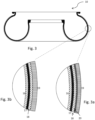
- Fig.3 shows a section through a vibration damper 10.
- the section in the circle of Fig. 3 will be in the Figures 3a and 3b shown in more detail.
- an embedded reinforcement layer 18 for example in the form of a polyamide fabric.
- the flock 19 was Fig 3a with a flocking adhesive 20 and in Fig 3b applied without a flocking adhesive.
Landscapes
- Chemical & Material Sciences (AREA)
- Engineering & Computer Science (AREA)
- General Engineering & Computer Science (AREA)
- Organic Chemistry (AREA)
- Mechanical Engineering (AREA)
- Inorganic Chemistry (AREA)
- Laminated Bodies (AREA)
- Compositions Of Macromolecular Compounds (AREA)
Description
- Die Erfindung betrifft einen Artikel mit einem Grundkörper aus einem polymeren Werkstoff mit elastischen Eigenschaften.
- Artikel aus polymeren Werkstoffen, die zur Federung bspw. von Kraftfahrzeugen oder Schienenfahrzeugen eingesetzt werden und / oder der Schwingungsdämpfung dienen, werden unter Verwendung elastomerer Mischungen, auch als Kautschukmischungen bezeichnet, hergestellt. Diese, für die grundlegenden Eigenschaften solcher Artikel üblicherweise verwendeten elastomeren Mischungen sind hinreichend bekannt. Artikel mit herausragenden elastischen Eigenschaften, wie bspw. Metall-Gummi Elemente oder Schwingungsdämpfer, enthalten vorzugsweise vulkanisierte Kautschukmischungen, die überwiegend auf Naturkautschuk (NR) und / oder Polyisoprenkautschuk (IR) basieren. Artikel mit einer sehr guten Witterungs-, Mineralöl- und Wärmebeständigkeit, wie bspw. Luftfederbälge, enthalten vorzugsweise vulkanisierte Kautschukmischungen, die überwiegend auf Chloroprenkautschuk (CR) basieren.
- Allerdings zeigen Artikel mit diesen elastomeren Mischungen deutliche Nachteile im Brandverhalten. Im Brandfall entstehen unter anderem dichte Rauchgase. Beim Verbrennungsprozess der genannten elastomeren Mischungen, die überwiegend auf NR und / oder IR basieren, ist die Wärmefreisetzungsrate besonders hoch. Beim Verbrennungsprozess der elastomeren Mischungen, die überwiegend auf CR basieren, ist das entstehende Rauchgas für Mensch und Tier toxisch.
- Aufgrund der in den letzten Jahren gestiegenen Anforderungen hinsichtlich des Brandschutzes, welche sich vor allem in der verschärften Brandschutznorm EN 45545 zeigt, ergibt sich ein erhöhter Bedarf an brandschutzoptimierten Polymerartikeln. Diesen Brandschutzanforderungen können sowohl die genannten elastomeren Mischungen, die überwiegend auf NR und / oder IR basieren, vor allem aufgrund der geforderten maximalen Wärmefreisetzungsrate, als auch die flammwidrigen elastomeren Mischungen, die überwiegend auf CR basieren, insbesondere aufgrund der geforderten Rauchgastoxizität, nicht mehr gerecht werden. Somit erfüllen die Artikel, welche diese elastomeren Mischungen enthalten, die verschärften Anforderungen zumeist nicht mehr. Eine übliche Methode das Brandverhalten von Kautschukmischungen zu verbessern, ist das direkte Einmischen von brandhemmenden Substanzen. Allerdings führt diese Maßnahme bei den betroffenen Artikeln in der Regel dazu, dass sich die physikalischen Eigenschaften, insbesondere die Federungs-, Setz- bzw. Schwingungseigenschaften signifikant verschlechtern. Auch Brandschutzbeschichtungen, wie sie in
WO 2014/019008 A1 oder auch inEP 2196492 B1 beschrieben werden, sind nur bedingt geeignet, um einen dauerhaften Brandschutz am Artikel zu gewährleisten. Nachteilig für eine gute Beständigkeit gegenüber einer Rißbildung bzw. Ablösung ist die geringe Zerreißfestigkeit. Der hohe Druckverformungsrest besonders bei höheren Temperaturen ist nachteilig für die Federungs-, Setz- bzw. Schwingungseigenschaften der Artikel. Durch den ggf. notwendigen zweiten Vulkanisationsprozess bei der Herstellung der Endprodukte wird besonders der Weiterreißwiderstand von der Mischung des Grundkörpers wegen der üblichen Reversionsneigung gemindert. Auch die Verwendung von einer Brandschutzbeschichtung nur auf der Basis von Blähgraphiten zeigt Nachteile hinsichtlich der Haftung und auch in der Verarbeitung. Blähgraphite selbst expandieren erst bei relativ hohen Temperaturen, so dass auch erst bei relativ hohen Temperaturen die isolierende Wirkung gegeben ist. Es gibt verschiedene Typen von Blähgraphiten, die unterschiedliche Starttemperaturen (Onset-temperature) für den Blähbeginn besitzen. Die Onset Temperatur liegt je nach Type zwischen 140 °C bis 280°C. DieDE 10 2012 104352 A1 offenbart eine Kabelführung, die mit polymeren, beflockten Dämpfungselementen ausgestattet ist. - Die Aufgabe der Erfindung besteht nun darin, einen Artikel bereitzustellen, der sich durch ein optimiertes Brandschutzverhalten auszeichnet, um die verschärften Anforderungen, insbesondere die in EN 45545 beschriebenen, zu erfüllen. Gleichzeitig sollen die notwendigen physikalischen Eigenschaften des Artikels auf einem vergleichbaren Niveau verbleiben und die Komplexität im Herstellprozess nicht nennenswert erhöht werden. Der Artikel soll auch bei niedrigeren Temperaturen, ggf. unterhalb der Starttemperaturen von Blähgraphiten, schon ein ausreichend gutes Brandschutzverhalten aufweisen.
- Gelöst wird diese Aufgabe dadurch, dass der Artikel mit einem Grundkörper aus einem polymeren Werkstoff mit elastischen Eigenschaften, eine Artikeloberfläche besitzt, die vollständig oder teilweise mit wenigstens einem Flock versehen ist.
- Gemäß DIN 60 0001_2:1990 wird unter einem Flock folgendes verstanden: "Kurze, nicht zum Verspinnen vorgesehene, aber nach anderen Verfahren verarbeitbare Chemiefasern, die gezielt erzeugt werden (nach DIN 60 000)." Die Norm ISO 8159:1987 gibt unter 3.12 zur Definition von Flock folgendes an: "Very short fibres destinated to be stuck to a backing".
- Als Flocktextilien werden gemäß DIN 60 000:1969 Flächengebilde verstanden, die dadurch gebildet sind, dass textile Fasern an einem ihrer Enden durch einen Kleber mit einem textilen oder nicht-textilen Träger verbunden sind."
- Teilweise bedeutet in diesem Zusammenhang, dass lediglich bestimmte, definierte Bereiche bzw. Abschnitte der Artikeloberfläche des Gesamtartikels mit dem Flock versehen sind.
- Der Gesamtartikel ist somit teilweise und / oder vollständig mit wenigstens einem Fasermaterial beflockt.
- Durch die Struktur und / oder das Material der Beflockung ergibt sich schon bei Temperaturen, die unterhalb der Starttemperaturen von Blähgraphiten liegen, ein verbesserter Brand- und Flammschutz in Form einer schwereren Entflammbarkeit.
- Als Fasermaterial für den Flock können alle der fachkundigen Person bekannten Fasern verwendet werden.
- Als Textilfasern für den Flock können bevorzugt Fasern aus synthetischen Polymeren, wie bspw. Polyacrylnitril, Polypropylen, Polyester, Polyamid, Polyurethan, Polyphenylensulfid, Polyoxadiazol, Aramide, wie p-Aramid, m-Aramid oder co-poly para Aramid, Polyimid, Polyetherimid, Polyetheretherketon, Polyethylen-2,6-naphthalat, Polyphenylen, Polyphenylenoxid, Polyphenylensulfid, Polyphenylenether, Polybenzoxazole, Polyvenylalkohol oder auch Fasern aus natürlichen Polymeren, wie bspw. Regeneratfasern auf Cellulosebasis, wie Viskose, Lyocell oder Gummi, eingesetzt werden.
- Weiterhin können als Textilfasern bevorzugt Naturfasern verwendet werden. Hierbei kann es sich um mineralische Naturfasern, wie bspw. Steinwolle oder Asbestfasern, oder pflanzliche Naturfasern, wie bspw. aus Baumwolle, Flachs oder Hanf, oder auch um tierische Naturfasern, wie bspw. aus Wolle oder Seide, handeln.
- Es ist ebenso denkbar, Textilfasern aus anorganischen Stoffen wie Glas, Keramik, Kohlenstoff (Carbon), Metall oder Gestein, wie bspw. Basalt, zu verwenden.
- Die Textilfasern können alleine oder in Kombination, d.h. als Hybridfaser, eingesetzt werden.
- Erfindungsgemäß werden für den Flock Fasern bzw. Textilfasern verwendet, die von sich aus schon einen ausreichenden Brandschutz bieten oder von sich aus eine ausreichende Flammwidrigkeit aufweisen, wie bspw. Polyoxadiazol, Polyetherimid, Aramide, wie m-Aramid, p-Aramid oder co-poly-para Aramid, Metall, Glas, Keramik, Gestein, Carbon, modifiziertes Polyester, modifizierte Viskose.
- Die genannten Materialien können alleine oder in Kombination, bspw. als Hybridgarn, verwendet werden.
- Zur weiteren Optimierung des Brandschutzverhaltens kann der Flock an seiner Oberfläche noch zusätzlich mit wenigstens einer reflektierenden Substanz bedampft, d.h. besputtert, sein. Aufgrund der Wärmereflektion, welche sich durch die Verwendung einer reflektierenden Substanz ergibt, erwärmt sich die darunterliegende zu schützende Mischung weniger schnell. Dadurch ist insbesondere zu Beginn einer erhöhten Wärmebelastung die Temperatur der darunterliegenden und zu schützenden Oberfläche des Artikels niedriger. Hierdurch werden die zusätzlich freigesetzte Wärme und die Entstehung sowohl dichter als auch toxischer Rauchgase zeitlich verzögert.
- Handelt es sich bei der reflektierenden Substanz um Metallpartikel, z.B. aus Aluminium oder anderen geeigneten Metallen, so wird die Artikeloberfläche zusätzlich vor Entzündung geschützt.
- Wie bereits oben erwähnt, wird der Flock in der Regel mit Hilfe eines Beflockungsklebers auf die zu beflockende Oberfläche aufgebracht, so dass die Artikeloberfläche nicht nur teilweise oder vollständig mit einem Flock, sondern zusätzlich auch noch teilweise oder vollständig mit einem Beflockungskleber versehen ist.
- Anstelle des Beflockungsklebers kann alternativ auch eine Zusammensetzung auf Basis wenigstens eines Isocyanats in Anlehnung an
DE 10 2009 044 533 A1 verwendet werden. - In einer besonders bevorzugten Ausführungsform enthält der Beflockungskleber und / oder die Zusammensetzung auf Basis wenigstens eines Isocyanats zur weiteren Optimierung des Brandschutzverhaltens und / der der Schwer-Entflammbarkeit wenigstens eine brandhemmende Substanz.
- Als brandhemmende Substanz für den Beflockungskleber und / oder für die Zusammensetzung auf Basis wenigstens eines Isocyanats können Flammschutzmittel, aber auch weitere Substanzen wie Mikroglaskugeln und / oder Mikroglashohlkugeln, die bevorzugt haftungsfreundlich präpariert sind, und / oder Kunststoffhohlkugeln mit einer flexiblen Polymerhülle und / oder reflektierende Substanzen, wie bspw. Metallpartikel, insbesondere aus Aluminium und / oder Messing, verwendet werden.
- Die Mikroglaskugeln und / oder die Mikroglashohlkugeln schmelzen im Brandfall auf und bilden glasige, isolierend wirkende Schichten. Handelt es sich um Hohlkugeln, bevorzugt um Mikroglashohlkugeln, so können in einer bevorzugten Variante in den Hohlkugeln selbst brandhemmende Substanzen verkapselt sein, die nach dem Schmelzen der äußeren Hülle freigesetzt werden und dann in konzentrierter Form zusätzlich brandhemmend wirken.
- Insbesondere die Kunststoffhohlkugeln können in bereits expandierter Form und / oder in expandierbarer Form vorliegen.
- In einer bevorzugten Ausführungsform werden expandierbare Kunststoffhohlkugeln verwendet. Bei den expandierbaren Kunststoffhohlkugeln ist ein Gas verkapselt. Bei Wärmezufuhr erhöht sich der Gasdruck im Inneren er Hülle, die gleichzeitig erweicht. Die dadurch bedingte Volumenzunahme, führt zu einer Erhöhung der Schichtdicke, was zu einer weiteren isolierenden Wirkung schon vor dem eigentlichen Brand führt. Diese Volumenzunahme erfolgt bereits bei Temperaturen, die deutlich niedriger sind als die üblichen Starttemperaturen (Onset-temperature) der Blähgraphite.
- Als Flammschutzmittel für den Beflockungskleber und / oder für die Zusammensetzung auf Basis wenigstens eines Isocyanats können alle der fachkundigen Person bekannten Flammschutzmittel verwendet werden.
- Es kommen hierbei insbesondere Stannate, wie Zinkstannat oder Zinkhydroxystannat, Hydroxide, wie Magnesiumhydroxid oder Aluminiumhydroxid, Cyanurate, wie Melamincyanurat, Borate, wie Zinkborat, phosphorhaltige Komponenten, wie Resorcinoldiphosphat oder aromatische Polyphosphate, stickstoffhaltige Komponenten, wie Ammoniumphosphat, Carbonate, wie Calciumcarbonat oder Magnesiumcarbonat, expandierbarer Graphit oder Intumeszenzgemische in Frage.
- Intumeszenzgemische blähen zu Schäumen auf. Sie werden benutzt, um brennbare Materialien wie Kunststoffe oder Holz, aber auch Stahl, der bei erhöhter Temperatur seine Festigkeit einbüßt, gegen die Einwirkung von Wärme und Feuer zu schützen. Gegebenenfalls können auch noch geringe Mengen an Antimontrioxid, trotz der gesundheitsgefährdenden Wirkung, in Kombination mit wenigstens einem der genannten Flammschutzmittel verwendet werden.
- Die brandhemmenden Substanzen können jeweils alleine oder in Kombination verwendet werden.
- Der Flock wird in einer bevorzugten Ausführungsform vor dem eigentlichen Vulkanisationsprozess auf die Oberfläche des noch nicht vulkanisierten Artikelrohlings aufgebracht. Vorteilhaft ist hierbei, dass in der ersten Phase des Vulkanisationsprozesses, der so genannten Fließphase (=Ausformphase), sowohl Anteile vom Faserflock als auch Anteile von den Bestandteilen des Beflockungsklebers und / oder der Zusammensetzung auf Basis des Isocyanats in den darunterliegenden zu schützenden Grundkörper aus einem polymeren Werkstoff eindringen, d.h. fließen, können. Hierdurch wird die Haftung des Flocks an den Grundkörper nochmals verbessert, insbesondere weil hierdurch eine Verankerung der Fasern des Flocks direkt an den Grundkörper zumindest teilweise ermöglicht wird. Insbesondere bei Verwendung einer Zusammensetzung auf Basis des Isocyanats, z.B. gemäß
DE 10 2009 044 533 A1 , schreitet die Vernetzungsreaktion dieser Zusammensetzung unter den in der Gummiindustrie üblichen Vulkanisationstemperaturen weiter fort, was sich vorteilhafterweise in einer besseren Anhaftung des Flocks und besonders in einer verbesserten Abriebfestigkeit des Flockgefüges äußert. - Gegebenenfalls ist es auch möglich, den Flock mit Hilfe des Beflockungsklebers und / oder der Zusammensetzung auf Basis des Isocyanats auf einen bereits fertig vulkanisierten Artikel aufzubringen. Dies hat den Vorteil, dass bereits fertige Artikel nachträglich brandhemmend ausgerüstet werden können. Um hierbei die Haftung noch weiter zu verbessern, ist es vorteilhaft, die bereits vulkanisierte Gummioberfläche zu reinigen und ggf. zu aktivieren.
- Der Flock kommt insbesondere für folgende Artikel zur Anwendung:
- Dämpfungselement eines Lagers, einer Buchse oder einer Schichtfeder, Konusfeder
- Das Dämpfungselement umfasst einen polymeren Werkstoff mit elastischen Eigenschaften und kommt zumeist im Rahmen eines Metall-Polymer-Verbundes zum Einsatz, und zwar in Form eines Lagers mit einem Lageroberteil und Lagerunterteil, einer Buchse mit Kern und Hülse oder einem Metall-Gummi-Federelement, wie z.B. einer Schicht-, oder Konusfeder. Vorzugsweise werden hier alle freien Oberflächen des Dämpfungselementes mit dem Flock versehen.
- Von besonderer Bedeutung ist ein Luftfederbalg, der in Verbindung mit der Figurenbeschreibung noch näher vorgestellt wird und der nicht Teil der beanspruchten Erfindung ist.
- Bei der Bildung des Grundkörpers kommen insbesondere (teil)vulkanisierbare Polymermischungen zum Einsatz, wobei folgende beiden Werkstoffvarianten wegen ihrer elastischen Eigenschaften zu nennen sind:
- Variante A (Elastomere)
- Die Polymermischung ist eine vulkanisierbare thermoplastfreie Kautschukmischung, enthaltend wenigstens eine Kautschukkomponente sowie weitere Mischungsingredienzien. Als Kautschukkomponenten sind insbesondere zu nennen: Ethylen-Propylen-Kautschuk (EPM), Ethylen-Propylen-Dien-Kautschuk (EPDM), Nitrilkautschuk (NBR), (teil)hydrierter Nitrilkautschuk (HNBR), Fluor-Kautschuk (FKM), Chloropren-Kautschuk (CR), Naturkautschuk (NR), Styrol-Butadien-Kautschuk (SBR), Isopren-Kautschuk (IR), Butylkautschuk (IIR), Brombutylkautschuk (BIIR), Chlorbutylkautschuk (CIIR), Bromiertes Copolymer aus Isobutylen und Paramethylstyrol (BIMS), Butadien-Kautschuk (BR), Chloriertes Polyethylen (CM), Chlorsulfoniertes Polyethylen (CSM), Alkyliertes Chlorsulfoniertes Polyethylen (ACSM), Polyepichlorhydrin (ECO), Terpolymere des ECO mit Ethylenoxid und ungesättigten Monomeren (ETER), Ethylen-Vinylacetat-Kautschuk (EVA), Acrylat-Kautschuk (ACM), Ethylen-Acrylat-Kautschuk (AEM), Silikonkautschuk (MQ, VMQ, PVMQ, FVMQ), Fluorierter Methylsilikonkautschuk (MFQ), Perfluorinierter Propylen-Kautschuk (FFPM), Perfluorcarbon-Kautschuk (FFKM), Polyurethan (PU). Die vorgenannten Kautschuktypen können unverschnitten sein. Auch der Einsatz eines Verschnittes, insbesondere in Verbindung mit einem der vorgenannten Kautschuktypen, beispielsweise ein NR/BR-Verschnitt oder ein BR/SBR-Verschnitt, ist möglich.
- Welcher Kautschuktyp bevorzugt wird, hängt von der Artikelart ab. Besonders Vielfältig ist der Einsatz von verschiedenen Kautschuktypen bei schlauchförmigen Körpern, wobei hier insbesondere folgende Kautschukkomponenten zu nennen sind: NR, IR, ACM, AEM, BIMS, CM, CSM, CR, IIR, BIIR, CIIR, ECO, EPM, EPDM, ETER, EVA, FKM, HNBR, VMQ oder FVMQ. Bei Antriebsriemen kommen insbesondere Kautschukmischungen auf der Basis von EPM und/oder EPDM, ACSM (bei Keil- und Keilrippenriemen) sowie NBR, speziell jedoch HNBR, aber auch XNBR bzw. NXBR (bei Zahnriemen) zur Anwendung.
- Die üblichen Mischungsingredienzien umfassen wenigstens einen Vernetzer oder ein Vernetzersystem (Vernetzungsmittel und Beschleuniger). Zusätzliche Mischungsingredienzien sind zumeist noch ein Füllstoff und/oder ein Verarbeitungshilfsmittel und/oder ein Weichmacher und/oder ein Alterungsschutzmittel sowie gegebenenfalls weitere Zusatzstoffe (z.B. Farbpigmente, Verstärkungsfasern). Diesbezüglich wird auf den allgemeinen Stand der Kautschukmischungstechnologie verwiesen.
- Variante B (Thermoplastische Elastomere)
- Die Polymermischung ist eine teilvulkanisierbare Polymermischung, enthaltend wenigstens eine Thermoplastkomponente, wenigstens eine Kautschukkomponente, die zumindest teilvernetzbar ist sowie weitere Mischungsingredienzien. Die bevorzugten Thermoplastkomponenten sind: Polyolefin, insbesondere Polyethylen (PE) oder Polypropylen (PP), Polystyrol (PS), Polyamid (PA), beispielsweise PA6 oder PA6.6, Polyester, beispielsweise PET, PEN oder PBT.
- Als Kautschukkomponenten sind hier insbesondere EPM, EPDM, SBR, CR, NR, NBR, FKM, ACM oder AEM zu nennen, die insbesondere mit keiner weiteren Kautschukkomponente verschnitten sind.
- Hinsichtlich der üblichen Mischungsingredienzien wird auf die Mischungstechnologie zu der Variante A, insbesondere auf die Lehre gemäß der Offenlegungsschrift
DE 100 04 632 A1 verwiesen.
- Es werden nun, unter Bezugnahme auf schematische Zeichnungen, einige Vorrichtungen erläutert.
- Es zeigen:
-
Fig. 1 eine Luftfeder-Anordnung; -
Fig. 2 den Schichtenaufbau eines Luftfederbalges mit einem Flock. -
Fig. 3 einen Schnitt durch einen erfindungsgemäßen Schwingungsdämpfer -
Fig. 1 zeigt eine Luftfeder-Anordnung 1, umfassend einen Luftfederbalg 2 sowie die beiden Anschlussbauteile Deckel 3 und Abrollkolben 4, und zwar unter Ausbildung einer volumenelastischen Luftkammer 5. -
Fig. 2 zeigt nun den Schichtenaufbau eines fertig gestellten Luftfederbalges 2. Der Luftfederbalg besteht dabei aus einer Innenschicht 6 und Außenschicht 7 als elastischer Grundkörper, beispielsweise aus einer vulkanisierten Kautschukmischung auf der Basis von NR, einer zwischen der Innenschicht 6 und Außenschicht 7 eingebetteten Festigkeitsträgerschicht 8, beispielsweise in Form eines Polyamid-Gewebes, sowie aus einem Überzug 9, der mit der Außenschicht 8 in direkter Verbindung steht. Der Flock 9 wurde mit einem Beflockungskleber aufgebracht, welcher brandhemmende Substanzen enthält. -
Fig.3 zeigt einen Schnitt durch einen Schwingungsdämpfer 10. Der Ausschnitt in dem Kreis vonFig. 3 wird in denFiguren 3a und 3b näher dargestellt. Zwischen der Innenschicht 16 und der Außenschicht 17 befindet sich eine eingebettete Festigkeitsträgerschicht 18, beispielsweise in Form eines Polyamid-Gewebes. Der Flock 19 wurde inFig 3a mit einem Beflockungskleber 20 und inFig 3b ohne einen Beflockungskleber aufgebracht. -
- 1 Luftfeder-Anordnung
- 2 Luftfederbalg
- 3 Deckel
- 4 Abrollkolben
- 5 volumenelastische Luftkammer
- 6 Innenschicht eines Luftfederbalges
- 7 Außenschicht eines Luftfederbalges
- 8 Festigkeitsträgerschicht eines Luftfederbalges
- 9 Flock
- 10 Dämpfungselement
- 16 Innenschicht eines Dämpfungselements
- 17 Außenschicht eines Dämpfungselements
- 18 Festigkeitsträgerschicht eines Dämpfungselements
- 19 Flock
- 20 Beflockungskleber
Claims (3)
- Artikel (1, 10) mit einem Grundkörper aus einem polymeren Werkstoff mit elastischen Eigenschaften, dadurch gekennzeichnet, dass die Artikeloberfläche vollständig oder teilweise mit wenigstens einem Flock (9,19) versehen ist, wobei der Artikel das Dämpfungselement eines Lagers, einer Buchse oder einer Schichtfeder, Konusfeder ist und wobei für den Flock (9,19) Fasern bzw. Textilfasern verwendet werden, die von sich aus schon einen ausreichenden Brandschutz bieten oder von sich aus ausreichende Flammwidrigkeit aufweisen..
- Verfahren zur Herstellung eines Artikels (1, 10) aus einem polymeren Werkstoff mit elastischen Eigenschaften gemäß Anspruch 1, dadurch gekennzeichnet, dass der Flock (9, 19) in wenigstens einem Verfahrensschritt mit Hilfe wenigstens eines Beflockungsklebers (20) und / oder mit Hilfe wenigstens einer Zusammensetzung auf Basis wenigstens eines Isocyanats auf die Oberfläche des Artikels aufgebracht wird.
- Verfahren nach Anspruch 3, dadurch gekennzeichnet, dass der Beflockungskleber (20) und / oder die Zusammensetzung auf Basis wenigstens eines Isocyanats wenigstens eine brandhemmende Substanz enthält.
Applications Claiming Priority (2)
| Application Number | Priority Date | Filing Date | Title |
|---|---|---|---|
| DE102015217881.1A DE102015217881A1 (de) | 2015-09-17 | 2015-09-17 | Artikel, insbesondere ein Luftfederbalg, ein Metall-Gummi-Element oder ein Schwingungsdämpfer |
| PCT/EP2016/063468 WO2017045785A1 (de) | 2015-09-17 | 2016-06-13 | Artikel, insbesondere ein luftfederbalg, ein metall-gummi-element oder ein schwingungsdämpfer |
Publications (2)
| Publication Number | Publication Date |
|---|---|
| EP3350469A1 EP3350469A1 (de) | 2018-07-25 |
| EP3350469B1 true EP3350469B1 (de) | 2024-11-27 |
Family
ID=56131525
Family Applications (1)
| Application Number | Title | Priority Date | Filing Date |
|---|---|---|---|
| EP16729252.3A Active EP3350469B1 (de) | 2015-09-17 | 2016-06-13 | Dämpfungselement |
Country Status (6)
| Country | Link |
|---|---|
| US (1) | US10344818B2 (de) |
| EP (1) | EP3350469B1 (de) |
| CN (1) | CN108026999A (de) |
| DE (1) | DE102015217881A1 (de) |
| ES (1) | ES3009931T3 (de) |
| WO (1) | WO2017045785A1 (de) |
Families Citing this family (7)
| Publication number | Priority date | Publication date | Assignee | Title |
|---|---|---|---|---|
| DE102017008926B4 (de) * | 2017-09-25 | 2019-08-08 | Jörn GmbH | Elastomer-Metall-Lager als Lagerbauteil mit bauteilintegriertem Elastomermaterial-Brandschutz und Schienenfahrzeug |
| DE102017223545A1 (de) | 2017-12-21 | 2019-06-27 | Contitech Luftfedersysteme Gmbh | Artikel, insbesondere ein Luftfederbalg, ein Metall-Gummi-Element oder ein Schwingungsdämpfer |
| DE102019135450A1 (de) * | 2019-12-20 | 2020-03-05 | Gmt Gummi-Metall-Technik Gmbh | Artikel mit einem ein- oder mehrschichtigen Grundkörper mit elastischen Eigenschaften, Verfahren zur Herstellung eines Artikels und Verwendung von Aluminiumhydroxid als verstärkenden Füllstoff in einer Kautschukmischung |
| CN113883205B (zh) * | 2021-09-06 | 2023-06-27 | 安徽隆威汽车零部件有限公司 | 一种空气弹簧的气囊橡胶材料、制作方法及空气弹簧 |
| CN116066997A (zh) * | 2021-10-29 | 2023-05-05 | 美的集团武汉制冷设备有限公司 | 风管、风管制备方法和移动空调器 |
| CN114183490A (zh) * | 2021-12-07 | 2022-03-15 | 中国第一汽车股份有限公司 | 一种空气弹簧气囊及其制备方法和应用 |
| DE102022119384A1 (de) * | 2022-08-02 | 2024-02-08 | MöllerWerke GmbH | Wandmaterial für Kompensatoren |
Citations (5)
| Publication number | Priority date | Publication date | Assignee | Title |
|---|---|---|---|---|
| DE1750351U (de) * | 1957-06-07 | 1957-08-08 | Freudenberg Carl Kg | Putzwalze fuer spinnereimaschinen. |
| US4482593A (en) * | 1982-09-20 | 1984-11-13 | The Procter & Gamble Company | Flocked floor mat with hydrophilic adhesive |
| DE3731526A1 (de) * | 1986-09-19 | 1988-04-07 | Toyoda Gosei Kk | Weichharz-produkt |
| DE102012104352A1 (de) * | 2011-05-30 | 2012-12-06 | Tsubaki Kabelschlepp GmbH | Bauteil für ein Leitungsführungssystem umfassend zumindest eine Leitungsführungseinrichtung sowie eine entsprechende Leitungsführungseinrichtung und Leitungsführungssystem |
| DE102012214640A1 (de) * | 2012-08-17 | 2014-02-20 | Aesculap Ag | Beflockter medizinischer Schlauch |
Family Cites Families (11)
| Publication number | Priority date | Publication date | Assignee | Title |
|---|---|---|---|---|
| JPH055222A (ja) * | 1991-03-27 | 1993-01-14 | Toho Rayon Co Ltd | 植毛用素材 |
| CN1144252A (zh) | 1994-05-09 | 1997-03-05 | 贵州省化工研究院 | 聚氨酯胶粘剂 |
| ATE276312T1 (de) | 1999-02-15 | 2004-10-15 | Polyone Corp | Thermoplastisches vulkanisat und verfahren zur herstellung |
| WO2001051221A1 (en) * | 2000-01-14 | 2001-07-19 | Duramax, Inc. | Flocked wall and flooring accessories |
| DE10016351C2 (de) * | 2000-04-03 | 2002-09-26 | Contitech Antriebssysteme Gmbh | Treibriemen |
| ES2390080T3 (es) | 2008-12-15 | 2012-11-06 | Trelleborg Industrial Products Uk Ltd | Cuerpo elastomérico con recubrimiento elástico retardante del fuego |
| DE102009044533A1 (de) | 2009-11-16 | 2011-05-19 | Contitech Antriebssysteme Gmbh | Artikel mit einer reflektierenden Schutzschicht und Verfahren zu dessen Herstellung |
| DE102011002230A1 (de) | 2011-04-21 | 2012-10-25 | Contitech Antriebssysteme Gmbh | Antriebsriemen, insbesondere Keilrippenriemen, mit verbesserter Reißfestigkeit |
| EP2549143B1 (de) * | 2011-07-21 | 2019-01-23 | ContiTech Antriebssysteme GmbH | Kraftübertragungsriemen, insbesondere Keilrippenriemen |
| AT512907B1 (de) | 2012-08-02 | 2013-12-15 | Bategu Gummitechnologie Gmbh & Co Kg | Flammgeschützte polymere Zusammensetzung |
| CN104846551B (zh) * | 2015-05-18 | 2017-07-07 | 武汉纺织大学 | 一种薄膜多层植绒式高弹阻燃保暖片状材料及其制造方法 |
-
2015
- 2015-09-17 DE DE102015217881.1A patent/DE102015217881A1/de active Pending
-
2016
- 2016-06-13 CN CN201680052708.9A patent/CN108026999A/zh active Pending
- 2016-06-13 WO PCT/EP2016/063468 patent/WO2017045785A1/de not_active Ceased
- 2016-06-13 US US15/760,234 patent/US10344818B2/en active Active
- 2016-06-13 EP EP16729252.3A patent/EP3350469B1/de active Active
- 2016-06-13 ES ES16729252T patent/ES3009931T3/es active Active
Patent Citations (5)
| Publication number | Priority date | Publication date | Assignee | Title |
|---|---|---|---|---|
| DE1750351U (de) * | 1957-06-07 | 1957-08-08 | Freudenberg Carl Kg | Putzwalze fuer spinnereimaschinen. |
| US4482593A (en) * | 1982-09-20 | 1984-11-13 | The Procter & Gamble Company | Flocked floor mat with hydrophilic adhesive |
| DE3731526A1 (de) * | 1986-09-19 | 1988-04-07 | Toyoda Gosei Kk | Weichharz-produkt |
| DE102012104352A1 (de) * | 2011-05-30 | 2012-12-06 | Tsubaki Kabelschlepp GmbH | Bauteil für ein Leitungsführungssystem umfassend zumindest eine Leitungsführungseinrichtung sowie eine entsprechende Leitungsführungseinrichtung und Leitungsführungssystem |
| DE102012214640A1 (de) * | 2012-08-17 | 2014-02-20 | Aesculap Ag | Beflockter medizinischer Schlauch |
Also Published As
| Publication number | Publication date |
|---|---|
| WO2017045785A1 (de) | 2017-03-23 |
| US10344818B2 (en) | 2019-07-09 |
| DE102015217881A1 (de) | 2017-03-23 |
| US20180259027A1 (en) | 2018-09-13 |
| ES3009931T3 (en) | 2025-03-31 |
| EP3350469A1 (de) | 2018-07-25 |
| CN108026999A (zh) | 2018-05-11 |
Similar Documents
| Publication | Publication Date | Title |
|---|---|---|
| EP3350469B1 (de) | Dämpfungselement | |
| EP3198168B1 (de) | Artikel, insbesondere ein luftfederbalg, ein metall-gummi-element oder ein schwingungsdämpfer | |
| EP3728434B1 (de) | Artikel, insbesondere ein luftfederbalg, ein metall-gummi-element oder ein schwingungsdämpfer | |
| EP3728454B1 (de) | Artikel, insbesondere ein luftfederbalg, ein metall-gummi-element oder ein schwingungsdämpfer | |
| EP3350470B1 (de) | Artikel, insbesondere ein luftfederbalg, ein metall-gummi-element oder ein schwingungsdämpfer | |
| EP3500770B1 (de) | Artikel, insbesondere ein luftfederbalg, ein metall-gummi-element oder ein schwingungsdämpfer | |
| EP3728455B1 (de) | Artikel, insbesondere ein luftfederbalg, ein metall-gummi-element oder ein schwingungsdämpfer | |
| WO2018046150A1 (de) | Artikel, insbesondere ein metall-gummi-element für schienenfahrzeuge | |
| EP4313581A1 (de) | Artikel, insbesondere ein luftfederbalg | |
| EP4297963A1 (de) | Mehrlagiger permeationsarmer schlauch | |
| DE102016210404B4 (de) | Artikel, insbesondere ein Luftfederbalg | |
| WO2022207041A1 (de) | Artikel, insbesondere ein luftfederbalg, ein metall-gummi-element oder ein schwingungsdämpfer | |
| DE102009030221A1 (de) | Verfahren zur Herstellung eines Kraftstoffbehälters | |
| DE102022202035A1 (de) | Artikel, insbesondere ein Luftfederbalg, ein Metall-Gummi-Element oder ein Schwingungsdämpfer | |
| DE102016215343A1 (de) | Artikel, insbesondere ein Metall-Gummi-Element für Schienenfahrzeuge | |
| DE102018215759A1 (de) | Kautschukmischung und elastomerer Artikel mit flammhemmenden Eigenschaften | |
| DE102015217871A1 (de) | Artikel, insbesondere ein Luftfederbalg, ein Metall-Gummi-Element oder ein Schwingungsdämpfer |
Legal Events
| Date | Code | Title | Description |
|---|---|---|---|
| STAA | Information on the status of an ep patent application or granted ep patent |
Free format text: STATUS: THE INTERNATIONAL PUBLICATION HAS BEEN MADE |
|
| PUAI | Public reference made under article 153(3) epc to a published international application that has entered the european phase |
Free format text: ORIGINAL CODE: 0009012 |
|
| STAA | Information on the status of an ep patent application or granted ep patent |
Free format text: STATUS: REQUEST FOR EXAMINATION WAS MADE |
|
| 17P | Request for examination filed |
Effective date: 20180417 |
|
| AK | Designated contracting states |
Kind code of ref document: A1 Designated state(s): AL AT BE BG CH CY CZ DE DK EE ES FI FR GB GR HR HU IE IS IT LI LT LU LV MC MK MT NL NO PL PT RO RS SE SI SK SM TR |
|
| AX | Request for extension of the european patent |
Extension state: BA ME |
|
| DAV | Request for validation of the european patent (deleted) | ||
| DAX | Request for extension of the european patent (deleted) | ||
| STAA | Information on the status of an ep patent application or granted ep patent |
Free format text: STATUS: EXAMINATION IS IN PROGRESS |
|
| 17Q | First examination report despatched |
Effective date: 20190702 |
|
| RAP1 | Party data changed (applicant data changed or rights of an application transferred) |
Owner name: CONTITECH LUFTFEDERSYSTEME GMBH |
|
| GRAP | Despatch of communication of intention to grant a patent |
Free format text: ORIGINAL CODE: EPIDOSNIGR1 |
|
| STAA | Information on the status of an ep patent application or granted ep patent |
Free format text: STATUS: GRANT OF PATENT IS INTENDED |
|
| INTG | Intention to grant announced |
Effective date: 20240628 |
|
| GRAS | Grant fee paid |
Free format text: ORIGINAL CODE: EPIDOSNIGR3 |
|
| GRAA | (expected) grant |
Free format text: ORIGINAL CODE: 0009210 |
|
| STAA | Information on the status of an ep patent application or granted ep patent |
Free format text: STATUS: THE PATENT HAS BEEN GRANTED |
|
| RAP1 | Party data changed (applicant data changed or rights of an application transferred) |
Owner name: CONTITECH DEUTSCHLAND GMBH |
|
| AK | Designated contracting states |
Kind code of ref document: B1 Designated state(s): AL AT BE BG CH CY CZ DE DK EE ES FI FR GB GR HR HU IE IS IT LI LT LU LV MC MK MT NL NO PL PT RO RS SE SI SK SM TR |
|
| P01 | Opt-out of the competence of the unified patent court (upc) registered |
Free format text: CASE NUMBER: APP_56899/2024 Effective date: 20241018 |
|
| REG | Reference to a national code |
Ref country code: GB Ref legal event code: FG4D Free format text: NOT ENGLISH |
|
| REG | Reference to a national code |
Ref country code: CH Ref legal event code: EP |
|
| REG | Reference to a national code |
Ref country code: IE Ref legal event code: FG4D Free format text: LANGUAGE OF EP DOCUMENT: GERMAN |
|
| REG | Reference to a national code |
Ref country code: DE Ref legal event code: R096 Ref document number: 502016016816 Country of ref document: DE |
|
| REG | Reference to a national code |
Ref country code: LT Ref legal event code: MG9D |
|
| REG | Reference to a national code |
Ref country code: ES Ref legal event code: FG2A Ref document number: 3009931 Country of ref document: ES Kind code of ref document: T3 Effective date: 20250331 |
|
| REG | Reference to a national code |
Ref country code: NL Ref legal event code: MP Effective date: 20241127 |
|
| PG25 | Lapsed in a contracting state [announced via postgrant information from national office to epo] |
Ref country code: HR Free format text: LAPSE BECAUSE OF FAILURE TO SUBMIT A TRANSLATION OF THE DESCRIPTION OR TO PAY THE FEE WITHIN THE PRESCRIBED TIME-LIMIT Effective date: 20241127 Ref country code: IS Free format text: LAPSE BECAUSE OF FAILURE TO SUBMIT A TRANSLATION OF THE DESCRIPTION OR TO PAY THE FEE WITHIN THE PRESCRIBED TIME-LIMIT Effective date: 20250327 Ref country code: PT Free format text: LAPSE BECAUSE OF FAILURE TO SUBMIT A TRANSLATION OF THE DESCRIPTION OR TO PAY THE FEE WITHIN THE PRESCRIBED TIME-LIMIT Effective date: 20250327 |
|
| PG25 | Lapsed in a contracting state [announced via postgrant information from national office to epo] |
Ref country code: NL Free format text: LAPSE BECAUSE OF FAILURE TO SUBMIT A TRANSLATION OF THE DESCRIPTION OR TO PAY THE FEE WITHIN THE PRESCRIBED TIME-LIMIT Effective date: 20241127 Ref country code: FI Free format text: LAPSE BECAUSE OF FAILURE TO SUBMIT A TRANSLATION OF THE DESCRIPTION OR TO PAY THE FEE WITHIN THE PRESCRIBED TIME-LIMIT Effective date: 20241127 |
|
| PG25 | Lapsed in a contracting state [announced via postgrant information from national office to epo] |
Ref country code: BG Free format text: LAPSE BECAUSE OF FAILURE TO SUBMIT A TRANSLATION OF THE DESCRIPTION OR TO PAY THE FEE WITHIN THE PRESCRIBED TIME-LIMIT Effective date: 20241127 |
|
| PG25 | Lapsed in a contracting state [announced via postgrant information from national office to epo] |
Ref country code: NO Free format text: LAPSE BECAUSE OF FAILURE TO SUBMIT A TRANSLATION OF THE DESCRIPTION OR TO PAY THE FEE WITHIN THE PRESCRIBED TIME-LIMIT Effective date: 20250227 |
|
| PG25 | Lapsed in a contracting state [announced via postgrant information from national office to epo] |
Ref country code: LV Free format text: LAPSE BECAUSE OF FAILURE TO SUBMIT A TRANSLATION OF THE DESCRIPTION OR TO PAY THE FEE WITHIN THE PRESCRIBED TIME-LIMIT Effective date: 20241127 Ref country code: GR Free format text: LAPSE BECAUSE OF FAILURE TO SUBMIT A TRANSLATION OF THE DESCRIPTION OR TO PAY THE FEE WITHIN THE PRESCRIBED TIME-LIMIT Effective date: 20250228 |
|
| PG25 | Lapsed in a contracting state [announced via postgrant information from national office to epo] |
Ref country code: PL Free format text: LAPSE BECAUSE OF FAILURE TO SUBMIT A TRANSLATION OF THE DESCRIPTION OR TO PAY THE FEE WITHIN THE PRESCRIBED TIME-LIMIT Effective date: 20241127 |
|
| PG25 | Lapsed in a contracting state [announced via postgrant information from national office to epo] |
Ref country code: RS Free format text: LAPSE BECAUSE OF FAILURE TO SUBMIT A TRANSLATION OF THE DESCRIPTION OR TO PAY THE FEE WITHIN THE PRESCRIBED TIME-LIMIT Effective date: 20250227 |
|
| PG25 | Lapsed in a contracting state [announced via postgrant information from national office to epo] |
Ref country code: SM Free format text: LAPSE BECAUSE OF FAILURE TO SUBMIT A TRANSLATION OF THE DESCRIPTION OR TO PAY THE FEE WITHIN THE PRESCRIBED TIME-LIMIT Effective date: 20241127 |
|
| PGFP | Annual fee paid to national office [announced via postgrant information from national office to epo] |
Ref country code: DE Payment date: 20250630 Year of fee payment: 10 |
|
| PG25 | Lapsed in a contracting state [announced via postgrant information from national office to epo] |
Ref country code: DK Free format text: LAPSE BECAUSE OF FAILURE TO SUBMIT A TRANSLATION OF THE DESCRIPTION OR TO PAY THE FEE WITHIN THE PRESCRIBED TIME-LIMIT Effective date: 20241127 |
|
| PG25 | Lapsed in a contracting state [announced via postgrant information from national office to epo] |
Ref country code: EE Free format text: LAPSE BECAUSE OF FAILURE TO SUBMIT A TRANSLATION OF THE DESCRIPTION OR TO PAY THE FEE WITHIN THE PRESCRIBED TIME-LIMIT Effective date: 20241127 |
|
| PG25 | Lapsed in a contracting state [announced via postgrant information from national office to epo] |
Ref country code: RO Free format text: LAPSE BECAUSE OF FAILURE TO SUBMIT A TRANSLATION OF THE DESCRIPTION OR TO PAY THE FEE WITHIN THE PRESCRIBED TIME-LIMIT Effective date: 20241127 |
|
| PG25 | Lapsed in a contracting state [announced via postgrant information from national office to epo] |
Ref country code: SK Free format text: LAPSE BECAUSE OF FAILURE TO SUBMIT A TRANSLATION OF THE DESCRIPTION OR TO PAY THE FEE WITHIN THE PRESCRIBED TIME-LIMIT Effective date: 20241127 |
|
| PG25 | Lapsed in a contracting state [announced via postgrant information from national office to epo] |
Ref country code: CZ Free format text: LAPSE BECAUSE OF FAILURE TO SUBMIT A TRANSLATION OF THE DESCRIPTION OR TO PAY THE FEE WITHIN THE PRESCRIBED TIME-LIMIT Effective date: 20241127 |
|
| PG25 | Lapsed in a contracting state [announced via postgrant information from national office to epo] |
Ref country code: IT Free format text: LAPSE BECAUSE OF FAILURE TO SUBMIT A TRANSLATION OF THE DESCRIPTION OR TO PAY THE FEE WITHIN THE PRESCRIBED TIME-LIMIT Effective date: 20241127 |
|
| REG | Reference to a national code |
Ref country code: DE Ref legal event code: R097 Ref document number: 502016016816 Country of ref document: DE |
|
| PG25 | Lapsed in a contracting state [announced via postgrant information from national office to epo] |
Ref country code: SE Free format text: LAPSE BECAUSE OF FAILURE TO SUBMIT A TRANSLATION OF THE DESCRIPTION OR TO PAY THE FEE WITHIN THE PRESCRIBED TIME-LIMIT Effective date: 20241127 |
|
| PLBE | No opposition filed within time limit |
Free format text: ORIGINAL CODE: 0009261 |
|
| STAA | Information on the status of an ep patent application or granted ep patent |
Free format text: STATUS: NO OPPOSITION FILED WITHIN TIME LIMIT |
|
| PGFP | Annual fee paid to national office [announced via postgrant information from national office to epo] |
Ref country code: ES Payment date: 20250728 Year of fee payment: 10 |
|
| 26N | No opposition filed |
Effective date: 20250828 |