EP3186206B1 - Lumineszierende glaszusammensetzung - Google Patents
Lumineszierende glaszusammensetzung Download PDFInfo
- Publication number
- EP3186206B1 EP3186206B1 EP15760114.7A EP15760114A EP3186206B1 EP 3186206 B1 EP3186206 B1 EP 3186206B1 EP 15760114 A EP15760114 A EP 15760114A EP 3186206 B1 EP3186206 B1 EP 3186206B1
- Authority
- EP
- European Patent Office
- Prior art keywords
- glass
- gew
- weight
- etwa
- bis etwa
- Prior art date
- Legal status (The legal status is an assumption and is not a legal conclusion. Google has not performed a legal analysis and makes no representation as to the accuracy of the status listed.)
- Active
Links
Images



Classifications
-
- C—CHEMISTRY; METALLURGY
- C03—GLASS; MINERAL OR SLAG WOOL
- C03C—CHEMICAL COMPOSITION OF GLASSES, GLAZES OR VITREOUS ENAMELS; SURFACE TREATMENT OF GLASS; SURFACE TREATMENT OF FIBRES OR FILAMENTS MADE FROM GLASS, MINERALS OR SLAGS; JOINING GLASS TO GLASS OR OTHER MATERIALS
- C03C4/00—Compositions for glass with special properties
- C03C4/12—Compositions for glass with special properties for luminescent glass; for fluorescent glass
-
- C—CHEMISTRY; METALLURGY
- C03—GLASS; MINERAL OR SLAG WOOL
- C03C—CHEMICAL COMPOSITION OF GLASSES, GLAZES OR VITREOUS ENAMELS; SURFACE TREATMENT OF GLASS; SURFACE TREATMENT OF FIBRES OR FILAMENTS MADE FROM GLASS, MINERALS OR SLAGS; JOINING GLASS TO GLASS OR OTHER MATERIALS
- C03C3/00—Glass compositions
- C03C3/04—Glass compositions containing silica
- C03C3/076—Glass compositions containing silica with 40% to 90% silica, by weight
- C03C3/11—Glass compositions containing silica with 40% to 90% silica, by weight containing halogen or nitrogen
- C03C3/112—Glass compositions containing silica with 40% to 90% silica, by weight containing halogen or nitrogen containing fluorine
- C03C3/115—Glass compositions containing silica with 40% to 90% silica, by weight containing halogen or nitrogen containing fluorine containing boron
- C03C3/118—Glass compositions containing silica with 40% to 90% silica, by weight containing halogen or nitrogen containing fluorine containing boron containing aluminium
-
- C—CHEMISTRY; METALLURGY
- C03—GLASS; MINERAL OR SLAG WOOL
- C03C—CHEMICAL COMPOSITION OF GLASSES, GLAZES OR VITREOUS ENAMELS; SURFACE TREATMENT OF GLASS; SURFACE TREATMENT OF FIBRES OR FILAMENTS MADE FROM GLASS, MINERALS OR SLAGS; JOINING GLASS TO GLASS OR OTHER MATERIALS
- C03C3/00—Glass compositions
- C03C3/04—Glass compositions containing silica
- C03C3/076—Glass compositions containing silica with 40% to 90% silica, by weight
- C03C3/095—Glass compositions containing silica with 40% to 90% silica, by weight containing rare earths
-
- A—HUMAN NECESSITIES
- A44—HABERDASHERY; JEWELLERY
- A44C—PERSONAL ADORNMENTS, e.g. JEWELLERY; COINS
- A44C17/00—Gems or the like
- A44C17/001—Faceting gems
-
- A—HUMAN NECESSITIES
- A44—HABERDASHERY; JEWELLERY
- A44C—PERSONAL ADORNMENTS, e.g. JEWELLERY; COINS
- A44C17/00—Gems or the like
- A44C17/007—Special types of gems
- A44C17/008—Glass stones
-
- C—CHEMISTRY; METALLURGY
- C03—GLASS; MINERAL OR SLAG WOOL
- C03C—CHEMICAL COMPOSITION OF GLASSES, GLAZES OR VITREOUS ENAMELS; SURFACE TREATMENT OF GLASS; SURFACE TREATMENT OF FIBRES OR FILAMENTS MADE FROM GLASS, MINERALS OR SLAGS; JOINING GLASS TO GLASS OR OTHER MATERIALS
- C03C3/00—Glass compositions
- C03C3/04—Glass compositions containing silica
- C03C3/062—Glass compositions containing silica with less than 40% silica by weight
- C03C3/064—Glass compositions containing silica with less than 40% silica by weight containing boron
- C03C3/068—Glass compositions containing silica with less than 40% silica by weight containing boron containing rare earths
-
- C—CHEMISTRY; METALLURGY
- C03—GLASS; MINERAL OR SLAG WOOL
- C03C—CHEMICAL COMPOSITION OF GLASSES, GLAZES OR VITREOUS ENAMELS; SURFACE TREATMENT OF GLASS; SURFACE TREATMENT OF FIBRES OR FILAMENTS MADE FROM GLASS, MINERALS OR SLAGS; JOINING GLASS TO GLASS OR OTHER MATERIALS
- C03C3/00—Glass compositions
- C03C3/04—Glass compositions containing silica
- C03C3/076—Glass compositions containing silica with 40% to 90% silica, by weight
- C03C3/097—Glass compositions containing silica with 40% to 90% silica, by weight containing phosphorus, niobium or tantalum
-
- C—CHEMISTRY; METALLURGY
- C03—GLASS; MINERAL OR SLAG WOOL
- C03C—CHEMICAL COMPOSITION OF GLASSES, GLAZES OR VITREOUS ENAMELS; SURFACE TREATMENT OF GLASS; SURFACE TREATMENT OF FIBRES OR FILAMENTS MADE FROM GLASS, MINERALS OR SLAGS; JOINING GLASS TO GLASS OR OTHER MATERIALS
- C03C3/00—Glass compositions
- C03C3/04—Glass compositions containing silica
- C03C3/076—Glass compositions containing silica with 40% to 90% silica, by weight
- C03C3/102—Glass compositions containing silica with 40% to 90% silica, by weight containing lead
-
- C—CHEMISTRY; METALLURGY
- C03—GLASS; MINERAL OR SLAG WOOL
- C03C—CHEMICAL COMPOSITION OF GLASSES, GLAZES OR VITREOUS ENAMELS; SURFACE TREATMENT OF GLASS; SURFACE TREATMENT OF FIBRES OR FILAMENTS MADE FROM GLASS, MINERALS OR SLAGS; JOINING GLASS TO GLASS OR OTHER MATERIALS
- C03C3/00—Glass compositions
- C03C3/04—Glass compositions containing silica
- C03C3/076—Glass compositions containing silica with 40% to 90% silica, by weight
- C03C3/102—Glass compositions containing silica with 40% to 90% silica, by weight containing lead
- C03C3/108—Glass compositions containing silica with 40% to 90% silica, by weight containing lead containing boron
-
- C—CHEMISTRY; METALLURGY
- C03—GLASS; MINERAL OR SLAG WOOL
- C03C—CHEMICAL COMPOSITION OF GLASSES, GLAZES OR VITREOUS ENAMELS; SURFACE TREATMENT OF GLASS; SURFACE TREATMENT OF FIBRES OR FILAMENTS MADE FROM GLASS, MINERALS OR SLAGS; JOINING GLASS TO GLASS OR OTHER MATERIALS
- C03C3/00—Glass compositions
- C03C3/12—Silica-free oxide glass compositions
- C03C3/14—Silica-free oxide glass compositions containing boron
-
- C—CHEMISTRY; METALLURGY
- C03—GLASS; MINERAL OR SLAG WOOL
- C03C—CHEMICAL COMPOSITION OF GLASSES, GLAZES OR VITREOUS ENAMELS; SURFACE TREATMENT OF GLASS; SURFACE TREATMENT OF FIBRES OR FILAMENTS MADE FROM GLASS, MINERALS OR SLAGS; JOINING GLASS TO GLASS OR OTHER MATERIALS
- C03C3/00—Glass compositions
- C03C3/12—Silica-free oxide glass compositions
- C03C3/14—Silica-free oxide glass compositions containing boron
- C03C3/15—Silica-free oxide glass compositions containing boron containing rare earths
-
- C—CHEMISTRY; METALLURGY
- C03—GLASS; MINERAL OR SLAG WOOL
- C03C—CHEMICAL COMPOSITION OF GLASSES, GLAZES OR VITREOUS ENAMELS; SURFACE TREATMENT OF GLASS; SURFACE TREATMENT OF FIBRES OR FILAMENTS MADE FROM GLASS, MINERALS OR SLAGS; JOINING GLASS TO GLASS OR OTHER MATERIALS
- C03C3/00—Glass compositions
- C03C3/12—Silica-free oxide glass compositions
- C03C3/16—Silica-free oxide glass compositions containing phosphorus
-
- C—CHEMISTRY; METALLURGY
- C03—GLASS; MINERAL OR SLAG WOOL
- C03C—CHEMICAL COMPOSITION OF GLASSES, GLAZES OR VITREOUS ENAMELS; SURFACE TREATMENT OF GLASS; SURFACE TREATMENT OF FIBRES OR FILAMENTS MADE FROM GLASS, MINERALS OR SLAGS; JOINING GLASS TO GLASS OR OTHER MATERIALS
- C03C4/00—Compositions for glass with special properties
-
- C—CHEMISTRY; METALLURGY
- C03—GLASS; MINERAL OR SLAG WOOL
- C03C—CHEMICAL COMPOSITION OF GLASSES, GLAZES OR VITREOUS ENAMELS; SURFACE TREATMENT OF GLASS; SURFACE TREATMENT OF FIBRES OR FILAMENTS MADE FROM GLASS, MINERALS OR SLAGS; JOINING GLASS TO GLASS OR OTHER MATERIALS
- C03C4/00—Compositions for glass with special properties
- C03C4/0028—Compositions for glass with special properties for crystal glass, e.g. lead-free crystal glass
-
- C—CHEMISTRY; METALLURGY
- C03—GLASS; MINERAL OR SLAG WOOL
- C03C—CHEMICAL COMPOSITION OF GLASSES, GLAZES OR VITREOUS ENAMELS; SURFACE TREATMENT OF GLASS; SURFACE TREATMENT OF FIBRES OR FILAMENTS MADE FROM GLASS, MINERALS OR SLAGS; JOINING GLASS TO GLASS OR OTHER MATERIALS
- C03C4/00—Compositions for glass with special properties
- C03C4/02—Compositions for glass with special properties for coloured glass
-
- C—CHEMISTRY; METALLURGY
- C09—DYES; PAINTS; POLISHES; NATURAL RESINS; ADHESIVES; COMPOSITIONS NOT OTHERWISE PROVIDED FOR; APPLICATIONS OF MATERIALS NOT OTHERWISE PROVIDED FOR
- C09K—MATERIALS FOR MISCELLANEOUS APPLICATIONS, NOT PROVIDED FOR ELSEWHERE
- C09K11/00—Luminescent materials, e.g. electroluminescent or chemiluminescent
- C09K11/08—Luminescent materials, e.g. electroluminescent or chemiluminescent containing inorganic luminescent materials
- C09K11/77—Luminescent materials, e.g. electroluminescent or chemiluminescent containing inorganic luminescent materials containing rare earth metals
- C09K11/7728—Luminescent materials, e.g. electroluminescent or chemiluminescent containing inorganic luminescent materials containing rare earth metals containing europium
- C09K11/7742—Antimonates; Arsenates
-
- C—CHEMISTRY; METALLURGY
- C09—DYES; PAINTS; POLISHES; NATURAL RESINS; ADHESIVES; COMPOSITIONS NOT OTHERWISE PROVIDED FOR; APPLICATIONS OF MATERIALS NOT OTHERWISE PROVIDED FOR
- C09K—MATERIALS FOR MISCELLANEOUS APPLICATIONS, NOT PROVIDED FOR ELSEWHERE
- C09K11/00—Luminescent materials, e.g. electroluminescent or chemiluminescent
- C09K11/08—Luminescent materials, e.g. electroluminescent or chemiluminescent containing inorganic luminescent materials
- C09K11/77—Luminescent materials, e.g. electroluminescent or chemiluminescent containing inorganic luminescent materials containing rare earth metals
- C09K11/7766—Luminescent materials, e.g. electroluminescent or chemiluminescent containing inorganic luminescent materials containing rare earth metals containing two or more rare earth metals
- C09K11/778—Borates
-
- C—CHEMISTRY; METALLURGY
- C09—DYES; PAINTS; POLISHES; NATURAL RESINS; ADHESIVES; COMPOSITIONS NOT OTHERWISE PROVIDED FOR; APPLICATIONS OF MATERIALS NOT OTHERWISE PROVIDED FOR
- C09K—MATERIALS FOR MISCELLANEOUS APPLICATIONS, NOT PROVIDED FOR ELSEWHERE
- C09K11/00—Luminescent materials, e.g. electroluminescent or chemiluminescent
- C09K11/08—Luminescent materials, e.g. electroluminescent or chemiluminescent containing inorganic luminescent materials
- C09K11/77—Luminescent materials, e.g. electroluminescent or chemiluminescent containing inorganic luminescent materials containing rare earth metals
- C09K11/7766—Luminescent materials, e.g. electroluminescent or chemiluminescent containing inorganic luminescent materials containing rare earth metals containing two or more rare earth metals
- C09K11/7782—Antimonates; Arsenates
-
- C—CHEMISTRY; METALLURGY
- C09—DYES; PAINTS; POLISHES; NATURAL RESINS; ADHESIVES; COMPOSITIONS NOT OTHERWISE PROVIDED FOR; APPLICATIONS OF MATERIALS NOT OTHERWISE PROVIDED FOR
- C09K—MATERIALS FOR MISCELLANEOUS APPLICATIONS, NOT PROVIDED FOR ELSEWHERE
- C09K11/00—Luminescent materials, e.g. electroluminescent or chemiluminescent
- C09K11/08—Luminescent materials, e.g. electroluminescent or chemiluminescent containing inorganic luminescent materials
- C09K11/77—Luminescent materials, e.g. electroluminescent or chemiluminescent containing inorganic luminescent materials containing rare earth metals
- C09K11/7783—Luminescent materials, e.g. electroluminescent or chemiluminescent containing inorganic luminescent materials containing rare earth metals containing two or more rare earth metals one of which being europium
- C09K11/77924—Aluminosilicates
-
- C—CHEMISTRY; METALLURGY
- C09—DYES; PAINTS; POLISHES; NATURAL RESINS; ADHESIVES; COMPOSITIONS NOT OTHERWISE PROVIDED FOR; APPLICATIONS OF MATERIALS NOT OTHERWISE PROVIDED FOR
- C09K—MATERIALS FOR MISCELLANEOUS APPLICATIONS, NOT PROVIDED FOR ELSEWHERE
- C09K11/00—Luminescent materials, e.g. electroluminescent or chemiluminescent
- C09K11/08—Luminescent materials, e.g. electroluminescent or chemiluminescent containing inorganic luminescent materials
- C09K11/77—Luminescent materials, e.g. electroluminescent or chemiluminescent containing inorganic luminescent materials containing rare earth metals
- C09K11/7783—Luminescent materials, e.g. electroluminescent or chemiluminescent containing inorganic luminescent materials containing rare earth metals containing two or more rare earth metals one of which being europium
- C09K11/7797—Borates
-
- C—CHEMISTRY; METALLURGY
- C09—DYES; PAINTS; POLISHES; NATURAL RESINS; ADHESIVES; COMPOSITIONS NOT OTHERWISE PROVIDED FOR; APPLICATIONS OF MATERIALS NOT OTHERWISE PROVIDED FOR
- C09K—MATERIALS FOR MISCELLANEOUS APPLICATIONS, NOT PROVIDED FOR ELSEWHERE
- C09K11/00—Luminescent materials, e.g. electroluminescent or chemiluminescent
- C09K11/08—Luminescent materials, e.g. electroluminescent or chemiluminescent containing inorganic luminescent materials
- C09K11/77—Luminescent materials, e.g. electroluminescent or chemiluminescent containing inorganic luminescent materials containing rare earth metals
- C09K11/7783—Luminescent materials, e.g. electroluminescent or chemiluminescent containing inorganic luminescent materials containing rare earth metals containing two or more rare earth metals one of which being europium
- C09K11/7798—Antimonates; Arsenates
-
- G—PHYSICS
- G01—MEASURING; TESTING
- G01N—INVESTIGATING OR ANALYSING MATERIALS BY DETERMINING THEIR CHEMICAL OR PHYSICAL PROPERTIES
- G01N21/00—Investigating or analysing materials by the use of optical means, i.e. using sub-millimetre waves, infrared, visible or ultraviolet light
- G01N21/62—Systems in which the material investigated is excited whereby it emits light or causes a change in wavelength of the incident light
- G01N21/63—Systems in which the material investigated is excited whereby it emits light or causes a change in wavelength of the incident light optically excited
- G01N21/64—Fluorescence; Phosphorescence
- G01N21/6428—Measuring fluorescence of fluorescent products of reactions or of fluorochrome labelled reactive substances, e.g. measuring quenching effects, using measuring "optrodes"
-
- G—PHYSICS
- G01—MEASURING; TESTING
- G01N—INVESTIGATING OR ANALYSING MATERIALS BY DETERMINING THEIR CHEMICAL OR PHYSICAL PROPERTIES
- G01N21/00—Investigating or analysing materials by the use of optical means, i.e. using sub-millimetre waves, infrared, visible or ultraviolet light
- G01N21/62—Systems in which the material investigated is excited whereby it emits light or causes a change in wavelength of the incident light
- G01N21/63—Systems in which the material investigated is excited whereby it emits light or causes a change in wavelength of the incident light optically excited
- G01N21/64—Fluorescence; Phosphorescence
- G01N21/645—Specially adapted constructive features of fluorimeters
-
- G—PHYSICS
- G01—MEASURING; TESTING
- G01N—INVESTIGATING OR ANALYSING MATERIALS BY DETERMINING THEIR CHEMICAL OR PHYSICAL PROPERTIES
- G01N21/00—Investigating or analysing materials by the use of optical means, i.e. using sub-millimetre waves, infrared, visible or ultraviolet light
- G01N21/84—Systems specially adapted for particular applications
- G01N21/87—Investigating jewels
Definitions
- the invention relates to faceted gemstones based on a luminescent glass composition which contains certain rare earth oxides and thus enables the faceted gemstones to be identified.
- Synthetic gemstones made of lead-free and leaded glass and synthetic gemstones are usually manufactured in completely different qualities. In many countries, gemstones are subject to so-called product compliance guidelines, which limit the content of potentially harmful ingredients.
- a well-known method of identifying synthetic gemstones is marking them with laser engravings. Due to its high costs and technical limitations, this method can only be used to a very limited extent with synthetic gemstones made of glass.
- luminescent markers that can be applied or incorporated into articles. These luminescence markers cannot be melted into the glass while preserving the chemical bonds. After melting, the original chemical compounds that were components of the luminescence markers are actually dissolved in the glass network. The original luminescence of the ceramic particles according to the patent is lost and is therefore no longer detectable in the finished products.
- Luminescent phosphor glasses containing more than 2 mole percent of certain rare earth metal oxides are known from the patent US 2005 0253113 (SCHOTT ) known. Quartz glasses doped with rare earth elements are from EP 0466932 A1 (FURUKAWA ) known.
- Glass beads containing dopants selected from the rare earths in amounts of 0.5 to 3 mol% are from the U.S. 7,256,398 known. In these relatively high concentrations, however, dopants in the glass are undesirable since the rare earths are known to change the coloring of the glass. In addition, additions of dopant in the concentrations mentioned above lead to significant increases in the raw material costs of the glass mixture, so that such compositions can no longer be used economically for synthetic gemstones.
- Dopants in concentrations in the single-digit percentage range (1% corresponds to 10,000 mg/kg) can be detected comparatively easily with common analytical methods such as XRF. However, they lead to discoloration of the glasses and are therefore not suitable as dopants in these concentrations.
- the object of the present invention was to provide faceted gemstones made of glass which luminesce but contain such small amounts of dopants that on the one hand they do not cause any color change in the glass and on the other hand they have clearly identifiable bands in the emission spectrum.
- the dopants serve as a "mark of authenticity" and enable identification via a portable analysis device.
- the oxides of the rare earth metals scandium, lanthanum, cerium, praseodymium, samarium, europium, yttrium, terbium, dysprosium, holmium, thulium, ytterbium and lutetium are contained in these compositions in concentrations of 2 to 2,000 mg/kg of the glass composition (this corresponds to 0.0002 to 0.2% by weight based on one kilogram of the glass composition) and, even in these low concentrations, provide sufficiently strong fluorescence radiation to enable identification (cf. Figures 1 to 4).
- a preferred embodiment of the glass composition contains the specific oxides of the rare earth metals in about 5 to about 1000 mg/kg of the glass composition; particularly preferred are concentrations of about 5 to about 700 mg/kg and in particular about 5 to about 500 mg/kg and very particularly preferably about 5 to about 300 mg/kg.
- the glass gemstones faceted according to the claims show characteristic fluorescence signals for markers and crystal glass matrix, which can be read with appropriate devices.
- the glass gemstones faceted according to the invention contain at least two, preferably at least three, different oxides of the rare earth metals mentioned. This allows the fluorescence emission spectrum to be used as a "finger print" to identify the glass composition.
- concentration ratios of the oxides of the rare earth metals in the individual batches during glass production and by integrating the intensities of the peaks not only is an authenticity check possible, but also an assignment to batches, i.e. the date of manufacture can also be determined.
- Faceted gemstones based on doped glass compositions are available, for example, from Swarovski under the designations A 5328 MM2.5 Cry, A 5000 MM10 Cry, A 6041 MM18 Cry.
- Partial mirroring is understood to mean the mirroring of at least one facet or surface. For example, with chatons, the pavilion surfaces are mirrored.
- the mirror coatings and the methods for mirror coating are well known to the person skilled in the art (vide infra).
- Faceted, mirrored gemstones are available from Swarovski, for example, under the product designations A 1100 PP0 Cry F (F stands for foiled; silver mirror), A 1088 SS39 Cry F, A 2058 SS6 Cry F, A 2088 SS34 Cry F, A 2078 SS6 Cry A HF (A for an alternative silver mirror), A 2078 SS6 Cry M HF (M for Al mirror) available.
- a 1100 PP0 Cry F F stands for foiled; silver mirror
- a 1088 SS39 Cry F A 2058 SS6 Cry F, A 2088 SS34 Cry F
- a 2078 SS6 Cry A HF A for an alternative silver mirror
- a 2078 SS6 Cry M HF M for Al mirror
- Example 2 Table 1
- the proportion of terbium oxide was chosen to be 0.015% by weight and that of dysprosium oxide to be 0.006% by weight.
- the marking is detected with portable optical analysis devices, which excite the faceted gemstones with electromagnetic radiation in selected wavelength ranges.
- the fluorescence emission radiation and - optionally - its decay behavior are then read out wavelength-selectively and analyzed using suitable algorithms in order to identify the authenticity of the gemstone.
- Analysis devices of this type are manufactured and marketed, for example, by the company Swiss Authentication Research and Development AG.
- the wavelength-selective evaluation enables the quantitative comparison of the fluorescence signals at the characteristic wavelengths of the added rare earth oxides. It is preferred according to the invention to use faceted gemstones made of glass which, when excited by electromagnetic radiation, have a fluorescence in the range from 300 to 3000 nm, preferably in the range from 300 to 1100 nm.
- the excitation is preferably carried out wavelength-selectively, particularly preferably at wavelengths of 300 to 780 nm.
- the method is preferably used to identify the production batch of the faceted glass gemstone.
- Glass is a frozen, supercooled liquid that forms an amorphous solid.
- doped, oxidic glasses and chalcogenide glasses, metallic glasses or non-metallic glasses can be used.
- Oxy-nitride glasses can also be suitable. It can be one-component (e.g. quartz glass) or two-component (e.g. alkali borate glass) or multi-component glasses (soda-lime glass).
- a doped glass composition of the faceted gemstones can be produced by melting, by sol-gel processes or by shock waves.
- Inorganic glasses in particular oxidic glasses, can be used. These include silicate glasses and in other examples not according to the invention, borate glasses or phosphate glasses. Lead-free glasses can be used. What silicate glasses have in common is that their network is mainly formed from silicon dioxide (SiO 2 ). By adding other oxides such as aluminum oxide or various alkali oxides, the alumino or alkali silicate glasses are created. The decisive factor for the classification is which oxide is the second most common in the silicate base glass in terms of quantity.
- SiO 2 - is referred to as silica or quartz glass. If phosphorus pentoxide or boron trioxide are the main network formers in a glass, the term phosphate or borate glass is used. whose properties can also be adjusted by adding further oxides.
- the glasses mentioned consist mainly of oxides, which is why they are collectively referred to as oxidic glasses.
- Coatings typically include a layer of a metal and/or metal compound, such as metal oxides, metal nitrides, metal fluorides, metal carbides, or any combination of these compounds, in any order, applied to the faceted gemstones using any of the common coating methods. Successive layers of different metals or metal compounds can also be applied.
- a metal and/or metal compound such as metal oxides, metal nitrides, metal fluorides, metal carbides, or any combination of these compounds, in any order, applied to the faceted gemstones using any of the common coating methods. Successive layers of different metals or metal compounds can also be applied.
- the methods and coatings are well known to those skilled in the art.
- the mirroring processes include, inter alia, PVD (physical vapor deposition), CVD (chemical vapor deposition), painting and wet-chemical processes according to the prior art.
- Suitable measuring devices are sold by the company Horiba Jobin Yvon GmbH, among others. With these measuring devices, the radiation of different wavelength ranges emitted by one or more light sources is spectrally divided and selected via an arrangement of optical elements and slit diaphragms. The kind of spectrally limited radiation is bundled via beam shaping elements and directed onto the object to be measured. If an emission occurs as a result of the above-mentioned irradiation of the sample object, this escapes into the sample chamber surrounding the measurement object. Via an optical structure (detector structure), which is connected in front of the detector, the emitted Radiation in turn spectrally divided and geometrically aligned to the detector.
- an optical structure detector structure
- the detector structure essentially consists of an arrangement of light-sensitive sensors (array). Wavelength ranges can be assigned to the individual sensors by the previously described geometric adjustment of the spectrally split radiation to the arrangement of the detection elements.
- the readout system contains a programmable electronic unit that enables the processing and digital evaluation of the received signals. The measurement signal obtained can thus be digitally processed and stored.
- Suitable devices are sold by Swiss Authentication Research and Development AG (vide supra).
- the radiation emitted by one or more light sources is directed onto the object to be measured via an arrangement of optical beam-shaping elements. If an emission occurs as a result of the above-mentioned irradiation of the sample object, then this is detected by an arrangement of optical elements and directed onto an optical grating.
- the radiation that is spectrally dispersed in this way is projected onto a detector array so that wavelength ranges are assigned to the individual sensors.
- the readout system contains a programmable electronic unit that enables the processing and digital evaluation of the received signals. The measurement signal obtained can thus be digitally processed and stored.
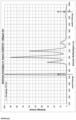
- Faceted stones (cuboids with the dimensions 40 mm x 12 mm x 12 mm) from the glass compositions in Table 1 show not only the typical emission of the respective glass matrix (glass fluorescence), which is in different ranges for the different glasses, but all of them a fluorescence spectrum which has a clear Identification allows (see Figures 1-4).
- the spectra of Examples 1, 2 and 3 are shown below as examples.
- the excitation radiation scattered in the sample chamber of the measuring device is also shown in the figures. This is visible as the first and second order of the scattered excitation radiation.
- the excitation at 471 nm (first order) and 942 nm (second order) can be seen as an example for 1 .
- the peaks at these wavelengths therefore represent measurement artifacts and can be neglected.
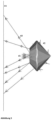
- the light source was assumed to be perfectly collimated in the simulation, with a total power of 1 watt, a radius of 1mm and an emitted wavelength of 450nm; In the simulation, the light source was positioned in such a way that the incidence of the light rays on the objects is perpendicular to the tangential plane of the point of entry (in the case of the sphere) or perpendicular to the plane of the panel and through the center of the panel's circumference (in the case of the chaton).
- the "free path length” parameter was used to define how far the incident rays penetrate into the glass object before they are absorbed and then emitted in the form of fluorescence rays (650nm). This corresponds to a simulation of different concentrations of dopant in the glass composition. The smaller the free path, the higher the concentration of dopant; the greater the free path, the lower the concentration of dopant.
- a rectangle with an area of 30 mm x 30 mm was used as a detector for the fluorescence emission, which was placed at a distance of -5 mm (ie 5 mm behind the light source; cf. Figure 5 ) from the light source was placed perpendicular to the beam axis of the light source and only recorded the emitted radiation (650nm).
- the rays impinging on the respective glass object a) to c) were subject to Snell's refraction and reflection.
- the radiation emitted by the light source with a wavelength of 450 nm was emitted through the glass bodies to varying degrees as fluorescence radiation with a wavelength of 650 nm.
- the light output hitting the detector was compared for the three different geometries.
- the simulations ( Fig. 6 ) clearly show that the lowest fluorescence emission occurs in the case of a spherical geometry (a).
- the fluorescence emission of the Xilion ® 1028 Chaton SS39 is more than twice as high over the entire free path length range; this corresponds to a more than 100% increase in fluorescence compared to the non-faceted glass body.
- a coated/mirrored chaton again shows an increase in fluorescence emission, albeit less clearly.
- illustration 1 Measured fluorescence emission of a lead-free crystal glass according to Example 1 with 200 ppm Sm 2 O 3 addition (excitation at 471 nm) measured on a cuboid measuring 40 mm ⁇ 12 mm ⁇ 12 mm
- Figure 2 Measured fluorescence emission of a high-lead crystal glass according to Example 2 with 60 ppm Dy 2 O 3 and 150 ppm Tb 2 O 3 additives (excitation at 453 nm) measured on a cuboid measuring 40 mm ⁇ 12 mm ⁇ 12 mm
- Figure 3 Measured fluorescence emission of a soda-lime glass according to Example 3 with 5 ppm Eu 2 O 3 added (excitation at 465 nm) measured on a cuboid measuring 40 mm ⁇ 12 mm ⁇ 12 mm
- Figure 4 (Comparative example): Measured fluorescence emission of a soda-lime glass without the addition of dopants (excitation at 465 nm ); measured on a cuboid measuring 40 mm x 12 mm x 12 mm.
- Table 1 below gives the oxide compositions of various glasses used to make the faceted gemstones. All amounts given are percentages by weight. The examples refer to the following glasses:
- Example 1 Lead-free crystal glass according to patent CZ302723 (see. illustration 1 );
- Example 2 Commercial high lead crystal glass (cf. Figure 2 );
- Example 3 Commercially available soda-lime glass (cf. Figure 3 );
- Example 4 Standard Optical Glass N-BK7 ® ;
- Example 5 Commercially available borosilicate glass;
- Examples 6 to 15 Commercially available colored glasses ⁇ b>Table 1 ⁇ /b> Glass compositions with doping (Part 1). Examples 1, 3, 4 and 5 do not form part of the invention.
- Example 1 2 3 4 5 6 7 SiO 2 59:11 55.25 72.69 70.30 80.24 72.28 70.30 PbO 31.90 K2O 3.49 8.80 7.70 0.20 4.00 5.90 Well 2 O 11.40 2.30 13.20 10.24 4.60 15.00 10.60 B2O3 _ 3.07 0.30 10.00 12.60 Li2O 2:15 CaO 7:19 9:29 0.20 2.90 6.70 MgO 3.80 ZnO 7.71 1.00 1.10 Al2O3 _ 0.43 0.70 2.30 0.10 1.60 TiO 2 2.08 0.20 4.00 As2O3 _ Sb2O3 _ 0.47 0.43 0.32 0.26 0.12 0.50 BaO 0.90 1.50 ZrO 2 2.08 P2O5 _ 0.70 Gd2O3 _ 0.10 Nd2O3 _ 1.30 SnO 2 1.90 Sm2O3 _ 0.0200 - 0.0300 Eu2O3 _ 0.0005 0.0050 Ho2O3 _ - 0.1700 0.0500 Tb
Landscapes
- Chemical & Material Sciences (AREA)
- Engineering & Computer Science (AREA)
- Materials Engineering (AREA)
- Organic Chemistry (AREA)
- Life Sciences & Earth Sciences (AREA)
- Chemical Kinetics & Catalysis (AREA)
- General Chemical & Material Sciences (AREA)
- Geochemistry & Mineralogy (AREA)
- Inorganic Chemistry (AREA)
- Health & Medical Sciences (AREA)
- Immunology (AREA)
- Physics & Mathematics (AREA)
- Analytical Chemistry (AREA)
- Biochemistry (AREA)
- General Health & Medical Sciences (AREA)
- General Physics & Mathematics (AREA)
- Pathology (AREA)
- Nuclear Medicine, Radiotherapy & Molecular Imaging (AREA)
- Crystallography & Structural Chemistry (AREA)
- Ceramic Engineering (AREA)
- Optics & Photonics (AREA)
- Glass Compositions (AREA)
Description
- Die Erfindung betrifft facettierte Schmucksteine auf Basis einer lumineszierenden Glaszusammensetzung, die bestimmte Oxide der seltenen Erden enthält und somit eine Identifikation der facettierten Schmucksteine ermöglicht.
- Synthetische Schmucksteine aus bleifreiem sowie bleihaltigem Glas und synthetische Edelsteine werden in der Regel in völlig unterschiedlichen Qualitäten gefertigt. In vielen Ländern unterliegen Schmucksteine sogenannten Produkt-Compliance-Richtlinien, die den Gehalt von möglicherweise schädlichen Inhaltsstoffen limitieren.
- Auf dem Schmuckstein-Sektor herrscht seit ca. 2005 am Weltmarkt ein starker Wettbewerb mit massivem Preisdruck. Markenprodukte werden häufig kopiert, beziehungsweise unter falscher Angabe der Herkunft gehandelt. Durch die enorme Vielfalt der gehandelten Steine, ist eine rasche Unterscheidung von Original und Kopie nur sehr schwer möglich. Die aus Markenpiraterie entstandenen Schäden sind enorm. Zusätzlich erfüllen die Schmuckstein-Kopien häufig nicht die gleichen Qualitätsstandards und Compliance-Vorschriften; schädliche Inhaltsstoffe können - je nach Land - zu enormen Haftungsproblemen führen.
- Zum gegenwärtigen Zeitpunkt ist es üblich, synthetische Schmucksteine in darauf spezialisierten Labors auf Echtheit zu überprüfen. Hierzu wird die chemische Zusammensetzung des Glases des Schmucksteins ermittelt und seine Schliffgeometrie/Brillanz analysiert und verglichen. Diese Prüfungen sind relativ teuer und zeitaufwändig und für eine Schnell-Analyse am Markt nicht einsetzbar.
- Eine bekannte Methode zur Identifizierung synthetischer Edelsteine ist die Markierung mit Laser-Gravuren. Diese Methode kann aufgrund ihrer hohen Kosten sowie technischer Limitierungen bei synthetischen Schmucksteinen aus Glas nur sehr begrenzt eingesetzt werden.
- Um Luxusprodukte vor Marken-Piraterie zu schützen, existieren zahlreiche Produkt-Authentifizierungs-Lösungen, wie beispielsweise mehrstufige Sicherheitsaufkleber, Hologramme, Sicherheitstinten, RFID-Systeme ("radio frequency identification"), etc. Diese Methoden sind für Schmucksteine jedoch nicht anwendbar, da sie das optische Erscheinungsbild des Schmucksteins negativ beeinflussen würden.
- Eine Kombination aus Lumineszenz-Markern, die auf Artikel aufgebracht oder eingebracht werden kann, ist bekannt. Diese Lumineszenz-Marker lassen sich nicht unter Erhalt der chemischen Bindungen ins Glas einschmelzen. Nach dem Einschmelzen sind die ursprünglichen chemischen Verbindungen, die Bestandteile der Lumineszenz-Marker waren, vielmehr im Glasnetzwerk gelöst. Die ursprüngliche Lumineszenz der patentgemäßen Keramik-Partikel geht verloren und ist deshalb in den fertigen Produkten nicht mehr detektierbar.
- Lumineszierende Phosphorgläser, die mehr als 2 Mol-% bestimmter Oxide der Seltenerdmetalle enthalten, sind aus der Patentschrift
US 2005 0253113 (SCHOTT ) bekannt. Mit Seltenerdelementen dotierte Quarzgläser sind aus derEP 0466932 A1 (FURUKAWA ) bekannt. - Glasperlen, die Dotierstoffe ausgewählt aus den seltenen Erden in Mengen von 0.5 bis 3 Mol-% enthalten, sind aus der
US 7,256,398 bekannt. In diesen relativ hohen Konzentrationen sind Dotierstoffe im Glas jedoch unerwünscht, da die seltenen Erden bekannterweise die Einfärbung des Glases ändern. Darüber hinaus führen Dotierstoff-Zugaben in oben genannten Konzentrationen zu deutlichen Erhöhungen der Rohstoffkosten der Glasmischung, sodass solche Zusammensetzungen für synthetische Schmucksteine nicht mehr wirtschaftlich einsetzbar sind. - Dotierstoffe in Konzentrationen von einstelligen Prozentbereichen (1% entspricht 10.000 mg/kg) sind vergleichsweise einfach mit gängigen Analysenmethoden wie RFA nachweisbar. Allerdings führen sie zu Einfärbungen der Gläser, und sind daher in diesen Konzentrationen nicht als Dotierstoffe geeignet.
- Aufgabe der vorliegenden Erfindung war es, facettierte Schmucksteine aus Glas zur Verfügung zu stellen, die lumineszieren, aber so geringe Mengen an Dotierstoffen enthalten, dass sie einerseits keine Farbveränderung des Glases bewirken und andererseits eindeutig identifizierbare Banden im Emissionsspektrum aufweisen. Die Dotierstoffe dienen als "Echtheits-Markierung" und ermöglichen eine Identifizierung über ein tragbares Analysegerät.
- Überraschenderweise wurde gefunden, dass diese Aufgabe durch facettierte Schmucksteine aus Glas gemäß Anspruch 1 gelöst werden kann. Die Oxide der Seltenerdmetalle Scandium, Lanthan, Cer, Praseodym, Samarium, Europium, Yttrium, Terbium, Dysprosium, Holmium, Thulium, Ytterbium und Lutetium sind in diesen Zusammensetzungen in Konzentrationen von 2 bis 2.000 mg/kg der Glaszusammensetzung enthalten (dies entspricht 0.0002 bis 0.2 Gew.-% bezogen auf ein Kilogramm der Glaszusammensetzung) und liefern selbst in diesen geringen Konzentrationen eine ausreichend starke Fluoreszenzstrahlung, die eine Identifikation ermöglicht (vgl. Abbildungen 1 bis 4). Eine bevorzugte Ausführungsform der Glaszusammensetzung enthält die spezifischen Oxide der Seltenerdmetalle in etwa 5 bis etwa 1.000 mg/kg der Glaszusammensetzung; besonders bevorzugt sind Konzentrationen von etwa 5 bis etwa 700 mg/kg und insbesondere etwa 5 bis etwa 500 mg/kg und ganz besonders bevorzugt etwa 5 bis etwa 300 mg/kg.
- Die anspruchsgemäß facettierten Schmucksteine aus Glas zeigen nach Anregung mit Licht, insbesondere im sichtbaren Bereich, charakteristische Fluoreszenzsignale für Marker und Kristallglasmatrix, die mit entsprechenden Geräten ausgelesen werden können. In den erfindungsgemäß facettierten Schmucksteinen aus Glas sind wenigstens zwei, vorzugsweisewenigstens drei verschiedene Oxide der genannten Seltenerdmetalle enthalten. Dies ermöglicht es, das Fluoreszenz-Emissions-Spektrum als "Finger-Print" zur Identifizierung der Glaszusammensetzung zu verwenden. Durch Variation der Konzentrationsverhältnisse der Oxide der Seltenerdmetalle in den einzelnen Chargen bei der Glasherstellung und durch Integration der Intensitäten der Peaks ist zudem nicht nur eine Authentizitätsprüfung möglich, sondern auch eine Zuordnung zu Chargen, d.h. das Herstellungsdatum kann ebenso ermittelt werden.
- Durch die besonderen Reflexionseigenschaften aufgrund der Facettierung von Schmucksteinen ist es möglich, bereits sehr niedrige Gehalte an Markierungselementen mithilfe von miniaturisierten Hochleistungsspektrometern zu erkennen, auch wenn vergleichsweise kleine Schmucksteine in Schmuckstücken verbaut sind. Der Grund dafür liegt in der meist mehrfachen Reflexion von Lichtstrahlen in facettierten Schmucksteinen, durch die sich eine lange Wegstrecke bzw. hohe Wahrscheinlichkeit einer Anregung ergibt. Eine quantitative Analyse der zugrundeliegenden Glaszusammensetzung und insbesondere der Dotierstoffe wäre bei solch niedrigen Konzentrationen nicht oder nur mit sehr hohem Aufwand möglich. Die Verfahren, wie man Facettierungen erhält, sind dem Fachmann hinlänglich bekannt (z.B. durch Schleifen und Polieren oder Blankpressen).
- Facettierte Schmucksteine basierend auf dotierten Glaszusammensetzungen sind beispielsweise von Swarovski unter den Bezeichnungen A 5328 MM2.5 Cry, A 5000 MM10 Cry, A 6041 MM18 Cry erhältlich.
- Zusätzlich wird insbesondere bei Verspiegelung von facettierten Schmucksteinen ("Foiling") ein Austritt von Fluoreszenzsignalen in Betrachtungsrichtung begünstigt. Erfindungsgemäß besonders bevorzugt sind daher facettierte Schmucksteine aus Glas, die partiell verspiegelt sind. Unter partieller Verspiegelung wird die Verspiegelung mindestens einer Facette oder Fläche verstanden. Beispielsweise werden bei Chatons die Pavillonflächen verspiegelt. Die Verspiegelungen sowie die Verfahren zur Verspiegelung sind dem Fachmann hinlänglich bekannt (vide infra). Facettierte, verspiegelte Schmucksteine sind beispielsweise von Swarovski unter den Produkt-Bezeichnungen A 1100 PP0 Cry F (F steht für foiled; Silberspiegel), A 1088 SS39 Cry F, A 2058 SS6 Cry F, A 2088 SS34 Cry F, A 2078 SS6 Cry A HF (A für einen alternativen Silberspiegel), A 2078 SS6 Cry M HF (M für Al-Spiegel) erhältlich.
- Durch die Kombination unterschiedlicher Markierungselemente in variierbaren Konzentrationsverhältnissen, kann - wie oben erwähnt - eine Art innere Codierung der auf diese Art und Weise markierten Kristallglasprodukte erfolgen. So wurde in Ausführungsbeispiel 2 (Tabelle 1) der Anteil von Terbiumoxid mit 0.015 Gew.-% und jener von Dysprosiumoxid mit 0.006 Gew.-% gewählt.
- Durch die Facettierung der Glasschmucksteine und die dadurch erhöhte Reflexion im Vergleich zu ungeschliffenen Glasstücken kann mit äußerst geringen Konzentrationen der Dotierstoffe gearbeitet werden (vide supra), sogar im Bereich von 5 bis 300 mg/kg.
- Die Detektion der Markierung erfolgt mit tragbaren optischen Analysegeräten, welche die facettierten Schmucksteine mit elektromagnetischer Strahlung in ausgewählten Wellenlängenbereichen anregen. Die Fluoreszenzemissionsstrahlung und - fakultativ - deren Abklingverhalten werden anschließend wellenlängenselektiv ausgelesen und mithilfe von geeigneten Algorithmen analysiert, um die Echtheit des Schmucksteins zu erkennen. Derartige Analysegeräte werden beispielweise von der Firma Swiss Authentication Research and Development AG hergestellt und vertrieben. Die wellenlängenselektive Auswertung ermöglicht den quantitativen Vergleich der Fluoreszenzsignale bei den jeweils charakteristischen Wellenlängen der beigemengten Selten-Erden-Oxide. Erfindungsgemäß bevorzugt ist es, facettierte Schmucksteine aus Glas einzusetzen, die bei Anregung durch elektromagnetische Strahlung eine Fluoreszenz im Bereich von 300 bis 3.000 nm, vorzugsweise im Bereich 300 bis 1.100 nm aufweisen.
- Der Schmuckstein gemäß der Erfindung kann verwendet werden in ein Verfahren zur Identifikation eines facettierten Schmucksteins aus Glas umfassend folgende Schritte:
- (a) Bereitstellen eines erfindungsgemäßen facettierten Schmucksteins aus Glas;
- (b) Anregung mit elektromagnetischer Strahlung;
- (c) Detektion der erzeugten Fluoreszenz und
- (d) gegebenenfalls Vergleich des Signals mit einem vorgegebenen Muster.
- Vorzugsweise wird die Anregung wellenlängenselektiv vorgenommen, besonders bevorzugt bei Wellenlängen von 300 bis 780 nm. Vorzugsweise dient das Verfahren zur Identifikation der Produktionscharge des facettierten Schmucksteins aus Glas.
- Unter Glas wird eine eingefrorene unterkühlte Flüssigkeit verstanden, die einen amorphen Festkörper bildet. Beispielsweise, aber nicht notwendigerweise erfindungsgemäß, können sowohl dotierte, oxidische Gläser als auch Chalkogenidgläser, metallische Gläser oder nicht-metallische Gläser eingesetzt werden. Auch Oxy-Nitrid-Gläser können geeignet sein. Es kann sich um Einkomponenten- (z.B. Quarzglas) oder Zweikomponenten- (z.B. Alkaliboratglas) oder Mehrkomponentengläser (Kalk-Natron-Glas) handeln.
- Eine dotierte Glaszusammensetzung der facettierten Schmucksteine kann durch Schmelzen, durch Sol-Gel-Prozesse oder auch durch Stoßwellen hergestellt werden. Die Verfahren sind dem Fachmann bekannt. Anorganische Gläser, insbesondere oxidische Gläser können verwendet werden. Hierzu gehören Silikatgläser und in anderen Beispielen, die nicht erfindungsgemäß sind, Boratgläser oder Phosphatgläser. Bleifreie Gläser können verwendet werden. Silikatische Gläser haben gemeinsam, dass ihr Netzwerk hauptsächlich aus Siliziumdioxid (SiO2) gebildet wird. Durch Zugabe weiterer Oxide wie beispielsweise Aluminiumoxid oder verschiedener Alkalioxide entstehen die Alumo- oder Alkali-Silikatgläser. Für die Einordnung entscheidend ist, welches Oxid mengenmäßig das zweithäufigste im silikatischen Grundglas ist. Ein Silikatglas ohne weitere Bestandteile - also reines SiO2 - wird als Kiesel- oder Quarzglas bezeichnet. Treten als Hauptnetzwerkbildner eines Glases Phosphorpentoxid oder Bortrioxid auf, spricht man von Phosphat- bzw. Boratgläsern, deren Eigenschaften ebenfalls durch Zugabe weiterer Oxide eingestellt werden können. Die genannten Gläser bestehen größtenteils aus Oxiden, weshalb man sie zusammenfassend als oxidische Gläser bezeichnet.
- Die dotierte Glaszusammensetzung enthält neben den Oxiden der Seltenerdmetalle Scandium, Lanthan, Cer, Praseodym, Samarium, Europium, Yttrium, Terbium, Dysprosium, Holmium, Thulium, Ytterbium und Lutetium in der anspruchsgemäßen Menge folgende Komponenten:
- (a) etwa 35 bis etwa 85 Gew.-% SiO2;
- (b) 0 bis etwa 20 Gew.-% K2O;
- (c) 0 bis etwa 20 Gew.-% Na2O;
- (d) 0 bis etwa 5 Gew.-% Li2O;
- (e) 0 bis etwa 13 Gew.-% ZnO;
- (f) 0 bis etwa 11 Gew.-% CaO;
- (g) 0 bis etwa 7 Gew.-% MgO;
- (h) 0 bis etwa 10 Gew.-% BaO;
- (i) 0 bis etwa 4 Gew.-% Al2O3;
- (j) 0 bis etwa 5 Gew.-% ZrO2;
- (k) 0 bis etwa 6 Gew.-% B2O3;
- (l) 0 bis etwa 3 Gew.-% F;
- (m) 0 bis etwa 2,5 Gew.-% CI.
- Vorzugsweise enthält die dotierte Glaszusammensetzung:
- (a) etwa 45 bis etwa 75 Gew.-% SiO2;
- (b) 0 bis etwa 10 Gew.-% K2O;
- (c) etwa 5 bis etwa 20 Gew.-% Na2O;
- (d) etwa 0,5 bis etwa 5 Gew.-% Li2O;
- (e) etwa 3 bis etwa 13 Gew.-% ZnO;
- (f) etwa 2 bis etwa 11 Gew.-% CaO;
- (g) 0 bis etwa 7 Gew.-% MgO;
- (h) 0 bis etwa 10 Gew.-% BaO;
- (i) etwa 0,5 bis etwa 4 Gew.-% Al2O3;
- (j) etwa 0,5 bis etwa 4 Gew.-% ZrO2;
- (k) etwa 1 bis etwa 6 Gew.-% B2O3;
- (l) 0 bis etwa 3 Gew.-% F;
- (m) 0 bis etwa 2,5 Gew.-% CI.
- Erfindungsgemäß besonders bevorzugt ist eine Glaszusammensetzung enthaltend:
- (a) etwa 48 bis etwa 65 Gew.-% SiO2;
- (b) etwa 1 bis etwa 5 Gew.-% K2O;
- (c) etwa 10 bis etwa 17 Gew.-% Na2O;
- (d) etwa 0,5 bis etwa 3 Gew.-% Li2O;
- (e) etwa 7 bis etwa 13 Gew.-% ZnO;
- (f) etwa 4 bis etwa 11 Gew.-% CaO;
- (g) 0 bis etwa 3 Gew.-% MgO;
- (h) 0 bis etwa 1 Gew.-% BaO;
- (i) etwa 0,5 bis etwa 4 Gew.-% Al2O3;
- (j) etwa 0,5 bis 4 Gew.-% ZrO2;
- (k) etwa 3 bis etwa 6 Gew.-% B2O3;
- (l) 0 bis etwa 3 Gew.-% F;
- (m) 0 bis etwa 2.5 Gew.-% CI.
- In einem weiteren Beispiel auf Borsilikatglasbasis anstelle von Silikatglasbasis, dass nicht erfindungsgemäß ist, enthält die dotierte Glaszusammensetzung neben den Dotierstoffen in einer Konzentration die folgenden Komponenten:
- (a) etwa 30 bis etwa 95 Gew.-% B2O3;
- (b) 0 bis etwa 20 Gew.-% K2O;
- (c) 0 bis etwa 25 Gew.-% Na2O;
- (d) 0 bis etwa 5 Gew.-% Li2O;
- (e) 0 bis etwa 13 Gew.-% ZnO;
- (f) 0 bis etwa 11 Gew.-% CaO;
- (g) 0 bis etwa 7 Gew.-% MgO;
- (h) 0 bis etwa 10 Gew.-% BaO;
- (i) 0 bis etwa 4 Gew.-% Al2O3;
- (j) 0 bis etwa 5 Gew.-% ZrO2;
- (k) 0 bis etwa 3 Gew.-% F;
- (l) 0 etwa bis 2,5 Gew.-% CI.
- In einem weiteren Beispiel auf Phosphatglasbasis anstelle von Silikatglasbasis, dass nicht erfindungsgemäß ist, enthält die dotierte Glaszusammensetzung neben den Dotierstoffen in einer Konzentration die folgenden Komponenten:
- (a) etwa 30 bis etwa 95 Gew.-% P2O5;
- (b) 0 bis etwa 30 Gew.-% K2O;
- (c) 0 bis etwa 30 Gew.-% Na2O;
- (d) 0 bis etwa 10 Gew.-% Li2O;
- (e) 0 bis etwa 20 Gew.-% ZnO;
- (f) 0 bis etwa 20 Gew.-% CaO;
- (g) 0 bis etwa 15 Gew.-% MgO;
- (h) 0 bis etwa 30 Gew.-% BaO;
- (i) 0 bis etwa 15 Gew.-% Al2O3;
- (j) 0 bis etwa 15 Gew.-% SiO2;
- (k) 0 bis etwa 15 Gew.-% B2O3;
- (l) 0 bis etwa 20 Gew.-% BaO.
- Alle Mengenangaben sind dabei so zu verstehen, dass sie sich jeweils zu 100 Gew.-% ergänzen.
- Beschichtungen enthalten üblicherweise eine Schicht eines Metalls und/oder einer Metallverbindung wie beispielsweise Metalloxide, Metallnitride, Metallfluoride, Metallcarbide oder eine beliebige Kombination dieser Verbindungen in beliebiger Reihenfolge, die mittels einer der gängigen Beschichtungsverfahren auf die facettierten Schmucksteine aufgebracht werden. Es können auch aufeinanderfolgende Schichten verschiedener Metalle oder Metallverbindungen aufgebracht werden. Die Verfahren und Beschichtungen sind dem Fachmann hinlänglich bekannt.
- Zu den Verspiegelungsverfahren zählen unter anderem PVD (physical vapour deposition), CVD (chemical vapour deposition), Lackieren sowie nasschemische Verfahren gemäß Stand der Technik.
- Geeignete Messgeräte werden unter anderem von der Firma Horiba Jobin Yvon GmbH vertrieben. Bei diesen Messgeräten wird die von einer oder mehreren Lichtquellen emittierte Strahlung unterschiedlicher Wellenlängenbereiche spektral aufgeteilt und über eine Anordnung von optischen Elementen und Spaltblenden selektiert. Die in der Art spektral begrenzte Strahlung wird über Strahlformungselemente gebündelt und auf das zu messende Objekt gelenkt. Kommt es durch oben genannte Bestrahlung des Probenobjekts zu einer Emission, so tritt diese in die das Messobjekt umgebende Probenkammer aus. Über einen optischen Aufbau (Detektoraufbau), der dem Detektor vorgeschalten ist, wird die emittierte Strahlung wiederum spektral aufgeteilt und geometrisch auf den Detektor ausgerichtet. Dies kann mittels Spiegelsystem sowohl unter einem rechten Winkel zur Anregungsstrahlung als auch unter kleinem Winkel zum Lot der Anregungsstrahlung erfolgen. Der Detektoraufbau besteht im Wesentlichen aus einer Anordnung von lichtempfindlichen Sensoren (Array). Durch die vorher beschriebene geometrische Justierung der spektral zerlegten Strahlung auf die Anordnung der Detektionselemente können den einzelnen Sensoren Wellenlängenbereiche zugeteilt werden. Das Auslesesystem enthält eine programmierbare elektronische Einheit, welche die Aufbereitung und digitale Auswertung der empfangenen Signale ermöglicht. Das erhaltene Messsignal kann so digital verarbeitet und gespeichert werden.
- Geeignete Geräte werden von der Firma Swiss Authentication Research and Development AG vertrieben (vide supra). Dabei wird die von einer oder mehreren Lichtquellen emittierte Strahlung über eine Anordnung optischer Strahlformungselemente auf das zu messende Objekt gelenkt. Kommt es durch oben genannte Bestrahlung des Probenobjekts zu einer Emission, so wird diese durch eine Anordnung optischer Elemente erfasst und auf ein optisches Gitter gelenkt. Die auf diese Weise spektral dispergierte Strahlung wird auf ein Detektorarray projiziert, so dass den einzelnen Sensoren Wellenlängenbereiche zugeordnet werden. Das Auslesesystem enthält eine programmierbare elektronische Einheit, welche die Aufbereitung und digitale Auswertung der empfangenen Signale ermöglicht. Das erhaltene Messsignal kann so digital verarbeitet und gespeichert werden.
- Facettierte Steine (Quader der Dimension 40 mm x 12 mm x 12 mm) aus den Glaszusammensetzungen der Tabelle 1 zeigen neben der typischen Emission der jeweiligen Glasmatrix (Glasfluoreszenz), die bei den verschiedenen Gläsern in unterschiedlichen Bereichen liegt, allesamt ein Fluoreszenzspektrum, welches eine eindeutige Identifizierung zulässt (vgl. Abbildungen 1-4). Beispielhaft sind nachfolgend die Spektren der Beispiele 1, 2 und 3 abgebildet. Zu beachten ist, dass in den Abbildungen auch die im Probenraum des Messgerätes gestreute Anregungsstrahlung abgebildet wird. Sichtbar ist diese als erste und zweite Ordnung der gestreuten Anregungsstrahlung. Beispielhaft für 1 ist die Anregung bei 471nm (erste Ordnung) und 942nm (zweite Ordnung) erkennbar. Die Peaks bei diesen Wellenlängen stellen daher Messartefakte dar und sind zu vernachlässigen.
- Um die Fluoreszenz-Emission von nicht-facettiertem und facettiertem Glas zu vergleichen sowie die Auswirkung einer Verspiegelung der facettierten Glassteine zu untersuchen, wurden Simulationen zur Fluoreszenz-Emission mittels der Raytracing-Software Zemax der Firma Radiant Zemax durchgeführt (Aufbau vgl.
Abbildung 5 ). - Es wurden drei verschiedene Fluoreszenz-Emissionen simuliert:
- (i) Für eine Glaskugel mit Radius 4 mm und den im Programm vorhandenen Parametern für Schott-N-BK7® Glas; 2,2 mm Abstand von der Lichtquelle
- (ii) Für einen Xilion® 1028 SS39 Chaton der Firma Swarovski® mit einem Durchmesser von 8,3 mm und einer Gesamtlänge von 5,8 mm und den im Programm vorhandenen Parametern für Schott-N-BK7® Glas; 2,2 mm Abstand von der Lichtquelle; Tafelfläche des Chatons senkrecht zur Ausbreitungsrichtung des Lichtes
- (iii) Für den Chaton entsprechend b), dessen Pavillon-Facetten als verspiegelt simuliert wurden (d.h. Pavillon-Facetten wurden als total reflektierend angenommen)
- Die Lichtquelle wurde in der Simulation als perfekt kollimiert angenommen, mit einer Gesamtleistung von 1 Watt, einem Radius von 1mm und einer emittierten Wellenlänge von 450nm; Die Lichtquelle wurde in der Simulation so positioniert, dass der Einfall der Lichtstrahlen auf die Objekte senkrecht zur Tangentialebene des Eintrittspunktes (im Falle der Kugel) bzw. senkrecht zur Tafelebene und durch den Umkreismittelpunkt der Tafel (im Falle des Chatons) ist.
- Über den Parameter "freie Weglänge" wurde definiert, wie weit die auftreffenden Strahlen in das Glasobjekt eindringen, bevor sie absorbiert und dann in Form von Fluoreszenzstrahlen (650nm) emittiert werden. Dies entspricht einer Simulation unterschiedlicher Konzentrationen an Dotierstoff in der Glaszusammensetzung. Je kleiner die freie Weglänge, desto höher ist die Konzentration an Dotierstoff; je größer die freie Weglänge, desto geringer ist die Konzentration an Dotierstoff.
- In der Simulation diente als Detektor für die Fluoreszenz-Emission ein Rechteck der Fläche 30 mm x 30 mm, welches im Abstand von -5mm (d.h. 5mm hinter der Lichtquelle; vgl.
Abbildung 5 ) von der Lichtquelle senkrecht zur Strahlachse der Lichtquelle platziert wurde und nur die emittierte Strahlung (650nm) aufzeichnete. - Die auf das jeweilige Glasobjekt a) bis c) auftreffenden Strahlen unterlagen der Snellius'schen Brechung und Reflexion. Die von der Lichtquelle ausgehende Strahlung der Wellenlänge 450nm wurde durch die Glaskörper in unterschiedlichem Maß als Fluoreszenzstrahlung der Wellenlänge 650nm emittiert.
- Verglichen wurde die auf dem Detektor auftreffende Lichtleistung bei den drei unterschiedlichen Geometrien. Die Simulationen (
Abb. 6 ) zeigen eindeutig, dass im Falle einer Kugel-Geometrie (a) die geringste Fluoreszenz-Emission auftritt. Die Fluoreszenz-Emission des Xilion® 1028 Chatons SS39 ist über den gesamten freien Weglängen-Bereich mehr als 2 Mal so hoch; dies entspricht einer mehr als 100%-igen Steigerung der Fluoreszenz im Vergleich zum nicht-facettierten Glaskörper. Ein beschichteter/verspiegelter Chaton zeigt nochmals eine - obgleich weniger deutlich ausfallende - Steigerung der Fluoreszenz-Emission. -
Abbildung 1 : Gemessene Fluoreszenz-Emission eines bleifreien Kristallglases gemäß Beispiel 1 mit 200 ppm Sm2O3-Zusatz (Anregung bei 471nm) gemessen an einem Quader der Größe 40 mm x 12 mm x 12 mm -
Abbildung 2 : Gemessene Fluoreszenz-Emission eines Hochbleikristallglases gemäß Beispiel 2 mit 60 ppm Dy2O3 und 150ppm Tb2O3 Zusätzen (Anregung bei 453nm) gemessen an einem Quader der Größe 40 mm x 12 mm x 12 mm -
Abbildung 3 : Gemessene Fluoreszenz-Emission eines Kalk-Natron Glases gemäß Beispiel 3 mit 5 ppm Eu2O3 Zusatz (Anregung bei 465nm) gemessen an einem Quader der Größe 40 mm x 12 mm x 12 mm -
Abbildung 4 (Vergleichsbeispiel): Gemessene Fluoreszenz-Emission eines Kalk-Natron Glases ohne Zusatz von Dotierstoffen (Anregung bei 465 nm); gemessen an einem Quader der Größe 40 mm x 12 mm x 12 mm. -
Abbildung 5 : Schematische Darstellung des Simulationsaufbaus mit folgender Legende: - #1 Lichtquelle mit kollimierten Strahlen der Wellenlänge 450nm;
- #2 Chaton-Geometrie;
- #3 Fluoreszenz-Emission bei 650nm;
- #4 Detektor
-
Abbildung 6 : Simulation der Fluoreszenz-Emission in Abhängigkeit von der Geometrie und der freien Weglänge - In der folgenden Tabelle 1 sind die Oxid-Zusammensetzungen verschiedener Gläser wiedergegeben, die zur Herstellung der facettierten Schmucksteine verwendet werden. Alle Mengenangaben verstehen sich als Gew.-%. Dabei beziehen sich die Beispiele auf folgende Gläser:
- Beispiel 1: Bleifreies Kristallglas It. Patent
CZ302723 Abbildung 1 ); Beispiel 2: Handelsübliches Hochbleikristallglas (vgl.Abbildung 2 ); Beispiel 3: Handelsübliches Kalk-Natron-Glas (vgl.Abbildung 3 ); Beispiel 4: Standard Optisches Glas N-BK7®; Beispiel 5: Handelsübliches Borosilikatglas;Beispiele 6 bis 15: Handelsübliche FarbgläserTabelle 1 Glaszusammensetzungen mit Dotierungen (Teil 1). Beispiele 1, 3, 4 und 5 sind nicht Teil der Erfindung. Beispiel 1 2 3 4 5 6 7 SiO2 59,11 55,25 72,69 70,30 80,24 72,28 70,30 PbO 31,90 K2O 3,49 8,80 7,70 0,20 4,00 5,90 Na2O 11,40 2,30 13,20 10,24 4,60 15,00 10,60 B2O3 3,07 0,30 10,00 12,60 Li2O 2,15 CaO 7,19 9,29 0,20 2,90 6,70 MgO 3,80 ZnO 7,71 1,00 1,10 Al2O3 0,43 0,70 2,30 0,10 1,60 TiO2 2,08 0,20 4,00 As2O3 Sb2O3 0,47 0,43 0,32 0,26 0,12 0,50 BaO 0,90 1,50 ZrO2 2,08 P2O5 0,70 Gd2O3 0,10 Nd2O3 1,30 SnO2 1,90 Sm2O3 0,0200 - 0,0300 Eu2O3 0,0005 0,0050 Ho2O3 - 0,1700 0,0500 Tb4O7 0,0150 0,0300 0,0300 Dy2O3 0,0060 0,0100 Sc2O3 0,0400 CeO 0,0400 Yb2O3 0,0300 Lu2O3 0,0300 Tabelle 1 Glaszusammensetzungen mit Dotierungen (Teil 2). Beispiele 10, 11, 12, 14 and 15 sind nicht Teil der Erfindung. Beispiel 8 9 10 11 12 13 14 15 SiO2 73,00 69,10 65,29 64,94 65,73 70,57 71,93 73,80 PbO 0,90 K2O 7,50 11,00 4,70 2,20 2,60 0,70 Na2O 12,00 8,00 8,40 20,80 19,30 17,20 15,20 10,90 B2O3 2,00 3,80 4,10 2,40 1,00 CaO 2,80 7,00 6,40 4,80 4,20 3,30 5,30 7,00 MgO 2,70 0,20 0,10 0,20 0,10 0,20 ZnO 3,00 1,70 0,70 Al2O3 2,00 1,00 0,10 0,20 2,70 1,70 4,90 6,80 As2O3 0,70 Sb2O3 0,30 0,30 0,30 0,18 BaO 0,30 0,50 11,00 SrO 0,10 P2O5 3,80 F 1,30 0,50 Er2O3 1,80 Sm2O3 0,0100 0,0300 Eu2O3 0,0300 0,0200 0,0250 0,0200 Ho2O3 0,0200 0,0125 0,0100 Tb4O7 0,0300 Dy2O3 0,0300 0,0300 0,0200 0,0300 Sc2O3 0,0200 0,0500 0,0100 Y2O3 0,0200 0,0100 0,0100 La2O3 0,0400 0,0150 CeO 0,0125 Pr6O11 0,0300 0,0200 Tm2O3 0,0200 0,0300 0,0200 Yb2O3 0,0300 0,0300 0,0250 0,0300 Lu2O3 0,0300
Claims (5)
- Facettierter Schmuckstein aus Glas, enthaltend ein Gemisch aus wenigstens zwei Dotierstoffen, das die Identifikation des facettierten Schmucksteins ermöglicht, und die folgenden Komponenten:(a) 35 bis 85 Gew.-% SiO2;(b) 0 bis 20 Gew.-% K2O;(c) 0 bis 20 Gew.-% Na2O;(d) 0 bis 5 Gew.-% Li2O;(e) 0 bis 13 Gew.-% ZnO;(f) 0 bis 11 Gew.-% CaO;(g) 0 bis 7 Gew.-% MgO;(h) 0 bis 10 Gew.-% BaO;(i) 0 bis 4 Gew.-% Al2O3;(j) 0 bis 2 Gew.-% ZrO2;(k) 0 bis 4 Gew.-% B2O3;(l) 0 bis 3 Gew.-% F;(m) 0 bis 2,5 Gew.-% CI;wobei die wenigstens zwei Dotierstoffe aus der Gruppe der Oxide der Seltenerdmetalle Scandium, Lanthan, Cer, Praseodym, Samarium, Europium, Yttrium, Terbium, Dysprosium, Holmium, Thulium, Ytterbium und Lutetium ausgewählt sind, wobei die Gesamtmenge der Oxide der Seltenerdmetalle Scandium, Lanthan, Cer, Praseodym, Samarium, Europium, Yttrium, Terbium, Dysprosium, Holmium, Thulium, Ytterbium und Lutetium 2-2000 mg/kg der Glaszusammensetzung beträgt, und sich die Mengenangaben zu 100 Gew.-% ergänzen.
- Facettierter Schmuckstein aus Glas nach Anspruch 1, dadurch gekennzeichnet, dass die Gesamtmenge der Oxide der seltenen Erden 5-700 mg/kg der Glaszusammensetzung beträgt.
- Facettierter Schmuckstein aus Glas nach wenigstens einem der Ansprüche 1 und 2, dadurch gekennzeichnet, dass ein Gemisch aus wenigstens drei Oxiden der Seltenerdmetalle eingesetzt wird.
- Facettierter Schmuckstein aus Glas nach wenigstens einem der vorhergehenden Ansprüche 1 bis 3, dadurch gekennzeichnet, dass der facettierte Schmuckstein bei Anregung durch elektromagnetische Strahlung eine Fluoreszenz im Bereich von 300 bis 3000 nm, vorzugsweise im Bereich 300 bis 1100 nm aufweisen.
- Facettierter Schmuckstein aus Glas gemäß wenigstens einem der vorhergehenden Ansprüche, der partiell verspiegelt ist.
Applications Claiming Priority (2)
| Application Number | Priority Date | Filing Date | Title |
|---|---|---|---|
| EP14182551.3A EP2990390A1 (de) | 2014-08-27 | 2014-08-27 | Lumineszierende Glaszusammensetzung |
| PCT/EP2015/069382 WO2016030340A1 (de) | 2014-08-27 | 2015-08-24 | Lumineszierende glaszusammensetzung |
Publications (3)
| Publication Number | Publication Date |
|---|---|
| EP3186206A1 EP3186206A1 (de) | 2017-07-05 |
| EP3186206B1 true EP3186206B1 (de) | 2023-07-19 |
| EP3186206C0 EP3186206C0 (de) | 2023-07-19 |
Family
ID=51398583
Family Applications (2)
| Application Number | Title | Priority Date | Filing Date |
|---|---|---|---|
| EP14182551.3A Withdrawn EP2990390A1 (de) | 2014-08-27 | 2014-08-27 | Lumineszierende Glaszusammensetzung |
| EP15760114.7A Active EP3186206B1 (de) | 2014-08-27 | 2015-08-24 | Lumineszierende glaszusammensetzung |
Family Applications Before (1)
| Application Number | Title | Priority Date | Filing Date |
|---|---|---|---|
| EP14182551.3A Withdrawn EP2990390A1 (de) | 2014-08-27 | 2014-08-27 | Lumineszierende Glaszusammensetzung |
Country Status (5)
| Country | Link |
|---|---|
| US (1) | US10414686B2 (de) |
| EP (2) | EP2990390A1 (de) |
| CN (1) | CN106458712B (de) |
| RU (1) | RU2717594C2 (de) |
| WO (1) | WO2016030340A1 (de) |
Families Citing this family (7)
| Publication number | Priority date | Publication date | Assignee | Title |
|---|---|---|---|---|
| CN106630603A (zh) * | 2016-12-27 | 2017-05-10 | 钦州市中玻玻璃有限责任公司 | 一种发光玻璃 |
| CN108793733A (zh) * | 2018-06-20 | 2018-11-13 | 昆明理工大学 | 一种高熔点led用荧光玻璃及放电等离子体烧结制备方法 |
| US11713268B2 (en) | 2019-05-30 | 2023-08-01 | Owens-Brockway Glass Container Inc. | Period-coded containers with a traceable material composition |
| GB2590932B (en) * | 2020-01-07 | 2024-02-07 | De Beers Uk Ltd | Determination of a gemstone's composition |
| CN113387565B (zh) * | 2020-03-13 | 2022-04-05 | 包头稀土研究院 | 荧光玻璃及其制备方法和用途 |
| US20240269039A1 (en) * | 2021-05-24 | 2024-08-15 | Sio2 Medical Products, Inc. | Authentication/tracking of pharmaceutical packages using wave-shifting marker crystals |
| CN113651531B (zh) * | 2021-09-22 | 2022-11-22 | 烟台希尔德材料科技有限公司 | 一种第二相玻璃增强的荧光体化合物及其制备方法和组合物 |
Citations (1)
| Publication number | Priority date | Publication date | Assignee | Title |
|---|---|---|---|---|
| US7256398B2 (en) * | 2003-06-26 | 2007-08-14 | Prime Technology Llc | Security markers for determining composition of a medium |
Family Cites Families (25)
| Publication number | Priority date | Publication date | Assignee | Title |
|---|---|---|---|---|
| US3855144A (en) * | 1963-04-16 | 1974-12-17 | Owens Illinois Inc | Luminescent device, process, composition, and article |
| AU652351B2 (en) | 1990-02-05 | 1994-08-25 | Furukawa Electric Co. Ltd., The | Quartz glass doped with rare earth element and production thereof |
| CZ279603B6 (cs) | 1993-11-03 | 1995-05-17 | Vysoká Škola Chemicko-Technologická | Křišťálové bezolovnaté sklo s indexem lomu vyšším než 1,52 |
| US5516227A (en) * | 1994-07-07 | 1996-05-14 | Iit Research Institute | Spherodized fluorescent beads for improved roadway pavement marker visibility |
| RU2093617C1 (ru) | 1996-09-26 | 1997-10-20 | Олег Валерьевич Бакунов | Монокристаллический ювелирный материал |
| RU2207991C2 (ru) * | 2001-06-04 | 2003-07-10 | Кочанова Александра Васильевна | Декоративное стекло |
| RU2212380C2 (ru) * | 2001-06-04 | 2003-09-20 | Кочанова Александра Васильевна | Авантюриновое стекло |
| US6705114B2 (en) * | 2002-05-29 | 2004-03-16 | D. Swarovski & Co. | Decorative stone made of glass |
| US7758774B2 (en) | 2002-11-29 | 2010-07-20 | Japan Science And Technology Agency | Luminescent glass |
| EP1433750A1 (de) | 2002-12-26 | 2004-06-30 | Nec Tokin Corporation | Verzierungsmaterial zur Ausführung einer besonderen Licht-oder Farbemission |
| DE10311820A1 (de) | 2003-03-13 | 2004-09-30 | Schott Glas | Halbleiterlichtquelle |
| GB0314883D0 (en) * | 2003-06-26 | 2003-07-30 | Ncr Int Inc | Security labelling |
| AT414310B (de) * | 2004-03-19 | 2007-01-15 | Swarovski & Co | Blei- und bariumfreies kristallglas |
| DE102004026432A1 (de) | 2004-05-29 | 2005-12-22 | Schott Ag | Glaszusammensetzungen als antimikrobieller Zusatz für Dentalmaterialien und deren Verwendung |
| US7598189B2 (en) * | 2004-09-29 | 2009-10-06 | Hoya Corporation | Phosphate optical glass, preform for precision press molding and manufacturing method of the same, optical element and manufacturing method of the same |
| EP1674431B1 (de) | 2004-12-24 | 2017-09-20 | Baccarat | Kristallglas mit dichroitischem und dekorativem Effekt |
| ES2344267T5 (es) * | 2006-03-20 | 2015-11-02 | Schott Ag | Vidrio de litio, alúmina y silicato con unos cortos períodos de tiempo de ceramización |
| FR2933089B1 (fr) * | 2008-06-25 | 2011-02-25 | Commissariat Energie Atomique | Materiau vitreux a effets visuels et ses applications |
| AT11232U1 (de) | 2009-03-27 | 2010-07-15 | Swarovski & Co | Schmuckstein mit verspiegelter vorderseite |
| RU2421710C2 (ru) | 2009-09-17 | 2011-06-20 | Общество с ограниченной ответственностью "Алмазинтех-консультации и инжиниринг" | Способ идентификации необработанных алмазов, бриллиантов и других драгоценных камней |
| PL2563732T3 (pl) * | 2010-04-28 | 2019-07-31 | D. Swarovski Kg | Szkło barwione na czerwono i sposób jego wytwarzania |
| DE102010028801A1 (de) | 2010-05-10 | 2011-11-10 | Freie Universität Berlin | Thermisch leitfähige Zusammensetzung umfassend thermisch leitfähige Kohlenstoffnanoröhren und eine kontinuierliche Metallphase |
| RU2426488C1 (ru) | 2010-05-20 | 2011-08-20 | Авакян Карен Хоренович | Синтетический материал для ювелирной промышленности и способ его получения |
| CZ2010575A3 (cs) | 2010-07-26 | 2011-09-21 | Preciosa, A.S. | Krištálové sklo s indexem lomu vyšším než 1,53 bez obsahu sloucenin olova, barya a arzénu |
| CN103936281B (zh) * | 2014-01-26 | 2016-09-28 | 齐鲁工业大学 | 一种稀土掺杂发光玻璃及其制备方法 |
-
2014
- 2014-08-27 EP EP14182551.3A patent/EP2990390A1/de not_active Withdrawn
-
2015
- 2015-08-24 RU RU2016149800A patent/RU2717594C2/ru active
- 2015-08-24 WO PCT/EP2015/069382 patent/WO2016030340A1/de not_active Ceased
- 2015-08-24 CN CN201580033080.3A patent/CN106458712B/zh active Active
- 2015-08-24 EP EP15760114.7A patent/EP3186206B1/de active Active
- 2015-08-24 US US15/318,534 patent/US10414686B2/en active Active
Patent Citations (1)
| Publication number | Priority date | Publication date | Assignee | Title |
|---|---|---|---|---|
| US7256398B2 (en) * | 2003-06-26 | 2007-08-14 | Prime Technology Llc | Security markers for determining composition of a medium |
Also Published As
| Publication number | Publication date |
|---|---|
| RU2016149800A (ru) | 2018-09-27 |
| US10414686B2 (en) | 2019-09-17 |
| RU2717594C2 (ru) | 2020-03-24 |
| RU2016149800A3 (de) | 2019-02-22 |
| WO2016030340A1 (de) | 2016-03-03 |
| EP3186206A1 (de) | 2017-07-05 |
| CN106458712A (zh) | 2017-02-22 |
| EP2990390A1 (de) | 2016-03-02 |
| CN106458712B (zh) | 2022-03-18 |
| US20170166474A1 (en) | 2017-06-15 |
| EP3186206C0 (de) | 2023-07-19 |
Similar Documents
| Publication | Publication Date | Title |
|---|---|---|
| WO2016030340A1 (de) | Lumineszierende glaszusammensetzung | |
| Dussubieux et al. | LA-ICP-MS analysis of African glass beads: laboratory inter-comparison with an emphasis on the impact of corrosion on data interpretation | |
| PérEz-SobA et al. | Petrogenesis of highly fractionated I-type peraluminous granites: La Pedriza pluton (Spanish Central System) | |
| Francis et al. | Petrology and geochemistry of volcanic rocks of the Cerro Galan caldera, northwest Argentina | |
| Abdelghany et al. | Optical and FTIR structural studies of CoO-doped sodium borate, sodium silicate and sodium phosphate glasses and effects of gamma irradiation-a comparative study | |
| Jiang | Petrology and geochemistry of the Shuiquangou syenitic complex, northern margin of the North China Craton | |
| DE102008058177A1 (de) | Verfahren zur Identifizierung von Lasersinterpulvern | |
| DE102011080832A1 (de) | Verbundwerkstoff aus Keramik | |
| Robinet et al. | Correlations between Raman parameters and elemental composition in lead and lead alkali silicate glasses | |
| Sun et al. | Vanadium-and chromium-bearing pink pyrope garnet: Characterization and quantitative colorimetric analysis | |
| Eraiah | Impact of samarium ion concentration on the physical, structural and optical properties of multi-component borate glasses | |
| Belley et al. | PURPLE GEM SPINEL FROM VIETNAM AND AFGHANISTAN: COMPARISON OF TRACE ELEMENT CHEMISTRY, CAUSE OF COLOR, AND INCLUSIONS. | |
| Katsurada et al. | Geographic origin determination of Paraiba tourmaline | |
| Marzouk et al. | Gamma irradiation effect on structural and spectral properties of CeO2, Nd2O3, Gd2O3 or Dy2O3–doped strontium borate glass | |
| Clark et al. | Intrinsic dosimetry: Elemental composition effects on the thermoluminescence of commercial borosilicate glass | |
| Duckworth et al. | Opacifiers in Late Bronze Age glasses: the use of ToF-SIMS to identify raw ingredients and production techniques | |
| Chadefaux et al. | Multianalytical study of Palaeolithic reindeer antler. Discovery of antler traces in Lascaux pigments by TEM | |
| Šmit et al. | Analysis of Venetian-type glass fragments from the ancient city of Lezha (Albania) | |
| DE102014019037A1 (de) | Verfahren zur Bildung eines Fensters in einer Zone eines Objektes, mit farblichem Wechsel und Objekte mit einem solchen Fenster | |
| CH709226B1 (de) | Verfahren zur Bildung eines Fensters als Sicherheitsmerkmal und Objekt mit einem fluoreszierenden Fenster als Sicherheitsmerkmal. | |
| Martins et al. | Structural, optical and thermoluminescence properties of amazonite | |
| EP1696224B1 (de) | Verwendung eines Materials als Lumineszenzstandard zur Referenzierung von Lumineszenzsignalen | |
| Asfora et al. | X‐ray spectrometry applied for characterization of bricks of Brazilian historical sites | |
| EP0330144B1 (de) | Verfahren zur direkten Bestimmung von komplexen korrosiven Umgebungsbedingungen | |
| EP3866126A1 (de) | Verfahren zum überprüfen eines smartphone-verifizierbaren sicherheitsmerkmals, smartphone-verifizierbares sicherheitsmerkmal und wert- oder sicherheitsdokument |
Legal Events
| Date | Code | Title | Description |
|---|---|---|---|
| STAA | Information on the status of an ep patent application or granted ep patent |
Free format text: STATUS: THE INTERNATIONAL PUBLICATION HAS BEEN MADE |
|
| PUAI | Public reference made under article 153(3) epc to a published international application that has entered the european phase |
Free format text: ORIGINAL CODE: 0009012 |
|
| STAA | Information on the status of an ep patent application or granted ep patent |
Free format text: STATUS: REQUEST FOR EXAMINATION WAS MADE |
|
| 17P | Request for examination filed |
Effective date: 20161206 |
|
| AK | Designated contracting states |
Kind code of ref document: A1 Designated state(s): AL AT BE BG CH CY CZ DE DK EE ES FI FR GB GR HR HU IE IS IT LI LT LU LV MC MK MT NL NO PL PT RO RS SE SI SK SM TR |
|
| AX | Request for extension of the european patent |
Extension state: BA ME |
|
| RIN1 | Information on inventor provided before grant (corrected) |
Inventor name: DEBBAGE, ROY Inventor name: MEISSL, FLORIAN Inventor name: JUDMAIER, HELMUT Inventor name: HAID, RAINER Inventor name: SPRACHMANN, GEROLD Inventor name: MAIER, JOHANNES |
|
| DAV | Request for validation of the european patent (deleted) | ||
| DAX | Request for extension of the european patent (deleted) | ||
| STAA | Information on the status of an ep patent application or granted ep patent |
Free format text: STATUS: EXAMINATION IS IN PROGRESS |
|
| 17Q | First examination report despatched |
Effective date: 20191206 |
|
| GRAP | Despatch of communication of intention to grant a patent |
Free format text: ORIGINAL CODE: EPIDOSNIGR1 |
|
| STAA | Information on the status of an ep patent application or granted ep patent |
Free format text: STATUS: GRANT OF PATENT IS INTENDED |
|
| INTG | Intention to grant announced |
Effective date: 20230214 |
|
| GRAS | Grant fee paid |
Free format text: ORIGINAL CODE: EPIDOSNIGR3 |
|
| GRAA | (expected) grant |
Free format text: ORIGINAL CODE: 0009210 |
|
| STAA | Information on the status of an ep patent application or granted ep patent |
Free format text: STATUS: THE PATENT HAS BEEN GRANTED |
|
| P01 | Opt-out of the competence of the unified patent court (upc) registered |
Effective date: 20230527 |
|
| AK | Designated contracting states |
Kind code of ref document: B1 Designated state(s): AL AT BE BG CH CY CZ DE DK EE ES FI FR GB GR HR HU IE IS IT LI LT LU LV MC MK MT NL NO PL PT RO RS SE SI SK SM TR |
|
| REG | Reference to a national code |
Ref country code: GB Ref legal event code: FG4D Free format text: NOT ENGLISH |
|
| REG | Reference to a national code |
Ref country code: CH Ref legal event code: EP |
|
| REG | Reference to a national code |
Ref country code: DE Ref legal event code: R096 Ref document number: 502015016499 Country of ref document: DE |
|
| REG | Reference to a national code |
Ref country code: IE Ref legal event code: FG4D Free format text: LANGUAGE OF EP DOCUMENT: GERMAN |
|
| P04 | Withdrawal of opt-out of the competence of the unified patent court (upc) registered |
Effective date: 20230821 |
|
| U01 | Request for unitary effect filed |
Effective date: 20230818 |
|
| U07 | Unitary effect registered |
Designated state(s): AT BE BG DE DK EE FI FR IT LT LU LV MT NL PT SE SI Effective date: 20230824 |
|
| REG | Reference to a national code |
Ref country code: LT Ref legal event code: MG9D |
|
| U20 | Renewal fee for the european patent with unitary effect paid |
Year of fee payment: 9 Effective date: 20231120 |
|
| PG25 | Lapsed in a contracting state [announced via postgrant information from national office to epo] |
Ref country code: GR Free format text: LAPSE BECAUSE OF FAILURE TO SUBMIT A TRANSLATION OF THE DESCRIPTION OR TO PAY THE FEE WITHIN THE PRESCRIBED TIME-LIMIT Effective date: 20231020 |
|
| PG25 | Lapsed in a contracting state [announced via postgrant information from national office to epo] |
Ref country code: IS Free format text: LAPSE BECAUSE OF FAILURE TO SUBMIT A TRANSLATION OF THE DESCRIPTION OR TO PAY THE FEE WITHIN THE PRESCRIBED TIME-LIMIT Effective date: 20231119 |
|
| PG25 | Lapsed in a contracting state [announced via postgrant information from national office to epo] |
Ref country code: RS Free format text: LAPSE BECAUSE OF FAILURE TO SUBMIT A TRANSLATION OF THE DESCRIPTION OR TO PAY THE FEE WITHIN THE PRESCRIBED TIME-LIMIT Effective date: 20230719 Ref country code: NO Free format text: LAPSE BECAUSE OF FAILURE TO SUBMIT A TRANSLATION OF THE DESCRIPTION OR TO PAY THE FEE WITHIN THE PRESCRIBED TIME-LIMIT Effective date: 20231019 Ref country code: IS Free format text: LAPSE BECAUSE OF FAILURE TO SUBMIT A TRANSLATION OF THE DESCRIPTION OR TO PAY THE FEE WITHIN THE PRESCRIBED TIME-LIMIT Effective date: 20231119 Ref country code: HR Free format text: LAPSE BECAUSE OF FAILURE TO SUBMIT A TRANSLATION OF THE DESCRIPTION OR TO PAY THE FEE WITHIN THE PRESCRIBED TIME-LIMIT Effective date: 20230719 Ref country code: GR Free format text: LAPSE BECAUSE OF FAILURE TO SUBMIT A TRANSLATION OF THE DESCRIPTION OR TO PAY THE FEE WITHIN THE PRESCRIBED TIME-LIMIT Effective date: 20231020 |
|
| PG25 | Lapsed in a contracting state [announced via postgrant information from national office to epo] |
Ref country code: PL Free format text: LAPSE BECAUSE OF FAILURE TO SUBMIT A TRANSLATION OF THE DESCRIPTION OR TO PAY THE FEE WITHIN THE PRESCRIBED TIME-LIMIT Effective date: 20230719 |
|
| REG | Reference to a national code |
Ref country code: DE Ref legal event code: R097 Ref document number: 502015016499 Country of ref document: DE |
|
| PG25 | Lapsed in a contracting state [announced via postgrant information from national office to epo] |
Ref country code: ES Free format text: LAPSE BECAUSE OF FAILURE TO SUBMIT A TRANSLATION OF THE DESCRIPTION OR TO PAY THE FEE WITHIN THE PRESCRIBED TIME-LIMIT Effective date: 20230719 |
|
| PG25 | Lapsed in a contracting state [announced via postgrant information from national office to epo] |
Ref country code: SM Free format text: LAPSE BECAUSE OF FAILURE TO SUBMIT A TRANSLATION OF THE DESCRIPTION OR TO PAY THE FEE WITHIN THE PRESCRIBED TIME-LIMIT Effective date: 20230719 Ref country code: RO Free format text: LAPSE BECAUSE OF FAILURE TO SUBMIT A TRANSLATION OF THE DESCRIPTION OR TO PAY THE FEE WITHIN THE PRESCRIBED TIME-LIMIT Effective date: 20230719 Ref country code: ES Free format text: LAPSE BECAUSE OF FAILURE TO SUBMIT A TRANSLATION OF THE DESCRIPTION OR TO PAY THE FEE WITHIN THE PRESCRIBED TIME-LIMIT Effective date: 20230719 Ref country code: SK Free format text: LAPSE BECAUSE OF FAILURE TO SUBMIT A TRANSLATION OF THE DESCRIPTION OR TO PAY THE FEE WITHIN THE PRESCRIBED TIME-LIMIT Effective date: 20230719 Ref country code: MC Free format text: LAPSE BECAUSE OF FAILURE TO SUBMIT A TRANSLATION OF THE DESCRIPTION OR TO PAY THE FEE WITHIN THE PRESCRIBED TIME-LIMIT Effective date: 20230719 |
|
| REG | Reference to a national code |
Ref country code: IE Ref legal event code: MM4A |
|
| PLBE | No opposition filed within time limit |
Free format text: ORIGINAL CODE: 0009261 |
|
| STAA | Information on the status of an ep patent application or granted ep patent |
Free format text: STATUS: NO OPPOSITION FILED WITHIN TIME LIMIT |
|
| 26N | No opposition filed |
Effective date: 20240422 |
|
| PG25 | Lapsed in a contracting state [announced via postgrant information from national office to epo] |
Ref country code: IE Free format text: LAPSE BECAUSE OF NON-PAYMENT OF DUE FEES Effective date: 20230824 |
|
| PG25 | Lapsed in a contracting state [announced via postgrant information from national office to epo] |
Ref country code: IE Free format text: LAPSE BECAUSE OF NON-PAYMENT OF DUE FEES Effective date: 20230824 |
|
| U20 | Renewal fee for the european patent with unitary effect paid |
Year of fee payment: 10 Effective date: 20240814 |
|
| P05 | Withdrawal of opt-out of the competence of the unified patent court (upc) changed |
Free format text: CASE NUMBER: APP_564107/2023 Effective date: 20230824 |
|
| PG25 | Lapsed in a contracting state [announced via postgrant information from national office to epo] |
Ref country code: CY Free format text: LAPSE BECAUSE OF FAILURE TO SUBMIT A TRANSLATION OF THE DESCRIPTION OR TO PAY THE FEE WITHIN THE PRESCRIBED TIME-LIMIT; INVALID AB INITIO Effective date: 20150824 |
|
| PG25 | Lapsed in a contracting state [announced via postgrant information from national office to epo] |
Ref country code: HU Free format text: LAPSE BECAUSE OF FAILURE TO SUBMIT A TRANSLATION OF THE DESCRIPTION OR TO PAY THE FEE WITHIN THE PRESCRIBED TIME-LIMIT; INVALID AB INITIO Effective date: 20150824 |
|
| U20 | Renewal fee for the european patent with unitary effect paid |
Year of fee payment: 11 Effective date: 20250826 |
|
| PGFP | Annual fee paid to national office [announced via postgrant information from national office to epo] |
Ref country code: TR Payment date: 20250814 Year of fee payment: 11 |
|
| PGFP | Annual fee paid to national office [announced via postgrant information from national office to epo] |
Ref country code: GB Payment date: 20250818 Year of fee payment: 11 |
|
| PGFP | Annual fee paid to national office [announced via postgrant information from national office to epo] |
Ref country code: CH Payment date: 20250901 Year of fee payment: 11 |
|
| PGFP | Annual fee paid to national office [announced via postgrant information from national office to epo] |
Ref country code: CZ Payment date: 20250808 Year of fee payment: 11 |