EP3184299A1 - Beschichtetes verbundbauteil - Google Patents
Beschichtetes verbundbauteil Download PDFInfo
- Publication number
- EP3184299A1 EP3184299A1 EP16203992.9A EP16203992A EP3184299A1 EP 3184299 A1 EP3184299 A1 EP 3184299A1 EP 16203992 A EP16203992 A EP 16203992A EP 3184299 A1 EP3184299 A1 EP 3184299A1
- Authority
- EP
- European Patent Office
- Prior art keywords
- fabric
- fluorine
- knitted
- composite component
- tear
- Prior art date
- Legal status (The legal status is an assumption and is not a legal conclusion. Google has not performed a legal analysis and makes no representation as to the accuracy of the status listed.)
- Granted
Links
Images


Classifications
-
- B—PERFORMING OPERATIONS; TRANSPORTING
- B32—LAYERED PRODUCTS
- B32B—LAYERED PRODUCTS, i.e. PRODUCTS BUILT-UP OF STRATA OF FLAT OR NON-FLAT, e.g. CELLULAR OR HONEYCOMB, FORM
- B32B7/00—Layered products characterised by the relation between layers; Layered products characterised by the relative orientation of features between layers, or by the relative values of a measurable parameter between layers, i.e. products comprising layers having different physical, chemical or physicochemical properties; Layered products characterised by the interconnection of layers
- B32B7/04—Interconnection of layers
- B32B7/06—Interconnection of layers permitting easy separation
-
- B—PERFORMING OPERATIONS; TRANSPORTING
- B29—WORKING OF PLASTICS; WORKING OF SUBSTANCES IN A PLASTIC STATE IN GENERAL
- B29C—SHAPING OR JOINING OF PLASTICS; SHAPING OF MATERIAL IN A PLASTIC STATE, NOT OTHERWISE PROVIDED FOR; AFTER-TREATMENT OF THE SHAPED PRODUCTS, e.g. REPAIRING
- B29C66/00—General aspects of processes or apparatus for joining preformed parts
- B29C66/01—General aspects dealing with the joint area or with the area to be joined
- B29C66/02—Preparation of the material, in the area to be joined, prior to joining or welding
-
- B—PERFORMING OPERATIONS; TRANSPORTING
- B29—WORKING OF PLASTICS; WORKING OF SUBSTANCES IN A PLASTIC STATE IN GENERAL
- B29C—SHAPING OR JOINING OF PLASTICS; SHAPING OF MATERIAL IN A PLASTIC STATE, NOT OTHERWISE PROVIDED FOR; AFTER-TREATMENT OF THE SHAPED PRODUCTS, e.g. REPAIRING
- B29C66/00—General aspects of processes or apparatus for joining preformed parts
- B29C66/70—General aspects of processes or apparatus for joining preformed parts characterised by the composition, physical properties or the structure of the material of the parts to be joined; Joining with non-plastics material
- B29C66/72—General aspects of processes or apparatus for joining preformed parts characterised by the composition, physical properties or the structure of the material of the parts to be joined; Joining with non-plastics material characterised by the structure of the material of the parts to be joined
- B29C66/721—Fibre-reinforced materials
-
- B—PERFORMING OPERATIONS; TRANSPORTING
- B29—WORKING OF PLASTICS; WORKING OF SUBSTANCES IN A PLASTIC STATE IN GENERAL
- B29C—SHAPING OR JOINING OF PLASTICS; SHAPING OF MATERIAL IN A PLASTIC STATE, NOT OTHERWISE PROVIDED FOR; AFTER-TREATMENT OF THE SHAPED PRODUCTS, e.g. REPAIRING
- B29C66/00—General aspects of processes or apparatus for joining preformed parts
- B29C66/70—General aspects of processes or apparatus for joining preformed parts characterised by the composition, physical properties or the structure of the material of the parts to be joined; Joining with non-plastics material
- B29C66/73—General aspects of processes or apparatus for joining preformed parts characterised by the composition, physical properties or the structure of the material of the parts to be joined; Joining with non-plastics material characterised by the intensive physical properties of the material of the parts to be joined, by the optical properties of the material of the parts to be joined, by the extensive physical properties of the parts to be joined, by the state of the material of the parts to be joined or by the material of the parts to be joined being a thermoplastic or a thermoset
- B29C66/731—General aspects of processes or apparatus for joining preformed parts characterised by the composition, physical properties or the structure of the material of the parts to be joined; Joining with non-plastics material characterised by the intensive physical properties of the material of the parts to be joined, by the optical properties of the material of the parts to be joined, by the extensive physical properties of the parts to be joined, by the state of the material of the parts to be joined or by the material of the parts to be joined being a thermoplastic or a thermoset characterised by the intensive physical properties of the material of the parts to be joined
- B29C66/7316—Surface properties
-
- B—PERFORMING OPERATIONS; TRANSPORTING
- B29—WORKING OF PLASTICS; WORKING OF SUBSTANCES IN A PLASTIC STATE IN GENERAL
- B29C—SHAPING OR JOINING OF PLASTICS; SHAPING OF MATERIAL IN A PLASTIC STATE, NOT OTHERWISE PROVIDED FOR; AFTER-TREATMENT OF THE SHAPED PRODUCTS, e.g. REPAIRING
- B29C66/00—General aspects of processes or apparatus for joining preformed parts
- B29C66/70—General aspects of processes or apparatus for joining preformed parts characterised by the composition, physical properties or the structure of the material of the parts to be joined; Joining with non-plastics material
- B29C66/73—General aspects of processes or apparatus for joining preformed parts characterised by the composition, physical properties or the structure of the material of the parts to be joined; Joining with non-plastics material characterised by the intensive physical properties of the material of the parts to be joined, by the optical properties of the material of the parts to be joined, by the extensive physical properties of the parts to be joined, by the state of the material of the parts to be joined or by the material of the parts to be joined being a thermoplastic or a thermoset
- B29C66/737—General aspects of processes or apparatus for joining preformed parts characterised by the composition, physical properties or the structure of the material of the parts to be joined; Joining with non-plastics material characterised by the intensive physical properties of the material of the parts to be joined, by the optical properties of the material of the parts to be joined, by the extensive physical properties of the parts to be joined, by the state of the material of the parts to be joined or by the material of the parts to be joined being a thermoplastic or a thermoset characterised by the state of the material of the parts to be joined
- B29C66/7375—General aspects of processes or apparatus for joining preformed parts characterised by the composition, physical properties or the structure of the material of the parts to be joined; Joining with non-plastics material characterised by the intensive physical properties of the material of the parts to be joined, by the optical properties of the material of the parts to be joined, by the extensive physical properties of the parts to be joined, by the state of the material of the parts to be joined or by the material of the parts to be joined being a thermoplastic or a thermoset characterised by the state of the material of the parts to be joined uncured, partially cured or fully cured
- B29C66/73751—General aspects of processes or apparatus for joining preformed parts characterised by the composition, physical properties or the structure of the material of the parts to be joined; Joining with non-plastics material characterised by the intensive physical properties of the material of the parts to be joined, by the optical properties of the material of the parts to be joined, by the extensive physical properties of the parts to be joined, by the state of the material of the parts to be joined or by the material of the parts to be joined being a thermoplastic or a thermoset characterised by the state of the material of the parts to be joined uncured, partially cured or fully cured the to-be-joined area of at least one of the parts to be joined being uncured, i.e. non cross-linked, non vulcanized
-
- B—PERFORMING OPERATIONS; TRANSPORTING
- B29—WORKING OF PLASTICS; WORKING OF SUBSTANCES IN A PLASTIC STATE IN GENERAL
- B29C—SHAPING OR JOINING OF PLASTICS; SHAPING OF MATERIAL IN A PLASTIC STATE, NOT OTHERWISE PROVIDED FOR; AFTER-TREATMENT OF THE SHAPED PRODUCTS, e.g. REPAIRING
- B29C66/00—General aspects of processes or apparatus for joining preformed parts
- B29C66/70—General aspects of processes or apparatus for joining preformed parts characterised by the composition, physical properties or the structure of the material of the parts to be joined; Joining with non-plastics material
- B29C66/73—General aspects of processes or apparatus for joining preformed parts characterised by the composition, physical properties or the structure of the material of the parts to be joined; Joining with non-plastics material characterised by the intensive physical properties of the material of the parts to be joined, by the optical properties of the material of the parts to be joined, by the extensive physical properties of the parts to be joined, by the state of the material of the parts to be joined or by the material of the parts to be joined being a thermoplastic or a thermoset
- B29C66/739—General aspects of processes or apparatus for joining preformed parts characterised by the composition, physical properties or the structure of the material of the parts to be joined; Joining with non-plastics material characterised by the intensive physical properties of the material of the parts to be joined, by the optical properties of the material of the parts to be joined, by the extensive physical properties of the parts to be joined, by the state of the material of the parts to be joined or by the material of the parts to be joined being a thermoplastic or a thermoset characterised by the material of the parts to be joined being a thermoplastic or a thermoset
- B29C66/7392—General aspects of processes or apparatus for joining preformed parts characterised by the composition, physical properties or the structure of the material of the parts to be joined; Joining with non-plastics material characterised by the intensive physical properties of the material of the parts to be joined, by the optical properties of the material of the parts to be joined, by the extensive physical properties of the parts to be joined, by the state of the material of the parts to be joined or by the material of the parts to be joined being a thermoplastic or a thermoset characterised by the material of the parts to be joined being a thermoplastic or a thermoset characterised by the material of at least one of the parts being a thermoplastic
-
- B—PERFORMING OPERATIONS; TRANSPORTING
- B32—LAYERED PRODUCTS
- B32B—LAYERED PRODUCTS, i.e. PRODUCTS BUILT-UP OF STRATA OF FLAT OR NON-FLAT, e.g. CELLULAR OR HONEYCOMB, FORM
- B32B27/00—Layered products comprising a layer of synthetic resin
- B32B27/12—Layered products comprising a layer of synthetic resin next to a fibrous or filamentary layer
-
- B—PERFORMING OPERATIONS; TRANSPORTING
- B32—LAYERED PRODUCTS
- B32B—LAYERED PRODUCTS, i.e. PRODUCTS BUILT-UP OF STRATA OF FLAT OR NON-FLAT, e.g. CELLULAR OR HONEYCOMB, FORM
- B32B3/00—Layered products comprising a layer with external or internal discontinuities or unevennesses, or a layer of non-planar shape; Layered products comprising a layer having particular features of form
- B32B3/02—Layered products comprising a layer with external or internal discontinuities or unevennesses, or a layer of non-planar shape; Layered products comprising a layer having particular features of form characterised by features of form at particular places, e.g. in edge regions
- B32B3/08—Layered products comprising a layer with external or internal discontinuities or unevennesses, or a layer of non-planar shape; Layered products comprising a layer having particular features of form characterised by features of form at particular places, e.g. in edge regions characterised by added members at particular parts
-
- B—PERFORMING OPERATIONS; TRANSPORTING
- B32—LAYERED PRODUCTS
- B32B—LAYERED PRODUCTS, i.e. PRODUCTS BUILT-UP OF STRATA OF FLAT OR NON-FLAT, e.g. CELLULAR OR HONEYCOMB, FORM
- B32B3/00—Layered products comprising a layer with external or internal discontinuities or unevennesses, or a layer of non-planar shape; Layered products comprising a layer having particular features of form
- B32B3/26—Layered products comprising a layer with external or internal discontinuities or unevennesses, or a layer of non-planar shape; Layered products comprising a layer having particular features of form characterised by a particular shape of the outline of the cross-section of a continuous layer; characterised by a layer with cavities or internal voids ; characterised by an apertured layer
- B32B3/266—Layered products comprising a layer with external or internal discontinuities or unevennesses, or a layer of non-planar shape; Layered products comprising a layer having particular features of form characterised by a particular shape of the outline of the cross-section of a continuous layer; characterised by a layer with cavities or internal voids ; characterised by an apertured layer characterised by an apertured layer, the apertures going through the whole thickness of the layer, e.g. expanded metal, perforated layer, slit layer regular cells B32B3/12
-
- B—PERFORMING OPERATIONS; TRANSPORTING
- B32—LAYERED PRODUCTS
- B32B—LAYERED PRODUCTS, i.e. PRODUCTS BUILT-UP OF STRATA OF FLAT OR NON-FLAT, e.g. CELLULAR OR HONEYCOMB, FORM
- B32B33/00—Layered products characterised by particular properties or particular surface features, e.g. particular surface coatings; Layered products designed for particular purposes not covered by another single class
-
- D—TEXTILES; PAPER
- D03—WEAVING
- D03D—WOVEN FABRICS; METHODS OF WEAVING; LOOMS
- D03D15/00—Woven fabrics characterised by the material, structure or properties of the fibres, filaments, yarns, threads or other warp or weft elements used
- D03D15/20—Woven fabrics characterised by the material, structure or properties of the fibres, filaments, yarns, threads or other warp or weft elements used characterised by the material of the fibres or filaments constituting the yarns or threads
- D03D15/283—Woven fabrics characterised by the material, structure or properties of the fibres, filaments, yarns, threads or other warp or weft elements used characterised by the material of the fibres or filaments constituting the yarns or threads synthetic polymer-based, e.g. polyamide or polyester fibres
-
- B—PERFORMING OPERATIONS; TRANSPORTING
- B29—WORKING OF PLASTICS; WORKING OF SUBSTANCES IN A PLASTIC STATE IN GENERAL
- B29C—SHAPING OR JOINING OF PLASTICS; SHAPING OF MATERIAL IN A PLASTIC STATE, NOT OTHERWISE PROVIDED FOR; AFTER-TREATMENT OF THE SHAPED PRODUCTS, e.g. REPAIRING
- B29C33/00—Moulds or cores; Details thereof or accessories therefor
- B29C33/56—Coatings, e.g. enameled or galvanised; Releasing, lubricating or separating agents
- B29C33/68—Release sheets
-
- B—PERFORMING OPERATIONS; TRANSPORTING
- B29—WORKING OF PLASTICS; WORKING OF SUBSTANCES IN A PLASTIC STATE IN GENERAL
- B29C—SHAPING OR JOINING OF PLASTICS; SHAPING OF MATERIAL IN A PLASTIC STATE, NOT OTHERWISE PROVIDED FOR; AFTER-TREATMENT OF THE SHAPED PRODUCTS, e.g. REPAIRING
- B29C37/00—Component parts, details, accessories or auxiliary operations, not covered by group B29C33/00 or B29C35/00
- B29C37/0067—Using separating agents during or after moulding; Applying separating agents on preforms or articles, e.g. to prevent sticking to each other
- B29C37/0075—Using separating agents during or after moulding; Applying separating agents on preforms or articles, e.g. to prevent sticking to each other using release sheets
-
- B—PERFORMING OPERATIONS; TRANSPORTING
- B29—WORKING OF PLASTICS; WORKING OF SUBSTANCES IN A PLASTIC STATE IN GENERAL
- B29C—SHAPING OR JOINING OF PLASTICS; SHAPING OF MATERIAL IN A PLASTIC STATE, NOT OTHERWISE PROVIDED FOR; AFTER-TREATMENT OF THE SHAPED PRODUCTS, e.g. REPAIRING
- B29C70/00—Shaping composites, i.e. plastics material comprising reinforcements, fillers or preformed parts, e.g. inserts
- B29C70/04—Shaping composites, i.e. plastics material comprising reinforcements, fillers or preformed parts, e.g. inserts comprising reinforcements only, e.g. self-reinforcing plastics
- B29C70/28—Shaping operations therefor
- B29C70/40—Shaping or impregnating by compression not applied
- B29C70/42—Shaping or impregnating by compression not applied for producing articles of definite length, i.e. discrete articles
-
- B—PERFORMING OPERATIONS; TRANSPORTING
- B29—WORKING OF PLASTICS; WORKING OF SUBSTANCES IN A PLASTIC STATE IN GENERAL
- B29C—SHAPING OR JOINING OF PLASTICS; SHAPING OF MATERIAL IN A PLASTIC STATE, NOT OTHERWISE PROVIDED FOR; AFTER-TREATMENT OF THE SHAPED PRODUCTS, e.g. REPAIRING
- B29C70/00—Shaping composites, i.e. plastics material comprising reinforcements, fillers or preformed parts, e.g. inserts
- B29C70/04—Shaping composites, i.e. plastics material comprising reinforcements, fillers or preformed parts, e.g. inserts comprising reinforcements only, e.g. self-reinforcing plastics
- B29C70/28—Shaping operations therefor
- B29C70/54—Component parts, details or accessories; Auxiliary operations, e.g. feeding or storage of prepregs or SMC after impregnation or during ageing
- B29C70/542—Placing or positioning the reinforcement in a covering or packaging element before or during moulding, e.g. drawing in a sleeve
-
- B—PERFORMING OPERATIONS; TRANSPORTING
- B32—LAYERED PRODUCTS
- B32B—LAYERED PRODUCTS, i.e. PRODUCTS BUILT-UP OF STRATA OF FLAT OR NON-FLAT, e.g. CELLULAR OR HONEYCOMB, FORM
- B32B15/00—Layered products comprising a layer of metal
- B32B15/04—Layered products comprising a layer of metal comprising metal as the main or only constituent of a layer, which is next to another layer of the same or of a different material
- B32B15/08—Layered products comprising a layer of metal comprising metal as the main or only constituent of a layer, which is next to another layer of the same or of a different material of synthetic resin
-
- B—PERFORMING OPERATIONS; TRANSPORTING
- B32—LAYERED PRODUCTS
- B32B—LAYERED PRODUCTS, i.e. PRODUCTS BUILT-UP OF STRATA OF FLAT OR NON-FLAT, e.g. CELLULAR OR HONEYCOMB, FORM
- B32B15/00—Layered products comprising a layer of metal
- B32B15/14—Layered products comprising a layer of metal next to a fibrous or filamentary layer
-
- B—PERFORMING OPERATIONS; TRANSPORTING
- B32—LAYERED PRODUCTS
- B32B—LAYERED PRODUCTS, i.e. PRODUCTS BUILT-UP OF STRATA OF FLAT OR NON-FLAT, e.g. CELLULAR OR HONEYCOMB, FORM
- B32B2250/00—Layers arrangement
- B32B2250/44—Number of layers variable across the laminate
-
- B—PERFORMING OPERATIONS; TRANSPORTING
- B32—LAYERED PRODUCTS
- B32B—LAYERED PRODUCTS, i.e. PRODUCTS BUILT-UP OF STRATA OF FLAT OR NON-FLAT, e.g. CELLULAR OR HONEYCOMB, FORM
- B32B2260/00—Layered product comprising an impregnated, embedded, or bonded layer wherein the layer comprises an impregnation, embedding, or binder material
- B32B2260/02—Composition of the impregnated, bonded or embedded layer
- B32B2260/021—Fibrous or filamentary layer
-
- B—PERFORMING OPERATIONS; TRANSPORTING
- B32—LAYERED PRODUCTS
- B32B—LAYERED PRODUCTS, i.e. PRODUCTS BUILT-UP OF STRATA OF FLAT OR NON-FLAT, e.g. CELLULAR OR HONEYCOMB, FORM
- B32B2260/00—Layered product comprising an impregnated, embedded, or bonded layer wherein the layer comprises an impregnation, embedding, or binder material
- B32B2260/02—Composition of the impregnated, bonded or embedded layer
- B32B2260/021—Fibrous or filamentary layer
- B32B2260/023—Two or more layers
-
- B—PERFORMING OPERATIONS; TRANSPORTING
- B32—LAYERED PRODUCTS
- B32B—LAYERED PRODUCTS, i.e. PRODUCTS BUILT-UP OF STRATA OF FLAT OR NON-FLAT, e.g. CELLULAR OR HONEYCOMB, FORM
- B32B2260/00—Layered product comprising an impregnated, embedded, or bonded layer wherein the layer comprises an impregnation, embedding, or binder material
- B32B2260/04—Impregnation, embedding, or binder material
- B32B2260/046—Synthetic resin
-
- B—PERFORMING OPERATIONS; TRANSPORTING
- B32—LAYERED PRODUCTS
- B32B—LAYERED PRODUCTS, i.e. PRODUCTS BUILT-UP OF STRATA OF FLAT OR NON-FLAT, e.g. CELLULAR OR HONEYCOMB, FORM
- B32B2262/00—Composition or structural features of fibres which form a fibrous or filamentary layer or are present as additives
- B32B2262/10—Inorganic fibres
- B32B2262/106—Carbon fibres, e.g. graphite fibres
-
- B—PERFORMING OPERATIONS; TRANSPORTING
- B32—LAYERED PRODUCTS
- B32B—LAYERED PRODUCTS, i.e. PRODUCTS BUILT-UP OF STRATA OF FLAT OR NON-FLAT, e.g. CELLULAR OR HONEYCOMB, FORM
- B32B2305/00—Condition, form or state of the layers or laminate
- B32B2305/07—Parts immersed or impregnated in a matrix
-
- B—PERFORMING OPERATIONS; TRANSPORTING
- B32—LAYERED PRODUCTS
- B32B—LAYERED PRODUCTS, i.e. PRODUCTS BUILT-UP OF STRATA OF FLAT OR NON-FLAT, e.g. CELLULAR OR HONEYCOMB, FORM
- B32B2305/00—Condition, form or state of the layers or laminate
- B32B2305/07—Parts immersed or impregnated in a matrix
- B32B2305/076—Prepregs
-
- B—PERFORMING OPERATIONS; TRANSPORTING
- B32—LAYERED PRODUCTS
- B32B—LAYERED PRODUCTS, i.e. PRODUCTS BUILT-UP OF STRATA OF FLAT OR NON-FLAT, e.g. CELLULAR OR HONEYCOMB, FORM
- B32B2305/00—Condition, form or state of the layers or laminate
- B32B2305/10—Fibres of continuous length
- B32B2305/18—Fabrics, textiles
-
- B—PERFORMING OPERATIONS; TRANSPORTING
- B32—LAYERED PRODUCTS
- B32B—LAYERED PRODUCTS, i.e. PRODUCTS BUILT-UP OF STRATA OF FLAT OR NON-FLAT, e.g. CELLULAR OR HONEYCOMB, FORM
- B32B2305/00—Condition, form or state of the layers or laminate
- B32B2305/72—Cured, e.g. vulcanised, cross-linked
-
- B—PERFORMING OPERATIONS; TRANSPORTING
- B32—LAYERED PRODUCTS
- B32B—LAYERED PRODUCTS, i.e. PRODUCTS BUILT-UP OF STRATA OF FLAT OR NON-FLAT, e.g. CELLULAR OR HONEYCOMB, FORM
- B32B2305/00—Condition, form or state of the layers or laminate
- B32B2305/77—Uncured, e.g. green
-
- B—PERFORMING OPERATIONS; TRANSPORTING
- B32—LAYERED PRODUCTS
- B32B—LAYERED PRODUCTS, i.e. PRODUCTS BUILT-UP OF STRATA OF FLAT OR NON-FLAT, e.g. CELLULAR OR HONEYCOMB, FORM
- B32B2307/00—Properties of the layers or laminate
- B32B2307/70—Other properties
- B32B2307/748—Releasability
-
- B—PERFORMING OPERATIONS; TRANSPORTING
- B32—LAYERED PRODUCTS
- B32B—LAYERED PRODUCTS, i.e. PRODUCTS BUILT-UP OF STRATA OF FLAT OR NON-FLAT, e.g. CELLULAR OR HONEYCOMB, FORM
- B32B2605/00—Vehicles
-
- B—PERFORMING OPERATIONS; TRANSPORTING
- B32—LAYERED PRODUCTS
- B32B—LAYERED PRODUCTS, i.e. PRODUCTS BUILT-UP OF STRATA OF FLAT OR NON-FLAT, e.g. CELLULAR OR HONEYCOMB, FORM
- B32B27/00—Layered products comprising a layer of synthetic resin
- B32B27/04—Layered products comprising a layer of synthetic resin as impregnant, bonding, or embedding substance
-
- B—PERFORMING OPERATIONS; TRANSPORTING
- B32—LAYERED PRODUCTS
- B32B—LAYERED PRODUCTS, i.e. PRODUCTS BUILT-UP OF STRATA OF FLAT OR NON-FLAT, e.g. CELLULAR OR HONEYCOMB, FORM
- B32B27/00—Layered products comprising a layer of synthetic resin
- B32B27/06—Layered products comprising a layer of synthetic resin as the main or only constituent of a layer, which is next to another layer of the same or of a different material
- B32B27/08—Layered products comprising a layer of synthetic resin as the main or only constituent of a layer, which is next to another layer of the same or of a different material of synthetic resin
-
- B—PERFORMING OPERATIONS; TRANSPORTING
- B32—LAYERED PRODUCTS
- B32B—LAYERED PRODUCTS, i.e. PRODUCTS BUILT-UP OF STRATA OF FLAT OR NON-FLAT, e.g. CELLULAR OR HONEYCOMB, FORM
- B32B27/00—Layered products comprising a layer of synthetic resin
- B32B27/30—Layered products comprising a layer of synthetic resin comprising vinyl (co)polymers; comprising acrylic (co)polymers
- B32B27/304—Layered products comprising a layer of synthetic resin comprising vinyl (co)polymers; comprising acrylic (co)polymers comprising vinyl halide (co)polymers, e.g. PVC, PVDC, PVF, PVDF
-
- B—PERFORMING OPERATIONS; TRANSPORTING
- B32—LAYERED PRODUCTS
- B32B—LAYERED PRODUCTS, i.e. PRODUCTS BUILT-UP OF STRATA OF FLAT OR NON-FLAT, e.g. CELLULAR OR HONEYCOMB, FORM
- B32B27/00—Layered products comprising a layer of synthetic resin
- B32B27/32—Layered products comprising a layer of synthetic resin comprising polyolefins
- B32B27/322—Layered products comprising a layer of synthetic resin comprising polyolefins comprising halogenated polyolefins, e.g. PTFE
-
- B—PERFORMING OPERATIONS; TRANSPORTING
- B32—LAYERED PRODUCTS
- B32B—LAYERED PRODUCTS, i.e. PRODUCTS BUILT-UP OF STRATA OF FLAT OR NON-FLAT, e.g. CELLULAR OR HONEYCOMB, FORM
- B32B3/00—Layered products comprising a layer with external or internal discontinuities or unevennesses, or a layer of non-planar shape; Layered products comprising a layer having particular features of form
- B32B3/10—Layered products comprising a layer with external or internal discontinuities or unevennesses, or a layer of non-planar shape; Layered products comprising a layer having particular features of form characterised by a discontinuous layer, i.e. formed of separate pieces of material
- B32B3/14—Layered products comprising a layer with external or internal discontinuities or unevennesses, or a layer of non-planar shape; Layered products comprising a layer having particular features of form characterised by a discontinuous layer, i.e. formed of separate pieces of material characterised by a face layer formed of separate pieces of material which are juxtaposed side-by-side
-
- B—PERFORMING OPERATIONS; TRANSPORTING
- B32—LAYERED PRODUCTS
- B32B—LAYERED PRODUCTS, i.e. PRODUCTS BUILT-UP OF STRATA OF FLAT OR NON-FLAT, e.g. CELLULAR OR HONEYCOMB, FORM
- B32B43/00—Operations specially adapted for layered products and not otherwise provided for, e.g. repairing; Apparatus therefor
- B32B43/006—Delaminating
-
- B—PERFORMING OPERATIONS; TRANSPORTING
- B32—LAYERED PRODUCTS
- B32B—LAYERED PRODUCTS, i.e. PRODUCTS BUILT-UP OF STRATA OF FLAT OR NON-FLAT, e.g. CELLULAR OR HONEYCOMB, FORM
- B32B5/00—Layered products characterised by the non- homogeneity or physical structure, i.e. comprising a fibrous, filamentary, particulate or foam layer; Layered products characterised by having a layer differing constitutionally or physically in different parts
- B32B5/02—Layered products characterised by the non- homogeneity or physical structure, i.e. comprising a fibrous, filamentary, particulate or foam layer; Layered products characterised by having a layer differing constitutionally or physically in different parts characterised by structural features of a fibrous or filamentary layer
-
- B—PERFORMING OPERATIONS; TRANSPORTING
- B32—LAYERED PRODUCTS
- B32B—LAYERED PRODUCTS, i.e. PRODUCTS BUILT-UP OF STRATA OF FLAT OR NON-FLAT, e.g. CELLULAR OR HONEYCOMB, FORM
- B32B5/00—Layered products characterised by the non- homogeneity or physical structure, i.e. comprising a fibrous, filamentary, particulate or foam layer; Layered products characterised by having a layer differing constitutionally or physically in different parts
- B32B5/14—Layered products characterised by the non- homogeneity or physical structure, i.e. comprising a fibrous, filamentary, particulate or foam layer; Layered products characterised by having a layer differing constitutionally or physically in different parts characterised by a layer differing constitutionally or physically in different parts, e.g. denser near its faces
- B32B5/142—Variation across the area of the layer
-
- B—PERFORMING OPERATIONS; TRANSPORTING
- B32—LAYERED PRODUCTS
- B32B—LAYERED PRODUCTS, i.e. PRODUCTS BUILT-UP OF STRATA OF FLAT OR NON-FLAT, e.g. CELLULAR OR HONEYCOMB, FORM
- B32B5/00—Layered products characterised by the non- homogeneity or physical structure, i.e. comprising a fibrous, filamentary, particulate or foam layer; Layered products characterised by having a layer differing constitutionally or physically in different parts
- B32B5/22—Layered products characterised by the non- homogeneity or physical structure, i.e. comprising a fibrous, filamentary, particulate or foam layer; Layered products characterised by having a layer differing constitutionally or physically in different parts characterised by the presence of two or more layers which are next to each other and are fibrous, filamentary, formed of particles or foamed
- B32B5/24—Layered products characterised by the non- homogeneity or physical structure, i.e. comprising a fibrous, filamentary, particulate or foam layer; Layered products characterised by having a layer differing constitutionally or physically in different parts characterised by the presence of two or more layers which are next to each other and are fibrous, filamentary, formed of particles or foamed one layer being a fibrous or filamentary layer
- B32B5/28—Layered products characterised by the non- homogeneity or physical structure, i.e. comprising a fibrous, filamentary, particulate or foam layer; Layered products characterised by having a layer differing constitutionally or physically in different parts characterised by the presence of two or more layers which are next to each other and are fibrous, filamentary, formed of particles or foamed one layer being a fibrous or filamentary layer impregnated with or embedded in a plastic substance
-
- D—TEXTILES; PAPER
- D06—TREATMENT OF TEXTILES OR THE LIKE; LAUNDERING; FLEXIBLE MATERIALS NOT OTHERWISE PROVIDED FOR
- D06M—TREATMENT, NOT PROVIDED FOR ELSEWHERE IN CLASS D06, OF FIBRES, THREADS, YARNS, FABRICS, FEATHERS OR FIBROUS GOODS MADE FROM SUCH MATERIALS
- D06M17/00—Producing multi-layer textile fabrics
-
- Y—GENERAL TAGGING OF NEW TECHNOLOGICAL DEVELOPMENTS; GENERAL TAGGING OF CROSS-SECTIONAL TECHNOLOGIES SPANNING OVER SEVERAL SECTIONS OF THE IPC; TECHNICAL SUBJECTS COVERED BY FORMER USPC CROSS-REFERENCE ART COLLECTIONS [XRACs] AND DIGESTS
- Y10—TECHNICAL SUBJECTS COVERED BY FORMER USPC
- Y10T—TECHNICAL SUBJECTS COVERED BY FORMER US CLASSIFICATION
- Y10T428/00—Stock material or miscellaneous articles
- Y10T428/24—Structurally defined web or sheet [e.g., overall dimension, etc.]
- Y10T428/24273—Structurally defined web or sheet [e.g., overall dimension, etc.] including aperture
- Y10T428/24322—Composite web or sheet
- Y10T428/24331—Composite web or sheet including nonapertured component
-
- Y—GENERAL TAGGING OF NEW TECHNOLOGICAL DEVELOPMENTS; GENERAL TAGGING OF CROSS-SECTIONAL TECHNOLOGIES SPANNING OVER SEVERAL SECTIONS OF THE IPC; TECHNICAL SUBJECTS COVERED BY FORMER USPC CROSS-REFERENCE ART COLLECTIONS [XRACs] AND DIGESTS
- Y10—TECHNICAL SUBJECTS COVERED BY FORMER USPC
- Y10T—TECHNICAL SUBJECTS COVERED BY FORMER US CLASSIFICATION
- Y10T428/00—Stock material or miscellaneous articles
- Y10T428/24—Structurally defined web or sheet [e.g., overall dimension, etc.]
- Y10T428/24752—Laterally noncoextensive components
-
- Y—GENERAL TAGGING OF NEW TECHNOLOGICAL DEVELOPMENTS; GENERAL TAGGING OF CROSS-SECTIONAL TECHNOLOGIES SPANNING OVER SEVERAL SECTIONS OF THE IPC; TECHNICAL SUBJECTS COVERED BY FORMER USPC CROSS-REFERENCE ART COLLECTIONS [XRACs] AND DIGESTS
- Y10—TECHNICAL SUBJECTS COVERED BY FORMER USPC
- Y10T—TECHNICAL SUBJECTS COVERED BY FORMER US CLASSIFICATION
- Y10T428/00—Stock material or miscellaneous articles
- Y10T428/24—Structurally defined web or sheet [e.g., overall dimension, etc.]
- Y10T428/24752—Laterally noncoextensive components
- Y10T428/2476—Fabric, cloth or textile component
-
- Y—GENERAL TAGGING OF NEW TECHNOLOGICAL DEVELOPMENTS; GENERAL TAGGING OF CROSS-SECTIONAL TECHNOLOGIES SPANNING OVER SEVERAL SECTIONS OF THE IPC; TECHNICAL SUBJECTS COVERED BY FORMER USPC CROSS-REFERENCE ART COLLECTIONS [XRACs] AND DIGESTS
- Y10—TECHNICAL SUBJECTS COVERED BY FORMER USPC
- Y10T—TECHNICAL SUBJECTS COVERED BY FORMER US CLASSIFICATION
- Y10T428/00—Stock material or miscellaneous articles
- Y10T428/31—Surface property or characteristic of web, sheet or block
Definitions
- the present invention relates to a coated composite member comprising a composite member, a fluorine-containing sheet and / or a fluorine-containing woven, knitted or knitted fabric, and a tear-off fabric, and a method for producing a coated composite member comprising a composite member, a fluorine-containing sheet and / or a fluorine-containing fabric , Knitted or knitted fabric, and a tear-off fabric.
- a tear-off fabric can be applied to the component, which is removed again before joining.
- a fluorine-containing film and / or a fluorine-containing fabric, knitted or knitted fabric can be applied to the component, which can also be removed before joining.
- films, also for structuring surfaces is for example from DE 102014005146 A1 known
- a tear-containing fabric, a fluorine-containing film and / or a fluorine-containing fabric, knitted or knitted fabric can be fixed to a fixed position of the composite component and thus do not easily detach from it, but a seizuversde body or Surface of the composite component, which is coated with the fluorine-containing film and / or the fluorine-containing fabric, knitted or knitted fabric, does not come into contact with the tear-off fabric.
- the fluorine-containing film for example a release film, and / or the fluorine-containing fabric, knitted or knitted fabric
- a good surface can be provided after separation, but the films or woven, knitted or knitted fabric usually have a lower adhesion to composite components, and can be replaced accordingly faster or easier, eg during transport, storage or processing.
- a coating quality test e.g. through ultrasonic testing, difficult.
- the fluorine-containing film and / or the fluorine-containing fabric, knitted fabric or knit fabric dissolves with it from the composite component.
- the point with the fluorine-containing film and / or the fluorine-containing fabric, knitted fabric or knitted fabric can then be easily cleaned afterwards, or further cleaning may no longer be necessary if the composite component is used further, for example connected to another component, eg glued or welded.
- cleaning may be difficult, especially since a tear-off fabric usually has a higher amount of release agents, in particular hydrocarbon-based and / or silicone-based.
- a coated composite component according to the invention comprising, in this order, a composite component, a fluorine-containing film and / or a fluorine-containing fabric, knitted or knitted fabric, and a peel ply, wherein the surface of the fluorine-containing film and / or the fluorine-containing fabric, knitted fabric or knitted fabric is smaller than the area of the tear-off fabric and smaller than the surface of the composite component.
- the fluorine-containing film and / or the fluorine-containing fabric, knitted or knitted fabric is at least 3 edges and preferably at all edges by the tear-off on the Composite component attached or fixed.
- the tear-off fabric can cover the entire surface of the fluorine-containing film and / or the fluorine-containing fabric, knitted fabric or knitted fabric.
- a fixation on all edges can ensure that no place remains at which the fluorine-containing film and / or the fluorine-containing fabric, knitted or knitted fabric partially detached from the composite component, so that contamination could penetrate.
- the composite component is according to the invention is not particularly limited, but in particular includes those in which a high purity surface is important in further processing, for example, in a subsequent connection with other components, such as bonding or welding, for example in the aerospace or vehicle industry.
- composite components include those which are resin and / or plastic based, wherein in these fibers, e.g. Glass fibers, carbon fibers, aramid fibers, etc. may or may not be incorporated, for example carbon fibers.
- the composite components can be both uncured, as it were, as Rohverbundbauteil, as well as cured as a composite component.
- the composite component according to the invention therefore also comprises composite components which may still have to be hardened.
- composite members are carbon fiber reinforced plastics, in which case the carbon fibers and the plastics are not particularly limited, and these may be, for example, by respective infusion processes or prepreg processes - e.g. by hot pressing or in autoclave.
- suitable resins for the production of the plastics include, for example, epoxides or vinyl esters, e.g. Epoxides which are cured at temperatures around 180 ° C.
- the composite component is a carbon fiber reinforced plastic.
- the tear-off fabric is not particularly limited.
- the tear-off fabric is stable to high temperatures, so that it withstands temperatures of 120 ° C or more, preferably 150 ° C or more, more preferably 180 ° C or more, such as curing a Rohverbundbauteils comprising a polymer resin, such as an epoxy resin, as it for example, is used in carbon fiber reinforced plastics.
- the tear-off fabric is not coated according to certain embodiments and in particular has no fluorine-based layers which worsen the adhesion.
- the tear-off fabric comprises silicone or hydrocarbon-based release agents to provide adequate release of the tear-off fabric from the composite component. Suitable tear-off fabrics include, for example, those from Tygavac Advanced Materials such as Superrelease Blue or those comprising Super Release Blue from Precision Fabrics Group.
- the tear-off fabric does not cover the entire area of the fluorine-containing film and / or the fluorine-containing fabric, knit or knitted fabric.
- This has the particular advantage - in addition to a material savings - that local drying of a Rohverbundbauteils, such as a prepreg can be reduced or prevented during curing of the coated Rohverbundbauteils in places with coatings of a fluorine-containing film and / or a fluorine-containing fabric, knitted or knitted fabric .
- the fluorine-containing film and / or the fluorine-containing woven, knitted or knitted fabric additionally or alternatively, according to certain embodiments, holes or pores, but these preferably have a size that prevents contamination, that is about the nanometer to the lower micrometer range.
- a coating of the film and / or the fabric, knitted or knitted fabric with the tear-off fabric is also advantageous for preventing contamination.
- the introduction of holes in the film and / or the fabric, knitted or knitted fabric and / or openings in the tear-off fabric at the areas coated with film and / or woven, knitted or knitted fabric may also be in accordance with the materials of the film and / or the fabric , Knitted or knitted fabric or the tear-off fabric.
- the fluorine-containing film and / or the fluorine-containing woven, knitted or knitted fabric is not particularly limited.
- the fluorine-containing film and / or the fluorine-containing fabric, knitted or knitted fabric is also stable to high temperatures, so that it can withstand temperatures of 120 ° C. or more, preferably 150 ° C. or more, more preferably 180 ° C. or more, such as Curing a Rohverbundbauteils comprising a polymer resin, such as an epoxy resin, as used for example in carbon fiber reinforced plastics.
- Fluorine-containing films can be produced, for example, by using fluorohydrocarbon-based compounds, and fluorine-containing fabrics, knits or knitted fabrics by using fluorine-containing fibers which can be produced from such compounds, wherein again the compounds are not particularly limited. It is also not excluded that the films and / or fabrics, knitted fabrics or knitted fabrics comprise further layers which are not based on fluorine-containing materials, but then it must be ensured that a surface of the film or of the fabric, knitted or knitted fabric that matches with the Composite component comes into contact, comprises fluorine-based materials and in particular consists of these. According to certain embodiments, the film and / or the woven, knitted or knitted fabric is fluorine-containing and comprises only fluorine-based materials. Examples of suitable films include Airtech WL5200 and Richmond A6100.
- the dimensions of the fluorine-containing film and / or the fluorine-containing fabric, knitted fabric or knitted fabric are not particularly limited in the present invention.
- the film and / or the fabric, knitted or knitted fabric is not so thick that tensions occur during application of the tear-off fabric. Preference is given to the use of fluorine-containing films, since these can be applied more easily and are also cheaper.
- fluorine-containing film and / or a fluorine-containing fabric, knitted or knitted fabric are applied to the composite component - for example at different locations, in which case at least one fluorine-containing film and / or a fluorine-containing fabric, knitted or knitted fabric is attached by the tear-off fabric on the composite component, but preferably all.
- the entire surface of the composite component may be coated with the AbrTHERgewebe, wherein at least at one point a fluorine-containing film and / or a fluorine-containing fabric, knitted or knitted fabric between the composite component and the Abr hindergewebe , If several points of the composite component are coated with more than one fluorine-containing film and / or a fluorine-containing fabric, knitted or knitted fabric, these can also be used for different or further processing in accordance with certain embodiments be separated at the same time, so that a flexibility in the further processing can be achieved.
- the fluorine-containing film and / or the fluorine-containing fabric, knitted fabric or knitted fabric is located at a location at which the composite component is to be connected to another component.
- a constant surface quality is important which can be achieved by the use of the fluorine-containing film and / or the fluorine-containing fabric, knitted or knitted fabric, wherein any residues of these films and / or woven, knitted or knitted fabrics can be easily cleaned, e.g. by plasma treatment, for example by means of atmospheric pressure plasma or low-pressure plasma.
- These locations are then easily inspectable according to certain embodiments, especially on smooth surfaces, e.g. by aerosol wetting, wherein a defined water aerosol is applied.
- the surface can be examined after the removal of the fluorine-containing film and / or the fluorine-containing fabric, knitted or knitted fabric for the presence of fluorine tracers and thus examined the surface.
- the fluorine-containing film and / or the fluorine-containing fabric, knitted or knitted fabric is at least partially, in particular completely, covered with a metal sheet.
- the film and / or the fabric, knitted fabric or knitted can be given additional strength and stability, which can facilitate the fixation during the subsequent application of the tear-off fabric and can also ensure that the film and / or the fabric, knitted or knitted fabric does not slip , Also, this can create a flat surface.
- the sheet is not particularly limited here, but according to certain embodiments comprises or consists of a metal such as Al and / or an alloy.
- the sheet can also be porous or have holes which are, for example, aligned accordingly.
- the thickness of the sheet is in this case preferably such that no stresses occur during application of the tear-off fabric, for example 0.5 to 50 mm, preferably 1 to 20 mm, more preferably 2 to 10 mm.
- the sheet may in this case already be applied thereto before the application of the fluorine-containing film and / or the fluorine-containing fabric, knitted fabric or knitted fabric, or after application of the same or the same, it can be coated thereon.
- the green composite component can be a prepreg which is yet to be cured, but it can also be an already manufactured composite component onto which the coatings are to be applied.
- a prepreg may include a curable liquid such as a resin, e.g. an epoxy resin, or a curable foam, and fibers, e.g. Carbon fibers.
- the green composite component is an uncured green composite component, in particular an uncured carbon fiber reinforced plastic.
- the coating may be followed by a step iv) of hardening the coated raw composite component after the application of the tear-off fabric, whereby it is not excluded that further steps follow thereafter.
- the fluorine-containing film and / or the fluorine-containing fabric, knitted or knitted fabric is applied to a location at which the composite component is to be connected to another component.
- This can be realized by the shape of the film and / or the fabric, knitted fabric or knit various connection geometries that are not limited in their shape, for example as a solid or hollow body.
- the application of the tear-off fabric does not cover the entire surface of the fluorine-containing film and / or the fluorine-containing fabric, knitted fabric or knitted fabric.
- the tear-off fabric covers at least all edges of the fluorine-containing film and / or the fluorine-containing fabric, knitted fabric or knitted fabric in order to ensure sufficient fixation thereof on the green composite component.
- the entire fluorine-containing film and / or the entire fluorine-containing fabric, knitted or knitted fabric can be covered with the tear-off fabric or even the entire raw composite component.
- the fluorine-containing film and / or the fluorine-containing fabric, knit or knitted fabric may be porous or have holes. Additionally or alternatively, the tear-off fabric may have openings at the locations where the fluorine-containing film and / or the fluorine-containing fabric, knitted or knitted fabric is applied, it being ensured that the edges thereof are covered with the tear-off fabric.
- the fluorine-containing film and / or the fluorine-containing fabric, knitted or knitted fabric is or is at least partially covered with a metal sheet.
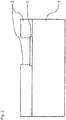
- Exemplary coated composite components are shown in the attached FIGS. 1 to 3 shown schematically.
- FIG. 1 schematically an embodiment of the invention is shown, wherein a composite component 1, here for example an uncured or cured carbon fiber reinforced plastic, is shown, on which a fluorine-containing film 2 is applied, which is covered by a tear-off fabric 3, wherein the tear-off fabric 3 here, for example, a complete page of the composite component 1, including the entire fluorine-containing film 2.
- a composite component here for example an uncured or cured carbon fiber reinforced plastic
- FIG. 1 An example of a coated composite component according to the invention FIG. 1 includes, for example, a carbon fiber reinforced plastic on which on one side a fluorine-containing film (eg Airtech WL5200 Airtech Advanced Material Group) is applied in disc form, on which in turn over the entire surface of the disc a tear-off fabric (Superlease Blue of Tygavac Advanced Materials) is applied ,
- a fluorine-containing film eg Airtech WL5200 Airtech Advanced Material Group
- a tear-off fabric Superlease Blue of Tygavac Advanced Materials
- FIG. 2 is a further development of the coated composite component Fig. 1 shown schematically, in which case not the entire fluorine-containing film 2 is covered with the tear-off fabric 3, but only the edges thereof, to a material to save, but also in the curing of the Rohverbundbauteils, so for example, an unhardened carbon fiber reinforced plastic, to avoid local drying.
- FIG. 3 schematically illustrated embodiment again builds on in FIG. 1 shown embodiment, wherein here on the fluorine-containing film 1, a sheet 4 is applied for stabilization.
- already connected components can in turn be coated in order to protect them again from contamination after the connection, for example when the connection is made in a low-contamination atmosphere such as a vacuum.
Landscapes
- Engineering & Computer Science (AREA)
- Mechanical Engineering (AREA)
- Textile Engineering (AREA)
- Laminated Bodies (AREA)
Abstract
Description
- Die vorliegende Erfindung betrifft ein beschichtetes Verbundbauteil umfassend ein Verbundbauteil, eine fluorhaltige Folie und/oder ein fluorhaltiges Gewebe, Gestrick oder Gewirk, und ein Abreißgewebe, sowie ein Verfahren zum Herstellen eines beschichteten Verbundbauteils umfassend ein Verbundbauteil, eine fluorhaltige Folie und/oder ein fluorhaltiges Gewebe, Gestrick oder Gewirk, und ein Abreißgewebe.
- Bei der Verbindung von Bauteilen, wie etwa beim Verkleben, Schweißen, etc., ist die Reinheit der zu verbindenden Oberflächen der Bauteile von Bedeutung für die Haftung der Bauteile untereinander. Um die Oberfläche der Bauteile vor dem Verbinden rein zu halten - etwa während einer Lagerung oder einem Transport - gibt es verschiedene Möglichkeiten, die Oberfläche der Bauteile mit einer Beschichtung zu versehen, welche vor dem Verbindungsvorgang entfernt werden kann.
- So kann beispielsweise ein Abreißgewebe auf das Bauteil aufgebracht werden, welches vor dem Verbinden wieder entfernt wird.
- Alternativ kann auch eine fluorhaltige Folie und/oder ein fluorhaltiges Gewebe, Gestrick oder Gewirk auf dem Bauteil aufgebracht werden, welche bzw. welches ebenfalls vor dem Verbinden entfernt werden kann. Die Verwendung von Folien, auch zur Strukturierung von Oberflächen, ist beispielsweise aus der
DE 102014005146 A1 bekannt - Es besteht ein Bedarf an Beschichtungen für Bauteile, welche sicher aufgebracht werden können, sicher auf dem Bauteil während einer Lagerung, einem Transport, etc. verbleiben und einfach von dem Bauteil vor der Weiterverwendung, etwa einem Verbinden mit einem weiteren Bauteil, entfernt werden können, und einem entsprechenden beschichteten Bauteil.
- Es ist somit eine Aufgabe der vorliegenden Erfindung, ein beschichtetes Bauteil bereitzustellen, welches durch die Beschichtung von Kontaminationen geschützt ist und bei der Weiterverarbeitung einfach von der Beschichtung befreit werden kann, sowie ein Verfahren bereitzustellen, mittels welchem ein solches Bauteil hergestellt werden kann.
- Erfindungsgemäß wird diese Aufgabe durch das beschichtete Verbundbauteil mit den Merkmalen des Patentanspruchs 1 sowie das Verfahren mit den Merkmalen des Patentanspruchs 7 gelöst.
- Die der vorliegenden Erfindung zugrunde liegende Idee besteht darin, dass durch ein Abreißgewebe eine fluorhaltige Folie und/oder ein fluorhaltiges Gewebe, Gestrick oder Gewirk auf einer festen Position des Verbundbauteils befestigt werden können und somit sich nicht leicht davon ablösen, jedoch eine weiterzuverarbeitende Stelle bzw. Oberfläche des Verbundbauteils, welche mit der fluorhaltigen Folie und/oder dem fluorhaltigen Gewebe, Gestrick oder Gewirk beschichtet ist, nicht mit dem Abreißgewebe in Kontakt kommt. Durch den Einsatz der fluorhaltigen Folie, beispielsweise einer Trennfolie, und/oder dem fluorhaltigen Gewebe, Gestrick oder Gewirk kann eine gute Oberfläche nach dem Trennen bereitgestellt werden, jedoch weisen die Folien bzw. Gewebe, Gestrick oder Gewirke üblicherweise eine geringere Haftung auf Verbundbauteilen auf, und können entsprechend schneller oder einfacher abgelöst werden, z.B. beim Transport, der Lagerung oder der Verarbeitung. Auch ist bei Verbundbauteilen, wie Laminaten, die nur mit solch einer leicht abtrennbaren Folie bzw. dem Gewebe, Gestrick oder Gewirk beschichtet sind, eine Prüfung der Beschichtungsqualität, z.B. durch Ultraschallprüfung, schwierig.
- Beim Abziehen des Abreißgewebes vom Verbundbauteil löst sich mit diesem die fluorhaltige Folie und/oder das fluorhaltige Gewebe, Gestrick oder Gewirk vom Verbundbauteil ab. Die Stelle mit der fluorhaltigen Folie und/oder dem fluorhaltigen Gewebe, Gestrick oder Gewirk kann im Anschluss dann einfach gereinigt werden, oder eine weitere Reinigung ist ggf. nicht mehr erforderlich, wenn das Verbundbauteil weiter verwendet wird, beispielsweise mit einem weiteren Bauteil verbunden wird, z.B. verklebt oder verschweißt. Im Gegensatz hierzu kann an den Stellen, an denen sich das Abreißgewebe befunden hat, eine Reinigung erschwert sein, insbesondere da ein Abreißgewebe üblicherweise eine höhere Menge an Trennmitteln aufweist, insbesondere auf Kohlenwasserstoffbasis und/oder Siliconbasis. In den Unteransprüchen finden sich vorteilhafte Ausgestaltungen und Verbesserungen der Erfindung.
- Die Ausgestaltungen und Weiterbildungen in den Patentansprüchen lassen sich, sofern sinnvoll, beliebig miteinander kombinieren. Weitere mögliche Ausgestaltungen, Weiterbildungen und Implementierungen der Erfindung umfassen auch nicht explizit genannte Kombinationen von zuvor oder im Folgenden bezüglich der Ausführungsbeispiele beschriebenen Merkmale der Erfindung. Insbesondere wird dabei der Fachmann auch Einzelaspekte als Verbesserungen oder Ergänzungen zu der jeweiligen Grundform der vorliegenden Erfindung hinzufügen.
- Die Erfindung wird im Folgenden anhand von Ausführungsbeispielen unter Bezugnahme auf die beiliegenden Figuren der Zeichnung näher erläutert.
- Von den Figuren zeigen:
- Fig. 1
- schematisch einen beispielhaften Aufbau eines erfindungsgemäßen beschichteten Verbundbauteils;
- Fig. 2
- schematisch einen weiteren beispielhaften Aufbau eines erfindungsgemäßen beschichteten Verbundbauteils; und
- Fig. 3
- schematisch noch einen weiteren beispielhaften Aufbau eines erfindungsgemäßen beschichteten Verbundbauteils;
- In den Figuren bezeichnen dieselben Bezugszeichen gleiche oder funktionsgleiche Komponenten, soweit nichts Gegenteiliges angegeben ist.
- Ein erfindungsgemäßes beschichtetes Verbundbauteil, umfassend, in dieser Reihenfolge, ein Verbundbauteil, eine fluorhaltige Folie und/oder ein fluorhaltiges Gewebe, Gestrick oder Gewirk, und ein Abreißgewebe bzw. Peel Ply, wobei die Fläche der fluorhaltigen Folie und/oder des fluorhaltigen Gewebes, Gestricks oder Gewirks kleiner ist als die Fläche des Abreißgewebes und kleiner als die Oberfläche des Verbundbauteils. Gemäß bestimmten Ausführungsformen ist hierbei die fluorhaltige Folie und/oder das fluorhaltige Gewebe, Gestrick oder Gewirk an mindestens 3 Rändern und bevorzugt an allen Rändern durch das Abreißgewebe auf dem Verbundbauteil angebracht bzw. fixiert. Hierbei kann das Abreißgewebe die gesamte Fläche der fluorhaltigen Folie und/oder des fluorhaltigen Gewebes, Gestricks oder Gewirks bedecken. Durch eine Fixierung an allen Rändern kann sichergestellt werden, dass keine Stelle verbleibt, an der sich die fluorhaltige Folie und/oder das fluorhaltige Gewebe, Gestrick oder Gewirk teilweise vom Verbundbauteil ablöst, so dass Kontaminationen eindringen könnten.
- Das Verbundbauteil ist erfindungsgemäß nicht besonders beschränkt, umfasst insbesondere jedoch solche, bei denen bei der weiteren Verarbeitung eine hochreine Oberfläche von Bedeutung ist, beispielweise bei einem anschließenden Verbinden mit weiteren Bauteilen, wie beispielsweise einen Verkleben oder Verschweißen, beispielsweise in der Luftfahrt- oder Fahrzeugindustrie. Beispiele von Verbundbauteilen umfassen solche, die harz- und/oder plastikbasiert sind, wobei in diesen Fasern, z.B. Glasfasern, Carbonfasern, Aramidfasern, etc., eingearbeitet sein können oder nicht, beispielsweise Kohlenstofffasern. Hierbei können die Verbundbauteile sowohl ungehärtet, sozusagen als Rohverbundbauteil, wie auch gehärtet als Verbundbauteil vorliegen. Das erfindungsgemäße Verbundbauteil umfasst somit auch Verbundbauteile, die ggf. noch zu härten sind. Ein Beispiele für Verbundbauteile sind carbonfaserverstärkte Kunststoffe, wobei hier die Carbonfasern und die Kunststoffe nicht besonders beschränkt sind, und diese können beispielsweise durch entsprechende Infusionsprozesse oder Prepreg-Prozesse - z.B. durch Heißpressen oder im Autoklaven - hergestellt werden. Beispiele für geeignete Harze für die Herstellung der Kunststoffe umfassen beispielsweise Epoxide oder Vinylester, z.B. Epoxide, welche bei Temperaturen um 180°C gehärtet werden. Gemäß bestimmten Ausführungsformen ist das Verbundbauteil ein carbonfaserverstärkter Kunststoff.
- Darüber hinaus ist auch das Abreißgewebe nicht besonders beschränkt. Insbesondere ist das Abreißgewebe jedoch hochtemperaturstabil, so dass es auch Temperaturen von 120°C oder mehr, bevorzugt 150°C oder mehr, weiter bevorzugt 180°C oder mehr standhält, etwa beim Aushärten eines Rohverbundbauteils umfassend ein Polymerharz, z.B. ein Epoxidharz, wie es beispielsweise bei carbonfaserverstärkten Kunststoffen verwendet wird. Das Abreißgewebe ist hierbei gemäß bestimmten Ausführungsformen nicht beschichtet und weist insbesondere keine fluorbasierten Schichten auf, welche die Anhaftung verschlechtern. Gemäß bestimmten Ausführungsformen umfasst das Abreißgewebe Trennmittel, die auf Silicon oder Kohlenwasserstoff basiert sind, um eine adäquate Enthaftung des Abreißgewebes vom Verbundbauteil zu gewährleisten. Geeignete Abreißgewebe umfassen z.B. solche von Tygavac Advanced Materials wie Superrelease Blue oder solche umfassend Super Release Blue der Firma Precision Fabrics Group.
- Gemäß bestimmten Ausführungsformen bedeckt das Abreißgewebe nicht die gesamte Fläche der fluorhaltigen Folie und/oder des fluorhaltigen Gewebes, Gestricks oder Gewirks. Dies hat insbesondere den Vorteil - neben einer Materialersparnis - dass ein lokales Trocknen eines Rohverbundbauteils, wie etwa eines Prepregs, während der Härtung des beschichteten Rohverbundbauteils an Stellen mit Beschichtungen einer fluorhaltigen Folie und/oder eines fluorhaltigen Gewebe, Gestricks oder Gewirks vermindert oder verhindert werden kann. Zu diesem Zweck kann die fluorhaltige Folie und/oder das fluorhaltige Gewebe, Gestrick oder Gewirk zusätzlich oder alternativ gemäß bestimmten Ausführungsformen Löcher oder Poren aufweisen, wobei diese bevorzugt jedoch eine Größe aufweisen, die eine Kontamination verhindert, also etwa im Nanometer- bis unteren Mikrometerbereich. Hierbei ist dann auch eine Beschichtung der Folie und/oder des Gewebes, Gestricks oder Gewirks mit dem Abreißgewebe gemäß bestimmten Ausführungsformen zur Verhinderung einer Kontamination vorteilhaft. Das Einbringen von Löchern in die Folie und/oder das Gewebe, Gestrick oder Gewirk und/oder Öffnungen in das Abreißgewebe an den mit Folie und/oder Gewebe, Gestrick oder Gewirk beschichteten Stellen kann hierbei auch entsprechend den Materialien der Folie und/oder des Gewebes, Gestricks oder Gewirks bzw. des Abreißgewebes erfolgen.
- Ebenso ist die fluorhaltige Folie und/oder das fluorhaltige Gewebe, Gestrick oder Gewirk nicht besonders beschränkt. Insbesondere ist jedoch auch die fluorhaltige Folie und/oder das fluorhaltige Gewebe, Gestrick oder Gewirk jedoch hochtemperaturstabil, so dass es auch Temperaturen von 120°C oder mehr, bevorzugt 150°C oder mehr, weiter bevorzugt 180°C oder mehr standhält, etwa beim Aushärten eines Rohverbundbauteils umfassend ein Polymerharz, z.B. ein Epoxidharz, wie es beispielsweise bei carbonfaserverstärkten Kunststoffen verwendet wird. Fluorhaltige Folien können beispielsweise unter Verwendung von fluorkohlenwasserstoffbasierten Verbindungen hergestellt werden, und fluorhaltige Gewebe, Gestricke oder Gewirke durch Verwendung von fluorhaltigen Fasern, welche aus solchen Verbindungen hergestellt werden können, wobei auch hier die Verbindungen nicht besonders beschränkt sind. Auch ist nicht ausgeschlossen, dass die Folien und/oder Gewebe, Gestricke oder Gewirke weitere Lagen umfassen, die nicht auf fluorhaltigen Materialien basiert sind, jedoch ist dann sicherzustellen, dass eine Oberfläche der Folie bzw. des Gewebes, Gestrickes oder Gewirkes, die mit dem Verbundbauteil in Kontakt kommt, fluorbasierte Materialien umfasst und insbesondere aus diesen besteht. Gemäß bestimmten Ausführungsformen ist die Folie und/oder das Gewebe, Gestrick oder Gewirk fluorhaltig und umfasst nur fluorbasierte Materialien. Beispiele für geeignete Folien umfassen Airtech WL5200 und Richmond A6100.
- Durch die fluorhaltigen Materialen an der Beschichtungsstelle mit dem Verbundbauteil kann sichergestellt werden, dass keine Hilfsstoffe aus den Abreißgeweben, wie etwa Trennmittelrückstände, auf diesen Beschichtungsstellen verbleiben, die bei einer weiteren Verarbeitung, wie einer Verklebung bzw. einem Verschweißen, zu einer Degradation hiervon führen können. Trennmittelrückstände bzw. im Allgemeinen Hilfsstoffrückstände aus Abreißgeweben können aus Abweichungen in der Zusammensetzung von Hilfsstoffen oder Prozessabweichungen herrühren, was zu Schwankungen bei der Weiterverarbeitung, wie etwa einem Kleben oder Schweißen, führen kann.
- Auch sind die Abmessungen der fluorhaltigem Folie und/oder des fluorhaltigen Gewebes, Gestricks oder Gewirks erfindungsgemäß nicht besonders beschränkt. Bevorzugt ist die Folie und/oder das Gewebe, Gestrick oder Gewirk nicht so dick, dass Spannungen beim Aufbringen des Abreißgewebes auftreten. Bevorzugt ist die Verwendung von fluorhaltigen Folien, da diese leichter aufgebracht werden können und auch billiger sind.
- Es ist erfindungsgemäß darüber nicht ausgeschlossen, dass mehr als eine fluorhaltige Folie und/oder ein fluorhaltiges Gewebe, Gestrick oder Gewirk auf dem Verbundbauteil aufgebracht sind - beispielsweise an verschiedenen Stellen, wobei hier zumindest eine fluorhaltige Folie und/oder ein fluorhaltiges Gewebe, Gestrick oder Gewirk durch das Abreißgewebe am Verbundbauteil befestigt ist, bevorzugt jedoch alle. Auch können eine Oberfläche oder mehrere Oberflächen, gemäß bestimmten Ausführungsformen auch die gesamte Oberfläche, des Verbundbauteils mit dem Abreißgewebe beschichtet sein, wobei sich zumindest an einer Stelle eine fluorhaltige Folie und/oder ein fluorhaltiges Gewebe, Gestrick oder Gewirk zwischen dem Verbundbauteil und dem Abreißgewebe befindet. Wenn mehrere Stellen des Verbundbauteils mit mehr als einer fluorhaltigen Folie und/oder einem fluorhaltigen Gewebe, Gestrick oder Gewirk beschichtet sind, können diese gemäß bestimmten Ausführungsformen bei der Weiterverarbeitung auch zu unterschiedlichen oder zum selben Zeitpunkt abgetrennt werden, so dass eine Flexibilität bei der Weiterverarbeitung erzielt werden kann.
- Gemäß bestimmten Ausführungsformen befindet sich die fluorhaltige Folie und/oder das fluorhaltige Gewebe, Gestrick oder Gewirk an einer Stelle, an der das Verbundbauteil mit einem weiteren Bauteil verbunden werden soll. An solchen Stellen ist eine konstante Oberflächenqualität von Bedeutung, welche durch die Verwendung der fluorhaltigen Folie und/oder des fluorhaltigen Gewebes, Gestricks oder Gewirks erzielt werden kann, wobei etwaige Rückstände dieser Folien und/oder Gewebe, Gestricke oder Gewirke einfach abgereinigt werden können, z.B. durch Plasmabehandlung, beispielsweise mittels Atmosphärendruckplasma oder Niederdruckplasma. Diese Stellen sind dann gemäß bestimmten Ausführungsformen einfach inspizierbar, insbesondere bei glatten Oberflächen, z.B. durch Aerosolwetting, wobei ein definiertes Wasser-Aerosol aufgetragen wird.. Auch kann die Oberfläche nach dem Abtrennen der fluorhaltigen Folie und/oder des fluorhaltigen Gewebes, Gestricks oder Gewirks auf Verbleiben von Fluor-Tracern untersucht werden und somit die Oberfläche untersucht werden.
- Gemäß bestimmten Ausführungsformen ist die fluorhaltige Folie und/oder das fluorhaltige Gewebe, Gestrick oder Gewirk zumindest teilweise, insbesondere vollständig, mit einem Blech bedeckt. Hierdurch kann der Folie und/oder dem Gewebe, Gestrick oder Gewirk eine zusätzliche Festigkeit und Stabilität verliehen werden, was die Fixierung beim anschließenden Aufbringen des Abreißgewebes erleichtern kann und auch sicherstellen kann, dass die Folie und/oder das Gewebe, Gestrick oder Gewirk nicht verrutscht. Auch kann hierdurch eine ebene Oberfläche erzeugt werden. Das Blech ist hierbei nicht besonders beschränkt, umfasst gemäß bestimmten Ausführungsformen jedoch ein Metall wie Al und/oder eine Legierung oder besteht daraus. Bei Verwendung von löchrigen oder porösen fluorhaltigen Folien und/oder fluorhaltigen Geweben, Gestricken oder Gewirken kann auch das Blech porös sein oder Löcher aufweisen, die beispielsweise entsprechend ausgerichtet sind. Die Dicke des Blechs ist hierbei bevorzugt so, dass beim Aufbringen des Abreißgewebes keine Spannungen auftreten, z.B. 0,5 bis 50 mm, bevorzugt 1 bis 20 mm, weiter bevorzugt 2-10 mm. Das Blech kann hierbei bereits vor dem Aufbringen der fluorhaltigen Folie und/oder des fluorhaltigen Gewebes, Gestricks oder Gewirks darauf aufgebracht sein, oder nach Aufbringen derselben bzw. desselben darauf beschichtet werden.
- Gemäß einem weiteren Aspekt betrifft die vorliegende Erfindung ein Verfahren zum Herstellen eines beschichteten Verbundbauteils, insbesondere des erfindungsgemäßen beschichteten Verbindungsbauteils, umfassend
- i) Bereitstellen eines Rohverbundbauteils;
- ii) Aufbringen einer fluorhaltige Folie und/oder ein fluorhaltigen Gewebes, Gestricks oder Gewirk;, und
- iii) Aufbringen eines Abreißgewebes;
- Das Rohverbundbauteil kann hierbei, wie bereits oben erläutert, ein Prepreg sein, der noch auszuhärten ist, aber es kann auch ein bereits gefertigtes Verbundbauteil sein, auf das die Beschichtungen aufzubringen sind. Ein Prepreg kann hierbei beispielsweise eine aushärtbare Flüssigkeit wie ein Harz, z.B. ein Epoxidharz, oder einen aushärtbaren Schaum, und Fasern, z.B. Carbonfasern, umfassen.
- Gemäß bestimmten Ausführungsformen ist das Rohverbundbauteil ein ungehärtetes Rohverbundbauteil, insbesondere ein ungehärteter carbonfaserverstärkter Kunststoff. In einem solchen Fall kann sich an das Beschichten ein Schritt iv) des Härtens des beschichteten Rohverbundbauteils nach dem Aufbringen des Abreißgewebes anschließen, wobei nicht ausgeschlossen ist, dass sich daran weitere Schritte anschließen..
- Gemäß bestimmten Ausführungsformen wird die fluorhaltige Folie und/oder das fluorhaltige Gewebe, Gestrick oder Gewirk an eine Stelle aufgebracht, an der das Verbundbauteil mit einem weiteren Bauteil verbunden werden soll. Hierbei können durch die Form der Folie und/oder des Gewebes, Gestricks oder Gewirks verschiedenste Verbindungsgeometrien verwirklicht werden, die in ihrer Form, beispielsweise als Vollkörper oder Hohlkörper, nicht beschränkt sind.
- Gemäß bestimmten Ausführungsformen wird beim Aufbringen des Abreißgewebes nicht die gesamte Fläche der fluorhaltigen Folie und/oder des fluorhaltigen Gewebes, Gestricks oder Gewirks bedeckt. Gemäß bestimmten Ausführungsformen werden jedoch mit dem Abreißgewebe zumindest alle Ränder der fluorhaltigen Folie und/oder des fluorhaltigen Gewebes, Gestricks oder Gewirks bedeckt, um eine ausreichende Fixierung davon auf dem Rohverbundbauteil zu gewährleisten. Auch kann die gesamte fluorhaltige Folie und/oder das gesamte fluorhaltige Gewebe, Gestrick oder Gewirk mit dem Abreißgewebe bedeckt werden, oder auch das gesamte Rohverbundbauteil.
- Gemäß bestimmten Ausführungsformen kann die fluorhaltige Folie und/oder das fluorhaltige Gewebe, Gestrick oder Gewirk porös sein oder Löcher aufweisen. Zusätzlich oder alternativ kann auch das Abreißgewebe Öffnungen an den Stellen aufweisen, an denen die fluorhaltige Folie und/oder das fluorhaltige Gewebe, Gestrick oder Gewirk aufgetragen ist, wobei sicherzustellen ist, das hierbei die Ränder davon mit dem Abreißgewebe bedeckt sind.
- Gemäß bestimmten Ausführungsformen ist oder wird die fluorhaltige Folie und/oder das fluorhaltige Gewebe, Gestrick oder Gewirk zumindest teilweise mit einem Blech bedeckt.
- Beispielhafte beschichtete Verbundbauteile sind in den beigefügten
Figuren 1 bis 3 schematisch dargestellt. - In
Figur 1 ist schematisch eine erfindungsgemäße Ausführungsform gezeigt, wobei ein Verbundbauteil 1, hier beispielsweise ein ungehärteter oder gehärteter carbonfaserverstärkter Kunststoff, gezeigt ist, auf das eine fluorhaltige Folie 2 aufgebracht ist, die von einem Abreißgewebe 3 bedeckt ist, wobei das Abreißgewebe 3 hier beispielsweise eine komplette Seite des Verbundbauteils 1 bedeckt, inklusive der gesamten fluorhaltigen Folie 2. Natürlich sind, wie oben beschrieben, auch Bedeckungen auf mehreren Seiten möglich, wie auch fluorhaltige Folien auf mehreren Seiten. - Ein Beispiel eines erfindungsgemäßen beschichteten Verbundbauteils gemäß
Figur 1 umfasst beispielsweise ein carbonfaserverstärkter Kunststoff, auf welchem auf einer Seite eine fluorhaltige Folie (z.B. Airtech WL5200 der Airtech Advanced Material Group) in Scheibenform aufgebracht ist, auf welche wiederum über die gesamte Fläche der Scheibe ein Abreißgewebe (Superlease Blue von Tygavac Advanced Materials) aufgebracht ist. - In
Figur 2 ist eine Weiterentwicklung des beschichteten Verbundbauteils ausFig. 1 schematisch gezeigt, wobei hier nicht die gesamte fluorhaltige Folie 2 mit dem Abreißgewebe 3 bedeckt ist, sondern nur die Ränder davon, um zum einen Material zu sparen, aber auch bei der Härtung des Rohverbundbauteils, also beispielsweise eine ungehärteten carbonfaserverstärkten Kunststoffs, ein lokales Trocknen zu vermeiden. - Die in
Figur 3 schematisch dargestellte Ausführungsform baut wiederum auf der inFigur 1 gezeigten Ausführungsform auf, wobei hier auf die fluorhaltige Folie 1 ein Blech 4 zur Stabilisierung aufgebracht ist. - Obwohl die vorliegende Erfindung anhand bevorzugter Ausführungsbeispiele vorliegend beschrieben wurde, ist sie darauf nicht beschränkt, sondern auf vielfältige Weise modifizierbar.
- Beispielsweise können auch bereits verbundene Bauteile wiederum beschichtet werden, um diese nach dem Verbinden wieder vor Kontamination zu schützen, beispielsweise wenn die Verbindung in einer kontaminationsarmen Atmosphäre wie einem Vakuum erfolgt ist.
-
- 1
- Verbundbauteil
- 2
- fluorhaltige Folie
- 3
- Abreißgewebe
- 4
- Blech
Claims (12)
- Beschichtetes Verbundbauteil, umfassend, in dieser Reihenfolge,
ein Verbundbauteil (1);
eine fluorhaltige Folie (2) und/oder ein fluorhaltiges Gewebe, Gestrick oder Gewirk; und
ein Abreißgewebe (3);
wobei die Fläche der fluorhaltigen Folie (2) und/oder des fluorhaltigen Gewebes, Gestricks oder Gewirks kleiner als die Fläche des Abreißgewebes (3) und kleiner als die Oberfläche des Verbundbauteils (1) ist. - Beschichtetes Verbundbauteil nach Anspruch 1,
dadurch gekennzeichnet,
dass sich die fluorhaltige Folie (2) und/oder das fluorhaltige Gewebe, Gestrick oder Gewirk an einer Stelle befindet, an welcher das Verbundbauteil (1) mit einem weiteren Bauteil verbindbar ist. - Beschichtetes Verbundbauteil nach Anspruch 1 oder 2,
dadurch gekennzeichnet,
dass das Verbundbauteil (1) ein carbonfaserverstärkter Kunststoff ist. - Beschichtetes Verbundbauteil nach wenigstens einem der vorhergehenden Ansprüche,
dadurch gekennzeichnet,
dass das Abreißgewebe (3) teilweise die Fläche der fluorhaltigen Folie (2) und/oder des fluorhaltigen Gewebes, Gestricks oder Gewirks bedeckt. - Beschichtetes Verbundbauteil nach wenigstens einem der vorhergehenden Ansprüche,
dadurch gekennzeichnet,
dass die fluorhaltige Folie (2) und/oder das fluorhaltige Gewebe, Gestrick oder Gewirk porös ist oder Löcher aufweist. - Beschichtetes Verbundbauteil nach wenigstens einem der vorhergehenden Ansprüche,
dadurch gekennzeichnet,
dass die fluorhaltige Folie (2) und/oder das fluorhaltige Gewebe, Gestrick oder Gewirk zumindest teilweise mit einem Blech (4) bedeckt ist. - Verfahren zum Herstellen eines beschichteten Verbundbauteils, mit folgenden Verfahrensschritten:i) Bereitstellen eines Rohverbundbauteils;ii) Aufbringen einer fluorhaltige Folie (2) und/oder ein fluorhaltigen Gewebes, Gestricks oder Gewirk;, undiii) Aufbringen eines Abreißgewebes (3);wobei die Fläche der fluorhaltigen Folie (2) und/oder des fluorhaltigen Gewebes, Gestricks oder Gewirks kleiner als die Fläche des Abreißgewebes (3) und kleiner als die Oberfläche des Rohverbundbauteils ist.
- Verfahren nach Anspruch 7,
dadurch gekennzeichnet,
dass das Rohverbundbauteil ein ungehärteter carbonfaserverstärkter Kunststoff ist und das Verfahren den weiteren Schritt iv) des Aushärtens des beschichteten Rohverbundbauteils nach dem Aufbringen des Abreißgewebes (3) aufweist. - Verfahren nach Anspruch 7 oder 8,
dadurch gekennzeichnet,
dass sich die fluorhaltige Folie (2) und/oder das fluorhaltige Gewebe, Gestrick oder Gewirk an einer Stelle befindet, an welcher das Rohverbundbauteil mit einem weiteren Bauteil verbindbar ist. - Verfahren nach einem der Ansprüche 7 bis 9,
dadurch gekennzeichnet,
dass beim Aufbringen des Abreißgewebes (3) teilweise die Fläche der fluorhaltigen Folie (2) und/oder des fluorhaltigen Gewebes, Gestricks oder Gewirks bedeckt wird. - Verfahren nach einem der Ansprüche 7 bis 10,
dadurch gekennzeichnet,
dass die fluorhaltige Folie (2) und/oder das fluorhaltige Gewebe, Gestrick oder Gewirk porös ist oder Löcher aufweist. - Verfahren nach einem der Ansprüche 7 bis 10,
dadurch gekennzeichnet,
dass die fluorhaltige Folie (2) und/oder das fluorhaltige Gewebe, Gestrick oder Gewirk zumindest teilweise mit einem Blech (4) bedeckt ist oder bedeckt wird.
Applications Claiming Priority (1)
| Application Number | Priority Date | Filing Date | Title |
|---|---|---|---|
| DE102015225467.4A DE102015225467B4 (de) | 2015-12-16 | 2015-12-16 | Beschichtetes Verbundbauteil und Verfahren zum Herstellen eines beschichteten Verbundbauteils |
Publications (2)
| Publication Number | Publication Date |
|---|---|
| EP3184299A1 true EP3184299A1 (de) | 2017-06-28 |
| EP3184299B1 EP3184299B1 (de) | 2019-11-06 |
Family
ID=57944234
Family Applications (1)
| Application Number | Title | Priority Date | Filing Date |
|---|---|---|---|
| EP16203992.9A Active EP3184299B1 (de) | 2015-12-16 | 2016-12-14 | Beschichtetes verbundbauteil |
Country Status (3)
| Country | Link |
|---|---|
| US (1) | US10343373B2 (de) |
| EP (1) | EP3184299B1 (de) |
| DE (1) | DE102015225467B4 (de) |
Citations (3)
| Publication number | Priority date | Publication date | Assignee | Title |
|---|---|---|---|---|
| US4942013A (en) * | 1989-03-27 | 1990-07-17 | Mcdonnell Douglas Corporation | Vacuum resin impregnation process |
| US20130280488A1 (en) * | 2012-04-23 | 2013-10-24 | Brian D. Flinn | Bond ply for adhesive bonding of composites and associated systems and methods |
| DE102014005146A1 (de) | 2014-04-05 | 2015-10-08 | Airbus Defence and Space GmbH | Verfahren zum Bereitstellen von Abstandshaltern |
Family Cites Families (91)
| Publication number | Priority date | Publication date | Assignee | Title |
|---|---|---|---|---|
| US3311520A (en) * | 1965-10-18 | 1967-03-28 | Nat Plastic Products Company I | Method of forming textured laminate surface |
| US3666600A (en) * | 1969-03-10 | 1972-05-30 | North American Rockwell | Apparatus for forming layup laminate |
| US4139591A (en) * | 1973-02-16 | 1979-02-13 | Jurisich Peter L | Reinforced plastic molding material |
| US3996089A (en) * | 1975-04-30 | 1976-12-07 | United Technologies Corporation | Method for the handling of pre-impregnated composite tapes |
| US4353855A (en) * | 1978-07-31 | 1982-10-12 | Armen Garabedian | Process for making a stress-free plastic article |
| US4362588A (en) * | 1980-07-17 | 1982-12-07 | The United States Of America As Represented By The Secretary Of The Army | Method of fabricating a ducted blanket for a rotor spar |
| GB2087784A (en) * | 1980-11-18 | 1982-06-03 | Redifon Simulation Ltd | Moulding optically smooth articles having large surface areas |
| DE3119884C1 (de) * | 1981-05-19 | 1982-11-04 | Fritz Wittig Herstellung gedruckter Schaltungen, 8000 München | Verfahren zur Herstellung von starre und flexible Bereiche aufweisenden Leiterplatten |
| IL73386A0 (en) * | 1984-01-09 | 1985-01-31 | Stauffer Chemical Co | Transfer laminate and method of forming an electrical circuit pattern therewith |
| US4548859A (en) * | 1984-10-12 | 1985-10-22 | The Boeing Company | Breather material and method of coating fabric with silicone rubber |
| US4822436A (en) * | 1986-03-07 | 1989-04-18 | Northrop Corporation | Apparatus for debulking and autoclaving laminates of complex shapes |
| GB2209994A (en) * | 1987-09-18 | 1989-06-01 | Daimatsu Kagaku Kogyo Kk | Peelable laminates |
| US4783362A (en) * | 1987-09-30 | 1988-11-08 | Stern & Stern Industries, Inc. | Peel ply material |
| US4869770A (en) * | 1987-12-03 | 1989-09-26 | The Boeing Company | Method and apparatus for laminating composite materials |
| US4902215A (en) * | 1988-06-08 | 1990-02-20 | Seemann Iii William H | Plastic transfer molding techniques for the production of fiber reinforced plastic structures |
| US5052906A (en) * | 1989-03-30 | 1991-10-01 | Seemann Composite Systems, Inc. | Plastic transfer molding apparatus for the production of fiber reinforced plastic structures |
| DE4003344C1 (de) * | 1990-02-05 | 1991-06-13 | Fa. Carl Freudenberg, 6940 Weinheim, De | |
| US5129813A (en) * | 1991-02-11 | 1992-07-14 | Shepherd G Maury | Embossed vacuum bag, methods for producing and using said bag |
| GB2259883A (en) * | 1991-09-28 | 1993-03-31 | Rover Group | Moulding against a shape or surface imparting film liner |
| US5281388A (en) * | 1992-03-20 | 1994-01-25 | Mcdonnell Douglas Corporation | Resin impregnation process for producing a resin-fiber composite |
| JPH0631744A (ja) * | 1992-07-16 | 1994-02-08 | Japan Gore Tex Inc | 通気性離型材 |
| US5958325A (en) * | 1995-06-07 | 1999-09-28 | Tpi Technology, Inc. | Large composite structures and a method for production of large composite structures incorporating a resin distribution network |
| US5832594A (en) * | 1996-05-31 | 1998-11-10 | The Boeing Company | Tooling for inserting Z-pins |
| US5807593A (en) * | 1996-07-10 | 1998-09-15 | The Boeing Company | Vacuum bag not requiring disposable breathers |
| NL1006566C2 (nl) * | 1997-07-11 | 1999-02-15 | Fokker Special Products | Werkwijze voor het vervaardigen van een kunststof laminaat. |
| US5968445A (en) * | 1998-01-05 | 1999-10-19 | The Boeing Company | Method and apparatus for curing large composite panels |
| US6645610B1 (en) * | 1998-04-20 | 2003-11-11 | Northrop Grumann | Cured composite material formed utilizing Z-peel sheets |
| EP1125728B1 (de) * | 1999-03-23 | 2011-10-05 | Toray Industries, Inc. | Basismaterial aus faserverstärktem verbundwerkstoff, dessen herstellungsprozess sowie daraus hergestellte vorformen |
| US6391220B1 (en) * | 1999-08-18 | 2002-05-21 | Fujitsu Limited, Inc. | Methods for fabricating flexible circuit structures |
| US6620369B1 (en) * | 2000-02-09 | 2003-09-16 | Northrop Grumman Corporation | Net molding of resin composite parts |
| DE10013409C1 (de) * | 2000-03-17 | 2000-11-23 | Daimler Chrysler Ag | Verfahren und Vorrichtung zur Herstellung von faserverstärkten Bauteilen mittels eines Injektionsverfahrens |
| FR2808472B1 (fr) * | 2000-05-05 | 2003-02-28 | Aerospatiale Matra Airbus | Procede de fabrication d'un panneau en materiau composite a bandes raidisseurs et panneau ainsi obtenu |
| US6692595B2 (en) * | 2000-12-13 | 2004-02-17 | Donald G. Wheatley | Carbon fiber reinforcement system |
| US6630095B2 (en) * | 2001-08-01 | 2003-10-07 | Lockheed Martin Corporation | Method for making composite structures |
| US20040053055A1 (en) * | 2002-07-03 | 2004-03-18 | Robinson John W. | Rubber toughened epoxy resins for resin infusion processing, methods of using the resins and articles made therefrom |
| EP1378338A1 (de) * | 2002-07-03 | 2004-01-07 | Ke-Burgmann A/S | Verfahren und Vorrichtung zur Herstellung von Verbundkörpern in einer geschlossenen Form mit einer Innenfolie und dabei verwendete Innenfolie |
| JP4443962B2 (ja) * | 2004-03-17 | 2010-03-31 | 日東電工株式会社 | ダイシング・ダイボンドフィルム |
| NL1025960C2 (nl) * | 2004-04-16 | 2005-10-18 | Spectralyte Res & Dev B V | Werkwijze en inrichting voor vervaardigen van een voortbrengsel uit composiet materiaal. |
| US7871682B2 (en) * | 2004-09-23 | 2011-01-18 | The United States Of America As Represented By The Administrator Of The National Aeronautics And Space Administration | Support assembly for composite laminate materials during roll press processing |
| DK176564B1 (da) * | 2004-12-29 | 2008-09-01 | Lm Glasfiber As | Fiberforstærket samling |
| US20060182949A1 (en) * | 2005-02-17 | 2006-08-17 | 3M Innovative Properties Company | Surfacing and/or joining method |
| EP1754589B1 (de) * | 2005-08-17 | 2015-10-14 | General Electric Company | Verwendung von kontinuierlichen Laminaten, insbesondere geeignet als Umschlag eines Holmes oder als anderer Teil eines Windturbinenflügels |
| WO2007048145A2 (en) * | 2005-10-21 | 2007-04-26 | Entrotech, Inc. | Protective sheets, articles, and methods |
| US8715560B2 (en) * | 2005-11-10 | 2014-05-06 | The Boeing Company | Method to control thickness in composite parts cured on closed angle tool |
| US8043453B2 (en) * | 2005-12-23 | 2011-10-25 | The Boeing Company | System and method for reworking composites |
| FR2905891B1 (fr) * | 2006-09-15 | 2008-12-05 | Airbus France Sa | Procede de fabrication d'un panneau en materiau composite thermoplastique |
| US7993479B2 (en) * | 2006-09-27 | 2011-08-09 | Airbus Deutschland Gmbh | Method for joining precured or cured stringers to at least one structural component of an aircraft or spacecraft |
| WO2008090911A1 (ja) * | 2007-01-26 | 2008-07-31 | Toray Industries, Inc. | 繊維強化樹脂ビーム成形用プリフォーム、その製造方法、その製造装置、および、繊維強化樹脂ビームの製造方法 |
| JP4908266B2 (ja) * | 2007-03-05 | 2012-04-04 | 株式会社ジャムコ | 段階状の断面厚さを有する複合材の連続成形方法 |
| GB2447964B (en) * | 2007-03-29 | 2012-07-18 | Gurit Uk Ltd | Moulding material |
| ITTO20070294A1 (it) * | 2007-05-03 | 2008-11-04 | Alenia Aeronautica Spa | Procedimento di fabbricazione di un pezzo in materiale composito con sezione a z |
| US8016970B2 (en) * | 2007-08-02 | 2011-09-13 | The Boeing Company | Method for applying a pre-cured composite strip to a composite component to minimize inconsistencies appearing on a surface of the composite component |
| FR2921295A1 (fr) * | 2007-09-24 | 2009-03-27 | Airbus France Sas | Dispositif pour la fabrication d'une piece en materiau composite integrant un systeme de drainage |
| GB0719269D0 (en) * | 2007-10-04 | 2007-11-14 | Airbus Uk Ltd | Method of moulding a charge |
| DE102008006261B3 (de) * | 2008-01-25 | 2009-01-08 | Eads Deutschland Gmbh | Mehrlagiges, flexibles Flächenmaterial |
| US9114576B2 (en) * | 2008-01-28 | 2015-08-25 | North Carolina Agricultural And Technical State University | Heat vacuum assisted resin transfer molding processes for manufacturing composite materials |
| ITTO20080232A1 (it) * | 2008-03-27 | 2009-09-28 | Alenia Aeronautica Spa | Procedimento di fabbricazione di un elemento strutturale allungato in materiale composito tramite formatura e cura in autoclave con sacco a vuoto |
| US20090273111A1 (en) * | 2008-04-30 | 2009-11-05 | Bha Group, Inc. | Method of making a wind turbine rotor blade |
| DE102009039534A1 (de) * | 2009-07-23 | 2011-02-03 | Hydroflex Technologies Gmbh | Composite-Körper |
| US20120312469A1 (en) * | 2010-03-03 | 2012-12-13 | Siemens Aktiengesellschaft | Method and mould for moulding a wind turbine blade |
| DK2388131T3 (en) * | 2010-05-20 | 2016-12-19 | Siemens Ag | A method for forming a wind turbine blade using a release film and the film |
| US9682514B2 (en) * | 2010-06-25 | 2017-06-20 | The Boeing Company | Method of manufacturing resin infused composite parts using a perforated caul sheet |
| FR2962681B1 (fr) * | 2010-07-16 | 2014-05-02 | Aerolia | Procede d'arrachage d'un tissu d'arrachage |
| DE102010035493A1 (de) * | 2010-08-26 | 2012-03-01 | Airbus Operations Gmbh | Verfahren sowie Herstellvorrichtung zur Herstellung eines Faserverbund-Sandwichbauteils |
| US8342017B1 (en) * | 2010-10-20 | 2013-01-01 | The Boeing Company | Methods for fabricating fiber-reinforced plastic test specimen assemblies having weak adhesive bonds |
| US9701067B2 (en) * | 2010-11-12 | 2017-07-11 | The Boeing Company | Method of laying up prepreg plies on contoured tools using a deformable carrier film |
| US8551380B2 (en) * | 2010-11-12 | 2013-10-08 | The Boeing Company | Method of laying up prepreg plies on contoured tools using a deformable carrier film |
| JP5611365B2 (ja) * | 2010-11-19 | 2014-10-22 | 三菱電機株式会社 | 繊維強化プラスチック成形体の製造方法、プリフォームおよびその製造方法、ならびに、接着フィルム |
| ES2400877B1 (es) * | 2010-11-23 | 2014-02-21 | Airbus Operations, S.L. | Un material pelable para ser usado en una máquina encintadora automática. |
| WO2012103504A2 (en) * | 2011-01-28 | 2012-08-02 | Smarter Planet Llc | Hybrid thermoplastic composite components and products |
| FR2971449B1 (fr) * | 2011-02-14 | 2013-02-08 | Diatex | Complexe multicouche et son utilisation pour la fabrication de pieces en materiau composite, procede de fabrication d'une telle piece |
| CN102501393A (zh) * | 2011-11-10 | 2012-06-20 | 洛阳双瑞风电叶片有限公司 | 一种控制复合材料表面粗糙度的复合材料成型方法 |
| US20130143006A1 (en) * | 2011-12-02 | 2013-06-06 | The Boeing Company | Reducing Porosity in Composite Structures |
| DE102011056703A1 (de) * | 2011-12-20 | 2013-06-20 | Benteler Automobiltechnik Gmbh | Verfahren zum Herstellen eines Faserverbundwerkstoffbauteils sowie Imprägniervorrichtung zur Durchführung des Verfahrens |
| BRPI1105343B1 (pt) * | 2011-12-28 | 2020-01-14 | Embraer Sa | método para união de componentes através de adesão mecânica e junta de adesão mecânica para união de componentes |
| KR101972314B1 (ko) * | 2011-12-30 | 2019-04-25 | 사이텍 테크놀러지 코포레이션 | 필 플라이와, 이를 이용한 표면 제조방법 및 복합 구조체의 접합 방법 |
| US9126355B2 (en) * | 2012-05-02 | 2015-09-08 | Spirit Aerosystems, Inc. | Composite material part manufacturing process using removable and retainable material |
| EP2662204A1 (de) * | 2012-05-07 | 2013-11-13 | Nordex Energy GmbH | Verfahren, vorgefertiges Bauelement und Form zur Herstellung eines Windenergieanlagenbauteils |
| US9868266B2 (en) * | 2012-08-27 | 2018-01-16 | Hexcel Holding Gmbh | Prepreg materials |
| US9193129B2 (en) * | 2012-11-16 | 2015-11-24 | The Boeing Company | Composite joining system and method |
| CN104936768B (zh) * | 2012-11-20 | 2017-03-08 | 维斯塔斯风力系统有限公司 | 风轮机叶片及其制造方法 |
| CN102991031A (zh) * | 2012-12-13 | 2013-03-27 | 苏州多凯复合材料有限公司 | 一种frp板及其生产方法 |
| JP6020310B2 (ja) * | 2013-04-02 | 2016-11-02 | トヨタ自動車株式会社 | 複合材とそれを用いたフードパネル |
| DE102013006940B4 (de) * | 2013-04-23 | 2015-11-19 | Airbus Defence and Space GmbH | Fließhilfe für Infusionsaufbau, Infusionsaufbau mit Fließhilfe sowie Verfahren zum Infiltrieren von Fasermaterial mit Harz |
| CN105473239B (zh) * | 2013-08-22 | 2017-09-29 | 塞特工业公司 | 复合材料的粘结 |
| FR3009997B1 (fr) * | 2013-09-03 | 2016-02-19 | Airbus Operations Sas | Procede de fabrication d'un raidisseur en materiau composite |
| GB2521370A (en) * | 2013-12-17 | 2015-06-24 | Prodrive Composites Ltd | A product and a method of making a product |
| EP2942174B1 (de) * | 2014-05-07 | 2016-09-21 | Siemens Aktiengesellschaft | Verfahren zur herstellung einer form für vakuumharzübetragungsformung |
| US9873527B2 (en) * | 2015-03-26 | 2018-01-23 | The Boeing Company | System and method to map a thermal profile of a composite structure using a thermochromatic witness assembly |
| DE102015213507A1 (de) * | 2015-07-17 | 2017-01-19 | Tesa Se | Klebeband, das insbesondere in einem Verfahren zum Formen eines Körpers in einer Form eingesetzt werden kann |
| GB201513870D0 (en) * | 2015-08-05 | 2015-09-16 | Hexcel Composites Ltd | Moulding materials with improved surface finish |
-
2015
- 2015-12-16 DE DE102015225467.4A patent/DE102015225467B4/de not_active Expired - Fee Related
-
2016
- 2016-12-14 EP EP16203992.9A patent/EP3184299B1/de active Active
- 2016-12-16 US US15/381,678 patent/US10343373B2/en active Active
Patent Citations (3)
| Publication number | Priority date | Publication date | Assignee | Title |
|---|---|---|---|---|
| US4942013A (en) * | 1989-03-27 | 1990-07-17 | Mcdonnell Douglas Corporation | Vacuum resin impregnation process |
| US20130280488A1 (en) * | 2012-04-23 | 2013-10-24 | Brian D. Flinn | Bond ply for adhesive bonding of composites and associated systems and methods |
| DE102014005146A1 (de) | 2014-04-05 | 2015-10-08 | Airbus Defence and Space GmbH | Verfahren zum Bereitstellen von Abstandshaltern |
Also Published As
| Publication number | Publication date |
|---|---|
| EP3184299B1 (de) | 2019-11-06 |
| DE102015225467A1 (de) | 2017-06-22 |
| US10343373B2 (en) | 2019-07-09 |
| US20170175307A1 (en) | 2017-06-22 |
| DE102015225467B4 (de) | 2019-12-19 |
Similar Documents
| Publication | Publication Date | Title |
|---|---|---|
| DE69926527T3 (de) | Formmassen | |
| DE102011014017B4 (de) | Verfahren zur Vorbehandlung eines Faserverbundwerkstoffs | |
| EP1916091B1 (de) | Verfahren zur Herstellung von Faserverbundbauteilen | |
| DE19915083C1 (de) | Verfahren zur Herstellung faserverstärkter Kunststoffbauteile mit nicht-vollständig abwickelbarer Geometrie | |
| DE10203975C1 (de) | Verfahren und Vorrichtung zur Herstellung von faserverstärkten Bauteilen | |
| DE102008051380B4 (de) | Verfahren zur Reparatur von faserverstärkten Kunststoffbauteilen | |
| DE102009010621B3 (de) | Wabenstabilisierung | |
| DE102010050969A1 (de) | Verfahren zur Herstellung eines FVK-Formteiles | |
| WO2021028242A1 (de) | Verfahren zur herstellung eines bauteils sowie bauteil hierzu | |
| EP3184299B1 (de) | Beschichtetes verbundbauteil | |
| DE102020108236B4 (de) | Verfahren zum Fügen zweier Fügeteile, Klebfilm und Verwendung eines Klebfilms | |
| DE102005003713B4 (de) | Verfahren zur Herstellung von faserverstärkten Hohlkörperkern-Sandwichbauteilen im vakuumunterstützten Harz-Infusionsprozess | |
| EP2842729B1 (de) | Verfahren zur Herstellung von Faserverbundbauteilen mit integrierter Isolation | |
| DE102016206517A1 (de) | Verfahren zur Herstellung eines mehrschichtigen Kunststoffbauteils | |
| EP3504046B1 (de) | Faserverstärkter schaumstoff | |
| DE102023101310A1 (de) | Verfahren zur Herstellung eines Hybridbauteils | |
| DE102016014491B4 (de) | Verfahren zur präzisen Positionierung von Faserhalbzeugen und Sandwichkernen und zur Herstellung von Faserverbundbauteilen | |
| DE102014005146A1 (de) | Verfahren zum Bereitstellen von Abstandshaltern | |
| DE102022103425A1 (de) | Verbundfolie für eine dauerhafte Ausstattung von Formen mit einer Trennschicht | |
| DE102014218226A1 (de) | Bauteil aus einem Faserverbundwerkstoff, Fahrzeug mit einem derartigen Bauteil sowie Verfahren zur Herstellung des Bauteils | |
| DE102019121564A1 (de) | Verfahren zur Herstellung eines Bauteils sowie Bauteil hierzu | |
| DE102014100630B4 (de) | Herstellung eines Faserverbundbauteils | |
| EP3647039B1 (de) | Verfahren zum herstellen eines bereichsweise flächigen bauteils aus einem faserverbundwerkstoff | |
| DE102018130758A1 (de) | Verfahren zur herstellung eines hybridbauteils | |
| DE102018121336A1 (de) | Verfahren zur Herstellung eines Faserverbundbauteils sowie Bauteil hierzu |
Legal Events
| Date | Code | Title | Description |
|---|---|---|---|
| PUAI | Public reference made under article 153(3) epc to a published international application that has entered the european phase |
Free format text: ORIGINAL CODE: 0009012 |
|
| STAA | Information on the status of an ep patent application or granted ep patent |
Free format text: STATUS: THE APPLICATION HAS BEEN PUBLISHED |
|
| AK | Designated contracting states |
Kind code of ref document: A1 Designated state(s): AL AT BE BG CH CY CZ DE DK EE ES FI FR GB GR HR HU IE IS IT LI LT LU LV MC MK MT NL NO PL PT RO RS SE SI SK SM TR |
|
| AX | Request for extension of the european patent |
Extension state: BA ME |
|
| STAA | Information on the status of an ep patent application or granted ep patent |
Free format text: STATUS: REQUEST FOR EXAMINATION WAS MADE |
|
| 17P | Request for examination filed |
Effective date: 20171222 |
|
| RBV | Designated contracting states (corrected) |
Designated state(s): AL AT BE BG CH CY CZ DE DK EE ES FI FR GB GR HR HU IE IS IT LI LT LU LV MC MK MT NL NO PL PT RO RS SE SI SK SM TR |
|
| GRAP | Despatch of communication of intention to grant a patent |
Free format text: ORIGINAL CODE: EPIDOSNIGR1 |
|
| STAA | Information on the status of an ep patent application or granted ep patent |
Free format text: STATUS: GRANT OF PATENT IS INTENDED |
|
| INTG | Intention to grant announced |
Effective date: 20190613 |
|
| GRAS | Grant fee paid |
Free format text: ORIGINAL CODE: EPIDOSNIGR3 |
|
| GRAA | (expected) grant |
Free format text: ORIGINAL CODE: 0009210 |
|
| STAA | Information on the status of an ep patent application or granted ep patent |
Free format text: STATUS: THE PATENT HAS BEEN GRANTED |
|
| AK | Designated contracting states |
Kind code of ref document: B1 Designated state(s): AL AT BE BG CH CY CZ DE DK EE ES FI FR GB GR HR HU IE IS IT LI LT LU LV MC MK MT NL NO PL PT RO RS SE SI SK SM TR |
|
| REG | Reference to a national code |
Ref country code: GB Ref legal event code: FG4D Free format text: NOT ENGLISH |
|
| REG | Reference to a national code |
Ref country code: CH Ref legal event code: EP Ref country code: AT Ref legal event code: REF Ref document number: 1198188 Country of ref document: AT Kind code of ref document: T Effective date: 20191115 |
|
| REG | Reference to a national code |
Ref country code: DE Ref legal event code: R096 Ref document number: 502016007419 Country of ref document: DE |
|
| REG | Reference to a national code |
Ref country code: IE Ref legal event code: FG4D Free format text: LANGUAGE OF EP DOCUMENT: GERMAN |
|
| REG | Reference to a national code |
Ref country code: NL Ref legal event code: MP Effective date: 20191106 |
|
| REG | Reference to a national code |
Ref country code: LT Ref legal event code: MG4D |
|
| PG25 | Lapsed in a contracting state [announced via postgrant information from national office to epo] |
Ref country code: LV Free format text: LAPSE BECAUSE OF FAILURE TO SUBMIT A TRANSLATION OF THE DESCRIPTION OR TO PAY THE FEE WITHIN THE PRESCRIBED TIME-LIMIT Effective date: 20191106 Ref country code: PT Free format text: LAPSE BECAUSE OF FAILURE TO SUBMIT A TRANSLATION OF THE DESCRIPTION OR TO PAY THE FEE WITHIN THE PRESCRIBED TIME-LIMIT Effective date: 20200306 Ref country code: BG Free format text: LAPSE BECAUSE OF FAILURE TO SUBMIT A TRANSLATION OF THE DESCRIPTION OR TO PAY THE FEE WITHIN THE PRESCRIBED TIME-LIMIT Effective date: 20200206 Ref country code: SE Free format text: LAPSE BECAUSE OF FAILURE TO SUBMIT A TRANSLATION OF THE DESCRIPTION OR TO PAY THE FEE WITHIN THE PRESCRIBED TIME-LIMIT Effective date: 20191106 Ref country code: FI Free format text: LAPSE BECAUSE OF FAILURE TO SUBMIT A TRANSLATION OF THE DESCRIPTION OR TO PAY THE FEE WITHIN THE PRESCRIBED TIME-LIMIT Effective date: 20191106 Ref country code: NO Free format text: LAPSE BECAUSE OF FAILURE TO SUBMIT A TRANSLATION OF THE DESCRIPTION OR TO PAY THE FEE WITHIN THE PRESCRIBED TIME-LIMIT Effective date: 20200206 Ref country code: GR Free format text: LAPSE BECAUSE OF FAILURE TO SUBMIT A TRANSLATION OF THE DESCRIPTION OR TO PAY THE FEE WITHIN THE PRESCRIBED TIME-LIMIT Effective date: 20200207 Ref country code: PL Free format text: LAPSE BECAUSE OF FAILURE TO SUBMIT A TRANSLATION OF THE DESCRIPTION OR TO PAY THE FEE WITHIN THE PRESCRIBED TIME-LIMIT Effective date: 20191106 Ref country code: LT Free format text: LAPSE BECAUSE OF FAILURE TO SUBMIT A TRANSLATION OF THE DESCRIPTION OR TO PAY THE FEE WITHIN THE PRESCRIBED TIME-LIMIT Effective date: 20191106 Ref country code: NL Free format text: LAPSE BECAUSE OF FAILURE TO SUBMIT A TRANSLATION OF THE DESCRIPTION OR TO PAY THE FEE WITHIN THE PRESCRIBED TIME-LIMIT Effective date: 20191106 |
|
| PG25 | Lapsed in a contracting state [announced via postgrant information from national office to epo] |
Ref country code: HR Free format text: LAPSE BECAUSE OF FAILURE TO SUBMIT A TRANSLATION OF THE DESCRIPTION OR TO PAY THE FEE WITHIN THE PRESCRIBED TIME-LIMIT Effective date: 20191106 Ref country code: IS Free format text: LAPSE BECAUSE OF FAILURE TO SUBMIT A TRANSLATION OF THE DESCRIPTION OR TO PAY THE FEE WITHIN THE PRESCRIBED TIME-LIMIT Effective date: 20200306 Ref country code: RS Free format text: LAPSE BECAUSE OF FAILURE TO SUBMIT A TRANSLATION OF THE DESCRIPTION OR TO PAY THE FEE WITHIN THE PRESCRIBED TIME-LIMIT Effective date: 20191106 |
|
| PG25 | Lapsed in a contracting state [announced via postgrant information from national office to epo] |
Ref country code: AL Free format text: LAPSE BECAUSE OF FAILURE TO SUBMIT A TRANSLATION OF THE DESCRIPTION OR TO PAY THE FEE WITHIN THE PRESCRIBED TIME-LIMIT Effective date: 20191106 |
|
| PG25 | Lapsed in a contracting state [announced via postgrant information from national office to epo] |
Ref country code: RO Free format text: LAPSE BECAUSE OF FAILURE TO SUBMIT A TRANSLATION OF THE DESCRIPTION OR TO PAY THE FEE WITHIN THE PRESCRIBED TIME-LIMIT Effective date: 20191106 Ref country code: CZ Free format text: LAPSE BECAUSE OF FAILURE TO SUBMIT A TRANSLATION OF THE DESCRIPTION OR TO PAY THE FEE WITHIN THE PRESCRIBED TIME-LIMIT Effective date: 20191106 Ref country code: EE Free format text: LAPSE BECAUSE OF FAILURE TO SUBMIT A TRANSLATION OF THE DESCRIPTION OR TO PAY THE FEE WITHIN THE PRESCRIBED TIME-LIMIT Effective date: 20191106 Ref country code: ES Free format text: LAPSE BECAUSE OF FAILURE TO SUBMIT A TRANSLATION OF THE DESCRIPTION OR TO PAY THE FEE WITHIN THE PRESCRIBED TIME-LIMIT Effective date: 20191106 Ref country code: DK Free format text: LAPSE BECAUSE OF FAILURE TO SUBMIT A TRANSLATION OF THE DESCRIPTION OR TO PAY THE FEE WITHIN THE PRESCRIBED TIME-LIMIT Effective date: 20191106 |
|
| REG | Reference to a national code |
Ref country code: CH Ref legal event code: PL |
|
| REG | Reference to a national code |
Ref country code: DE Ref legal event code: R097 Ref document number: 502016007419 Country of ref document: DE |
|
| REG | Reference to a national code |
Ref country code: BE Ref legal event code: MM Effective date: 20191231 |
|
| PG25 | Lapsed in a contracting state [announced via postgrant information from national office to epo] |
Ref country code: SM Free format text: LAPSE BECAUSE OF FAILURE TO SUBMIT A TRANSLATION OF THE DESCRIPTION OR TO PAY THE FEE WITHIN THE PRESCRIBED TIME-LIMIT Effective date: 20191106 Ref country code: SK Free format text: LAPSE BECAUSE OF FAILURE TO SUBMIT A TRANSLATION OF THE DESCRIPTION OR TO PAY THE FEE WITHIN THE PRESCRIBED TIME-LIMIT Effective date: 20191106 Ref country code: MC Free format text: LAPSE BECAUSE OF FAILURE TO SUBMIT A TRANSLATION OF THE DESCRIPTION OR TO PAY THE FEE WITHIN THE PRESCRIBED TIME-LIMIT Effective date: 20191106 |
|
| PLBE | No opposition filed within time limit |
Free format text: ORIGINAL CODE: 0009261 |
|
| STAA | Information on the status of an ep patent application or granted ep patent |
Free format text: STATUS: NO OPPOSITION FILED WITHIN TIME LIMIT |
|
| 26N | No opposition filed |
Effective date: 20200807 |
|
| PG25 | Lapsed in a contracting state [announced via postgrant information from national office to epo] |
Ref country code: LU Free format text: LAPSE BECAUSE OF NON-PAYMENT OF DUE FEES Effective date: 20191214 Ref country code: IE Free format text: LAPSE BECAUSE OF NON-PAYMENT OF DUE FEES Effective date: 20191214 |
|
| PG25 | Lapsed in a contracting state [announced via postgrant information from national office to epo] |
Ref country code: CH Free format text: LAPSE BECAUSE OF NON-PAYMENT OF DUE FEES Effective date: 20191231 Ref country code: BE Free format text: LAPSE BECAUSE OF NON-PAYMENT OF DUE FEES Effective date: 20191231 Ref country code: LI Free format text: LAPSE BECAUSE OF NON-PAYMENT OF DUE FEES Effective date: 20191231 Ref country code: SI Free format text: LAPSE BECAUSE OF FAILURE TO SUBMIT A TRANSLATION OF THE DESCRIPTION OR TO PAY THE FEE WITHIN THE PRESCRIBED TIME-LIMIT Effective date: 20191106 |
|
| PG25 | Lapsed in a contracting state [announced via postgrant information from national office to epo] |
Ref country code: IT Free format text: LAPSE BECAUSE OF FAILURE TO SUBMIT A TRANSLATION OF THE DESCRIPTION OR TO PAY THE FEE WITHIN THE PRESCRIBED TIME-LIMIT Effective date: 20191106 |
|
| PG25 | Lapsed in a contracting state [announced via postgrant information from national office to epo] |
Ref country code: CY Free format text: LAPSE BECAUSE OF FAILURE TO SUBMIT A TRANSLATION OF THE DESCRIPTION OR TO PAY THE FEE WITHIN THE PRESCRIBED TIME-LIMIT Effective date: 20191106 |
|
| PG25 | Lapsed in a contracting state [announced via postgrant information from national office to epo] |
Ref country code: MT Free format text: LAPSE BECAUSE OF FAILURE TO SUBMIT A TRANSLATION OF THE DESCRIPTION OR TO PAY THE FEE WITHIN THE PRESCRIBED TIME-LIMIT Effective date: 20191106 Ref country code: HU Free format text: LAPSE BECAUSE OF FAILURE TO SUBMIT A TRANSLATION OF THE DESCRIPTION OR TO PAY THE FEE WITHIN THE PRESCRIBED TIME-LIMIT; INVALID AB INITIO Effective date: 20161214 |
|
| PG25 | Lapsed in a contracting state [announced via postgrant information from national office to epo] |
Ref country code: TR Free format text: LAPSE BECAUSE OF FAILURE TO SUBMIT A TRANSLATION OF THE DESCRIPTION OR TO PAY THE FEE WITHIN THE PRESCRIBED TIME-LIMIT Effective date: 20191106 |
|
| PG25 | Lapsed in a contracting state [announced via postgrant information from national office to epo] |
Ref country code: MK Free format text: LAPSE BECAUSE OF FAILURE TO SUBMIT A TRANSLATION OF THE DESCRIPTION OR TO PAY THE FEE WITHIN THE PRESCRIBED TIME-LIMIT Effective date: 20191106 |
|
| REG | Reference to a national code |
Ref country code: AT Ref legal event code: MM01 Ref document number: 1198188 Country of ref document: AT Kind code of ref document: T Effective date: 20211214 |
|
| PG25 | Lapsed in a contracting state [announced via postgrant information from national office to epo] |
Ref country code: AT Free format text: LAPSE BECAUSE OF NON-PAYMENT OF DUE FEES Effective date: 20211214 |
|
| PGFP | Annual fee paid to national office [announced via postgrant information from national office to epo] |
Ref country code: DE Payment date: 20251211 Year of fee payment: 10 |
|
| PGFP | Annual fee paid to national office [announced via postgrant information from national office to epo] |
Ref country code: GB Payment date: 20251219 Year of fee payment: 10 |
|
| PGFP | Annual fee paid to national office [announced via postgrant information from national office to epo] |
Ref country code: FR Payment date: 20251223 Year of fee payment: 10 |