EP3149018B1 - Neuroactive steroids, compositions, and uses thereof - Google Patents
Neuroactive steroids, compositions, and uses thereof Download PDFInfo
- Publication number
- EP3149018B1 EP3149018B1 EP15799762.8A EP15799762A EP3149018B1 EP 3149018 B1 EP3149018 B1 EP 3149018B1 EP 15799762 A EP15799762 A EP 15799762A EP 3149018 B1 EP3149018 B1 EP 3149018B1
- Authority
- EP
- European Patent Office
- Prior art keywords
- compound
- mmol
- disorder
- alkyl
- solution
- Prior art date
- Legal status (The legal status is an assumption and is not a legal conclusion. Google has not performed a legal analysis and makes no representation as to the accuracy of the status listed.)
- Active
Links
- 0 CCC(CCN)C(*)C1C(C)CCC1 Chemical compound CCC(CCN)C(*)C1C(C)CCC1 0.000 description 3
- XZGLNCKSNVGDNX-UHFFFAOYSA-N Cc1n[nH]nn1 Chemical compound Cc1n[nH]nn1 XZGLNCKSNVGDNX-UHFFFAOYSA-N 0.000 description 2
- WTWMXJJFPOLURG-ZKLYXDDBSA-N CCOC(c1c[n](CC([C@@H](CC2)[C@@](C)(CC3)[C@@H]2[C@H](CC2)[C@H]3[C@@H](CC3)[C@H]2C[C@]3(C)O)=O)nn1)=O Chemical compound CCOC(c1c[n](CC([C@@H](CC2)[C@@](C)(CC3)[C@@H]2[C@H](CC2)[C@H]3[C@@H](CC3)[C@H]2C[C@]3(C)O)=O)nn1)=O WTWMXJJFPOLURG-ZKLYXDDBSA-N 0.000 description 1
- YUHVLSNOBWDHJQ-RMLBRMQSSA-N CCO[C@@H](C[C@@H]([C@@H](CC1)C2)[C@@H](CC3)[C@@H]1[C@H](CC1)[C@@]3(C)[C@H]1C(CBr)=O)[C@@]2(C)O Chemical compound CCO[C@@H](C[C@@H]([C@@H](CC1)C2)[C@@H](CC3)[C@@H]1[C@H](CC1)[C@@]3(C)[C@H]1C(CBr)=O)[C@@]2(C)O YUHVLSNOBWDHJQ-RMLBRMQSSA-N 0.000 description 1
- GLXPTPBLRFCDPY-JXBBVHKDSA-N CCO[C@@H](C[C@@H]([C@@H](CC1)C2)[C@@H](CC3)[C@@H]1[C@H](CC1)[C@@]3(C)[C@H]1C(C[n]1nccn1)=O)[C@@]2(C)O Chemical compound CCO[C@@H](C[C@@H]([C@@H](CC1)C2)[C@@H](CC3)[C@@H]1[C@H](CC1)[C@@]3(C)[C@H]1C(C[n]1nccn1)=O)[C@@]2(C)O GLXPTPBLRFCDPY-JXBBVHKDSA-N 0.000 description 1
- NFAZAEBMQFYJNT-AHNCBSJRSA-N CCO[C@@H](C[C@@H]([C@@H](CC1)C2)[C@@H]3[C@@H]1[C@H](C[n]1nncc1)C(C)(C)CC3)[C@@]2(C)O Chemical compound CCO[C@@H](C[C@@H]([C@@H](CC1)C2)[C@@H]3[C@@H]1[C@H](C[n]1nncc1)C(C)(C)CC3)[C@@]2(C)O NFAZAEBMQFYJNT-AHNCBSJRSA-N 0.000 description 1
- NRGCHQUTEGOYHM-SZSBSLBXSA-N CC[C@@](CC1)(C[C@@H](CC2)[C@H]1[C@@H](CC1)[C@@H]2[C@H](CC2)[C@@]1(C)[C@H]2C(C[n]1nnnc1)=O)O Chemical compound CC[C@@](CC1)(C[C@@H](CC2)[C@H]1[C@@H](CC1)[C@@H]2[C@H](CC2)[C@@]1(C)[C@H]2C(C[n]1nnnc1)=O)O NRGCHQUTEGOYHM-SZSBSLBXSA-N 0.000 description 1
- IRHPONCAEPBPLK-NGRRLUNESA-N C[C@@H](C[C@@H]([C@@H](CC1)C2)[C@@H](CC3)[C@@H]1[C@H](CC1)[C@@]3(C)[C@H]1C(C[n]1nccn1)=O)[C@@]2(C)O Chemical compound C[C@@H](C[C@@H]([C@@H](CC1)C2)[C@@H](CC3)[C@@H]1[C@H](CC1)[C@@]3(C)[C@H]1C(C[n]1nccn1)=O)[C@@]2(C)O IRHPONCAEPBPLK-NGRRLUNESA-N 0.000 description 1
- RXRMKOJTLAJTOB-XIESVOLUSA-N C[C@H](C[C@@H]([C@@H](CC1)C2)[C@@H](CC3)[C@@H]1[C@H](CC1)[C@@]3(C)[C@H]1C(C[n]1nncc1)=O)[C@@]2(C)O Chemical compound C[C@H](C[C@@H]([C@@H](CC1)C2)[C@@H](CC3)[C@@H]1[C@H](CC1)[C@@]3(C)[C@H]1C(C[n]1nncc1)=O)[C@@]2(C)O RXRMKOJTLAJTOB-XIESVOLUSA-N 0.000 description 1
- PKNWBYIXISJYMH-QZNKEQLJSA-N C[C@](CC1)([C@@H](CC2)[C@H](CC3)[C@H]1[C@@H](CC1)C3C[C@]1(C)O)[C@H]2C(CN1NN(C)C(C(O)=O)=C1)=O Chemical compound C[C@](CC1)([C@@H](CC2)[C@H](CC3)[C@H]1[C@@H](CC1)C3C[C@]1(C)O)[C@H]2C(CN1NN(C)C(C(O)=O)=C1)=O PKNWBYIXISJYMH-QZNKEQLJSA-N 0.000 description 1
- SNQNECOPSAZMJS-CKUFOPJLSA-N C[C@](CC1)([C@@H](CC2)[C@H](CC3)[C@H]1[C@@H](CC1)[C@@H]3C(C3OC)[C@]13O)[C@H]2C(C[n]1nnc(C)n1)=O Chemical compound C[C@](CC1)([C@@H](CC2)[C@H](CC3)[C@H]1[C@@H](CC1)[C@@H]3C(C3OC)[C@]13O)[C@H]2C(C[n]1nnc(C)n1)=O SNQNECOPSAZMJS-CKUFOPJLSA-N 0.000 description 1
- HOMYFUCBSIEEGL-PBNZSEMWSA-N C[C@](CC1)([C@@H](CC2)[C@H](CC3)[C@H]1[C@@H](CC1)[C@H]3CC1=O)/C2=C\C Chemical compound C[C@](CC1)([C@@H](CC2)[C@H](CC3)[C@H]1[C@@H](CC1)[C@H]3CC1=O)/C2=C\C HOMYFUCBSIEEGL-PBNZSEMWSA-N 0.000 description 1
- FRPFNZSDZDILPT-VCSUUWALSA-N C[C@](CC1)([C@@H](CC2)[C@H](CC3)[C@H]1[C@@H](CC1)[C@H]3C[C@]1(C(F)F)O)[C@H]2C(CBr)=O Chemical compound C[C@](CC1)([C@@H](CC2)[C@H](CC3)[C@H]1[C@@H](CC1)[C@H]3C[C@]1(C(F)F)O)[C@H]2C(CBr)=O FRPFNZSDZDILPT-VCSUUWALSA-N 0.000 description 1
- IESBQBBSNZHUHW-UWFMHLLSSA-N C[C@](CC1)([C@@H](CC2)[C@H](CC3)[C@H]1[C@@H](CC1)[C@H]3C[C@]1(C(F)F)O)[C@H]2C(C[n]1nnc(C)n1)=O Chemical compound C[C@](CC1)([C@@H](CC2)[C@H](CC3)[C@H]1[C@@H](CC1)[C@H]3C[C@]1(C(F)F)O)[C@H]2C(C[n]1nnc(C)n1)=O IESBQBBSNZHUHW-UWFMHLLSSA-N 0.000 description 1
- NEVULRDZNQGUCP-UWFMHLLSSA-N C[C@](CC1)([C@@H](CC2)[C@H](CC3)[C@H]1[C@@H](CC1)[C@H]3C[C@]1(C(F)F)O)[C@H]2C(C[n]1nncc1)=O Chemical compound C[C@](CC1)([C@@H](CC2)[C@H](CC3)[C@H]1[C@@H](CC1)[C@H]3C[C@]1(C(F)F)O)[C@H]2C(C[n]1nncc1)=O NEVULRDZNQGUCP-UWFMHLLSSA-N 0.000 description 1
- ULNAYWJMVBSQJK-UZNJFETESA-N C[C@](CC1)([C@@H](CC2)[C@H](CC3)[C@H]1[C@@H](CC1)[C@H]3C[C@]1(C)O)[C@H]2C(C[n]1nnc(C#N)c1)=O Chemical compound C[C@](CC1)([C@@H](CC2)[C@H](CC3)[C@H]1[C@@H](CC1)[C@H]3C[C@]1(C)O)[C@H]2C(C[n]1nnc(C#N)c1)=O ULNAYWJMVBSQJK-UZNJFETESA-N 0.000 description 1
- OYXMHLPMGHCUTH-GCGJBLFYSA-N C[C@](CC1)([C@@H](CC2)[C@H](CC3)[C@H]1[C@@H](CC1)[C@H]3C[C@]1(C)O)[C@H]2C(C[n]1nnc(C(N)=O)c1)=O Chemical compound C[C@](CC1)([C@@H](CC2)[C@H](CC3)[C@H]1[C@@H](CC1)[C@H]3C[C@]1(C)O)[C@H]2C(C[n]1nnc(C(N)=O)c1)=O OYXMHLPMGHCUTH-GCGJBLFYSA-N 0.000 description 1
- GDVNEVRDAKDCGD-DIDXFVKUSA-N C[C@](CC1)([C@@H](CC2)[C@H](CC3)[C@H]1[C@@H](CC1)[C@H]3C[C@]1(COC)O)[C@H]2C(CBr)=O Chemical compound C[C@](CC1)([C@@H](CC2)[C@H](CC3)[C@H]1[C@@H](CC1)[C@H]3C[C@]1(COC)O)[C@H]2C(CBr)=O GDVNEVRDAKDCGD-DIDXFVKUSA-N 0.000 description 1
- QILSKKMYIGWGLH-VLZQRRPNSA-N C[C@](CC1)([C@@H](CC2)[C@H](CC3)[C@H]1[C@@H](CC1)[C@H]3C[C@]1(COC)O)[C@H]2C(C[n]1nnc(C)n1)=O Chemical compound C[C@](CC1)([C@@H](CC2)[C@H](CC3)[C@H]1[C@@H](CC1)[C@H]3C[C@]1(COC)O)[C@H]2C(C[n]1nnc(C)n1)=O QILSKKMYIGWGLH-VLZQRRPNSA-N 0.000 description 1
- PDCZMTFNGXRXRM-VLZQRRPNSA-N C[C@](CC1)([C@@H](CC2)[C@H](CC3)[C@H]1[C@@H](CC1)[C@H]3C[C@]1(COC)O)[C@H]2C(C[n]1nnnc1C)=O Chemical compound C[C@](CC1)([C@@H](CC2)[C@H](CC3)[C@H]1[C@@H](CC1)[C@H]3C[C@]1(COC)O)[C@H]2C(C[n]1nnnc1C)=O PDCZMTFNGXRXRM-VLZQRRPNSA-N 0.000 description 1
- XWUZGPCBVUJJBD-YURAQPQHSA-N C[C@](CC1)([C@@H](CC2)[C@H](CC3)[C@H]1[C@@H](CC1)[C@H]3C[C@]1([C@@H](F)[F]C)O)[C@H]2C(C[n]1nnnc1C)=O Chemical compound C[C@](CC1)([C@@H](CC2)[C@H](CC3)[C@H]1[C@@H](CC1)[C@H]3C[C@]1([C@@H](F)[F]C)O)[C@H]2C(C[n]1nnnc1C)=O XWUZGPCBVUJJBD-YURAQPQHSA-N 0.000 description 1
Images









Classifications
-
- A—HUMAN NECESSITIES
- A61—MEDICAL OR VETERINARY SCIENCE; HYGIENE
- A61K—PREPARATIONS FOR MEDICAL, DENTAL OR TOILETRY PURPOSES
- A61K31/00—Medicinal preparations containing organic active ingredients
- A61K31/56—Compounds containing cyclopenta[a]hydrophenanthrene ring systems; Derivatives thereof, e.g. steroids
- A61K31/57—Compounds containing cyclopenta[a]hydrophenanthrene ring systems; Derivatives thereof, e.g. steroids substituted in position 17 beta by a chain of two carbon atoms, e.g. pregnane or progesterone
-
- C—CHEMISTRY; METALLURGY
- C07—ORGANIC CHEMISTRY
- C07J—STEROIDS
- C07J43/00—Normal steroids having a nitrogen-containing hetero ring spiro-condensed or not condensed with the cyclopenta(a)hydrophenanthrene skeleton
- C07J43/003—Normal steroids having a nitrogen-containing hetero ring spiro-condensed or not condensed with the cyclopenta(a)hydrophenanthrene skeleton not condensed
-
- A—HUMAN NECESSITIES
- A61—MEDICAL OR VETERINARY SCIENCE; HYGIENE
- A61K—PREPARATIONS FOR MEDICAL, DENTAL OR TOILETRY PURPOSES
- A61K31/00—Medicinal preparations containing organic active ingredients
- A61K31/56—Compounds containing cyclopenta[a]hydrophenanthrene ring systems; Derivatives thereof, e.g. steroids
- A61K31/58—Compounds containing cyclopenta[a]hydrophenanthrene ring systems; Derivatives thereof, e.g. steroids containing heterocyclic rings, e.g. danazol, stanozolol, pancuronium or digitogenin
-
- A—HUMAN NECESSITIES
- A61—MEDICAL OR VETERINARY SCIENCE; HYGIENE
- A61P—SPECIFIC THERAPEUTIC ACTIVITY OF CHEMICAL COMPOUNDS OR MEDICINAL PREPARATIONS
- A61P25/00—Drugs for disorders of the nervous system
-
- A—HUMAN NECESSITIES
- A61—MEDICAL OR VETERINARY SCIENCE; HYGIENE
- A61P—SPECIFIC THERAPEUTIC ACTIVITY OF CHEMICAL COMPOUNDS OR MEDICINAL PREPARATIONS
- A61P25/00—Drugs for disorders of the nervous system
- A61P25/08—Antiepileptics; Anticonvulsants
-
- A—HUMAN NECESSITIES
- A61—MEDICAL OR VETERINARY SCIENCE; HYGIENE
- A61P—SPECIFIC THERAPEUTIC ACTIVITY OF CHEMICAL COMPOUNDS OR MEDICINAL PREPARATIONS
- A61P25/00—Drugs for disorders of the nervous system
- A61P25/14—Drugs for disorders of the nervous system for treating abnormal movements, e.g. chorea, dyskinesia
-
- A—HUMAN NECESSITIES
- A61—MEDICAL OR VETERINARY SCIENCE; HYGIENE
- A61P—SPECIFIC THERAPEUTIC ACTIVITY OF CHEMICAL COMPOUNDS OR MEDICINAL PREPARATIONS
- A61P25/00—Drugs for disorders of the nervous system
- A61P25/18—Antipsychotics, i.e. neuroleptics; Drugs for mania or schizophrenia
-
- A—HUMAN NECESSITIES
- A61—MEDICAL OR VETERINARY SCIENCE; HYGIENE
- A61P—SPECIFIC THERAPEUTIC ACTIVITY OF CHEMICAL COMPOUNDS OR MEDICINAL PREPARATIONS
- A61P25/00—Drugs for disorders of the nervous system
- A61P25/20—Hypnotics; Sedatives
-
- A—HUMAN NECESSITIES
- A61—MEDICAL OR VETERINARY SCIENCE; HYGIENE
- A61P—SPECIFIC THERAPEUTIC ACTIVITY OF CHEMICAL COMPOUNDS OR MEDICINAL PREPARATIONS
- A61P25/00—Drugs for disorders of the nervous system
- A61P25/24—Antidepressants
-
- A—HUMAN NECESSITIES
- A61—MEDICAL OR VETERINARY SCIENCE; HYGIENE
- A61P—SPECIFIC THERAPEUTIC ACTIVITY OF CHEMICAL COMPOUNDS OR MEDICINAL PREPARATIONS
- A61P25/00—Drugs for disorders of the nervous system
- A61P25/28—Drugs for disorders of the nervous system for treating neurodegenerative disorders of the central nervous system, e.g. nootropic agents, cognition enhancers, drugs for treating Alzheimer's disease or other forms of dementia
-
- C—CHEMISTRY; METALLURGY
- C07—ORGANIC CHEMISTRY
- C07J—STEROIDS
- C07J7/00—Normal steroids containing carbon, hydrogen, halogen or oxygen substituted in position 17 beta by a chain of two carbon atoms
- C07J7/008—Normal steroids containing carbon, hydrogen, halogen or oxygen substituted in position 17 beta by a chain of two carbon atoms substituted in position 21
- C07J7/0085—Normal steroids containing carbon, hydrogen, halogen or oxygen substituted in position 17 beta by a chain of two carbon atoms substituted in position 21 by an halogen atom
-
- C—CHEMISTRY; METALLURGY
- C07—ORGANIC CHEMISTRY
- C07J—STEROIDS
- C07J7/00—Normal steroids containing carbon, hydrogen, halogen or oxygen substituted in position 17 beta by a chain of two carbon atoms
- C07J7/008—Normal steroids containing carbon, hydrogen, halogen or oxygen substituted in position 17 beta by a chain of two carbon atoms substituted in position 21
- C07J7/009—Normal steroids containing carbon, hydrogen, halogen or oxygen substituted in position 17 beta by a chain of two carbon atoms substituted in position 21 by only one oxygen atom doubly bound
-
- C—CHEMISTRY; METALLURGY
- C07—ORGANIC CHEMISTRY
- C07J—STEROIDS
- C07J1/00—Normal steroids containing carbon, hydrogen, halogen or oxygen, not substituted in position 17 beta by a carbon atom, e.g. estrane, androstane
- C07J1/0003—Androstane derivatives
- C07J1/0018—Androstane derivatives substituted in position 17 beta, not substituted in position 17 alfa
- C07J1/0022—Androstane derivatives substituted in position 17 beta, not substituted in position 17 alfa the substituent being an OH group free esterified or etherified
-
- C—CHEMISTRY; METALLURGY
- C07—ORGANIC CHEMISTRY
- C07J—STEROIDS
- C07J1/00—Normal steroids containing carbon, hydrogen, halogen or oxygen, not substituted in position 17 beta by a carbon atom, e.g. estrane, androstane
- C07J1/0051—Estrane derivatives
- C07J1/0059—Estrane derivatives substituted in position 17 by a keto group
-
- C—CHEMISTRY; METALLURGY
- C07—ORGANIC CHEMISTRY
- C07J—STEROIDS
- C07J13/00—Normal steroids containing carbon, hydrogen, halogen or oxygen having a carbon-to-carbon double bond from or to position 17
- C07J13/007—Normal steroids containing carbon, hydrogen, halogen or oxygen having a carbon-to-carbon double bond from or to position 17 with double bond in position 17 (20)
-
- C—CHEMISTRY; METALLURGY
- C07—ORGANIC CHEMISTRY
- C07J—STEROIDS
- C07J21/00—Normal steroids containing carbon, hydrogen, halogen or oxygen having an oxygen-containing hetero ring spiro-condensed with the cyclopenta(a)hydrophenanthrene skeleton
-
- C—CHEMISTRY; METALLURGY
- C07—ORGANIC CHEMISTRY
- C07J—STEROIDS
- C07J31/00—Normal steroids containing one or more sulfur atoms not belonging to a hetero ring
- C07J31/006—Normal steroids containing one or more sulfur atoms not belonging to a hetero ring not covered by C07J31/003
-
- C—CHEMISTRY; METALLURGY
- C07—ORGANIC CHEMISTRY
- C07J—STEROIDS
- C07J7/00—Normal steroids containing carbon, hydrogen, halogen or oxygen substituted in position 17 beta by a chain of two carbon atoms
- C07J7/0005—Normal steroids containing carbon, hydrogen, halogen or oxygen substituted in position 17 beta by a chain of two carbon atoms not substituted in position 21
- C07J7/001—Normal steroids containing carbon, hydrogen, halogen or oxygen substituted in position 17 beta by a chain of two carbon atoms not substituted in position 21 substituted in position 20 by a keto group
- C07J7/0015—Normal steroids containing carbon, hydrogen, halogen or oxygen substituted in position 17 beta by a chain of two carbon atoms not substituted in position 21 substituted in position 20 by a keto group not substituted in position 17 alfa
- C07J7/002—Normal steroids containing carbon, hydrogen, halogen or oxygen substituted in position 17 beta by a chain of two carbon atoms not substituted in position 21 substituted in position 20 by a keto group not substituted in position 17 alfa not substituted in position 16
-
- C—CHEMISTRY; METALLURGY
- C07—ORGANIC CHEMISTRY
- C07J—STEROIDS
- C07J7/00—Normal steroids containing carbon, hydrogen, halogen or oxygen substituted in position 17 beta by a chain of two carbon atoms
- C07J7/0005—Normal steroids containing carbon, hydrogen, halogen or oxygen substituted in position 17 beta by a chain of two carbon atoms not substituted in position 21
- C07J7/0065—Normal steroids containing carbon, hydrogen, halogen or oxygen substituted in position 17 beta by a chain of two carbon atoms not substituted in position 21 substituted in position 20 by an OH group free esterified or etherified
- C07J7/007—Normal steroids containing carbon, hydrogen, halogen or oxygen substituted in position 17 beta by a chain of two carbon atoms not substituted in position 21 substituted in position 20 by an OH group free esterified or etherified not substituted in position 17 alfa
-
- C—CHEMISTRY; METALLURGY
- C07—ORGANIC CHEMISTRY
- C07J—STEROIDS
- C07J71/00—Steroids in which the cyclopenta(a)hydrophenanthrene skeleton is condensed with a heterocyclic ring
- C07J71/0005—Oxygen-containing hetero ring
- C07J71/001—Oxiranes
Definitions
- Brain excitability is defined as the level of arousal of an animal, a continuum that ranges from coma to convulsions, and is regulated by various neurotransmitters.
- neurotransmitters are responsible for regulating the conductance of ions across neuronal membranes. At rest, the neuronal membrane possesses a potential (or membrane voltage) of approximately -70 mV, the cell interior being negative with respect to the cell exterior. The potential (voltage) is the result of ion (K + , Na + , Cl - , organic anions) balance across the neuronal semipermeable membrane.
- Neurotransmitters are stored in presynaptic vesicles and are released under the influence of neuronal action potentials.
- an excitatory chemical transmitter such as acetylcholine will cause membrane depolarization (change of potential from - 70 mV to -50 mV).
- membrane depolarization change of potential from - 70 mV to -50 mV.
- This effect is mediated by postsynaptic nicotinic receptors which are stimulated by acetylcholine to increase membrane permeability to Na + ions.
- the reduced membrane potential stimulates neuronal excitability in the form of a postsynaptic action potential.
- GABA receptor complex In the case of the GABA receptor complex (GRC), the effect on brain excitability is mediated by GABA, a neurotransmitter. GABA has a profound influence on overall brain excitability because up to 40% of the neurons in the brain utilize GABA as a neurotransmitter. GABA regulates the excitability of individual neurons by regulating the conductance of chloride ions across the neuronal membrane. GABA interacts with its recognition site on the GRC to facilitate the flow of chloride ions down an electrochemical gradient of the GRC into the cell. An intracellular increase in the levels of this anion causes hyperpolarization of the transmembrane potential, rendering the neuron less susceptible to excitatory inputs ( i.e., reduced neuron excitability). In other words, the higher the chloride ion concentration in the neuron, the lower the brain excitability (the level of arousal).
- GRC is responsible for the mediation of anxiety, seizure activity, and sedation.
- GABA and drugs that act like GABA or facilitate the effects of GABA e.g ., the therapeutically useful barbiturates and benzodiazepines (BZs), such as Valium®
- BZs benzodiazepines
- GRC contains a distinct site for neuroactive steroids ( Lan, N. C. et al., Neurochem. Res. 16:347-356 (1991 )).
- Neuroactive steroids can occur endogenously.
- the most potent endogenous neuroactive steroids are 3 ⁇ -hydroxy-5-reduced pregnan-20-one and 3 ⁇ -21-dihydroxy-5-reduced pregnan-20-one, metabolites of hormonal steroids progesterone and deoxycorticosterone, respectively.
- the ability of these steroid metabolites to alter brain excitability was recognized in 1986 ( Majewska, M. D. et al., Science 232:1004-1007 (1986 ); Harrison, N. L. et al., J Pharmacol. Exp. Ther. 241:346-353 (1987 )).
- the ovarian hormone progesterone and its metabolites have been demonstrated to have profound effects on brain excitability ( Backstrom, T. et al., Acta Obstet. Gynecol. Scand. Suppl. 130:19-24 (1985 ); Pfaff, D.W and McEwen, B. S., Science 219:808-814 (1983 ); Gyermek et al., J Med Chem. 11: 117 (1968 ); Lambert, J. et al., Trends Pharmacol. Sci. 8:224-227 (1987 )).
- the levels of progesterone and its metabolites vary with the phases of the menstrual cycle.
- PMS premenstrual syndrome
- the steroid deoxycorticosterone has been found to be effective in treating subjects with epileptic spells correlated with their menstrual cycles ( Aird, R.B. and Gordan, G., J. Amer. Med. Soc. 145:715-719 (1951 )).
- PND postnatal depression
- progesterone levels decrease dramatically leading to the onset of PND.
- the symptoms of PND range from mild depression to psychosis requiring hospitalization.
- PND is also associated with severe anxiety and irritability.
- PND-associated depression is not amenable to treatment by classic antidepressants, and women experiencing PND show an increased incidence of PMS ( Dalton, K., Premenstrual Syndrome and Progesterone Therapy, 2nd edition, Chicago Yearbook, Chicago (1984 )).
- New and improved neuroactive steroids are needed that act as modulating agents for brain excitability, as well as agents for the prevention and treatment of CNS-related diseases.
- the compounds, compositions, and methods described herein are directed toward this end.
- the claimed invention relates to a compound of Formula SI-4, or a pharmaceutically acceptable salt thereof, or a pharmaceutical composition comprising the compound of Formula SI-4 and a pharmaceutically acceptable excipient
- the claimed invention also relates to a compound of Formula SI-4, or a pharmaceutically acceptable salt thereof, or a pharmaceutical composition comprising the compound of Formula SI-4 for use in treating a CNS-related disorder in a subject.
- the claimed invention also relates to a compound of Formula SI-4, or a pharmaceutically acceptable salt thereof, or a pharmaceutical composition comprising the compound of Formula SI-4 for use in inducing sedation and/or anesthesia in a subject.
- the present invention is based, in part, on the desire to provide novel 19-nor (i.e., C19 desmethyl) compounds, e.g., related to progesterone, deoxycorticosterone, and their metabolites, with good potency, pharmacokinetic (PK) properties, oral bioavailability, formulatability, stability, safety, clearance and/or metabolism.
- PK pharmacokinetic
- One key feature of the compounds as described herein is disubstitution at the C3 position (e.g., with one substituent being a 3 ⁇ hydroxy moiety.
- the inventors envision disubstitution at C-3 will eliminate the potential for oxidation of the hydroxy moiety to the ketone, prevent further metabolism, and reduce the potential for secondary elimination pathways, such as glucuronidation.
- the inventors further envision the overall effect of C3 disubstitution should be of improving the overall PK parameters and reducing potential toxicities and side effects, which may allow, in certain embodiments, administration orally and/or chronically.
- Another key feature of the compounds as described herein is the presence of a hydrogen at the C19 position ("19-nor") rather than a methyl group.
- 19-nor compounds as compared to their C19-methyl counterparts, will have improved physical properties, such as improved solubility.
- the inventors envision further enhancement of solubility, for example, when the AB ring system is in the cis configuration.
- R 1 is C 1 -C 6 haloalkyl (CHF 2 , CH 2 F) or C 1 -C 6 alkyl (e.g., CH 3 , CH 2 CH 3 , heteroalkyl, e.g., CH 2 OCH 3 , CH 2 OCH 2 CH 3 );
- R 2 and R 3 is independently selected from H, halo (e.g., F), C 1 -C 6 alkyl (e.g., CH 3 ) or alkoxy (e.g., OCH 3 , OCH 2 CH 3 );
- R 4 is halo (e.g., Cl, F), cyano, nitro, -S(O) x R a , -NR b R c , C 1 -C 6 alkyl (
- a pharmaceutical composition comprising a compound of the present invention and a pharmaceutically acceptable excipient.
- the compound of the present invention is provided in an effective amount in the pharmaceutical composition.
- the compound of the present invention is provided in a therapeutically effective amount.
- the compound of the present invention is provided in a prophylactically effective amount.
- GABA modulators act, in certain embodiments, as GABA modulators, e.g., effecting the GABA A receptor in either a positive or negative manner.
- modulators of the excitability of the central nervous system (CNS) as mediated by their ability to modulate GABA A receptor, such compounds are expected to have CNS-activity.
- the CNS-related disorder is selected from the group consisting of a sleep disorder, a mood disorder, a schizophrenia spectrum disorder, a convulsive disorder, a disorder of memory and/or cognition, a movement disorder, a personality disorder, autism spectrum disorder, pain, traumatic brain injury, a vascular disease, a substance abuse disorder and/or withdrawal syndrome, and tinnitus.
- the compound is administered orally, subcutaneously, intravenously, or intramuscularly. In certain embodiments, the compound is administered chronically.
- Compounds described herein can comprise one or more asymmetric centers, and thus can exist in various isomeric forms, e.g., enantiomers and/or diastereomers.
- the compounds described herein can be in the form of an individual enantiomer, diastereomer or geometric isomer, or can be in the form of a mixture of stereoisomers, including racemic mixtures and mixtures enriched in one or more stereoisomer.
- Isomers can be isolated from mixtures by methods known to those skilled in the art, including chiral high pressure liquid chromatography (HPLC) and the formation and crystallization of chiral salts; or preferred isomers can be prepared by asymmetric syntheses.
- HPLC high pressure liquid chromatography
- C 1-6 alkyl is intended to encompass, C 1 , C 2 , C 3 , C 4 , C 5 , C 6 , C 1-6 , C 1-5 , C 1-4 , C 1-3 , C 1-2 , C 2-6 , C 2-5 , C 2-4 , C 2-3 , C 3-6 , C 3-5 , C 3-4 , C 4-6 , C 4-5 , and C 5-6 alkyl.
- analogue means one analogue or more than one analogue.
- Alkyl refers to a radical of a straight-chain or branched saturated hydrocarbon group having from 1 to 20 carbon atoms (“C 1-20 alkyl”). In some embodiments, an alkyl group has 1 to 12 carbon atoms ("C 1-12 alkyl”). In some embodiments, an alkyl group has 1 to 10 carbon atoms ("C 1-10 alkyl”). In some embodiments, an alkyl group has 1 to 9 carbon atoms ("C 1-9 alkyl”). In some embodiments, an alkyl group has 1 to 8 carbon atoms (“C 1-8 alkyl”). In some embodiments, an alkyl group has 1 to 7 carbon atoms (“C 1-7 alkyl”).
- an alkyl group has 1 to 6 carbon atoms ("C 1-6 alkyl", also referred to herein as "lower alkyl”). In some embodiments, an alkyl group has 1 to 5 carbon atoms ("C 1-5 alkyl”). In some embodiments, an alkyl group has 1 to 4 carbon atoms ("C 1-4 alkyl”). In some embodiments, an alkyl group has 1 to 3 carbon atoms ("C 1-3 alkyl”). In some embodiments, an alkyl group has 1 to 2 carbon atoms (“C 1-2 alkyl”). In some embodiments, an alkyl group has 1 carbon atom (“C 1 alkyl”).
- an alkyl group has 2 to 6 carbon atoms ("C 2-6 alkyl").
- C 1-6 alkyl groups include methyl (C 1 ), ethyl (C 2 ), n-propyl (C 3 ), isopropyl (C 3 ), n-butyl (C 4 ), tert-butyl (C 4 ), sec-butyl (C 4 ), isobutyl (C 4 ), n-pentyl (C 5 ), 3-pentanyl (C 5 ), amyl (C 5 ), neopentyl (C 5 ), 3-methyl-2-butanyl (C 5 ), tertiary amyl (C 5 ), and n-hexyl (C 6 ).
- alkyl groups include n-heptyl (C 7 ), n-octyl (C 8 ) and the like.
- each instance of an alkyl group is independently optionally substituted, i.e., unsubstituted (an "unsubstituted alkyl") or substituted (a "substituted alkyl") with one or more substituents; e.g., for instance from 1 to 5 substituents, 1 to 3 substituents, or 1 substituent.
- the alkyl group is unsubstituted C 1-10 alkyl ( e.g., -CH 3 ).
- the alkyl group is substituted C 1-10 alkyl.
- alkylene As used herein, “alkylene,” “alkenylene,” and “alkynylene,” refer to a divalent radical of an alkyl, alkenyl, and alkynyl group, respectively. When a range or number of carbons is provided for a particular “alkylene,” “alkenylene,” and “alkynylene” group, it is understood that the range or number refers to the range or number of carbons in the linear carbon divalent chain.
- Alkylene,” “alkenylene,” and “alkynylene” groups may be substituted or unsubstituted with one or more substituents as described herein.
- Alkylene refers to an alkyl group wherein two hydrogens are removed to provide a divalent radical, and which may be substituted or unsubstituted.
- Unsubstituted alkylene groups include, but are not limited to, methylene (-CH 2 -), ethylene (-CH 2 CH 2 -), propylene (-CH 2 CH 2 CH 2 -), butylene (-CH 2 CH 2 CH 2 CH 2 -), pentylene (-CH 2 CH 2 CH 2 CH 2 CH 2 -), hexylene (-CH 2 CH 2 CH 2 CH 2 CH 2 CH 2 -), and the like.
- substituted alkylene groups e.g., substituted with one or more alkyl (methyl) groups, include but are not limited to, substituted methylene (-CH(CH 3 )-, (-C(CH 3 ) 2 -), substituted ethylene (-CH(CH 3 )CH 2 -,-CH 2 CH(CH 3 )-, -C(CH 3 ) 2 CH 2 -,-CH 2 C(CH 3 ) 2 -), substituted propylene (-CH(CH 3 )CH 2 CH 2 -, -CH 2 CH(CH 3 )CH 2 -, -CH 2 CH 2 CH(CH 3 )-, -C(CH 3 ) 2 CH 2 CH 2 -,-CH 2 C(CH 3 ) 2 CH 2 -, -CH 2 CH 2 C(CH 3 ) 2 -), and the like.
- alkenyl refers to a radical of a straight-chain or branched hydrocarbon group having from 2 to 20 carbon atoms, one or more carbon-carbon double bonds (e.g ., 1, 2, 3, or 4 carbon-carbon double bonds), and optionally one or more carbon-carbon triple bonds ( e.g ., 1, 2, 3, or 4 carbon-carbon triple bonds) ("C 2-20 alkenyl"). In certain embodiments, alkenyl does not contain any triple bonds. In some embodiments, an alkenyl group has 2 to 10 carbon atoms (“C 2-10 alkenyl”). In some embodiments, an alkenyl group has 2 to 9 carbon atoms (“C 2-9 alkenyl").
- an alkenyl group has 2 to 8 carbon atoms ("C 2-8 alkenyl”). In some embodiments, an alkenyl group has 2 to 7 carbon atoms ("C 2-7 alkenyl”). In some embodiments, an alkenyl group has 2 to 6 carbon atoms ("C 2-6 alkenyl”). In some embodiments, an alkenyl group has 2 to 5 carbon atoms ("C 2-5 alkenyl”). In some embodiments, an alkenyl group has 2 to 4 carbon atoms (“C 2-4 alkenyl”). In some embodiments, an alkenyl group has 2 to 3 carbon atoms ("C 2-3 alkenyl”).
- an alkenyl group has 2 carbon atoms ("C 2 alkenyl").
- the one or more carbon-carbon double bonds can be internal (such as in 2-butenyl) or terminal (such as in 1-butenyl).
- Examples of C 2-4 alkenyl groups include ethenyl (C 2 ), 1-propenyl (C 3 ), 2-propenyl (C 3 ), 1-butenyl (C 4 ), 2-butenyl (C 4 ), butadienyl (C 4 ), and the like.
- C 2-6 alkenyl groups include the aforementioned C 2-4 alkenyl groups as well as pentenyl (C 5 ), pentadienyl (C 5 ), hexenyl (C 6 ), and the like. Additional examples of alkenyl include heptenyl (C 7 ), octenyl (C 8 ), octatrienyl (C 8 ), and the like.
- each instance of an alkenyl group is independently optionally substituted, i.e., unsubstituted (an "unsubstituted alkenyl") or substituted (a "substituted alkenyl") with one or more substituents e.g., for instance from 1 to 5 substituents, 1 to 3 substituents, or 1 substituent.
- the alkenyl group is unsubstituted C 2-10 alkenyl.
- the alkenyl group is substituted C 2-10 alkenyl.
- Alkenylene refers to an alkenyl group wherein two hydrogens are removed to provide a divalent radical, and which may be substituted or unsubstituted.
- substituted alkenylene groups e.g., substituted with one or more alkyl (methyl) groups
- Alkynyl refers to a radical of a straight-chain or branched hydrocarbon group having from 2 to 20 carbon atoms, one or more carbon-carbon triple bonds (e.g ., 1, 2, 3, or 4 carbon-carbon triple bonds), and optionally one or more carbon-carbon double bonds ( e.g ., 1, 2, 3, or 4 carbon-carbon double bonds) ("C 2-20 alkynyl"). In certain embodiments, alkynyl does not contain any double bonds. In some embodiments, an alkynyl group has 2 to 10 carbon atoms (“C 2-10 alkynyl”). In some embodiments, an alkynyl group has 2 to 9 carbon atoms (“C 2-9 alkynyl").
- an alkynyl group has 2 to 8 carbon atoms ("C 2-8 alkynyl”). In some embodiments, an alkynyl group has 2 to 7 carbon atoms ("C 2-7 alkynyl”). In some embodiments, an alkynyl group has 2 to 6 carbon atoms ("C 2-6 alkynyl”). In some embodiments, an alkynyl group has 2 to 5 carbon atoms ("C 2-5 alkynyl”). In some embodiments, an alkynyl group has 2 to 4 carbon atoms (“C 2-4 alkynyl”). In some embodiments, an alkynyl group has 2 to 3 carbon atoms ("C 2-3 alkynyl”).
- an alkynyl group has 2 carbon atoms ("C 2 alkynyl").
- the one or more carbon-carbon triple bonds can be internal (such as in 2-butynyl) or terminal (such as in 1-butynyl).
- Examples of C 2-4 alkynyl groups include, without limitation, ethynyl (C 2 ), 1-propynyl (C 3 ), 2-propynyl (C 3 ), 1-butynyl (C 4 ), 2-butynyl (C 4 ), and the like.
- C 2-6 alkenyl groups include the aforementioned C 2-4 alkynyl groups as well as pentynyl (C 5 ), hexynyl (C 6 ), and the like. Additional examples of alkynyl include heptynyl (C 7 ), octynyl (C 8 ), and the like.
- each instance of an alkynyl group is independently optionally substituted, i.e., unsubstituted (an "unsubstituted alkynyl") or substituted (a "substituted alkynyl") with one or more substituents; e.g., for instance from 1 to 5 substituents, 1 to 3 substituents, or 1 substituent.
- the alkynyl group is unsubstituted C 2-10 alkynyl.
- the alkynyl group is substituted C 2-10 alkynyl.
- Alkynylene refers to a linear alkynyl group wherein two hydrogens are removed to provide a divalent radical, and which may be substituted or unsubstituted.
- Exemplary divalent alkynylene groups include, but are not limited to, substituted or unsubstituted ethynylene, substituted or unsubstituted propynylene, and the like.
- heteroalkyl refers to an alkyl group, as defined herein, which further comprises 1 or more (e.g., 1, 2, 3, or 4) heteroatoms (e.g., oxygen, sulfur, nitrogen, boron, silicon, phosphorus) within the parent chain, wherein the one or more heteroatoms is inserted between adjacent carbon atoms within the parent carbon chain and/or one or more heteroatoms is inserted between a carbon atom and the parent molecule, i.e., between the point of attachment.
- a heteroalkyl group refers to a saturated group having from 1 to 10 carbon atoms and 1, 2, 3, or 4 heteroatoms ("heteroC 1-10 alkyl").
- a heteroalkyl group is a saturated group having 1 to 9 carbon atoms and 1, 2, 3, or 4 heteroatoms ("heteroC 1-9 alkyl"). In some embodiments, a heteroalkyl group is a saturated group having 1 to 8 carbon atoms and 1, 2, 3, or 4 heteroatoms ("heteroC 1-8 alkyl"). In some embodiments, a heteroalkyl group is a saturated group having 1 to 7 carbon atoms and 1, 2, 3, or 4 heteroatoms ("heteroC 1-7 alkyl”). In some embodiments, a heteroalkyl group is a group having 1 to 6 carbon atoms and 1, 2, or 3 heteroatoms ("heteroC 1-6 alkyl").
- a heteroalkyl group is a saturated group having 1 to 5 carbon atoms and 1 or 2 heteroatoms ("heteroC 1-5 alkyl"). In some embodiments, a heteroalkyl group is a saturated group having 1 to 4 carbon atoms and 1 or 2 heteroatoms ("heteroC 1-4 alkyl”). In some embodiments, a heteroalkyl group is a saturated group having 1 to 3 carbon atoms and 1 heteroatom (“heteroC 1-3 alkyl”). In some embodiments, a heteroalkyl group is a saturated group having 1 to 2 carbon atoms and 1 heteroatom (“heteroC 1-2 alkyl").
- a heteroalkyl group is a saturated group having 1 carbon atom and 1 heteroatom ("heteroC 1 alkyl"). In some embodiments, a heteroalkyl group is a saturated group having 2 to 6 carbon atoms and 1 or 2 heteroatoms ("heteroC 2-6 alkyl"). Unless otherwise specified, each instance of a heteroalkyl group is independently unsubstituted (an "unsubstituted heteroalkyl") or substituted (a "substituted heteroalkyl”) with one or more substituents. In certain embodiments, the heteroalkyl group is an unsubstituted heteroC 1-10 alkyl. In certain embodiments, the heteroalkyl group is a substituted heteroC 1-10 alkyl.
- heteroalkenyl refers to an alkenyl group, as defined herein, which further comprises one or more (e.g., 1, 2, 3, or 4) heteroatoms (e.g., oxygen, sulfur, nitrogen, boron, silicon, phosphorus) wherein the one or more heteroatoms is inserted between adjacent carbon atoms within the parent carbon chain and/or one or more heteroatoms is inserted between a carbon atom and the parent molecule, i.e., between the point of attachment.
- a heteroalkenyl group refers to a group having from 2 to 10 carbon atoms, at least one double bond, and 1, 2, 3, or 4 heteroatoms ("heteroC 2-10 alkenyl").
- a heteroalkenyl group has 2 to 9 carbon atoms at least one double bond, and 1, 2, 3, or 4 heteroatoms ("heteroC 2-9 alkenyl”). In some embodiments, a heteroalkenyl group has 2 to 8 carbon atoms, at least one double bond, and 1, 2, 3, or 4 heteroatoms ("heteroC 2-8 alkenyl”). In some embodiments, a heteroalkenyl group has 2 to 7 carbon atoms, at least one double bond, and 1, 2, 3, or 4 heteroatoms ("heteroC 2-7 alkenyl").
- a heteroalkenyl group has 2 to 6 carbon atoms, at least one double bond, and 1, 2, or 3 heteroatoms ("heteroC 2-6 alkenyl”). In some embodiments, a heteroalkenyl group has 2 to 5 carbon atoms, at least one double bond, and 1 or 2 heteroatoms ("heteroC 2-5 alkenyl”). In some embodiments, a heteroalkenyl group has 2 to 4 carbon atoms, at least one double bond, and 1 or 2 heteroatoms ("heteroC 2-4 alkenyl”). In some embodiments, a heteroalkenyl group has 2 to 3 carbon atoms, at least one double bond, and 1 heteroatom (“heteroC 2-3 alkenyl").
- a heteroalkenyl group has 2 to 6 carbon atoms, at least one double bond, and 1 or 2 heteroatoms ("heteroC 2-6 alkenyl"). Unless otherwise specified, each instance of a heteroalkenyl group is independently unsubstituted (an "unsubstituted heteroalkenyl") or substituted (a "substituted heteroalkenyl") with one or more substituents. In certain embodiments, the heteroalkenyl group is an unsubstituted heteroC 2-10 alkenyl. In certain embodiments, the heteroalkenyl group is a substituted heteroC 2-10 alkenyl.
- heteroalkynyl refers to an alkynyl group, as defined herein, which further comprises one or more (e.g., 1, 2, 3, or 4) heteroatoms (e.g., oxygen, sulfur, nitrogen, boron, silicon, phosphorus) wherein the one or more heteroatoms is inserted between adjacent carbon atoms within the parent carbon chain and/or one or more heteroatoms is inserted between a carbon atom and the parent molecule, i.e., between the point of attachment.
- heteroatoms e.g., oxygen, sulfur, nitrogen, boron, silicon, phosphorus
- a heteroalkynyl group refers to a group having from 2 to 10 carbon atoms, at least one triple bond, and 1, 2, 3, or 4 heteroatoms ("heteroC 2-10 alkynyl"). In some embodiments, a heteroalkynyl group has 2 to 9 carbon atoms, at least one triple bond, and 1, 2, 3, or 4 heteroatoms ("heteroC 2-9 alkynyl"). In some embodiments, a heteroalkynyl group has 2 to 8 carbon atoms, at least one triple bond, and 1, 2, 3, or 4 heteroatoms ("heteroC 2-8 alkynyl").
- a heteroalkynyl group has 2 to 7 carbon atoms, at least one triple bond, and 1, 2, 3, or 4 heteroatoms ("heteroC 2-7 alkynyl"). In some embodiments, a heteroalkynyl group has 2 to 6 carbon atoms, at least one triple bond, and 1, 2, or 3 heteroatoms ("heteroC 2-6 alkynyl”). In some embodiments, a heteroalkynyl group has 2 to 5 carbon atoms, at least one triple bond, and 1 or 2 heteroatoms ("heteroC 2-5 alkynyl").
- a heteroalkynyl group has 2 to 4 carbon atoms, at least one triple bond, and 1 or 2 heteroatoms ("heteroC 2-4 alkynyl"). In some embodiments, a heteroalkynyl group has 2 to 3 carbon atoms, at least one triple bond, and 1 heteroatom (“heteroC 2-3 alkynyl”). In some embodiments, a heteroalkynyl group has 2 to 6 carbon atoms, at least one triple bond, and 1 or 2 heteroatoms ("heteroC 2-6 alkynyl").
- each instance of a heteroalkynyl group is independently unsubstituted (an "unsubstituted heteroalkynyl") or substituted (a "substituted heteroalkynyl") with one or more substituents.
- the heteroalkynyl group is an unsubstituted heteroC 2-10 alkynyl. In certain embodiments, the heteroalkynyl group is a substituted heteroC 2-10 alkynyl.
- alkylene refers to a divalent radical of an alkyl, alkenyl, alkynyl group, heteroalkyl, heteroalkenyl, and heteroalkynyl group respectively.
- alkylene refers to the range or number of carbons in the linear carbon divalent chain.
- Alkylene alkenylene, alkynylene, heteroalkylene, “heteroalkenylene,” and “heteroalkynylene” groups may be substituted or unsubstituted with one or more substituents as described herein.
- Aryl refers to a radical of a monocyclic or polycyclic (e.g ., bicyclic or tricyclic) 4n+2 aromatic ring system ( e.g., having 6, 10, or 14 ⁇ electrons shared in a cyclic array) having 6-14 ring carbon atoms and zero heteroatoms provided in the aromatic ring system ("C 6-14 aryl”).
- an aryl group has six ring carbon atoms ("C 6 aryl”; e.g ., phenyl).
- an aryl group has ten ring carbon atoms ("C 10 aryl”; e.g., naphthyl such as 1-naphthyl and 2-naphthyl). In some embodiments, an aryl group has fourteen ring carbon atoms ("C 14 aryl”; e.g., anthracyl).
- Aryl also includes ring systems wherein the aryl ring, as defined above, is fused with one or more carbocyclyl or heterocyclyl groups wherein the radical or point of attachment is on the aryl ring, and in such instances, the number of carbon atoms continue to designate the number of carbon atoms in the aryl ring system.
- Typical aryl groups include, but are not limited to, groups derived from aceanthrylene, acenaphthylene, acephenanthrylene, anthracene, azulene, benzene, chrysene, coronene, fluoranthene, fluorene, hexacene, hexaphene, hexalene, as-indacene, s-indacene, indane, indene, naphthalene, octacene, octaphene, octalene, ovalene, penta-2,4-diene, pentacene, pentalene, pentaphene, perylene, phenalene, phenanthrene, picene, pleiadene, pyrene, pyranthrene, rubicene, triphenylene, and trinaphthalene.
- aryl groups include phenyl, naphthyl, indenyl, and tetrahydronaphthyl.
- each instance of an aryl group is independently optionally substituted, i.e., unsubstituted (an "unsubstituted aryl") or substituted (a "substituted aryl") with one or more substituents.
- the aryl group is unsubstituted C 6-14 aryl.
- the aryl group is substituted C 6-14 aryl.
- R 56 and R 57 may be hydrogen and at least one of R 56 and R 57 is each independently selected from C 1 -C 8 alkyl, C 1 -C 8 haloalkyl, 4-10 membered heterocyclyl, alkanoyl, C 1 -C 8 alkoxy, heteroaryloxy, alkylamino, arylamino, heteroarylamino, NR 58 COR 59 , NR 58 SOR 59 NR 58 SO 2 R 59 , COOalkyl, COOaryl, CONR 58 R 59 , CONR 58 OR 59 , NR 58 R 59 , SO 2 NR 58 R 59 , S-alkyl, SOalkyl, SO 2 alkyl, Saryl, SOaryl, SO 2 aryl; or R 56 and R 57 may be joined to form a cyclic ring (saturated or unsaturated) from 5 to 8 atom
- R 60 and R 61 are independently hydrogen, C 1 -C 8 alkyl, C 1 -C 4 haloalkyl, C 3 -C 10 cycloalkyl, 4-10 membered heterocyclyl, C 6 -C 10 aryl, substituted C 6 -C 10 aryl, 5-10 membered heteroaryl, or substituted 5-10 membered heteroaryl .
- aryl groups having a fused heterocyclyl group include the following: wherein each W is selected from C(R 66 ) 2 , NR 66 , O, and S; and each Y is selected from carbonyl, NR 66 , O and S; and R 66 is independently hydrogen, C 1 -C 8 alkyl, C 3 -C 10 cycloalkyl, 4-10 membered heterocyclyl, C 6 -C 10 aryl, and 5-10 membered heteroaryl.
- fused aryl refers to an aryl having two of its ring carbon in common with a second aryl or heteroaryl ring or with a carbocyclyl or heterocyclyl ring.
- Alkyl is a subset of alkyl and aryl, as defined herein, and refers to an optionally substituted alkyl group substituted by an optionally substituted aryl group.
- Heteroaryl refers to a radical of a 5-10 membered monocyclic or bicyclic 4n+2 aromatic ring system ( e.g. , having 6 or 10 ⁇ electrons shared in a cyclic array) having ring carbon atoms and 1-4 ring heteroatoms provided in the aromatic ring system, wherein each heteroatom is independently selected from nitrogen, oxygen and sulfur ("5-10 membered heteroaryl").
- the point of attachment can be a carbon or nitrogen atom, as valency permits.
- Heteroaryl bicyclic ring systems can include one or more heteroatoms in one or both rings.
- Heteroaryl includes ring systems wherein the heteroaryl ring, as defined above, is fused with one or more carbocyclyl or heterocyclyl groups wherein the point of attachment is on the heteroaryl ring, and in such instances, the number of ring members continue to designate the number of ring members in the heteroaryl ring system.
- Heteroaryl also includes ring systems wherein the heteroaryl ring, as defined above, is fused with one or more aryl groups wherein the point of attachment is either on the aryl or heteroaryl ring, and in such instances, the number of ring members designates the number of ring members in the fused (aryl/heteroaryl) ring system.
- Bicyclic heteroaryl groups wherein one ring does not contain a heteroatom e.g ., indolyl, quinolinyl, carbazolyl, and the like
- the point of attachment can be on either ring, i.e., either the ring bearing a heteroatom ( e.g., 2-indolyl) or the ring that does not contain a heteroatom ( e.g., 5-indolyl).
- a heteroaryl group is a 5-10 membered aromatic ring system having ring carbon atoms and 1-4 ring heteroatoms provided in the aromatic ring system, wherein each heteroatom is independently selected from nitrogen, oxygen, and sulfur ("5-10 membered heteroaryl").
- a heteroaryl group is a 5-8 membered aromatic ring system having ring carbon atoms and 1-4 ring heteroatoms provided in the aromatic ring system, wherein each heteroatom is independently selected from nitrogen, oxygen, and sulfur ("5-8 membered heteroaryl").
- a heteroaryl group is a 5-6 membered aromatic ring system having ring carbon atoms and 1-4 ring heteroatoms provided in the aromatic ring system, wherein each heteroatom is independently selected from nitrogen, oxygen, and sulfur ("5-6 membered heteroaryl").
- the 5-6 membered heteroaryl has 1-3 ring heteroatoms selected from nitrogen, oxygen, and sulfur.
- the 5-6 membered heteroaryl has 1-2 ring heteroatoms selected from nitrogen, oxygen, and sulfur.
- the 5-6 membered heteroaryl has 1 ring heteroatom selected from nitrogen, oxygen, and sulfur.
- each instance of a heteroaryl group is independently optionally substituted, i.e., unsubstituted (an "unsubstituted heteroaryl") or substituted (a "substituted heteroaryl") with one or more substituents.
- the heteroaryl group is unsubstituted 5-14 membered heteroaryl. In certain embodiments, the heteroaryl group is substituted 5-14 membered heteroaryl.
- Exemplary 5-membered heteroaryl groups containing one heteroatom include, without limitation, pyrrolyl, furanyl and thiophenyl.
- Exemplary 5-membered heteroaryl groups containing two heteroatoms include, without limitation, imidazolyl, pyrazolyl, oxazolyl, isoxazolyl, thiazolyl, and isothiazolyl.
- Exemplary 5-membered heteroaryl groups containing three heteroatoms include, without limitation, triazolyl, oxadiazolyl, and thiadiazolyl.
- Exemplary 5-membered heteroaryl groups containing four heteroatoms include, without limitation, tetrazolyl.
- Exemplary 6-membered heteroaryl groups containing one heteroatom include, without limitation, pyridinyl.
- Exemplary 6-membered heteroaryl groups containing two heteroatoms include, without limitation, pyridazinyl, pyrimidinyl, and pyrazinyl.
- Exemplary 6-membered heteroaryl groups containing three or four heteroatoms include, without limitation, triazinyl and tetrazinyl, respectively.
- Exemplary 7-membered heteroaryl groups containing one heteroatom include, without limitation, azepinyl, oxepinyl, and thiepinyl.
- Exemplary 5,6-bicyclic heteroaryl groups include, without limitation, indolyl, isoindolyl, indazolyl, benzotriazolyl, benzothiophenyl, isobenzothiophenyl, benzofuranyl, benzoisofuranyl, benzimidazolyl, benzoxazolyl, benzisoxazolyl, benzoxadiazolyl, benzthiazolyl, benzisothiazolyl, benzthiadiazolyl, indolizinyl, and purinyl.
- Exemplary 6,6-bicyclic heteroaryl groups include, without limitation, naphthyridinyl, pteridinyl, quinolinyl, isoquinolinyl, cinnolinyl, quinoxalinyl, phthalazinyl, and quinazolinyl.
- heteroaryls examples include the following: wherein each Y is selected from carbonyl, N, NR 65 , O, and S; and R 65 is independently hydrogen, C 1 -C 8 alkyl, C 3 -C 10 cycloalkyl, 4-10 membered heterocyclyl, C 6 -C 10 aryl, and 5-10 membered heteroaryl.
- Heteroaralkyl is a subset of alkyl and heteroaryl, as defined herein, and refers to an optionally substituted alkyl group substituted by an optionally substituted heteroaryl group.
- Carbocyclyl or “carbocyclic” refers to a radical of a non-aromatic cyclic hydrocarbon group having from 3 to 10 ring carbon atoms ("C 3-10 carbocyclyl") and zero heteroatoms in the non-aromatic ring system.
- a carbocyclyl group has 3 to 8 ring carbon atoms ("C 3-8 carbocyclyl”).
- a carbocyclyl group has 3 to 6 ring carbon atoms ("C 3-6 carbocyclyl”).
- a carbocyclyl group has 3 to 6 ring carbon atoms (“C 3-6 carbocyclyl”).
- a carbocyclyl group has 5 to 10 ring carbon atoms ("C 5-10 carbocyclyl").
- Exemplary C 3-6 carbocyclyl groups include, without limitation, cyclopropyl (C 3 ), cyclopropenyl (C 3 ), cyclobutyl (C 4 ), cyclobutenyl (C 4 ), cyclopentyl (C 5 ), cyclopentenyl (C 5 ), cyclohexyl (C 6 ), cyclohexenyl (C 6 ), cyclohexadienyl (C 6 ), and the like.
- Exemplary C 3-8 carbocyclyl groups include, without limitation, the aforementioned C 3-6 carbocyclyl groups as well as cycloheptyl (C 7 ), cycloheptenyl (C 7 ), cycloheptadienyl (C 7 ), cycloheptatrienyl (C 7 ), cyclooctyl (C 8 ), cyclooctenyl (C 8 ), bicyclo[2.2.1]heptanyl (C 7 ), bicyclo[2.2.2]octanyl (C 8 ), and the like.
- Exemplary C 3-10 carbocyclyl groups include, without limitation, the aforementioned C 3-8 carbocyclyl groups as well as cyclononyl (C 9 ), cyclononenyl (C 9 ), cyclodecyl (C 10 ), cyclodecenyl (C 10 ), octahydro-1 H -indenyl (C 9 ), decahydronaphthalenyl (C 10 ), spiro[4.5]decanyl (C 10 ), and the like.
- the carbocyclyl group is either monocyclic (“monocyclic carbocyclyl”) or contain a fused, bridged or spiro ring system such as a bicyclic system (“bicyclic carbocyclyl”) and can be saturated or can be partially unsaturated.
- “Carbocyclyl” also includes ring systems wherein the carbocyclyl ring, as defined above, is fused with one or more aryl or heteroaryl groups wherein the point of attachment is on the carbocyclyl ring, and in such instances, the number of carbons continue to designate the number of carbons in the carbocyclic ring system.
- each instance of a carbocyclyl group is independently optionally substituted, i.e., unsubstituted (an "unsubstituted carbocyclyl") or substituted (a "substituted carbocyclyl") with one or more substituents.
- the carbocyclyl group is unsubstituted C 3-10 carbocyclyl.
- the carbocyclyl group is a substituted C 3-10 carbocyclyl.
- “carbocyclyl” is a monocyclic, saturated carbocyclyl group having from 3 to 10 ring carbon atoms ("C 3-10 cycloalkyl”). In some embodiments, a cycloalkyl group has 3 to 8 ring carbon atoms ("C 3-8 cycloalkyl”). In some embodiments, a cycloalkyl group has 3 to 6 ring carbon atoms ("C 3-6 cycloalkyl”). In some embodiments, a cycloalkyl group has 5 to 6 ring carbon atoms ("C 5-6 cycloalkyl").
- a cycloalkyl group has 5 to 10 ring carbon atoms ("C 5-10 cycloalkyl").
- C 5-6 cycloalkyl groups include cyclopentyl (C 5 ) and cyclohexyl (C 5 ).
- Examples of C 3-6 cycloalkyl groups include the aforementioned C 5-6 cycloalkyl groups as well as cyclopropyl (C 3 ) and cyclobutyl (C 4 ).
- Examples of C 3-8 cycloalkyl groups include the aforementioned C 3-6 cycloalkyl groups as well as cycloheptyl (C 7 ) and cyclooctyl (C 8 ).
- each instance of a cycloalkyl group is independently unsubstituted (an "unsubstituted cycloalkyl") or substituted (a "substituted cycloalkyl") with one or more substituents.
- the cycloalkyl group is unsubstituted C 3-10 cycloalkyl.
- the cycloalkyl group is substituted C 3-10 cycloalkyl.
- Heterocyclyl or “heterocyclic” refers to a radical of a 3- to 10-membered non-aromatic ring system having ring carbon atoms and 1 to 4 ring heteroatoms, wherein each heteroatom is independently selected from nitrogen, oxygen, sulfur, boron, phosphorus, and silicon ("3-10 membered heterocyclyl").
- the point of attachment can be a carbon or nitrogen atom, as valency permits.
- a heterocyclyl group can either be monocyclic ("monocyclic heterocyclyl”) or a fused, bridged or spiro ring system such as a bicyclic system ("bicyclic heterocyclyl”), and can be saturated or can be partially unsaturated.
- Heterocyclyl bicyclic ring systems can include one or more heteroatoms in one or both rings.
- Heterocyclyl also includes ring systems wherein the heterocyclyl ring, as defined above, is fused with one or more carbocyclyl groups wherein the point of attachment is either on the carbocyclyl or heterocyclyl ring, or ring systems wherein the heterocyclyl ring, as defined above, is fused with one or more aryl or heteroaryl groups, wherein the point of attachment is on the heterocyclyl ring, and in such instances, the number of ring members continue to designate the number of ring members in the heterocyclyl ring system.
- each instance of heterocyclyl is independently optionally substituted, i.e., unsubstituted (an "unsubstituted heterocyclyl") or substituted (a "substituted heterocyclyl") with one or more substituents.
- the heterocyclyl group is unsubstituted 3-10 membered heterocyclyl. In certain embodiments, the heterocyclyl group is substituted 3-10 membered heterocyclyl.
- a heterocyclyl group is a 5-10 membered non-aromatic ring system having ring carbon atoms and 1-4 ring heteroatoms, wherein each heteroatom is independently selected from nitrogen, oxygen, sulfur, boron, phosphorus, and silicon ("5-10 membered heterocyclyl").
- a heterocyclyl group is a 5-8 membered non-aromatic ring system having ring carbon atoms and 1-4 ring heteroatoms, wherein each heteroatom is independently selected from nitrogen, oxygen, and sulfur ("5-8 membered heterocyclyl").
- a heterocyclyl group is a 5-6 membered non-aromatic ring system having ring carbon atoms and 1-4 ring heteroatoms, wherein each heteroatom is independently selected from nitrogen, oxygen, and sulfur ("5-6 membered heterocyclyl").
- the 5-6 membered heterocyclyl has 1-3 ring heteroatoms selected from nitrogen, oxygen, and sulfur.
- the 5-6 membered heterocyclyl has 1-2 ring heteroatoms selected from nitrogen, oxygen, and sulfur.
- the 5-6 membered heterocyclyl has one ring heteroatom selected from nitrogen, oxygen, and sulfur.
- Exemplary 3-membered heterocyclyl groups containing one heteroatom include, without limitation, azirdinyl, oxiranyl, thiorenyl.
- Exemplary 4-membered heterocyclyl groups containing one heteroatom include, without limitation, azetidinyl, oxetanyl and thietanyl.
- Exemplary 5-membered heterocyclyl groups containing one heteroatom include, without limitation, tetrahydrofuranyl, dihydrofuranyl, tetrahydrothiophenyl, dihydrothiophenyl, pyrrolidinyl, dihydropyrrolyl and pyrrolyl-2,5-dione.
- Exemplary 5-membered heterocyclyl groups containing two heteroatoms include, without limitation, dioxolanyl, oxasulfuranyl, disulfuranyl, and oxazolidin-2-one.
- Exemplary 5-membered heterocyclyl groups containing three heteroatoms include, without limitation, triazolinyl, oxadiazolinyl, and thiadiazolinyl.
- Exemplary 6-membered heterocyclyl groups containing one heteroatom include, without limitation, piperidinyl, tetrahydropyranyl, dihydropyridinyl, and thianyl.
- Exemplary 6-membered heterocyclyl groups containing two heteroatoms include, without limitation, piperazinyl, morpholinyl, dithianyl, dioxanyl. Exemplary 6-membered heterocyclyl groups containing two heteroatoms include, without limitation, triazinanyl. Exemplary 7-membered heterocyclyl groups containing one heteroatom include, without limitation, azepanyl, oxepanyl and thiepanyl. Exemplary 8-membered heterocyclyl groups containing one heteroatom include, without limitation, azocanyl, oxecanyl and thiocanyl.
- Exemplary 5-membered heterocyclyl groups fused to a C 6 aryl ring include, without limitation, indolinyl, isoindolinyl, dihydrobenzofuranyl, dihydrobenzothienyl, benzoxazolinonyl, and the like.
- Exemplary 6-membered heterocyclyl groups fused to an aryl ring include, without limitation, tetrahydroquinolinyl, tetrahydroisoquinolinyl, and the like.
- heterocyclyl groups are shown in the following illustrative examples: wherein each W is selected from CR 67 , C(R 67 ) 2 , NR 67 , O, and S; and each Y is selected from NR 67 , O, and S; and R 67 is independently hydrogen, C 1 -C 8 alkyl, C 3 -C 10 cycloalkyl, 4-10 membered heterocyclyl, C 6 -C 10 aryl, 5-10 membered heteroaryl.
- heterocyclyl rings may be optionally substituted with one or more groups selected from the group consisting of acyl, acylamino, acyloxy, alkoxy, alkoxycarbonyl, alkoxycarbonylamino, amino, substituted amino, aminocarbonyl (carbamoyl or amido), aminocarbonylamino, aminosulfonyl, sulfonylamino, aryl, aryloxy, azido, carboxyl, cyano, cycloalkyl, halogen, hydroxy, keto, nitro, thiol, -S-alkyl, -S-aryl, -S(O)-alkyl,-S(O)-aryl, -S(O) 2 -alkyl, and -S(O) 2 -aryl.
- Substituting groups include carbonyl or thiocarbonyl which provide, for example, lactam and urea derivatives.
- Hetero when used to describe a compound or a group present on a compound means that one or more carbon atoms in the compound or group have been replaced by a nitrogen, oxygen, or sulfur heteroatom. Hetero may be applied to any of the hydrocarbyl groups described above such as alkyl, e.g., heteroalkyl, cycloalkyl, e.g., heterocyclyl, aryl, e.g,. heteroaryl, cycloalkenyl, e.g,. cycloheteroalkenyl, and the like having from 1 to 5, and particularly from 1 to 3 heteroatoms.
- alkyl e.g., heteroalkyl, cycloalkyl, e.g., heterocyclyl, aryl, e.g,. heteroaryl, cycloalkenyl, e.g,. cycloheteroalkenyl, and the like having from 1 to 5, and particularly from 1 to 3 heteroatoms.
- Acyl refers to a radical -C(O)R 20 , where R 20 is hydrogen, substituted or unsubstitued alkyl, substituted or unsubstitued alkenyl, substituted or unsubstitued alkynyl, substituted or unsubstitued carbocyclyl, substituted or unsubstituted heterocyclyl, substituted or unsubstituted aryl, or substituted or unsubstitued heteroaryl, as defined herein.
- “Alkanoyl” is an acyl group wherein R 20 is a group other than hydrogen.
- R 21 is C 1 -C 8 alkyl, substituted with halo or hydroxy; or C 3 -C 10 cycloalkyl, 4-10 membered heterocyclyl, C 6 -C 10 aryl, arylalkyl, 5-10 membered heteroaryl or heteroarylalkyl, each of which is substituted with unsubstituted C 1 -C 4 alkyl, halo, unsubstituted C 1 -C 4 alkoxy, unsubstituted C 1 -C 4 haloalkyl, unsubstituted C 1 -C 4 hydroxyalkyl, or unsubstituted C 1 -C 4 haloalkoxy or hydroxy.
- Acylamino refers to a radical -NR 22 C(O)R 23 , where each instance of R 22 and R 23 is independently hydrogen, substituted or unsubstitued alkyl, substituted or unsubstitued alkenyl, substituted or unsubstitued alkynyl, substituted or unsubstitued carbocyclyl, substituted or unsubstituted heterocyclyl, substituted or unsubstituted aryl, or substituted or unsubstitued heteroaryl,, as defined herein, or R 22 is an amino protecting group.
- acylamino groups include, but are not limited to, formylamino, acetylamino, cyclohexylcarbonylamino, cyclohexylmethyl-carbonylamino, benzoylamino and benzylcarbonylamino.
- acylamino groups are -NR 24 C(O)-C 1 -C 8 alkyl, -NR 24 C(O)-(CH 2 ) t (C 6 -C 10 aryl), -NR 24 C(O)-(CH 2 ) t (5-10 membered heteroaryl), -NR 24 C(O)-(CH 2 ) t (C 3 -C 10 cycloalkyl), and -NR 24 C(O)-(CH 2 ) t (4-10 membered heterocyclyl), wherein t is an integer from 0 to 4, and each R 24 independently represents H or C 1 -C 8 alkyl.
- R 25 is H, C 1 -C 8 alkyl, substituted with halo or hydroxy; C 3 -C 10 cycloalkyl, 4-10 membered heterocyclyl, C 6 -C 10 aryl, arylalkyl, 5-10 membered heteroaryl or heteroarylalkyl,
- Acyloxy refers to a radical -OC(O)R 27 , where R 27 is hydrogen, substituted or unsubstitued alkyl, substituted or unsubstitued alkenyl, substituted or unsubstitued alkynyl, substituted or unsubstitued carbocyclyl, substituted or unsubstituted heterocyclyl, substituted or unsubstituted aryl, or substituted or unsubstitued heteroaryl, as defined herein.
- R 28 is C 1 -C 8 alkyl, substituted with halo or hydroxy; C 3 -C 10 cycloalkyl, 4-10 membered heterocyclyl, C 6 -C 10 aryl, arylalkyl, 5-10 membered heteroaryl or heteroarylalkyl, each of which is substituted with unsubstituted C 1 -C 4 alkyl, halo, unsubstituted C 1 -C 4 alkoxy, unsubstituted C 1 -C 4 haloalkyl, unsubstituted C 1 -C 4 hydroxyalkyl, or unsubstituted C 1 -C 4 haloalkoxy or hydroxy.
- Alkoxy refers to the group -OR 29 where R 29 is substituted or unsubstituted alkyl, substituted or unsubstitued alkenyl, substituted or unsubstitued alkynyl, substituted or unsubstitued carbocyclyl, substituted or unsubstituted heterocyclyl, substituted or unsubstituted aryl, or substituted or unsubstitued heteroaryl.
- Particular alkoxy groups are methoxy, ethoxy, n-propoxy, isopropoxy, n-butoxy, tert-butoxy, sec-butoxy, n-pentoxy, n-hexoxy, and 1,2-dimethylbutoxy.
- Particular alkoxy groups are lower alkoxy, i.e. with between 1 and 6 carbon atoms. Further particular alkoxy groups have between 1 and 4 carbon atoms.
- R 29 is a group that has 1 or more substituents, for instance from 1 to 5 substituents, and particularly from 1 to 3 substituents, in particular 1 substituent, selected from the group consisting of amino, substituted amino, C 6 -C 10 aryl, aryloxy, carboxyl, cyano, C 3 -C 10 cycloalkyl, 4-10 membered heterocyclyl, halogen, 5-10 membered heteroaryl, hydroxyl, nitro, thioalkoxy, thioaryloxy, thiol, alkyl-S(O)-, aryl-S(O)-, alkyl-S(O) 2 - and aryl-S(O) 2 -.
- substituents for instance from 1 to 5 substituents, and particularly from 1 to 3 substituents, in particular 1 substituent, selected from the group consisting of amino, substituted amino, C 6 -C 10 aryl, aryloxy, carboxyl, cyano, C 3 -
- Exemplary 'substituted alkoxy' groups include, but are not limited to, -O-(CH 2 ) t (C 6 -C 10 aryl), -O-(CH 2 ) t (5-10 membered heteroaryl), -O-(CH 2 ) t (C 3 -C 10 cycloalkyl), and -O-(CH 2 ) t (4-10 membered heterocyclyl), wherein t is an integer from 0 to 4 and any aryl, heteroaryl, cycloalkyl or heterocyclyl groups present, may themselves be substituted by unsubstituted C 1 -C 4 alkyl, halo, unsubstituted C 1 -C 4 alkoxy, unsubstituted C 1 -C 4 haloalkyl, unsubstituted C 1 -C 4 hydroxyalkyl, or unsubstituted C 1 -C 4 haloalkoxy or hydroxy.
- Particular exemplary 'substituted alkoxy' groups are-OCF 3 , -OCH 2 CF 3 , -OCH2Ph, -OCH 2 -cyclopropyl, -OCH 2 CH 2 OH, and -OCH 2 CH 2 NMe 2 .
- Amino refers to the radical -NH 2 .
- Substituted amino refers to an amino group of the formula -N(R 38 ) 2 wherein R 38 is hydrogen, substituted or unsubstituted alkyl, substituted or unsubstitued alkenyl, substituted or unsubstitued alkynyl, substituted or unsubstitued carbocyclyl, substituted or unsubstituted heterocyclyl, substituted or unsubstituted aryl, substituted or unsubstitued heteroaryl, or an amino protecting group, wherein at least one of R 38 is not a hydrogen.
- each R 38 is independently selected from hydrogen, C 1 -C 8 alkyl, C 3 -C 8 alkenyl, C 3 -C 8 alkynyl, C 6 -C 10 aryl, 5-10 membered heteroaryl, 4-10 membered heterocyclyl, or C 3 -C 10 cycloalkyl; or C 1 -C 8 alkyl, substituted with halo or hydroxy; C 3 -C 8 alkenyl, substituted with halo or hydroxy; C 3 -C 8 alkynyl, substituted with halo or hydroxy, or -(CH 2 ) t (C 6 -C 10 aryl), -(CH 2 ) t (5-10 membered heteroaryl),-(CH 2 ) t (C 3 -C 10 cycloalkyl), or -(CH 2 ) t (4-10 membered heterocyclyl), wherein t is an integer between 0 and 8, each of which is substituted by un
- substituted amino groups include, but are not limited to, -NR 39 -C 1 -C 8 alkyl, -NR 39 -(CH 2 ) t (C 6 -C 10 aryl), -NR 39 -(CH 2 ) t (5-10 membered heteroaryl), -NR 39 -(CH 2 ) t (C 3 -C 10 cycloalkyl), and -NR 39 -(CH 2 ) t (4-10 membered heterocyclyl), wherein t is an integer from 0 to 4, for instance 1 or 2, each R 39 independently represents H or C 1 -C 8 alkyl; and any alkyl groups present, may themselves be substituted by halo, substituted or unsubstituted amino, or hydroxy; and any aryl, heteroaryl, cycloalkyl, or heterocyclyl groups present, may themselves be substituted by unsubstituted C 1 -C 4 alkyl, halo, unsubstituted C 1 -C
- substituted amino includes the groups alkylamino, substituted alkylamino, alkylarylamino, substituted alkylarylamino, arylamino, substituted arylamino, dialkylamino, and substituted dialkylamino as defined below.
- Substituted amino encompasses both monosubstituted amino and disubstituted amino groups.
- Carbamoyl or “amido” refers to the radical -C(O)NH 2 .
- Substituted carbamoyl or “substituted amido” refers to the radical -C(O)N(R 62 ) 2 wherein each R 62 is independently hydrogen, substituted or unsubstituted alkyl, substituted or unsubstitued alkenyl, substituted or unsubstitued alkynyl, substituted or unsubstitued carbocyclyl, substituted or unsubstituted heterocyclyl, substituted or unsubstituted aryl, substituted or unsubstitued heteroaryl, or an amino protecting group, wherein at least one of R 62 is not a hydrogen.
- R 62 is selected from H, C 1 -C 8 alkyl, C 3 -C 10 cycloalkyl, 4-10 membered heterocyclyl, C 6 -C 10 aryl, aralkyl, 5-10 membered heteroaryl, and heteroaralkyl; or C 1 -C 8 alkyl substituted with halo or hydroxy; or C 3 -C 10 cycloalkyl, 4-10 membered heterocyclyl, C 6 -C 10 aryl, aralkyl, 5-10 membered heteroaryl, or heteroaralkyl, each of which is substituted by unsubstituted C 1 -C 4 alkyl, halo, unsubstituted C 1 -C 4 alkoxy, unsubstituted C 1 -C 4 haloalkyl, unsubstituted C 1 -C 4 hydroxyalkyl, or unsubstituted C 1 -C 4 haloalkoxy or
- substituted carbamoyl groups include, but are not limited to, -C(O) NR 64 -C 1 -C 8 alkyl, -C(O)NR 64 -(CH 2 ) t (C 6 -C 10 aryl), -C(O)N 64 -(CH 2 ) t (5-10 membered heteroaryl), -C(O)NR 64 -(CH 2 ) t (C 3 -C 10 cycloalkyl), and -C(O)NR 64 -(CH 2 ) t (4-10 membered heterocyclyl), wherein t is an integer from 0 to 4, each R 64 independently represents H or C 1 -C 8 alkyl and any aryl, heteroaryl, cycloalkyl or heterocyclyl groups present, may themselves be substituted by unsubstituted C 1 -C 4 alkyl, halo, unsubstituted C 1 -C 4 alkoxy, unsubstit
- Carboxy refers to the radical -C(O)OH.
- Cyano refers to the radical -CN.
- Halo or “halogen” refers to fluoro (F), chloro (Cl), bromo (Br), and iodo (I). In certain embodiments, the halo group is either fluoro or chloro.
- Haldroxy refers to the radical -OH.
- Niro refers to the radical -NO 2 .
- Cycloalkylalkyl refers to an alkyl radical in which the alkyl group is substituted with a cycloalkyl group.
- Typical cycloalkylalkyl groups include, but are not limited to, cyclopropylmethyl, cyclobutylmethyl, cyclopentylmethyl, cyclohexylmethyl, cycloheptylmethyl, cyclooctylmethyl, cyclopropylethyl, cyclobutylethyl, cyclopentylethyl, cyclohexylethyl, cycloheptylethyl, and cyclooctylethyl, and the like.
- Heterocyclylalkyl refers to an alkyl radical in which the alkyl group is substituted with a heterocyclyl group.
- Typical heterocyclylalkyl groups include, but are not limited to, pyrrolidinylmethyl, piperidinylmethyl, piperazinylmethyl, morpholinylmethyl, pyrrolidinylethyl, piperidinylethyl, piperazinylethyl, morpholinylethyl, and the like.
- Cycloalkenyl refers to substituted or unsubstituted carbocyclyl group having from 3 to 10 carbon atoms and having a single cyclic ring or multiple condensed rings, including fused and bridged ring systems and having at least one and particularly from 1 to 2 sites of olefinic unsaturation.
- Such cycloalkenyl groups include, by way of example, single ring structures such as cyclohexenyl, cyclopentenyl, cyclopropenyl, and the like.
- Fused cycloalkenyl refers to a cycloalkenyl having two of its ring carbon atoms in common with a second aliphatic or aromatic ring and having its olefinic unsaturation located to impart aromaticity to the cycloalkenyl ring.
- Ethylene refers to substituted or unsubstituted -(C-C)-.
- Nonrogen-containing heterocyclyl means a 4- to 7- membered non-aromatic cyclic group containing at least one nitrogen atom, for example, but without limitation, morpholine, piperidine (e.g. 2-piperidinyl, 3-piperidinyl and 4-piperidinyl), pyrrolidine (e.g. 2-pyrrolidinyl and 3-pyrrolidinyl), azetidine, pyrrolidone, imidazoline, imidazolidinone, 2-pyrazoline, pyrazolidine, piperazine, and N-alkyl piperazines such as N-methyl piperazine. Particular examples include azetidine, piperidone and piperazone.
- Alkyl, alkenyl, alkynyl, carbocyclyl, heterocyclyl, aryl, and heteroaryl groups, as defined herein, are optionally substituted ( e.g ., "substituted” or “unsubstituted” alkyl, “substituted” or “unsubstituted” alkenyl, "substituted” or “unsubstituted” alkynyl, "substituted” or “unsubstituted” carbocyclyl, "substituted” or “unsubstituted” heterocyclyl, "substituted” or “unsubstituted” aryl or “substituted” or “unsubstituted” heteroaryl group).
- substituted means that at least one hydrogen present on a group (e.g., a carbon or nitrogen atom) is replaced with a permissible substituent, e.g., a substituent which upon substitution results in a stable compound, e.g., a compound which does not spontaneously undergo transformation such as by rearrangement, cyclization, elimination, or other reaction.
- a "substituted” group has a substituent at one or more substitutable positions of the group, and when more than one position in any given structure is substituted, the substituent is either the same or different at each position.
- substituted is contemplated to include substitution with all permissible substituents of organic compounds, any of the substituents described herein that results in the formation of a stable compound.
- heteroatoms such as nitrogen may have hydrogen substituents and/or any suitable substituent as described herein which satisfy the valencies of the heteroatoms and results in the formation of a stable moiety.
- a "counterion” or “anionic counterion” is a negatively charged group associated with a cationic quaternary amino group in order to maintain electronic neutrality.
- exemplary counterions include halide ions (e.g., F - , Cl - , Br - , I - ), NO 3 - , ClO 4 - , OH - , H 2 PO 4 - , HSO 4 - , SO 4 -2 sulfonate ions ( e.g., methansulfonate, trifluoromethanesulfonate, p-toluenesulfonate, benzenesulfonate, 10-camphor sulfonate, naphthalene-2-sulfonate, naphthalene-1-sulfonic acid-5-sulfonate, ethan-1-sulfonic acid-2-sulfonate, and the like), and carboxylate ions ( e.g
- Nitrogen atoms can be substituted or unsubstituted as valency permits, and include primary, secondary, tertiary, and quarternary nitrogen atoms.
- pharmaceutically acceptable salt refers to those salts which are, within the scope of sound medical judgment, suitable for use in contact with the tissues of humans and lower animals without undue toxicity, irritation, allergic response and the like, and are commensurate with a reasonable benefit/risk ratio.
- Pharmaceutically acceptable salts are well known in the art. For example, Berge et al., describes pharmaceutically acceptable salts in detail in J. Pharmaceutical Sciences (1977) 66:1-19 .
- Pharmaceutically acceptable salts of the compound of the present invention include those derived from suitable inorganic and organic acids and bases.
- Examples of pharmaceutically acceptable, nontoxic acid addition salts are salts of an amino group formed with inorganic acids such as hydrochloric acid, hydrobromic acid, phosphoric acid, sulfuric acid and perchloric acid or with organic acids such as acetic acid, oxalic acid, maleic acid, tartaric acid, citric acid, succinic acid or malonic acid or by using other methods used in the art such as ion exchange.
- inorganic acids such as hydrochloric acid, hydrobromic acid, phosphoric acid, sulfuric acid and perchloric acid
- organic acids such as acetic acid, oxalic acid, maleic acid, tartaric acid, citric acid, succinic acid or malonic acid or by using other methods used in the art such as ion exchange.
- salts include adipate, alginate, ascorbate, aspartate, benzenesulfonate, benzoate, bisulfate, borate, butyrate, camphorate, camphorsulfonate, citrate, cyclopentanepropionate, digluconate, dodecylsulfate, ethanesulfonate, formate, fumarate, glucoheptonate, glycerophosphate, gluconate, hemisulfate, heptanoate, hexanoate, hydroiodide, 2-hydroxy-ethanesulfonate, lactobionate, lactate, laurate, lauryl sulfate, malate, maleate, malonate, methanesulfonate, 2-naphthalenesulfonate, nicotinate, nitrate, oleate, oxalate, palmitate, pamoate, pectinate,
- Pharmaceutically acceptable salts derived from appropriate bases include alkali metal, alkaline earth metal, ammonium and N + (C 1-4 alkyl) 4 salts.
- Representative alkali or alkaline earth metal salts include sodium, lithium, potassium, calcium, magnesium, and the like.
- Further pharmaceutically acceptable salts include, when appropriate, nontoxic ammonium, quaternary ammonium, and amine cations formed using counterions such as halide, hydroxide, carboxylate, sulfate, phosphate, nitrate, lower alkyl sulfonate, and aryl sulfonate.
- a "subject" to which administration is contemplated includes, but is not limited to, humans (i.e., a male or female of any age group, e.g., a pediatric subject (e.g, infant, child, adolescent) or adult subject ( e.g., young adult, middle-aged adult or senior adult)) and/or a non-human animal, e.g., a mammal such as primates ( e.g. , cynomolgus monkeys, rhesus monkeys), cattle, pigs, horses, sheep, goats, rodents, cats, and/or dogs.
- the subject is a human.
- the subject is a non-human animal.
- the terms "human,” “patient,” and “subject” are used interchangeably herein.
- the terms “treat,” “treating” and “treatment” contemplate an action that occurs while a subject is suffering from the specified disease, disorder or condition, which reduces the severity of the disease, disorder or condition, or retards or slows the progression of the disease, disorder or condition ("therapeutic treatment”), and also contemplates an action that occurs before a subject begins to suffer from the specified disease, disorder or condition (“prophylactic treatment").
- the "effective amount" of a compound refers to an amount sufficient to elicit the desired biological response.
- the effective amount of a compound of the invention may vary depending on such factors as the desired biological endpoint, the pharmacokinetics of the compound, the disease being treated, the mode of administration, and the age, health, and condition of the subject.
- An effective amount encompasses therapeutic and prophylactic treatment.
- a "therapeutically effective amount" of a compound is an amount sufficient to provide a therapeutic benefit in the treatment of a disease, disorder or condition, or to delay or minimize one or more symptoms associated with the disease, disorder or condition.
- a therapeutically effective amount of a compound means an amount of therapeutic agent, alone or in combination with other therapies, which provides a therapeutic benefit in the treatment of the disease, disorder or condition.
- the term "therapeutically effective amount” can encompass an amount that improves overall therapy, reduces or avoids symptoms or causes of disease or condition, or enhances the therapeutic efficacy of another therapeutic agent.
- a prophylactically effective amount of a compound is an amount sufficient to prevent a disease, disorder or condition, or one or more symptoms associated with the disease, disorder or condition, or prevent its recurrence.
- a prophylactically effective amount of a compound means an amount of a therapeutic agent, alone or in combination with other agents, which provides a prophylactic benefit in the prevention of the disease, disorder or condition.
- the term “prophylactically effective amount” can encompass an amount that improves overall prophylaxis or enhances the prophylactic efficacy of another prophylactic agent.
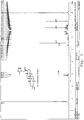
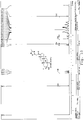
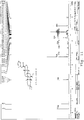
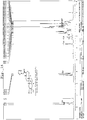
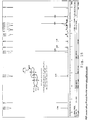
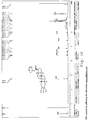
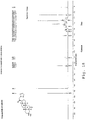
- FIGS. 1-22 depict representative 1 H NMR spectra of exemplary compounds described herein.
- A is selected from the group: R 1 is C 1 -C 6 haloalkyl (CHF 2 , CH 2 F) or C 1 -C 6 alkyl (e.g., CH 3 , CH 2 CH 3 , CH 2 OCH 3 , CH 2 OCH 2 CH 3 ); R 2 and R 3 is independently selected from H, halo (e.g., F), C 1 -C 6 alkyl (e.g., CH 3 ) or alkoxy (OCH 3 , OCH 2 CH 3 ); R 4 is halo (e.g., Cl, F), cyano, nitro, -S(O) x R a , -NR b R c , C 1 -C 6 alkyl (e.g., CH 3 ,
- R 1 when A is (A-1) or (A-2), then R 1 may be selected from: -CHF 2 , CH2F,-CCl 3 , -CHCl 2 , CH 2 Cl, - CBr 3 , CHBr 2 , CH 2 Br, or C 1 -C 6 alkyl; or when A is (A-3) or (A-5), R 1 is-CH 3 , -CH2F, -CH 2 OCH 3 , or -CHF 2 , and n is 0, then at least one of R 2 and R 3 is not H.
- At least one of R 2 and R 3 may not be H.
- R 2 and R 3 may not be H.
- R 1 may be selected from: -CHF 2 , CH2F, -CCl 3 ,-CHCl 2 , CH 2 Cl, - CBr 3 , CHBr 2 , CH2Br, or C 1 -C 6 alkyl.
- n may be 0 or 1.
- n is 1 and R 4 is halo, cyano, -S(O) x R a , or C 1 -C 6 alkyl.
- R 4 is -CH 3 .
- R 4 is cyano.
- R 4 is -S(O) 2 CH 3 .
- A is selected from the group:
- R 1 is C 1 -C 6 alkyl. In some described compounds, R 1 is - CH 3 . In some described compounds, R 2 and R 3 are H.
- n is 1 and R 4 is halo, cyano, -S(O) x R a , or C 1 -C 6 alkyl.
- R 4 is -CH 3 .
- R 4 is -C(O)OR a .
- R a is H.
- R a is C 1 -C 6 alkyl.
- R a is -CH 2 CH 3 .
- R 4 is -C(O)NR b R c .
- R b and R c are H.
- R 4 is cyano. In some described compounds, R 4 is - S(O) 2 CH 3 .
- A is selected from the group:
- a pharmaceutical composition comprising a compound as described herein, or pharmaceutically acceptable salt thereof, and a pharmaceutically acceptable excipient.
- the present invention provides the compound of the invention, or a pharmaceutically acceptable salt thereof, for use in a method for treating a CNS-related disorder in a subject.
- the CNS-related disorder is a sleep disorder, an eating disorder, a mood disorder, a schizophrenia spectrum disorder, a convulsive disorder, a disorder of memory and/or cognition, a movement disorder, a personality disorder, autism spectrum disorder, pain, traumatic brain injury, a vascular disease, a substance abuse disorder and/or withdrawal syndrome, or tinnitus.
- the CNS-related disorder is depression (e.g., post-partum depression).
- the CNS-related disorder is tremor (e.g., essential tremor).
- the CNS-related disorder is an eating disorder (e.g., anorexia nervosa, bulimia nervosa, binge-eating disorder, cachexia).
- the compound is administered orally, subcutaneously, intravenously, or intramuscularly. In some embodiments, the compound is administered chronically.
- the compound of the invention for use in a method of inducing sedation and/or anesthesia in a subject.
- the compound of the invention for use in a method for treating seizure in a subject.
- the compound of the invention for use in a method for treating epilepsy in a subject.
- the compound of the invention for use in a method for treating status epilepticus (SE) in a subject.
- the status epilepticus is convulsive status epilepticus (e.g., early status epilepticus, established status epilepticus, refractory status epilepticus, super-refractory status epilepticus) or non-convulsive status epilepticus, (e.g., generalized status epilepticus, complex partial status epilepticus).
- a disorder e.g., a disorder as described herein, e.g., a disorder related to GABA function
- a disorder e.g., a disorder as described herein, e.g., a disorder related to GABA function
- the invention provides a pharmaceutical composition
- a pharmaceutical composition comprising a compound of the present invention (also referred to as the "active ingredient") and a pharmaceutically acceptable excipient.
- the pharmaceutical composition comprises an effective amount of the active ingredient.
- the pharmaceutical composition comprises a therapeutically effective amount of the active ingredient.
- the pharmaceutical composition comprises a prophylactically effective amount of the active ingredient.
- compositions provided herein can be administered by a variety of routes including, but not limited to, oral (enteral) administration, parenteral (by injection) administration, rectal administration, transdermal administration, intradermal administration, intrathecal administration, subcutaneous (SC) administration, intravenous (IV) administration, intramuscular (IM) administration, and intranasal administration.
- the compounds provided herein are administered in an effective amount.
- the amount of the compound actually administered will typically be determined by a physician, in the light of the relevant circumstances, including the condition to be treated, the chosen route of administration, the actual compound administered, the age, weight, and response of the individual patient, the severity of the patient's symptoms, and the like.
- the compounds provided herein When used to prevent the onset of a CNS-disorder, the compounds provided herein will be administered to a subject at risk for developing the condition, typically on the advice and under the supervision of a physician, at the dosage levels described above.
- Subjects at risk for developing a particular condition generally include those that have a family history of the condition, or those who have been identified by genetic testing or screening to be particularly susceptible to developing the condition.
- the pharmaceutical compositions provided herein can also be administered chronically ("chronic administration").
- Chronic administration refers to administration of a compound or pharmaceutical composition thereof over an extended period of time, e.g., for example, over 3 months, 6 months, 1 year, 2 years, 3 years, 5 years, etc, or may be continued indefinitely, for example, for the rest of the subject's life.
- the chronic administration is intended to provide a constant level of the compound in the blood, e.g., within the therapeutic window over the extended period of time.
- the pharmaceutical compositions of the present invention may be further delivered using a variety of dosing methods.
- the pharmaceutical composition may be given as a bolus, e.g., in order to raise the concentration of the compound in the blood to an effective level.
- the placement of the bolus dose depends on the systemic levels of the active ingredient desired throughout the body, e.g., an intramuscular or subcutaneous bolus dose allows a slow release of the active ingredient, while a bolus delivered directly to the veins ( e.g., through an IV drip) allows a much faster delivery which quickly raises the concentration of the active ingredient in the blood to an effective level.
- the pharmaceutical composition may be administered as a continuous infusion, e.g ., by IV drip, to provide maintenance of a steady-state concentration of the active ingredient in the subject's body.
- the pharmaceutical composition may be administered as first as a bolus dose, followed by continuous infusion.
- compositions for oral administration can take the form of bulk liquid solutions or suspensions, or bulk powders. More commonly, however, the compositions are presented in unit dosage forms to facilitate accurate dosing.
- unit dosage forms refers to physically discrete units suitable as unitary dosages for human subjects and other mammals, each unit containing a predetermined quantity of active material calculated to produce the desired therapeutic effect, in association with a suitable pharmaceutical excipient.
- Typical unit dosage forms include prefilled, premeasured ampules or syringes of the liquid compositions or pills, tablets, capsules or the like in the case of solid compositions.
- the compound is usually a minor component (from about 0.1 to about 50% by weight or preferably from about 1 to about 40% by weight) with the remainder being various vehicles or excipients and processing aids helpful for forming the desired dosing form.
- each dose provides from about 0.01 to about 20 mg/kg of the compound provided herein, with preferred doses each providing from about 0.1 to about 10 mg/kg, and especially about 1 to about 5 mg/kg.
- Transdermal doses are generally selected to provide similar or lower blood levels than are achieved using injection doses, generally in an amount ranging from about 0.01 to about 20% by weight, preferably from about 0.1 to about 20% by weight, preferably from about 0.1 to about 10% by weight, and more preferably from about 0.5 to about 15% by weight.
- Injection dose levels range from about 0.1 mg/kg/hour to at least 10 mg/kg/hour, all for from about 1 to about 120 hours and especially 24 to 96 hours.
- a preloading bolus of from about 0.1 mg/kg to about 10 mg/kg or more may also be administered to achieve adequate steady state levels.
- the maximum total dose is not expected to exceed about 2 g/day for a 40 to 80 kg human patient.
- Liquid forms suitable for oral administration may include a suitable aqueous or nonaqueous vehicle with buffers, suspending and dispensing agents, colorants, flavors and the like.
- Solid forms may include, for example, any of the following ingredients, or compounds of a similar nature: a binder such as microcrystalline cellulose, gum tragacanth or gelatin; an excipient such as starch or lactose, a disintegrating agent such as alginic acid, Primogel, or corn starch; a lubricant such as magnesium stearate; a glidant such as colloidal silicon dioxide; a sweetening agent such as sucrose or saccharin; or a flavoring agent such as peppermint, methyl salicylate, or orange flavoring.
- a binder such as microcrystalline cellulose, gum tragacanth or gelatin
- an excipient such as starch or lactose, a disintegrating agent such as alginic acid, Primogel, or corn starch
- Injectable compositions are typically based upon injectable sterile saline or phosphate-buffered saline or other injectable excipients known in the art.
- the active compound in such compositions is typically a minor component, often being from about 0.05 to 10% by weight with the remainder being the injectable excipient and the like.
- Transdermal compositions are typically formulated as a topical ointment or cream containing the active ingredient(s).
- the active ingredients When formulated as a ointment, the active ingredients will typically be combined with either a paraffinic or a water-miscible ointment base. Alternatively, the active ingredients may be formulated in a cream with, for example an oil-in-water cream base.
- Such transdermal formulations are well-known in the art and generally include additional ingredients to enhance the dermal penetration of stability of the active ingredients or Formulation. All such known transdermal formulations and ingredients are included within the scope provided herein.
- transdermal administration can be accomplished using a patch either of the reservoir or porous membrane type, or of a solid matrix variety.
- the compounds of the present invention can also be administered in sustained release forms or from sustained release drug delivery systems.
- sustained release materials can be found in Remington's Pharmaceutical Sciences.
- the present invention also relates to the pharmaceutically acceptable formulations of a compound of the present invention.
- the formulation comprises water.
- the formulation comprises a cyclodextrin derivative.
- the most common cyclodextrins are ⁇ -, ⁇ - and ⁇ - cyclodextrins consisting of 6, 7 and 8 ⁇ -1 ,4-linked glucose units, respectively, optionally comprising one or more substituents on the linked sugar moieties, which include, but are not limited to, methylated, hydroxyalkylated, acylated, and sulfoalkylether substitution.
- the cyclodextrin is a sulfoalkyl ether ⁇ -cyclodextrin, e.g. , for example, sulfobutyl ether ⁇ -cyclodextrin, also known as Captisol®. See, e.g., U.S. 5,376,645 .
- the formulation comprises hexapropyl- ⁇ -cyclodextrin ( e.g., 10-50% in water).
- the present invention also relates to the pharmaceutically acceptable acid addition salt of a compound of the present invention.
- the acid which may be used to prepare the pharmaceutically acceptable salt is that which forms a non-toxic acid addition salt, i.e., a salt containing pharmacologically acceptable anions such as the hydrochloride, hydroiodide, hydrobromide, nitrate, sulfate, bisulfate, phosphate, acetate, lactate, citrate, tartrate, succinate, maleate, fumarate, benzoate, para-toluenesulfonate, and the like.
- a non-toxic acid addition salt i.e., a salt containing pharmacologically acceptable anions such as the hydrochloride, hydroiodide, hydrobromide, nitrate, sulfate, bisulfate, phosphate, acetate, lactate, citrate, tartrate, succinate, maleate, fumarate, benzoate, para-toluen
- the present invention is directed to neuroactive steroids that may act, for example, as GABA modulators.
- such compounds are envisioned to be useful as therapeutic agents for treating a disorder described herein, e.g., tremor (e.g., essential tremor); depression (e.g., postpartum depression), comprising administering to the subject an effective amount of a compound of the present invention or a composition thereof.
- the compound is administered by intravenous administration.
- Compounds of the present invention can modulate GABA function, and therefore can act as neuroactive steroids for the treatment and prevention of CNS-related conditions in a subject.
- Modulation refers to the inhibition or potentiation of GABA receptor function.
- the compounds and pharmaceutical compositions provided herein find use as therapeutics for preventing and/or treating CNS conditions in mammals including humans and non-human mammals.
- the present invention includes within its scope, and extends to, the recited use in methods of treatment, as well as to the compounds for use in such methods, and to the use of such compounds for the preparation of medicaments useful for such methods.
- Exemplary CNS conditions related to GABA-modulation include, but are not limited to, sleep disorders [ e.g., insomnia], mood disorders [ e.g., depression, dysthymic disorder (e.g., mild depression), bipolar disorder ( e.g., I and/or II), anxiety disorders (e.g., generalized anxiety disorder (GAD), social anxiety disorder), stress, post-traumatic stress disorder (PTSD), compulsive disorders ( e.g., obsessive compulsive disorder (OCD))], schizophrenia spectrum disorders [ e.g ., schizophrenia, schizoaffective disorder], convulsive disorders [ e.g., epilepsy ( e.g., status epilepticus (SE)), seizures], disorders of memory and/or cognition [ e.g., attention disorders (e.g., attention deficit hyperactivity disorder (ADHD)), dementia (e.g ., Alzheimer's type dementia, Lewis body type dementia, vascular type dementia], movement disorders [ e.g., Hunt
- a combination of a compound of the present invention and another pharmacologically active agent is provided.
- the compounds provided herein can be administered as the sole active agent or they can be administered in combination with other agents. Administration in combination can proceed by any technique apparent to those of skill in the art including, for example, separate, sequential, concurrent and alternating administration.
- a compound of the present invention for use in a method of treating or preventing brain excitability in a subject susceptible to or afflicted with a condition associated with brain excitability.
- a compound of the present invention for use in a method of treating or preventing tremor in a subject.
- the tremor is essential tremor.
- a compound of the present invention for use in a method of treating or preventing mood disorders in a subject.
- the mood disorder is depression.
- the mood disorder is postpartum depression.
- a compound of the present invention for use in a method of alleviating or preventing PMS or PND in a subject.
- a compound of the present invention or a composition thereof, for use in a method of treating or preventing stress or anxiety in a subject.
- a compound of the present invention or a composition thereof, for use in a method of alleviating or preventing insomnia in a subject.
- a compound of the present invention for use in a method of inducing sleep and maintaining substantially the level of REM sleep that is found in normal sleep, wherein substantial rebound insomnia is not induced.
- a compound of the present invention for use in a method of cognition enhancement or treating memory disorder in a subject.
- the disorder is Alzheimer's disease.
- the disorder is Rett syndrome.
- a compound of the present invention for use in a method of treating attention disorders in a subject.
- the attention disorder is ADHD.
- the compound is administered to the subject chronically. In certain embodiments, the compound is administered to the subject orally, subcutaneously, intramuscularly, or intravenously.
- Anxiety disorder is a blanket term covering several different forms of abnormal and pathological fear and anxiety.
- Current psychiatric diagnostic criteria recognize a wide variety of anxiety disorders.
- Generalized anxiety disorder is a common chronic disorder characterized by long-lasting anxiety that is not focused on any one object or situation. Those suffering from generalized anxiety experience non-specific persistent fear and worry and become overly concerned with everyday matters. Generalized anxiety disorder is the most common anxiety disorder to affect older adults.
- panic disorder a person suffers from brief attacks of intense terror and apprehension, often marked by trembling, shaking, confusion, dizziness, nausea, difficulty breathing.
- panic attacks defined by the APA as fear or discomfort that abruptly arises and peaks in less than ten minutes, can last for several hours and can be triggered by stress, fear, or even exercise; although the specific cause is not always apparent.
- a diagnosis of panic disorder also requires that said attacks have chronic consequences: either worry over the attacks' potential implications, persistent fear of future attacks, or significant changes in behavior related to the attacks. Accordingly, those suffering from panic disorder experience symptoms even outside of specific panic episodes.
- Obsessive compulsive disorder is a type of anxiety disorder primarily characterized by repetitive obsessions (distressing, persistent, and intrusive thoughts or images) and compulsions (urges to perform specific acts or rituals).
- the OCD thought pattern may be likened to superstitions insofar as it involves a belief in a causative relationship where, in reality, one does not exist.
- the process is entirely illogical; for example, the compulsion of walking in a certain pattern may be employed to alleviate the obsession of impending harm.
- the compulsion is entirely inexplicable, simply an urge to complete a ritual triggered by nervousness.
- sufferers of OCD may only experience obsessions, with no overt compulsions; a much smaller number of sufferers experience only compulsions.
- the single largest category of anxiety disorders is that of phobia, which includes all cases in which fear and anxiety is triggered by a specific stimulus or situation. Sufferers typically anticipate cosmic consequences from encountering the object of their fear, which can be anything from an animal to a location to a bodily fluid.
- Post-traumatic stress disorder or PTSD is an anxiety disorder which results from a traumatic experience.
- Post-traumatic stress can result from an extreme situation, such as combat, rape, hostage situations, or even serious accident. It can also result from long term (chronic) exposure to a severe stressor, for example soldiers who endure individual battles but cannot cope with continuous combat. Common symptoms include flashbacks, avoidant behaviors, and depression.
- Eating disorders feature disturbances in eating behavior and weight regulation, and are associated with a wide range of adverse psychological, physical, and social consequences.
- An individual with an eating disorder may start out just eating smaller or larger amounts of food, but at some point, their urge to eat less or more spirals out of control.
- Eating disorders may be characterized by severe distress or concern about body weight or shape, or extreme efforts to manage weight or food intake.
- Eating disorders include anorexia nervosa, bulimia nervosa, binge-eating disorder, cachexia, and their variants.
- Individuals with anorexia nervosa typically see themselves as overweight, even when they are underweight. Individuals with anorexia nervosa can become overwhelmed with eating, food, and weight control. Individuals with anorexia nervosa typically weigh themselves repeatedly, portion food carefully, and eat very small quantities of only certain foods. Individuals with anorexia nervosa may engage in binge eating, followed by extreme dieting, excessive exercise, self-induced vomiting, or misuse of laxatives, diuretics, or enemas.
- Symptoms include extremely low body weight, severe food restriction, relentless pursuit of thinness and unwillingness to maintain a normal or healthy weight, intense fear of gaining weight, distorted body image and self-esteem that is heavily influenced by perceptions of body weight and shape, or a denial of the seriousness of low body weight, lack of menstruation among girls and women.
- Other symptoms include the thinning of the bones, brittle hair and nails, dry and yellowish skin, growth of fine hair all over the body, mild anemia, muscle wasting, and weakness, severe constipation, low blood pressure or slowed breathing and pulse, damage to the structure and function of the heart, brain damage, multi-organ failure, drop in internal body temperature, lethargy, sluggishness, and infertility.
- Inidividuals with bulimia nervosa have recurrent and frequent episodes of eating unusually large amounts of food and feel a lack of control over these episodes. This binge eating is followed by behavior that compensates for the overeating such as forced vomiting, excessive use of laxatives or diuretics, fasting, excessive exercise, or a combination of these behaviors.
- binge-eating disorder lose control over their eating. Unlike bulimia nervosa, periods of binge eating are not followed by compensatory behaviors like purging, excessive exercise, or fasting. Individuals with binge-eating disorder often are overweight or obese. Obese individuals with binge-eating disorder are at higher risk for developing cardiovascular disease and high blood pressure. They also experience guilt, shame, and distress about their binge eating, which can lead to more binge eating.
- Cachexia is also known as "wasting disorder," and is an eating-related issue experienced by many cancer patients. Individuals with cachexia may continue to eat normally, but their body may refuse to utilize the vitamins and nutrients that it is ingesting, or they will lose their appetite and stop eating. When an individual experiences loss of appetite and stops eating, they can be considered to have developed anorexia nervosa.
- neurodegenerative disease includes diseases and disorders that are associated with the progressive loss of structure or function of neurons, or death of neurons.
- Neurodegenerative diseases and disorders include, but are not limited to, Alzheimer's disease (including the associated symptoms of mild, moderate, or severe cognitive impairment); amyotrophic lateral sclerosis (ALS); anoxic and ischemic injuries; ataxia and convulsion (including for the treatment and prevention and prevention of seizures that are caused by schizoaffective disorder or by drugs used to treat schizophrenia); benign forgetfulness; brain edema; cerebellar ataxia including McLeod neuroacanthocytosis syndrome (MLS); closed head injury; coma; contusive injuries ( e.g., spinal cord injury and head injury); dementias including multi-infarct dementia and senile dementia; disturbances of consciousness; Down syndrome; drug-induced or medication-induced Parkinsonism (such as neuroleptic-induced acute akathisia, acute dystonia, Parkinsonism, or tardive dyskinesia, neuroleptic mal
- Neurodegenerative diseases also include, but are not limited to, neurotoxic injury which follows cerebral stroke, thromboembolic stroke, hemorrhagic stroke, cerebral ischemia, cerebral vasospasm, hypoglycemia, amnesia, hypoxia, anoxia, perinatal asphyxia and cardiac arrest.
- Methods of treating or preventing a neurodegenerative disease also include treating or preventing loss of neuronal function characteristic of neurodegenerative disorder.
- Epilepsy is a brain disorder characterized by repeated seizures over time.
- Types of epilepsy can include, but are not limited to generalized epilepsy, e.g ., childhood absence epilepsy, juvenile nyoclonic epilepsy, epilepsy with grand-mal seizures on awakening, West syndrome, Lennox-Gastaut syndrome, partial epilepsy, e.g ., temporal lobe epilepsy, frontal lobe epilepsy, benign focal epilepsy of childhood.
- Status epilepticus can include, e.g., convulsive status epilepticus, e.g., early status epilepticus, established status epilepticus, refractory status epilepticus, super-refractory status epilepticus; non-convulsive status epilepticus, e.g ., generalized status epilepticus, complex partial status epilepticus; generalized periodic epileptiform discharges; and periodic lateralized epileptiform discharges.
- Convulsive status epilepticus is characterized by the presence of convulsive status epileptic seizures, and can include early status epilepticus, established status epilepticus, refractory status epilepticus, super-refractory status epilepticus.
- Early status epilepticus is treated with a first line therapy.
- Established status epilepticus is characterized by status epileptic seizures which persist despite treatment with a first line therapy, and a second line therapy is administered.
- Refractory status epilepticus is characterized by status epileptic seizures which persist despite treatment with a first line and a second line therapy, and a general anesthetic is generally administered.
- Super refractory status epilepticus is characterized by status epileptic seizures which persist despite treatment with a first line therapy, a second line therapy, and a general anesthetic for 24 hours or more.
- Non-convulsive status epilepticus can include, e.g., focal non-convulsive status epilepticus, e.g ., complex partial non-convulsive status epilepticus, simple partial non-convulsive status epilepticus, subtle non-convulsive status epilepticus; generalized non-convulsive status epilepticus, e.g., late onset absence non-convulsive status epilepticus, atypical absence non-convulsive status epilepticus, or typical absence non-convulsive status epilepticus.
- focal non-convulsive status epilepticus e.g ., complex partial non-convulsive status epilepticus, simple partial non-convulsive status epilepticus, subtle non-convulsive status epilepticus
- generalized non-convulsive status epilepticus e.g., late onset absence non-convulsive status epilepticus, atypical absence non-convul
- compositions described herein can also be administered as a prophylactic to a subject having a CNS disorder e.g., a traumatic brain injury, status epilepticus, e.g., convulsive status epilepticus, e.g ., early status epilepticus, established status epilepticus, refractory status epilepticus, super-refractory status epilepticus; non-convulsive status epilepticus, e.g ., generalized status epilepticus, complex partial status epilepticus; generalized periodic epileptiform discharges; and periodic lateralized epileptiform discharges; prior to the onset of a seizure.
- a CNS disorder e.g., a traumatic brain injury
- status epilepticus e.g., convulsive status epilepticus, e.g ., early status epilepticus, established status epilepticus, refractory status epilepticus, super-refractory status epil
- a seizure is the physical findings or changes in behavior that occur after an episode of abnormal electrical activity in the brain.
- the term "seizure” is often used interchangeably with “convulsion.” Convulsions are when a person's body shakes rapidly and uncontrollably. During convulsions, the person's muscles contract and relax repeatedly.
- seizures are divided into two broad categories: generalized and partial (also called local or focal). Classifying the type of seizure helps doctors diagnose whether or not a patient has epilepsy.
- Generalized seizures are produced by electrical impulses from throughout the entire brain, whereas partial seizures are produced (at least initially) by electrical impulses in a relatively small part of the brain.
- the part of the brain generating the seizures is sometimes called the focus.
- Absence seizures cause a short loss of consciousness (just a few seconds) with few or no symptoms.
- the patient most often a child, typically interrupts an activity and stares blankly. These seizures begin and end abruptly and may occur several times a day. Patients are usually not aware that they are having a seizure, except that they may be aware of "losing time.”
- Myoclonic seizures consist of sporadic jerks, usually on both sides of the body. Patients sometimes describe the jerks as brief electrical shocks. When violent, these seizures may result in dropping or involuntarily throwing objects.
- Clonic seizures are repetitive, rhythmic jerks that involve both sides of the body at the same time.
- Tonic seizures are characterized by stiffening of the muscles.
- Atonic seizures consist of a sudden and general loss of muscle tone, particularly in the arms and legs, which often results in a fall.
- Seizures described herein can include epileptic seizures; acute repetitive seizures; cluster seizures; continuous seizures; unremitting seizures; prolonged seizures; recurrent seizures; status epilepticus seizures, e . g., refractory convulsive status epilepticus, non-convulsive status epilepticus seizures; refractory seizures; myoclonic seizures; tonic seizures; tonic-clonic seizures; simple partial seizures; complex partial seizures; secondarily generalized seizures; atypical absence seizures; absence seizures; atonic seizures; benign Rolandic seizures; febrile seizures; emotional seizures; focal seizures; gelastic seizures; generalized onset seizures; infantile spasms; Jacksonian seizures; massive bilateral myoclonus seizures; multifocal seizures; neonatal onset seizures; nocturnal seizures; occipital lobe seizures; post traumatic seizures; subtle seizures; Sylvan seizures; visual reflex seizures; or withdrawal seizures.
- epilepticus seizures e . g., refractory convulsive status epileptic
- Tremor is an involuntary, at times rhythmic, muscle contraction and relaxation that can involve oscillations or twitching of one or more body parts (e.g., hands, arms, eyes, face, head, vocal folds, trunk, legs).
- body parts e.g., hands, arms, eyes, face, head, vocal folds, trunk, legs.
- Cerebellar tremor or intention tremor is a slow, broad tremor of the extremities that occurs after a purposeful movement. Cerebellar tremor is caused by lesions in or damage to the cerebellum resulting from, e.g., tumor, stroke, disease (e.g., multiple sclerosis, an inherited degenerative disorder).
- Dystonic tremor occurs in individuals affected by dystonia, a movement disorder in which sustained involuntary muscle contractions cause twisting and repetitive motions and/or painful and abnormal postures or positions.
- Dystonic tremor may affect any muscle in the body.
- Dystonic tremors occurs irregularly and often can be relieved by complete rest.
- Essential tremor or benign essential tremor is the most common type of tremor.
- Essential tremor may be mild and nonprogressive in some, and may be slowly progressive, starting on one side of the body but affect both sides within 3 years. The hands are most often affected, but the head, voice, tongue, legs, and trunk may also be involved.
- Tremor frequency may decrease as the person ages, but severity may increase. Heightened emotion, stress, fever, physical exhaustion, or low blood sugar may trigger tremors and/or increase their severity.
- Orthostatic tremor is characterized by fast (e.g ., greater than 12 Hz) rhythmic muscle contractions that occurs in the legs and trunk immediately after standing. Cramps are felt in the thighs and legs and the patient may shake uncontrollably when asked to stand in one spot. Orthostatic tremor may occurs in patients with essential tremor.
- Parkinsonian tremor is caused by damage to structures within the brain that control movement. Parkinsonian tremor is often a precursor to Parkinson's disease and is typically seen as a "pill-rolling" action of the hands that may also affect the chin, lips, legs, and trunk. Onset of parkinsonian tremor typically begins after age 60. Movement starts in one limb or on one side of the body and can progress to include the other side.
- Physiological tremor can occur in normal individuals and have no clinical significance. It can be seen in all voluntary muscle groups. Physiological tremor can be caused by certain drugs, alcohol withdrawl, or medical conditions including an overactive thyroid and hypoglycemia. The tremor classically has a frequency of about 10 Hz.
- Psychogenic tremor or hysterical tremor can occur at rest or during postural or kinetic movement.
- Patient with psychogenic tremor may have a conversion disorder or another psychiatric disease.
- Rubral tremor is characterized by coarse slow tremor which can be present at rest, at posture, and with intention.
- the tremor is associated with conditions that affect the red nucleus in the midbrain, classical unusual strokes.
- Clinical depression is also known as major depression, major depressive disorder (MDD), severe depression, unipolar depression, unipolar disorder, and recurrent depression, and refers to a mental disorder characterized by pervasive and persistent low mood that is accompanied by low self-esteem and loss of interest or pleasure in normally enjoyable activities. Some people with clinical depression have trouble sleeping, lose weight, and generally feel agitated and irritable. Clinical depression affects how an individual feels, thinks, and behaves and may lead to a variety of emotional and physical problems. Individuals with clinical depression may have trouble doing day-to-day activities and make an individual feel as if life is not worth living.
- MDD major depressive disorder
- Postnatal depression is also referred to as postpartum depression (PPD), and refers to a type of clinical depression that affects women after childbirth. Symptoms can include sadness, fatigue, changes in sleeping and eating habits, reduced sexual desire, crying episodes, anxiety, and irritability.
- the PND is a treatment-resistant depression (e.g., a treatment-resistant depression as described herein).
- the PND is refractory depression (e.g., a refractory depression as described herein).
- AD Atypical depression
- mood reactivity e.g ., paradoxical anhedonia
- positivity significant weight gain or increased appetite.
- Patients suffering from AD also may have excessive sleep or somnolence (hypersomnia), a sensation of limb heaviness, and significant social impairment as a consequence of hypersensitivity to perceived interpersonal rejection.
- Melancholic depression is characterized by loss of pleasure (anhedonia) in most or all activities, failures to react to pleasurable stimuli, depressed mood more pronounced than that of grief or loss, excessive weight loss, or excessive guilt.
- PMD Psychitic major depression
- psychotic depression refers to a major depressive episode, in particular of melancholic nature, where the individual experiences psychotic symptoms such as delusions and hallucinations.
- Catatonic depression refers to major depression involving disturbances of motor behavior and other symptoms. An individual may become mute and stuporose, and either is immobile or exhibits purposeless or playful movements.
- SAD Seasonal affective disorder
- Dysthymia refers to a condition related to unipolar depression, where the same physical and cognitive problems are evident. They are not as severe and tend to last longer ( e.g., at least 2 years).
- Double depression refers to fairly depressed mood (dysthymia) that lasts for at least 2 years and is punctuated by periods of major depression.
- DPD Depressive Personality Disorder
- RBD Recurrent Brief Depression
- Minor depressive disorder or minor depression refers to a depression in which at least 2 symptoms are present for 2 weeks.
- Bipolar disorder or manic depressive disorder causes extreme mood swings that include emotional highs (mania or hypomania) and lows (depression).
- emotional highs mania or hypomania
- lows depression
- mania the individual may feel or act abnormally happy, energetic, or irritable. They often make poorly thought out decisions with little regard to the consequnces.
- the need for sleep is usually reduced.
- depression there may be crying, poor eye contact with others, and a negative outlook on life.
- the risk of suicide among those with the disorder is high at greater than 6% over 20 years, while self harm occurs in 30-40%.
- Other mental health issues such as anxiety disorder and substance use disorder are commonly associated with bipolar disorder.
- Depression caused by chronic medical conditions refers to depression caused by chronic medical conditions such as cancer or chronic pain, chemotherapy, chronic stress.
- Treatment-resistant depression refers to a condition where the individuals have been treated for depression, but the symptoms do not improve.
- antidepressants or physchological counseling do not ease depression symptoms for individuals with treatment-resistant depression.
- individuals with treatment-resistant depression improve symptoms, but come back.
- Refractory depression occurs in patients suffering from depression who are resistant to standard pharmacological treatments, including tricyclic antidepressants, MAOIs, SSRIs, and double and triple uptake inhibitors and/or anxiolytic drugs, as well as non-pharmacological treatments (e.g., psychotherapy, electroconvulsive therapy, vagus nerve stimulation and/or transcranial magnetic stimulation).
- Suicidality, suicidal ideation, suicidal behavior refers to the tendency of an individual to commit suicide.
- Suicidal ideation concerns thoughts about or an unusual preoccupation with suicide.
- the range of suicidal ideation varies greatly, from e.g., fleeting thoughts to extensive thoughts, detailed planning, role playing, incomplete attempts. Symptoms include talking about suicide, getting the means to commit suicide, withdrawing from social contact, being preoccupied with death, feeling trapped or hopeless about a situation, increasing use of alcohol or drugs, doing risky or self-destructive things, saying goodbye to people as if they won't be seen again.
- Symptoms of depression include persistent anxious or sad feelings, feelings of helplessness, hopelessness, pessimism, worthlessness, low energy, restlessness, irritability, fatigue, loss of interest in pleasurable activities or hobbies, absence of positive thoughts or plans, excessive sleeping, overeating, appetite loss, insomnia,self-harm, thoughts of suicide, and suicide attempts.
- the presence, severity, frequency, and duration of symptoms may vary on a case to case basis. Symptoms of depression, and relief of the same, may be ascertained by a physician or psychologist (e.g., by a mental state examination).
- Anesthesia is a pharmacologically induced and reversible state of amnesia, analgesia, loss of responsiveness, loss of skeletal muscle reflexes, decreased stress response, or all of these simultaneously. These effects can be obtained from a single drug which alone provides the correct combination of effects, or occasionally with a combination of drugs (e.g ., hypnotics, sedatives, paralytics, analgesics) to achieve very specific combinations of results. Anesthesia allows patients to undergo surgery and other procedures without the distress and pain they would otherwise experience.
- Sedation is the reduction of irritability or agitation by administration of a pharmacological agent, generally to facilitate a medical procedure or diagnostic procedure.
- Sedation and analgesia include a continuum of states of consciousness ranging from minimal sedation (anxiolysis) to general anesthesia.
- Minimal sedation is also known as anxiolysis. Minimal sedation is a drug-induced state during which the patient responds normally to verbal commands. Cognitive function and coordination may be impaired. Ventilatory and cardiovascular functions are typically unaffected.
- Moderate sedation/analgesia is a drug-induced depression of consciousness during which the patient responds purposefully to verbal command, either alone or accompanied by light tactile stimulation. No interventions are usually necessary to maintain a patent airway. Spontaneous ventilation is typically adequate. Cardiovascular function is usually maintained.
- Deep sedation/analgesia is a drug-induced depression of consciousness during which the patient cannot be easily aroused, but responds purposefully (not a reflex withdrawal from a painful stimulus) following repeated or painful stimulation.
- Independent ventilatory function may be impaired and the patient may require assistance to maintain a patent airway.
- Spontaneous ventilation may be inadequate. Cardiovascular function is usually maintained.
- General anesthesia is a drug-induced loss of consciousness during which the patient is not arousable, even to painful stimuli.
- the ability to maintain independent ventilatory function is often impaired and assistance is often required to maintain a patent airway.
- Positive pressure ventilation may be required due to depressed spontaneous ventilation or drug-induced depression of neuromuscular function.
- Cardiovascular function may be impaired.
- Sedation in the intensive care unit allows the depression of patients' awareness of the environment and reduction of their response to external stimulation. It can play a role in the care of the critically ill patient, and encompasses a wide spectrum of symptom control that will vary between patients, and among individuals throughout the course of their illnesses. Heavy sedation in critical care has been used to facilitate endotracheal tube tolerance and ventilator synchronization, often with neuromuscular blocking agents.
- sedation e.g ., long-term sedation, continuous sedation
- a prolonged period of time e.g., 1 day, 2 days, 3 days, 5 days, 1 week, 2 week, 3 weeks, 1 month, 2 months.
- Long-term sedation agents may have long duration of action. Sedation agents in the ICU may have short elimination half-life.
- Procedural sedation and analgesia is a technique of administering sedatives or dissociative agents with or without analgesics to induce a state that allows a subject to tolerate unpleasant procedures while maintaining cardiorespiratory function.
- the compounds provided herein can be prepared from readily available starting materials using the following general methods and procedures. It will be appreciated that where typical or preferred process conditions (i.e., reaction temperatures, times, mole ratios of reactants, solvents, pressures, etc .) are given, other process conditions can also be used unless otherwise stated. Optimum reaction conditions may vary with the particular reactants or solvent used, but such conditions can be determined by one skilled in the art by routine optimization.
- protecting groups may be necessary to prevent certain functional groups from undergoing undesired reactions.
- the choice of a suitable protecting group for a particular functional group as well as suitable conditions for protection and deprotection are well known in the art. For example, numerous protecting groups, and their introduction and removal, are described in T. W. Greene and P. G. M. Wuts, Protecting Groups in Organic Synthesis, Second Edition, Wiley, New York, 1991 , and references cited therein.
- the compounds provided herein may be isolated and purified by known standard procedures. Such procedures include (but are not limited to) recrystallization, column chromatography, HPLC, or supercritical fluid chromatography (SFC). The following schemes are presented with details as to the preparation of representative triazole and tetrazoles that have been listed herein.
- the compounds provided herein may be prepared from known or commercially available starting materials and reagents by one skilled in the art of organic synthesis.
- Exemplary chiral columns available for use in the separation/purification of the enantiomers/diastereomers provided herein include, but are not limited to, CHIRALPAK® AD-10, CHIRALCEL® OB, CHIRALCEL® OB-H, CHIRALCEL® OD, CHIRALCEL® OD-H, CHIRALCEL® OF, CHIRALCEL® OG, CHIRALCEL® OJ and CHIRALCEL® OK.
- 1 H-NMR reported herein may be a partial representation of the full NMR spectrum of a compound, e.g., a compound described herein.
- the reported 1 H NMR may exclude the region between ⁇ (ppm) of about 1 to about 2.5 ppm. Copies of full 1 H-NMR spectrum for representative examples are provided in the Figures.
- Exemplary general method for analytical HPLC Mobile phase: A: water (10 mM NH 4 HCO 3 ), B: acetonitrileGradient: 5%-95% B in 1.6 or 2 min Flow rate: 1.8 or 2 mL/min; Column: XBridge C18, 4.6 ⁇ 50mm, 3.5 ⁇ m at 45 C.
- the compounds of the invention can be prepared in accordance with methods described in the art ( Upasani et al., J. Med. Chem. 1997, 40:73-84 ; and Hogenkamp et al., J. Med. Chem. 1997, 40:61-72 ) and using the appropriate reagents, starting materials, and purification methods known to those skilled in the art.
- compounds described herein can be prepared using methods shown in general Schemes 1-3, comprising a nucleophilic substitution of 19-nor pregnane bromide with a neucleophile.
- the nucleophile reacts with the 19-nor pregnane bromide in the presence of K 2 CO 3 in THF.
- SA-2 1 HNMR (500 MHz, CDCl 3 ), ⁇ (ppm), 8.74 (s, 1H), 5.31(AB,1H),5.17(AB,1H), 2.65(1H, t), 1.28(s, CH 3 ), 0.67 (s, 3H).
- Example 14 Synthesis of compounds SG-1 and SG-2.
- Example 28 Synthesis of compounds SL-1 and SL-2.
- SL-1 1 H NMR (400 MHz, CDCl 3 ), ⁇ (ppm), 7.75 (s, 1H), 7.64 (s, 1H), 5.25-5.13 (m, 2H), 3.31 (s, 3H), 3.11 (s, 1H), 1.24 (s, 3H), 0.71 (s, 3H).
- SL-2 1 H NMR (400 MHz, CDCl 3 ), ⁇ (ppm), 7.68 (s, 2H), 5.27-5.19 (m, 2H), 3.31 (s, 3H), 3.11 (s, 1H), 1.21 (s, 3H), 0.75 (s, 3H).
- SH-1 1 H NMR (500 MHz, CDCl 3 ), ⁇ (ppm), 7.76 (s, 1H), 7.65 (s, 1H), 5.29(1H,AB), 5.14(1H,AB), 4.73-4.59 (m, 1H),2.68(1H,t),1.30 (s, 3H), 0.67 (s, 3H).
- SH-2 1 H NMR (500 MHz, CDCl 3 ), ⁇ (ppm), 7.69 (s, 2H), 5.27(1H,AB), 5.23(1H,AB), 4.73-4.59 (m, 1H), 4.64-4.59 (m, 1H),2.60(1H,t),1.29 (s, 3H), 0.70 (s, 3H).
- SB-4 1 HNMR (500 MHz, CDCl 3 ) ⁇ (ppm): 5.12 (AB, 1H), 5.06 (AB, 1H), 2.66 (t, 1H), 2.47 (s, 3H), 1.21 (s, CH 3 ), 0.69 (s, 3H).
- SP-1 1 HNMR (500 MHz, CDC13) ⁇ (ppm): 7.75(1H,s), 7.64(1H,s), 5.26(1H, AB), 5.14(1H, AB),2.66 (1H,t), 0.91 (3H, t), 0.68 (3H, s).
- SP-4 1 HNMR (500 MHz, CDCl 3 ) ⁇ (ppm): 5.13 (AB, 1H), 5.05 (AB, 1H), 2.66 (t, 1H), 2.48 (s, 3H), 0.91(t, 1H), 0.69 (s, 3H).
- SI-E (1.2 g, 3.8 mmol) was dissolved in dry methanol (250 mL), and Na (262 mg, 11.4 mmol) was added. The solution was refluxed for 16 h. Methanol was evaporated off and the residue was dissolved in dichloromethane and washed with H 2 O (3 x 50 mL) and brine (100 mL), dried over MgSO 4 , filtered, and concentrated.
- SI-F1 1 H NMR (400 MHz, CDC13) ⁇ (ppm): 3.39 (s, 3H), 3.19 (s, 2H), 2.54 (t, 1H), 2.11(s, 3H), 0.61 (s, 3H).
- SI-F2 1 H NMR (400 MHz, CDCl3) ⁇ (ppm): 3.39 (s, 5H), 3.37 (s, 2H), 2.52 (t, 1H), 2.11 (s, 3H), 0.62 (s, 3H).
- SI-2 1 HNMR (500 MHz, CDCl 3 ), ⁇ (ppm), 7.76 (d, 1H), 7.64 (d, 1H), 5.27 (AB, 1H), 5.13 (AB, 1H), 3.39 (s, 3H), 3.19 (s, 2H), 2.66 (t, 1H), 0.68 (s, 3H).
- SI-3 1 HNMR (500 MHz, CDCl 3 ) ⁇ (ppm): 5.13 (AB, 1H), 5.05 (AB, 1H), 3.39 (s, 3H), 3.19 (s, 2H), 2.66 (t, 1H), 2.47 (s, 3H), 0.69 (s, 3H).
- Example 53 Synthesis of compounds SV-1 and SV-2.
- SV-1 1 H NMR (400 MHz, CDCl 3 ), ⁇ (ppm), 7.75 (s, 1H), 7.65 (s, 1H), 5.29-5.25 (1H,AB), 5.25-5.17 (1H,AB), 4.61-4.52 (d, 1H), 2.6(1H,t),1.18 (s, 3H), 0.63 (s, 3H).
- SV-2 1 H NMR (400 MHz, CDCl 3 ), ⁇ (ppm), 7.68 (s, 2H), 5.24-5.23 (m, 2H), 4.60-4.50 (d, 1H), 2.6(1H,t,), 1.25 (s, 3H), 0.74 (s, 3H).
- Example 54 Synthesis of compounds SV-3 and SV-4.
- Example 55 Synthesis of compounds SV-5 and SV-6.
- Example 57 Synthesis of compounds SV-8 and SV-9.
- SW-B Synthesis of compound SW-B.
- SW-A (10 g, 36.7 mmol) was added to 50 mL acetyl chloride and 50 mL acetic anhydride. The reaction mixture was heated to 120°C for 5 h, evaporated in vacuo to afford SW-B as the off white solid (10 g, 87% yield).
- 1 H NMR 400 MHz, CDCl 3 ), ⁇ (ppm), 5.78 (s, 1H), 5.55 (s, 1H), 2.4(dd,2H),2.13 (s, 3H), 0.90 (s, 3H).
- SW-1 1 H NMR (400 MHz, CDCl 3 ), ⁇ (ppm), 7.75 (s, 1H), 7.64 (s, 1H), 5.27-5.24 (1H,AB),5.17-5.13 (1H,AB), 3.28 (s, 3H), 3.17 (s, 1H),2.7(1H,t), 1.23 (s, 3H), 0.65 (s, 3H).
- SW-2 1 H NMR (400 MHz, CDCl 3 ), ⁇ (ppm), 7.68 (s, 2H), 5.28-5.25 (1H,AB), 5.23-5.20 (1H,AB), 3.28 (s, 3H), 3.17 (s, 1H), 2.6(1H,t), 1.24 (s, 3H), 0.75 (s, 3H).
- Example 62 Synthesis of SS and SS intermediates.
- Example 65 Synthesis of compounds SN-1 and SN-2.
- SN-1 HNMR (400 MHz, CDC13) ⁇ (ppm): 7.76 (1H, s), 7.65 (1H, s), 5.20 (1H, AB), 5.14 (1H, AB), 2.66 (1H, t), 2.21 (1H, dd), 1.18 (3H, s), 0.92 (3H, d), 0.68 (3H, s).
- SN-2 1 HNMR (500 MHz, CDC13) ⁇ (ppm): 7.69 (2H, s), 5.27 (1H, AB), 5.23 (1H, AB), 2.60 (1H, t), 2.20 (1H, dd), 1.17 (3H, s), 0.92 (3H, d), 0.71 (3H, s).
- SU-1 1 H NMR (500 MHz, CDC13) ⁇ (ppm): 7.76 (1H, s), 7.65 (1H, s), 5.27 (1H, AB), 5.14 (1H, AB), 3.34 (3H, s), 3.04 (1H, s), 2.65 (1H, t), 1.24 (3H, s), 0.68 (3H, s).
- SU-2 1 H NMR (500 MHz, CDC13) ⁇ (ppm): 7.68 (2H, s), 5.26 (1H, AB), 5.22 (1H, AB), 3.33 (3H, s), 3.04 (1H, s), 2.59 (1H, t), 1.24 (3H, s), 0.72 (3H, s).
- Example 70 Synthesis of compounds SA-10, SA-11, SA-12, SA-13, and SA-14.
- Example 71 Synthesis of compounds SA-17, SA-18, and SA-20.
- cortices are rapidly removed following decapitation of carbon dioxide-anesthetized Sprague-Dawley rats (200-250 g).
- the cortices are homogenized in 10 volumes of ice-cold 0.32 M sucrose using a glass/teflon homogenizer and centrifuged at 1500 x g for 10 min at 4 °C.
- the resultant supernatants are centrifuged at 10,000 x g for 20 min at 4 °C to obtain the P2 pellets.
- the P2 pellets are resuspended in 200 mM NaCl/50 mM Na-K phosphate pH 7.4 buffer and centrifuged at 10,000 x g for 10 min at 4 °C.
- the concentration of test compound producing 50% inhibition (IC 50 ) of specific binding and the maximal extent of inhibition (I max ) are determined for the individual experiments with the same model used for the overall data and then the means ⁇ SEM.s of the individual experiments are calculated.
- Picrotoxin serves as the positive control for these studies as it has been demonstrated to robustly inhibit TBPS binding.
- GABA EC 20 2 ⁇ M
- LTK cells are stably transfected with the ⁇ 1 ⁇ 2 ⁇ 2 subunits of the GABA receptor and CHO cells are transiently transfected with the ⁇ 4 ⁇ 3 ⁇ subunits via the Lipofecatamine method. Cells were passaged at a confluence of about 50-80% and then seeded onto 35mm sterile culture dishes containing 2 ml culture complete medium without antibiotics or antimycotics.
- Confluent clusters of cells are electrically coupled ( Pritchett et al., Science , 1988, 242, 1306-1308 .). Because responses in distant cells are not adequately voltage clamped and because of uncertainties about the extent of coupling ( Verdoorn et al., Neuron 1990, 4, 919-928 .), cells were cultivated at a density that enables the recording of single cells (without visible connections to other cells).
- Test articles were dissolved in DMSO to form stock solutions (10mM). Test articles were diluted to 0.01, 0.1, 1, and 10 ⁇ M in bath solution. All concentrations of test articles were tested on each cell. The relative percentage potentiation was defined as the peak amplitude in response to GABA EC 20 in the presence of the test article divided by the peak amplitude in response to GABA EC 20 alone, multiplied by 100.
- Rats were dosed by intravenous bolus dose (60 seconds) via the foot dorsal vein at doses ranging from 5 to 15 mg/kg in an appropriate vehicle.
- rats were gently restrained by hand to a lateral position for dose administration. If decreased muscle tone was observed during dose administration, restraint was gradually reduced. If the animal was unable to return to an upright position, the time was recorded as the onset of loss of righting reflex (LRR). In the event that LRR did not occur during dosing, the animals were evaluated at 5 minute intervals thereafter by being placed in dorsal recumbency.
- LRR loss of righting reflex
- mice Male CD-1 mice were housed in groups of five under controlled conditions (temperature of 22 ⁇ 2°C and 12:12 light-dark cycle, lights on at 8:00 am) and water and food were available ad libitum. The mice were housed for 1 week prior to behavioral testing, at which time they weighed 25-35g. Pentylenetetrazol (PTZ, Sigma) was dissolved in sterile 0.9% saline at a concentration of 12 mg/mL concentration for subcutaneous administration. Test compounds were formulated and administered via oral gavage or intraperitoneal injection at a predetermined time-point (typically 30 or 60 minutes) prior to PTZ injection. All solutions were made fresh and were given in a volume of 10ml/kg body weight.
- PTZ Pentylenetetrazol
- mice were acclimated to the test room for at least 30 min before compound administration. Mice were randomized into at least four test groups (vehicle and at least three doses of the test compound) with 10 mice per group. After compound administration, mice were observed for qualitative assessment of sedation for a pre-determined time point (30 or 60 minutes). Following the drug pretreatment time the mice were injected s.c. with PTZ (120 mg/kg). Immediately following the PTZ injection, mice were individually placed into observation chambers (25x15x15cm) and a three-channel timer was started.
- PTZ 120 mg/kg
- A indicates an IC 50 of 1 nM to 50 nM
- B indicates an IC 50 >50 nM to 100 nM
- C indicates an IC 50 > 100 nM to 500 nM
- D indicates IC 50 > 500 nM.
- Table 2 Electrophysiological evaluation of the exemplary compounds at GABA A -R.
- Minimal effective anticonvulsant doses are defined as the lowest dose which significantly reduces the latency to tonic seizures in PTZ-treated mice.
- Compound Anticonvulsive Effect Dose SA-2 B (PO) SB-2 C (IP) SV-1 B (PO) SV-2 A (PO) SI-1 B (PO) SA-6 B (PO) SA-7 A (PO) SB-5 A (PO) SI-3 A (PO) SI-4 A (PO) SV-4 B (PO) SF-3 A (PO) SV-5 A (PO) SA-9 B (IP) SB-6 B (IP) SI-2 B (PO) A ⁇ 1 mpk; B >1- 3 mpk; C > 3 mpk; PO - oral administration; IP - intraperitoneal injection.
- the invention encompasses all variations, combinations, and permutations in which one or more limitations, elements, clauses, and descriptive terms from one or more of the listed claims is introduced into another claim.
- any claim that is dependent on another claim can be modified to include one or more limitations found in any other claim that is dependent on the same base claim.
- elements are presented as lists, e.g., in Markush group format, each subgroup of the elements is also disclosed, and any element(s) can be removed from the group. It should it be understood that, in general, where the invention, or aspects of the invention, is/are referred to as comprising particular elements and/or features, certain embodiments of the invention or aspects of the invention consist, or consist essentially of, such elements and/or features.
Landscapes
- Health & Medical Sciences (AREA)
- Chemical & Material Sciences (AREA)
- Organic Chemistry (AREA)
- General Health & Medical Sciences (AREA)
- Engineering & Computer Science (AREA)
- Bioinformatics & Cheminformatics (AREA)
- Veterinary Medicine (AREA)
- Pharmacology & Pharmacy (AREA)
- Public Health (AREA)
- Animal Behavior & Ethology (AREA)
- Medicinal Chemistry (AREA)
- Life Sciences & Earth Sciences (AREA)
- Neurology (AREA)
- Neurosurgery (AREA)
- Biomedical Technology (AREA)
- Nuclear Medicine, Radiotherapy & Molecular Imaging (AREA)
- General Chemical & Material Sciences (AREA)
- Chemical Kinetics & Catalysis (AREA)
- Psychiatry (AREA)
- Pain & Pain Management (AREA)
- Anesthesiology (AREA)
- Psychology (AREA)
- Epidemiology (AREA)
- Hospice & Palliative Care (AREA)
- Steroid Compounds (AREA)
- Pharmaceuticals Containing Other Organic And Inorganic Compounds (AREA)
- Medicines That Contain Protein Lipid Enzymes And Other Medicines (AREA)
Priority Applications (8)
| Application Number | Priority Date | Filing Date | Title |
|---|---|---|---|
| EP22187660.0A EP4144746A1 (en) | 2014-05-29 | 2015-05-29 | Neuroactive steroids, compositions and uses thereof |
| HRP20201126TT HRP20201126T1 (hr) | 2014-05-29 | 2015-05-29 | Neuroaktivni steroidi, njihovi pripravci i uporabe |
| EP20171670.1A EP3705488B1 (en) | 2014-05-29 | 2015-05-29 | Neuroactive steroids, compositions and uses thereof |
| DK20171670.1T DK3705488T3 (da) | 2014-05-29 | 2015-05-29 | Neuroaktive steroider, sammensætninger og anvendelse heraf |
| PL15799762T PL3149018T3 (pl) | 2014-05-29 | 2015-05-29 | Sterydy neuroaktywne, kompozycje i ich zastosowania |
| SM20200406T SMT202000406T1 (it) | 2014-05-29 | 2015-05-29 | Steroidi neuroattivi, composizioni e relativi usi |
| RS20200799A RS60529B1 (sr) | 2014-05-29 | 2015-05-29 | Neuroaktivni steroidi, njihove kompozicije i upotrebe |
| SI201531252T SI3149018T1 (sl) | 2014-05-29 | 2015-05-29 | Nevroaktivni steroidi, sestavki in uporaba le-teh |
Applications Claiming Priority (2)
| Application Number | Priority Date | Filing Date | Title |
|---|---|---|---|
| CN2014078820 | 2014-05-29 | ||
| PCT/CN2015/080216 WO2015180679A1 (en) | 2014-05-29 | 2015-05-29 | Neuroactive steroids, compositions, and uses thereof |
Related Child Applications (2)
| Application Number | Title | Priority Date | Filing Date |
|---|---|---|---|
| EP20171670.1A Division EP3705488B1 (en) | 2014-05-29 | 2015-05-29 | Neuroactive steroids, compositions and uses thereof |
| EP22187660.0A Division EP4144746A1 (en) | 2014-05-29 | 2015-05-29 | Neuroactive steroids, compositions and uses thereof |
Publications (3)
| Publication Number | Publication Date |
|---|---|
| EP3149018A1 EP3149018A1 (en) | 2017-04-05 |
| EP3149018A4 EP3149018A4 (en) | 2017-12-06 |
| EP3149018B1 true EP3149018B1 (en) | 2020-04-29 |
Family
ID=54698130
Family Applications (3)
| Application Number | Title | Priority Date | Filing Date |
|---|---|---|---|
| EP15799762.8A Active EP3149018B1 (en) | 2014-05-29 | 2015-05-29 | Neuroactive steroids, compositions, and uses thereof |
| EP22187660.0A Pending EP4144746A1 (en) | 2014-05-29 | 2015-05-29 | Neuroactive steroids, compositions and uses thereof |
| EP20171670.1A Active EP3705488B1 (en) | 2014-05-29 | 2015-05-29 | Neuroactive steroids, compositions and uses thereof |
Family Applications After (2)
| Application Number | Title | Priority Date | Filing Date |
|---|---|---|---|
| EP22187660.0A Pending EP4144746A1 (en) | 2014-05-29 | 2015-05-29 | Neuroactive steroids, compositions and uses thereof |
| EP20171670.1A Active EP3705488B1 (en) | 2014-05-29 | 2015-05-29 | Neuroactive steroids, compositions and uses thereof |
Country Status (27)
| Country | Link |
|---|---|
| US (5) | US20180179247A1 (pl) |
| EP (3) | EP3149018B1 (pl) |
| JP (4) | JP6652934B2 (pl) |
| KR (3) | KR102494061B1 (pl) |
| CN (3) | CN106661078A (pl) |
| AR (2) | AR100691A1 (pl) |
| AU (4) | AU2015266447A1 (pl) |
| CA (1) | CA2949720C (pl) |
| CY (1) | CY1124109T1 (pl) |
| DK (2) | DK3149018T3 (pl) |
| ES (2) | ES2805598T3 (pl) |
| HR (2) | HRP20221294T1 (pl) |
| HU (2) | HUE050028T2 (pl) |
| IL (3) | IL292461B2 (pl) |
| JO (1) | JO3691B1 (pl) |
| LT (2) | LT3705488T (pl) |
| MX (5) | MX382131B (pl) |
| PH (2) | PH12021550762A1 (pl) |
| PL (2) | PL3149018T3 (pl) |
| PT (2) | PT3149018T (pl) |
| RS (2) | RS60529B1 (pl) |
| RU (2) | RU2699359C2 (pl) |
| SG (2) | SG10201803812TA (pl) |
| SI (2) | SI3149018T1 (pl) |
| SM (2) | SMT202000406T1 (pl) |
| TW (3) | TWI839649B (pl) |
| WO (1) | WO2015180679A1 (pl) |
Families Citing this family (42)
| Publication number | Priority date | Publication date | Assignee | Title |
|---|---|---|---|---|
| EA017290B1 (ru) | 2005-11-28 | 2012-11-30 | Домейн Раша Инвестментс Лимитед | Композиции на основе ганаксолона |
| AU2012323888A1 (en) | 2011-10-14 | 2014-05-29 | Sage Therapeutics, Inc. | 3,3 disubstituted 19-nor pregnane compounds, compositions, and uses thereof |
| BR122021022560B1 (pt) | 2012-08-21 | 2022-08-09 | Sage Therapeutics, Inc | Kit, método de preparação de dosagens e método de ajuste da quantidade de diluentes e ou alopregnanolona em dispositivo de liberação |
| WO2014169831A1 (en) | 2013-04-17 | 2014-10-23 | Sage Therapeutics, Inc. | 19-nor c3,3-disubstituted c21-c-bound heteroaryl steroids and methods of use thereof |
| IL310348A (en) | 2013-04-17 | 2024-03-01 | Sage Therapeutics Inc | 19-nor c3,3-disubstituted c21-n-pyrazolyl steroids and methods of use thereof |
| WO2014169836A1 (en) | 2013-04-17 | 2014-10-23 | Sage Therapeutics, Inc. | 19-nor neuroactive steroids and methods of use thereof |
| EP3719030B1 (en) | 2013-04-17 | 2024-07-10 | Sage Therapeutics, Inc. | 19-nor neuroactive steroids for inducing sedation |
| EP3868382A1 (en) | 2013-07-19 | 2021-08-25 | Sage Therapeutics, Inc. | Neuroactive steroids, compositions, and uses thereof |
| ES2848823T3 (es) | 2013-08-23 | 2021-08-12 | Sage Therapeutics Inc | Esteroides neuroactivos, composiciones y usos de los mismos |
| US20180179247A1 (en) * | 2014-05-29 | 2018-06-28 | Sage Therapeutics, Inc. | Neuroactive steroids, compositions, and uses thereof |
| WO2015195962A1 (en) | 2014-06-18 | 2015-12-23 | Sage Therapeutics, Inc. | Neuroactive steroids, compositions, and uses thereof |
| JOP20200195A1 (ar) | 2014-09-08 | 2017-06-16 | Sage Therapeutics Inc | سترويدات وتركيبات نشطة عصبياً، واستخداماتها |
| RS60642B1 (sr) | 2014-10-16 | 2020-09-30 | Sage Therapeutics Inc | Kompozicije i postupci za lečenje poremećaja cns-a |
| KR102612943B1 (ko) | 2014-10-16 | 2023-12-13 | 세이지 테라퓨틱스, 인크. | Cns 장애의 치료를 위한 조성물 및 방법 |
| SMT202000276T1 (it) | 2014-11-27 | 2020-07-08 | Sage Therapeutics Inc | Composizioni e metodi per trattare disturbi del snc |
| SMT202100113T1 (it) | 2015-01-26 | 2021-05-07 | Sage Therapeutics Inc | Composizioni e metodi per trattare disturbi del snc |
| EP3258939B1 (en) | 2015-02-20 | 2022-09-07 | Sage Therapeutics, Inc. | Neuroactive steroids, compositions, and uses thereof |
| WO2017066626A1 (en) | 2015-10-16 | 2017-04-20 | Marinus Pharmaceuticals, Inc. | Injectable neurosteroid formulations containing nanoparticles |
| US20200306265A1 (en) * | 2016-03-08 | 2020-10-01 | Sage Therapeutics, Inc. | Neuroactive steroids, compositions, and uses thereof |
| WO2018013615A1 (en) * | 2016-07-11 | 2018-01-18 | Sage Therapeutics, Inc. | C7, c12, and c16 substituted neuroactive steroids and their methods of use |
| JP7049313B2 (ja) * | 2016-07-11 | 2022-04-06 | セージ セラピューティクス, インコーポレイテッド | C17、c20、およびc21置換神経刺激性ステロイドおよびそれらの使用方法 |
| BR112019002538A2 (pt) | 2016-08-11 | 2019-05-21 | Ovid Therapeutics Inc. | uso de uma composição farmacêutica compreendendo um modulador alostérico, uso de uma composição farmacêutica compreendendo garboxadol ou um sal farmaceuticamente aceitável do mesmo, e composição farmacêutica para a administração parenteral |
| TWI854445B (zh) | 2016-08-23 | 2024-09-01 | 美商賽吉醫療公司 | 結晶19-去甲c3,3-二取代之c21-n-吡唑類固醇 |
| US10391105B2 (en) | 2016-09-09 | 2019-08-27 | Marinus Pharmaceuticals Inc. | Methods of treating certain depressive disorders and delirium tremens |
| US20200291059A1 (en) | 2017-12-08 | 2020-09-17 | Sage Therapeutics, Inc. | Compositions and methods for treating cns disorders |
| CA3086299A1 (en) * | 2017-12-22 | 2019-06-27 | Sage Therapeutics, Inc. | Compositions and methods for treating cns disorders |
| CN110709409B (zh) * | 2018-02-11 | 2022-05-31 | 江苏豪森药业集团有限公司 | 一种甾族类衍生物调节剂及其制备方法和应用 |
| CN109503694A (zh) * | 2018-11-21 | 2019-03-22 | 苏州闻天医药科技有限公司 | 一种新型gabaa受体调节剂及其用途 |
| US11266662B2 (en) | 2018-12-07 | 2022-03-08 | Marinus Pharmaceuticals, Inc. | Ganaxolone for use in prophylaxis and treatment of postpartum depression |
| JP7340023B2 (ja) * | 2019-01-14 | 2023-09-06 | ベイジン シュエンイー ファーマサイエンシズ カンパニー, リミテッド | テトラゾロン置換ステロイド及びその使用 |
| PH12021553005A1 (en) | 2019-05-31 | 2023-08-14 | Sage Therapeutics Inc | Neuroactive steroids and compositions thereof |
| CA3145923A1 (en) | 2019-08-05 | 2021-02-11 | David Czekai | Ganaxolone for use in treatment of status epilepticus |
| CN112638928B (zh) | 2019-08-07 | 2023-12-22 | 上海翰森生物医药科技有限公司 | 一种甾族类衍生物调节剂的盐及其晶型 |
| US10857163B1 (en) | 2019-09-30 | 2020-12-08 | Athenen Therapeutics, Inc. | Compositions that preferentially potentiate subtypes of GABAA receptors and methods of use thereof |
| WO2021113834A1 (en) | 2019-12-06 | 2021-06-10 | Marinus Pharmaceuticals, Inc. | Ganaxolone for use in treating tuberous sclerosis complex |
| EP4284382A1 (en) | 2021-01-28 | 2023-12-06 | Sage Therapeutics, Inc. | Use of neuroactive steroids for treatment of sexual dysfunction |
| PE20240780A1 (es) * | 2021-07-28 | 2024-04-17 | Sage Therapeutics Inc | Formas cristalinas de un esteroide neuroactivo |
| WO2023164387A1 (en) | 2022-02-28 | 2023-08-31 | Sage Therapeutics, Inc. | Neuroactive steroids for treatment of gastrointestinal diseases or conditions |
| WO2024026337A1 (en) | 2022-07-27 | 2024-02-01 | Sage Therapeutics, Inc. | Crystalline forms of a neuroactive steroid |
| WO2024059608A1 (en) | 2022-09-15 | 2024-03-21 | Sage Therapeutics, Inc. | Deuterated neuroactive steroids |
| WO2024189061A1 (en) | 2023-03-14 | 2024-09-19 | Curia Spain, S.A.U. | Process and intermediates for the preparation of 3alpha-hydroxy-3beta-alkyl steroids |
| CN120917034A (zh) * | 2023-05-11 | 2025-11-07 | 上海枢境生物科技有限公司 | 甾体类化合物、制备方法及其用途 |
Family Cites Families (13)
| Publication number | Priority date | Publication date | Assignee | Title |
|---|---|---|---|---|
| DE3634717A1 (de) * | 1986-10-11 | 1988-04-14 | Dynamit Nobel Ag | Verfahren zur herstellung von 5-methyltetrazol |
| US5232917A (en) | 1987-08-25 | 1993-08-03 | University Of Southern California | Methods, compositions, and compounds for allosteric modulation of the GABA receptor by members of the androstane and pregnane series |
| US5376645A (en) | 1990-01-23 | 1994-12-27 | University Of Kansas | Derivatives of cyclodextrins exhibiting enhanced aqueous solubility and the use thereof |
| FR2679263B1 (fr) | 1991-07-15 | 1994-01-14 | Staubli Ets | Perfectionnements aux ratieres a double leve du type hattersley pour machines a tisser. |
| DK0752860T3 (da) * | 1994-02-14 | 2000-11-13 | Euro Celtique Sa | Androstaner og pregnaner til allosterisk modulering af GABA-receptor |
| US5939545A (en) * | 1994-02-14 | 1999-08-17 | Cocensys, Inc. | Method, compositions, and compounds for allosteric modulation of the gaba receptor by members of the androstane and pregnane series |
| WO1998005337A1 (en) * | 1996-08-01 | 1998-02-12 | Cocensys, Inc. | Use of gaba and nmda receptor ligands for the treatment of migraine headache |
| MXPA01010915A (es) * | 1999-04-29 | 2002-11-07 | Purdue Pharma Ltd | Esteroides sustituidos con 3alfa-hidroxi-3beta mexoximetil- 21 -heterociclo, con actividad anestesica. |
| AU2003301368A1 (en) * | 2002-10-15 | 2004-05-04 | Medtronic Inc. | Scoring of sensed neurological signals for use with a medical device system |
| US7729773B2 (en) * | 2005-10-19 | 2010-06-01 | Advanced Neuromodualation Systems, Inc. | Neural stimulation and optical monitoring systems and methods |
| AU2012323888A1 (en) * | 2011-10-14 | 2014-05-29 | Sage Therapeutics, Inc. | 3,3 disubstituted 19-nor pregnane compounds, compositions, and uses thereof |
| US20180179247A1 (en) * | 2014-05-29 | 2018-06-28 | Sage Therapeutics, Inc. | Neuroactive steroids, compositions, and uses thereof |
| RS60642B1 (sr) * | 2014-10-16 | 2020-09-30 | Sage Therapeutics Inc | Kompozicije i postupci za lečenje poremećaja cns-a |
-
2015
- 2015-05-29 US US15/314,565 patent/US20180179247A1/en active Pending
- 2015-05-29 KR KR1020167036320A patent/KR102494061B1/ko active Active
- 2015-05-29 DK DK15799762.8T patent/DK3149018T3/da active
- 2015-05-29 KR KR1020247014858A patent/KR20240066304A/ko active Pending
- 2015-05-29 TW TW110139343A patent/TWI839649B/zh active
- 2015-05-29 CA CA2949720A patent/CA2949720C/en active Active
- 2015-05-29 SG SG10201803812TA patent/SG10201803812TA/en unknown
- 2015-05-29 SM SM20200406T patent/SMT202000406T1/it unknown
- 2015-05-29 LT LTEP20171670.1T patent/LT3705488T/lt unknown
- 2015-05-29 IL IL292461A patent/IL292461B2/en unknown
- 2015-05-29 DK DK20171670.1T patent/DK3705488T3/da active
- 2015-05-29 MX MX2016015532A patent/MX382131B/es unknown
- 2015-05-29 EP EP15799762.8A patent/EP3149018B1/en active Active
- 2015-05-29 SI SI201531252T patent/SI3149018T1/sl unknown
- 2015-05-29 SG SG11201609813XA patent/SG11201609813XA/en unknown
- 2015-05-29 KR KR1020237003114A patent/KR102664412B1/ko active Active
- 2015-05-29 WO PCT/CN2015/080216 patent/WO2015180679A1/en not_active Ceased
- 2015-05-29 TW TW104117532A patent/TW201625661A/zh unknown
- 2015-05-29 HU HUE15799762A patent/HUE050028T2/hu unknown
- 2015-05-29 HU HUE20171670A patent/HUE059829T2/hu unknown
- 2015-05-29 SM SM20220416T patent/SMT202200416T1/it unknown
- 2015-05-29 RS RS20200799A patent/RS60529B1/sr unknown
- 2015-05-29 IL IL248948A patent/IL248948B/en unknown
- 2015-05-29 MX MX2020000789A patent/MX394493B/es unknown
- 2015-05-29 CN CN201580039652.9A patent/CN106661078A/zh active Pending
- 2015-05-29 HR HRP20221294TT patent/HRP20221294T1/hr unknown
- 2015-05-29 RU RU2016151727A patent/RU2699359C2/ru active
- 2015-05-29 IL IL304033A patent/IL304033A/en unknown
- 2015-05-29 ES ES15799762T patent/ES2805598T3/es active Active
- 2015-05-29 TW TW112143683A patent/TW202426001A/zh unknown
- 2015-05-29 CN CN202110905603.6A patent/CN114369135A/zh active Pending
- 2015-05-29 EP EP22187660.0A patent/EP4144746A1/en active Pending
- 2015-05-29 LT LTEP15799762.8T patent/LT3149018T/lt unknown
- 2015-05-29 PT PT157997628T patent/PT3149018T/pt unknown
- 2015-05-29 HR HRP20201126TT patent/HRP20201126T1/hr unknown
- 2015-05-29 ES ES20171670T patent/ES2927007T3/es active Active
- 2015-05-29 RU RU2019126637A patent/RU2019126637A/ru unknown
- 2015-05-29 EP EP20171670.1A patent/EP3705488B1/en active Active
- 2015-05-29 PL PL15799762T patent/PL3149018T3/pl unknown
- 2015-05-29 AR ARP150101717A patent/AR100691A1/es active IP Right Grant
- 2015-05-29 AU AU2015266447A patent/AU2015266447A1/en not_active Abandoned
- 2015-05-29 PL PL20171670.1T patent/PL3705488T3/pl unknown
- 2015-05-29 CN CN202111131937.9A patent/CN114133423A/zh active Pending
- 2015-05-29 JP JP2016569716A patent/JP6652934B2/ja active Active
- 2015-05-29 PH PH1/2021/550762A patent/PH12021550762A1/en unknown
- 2015-05-29 RS RS20220848A patent/RS63554B1/sr unknown
- 2015-05-29 SI SI201531879T patent/SI3705488T1/sl unknown
- 2015-05-29 PT PT201716701T patent/PT3705488T/pt unknown
- 2015-05-31 JO JOP/2015/0132A patent/JO3691B1/ar active
-
2016
- 2016-11-24 PH PH12016502342A patent/PH12016502342A1/en unknown
- 2016-11-25 MX MX2021005099A patent/MX2021005099A/es unknown
- 2016-11-25 MX MX2021005106A patent/MX2021005106A/es unknown
- 2016-11-25 MX MX2023004352A patent/MX2023004352A/es unknown
-
2019
- 2019-12-09 AU AU2019279910A patent/AU2019279910B2/en active Active
-
2020
- 2020-01-24 JP JP2020009771A patent/JP6892936B2/ja active Active
- 2020-01-31 US US16/778,975 patent/US20200165291A1/en not_active Abandoned
- 2020-07-27 CY CY20201100683T patent/CY1124109T1/el unknown
- 2020-11-10 US US17/094,783 patent/US20210061849A1/en not_active Abandoned
- 2020-11-13 US US17/097,569 patent/US20210061850A1/en not_active Abandoned
-
2021
- 2021-03-25 AR ARP210100747A patent/AR121661A2/es unknown
- 2021-05-28 JP JP2021089953A patent/JP7386204B2/ja active Active
- 2021-06-28 AU AU2021204410A patent/AU2021204410B2/en active Active
-
2023
- 2023-07-10 JP JP2023113247A patent/JP2023123878A/ja active Pending
- 2023-10-06 US US18/482,079 patent/US20240076310A1/en not_active Abandoned
- 2023-12-19 AU AU2023285755A patent/AU2023285755A1/en active Pending
Non-Patent Citations (1)
| Title |
|---|
| None * |
Also Published As
Similar Documents
| Publication | Publication Date | Title |
|---|---|---|
| AU2021204410B2 (en) | Neuroactive steroids, compositions, and uses thereof | |
| EP3909966B1 (en) | 19-nor c3,3-disubstituted c21-n-pyrazolyl steroid for use in therapy | |
| HK40089512A (en) | Neuroactive steroids, compositions and uses thereof | |
| HK40034607B (en) | Neuroactive steroids, compositions and uses thereof | |
| HK40034607A (en) | Neuroactive steroids, compositions and uses thereof | |
| HK40062768A (en) | 19-nor c3,3-disubstituted c21-n-pyrazolyl steroid for use in therapy | |
| HK1232889A1 (en) | Neuroactive steroids, compositions, and uses thereof | |
| HK1232889B (en) | Neuroactive steroids, compositions, and uses thereof | |
| HK40010209A (en) | 19-nor c3,3-disubstituted c21-n-pyrazolyl steroid for use in therapy | |
| BR122023011040B1 (pt) | Compostos esteróides neuroativos e seus sais, composição farmacêutica e seus usos | |
| HK1224301B (en) | 19-nor c3, 3-disubstituted c21-n-pyrazolyl steroids and methods of use thereof | |
| BR112016027508B1 (pt) | Composto esteróide neuroativo, seu sal, composição farmacêutica, seus usos e processo para preparar o composto |
Legal Events
| Date | Code | Title | Description |
|---|---|---|---|
| STAA | Information on the status of an ep patent application or granted ep patent |
Free format text: STATUS: THE INTERNATIONAL PUBLICATION HAS BEEN MADE |
|
| PUAI | Public reference made under article 153(3) epc to a published international application that has entered the european phase |
Free format text: ORIGINAL CODE: 0009012 |
|
| STAA | Information on the status of an ep patent application or granted ep patent |
Free format text: STATUS: REQUEST FOR EXAMINATION WAS MADE |
|
| 17P | Request for examination filed |
Effective date: 20161125 |
|
| AK | Designated contracting states |
Kind code of ref document: A1 Designated state(s): AL AT BE BG CH CY CZ DE DK EE ES FI FR GB GR HR HU IE IS IT LI LT LU LV MC MK MT NL NO PL PT RO RS SE SI SK SM TR |
|
| AX | Request for extension of the european patent |
Extension state: BA ME |
|
| RIN1 | Information on inventor provided before grant (corrected) |
Inventor name: HARRISON, BOYD L. Inventor name: SALITURO, FRANCESCO G. Inventor name: ROBICHAUD, ALBERT JEAN Inventor name: BOTELLA, GABRIEL MARTINEZ Inventor name: BERESIS, RICHARD THOMAS |
|
| DAV | Request for validation of the european patent (deleted) | ||
| DAX | Request for extension of the european patent (deleted) | ||
| A4 | Supplementary search report drawn up and despatched |
Effective date: 20171107 |
|
| RIC1 | Information provided on ipc code assigned before grant |
Ipc: A61K 31/57 20060101ALI20171030BHEP Ipc: C07J 7/00 20060101ALI20171030BHEP Ipc: A61P 25/00 20060101ALI20171030BHEP Ipc: A61K 31/58 20060101ALI20171030BHEP Ipc: C07J 5/00 20060101AFI20171030BHEP |
|
| REG | Reference to a national code |
Ref country code: HK Ref legal event code: DE Ref document number: 1232889 Country of ref document: HK |
|
| STAA | Information on the status of an ep patent application or granted ep patent |
Free format text: STATUS: EXAMINATION IS IN PROGRESS |
|
| 17Q | First examination report despatched |
Effective date: 20190701 |
|
| REG | Reference to a national code |
Ref country code: DE Ref legal event code: R079 Ref document number: 602015051754 Country of ref document: DE Free format text: PREVIOUS MAIN CLASS: C07J0005000000 Ipc: C07J0043000000 |
|
| RIC1 | Information provided on ipc code assigned before grant |
Ipc: A61P 25/24 20060101ALI20191107BHEP Ipc: A61P 25/18 20060101ALI20191107BHEP Ipc: A61P 25/20 20060101ALI20191107BHEP Ipc: A61P 25/14 20060101ALI20191107BHEP Ipc: C07J 43/00 20060101AFI20191107BHEP Ipc: A61K 31/58 20060101ALI20191107BHEP Ipc: A61P 25/08 20060101ALI20191107BHEP |
|
| GRAP | Despatch of communication of intention to grant a patent |
Free format text: ORIGINAL CODE: EPIDOSNIGR1 |
|
| STAA | Information on the status of an ep patent application or granted ep patent |
Free format text: STATUS: GRANT OF PATENT IS INTENDED |
|
| INTG | Intention to grant announced |
Effective date: 20191213 |
|
| GRAJ | Information related to disapproval of communication of intention to grant by the applicant or resumption of examination proceedings by the epo deleted |
Free format text: ORIGINAL CODE: EPIDOSDIGR1 |
|
| STAA | Information on the status of an ep patent application or granted ep patent |
Free format text: STATUS: EXAMINATION IS IN PROGRESS |
|
| GRAR | Information related to intention to grant a patent recorded |
Free format text: ORIGINAL CODE: EPIDOSNIGR71 |
|
| GRAS | Grant fee paid |
Free format text: ORIGINAL CODE: EPIDOSNIGR3 |
|
| STAA | Information on the status of an ep patent application or granted ep patent |
Free format text: STATUS: GRANT OF PATENT IS INTENDED |
|
| INTC | Intention to grant announced (deleted) | ||
| GRAA | (expected) grant |
Free format text: ORIGINAL CODE: 0009210 |
|
| STAA | Information on the status of an ep patent application or granted ep patent |
Free format text: STATUS: THE PATENT HAS BEEN GRANTED |
|
| INTG | Intention to grant announced |
Effective date: 20200319 |
|
| AK | Designated contracting states |
Kind code of ref document: B1 Designated state(s): AL AT BE BG CH CY CZ DE DK EE ES FI FR GB GR HR HU IE IS IT LI LT LU LV MC MK MT NL NO PL PT RO RS SE SI SK SM TR |
|
| REG | Reference to a national code |
Ref country code: GB Ref legal event code: FG4D |
|
| REG | Reference to a national code |
Ref country code: CH Ref legal event code: EP |
|
| REG | Reference to a national code |
Ref country code: DE Ref legal event code: R096 Ref document number: 602015051754 Country of ref document: DE |
|
| REG | Reference to a national code |
Ref country code: AT Ref legal event code: REF Ref document number: 1263136 Country of ref document: AT Kind code of ref document: T Effective date: 20200515 |
|
| REG | Reference to a national code |
Ref country code: IE Ref legal event code: FG4D |
|
| REG | Reference to a national code |
Ref country code: SE Ref legal event code: TRGR Ref country code: FI Ref legal event code: FGE |
|
| REG | Reference to a national code |
Ref country code: HR Ref legal event code: TUEP Ref document number: P20201126T Country of ref document: HR |
|
| REG | Reference to a national code |
Ref country code: DK Ref legal event code: T3 Effective date: 20200715 |
|
| REG | Reference to a national code |
Ref country code: PT Ref legal event code: SC4A Ref document number: 3149018 Country of ref document: PT Date of ref document: 20200721 Kind code of ref document: T Free format text: AVAILABILITY OF NATIONAL TRANSLATION Effective date: 20200716 |
|
| REG | Reference to a national code |
Ref country code: NL Ref legal event code: FP |
|
| REG | Reference to a national code |
Ref country code: EE Ref legal event code: FG4A Ref document number: E019459 Country of ref document: EE Effective date: 20200713 |
|
| REG | Reference to a national code |
Ref country code: NO Ref legal event code: T2 Effective date: 20200429 |
|
| REG | Reference to a national code |
Ref country code: HR Ref legal event code: ODRP Ref document number: P20201126T Country of ref document: HR Payment date: 20200717 Year of fee payment: 6 |
|
| REG | Reference to a national code |
Ref country code: GR Ref legal event code: EP Ref document number: 20200402074 Country of ref document: GR Effective date: 20201014 |
|
| REG | Reference to a national code |
Ref country code: SK Ref legal event code: T3 Ref document number: E 34919 Country of ref document: SK |
|
| REG | Reference to a national code |
Ref country code: HR Ref legal event code: T1PR Ref document number: P20201126 Country of ref document: HR |
|
| REG | Reference to a national code |
Ref country code: AT Ref legal event code: UEP Ref document number: 1263136 Country of ref document: AT Kind code of ref document: T Effective date: 20200429 |
|
| REG | Reference to a national code |
Ref country code: DE Ref legal event code: R097 Ref document number: 602015051754 Country of ref document: DE |
|
| REG | Reference to a national code |
Ref country code: ES Ref legal event code: FG2A Ref document number: 2805598 Country of ref document: ES Kind code of ref document: T3 Effective date: 20210212 |
|
| PLBE | No opposition filed within time limit |
Free format text: ORIGINAL CODE: 0009261 |
|
| STAA | Information on the status of an ep patent application or granted ep patent |
Free format text: STATUS: NO OPPOSITION FILED WITHIN TIME LIMIT |
|
| 26N | No opposition filed |
Effective date: 20210201 |
|
| REG | Reference to a national code |
Ref country code: HR Ref legal event code: ODRP Ref document number: P20201126 Country of ref document: HR Payment date: 20210524 Year of fee payment: 7 |
|
| PG25 | Lapsed in a contracting state [announced via postgrant information from national office to epo] |
Ref country code: CY Free format text: LAPSE BECAUSE OF NON-PAYMENT OF DUE FEES Effective date: 20200529 |
|
| REG | Reference to a national code |
Ref country code: HU Ref legal event code: AG4A Ref document number: E050028 Country of ref document: HU |
|
| REG | Reference to a national code |
Ref country code: HR Ref legal event code: ODRP Ref document number: P20201126 Country of ref document: HR Payment date: 20220527 Year of fee payment: 8 |
|
| REG | Reference to a national code |
Ref country code: FR Ref legal event code: PLFP Year of fee payment: 9 |
|
| REG | Reference to a national code |
Ref country code: HR Ref legal event code: ODRP Ref document number: P20201126 Country of ref document: HR Payment date: 20230515 Year of fee payment: 9 |
|
| P01 | Opt-out of the competence of the unified patent court (upc) registered |
Effective date: 20230420 |
|
| REG | Reference to a national code |
Ref country code: HR Ref legal event code: ODRP Ref document number: P20201126 Country of ref document: HR Payment date: 20240402 Year of fee payment: 10 |
|
| PGFP | Annual fee paid to national office [announced via postgrant information from national office to epo] |
Ref country code: SE Payment date: 20250310 Year of fee payment: 11 |
|
| PGFP | Annual fee paid to national office [announced via postgrant information from national office to epo] |
Ref country code: BG Payment date: 20250317 Year of fee payment: 11 |
|
| PGFP | Annual fee paid to national office [announced via postgrant information from national office to epo] |
Ref country code: LV Payment date: 20250319 Year of fee payment: 11 Ref country code: SI Payment date: 20250325 Year of fee payment: 11 |
|
| PGFP | Annual fee paid to national office [announced via postgrant information from national office to epo] |
Ref country code: PL Payment date: 20250314 Year of fee payment: 11 |
|
| PGFP | Annual fee paid to national office [announced via postgrant information from national office to epo] |
Ref country code: NL Payment date: 20250409 Year of fee payment: 11 |
|
| REG | Reference to a national code |
Ref country code: HR Ref legal event code: ODRP Ref document number: P20201126 Country of ref document: HR Payment date: 20250324 Year of fee payment: 11 |
|
| PGFP | Annual fee paid to national office [announced via postgrant information from national office to epo] |
Ref country code: SM Payment date: 20250529 Year of fee payment: 11 |
|
| PGFP | Annual fee paid to national office [announced via postgrant information from national office to epo] |
Ref country code: MC Payment date: 20250428 Year of fee payment: 11 |
|
| PGFP | Annual fee paid to national office [announced via postgrant information from national office to epo] |
Ref country code: FI Payment date: 20250513 Year of fee payment: 11 |
|
| PGFP | Annual fee paid to national office [announced via postgrant information from national office to epo] |
Ref country code: DE Payment date: 20250402 Year of fee payment: 11 |
|
| PGFP | Annual fee paid to national office [announced via postgrant information from national office to epo] |
Ref country code: GB Payment date: 20250401 Year of fee payment: 11 Ref country code: ES Payment date: 20250603 Year of fee payment: 11 Ref country code: DK Payment date: 20250516 Year of fee payment: 11 |
|
| PGFP | Annual fee paid to national office [announced via postgrant information from national office to epo] |
Ref country code: LT Payment date: 20250424 Year of fee payment: 11 |
|
| PGFP | Annual fee paid to national office [announced via postgrant information from national office to epo] |
Ref country code: HU Payment date: 20250429 Year of fee payment: 11 Ref country code: IS Payment date: 20250509 Year of fee payment: 11 Ref country code: RS Payment date: 20250508 Year of fee payment: 11 Ref country code: NO Payment date: 20250509 Year of fee payment: 11 |
|
| PGFP | Annual fee paid to national office [announced via postgrant information from national office to epo] |
Ref country code: AL Payment date: 20250514 Year of fee payment: 11 Ref country code: LU Payment date: 20250516 Year of fee payment: 11 Ref country code: IT Payment date: 20250422 Year of fee payment: 11 Ref country code: BE Payment date: 20250410 Year of fee payment: 11 |
|
| PGFP | Annual fee paid to national office [announced via postgrant information from national office to epo] |
Ref country code: HR Payment date: 20250428 Year of fee payment: 11 |
|
| PGFP | Annual fee paid to national office [announced via postgrant information from national office to epo] |
Ref country code: PT Payment date: 20250528 Year of fee payment: 11 |
|
| PGFP | Annual fee paid to national office [announced via postgrant information from national office to epo] |
Ref country code: FR Payment date: 20250401 Year of fee payment: 11 Ref country code: EE Payment date: 20250430 Year of fee payment: 11 |
|
| PGFP | Annual fee paid to national office [announced via postgrant information from national office to epo] |
Ref country code: MT Payment date: 20250515 Year of fee payment: 11 Ref country code: GR Payment date: 20250416 Year of fee payment: 11 |
|
| PGFP | Annual fee paid to national office [announced via postgrant information from national office to epo] |
Ref country code: CH Payment date: 20250601 Year of fee payment: 11 |
|
| PGFP | Annual fee paid to national office [announced via postgrant information from national office to epo] |
Ref country code: RO Payment date: 20250422 Year of fee payment: 11 Ref country code: AT Payment date: 20250425 Year of fee payment: 11 |
|
| PGFP | Annual fee paid to national office [announced via postgrant information from national office to epo] |
Ref country code: SK Payment date: 20250416 Year of fee payment: 11 Ref country code: TR Payment date: 20250516 Year of fee payment: 11 |
|
| PGFP | Annual fee paid to national office [announced via postgrant information from national office to epo] |
Ref country code: CZ Payment date: 20250521 Year of fee payment: 11 |
|
| PGFP | Annual fee paid to national office [announced via postgrant information from national office to epo] |
Ref country code: IE Payment date: 20250402 Year of fee payment: 11 |
|
| PGFP | Annual fee paid to national office [announced via postgrant information from national office to epo] |
Ref country code: MK Payment date: 20250324 Year of fee payment: 11 |
|
| PGFP | Annual fee paid to national office [announced via postgrant information from national office to epo] |
Ref country code: CY Payment date: 20250508 Year of fee payment: 11 |