EP3119410B1 - Cat appeasing pheromone - Google Patents
Cat appeasing pheromone Download PDFInfo
- Publication number
- EP3119410B1 EP3119410B1 EP15728593.3A EP15728593A EP3119410B1 EP 3119410 B1 EP3119410 B1 EP 3119410B1 EP 15728593 A EP15728593 A EP 15728593A EP 3119410 B1 EP3119410 B1 EP 3119410B1
- Authority
- EP
- European Patent Office
- Prior art keywords
- methyl
- ether
- spot
- composition
- cat
- Prior art date
- Legal status (The legal status is an assumption and is not a legal conclusion. Google has not performed a legal analysis and makes no representation as to the accuracy of the status listed.)
- Active
Links
Images


Classifications
-
- A—HUMAN NECESSITIES
- A61—MEDICAL OR VETERINARY SCIENCE; HYGIENE
- A61K—PREPARATIONS FOR MEDICAL, DENTAL OR TOILETRY PURPOSES
- A61K31/00—Medicinal preparations containing organic active ingredients
- A61K31/21—Esters, e.g. nitroglycerine, selenocyanates
- A61K31/215—Esters, e.g. nitroglycerine, selenocyanates of carboxylic acids
- A61K31/22—Esters, e.g. nitroglycerine, selenocyanates of carboxylic acids of acyclic acids, e.g. pravastatin
- A61K31/23—Esters, e.g. nitroglycerine, selenocyanates of carboxylic acids of acyclic acids, e.g. pravastatin of acids having a carboxyl group bound to a chain of seven or more carbon atoms
- A61K31/231—Esters, e.g. nitroglycerine, selenocyanates of carboxylic acids of acyclic acids, e.g. pravastatin of acids having a carboxyl group bound to a chain of seven or more carbon atoms having one or two double bonds
-
- A—HUMAN NECESSITIES
- A61—MEDICAL OR VETERINARY SCIENCE; HYGIENE
- A61K—PREPARATIONS FOR MEDICAL, DENTAL OR TOILETRY PURPOSES
- A61K35/00—Medicinal preparations containing materials or reaction products thereof with undetermined constitution
- A61K35/12—Materials from mammals; Compositions comprising non-specified tissues or cells; Compositions comprising non-embryonic stem cells; Genetically modified cells
- A61K35/55—Glands not provided for in groups A61K35/22 - A61K35/545, e.g. thyroids, parathyroids or pineal glands
-
- A—HUMAN NECESSITIES
- A61—MEDICAL OR VETERINARY SCIENCE; HYGIENE
- A61D—VETERINARY INSTRUMENTS, IMPLEMENTS, TOOLS, OR METHODS
- A61D99/00—Subject matter not provided for in other groups of this subclass
-
- A—HUMAN NECESSITIES
- A61—MEDICAL OR VETERINARY SCIENCE; HYGIENE
- A61K—PREPARATIONS FOR MEDICAL, DENTAL OR TOILETRY PURPOSES
- A61K31/00—Medicinal preparations containing organic active ingredients
- A61K31/21—Esters, e.g. nitroglycerine, selenocyanates
- A61K31/215—Esters, e.g. nitroglycerine, selenocyanates of carboxylic acids
- A61K31/22—Esters, e.g. nitroglycerine, selenocyanates of carboxylic acids of acyclic acids, e.g. pravastatin
- A61K31/23—Esters, e.g. nitroglycerine, selenocyanates of carboxylic acids of acyclic acids, e.g. pravastatin of acids having a carboxyl group bound to a chain of seven or more carbon atoms
-
- A—HUMAN NECESSITIES
- A61—MEDICAL OR VETERINARY SCIENCE; HYGIENE
- A61K—PREPARATIONS FOR MEDICAL, DENTAL OR TOILETRY PURPOSES
- A61K47/00—Medicinal preparations characterised by the non-active ingredients used, e.g. carriers or inert additives; Targeting or modifying agents chemically bound to the active ingredient
- A61K47/06—Organic compounds, e.g. natural or synthetic hydrocarbons, polyolefins, mineral oil, petrolatum or ozokerite
- A61K47/08—Organic compounds, e.g. natural or synthetic hydrocarbons, polyolefins, mineral oil, petrolatum or ozokerite containing oxygen, e.g. ethers, acetals, ketones, quinones, aldehydes, peroxides
- A61K47/10—Alcohols; Phenols; Salts thereof, e.g. glycerol; Polyethylene glycols [PEG]; Poloxamers; PEG/POE alkyl ethers
-
- A—HUMAN NECESSITIES
- A61—MEDICAL OR VETERINARY SCIENCE; HYGIENE
- A61K—PREPARATIONS FOR MEDICAL, DENTAL OR TOILETRY PURPOSES
- A61K9/00—Medicinal preparations characterised by special physical form
- A61K9/0012—Galenical forms characterised by the site of application
- A61K9/0014—Skin, i.e. galenical aspects of topical compositions
- A61K9/0017—Non-human animal skin, e.g. pour-on, spot-on
-
- A—HUMAN NECESSITIES
- A61—MEDICAL OR VETERINARY SCIENCE; HYGIENE
- A61P—SPECIFIC THERAPEUTIC ACTIVITY OF CHEMICAL COMPOUNDS OR MEDICINAL PREPARATIONS
- A61P25/00—Drugs for disorders of the nervous system
- A61P25/22—Anxiolytics
-
- A—HUMAN NECESSITIES
- A61—MEDICAL OR VETERINARY SCIENCE; HYGIENE
- A61K—PREPARATIONS FOR MEDICAL, DENTAL OR TOILETRY PURPOSES
- A61K2300/00—Mixtures or combinations of active ingredients, wherein at least one active ingredient is fully defined in groups A61K31/00 - A61K41/00
Definitions
- the present disclosure describes a semiochemical composition
- a semiochemical composition comprising methyl palmitate, methyl linoleate, methyl oleate, methyl stearate, methyl laureate, methyl myristate, salts thereof, derivatives thereof, isomers thereof and/or structural analogues that have an appeasing effect in cats or effects social facilitation in cats and an acceptable vehicle.
- Such composition are however not claimed. Solutions such as spot-on formulations of long duration are also disclosed but not claimed. Methods to effect appeasing in a cat and/or social facilitation in cats are also disclosed.
- the invention is as defined in the claims.
- spot-on composition for use to treat stress, anxiety, aggressiveness in a cat as claimed in any one of claims 1 to 7 and a method to effect social facilitation in a cat as claimed in any one of claims 8 to 14, in which a spot-on composition is used.
- Cats are most loving and well behaved when they are in control of their environment. This control is lost however when owners move furniture, bring new furniture into a cats environment, via excessive cleaning, moving and adding an additional cat to the household. When the cats environment is interrupted, cats become disoriented, which can lead to stress and bad behavior.
- Cats have often been observed rubbing their faces on objects, individuals or in specific territories for the purposes of marking individuals in their territory or objects. Cats have greatly enlarged sebaceous glands around their mouths, on their chin, in the ear canals in the perianal area and on the tail. When rubbing these areas of the body on objects or individuals they leave a chemical scent behind, which is reassuring to the cat.
- Cat's also have a Jacobsen's organ or vomeronasal organ, which is located in the hard palate of the mouth and the septum of the nose. This organ contains ducts which lead to the mouth and to the nose. This organ provides a scent analyzer for the cat and it is primarily used to analyze pheromones from other cats. The scent is collected in the cat's mouth where it uses its tongue to flick the scent up to the vomeronasal organ. The upper lip will curl up and the mouth will be partially open. This gesture is known as the Flehmen response, a German word that means "lip curl.”
- Pheromones are substances released by the body of particular species that cause a predictable reaction by another individual of the same species, which may serve, for example, as a specific attractant, social communicator, sexual stimulant, appeasement and effects basic animal behavior.
- pheromones such as aggregation pheromones that function in defense against predators, mate selection and overcoming host resistance by massive attack; alarm pheromones, which are released when attacked by a predator; epideictic pheromones, which are recognized by insects for signaling other insect that they should clutch elsewhere; releaser pheromones, which are attractant pheromones that some organisms use to attract mates from a distant of two miles or more; signal pheromones, which cause short term changes such as releasing a neurotransmitter which activates a response; primer pheromones, which trigger a change of developmental events; territorial pheromones, which mark the boundary of an animal's territory; trail p
- WO96/23414 and U.S. Patent 5,709,863 disclose a composition comprising an emulsion comprising a mixture of oleic acid, azaleic acid, pimelic acid, and palmitic acid, said mixture capable of preventing cats from urinating in a marked spot; and a compound of vegetal origin that has an attractive effect on cats. It is not an appeasing pheromone even though it can act in some instances to have a calming effect on cats thus treating a cat's anxiety.
- WO99/37297 and U.S. Patents 6,054,481 , 6,077,867 , 6,169,113 , 6,384,252 and 7,723,388 all describe various mammalian and avian appeasing pheromones. However, none of these patents describe appeasing pheromones for cats.
- WO99/37297 and U.S. Patent 6,054,481 describe compositions comprising mixtures of fatty acids or derivative thereof, which are different from those set in the appended claims.
- Pageat et al. discloses that the combination consisting of oleic acid, palmitic acid and linoleic acid, with additional components that are myristic acid, lauric acid and stearic acid are found in queens. Ranges of ingredients are not disclosed. An appeasing effect in cats is not demonstrated.
- Cozzi et al. (Journal of Veterinary Behavior Vol. 5 No.1 (2010) 37 ) is an abstract reporting the evaluation of a composition identified by a name, i.e., a so-called " maternal Cat Appeasing Pheromone (CAP) ", of unknown content, on aggressive and affiliative interactions of adult living cats living in a permanent group. This document reports non-significant results.
- CAP maternal Cat Appeasing Pheromone
- present disclosure describes a novel composition that contains a cat appeasing pheromone. However, such a composition is not claimed as such.
- present disclosure describes a solution comprising a cat appeasing pheromone as a spot-on formulation of long duration.
- a solution comprising a cat appeasing pheromone as a spot-on formulation of long duration.
- a solution is not claimed as such.
- a method is disclosed to appease and/or effect social facilitation in cats.
- the invention concerns a spot-on composition for use to treat stress, anxiety, aggressiveness in a cat, the content of said spot-on compositions being as defined in the claims.
- the invention also concerns a method to effect social facilitation in a cat comprising administering to said cat a spot-on composition whose content is as defined in the claims.
- the said spot-on compositions which are used as set in the claims, encompass a vehicle for localized percutaneous application to the cat.
- compositions comprising a cat appeasing pheromone comprising methyl palmitate, methyl linoleate, methyl oleate, methyl stearate, methyl laurate and methyl myristate, salts thereof, derivatives thereof, isomers thereof and/or structural analogues thereof that maintain the pheromonal appeasement activity and/or social facilitation activity.
- a cat appeasing pheromone comprising methyl palmitate, methyl linoleate, methyl oleate, methyl stearate, methyl laurate and methyl myristate, salts thereof, derivatives thereof, isomers thereof and/or structural analogues thereof that maintain the pheromonal appeasement activity and/or social facilitation activity.
- composition comprising between 15% to 25% (w%/w%) methyl palmitate, between 10% to 27% (w%/w%)methyl linoleate, between 25% to 35% (w%/w%) methyl oleate, between 5% to 15% (w%/w%)methyl stearate, between 5% to 15% (w%/w%)methyl laurate and between 5% to 15% (w%/w%)methyl myristate, salts thereof, derivatives thereof, isomers thereof and/or structural analogues thereof that maintain the pheromonal appeasement activity and/or social facilitation activity is also disclosed, but not claimed.
- composition comprises between 19% to 26% (w%/w%) methyl palmitate, between 14% to 20% (w%/w%) methyl linoleate, between 26% to 32% (w%/w%) methyl oleate, between 8% to 14% (w%/w%) methyl stearate, between 8% to 14% (w%/w%)methyl laurate and between 8% to 14% (w%/w%)methyl myristate, salts thereof, derivatives thereof, isomers thereof and/or structural analogues thereof that maintain the pheromonal appeasement activity and/or social facilitation activity.
- compositions can further comprise an acceptable vehicle.
- This acceptable vehicle is a pharmaceutically acceptable vehicle or a veterinarian acceptable vehicle.
- the compositions can also contain a nontoxic filler or an enhancer composition.
- This nontoxic filler can be fatty acids, alcohols, amines, squalene, glycerol and mixtures thereof.
- the enhancer composition contains volatile organic compounds and mixtures thereof such as amines and fatty acids from indolic derivatives, esters of these amines and fatty acids, ketones such as acetone, alcohols, sterols and the like.
- a spot-on composition for the treatment of stress, anxiety, aggressiveness and/or social facilitation in a cat comprising methyl palmitate, methyl linoleate, methyl oleate, methyl stearate, methyl laurate and methyl myristate, salts thereof, derivatives thereof, isomers thereof and/or structural analogues thereof that maintain the pheromonal appeasement activity and/or social facilitation activity and an acceptable vehicle for localized percutaneous application to the cat is also described herein, but not claimed.
- a spot-on composition for the treatment of stress, anxiety, aggressiveness and/or social facilitation in a cat comprises between 15% to 25% (w%/w%) methyl palmitate, between 10% to 27% (w%/w%) methyl linoleate, between 25% to 35% (w%/w%) methyl oleate, between 5% to 15% (w%/w%) methyl stearate, between 5% to 15% (w%/w%) methyl laurate and between 5% to 15% (w%/w%) methyl myristate, salts thereof, derivatives thereof, isomers thereof and/or structural analogues thereof that maintain the pheromonal appeasement activity and/or social facilitation activity is also described, but not claimed.
- the spot-on composition comprises between 19% to 26% (w%/w%) methyl palmitate, between 14% to 20% (w%/w%) methyl linoleate, between 26% to 32% (w%/w%) methyl oleate, between 8% to 14% (w%/w%)methyl stearate, between 8% to 14% (w%/w%) methyl laurate and between 8% to 14% (w%/w%) methyl myristate, salts thereof, derivatives thereof, isomers thereof and/or structural analogues thereof that maintain the pheromonal appeasement activity and/or social facilitation activity.
- compositions are not claimed as such.
- a spot-on composition comprising 22% (w%/w%) methyl palmitate, 17% (w%/w%) methyl linoleate, 28% (w%/w%) methyl oleate, 11% (w%/w%) methyl stearate, 11% (w%/w%) methyl laurate and 11% (w%/w%) methyl myristate, salts thereof, derivatives thereof, isomers thereof and/or structural analogues thereof that maintain the pheromonal appeasement activity and/or social facilitation activity is yet another aspect of present disclosure, although compositions are not claimed as such.
- Mixtures of the methyl ester fatty acids, as used in instant invention, are used in the spot-on compositions for the purpose set in the claims with an acceptable vehicle for localized percutaneous application to the cat.
- the vehicle for localized percutaneous application to the cat is a glycol ether, which can be diethylene glycol monoethyl ether, diethylene glycol monomethyl ether, diethylene glycol monopropyl ether, diethylene glycol monoisopropyl ether, diethylene glycol monobutyl ether, diethylene glycol monophenyl ether, diethylene glycol monobenzyl ether, diethylene glycol dimethyl ether, ethylene glycol monomethyl ether, ethylene glycol monoethyl ether, ethylene glycol monopropyl ether, ethylene glycol monoisopropyl ether, ethylene glycol monobutyl ether, ethylene glycol monophenyl ether, ethylene glycol monobenzyl ether or ethylene glycol dimethyl ether.
- a glycol ether which can be diethylene glycol monoethyl ether, diethylene glycol monomethyl ether, diethylene glycol monopropyl ether, diethylene glycol monoisopropyl ether, diethylene
- the spot-on composition can also contain a nontoxic filler such as fatty acids, alcohols, amines, squalene, glycerol and mixtures thereof.
- a nontoxic filler such as fatty acids, alcohols, amines, squalene, glycerol and mixtures thereof.
- a spot-on composition for use in treating stress, anxiety and aggressiveness in a cat and/or for treating social facilitation in a cat is also disclosed. According to claim 7, the spot-on is administered each fourteen days.
- the invention concerns a spot-on composition for use to treat stress, anxiety and aggressiveness in a cat, said spot-on composition comprising between 15% to 25% (w%/w%) methyl palmitate, between 10% to 27% (w%/w%) methyl linoleate, between 25% to 35% (w%/w%) methyl oleate, between 5% to 15% (w%/w%) methyl stearate, between 5% to 15% (w%/w%) methyl laurate and between 5% to 15% (w%/w%) methyl myristate, and a vehicle for localized percutaneous application to the cat, as defined in claim 1.
- the invention also concerns a method to effect social facilitation in a cat, said method comprising administering to said cat a composition comprising between 15% to 25% (w%/w%) methyl palmitate, between 10% to 27% (w%/w%) methyl linoleate, between 25% to 35% (w%/w%) methyl oleate, between 5% to 15% (w%/w%) methyl stearate, between 5% to 15% (w%/w%) methyl laurate and between 5% to 15% (w%/w%) methyl myristate, and a vehicle for localized percutaneous application to the cat, as defined in claim 8.
- cat encompasses any member of the family Felidae including the common domestic cats as well as feral cats, tigers, lions, leopards, mountain lions, lynx, bobcats, cheetahs, ocelots and the like.
- pheromone is meant a substance released by the body of a particular species that causes a predicted reaction by another individual of the same species, which substance can serve as an attractant, social communicator, appeaser, sexual stimulant and the like.
- pheromone is meant a substance released by the body of a particular species that causes a predicted reaction by another individual of the same species, which substance can serve as an attractant, social communicator, appeaser, sexual stimulant and the like.
- social facilitation is meant that cats that live together in a household are familiar, affiliated and friendly with one another and share a group scent.
- “Appeasing pheromone,” as used herein, means a pheromone that calms, sooths or relieves stress, anxiety and aggressiveness in cats.
- stress-associated disease any disease whose symptoms increase due to stress.
- “Appeasing effect,” as used herein, is meant a reduction of fear, apprehension, anxiety, as well as the behavioral and physical consequences associated with stress and/or social facilitation.
- the behavioral consequences associated with stress include tremor, vocalization, visual signaling, aggression, displacement activities and the like.
- the physical consequences associated with stress include changes in heart rate, changes in levels of epinephrine, norepinephrine, ACTH, cortisol, glucose and the like.
- an active pheromonal composition that is species-species specific in cats and which can be used to enhance or act synergistically with the cat appeasing pheromonal composition to increase the effectiveness in the specific species of the composition.
- solution is meant a solid or oil that is dispersed in a liquid either by being dissolved or in suspension.
- spot-on formulations are those for topical delivery of the cat appeasing pheromone to a limited area of cats where it is absorbed percutaneously. These spot-on formulations do not cause irritancy or toxicity to the cats. These spot-on formulations when applied locally to cats will diffuse over the entire body of the cat and then dry without crystallizing. These formulations when dry do not affect the appearance of the cat's fur by making it sticky or leaving crystals.
- acceptable vehicle any pharmaceutically acceptable vehicle or veterinary vehicle that does not interfere with the activity of the cat appeasing pheromone composition and is not toxic to the cats to which it is administered. It includes solvents, dispersion media, absorption delaying agents and the like. These pharmaceutically acceptable vehicles are described in Remington's Pharmaceutical Sciences 21st edition 2005 .
- An acceptable vehicle can be, for example, glycol ethers. It can be added to the cat appeasing pheromone during formulation.
- compositions are made up of volatile molecules, the essential components being fatty acid methyl esters comprising methyl palmitate, methyl linoleate, methyl oleate, methyl stearate, methyl laurate and methyl myristate, salts thereof and/or structural analogues thereof that maintain the pheromonal appeasement activity and/or social facilitation activity.
- compositions comprising a cat appeasing pheromone comprising methyl palmitate, methyl linoleate, methyl oleate, methyl stearate, methyl laurate methyl myristate, salts thereof, derivatives thereof, isomers thereof, and/or structural analogues thereof that maintain the pheromonal appeasement activity and/or social facilitation activity.
- a cat appeasing pheromone comprising methyl palmitate, methyl linoleate, methyl oleate, methyl stearate, methyl laurate methyl myristate, salts thereof, derivatives thereof, isomers thereof, and/or structural analogues thereof that maintain the pheromonal appeasement activity and/or social facilitation activity.
- compositions disclosed herein comprise between 15% to 25% (w%/w%) methyl palmitate, between 10% to 27% (w%/w%) methyl linoleate, between 25% to 35% (w%/w%) methyl oleate, between 5% to 15% (w%/w%) methyl stearate, between 5% to 15% (w%/w%) methyl laurate and between 5% to 15% (w%/w%) methyl myristate, salts thereof, derivatives thereof, isomers thereof and/or structural analogues thereof that maintain the pheromonal appeasement activity and/or social facilitation activity.
- compositions are not claimed as such.
- compositions disclosed herein comprise between 19% to 26% (w%/w%) methyl palmitate, between 14% to 20% (w%/w%) methyl linoleate, between 26% to 32% (w%/w%) methyl oleate, between 8% to 14% (w%/w%) methyl stearate, between 8% to 14% (w%/w%) methyl laurate and between 8% to 14% (w%/w%) methyl myristate, salts thereof, derivatives thereof, isomers thereof and/or structural analogues thereof that maintain the pheromonal appeasement activity and/or social facilitation activity.
- compositions are not claimed as such.
- compositions comprising 22% (w%/w%) methyl palmitate, 17% (w%/w%) methyl linoleate, 28% (w%/w%) methyl oleate, 11% (w%/w%) methyl stearate, 11% (w%/w%) methyl laurate and 11% (w%/w%) methyl myristate, salts thereof, derivatives thereof, isomers thereof and/or structural analogues thereof that maintain the pheromonal appeasement activity or social facilitation activity is yet another aspect of the disclosure. However, compositions are not claimed as such.
- the cat appeasing pheromone composition of the present disclosure comprises a mixture of methyl palmitate, methyl linoleate, methyl oleate, methyl stearate, methyl laurate, methyl myristate, salts as well as their structural analogues, which represents between 65% to 95% (wt%/wt%) of the total composition, the remaining ingredients being nontoxic filler compounds such as fatty acids, alcohols, amines, squalene and glycerol.
- aproic acid, azelaic acid, propanoic acid, geraniol, octadecatrianol, hexacosanol, trimethyl amine and methyl amine can be used as the nontoxic fillers.
- an enhancer composition comprising between 5% to 35% (w%/w%) can also be added to the pheromonal composition, if desired.
- This enhancer composition comprises volatile organic compounds and mixtures thereof.
- This enhancer may be species-species specific in nature.
- the compounds that can be used in the enhancer composition include, but are not limited to amines and fatty acids from indolic derivatives, esters of these amines and fatty acids, ketones such as acetone, alcohols, sterols and the like.
- the pharmaceutically acceptable salts of the cat pheromonal compositions that are used in the compositions, described herein, include those that are organic or inorganic salts of the fatty acid esters of methyl palmitate, methyl linoleate, methyl oleate, methyl stearate, methyl laurate and methyl myristate. These are well known and described in the Physician's Desk Reference, The Merck Index and Goodman and Gilman's The Pharmacological Basis of Therapeutics.
- the pharmaceutically acceptable salts are, for example, sodium, potassium, ammonium, calcium and magnesium and salts formed with inorganic acids such as hydrochloric acid, hydrobromic acid, phosphoric acid, sulfuric acid and the like or salts formed with organic acids such as oxalic acid, fumaric acid, tartaric acid, malonic acid, acetic acid, citric acid, benzoic acid and the like.
- inorganic acids such as hydrochloric acid, hydrobromic acid, phosphoric acid, sulfuric acid and the like
- organic acids such as oxalic acid, fumaric acid, tartaric acid, malonic acid, acetic acid, citric acid, benzoic acid and the like.
- compositions described herein for use according to the claims comprise an acceptable vehicle which is a vehicle for localized percutaneous application to a cat.
- This acceptable vehicle can be a pharmaceutically acceptable vehicle or a veterinarian acceptable vehicle.
- the pharmaceutically acceptable vehicle can be any acceptable carrier or vehicle that does not interfere with the pharmaceutical or veterinary activity of the composition and is not toxic to cats to it is administered. It includes solvents, dispersion media, coatings, absorption delaying agents and the like. These pharmaceutically acceptable vehicles are described in Remington's Pharmaceutical Sciences 22nd edition 2012 .
- An acceptable vehicle can be, for example, saline, buffered saline and the like. It can be added to the composition after its formulation.
- the invention specifically relates to a spot-on composition for use to treat stress, anxiety, aggressiveness in a cat as defined in claims 1 to 7, and to a method to effect social facilitation in a cat as defined in claims 8 to 14, where the spot-on composition encompasses a vehicle for localized percutaneous application to a cat.
- a spot-on composition for the treatment of stress, anxiety, aggressiveness and/or social facilitation in a cat comprising: methyl palmitate, methyl linoleate, methyl oleate, methyl stearate, methyl laurate, methyl myristate, salts thereof, derivatives thereof, isomers thereof and structural analogues thereof that maintain the pheromonal appeasement activity or social facilitation activity and a vehicle for localized percutaneous application to the cat is generally described, but not claimed.
- the spot-on compositions for the use set in the claims comprise between 15% to 25% (w%/w%) methyl palmitate, between 10% to 27% (w%/w%) methyl linoleate, between 25% to 35% (w%/w%) methyl oleate, between 5% to 15% (w%/w%) methyl stearate, between 5% to 15% (w%/w%) methyl laurate and between 5% to 15% (w%/w%) methyl myristate.
- the spot-on compositions for the use set in the claims comprise between 19% to 26% (w%/w%) methyl palmitate, between 14% to 20% (w%/w%) methyl linoleate, between 26% to 32% (w%/w%) methyl oleate, between 8% to 14% (w%/w%) methyl stearate, between 8% to 14% (w%/w%) methyl laurate and between 8% to 14% (w%/w%) methyl myristate.
- the spot-on compositions for the use set in the claims comprises 22% (w%/w%) methyl palmitate, 17% (w%/w%) methyl linoleate, 28% (w%/w%) methyl oleate, 11% (w%/w%) methyl stearate, 11% (w%/w%) methyl laurate and 11% (w%/w%) methyl myristate.
- the vehicle for localized percutaneous application to the cat is a glycol ether.
- the glycol ethers that can be used in the spot-on formulations, as described herein include diethylene glycol monoethyl ether, diethylene glycol monomethyl ether, diethylene glycol monopropyl ether, diethylene glycol monoisopropyl ether, diethylene glycol monobutyl ether, diethylene glycol monophenyl ether, diethylene glycol monobenzyl ether, diethylene glycol dimethyl ether,ethylene glycol monomethyl ether, ethylene glycol monoethyl ether, ethylene glycol monopropyl ether, ethylene glycol monoisopropyl ether, ethylene glycol monobutyl ether, ethylene glycol monophenyl ether, ethylene glycol monobenzyl ether or ethylene glycol dimethyl ether.
- the glycol ether that is used in the spot-on formulation is diethylene glycol monoethyl ether, diethylene glycol monomethyl ether
- a spot-on composition comprising a cat appeasing pheromone comprising methyl palmitate, methyl linoleate, methyl oleate, methyl stearate, methyl laurate and methyl myristate, salts thereof, derivatives thereof, isomers thereof and/or structural analogues thereof that maintain the pheromonal appeasement activity and/or social facilitation activity for use to treat stress, anxiety and aggressiveness in cats is another aspect of the disclosure, although not claimed.
- the invention relates to spot-on compositions for use to treat stress, anxiety, aggressiveness in a cat as defined in claims 1 to 7, the content of said spot-on compositions being as defined in the claims.
- the spot-on composition for use as set in the claims can further comprise a nontoxic filler, as set in claim 5 or 6.
- the nontoxic fillers that can be used in the spot-on compositions, as described herein, include fatty acids, alcohols, amines, squalene, glycerol and mixtures thereof.
- Enhancer compositions as disclosed herein but not set in the claims contain volatile organic compounds and mixtures thereof such as amines and fatty acids from indolic derivatives, esters of these amines and fatty acids, ketones such as acetone, alcohols, sterols and the like.
- a method for treating stress, anxiety and aggressiveness in a cat by administering to the cat the composition, as described herein, or the spot-on composition, as described herein.
- the spot-on composition can be is administered each fourteen days and hence is a long lasting formulation.
- a method for treating social facilitation in a cat by administering to the cat the composition, as described herein, or the spot-on composition, as described herein, is yet another embodiment of present disclosure.
- the spot-on composition can be administered each fourteen days and hence is a long lasting formulation.
- the invention relates to a method to effect social facilitation in a cat as defined in claims 8 to 14, comprising administering to said cat a spot-on composition whose content is as set in the claims.
- compositions as described herein, can be diluted in various solutions, as set forth below and can be used in various liquid forms.
- compositions of the invention are in the form of a spot-on formulation.
- the spot-on formulations are believed to work by percutaneously penetrating the skin of cats and then distributing in the sebaceous glands of the cat's skin.
- the sebaceous glands provide a natural reservoir for the cat appeasing pheromone spot-on compositions which allows for the composition to be drained back out to the cats' follicles to reapply to the skin and cat's hair.
- the spot-on formulations provide for a topical administration of solutions, concentrated solutions, micellular solutions, microemulsions or combinations thereof for application to a spot on the cat, which is generally between the two shoulders.
- the organic solvent for the liquid carrier includes commonly acceptable solvents known in the formulation art such as glycol ethers, as described herein, acetone, ethyl acetate, methanol, ethanol, isopropanol, dimethylformamide, dichloromethane, propylene glycol and the like, These solvents are described in, for example, Remington Pharmaceutical Science, 22nd edition (2012 ).
- Solutions and concentrated solutions are well known in the art and have the cat appeasing pheromone dispersed in a liquid either by being dissolved or in suspension.
- the concentrated solutions contain more solute than dilute solutions.
- Micellular solutions are a dispersion of micelles in a solvent. They are generally 2 to 5 nanometers in diameter. They have no long-range positional order but are randomly distributed in the solvent. Microcellular solutions can be used in the spot-on compositions described herein.
- Microemulsions can be used in the spot-on formulations, described herein, which are composed of liquid dispersions of oil and water that are made homogenous, transparent and thermodynamically stable by adding a surfactant and a co-surfactant. Microemulsions are formed when the interfacial tension at the oil/water interface is brought to a very low level and the interfacial layer is kept highly flexible and fluid. They have diameters ranging in size from 10 to 100 nanometers.
- the oily phase in the microemulsion can be formed from vegetable or mineral oils, from unsaturated polyglycosylated glycerides or from triglycerides.
- the oily phase represents about 2 % to 15% v%/v% of the microemulsion.
- the aqueous phase in the microemulsion can be, for example, water or glycol derivatives such as propylene glycol, glycol ethers, polyethylene glycols or glycerol and is present in the microemulsion at about 1% to 4% (v%/v%).
- glycol derivatives such as propylene glycol, glycol ethers, polyethylene glycols or glycerol
- Surfactants that can be used include diethylene glycol monoethyl ether, dipropylene glycol monomethyl ether, polyglycolysed C 8 -C 10 glycerides. They are present in the microemulsion at about 25% to 75% (v%/v%).
- the cosurfactants can be short chain alcohols. The cosurfactant is present in the microemulsion in an amount of 10% to 55% (v%/v%).
- spot-on compositions as described herein between about 1.5 g to 2.5 g of the cat appeasing pheromone can be diluted in the acceptable vehicle, as described herein, of about 90 g to 110 g. In another embodiment 2.0 g of cat appeasing pheromone is added to 100 g of transcutol. ®
- Fatty acid methyl esters are commercially available from various chemical companies. However, since they are difficult to solubilize, the fatty acid methyl ester is generally added to the solvent under constant agitation and at a temperature between about 37°C to about 38°C. In another aspect the temperature is about 37.5°C.
- compositions disclosed herein can be tested for their efficacy to prevent stress and/or social facilitation in cats.
- Well documented stressors are the transportation of cats, moving the cats into a new environment, adding an additional cat or cats to the household, moving furniture or buying new furniture that the cats are not acquainted with and the like.
- Application of the compositions in the form of a spot-on formulation will result in a diminution of stress in the cat or cats as indicated by their social behavior with respect to other cats, salivary cortisol, heart rate, less aggression with other cats as evidenced by less behavior in which the cats tail is held out and moved from side to side and less vocal communication of aggression with other cats and animals.
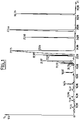
- compositions were discovered after detailed analysis of the chemical compositions surrounding the shoulders to the ears of a cat with a sterile compress and analyzing the chemical compositions of the secretions via gas chromatography/mass spectroscopy (GC/MS) and single ion monitoring(SIM).
- GC/MS gas chromatography/mass spectroscopy
- SIM single ion monitoring
- Cat samples were taken from the skin of the cat between the shoulder blades and between the ears by rubbing a compress for two minutes.
- T0 time zero
- T14 day 14
- T28 half of the zone from the shoulder blades to the head was rubbed.
- the compress was then immediately placed in a flask and 4.0 g of dichloromethane was added. With the use of a glass pipette the solvent was collected and the solvent was squirted over the compress. The process was repeated five times. At the end of the fifth washing a sample was collected for chromatographical analysis.
- GC/MS gas chromatography/mass spectroscopy
- EI+ gas chromatography/mass spectroscopy
- the GC/MS analysis was performed at day 0(T0), at day 14(T14) and at day 28(T28).
- the Single Ion Monitoring technique was used to focus the detection uniquely on the fragments of the molecules that were sought, which were unidentified but had retention times of 16.25 and 18.71.Single ion monitoring was also performed at day 0T0), at day 14(T14) and at day 28(T28).
- the cat appeasing pheromone is constituted of between 15% to 25% (w%/w%) of methyl palmitate, between 10% to 27% (w%/w%) of methyl linoleate, between 25% to 35% (w%/w%) of methyl oleate, between 5% to 15% (w%/w%) of methyl stearate 5% to 15% (w%/w%) of methyl laurate and between 5% to 15% (w%/w%) of methyl myristate.
- Phase 0 was to obtain the sixteen cats and treat them with either the placebo or the cat appeasing pheromone (CAP) and lasted 10 minutes.
- CAP cat appeasing pheromone
- Each experiment was performed using two cats each time. The two cats were placed in two different cages and placed in a corridor. The corridor was 5 meters in length and 1.80 meters in width. The cages were then opened and the cats were left free to roam in the corridor for 5 minutes and their movements were observed during Phase 1.
- Phase 2 a preconflict period was observed in which the cats were left alone in the corridor but were observed for 5 minutes.
- Phase 3 a conflict of interest was introduced in the corridor consisting of a bowl of food. This bowl was introduced in the middle of the corridor and the cats were observed.
- Phase 4 was the start of the postconlict period. Phases 3 and 4 were observed for 5 minutes.
- Phase 5 the cat food was removed and the cats were placed in their respective cages and observed for 5 minutes.
- the entire experiment lasted a total of 30 minutes and was filmed. It was repeated twenty-four times using different cats. There were two different observers for this example.
- the value of rho was between 0.4 and 0.7 thus only a moderate correlation between the two observers.
- the liaison between the two observers was substantial and one cannot conclude with certainty that there was agreement between the two observers.
- Example 3 A second set of testing was performed as in Example 3. Nine tests were performed.
- the value of rho was between 0.4 and 0.7 thus only a moderate correlation between the two observers.
- the liaison between the two observers was substantial and one cannot conclude with certainty that there was agreement between the two observers and also the difference was non-significant.
Landscapes
- Health & Medical Sciences (AREA)
- Life Sciences & Earth Sciences (AREA)
- Chemical & Material Sciences (AREA)
- Veterinary Medicine (AREA)
- Public Health (AREA)
- Animal Behavior & Ethology (AREA)
- General Health & Medical Sciences (AREA)
- Pharmacology & Pharmacy (AREA)
- Medicinal Chemistry (AREA)
- Epidemiology (AREA)
- Engineering & Computer Science (AREA)
- Zoology (AREA)
- Emergency Medicine (AREA)
- Biomedical Technology (AREA)
- Chemical Kinetics & Catalysis (AREA)
- General Chemical & Material Sciences (AREA)
- Endocrinology (AREA)
- Biotechnology (AREA)
- Cell Biology (AREA)
- Developmental Biology & Embryology (AREA)
- Immunology (AREA)
- Virology (AREA)
- Oil, Petroleum & Natural Gas (AREA)
- Dermatology (AREA)
- Bioinformatics & Cheminformatics (AREA)
- Neurology (AREA)
- Neurosurgery (AREA)
- Nuclear Medicine, Radiotherapy & Molecular Imaging (AREA)
- Organic Chemistry (AREA)
- Wood Science & Technology (AREA)
- Acyclic And Carbocyclic Compounds In Medicinal Compositions (AREA)
- Medicinal Preparation (AREA)
- Agricultural Chemicals And Associated Chemicals (AREA)
- Fodder In General (AREA)
- Steroid Compounds (AREA)
- Feed For Specific Animals (AREA)
Priority Applications (3)
| Application Number | Priority Date | Filing Date | Title |
|---|---|---|---|
| SM20220313T SMT202200313T1 (it) | 2014-03-18 | 2015-03-17 | Feromone calmante per gatti |
| SI201531863T SI3119410T1 (sl) | 2014-03-18 | 2015-03-17 | Feromon za pomirjanje mačk |
| HRP20220957TT HRP20220957T1 (hr) | 2014-03-18 | 2015-03-17 | Feromon za umirivanje mačaka |
Applications Claiming Priority (2)
| Application Number | Priority Date | Filing Date | Title |
|---|---|---|---|
| US201461954771P | 2014-03-18 | 2014-03-18 | |
| PCT/IB2015/000495 WO2015140631A1 (en) | 2014-03-18 | 2015-03-17 | Cat appeasing pheromone |
Publications (2)
| Publication Number | Publication Date |
|---|---|
| EP3119410A1 EP3119410A1 (en) | 2017-01-25 |
| EP3119410B1 true EP3119410B1 (en) | 2022-05-04 |
Family
ID=53385673
Family Applications (1)
| Application Number | Title | Priority Date | Filing Date |
|---|---|---|---|
| EP15728593.3A Active EP3119410B1 (en) | 2014-03-18 | 2015-03-17 | Cat appeasing pheromone |
Country Status (22)
| Country | Link |
|---|---|
| US (1) | US10258594B2 (https=) |
| EP (1) | EP3119410B1 (https=) |
| JP (1) | JP6629286B2 (https=) |
| CN (2) | CN114732810A (https=) |
| AU (1) | AU2015233067B2 (https=) |
| CA (1) | CA2943080C (https=) |
| CL (1) | CL2016002363A1 (https=) |
| CY (1) | CY1125380T1 (https=) |
| DK (1) | DK3119410T3 (https=) |
| ES (1) | ES2923675T3 (https=) |
| HR (1) | HRP20220957T1 (https=) |
| HU (1) | HUE059637T2 (https=) |
| LT (1) | LT3119410T (https=) |
| MX (1) | MX2016012112A (https=) |
| PE (1) | PE20161402A1 (https=) |
| PL (1) | PL3119410T3 (https=) |
| PT (1) | PT3119410T (https=) |
| RU (1) | RU2671858C2 (https=) |
| SI (1) | SI3119410T1 (https=) |
| SM (1) | SMT202200313T1 (https=) |
| WO (1) | WO2015140631A1 (https=) |
| ZA (1) | ZA201606607B (https=) |
Families Citing this family (7)
| Publication number | Priority date | Publication date | Assignee | Title |
|---|---|---|---|---|
| CN110917241A (zh) * | 2019-12-13 | 2020-03-27 | 苏州弗艾柏生物科技有限公司 | 一种猫安抚信息素及其用途 |
| FR3117731A1 (fr) * | 2020-12-21 | 2022-06-24 | Virbac | Dispositifs portables pour animaux de compagnie avec diffusion passive de compositions sémiochimiques |
| CN112826846A (zh) * | 2020-12-31 | 2021-05-25 | 武汉研欣生物科技有限公司 | 猫用安抚信息素及其制备方法与应用 |
| FR3119315B1 (fr) | 2021-02-02 | 2022-12-30 | Virbac | « gel diffuseur de pheromones » |
| CN115282128B (zh) * | 2022-08-02 | 2024-03-19 | 上海弗艾柏生物科技有限公司 | 猫面部信息素凝胶球及其制备方法 |
| CN116763796B (zh) * | 2023-06-20 | 2024-07-05 | 咪咪聊(武汉)生物科技有限公司 | 一种猫用信息素及猫用信息素混合物的制备方法和应用 |
| CN120938981A (zh) * | 2025-10-20 | 2025-11-14 | 宁波三生生物科技股份有限公司 | 一种信息素组合物及其应用 |
Family Cites Families (11)
| Publication number | Priority date | Publication date | Assignee | Title |
|---|---|---|---|---|
| US6426333B1 (en) | 1996-09-19 | 2002-07-30 | Merial | Spot-on formulations for combating parasites |
| DE69512509T2 (de) | 1995-02-03 | 2000-05-31 | Fideline, Le Rieu Neuf | Eigenschaften von Gesichtpheromonen von Katzen |
| ES2198661T3 (es) * | 1998-01-21 | 2004-02-01 | Fideline | Composiciones que contienen feromonas para disminuir el estres, la ansiedad y la agresividad en los cerdos. |
| US6054481A (en) * | 1998-01-21 | 2000-04-25 | Fideline | Pig appeasing pheromones for enhancing weight gain in a mammal |
| FR2795960B1 (fr) | 1999-07-05 | 2001-10-19 | Sanofi Elf | Microemulsions stables pour l'administration d'acides gras a l'homme ou a l'animal, et utilisation de ces microemulsions |
| JP2003313104A (ja) | 2002-04-22 | 2003-11-06 | Nippon Kayaku Co Ltd | 動物の外部寄生虫駆除用スポットオン剤 |
| ATE468123T1 (de) | 2002-06-19 | 2010-06-15 | Fideline | Beruhigende vogel-pheromone zur verminderung von stress, angst und aggressivität |
| DE60332635D1 (de) | 2002-06-19 | 2010-07-01 | Fideline Le Rieu Neuf | Beruhigende vogel-pheromone zur verminderung von stress, angst und aggressivität |
| ATE534373T1 (de) | 2003-10-10 | 2011-12-15 | Antares Pharma Ipl Ag | Transdermale pharmazeutische formulierung zur minimierung von rückständen auf der haut |
| FR2931676B1 (fr) | 2008-05-30 | 2011-01-14 | Ceva Sante Animale | Nouveaux modes d'administration d'un melange d'acides gras pour le traitement de mammiferes non humains |
| AU2010339727A1 (en) | 2009-12-21 | 2012-08-02 | Sergeant's Pet Care Products, Inc. | Pheromone compositions and methods of use |
-
2015
- 2015-03-17 ES ES15728593T patent/ES2923675T3/es active Active
- 2015-03-17 US US15/127,256 patent/US10258594B2/en active Active
- 2015-03-17 EP EP15728593.3A patent/EP3119410B1/en active Active
- 2015-03-17 LT LTEPPCT/IB2015/000495T patent/LT3119410T/lt unknown
- 2015-03-17 JP JP2017500454A patent/JP6629286B2/ja active Active
- 2015-03-17 SI SI201531863T patent/SI3119410T1/sl unknown
- 2015-03-17 PE PE2016001646A patent/PE20161402A1/es unknown
- 2015-03-17 PT PT157285933T patent/PT3119410T/pt unknown
- 2015-03-17 HR HRP20220957TT patent/HRP20220957T1/hr unknown
- 2015-03-17 WO PCT/IB2015/000495 patent/WO2015140631A1/en not_active Ceased
- 2015-03-17 PL PL15728593.3T patent/PL3119410T3/pl unknown
- 2015-03-17 CA CA2943080A patent/CA2943080C/en active Active
- 2015-03-17 SM SM20220313T patent/SMT202200313T1/it unknown
- 2015-03-17 CN CN202210139577.5A patent/CN114732810A/zh active Pending
- 2015-03-17 CN CN201580022206.7A patent/CN106456590A/zh active Pending
- 2015-03-17 DK DK15728593.3T patent/DK3119410T3/da active
- 2015-03-17 HU HUE15728593A patent/HUE059637T2/hu unknown
- 2015-03-17 MX MX2016012112A patent/MX2016012112A/es active IP Right Grant
- 2015-03-17 RU RU2016137349A patent/RU2671858C2/ru active
- 2015-03-17 AU AU2015233067A patent/AU2015233067B2/en active Active
-
2016
- 2016-09-20 CL CL2016002363A patent/CL2016002363A1/es unknown
- 2016-09-23 ZA ZA2016/06607A patent/ZA201606607B/en unknown
-
2022
- 2022-07-25 CY CY20221100501T patent/CY1125380T1/el unknown
Also Published As
| Publication number | Publication date |
|---|---|
| SI3119410T1 (sl) | 2022-10-28 |
| AU2015233067A1 (en) | 2016-10-20 |
| US10258594B2 (en) | 2019-04-16 |
| RU2016137349A3 (https=) | 2018-04-25 |
| EP3119410A1 (en) | 2017-01-25 |
| HUE059637T2 (hu) | 2022-12-28 |
| PL3119410T3 (pl) | 2022-09-12 |
| WO2015140631A1 (en) | 2015-09-24 |
| PT3119410T (pt) | 2022-07-22 |
| HRP20220957T1 (hr) | 2022-10-28 |
| US20180169054A1 (en) | 2018-06-21 |
| CN114732810A (zh) | 2022-07-12 |
| PE20161402A1 (es) | 2016-12-29 |
| CY1125380T1 (el) | 2025-05-09 |
| CL2016002363A1 (es) | 2017-07-21 |
| CN106456590A (zh) | 2017-02-22 |
| MX2016012112A (es) | 2017-04-06 |
| AU2015233067B2 (en) | 2020-10-22 |
| CA2943080A1 (en) | 2015-09-24 |
| JP2017508814A (ja) | 2017-03-30 |
| BR112016021430A2 (pt) | 2017-08-15 |
| RU2016137349A (ru) | 2018-04-18 |
| DK3119410T3 (da) | 2022-08-08 |
| ZA201606607B (en) | 2019-12-18 |
| ES2923675T3 (es) | 2022-09-29 |
| NZ724716A (en) | 2022-03-25 |
| CA2943080C (en) | 2023-01-17 |
| SMT202200313T1 (it) | 2022-09-14 |
| LT3119410T (lt) | 2022-08-25 |
| RU2671858C2 (ru) | 2018-11-07 |
| JP6629286B2 (ja) | 2020-01-15 |
Similar Documents
| Publication | Publication Date | Title |
|---|---|---|
| EP3119410B1 (en) | Cat appeasing pheromone | |
| DE69922633T2 (de) | Pheromone enthaltende Zusammensetzung zur Minderung von Stress, Angst und Streitsucht bei Schweinen | |
| JP3886146B2 (ja) | 猫の顔性フェロモンの特性 | |
| JP6055905B2 (ja) | 抗微生物調合物の局所的使用 | |
| KR101951915B1 (ko) | 암컷 돼지에서 번식을 자극하기 위한 페로몬 조성물 및 사용 방법 | |
| JP6814728B2 (ja) | ネコとの社会的対立を減少させるための情報化学物質組成物 | |
| EP2470006B1 (fr) | Utilisation d'une microemulsion pour lutter contre les poux | |
| EP3457847B1 (en) | A lice killing agent | |
| JP2019085339A (ja) | D−chiro−イノシトールを含む組成物 | |
| EP3724351B1 (en) | Pheromone compositions for use in stimulating early onset of estrus in breeding peri-pubertal suids | |
| TW201400020A (zh) | 點塗製劑 | |
| NZ724716B2 (en) | Cat appeasing pheromone | |
| JPWO2015064681A1 (ja) | 外用組成物 | |
| BR112016021430B1 (pt) | Composição tópica com feromônios para o tratamento de stress, ansiedade, agressividade e facilitação social para gatos | |
| WO2017177433A1 (zh) | 一种用于杀灭动物体外寄生虫的药物组合物及其制备方法和用途 | |
| US20250319000A1 (en) | Oil-in-water emulsion comprising a semiochemical composition, suitable for administration in the form of a cream | |
| WO2025210208A1 (en) | Oil-in-water emulsion comprising a semiochemical composition, suitable for administration in the form of a cream | |
| DE4129759A1 (de) | Verfahren zur gewinnung und herstellung zootechnischer mittel fuer die anwendung in der schafzucht |
Legal Events
| Date | Code | Title | Description |
|---|---|---|---|
| REG | Reference to a national code |
Ref country code: HR Ref legal event code: TUEP Ref document number: P20220957 Country of ref document: HR |
|
| STAA | Information on the status of an ep patent application or granted ep patent |
Free format text: STATUS: THE INTERNATIONAL PUBLICATION HAS BEEN MADE |
|
| PUAI | Public reference made under article 153(3) epc to a published international application that has entered the european phase |
Free format text: ORIGINAL CODE: 0009012 |
|
| STAA | Information on the status of an ep patent application or granted ep patent |
Free format text: STATUS: REQUEST FOR EXAMINATION WAS MADE |
|
| 17P | Request for examination filed |
Effective date: 20161014 |
|
| AK | Designated contracting states |
Kind code of ref document: A1 Designated state(s): AL AT BE BG CH CY CZ DE DK EE ES FI FR GB GR HR HU IE IS IT LI LT LU LV MC MK MT NL NO PL PT RO RS SE SI SK SM TR |
|
| AX | Request for extension of the european patent |
Extension state: BA ME |
|
| RAP1 | Party data changed (applicant data changed or rights of an application transferred) |
Owner name: INSTITUT DE RECHERCHE EN SEMIOCHIMIE ET ETHOLOGIE |
|
| DAV | Request for validation of the european patent (deleted) | ||
| DAX | Request for extension of the european patent (deleted) | ||
| STAA | Information on the status of an ep patent application or granted ep patent |
Free format text: STATUS: EXAMINATION IS IN PROGRESS |
|
| 17Q | First examination report despatched |
Effective date: 20180502 |
|
| TPAC | Observations filed by third parties |
Free format text: ORIGINAL CODE: EPIDOSNTIPA |
|
| TPAC | Observations filed by third parties |
Free format text: ORIGINAL CODE: EPIDOSNTIPA |
|
| TPAC | Observations filed by third parties |
Free format text: ORIGINAL CODE: EPIDOSNTIPA |
|
| GRAP | Despatch of communication of intention to grant a patent |
Free format text: ORIGINAL CODE: EPIDOSNIGR1 |
|
| STAA | Information on the status of an ep patent application or granted ep patent |
Free format text: STATUS: GRANT OF PATENT IS INTENDED |
|
| INTG | Intention to grant announced |
Effective date: 20220104 |
|
| GRAS | Grant fee paid |
Free format text: ORIGINAL CODE: EPIDOSNIGR3 |
|
| GRAA | (expected) grant |
Free format text: ORIGINAL CODE: 0009210 |
|
| STAA | Information on the status of an ep patent application or granted ep patent |
Free format text: STATUS: THE PATENT HAS BEEN GRANTED |
|
| AK | Designated contracting states |
Kind code of ref document: B1 Designated state(s): AL AT BE BG CH CY CZ DE DK EE ES FI FR GB GR HR HU IE IS IT LI LT LU LV MC MK MT NL NO PL PT RO RS SE SI SK SM TR |
|
| REG | Reference to a national code |
Ref country code: GB Ref legal event code: FG4D |
|
| REG | Reference to a national code |
Ref country code: CH Ref legal event code: EP |
|
| REG | Reference to a national code |
Ref country code: AT Ref legal event code: REF Ref document number: 1488308 Country of ref document: AT Kind code of ref document: T Effective date: 20220515 |
|
| REG | Reference to a national code |
Ref country code: DE Ref legal event code: R096 Ref document number: 602015078675 Country of ref document: DE |
|
| REG | Reference to a national code |
Ref country code: IE Ref legal event code: FG4D |
|
| REG | Reference to a national code |
Ref country code: PT Ref legal event code: SC4A Ref document number: 3119410 Country of ref document: PT Date of ref document: 20220722 Kind code of ref document: T Free format text: AVAILABILITY OF NATIONAL TRANSLATION Effective date: 20220719 |
|
| REG | Reference to a national code |
Ref country code: RO Ref legal event code: EPE |
|
| REG | Reference to a national code |
Ref country code: NL Ref legal event code: FP |
|
| REG | Reference to a national code |
Ref country code: DK Ref legal event code: T3 Effective date: 20220803 |
|
| REG | Reference to a national code |
Ref country code: FI Ref legal event code: FGE |
|
| REG | Reference to a national code |
Ref country code: SE Ref legal event code: TRGR |
|
| REG | Reference to a national code |
Ref country code: NO Ref legal event code: T2 Effective date: 20220504 |
|
| REG | Reference to a national code |
Ref country code: ES Ref legal event code: FG2A Ref document number: 2923675 Country of ref document: ES Kind code of ref document: T3 Effective date: 20220929 |
|
| REG | Reference to a national code |
Ref country code: EE Ref legal event code: FG4A Ref document number: E022549 Country of ref document: EE Effective date: 20220801 |
|
| REG | Reference to a national code |
Ref country code: GR Ref legal event code: EP Ref document number: 20220401502 Country of ref document: GR Effective date: 20221010 |
|
| REG | Reference to a national code |
Ref country code: HR Ref legal event code: T1PR Ref document number: P20220957 Country of ref document: HR Ref country code: HU Ref legal event code: HC9C Owner name: INSTITUT DE RECHERCHE EN SEMIOCHIMIE ET ETHOLOGIE APPLIQUEE, FR |
|
| PG25 | Lapsed in a contracting state [announced via postgrant information from national office to epo] |
Ref country code: RS Free format text: LAPSE BECAUSE OF FAILURE TO SUBMIT A TRANSLATION OF THE DESCRIPTION OR TO PAY THE FEE WITHIN THE PRESCRIBED TIME-LIMIT Effective date: 20220504 |
|
| REG | Reference to a national code |
Ref country code: HU Ref legal event code: AG4A Ref document number: E059637 Country of ref document: HU |
|
| REG | Reference to a national code |
Ref country code: DE Ref legal event code: R097 Ref document number: 602015078675 Country of ref document: DE |
|
| PLBE | No opposition filed within time limit |
Free format text: ORIGINAL CODE: 0009261 |
|
| STAA | Information on the status of an ep patent application or granted ep patent |
Free format text: STATUS: NO OPPOSITION FILED WITHIN TIME LIMIT |
|
| REG | Reference to a national code |
Ref country code: HR Ref legal event code: ODRP Ref document number: P20220957 Country of ref document: HR Payment date: 20230221 Year of fee payment: 9 |
|
| 26N | No opposition filed |
Effective date: 20230207 |
|
| P01 | Opt-out of the competence of the unified patent court (upc) registered |
Effective date: 20230529 |
|
| REG | Reference to a national code |
Ref country code: AT Ref legal event code: UEP Ref document number: 1488308 Country of ref document: AT Kind code of ref document: T Effective date: 20220504 |
|
| REG | Reference to a national code |
Ref country code: HR Ref legal event code: ODRP Ref document number: P20220957 Country of ref document: HR Payment date: 20240221 Year of fee payment: 10 |
|
| PGFP | Annual fee paid to national office [announced via postgrant information from national office to epo] |
Ref country code: LU Payment date: 20250226 Year of fee payment: 11 |
|
| PGFP | Annual fee paid to national office [announced via postgrant information from national office to epo] |
Ref country code: MC Payment date: 20250226 Year of fee payment: 11 |
|
| PGFP | Annual fee paid to national office [announced via postgrant information from national office to epo] |
Ref country code: DE Payment date: 20250313 Year of fee payment: 11 Ref country code: HR Payment date: 20250326 Year of fee payment: 11 Ref country code: IS Payment date: 20250219 Year of fee payment: 11 |
|
| REG | Reference to a national code |
Ref country code: HR Ref legal event code: ODRP Ref document number: P20220957 Country of ref document: HR Payment date: 20250326 Year of fee payment: 11 |
|
| PGFP | Annual fee paid to national office [announced via postgrant information from national office to epo] |
Ref country code: FI Payment date: 20250224 Year of fee payment: 11 Ref country code: RO Payment date: 20250227 Year of fee payment: 11 Ref country code: SM Payment date: 20250326 Year of fee payment: 11 Ref country code: LT Payment date: 20250225 Year of fee payment: 11 |
|
| PGFP | Annual fee paid to national office [announced via postgrant information from national office to epo] |
Ref country code: BG Payment date: 20250226 Year of fee payment: 11 |
|
| PGFP | Annual fee paid to national office [announced via postgrant information from national office to epo] |
Ref country code: NO Payment date: 20250228 Year of fee payment: 11 |
|
| PGFP | Annual fee paid to national office [announced via postgrant information from national office to epo] |
Ref country code: LV Payment date: 20250225 Year of fee payment: 11 Ref country code: EE Payment date: 20250225 Year of fee payment: 11 Ref country code: SI Payment date: 20250225 Year of fee payment: 11 |
|
| PGFP | Annual fee paid to national office [announced via postgrant information from national office to epo] |
Ref country code: IT Payment date: 20250310 Year of fee payment: 11 Ref country code: SK Payment date: 20250221 Year of fee payment: 11 |
|
| PGFP | Annual fee paid to national office [announced via postgrant information from national office to epo] |
Ref country code: AL Payment date: 20250321 Year of fee payment: 11 |
|
| PGFP | Annual fee paid to national office [announced via postgrant information from national office to epo] |
Ref country code: ES Payment date: 20250410 Year of fee payment: 11 |
|
| PGFP | Annual fee paid to national office [announced via postgrant information from national office to epo] |
Ref country code: CH Payment date: 20250401 Year of fee payment: 11 |
|
| PGFP | Annual fee paid to national office [announced via postgrant information from national office to epo] |
Ref country code: CY Payment date: 20250220 Year of fee payment: 11 |
|
| PGFP | Annual fee paid to national office [announced via postgrant information from national office to epo] |
Ref country code: MK Payment date: 20250220 Year of fee payment: 11 |
|
| PGFP | Annual fee paid to national office [announced via postgrant information from national office to epo] |
Ref country code: SE Payment date: 20260330 Year of fee payment: 12 |
|
| PGFP | Annual fee paid to national office [announced via postgrant information from national office to epo] |
Ref country code: GB Payment date: 20260331 Year of fee payment: 12 |
|
| PGFP | Annual fee paid to national office [announced via postgrant information from national office to epo] |
Ref country code: IE Payment date: 20260330 Year of fee payment: 12 Ref country code: DK Payment date: 20260330 Year of fee payment: 12 |
|
| PGFP | Annual fee paid to national office [announced via postgrant information from national office to epo] |
Ref country code: AT Payment date: 20260401 Year of fee payment: 12 |
|
| PGFP | Annual fee paid to national office [announced via postgrant information from national office to epo] |
Ref country code: BE Payment date: 20260331 Year of fee payment: 12 |
|
| PGFP | Annual fee paid to national office [announced via postgrant information from national office to epo] |
Ref country code: HU Payment date: 20260317 Year of fee payment: 12 Ref country code: NL Payment date: 20260331 Year of fee payment: 12 |
|
| PGFP | Annual fee paid to national office [announced via postgrant information from national office to epo] |
Ref country code: FR Payment date: 20260331 Year of fee payment: 12 |
|
| PGFP | Annual fee paid to national office [announced via postgrant information from national office to epo] |
Ref country code: TR Payment date: 20260316 Year of fee payment: 12 |
|
| PGFP | Annual fee paid to national office [announced via postgrant information from national office to epo] |
Ref country code: PT Payment date: 20260313 Year of fee payment: 12 Ref country code: CZ Payment date: 20260316 Year of fee payment: 12 |
|
| PGFP | Annual fee paid to national office [announced via postgrant information from national office to epo] |
Ref country code: GR Payment date: 20260331 Year of fee payment: 12 Ref country code: PL Payment date: 20260316 Year of fee payment: 12 |