EP3113266B1 - Methode zur überprüfung der verbleibenden kapazität einer lithium-primärbatterie - Google Patents
Methode zur überprüfung der verbleibenden kapazität einer lithium-primärbatterie Download PDFInfo
- Publication number
- EP3113266B1 EP3113266B1 EP15754849.6A EP15754849A EP3113266B1 EP 3113266 B1 EP3113266 B1 EP 3113266B1 EP 15754849 A EP15754849 A EP 15754849A EP 3113266 B1 EP3113266 B1 EP 3113266B1
- Authority
- EP
- European Patent Office
- Prior art keywords
- battery
- electrolyte
- socl
- lithium
- sulfonyl
- Prior art date
- Legal status (The legal status is an assumption and is not a legal conclusion. Google has not performed a legal analysis and makes no representation as to the accuracy of the status listed.)
- Active
Links
Images

Classifications
-
- H—ELECTRICITY
- H01—ELECTRIC ELEMENTS
- H01M—PROCESSES OR MEANS, e.g. BATTERIES, FOR THE DIRECT CONVERSION OF CHEMICAL ENERGY INTO ELECTRICAL ENERGY
- H01M6/00—Primary cells; Manufacture thereof
- H01M6/24—Cells comprising two different electrolytes
-
- H—ELECTRICITY
- H01—ELECTRIC ELEMENTS
- H01M—PROCESSES OR MEANS, e.g. BATTERIES, FOR THE DIRECT CONVERSION OF CHEMICAL ENERGY INTO ELECTRICAL ENERGY
- H01M4/00—Electrodes
- H01M4/02—Electrodes composed of, or comprising, active material
- H01M4/36—Selection of substances as active materials, active masses, active liquids
- H01M4/368—Liquid depolarisers
-
- H—ELECTRICITY
- H01—ELECTRIC ELEMENTS
- H01M—PROCESSES OR MEANS, e.g. BATTERIES, FOR THE DIRECT CONVERSION OF CHEMICAL ENERGY INTO ELECTRICAL ENERGY
- H01M4/00—Electrodes
- H01M4/02—Electrodes composed of, or comprising, active material
- H01M4/36—Selection of substances as active materials, active masses, active liquids
- H01M4/38—Selection of substances as active materials, active masses, active liquids of elements or alloys
- H01M4/381—Alkaline or alkaline earth metals elements
- H01M4/382—Lithium
-
- H—ELECTRICITY
- H01—ELECTRIC ELEMENTS
- H01M—PROCESSES OR MEANS, e.g. BATTERIES, FOR THE DIRECT CONVERSION OF CHEMICAL ENERGY INTO ELECTRICAL ENERGY
- H01M4/00—Electrodes
- H01M4/02—Electrodes composed of, or comprising, active material
- H01M4/36—Selection of substances as active materials, active masses, active liquids
- H01M4/58—Selection of substances as active materials, active masses, active liquids of inorganic compounds other than oxides or hydroxides, e.g. sulfides, selenides, tellurides, halogenides or LiCoFy; of polyanionic structures, e.g. phosphates, silicates or borates
- H01M4/583—Carbonaceous material, e.g. graphite-intercalation compounds or CFx
-
- H—ELECTRICITY
- H01—ELECTRIC ELEMENTS
- H01M—PROCESSES OR MEANS, e.g. BATTERIES, FOR THE DIRECT CONVERSION OF CHEMICAL ENERGY INTO ELECTRICAL ENERGY
- H01M4/00—Electrodes
- H01M4/02—Electrodes composed of, or comprising, active material
- H01M4/36—Selection of substances as active materials, active masses, active liquids
- H01M4/58—Selection of substances as active materials, active masses, active liquids of inorganic compounds other than oxides or hydroxides, e.g. sulfides, selenides, tellurides, halogenides or LiCoFy; of polyanionic structures, e.g. phosphates, silicates or borates
- H01M4/583—Carbonaceous material, e.g. graphite-intercalation compounds or CFx
- H01M4/587—Carbonaceous material, e.g. graphite-intercalation compounds or CFx for inserting or intercalating light metals
-
- H—ELECTRICITY
- H01—ELECTRIC ELEMENTS
- H01M—PROCESSES OR MEANS, e.g. BATTERIES, FOR THE DIRECT CONVERSION OF CHEMICAL ENERGY INTO ELECTRICAL ENERGY
- H01M6/00—Primary cells; Manufacture thereof
- H01M6/14—Cells with non-aqueous electrolyte
-
- H—ELECTRICITY
- H01—ELECTRIC ELEMENTS
- H01M—PROCESSES OR MEANS, e.g. BATTERIES, FOR THE DIRECT CONVERSION OF CHEMICAL ENERGY INTO ELECTRICAL ENERGY
- H01M6/00—Primary cells; Manufacture thereof
- H01M6/50—Methods or arrangements for servicing or maintenance, e.g. for maintaining operating temperature
- H01M6/5044—Cells or batteries structurally combined with cell condition indicating means
-
- H—ELECTRICITY
- H01—ELECTRIC ELEMENTS
- H01M—PROCESSES OR MEANS, e.g. BATTERIES, FOR THE DIRECT CONVERSION OF CHEMICAL ENERGY INTO ELECTRICAL ENERGY
- H01M2300/00—Electrolytes
- H01M2300/0017—Non-aqueous electrolytes
- H01M2300/002—Inorganic electrolyte
Definitions
- the present invention relates to a lithium primary battery, and more particularly, to a lithium primary battery using a composite electrolyte, wherein, in order to maximize advantages of a lithium thionyl battery and a lithium sulfonyl battery, electrolytes of the two batteries are mixed to proceed two-stage discharging, thereby making it possible to check the battery usage.
- a lithium thionyl (Li/SOCl 2 ) battery has characteristics such as a high operation voltage of 3.5 V, a high capacity, and a low self-discharging rate of less than 1% per year, and a freezing point of a thionyl (SOCl 2 ) electrolyte is -105°C, which allows the battery to be used within a broad range of temperature from -55°C to 85°C.
- the lithium thionyl battery has been used as a primary battery power source of a device that requires characteristics of long-term use for 10 years or more, but the battery has a disadvantage of rapid battery capacity decrease under the condition of a high current.
- a driving voltage of the lithium sulfonyl (Li/SO 2 Cl 2 ) battery is about 3.8 V, which has an advantage of maintaining a discharging capacity under the conditions of a driving voltage and a current higher than those of a lithium thionyl (Li/SOCl 2 ) battery, rapid capacity decrease may occur at a low temperature due to a physical property, where a freezing point of a sulfonyl (SO 2 Cl 2 ) electrolyte is -54°C, and thus environment for using the battery is limited by a temperature range of -20°C to 85°C.
- a method for checking the remaining capacity of a lithium primary battery in use comprising the steps of:
- a lithium primary battery using a composite electrolyte uses the composite electrolyte prepared by mixing electrolytes of a lithium sulfonyl (Li/SO 2 Cl 2 ) battery and a lithium thionyl (Li/SOCl 2 ) battery to proceed stage-wise discharging including maintaining a battery voltage at 3.8 V by the sulfonyl (SO 2 Cl 2 ) electrolyte during an initial operation, and then maintaining a battery voltage at 3.5 V by the thionyl (SOCl 2 ) electrolyte after consuming the sulfonyl (SO 2 Cl 2 ) electrolyte, thereby making it possible to check the battery usage.
- the lithium primary battery using a composite electrolyte has two-stage discharging voltages, which makes it possible to check a remaining capacity of the battery in use, and thus the time for battery replacement may be recognized as well as a problem of rapid capacity decrease at a low temperature, which is a disadvantage of a lithium sulfonyl (Li/SO 2 Cl 2 ) battery, may be supplemented while improving a discharging capacity, which is another disadvantage of a lithium sulfonyl (Li/SO 2 Cl 2 ) battery.
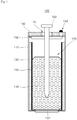
- Fig. 1 is a cross-sectional view of a lithium primary battery 100 using a composite electrolyte according to an embodiment of the present invention.
- the lithium primary battery 100 using a composite electrolyte may be of a battery type having a bobbin structure that includes a battery case 110, a composite electrolyte 120, a lithium anode 130, a cathode 140, and a header pin 160, but it is not limited thereto.
- the lithium primary battery 100 using a composite electrolyte may be of a battery type having a spiral structure that is prepared by winding the lithium anode 130 and the cathode 140 in a jelly-roll shape, and the composite electrolyte 120 may be used the same in this case.
- the composite electrolyte 120 is contained in the battery case 110.
- the composite electrolyte 120 is prepared by mixing a sulfonyl (SO 2 Cl 2 ) electrolyte and a thionyl (SOCl 2 ) electrolyte.
- SO 2 Cl 2 sulfonyl
- SOCl 2 thionyl
- the lithium anode 130 having a bobbin shape is attached on an inner wall of the battery case 110.
- the lithium primary battery 100 having a bobbin shape is prepared by attaching the lithium anode 130 on the inner wall of the battery case 110, inserting each of a lower insulator 152 and a side-wall insulator 154 into the battery case 110, additionally inserting the lithium anode 130 and an upper insulator 156, inserting the header pin 160 to an insulating plate 190 bound to glass 170 to adhere to the battery case 110, and then welding the resultant.
- the composite electrolyte 120 is contained in the battery case 110, and then the battery case 110 is finally sealed by welding with SUS balls 180, as a finishing material.
- the cathode 150 may be formed of a material including carbon and a binder, and polytetrafluoroethylene (PTFE) may be used as the binder, but it is not limited thereto.
- PTFE polytetrafluoroethylene
- the lithium primary battery 100 using a composite electrolyte is characterized in using a mixture of the sulfonyl (SO 2 Cl 2 ) electrolyte and the thionyl (SOCl 2 ) electrolyte as the composite electrolyte 120.
- the composite electrolyte 120 may be prepared by adding the thionyl (SOCl 2 ) electrolyte to the sulfonyl (SO 2 Cl 2 ) electrolyte.
- the composite electrolyte 120 may be prepared by adding the sulfonyl (SO 2 Cl 2 ) electrolyte to the thionyl (SOCl 2 ) electrolyte.
- the composite electrolyte 120 may preferably use the mixture including mixture of the sulfonyl (SO 2 Cl 2 ) electrolyte and the thionyl (SOCl 2 ) electrolyte at a weight ratio ranging from 6:4 to 9:1.
- compositions of the composite electrolyte 120 may be prepared as SO 2 Cl 2 60% + SOCl 2 40%, SO 2 Cl 2 70% + SOCl 2 30%, SO 2 Cl 2 80% + SOCl 2 20%, and SO 2 Cl 2 90% + SOCl 2 10%, respectively.
- a lithium salt used in the composite electrolyte 120 may be formed of at least one selected from lithium aluminum chloride (LiAlCl 4 ) and lithium gallium chloride (LiGaCl 4 ), and a concentration of the lithium salt may be preferably in a range of 0.1 M to 3.0 M.
- the lithium primary battery 100 using a composite electrolyte undergoes a two-stage discharging process that includes maintaining a battery voltage at 3.8 ⁇ 0.2V by the sulfonyl (SO 2 Cl 2 ) electrolyte during an initial operation and maintaining a battery voltage at 3.5 ⁇ 0.2V by the thionyl (SOCl 2 ) electrolyte.
- SO 2 Cl 2 sulfonyl
- SOCl 2 thionyl
- a lithium primary battery using a composite electrolyte uses the composite electrolyte prepared by mixing electrolytes of a lithium sulfonyl (Li/SO 2 Cl 2 ) battery and a lithium thionyl (Li/SOCl 2 ) battery to proceed stage-wise discharging including maintaining a battery voltage at 3.8 V by the sulfonyl (SO 2 Cl 2 ) electrolyte during an initial operation, and then maintaining a battery voltage at 3.5 V by the thionyl (SOCl 2 ) electrolyte after consuming the sulfonyl (SO 2 Cl 2 ) electrolyte, thereby making it possible to check the battery usage.
- the lithium primary battery using a composite electrolyte has two-stage discharging voltages, which makes it possible to check a remaining capacity of the battery in use, and thus the time for battery replacement may be recognized as well as a problem of rapid capacity decrease at a low temperature, which is a disadvantage of a lithium sulfonyl (Li/SO 2 Cl 2 ) battery, may be supplemented while improving a discharging capacity, which is another disadvantage of a lithium sulfonyl (Li/SO 2 Cl 2 ) battery.
- Lithium primary batteries according to Example 1 and Comparative Examples 1 and 2 were prepared under the conditions of electrolyte compositions and lithium salt concentrations shown in Table 1.
- Table 1 Electrolyte Lithium salt concentration Example 1 70% of SO 2 Cl 2 + 30% of SOCl 2 1 M LiAlCl 4 Comparative Example 1 100% of SOCl 2 1 M LiAlCl 4 Comparative Example 2 100% of SO 2 Cl 2 1 M LiAlCl 4
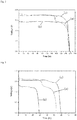
- Table 2 shows the results of evaluation of discharging characteristics of the lithium primary batteries according to Example 1 and Comparative Examples 1 and 2. Also, Fig. 2 is a view representing the results of discharging characteristic tests performed on the batteries prepared according to Example 1 and Comparative Examples 1 and 2 under the conditions including 20°C and a current at an intensity of 1 mA/cm 2 .
- the lithium primary battery according to Example 1 using the composite electrolyte including 70% of SO 2 Cl 2 + 30% of SOCl 2 exhibited graph characteristics of a driving voltage of about 3.8 V, which is one characteristic of a SO 2 Cl 2 battery, until about 70% of a discharging capacity was consumed from the beginning of the discharging process. Then, after performing the discharging process, the battery underwent stage-wise discharging at a voltage of 3.4 V, which is one characteristic of a SOCl 2 battery, and the process ended.
- the lithium thionyl (Li/SOCl 2 ) battery according to Comparative Example 1 using an electrolyte of 100% SOCl 2 exhibited a constant voltage of 3.4 V until the discharging process ended as a characteristic of a general discharging process.
- the lithium sulfonyl (Li/SO 2 Cl 2 ) battery according to Comparative Example 2 using an electrolyte of 100% SO 2 Cl 2 exhibited a constant voltage of 3.8 V until the discharging process ended as a characteristic of a general discharging process.
- the lithium primary battery according to Example 1 had a voltage difference per stage during the discharging process due to the use of the composite electrolyte having a composition of 70% of SO 2 Cl 2 + 30% of SOCl 2 , and thus it has been made possible to check a remaining capacity of the battery when the usage of the battery was about 70%.
- the lithium primary battery of Example 1 showed stage-wise voltage characteristics, and thus the battery usage may be checked along with improvement in a low temperature performance, which is a disadvantage of a lithium sulfonyl (Li/SO 2 Cl 2 ) battery, and high efficiency characteristics, which are disadvantages of the lithium thionyl (Li/SOCl 2 ) battery.
- Fig. 3 is a view representing the results of discharging characteristic tests performed on the batteries prepared according to Example 1 and Comparative Examples 1 and 2 under the conditions including 20°C and a current at an intensity of 5 mA/cm 2 .
- the results show discharging characteristic tests performed with a current at an intensity of 5 mA/cm 2 , that is about 5 times higher than the test condition of Fig. 2 .
- the battery of Example 1 exhibited two stage discharging characteristics due to using the composite electrolyte of 70% of SO 2 Cl 2 + 30% of SOCl 2 , and thus the discharging process was confirmed.
- the discharging time of the lithium primary battery according to Example 1 exhibited a capacity at about 190% level, which implied improvement in high efficiency characteristics, which are disadvantages of the lithium thionyl (Li/SOCl 2 ) battery, and when compared with Comparative Example 2 using the electrolyte of 100% of SO 2 Cl 2 , the lithium primary battery according to Example 1 exhibited a capacity at 95% level.
- Fig. 4 is a view representing the results of discharging characteristic tests performed on the batteries prepared according to Example 1 and Comparative Examples 1 and 2 under the conditions including -30°C and a current at an intensity of 1 mA/cm 2 .
- Fig. 4 shows the results of discharging characteristic tests performed at -30°C and by supplying a current at an intensity of 1 mA/cm 2 .
- the lithium primary battery according to Example 1 using the composite electrolyte having a composition of 70% of SO 2 Cl 2 + 30% of SOCl 2 was discharged while exhibiting two stage voltage characteristics as in the case of Fig. 3 .
- the discharging time of the lithium primary battery according to Example 1 exhibited a capacity at about 110% level, and, when compared with the lithium sulfonyl (Li/SO 2 Cl 2 ) battery using the electrolyte of 100% of SO 2 Cl 2 , the discharging time of the lithium primary battery according to Example 1 exhibited a capacity at about 150% level.
- improvement in low temperature characteristics, which are disadvantages of the lithium sulfonyl (Li/SO 2 Cl 2 ) battery was confirmed.
Landscapes
- Chemical & Material Sciences (AREA)
- Chemical Kinetics & Catalysis (AREA)
- Electrochemistry (AREA)
- General Chemical & Material Sciences (AREA)
- Engineering & Computer Science (AREA)
- Manufacturing & Machinery (AREA)
- Inorganic Chemistry (AREA)
- Materials Engineering (AREA)
- Primary Cells (AREA)
Claims (7)
- Verfahren zur Überprüfung der verbleibenden Kapazität einer Lithium-Primärbatterie in Verwendung, umfassend die folgenden Schritte:a. Bereitstellen einer Lithium-Primärbatterie, die einen Verbundstoff-Elektrolyt anwendet und eine Spulenform aufweist, wobei die Batterie eine Lithium-Anode umfassend ein Metall-Lithium; eine Kathode umfassend ein Kohlenstoffpulver; und einen in einem Batteriefach aufgenommenen Verbundstoff-Elektrolyt umfasst,
wobei der Verbundstoff-Elektrolyt durch Mischen eines Sulfonyl (SO2Cl2)-Elektrolyts und eines Thionyl (SOCl2)-Elektrolyts hergestellt wird, und ein Gewichtsverhältnis des Sulfonyl (SO2Cl2)-Elektrolyts zum Thionyl (SOCl2)-Elektrolyt in dem Verbundstoff-Elektrolyt im Bereich von 6:4 bis 9:1 liegt, wobei die Batterie ferner Zweistufen-Entladespannungen aufweist, welche bei 20 °C und 1 mA/cm2 eine erste Batteriespannung gehalten bei 3,8V±0,2V von dem Sulfonyl (SO2Cl2)-Elektrolyt während einer Inbetriebnahme, und eine zweite Batteriespannung, gefolgt nach der ersten Spannung, gehalten bei 3,5V±0,2V von dem Thionyl (SOCl2)-Elektrolyt, umfasst;b. Initiieren einer Entladung der Batterie;c. Überprüfen des Spannungsniveaus der Batterie; undd. Auswerten der im Schritt c) bereitgestellten Informationen, um die verbleibende Entladekapazität der Batterie zu bestimmen, und, falls die Spannung der zweiten Batteriespannung entspricht, Erkennen, dass die verbleibende Entladekapazität niedrig ist, und dass es Zeit für einen Batteriewechsel ist. - Verfahren zur Überprüfung der verbleibenden Kapazität einer Lithium-Primärbatterie in Verwendung, umfassend die folgenden Schritte:a. Bereitstellen einer Lithium-Primärbatterie, die einen Verbundstoff-Elektrolyt anwendet und eine Spiralform aufweist, wobei die Batterie eine Lithium-Anode umfassend ein Metall-Lithium; eine Kathode umfassend ein Kohlenstoffpulver; und einen in einem Batteriefach aufgenommenen Verbundstoff-Elektrolyt umfasst,
wobei der Verbundstoff-Elektrolyt durch Mischen eines Sulfonyl (SO2Cl2)-Elektrolyts und eines Thionyl (SOCl2)-Elektrolyts hergestellt wird, und ein Gewichtsverhältnis des Sulfonyl (SO2Cl2)-Elektrolyts zum Thionyl (SOCl2)-Elektrolyt in dem Verbundstoff-Elektrolyt im Bereich von 6:4 bis 9:1 liegt, wobei die Batterie ferner Zweistufen-Entladespannungen aufweist, welche bei 20 °C und 1 mA/cm2 eine erste Batteriespannung gehalten bei 3,8V±0,2V von dem Sulfonyl während einer Inbetriebnahme, und eine zweite Batteriespannung, gefolgt nach der ersten Spannung, gehalten bei 3,5V±0,2V von dem Thionyl (SOCl2)-Elektrolyt, umfasst;b. Initiieren einer Entladung der Batterie;c. Überprüfen des Spannungsniveaus der Batterie; undd. Auswerten der im Schritt c) bereitgestellten Informationen, um die verbleibende Entladekapazität der Batterie zu bestimmen, und, falls die Spannung der zweiten Batteriespannung entspricht, Erkennen, dass die verbleibende Entladekapazität niedrig ist, und dass es Zeit für einen Batteriewechsel ist. - Verfahren nach einem der Ansprüche 1 oder 2, wobei, wenn eine verbleibende Menge einer Entladekapazität nach Verwendung von 60 %, 70 %, 80 % und 90 % zu überprüfen ist, Zusammensetzungen des Verbundstoff-Elektrolyts als jeweils SO2Cl2 60 % + SOCl2 40 %, SO2Cl2 70 % + SOCl2 30 %, SO2Cl2 80 % + SOCl2 20 % und SO2Cl2 90 % + SOCl2 10 % hergestellt werden können.
- Verfahren nach einem der Ansprüche 1, 2 oder 3, wobei der Verbundstoff-Elektrolyt als 70 % von SO2Cl2 und 30 % von SOCl2 hergestellt wird, und wobei die verbleibende Kapazität der Batterie im Schritt c) überprüft wird, wenn der Verbrauch der Batterie 70 % beträgt.
- Verfahren nach einem der Ansprüche 1 oder 2, wobei der Verbundstoff-Elektrolyt durch Mischen des Sulfonyl (SO2Cl2)-Elektrolyts und des Thionyl (SOCl2)-Elektrolyts in einem Gewichtsverhältnis im Bereich von 6:4 bis 7:3 hergestellt wird.
- Verfahren nach einem der Ansprüche 1-5, wobei ein Lithiumsalz in dem Verbundstoff-Elektrolyt mindestens ein Lithiumsalz ist, das aus einem Lithiumaluminumchlorid (LiAlCl4) und einem Lithiumgalliumchlorid (LiGaCl4) ausgewählt ist, wobei eine Konzentration des Lithiumsalzes im Bereich von 0,1 M bis 3,0 M liegt.
- Verfahren nach einem der Ansprüche 1-6, wobei der Verbundstoff-Elektrolyt durch direkte Zugabe des Thionyl (SOCl2)-Elektrolyts zum Sulfonyl oder durch direkte Zugabe des Sulfonyl (SO2Cl2)-Elektrolyts zum Thionyl (SOCl2)-Elektrolyt hergestellt wird.
Applications Claiming Priority (2)
| Application Number | Priority Date | Filing Date | Title |
|---|---|---|---|
| KR1020140022333A KR101478217B1 (ko) | 2014-02-26 | 2014-02-26 | 복합 전해액을 이용한 리튬 일차 전지 |
| PCT/KR2015/000438 WO2015130009A1 (ko) | 2014-02-26 | 2015-01-15 | 복합 전해액을 이용한 리튬 일차 전지 |
Publications (3)
| Publication Number | Publication Date |
|---|---|
| EP3113266A1 EP3113266A1 (de) | 2017-01-04 |
| EP3113266A4 EP3113266A4 (de) | 2017-03-01 |
| EP3113266B1 true EP3113266B1 (de) | 2018-05-02 |
Family
ID=52680370
Family Applications (1)
| Application Number | Title | Priority Date | Filing Date |
|---|---|---|---|
| EP15754849.6A Active EP3113266B1 (de) | 2014-02-26 | 2015-01-15 | Methode zur überprüfung der verbleibenden kapazität einer lithium-primärbatterie |
Country Status (5)
| Country | Link |
|---|---|
| US (1) | US9997789B2 (de) |
| EP (1) | EP3113266B1 (de) |
| KR (1) | KR101478217B1 (de) |
| CN (1) | CN105934841A (de) |
| WO (1) | WO2015130009A1 (de) |
Families Citing this family (3)
| Publication number | Priority date | Publication date | Assignee | Title |
|---|---|---|---|---|
| KR101996543B1 (ko) * | 2019-01-02 | 2019-07-04 | 주식회사 비츠로셀 | 출력 특성을 향상시킨 리튬일차전지 및 그 제조 방법 |
| US12087931B2 (en) | 2019-12-23 | 2024-09-10 | Cnpc Usa Corporation | Hybrid battery system with multiple discharge voltage plateaus and greater charge capacity of metal in the negative electrode |
| WO2025005962A1 (en) * | 2023-06-30 | 2025-01-02 | The Board Of Trustees Of The Leland Stanford Junior University | Ultra-low temperature rechargeable li/cl2 batteries with thionyl chloride electrolytes |
Family Cites Families (5)
| Publication number | Priority date | Publication date | Assignee | Title |
|---|---|---|---|---|
| KR100357958B1 (ko) | 2000-05-15 | 2002-10-25 | 삼성에스디아이 주식회사 | 리튬 일차 전지 |
| KR100551002B1 (ko) | 2003-07-18 | 2006-02-13 | 삼성에스디아이 주식회사 | 리튬 설퍼 전지 양극용 도전재, 리튬 설퍼 전지용 양극 및그를 포함하는 리튬 설퍼 전지 |
| KR100945203B1 (ko) | 2009-03-24 | 2010-03-03 | 한국지질자원연구원 | 리튬1차전지 처리방법 |
| KR101112688B1 (ko) * | 2010-03-23 | 2012-02-15 | 주식회사 비츠로셀 | 리튬 전지 |
| CN102290604A (zh) * | 2011-07-30 | 2011-12-21 | 苏州金科发锂电池有限公司 | 一种耐振动、冲击的锂/亚硫酰氯电池 |
-
2014
- 2014-02-26 KR KR1020140022333A patent/KR101478217B1/ko active Active
-
2015
- 2015-01-15 US US15/107,920 patent/US9997789B2/en active Active
- 2015-01-15 WO PCT/KR2015/000438 patent/WO2015130009A1/ko not_active Ceased
- 2015-01-15 CN CN201580005809.6A patent/CN105934841A/zh active Pending
- 2015-01-15 EP EP15754849.6A patent/EP3113266B1/de active Active
Non-Patent Citations (1)
| Title |
|---|
| None * |
Also Published As
| Publication number | Publication date |
|---|---|
| EP3113266A4 (de) | 2017-03-01 |
| CN105934841A (zh) | 2016-09-07 |
| EP3113266A1 (de) | 2017-01-04 |
| US9997789B2 (en) | 2018-06-12 |
| KR101478217B1 (ko) | 2014-12-31 |
| WO2015130009A1 (ko) | 2015-09-03 |
| US20160322647A1 (en) | 2016-11-03 |
Similar Documents
| Publication | Publication Date | Title |
|---|---|---|
| KR102452005B1 (ko) | 질소가 첨가된 전고체 전지용 황화물계 고체전해질 | |
| Deivanayagam et al. | Progress in development of electrolytes for magnesium batteries | |
| Krueger et al. | How do reactions at the anode/electrolyte interface determine the cathode performance in lithium-ion batteries? | |
| JPWO2011065009A1 (ja) | リチウムイオン二次電池の充電方法、及び電池パック | |
| US10502794B2 (en) | Method and system for predicting the time required for low voltage expression of a secondary battery, and aging method of the secondary battery using the same | |
| JP5985280B2 (ja) | リチウムイオン二次電池の検査方法 | |
| KR102026577B1 (ko) | 전극 형성 | |
| US11961959B2 (en) | Battery systems based on lithium difluorophosphate | |
| JP6271275B2 (ja) | リチウム一次電池用非水系有機電解液、およびリチウム一次電池 | |
| Harlow et al. | Ultra high precision study on high capacity cells for large scale automotive application | |
| EP3113266A1 (de) | Lithiumprimärbatterie mit verbundelektrolyt | |
| US10553910B2 (en) | Lithium-ion battery formation process | |
| JP2019507481A (ja) | リチウムイオン電池化成プロセス | |
| KR101960600B1 (ko) | 동결방지 첨가제를 사용한 저온작동 가능한 수계 이차전지 | |
| CN114520372A (zh) | 一种耐氧化电解液、锂离子电池及制备方法 | |
| KR20190039075A (ko) | 리튬-이온 배터리의 고온 에이징 공정 | |
| CN106099229B (zh) | 铅酸蓄电池端子密封性能加速测试方法 | |
| KR102137665B1 (ko) | 이차전지용 전해액 및 첨가제 | |
| KR101743556B1 (ko) | 내부 단락 검출 및 자가 방전율 예측이 가능한 리튬 일차 전지 | |
| Khakani et al. | Redox Shuttles for Lithium-Ion Batteries at Concentrations up to 1 M Using an Electroactive Ionic Liquid Based on 2, 5-di-tert-butyl-1, 4-dimethoxybenzene | |
| Sevilla et al. | Rate Capability of fluorinated catholyte-based Li primary batteries governed by interfacial and bulk Li+ transport | |
| JP2019506717A (ja) | リチウムイオン電池の形成プロセス | |
| JP2015022985A (ja) | 非水系有機電解液およびリチウム一次電池 | |
| US20240204256A1 (en) | Electrolyte compositions | |
| US20240194949A1 (en) | Electrolyte compositions |
Legal Events
| Date | Code | Title | Description |
|---|---|---|---|
| PUAI | Public reference made under article 153(3) epc to a published international application that has entered the european phase |
Free format text: ORIGINAL CODE: 0009012 |
|
| STAA | Information on the status of an ep patent application or granted ep patent |
Free format text: STATUS: REQUEST FOR EXAMINATION WAS MADE |
|
| 17P | Request for examination filed |
Effective date: 20160620 |
|
| AK | Designated contracting states |
Kind code of ref document: A1 Designated state(s): AL AT BE BG CH CY CZ DE DK EE ES FI FR GB GR HR HU IE IS IT LI LT LU LV MC MK MT NL NO PL PT RO RS SE SI SK SM TR |
|
| AX | Request for extension of the european patent |
Extension state: BA ME |
|
| A4 | Supplementary search report drawn up and despatched |
Effective date: 20170201 |
|
| RIC1 | Information provided on ipc code assigned before grant |
Ipc: H01M 6/14 20060101ALI20170126BHEP Ipc: H01M 4/587 20100101ALI20170126BHEP Ipc: H01M 4/36 20060101ALI20170126BHEP Ipc: H01M 4/38 20060101ALI20170126BHEP Ipc: H01M 6/22 20060101ALI20170126BHEP Ipc: H01M 6/24 20060101AFI20170126BHEP |
|
| DAX | Request for extension of the european patent (deleted) | ||
| GRAP | Despatch of communication of intention to grant a patent |
Free format text: ORIGINAL CODE: EPIDOSNIGR1 |
|
| STAA | Information on the status of an ep patent application or granted ep patent |
Free format text: STATUS: GRANT OF PATENT IS INTENDED |
|
| RIC1 | Information provided on ipc code assigned before grant |
Ipc: H01M 6/14 20060101ALI20171219BHEP Ipc: H01M 4/36 20060101ALI20171219BHEP Ipc: H01M 4/38 20060101ALI20171219BHEP Ipc: H01M 4/587 20100101ALI20171219BHEP Ipc: H01M 6/50 20060101ALI20171219BHEP Ipc: H01M 6/24 20060101AFI20171219BHEP |
|
| INTG | Intention to grant announced |
Effective date: 20180118 |
|
| GRAS | Grant fee paid |
Free format text: ORIGINAL CODE: EPIDOSNIGR3 |
|
| GRAA | (expected) grant |
Free format text: ORIGINAL CODE: 0009210 |
|
| STAA | Information on the status of an ep patent application or granted ep patent |
Free format text: STATUS: THE PATENT HAS BEEN GRANTED |
|
| AK | Designated contracting states |
Kind code of ref document: B1 Designated state(s): AL AT BE BG CH CY CZ DE DK EE ES FI FR GB GR HR HU IE IS IT LI LT LU LV MC MK MT NL NO PL PT RO RS SE SI SK SM TR |
|
| REG | Reference to a national code |
Ref country code: GB Ref legal event code: FG4D |
|
| REG | Reference to a national code |
Ref country code: CH Ref legal event code: EP Ref country code: AT Ref legal event code: REF Ref document number: 996199 Country of ref document: AT Kind code of ref document: T Effective date: 20180515 |
|
| REG | Reference to a national code |
Ref country code: DE Ref legal event code: R096 Ref document number: 602015010803 Country of ref document: DE Ref country code: IE Ref legal event code: FG4D |
|
| REG | Reference to a national code |
Ref country code: DE Ref legal event code: R096 Ref document number: 602015010803 Country of ref document: DE |
|
| REG | Reference to a national code |
Ref country code: NL Ref legal event code: FP |
|
| REG | Reference to a national code |
Ref country code: LT Ref legal event code: MG4D |
|
| PG25 | Lapsed in a contracting state [announced via postgrant information from national office to epo] |
Ref country code: ES Free format text: LAPSE BECAUSE OF FAILURE TO SUBMIT A TRANSLATION OF THE DESCRIPTION OR TO PAY THE FEE WITHIN THE PRESCRIBED TIME-LIMIT Effective date: 20180502 Ref country code: SE Free format text: LAPSE BECAUSE OF FAILURE TO SUBMIT A TRANSLATION OF THE DESCRIPTION OR TO PAY THE FEE WITHIN THE PRESCRIBED TIME-LIMIT Effective date: 20180502 Ref country code: LT Free format text: LAPSE BECAUSE OF FAILURE TO SUBMIT A TRANSLATION OF THE DESCRIPTION OR TO PAY THE FEE WITHIN THE PRESCRIBED TIME-LIMIT Effective date: 20180502 Ref country code: FI Free format text: LAPSE BECAUSE OF FAILURE TO SUBMIT A TRANSLATION OF THE DESCRIPTION OR TO PAY THE FEE WITHIN THE PRESCRIBED TIME-LIMIT Effective date: 20180502 Ref country code: NO Free format text: LAPSE BECAUSE OF FAILURE TO SUBMIT A TRANSLATION OF THE DESCRIPTION OR TO PAY THE FEE WITHIN THE PRESCRIBED TIME-LIMIT Effective date: 20180802 Ref country code: BG Free format text: LAPSE BECAUSE OF FAILURE TO SUBMIT A TRANSLATION OF THE DESCRIPTION OR TO PAY THE FEE WITHIN THE PRESCRIBED TIME-LIMIT Effective date: 20180802 |
|
| PG25 | Lapsed in a contracting state [announced via postgrant information from national office to epo] |
Ref country code: GR Free format text: LAPSE BECAUSE OF FAILURE TO SUBMIT A TRANSLATION OF THE DESCRIPTION OR TO PAY THE FEE WITHIN THE PRESCRIBED TIME-LIMIT Effective date: 20180803 Ref country code: RS Free format text: LAPSE BECAUSE OF FAILURE TO SUBMIT A TRANSLATION OF THE DESCRIPTION OR TO PAY THE FEE WITHIN THE PRESCRIBED TIME-LIMIT Effective date: 20180502 Ref country code: LV Free format text: LAPSE BECAUSE OF FAILURE TO SUBMIT A TRANSLATION OF THE DESCRIPTION OR TO PAY THE FEE WITHIN THE PRESCRIBED TIME-LIMIT Effective date: 20180502 Ref country code: HR Free format text: LAPSE BECAUSE OF FAILURE TO SUBMIT A TRANSLATION OF THE DESCRIPTION OR TO PAY THE FEE WITHIN THE PRESCRIBED TIME-LIMIT Effective date: 20180502 |
|
| REG | Reference to a national code |
Ref country code: AT Ref legal event code: MK05 Ref document number: 996199 Country of ref document: AT Kind code of ref document: T Effective date: 20180502 |
|
| PG25 | Lapsed in a contracting state [announced via postgrant information from national office to epo] |
Ref country code: SK Free format text: LAPSE BECAUSE OF FAILURE TO SUBMIT A TRANSLATION OF THE DESCRIPTION OR TO PAY THE FEE WITHIN THE PRESCRIBED TIME-LIMIT Effective date: 20180502 Ref country code: DK Free format text: LAPSE BECAUSE OF FAILURE TO SUBMIT A TRANSLATION OF THE DESCRIPTION OR TO PAY THE FEE WITHIN THE PRESCRIBED TIME-LIMIT Effective date: 20180502 Ref country code: EE Free format text: LAPSE BECAUSE OF FAILURE TO SUBMIT A TRANSLATION OF THE DESCRIPTION OR TO PAY THE FEE WITHIN THE PRESCRIBED TIME-LIMIT Effective date: 20180502 Ref country code: AT Free format text: LAPSE BECAUSE OF FAILURE TO SUBMIT A TRANSLATION OF THE DESCRIPTION OR TO PAY THE FEE WITHIN THE PRESCRIBED TIME-LIMIT Effective date: 20180502 Ref country code: PL Free format text: LAPSE BECAUSE OF FAILURE TO SUBMIT A TRANSLATION OF THE DESCRIPTION OR TO PAY THE FEE WITHIN THE PRESCRIBED TIME-LIMIT Effective date: 20180502 Ref country code: RO Free format text: LAPSE BECAUSE OF FAILURE TO SUBMIT A TRANSLATION OF THE DESCRIPTION OR TO PAY THE FEE WITHIN THE PRESCRIBED TIME-LIMIT Effective date: 20180502 Ref country code: CZ Free format text: LAPSE BECAUSE OF FAILURE TO SUBMIT A TRANSLATION OF THE DESCRIPTION OR TO PAY THE FEE WITHIN THE PRESCRIBED TIME-LIMIT Effective date: 20180502 |
|
| REG | Reference to a national code |
Ref country code: DE Ref legal event code: R097 Ref document number: 602015010803 Country of ref document: DE |
|
| PG25 | Lapsed in a contracting state [announced via postgrant information from national office to epo] |
Ref country code: SM Free format text: LAPSE BECAUSE OF FAILURE TO SUBMIT A TRANSLATION OF THE DESCRIPTION OR TO PAY THE FEE WITHIN THE PRESCRIBED TIME-LIMIT Effective date: 20180502 |
|
| PLBE | No opposition filed within time limit |
Free format text: ORIGINAL CODE: 0009261 |
|
| STAA | Information on the status of an ep patent application or granted ep patent |
Free format text: STATUS: NO OPPOSITION FILED WITHIN TIME LIMIT |
|
| 26N | No opposition filed |
Effective date: 20190205 |
|
| PG25 | Lapsed in a contracting state [announced via postgrant information from national office to epo] |
Ref country code: SI Free format text: LAPSE BECAUSE OF FAILURE TO SUBMIT A TRANSLATION OF THE DESCRIPTION OR TO PAY THE FEE WITHIN THE PRESCRIBED TIME-LIMIT Effective date: 20180502 |
|
| PG25 | Lapsed in a contracting state [announced via postgrant information from national office to epo] |
Ref country code: MC Free format text: LAPSE BECAUSE OF FAILURE TO SUBMIT A TRANSLATION OF THE DESCRIPTION OR TO PAY THE FEE WITHIN THE PRESCRIBED TIME-LIMIT Effective date: 20180502 |
|
| REG | Reference to a national code |
Ref country code: CH Ref legal event code: PL |
|
| PG25 | Lapsed in a contracting state [announced via postgrant information from national office to epo] |
Ref country code: LU Free format text: LAPSE BECAUSE OF NON-PAYMENT OF DUE FEES Effective date: 20190115 |
|
| REG | Reference to a national code |
Ref country code: BE Ref legal event code: MM Effective date: 20190131 |
|
| REG | Reference to a national code |
Ref country code: IE Ref legal event code: MM4A |
|
| PG25 | Lapsed in a contracting state [announced via postgrant information from national office to epo] |
Ref country code: AL Free format text: LAPSE BECAUSE OF FAILURE TO SUBMIT A TRANSLATION OF THE DESCRIPTION OR TO PAY THE FEE WITHIN THE PRESCRIBED TIME-LIMIT Effective date: 20180502 Ref country code: BE Free format text: LAPSE BECAUSE OF NON-PAYMENT OF DUE FEES Effective date: 20190131 |
|
| PG25 | Lapsed in a contracting state [announced via postgrant information from national office to epo] |
Ref country code: CH Free format text: LAPSE BECAUSE OF NON-PAYMENT OF DUE FEES Effective date: 20190131 Ref country code: LI Free format text: LAPSE BECAUSE OF NON-PAYMENT OF DUE FEES Effective date: 20190131 |
|
| REG | Reference to a national code |
Ref country code: DE Ref legal event code: R082 Ref document number: 602015010803 Country of ref document: DE Representative=s name: STRAUS, ALEXANDER, DIPL.-CHEM.UNIV. DR.PHIL., DE Ref country code: DE Ref legal event code: R082 Ref document number: 602015010803 Country of ref document: DE Representative=s name: 2K PATENT- UND RECHTSANWAELTE PARTNERSCHAFT MB, DE |
|
| PG25 | Lapsed in a contracting state [announced via postgrant information from national office to epo] |
Ref country code: IE Free format text: LAPSE BECAUSE OF NON-PAYMENT OF DUE FEES Effective date: 20190115 |
|
| PG25 | Lapsed in a contracting state [announced via postgrant information from national office to epo] |
Ref country code: TR Free format text: LAPSE BECAUSE OF FAILURE TO SUBMIT A TRANSLATION OF THE DESCRIPTION OR TO PAY THE FEE WITHIN THE PRESCRIBED TIME-LIMIT Effective date: 20180502 |
|
| PG25 | Lapsed in a contracting state [announced via postgrant information from national office to epo] |
Ref country code: PT Free format text: LAPSE BECAUSE OF FAILURE TO SUBMIT A TRANSLATION OF THE DESCRIPTION OR TO PAY THE FEE WITHIN THE PRESCRIBED TIME-LIMIT Effective date: 20180903 Ref country code: MT Free format text: LAPSE BECAUSE OF NON-PAYMENT OF DUE FEES Effective date: 20190115 |
|
| PG25 | Lapsed in a contracting state [announced via postgrant information from national office to epo] |
Ref country code: CY Free format text: LAPSE BECAUSE OF FAILURE TO SUBMIT A TRANSLATION OF THE DESCRIPTION OR TO PAY THE FEE WITHIN THE PRESCRIBED TIME-LIMIT Effective date: 20180502 |
|
| PG25 | Lapsed in a contracting state [announced via postgrant information from national office to epo] |
Ref country code: IS Free format text: LAPSE BECAUSE OF FAILURE TO SUBMIT A TRANSLATION OF THE DESCRIPTION OR TO PAY THE FEE WITHIN THE PRESCRIBED TIME-LIMIT Effective date: 20180902 |
|
| PG25 | Lapsed in a contracting state [announced via postgrant information from national office to epo] |
Ref country code: HU Free format text: LAPSE BECAUSE OF FAILURE TO SUBMIT A TRANSLATION OF THE DESCRIPTION OR TO PAY THE FEE WITHIN THE PRESCRIBED TIME-LIMIT; INVALID AB INITIO Effective date: 20150115 |
|
| PG25 | Lapsed in a contracting state [announced via postgrant information from national office to epo] |
Ref country code: MK Free format text: LAPSE BECAUSE OF FAILURE TO SUBMIT A TRANSLATION OF THE DESCRIPTION OR TO PAY THE FEE WITHIN THE PRESCRIBED TIME-LIMIT Effective date: 20180502 |
|
| REG | Reference to a national code |
Ref country code: DE Ref legal event code: R082 Ref document number: 602015010803 Country of ref document: DE Representative=s name: STRAUS, ALEXANDER, DIPL.-CHEM.UNIV. DR.PHIL., DE |
|
| PGFP | Annual fee paid to national office [announced via postgrant information from national office to epo] |
Ref country code: NL Payment date: 20251124 Year of fee payment: 12 |
|
| PGFP | Annual fee paid to national office [announced via postgrant information from national office to epo] |
Ref country code: GB Payment date: 20251203 Year of fee payment: 12 |
|
| PGFP | Annual fee paid to national office [announced via postgrant information from national office to epo] |
Ref country code: FR Payment date: 20251201 Year of fee payment: 12 |
|
| PGFP | Annual fee paid to national office [announced via postgrant information from national office to epo] |
Ref country code: DE Payment date: 20251208 Year of fee payment: 12 |
|
| PGFP | Annual fee paid to national office [announced via postgrant information from national office to epo] |
Ref country code: IT Payment date: 20251209 Year of fee payment: 12 |