EP3085816A1 - Surface-treated steel sheet, organic-resin-coated metal container, and method for producing surface-treated steel sheet - Google Patents
Surface-treated steel sheet, organic-resin-coated metal container, and method for producing surface-treated steel sheet Download PDFInfo
- Publication number
- EP3085816A1 EP3085816A1 EP14872878.5A EP14872878A EP3085816A1 EP 3085816 A1 EP3085816 A1 EP 3085816A1 EP 14872878 A EP14872878 A EP 14872878A EP 3085816 A1 EP3085816 A1 EP 3085816A1
- Authority
- EP
- European Patent Office
- Prior art keywords
- steel sheet
- treated steel
- coating
- adjusting
- fluorine
- Prior art date
- Legal status (The legal status is an assumption and is not a legal conclusion. Google has not performed a legal analysis and makes no representation as to the accuracy of the status listed.)
- Granted
Links
Images

Classifications
-
- C—CHEMISTRY; METALLURGY
- C23—COATING METALLIC MATERIAL; COATING MATERIAL WITH METALLIC MATERIAL; CHEMICAL SURFACE TREATMENT; DIFFUSION TREATMENT OF METALLIC MATERIAL; COATING BY VACUUM EVAPORATION, BY SPUTTERING, BY ION IMPLANTATION OR BY CHEMICAL VAPOUR DEPOSITION, IN GENERAL; INHIBITING CORROSION OF METALLIC MATERIAL OR INCRUSTATION IN GENERAL
- C23C—COATING METALLIC MATERIAL; COATING MATERIAL WITH METALLIC MATERIAL; SURFACE TREATMENT OF METALLIC MATERIAL BY DIFFUSION INTO THE SURFACE, BY CHEMICAL CONVERSION OR SUBSTITUTION; COATING BY VACUUM EVAPORATION, BY SPUTTERING, BY ION IMPLANTATION OR BY CHEMICAL VAPOUR DEPOSITION, IN GENERAL
- C23C28/00—Coating for obtaining at least two superposed coatings either by methods not provided for in a single one of groups C23C2/00 - C23C26/00 or by combinations of methods provided for in subclasses C23C and C25C or C25D
-
- C—CHEMISTRY; METALLURGY
- C23—COATING METALLIC MATERIAL; COATING MATERIAL WITH METALLIC MATERIAL; CHEMICAL SURFACE TREATMENT; DIFFUSION TREATMENT OF METALLIC MATERIAL; COATING BY VACUUM EVAPORATION, BY SPUTTERING, BY ION IMPLANTATION OR BY CHEMICAL VAPOUR DEPOSITION, IN GENERAL; INHIBITING CORROSION OF METALLIC MATERIAL OR INCRUSTATION IN GENERAL
- C23C—COATING METALLIC MATERIAL; COATING MATERIAL WITH METALLIC MATERIAL; SURFACE TREATMENT OF METALLIC MATERIAL BY DIFFUSION INTO THE SURFACE, BY CHEMICAL CONVERSION OR SUBSTITUTION; COATING BY VACUUM EVAPORATION, BY SPUTTERING, BY ION IMPLANTATION OR BY CHEMICAL VAPOUR DEPOSITION, IN GENERAL
- C23C22/00—Chemical surface treatment of metallic material by reaction of the surface with a reactive liquid, leaving reaction products of surface material in the coating, e.g. conversion coatings, passivation of metals
- C23C22/05—Chemical surface treatment of metallic material by reaction of the surface with a reactive liquid, leaving reaction products of surface material in the coating, e.g. conversion coatings, passivation of metals using aqueous solutions
- C23C22/60—Chemical surface treatment of metallic material by reaction of the surface with a reactive liquid, leaving reaction products of surface material in the coating, e.g. conversion coatings, passivation of metals using aqueous solutions using alkaline aqueous solutions with pH greater than 8
- C23C22/62—Treatment of iron or alloys based thereon
-
- C—CHEMISTRY; METALLURGY
- C23—COATING METALLIC MATERIAL; COATING MATERIAL WITH METALLIC MATERIAL; CHEMICAL SURFACE TREATMENT; DIFFUSION TREATMENT OF METALLIC MATERIAL; COATING BY VACUUM EVAPORATION, BY SPUTTERING, BY ION IMPLANTATION OR BY CHEMICAL VAPOUR DEPOSITION, IN GENERAL; INHIBITING CORROSION OF METALLIC MATERIAL OR INCRUSTATION IN GENERAL
- C23C—COATING METALLIC MATERIAL; COATING MATERIAL WITH METALLIC MATERIAL; SURFACE TREATMENT OF METALLIC MATERIAL BY DIFFUSION INTO THE SURFACE, BY CHEMICAL CONVERSION OR SUBSTITUTION; COATING BY VACUUM EVAPORATION, BY SPUTTERING, BY ION IMPLANTATION OR BY CHEMICAL VAPOUR DEPOSITION, IN GENERAL
- C23C22/00—Chemical surface treatment of metallic material by reaction of the surface with a reactive liquid, leaving reaction products of surface material in the coating, e.g. conversion coatings, passivation of metals
- C23C22/05—Chemical surface treatment of metallic material by reaction of the surface with a reactive liquid, leaving reaction products of surface material in the coating, e.g. conversion coatings, passivation of metals using aqueous solutions
- C23C22/68—Chemical surface treatment of metallic material by reaction of the surface with a reactive liquid, leaving reaction products of surface material in the coating, e.g. conversion coatings, passivation of metals using aqueous solutions using aqueous solutions with pH between 6 and 8
-
- C—CHEMISTRY; METALLURGY
- C23—COATING METALLIC MATERIAL; COATING MATERIAL WITH METALLIC MATERIAL; CHEMICAL SURFACE TREATMENT; DIFFUSION TREATMENT OF METALLIC MATERIAL; COATING BY VACUUM EVAPORATION, BY SPUTTERING, BY ION IMPLANTATION OR BY CHEMICAL VAPOUR DEPOSITION, IN GENERAL; INHIBITING CORROSION OF METALLIC MATERIAL OR INCRUSTATION IN GENERAL
- C23C—COATING METALLIC MATERIAL; COATING MATERIAL WITH METALLIC MATERIAL; SURFACE TREATMENT OF METALLIC MATERIAL BY DIFFUSION INTO THE SURFACE, BY CHEMICAL CONVERSION OR SUBSTITUTION; COATING BY VACUUM EVAPORATION, BY SPUTTERING, BY ION IMPLANTATION OR BY CHEMICAL VAPOUR DEPOSITION, IN GENERAL
- C23C22/00—Chemical surface treatment of metallic material by reaction of the surface with a reactive liquid, leaving reaction products of surface material in the coating, e.g. conversion coatings, passivation of metals
- C23C22/82—After-treatment
-
- C—CHEMISTRY; METALLURGY
- C25—ELECTROLYTIC OR ELECTROPHORETIC PROCESSES; APPARATUS THEREFOR
- C25D—PROCESSES FOR THE ELECTROLYTIC OR ELECTROPHORETIC PRODUCTION OF COATINGS; ELECTROFORMING; APPARATUS THEREFOR
- C25D3/00—Electroplating: Baths therefor
- C25D3/02—Electroplating: Baths therefor from solutions
- C25D3/54—Electroplating: Baths therefor from solutions of metals not provided for in groups C25D3/04 - C25D3/50
-
- C—CHEMISTRY; METALLURGY
- C25—ELECTROLYTIC OR ELECTROPHORETIC PROCESSES; APPARATUS THEREFOR
- C25D—PROCESSES FOR THE ELECTROLYTIC OR ELECTROPHORETIC PRODUCTION OF COATINGS; ELECTROFORMING; APPARATUS THEREFOR
- C25D5/00—Electroplating characterised by the process; Pretreatment or after-treatment of workpieces
- C25D5/48—After-treatment of electroplated surfaces
-
- C—CHEMISTRY; METALLURGY
- C25—ELECTROLYTIC OR ELECTROPHORETIC PROCESSES; APPARATUS THEREFOR
- C25D—PROCESSES FOR THE ELECTROLYTIC OR ELECTROPHORETIC PRODUCTION OF COATINGS; ELECTROFORMING; APPARATUS THEREFOR
- C25D7/00—Electroplating characterised by the article coated
-
- C—CHEMISTRY; METALLURGY
- C25—ELECTROLYTIC OR ELECTROPHORETIC PROCESSES; APPARATUS THEREFOR
- C25D—PROCESSES FOR THE ELECTROLYTIC OR ELECTROPHORETIC PRODUCTION OF COATINGS; ELECTROFORMING; APPARATUS THEREFOR
- C25D9/00—Electrolytic coating other than with metals
- C25D9/04—Electrolytic coating other than with metals with inorganic materials
- C25D9/08—Electrolytic coating other than with metals with inorganic materials by cathodic processes
- C25D9/10—Electrolytic coating other than with metals with inorganic materials by cathodic processes on iron or steel
Definitions
- This invention relates to a surface-treated steel sheet, an organic resin-coated surface-treated steel sheet, a metal container, and a process for producing the surface-treated steel sheet. More specifically, the invention relates to a surface-treated steel sheet featuring excellent adhesion to the organic resin coating and excellent resistance against the elution, and to a process for producing the same.
- the treatment with the chromate has heretofore been known as a treatment for improving close adhesion between a steel sheet and an organic coating in the field of domestic appliances, building materials, vehicles, aircraft, containers and the like, and has, therefore, been widely employed owing to its excellent corrosion resistance and close adhesion.
- the treatment with the chromate pertains to either the one of the type of containing hexavalent chromium in the coating and the one of the type of containing no hexavalent chromium in the coating.
- Materials for producing metal containers such as cans and lids are treated with the chromate of the type that does not leave hexavalent chromium in the final products, as a matter of course.
- the materials are, usually, coated with an organic resin.
- the tin-plated steel sheet is cathodically electrolyzed in an aqueous solution of sodium bichromate
- a steel sheet is cathodically electrolyzed in an aqueous solution of a fluoride-containing chromium anhydrite
- an aluminum alloy is treated with a chromic phosphate, followed, further, by the coating with an organic resin.
- Metal containers such as cans and can lids are, in many cases, subjected to the retort treatment with hot water in order to sterilize the contents. Therefore, the materials are subjected to a severe environment arousing a problem of decrease in the adhesion between the resin coating and the surface of the metal. To solve the problem, therefore, various studies were so far made.
- the tin-plated sheet and the steel sheet electrolytically treated with chromate that are used as materials for producing cans are washed with warm water or hot water in the step of finally treating the surfaces. Namely, anions such as sulfuric acid ions and fluorine ions in the treated coating are controlled to obtain a metal surface that features excellent adhesion to the organic coating (non-patent document 1, patent document 2).
- Patent Documents
- Non-Patent Document
- Non-patent document 1 " History of Coated Steel Sheets for Cans in Japan", Foundation, Japanese Association of Steels, published October 31, 1998, page 87, last line to page 90 .
- the present invention is to solve, i.e., to prevent the components constituting the metal container from eluting out into the content.
- the metal containers it is very important to maintain the quality of the content and, therefore, special attention must be paid to the components that may elute out into the content from the metal container.
- elution of metallic components of the container can be represented by elution of iron due to corrosion and elution of anions such as sulfuric acid ions and fluorine ions in the coating. Therefore, attention must be paid to the amount of the coating in the metal surface treatment, surface state, and adhesive force to the organic resin coating such as film or coating, in addition to paying attention to the pH of the content and the sterilizing conditions.
- a patent document 2 is disclosing an example of improving the close adhesion by washing the surface of the coating of an oxygen compound of a metal on the metal-plated layer with hot water.
- the washing with hot water that has heretofore been used for the electrolytic chromate-treated steel sheets, is not enough for attaining the surface properties and for suppressing the elution as desired. Therefore, if the electrolytic chromate-treatment line is applied to the formation of the coating of the oxygen compound of a metal, the washing must be conducted for further longer periods of time than the conventional methods.
- the present invention therefore, was contrived in view of such circumstances, and its object is to provide a surface-treated steel sheet which, when an organic resin layer is formed on the surfaces thereof, features excellent adhesion to the organic resin layer and excellent corrosion resistance and an organic resin-coated surface-treated steel sheet, to provide an organic resin-coated metal container featuring excellent adhesion to the resin on the inner and outer surfaces of the can and excellent resistance against the elution of fluorine, and to provide a process for producing the surface-treated steel sheet.
- a surface-treated steel sheet having a steel sheet and a surface-treating layer on at least one surface of the steel sheet, the surface-treating layer including zirconium, oxygen and fluorine, wherein said surface-treating layer contains an element of the Group II on the surface side thereof.
- an organic resin-coated surface-treated steel sheet obtained by forming an organic resin coating on the surface-treated steel sheet.
- a metal container or a can lid made from the organic resin-coated surface-treated steel sheet.
- a process for producing a surface-treated steel sheet having a steel sheet and a surface-treating layer on at least one surface of the steel sheet, the surface-treating layer including zirconium, oxygen and fluorine comprising the steps of:
- the present invention is capable of providing a surface-treated steel sheet which, when an organic resin layer is formed on the surfaces thereof, features excellent adhesion to the organic resin layer and excellent corrosion resistance and an organic resin-coated surface-treated steel sheet, is capable of providing, as a container, an organic resin-coated metal container featuring excellent resistance against the elution of fluorine, excellent adhesion to the organic resin and excellent corrosion resistance and is, further, capable of providing a process for producing the surface-treated steel sheet.
- the element of the Group II and, specifically, a fluorine compound of the element of the Group II is made present in the surface-treating layer on the surface side thereof. Therefore, fluorine is insolubilized and is suppressed from eluting out. Besides, the structure of the surface-treating layer is stabilized without permitting zirconium to be dissolved, and defective portions can be reduced over the whole surface-treating layer.
- the organic resin layer that is formed on the surface can be effectively prevented from peeling when it is subjected to the working or the heat treatment. Therefore, the invention provides the surface-treated steel sheet which does not easily corrode even in case the organic resin layer is cracked and the metal surface is exposed under wet environment and which suppresses the elution of the metal components constituting the container, provides the organic resin-coated metal container using the surface-treated steel sheet, and provides the process for producing the surface-treated steel sheet.
- the step of adjusting the surface executes at least any one or more of the dip treatment, spray treatment or cathodic electrolytic treatment by using the aqueous solution that contains the element of the Group II for adjusting the surface. Therefore, the electrolytic chromate-treated steel sheet that was so far washed with hot water can now be washed with warm water or water of normal temperature, making it possible to shorten the time for treatment as compared to when the washing was conducted with hot water only and reduces the energy requirement.
- the step of adjusting the surface by using the aqueous solution containing the element of the Group II for adjusting the surface, fluorine in the coating is not removed and discharged into environment unlike that of when the steel sheet was washed with hot water but, instead, fluorine in the coating is reacted with the element of the Group II so as to be insolubilized in the coating.
- the reduction ratio of fluorine in the surface-treated steel sheet is suppressed to be not more than 30%, the fluorine concentration in the drain water is decreased, and a decreased load is exerted on the drain water.
- the surface-treated steel sheet of the present invention has, on at least one surface of the steel sheet, a surface-treating layer that chiefly comprises zirconium and oxygen, and contains fluorine, wherein an important feature resides in that an element of the Group II is contained in the surface-treating layer on the surface side thereof.
- the element of the Group II and the fluorine compound contained in the surface-treating layer on the surface side thereof can be confirmed relying on various kinds of surface analyses or sectional analysis such as X-ray photoelectron spectrometry (XPS), Auger electrophotometry (AES), analytical electron microscope (SEM, TEM) or the like.
- XPS X-ray photoelectron spectrometry
- AES Auger electrophotometry
- SEM analytical electron microscope
- the surface-treated steel sheet 1 obtained by the present invention has a surface-treating layer 3 on at least one surface (both surfaces in the drawing) of a steel sheet 2, the surface-treating layer 3 containing an element of the Group II and, specifically, a fluorine compound of the element of the Group II on the surface side thereof.
- an organic resin layer is formed on the surface-treating layer 3 to obtain an organic resin-coated surface-treated steel sheet which is then used as a material of metal containers such as cans and the like.
- Described below are the surface-treated steel sheet of the invention, the organic resin-coated container using the surface-treated steel sheet, and the process for producing the surface-treated steel sheet.
- the surface-treating layer is formed on the surface-treated steel sheet of the invention, comprises chiefly zirconium and oxygen, contains fluorine, and is considered to assume a non-crystalline structure like ZrO x (OH) y - z F z .
- the coating dehydrogenates upon drying and firing, dispels F, turns into an oxidized coating having much crystalline components and, if further heated, finally becomes a coating of almost ZrO 2 .
- the heating in excess of thermal hysteresis which the ordinary can materials receive induces cracks in the coating due to a change in the structure and renders the coating to become more like ceramics, inviting not only a decrease in the workability but also a decrease in the adhesiveness to the resin coating, which is not desirable.
- the structure of the coating tends to be easily changed even by the heating of a slight degree, inviting a decrease in the cohesive force of the coating, inducing a decrease in the corrosion resistance of the resin-coated metal sheet in the cross-cut testing, and causing corrosion or decrease in the adhesion in case the can body has received shocks.
- the surface-treating layer maintains the structure like ZrO x (OH) y-z F z that contains F and OH.
- the present inventors have studied over extended periods of time about the relationships among the coating components such as amount of Zr, amount of F, cross-cut corrosion resistance after the retort treatment, and adhesiveness to the coating resin. As a result, the inventors have discovered that a surface-treating coating containing much zirconium and fluorine is effective in attaining the above properties.
- the coating easily permits iron constituting the base material to elute out. Iron elutes out in the anodic reaction. Due to the cathodic reaction which is the counter-reaction thereof, however, an alkali forms on the interface between the coating resin and the metal coating. The alkali that is formed accelerates the elution of fluorine from the surface-treating coating and becomes a cause of interfacial peeling between the coating resin and the surface-treating layer. Therefore, it is desired to use a surface-treating coating that contains zirconium much from the standpoint of cross-cut corrosion resistance after the retort sterilization and close adhesion to the coating resin.
- the surface-treated steel sheet of the present invention fluorine in the surface-treating coating reacts with the element of the Group II in the aqueous solution for adjusting the surface so that a fluorine compound in which fluorine is insolubilized is formed on the surface side. Therefore, there is produced an effect of suppressing the elution of fluorine as well as an effect of reducing the defective portions in the surface-treating layer as will be described later. Accordingly, the surface-treated steel sheet of the present invention is capable of maintaining corrosion resistance and close adhesion despite the amount of Zr is smaller than those of the prior art.
- the amount of coating in the surface-treating layer on the surface-treated steel sheet of the present invention it is desired that the amount of Zr is in a range of 10 to 350 mg/m 2 . If the amount of Zr is less than 10 mg/m 2 , it becomes difficult to attain the cross-cut corrosion resistance after having been coated with the organic resin or to attain the close adhesion of the resin to the inner and outer surfaces of the cans to a sufficient degree. On the other hand, use of Zr in amounts in excess of 350 mg/m 2 is not economical and, besides, causes a decrease in the close adhesion correspondingly during the working, and is not desirable.
- the amount of F is desirably from 0.3 to 30 mg/m 2 . If the amount of F exceeds 30 mg/m 2 , it becomes difficult to suppress the elution of fluorine despite of forming a layer of a compound of the element of the Group II on the surface side. If the amount of F is less than 0.3 mg/m 2 , on the other hand, the cohesive force of the coating decreases due to a change in the structure being affected by hydration causing, therefore, a decrease in the close adhesion and corrosion resistance, which is not desirable.
- the element of the Group II contained in the surface of the surface-treating layer by the treatment for adjusting the surface there can be exemplified beryllium, magnesium, calcium, strontium, barium and radium.
- beryllium, magnesium, calcium, strontium, barium and radium there can be exemplified beryllium, magnesium, calcium, strontium, barium and radium.
- Ca and Mg from the standpoint of safety, sanitation, availability and cost in addition to forming a sparingly soluble compound upon the reaction with fluorine, and it is most desired to use Ca.
- the coating contains fluorine much and the resistance against the elution of fluorine becomes more important. It is, therefore, desired that the molar ratio AE/Zr of the element AE of the Group II such as calcium and zirconium in the surface-treating layer is not less than 0.2 and that the thickness of the coating in terms of the weight of the element AE of the Group II such as calcium is in a range of 7 to 150 mg/m 2 . If the thickness is smaller than 7 mg/m 2 , the effect is small for suppressing the elution of fluorine and for decreasing the surface defects.
- AE represents the total amount thereof.
- the surface-treated steel sheet of the present invention has the surface-treating layer that chiefly comprises zirconium and oxygen, and contains fluorine, wherein an important feature resides in that the surface-treating layer has a layer of a compound of an element of the Group II formed on the surface side thereof.
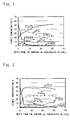
- Fig. 1 is a diagram showing changes in the atomic concentration in a surface-treated steel sheet of the present invention in the direction of depth, the surface-treated steel sheet having a layer of a compound chiefly comprising calcium and fluoride formed on the surface side of the surface-treating layer that is obtained by treating a surface-treated steel sheet having a surface-treating layer that chiefly comprises zirconium and oxygen and contains fluorine with a calcium-containing aqueous solution through the step of adjusting the surface.
- Fig. 1 peaks of C1s, O1s, F1s, Fe2p3, Zr3d, and Ca2p3 were measured by using the X-ray photoelectron spectrometer (hereinafter referred to as XPS), the sum of these elements were regarded to be 100%, and the depth of Ar sputtering (calculated as SiO 2 ) from the surface was represented on the abscissa to express changes in the atomic concentrations.
- Fig. 2 shows the results of the profiles of atomic concentrations in the direction of depth examined by using the surface-treated steel sheet of before being treated with the calcium-containing aqueous solution through the step of adjusting the surface.
- Fig. 1 represents the analytical results of the surface-treated steel sheet prepared in Example 11 appearing later and Fig. 2 represents the analytical results of the surface-treated steel sheet prepared in Comparative Example 4.
- the surface-treating layer in Fig. 1 has an increased F concentration on the surface side thereof but, contrary, has a decreased Zr concentration and a decreased O concentration on the surface side. This is presumably due to that through the treatment with the calcium-containing aqueous solution, fluorine and calcium reacts with each other, and an insoluble compound is formed in the surface.
- the atomic concentration of Fe rises little in comparison to Fig. 2 despite the surface-treating layer is sputtered deep from the surface thereof and it is, therefore, learned that the surface-treating layer has a structure that permits defects to be little exposed.
- the steel sheet in the step of forming the coating, is cathodically electrolyzed in an electrolytic treating liquid which is an aqueous solution containing Zr ions and F ions so that the coating of a Zr compound chiefly comprising zirconium and oxygen and containing fluorine is formed on at least one surface of the steel sheet in such a fashion that the amount of Zr is in a range of 10 to 350 mg/m 2 and, more preferably, 10 to 200 mg/m 2 and the amount of F is in a range of 0.3 to 30 mg/m 2 .
- an electrolytic treating liquid which is an aqueous solution containing Zr ions and F ions so that the coating of a Zr compound chiefly comprising zirconium and oxygen and containing fluorine is formed on at least one surface of the steel sheet in such a fashion that the amount of Zr is in a range of 10 to 350 mg/m 2 and, more preferably, 10 to 200 mg/m 2 and the amount of F is in a range of 0.3 to
- the reduction of fluorine can be greatly suppressed if the amount of the coating is large. Therefore, it is desired that the amount of Zr is not less than 100 mg/m 2 and, specifically, is in a range of 100 to 200 mg/m 2 .
- the steel sheet after the surface-treating layer has been formed thereon is squeezed through the rolls to remove the electrolytic treating solution, washed with water, further, squeezed through the rolls to remove the washing water, and is sent to the next step of adjusting the surface.
- the concentration of Zr is 1,000 to 10,000 ppm and the concentration of F is 600 to 13,000 ppm. It is desired that the electrolytic treating solution has a pH of 2 to 5 and, more preferably, 2.5 to 4. The temperature of the electrolytic treating solution is desirably 30 to 60°C.
- the electrolytic treating solution basically contains nitric acid ions and ammonium ions for adjusting the pH as well as Fe ions eluted out from the base material in addition to containing Zr ions and F ions.
- the chemicals used for forming Zr ions that constitute the electrolytic treating solution there is no particular limitation on the chemicals used for forming Zr ions that constitute the electrolytic treating solution, and there can be used, for example, K 2 ZrF 6 , (NH 4 ) 2 ZrF 6 , (NH 4 ) 2 ZrO(CO 3 ) 2 , H 2 ZrF 6 , ZrO(NO 3 ) 2 and ZrO(CH 3 COO) 2 .
- the above chemicals may be used alone or in a combination of two or more kinds.
- the coating of a Zr compound is to be formed by the cathodic electrolytic treatment, it is, usually, desired to use a treating solution that contains F ions in addition to the above-mentioned Zr ions as the electrolytic treating solution.
- F ions contained in the electrolytic treating solution work as a complexing agent that enhances solubility of Zr ions in the electrolytic treating solution. Therefore, the Zr compound can be precipitated maintaining a uniform thickness on the base plate, and the adhesion can be further improved between the coating and the organic resin layer.
- the electrolytic treating liquid contains F ions in small amounts, then Zr locally precipitates; i.e., the coating includes a mixture of portions where Zr is thickly present and portions where Zr is thinly present. Namely, the coating lacks uniformity in the thickness and, as a result, has poor adhesiveness and corrosion resistance after the working. In the step of forming the coating, therefore, it is important that the molar ratio F/Zr of F atoms to Zr atoms in the coating is so controlled as to be not less than 0.6.
- the chemicals used for forming F ions in the electrolytic treating solution there is no particular limitation on the chemicals used for forming F ions in the electrolytic treating solution, and there can be used ammonium zirconium fluoride, aluminum fluoride, titanium fluoride, sodium fluoride, ammonium fluoride, hydrofluoric acid, calcium fluoride, hexafluorosilicic acid, and sodium hexafluorosilicate. Among them, it is desired to use those chemicals that are highly soluble in water.
- the electrolytic treating solution may be added with nitric acid ions and ammonium ions in ranges in which they do not impair the formation of the Zr compound coating.
- additives selected from such organic acids as citric acid, lactic acid, tartaric acid and glycolic acid or such high molecular compounds as polyacrylic acid, polyitaconic aid and phenol resin.
- additives such as organic acid and phenol resin
- additives such as organic acid and phenol resin can be contained in the Zr compound coating that is formed to thereby impart flexibility of the coating of the oxygen compound of a metal and to further improve adhesiveness to the organic resin layer.
- the current density is not specifically limited but is, preferably, 1 to 30 A/dm 2 .
- the base material is to be subjected to the cathodic electrolytic treatment, it is desired to employ a discrete electrolytic system which repeats the cycle of flowing the electric current and interrupting the electric current.
- the total time for flowing the electric current to the base material is, preferably, 0.3 to 30 seconds.
- an opposing electrode of any kind may be installed on the base material if it does not dissolve in the electrolytic treating solution while the cathodic electrolytic treatment is being conducted. It is, however, desired to use a titanium plate coated with iridium oxide from the standpoint of a small oxygen overvoltage and that electrode plate sparingly dissolves in the electrolytic treating solution.
- An important feature of the present invention is to conduct the step of adjusting the surfaces by using the element of the Group II after the above-mentioned step of forming the coating.
- the surface-treated steel sheet forming the surface-treating layer that that chiefly comprises zirconium and oxygen and contains fluorine obtained through the step of forming the coating is subjected to any one or more of the dip treatment, the spray treatment or the cathodic electrolytic treatment by using an aqueous solution that contains the element of the Group II for adjusting the surfaces.
- the element of the Group II is made present in the surface-treating layer on the surface side thereof.
- fluorine reacts with the element of the Group II and is insolubilized so as to be made present as a fluorine compound.
- the steel sheet is squeezed with the rolls to remove the aqueous solution used for adjusting the surfaces, is washed with water, is further squeezed with the rolls to remove the washing water and is, thereafter, dried with the hot air or the like.
- the container made from the organic resin-coated surface-treated steel sheet applied with the organic resin coating permits fluorine in the coating to elute out into the content in the step of sterilization treatment with hot water, such as retort treatment.
- the coating induces a change in the structure thereof causing a decrease in the properties such as corrosion resistance, close adhesion, etc.
- the resin coating for obtaining the material for cans prior to applying the resin coating for obtaining the material for cans, it becomes important to insolubilize the fluorine in advance by forming the layer of the compound thereof that has reacted with the element of the Group II in the step of adjusting the surfaces, the fluorine having been dispersed on the surface side in the surface-treating layer that chiefly comprises zirconium and oxygen and contains fluorine.
- the element of the Group II used for the aqueous solution for adjusting the surfaces there can be exemplified beryllium, magnesium, calcium, strontium, barium and radium.
- the chemicals are soluble in water, if the chemicals easily bond to the fluorine, if the chemicals are capable of forming a sparingly soluble fluorine compound, if the chemicals are capable of maintaining safety and sanitation excellently, and if the chemicals are not expensive. From the above points of view, therefore, it is desired to use calcium or magnesium capable of forming sparingly soluble CaF 2 or MgF 2 after having reacted with fluorine.
- the aqueous solution for adjusting the surfaces may contain either calcium ions or magnesium ions, or both of them. If the ions of either one type are to be contained, the aqueous solution containing calcium can be most desirably used for adjusting the surfaces.
- any chemicals can be used without limitation provided they can dissolve in water, and there can be used calcium lactate, calcium hydroxide, calcium gluconate, calcium chloride, calcium nitrate, calcium sulfate, calcium citrate, calcium carbonate and calcium phosphate monobasic. Among them, it is desired to use the one having large water-solubility.
- magnesium is used, further, there is no particular limitation on the chemicals that can be used provided they dissolve in water.
- magnesium gluconate can be particularly preferably used.
- the aqueous solution for adjusting the surfaces may have been containing fluorine at the time of preparing the chemicals or may have been containing fluorine as it is dissolved in the step of adjusting the surfaces, as will be obvious from the fact that the aqueous solution for adjusting the surfaces has the role of insolubilizing the fluorine contained in the surface-treating coating.
- the invention does not dare to add fluorine thereto or contain fluorine therein.
- the aqueous solution for adjusting the surfaces has a pH in a range of 2 to 13, preferably, 5 to 11 and, more preferably, 5.5 to 7.
- the fluorine in the surface-treating layer assumes the state of free F ions but not complex ions, and are capable of being more efficiently bonded to the element of the Group II that is forming the fluorine compound with the element of the Group II in the surface-treating layer on the surface side thereof maintaining stability improving, therefore, resistance against the elution of fluorine and lowering the fluorine concentration in the drain water.
- the peripheral equipment and the steel sheet which is the base material itself are adversely affected in terms of corrosion resistance. If the pH exceeds 11 to become alkaline, the ability decreases for stably forming the fluorine compound in the surface-treating layer on the surface side thereof. If the pH exceeds 13, in particular, fluorine dissolves at an increased rate in the aqueous solution for adjusting the surfaces eventually causing an increase in the fluorine concentration in the drain water, which is not desirable.
- the alkaline chemicals for adjusting the pH of the aqueous solution for adjusting the surfaces there can be most simply used a hydroxide compound of the element of the Group II that exhibits alkalinity upon being dissolved in water, such as Ca(OH) 2 or Mg(OH) 2 . These chemicals, however, dissolve in water in relatively small amounts. If the step of adjusting the surfaces is continuously conducted by dipping or cathodic electrolysis or if the cathodic electrolysis is conducted, therefore, the chemical must be fed frequently often requiring laborious work for maintaining and controlling the aqueous solution. In such a case, it is desired to employ a spray system which sprays at all times a new aqueous solution onto the steel sheet for adjusting the surfaces from the standpoint of easy processing.
- the pH can be adjusted by adding a chemical that contains one or two or more kinds of sodium, ammonium and potassium, and the solution can be used as an alkaline aqueous solution for adjusting the surfaces.
- ammonia ammonium zirconium carbonate, sodium hydroxide, sodium carbonate, sodium hydrogencarbonate, sodium phosphate, sodium hydrogenphosphate, potassium hydroxide, potassium carbonate, sodium borate and sodium silicate, which may be used in two or more kind.
- various surfactants and chelating agents may be added to the aqueous solution for adjusting the surfaces.
- the ionic concentration of the element of the Group II contained in the aqueous solution for adjusting the surfaces is in a range of 0.002 to 0.5 mols/l. If the ionic concentration is less than 0. 002 mol/l, the reaction efficiency becomes poor in forming the fluorine compound with the element of the Group II in the surface-treating layer on the surface side thereof. If the ionic concentration exceeds 0.5 mols/l, the element of the Group II precipitates too much, and the cohesive force of the coating decreases, which is not desirable.
- the dip treatment, spray treatment or cathodic electrolytic treatment can be conducted by using the aqueous solution containing the element of the Group II for adjusting the surfaces. From the standpoint of quick treatment, it is desired to also add the cathodic electrolytic treatment in the aqueous solution for adjusting the surfaces.
- the spray treatment and the dip treatment are means desirable from the standpoint of simplicity.
- the aqueous solution for adjusting the surfaces should have a pH in the above-mentioned range and, specifically, in the range of 5.5 to 7 from the standpoint of lowering the dissolution of fluorine in the aqueous solution for adjusting the surfaces and lowering the load exerted on the drain water.
- the aqueous solution containing the element of the Group II for adjusting the surfaces has an electric conductivity of not less than 2 mS/cm from the standpoint treatment efficiency.
- the compound of the element of the Group II formed in the surface-treating layer on the surface side thereof is, preferably, a fluorine compound and, more preferably, is sparingly soluble.
- the sparingly soluble compound formed by using the element of the Group II is, preferably, a compound of calcium and/or magnesium, or may be a single compound of either calcium or magnesium, or a compound of both calcium and magnesium. In the case of the single compound, the most desired is the fluorine compound of calcium forming the sparingly soluble compound.
- the molar ratio AE/Zr of the element AE of the Group II and zirconium Zr in the surface-treating layer is, preferably, not less than 0.2 and, specifically, in a range of 0.4 to 1.8. It is more effective if the thickness of the element of the Group II in terms of the weight is not less than 7 mg/m 2 and, specifically, in a range of 7 to 150 mg/m 2 .
- the temperature of the aqueous solution for adjusting the surfaces there is no particular limitation on the temperature of the aqueous solution for adjusting the surfaces. From the standpoint of the reactivity and controlling the temperature, however, it is desired that the temperature lies in a range of 30 to 80°C and, specifically, 30 to 60°C. Further, the total treating time such as of the dip treatment, spray treatment and cathodic electrolytic treatment using the aqueous solution for adjusting the surfaces is in a range of 0.1 to 5 seconds and, more preferably, 0.5 to 3 seconds.
- the treatment with the aqueous solution for adjusting the surfaces in the step of adjusting the surfaces it is also allowable to add the washing treatment by dipping in, or spraying with, the warm water or hot water heated at about 40°C to about 95°C.
- the steel sheet for use as the surface-treated steel sheet of the present invention there can be used, for example, a hot-rolled steel sheet based on a continuously casted aluminum killed steel, a cold-rolled steel sheet obtained by cold-rolling the hot-rolled steel sheet, and a steel sheet obtained by plating metals inclusive of Zn, Sn, Ni, Cu, Al, etc. on the hot-rolled steel sheet or the cold-rolled sheet.
- a steel sheet having, on part or on the whole surface thereof, an alloy layer such as of an Sn-Ni-Fe alloy, an Sn-Fe alloy or an Ni-Fe alloy, as well as a steel sheet having a layer of a metal such as Sn or Ni, further, plated on the above alloy layer.
- a steel sheet is most desirably used as the base material without having a metal-plated layer or having a metal-plated layer but permitting iron to be locally exposed in a dispersed manner from the standpoint of cost.
- the thickness of the base material is not specifically limited and may be suitably selected depending on the use, but is, preferably, 0.07 to 0.4 mm.
- the surface-treated steel sheet obtained by the present invention has an organic resin coating formed on the surface-treating layer.
- the organic resin coating excellently adheres to the organic resin layer. Even in case the surface-treated steel sheet is retort-treated, the organic resin coating prevents the organic resin layer from peeling.
- the organic resin coating further, effectively prevents the corrosion from proceeding even in case the organic resin layer is cracked and the metal surface is exposed in wet environment and, therefore, suppresses the metal components constituting the container from eluting out.
- the resin that constitutes the organic resin coating is not specifically limited and may be suitably selected depending on the use of the surface-treated steel sheet of the invention (depending on the use such as cans and containers for containing specific contents). Namely, there can be exemplified resin coatings made from various thermoplastic resins and films made from thermosetting coating materials or thermoplastic coating materials.
- olefin resin films such as of polyethylene, polypropylene, ethylene-propylene copolymer, ethylene-vinyl acetate copolymer, ethylene-acrylic ester copolymer and ionomer; polyester films such as of polyethylene terephthalate and polybutylene terephthalate; polyamide films such as nylon 6, nylon 6,6, nylon 11, and nylon 12; and thermoplastic resin films such as polyvinyl chloride film and polyvinylidene chloride film, which may not have been stretched or may have been biaxially stretched.
- olefin resin films such as of polyethylene, polypropylene, ethylene-propylene copolymer, ethylene-vinyl acetate copolymer, ethylene-acrylic ester copolymer and ionomer
- polyester films such as of polyethylene terephthalate and polybutylene terephthalate
- polyamide films such as nylon 6, nylon 6,6, nylon 11, and nylon 12
- thermoplastic resin films such as polyviny
- the coating may be of a single resin layer or a multiplicity of layers formed by the simultaneous extrusion. Multiplicity of polyester resin layers offer such an advantage that a polyester resin having excellent adhesiveness can be used as the underlying layer, i.e., on the side of the surface-treated steel sheet and that a polyester resin having resistance against the content, i.e., having resistance against being extracted or having property of not adsorbing flavor component can be used as the surface layer.
- polyester resin layers examples include, being expressed as surface layer/lower layer, polyethylene terephthalate/polyethylene terephthalate ⁇ isophthalate; polyethylene terephthalate/polyethylene ⁇ cyclohexylenedimethylene ⁇ terephthalate; polyethylene terephthalate having a small isophthalate content ⁇ isophthalate/polyethylene terephthalate having a large isophthalate contentisophthalate; polyethylene terephthalate ⁇ isophthalate/[blend of polyethylene terephthalate ⁇ isophthalate and polybutylene terephthalate ⁇ adipate] and the like, to which only, however, the invention is in no way limited. It is desired that the thickness ratio of the surface layer: lower layer is in a range of 5:95 to 95:5.
- the above organic coatings can be blended with known blending agents for resins, such as anti-blocking agent or amorphous silica, inorganic filler, various antistatic agents, lubricant, antioxidant and ultraviolet-ray absorber according to a known recipe.
- resins such as anti-blocking agent or amorphous silica, inorganic filler, various antistatic agents, lubricant, antioxidant and ultraviolet-ray absorber according to a known recipe.
- vitamin E vitamin E
- the tocopherol is used as an antioxidant and works to prevent a decrease in the molecular weight caused by the oxidation and decomposition when the polyester resin is being heat-treated and works to improve resistance against being dented.
- the tocopherol if added to a polyester composition obtained by blending the polyester resin with the above ethylene type polymer as a resin reforming component, the tocopherol not only provides resistance against being dented but also works to prevent corrosion from occurring due to cracks formed in the coating as a result of being subjected to severe conditions during the retort sterilization and stored in a hot vending machine, offering an effect of greatly improving the corrosion resistance.
- the tocopherol is added in an amount of, desirably, 0.05 to 3% by weight and, specifically, 0.1 to 2% by weight.
- the organic resin coating applied to the surface-treated steel sheet obtained by the present invention in the case of the thermoplastic resin coating, has a thickness in a range of, usually, 3 to 50 ⁇ m and, specifically, 5 to 40 ⁇ m and, in the case of a film, has a thickness in a range of 1 to 50 ⁇ m and, specifically, 3 to 30 ⁇ m after fired. If the thickness is smaller than the above range, corrosion resistance becomes insufficient. If the thickness exceeds the above range, on the other hand, problems tend to occur in regard to workability.
- the surface-treated steel sheet obtained by the present invention can be coated with the organic resin by any means such as, in the case of the thermoplastic resin coating, an extrusion-coating method, a cast film heat-adhesion method or a biaxially stretched film heat-adhesion method.
- the polyester resin in a molten state is extruded onto the surface-treated steel sheet and is thermally adhered thereto.
- the polyester resin is melt-kneaded by an extruder, extruded into the form of a thin film through a T-die, and the molten resin film that is extruded is passed together with the surface-treated steel sheet through a pair of laminating rolls so as to be pressed together into a unitary structure under cold condition followed by quenching.
- an extruder for extruding the surface resin layer and an extruder for extruding the lower resin layer are met together in a multi-layer die.
- the resultant flow of resins may be extruded like in the case of extruding the single resin layer. Further, by passing the surface-treated steel sheet between the pair of laminating rolls in a vertical direction and by feeding the webs of molten resins to both sides thereof, it is made possible to coat both surfaces of the base material with the polyester resins.
- the surface-treated steel sheet as required, is preheated by a heating device, and is fed to a nipping position between the pair of laminating rolls.
- the polyester resin on the other hand, is pushed into the form of a thin film through the die head of the extruder, fed into between the laminating rolls and the surface-treated steel sheet, and is press-adhered onto the surface-treated steel sheet by the laminating rolls.
- the laminating rolls are maintained at a predetermined temperature.
- thermoplastic resin such as polyester
- Thin films of the thermoplastic resin such as polyester are pressed onto the surface-treated steel sheet and are thermally adhered thereto followed by cooling from both sides thereof so as to obtain an organic resin-coated surface-treated steel sheet.
- the organic resin-coated surface-treated steel sheet that is formed is, further, introduced into a water tank for cooling, and is quenched therein to prevent thermal crystallization.
- the polyester resin layer assumes the crystallinity of a low level, i.e., has a density which is different from the amorphous density thereof by not more than 0.05 g/cm 3 due to the resin composition that is selected and due to quenching by the rolls and in the cooling tank. Therefore, the polyester resin layer is sufficiently guaranteed for its workability in the subsequent steps of forming cans and lids.
- the quenching operation is not limited to the above example only but may be to spray the cooling water onto the organic resin-coated surface-treated steel sheet that is formed so as to quench the laminated sheet.
- the polyester resin is thermally adhered to the surface-treated steel sheet by utilizing the quantity of heat possessed by the molten resin layer and the quantity of heat possessed by the surface-treated steel sheet.
- a proper range of the temperature (T1) for heating the surface-treated steel sheet is, usually, 90°C to 290°C and, specifically, 100°C to 280°C while a proper range of the temperature of the laminating rolls is 10°C to 150°C.
- the organic resin coating can also be formed on the surface-treated steel sheet obtained by the production method of the present invention by thermally adhering, onto the surface-treated steel sheet, a polyester resin film that is formed in advance by a T-die method or an inflation method.
- a polyester resin film that is formed in advance by a T-die method or an inflation method.
- the film there can be used an unstretched film formed by a cast-forming method by quenching the film that is extruded. It is, further, allowable to use a biaxially stretched film obtained by biaxially stretching the film sequentially or simultaneously at a stretching temperature, and thermally setting the film after having been stretched.
- the container is formed by using the organic resin-coated surface-treated steel sheet obtained by coating the surfaces of the surface-treated steel sheet with the organic resin as described earlier relying on any can-producing method.
- the organic resin-coated surface-treated steel sheet can be used for forming a three-piece can (welded can) having a seam on the side surface thereof and a seamless can (two-piece can). From the standpoint of close adhesion to the organic resin as described above, however, the surface-treated steel sheet containing Zr in large amounts is most desirably used for forming seamless cans.
- the seamless can is produced relying on a conventional means such as draw working, draw ⁇ redraw working, bend-elongation working (stretching) based on the draw ⁇ redrawing, bend-elongation ⁇ ironing working based on the draw ⁇ redrawing, or draw ⁇ ironing working in a manner that the organic resin coating is on the inner surface side of the cans.
- the organic resin coating is a thermoplastic resin coating formed by the extrusion-coating method.
- the organic resin-coated surface-treated steel sheet features excellent close adhesion during the working. Namely, the coating remains excellently adhered even if it is subjected to severe working, and makes it possible to provide a seamless can having excellent corrosion resistance.
- the can lid formed by using the surface-treated steel sheet of the invention is, desirably, formed by using the organic resin-coated surface-treated steel sheet like the metal container described above, and is formed by a known lid-forming method.
- the lids may be a flat lid, an easy-open can lid of the stay-on-tub type, and an easy-open can lid of the full-open type.
- the can lids of a variety of types can be formed without limitation by using the organic resin-coated surface-treated steel sheet of the present invention.
- the materials to be coated, dewaxing agents and organic coatings are those arbitrarily selected from those placed in the market, and are not to impose limitation on the process for producing the surface-treated steel sheet of the present invention.
- Electrolytic treating solution As a starting steel sheet, use was made of a low-carbon steel sheet 0.225 mm in thickness and 200 mm in width. Next, as a pre-treatment, the steel sheet was dewaxed by the electrolysis with an alkali and was washed with an acid by being dipped in sulfuric acid. Thereafter, the steel sheet was dipped in an electrolytic treating solution and was cathodically and electrolytically treated so that the steel sheet was coated on its both surfaces with a compound that chiefly comprised of Zr and contained F. Next, the steel sheet was squeezed with the rolls, washed with water and, further, squeezed with the rolls to remove the washing water to thereby form the coatings. Electrolytic treating solution:
- the steel sheet after the step of forming the coating was treated with the aqueous solution for adjusting the surfaces for a predetermined period of time, squeezed with the rolls, washed with water, further, squeezed with rolls and was, thereafter, dried with the hot air to obtain a surface-treated steel sheet.
- the step of adjusting the surfaces there can be conducted any one or more of the dip treatment, spray treatment and cathodic electrolytic treatment by using the aqueous solution containing the element of the Group II for adjusting the surfaces.
- the dip treatment, the spray treatment and the cathodic electrolytic treatment by using the aqueous solution containing calcium or magnesium for adjusting the surfaces.
- the cathodic electrolysis in the step of adjusting the surfaces a titanium plate coated with iridium oxide was used as the opposing electrode, and the electric current-flowing cycle was repeated a plurality of times, each cycle comprising flowing the electric current for 0.15 seconds followed by the interruption of 0.1 second.
- An organic resin-coated surface-treated steel sheet was obtained by thermally adhering a 19 ⁇ m-thick stretched film a polyethylene terephthalate/isophthalate copolymer composition containing 11 mol% of isophthalic acid component onto one surface, that becomes the inner surface of the can, of the surface-treated steel sheet obtained above and by thermally adhering a 13 ⁇ m-thick stretched film of a polyethylene terephthalate/isophthalate copolymer composition containing 12 mol% of isophthalic acid component and, further, containing titanium oxide and colored white onto the other surface that becomes the outer surface of the can, by using laminating rolls followed readily by cooling with water while paying attention such that the film was oriented to a suitable degree.
- the obtained organic resin-coated surface-treated steel sheet was partly used for evaluating cross-cut corrosion resistance, but the rest of it was used for producing metal cans.
- Paraffin wax was electrostatically applied onto both surfaces of the organic resin-coated surface-treated steel sheet obtained above.
- the steel sheet was punched into a circle 143 mm in diameter and was draw-formed into a cup 91 mm in diameter and 36 mm in height according in a customary manner.
- the draw-formed cup was at the same time subjected to the draw-ironing working repetitively two times to form a cup having a small diameter and a large height.
- the thus obtained cup possessed properties as described below.
- the cup was heat-treated at 220°C for 60 seconds to remove strain from the resin film, followed by trimming for the open end, printing on the curved surface, necking into a diameter of 50.8 mm and flanging to thereby obtain a seamless can having a capacity of 200 ml.
- AE amount of AE / atomic weight of AE / amount of Zr / atomic weight of Zr
- Microanalysis of the amount of F in the obtained surface-treated steel sheet based on the X-ray fluorometry poses limitation in regard to quantitative precision. Specifically, it is difficult to determine the amount of F from the surface-treated steel sheet containing F in amounts of less than 1.5 mg/m 2 . After having studied variously, therefore, we have measured the amount of F in a manner as described below. That is, by using a special cell capable of holding 160 cm 2 of one surface of the surface-treated steel sheet in a state of being contacted to 183 g of very pure water, the surface-treated steel sheet was retort-treated at 130°C for 30 minutes.
- Fluorine does not almost elute out despite the surface-treated steel sheets that have passed through the step of adjusting the surfaces shown in Examples are subjected to the retort-treatment and, therefore, the amounts of F in the surface-treated steel sheets cannot be known.
- the amounts of F were measured by the X-ray fluorometry. In case the amount of F was less than 1.5 mg/m 2 , however, the peak in the X-ray fluorometry was not clear.
- the scraped powder of the surface-treating coating was collected in amounts equivalent to more than 10 times the areas that are usually measured by the X-ray fluorometry, and fluorine was measured by the X-ray fluorometry and was converted into an amount thereof per a unit area.
- the percentage reduction in the amount of F in the surface-treated steel sheet that has passed through the step of adjusting the surface was found from the amount of F in the surface-treated steel sheet that was formed through only the step of forming the coating.
- the evaluation thereof serves as an index of fluorine load exerted on the drain water in the step of adjusting the surfaces. It is desired that the index is not more than 30%.
- a portion of the obtained surface-treated steel sheet that would become the inner surface side of a can was engraved over a length of 4 cm in a crossing manner deep enough to reach the steel sheet to thereby prepare a test piece.
- the test piece was put in a bottle and was dipped in a commercially available coffee (trade name, Blendy, bottled coffee, low sugar, produced by Ajinomoto General Foods Co.).
- the bottle was deaerated, stored at 37°C for 4 weeks to evaluate the state of corrosion. During this period, the coffee was regularly renewed to suppress the generation of mold as much as possible.
- the corroded state was evaluated by taking the test piece out of the coffee. Namely, the cross-cut portion and the surroundings thereof were observed with the eye in regard to if the organic resin layer was peeled or if the color has changed due to the formation of corroded product.
- a test piece whose color has changed or whose film has peeled by a maximum width of not less than 3 mm around the cross-cut portion was counted to be one point, a test piece having a maximum width of peeling of not less than 2 mm but less than 3 mm was counted to be two points, a test piece of not less than 1 mm but less than 2 mm was counted to be three points, a test piece of not less than 0. 5 mm but less than 1 mm was counted to be four points, and a test piece of less than 0.5 mm was counted to be five points. Test pieces of counts of three or more points were regarded to be acceptable.
- a seamless can that was obtained was filled with distilled water, double-wrap-seamed with a lid, and was retort-treated at 125°C for 30 minutes. Thereafter, the lid was removed from the can body, the content was removed from the can, and the can was cut into halves with the direction of rolling the surface-treated steel sheet at 45 degrees as a boundary. Next, the can cut into halves was dipped in a solution obtained by adding 0.02% by weight of a surfactant to an aqueous solution containing 1% by weight of sodium chloride for one hour. By using a pair of scissors, the can was further cut into halves from the side of the can bottom with the rolling direction of 135 degrees as a boundary.
- the cross section of a radial portion of the bottom of the finally cut can on the inner surface side thereof was observed in regard to if the resin was peeled to thereby evaluate the close adhesion of the resin.
- the can with peeling of not less than 10 mm near the cut surface was counted to be one point
- the can with peeling of less than 10 mm but not less than 5 mm was counted to be two points
- the can with peeling of less than 5 mm but not less than 2 mm was counted to be three points
- the can with peeling but less than 2 mm was counted to be four points
- the can with no peeling was counted to be five points.
- the cans of counts of three or more points were regarded to be acceptable.
- the obtained seamless can was filled with 183 g of very pre water, double-seamed, and was retort-treated at 130°C for 30 minutes. Thereafter, fluorine ions released into very pure water was measured by the ion chromatograph (DX-320 manufactured by DIONEX Co.). The cans releasing F by not less than 0.1 ppm were evaluated to be X and the cans releasing F by less than 0.1 ppm were evaluated to be ⁇ .
- the load exerted on the drain water was evaluated from the reduction ratio of F.
- ⁇ is preferred to ⁇ .
- a titanium plate coated with iridium was used as the opposing electrode in the electrolytic treating solution
- a steel sheet was used as the cathode
- an electric current was flown one time at a current density of 3 A/dm 2 for 0.15 seconds
- the steel sheet was squeezed with the rolls to remove the electrolytic treating solution
- the surfaces were adjusted by the cathodic electrolytic treatment.
- the aqueous solution for adjusting the surfaces use was made of an aqueous solution containing calcium lactate in an amount of 0.1 mol/l, and having an electric conductivity of 6.57 mS/cm and a pH of 6.96.
- the step of adjusting the surfaces was conducted by repeating twice the cycle of flowing an electric current at a current density of 4 A/dm 2 for 0.15 seconds followed by an interruption of 0.1 second.
- the steel sheet after the step of adjusting the surfaces was squeezed with the rolls to remove the aqueous solution, washed with water, squeezed again with the rolls to remove the washing water, and was dried to obtain a surface-treated steel sheet.
- the obtained surface-treated steel sheet was measured for the amount of Zr, amount of AE and amount of F by the methods described above. Measured amounts of the coating were as shown in Table 1 which also shows a molar ratio AE/Zr of the element (AE) of the Group II and Zr calculated from the amounts of the coating, and the reduction ratio of F. In Table, "-" stands for that the measurement was not taken.
- a surface-treated steel sheet was obtained in the same manner as in Example 1 but flowing the electric current at a current density of 10 A/dm 2 and repeating the cycle twice in the step of forming the coating, and flowing the electric current at a density of 1 A/dm 2 in the step of adjusting the surfaces.
- a surface-treated steel sheet was obtained in the same manner as in Example 2 but flowing the electric current at a density of 6.5 A/dm 2 in the step of adjusting the surfaces.
- a surface-treated steel sheet was obtained in the same manner as in Example 2 but dip-treating the steel sheet at 60°C for 3 seconds in the step of adjusting the surfaces.
- a surface-treated steel sheet was obtained in the same manner as in Example 3 but flowing the electric current at a density of 10 A/dm 2 and repeating the cycle 4 times in the step of forming the coating.
- a surface-treated steel sheet was obtained in the same manner as in Example 5 but preparing an aqueous solution for adjusting the surfaces having a pH of 11.0 and an electric conductivity of 7.13 mS/cm by adding ammonia to an aqueous solution containing calcium lactate in an amount of 0.1 mol/l, and conducting the step of adjusting the surfaces by repeating two times the cycle of cathodic electrolysis at a liquid temperature of 40°C and flowing the electric current at a density of 2 A/dm 2 .
- a surface-treated steel sheet was obtained in the same manner as in Example 6 but conducting the cathodic electrolysis by flowing a current at a density of 7 A/dm 2 in the step of adjusting the surfaces.
- a surface-treated steel sheet was obtained in the same manner as in Example 6 but spray-treating the steel sheet for 3 seconds in the step of adjusting the surfaces.
- a surface-treated steel sheet was obtained in the same manner as in Example 2 but repeating the cycle 8 times in the step of forming the coating.
- a surface-treated steel sheet was obtained in the same manner as in Example 9 but flowing the electric current at a density of 4 A/dm 2 and repeating the cycle 4 times in the step of adjusting the surfaces.
- a surface-treated steel sheet was obtained in the same manner as in Example 10 but flowing the electric current at a density of 6.5 A/dm 2 in the step of adjusting the surfaces.
- a surface-treated steel sheet was obtained in the same manner as in Example 11 but preparing an aqueous solution for adjusting the surfaces having an electric conductivity of 15.1 mS/cm and a pH of 5.61 by using a magnesium nitrate hexahydrate in an amount of 0.1 mol/l, and conducting the step of adjusting the surfaces by repeating two times the cycle of cathodic electrolysis at a liquid temperature of 40°C and flowing the electric current at a density of 4 A/dm 2 .
- a surface treated steel sheet was obtained in the same manner as in Example 10 but repeating the cycle 12 times in the step of forming the coating.
- a surface treated steel sheet was obtained in the same manner as in Example 11 but repeating the cycle 12 times in the step of forming the coating.
- a surface-treated steel sheet was obtained in the same manner as in Example 13 but using an aqueous solution containing calcium nitrate in an amount of 0.1 mol/l and having a pH of 5.6 as the aqueous solution for adjusting the surfaces and repeating two times the cycle of cathodic electrolysis at a liquid temperature of 40°C and flowing the electric current at a density of 4 A/dm 2 in the step of adjusting the surfaces.
- a surface-treated steel sheet was obtained in the same manner as in Example 1 but without conducting the step of adjusting the surfaces.
- a surface-treated steel sheet was obtained in the same manner as in Example 2 but without conducting the step of adjusting the surfaces.
- a surface-treated steel sheet was obtained in the same manner as in Example 5 but without conducting the step of adjusting the surfaces.
- a surface-treated steel sheet was obtained in the same manner as in Example 9 but without conducting the step of adjusting the surfaces.
- a surface-treated steel sheet was obtained in the same manner as in Example 13 but without conducting the step of adjusting the surfaces.
- the amount of Zr in the coating was set to be 12 to 182 mg/m 2 , and the steel sheets were treated with an aqueous solution containing an element of the Group II in the step of adjusting the surfaces to obtain the steel sheets containing F in amounts of 0.4 to 19.8 mg/m 2 in the coating.
- the steel sheets were satisfactory in regard to the resistance against the elution of F but were poor in regard to the cross-cut corrosion resistance and the close adhesion. As the amount of Zr increases, these properties are improved but the resistance against the elution of F decreases.
- the reduction ratio of F was small if the amount of Zr in the coating was large. Specifically, the reduction ratio of F was not more than 30% if the amount of Zr was not less than 100 mg/m 2 . That is, it was learned that even if the reduction ratio of F was small, the steel sheets could be obtained having excellent corrosion resistance, close adhesion and resistance against the elution of F.
Landscapes
- Chemical & Material Sciences (AREA)
- Chemical Kinetics & Catalysis (AREA)
- Engineering & Computer Science (AREA)
- Materials Engineering (AREA)
- Metallurgy (AREA)
- Organic Chemistry (AREA)
- Mechanical Engineering (AREA)
- Electrochemistry (AREA)
- General Chemical & Material Sciences (AREA)
- Inorganic Chemistry (AREA)
- Chemical Treatment Of Metals (AREA)
- Other Surface Treatments For Metallic Materials (AREA)
Abstract
Description
- This invention relates to a surface-treated steel sheet, an organic resin-coated surface-treated steel sheet, a metal container, and a process for producing the surface-treated steel sheet. More specifically, the invention relates to a surface-treated steel sheet featuring excellent adhesion to the organic resin coating and excellent resistance against the elution, and to a process for producing the same.
- The treatment with the chromate has heretofore been known as a treatment for improving close adhesion between a steel sheet and an organic coating in the field of domestic appliances, building materials, vehicles, aircraft, containers and the like, and has, therefore, been widely employed owing to its excellent corrosion resistance and close adhesion.
- The treatment with the chromate pertains to either the one of the type of containing hexavalent chromium in the coating and the one of the type of containing no hexavalent chromium in the coating. In recent years, however, from the standpoint of environment and health in the working environment, it is a growing trend to ban the use of any starting material that contains hexavalent chromium irrespective of the state of the final products.
- Materials for producing metal containers such as cans and lids are treated with the chromate of the type that does not leave hexavalent chromium in the final products, as a matter of course. Besides, the materials are, usually, coated with an organic resin. For instance, the tin-plated steel sheet is cathodically electrolyzed in an aqueous solution of sodium bichromate, a steel sheet is cathodically electrolyzed in an aqueous solution of a fluoride-containing chromium anhydrite, and an aluminum alloy is treated with a chromic phosphate, followed, further, by the coating with an organic resin.
- Metal containers such as cans and can lids are, in many cases, subjected to the retort treatment with hot water in order to sterilize the contents. Therefore, the materials are subjected to a severe environment arousing a problem of decrease in the adhesion between the resin coating and the surface of the metal. To solve the problem, therefore, various studies were so far made. At present, in order to improve close adhesion during the treatment with hot water, the tin-plated sheet and the steel sheet electrolytically treated with chromate that are used as materials for producing cans, are washed with warm water or hot water in the step of finally treating the surfaces. Namely, anions such as sulfuric acid ions and fluorine ions in the treated coating are controlled to obtain a metal surface that features excellent adhesion to the organic coating (non-patent document 1, patent document 2).
- As the chromium-free surface treatment studied in recent years in connection with the steel sheets, there has been proposed a dip treatment using a treating liquid that contains Zr (zirconium) or Ti (titanium) (patent document 1). However, the steel sheet treated for its surface by being dipped in the Zr- or T-containing solution has poor corrosion resistance in the coating thereof. Besides, the rate of depositing the coating is small as compared to the electrolytic chromate-treated steel sheet (TFS) that has heretofore been used as a material for producing cans. Therefore, the productivity is very poor. As a high-speed treatment to substitute for the dip treatment, therefore, there have been proposed a Zr and/or Ti treatment and/or an Al treatment by applying the cathodic electrolysis. It has been known that both of these treatments are capable of forming an oxygen compound of a metal on the surface of the base material at high speeds (
patent documents 3, 4 and 5). - As a method of improving close adhesion of a coating of an oxygen compound of a metal to an organic resin layer, further, there has been proposed a technology concerned to a method of producing a steel sheet for containers having a conversion-treated film that contains metal Zr in an amount of 1 to 100 mg/m2 and F in an amount of not more than 0.1 mg/m2 by forming, on the base material, a coating of an oxygen compound of a metal that contains an oxygen compound of Zr, and washing the surface of the coating of the metal oxygen compound with hot water of not lower than 80°C (patent document 6).
-
- Patent document 1: International Laid-Open
WO2002/103080 - Patent document 2:
JP-A-7-11483 - Patent document 3:
JP-A-2004-190121 - Patent document 4:
JP-A-2005-97712 - Patent document 5:
JP-A-2006-348360 - Patent document 6: International Laid-Open
WO2012/036200 - Non-patent document 1: "History of Coated Steel Sheets for Cans in Japan", Foundation, Japanese Association of Steels, published October 31, 1998, page 87, last line to page 90.
- Problems that the Invention is to Solve:
- If it is attempted to improve the corrosion resistance of a metallic base material without forming a metal-plated layer thereon but, instead, directly forming a coating of an oxygen compound of a metal comprising chiefly an oxygen compound such as of Zr, Al or Ti on the surface of the metallic base material, it becomes necessary to increase the thickness of the coating (amount of coating) as compared to that of the metal-plated layer. Specifically, in the use for seamless cans that are worked to a large degree, the underlying iron may be exposed due to the working or the adhesion to the organic resin may decrease. Therefore, it has been urged to maintain corrosion resistance by increasing the amount of the coating and, at the same time, to improve close adhesion to the organic resin.
- In addition to the above items related to close adhesion, there still remains another problem which the present invention is to solve, i.e., to prevent the components constituting the metal container from eluting out into the content. For the metal containers, it is very important to maintain the quality of the content and, therefore, special attention must be paid to the components that may elute out into the content from the metal container. In general, elution of metallic components of the container can be represented by elution of iron due to corrosion and elution of anions such as sulfuric acid ions and fluorine ions in the coating. Therefore, attention must be paid to the amount of the coating in the metal surface treatment, surface state, and adhesive force to the organic resin coating such as film or coating, in addition to paying attention to the pH of the content and the sterilizing conditions.
- A
patent document 2 is disclosing an example of improving the close adhesion by washing the surface of the coating of an oxygen compound of a metal on the metal-plated layer with hot water. However, in case it is required to form the coating in a large amount as described above, it was discovered that the washing with hot water, that has heretofore been used for the electrolytic chromate-treated steel sheets, is not enough for attaining the surface properties and for suppressing the elution as desired. Therefore, if the electrolytic chromate-treatment line is applied to the formation of the coating of the oxygen compound of a metal, the washing must be conducted for further longer periods of time than the conventional methods. It was, therefore, learned that there still exist many problems such as an increase in the load in connection with the production and an increase in the amount of energy consumption, imposing limitation on the speed for operating the surface-treatment line, requiring an increased number of the tanks for washing, and increased amount of hot water that must be used. - The present invention, therefore, was contrived in view of such circumstances, and its object is to provide a surface-treated steel sheet which, when an organic resin layer is formed on the surfaces thereof, features excellent adhesion to the organic resin layer and excellent corrosion resistance and an organic resin-coated surface-treated steel sheet, to provide an organic resin-coated metal container featuring excellent adhesion to the resin on the inner and outer surfaces of the can and excellent resistance against the elution of fluorine, and to provide a process for producing the surface-treated steel sheet.
- According to the present invention, there is provided a surface-treated steel sheet having a steel sheet and a surface-treating layer on at least one surface of the steel sheet, the surface-treating layer including zirconium, oxygen and fluorine, wherein said surface-treating layer contains an element of the Group II on the surface side thereof.
- In the surface-treated steel sheet of the present invention, it is desired that:
- (1) The element of the Group II is present as a fluorine compound;
- (2) The element of the Group II is at least either calcium or magnesium;
- (3) A molar ratio AE/Zr of the element (AE) of the Group II and zirconium (Zr) in the surface-treating layer is not less than 0.2; and
- (4) The thickness of zirconium in terms of weight in the surface-treating layer is 100 to 200 mg/m2.
- According to the invention, further, there is provided an organic resin-coated surface-treated steel sheet obtained by forming an organic resin coating on the surface-treated steel sheet.
- According to the invention, further, there is provided a metal container or a can lid made from the organic resin-coated surface-treated steel sheet.
- According to the invention, further, there is provided a process for producing a surface-treated steel sheet having a steel sheet and a surface-treating layer on at least one surface of the steel sheet, the surface-treating layer including zirconium, oxygen and fluorine, said process comprising the steps of:
- forming a coating by cathodically electrolyzing the steel sheet in an aqueous solution that contains Zr ions and F ions; and
- thereafter, adjusting the surfaces by conducting any one or more of a dip treatment, a spray treatment or a cathodic electrolytic treatment by using an aqueous solution that contains an element of the Group II for adjusting the surface.
- In the process for producing the surface-treated steel sheet of the present invention, it is desired that:
- (1) The element of the Group II is at least one of calcium or magnesium; and
- (2) In the step of adjusting the surfaces, a reduction ratio of fluorine from that of the step of forming the coating is not more than 30%.
- The present invention is capable of providing a surface-treated steel sheet which, when an organic resin layer is formed on the surfaces thereof, features excellent adhesion to the organic resin layer and excellent corrosion resistance and an organic resin-coated surface-treated steel sheet, is capable of providing, as a container, an organic resin-coated metal container featuring excellent resistance against the elution of fluorine, excellent adhesion to the organic resin and excellent corrosion resistance and is, further, capable of providing a process for producing the surface-treated steel sheet.
- In the present invention, specifically, the element of the Group II and, specifically, a fluorine compound of the element of the Group II is made present in the surface-treating layer on the surface side thereof. Therefore, fluorine is insolubilized and is suppressed from eluting out. Besides, the structure of the surface-treating layer is stabilized without permitting zirconium to be dissolved, and defective portions can be reduced over the whole surface-treating layer.
- Further, the organic resin layer that is formed on the surface can be effectively prevented from peeling when it is subjected to the working or the heat treatment. Therefore, the invention provides the surface-treated steel sheet which does not easily corrode even in case the organic resin layer is cracked and the metal surface is exposed under wet environment and which suppresses the elution of the metal components constituting the container, provides the organic resin-coated metal container using the surface-treated steel sheet, and provides the process for producing the surface-treated steel sheet.
- In the process for producing the surface-treated steel sheet of the invention, the step of adjusting the surface executes at least any one or more of the dip treatment, spray treatment or cathodic electrolytic treatment by using the aqueous solution that contains the element of the Group II for adjusting the surface. Therefore, the electrolytic chromate-treated steel sheet that was so far washed with hot water can now be washed with warm water or water of normal temperature, making it possible to shorten the time for treatment as compared to when the washing was conducted with hot water only and reduces the energy requirement.
- Moreover, by employing the step of adjusting the surface by using the aqueous solution containing the element of the Group II for adjusting the surface, fluorine in the coating is not removed and discharged into environment unlike that of when the steel sheet was washed with hot water but, instead, fluorine in the coating is reacted with the element of the Group II so as to be insolubilized in the coating. After the step of forming the coating, therefore, the reduction ratio of fluorine in the surface-treated steel sheet is suppressed to be not more than 30%, the fluorine concentration in the drain water is decreased, and a decreased load is exerted on the drain water. Thus there is provided the process for producing the surface-treated steel sheet while excellently maintaining the environment.
-
- [
Fig. 1 ] is a diagram showing changes in the atomic concentration in a surface-treating layer on a surface-treated steel sheet of the present invention in the direction of depth as found by using an X-ray photoelectron spectrometer. - [
Fig. 2 ] is a diagram showing changes in the atomic concentration in a surface-treating layer on a surface-treated steel sheet of Comparative Example 4 in the direction of depth as found by using the X-ray photoelectron spectrometer. - [
Fig. 3 ] is a view schematically illustrating the sectional structure of the surface-treated steel sheet of the present invention. - The surface-treated steel sheet of the present invention has, on at least one surface of the steel sheet, a surface-treating layer that chiefly comprises zirconium and oxygen, and contains fluorine, wherein an important feature resides in that an element of the Group II is contained in the surface-treating layer on the surface side thereof.
- In the surface-treated steel plate of the invention, the element of the Group II and the fluorine compound contained in the surface-treating layer on the surface side thereof can be confirmed relying on various kinds of surface analyses or sectional analysis such as X-ray photoelectron spectrometry (XPS), Auger electrophotometry (AES), analytical electron microscope (SEM, TEM) or the like.
- As described above, the surface-treated steel sheet 1 obtained by the present invention, as shown in
Fig. 3 , has a surface-treatinglayer 3 on at least one surface (both surfaces in the drawing) of asteel sheet 2, the surface-treatinglayer 3 containing an element of the Group II and, specifically, a fluorine compound of the element of the Group II on the surface side thereof. Usually, an organic resin layer is formed on the surface-treatinglayer 3 to obtain an organic resin-coated surface-treated steel sheet which is then used as a material of metal containers such as cans and the like. - Described below are the surface-treated steel sheet of the invention, the organic resin-coated container using the surface-treated steel sheet, and the process for producing the surface-treated steel sheet.
- The surface-treating layer is formed on the surface-treated steel sheet of the invention, comprises chiefly zirconium and oxygen, contains fluorine, and is considered to assume a non-crystalline structure like ZrOx(OH)y-zFz. The coating dehydrogenates upon drying and firing, dispels F, turns into an oxidized coating having much crystalline components and, if further heated, finally becomes a coating of almost ZrO2. However, the heating in excess of thermal hysteresis which the ordinary can materials receive induces cracks in the coating due to a change in the structure and renders the coating to become more like ceramics, inviting not only a decrease in the workability but also a decrease in the adhesiveness to the resin coating, which is not desirable. Further, if the amount of F extremely decreases in the surface-treating layer due to washing with hot water or the like, then the structure of the coating tends to be easily changed even by the heating of a slight degree, inviting a decrease in the cohesive force of the coating, inducing a decrease in the corrosion resistance of the resin-coated metal sheet in the cross-cut testing, and causing corrosion or decrease in the adhesion in case the can body has received shocks.
- It is, therefore, desired that the surface-treating layer maintains the structure like ZrOx(OH)y-zFz that contains F and OH.
- The present inventors have studied over extended periods of time about the relationships among the coating components such as amount of Zr, amount of F, cross-cut corrosion resistance after the retort treatment, and adhesiveness to the coating resin. As a result, the inventors have discovered that a surface-treating coating containing much zirconium and fluorine is effective in attaining the above properties.
- Concerning fluorine, however, if the surface-treated steel sheet containing F in very large amounts in the coating is used for producing metal cans, then fluorine that is abundantly present in the surface-treating layer elutes out into the content when the can is retort-sterilized or is stored at high temperatures, and may spoil the taste of the content. On the other hand, if fluorine in the coating is forcibly removed by, for example, washing with hot water, then the surface-treated steel plate is placed in a state that may easily induce a change in the structure of the coating, causing a decrease in properties such as corrosion resistance and close adhesion. In dealing with the surface-treated steel sheet of the present invention, therefore, suppressing the elution of fluorine from the surface-treating coating by the treatment for adjusting the surface, is effective in both maintaining the taste of the content and maintaining properties of the metal cans.
- On the other hand, if the amount of zirconium is small, defective parts are much present in the surface-treating coating; i.e., the coating easily permits iron constituting the base material to elute out. Iron elutes out in the anodic reaction. Due to the cathodic reaction which is the counter-reaction thereof, however, an alkali forms on the interface between the coating resin and the metal coating. The alkali that is formed accelerates the elution of fluorine from the surface-treating coating and becomes a cause of interfacial peeling between the coating resin and the surface-treating layer. Therefore, it is desired to use a surface-treating coating that contains zirconium much from the standpoint of cross-cut corrosion resistance after the retort sterilization and close adhesion to the coating resin.
- In the surface-treated steel sheet of the present invention, fluorine in the surface-treating coating reacts with the element of the Group II in the aqueous solution for adjusting the surface so that a fluorine compound in which fluorine is insolubilized is formed on the surface side. Therefore, there is produced an effect of suppressing the elution of fluorine as well as an effect of reducing the defective portions in the surface-treating layer as will be described later. Accordingly, the surface-treated steel sheet of the present invention is capable of maintaining corrosion resistance and close adhesion despite the amount of Zr is smaller than those of the prior art.
- As for the amount of coating in the surface-treating layer on the surface-treated steel sheet of the present invention, it is desired that the amount of Zr is in a range of 10 to 350 mg/m2. If the amount of Zr is less than 10 mg/m2, it becomes difficult to attain the cross-cut corrosion resistance after having been coated with the organic resin or to attain the close adhesion of the resin to the inner and outer surfaces of the cans to a sufficient degree. On the other hand, use of Zr in amounts in excess of 350 mg/m2 is not economical and, besides, causes a decrease in the close adhesion correspondingly during the working, and is not desirable.
- The amount of F is desirably from 0.3 to 30 mg/m2. If the amount of F exceeds 30 mg/m2, it becomes difficult to suppress the elution of fluorine despite of forming a layer of a compound of the element of the Group II on the surface side. If the amount of F is less than 0.3 mg/m2, on the other hand, the cohesive force of the coating decreases due to a change in the structure being affected by hydration causing, therefore, a decrease in the close adhesion and corrosion resistance, which is not desirable.
- As the element of the Group II contained in the surface of the surface-treating layer by the treatment for adjusting the surface, there can be exemplified beryllium, magnesium, calcium, strontium, barium and radium. Among them, however, it is desired to use Ca and Mg from the standpoint of safety, sanitation, availability and cost in addition to forming a sparingly soluble compound upon the reaction with fluorine, and it is most desired to use Ca.
- Specifically, if the amount of Zr is large, then the coating contains fluorine much and the resistance against the elution of fluorine becomes more important. It is, therefore, desired that the molar ratio AE/Zr of the element AE of the Group II such as calcium and zirconium in the surface-treating layer is not less than 0.2 and that the thickness of the coating in terms of the weight of the element AE of the Group II such as calcium is in a range of 7 to 150 mg/m2. If the thickness is smaller than 7 mg/m2, the effect is small for suppressing the elution of fluorine and for decreasing the surface defects. If the thickness exceeds 150 mg/m2, the cohesive force of the coating decreases, workability decreases and close adhesion decreases, which is not desirable. If there are contained a plurality of kinds of the elements of the Group II, AE represents the total amount thereof.
- The surface-treated steel sheet of the present invention has the surface-treating layer that chiefly comprises zirconium and oxygen, and contains fluorine, wherein an important feature resides in that the surface-treating layer has a layer of a compound of an element of the Group II formed on the surface side thereof.
-
Fig. 1 is a diagram showing changes in the atomic concentration in a surface-treated steel sheet of the present invention in the direction of depth, the surface-treated steel sheet having a layer of a compound chiefly comprising calcium and fluoride formed on the surface side of the surface-treating layer that is obtained by treating a surface-treated steel sheet having a surface-treating layer that chiefly comprises zirconium and oxygen and contains fluorine with a calcium-containing aqueous solution through the step of adjusting the surface. - In
Fig. 1 , peaks of C1s, O1s, F1s, Fe2p3, Zr3d, and Ca2p3 were measured by using the X-ray photoelectron spectrometer (hereinafter referred to as XPS), the sum of these elements were regarded to be 100%, and the depth of Ar sputtering (calculated as SiO2) from the surface was represented on the abscissa to express changes in the atomic concentrations. For reference, further,Fig. 2 shows the results of the profiles of atomic concentrations in the direction of depth examined by using the surface-treated steel sheet of before being treated with the calcium-containing aqueous solution through the step of adjusting the surface.Fig. 1 represents the analytical results of the surface-treated steel sheet prepared in Example 11 appearing later andFig. 2 represents the analytical results of the surface-treated steel sheet prepared in Comparative Example 4. - It will be learned from
Fig. 1 that in the surface-treated steel sheet of the present invention, Ca is present in the surface-treating layer on the surface side thereof. As compared toFig. 2 that is not conducting the step of adjusting the surface, the surface-treating layer inFig. 1 has an increased F concentration on the surface side thereof but, contrary, has a decreased Zr concentration and a decreased O concentration on the surface side. This is presumably due to that through the treatment with the calcium-containing aqueous solution, fluorine and calcium reacts with each other, and an insoluble compound is formed in the surface. InFig. 1 , further, the atomic concentration of Fe rises little in comparison toFig. 2 despite the surface-treating layer is sputtered deep from the surface thereof and it is, therefore, learned that the surface-treating layer has a structure that permits defects to be little exposed. - The similar trends are exhibited in Examples 1 to 15 and Comparative Examples 1 to 5 appearing later. Namely, in Examples, the elements of the Group II are present on the surface side like in
Fig. 1 indicating an increase in the F concentration on the surface side as compared to Comparative Examples represented byFig. 2 . - In the process for producing the surface-treated steel sheet of the invention, first, the steel sheet, in the step of forming the coating, is cathodically electrolyzed in an electrolytic treating liquid which is an aqueous solution containing Zr ions and F ions so that the coating of a Zr compound chiefly comprising zirconium and oxygen and containing fluorine is formed on at least one surface of the steel sheet in such a fashion that the amount of Zr is in a range of 10 to 350 mg/m2 and, more preferably, 10 to 200 mg/m2 and the amount of F is in a range of 0.3 to 30 mg/m2. Specifically, in the step of adjusting the surface that will be described later, the reduction of fluorine can be greatly suppressed if the amount of the coating is large. Therefore, it is desired that the amount of Zr is not less than 100 mg/m2 and, specifically, is in a range of 100 to 200 mg/m2.
- The steel sheet after the surface-treating layer has been formed thereon is squeezed through the rolls to remove the electrolytic treating solution, washed with water, further, squeezed through the rolls to remove the washing water, and is sent to the next step of adjusting the surface.
- In the electrolytic treating solution used in the step of forming the coating, it is desired that the concentration of Zr is 1,000 to 10,000 ppm and the concentration of F is 600 to 13,000 ppm. It is desired that the electrolytic treating solution has a pH of 2 to 5 and, more preferably, 2.5 to 4. The temperature of the electrolytic treating solution is desirably 30 to 60°C.
- Various kinds of compounds that will be described later can be added to the electrolytic treating solution used in the step of forming the coating. Here, the electrolytic treating solution basically contains nitric acid ions and ammonium ions for adjusting the pH as well as Fe ions eluted out from the base material in addition to containing Zr ions and F ions.
- There is no particular limitation on the chemicals used for forming Zr ions that constitute the electrolytic treating solution, and there can be used, for example, K2ZrF6, (NH4)2ZrF6, (NH4)2ZrO(CO3)2, H2ZrF6, ZrO(NO3)2 and ZrO(CH3COO)2. In the invention, the above chemicals may be used alone or in a combination of two or more kinds.
- If the coating of a Zr compound is to be formed by the cathodic electrolytic treatment, it is, usually, desired to use a treating solution that contains F ions in addition to the above-mentioned Zr ions as the electrolytic treating solution. F ions contained in the electrolytic treating solution work as a complexing agent that enhances solubility of Zr ions in the electrolytic treating solution. Therefore, the Zr compound can be precipitated maintaining a uniform thickness on the base plate, and the adhesion can be further improved between the coating and the organic resin layer.
- If the electrolytic treating liquid contains F ions in small amounts, then Zr locally precipitates; i.e., the coating includes a mixture of portions where Zr is thickly present and portions where Zr is thinly present. Namely, the coating lacks uniformity in the thickness and, as a result, has poor adhesiveness and corrosion resistance after the working. In the step of forming the coating, therefore, it is important that the molar ratio F/Zr of F atoms to Zr atoms in the coating is so controlled as to be not less than 0.6.
- There is no particular limitation on the chemicals used for forming F ions in the electrolytic treating solution, and there can be used ammonium zirconium fluoride, aluminum fluoride, titanium fluoride, sodium fluoride, ammonium fluoride, hydrofluoric acid, calcium fluoride, hexafluorosilicic acid, and sodium hexafluorosilicate. Among them, it is desired to use those chemicals that are highly soluble in water.
- In order to improve electric conductivity in the treating solution and to adjust the pH of the treating solution, further, the electrolytic treating solution may be added with nitric acid ions and ammonium ions in ranges in which they do not impair the formation of the Zr compound coating.
- To the electrolytic treating solution, furthermore, there can be added one or more kinds of additives selected from such organic acids as citric acid, lactic acid, tartaric acid and glycolic acid or such high molecular compounds as polyacrylic acid, polyitaconic aid and phenol resin. Upon adding additives such as organic acid and phenol resin to the electrolytic treating solution, additives such as organic acid and phenol resin can be contained in the Zr compound coating that is formed to thereby impart flexibility of the coating of the oxygen compound of a metal and to further improve adhesiveness to the organic resin layer.
- In subjecting the base material to the cathodic electrolytic treatment, the current density is not specifically limited but is, preferably, 1 to 30 A/dm2.
- If the base material is to be subjected to the cathodic electrolytic treatment, it is desired to employ a discrete electrolytic system which repeats the cycle of flowing the electric current and interrupting the electric current. In this case, the total time for flowing the electric current to the base material (total time for flowing the electric current in conducting the cycle of flowing and interrupting the electric current a plurality of number of times) is, preferably, 0.3 to 30 seconds.
- In subjecting the base material to the cathodic electrolytic treatment, further, an opposing electrode of any kind may be installed on the base material if it does not dissolve in the electrolytic treating solution while the cathodic electrolytic treatment is being conducted. It is, however, desired to use a titanium plate coated with iridium oxide from the standpoint of a small oxygen overvoltage and that electrode plate sparingly dissolves in the electrolytic treating solution.
- An important feature of the present invention is to conduct the step of adjusting the surfaces by using the element of the Group II after the above-mentioned step of forming the coating.
- That is, the surface-treated steel sheet forming the surface-treating layer that that chiefly comprises zirconium and oxygen and contains fluorine obtained through the step of forming the coating, is subjected to any one or more of the dip treatment, the spray treatment or the cathodic electrolytic treatment by using an aqueous solution that contains the element of the Group II for adjusting the surfaces. Through this treatment, the element of the Group II is made present in the surface-treating layer on the surface side thereof. Here, as described above, it is specifically desired that fluorine reacts with the element of the Group II and is insolubilized so as to be made present as a fluorine compound.
- After the treatment such as the dipping treatment, the steel sheet is squeezed with the rolls to remove the aqueous solution used for adjusting the surfaces, is washed with water, is further squeezed with the rolls to remove the washing water and is, thereafter, dried with the hot air or the like.
- If the step of adjusting the surface is not conducted, the container made from the organic resin-coated surface-treated steel sheet applied with the organic resin coating permits fluorine in the coating to elute out into the content in the step of sterilization treatment with hot water, such as retort treatment. As a result, the coating induces a change in the structure thereof causing a decrease in the properties such as corrosion resistance, close adhesion, etc.
- Therefore, prior to applying the resin coating for obtaining the material for cans, it becomes important to insolubilize the fluorine in advance by forming the layer of the compound thereof that has reacted with the element of the Group II in the step of adjusting the surfaces, the fluorine having been dispersed on the surface side in the surface-treating layer that chiefly comprises zirconium and oxygen and contains fluorine.
- As the element of the Group II used for the aqueous solution for adjusting the surfaces, there can be exemplified beryllium, magnesium, calcium, strontium, barium and radium. In using these elements for the aqueous solution for adjusting the surfaces, however, attention must be given to that if the chemicals are soluble in water, if the chemicals easily bond to the fluorine, if the chemicals are capable of forming a sparingly soluble fluorine compound, if the chemicals are capable of maintaining safety and sanitation excellently, and if the chemicals are not expensive. From the above points of view, therefore, it is desired to use calcium or magnesium capable of forming sparingly soluble CaF2 or MgF2 after having reacted with fluorine.
- Here, the aqueous solution for adjusting the surfaces may contain either calcium ions or magnesium ions, or both of them. If the ions of either one type are to be contained, the aqueous solution containing calcium can be most desirably used for adjusting the surfaces.
- If the aqueous solution containing calcium is used for adjusting the surfaces, any chemicals can be used without limitation provided they can dissolve in water, and there can be used calcium lactate, calcium hydroxide, calcium gluconate, calcium chloride, calcium nitrate, calcium sulfate, calcium citrate, calcium carbonate and calcium phosphate monobasic. Among them, it is desired to use the one having large water-solubility. If magnesium is used, further, there is no particular limitation on the chemicals that can be used provided they dissolve in water. Preferably, there can be used magnesium chloride, magnesium nitrate, magnesium sulfate, magnesium citrate, magnesium acetate and magnesium gluconate. If the aqueous solution is alkaline, magnesium gluconate can be particularly preferably used.
- The aqueous solution for adjusting the surfaces may have been containing fluorine at the time of preparing the chemicals or may have been containing fluorine as it is dissolved in the step of adjusting the surfaces, as will be obvious from the fact that the aqueous solution for adjusting the surfaces has the role of insolubilizing the fluorine contained in the surface-treating coating. The invention, however, does not dare to add fluorine thereto or contain fluorine therein.
- In the step of adjusting the surfaces, further, it is desired that the aqueous solution for adjusting the surfaces has a pH in a range of 2 to 13, preferably, 5 to 11 and, more preferably, 5.5 to 7. Within this range, the fluorine in the surface-treating layer assumes the state of free F ions but not complex ions, and are capable of being more efficiently bonded to the element of the Group II that is forming the fluorine compound with the element of the Group II in the surface-treating layer on the surface side thereof maintaining stability improving, therefore, resistance against the elution of fluorine and lowering the fluorine concentration in the drain water.
- If the pH is lower than 2, the peripheral equipment and the steel sheet which is the base material itself are adversely affected in terms of corrosion resistance. If the pH exceeds 11 to become alkaline, the ability decreases for stably forming the fluorine compound in the surface-treating layer on the surface side thereof. If the pH exceeds 13, in particular, fluorine dissolves at an increased rate in the aqueous solution for adjusting the surfaces eventually causing an increase in the fluorine concentration in the drain water, which is not desirable.
- As the alkaline chemicals for adjusting the pH of the aqueous solution for adjusting the surfaces, there can be most simply used a hydroxide compound of the element of the Group II that exhibits alkalinity upon being dissolved in water, such as Ca(OH)2 or Mg(OH)2. These chemicals, however, dissolve in water in relatively small amounts. If the step of adjusting the surfaces is continuously conducted by dipping or cathodic electrolysis or if the cathodic electrolysis is conducted, therefore, the chemical must be fed frequently often requiring laborious work for maintaining and controlling the aqueous solution. In such a case, it is desired to employ a spray system which sprays at all times a new aqueous solution onto the steel sheet for adjusting the surfaces from the standpoint of easy processing. Even if the chemical of the element of the Group II does not dissolve in water and does not produce alkalinity, the pH can be adjusted by adding a chemical that contains one or two or more kinds of sodium, ammonium and potassium, and the solution can be used as an alkaline aqueous solution for adjusting the surfaces.
- As the chemical other than the element of the Group II used for adjusting the pH of the aqueous solution for adjusting the surfaces, there can be exemplified ammonia, ammonium zirconium carbonate, sodium hydroxide, sodium carbonate, sodium hydrogencarbonate, sodium phosphate, sodium hydrogenphosphate, potassium hydroxide, potassium carbonate, sodium borate and sodium silicate, which may be used in two or more kind.
- As required, further, various surfactants and chelating agents may be added to the aqueous solution for adjusting the surfaces.
- It is desired that the ionic concentration of the element of the Group II contained in the aqueous solution for adjusting the surfaces is in a range of 0.002 to 0.5 mols/l. If the ionic concentration is less than 0. 002 mol/l, the reaction efficiency becomes poor in forming the fluorine compound with the element of the Group II in the surface-treating layer on the surface side thereof. If the ionic concentration exceeds 0.5 mols/l, the element of the Group II precipitates too much, and the cohesive force of the coating decreases, which is not desirable.
- In the step of adjusting the surfaces as described above, the dip treatment, spray treatment or cathodic electrolytic treatment can be conducted by using the aqueous solution containing the element of the Group II for adjusting the surfaces. From the standpoint of quick treatment, it is desired to also add the cathodic electrolytic treatment in the aqueous solution for adjusting the surfaces. The spray treatment and the dip treatment, on the other hand, are means desirable from the standpoint of simplicity. The aqueous solution for adjusting the surfaces should have a pH in the above-mentioned range and, specifically, in the range of 5.5 to 7 from the standpoint of lowering the dissolution of fluorine in the aqueous solution for adjusting the surfaces and lowering the load exerted on the drain water.
- If the cathodic electrolytic treatment is to be conducted, it is desired that the aqueous solution containing the element of the Group II for adjusting the surfaces has an electric conductivity of not less than 2 mS/cm from the standpoint treatment efficiency.
- As described above, it is made possible to make present the element of the Group II and, specifically, the compound of the element of the Group II in the surface-treating layer on the surface side through the step of adjusting the surfaces. Here, the compound of the element of the Group II formed in the surface-treating layer on the surface side thereof is, preferably, a fluorine compound and, more preferably, is sparingly soluble. The sparingly soluble compound formed by using the element of the Group II is, preferably, a compound of calcium and/or magnesium, or may be a single compound of either calcium or magnesium, or a compound of both calcium and magnesium. In the case of the single compound, the most desired is the fluorine compound of calcium forming the sparingly soluble compound.
- The molar ratio AE/Zr of the element AE of the Group II and zirconium Zr in the surface-treating layer is, preferably, not less than 0.2 and, specifically, in a range of 0.4 to 1.8. It is more effective if the thickness of the element of the Group II in terms of the weight is not less than 7 mg/m2 and, specifically, in a range of 7 to 150 mg/m2.
- In the step of adjusting the surfaces, there is no particular limitation on the temperature of the aqueous solution for adjusting the surfaces. From the standpoint of the reactivity and controlling the temperature, however, it is desired that the temperature lies in a range of 30 to 80°C and, specifically, 30 to 60°C. Further, the total treating time such as of the dip treatment, spray treatment and cathodic electrolytic treatment using the aqueous solution for adjusting the surfaces is in a range of 0.1 to 5 seconds and, more preferably, 0.5 to 3 seconds.
- After the treatment with the aqueous solution for adjusting the surfaces in the step of adjusting the surfaces, it is also allowable to add the washing treatment by dipping in, or spraying with, the warm water or hot water heated at about 40°C to about 95°C.
- As the steel sheet for use as the surface-treated steel sheet of the present invention, there can be used, for example, a hot-rolled steel sheet based on a continuously casted aluminum killed steel, a cold-rolled steel sheet obtained by cold-rolling the hot-rolled steel sheet, and a steel sheet obtained by plating metals inclusive of Zn, Sn, Ni, Cu, Al, etc. on the hot-rolled steel sheet or the cold-rolled sheet.
- It is, further, allowable to use a steel sheet having, on part or on the whole surface thereof, an alloy layer such as of an Sn-Ni-Fe alloy, an Sn-Fe alloy or an Ni-Fe alloy, as well as a steel sheet having a layer of a metal such as Sn or Ni, further, plated on the above alloy layer. Among them, a steel sheet is most desirably used as the base material without having a metal-plated layer or having a metal-plated layer but permitting iron to be locally exposed in a dispersed manner from the standpoint of cost.
- The thickness of the base material is not specifically limited and may be suitably selected depending on the use, but is, preferably, 0.07 to 0.4 mm.
- As described above, the surface-treated steel sheet obtained by the present invention has an organic resin coating formed on the surface-treating layer. The organic resin coating excellently adheres to the organic resin layer. Even in case the surface-treated steel sheet is retort-treated, the organic resin coating prevents the organic resin layer from peeling. The organic resin coating, further, effectively prevents the corrosion from proceeding even in case the organic resin layer is cracked and the metal surface is exposed in wet environment and, therefore, suppresses the metal components constituting the container from eluting out.
- The resin that constitutes the organic resin coating is not specifically limited and may be suitably selected depending on the use of the surface-treated steel sheet of the invention (depending on the use such as cans and containers for containing specific contents). Namely, there can be exemplified resin coatings made from various thermoplastic resins and films made from thermosetting coating materials or thermoplastic coating materials. As the resin coating made from the thermoplastic resin, there can be exemplified olefin resin films such as of polyethylene, polypropylene, ethylene-propylene copolymer, ethylene-vinyl acetate copolymer, ethylene-acrylic ester copolymer and ionomer; polyester films such as of polyethylene terephthalate and polybutylene terephthalate; polyamide films such as nylon 6, nylon 6,6, nylon 11, and nylon 12; and thermoplastic resin films such as polyvinyl chloride film and polyvinylidene chloride film, which may not have been stretched or may have been biaxially stretched. Among them, particularly preferred is an unoriented polyethylene terephthalate obtained by copolymerizing an isophthalic acid. The resins for constituting the organic resin coating may be used in a single kind or in a blend of different resins.
- If the thermoplastic resin coating is formed as the organic resin coating, the coating may be of a single resin layer or a multiplicity of layers formed by the simultaneous extrusion. Multiplicity of polyester resin layers offer such an advantage that a polyester resin having excellent adhesiveness can be used as the underlying layer, i.e., on the side of the surface-treated steel sheet and that a polyester resin having resistance against the content, i.e., having resistance against being extracted or having property of not adsorbing flavor component can be used as the surface layer.
- Examples of the multiplicity of polyester resin layers include, being expressed as surface layer/lower layer, polyethylene terephthalate/polyethylene terephthalate· isophthalate; polyethylene terephthalate/polyethylene· cyclohexylenedimethylene·terephthalate; polyethylene terephthalate having a small isophthalate content· isophthalate/polyethylene terephthalate having a large isophthalate contentisophthalate; polyethylene terephthalate·isophthalate/[blend of polyethylene terephthalate·isophthalate and polybutylene terephthalate· adipate] and the like, to which only, however, the invention is in no way limited. It is desired that the thickness ratio of the surface layer: lower layer is in a range of 5:95 to 95:5.
- The above organic coatings can be blended with known blending agents for resins, such as anti-blocking agent or amorphous silica, inorganic filler, various antistatic agents, lubricant, antioxidant and ultraviolet-ray absorber according to a known recipe.
- Among them, it is desired to use a tocopherol (vitamin E). It has heretofore been known that the tocopherol is used as an antioxidant and works to prevent a decrease in the molecular weight caused by the oxidation and decomposition when the polyester resin is being heat-treated and works to improve resistance against being dented. Specifically, if added to a polyester composition obtained by blending the polyester resin with the above ethylene type polymer as a resin reforming component, the tocopherol not only provides resistance against being dented but also works to prevent corrosion from occurring due to cracks formed in the coating as a result of being subjected to severe conditions during the retort sterilization and stored in a hot vending machine, offering an effect of greatly improving the corrosion resistance.
- The tocopherol is added in an amount of, desirably, 0.05 to 3% by weight and, specifically, 0.1 to 2% by weight.
- The organic resin coating applied to the surface-treated steel sheet obtained by the present invention, in the case of the thermoplastic resin coating, has a thickness in a range of, usually, 3 to 50 µm and, specifically, 5 to 40 µm and, in the case of a film, has a thickness in a range of 1 to 50 µm and, specifically, 3 to 30 µm after fired. If the thickness is smaller than the above range, corrosion resistance becomes insufficient. If the thickness exceeds the above range, on the other hand, problems tend to occur in regard to workability.
- The surface-treated steel sheet obtained by the present invention can be coated with the organic resin by any means such as, in the case of the thermoplastic resin coating, an extrusion-coating method, a cast film heat-adhesion method or a biaxially stretched film heat-adhesion method. In the case of the extrusion-coating method, the polyester resin in a molten state is extruded onto the surface-treated steel sheet and is thermally adhered thereto. Namely, the polyester resin is melt-kneaded by an extruder, extruded into the form of a thin film through a T-die, and the molten resin film that is extruded is passed together with the surface-treated steel sheet through a pair of laminating rolls so as to be pressed together into a unitary structure under cold condition followed by quenching. If a multiplicity of polyester resin layers are to be extruded, use is made of an extruder for extruding the surface resin layer and an extruder for extruding the lower resin layer. The flows of resins from these extruders are met together in a multi-layer die. Thereafter, the resultant flow of resins may be extruded like in the case of extruding the single resin layer. Further, by passing the surface-treated steel sheet between the pair of laminating rolls in a vertical direction and by feeding the webs of molten resins to both sides thereof, it is made possible to coat both surfaces of the base material with the polyester resins.
- Concretely described below is the production of the organic resin-coated surface-treated steel sheet having an organic coating of polyester resin based on the extrusion-coating method. The surface-treated steel sheet, as required, is preheated by a heating device, and is fed to a nipping position between the pair of laminating rolls. The polyester resin, on the other hand, is pushed into the form of a thin film through the die head of the extruder, fed into between the laminating rolls and the surface-treated steel sheet, and is press-adhered onto the surface-treated
steel sheet by the laminating rolls. The laminating rolls are maintained at a predetermined temperature. Thin films of the thermoplastic resin such as polyester are pressed onto the surface-treated steel sheet and are thermally adhered thereto followed by cooling from both sides thereof so as to obtain an organic resin-coated surface-treated steel sheet. Usually, the organic resin-coated surface-treated steel sheet that is formed is, further, introduced into a water tank for cooling, and is quenched therein to prevent thermal crystallization. - In the extrusion-coating method, the polyester resin layer assumes the crystallinity of a low level, i.e., has a density which is different from the amorphous density thereof by not more than 0.05 g/cm3 due to the resin composition that is selected and due to quenching by the rolls and in the cooling tank. Therefore, the polyester resin layer is sufficiently guaranteed for its workability in the subsequent steps of forming cans and lids. The quenching operation is not limited to the above example only but may be to spray the cooling water onto the organic resin-coated surface-treated steel sheet that is formed so as to quench the laminated sheet.
- The polyester resin is thermally adhered to the surface-treated steel sheet by utilizing the quantity of heat possessed by the molten resin layer and the quantity of heat possessed by the surface-treated steel sheet. A proper range of the temperature (T1) for heating the surface-treated steel sheet is, usually, 90°C to 290°C and, specifically, 100°C to 280°C while a proper range of the temperature of the laminating rolls is 10°C to 150°C.
- The organic resin coating can also be formed on the surface-treated steel sheet obtained by the production method of the present invention by thermally adhering, onto the surface-treated steel sheet, a polyester resin film that is formed in advance by a T-die method or an inflation method. As the film, there can be used an unstretched film formed by a cast-forming method by quenching the film that is extruded. It is, further, allowable to use a biaxially stretched film obtained by biaxially stretching the film sequentially or simultaneously at a stretching temperature, and thermally setting the film after having been stretched.
- As for the metal container (can body) formed by using the surface-treated steel sheet of the invention, it is desired that the container is formed by using the organic resin-coated surface-treated steel sheet obtained by coating the surfaces of the surface-treated steel sheet with the organic resin as described earlier relying on any can-producing method. Concretely speaking, the organic resin-coated surface-treated steel sheet can be used for forming a three-piece can (welded can) having a seam on the side surface thereof and a seamless can (two-piece can). From the standpoint of close adhesion to the organic resin as described above, however, the surface-treated steel sheet containing Zr in large amounts is most desirably used for forming seamless cans.
- The seamless can is produced relying on a conventional means such as draw working, draw·redraw working, bend-elongation working (stretching) based on the draw· redrawing, bend-elongation·ironing working based on the draw ·redrawing, or draw· ironing working in a manner that the organic resin coating is on the inner surface side of the cans.
- When it comes to a seamless that is subjected to a high degree of working such as bend-elongation working (stretching) based on the draw·redrawing, bend-elongation·ironing working based on the drawn· redrawing or the like, it is desired that the organic resin coating is a thermoplastic resin coating formed by the extrusion-coating method. The organic resin-coated surface-treated steel sheet features excellent close adhesion during the working. Namely, the coating remains excellently adhered even if it is subjected to severe working, and makes it possible to provide a seamless can having excellent corrosion resistance.
- The can lid formed by using the surface-treated steel sheet of the invention is, desirably, formed by using the organic resin-coated surface-treated steel sheet like the metal container described above, and is formed by a known lid-forming method. Concretely, the lids may be a flat lid, an easy-open can lid of the stay-on-tub type, and an easy-open can lid of the full-open type.
- According to the invention, the can lids of a variety of types can be formed without limitation by using the organic resin-coated surface-treated steel sheet of the present invention.
- The invention will now be concretely described by way of Examples to which only, however, the invention is in no way limited. The materials to be coated, dewaxing agents and organic coatings are those arbitrarily selected from those placed in the market, and are not to impose limitation on the process for producing the surface-treated steel sheet of the present invention.
- The process for producing the surface-treated steel sheet and the methods of evaluating the properties thereof are as described below.
- As a starting steel sheet, use was made of a low-carbon steel sheet 0.225 mm in thickness and 200 mm in width. Next, as a pre-treatment, the steel sheet was dewaxed by the electrolysis with an alkali and was washed with an acid by being dipped in sulfuric acid. Thereafter, the steel sheet was dipped in an electrolytic treating solution and was cathodically and electrolytically treated so that the steel sheet was coated on its both surfaces with a compound that chiefly comprised of Zr and contained F. Next, the steel sheet was squeezed with the rolls, washed with water and, further, squeezed with the rolls to remove the washing water to thereby form the coatings. Electrolytic treating solution:
- An aqueous solution in which ammonium zirconium fluoride was dissolved as a Zr compound, the concentration of Zr being 6,000 ppm and the concentration of F being 7,500 ppm.
- 3.0 (pH was adjusted with nitric acid and/or ammonia).
- 40°C
- Titanium plate coated with iridium oxide.
- The electric current was flown one time or a plurality of times (hereinafter called number of cycles) at a current density of 3 A/dm2 for 0.15 seconds each time.
- The steel sheet after the step of forming the coating was treated with the aqueous solution for adjusting the surfaces for a predetermined period of time, squeezed with the rolls, washed with water, further, squeezed with rolls and was, thereafter, dried with the hot air to obtain a surface-treated steel sheet.
- In the step of adjusting the surfaces according to the present invention, there can be conducted any one or more of the dip treatment, spray treatment and cathodic electrolytic treatment by using the aqueous solution containing the element of the Group II for adjusting the surfaces. In Examples of the invention, however, there were conducted the dip treatment, the spray treatment and the cathodic electrolytic treatment by using the aqueous solution containing calcium or magnesium for adjusting the surfaces. In the cathodic electrolysis in the step of adjusting the surfaces, a titanium plate coated with iridium oxide was used as the opposing electrode, and the electric current-flowing cycle was repeated a plurality of times, each cycle comprising flowing the electric current for 0.15 seconds followed by the interruption of 0.1 second.
- An organic resin-coated surface-treated steel sheet was obtained by thermally adhering a 19 µm-thick stretched film a polyethylene terephthalate/isophthalate copolymer composition containing 11 mol% of isophthalic acid component onto one surface, that becomes the inner surface of the can, of the surface-treated steel sheet obtained above and by thermally adhering a 13 µm-thick stretched film of a polyethylene terephthalate/isophthalate copolymer composition containing 12 mol% of isophthalic acid component and, further, containing titanium oxide and colored white onto the other surface that becomes the outer surface of the can, by using laminating rolls followed readily by cooling with water while paying attention such that the film was oriented to a suitable degree. The obtained organic resin-coated surface-treated steel sheet was partly used for evaluating cross-cut corrosion resistance, but the rest of it was used for producing metal cans.
- Paraffin wax was electrostatically applied onto both surfaces of the organic resin-coated surface-treated steel sheet obtained above. The steel sheet was punched into a circle 143 mm in diameter and was draw-formed into a cup 91 mm in diameter and 36 mm in height according in a customary manner. The draw-formed cup was at the same time subjected to the draw-ironing working repetitively two times to form a cup having a small diameter and a large height. The thus obtained cup possessed properties as described below.
- Diameter of cup: 52.0 mm
- Height of cup: 111.7 mm
- Reduction ratio of sheet thickness in the can wall relative to the initial sheet thickness: 30%
- After the doming, the cup was heat-treated at 220°C for 60 seconds to remove strain from the resin film, followed by trimming for the open end, printing on the curved surface, necking into a diameter of 50.8 mm and flanging to thereby obtain a seamless can having a capacity of 200 ml.
- By using an X-ray fluorometric analyzer (Model: ZSX100e manufactured by Rigaku Co.), the surface-treated steel sheet obtained above was measured for its amount of Zr and the amount of AE (amount of Ca or amount of Mg in Examples) contained in the metal compound coating. The molar ratio AE/Zr was found according to the following formula,

- Microanalysis of the amount of F in the obtained surface-treated steel sheet based on the X-ray fluorometry poses limitation in regard to quantitative precision. Specifically, it is difficult to determine the amount of F from the surface-treated steel sheet containing F in amounts of less than 1.5 mg/m2. After having studied variously, therefore, we have measured the amount of F in a manner as described below. That is, by using a special cell capable of holding 160 cm2 of one surface of the surface-treated steel sheet in a state of being contacted to 183 g of very pure water, the surface-treated steel sheet was retort-treated at 130°C for 30 minutes. Thereafter, fluorine ions released into very pure water were measured by the ion chromatography (DX-320 manufactured by DIONEX Co.). The amount of F present in very pure water was found from the obtained concentration of F and was converted into the amount of F present in the surface-treated steel sheet per a unit area, and was regarded to be the amount of F in the coating.
- Fluorine does not almost elute out despite the surface-treated steel sheets that have passed through the step of adjusting the surfaces shown in Examples are subjected to the retort-treatment and, therefore, the amounts of F in the surface-treated steel sheets cannot be known. For the surface-treated steel sheets that have passed through the step of adjusting the surfaces, therefore, the amounts of F were measured by the X-ray fluorometry. In case the amount of F was less than 1.5 mg/m2, however, the peak in the X-ray fluorometry was not clear. Therefore, the scraped powder of the surface-treating coating was collected in amounts equivalent to more than 10 times the areas that are usually measured by the X-ray fluorometry, and fluorine was measured by the X-ray fluorometry and was converted into an amount thereof per a unit area.
- The percentage reduction in the amount of F in the surface-treated steel sheet that has passed through the step of adjusting the surface was found from the amount of F in the surface-treated steel sheet that was formed through only the step of forming the coating. The evaluation thereof serves as an index of fluorine load exerted on the drain water in the step of adjusting the surfaces. It is desired that the index is not more than 30%.
- By using a cutter knife, a portion of the obtained surface-treated steel sheet that would become the inner surface side of a can was engraved over a length of 4 cm in a crossing manner deep enough to reach the steel sheet to thereby prepare a test piece. The test piece was put in a bottle and was dipped in a commercially available coffee (trade name, Blendy, bottled coffee, low sugar, produced by Ajinomoto General Foods Co.). The bottle was deaerated, stored at 37°C for 4 weeks to evaluate the state of corrosion. During this period, the coffee was regularly renewed to suppress the generation of mold as much as possible. The corroded state was evaluated by taking the test piece out of the coffee. Namely, the cross-cut portion and the surroundings thereof were observed with the eye in regard to if the organic resin layer was peeled or if the color has changed due to the formation of corroded product.
- A test piece whose color has changed or whose film has peeled by a maximum width of not less than 3 mm around the cross-cut portion was counted to be one point, a test piece having a maximum width of peeling of not less than 2 mm but less than 3 mm was counted to be two points, a test piece of not less than 1 mm but less than 2 mm was counted to be three points, a test piece of not less than 0. 5 mm but less than 1 mm was counted to be four points, and a test piece of less than 0.5 mm was counted to be five points. Test pieces of counts of three or more points were regarded to be acceptable.
- A seamless can that was obtained was filled with distilled water, double-wrap-seamed with a lid, and was retort-treated at 125°C for 30 minutes. Thereafter, the lid was removed from the can body, the content was removed from the can, and the can was cut into halves with the direction of rolling the surface-treated steel sheet at 45 degrees as a boundary. Next, the can cut into halves was dipped in a solution obtained by adding 0.02% by weight of a surfactant to an aqueous solution containing 1% by weight of sodium chloride for one hour. By using a pair of scissors, the can was further cut into halves from the side of the can bottom with the rolling direction of 135 degrees as a boundary. The cross section of a radial portion of the bottom of the finally cut can on the inner surface side thereof was observed in regard to if the resin was peeled to thereby evaluate the close adhesion of the resin. The can with peeling of not less than 10 mm near the cut surface was counted to be one point, the can with peeling of less than 10 mm but not less than 5 mm was counted to be two points, the can with peeling of less than 5 mm but not less than 2 mm was counted to be three points, the can with peeling but less than 2 mm was counted to be four points, and the can with no peeling was counted to be five points. The cans of counts of three or more points were regarded to be acceptable.
- The obtained seamless can was filled with 183 g of very pre water, double-seamed, and was retort-treated at 130°C for 30 minutes. Thereafter, fluorine ions released into very pure water was measured by the ion chromatograph (DX-320 manufactured by DIONEX Co.). The cans releasing F by not less than 0.1 ppm were evaluated to be X and the cans releasing F by less than 0.1 ppm were evaluated to be ○.
- The load exerted on the drain water was evaluated from the reduction ratio of F. The cases of when the reduction ratios of the amounts of F were not more than 30% were evaluated to be ○ and the cases of when the reduction ratios thereof were not less than 30% were evaluated to be Δ. ○ is preferred to Δ.
- In the step of forming the coating, first, a titanium plate coated with iridium was used as the opposing electrode in the electrolytic treating solution, a steel sheet was used as the cathode, an electric current was flown one time at a current density of 3 A/dm2 for 0.15 seconds, the steel sheet was squeezed with the rolls to remove the electrolytic treating solution, washed with water of normal temperature and was, further, squeezed with the rolls to remove the washing water. Next, the surfaces were adjusted by the cathodic electrolytic treatment. As the aqueous solution for adjusting the surfaces, use was made of an aqueous solution containing calcium lactate in an amount of 0.1 mol/l, and having an electric conductivity of 6.57 mS/cm and a pH of 6.96. In the aqueous solution maintained at a liquid temperature of 30°C for adjusting the surfaces, the step of adjusting the surfaces was conducted by repeating twice the cycle of flowing an electric current at a current density of 4 A/dm2 for 0.15 seconds followed by an interruption of 0.1 second. The steel sheet after the step of adjusting the surfaces was squeezed with the rolls to remove the aqueous solution, washed with water, squeezed again with the rolls to remove the washing water, and was dried to obtain a surface-treated steel sheet.
- The obtained surface-treated steel sheet was measured for the amount of Zr, amount of AE and amount of F by the methods described above. Measured amounts of the coating were as shown in Table 1 which also shows a molar ratio AE/Zr of the element (AE) of the Group II and Zr calculated from the amounts of the coating, and the reduction ratio of F. In Table, "-" stands for that the measurement was not taken.
- A surface-treated steel sheet was obtained in the same manner as in Example 1 but flowing the electric current at a current density of 10 A/dm2 and repeating the cycle twice in the step of forming the coating, and flowing the electric current at a density of 1 A/dm2 in the step of adjusting the surfaces.
- A surface-treated steel sheet was obtained in the same manner as in Example 2 but flowing the electric current at a density of 6.5 A/dm2 in the step of adjusting the surfaces.
- A surface-treated steel sheet was obtained in the same manner as in Example 2 but dip-treating the steel sheet at 60°C for 3 seconds in the step of adjusting the surfaces.
- A surface-treated steel sheet was obtained in the same manner as in Example 3 but flowing the electric current at a density of 10 A/dm2 and repeating the cycle 4 times in the step of forming the coating.
- A surface-treated steel sheet was obtained in the same manner as in Example 5 but preparing an aqueous solution for adjusting the surfaces having a pH of 11.0 and an electric conductivity of 7.13 mS/cm by adding ammonia to an aqueous solution containing calcium lactate in an amount of 0.1 mol/l, and conducting the step of adjusting the surfaces by repeating two times the cycle of cathodic electrolysis at a liquid temperature of 40°C and flowing the electric current at a density of 2 A/dm2.
- A surface-treated steel sheet was obtained in the same manner as in Example 6 but conducting the cathodic electrolysis by flowing a current at a density of 7 A/dm2 in the step of adjusting the surfaces.
- A surface-treated steel sheet was obtained in the same manner as in Example 6 but spray-treating the steel sheet for 3 seconds in the step of adjusting the surfaces.
- A surface-treated steel sheet was obtained in the same manner as in Example 2 but repeating the
cycle 8 times in the step of forming the coating. - A surface-treated steel sheet was obtained in the same manner as in Example 9 but flowing the electric current at a density of 4 A/dm2 and repeating the cycle 4 times in the step of adjusting the surfaces.
- A surface-treated steel sheet was obtained in the same manner as in Example 10 but flowing the electric current at a density of 6.5 A/dm2 in the step of adjusting the surfaces.
- A surface-treated steel sheet was obtained in the same manner as in Example 11 but preparing an aqueous solution for adjusting the surfaces having an electric conductivity of 15.1 mS/cm and a pH of 5.61 by using a magnesium nitrate hexahydrate in an amount of 0.1 mol/l, and conducting the step of adjusting the surfaces by repeating two times the cycle of cathodic electrolysis at a liquid temperature of 40°C and flowing the electric current at a density of 4 A/dm2.
- A surface treated steel sheet was obtained in the same manner as in Example 10 but repeating the cycle 12 times in the step of forming the coating.
- A surface treated steel sheet was obtained in the same manner as in Example 11 but repeating the cycle 12 times in the step of forming the coating.
- A surface-treated steel sheet was obtained in the same manner as in Example 13 but using an aqueous solution containing calcium nitrate in an amount of 0.1 mol/l and having a pH of 5.6 as the aqueous solution for adjusting the surfaces and repeating two times the cycle of cathodic electrolysis at a liquid temperature of 40°C and flowing the electric current at a density of 4 A/dm2 in the step of adjusting the surfaces.
- A surface-treated steel sheet was obtained in the same manner as in Example 1 but without conducting the step of adjusting the surfaces.
- A surface-treated steel sheet was obtained in the same manner as in Example 2 but without conducting the step of adjusting the surfaces.
- A surface-treated steel sheet was obtained in the same manner as in Example 5 but without conducting the step of adjusting the surfaces.
- A surface-treated steel sheet was obtained in the same manner as in Example 9 but without conducting the step of adjusting the surfaces.
- A surface-treated steel sheet was obtained in the same manner as in Example 13 but without conducting the step of adjusting the surfaces.


- As will be obvious from Table 1, in Examples 1 to 15, the amount of Zr in the coating was set to be 12 to 182 mg/m2, and the steel sheets were treated with an aqueous solution containing an element of the Group II in the step of adjusting the surfaces to obtain the steel sheets containing F in amounts of 0.4 to 19.8 mg/m2 in the coating. In Comparative Examples 1 to 3 in which no step was conducted to adjust the surfaces, the steel sheets were satisfactory in regard to the resistance against the elution of F but were poor in regard to the cross-cut corrosion resistance and the close adhesion. As the amount of Zr increases, these properties are improved but the resistance against the elution of F decreases. The organic resin-coated metal sheets obtained from the materials that were subjected to the step of adjusting the surfaces of Examples 1 to 15, exhibited excellent cross-cut corrosion resistance, excellent adhesiveness on the inner surface of the metal cans, excellent resistance against the elution of F, and high degree of adhesion of the organic resin layer. Even in case the organic resin layer was cracked after the working for forming cans and the retort-treatment, it was confirmed that the organic resin layer remained closely adhered, and the containers excellently maintained the quality of the contents.
- In Examples 1 to 15, further, the reduction ratio of F was small if the amount of Zr in the coating was large. Specifically, the reduction ratio of F was not more than 30% if the amount of Zr was not less than 100 mg/m2. That is, it was learned that even if the reduction ratio of F was small, the steel sheets could be obtained having excellent corrosion resistance, close adhesion and resistance against the elution of F.
- As will be obvious from Table 1, further, in Examples 1 to 15, the amounts of AE were 7.7 to 141 mg/m2 whereas in Comparative Examples, the amounts of AE were 1.4 to 5.1 mg/m2. In Comparative Examples, no step was conducted for adjusting the surfaces, and no element of the Group II was intentionally added to the aqueous solution or to the washing water in the step of forming the coating. It is considered that the elements of the Group II are stemming from Ca and Mg that were unavoidably contained as impurities in the aqueous solution or in the washing water in the step of forming the coating. Giving attention to the AE/Zr ratios in Table 1, the materials of Examples 1 to 15 that exhibited favorable properties all possessed the AE/Zr ratios of not less than 0.2 whereas the materials of Comparative Examples 1 to 5 failing to satisfy properties all possessed the AE/Zr ratios of less than 0.2. Therefore, use of the AE/Zr ratio makes it possible to distinguish Ca ad Mg that are unavoidably contained as impurities.
Claims (11)
- A surface-treated steel sheet having a steel sheet and a surface-treating layer on at least one surface of the steel sheet, the surface-treating layer including zirconium, oxygen and fluorine, wherein said surface-treating layer contains an element of the Group II on the surface side thereof.
- The surface-treated steel sheet according to claim 1, wherein the element of the Group II is present as a fluorine compound.
- The surface-treated steel sheet according to claim 1 or 2, wherein the element of the Group II is at least either calcium or magnesium.
- The surface-treated steel sheet according to any one of claims 1 to 3, wherein a molar ratio AE/Zr of the element (AE) of the Group II and zirconium (Zr) in said surface-treating layer is not less than 0.2.
- The surface-treated steel sheet according to any one of claims 1 to 4, wherein the thickness of zirconium in terms of weight is 100 to 200 mg/m2.
- An organic resin-coated surface-treated steel sheet obtained by forming an organic resin coating on the surface-treated steel sheet of any one of claims 1 to 5.
- A metal container made from the organic resin-coated surface-treated steel sheet of claim 6.
- A can lid made from the organic resin-coated surface-treated steel sheet of claim 6.
- A process for producing a surface-treated steel sheet having a steel sheet and a surface-treating layer on at least one surface of the steel sheet, the surface-treating layer including zirconium, oxygen and fluorine, said process comprising the steps of:forming a coating by cathodically electrolyzing the steel sheet in an aqueous solution that contains Zr ions and F ions; andthereafter, adjusting the surfaces by conducting any one or more of a dip treatment, a spray treatment or a cathodic electrolytic treatment by using an aqueous solution that contains an element of the Group II for adjusting the surface.
- The process for producing the surface-treated steel sheet according to claim 9, wherein the element of the Group II is at least one of calcium or magnesium.
- The process for producing the surface-treated steel sheet according to claim 9 or 10, wherein in the step of adjusting the surfaces, a reduction ratio of fluorine from that of the step of forming the coating is not more than 30%.
Applications Claiming Priority (2)
| Application Number | Priority Date | Filing Date | Title |
|---|---|---|---|
| JP2013260930A JP6530885B2 (en) | 2013-12-18 | 2013-12-18 | Surface-treated steel sheet, organic resin-coated metal container, and method for producing surface-treated steel sheet |
| PCT/JP2014/082239 WO2015093318A1 (en) | 2013-12-18 | 2014-12-05 | Surface-treated steel sheet, organic-resin-coated metal container, and method for producing surface-treated steel sheet |
Publications (3)
| Publication Number | Publication Date |
|---|---|
| EP3085816A1 true EP3085816A1 (en) | 2016-10-26 |
| EP3085816A4 EP3085816A4 (en) | 2017-08-23 |
| EP3085816B1 EP3085816B1 (en) | 2020-06-10 |
Family
ID=53402667
Family Applications (1)
| Application Number | Title | Priority Date | Filing Date |
|---|---|---|---|
| EP14872878.5A Active EP3085816B1 (en) | 2013-12-18 | 2014-12-05 | Surface-treated steel sheet, organic-resin-coated metal container, and method for producing surface-treated steel sheet |
Country Status (5)
| Country | Link |
|---|---|
| US (1) | US20160289843A1 (en) |
| EP (1) | EP3085816B1 (en) |
| JP (1) | JP6530885B2 (en) |
| CN (1) | CN105874107B (en) |
| WO (1) | WO2015093318A1 (en) |
Cited By (1)
| Publication number | Priority date | Publication date | Assignee | Title |
|---|---|---|---|---|
| EP3196341A4 (en) * | 2014-09-12 | 2018-05-02 | Toyo Seikan Co., Ltd. | Surface-treated steel sheet, process for producing the same, and resin-coated surface-treated steel sheet |
Families Citing this family (6)
| Publication number | Priority date | Publication date | Assignee | Title |
|---|---|---|---|---|
| ES2735429T3 (en) | 2015-04-16 | 2019-12-18 | Nippon Steel Corp | Sheet steel for container and method for producing sheet steel for container |
| WO2016167357A1 (en) * | 2015-04-16 | 2016-10-20 | 新日鐵住金株式会社 | Steel sheet for container and method for producing steel sheet for container |
| CN110117793A (en) * | 2018-02-05 | 2019-08-13 | 嘉瑞科技(惠州)有限公司 | A kind of light-alloy organic coating layer preparation method, membrane equipment and environment-friendly type organic coating |
| US20190390065A1 (en) * | 2018-06-22 | 2019-12-26 | Covestro Llc | Waterborne compositions containing organic ion-exchangers to improve corrosion resistance |
| CN115449712B (en) * | 2022-09-14 | 2023-06-09 | 浙江东南新材科技有限公司 | A kind of high-strength pickling board and its preparation method |
| JP2026521273A (en) * | 2023-06-20 | 2026-06-29 | ケメタル ゲゼルシャフト ミット ベシュレンクテル ハフツング | Electrolytic treatment of substrates containing copper and/or its alloys |
Family Cites Families (22)
| Publication number | Priority date | Publication date | Assignee | Title |
|---|---|---|---|---|
| JP2942105B2 (en) | 1993-06-24 | 1999-08-30 | 東洋鋼鈑株式会社 | Manufacturing method of tin-coated steel sheet with excellent paint adhesion over time under wet conditions |
| US5380374A (en) * | 1993-10-15 | 1995-01-10 | Circle-Prosco, Inc. | Conversion coatings for metal surfaces |
| AU763754B2 (en) * | 2000-04-21 | 2003-07-31 | Jfe Steel Corporation | Surface treated steel plate and method for production thereof |
| TWI268965B (en) | 2001-06-15 | 2006-12-21 | Nihon Parkerizing | Treating solution for surface treatment of metal and surface treatment method |
| AU2003302815A1 (en) * | 2002-11-25 | 2004-06-30 | Toyo Seikan Kaisha, Ltd. | Surface-treated metallic material, method of surface treating therefor and resin-coated metallic material, metal can and can lid |
| JP4492103B2 (en) * | 2002-11-25 | 2010-06-30 | 東洋製罐株式会社 | Surface-treated metal material and surface treatment method thereof, resin-coated metal material, metal can, can lid |
| JP4205939B2 (en) | 2002-12-13 | 2009-01-07 | 日本パーカライジング株式会社 | Metal surface treatment method |
| JP2005023422A (en) * | 2003-06-09 | 2005-01-27 | Nippon Paint Co Ltd | Metal surface treatment method and surface treated metal |
| US20080057336A1 (en) * | 2004-06-22 | 2008-03-06 | Toyo Seikan Kaisha, Ltd | Surface-Treated Metal Materials, Method of Treating the Surfaces Thereof, Resin-Coated Metal Materials, Cans and Can Lids |
| JP4805613B2 (en) | 2005-06-17 | 2011-11-02 | 東洋製罐株式会社 | Surface-treated metal plate and surface treatment method thereof, and resin-coated metal plate, can and can lid |
| JP2008088553A (en) * | 2006-09-08 | 2008-04-17 | Nippon Paint Co Ltd | Metal substrate surface treatment method, metal material treated by the surface treatment method, and coating method of the metal material |
| MX2009002467A (en) * | 2006-09-08 | 2009-12-01 | Nippon Paint Co Ltd | Method of treating surface of metal base, metallic material treated by the surface treatment method, and method of coating the metallic material. |
| JP5077651B2 (en) * | 2007-05-31 | 2012-11-21 | 東洋製罐株式会社 | Resin-coated metal plate and molded body using the same |
| DE102008014465B4 (en) * | 2008-03-17 | 2010-05-12 | Henkel Ag & Co. Kgaa | Optimized Ti / Zr passivation agent for metal surfaces and conversion treatment method |
| EP2551377B1 (en) * | 2010-03-23 | 2017-09-13 | Nippon Steel & Sumitomo Metal Corporation | Method for producing a steel sheet for a container |
| WO2011149047A1 (en) * | 2010-05-28 | 2011-12-01 | 東洋製罐株式会社 | Surface treatment bath, method of manufacturing surface-treated steel plate using said surface treatment bath, and surface-treated steel plate formed with said manufacturing method |
| TWI449813B (en) * | 2010-06-29 | 2014-08-21 | Nippon Steel & Sumitomo Metal Corp | Steel sheet for container and manufacturing method thereof |
| CN103097576B (en) * | 2010-06-30 | 2015-11-25 | 日新制钢株式会社 | The coated steel sheet of erosion resistance and alkali resistance excellence |
| JP5845563B2 (en) * | 2010-09-15 | 2016-01-20 | Jfeスチール株式会社 | Manufacturing method of steel plate for containers |
| JP5861249B2 (en) * | 2010-09-15 | 2016-02-16 | Jfeスチール株式会社 | Manufacturing method of steel plate for containers |
| CN103097582B (en) * | 2010-09-15 | 2015-11-25 | 杰富意钢铁株式会社 | Steel plate for container and manufacture method thereof |
| JP5754099B2 (en) * | 2010-09-15 | 2015-07-22 | Jfeスチール株式会社 | Manufacturing method of steel plate for containers |
-
2013
- 2013-12-18 JP JP2013260930A patent/JP6530885B2/en active Active
-
2014
- 2014-12-05 EP EP14872878.5A patent/EP3085816B1/en active Active
- 2014-12-05 US US15/035,940 patent/US20160289843A1/en not_active Abandoned
- 2014-12-05 WO PCT/JP2014/082239 patent/WO2015093318A1/en not_active Ceased
- 2014-12-05 CN CN201480069019.XA patent/CN105874107B/en not_active Expired - Fee Related
Cited By (2)
| Publication number | Priority date | Publication date | Assignee | Title |
|---|---|---|---|---|
| EP3196341A4 (en) * | 2014-09-12 | 2018-05-02 | Toyo Seikan Co., Ltd. | Surface-treated steel sheet, process for producing the same, and resin-coated surface-treated steel sheet |
| US10858751B2 (en) | 2014-09-12 | 2020-12-08 | Toyo Seikan Co., Ltd. | Surface-treated steel sheet, process for producing the same and resin-coated surface-treated steel sheet |
Also Published As
| Publication number | Publication date |
|---|---|
| JP6530885B2 (en) | 2019-06-12 |
| JP2015117402A (en) | 2015-06-25 |
| US20160289843A1 (en) | 2016-10-06 |
| WO2015093318A1 (en) | 2015-06-25 |
| EP3085816B1 (en) | 2020-06-10 |
| EP3085816A4 (en) | 2017-08-23 |
| CN105874107B (en) | 2018-11-16 |
| CN105874107A (en) | 2016-08-17 |
Similar Documents
| Publication | Publication Date | Title |
|---|---|---|
| EP3085816B1 (en) | Surface-treated steel sheet, organic-resin-coated metal container, and method for producing surface-treated steel sheet | |
| EP1780312B1 (en) | Surface-treated metal material and surface treatment method therefor, resin-coated metal material, can and lid of can | |
| EP2578727B1 (en) | Method of manufacturing surface-treated steel plate using a surface treatment bath, and surface-treated steel plate formed with said manufacturing method | |
| JP5978576B2 (en) | Steel plate for container and method for producing the same | |
| JP5786296B2 (en) | Surface-treated steel sheet, method for producing the same, and resin-coated steel sheet using the same | |
| EP3786320B1 (en) | Method for producing surface-treated steel sheet | |
| EP2551378A1 (en) | Steel sheet for vessel having excellent corrosion resistance | |
| EP3196341B1 (en) | Surface-treated steel sheet, process for producing the same, and resin-coated surface-treated steel sheet | |
| US10934629B2 (en) | Surface-treated steel sheet, organic resin coated metal container, and method for producing surface-treated steel sheet | |
| US12163243B2 (en) | Surface-treated steel sheet, metal container, and method for manufacturing surface-treated steel sheet | |
| JP6168101B2 (en) | Surface-treated steel sheet, method for producing the same, and resin-coated steel sheet using the same | |
| JP6220226B2 (en) | Method for producing surface-treated steel sheet, surface-treated steel sheet, and organic resin-coated metal container | |
| JP6146402B2 (en) | Steel plate for containers | |
| JP2012062508A (en) | Surface-treated steel sheet, method for producing the same, and resin-coated steel sheet using the same |
Legal Events
| Date | Code | Title | Description |
|---|---|---|---|
| PUAI | Public reference made under article 153(3) epc to a published international application that has entered the european phase |
Free format text: ORIGINAL CODE: 0009012 |
|
| 17P | Request for examination filed |
Effective date: 20160509 |
|
| AK | Designated contracting states |
Kind code of ref document: A1 Designated state(s): AL AT BE BG CH CY CZ DE DK EE ES FI FR GB GR HR HU IE IS IT LI LT LU LV MC MK MT NL NO PL PT RO RS SE SI SK SM TR |
|
| AX | Request for extension of the european patent |
Extension state: BA ME |
|
| RIN1 | Information on inventor provided before grant (corrected) |
Inventor name: KUROKAWA, WATARU Inventor name: MATSUKAWA, MASAHIKO Inventor name: HIROTSU, MUNEMITSU Inventor name: AIHARA, MITSUHIDE Inventor name: UCHIKAWA, MIWA |
|
| DAX | Request for extension of the european patent (deleted) | ||
| A4 | Supplementary search report drawn up and despatched |
Effective date: 20170724 |
|
| RIC1 | Information provided on ipc code assigned before grant |
Ipc: C25D 9/08 20060101ALI20170718BHEP Ipc: C25D 11/00 20060101ALI20170718BHEP Ipc: C23C 28/00 20060101ALI20170718BHEP Ipc: C25D 9/10 20060101AFI20170718BHEP Ipc: C23C 22/62 20060101ALI20170718BHEP Ipc: C23C 22/68 20060101ALI20170718BHEP |
|
| REG | Reference to a national code |
Ref country code: DE Ref legal event code: R079 Ref document number: 602014066558 Country of ref document: DE Free format text: PREVIOUS MAIN CLASS: C25D0009080000 Ipc: C25D0009100000 |
|
| RIC1 | Information provided on ipc code assigned before grant |
Ipc: C23C 22/62 20060101ALI20191122BHEP Ipc: C23C 28/00 20060101ALI20191122BHEP Ipc: C25D 9/10 20060101AFI20191122BHEP Ipc: C25D 9/08 20060101ALI20191122BHEP Ipc: C23C 22/68 20060101ALI20191122BHEP Ipc: C25D 11/00 20060101ALI20191122BHEP |
|
| GRAP | Despatch of communication of intention to grant a patent |
Free format text: ORIGINAL CODE: EPIDOSNIGR1 |
|
| STAA | Information on the status of an ep patent application or granted ep patent |
Free format text: STATUS: GRANT OF PATENT IS INTENDED |
|
| RIN1 | Information on inventor provided before grant (corrected) |
Inventor name: HIROTSU, MUNEMITSU Inventor name: UCHIKAWA, MIWA Inventor name: AIHARA, MITSUHIDE Inventor name: KUROKAWA, WATARU Inventor name: MATSUKAWA, MASAHIKO |
|
| INTG | Intention to grant announced |
Effective date: 20200103 |
|
| RAP1 | Party data changed (applicant data changed or rights of an application transferred) |
Owner name: TOYO SEIKAN CO., LTD. Owner name: TOYO KOHAN CO., LTD. |
|
| GRAS | Grant fee paid |
Free format text: ORIGINAL CODE: EPIDOSNIGR3 |
|
| GRAA | (expected) grant |
Free format text: ORIGINAL CODE: 0009210 |
|
| STAA | Information on the status of an ep patent application or granted ep patent |
Free format text: STATUS: THE PATENT HAS BEEN GRANTED |
|
| RAP1 | Party data changed (applicant data changed or rights of an application transferred) |
Owner name: TOYO SEIKAN CO., LTD. Owner name: TOYO KOHAN CO., LTD. |
|
| AK | Designated contracting states |
Kind code of ref document: B1 Designated state(s): AL AT BE BG CH CY CZ DE DK EE ES FI FR GB GR HR HU IE IS IT LI LT LU LV MC MK MT NL NO PL PT RO RS SE SI SK SM TR |
|
| REG | Reference to a national code |
Ref country code: GB Ref legal event code: FG4D |
|
| REG | Reference to a national code |
Ref country code: AT Ref legal event code: REF Ref document number: 1279260 Country of ref document: AT Kind code of ref document: T Effective date: 20200615 Ref country code: CH Ref legal event code: EP |
|
| REG | Reference to a national code |
Ref country code: DE Ref legal event code: R096 Ref document number: 602014066558 Country of ref document: DE |
|
| REG | Reference to a national code |
Ref country code: IE Ref legal event code: FG4D |
|
| REG | Reference to a national code |
Ref country code: NL Ref legal event code: FP |
|
| REG | Reference to a national code |
Ref country code: LT Ref legal event code: MG4D |
|
| PG25 | Lapsed in a contracting state [announced via postgrant information from national office to epo] |
Ref country code: FI Free format text: LAPSE BECAUSE OF FAILURE TO SUBMIT A TRANSLATION OF THE DESCRIPTION OR TO PAY THE FEE WITHIN THE PRESCRIBED TIME-LIMIT Effective date: 20200610 Ref country code: NO Free format text: LAPSE BECAUSE OF FAILURE TO SUBMIT A TRANSLATION OF THE DESCRIPTION OR TO PAY THE FEE WITHIN THE PRESCRIBED TIME-LIMIT Effective date: 20200910 Ref country code: GR Free format text: LAPSE BECAUSE OF FAILURE TO SUBMIT A TRANSLATION OF THE DESCRIPTION OR TO PAY THE FEE WITHIN THE PRESCRIBED TIME-LIMIT Effective date: 20200911 Ref country code: LT Free format text: LAPSE BECAUSE OF FAILURE TO SUBMIT A TRANSLATION OF THE DESCRIPTION OR TO PAY THE FEE WITHIN THE PRESCRIBED TIME-LIMIT Effective date: 20200610 Ref country code: SE Free format text: LAPSE BECAUSE OF FAILURE TO SUBMIT A TRANSLATION OF THE DESCRIPTION OR TO PAY THE FEE WITHIN THE PRESCRIBED TIME-LIMIT Effective date: 20200610 |
|
| PG25 | Lapsed in a contracting state [announced via postgrant information from national office to epo] |
Ref country code: RS Free format text: LAPSE BECAUSE OF FAILURE TO SUBMIT A TRANSLATION OF THE DESCRIPTION OR TO PAY THE FEE WITHIN THE PRESCRIBED TIME-LIMIT Effective date: 20200610 Ref country code: BG Free format text: LAPSE BECAUSE OF FAILURE TO SUBMIT A TRANSLATION OF THE DESCRIPTION OR TO PAY THE FEE WITHIN THE PRESCRIBED TIME-LIMIT Effective date: 20200910 Ref country code: HR Free format text: LAPSE BECAUSE OF FAILURE TO SUBMIT A TRANSLATION OF THE DESCRIPTION OR TO PAY THE FEE WITHIN THE PRESCRIBED TIME-LIMIT Effective date: 20200610 Ref country code: LV Free format text: LAPSE BECAUSE OF FAILURE TO SUBMIT A TRANSLATION OF THE DESCRIPTION OR TO PAY THE FEE WITHIN THE PRESCRIBED TIME-LIMIT Effective date: 20200610 |
|
| REG | Reference to a national code |
Ref country code: AT Ref legal event code: MK05 Ref document number: 1279260 Country of ref document: AT Kind code of ref document: T Effective date: 20200610 |
|
| PG25 | Lapsed in a contracting state [announced via postgrant information from national office to epo] |
Ref country code: AL Free format text: LAPSE BECAUSE OF FAILURE TO SUBMIT A TRANSLATION OF THE DESCRIPTION OR TO PAY THE FEE WITHIN THE PRESCRIBED TIME-LIMIT Effective date: 20200610 |
|
| PG25 | Lapsed in a contracting state [announced via postgrant information from national office to epo] |
Ref country code: AT Free format text: LAPSE BECAUSE OF FAILURE TO SUBMIT A TRANSLATION OF THE DESCRIPTION OR TO PAY THE FEE WITHIN THE PRESCRIBED TIME-LIMIT Effective date: 20200610 Ref country code: SM Free format text: LAPSE BECAUSE OF FAILURE TO SUBMIT A TRANSLATION OF THE DESCRIPTION OR TO PAY THE FEE WITHIN THE PRESCRIBED TIME-LIMIT Effective date: 20200610 Ref country code: EE Free format text: LAPSE BECAUSE OF FAILURE TO SUBMIT A TRANSLATION OF THE DESCRIPTION OR TO PAY THE FEE WITHIN THE PRESCRIBED TIME-LIMIT Effective date: 20200610 Ref country code: ES Free format text: LAPSE BECAUSE OF FAILURE TO SUBMIT A TRANSLATION OF THE DESCRIPTION OR TO PAY THE FEE WITHIN THE PRESCRIBED TIME-LIMIT Effective date: 20200610 Ref country code: PT Free format text: LAPSE BECAUSE OF FAILURE TO SUBMIT A TRANSLATION OF THE DESCRIPTION OR TO PAY THE FEE WITHIN THE PRESCRIBED TIME-LIMIT Effective date: 20201012 Ref country code: CZ Free format text: LAPSE BECAUSE OF FAILURE TO SUBMIT A TRANSLATION OF THE DESCRIPTION OR TO PAY THE FEE WITHIN THE PRESCRIBED TIME-LIMIT Effective date: 20200610 Ref country code: IT Free format text: LAPSE BECAUSE OF FAILURE TO SUBMIT A TRANSLATION OF THE DESCRIPTION OR TO PAY THE FEE WITHIN THE PRESCRIBED TIME-LIMIT Effective date: 20200610 Ref country code: RO Free format text: LAPSE BECAUSE OF FAILURE TO SUBMIT A TRANSLATION OF THE DESCRIPTION OR TO PAY THE FEE WITHIN THE PRESCRIBED TIME-LIMIT Effective date: 20200610 |
|
| PG25 | Lapsed in a contracting state [announced via postgrant information from national office to epo] |
Ref country code: IS Free format text: LAPSE BECAUSE OF FAILURE TO SUBMIT A TRANSLATION OF THE DESCRIPTION OR TO PAY THE FEE WITHIN THE PRESCRIBED TIME-LIMIT Effective date: 20201010 Ref country code: SK Free format text: LAPSE BECAUSE OF FAILURE TO SUBMIT A TRANSLATION OF THE DESCRIPTION OR TO PAY THE FEE WITHIN THE PRESCRIBED TIME-LIMIT Effective date: 20200610 Ref country code: PL Free format text: LAPSE BECAUSE OF FAILURE TO SUBMIT A TRANSLATION OF THE DESCRIPTION OR TO PAY THE FEE WITHIN THE PRESCRIBED TIME-LIMIT Effective date: 20200610 |
|
| REG | Reference to a national code |
Ref country code: DE Ref legal event code: R097 Ref document number: 602014066558 Country of ref document: DE |
|
| PLBE | No opposition filed within time limit |
Free format text: ORIGINAL CODE: 0009261 |
|
| STAA | Information on the status of an ep patent application or granted ep patent |
Free format text: STATUS: NO OPPOSITION FILED WITHIN TIME LIMIT |
|
| PG25 | Lapsed in a contracting state [announced via postgrant information from national office to epo] |
Ref country code: DK Free format text: LAPSE BECAUSE OF FAILURE TO SUBMIT A TRANSLATION OF THE DESCRIPTION OR TO PAY THE FEE WITHIN THE PRESCRIBED TIME-LIMIT Effective date: 20200610 |
|
| 26N | No opposition filed |
Effective date: 20210311 |
|
| PG25 | Lapsed in a contracting state [announced via postgrant information from national office to epo] |
Ref country code: SI Free format text: LAPSE BECAUSE OF FAILURE TO SUBMIT A TRANSLATION OF THE DESCRIPTION OR TO PAY THE FEE WITHIN THE PRESCRIBED TIME-LIMIT Effective date: 20200610 |
|
| REG | Reference to a national code |
Ref country code: CH Ref legal event code: PL |
|
| PG25 | Lapsed in a contracting state [announced via postgrant information from national office to epo] |
Ref country code: MC Free format text: LAPSE BECAUSE OF FAILURE TO SUBMIT A TRANSLATION OF THE DESCRIPTION OR TO PAY THE FEE WITHIN THE PRESCRIBED TIME-LIMIT Effective date: 20200610 |
|
| REG | Reference to a national code |
Ref country code: BE Ref legal event code: MM Effective date: 20201231 |
|
| PG25 | Lapsed in a contracting state [announced via postgrant information from national office to epo] |
Ref country code: IE Free format text: LAPSE BECAUSE OF NON-PAYMENT OF DUE FEES Effective date: 20201205 Ref country code: LU Free format text: LAPSE BECAUSE OF NON-PAYMENT OF DUE FEES Effective date: 20201205 |
|
| PG25 | Lapsed in a contracting state [announced via postgrant information from national office to epo] |
Ref country code: CH Free format text: LAPSE BECAUSE OF NON-PAYMENT OF DUE FEES Effective date: 20201231 Ref country code: LI Free format text: LAPSE BECAUSE OF NON-PAYMENT OF DUE FEES Effective date: 20201231 |
|
| REG | Reference to a national code |
Ref country code: GB Ref legal event code: 732E Free format text: REGISTERED BETWEEN 20211111 AND 20211117 |
|
| PG25 | Lapsed in a contracting state [announced via postgrant information from national office to epo] |
Ref country code: MT Free format text: LAPSE BECAUSE OF FAILURE TO SUBMIT A TRANSLATION OF THE DESCRIPTION OR TO PAY THE FEE WITHIN THE PRESCRIBED TIME-LIMIT Effective date: 20200610 Ref country code: CY Free format text: LAPSE BECAUSE OF FAILURE TO SUBMIT A TRANSLATION OF THE DESCRIPTION OR TO PAY THE FEE WITHIN THE PRESCRIBED TIME-LIMIT Effective date: 20200610 |
|
| PG25 | Lapsed in a contracting state [announced via postgrant information from national office to epo] |
Ref country code: MK Free format text: LAPSE BECAUSE OF FAILURE TO SUBMIT A TRANSLATION OF THE DESCRIPTION OR TO PAY THE FEE WITHIN THE PRESCRIBED TIME-LIMIT Effective date: 20200610 |
|
| PG25 | Lapsed in a contracting state [announced via postgrant information from national office to epo] |
Ref country code: BE Free format text: LAPSE BECAUSE OF NON-PAYMENT OF DUE FEES Effective date: 20201231 |
|
| PG25 | Lapsed in a contracting state [announced via postgrant information from national office to epo] |
Ref country code: TR Free format text: LAPSE BECAUSE OF NON-PAYMENT OF DUE FEES Effective date: 20201205 |
|
| PGFP | Annual fee paid to national office [announced via postgrant information from national office to epo] |
Ref country code: DE Payment date: 20241210 Year of fee payment: 11 |
|
| PGFP | Annual fee paid to national office [announced via postgrant information from national office to epo] |
Ref country code: NL Payment date: 20241219 Year of fee payment: 11 |
|
| PGFP | Annual fee paid to national office [announced via postgrant information from national office to epo] |
Ref country code: GB Payment date: 20241224 Year of fee payment: 11 |
|
| PGFP | Annual fee paid to national office [announced via postgrant information from national office to epo] |
Ref country code: FR Payment date: 20241224 Year of fee payment: 11 |
|
| REG | Reference to a national code |
Ref country code: NL Ref legal event code: MM Effective date: 20260101 |