EP3085754B1 - Verfahren zur herstellung von ungesättigten leichten kohlenwasserstoffen - Google Patents
Verfahren zur herstellung von ungesättigten leichten kohlenwasserstoffen Download PDFInfo
- Publication number
- EP3085754B1 EP3085754B1 EP13899431.4A EP13899431A EP3085754B1 EP 3085754 B1 EP3085754 B1 EP 3085754B1 EP 13899431 A EP13899431 A EP 13899431A EP 3085754 B1 EP3085754 B1 EP 3085754B1
- Authority
- EP
- European Patent Office
- Prior art keywords
- unsaturated hydrocarbons
- stream
- ethanol
- hydrocarbons
- light
- Prior art date
- Legal status (The legal status is an assumption and is not a legal conclusion. Google has not performed a legal analysis and makes no representation as to the accuracy of the status listed.)
- Active
Links
- 229930195735 unsaturated hydrocarbon Natural products 0.000 title claims description 126
- 238000004519 manufacturing process Methods 0.000 title claims description 36
- LFQSCWFLJHTTHZ-UHFFFAOYSA-N Ethanol Chemical compound CCO LFQSCWFLJHTTHZ-UHFFFAOYSA-N 0.000 claims description 160
- QQONPFPTGQHPMA-UHFFFAOYSA-N Propene Chemical compound CC=C QQONPFPTGQHPMA-UHFFFAOYSA-N 0.000 claims description 72
- 238000006243 chemical reaction Methods 0.000 claims description 59
- 238000000034 method Methods 0.000 claims description 58
- 230000008569 process Effects 0.000 claims description 58
- 238000005336 cracking Methods 0.000 claims description 56
- VGGSQFUCUMXWEO-UHFFFAOYSA-N Ethene Chemical compound C=C VGGSQFUCUMXWEO-UHFFFAOYSA-N 0.000 claims description 40
- 239000002994 raw material Substances 0.000 claims description 37
- 239000000047 product Substances 0.000 claims description 34
- 229930195733 hydrocarbon Natural products 0.000 claims description 31
- 150000002430 hydrocarbons Chemical class 0.000 claims description 31
- XLYOFNOQVPJJNP-UHFFFAOYSA-N water Substances O XLYOFNOQVPJJNP-UHFFFAOYSA-N 0.000 claims description 28
- 239000000203 mixture Substances 0.000 claims description 26
- 239000003518 caustics Substances 0.000 claims description 20
- 238000000197 pyrolysis Methods 0.000 claims description 19
- 238000001816 cooling Methods 0.000 claims description 12
- 239000003502 gasoline Substances 0.000 claims description 12
- KAKZBPTYRLMSJV-UHFFFAOYSA-N Butadiene Chemical compound C=CC=C KAKZBPTYRLMSJV-UHFFFAOYSA-N 0.000 claims description 8
- 125000004432 carbon atom Chemical group C* 0.000 claims description 8
- 239000000295 fuel oil Substances 0.000 claims description 8
- 238000010517 secondary reaction Methods 0.000 claims description 8
- 239000004215 Carbon black (E152) Substances 0.000 claims description 6
- 239000003377 acid catalyst Substances 0.000 claims description 6
- IAQRGUVFOMOMEM-UHFFFAOYSA-N but-2-ene Chemical class CC=CC IAQRGUVFOMOMEM-UHFFFAOYSA-N 0.000 claims description 6
- 239000007795 chemical reaction product Substances 0.000 claims description 5
- 150000001875 compounds Chemical class 0.000 claims description 4
- 239000000758 substrate Substances 0.000 claims description 3
- 238000009835 boiling Methods 0.000 claims description 2
- 230000010354 integration Effects 0.000 description 24
- 150000001336 alkenes Chemical class 0.000 description 23
- 241000196324 Embryophyta Species 0.000 description 22
- 238000000926 separation method Methods 0.000 description 18
- 238000000746 purification Methods 0.000 description 17
- OKKJLVBELUTLKV-UHFFFAOYSA-N Methanol Chemical compound OC OKKJLVBELUTLKV-UHFFFAOYSA-N 0.000 description 15
- 239000007789 gas Substances 0.000 description 12
- 238000007906 compression Methods 0.000 description 11
- 230000006835 compression Effects 0.000 description 11
- 238000004230 steam cracking Methods 0.000 description 11
- VNWKTOKETHGBQD-UHFFFAOYSA-N methane Chemical compound C VNWKTOKETHGBQD-UHFFFAOYSA-N 0.000 description 10
- 239000006227 byproduct Substances 0.000 description 9
- 239000003054 catalyst Substances 0.000 description 9
- 230000037361 pathway Effects 0.000 description 8
- 239000003921 oil Substances 0.000 description 7
- 238000010791 quenching Methods 0.000 description 7
- 230000000694 effects Effects 0.000 description 6
- JRZJOMJEPLMPRA-UHFFFAOYSA-N olefin Natural products CCCCCCCC=C JRZJOMJEPLMPRA-UHFFFAOYSA-N 0.000 description 6
- 238000010276 construction Methods 0.000 description 5
- 238000001035 drying Methods 0.000 description 5
- OTMSDBZUPAUEDD-UHFFFAOYSA-N Ethane Chemical compound CC OTMSDBZUPAUEDD-UHFFFAOYSA-N 0.000 description 4
- 240000000111 Saccharum officinarum Species 0.000 description 4
- 235000007201 Saccharum officinarum Nutrition 0.000 description 4
- 230000035611 feeding Effects 0.000 description 4
- 230000009467 reduction Effects 0.000 description 4
- RTZKZFJDLAIYFH-UHFFFAOYSA-N Diethyl ether Chemical compound CCOCC RTZKZFJDLAIYFH-UHFFFAOYSA-N 0.000 description 3
- 230000008901 benefit Effects 0.000 description 3
- 230000000052 comparative effect Effects 0.000 description 3
- 238000009833 condensation Methods 0.000 description 3
- 230000005494 condensation Effects 0.000 description 3
- 239000000446 fuel Substances 0.000 description 3
- 229920000642 polymer Polymers 0.000 description 3
- 238000001179 sorption measurement Methods 0.000 description 3
- 125000000383 tetramethylene group Chemical group [H]C([H])([*:1])C([H])([H])C([H])([H])C([H])([H])[*:2] 0.000 description 3
- 238000004227 thermal cracking Methods 0.000 description 3
- OKTJSMMVPCPJKN-UHFFFAOYSA-N Carbon Chemical compound [C] OKTJSMMVPCPJKN-UHFFFAOYSA-N 0.000 description 2
- LCGLNKUTAGEVQW-UHFFFAOYSA-N Dimethyl ether Chemical compound COC LCGLNKUTAGEVQW-UHFFFAOYSA-N 0.000 description 2
- 239000005977 Ethylene Substances 0.000 description 2
- ATUOYWHBWRKTHZ-UHFFFAOYSA-N Propane Chemical compound CCC ATUOYWHBWRKTHZ-UHFFFAOYSA-N 0.000 description 2
- 241000209140 Triticum Species 0.000 description 2
- 235000021307 Triticum Nutrition 0.000 description 2
- 240000008042 Zea mays Species 0.000 description 2
- 235000016383 Zea mays subsp huehuetenangensis Nutrition 0.000 description 2
- 235000002017 Zea mays subsp mays Nutrition 0.000 description 2
- 229910052799 carbon Inorganic materials 0.000 description 2
- 238000006297 dehydration reaction Methods 0.000 description 2
- 239000002274 desiccant Substances 0.000 description 2
- 238000004821 distillation Methods 0.000 description 2
- 238000009826 distribution Methods 0.000 description 2
- 238000005516 engineering process Methods 0.000 description 2
- 238000001704 evaporation Methods 0.000 description 2
- 230000008020 evaporation Effects 0.000 description 2
- 238000005984 hydrogenation reaction Methods 0.000 description 2
- 239000003456 ion exchange resin Substances 0.000 description 2
- 229920003303 ion-exchange polymer Polymers 0.000 description 2
- 239000012978 lignocellulosic material Substances 0.000 description 2
- 235000009973 maize Nutrition 0.000 description 2
- 239000000463 material Substances 0.000 description 2
- 238000005649 metathesis reaction Methods 0.000 description 2
- 239000000126 substance Substances 0.000 description 2
- 230000008016 vaporization Effects 0.000 description 2
- 238000005406 washing Methods 0.000 description 2
- VXNZUUAINFGPBY-UHFFFAOYSA-N 1-Butene Chemical compound CCC=C VXNZUUAINFGPBY-UHFFFAOYSA-N 0.000 description 1
- NLHHRLWOUZZQLW-UHFFFAOYSA-N Acrylonitrile Chemical compound C=CC#N NLHHRLWOUZZQLW-UHFFFAOYSA-N 0.000 description 1
- IAYPIBMASNFSPL-UHFFFAOYSA-N Ethylene oxide Chemical compound C1CO1 IAYPIBMASNFSPL-UHFFFAOYSA-N 0.000 description 1
- UFHFLCQGNIYNRP-UHFFFAOYSA-N Hydrogen Chemical compound [H][H] UFHFLCQGNIYNRP-UHFFFAOYSA-N 0.000 description 1
- OAICVXFJPJFONN-UHFFFAOYSA-N Phosphorus Chemical group [P] OAICVXFJPJFONN-UHFFFAOYSA-N 0.000 description 1
- 241000183024 Populus tremula Species 0.000 description 1
- GOOHAUXETOMSMM-UHFFFAOYSA-N Propylene oxide Chemical compound CC1CO1 GOOHAUXETOMSMM-UHFFFAOYSA-N 0.000 description 1
- BZHJMEDXRYGGRV-UHFFFAOYSA-N Vinyl chloride Chemical compound ClC=C BZHJMEDXRYGGRV-UHFFFAOYSA-N 0.000 description 1
- 239000002253 acid Substances 0.000 description 1
- 230000002378 acidificating effect Effects 0.000 description 1
- 230000009471 action Effects 0.000 description 1
- 238000012271 agricultural production Methods 0.000 description 1
- 230000004075 alteration Effects 0.000 description 1
- PNEYBMLMFCGWSK-UHFFFAOYSA-N aluminium oxide Inorganic materials [O-2].[O-2].[O-2].[Al+3].[Al+3] PNEYBMLMFCGWSK-UHFFFAOYSA-N 0.000 description 1
- 229910000323 aluminium silicate Inorganic materials 0.000 description 1
- 238000013459 approach Methods 0.000 description 1
- 239000002551 biofuel Substances 0.000 description 1
- 230000015572 biosynthetic process Effects 0.000 description 1
- 235000013844 butane Nutrition 0.000 description 1
- 230000003197 catalytic effect Effects 0.000 description 1
- 239000000571 coke Substances 0.000 description 1
- 230000003750 conditioning effect Effects 0.000 description 1
- 230000006735 deficit Effects 0.000 description 1
- 230000018044 dehydration Effects 0.000 description 1
- 238000006356 dehydrogenation reaction Methods 0.000 description 1
- 238000011161 development Methods 0.000 description 1
- 238000006471 dimerization reaction Methods 0.000 description 1
- 125000002534 ethynyl group Chemical class [H]C#C* 0.000 description 1
- 238000000855 fermentation Methods 0.000 description 1
- 230000004151 fermentation Effects 0.000 description 1
- 239000001257 hydrogen Substances 0.000 description 1
- 229910052739 hydrogen Inorganic materials 0.000 description 1
- 238000002513 implantation Methods 0.000 description 1
- 239000012535 impurity Substances 0.000 description 1
- 239000012528 membrane Substances 0.000 description 1
- 229910052751 metal Inorganic materials 0.000 description 1
- 239000002184 metal Substances 0.000 description 1
- 229910044991 metal oxide Inorganic materials 0.000 description 1
- 150000002739 metals Chemical group 0.000 description 1
- 230000005012 migration Effects 0.000 description 1
- 238000013508 migration Methods 0.000 description 1
- IJDNQMDRQITEOD-UHFFFAOYSA-N n-butane Chemical class CCCC IJDNQMDRQITEOD-UHFFFAOYSA-N 0.000 description 1
- 239000003345 natural gas Substances 0.000 description 1
- 238000005457 optimization Methods 0.000 description 1
- 150000007524 organic acids Chemical class 0.000 description 1
- 235000005985 organic acids Nutrition 0.000 description 1
- 239000012188 paraffin wax Substances 0.000 description 1
- 239000003208 petroleum Substances 0.000 description 1
- 230000001737 promoting effect Effects 0.000 description 1
- 239000001294 propane Substances 0.000 description 1
- 238000011084 recovery Methods 0.000 description 1
- 230000001105 regulatory effect Effects 0.000 description 1
- 238000012552 review Methods 0.000 description 1
- 238000003860 storage Methods 0.000 description 1
- 150000005846 sugar alcohols Chemical class 0.000 description 1
- 238000003786 synthesis reaction Methods 0.000 description 1
- 238000009834 vaporization Methods 0.000 description 1
- 239000010457 zeolite Substances 0.000 description 1
Images



Classifications
-
- C—CHEMISTRY; METALLURGY
- C07—ORGANIC CHEMISTRY
- C07C—ACYCLIC OR CARBOCYCLIC COMPOUNDS
- C07C1/00—Preparation of hydrocarbons from one or more compounds, none of them being a hydrocarbon
- C07C1/20—Preparation of hydrocarbons from one or more compounds, none of them being a hydrocarbon starting from organic compounds containing only oxygen atoms as heteroatoms
- C07C1/24—Preparation of hydrocarbons from one or more compounds, none of them being a hydrocarbon starting from organic compounds containing only oxygen atoms as heteroatoms by elimination of water
-
- C—CHEMISTRY; METALLURGY
- C07—ORGANIC CHEMISTRY
- C07C—ACYCLIC OR CARBOCYCLIC COMPOUNDS
- C07C1/00—Preparation of hydrocarbons from one or more compounds, none of them being a hydrocarbon
- C07C1/20—Preparation of hydrocarbons from one or more compounds, none of them being a hydrocarbon starting from organic compounds containing only oxygen atoms as heteroatoms
-
- C—CHEMISTRY; METALLURGY
- C10—PETROLEUM, GAS OR COKE INDUSTRIES; TECHNICAL GASES CONTAINING CARBON MONOXIDE; FUELS; LUBRICANTS; PEAT
- C10G—CRACKING HYDROCARBON OILS; PRODUCTION OF LIQUID HYDROCARBON MIXTURES, e.g. BY DESTRUCTIVE HYDROGENATION, OLIGOMERISATION, POLYMERISATION; RECOVERY OF HYDROCARBON OILS FROM OIL-SHALE, OIL-SAND, OR GASES; REFINING MIXTURES MAINLY CONSISTING OF HYDROCARBONS; REFORMING OF NAPHTHA; MINERAL WAXES
- C10G3/00—Production of liquid hydrocarbon mixtures from oxygen-containing organic materials, e.g. fatty oils, fatty acids
- C10G3/40—Thermal non-catalytic treatment
-
- C—CHEMISTRY; METALLURGY
- C10—PETROLEUM, GAS OR COKE INDUSTRIES; TECHNICAL GASES CONTAINING CARBON MONOXIDE; FUELS; LUBRICANTS; PEAT
- C10G—CRACKING HYDROCARBON OILS; PRODUCTION OF LIQUID HYDROCARBON MIXTURES, e.g. BY DESTRUCTIVE HYDROGENATION, OLIGOMERISATION, POLYMERISATION; RECOVERY OF HYDROCARBON OILS FROM OIL-SHALE, OIL-SAND, OR GASES; REFINING MIXTURES MAINLY CONSISTING OF HYDROCARBONS; REFORMING OF NAPHTHA; MINERAL WAXES
- C10G9/00—Thermal non-catalytic cracking, in the absence of hydrogen, of hydrocarbon oils
-
- C—CHEMISTRY; METALLURGY
- C07—ORGANIC CHEMISTRY
- C07C—ACYCLIC OR CARBOCYCLIC COMPOUNDS
- C07C2529/00—Catalysts comprising molecular sieves
- C07C2529/04—Catalysts comprising molecular sieves having base-exchange properties, e.g. crystalline zeolites, pillared clays
- C07C2529/06—Crystalline aluminosilicate zeolites; Isomorphous compounds thereof
- C07C2529/40—Crystalline aluminosilicate zeolites; Isomorphous compounds thereof of the pentasil type, e.g. types ZSM-5, ZSM-8 or ZSM-11
-
- C—CHEMISTRY; METALLURGY
- C07—ORGANIC CHEMISTRY
- C07C—ACYCLIC OR CARBOCYCLIC COMPOUNDS
- C07C2529/00—Catalysts comprising molecular sieves
- C07C2529/82—Phosphates
- C07C2529/84—Aluminophosphates containing other elements, e.g. metals, boron
- C07C2529/85—Silicoaluminophosphates (SAPO compounds)
-
- C—CHEMISTRY; METALLURGY
- C10—PETROLEUM, GAS OR COKE INDUSTRIES; TECHNICAL GASES CONTAINING CARBON MONOXIDE; FUELS; LUBRICANTS; PEAT
- C10G—CRACKING HYDROCARBON OILS; PRODUCTION OF LIQUID HYDROCARBON MIXTURES, e.g. BY DESTRUCTIVE HYDROGENATION, OLIGOMERISATION, POLYMERISATION; RECOVERY OF HYDROCARBON OILS FROM OIL-SHALE, OIL-SAND, OR GASES; REFINING MIXTURES MAINLY CONSISTING OF HYDROCARBONS; REFORMING OF NAPHTHA; MINERAL WAXES
- C10G2400/00—Products obtained by processes covered by groups C10G9/00 - C10G69/14
- C10G2400/20—C2-C4 olefins
-
- C—CHEMISTRY; METALLURGY
- C10—PETROLEUM, GAS OR COKE INDUSTRIES; TECHNICAL GASES CONTAINING CARBON MONOXIDE; FUELS; LUBRICANTS; PEAT
- C10G—CRACKING HYDROCARBON OILS; PRODUCTION OF LIQUID HYDROCARBON MIXTURES, e.g. BY DESTRUCTIVE HYDROGENATION, OLIGOMERISATION, POLYMERISATION; RECOVERY OF HYDROCARBON OILS FROM OIL-SHALE, OIL-SAND, OR GASES; REFINING MIXTURES MAINLY CONSISTING OF HYDROCARBONS; REFORMING OF NAPHTHA; MINERAL WAXES
- C10G2400/00—Products obtained by processes covered by groups C10G9/00 - C10G69/14
- C10G2400/22—Higher olefins
-
- Y—GENERAL TAGGING OF NEW TECHNOLOGICAL DEVELOPMENTS; GENERAL TAGGING OF CROSS-SECTIONAL TECHNOLOGIES SPANNING OVER SEVERAL SECTIONS OF THE IPC; TECHNICAL SUBJECTS COVERED BY FORMER USPC CROSS-REFERENCE ART COLLECTIONS [XRACs] AND DIGESTS
- Y02—TECHNOLOGIES OR APPLICATIONS FOR MITIGATION OR ADAPTATION AGAINST CLIMATE CHANGE
- Y02P—CLIMATE CHANGE MITIGATION TECHNOLOGIES IN THE PRODUCTION OR PROCESSING OF GOODS
- Y02P30/00—Technologies relating to oil refining and petrochemical industry
- Y02P30/20—Technologies relating to oil refining and petrochemical industry using bio-feedstock
Definitions
- the present invention relates to a combined process for producing light unsaturated hydrocarbons, which enables gradual implantation of a process based on renewable raw material by using the nameplate capacity of petrochemical centrals.
- the combined process further enables gradual replacement of petrochemical raw material upon replacing cracking furnaces by units for converting ethanol of renewable origin chiefly into light unsaturated hydrocarbons, while keeping the whole conditioning and purifying area.
- the end products of the combined process such as ethene, propene and C4s, exhibit content of modern carbon that roves lower emission of CO2 per kilogram of product produced, as compared to those produced by means of a conventional petrochemical process.
- Light unsaturated hydrocarbons like ethene and propene constitute important chemical platforms for producing a wide variety of products. Most of the production of these hydrocarbons is intended for generation of polymers. Vinyl chloride, ethylene oxide, propylene oxide and acrylonitrile are examples of other derivatives of light unsaturated hydrocarbons of great important in the chemical industry.
- ethene is obtained from petrochemical processes, chiefly by steam cracking of petrochemical naphtha or ethane.
- Propene is obtained chiefly as a co-product from the production of ethene by steam cracking and from the production of gasoline from oil refinement.
- light unsaturated hydrocarbons may also be obtained from renewable sources.
- the interest in the use of products obtained from renewable sources over those obtained from fossil sources has been increased significantly, especially for polymers, since the replacement constitutes a viable manner of reducing the emission of gases that cause greenhouse effect.
- bioethanol refers to ethanol produced by fermenting at least one organic substrate from renewable natural raw materials, as for example, but not limited to, sugar-cane, maize, sorgo, wheat, lignocellulosic materials, among others. Throughout the text, bioethanol will be referred to only as ethanol.
- the processes for obtaining unsaturated hydrocarbons by dehydrating ethanol may generate:
- composition of the mixture of unsaturated hydrocarbons may further be adjusted by additional processes in series: butene contents may be maximized by dimerization of the ethene and/or propene contents may be maximized by means of metathesis between ethene and butenes.
- the production of light unsaturated hydrocarbons by dehydrating ethanol, in regions like Brazil, has a number of advantages, mainly the competitiveness ethanol obtained from sugar-cane, coupled to the low yield of carbon from the product resulting from the process (number of kilos of CO2 that are emmited to the atmosphere during the manufacture of one kilo or product).
- the existing mature sugar-alcohol industry supplies high production of fuel ethanol (anhydrous and hydrated) of high quality, within specifications regulated by the ANP (National Agency for Petroleum, Natural Gas and Biofuels), which may be advantageously employed as raw material for the production of olefins.
- the present invention presents an alternative to the naphtha cracking units by replacing at least one pyrolysis furnace by at least one reactor for converting ethanol to olefins.
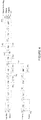
- the pathways for converting ethanol to light unsaturated hydrocarbons (C2, C3 and C4) have separation and purification steps that are similar to those existing at units for the production of olefins by cracking naphtha, according to the scheme in Figure 1 .
- the integration between the pathway of converting alcohol to light unsaturated hydrocarbons and an existing cracking unit proves to be an alternative to increase the economical return of the pathway.
- document WO2013004544 presented the addition of one or more ethanol-to-ethene reactors to a steam cracking plant to increase the production of ethene.
- the present invention relates to the reduction of the feed of naphtha at an existing plant and to the replacement of petrochemical raw material by a renewable raw material by integration with one or more reactors for the conversion of ethanol to light hydrocarbons with no or little alteration in the separation and purification areas.
- the present invention has, as a result, the reduction of emission of greenhouse effect gases on the production of olefins with the lowest possible investment, taking advantage of already existing actives.
- the present invention further enables gradual replacement of petrochemical raw material by renewable raw material, the increase in the profitability of the existing cracking unit, making the raw materials and the composition of products more flexible according to the market, besides eliminating bottlenecks of the existing plant for producing light unsaturated hydrocarbons by thermal cracking.
- It is a further objective of the present invention providing a flexible process that will enable gradual replacement of the raw material of fossil origin by raw material of renewable origin with the lowest cost possible.
- It is a further objective of the present invention providing a process that is flexible with regard to the ratio between light unsaturated hydrocarbons, enabling optimization of the production for products of higher value.
- the present invention relates to integration between the pathway for conversion of ethanol to light unsaturated hydrocarbons and an existing unit for cracking naphtha by replacing pyrolysis furnaces by reactors for converting ethanol to light unsaturated hydrocarbons.
- the integration enables gradual replacement of the cracking furnaces by reactors of conversion of ethanol to light unsaturated hydrocarbons, and the generation of partly renewable products.
- the stream of hydrocarbons of fossil origin used as raw material in the production of olefins by thermal cracking comprises hydrocarbons in the range from C2 to C40, preferably from C2 to C30, more preferably from C2 to C20, and still more preferably from C5 to C12, with boiling point of naphtha ranging from 36°C to about 195°C.
- the ethanol used in the present invention as feeding of the process for conversion of ethanol to light unsaturated hydrocarbons may be produced from, but not limited to, fermentation of at least one organic substrate coming from renewable natural raw materials, as for example, but not limited to, sugar-cane, maize, sorgo, wheat, lignocellulosic materials, among others, being preferably obtained from sugar-cane. Mixtures of ethanol from different sources may also be used in the present invention.
- the ethanol used in feeding the process for conversion of ethanol to light unsaturated hydrocarbons may be either hydrated ethanol or anhydrous, the fuel hydrated ethanol being preferably used.
- ethanol may be subjected to a purifying step prior to the step of converting it to light unsaturated hydrocarbons.
- the process employed for removing impurities from the ethanol load may be either a system of porous membranes or adsorption bed or a system composed by vessels with ion-exchange resins, or an assembly that employs two or more of the systems cited.
- the system is composed by vessels with ion-exchange resins.
- the present invention relates to a process for the production of partly renewable light unsaturated hydrocarbons according to claim 1, in which at least one pyrolysis furnace of a unit for the production of light unsaturated hydrocarbons from hydrocarbons is replaced by at least one reactor for conversion of ethanol to light unsaturated hydrocarbons, wherein:
- the present invention relates to a process for producing partly renewable light unsaturated hydrocarbons as described above, in which the top stream generated in step (b) is contacted with a base solution at a caustic wash unit under conditions suitable for removing at least a part of CO2 from the stream before being compressed in step (c).
- the present invention relates to a process for producing partly renewable light unsaturated hydrocarbons as described above, in which the top stream generated in step (f) is contacted with a base solution in a caustic wash unit under conditions suitable to remove at least a part of CO2 from the stream before being compressed in step (g).
- the present invention relates to a process for producing partly renewable light unsaturated hydrocarbons, in which the stream combined in step (h) is contacted with a base solution in a caustic wash unit under conditions suitable to remove at least a part of CO2 from the stream before being sent to the steps of separating and purifying unsaturated hydrocarbons, C2, C3 and C4 of the existing cracking unit.
- the present invention also relates to a process for producing partly renewable light unsaturated hydrocarbons according to claim 5, wherein at least one pyrolysis furnace of a unit for producing light unsaturated hydrocarbons from hydrocarbons is replaced by at least one reactor for conversion of ethanol to light unsaturated hydrocarbons, in which:
- the present invention also relates to a process for producing partly renewable light unsaturated hydrocarbons according to claim 6, in which at least one pyrolysis furnace of a unit for production of light unsaturated hydrocarbons from hydrocarbons is replaced by at least one reactor for conversion of ethanol to light unsaturated hydrocarbons, in which:
- the integration between the pathway of converting ethanol to light unsaturated hydrocarbons and the existing naphtha cracking unit is made by sharing the olefin separating and purifying systems, as can be observed in Figure 2 .
- This embodiment is preferred when there is a pressure difference in the feedings of the compressors of the two processes.
- Naphtha (101) is heated, vaporized and diluted with low-pressure steam (102) for cracking reaction.
- the steam/hydrocarbons ratio at the inlet of the pyrolysis furnaces depends on the composition of the raw material and usually ranges from 0.3 to 1.
- the reaction takes place by action of the temperature (about 850°C) and the naphtha is transformed into light olefins, fuel oil, gas oil and gasoline (111). Part of the heat supplied to the furnaces for cracking reaction is recovered for cracking and vaporizing naphtha and for generating steam for consumption at the plant.
- the system for cooling the stream coming out of the furnaces is optionally composed by: direct-contact cooling ion heat exchangers, making use of the heat for generating high-pressure steam (120); then, by direct contact with oil (130), where the fuel (132), gasoil (133), heavy fraction of gasoline (134) and residual coke (135) are separated as by-products; and finally the stage of condensation by direct contact with water or air (140), wherein light fraction of gasoline (142) and aqueous effluent (143) are generated as by-products.
- the gas from the quench tower (141) is compressed by multiple-stage compressors (150) under a pressure suitable for cryogenic distillation, wherein a condensate stream (152) is generated as by-product.
- the pressure of the condensate stream preferably ranges from 1500 to 3000 KPa (15 to 30 bar) and still more preferably from 1800 to 2600 kPa (18 to 26 bar).
- the acid gases H2S, CO2, COS, CS2
- a base solution (162) and the process water (161) in a caustic wash unit (160) where aqueous affluent (164) is generated as by-product.
- a few stages of the compression may take place after the caustic wash step.
- the residual water is removed by contact with adsorption beds with desiccating agents (170) prior to the step of separation and purification by fractioning.
- ethanol (301) is heated, vaporized and overheated in multiples furnaces (310) by means of integrations with the out-coming stream of the dehydration reaction.
- the reaction system is optionally composed by multiple reactors (320) and multiple furnaces (310).
- the process may be conducted either in the isothermal or in the adiabatic modes.
- the inert material is water, its total massic concentration at the reactor inlet may range from 5 to 80%, preferably from 25 to 70% and more preferably from 45 to 65%.
- the catalyst employed in the reaction of converting ethanol to light unsaturated hydrocarbons may be any acid catalyst capable of converting ethanol chiefly in a composition comprising unsaturated hydrocarbons C2, C3 and C4.
- the unsaturated hydrocarbons C4 may comprise 1,3-butadiene besides 1 and 2-butenes, 2-butenes being a mixture of the cis and trans isomers.
- zeolites silica-alumina, silico- aluminum-phosphates, aluminosilicates, besides other metallic oxides and variations of the catalysts cited modified with metals and/or phosphor, as well as the mixture of two or more thereof.
- the products obtained (321) are similar to those produced by cracking naphtha: ethene, propene, mixture of hydrocarbons with four carbon atoms, aromatics and others (including heavy hydrocarbons containing 5 or more carbon atoms).
- the reaction products of the conversion of ethanol to unsaturated hydrocarbons should exhibit in their composition (dry base) from 15 to 60% by mole of ethene, from 5 to 40% by mole of propene and from 3 to 35% by mole of C4, C4 being a mixture of 1 and 2-butenes and optionally 1,3-butadiene.
- the reaction of converting ethanol to unsaturated hydrocarbons takes place at temperatures ranging from 400 to 800°C, preferably from 400 to 600°C and under pressures ranging from 100 to 2000 kPa (1 to 20 bar).
- the gas from the reaction (321) is cooled by integrations with the incoming stream (330) and fed to a water quench tower (340), in order to condense most of the water present in the stream, wherein hydrocarbons for burning (342) and aqueous effluent (343) are generated as by-products.
- the gas from the quench tower (341) is compressed ion multiple-stage compressor (350) under a pressure suitable to be fed to the purifying system, which already exists at the naphtha cracking plant, wherein a condensate stream (352) is generated as by-product.
- the pressure of the condensate stream preferably ranges from 1500 to 3000 kPa (15 to 30 bar) and still more preferably from 1800 to 2600 kPa (18 to 26 bar).
- a base solution (362) and process water (361) in a caustic wash unit (360)
- a base solution (362) and process water (361)
- a caustic wash unit 360
- the CO2 and organic acids generated in the reaction wherein aqueous effluent (364) is generated as by-product.
- a few compression stages may take place after the caustic wash step.
- the residual water is removed from the gaseous product from the caustic wash, for instance, by contact with adsorption beds with desiccating agent (370).
- the gases from the drying of the pathway of conversion of ethanol to light unsaturated hydrocarbons (371) and the cracking (171) are combined and fed in an olefin separation and purification system (200).
- an olefin separation and purification system 200.
- a system presented in Figure 3 uses the depropanizing column in the beginning of the separation and purification area.
- the bottom products of the depropanizing column are fed to a debutanized column, in which a stream of product comprising a mixture of C4s and a stream rich in C5 and C6 are separated, and the latter may be specified as pyrolysis gasoline.
- the distillate stream from the depropanizer passes through a hydrogenation reactor (hydrogenation of acetylenes) and is fed to the cold area together with the top gases from the depropanizer.
- a hydrogenation reactor hydrogenation of acetylenes
- the bottom of the demethaniziner is fed to the deethanizer.
- the top product from the deethanizer is fed to the ethene fractioning column, from where the ethene product is obtained, and the bottom product of the deethanizer is fed to the propene fractioning column, from where the propene product is obtained.
- the integration is carried out by sharing the system of separating and purifying olefins, caustic wash, drying and compression, as shown in Figure 4 .
- This embodiment is preferred when there is a bottleneck at the quench tower due to the excess water at the inlet of the process of converting ethanol to unsaturated hydrocarbons with respect to the cracking.
- the integration is carried out by sharing the system of separating and purifying olefins, caustic wash, drying, compression and water quench, as shown in Figure 5 .
- This embodiment uses the smallest number of pieces of equipment possible and, since it requires less investment, it is preferred when no piece of equipment is the bottleneck.
- a typical ethanol-to-olefin conversion plant was evaluated in terms of the investment necessary for the construction thereof, including units necessary to store raw materials and products, besides units for providing facilities and treatment of effluents.
- the distribution of investment is shown in Table 1.
- Table 1 Distribution of investment for the construction of a typical ethanol-to-olefin conversion plant
- Investment component % Reaction and vaporization 10 Quench, compression and caustic wash 13
- Separation and purification of ethene 15 Separation and purification of propene 9 Separation of butenes 6
- Table 2 shows a product composition typical for naphtha cracking and compositions of conversion of ethanol to unsaturated hydrocarbons obtained experimentally with three different catalysts. From these compositions, it is calculated the mass contents of renewable ethene and propene produced by replacing 10% of the feed of raw petrochemical raw material (naphtha) by renewable raw material (ethanol) for three compositions of effluent from the ethanol conversion reactor corresponding to the three catalysts, considering a naphtha cracking plant with production capacity of 870 kta of light olefins (ethene and propene).
- Table 2 out-coming compositions typical of naphtha cracking furnace and out-coming compositions of reactor for conversion of ethanol to unsaturated hydrocarbons using three different catalysts.
- Naphtha Zr-ZSM-5 SAPO-34 ZSM-5 H2 0.10883 0.00023 0.00510 0.01315 CO 0.00181 0.00473 0.01527 0.00026 CO2 0.00060 0.00115 0.00391 0.00026 Methane 0.29021 0.00620 0.00394 0.00684
- Ethane 0.05441 0.01007 0.00185 0.00789 Propene 0.09674 0.32021 0.40458 0.21912 Propane 0.00605 0.00735 0.00838 0.01753
- C4 0.05441 0.11105 0.10114 0.19984
Landscapes
- Chemical & Material Sciences (AREA)
- Organic Chemistry (AREA)
- Oil, Petroleum & Natural Gas (AREA)
- Physics & Mathematics (AREA)
- Thermal Sciences (AREA)
- Engineering & Computer Science (AREA)
- Chemical Kinetics & Catalysis (AREA)
- General Chemical & Material Sciences (AREA)
- Organic Low-Molecular-Weight Compounds And Preparation Thereof (AREA)
- Production Of Liquid Hydrocarbon Mixture For Refining Petroleum (AREA)
Claims (15)
- Verfahren zur Herstellung von teilweise erneuerbaren, leichten ungesättigten Kohlenwasserstoffen, dadurch gekennzeichnet, dass es umfasst:(a) das Kontaktieren von Ethanol mit einem Säurekatalysator in mindestens einem Reaktor unter Bedingungen, die zur Bildung eines Reaktionsabflussstroms umfassend Wasser, Ethen, Propen und ungesättigte Kohlenwasserstoffe mit vier Kohlenstoffatomen neben weiteren Nebenprodukten von Sekundärreaktionen geeignet sind;(b) das Einspeisen des in (a) erzeugten Stroms in eine Direktkontakt-Kühleinrichtung unter Bedingungen, die zur Bildung eines Kopfstroms, der den Großteil der im Abflussstrom von Stufe (a) vorhandenen leichten ungesättigten Kohlenwasserstoffe enthält, und eines Bodenstroms, der den Großteil des im Abflussstrom von Stufe (a) vorhandenen Wassers enthält, geeignet sind;(c) das Komprimieren des in (b) erzeugten Kopfstroms, der reich an leichten ungesättigten Kohlenwasserstoffen ist;(d) das Kontaktieren von Naphtha mit Dampf in einem Pyrolyseofen einer vorhandenen Cracking-Anlage unter Bedingungen, die zur Bildung eines Cracking-Abflussstroms, der leichte ungesättigte Kohlenwasserstoffe, Heizöl, Gasöl und Benzin umfasst, geeignet sind;(e) das Auftrennen des bei der Cracking-Reaktion (d) erzeugten Abflusses in einen leichten Kohlenwasserstoff-Strom, der den Großteil der im Abflussstrom von (d) vorhandenen leichten ungesättigten Kohlenwasserstoffe enthält, und mindestens einen schweren Kohlenwasserstoff-Strom;(f) das Einspeisen des an leichten ungesättigten Kohlenwasserstoffen reichen Stroms von Stufe (e) in eine Direktkontakt-Kühleirichtung unter Bedingungen, die zur Bildung eines Kopfstroms, der den Großteil der im Abflussstrom von Reaktion (e) vorhandenen leichten ungesättigten Kohlenwasserstoffe enthält, und eines Bodenstroms, der die kondensierten Verbindungen und den Großteil des im Abflussstrom von Reaktion (d) vorhandenen Wassers enthält, geeignet sind;(g) das Komprimieren des in (f) erzeugten Kopfstroms, der reich an ungesättigten Kohlenwasserstoffen ist; und(h) das Vereinigen der Ströme (c) und (g) und das Zuführen dieser zu den Stufen einer Abtrennung und Reinigung von ungesättigten C2-, C3- und C4-Kohlenwasserstoffen der vorhandenen Cracking-Anlage, wobei mindestens ein Pyrolyseofen der vorhandenen Cracking-Anlage zur Herstellung von leichten ungesättigten Kohlenwasserstoffen aus Kohlenwasserstoffen nach und nach durch mindestens einen Reaktor zur Umwandlung von Ethanol in leichte ungesättigte Kohlenwasserstoffe ersetzt wird.
- Verfahren nach Anspruch 1, dadurch gekennzeichnet, dass der in (b) erzeugte Kopfstrom mit einer Basenlösung in einer Alkali-Waschanlage unter Bedingungen kontaktiert wird, die zur Entfernung mindestens eines Teils des CO2 aus dem Strom, bevor dieser in Stufe (c) komprimiert wird, geeignet sind.
- Verfahren nach Anspruch 2, dadurch gekennzeichnet, dass der in (f) erzeugte Kopfstrom mit einer Basenlösung in einer Alkali-Waschanlage unter Bedingungen kontaktiert wird, die zur Entfernung mindestens eines Teils des CO2 aus dem Strom, bevor dieser in Stufe (g) komprimiert wird, geeignet sind.
- Verfahren nach Anspruch 1, dadurch gekennzeichnet, dass der in (h) erzeugte Kopfstrom mit einer Basenlösung in einer Alkali-Waschanlage unter Bedingungen kontaktiert wird, die zur Entfernung mindestens eines Teils des CO2 aus dem Strom, bevor dieser in die Stufen einer Abtrennung und Reinigung von ungesättigten C2-, C3- und C4-Kohlenwasserstoffen der vorhanden Cracking-Anlage überführt wird, geeignet sind.
- Verfahren zur Herstellung von teilweise erneuerbaren, leichten ungesättigten Kohlenwasserstoffen, dadurch gekennzeichnet, dass es umfasst:(a) das Kontaktieren von Ethanol mit einem Säurekatalysator in mindestens einem Reaktor unter Bedingungen, die zur Bildung eines Reaktionsabflussstroms umfassend Wasser, Ethen, Propen und ungesättigte Kohlenwasserstoffe mit vier Kohlenstoffatomen neben weiteren Nebenprodukten von Sekundärreaktionen geeignet sind;(b) das Einspeisen des in (a) erzeugten Stroms in eine Direktkontakt-Kühleinrichtung unter Bedingungen, die zur Bildung eines Kopfstroms, der den Großteil der im Abflussstrom von Stufe (a) vorhandenen leichten ungesättigten Kohlenwasserstoffe enthält, und eines Bodenstroms, der den Großteil des im Abflussstrom von Stufe (a) vorhandenen Wassers enthält, geeignet sind;(c) das Kontaktieren von Naphtha mit Dampf in einem Pyrolyseofen einer vorhandenen Cracking-Anlage unter Bedingungen, die zur Bildung eines Cracking-Abflussstroms, der leichte ungesättigte Kohlenwasserstoffe, Heizöl, Gasöl und Benzin umfasst, geeignet sind;(d) das Auftrennen des bei der Cracking-Reaktion (c) erzeugten Abflusses in einen leichten ungesättigten Kohlenwasserstoff-Strom, der den Großteil der im Abflussstrom von (c) vorhandenen leichten ungesättigten Kohlenwasserstoffe enthält, und mindestens einen schweren Kohlenwasserstoff-Strom;(e) das Einspeisen des an leichten ungesättigten Kohlenwasserstoffen reichen Stroms von Stufe (d) in eine Direktkontakt-Kühleinrichtung unter Bedingungen, die zur Bildung eines Kopfstroms, der den Großteil der im Abflussstrom von Reaktion (d) vorhandenen leichten ungesättigten Kohlenwasserstoffe enthält, und eines Bodenstroms, der die kondensierten Verbindungen und den Großteil des im Abflussstrom von Reaktion (c) vorhandenen Wassers enthält, geeignet sind; und(f) das Vereinigen der Ströme (b) und (e) und das Kontaktieren dieser mit einer Basenlösung in einer Alkali-Waschanlage unter Bedingungen, die zur Entfernung mindestens eines Teils des CO2 aus dem Strom geeignet sind, und das Überführen dieser in die Stufen einer Abtrennung und Reinigung von ungesättigten C2-, C3- und C4-Kohlenwasserstoffen der vorhandenen Cracking-Anlage, wobei mindestens ein Pyrolyseofen der vorhandenen Cracking-Anlage zur Herstellung von leichten ungesättigten Kohlenwasserstoffen aus Kohlenwasserstoffen nach und nach durch mindestens einen Reaktor zur Umwandlung von Ethanol in leichte ungesättigte Kohlenwasserstoffe ersetzt wird.
- Verfahren zur Herstellung von teilweise erneuerbaren, leichten ungesättigten Kohlenwasserstoffen, dadurch gekennzeichnet, dass es umfasst:(a) das Kontaktieren von Ethanol mit einem Säurekatalysator in mindestens einem Reaktor unter Bedingungen, die zur Bildung eines Abflussstroms umfassend Wasser, Ethen, Propen und ungesättigte Kohlenwasserstoffe mit vier Kohlenstoffatomen neben weiteren Nebenprodukten von Sekundärreaktionen geeignet sind;(b) das Kontaktieren von Naphtha mit Dampf in einem Pyrolyseofen einer vorhandenen Cracking-Anlage unter Bedingungen, die zur Bildung eines Cracking-Abflussstroms, der leichte ungesättigte Kohlenwasserstoffe, Heizöl, Gasöl und Benzin umfasst, geeignet sind;(c) das Auftrennen des bei der Cracking-Reaktion (b) erzeugten Abflusses in einen leichten ungesättigten Kohlenwasserstoff-Strom, der den Großteil der im Abflussstrom von (b) vorhandenen leichten ungesättigten Kohlenwasserstoffe enthält, und mindestens einen schweren Kohlenwasserstoff-Strom; und(d) das Vereinigen des Abflussstroms aus der Stufe (a) zur Umwandlung von Ethanol zu ungesättigten Kohlenwasserstoffen und des in Stufe (c) vor der Direktkontakt-Kühlstufe zur Entfernung von Kondensaten und Wasser erzeugten Stroms von leichten ungesättigten Kohlenwasserstoffen gefolgt von einem Kontakt mit einer Basenlösung in einer Alkali-Waschanlage unter Bedingungen, die zur Entfernung mindestens eines Teils des CO2 aus dem Strom und aus den Stufen einer Abtrennung und Reinigung von ungesättigten C2-, C3- und C4-Kohlenwasserstoffen der vorhandenen Cracking-Anlage geeignet sind, wobei der Pyrolyseofen der vorhandenen Cracking-Anlage zur Herstellung von leichten ungesättigten Kohlenwasserstoffen aus Kohlenwasserstoffen nach und nach durch mindestens einen Reaktor zur Umwandlung von Ethanol in leichte ungesättigte Kohlenwasserstoffe ersetzt wird.
- Verfahren nach einem der Ansprüche 1 bis 6, dadurch gekennzeichnet, dass der Strom von Kohlenwasserstoffen fossilen Ursprungs, die als Ausgangsmaterial bei der Herstellung von leichten ungesättigten Kohlenwasserstoffen verwendet werden, Kohlenwasserstoffe im Bereich von C2 bis C40 umfasst.
- Verfahren nach Anspruch 7, dadurch gekennzeichnet, dass der Strom von Kohlenwasserstoffen fossilen Ursprungs, die als Ausgangsmaterial bei der Herstellung von leichten ungesättigten Kohlenwasserstoffen verwendet werden, Kohlenwasserstoffe im Bereich von C2 bis C30 umfasst.
- Verfahren nach Anspruch 8, dadurch gekennzeichnet, dass der Strom von Kohlenwasserstoffen fossilen Ursprungs, die als Ausgangsmaterial bei der Herstellung von leichten ungesättigten Kohlenwasserstoffen verwendet werden, Kohlenwasserstoffe im Bereich von C2 bis C20 umfasst.
- Verfahren nach Anspruch 9, dadurch gekennzeichnet, dass der Strom von Kohlenwasserstoffen fossilen Ursprungs, die als Ausgangsmaterial bei der Herstellung von leichten ungesättigten Kohlenwasserstoffen verwendet werden, Kohlenwasserstoffe im Bereich von C5 bis C12 mit einem Naphtha-Siedepunkt von etwa 36 °C bis etwa 195 °C umfasst.
- Verfahren nach einem der Ansprüche 1 bis 10, dadurch gekennzeichnet, dass das Ethanol, das als Ausgangsmaterial beim Verfahren zur Umwandlung von Ethanol in leichte ungesättigte Kohlenwasserstoffe verwendet wird, durch Fermentation mindestens eines organischen Substrats aus erneuerbaren natürlichen Ausgangsmateralien erhalten wird.
- Verfahren nach Anspruch 11, dadurch gekennzeichnet, dass es sich beim Ethanol, das als Ausgangsmaterial beim Verfahren zur Umwandlung von Ethanol in leichte ungesättigte Kohlenwasserstoffe verwendet wird, entweder um wässriges oder um wasserfreies Ethanol handelt.
- Verfahren nach Anspruch 12, dadurch gekennzeichnet, dass es sich beim Ethanol, das als Ausgangsmaterial beim Verfahren zur Umwandlung von Ethanol in leichte ungesättigte Kohlenwasserstoffe verwendet wird, um wässriges Ethanol in Kraftstoff-Qualität handelt.
- Verfahren nach einem der Ansprüche 1 bis 13, dadurch gekennzeichnet, dass die Reaktionsprodukte der Umwandlung von Ethanol in ungesättigte Kohlenwasserstoffe in ihrer Zusammensetzung (bezogen auf die Trockensubstanz) 15 bis 60 Mol-% Ethen, 5 bis 40 Mol-% Propen, und 3 bis 35 Mol-% C4 aufweisen, wobei es sich bei C4 um ein Gemisch aus 1- und 2-Butenen handelt.
- Verfahren nach Anspruch 14, dadurch gekennzeichnet, dass die Zusammensetzung von C4 ein Gemisch aus 1- und 2-Butenen und 1,3-Butadien umfasst.
Applications Claiming Priority (1)
| Application Number | Priority Date | Filing Date | Title |
|---|---|---|---|
| PCT/BR2013/000569 WO2015089593A1 (pt) | 2013-12-17 | 2013-12-17 | Processo de produção de hidrocarbonetos insaturados leves |
Publications (3)
| Publication Number | Publication Date |
|---|---|
| EP3085754A1 EP3085754A1 (de) | 2016-10-26 |
| EP3085754A4 EP3085754A4 (de) | 2017-06-14 |
| EP3085754B1 true EP3085754B1 (de) | 2019-10-23 |
Family
ID=53401810
Family Applications (1)
| Application Number | Title | Priority Date | Filing Date |
|---|---|---|---|
| EP13899431.4A Active EP3085754B1 (de) | 2013-12-17 | 2013-12-17 | Verfahren zur herstellung von ungesättigten leichten kohlenwasserstoffen |
Country Status (4)
| Country | Link |
|---|---|
| US (1) | US9751816B2 (de) |
| EP (1) | EP3085754B1 (de) |
| BR (1) | BR112016013092B1 (de) |
| WO (1) | WO2015089593A1 (de) |
Families Citing this family (1)
| Publication number | Priority date | Publication date | Assignee | Title |
|---|---|---|---|---|
| CN121866238A (zh) * | 2023-11-15 | 2026-04-14 | 旭化成株式会社 | 轻质烯烃的制造方法 |
Family Cites Families (7)
| Publication number | Priority date | Publication date | Assignee | Title |
|---|---|---|---|---|
| US20050038304A1 (en) | 2003-08-15 | 2005-02-17 | Van Egmond Cor F. | Integrating a methanol to olefin reaction system with a steam cracking system |
| CA2664541C (en) * | 2006-09-28 | 2013-04-09 | Uop Llc | Enhanced oxygenate conversion and product cracking integration |
| DE102007045238A1 (de) | 2007-09-21 | 2009-04-09 | Lurgi Gmbh | Verfahren und Anlage zur Herstellung von Kohlenwasserstoffen |
| CN102666794B (zh) | 2009-11-10 | 2015-12-02 | 国际壳牌研究有限公司 | 用于制备低级烯烃产品的方法 |
| CN102666807B (zh) | 2009-11-10 | 2016-01-20 | 国际壳牌研究有限公司 | 用于生产烯烃的方法 |
| US20120041243A1 (en) * | 2010-08-10 | 2012-02-16 | Uop Llc | Integration of a methanol-to-olefin reaction system with a hydrocarbon pyrolysis system |
| WO2013004544A1 (en) | 2011-07-07 | 2013-01-10 | Ineos Europe Ag | Process and apparatus for producing olefins with heat transfer from steam cracking to alcohol dehydration process. |
-
2013
- 2013-12-17 US US15/105,398 patent/US9751816B2/en active Active
- 2013-12-17 BR BR112016013092-8A patent/BR112016013092B1/pt active IP Right Grant
- 2013-12-17 EP EP13899431.4A patent/EP3085754B1/de active Active
- 2013-12-17 WO PCT/BR2013/000569 patent/WO2015089593A1/pt not_active Ceased
Non-Patent Citations (1)
| Title |
|---|
| None * |
Also Published As
| Publication number | Publication date |
|---|---|
| WO2015089593A1 (pt) | 2015-06-25 |
| US20160318825A1 (en) | 2016-11-03 |
| BR112016013092B1 (pt) | 2018-12-11 |
| EP3085754A1 (de) | 2016-10-26 |
| US9751816B2 (en) | 2017-09-05 |
| EP3085754A4 (de) | 2017-06-14 |
Similar Documents
| Publication | Publication Date | Title |
|---|---|---|
| JP7368415B2 (ja) | 触媒急速熱分解プロセスによってバイオマスを低硫黄、低窒素、及び低オレフィン含有量のbtxに転換するためのプロセス | |
| JP6920321B2 (ja) | 触媒急速熱分解プロセスによる化学物質および燃料ブレンドストック | |
| KR101522933B1 (ko) | 프로필렌 제조 | |
| CN101617028B (zh) | 生产合成燃料的方法和设备 | |
| EP2597077A2 (de) | Alternative Wege zur Herstellung von Alkoholen und Kohlenwasserstoffen aus Biomasse | |
| US20120197053A1 (en) | System and method for the production of liquid fuels | |
| US8338655B2 (en) | Conversion of ethanol broth to LPG and gasoline | |
| KR20180029903A (ko) | Lpg 또는 ngl의 탈수소화 및 이에 따라 수득된 올레핀의 탄력적 활용 | |
| CN114929653A (zh) | C2-c5醇的同时脱水、二聚和复分解 | |
| EP2940103B1 (de) | Verfahren zur herstellung von biobrennstoffen mit ethanol oder alkoholgemischen als biotreibstoff oder biokomponente | |
| TW200303916A (en) | A process to produce a dilute ethylene stream and a dilute propylene stream | |
| EP2729433B1 (de) | Verfahren zur herstellung von olefinen mit hitzetransport von steamcrackingsanlage zur alkoholdehydrierungsanlage | |
| CA2783638A1 (en) | Integrated process and apparatus to produce hydrocarbons from aqueous solutions of lactones, hydroxy-carboxylic acids, alkene-carboxylic acids, and/or alcohols | |
| US20140187840A1 (en) | Process for separating by absorption the pyrolysis gas from preparation of lower carbon olefins | |
| CN103827061B (zh) | 在温和热裂解中分离烃的顺序 | |
| US20170158580A1 (en) | Method for dehydrating a mixture containing ethanol and n-propanol | |
| US9751816B2 (en) | Method for producing light unsaturated hydrocarbons | |
| CN105396514A (zh) | 甲醇制汽油装置及方法 | |
| US20240217899A1 (en) | Process for producing renewable product streams | |
| US20250250495A1 (en) | Process for production of a liquid fuel from oxygenates | |
| US20250171382A1 (en) | Systems and processes for catalytic conversion of c1-c5 alcohols to c2-c5 olefin mixtures | |
| CN102285854A (zh) | 增产丙烯、乙烯和丁二烯的方法 | |
| CN112694381B (zh) | 从低碳烯烃制备高附加值产品的装置及方法 | |
| TW202532624A (zh) | 輕質烯烴之製造方法 | |
| EP3504296A1 (de) | Verfahren zur herstellung eines erneuerbaren kohlenwasserstoffstroms als bestandteil von benzinformulierungen, erneuerbarer kohlenwasserstoffstrom und benzinformulierung |
Legal Events
| Date | Code | Title | Description |
|---|---|---|---|
| PUAI | Public reference made under article 153(3) epc to a published international application that has entered the european phase |
Free format text: ORIGINAL CODE: 0009012 |
|
| 17P | Request for examination filed |
Effective date: 20160715 |
|
| AK | Designated contracting states |
Kind code of ref document: A1 Designated state(s): AL AT BE BG CH CY CZ DE DK EE ES FI FR GB GR HR HU IE IS IT LI LT LU LV MC MK MT NL NO PL PT RO RS SE SI SK SM TR |
|
| AX | Request for extension of the european patent |
Extension state: BA ME |
|
| DAX | Request for extension of the european patent (deleted) | ||
| A4 | Supplementary search report drawn up and despatched |
Effective date: 20170512 |
|
| RIC1 | Information provided on ipc code assigned before grant |
Ipc: C07C 1/24 20060101ALI20170508BHEP Ipc: C10G 3/00 20060101ALI20170508BHEP Ipc: C10G 9/00 20060101AFI20170508BHEP Ipc: C07C 1/20 20060101ALI20170508BHEP |
|
| STAA | Information on the status of an ep patent application or granted ep patent |
Free format text: STATUS: REQUEST FOR EXAMINATION WAS MADE |
|
| STAA | Information on the status of an ep patent application or granted ep patent |
Free format text: STATUS: EXAMINATION IS IN PROGRESS |
|
| 17Q | First examination report despatched |
Effective date: 20180813 |
|
| GRAP | Despatch of communication of intention to grant a patent |
Free format text: ORIGINAL CODE: EPIDOSNIGR1 |
|
| STAA | Information on the status of an ep patent application or granted ep patent |
Free format text: STATUS: GRANT OF PATENT IS INTENDED |
|
| INTG | Intention to grant announced |
Effective date: 20190311 |
|
| GRAJ | Information related to disapproval of communication of intention to grant by the applicant or resumption of examination proceedings by the epo deleted |
Free format text: ORIGINAL CODE: EPIDOSDIGR1 |
|
| STAA | Information on the status of an ep patent application or granted ep patent |
Free format text: STATUS: EXAMINATION IS IN PROGRESS |
|
| INTC | Intention to grant announced (deleted) | ||
| RIN1 | Information on inventor provided before grant (corrected) |
Inventor name: TERUO MORITA, AUGUSTO Inventor name: MAIA MOREIRA, BRUNO Inventor name: WERNECK DO CARMO, ROBERTO Inventor name: BROGLIO, MARIA IGNEZ Inventor name: DE SOUZA TAVARES, LUIS FELIPE |
|
| RIN1 | Information on inventor provided before grant (corrected) |
Inventor name: BROGLIO, MARIA IGNEZ Inventor name: MAIA MOREIRA, BRUNO Inventor name: TERUO MORITA, AUGUSTO Inventor name: DE SOUZA TAVARES, LUIS FELIPE Inventor name: WERNECK DO CARMO, ROBERTO |
|
| GRAR | Information related to intention to grant a patent recorded |
Free format text: ORIGINAL CODE: EPIDOSNIGR71 |
|
| GRAS | Grant fee paid |
Free format text: ORIGINAL CODE: EPIDOSNIGR3 |
|
| STAA | Information on the status of an ep patent application or granted ep patent |
Free format text: STATUS: GRANT OF PATENT IS INTENDED |
|
| GRAA | (expected) grant |
Free format text: ORIGINAL CODE: 0009210 |
|
| STAA | Information on the status of an ep patent application or granted ep patent |
Free format text: STATUS: THE PATENT HAS BEEN GRANTED |
|
| AK | Designated contracting states |
Kind code of ref document: B1 Designated state(s): AL AT BE BG CH CY CZ DE DK EE ES FI FR GB GR HR HU IE IS IT LI LT LU LV MC MK MT NL NO PL PT RO RS SE SI SK SM TR |
|
| INTG | Intention to grant announced |
Effective date: 20190917 |
|
| REG | Reference to a national code |
Ref country code: GB Ref legal event code: FG4D |
|
| REG | Reference to a national code |
Ref country code: CH Ref legal event code: EP |
|
| REG | Reference to a national code |
Ref country code: IE Ref legal event code: FG4D |
|
| REG | Reference to a national code |
Ref country code: DE Ref legal event code: R096 Ref document number: 602013062159 Country of ref document: DE |
|
| REG | Reference to a national code |
Ref country code: AT Ref legal event code: REF Ref document number: 1193627 Country of ref document: AT Kind code of ref document: T Effective date: 20191115 |
|
| REG | Reference to a national code |
Ref country code: DE Ref legal event code: R082 Ref document number: 602013062159 Country of ref document: DE Representative=s name: LOUIS POEHLAU LOHRENTZ PATENTANWAELTE PARTNERS, DE Ref country code: DE Ref legal event code: R082 Ref document number: 602013062159 Country of ref document: DE Representative=s name: LOUIS, POEHLAU, LOHRENTZ, DE |
|
| REG | Reference to a national code |
Ref country code: NL Ref legal event code: FP |
|
| REG | Reference to a national code |
Ref country code: SE Ref legal event code: TRGR |
|
| REG | Reference to a national code |
Ref country code: LT Ref legal event code: MG4D |
|
| PG25 | Lapsed in a contracting state [announced via postgrant information from national office to epo] |
Ref country code: LT Free format text: LAPSE BECAUSE OF FAILURE TO SUBMIT A TRANSLATION OF THE DESCRIPTION OR TO PAY THE FEE WITHIN THE PRESCRIBED TIME-LIMIT Effective date: 20191023 Ref country code: GR Free format text: LAPSE BECAUSE OF FAILURE TO SUBMIT A TRANSLATION OF THE DESCRIPTION OR TO PAY THE FEE WITHIN THE PRESCRIBED TIME-LIMIT Effective date: 20200124 Ref country code: NO Free format text: LAPSE BECAUSE OF FAILURE TO SUBMIT A TRANSLATION OF THE DESCRIPTION OR TO PAY THE FEE WITHIN THE PRESCRIBED TIME-LIMIT Effective date: 20200123 Ref country code: PL Free format text: LAPSE BECAUSE OF FAILURE TO SUBMIT A TRANSLATION OF THE DESCRIPTION OR TO PAY THE FEE WITHIN THE PRESCRIBED TIME-LIMIT Effective date: 20191023 Ref country code: FI Free format text: LAPSE BECAUSE OF FAILURE TO SUBMIT A TRANSLATION OF THE DESCRIPTION OR TO PAY THE FEE WITHIN THE PRESCRIBED TIME-LIMIT Effective date: 20191023 Ref country code: BG Free format text: LAPSE BECAUSE OF FAILURE TO SUBMIT A TRANSLATION OF THE DESCRIPTION OR TO PAY THE FEE WITHIN THE PRESCRIBED TIME-LIMIT Effective date: 20200123 Ref country code: PT Free format text: LAPSE BECAUSE OF FAILURE TO SUBMIT A TRANSLATION OF THE DESCRIPTION OR TO PAY THE FEE WITHIN THE PRESCRIBED TIME-LIMIT Effective date: 20200224 Ref country code: LV Free format text: LAPSE BECAUSE OF FAILURE TO SUBMIT A TRANSLATION OF THE DESCRIPTION OR TO PAY THE FEE WITHIN THE PRESCRIBED TIME-LIMIT Effective date: 20191023 |
|
| PG25 | Lapsed in a contracting state [announced via postgrant information from national office to epo] |
Ref country code: HR Free format text: LAPSE BECAUSE OF FAILURE TO SUBMIT A TRANSLATION OF THE DESCRIPTION OR TO PAY THE FEE WITHIN THE PRESCRIBED TIME-LIMIT Effective date: 20191023 Ref country code: RS Free format text: LAPSE BECAUSE OF FAILURE TO SUBMIT A TRANSLATION OF THE DESCRIPTION OR TO PAY THE FEE WITHIN THE PRESCRIBED TIME-LIMIT Effective date: 20191023 Ref country code: IS Free format text: LAPSE BECAUSE OF FAILURE TO SUBMIT A TRANSLATION OF THE DESCRIPTION OR TO PAY THE FEE WITHIN THE PRESCRIBED TIME-LIMIT Effective date: 20200224 |
|
| PG25 | Lapsed in a contracting state [announced via postgrant information from national office to epo] |
Ref country code: AL Free format text: LAPSE BECAUSE OF FAILURE TO SUBMIT A TRANSLATION OF THE DESCRIPTION OR TO PAY THE FEE WITHIN THE PRESCRIBED TIME-LIMIT Effective date: 20191023 |
|
| REG | Reference to a national code |
Ref country code: DE Ref legal event code: R097 Ref document number: 602013062159 Country of ref document: DE |
|
| PG2D | Information on lapse in contracting state deleted |
Ref country code: IS |
|
| PG25 | Lapsed in a contracting state [announced via postgrant information from national office to epo] |
Ref country code: CZ Free format text: LAPSE BECAUSE OF FAILURE TO SUBMIT A TRANSLATION OF THE DESCRIPTION OR TO PAY THE FEE WITHIN THE PRESCRIBED TIME-LIMIT Effective date: 20191023 Ref country code: ES Free format text: LAPSE BECAUSE OF FAILURE TO SUBMIT A TRANSLATION OF THE DESCRIPTION OR TO PAY THE FEE WITHIN THE PRESCRIBED TIME-LIMIT Effective date: 20191023 Ref country code: RO Free format text: LAPSE BECAUSE OF FAILURE TO SUBMIT A TRANSLATION OF THE DESCRIPTION OR TO PAY THE FEE WITHIN THE PRESCRIBED TIME-LIMIT Effective date: 20191023 Ref country code: EE Free format text: LAPSE BECAUSE OF FAILURE TO SUBMIT A TRANSLATION OF THE DESCRIPTION OR TO PAY THE FEE WITHIN THE PRESCRIBED TIME-LIMIT Effective date: 20191023 Ref country code: DK Free format text: LAPSE BECAUSE OF FAILURE TO SUBMIT A TRANSLATION OF THE DESCRIPTION OR TO PAY THE FEE WITHIN THE PRESCRIBED TIME-LIMIT Effective date: 20191023 Ref country code: IS Free format text: LAPSE BECAUSE OF FAILURE TO SUBMIT A TRANSLATION OF THE DESCRIPTION OR TO PAY THE FEE WITHIN THE PRESCRIBED TIME-LIMIT Effective date: 20200223 |
|
| REG | Reference to a national code |
Ref country code: CH Ref legal event code: PL |
|
| REG | Reference to a national code |
Ref country code: AT Ref legal event code: MK05 Ref document number: 1193627 Country of ref document: AT Kind code of ref document: T Effective date: 20191023 |
|
| PLBE | No opposition filed within time limit |
Free format text: ORIGINAL CODE: 0009261 |
|
| STAA | Information on the status of an ep patent application or granted ep patent |
Free format text: STATUS: NO OPPOSITION FILED WITHIN TIME LIMIT |
|
| PG25 | Lapsed in a contracting state [announced via postgrant information from national office to epo] |
Ref country code: IT Free format text: LAPSE BECAUSE OF FAILURE TO SUBMIT A TRANSLATION OF THE DESCRIPTION OR TO PAY THE FEE WITHIN THE PRESCRIBED TIME-LIMIT Effective date: 20191023 Ref country code: SM Free format text: LAPSE BECAUSE OF FAILURE TO SUBMIT A TRANSLATION OF THE DESCRIPTION OR TO PAY THE FEE WITHIN THE PRESCRIBED TIME-LIMIT Effective date: 20191023 Ref country code: MC Free format text: LAPSE BECAUSE OF FAILURE TO SUBMIT A TRANSLATION OF THE DESCRIPTION OR TO PAY THE FEE WITHIN THE PRESCRIBED TIME-LIMIT Effective date: 20191023 Ref country code: SK Free format text: LAPSE BECAUSE OF FAILURE TO SUBMIT A TRANSLATION OF THE DESCRIPTION OR TO PAY THE FEE WITHIN THE PRESCRIBED TIME-LIMIT Effective date: 20191023 |
|
| GBPC | Gb: european patent ceased through non-payment of renewal fee |
Effective date: 20200123 |
|
| 26N | No opposition filed |
Effective date: 20200724 |
|
| PG25 | Lapsed in a contracting state [announced via postgrant information from national office to epo] |
Ref country code: GB Free format text: LAPSE BECAUSE OF NON-PAYMENT OF DUE FEES Effective date: 20200123 Ref country code: IE Free format text: LAPSE BECAUSE OF NON-PAYMENT OF DUE FEES Effective date: 20191217 Ref country code: LU Free format text: LAPSE BECAUSE OF NON-PAYMENT OF DUE FEES Effective date: 20191217 |
|
| PG25 | Lapsed in a contracting state [announced via postgrant information from national office to epo] |
Ref country code: AT Free format text: LAPSE BECAUSE OF FAILURE TO SUBMIT A TRANSLATION OF THE DESCRIPTION OR TO PAY THE FEE WITHIN THE PRESCRIBED TIME-LIMIT Effective date: 20191023 Ref country code: LI Free format text: LAPSE BECAUSE OF NON-PAYMENT OF DUE FEES Effective date: 20191231 Ref country code: CH Free format text: LAPSE BECAUSE OF NON-PAYMENT OF DUE FEES Effective date: 20191231 Ref country code: SI Free format text: LAPSE BECAUSE OF FAILURE TO SUBMIT A TRANSLATION OF THE DESCRIPTION OR TO PAY THE FEE WITHIN THE PRESCRIBED TIME-LIMIT Effective date: 20191023 |
|
| PG25 | Lapsed in a contracting state [announced via postgrant information from national office to epo] |
Ref country code: CY Free format text: LAPSE BECAUSE OF FAILURE TO SUBMIT A TRANSLATION OF THE DESCRIPTION OR TO PAY THE FEE WITHIN THE PRESCRIBED TIME-LIMIT Effective date: 20191023 |
|
| PG25 | Lapsed in a contracting state [announced via postgrant information from national office to epo] |
Ref country code: HU Free format text: LAPSE BECAUSE OF FAILURE TO SUBMIT A TRANSLATION OF THE DESCRIPTION OR TO PAY THE FEE WITHIN THE PRESCRIBED TIME-LIMIT; INVALID AB INITIO Effective date: 20131217 Ref country code: MT Free format text: LAPSE BECAUSE OF FAILURE TO SUBMIT A TRANSLATION OF THE DESCRIPTION OR TO PAY THE FEE WITHIN THE PRESCRIBED TIME-LIMIT Effective date: 20191023 |
|
| PG25 | Lapsed in a contracting state [announced via postgrant information from national office to epo] |
Ref country code: TR Free format text: LAPSE BECAUSE OF FAILURE TO SUBMIT A TRANSLATION OF THE DESCRIPTION OR TO PAY THE FEE WITHIN THE PRESCRIBED TIME-LIMIT Effective date: 20191023 |
|
| PG25 | Lapsed in a contracting state [announced via postgrant information from national office to epo] |
Ref country code: MK Free format text: LAPSE BECAUSE OF FAILURE TO SUBMIT A TRANSLATION OF THE DESCRIPTION OR TO PAY THE FEE WITHIN THE PRESCRIBED TIME-LIMIT Effective date: 20191023 |
|
| P01 | Opt-out of the competence of the unified patent court (upc) registered |
Effective date: 20230530 |
|
| PGFP | Annual fee paid to national office [announced via postgrant information from national office to epo] |
Ref country code: NL Payment date: 20241120 Year of fee payment: 12 |
|
| PGFP | Annual fee paid to national office [announced via postgrant information from national office to epo] |
Ref country code: DE Payment date: 20241029 Year of fee payment: 12 |
|
| PGFP | Annual fee paid to national office [announced via postgrant information from national office to epo] |
Ref country code: BE Payment date: 20241120 Year of fee payment: 12 |
|
| PGFP | Annual fee paid to national office [announced via postgrant information from national office to epo] |
Ref country code: FR Payment date: 20241111 Year of fee payment: 12 |
|
| PGFP | Annual fee paid to national office [announced via postgrant information from national office to epo] |
Ref country code: SE Payment date: 20241028 Year of fee payment: 12 |