EP3085358B1 - Intrakamerale implantate mit retard-therapeutika - Google Patents
Intrakamerale implantate mit retard-therapeutika Download PDFInfo
- Publication number
- EP3085358B1 EP3085358B1 EP15191632.7A EP15191632A EP3085358B1 EP 3085358 B1 EP3085358 B1 EP 3085358B1 EP 15191632 A EP15191632 A EP 15191632A EP 3085358 B1 EP3085358 B1 EP 3085358B1
- Authority
- EP
- European Patent Office
- Prior art keywords
- implants
- therapeutic agent
- implant
- ocular
- lactide
- Prior art date
- Legal status (The legal status is an assumption and is not a legal conclusion. Google has not performed a legal analysis and makes no representation as to the accuracy of the status listed.)
- Active
Links
Images




Classifications
-
- A—HUMAN NECESSITIES
- A61—MEDICAL OR VETERINARY SCIENCE; HYGIENE
- A61K—PREPARATIONS FOR MEDICAL, DENTAL OR TOILETRY PURPOSES
- A61K9/00—Medicinal preparations characterised by special physical form
- A61K9/0012—Galenical forms characterised by the site of application
- A61K9/0048—Eye, e.g. artificial tears
- A61K9/0051—Ocular inserts, ocular implants
-
- A—HUMAN NECESSITIES
- A61—MEDICAL OR VETERINARY SCIENCE; HYGIENE
- A61K—PREPARATIONS FOR MEDICAL, DENTAL OR TOILETRY PURPOSES
- A61K31/00—Medicinal preparations containing organic active ingredients
- A61K31/557—Eicosanoids, e.g. leukotrienes or prostaglandins
- A61K31/5575—Eicosanoids, e.g. leukotrienes or prostaglandins having a cyclopentane, e.g. prostaglandin E2, prostaglandin F2-alpha
-
- A—HUMAN NECESSITIES
- A61—MEDICAL OR VETERINARY SCIENCE; HYGIENE
- A61K—PREPARATIONS FOR MEDICAL, DENTAL OR TOILETRY PURPOSES
- A61K47/00—Medicinal preparations characterised by the non-active ingredients used, e.g. carriers or inert additives; Targeting or modifying agents chemically bound to the active ingredient
- A61K47/06—Organic compounds, e.g. natural or synthetic hydrocarbons, polyolefins, mineral oil, petrolatum or ozokerite
- A61K47/08—Organic compounds, e.g. natural or synthetic hydrocarbons, polyolefins, mineral oil, petrolatum or ozokerite containing oxygen, e.g. ethers, acetals, ketones, quinones, aldehydes, peroxides
- A61K47/10—Alcohols; Phenols; Salts thereof, e.g. glycerol; Polyethylene glycols [PEG]; Poloxamers; PEG/POE alkyl ethers
-
- A—HUMAN NECESSITIES
- A61—MEDICAL OR VETERINARY SCIENCE; HYGIENE
- A61K—PREPARATIONS FOR MEDICAL, DENTAL OR TOILETRY PURPOSES
- A61K47/00—Medicinal preparations characterised by the non-active ingredients used, e.g. carriers or inert additives; Targeting or modifying agents chemically bound to the active ingredient
- A61K47/30—Macromolecular organic or inorganic compounds, e.g. inorganic polyphosphates
- A61K47/34—Macromolecular compounds obtained otherwise than by reactions only involving carbon-to-carbon unsaturated bonds, e.g. polyesters, polyamino acids, polysiloxanes, polyphosphazines, copolymers of polyalkylene glycol or poloxamers
-
- A—HUMAN NECESSITIES
- A61—MEDICAL OR VETERINARY SCIENCE; HYGIENE
- A61K—PREPARATIONS FOR MEDICAL, DENTAL OR TOILETRY PURPOSES
- A61K9/00—Medicinal preparations characterised by special physical form
- A61K9/0012—Galenical forms characterised by the site of application
- A61K9/0019—Injectable compositions; Intramuscular, intravenous, arterial, subcutaneous administration; Compositions to be administered through the skin in an invasive manner
- A61K9/0024—Solid, semi-solid or solidifying implants, which are implanted or injected in body tissue
-
- A—HUMAN NECESSITIES
- A61—MEDICAL OR VETERINARY SCIENCE; HYGIENE
- A61K—PREPARATIONS FOR MEDICAL, DENTAL OR TOILETRY PURPOSES
- A61K9/00—Medicinal preparations characterised by special physical form
- A61K9/14—Particulate form, e.g. powders, Processes for size reducing of pure drugs or the resulting products, Pure drug nanoparticles
- A61K9/16—Agglomerates; Granulates; Microbeadlets ; Microspheres; Pellets; Solid products obtained by spray drying, spray freeze drying, spray congealing,(multiple) emulsion solvent evaporation or extraction
- A61K9/1605—Excipients; Inactive ingredients
- A61K9/1629—Organic macromolecular compounds
- A61K9/1641—Organic macromolecular compounds obtained otherwise than by reactions only involving carbon-to-carbon unsaturated bonds, e.g. polyethylene glycol, poloxamers
- A61K9/1647—Polyesters, e.g. poly(lactide-co-glycolide)
-
- A—HUMAN NECESSITIES
- A61—MEDICAL OR VETERINARY SCIENCE; HYGIENE
- A61L—METHODS OR APPARATUS FOR STERILISING MATERIALS OR OBJECTS IN GENERAL; DISINFECTION, STERILISATION OR DEODORISATION OF AIR; CHEMICAL ASPECTS OF BANDAGES, DRESSINGS, ABSORBENT PADS OR SURGICAL ARTICLES; MATERIALS FOR BANDAGES, DRESSINGS, ABSORBENT PADS OR SURGICAL ARTICLES
- A61L27/00—Materials for grafts or prostheses or for coating grafts or prostheses
- A61L27/50—Materials characterised by their function or physical properties, e.g. injectable or lubricating compositions, shape-memory materials, surface modified materials
- A61L27/54—Biologically active materials, e.g. therapeutic substances
-
- A—HUMAN NECESSITIES
- A61—MEDICAL OR VETERINARY SCIENCE; HYGIENE
- A61P—SPECIFIC THERAPEUTIC ACTIVITY OF CHEMICAL COMPOUNDS OR MEDICINAL PREPARATIONS
- A61P27/00—Drugs for disorders of the senses
- A61P27/02—Ophthalmic agents
-
- A—HUMAN NECESSITIES
- A61—MEDICAL OR VETERINARY SCIENCE; HYGIENE
- A61P—SPECIFIC THERAPEUTIC ACTIVITY OF CHEMICAL COMPOUNDS OR MEDICINAL PREPARATIONS
- A61P27/00—Drugs for disorders of the senses
- A61P27/02—Ophthalmic agents
- A61P27/06—Antiglaucoma agents or miotics
-
- A—HUMAN NECESSITIES
- A61—MEDICAL OR VETERINARY SCIENCE; HYGIENE
- A61L—METHODS OR APPARATUS FOR STERILISING MATERIALS OR OBJECTS IN GENERAL; DISINFECTION, STERILISATION OR DEODORISATION OF AIR; CHEMICAL ASPECTS OF BANDAGES, DRESSINGS, ABSORBENT PADS OR SURGICAL ARTICLES; MATERIALS FOR BANDAGES, DRESSINGS, ABSORBENT PADS OR SURGICAL ARTICLES
- A61L27/00—Materials for grafts or prostheses or for coating grafts or prostheses
- A61L27/14—Macromolecular materials
- A61L27/18—Macromolecular materials obtained otherwise than by reactions only involving carbon-to-carbon unsaturated bonds
-
- A—HUMAN NECESSITIES
- A61—MEDICAL OR VETERINARY SCIENCE; HYGIENE
- A61L—METHODS OR APPARATUS FOR STERILISING MATERIALS OR OBJECTS IN GENERAL; DISINFECTION, STERILISATION OR DEODORISATION OF AIR; CHEMICAL ASPECTS OF BANDAGES, DRESSINGS, ABSORBENT PADS OR SURGICAL ARTICLES; MATERIALS FOR BANDAGES, DRESSINGS, ABSORBENT PADS OR SURGICAL ARTICLES
- A61L27/00—Materials for grafts or prostheses or for coating grafts or prostheses
- A61L27/50—Materials characterised by their function or physical properties, e.g. injectable or lubricating compositions, shape-memory materials, surface modified materials
- A61L27/58—Materials at least partially resorbable by the body
Definitions
- the present invention relates to intracameral sustained release implants as set forth in the claims. Methods of making and using the same are also disclosed.
- Described herein are intraocular systems and methods for treating ocular conditions.
- local administration of a sustained release therapeutic agent delivery system to the anterior chamber and/or to anterior vitreous chamber of the eye to treat aqueous chamber elevated intraocular pressure is described.
- methods for treating an ocular condition comprising the steps of: providing at least two biodegradable sustained release implants containing at least one therapeutic agent; implanting the at least two biodegradable sustained release implants into the anterior chamber of an eye; and treating the ocular condition, wherein the at least two biodegradable sustained release implants release about 100 ng per day of the at least one bioactive agent for a period greater than about 1 month.
- methods for treating glaucoma in an eye comprising the steps of: providing at least two biodegradable sustained release implants containing at least one therapeutic agent; implanting the at least two biodegradable sustained release implants into the anterior chamber of the eye; allowing a sufficient time for the at least two biodegradable sustained release implants to settled out in the inferior angle; allowing a sufficient time for the at least two biodegradable sustained release implants to release the at least one therapeutic agent; and treating glaucoma, wherein the at least two biodegradable sustained release implants release about 100 ng per day of the at least one bioactive agent for a period greater than about 1 month.
- the ocular condition is glaucoma and/or elevated intraocular pressure.
- the sustained release implants can release about 70% of the at least one therapeutic agent over the first month.
- the at least one therapeutic agent can comprise about 30% of the at least two biodegradable sustained release implants and is selected from the group consisting of latanoprost, bimatoprost and travoprost and their salts, esters and prodrugs.
- the at least two biodegradable sustained release implants comprise about 5% to about 70% poly(D,L-lactide). In other embodiments, the at least two biodegradable sustained release implants comprise about 5% to about 40% poly(DL-lactide-co-glycolide). In yet other embodiments, the at least two biodegradable sustained release implants comprise about 5% to about 40% polyethylene glycol.
- the at least two biodegradable sustained release implants comprise about 30% therapeutic agent, 65% poly(D,L-lactide), and 5% polyethylene glycol or about 20% therapeutic agent, 55% poly(D,L-lactide), 10% poly(DL-lactide-co-glycolide), and 5% polyethylene glycol.
- the implants themselves can be inserted into the ocular tissue using an appropriate applicator. Once implanted, the at least two biodegradable sustained release implants can settle out in the inferior angle within 24 hours of implanting within the anterior chamber.
- the sufficient time for the at least two biodegradable sustained release implants to release the at least one therapeutic agent is greater than about 42 days.
- US 2008/0145403 discloses intraocular implants, useful for reducing intraocular pressure or treating glaucoma, comprising cyclic lipid therapeutic agent such as bimatoprost, latanoprost, travoprost and their analogs, and biodegradable polymers such as polylactide, poly(D,L-lactide-co-glycolide) and their mixtures.
- US 2008/0292679 describes drug delivery systems useful for treating an ocular condition such as glaucoma, comprising bioerodible implant having active agents (cortisone, methotrexate, bimatoprost) and bioerodible polymer e.g. poly(D,L-lactide-co-glycolide), polylactide and their mixtures; further the implants can contain excipients such as polyethylene glycol polymers.
- active agents cortisone, methotrexate, bimatoprost
- bioerodible polymer e.g. poly(D,L-lactide-co-glycolide), polylactide and their mixtures
- the implants can contain excipients such as polyethylene glycol polymers.
- Biodegradable polymer means a polymer or polymers which degrade in vivo, and wherein erosion of the polymer or polymers over time occurs concurrent with or subsequent to release of the therapeutic agent.
- biodegradable and “bioerodible” are used interchangeably herein.
- a biodegradable polymer may be a homopolymer, a copolymer, or a polymer comprising more than two different polymeric units.
- the polymer can be a gel or hydrogel type polymer, polylactic acid or poly(lactic-co-glycolic) acid or polyethylene glycol polymer or mixtures or derivatives thereof.
- Eye condition means a disease, ailment or condition which affects or involves the ocular region.
- the eye includes the eyeball and the tissues and fluids which constitute the eyeball, the periocular muscles (such as the oblique and rectus muscles) and the portion of the optic nerve which is within or adjacent to the eyeball.
- An anterior ocular condition is a disease, ailment or condition which affects or which involves an anterior (i.e. front of the eye) ocular region or site, such as a periocular muscle, an eye lid or an eye ball tissue or fluid which is located anterior to the posterior wall of the lens capsule or ciliary muscles.
- an anterior ocular condition primarily affects or involves the conjunctiva, the cornea, the anterior chamber, the iris, the posterior chamber (behind the retina but in front of the posterior wall of the lens capsule), the lens or the lens capsule and blood vessels and nerve which vascularize or innervate an anterior ocular region or site.
- an anterior ocular condition can include a disease, ailment or condition, such as for example, aphakia; pseudophakia; astigmatism; blepharospasm; cataract; conjunctival diseases; conjunctivitis; corneal diseases; corneal ulcer; dry eye syndromes; eyelid diseases; lacrimal apparatus diseases; lacrimal duct obstruction; myopia; presbyopia; pupil disorders; refractive disorders and strabismus.
- Glaucoma can also be considered to be an anterior ocular condition because a clinical goal of glaucoma treatment can be to reduce a hypertension of aqueous fluid in the anterior chamber of the eye (i.e. reduce intraocular pressure).
- a posterior ocular condition is a disease, ailment or condition which primarily affects or involves a posterior ocular region or site such as choroid or sclera (in a position posterior to a plane through the posterior wall of the lens capsule), vitreous, vitreous chamber, retina, optic nerve (i.e. the optic disc), and blood vessels and nerves which vascularize or innervate a posterior ocular region or site.
- a posterior ocular region or site such as choroid or sclera (in a position posterior to a plane through the posterior wall of the lens capsule), vitreous, vitreous chamber, retina, optic nerve (i.e. the optic disc), and blood vessels and nerves which vascularize or innervate a posterior ocular region or site.
- a posterior ocular condition can include a disease, ailment or condition, such as for example, acute macular neuroretinopathy; Behcet's disease; choroidal neovascularization; diabetic uveitis; histoplasmosis; infections, such as fungal or viral-caused infections; macular degeneration, such as acute macular degeneration, non-exudative age related macular degeneration and exudative age related macular degeneration; edema, such as macular edema, cystoid macular edema and diabetic macular edema; multifocal choroiditis; ocular trauma which affects a posterior ocular site or location; ocular tumors; retinal disorders, such as central retinal vein occlusion, diabetic retinopathy (including proliferative diabetic retinopathy), proliferative vitreoretinopathy (PVR), retinal arterial occlusive disease, retinal detachment, uveitic retinal
- Eye region or "ocular site” means any area of the eyeball, including the anterior and posterior segment of the eye, and which generally includes, but is not limited to, any functional (e.g., for vision) or structural tissues found in the eyeball, or tissues or cellular layers that partly or completely line the interior or exterior of the eyeball.
- any functional e.g., for vision
- structural tissues found in the eyeball, or tissues or cellular layers that partly or completely line the interior or exterior of the eyeball.
- areas of the eyeball in an ocular region include the anterior (aqueous) chamber, the posterior chamber, the vitreous cavity, the choroid, the suprachoroidal space, the conjunctiva, the subconjunctival space, the episcleral space, the intracorneal space, the epicorneal space, the sclera, the pars plana, surgically-induced avascular regions, the macula, and the retina.
- sustained release or “controlled release” refers to the release of at least one therapeutic bioactive agent, or drug, from an implant at a predetermined rate. Sustained release implies that the therapeutic bioactive agent is not released from the implant sporadically in an unpredictable fashion and does not “burst” from the implant upon contact with a biological environment (also referred to herein as first order kinetics) unless specifically intended to do so. However, the term “sustained release” as used herein does not preclude a "burst phenomenon" associated with deployment. In some example embodiments according to the present description an initial burst of at least one therapeutic agent may be desirable followed by a more gradual release thereafter.
- the release rate may be steady state (commonly referred to as "timed release” or zero order kinetics), that is the at least one therapeutic agent is released in even amounts over a predetermined time (with or without an initial burst phase) or may be a gradient release.
- sustained release can have substantially no fluctuations in therapeutic agent delivery as compared to topical administration.
- “Therapeutically effective amount” means level or amount of agent needed to treat an ocular condition, or reduce or prevent ocular injury or damage without causing significant negative or adverse side effects to the eye or a region of the eye.
- a therapeutically effective amount of a therapeutic agent such as a latanoprost, is an amount that is effective in reducing at least one symptom of an ocular condition.
- intracameral implants including at least one therapeutic agent, as defined in the claims.
- the implants described herein are placed in the anterior chamber of an eye, but are not anchored to the ocular tissue. Rather, the implants are held in place by currents and gravity present in the anterior chamber of the eye.
- the implants are preferably polymeric, biodegradable and provide sustained release of at least one therapeutic agent to both the trabecular meshwork (TM) and associated ocular tissues, and the fluids within the anterior chamber of the implanted eye.
- TM trabecular meshwork
- Direct intracameral or anterior intravitreal administration of sustained release implants or therapeutic agent delivery systems are effective in treating an array of ocular conditions outlined herein. On such condition is glaucoma characterized by elevated intraocular pressure which can be treated as described herein by bypassing the robust scleral drug clearance mechanisms (e.g. topical drops).
- Intraocular pressure (IOP) variation appears to be an independent risk factor for glaucomatous damage.
- Conventional therapy for treating ocular hypertension or glaucoma is the use of anti-hypertensive topical ophthalmic drops to lower the IOP.
- bolus dosing with topical ophthalmic drops results in anterior chamber therapeutic agent levels with peak and trough levels that results in variability of IOP control over time.
- This fluctuation in IOP can result in glaucomatous field progression, especially in patients with advanced glaucoma.
- the sustained-release intracameral implants described herein are the sustained-release intracameral implants described herein.
- the implants can establish low fluctuations of the IOP throughout the day and the night when topical drops are inconvenient.
- a nocturnal IOP spike occurs between 11 pm and 6 am in patients with open angle glaucoma, and this may contribute to progressive visual field loss in some patients.
- the additional limitation of topical therapy is the lack of steady state drug concentrations in the anterior chamber with bolus dosing not controlling nocturnal IOP elevations in a number of patients.
- the implants described herein establish low fluctuations of the IOP throughout the night as well, thereby alleviating the complications of topical administration in the nighttime hours.
- Non-compliance with a medical regimen containing one or more topical eye drops to treat ocular hypertension or glaucoma occurs in over 50% of patients and this may contribute to IOP fluctuation during the day when drops are not used on a regular schedule.
- the implants described herein do not require such compliance, and are therefore more patient friendly.
- Described herein are intracameral sustained release therapeutic agent implants that provide continuous release of the therapeutic agent thereby avoiding the peak and trough therapeutic agent levels that occur in the aqueous humor with topical dosing.
- the steady state drug concentrations achieved in the aqueous humor with the implants described herein can significantly lower the IOP fluctuation during the day and night unlike conventional topical administration of drugs.
- the anterior and posterior chambers of the eye are filled with aqueous humor, a fluid predominantly secreted by the ciliary body with an ionic composition similar to the blood.
- aqueous humor a fluid predominantly secreted by the ciliary body with an ionic composition similar to the blood.
- the function of the aqueous humor is two-fold: 1) to supply nutrients to the avascular structures of the eye, such as the lens and cornea, 2) maintain IOP within its physiological range. Maintenance of IOP and supply of nutrients to the anterior segment are factors that are critical for maintaining normal visual acuity.
- Aqueous humor is predominantly secreted to the posterior chamber of the eye by the ciliary processes of the ciliary body and a minor mechanism of aqueous humor production is through ultrafiltration from arterial blood ( Figure 1 ). Aqueous humor then reaches the anterior chamber by crossing the pupil and there are convection currents where the flow of aqueous adjacent to the iris is upwards, and the flow of aqueous adjacent to the cornea flows downwards ( Figure 2 ).
- the uveoscleral or nonconventional pathway refers to the aqueous humor leaving the anterior chamber by diffusion through intercellular spaces among ciliary muscle fibers. Although this seems to be a minority outflow pathway in humans, the uveoscleral or nonconventional pathway is the target of specific anti-hypertensive drugs such as the hypotensive lipids that increase the functionality of this route through remodeling of the extracellular matrix.
- the aqueous humor drains 360 degrees into the trabecular meshwork that initially has pore size diameters ranging from 10 to under 30 microns in humans.
- Aqueous humor drains through Schlemm's canal and exits the eye through 25 to 30 collector channels into the aqueous veins, and eventually into the episcleral vasculature and veins of the orbit (see Figure 3).
- Figure 3 is a schematic drawing in which the arrows indicate aqueous humor convection currents in the anterior chamber of an eye.
- An implant as described herein releasing at least one therapeutic agent is shown placed inferiorly. Free therapeutic agents eluting from the implant enters the aqueous humor convection currents (arrows). The therapeutic agents are then dispersed throughout the anterior chamber and enter the target tissues such as the trabecular meshwork and the ciliary body region through the iris root region.
- an advantage of intracameral injection and placement of the biodegradable implant described herein is that the anterior chamber is an immune privileged site in the body and less likely to react to foreign material, such as polymeric therapeutic agent delivery systems. This is not the case in the sub-Tenon's space where inflammatory reactions to foreign materials are common.
- particles with diameters greater than 30 microns are less immunogenic and have a lower propensity toward causing ocular inflammation.
- Resident macrophages in the eye are the first line of defense with foreign bodies or infectious agents; however, particles larger than 30 microns are difficult to phagocytose. Therefore, particles larger than 30 microns are less prone to macrophage activation and the inflammatory cascade that follows. This reduction in inflammation response is beneficial to a patient.
- the efficiency of delivering therapeutic agents or drugs to the aqueous humor with a polymeric release system is much greater with an intracameral location when compared to a sub-Tenon application.
- less than 1% of therapeutic agent delivered in the sub-Tenon's space will enter the aqueous humor whereas 100% of the drug released intracamerally will enter the aqueous humor. Therefore, lower therapeutic agent loads are required for the intracameral drug delivery systems described herein compared to sub-Tenon's applications.
- conjunctiva there will be less exposure of the conjunctiva to therapeutic agents, and as a result, less propensity toward developing conjunctival hyperemia when delivering topical therapeutic agents, such as prostaglandins and prostamines.
- topical therapeutic agents such as prostaglandins and prostamines.
- the therapeutic agent(s) will enter the conjunctival/episcleral blood vessel via the aqueous veins directly following intracameral implantation.
- Direct intracameral implantation also obviates the need for preservatives, which when used in topical drops, can irritate the ocular surface.
- the implants described herein are made of polymeric materials to provide maximal approximation of the implant to the iridocorneal angle.
- the size of the implant which ranges from a diameter, width or cross-section of about 0.1 mm to about 1 mm, and lengths from about 0.1 mm to about 6 mm, enables the implant to be inserted into the anterior chamber using an applicator with a small gauge needle ranging from about 22G to about 30G.
- the polymer materials used to form the implants described herein can be any combination of polylactic acid, glycolic acid, and/or polyethylene glycol that provides sustained-release of the therapeutic agent into the outflow system of the eye over time.
- Other polymer-based sustained release therapeutic agent delivery systems for hypotensive lipids can also be used intracamerally to reduce IOP.
- the intracameral implants described herein can release therapeutic agent loads over various time periods.
- the implants when inserted intracamerally or into the anterior vitreous, provide therapeutic levels of at least one therapeutic agent for extended periods of time. Extended periods of time can be about 1 week, about 6 weeks, about 6 months, about 1 year or longer.
- Suitable polymeric materials or compositions for use in the implants include those materials which are compatible, that is biocompatible, with the eye so as to cause no substantial interference with the functioning or physiology of the eye. Such materials preferably are at least partially, and more preferably, substantially biodegradable or bioerodible.
- examples of useful polymeric materials include, without limitation, such materials derived from and/or including organic esters and organic ethers, which when degraded result in physiologically acceptable degradation products, including the monomers.
- polymeric materials derived from and/or including, anhydrides, amides, orthoesters and the like, by themselves or in combination with other monomers may also find use.
- the polymeric materials may be addition or condensation polymers, advantageously condensation polymers.
- the polymeric materials may be cross-linked or non-cross-linked, for example not more than lightly cross-linked, such as less than about 5%, or less than about 1% of the polymeric material being cross-linked.
- the polymers will include at least one of oxygen and nitrogen, advantageously oxygen.
- the oxygen may be present as oxy, e.g. hydroxy or ether, carbonyl, e.g. non-oxo-carbonyl, such as carboxylic acid ester, and the like.
- the nitrogen may be present as amide, cyano and amino.
- polymers of hydroxyaliphatic carboxylic acids are useful in the implants.
- Polyesters can include polymers of D-lactic acid, L-lactic acid, racemic lactic acid, glycolic acid, polycaprolactone, and combinations thereof.
- L-lactate or D-lactate a slowly eroding polymer or polymeric material is achieved, while erosion is substantially enhanced with the lactate racemate.
- Useful polysaccharides and polyethers can include, without limitation, polyethylene glycol (PEG), calcium alginate, and functionalized celluloses, particularly carboxymethylcellulose esters characterized by being water insoluble and having a molecular weight of about 5 kD to about 500 kD, for example.
- PEG polyethylene glycol
- functionalized celluloses particularly carboxymethylcellulose esters characterized by being water insoluble and having a molecular weight of about 5 kD to about 500 kD, for example.
- polymers of interest include, without limitation, polyvinyl alcohol, polyesters, and combinations thereof which are biocompatible and may be biodegradable and/or bioerodible.
- Some preferred characteristics of the polymers or polymeric materials for use in the present implants may include biocompatibility, compatibility with the selected therapeutic agent, ease of use of the polymer in making the therapeutic agent delivery systems described herein, a desired half-life in the physiological environment, and water insolubility.
- an intracameral implant according to the present description has a formulation of 30% therapeutic agent, 45% R203S poly(D,L-lactide), 20% R202H poly(D,L-lactide), and 5% PEG 3350.
- an intracameral implant according to the present invention has a formulation of 20% therapeutic agent, 45% R203S poly(D,L-lactide), 10% R202H poly(D,L-lactide), 20% RG752S poly(DL-lactide-co-glycolide), and 5% PEG 3350.
- the range of concentrations of the constituents that can be used according to the invention are about 5% to about 40% therapeutic agent, about 10% to about 60% R203S, about 5% to about 20% R202H, about 5% to about 40% RG752S, and 0 to about 15% PEG 3350.
- Specific polymers may be omitted, and other types added, to adjust the therapeutic agent release rates.
- the polymers used are commercially available.
- the polymers used to form the implant have independent properties associated with them that when combined provide the properties needed for sustained release of at least one therapeutic agent once implanted.
- R203S poly(D,L-lactide) has an inherent viscosity, or mean viscosity, of about 0.25 to about 0.35 dl/g
- R202H poly(D,L-lactide) has a lower inherent viscosity of about 0.16 to about 0.24 dl/g.
- the polymer compositions described herein can have a mixture of higher and lower molecular weight poly(D,L-lactide).
- RG752S poly(DL-lactide-co-glycolide) has a molar ratio of D,L-lactide:glycolide of about 73:27 to about 77:23 and an inherent viscosity of about 0.16 to about 0.24 dl/g.
- the polyethylene glycol used herein can have a molecular weight for example of about 3,000 to about 3,500 g/mol, preferably about 3,350 g/mol. Polymers having different inherent viscosities and/or molecular weights can be combined to arrive at a polymeric composition appropriate for sustained release of a particular therapeutic agent or agents.
- the biodegradable polymeric materials which are included to form the implant's polymeric matrix are preferably subject to enzymatic or hydrolytic instability.
- Water soluble polymers may be cross-linked with hydrolytic or biodegradable unstable cross-links to provide useful water insoluble polymers.
- the degree of stability can be varied widely, depending upon the choice of monomer, whether a homopolymer or copolymer is employed, employing mixtures of polymers, and whether the polymer includes terminal acid groups.
- Equally important to controlling the biodegradation of the polymer and hence the extended release profile of the implant is the relative average molecular weight of the polymeric composition employed in the implants. Different molecular weights of the same or different polymeric compositions may be included to modulate the release profile of the at least one therapeutic agent.
- the implants described herein can be monolithic, i.e. having the at least one therapeutic agent homogenously distributed throughout the polymeric matrix, or encapsulated, where a reservoir of therapeutic agent is encapsulated by the polymeric matrix.
- the therapeutic agent may be distributed in a non-homogenous pattern in the matrix.
- the implants may include a portion that has a greater concentration of the therapeutic agent relative to a second portion of the implant which may have less.
- the total weight of an implant is dependent on the volume of the anterior chamber and the activity or solubility of the therapeutic agent. Often, the dose of therapeutic agent is generally about 0.1 mg to about 200 mg of implant per dose. For example, an implant may weigh about 1 mg, about 3 mg, about 5 mg, about 8 mg, about 10 mg, about 100 mg about 150 mg, about 175 mg, or about 200 mg, including the incorporated therapeutic agent.
- a load of therapeutic agent associated with an implant will have a sustained release property or profile associated with it.
- the implants described herein can release about 1 ⁇ g/day to about 20 ⁇ g/day. Over the lifetime of an implant, about 100 ng/day to about 900ng/day can be released. In other embodiments, about 300 ng/day, about 675 ng/day or about 700 ng/day of therapeutic agent is released.
- the proportions of the therapeutic agent, polymer and any other modifiers may be empirically determined by formulating several implant batches with varying average proportions. Release rates can be estimate, for example, using the infinite sink method, a weighed sample of the implants is added to a measured volume of a solution containing 0.9% NaCl in water, where the solution volume will be such that the therapeutic agent concentration after release is less than 5% of saturation. The mixture is maintained at 37°C and stirred slowly. The appearance of the dissolved therapeutic agent as a function of time may be followed by various methods known in the art, such as spectrophotometrically, HPLC, mass spectroscopy, and the like until the absorbance becomes constant or until greater than 90% of the therapeutic agent has been released.
- prostaglandins examples include prostaglandin receptor agonists including prostaglandin E 1 (alprostadil), prostaglandin E 2 (dinoprostone), latanoprost and travoprost.
- Latanoprost and travoprost are prostaglandin prodrugs (i.e. I-isopropyl esters of a prostaglandin); however, they are referred to as prostaglandins because they act on the prostaglandin F receptor, after being hydrolyzed to the 1-carboxylic acid.
- a prostamide also called a prostaglandin-ethanolamide
- COX-2 cyclo-oxygenase-2
- prostamides do not hydrolyze in situ to the 1-carboxylic acid.
- Examples of prostamides are bimatoprost (the synthetically made ethyl amide of 17-phenyl prostaglandin F 2 ⁇ ) and prostamide F 2 ⁇ .
- Other prostaglandin analogues that can be used as therapeutic agents include, but are not limited to, unoprostone, and EP 2 /EP 4 receptor agonists.
- Prostaglandins as used herein also include one or more types of prostaglandin derivatives, prostaglandin analogues including prostamides and prostamide derivatives, prodrugs, salts thereof, and mixtures thereof.
- the prostaglandin comprises a compound having the structure wherein the dashed bonds represent a single or double bond which can be in the cis or trans configuration;
- A is an alkylene or alkenylene radical having from two to six carbon atoms, which radical may be interrupted by one or more oxide radicals and substituted with one or more hydroxy, oxo, alkyloxy or akylcarboxy groups wherein the alkyl radical comprises from one to six carbon atoms;
- B is a cycloalkyl radical having from three to seven carbon atoms, or an aryl radical, selected from hydrocarbyl aryl and heteroaryl radicals having from four to ten carbon atoms wherein the heteroatom is selected from nitrogen, oxygen and sulfur atoms;
- X is-
- Pharmaceutically acceptable acid addition salts of the compounds described are those formed from acids which form non-toxic addition salts containing pharmaceutically acceptable anions, such as the hydrochloride, hydrobromide, hydroiodide, sulfate, or bisulfate, phosphate or acid phosphate, acetate, maleate, fumarate, oxalate, lactate, tartrate, citrate, gluconate, saccharate and p-toluene sulphonate salts.
- pharmaceutically acceptable anions such as the hydrochloride, hydrobromide, hydroiodide, sulfate, or bisulfate, phosphate or acid phosphate, acetate, maleate, fumarate, oxalate, lactate, tartrate, citrate, gluconate, saccharate and p-toluene sulphonate salts.
- the prostaglandin has the formula wherein hatched lines indicate the alpha configuration and solid triangles indicate the beta configuration.
- the prostaglandin has the formula wherein Y 1 is Cl or trifluoromethyl.
- prostaglandins can have the following formula and 9-, 11- and/or 15 esters thereof.
- the prostaglandin component comprises a compound having the formula
- This compound is also known as bimatoprost and is publicly available in a topical ophthalmic solution under the tradename, LUMIGAN® (Allergan, Inc., Irvine, CA).
- the prostaglandin comprises a compound having the structure
- the implants may comprise at least one therapeutic bioactive agent which comprises, consists essentially of, or consists of latanoprost, a salt thereof, isomer, prodrug or mixtures thereof.
- the prostaglandin component may be in a particulate or powder form and it may be entrapped by the biodegradable polymer matrix.
- prostaglandin particles will have an effective average size less than about 3000 nanometers.
- the particles may have an effective average particle size about an order of magnitude smaller than 3000 nanometers.
- the particles may have an effective average particle size of less than about 500 nanometers.
- the particles may have an effective average particle size of less than about 400 nanometers, and in still further embodiments, a size less than about 200 nanometers.
- beta-adrenergic receptor antagonists such as timolol, betaxolol, levobetaxolol, carteolol, levobunolol, and propranolol, which decrease aqueous humor production by the ciliary body
- alpha adrenergic receptor agonists such as brimonidine and apraclonidine (iopidine) (which act by a dual mechanism, decreasing aqueous production and increasing uveoscleral oufflow); less-selective sympathomimetics such as epinephrine and dipivefrin (act to increase oufflow of aqueous humor through trabecular meshwork and possibly through uveoscleral oufflow pathway, probably by a beta 2-agonist action); carbonic anhydrase inhibitors such as dorzolamide, brinzolamide, acetazolamide (lower
- Combinations of ocular anti-hypertensives such as a beta blocker and a prostaglandin/prostamide analogue, can also be used in the delivery systems described and claimed herein. These include bimatoprost/timolol, travoprost/timolol, latanoprost/timolol, brimonidine/timolol, and dorzolamide/timolol.
- an agent that confers neuroprotection can also be placed in the delivery system and includes memantine and serotonergics [e.g., 5-HT.sub.2 agonists, such as but no limited to, S-(+)-I-(2-aminopropyl)-indazole-6-01)].
- memantine and serotonergics e.g., 5-HT.sub.2 agonists, such as but no limited to, S-(+)-I-(2-aminopropyl)-indazole-6-01)].
- ocular hypotensive agents can be used with the intracameral implants to treat a variety of ocular conditions.
- anti-VEGF and other anti-angiogenesis compounds can be used to treat neovascular glaucoma.
- corticosteroids or calcineurin inhibitors can be used to treat diseases such as uveitis and corneal transplant rejection. These implants can also be placed in the subconjunctival space and in the vitreous.
- the therapeutic agent of the present implants is preferably from about 1% to about 90% by weight of the implant. More preferably, the therapeutic agent is from about 5% to about 30% by weight of the implant. In a preferred embodiment, the therapeutic agent is an anti-hypertensive agent and comprises about 15% by weight of the implant (e.g., 5%-30 weight %). In another embodiment, the anti-hypertensive agent comprises about 20% or about 30% by weight of the implant.
- the implants described and claimed herein can include or may be provided in compositions that include effective amounts of buffering agents, preservatives and the like.
- Suitable water soluble buffering agents include, without limitation, alkali and alkaline earth carbonates, phosphates, bicarbonates, citrates, borates, acetates, succinates and the like, such as sodium phosphate, citrate, borate, acetate, bicarbonate, carbonate and the like.
- These agents can be present in amounts sufficient to maintain a pH of the system of between about 2 to about 9 and more preferably about 4 to about 8. As such the buffering agent may be as much as about 5% by weight of the total implant.
- Suitable water soluble preservatives include sodium bisulfite, sodium bisulfate, sodium thiosulfate, ascorbate, benzalkonium chloride, chlorobutanol, thimerosal, phenylmercuric acetate, phenylmercuric borate, phenylmercuric nitrate, parabens, methylparaben, polyvinyl alcohol, benzyl alcohol, phenylethanol and the like and mixtures thereof. These agents may be present in amounts of from about 0.001% to about 5% by weight and preferably about 0.01% to about 2% by weight of the implant.
- a preservative such as benzylalkonium chloride is provided in the implant.
- the implant can include both benzylalkonium chloride and bimatoprost.
- the bimatoprost is replaced with latanoprost.
- Useful techniques include, but are not necessarily limited to, self-emulsification methods, super critical fluid methods, solvent evaporation methods, phase separation methods, spray drying methods, grinding methods, interfacial methods, molding methods, injection molding methods, combinations thereof and the like.
- the methods for making the implants involve dissolving the appropriate polymers and therapeutic agents in a solvent. Solvent selection will depend on the polymers and therapeutic agents chosen. For the implants described herein, including a therapeutic agent such as latanoprost, dichloromethane (DCM) is an appropriate solvent. Once the polymers and therapeutic agent(s) have been dissolved, the resulting mixture is cast into a die of an appropriate shape.
- solvent selection will depend on the polymers and therapeutic agents chosen.
- a therapeutic agent such as latanoprost, dichloromethane (DCM) is an appropriate solvent.
- the solvent used to dissolve the polymers and therapeutic agent(s) is evaporated at a temperature between about 20°C and about 30°C, preferably about 25°C.
- the polymer can be dried at room temperature or even in a vacuum.
- the cast polymers including therapeutic agents can be dried by evaporation in a vacuum.
- the dissolving and casting steps form the implants because dissolving the polymers and therapeutic agents allows the system to naturally partition and form into its most natural configuration based on properties such as polymer viscosity and hence molecular weight, polymer hydrophobicity/hydrophilicity, therapeutic agent molecular weight, therapeutic agent hydrophobicity/hydrophilicity and the like.
- the cast polymers can be processed into an implant using any method known in the art to do so.
- the dried casted polymer can be cut into small pieces and extruded into rounded or squared rod shaped structures at a temperature between about 50°C and about 120°C, preferably about 90°C.
- the film s can simply be cast without extrusion.
- the therapeutic agent containing implants disclosed herein can be used to treat other ocular conditions in addition to glaucoma and/or increased IOP, such as the following: maculopathies/retinal degeneration: macular degeneration, including age related macular degeneration (ARMD), such as non-exudative age related macular degeneration and exudative age related macular degeneration, choroidal neovascularization, retinopathy, including diabetic retinopathy, acute and chronic macular neuroretinopathy, central serous chorioretinopathy, and macular edema, including cystoid macular edema, and diabetic macular edema.
- AMD age related macular degeneration
- choroidal neovascularization retinopathy, including diabetic retinopathy, acute and chronic macular neuroretinopathy, central serous chorioretinopathy, and macular edema, including cystoid macular edema, and diabetic macular edema.
- Uveitis/retinitis/choroiditis acute multifocal placoid pigment epitheliopathy, Behcet's disease, birdshot retinochoroidopathy, infectious (syphilis, lyme, tuberculosis, toxoplasmosis), uveitis, including intermediate uveitis (pars planitis) and anterior uveitis, multifocal choroiditis, multiple evanescent white dot syndrome (MEWDS), ocular sarcoidosis, posterior scleritis, serpignous choroiditis, subretinal fibrosis, uveitis syndrome, and Vogt-Koyanagi-Harada syndrome.
- MMWDS multiple evanescent white dot syndrome
- Vascular diseases/exudative diseases retinal arterial occlusive disease, central retinal vein occlusion, disseminated intravascular coagulopathy, branch retinal vein occlusion, hypertensive fundus changes, ocular ischemic syndrome, retinal arterial microaneurysms, Coat's disease, parafoveal telangiectasis, hemi-retinal vein occlusion, papillophlebitis, central retinal artery occlusion, branch retinal artery occlusion, carotid artery disease (CAD), frosted branch angitis, sickle cell retinopathy and other hemoglobinopathies, angioid streaks, familial exudative vitreoretinopathy, Eales disease.
- CAD carotid artery disease
- Traumatic/surgical sympathetic ophthalmia, uveitic retinal disease, retinal detachment, trauma, laser, PDT, photocoagulation, hypoperfusion during surgery, radiation retinopathy, bone marrow transplant retinopathy.
- Proliferative disorders proliferative vitreal retinopathy and epiretinal membranes, proliferative diabetic retinopathy.
- Infectious disorders ocular histoplasmosis, ocular toxocariasis, presumed ocular histoplasmosis syndrome (POHS), endophthalmitis, toxoplasmosis, retinal diseases associated with HIV infection, choroidal disease associated with HIV infection, uveitic disease associated with HIV Infection, viral retinitis, acute retinal necrosis, progressive outer retinal necrosis, fungal retinal diseases, ocular syphilis, ocular tuberculosis, diffuse unilateral subacute neuroretinitis, and myiasis.
- POHS presumed ocular histoplasmosis syndrome
- retinitis pigmentosa systemic disorders with associated retinal dystrophies, congenital stationary night blindness, cone dystrophies, Stargardt's disease and fundus flavimaculatus, Bests disease, pattern dystrophy of the retinal pigmented epithelium, X-linked retinoschisis, Sorsby's fundus dystrophy, benign concentric maculopathy, Bietti's crystalline dystrophy, pseudoxanthoma elasticum.
- Retinal tears/holes retinal detachment, macular hole, giant retinal tear.
- Tumors retinal disease associated with tumors, congenital hypertrophy of the RPE, posterior uveal melanoma, choroidal hemangioma, choroidal osteoma, choroidal metastasis, combined hamartoma of the retina and retinal pigmented epithelium, retinoblastoma, vasoproliferative tumors of the ocular fundus, retinal astrocytoma, intraocular lymphoid tumors.
- Miscellaneous punctate inner choroidopathy, acute posterior multifocal placoid pigment epitheliopathy, myopic retinal degeneration, acute retinal pigment epithelitis and the like.
- an implant comprising both PLA, PEG and PLGA and including an anti-hypertensive agent is used because implants of such a composition result in significantly less inflammatory (e.g. less corneal hyperemia) upon intracameral or anterior vitreal administration.
- Another embodiment can comprise a therapeutic agent delivery system with a plurality of anti-hypertensive agents contained in different segments of the same implant.
- one segment of an implant can contain a muscarinic anti-hypertensive agent
- a second segment of the implant can contain a anti-hypertensive prostaglandin
- third segment of the implant can contain an anti-hypertensive beta blocker.
- Such an implant can be injected to enhance aqueous outflow through the trabecular meshwork, to enhance uveoscleral flow and to reduce aqueous humor production.
- Multiple hypotensive agents with different mechanisms of action can be more effective at lowering IOP than monotherapy, that is use of a single type of an anti-hypertensive agent.
- a multiple segmented implant has the advantage of permitting lower doses of each separate therapeutic agent used than the dose necessary with monotherapy, thereby reducing the side effects of each therpaeutic agent used.
- each segment when using a multiple segmented implant, preferably has a length no greater than about 2 mm.
- the total umber of segments administered through a 22G to 25G diameter needle bore is about four.
- a 27G diameter needle total segments length within the needle bore or lumen can be up to about 12 mm.
- the fluid uptake action of the TM can be exploited to keep implants that have an appropriate geometry from floating around the anterior chamber causing visual obscuration. Gravity brings these implants down to about the 6 o'clock position, for example from about 20 degrees plus or minus, and the implants are stable (immobile) in this position. Implants that can be intraocularly administered by a 22G to 30G diameter needle with lengths totaling no more than about 6 to 8 mm are most preferred to take advantage of the TM fluid uptake mechanism with resulting intraocular implant immobility and no visual obscuration.
- the implants can have release rates that exceed the TM clearance rate and this allows therapeutic agent(s) released by the implants to rapidly fill the anterior chamber and distribute well into the target tissues along a 360 degrees distribution pattern.
- Examination of implants in the angle of the anterior chamber with gonioscopy have shown that the there is no encapsulation of inflammatory tissue in the vicinity of the implants.
- Intraocular pressure i.e. direct injection into the anterior chamber
- anterior vitreous injections of the same through the pars plana effectively avoid the transscleral barriers and improve the efficacy of the ocular anti-hypertensive compounds.
- the present implants required development of new sustained released therapeutic agent delivery systems with particular physical features and required therapeutic efficacy because of the unique anatomy and physiology of the anterior chamber.
- bimatoprost can be used in the implants described and claimed herein.
- Bimatoprost may improve aqueous outflow through the trabecular meshwork (TM) mediated through a prostamide receptor.
- TM trabecular meshwork
- the main outflow route is the trabecular or conventional outflow pathway.
- This tissue contains three differentiated layers. From the inner to the outermost part, the layer of tissue closest to the anterior chamber is the uveal meshwork, formed by prolongations of connective tissue arising from the iris and ciliary body stromas and covered by endothelial cells. This layer does not offer much resistance to aqueous humor outflow because intercellular spaces are large.
- the next layer is characterized by the presence of lamellae covered by endothelium-like cells on a basal membrane.
- the lamellae are formed by glycoproteins, collagen, hyaluronic acid, and elastic fibers.
- the higher organization of the corneoscleral meshwork, in relation to the uveal meshwork, as well as their narrower intercellular spaces, are responsible for the increase in flow resistance.
- the third layer which is in direct contact with the inner wall of endothelial cells from Schlemm's canal, is the juxtacanalicular meshwork.
- aqueous humor crosses the inner wall endothelium of Schlemm's canal by two different mechanisms: a paracellular route through the junctions formed between the endothelial cells and a transcellular pathway through intracellular expandable pores of the same cells.
- Aqueous humor outflow via the trabecular pathway is IOP dependent, usually measured as outflow facility, and expressed in microliters per minute per millimeter of mercury.
- the episcleral venous pressure controls outflow through the collector channels and is one factor that contributes to the intraocular pressure.
- Increases in the episcleral venous pressure such as seen with carotid-cavernous sinus fistulas, orbital varices, and Sturge-Weber Syndrome, can lead to difficult to manage glaucoma.
- Reducing episcleral venous pressure in disease states such as treating carotid-cavernous sinus fistulas, can normalize the episcleral venous pressure and reduce the intraocular pressure.
- Targeting the outflow channels and vessels to reduce the episcleral venous pressure with pharmacotherapy may reduce the IOP.
- Comparative Experiment 1 Six normal beagle dogs had one drop bimatoprost 0.03% ophthalmic solution (LUMIGAN®) instilled in the left eye daily. Recordings of IOP were made with a pneumatonometer at about 10 am. Table 1 displays IOP recordings in mmHG at weekly intervals for 1 month in 6 dogs taking daily bimatoprost eye drops. The average of the mean of the SD for each animal is 1.38 mm Hg.
- Experiment 2 A bimatoprost implant with a formulation containing 30% therapeutic agent, 45% R203S, 20% R202H and 5% PEG 3350 was manufactured with a total implant weight of 900 ⁇ g (drug load 270 ⁇ g).
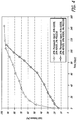
- the in vitro release rates of this implant are graphically illustrated in Figure 4 .
- This implant released about 70% over first 30 days.
- An implant with a 270 ⁇ g drug load would release 189 ⁇ g over first 30 days or 6.3 ⁇ g per day.
- the remainder of the implant (81 ⁇ g) is released over the next four months (e.g. 675 ng per day).
- Table 2 Intracameral Bimatoprost Implant: IOP Results Dog #1 120 ug Dog #2 120 ug Dog #3 120 ug Dog #4 270 ug Baseline IOP (mmHG) 17.0 16.5 22.5 25.0 Day 7 11.5 9.0 14.0 9.0 Day 14 10.5 9.0 14.5 n/a Day 21 11.5 11.0 13.5 n/a Day 28 11.0 11.0 13.0 9.0 Mean 11.1 10.0 13.8 9.0 SD 0.48 1.15 0.65 0
- Experiment 3 An additional bimatoprost implant formulation with 20% therapeutic agent, 45% R203S, 10% R202H, 20% RG752S and 5% PEG 3350 formulation was manufactured with a total implant weight of about 300 ⁇ g (drug load of about 60 ⁇ g). Implant weights are shown in Table 3, each animal received two implants. The in vitro release rates of this implant are shown in Figure 5 . Table 3 shows implant weights and therapeutic agent loads used in the dogs for Experiment 3. Each animal received 2 intracameral implants to 1 eye. The implants release about 15% of the drug load over the first month. An implant with a 60 ⁇ g drug load would release 9 ⁇ g over the first 30 days or 300 ng per day, thereafter.
- the implant releases about 50 ⁇ g over 60 days or about 700 ng/day.
- Table 3 Implant weights Dog ID Implant Weight (mg) Total Therapeutic Agent Dose (20% load, ug) Dog #1 0.302 126.6 0.331 Dog #2 0.298 125.4 0.329 Dog #3 0.0306 126.6 0.327
- the IOP results and the SD of the mean over the first month are shown in Table 2. The average of the mean of the SD's in Table 2 of the four dogs (total) from experiments 2 and 3 treated with bimatoprost implants was 0.57 mmHg.
Landscapes
- Health & Medical Sciences (AREA)
- Chemical & Material Sciences (AREA)
- Life Sciences & Earth Sciences (AREA)
- Medicinal Chemistry (AREA)
- Public Health (AREA)
- Veterinary Medicine (AREA)
- Animal Behavior & Ethology (AREA)
- General Health & Medical Sciences (AREA)
- Epidemiology (AREA)
- Pharmacology & Pharmacy (AREA)
- Engineering & Computer Science (AREA)
- Dermatology (AREA)
- Ophthalmology & Optometry (AREA)
- Bioinformatics & Cheminformatics (AREA)
- Chemical Kinetics & Catalysis (AREA)
- Oral & Maxillofacial Surgery (AREA)
- Transplantation (AREA)
- General Chemical & Material Sciences (AREA)
- Biomedical Technology (AREA)
- Oil, Petroleum & Natural Gas (AREA)
- Proteomics, Peptides & Aminoacids (AREA)
- Inorganic Chemistry (AREA)
- Molecular Biology (AREA)
- Neurosurgery (AREA)
- Organic Chemistry (AREA)
- Nuclear Medicine, Radiotherapy & Molecular Imaging (AREA)
- Medicinal Preparation (AREA)
- Pharmaceuticals Containing Other Organic And Inorganic Compounds (AREA)
- Materials For Medical Uses (AREA)
Claims (6)
- Intrakamerales Implantat zur Anwendung in einem Verfahren zur Behandlung einer Glaukomerkrankung, wobei das Verfahren die folgenden Schritte umfasst:Bereitstellen mindestens zweier biologisch abbaubarer Implantate; und Implantieren der Implantate in die vordere Augenkammer,worin jedes der mindestens zwei biologisch abbaubaren Implantate umfasst:(i) 5-40 Gew.-% mindestens eines therapeutischen Wirkstoffs;(ii) 10-60 Gew.-% eines Poly-(D,L-Lactids) mit einer inhärenten Viskosität von 0,25-0,35 dl/g;(iii) 5-20 Gew.-% eines Poly-(D,L-Lactids) mit einer inhärenten Viskosität von 0,16-0,24 dl/g;(iv) 5-40 Gew.-% eines Poly-(D,L-Lactid-co-Glycolids), das ein Molverhältnis D,L-Glycolid:Lactid von 73:27 bis 77:23 und eine inhärente Viskosität von 0,16-0,24 dl/g aufweist; und(v) 0-15 Gew.-% eines Polyethylenglycols mit einem Molekulargewicht von 3.000-3.500 g/mol.
- Intrakamerales Implantat zur Anwendung gemäß Anspruch 1, worin jedes der mindestens zwei biologisch abbaubaren Implantate umfasst:(i) 20 Gew.-% mindestens eines therapeutischen Wirkstoffs;(ii) 45 Gew.-% eines Poly-(D,L-Lactids) mit einer inhärenten Viskosität von 0,25-0,35 dl/g;(iii) 10 Gew.-% eines Poly-(D,L-Lactids) mit einer inhärenten Viskosität von 0,16-0,24 dl/g;(iv) 20 Gew.-% eines Poly-(D,L-Lactid-co-Glycolids), das ein Molverhältnis D,L-Glycolid:Lactid von 73:27 bis 77:23 und eine inhärente Viskosität von 0,16-0,24 dl/g aufweist; und(v) 5 Gew.-% eines Polyethylenglycols mit einem Molekulargewicht von 3.000-3.500 g/mol.
- Intrakamerales Implantat zur Anwendung gemäß mindestens einem der vorhergehenden Ansprüche, worin der mindestens eine therapeutische Wirkstoff ausgewählt ist aus der Gruppe bestehend aus Latanoprost, Bimatoprost und Travoprost.
- Intrakamerales Implantat zur Anwendung gemäß Anspruch 1 oder 2, worin der mindestens eine therapeutische Wirkstoff Prostamid ist.
- Intrakamerales Implantat zur Anwendung gemäß Anspruch 4, worin das Prostamid Bimatoprost ist.
- Intrakamerales Implantat zur Anwendung gemäß mindestens einem der vorhergehenden Ansprüche, worin jedes der mindestens zwei biologisch abbaubaren Implantate mittels eines Extrusionsverfahrens hergestellt ist.
Priority Applications (1)
| Application Number | Priority Date | Filing Date | Title |
|---|---|---|---|
| EP17001789.1A EP3320892A1 (de) | 2010-01-22 | 2011-01-21 | Intrakamerale implantate mit retard-therapeutika |
Applications Claiming Priority (2)
| Application Number | Priority Date | Filing Date | Title |
|---|---|---|---|
| US29766010P | 2010-01-22 | 2010-01-22 | |
| EP11701723.6A EP2525776B1 (de) | 2010-01-22 | 2011-01-21 | Intrakamerale implantate mit retard-therapeutika |
Related Parent Applications (1)
| Application Number | Title | Priority Date | Filing Date |
|---|---|---|---|
| EP11701723.6A Division EP2525776B1 (de) | 2010-01-22 | 2011-01-21 | Intrakamerale implantate mit retard-therapeutika |
Related Child Applications (1)
| Application Number | Title | Priority Date | Filing Date |
|---|---|---|---|
| EP17001789.1A Division EP3320892A1 (de) | 2010-01-22 | 2011-01-21 | Intrakamerale implantate mit retard-therapeutika |
Publications (2)
| Publication Number | Publication Date |
|---|---|
| EP3085358A1 EP3085358A1 (de) | 2016-10-26 |
| EP3085358B1 true EP3085358B1 (de) | 2017-11-01 |
Family
ID=43795202
Family Applications (3)
| Application Number | Title | Priority Date | Filing Date |
|---|---|---|---|
| EP15191632.7A Active EP3085358B1 (de) | 2010-01-22 | 2011-01-21 | Intrakamerale implantate mit retard-therapeutika |
| EP17001789.1A Withdrawn EP3320892A1 (de) | 2010-01-22 | 2011-01-21 | Intrakamerale implantate mit retard-therapeutika |
| EP11701723.6A Active EP2525776B1 (de) | 2010-01-22 | 2011-01-21 | Intrakamerale implantate mit retard-therapeutika |
Family Applications After (2)
| Application Number | Title | Priority Date | Filing Date |
|---|---|---|---|
| EP17001789.1A Withdrawn EP3320892A1 (de) | 2010-01-22 | 2011-01-21 | Intrakamerale implantate mit retard-therapeutika |
| EP11701723.6A Active EP2525776B1 (de) | 2010-01-22 | 2011-01-21 | Intrakamerale implantate mit retard-therapeutika |
Country Status (12)
| Country | Link |
|---|---|
| US (8) | US8647659B2 (de) |
| EP (3) | EP3085358B1 (de) |
| JP (1) | JP5809169B2 (de) |
| KR (4) | KR102337046B1 (de) |
| CN (2) | CN107184544A (de) |
| AU (1) | AU2011207281B2 (de) |
| BR (1) | BR112012018134B1 (de) |
| CA (1) | CA2787514C (de) |
| DK (2) | DK3085358T3 (de) |
| ES (2) | ES2561083T3 (de) |
| RU (1) | RU2565445C2 (de) |
| WO (1) | WO2011091205A2 (de) |
Families Citing this family (60)
| Publication number | Priority date | Publication date | Assignee | Title |
|---|---|---|---|---|
| US7431710B2 (en) | 2002-04-08 | 2008-10-07 | Glaukos Corporation | Ocular implants with anchors and methods thereof |
| US7993634B2 (en) | 2004-04-30 | 2011-08-09 | Allergan, Inc. | Oil-in-oil emulsified polymeric implants containing a hypotensive lipid and related methods |
| US7799336B2 (en) | 2004-04-30 | 2010-09-21 | Allergan, Inc. | Hypotensive lipid-containing biodegradable intraocular implants and related methods |
| US9498457B2 (en) | 2004-04-30 | 2016-11-22 | Allergan, Inc. | Hypotensive prostamide-containing biodegradable intraocular implants and related implants |
| US8722097B2 (en) | 2004-04-30 | 2014-05-13 | Allergan, Inc. | Oil-in-water method for making polymeric implants containing a hypotensive lipid |
| US8673341B2 (en) | 2004-04-30 | 2014-03-18 | Allergan, Inc. | Intraocular pressure reduction with intracameral bimatoprost implants |
| US8968396B2 (en) | 2007-07-23 | 2015-03-03 | Powervision, Inc. | Intraocular lens delivery systems and methods of use |
| US20170360609A9 (en) | 2007-09-24 | 2017-12-21 | Ivantis, Inc. | Methods and devices for increasing aqueous humor outflow |
| US20100247606A1 (en) * | 2009-03-25 | 2010-09-30 | Allergan, Inc. | Intraocular sustained release drug delivery systems and methods for treating ocular conditions |
| JP5937004B2 (ja) | 2009-05-18 | 2016-06-22 | ドーズ メディカル コーポレーションDose Medical Corporation | 薬剤溶出眼内インプラント |
| WO2012071476A2 (en) | 2010-11-24 | 2012-05-31 | David Haffner | Drug eluting ocular implant |
| US10206813B2 (en) | 2009-05-18 | 2019-02-19 | Dose Medical Corporation | Implants with controlled drug delivery features and methods of using same |
| US12478503B2 (en) | 2009-05-18 | 2025-11-25 | Glaukos Corporation | Implants with controlled drug delivery features and methods of using same |
| EP2451503B1 (de) | 2009-07-09 | 2018-10-24 | Ivantis, Inc. | Augenimplantate und verfahren zur freisetzung von augenimplantaten im auge |
| CA2766131C (en) | 2009-07-09 | 2017-10-24 | Ivantis, Inc. | Single operator device for delivering an ocular implant |
| KR102337046B1 (ko) | 2010-01-22 | 2021-12-08 | 알러간, 인코포레이티드 | 전방내 서방성 치료제 이식물 |
| WO2011106435A2 (en) | 2010-02-23 | 2011-09-01 | Powervision, Inc. | Fluid for accommodating intraocular lenses |
| WO2012149278A1 (en) | 2011-04-29 | 2012-11-01 | Allergan, Inc. | Sustained release latanoprost implant |
| US10245178B1 (en) * | 2011-06-07 | 2019-04-02 | Glaukos Corporation | Anterior chamber drug-eluting ocular implant |
| US8657776B2 (en) | 2011-06-14 | 2014-02-25 | Ivantis, Inc. | Ocular implants for delivery into the eye |
| US8663150B2 (en) | 2011-12-19 | 2014-03-04 | Ivantis, Inc. | Delivering ocular implants into the eye |
| US9358156B2 (en) | 2012-04-18 | 2016-06-07 | Invantis, Inc. | Ocular implants for delivery into an anterior chamber of the eye |
| WO2014066653A1 (en) * | 2012-10-26 | 2014-05-01 | Allergan, Inc. | Ketorolac-containing sustained release intraocular drug delivery systems |
| WO2014066658A1 (en) * | 2012-10-26 | 2014-05-01 | Allergan, Inc. | Ketorolac-containing sustained release drug delivery systems |
| WO2014085450A1 (en) | 2012-11-28 | 2014-06-05 | Ivantis, Inc. | Apparatus for delivering ocular implants into an anterior chamber of the eye |
| JP2016512532A (ja) * | 2013-03-14 | 2016-04-28 | アラーガン、インコーポレイテッドAllergan,Incorporated | 硝子体内および前房内経路を通じて眼圧および眼疾患を治療するためのα−2アドレナリン作動薬 |
| WO2014145562A1 (en) | 2013-03-15 | 2014-09-18 | Powervision, Inc. | Intraocular lens storage and loading devices and methods of use |
| BR122019025507B1 (pt) * | 2013-03-15 | 2021-01-12 | Allergan, Inc. | implante intraocular biodegradável contendo prostamida e seu uso |
| CN105188666A (zh) | 2013-04-01 | 2015-12-23 | 阿勒根公司 | 用于持续的眼内释放的微球药物递送系统 |
| TR201802759T4 (tr) * | 2013-10-31 | 2018-03-21 | Allergan Inc | Prostamid içeren intraoküler implantlar ve kullanım yöntemleri. |
| CN106132397A (zh) * | 2013-12-06 | 2016-11-16 | 恩维希亚治疗股份有限公司 | 用于治疗眼部疾病的前房内植入物 |
| EP3148491B1 (de) | 2014-05-29 | 2020-07-01 | Glaukos Corporation | Implantate mit kontrollierter arzneimittelfreisetzung und herstellungsverfahren davon |
| WO2016011056A1 (en) | 2014-07-14 | 2016-01-21 | Ivantis, Inc. | Ocular implant delivery system and method |
| ES2900025T3 (es) | 2014-09-06 | 2022-03-15 | Integral Biosystems Llc | Procedimientos y composiciones biocompatibles para lograr la liberación mantenida de fármaco en el ojo |
| EP3302382A4 (de) | 2015-05-29 | 2019-02-20 | Allergan, Inc. | Implantat zur behandlung eines augenleidens |
| WO2016200688A1 (en) * | 2015-06-06 | 2016-12-15 | Cloudbreak Therapeutics, Llc | Compositions and methods for treating pterygium |
| CN108135470B (zh) | 2015-08-14 | 2021-03-09 | 伊万提斯公司 | 具有压力传感器和输送系统的眼部植入物 |
| US11925578B2 (en) | 2015-09-02 | 2024-03-12 | Glaukos Corporation | Drug delivery implants with bi-directional delivery capacity |
| US11564833B2 (en) | 2015-09-25 | 2023-01-31 | Glaukos Corporation | Punctal implants with controlled drug delivery features and methods of using same |
| US11458041B2 (en) | 2015-10-08 | 2022-10-04 | Ocular Therapeutix, Inc. | Punctal plug and bioadhesives |
| US11938058B2 (en) | 2015-12-15 | 2024-03-26 | Alcon Inc. | Ocular implant and delivery system |
| PT109154B (pt) * | 2016-02-12 | 2019-11-05 | Univ De Coimbra | Tecnologia não-invasiva de inserto ocular para libertação controlada de fármacos |
| JP7003110B2 (ja) | 2016-04-20 | 2022-01-20 | ドーズ メディカル コーポレーション | 生体吸収性眼球薬物送達デバイス |
| KR102408596B1 (ko) | 2016-06-02 | 2022-06-13 | 에이디에스 테라퓨틱스 엘엘씨 | 비정상적 신생혈관이 있는 안구 질환 치료를 위한, 닌테다닙을 사용하는 조성물 및 방법 |
| JP7430529B2 (ja) | 2016-09-23 | 2024-02-13 | インセプト・リミテッド・ライアビリティ・カンパニー | 前房内薬物送達デポ |
| EP4046609B1 (de) | 2016-09-30 | 2025-02-26 | Mati Therapeutics Inc. | Augenmedikation mit verzögerter freisetzung und verwendung davon |
| WO2018169967A1 (en) | 2017-03-14 | 2018-09-20 | Allergan, Inc. | Acorafloxacin in treating ocular infections |
| EP3658149B1 (de) | 2017-07-25 | 2021-11-10 | Allergan, Inc. | Fester komplex mit (z)-7-((1r,2r,3r,5s)-2-((s,e)-5-(2,5-dichlorthiophen-3-yl)-3-hydroxypent-1-en-1-yl)-3,5-dihydroxycyclopentyl)hept-5-enamid, seine herstellung und verwendungen |
| US20190192341A1 (en) * | 2017-11-09 | 2019-06-27 | Allergan, Inc. | Sustained-Release Implants for Lowering Intraocular Pressure with Extended Duration of Effect |
| EP4371535A3 (de) | 2018-02-22 | 2024-08-14 | Alcon Inc. | Augenimplantat und freisetzungssystem |
| US20210121534A1 (en) * | 2018-06-19 | 2021-04-29 | Cella Therapeutics, Llc | Sustained-release drug delivery systems comprising an intraocular pressure lowering agent, a cnp compound, an npr-b compound, a tie-2 agonist, or neurotrophic agent for use for treating glaucoma or ocular hypertension |
| US11077053B2 (en) | 2018-08-21 | 2021-08-03 | Allergan, Inc. | Alpha-2-adrenergic receptor agonists for treatment of presbyopia, visual glare, visual starbursts, visual halos and night myopia |
| SG11202101730SA (en) | 2018-08-21 | 2021-03-30 | Allergan Inc | The use of alpha-2-adrenergic receptor agonists for improving vision |
| WO2020047144A2 (en) * | 2018-08-30 | 2020-03-05 | Liu Yunxiang | Ophthalmic formulations, process for preparing the same and method for administering the same |
| CA3166738A1 (en) | 2020-02-06 | 2021-08-12 | Charles D. Blizzard | Travoprost compositions and methods for treating ocular diseases |
| WO2021168350A1 (en) | 2020-02-20 | 2021-08-26 | Allergan, Inc. | Alpha-2-adrenergic receptor agonists for reducing redness and increasing whiteness in eyes and other ophthalmic purposes |
| BR112022016730A2 (pt) | 2020-02-20 | 2022-11-08 | Allergan Inc | Composições farmacêuticas de agonistas de receptor alfa-2-adrenérgico e seu uso para melhorar a visão |
| CA3177005A1 (en) | 2020-04-27 | 2021-11-04 | Michael Goldstein | Methods of treating allergic conjunctivitis |
| KR20230130622A (ko) | 2021-01-11 | 2023-09-12 | 알콘 인코포레이티드 | 점탄성 전달을 위한 시스템 및 방법 |
| CN115607741B (zh) * | 2022-09-08 | 2023-11-24 | 西安德诺海思医疗科技有限公司 | 一种青光眼外科手术用复合生物材料及其应用 |
Family Cites Families (50)
| Publication number | Priority date | Publication date | Assignee | Title |
|---|---|---|---|---|
| US3749776A (en) | 1970-08-28 | 1973-07-31 | Allergan Pharma | Method for blocking prostaglandin activity |
| US5166331A (en) | 1983-10-10 | 1992-11-24 | Fidia, S.P.A. | Hyaluronics acid fractions, methods for the preparation thereof, and pharmaceutical compositions containing same |
| US6309669B1 (en) | 1984-03-16 | 2001-10-30 | The United States Of America As Represented By The Secretary Of The Army | Therapeutic treatment and prevention of infections with a bioactive materials encapsulated within a biodegradable-biocompatible polymeric matrix |
| US4997652A (en) * | 1987-12-22 | 1991-03-05 | Visionex | Biodegradable ocular implants |
| US5164188A (en) | 1989-11-22 | 1992-11-17 | Visionex, Inc. | Biodegradable ocular implants |
| US5994341A (en) | 1993-07-19 | 1999-11-30 | Angiogenesis Technologies, Inc. | Anti-angiogenic Compositions and methods for the treatment of arthritis |
| US5516522A (en) | 1994-03-14 | 1996-05-14 | Board Of Supervisors Of Louisiana State University | Biodegradable porous device for long-term drug delivery with constant rate release and method of making the same |
| US5972326A (en) | 1995-04-18 | 1999-10-26 | Galin; Miles A. | Controlled release of pharmaceuticals in the anterior chamber of the eye |
| US5612027A (en) | 1995-04-18 | 1997-03-18 | Galin; Miles A. | Controlled release of miotic and mydriatic drugs in the anterior chamber |
| US6369116B1 (en) | 1995-06-02 | 2002-04-09 | Oculex Pharmaceuticals, Inc. | Composition and method for treating glaucoma |
| US5869079A (en) | 1995-06-02 | 1999-02-09 | Oculex Pharmaceuticals, Inc. | Formulation for controlled release of drugs by combining hydrophilic and hydrophobic agents |
| US5994309A (en) | 1997-07-25 | 1999-11-30 | Angstrom Pharmaceuticals, Inc. | Anti-invasive and anti-angiogenic compositions and methods |
| US6726918B1 (en) | 2000-07-05 | 2004-04-27 | Oculex Pharmaceuticals, Inc. | Methods for treating inflammation-mediated conditions of the eye |
| PE20020146A1 (es) | 2000-07-13 | 2002-03-31 | Upjohn Co | Formulacion oftalmica que comprende un inhibidor de ciclooxigenasa-2 (cox-2) |
| CA2402405C (en) | 2000-07-14 | 2008-02-12 | Allergan Sales, Inc. | Compositions containing alpha-2-adrenergic agonist components |
| WO2002058730A2 (en) | 2000-11-01 | 2002-08-01 | Allergan, Inc. | Compositions for treatment of ocular neovascularization |
| US6699493B2 (en) | 2000-11-29 | 2004-03-02 | Oculex Pharmaceuticals, Inc. | Method for reducing or preventing transplant rejection in the eye and intraocular implants for use therefor |
| GB0122318D0 (en) | 2001-09-14 | 2001-11-07 | Novartis Ag | Organic compounds |
| US7799326B2 (en) * | 2001-09-24 | 2010-09-21 | Mount Sinai School Of Medicine | Methods and compositions for cathespin k complex-mediated disorders |
| BR0315304A (pt) | 2002-11-06 | 2005-08-16 | Alza Corp | Formulações com depósito para liberação controlada |
| US20040253293A1 (en) * | 2003-06-16 | 2004-12-16 | Afshin Shafiee | Rate controlled release of a pharmaceutical agent in a biodegradable device |
| US20050101582A1 (en) | 2003-11-12 | 2005-05-12 | Allergan, Inc. | Compositions and methods for treating a posterior segment of an eye |
| US20070224278A1 (en) | 2003-11-12 | 2007-09-27 | Lyons Robert T | Low immunogenicity corticosteroid compositions |
| US20090148527A1 (en) | 2007-12-07 | 2009-06-11 | Robinson Michael R | Intraocular formulation |
| US20120283232A9 (en) | 2003-11-12 | 2012-11-08 | Zhengjun Wang | Process for making a pharmaceutical composition |
| WO2005072701A1 (en) | 2004-01-20 | 2005-08-11 | Allergan, Inc. | Compositions for localized therapy of the eye, comprising preferably triamcinolone acetonide and hyaluronic acid |
| US7771742B2 (en) * | 2004-04-30 | 2010-08-10 | Allergan, Inc. | Sustained release intraocular implants containing tyrosine kinase inhibitors and related methods |
| US8722097B2 (en) | 2004-04-30 | 2014-05-13 | Allergan, Inc. | Oil-in-water method for making polymeric implants containing a hypotensive lipid |
| US7799336B2 (en) | 2004-04-30 | 2010-09-21 | Allergan, Inc. | Hypotensive lipid-containing biodegradable intraocular implants and related methods |
| US8673341B2 (en) | 2004-04-30 | 2014-03-18 | Allergan, Inc. | Intraocular pressure reduction with intracameral bimatoprost implants |
| US20050244469A1 (en) | 2004-04-30 | 2005-11-03 | Allergan, Inc. | Extended therapeutic effect ocular implant treatments |
| US20060182781A1 (en) | 2004-04-30 | 2006-08-17 | Allergan, Inc. | Methods for treating ocular conditions with cyclic lipid contraining microparticles |
| US7993634B2 (en) | 2004-04-30 | 2011-08-09 | Allergan, Inc. | Oil-in-oil emulsified polymeric implants containing a hypotensive lipid and related methods |
| US7589057B2 (en) | 2004-04-30 | 2009-09-15 | Allergan, Inc. | Oil-in-water method for making alpha-2 agonist polymeric drug delivery systems |
| US20090082321A1 (en) | 2007-09-21 | 2009-03-26 | Allergan, Inc. | Steroid containing drug delivery systems |
| US20070293873A1 (en) | 2006-06-19 | 2007-12-20 | Allergan, Inc. | Apparatus and methods for implanting particulate ocular implants |
| US20080097335A1 (en) | 2006-08-04 | 2008-04-24 | Allergan, Inc. | Ocular implant delivery assemblies |
| US8969415B2 (en) | 2006-12-01 | 2015-03-03 | Allergan, Inc. | Intraocular drug delivery systems |
| US8846073B2 (en) | 2006-12-19 | 2014-09-30 | Allergan, Inc. | Low temperature processes for making cyclic lipid implants for intraocular use |
| US8231892B2 (en) * | 2007-05-24 | 2012-07-31 | Allergan, Inc. | Biodegradable drug delivery system |
| EP2288385A2 (de) | 2008-04-16 | 2011-03-02 | Allergan, Inc. | Kombinationstherapie gegen glaukom |
| EP2296621A1 (de) | 2008-05-20 | 2011-03-23 | Yale University | Ein hydrophobes arzneimittel umfassende biologisch abbaubare polymer-mikroteilchen mit verzögerter freisetzung zur ophthalmischen anwendung |
| US20100104654A1 (en) * | 2008-10-27 | 2010-04-29 | Allergan, Inc. | Prostaglandin and prostamide drug delivery systems and intraocular therapeutic uses thereof |
| US9095506B2 (en) | 2008-11-17 | 2015-08-04 | Allergan, Inc. | Biodegradable alpha-2 agonist polymeric implants and therapeutic uses thereof |
| US8545554B2 (en) | 2009-01-16 | 2013-10-01 | Allergan, Inc. | Intraocular injector |
| US20100247606A1 (en) * | 2009-03-25 | 2010-09-30 | Allergan, Inc. | Intraocular sustained release drug delivery systems and methods for treating ocular conditions |
| KR102337046B1 (ko) * | 2010-01-22 | 2021-12-08 | 알러간, 인코포레이티드 | 전방내 서방성 치료제 이식물 |
| US20130071349A1 (en) | 2010-03-02 | 2013-03-21 | Allergan, Inc. | Biodegradable polymers for lowering intraocular pressure |
| EP2585071A1 (de) * | 2010-06-28 | 2013-05-01 | INSERM (Institut National de la Santé et de la Recherche Médicale) | Pharmazeutische zusammensetzung zur behandlung des glaukoms |
| WO2012149278A1 (en) | 2011-04-29 | 2012-11-01 | Allergan, Inc. | Sustained release latanoprost implant |
-
2011
- 2011-01-21 KR KR1020207017535A patent/KR102337046B1/ko not_active Expired - Fee Related
- 2011-01-21 AU AU2011207281A patent/AU2011207281B2/en active Active
- 2011-01-21 CN CN201710411369.5A patent/CN107184544A/zh active Pending
- 2011-01-21 CN CN2011800149985A patent/CN102821753A/zh active Pending
- 2011-01-21 RU RU2012133880/15A patent/RU2565445C2/ru active
- 2011-01-21 ES ES11701723.6T patent/ES2561083T3/es active Active
- 2011-01-21 BR BR112012018134-3A patent/BR112012018134B1/pt active IP Right Grant
- 2011-01-21 JP JP2012550135A patent/JP5809169B2/ja active Active
- 2011-01-21 ES ES15191632.7T patent/ES2658175T3/es active Active
- 2011-01-21 KR KR1020127021839A patent/KR101911960B1/ko not_active Expired - Fee Related
- 2011-01-21 EP EP15191632.7A patent/EP3085358B1/de active Active
- 2011-01-21 CA CA2787514A patent/CA2787514C/en active Active
- 2011-01-21 KR KR1020187030084A patent/KR20180117211A/ko not_active Ceased
- 2011-01-21 EP EP17001789.1A patent/EP3320892A1/de not_active Withdrawn
- 2011-01-21 US US13/011,467 patent/US8647659B2/en active Active
- 2011-01-21 WO PCT/US2011/021971 patent/WO2011091205A2/en not_active Ceased
- 2011-01-21 DK DK15191632.7T patent/DK3085358T3/en active
- 2011-01-21 DK DK11701723.6T patent/DK2525776T3/en active
- 2011-01-21 EP EP11701723.6A patent/EP2525776B1/de active Active
- 2011-01-21 KR KR1020207007048A patent/KR102126007B1/ko active Active
-
2013
- 2013-09-19 US US14/031,657 patent/US9061065B2/en active Active
-
2015
- 2015-06-22 US US14/746,438 patent/US9504696B2/en active Active
-
2016
- 2016-11-28 US US15/362,197 patent/US10278919B2/en active Active
-
2019
- 2019-05-06 US US16/403,965 patent/US20190254965A1/en not_active Abandoned
- 2019-12-18 US US16/718,640 patent/US20200121593A1/en not_active Abandoned
-
2020
- 2020-10-23 US US17/079,148 patent/US20210169780A1/en not_active Abandoned
-
2023
- 2023-08-21 US US18/236,215 patent/US20240148643A1/en not_active Abandoned
Non-Patent Citations (1)
| Title |
|---|
| None * |
Also Published As
Similar Documents
| Publication | Publication Date | Title |
|---|---|---|
| US20240148643A1 (en) | Intracameral sustained release therapeutic agent implants | |
| EP3205333B1 (de) | Minderung des intraokulardrucks mit intrakameralen prostamide-implantaten | |
| HK1178054A (en) | Intracameral sustained release therapeutic agent implants | |
| HK1244665B (en) | Intraocular pressure reduction with intracameral prostamide implants | |
| HK1244665A1 (en) | Intraocular pressure reduction with intracameral prostamide implants |
Legal Events
| Date | Code | Title | Description |
|---|---|---|---|
| PUAI | Public reference made under article 153(3) epc to a published international application that has entered the european phase |
Free format text: ORIGINAL CODE: 0009012 |
|
| 17P | Request for examination filed |
Effective date: 20151027 |
|
| AC | Divisional application: reference to earlier application |
Ref document number: 2525776 Country of ref document: EP Kind code of ref document: P |
|
| AK | Designated contracting states |
Kind code of ref document: A1 Designated state(s): AL AT BE BG CH CY CZ DE DK EE ES FI FR GB GR HR HU IE IS IT LI LT LU LV MC MK MT NL NO PL PT RO RS SE SI SK SM TR |
|
| GRAP | Despatch of communication of intention to grant a patent |
Free format text: ORIGINAL CODE: EPIDOSNIGR1 |
|
| RIC1 | Information provided on ipc code assigned before grant |
Ipc: A61K 9/00 20060101AFI20170412BHEP Ipc: A61K 9/16 20060101ALI20170412BHEP Ipc: A61K 31/5575 20060101ALI20170412BHEP Ipc: A61K 47/34 20170101ALI20170412BHEP |
|
| INTG | Intention to grant announced |
Effective date: 20170509 |
|
| GRAS | Grant fee paid |
Free format text: ORIGINAL CODE: EPIDOSNIGR3 |
|
| GRAA | (expected) grant |
Free format text: ORIGINAL CODE: 0009210 |
|
| AC | Divisional application: reference to earlier application |
Ref document number: 2525776 Country of ref document: EP Kind code of ref document: P |
|
| AK | Designated contracting states |
Kind code of ref document: B1 Designated state(s): AL AT BE BG CH CY CZ DE DK EE ES FI FR GB GR HR HU IE IS IT LI LT LU LV MC MK MT NL NO PL PT RO RS SE SI SK SM TR |
|
| REG | Reference to a national code |
Ref country code: GB Ref legal event code: FG4D |
|
| REG | Reference to a national code |
Ref country code: CH Ref legal event code: EP Ref country code: AT Ref legal event code: REF Ref document number: 941302 Country of ref document: AT Kind code of ref document: T Effective date: 20171115 |
|
| REG | Reference to a national code |
Ref country code: IE Ref legal event code: FG4D |
|
| REG | Reference to a national code |
Ref country code: DE Ref legal event code: R096 Ref document number: 602011043076 Country of ref document: DE |
|
| REG | Reference to a national code |
Ref country code: FR Ref legal event code: PLFP Year of fee payment: 8 |
|
| REG | Reference to a national code |
Ref country code: DK Ref legal event code: T3 Effective date: 20180131 |
|
| REG | Reference to a national code |
Ref country code: NL Ref legal event code: FP |
|
| REG | Reference to a national code |
Ref country code: SE Ref legal event code: TRGR |
|
| REG | Reference to a national code |
Ref country code: ES Ref legal event code: FG2A Ref document number: 2658175 Country of ref document: ES Kind code of ref document: T3 Effective date: 20180308 |
|
| REG | Reference to a national code |
Ref country code: LT Ref legal event code: MG4D |
|
| REG | Reference to a national code |
Ref country code: AT Ref legal event code: MK05 Ref document number: 941302 Country of ref document: AT Kind code of ref document: T Effective date: 20171101 |
|
| PG25 | Lapsed in a contracting state [announced via postgrant information from national office to epo] |
Ref country code: NO Free format text: LAPSE BECAUSE OF FAILURE TO SUBMIT A TRANSLATION OF THE DESCRIPTION OR TO PAY THE FEE WITHIN THE PRESCRIBED TIME-LIMIT Effective date: 20180201 Ref country code: FI Free format text: LAPSE BECAUSE OF FAILURE TO SUBMIT A TRANSLATION OF THE DESCRIPTION OR TO PAY THE FEE WITHIN THE PRESCRIBED TIME-LIMIT Effective date: 20171101 Ref country code: LT Free format text: LAPSE BECAUSE OF FAILURE TO SUBMIT A TRANSLATION OF THE DESCRIPTION OR TO PAY THE FEE WITHIN THE PRESCRIBED TIME-LIMIT Effective date: 20171101 |
|
| PG25 | Lapsed in a contracting state [announced via postgrant information from national office to epo] |
Ref country code: AT Free format text: LAPSE BECAUSE OF FAILURE TO SUBMIT A TRANSLATION OF THE DESCRIPTION OR TO PAY THE FEE WITHIN THE PRESCRIBED TIME-LIMIT Effective date: 20171101 Ref country code: BG Free format text: LAPSE BECAUSE OF FAILURE TO SUBMIT A TRANSLATION OF THE DESCRIPTION OR TO PAY THE FEE WITHIN THE PRESCRIBED TIME-LIMIT Effective date: 20180201 Ref country code: IS Free format text: LAPSE BECAUSE OF FAILURE TO SUBMIT A TRANSLATION OF THE DESCRIPTION OR TO PAY THE FEE WITHIN THE PRESCRIBED TIME-LIMIT Effective date: 20180301 Ref country code: HR Free format text: LAPSE BECAUSE OF FAILURE TO SUBMIT A TRANSLATION OF THE DESCRIPTION OR TO PAY THE FEE WITHIN THE PRESCRIBED TIME-LIMIT Effective date: 20171101 Ref country code: RS Free format text: LAPSE BECAUSE OF FAILURE TO SUBMIT A TRANSLATION OF THE DESCRIPTION OR TO PAY THE FEE WITHIN THE PRESCRIBED TIME-LIMIT Effective date: 20171101 Ref country code: GR Free format text: LAPSE BECAUSE OF FAILURE TO SUBMIT A TRANSLATION OF THE DESCRIPTION OR TO PAY THE FEE WITHIN THE PRESCRIBED TIME-LIMIT Effective date: 20180202 Ref country code: LV Free format text: LAPSE BECAUSE OF FAILURE TO SUBMIT A TRANSLATION OF THE DESCRIPTION OR TO PAY THE FEE WITHIN THE PRESCRIBED TIME-LIMIT Effective date: 20171101 |
|
| PG25 | Lapsed in a contracting state [announced via postgrant information from national office to epo] |
Ref country code: CZ Free format text: LAPSE BECAUSE OF FAILURE TO SUBMIT A TRANSLATION OF THE DESCRIPTION OR TO PAY THE FEE WITHIN THE PRESCRIBED TIME-LIMIT Effective date: 20171101 Ref country code: SK Free format text: LAPSE BECAUSE OF FAILURE TO SUBMIT A TRANSLATION OF THE DESCRIPTION OR TO PAY THE FEE WITHIN THE PRESCRIBED TIME-LIMIT Effective date: 20171101 Ref country code: CY Free format text: LAPSE BECAUSE OF FAILURE TO SUBMIT A TRANSLATION OF THE DESCRIPTION OR TO PAY THE FEE WITHIN THE PRESCRIBED TIME-LIMIT Effective date: 20171101 Ref country code: EE Free format text: LAPSE BECAUSE OF FAILURE TO SUBMIT A TRANSLATION OF THE DESCRIPTION OR TO PAY THE FEE WITHIN THE PRESCRIBED TIME-LIMIT Effective date: 20171101 |
|
| REG | Reference to a national code |
Ref country code: DE Ref legal event code: R097 Ref document number: 602011043076 Country of ref document: DE |
|
| PG25 | Lapsed in a contracting state [announced via postgrant information from national office to epo] |
Ref country code: PL Free format text: LAPSE BECAUSE OF FAILURE TO SUBMIT A TRANSLATION OF THE DESCRIPTION OR TO PAY THE FEE WITHIN THE PRESCRIBED TIME-LIMIT Effective date: 20171101 Ref country code: SM Free format text: LAPSE BECAUSE OF FAILURE TO SUBMIT A TRANSLATION OF THE DESCRIPTION OR TO PAY THE FEE WITHIN THE PRESCRIBED TIME-LIMIT Effective date: 20171101 |
|
| PLBE | No opposition filed within time limit |
Free format text: ORIGINAL CODE: 0009261 |
|
| STAA | Information on the status of an ep patent application or granted ep patent |
Free format text: STATUS: NO OPPOSITION FILED WITHIN TIME LIMIT |
|
| 26N | No opposition filed |
Effective date: 20180802 |
|
| PG25 | Lapsed in a contracting state [announced via postgrant information from national office to epo] |
Ref country code: LU Free format text: LAPSE BECAUSE OF NON-PAYMENT OF DUE FEES Effective date: 20180121 |
|
| REG | Reference to a national code |
Ref country code: BE Ref legal event code: MM Effective date: 20180131 |
|
| PG25 | Lapsed in a contracting state [announced via postgrant information from national office to epo] |
Ref country code: SI Free format text: LAPSE BECAUSE OF FAILURE TO SUBMIT A TRANSLATION OF THE DESCRIPTION OR TO PAY THE FEE WITHIN THE PRESCRIBED TIME-LIMIT Effective date: 20171101 Ref country code: BE Free format text: LAPSE BECAUSE OF NON-PAYMENT OF DUE FEES Effective date: 20180131 |
|
| PG25 | Lapsed in a contracting state [announced via postgrant information from national office to epo] |
Ref country code: MC Free format text: LAPSE BECAUSE OF FAILURE TO SUBMIT A TRANSLATION OF THE DESCRIPTION OR TO PAY THE FEE WITHIN THE PRESCRIBED TIME-LIMIT Effective date: 20171101 |
|
| PG25 | Lapsed in a contracting state [announced via postgrant information from national office to epo] |
Ref country code: MT Free format text: LAPSE BECAUSE OF NON-PAYMENT OF DUE FEES Effective date: 20180121 |
|
| PG25 | Lapsed in a contracting state [announced via postgrant information from national office to epo] |
Ref country code: PT Free format text: LAPSE BECAUSE OF FAILURE TO SUBMIT A TRANSLATION OF THE DESCRIPTION OR TO PAY THE FEE WITHIN THE PRESCRIBED TIME-LIMIT Effective date: 20171101 |
|
| PG25 | Lapsed in a contracting state [announced via postgrant information from national office to epo] |
Ref country code: RO Free format text: LAPSE BECAUSE OF FAILURE TO SUBMIT A TRANSLATION OF THE DESCRIPTION OR TO PAY THE FEE WITHIN THE PRESCRIBED TIME-LIMIT Effective date: 20171101 Ref country code: HU Free format text: LAPSE BECAUSE OF FAILURE TO SUBMIT A TRANSLATION OF THE DESCRIPTION OR TO PAY THE FEE WITHIN THE PRESCRIBED TIME-LIMIT; INVALID AB INITIO Effective date: 20110121 Ref country code: MK Free format text: LAPSE BECAUSE OF NON-PAYMENT OF DUE FEES Effective date: 20171101 |
|
| PG25 | Lapsed in a contracting state [announced via postgrant information from national office to epo] |
Ref country code: AL Free format text: LAPSE BECAUSE OF FAILURE TO SUBMIT A TRANSLATION OF THE DESCRIPTION OR TO PAY THE FEE WITHIN THE PRESCRIBED TIME-LIMIT Effective date: 20171101 |
|
| P01 | Opt-out of the competence of the unified patent court (upc) registered |
Effective date: 20230331 |
|
| PGFP | Annual fee paid to national office [announced via postgrant information from national office to epo] |
Ref country code: NL Payment date: 20231220 Year of fee payment: 14 Ref country code: IE Payment date: 20231228 Year of fee payment: 14 |
|
| PGFP | Annual fee paid to national office [announced via postgrant information from national office to epo] |
Ref country code: CH Payment date: 20240201 Year of fee payment: 14 |
|
| PGFP | Annual fee paid to national office [announced via postgrant information from national office to epo] |
Ref country code: TR Payment date: 20240116 Year of fee payment: 14 Ref country code: SE Payment date: 20240109 Year of fee payment: 14 Ref country code: DK Payment date: 20240104 Year of fee payment: 14 |
|
| PGFP | Annual fee paid to national office [announced via postgrant information from national office to epo] |
Ref country code: GB Payment date: 20241212 Year of fee payment: 15 |
|
| PGFP | Annual fee paid to national office [announced via postgrant information from national office to epo] |
Ref country code: FR Payment date: 20241216 Year of fee payment: 15 |
|
| PGFP | Annual fee paid to national office [announced via postgrant information from national office to epo] |
Ref country code: DE Payment date: 20241217 Year of fee payment: 15 |
|
| PGFP | Annual fee paid to national office [announced via postgrant information from national office to epo] |
Ref country code: ES Payment date: 20250213 Year of fee payment: 15 |
|
| PGFP | Annual fee paid to national office [announced via postgrant information from national office to epo] |
Ref country code: IT Payment date: 20250114 Year of fee payment: 15 |
|
| REG | Reference to a national code |
Ref country code: DK Ref legal event code: EBP Effective date: 20250131 |
|
| REG | Reference to a national code |
Ref country code: CH Ref legal event code: PL |
|
| REG | Reference to a national code |
Ref country code: SE Ref legal event code: EUG |
|
| REG | Reference to a national code |
Ref country code: NL Ref legal event code: MM Effective date: 20250201 |
|
| PG25 | Lapsed in a contracting state [announced via postgrant information from national office to epo] |
Ref country code: NL Free format text: LAPSE BECAUSE OF NON-PAYMENT OF DUE FEES Effective date: 20250201 |
|
| PG25 | Lapsed in a contracting state [announced via postgrant information from national office to epo] |
Ref country code: CH Free format text: LAPSE BECAUSE OF NON-PAYMENT OF DUE FEES Effective date: 20250131 |