EP3071694B1 - Mutant cas9 proteins - Google Patents
Mutant cas9 proteins Download PDFInfo
- Publication number
- EP3071694B1 EP3071694B1 EP14864613.6A EP14864613A EP3071694B1 EP 3071694 B1 EP3071694 B1 EP 3071694B1 EP 14864613 A EP14864613 A EP 14864613A EP 3071694 B1 EP3071694 B1 EP 3071694B1
- Authority
- EP
- European Patent Office
- Prior art keywords
- cas9
- amino acid
- conservation
- sequences
- acid sequence
- Prior art date
- Legal status (The legal status is an assumption and is not a legal conclusion. Google has not performed a legal analysis and makes no representation as to the accuracy of the status listed.)
- Active
Links
Images




Classifications
-
- C—CHEMISTRY; METALLURGY
- C12—BIOCHEMISTRY; BEER; SPIRITS; WINE; VINEGAR; MICROBIOLOGY; ENZYMOLOGY; MUTATION OR GENETIC ENGINEERING
- C12N—MICROORGANISMS OR ENZYMES; COMPOSITIONS THEREOF; PROPAGATING, PRESERVING, OR MAINTAINING MICROORGANISMS; MUTATION OR GENETIC ENGINEERING; CULTURE MEDIA
- C12N9/00—Enzymes; Proenzymes; Compositions thereof; Processes for preparing, activating, inhibiting, separating or purifying enzymes
- C12N9/14—Hydrolases (3)
- C12N9/16—Hydrolases (3) acting on ester bonds (3.1)
- C12N9/22—Ribonucleases [RNase]; Deoxyribonucleases [DNase]
-
- C—CHEMISTRY; METALLURGY
- C07—ORGANIC CHEMISTRY
- C07H—SUGARS; DERIVATIVES THEREOF; NUCLEOSIDES; NUCLEOTIDES; NUCLEIC ACIDS
- C07H21/00—Compounds containing two or more mononucleotide units having separate phosphate or polyphosphate groups linked by saccharide radicals of nucleoside groups, e.g. nucleic acids
- C07H21/04—Compounds containing two or more mononucleotide units having separate phosphate or polyphosphate groups linked by saccharide radicals of nucleoside groups, e.g. nucleic acids with deoxyribosyl as saccharide radical
-
- C—CHEMISTRY; METALLURGY
- C12—BIOCHEMISTRY; BEER; SPIRITS; WINE; VINEGAR; MICROBIOLOGY; ENZYMOLOGY; MUTATION OR GENETIC ENGINEERING
- C12N—MICROORGANISMS OR ENZYMES; COMPOSITIONS THEREOF; PROPAGATING, PRESERVING, OR MAINTAINING MICROORGANISMS; MUTATION OR GENETIC ENGINEERING; CULTURE MEDIA
- C12N9/00—Enzymes; Proenzymes; Compositions thereof; Processes for preparing, activating, inhibiting, separating or purifying enzymes
- C12N9/14—Hydrolases (3)
- C12N9/16—Hydrolases (3) acting on ester bonds (3.1)
-
- C—CHEMISTRY; METALLURGY
- C12—BIOCHEMISTRY; BEER; SPIRITS; WINE; VINEGAR; MICROBIOLOGY; ENZYMOLOGY; MUTATION OR GENETIC ENGINEERING
- C12Q—MEASURING OR TESTING PROCESSES INVOLVING ENZYMES, NUCLEIC ACIDS OR MICROORGANISMS; COMPOSITIONS OR TEST PAPERS THEREFOR; PROCESSES OF PREPARING SUCH COMPOSITIONS; CONDITION-RESPONSIVE CONTROL IN MICROBIOLOGICAL OR ENZYMOLOGICAL PROCESSES
- C12Q1/00—Measuring or testing processes involving enzymes, nucleic acids or microorganisms; Compositions therefor; Processes of preparing such compositions
- C12Q1/68—Measuring or testing processes involving enzymes, nucleic acids or microorganisms; Compositions therefor; Processes of preparing such compositions involving nucleic acids
- C12Q1/6897—Measuring or testing processes involving enzymes, nucleic acids or microorganisms; Compositions therefor; Processes of preparing such compositions involving nucleic acids involving reporter genes operably linked to promoters
-
- C—CHEMISTRY; METALLURGY
- C12—BIOCHEMISTRY; BEER; SPIRITS; WINE; VINEGAR; MICROBIOLOGY; ENZYMOLOGY; MUTATION OR GENETIC ENGINEERING
- C12Y—ENZYMES
- C12Y301/00—Hydrolases acting on ester bonds (3.1)
-
- G—PHYSICS
- G01—MEASURING; TESTING
- G01N—INVESTIGATING OR ANALYSING MATERIALS BY DETERMINING THEIR CHEMICAL OR PHYSICAL PROPERTIES
- G01N33/00—Investigating or analysing materials by specific methods not covered by groups G01N1/00 - G01N31/00
- G01N33/48—Biological material, e.g. blood, urine; Haemocytometers
- G01N33/50—Chemical analysis of biological material, e.g. blood, urine; Testing involving biospecific ligand binding methods; Immunological testing
- G01N33/53—Immunoassay; Biospecific binding assay; Materials therefor
- G01N33/573—Immunoassay; Biospecific binding assay; Materials therefor for enzymes or isoenzymes
-
- G—PHYSICS
- G01—MEASURING; TESTING
- G01N—INVESTIGATING OR ANALYSING MATERIALS BY DETERMINING THEIR CHEMICAL OR PHYSICAL PROPERTIES
- G01N2333/00—Assays involving biological materials from specific organisms or of a specific nature
- G01N2333/90—Enzymes; Proenzymes
- G01N2333/914—Hydrolases (3)
- G01N2333/916—Hydrolases (3) acting on ester bonds (3.1), e.g. phosphatases (3.1.3), phospholipases C or phospholipases D (3.1.4)
- G01N2333/922—Ribonucleases (RNAses); Deoxyribonucleases (DNAses)
Definitions
- CRISPR-Cas systems rely on short guide RNAs in complex with Cas proteins to direct degradation of complementary sequences present within invading foreign nucleic acid. See Deltcheva, E. et al. CRISPR RNA maturation by trans-encoded small RNA and host factor RNase III. Nature 471, 602-607 (2011 ); Gasiunas, G., Barrangou, R., Horvath, P. & Siksnys, V. Cas9-crRNA ribonucleoprotein complex mediates specific DNA cleavage for adaptive immunity in bacteria. Proceedings of the National Academy of Sciences of the United States of America 109, E2579-2586 (2012 ); Jinek, M.
- CRISPR RNA crRNA fused to a normally trans-encoded tracrRNA (“trans-activating CRISPR RNA”) is sufficient to direct Cas9 protein to sequence-specifically cleave target DNA sequences matching the crRNA.
- trans-activating CRISPR RNA a normally trans-encoded tracrRNA fused to a normally trans-encoded tracrRNA
- Cas9 protein to sequence-specifically cleave target DNA sequences matching the crRNA.
- gRNA homologous to a target site results in Cas9 recruitment and degradation of the target DNA. See H. Deveau et al., Phage response to CRISPR-encoded resistance in Streptococcus thermophilus. Journal of Bacteriology 190, 1390 (Feb, 2008 ).
- Cas9 is a DNA nuclease that can be programmed to target nearly any region of a genome by expressing a guide RNA (gRNA) that contains a motif that recruits Cas9 and 20 basepairs of complementarity to a region of the genome where targeting is desired.
- gRNA guide RNA
- All characterized and putative Cas9 family members are several kilobases in size (>3,000 basepairs) with the smallest functionally validated member NM-Cas9 ( Neisseria meningitides Cas9) being 3,249 basepairs in size. The large size of this protein limits its potential for biotechnology and therapeutic applications due to difficulties of delivery and manipulation.
- the present invention is directed to a method for making a mutant Cas9 protein as defined in the appended claims.
- aspects of the present disclosure are directed to an RNA guided DNA binding protein of a Type II CRISPR System that binds to the DNA and is guided by the one or more RNAs which has been engineered to omit portions of the protein while still functioning as an RNA guided DNA binding nuclease that can bind to target DNA and create a double stranded break in target DNA.
- the RNA guided DNA binding protein of a Type II CRISPR System is a Cas9 protein.
- aspects of the present disclosure are directed to an RNA guided DNA binding protein of a Type II CRISPR System which has been engineered to omit portions of the protein while still functioning as an RNA guided DNA binding nickase that can bind to target DNA and create a single stranded break or nick in target DNA.
- the RNA guided DNA binding protein of a Type II CRISPR System is a Cas9 protein.
- aspects of the present disclosure are directed to an RNA guided DNA binding protein of a Type II CRISPR System which has been engineered to omit portions of the protein while still functioning as an RNA guided DNA binding protein which is nuclease null, that is, the RNA guided DNA binding protein lacks nuclease activity.
- the RNA guided DNA binding protein of a Type II CRISPR System is a Cas9 protein.
- portions of an RNA guided DNA binding protein are identified for deletion by identifying within a population of species of the RNA guided DNA binding protein sequences which are not well conserved or are otherwise highly divergent within a particular RNA guided DNA binding protein family and/or protein sequences between boundaries between low and high conservation referred to herein as "conservation edges" within a particular RNA guided DNA binding protein family.
- amino acid sequences within a DNA binding protein such as an RNA guided DNA binding protein, such as Cas9, are identified as having either high conservation or low conservation using methods described herein and as are known to those of skill in the art.
- amino acid sequences of high conservation and amino acid sequences of low conservation are adjacent, such as immediately adjacent, to one another within the protein sequence of the DNA binding protein as a whole.
- the amino acid sequences of high conservation and the amino acid sequences of low conservation are distinguished by an amino acid which separates an amino acid sequence of high conservation from an amino acid sequence of low conservation.
- the amino acid which separates an amino acid sequence of high conservation from an amino acid sequence of low conservation is referred to herein as an "edge amino acid” or a “conservation edge” to the extent that it is at an edge or terminal portion of either an amino acid sequence of high conservation or an amino acid sequence of low conservation.
- the methods of the present disclosure contemplate identifying an amino acid which separates an amino acid sequence of high conservation from an amino acid sequence of low conservation or otherwise distinguishes an amino acid sequence of high conservation from an amino acid sequence of low conservation.
- an amino acid is referred to herein as an "edge amino acid.”
- a pair of edge amino acids may flank or bound on either end an amino acid sequence of high conservation.
- a pair of edge amino acids may flank or bound on either end an amino acid sequence of low conservation.
- one exemplary embodiment relates to the identification within the protein sequence of a DNA binding protein as a whole, adjacent amino acid sequences of high conservation and amino acid sequences of low conservation.
- one exemplary embodiment relates to the identification within the protein sequence of a DNA binding protein as a whole, sequences of high conservation in tandem or in series with sequences of low conservation, and in particular, a sequence of high conservation (HC) bounded on either end by a sequence of low conservation (LC) or alternatively a sequence of low conservation (LC) bounded on either end by a sequence of high conservation (HC).
- HC high conservation
- LC low conservation
- LC sequence of low conservation
- HC sequence of low conservation
- a pair of edge amino acids distinguish or separate the amino acid sequence of high conservation (HC) from the two flanking amino acid sequences of low conservation (LC) which are on either end of or otherwise bound the amino acid sequence of high concentration.
- a pair of edge amino acids distinguish or separate the amino acid sequence of low conservation (LC) from the two flanking amino acid sequences of high conservation (HC) which are on either end of or otherwise bound the amino acid sequence of low conservation.
- the middle sequence is removed to create a mutant DNA binding protein according to the methods described herein which retains DNA binding activity and which is smaller in size compared to the wild type DNA binding protein.
- the edge amino acids define the middle sequence to be removed by flanking the middle sequence or otherwise separating the middle sequence from adjacent sequences in series to create the mutant DNA binding protein.
- a middle sequence in the tandem sequences can be removed regardless of whether the middle sequence is an amino acid sequence of high conservation or an amino acid sequence of low conservation insofar as the mutant DNA binding protein retains useful DNA binding protein activity.
- a bioinformatics approach is used to identify potential domain boundaries in the Cas9 proteins.
- a multiple sequence alignment is created by re-aligning Cas9 sequences in the PFAM database (PF13395) using MUSCLE, and the alignment is computationally conditioned for diversity and full-length sequences.
- the sequence conservation is calculated as the relative entropy of observed amino acid frequencies with respect to the average frequencies across all genes in Escherichia coli.
- a multi-scale edge filter (difference of Gaussians (DoG) band-pass filter) is applied to the conservation profile to assign potential protein domain boundaries referred to herein as conservation edges. Regions in between the conservation edges are selected for deletion in the first iteration of deletion mutants.
- DoG difference of Gaussians
- the present disclosure describes synthetic NM-Cas9 deletion mutants that are smaller in size yet retain near wild-type protein activity.
- the synthetic NM-Cas9 deletion mutants can be used to bind to DNA as a co-localization complex with guide RNA in a cell and create a double stranded break, a single stranded break or to locate an effector group near target DNA of interest to perform a desired function.
- an alignment-based domain detection method is provided to identify regions of a DNA binding protein, such as Cas9, that are dispensable for binding to DNA, and which can be removed to form a mutant DNA binding protein that is smaller in size compared to the wild type DNA binding protein. According to methods described herein, minimized Cas9 variants are generated that show robust activity in bacteria and human cells. According to aspects described herein, mutant functional DNA binding protein variants, such as mutant functional Cas9 variants, which are smaller than wild type DNA binding proteins, are provided.
- exemplary DNA binding proteins include Cas9 orthologs such as Neisseria meningitidis Cas9 (NM, GI:218767588) and Streptococcus thermophilus Cas9 (ST1, GI:116627542) which have been shown to function in both prokaryotes and higher eukaryotes. See Hou, Z. et al. Efficient genome engineering in human pluripotent stem cells using Cas9 from Neisseria meningitidis. Proceedings of the National Academy of Sciences of the United States of America 110, 15644-15649, doi:10.1073/pnas.1313587110 (2013 ).
- Cas9 orthologs such as Neisseria meningitidis Cas9 (NM, GI:218767588) and Streptococcus thermophilus Cas9 (ST1, GI:116627542) which have been shown to function in both prokaryotes and higher eukaryotes. See Hou, Z. et al
- exemplary Cas9 orthologs are smaller in gene size compared to Streptococcus pyogenes Cas9 (SP, GI:13622193), i.e. about 3200 versus 4100 base pairs.
- Aspects of the present disclosure are therefore directed to reducing the size of a Cas9 DNA binding protein so as to increase the efficiency with which the Cas9 DNA binding protein can be delivered, particularly using viral packaging technologies where gene length can greatly influence viral titer. See Kumar, M., Keller, B., Makalou, N. & Sutton, R. E. Systematic determination of the packaging limit of lentiviral vectors.
- Synthetically reducing the size of Cas9 genes allow for more complex regulatory systems and functional domains to be packaged within single vectors. According to an additional aspect, methods are provided to synthetically alter PAM specificity allowing for the generation of smaller Cas9 variants with increased targeting potential.
- methods are provided for making Cas9 chimera by exchanging the C-terminal domain of a first species of Cas9 with the C-terminal domain of a second species of Cas9.
- the present disclosure provides domain exchange Cas9 chimera, such as a functional NM-ST1-Cas9 chimera, by exchanging the C-terminal domain of NM with ST1.
- the chimeric Cas9 protein exhibits ST1 guideRNA and PAM specificity.
- the cell is a prokaryotic cell or a eukaryotic cell.
- the cell is a bacterial cell, a yeast cell, a plant cell or an animal cell.
- the cell is a mammalian cell.
- the RNA is between about 10 to about 500 nucleotides. According to one aspect, the RNA is between about 20 to about 100 nucleotides.
- the one or more RNAs is a guide RNA. According to one aspect, the one or more RNAs is a crRNA. According to one aspect, the one or more RNAs is a tracrRNA. According to one aspect, the one or more RNAs is a tracrRNA-crRNA fusion.
- the target DNA is genomic DNA, mitochondrial DNA, viral DNA, conjugatable element or exogenous DNA.
- the RNA guided DNA binding protein is of a Type II CRISPR System that binds to the DNA and is guided by the one or more RNAs.
- the RNA guided DNA binding protein is a Cas9 protein that binds to the DNA and is guided by the one or more RNAs.
- Embodiments of the present invention are directed to mutant RNA guided DNA binding proteins of the Type II CRISPR system. Such mutants are created by removing sequences that are not well conserved or are otherwise highly divergent among species within a genus of RNA guided DNA binding proteins of the Type II CRISPR system. According to one aspect, the sequences of species within a family of RNA guided DNA binding proteins are aligned and sequences of low conservation or sequences between conservation edges are determined. These sequences are then deleted from a particular RNA guided DNA binding protein.
- Exemplary RNA guided DNA binding proteins include Cas9 proteins present, for example, in Type II CRISPR systems. Such Cas9 proteins and Type II CRISPR systems are well documented in the art.
- mutant DNA binding proteins described herein can be used to make double stranded cuts in target DNA, single stranded cuts in target DNA or to bind to target DNA in a manner to locate an effector group near the target DNA such that that effector group can interact with the target DNA.
- effector groups include activators, repressors or epigenetic modifiers known to those of skill in the art.
- Exemplary DNA binding proteins having nuclease activity function to nick or cut double stranded DNA. Such nuclease activity may result from the DNA binding protein having one or more polypeptide sequences exhibiting nuclease activity. Such exemplary DNA binding proteins may have two separate nuclease domains with each domain responsible for cutting or nicking a particular strand of the double stranded DNA.
- Exemplary polypeptide sequences having nuclease activity known to those of skill in the art include the McrA-HNH nuclease related domain and the RuvC-like nuclease domain. Accordingly, exemplary DNA binding proteins are those that in nature contain one or more of the McrA-HNH nuclease related domain and the RuvC-like nuclease domain.
- a DNA binding protein having two or more nuclease domains may be modified or altered to inactivate all but one of the nuclease domains.
- a DNA binding protein nickase Such a modified or altered DNA binding protein is referred to as a DNA binding protein nickase, to the extent that the DNA binding protein cuts or nicks only one strand of double stranded DNA.
- the DNA binding protein nickase is referred to as an RNA guided DNA binding protein nickase.
- An exemplary DNA binding protein is an RNA guided DNA binding protein of a Type II CRISPR System.
- An exemplary DNA binding protein is a Cas9 protein.
- Cas9 In S. pyogenes, Cas9 generates a blunt-ended double-stranded break 3bp upstream of the protospacer-adjacent motif (PAM) via a process mediated by two catalytic domains in the protein: an HNH domain that cleaves the complementary strand of the DNA and a RuvC-like domain that cleaves the non-complementary strand.
- PAM protospacer-adjacent motif
- aspects of the present disclosure are directed to a mutant of a Cas9 protein present in a Type II CRISPR system, such as any one of the species identified above.
- An exemplary Cas9 protein is that found in Neisseria meningitides, such as Neisseria meningitides 053442; Neisseria meningitides alpha14; Neisseria meningitides Z2491.
- Cells according to the present disclosure include any cell into which foreign nucleic acids can be introduced and expressed as described herein. It is to be understood that the basic concepts of the present disclosure described herein are not limited by cell type.
- Cells according to the present disclosure include eukaryotic cells, prokaryotic cells, animal cells, plant cells, fungal cells, archael cells, eubacterial cells and the like.
- Cells include eukaryotic cells such as yeast cells, plant cells, and animal cells.
- Particular cells include mammalian cells.
- Particular cells include stem cells, such as pluripotent stem cells, such as human induced pluripotent stem cells.
- Target nucleic acids include any nucleic acid sequence to which a mutant RNA guided DNA binding protein nuclease can be useful to nick or cut.
- Target nucleic acids include genes.
- DNA such as double stranded DNA
- a co-localization complex can bind to or otherwise co-localize with the DNA at or adjacent or near the target nucleic acid and in a manner in which the co-localization complex may have a desired effect on the target nucleic acid.
- target nucleic acids can include endogenous (or naturally occurring) nucleic acids and exogenous (or foreign) nucleic acids.
- DNA includes genomic DNA, mitochondrial DNA, viral DNA, a conjugatable element or exogenous DNA.
- Foreign nucleic acids i.e. those which are not part of a cell's natural nucleic acid composition
- Methods include transfection, transduction, viral transduction, microinjection, lipofection, nucleofection, nanoparticle bombardment, transformation, conjugation and the like.
- transfection transduction, viral transduction, microinjection, lipofection, nucleofection, nanoparticle bombardment, transformation, conjugation and the like.
- the genetic material required to encode a Cas9 protein is reduced by deleting portions of the Cas9 protein which are not well conserved or otherwise diverge within species within a family of Cas9 or are between conservation edges within species within a family of Cas9.
- additional nucleic acids can be included with a vector designed to deliver the Cas9, such as nucleic acids encoding guide RNA or regulatory elements or effector domains. If one uses the smallest characterized Cas9 family member, ⁇ 4,500 kilobases of DNA will be required to encode for the necessary genetic elements (Cas9 protein and gRNA) in order to properly localize Cas9 to the desired genomic locus.
- Cas9 is near the size limit for packaging within AAV based viral vector (which is a regulatory approved viral vector in Europe.) Further, some of the first transcriptional and epigenetic effector domains to be fused to programmable DNA binding proteins are greater than 2,000 basepairs and thus far out of the packaging limit for AAV vectors and approaching the limit of lentiviral packaging systems ( ⁇ 8,000 basepairs) once fused to Cas9.
- NM-Cas9 Neisseria meningitides Cas9
- NM-Cas9 3249 bp in size. Requirements for targeting to the genome and the residues involved in nuclease activity are determined.
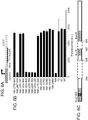
- an alignment of Cas9 proteins was generated and contiguous stretches of low conservation or stretches between conservation edges were identified for deletion. Several regions of interest were identified and selectively removed from NM-Cas9 which was then assessed for function by using a Cas9 repressor assay.
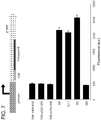
- NM-Cas9 In the assay, a variant of NM-Cas9 was used that lacks nuclease activity but is able to be targeted to the 5' region of a reporter gene. If NM-Cas9 is able to bind to the reporter gene it will repress transcription and in the case of a fluorescent reporter, the cells will appear non-fluorescent.
- Cas9 alignment and deletion prediction Full length sequences of Cas9 homologs were obtained either from the PFAM database or from a database search such as jackHMMER ( R.D. Finn, J. Clements, S.R. Eddy, Nucleic Acids Research (2011) Web Server Issue 39:W29-W37 ). In case the collection of sequences is not aligned, an alignment is created using an alignment algorithm such as CLUSTALW (Sievers F, Wilm A, Dineen DG, Gibson TJ, Karplus K, Li W, Lopez R, McWilliam H, Remmert M, Söding J, Thompson JD, Higgins DG (2011), or equivalent.
- CLUSTALW Sievers F, Wilm A, Dineen DG, Gibson TJ, Karplus K, Li W, Lopez R, McWilliam H, Remmert M, Söding J, Thompson JD, Higgins DG (2011), or equivalent.
- the alignment was computationally cut to the positions of the sequence of interest and conditioned to diminish alignment bias (e.g. sequences with a greater than 95% pairwise identity were removed).
- Conservation is calculated as the entropy or relative entropy of amino acid frequencies per position, taking into account the amount of amino acids and gaps at that position. Deletions are targeted towards regions of low conservation or between conservation edges. In iterations with experimental verification, the deletions are expanded or shifted.
- Primers containing overlapping complementarily and which are designed to remove targeted regions within NM-Cas9 along with inserting a SGGGS linker were purchased and used in PCR reactions. PCR fragments were gel purified, assembled in vitro using Gibson assembly and transformed into E. coli. Clones were sequence verified and tested using a modified form of previously generated NM-Cas9 reporter plasmids (See ( 2013) Nat Methods 10, 1116-1121 ) in which a single plasmid (instead of two) contains the NM-Cas9 spacer, targeted protospacer and YFP reporter for NM-Cas9 activity. Briefly, in this assay cells are co-transformed with synthetic NM-Cas9 variants and the reporter plasmid.
- the doubly transformed cells are then grown up at 37°C, and the amount of YFP fluorescence is measured using a fluorescence plate reader and compared to cells that are transformed with a control plasmid with wild-type nuclease null NM-Cas9 and the reporter plasmid.
- mutant Cas9 proteins which have 1000 fewer base pairs or 900 fewer base pairs compared to the wild type Cas9, such as NM-Cas9 and retain near wild-type levels of activity.
- a functional NM-Cas9 allele lacking the HNH motif and surrounding nucleotides NM-Cas9- ⁇ 567-654 was made which retained near wild-type ability to bind DNA as determined by the YFP reporter assay.
- aspects of the present disclosure include a high-throughput approach for random deletion creation and screening of functional mutants.
- plasmid DNA containing the desired Cas9 allele can be sheared using a promiscuous nuclease, sonication, repeatedly pipetting the sample, or other chemical, enzymatic or environmental means. Once fragmented, the plasmid DNA can be treated with exonucleases to remove nucleotides from the Cas9 gene.
- fragmented ends are made blunt ended with enzymes such as Mung Bean nuclease or Klenow polymerase and ligated together to regenerate a Cas9 plasmid containing a random deletion.
- enzymes such as Mung Bean nuclease or Klenow polymerase
- ligated together to regenerate a Cas9 plasmid containing a random deletion.
- an exogenous domain such as a linker or effector motif within the deleted portion of Cas9
- Such domains can be ligated to the blunt ended fragmented DNA, and subsequent circularization of the plasmid will produce a Cas9 coding sequence where the exogenous domain has been inserted within the deleted portion of Cas9.
- the library of circularized molecules will then be transformed into E. coli and plasmid DNA will be extracted.
- the library can be transformed into cells containing a reporter assay for Cas9 activity and members of the library that maintain functional activity can be identified.
- the coding sequence for Cas9 from the newly generated library can be isolated via digestion or PCR and the fragments can be size-selected to be shorter than the initial wild-type Cas9 gene. These smaller members can then be ligated back into the starting vector and transformed into cells containing the reporter of Cas9 activity.
- a library of oligonucleotides can be generated that have 3' homology to the Cas9 gene but contain 5' homology to each other, where the 3' end of each oligonucleotide binds to a different stretch of around 30 basepairs within Cas9. These oligonucleotides cover both the sense and anti-sense strands of the Cas9 coding sequence. PCR can then be performed with these oligonucleotides to generate a series of Cas9 fragments with each product from a given sense PCR reaction having complementarity to all other anti-sense PCR products and vice-versa.
- fragments can then be annealed together using methods such as Gibson assembly or overlap extension PCR followed by ligation into a vector backbone and transformed into cells, generating a library of Cas9 variants with random stretches of the Cas9 gene removed.
- the oligonucleotides on their 5' ends should contain complementarity towards the longer linker or effector domain and this domain should then be included in the Gibson assembly reaction or during overlap extension PCR.
- Cas9 nuclease null plasmids were ST1 (Addgene# 48659) or were constructed from plasmids NM and TD (Addgene# 48646 and 48648, respectively) by introducing the following point mutations (NM: D16A D587A H588A N611A and TD: D13A D878A H879A N902A).
- Cas9 deletions were generated using Gibson assembly. Internal deletions when made were joined by a 5 amino acid Ser-Gly-Gly-Gly-Ser linker, except for NM ⁇ 566-620 which lacks a linker between joined fragments.
- the N-terminal domain exchange fused residues 1-117 of ST1 onto residues 118-1082 of NM.
- the C-terminal domain exchange fused residues 1-727 of NM onto residues 743-1121 of ST1.
- Reporter constructs used for analysis of the deletion mutants are similar to those previously published except they combine the spacer element and YFP reporter into a single SC101-kanR plasmid backbone. Reporter constructs for domain-exchange analysis are identical to those used previously. See Esvelt, K. M. et al. Orthogonal Cas9 proteins for RNA-guided gene regulation and editing. Nature methods 10, 1116-1121, doi:10.1038/nmeth.2681 (2013 ).
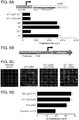
- M-ST1n-VP64 construct ST1 guideRNA plasmid and ST1 specific mammalian transcriptional reporter were previously published in Esvelt, K. M. et al. Orthogonal Cas9 proteins for RNA-guided gene regulation and editing. Nature methods 10, 1116-1121, doi:10.1038/nmeth.2681 (2013 ) (Addgene# 48675, 48672 and 48678, respectively). Deletion mutants were made as in the bacterial constructs.
- Cas9 repression assays were performed by co-transforming NEB 10-beta cells (New England BioLabs) with the appropriate spacer/reporter construct and Cas9 vector to be investigated. Colonies from transformations were picked and grown at 37°C with continuous shaking in 96 well plates. Plates were read the following day using a Synergy Neo microplate reader (BioTek), measuring fluorescence at 495-528 nm and absorbance at 600 nm.
- a and B two different previously published spacer/protospacer combinations (A and B) (see Esvelt, K. M. et al. Orthogonal Cas9 proteins for RNA-guided gene regulation and editing. Nature methods 10, 1116-1121, doi:10.1038/nmeth.2681 (2013 )) were tested. For all other experiments, only spacer/protospacer combination B was examined.
- HEK 293T cells were maintained in Dulbecco's modified Eagle's medium (Invitrogen) with high glucose supplemented with 10% FBS (Invitrogen) and penicillin/streptomycin (Invitrogen). Cells were maintained at 37°C and 5% CO 2 in a humidified incubator. Cells were transfected in 24 well plates seeded with 50,000 cells per well. 400ng of Cas9 activator, 100ng of gRNA and 60ng of reporter plasmid were delivered to each well using 2.5 ul of Lipofectamine 2000. Cells were grown an additional 36-48 hours before being assays using immunofluorescence or FACS.
- sequences were then split into two groups, one with and one without the large insertion at approximately position 150 (which distinguishes e.g. between NM-Cas9 and ST-Cas9 on one hand and SP-Cas9 and TD-Cas9 on the other).
- These groups are separately aligned using MUSCLE (see Edgar, RC (2004) MUSCLE: multiple sequence alignment with high accuracy and high throughput, Nucleic Acids Res 32, 1792-97 , re-aligned using a windowed approach (because of the length of the sequences), and then profile-profile aligned back into one seed alignment.
- sequences in PF13395 are realigned with MUSCLE and using the seed alignment. All alignments using a seed are performed by aligning each of the target sequences one-by-one to the seed. This alignment is used to determine the top-hit identity between seed and target sequences, which are re-ordered according to decreasing top-hit identity. The target sequences are then again aligned to the seed one-by-one, now in order of decreasing identity. This two-step approach is taken to ensure the robustness of the alignment. Also these sequences are split depending on whether they contain the insertion or not, and the two separate groups are re-aligned with the seed as a profile. Short sequences and sequences with large truncations are removed manually. Sequences with higher than 90% pairwise similarity are removed.
- the resulting two alignments are profile-profile aligned to each other which resulted in the 217 total sequences.
- the resulting alignments are truncated to the positions of the Cas9 ortholog of interest.
- Sequence conservation was calculated as the relative entropy with respect to the background frequency of amino acids averaged over all genes in Escherichia coli 0157. Domain boundary detection was performed by applying a Difference of Gaussians (DoG) edge filter (see Marr, D. & Hildreth, E. Theory of edge detection. Proceedings of the Royal Society of London. Series B, Containing papers of a Biological character. Royal Society 207, 187-217 (1980 )). to the resulting conservation profile, averaging over multiple length scales to achieve robustness to choice of parameters and detection at various length scales.
- DoG Difference of Gaussians
- the Cas9 alignment yields the conservation profile in Fig. 3 , after truncation to positions of NM-Cas9.
- Edge detection on the conservation profile was performed with a difference of Gaussians (DoG) band-pass filter that is sensitive to a narrow range of spatial frequencies. See Marr, D. & Hildreth, E. Theory of edge detection. Proceedings of the Royal Society of London. Series B, Containing papers of a Biological character. Royal Society 207, 187-217 (1980 ). In order to allow detection at various length scales and to make the filter insensitive to a particular choice of parameters, an averaging over multiple scales (5-50 amino acids) was carried out. The band-pass filter was then applied to the conservation profile for the Cas9 alignment. The identified potential boundary positions for NM-Cas9 are shown in Fig. 5A , with the top 6 ranking boundaries in bold longer red lines.
- DoG Gaussians
- the filter correctly identifies the known HNH and RuvC domain arrangements that were assigned previously in Sapranauskas, R. et al.
- the Streptococcus thermophilus CRISPR/Cas system provides immunity in Escherichia coli.
- Phylogeny of Cas9 determines functional exchangeability of dual-RNA and Cas9 among orthologous type II CRISPR-Cas systems.
- Nucleic acids research 42, 2577-2590, doi:10.1093/nar/gkt1074 (2014 ) see Fig.
- NM positions 254-449 represent a stretch of relatively low conservation, in a region of the protein that is specific to Cas9 proteins.
- Positions 567 to 654 represent the HNH domain, a domain known to be critical in Cas9 DNA catalysis but was found to be dispensable for DNA binding.
- the Cas9 N- and C-terminal domains may play critical roles in crRNA:tracrRNA binding and/or PAM selectivity.
- a series of domain exchange mutants between NM and ST1 were made, replacing the N and/or C terminus of NM with the homologous region from ST1.
- the chimeric proteins were then tested using the transcriptional reporter assay described herein altering the guideRNA and/or Cas9 specific PAM within the reporter to determine the influence of the domain exchanges on protein specificity ( Fig. 10A ).
- the exact positions for the domain swaps were determined based on domain boundary analysis: positions were selected that were as close as possible to the most significant N- and C-terminal boundaries identified ( Fig.
Landscapes
- Chemical & Material Sciences (AREA)
- Health & Medical Sciences (AREA)
- Life Sciences & Earth Sciences (AREA)
- Organic Chemistry (AREA)
- Engineering & Computer Science (AREA)
- Molecular Biology (AREA)
- Genetics & Genomics (AREA)
- Biochemistry (AREA)
- Zoology (AREA)
- Wood Science & Technology (AREA)
- Bioinformatics & Cheminformatics (AREA)
- General Health & Medical Sciences (AREA)
- Biotechnology (AREA)
- General Engineering & Computer Science (AREA)
- Biomedical Technology (AREA)
- Microbiology (AREA)
- Medicinal Chemistry (AREA)
- Immunology (AREA)
- Hematology (AREA)
- Physics & Mathematics (AREA)
- Proteomics, Peptides & Aminoacids (AREA)
- Analytical Chemistry (AREA)
- Urology & Nephrology (AREA)
- Food Science & Technology (AREA)
- Cell Biology (AREA)
- Biophysics (AREA)
- General Physics & Mathematics (AREA)
- Pathology (AREA)
- Micro-Organisms Or Cultivation Processes Thereof (AREA)
- Peptides Or Proteins (AREA)
- Enzymes And Modification Thereof (AREA)
- Preparation Of Compounds By Using Micro-Organisms (AREA)
- Measuring Or Testing Involving Enzymes Or Micro-Organisms (AREA)
Priority Applications (1)
| Application Number | Priority Date | Filing Date | Title |
|---|---|---|---|
| EP19213645.5A EP3647418A1 (en) | 2013-11-19 | 2014-11-19 | Mutant cas9 proteins |
Applications Claiming Priority (2)
| Application Number | Priority Date | Filing Date | Title |
|---|---|---|---|
| US201361906374P | 2013-11-19 | 2013-11-19 | |
| PCT/US2014/066375 WO2015077318A1 (en) | 2013-11-19 | 2014-11-19 | Mutant cas9 proteins |
Related Child Applications (2)
| Application Number | Title | Priority Date | Filing Date |
|---|---|---|---|
| EP19213645.5A Division-Into EP3647418A1 (en) | 2013-11-19 | 2014-11-19 | Mutant cas9 proteins |
| EP19213645.5A Division EP3647418A1 (en) | 2013-11-19 | 2014-11-19 | Mutant cas9 proteins |
Publications (3)
| Publication Number | Publication Date |
|---|---|
| EP3071694A1 EP3071694A1 (en) | 2016-09-28 |
| EP3071694A4 EP3071694A4 (en) | 2017-10-25 |
| EP3071694B1 true EP3071694B1 (en) | 2020-01-08 |
Family
ID=53180093
Family Applications (2)
| Application Number | Title | Priority Date | Filing Date |
|---|---|---|---|
| EP14864613.6A Active EP3071694B1 (en) | 2013-11-19 | 2014-11-19 | Mutant cas9 proteins |
| EP19213645.5A Pending EP3647418A1 (en) | 2013-11-19 | 2014-11-19 | Mutant cas9 proteins |
Family Applications After (1)
| Application Number | Title | Priority Date | Filing Date |
|---|---|---|---|
| EP19213645.5A Pending EP3647418A1 (en) | 2013-11-19 | 2014-11-19 | Mutant cas9 proteins |
Country Status (8)
| Country | Link |
|---|---|
| US (5) | US9074199B1 (https=) |
| EP (2) | EP3071694B1 (https=) |
| JP (4) | JP6984096B2 (https=) |
| KR (1) | KR102212295B1 (https=) |
| AU (2) | AU2014353128B2 (https=) |
| CA (2) | CA2930829C (https=) |
| ES (1) | ES2774677T3 (https=) |
| WO (1) | WO2015077318A1 (https=) |
Families Citing this family (117)
| Publication number | Priority date | Publication date | Assignee | Title |
|---|---|---|---|---|
| US10323236B2 (en) | 2011-07-22 | 2019-06-18 | President And Fellows Of Harvard College | Evaluation and improvement of nuclease cleavage specificity |
| US10760064B2 (en) | 2013-03-15 | 2020-09-01 | The General Hospital Corporation | RNA-guided targeting of genetic and epigenomic regulatory proteins to specific genomic loci |
| CN112301024A (zh) | 2013-03-15 | 2021-02-02 | 通用医疗公司 | 使用RNA引导的FokI核酸酶(RFN)提高RNA引导的基因组编辑的特异性 |
| WO2014204578A1 (en) | 2013-06-21 | 2014-12-24 | The General Hospital Corporation | Using rna-guided foki nucleases (rfns) to increase specificity for rna-guided genome editing |
| EP3004339B1 (en) * | 2013-05-29 | 2021-07-07 | Cellectis | New compact scaffold of cas9 in the type ii crispr system |
| US9163284B2 (en) | 2013-08-09 | 2015-10-20 | President And Fellows Of Harvard College | Methods for identifying a target site of a Cas9 nuclease |
| US9359599B2 (en) | 2013-08-22 | 2016-06-07 | President And Fellows Of Harvard College | Engineered transcription activator-like effector (TALE) domains and uses thereof |
| US9526784B2 (en) | 2013-09-06 | 2016-12-27 | President And Fellows Of Harvard College | Delivery system for functional nucleases |
| US9322037B2 (en) | 2013-09-06 | 2016-04-26 | President And Fellows Of Harvard College | Cas9-FokI fusion proteins and uses thereof |
| US9228207B2 (en) | 2013-09-06 | 2016-01-05 | President And Fellows Of Harvard College | Switchable gRNAs comprising aptamers |
| CN106459995B (zh) | 2013-11-07 | 2020-02-21 | 爱迪塔斯医药有限公司 | 使用统治型gRNA的CRISPR相关方法和组合物 |
| US9074199B1 (en) * | 2013-11-19 | 2015-07-07 | President And Fellows Of Harvard College | Mutant Cas9 proteins |
| US20150165054A1 (en) | 2013-12-12 | 2015-06-18 | President And Fellows Of Harvard College | Methods for correcting caspase-9 point mutations |
| EP3690044B1 (en) | 2014-02-11 | 2024-01-10 | The Regents of the University of Colorado, a body corporate | Crispr enabled multiplexed genome engineering |
| US11028388B2 (en) | 2014-03-05 | 2021-06-08 | Editas Medicine, Inc. | CRISPR/Cas-related methods and compositions for treating Usher syndrome and retinitis pigmentosa |
| US11141493B2 (en) | 2014-03-10 | 2021-10-12 | Editas Medicine, Inc. | Compositions and methods for treating CEP290-associated disease |
| ES2745769T3 (es) | 2014-03-10 | 2020-03-03 | Editas Medicine Inc | Procedimientos y composiciones relacionados con CRISPR/CAS para tratar la amaurosis congénita de Leber 10 (LCA10) |
| US11339437B2 (en) | 2014-03-10 | 2022-05-24 | Editas Medicine, Inc. | Compositions and methods for treating CEP290-associated disease |
| EP3122880B1 (en) | 2014-03-26 | 2021-05-05 | Editas Medicine, Inc. | Crispr/cas-related methods and compositions for treating sickle cell disease |
| EP3540061A1 (en) | 2014-04-02 | 2019-09-18 | Editas Medicine, Inc. | Crispr/cas-related methods and compositions for treating primary open angle glaucoma |
| US10077453B2 (en) | 2014-07-30 | 2018-09-18 | President And Fellows Of Harvard College | CAS9 proteins including ligand-dependent inteins |
| AU2015330699B2 (en) | 2014-10-10 | 2021-12-02 | Editas Medicine, Inc. | Compositions and methods for promoting homology directed repair |
| US10612042B2 (en) | 2014-10-24 | 2020-04-07 | Avectas Limited | Delivery across cell plasma membranes |
| EP4464338A3 (en) | 2014-11-07 | 2025-02-12 | Editas Medicine, Inc. | Systems for improving crispr/cas-mediated genome-editing |
| CA2969619A1 (en) | 2014-12-03 | 2016-06-09 | Agilent Technologies, Inc. | Guide rna with chemical modifications |
| KR102888521B1 (ko) | 2015-04-06 | 2025-11-19 | 더 보드 어브 트러스티스 어브 더 리랜드 스탠포드 주니어 유니버시티 | Crispr/cas-매개 유전자 조절을 위한 화학적으로 변형된 가이드 rna |
| JP2018522249A (ja) | 2015-04-24 | 2018-08-09 | エディタス・メディシン、インコーポレイテッド | Cas9分子/ガイドrna分子複合体の評価 |
| CA2986310A1 (en) | 2015-05-11 | 2016-11-17 | Editas Medicine, Inc. | Optimized crispr/cas9 systems and methods for gene editing in stem cells |
| CN108025188A (zh) | 2015-06-01 | 2018-05-11 | 天普大学-联邦高等教育系统 | 用于hiv感染的rna导向治疗的方法和组合物 |
| WO2016196655A1 (en) | 2015-06-03 | 2016-12-08 | The Regents Of The University Of California | Cas9 variants and methods of use thereof |
| CN108026526B (zh) | 2015-06-09 | 2023-05-12 | 爱迪塔斯医药公司 | 用于改善移植的crispr/cas相关方法和组合物 |
| WO2017004261A1 (en) | 2015-06-29 | 2017-01-05 | Ionis Pharmaceuticals, Inc. | Modified crispr rna and modified single crispr rna and uses thereof |
| US9512446B1 (en) | 2015-08-28 | 2016-12-06 | The General Hospital Corporation | Engineered CRISPR-Cas9 nucleases |
| US9926546B2 (en) | 2015-08-28 | 2018-03-27 | The General Hospital Corporation | Engineered CRISPR-Cas9 nucleases |
| EP3353296B1 (en) | 2015-09-24 | 2020-11-04 | Editas Medicine, Inc. | Use of exonucleases to improve crispr/cas-mediated genome editing |
| IL310721B2 (en) | 2015-10-23 | 2025-11-01 | Harvard College | Nucleobase editors and uses thereof |
| CA3005968A1 (en) | 2015-11-23 | 2017-06-01 | The Regents Of The University Of California | Tracking and manipulating cellular rna via nuclear delivery of crispr/cas9 |
| CA3009715A1 (en) | 2015-12-30 | 2017-07-06 | Avectas Limited | Vector-free delivery of gene editing proteins and compositions to cells and tissues |
| WO2017118720A1 (en) * | 2016-01-08 | 2017-07-13 | Novozymes A/S | Genome editing in bacillus host cells |
| US11512311B2 (en) | 2016-03-25 | 2022-11-29 | Editas Medicine, Inc. | Systems and methods for treating alpha 1-antitrypsin (A1AT) deficiency |
| US11597924B2 (en) | 2016-03-25 | 2023-03-07 | Editas Medicine, Inc. | Genome editing systems comprising repair-modulating enzyme molecules and methods of their use |
| GB2565461B (en) * | 2016-03-31 | 2022-04-13 | Harvard College | Methods and compositions for the single tube preparation of sequencing libraries using Cas9 |
| US11236313B2 (en) | 2016-04-13 | 2022-02-01 | Editas Medicine, Inc. | Cas9 fusion molecules, gene editing systems, and methods of use thereof |
| US10767175B2 (en) | 2016-06-08 | 2020-09-08 | Agilent Technologies, Inc. | High specificity genome editing using chemically modified guide RNAs |
| AU2017280353B2 (en) | 2016-06-24 | 2021-11-11 | Inscripta, Inc. | Methods for generating barcoded combinatorial libraries |
| BR112019001887A2 (pt) | 2016-08-02 | 2019-07-09 | Editas Medicine Inc | composições e métodos para o tratamento de doença associada a cep290 |
| CN110214183A (zh) | 2016-08-03 | 2019-09-06 | 哈佛大学的校长及成员们 | 腺苷核碱基编辑器及其用途 |
| WO2018031683A1 (en) | 2016-08-09 | 2018-02-15 | President And Fellows Of Harvard College | Programmable cas9-recombinase fusion proteins and uses thereof |
| US11542509B2 (en) | 2016-08-24 | 2023-01-03 | President And Fellows Of Harvard College | Incorporation of unnatural amino acids into proteins using base editing |
| US20190225974A1 (en) | 2016-09-23 | 2019-07-25 | BASF Agricultural Solutions Seed US LLC | Targeted genome optimization in plants |
| KR102622411B1 (ko) | 2016-10-14 | 2024-01-10 | 프레지던트 앤드 펠로우즈 오브 하바드 칼리지 | 핵염기 에디터의 aav 전달 |
| SG10201913505WA (en) | 2016-10-17 | 2020-02-27 | Univ Nanyang Tech | Truncated crispr-cas proteins for dna targeting |
| EP4520828A3 (en) | 2016-11-15 | 2025-07-09 | The Schepens Eye Research Institute, Inc. | Compositions and methods for the treatment of aberrant angiogenesis |
| EP3555297A1 (en) | 2016-12-19 | 2019-10-23 | Editas Medicine, Inc. | Assessing nuclease cleavage |
| WO2018115973A2 (en) | 2016-12-22 | 2018-06-28 | Avectas Limited | Vector-free intracellular delivery by reversible permeabilisation |
| WO2018119359A1 (en) | 2016-12-23 | 2018-06-28 | President And Fellows Of Harvard College | Editing of ccr5 receptor gene to protect against hiv infection |
| JP7229923B2 (ja) | 2017-01-06 | 2023-02-28 | エディタス・メディシン、インコーポレイテッド | ヌクレアーゼ切断を評価する方法 |
| US11730828B2 (en) | 2017-02-07 | 2023-08-22 | The Regents Of The University Of California | Gene therapy for haploinsufficiency |
| EP3592853A1 (en) | 2017-03-09 | 2020-01-15 | President and Fellows of Harvard College | Suppression of pain by gene editing |
| US12390514B2 (en) | 2017-03-09 | 2025-08-19 | President And Fellows Of Harvard College | Cancer vaccine |
| US11542496B2 (en) | 2017-03-10 | 2023-01-03 | President And Fellows Of Harvard College | Cytosine to guanine base editor |
| WO2018170184A1 (en) | 2017-03-14 | 2018-09-20 | Editas Medicine, Inc. | Systems and methods for the treatment of hemoglobinopathies |
| KR20240116572A (ko) | 2017-03-23 | 2024-07-29 | 프레지던트 앤드 펠로우즈 오브 하바드 칼리지 | 핵산 프로그램가능한 dna 결합 단백질을 포함하는 핵염기 편집제 |
| US11499151B2 (en) | 2017-04-28 | 2022-11-15 | Editas Medicine, Inc. | Methods and systems for analyzing guide RNA molecules |
| WO2018208998A1 (en) | 2017-05-10 | 2018-11-15 | The Regents Of The University Of California | Directed editing of cellular rna via nuclear delivery of crispr/cas9 |
| EP3622070A2 (en) | 2017-05-10 | 2020-03-18 | Editas Medicine, Inc. | Crispr/rna-guided nuclease systems and methods |
| US11560566B2 (en) | 2017-05-12 | 2023-01-24 | President And Fellows Of Harvard College | Aptazyme-embedded guide RNAs for use with CRISPR-Cas9 in genome editing and transcriptional activation |
| MX2019014640A (es) | 2017-06-09 | 2020-10-05 | Editas Medicine Inc | Nucleasas de repeticiones palíndromicas agrupadas y regularmente interespaciadas de proteina asociada 9 (cas9) genomanipuladas. |
| MX2019014578A (es) | 2017-06-21 | 2020-12-01 | Timothy A Bertram | Celulas renales bioactivas inmunoprivilegiadas para el tratamiento de enfermedad renal. |
| US10011849B1 (en) | 2017-06-23 | 2018-07-03 | Inscripta, Inc. | Nucleic acid-guided nucleases |
| US9982279B1 (en) | 2017-06-23 | 2018-05-29 | Inscripta, Inc. | Nucleic acid-guided nucleases |
| US11866726B2 (en) | 2017-07-14 | 2024-01-09 | Editas Medicine, Inc. | Systems and methods for targeted integration and genome editing and detection thereof using integrated priming sites |
| CN111801345A (zh) | 2017-07-28 | 2020-10-20 | 哈佛大学的校长及成员们 | 使用噬菌体辅助连续进化(pace)的进化碱基编辑器的方法和组合物 |
| EP3676376B1 (en) | 2017-08-30 | 2025-01-15 | President and Fellows of Harvard College | High efficiency base editors comprising gam |
| AU2018338318B2 (en) | 2017-09-21 | 2022-12-22 | Massachusetts Institute Of Technology | Systems, methods, and compositions for targeted nucleic acid editing |
| KR20250107288A (ko) | 2017-10-16 | 2025-07-11 | 더 브로드 인스티튜트, 인코퍼레이티드 | 아데노신 염기 편집제의 용도 |
| US11739326B2 (en) | 2017-11-14 | 2023-08-29 | Massachusetts Eye And Ear Infirmary | RUNX1 inhibition for treatment of proliferative vitreoretinopathy and conditions associated with epithelial to mesenchymal transition |
| US12406749B2 (en) | 2017-12-15 | 2025-09-02 | The Broad Institute, Inc. | Systems and methods for predicting repair outcomes in genetic engineering |
| AU2019207409B2 (en) | 2018-01-12 | 2023-02-23 | Basf Se | Gene underlying the number of spikelets per spike qtl in wheat on chromosome 7a |
| WO2019147743A1 (en) | 2018-01-26 | 2019-08-01 | Massachusetts Institute Of Technology | Structure-guided chemical modification of guide rna and its applications |
| KR102465067B1 (ko) * | 2018-02-15 | 2022-11-10 | 시그마-알드리치 컴퍼니., 엘엘씨 | 진핵 게놈 변형을 위한 조작된 cas9 시스템 |
| KR102907245B1 (ko) | 2018-03-14 | 2026-01-05 | 에디타스 메디신, 인코포레이티드 | 혈색소병증 치료를 위한 시스템 및 방법 |
| MA52074A (fr) * | 2018-03-19 | 2021-01-27 | Bayer Healthcare Llc | Nouveaux systèmes d'endonucléase à arn programmable et leurs utilisations |
| US12157760B2 (en) | 2018-05-23 | 2024-12-03 | The Broad Institute, Inc. | Base editors and uses thereof |
| EP3802779A1 (en) | 2018-06-01 | 2021-04-14 | Avectas Limited | Cell engineering platform |
| EP3823633A4 (en) | 2018-06-29 | 2023-05-03 | Editas Medicine, Inc. | SYNTHETIC LEAD MOLECULES, COMPOSITIONS AND METHODS RELATED THERETO |
| US12522807B2 (en) | 2018-07-09 | 2026-01-13 | The Broad Institute, Inc. | RNA programmable epigenetic RNA modifiers and uses thereof |
| WO2020076976A1 (en) | 2018-10-10 | 2020-04-16 | Readcoor, Inc. | Three-dimensional spatial molecular indexing |
| CN113166738A (zh) * | 2018-10-24 | 2021-07-23 | 摩大力斯医疗株式会社 | 经改造的Cas9蛋白及其用途 |
| WO2020092453A1 (en) | 2018-10-29 | 2020-05-07 | The Broad Institute, Inc. | Nucleobase editors comprising geocas9 and uses thereof |
| CN113710799B (zh) | 2018-11-28 | 2024-11-12 | 克里斯珀医疗股份公司 | 用于在LNP中使用的编码CAS9的优化mRNA |
| US12351837B2 (en) | 2019-01-23 | 2025-07-08 | The Broad Institute, Inc. | Supernegatively charged proteins and uses thereof |
| WO2020191233A1 (en) | 2019-03-19 | 2020-09-24 | The Broad Institute, Inc. | Methods and compositions for editing nucleotide sequences |
| US12473543B2 (en) | 2019-04-17 | 2025-11-18 | The Broad Institute, Inc. | Adenine base editors with reduced off-target effects |
| CN110241099B (zh) * | 2019-06-05 | 2021-04-30 | 复旦大学 | 酿脓链球菌的CRISPR核酸酶SpCas9 的截短变异体及其应用 |
| CN114269912A (zh) * | 2019-06-14 | 2022-04-01 | 阿伯生物技术公司 | 新型crispr dna靶向酶及系统 |
| US12435330B2 (en) | 2019-10-10 | 2025-10-07 | The Broad Institute, Inc. | Methods and compositions for prime editing RNA |
| US11060141B1 (en) | 2019-12-23 | 2021-07-13 | Stilla Technologies | Multiplex drop-off digital polymerase chain reaction methods |
| US20210290757A1 (en) | 2020-03-23 | 2021-09-23 | Avectas Limited | Engineering of dendritic cells for generation of vaccines against sars-cov-2 |
| IL297761A (en) | 2020-05-08 | 2022-12-01 | Broad Inst Inc | Methods and compositions for simultaneously editing two helices of a designated double-helix nucleotide sequence |
| AU2022213019A1 (en) | 2021-02-01 | 2023-08-10 | Avectas Limited | Delivery platform |
| WO2022225978A1 (en) | 2021-04-21 | 2022-10-27 | The Regents Of The University Of California | Use of a split dcas fusion protein system for epigenetic editing |
| JP2024534945A (ja) | 2021-09-10 | 2024-09-26 | アジレント・テクノロジーズ・インク | 化学修飾を有するプライム編集のためのガイドrna |
| WO2023064813A2 (en) * | 2021-10-13 | 2023-04-20 | University Of Massachusetts | Modified guide rnas for neisseria meningitidis cas9 |
| EP4426828A1 (en) | 2021-11-01 | 2024-09-11 | Tome Biosciences, Inc. | Single construct platform for simultaneous delivery of gene editing machinery and nucleic acid cargo |
| AU2022420615A1 (en) | 2021-12-22 | 2024-07-04 | Tome Biosciences, Inc. | Co-delivery of a gene editor construct and a donor template |
| WO2023205744A1 (en) | 2022-04-20 | 2023-10-26 | Tome Biosciences, Inc. | Programmable gene insertion compositions |
| WO2023225670A2 (en) | 2022-05-20 | 2023-11-23 | Tome Biosciences, Inc. | Ex vivo programmable gene insertion |
| WO2024020587A2 (en) | 2022-07-22 | 2024-01-25 | Tome Biosciences, Inc. | Pleiopluripotent stem cell programmable gene insertion |
| WO2024138194A1 (en) | 2022-12-22 | 2024-06-27 | Tome Biosciences, Inc. | Platforms, compositions, and methods for in vivo programmable gene insertion |
| WO2024234006A1 (en) | 2023-05-11 | 2024-11-14 | Tome Biosciences, Inc. | Systems, compositions, and methods for targeting liver sinusodial endothelial cells (lsecs) |
| WO2025050069A1 (en) | 2023-09-01 | 2025-03-06 | Tome Biosciences, Inc. | Programmable gene insertion using engineered integration enzymes |
| WO2025078978A1 (en) | 2023-10-09 | 2025-04-17 | Avectas Limited | Transfection of cells via reversible permeabilization |
| WO2025149983A2 (en) | 2024-01-12 | 2025-07-17 | Avectas Limited | Delivery platform with integrated non-viral transfection and cell processing |
| WO2025149984A2 (en) | 2024-01-12 | 2025-07-17 | Avectas Limited | Delivery platform with flow-through system (fts) |
| EP4677108A1 (en) | 2024-04-22 | 2026-01-14 | Basecamp Research Ltd | Method and compositions for detecting off-target editing |
| WO2025224182A2 (en) | 2024-04-23 | 2025-10-30 | Basecamp Research Ltd | Single construct platform for simultaneous delivery of gene editing machinery and nucleic acid cargo |
Family Cites Families (23)
| Publication number | Priority date | Publication date | Assignee | Title |
|---|---|---|---|---|
| CA2431858A1 (en) * | 2000-12-14 | 2002-06-20 | Genencor International, Inc. | Targeted enzymes comprising substrate recognition sites and target binding sites |
| CN101688241B (zh) | 2007-03-02 | 2015-01-21 | 杜邦营养生物科学有限公司 | 具有改善的噬菌体抗性的培养物 |
| KR100952754B1 (ko) | 2007-09-28 | 2010-04-14 | 동아대학교 산학협력단 | 토양 메타게놈에서 유래한 항생 활성을 암호화하는유전자군 |
| WO2010011961A2 (en) | 2008-07-25 | 2010-01-28 | University Of Georgia Research Foundation, Inc. | Prokaryotic rnai-like system and methods of use |
| US20100076057A1 (en) | 2008-09-23 | 2010-03-25 | Northwestern University | TARGET DNA INTERFERENCE WITH crRNA |
| US9404098B2 (en) | 2008-11-06 | 2016-08-02 | University Of Georgia Research Foundation, Inc. | Method for cleaving a target RNA using a Cas6 polypeptide |
| US10087431B2 (en) | 2010-03-10 | 2018-10-02 | The Regents Of The University Of California | Methods of generating nucleic acid fragments |
| MX2012013037A (es) | 2010-05-10 | 2013-07-29 | Univ California | Composiciones de endorribonucleasa y metodos de uso de las mismas. |
| US9089520B2 (en) | 2010-05-21 | 2015-07-28 | Baylor College Of Medicine | Methods for inducing selective apoptosis |
| WO2012164565A1 (en) | 2011-06-01 | 2012-12-06 | Yeda Research And Development Co. Ltd. | Compositions and methods for downregulating prokaryotic genes |
| GB201122458D0 (en) | 2011-12-30 | 2012-02-08 | Univ Wageningen | Modified cascade ribonucleoproteins and uses thereof |
| US20150166969A1 (en) | 2012-02-24 | 2015-06-18 | Fred Hutchinson Cancer Research Center | Compositions and methods for the treatment of hemoglobinopathies |
| WO2013130824A1 (en) | 2012-02-29 | 2013-09-06 | Sangamo Biosciences, Inc. | Methods and compositions for treating huntington's disease |
| WO2013141680A1 (en) | 2012-03-20 | 2013-09-26 | Vilnius University | RNA-DIRECTED DNA CLEAVAGE BY THE Cas9-crRNA COMPLEX |
| US9637739B2 (en) | 2012-03-20 | 2017-05-02 | Vilnius University | RNA-directed DNA cleavage by the Cas9-crRNA complex |
| AU2013259647B2 (en) * | 2012-05-07 | 2018-11-08 | Corteva Agriscience Llc | Methods and compositions for nuclease-mediated targeted integration of transgenes |
| AU2013266968B2 (en) | 2012-05-25 | 2017-06-29 | Emmanuelle CHARPENTIER | Methods and compositions for RNA-directed target DNA modification and for RNA-directed modulation of transcription |
| WO2014022702A2 (en) | 2012-08-03 | 2014-02-06 | The Regents Of The University Of California | Methods and compositions for controlling gene expression by rna processing |
| CN113355357B (zh) | 2012-12-12 | 2024-12-03 | 布罗德研究所有限公司 | 对用于序列操纵的改进的系统、方法和酶组合物进行的工程化和优化 |
| US8697359B1 (en) | 2012-12-12 | 2014-04-15 | The Broad Institute, Inc. | CRISPR-Cas systems and methods for altering expression of gene products |
| RU2662932C2 (ru) * | 2013-03-14 | 2018-07-31 | Карибо Биосайенсиз, Инк. | Композиции и способы с участием нуклеиновых кислот, нацеленных на нуклеиновые кислоты |
| US9234213B2 (en) * | 2013-03-15 | 2016-01-12 | System Biosciences, Llc | Compositions and methods directed to CRISPR/Cas genomic engineering systems |
| US9074199B1 (en) * | 2013-11-19 | 2015-07-07 | President And Fellows Of Harvard College | Mutant Cas9 proteins |
-
2014
- 2014-06-30 US US14/319,784 patent/US9074199B1/en active Active
- 2014-11-19 KR KR1020167015908A patent/KR102212295B1/ko active Active
- 2014-11-19 EP EP14864613.6A patent/EP3071694B1/en active Active
- 2014-11-19 CA CA2930829A patent/CA2930829C/en active Active
- 2014-11-19 JP JP2016532542A patent/JP6984096B2/ja active Active
- 2014-11-19 ES ES14864613T patent/ES2774677T3/es active Active
- 2014-11-19 US US15/037,696 patent/US10100291B2/en active Active
- 2014-11-19 AU AU2014353128A patent/AU2014353128B2/en active Active
- 2014-11-19 EP EP19213645.5A patent/EP3647418A1/en active Pending
- 2014-11-19 CA CA3191825A patent/CA3191825A1/en active Pending
- 2014-11-19 WO PCT/US2014/066375 patent/WO2015077318A1/en not_active Ceased
-
2018
- 2018-10-11 US US16/157,481 patent/US10435679B2/en active Active
-
2019
- 2019-04-16 JP JP2019077510A patent/JP7020635B2/ja active Active
- 2019-06-13 US US16/440,241 patent/US10683490B2/en active Active
-
2020
- 2020-04-20 US US16/852,592 patent/US11286470B2/en active Active
- 2020-07-23 AU AU2020207837A patent/AU2020207837B2/en active Active
- 2020-12-15 JP JP2020207668A patent/JP7631778B2/ja active Active
-
2022
- 2022-10-28 JP JP2022173487A patent/JP7469433B2/ja active Active
Non-Patent Citations (1)
| Title |
|---|
| None * |
Also Published As
| Publication number | Publication date |
|---|---|
| US11286470B2 (en) | 2022-03-29 |
| AU2014353128A1 (en) | 2016-06-09 |
| US20190040371A1 (en) | 2019-02-07 |
| CA3191825A1 (en) | 2015-05-28 |
| US10100291B2 (en) | 2018-10-16 |
| US20190367892A1 (en) | 2019-12-05 |
| JP2017501688A (ja) | 2017-01-19 |
| JP2023002785A (ja) | 2023-01-10 |
| EP3071694A4 (en) | 2017-10-25 |
| JP2019150033A (ja) | 2019-09-12 |
| KR102212295B1 (ko) | 2021-02-03 |
| CA2930829A1 (en) | 2015-05-28 |
| JP7469433B2 (ja) | 2024-04-16 |
| AU2020207837B2 (en) | 2023-04-06 |
| CA2930829C (en) | 2023-05-02 |
| JP7020635B2 (ja) | 2022-02-16 |
| US20160298097A1 (en) | 2016-10-13 |
| JP6984096B2 (ja) | 2021-12-17 |
| ES2774677T3 (es) | 2020-07-22 |
| US10435679B2 (en) | 2019-10-08 |
| JP7631778B2 (ja) | 2025-02-19 |
| US9074199B1 (en) | 2015-07-07 |
| JP2021052784A (ja) | 2021-04-08 |
| EP3647418A1 (en) | 2020-05-06 |
| US20200283747A1 (en) | 2020-09-10 |
| EP3071694A1 (en) | 2016-09-28 |
| AU2020207837A1 (en) | 2020-08-13 |
| US10683490B2 (en) | 2020-06-16 |
| AU2014353128B2 (en) | 2020-04-30 |
| WO2015077318A1 (en) | 2015-05-28 |
| KR20160079119A (ko) | 2016-07-05 |
Similar Documents
| Publication | Publication Date | Title |
|---|---|---|
| US11286470B2 (en) | Mutant Cas9 proteins | |
| RU2771583C1 (ru) | Ортогональные белки cas9 для рнк-направляемой регуляции и редактирования генов | |
| HK40031893A (en) | Orthogonal cas9 proteins for rna-guided gene regulation and editing | |
| HK1217907B (en) | Orthogonal cas9 proteins for rna-guided gene regulation and editing | |
| NZ754837B2 (en) | Orthogonal cas9 proteins for rna-guided gene regulation and editing | |
| NZ754836B2 (en) | Orthogonal cas9 proteins for rna-guided gene regulation and editing |
Legal Events
| Date | Code | Title | Description |
|---|---|---|---|
| PUAI | Public reference made under article 153(3) epc to a published international application that has entered the european phase |
Free format text: ORIGINAL CODE: 0009012 |
|
| 17P | Request for examination filed |
Effective date: 20160519 |
|
| AK | Designated contracting states |
Kind code of ref document: A1 Designated state(s): AL AT BE BG CH CY CZ DE DK EE ES FI FR GB GR HR HU IE IS IT LI LT LU LV MC MK MT NL NO PL PT RO RS SE SI SK SM TR |
|
| AX | Request for extension of the european patent |
Extension state: BA ME |
|
| DAX | Request for extension of the european patent (deleted) | ||
| RIC1 | Information provided on ipc code assigned before grant |
Ipc: C07H 21/04 20060101ALI20170511BHEP Ipc: C12N 9/22 20060101AFI20170511BHEP |
|
| RIC1 | Information provided on ipc code assigned before grant |
Ipc: C07H 21/04 20060101ALI20170607BHEP Ipc: C12N 9/22 20060101AFI20170607BHEP |
|
| REG | Reference to a national code |
Ref country code: DE Ref legal event code: R079 Ref document number: 602014059880 Country of ref document: DE Free format text: PREVIOUS MAIN CLASS: C12N0015000000 Ipc: C12N0009220000 |
|
| A4 | Supplementary search report drawn up and despatched |
Effective date: 20170921 |
|
| RIC1 | Information provided on ipc code assigned before grant |
Ipc: C07H 21/04 20060101ALI20170915BHEP Ipc: C12N 9/22 20060101AFI20170915BHEP |
|
| STAA | Information on the status of an ep patent application or granted ep patent |
Free format text: STATUS: EXAMINATION IS IN PROGRESS |
|
| 17Q | First examination report despatched |
Effective date: 20180614 |
|
| GRAP | Despatch of communication of intention to grant a patent |
Free format text: ORIGINAL CODE: EPIDOSNIGR1 |
|
| STAA | Information on the status of an ep patent application or granted ep patent |
Free format text: STATUS: GRANT OF PATENT IS INTENDED |
|
| INTG | Intention to grant announced |
Effective date: 20190719 |
|
| GRAS | Grant fee paid |
Free format text: ORIGINAL CODE: EPIDOSNIGR3 |
|
| GRAA | (expected) grant |
Free format text: ORIGINAL CODE: 0009210 |
|
| STAA | Information on the status of an ep patent application or granted ep patent |
Free format text: STATUS: THE PATENT HAS BEEN GRANTED |
|
| AK | Designated contracting states |
Kind code of ref document: B1 Designated state(s): AL AT BE BG CH CY CZ DE DK EE ES FI FR GB GR HR HU IE IS IT LI LT LU LV MC MK MT NL NO PL PT RO RS SE SI SK SM TR |
|
| REG | Reference to a national code |
Ref country code: GB Ref legal event code: FG4D |
|
| REG | Reference to a national code |
Ref country code: CH Ref legal event code: EP |
|
| REG | Reference to a national code |
Ref country code: DE Ref legal event code: R096 Ref document number: 602014059880 Country of ref document: DE |
|
| REG | Reference to a national code |
Ref country code: IE Ref legal event code: FG4D |
|
| REG | Reference to a national code |
Ref country code: AT Ref legal event code: REF Ref document number: 1222748 Country of ref document: AT Kind code of ref document: T Effective date: 20200215 |
|
| REG | Reference to a national code |
Ref country code: CH Ref legal event code: NV Representative=s name: VALIPAT S.A. C/O BOVARD SA NEUCHATEL, CH |
|
| REG | Reference to a national code |
Ref country code: NL Ref legal event code: FP |
|
| REG | Reference to a national code |
Ref country code: LT Ref legal event code: MG4D |
|
| REG | Reference to a national code |
Ref country code: ES Ref legal event code: FG2A Ref document number: 2774677 Country of ref document: ES Kind code of ref document: T3 Effective date: 20200722 |
|
| PG25 | Lapsed in a contracting state [announced via postgrant information from national office to epo] |
Ref country code: LT Free format text: LAPSE BECAUSE OF FAILURE TO SUBMIT A TRANSLATION OF THE DESCRIPTION OR TO PAY THE FEE WITHIN THE PRESCRIBED TIME-LIMIT Effective date: 20200108 Ref country code: FI Free format text: LAPSE BECAUSE OF FAILURE TO SUBMIT A TRANSLATION OF THE DESCRIPTION OR TO PAY THE FEE WITHIN THE PRESCRIBED TIME-LIMIT Effective date: 20200108 Ref country code: RS Free format text: LAPSE BECAUSE OF FAILURE TO SUBMIT A TRANSLATION OF THE DESCRIPTION OR TO PAY THE FEE WITHIN THE PRESCRIBED TIME-LIMIT Effective date: 20200108 Ref country code: PT Free format text: LAPSE BECAUSE OF FAILURE TO SUBMIT A TRANSLATION OF THE DESCRIPTION OR TO PAY THE FEE WITHIN THE PRESCRIBED TIME-LIMIT Effective date: 20200531 Ref country code: NO Free format text: LAPSE BECAUSE OF FAILURE TO SUBMIT A TRANSLATION OF THE DESCRIPTION OR TO PAY THE FEE WITHIN THE PRESCRIBED TIME-LIMIT Effective date: 20200408 |
|
| PG25 | Lapsed in a contracting state [announced via postgrant information from national office to epo] |
Ref country code: HR Free format text: LAPSE BECAUSE OF FAILURE TO SUBMIT A TRANSLATION OF THE DESCRIPTION OR TO PAY THE FEE WITHIN THE PRESCRIBED TIME-LIMIT Effective date: 20200108 Ref country code: BG Free format text: LAPSE BECAUSE OF FAILURE TO SUBMIT A TRANSLATION OF THE DESCRIPTION OR TO PAY THE FEE WITHIN THE PRESCRIBED TIME-LIMIT Effective date: 20200408 Ref country code: GR Free format text: LAPSE BECAUSE OF FAILURE TO SUBMIT A TRANSLATION OF THE DESCRIPTION OR TO PAY THE FEE WITHIN THE PRESCRIBED TIME-LIMIT Effective date: 20200409 Ref country code: IS Free format text: LAPSE BECAUSE OF FAILURE TO SUBMIT A TRANSLATION OF THE DESCRIPTION OR TO PAY THE FEE WITHIN THE PRESCRIBED TIME-LIMIT Effective date: 20200508 Ref country code: LV Free format text: LAPSE BECAUSE OF FAILURE TO SUBMIT A TRANSLATION OF THE DESCRIPTION OR TO PAY THE FEE WITHIN THE PRESCRIBED TIME-LIMIT Effective date: 20200108 Ref country code: SE Free format text: LAPSE BECAUSE OF FAILURE TO SUBMIT A TRANSLATION OF THE DESCRIPTION OR TO PAY THE FEE WITHIN THE PRESCRIBED TIME-LIMIT Effective date: 20200108 |
|
| REG | Reference to a national code |
Ref country code: DE Ref legal event code: R097 Ref document number: 602014059880 Country of ref document: DE |
|
| PG25 | Lapsed in a contracting state [announced via postgrant information from national office to epo] |
Ref country code: RO Free format text: LAPSE BECAUSE OF FAILURE TO SUBMIT A TRANSLATION OF THE DESCRIPTION OR TO PAY THE FEE WITHIN THE PRESCRIBED TIME-LIMIT Effective date: 20200108 Ref country code: CZ Free format text: LAPSE BECAUSE OF FAILURE TO SUBMIT A TRANSLATION OF THE DESCRIPTION OR TO PAY THE FEE WITHIN THE PRESCRIBED TIME-LIMIT Effective date: 20200108 Ref country code: EE Free format text: LAPSE BECAUSE OF FAILURE TO SUBMIT A TRANSLATION OF THE DESCRIPTION OR TO PAY THE FEE WITHIN THE PRESCRIBED TIME-LIMIT Effective date: 20200108 Ref country code: SM Free format text: LAPSE BECAUSE OF FAILURE TO SUBMIT A TRANSLATION OF THE DESCRIPTION OR TO PAY THE FEE WITHIN THE PRESCRIBED TIME-LIMIT Effective date: 20200108 Ref country code: DK Free format text: LAPSE BECAUSE OF FAILURE TO SUBMIT A TRANSLATION OF THE DESCRIPTION OR TO PAY THE FEE WITHIN THE PRESCRIBED TIME-LIMIT Effective date: 20200108 Ref country code: SK Free format text: LAPSE BECAUSE OF FAILURE TO SUBMIT A TRANSLATION OF THE DESCRIPTION OR TO PAY THE FEE WITHIN THE PRESCRIBED TIME-LIMIT Effective date: 20200108 |
|
| PLBE | No opposition filed within time limit |
Free format text: ORIGINAL CODE: 0009261 |
|
| STAA | Information on the status of an ep patent application or granted ep patent |
Free format text: STATUS: NO OPPOSITION FILED WITHIN TIME LIMIT |
|
| REG | Reference to a national code |
Ref country code: AT Ref legal event code: MK05 Ref document number: 1222748 Country of ref document: AT Kind code of ref document: T Effective date: 20200108 |
|
| 26N | No opposition filed |
Effective date: 20201009 |
|
| PG25 | Lapsed in a contracting state [announced via postgrant information from national office to epo] |
Ref country code: AT Free format text: LAPSE BECAUSE OF FAILURE TO SUBMIT A TRANSLATION OF THE DESCRIPTION OR TO PAY THE FEE WITHIN THE PRESCRIBED TIME-LIMIT Effective date: 20200108 |
|
| PG25 | Lapsed in a contracting state [announced via postgrant information from national office to epo] |
Ref country code: PL Free format text: LAPSE BECAUSE OF FAILURE TO SUBMIT A TRANSLATION OF THE DESCRIPTION OR TO PAY THE FEE WITHIN THE PRESCRIBED TIME-LIMIT Effective date: 20200108 Ref country code: SI Free format text: LAPSE BECAUSE OF FAILURE TO SUBMIT A TRANSLATION OF THE DESCRIPTION OR TO PAY THE FEE WITHIN THE PRESCRIBED TIME-LIMIT Effective date: 20200108 |
|
| PG25 | Lapsed in a contracting state [announced via postgrant information from national office to epo] |
Ref country code: MC Free format text: LAPSE BECAUSE OF FAILURE TO SUBMIT A TRANSLATION OF THE DESCRIPTION OR TO PAY THE FEE WITHIN THE PRESCRIBED TIME-LIMIT Effective date: 20200108 |
|
| PG25 | Lapsed in a contracting state [announced via postgrant information from national office to epo] |
Ref country code: TR Free format text: LAPSE BECAUSE OF FAILURE TO SUBMIT A TRANSLATION OF THE DESCRIPTION OR TO PAY THE FEE WITHIN THE PRESCRIBED TIME-LIMIT Effective date: 20200108 Ref country code: MT Free format text: LAPSE BECAUSE OF FAILURE TO SUBMIT A TRANSLATION OF THE DESCRIPTION OR TO PAY THE FEE WITHIN THE PRESCRIBED TIME-LIMIT Effective date: 20200108 Ref country code: CY Free format text: LAPSE BECAUSE OF FAILURE TO SUBMIT A TRANSLATION OF THE DESCRIPTION OR TO PAY THE FEE WITHIN THE PRESCRIBED TIME-LIMIT Effective date: 20200108 |
|
| PG25 | Lapsed in a contracting state [announced via postgrant information from national office to epo] |
Ref country code: MK Free format text: LAPSE BECAUSE OF FAILURE TO SUBMIT A TRANSLATION OF THE DESCRIPTION OR TO PAY THE FEE WITHIN THE PRESCRIBED TIME-LIMIT Effective date: 20200108 Ref country code: AL Free format text: LAPSE BECAUSE OF FAILURE TO SUBMIT A TRANSLATION OF THE DESCRIPTION OR TO PAY THE FEE WITHIN THE PRESCRIBED TIME-LIMIT Effective date: 20200108 |
|
| P01 | Opt-out of the competence of the unified patent court (upc) registered |
Effective date: 20230505 |
|
| REG | Reference to a national code |
Ref country code: CH Ref legal event code: U11 Free format text: ST27 STATUS EVENT CODE: U-0-0-U10-U11 (AS PROVIDED BY THE NATIONAL OFFICE) Effective date: 20251201 |
|
| PGFP | Annual fee paid to national office [announced via postgrant information from national office to epo] |
Ref country code: LU Payment date: 20251126 Year of fee payment: 12 Ref country code: NL Payment date: 20251126 Year of fee payment: 12 |
|
| PGFP | Annual fee paid to national office [announced via postgrant information from national office to epo] |
Ref country code: DE Payment date: 20251128 Year of fee payment: 12 |
|
| PGFP | Annual fee paid to national office [announced via postgrant information from national office to epo] |
Ref country code: GB Payment date: 20251127 Year of fee payment: 12 |
|
| PGFP | Annual fee paid to national office [announced via postgrant information from national office to epo] |
Ref country code: IT Payment date: 20251119 Year of fee payment: 12 |
|
| PGFP | Annual fee paid to national office [announced via postgrant information from national office to epo] |
Ref country code: FR Payment date: 20251125 Year of fee payment: 12 |
|
| PGFP | Annual fee paid to national office [announced via postgrant information from national office to epo] |
Ref country code: BE Payment date: 20251127 Year of fee payment: 12 |
|
| PGFP | Annual fee paid to national office [announced via postgrant information from national office to epo] |
Ref country code: CH Payment date: 20251201 Year of fee payment: 12 |
|
| PGFP | Annual fee paid to national office [announced via postgrant information from national office to epo] |
Ref country code: IE Payment date: 20251127 Year of fee payment: 12 |
|
| PGFP | Annual fee paid to national office [announced via postgrant information from national office to epo] |
Ref country code: ES Payment date: 20251201 Year of fee payment: 12 |